



A chateau and regional historical monument, with outbuildings
and 8-ha grounds, including vineyards, not far from a historical city, in the Gers
and 8-ha grounds, including vineyards, not far from a historical city, in the Gers
Condom,
GERS
midi-pyrenees
32100
FR

Location
Within the Occitanie region and in the north of the Gers department, halfway between Bordeaux and Toulouse, surrounded by sun-drenched countryside, worthy of a Tuscan landscape, the property is located in a region that combines a rich cultural heritage with la dolce vita and an inviting atmosphere.
Seven kilometres away, an ancient episcopal city, with nearly 6,500 inhabitants, is a key stop along the Way of St. James, while the property, situated within a Gascon village, is accessible via the high-speed rail station in Agen (less than 50 kilometres away and providing access to Paris in three hours and 10 minutes) as well as the Bordeaux-Toulouse motorway (with international airports in both cities). Last, but not least, shops, amenities, services and school are all less than ten minutes away by car.
Description
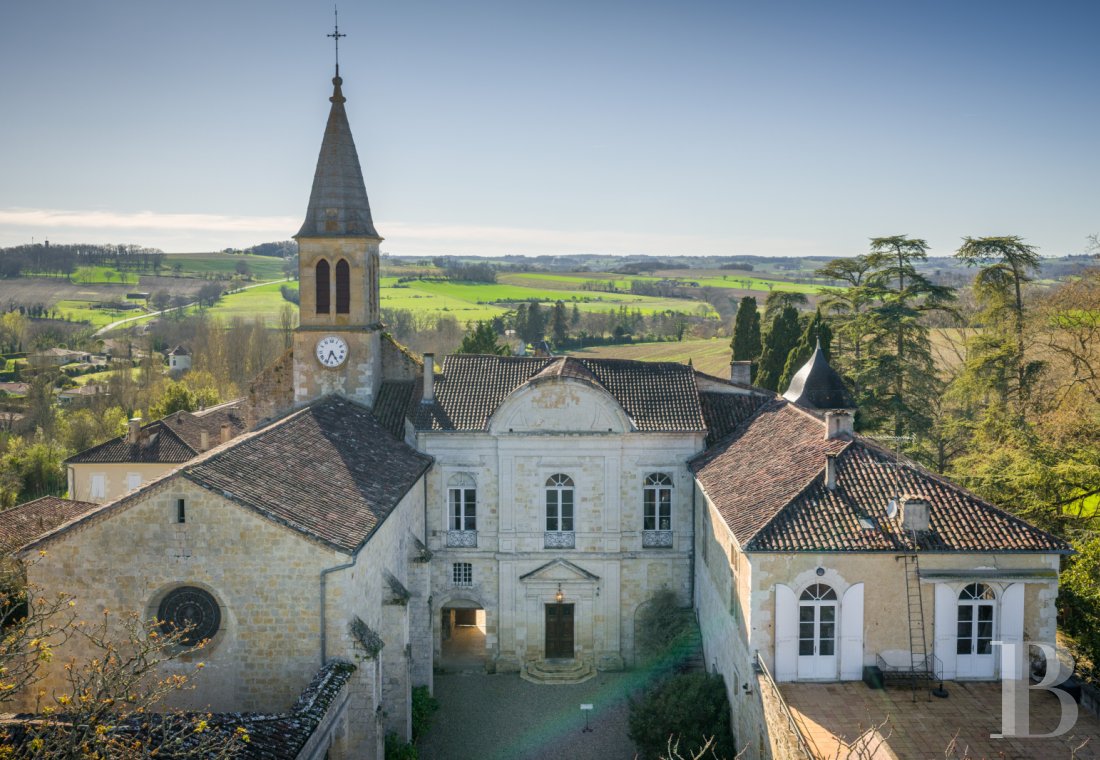
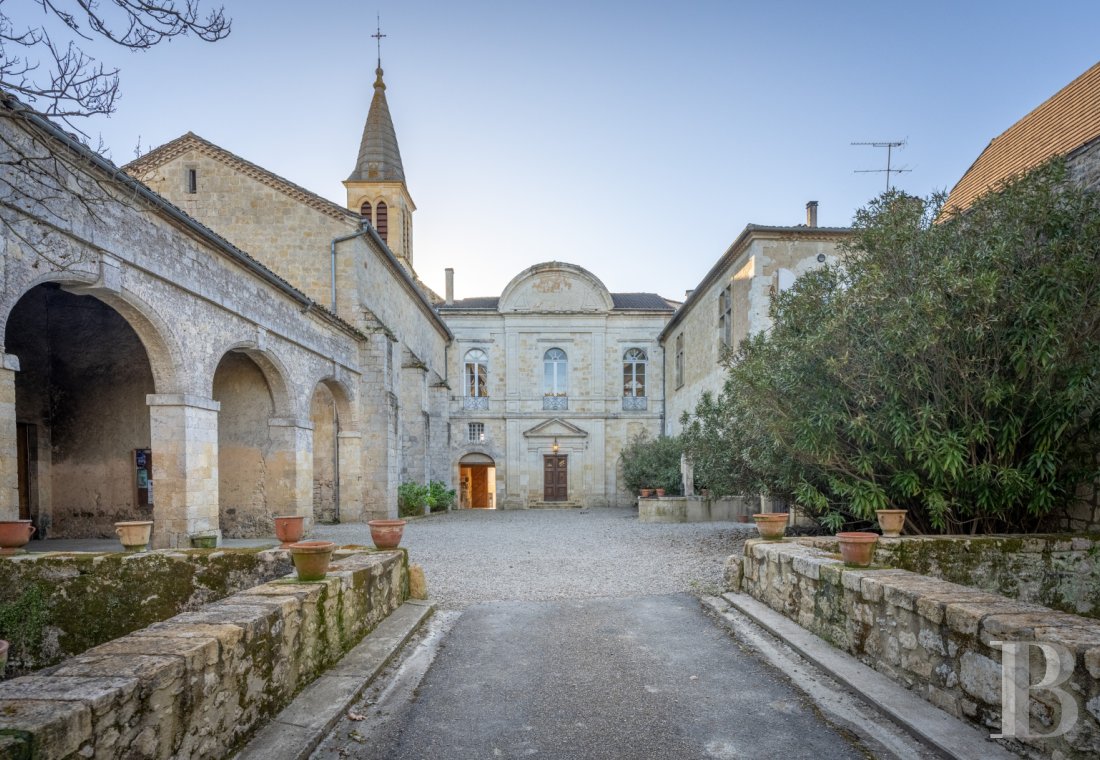
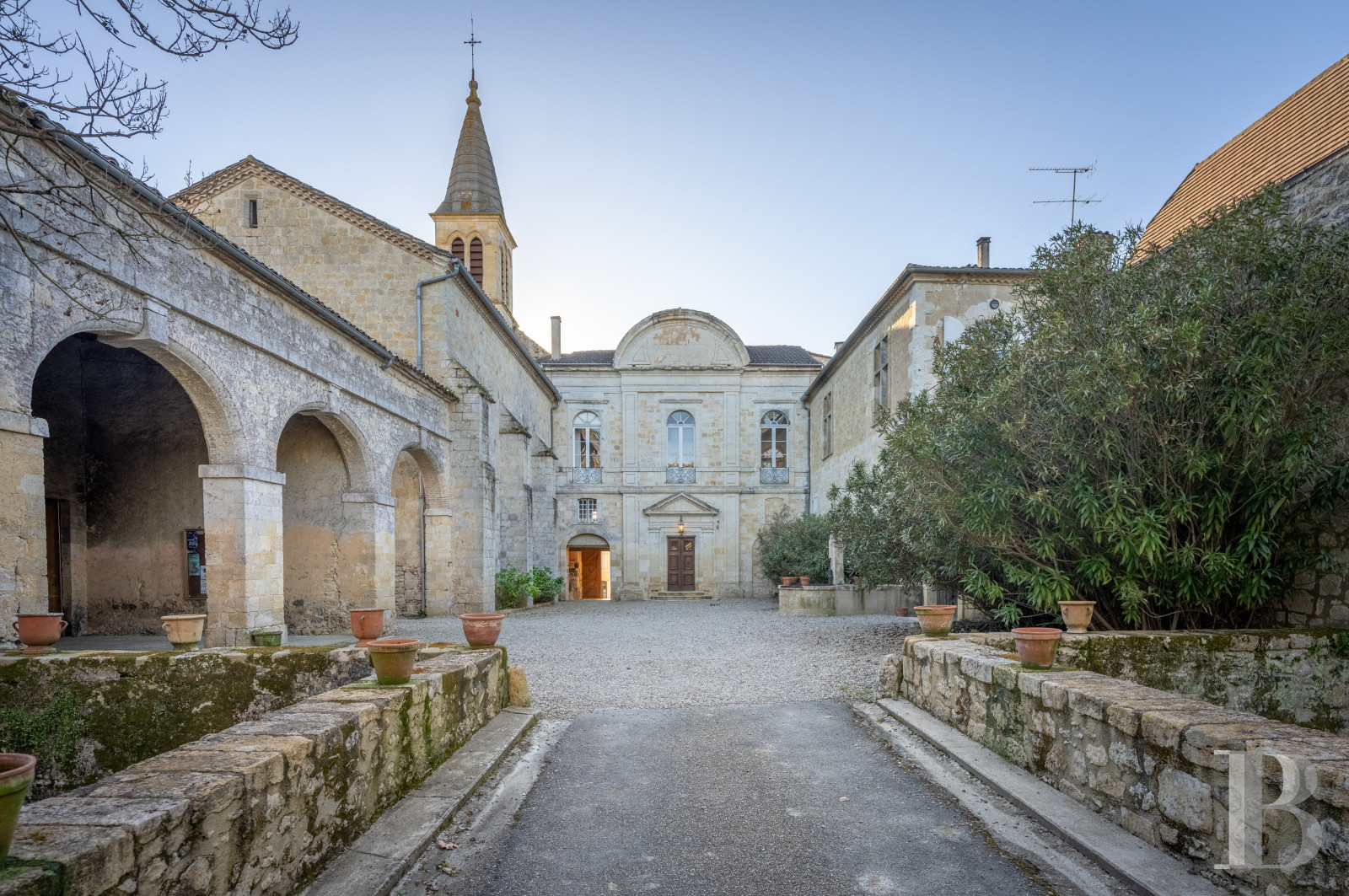
At the end of a B road, a 180-metre lane leads to a car park located next to the chateau’s grounds’ enclosure wall. From there, the lane becomes a footpath, providing access to a drawbridge that spans deep and currently dry moats, which gives on to the gravel courtyard surrounded by the property’s edifices, while the chateau itself is made up of three buildings, each with two floors and laid out in a U-shaped composition around its courtyard.
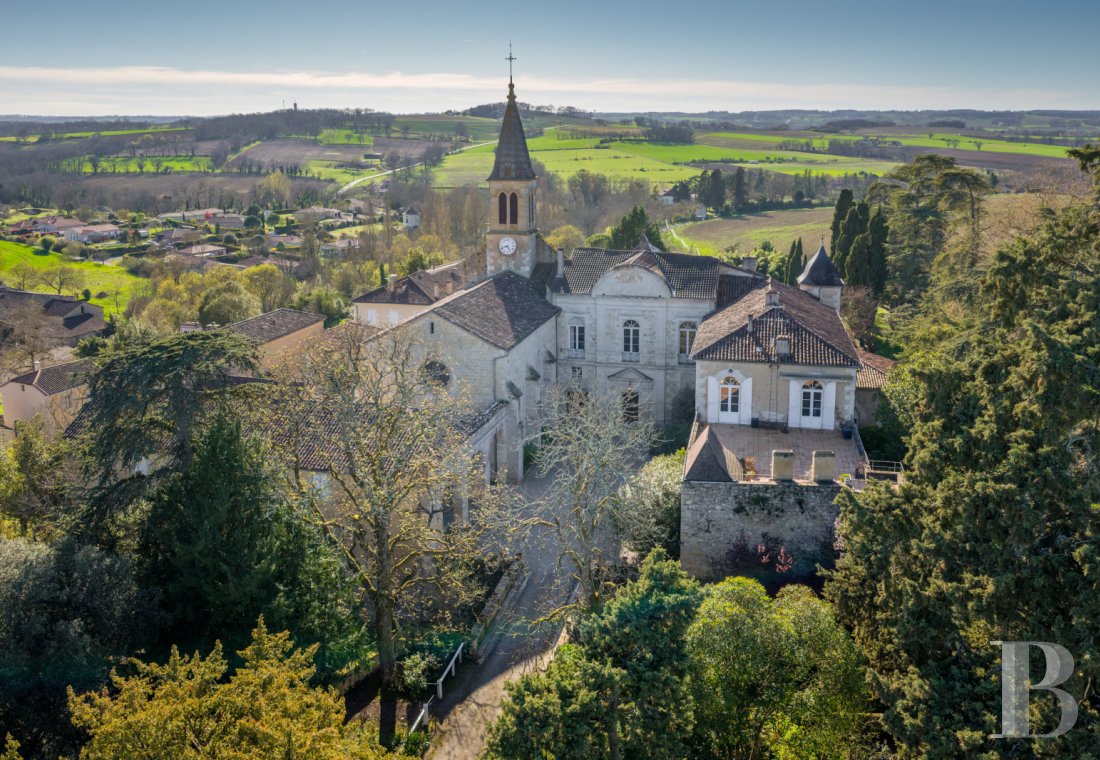
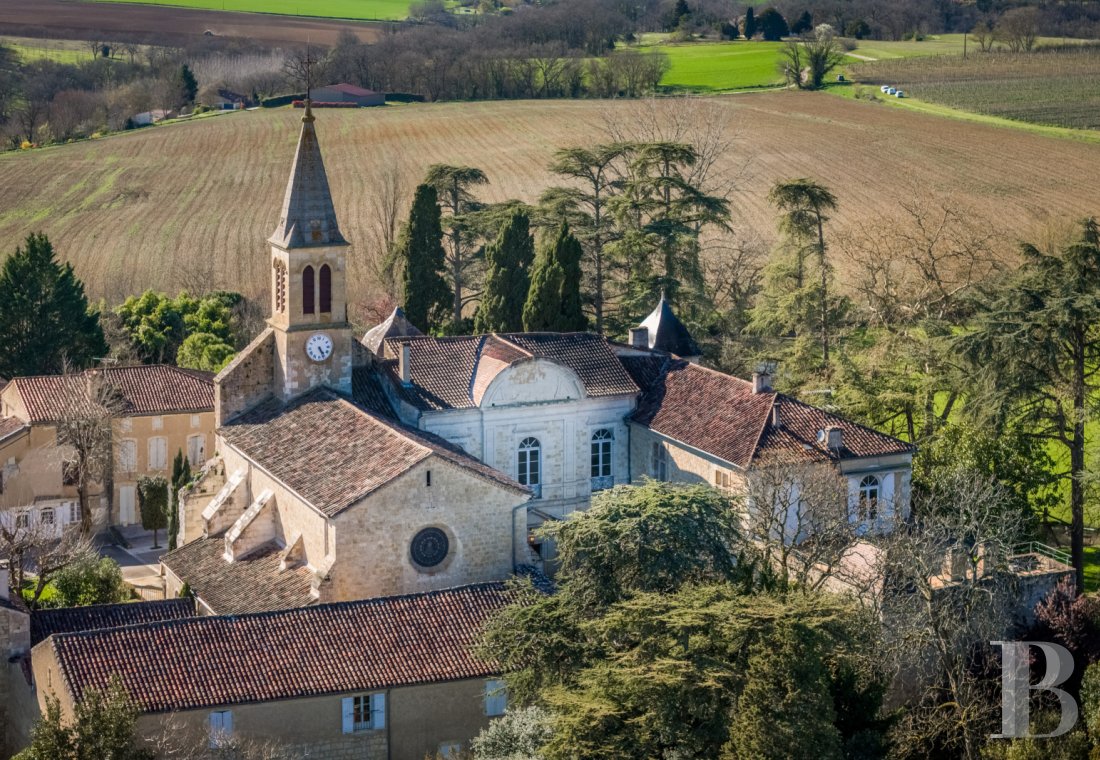
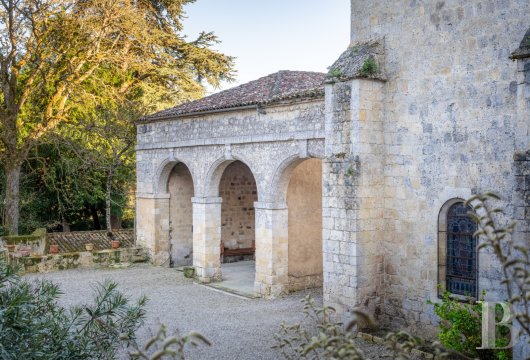
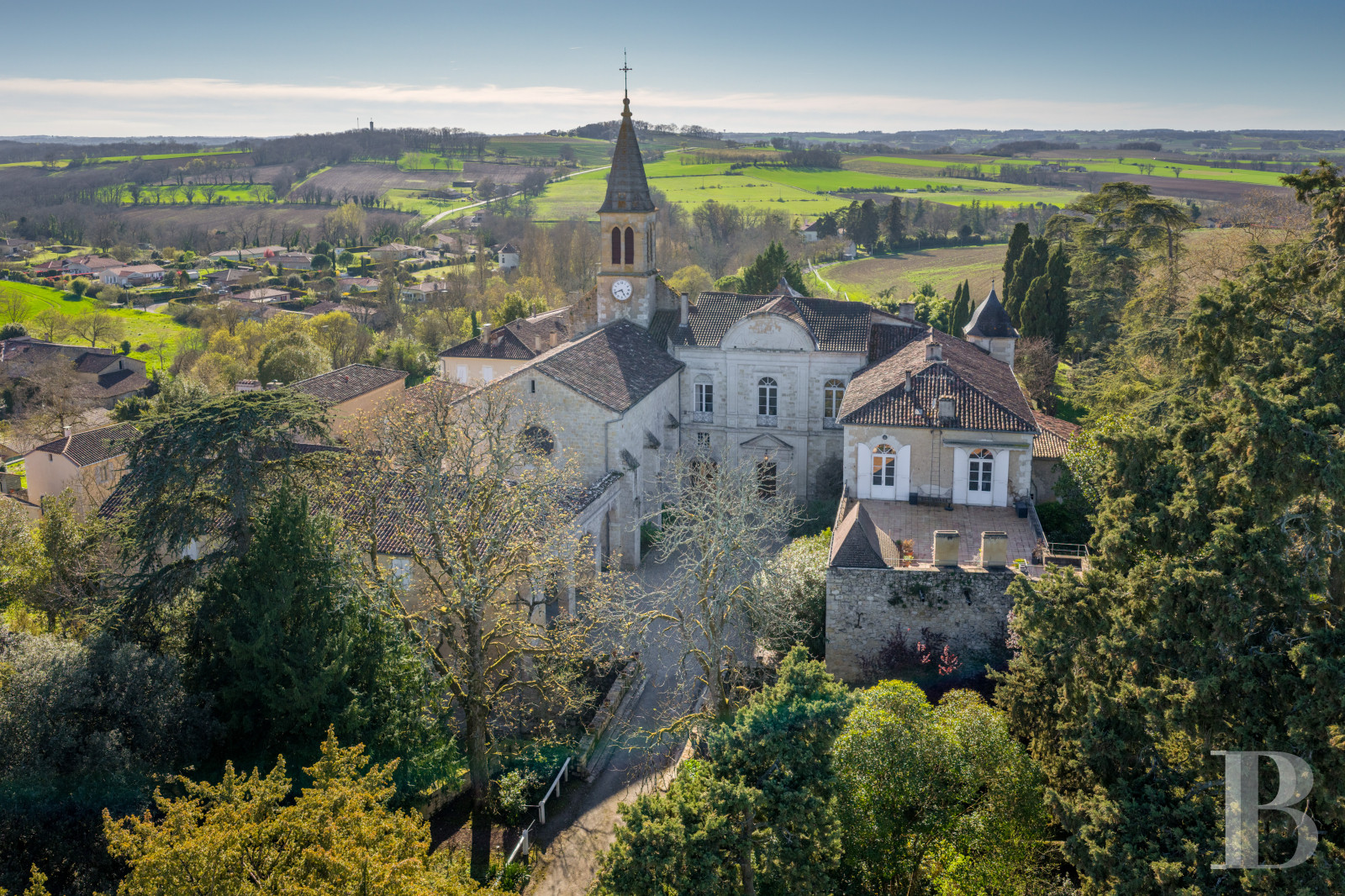
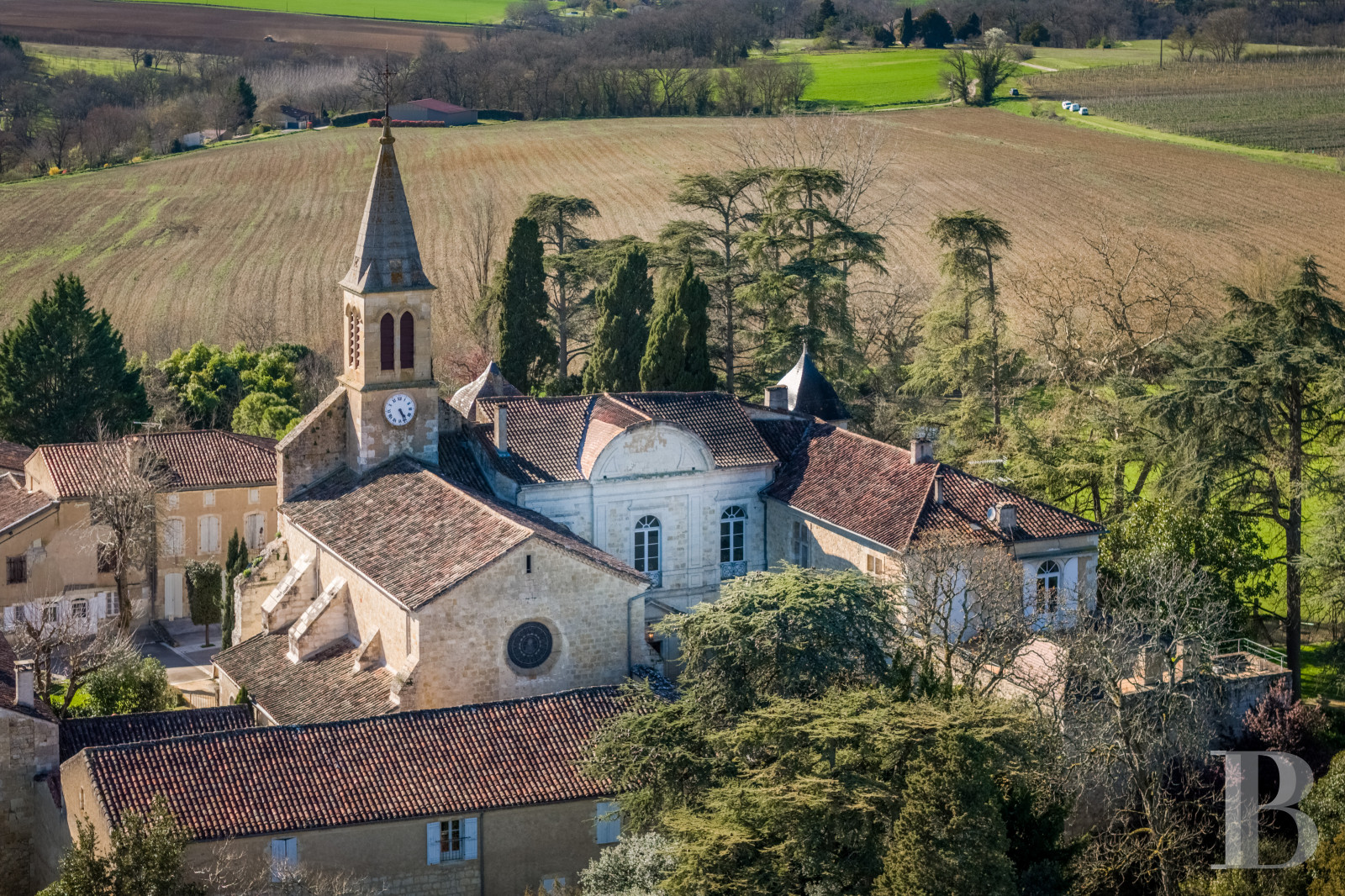
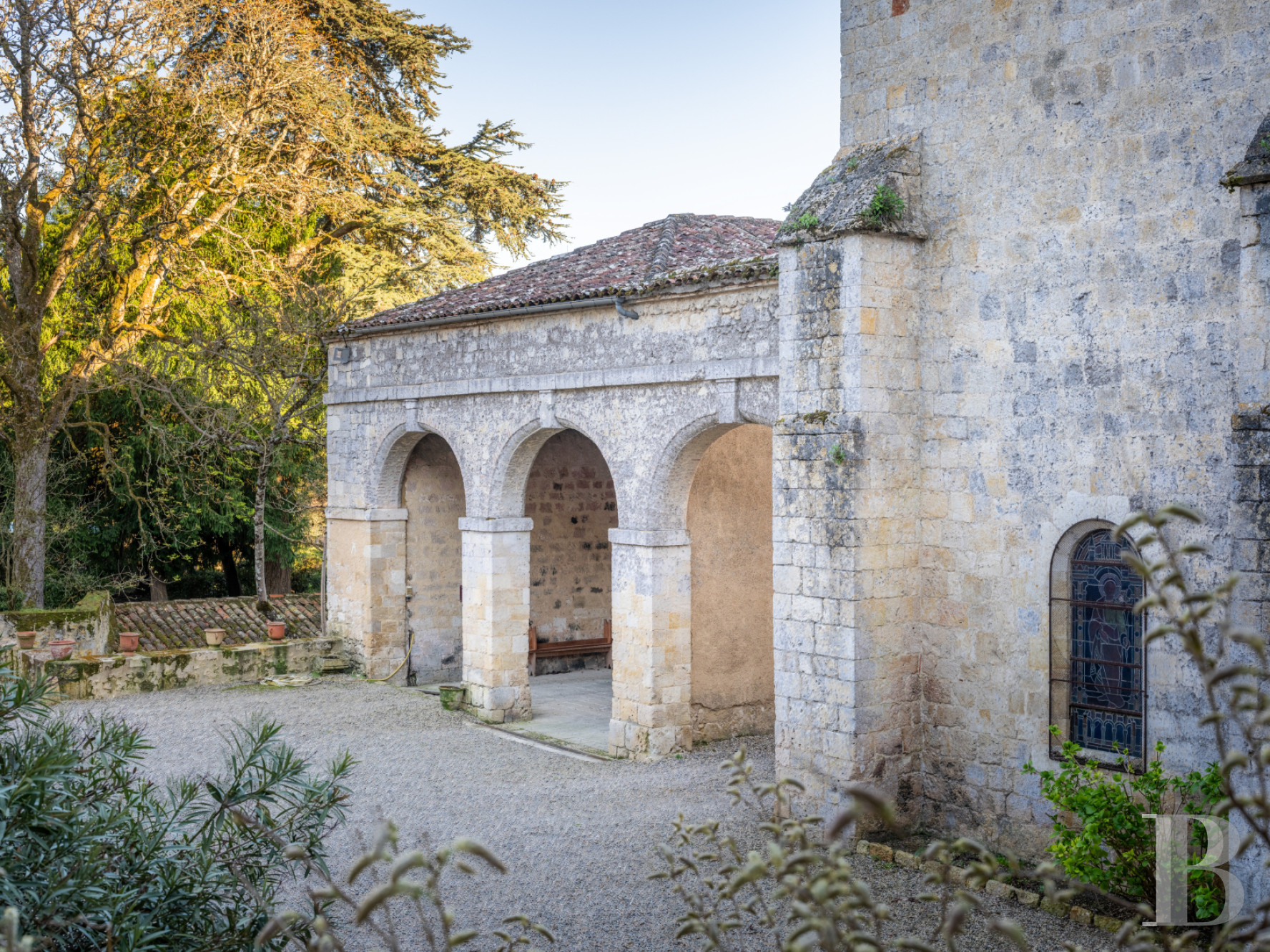
Built up on a rocky promontory, overlooking the medieval village’s dwellings, the chateau abuts a church to the south and looks out over its grounds and surrounding valleys to the east and north, whereas the central structure stands directly opposite the bridge that marks the entrance to the chateau’s courtyard.
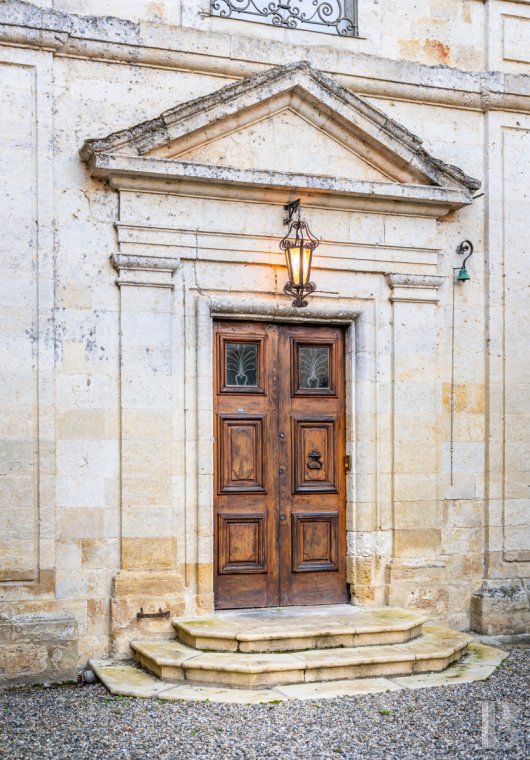
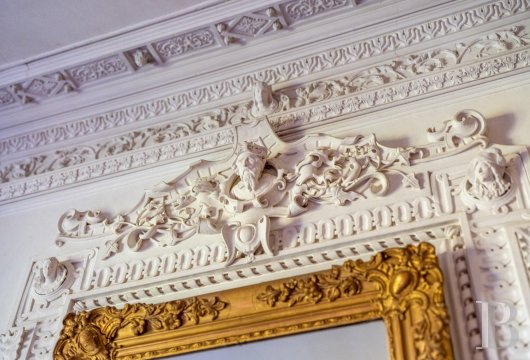
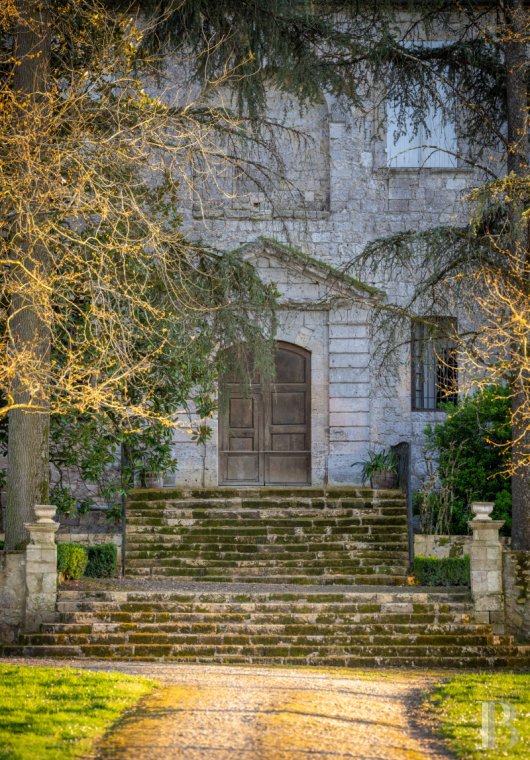
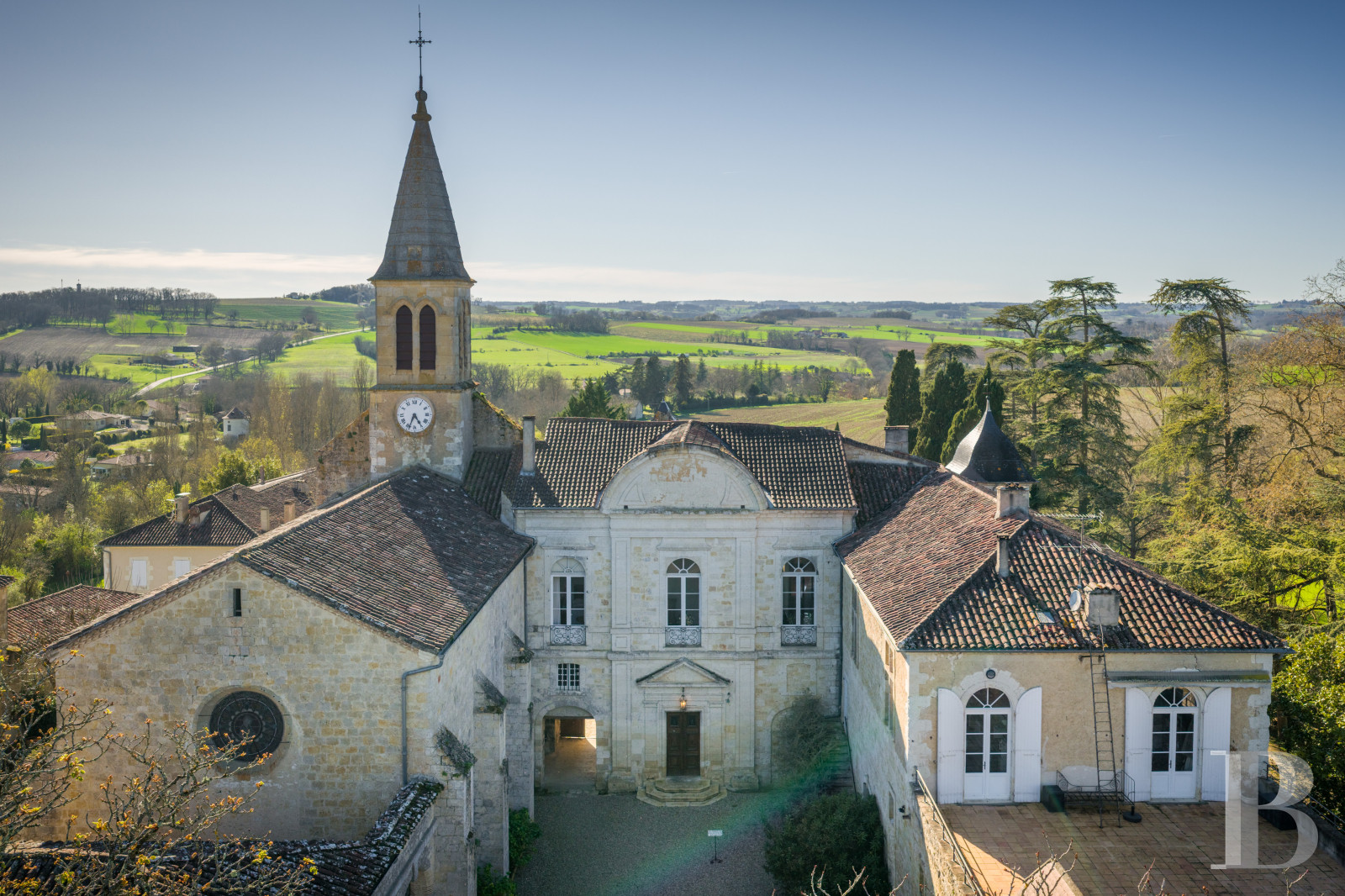
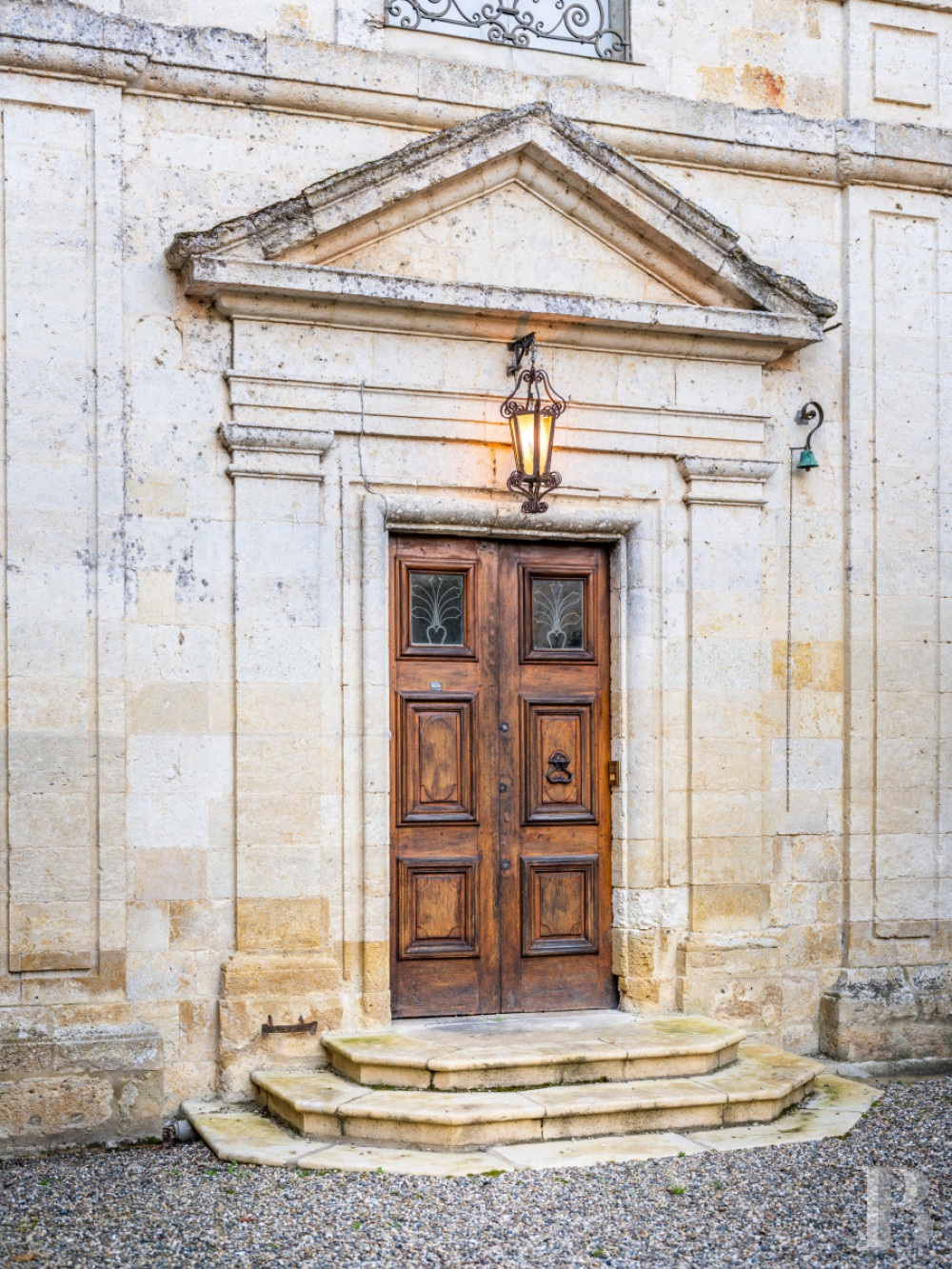
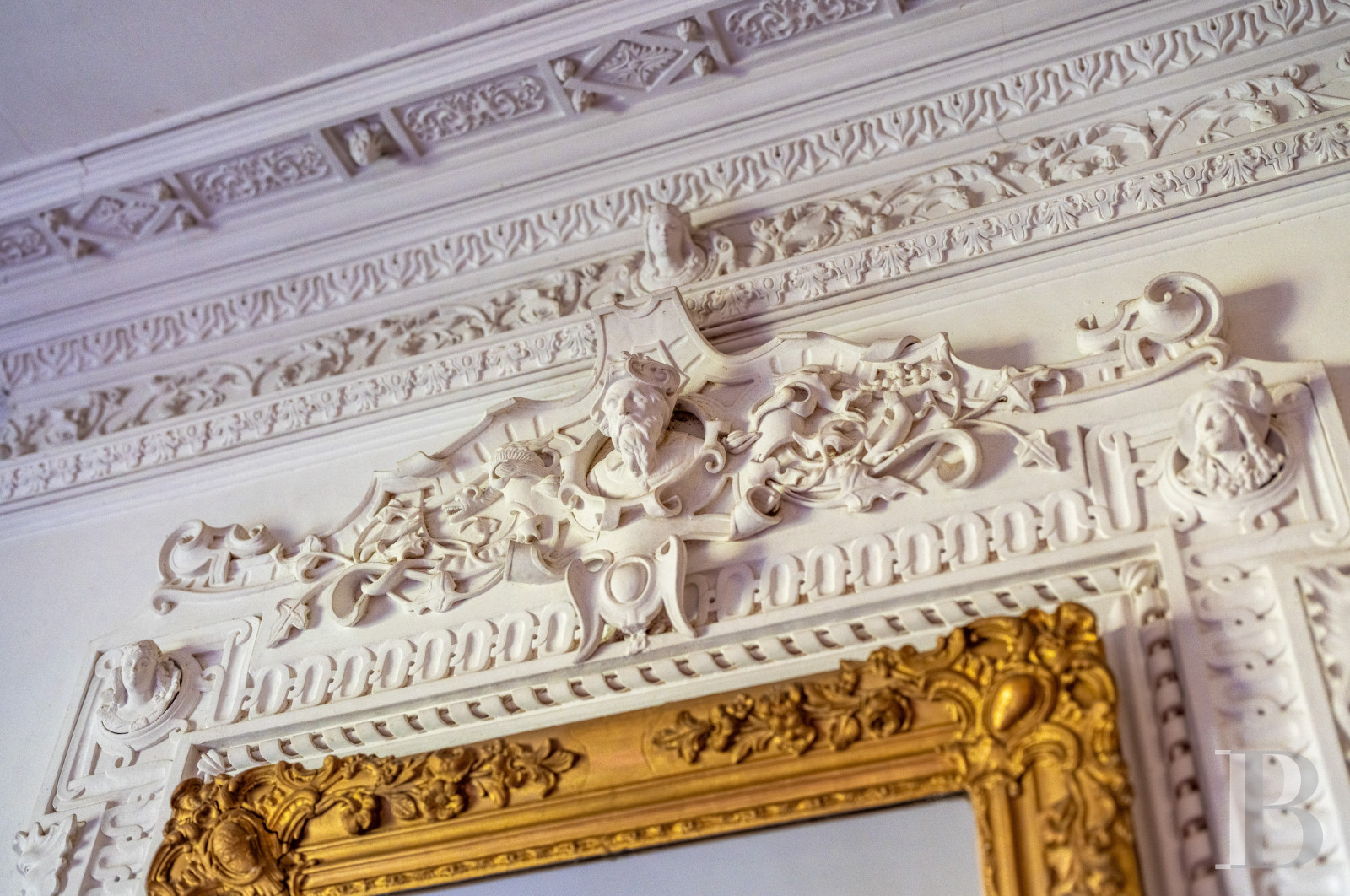
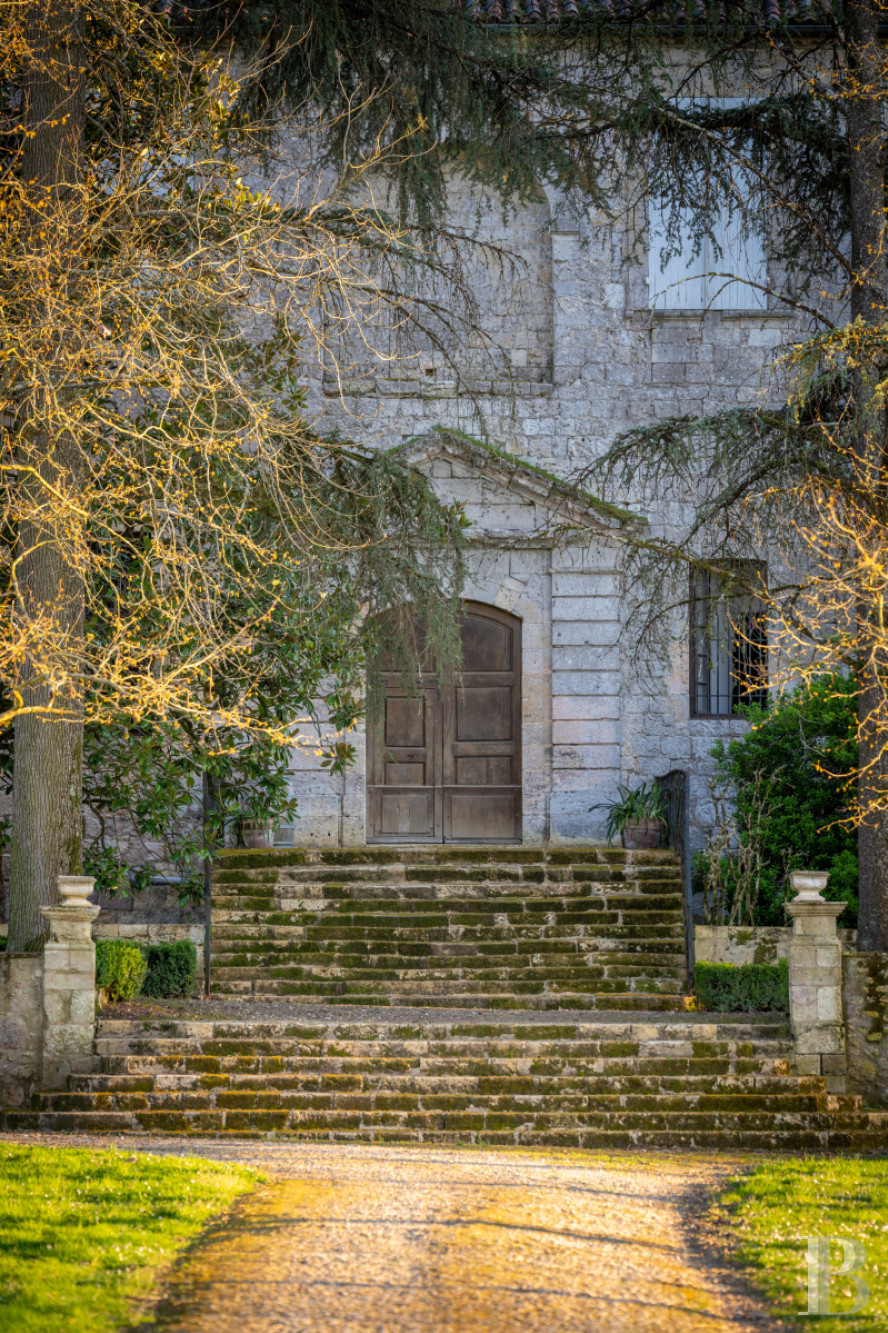
With its medieval foundations still evident, constructed out of magnificent ashlar stone, with no visible joints, the main façade features a classical style indicative of the 18th century with, in the middle, a heavy door accessible via the chateau’s front steps and topped with a triangular pediment. In addition, a number of tall windows and doors cadence its exteriors, while most of its architectural details have been conserved, such as its mullioned windows, majestic stone staircase, parquet floors, crown moulding and fireplaces.
Constructed in 1247 by Montassin de Goalard, Abbot of Condom, the chateau, once a Gascon fortress, has, over the years, been progressively transformed, embellished and opened outwards in the direction of the village, whereas, in 1567, Blaise de Monluc made several improvements before Monsignor de Milon carried out significant modifications in a more classical style in the early 18th century.
Built up on a rocky promontory, overlooking the medieval village’s dwellings, the chateau abuts a church to the south and looks out over its grounds and surrounding valleys to the east and north, whereas the central structure stands directly opposite the bridge that marks the entrance to the chateau’s courtyard.
With its medieval foundations still evident, constructed out of magnificent ashlar stone, with no visible joints, the main façade features a classical style indicative of the 18th century with, in the middle, a heavy door accessible via the chateau’s front steps and topped with a triangular pediment. In addition, a number of tall windows and doors cadence its exteriors, while most of its architectural details have been conserved, such as its mullioned windows, majestic stone staircase, parquet floors, crown moulding and fireplaces.
Constructed in 1247 by Montassin de Goalard, Abbot of Condom, the chateau, once a Gascon fortress, has, over the years, been progressively transformed, embellished and opened outwards in the direction of the village, whereas, in 1567, Blaise de Monluc made several improvements before Monsignor de Milon carried out significant modifications in a more classical style in the early 18th century.
The Chateau
The main dwelling is made up of two perpendicular wings, creating a courtyard bordered, on its third side, by the church. As the oldest part of the chateau, its northern wing still features the walls of the former medieval edifice, whereas the central axis of the chateau’s main façade is topped with a curved pediment and two flat pilasters flank its entrance.
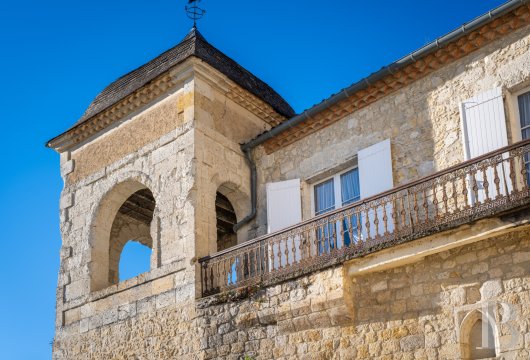
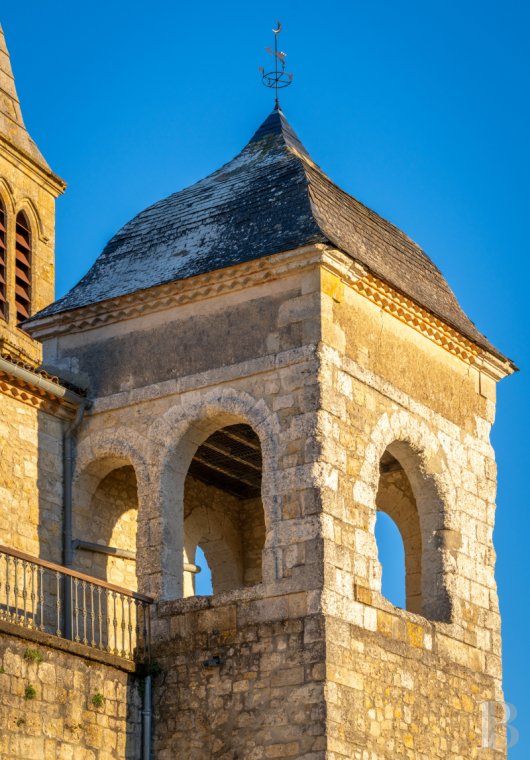
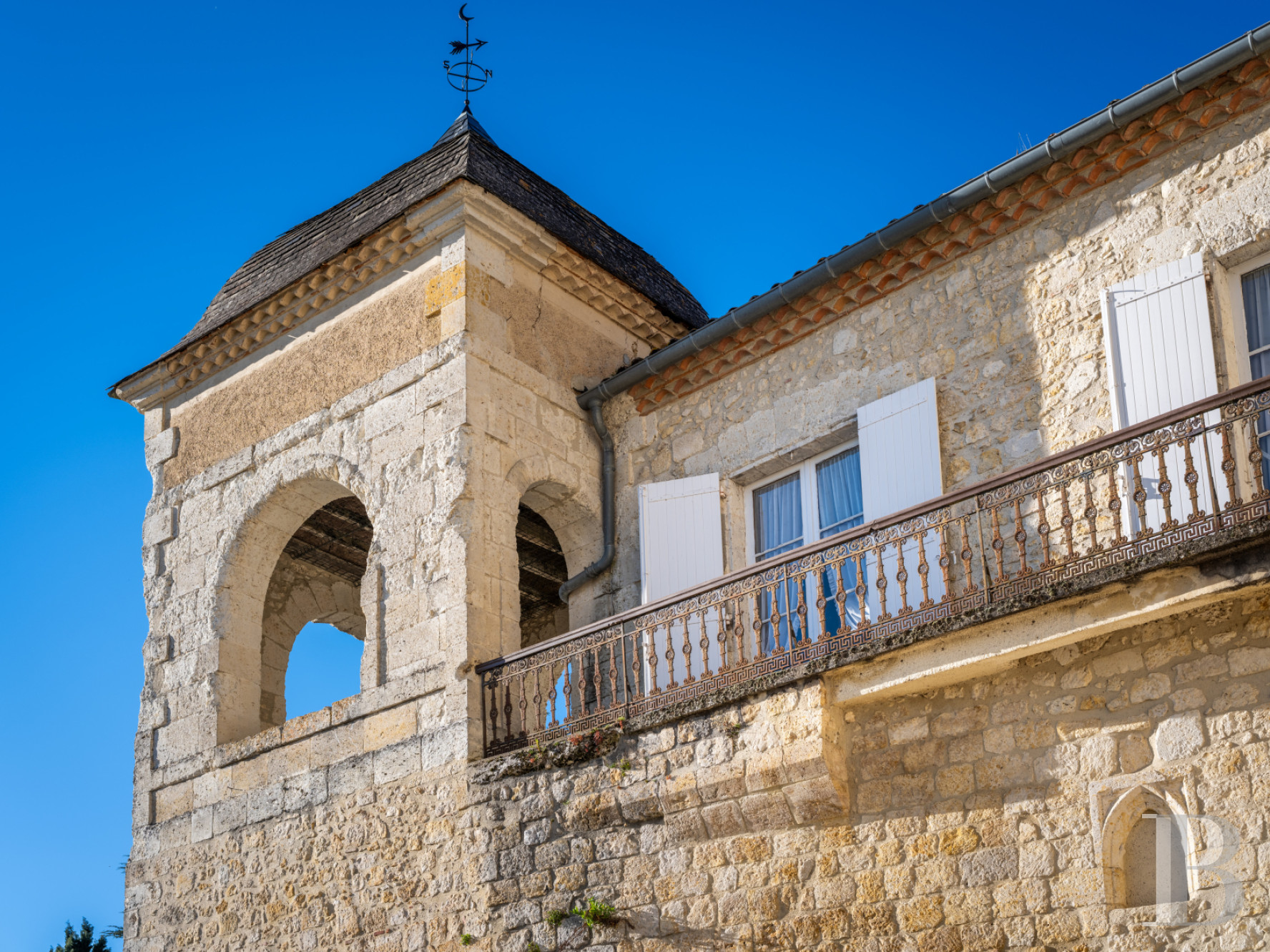
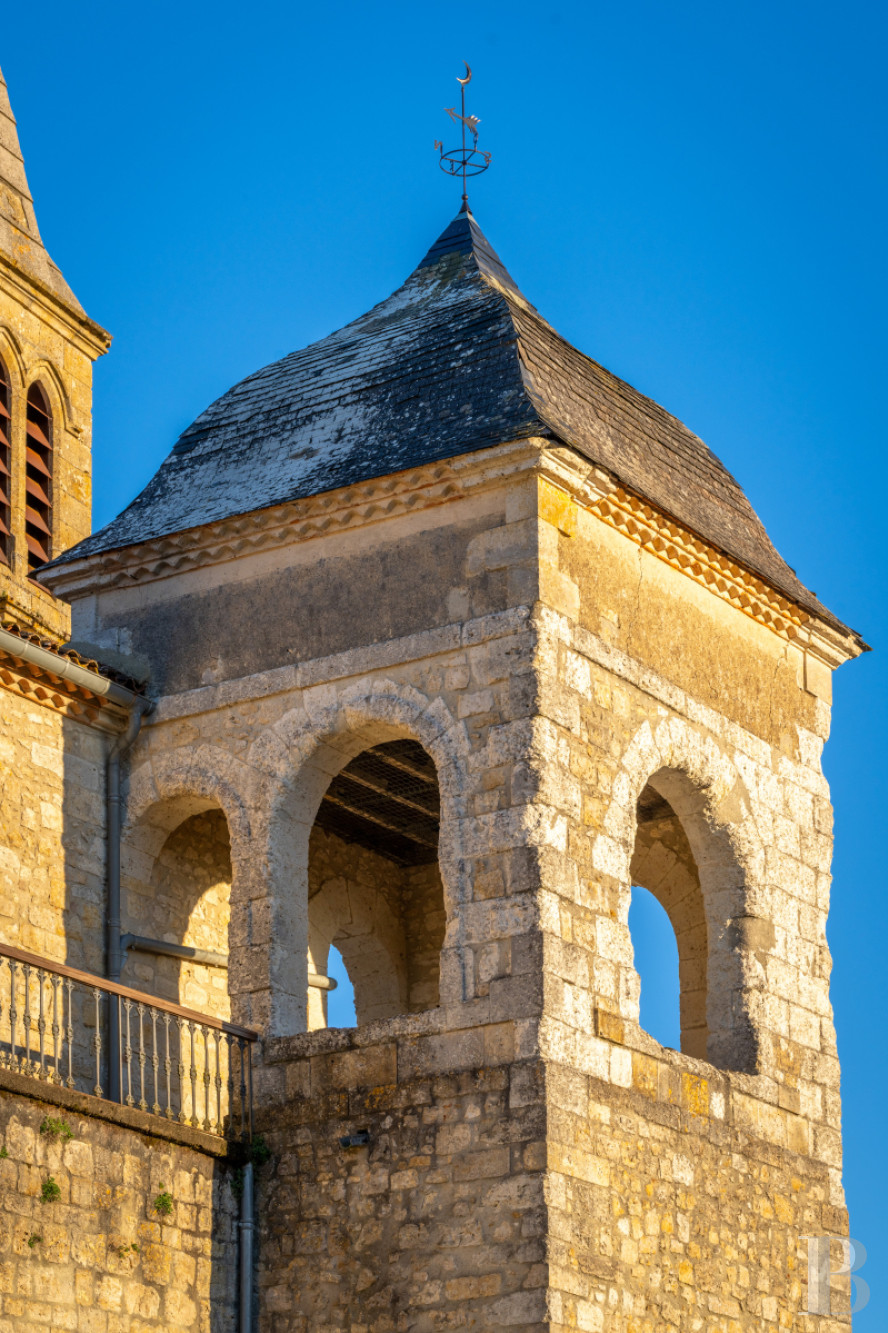
With tall, mullioned windows giving on to the courtyard with a well, on its western side, the chateau’s exterior is flanked by two towers, while a gallery with a wrought-iron balcony runs along the length of this exterior, as well as on its southern side, which provides access to the estate’s wine warehouse.
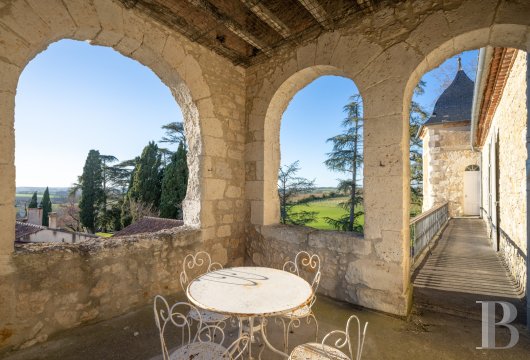
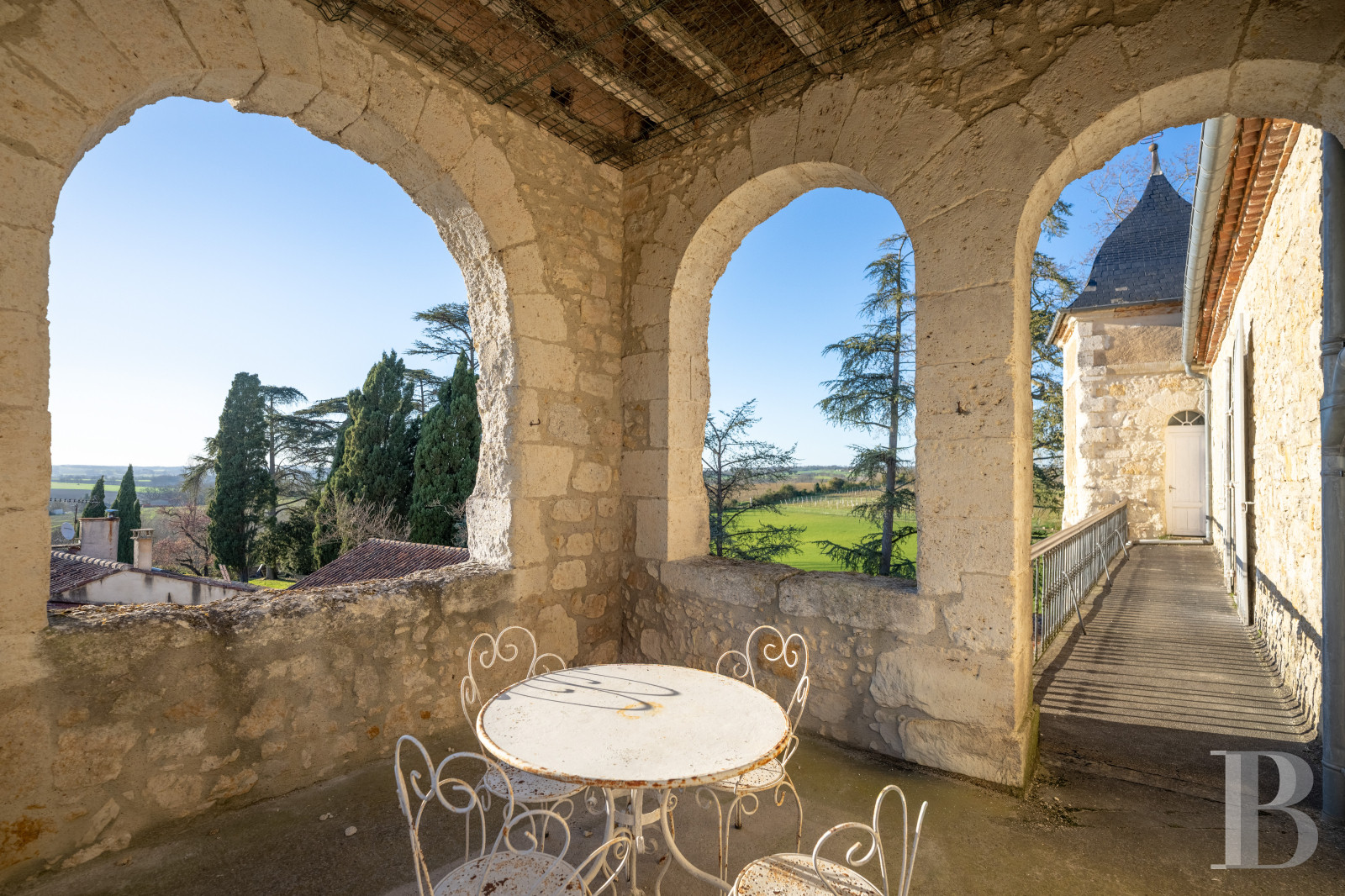
To the north, a double flight of stone steps connects the chateau’s ground floor and service quarters, converted into a boutique, with its grounds, which extend all the way to the property’s vineyards, accessible via a lane lined with plane trees, whereas a rooftop terrace created in the 19th century is located on top of the building that overlooks the moats to the east and a carriage door acts as a gateway to the nearby village.
The intermediate level
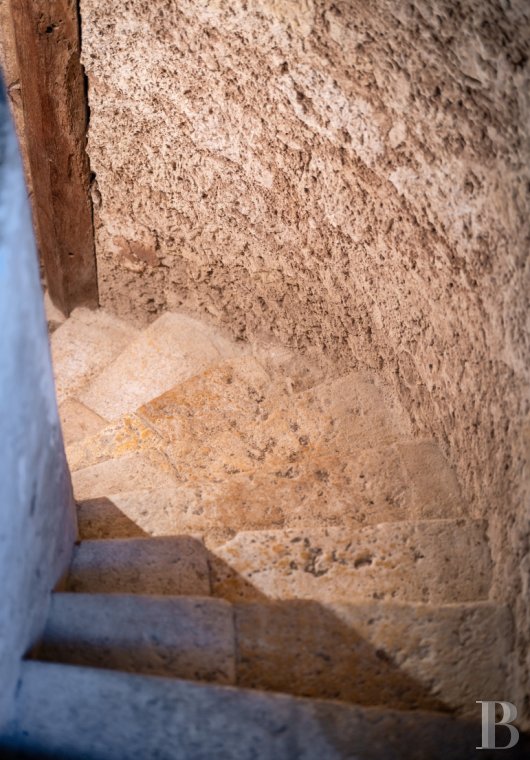
An initial landing leads to an office, while a second one communicates with a former scullery in which the fuel oil boiler was installed. In addition, a pantry, with access to the courtyard via a narrow stone staircase, communicates with a cellar and storeroom.
The upstairs
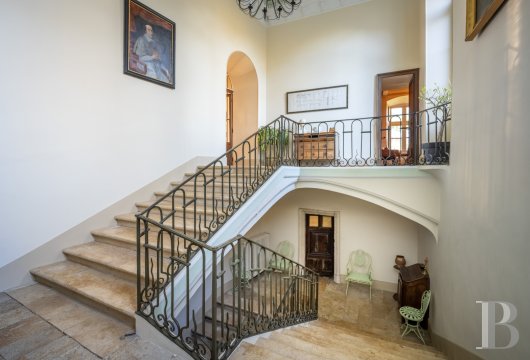
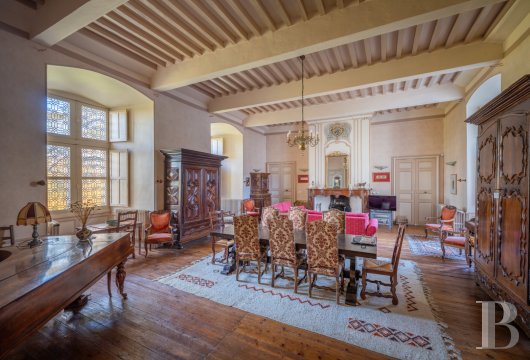
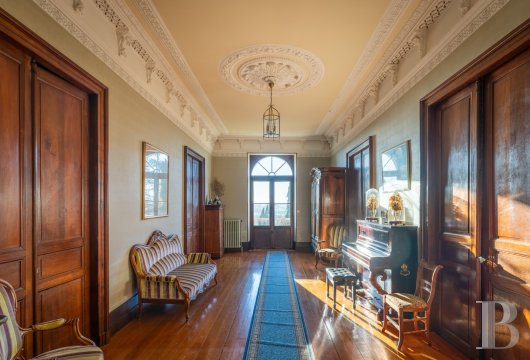
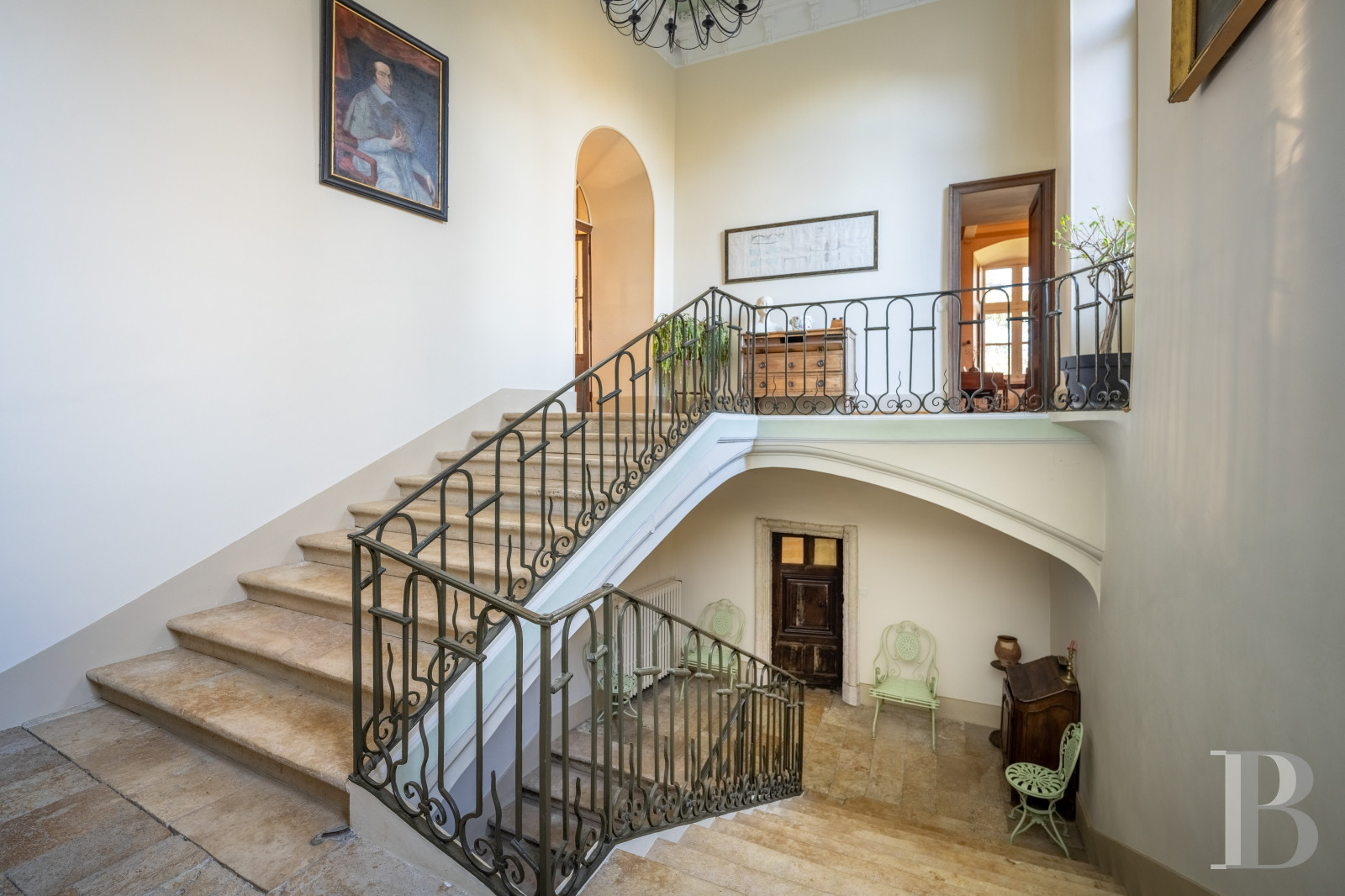
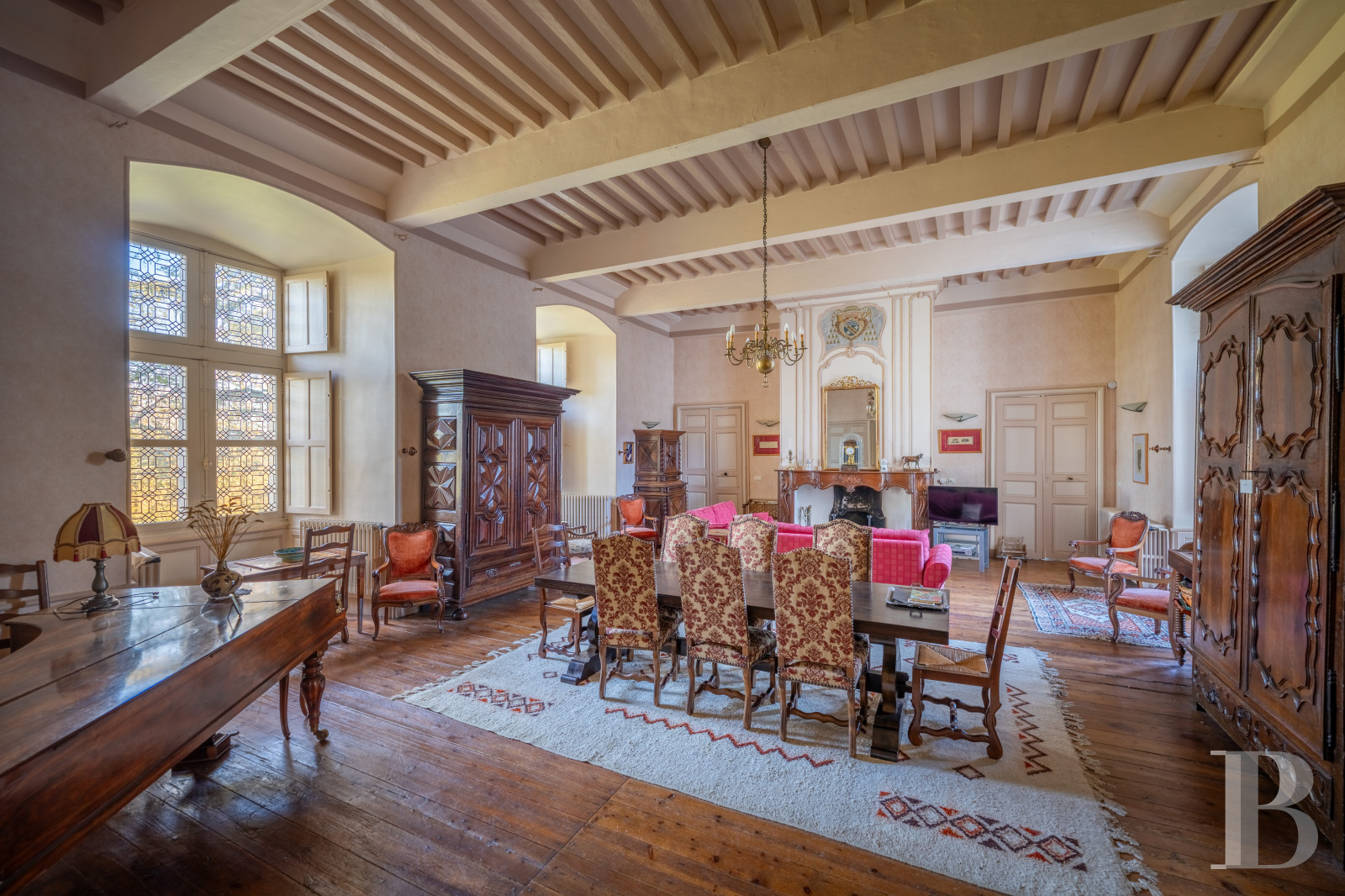
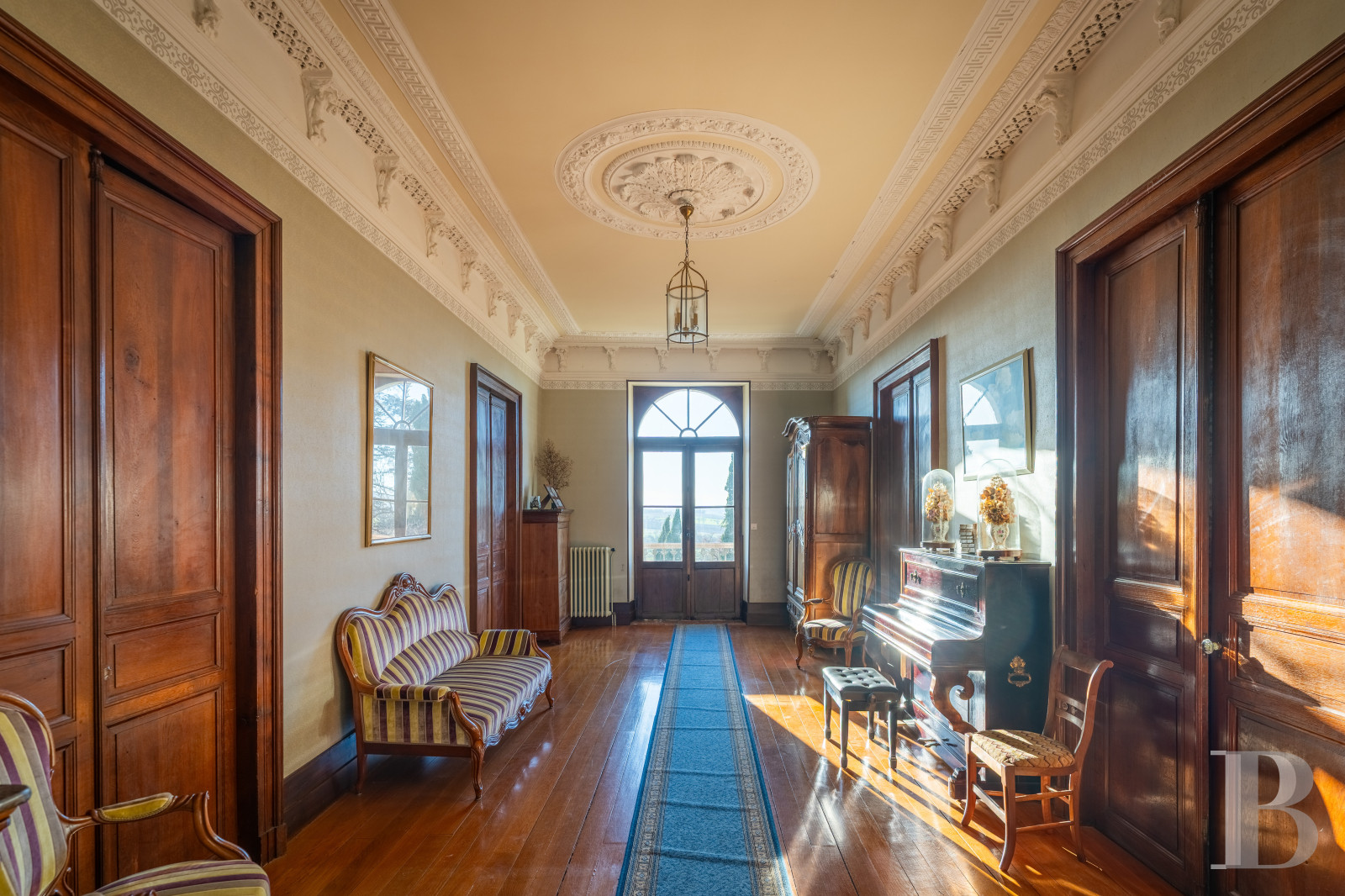
Once past the heavy wooden front door, a majestic stone staircase reveals itself in all of its splendour and provides access to the noble dwelling, which has been divided into two separate sections. On one side is the living room with its preserved details: crown moulding, mullioned windows, solid parquet floors and a fireplace with a carved wooden mantel, while extending on from here is a narrow kitchen and a study. These two rooms give on to an immense patio providing unobstructed views of the grounds, whereas, on the other side of the chateau, the sleeping quarters include four bedrooms, two bathrooms and two lavatories.
The Commercial Premises on the Chateau’s Ground Floor and Service Quarters
The main outbuildings are located in the chateau’s two wings. The one, to the north, features welcome areas and a boutique on its ground floor, while, the other, to the south of the chateau and extending on from the church, includes two-storey service quarters, which now have been turned into workshops, storage spaces and a garage.
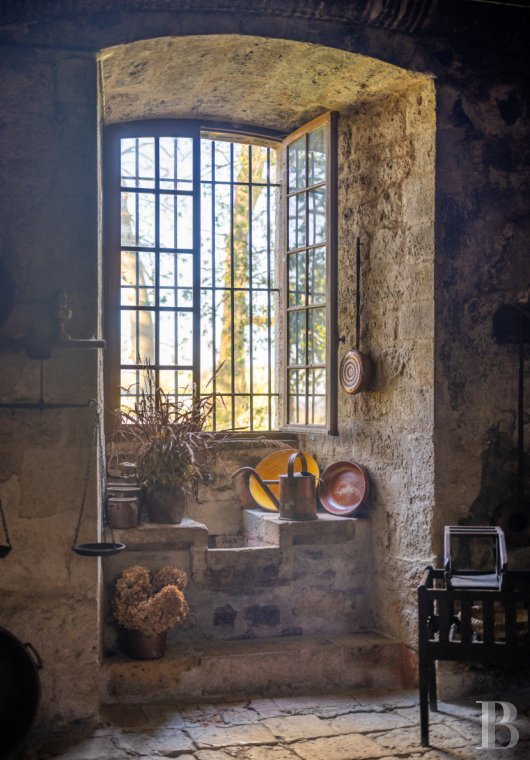
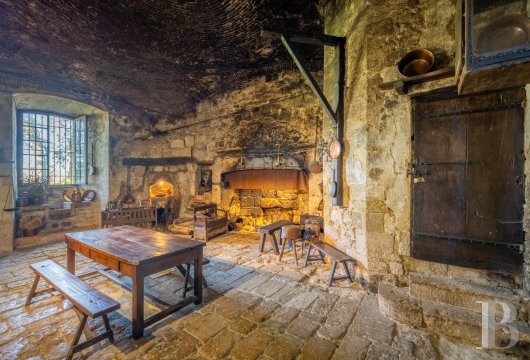
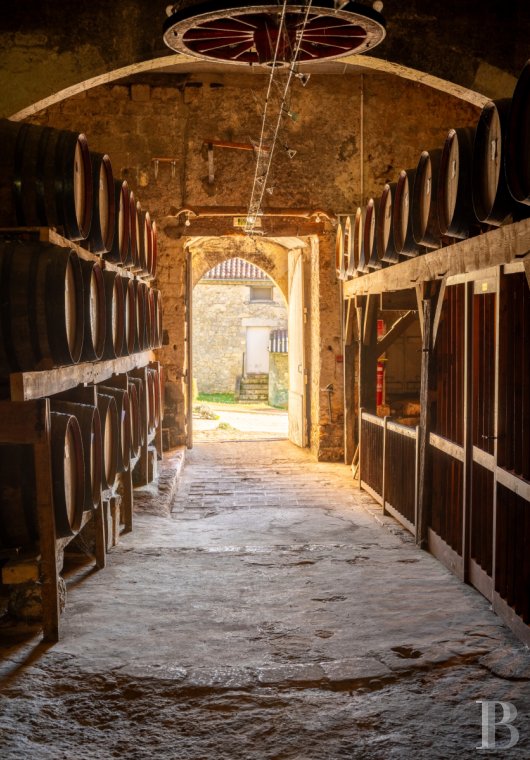
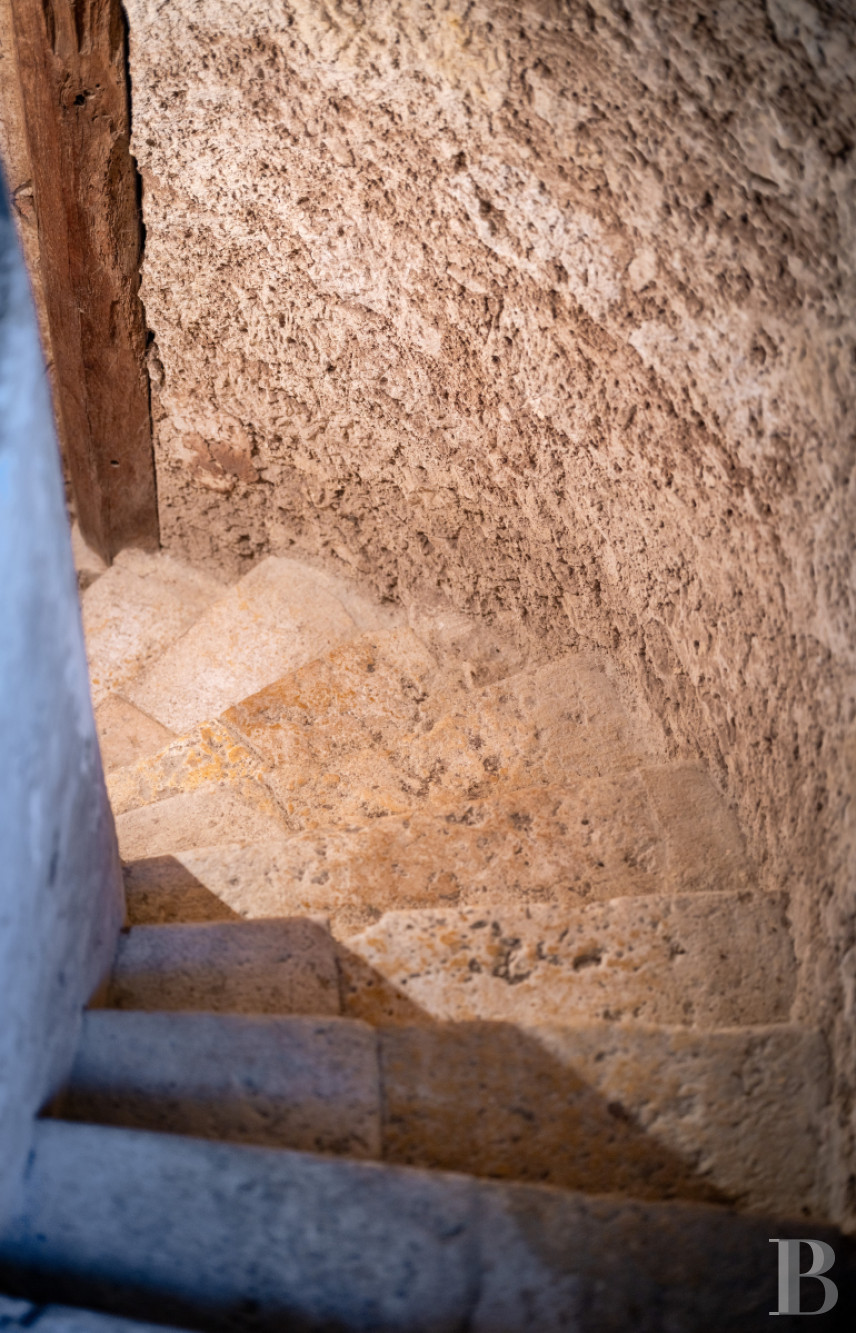
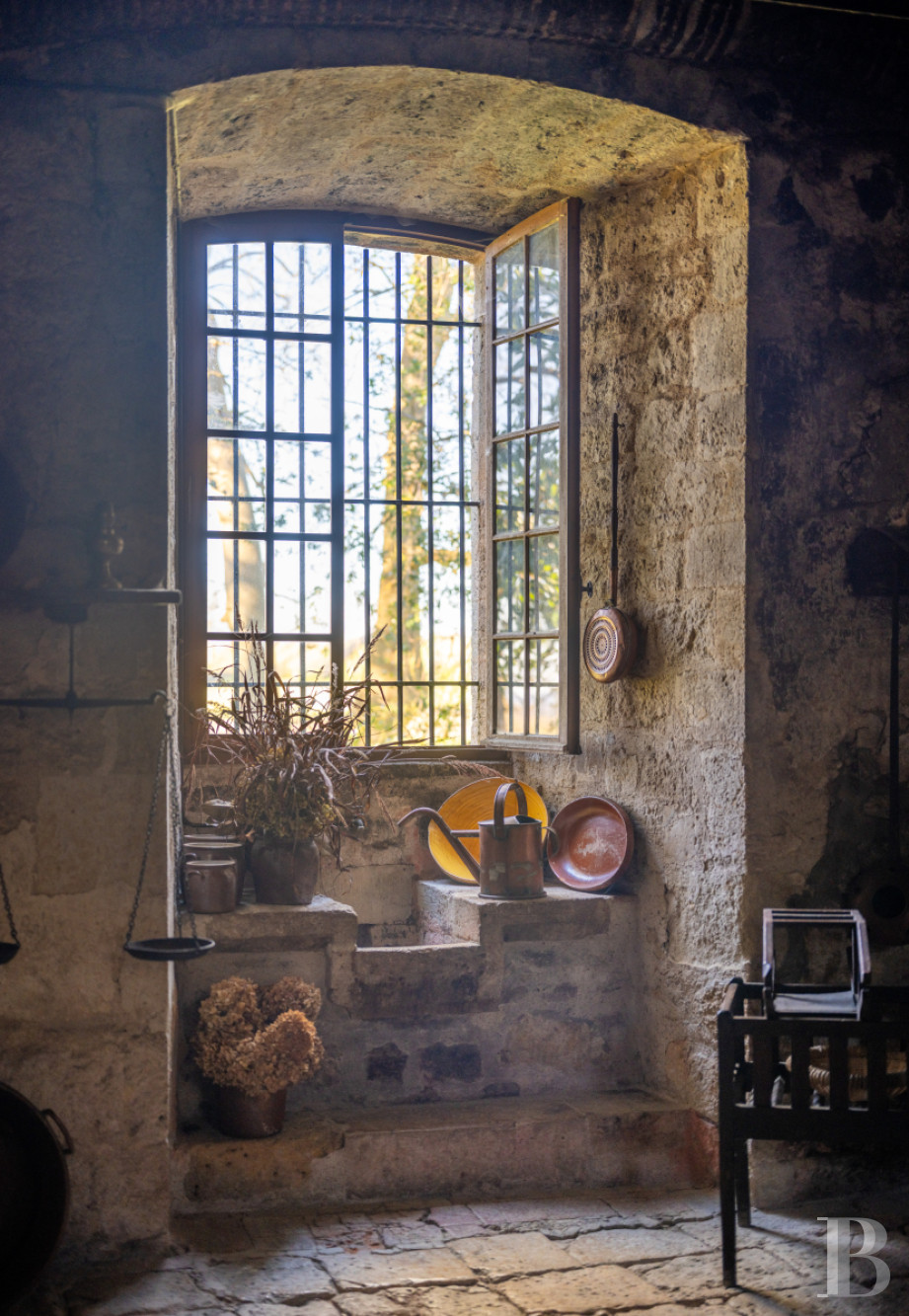
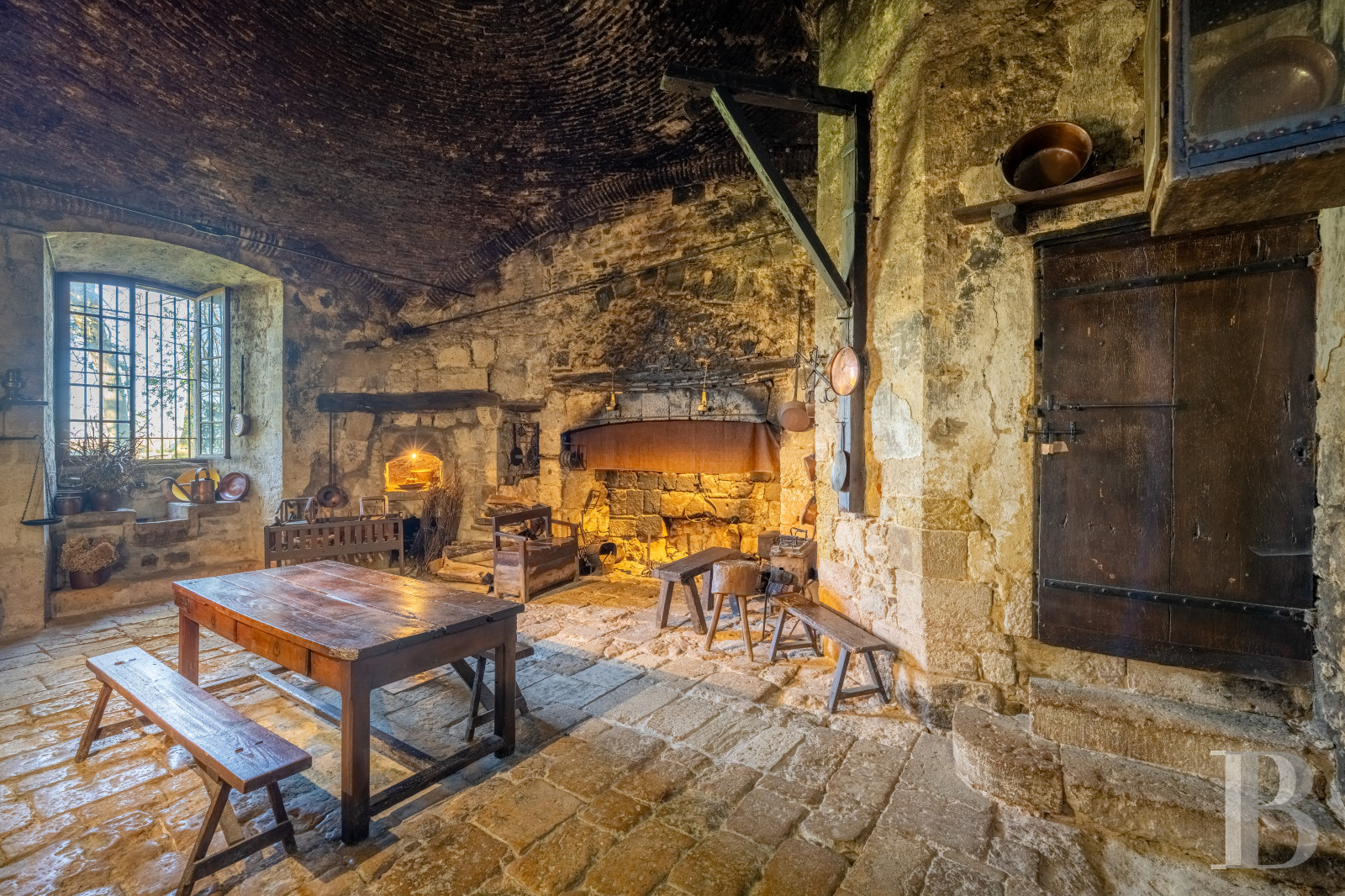
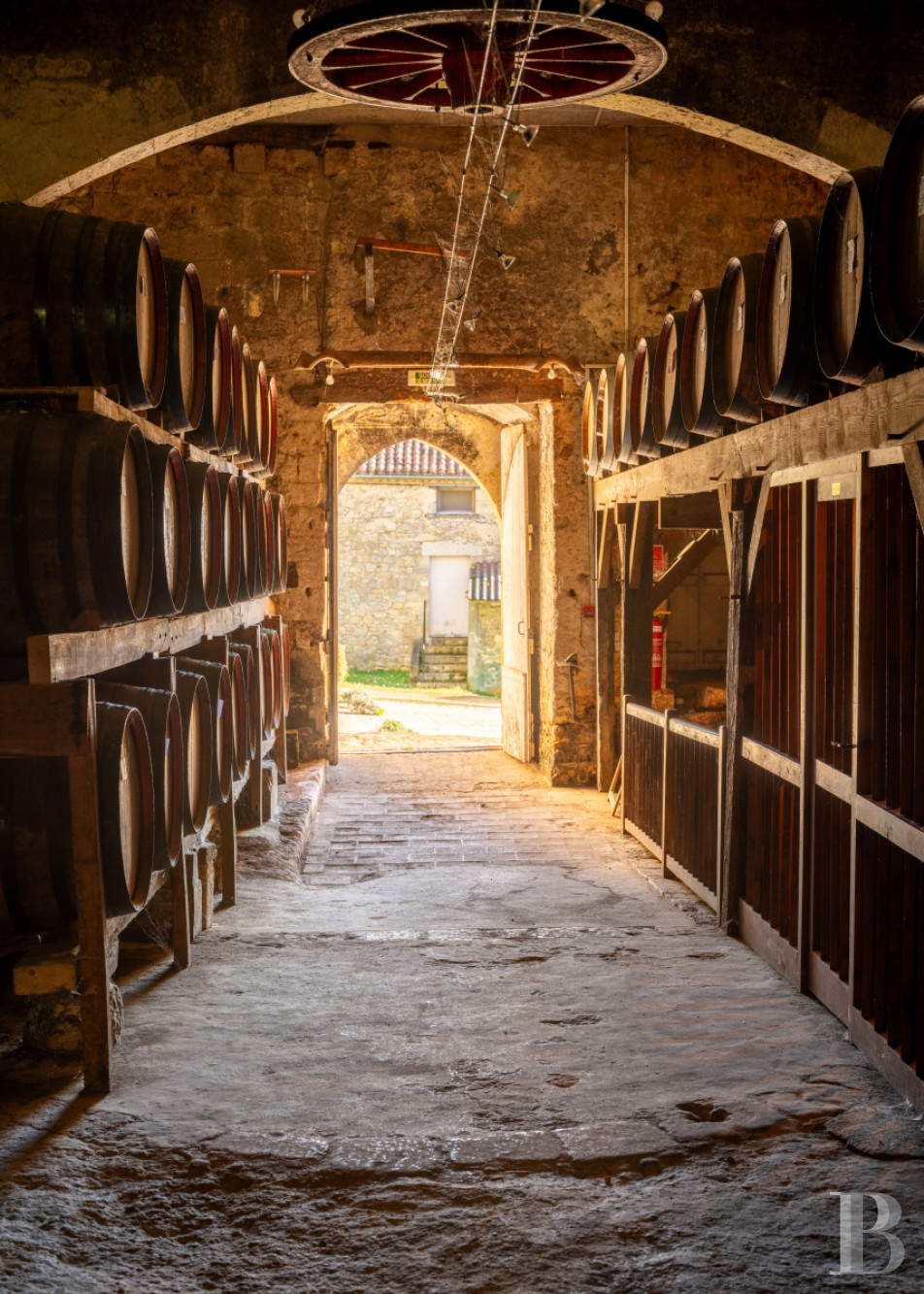
As for the northern wing, it includes, on the ground floor, an immense wine warehouse and various small rooms accessible via a hallway, which leads to former kitchens topped with a cupola clad in bricks, placed edgeways, whereas a spiral staircase, located in a turret, ascends to the dwelling’s rooftop terrace.
Lastly, two offices on the mezzanine level round out this commercial space facing both the courtyard and grounds, while, accessible from either the church square and/or the chateau’s grounds, a former cowshed (65 m²) and a second wine warehouse (110 m²) are located to the north and west of the edifice.
The Guesthouse
This single-storey and independent dwelling, with a floor area of approximately 130 m², was created in the chateau’s former orangery, located in the southern part of the grounds. With tall windows looking out on to a grassy patio, as well as the rooftops of the village’s other residences, a swimming pool was installed here, while, below, accessible from the exterior via a stone staircase, cellars and a walled garden round out the amenities for this dwelling.
Accessible via its fitted kitchen, this edifice includes, to the left, a living room with a fireplace, as well as a a lavatory, two bedrooms, each with their own private shower room, and a study. Recently renovated in 2016, the result is an independent dwelling designed with high-quality and contemporary materials.
The Grounds, Swimming Pool, Deer Enclosure and Vineyards
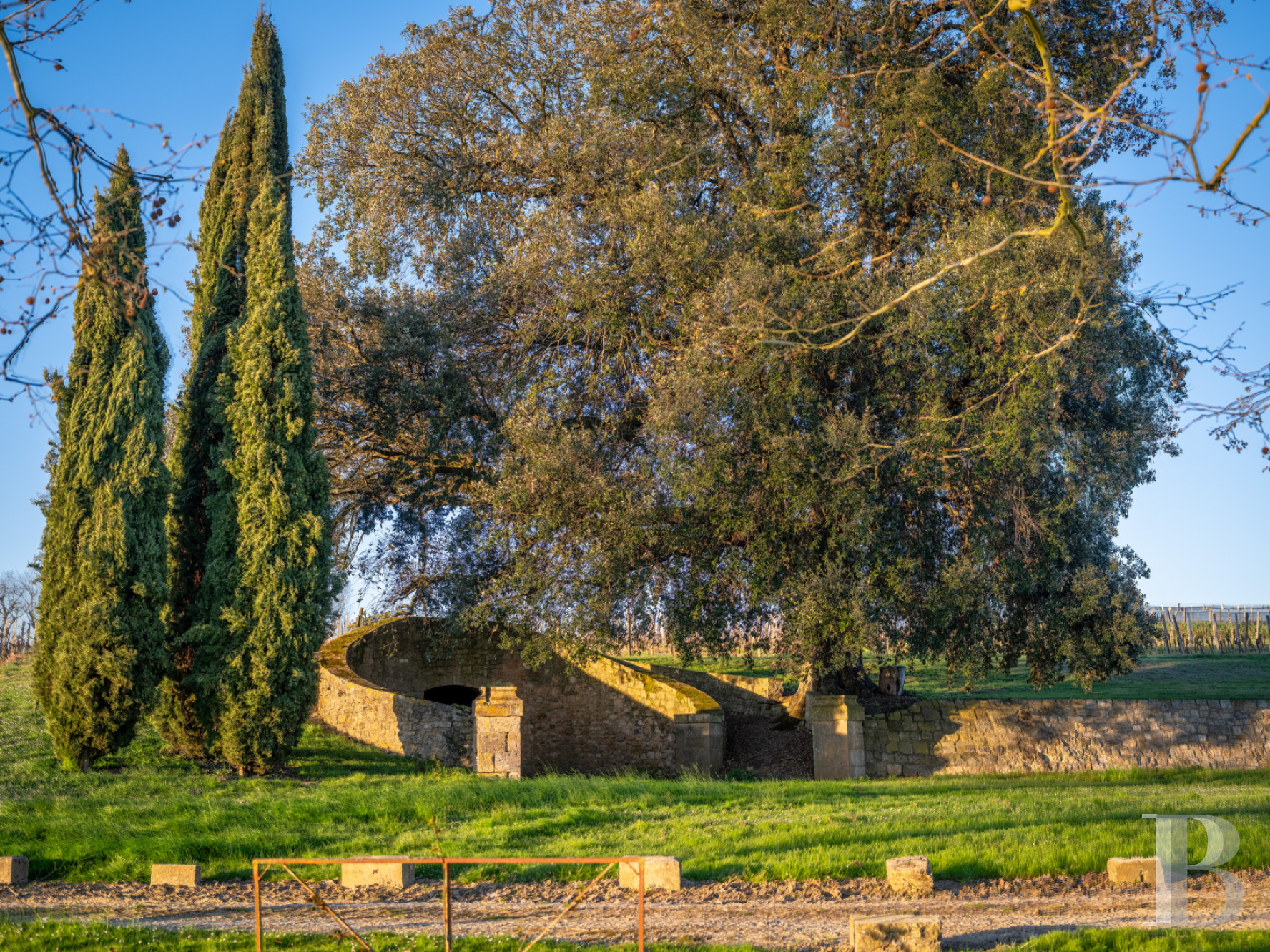
With grounds of more than eight hectares, including 3.5 of vineyards, partially enclosed by stone walls, the chateau, outbuildings and guesthouse are surrounded by ornamental grounds planted with majestic mature trees, while a swimming pool, sheltered from view, was recently added to the chateau’s verdant exterior.
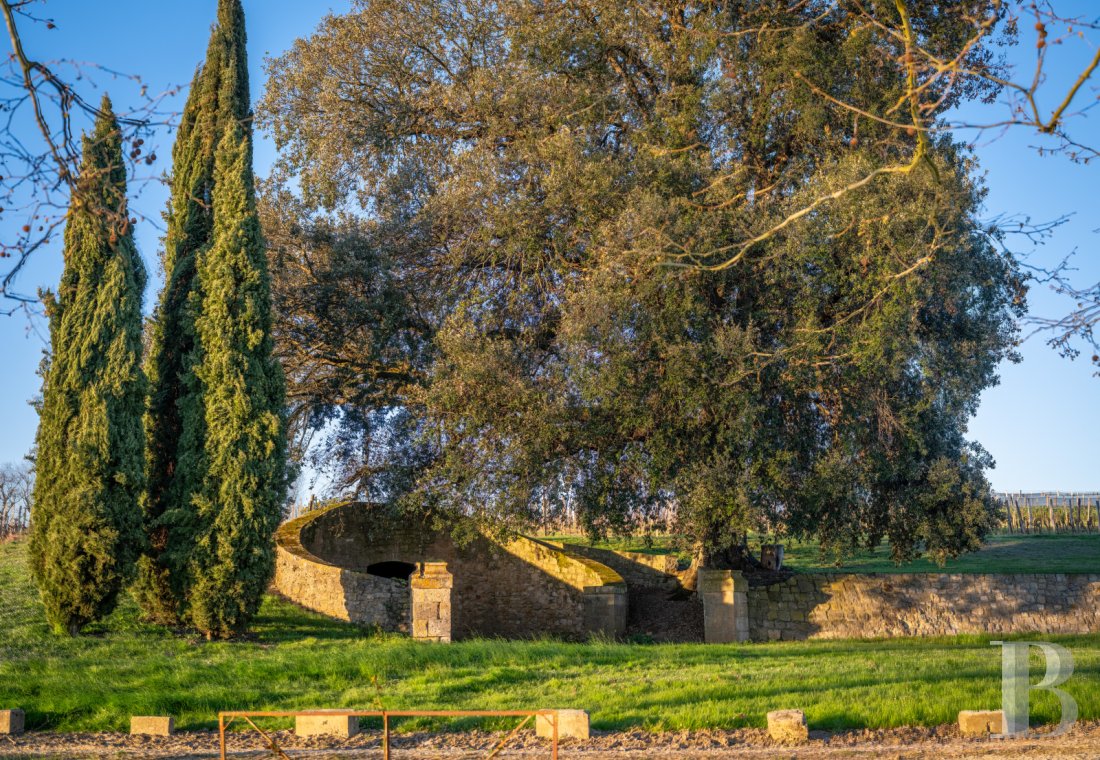
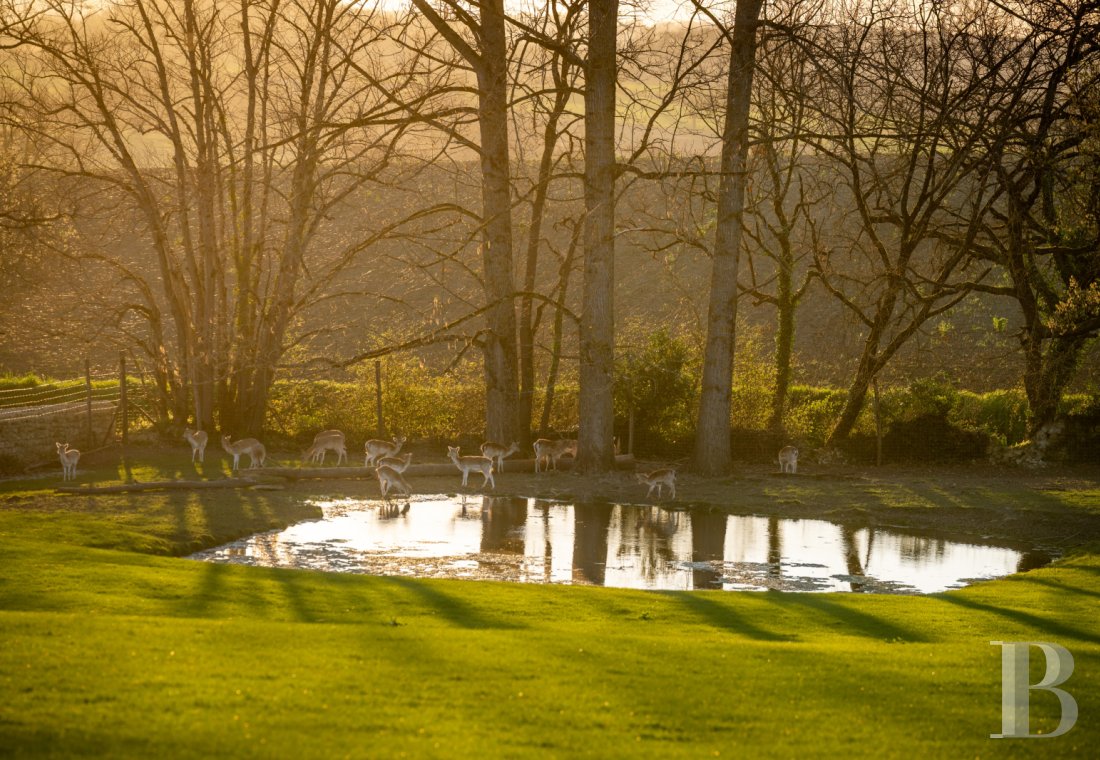
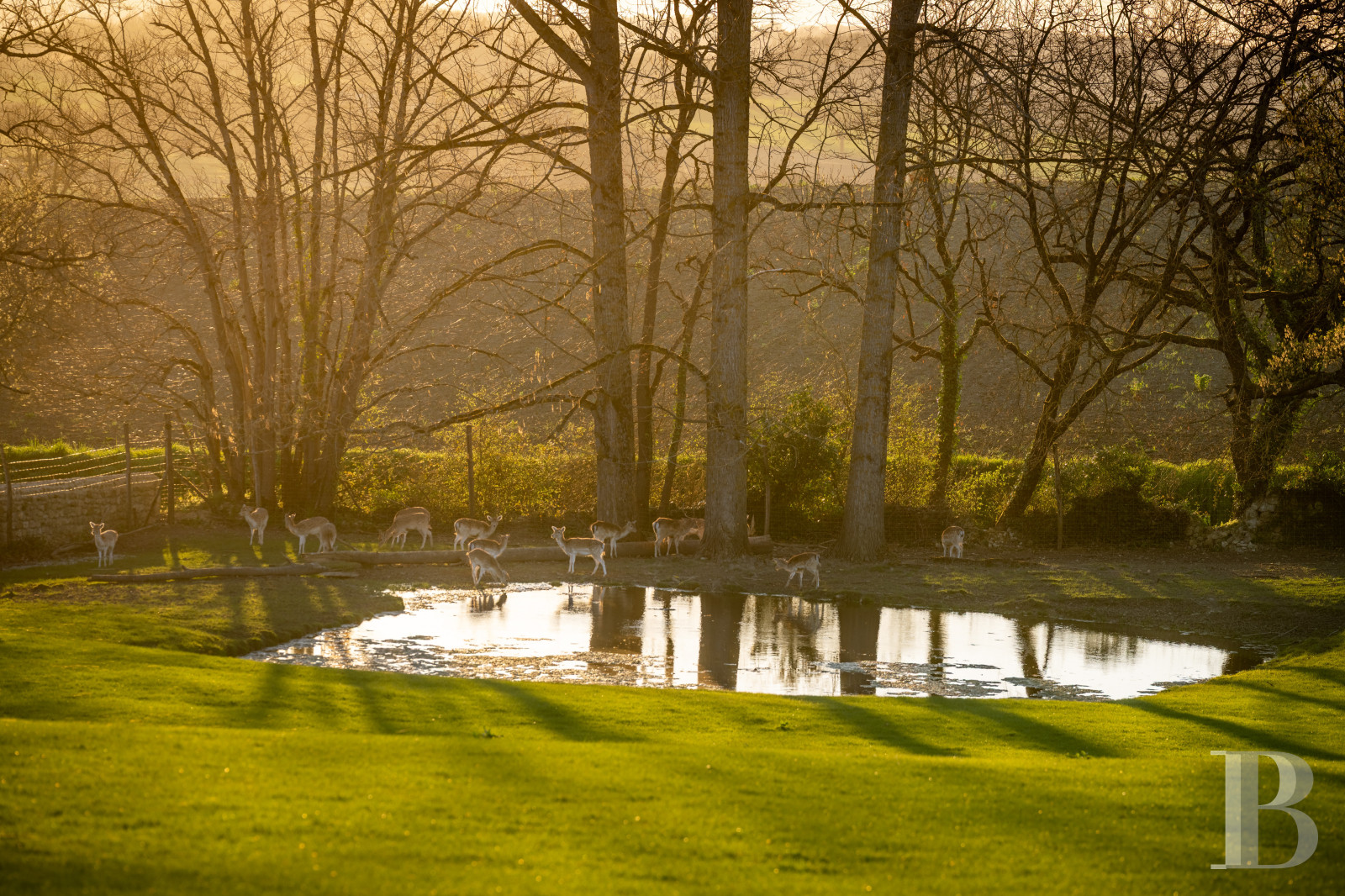
In addition, to the north of the chateau and below a lane bordered by a stone retaining wall, deer graze peacefully in a custom-built enclosure, whereas vineyards, set back from the chateau, extend over a gentle hillside above an ancient natural spring.
Our opinion
With eight hectares of grounds, wooded swaths of lawn and vineyards, which come together to create the verdant and pleasant perimeter of a world apart, the chateau’s silhouette stands out thanks to this region’s dazzling sunlight, while the dwelling is also notable given its many architectural and decorative elements from the 18th century as well as its human-sized dimensions.
In addition, its location, along the edge of a village and perched up on a hill, endows it with unobstructed views of the horizon as well as the possibility of enjoying a natural environment sheltered from view, whereas its public reception areas are conducive to a number of commercial or artistic projects, facilitated by the existence of the self-contained guesthouse.
Reference 738780
| Main building floor area | 765 m² |
| Outbuildings floor area | 980 m² |
| including refurbished area | 130 m² |
| Land registry surface area | 8 ha 24 a |
| Total floor area | 530 m² |
French Energy Performance Diagnosis
Information on the risks to which this property is exposed is available on the website: www.georisques.gouv.fr
Share


- Condom -
- Gers -
- Midi-Pyrénées -
- Occitania
NB: The above information is not only the result of our visit to the property; it is also based on information provided by the current owner. It is by no means comprehensive or strictly accurate especially where surface areas and construction dates are concerned. We cannot, therefore, be held liable for any misrepresentation.