



A 16th-century chateau on 3.6-hectare grounds,
ten minutes from downtown Albi, on the banks of the Tarn River
ten minutes from downtown Albi, on the banks of the Tarn River
Albi,
TARN
midi-pyrenees
81000
FR

Location
To the north of Albi, a brick and stone city built around the impressive and auspicious heft of Saint-Cecile’s Cathedral as well as the administrative centre of the Tarn department, the property is located on the Gô plain, whose name, derived from Occitan, designates a place of passage. Perched on the banks of the Tarn River, the chateau originally faced the village of Lescure, to which it was linked by a ford.
In addition, this episcopal city is now a Unesco World Heritage Site, whereas, from the chateau, Albi’s downtown area can be reached in fifteen minutes via bicycle or ten minutes by car. As for the Toulouse-Blagnac airport, 55 minutes away, it provides rapid connections to both domestic and international destinations.
Description
Built primarily between the 16th and 17th centuries, except for one of the chateau’s wings, which was later rebuilt in the 19th century, the chateau, listed as a regional historical monument, is closely linked to local history: this was the birthplace of Jean-François de Galaup in 1741, Count of Lapérouse and a famous navigator and explorer, who spent his childhood here, while the dwelling has preserved, for the most part, its 18th-century layout.
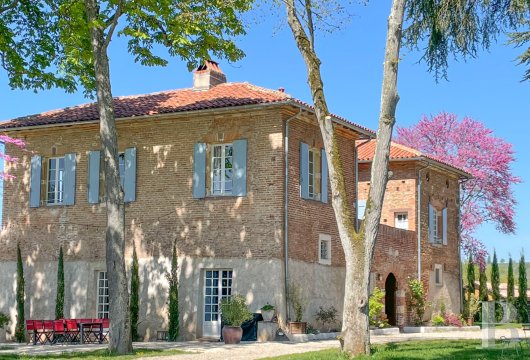
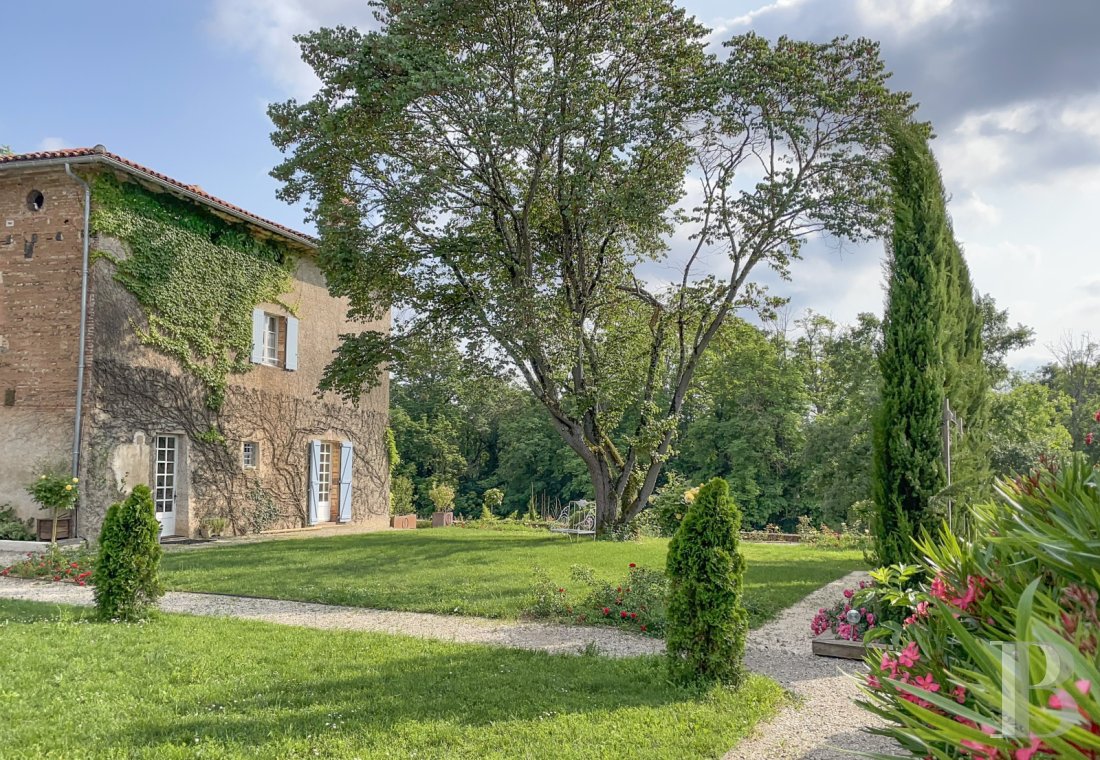
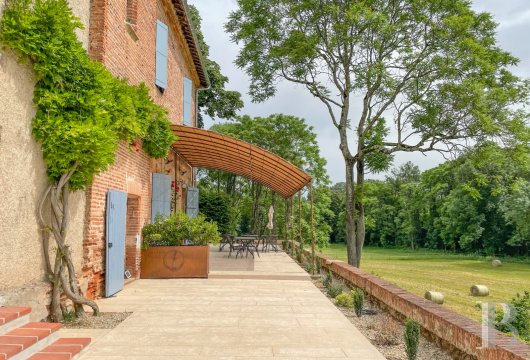
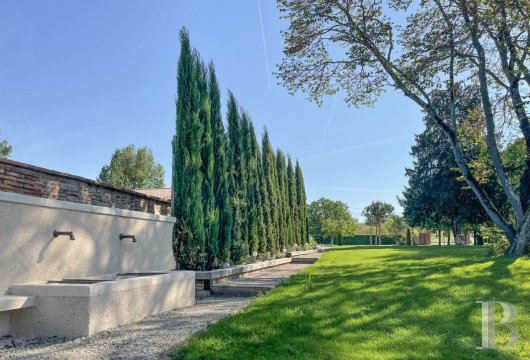
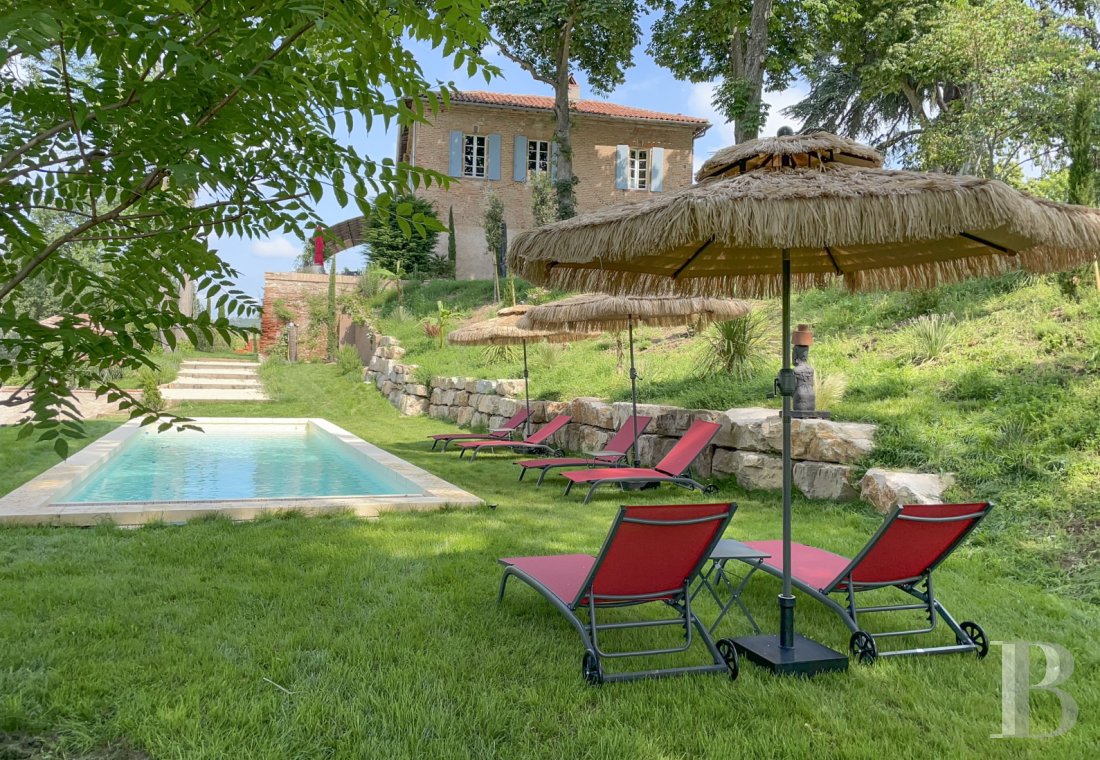
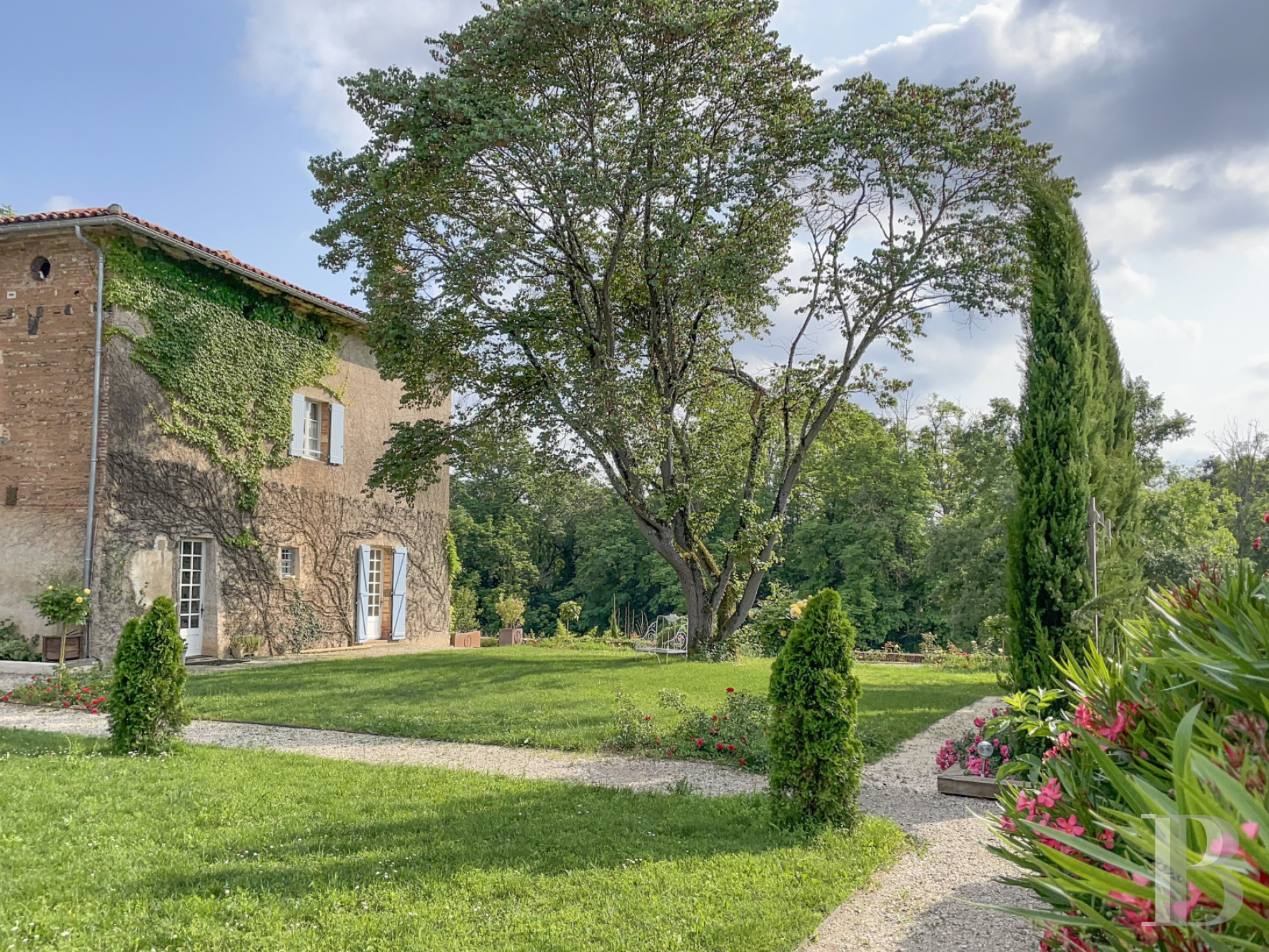
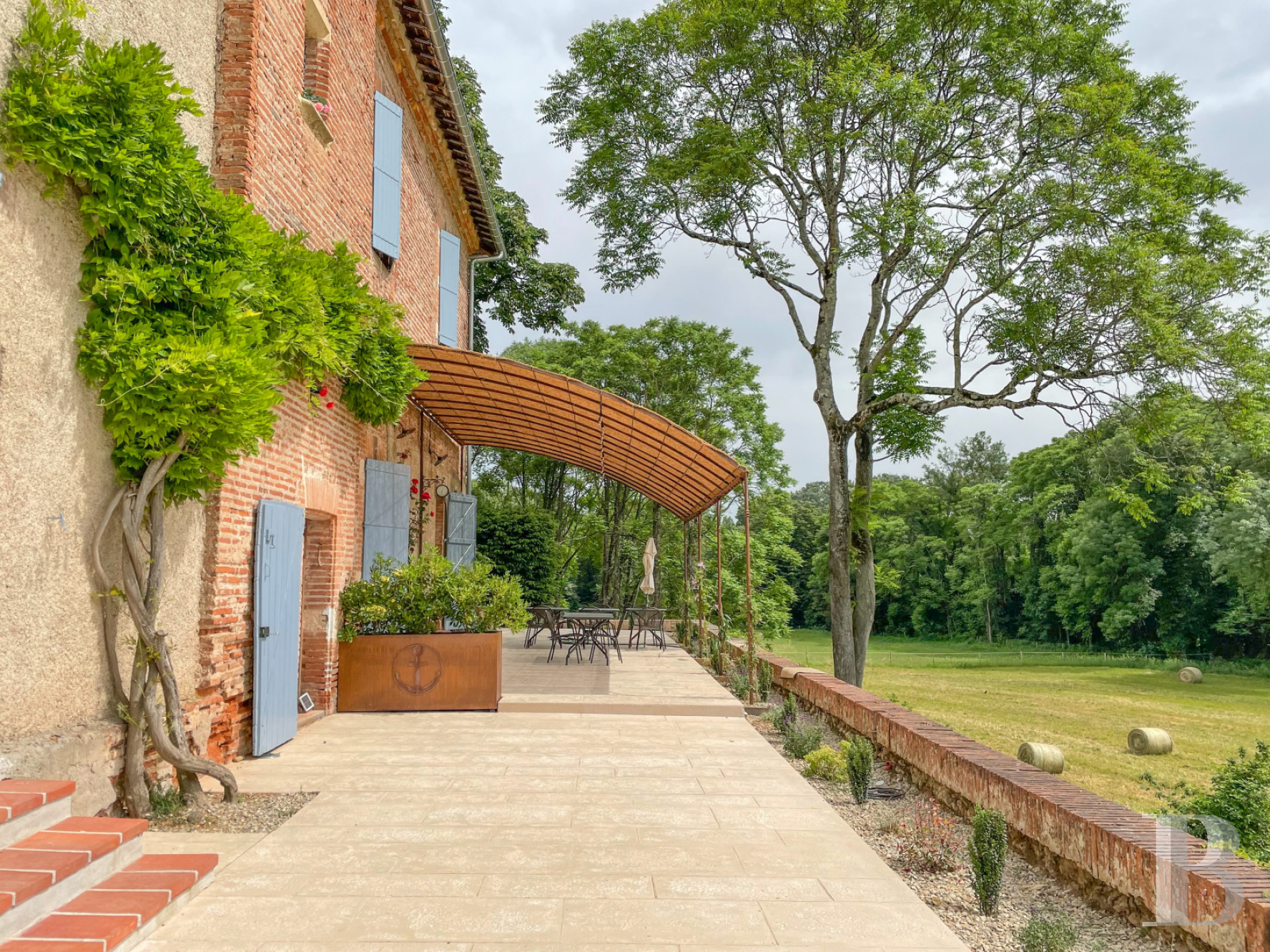
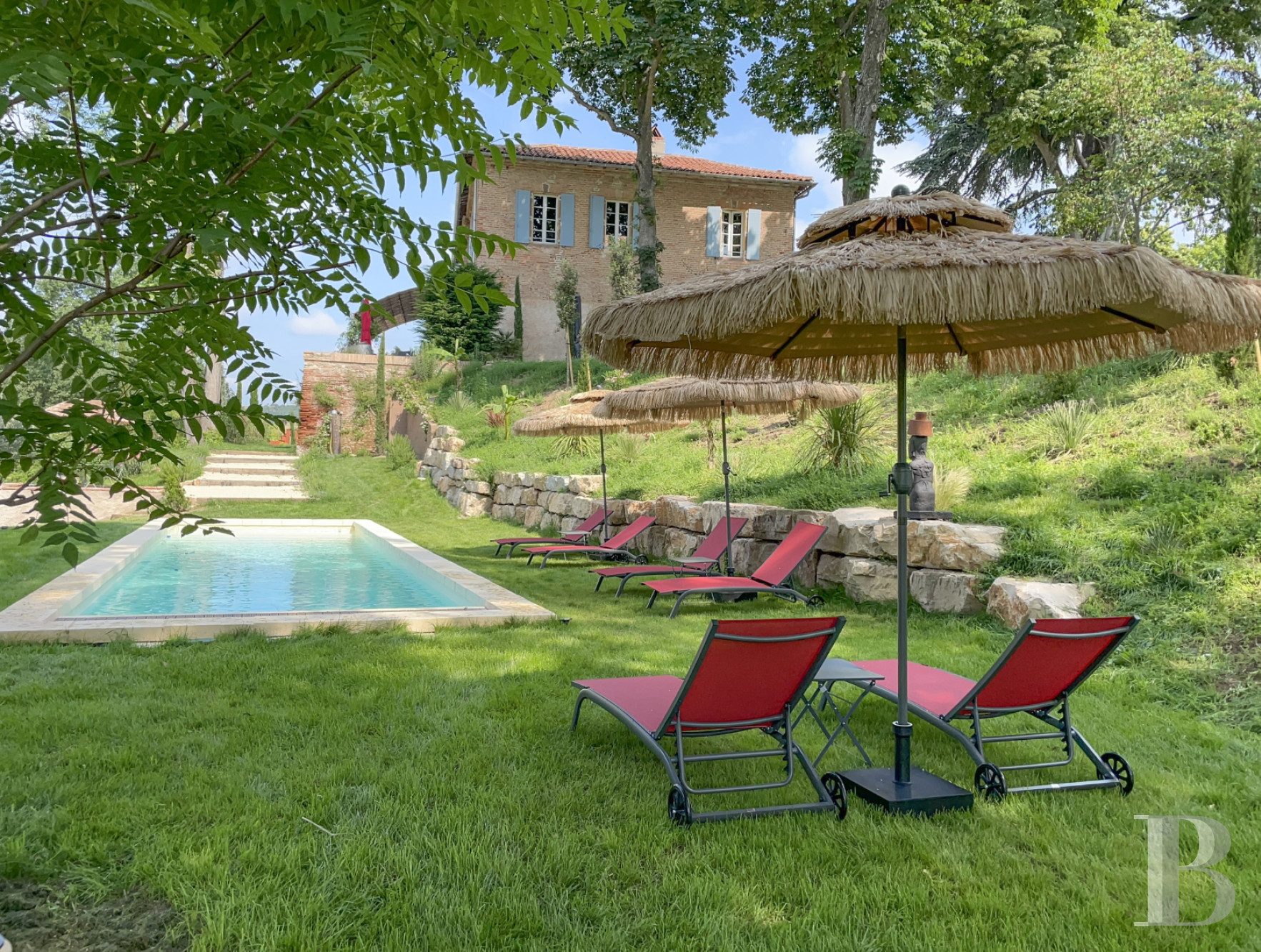
Accessible via a metal gate, which opens on to a tree-lined lane that leads to the chateau’s courtyard, the property features a patio that skirts the edifice and overlooks the nearby meadows that descend towards the Tarn, visible through the trees. Below, a swimming pool blends in seamlessly with the property’s rolling topography, while a former nymphaeum, most likely created in the 19th century and supplied with water via a natural spring, is located off to one side.
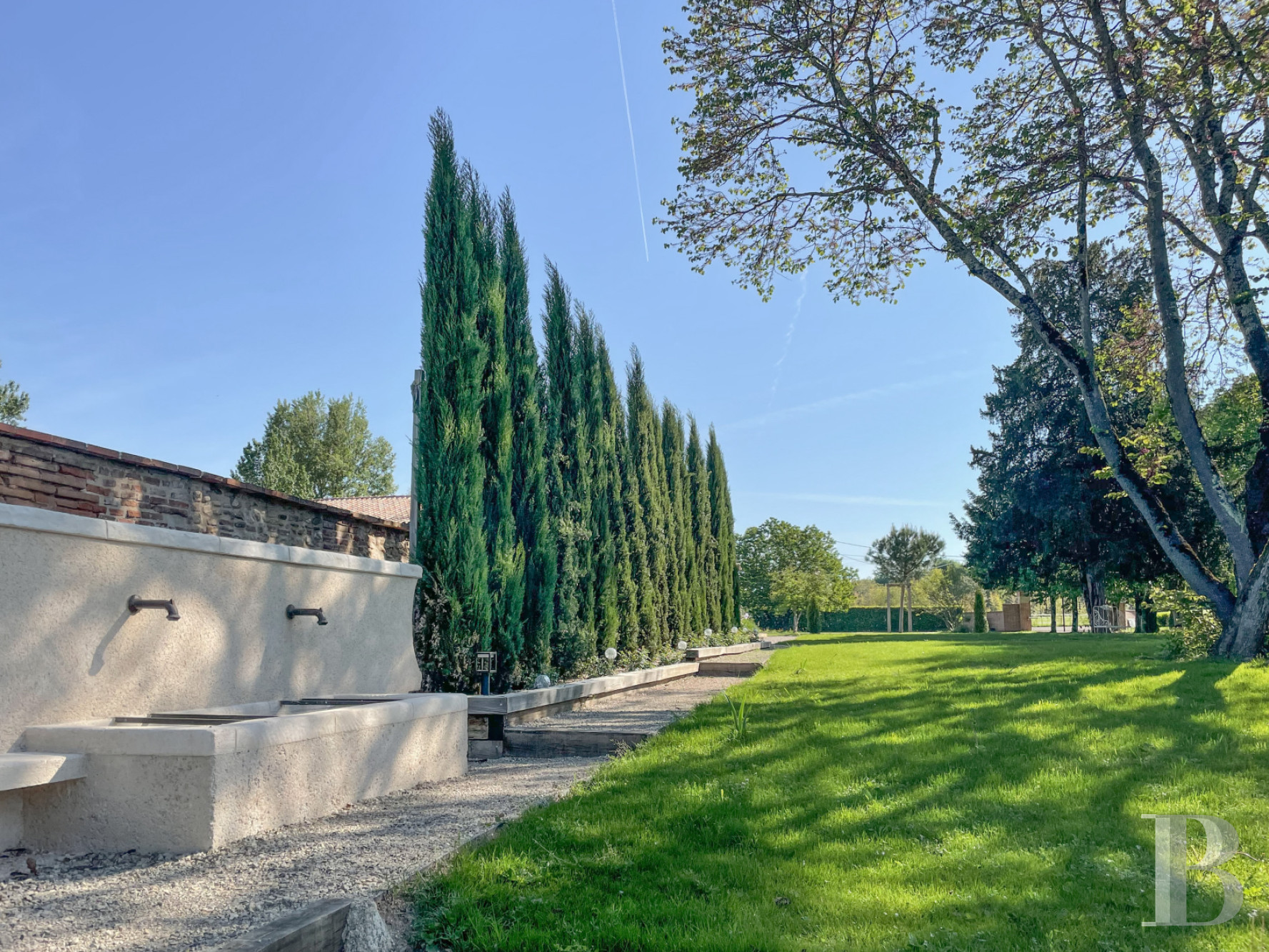
As for the grounds, of approximately 3.6 hectares, they feature tall trees, ornamental plants, pastureland and wooded areas, whereas the chateau enjoys unobstructed panoramas of the river from its patio and exteriors.
Accessible via a metal gate, which opens on to a tree-lined lane that leads to the chateau’s courtyard, the property features a patio that skirts the edifice and overlooks the nearby meadows that descend towards the Tarn, visible through the trees. Below, a swimming pool blends in seamlessly with the property’s rolling topography, while a former nymphaeum, most likely created in the 19th century and supplied with water via a natural spring, is located off to one side.
As for the grounds, of approximately 3.6 hectares, they feature tall trees, ornamental plants, pastureland and wooded areas, whereas the chateau enjoys unobstructed panoramas of the river from its patio and exteriors.
The Chateau
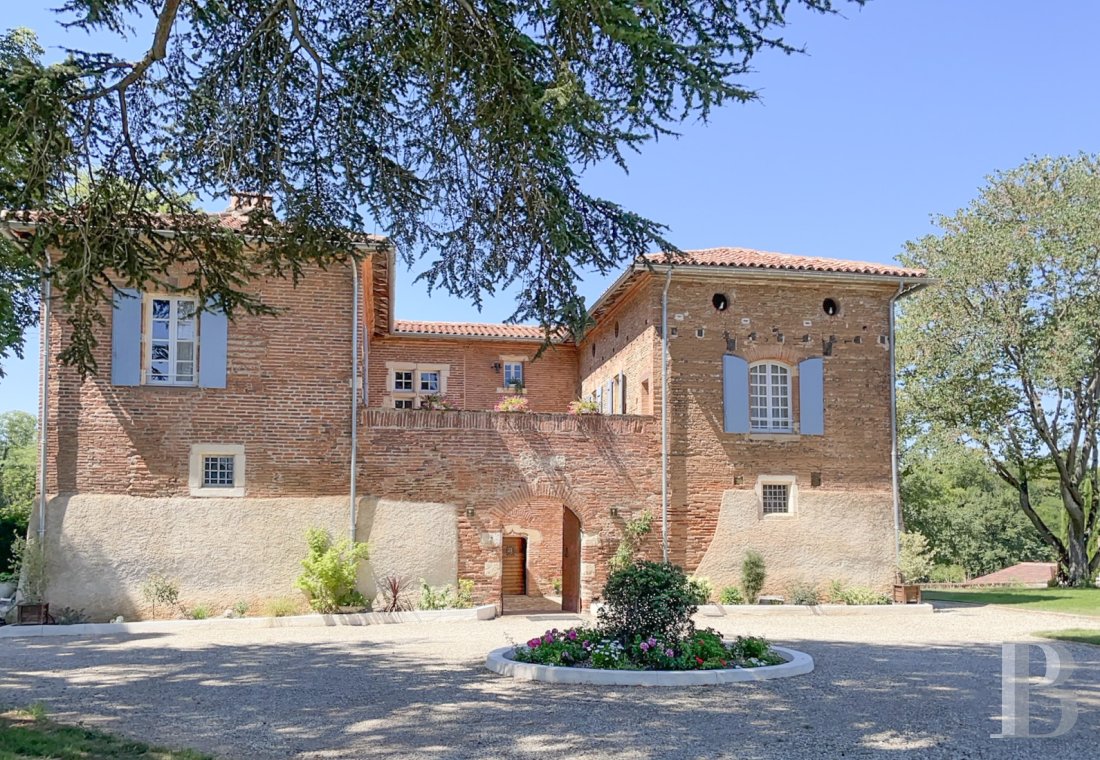
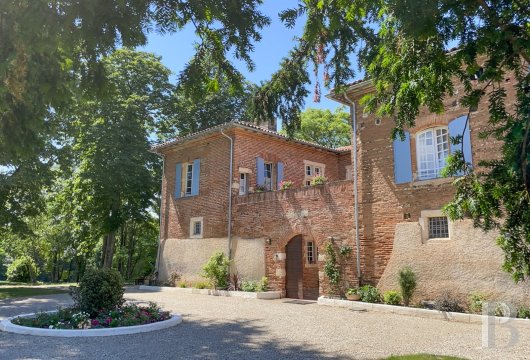
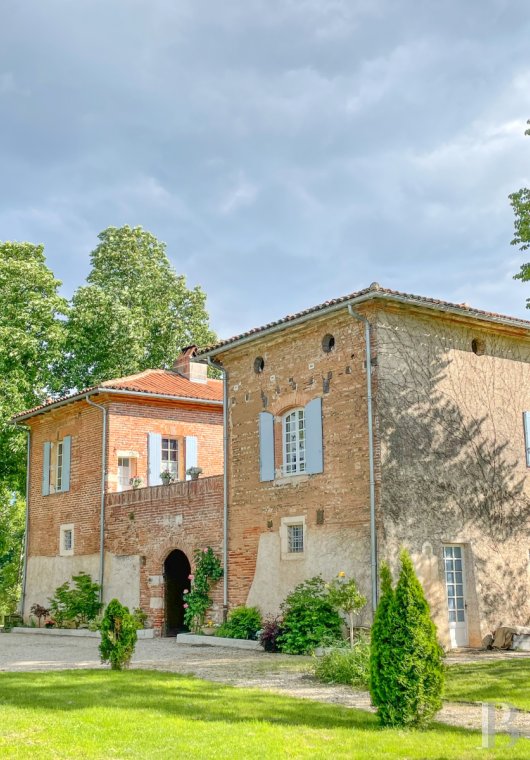
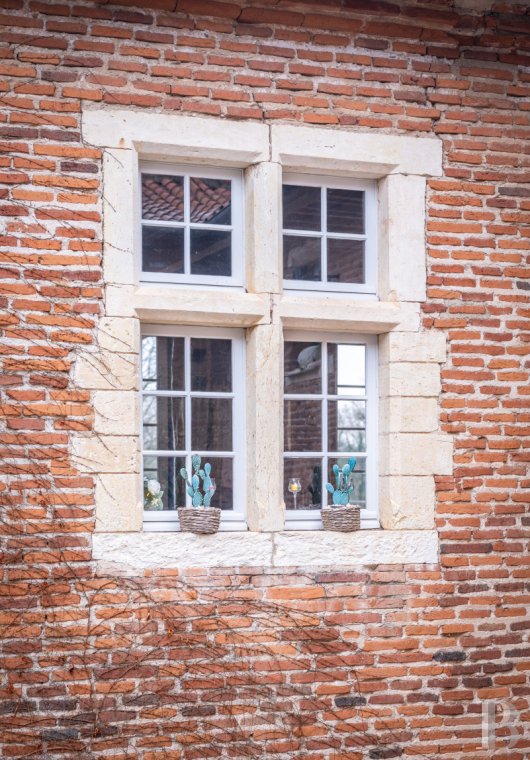
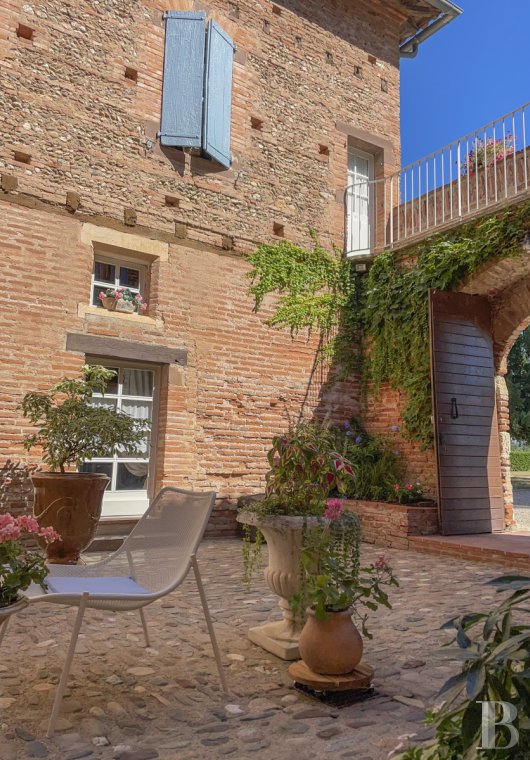
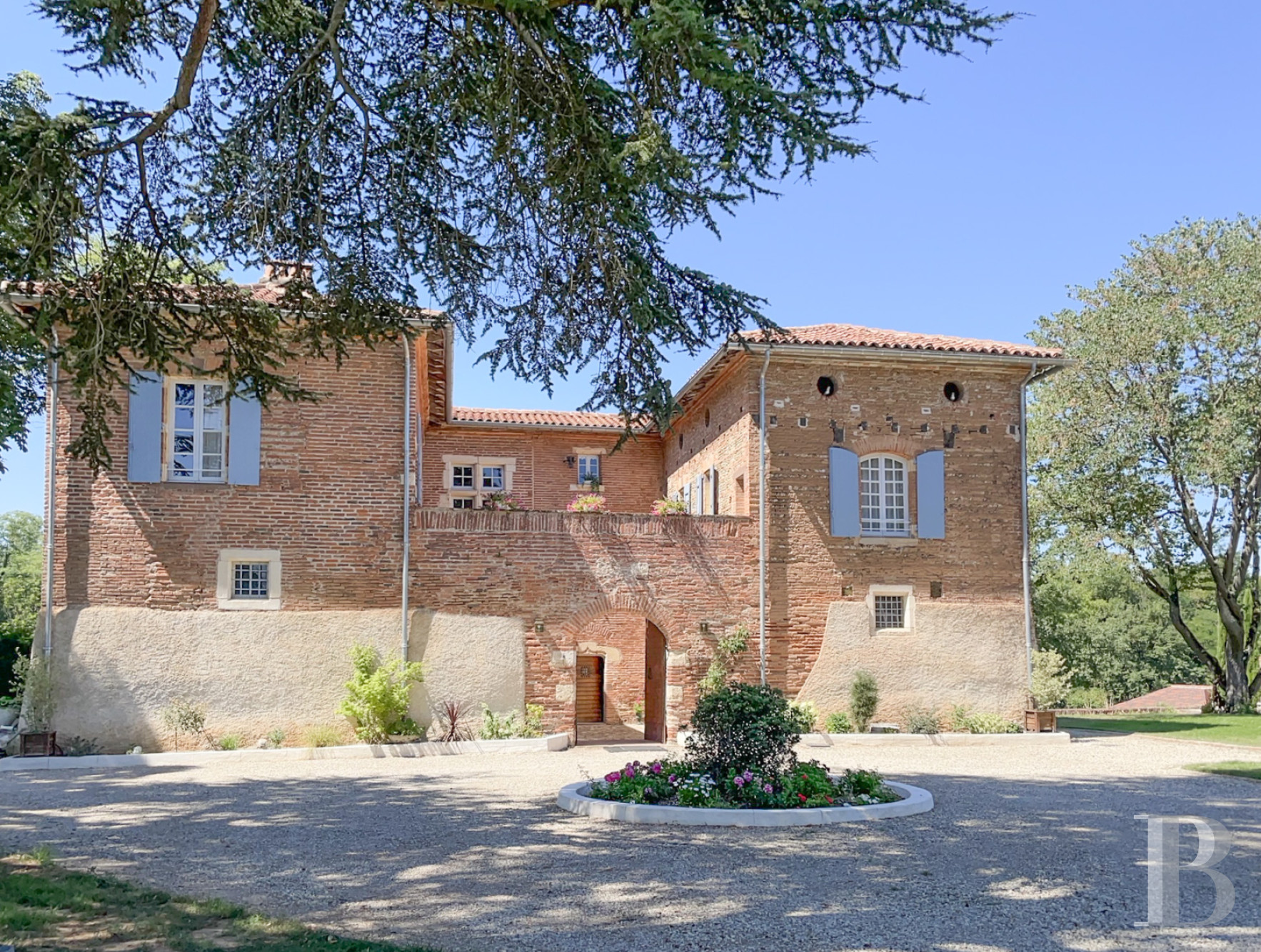
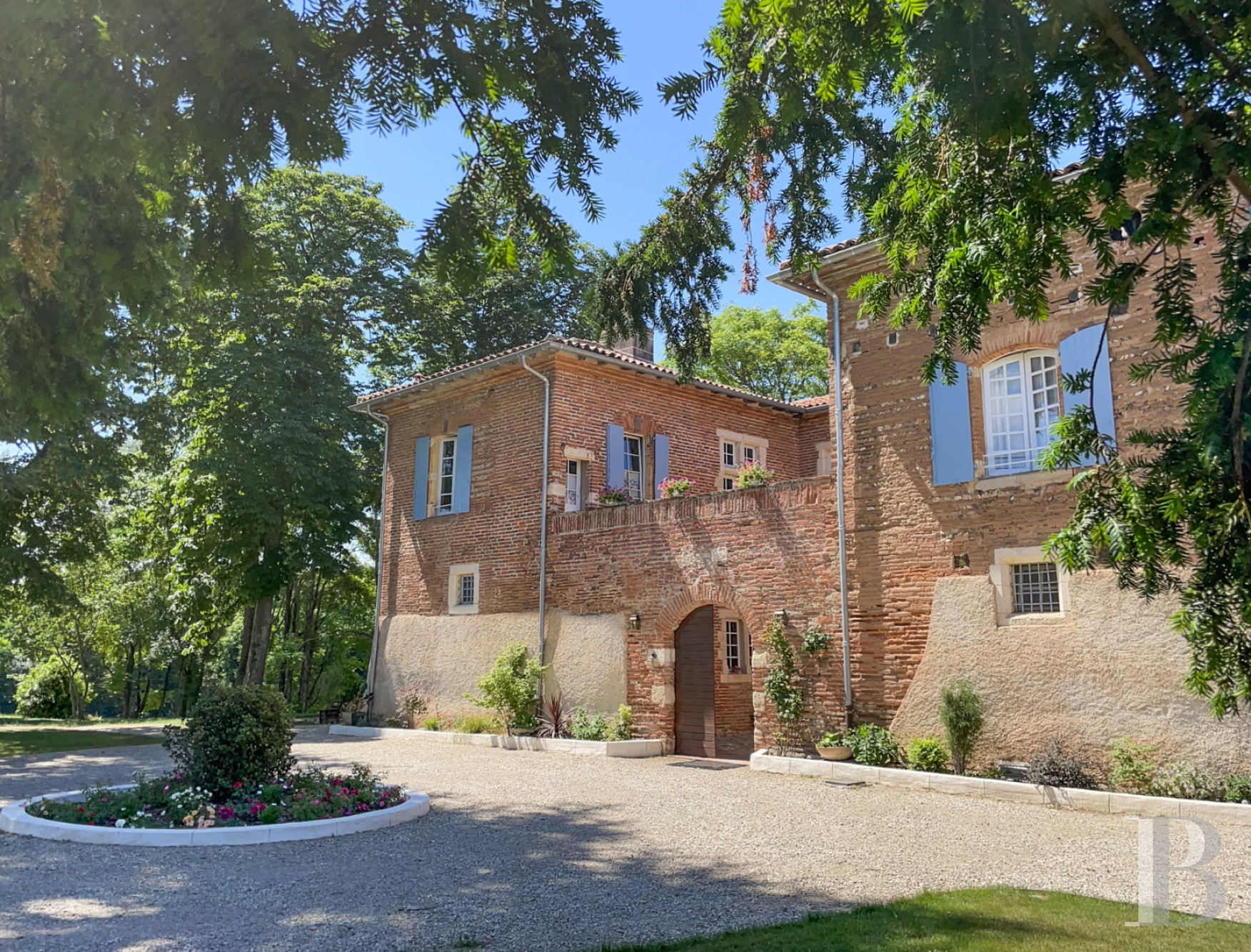
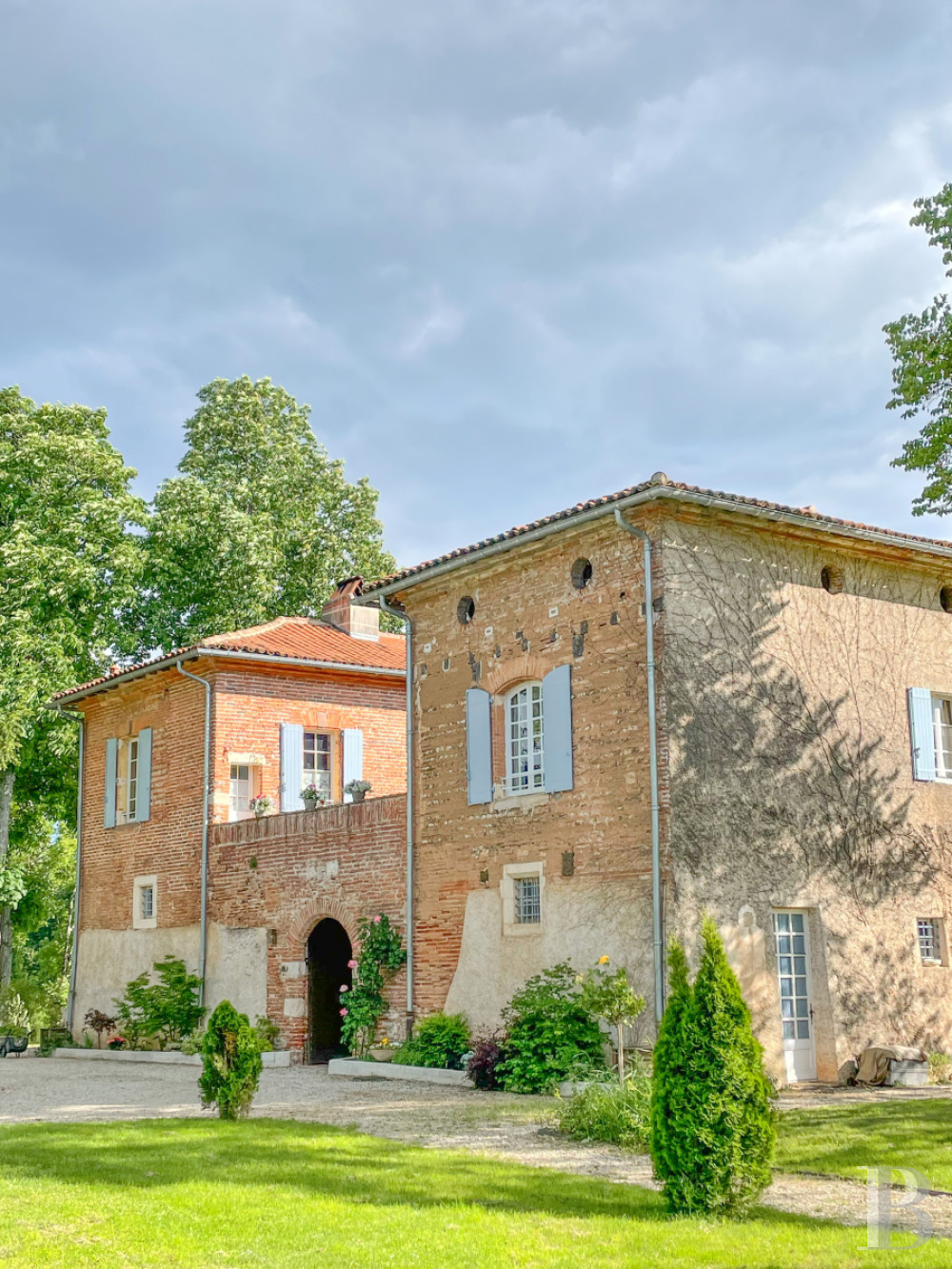
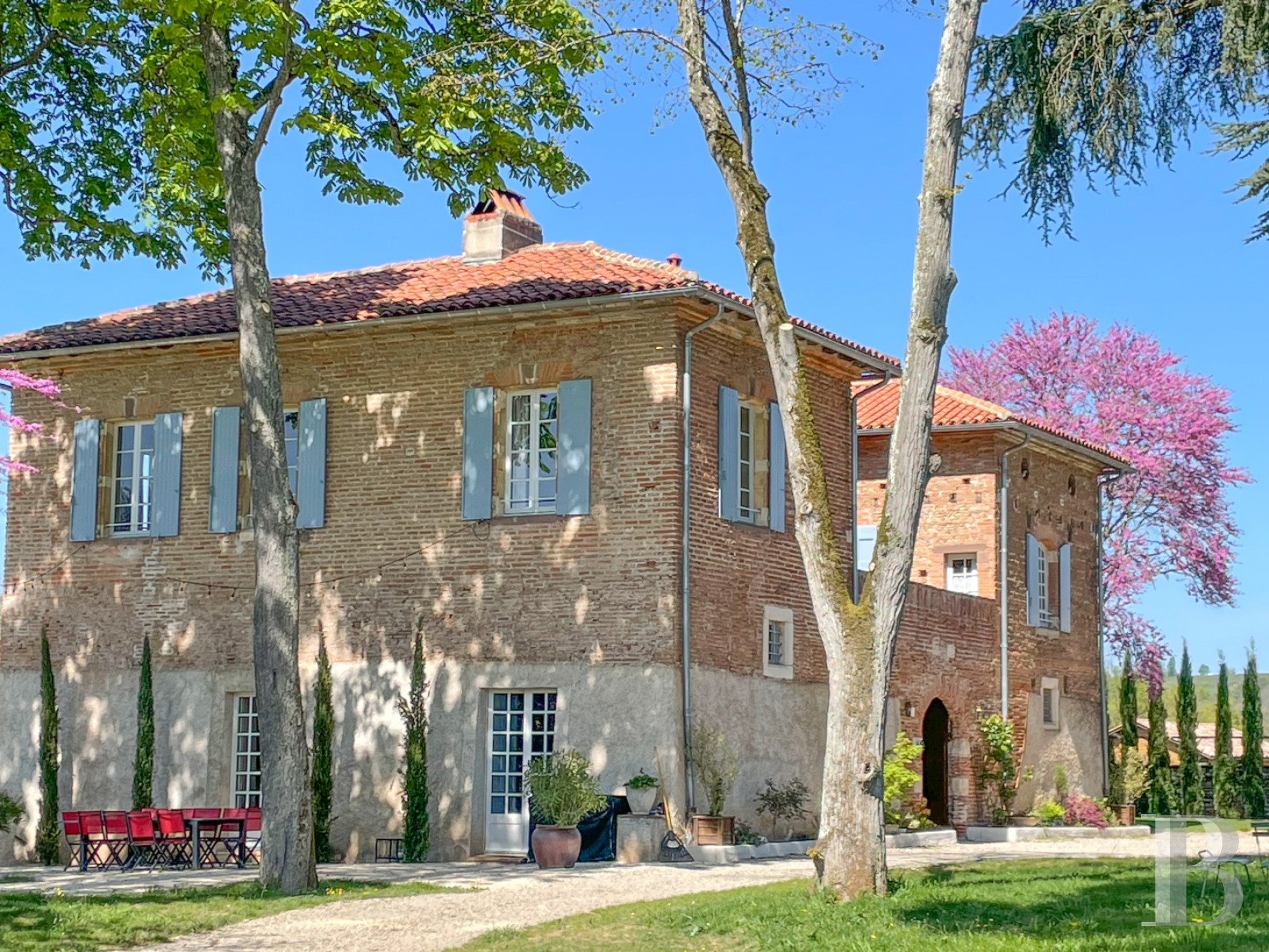
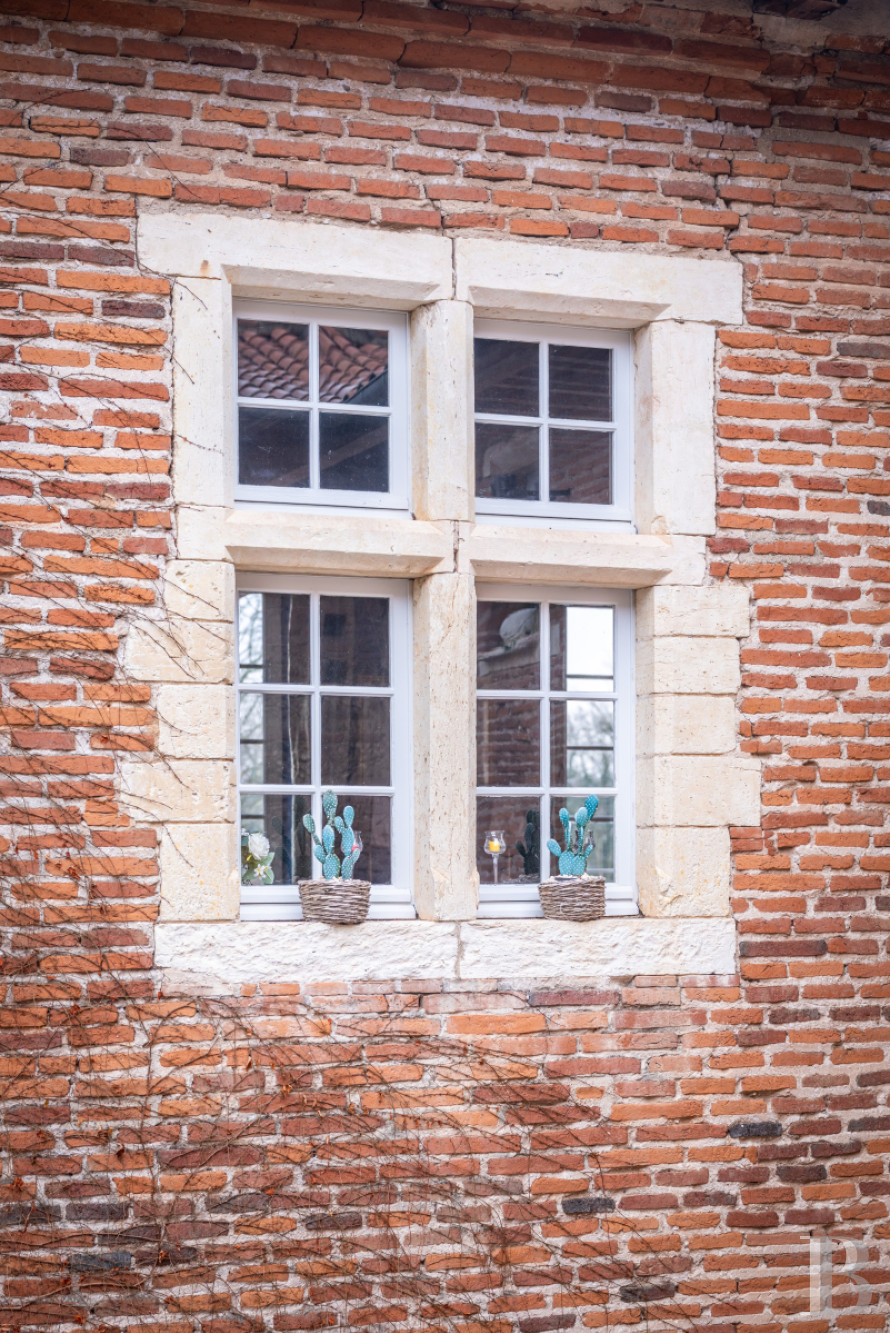
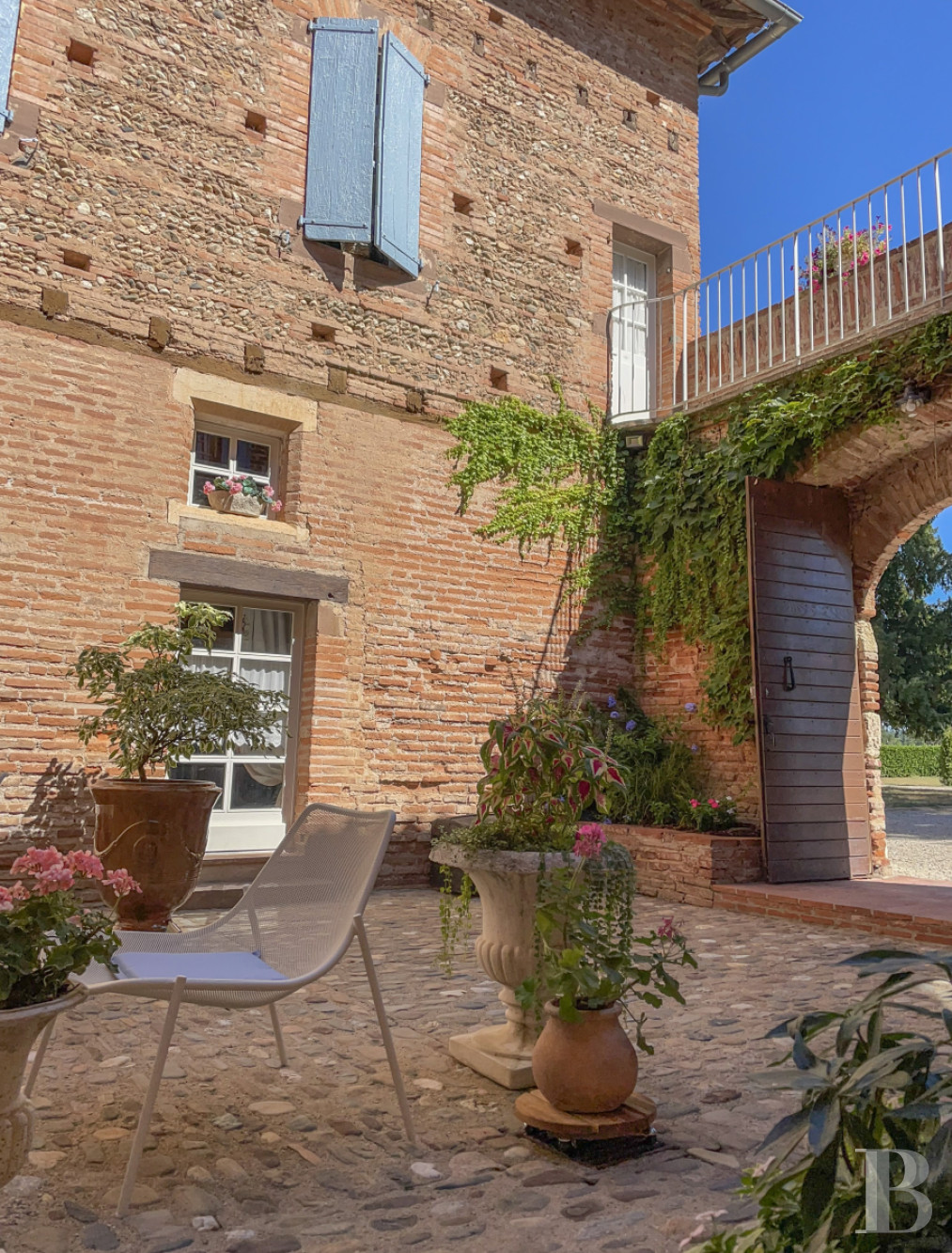
A late-Renaissance dwelling, it is laid out around a U-shaped courtyard, enclosed on its fourth side by a low wall accessible via a carriage entrance. Although mostly preserved in its original state, the dwelling is cadenced by several doors, added later and topped with ogees, as well as cross-windows, while, built out of flat local bricks, the edifice adopts a layout similar to that of a private mansion and incorporates the architectural codes of Renaissance-era Toulouse, this time expressed in a way that is adapted to a noble, yet rural, dwelling.
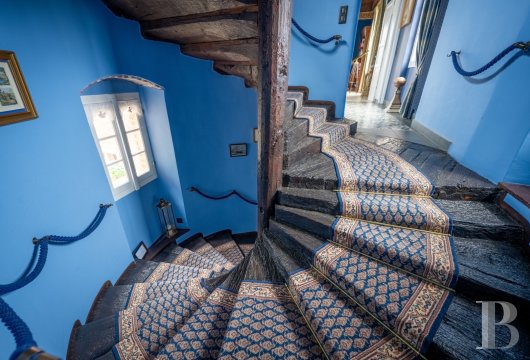
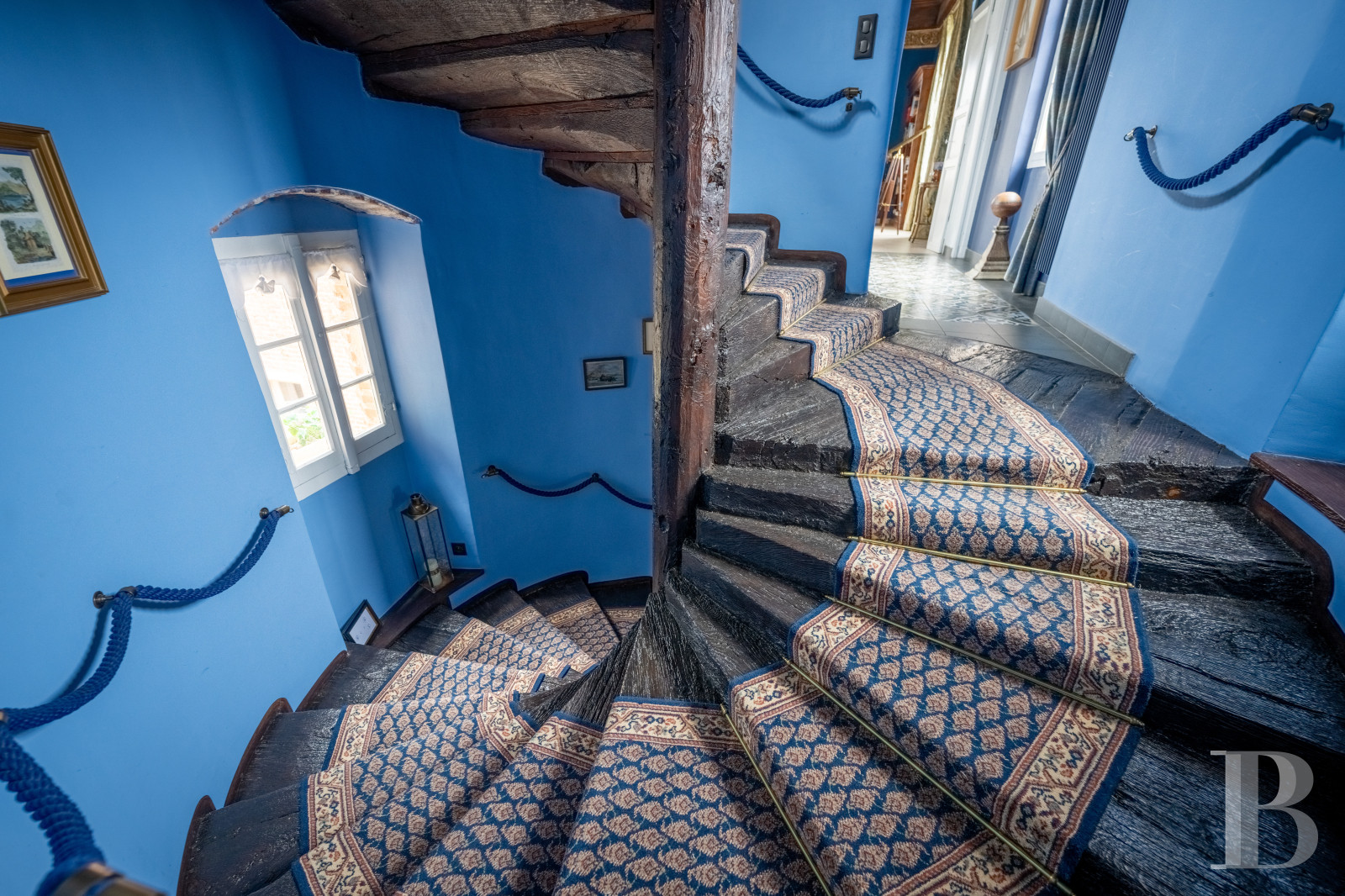
As for the courtyard, facing east, it highlights the building’s chronology: the west and oldest wing housing the spiral staircase; the 17th-century southern wing; and the northern wing, which was resumed in the 19th century.
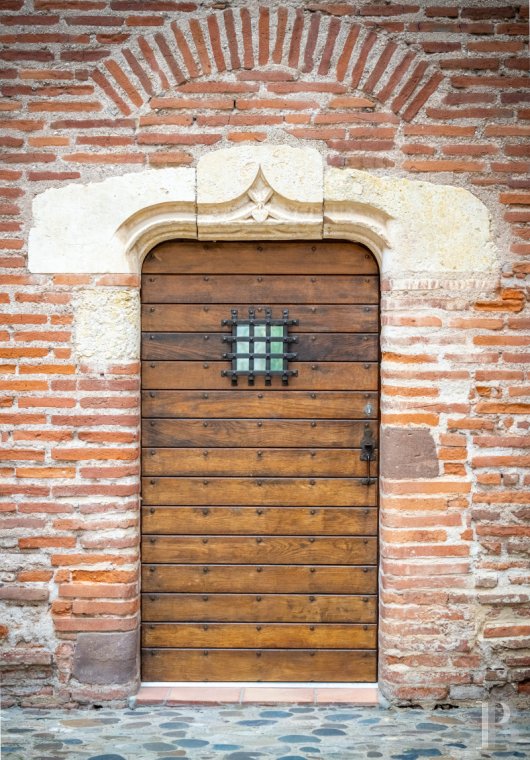
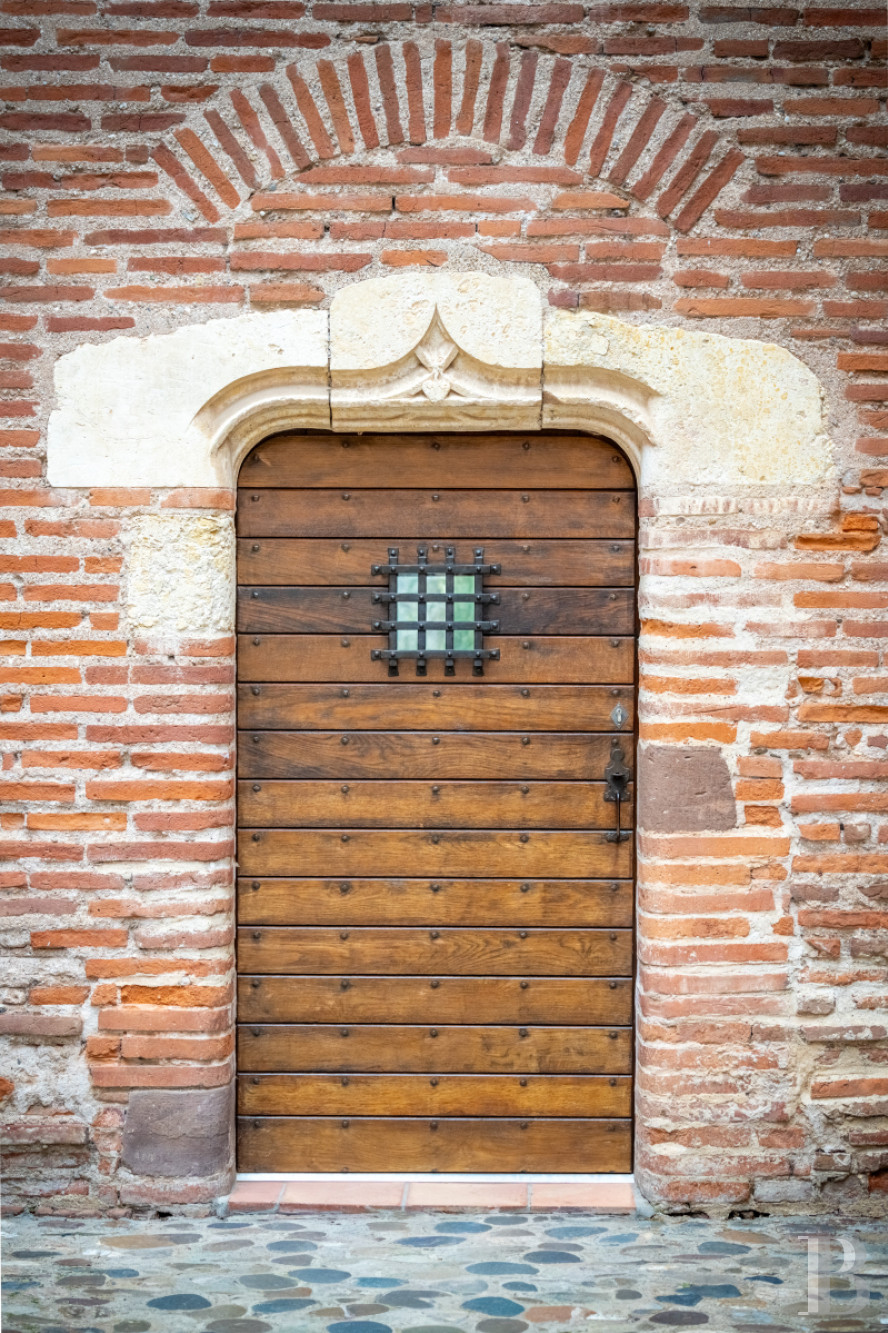
In addition, behind the carriage entrance, the chateau’s exteriors, cadenced by ashlar stone cross-windows, surround its central pebble courtyard, while its front door, topped with a finely carved ogee, is instantly recognisable and provides a stately entrance to this noble residence.
The ground floor
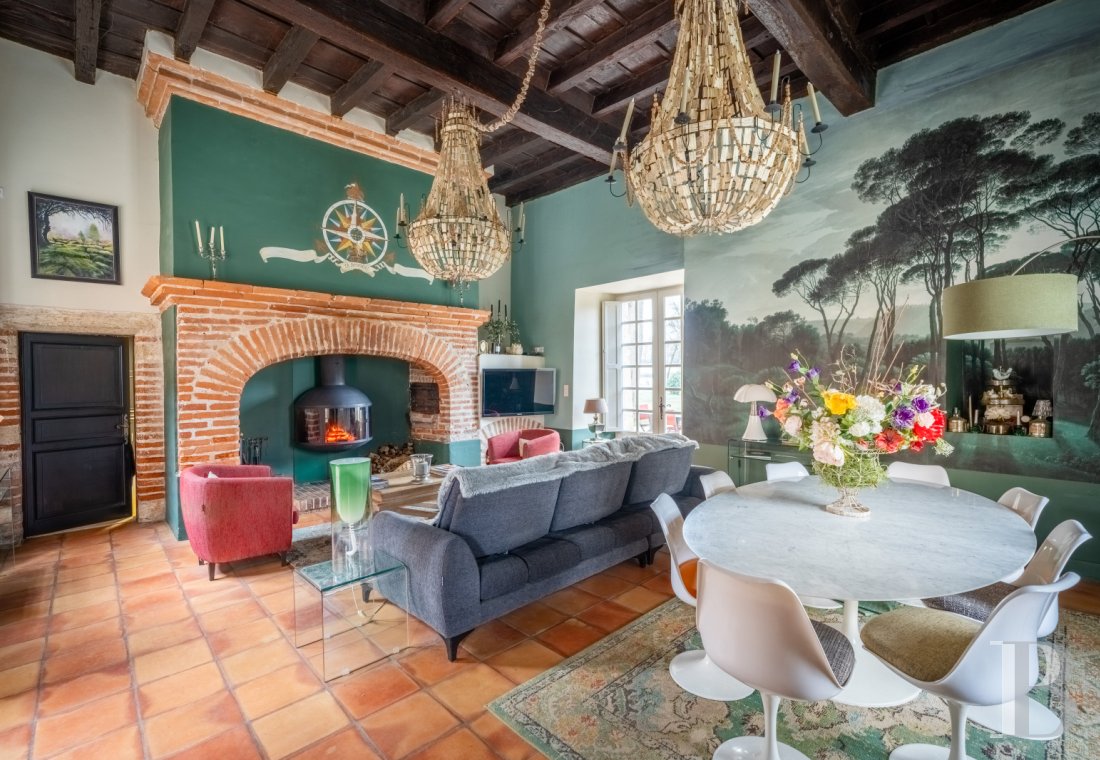
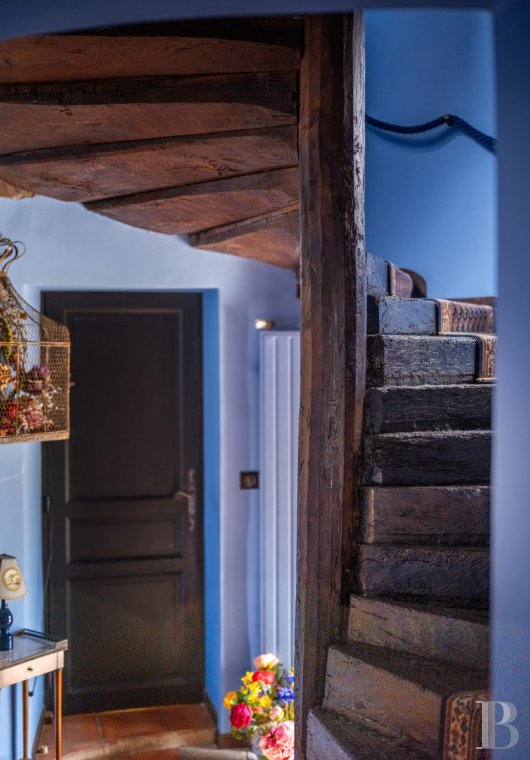
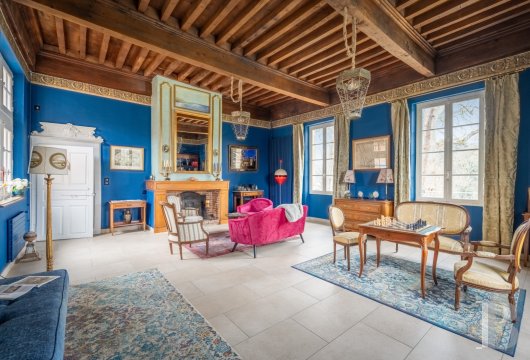
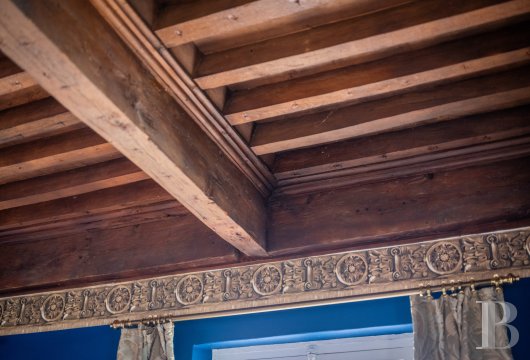
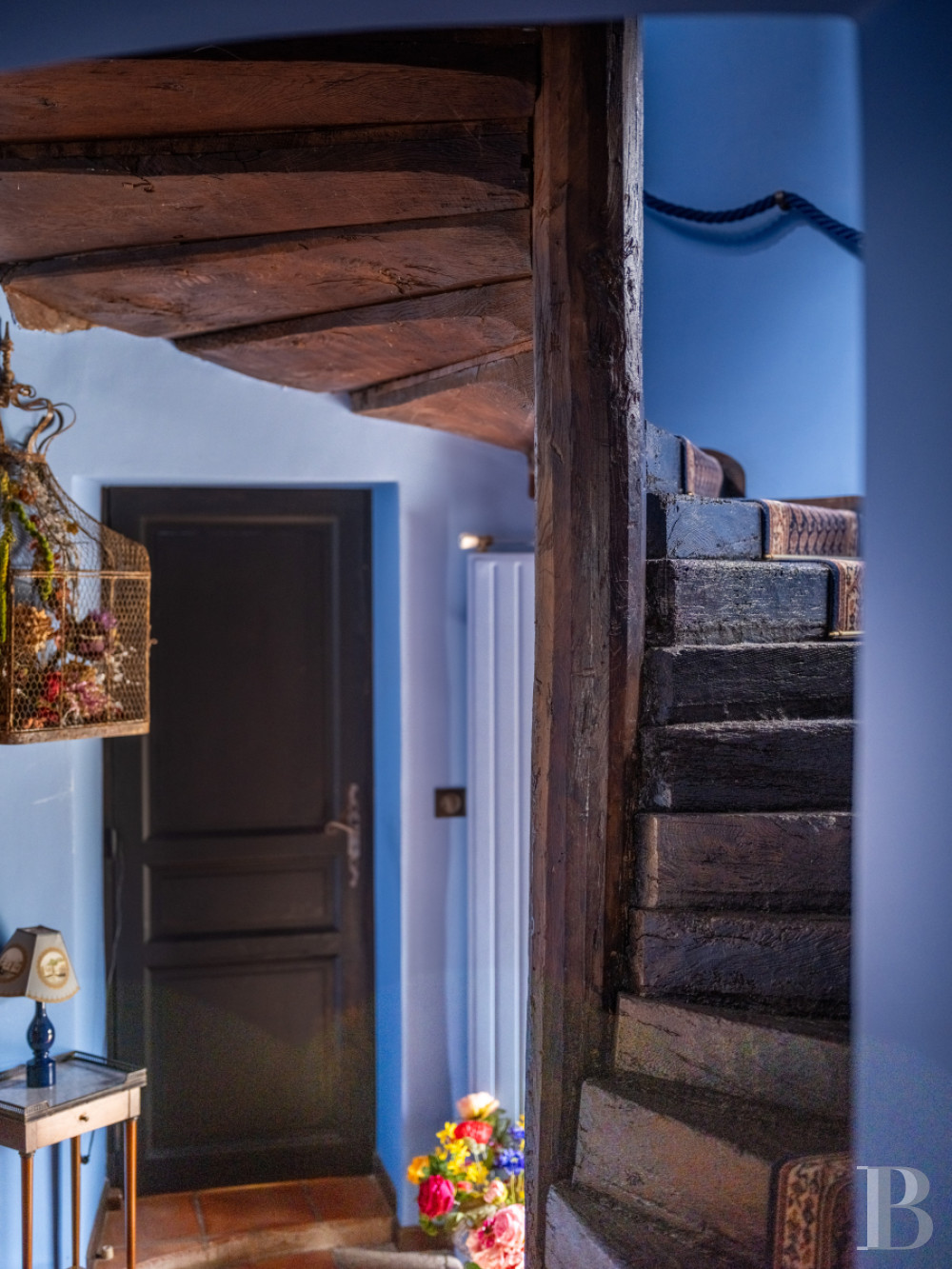
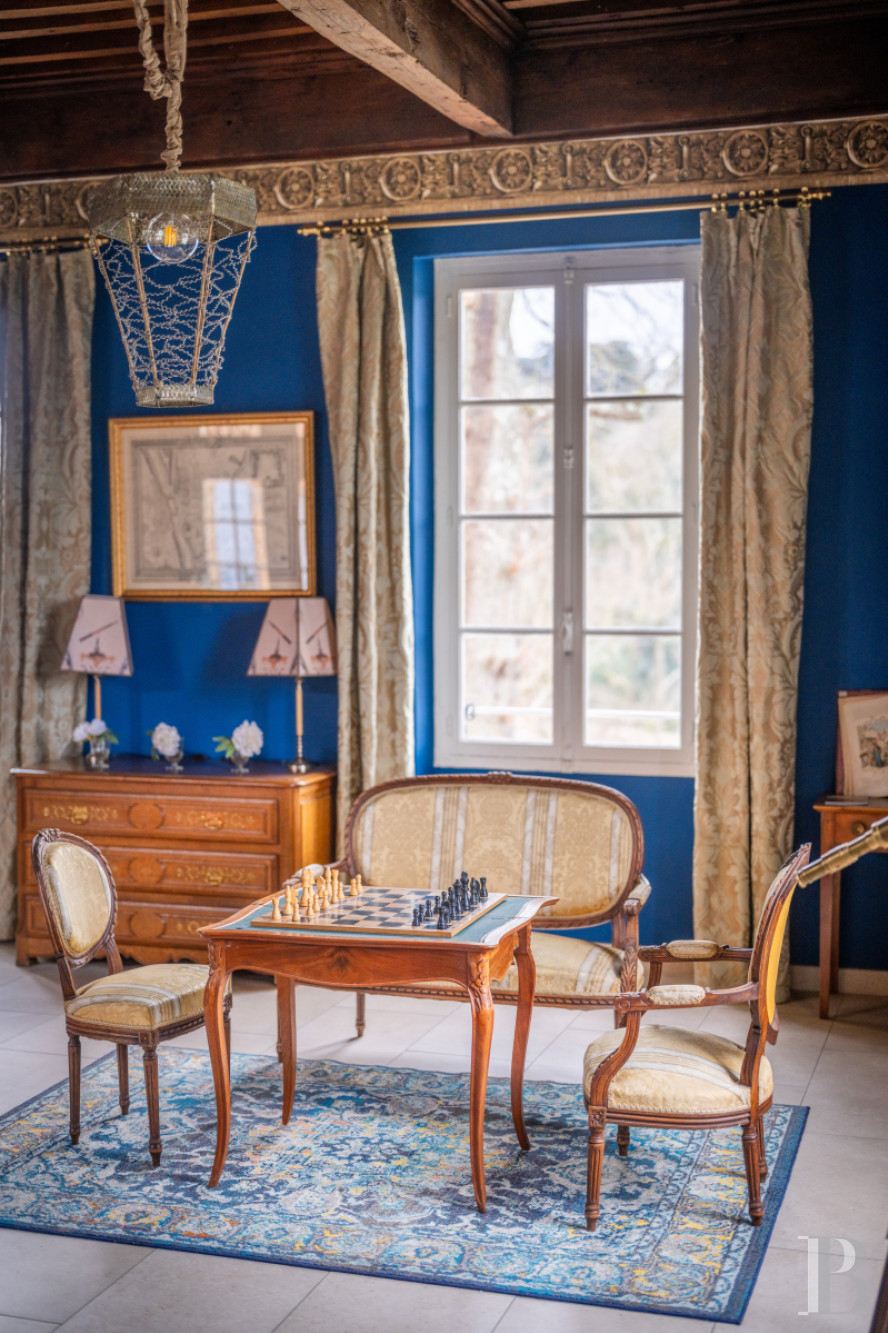
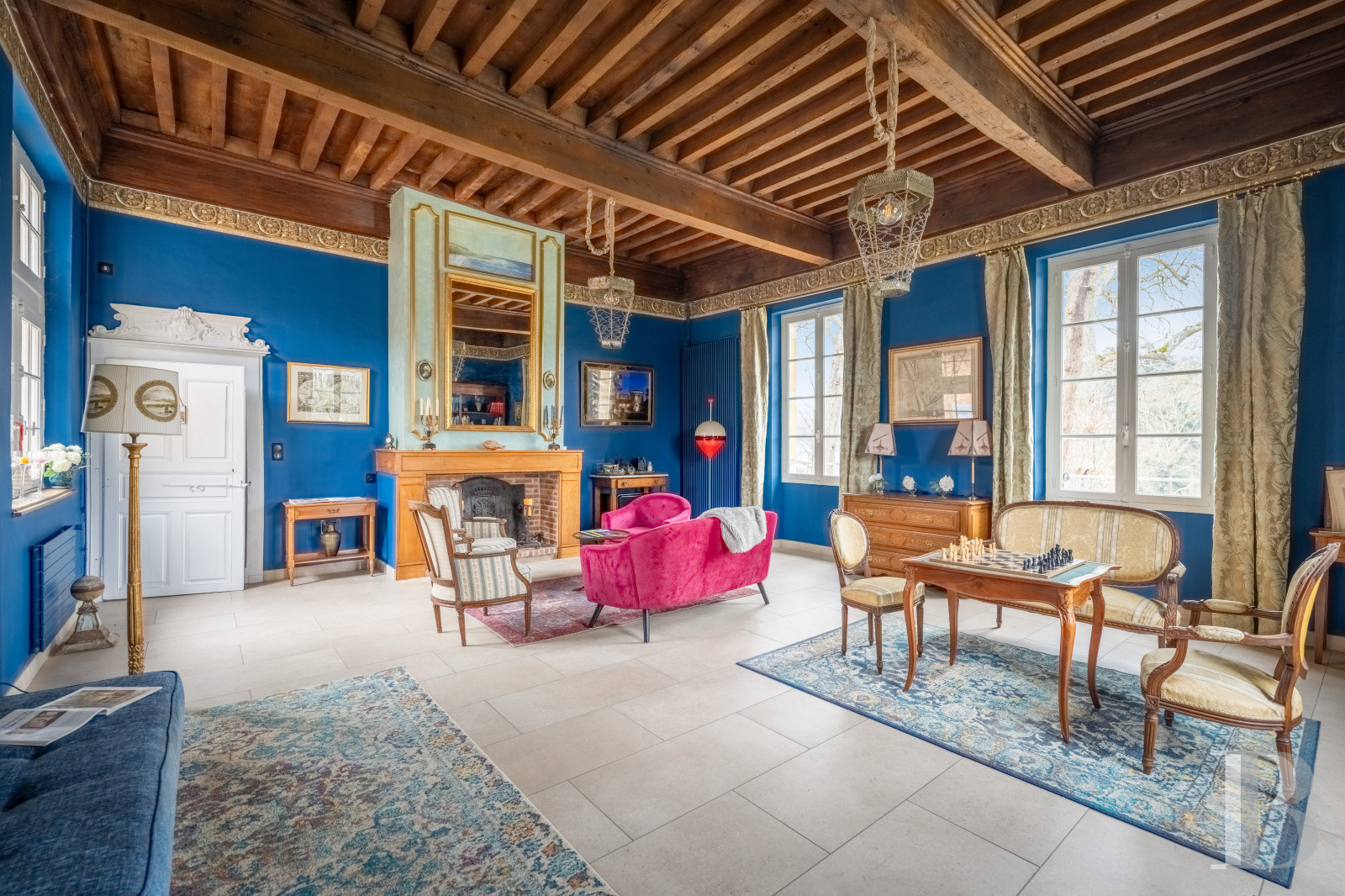
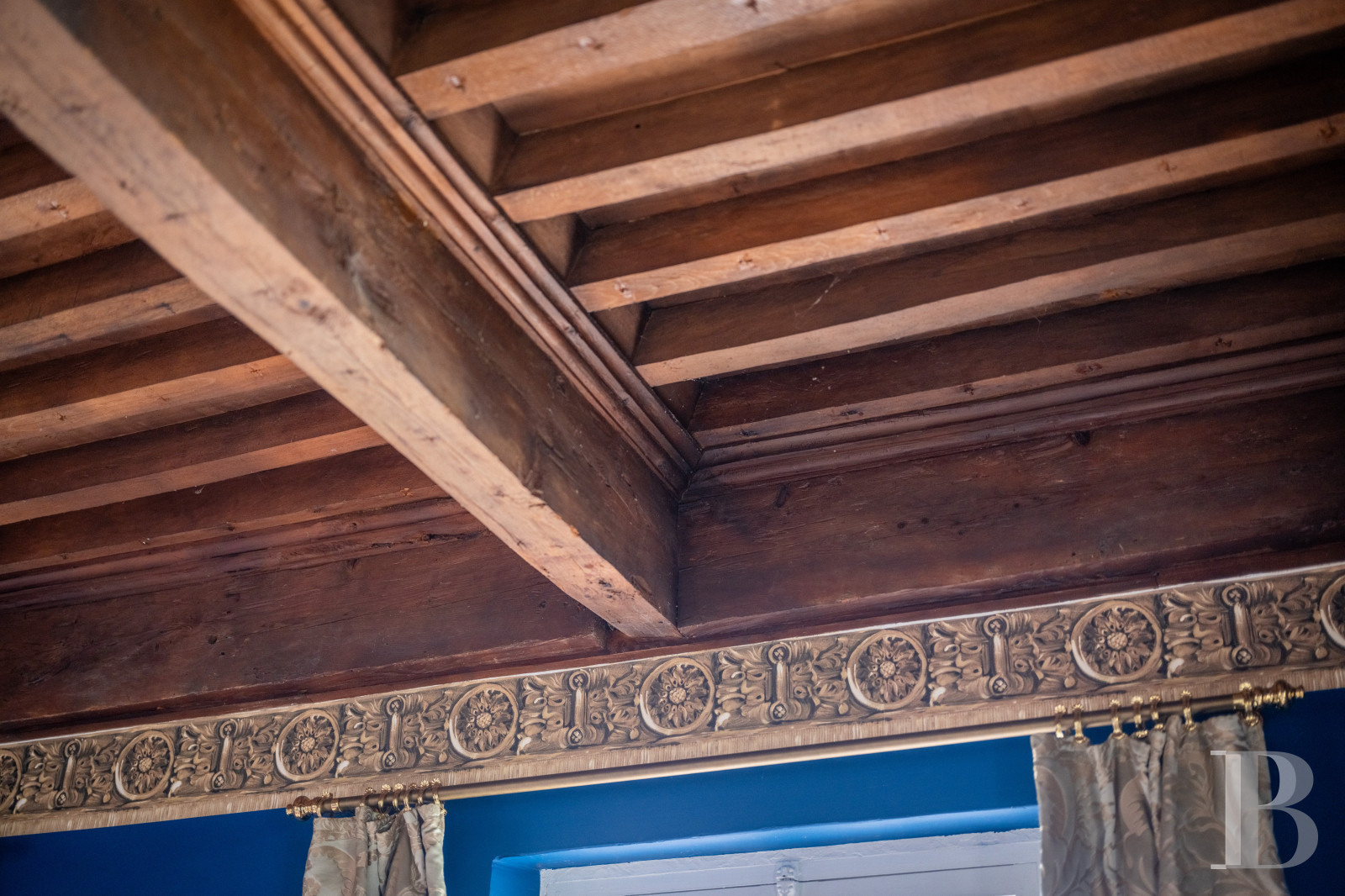
The chateau’s front door opens on to a 17th-century wooden spiral staircase, an eye-catching feature that represents one of the chateau’s major structural elements, while a landing provides access to a patio as well as its two wings: the southern wing can be reached via an immense corridor, with both a lavatory and direct access to the courtyard. From here, another hallway leads to a space that includes both the living room and dining room, topped with thick moulded ceiling beams.
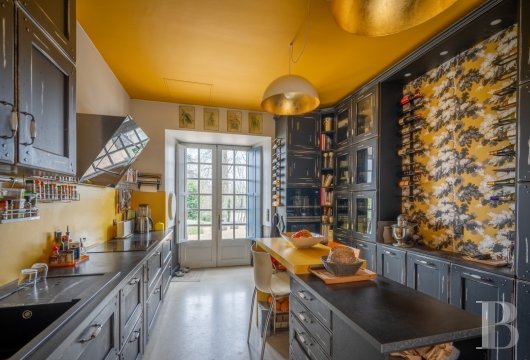
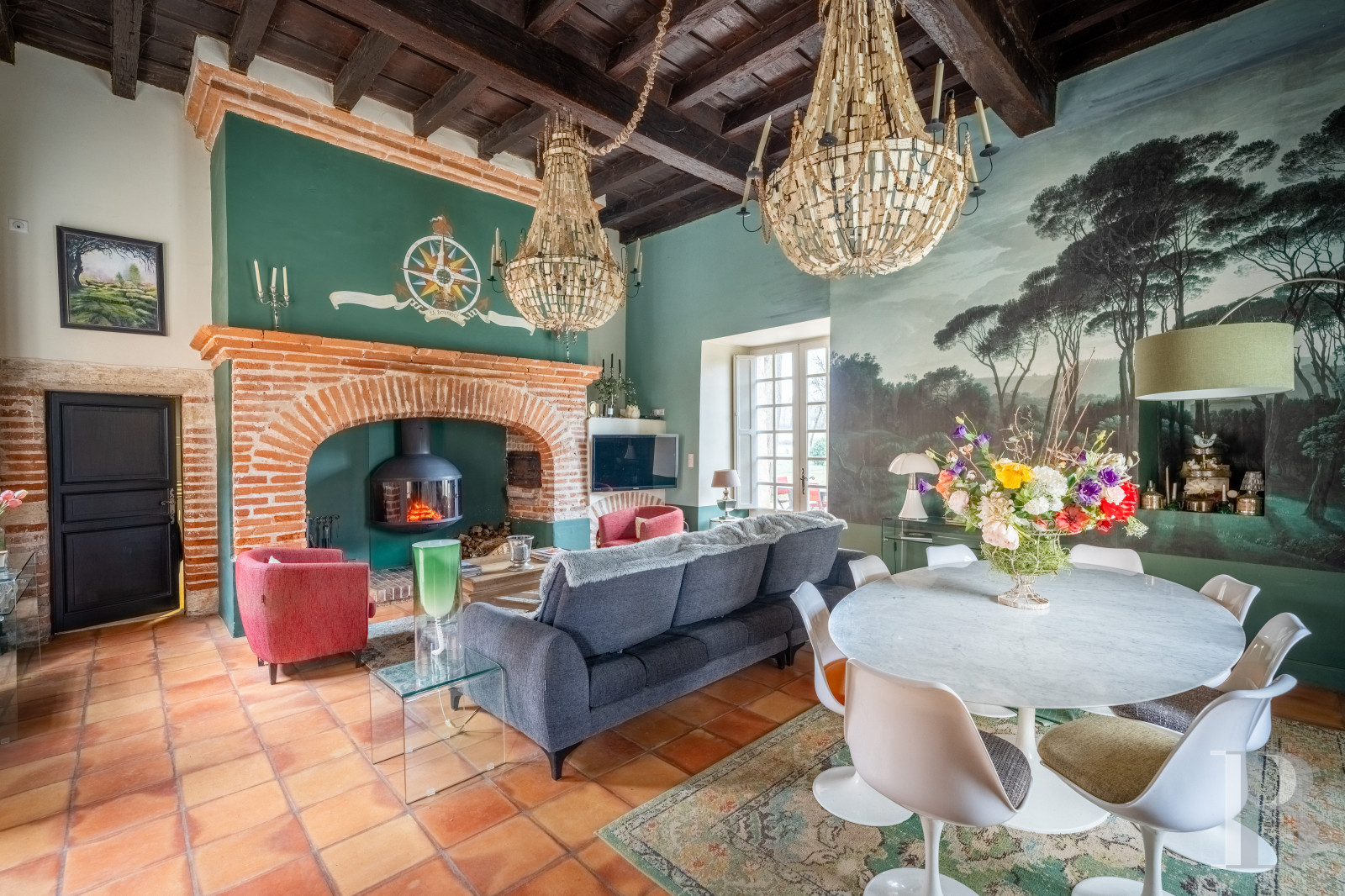
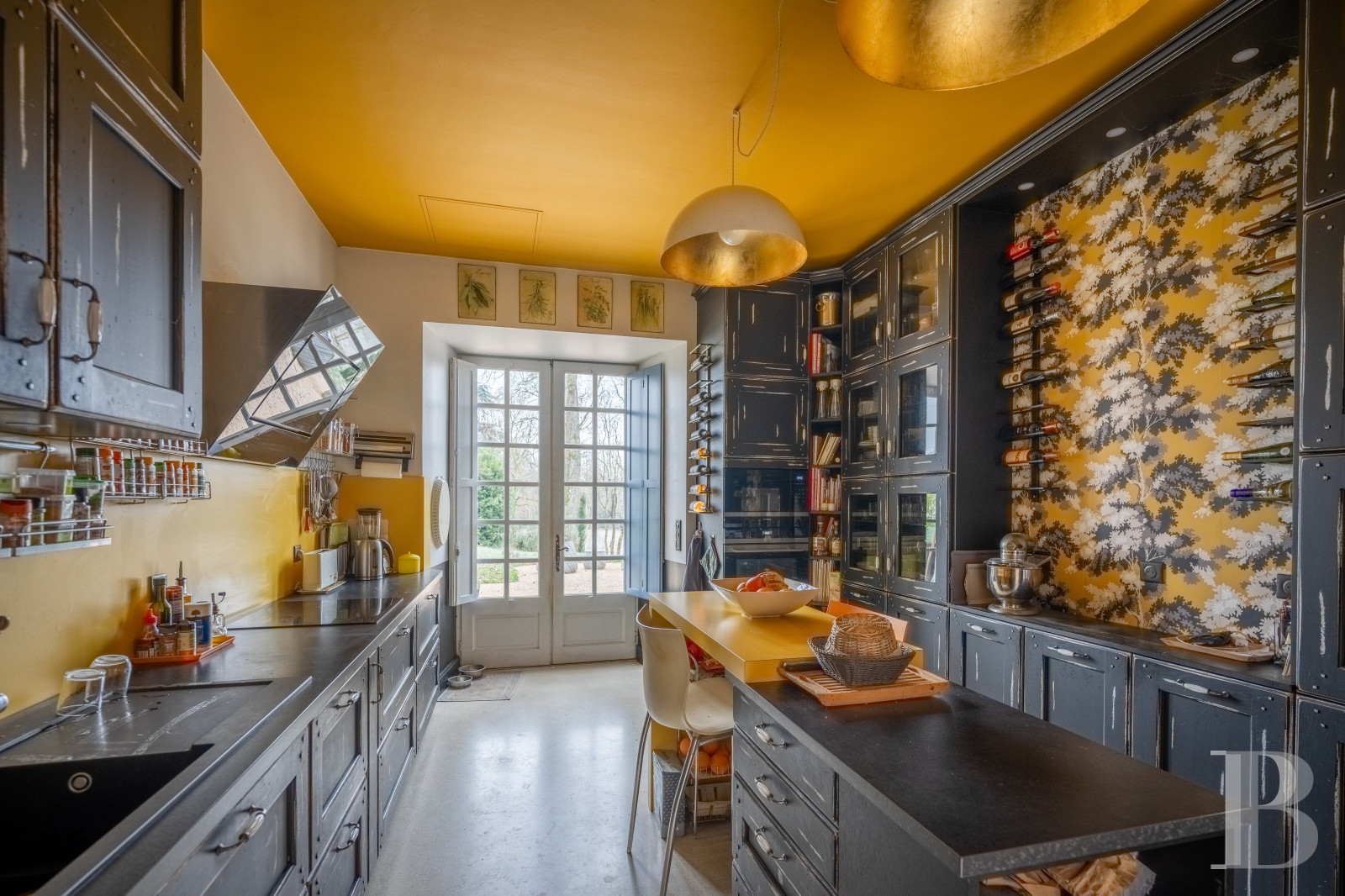
As for the upstairs level’s ancient wooden floorboards, they are supported by the ceiling’s joists, whereas an immense brick fireplace, in which a wood-burning stove has been installed, structures the room, bathed in light thanks to its triple exposure. In addition, a kitchen, recently updated with more contemporary features, echoes the edifice’s spacious volumes, and gives on to both the courtyard and patio.
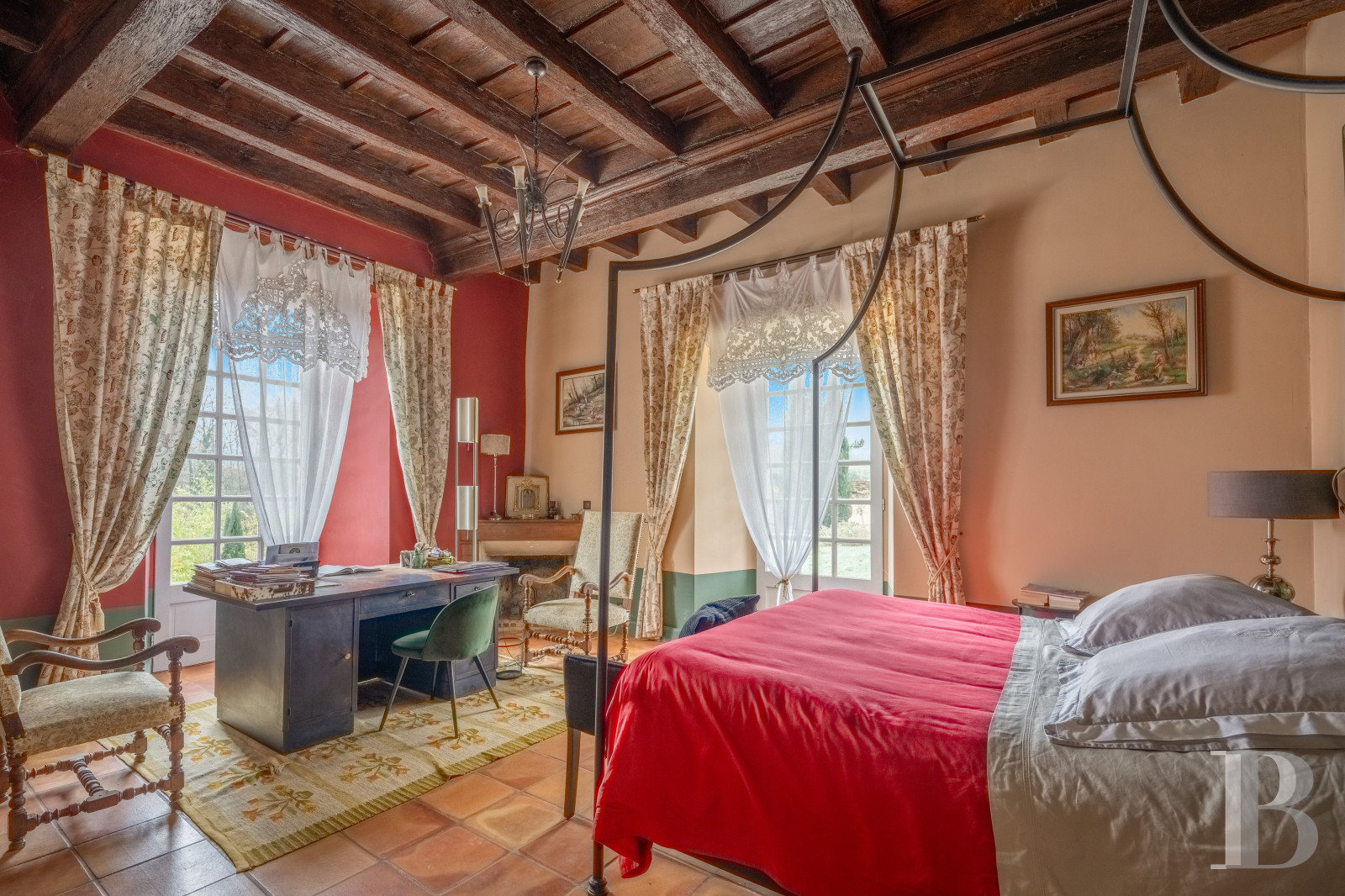
Venturing on to the northern wing, an initial bedroom, with its own bathroom, updated with a contemporary look and featuring both a bathtub and a shower, as well as a wardrobe towards the back, is topped with ceiling beams identical to the ones found in the living room, while its windows look out to the west over the patio and to the north over the garden. It should be noted that the entire ground floor is used as the owners’ private living quarters, whereas the upstairs level is dedicated to tourist accommodations.
The upstairs
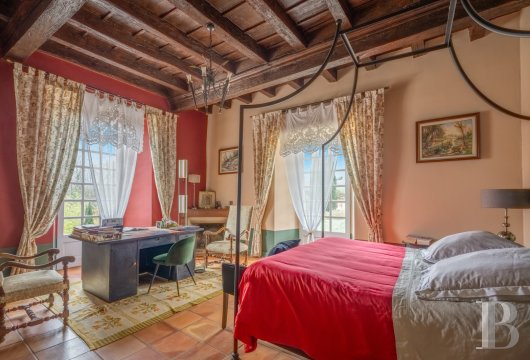
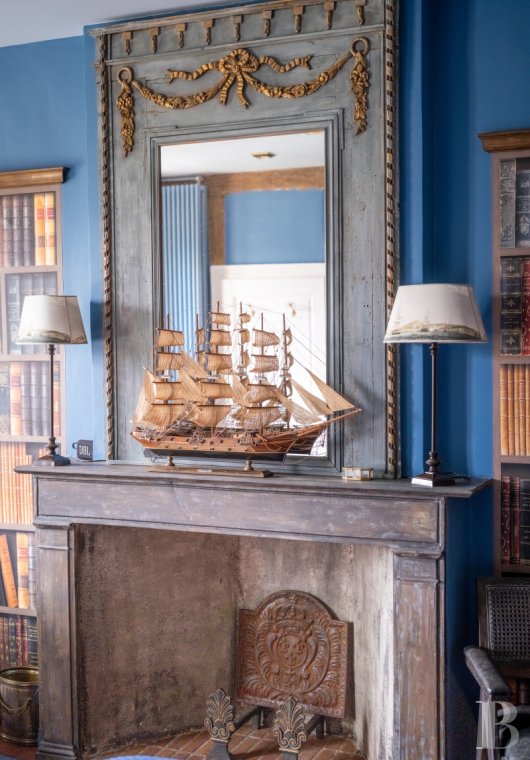
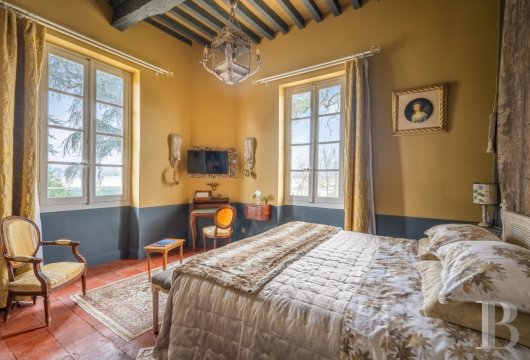
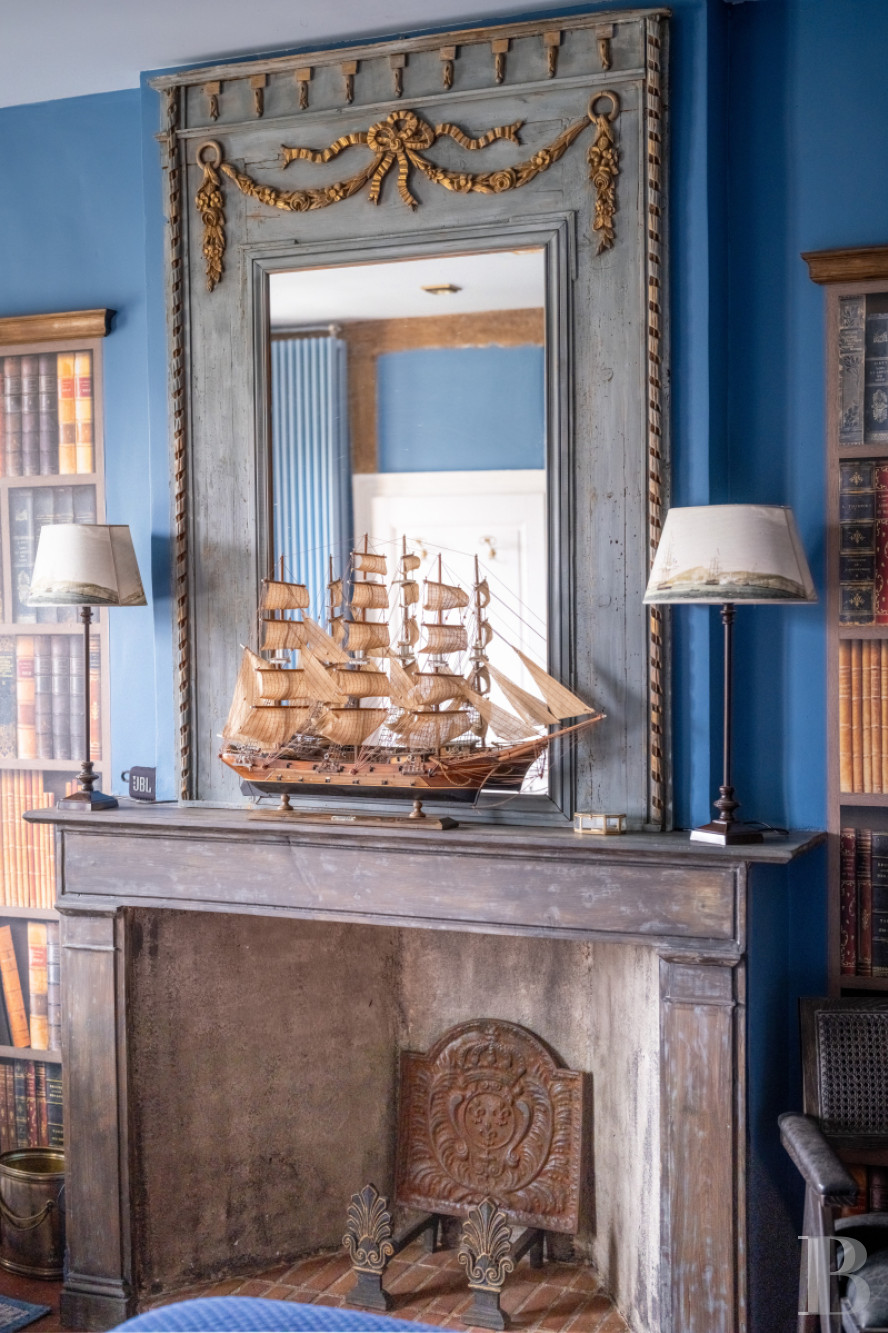
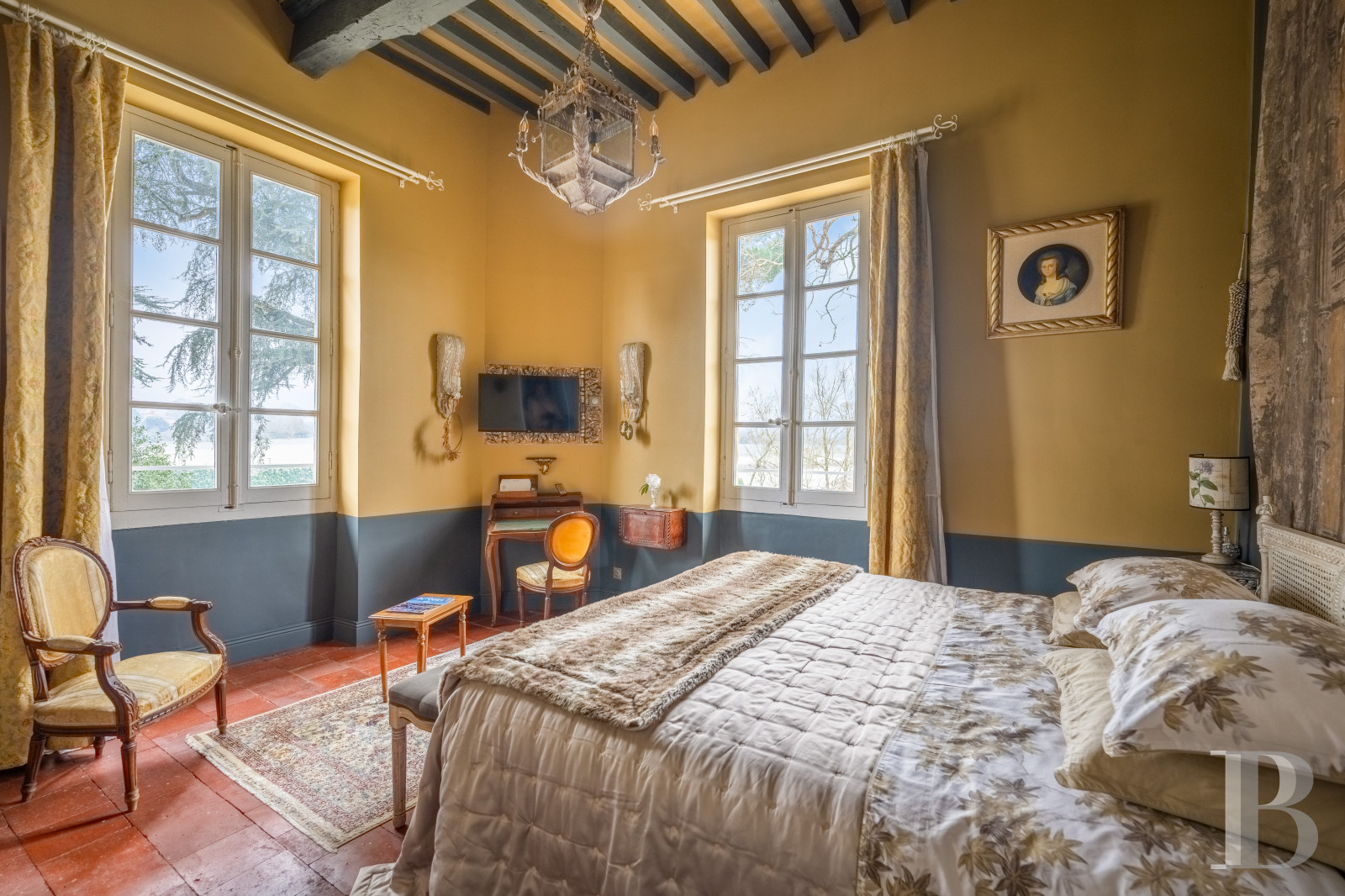
Upstairs, in the northern wing, a wide hallway leads to a bedroom, facing west and abutting a shower room, which is dedicated to the chateau’s one-time illustrious occupant, Lapérouse. Featuring a fireplace with a wooden mantel topped with a delicately ornate mirror, the ceiling is decorated with a painted medallion, while the floor is clad in terracotta tiles.
In addition, a second bedroom, also in the northern wing, includes a contemporary shower room and communicates with a walkway overlooking the carriage entrance and providing views of both the courtyard and drive.
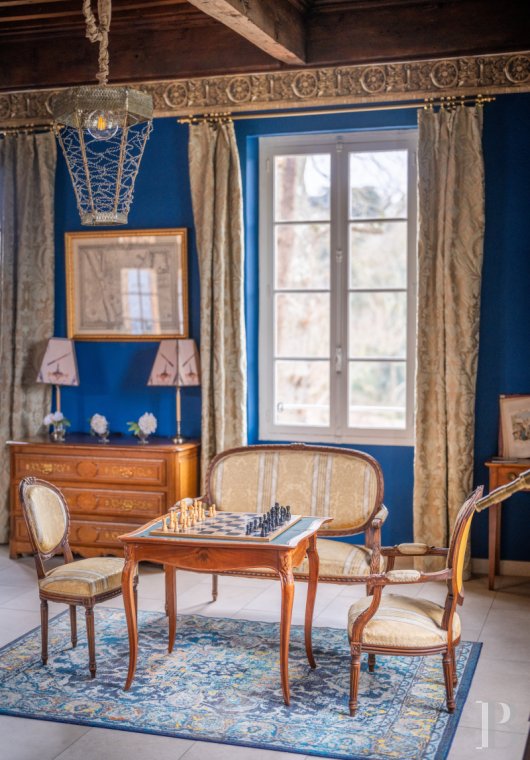
As for the southern wing, a hallway first provides access to a linen cupboard, followed by a sitting room reserved for guests. Topped with ceiling beams, this room boasts a fireplace crowned with a wooden mantel as well as a mirror, while its windows look out over the courtyard and garden from three different directions.
Last, but not least, the sitting room communicates with another bedroom and a shower room, all featuring terracotta floor tiles and visible wooden ceiling planks.
The attic
In the northern wing and convertible, this level is accessible via a spiral staircase, while its wooden rafters, with trusses and raised tie beams, make it possible to easily move about this space.
The basement
In the lower section of the northern wing, a brick staircase leads to the cellars, made up of two adjacent vaulted brick rooms with beaten earth floors, while the chateau’s heating system is located in the second of the two rooms.
The Grounds
Divided into several different spaces around the chateau, in the front, the grounds extend across a single plateau and feature swaths of lawn dotted with trees and shrubs, including a tall cedar and a stone pine. To the north, a small outbuilding is used as a garage and storeroom, while the patio, shaded by an arbour and skirting the chateau’s western and southern exteriors, is bathed in sunlight all day long.
In addition, several masonry retaining walls, structuring the grounds into two different levels as they approach the meadows below, are linked together via two masonry staircases, whereas, to the south, a swimming pool boasts views of the meadows and the Tarn’s closest riverbank, and, to the west, a former nymphaeum, in all likelihood built in the 19th century and supplied by a natural spring, is surrounded by bamboo.
As for the river, it is accessible on foot through the fields, while its tree-lined banks provide easy access to the water. It should also be noted that two additional meadows are currently rented out and could continue to be so by the property’s future occupants, if they so desire.
Our opinion
This timeless property, which creates a dialogue between brick, the nearby river and the past, is located on the outskirts of Albi, in an open landscape shaped by the Tarn, while the chateau itself deftly combines the elegance of a noble dwelling with the simplicity of a country home. Thanks to its layout, inherited from a design almost urban in nature, it provides fluid circulation that would be ideal for both a large family as well as guest accommodations, without ever having to sacrifice one’s personal privacy.
Anchored within a long history – related to its stately and, yet, comprehensible architecture as well as a personage closely linked to the golden age of exploration – the chateau has preserved its innately authentic atmosphere, which is neither decorative nor artificial in nature.
1 890 000 €
Fees at the Vendor’s expense
Reference 790013
| Land registry surface area | 3 ha 64 a 69 ca |
| Main building floor area | 320 m² |
| Number of bedrooms | 4 |
French Energy Performance Diagnosis
Information on the risks to which this property is exposed is available on the website: www.georisques.gouv.fr
Share


NB: The above information is not only the result of our visit to the property; it is also based on information provided by the current owner. It is by no means comprehensive or strictly accurate especially where surface areas and construction dates are concerned. We cannot, therefore, be held liable for any misrepresentation.