



Near to Martel, a 13th and 18th century manor house, with a cottage and
swimming pool in 18 hectares overlooking the River Dordogne in the Lot area
swimming pool in 18 hectares overlooking the River Dordogne in the Lot area
Martel,
LOT
midi-pyrenees
46600
FR

Location
This property is located at the tourist crossroads of the Upper Quercy, Lower Corrèze and Périgord Noir sectors, in the north of the Occitanie region and Lot area, 2 hours 15 minutes from Bordeaux and 1 hour 45 minutes from Toulouse via the A89 and A20 motorways respectively. It is one of France’s most popular regions thanks to its environmental splendour, historical heritage and gastronomic quality. The location is ideal for discovering the Dordogne Valley (listed as one of France’s major sites), the Lot and Célé Valleys, the Grands Causses natural park, the medieval villages of Martel, Turenne, Collonges-la-Rouge and Rocamadour, chasms such as the Padirac cave as well as many castles. The manor house is several minutes from a village boasting all essential amenities and is around thirty minutes from the town-centre of Brive-la-Gaillarde, with its international airport and railway station.
Description
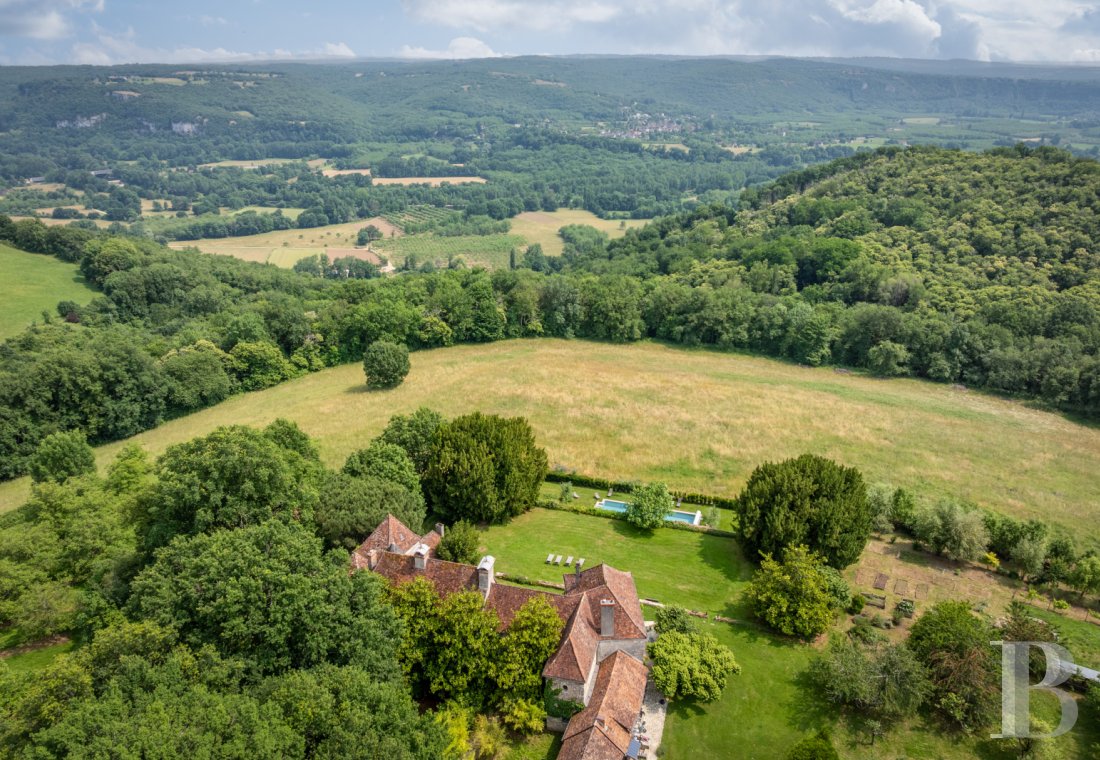
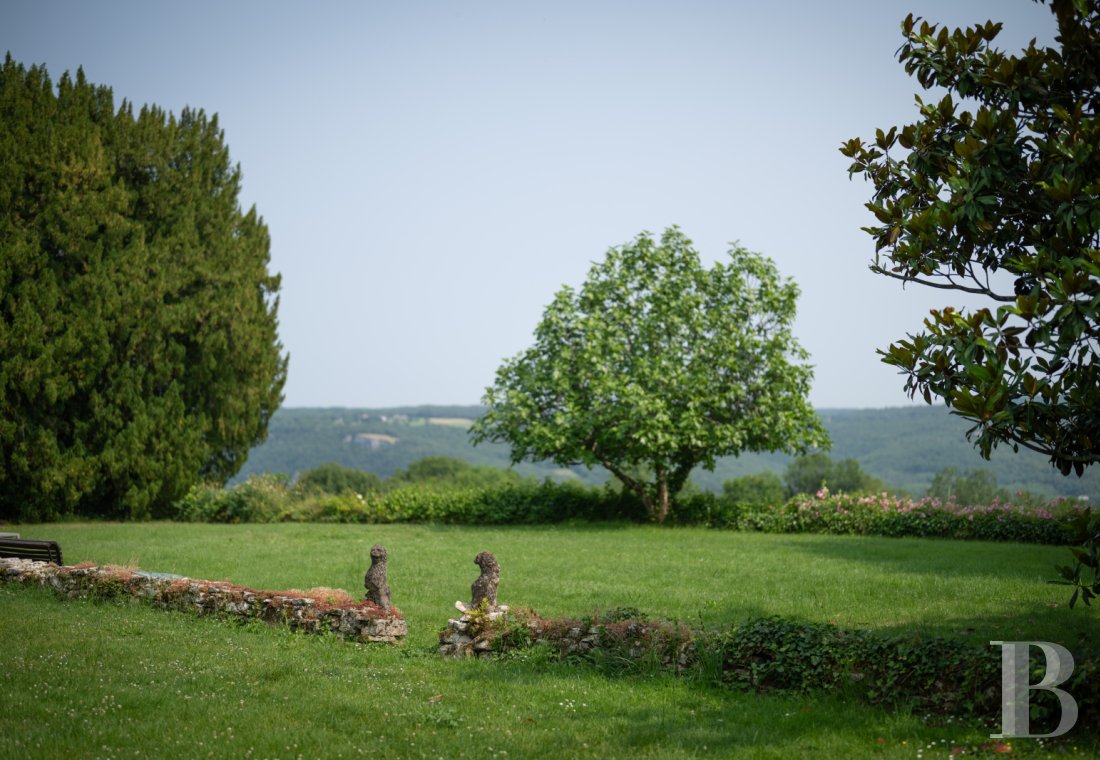
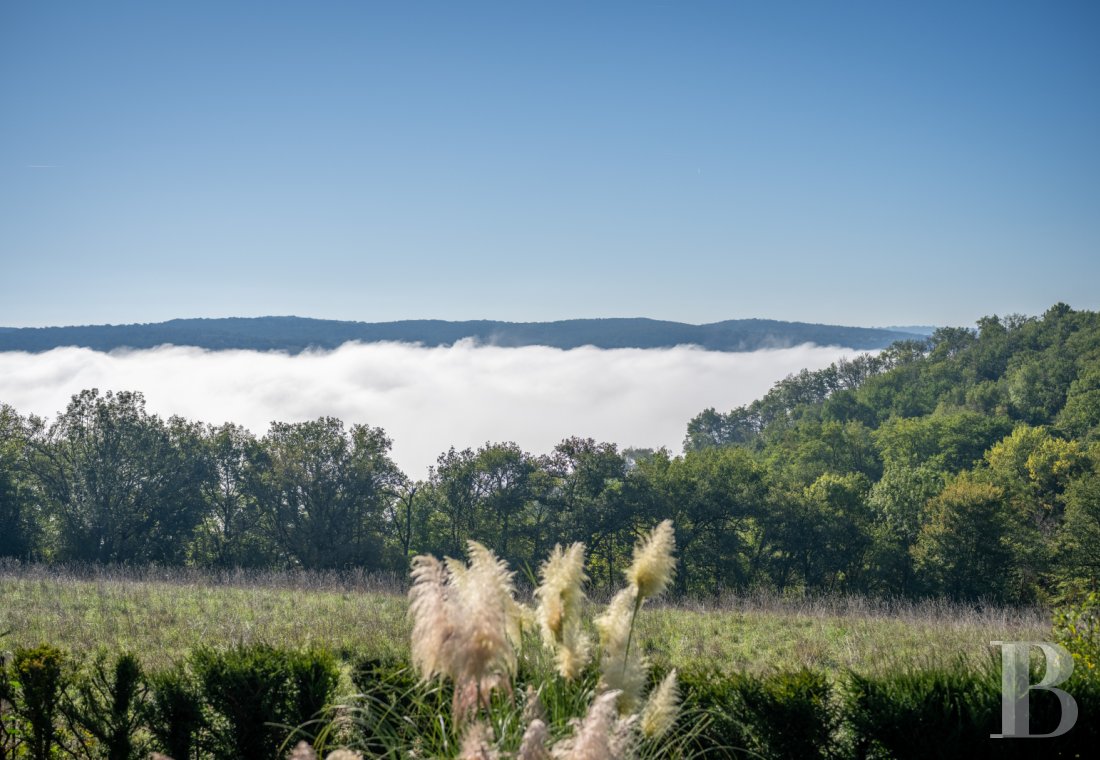
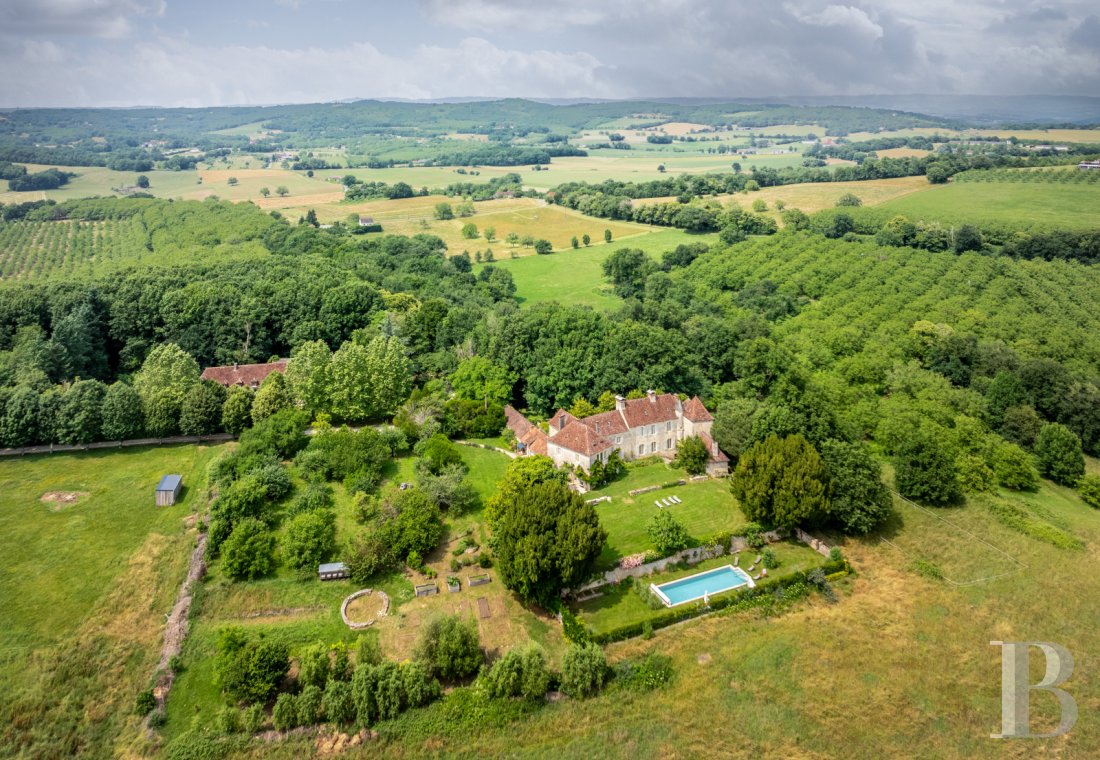
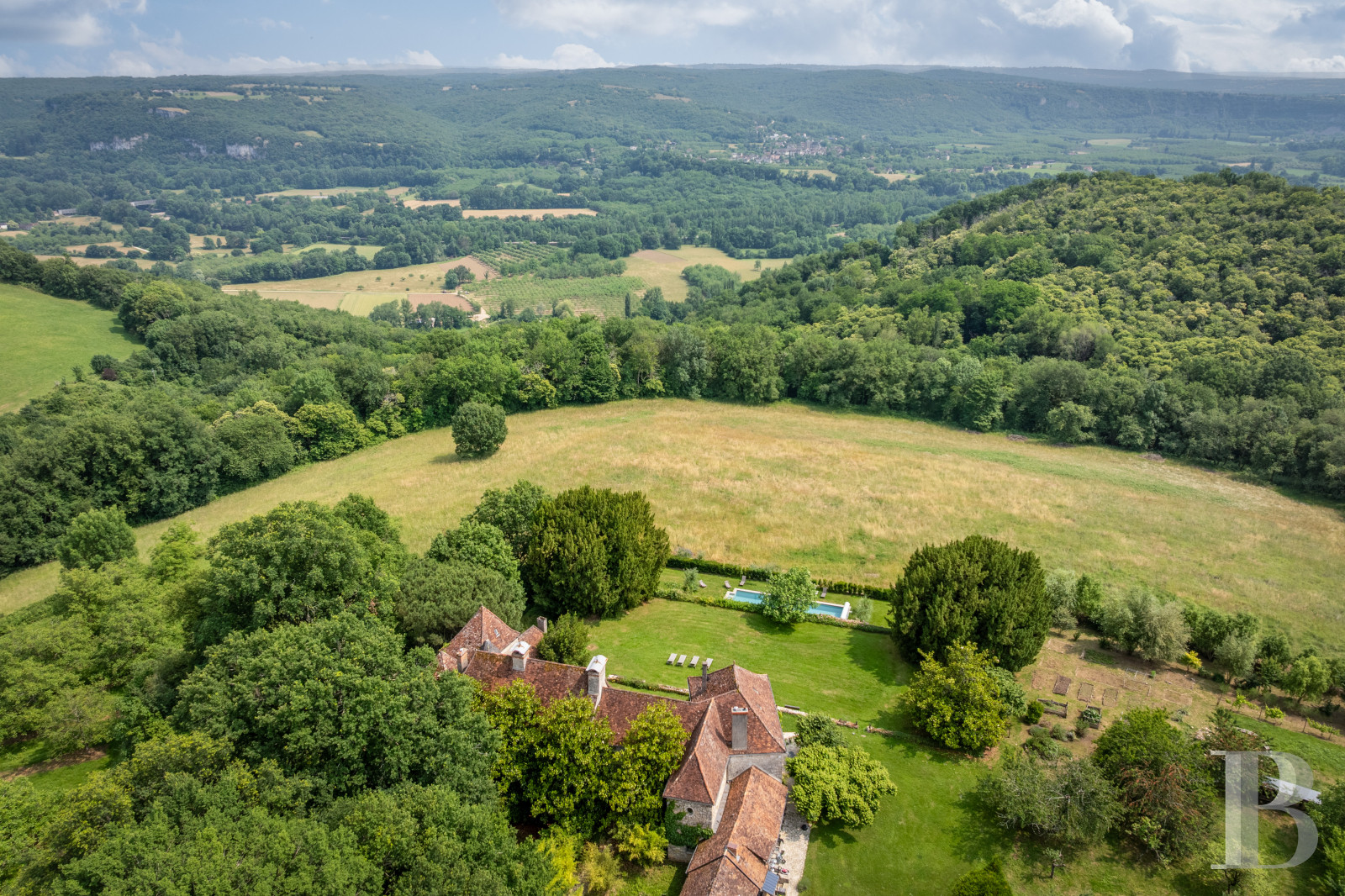
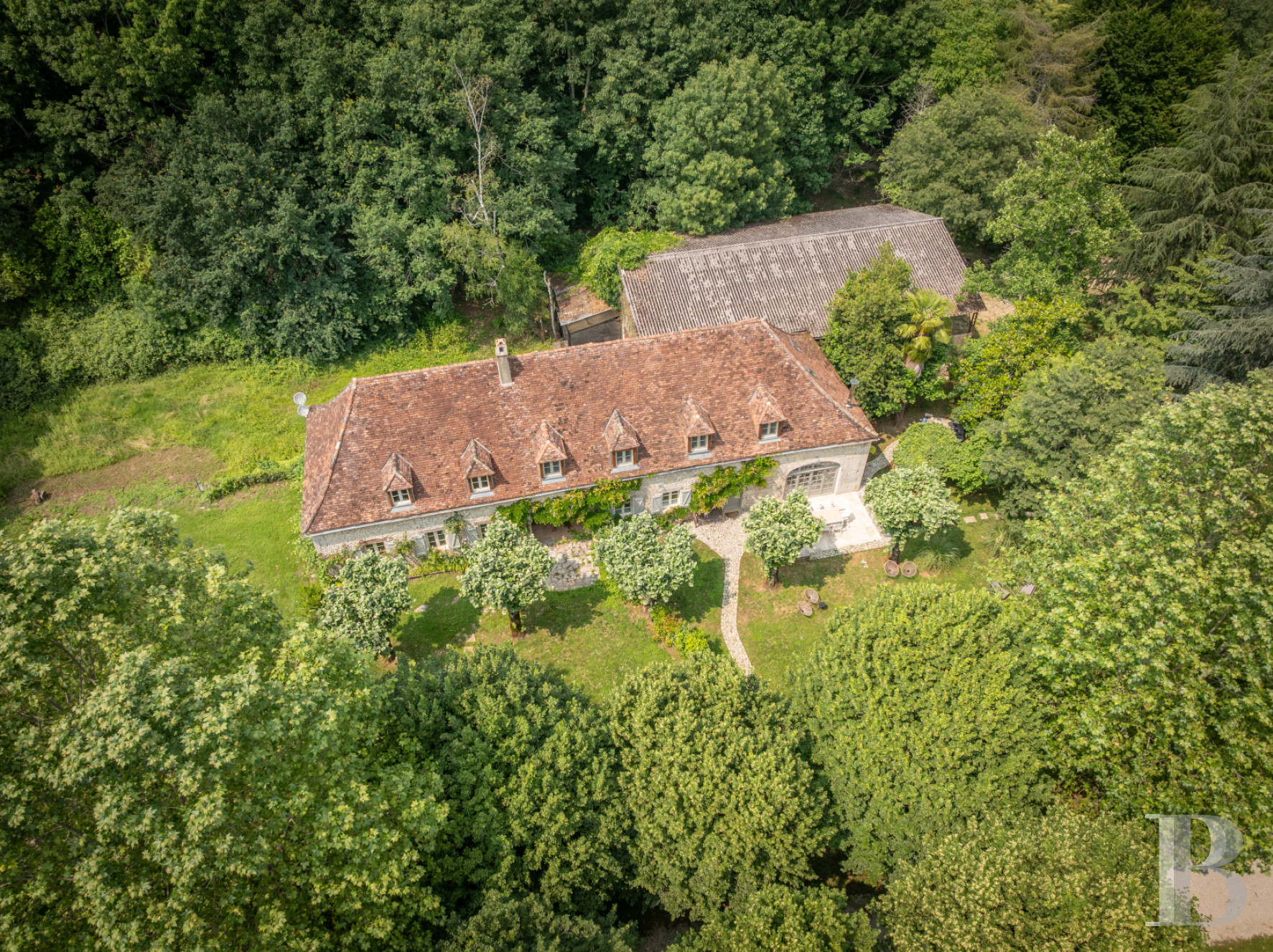
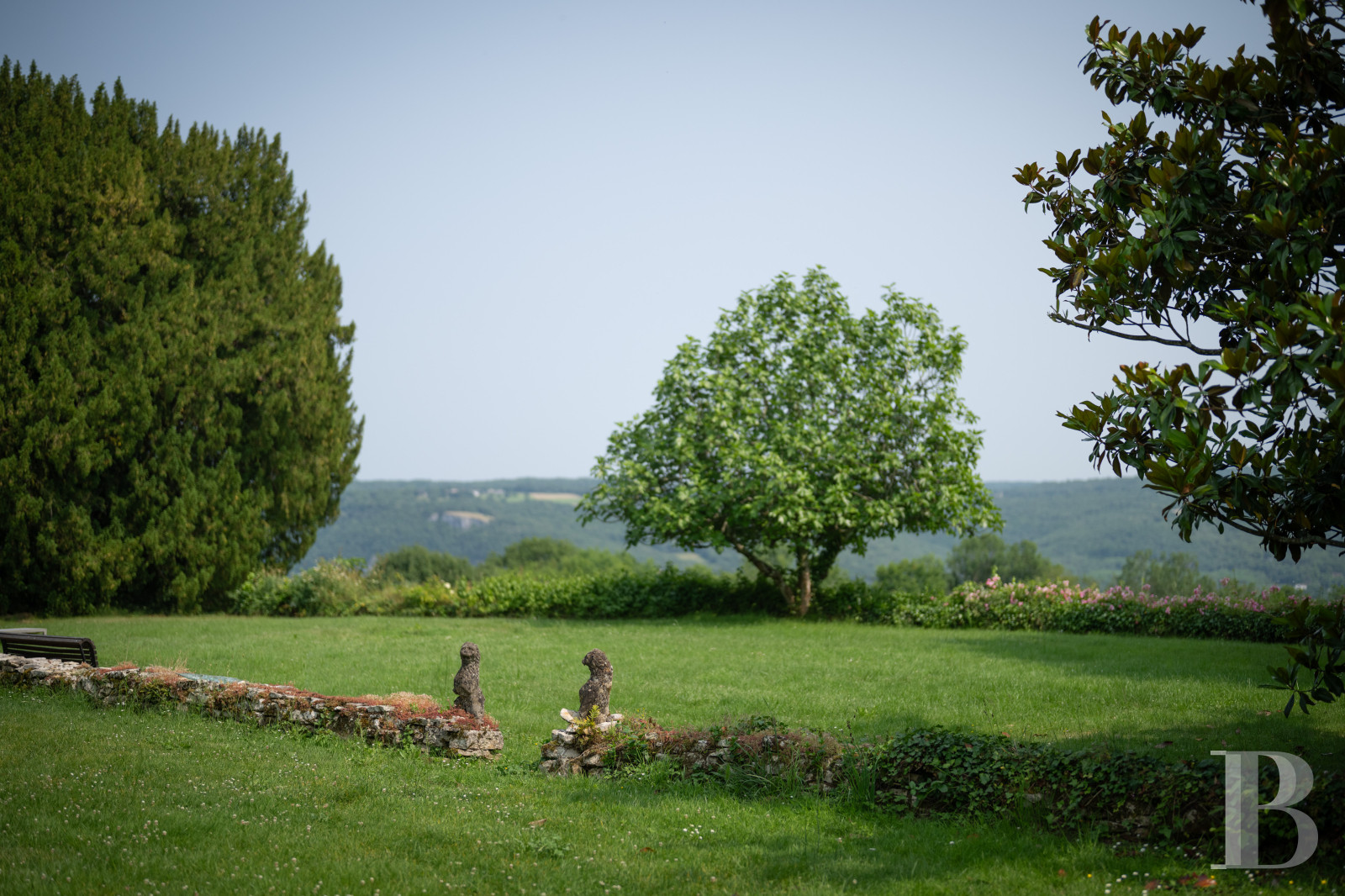
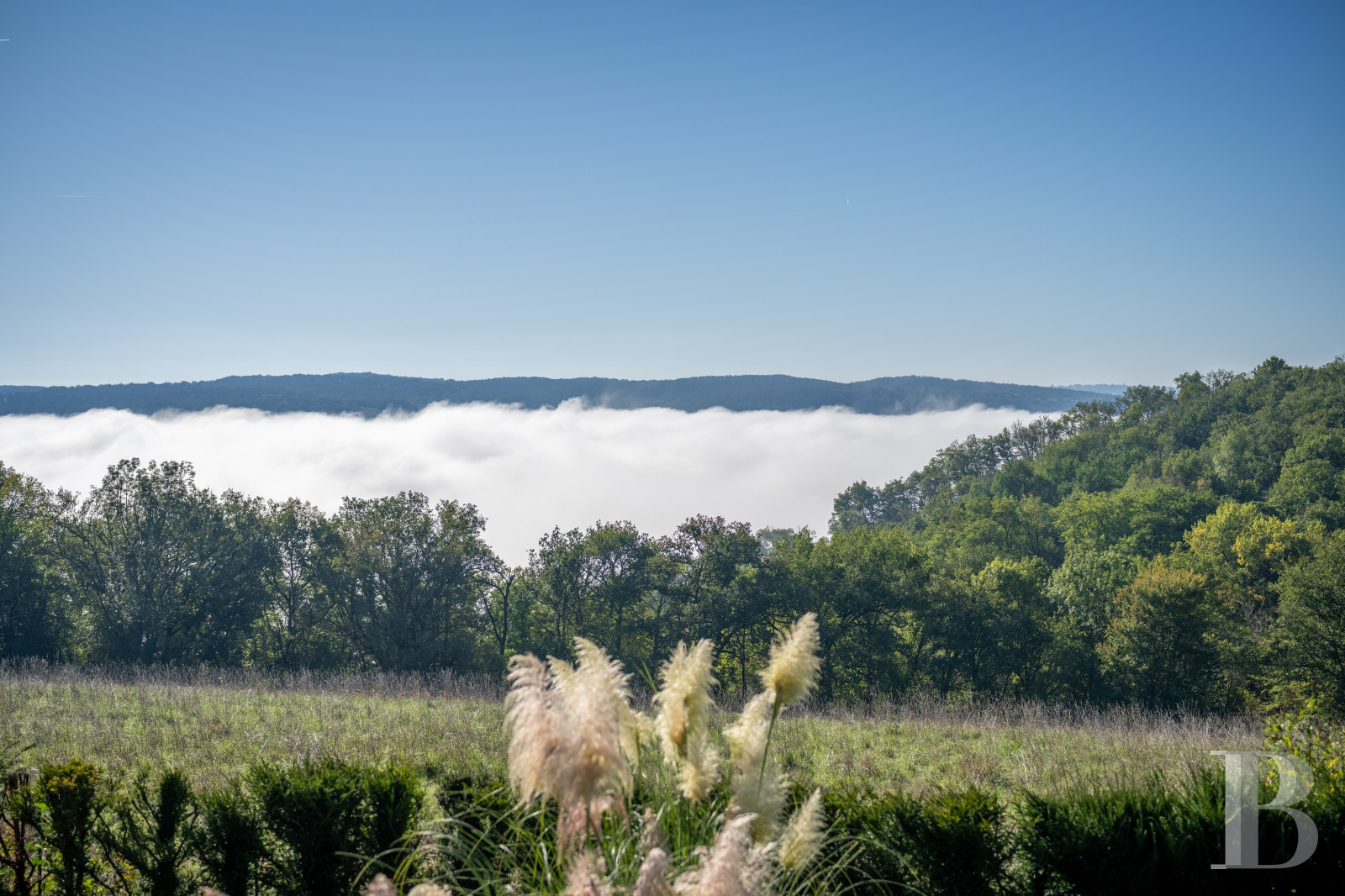
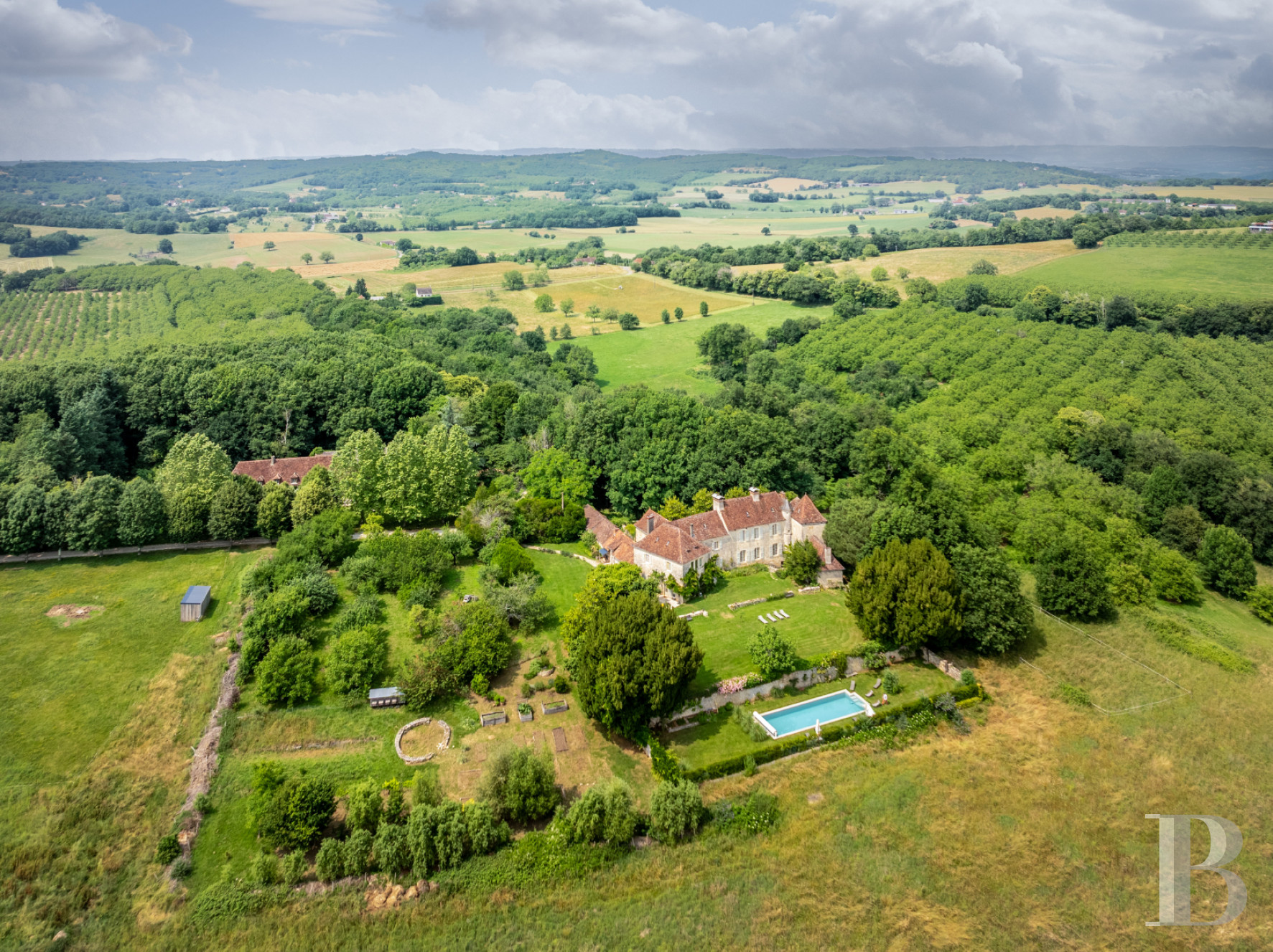
From a dominant position, the property boasts broad views of the landscape stretching out over the part of the Dordogne Valley in the Lot area. It is perched on top of a hill that extends from a limestone cliff and enjoys sweeping views, standing in an extremely well-preserved environment, where there is a rare sense of calm thanks to the great outdoors, away from any hustle and bustle. The estate stretches over a little more than 18 uninterrupted hectares of woods, meadows and landscaped gardens.
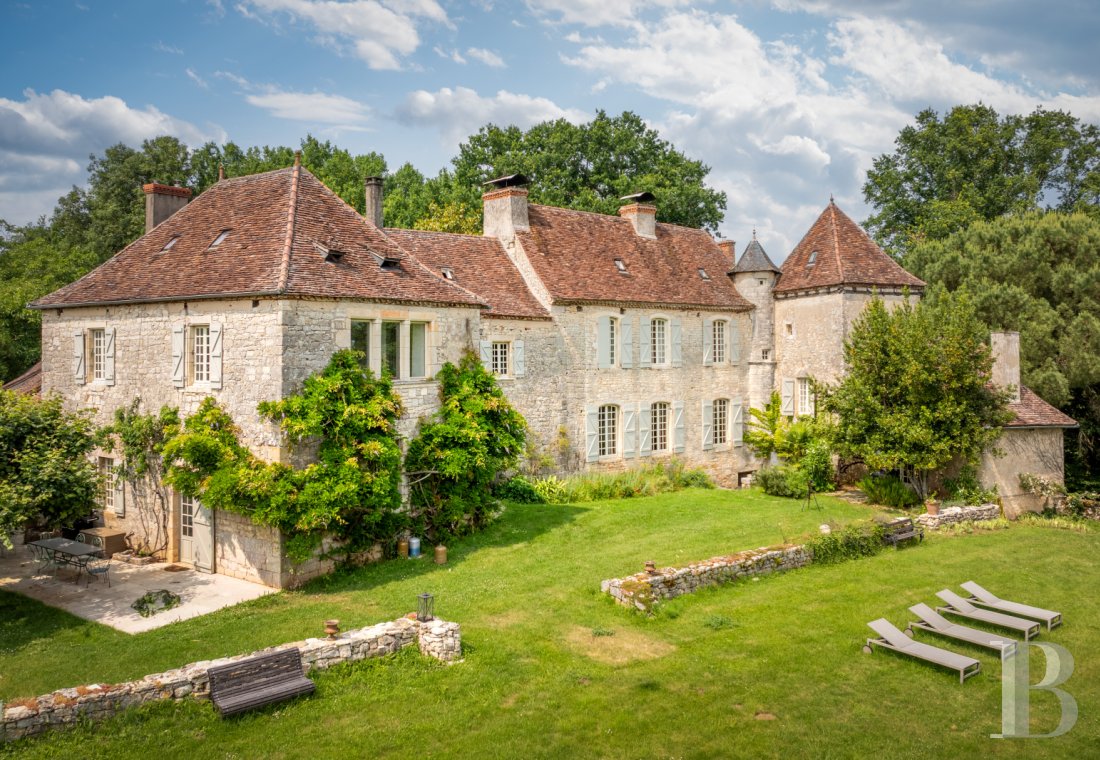
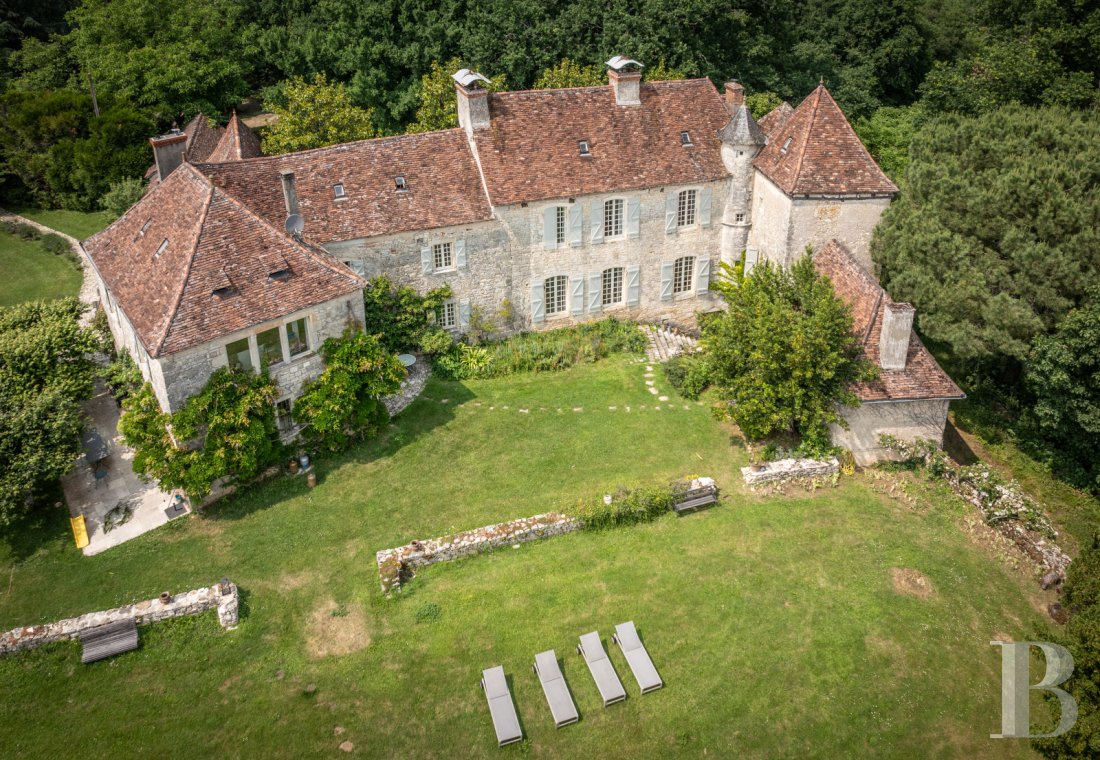
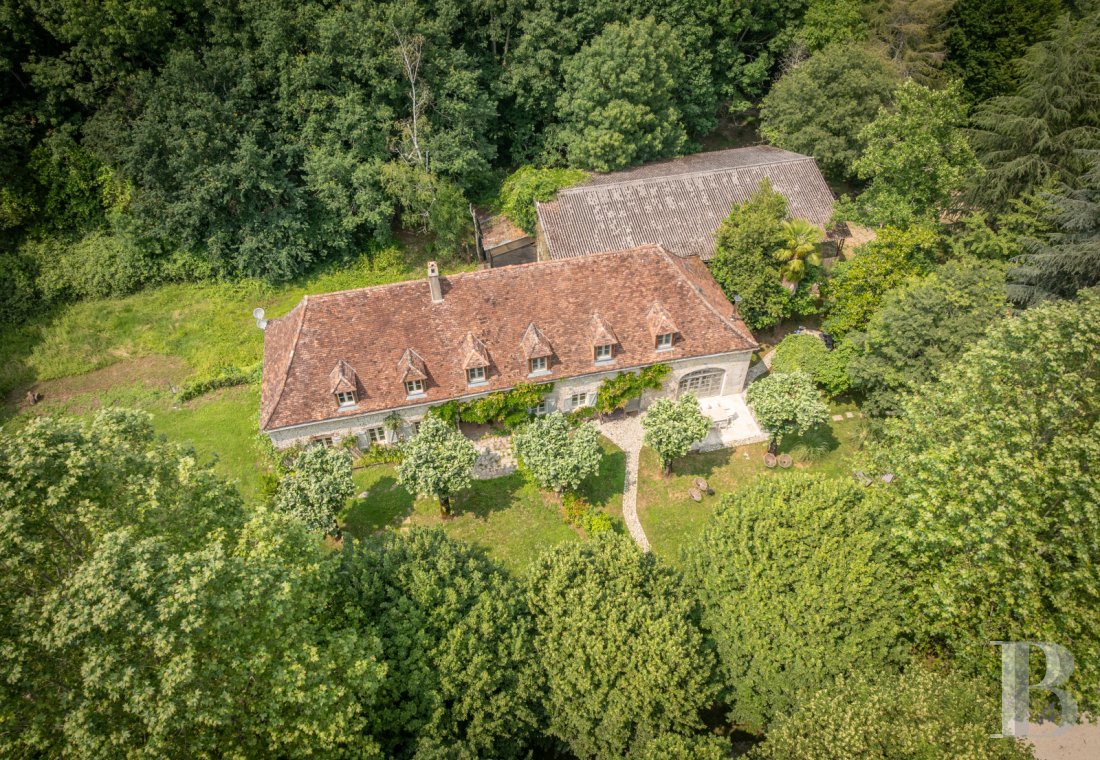
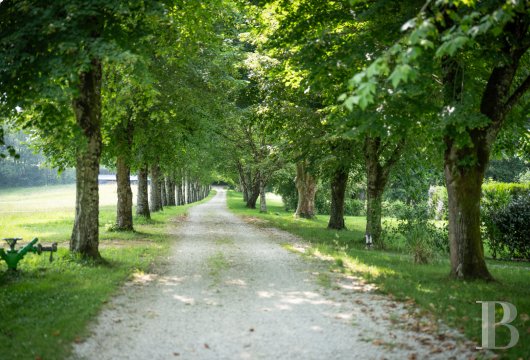
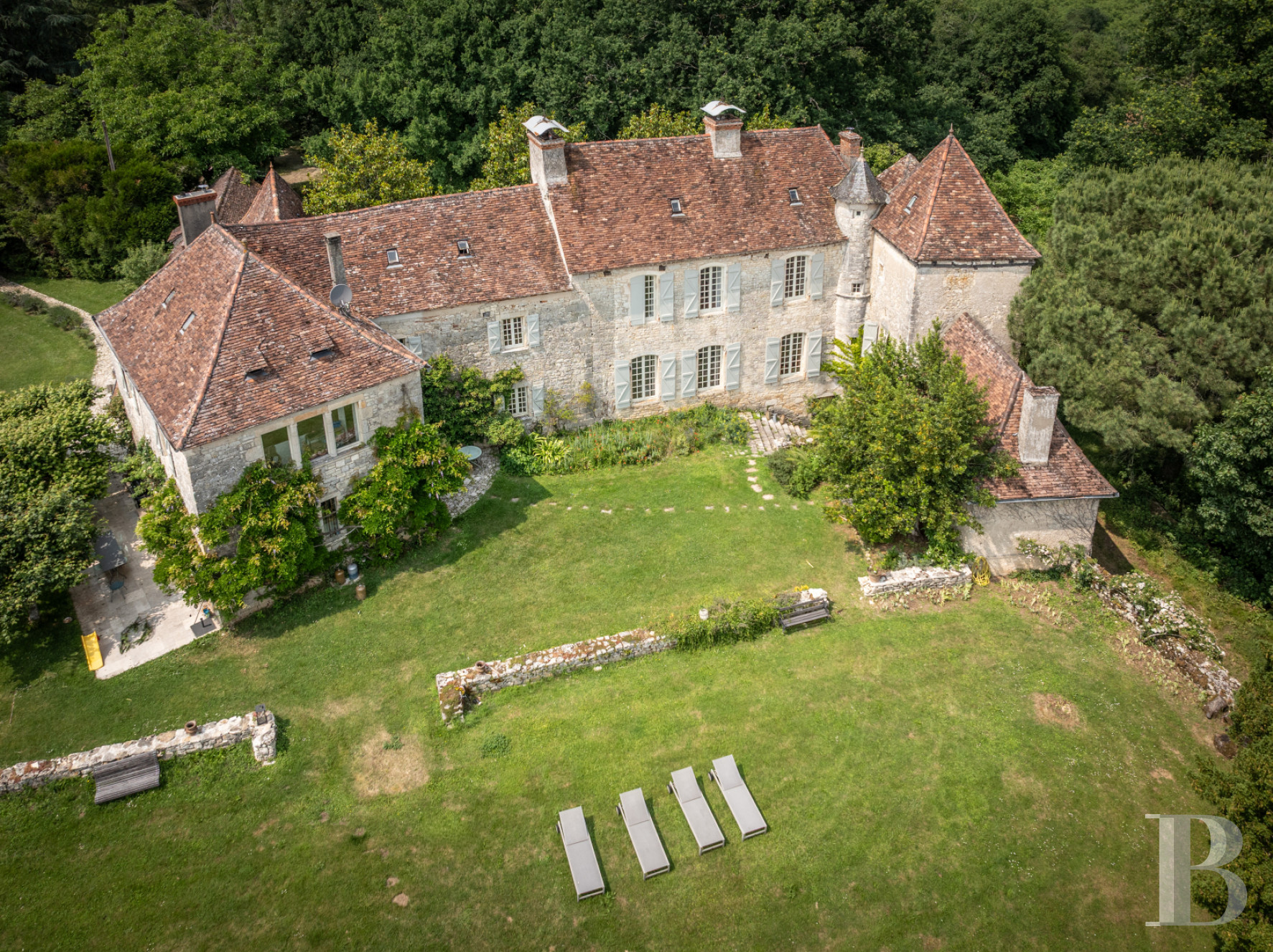
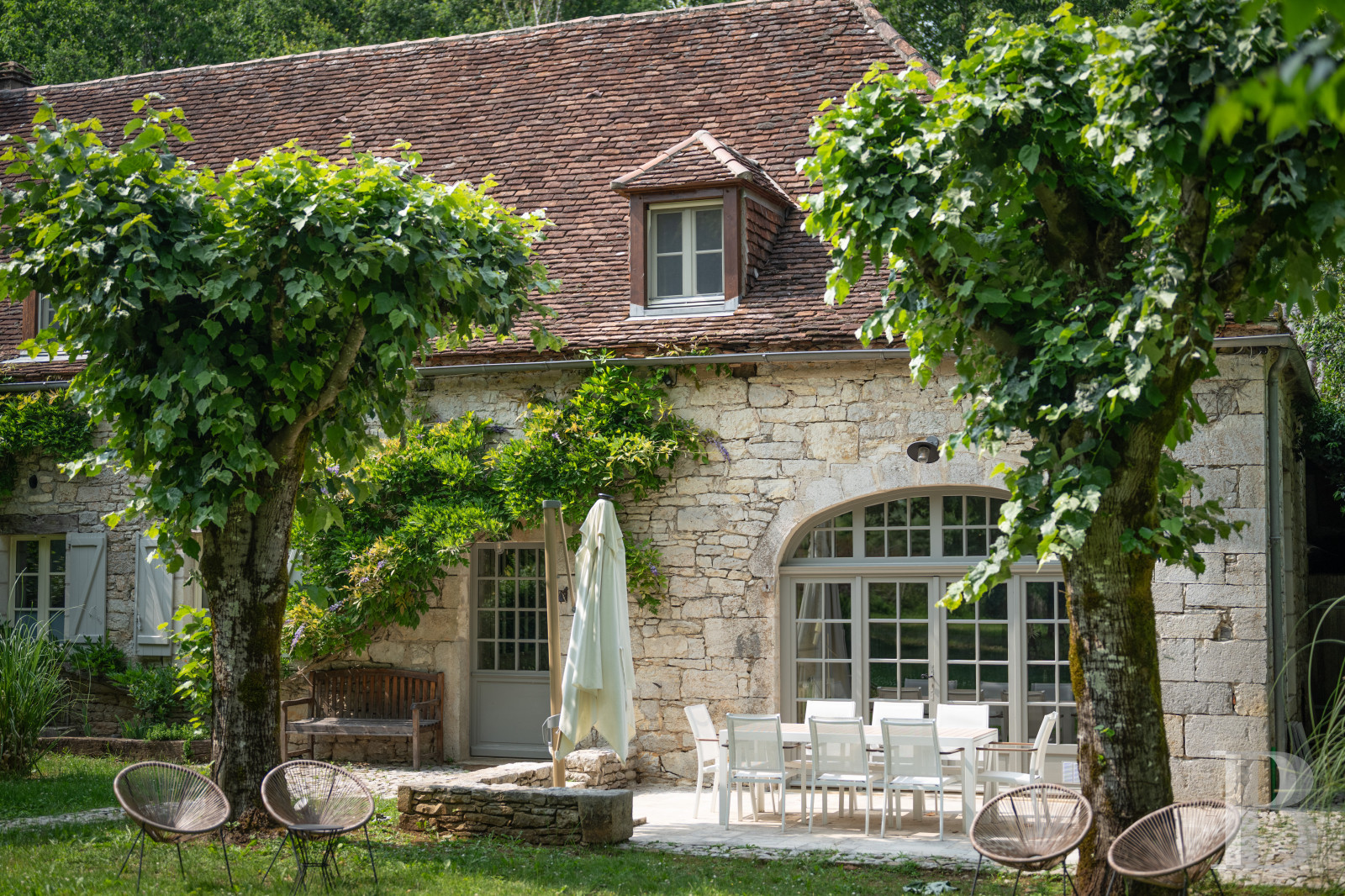
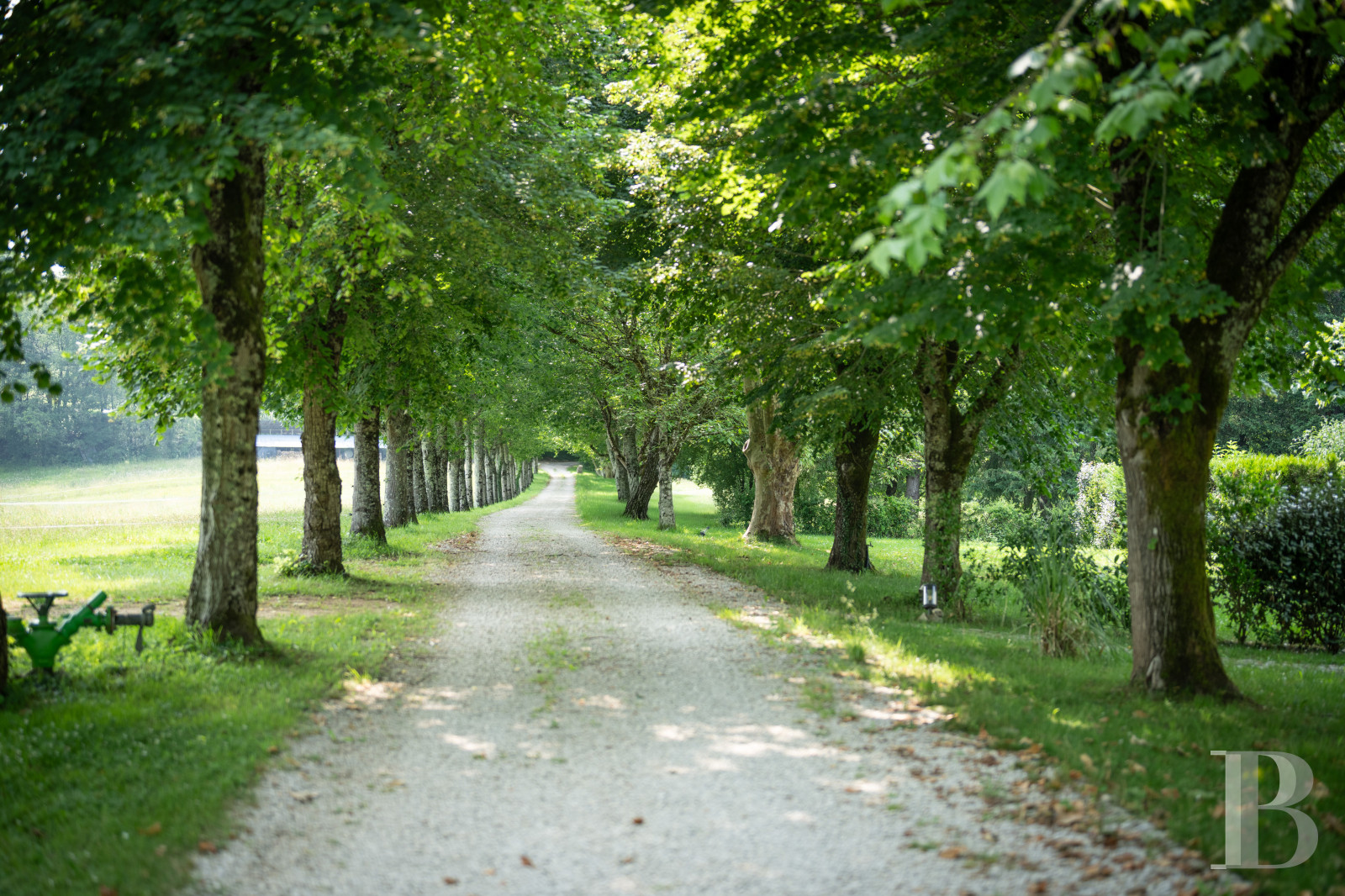
The buildings can be found at the end of a long drive lined by deciduous trees. The first is an elegant guests’ house, with a garden and several patios. A vast agricultural storage building is set slightly back and houses several box stalls as well as a workshop. The manor house, which is protected to the north by its walls and dense vegetation, then discretely comes into view. A low wall forms the outline of an inner courtyard, one side of which is occupied by a perpendicularly set outbuilding. However, to the south, the edifice enjoys broad, uninterrupted views of the horizon and displays the refined sobriety of its architecture.
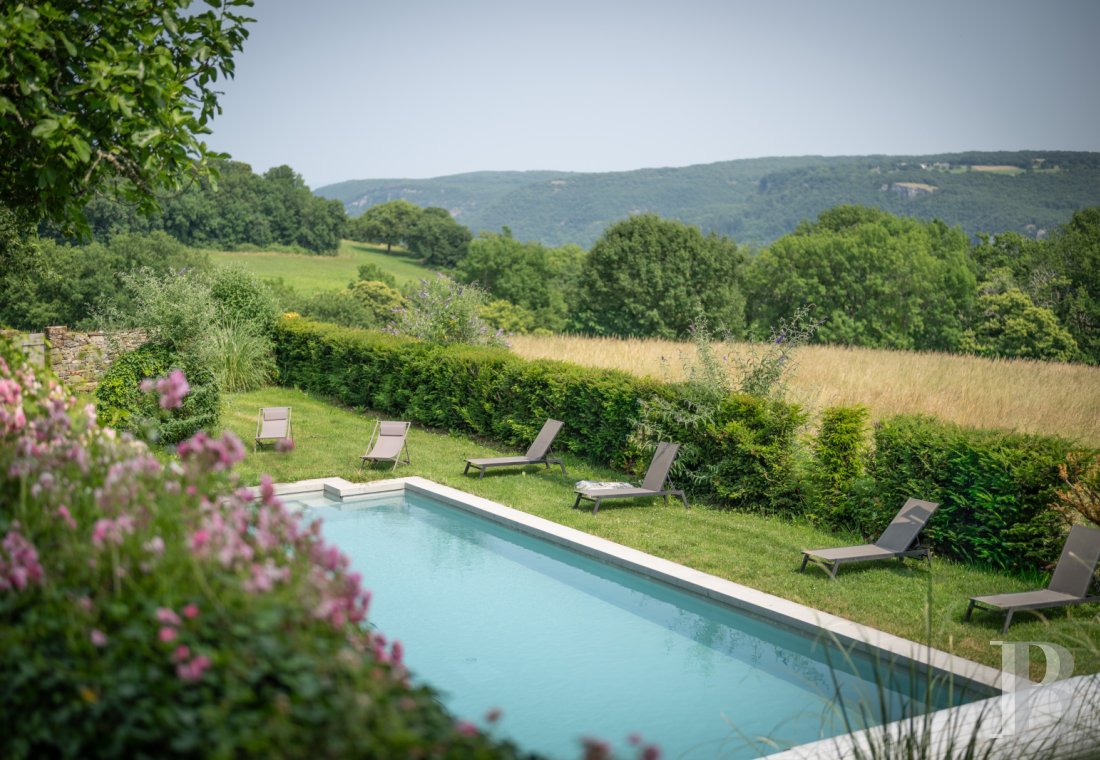
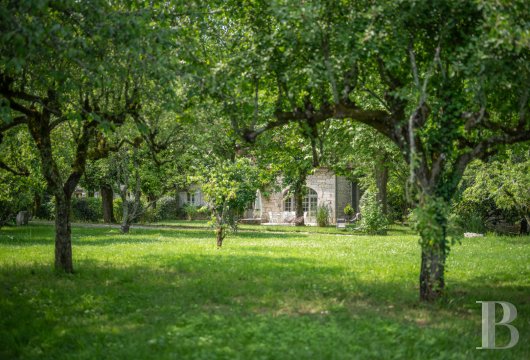
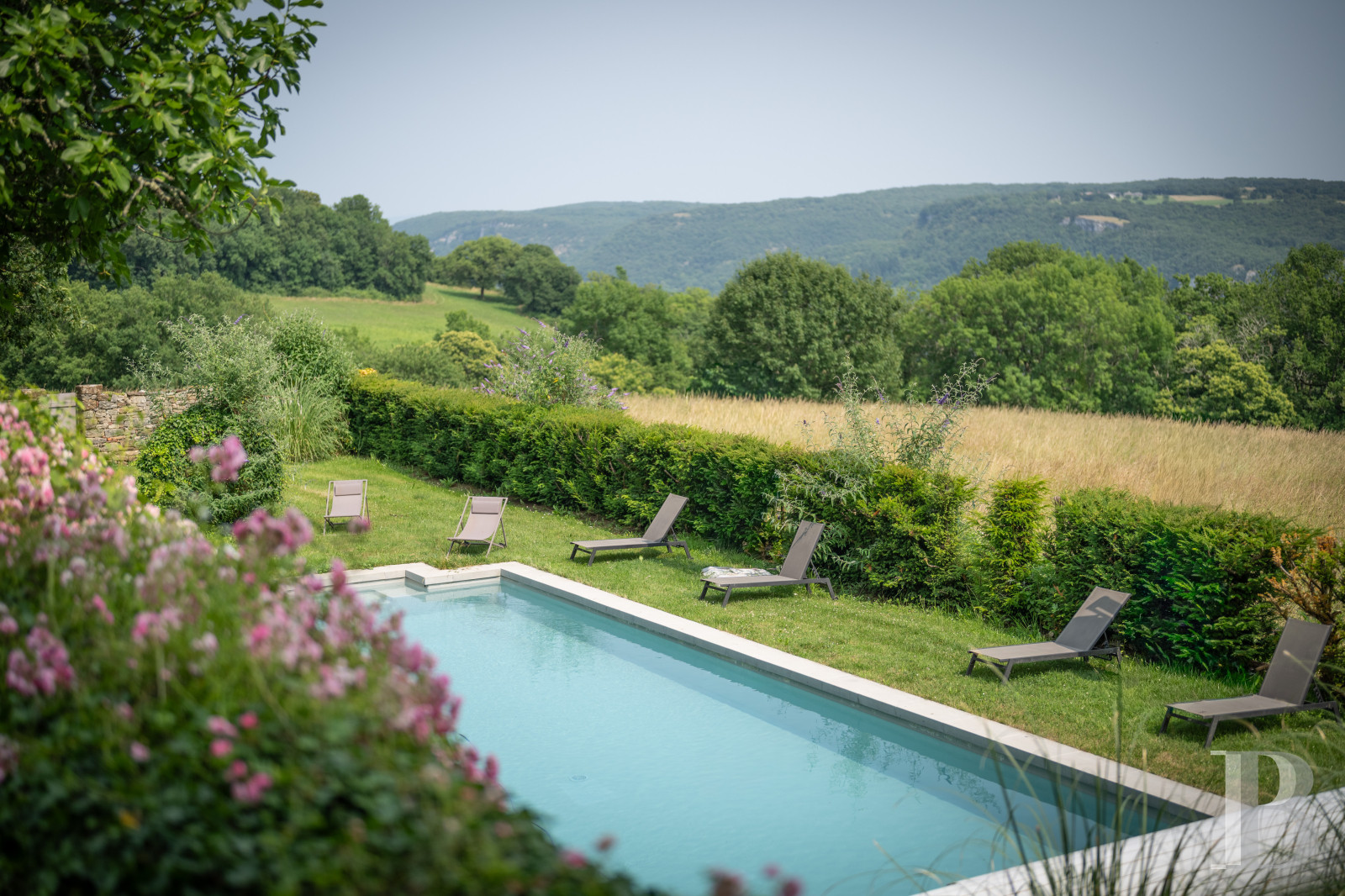
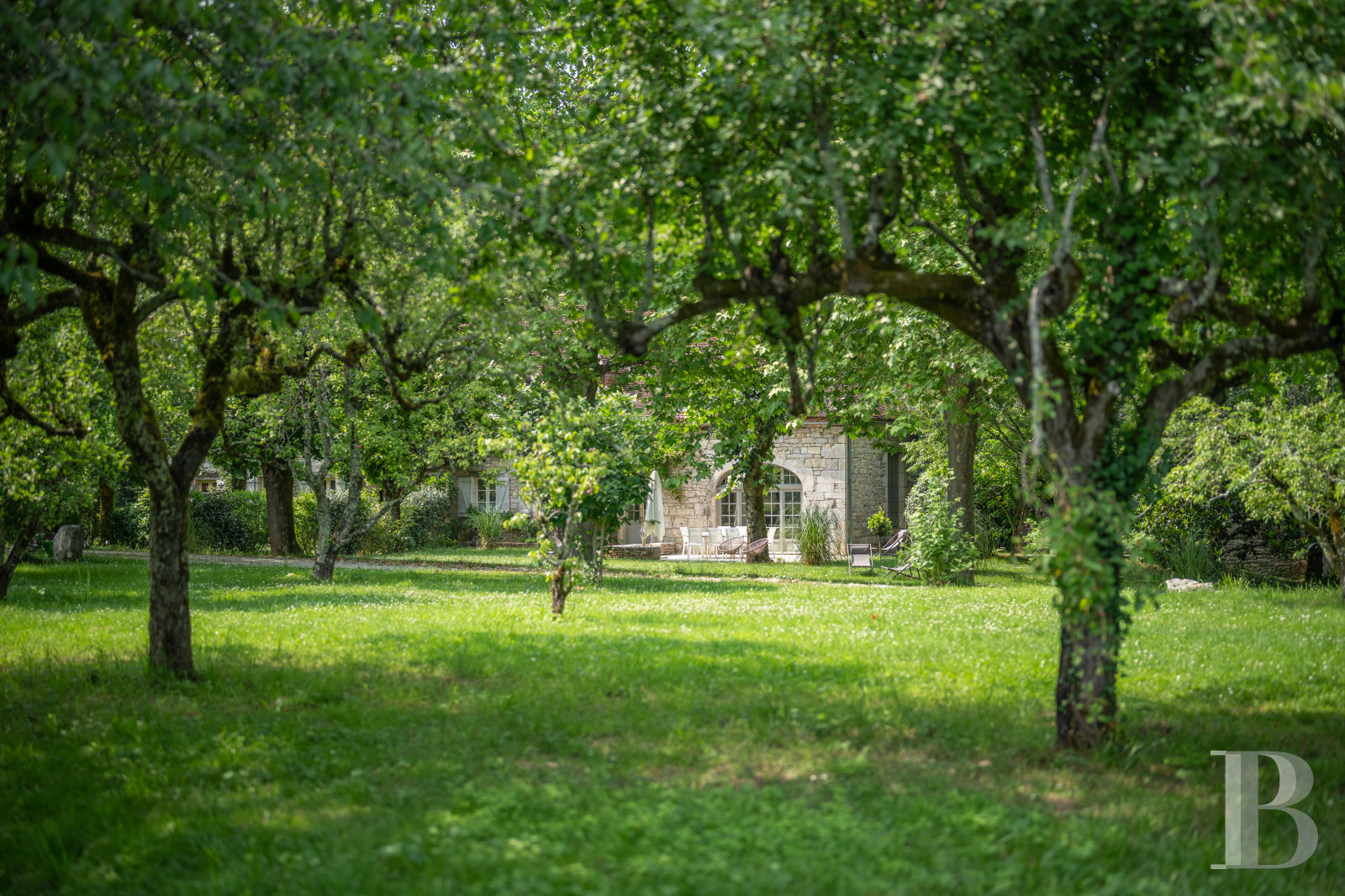
Around the residence, the terraced garden is made up of a harmonious mixture of lawns, fragrant flowers, dry stone walls and a variety of trees. Inside the walls, a swimming pool has been discretely incorporated into the lower terrace, blending into its surroundings and preserving the privacy of the place. Beyond the walls, there are an orchard, a vegetable garden, a wood, several old trees - even hundred-year-old ones – and, watching over the valley, a 13th-century dovecote whose private and discrete access contributes to the unique character of the estate.
The buildings can be found at the end of a long drive lined by deciduous trees. The first is an elegant guests’ house, with a garden and several patios. A vast agricultural storage building is set slightly back and houses several box stalls as well as a workshop. The manor house, which is protected to the north by its walls and dense vegetation, then discretely comes into view. A low wall forms the outline of an inner courtyard, one side of which is occupied by a perpendicularly set outbuilding. However, to the south, the edifice enjoys broad, uninterrupted views of the horizon and displays the refined sobriety of its architecture.
Around the residence, the terraced garden is made up of a harmonious mixture of lawns, fragrant flowers, dry stone walls and a variety of trees. Inside the walls, a swimming pool has been discretely incorporated into the lower terrace, blending into its surroundings and preserving the privacy of the place. Beyond the walls, there are an orchard, a vegetable garden, a wood, several old trees - even hundred-year-old ones – and, watching over the valley, a 13th-century dovecote whose private and discrete access contributes to the unique character of the estate.
The manor house
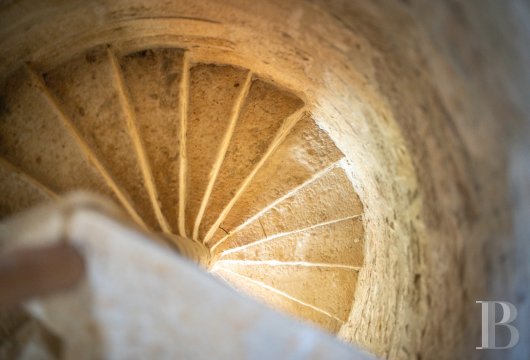
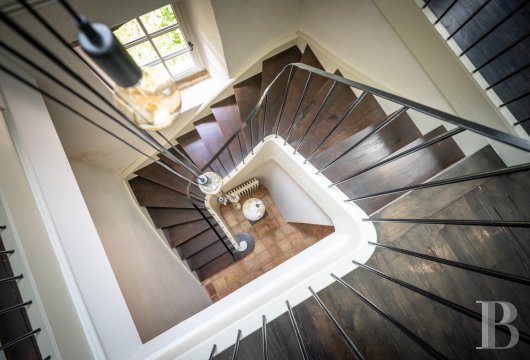
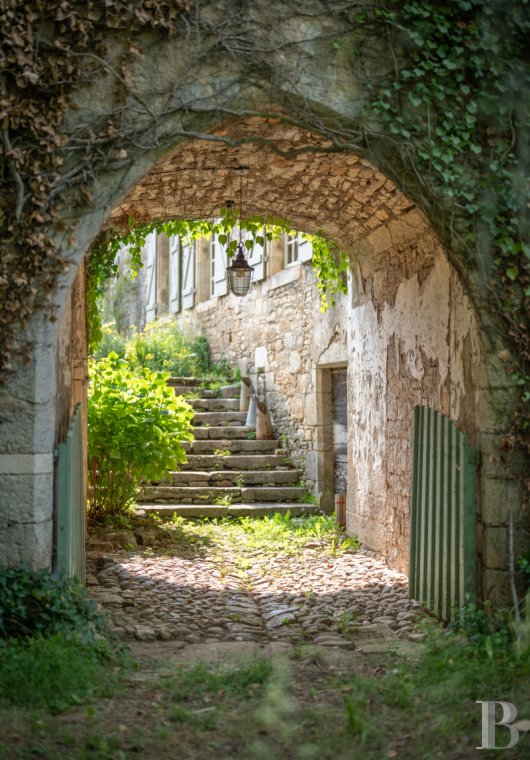
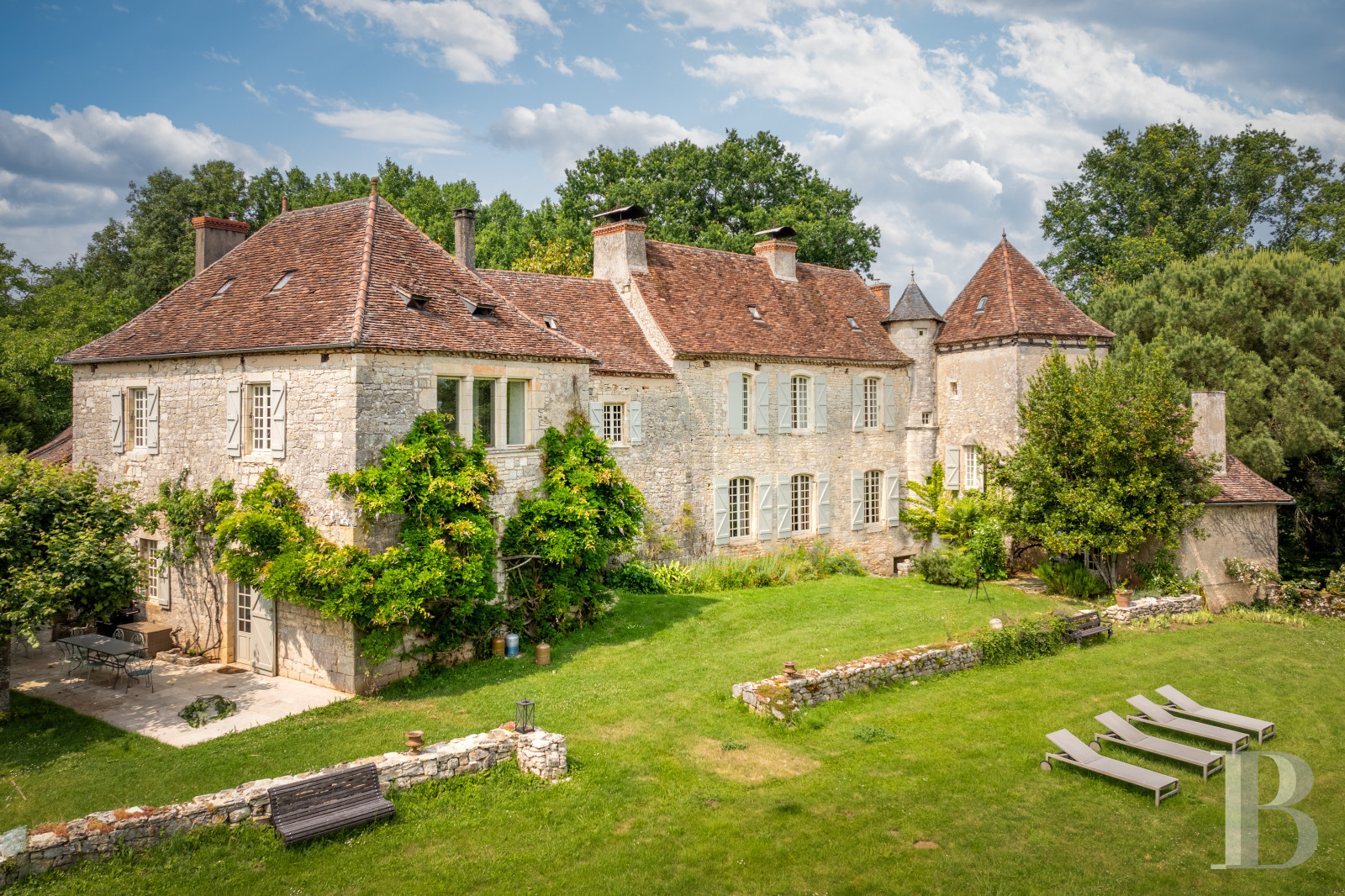
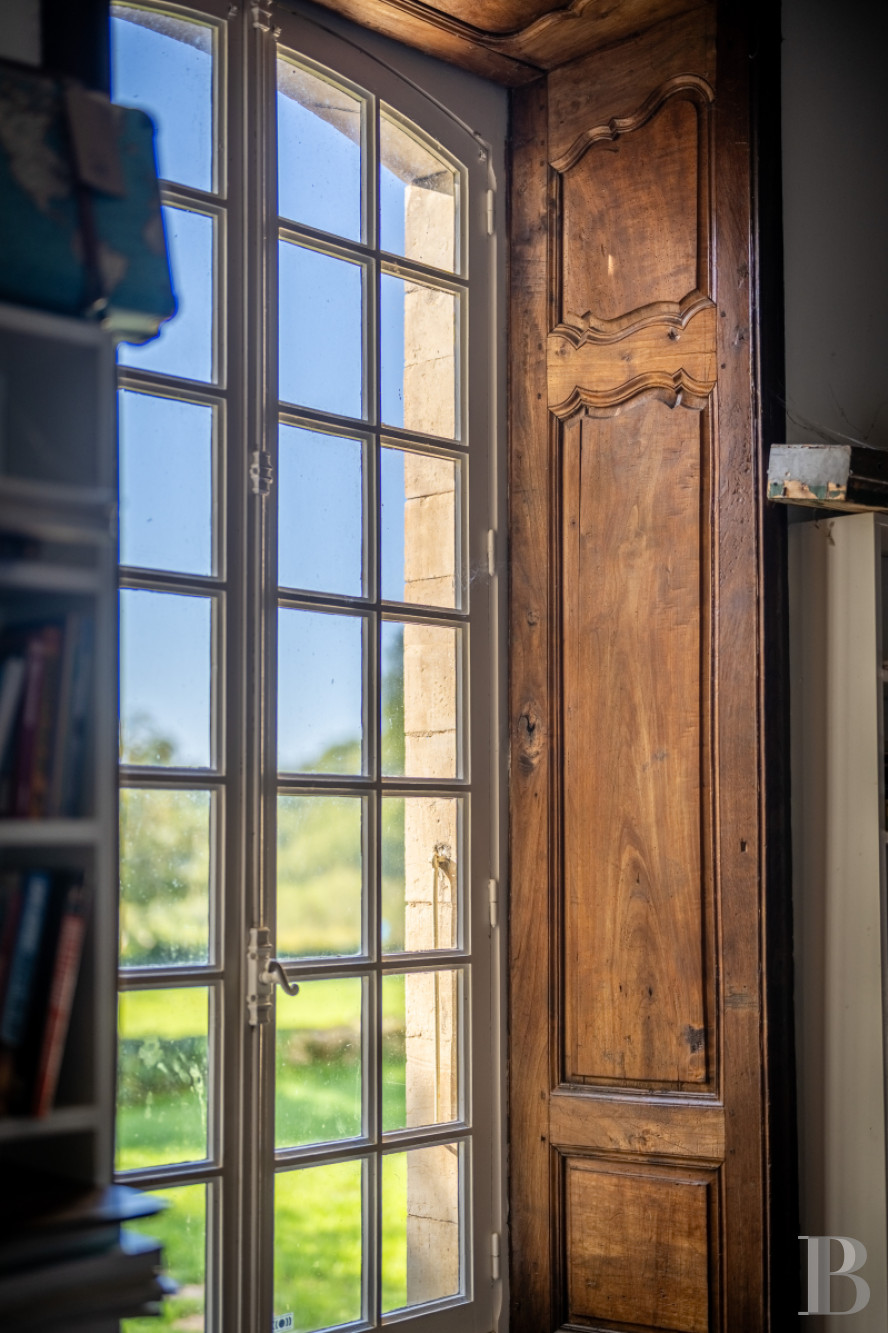
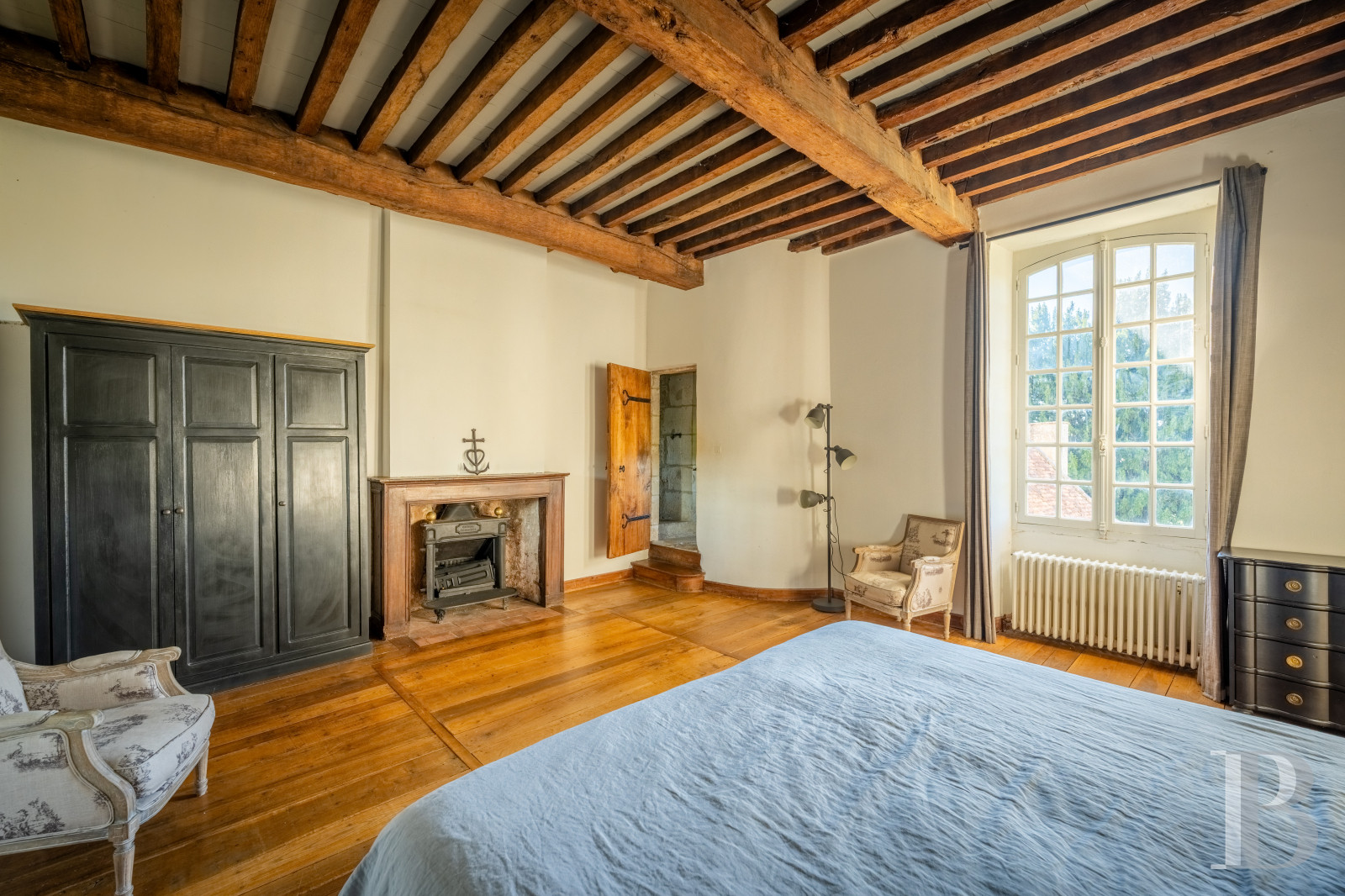
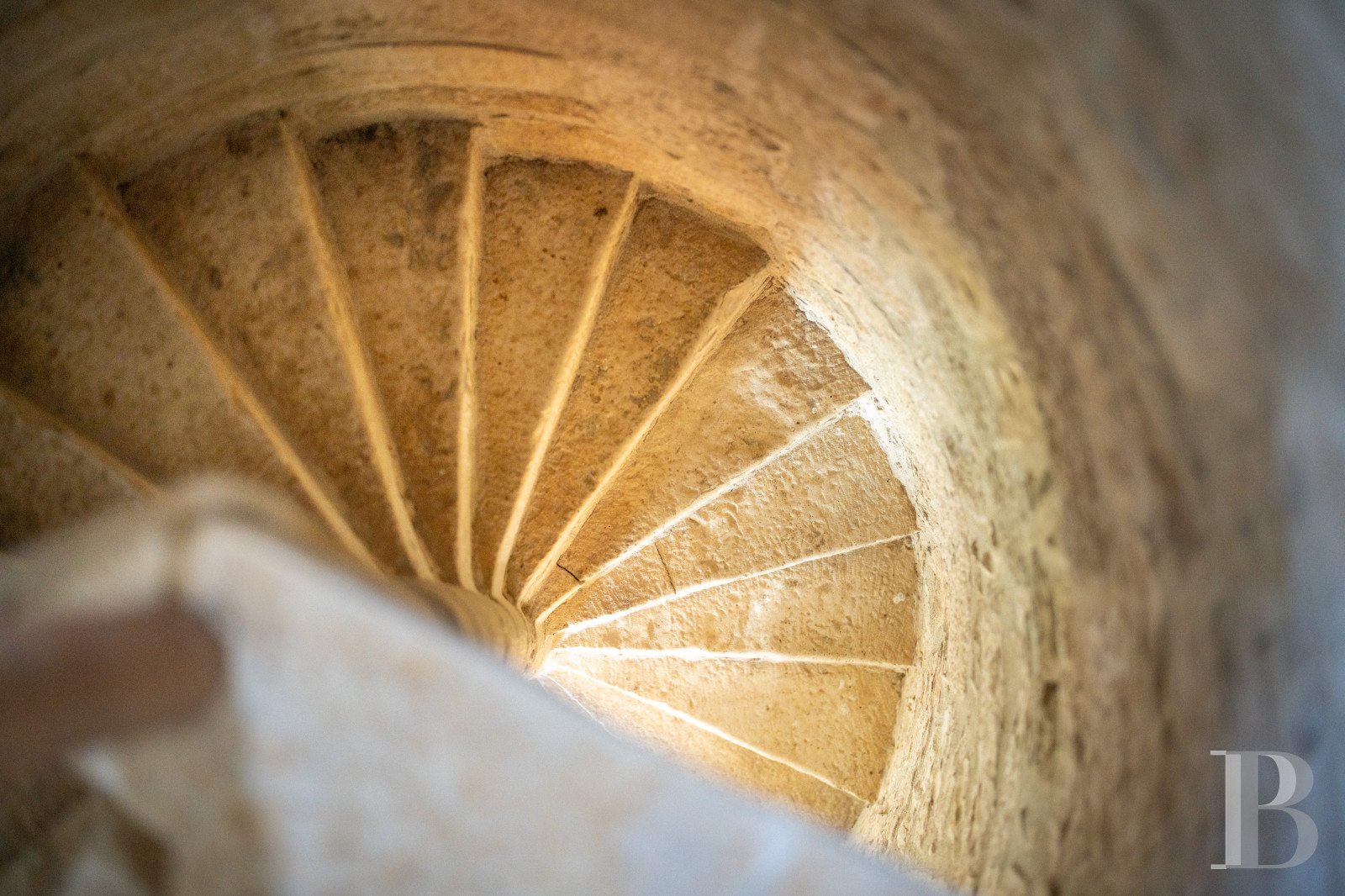
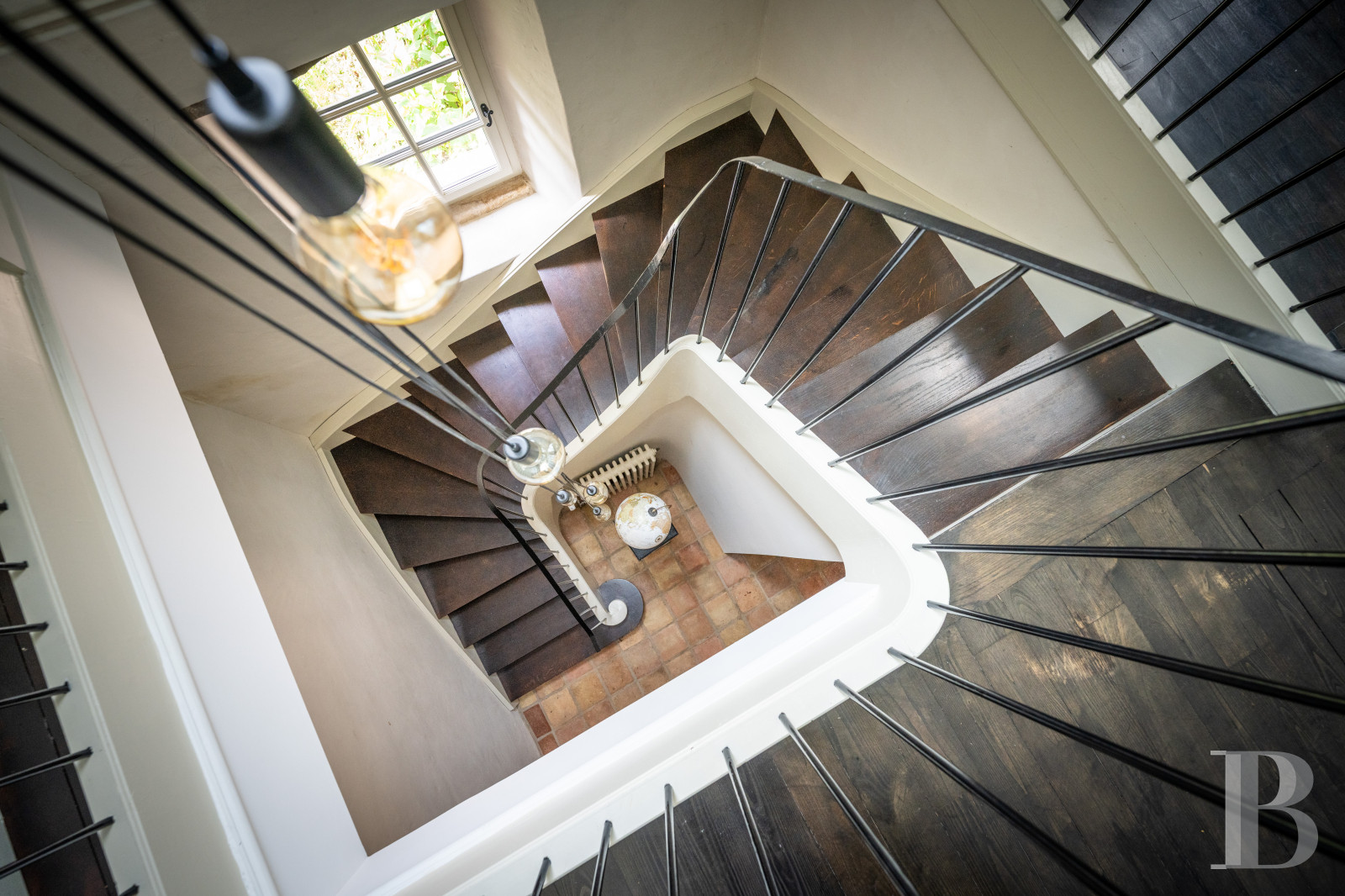
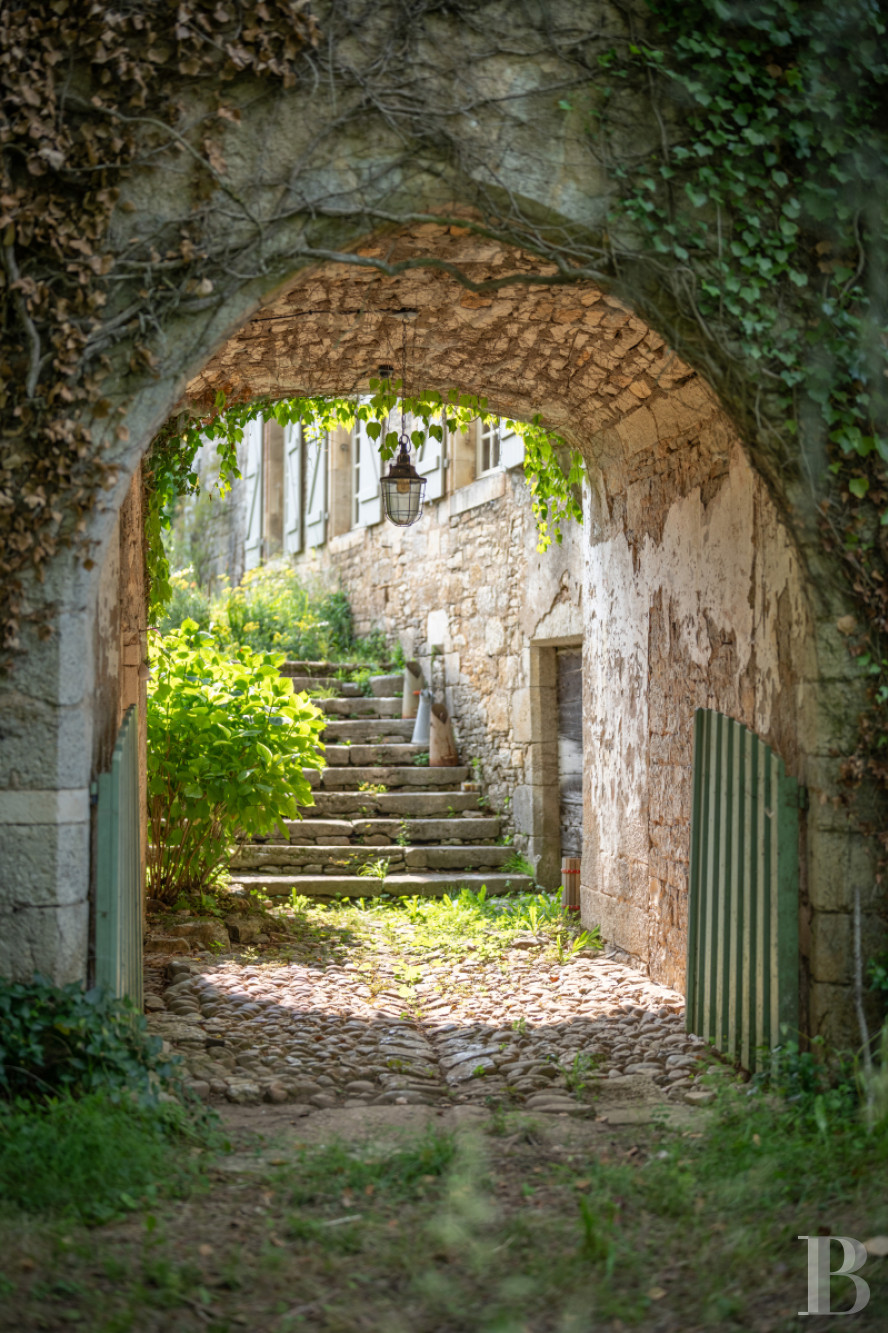
The manor house’s origins are thought to date back to the 13th century, which was a period when a former watchtower overlooked the descent into the valley. The current residence was enlarged over the centuries and is now made up of several sections adjoining each other or set perpendicularly, standing around a round tower housing a spiral staircase and a former vaulted passageway that was the original entrance to the property. The two-storey residence, topped by convertible attics, is made of local limestone beneath a roof of small flat tiles that has been recently renovated. Light streams through the regularly laid-out windows and doors into dual aspect rooms with generous volumes, boasting period fireplaces, traditional flooring and exposed beams, which combine to form a welcoming atmosphere. It has been carefully restored and combines preserved authenticity with potential for development, according to needs.
The basement
The main section of the residence includes a series of three vaulted cellars, one of which is a former cistern with a manhole in the ceiling linking it to the billiards room. Beneath the small pavilion extending from the east wing, there is also a sauna, a shower room and a lavatory.
The garden-level floor
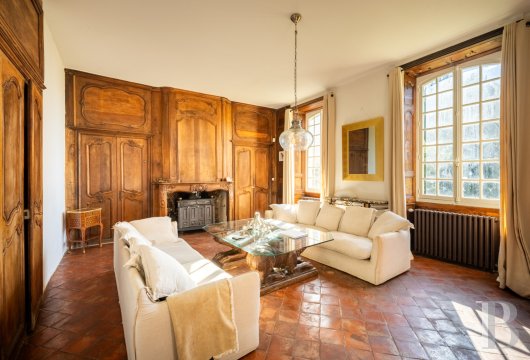
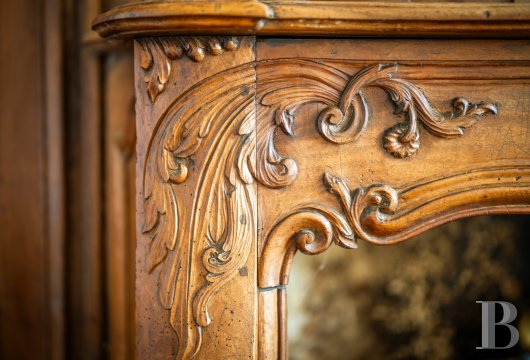
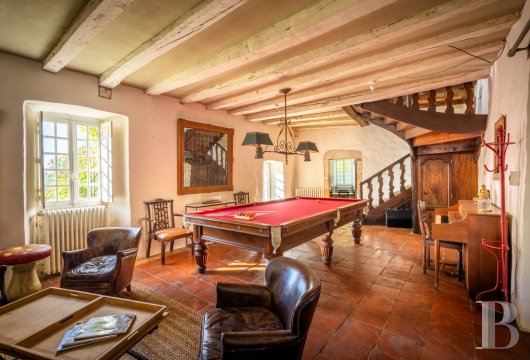
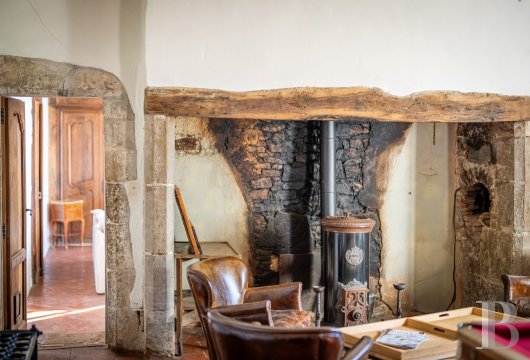
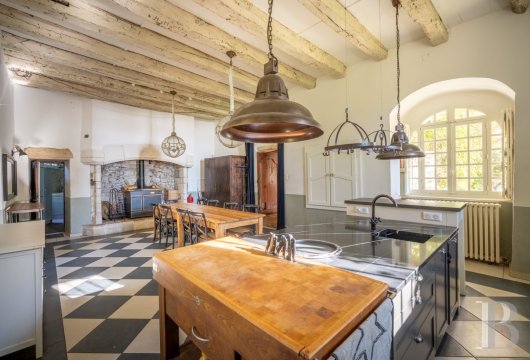
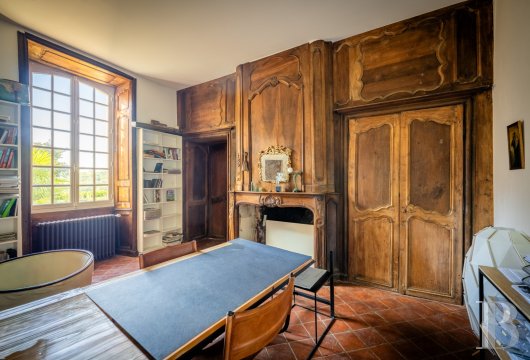
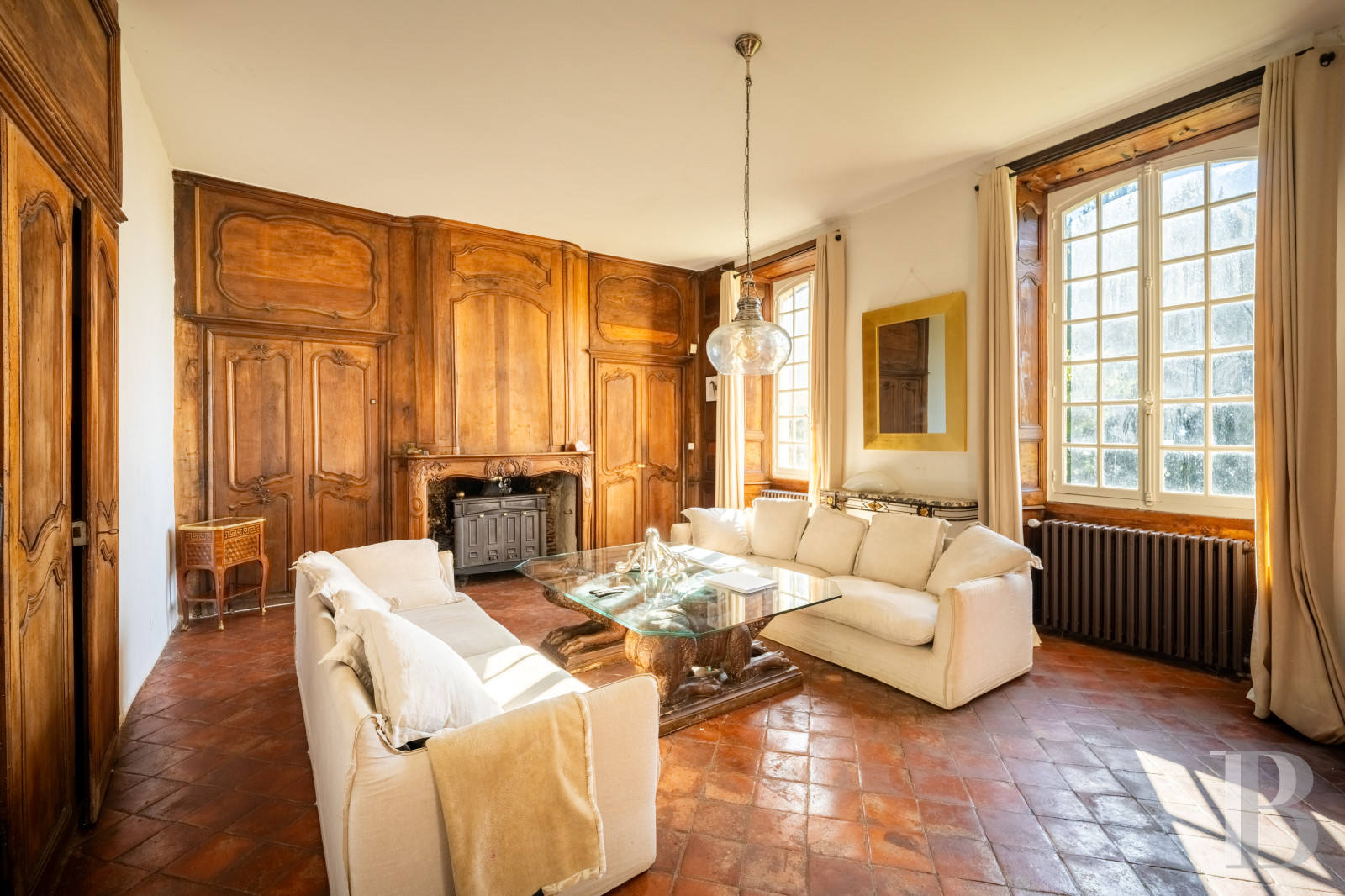
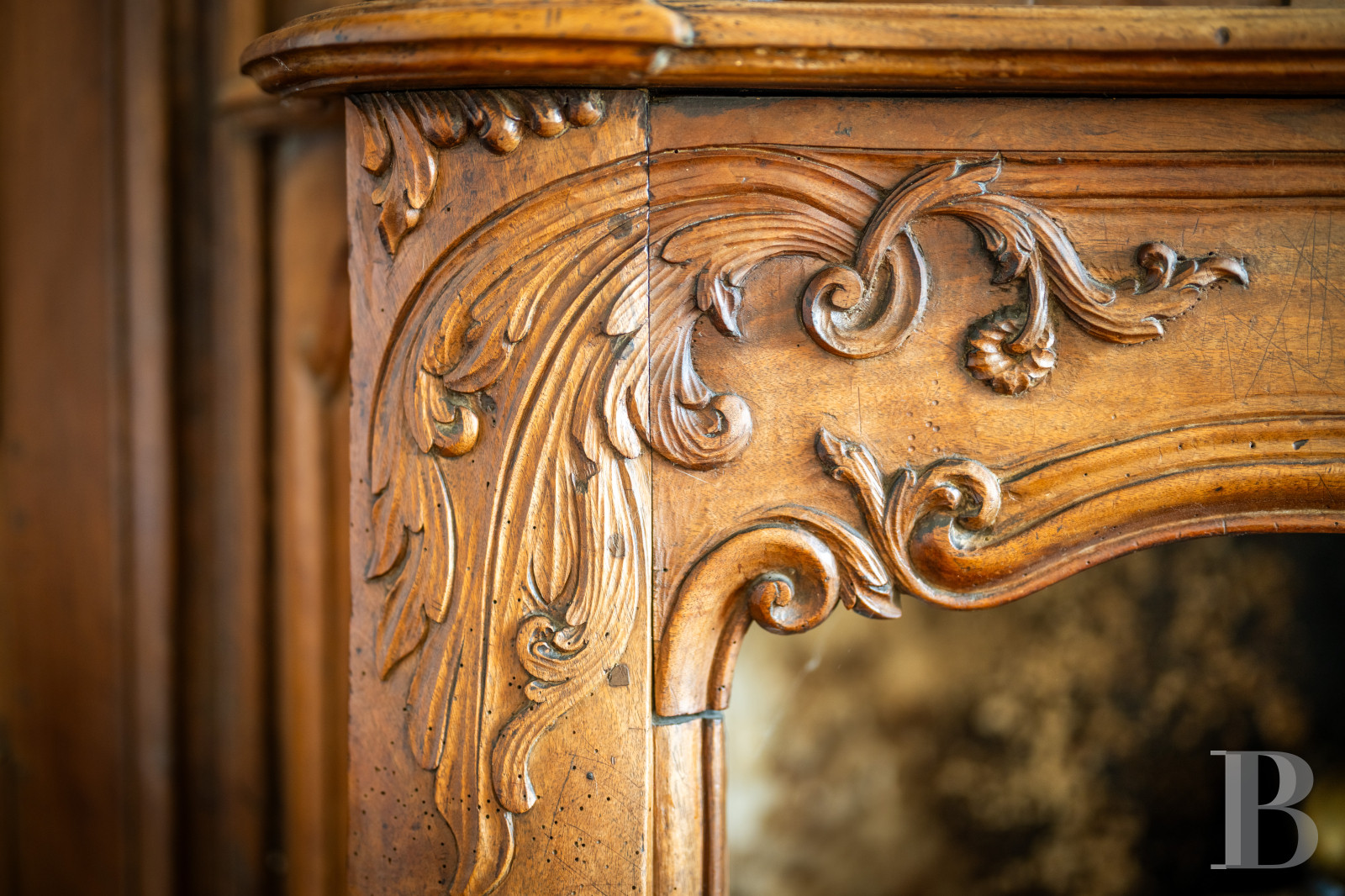
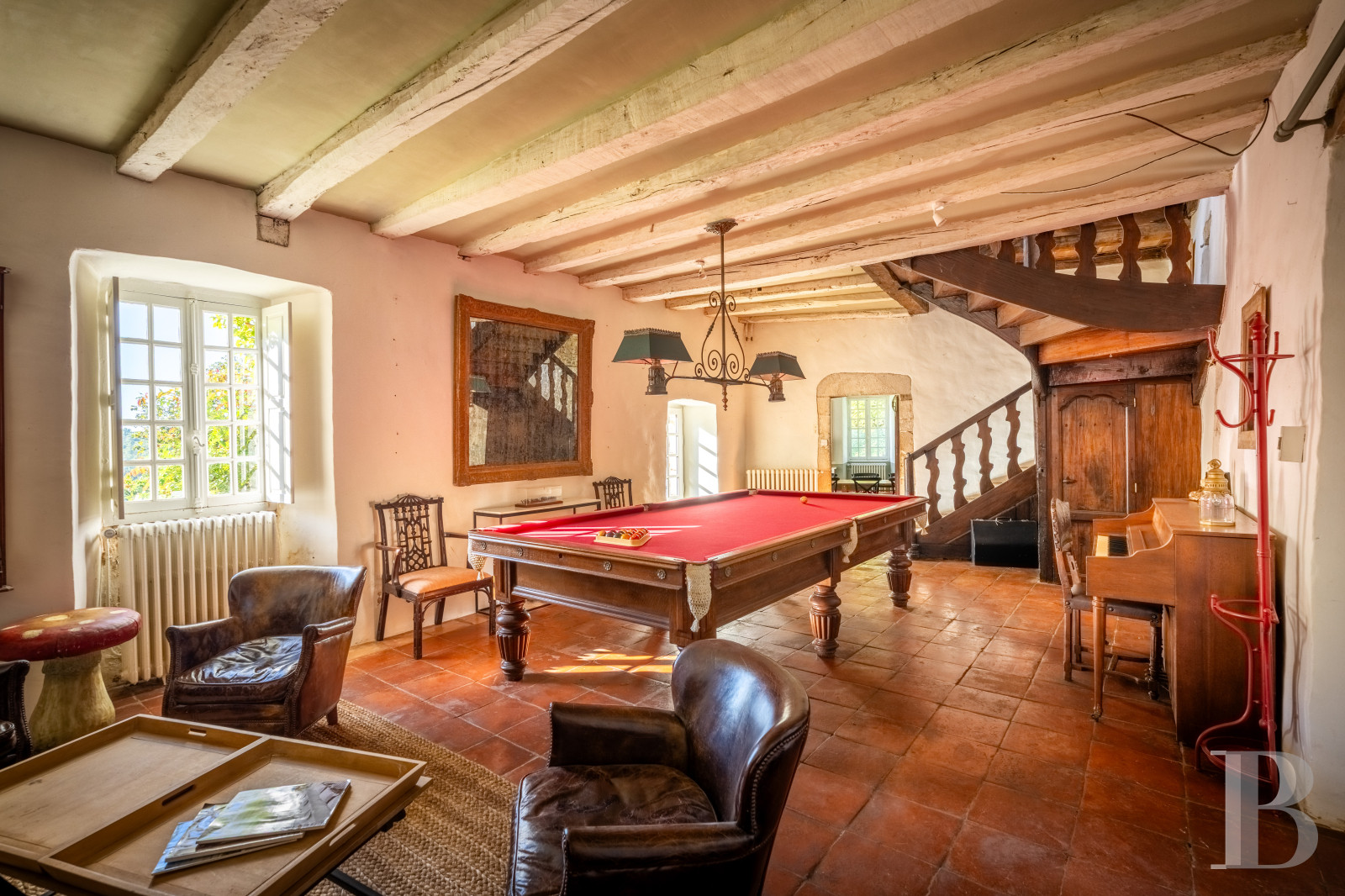
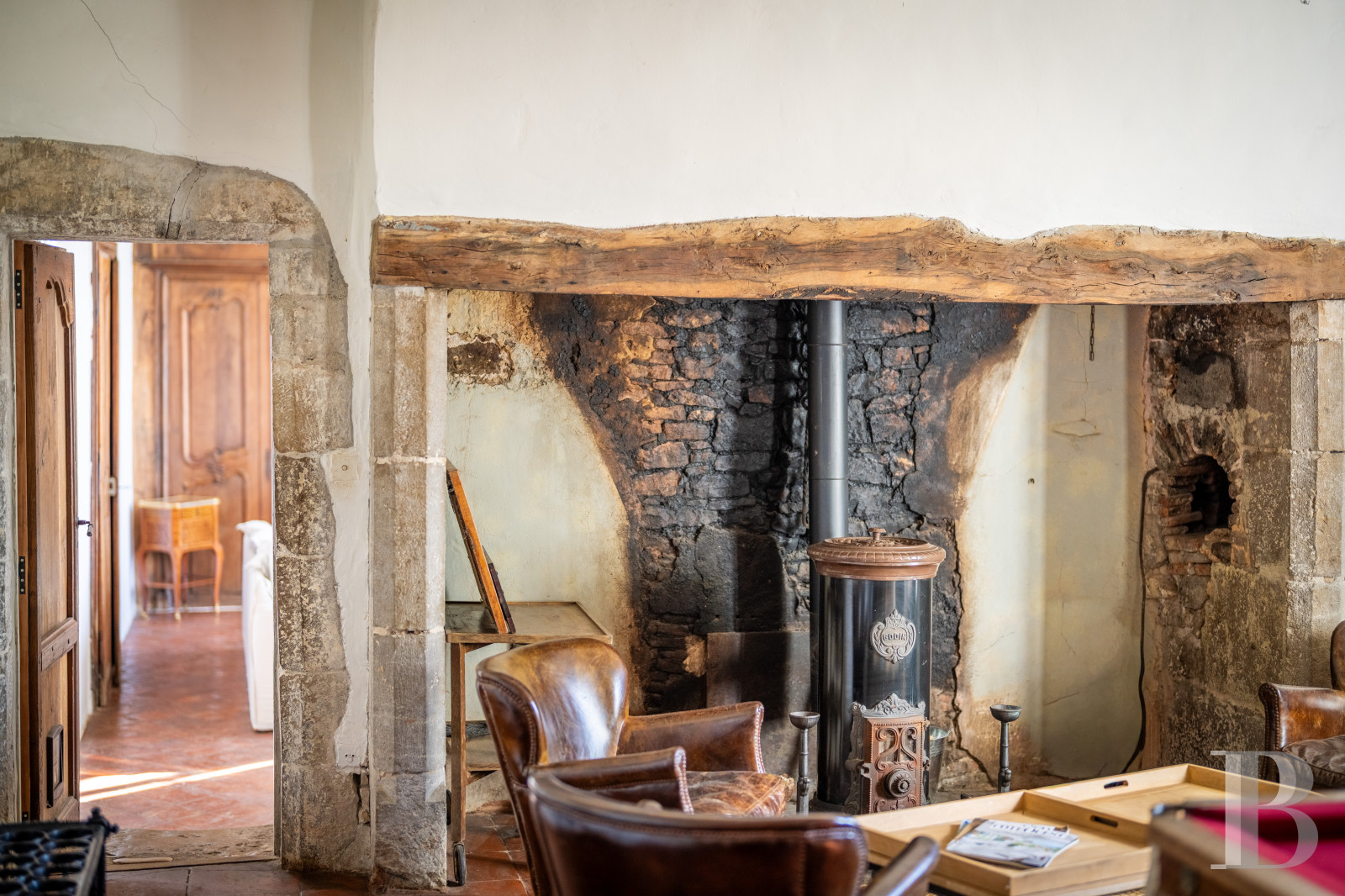
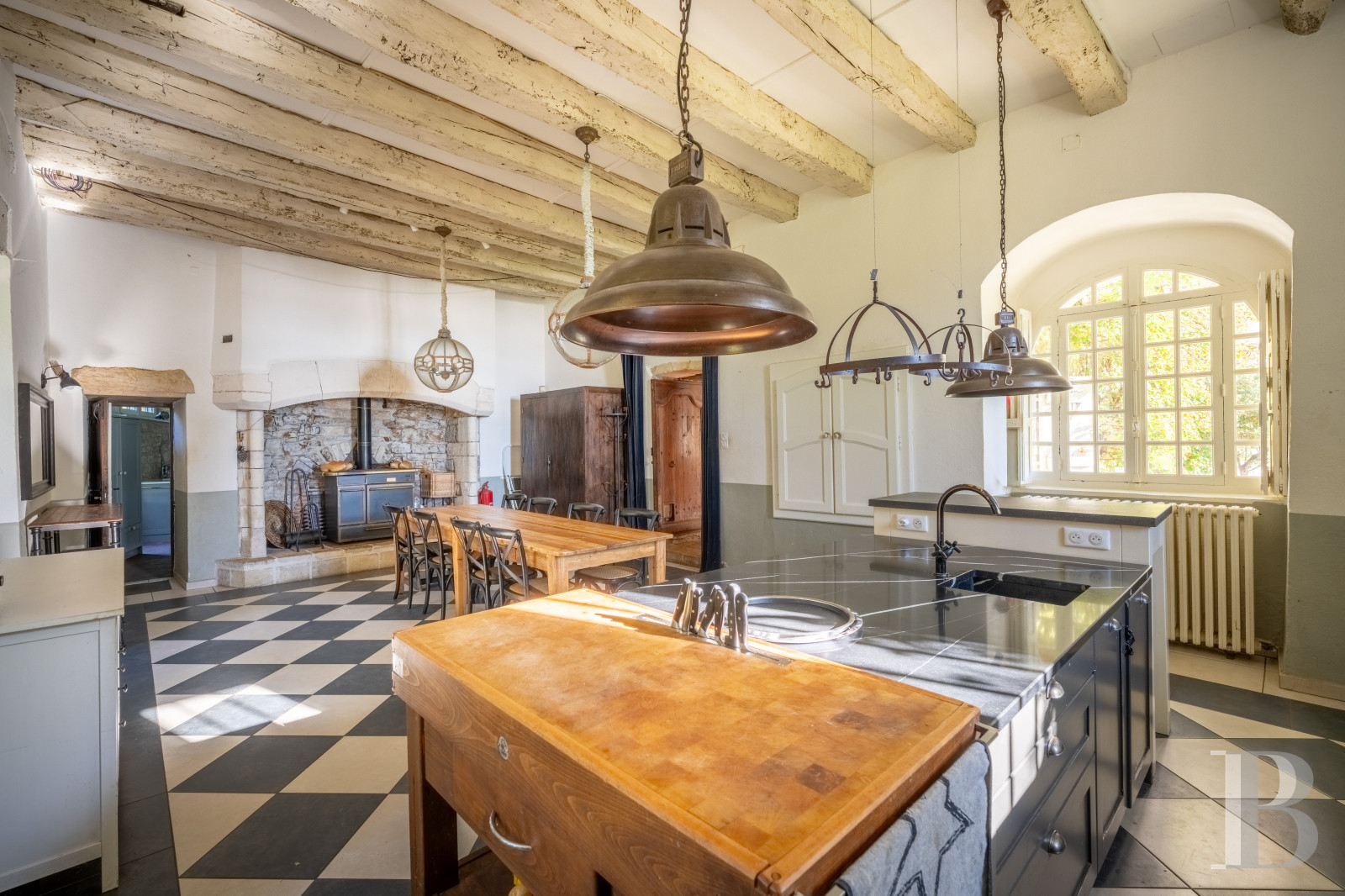
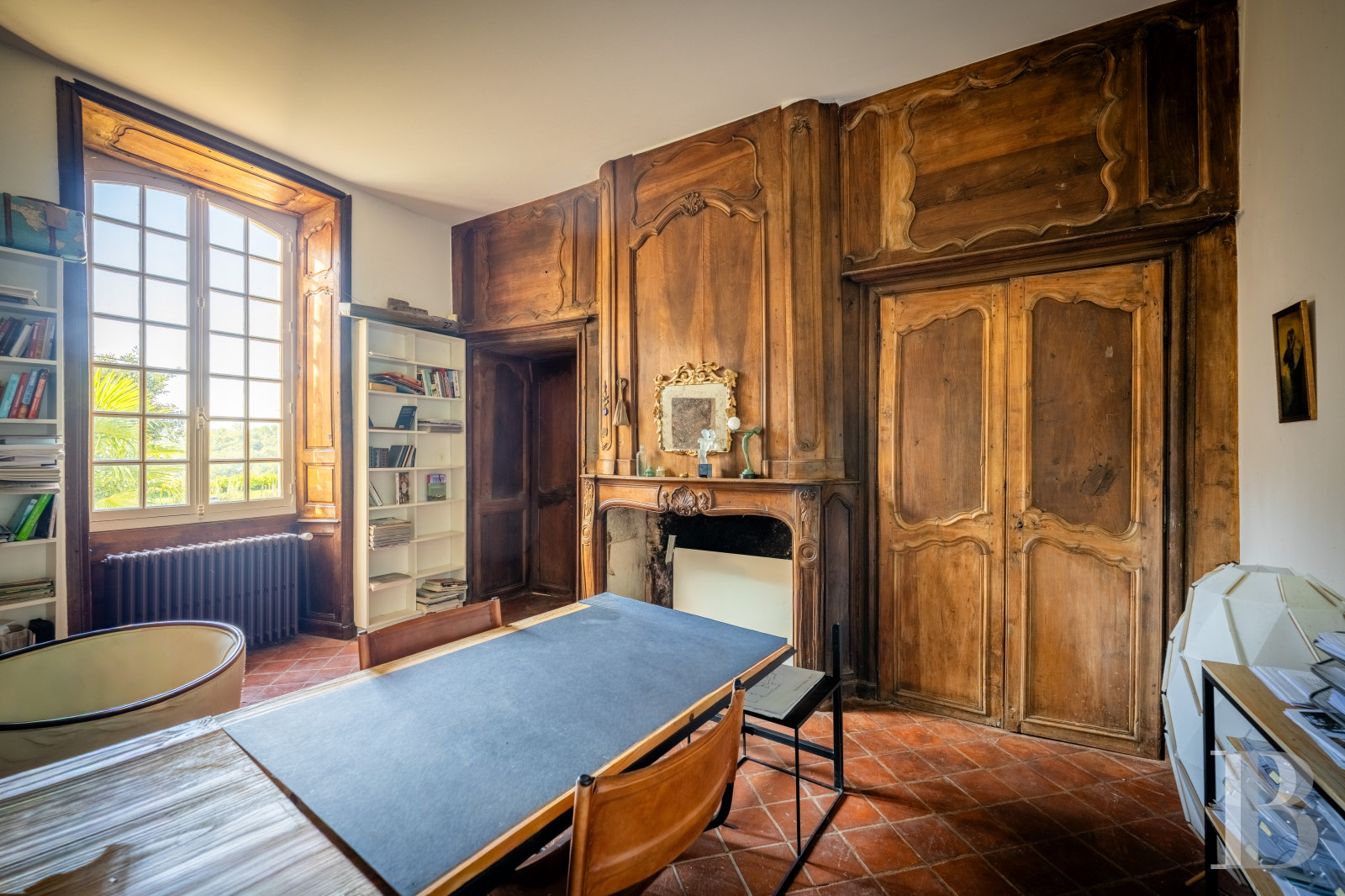
The rooms on the garden level floor, situated one after another, lead directly into each other as well as opening out to the exterior, maintaining a constant link with the outside and are made up of a vast kitchen with a dining area, a billiards room, a lounge and a large office, all of which boast period terracotta tiled flooring. Most of the rooms are dual aspect, looking out onto the garden and inner courtyard. The wall between the office and lounge is adorned with sculpted wood panelling framing fireplaces standing back-to-back. In the billiards room, a Cantou fireplace and a stone sink hark back to the room’s original purpose. The welcoming kitchen is bathed in light and set out around a monumental fireplace. Next to it, there is an anteroom, with a cloakroom and lavatory, leading to a pantry and the former bread oven converted into a utility room. In the small pavilion to the east, a spare bedroom is a useful addition to the garden level floor.
The intermediate level
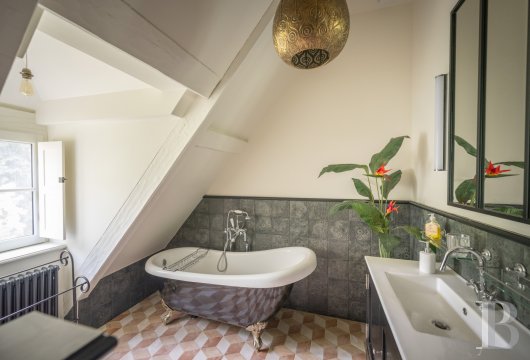
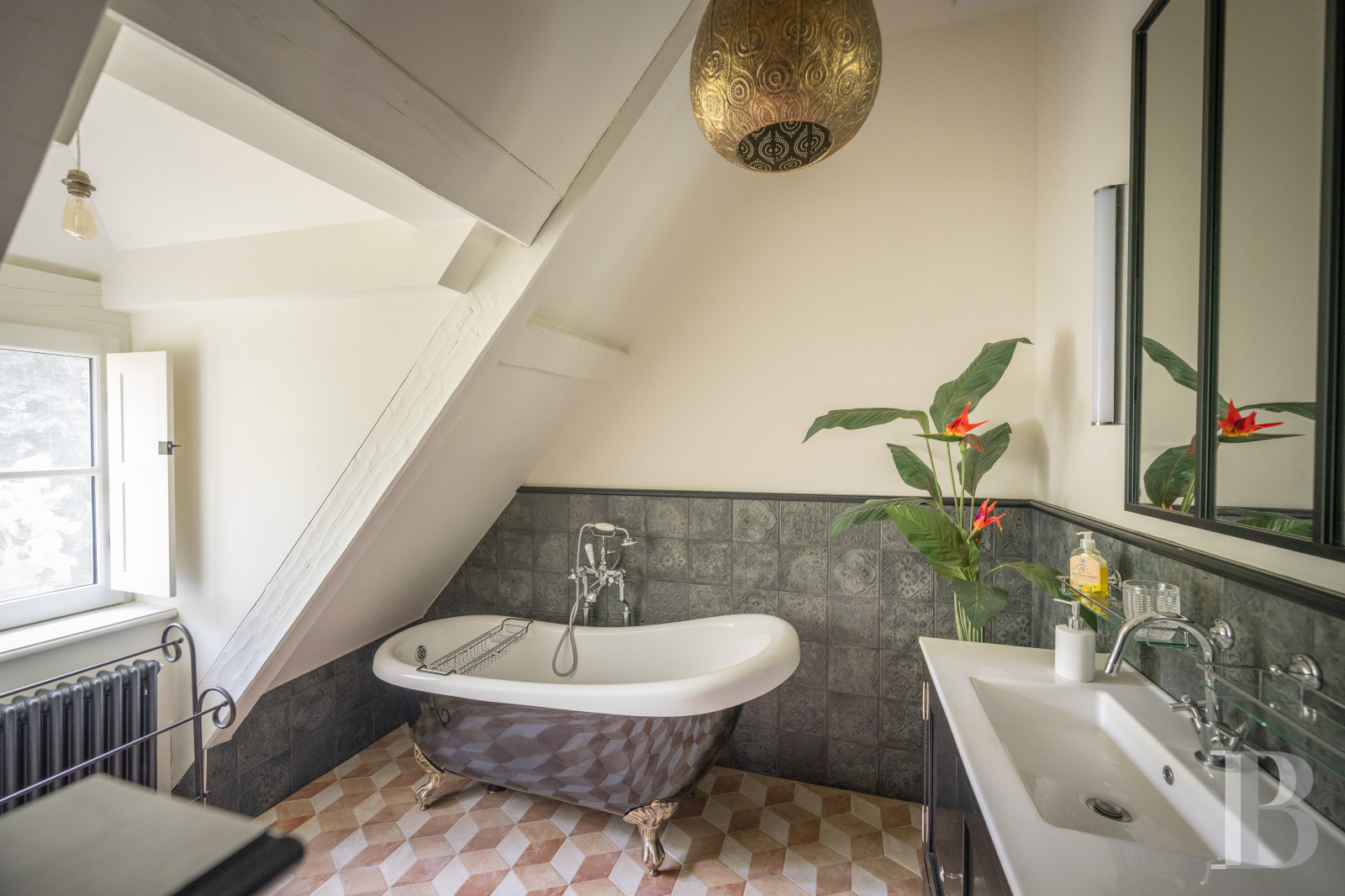
This storey can be reached via the spiral staircase in the tower and houses a bedroom installed in the intermediate level. There is also a bathroom with a cast-iron bath, a shower, two washbasins, cupboards and a lavatory. This dual aspect bedroom is generously bathed in light and boasts period wide wood stripped flooring, while the design of the bathroom is more minimalist in style.
The upstairs
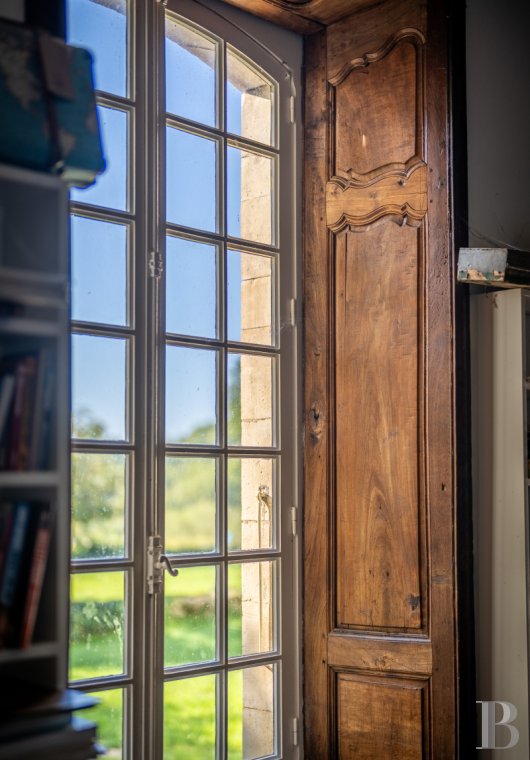
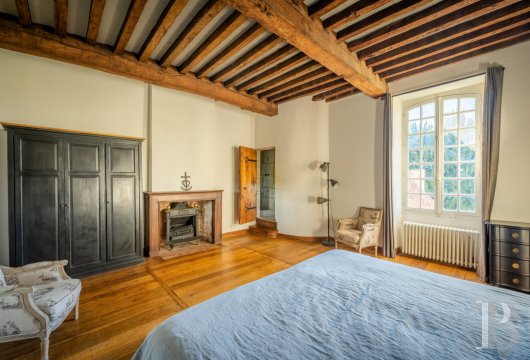
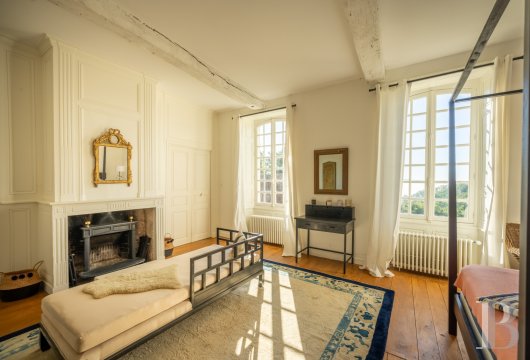
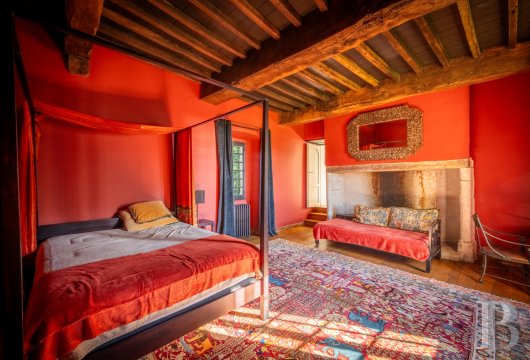
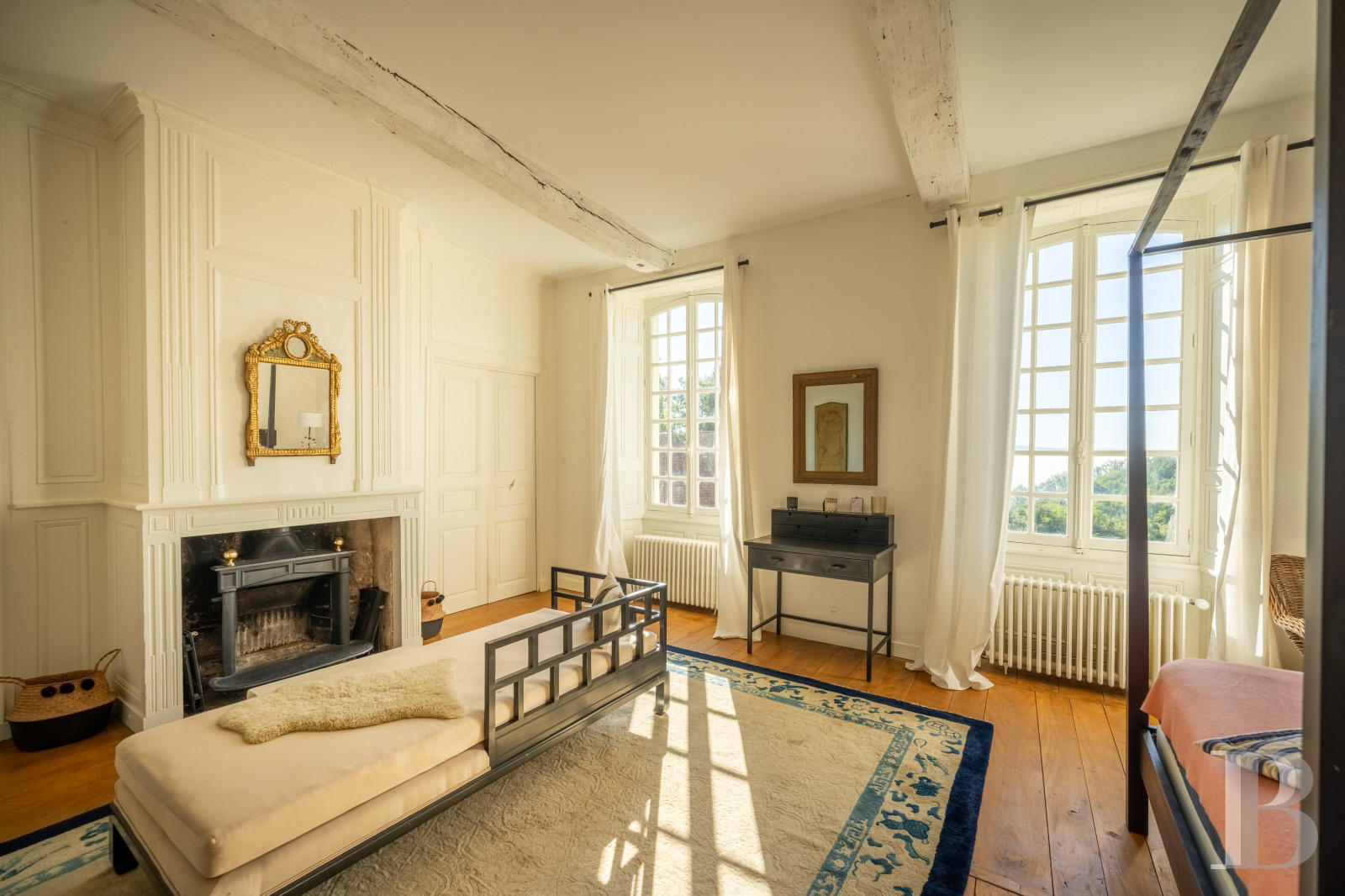
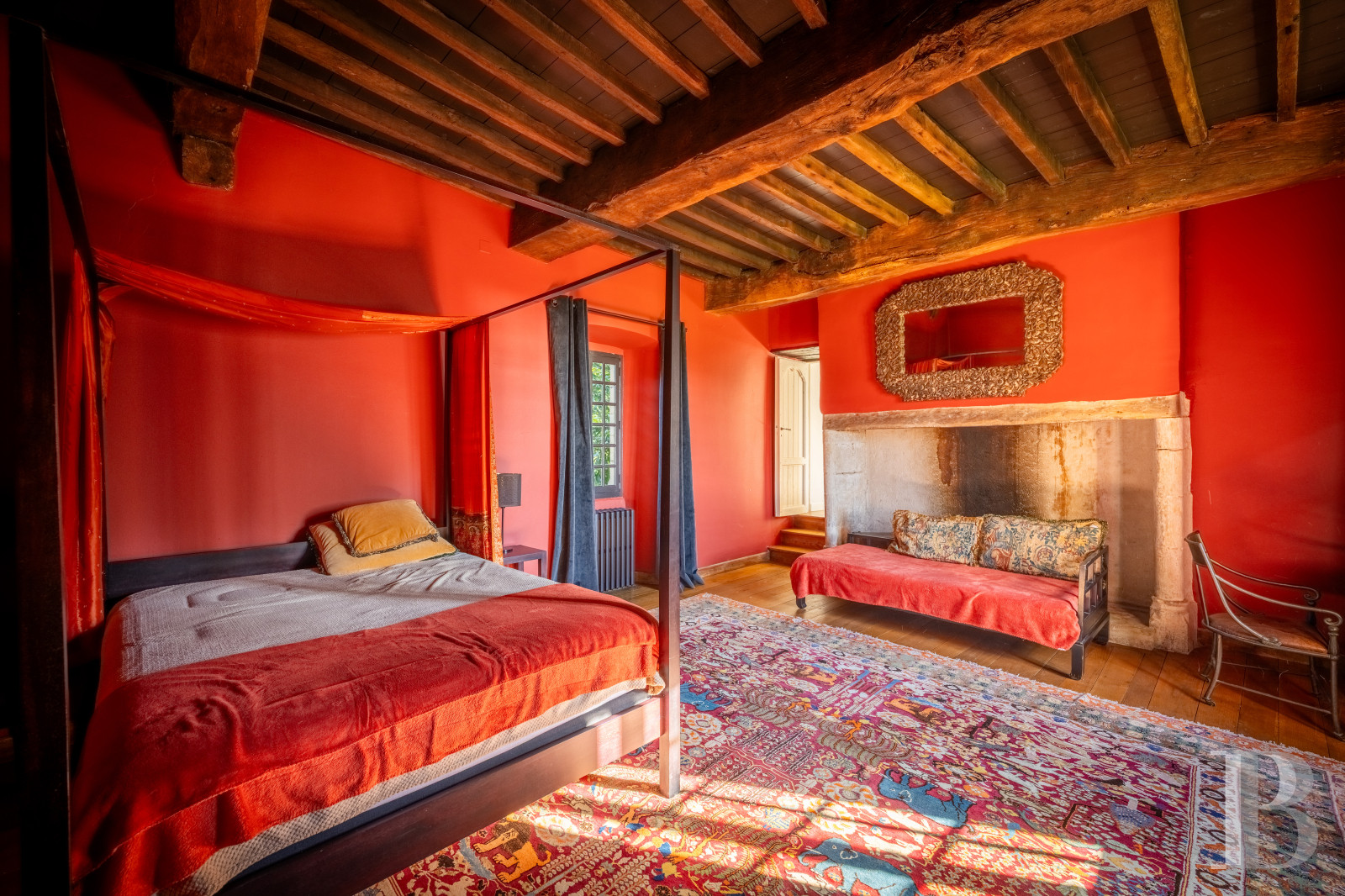
This level, which can be reached via a wooden, quarter-turn staircase from the billiards room as well as via the spiral staircase, includes three large bedrooms bathed in light and enjoying views of the surrounding landscape. Period parquet flooring, stone fireplaces, soberly lined wooden mantelpieces, discrete wood panelling and small-paned windows contribute to the elegant appearance and the peaceful atmosphere. A walk-in wardrobe and two bathrooms complete the layout on this level. At the western tip, above the kitchen, a large, approximately 54-m² room formerly used as a workshop and a study, with the possibility of a wide range of new purposes, boasts an around 10-m² covered gallery, making it possible to enjoy the views whatever the season.
The attic
Two adjoining lofts can be reached from the first-floor landing, while the spiral staircase in the tower leads to two others. The original and well exposed roof frame outlines impressive volumes beneath the rafters, bathed in light through skylights. The sloping ceiling and floorboards have been insulated, providing an excellent basis for a future conversion. At the top of the tower, a children’s games room completes this level.
The outbuilding adjacent to the main residence
This long outbuilding, which borders one side of the courtyard, is made of local limestone and topped with a gabled roof made of small, flat tiles. It includes, set one after another, a garage, a storeroom and a former cowshed, as well as the former bread oven that has been converted into a utility room. An anteroom, with a cloakroom and lavatory, also leads to a pantry. The outbuilding forms a natural connection with the courtyard, western facade and the kitchen in the extension to the south.
The guests’ house
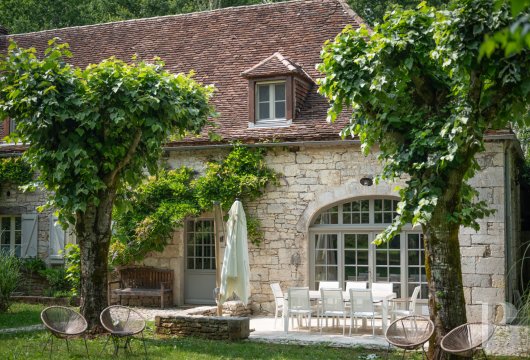
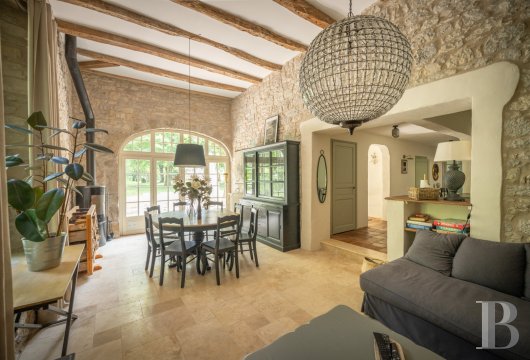
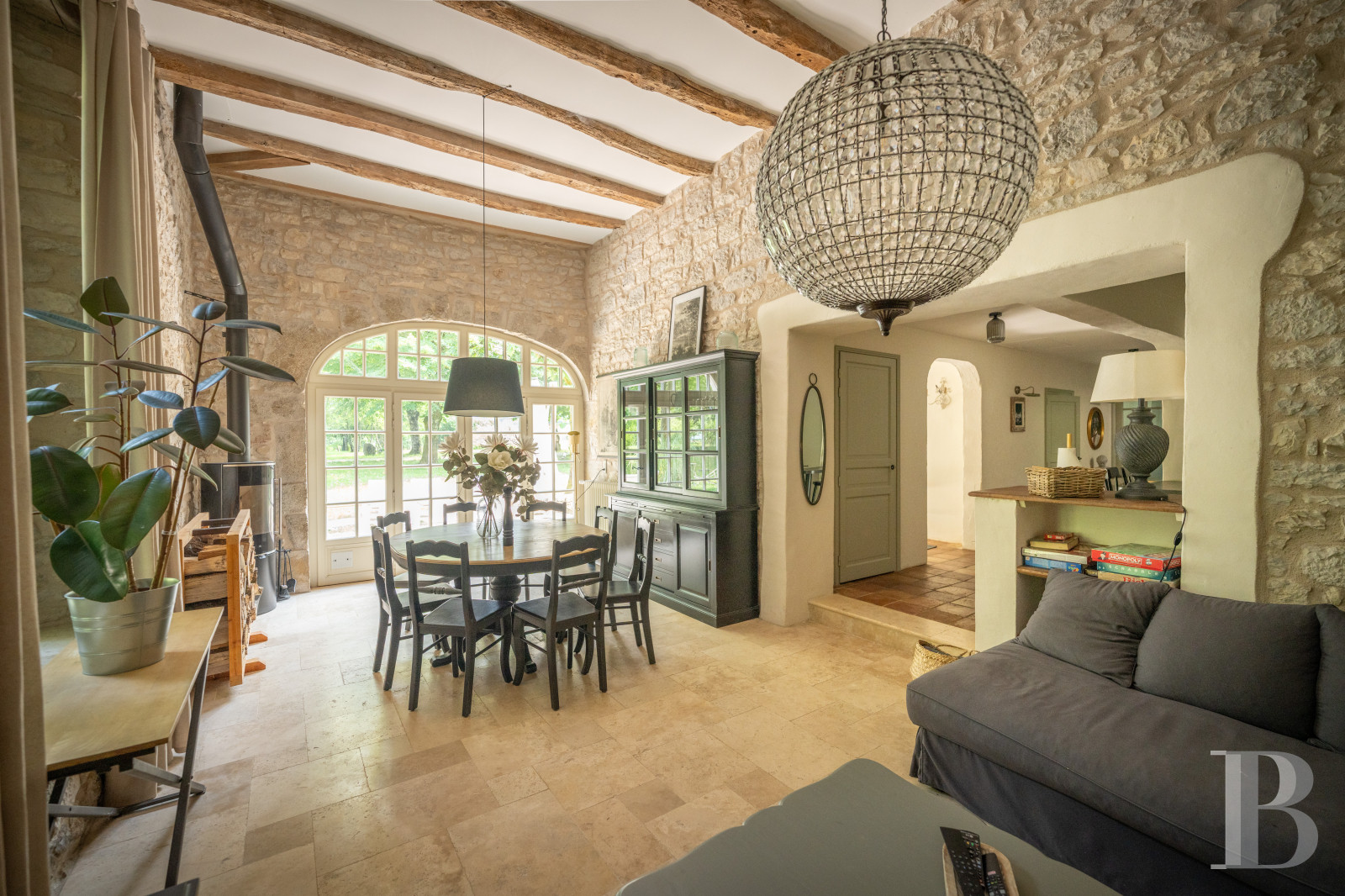
The two-storey, around 342-m² guests’ house made of local limestone, topped with a roof made of small flat tiles, is laid out around a central porch separating two independent dwellings. The first, approximately 200-m² dwelling has been carefully restored and offers an independent and comfortable living area. On the ground floor, an open-plan kitchen, a lounge and a dining room form a pleasant volume in which exposed stonework, floors paved with natural stone slabs and old exposed beams converse with more modern features. This level also includes a shower room as well as a wellness area with a jacuzzi and a sauna. The top floor boasts four bedrooms with shower rooms. The second, around 142-m² dwelling requires renovation and possesses a considerable amount of space, which could accommodate an extended family, a hospitality business or any other development of the estate.
The agricultural storage building
The more recently built agricultural storage building stands behind the guests’ house. It boasts a surface of approximately 255 m² and a ceiling height up to the roof ridge of around 8 metres, providing an easily accessible, vast volume able to house any type of vehicle. It is already home to a large workshop, next to which the presence of several box stalls means it could be put to use for an equestrian activity. Its proportions and structure mean it is very flexible in terms of usage, enabling a wide range of possible purposes.
The dovecote
A 13th-century dovecote stands on the edge of the woods, overlooking the valley, tucked away at the edge of a cliff. It is made of limestone and topped by lauze slate tiles, with a circular structure and rows of pigeonholes below the conical roof.
It can be reached via a rather secret lane. From its rocky outcrop, the edifice enjoys a remarkable view of the Dordogne River and Valley, keeping the memory of the site’s origins intact with its discrete presence.
Our opinion
While the estate is of impressive size, the immediate vicinity of the residence forms a protective and cosy setting. The silence is only broken by the sound of nature, making the view all the more striking. It is unquestionably a remarkable site.
The quality of the buildings, their well-preserved authenticity and the faithfulness of the restoration convey deep respect for the place’s history, without having to sacrifice modern comforts. The carefully restored, independent guests’ house enhances the opportunities offered by the property, while other volumes available make it possible to consider further developments.
This is a rare place, where architecture, landscape and development perspectives form a highly coherent whole.
Reference 847757
| Main building floor area | 390 m² |
| Outbuildings floor area | 620 m² |
| including refurbished area | 200 m² |
| Land registry surface area | 18 ha 76 a 69 ca |
| Total floor area | 590 m² |
French Energy Performance Diagnosis
Information on the risks to which this property is exposed is available on the website: www.georisques.gouv.fr
Share


- Lot -
- Martel -
- Midi-Pyrénées -
- Occitania
NB: The above information is not only the result of our visit to the property; it is also based on information provided by the current owner. It is by no means comprehensive or strictly accurate especially where surface areas and construction dates are concerned. We cannot, therefore, be held liable for any misrepresentation.