



A priory, tithe barn and outbuildings, with partial Historical Monument status,
on nearly 35 hectares of grounds, a few minutes from Tours
on nearly 35 hectares of grounds, a few minutes from Tours
Tours,
INDRE-ET-LOIRE
center-val-de-loire
37000
FR

Location
Located in the middle of the Indre-et-Loire department and t the north of the Loire River, the valley of which has been named a Unesco World Heritage Site, the village, sought out for its vibrancy and quality of life, is located a couple of kilometres from the city of Tours. In addition, all shops and services can be found in the vicinity as can doctor’s surgeries, primary schools, a lower secondary school and athletic facilities, while the Loire-Anjou-Touraine Regional Natural Park is also nearby as well as the forests of Larçay and Amboise.
As for the property, it is set back from the village, perched up on a hillside and sheltered from all disturbances, whereas the high-speed rail station, approximately 15 kilometres away, provides service to Paris in 55 minutes, as does the Tours-Val de Loire airport.
Description
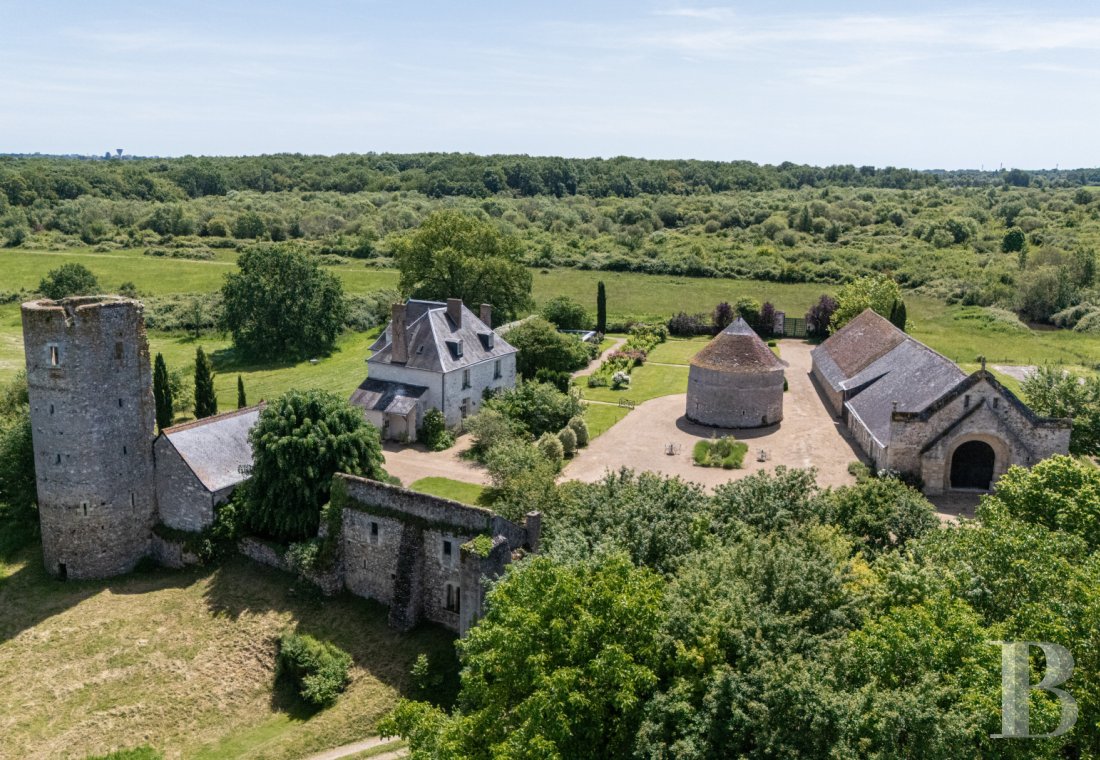
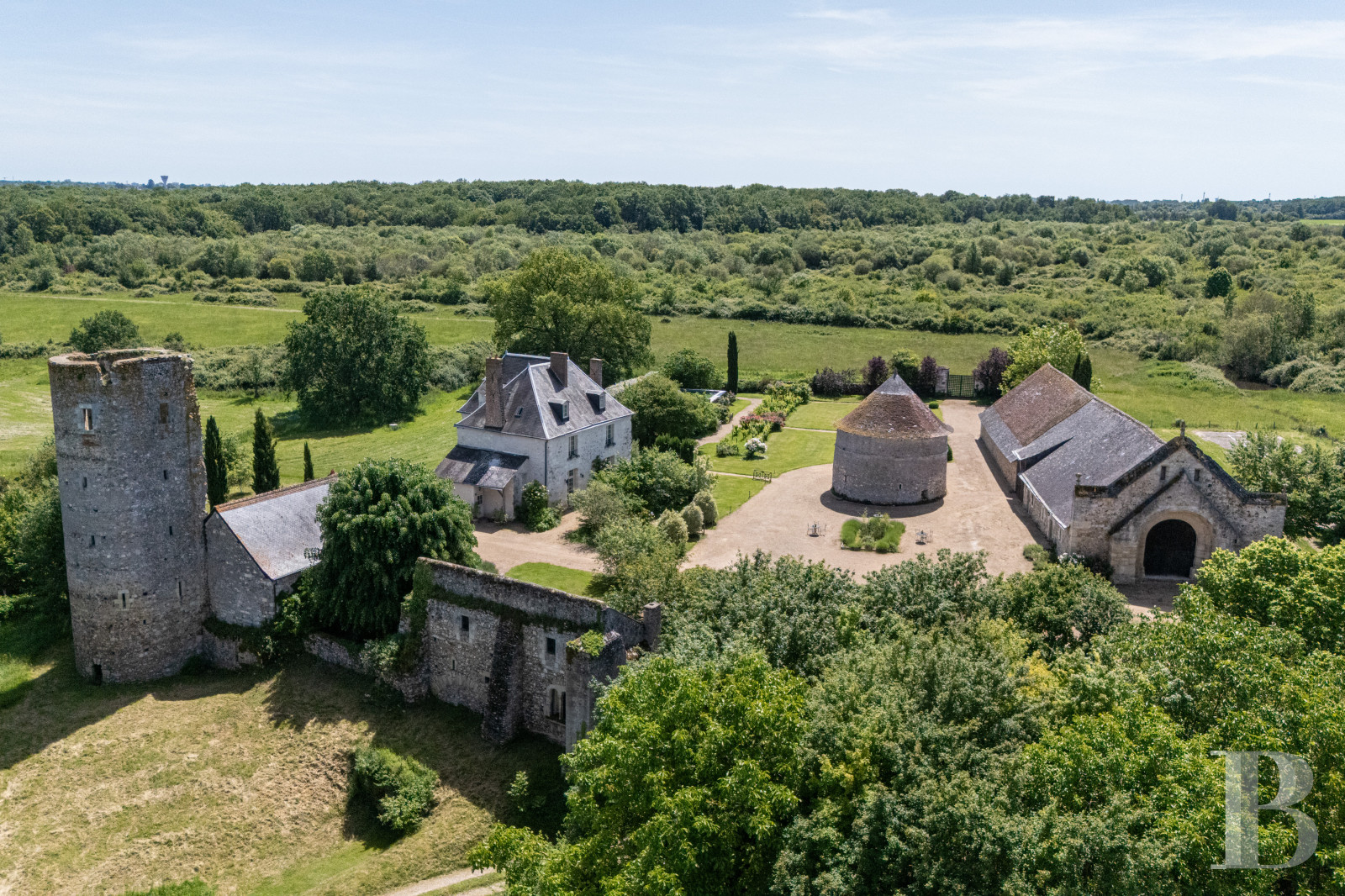
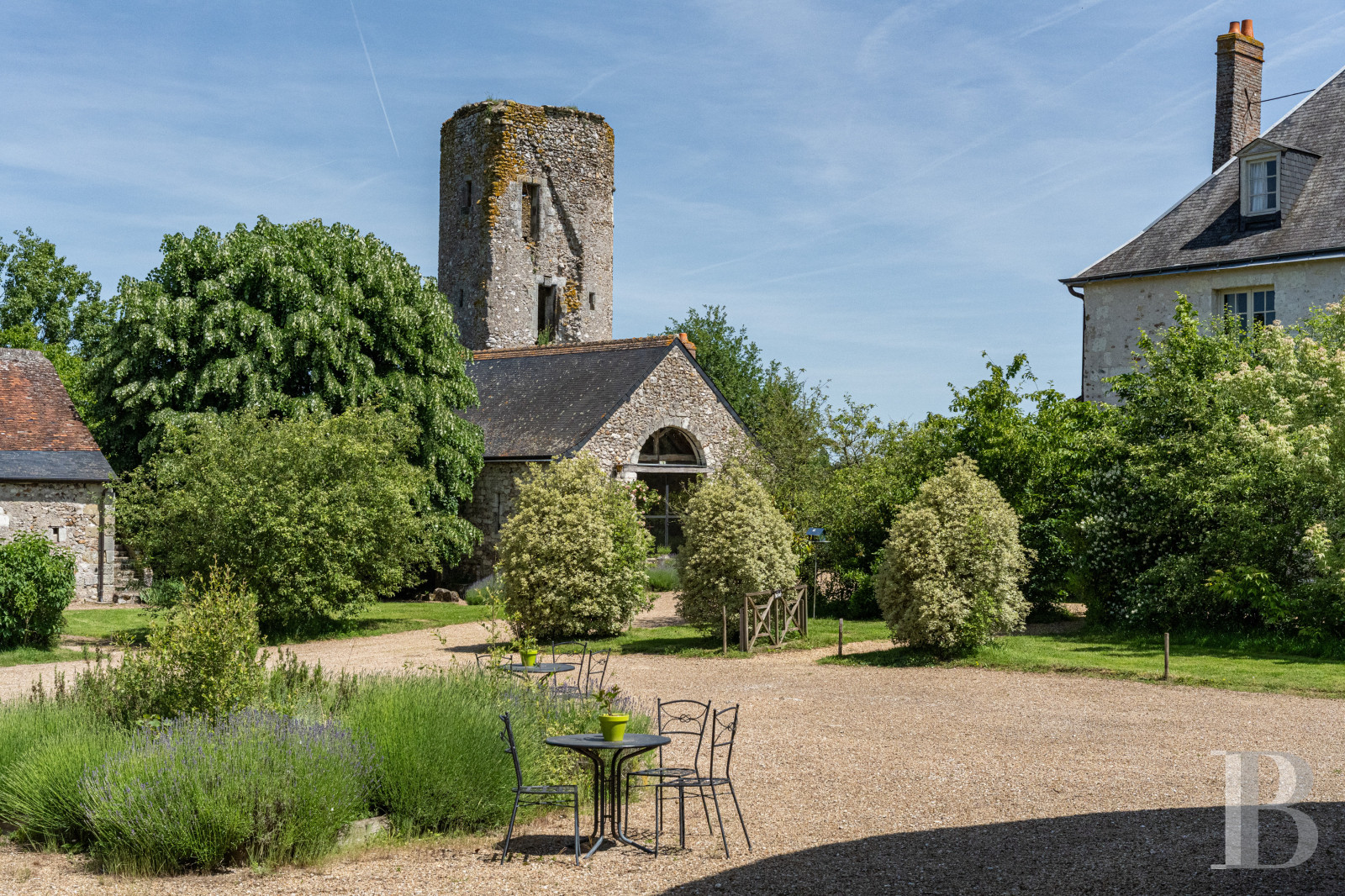
The property, undetectable from a street along the edge of the village, is accessible from an iron gate that opens on to a lane that ascends gradually through the woods and leads to a second gate that gives on to an immense gravel courtyard, planted with flowerbeds, which communicates with all of the buildings, as well as vestiges from the 13th and 16th centuries, all recognised with either national or regional Historical Monument status.
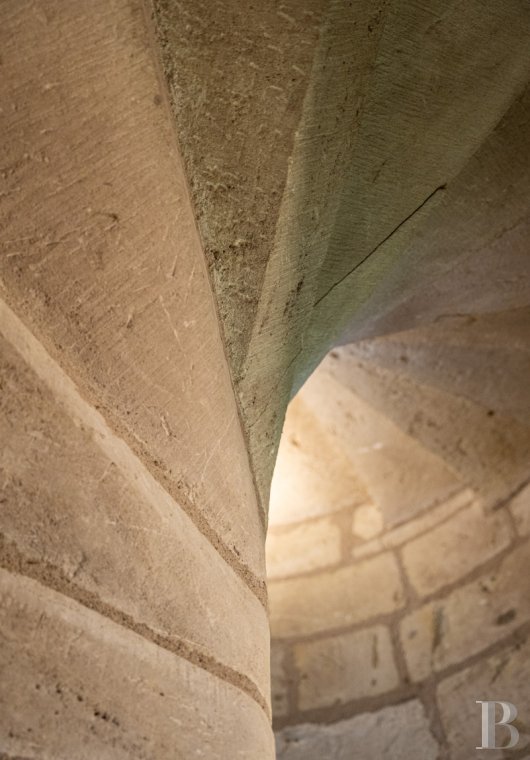
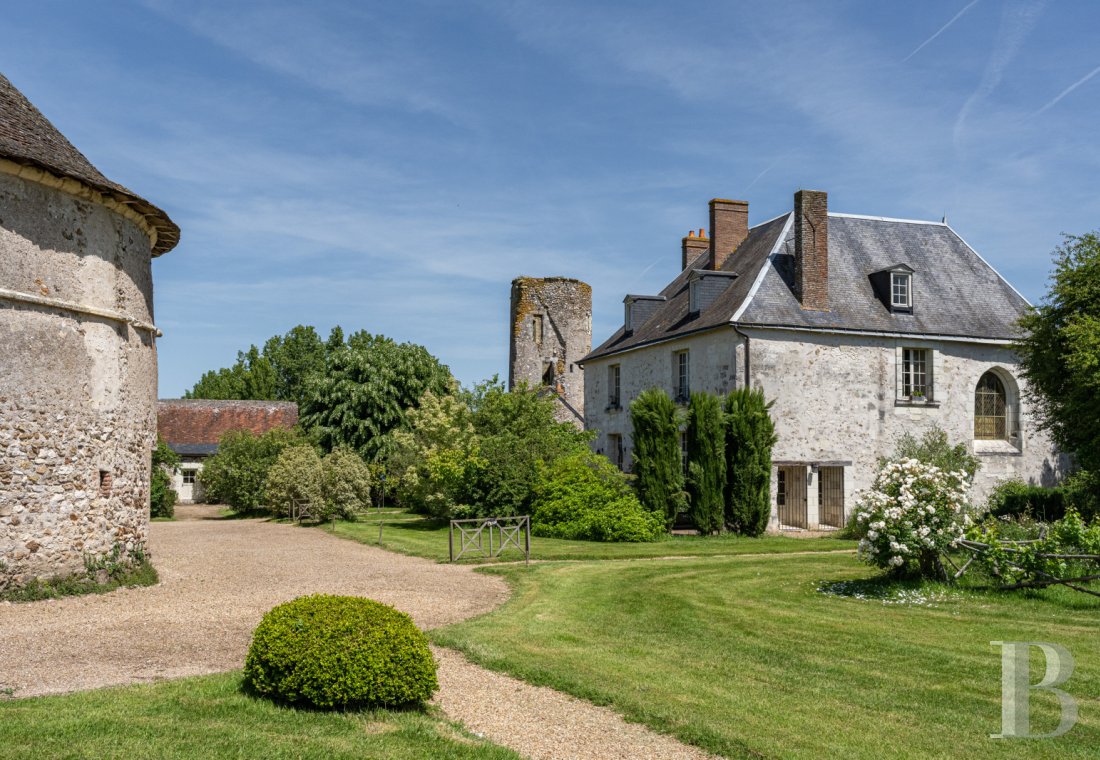
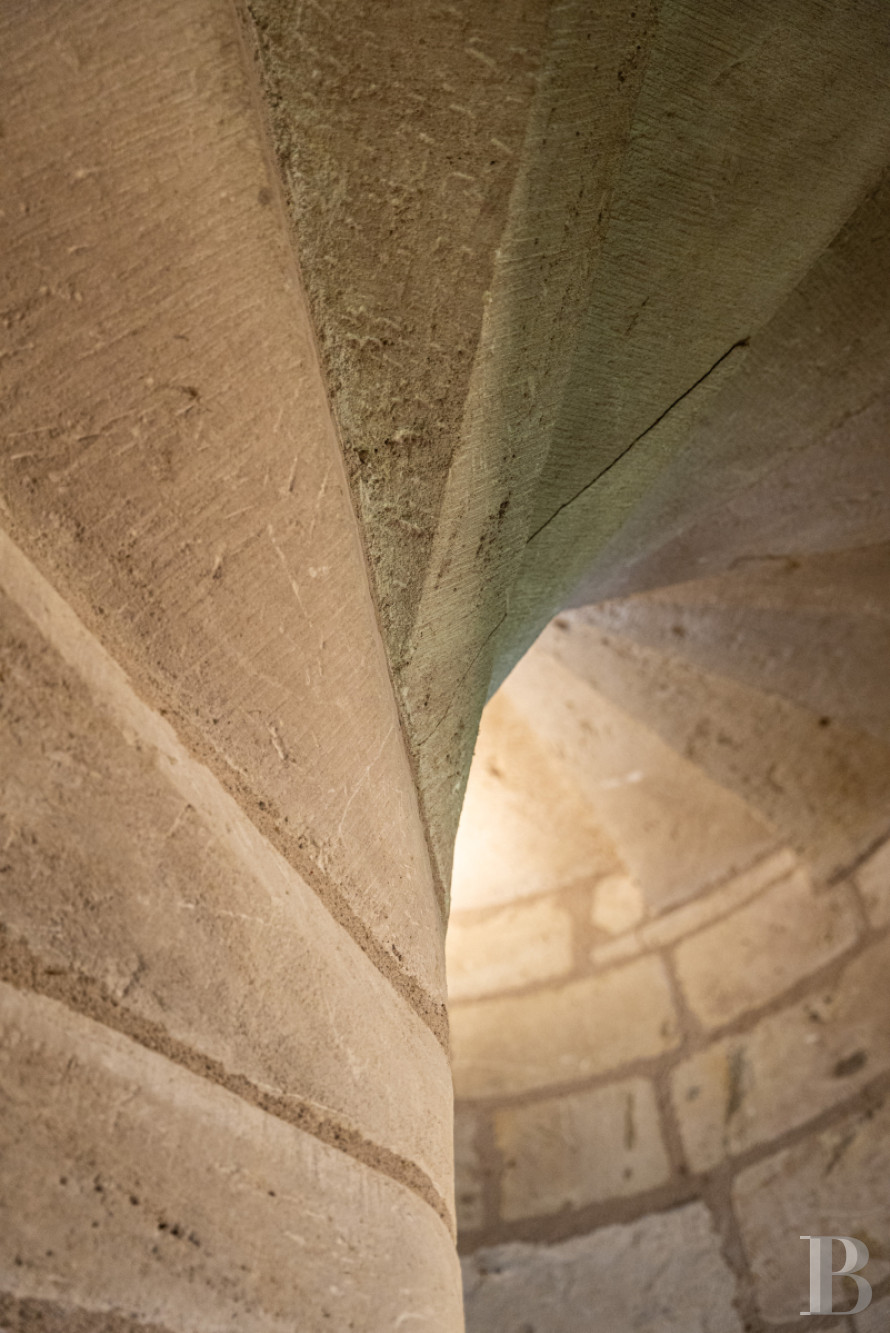
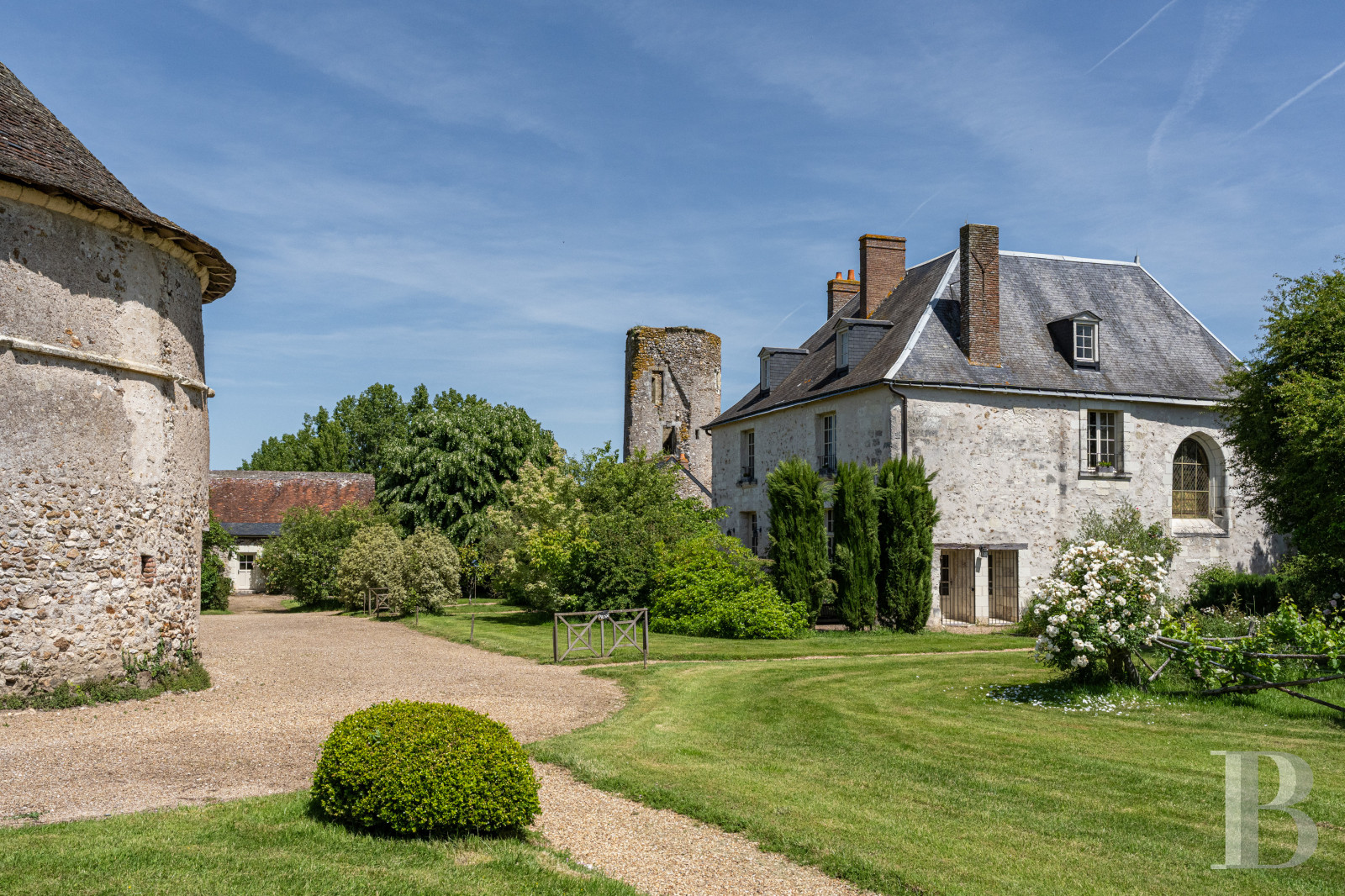
As for the largest of the two inhabitable buildings, with approximately 330 m² and completely restored, it today features a sunny living environment, whose many ancient details, such as a spiral stone staircase, fireplaces and pointed stone walls, have been preserved. Flanked on either side by outbuildings and a tower, the dwelling faces a large tithe barn, whereas and an impressive dovecote stands in the middle of the courtyard. Lastly, the estate, which extends over nearly 35 contiguous hectares, are crisscrossed by pathways and a stream.
As for the largest of the two inhabitable buildings, with approximately 330 m² and completely restored, it today features a sunny living environment, whose many ancient details, such as a spiral stone staircase, fireplaces and pointed stone walls, have been preserved. Flanked on either side by outbuildings and a tower, the dwelling faces a large tithe barn, whereas and an impressive dovecote stands in the middle of the courtyard. Lastly, the estate, which extends over nearly 35 contiguous hectares, are crisscrossed by pathways and a stream.
The Priory
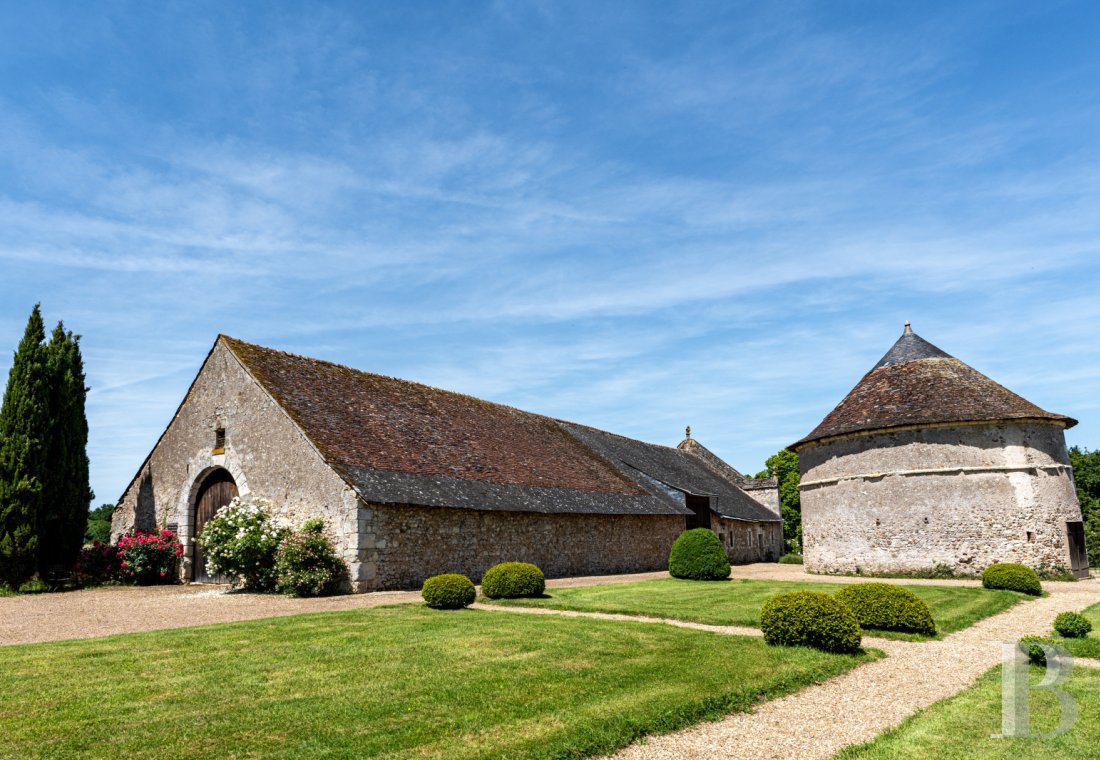
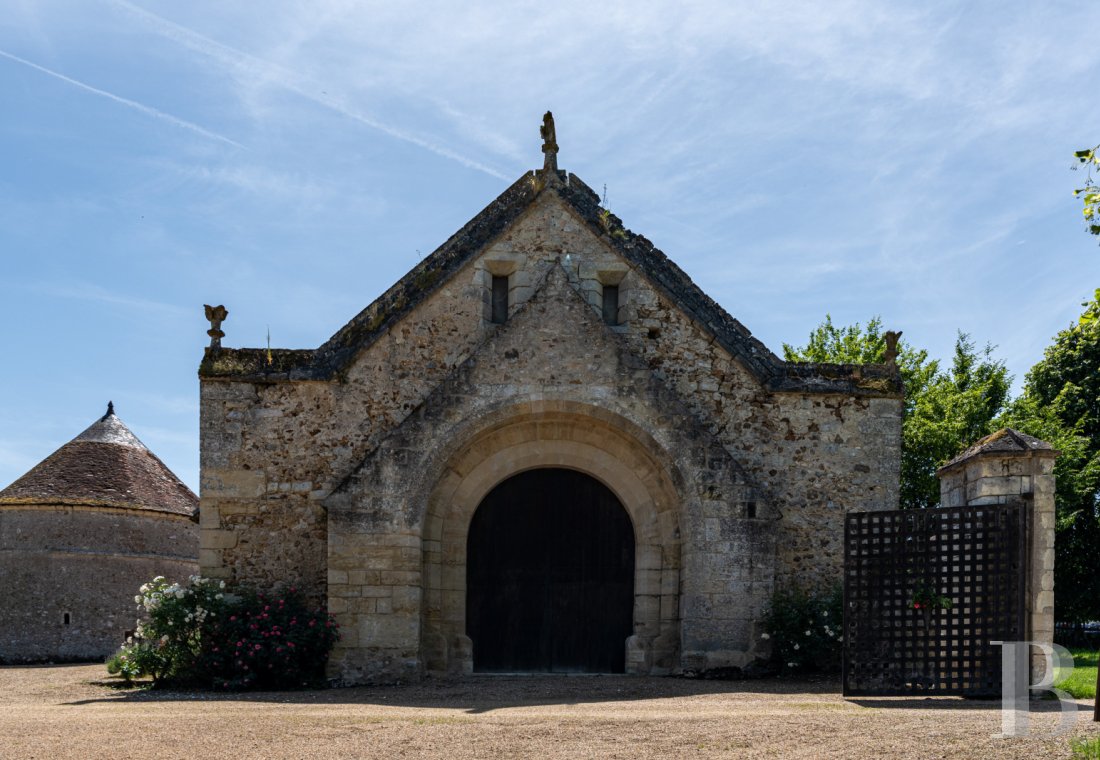
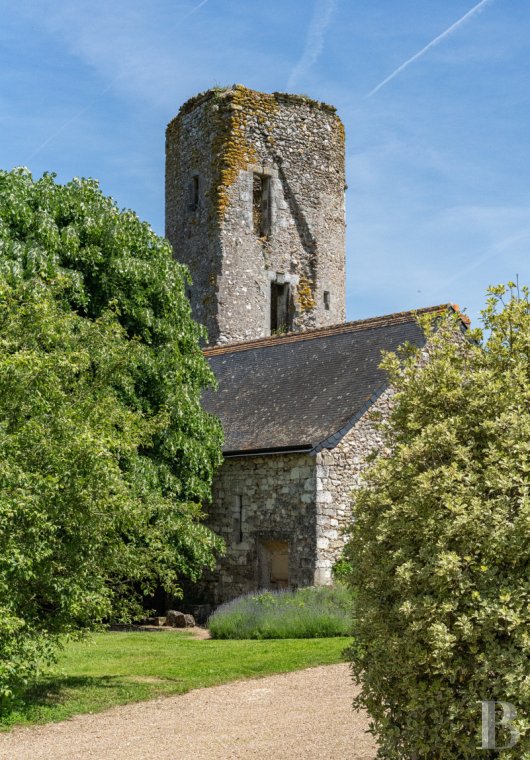
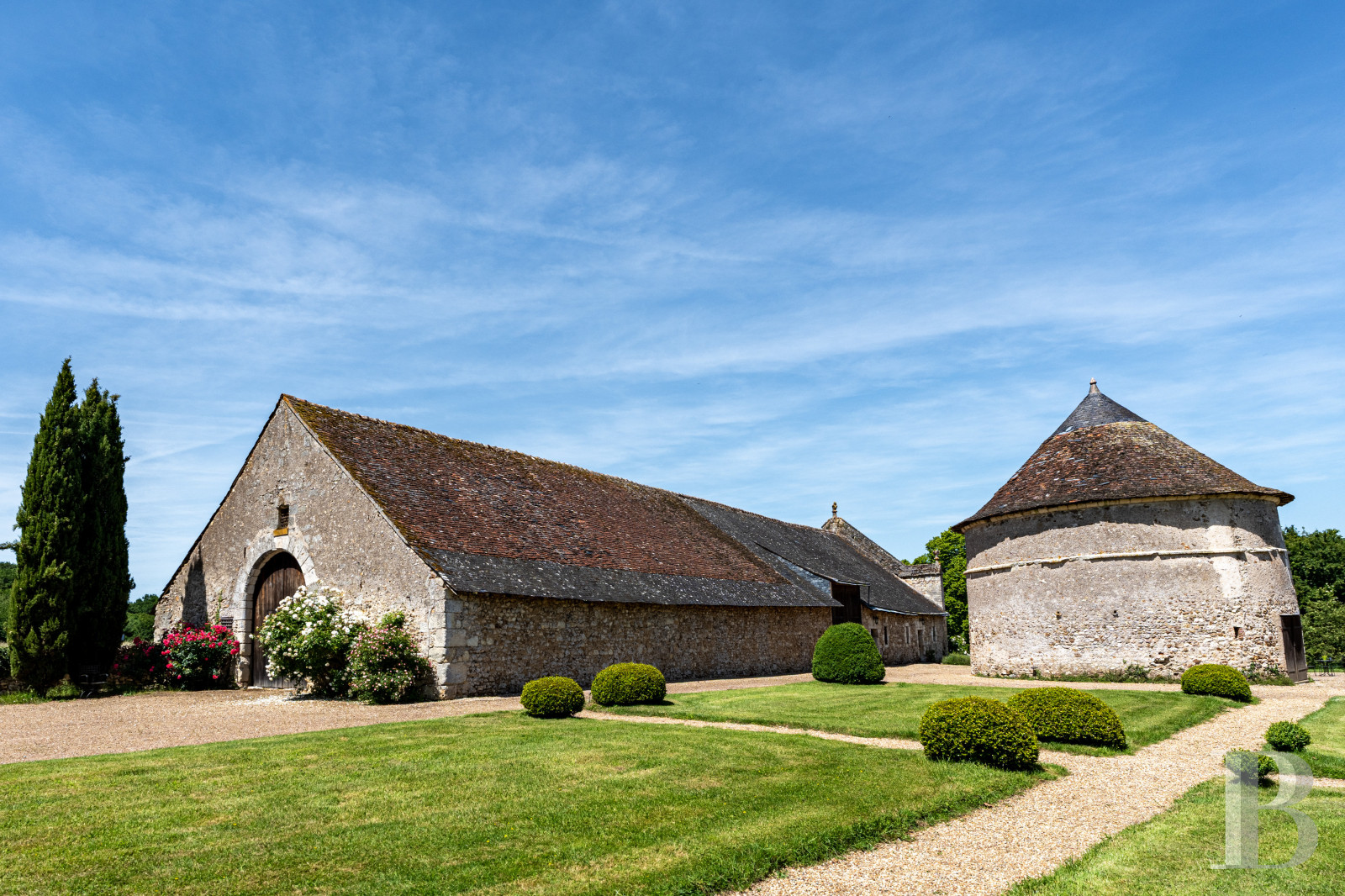
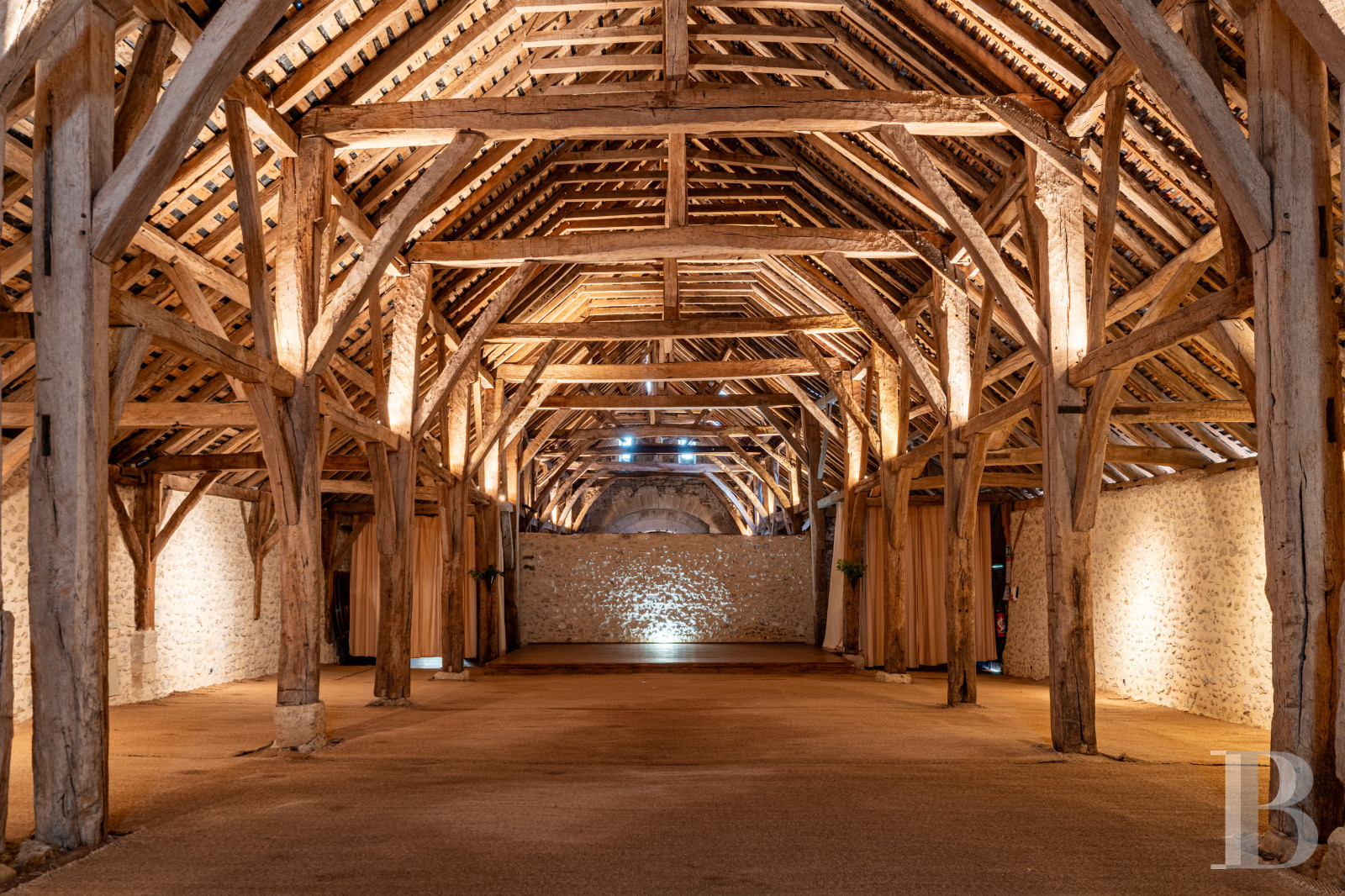
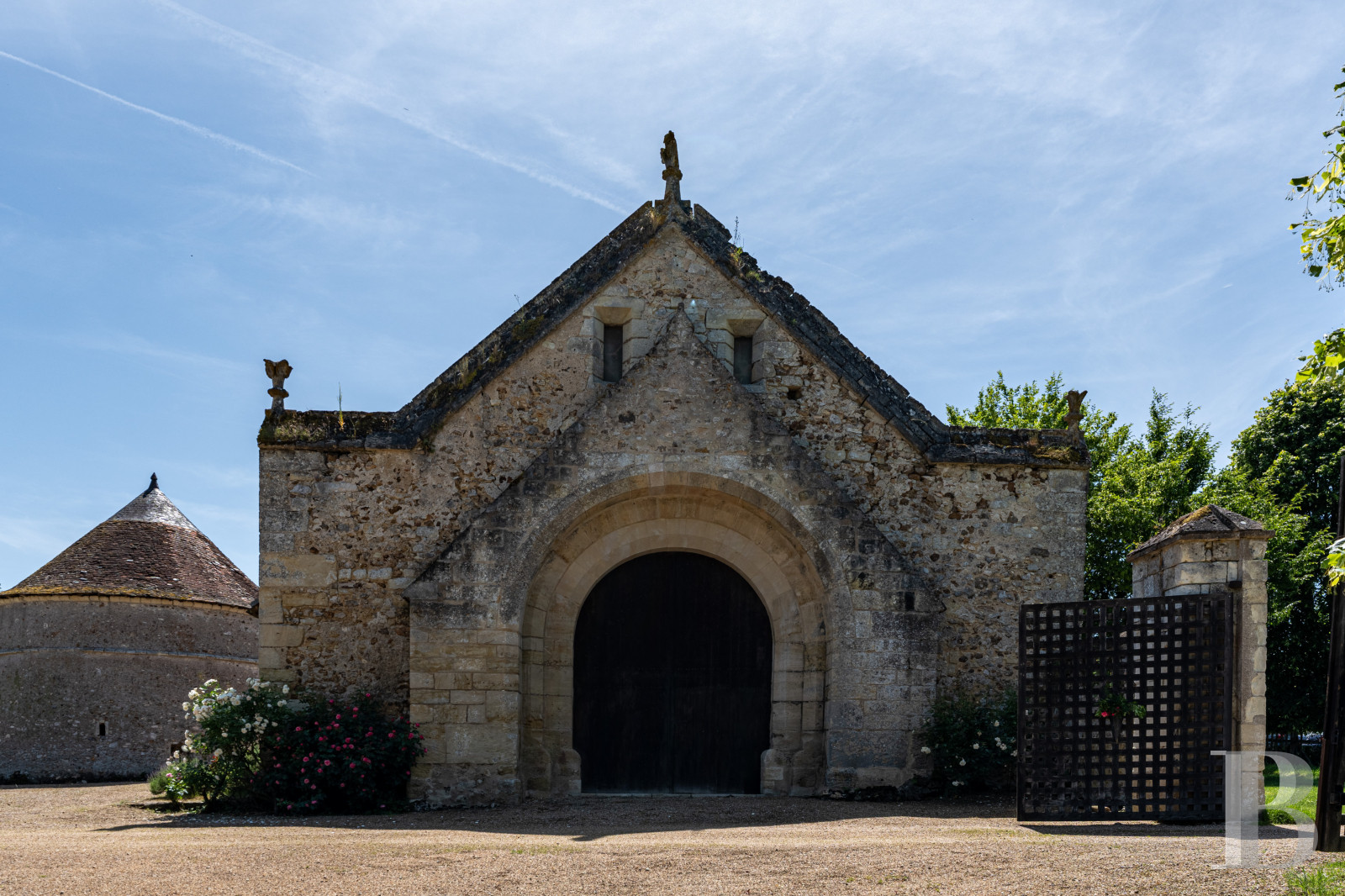
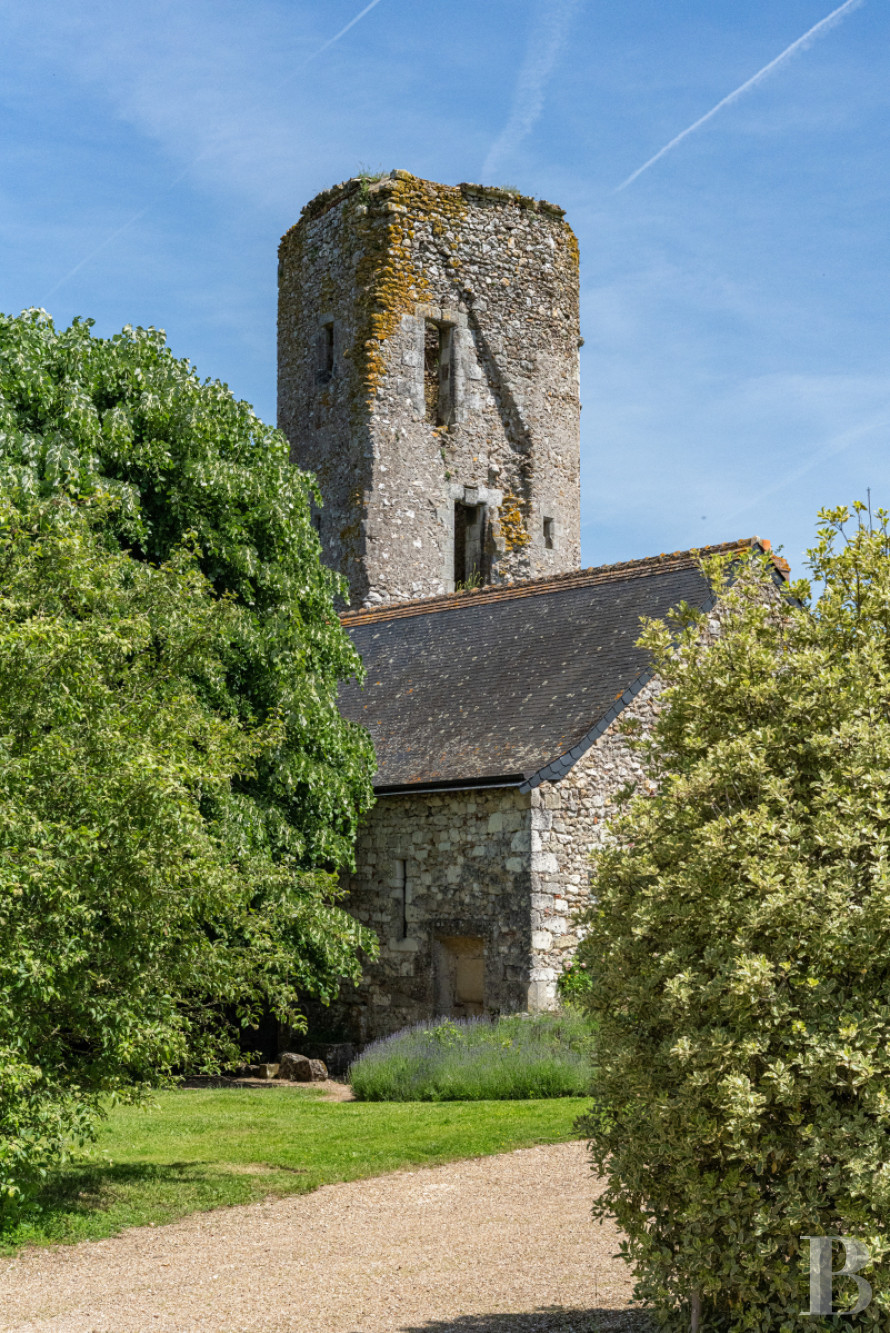
Established around 1100, it was bequeathed to the Abbey of Marmoutier in the 14th century. Once fortified, all that remains of that original building is a tower, more than 20 metres tall, erected to the north in the 13th century, as well as a segment of the enclosure wall and vestiges of an ancient building, both listed as regional Historical Monuments, just like the prior’s dwelling and dovecote, built in the 16th century. As for the large tithe barn, constructed in the 13th century and expanded in the 14th, it features a forepart with a triangular pediment and a semi-circular door, three arches deep, while its exteriors, wooden rafters and roof, supported by 24 oak pillars, are all listed as national Historical Monuments.
The Prior's Dwelling
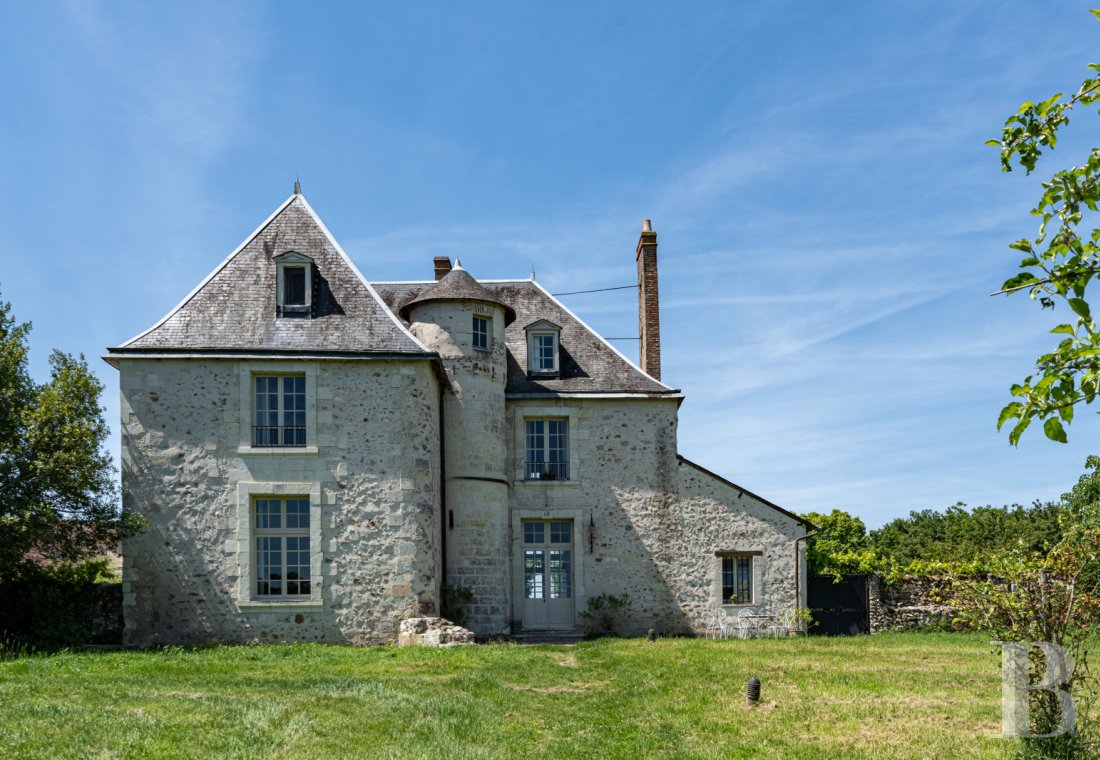
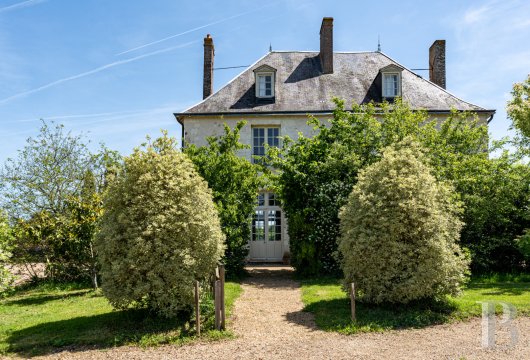
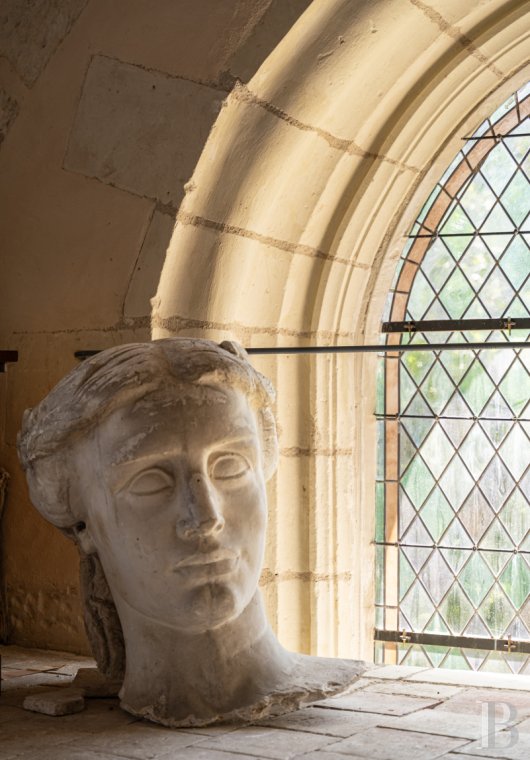
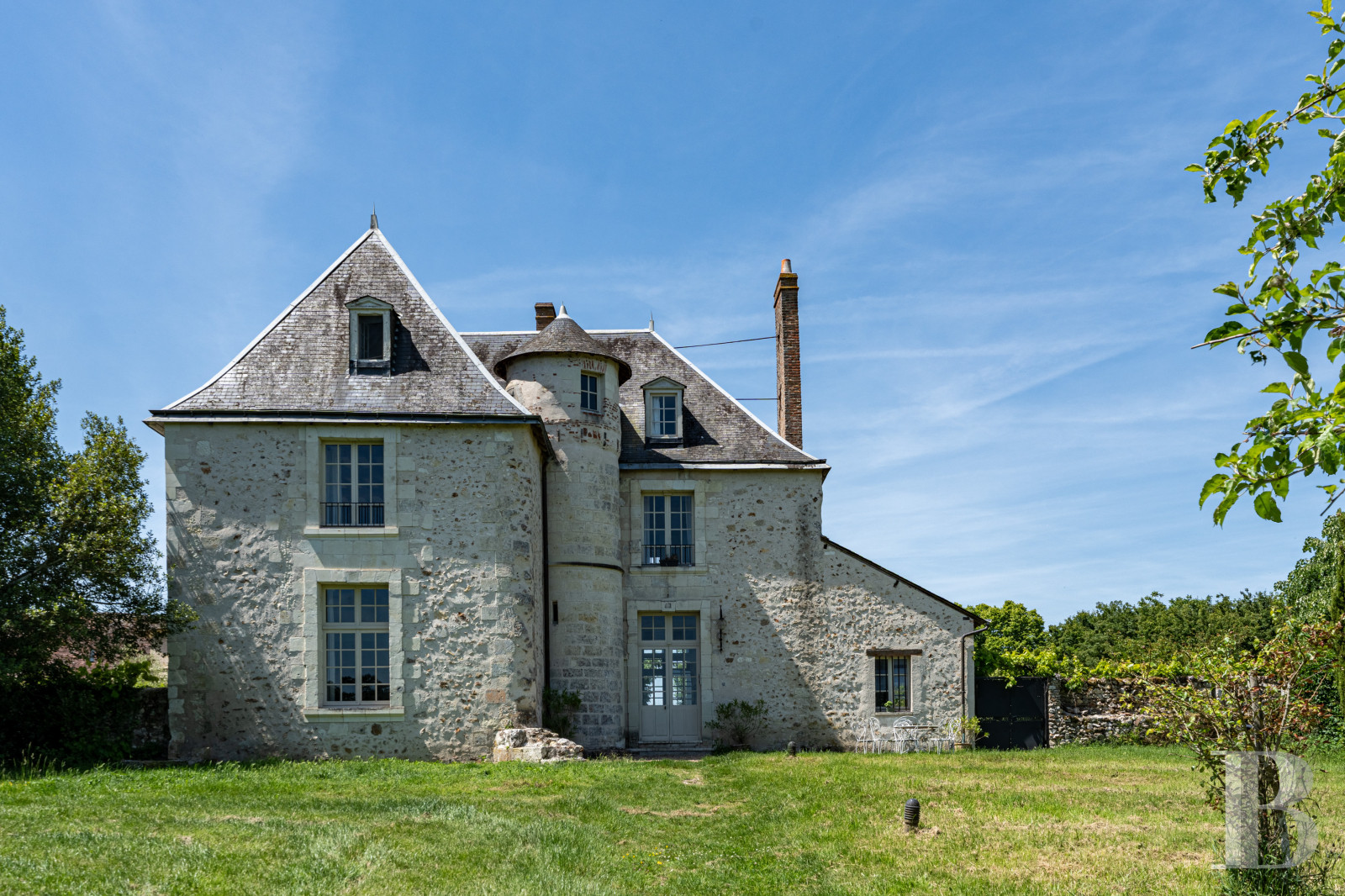
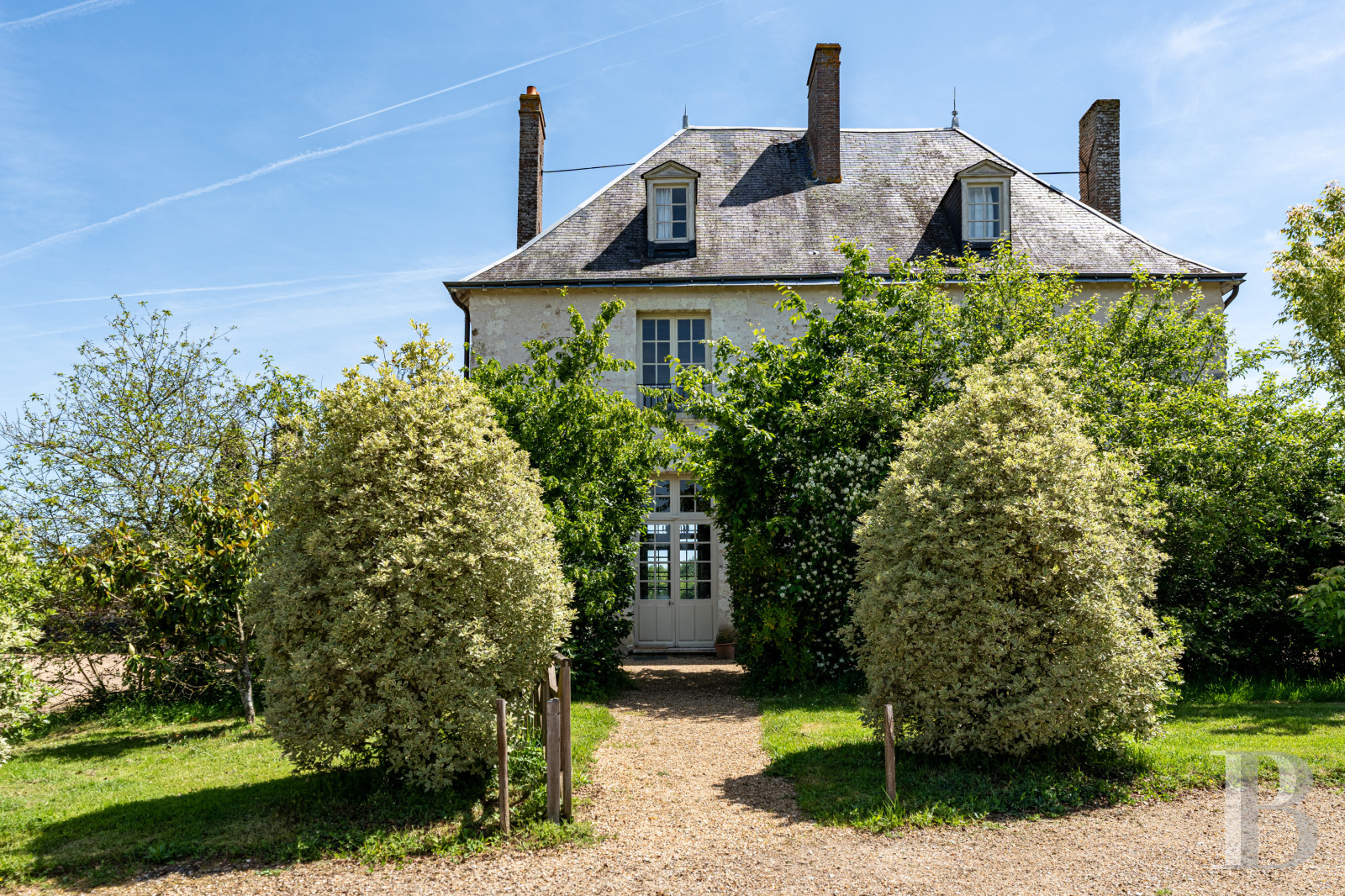
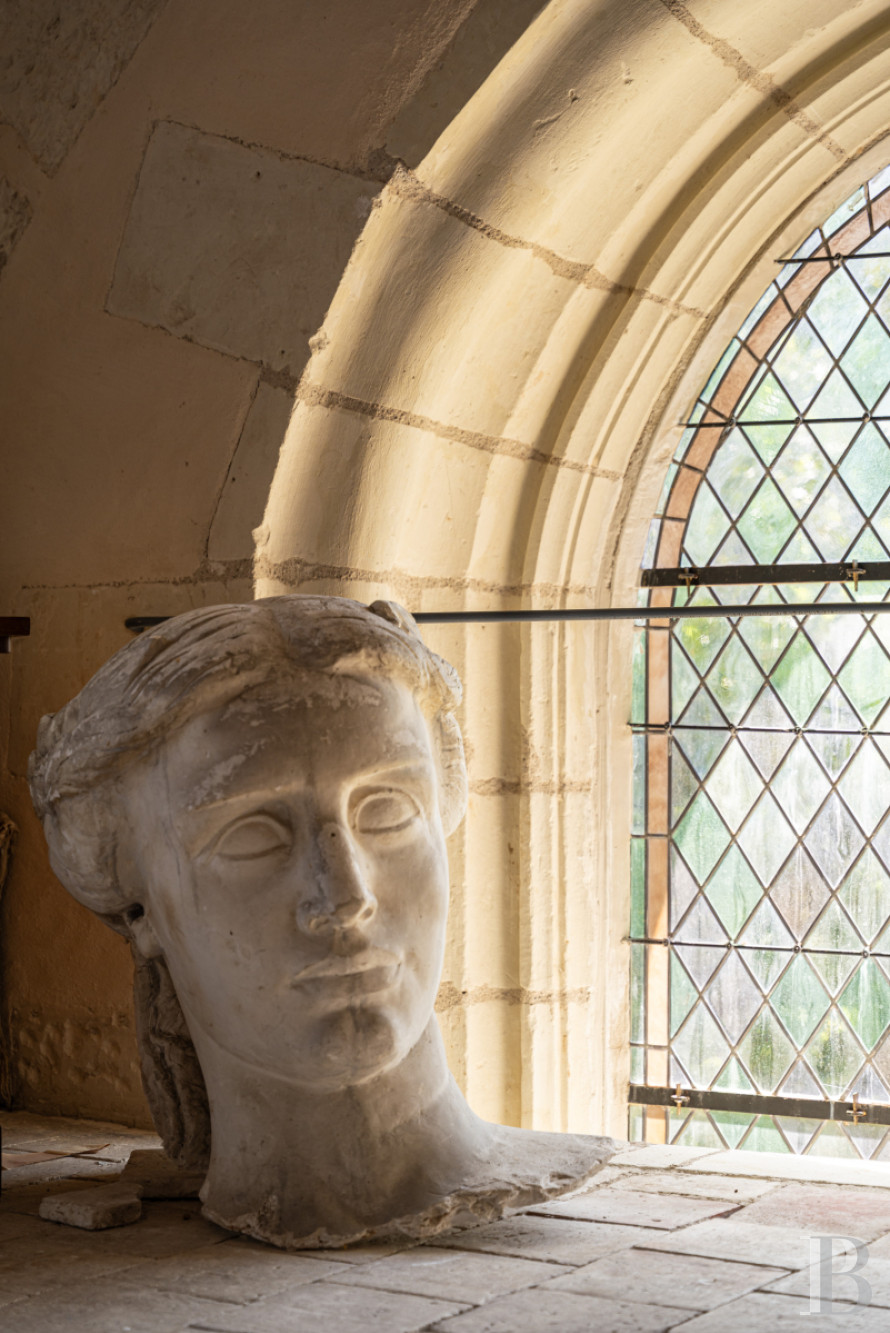
Composed of a central building with a right-angle wing and a lean-to abutting its northern exterior, on its eastern side, a small staircase turret is nestled within the angle formed by the two buildings. Featuring pointed stone exteriors, slate roofs punctuated by gable dormers, wide rectangular windows that cadence its eastern and western exteriors, it also features a stained glass ogival window on its southern side, which indicates the location of a former chapel, dedicated to Saint Barbara and Saint Vincent.
The ground floor
Double doors, partially glazed on their upper half, open on to an immense entrance hall, which communicates with a kitchen, directly opposite, a lavatory and a utility room, on one side, and, on the other, a small corridor providing access to a study, while a spiral stone staircase is located in the round tower.
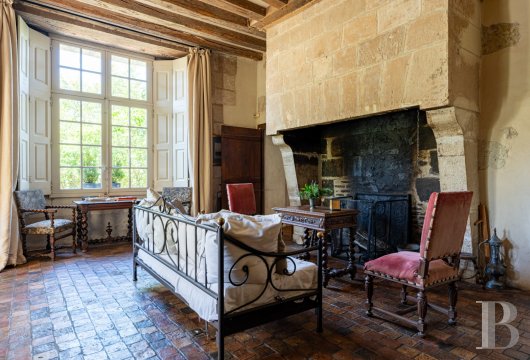
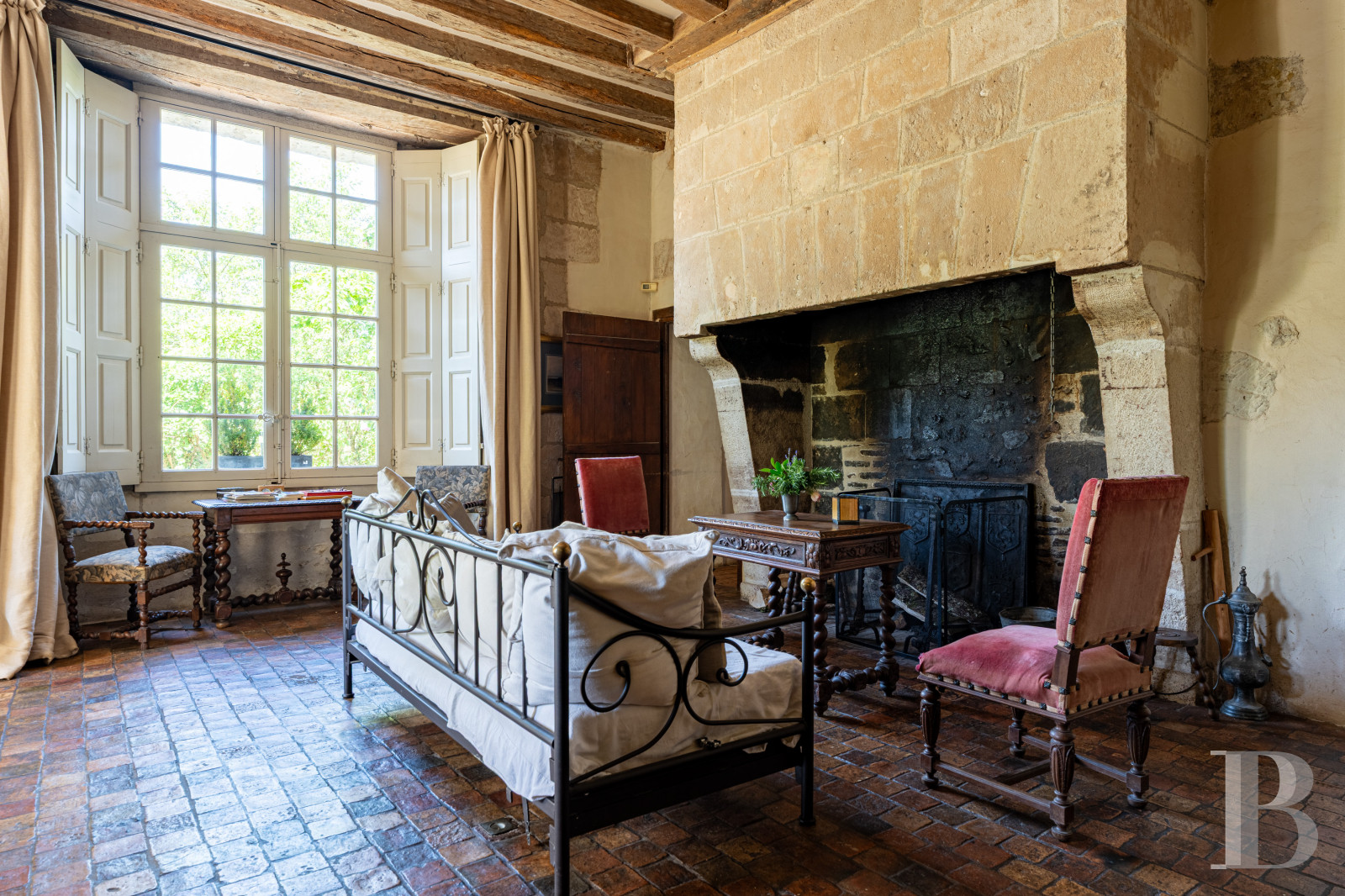
As for the kitchen, large enough to accommodate an eating area, it is bathed in light thanks to glass double doors that look out on to the courtyard’s flowering plants. Featuring pointed stone walls, a tuffeau stone fireplace with an old brick bread oven and a semi-circular niche, on one side, a door provides access to the living room with a massive tuffeau stone fireplace and windows facing west and south.
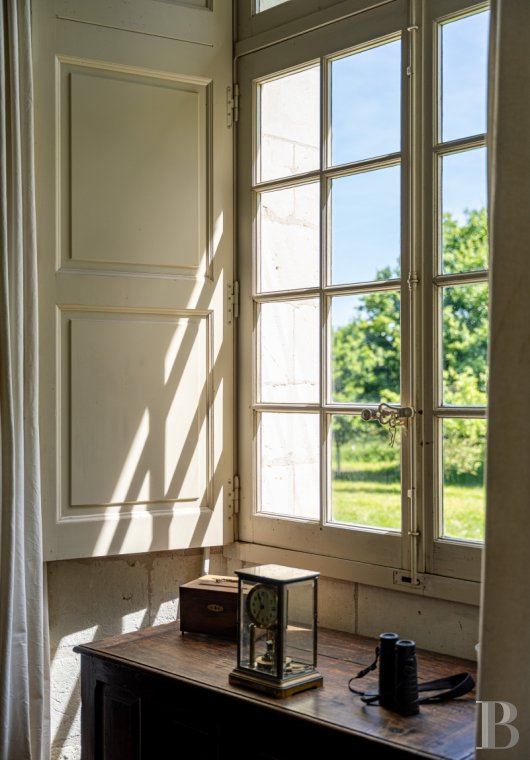
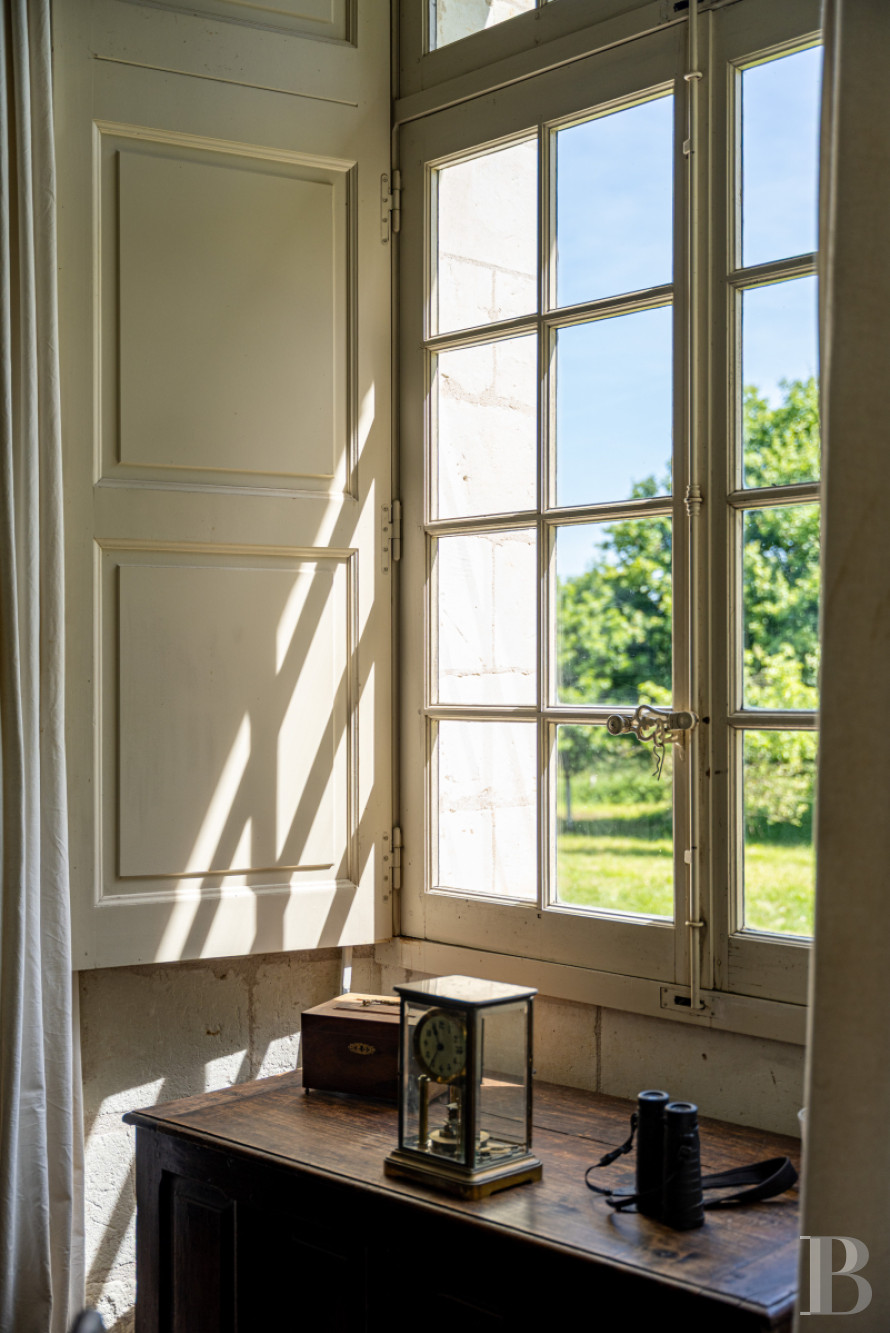
From the living room, a door in the back communicates with the small corridor that leads to the study, whose wide window faces east, while all the rooms feature terracotta tile floors, pointed stone or plaster-coated walls, small-paned, wood-framed windows and doors, interior shutters as well as soaring floor-to-ceiling heights, which are nicely accentuated by their visible ceiling beams.
The first floor
The landing provides access to three rooms and a small corridor. On one side, an immense space, used as a study, is located in part of the former chapel, while its plaster-coated walls are cadenced to the south by a stained glass ogival window and to the east by a wide small-paned window with interior wooden shutters.
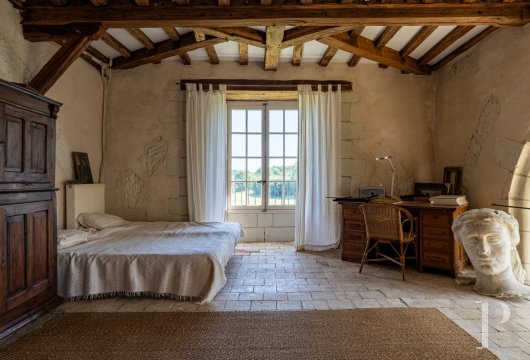
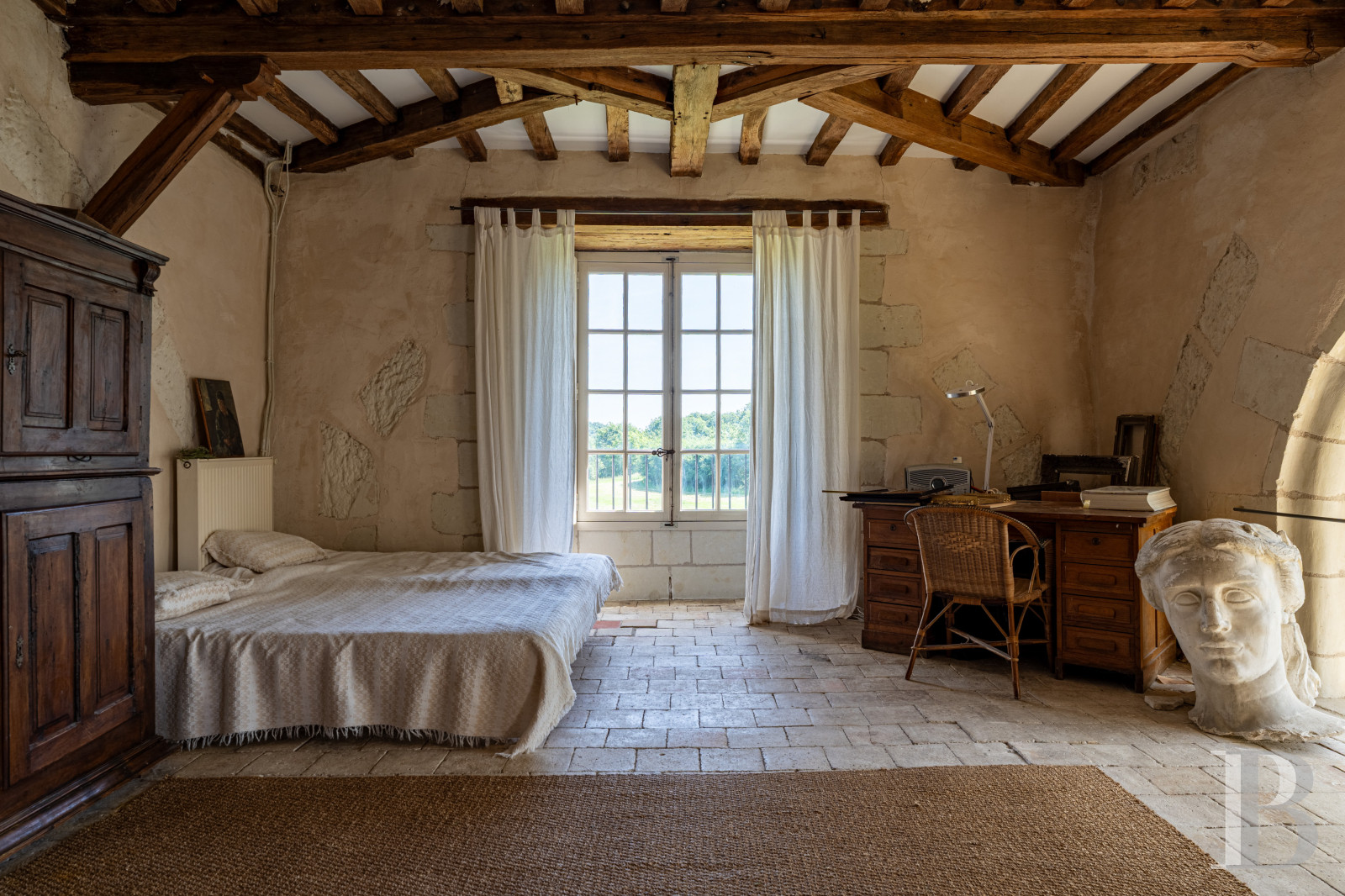
Featuring visible ceiling beams and a terracotta tile floor, directly opposite this room, two bedrooms with parquet floors are each bathed in light by two windows, one facing the grounds, the other looking out towards the courtyard. In addition, back on the landing and directly opposite the staircase, a door opens on to a bathroom, whereas a small corridor, to one side, provides access to a lavatory and a bedroom with a terracotta tile floor and a tuffeau and brick fireplace.
The second floor
On this floor, the landing communicates with two bedrooms, including one with a shower room and a lavatory. Underneath the eaves, the wooden rafters have been left visible in order to highlight the rooms’ soaring heights and proportions, while one of the walls is entirely lined with built-in cupboards accessible via a series of wooden doors.
The Farmhouse
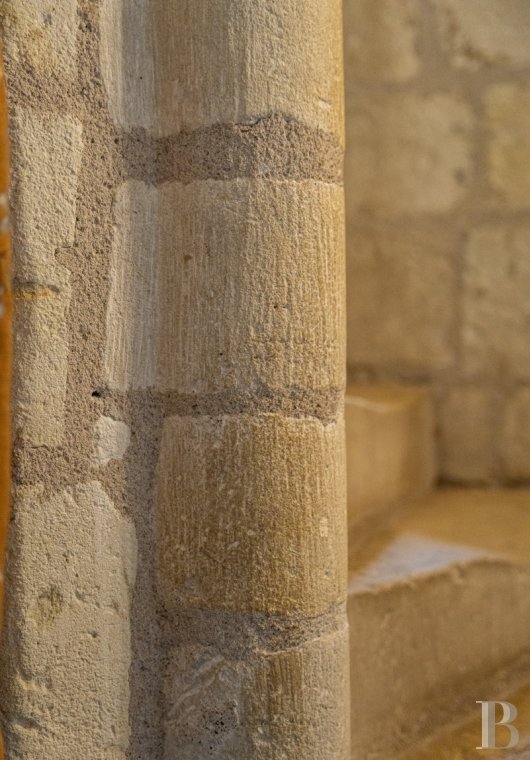
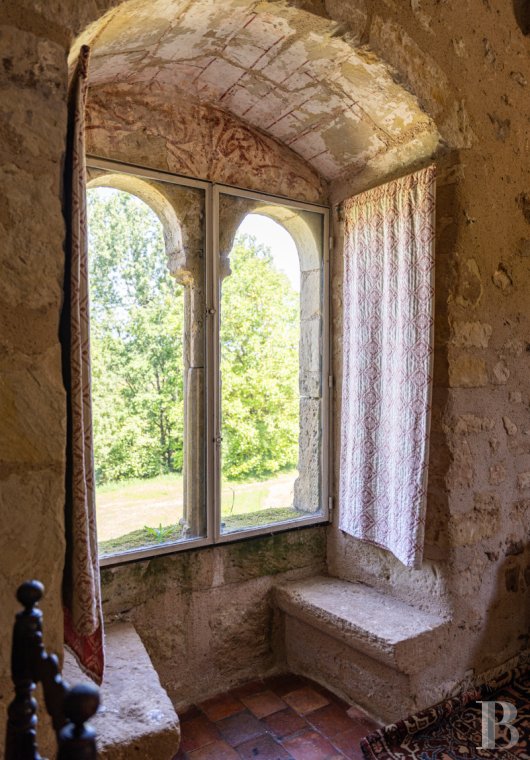
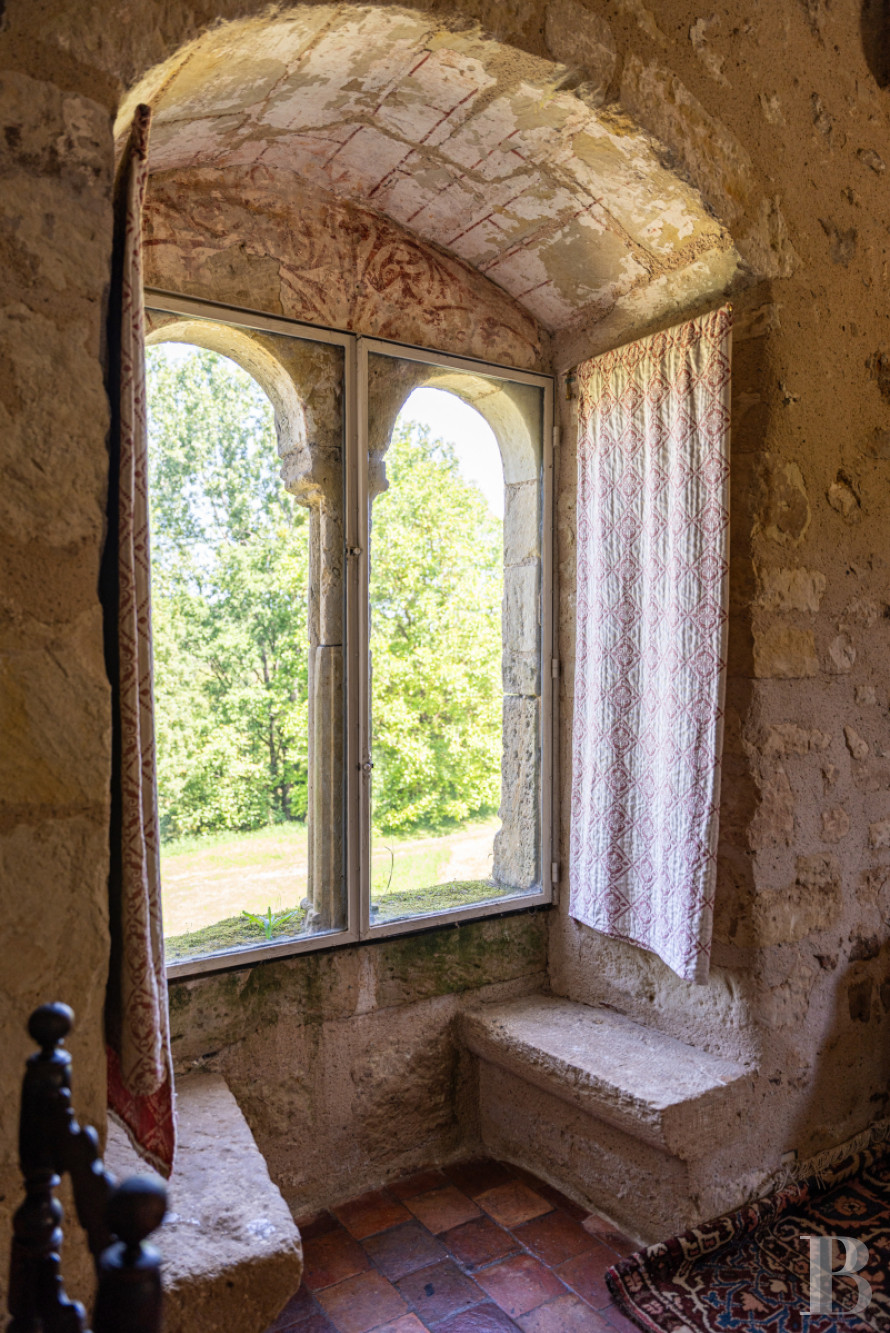
Abutting the enclosure wall, it faces south and features pointed stone exteriors, a tile and slate single-pitch roof, small rectangular windows and a door framed by tuffeau stone on its courtyard side, while, to the north, the enclosure wall features a geminated window separated by a thin column in the middle as well as two windows on the first floor.
The ground floor
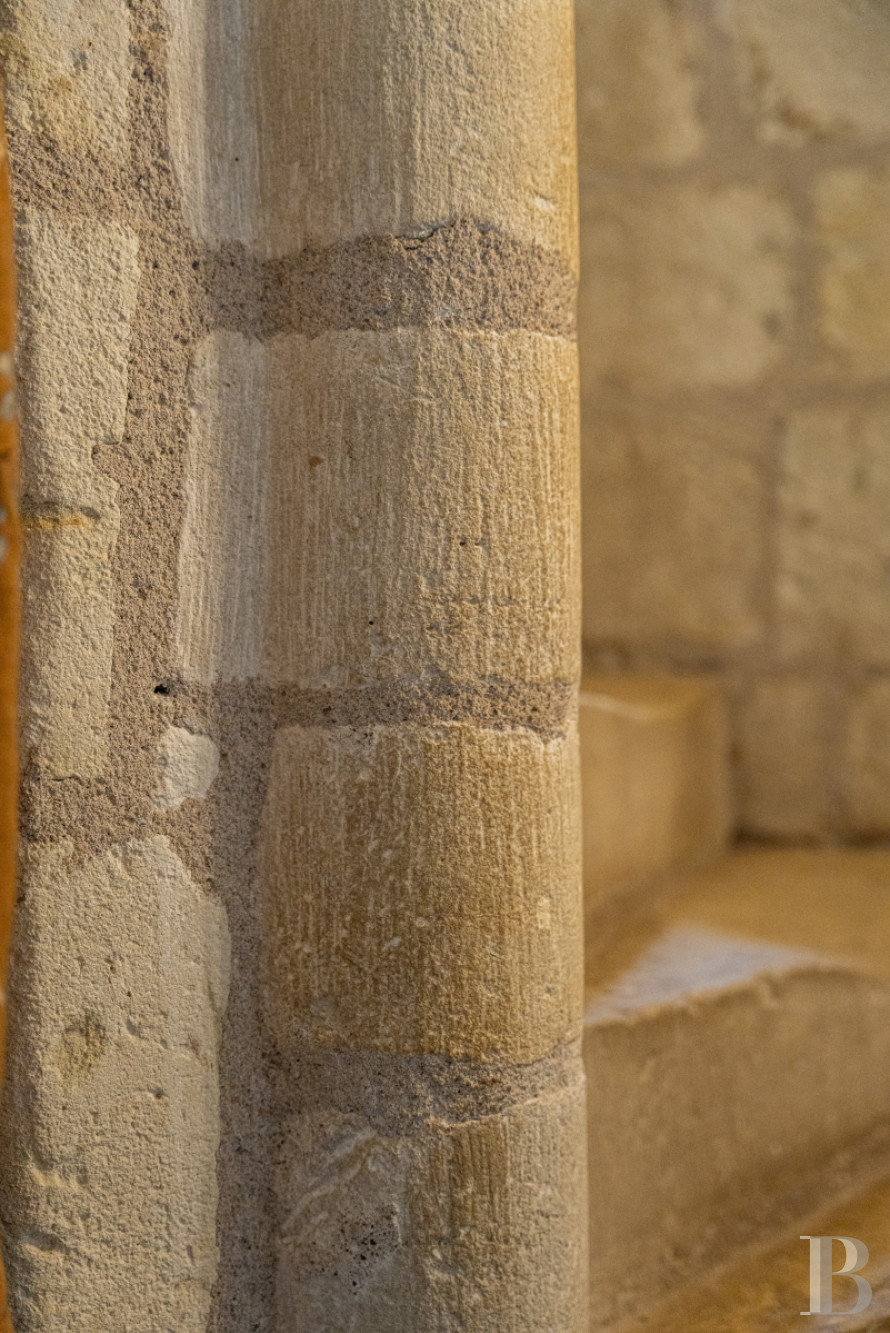
The partially glazed front door opens on to a room split into two different levels. A dining room is located in the upper portion, with a kitchen on one side and a few steps that descend to the living room below, while the whole is flooded in light thanks to the geminated window fitted with window seats, vestiges of the Romanesque period, just like the row of corbels spanning the entire width of the pointed stone wall. Featuring a stone fireplace and terracotta tile floors, from the dining room, a door gives on to a bedroom, while a small corridor leads to a spiral staircase as well as a shower room with a lavatory.
The upstairs
Under the eaves, the staircase provides access to a landing with a door giving on to the exterior staircases, as well as a second bedroom. As for the floors on this level they mostly feature terracotta tiles, except for the bedroom, which has natural fibre carpeting.
The Large Tithe Barn
Built during the 13th century, it was expanded two times in order to reach its current size (43 metres long by 14 metres wide). To the north, a triangular forepart, decorated with three stone finials as well as a pediment, also triangular, features a semi-circular door, three arches deep, whereas, to the south, an arched door, framed by tuffeau stone is located on the building’s gable end, and double wooden doors and two smaller ones cadence its eastern exterior.
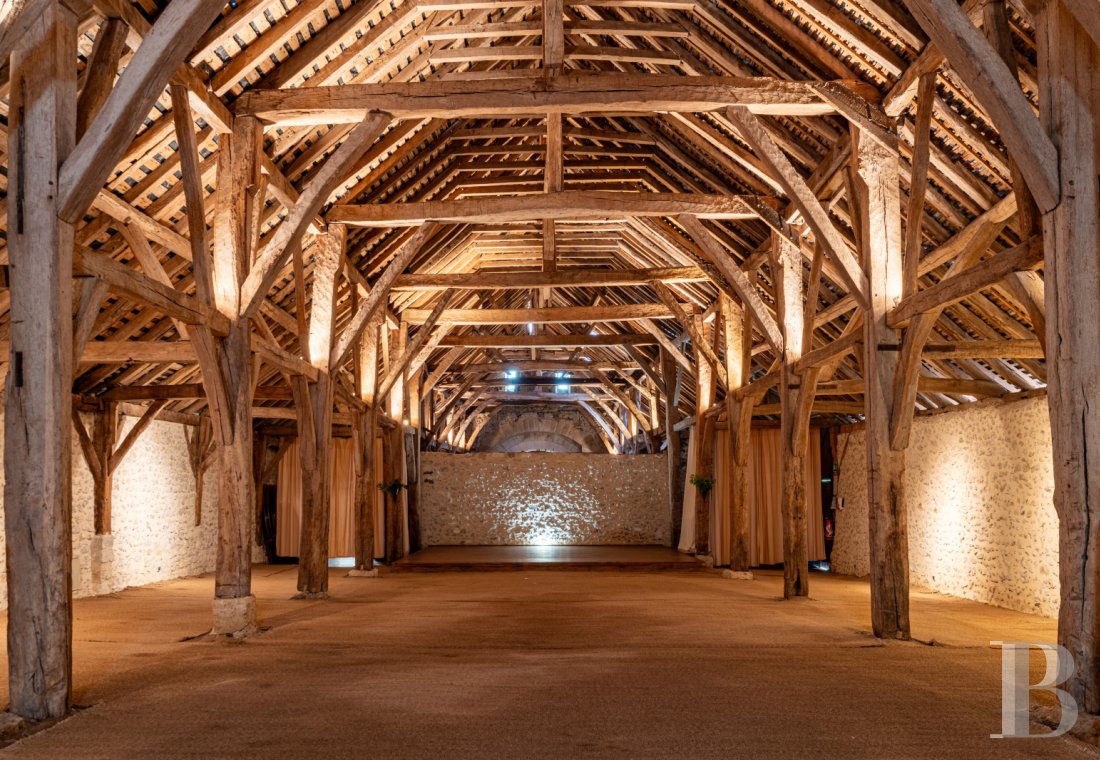
As for its interior, the wooden posts that support its impressive wooden rafters attest to the building’s many readjustments, while, today, the barn has been divided into several spaces, including a category-5 room, which can host up to 200 people, a catering area with an entrance from the side car park, an exhibition space and a room for storing the reception equipment.
The Tower Room
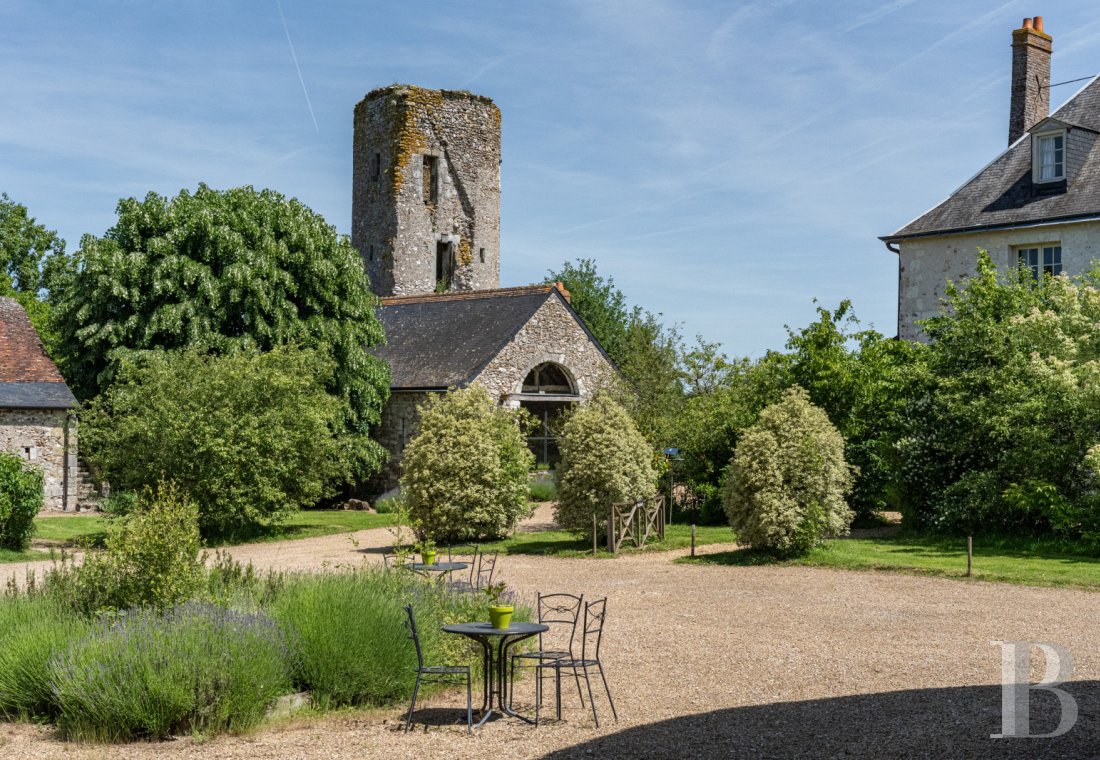
At the base of the tower, an 80-m² outbuilding is used to host events and receptions. Featuring pointed stone walls and a slate gable roof, on its southern gable end, a large arched opening framed by tuffeau stone provides access to its interior via glass double doors. In the back, a low stone wall conceals a counter and a sink, while the room boasts large stone floor tiles, visible wooden rafters, a glass door that provides views of the tower’s interior as well as several steps, to the west, which lead to the vaulted cellar under the building.
The Outbuilding
Extending on from the dwelling, a building, once used for the stables, has today been partially turned into lavatories as well as a workshop. With pointed stone walls and a slate gable roof, topped with a gable dormer window to the west, its southern gable end abuts a stone basin, which is used as a water reserve.
The Dovecote
Circular in shape and with a floor area of approximately 50 m², the dovecote was built in the 16th century in the middle of the courtyard and features a thousand visible pigeonholes, demonstrating the monastery’s former influence and standing.
The Grounds
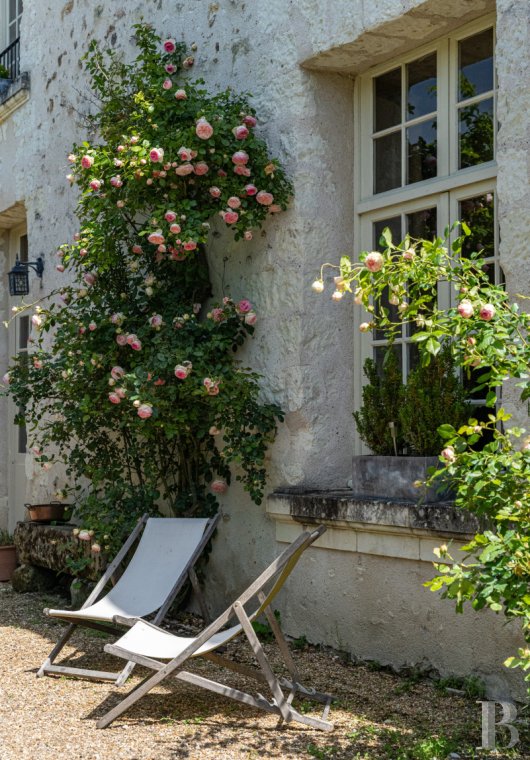
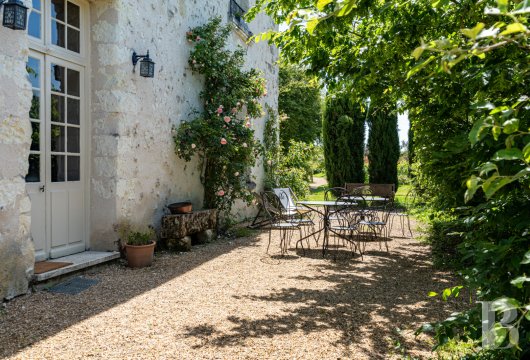
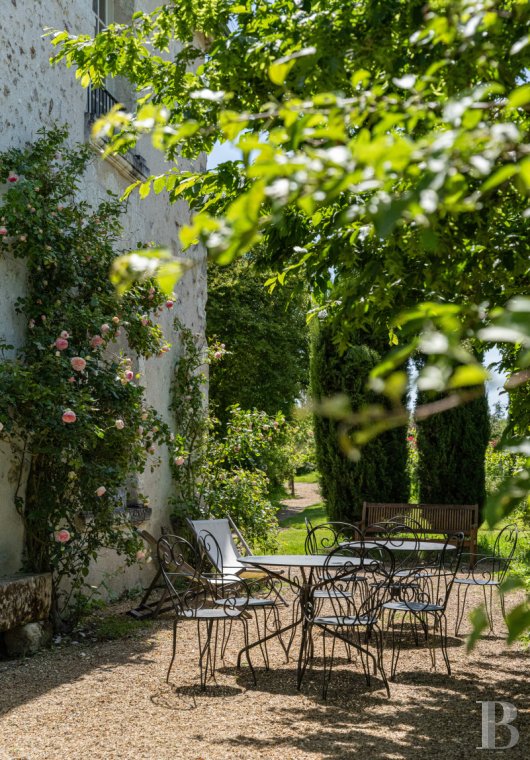
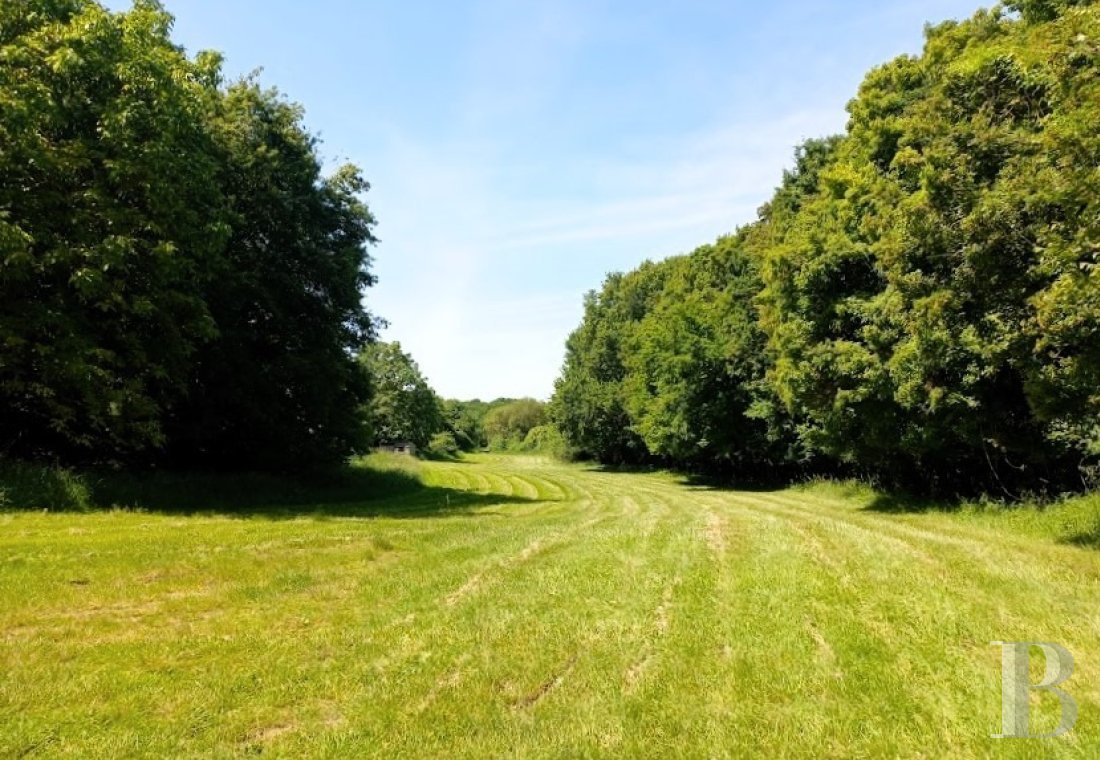
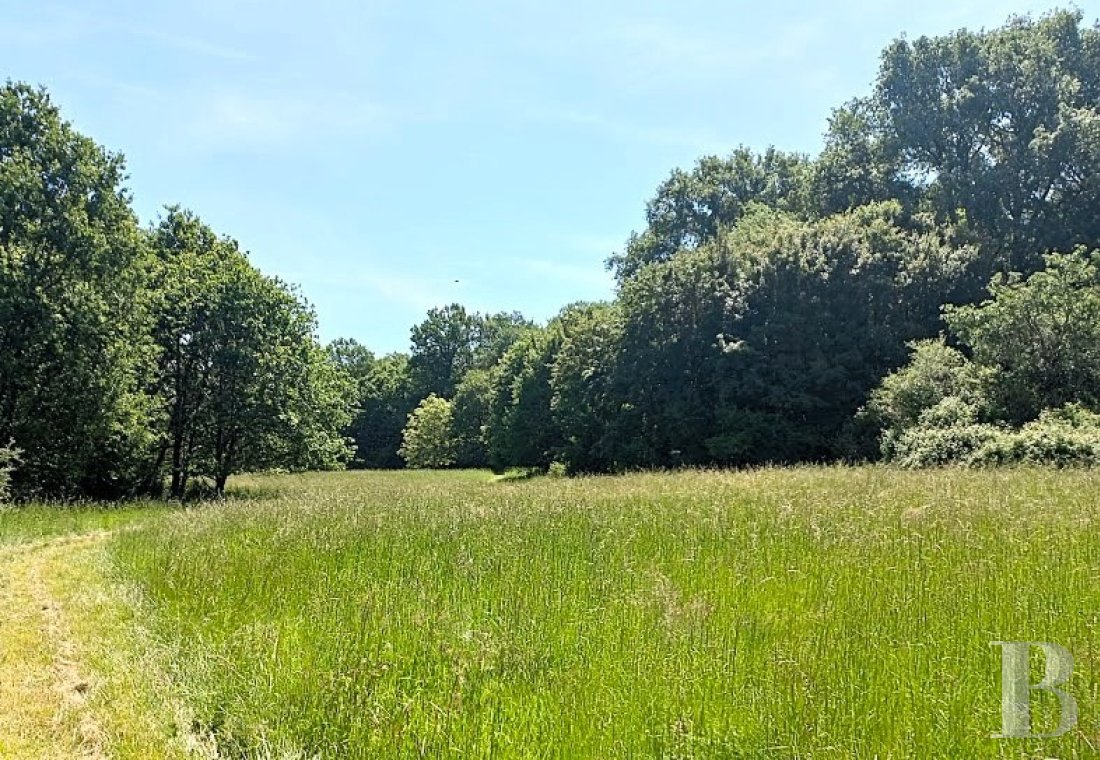
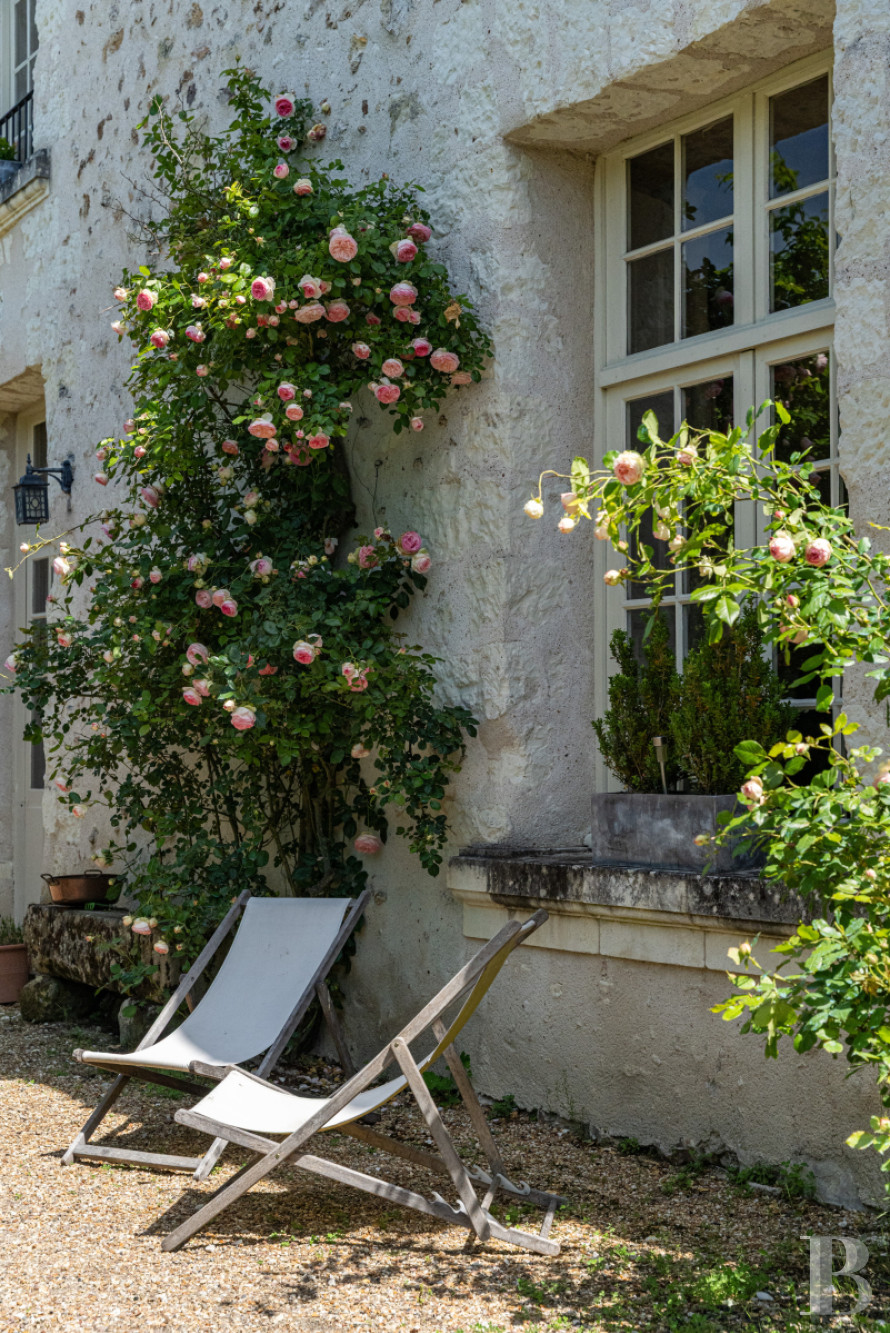
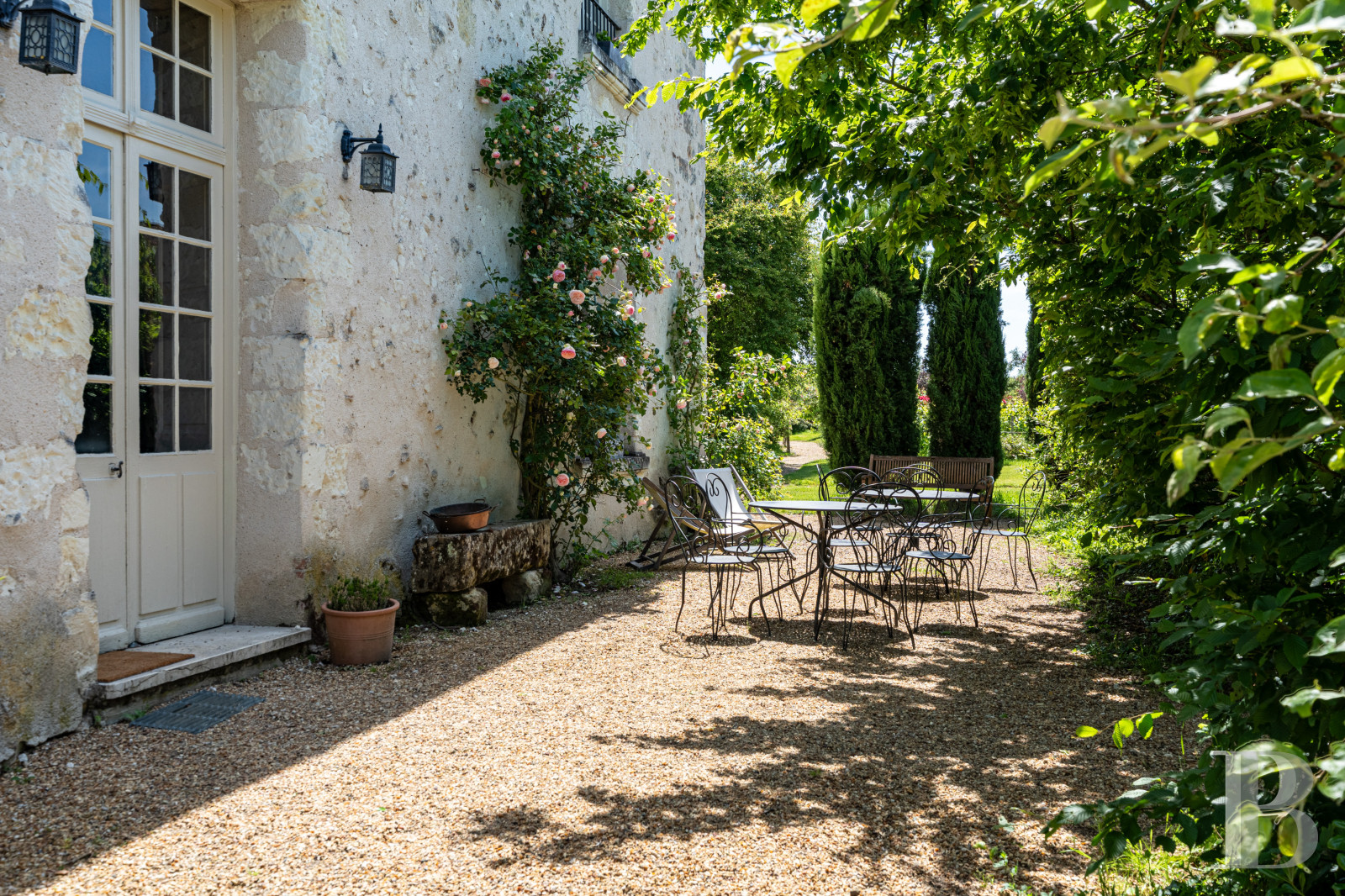
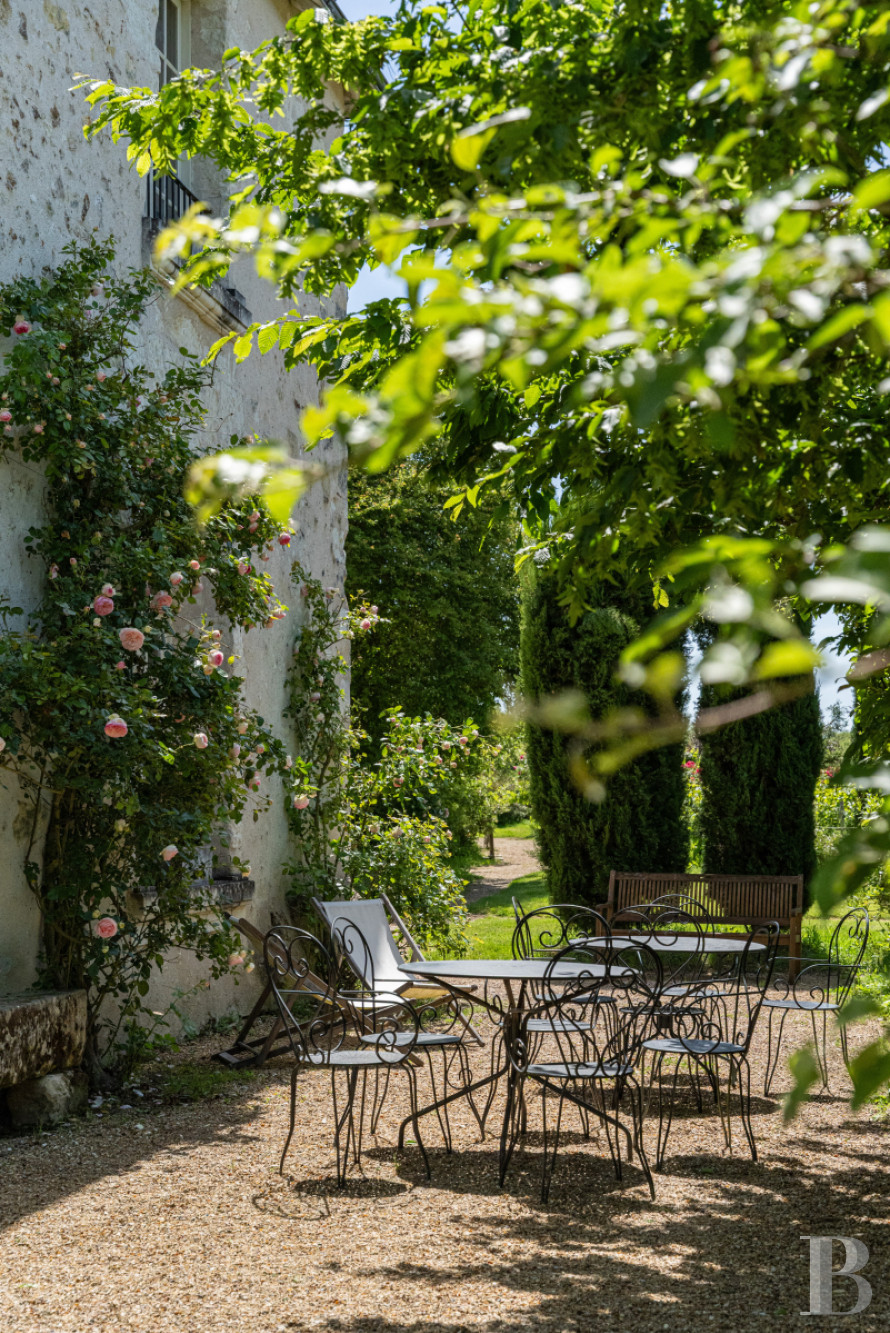
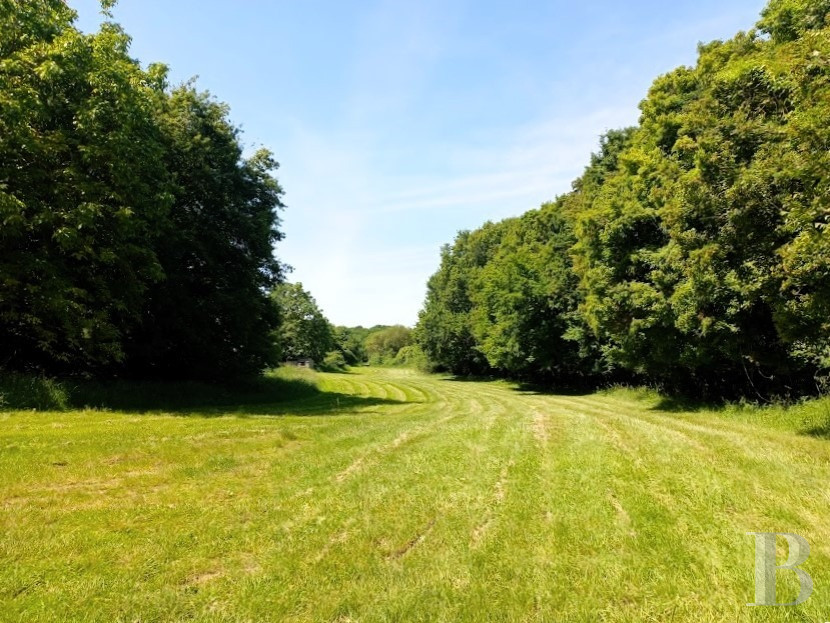
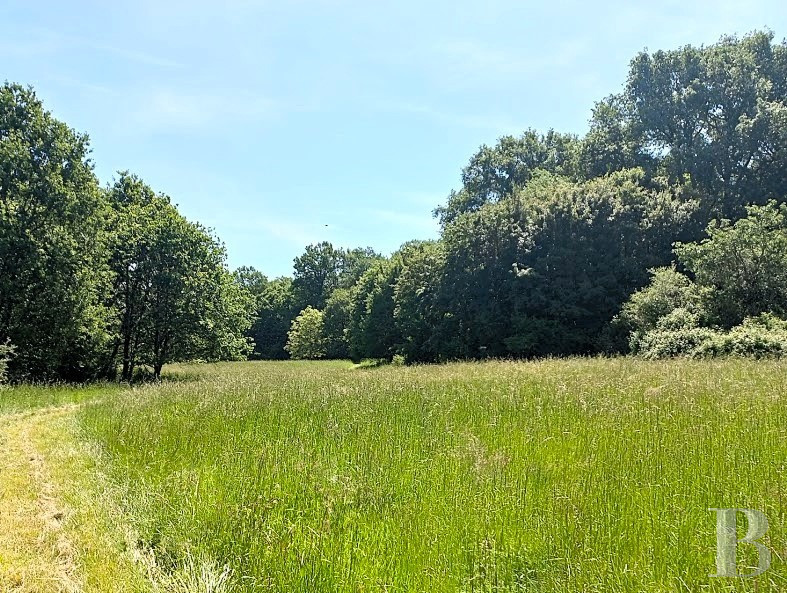
Extending over nearly 35 contiguous hectares, with both woods and meadows, as well as a stream to the east, several lanes provide access to the property’s different fields, some of which contain shelters for their equine residents. As for the woods, they boast a variety of vegetation, including oak and walnut trees, while the immense courtyard, skirting the buildings, is planted with flowering shrubs as well as swaths of lawn. Lastly, along the outbuilding, grapevines and rosebushes recall the estate’s history, a former agricultural monastery not far from the Saint Cosme Priory, once the home to the poet Ronsard.
Our opinion
This medieval priory, hidden behind the protective shade of the surrounding woods and appearing suddenly around a bend in the road, stands behind tall defensive walls, where time seems to stand still. Thanks to the premises’ dazzling light, combined with the surrounding silence, this property, exuding an undeniable energy, has meticulously incorporated its impressive buildings into an open landscape where the very edifices radiate a sense of peace, which is, in turn, highlighted by the careful renovations carried out by its residents over the years.
These restorations, steadily undertaken over time, today provide the opportunity for a flourishing family life on an estate full of history, whose irreproachable maintenance will ensure its longevity. In addition to its undeniable historical heritage, is its prime geographical location: a dynamic village on the outskirts of Tours, where daily life could easily go hand in hand with an activity based on guest accommodations or hosting events. Lastly, the property’s partial Historical Monument status also provides significant tax advantages, further enhancing the appeal of this one-of-a-kind place.
2 310 000 €
Including negotiation fees
2 200 000 € Excluding negotiation fees
Reference 551729
| Main building floor area | 320 m² |
| Outbuildings floor area | 850 m² |
| including refurbished area | 70 m² |
| Land registry surface area | 34 ha 58 a 57 ca |
| Total floor area | 390 m² |
Information on the risks to which this property is exposed is available on the website: www.georisques.gouv.fr
Share


NB: The above information is not only the result of our visit to the property; it is also based on information provided by the current owner. It is by no means comprehensive or strictly accurate especially where surface areas and construction dates are concerned. We cannot, therefore, be held liable for any misrepresentation.