



An old, well-restored dwelling with a pool, guesthouse, barn and looseboxes,
tucked away among hills in a hamlet in France’s Tarn-et-Garonne department
tucked away among hills in a hamlet in France’s Tarn-et-Garonne department
Brassac,
TARN-ET-GARONNE
midi-pyrenees
82190
FR

Location
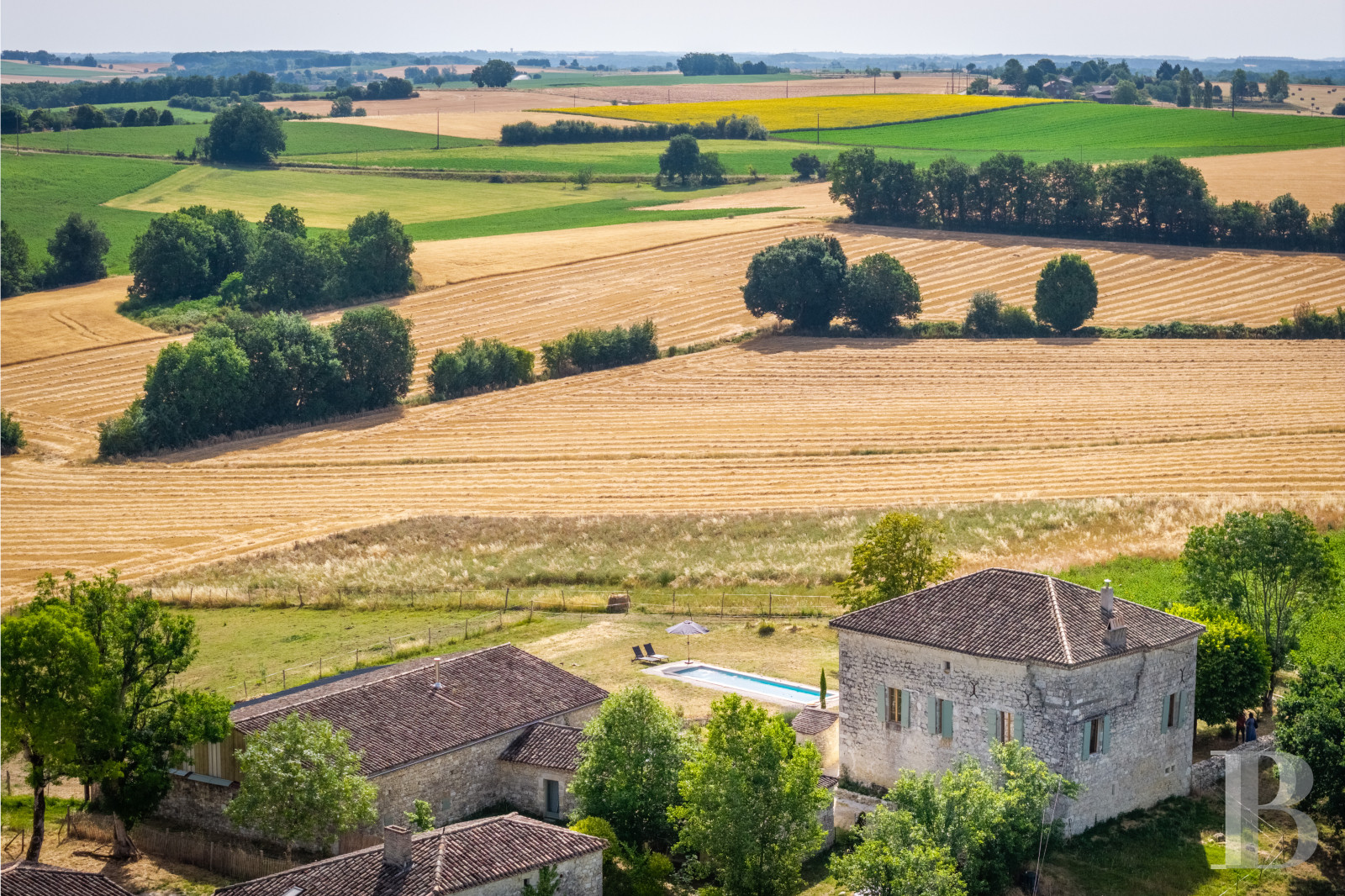
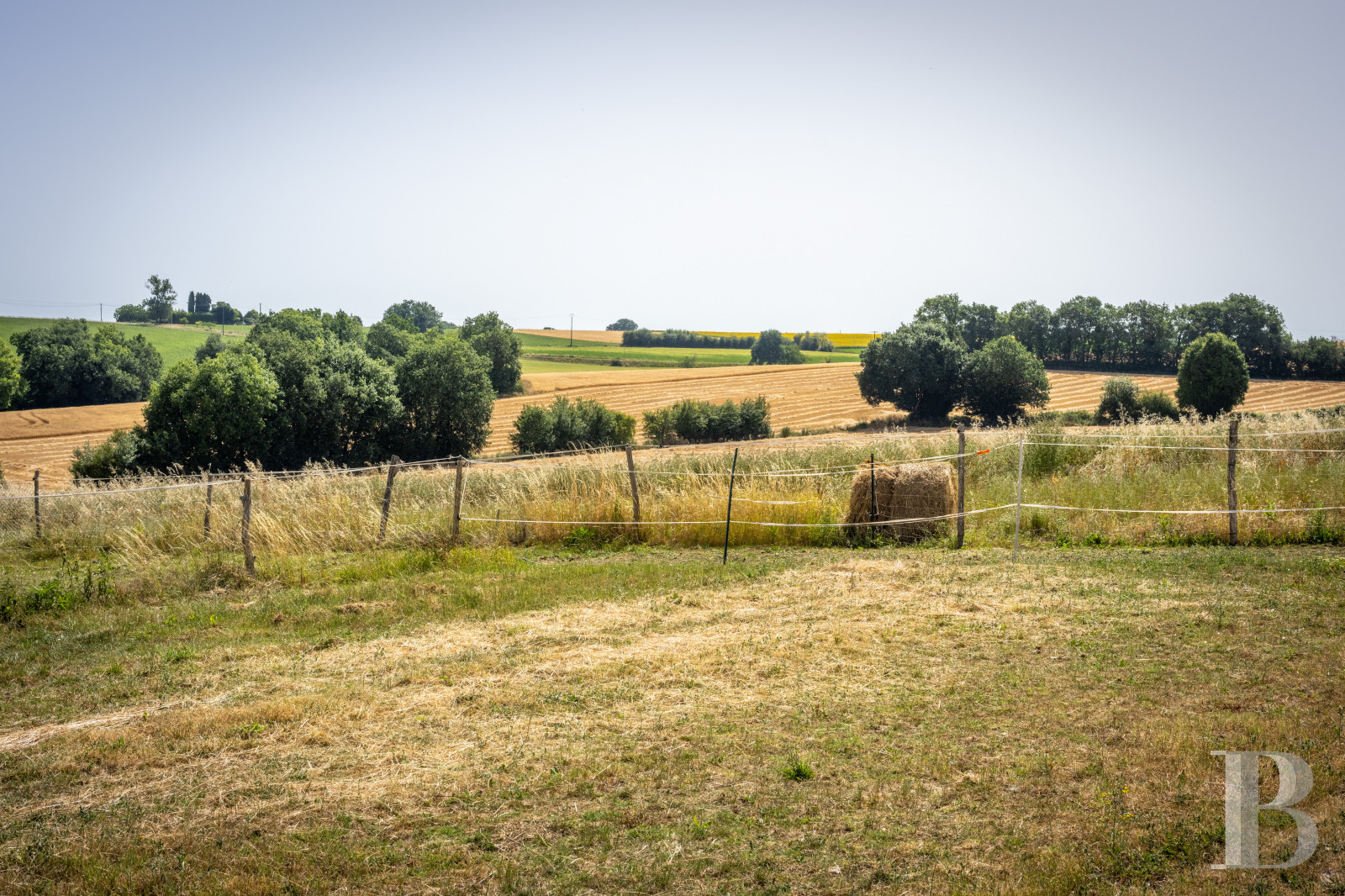
The property is nestled among the hills of France’s beautiful Quercy province in the west of the country's Tarn-et-Garonne department. It lies in a landscape of limestone plateaus, meadows and farmland that characterises this local area. Around the property, there is a series of old villages and bastides – small, fortified grid-plan towns that were built in south-west France in the Middle Ages. These picturesque places, which include Montaigu-de-Quercy, Roquecor and Beauville, bring life to the local area and offer shops for basic needs. You can reach the city of Agen in around 40 minutes. Its train station is on the Paris-Bordeaux-Toulouse rail line. And you can get to the city of Montauban in around 50 minutes. The property is tucked away in a rural backdrop that is typical of France’s Quercy province. It is made up of gently undulating land dotted with quaint villages.
Description
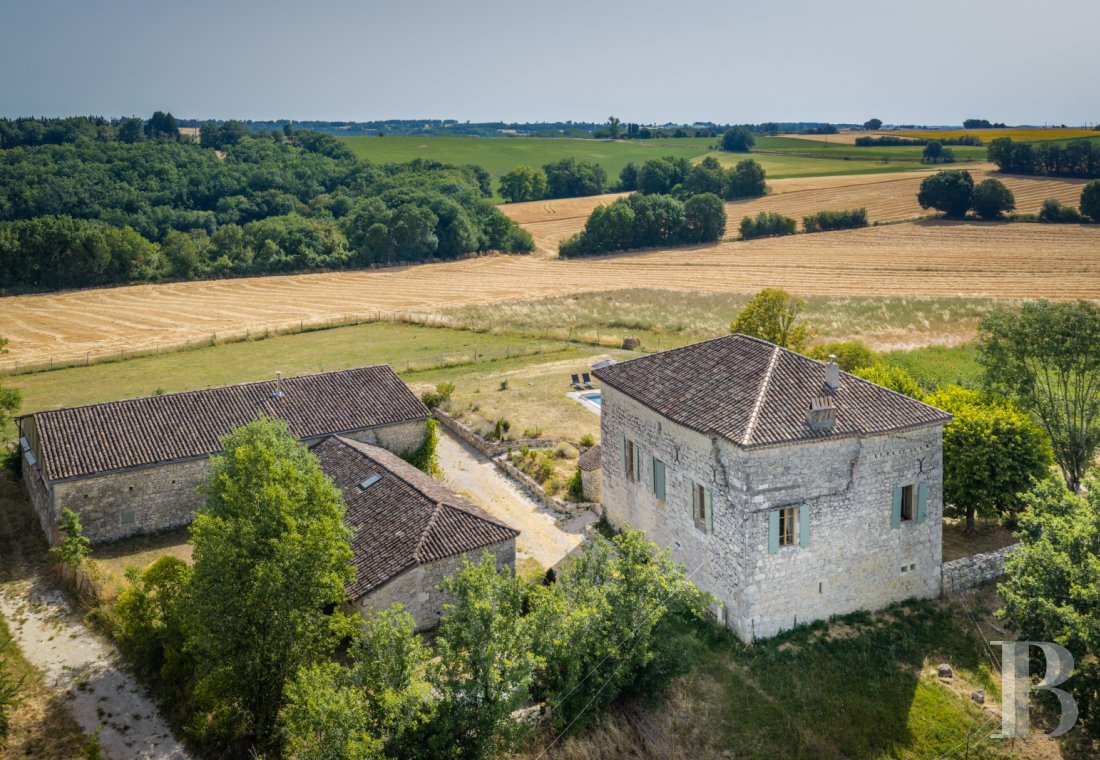
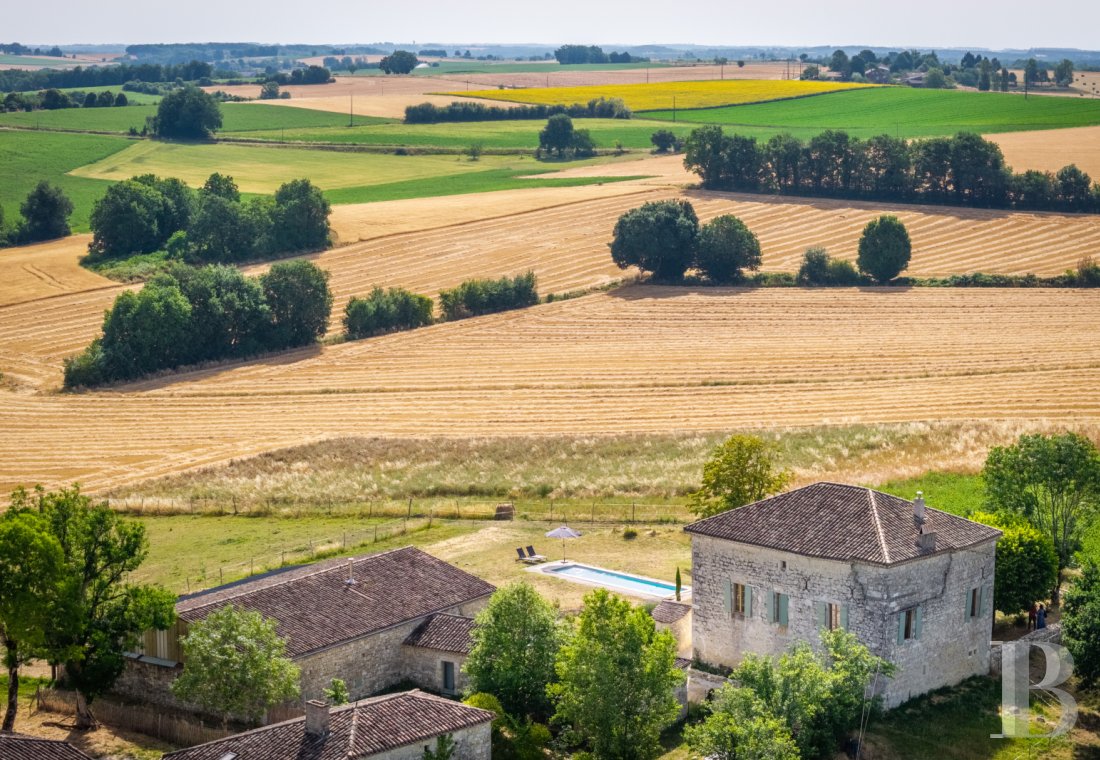
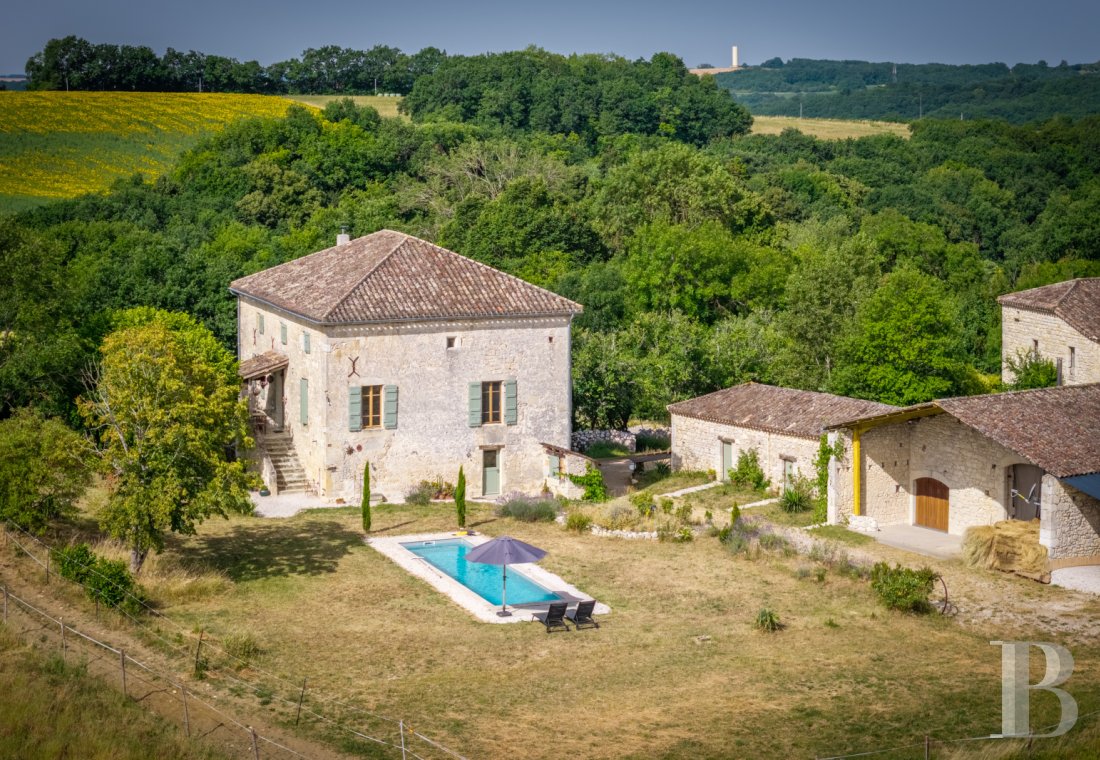
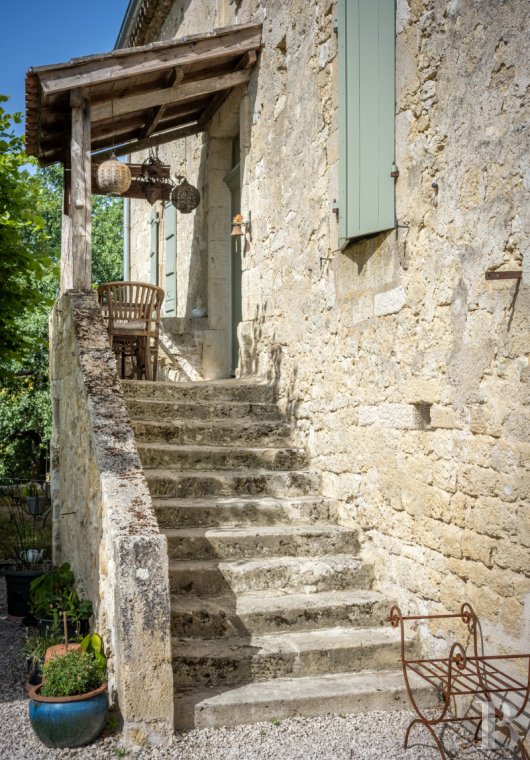
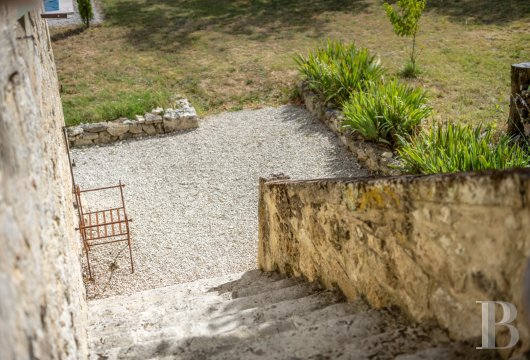
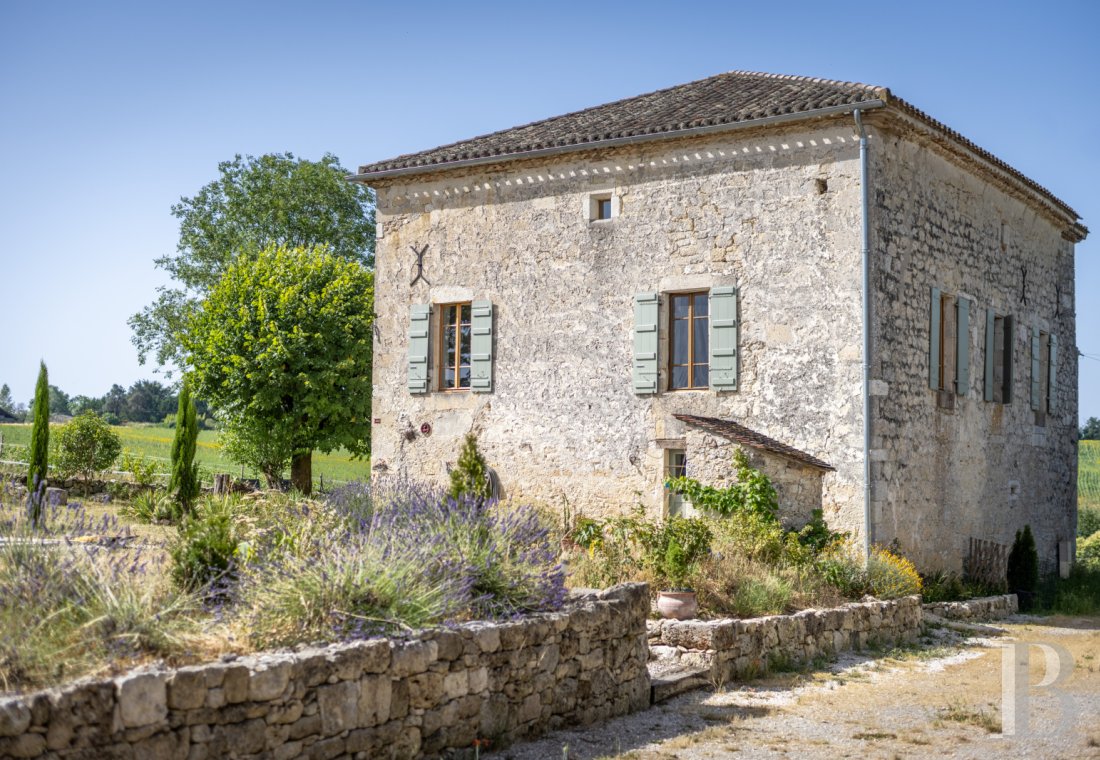
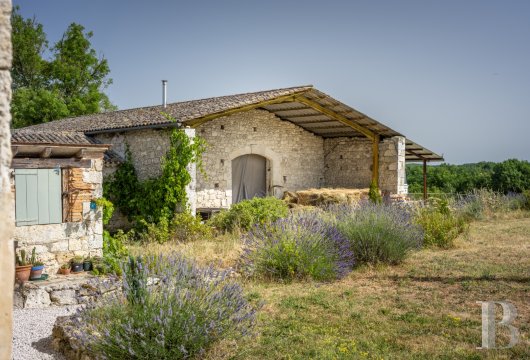
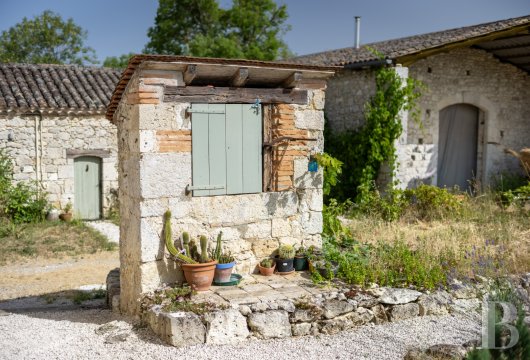
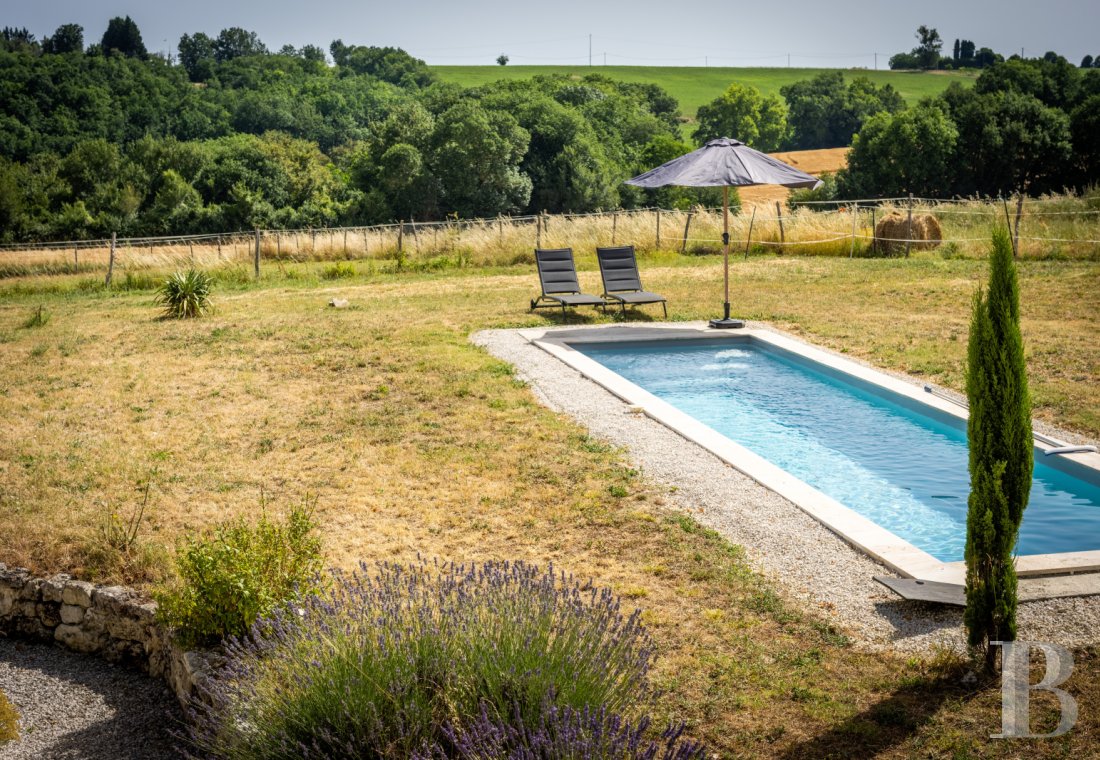
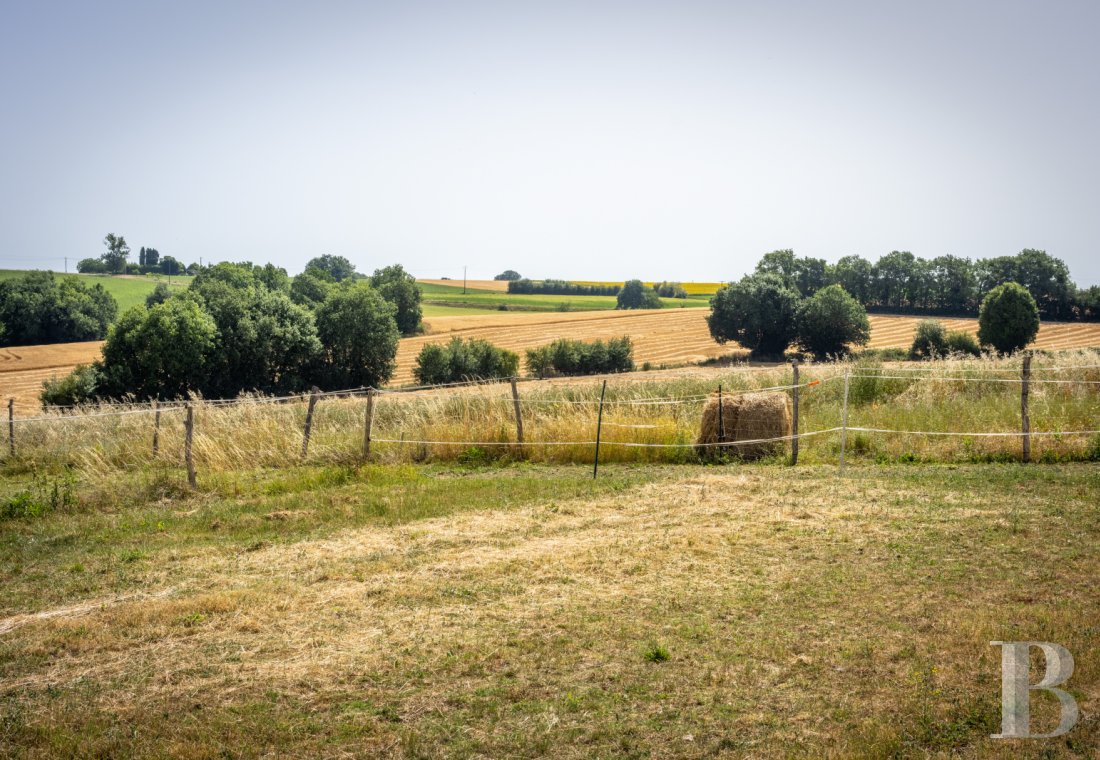
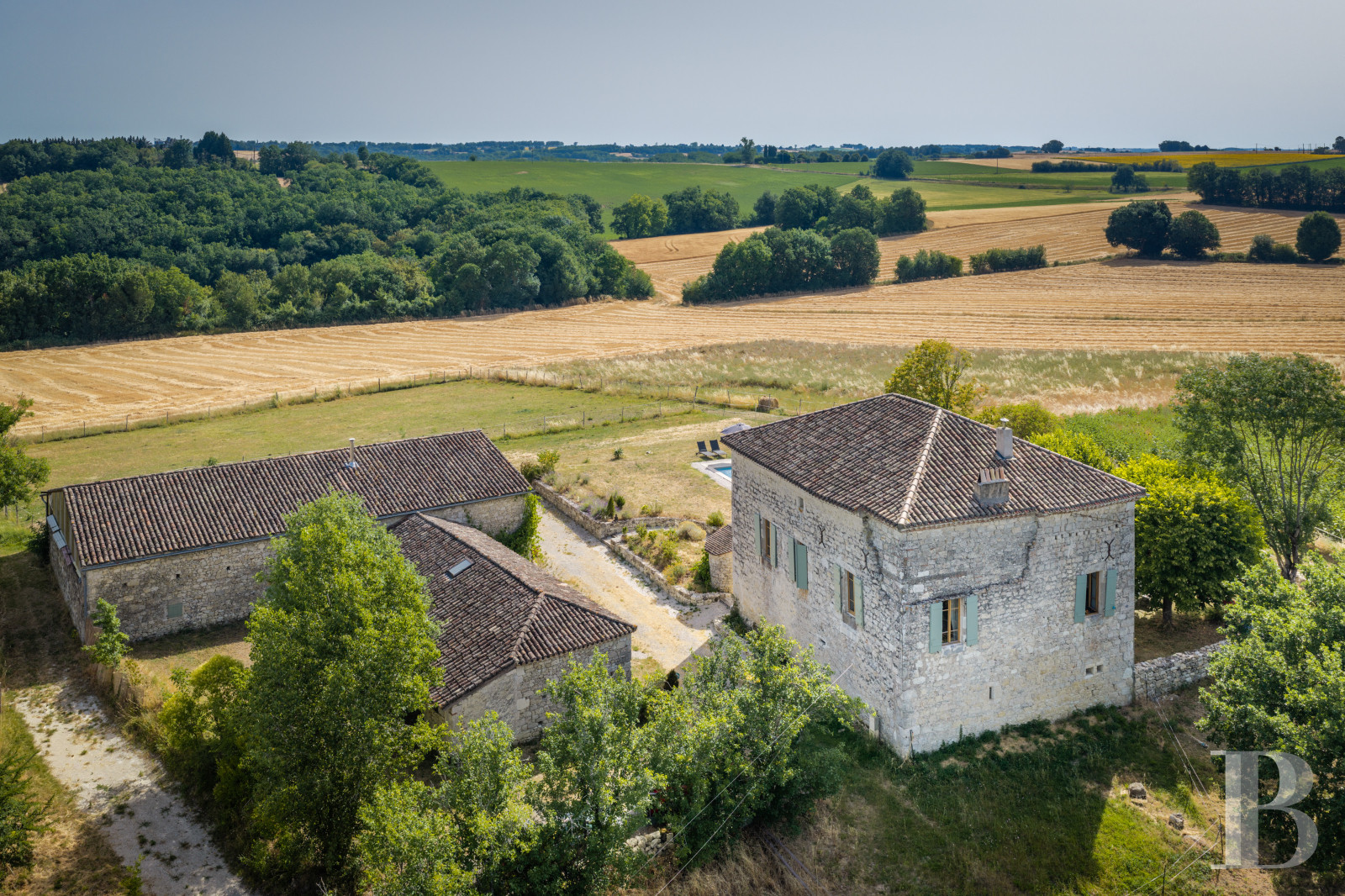
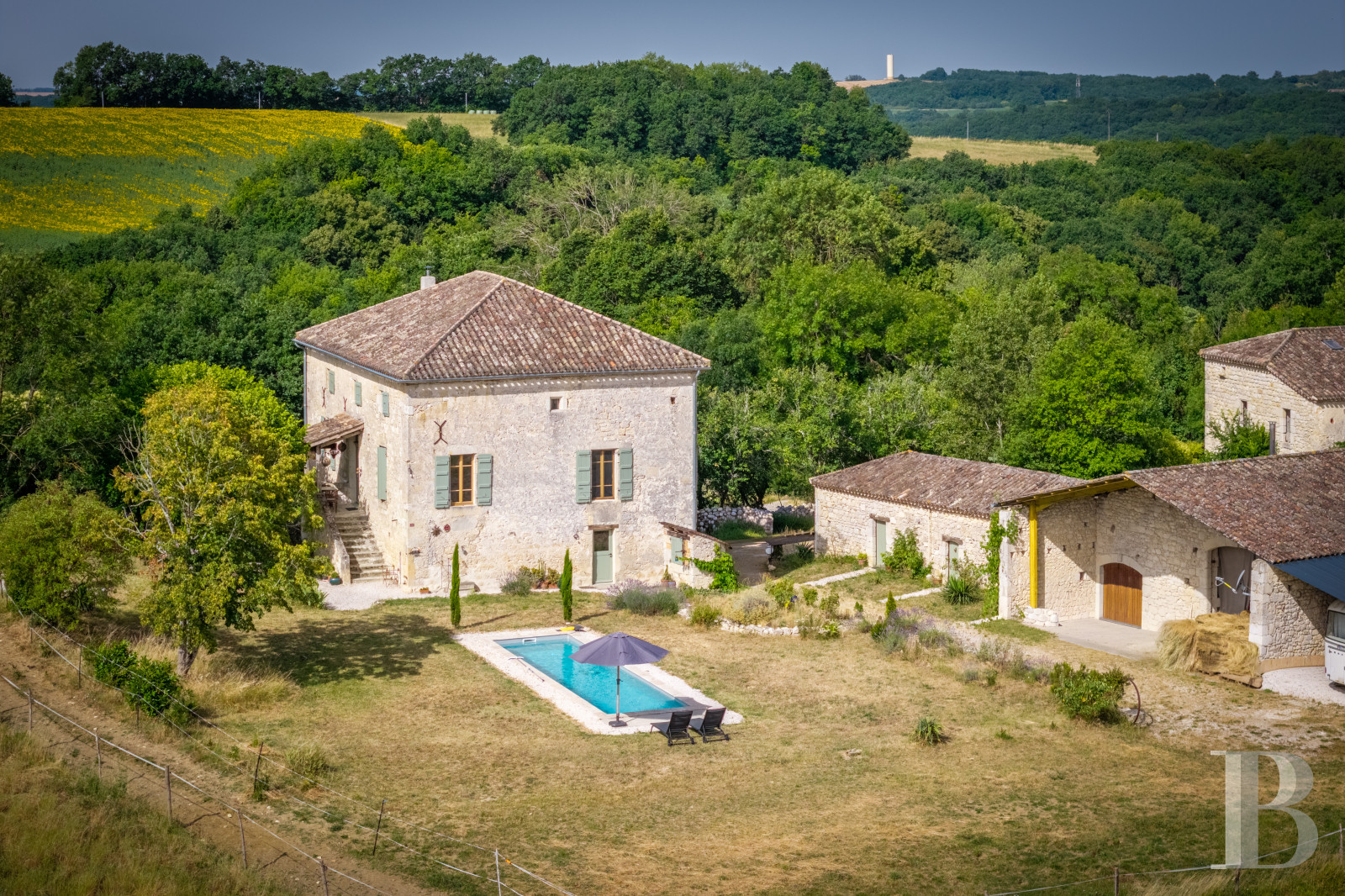
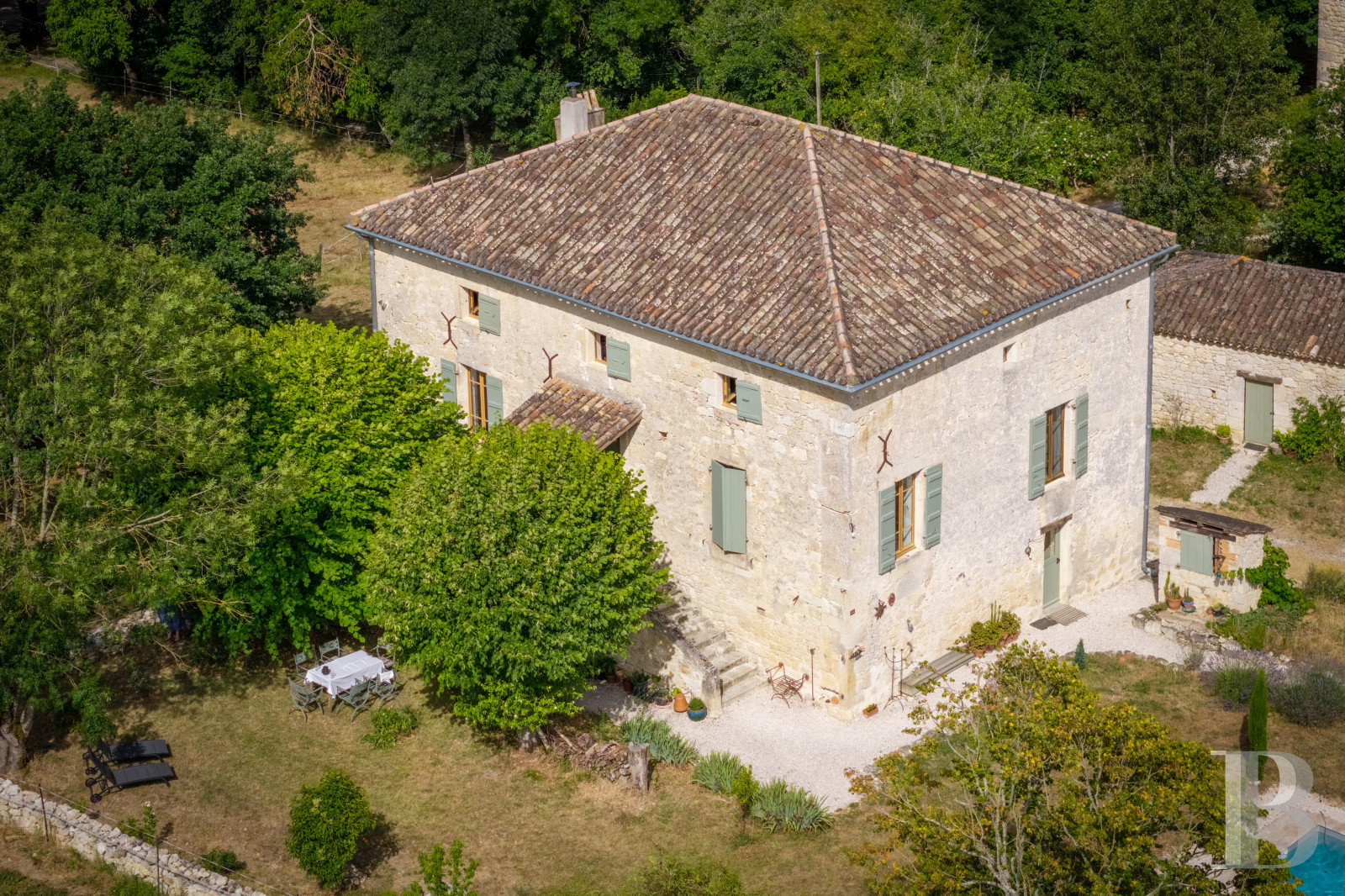
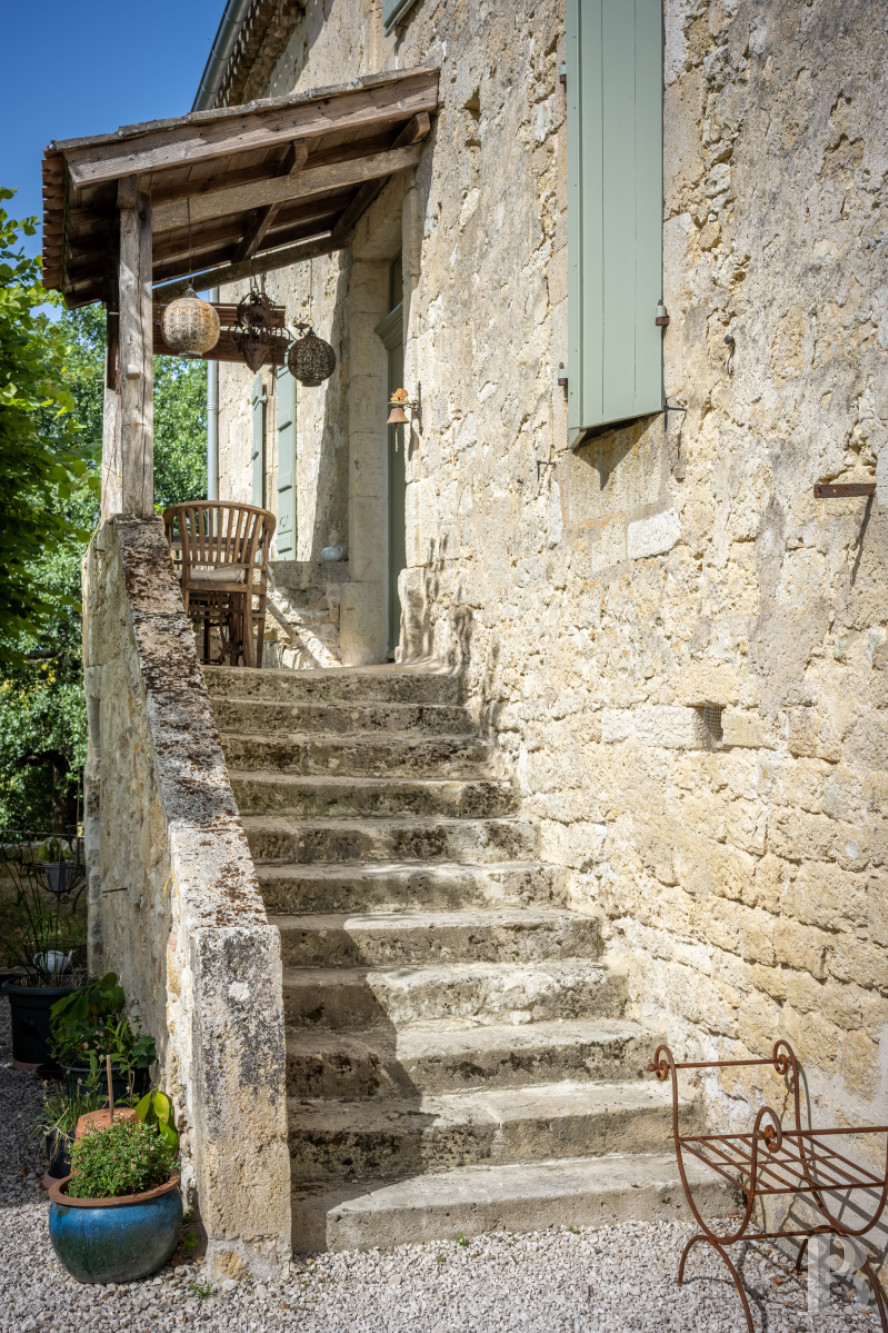
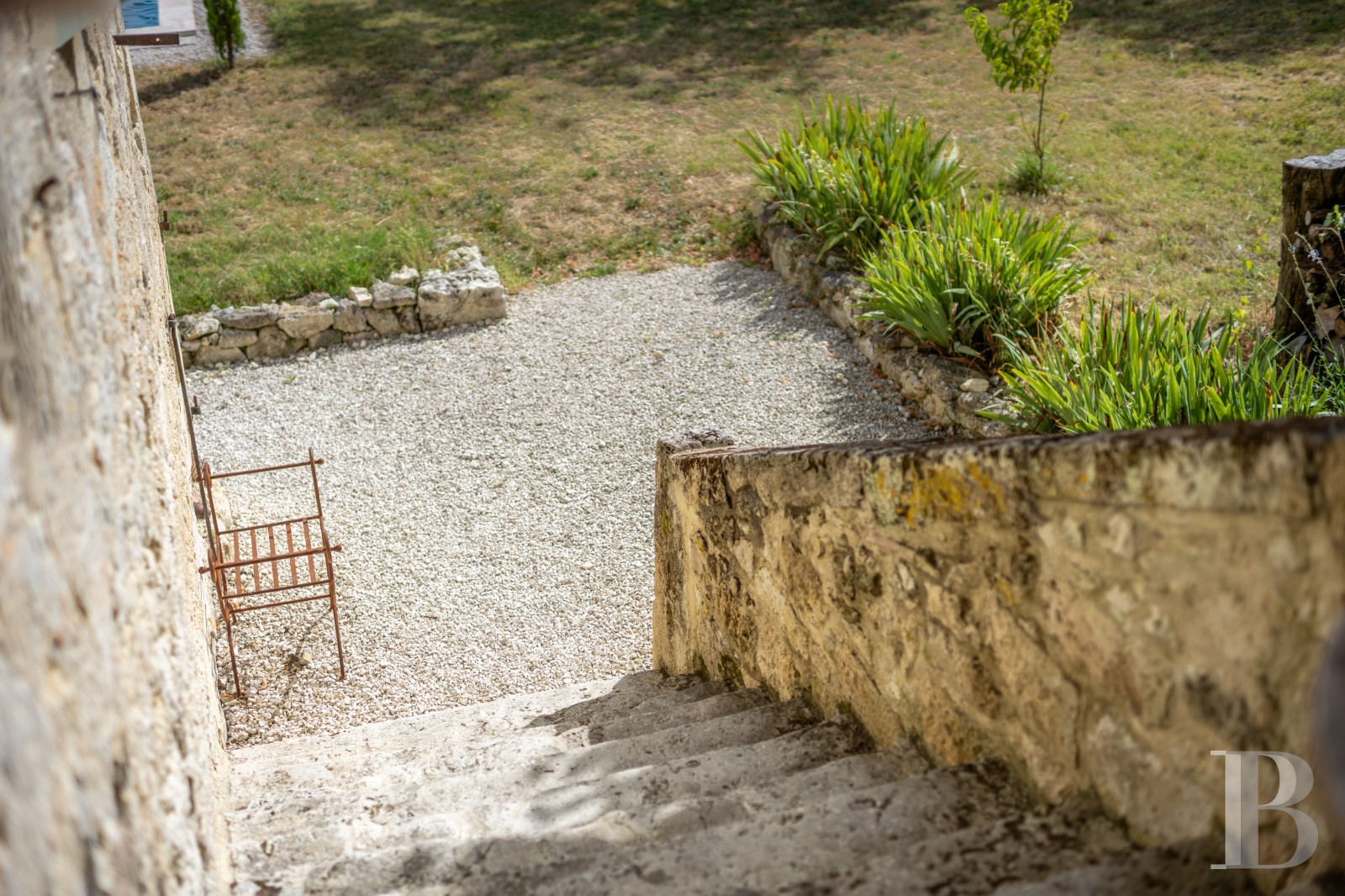
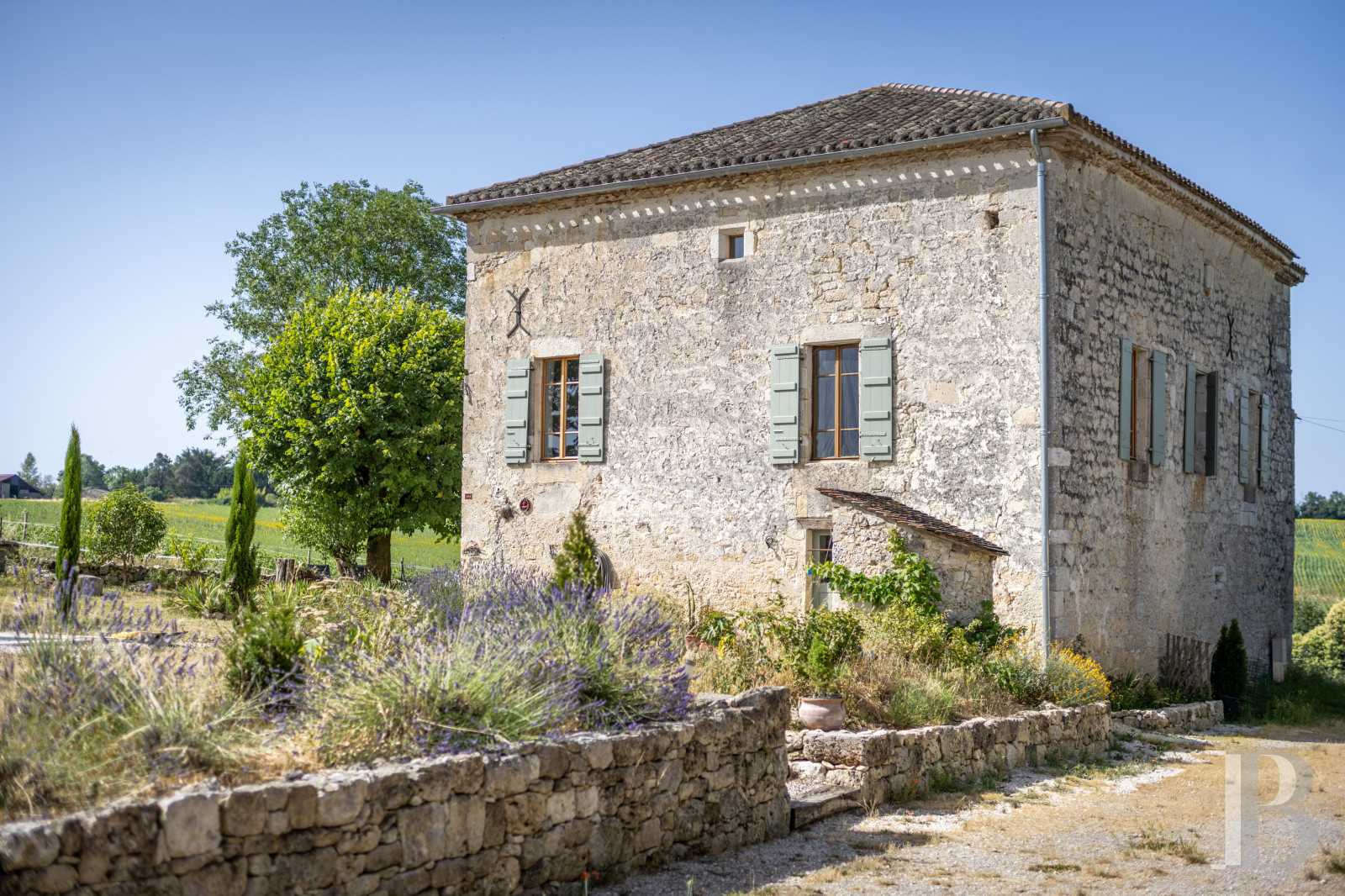
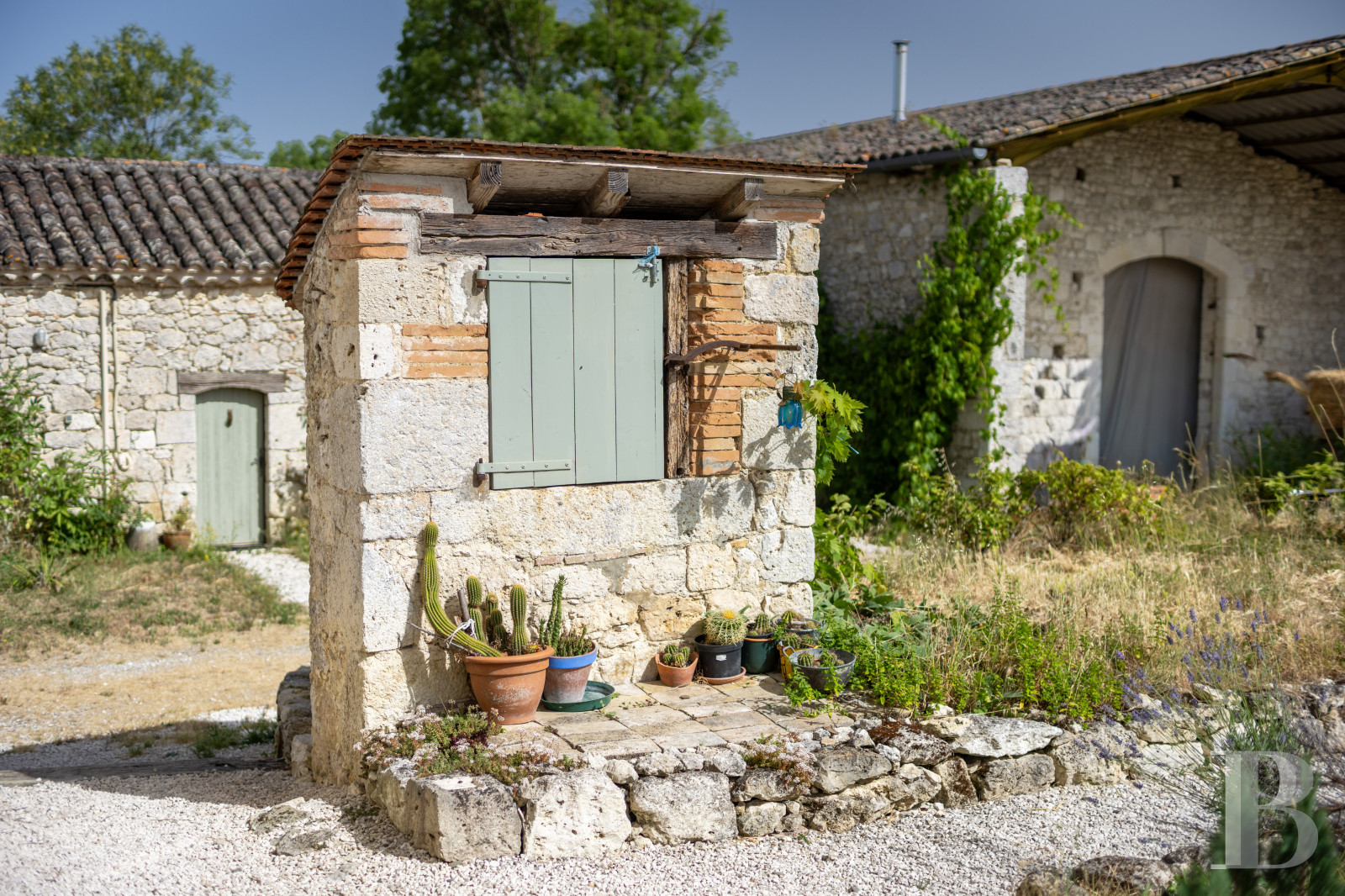
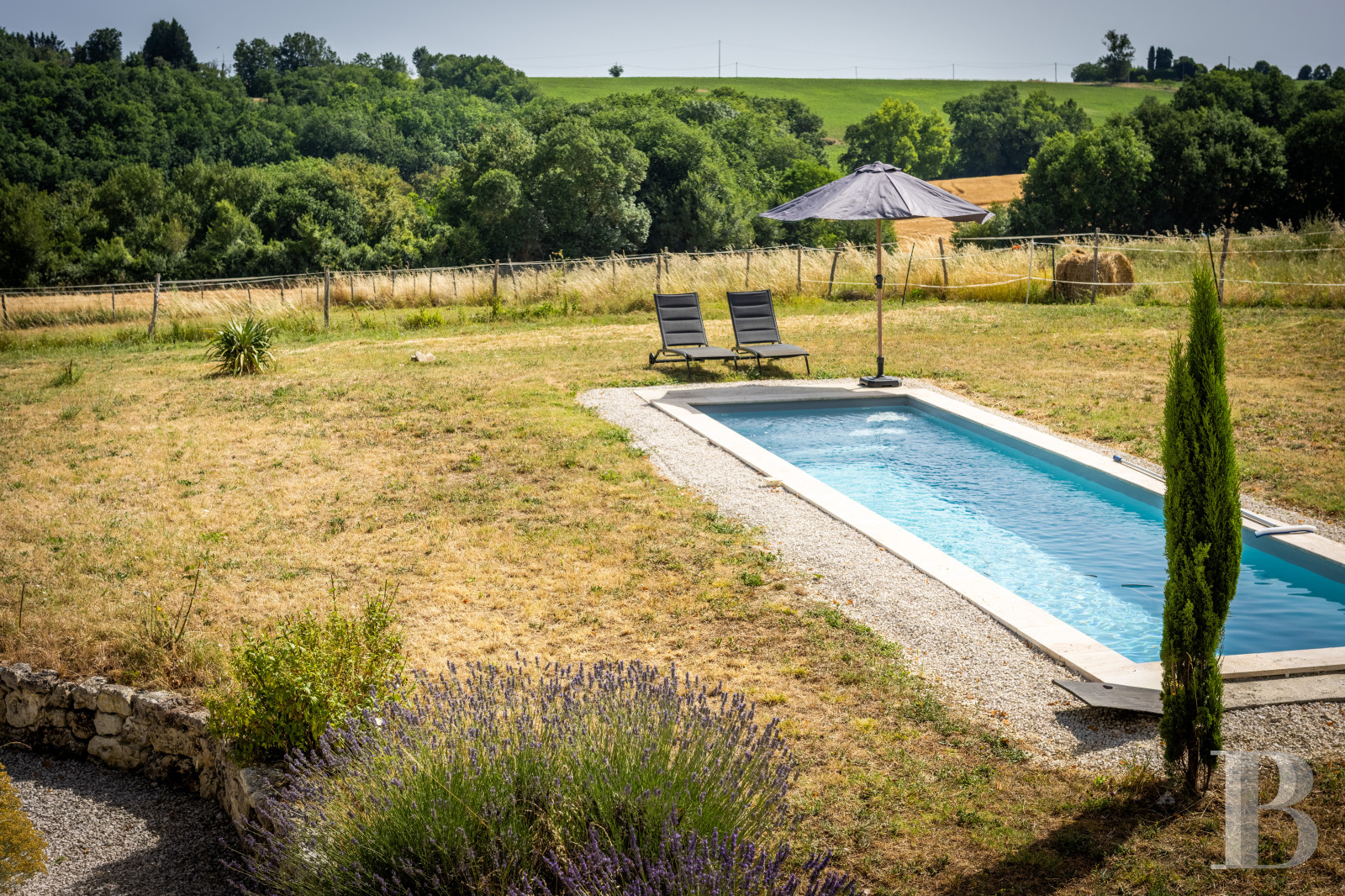
A country lane leads to the property. This lane leaves the main road and takes you to a discreet hamlet made up of a handful of old dwellings. The property’s buildings are set back slightly from this hamlet. The grounds cover around 8,000m² and gaze out at farmland and woods that punctuate this corner of France’s beautiful Quercy province. The main house forms the heart of the property. It is an old stone dwelling with a plan that is almost perfectly square-shaped. The edifice has a garden-level floor, a raised ground floor and a first floor in the roof space. Its limestone elevations are punctuated with evenly spaced rectangular windows fitted with wooden shutters. An outdoor flight of stone steps leads up to the main entrance door on the raised ground floor – a traditional arrangement in local rural architecture that made it possible to keep the ground floor separate from agricultural uses. A hipped roof of barrel tiles crowns the house. At the foot of the stone steps, a grassy, tree-dotted expanse lies in a commanding position. Here you can admire the surrounding countryside. The outbuildings, also made of stone and tiles, stand around the house. A self-contained guesthouse, smaller in size, offers a floor area of around 60m². It has its own terrace and little private garden. This guesthouse can be used to host friends and family, who can enjoy independence in it. An agricultural outhouse made of stone completes the collection of buildings. In this stone building, there is a barn and several extra spaces, including looseboxes for horses and a technical installations room. Beside the house, there is a well that still has water. And in front of the main house, at the foot of one of its side elevations, a rectangular swimming pool lies beside a lawn where you can gaze out at the countryside. The various buildings are well spaced out over the whole plot, at an appropriate distance from one another. This leaves space for clear vistas of the hills and fields around the hamlet. The small collection of buildings forms a coherent whole that is characteristic of rural properties in this corner of France’s Tarn-et-Garonne department, where old dwellings, outbuildings and gardens are laid out beside historical houses set in an unspoilt landscape that has remained mainly agricultural.
The main house
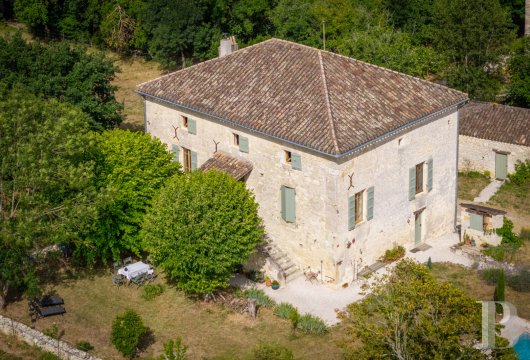
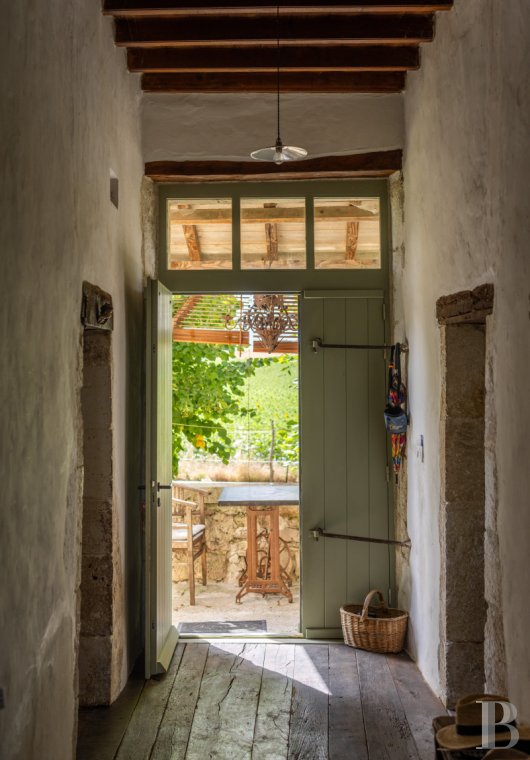
The main house is plain and balanced in form. It is built of exposed limestone. Its windows are evenly spaced, set in ashlar surrounds and fitted with swing shutters of painted wood. Its hipped roof of barrel tiles is underlined with a traditional génoise cornice. You reach the main entrance door via an outdoor flight of stone steps that leads up to a small terrace sheltered beneath a canopy upon timber posts. From this raised terrace, you step through the entrance door of painted wood beneath its glazed fanlight. An arrow slit in one of the thick walls underlines the medieval origins of the edifice and suggests it played a defensive role.
The ground floor
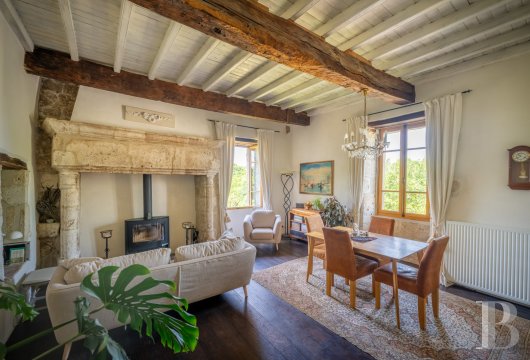
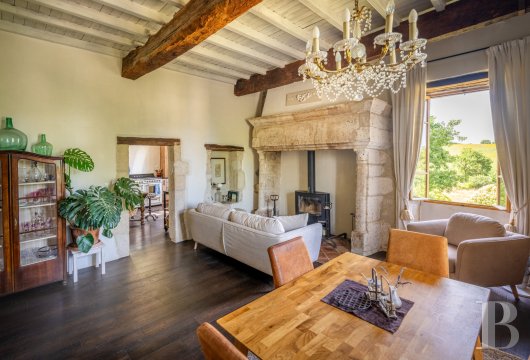
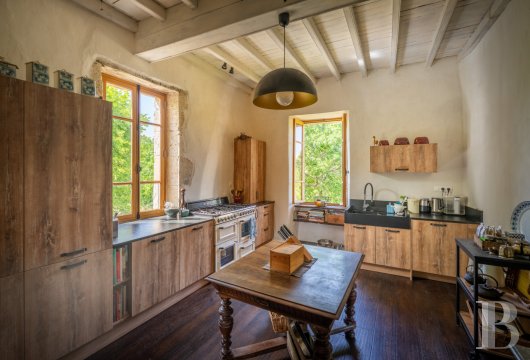
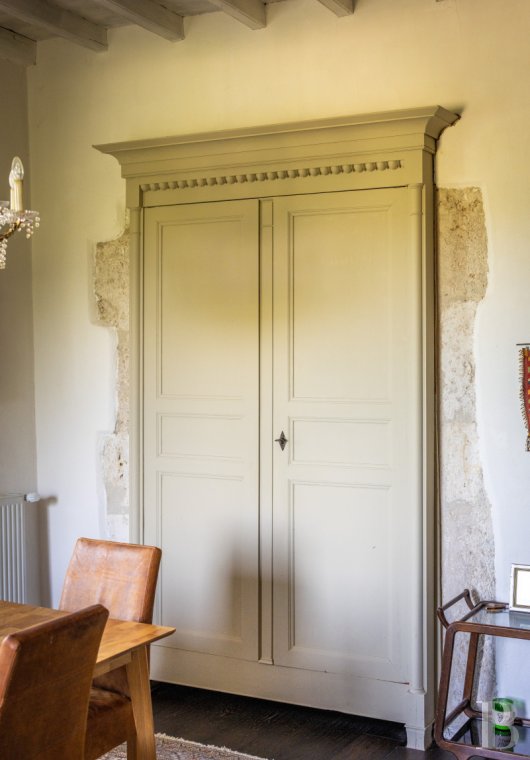
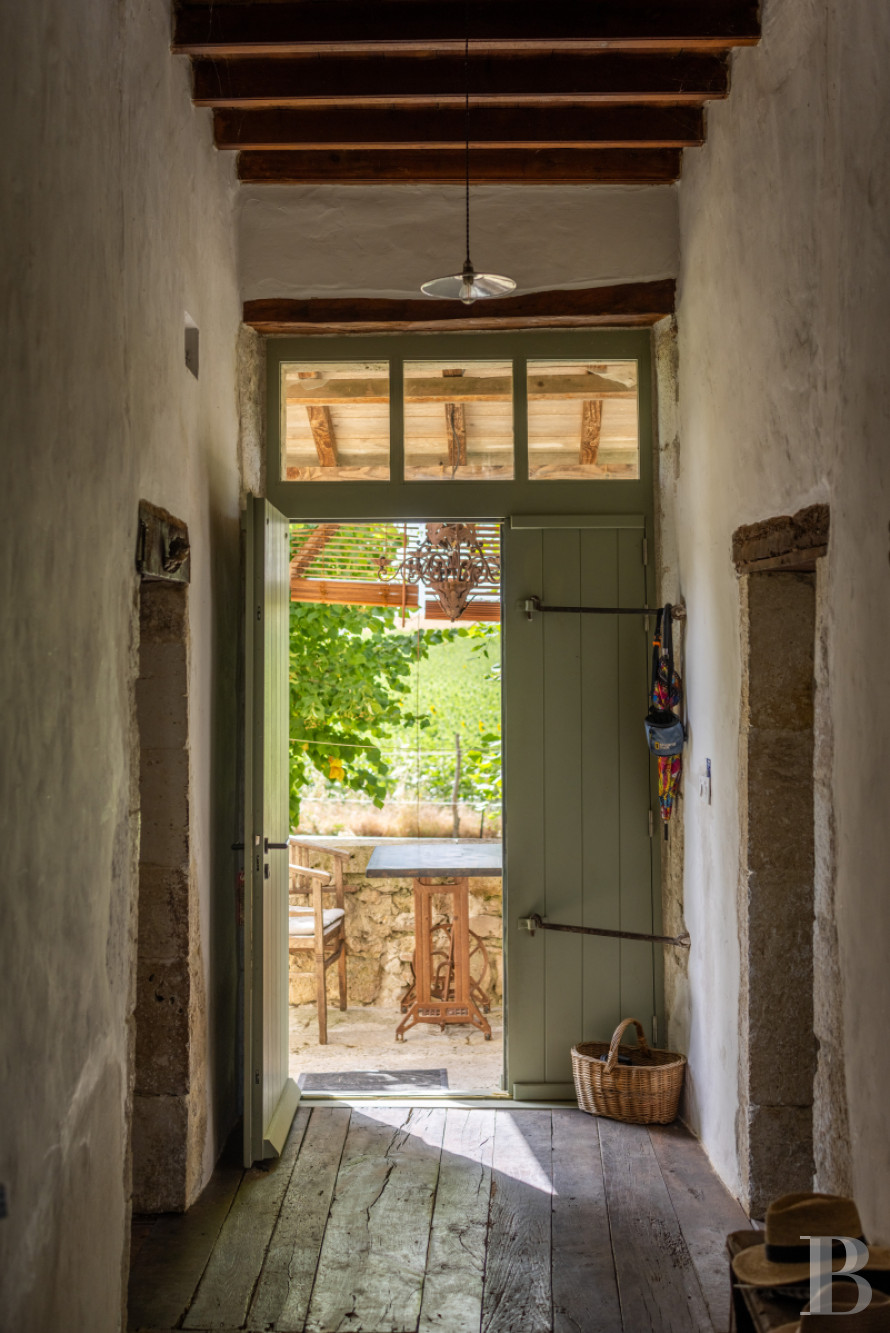
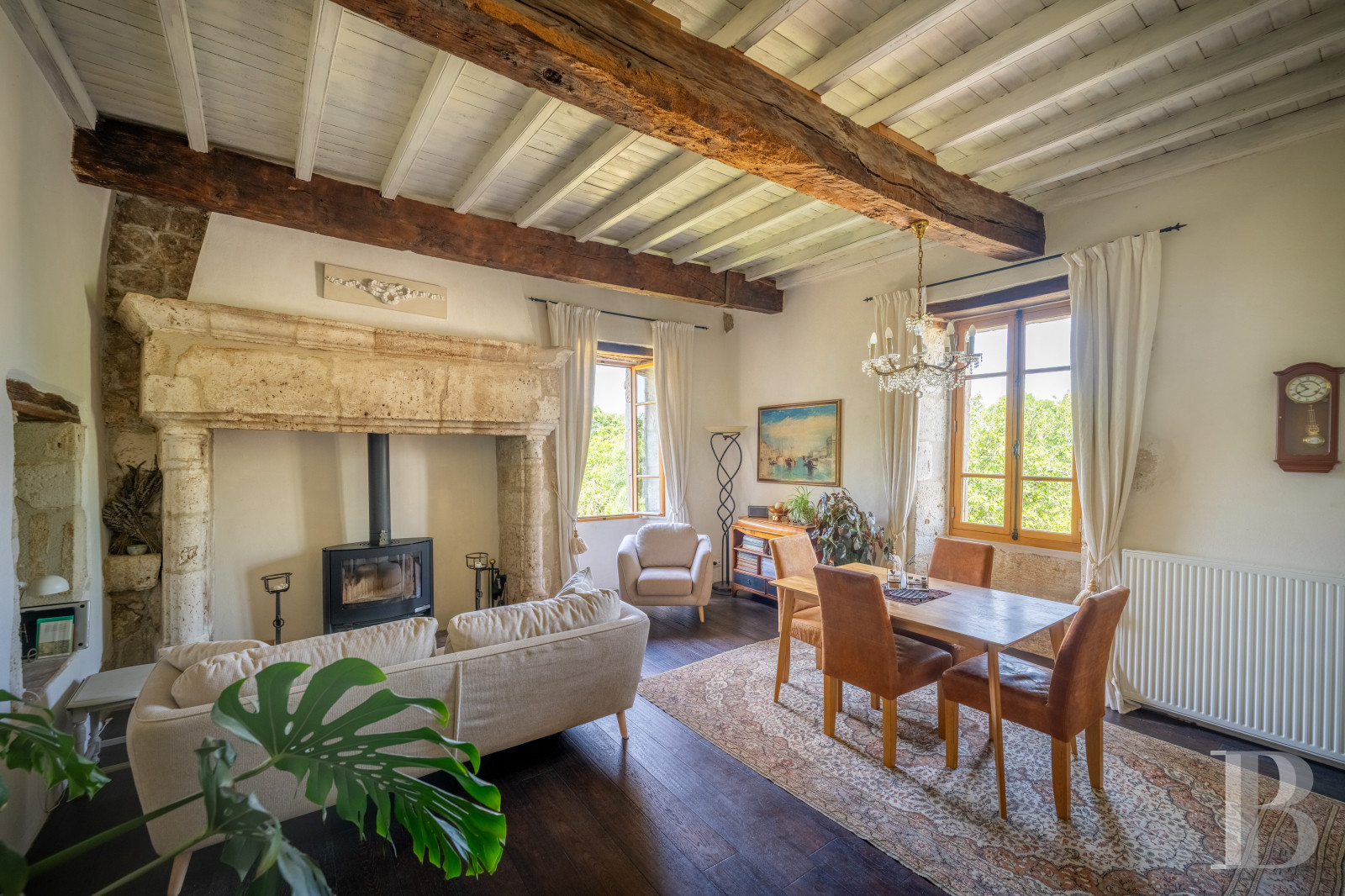
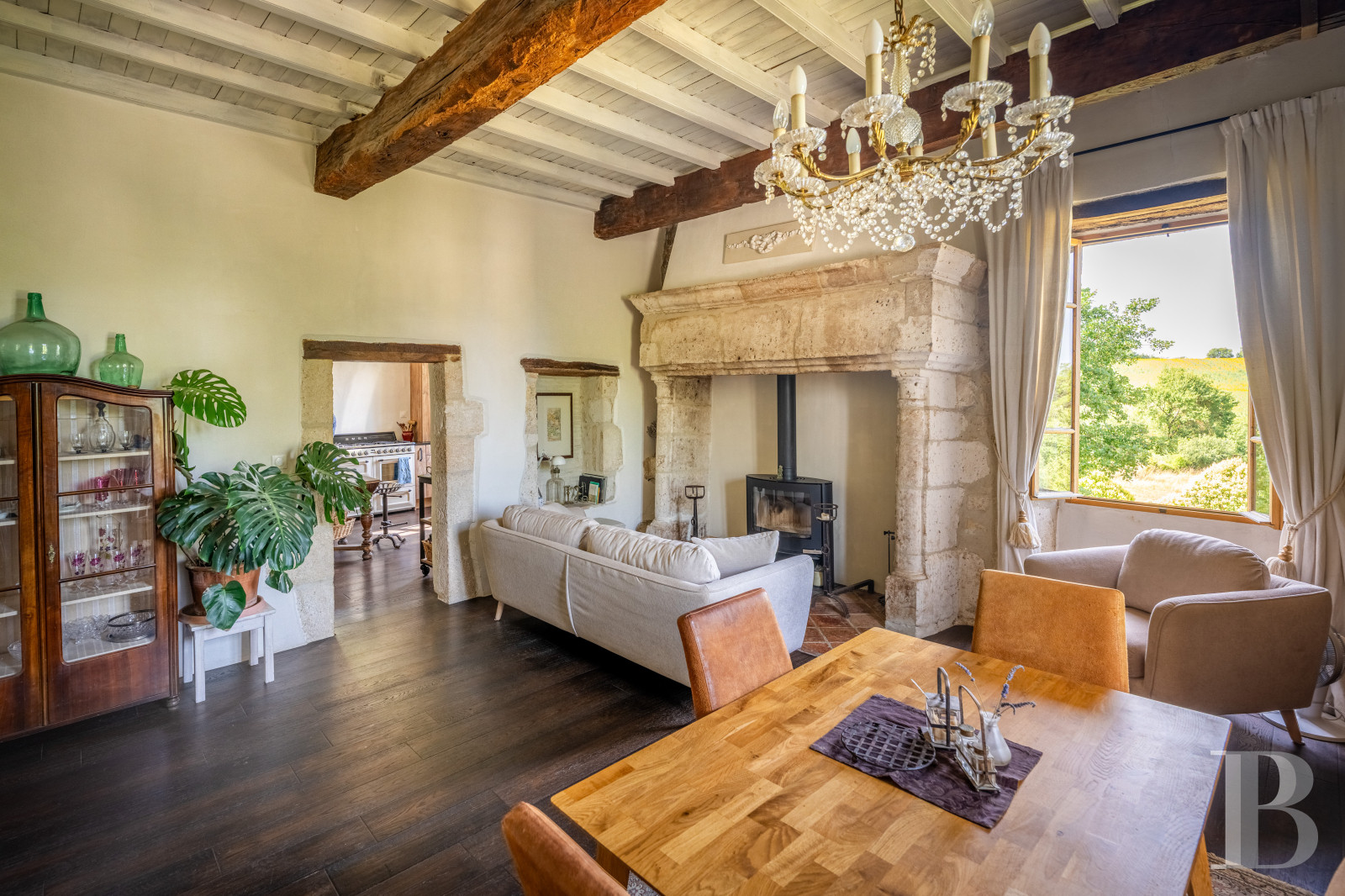
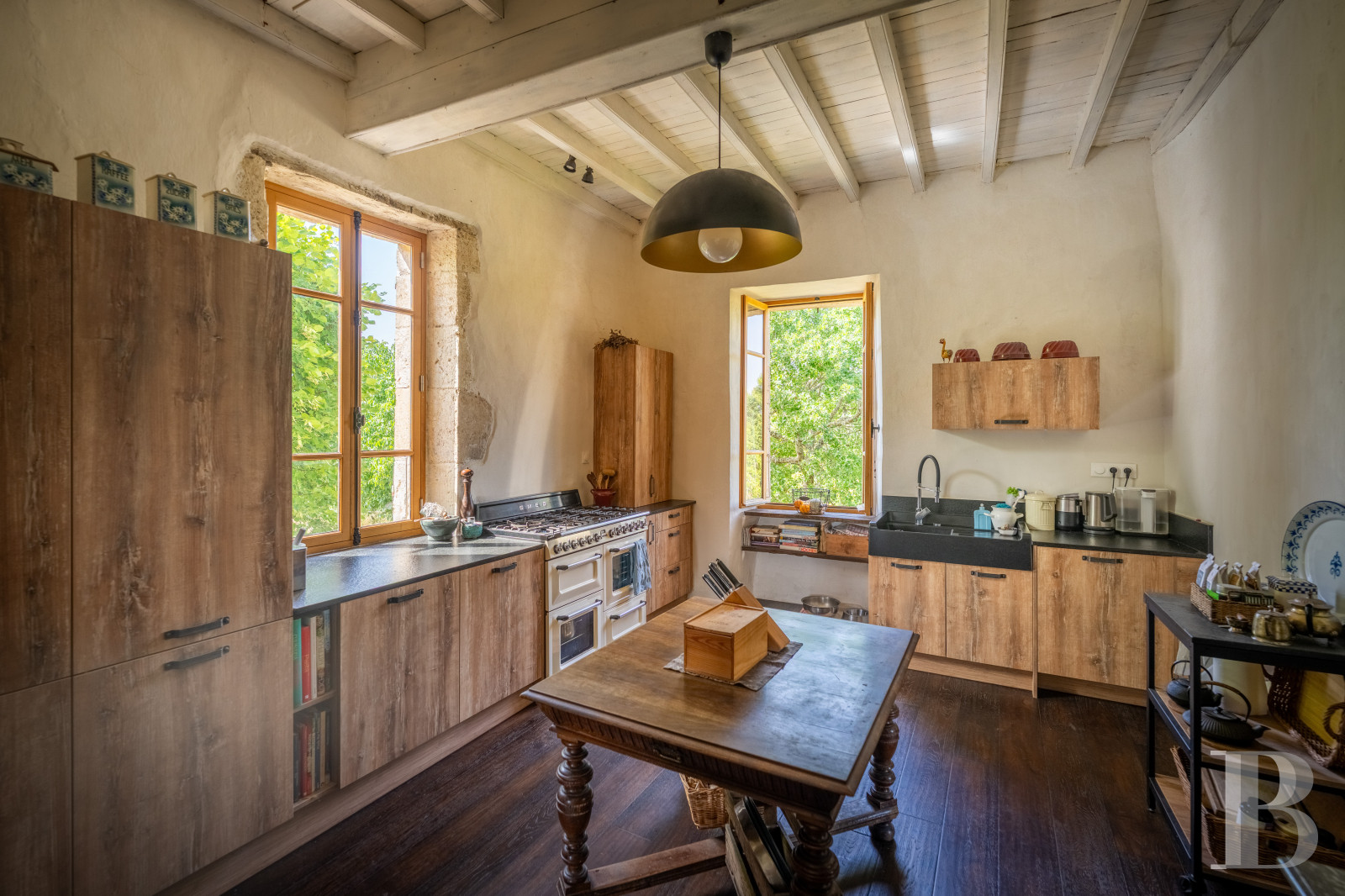
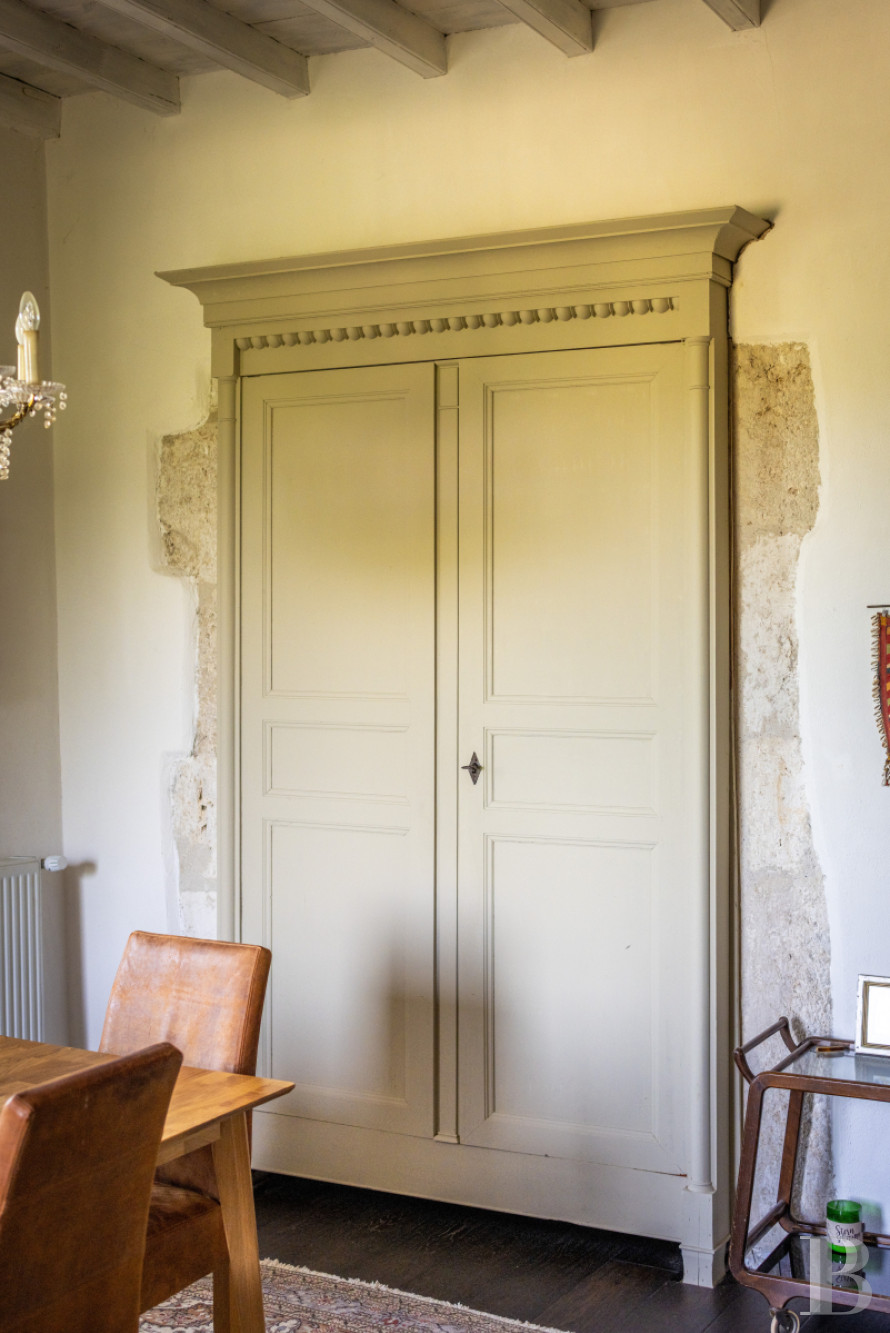
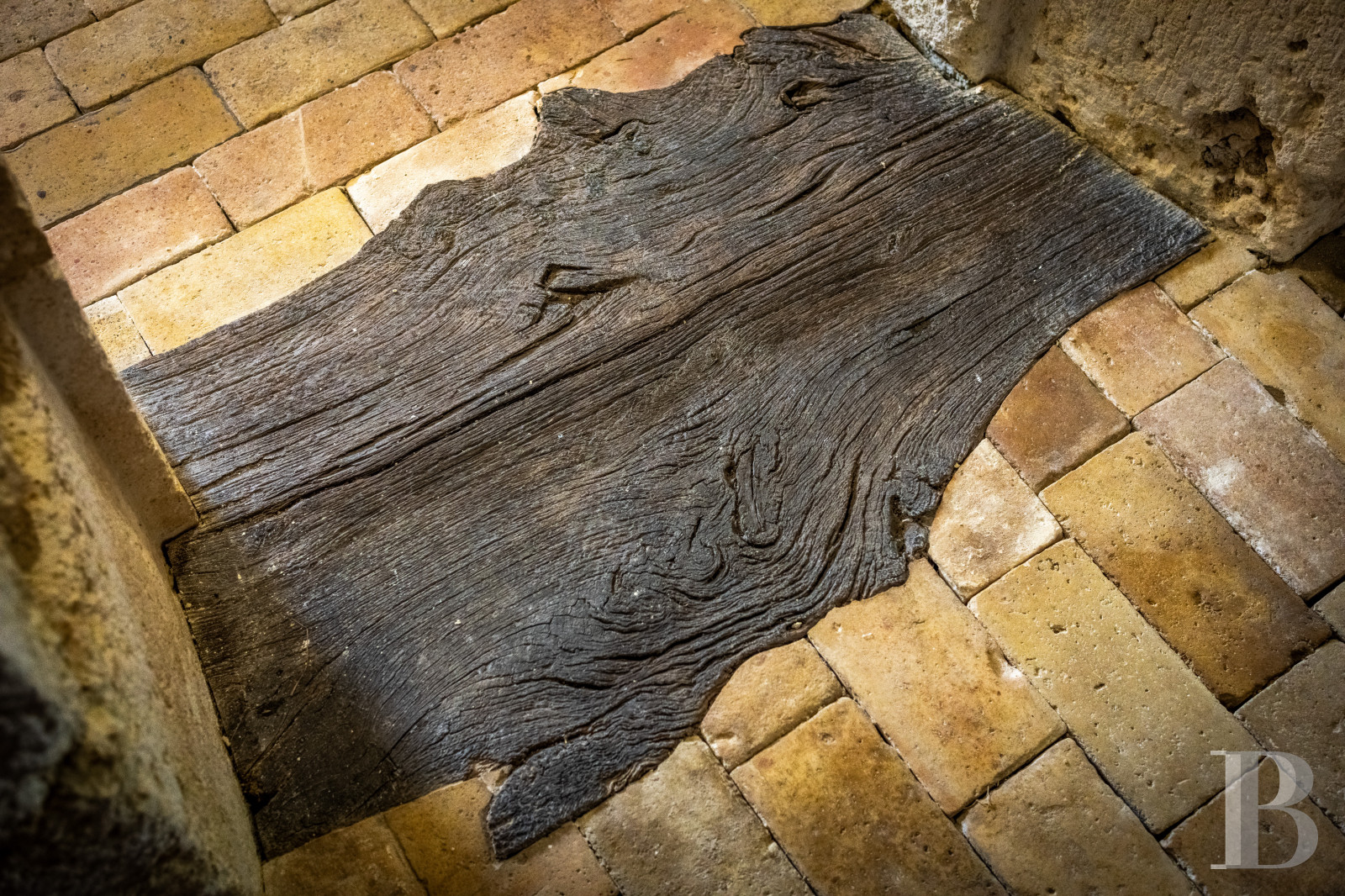
The ground floor is the house’s main level. Old wood strips or terracotta tiles cover the floors. The lime-coated walls reveal exposed ashlar surrounds at certain points. Old exposed beams run across the ceilings. A central corridor connects to rooms on either side of it. All these rooms look out at the garden. To the left of the entrance hall, there is a kitchen bathed in natural light from two windows. The kitchen units have been fitted along the walls, leaving the middle open. Beyond the kitchen, a lounge and dining area are brought together in a single room that gazes outwards. The lounge and dining area are laid out around an old stone fireplace with a monumental mantelpiece supported by two stone jambs. Today, this former fireplace houses a wood-burning stove. To the right of the entrance hall, there is a dual-aspect room used as a bedroom. It looks out at the swimming pool on one side and out at the front of the house on another side. There is a second bedroom on the other side of the building. It faces the swimming pool and guesthouse and has its own private bathroom. Lastly, a half-turn oak staircase leads to the different levels.
The garden-level floor
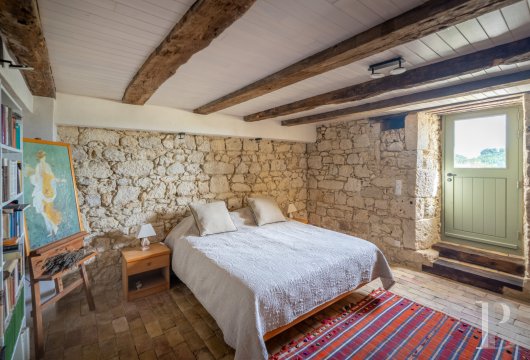
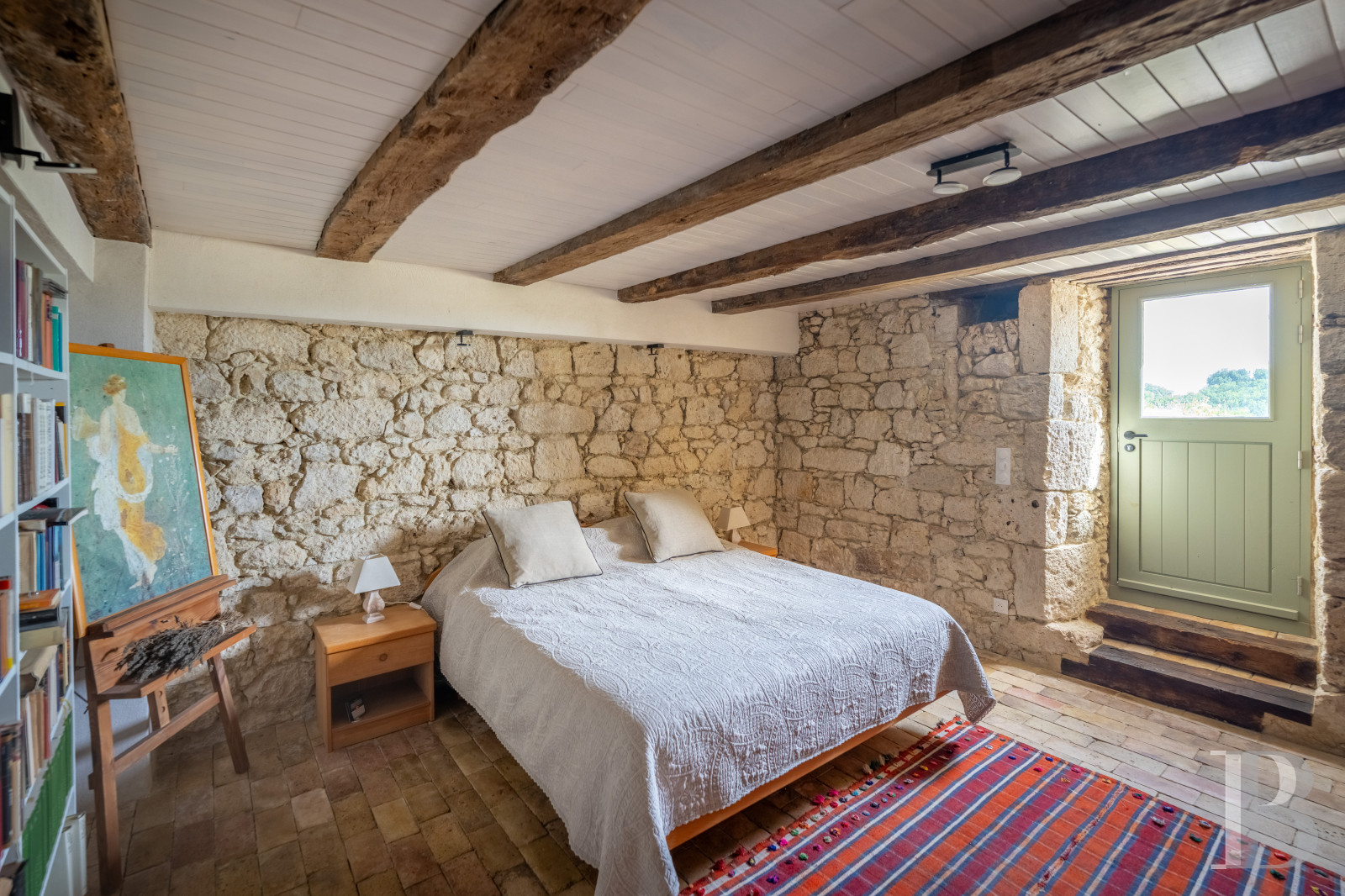
This garden-level floor is laid out around a central corridor that connects to the different rooms in an arrangement similar to the ground floor. The rooms down here, with their exposed stonework and terracotta-tiled floors, have kept the old building’s character. One room here, today turned into an office and reading room, is punctuated with several alcoves built into the thickness of the walls. A second room, which leads straight out to the garden, could serve as a lounge or bedroom. A spacious shower room with a shower, a lavatory and a broad washbasin unit, completes this floor conveniently. And a small cellar with an earthen floor is hidden down on this lower level too.
The attic
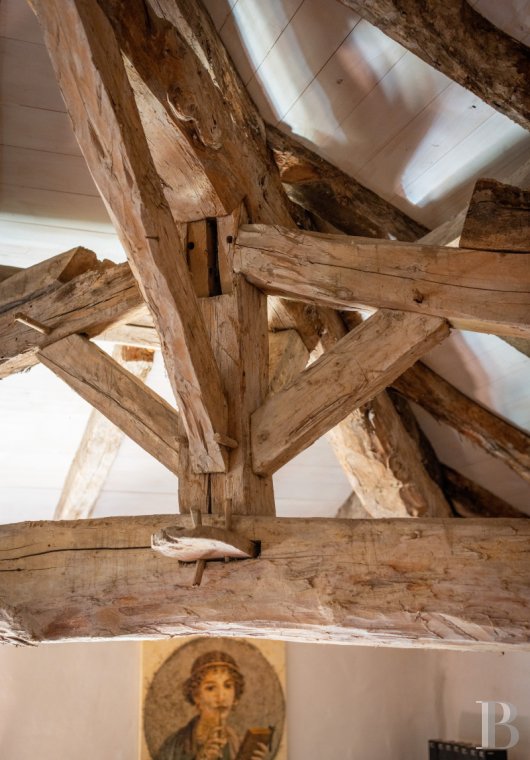
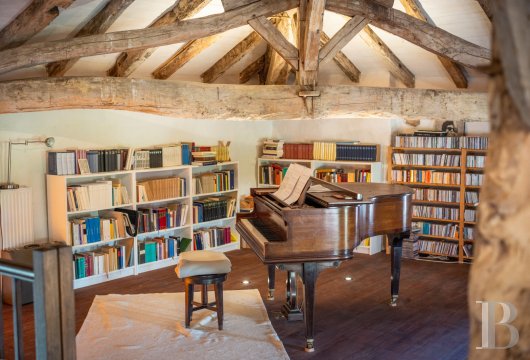
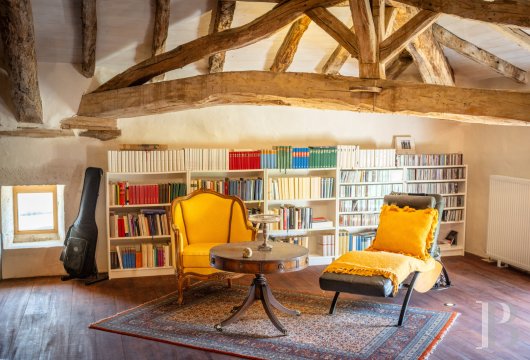
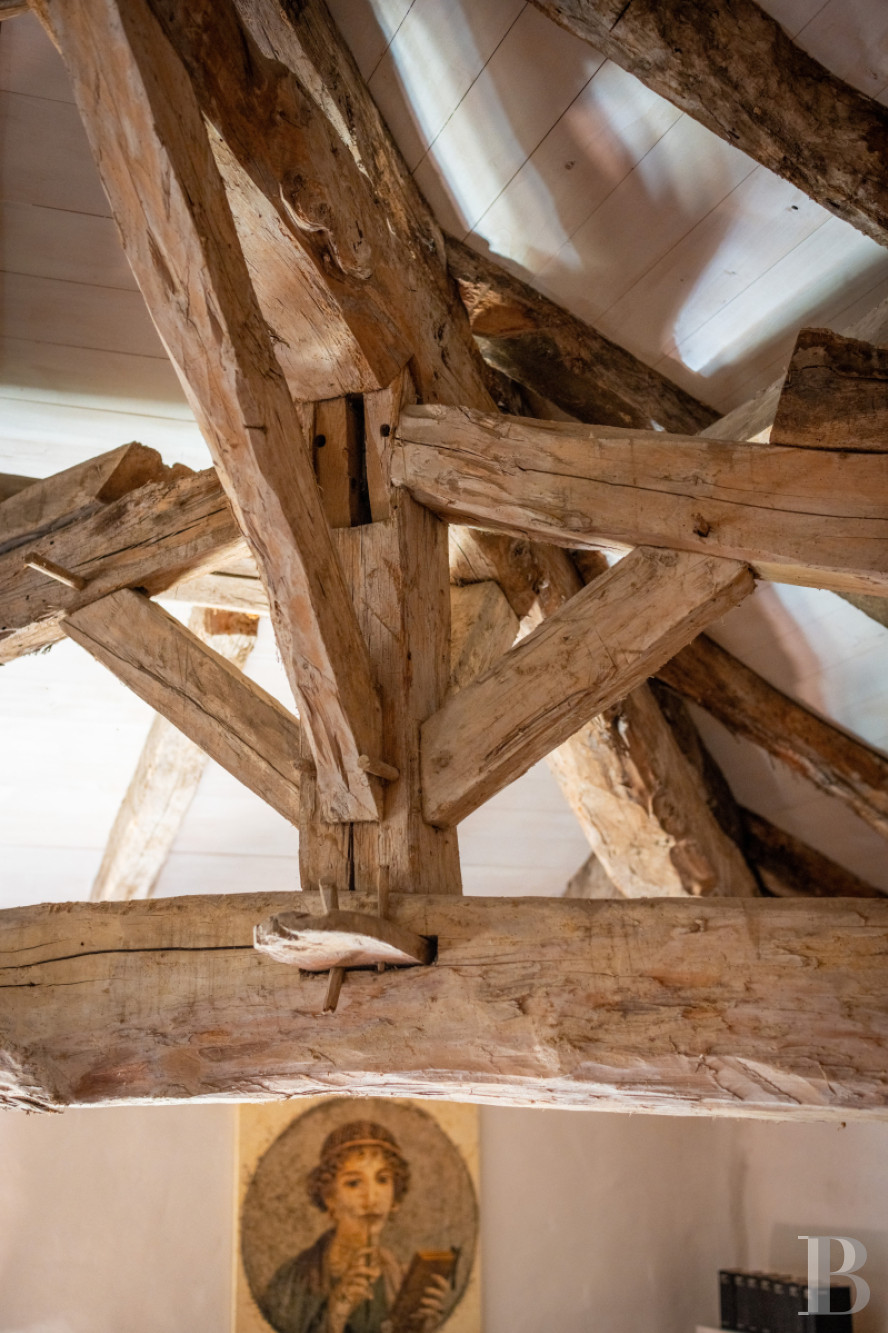
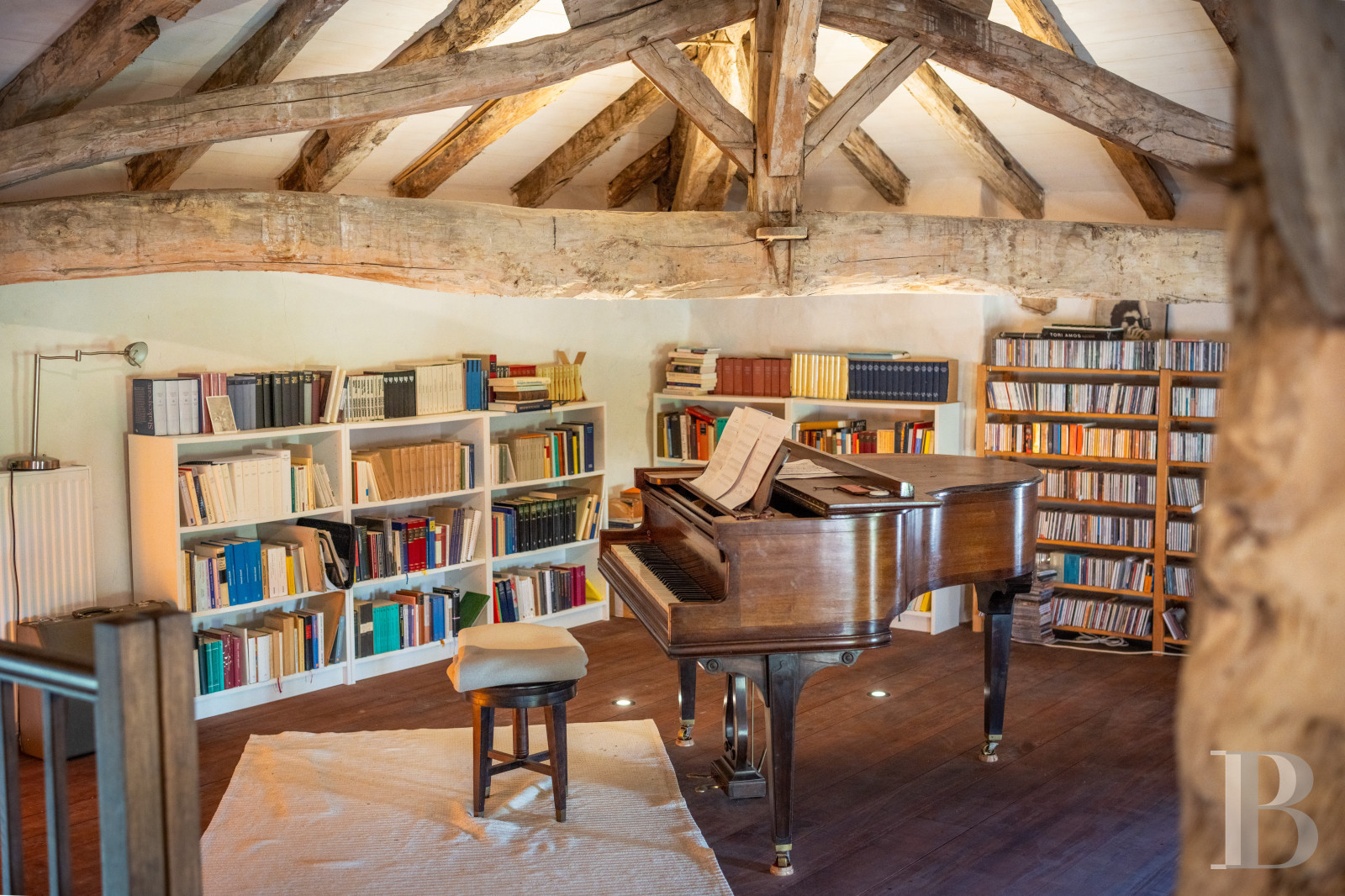
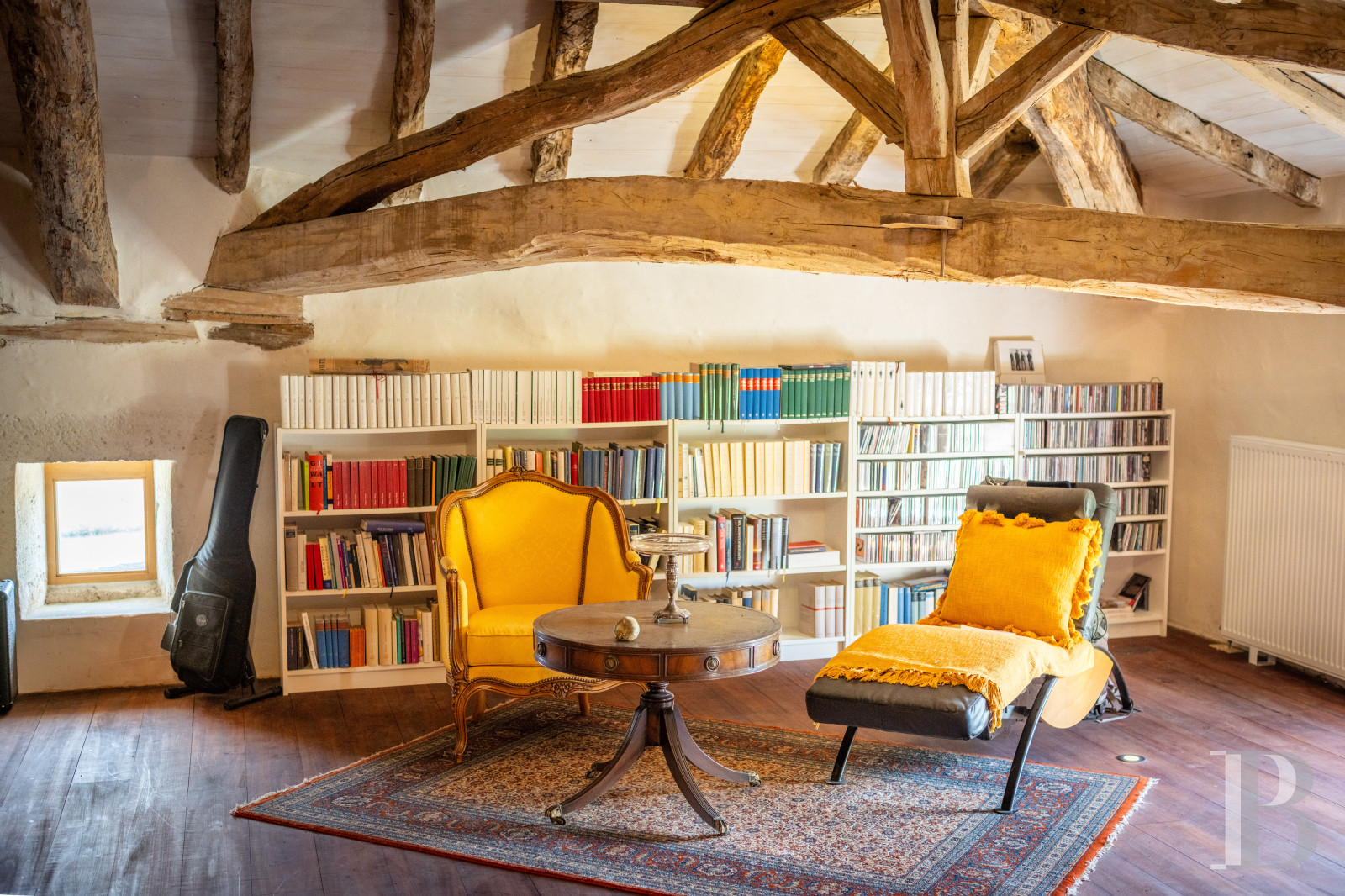
The top floor extends beneath an old roof frame, the thick beams of which remain exposed. The vast room up here, open up to the roof ridge, forms an impressive space. Indeed, the roof frame offers a spectacular show of beams and rafters. Wood strip flooring extends across the room and natural light enters through several windows in the thick walls. Today, this space is a reading room lined with bookshelves and it includes a lounge. Yet it is flexible in nature. The different spaces are laid out around the staircase and the guardrail, which marks the transition from the floor below. The exposed roof frame of impressive beams with a patina of time is the centrepiece of this top space. It gives the whole room a unique, warm atmosphere.
The guesthouse
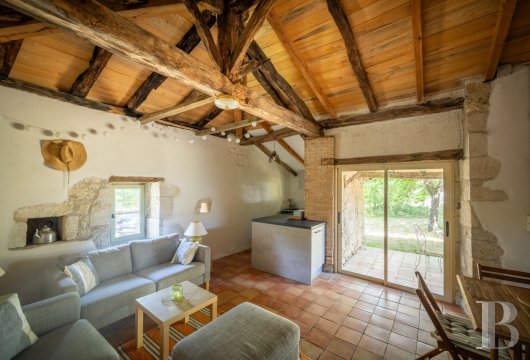
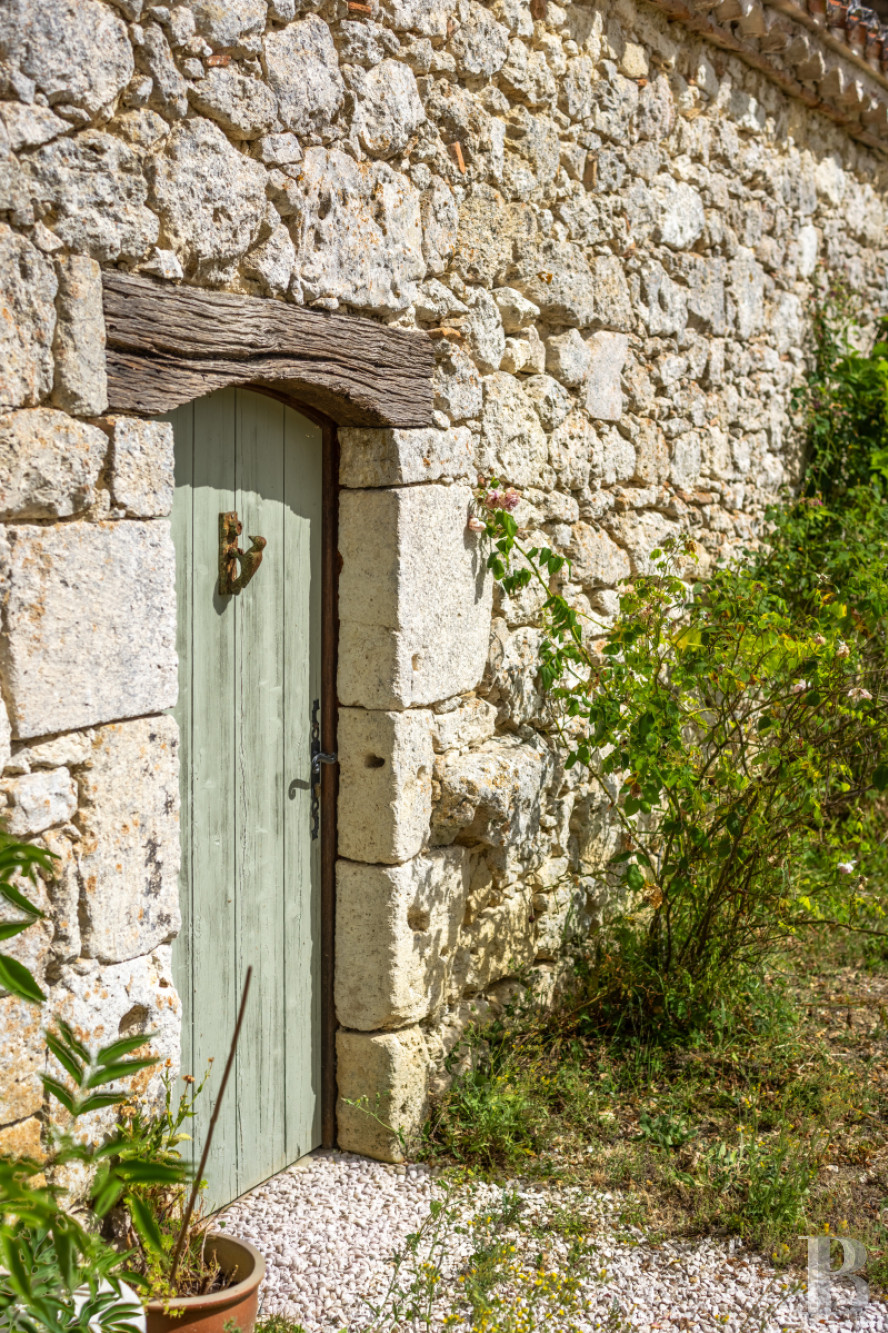
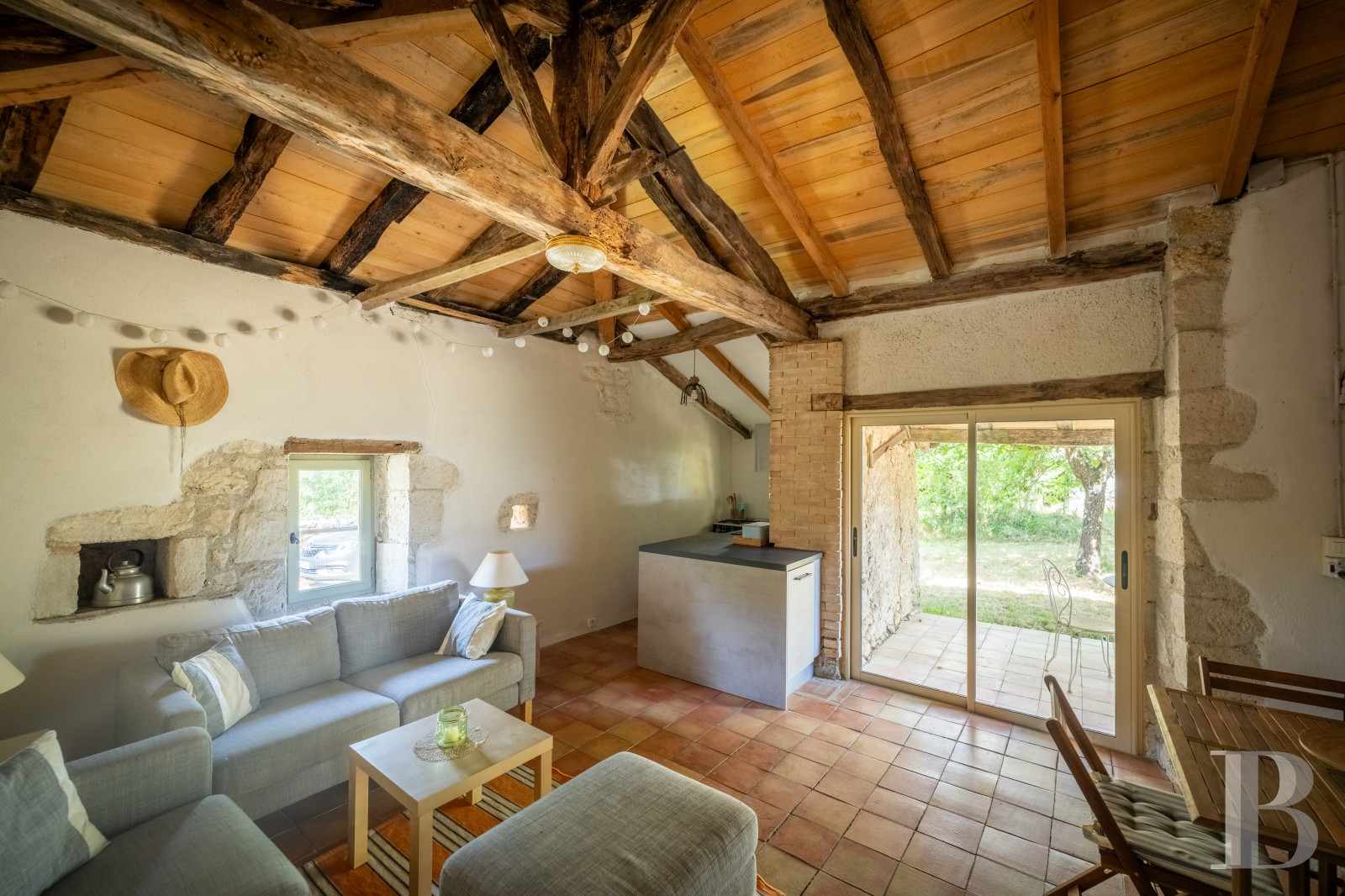
This self-contained single-storey building has a simple shape and layout. It is built of stone and crowned with a roof of barrel tiles. Its elevations have windows set in stone surrounds. The dwelling is based around a room with lime-coated walls that brings together a lounge and kitchen on a terracotta-tiled floor. The roof frame is partly exposed and rests upon old, thick beams. The kitchen is fitted in one corner of the room. It leads outside through a glazed door that takes you onto a small covered terrace beside a private garden. Next to the lounge, there is a bedroom with a glazed door that leads straight out into the garden. Between these two rooms and beside a shower room, there is a small mezzanine, which could be used as an extra bedroom.
The barn and stable
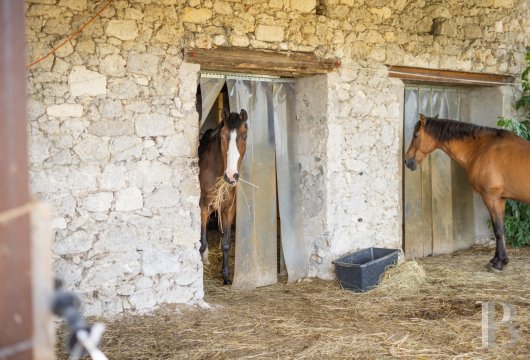
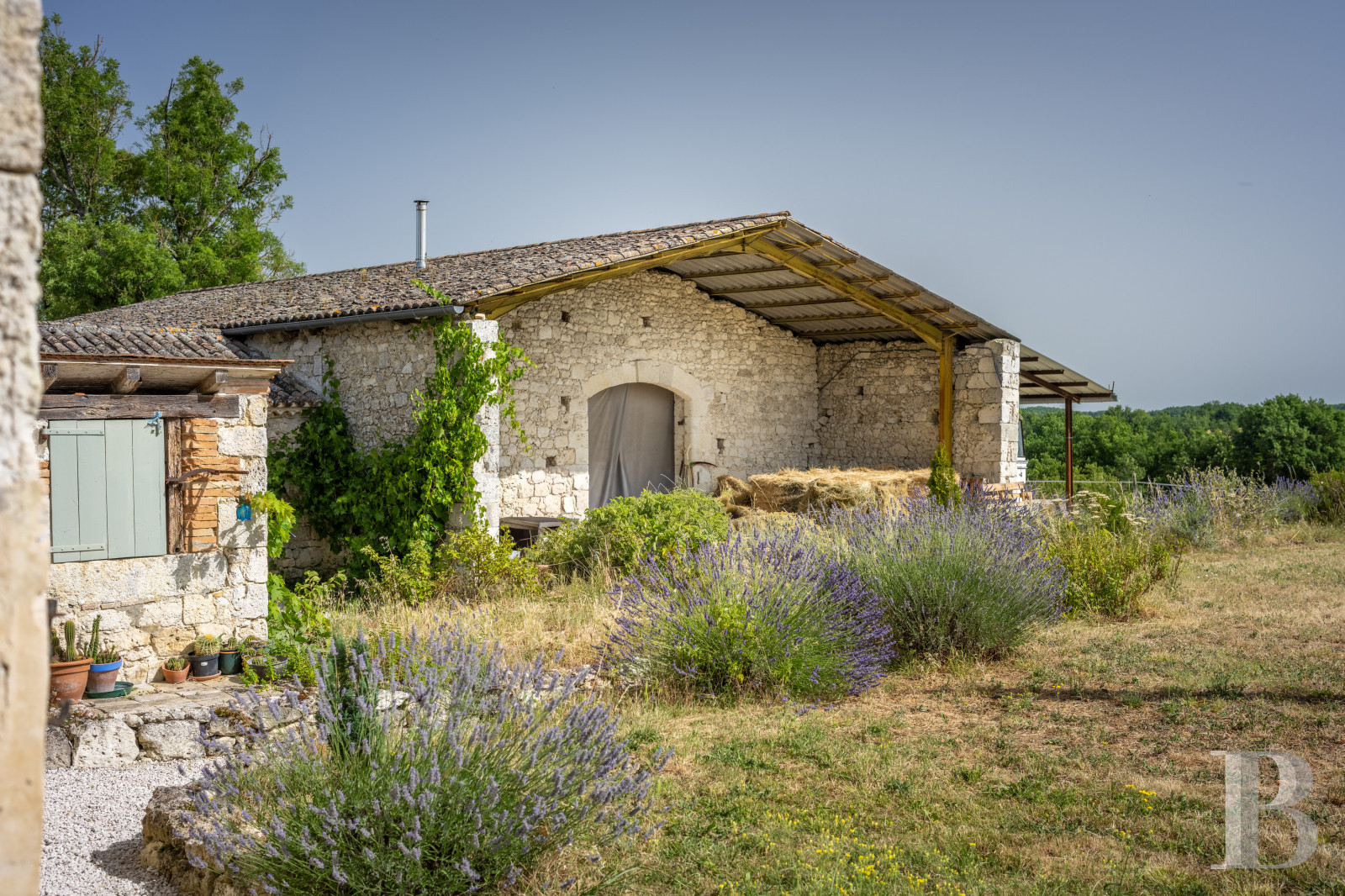
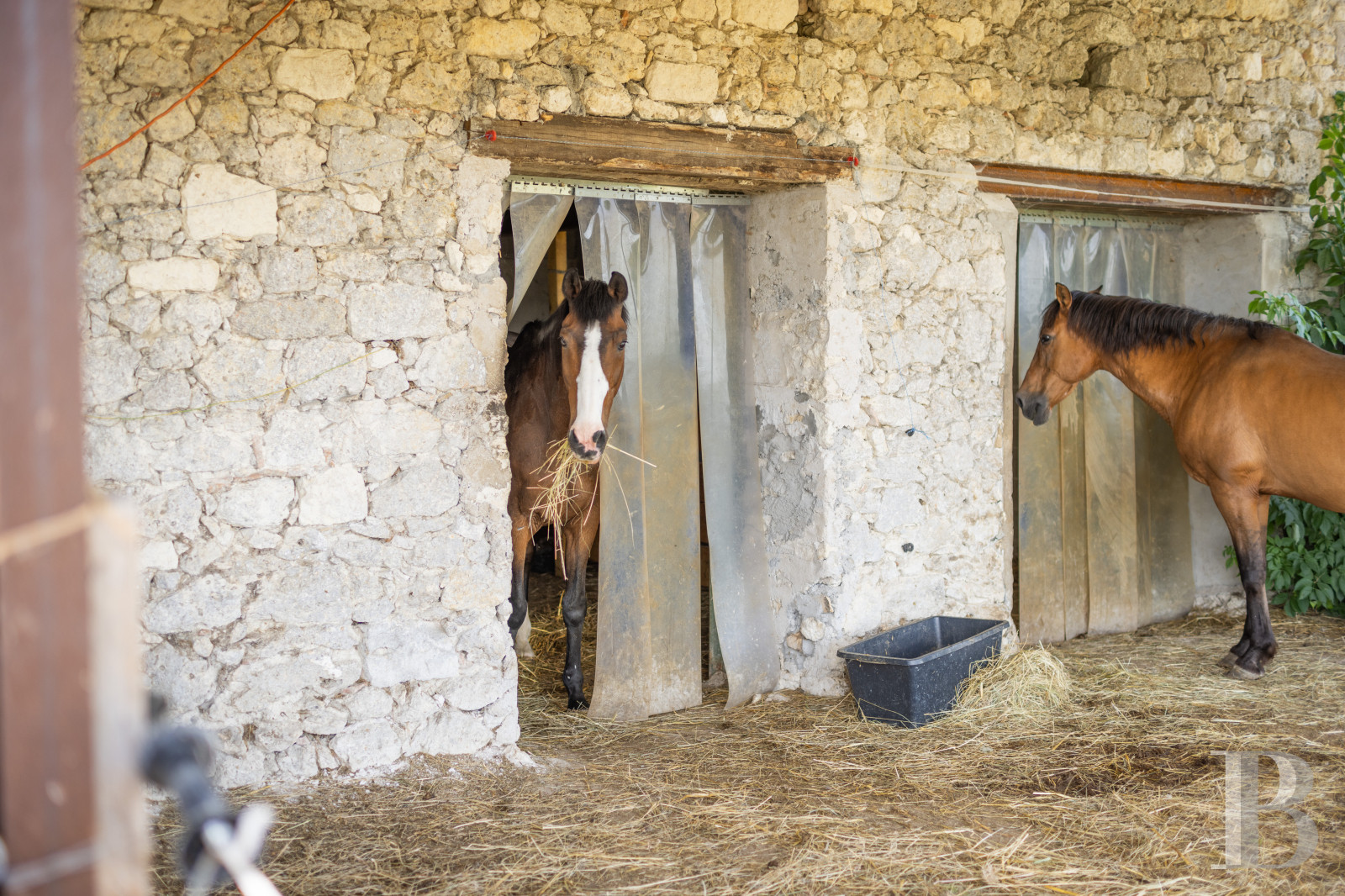
Beside the guesthouse there is a large barn. It is made of stone and crowned with a roof of barrel tiles. Part of its roof extends beyond the entrance, forming a sheltered space. Inside, there is a large storeroom in the middle. Equipment can be stored here. Another space, extended with a workshop, can be used to store smaller items of equipment. A technical installations room houses the swimming pool machinery and a silo of pellets used to heat up the property. Beyond this room, there are two large looseboxes beneath the same roof. They are made of wood and each one leads out into the grounds. The whole building is practical and widely open to its surroundings.
The bus
An old vehicle from the 1970s has been converted into a dwelling, yet its original structure has been preserved. Today, this vehicle is no longer driven. The barn roof shelters it. Inside the converted vehicle, there is a bedroom, a bathroom to be renovated and a lounge with a kitchenette. The whole dwelling needs to be freshened up, but it already has the connecting inlets required for day-to-day living.
The garden and swimming pool
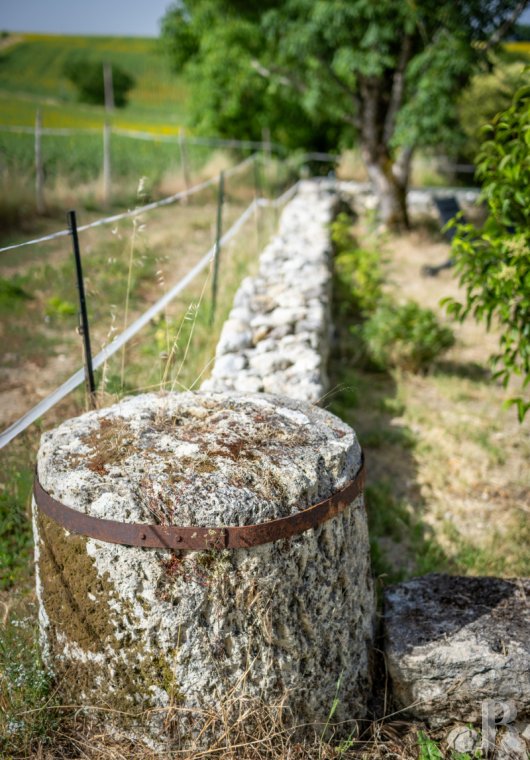
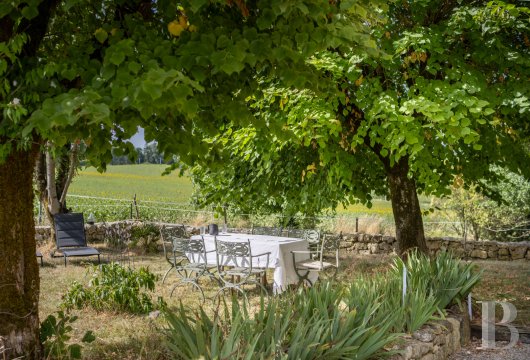
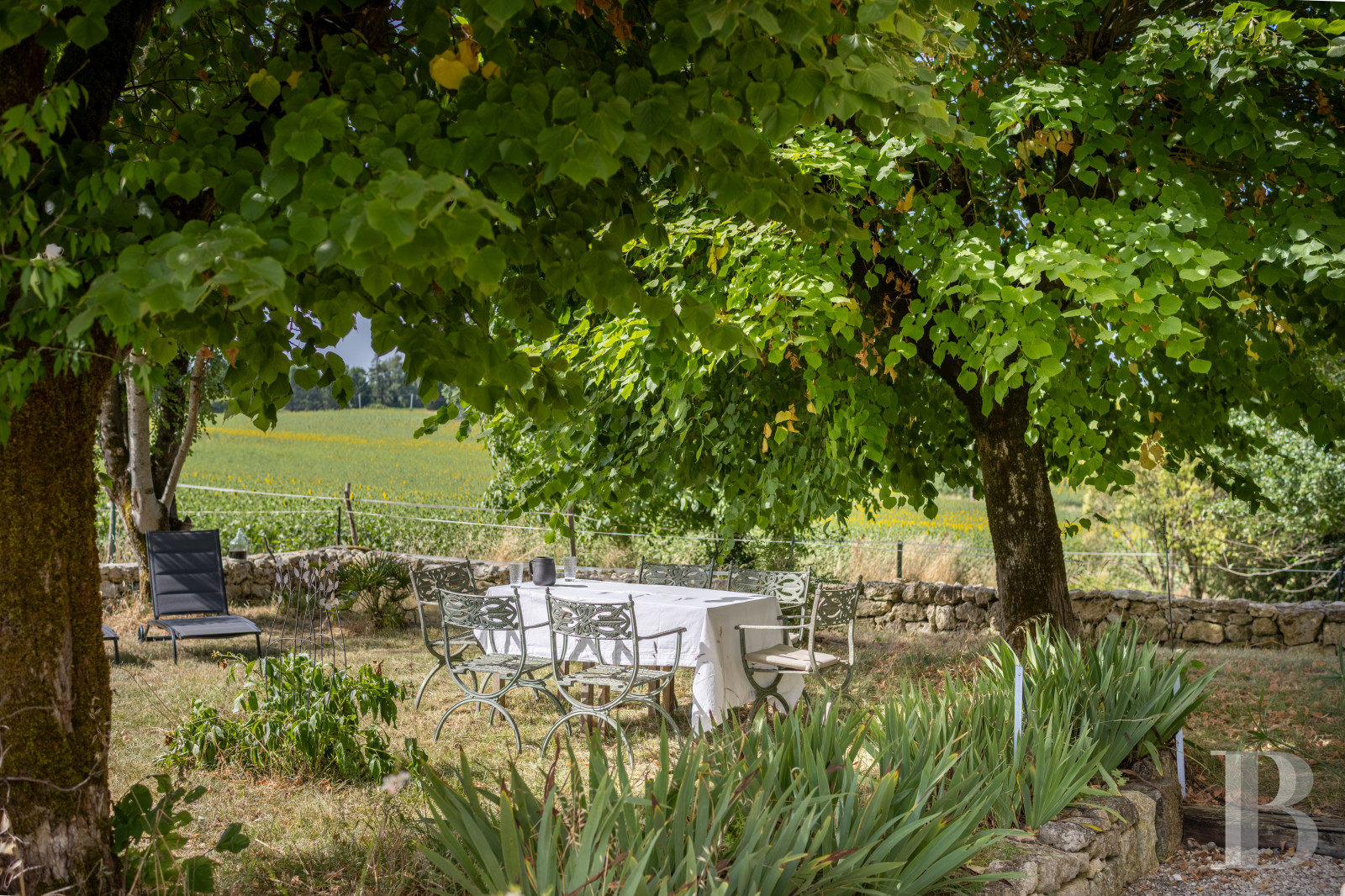
The garden covers around 8,000m² and extends around the buildings as a large open meadow with slight relief. It is dotted with a few trees, mainly deciduous ones. The main house, the guesthouse and the barn form a small collection of buildings at the edge of the hamlet, each with their terrace and garden. All around the garden, the views stretch far and wide into the surrounding countryside. The swimming pool is set in the lawn, beside the main house. Towards the barn, the land is more open and naturally lends itself to horse keeping. Indeed, two looseboxes lead straight outside here. The whole garden has kept a simple, open appearance that is typical of country gardens in France’s Quercy province. You also have the option of acquiring one extra hectare of land in front of the main house.
Our opinion
In this corner of France’s beautiful Quercy province, gently undulating landscapes form a patchwork of small valleys, meadows and farmland edged with woods. This bucolic backdrop is bathed in enchanting natural light. The delightful property blends into this environment harmoniously. From its windows, your gaze is drawn across the relief of the land up to tree-lined horizons. The renovation of the house was carried out with special attention to the materials: stone, lime coating, timber and terracotta have been preserved or used without ostentation. The guesthouse and barn extend this fine balance. With the main house, they form a simple, coherent group of buildings. Nothing here is showy. Yet the harmony between the landscape, the old architecture and the masterful restoration makes the property distinctly welcoming and profoundly peaceful. Indeed, in this unique haven you feel naturally, lastingly contented.
Reference 364579
| Main building floor area | 340 m² |
| Outbuildings floor area | 200 m² |
| including refurbished area | 60 m² |
| Land registry surface area | 8324 m² |
French Energy Performance Diagnosis
Information on the risks to which this property is exposed is available on the website: www.georisques.gouv.fr
Share


NB: The above information is not only the result of our visit to the property; it is also based on information provided by the current owner. It is by no means comprehensive or strictly accurate especially where surface areas and construction dates are concerned. We cannot, therefore, be held liable for any misrepresentation.