



A 1904 hydrotherapy centre converted as a family residence in parkland,
at the foot of the Vercors Mounts, 30 minutes from Valence’s TGV train station
at the foot of the Vercors Mounts, 30 minutes from Valence’s TGV train station
Barcelonne,
DROME
rhones-alps
26120
FR

Location
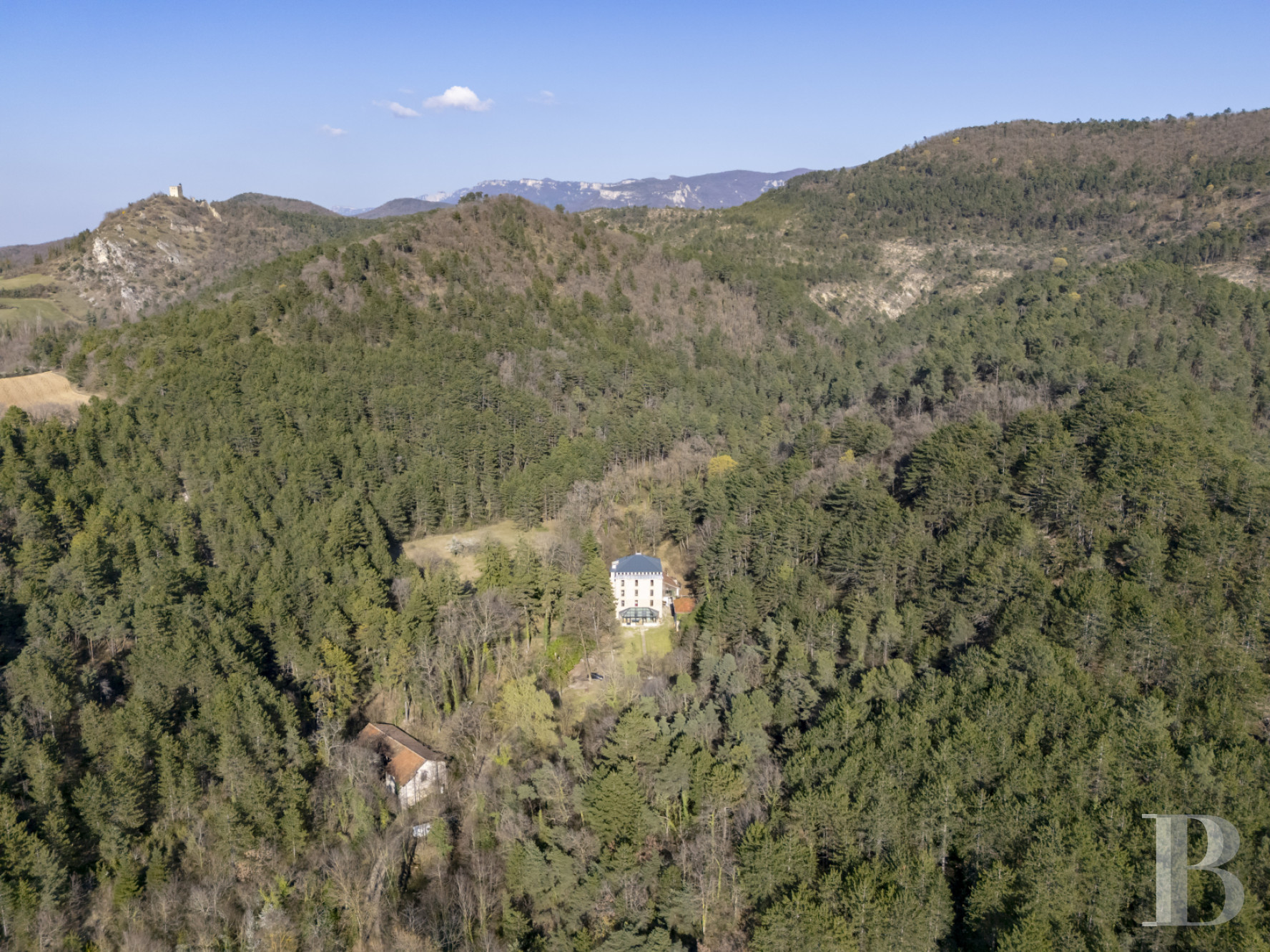
This estate is far from any urban hustle and bustle, in the heart of a peaceful environment, at the foot of the Vercors Mountains, between the centre and west of the Drôme area, in the southern part of the Auvergne-Rhône-Alpes region. This former hydrotherapy centre built at the beginning of the 20th century still bears the mark of its history. The water from the Beaugaris spring, which was key in determining the property’s location, was extracted there and distributed to schools, barracks and shops in the surrounding area.
The estate combines accessibility with discretion and is located around 20 minutes from the high-speed TGV train station in Valence. It is also near to motorways linking Paris to Marseille and Valence to Grenoble as well as Geneva. Furthermore, it is near to the Vercors and Monts d’Ardèche regional natural parks.
Description
The Beaugaris site has been renowned since antiquity, with its reputation forged by the ‘Roman’ spring.
At the beginning of the 20th century, Dr. Riory had a hydrotherapy centre built on the site of the mineral water spring and a hotel was built in 1904.
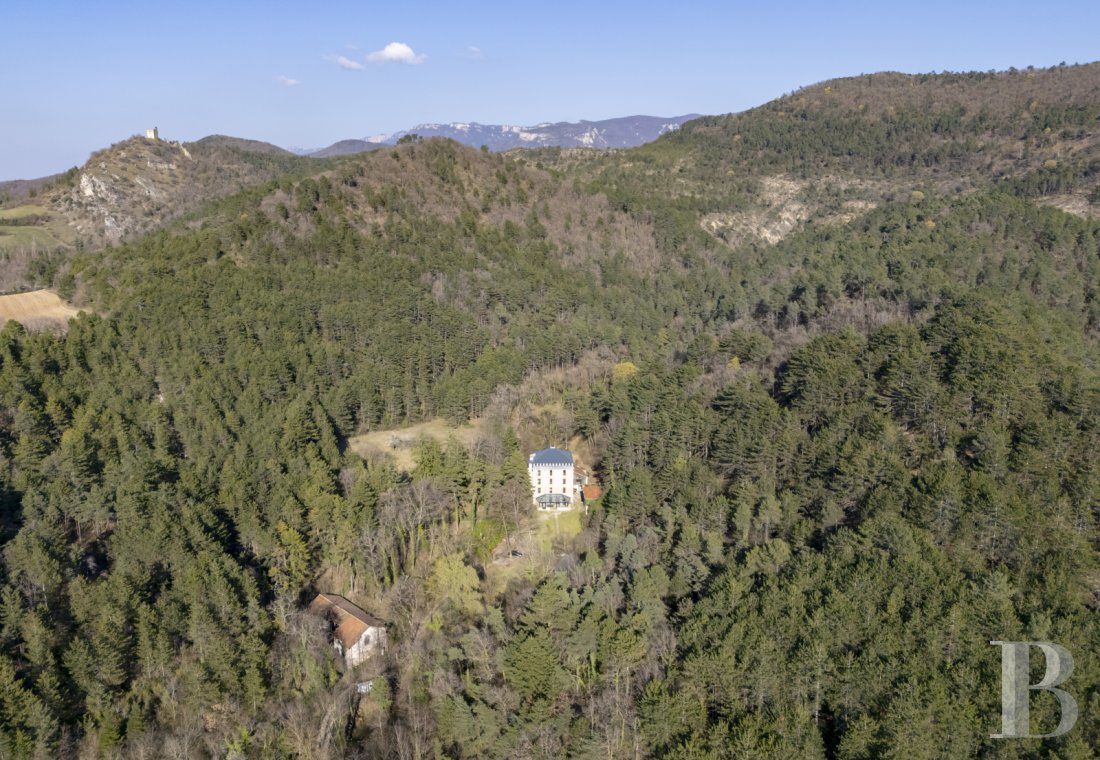
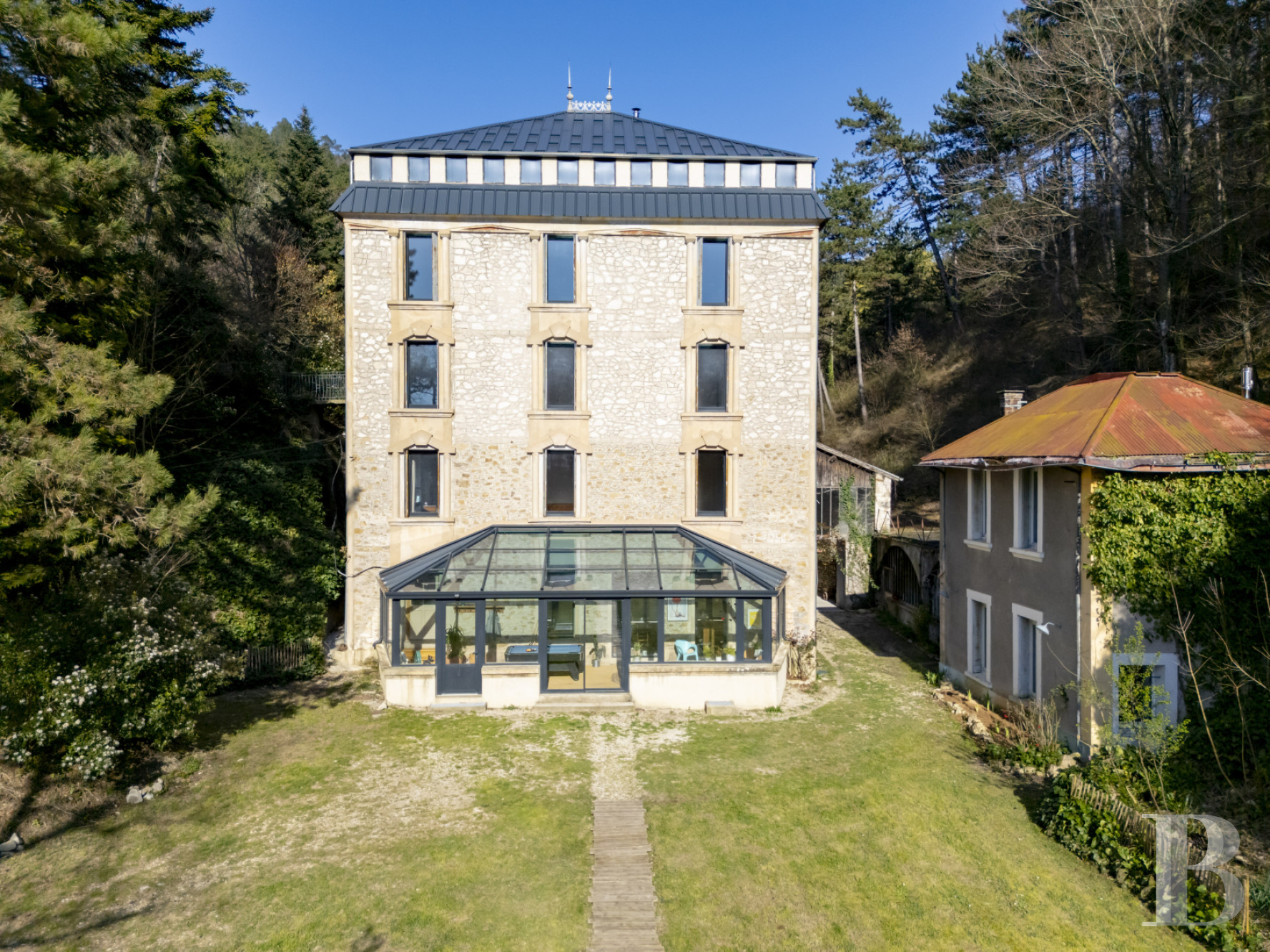
The property, which stretches over 10 hectares and includes two springs as well as four outbuildings, can be reached via a blue-painted metal gate at the end of a no-through road. After the estate’s former stables, a second wrought-iron gate leads to other constructions, some of which are habitable and others not: the vaulted edifice housing the source, the former hotel which is now a house, a pavilion and a barn, all of which are adjoined. The sober facades of the various buildings are made of rubble stone and pointed ashlar, or in rendered concrete. Their gabled or hipped roofs are made of terracotta tiles or sheet metal.
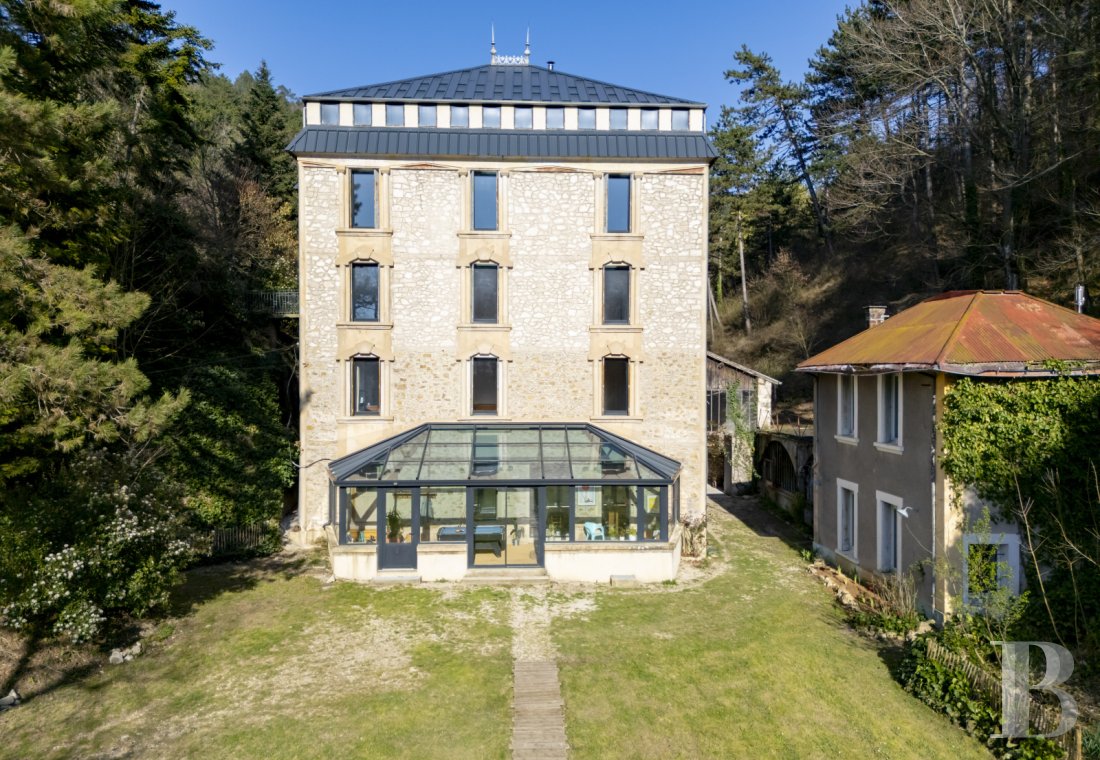
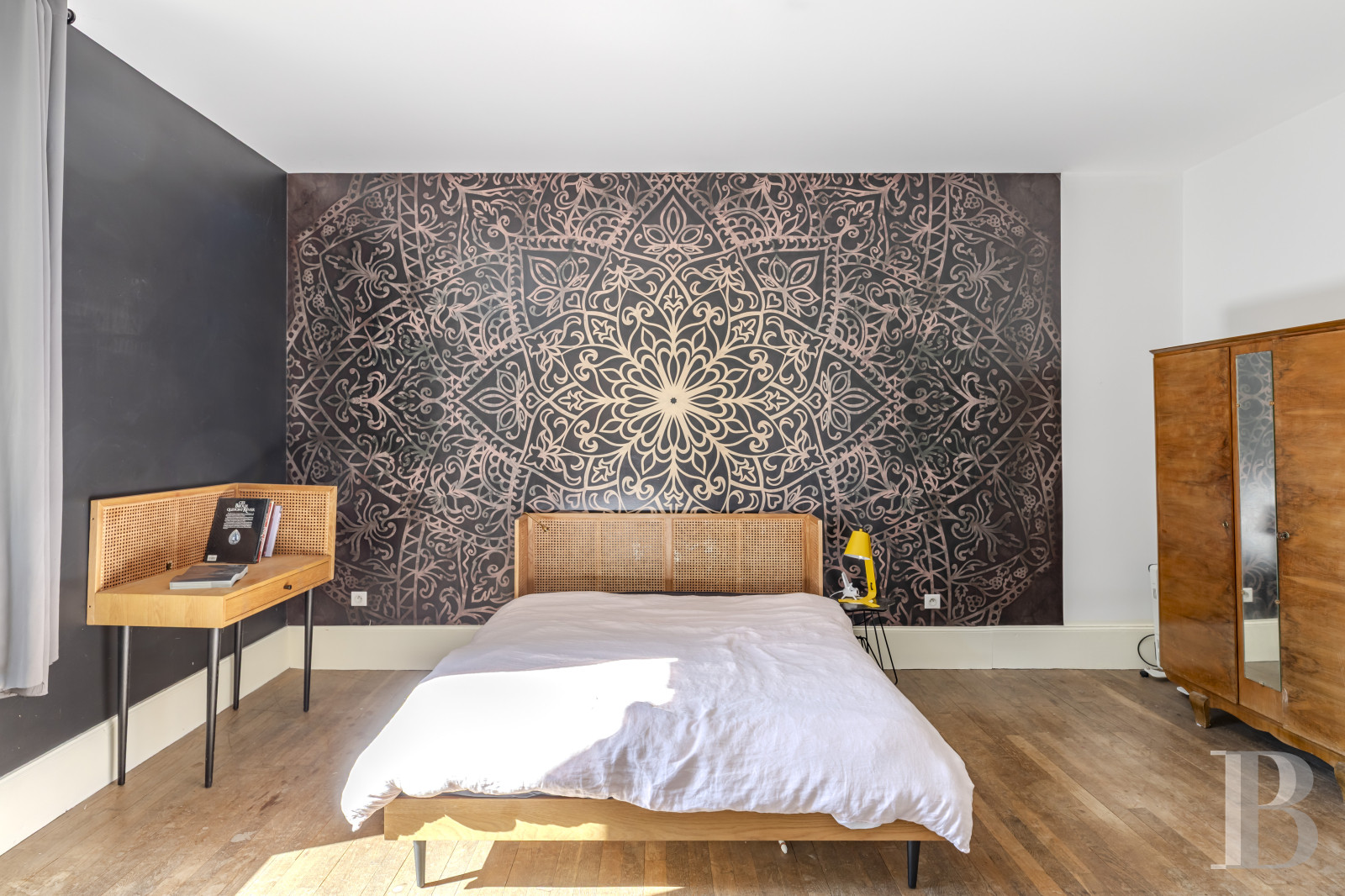
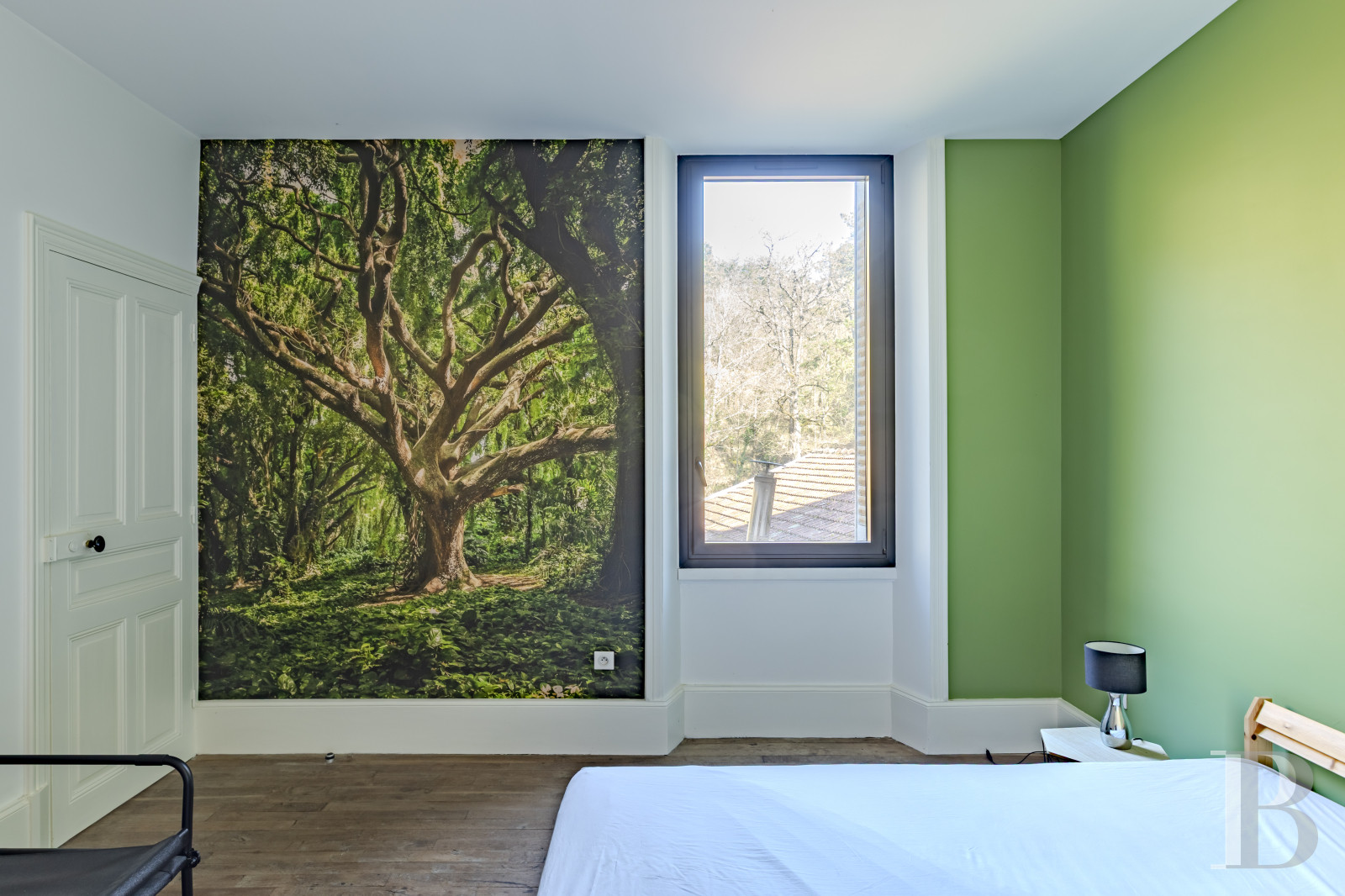
The rectangular main edifice faces south and has a surface of approximately 460 m² spread over five levels, almost all of which have been renovated, with a modern around 30-m² veranda, convertible attic space and ventilated cellars. The house contains twelve spacious bedrooms and four bathrooms or shower rooms. There is a separate apartment on the third floor whose renovation requires completion.
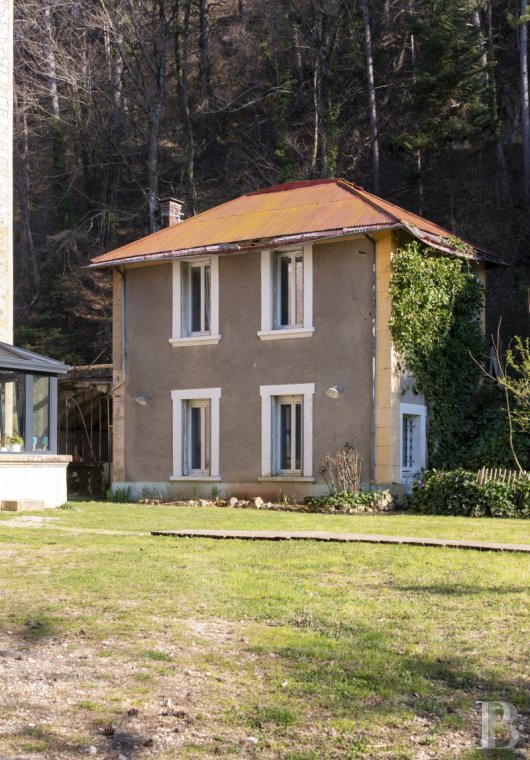
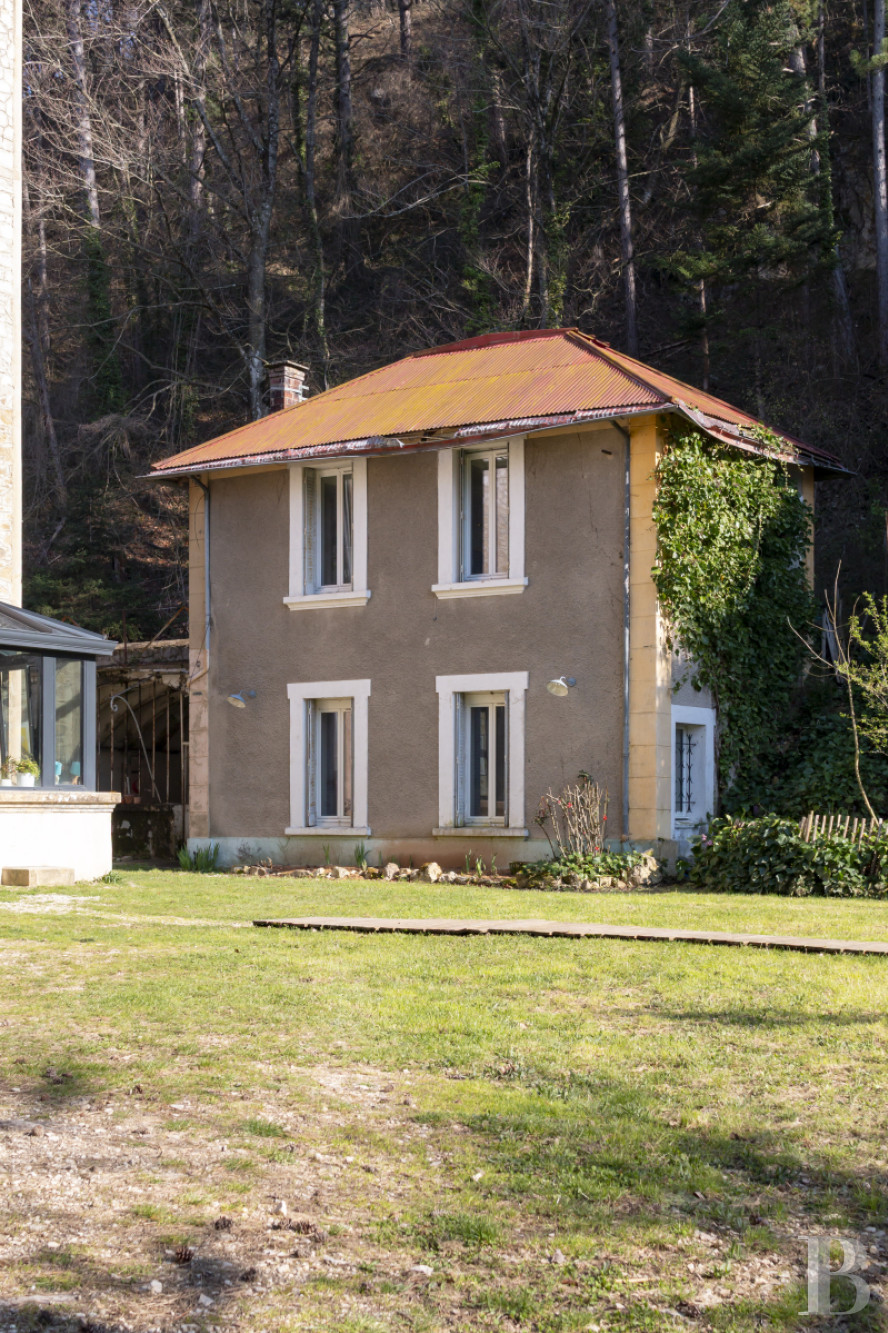
The separate pavilion, built near to a corner of the main house, has a surface of approximately 65 m², has been restored and boasts a terrace. It is made up of a living room, a bedroom, a bathroom as well as a kitchen area and could be suitable as a winter apartment.
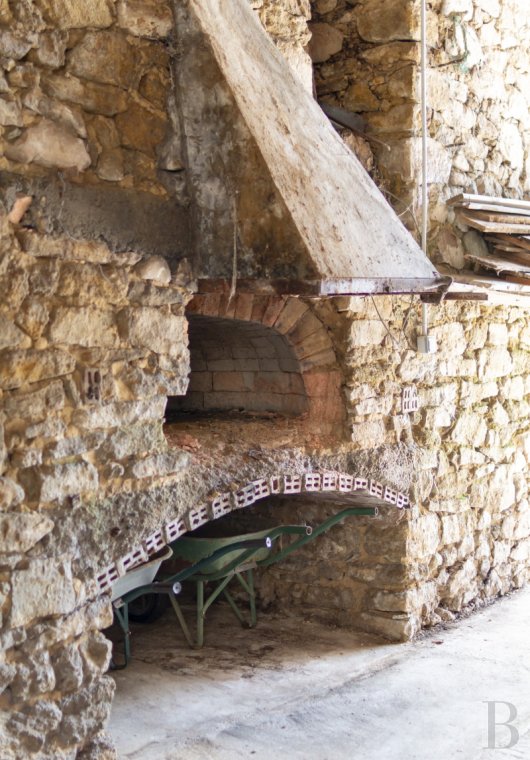
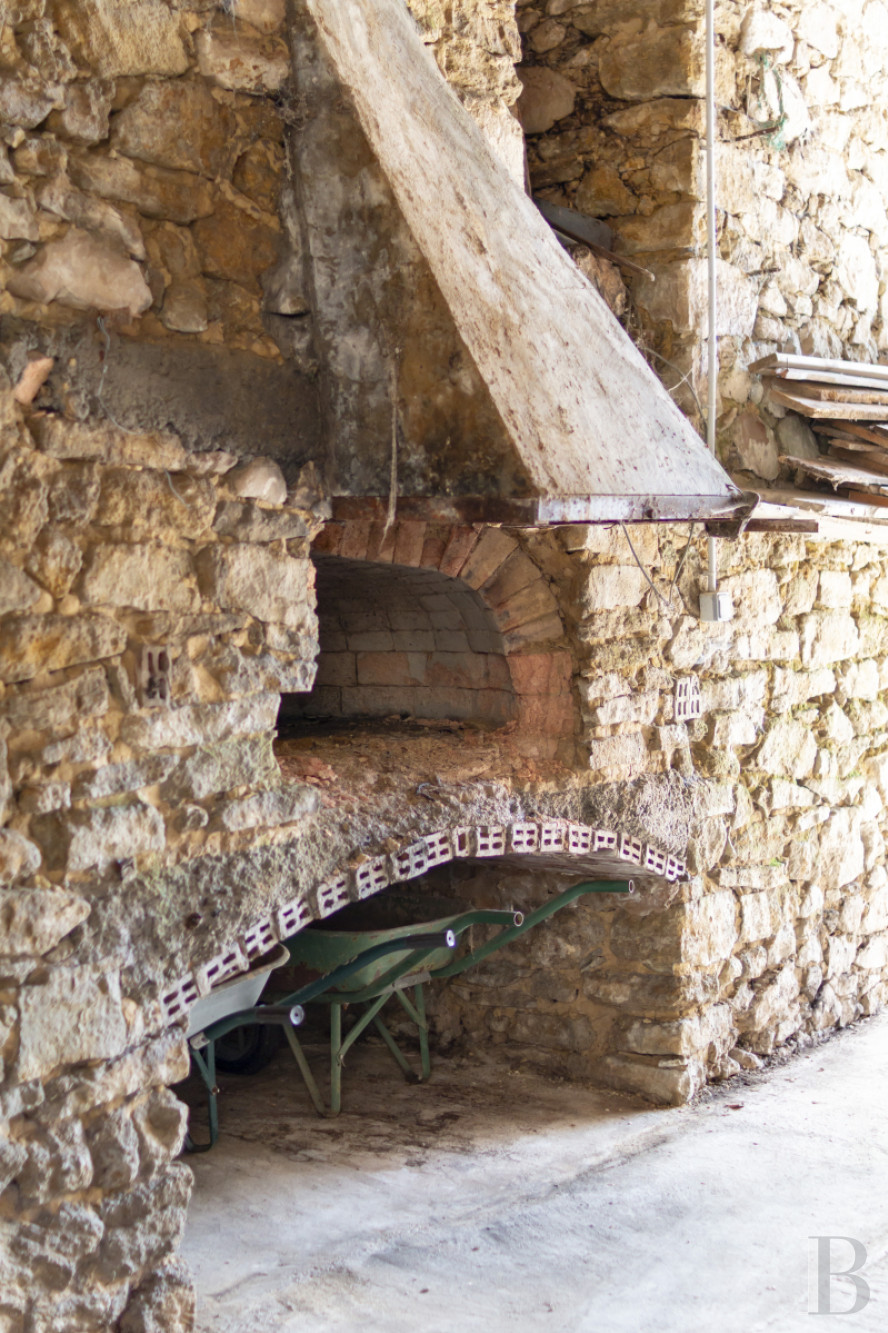
Not far away, the approximately 150-m² barn standing behind the main dwelling houses a bread oven and could be used for hosting receptions or conferences.
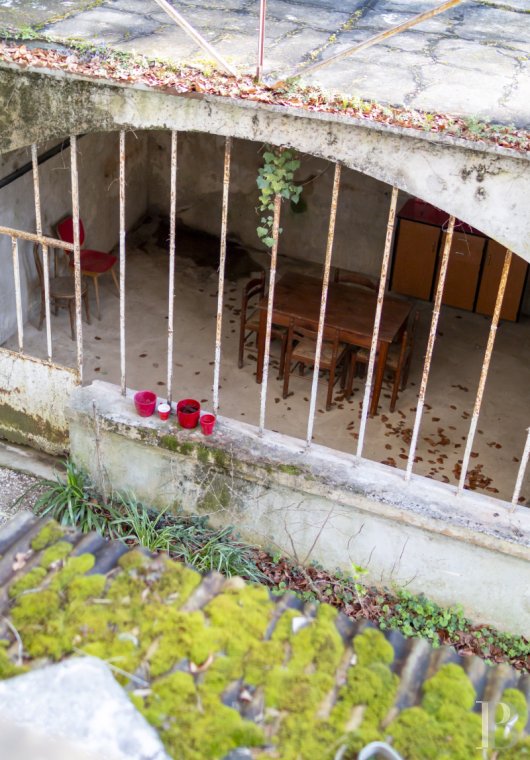
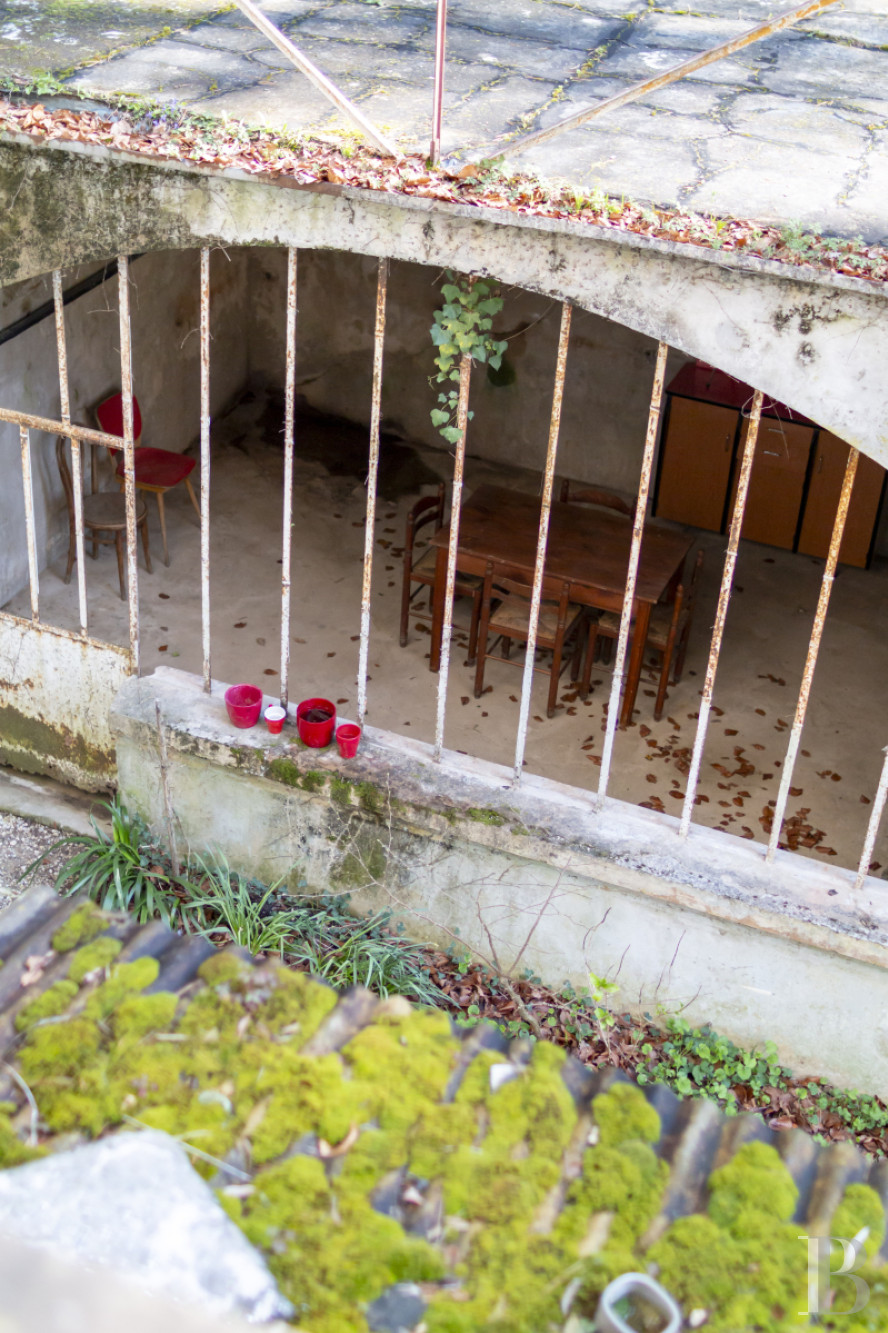
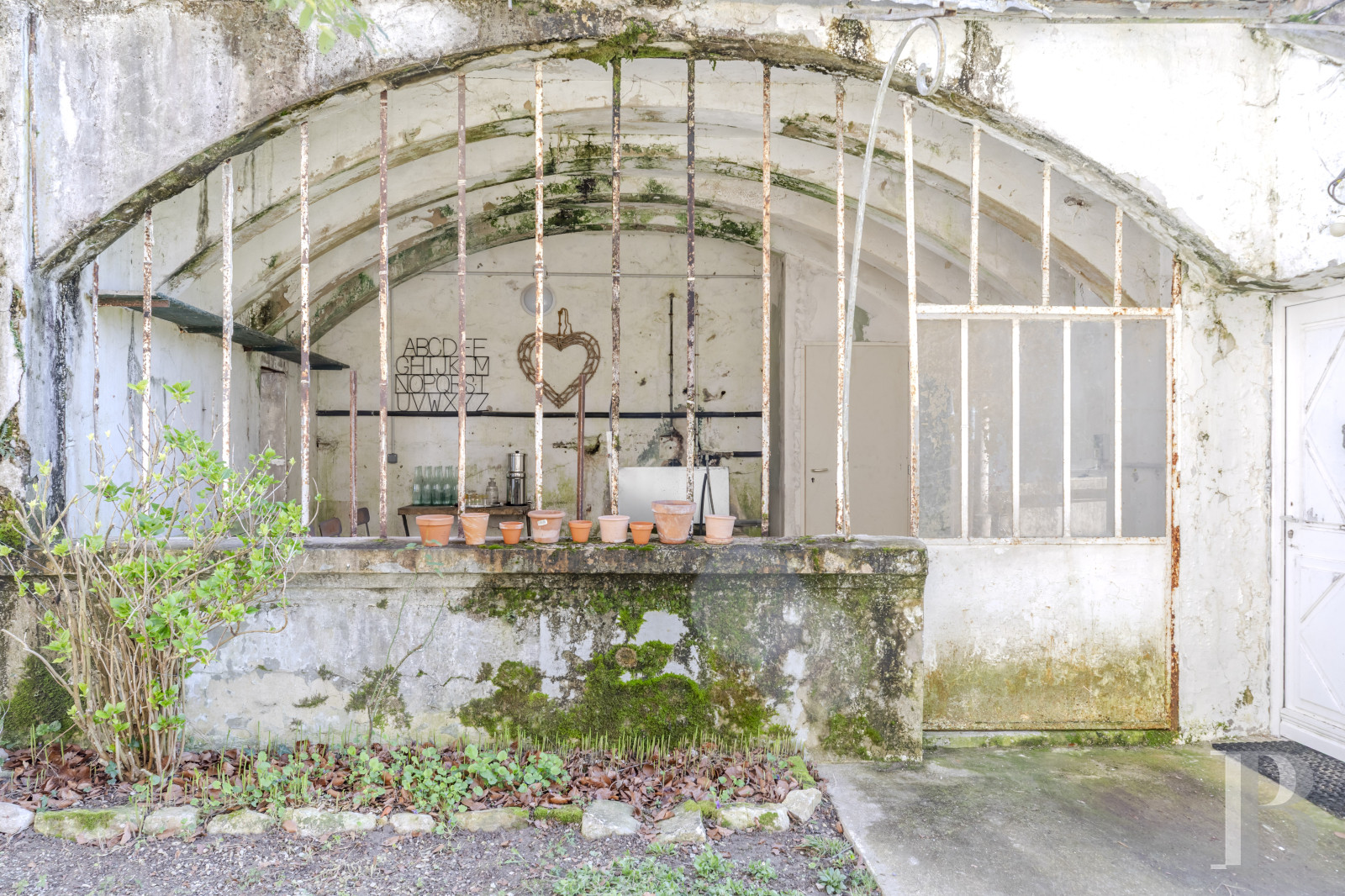
Beneath the terrace adjoining the pavilion, the around 30-m² vaulted building housing the thermal spring could be transformed into a winter lounge.
Lastly, the approximately 100-m² building that was originally the stables could be transformed into accommodation amongst other possibilities.
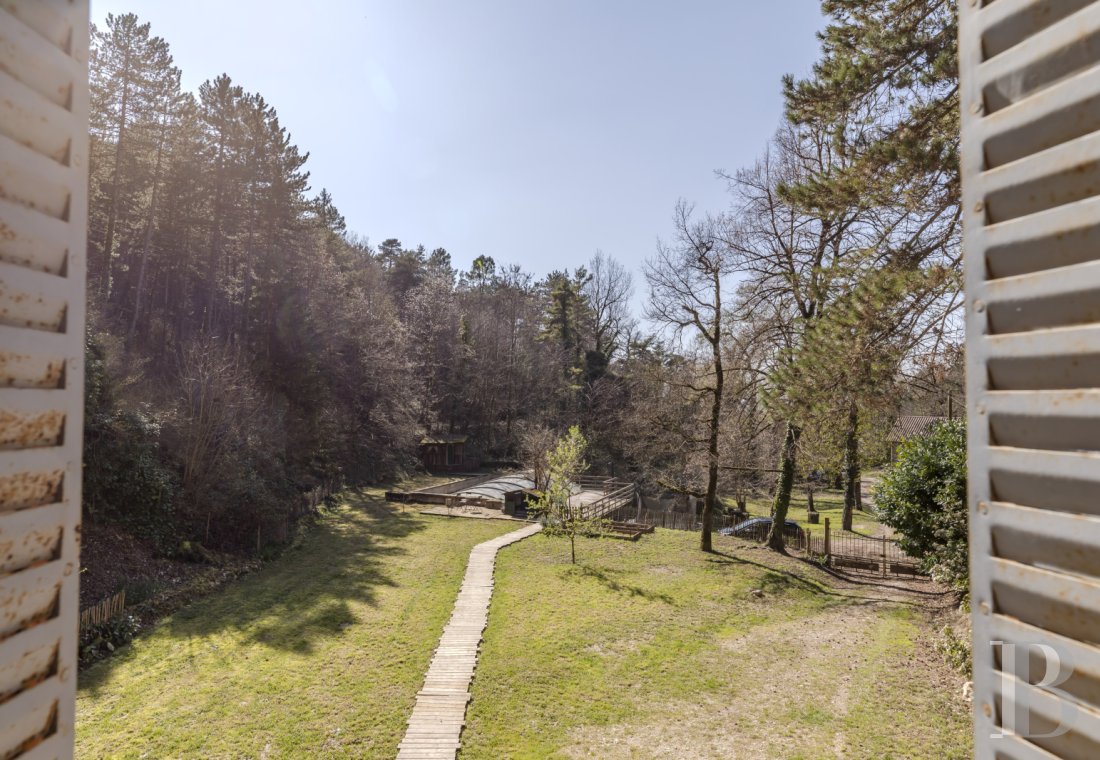
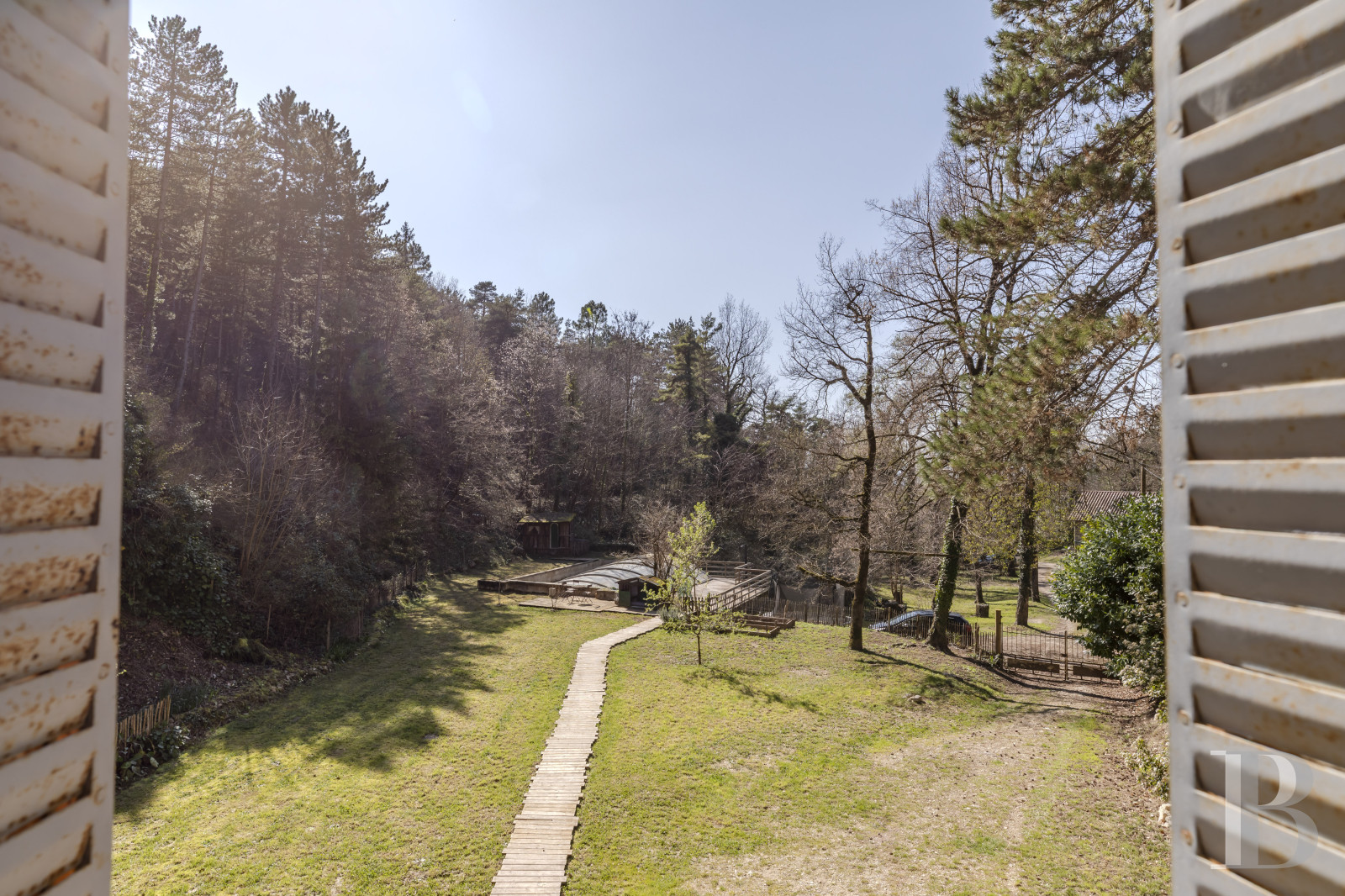
The estate also possesses a former spring water collection pond that has today been transformed into a 11-metre by 5-metre swimming pool with a sliding cover and panoramic decking.
The main house, pavilion and pool have been renovated in the last five years by the current occupants.
At the beginning of the 20th century, Dr. Riory had a hydrotherapy centre built on the site of the mineral water spring and a hotel was built in 1904.
The property, which stretches over 10 hectares and includes two springs as well as four outbuildings, can be reached via a blue-painted metal gate at the end of a no-through road. After the estate’s former stables, a second wrought-iron gate leads to other constructions, some of which are habitable and others not: the vaulted edifice housing the source, the former hotel which is now a house, a pavilion and a barn, all of which are adjoined. The sober facades of the various buildings are made of rubble stone and pointed ashlar, or in rendered concrete. Their gabled or hipped roofs are made of terracotta tiles or sheet metal.
The rectangular main edifice faces south and has a surface of approximately 460 m² spread over five levels, almost all of which have been renovated, with a modern around 30-m² veranda, convertible attic space and ventilated cellars. The house contains twelve spacious bedrooms and four bathrooms or shower rooms. There is a separate apartment on the third floor whose renovation requires completion.
The separate pavilion, built near to a corner of the main house, has a surface of approximately 65 m², has been restored and boasts a terrace. It is made up of a living room, a bedroom, a bathroom as well as a kitchen area and could be suitable as a winter apartment.
Not far away, the approximately 150-m² barn standing behind the main dwelling houses a bread oven and could be used for hosting receptions or conferences.
Beneath the terrace adjoining the pavilion, the around 30-m² vaulted building housing the thermal spring could be transformed into a winter lounge.
Lastly, the approximately 100-m² building that was originally the stables could be transformed into accommodation amongst other possibilities.
The estate also possesses a former spring water collection pond that has today been transformed into a 11-metre by 5-metre swimming pool with a sliding cover and panoramic decking.
The main house, pavilion and pool have been renovated in the last five years by the current occupants.
The main house
It was built in 1904 in a style typical of the era’s hydrotherapy centres, designed to welcome people taking the waters, and combines aesthetic refinement with functionality. Its facades are made of rubble stone, while the surrounds of the regularly arranged rectangular windows are made of ashlar. The main, south-facing elevation boasts pilasters and entablatures of simple geometrical formats. The sheet metal hipped roof is topped by two finials and a ridge cap, both made of zinc.
The residence boasts no less than twenty rooms, with a total surface of approximately 460 m² spread over five levels, including one additional level. It has been recently and subtly renovated by renowned craftspeople, in a spirit combining old character and modern comfort.
The basement
This ventilated level can be found beneath the main house and is ideal for storing produce and drinks such as wine.
The garden-level floor
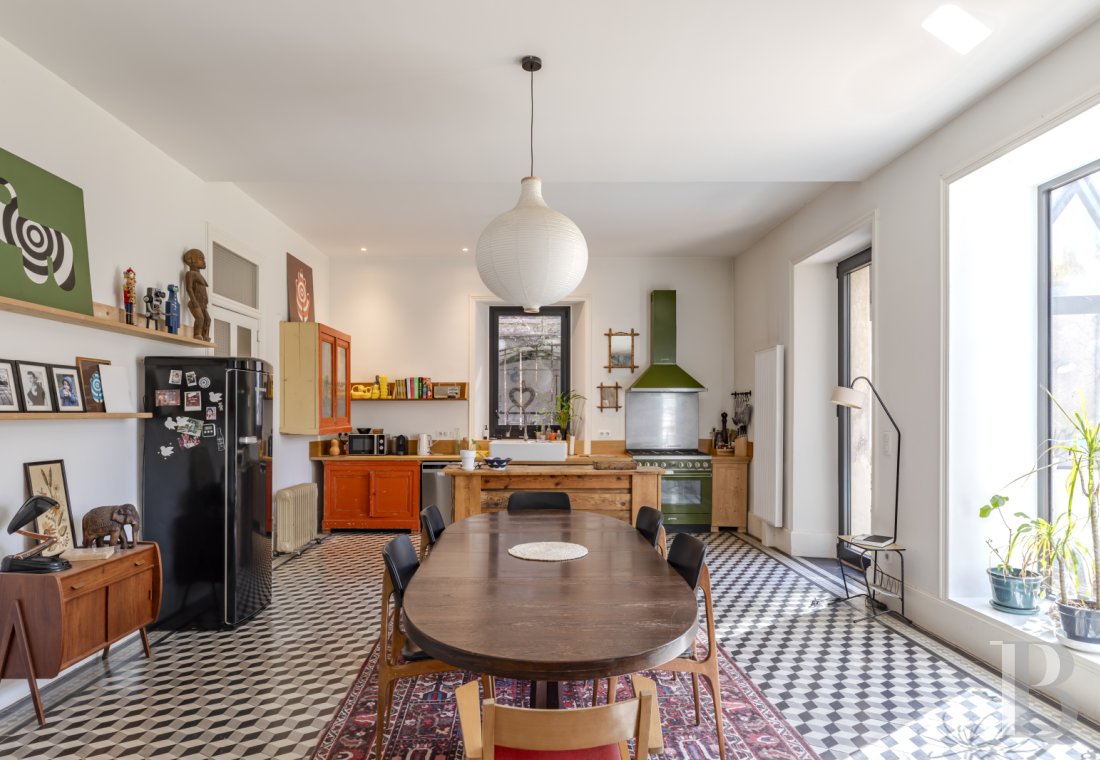
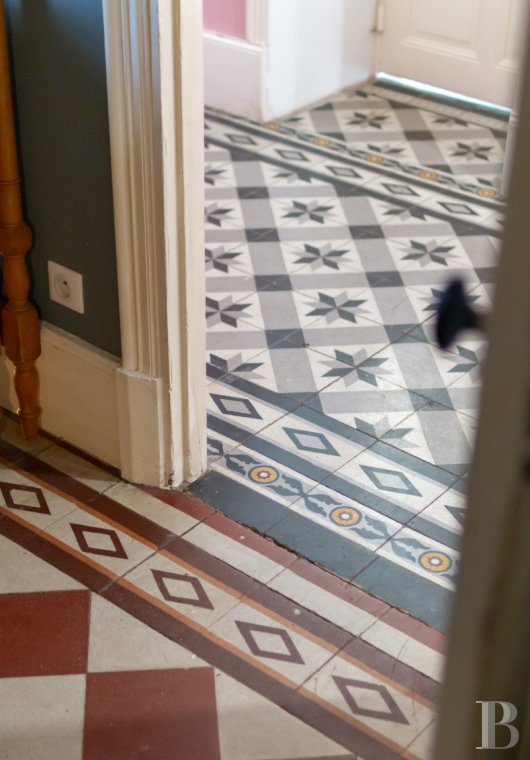
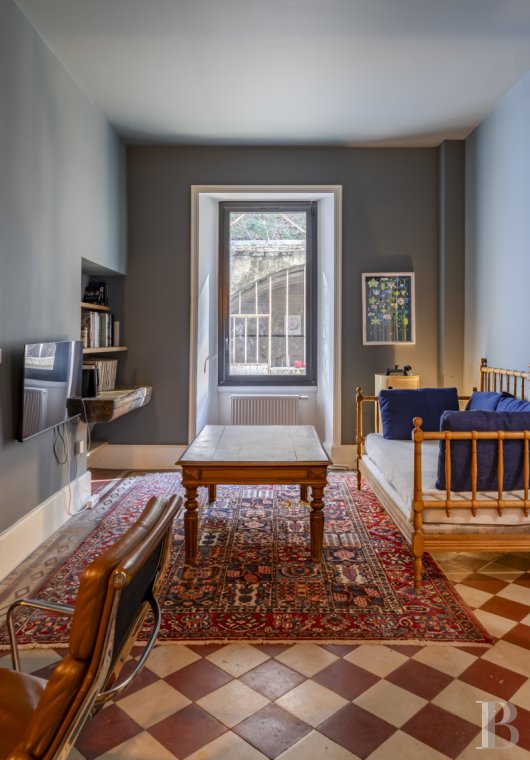
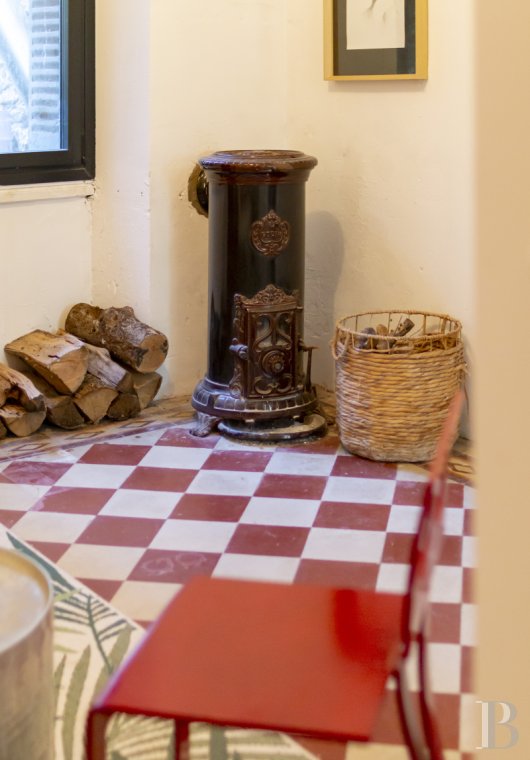
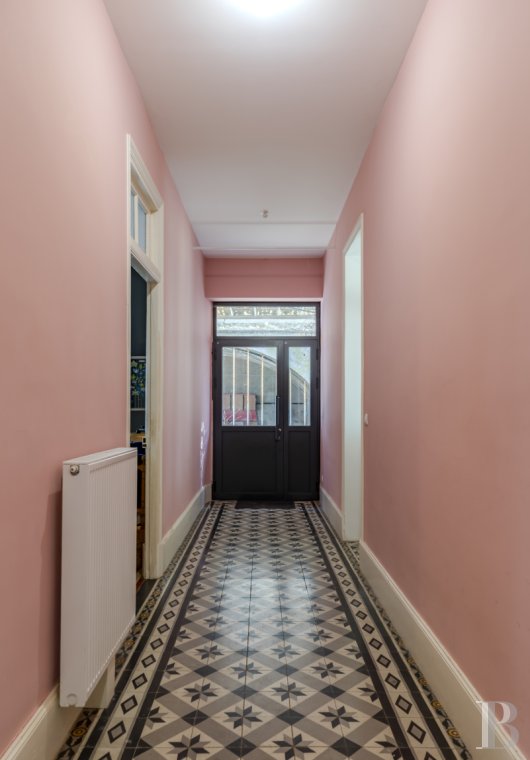
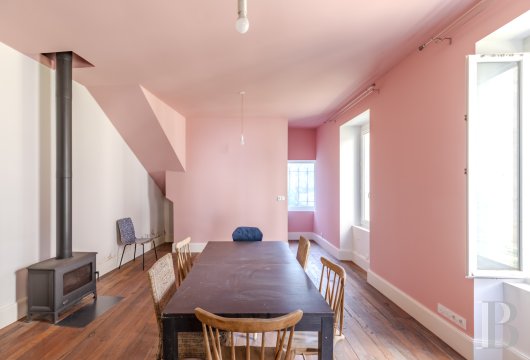
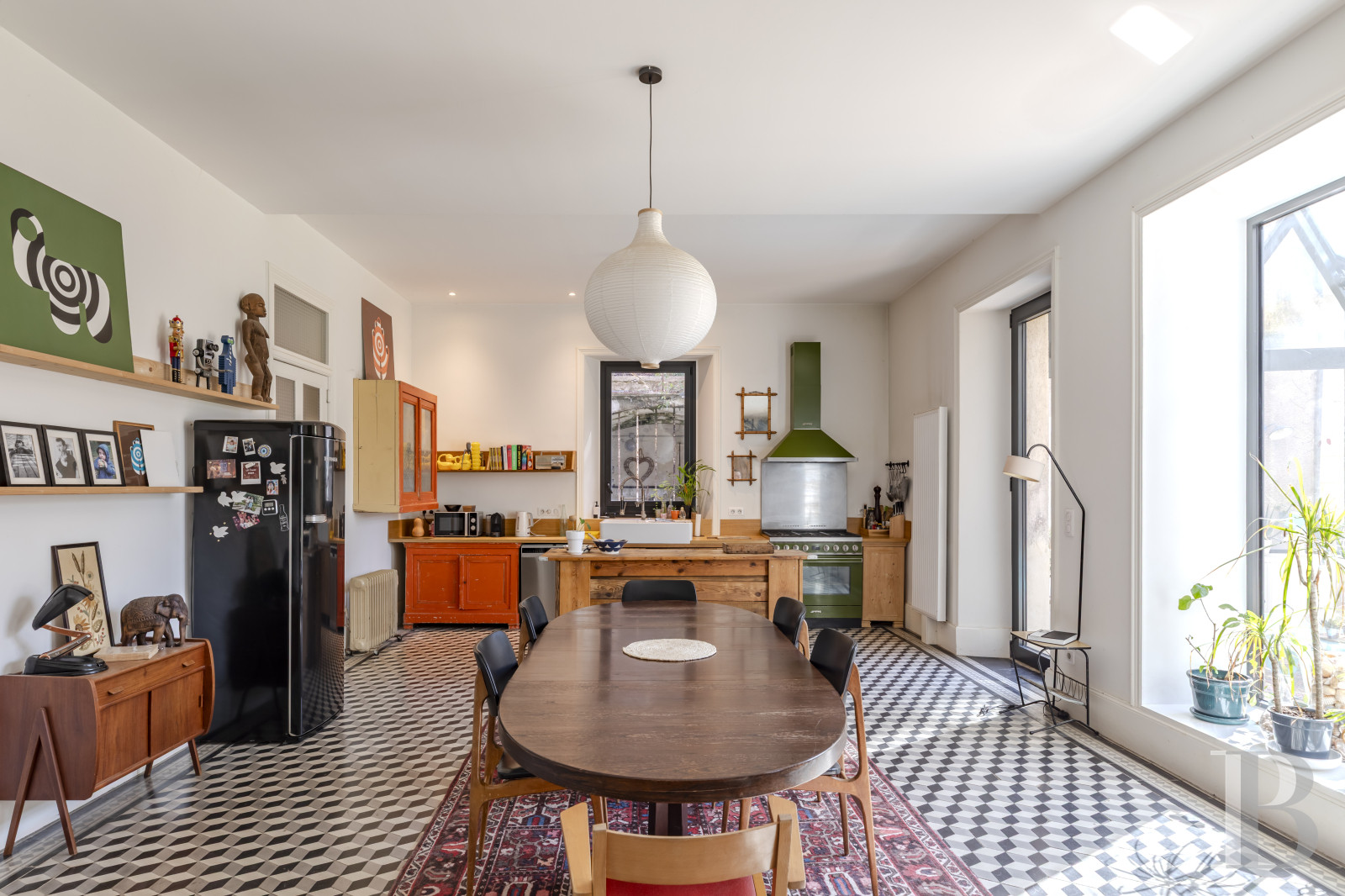
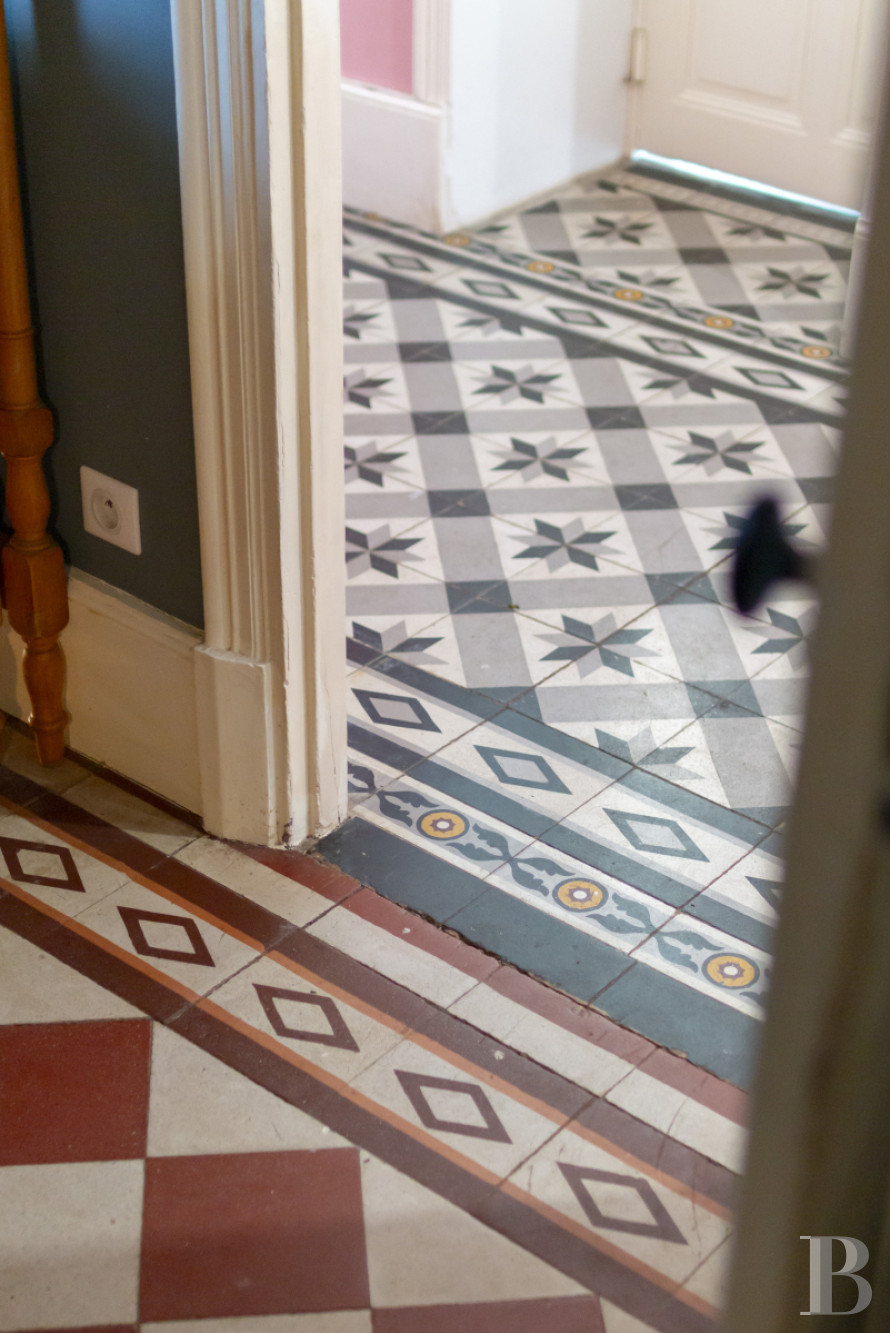
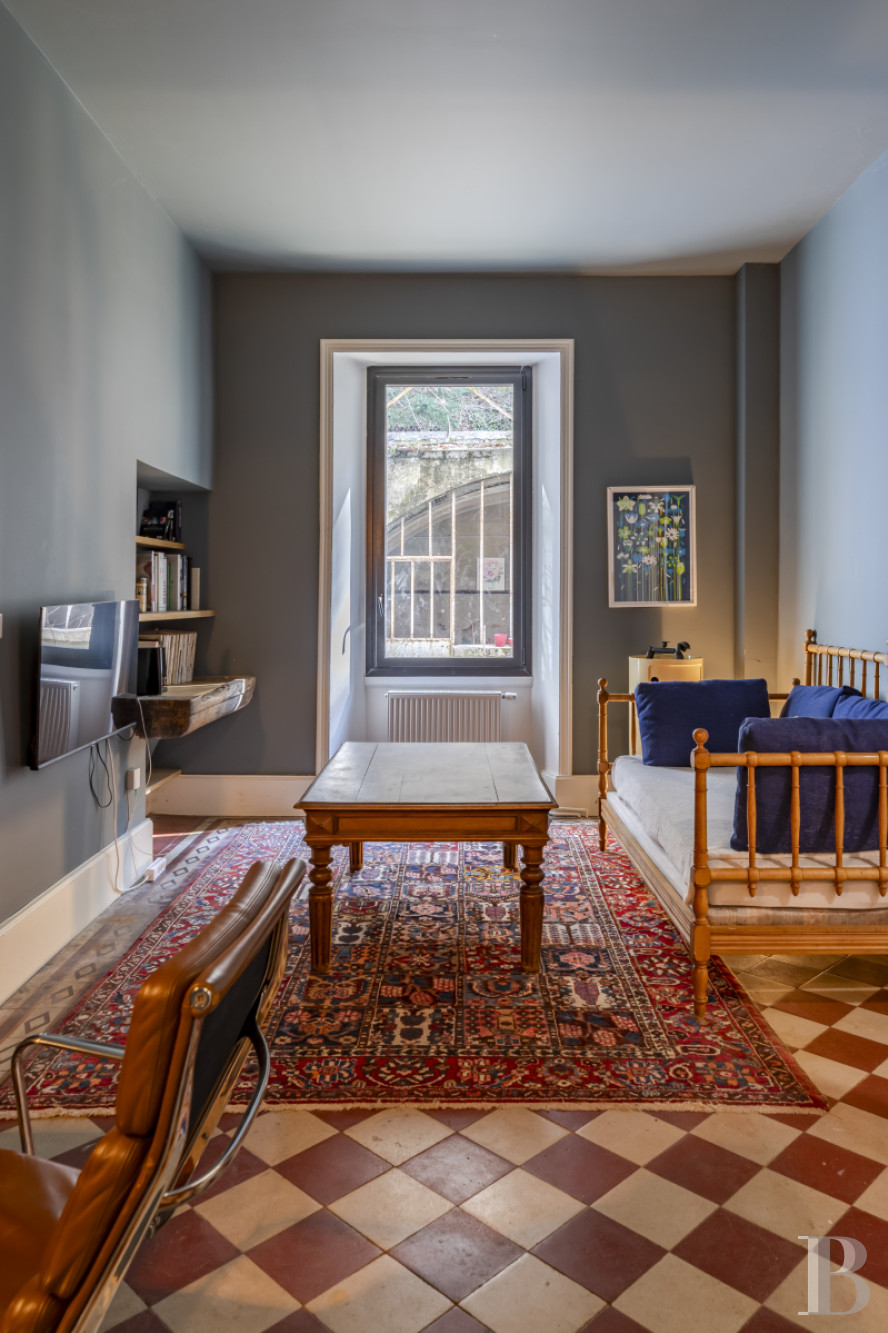
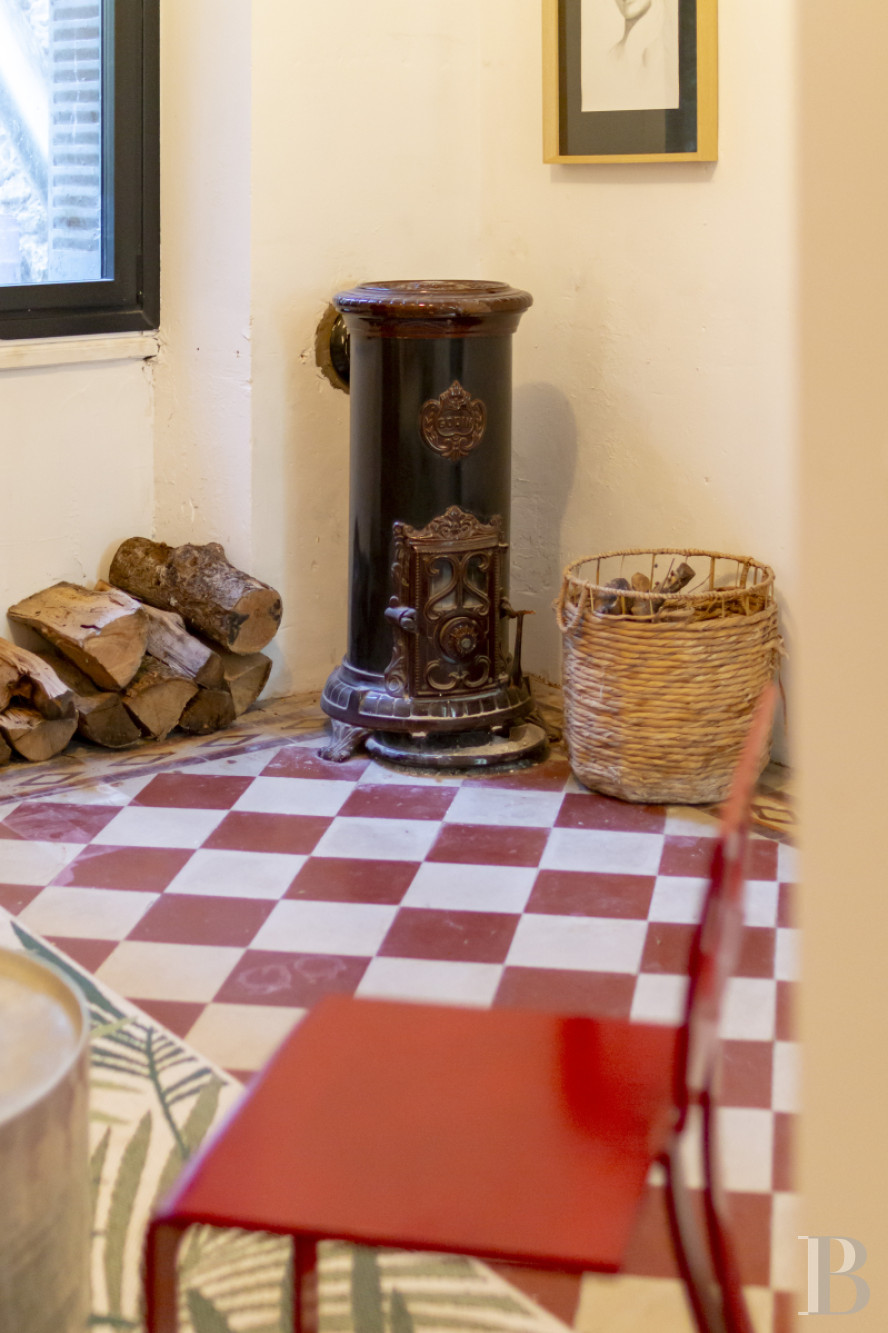
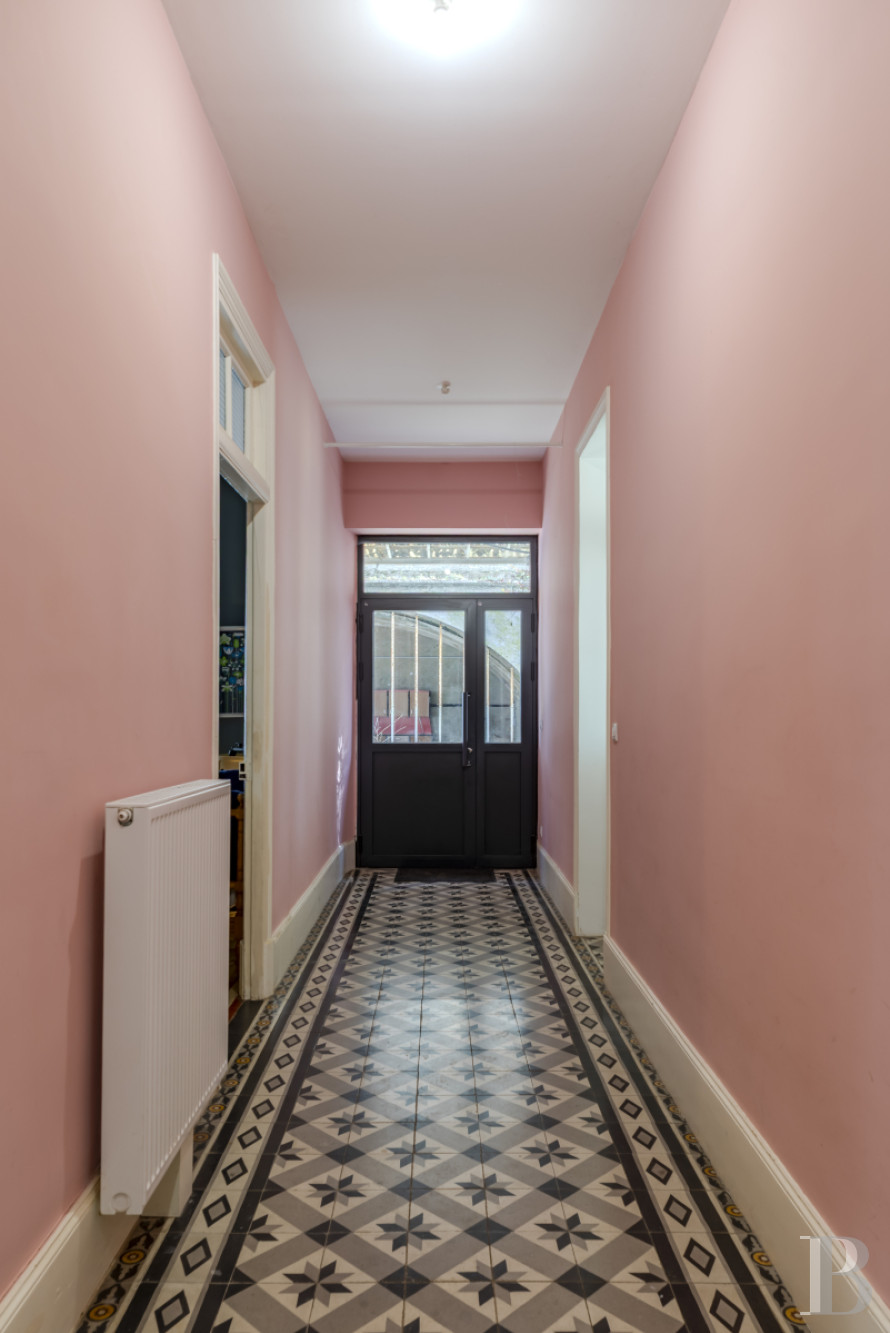
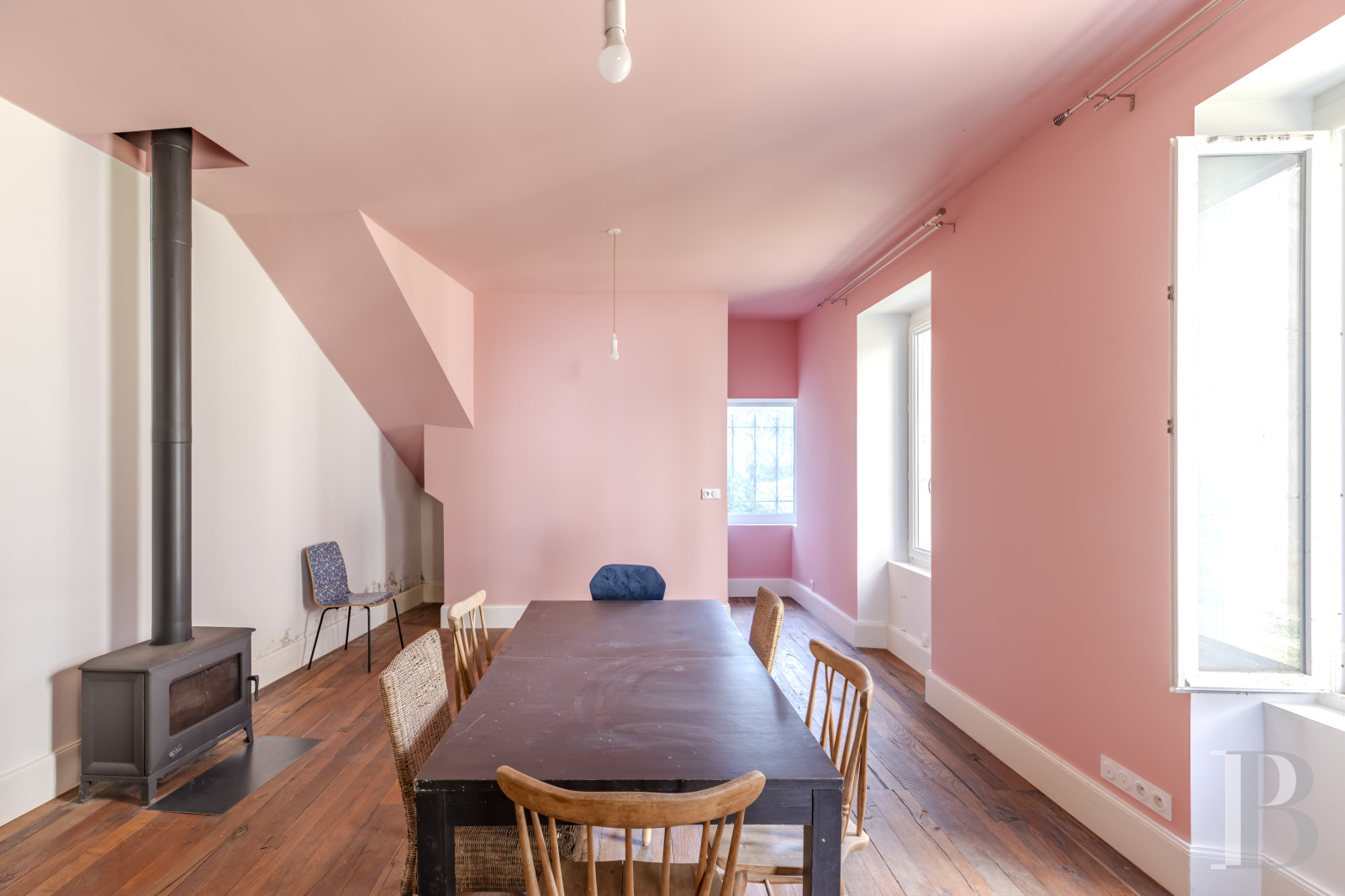
The main entrance is on the right-hand side of the house, even if visitors are more often welcomed through the veranda, which is currently used as a billiards room. A glazed door opens into a vast room combining a dining area and open-plan kitchen. The flooring is made up of Art Deco white, grey and black tiling punctuated by a pole star pattern, on either side of the living room, after which a corridor leads to the entrance door as well as to two lounges, also with varied Art Deco inspired tiling as well as a wood-burning stove for the smaller of the two rooms.
The first floor
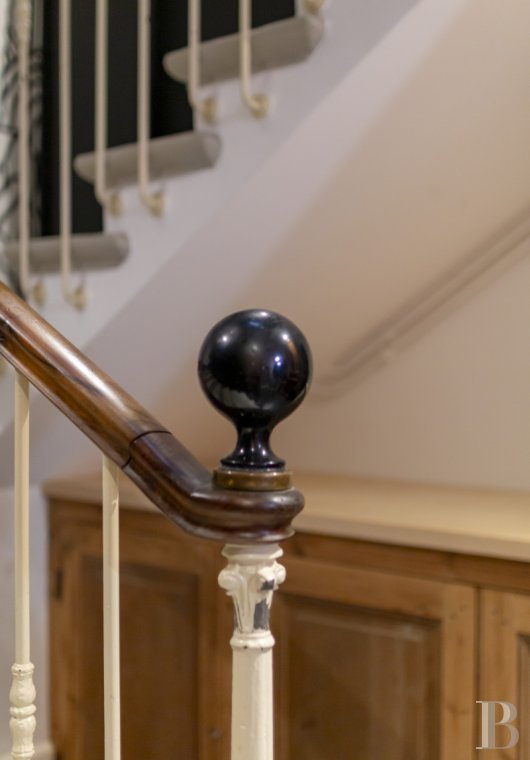
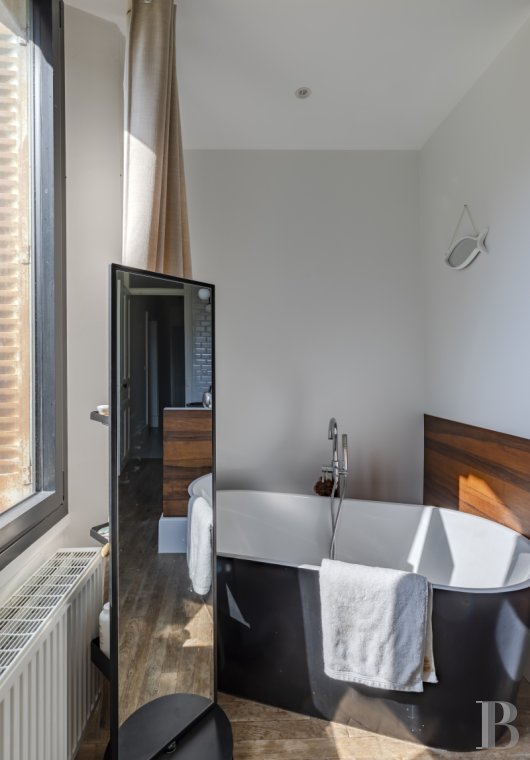
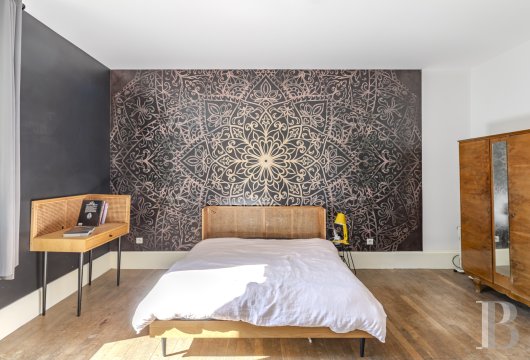
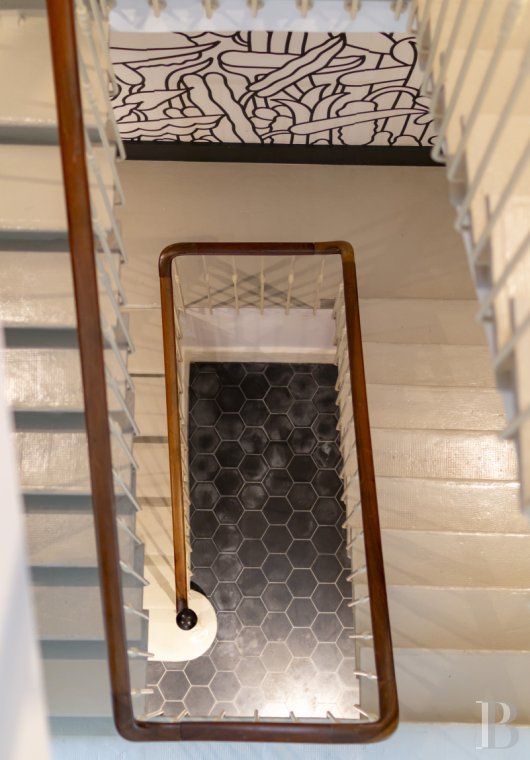
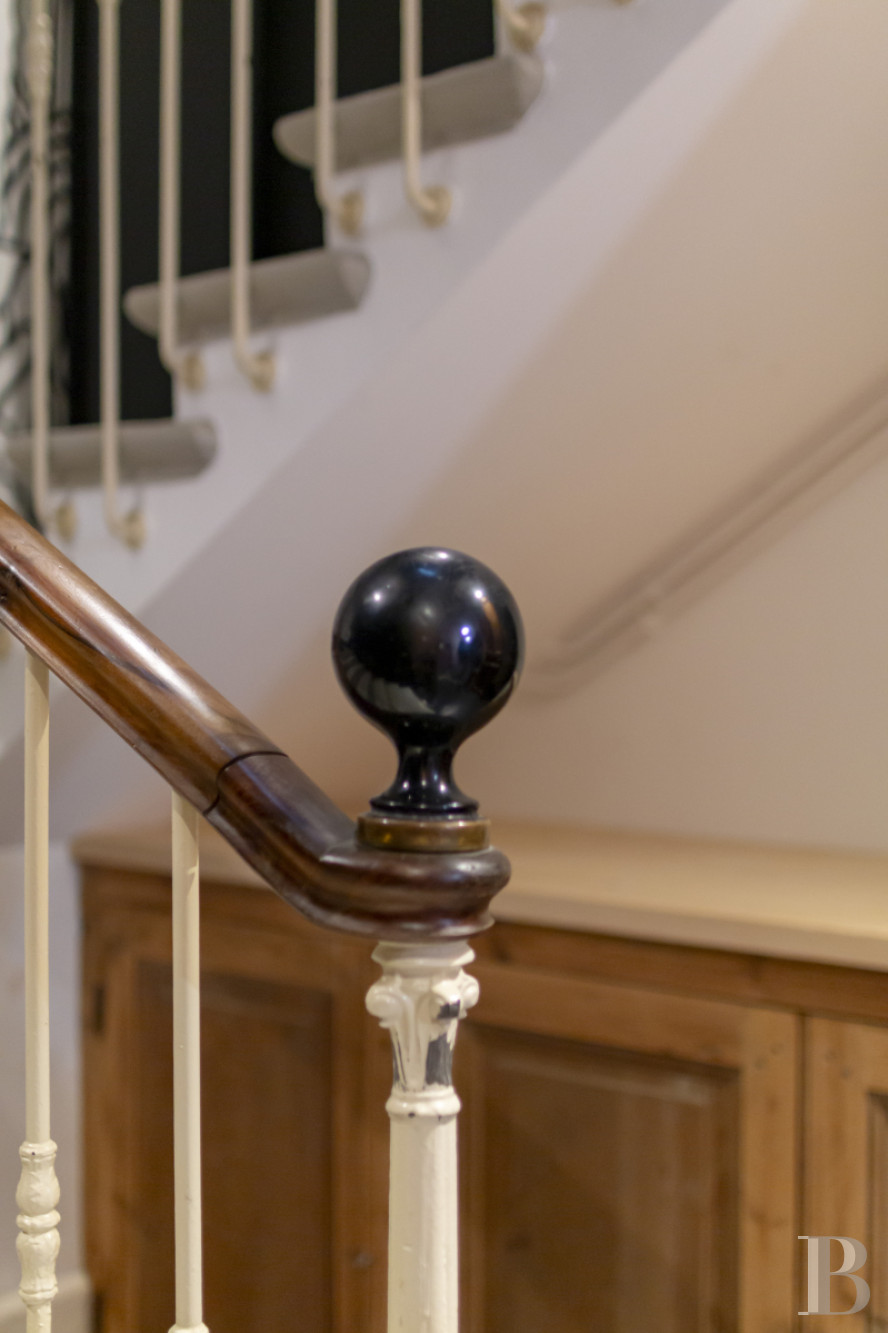
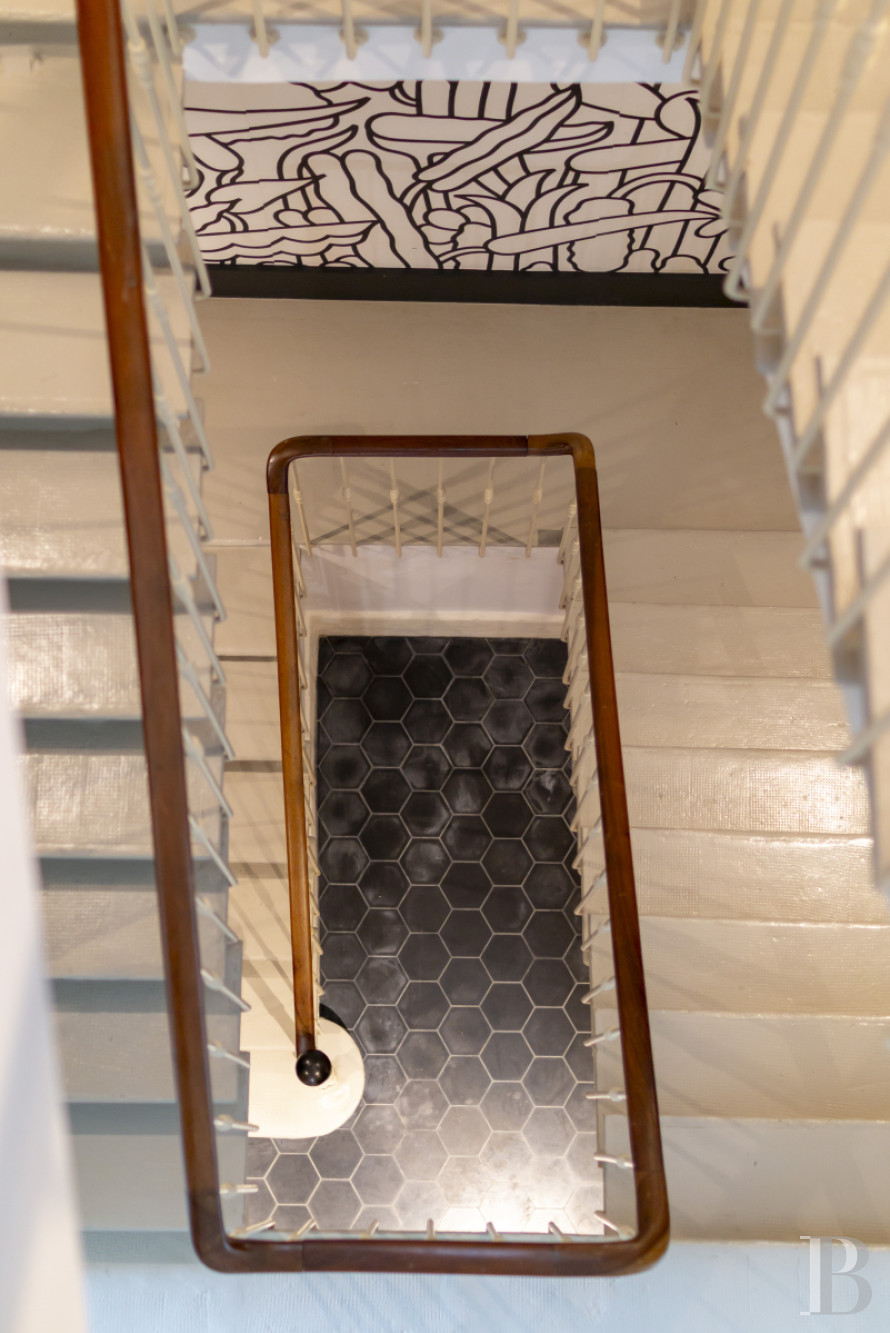
The first floor can be reached by a white-painted concrete staircase. The back wall is covered with black and white patterned wallpaper. Behind a door on the landing, a corridor leads to four spacious rooms that are bathed in light, two of which are adjacent to modern bathrooms. There is straight, thin, wood stripped flooring throughout on this level.
The second floor
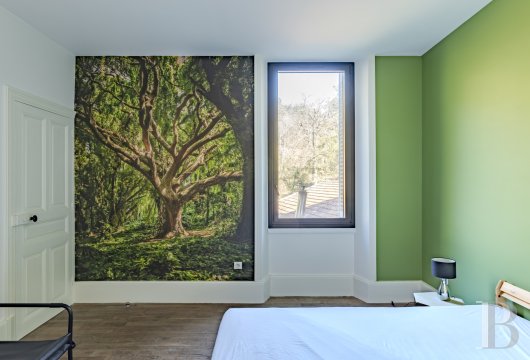
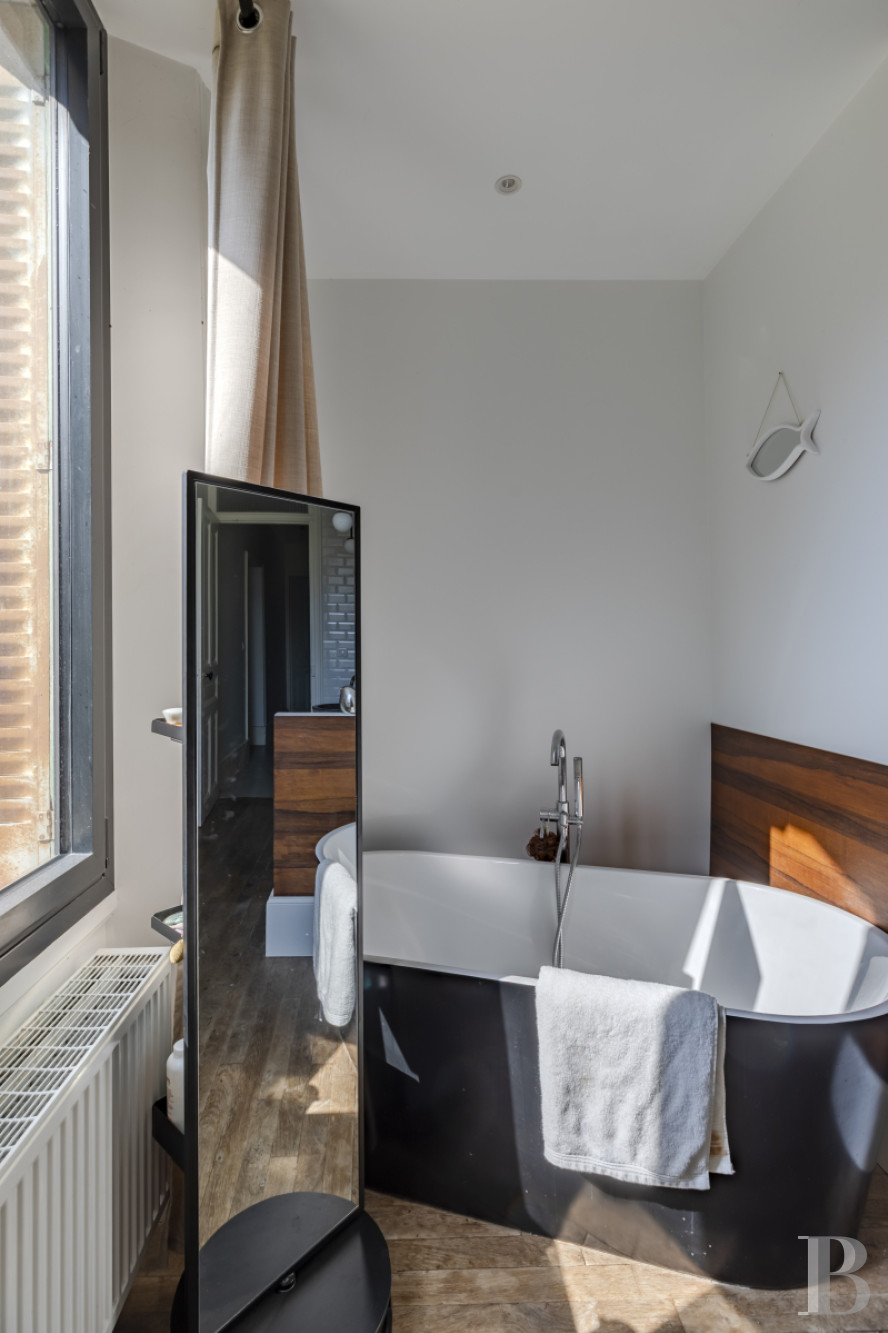
This level can be reached by the staircase and is set around a corridor leading to four bedrooms. Unlike those on the first floor, these bedrooms do not have en suite bathrooms but instead share a bathroom with two separate showers, located at the end of the corridor. A fifth bedroom can be found just next to the staircase. There is also straight, thin, wood stripped flooring throughout on this level.
The third floor
From the upper part of the parkland to the west, a small footbridge leads via a door into this level, which originally could also be reached via the staircase, though at present a partition prevents access to ensure this level’s independence. It has been transformed into an apartment suited for tenants or for holiday guests.
A large corridor leads to three bedrooms with impressive dimensions and a spacious living room with a wood-burning stove, as well as a small kitchen at the very end. A modern bathroom is located near to the staircase, while once again there is straight, thin, wood stripped flooring throughout the level.
The fourth floor
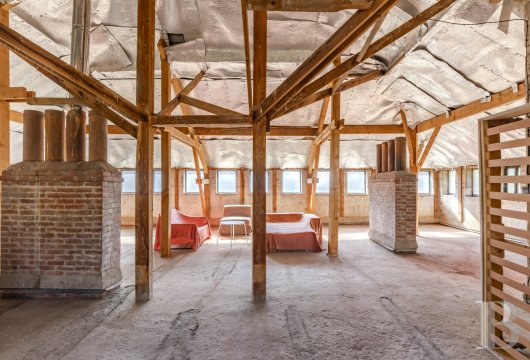
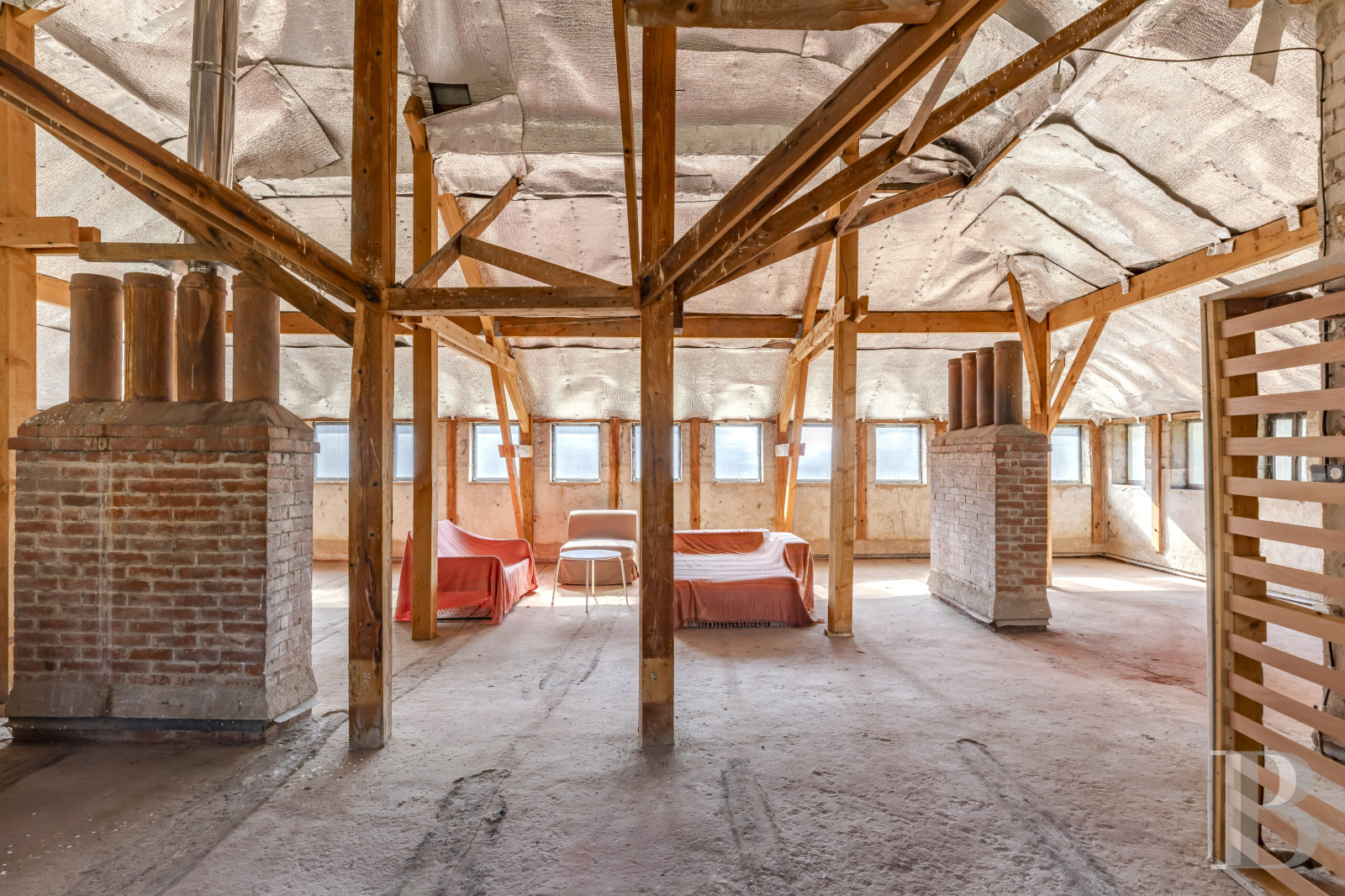
The staircase then climbs to the attic, which occupies the entire surface of this level. An old water tank can be found at its highest point and used to be supplied by the estate’s hot spring.
The volume beneath the rafters is partially occupied by the roof frame, which is exposed throughout, but also by the brick chimney stacks of the former roof, because this level was added at a later date. Given that the ceiling height up to the roof ridge is very comfortable and that there are many small windows situated close to each other, through which light generously streams, it is possible to convert this level.
The roof has been recently renovated and insulated.
The small pavilion
This building was Doctor Riory’s former surgery (and was also the estate’s pharmacy). It is made of rendered concrete and topped by a sheet metal roof. In recent years, it has been entirely refurbished, containing a large room on the ground floor, topped by a bedroom with a bathroom, plus a kitchen area on the upper floor. There is thin wood stripped flooring or natural fibre carpeting. Next to the upper level, a small terrace stands above the building that houses the spring.
The pavilion is currently used as an office by the current occupants.
The building housing the Beaugaris spring
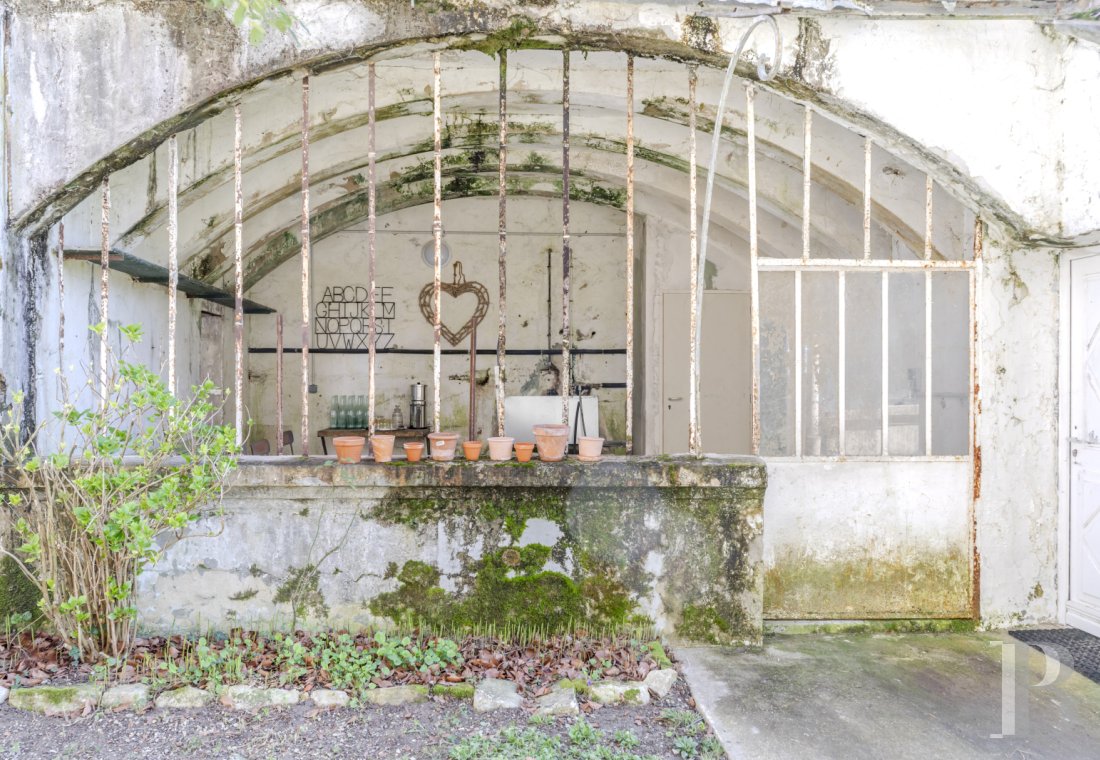
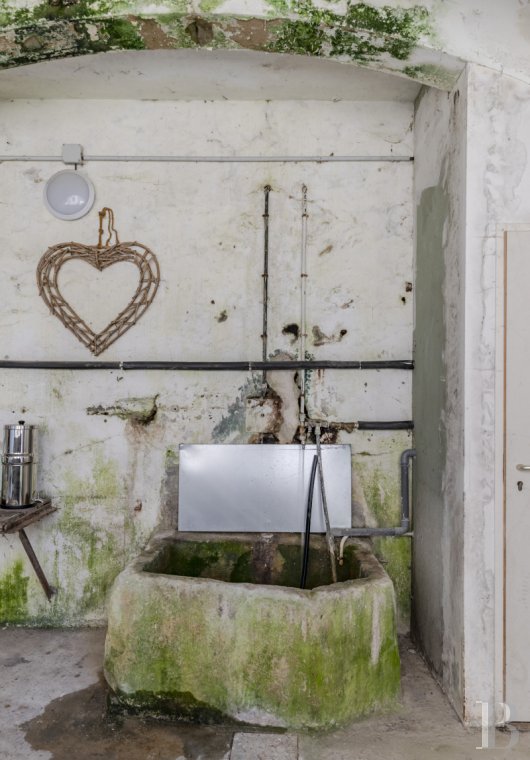
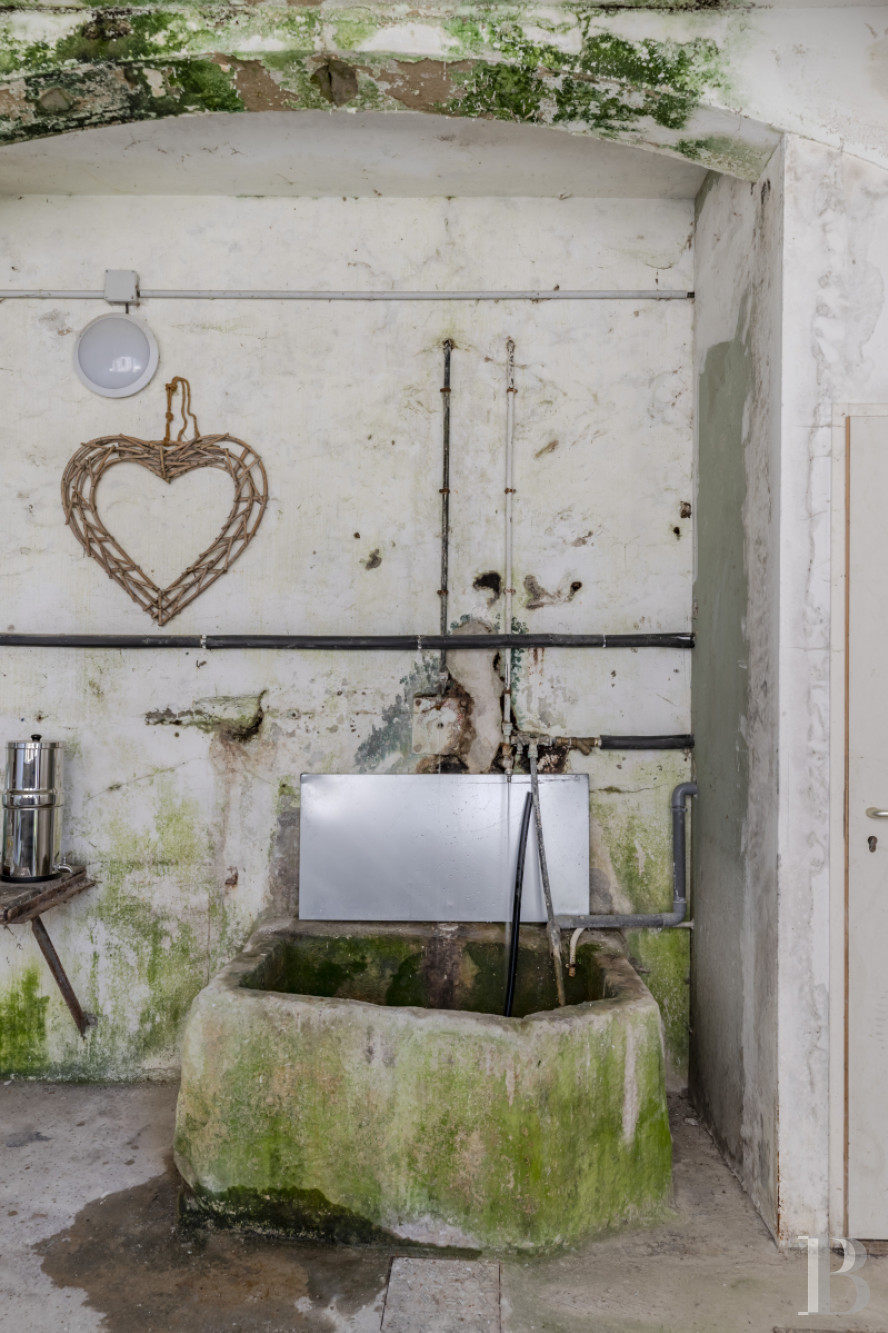
The spring is housed in a characterful, vaulted, around 30-m² edifice, whose style is typical of hydrotherapy centres from the beginning of the previous century. The vault is an architectural feature wedded to the place’s history: arched concrete structures were commonly used in the previous century to protect and showcase springs, while maintaining stable temperature and moisture levels, conducive to preserving the waters. The building was erected at the request of Doctor Riory at the beginning of the 20th century on this site that has been a renowned thermal spring since Roman times. It is in need of renovation, especially its windows, and would benefit from a transformation involving re-purposing.
The barn
This rough and authentic edifice, which was originally used for farming, took on the purpose of storage space for hydrotherapy centre equipment and spring water recipients. Its facades with large windows are made of wood and concrete (the south-facing one is partially adjoining to the main building), its side elevations are made of stone and the roof is made of interlocking tiles. The surrounding forest can be reached through its large, double-leaf doors.
Additionally, to help make the estate fully self-sufficient, it contains a bread oven. A technical installations room has also been installed in the barn, housing the wood-pellet fired boiler that powers the house’s heating.
The concrete, well-ventilated cellar can be reached via the barn, whose roof frame is a masterpiece of traditional joinery, paying witness to the know-how of yesteryears’ craftsmen.
The stables
This edifice erected at the entrance to the estate is a testimony to the era when this establishment was a prestigious hydrotherapy centre, requiring space and shelter for the visitors’ carriages and the horses that pulled them. Its elevations feature exposed stonework and the northern part of the roof of interlocking tiles has been renovated.
Although these stables have remained in their original state, they could be restored to become a reception area or for accommodation over two storeys, while retaining their soul.
The parkland, swimming pool, tennis court and forest
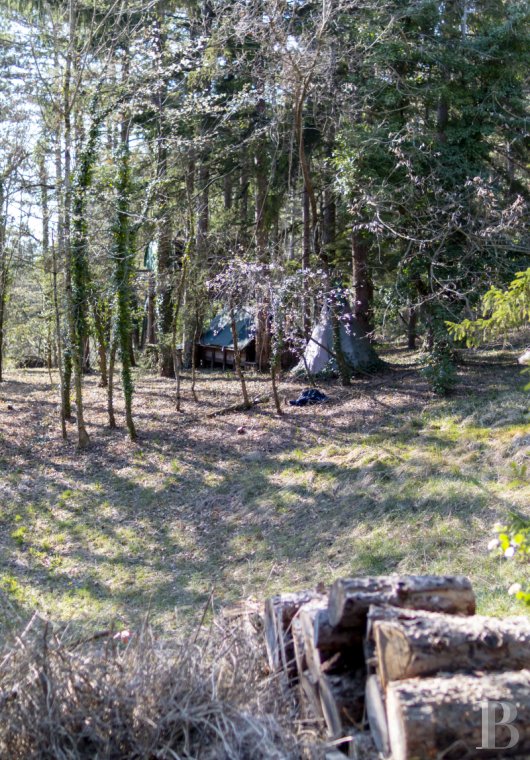
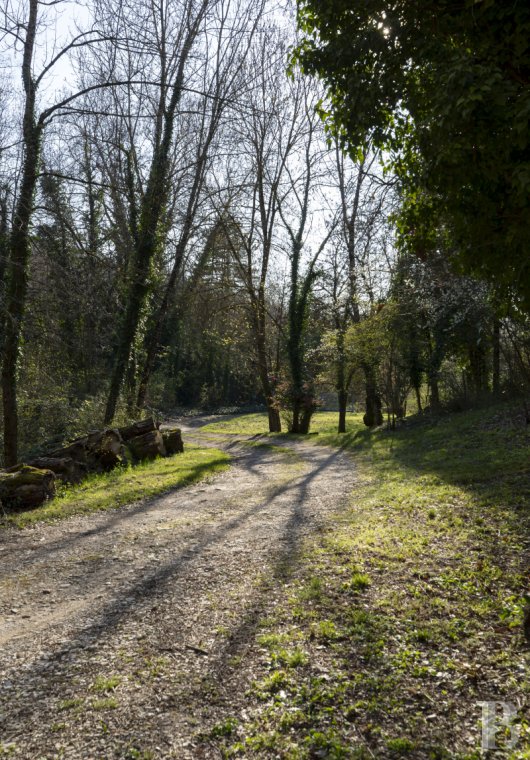
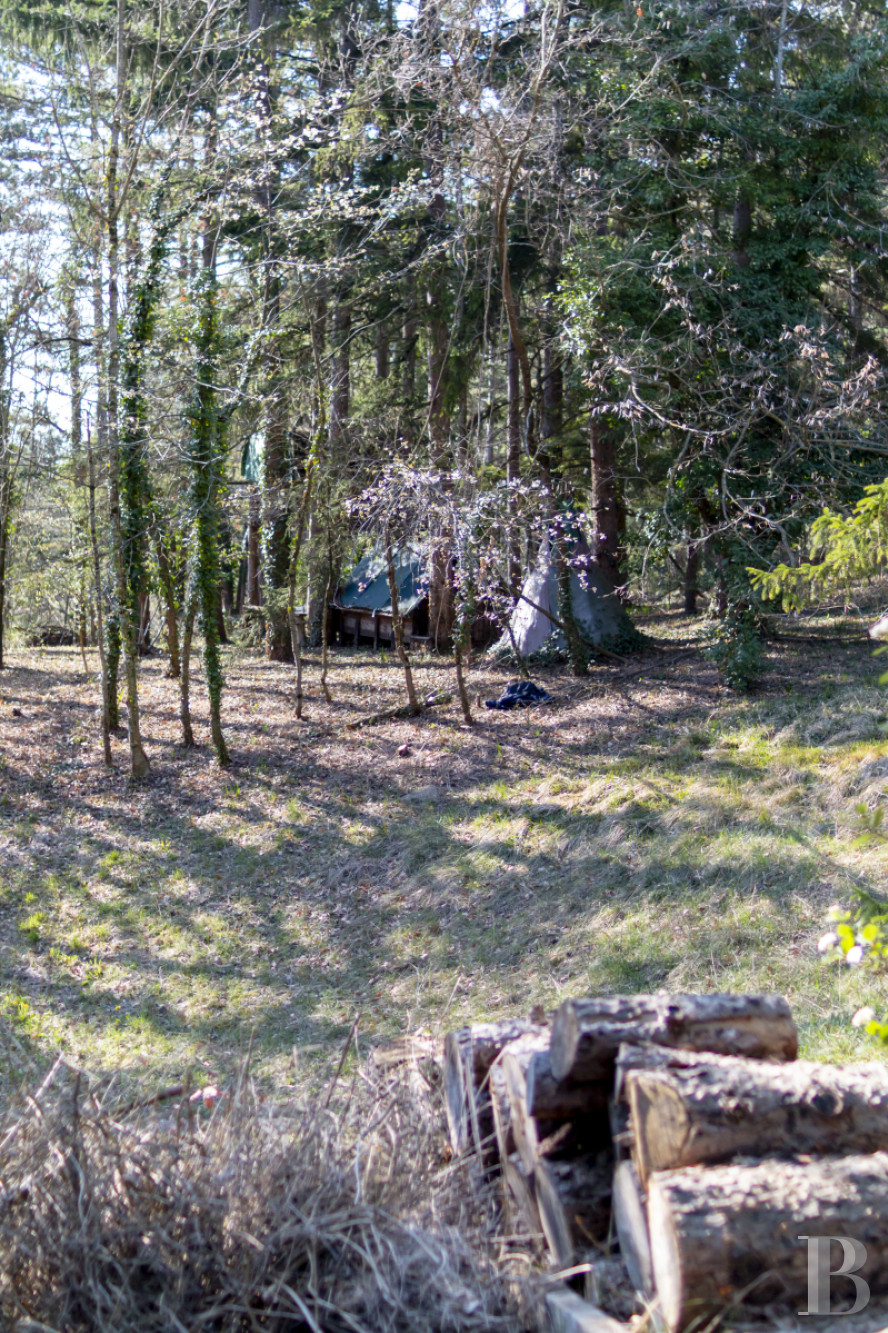
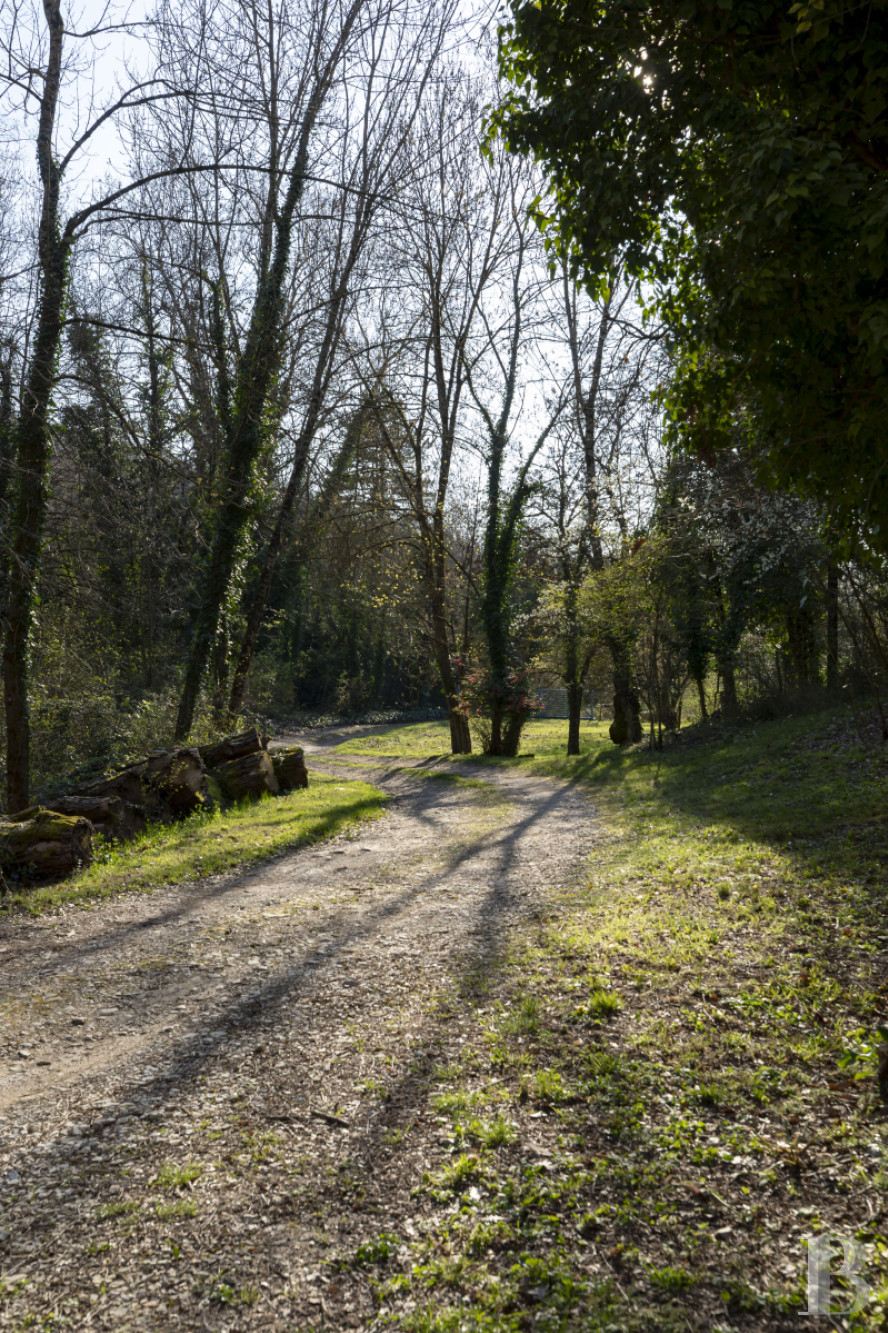
The Beaugaris estate spreads out over 10 uninterrupted hectares. The parkland it includes is located around the buildings, combining a landscaped garden with unspoiled wilderness. It is mostly lawned and planted with pine and lime trees, boasting the overall design of a relaxing expanse, especially thanks to the spring water pond transformed into a swimming pool in front of and away from the house, with a sliding cover, wooden path and decking. There is also a small, lush forest ideal for lovely strolls. Hundred-year-old tree ensure valuable shade during summer. Lastly, a path leads to meadows and a former tennis court surrounded by fencing. It has been left unused for a long time and has become overgrown.
Thanks to the estate’s nature management practices and absence of noise pollution, it boasts a wealth of biodiversity.
Our opinion
The former Beaugaris hydrotherapy centre built at the beginning of the 20th century, with a 10-hectare protective buffer of vegetation free from noise pollution or visual disturbances, at the foot of the Vercors Mountains and near Valence, forms a rare blend of historical character and modern comfort thanks to careful renovation. The layout of the buildings, their accommodation capacity and the outbuildings mean the estate could be put to many uses, either as a luxury residence, a hotel or an events venue. It is steeped in history and has been intelligently renovated, with the focus on comfort and functionality, plus a design featuring gentle colours that respects the unique character of the place, which still boasts further potential for transformation according to tastes and desires.
1 350 000 €
Fees at the Vendor’s expense
Reference 859517
| Main building floor area | 460 m² |
| Outbuildings floor area | 390 m² |
| including refurbished area | 60 m² |
| Land registry surface area | 10 ha 45 a 81 ca |
| Total floor area | 560 m² |
French Energy Performance Diagnosis
Information on the risks to which this property is exposed is available on the website: www.georisques.gouv.fr
Share


NB: The above information is not only the result of our visit to the property; it is also based on information provided by the current owner. It is by no means comprehensive or strictly accurate especially where surface areas and construction dates are concerned. We cannot, therefore, be held liable for any misrepresentation.