



Between Dijon and Besançon, within a 1 hectare park,
a maison de maître, guest house and outbuildings with an industrial past
a maison de maître, guest house and outbuildings with an industrial past
Dole,
JURA
franche-comte
39100
FR

Location
Set in the Bourgogne-Franche-Comté region at the junction of four départements, the property stands in a village typical of the Jura, between Dijon (45 minutes) and Besançon (40 minutes), and within 25 minutes of both Gray and Dole. This cultural crossroads has long shaped the wealth of the area, notably through the château route winding along the valley of the River Ognon. The medieval village of Pesmes, with its shops and amenities, is under 10 minutes away, and the small town of Marnay, with its larger stores, 15 minutes. Tavaux airport and the TGV station at Dole are within 30 minutes. The A36 motorway is 10 minutes away; Geneva and Fribourg are 2 hours 50 minutes by road, Paris 4 hours by car or 2 hours 30 minutes by train.
Description
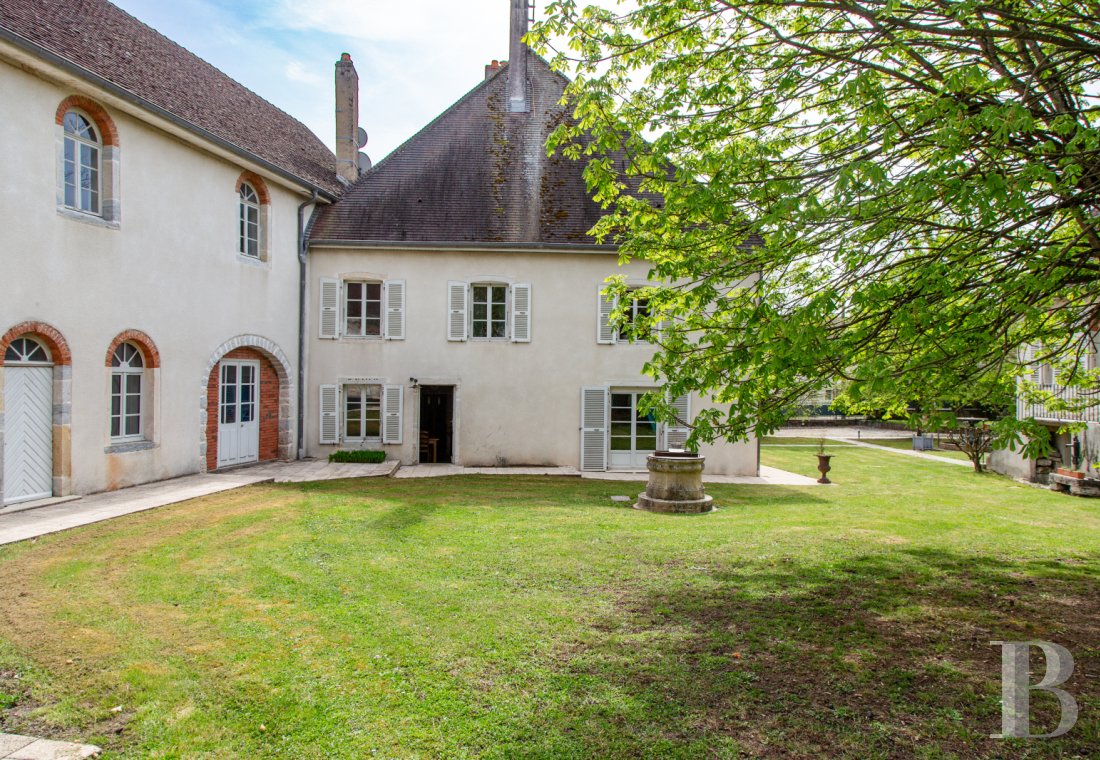
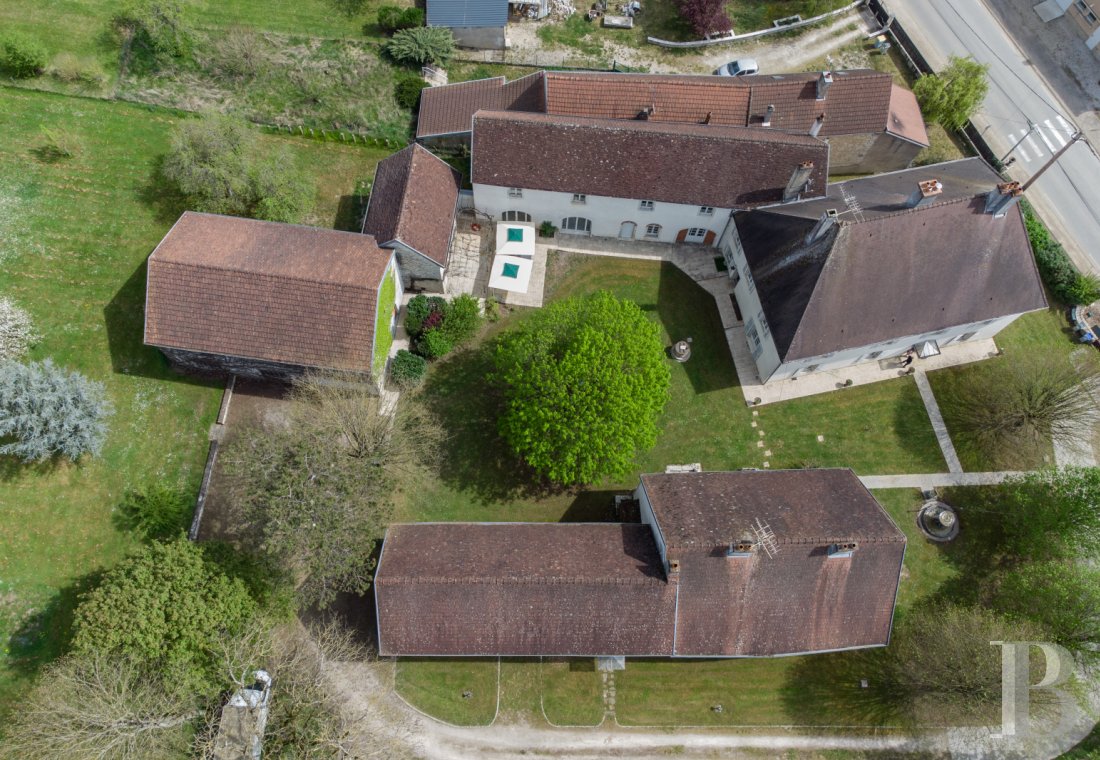
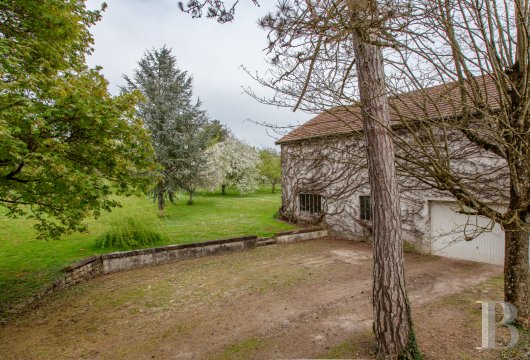
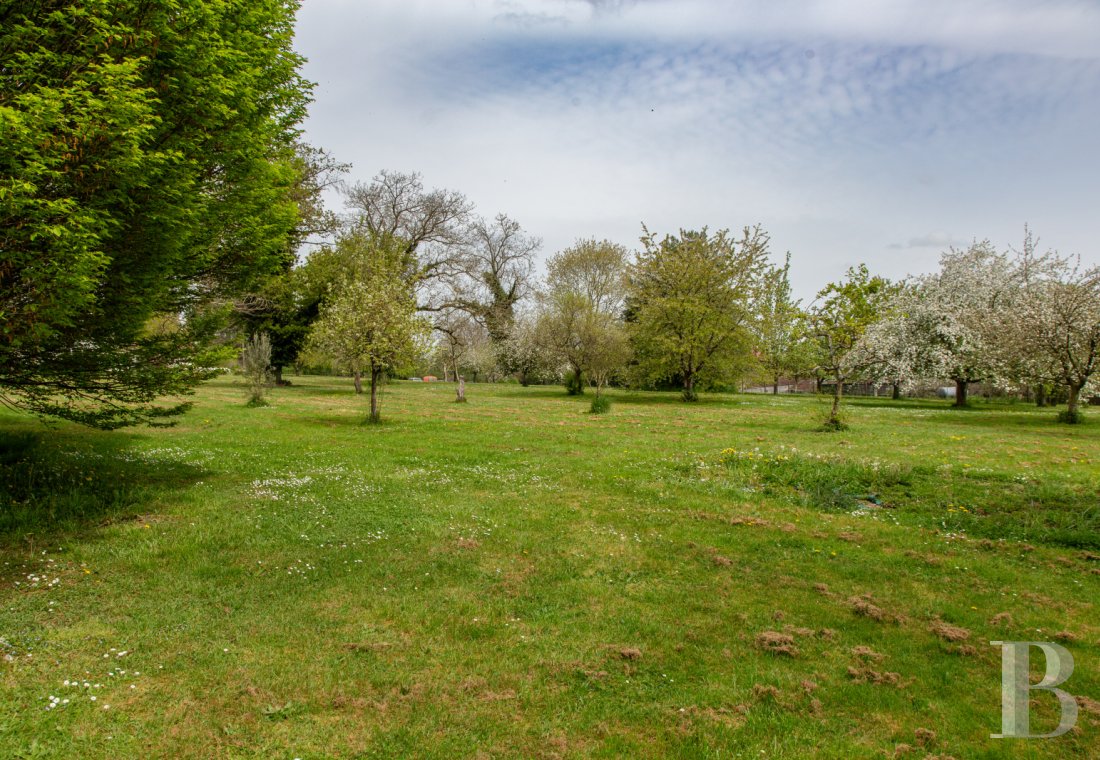
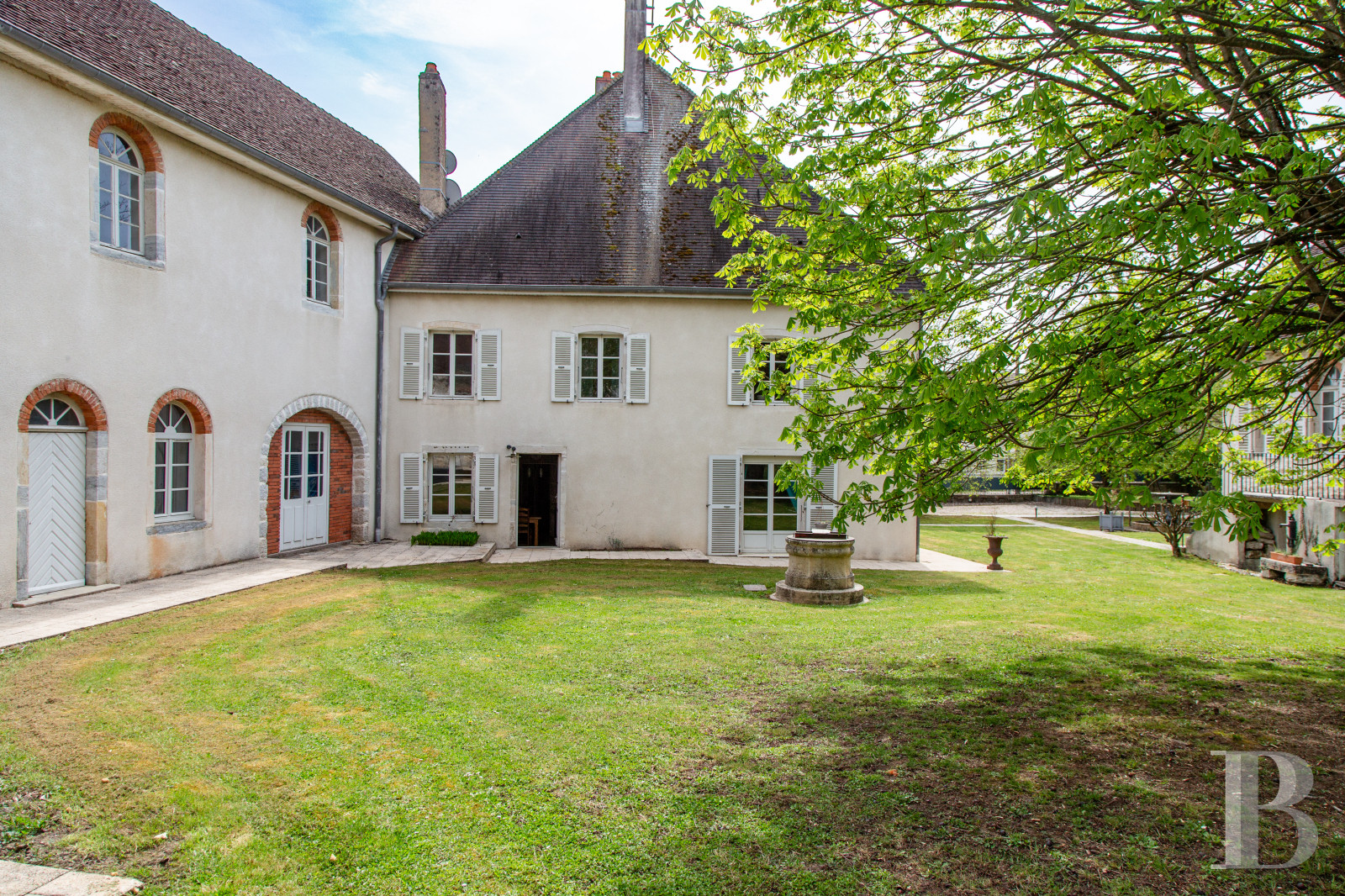
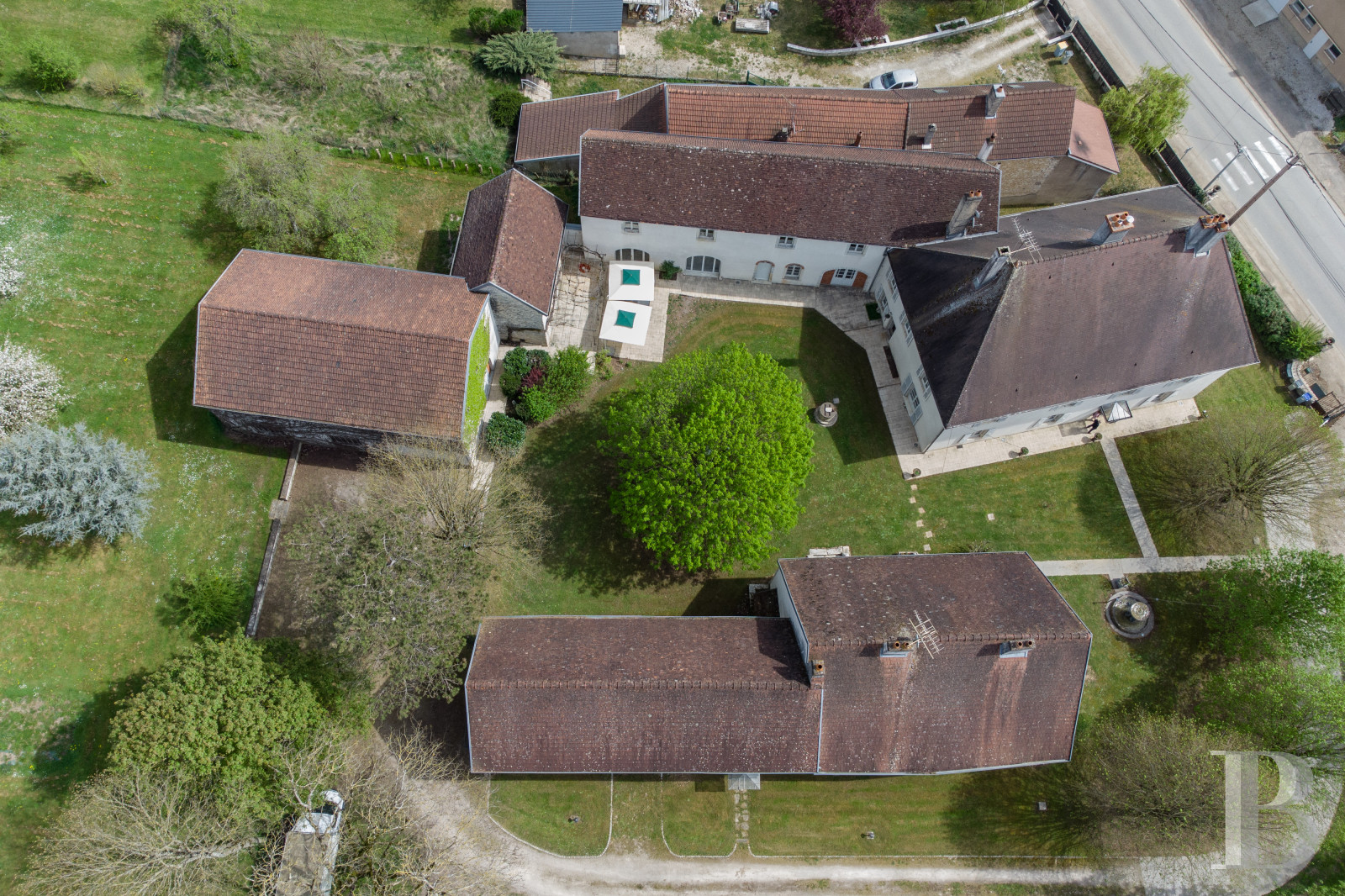
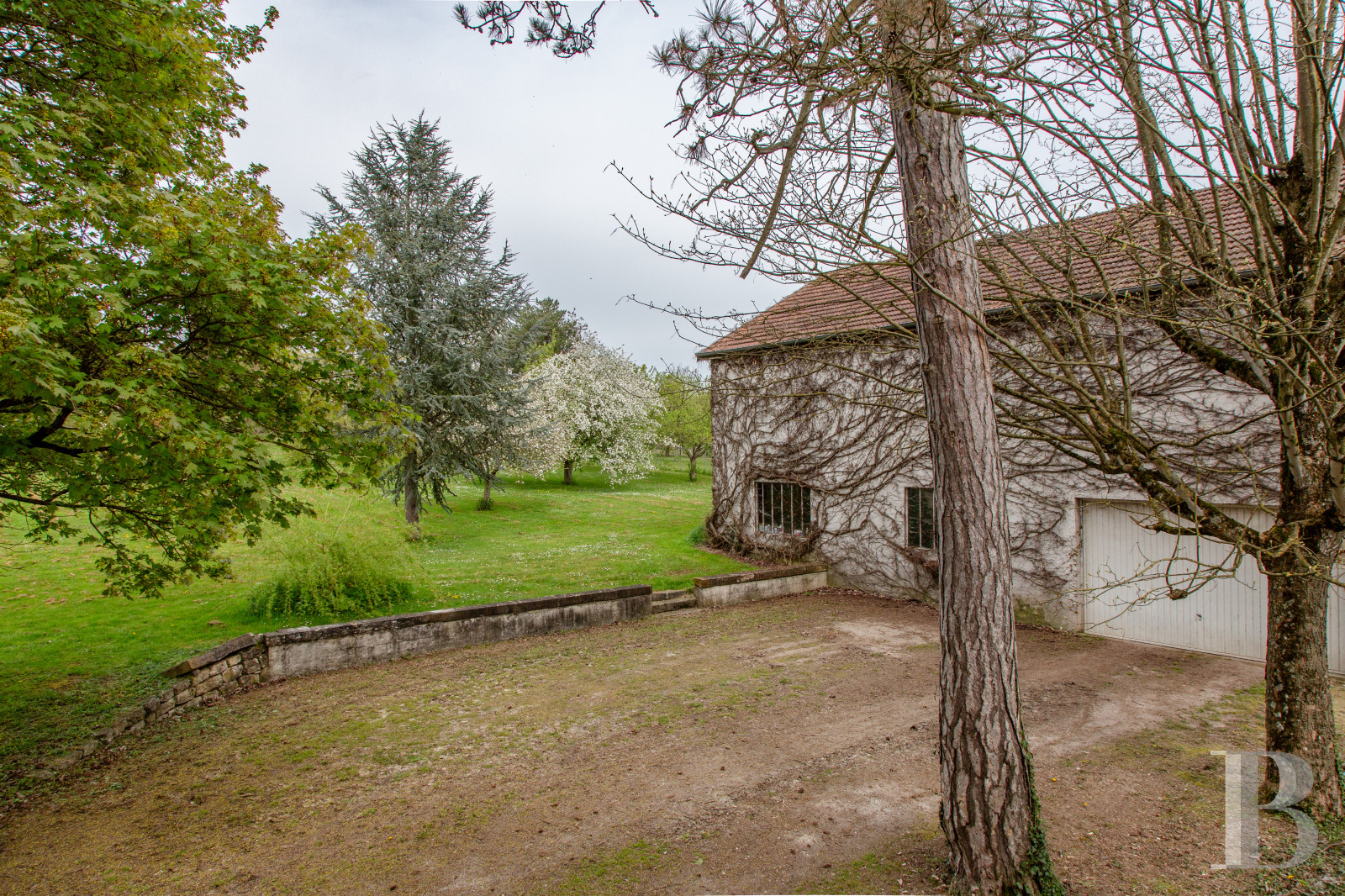
The wrought-iron entrance gate heralds a bourgeois house, probably built in the mid-19th century. A paved drive leads to garages at the rear of the property. To the front, the maison de maître stands before a group of outbuildings arranged around an intimate square courtyard, centred on a tall horse chestnut. Adjoining the house, a long building contains wooden grain silos, reminders of the trade once plied here: the occupants were millers. On the opposite side of the courtyard, a second dwelling — the guest house — shares a party wall with a barn raised above large cellars, which attest to the farming history of the estate. At the far end of the courtyard stands a small outbuilding that formerly housed the facilities. Beyond lies a large garage dating from the 1930s. The park, extending to over 1 ha, is laid out in the English landscape style, with 90 ares given over to an orchard.
The maison de maître
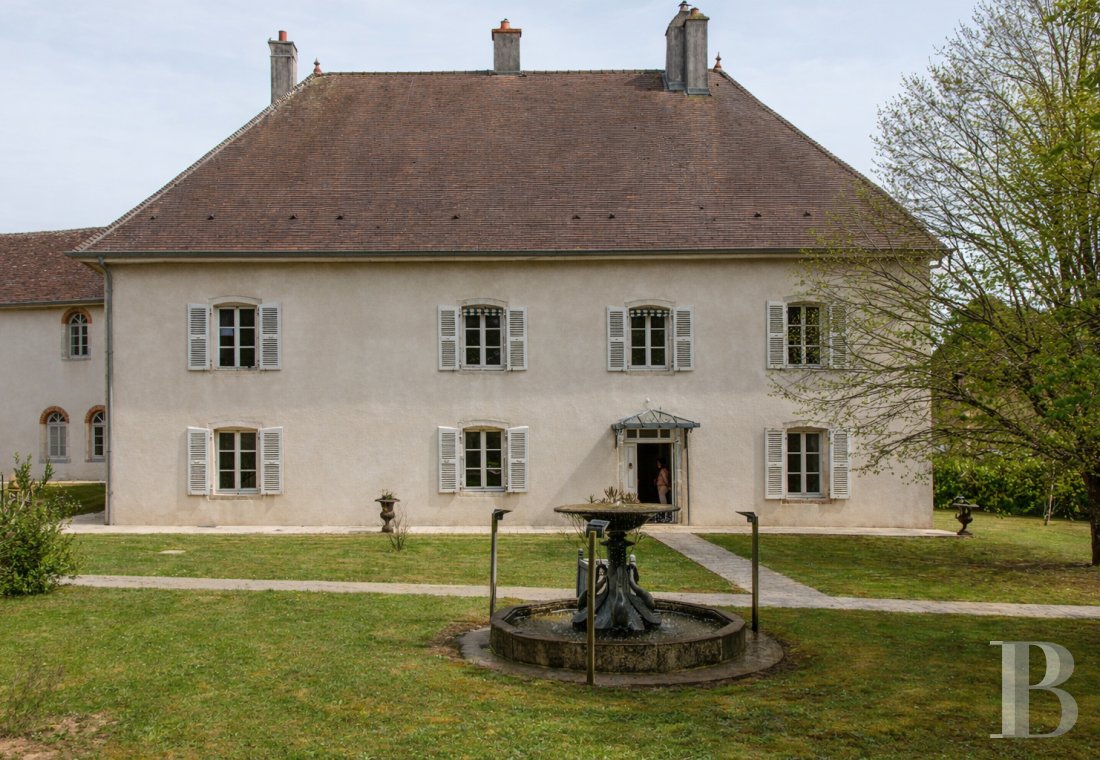
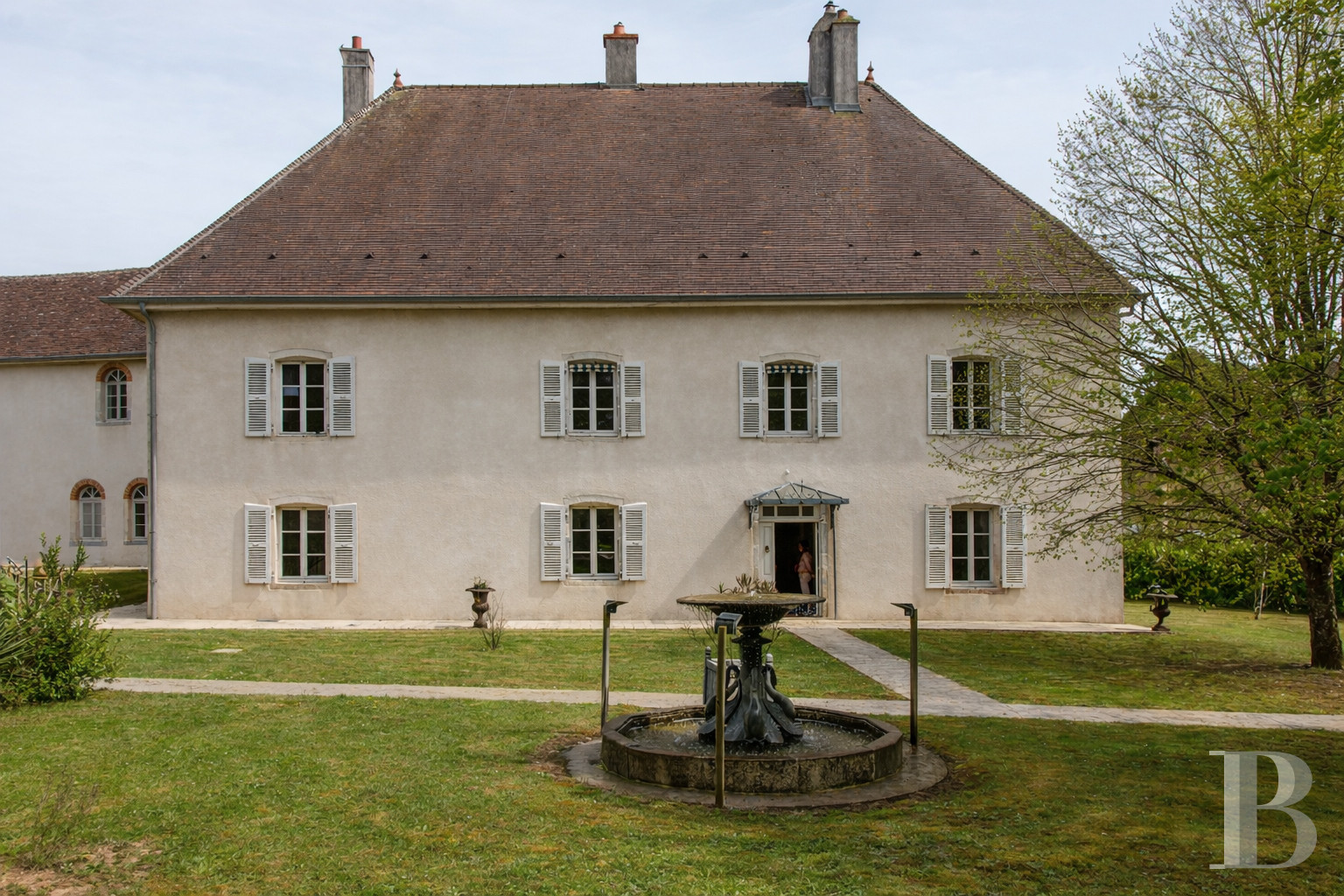
Built to a rectangular plan and rising two storeys, the house is crowned by a recent hipped roof clad in small flat tiles. On the main west-facing elevation, the painted panelled wooden front door is surmounted by a wrought-iron entrance canopy. The wooden double-glazed ground-floor windows are fitted with louvred shutters, while those on the upper floor carry an awning. The north elevation, giving onto the courtyard, features a double-leaf glazed door and a service door. Three fireplaces grace the house. On the ground floor, under the staircase, a carved wooden trapdoor in Asian style recalls the diplomatic career of one of the former occupants.
The ground floor
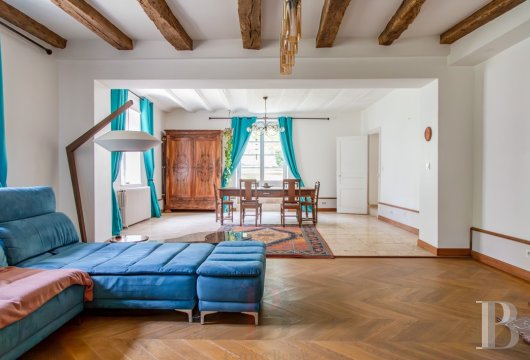
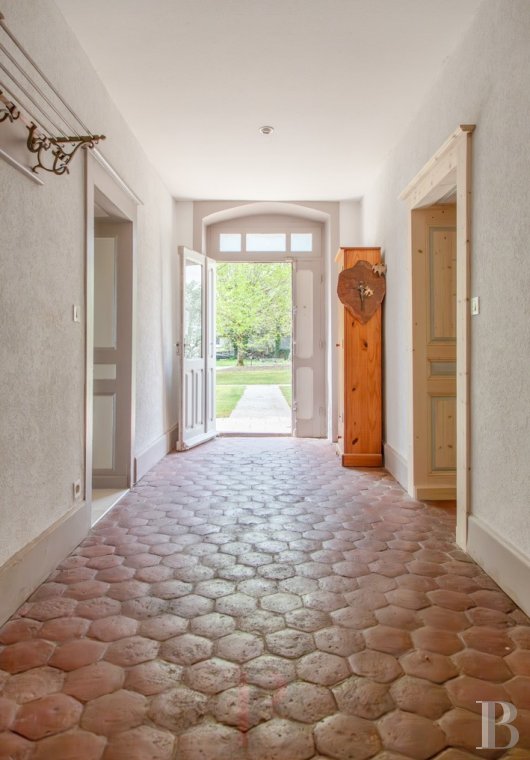
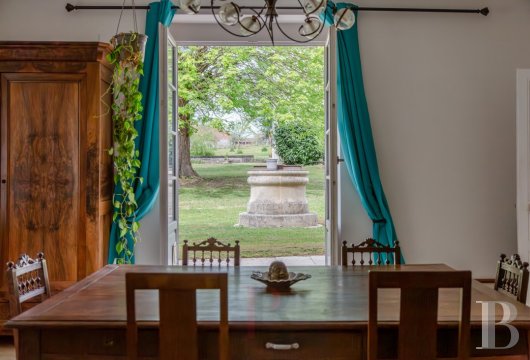
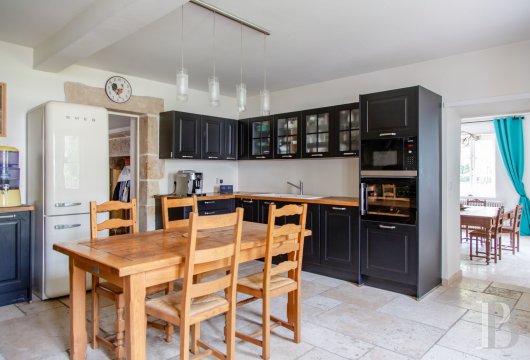
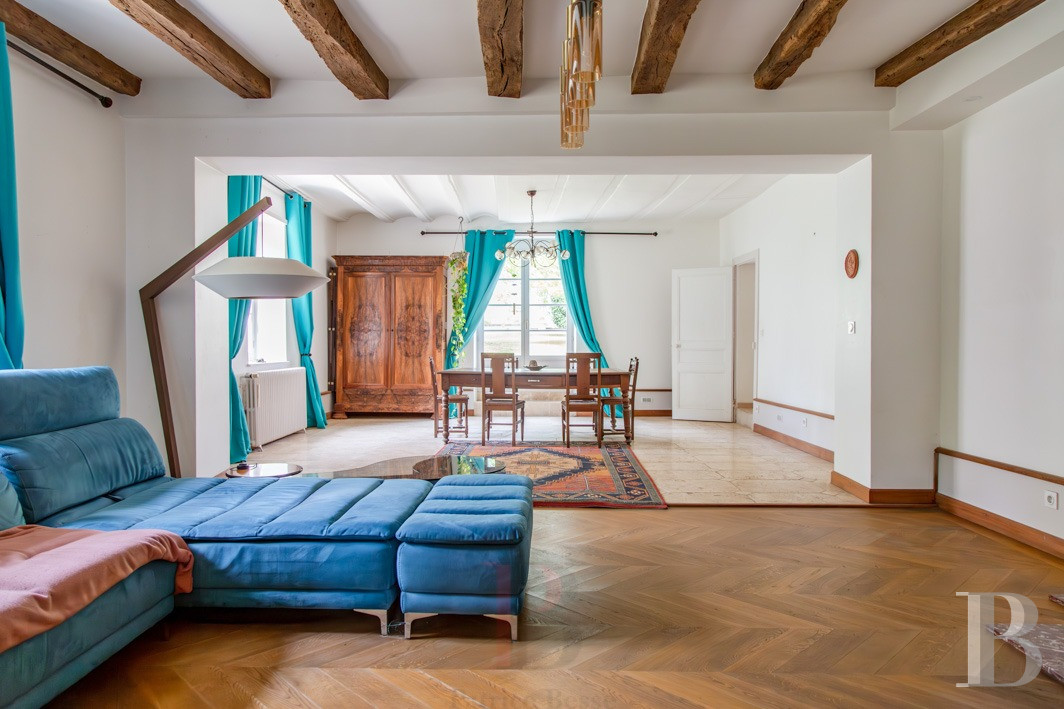
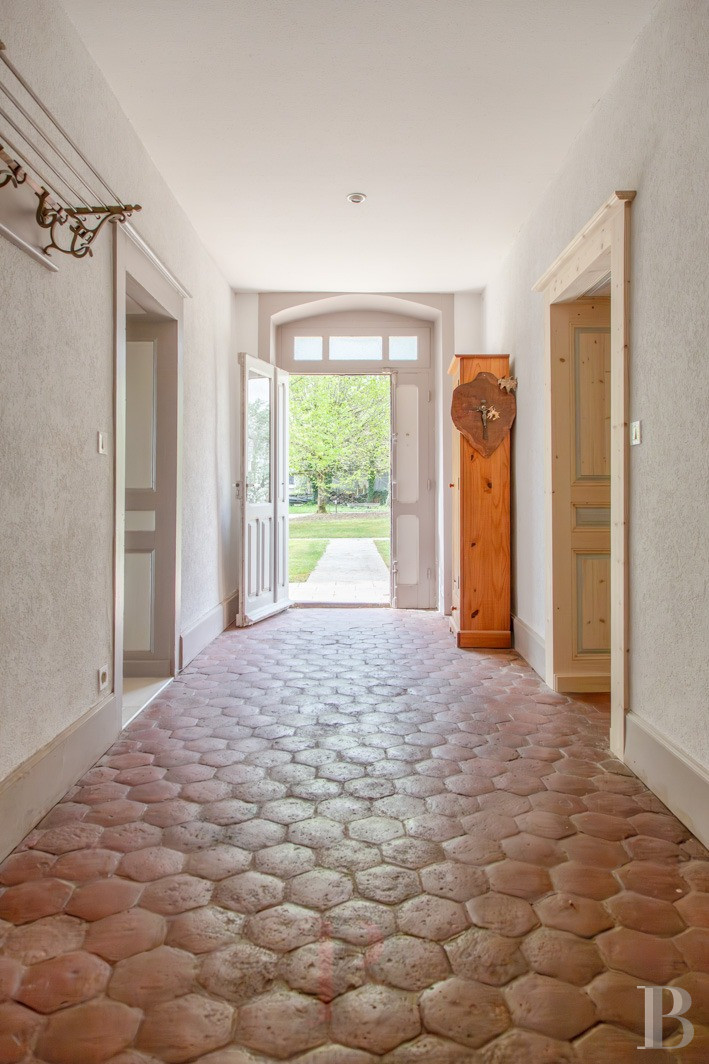
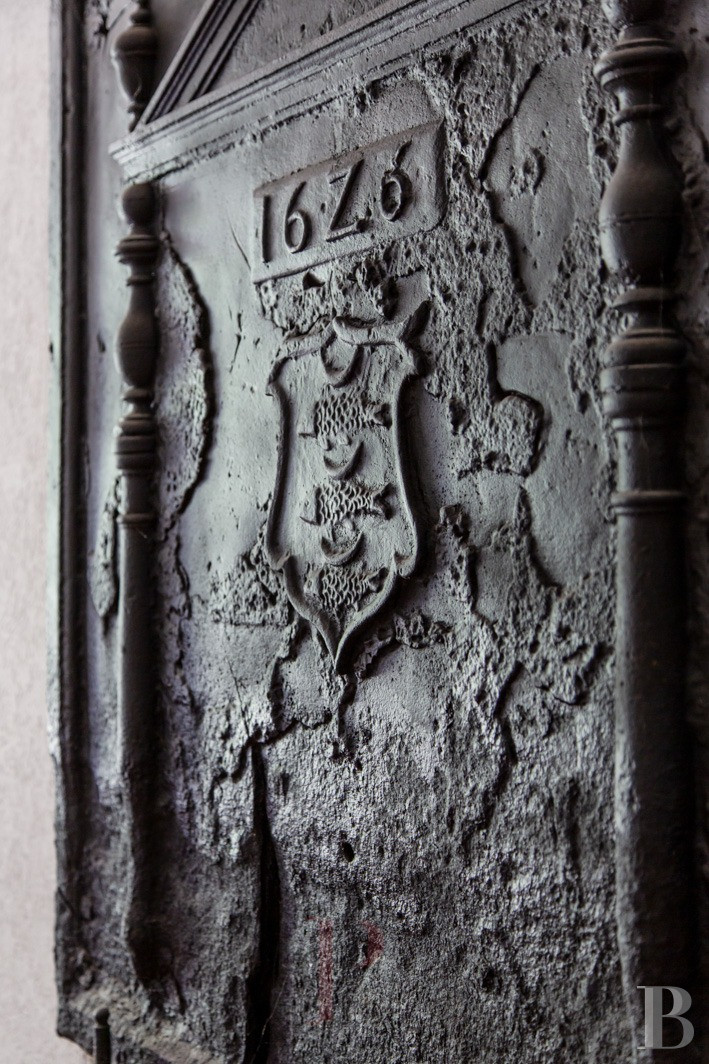
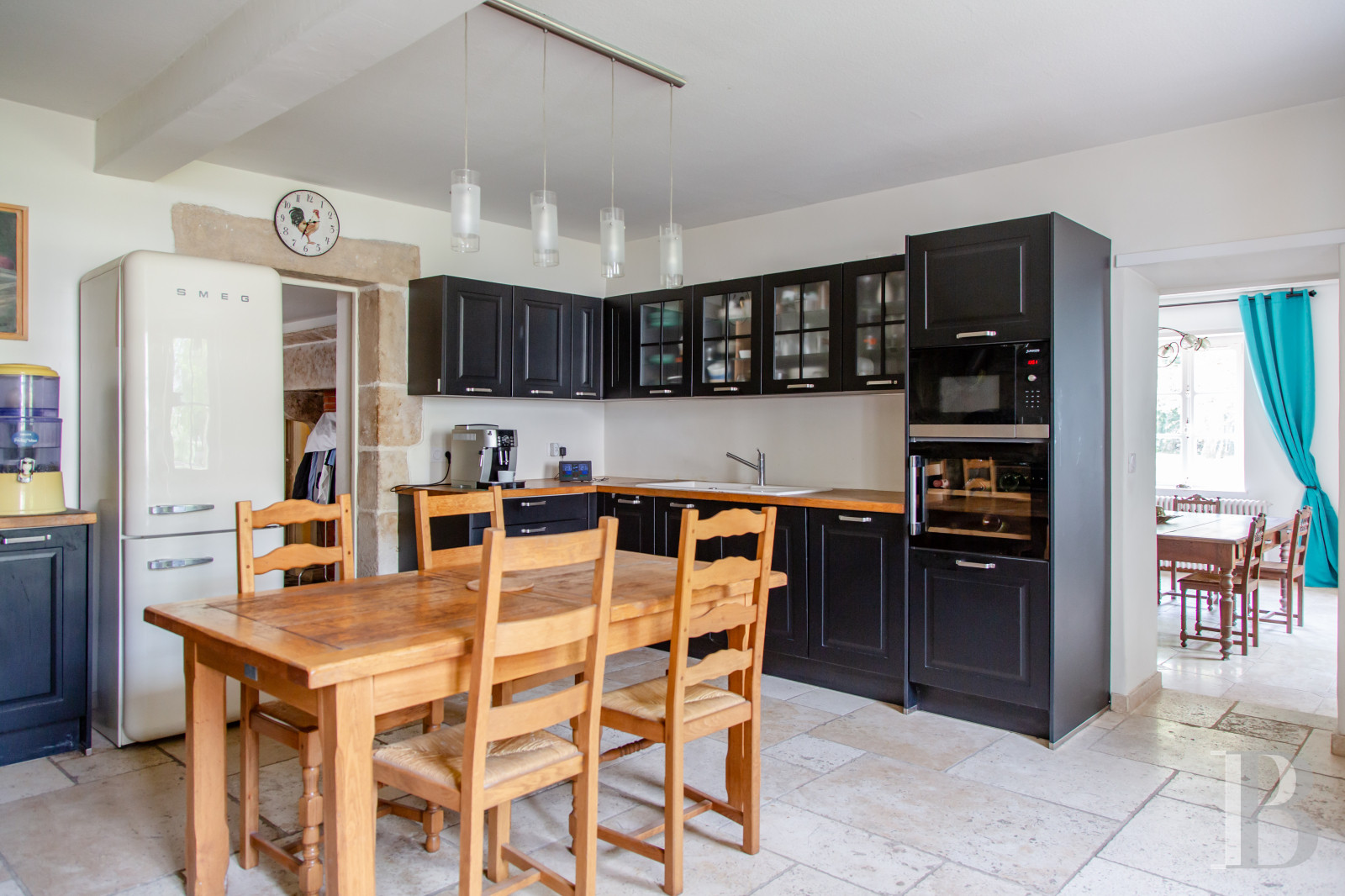
The entrance hall leads to a wide corridor floored in octagonal red terracotta tiles, giving onto the timber staircase to the upper level. To the left lies the sitting room: the seating area is parquet-floored, the dining end in Burgundy stone. Beyond, a landing room — a former kitchen adorned with a stone fireplace — serves the lavatory, bathroom and the kitchen, recently remodelled in black, with a Burgundy stone floor. A second stone fireplace houses a bread oven. From here, a landing room leads to the boiler room and the outbuilding. To the right of the entrance corridor, a study with moulded ceiling and black stone fireplace adjoins a bedroom with dado panelling, painted panels and a ceiling rose. A wood-burning stove sits in a rounded recess. All doors and door surrounds are timber with moulded panels. Cast-iron radiators throughout.
The upstairs
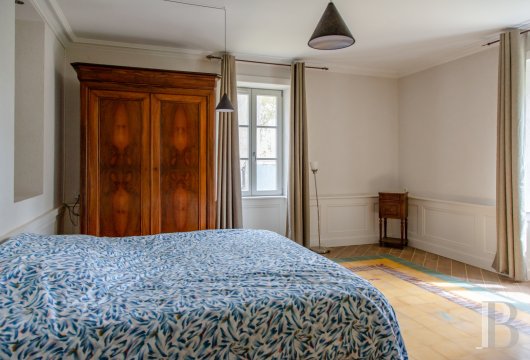
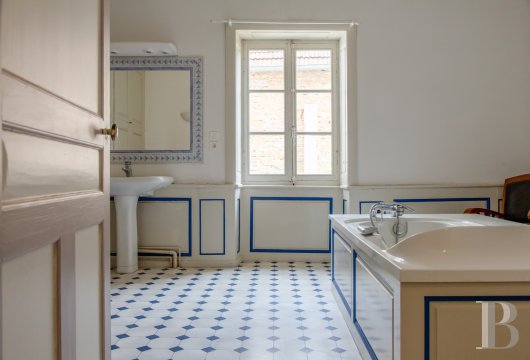
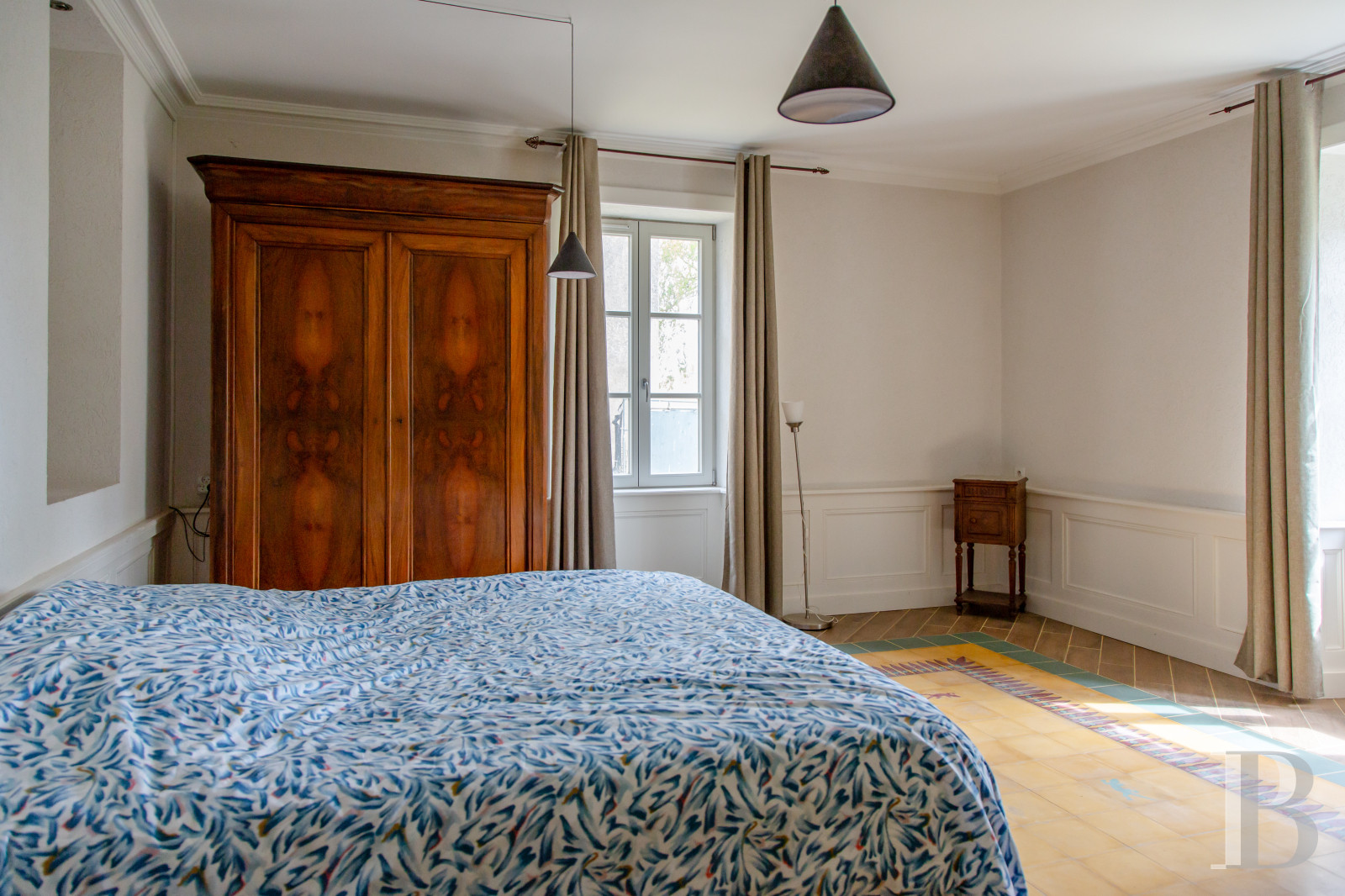
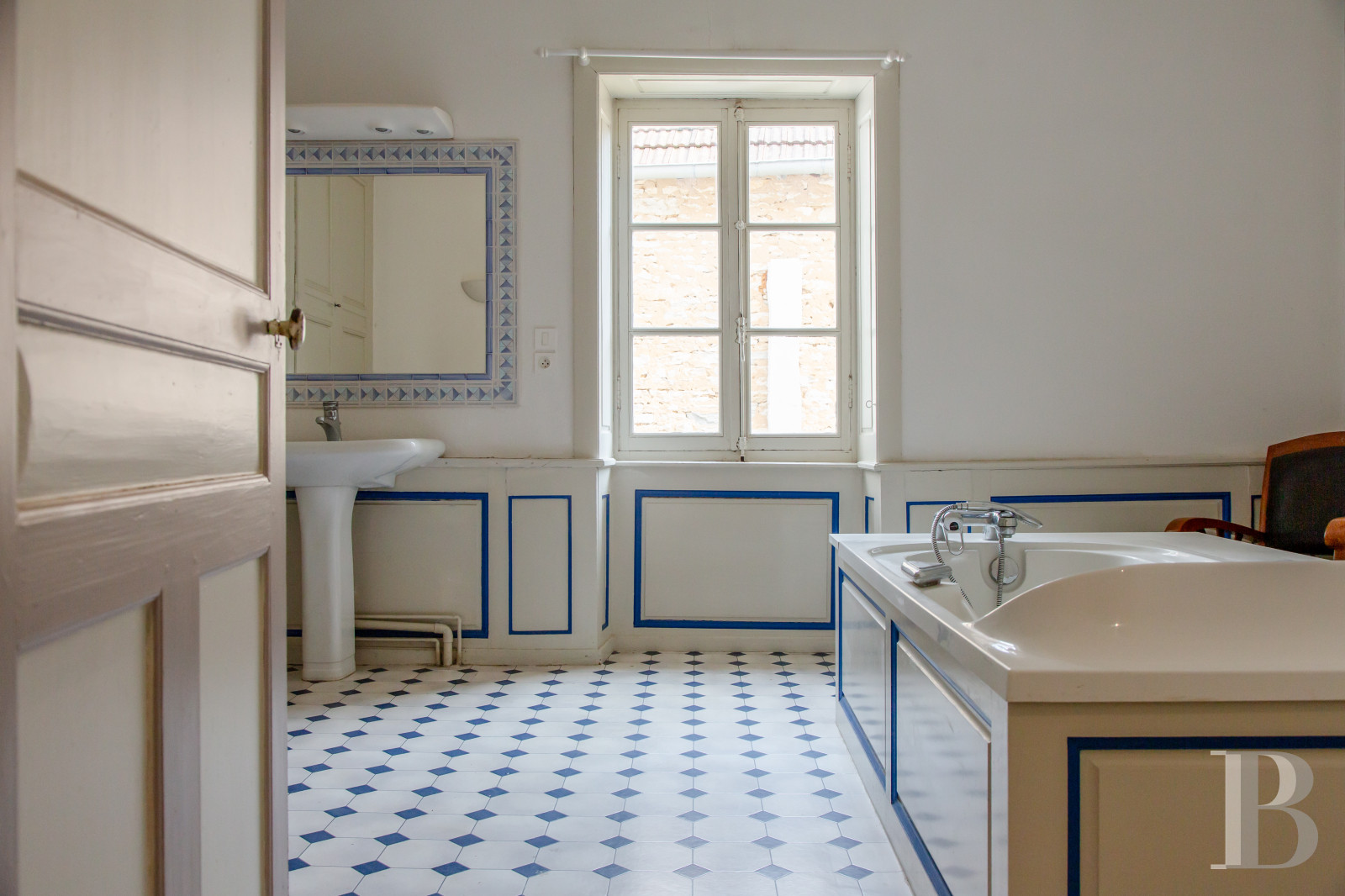
The double-flight oak staircase opens onto a parquet corridor serving three renovated bedrooms, all parquet-floored and each with a fireplace. To the right, a corridor leads to a bathroom with a freestanding bath. A door communicates with a further corridor giving onto a library with exposed beams and a seagrass floor, leading to a staircase. To the left, the principal bedroom has decorative parquet, ceiling mouldings and views over the courtyard, with a lavatory at the corridor's end. Above the boiler room, one room could be converted to a pellet store.
The grain silos
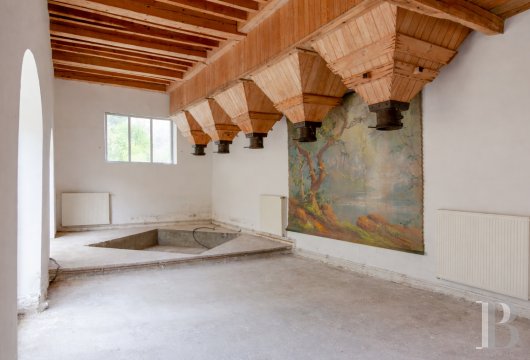
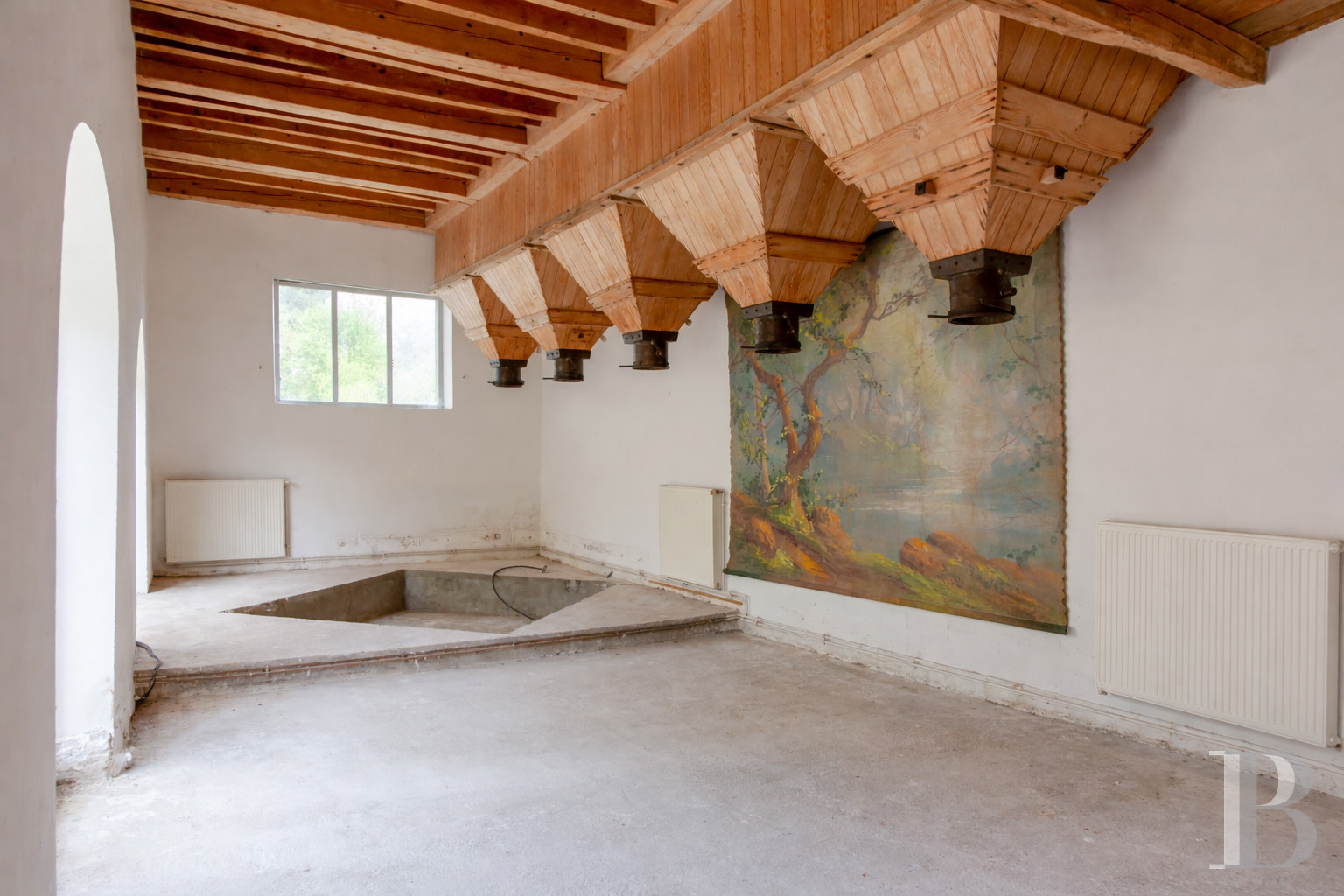
Rising two storeys, this long building comprises on its ground level a landing room accessible from the house, a bathroom and lavatory, and a large room with a French-style beamed ceiling surmounted by the old wooden grain silos. The floor is in raw concrete, with an opening prepared for a jacuzzi. Wide arched glazed bays overlooking the courtyard flood the space with natural light. A narrow staircase leads to the upper level, where the tops of the wooden silos are visible.
The guest house
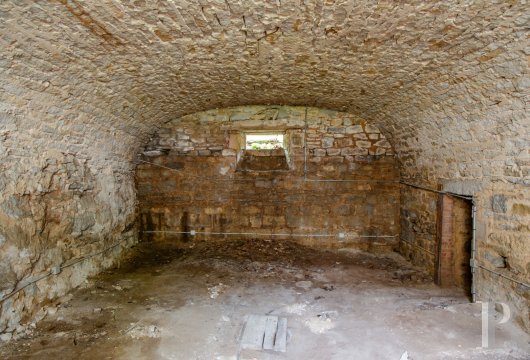
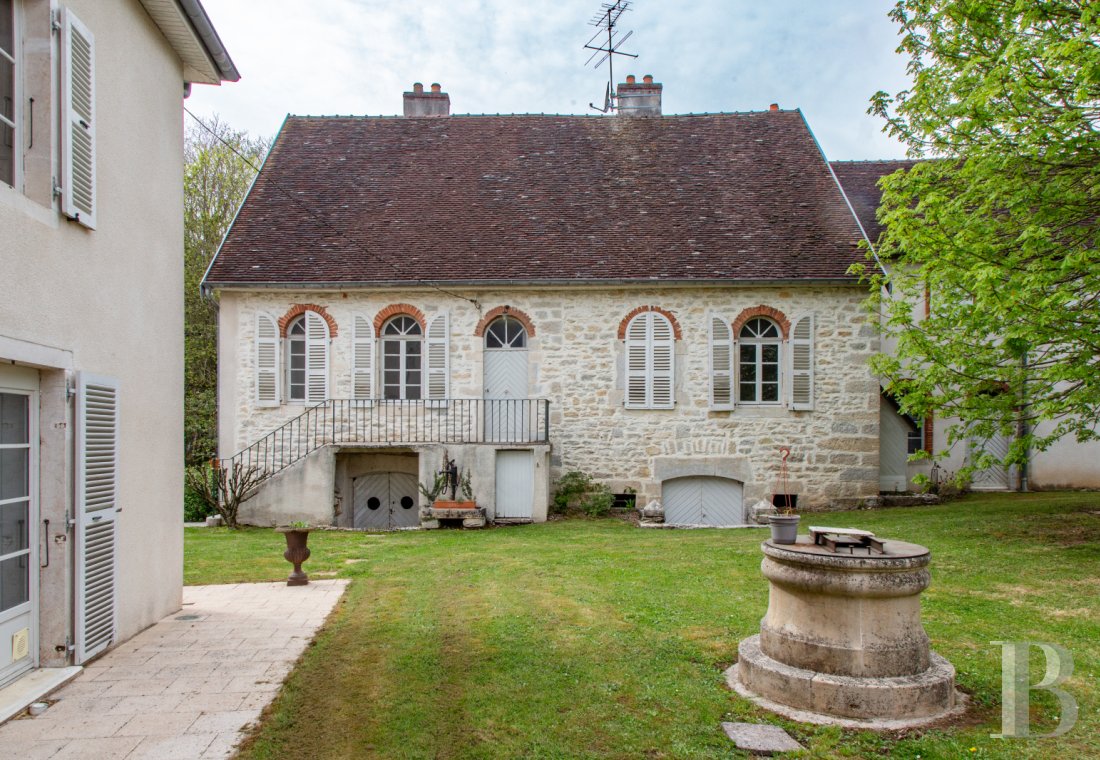
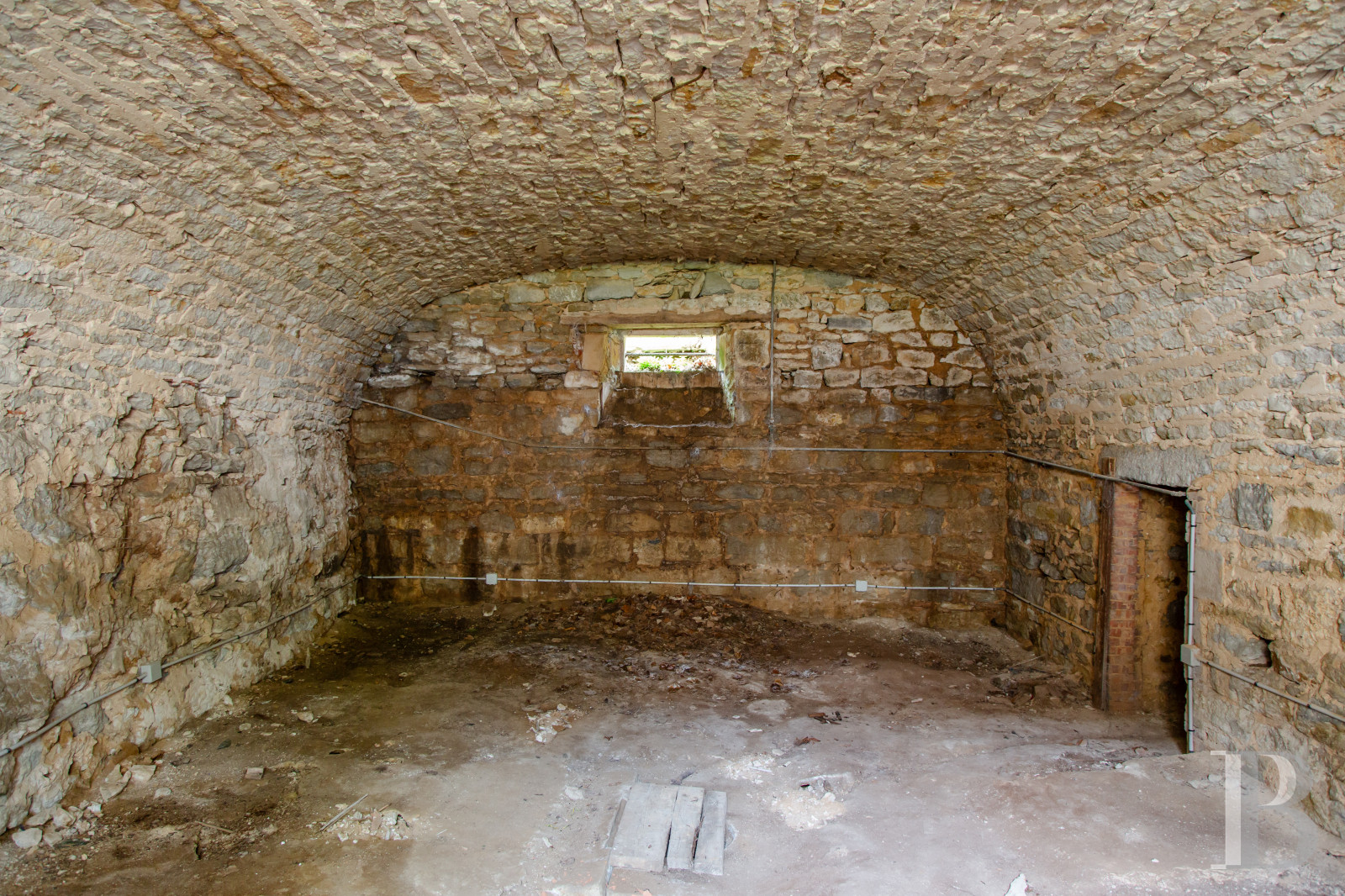
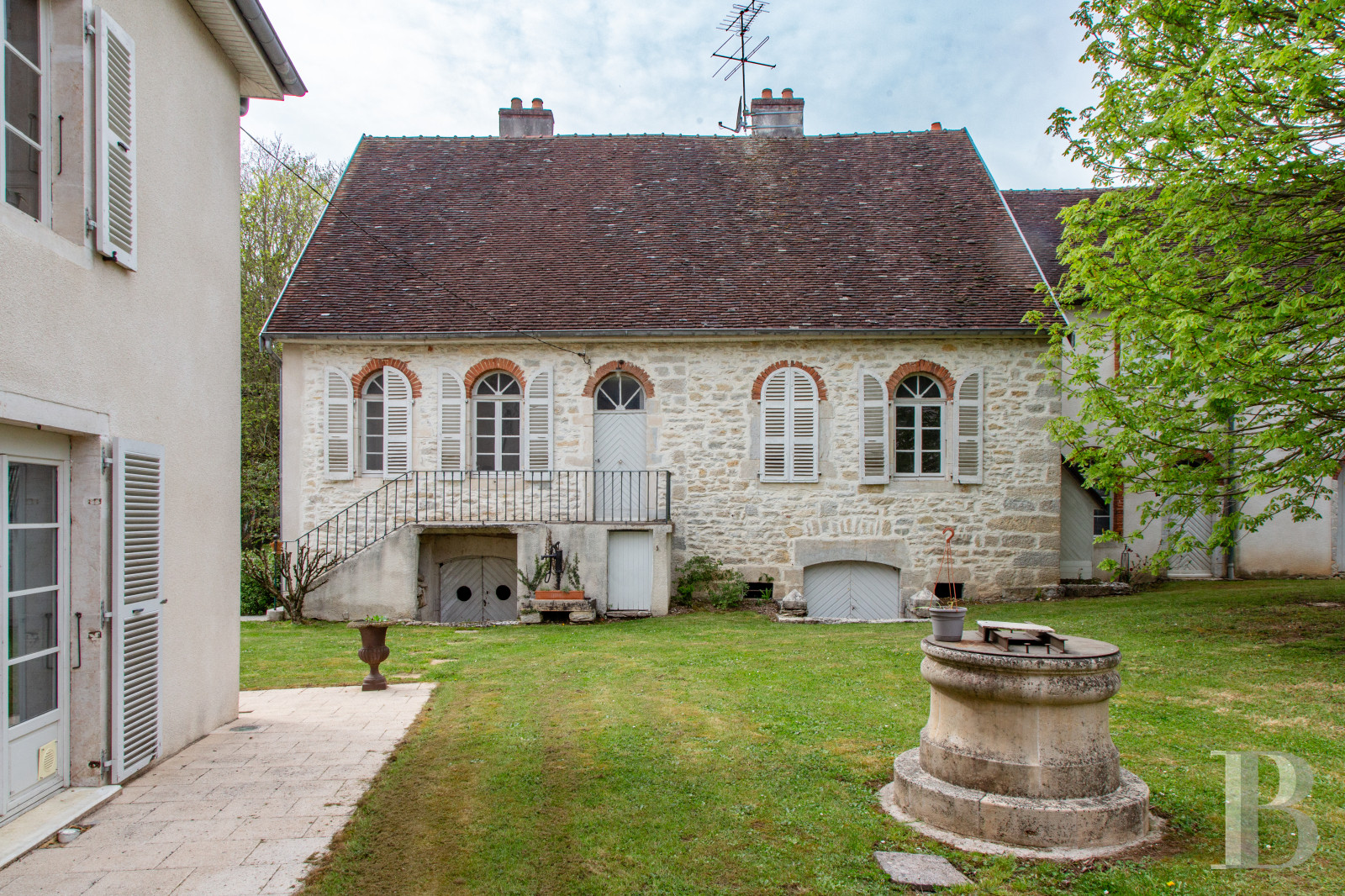
Built over two cellars and rising over a single level, it comprises two bedrooms, a sitting room, kitchen and bathroom. The rooms, parquet-floored, retain their mouldings, wooden panelling, panelled doors and cast-iron radiators. The boiler requires replacement. The facade is in exposed stonework, the semicircular arched openings are in brick, and the timber shutters are louvred. Access to the house is via a stone perron with a wrought-iron handrail.
The service quarters
Once housing the staff, they adjoin the guest house and comprise two barns rising over two levels. The upper level is reached by a metal staircase on the side of the building. Floors are terracotta tiles throughout.
The garage
Built in the 1930s on a concrete slab, in brick-block construction with industrial-style glazed panels and timber beams ; it has an upper level, currently used as a storeroom, accessible via a single-flight wooden staircase.
The grounds
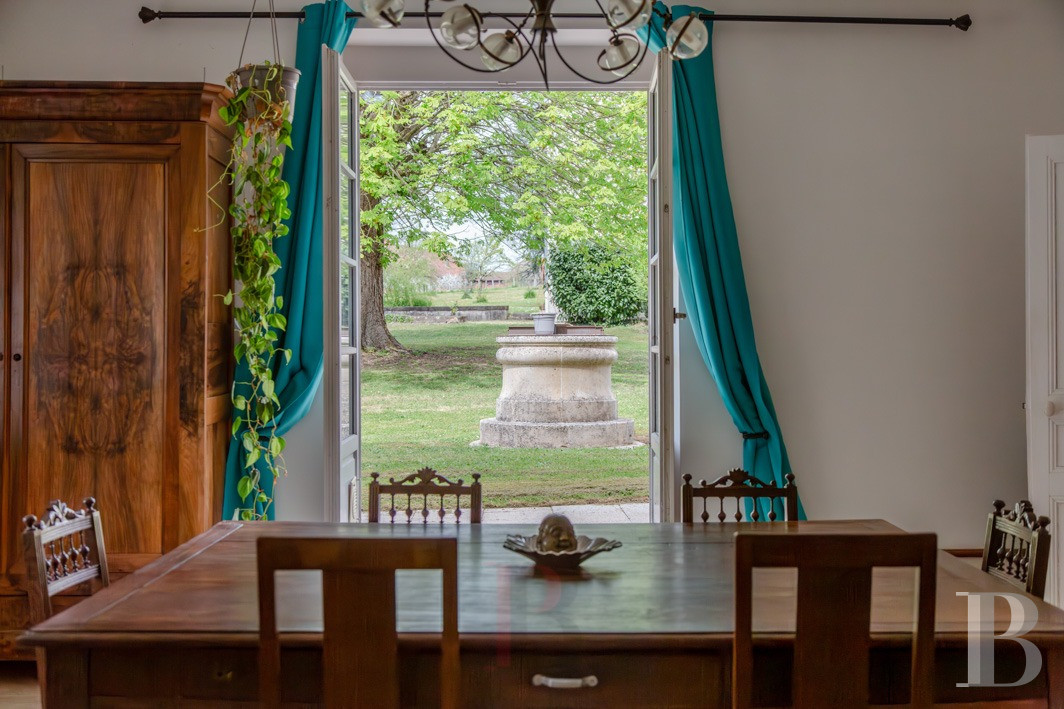
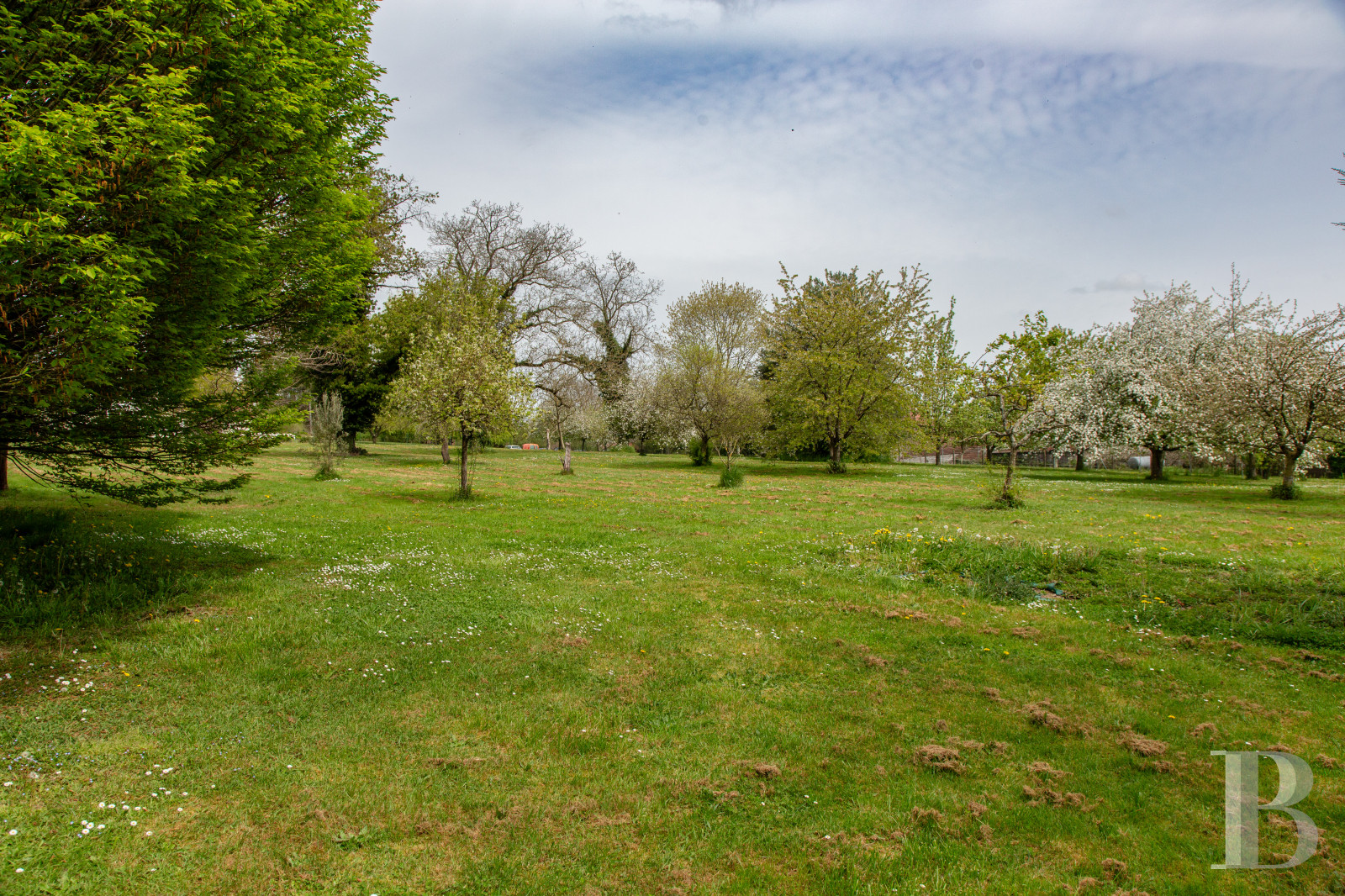
They are laid out in two parts: a landscaped garden to the street side, an orchard to the field side. The centrepiece is a fountain — an exact replica of the village fountain listed in the inventory of historic monuments. A tall horse chestnut and a recently restored stone well give height and presence to the courtyard. A wooded belt screens the dwellings from the road, while a drive gives access to the garages behind the barn. Benches and chairs placed informally around the property create secluded corners. Discreet night lighting plays across these features and the main house. The orchard, on a gentle slope, holds some fifty varieties of regional fruit trees; from here, the view opens over the rear of the property.
Our opinion
A property realising its full potential, set within grounds of exceptional natural quality. Architecture and landscape have settled into an easy equilibrium here — one well suited to receiving family and friends in the houses arranged for that purpose, and to unhurried hours on one of the estate's several terraces. The generous volumes of the silo barn, as yet untouched, hold equal promise for family celebrations, artistic pursuits or whatever purposes future owners may devise. The English landscape park, with its productive orchard, opens further possibilities: a kitchen garden, or a small commercial operation.
560 000 €
Fees at the Vendor’s expense
Reference 972839
| Main building floor area | 392 m² |
| Outbuildings floor area | 510 m² |
| including refurbished area | 180 m² |
| Land registry surface area | 9048 m² |
| Including parkland | 8500 m² |
| Total floor area | 572 m² |
| Garages | 6 |
French Energy Performance Diagnosis
Information on the risks to which this property is exposed is available on the website: www.georisques.gouv.fr
Share


NB: The above information is not only the result of our visit to the property; it is also based on information provided by the current owner. It is by no means comprehensive or strictly accurate especially where surface areas and construction dates are concerned. We cannot, therefore, be held liable for any misrepresentation.