



A Directoire-era manor house, which needs reviving, with an orangery,
swimming pool and garden, surrounded by countryside, in Villeneuve-lès-Avignon
swimming pool and garden, surrounded by countryside, in Villeneuve-lès-Avignon
Avignon,
GARD
languedoc-roussillon
84000
FR

Location
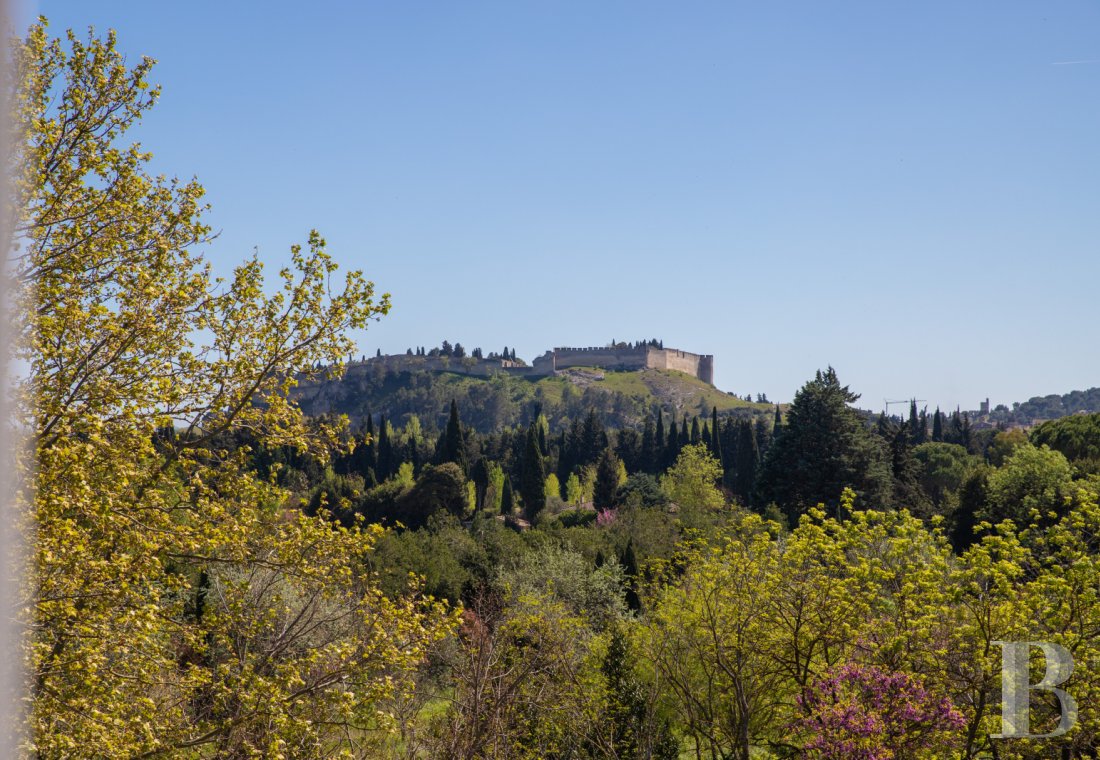
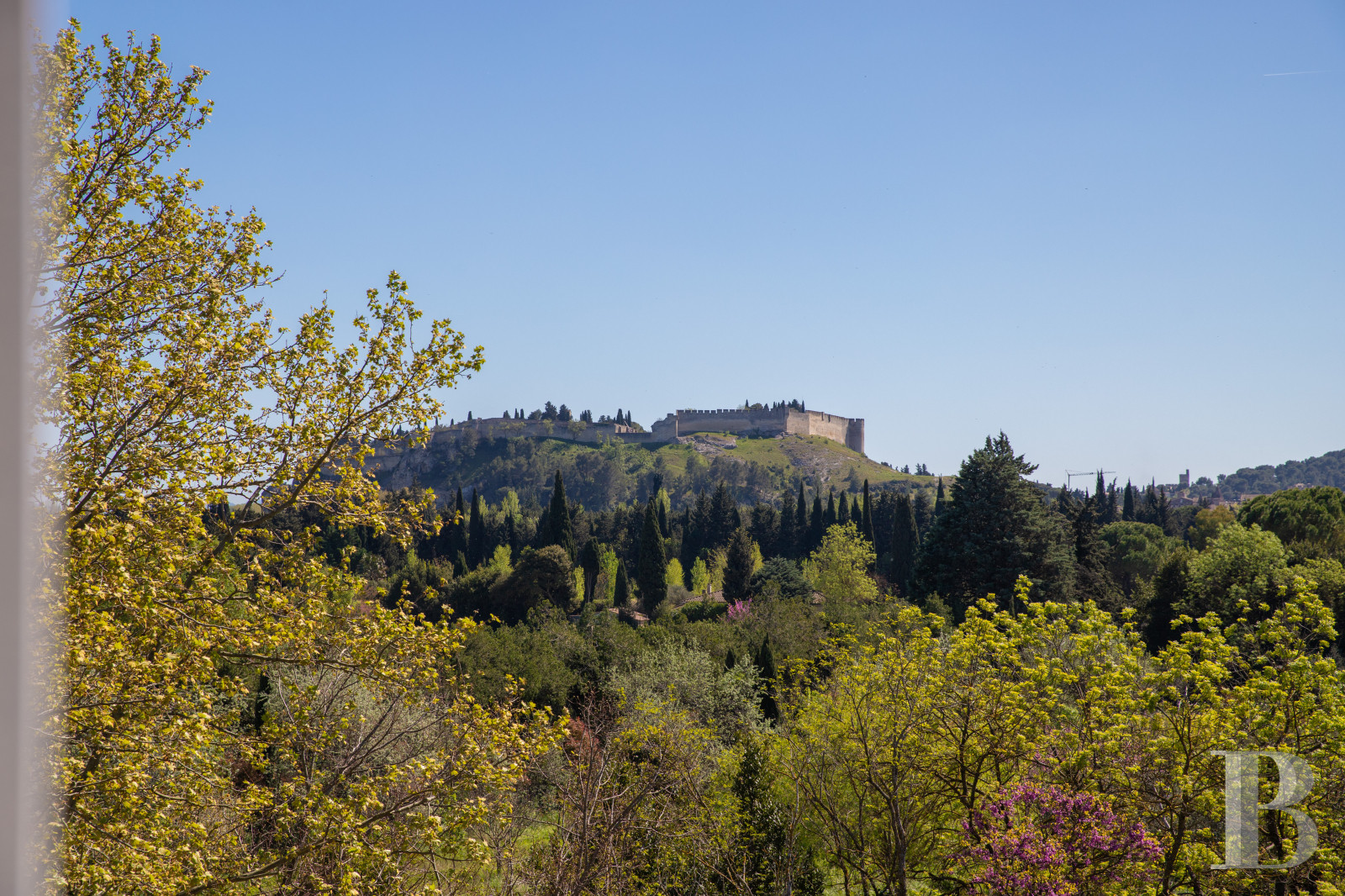
In the east of the Gard department and on the Villeneuve-lès-Avignon plain, with views of the Saint-André fort, perched on its promontory, the property’s location combines the advantages of urban proximity with a peaceful setting in the countryside, while the village, which has earned the reputation as Avignon’s upscale residential suburb, with, in particular, its famous Saturday flea market, is within walking distance and features many commercial and cultural amenities, without having to go into Avignon itself.
In addition, twenty minutes away from the Avignon high-speed rail station and 90 minutes from the international and national airports of Marseille, Nîmes and Montpellier, the property enjoys the extensive public transportation network of both the Greater Avignon inter-municipal community and the Occitanie region.
Description
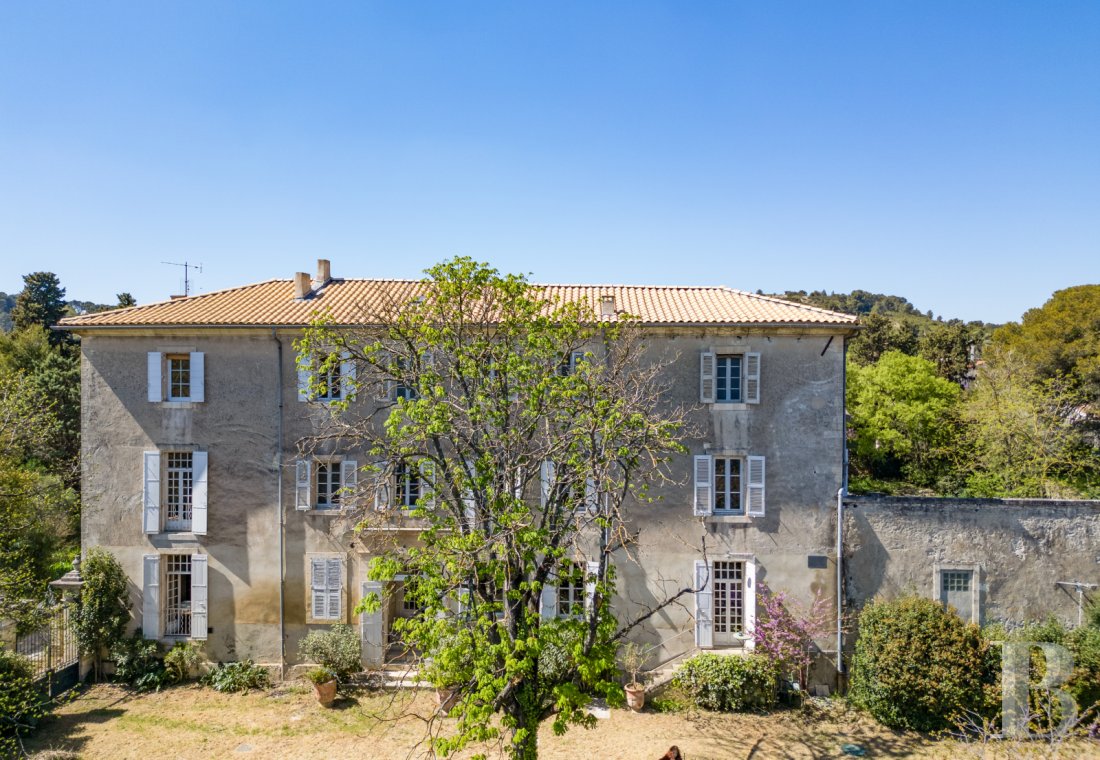
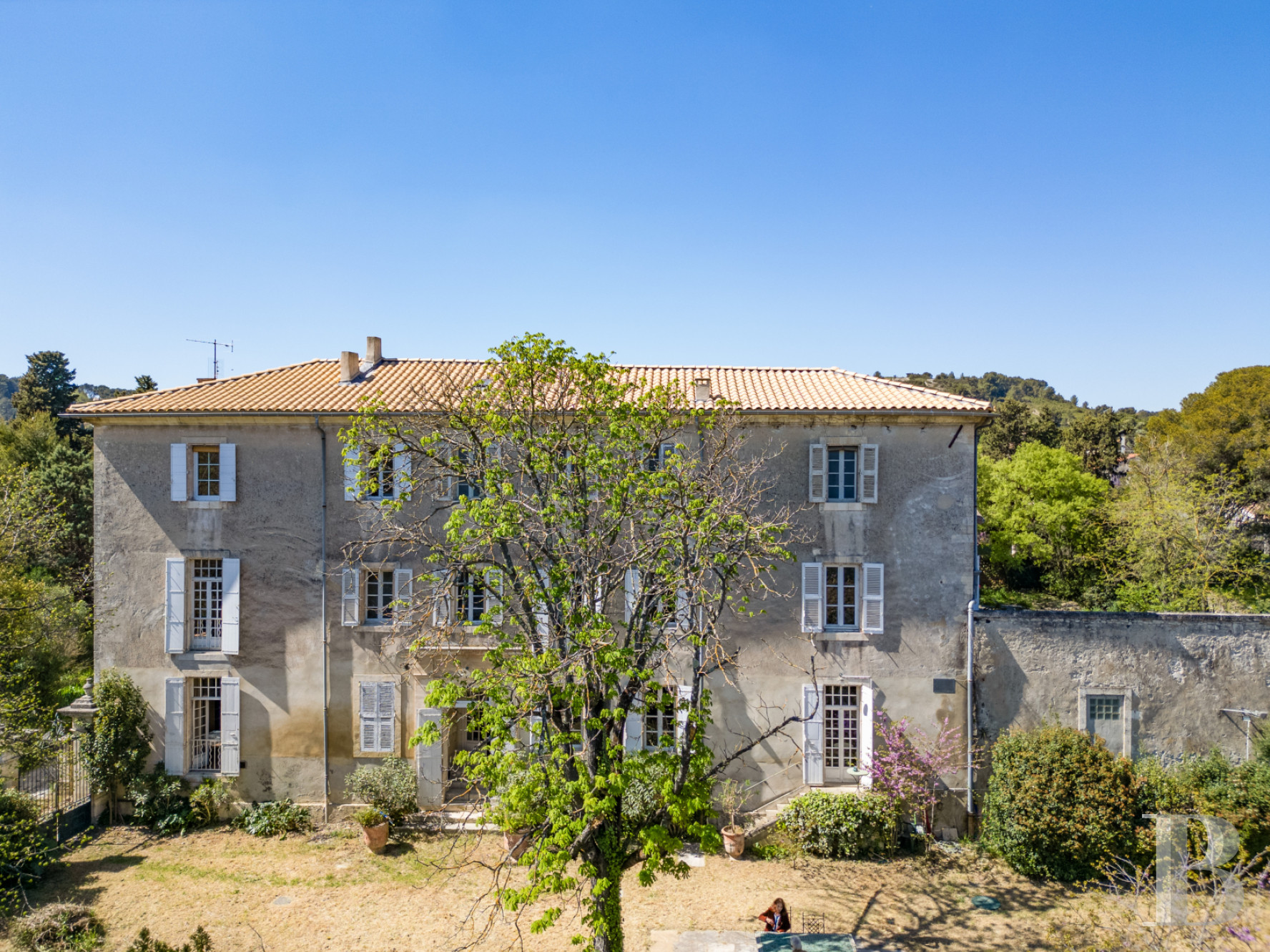
Featuring two storeys over a garden level, facing east and overlooking the plain, the dwelling is typical of manor houses erected by the wealthy bourgeoisie immediately after the French Revolution. Once reigning over an immense estate that has mostly been split up since due to inheritance laws, it has preserved its majestic ascending drive, lined with two rows of sycamores, which it shares with its adjacent caretaker’s cottage, located to the west and excluded from the sale.
With all of its exterior architectural features from the manor’s era of construction left intact, the dwelling boasts wide double-glazed windows and doors, six per floor on the main façade and two on each gable end, safeguarded by painted solid wood or louvred shutters, as well as beige plaster-coated ashlar stone exteriors, typical of bourgeois dwellings, since pointed stone was reserved for more rural farmhouses, while the dwelling’s projecting eave and eye-catching sculpted cornice support a traditional barrel tile roof.
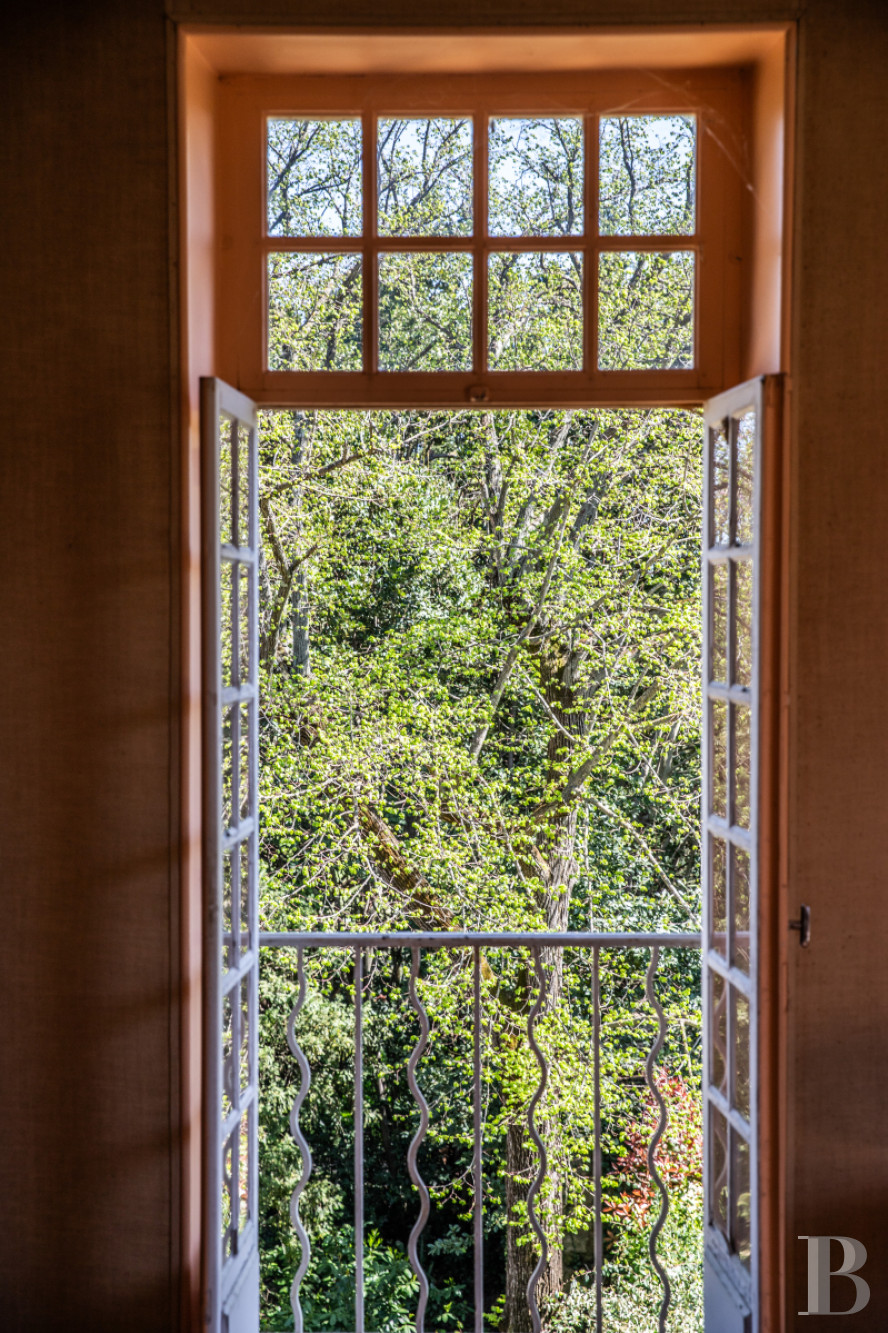
In addition, a little more than 1,100 m² of grounds have been preserved around the dwelling, from an estate that was originally much larger in size and the remainder of which, still existing in other hands, is primarily used as pastureland and woods, highlighting this property’s undeniable bucolic feel, despite its proximity to the nearby town.
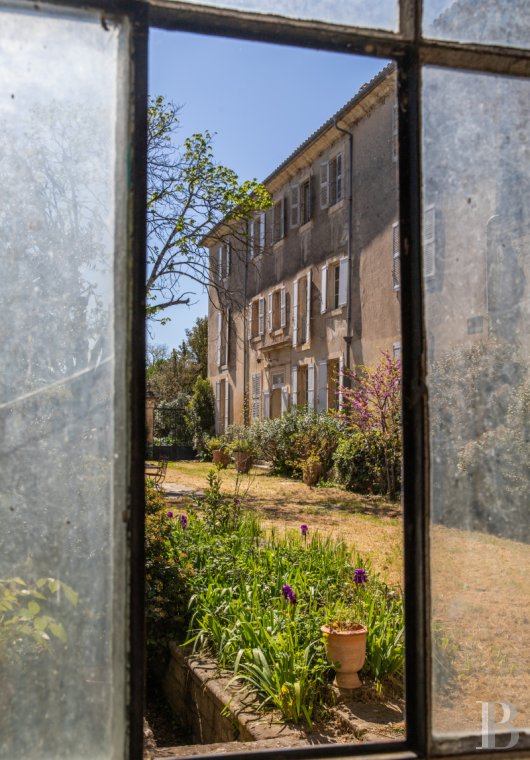
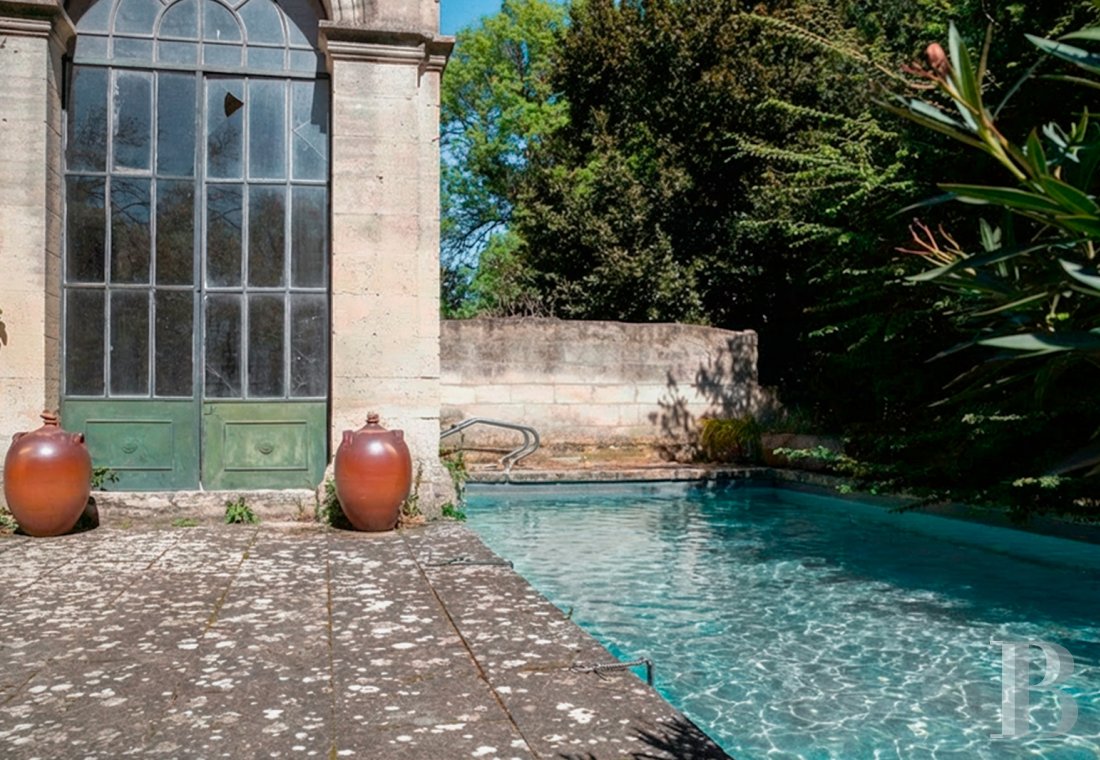
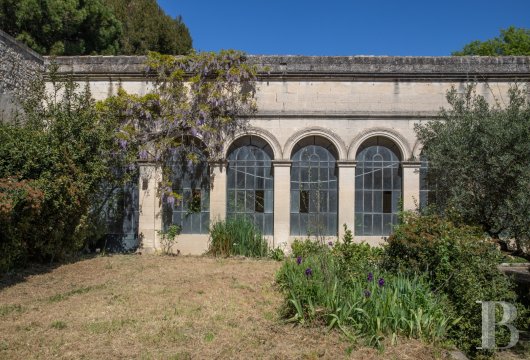
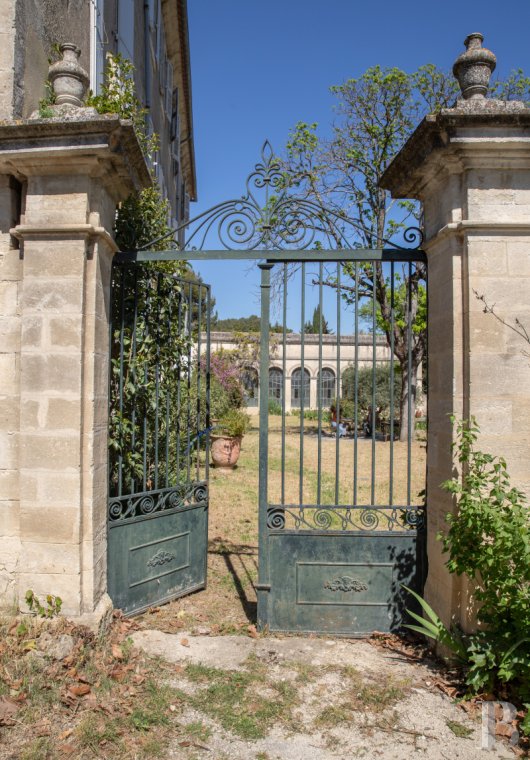
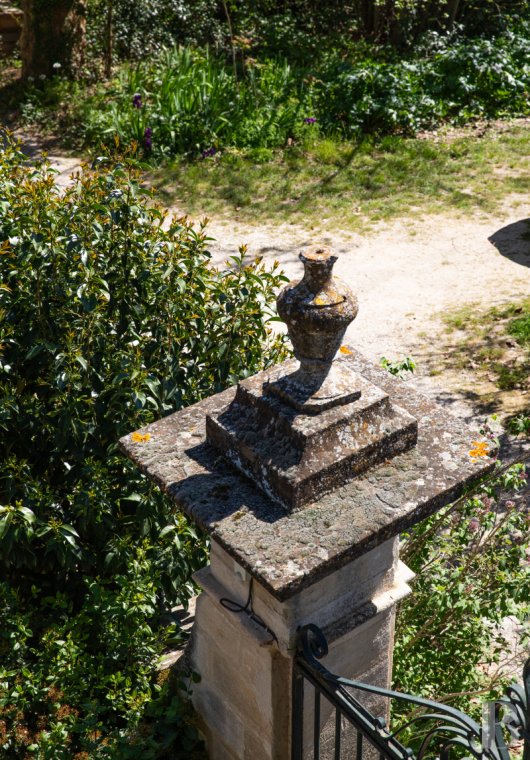
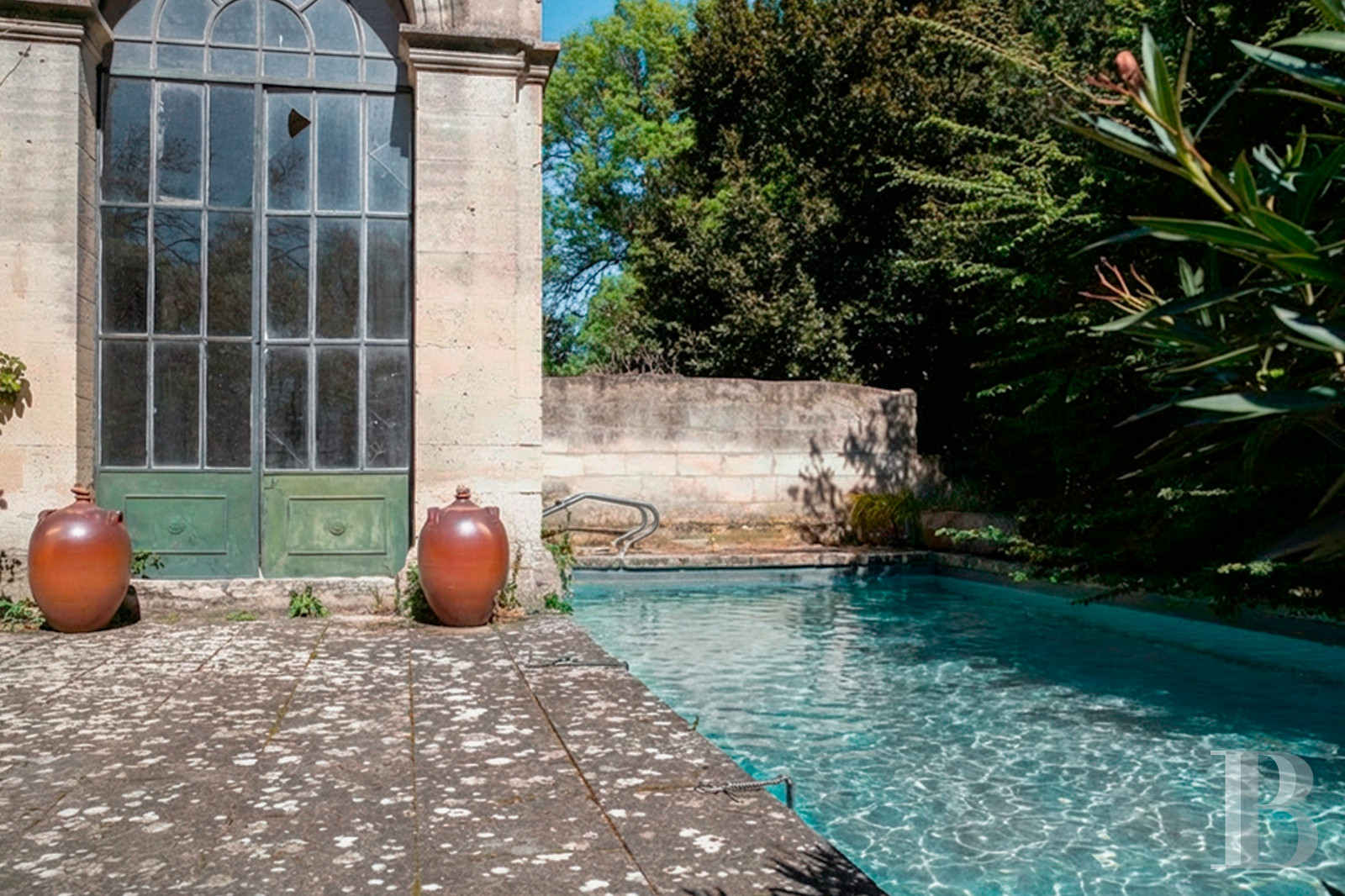
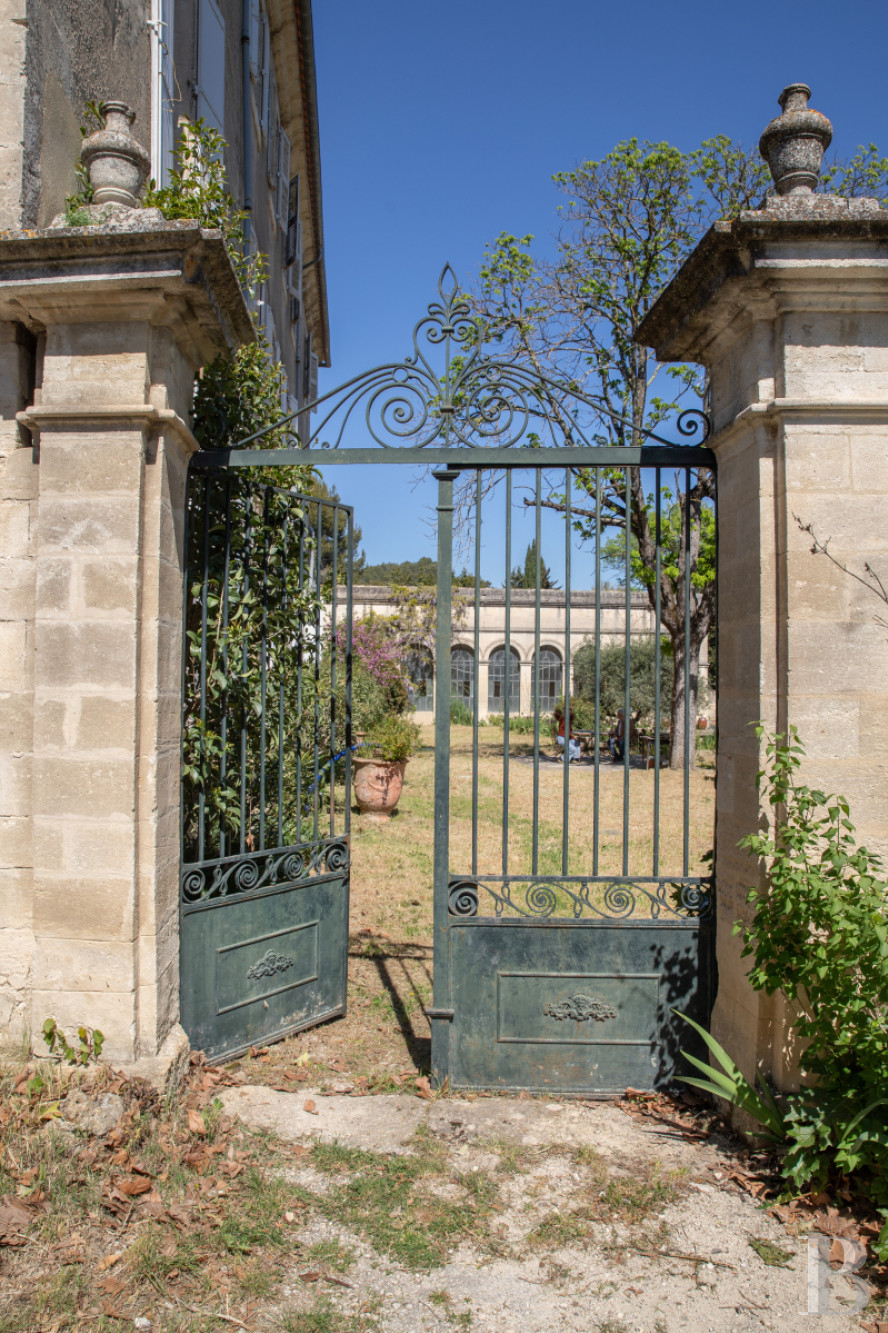
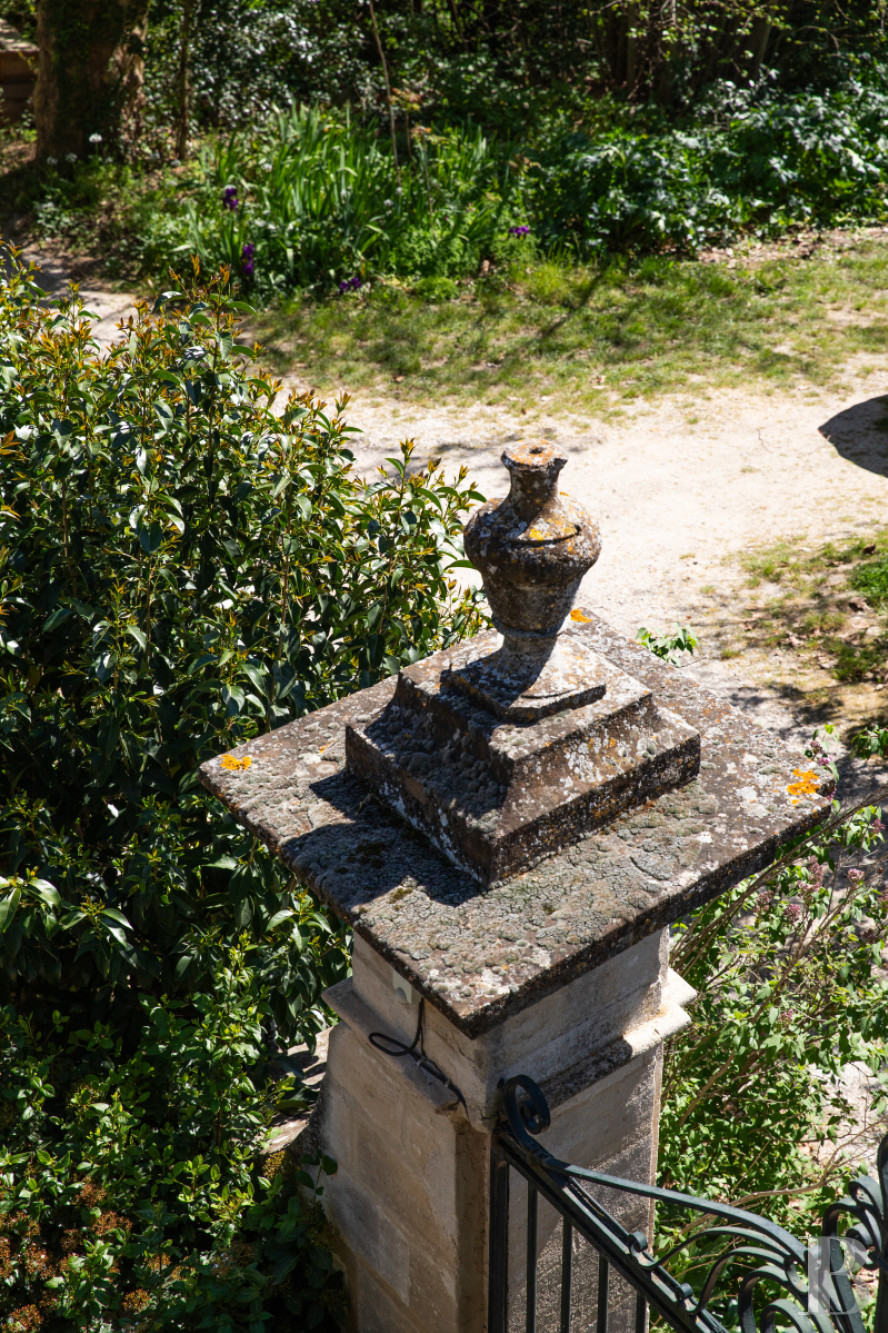
Sheltered from view, the walled garden is accessible via a tall wrought-iron gate from the Romantic period, flanked on either side by two stone pilasters topped with sculpted urns from the same era, while this verdant space, preceding the dwelling, communicates with an ancient and functional swimming pool, of approximately 50 m², and the orangery, with its original picture windows.
With several front steps providing access to the dwelling’s garden-level entryway, the latter communicates with about a dozen rooms, including two immense drawing/living rooms, four bedrooms and three bath or shower rooms, whereas an independent garage for two vehicles was built under the garden in order to compensate for the drive’s gentle slope.
Last, but not least, the building as a whole, quite sound, could forgo an exterior restoration, even though it would also be possible to refurbish its façade to its former lustre, while renovations will be required for the orangery.
With all of its exterior architectural features from the manor’s era of construction left intact, the dwelling boasts wide double-glazed windows and doors, six per floor on the main façade and two on each gable end, safeguarded by painted solid wood or louvred shutters, as well as beige plaster-coated ashlar stone exteriors, typical of bourgeois dwellings, since pointed stone was reserved for more rural farmhouses, while the dwelling’s projecting eave and eye-catching sculpted cornice support a traditional barrel tile roof.
In addition, a little more than 1,100 m² of grounds have been preserved around the dwelling, from an estate that was originally much larger in size and the remainder of which, still existing in other hands, is primarily used as pastureland and woods, highlighting this property’s undeniable bucolic feel, despite its proximity to the nearby town.
Sheltered from view, the walled garden is accessible via a tall wrought-iron gate from the Romantic period, flanked on either side by two stone pilasters topped with sculpted urns from the same era, while this verdant space, preceding the dwelling, communicates with an ancient and functional swimming pool, of approximately 50 m², and the orangery, with its original picture windows.
With several front steps providing access to the dwelling’s garden-level entryway, the latter communicates with about a dozen rooms, including two immense drawing/living rooms, four bedrooms and three bath or shower rooms, whereas an independent garage for two vehicles was built under the garden in order to compensate for the drive’s gentle slope.
Last, but not least, the building as a whole, quite sound, could forgo an exterior restoration, even though it would also be possible to refurbish its façade to its former lustre, while renovations will be required for the orangery.
The Manor House
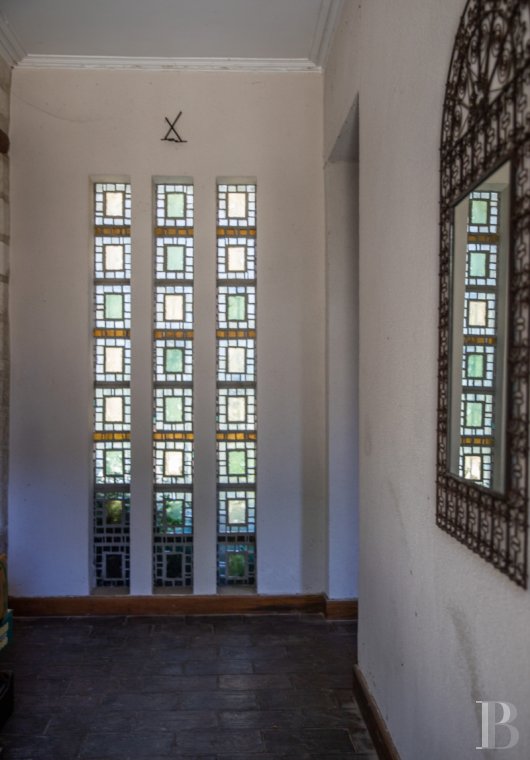
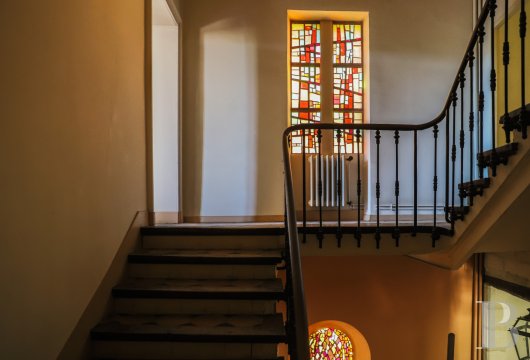
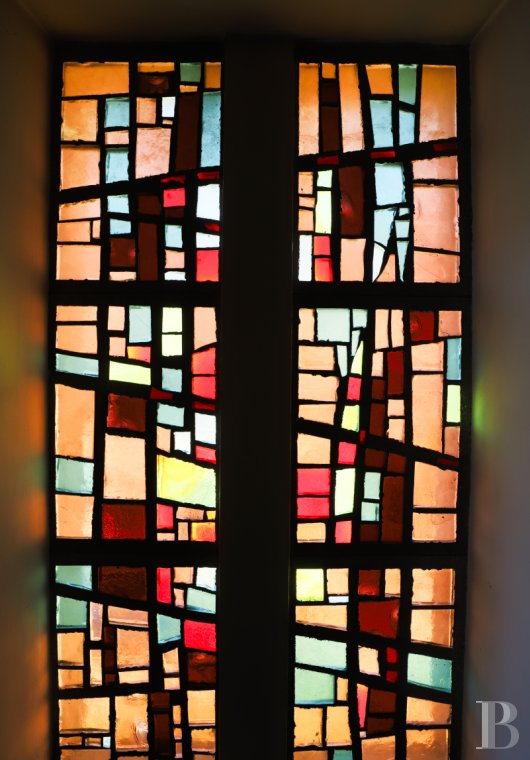
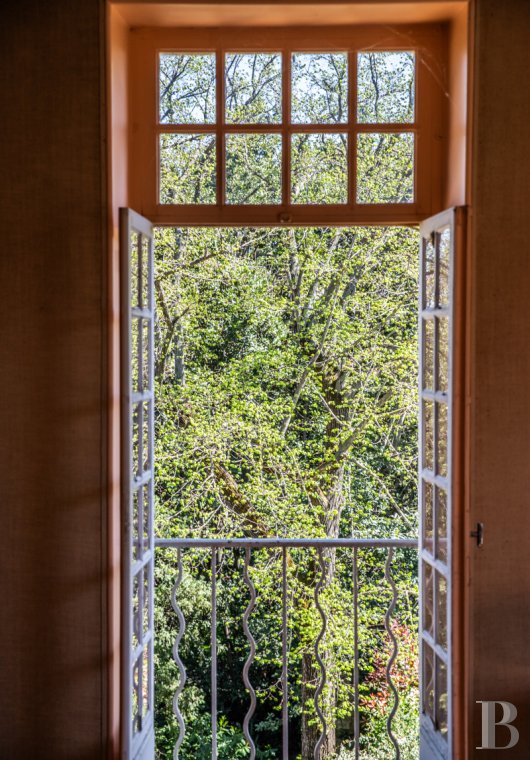
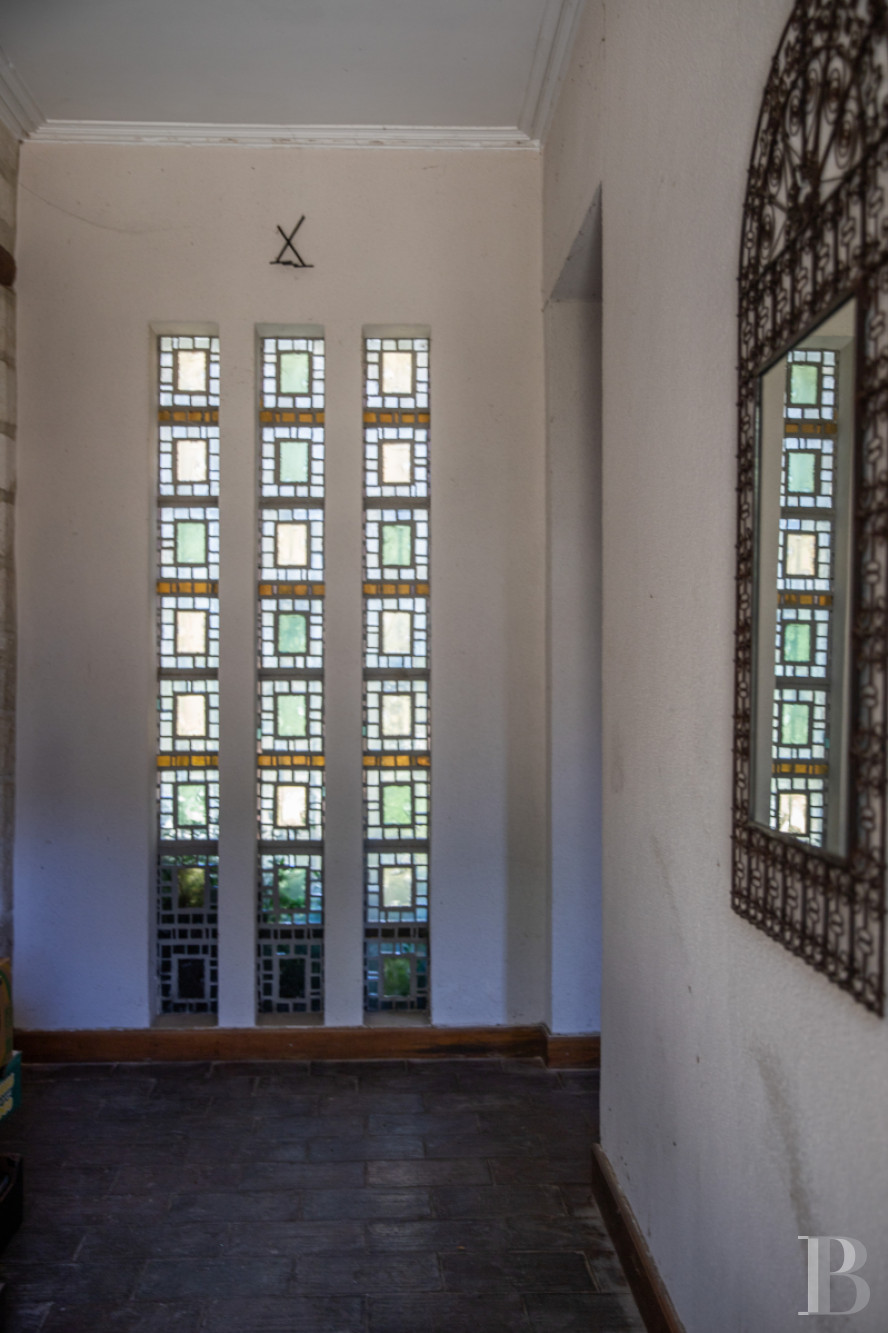
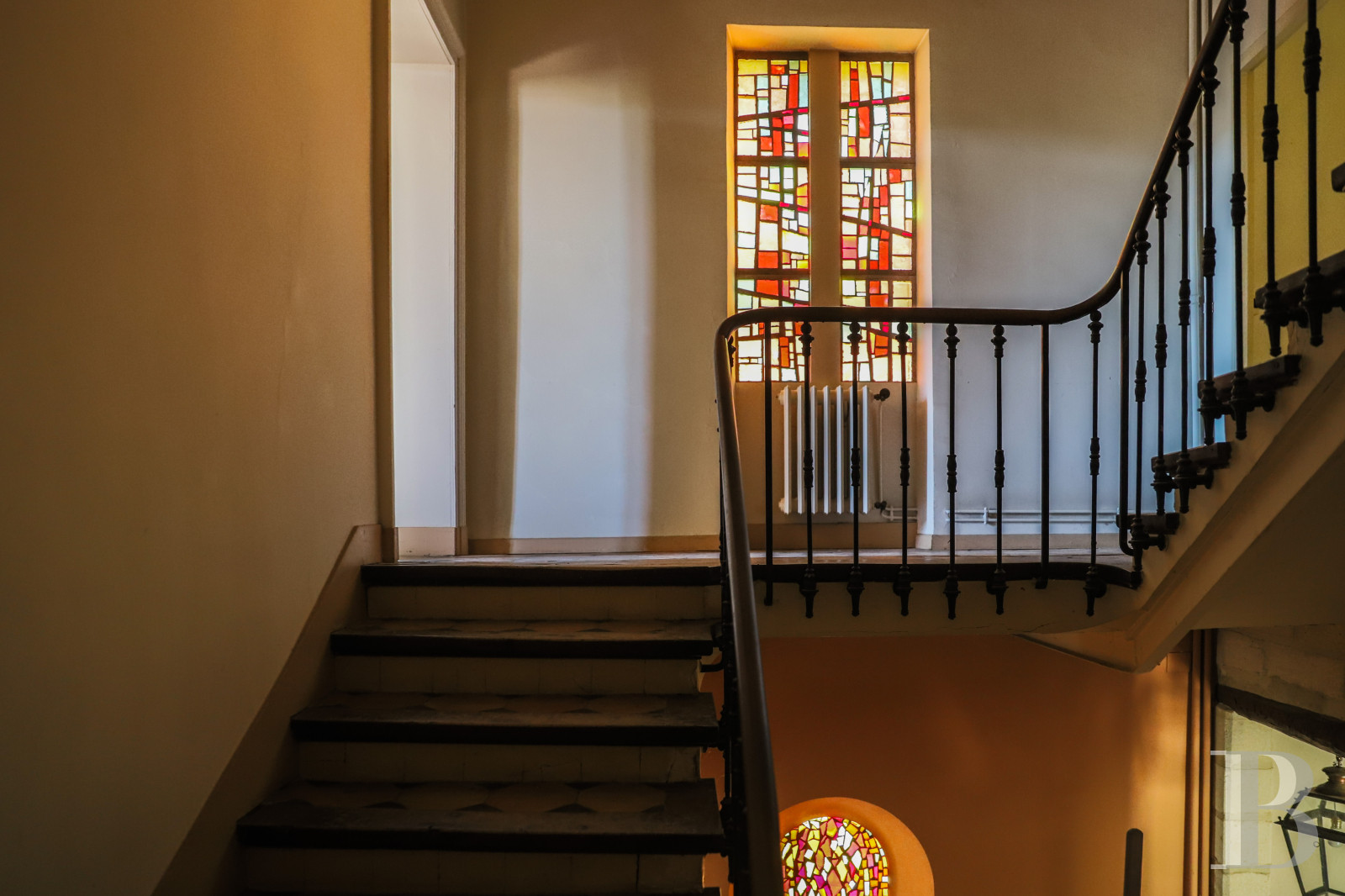
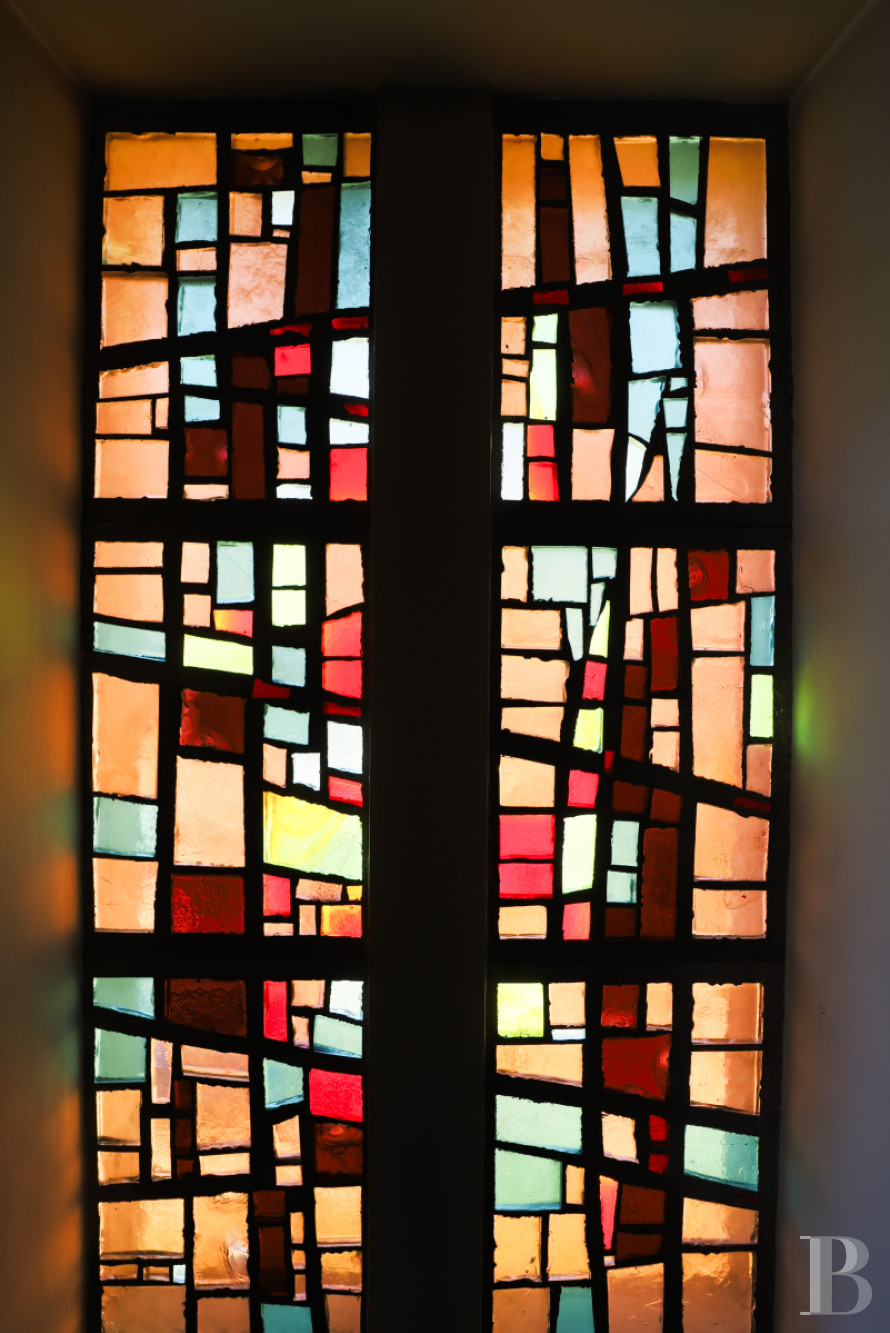
Inhabited simultaneously for many decades by several members of the same family, it has been divided up over time into a number of different flats, each with their own amenities, while the majestic staircase, providing access to each floor, is illuminated on every level by a series of breath-taking stained glass windows designed by artists from the 1970s, which contrast nicely with the dwelling’s 19th-century architecture.
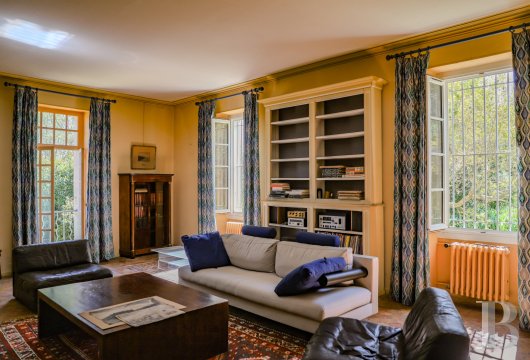
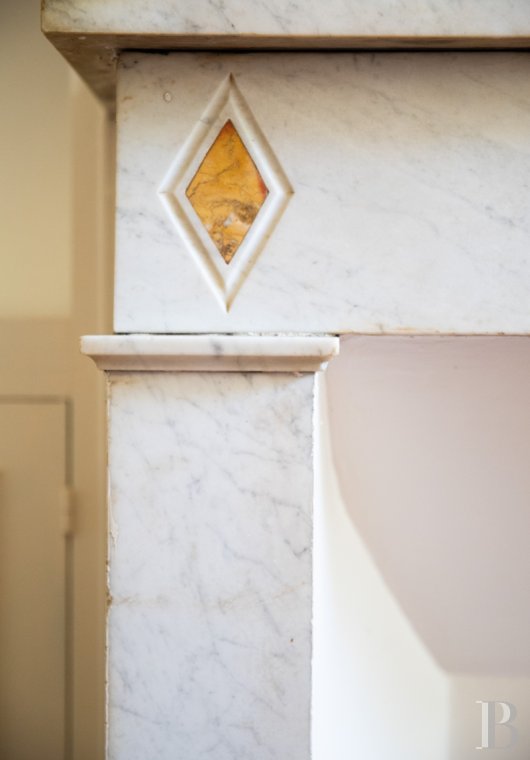
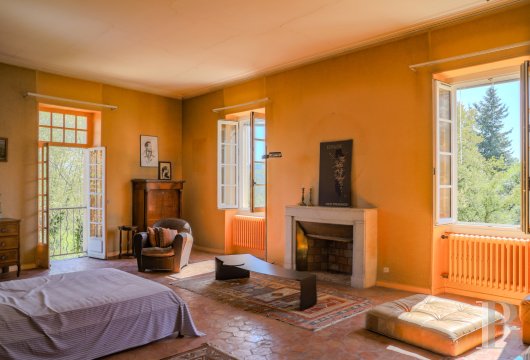
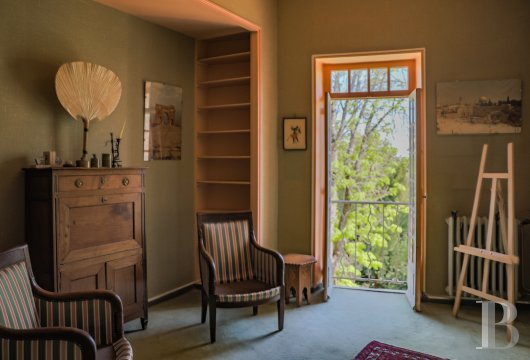
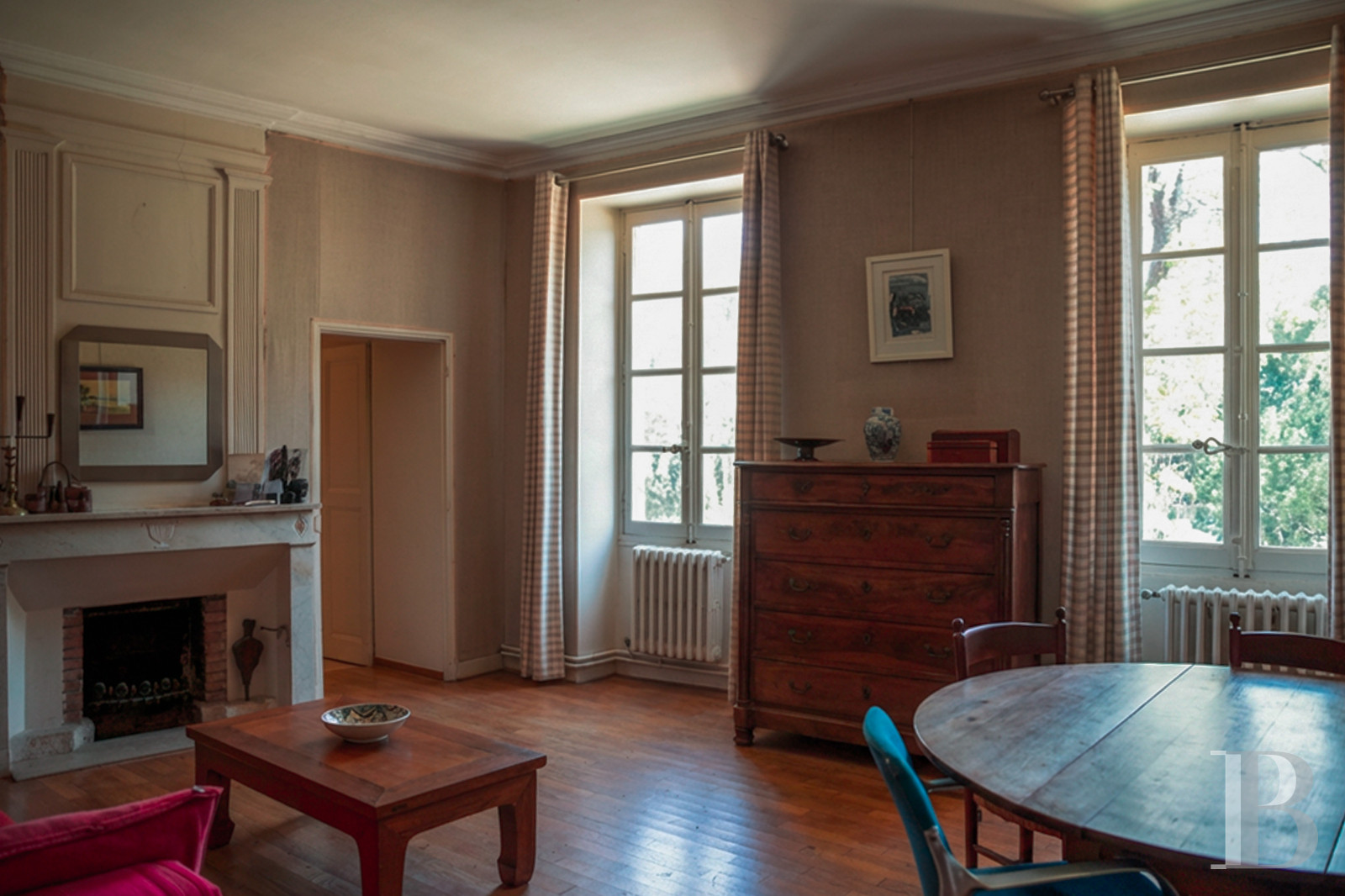
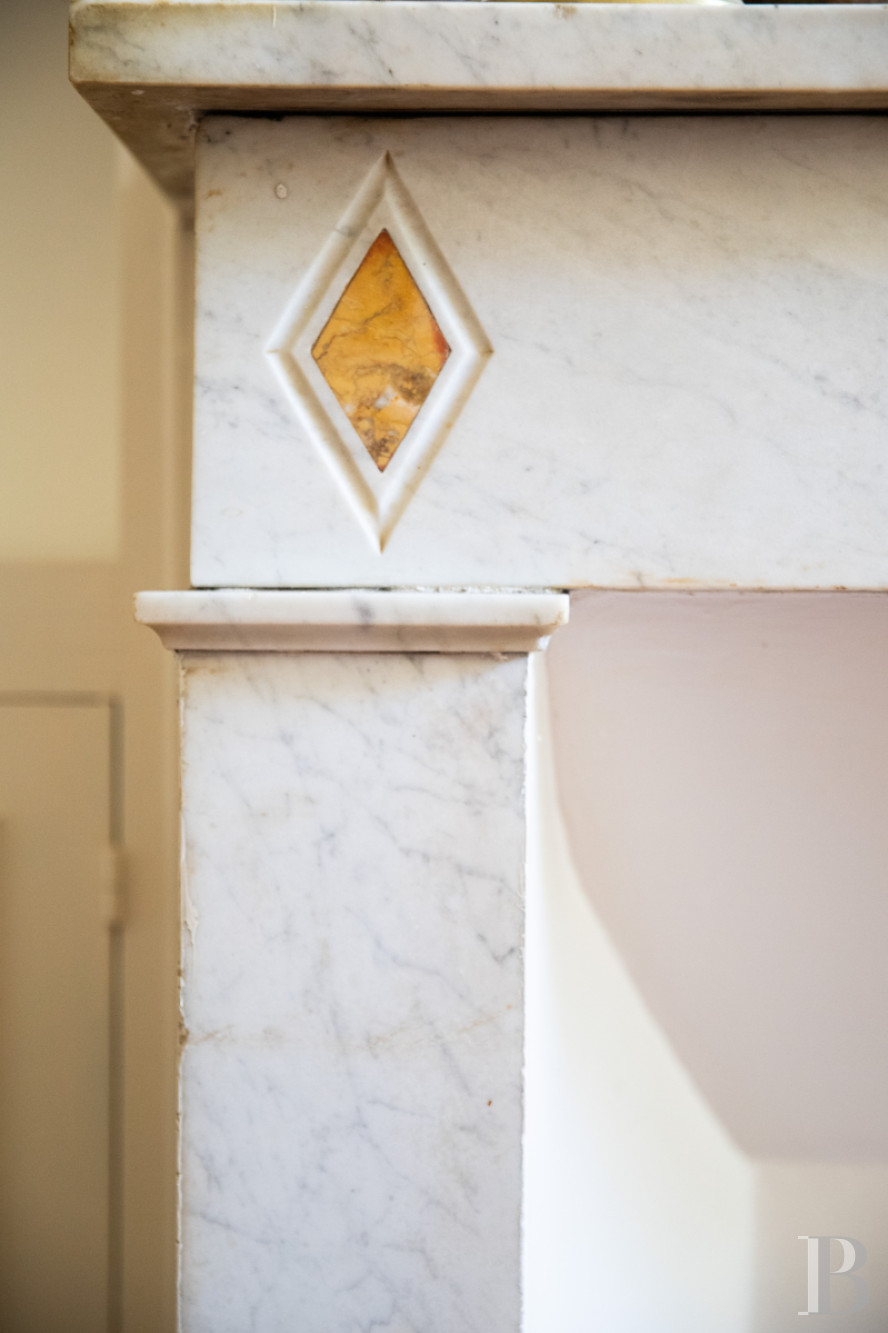
Although the dimensions of the rooms have been more or less preserved, few original interior architectural features are still visible given that a portion of the dwelling underwent a drastic renovation in the 1960s. Thanks to this rather disparate interior aspect, which adds to its overall character, this ancient dwelling could be redesigned in a number of different ways, including ultra-contemporary ones.
The garden-level floor
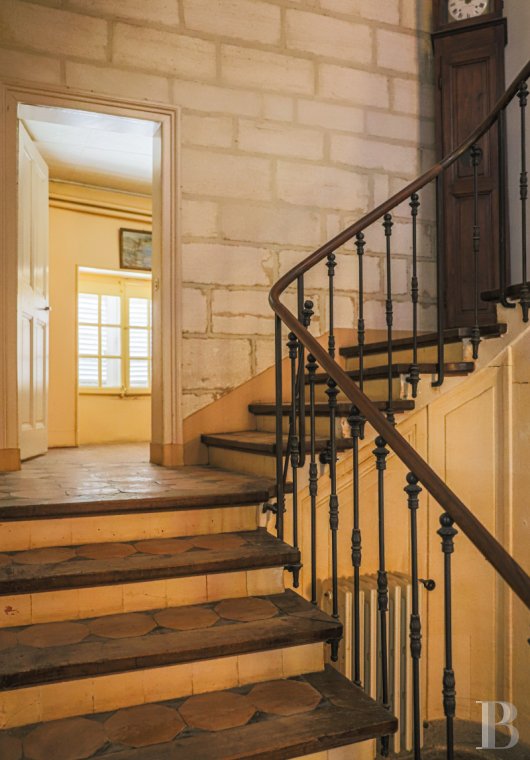
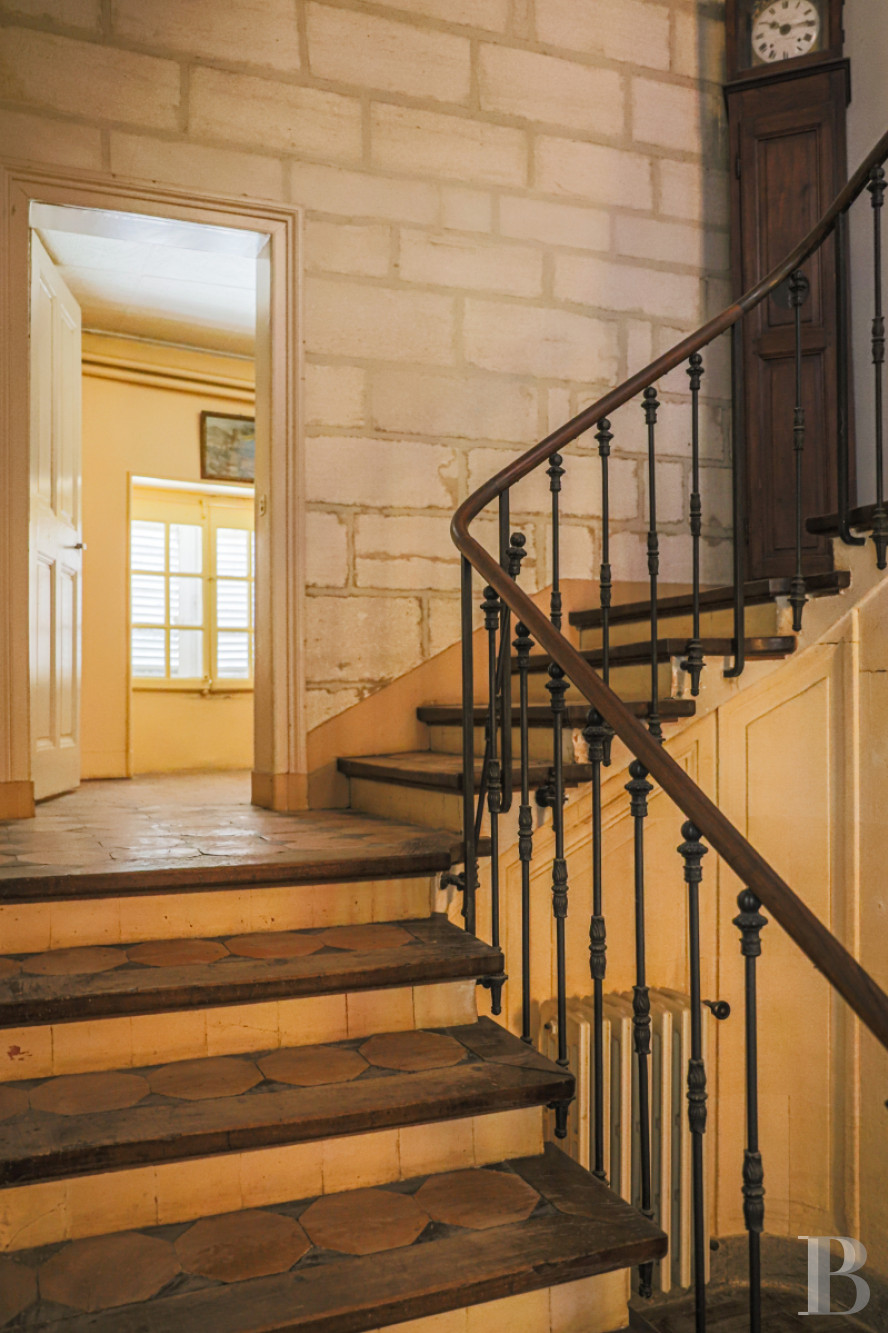
Completely conforming to the classical layout of dwellings from this time, the purpose of which was to provide privacy for its inhabitants, the entryway and its vestibule only communicate with the stairwell and its flight of stone steps, safeguarded by a wrought-iron and wood bannister.
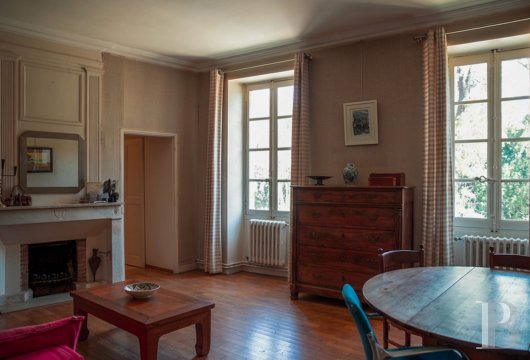
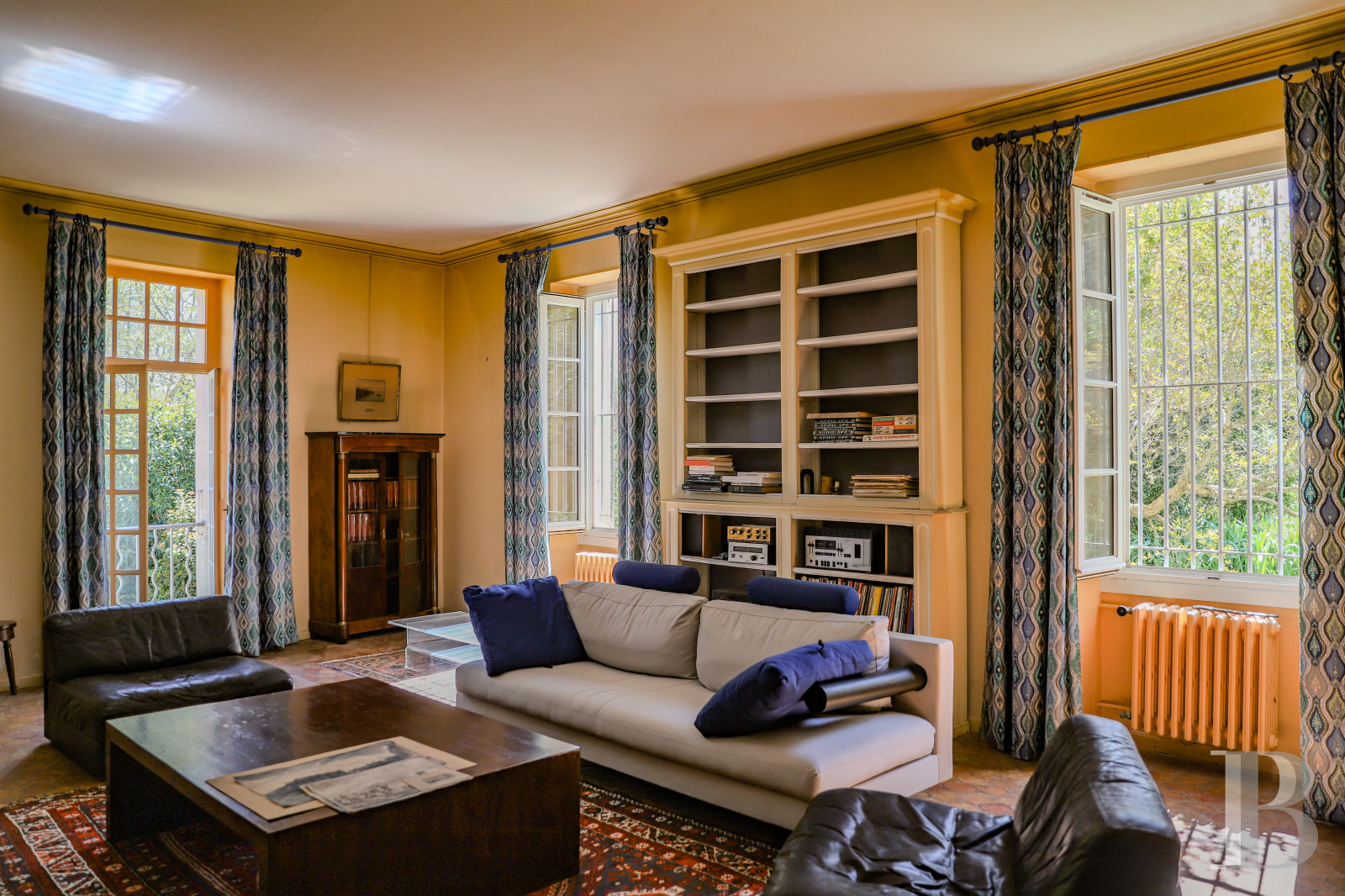
As for the other rooms on this floor, they are accessible through a series of doorways located around the base of the staircase: to the right, an immense living room faces south and east, while, to the left, a dining room, kitchen and a scullery face east and overlook the garden.
With no windows on its northern side, except for the thick stained glass windows designed with abstract patterns, the result of a commission from the 1960s, this level features original terracotta tile floors and soaring floor-to-ceiling heights.
The first floor
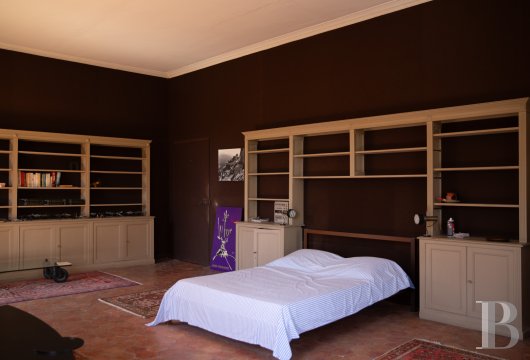
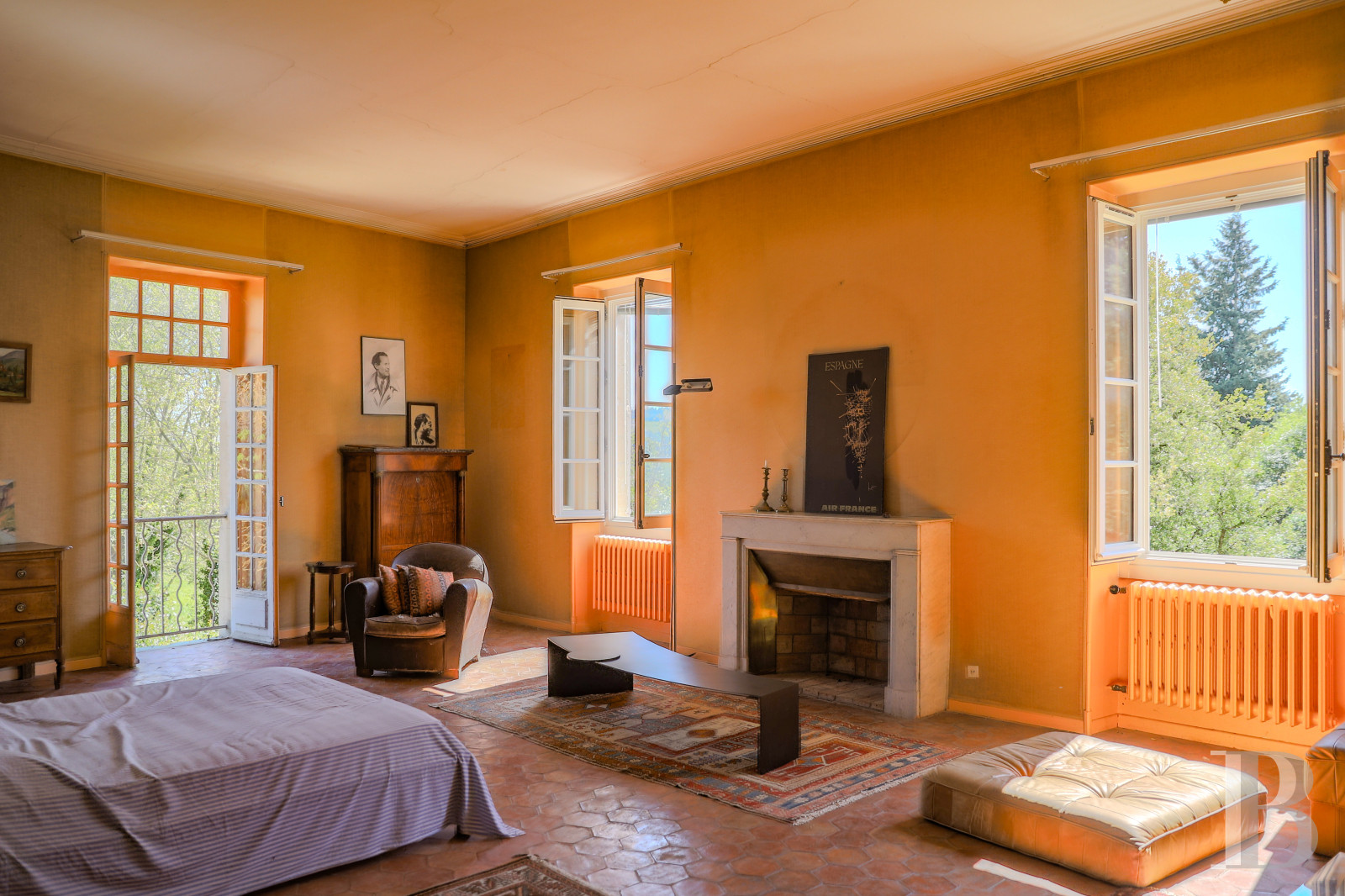
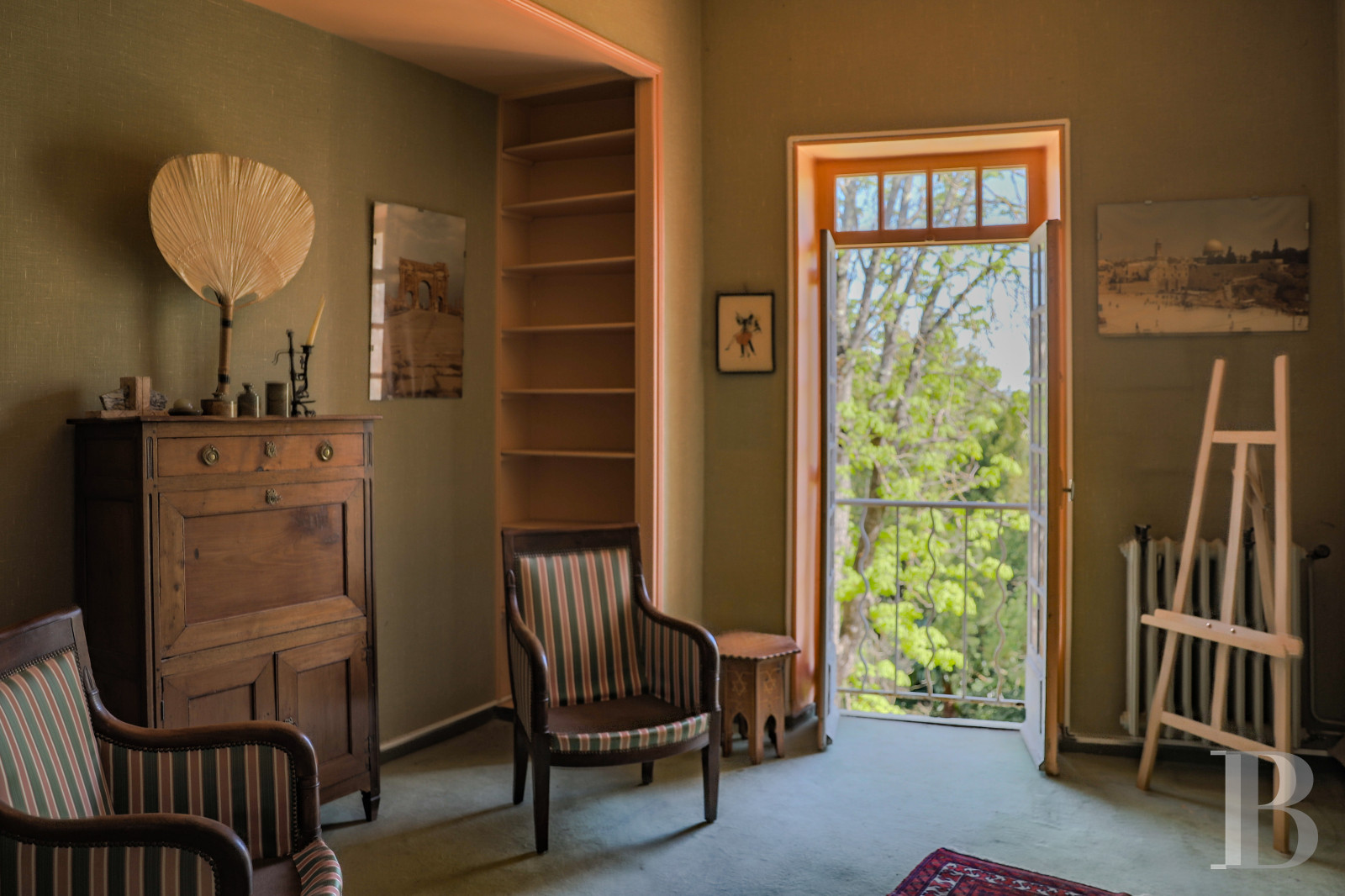
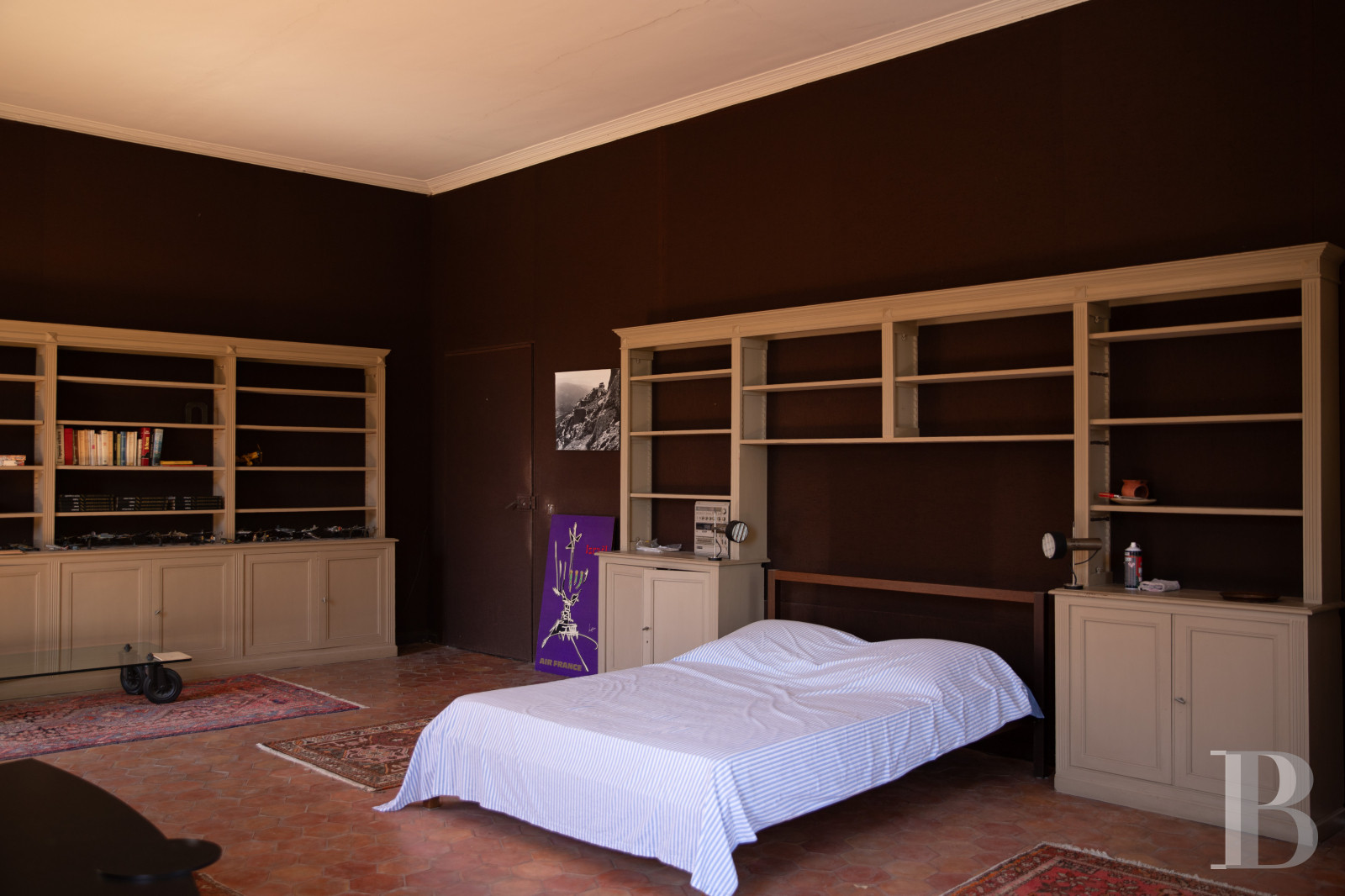
Repeating the same layout as the garden level except for one or two minor differences, this floor includes an immense space, to the right of the landing, which can be used as either a living room or a large bedroom. Following on from here and accessible via a shared hallway, this floor also includes a boudoir, a bedroom with a bathroom, another large bedroom used as a studio flat, as well as two small recesses converted into a kitchen for this level, while its furnishings and decoration from the 1960s and 70s are still visible throughout.
The second floor
With the same layout, organised around the landing, this final floor, with few original elements, includes two bedrooms, two bath or shower rooms, a small corridor and cupboards, which are used as linen closets, but could be repurposed if needed, as well as a lavatory, while the floor’s different volumes are all connected by a very long independent hallway.
The Orangery
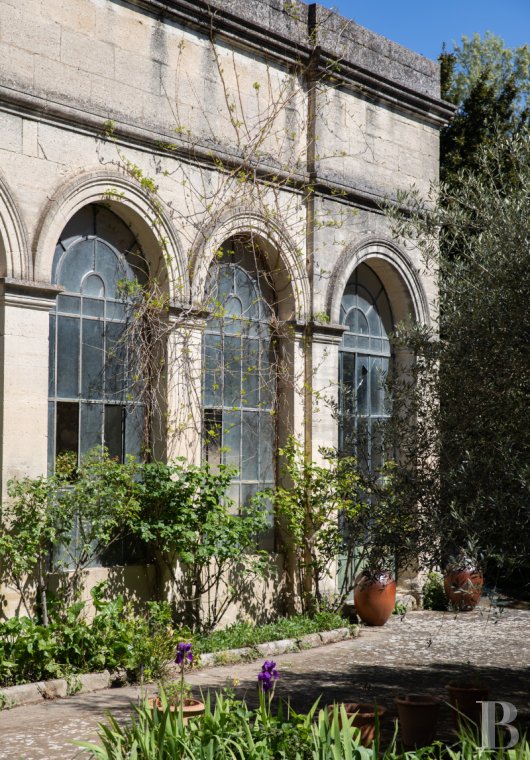
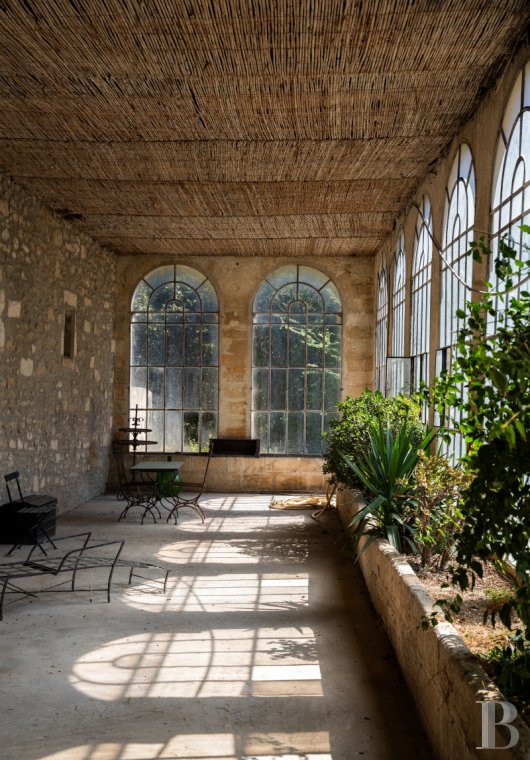
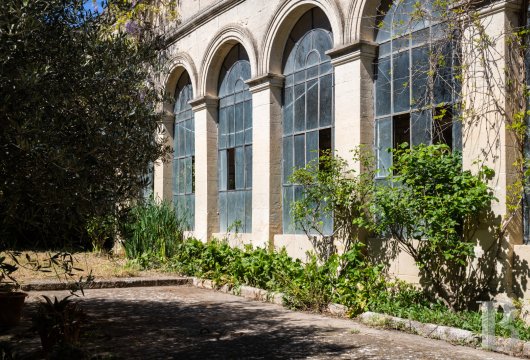
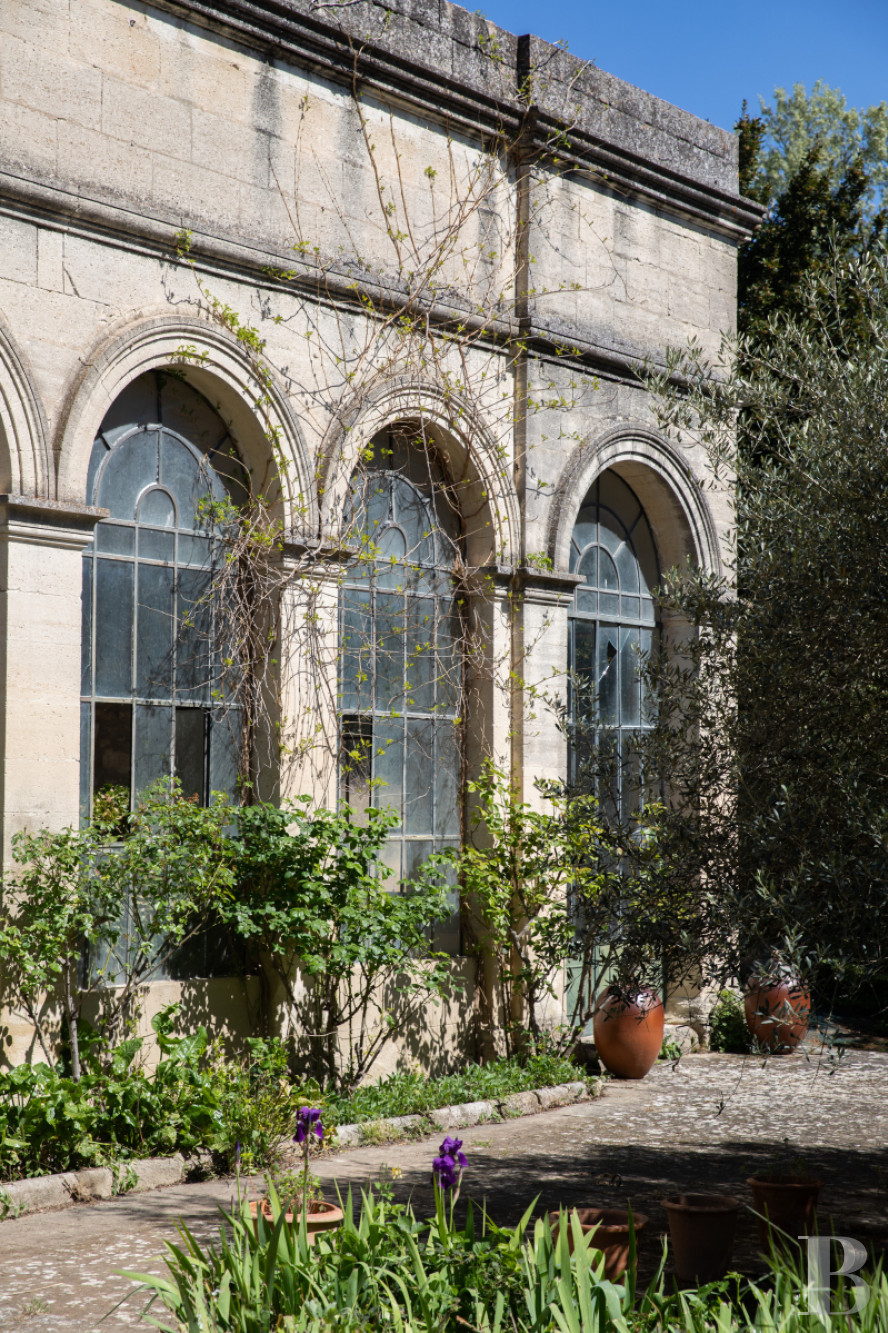
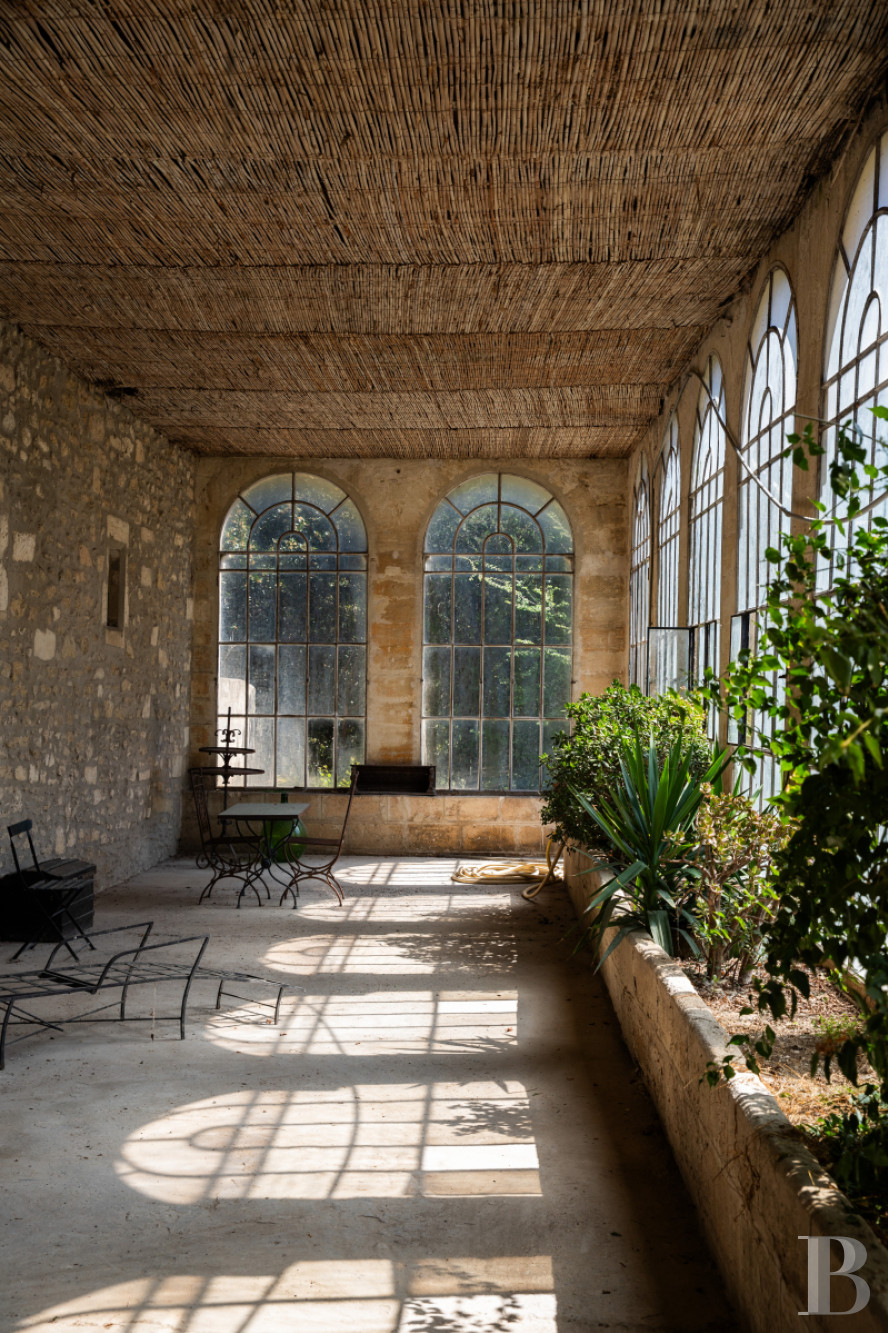
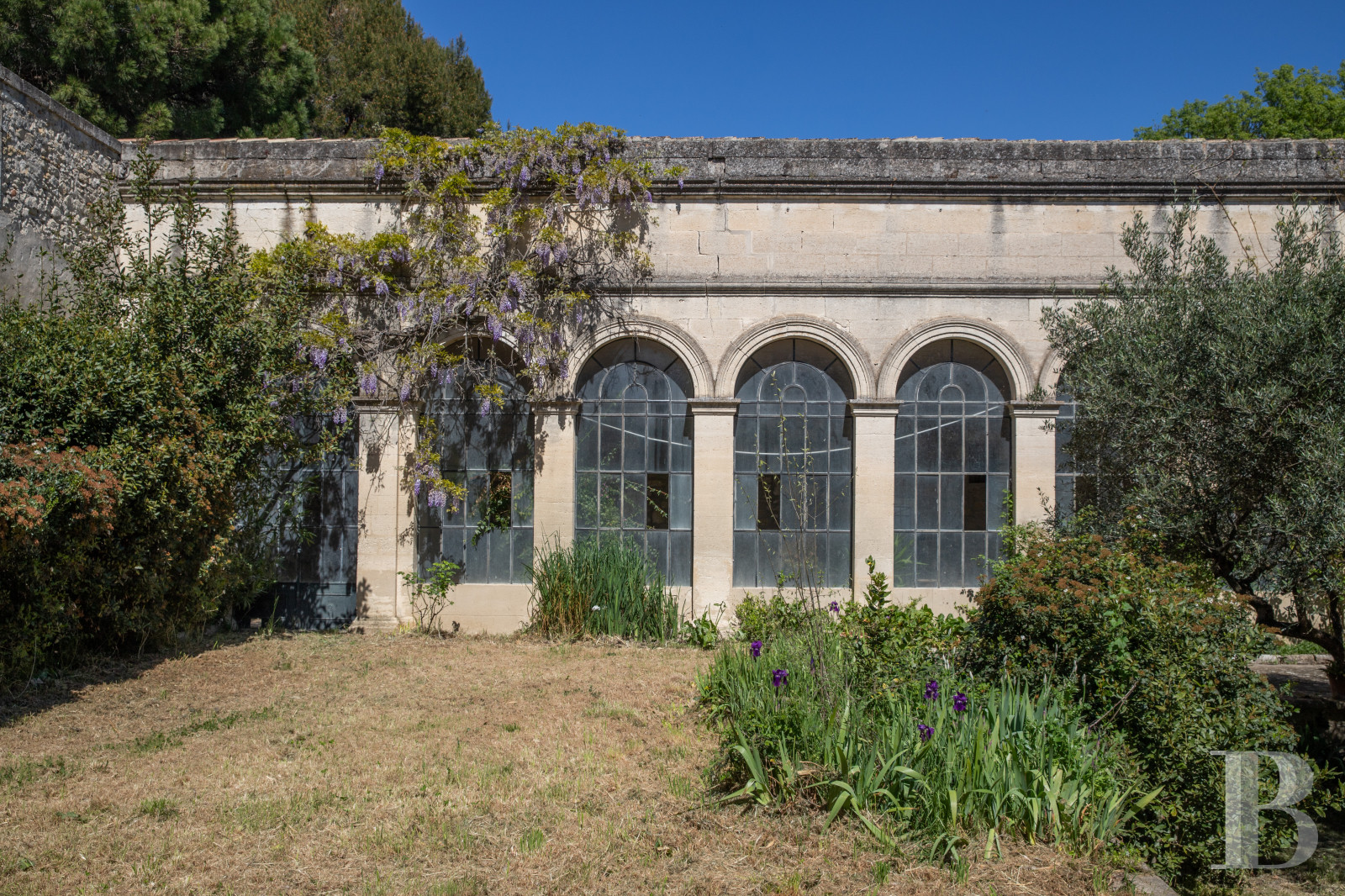
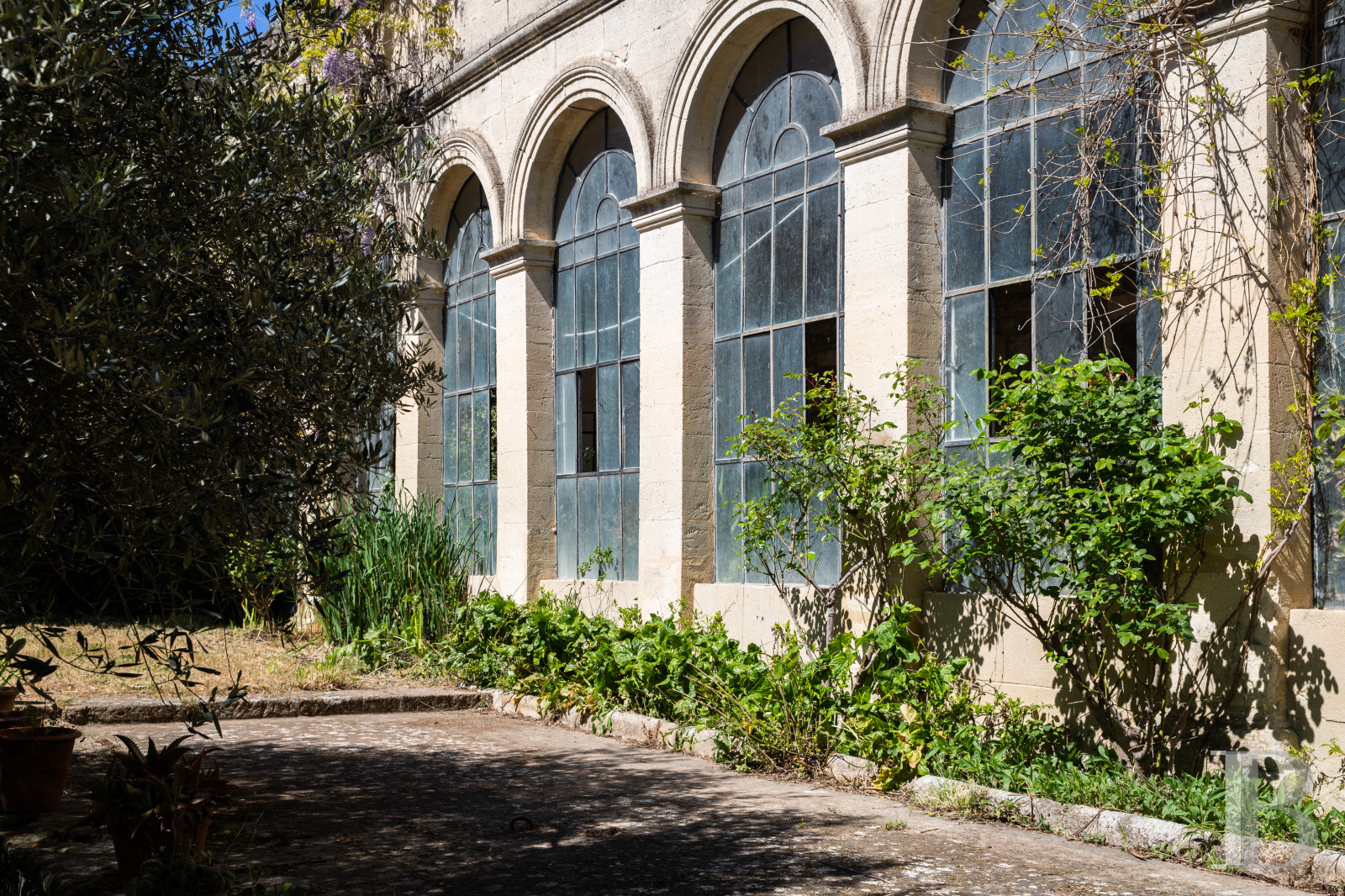
Cadenced by tall picture windows on its southern side, which represent its defining architectural feature and bathe its interior vegetation in a maximum amount of afternoon sunlight, especially in winter, the orangery’s windowless northern side was constructed entirely out of ashlar stone from local quarries. As for its significant floor-to-ceiling heights, they were designed to allow for optimal temperature regulation as well as ensure that the largest potted plant specimens (often palm trees) could reside there during the winter months.
Although today purely ornamental, it was, up until recently, used as a reception space in both summer and winter thanks to its approximately 80 m² of floor area, which made it possible to host a number of guests, and could be returned to this former vocation after some necessary renovations, whereas a small adjacent swimming pool with white ceramic tiles provides a refreshing coda for this enchanting space.
The Garden
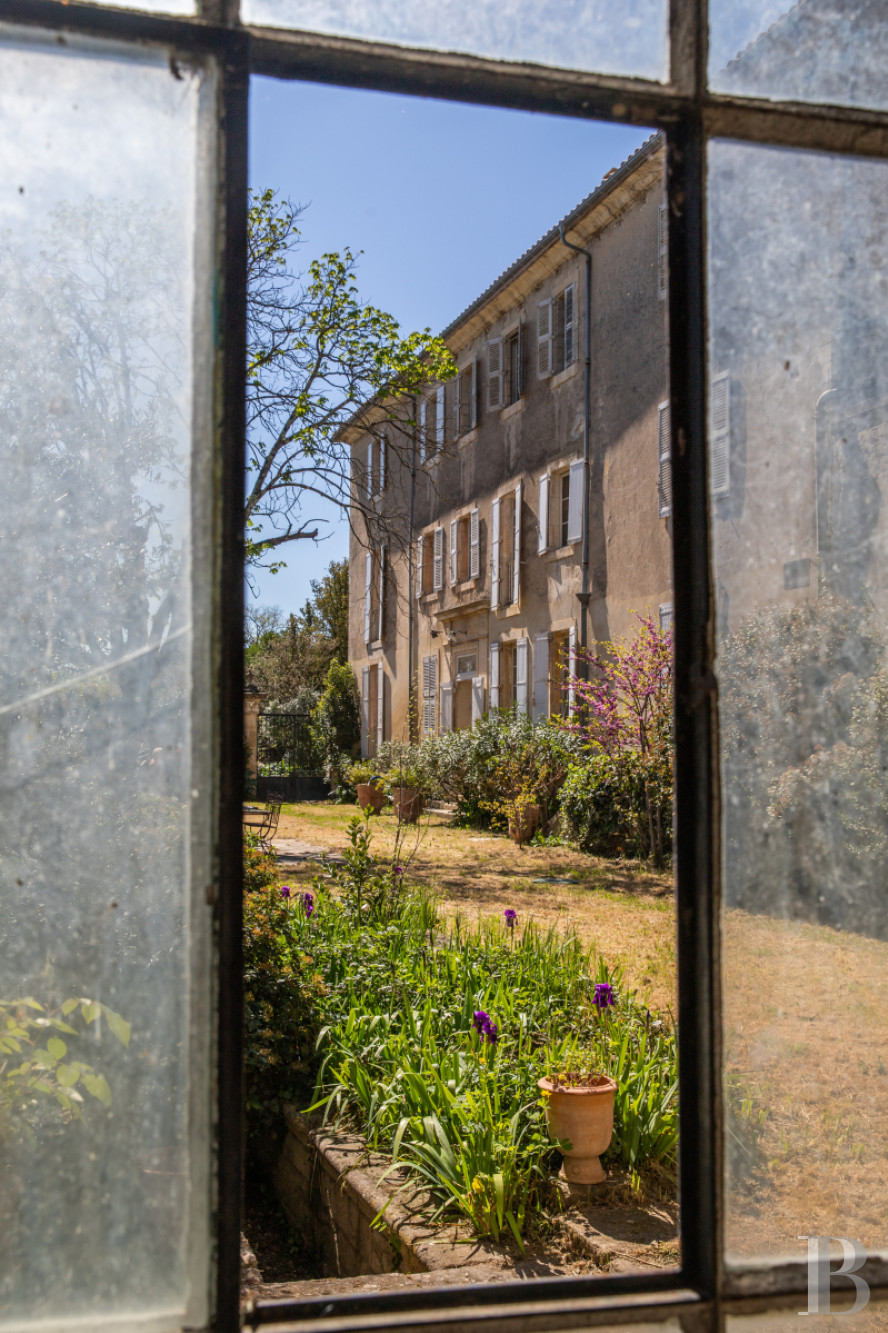
Landscaped into two terraced levels in order to compensate for the property’s slope, which are connected by a couple of stone steps, it extends over approximately 1,100 m² primarily in front of the dwelling and the orangery, located at a right angle. Completely enclosed by hedges and walls, it is sheltered from view, while this grassy garden, scattered with vegetation that becomes denser towards its outskirts, is planted with a variety of different trees and shrubs such as a Judas tree, olive tree, cypress, bay laurel and oleander, whereas wisteria drapes the orangery in magnificent purple blooms and other flowering vegetation, such as irises, have been planted in small flowerbeds here and there.
As for the upper terraced level in front of the dwelling, it features several stone benches and a small stone patio, shaded by an august chestnut tree, as well as a small swimming pool, to the right of the orangery and surrounded by a stone deck.
Our opinion
This dwelling, with undeniably old-fashioned appeal and nestled within a peaceful, bucolic countryside, could either be inhabited as is or, for those who do not appreciate its bygone charms, partially or completely renovated.
In addition, its ample proportions, prime location, original characteristics, anachronistic details, as well as the orangery towards the back of the garden with its extraordinary reception space, are easily conducive to any kind of reconversion, even the most contemporary ones, while the separation into self-contained flats for the purpose of a boutique hotel or a residence also remains a possibility. However, this dwelling would be equally ideal for a family, who could once again breathe life and laughter back into this stately, and currently, dormant manor.
840 000 €
Including negotiation fees
800 000 € Excluding negotiation fees
Forfait de 40 000 €
incl. VAT to be paid by the buyer
Reference 463998
| Land registry surface area | 1464 m² |
| Main building floor area | 354 m² |
| Number of bedrooms | 4 |
| Outbuildings floor area | 80 m² |
French Energy Performance Diagnosis
Information on the risks to which this property is exposed is available on the website: www.georisques.gouv.fr
Share


NB: The above information is not only the result of our visit to the property; it is also based on information provided by the current owner. It is by no means comprehensive or strictly accurate especially where surface areas and construction dates are concerned. We cannot, therefore, be held liable for any misrepresentation.