



A 17th-century manor house, with farming and equestrian outbuildings,
in 2 hectares of grounds, in the Forez Valley, near to the River Loire
in 2 hectares of grounds, in the Forez Valley, near to the River Loire
Feurs,
LOIRE
rhones-alps
42110
FR

Location
This property is located in a rural village centred around farming and horse riding, with all essential everyday amenities, in the Loire Valley plain, near to Feurs and a junction on the A72 motorway. The west-facing buildings are situated in the centre of the village but are tucked away from prying eyes by large, walled, tree filled grounds encircled by the surrounding countryside. Saint-Etienne is 35 minutes away by road, whilst Lyon can be reached in 1 hour 10 minutes via the A89 motorway.
Description
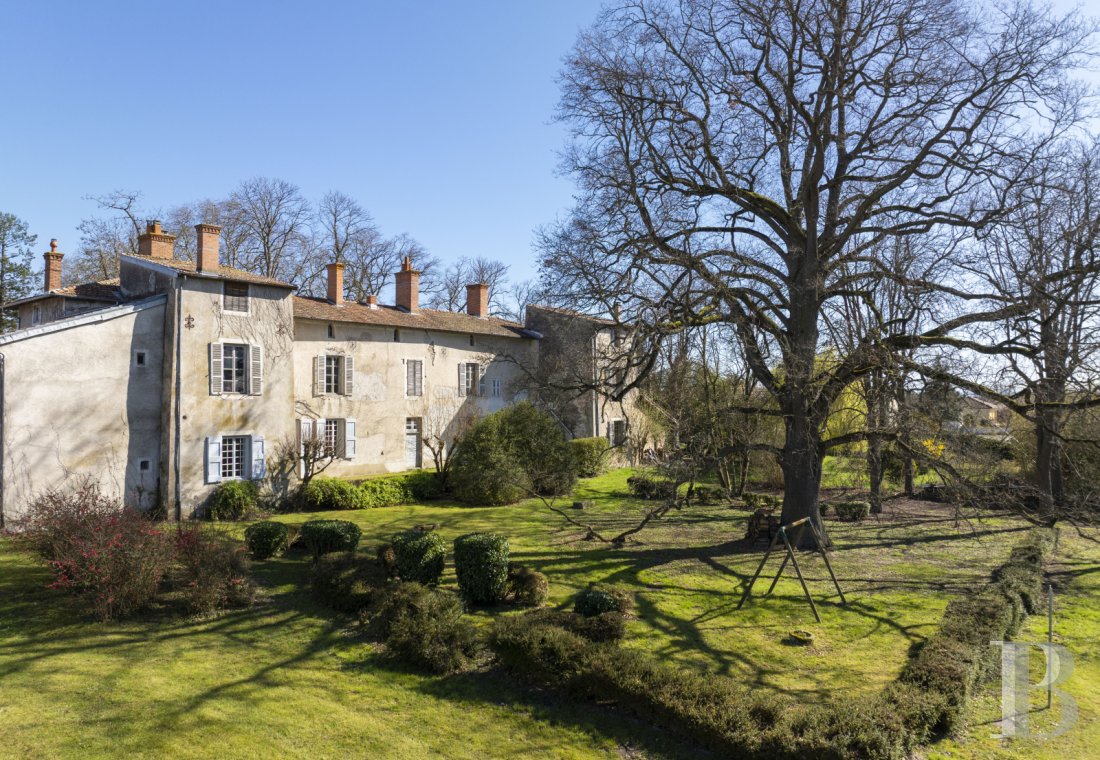
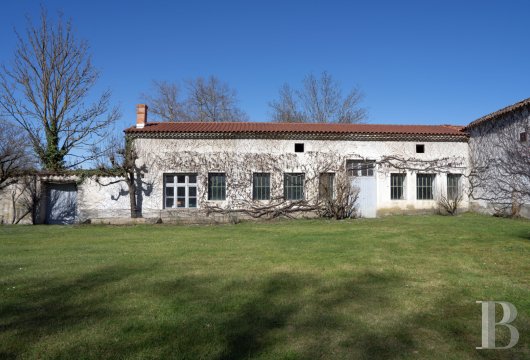
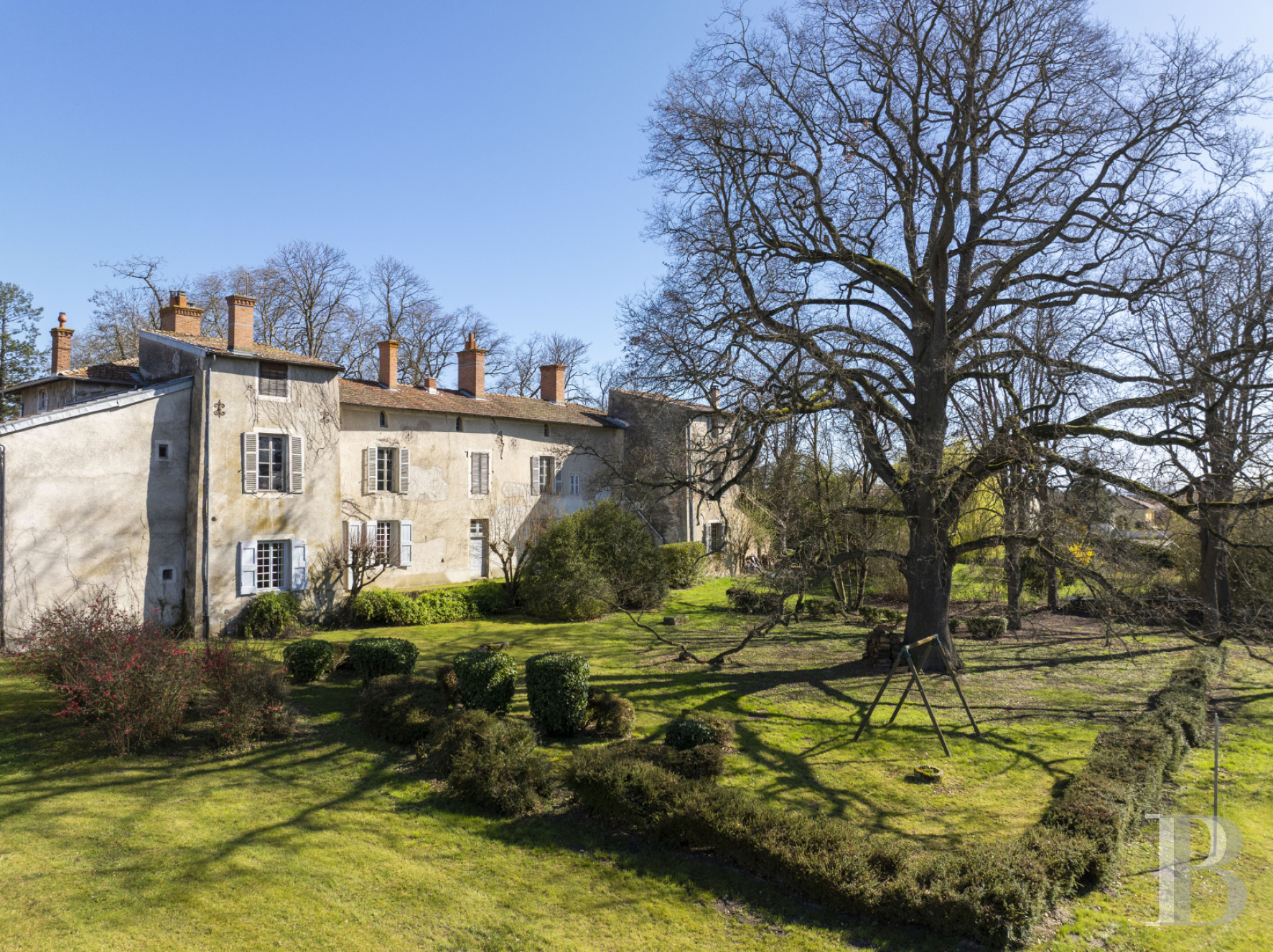
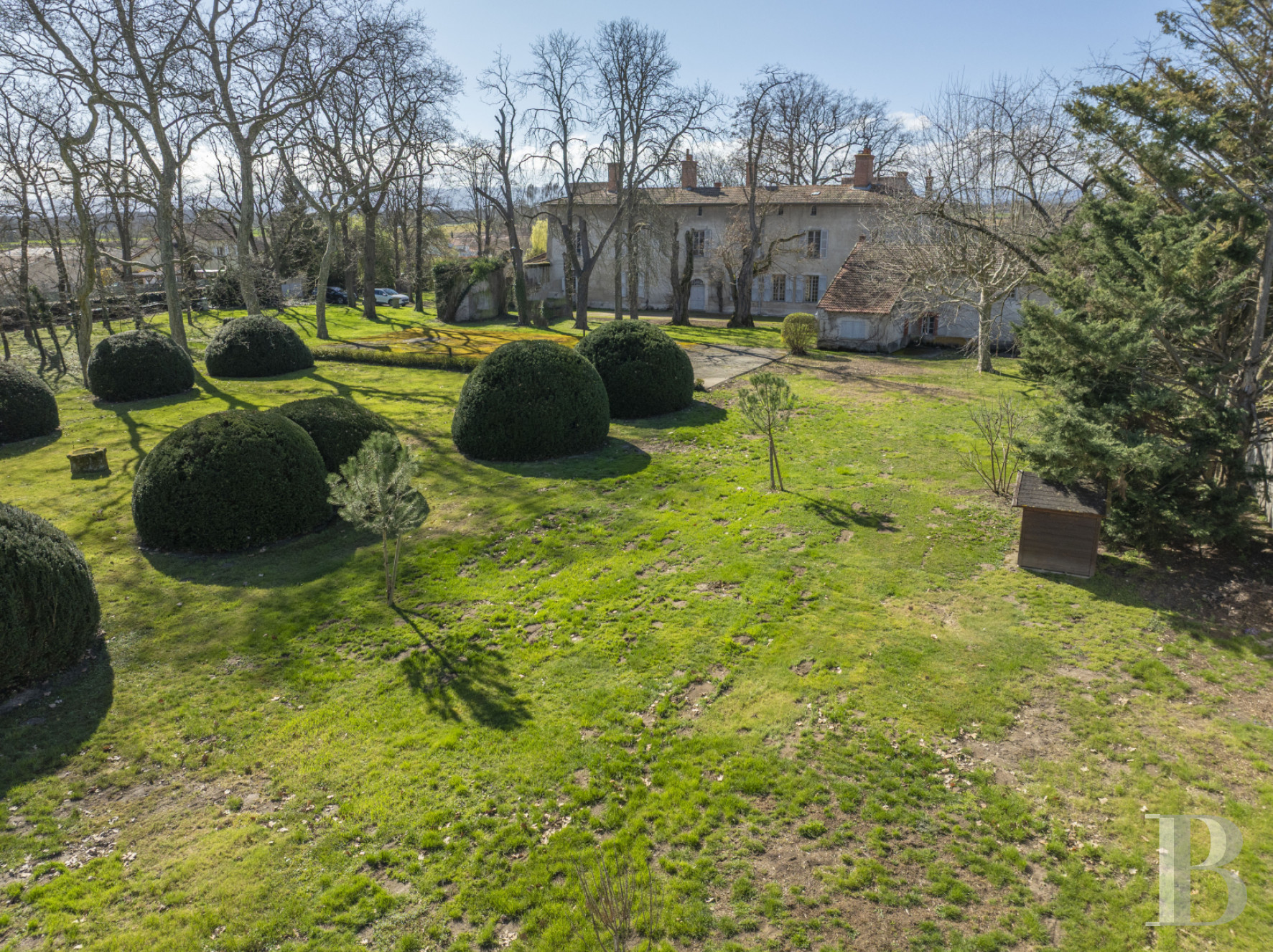
The estate was built in the 17th century and includes a three-storey residence with a surface of around 540 m² in the centre of ornamental grounds filled with trees, including a remarkable oak dating from approximately 1640. There is also an orangery, set perpendicularly, that houses smaller vegetation more vulnerable to frost. The edifices are bordered by a branch of the Forez Canal, in which the water flows through the property, separating the built-up part from the surrounding farming meadows.
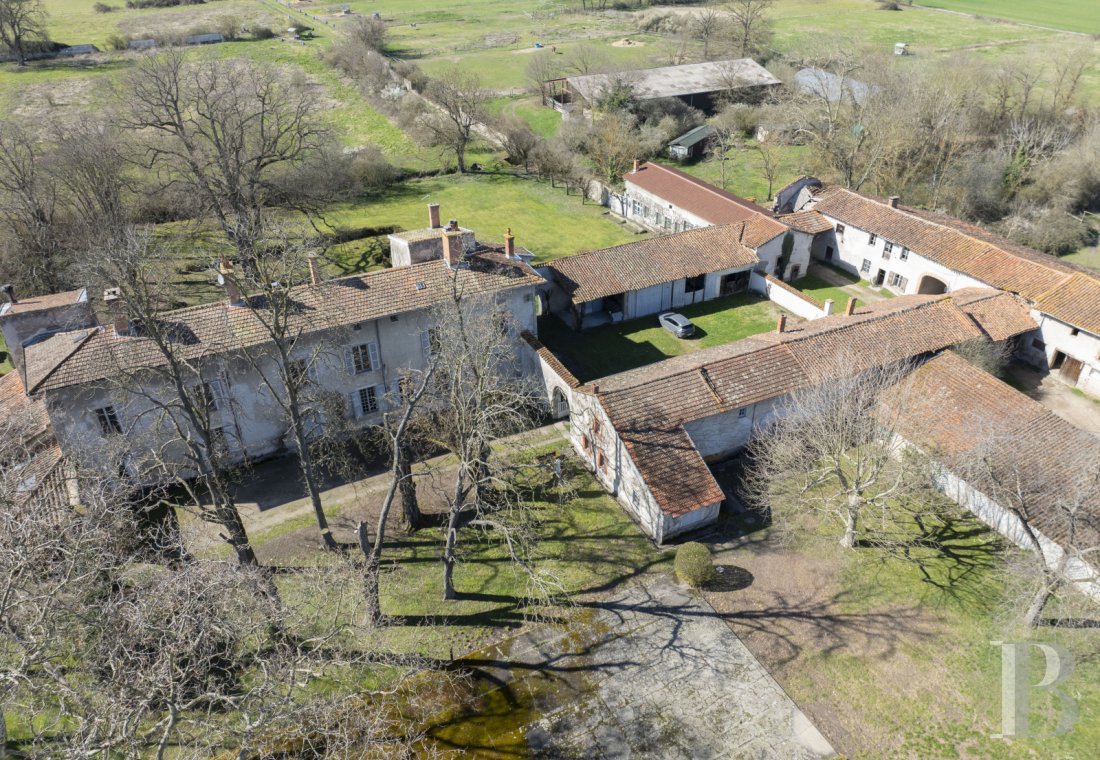
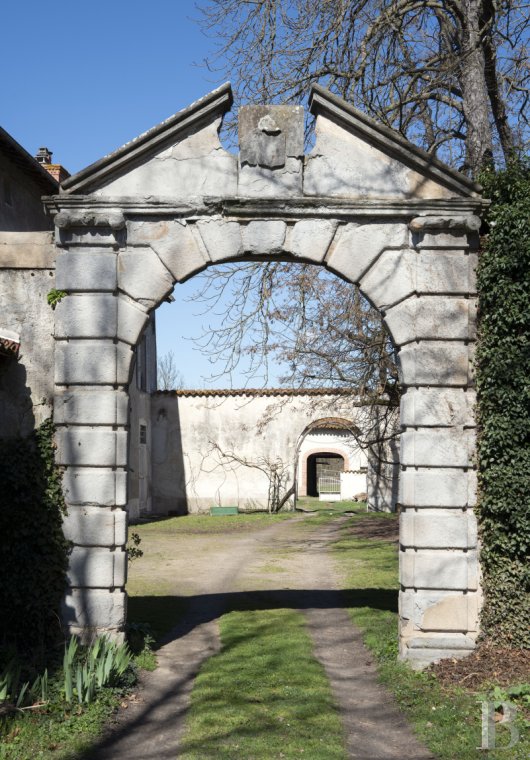
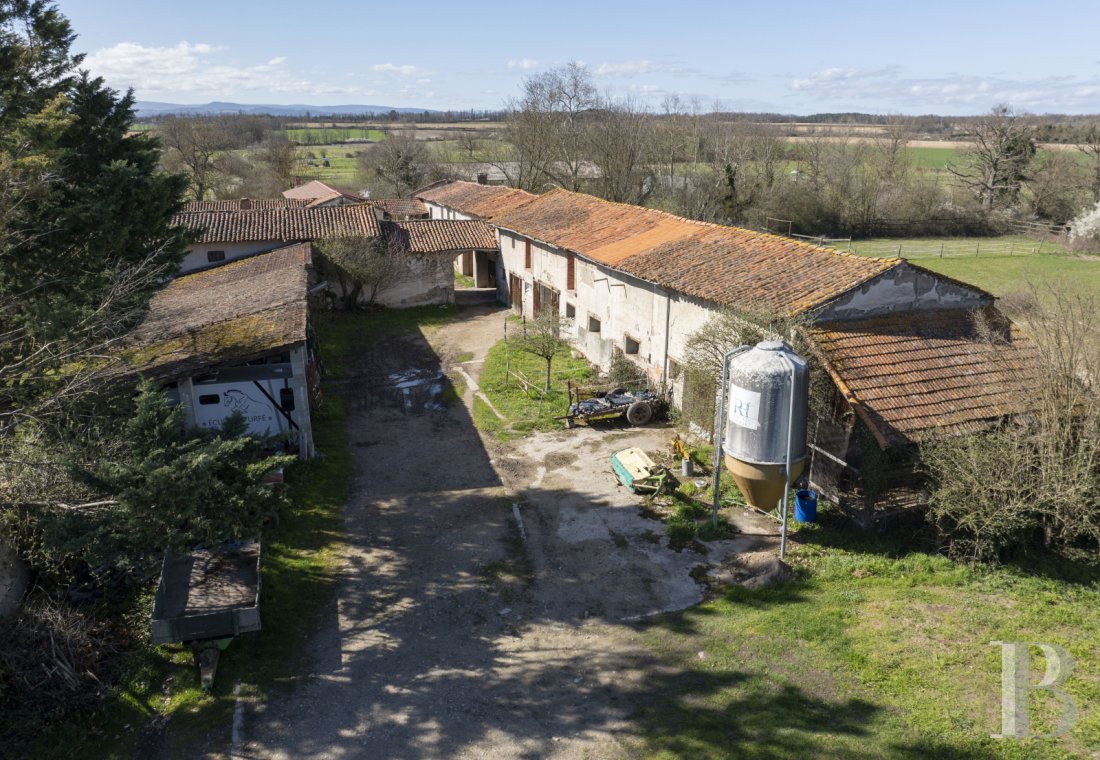
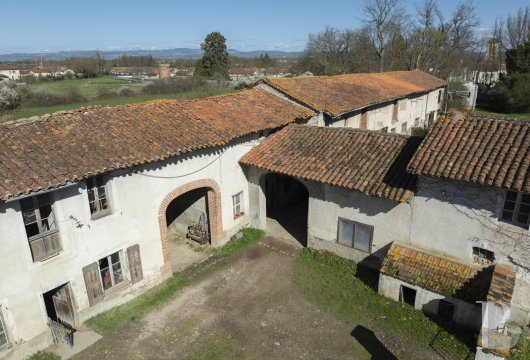
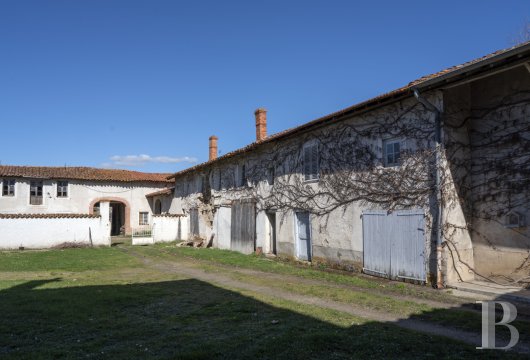
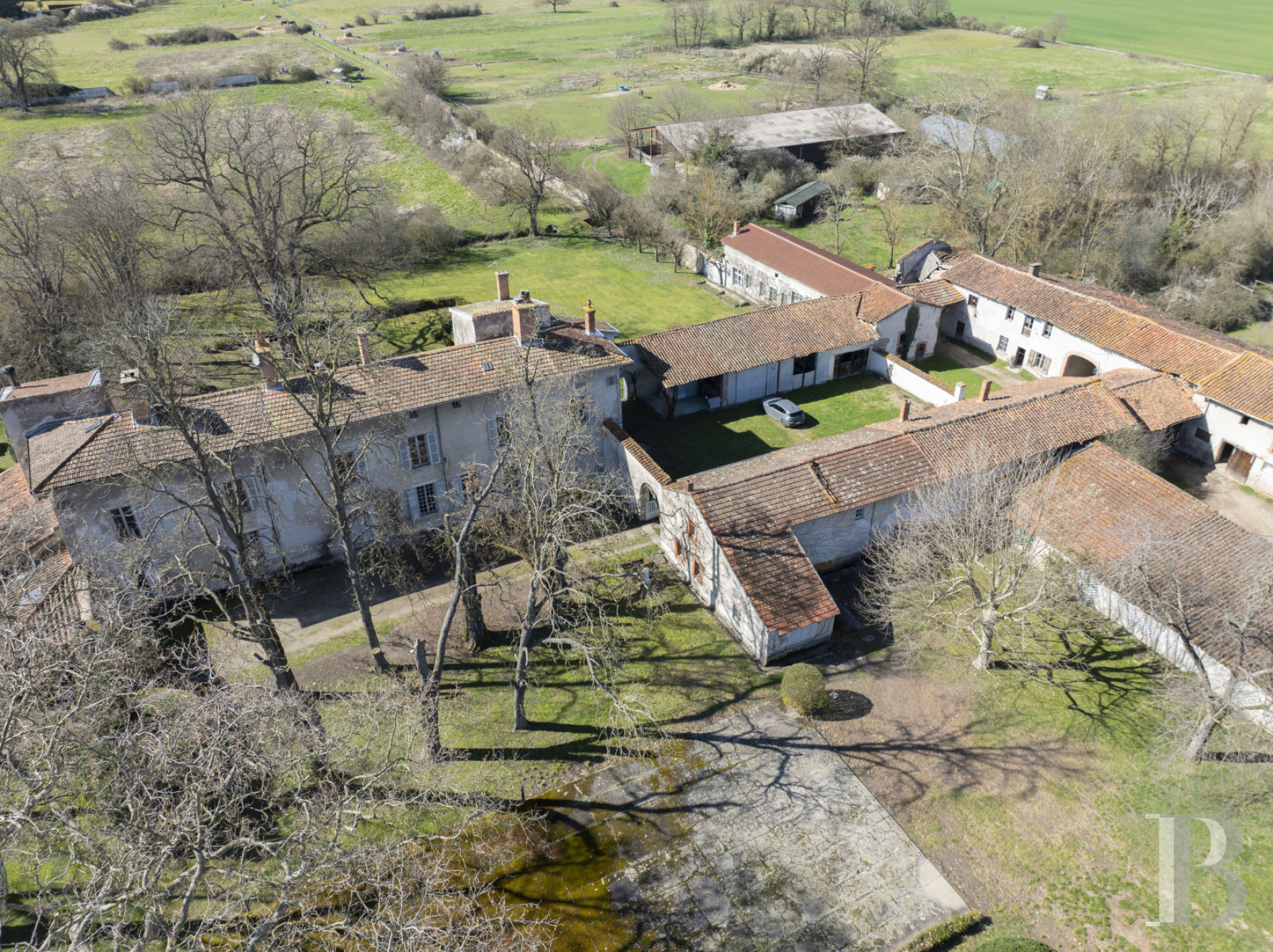
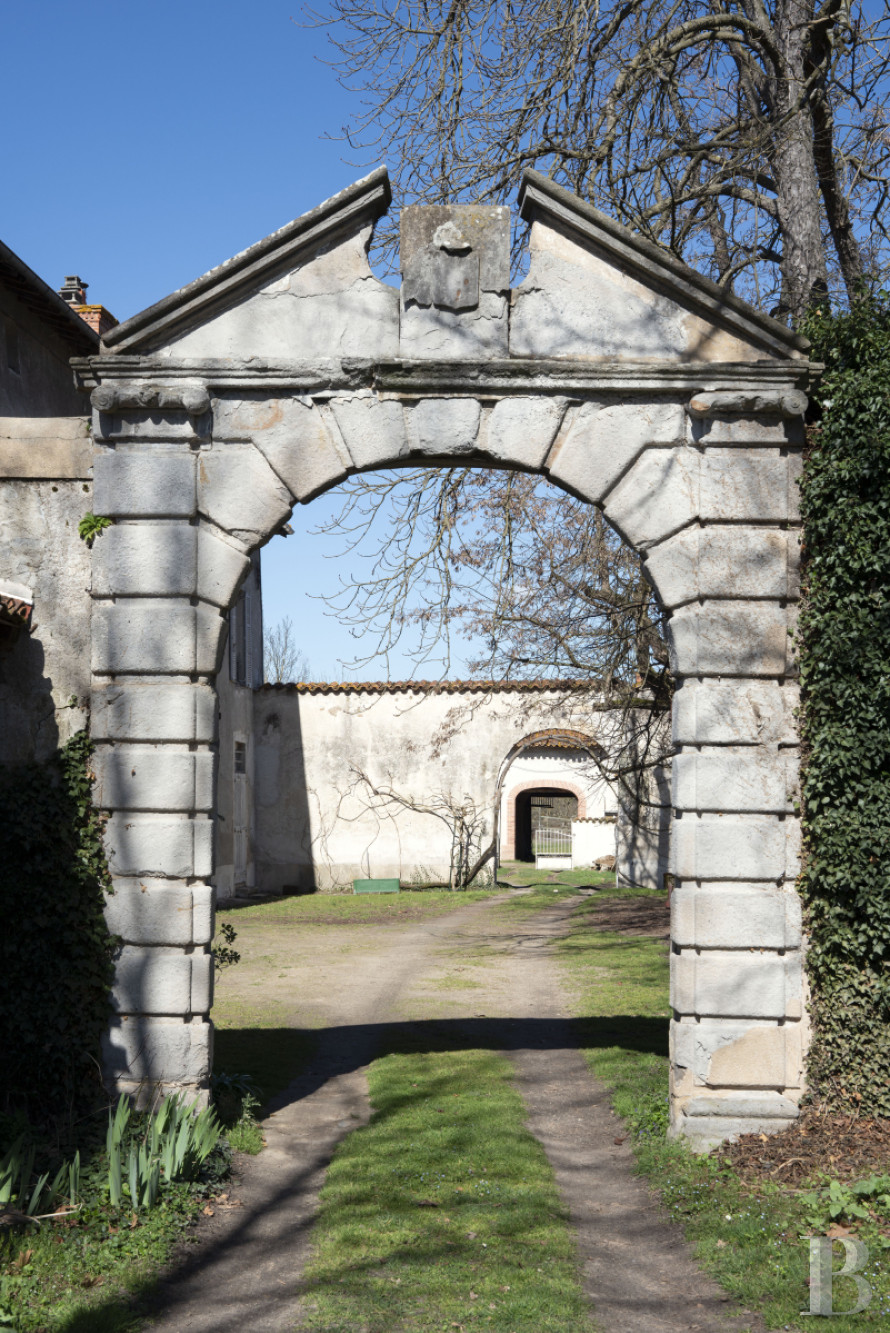
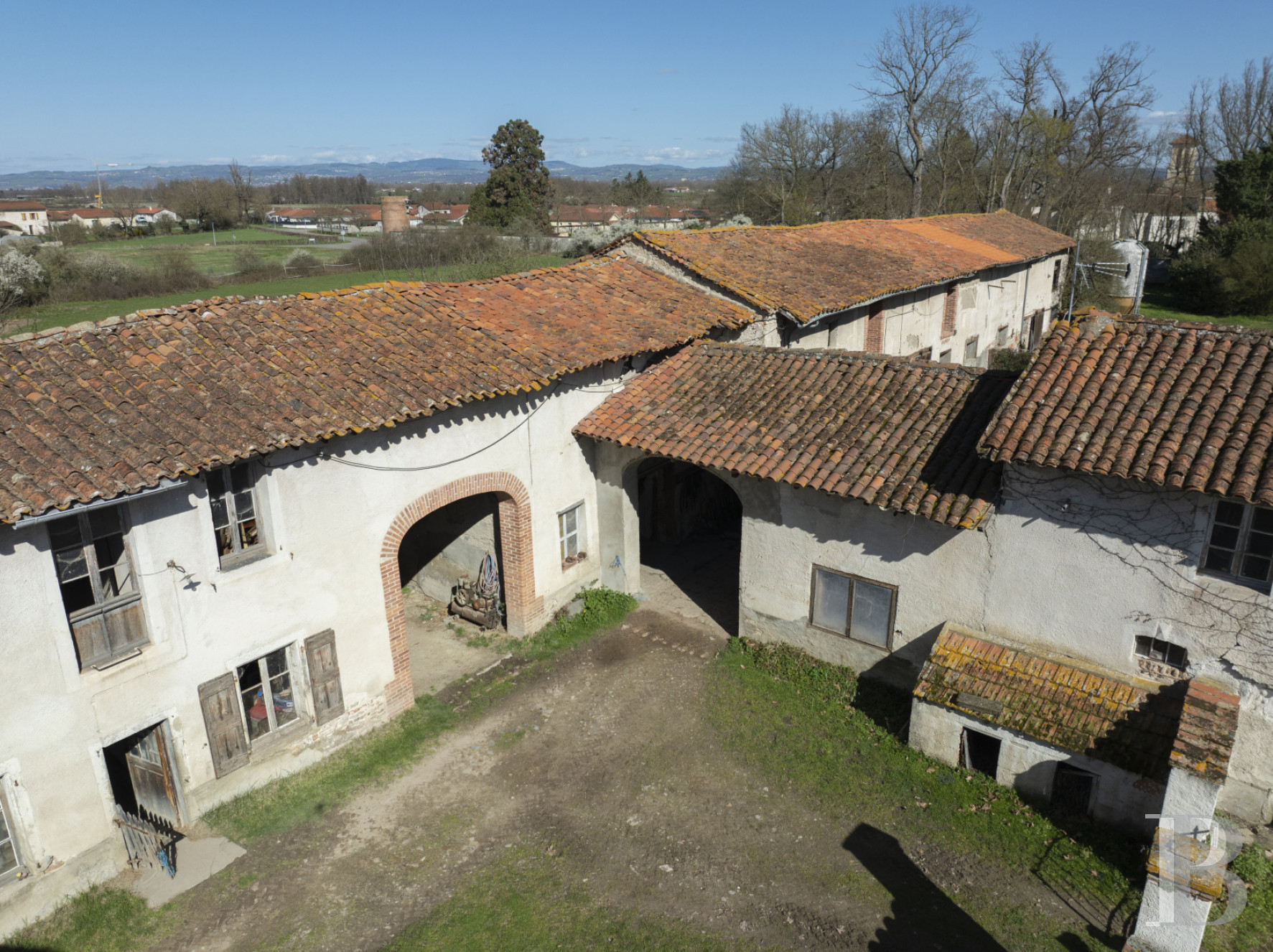
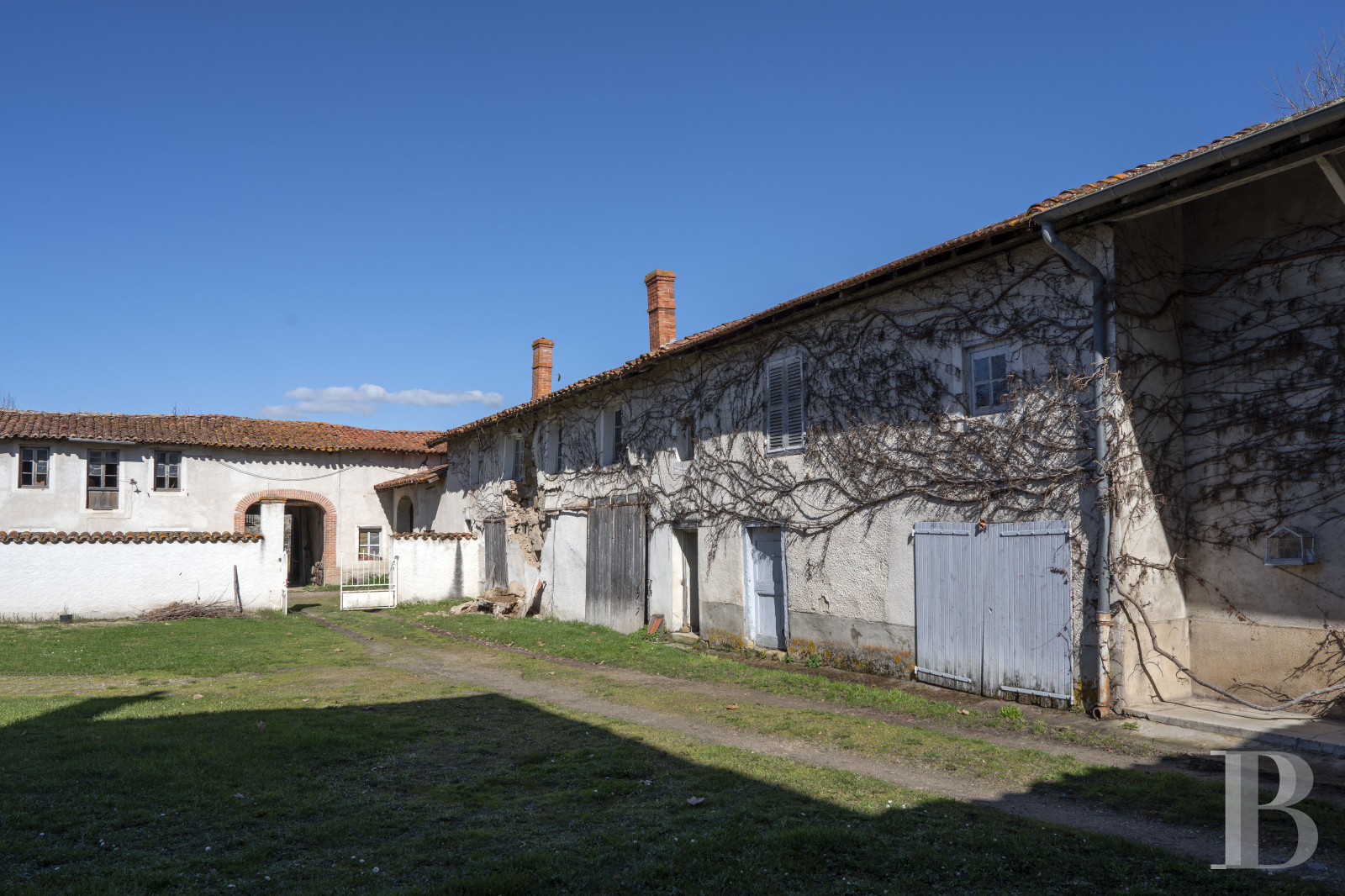
After the manor house and through a first arch, there is a courtyard surrounded by the estate’s outbuildings (a workshop, estate keeper’s house, stable worker’s garage, agricultural storage buildings with lofts and the owner’s carriage stables). These outbuildings have not been used for many years but provide spacious garage and storage space.
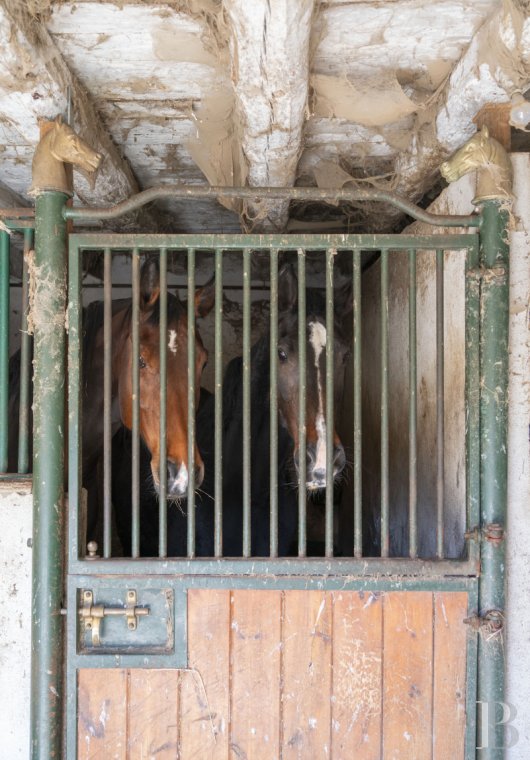
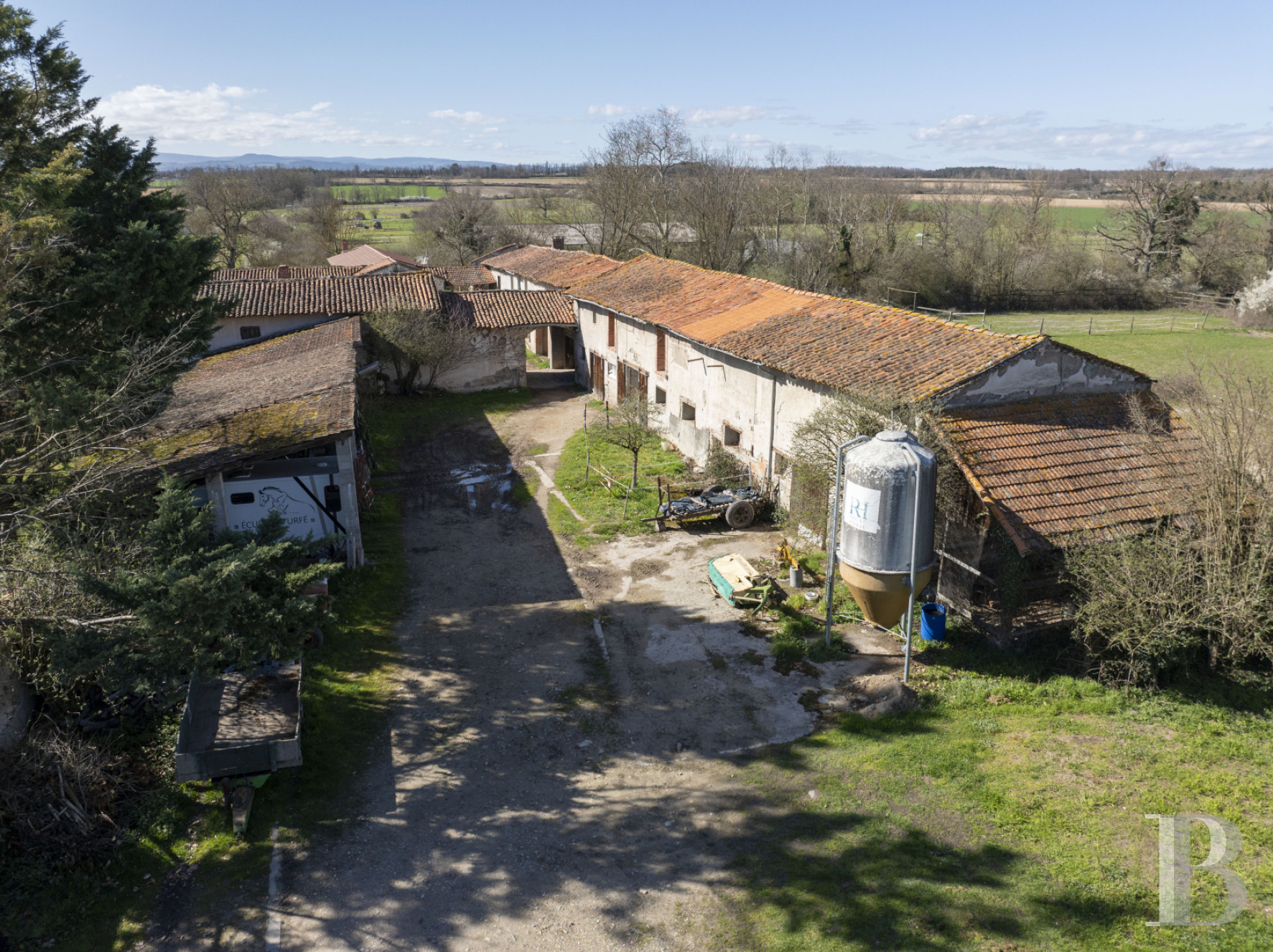
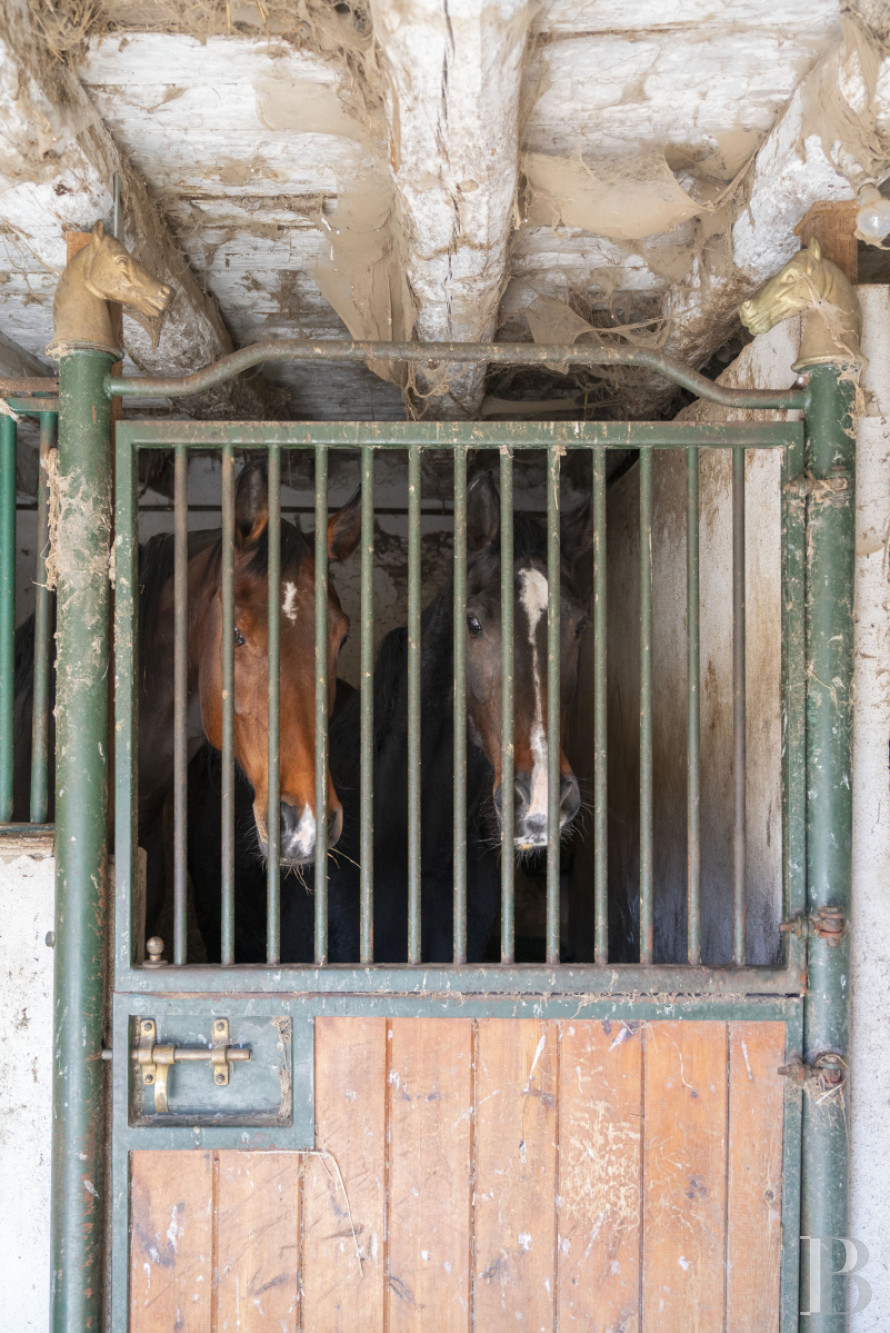
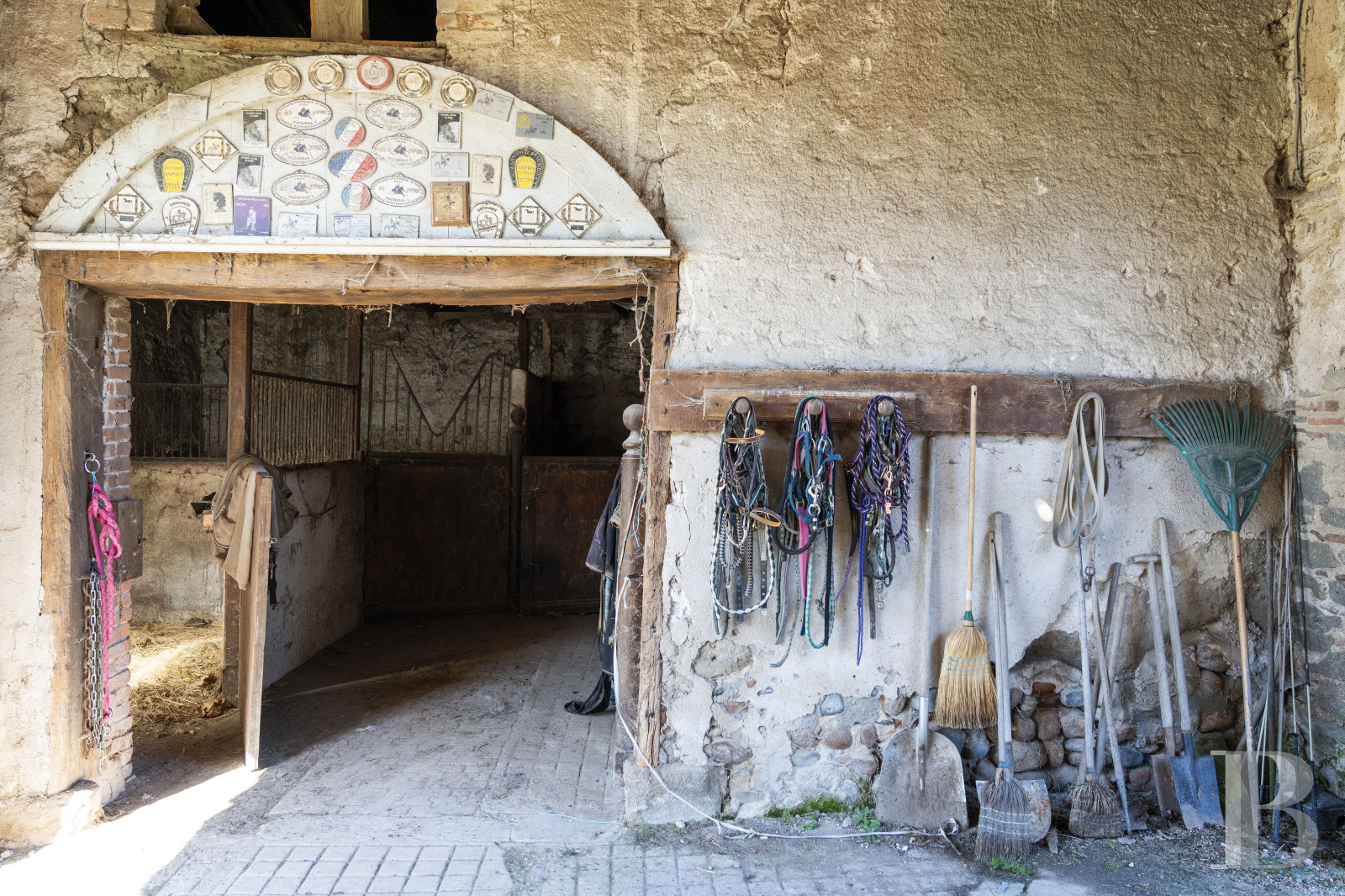
A second arch then leads to the farm itself as well as its livestock buildings and equipment storage facilities: agricultural storage buildings, barns, a workshop, box stalls, a cowshed and various storage space. It has belonged to the current owners since 1946. Following an agricultural past, it was then destined for breeding racehorses, as is traditional in a region where there are many racehorse stables.
After the manor house and through a first arch, there is a courtyard surrounded by the estate’s outbuildings (a workshop, estate keeper’s house, stable worker’s garage, agricultural storage buildings with lofts and the owner’s carriage stables). These outbuildings have not been used for many years but provide spacious garage and storage space.
A second arch then leads to the farm itself as well as its livestock buildings and equipment storage facilities: agricultural storage buildings, barns, a workshop, box stalls, a cowshed and various storage space. It has belonged to the current owners since 1946. Following an agricultural past, it was then destined for breeding racehorses, as is traditional in a region where there are many racehorse stables.
The residence dating from 1646
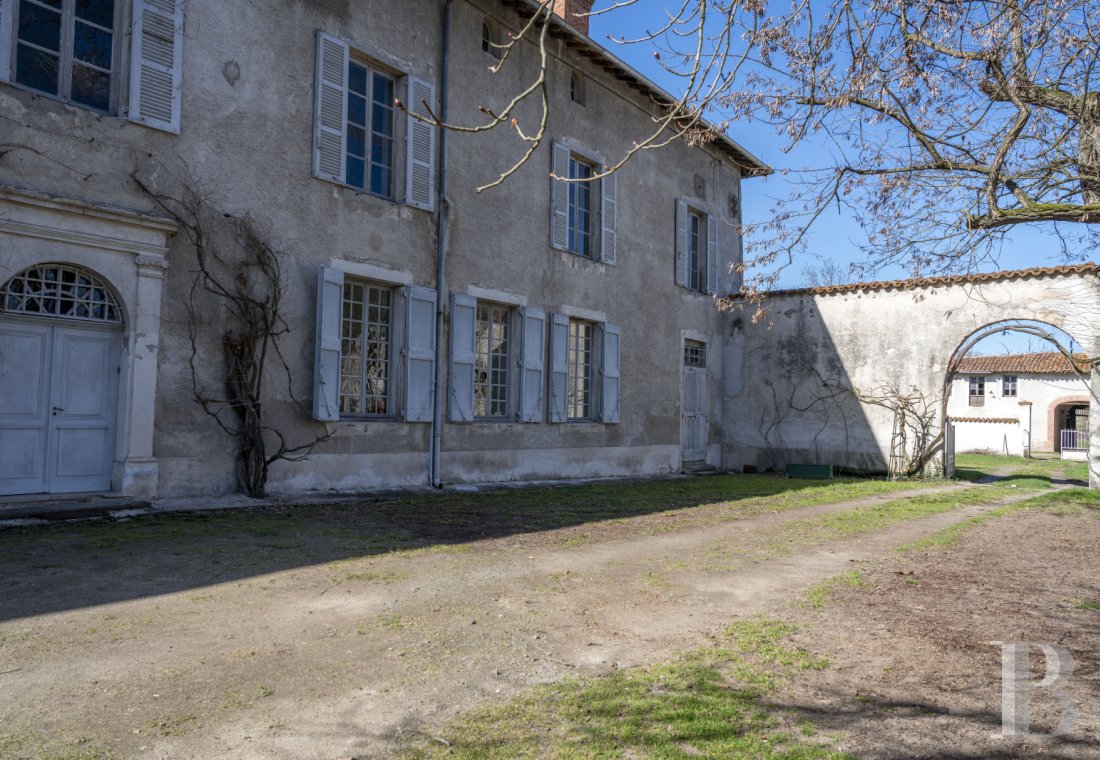
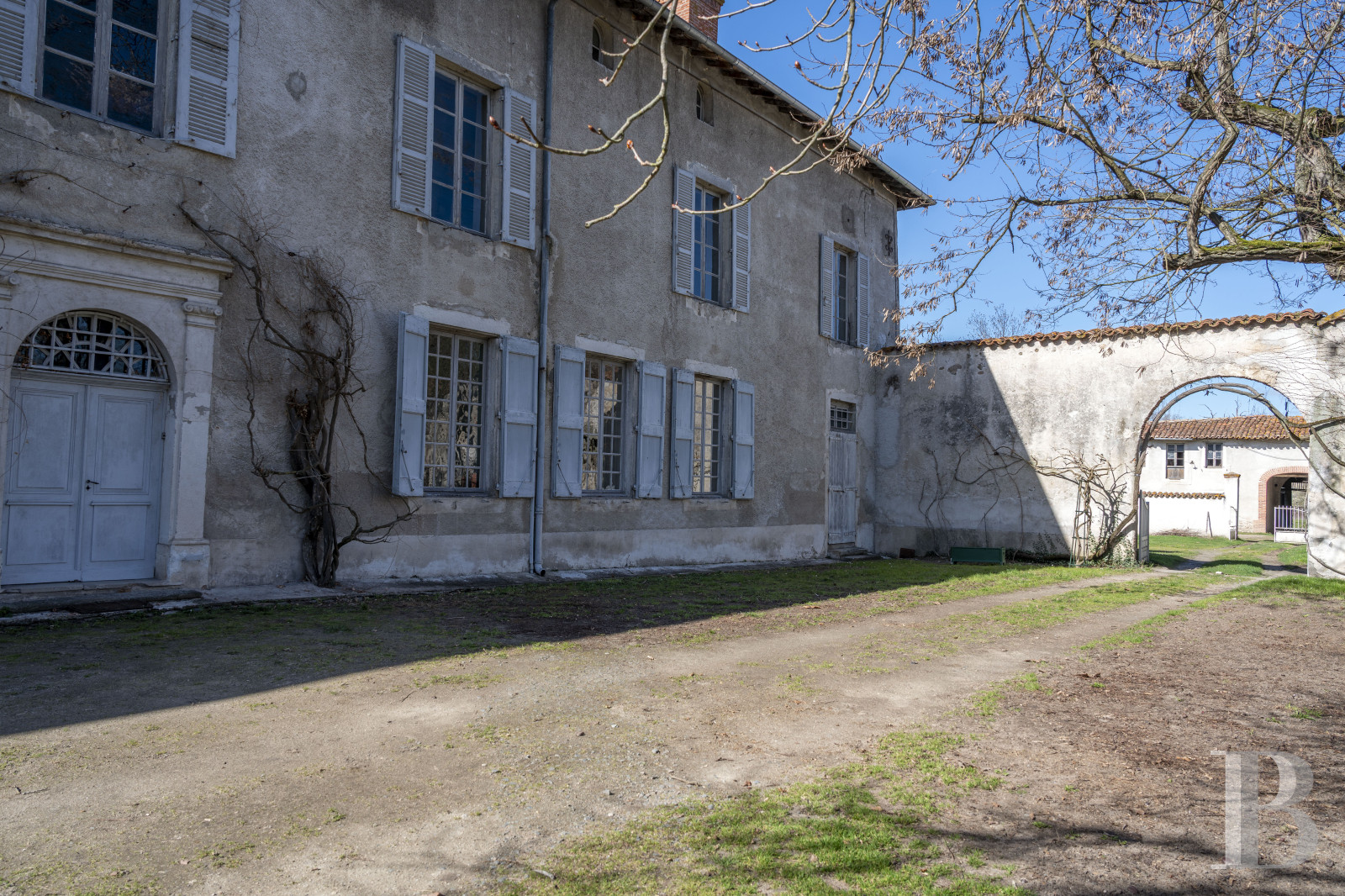
It is made up of a rectangular central section flanked by two square towers to each side and is typical of the residences in the Forez sector lining the banks of the River Loire, with its elongated shape, symmetrical appearance and many openings. Its elevations are made of rendered stone beneath a roof of interlocking tiles made locally.
The ground floor
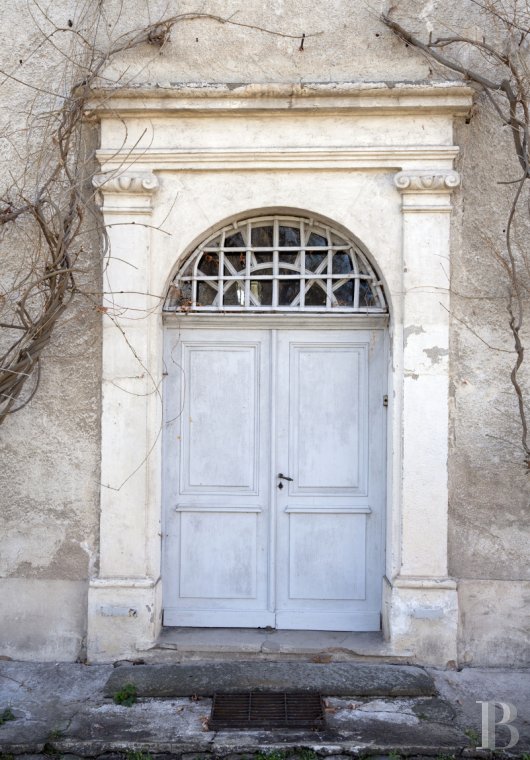
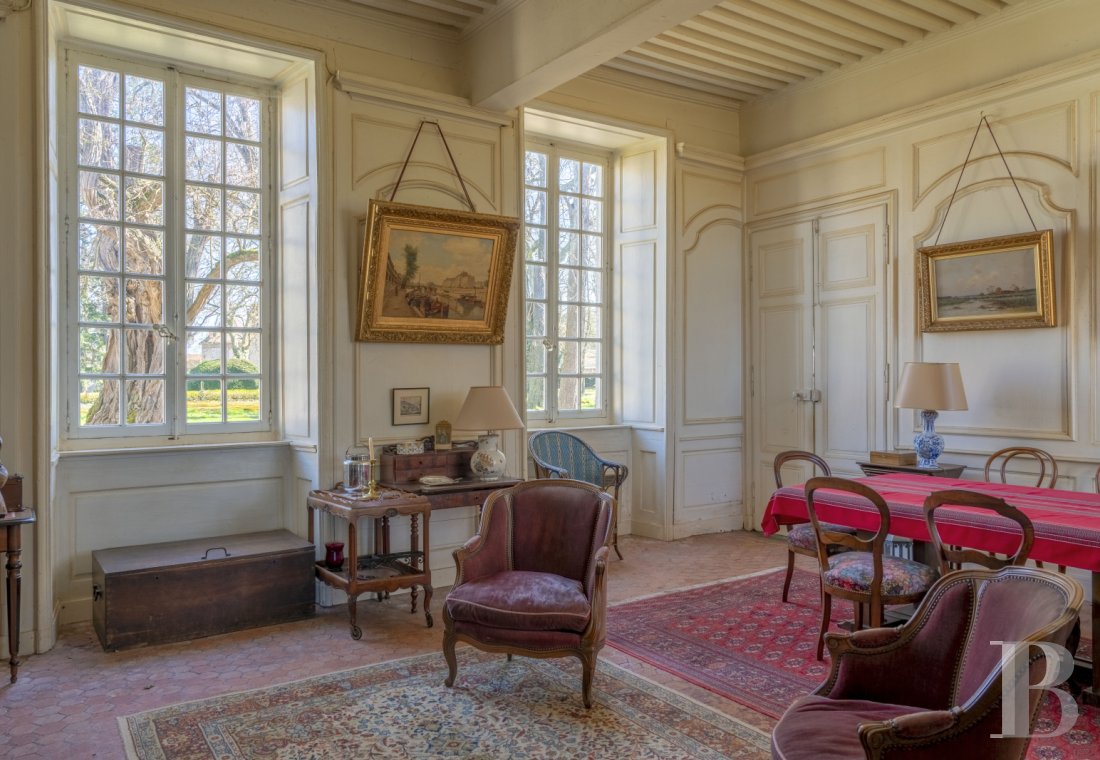
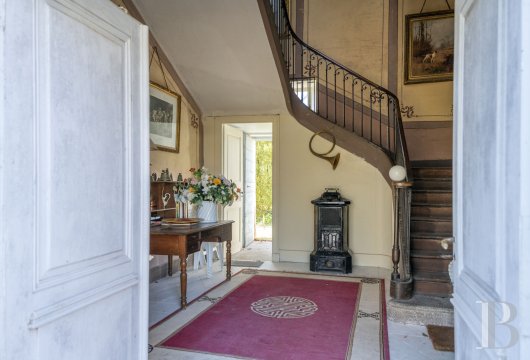
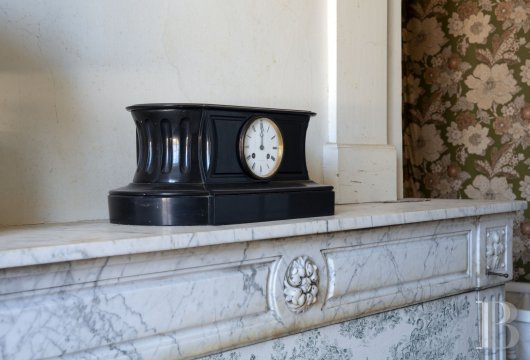
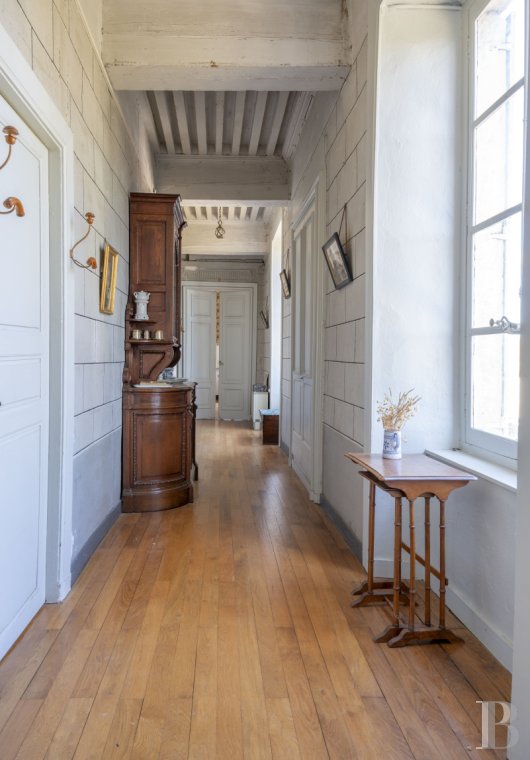
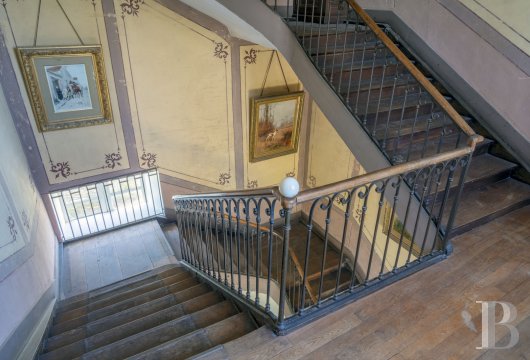
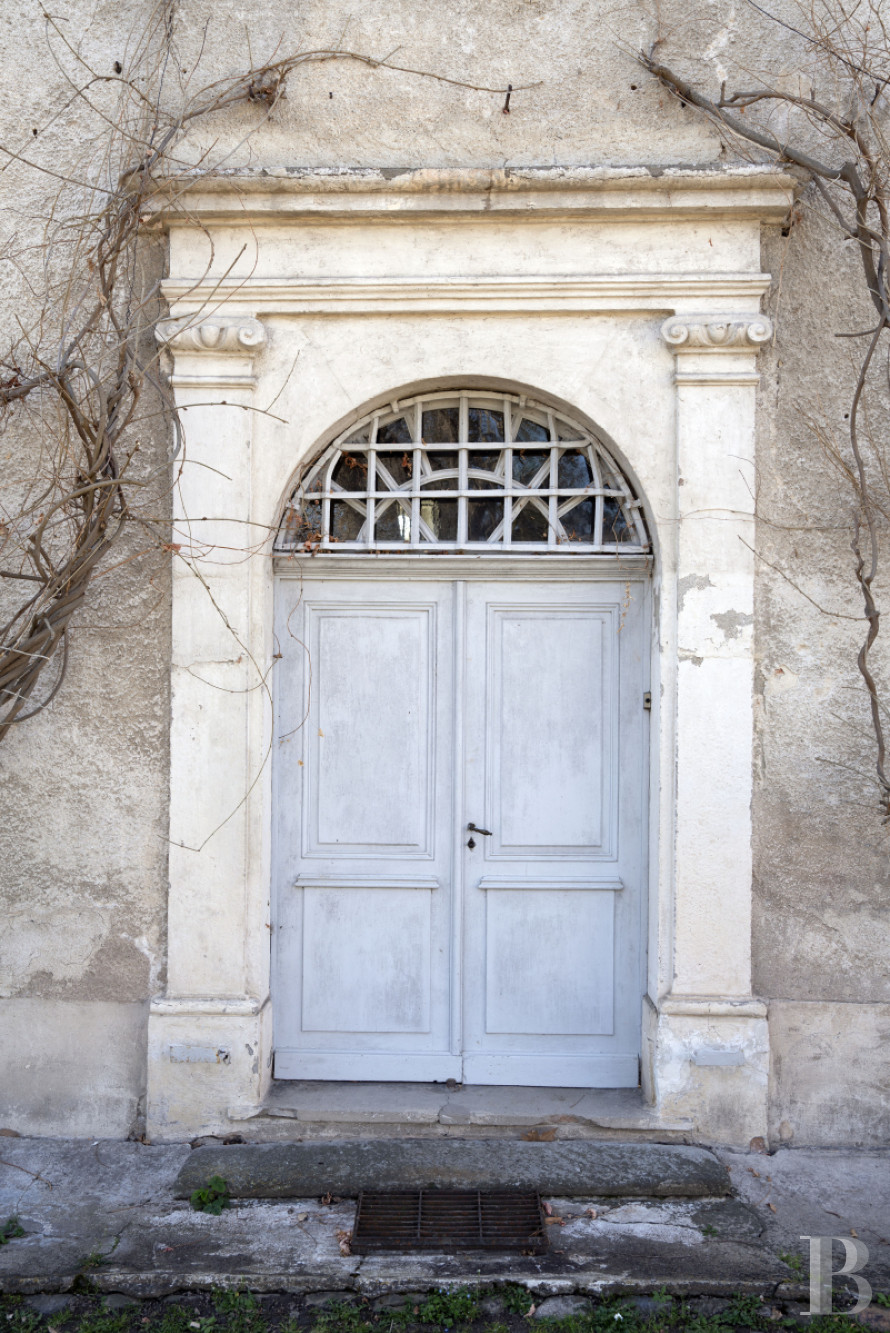
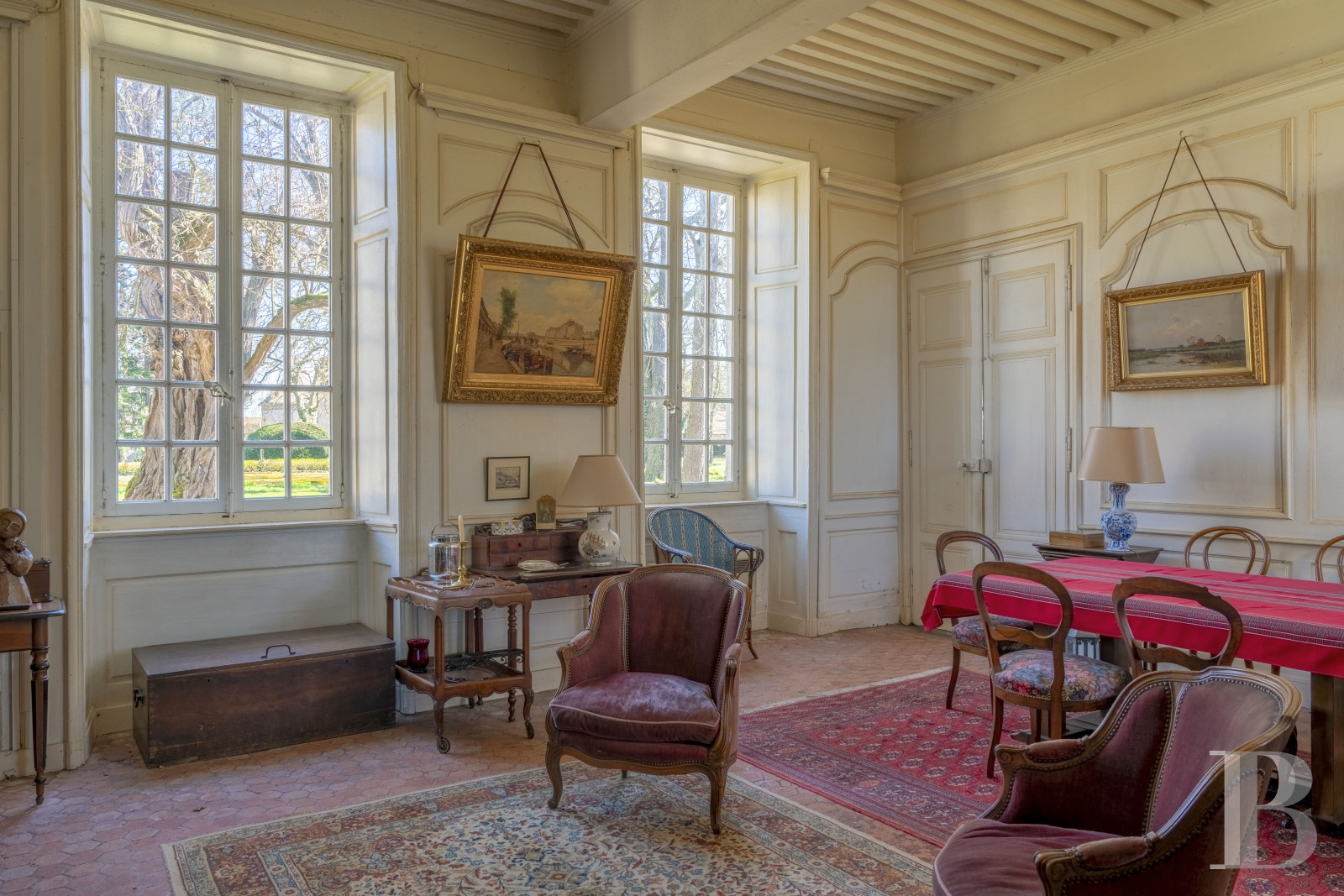
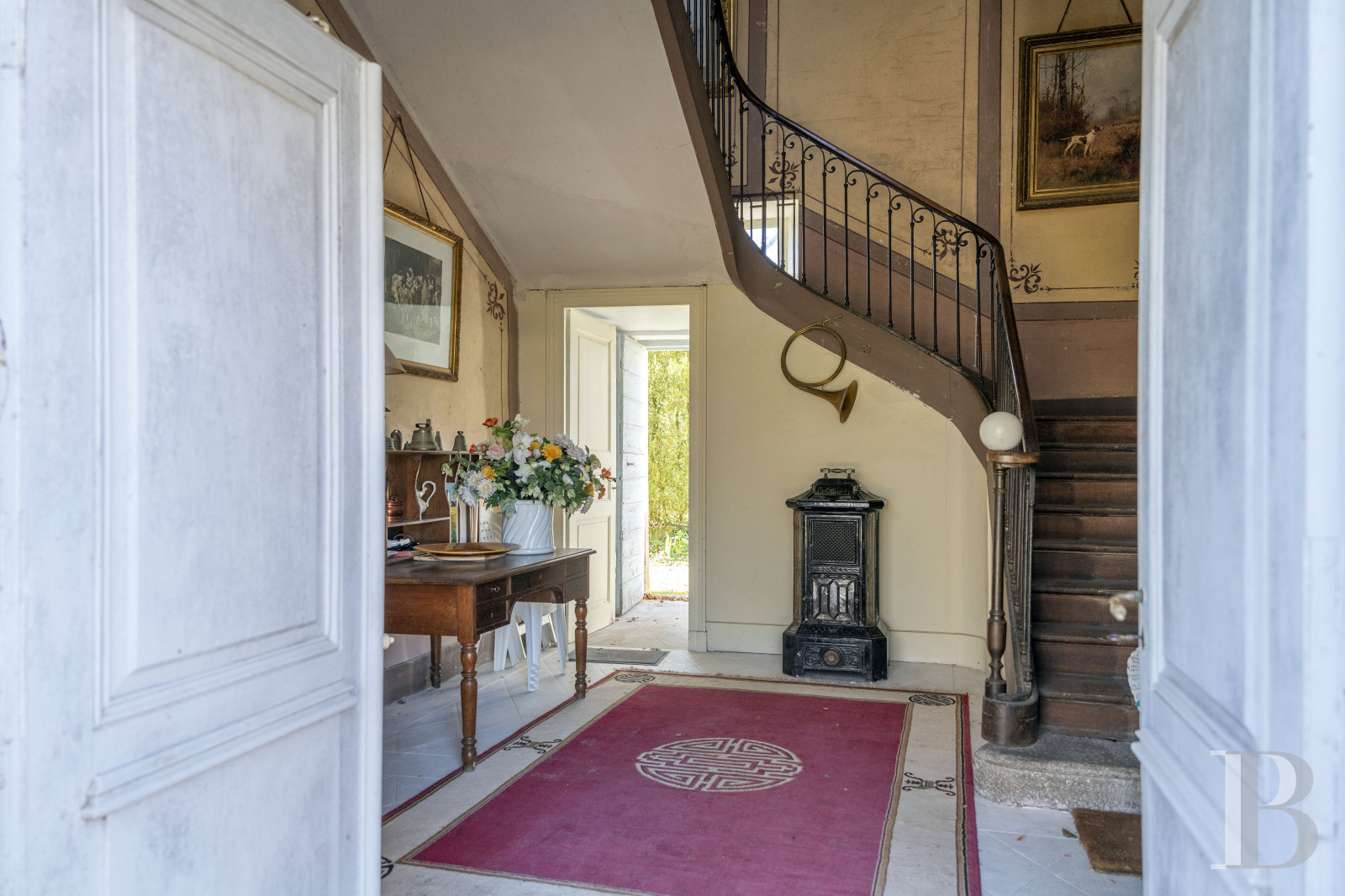
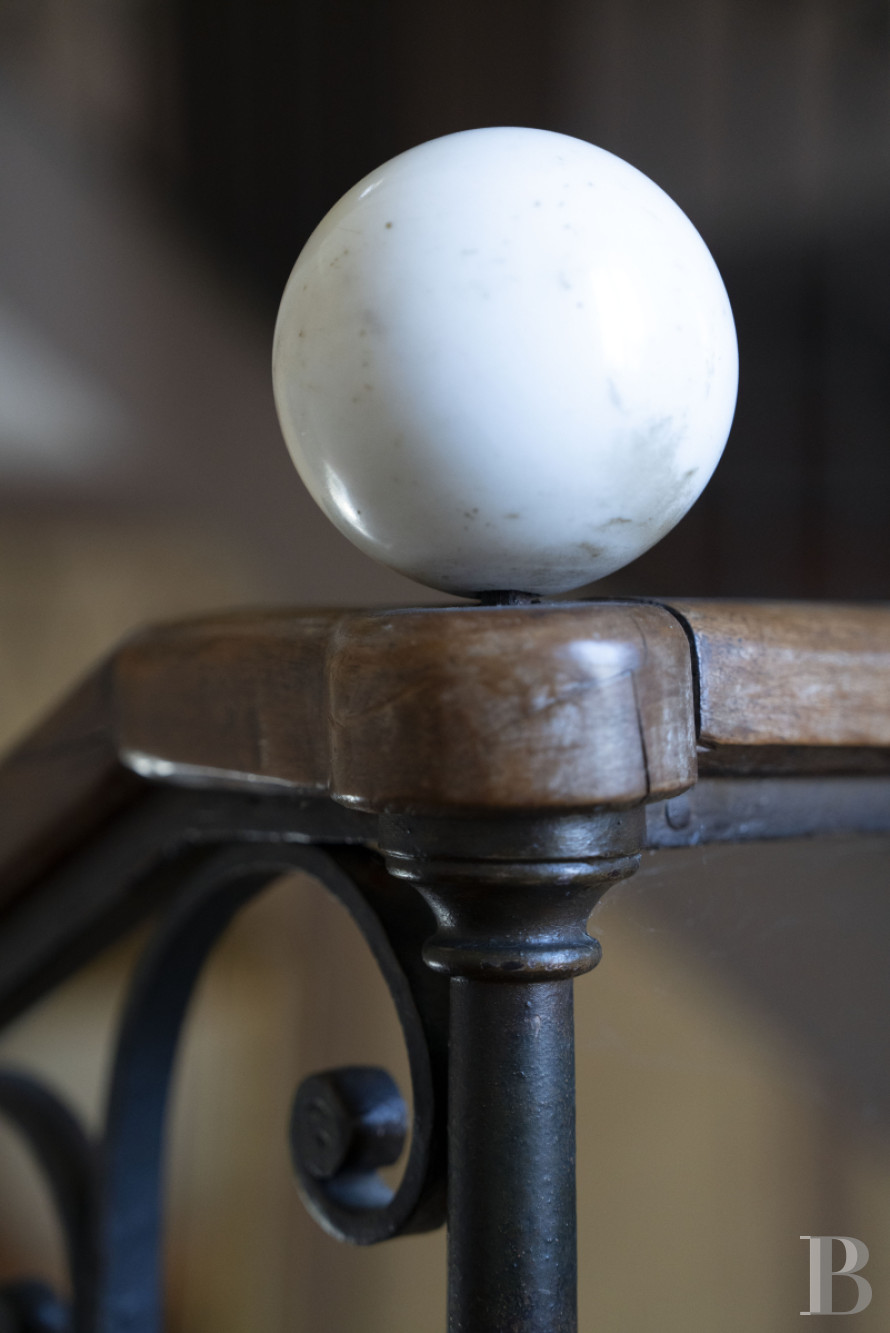
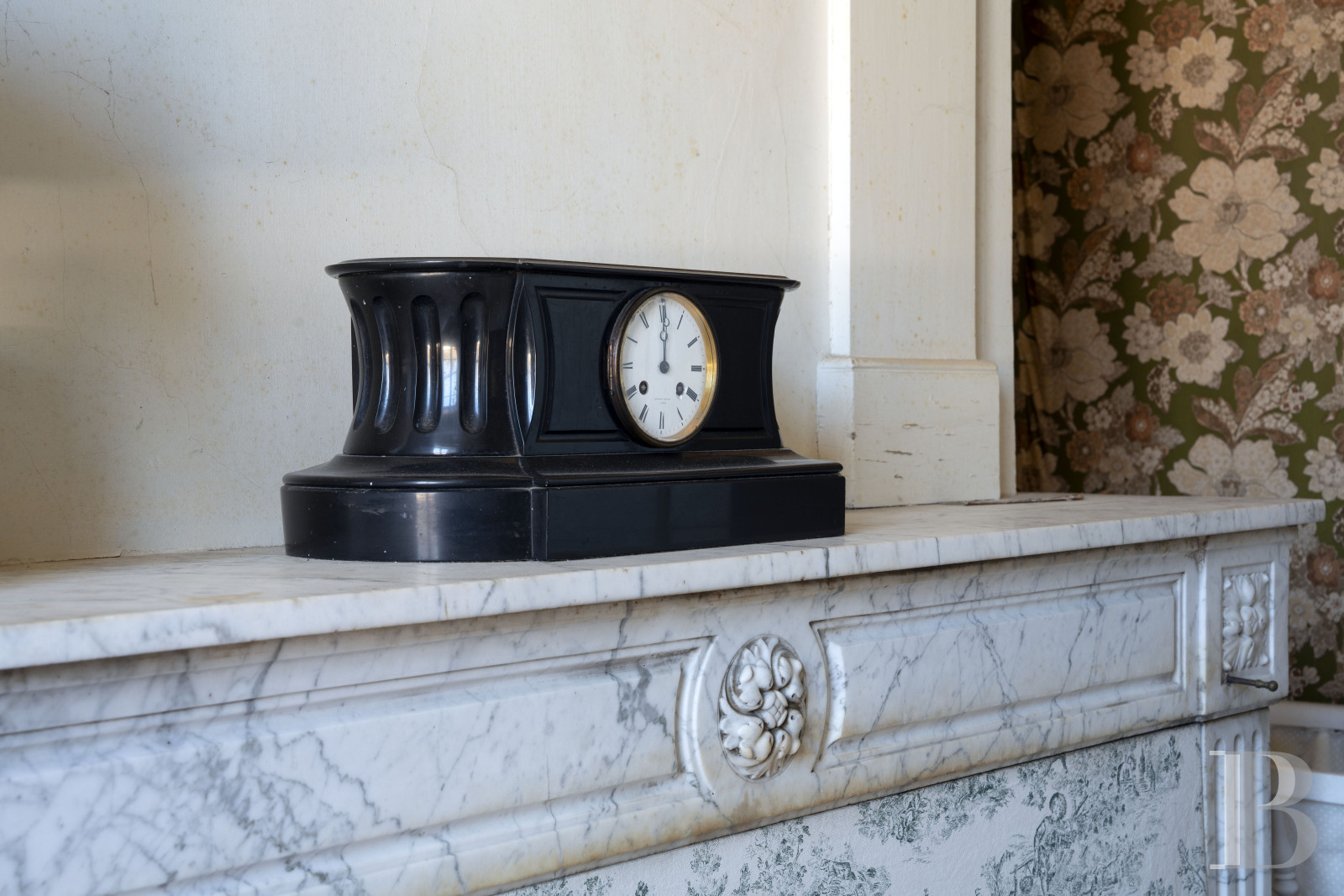
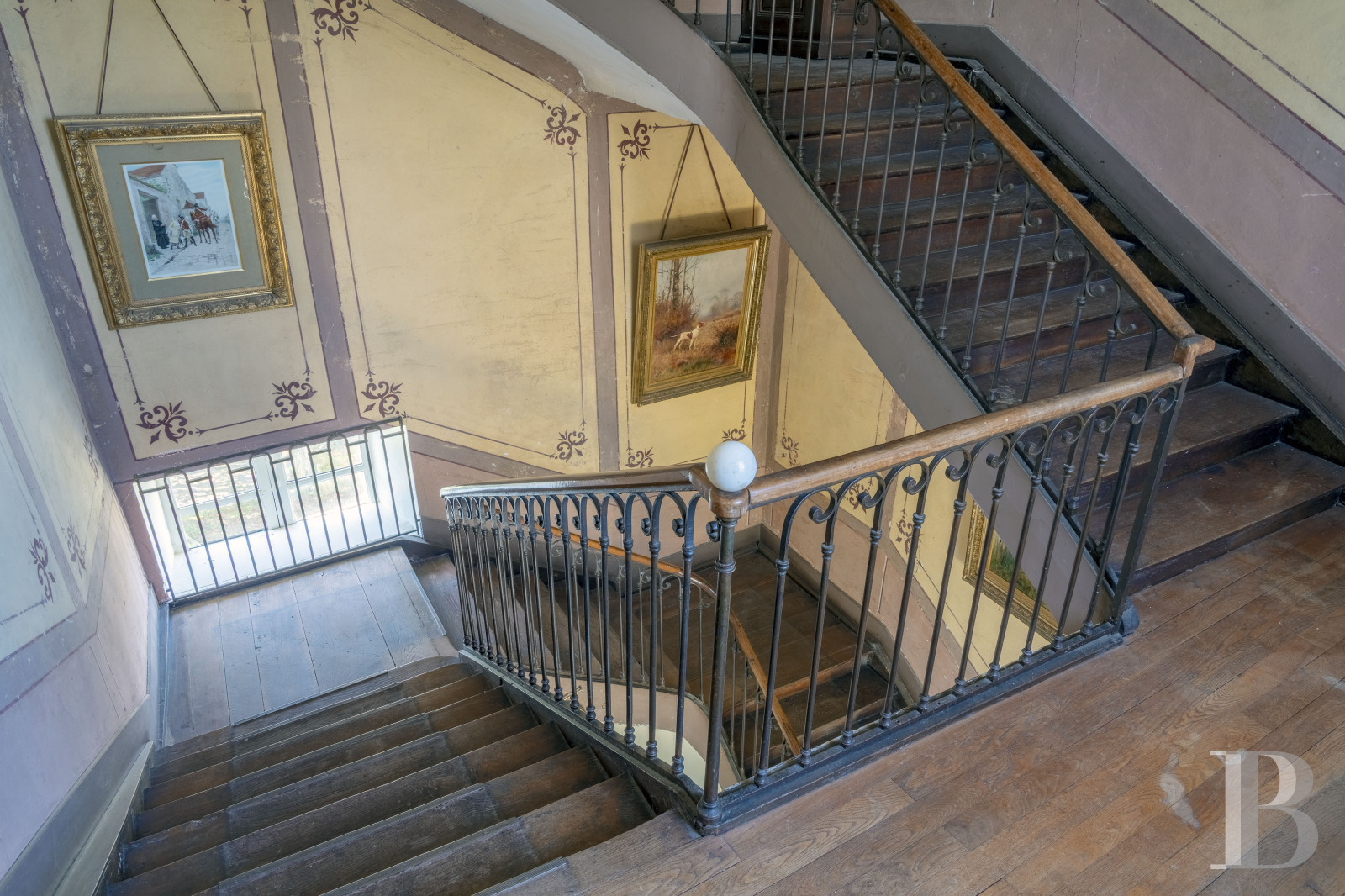
In the centre of the facade, a double-leaf door opens into the entrance hall and a wooden, ceremonial staircase climbs to the upper floors. On either side, a corridor leads to the living rooms. Most of the reception rooms are dual aspect and open onto the outside from the east and west facades. This level has preserved its original features, such as terracotta tiles, parquet flooring, wood panelling, oakwood ceilings, marble fireplaces and small-paned windows with curved, blown glass.
The right-hand side includes a living room, a kitchen, two bedrooms and a bathroom with a lavatory, while the left-hand side is made up of a lounge, a dining room, a kitchen, a shower room, a lavatory and a conservatory.
The whole level can be reorganised and restored to its original layout.
The first floor
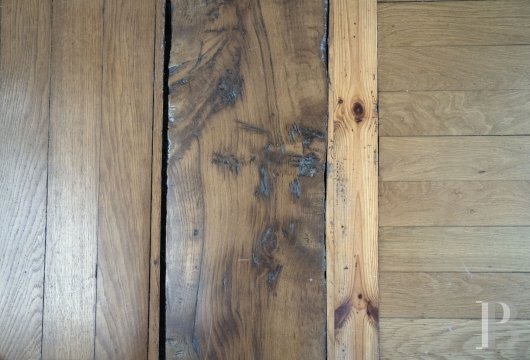
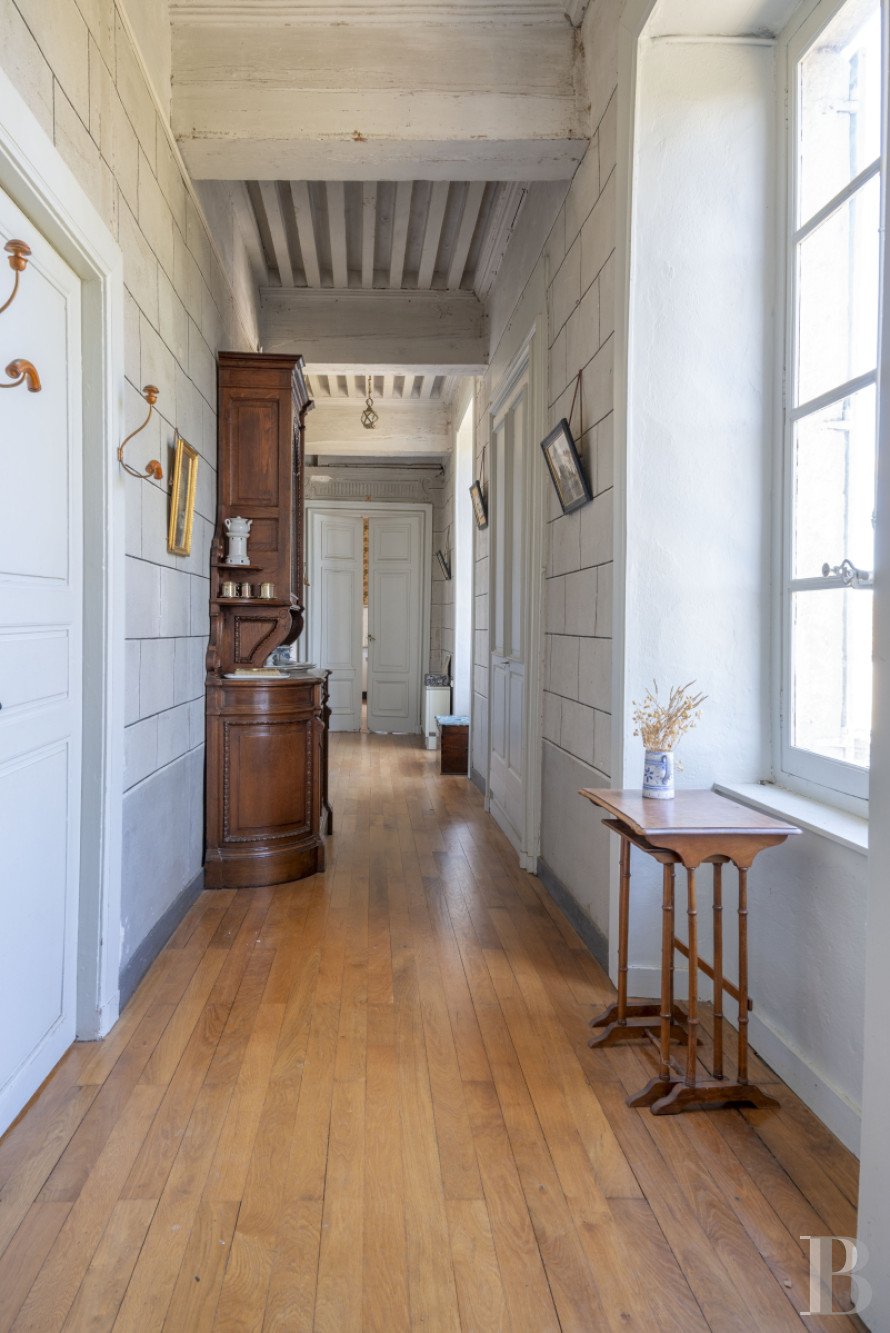
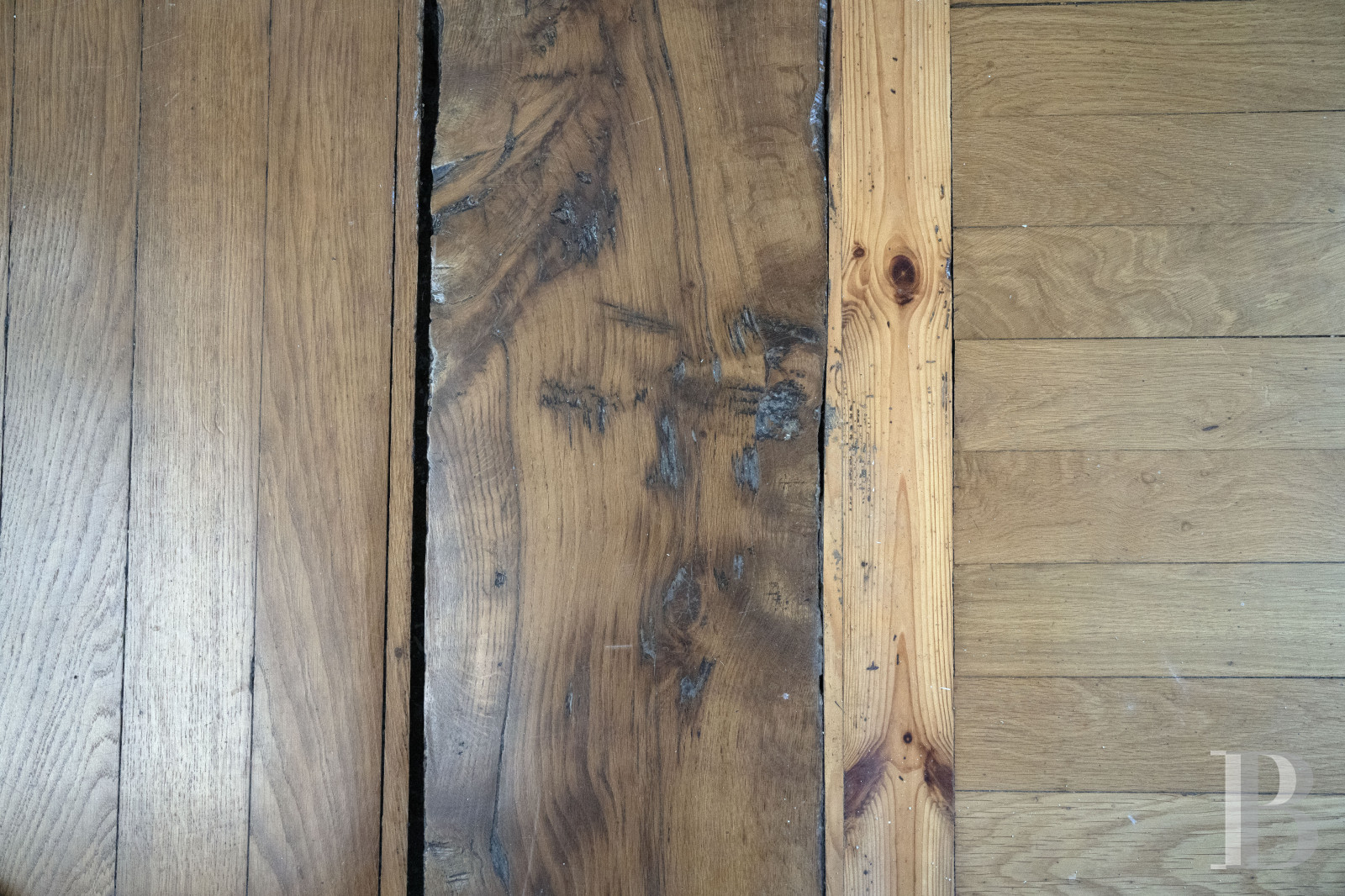
With a similar layout to the ground floor, this level includes a long corridor leading to six bedrooms, with three on one side of the staircase and three on the other. All of them face west, overlooking the grounds and a several hundred-year-old oak tree. There is wood stripped flooring throughout, some bedrooms have a fireplace and all boast considerably high French-style beamed ceilings. The shower rooms, bathrooms and lavatories can be found in the two square towers at each end of the building, via services staircases linking its different levels.
The second floor
These fully usable attic spaces with low ceilings can be used for storage, workspaces or creative hobbies. The structural reinforcement of the building via the use of tie beams and wall ties conducted in the early 20th century means there are a number of iron bars on the floor that need to be stepped over.
The orangery
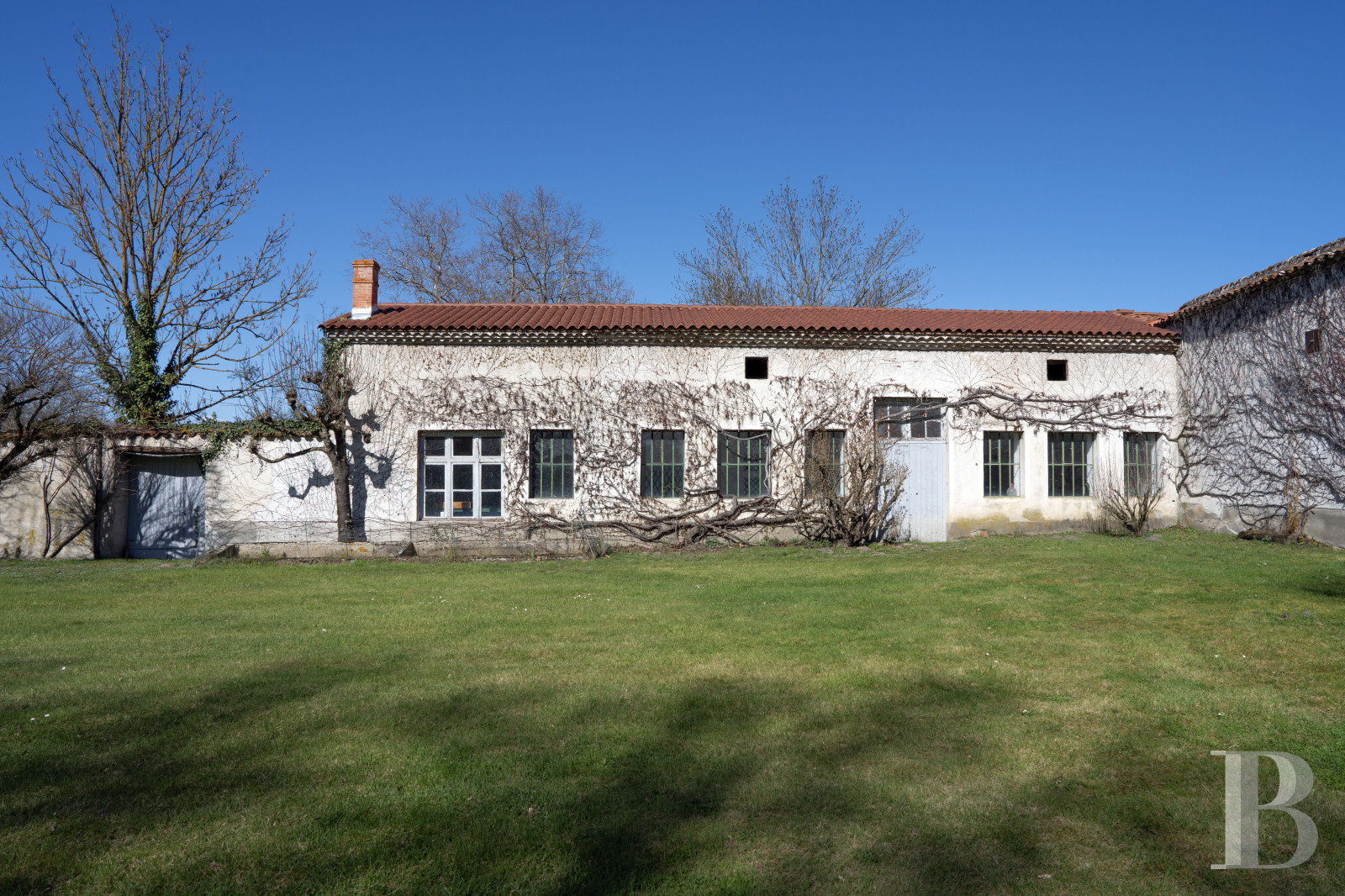
This south-facing building is bathed in light via wide openings and is made up of three rectangular rooms situated one after another. To the right, the gardener’s office is used to stock seeds, take cuttings and prepare the seedlings. In the centre, a long room still boasts its original bench seats. To the left, there is a room fitted with potting shelves. There is concrete flooring, walls rendered with lime and the roof was fully restored several years ago.
The estate’s outbuildings
A group of rectangular buildings surrounds a courtyard with two entrance arches at each end, between the residence and the farm. The walls are a mix of rammed earth and lime, the roofs are made of barrel tiles and the gates as well as window frames are made of wood. The first building is the two-storey estate keeper’s house next to a barn, on the ground floor of which there are garages, workshops and storage space, with the former living quarters of the estate’s employees on the upper floor. Opposite, there are garages, an agricultural storage building and box stalls, most likely used yesteryear for the owner’s carriage and the horses that pulled it. All the outbuildings require comprehensive inspection of the roofing and structural work to protect the buildings from the elements.
The farm buildings
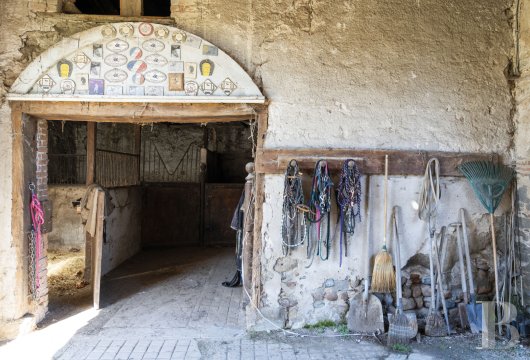
To the northeast of the estate, the farm buildings stand around a large courtyard with its own entrance from the village. They are currently used for breeding, boarding and stabling racehorses and include an open-sided agricultural storage building for farming equipment. Opposite, there is a building containing box stalls as well as a storage area for hay and straw. It is followed by a saddlery, a workshop and several premises for looking after the horses before taking them to the meadows and riding arena. It should be noted that the sale does not encompass these meadows and equestrian facilities (including 15 hectares of land, a riding arena and a pond), which can be purchased additionally. These outbuildings, situated in peace and quiet, face the village and are not overlooked by neighbouring properties. Building maintenance and protection work is required on this part of the estate.
The manor’s grounds
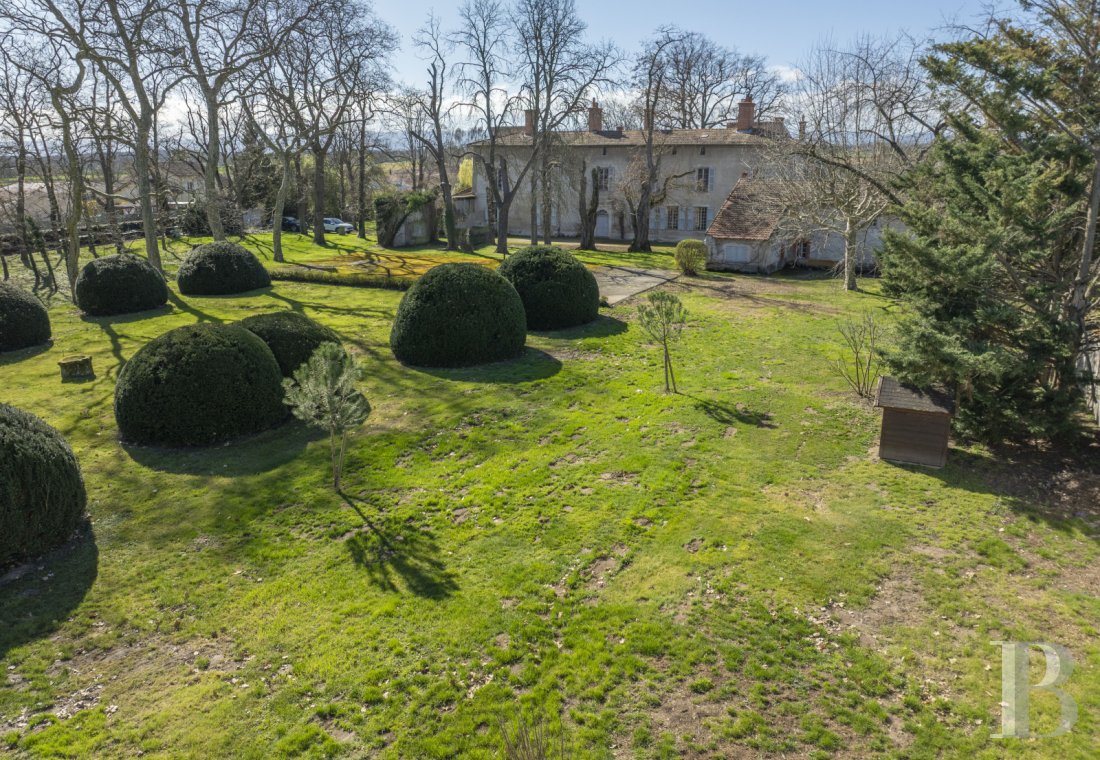
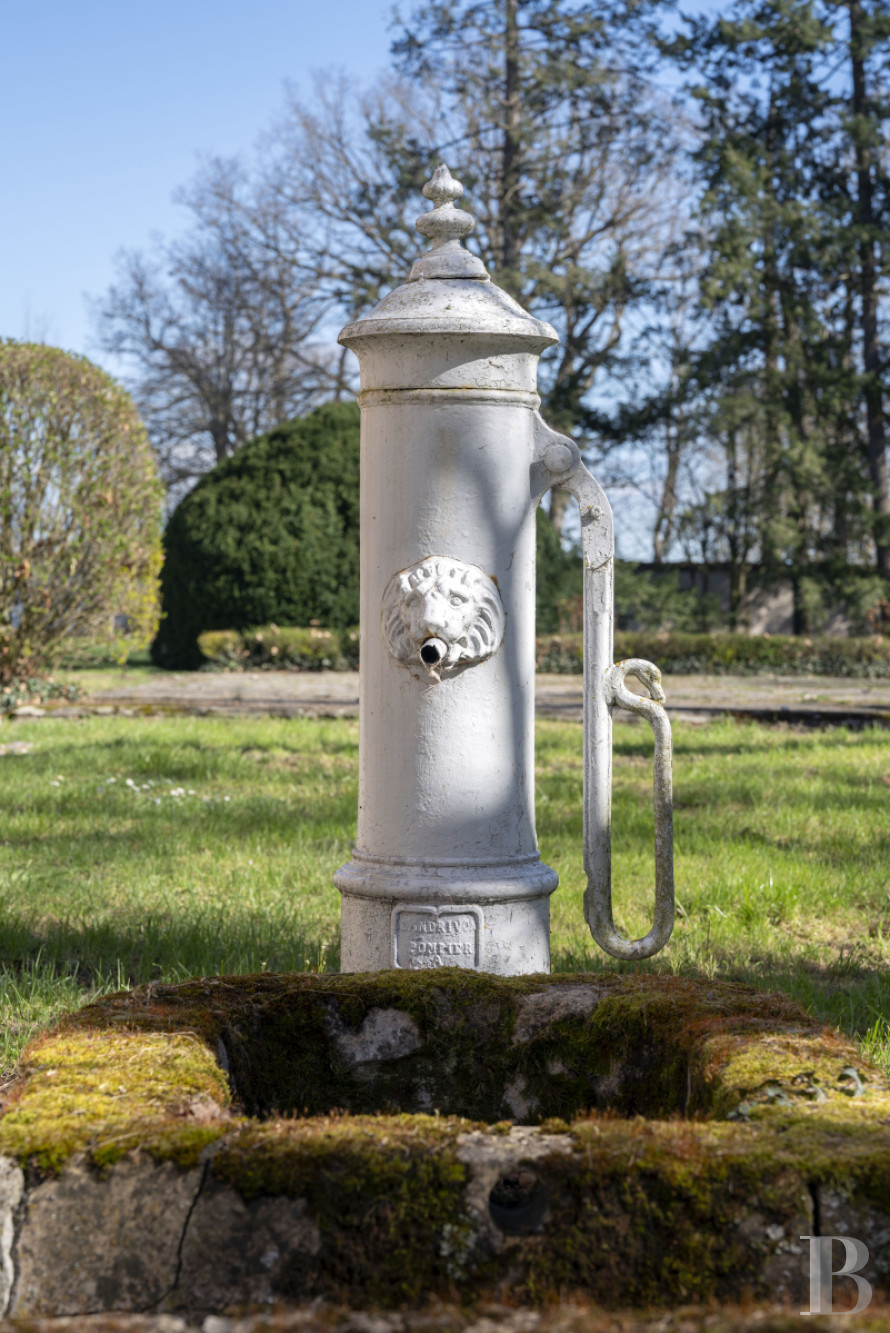
On the village side the grounds are walled, while on the side of the meadows they are bordered by a branch of the Forez Canal. They stretch symmetrically around the manor house and are made up of lawned areas as well as remarkable trees (such as plane, lime and oak). In front, to the east, the former bridle path lined with plane trees leads to a relaxing spot beneath the shade of some lime trees. The rest is made up of a lawned area either side of the former tennis court and topiary trimmed shrubs here and there, embellishing the view to the horizon.
On the western side, the majestic oak dominates the garden, providing welcome shade on summer days. Several hedges and pruned shrubs dot the lawns towards the canal and orangery.
On the south side, near the main entrance, a considerable part of the grounds could be made private if the estate is divided into several homes.
Our opinion
In a setting that offers a complete change of scenery, peace, tranquillity and a chance to recharge your batteries, this 17th-century property is genuinely out-of-the-ordinary, away from any visual disturbance or noise pollution. It enjoys 180° views over a wild, undulating landscape, typical of the Loire Valley. The entire property exudes a countryside spirit, ideal for relaxation and tranquillity. With its layout, horse-riding as well as farming functions and plenty of available buildings, the estate will be a pleasant place to live and easy to maintain once its interiors have been renovated. The unique property formed by the manor house, orangery, outbuildings and the grounds makes it possible to bring history and heritage to life, while opening up opportunities for events-based, hotel or residential projects that would breathe new life into the estate.
690 000 €
Fees at the Vendor’s expense
Reference 553115
| Main building floor area | 540 m² |
| Outbuildings floor area | 800 m² |
| including refurbished area | 540 m² |
| Land registry surface area | 2 ha 36 a 15 ca |
French Energy Performance Diagnosis
Information on the risks to which this property is exposed is available on the website: www.georisques.gouv.fr
Share


NB: The above information is not only the result of our visit to the property; it is also based on information provided by the current owner. It is by no means comprehensive or strictly accurate especially where surface areas and construction dates are concerned. We cannot, therefore, be held liable for any misrepresentation.