



A well-preserved, approximately 600-m² elegant manor house with an enclosed garden
and outbuildings, in the Minervois sector, in the southwest of the Hérault area
and outbuildings, in the Minervois sector, in the southwest of the Hérault area
Narbonne,
HERAULT
languedoc-roussillon
11100
FR

Location
The village in which the property is located, in the Occitanie region, in the west of the Hérault area, in the heart of the Minervois sector, bordering on the Aude area, is surrounded by undulating landscapes of vineyards. The municipality enjoys a Mediterranean climate and hosts a large weekly market. It also boasts a high number of convenience stores. In addition, the Haut-Languedoc Regional National Park is only several kilometres to the north.
The municipality, between the Canal du Midi and the village of Minerve, is situated 30 kilometres from Narbonne, 36 kilometres from Carcassonne, 43 kilometres from Béziers, 122 kilometres from Montpellier and 130 kilometres from Toulouse. All the above cities possess stations with high-speed TGV train connections, while the last four also have international airports nearby.
Description
The property can be found in urban environment and is made up of several buildings erected during the third quarter of the 19th century, by a family who made a significant fortune in vinegrowing, like other vineyard owners in the Minervois sector and near Béziers. The property is made up of a manor house, a perpendicular extension, a former superintendent’s lodgings and a hen coop, bordered by the garden to the east.
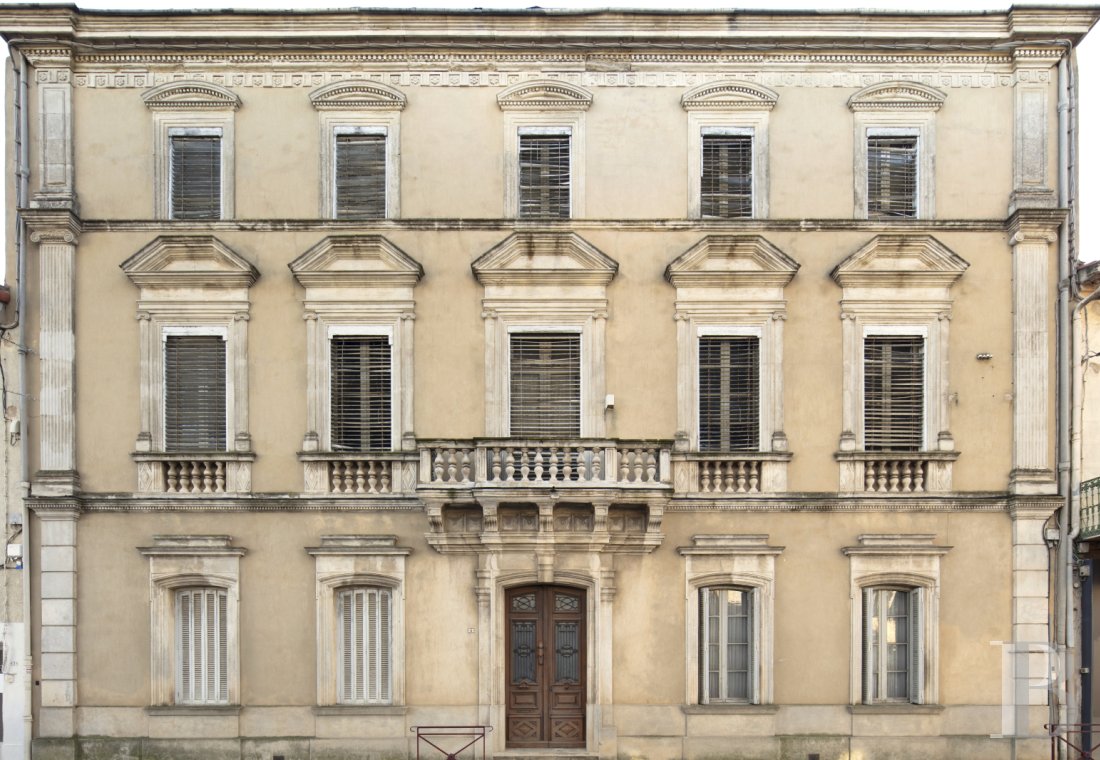
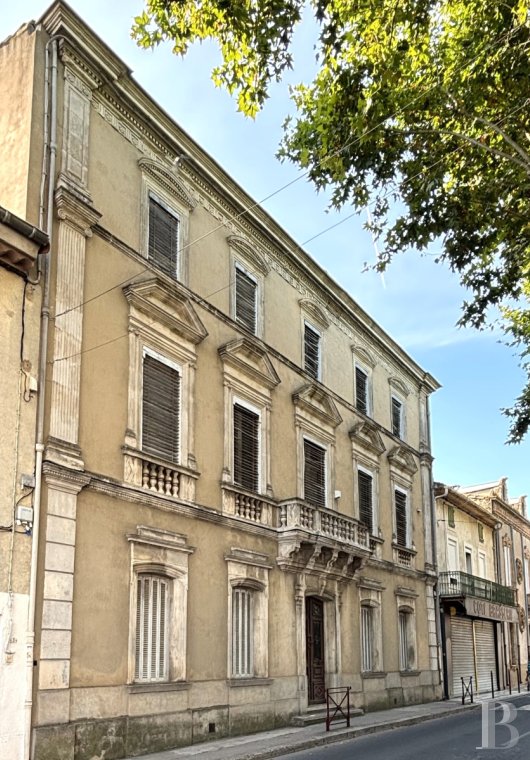
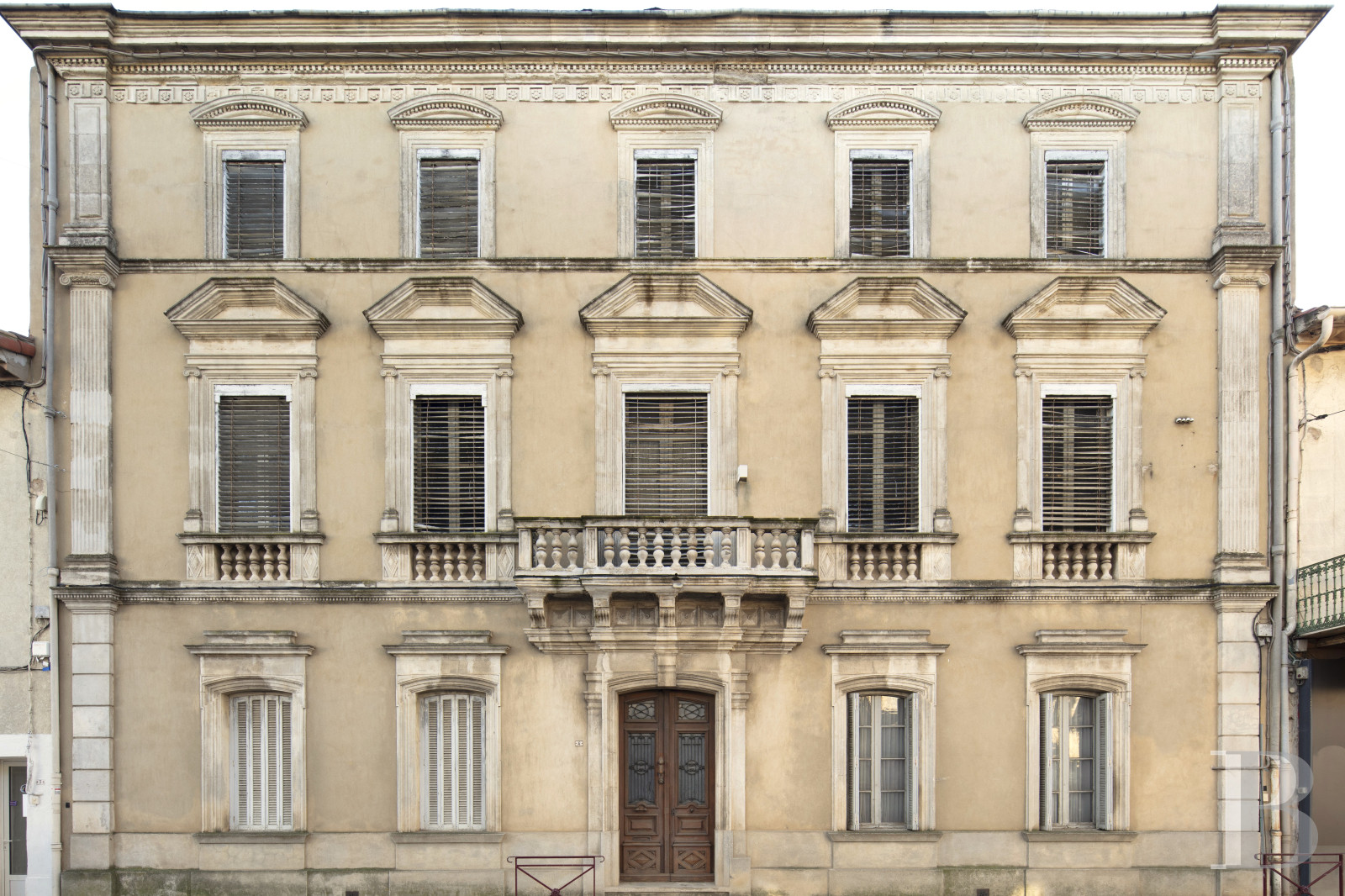
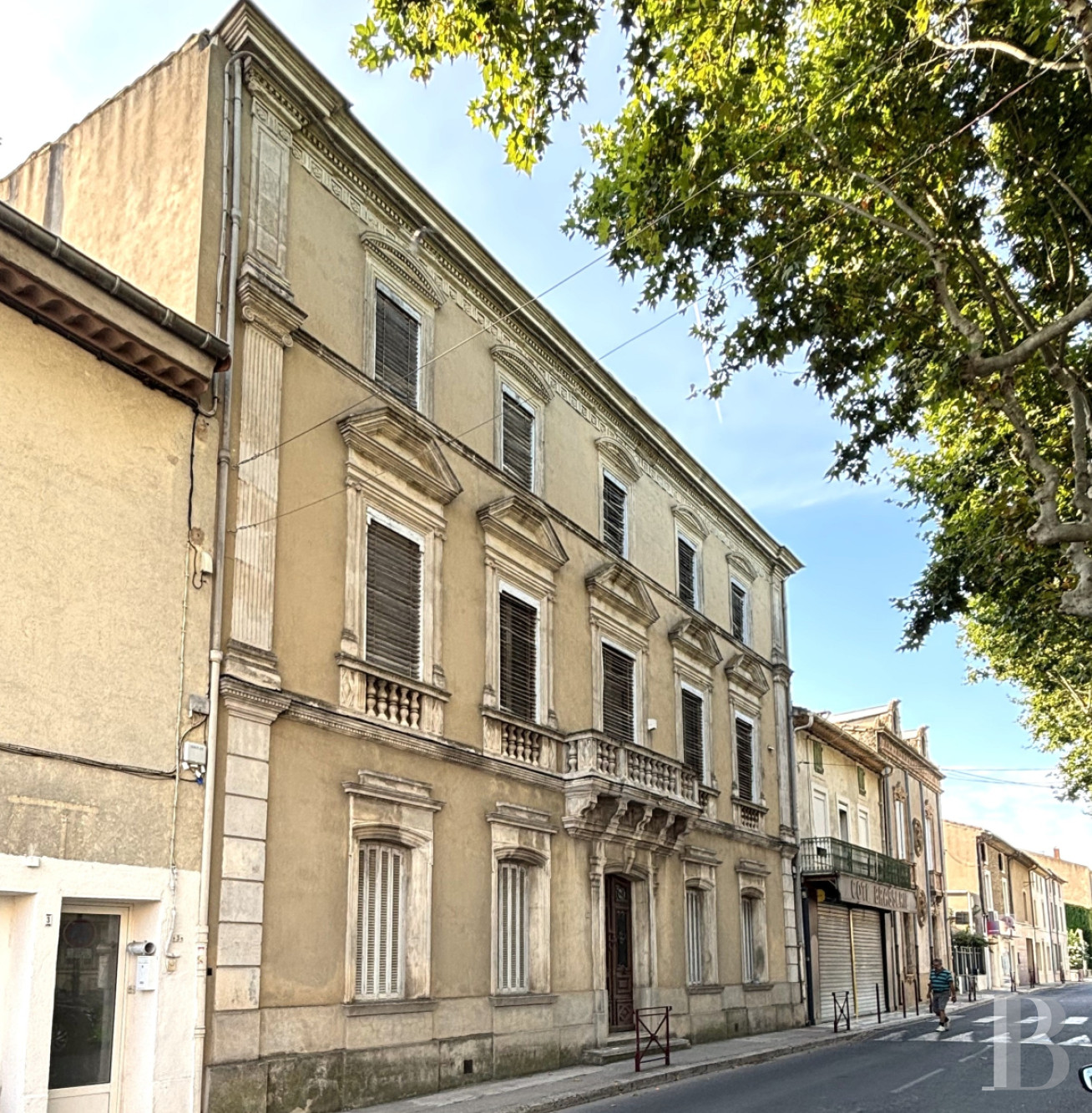
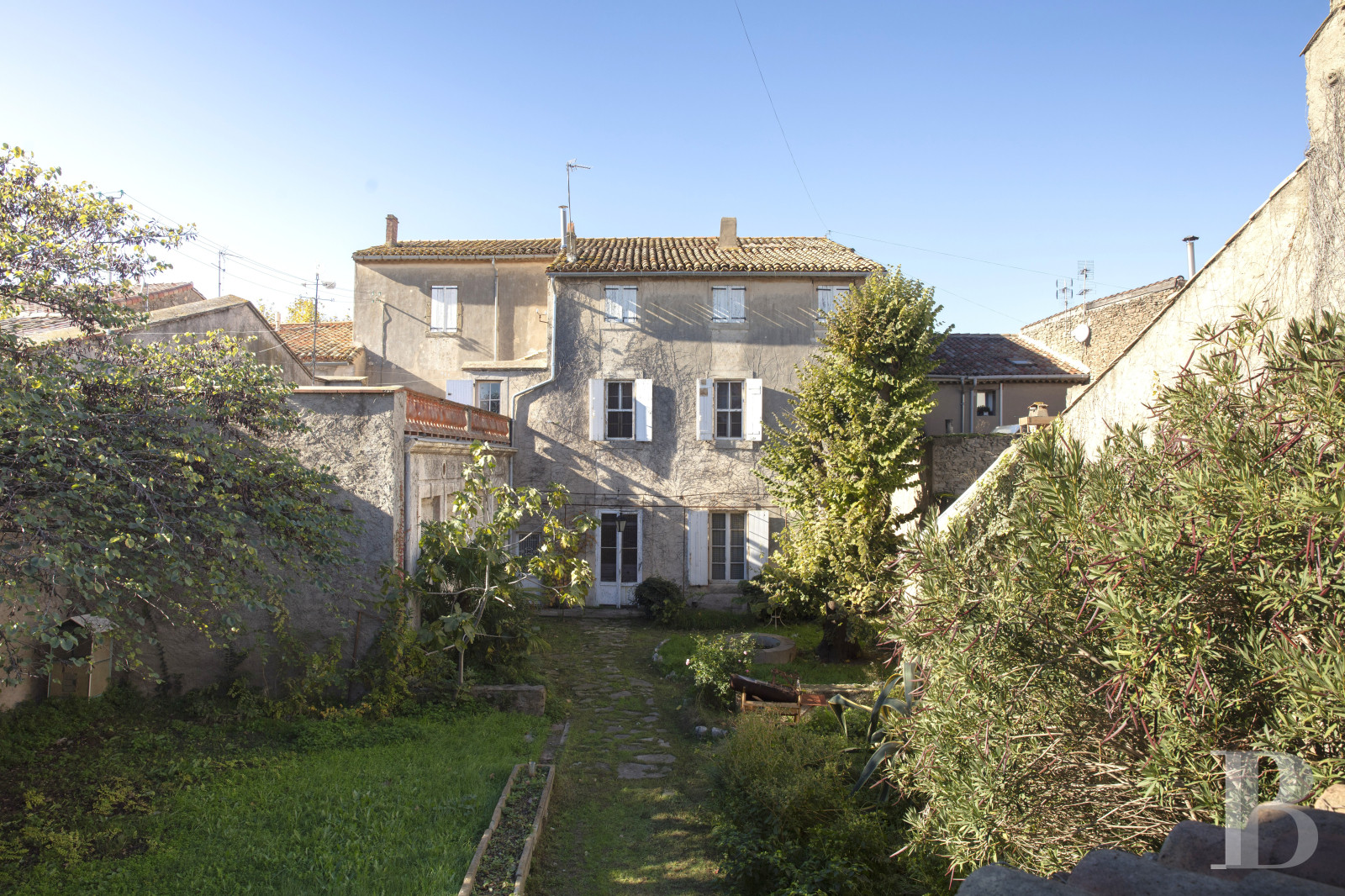
The three-storey manor house is topped by a long-sloped and wide gabled roof made of half-round tiles. The frieze underlining the denticulated cornice on the facade overlooking the street is inspired by ancient rose-shaped bas-reliefs. This ashlar-built, west-facing elevation is perfectly symmetrical, with five vertical rows of openings arranged in an opulent neo-classical architectural style. On the contrary, the facade overlooking the garden is characterised by its stringent sobriety. The entrance door from the street, in the centre of the facade, is topped by a stone balcony. Its guard-rail made of balusters is echoed on the four windows either side of it on the first floor. The windows on the ground floor are fitted with metal louvred shutters, while the ones on the upper floors are fitted with wooden slatted blinds.
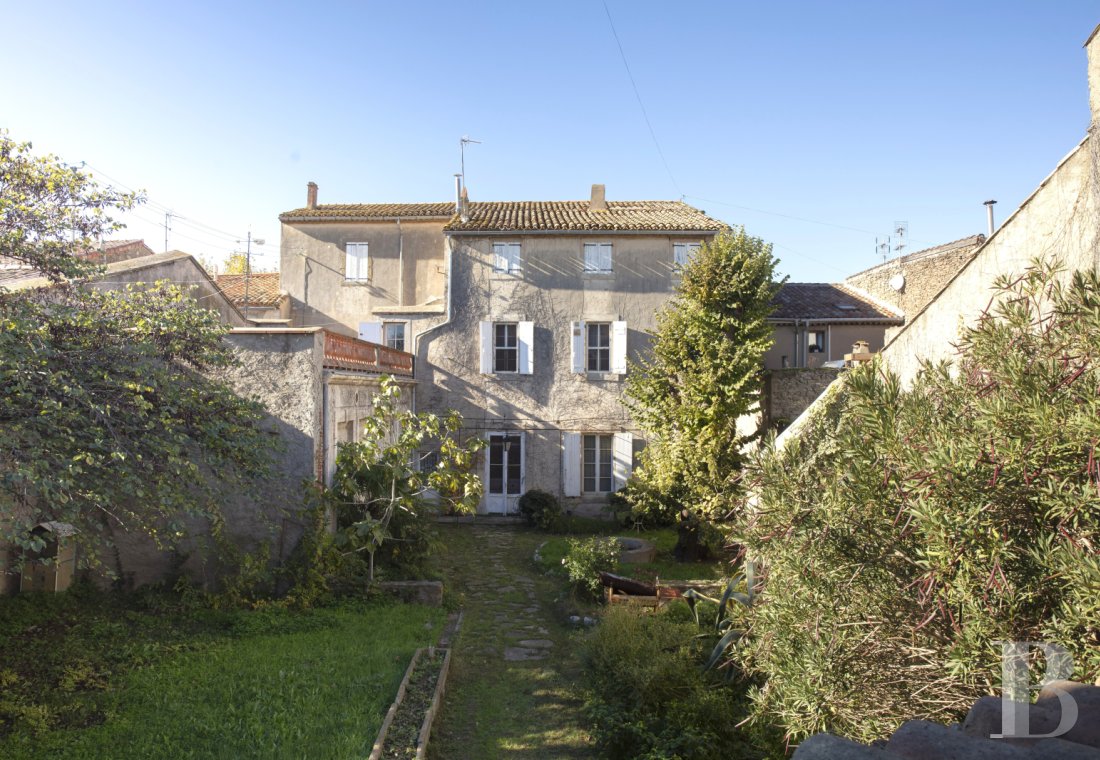
The 20th-century extension is made up of a rectangular building on the garden side of the house. It includes a basement and a ground-floor topped by a roof terrace. Light streams into it through three windows and a French window, fitted with sash shutters.
A circular pond can be found in the reasonably sized garden lying to the east of the manor house. A zinc-roofed aedicula previously housed an outside lavatory.
Lastly, the former superintendent's lodgings located at the bottom of the garden is today a two-storey guests’ house, standing next to a wooden gate opening out onto a narrow street to the rear of the property.
The three-storey manor house is topped by a long-sloped and wide gabled roof made of half-round tiles. The frieze underlining the denticulated cornice on the facade overlooking the street is inspired by ancient rose-shaped bas-reliefs. This ashlar-built, west-facing elevation is perfectly symmetrical, with five vertical rows of openings arranged in an opulent neo-classical architectural style. On the contrary, the facade overlooking the garden is characterised by its stringent sobriety. The entrance door from the street, in the centre of the facade, is topped by a stone balcony. Its guard-rail made of balusters is echoed on the four windows either side of it on the first floor. The windows on the ground floor are fitted with metal louvred shutters, while the ones on the upper floors are fitted with wooden slatted blinds.
The 20th-century extension is made up of a rectangular building on the garden side of the house. It includes a basement and a ground-floor topped by a roof terrace. Light streams into it through three windows and a French window, fitted with sash shutters.
A circular pond can be found in the reasonably sized garden lying to the east of the manor house. A zinc-roofed aedicula previously housed an outside lavatory.
Lastly, the former superintendent's lodgings located at the bottom of the garden is today a two-storey guests’ house, standing next to a wooden gate opening out onto a narrow street to the rear of the property.
The manor house
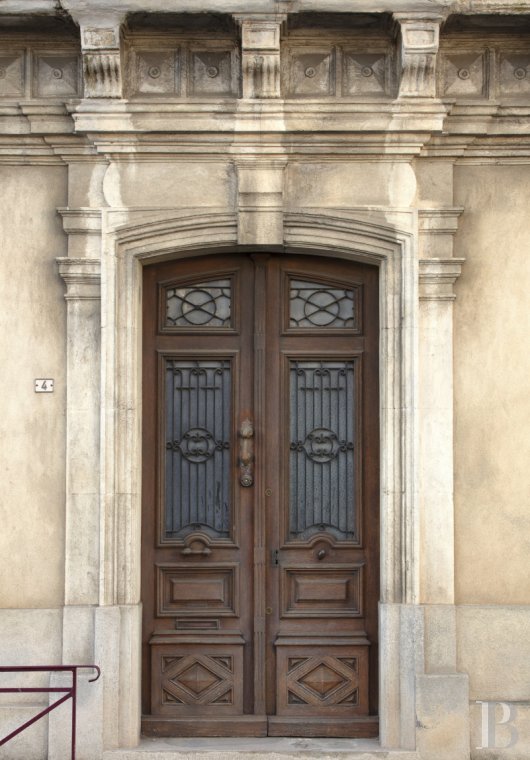
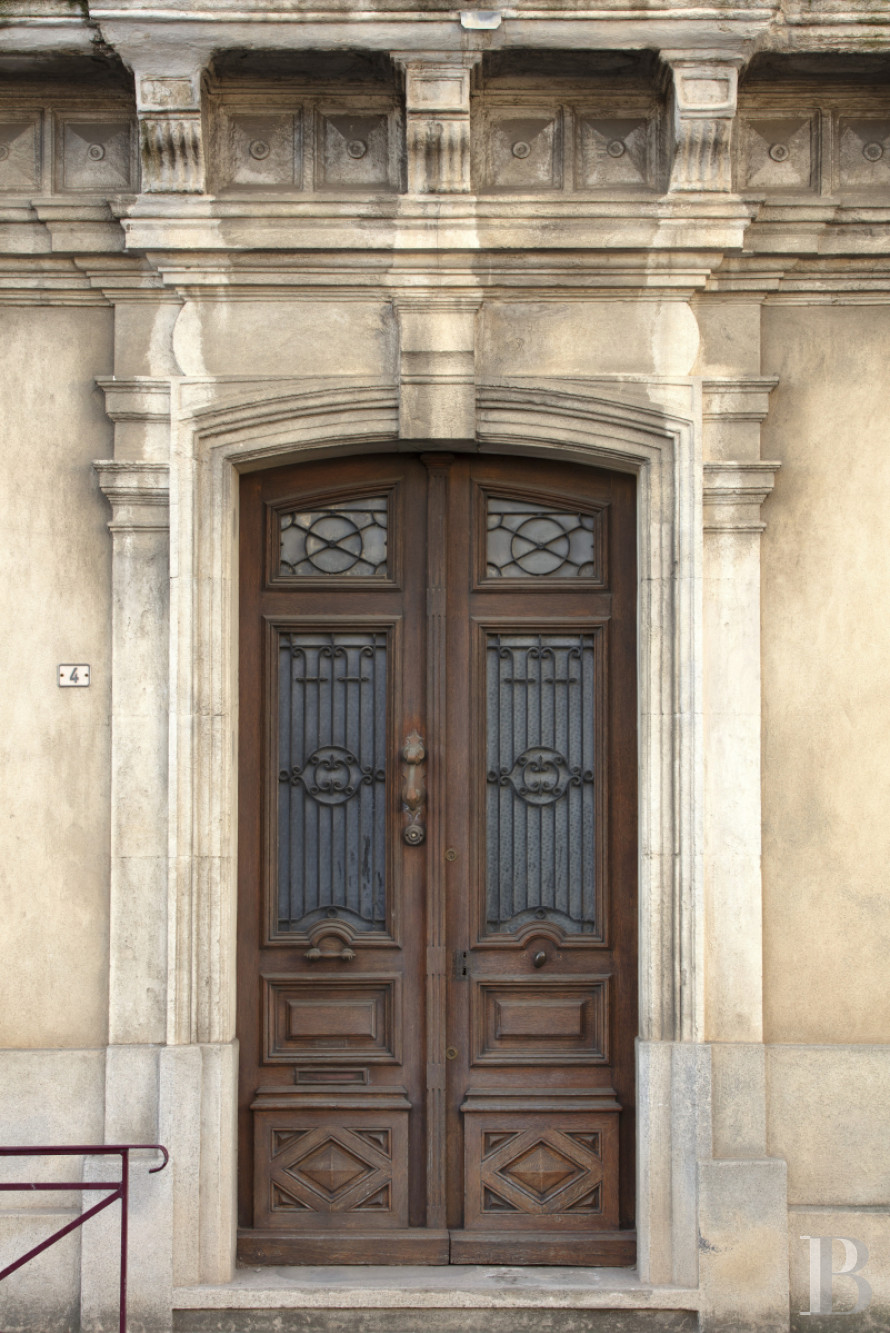
The main elevation is adorned with a rich décor inspired by classical architecture. The first level is framed by bossed pilasters and crowned with a moulded denticulated cornice, bordered by the capitals of the pilasters. The segmental arched windows boast moulded surrounds as does the entrance door, which, in the centre of the facade, is framed by pilasters and topped by an entablature with a curved frieze. The cornice on the latter extends further thanks to three offsets that act as the base for the first-floor balcony, which rests on five modillions alternating with lozenge tips.
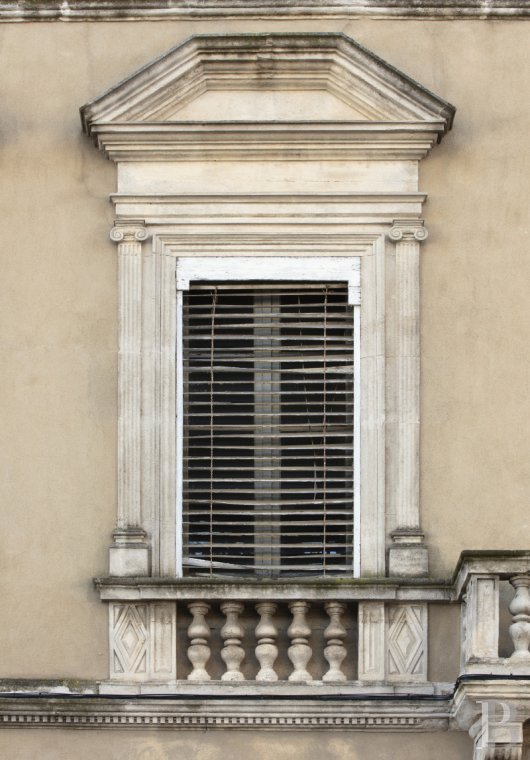
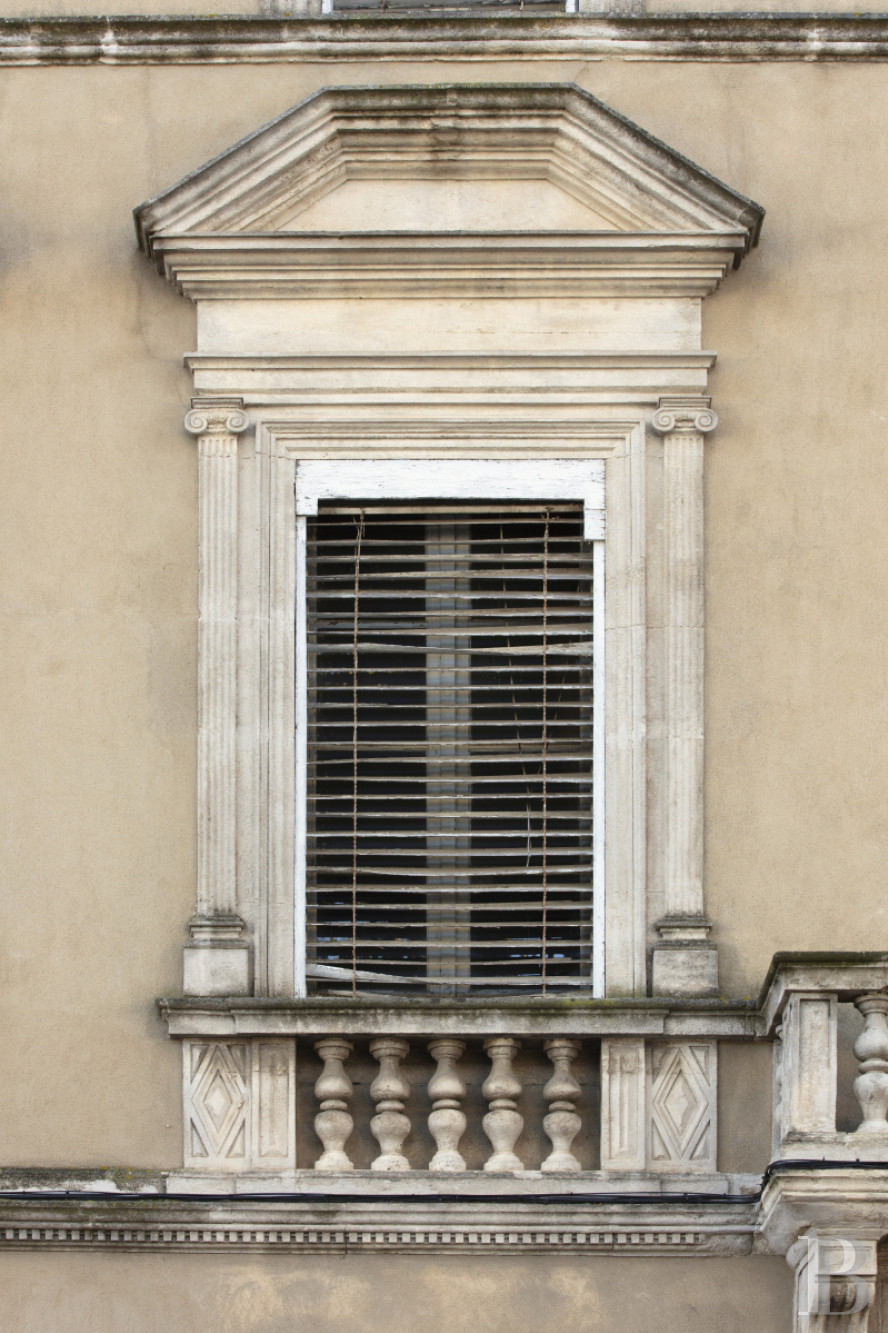
The first floor, framed by ribbed pilasters with ionic capitals, is topped by a moulded belt course. The windows feature architectural decorations made up of ionic pilasters, an entablature and a polygonal pediment. Their apron walls include balusters between tables with geometrical patterns that are also featured on the balcony in front of the central window.
Lastly, the second floor is also bordered by pilasters. It is also topped by a moulded cornice, a denticulated frieze and a florally patterned architrave. The moulded framed windows have an arched pediment with denticulated patterns.
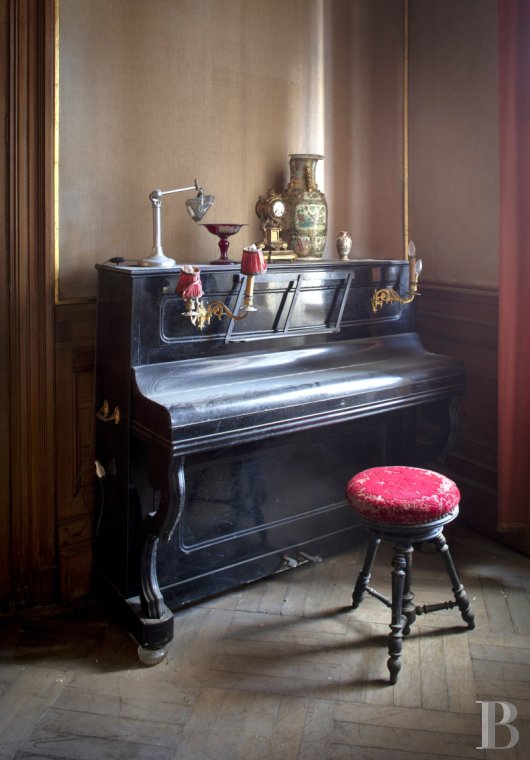
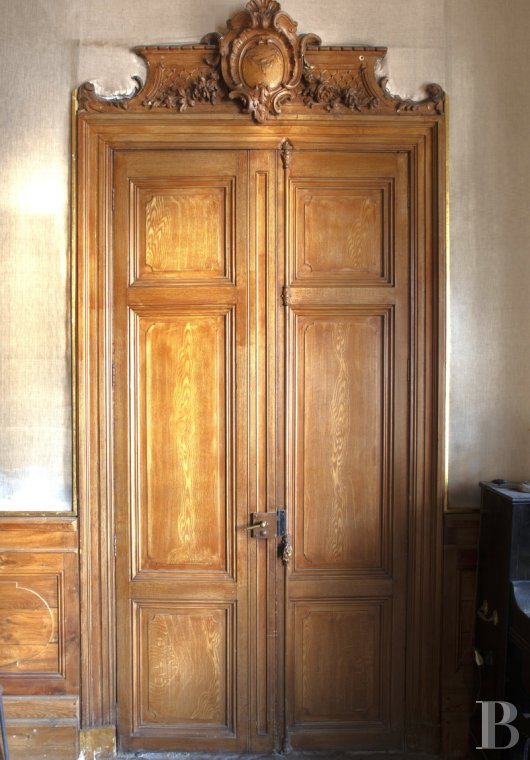
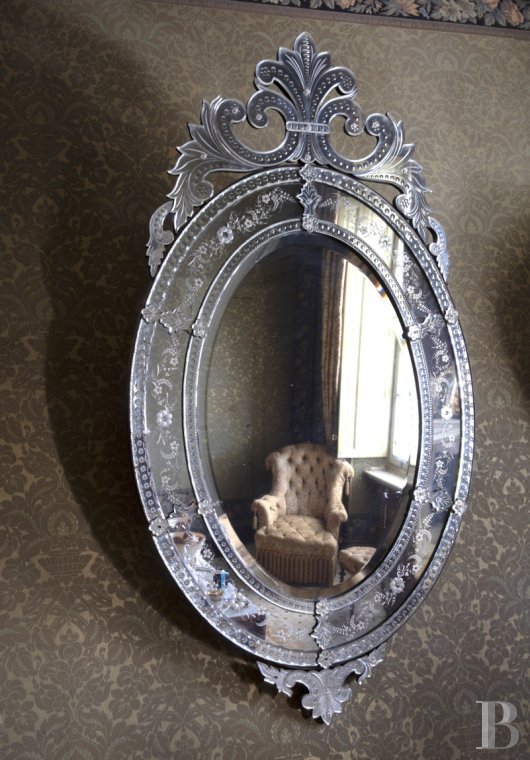
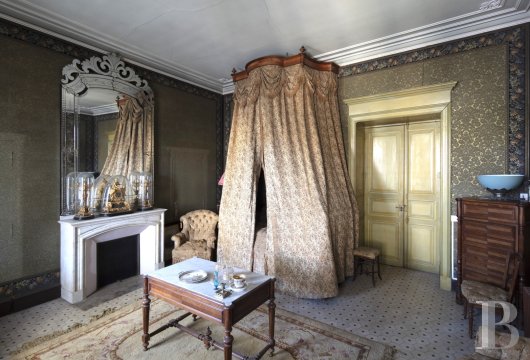
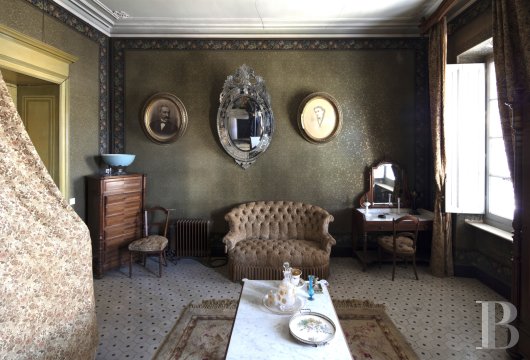
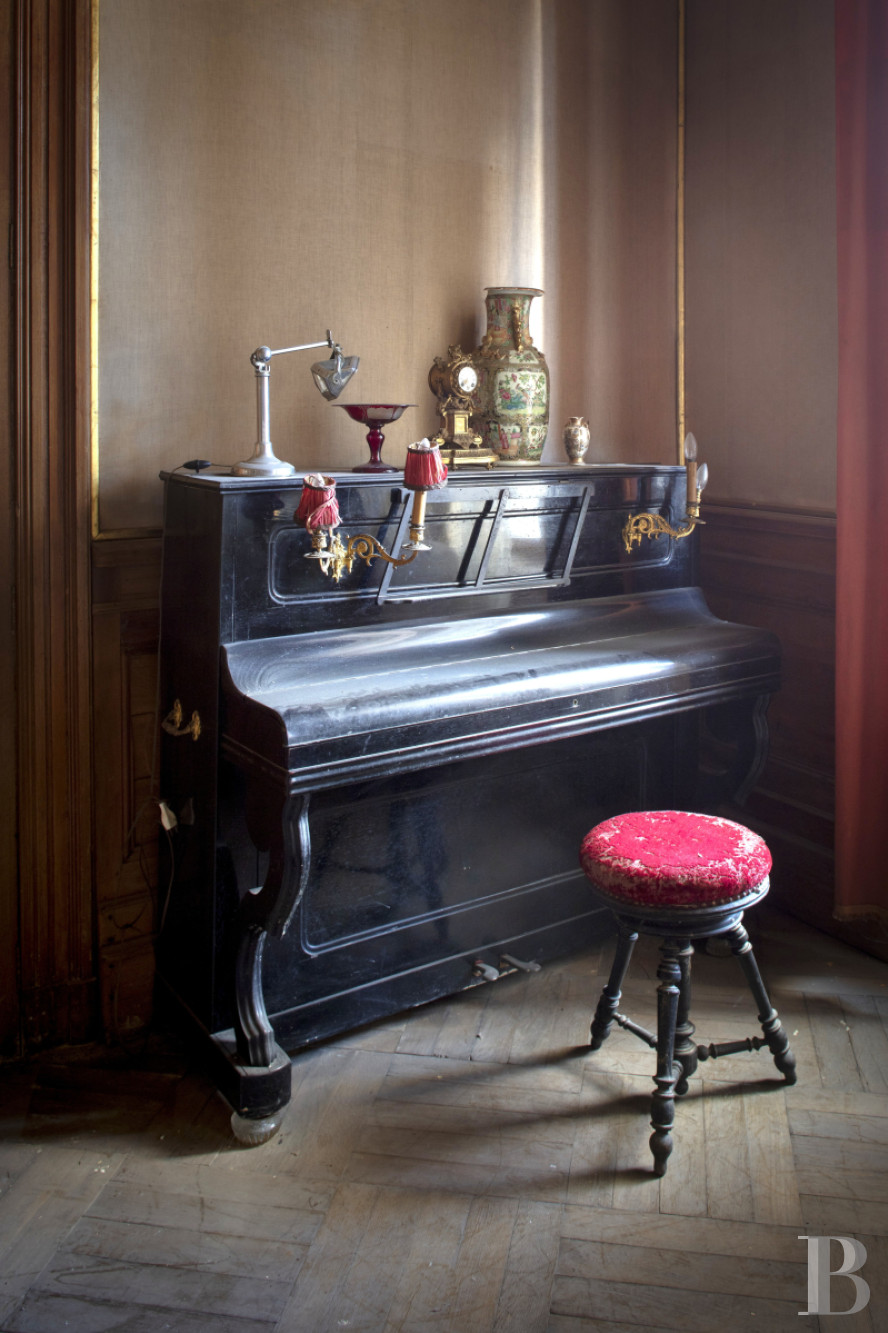
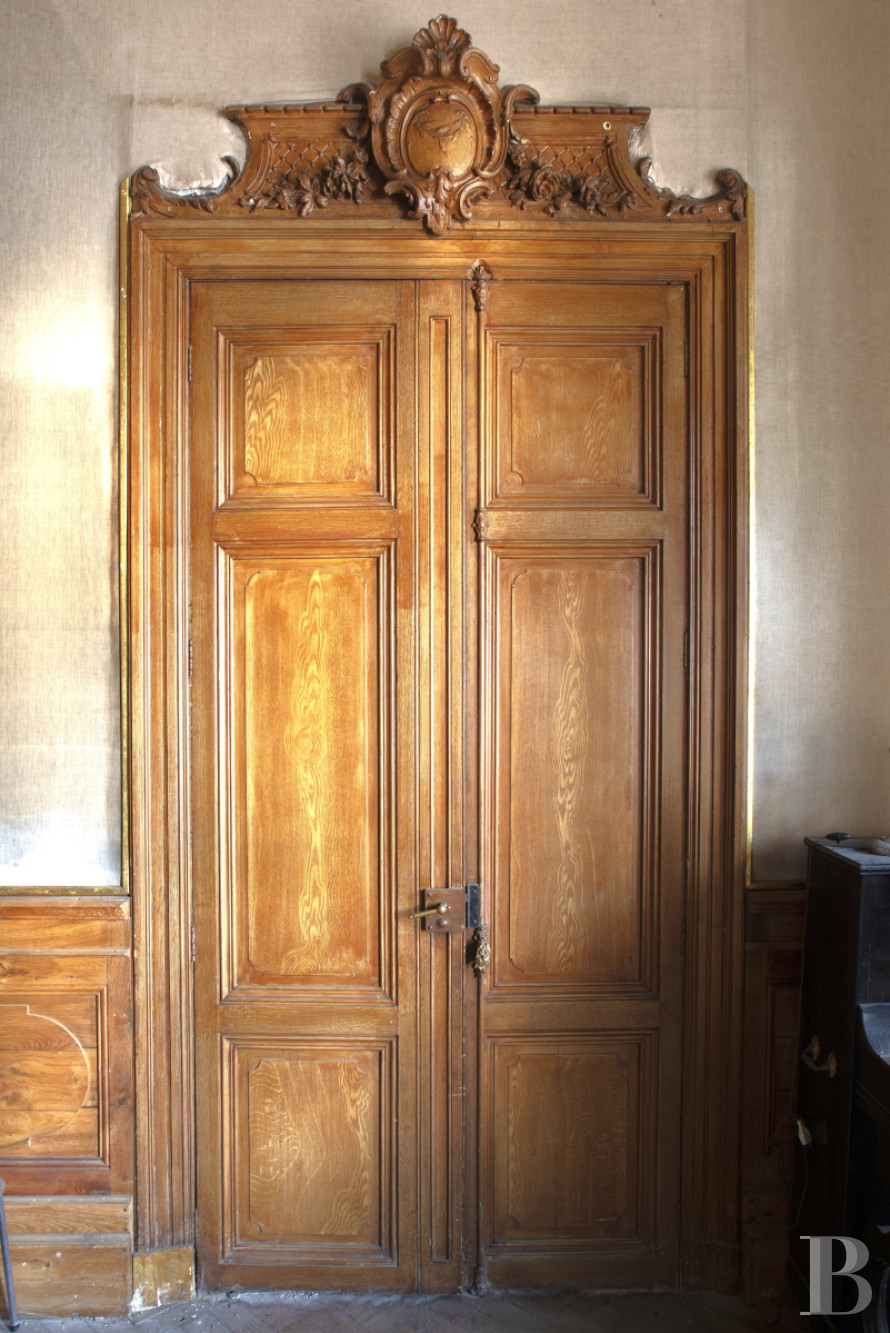
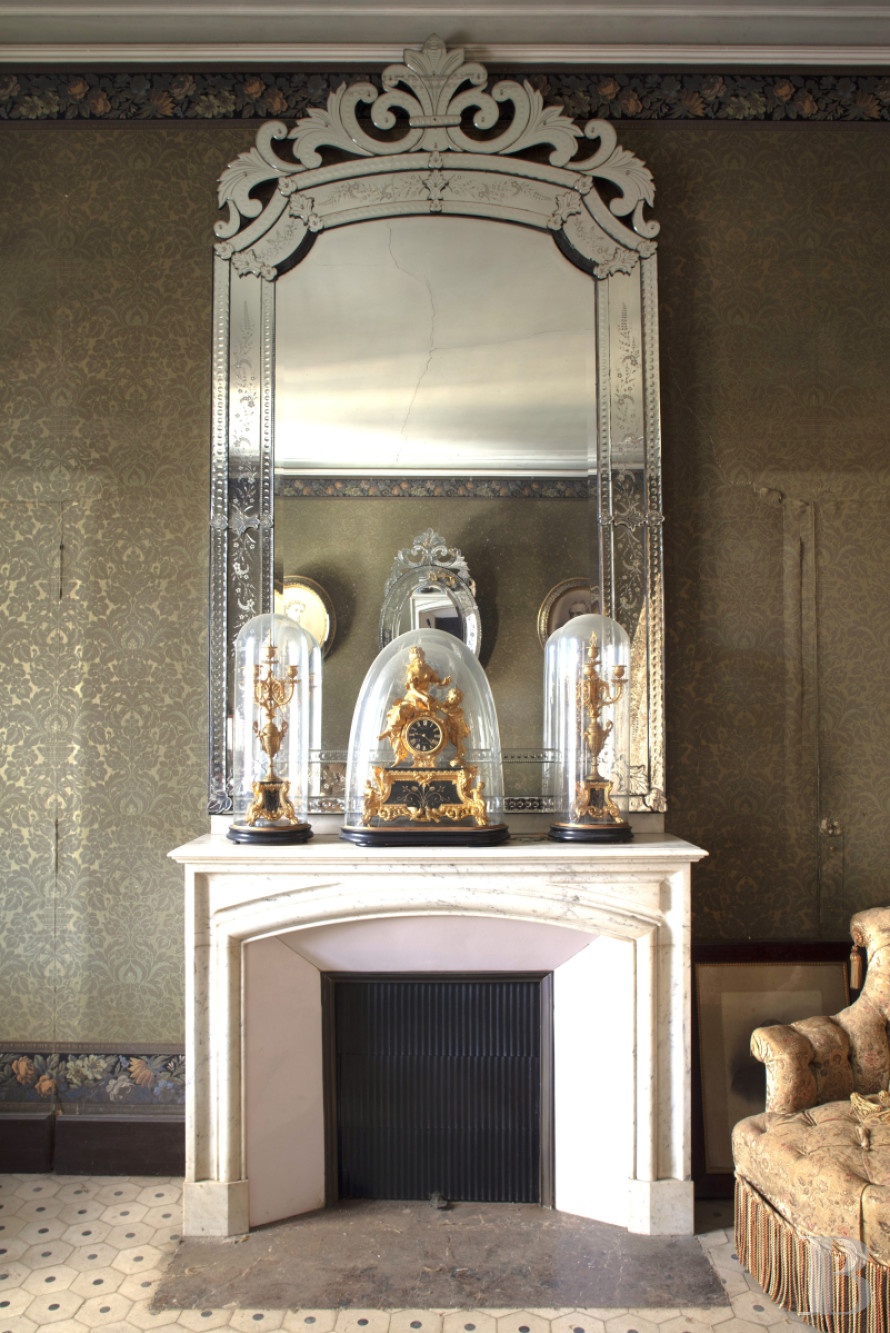
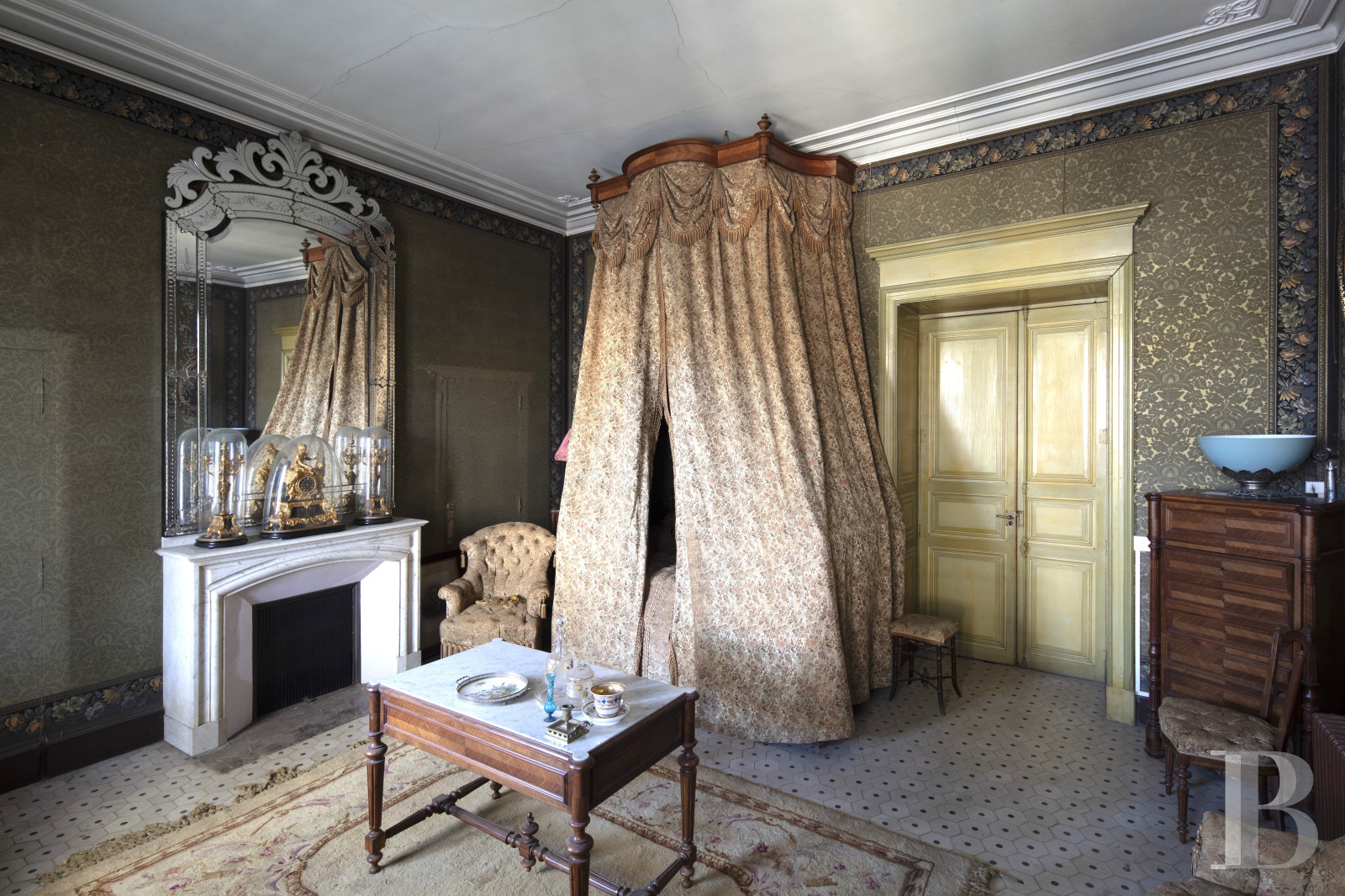
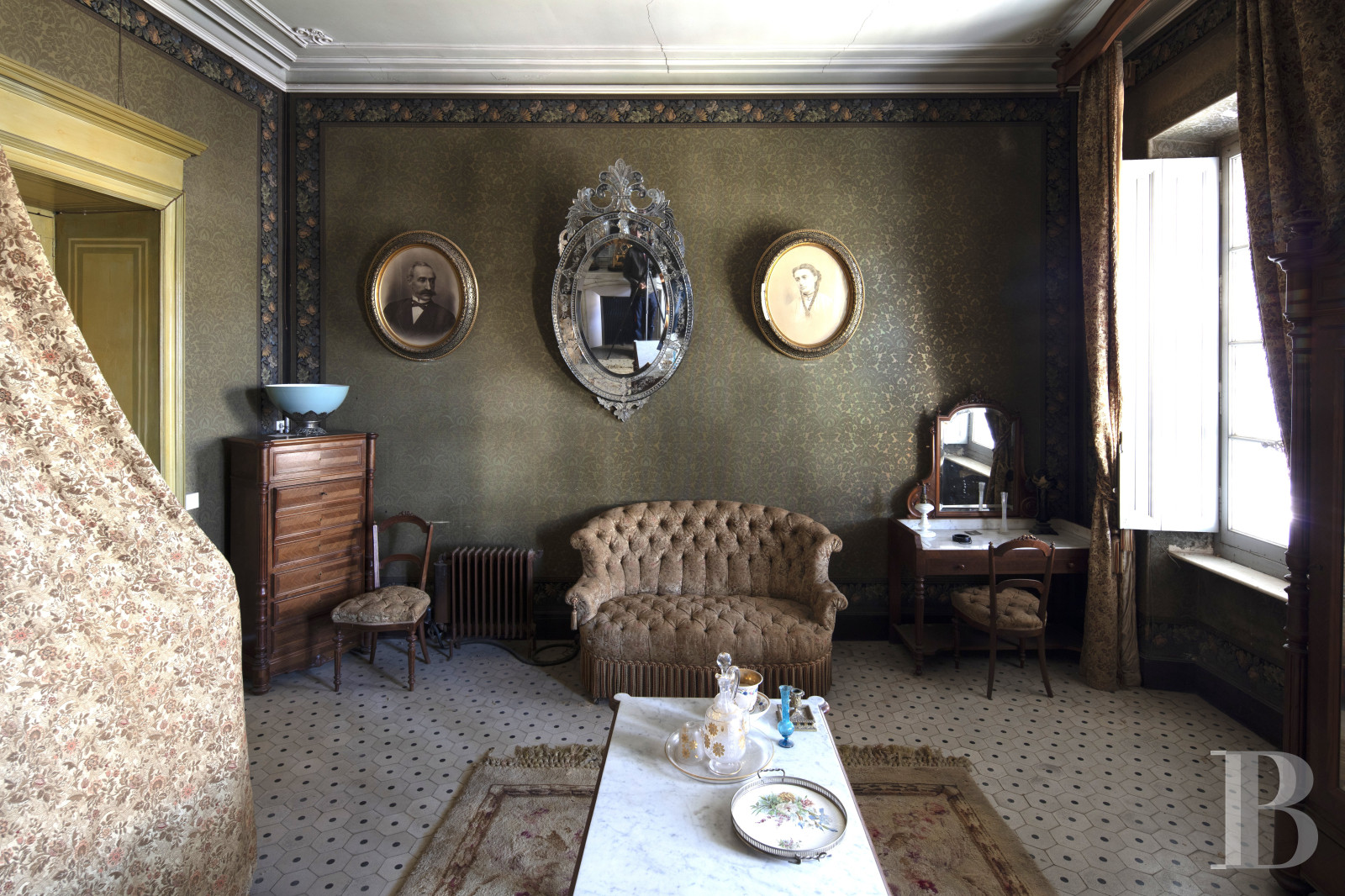
As for the interior décor, it mostly dates from the late 19th century and includes several rearrangements conducted during the first half of the 20th century. The wainscotting and doors are original features, as are some of the plasterwork and wallpaper on the ceilings on the ground floor and first floor rooms.
The ground floor
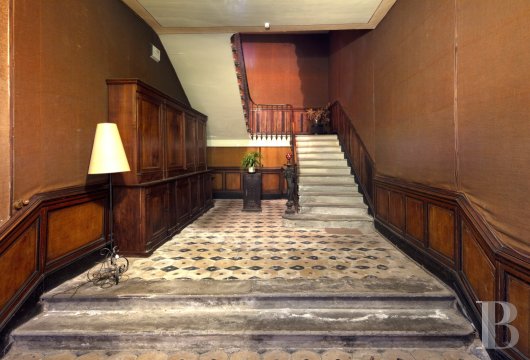
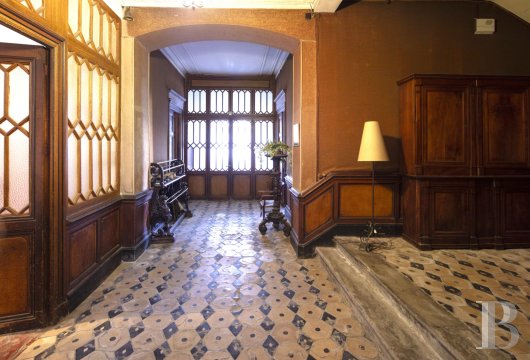
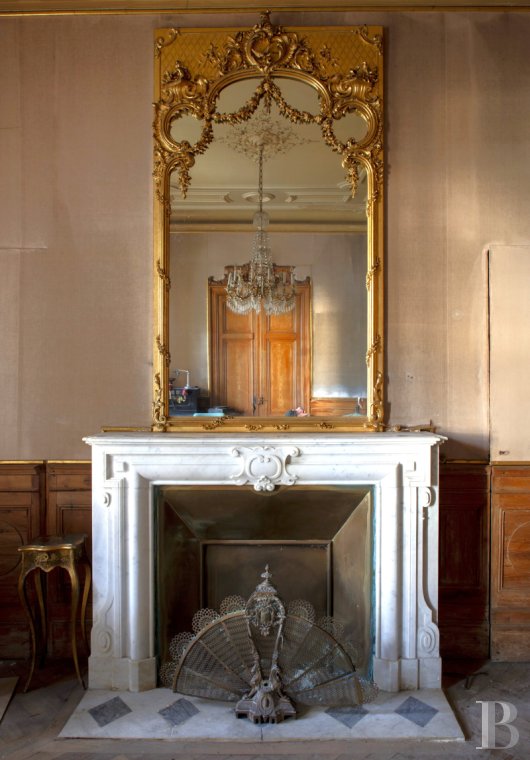
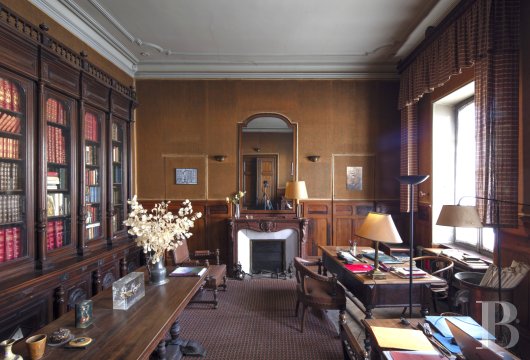
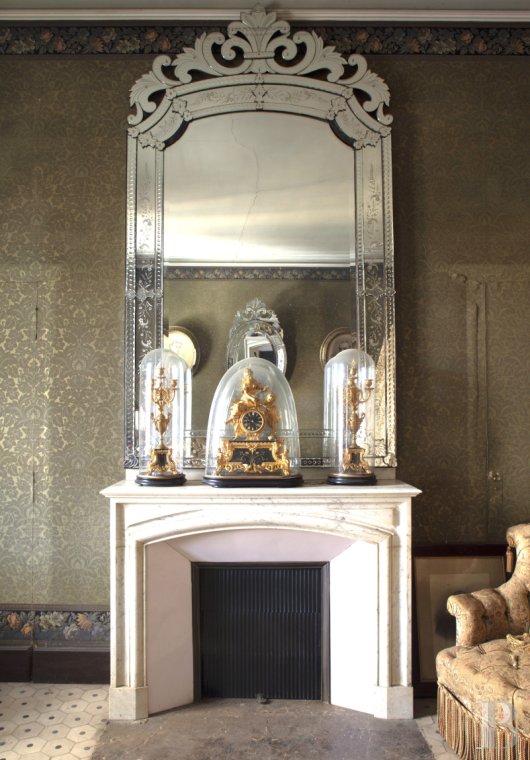
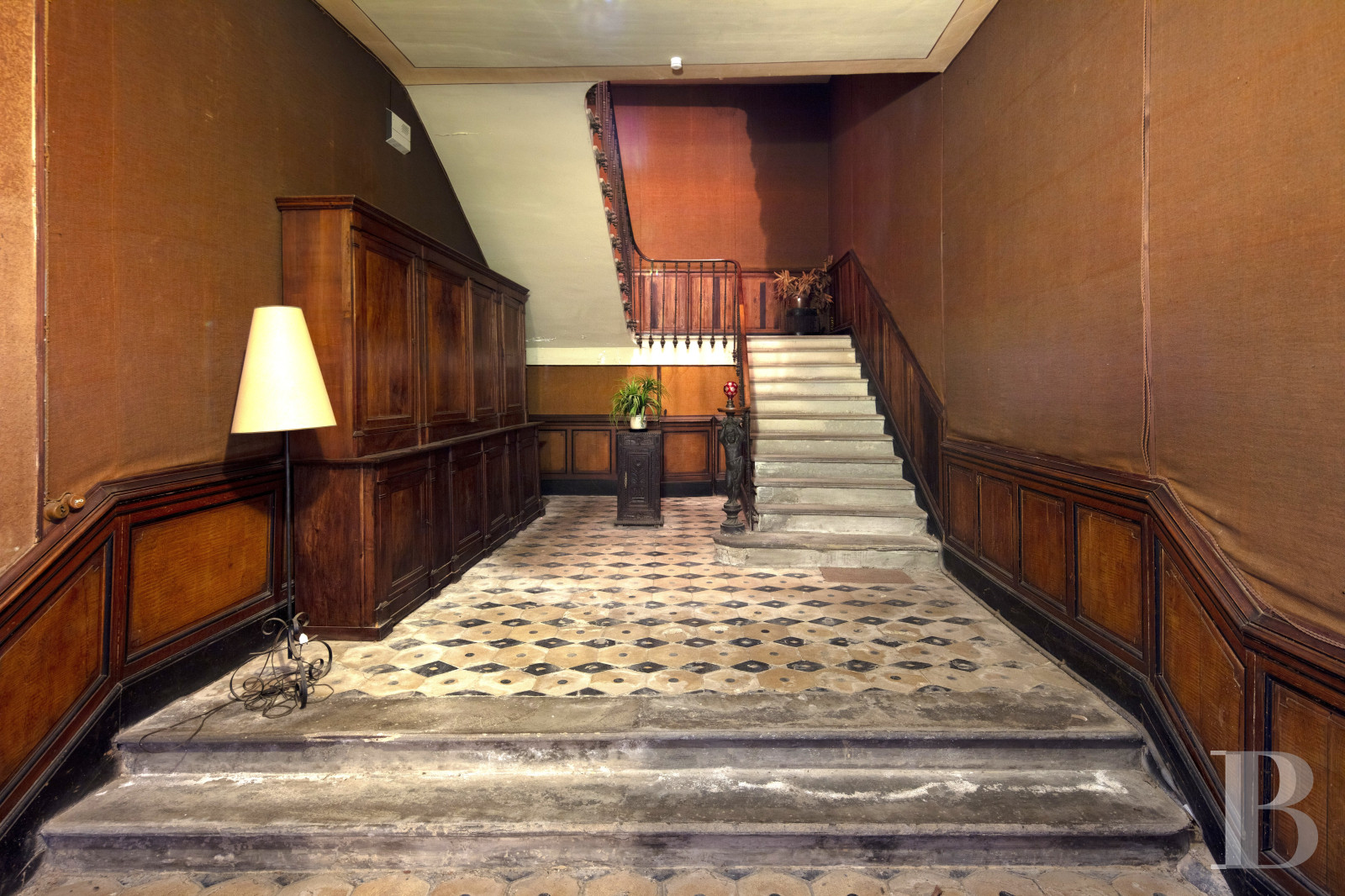
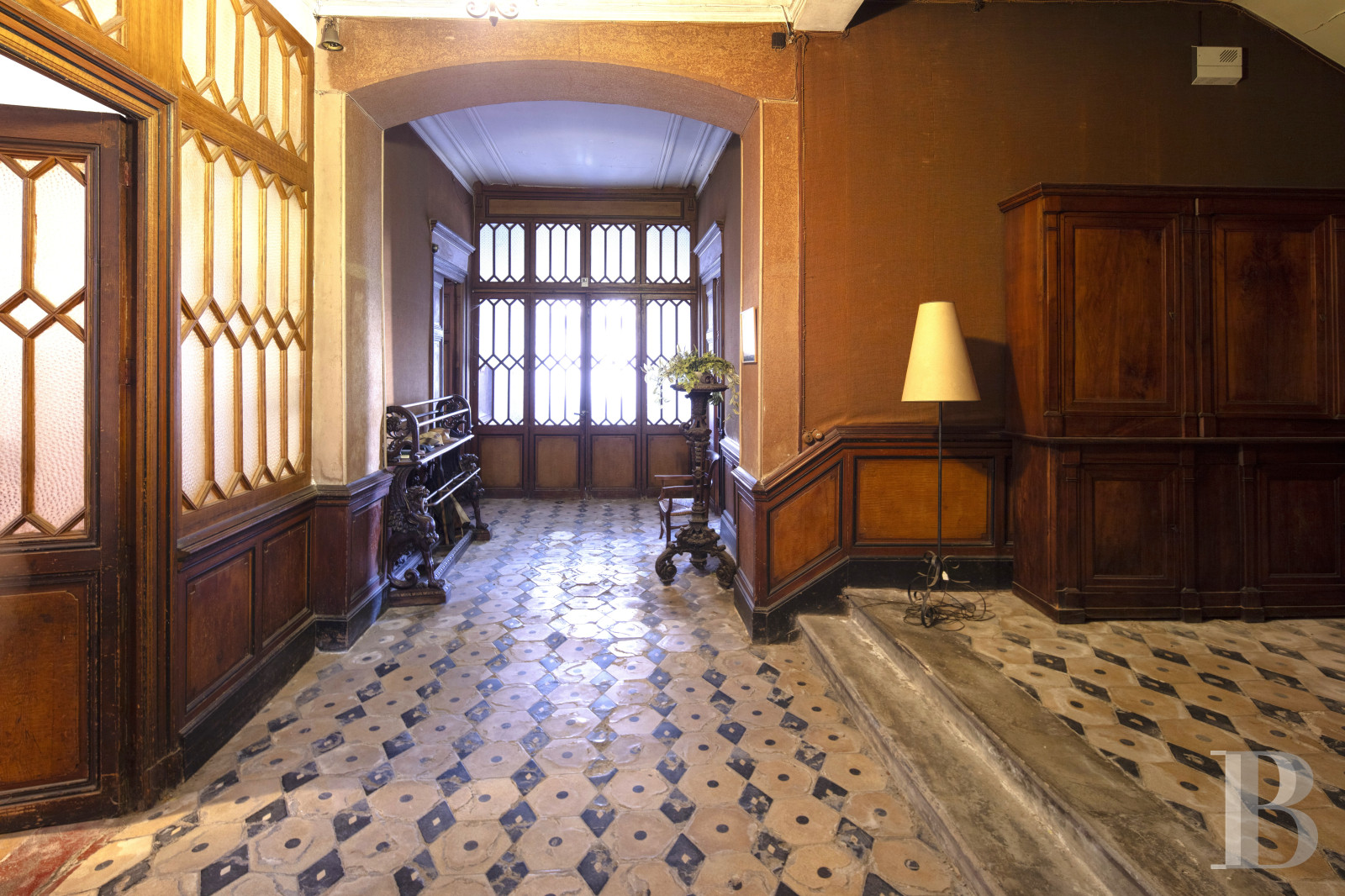
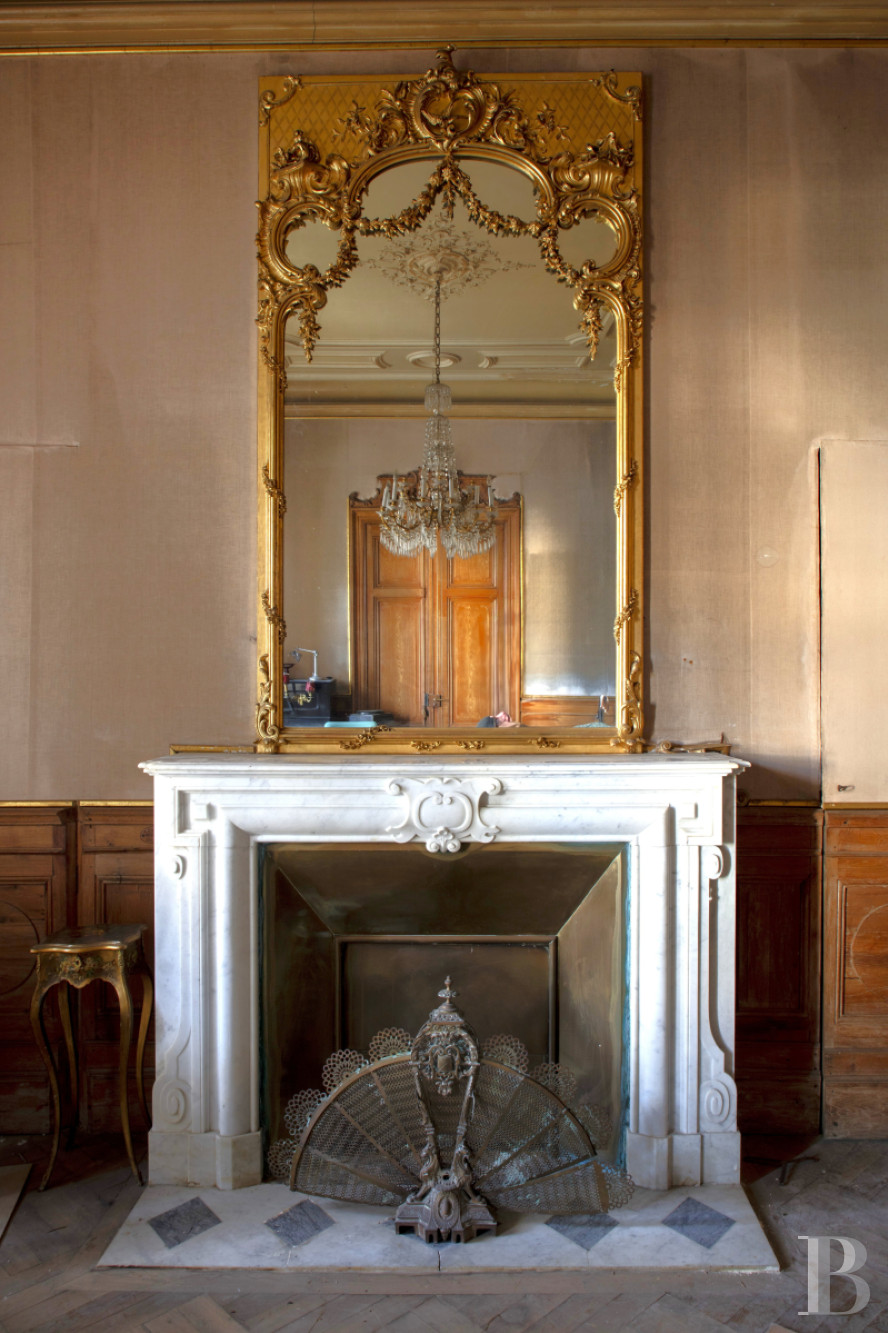
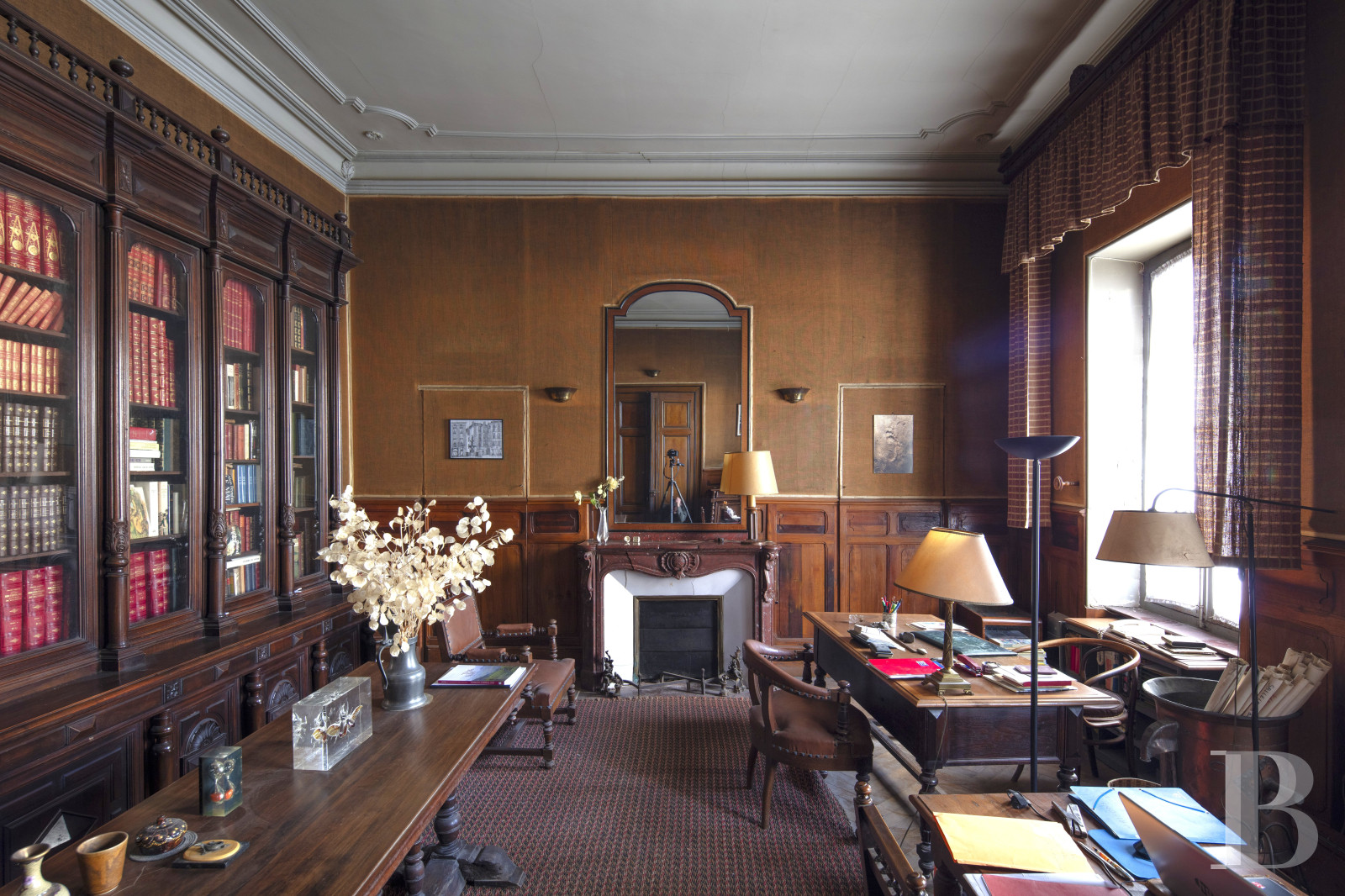
The ground floor can be reached from the street and has a surface of almost 275 m². The entrance door opens into a vestibule separated from the hall by a glazed wooden partition. The same type of separation can be found at the opposite end of the hall, in front of the door to the garden, to protect against the winter cold. The vast hall is paved with period cement tiles and medium height wainscotting. It leads, on the right, to a dining room transformed into an office/study, while to the left there is a lounge. In each of the rooms, there is wood stripped flooring that is in need of restoration. There are cupboard spaces concealed to the rear of each marble fireplace, topped by a trumeau mirror, while wainscotting runs along the walls.
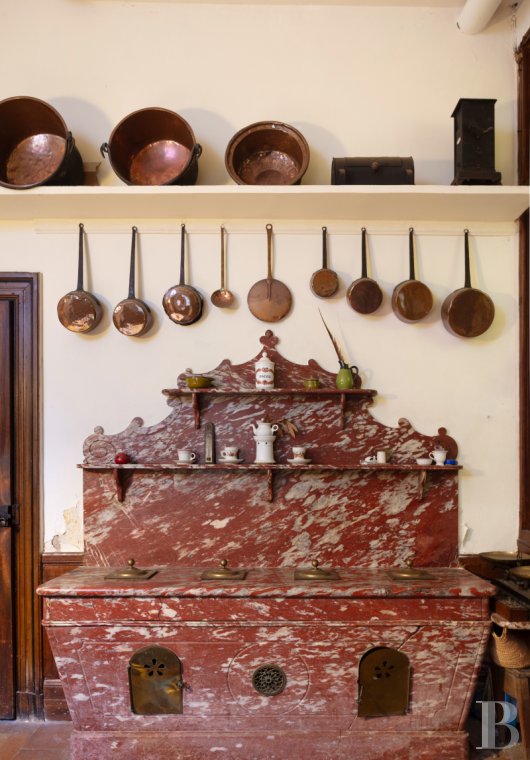
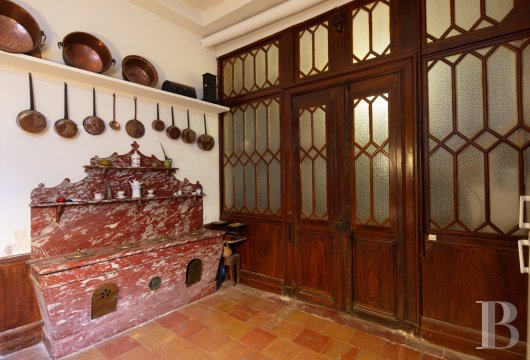
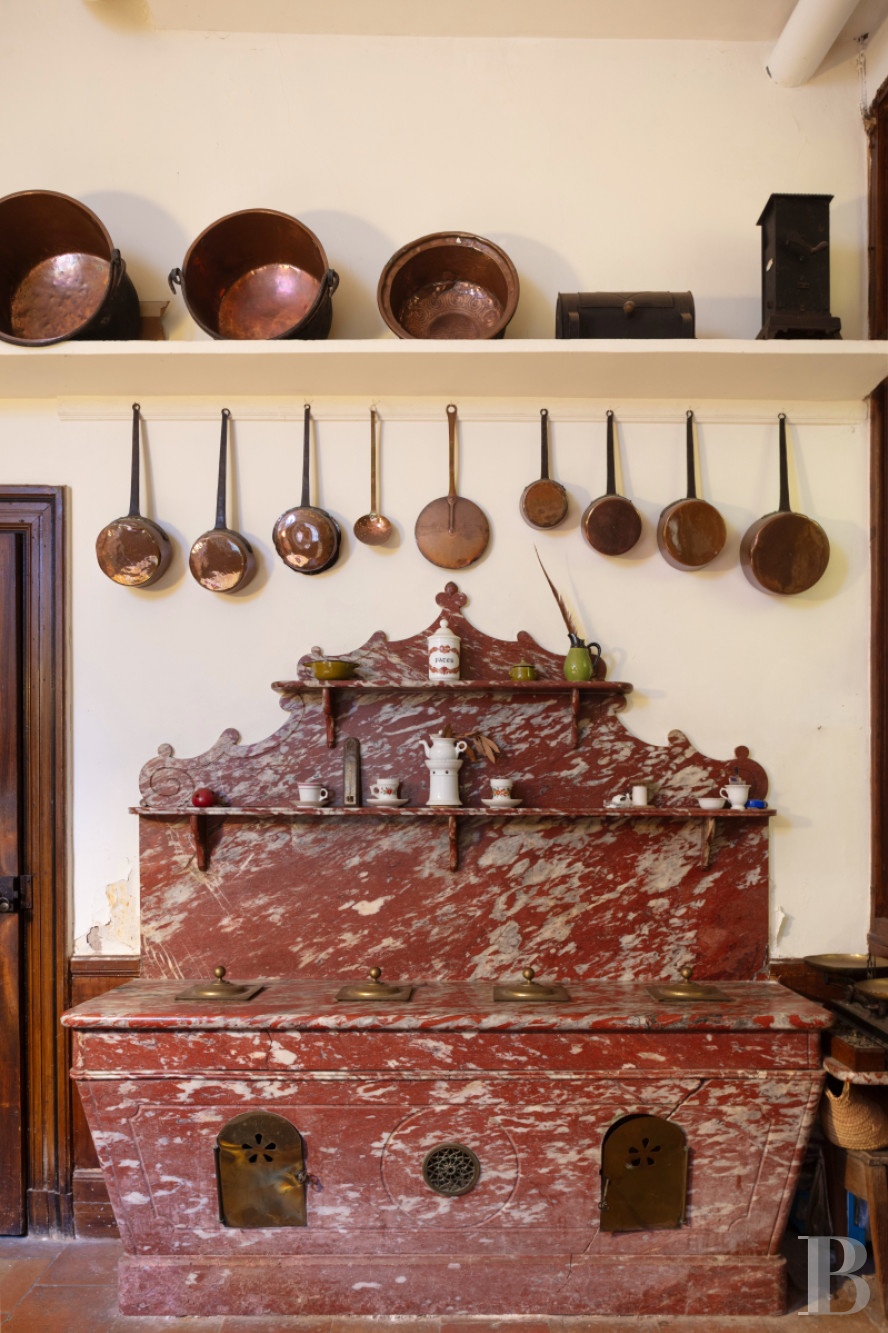
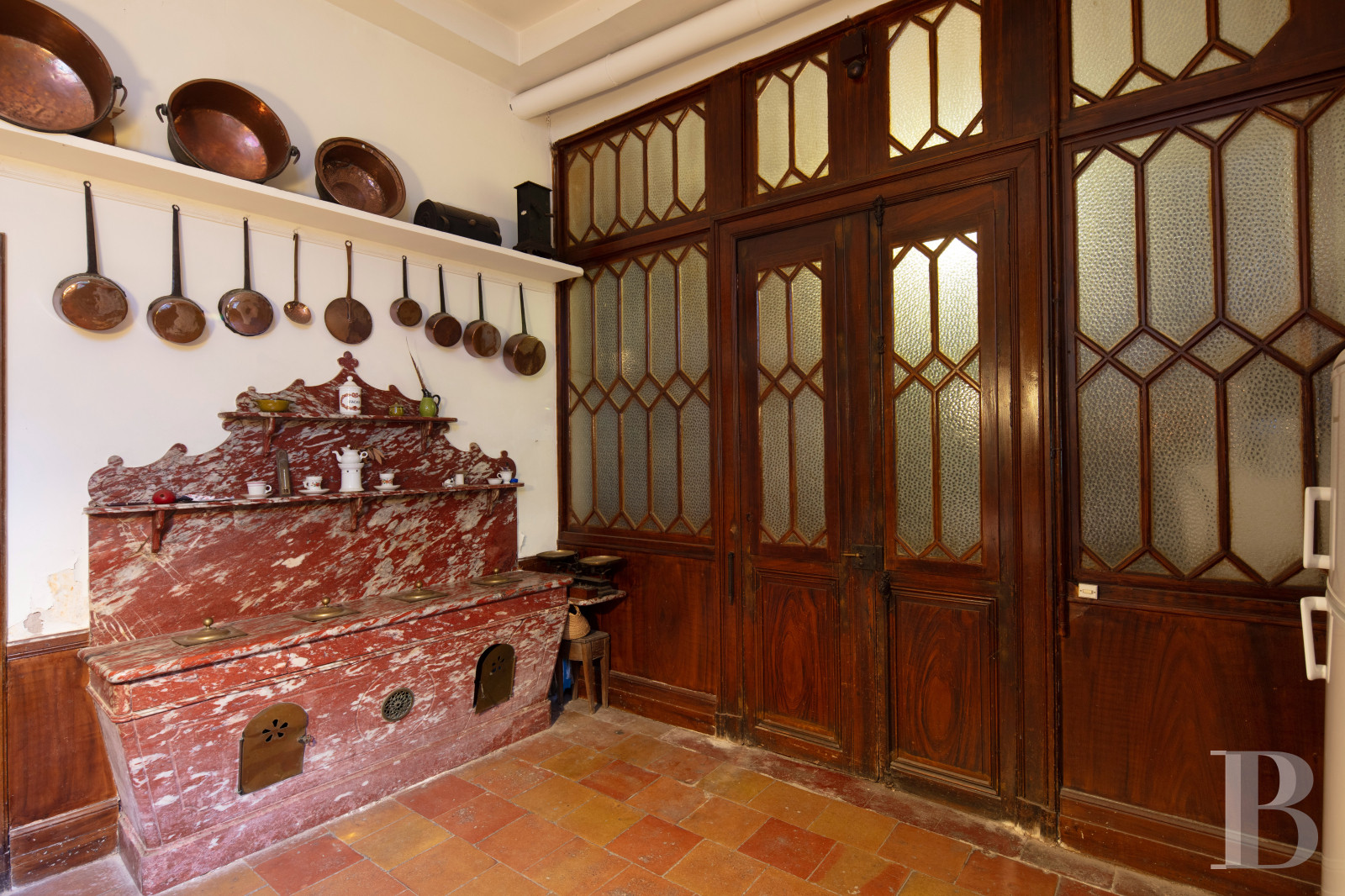
Towards the garden, on the right, there is a kitchen separated from the hall by a glazed wooden partition. The kitchen boasts a fireplace, masonry-work shelves and a remarkable Caunes marble soup chef. To the left of the hearth, there is a door into the scullery, which boasts a marble sink. Lastly, in the southeast corner of the house, the kitchen opens out onto a small courtyard housing a store and a washhouse.
A door opens into a corridor leading to the extension built in 1903, from where the vast cellar in the basement can be reached via a flight of several steps. This single-storey rectangular wing of the building is topped by a roof terrace. It includes a billiards room and smoking room, into which light pours through four large openings (three windows and a French window) fitted with sash shutters, overlooking the garden. Each room is also lit by a skylight in the roof terrace.
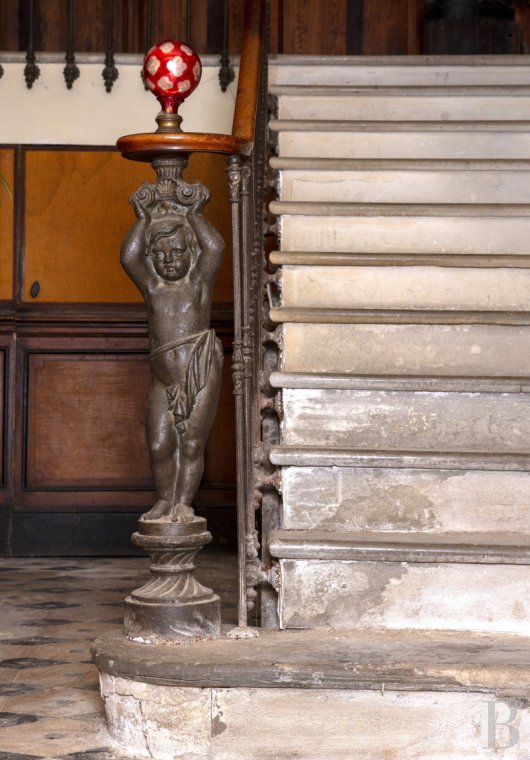
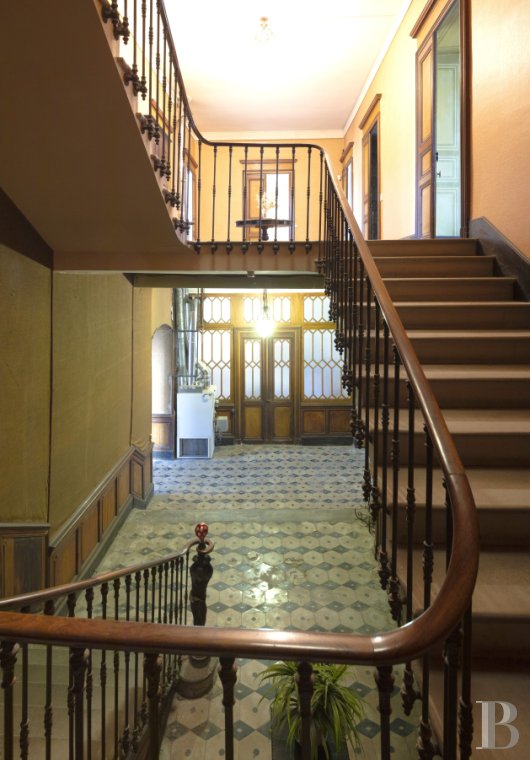
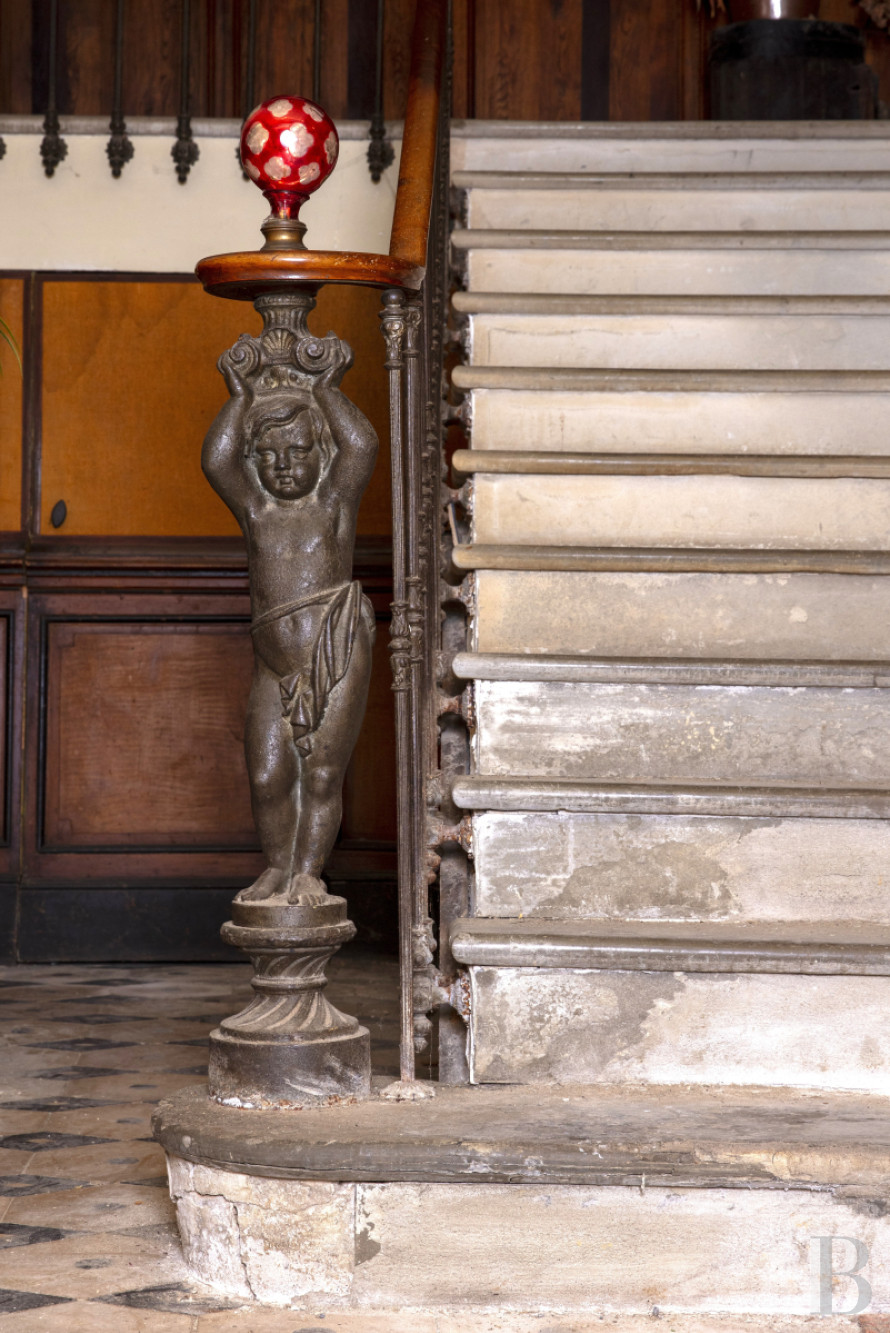
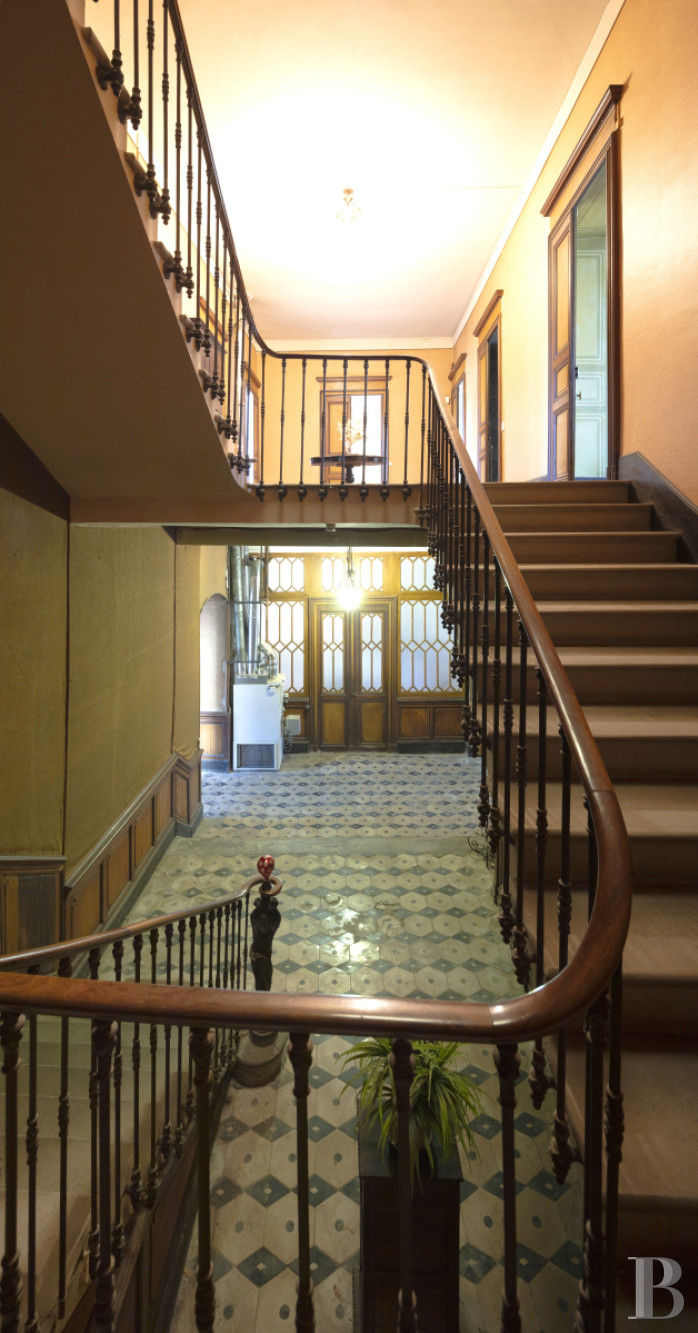
Lastly, opposite the kitchen, there is a spacious hall housing the residence’s monumental staircase, next to which there is a small dining room for family meals, which opens onto the garden. The start of the wrought-iron balustrade on the staircase features a cherub holding a red Murano glass ball. A lavatory is concealed beneath the landing.
The first floor
On this approximately 185-m² level, a wide corridor leads to five bedrooms and a laundry room, all with painted, double-leaf, wooden doors as well as wardrobe space. The corridor also leads to the bathroom on this level, which can be found in the covered gallery leading to the terrace on top of the extension. There is also a shower room with a lavatory, on the boulevard side of the house, at the end of the corridor.
These rooms either overlook the garden or the street and each possess one or two windows. They are all paved with black and white cement tiles, apart from the bathroom, which stands out due to its lead flooring. The period décors have been preserved, including high ceilings, moulded cornices, painted walls and other characterful elements typical of the 19th century.
The second floor
This floor is spread over 180 m² and has a similar configuration to the level below. There are two large bedrooms to the north and west, originally intended for the domestic staff, while the space to the east overlooking the garden is used as a loft and may have previously served as a drying room or storeroom. A third bedroom to the right stands out from the others thanks to a fireplace topped with a trumeau mirror.
In order to achieve its vast potential, this level requires thorough restoration.
The guests’ house
This two-storey building that formerly included the stables and barn has been converted into a house and is located outside the walled garden at the property’s eastern tip. The living rooms are located on the top floor while the ground floor is used for the entrance, for storage and a garage with capacity for up to four vehicles. A separate entrance from the passage behind the property means the house is entirely independent. The approximately 28-m², open-plan lounge merges into the kitchen, boasts a large fireplace, reversible air conditioning and possesses a balcony. A corridor leads to three bedrooms, a bathroom and a lavatory. The master bedroom boasts an approximately 20-m² terrace.
The location and size of this edifice offer a wide range of possibilities for future use.
The garden
This relatively small, walled space is closed to the west by the main residence and its extension, while the guests’ house stands at its eastern tip, next to the entrance gate. A path of stone slabs leads from one end of the walled garden to the other. In this almost 400-m² green space, sheltered from any disturbance, there is no trace of the hustle and bustle on the village square. It is dotted with oleanders, fig trees, palm trees and other Mediterranean plants, all dominated by an impressively sized lime tree.
The garden also includes a circular stone pond, a covered well and an aedicula with a zinc roof. It forms a quaint little outdoor refuge, punctuated by old stones and boasting a variety of vegetation, where it is possible to enjoy the southern climate as well as the peace and quiet, while admiring the architecture.
Our opinion
Behind an Italian-style classical facade, the property boasts spacious volumes with high ceilings, preserved wood stripped or tiled flooring, with many mouldings and fireplaces. The interior décors are typical of late 19th-century manor houses and are in an excellent state. This elegant residence stands out due to its architectural character and ornamental majesty, characteristic of its construction period, as well as the renown and quality of the area’s vineyards. It has been owned by the same family since its beginnings and offers the future occupants the pleasures of a lively village lifestyle and leisure activities in a region with a wealth of heritage, culinary specialities and plenty of appeal, subject to some restoration and modernisation work throughout the property.
460 000 €
Fees at the Vendor’s expense
Reference 567748
| Main building floor area | 600 m² |
| Outbuildings floor area | 100 m² |
| Land registry surface area | 725 m² |
French Energy Performance Diagnosis
Information on the risks to which this property is exposed is available on the website: www.georisques.gouv.fr
Share


NB: The above information is not only the result of our visit to the property; it is also based on information provided by the current owner. It is by no means comprehensive or strictly accurate especially where surface areas and construction dates are concerned. We cannot, therefore, be held liable for any misrepresentation.