



A manor house and its former dovecote, on 5,000-m² grounds
with a pond, nestled between the Forez Mountains and plain
with a pond, nestled between the Forez Mountains and plain
Marcilly-le-Châtel,
LOIRE
rhones-alps
42130
FR

Location
Nestled between the Forez plain and mountains, the property is located in the north of the Loire department, near both Montbrison and Boën-sur-Lignon. With easy access from the main road and not far from the village, the dwelling gradually reveals itself thanks to its impressive classical stature, showcasing the success of its former occupants who once farmed the neighbouring property and made their fortune from wine production in the 19th-century. Facing south, the property is located in a hamlet that includes two other dwellings as well as an agricultural contracting business, whereas all around the property, pastureland extends as far as the eye can see.
Description
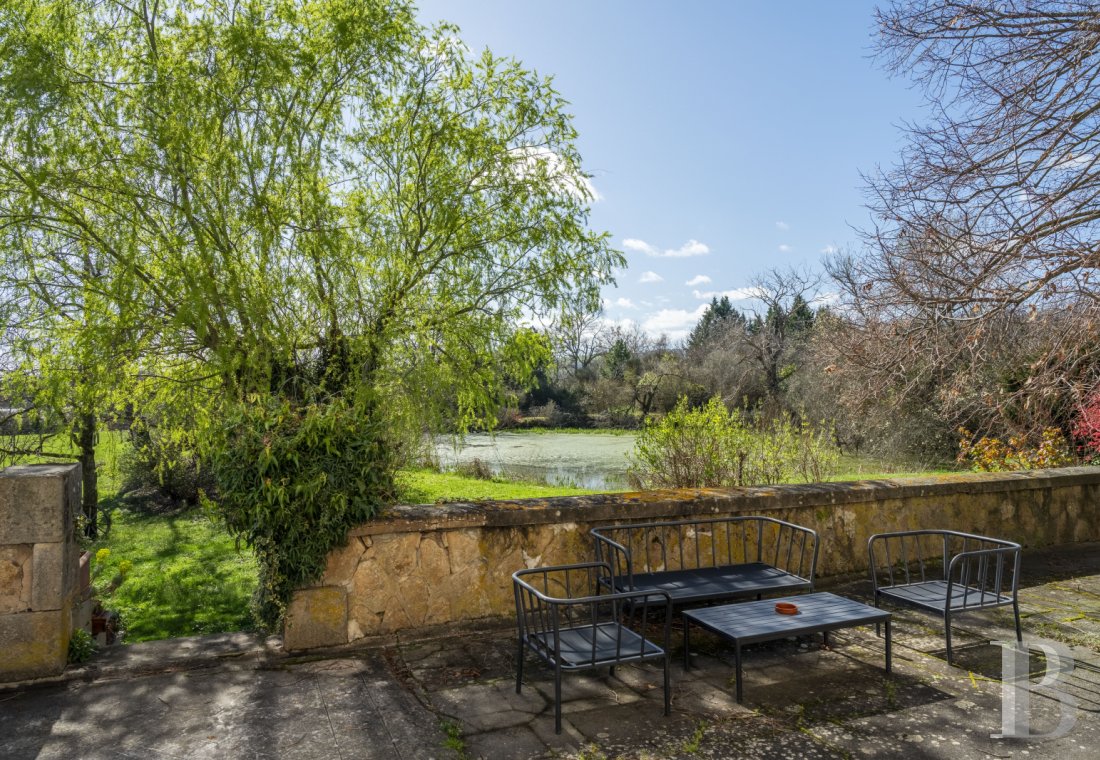
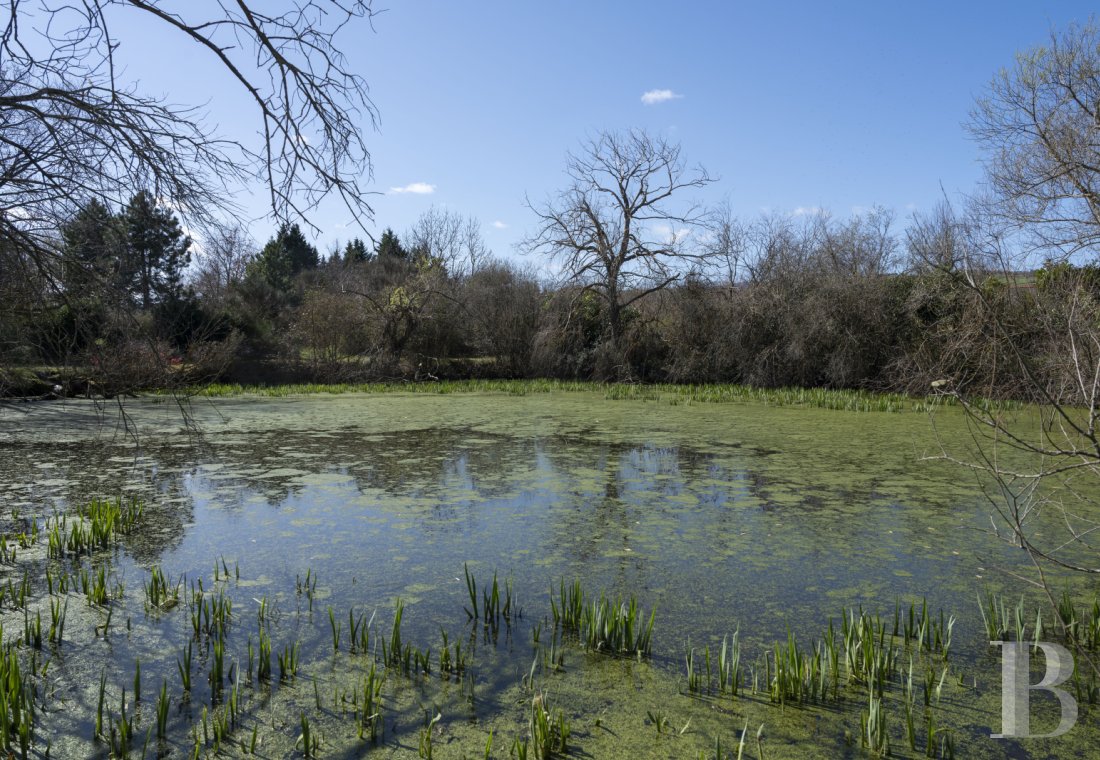
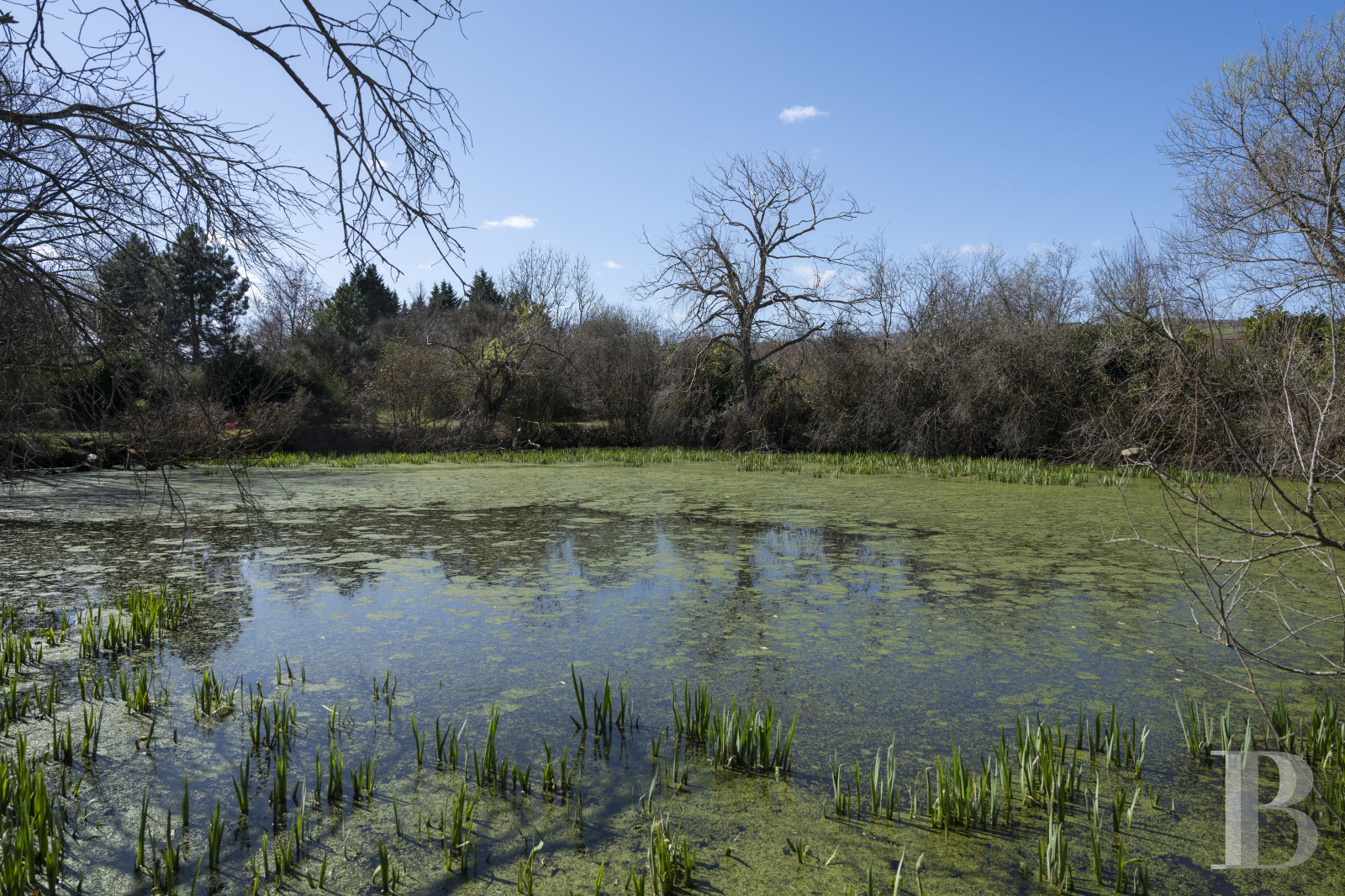
The property contains two dwellings, including the manor house, currently operated as holiday accommodations, and a former dovecote that has now been transformed into the host’s living quarters. In addition, a third building, featuring a barn and a covered outdoor area, acts as a final coda to this complex of buildings surrounded by 7,288 m² of grassy land, including some 2,000 m² used for a water supply canal, which directs all runoff towards a pond of approximately 800 m².
The Manor House
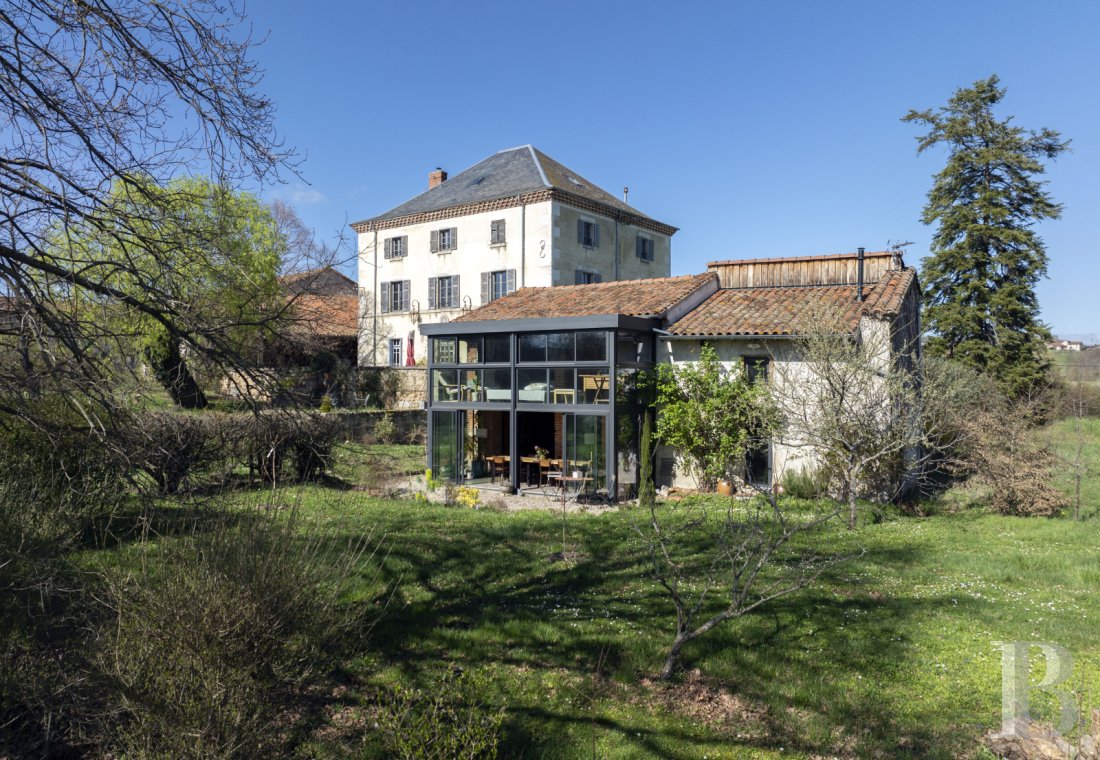
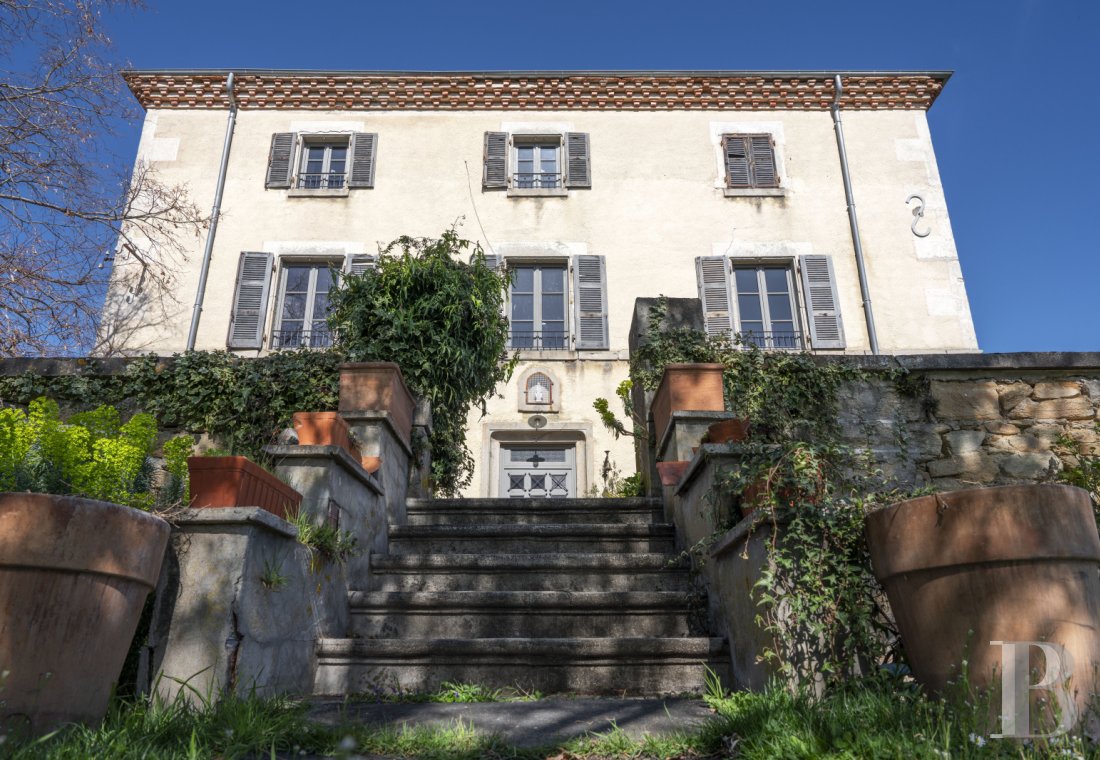
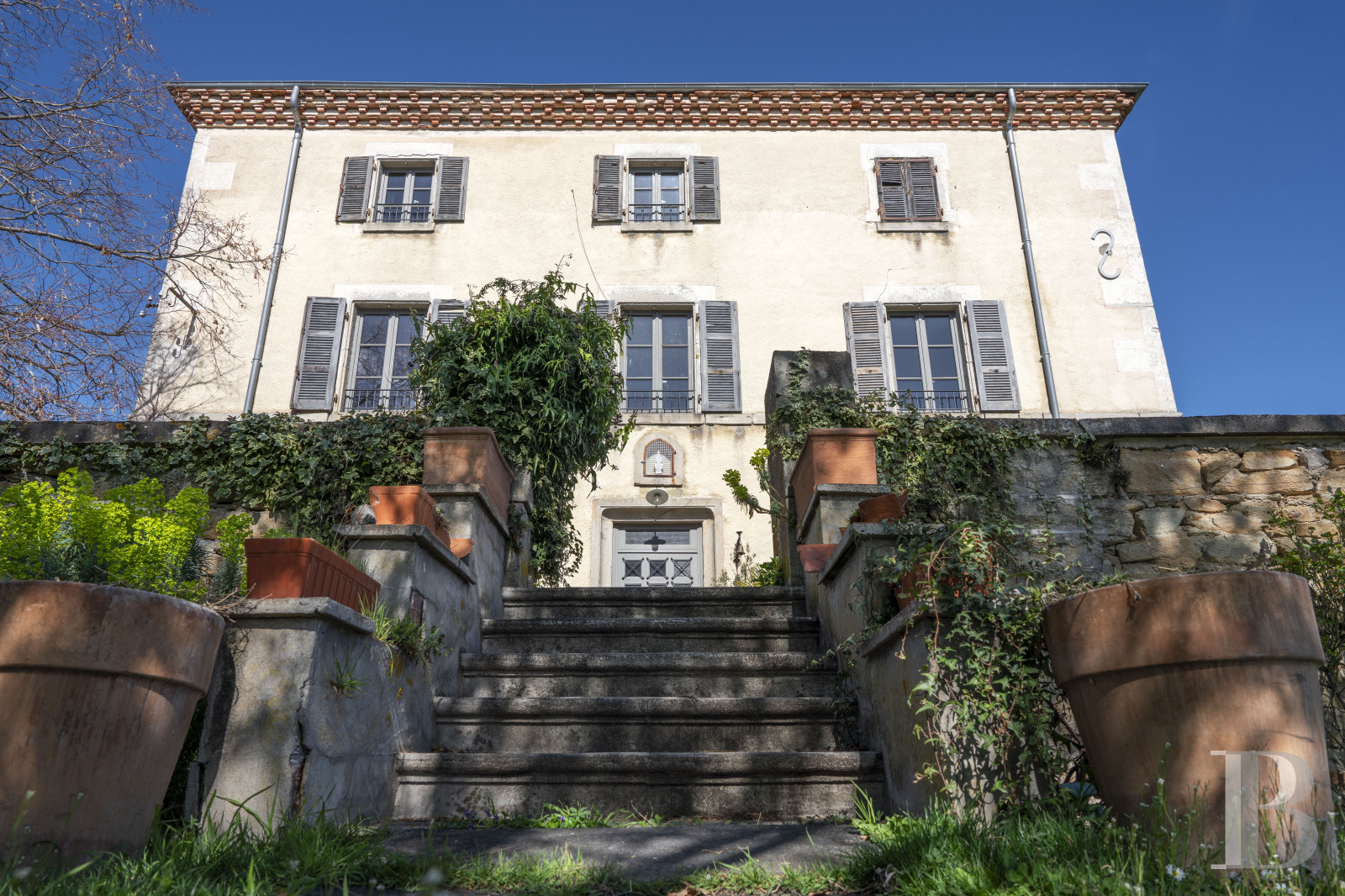
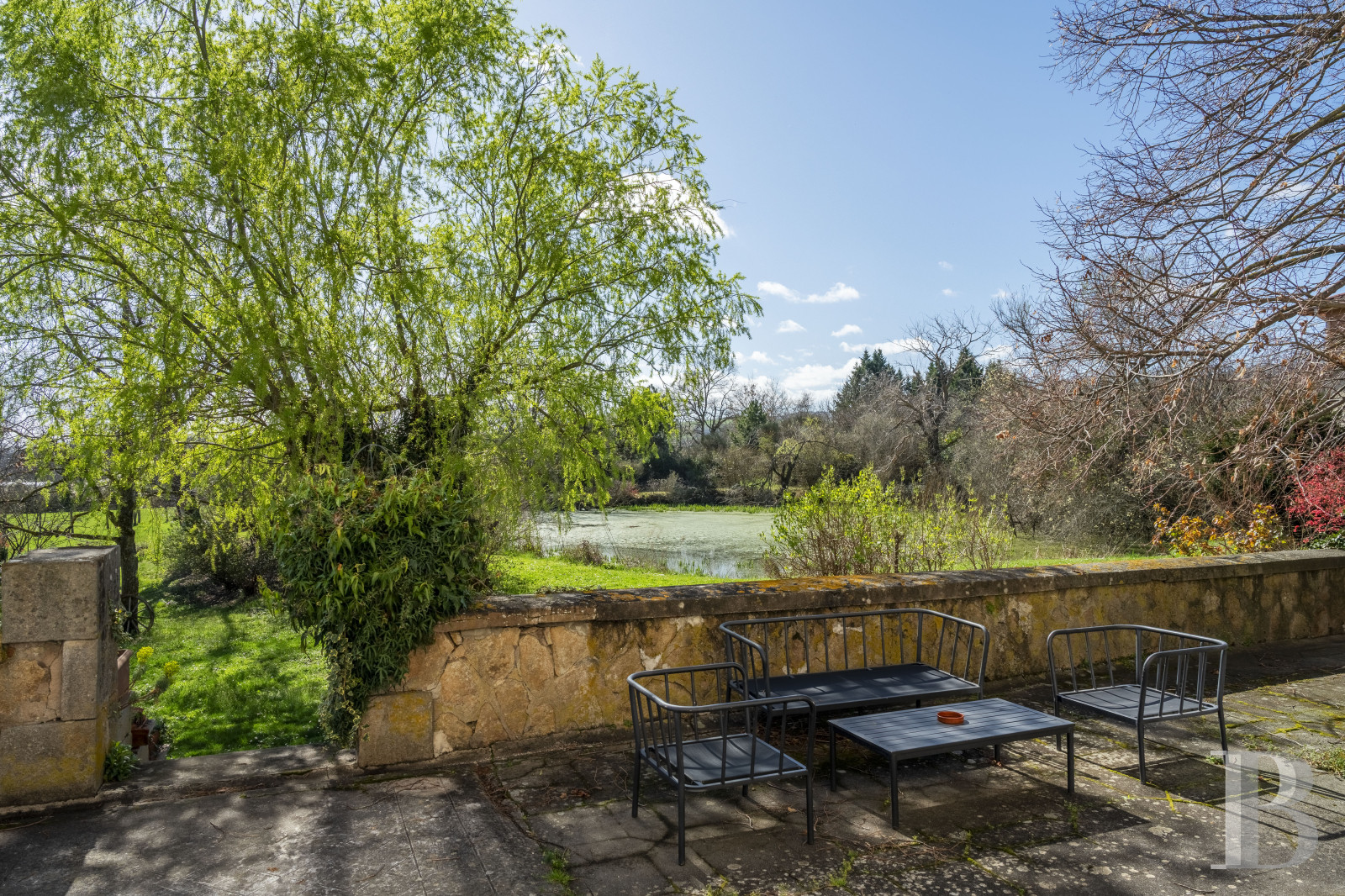
With a classical square-shaped layout and built in 1880 by farmers who made their fortune from making and selling wine, this dwelling was constructed as a complement to the adjacent farm and the pre-existing dovecote. With four storeys, including an attic level, constructed over vaulted cellars, its plaster-coated dressed stone exteriors are highlighted by ashlar stone quoins and topped with an original slate hipped roof with zinc joints, while, to the south, a flagstone patio faces both the grounds and pond. It should be noted that in 2011, two tie beams and their connecting rods were installed between the southern and northern exteriors in order to stabilise the overall structure.
The ground floor
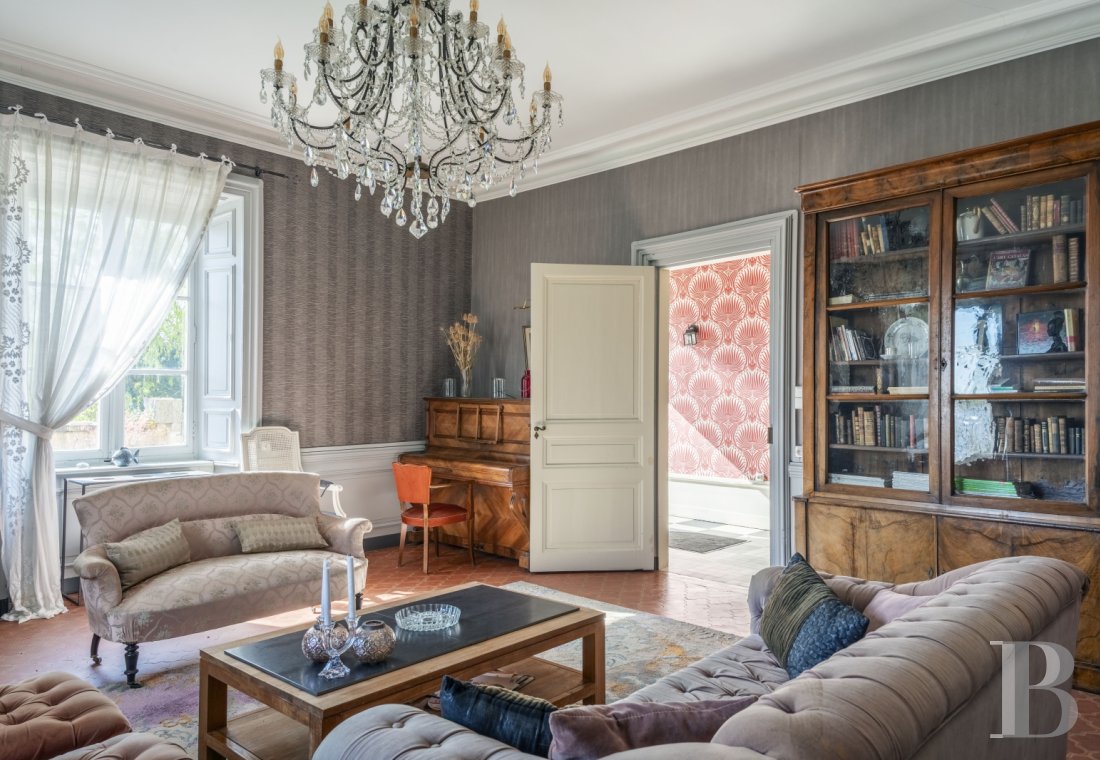
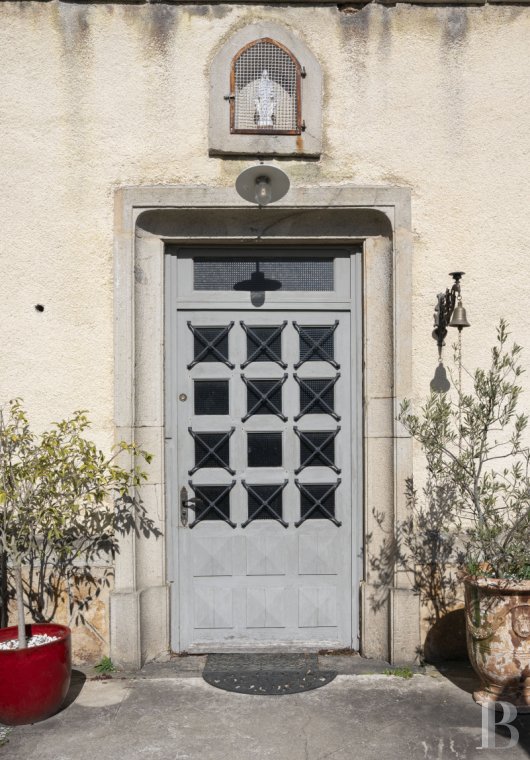
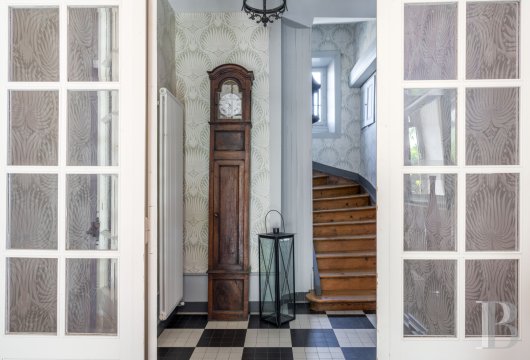
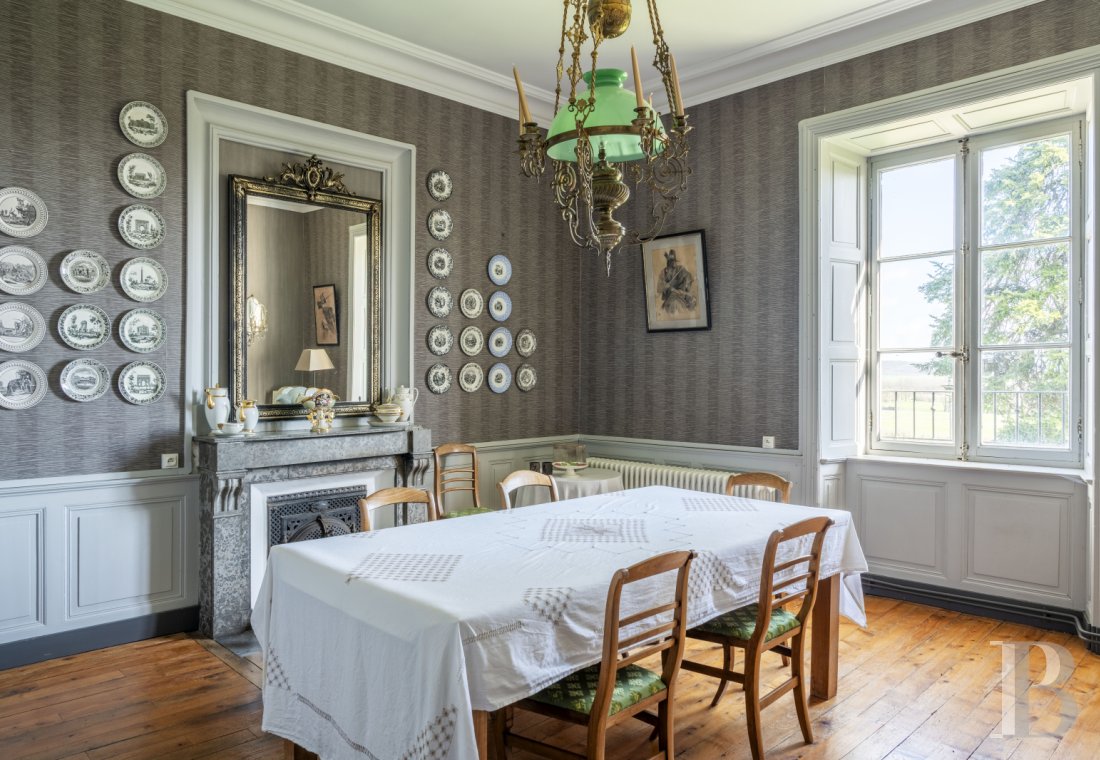
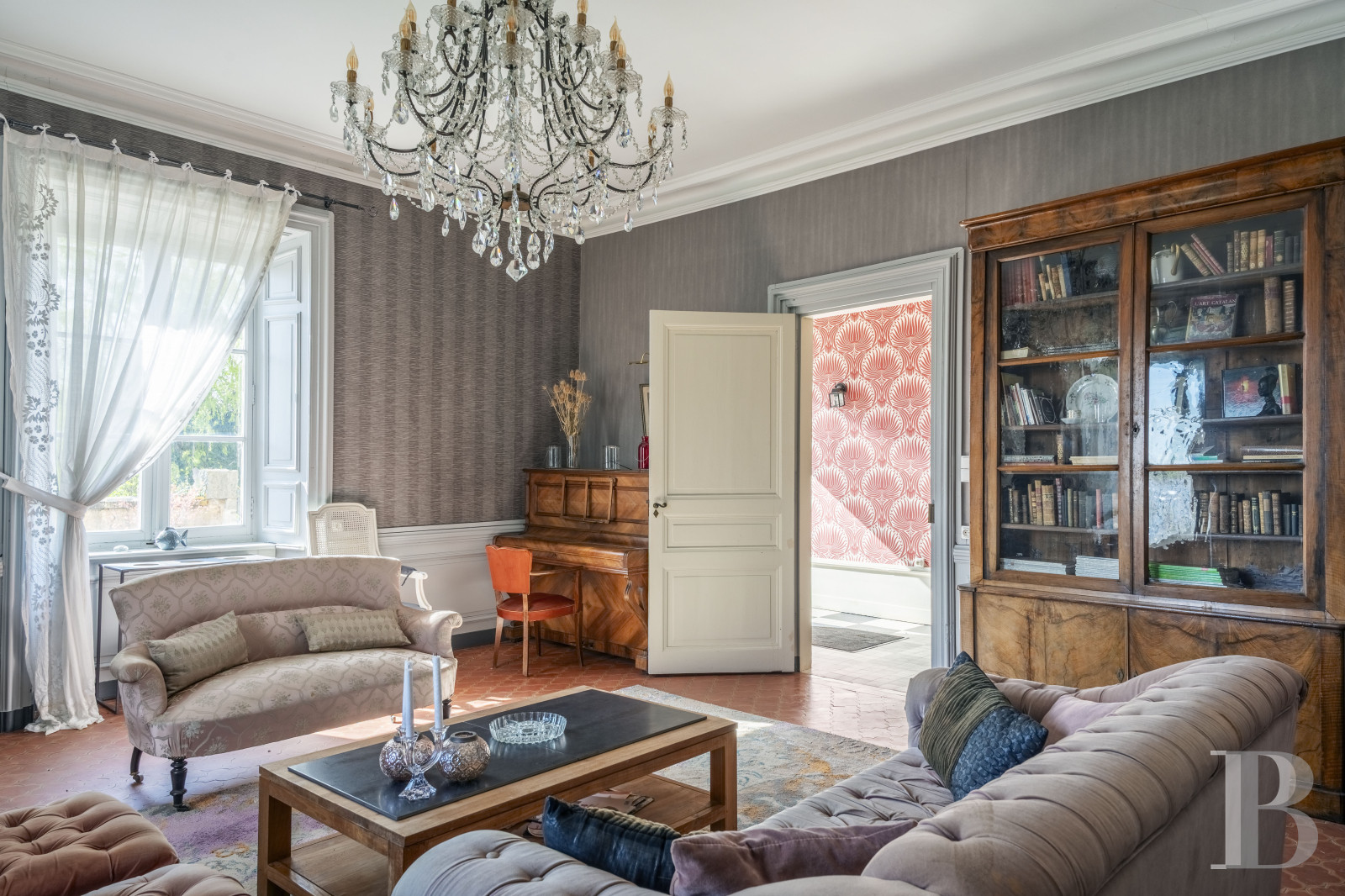
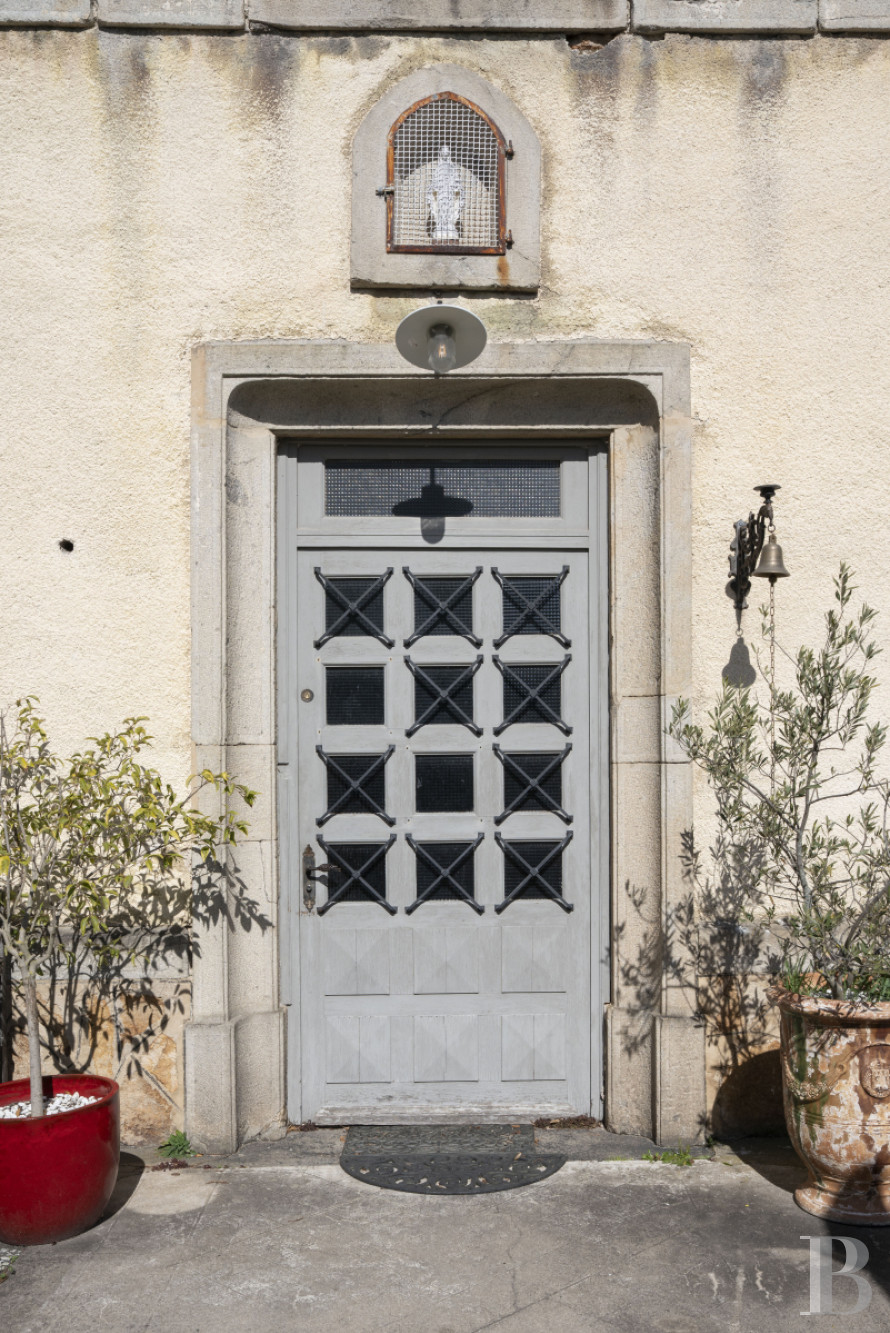
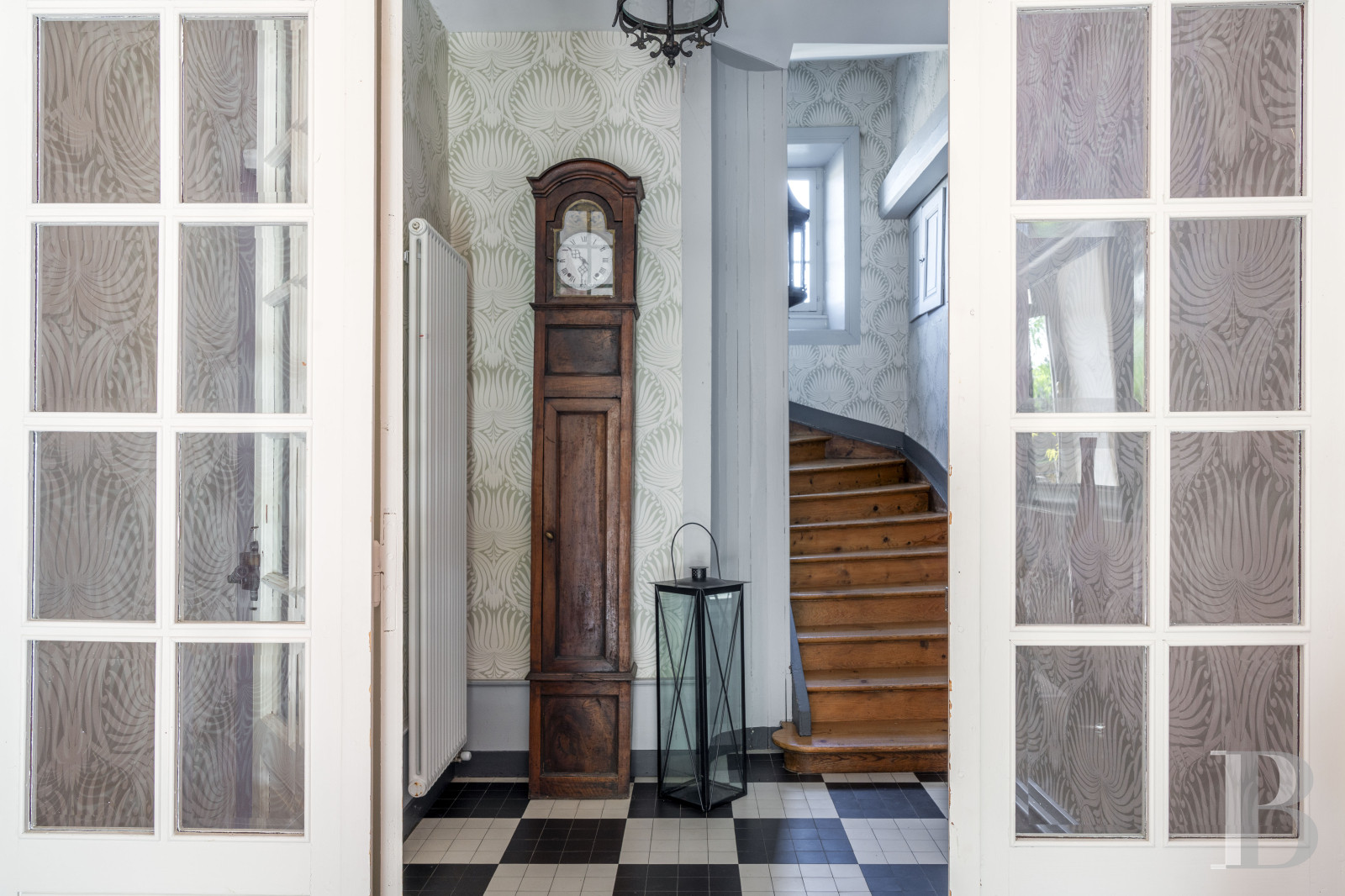
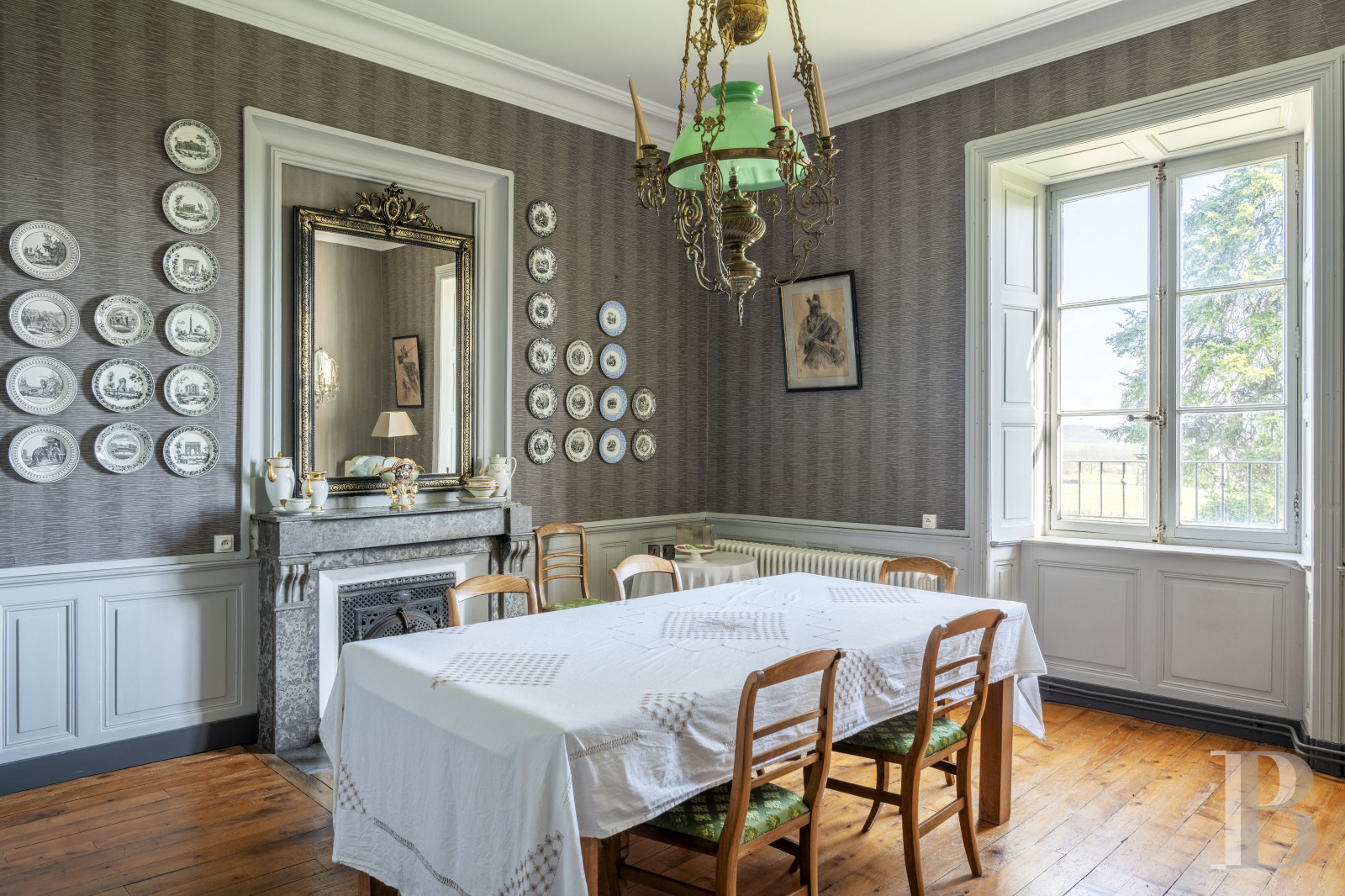
Accessible from the patio and with a floor area of approximately 140 m², it includes a foyer, a dining room (with stone floor tiles and a double-sided granite fireplace that communicates with the adjacent fitted kitchen), a living room (with original décor and materials, including a marble fireplace, terracotta tile and parquet floors, wood panelling, single-glazed, curved-glass windows and moulded cornices), as well as the central wooden staircase, which provides access to the upper levels, while, in the back, a utility room and a lavatory can also be found on this level.
The first floor
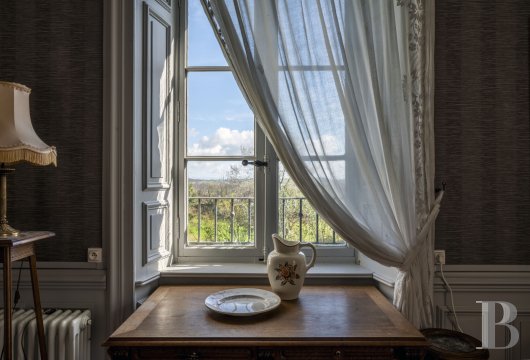
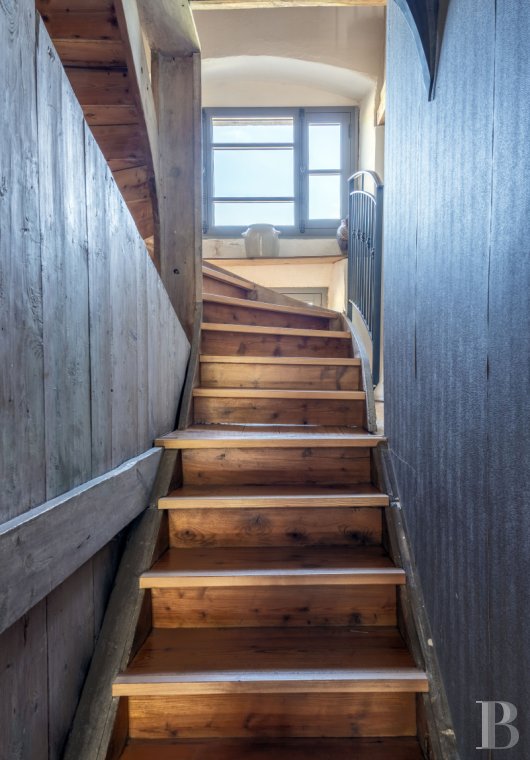
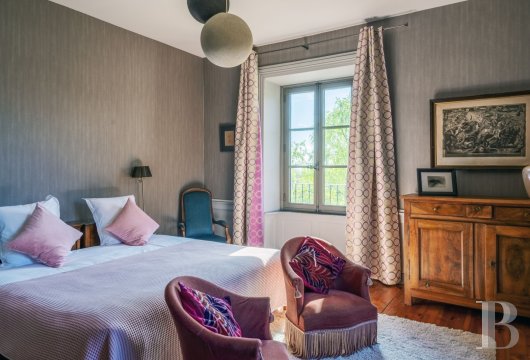
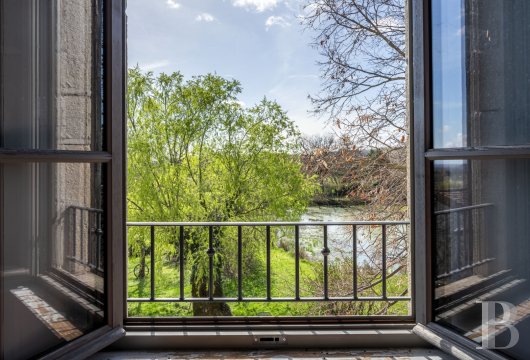
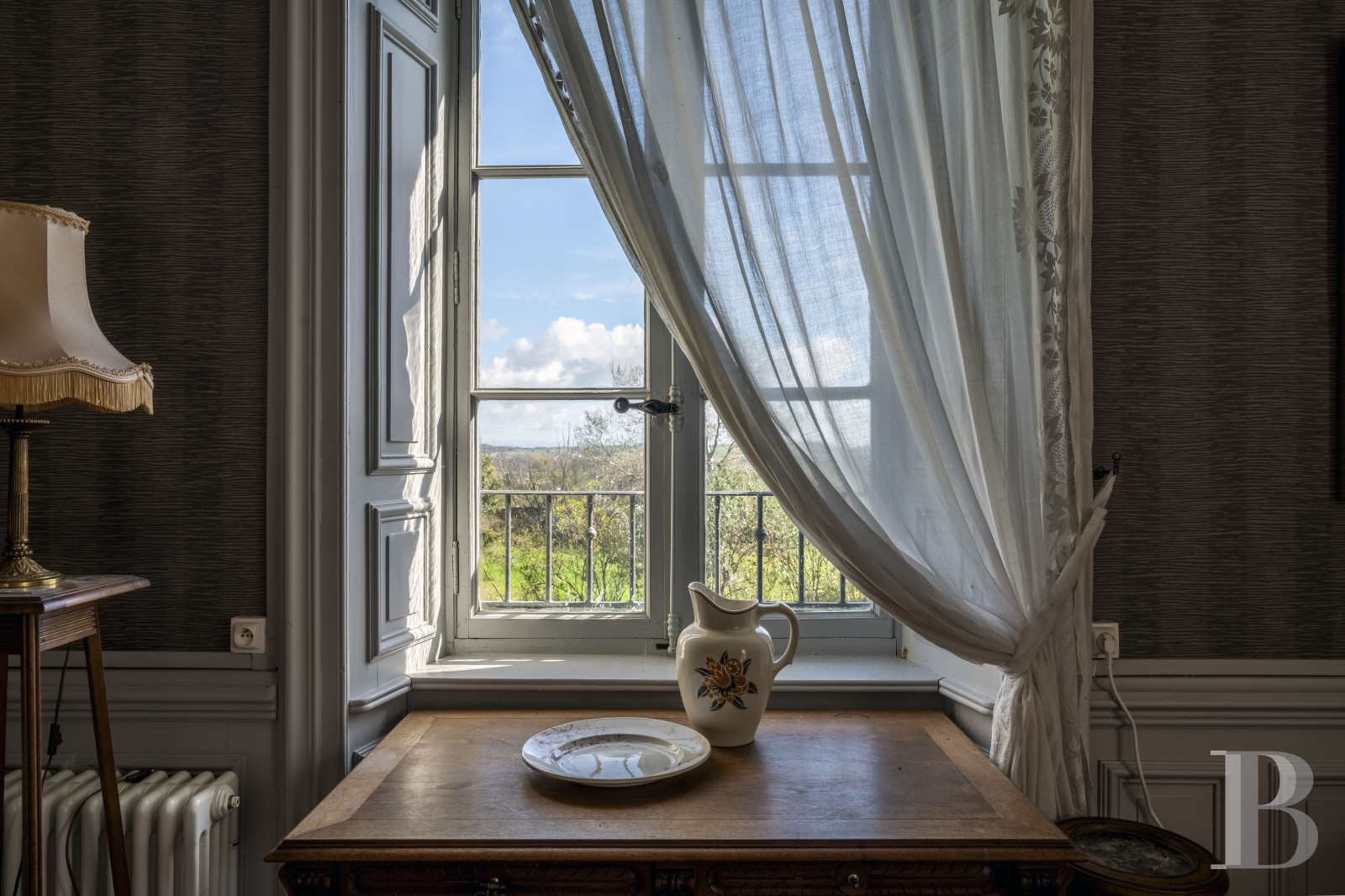
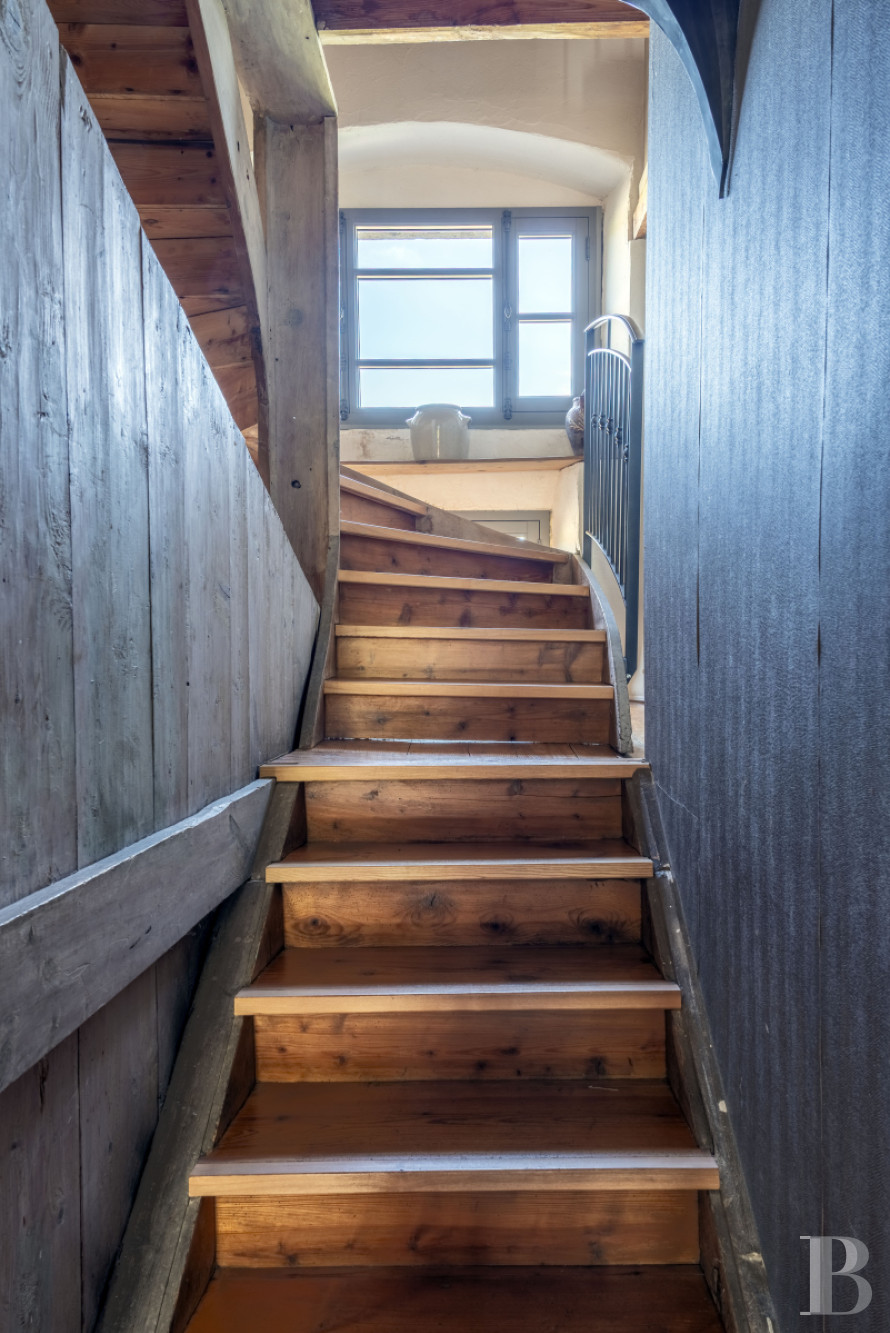
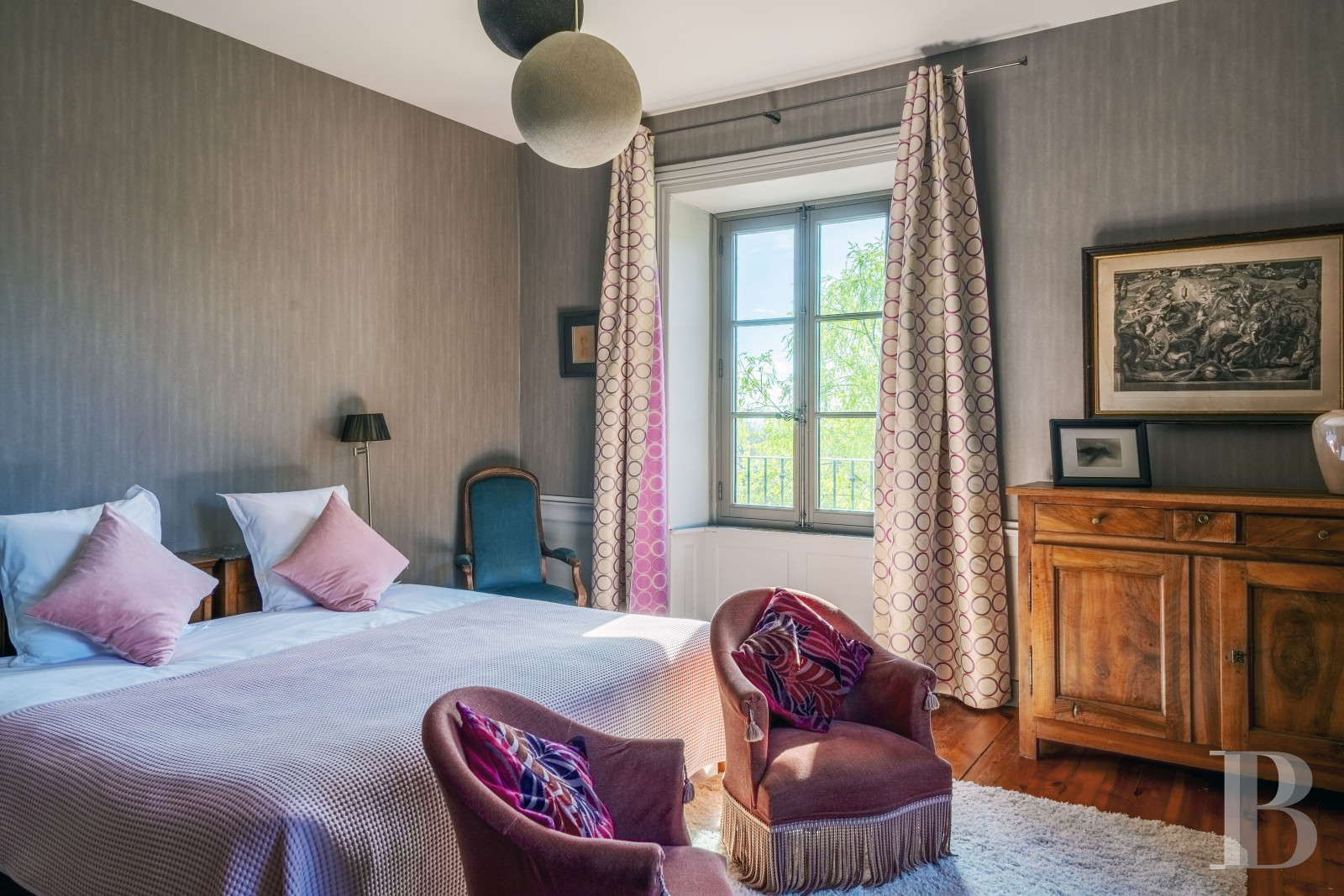
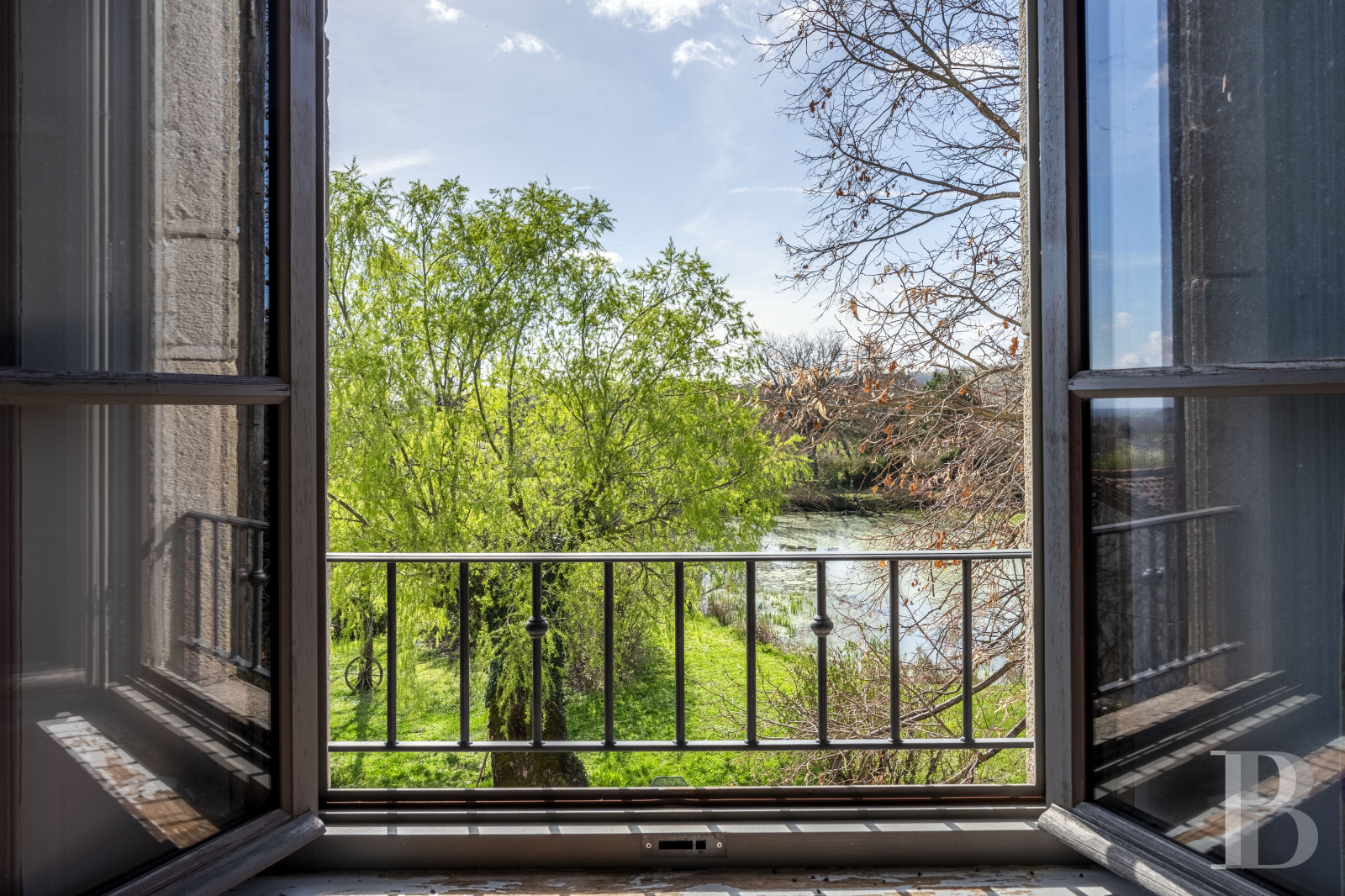
At the top of the carved wooden staircase, the landing provides access to an initial suite with three rooms (including an antechamber, a shower room with lavatory and a bedroom), a central study with views of the grounds and pond, as well as a second suite (with an antechamber, a bedroom with its own shower room and separate lavatory). With parquet floors and many wood-framed windows with insulated glazing, the floor can accommodate up to six to eight people, depending on whether the study is transformed into another bedroom.
The second floor
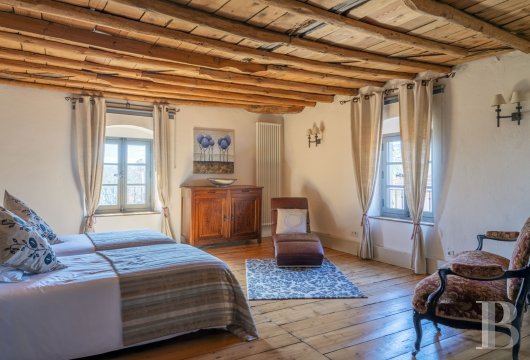
This includes a small reading room located between two bedrooms, each with a separate lavatory, while one comes with its own private bathroom, and the other features a shower room. With parquet floors and plain white ceilings, this floor can accommodate up to six people.
The third floor
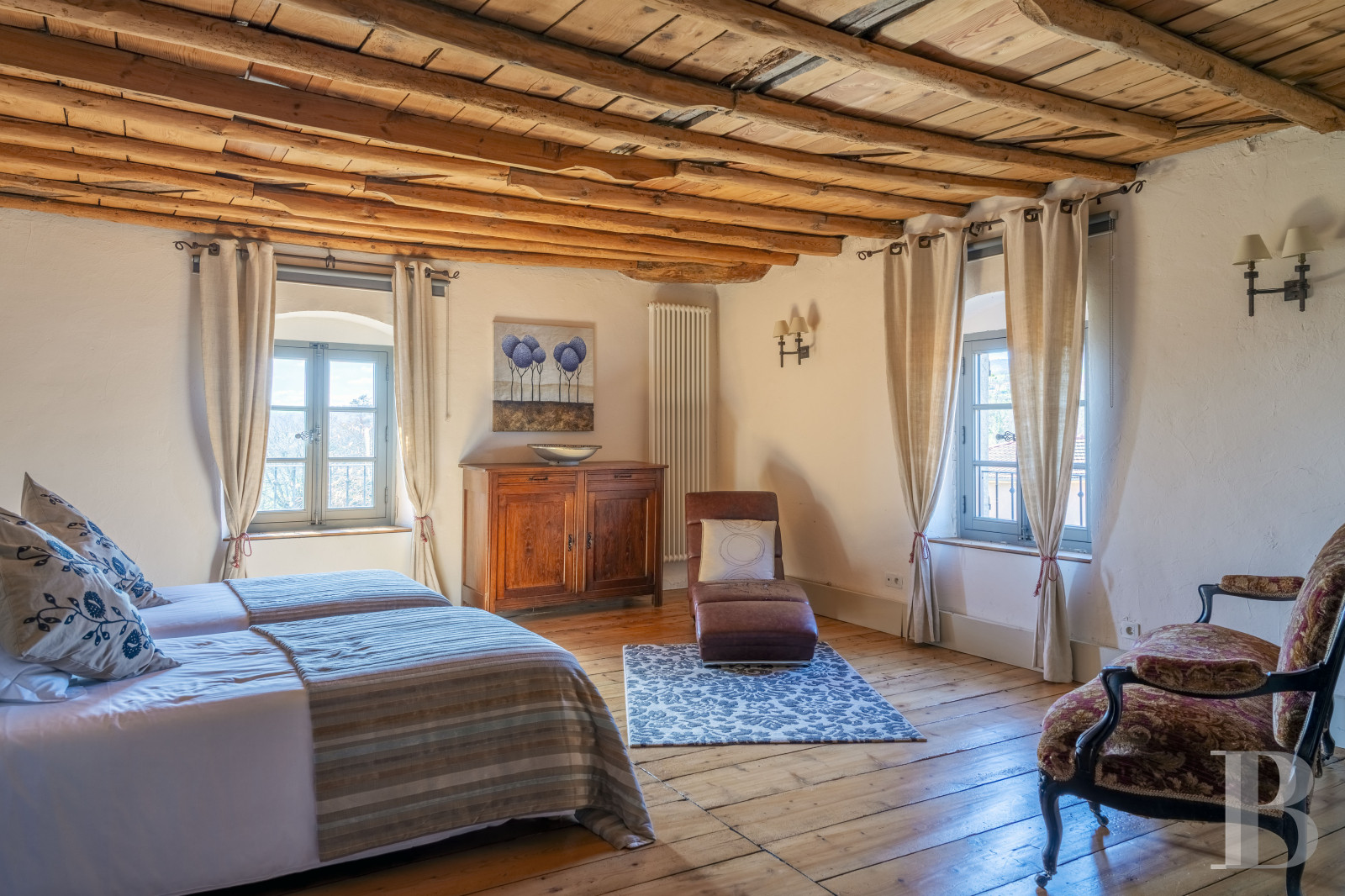
Under the eaves and with a floor insulated with a thick layer of wood/hemp wool, the dwelling’s original wooden rafters were treated in 2011 for parasites, while its skylights make it possible to access the roof for any eventual repairs.
The basement
Accessible from the outside, two vaulted cellars, similar in size, provide plenty of storage for a variety of equipment. With beaten earth floors and a reinforced vaulted concrete ceiling, a third cellar, hollowed out under the flagstone patio, rounds out the spaces on this level, while the latter, unlike its neighbours, has not been waterproofed against residual ground moisture.
The Former Dovecote
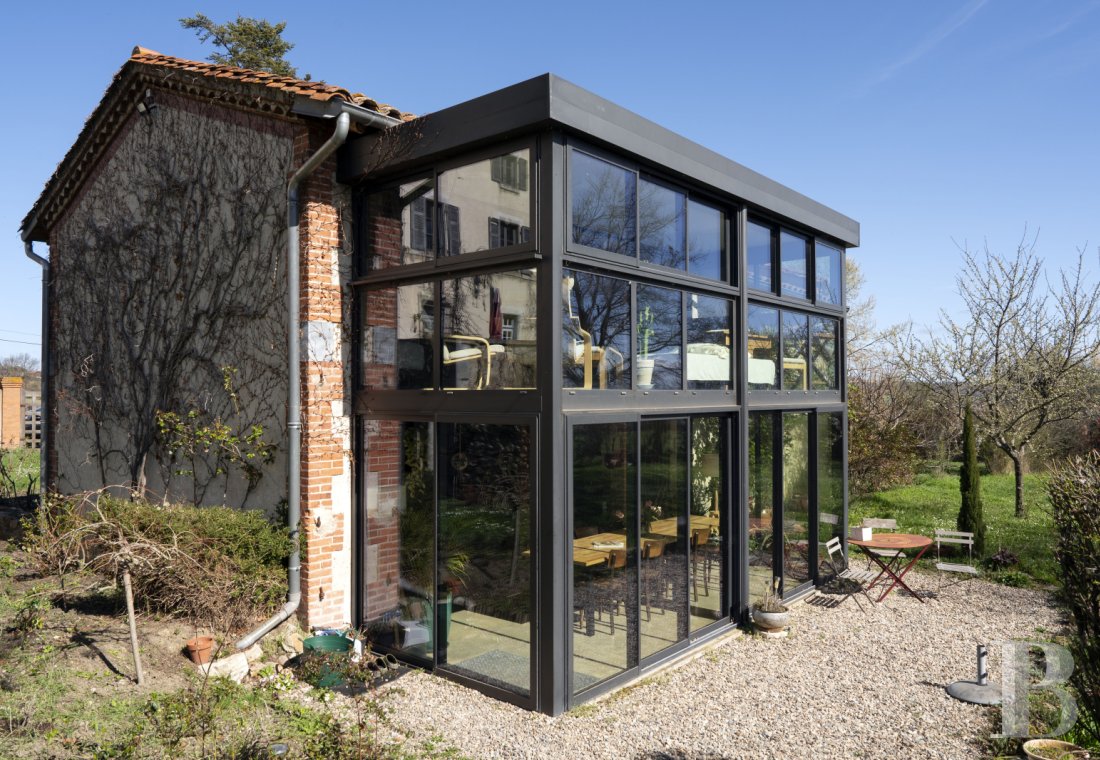
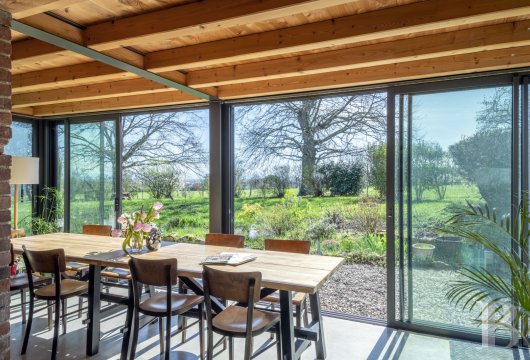
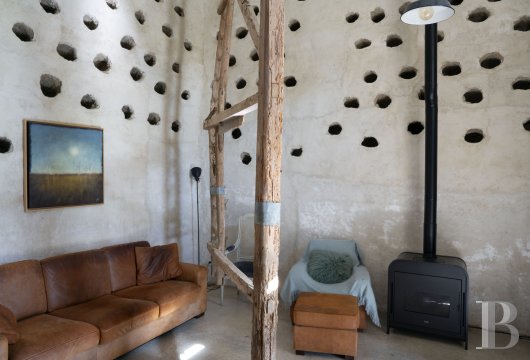
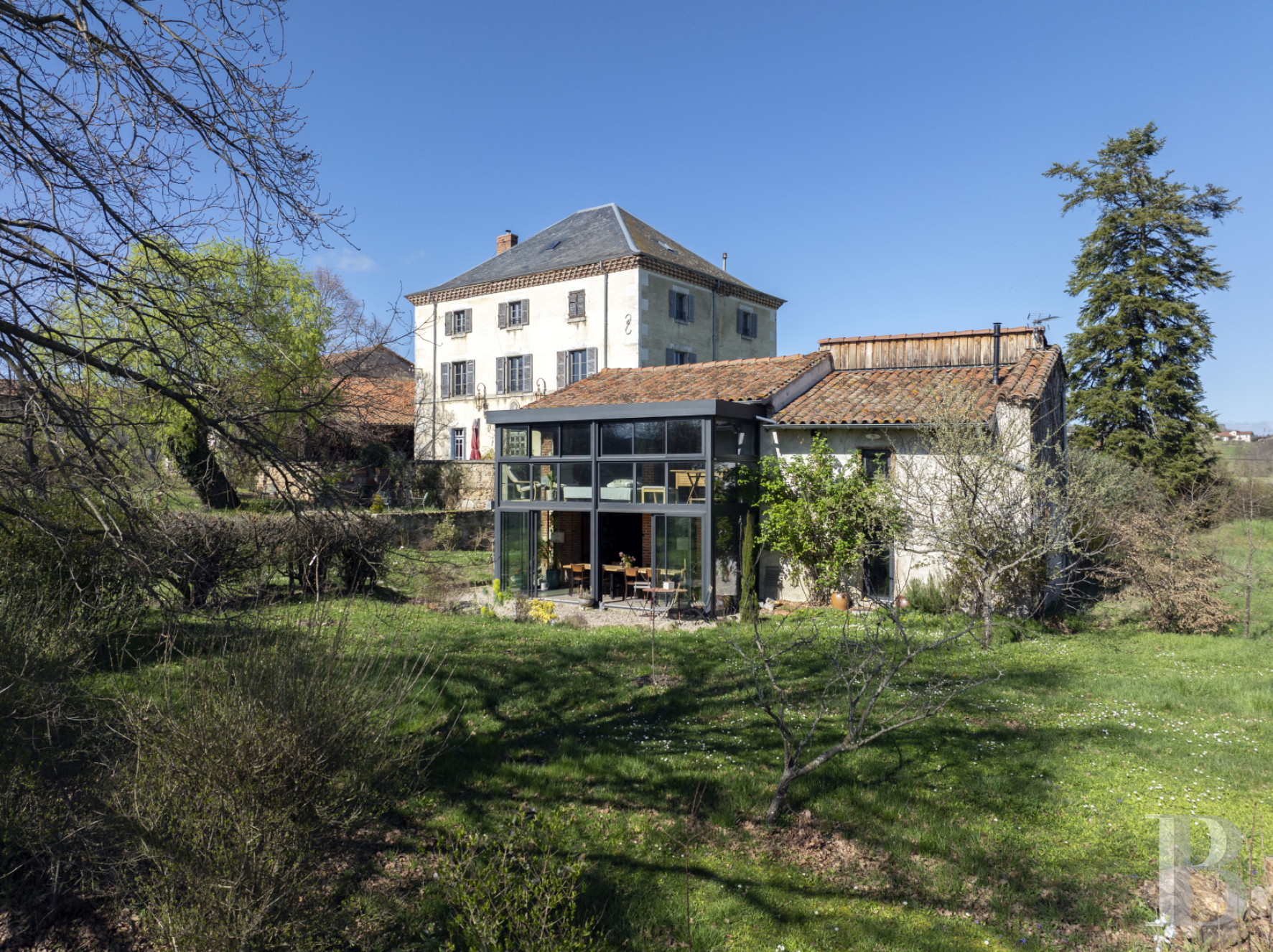
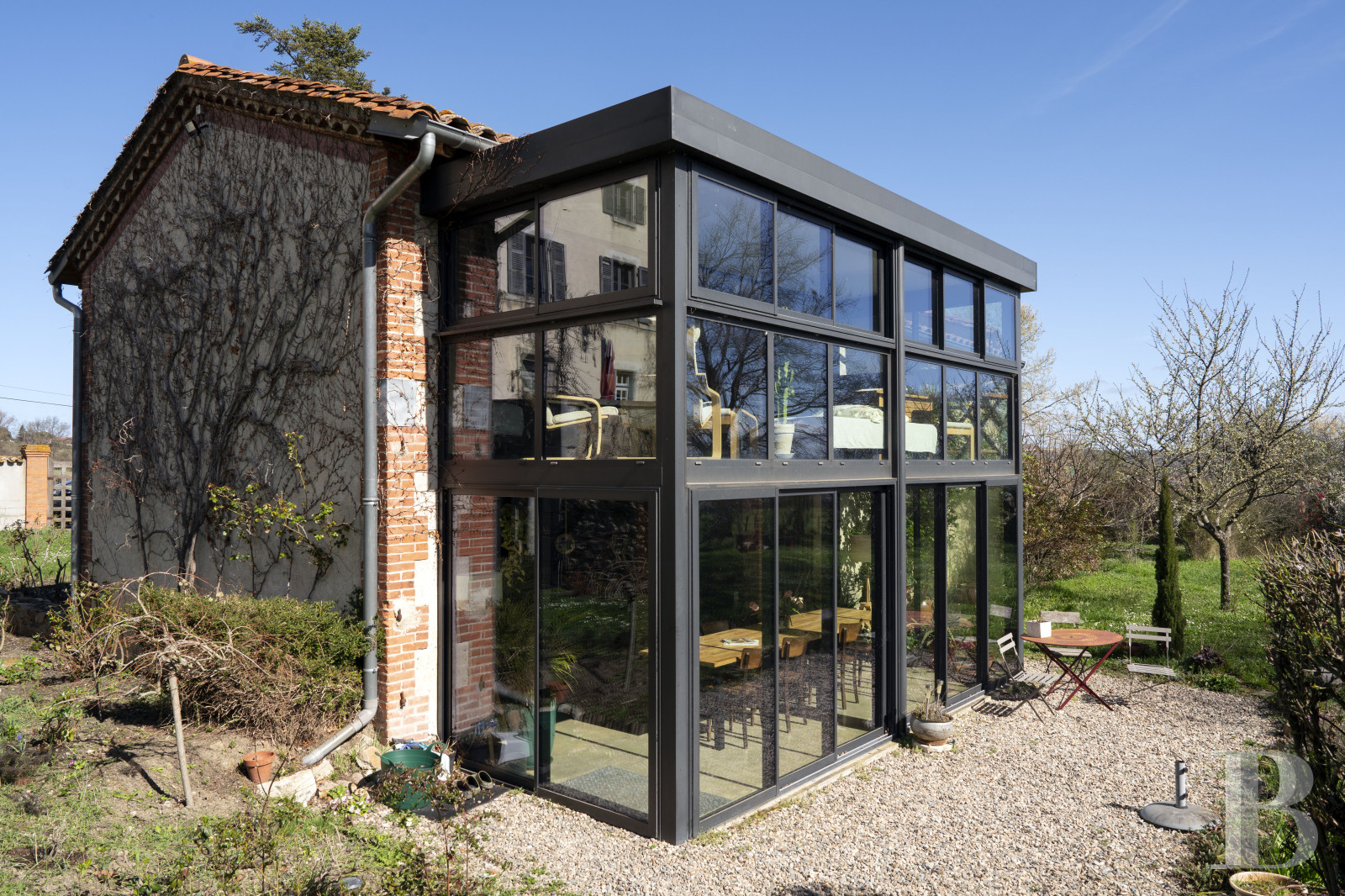
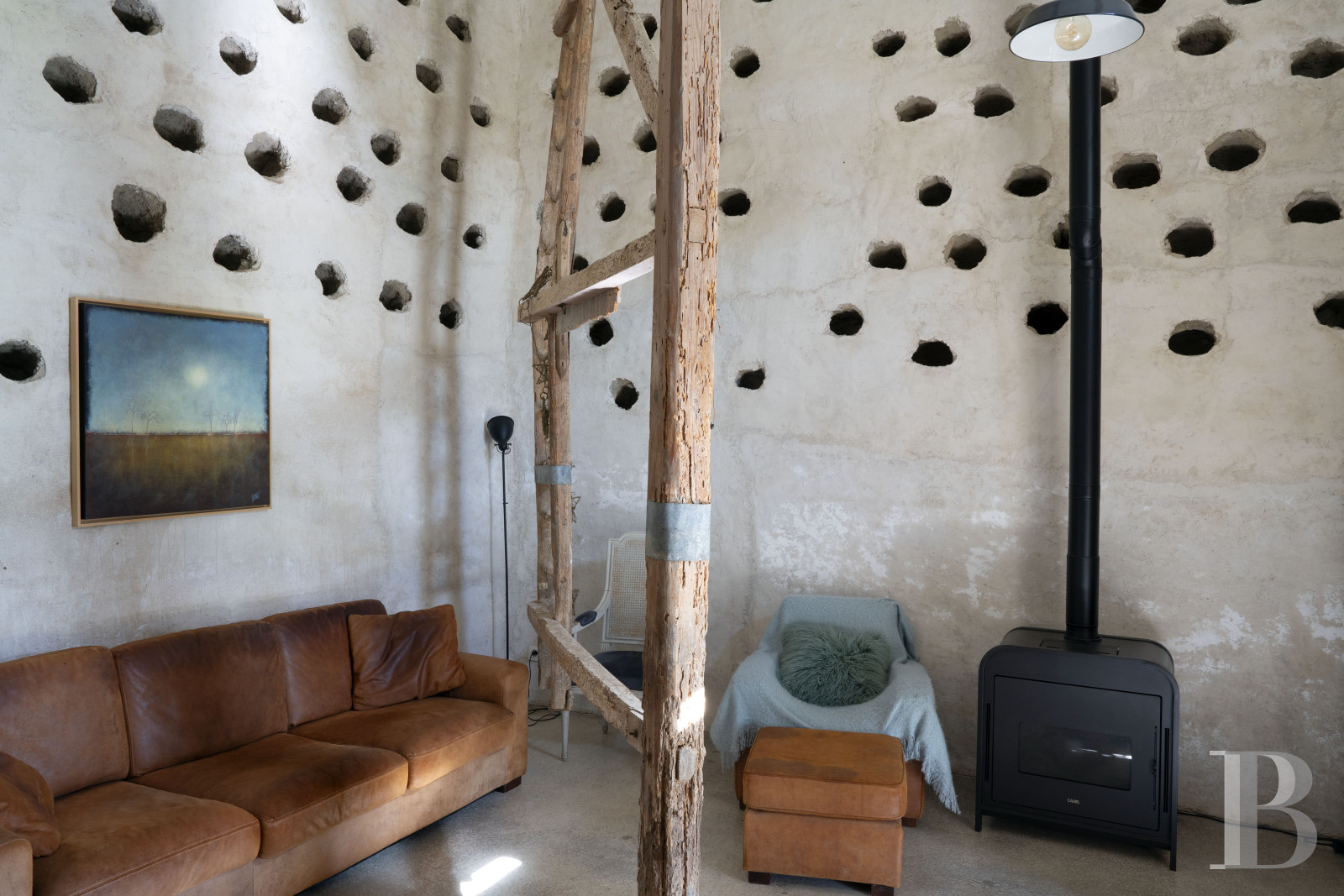
Built in the 19th century, it still features its swivelling ladder, which provides access to its many pigeonholes, once an indicator of a property’s size, and preserved during the renovations carried out in 2011 in order to transform this edifice into a second dwelling as well as create a more contemporary extension with the addition of a two-storey conservatory.
In addition, a patio to the south and a private garden enable the two dwellings to coexist on the property and, yet, remain sheltered from view, while the dovecote’s barrel tile roof, brick window/door surrounds and plaster-coated exteriors provide a nice visual and architectural contrast with its conservatory, built out of aluminium and insulated glass.
The ground floor
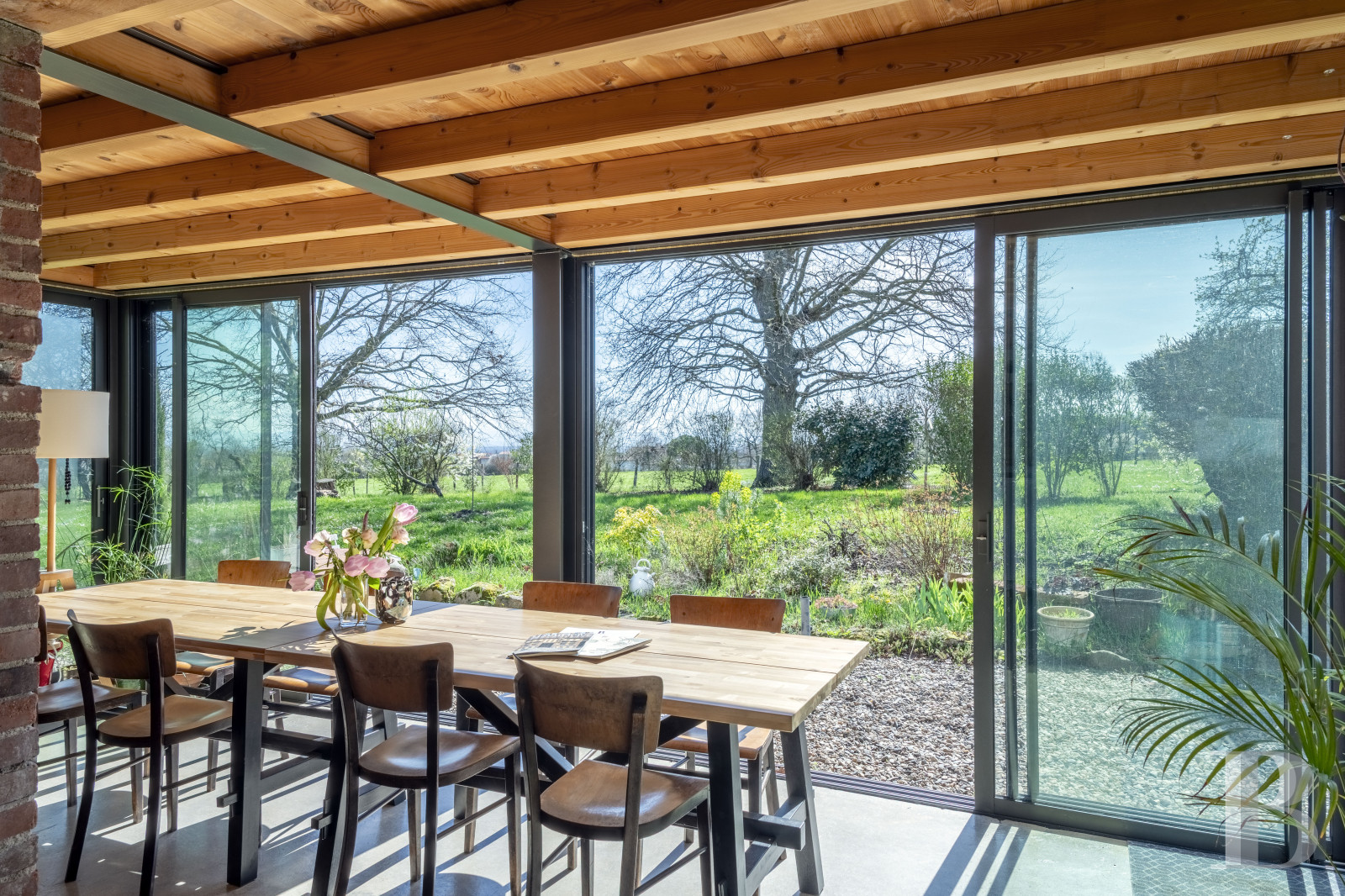
With an open-plan living area, the fitted kitchen faces a dining room table located in the conservatory, while this whole floor is directly linked to the garden thanks to large sliding glass doors that open up completely towards the outside.
As for the living room, more private in nature and practically concealed in the former dovecote with its ladder providing access to its pigeonholes, it acts as a nice counterbalance to the more modern extension, whereas this level, which showcases natural materials such as polished concrete floors, wooden ceilings, original pigeonholes and brick window/door surrounds, also features a lavatory under the staircase.
The upstairs
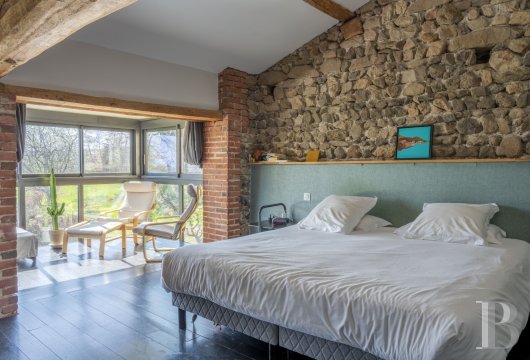
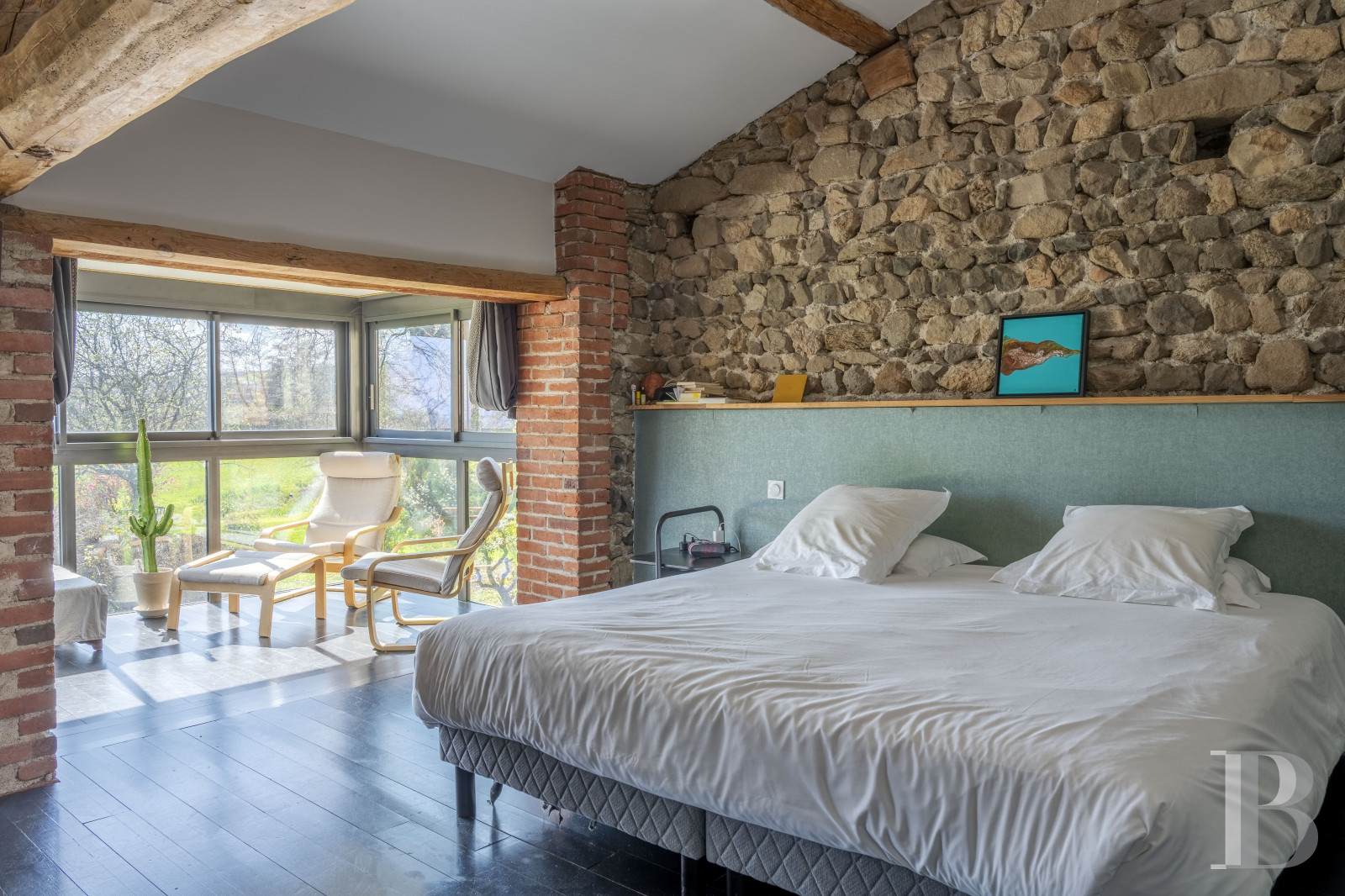
Reserved as the sleeping quarters for the dovecote’s occupants, this level, with wood floors, pointed stone walls and panoramic windows, includes a bedroom with its own shower room and storage area, as well as a room that is currently used as both a lounge and a study.
The Storage Building
With an outdoor covered area for vehicles, as well as a barn and a workshop, this building’s possible uses are endless. Located on the property’s edge, it acts as a separation between the adjacent former farm, not part of this sale, while its rammed earth walls and barrel tile roof are typical features of traditional edifices in the northern part of the Loire department.
The Grounds
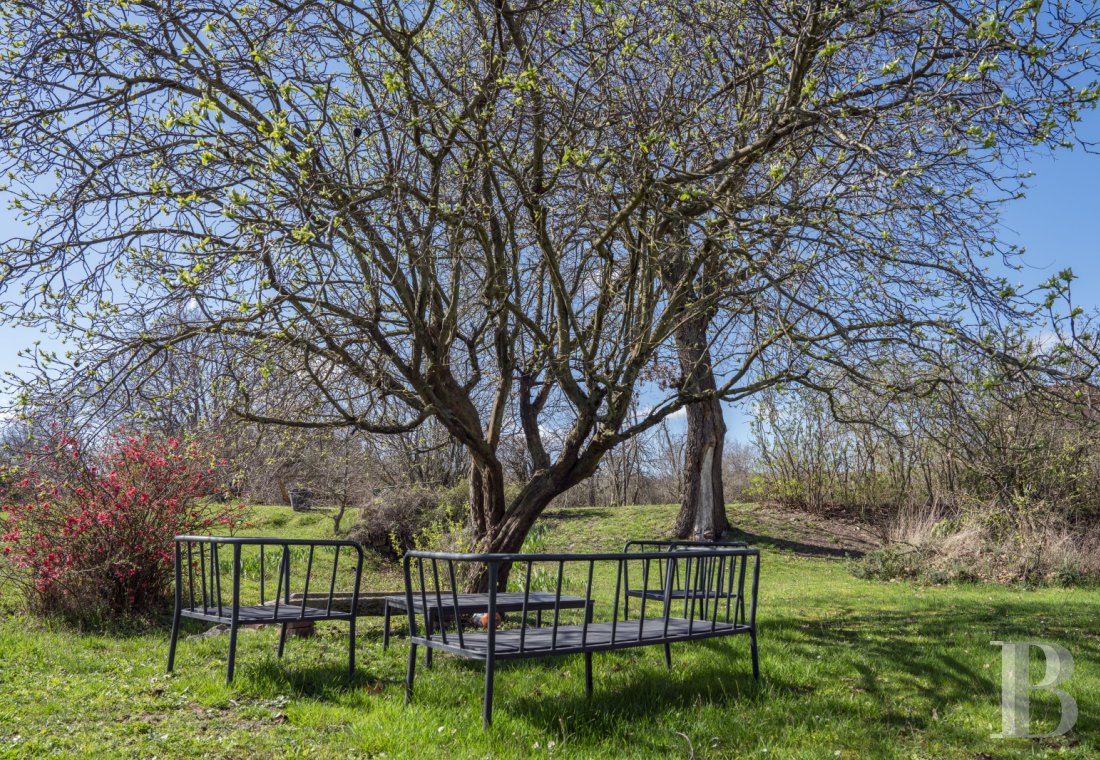
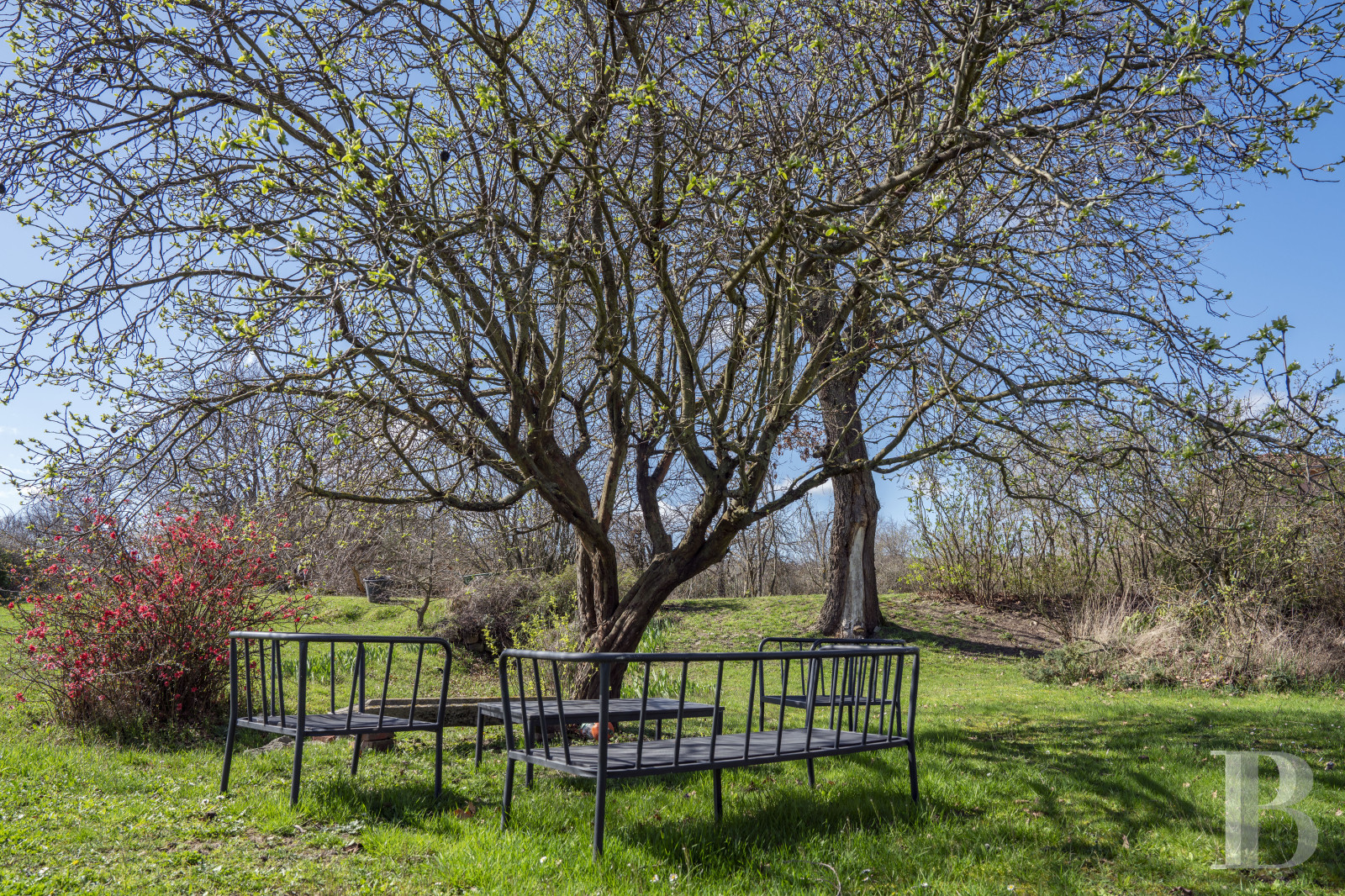
With an area of 7,288 m², surrounding the 800-m² pond supplied by a two-kilometre long canal, they feature large grassy areas bordered by trees as well as hedges defining their more secluded areas, while five tall trees offer the necessary shade for life outdoors during the summer months and shrubbery provides privacy for each of the two dwellings, the latter of which are each accessible via their own drive from the street and feature vehicle parking in each of their front courtyards.
Primarily facing south towards the plain, the views extend as far as the eye can see towards the Forez Mountains, whereas, extending on from the pastureland with their equine residents, the region’s characteristic landscapes unfold in a dazzling palette of green.
Our opinion
This property, synonymous with the agricultural success of a family of Loire farmers, is immersed in complete silence with a pond and wooded grounds. Here, nature reigns supreme and flourishes in abundance, while the large slumbering dwelling, with most of its decorative details and furnishings still intact, only requires a few updates in order to make it conducive for private family life or commercial purposes, such as a bed-and-breakfast, the latter of which would be able to take advantage of its prime location, at the base of the Forez Mountains, separating the Dore River valley from the Forez plain.
Reference 109279
| Main building floor area | 420 m² |
| Outbuildings floor area | 100 m² |
| Land registry surface area | 7288 m² |
| Including parkland | 5515 m² |
| Total floor area | 520 m² |
French Energy Performance Diagnosis
Information on the risks to which this property is exposed is available on the website: www.georisques.gouv.fr
Share


NB: The above information is not only the result of our visit to the property; it is also based on information provided by the current owner. It is by no means comprehensive or strictly accurate especially where surface areas and construction dates are concerned. We cannot, therefore, be held liable for any misrepresentation.