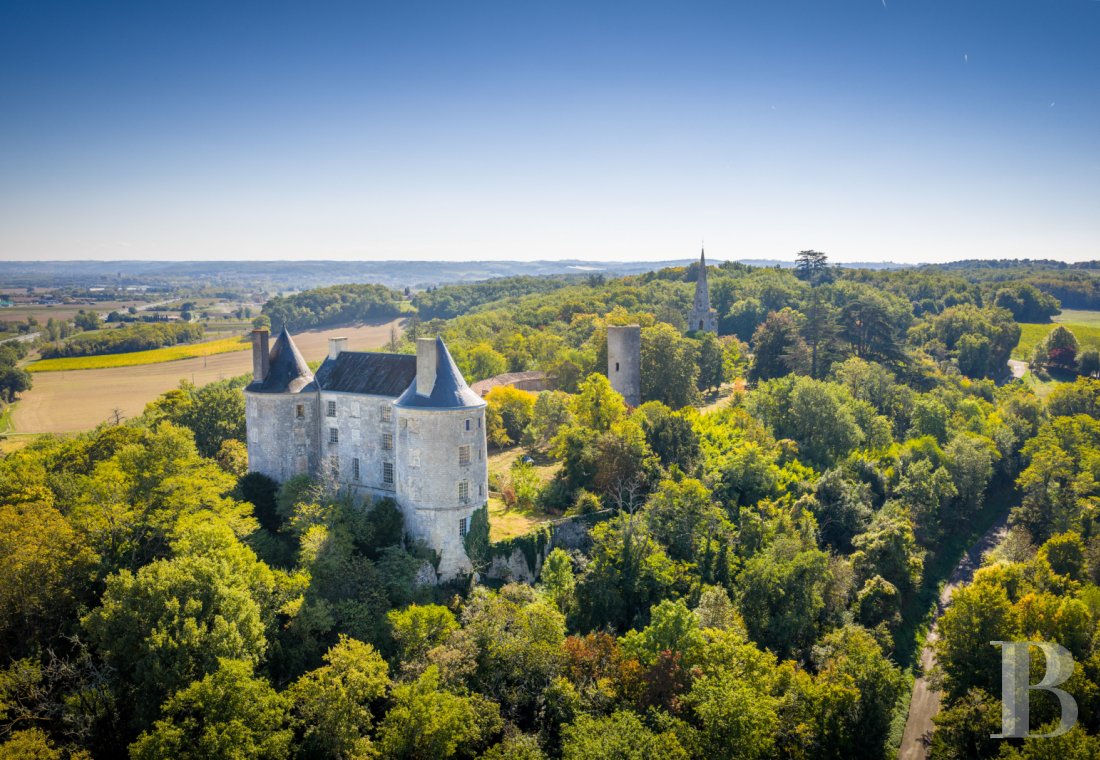




A listed 13th-century chateau to be fully restored, with grounds, a chapel and outbuildings,
nestled in France’s Lot-et-Garonne department where it overlooks the River Garonne valley
nestled in France’s Lot-et-Garonne department where it overlooks the River Garonne valley
Agen,
LOT-ET-GARONNE
aquitaine
47000
FR



Location
The chateau stands in the south of France’s Nouvelle-Aquitaine region, in the middle of the Lot-et-Garonne department. It is only an hour from Bordeaux airport and 1 hour and 30 minutes from Toulouse airport via the A62 motorway. From the property, you can easily get to a high-speed train station, where you can reach Paris in around three hours by rail. The Renaissance edifice, with origins dating back to the 13th century, lies in the heart of the Buzet winegrowing area with its protected label of origin and looks out over the River Garonne valley. It is located within a triangle formed by the towns of Marmande, Agen and Nérac, near Casteljaloux, a famous spa town with a golf course, a casino, a large leisure park and a 17-hectare lake. The Buzet winegrowing area, between the River Garonne and the Landes forest, is a beautiful natural region with rare authenticity.
Description
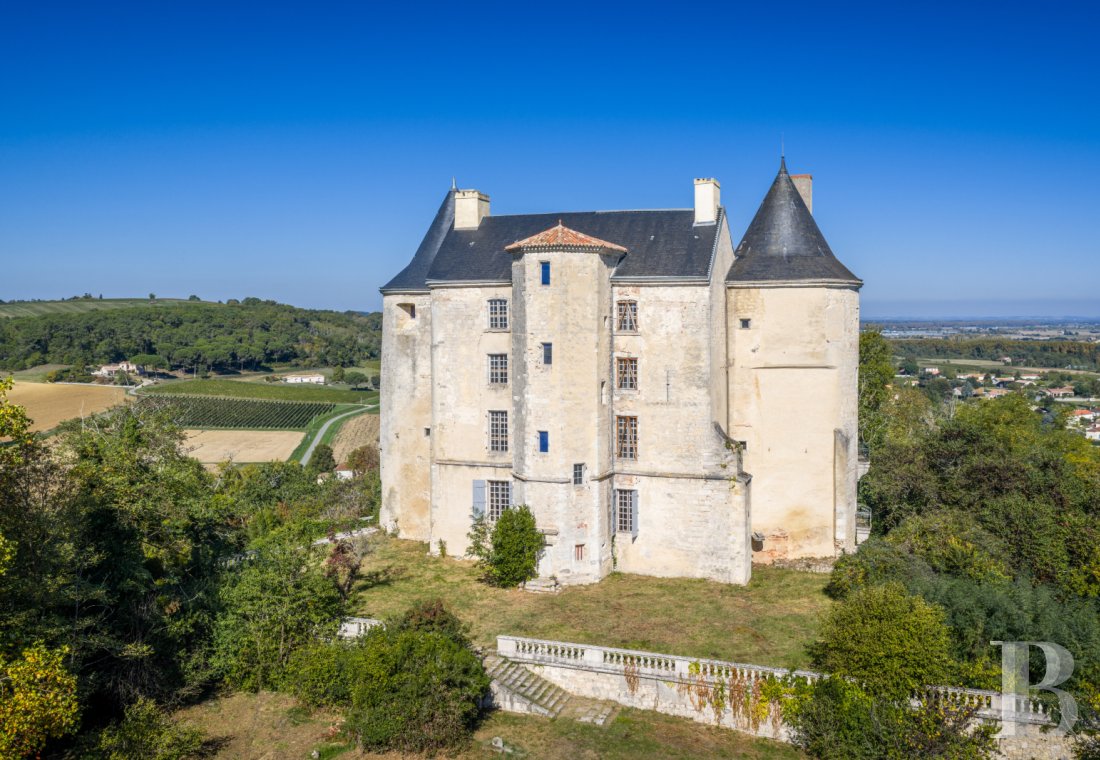
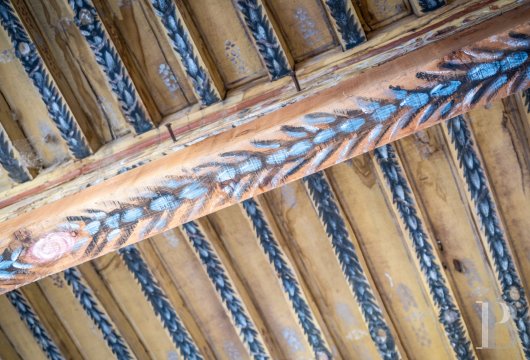
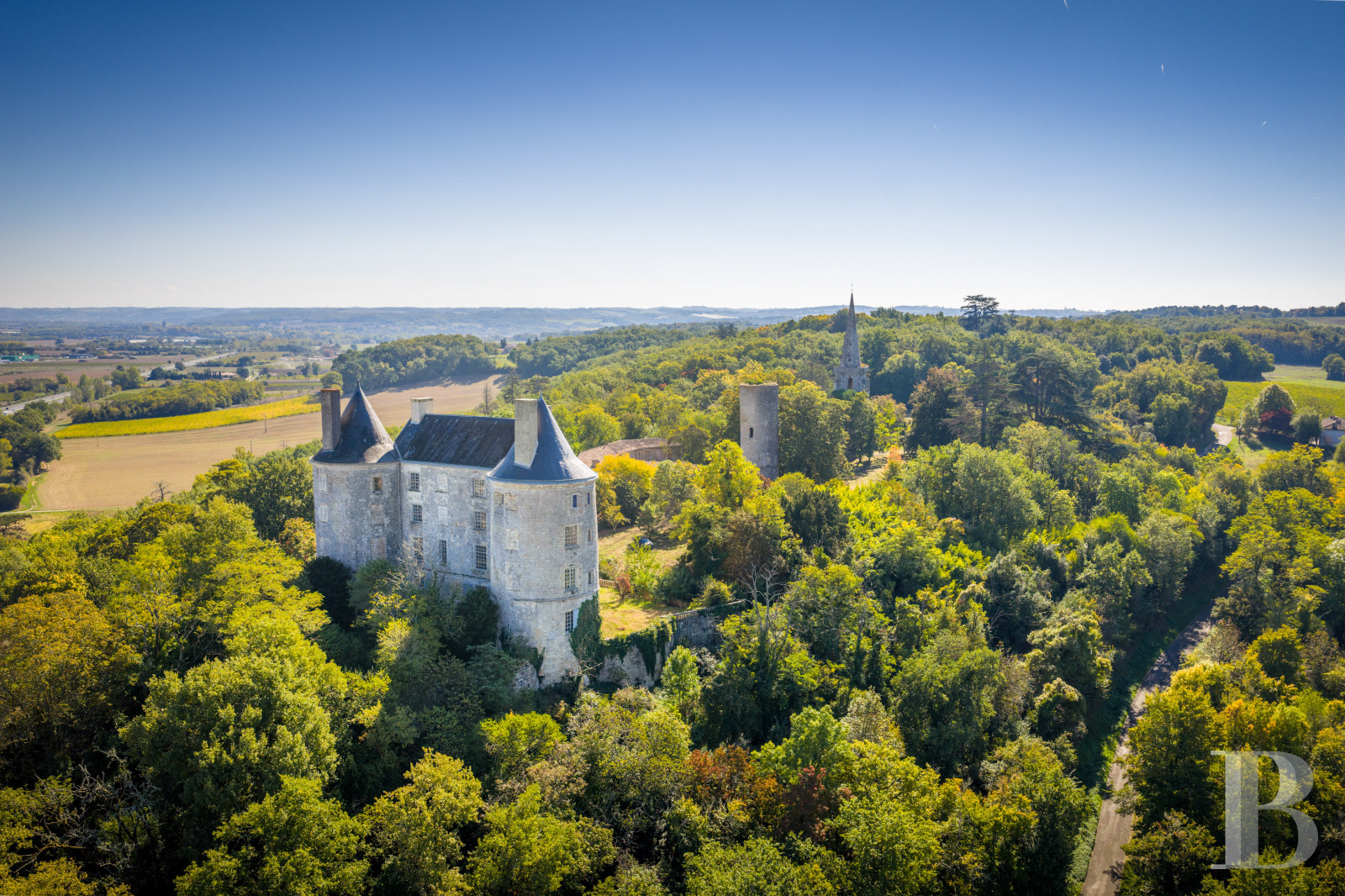
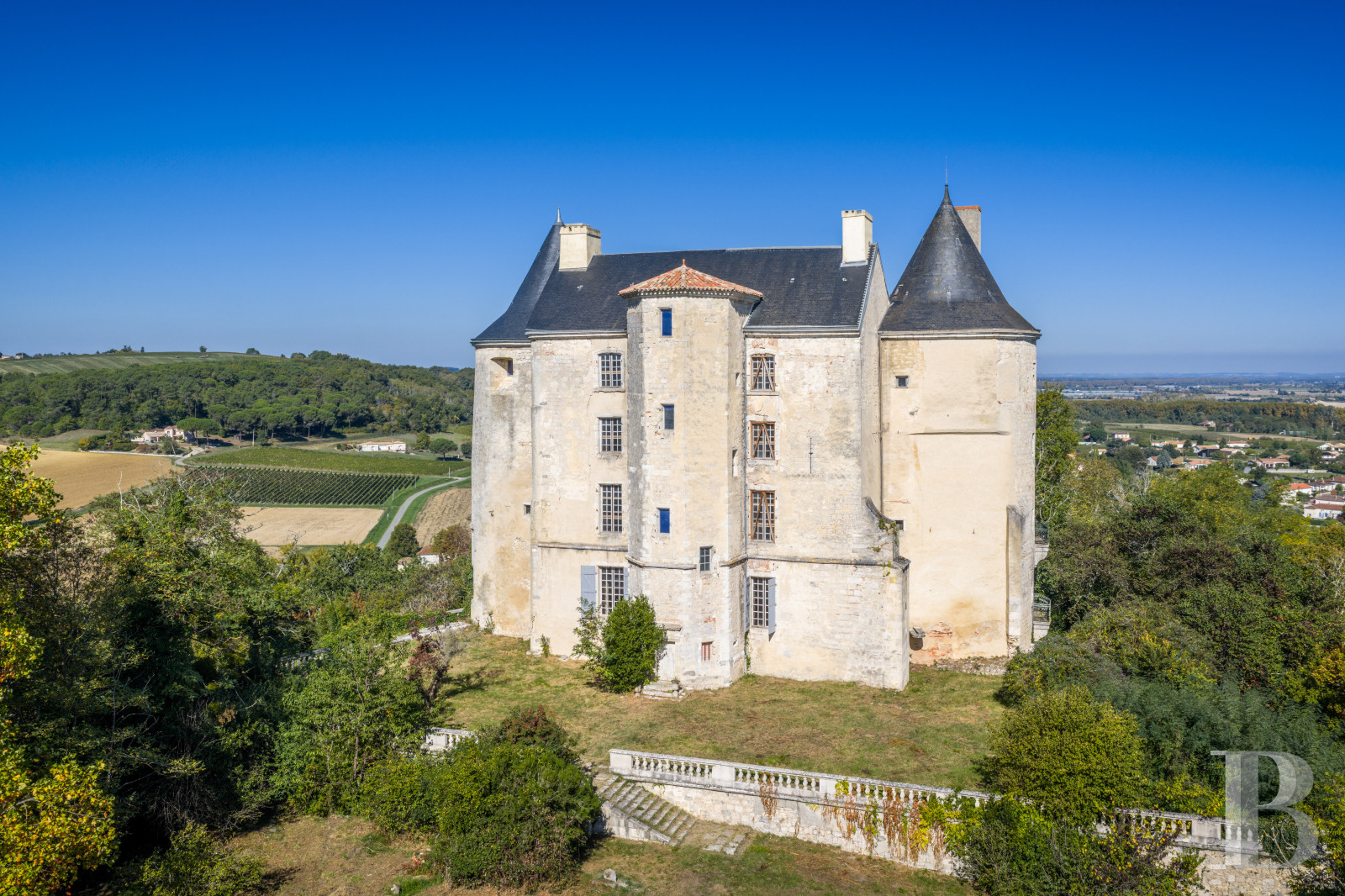
Towering upon a rocky hill that looks down at the valley, the chateau was once surrounded by an ancestral vineyard. The majestic edifice illustrates the rich past of Gascony. The original chateau was built by the counts of Gascony. It has survived over the centuries and notably withstood the French Wars of Religion. Today’s elegant, symmetrically designed edifice dates back to the French Renaissance (around the year 1500). It has kept significant medieval remnants, including towers, arrow slits and other defensive features from the 15th century. Two wings were added in the 17th and 19th centuries by the Grossolles de Flamarens family and by Alfred de Noailles, before being destroyed in the 1960s. All the estate’s buildings and remnants have walls that are mostly made of stone. Their roofs have slate or barrel tiles. Part of the chateau has been regionally listed as a historical monument since 1989 and nationally listed as a historical monument since 1991. This bears witness to the chateau’s true value as a gem of built heritage. The listed parts are the elevations, roofs, fireplaces and architectural remnants in the grounds, as well as the painted ceilings of the bedrooms on the first floor. Today, the chateau requires large-scale restoration. A specific French tax scheme applies to this property as a protected historical monument. Certain expenses on the protected parts (including renovation work, loan interest, property tax and insurance) are tax deductible, within up to 50% of taxable income. These expenses are deductible from property income.
The chateau
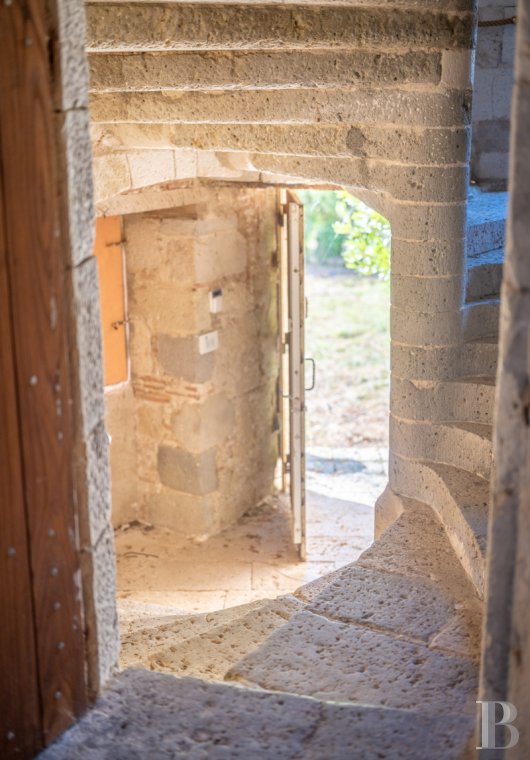
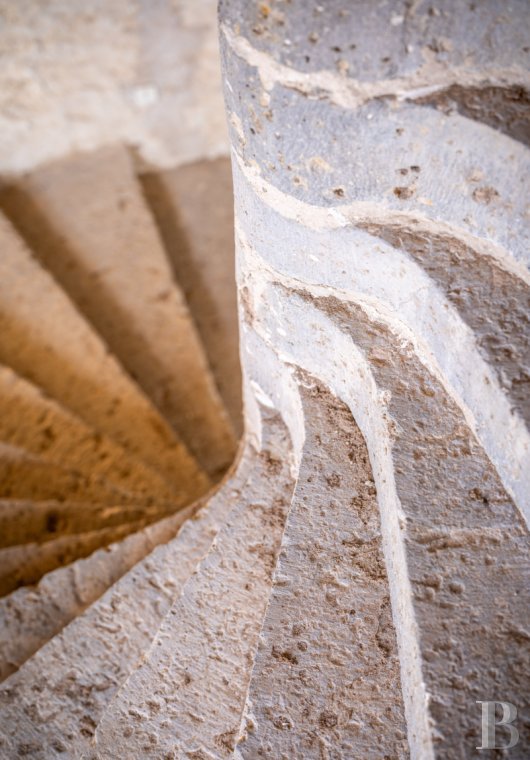
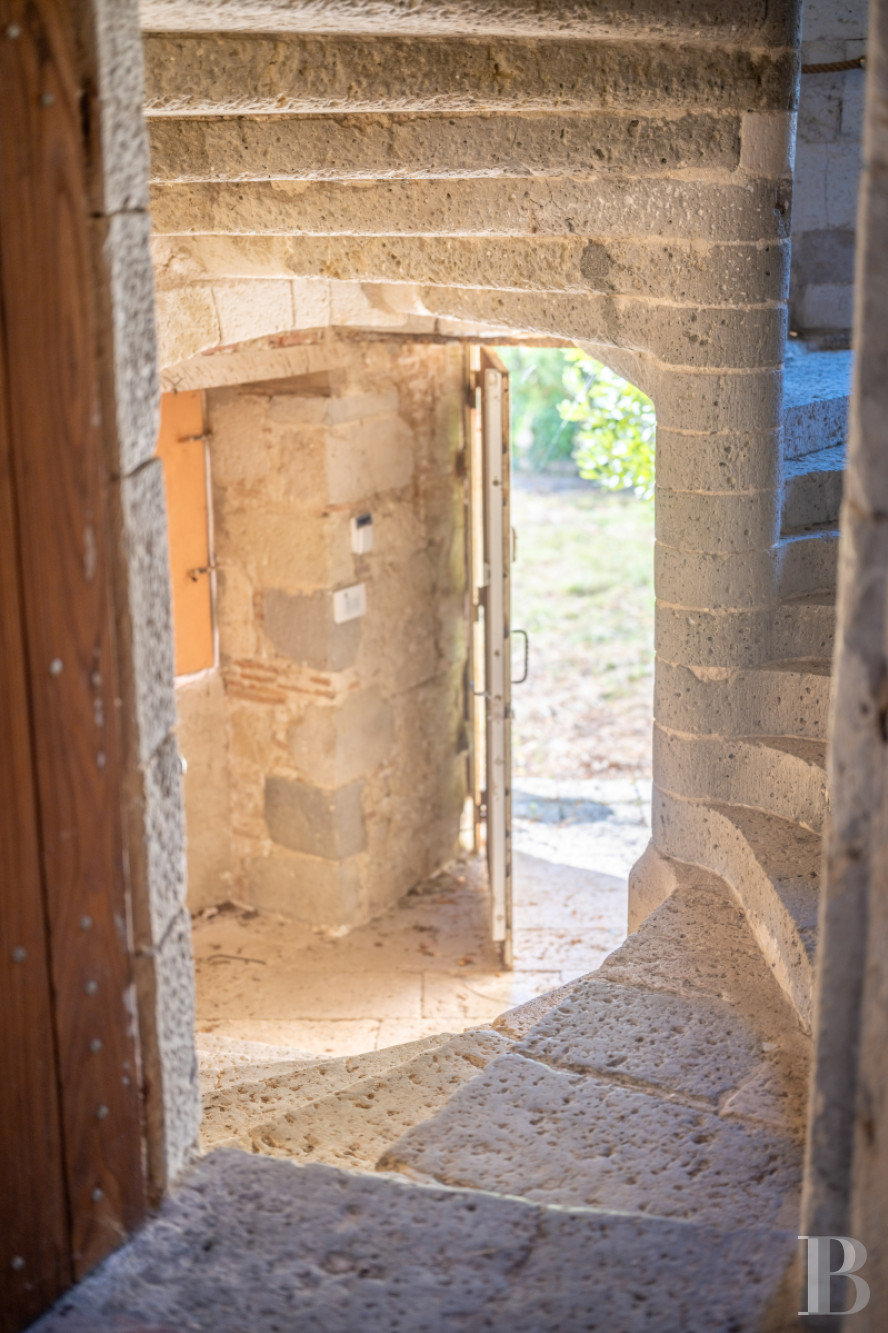
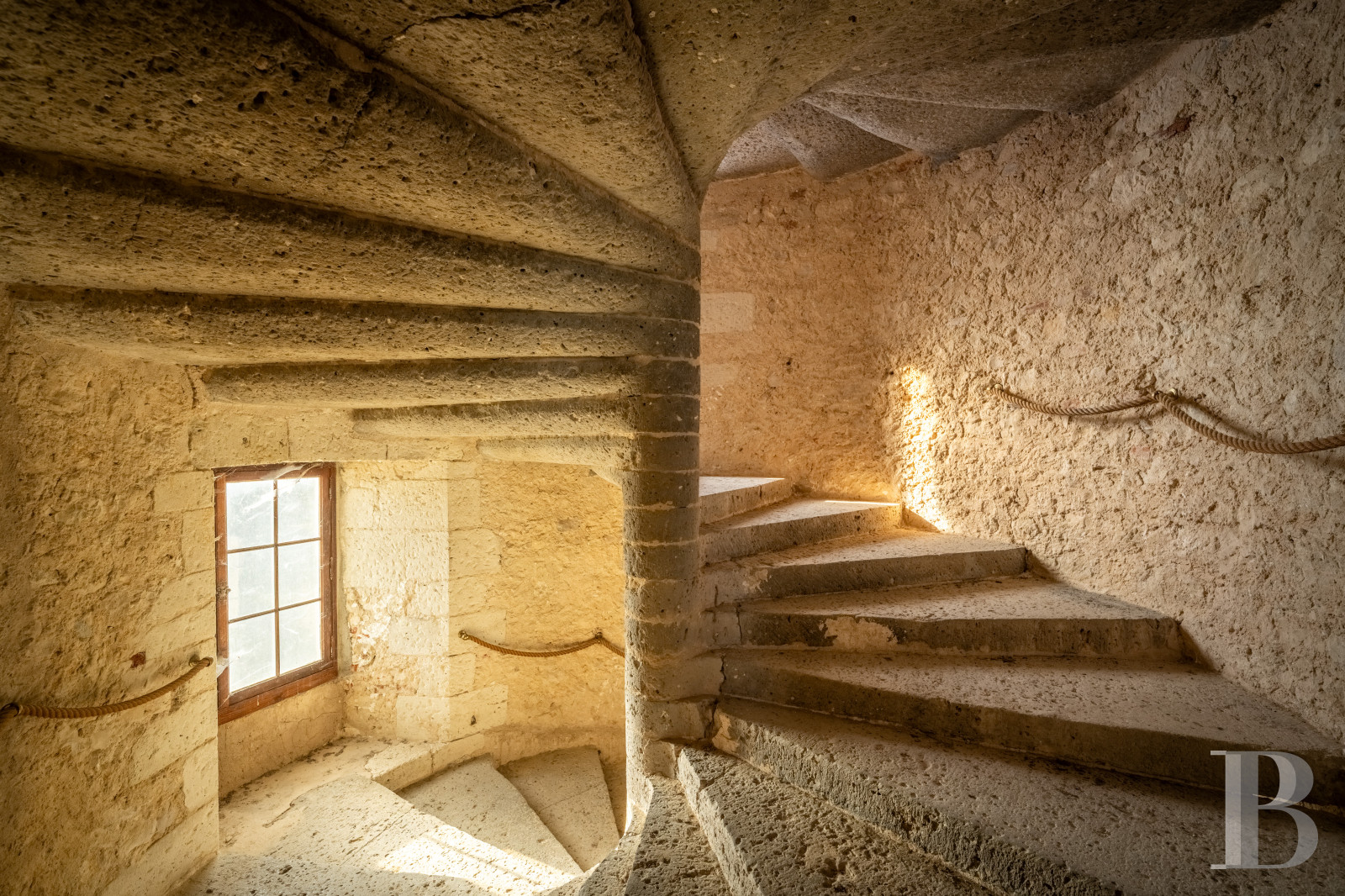
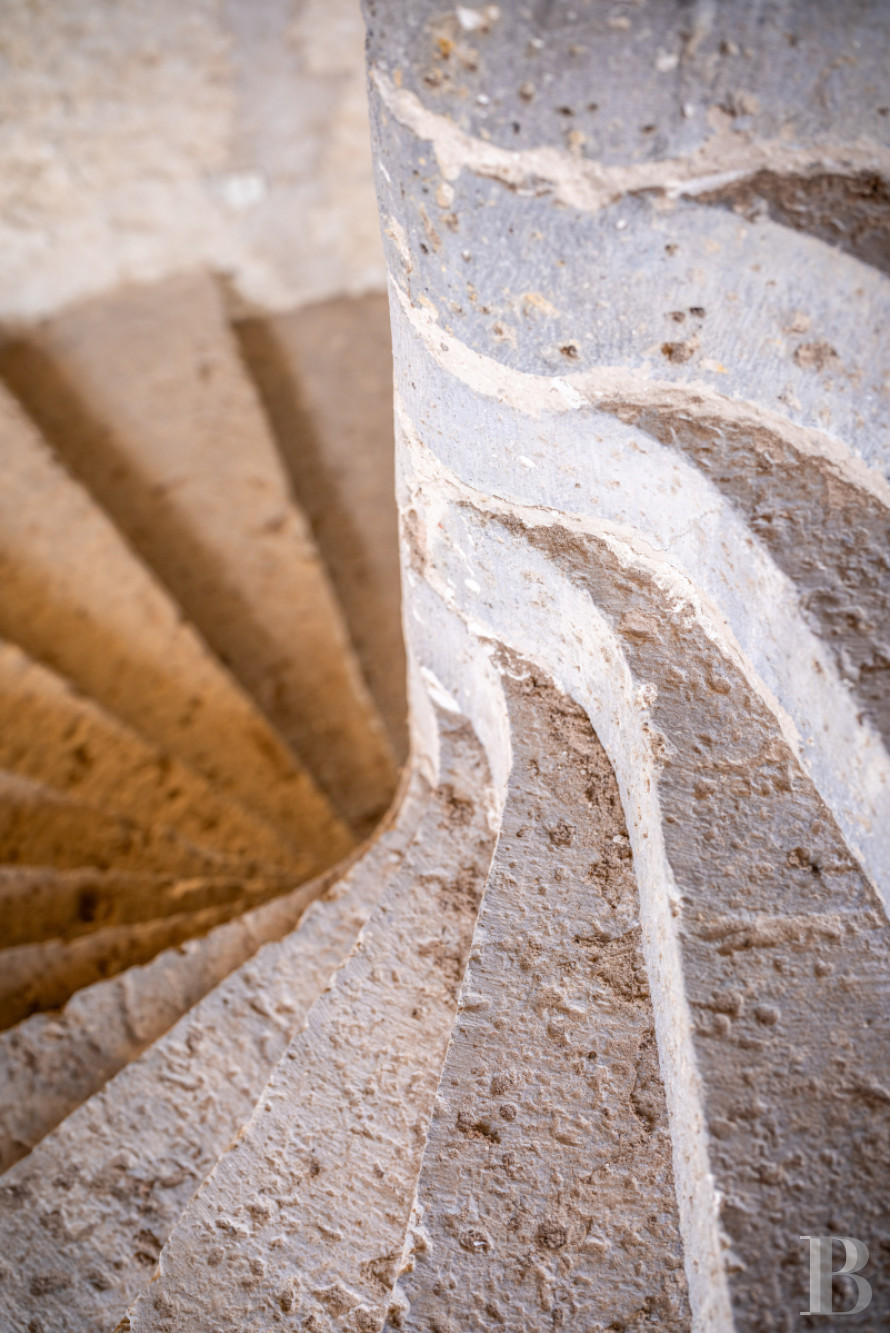
The southern elevation is centred on a 16th-century octagonal tower. This tower houses a remarkable spiral staircase that connects to the edifice's four main levels. Each level has the same layout: four spacious main rooms and their antechambers. Two vast 17th-century terraces edged with stone balusters frame the chateau. With their low walls and steps, each one forms a protective space with a refined appearance, overlooking the valley and grounds. The south-facing facade is punctuated with 16 windows, most of which are rectangular, small-paned and fitted with indoor shutters. The northern elevation has a front flight of steps and stone balconies with 17th-century wrought-iron balustrades. All the slate roofs and timber roof frames were recently renovated entirely. The structures have been strengthened, the window frames revamped and a forced-air heating system kept on all floors. An alarm system also ensures the site remains safe.
The base level
The basement dates back to the 11th and 12th centuries. It houses vast vaulted cellars that extend beneath almost the whole chateau. You reach the basement via the chateau’s main spiral staircase, as well as a subtly hidden staircase that leads to the ground floor from inside. So there is also a discreet secondary entrance to this lower level. With their earthen floors and constant temperature (10–12 °C), these cellars are ideal for storing wines and food.
An appended plan indicates the following measurements:
- West tower: Ceiling height 4.13 m - Ø 4.94 m - Floor area 19.15 m²;
- East tower: Ceiling height 3.50 m - Ø 5.49 m - Floor area 23.66 m²;
- Main section: Ceiling height 3.16 m - Floor area 16.09 m x 6.39 m = 102.80 m².
The first floor
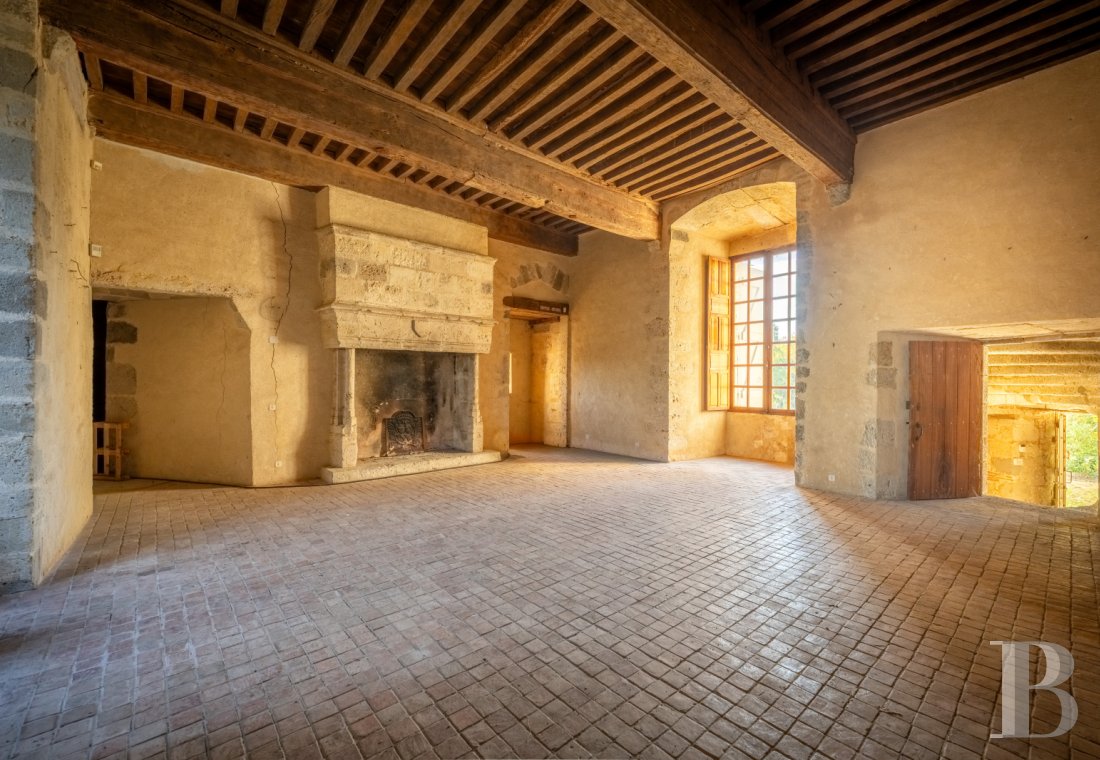
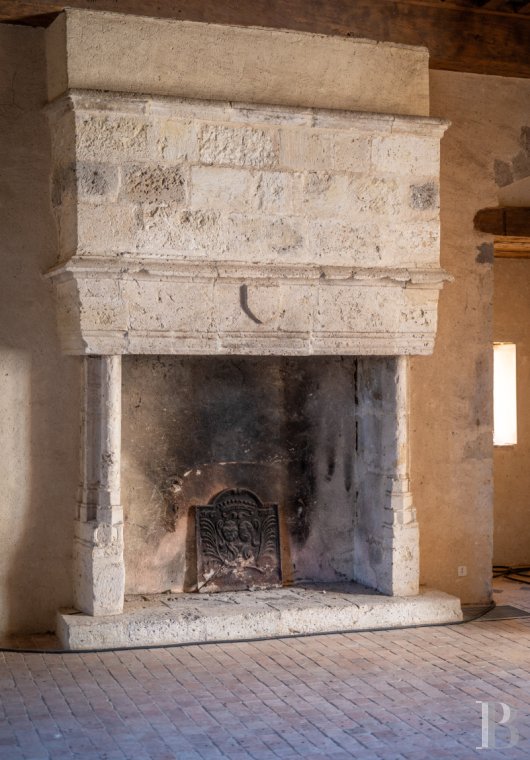
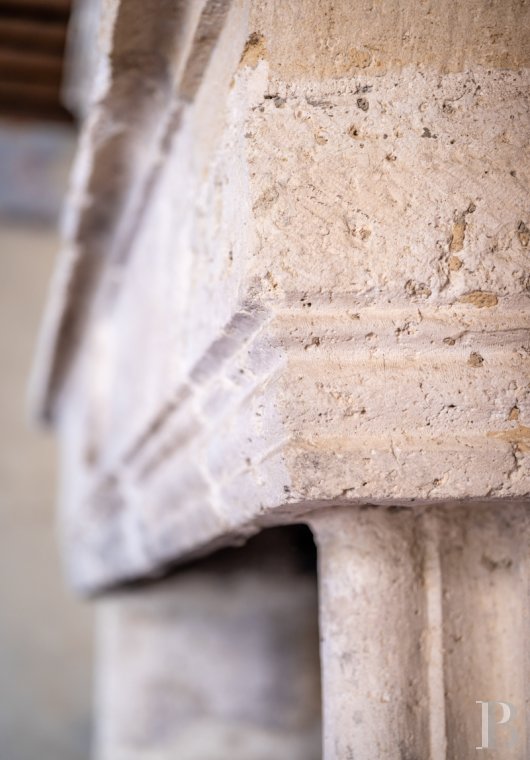
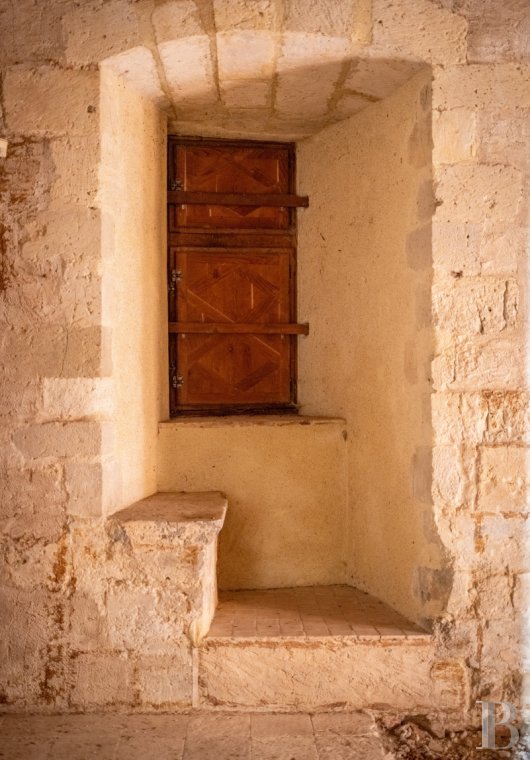
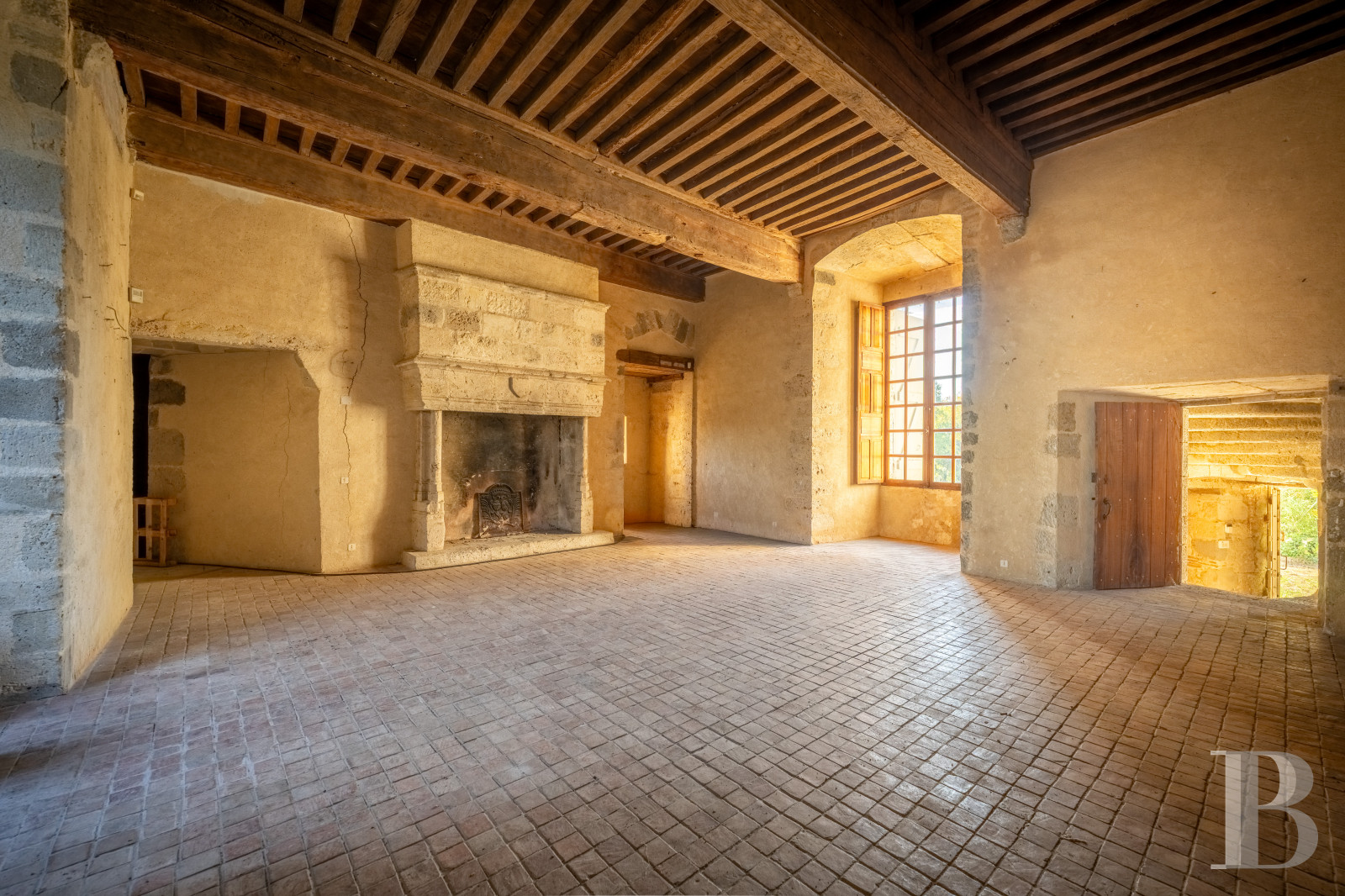
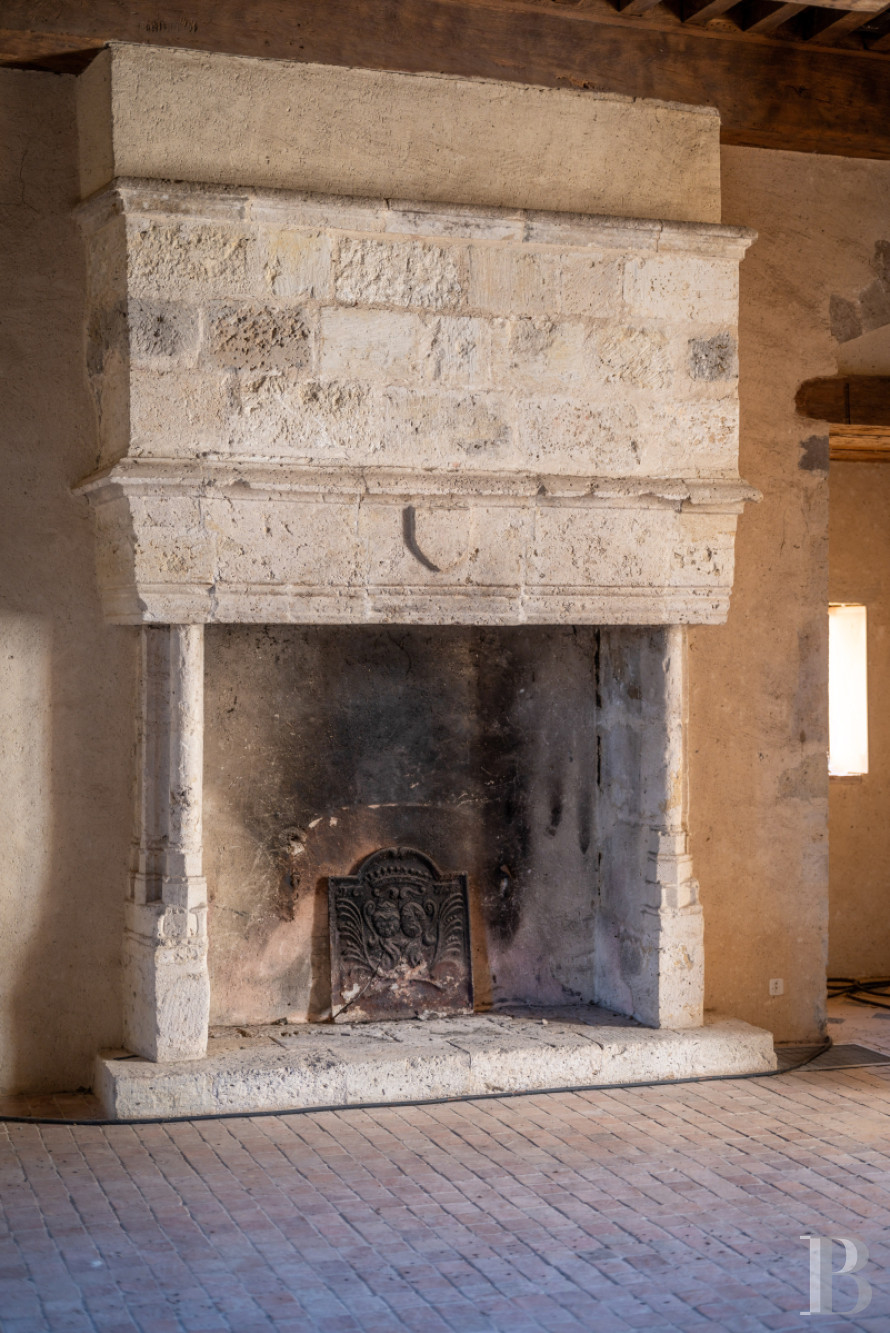
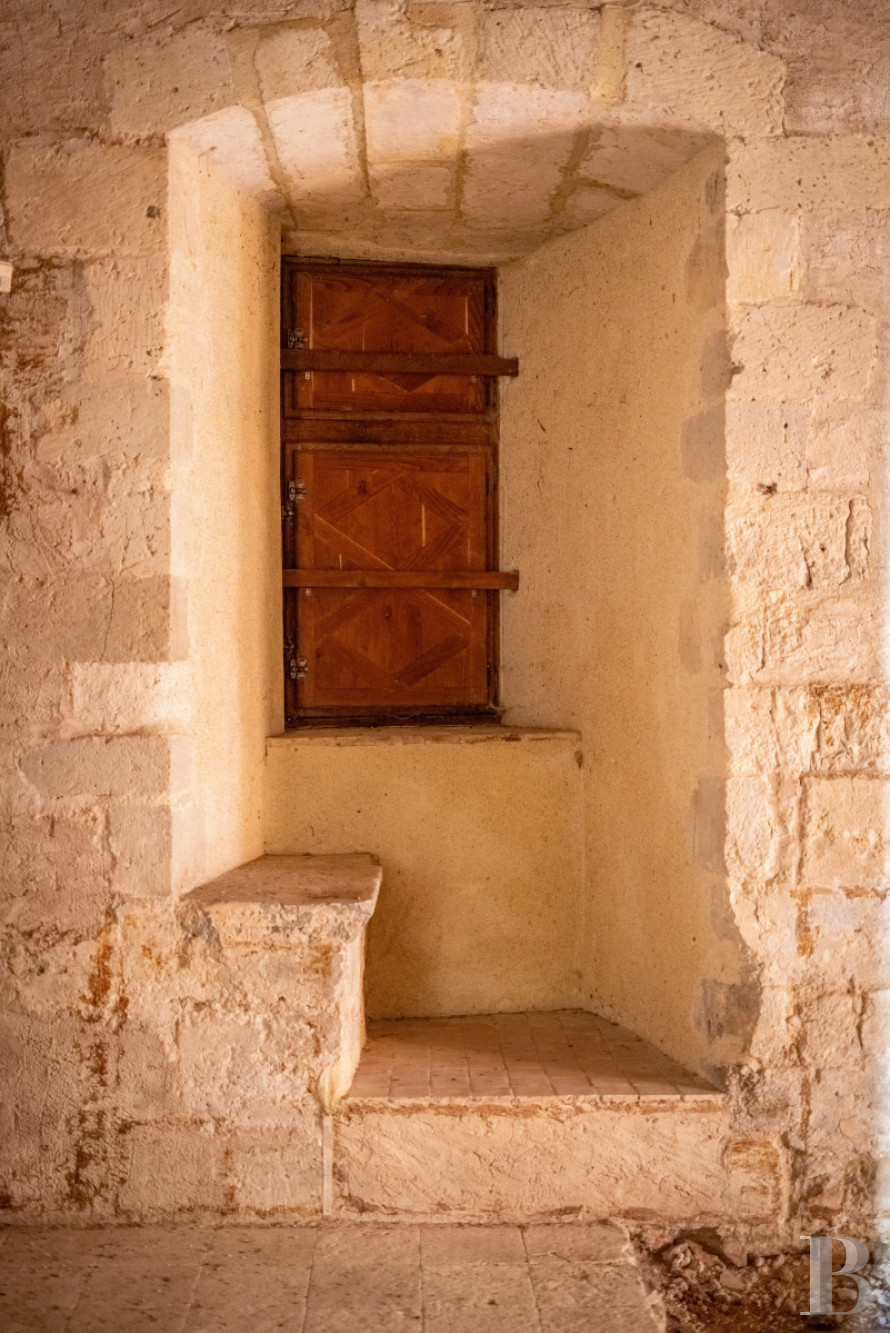
The central staircase leads up to the first floor, which has two spacious apartments with French-style beamed ceilings, floors of old square terracotta tiles and monumental stone fireplaces. On the east side, there is a grand reception room bathed in natural light. It leads out onto a terrace and looks down over the valley. In an adjoining tower, there is a secondary room with a corbelled balcony and a secret staircase. On the west side, there is the main apartment. It has corbelled windows and a stone fireplace with mouldings. Its design is symmetrical.
An appended plan indicates the following measurements:
- East room 1: Ceiling height 4.42 m - Floor area 63.00 m²;
- West room 2: Ceiling height 4.47 m - Floor area 57.00 m²;
- West tower room 4: Ceiling height 4.65 m - Floor area 33.30 m²;
- East tower room 6: Ceiling height 4.54 m - Floor area 34.30 m².
The second floor
The second floor mirrors the layout of the ground floor. The room that was originally the master’s bedroom, on the east side, has kept its 17th-century painted ceiling, its floors of terracotta tiles and its stone fireplace with columns and an entablature. The adjoining room has been converted into a shower room. It has a bathtub upon a ceramic base. Two adjoining cloakrooms with a lavatory have been created in the thickness of the tower walls, offering extra storage space. On the west side, the room that was originally the mistress’s bedroom stands out for its listed painted ceiling embellished with encoded symbols inspired by the works of Andrea Alciato and for its fireplace with a painting. Corbelled windows and original wooden floors underline the room’s character.
An appended plan indicates the following measurements:
- East room 1: Ceiling height 3.60 m - Floor area 73.00 m²;
- West room 2: Ceiling height 3.68 m - Floor area 61.00 m²;
- West tower room 4: Ceiling height 3.93 m - Floor area 33.50 m²;
- East tower room 6: Ceiling height 3.76 m - Floor area 33.90 m².
The third floor
The second floor has two symmetrical apartments with French-style beamed ceilings and traditional wood-strip flooring. The fireplaces, which are more modest, are embellished with decorative plaster works. The ceiling height diminishes gradually here, underlining the architectural hierarchy of the levels.
An appended plan indicates the following measurements:
- East room 1: Ceiling height 3.15 m - Floor area 72.00 m²;
- West room 2: Ceiling height 3.35 m - Floor area 63.00 m²;
- West tower room 4: Ceiling height 3.25 m - Floor area 34.20 m²;
- East tower room 6: Ceiling height 3.79 m - Floor area 34.70 m².
The attic
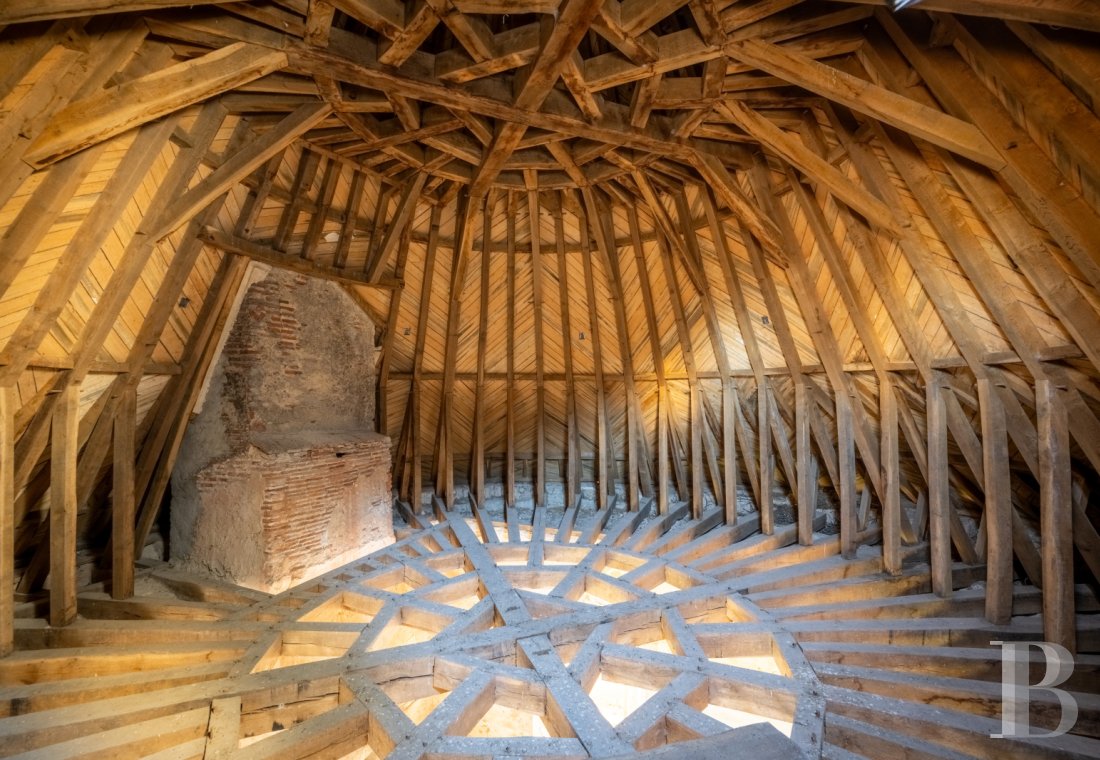
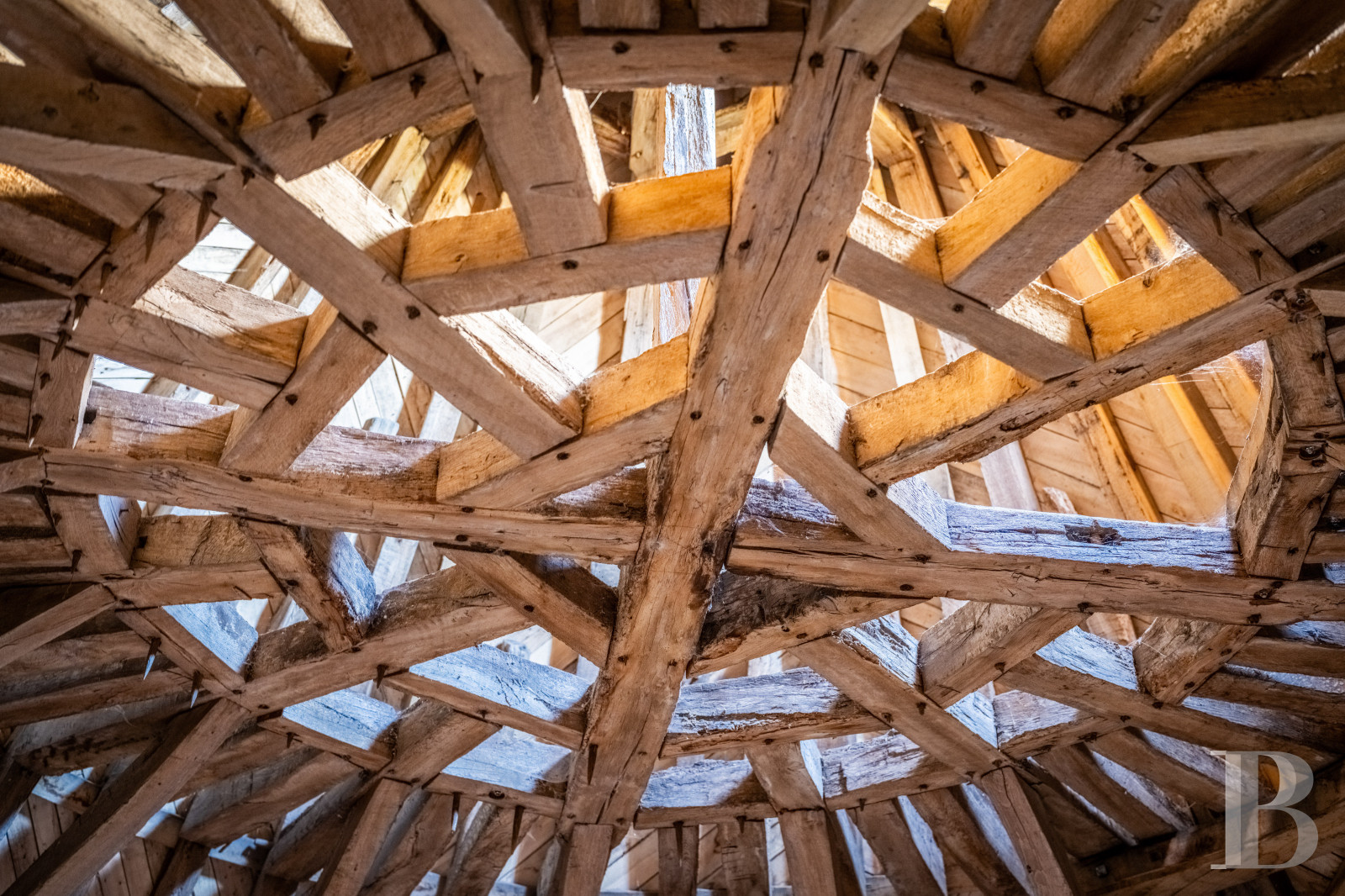
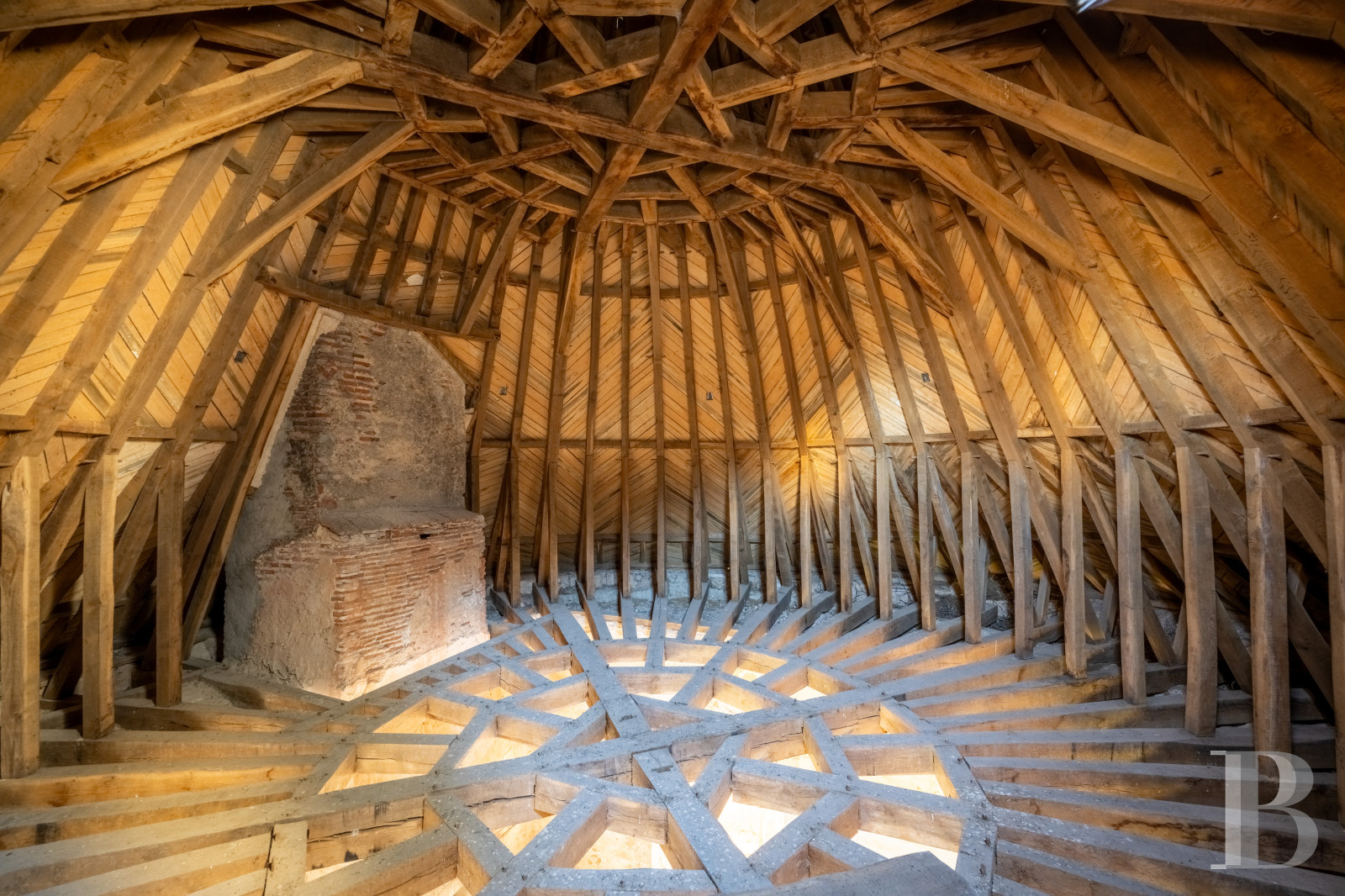
The roof space is a good spot for observing the current state of the roof frames of the main section and towers, as well as the changes made to these timber frames. Here you can easily see where work was recently carried out on these structures. This renovation bears witness to the close attention paid to preserving the edifice.
An appended plan indicates the following measurements:
- West tower: Ø 9.83 m - Floor area 75.90 m²;
- East tower: Ø 10.25 m - Floor area 82.50 m²;
- Main section: Floor area 17.03 m x 10.01 m = 170.47 m².
The outbuildings and grounds
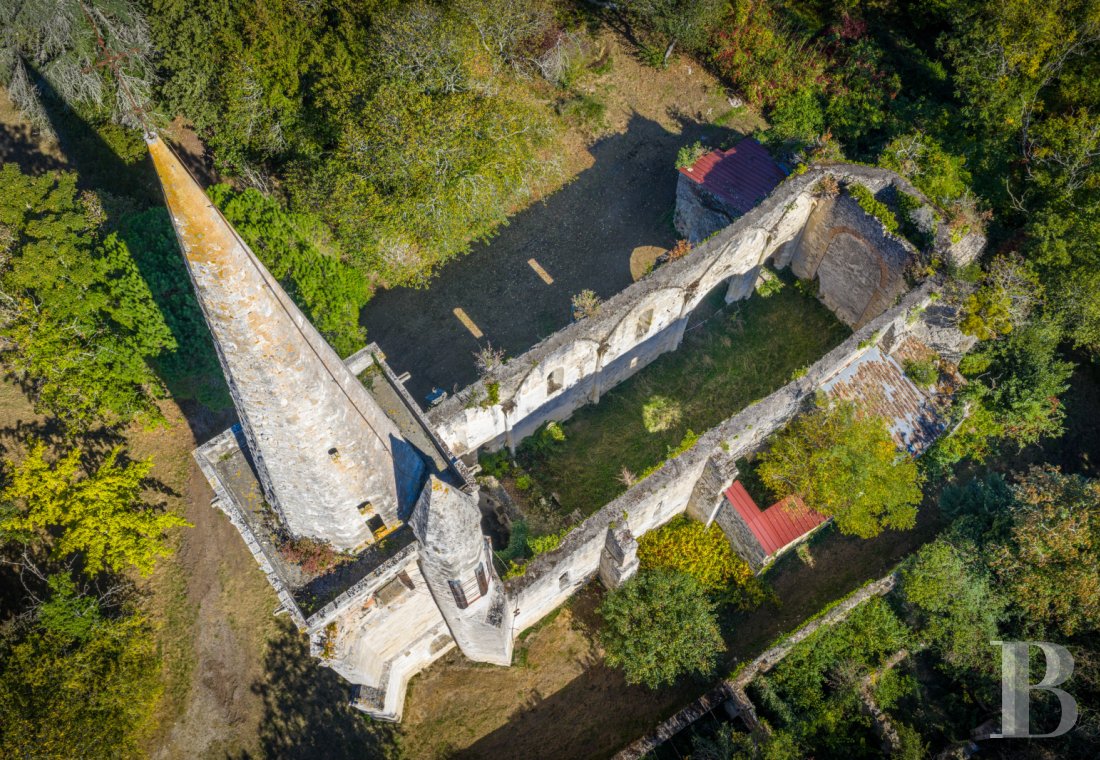
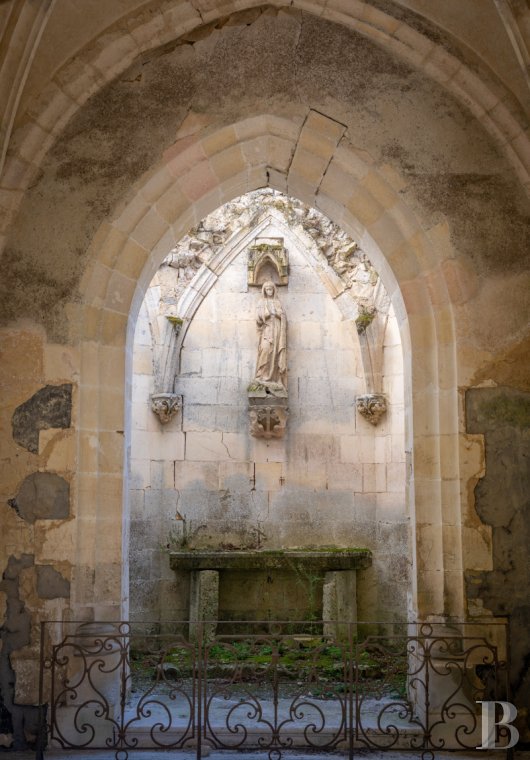
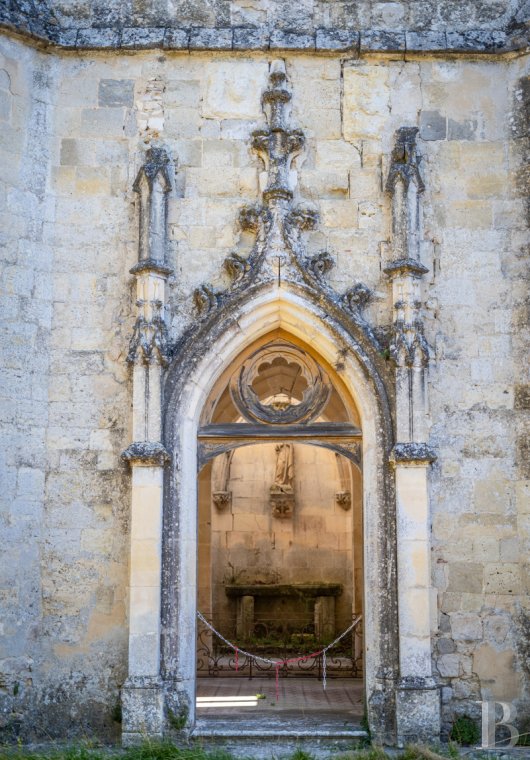
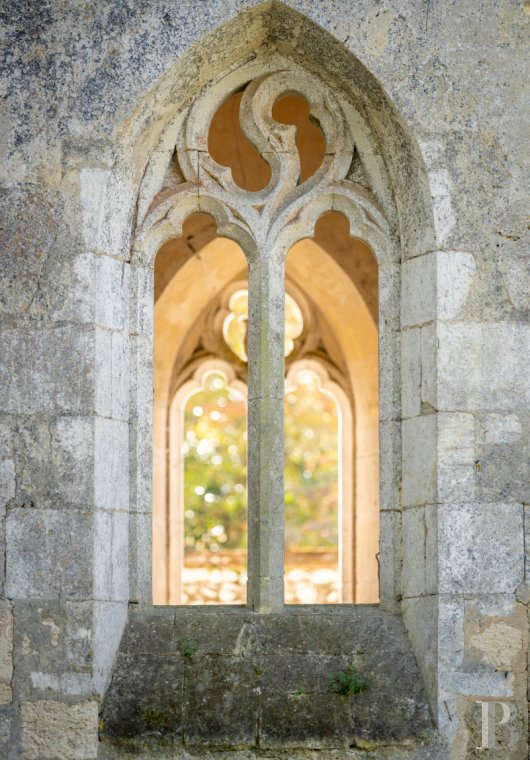
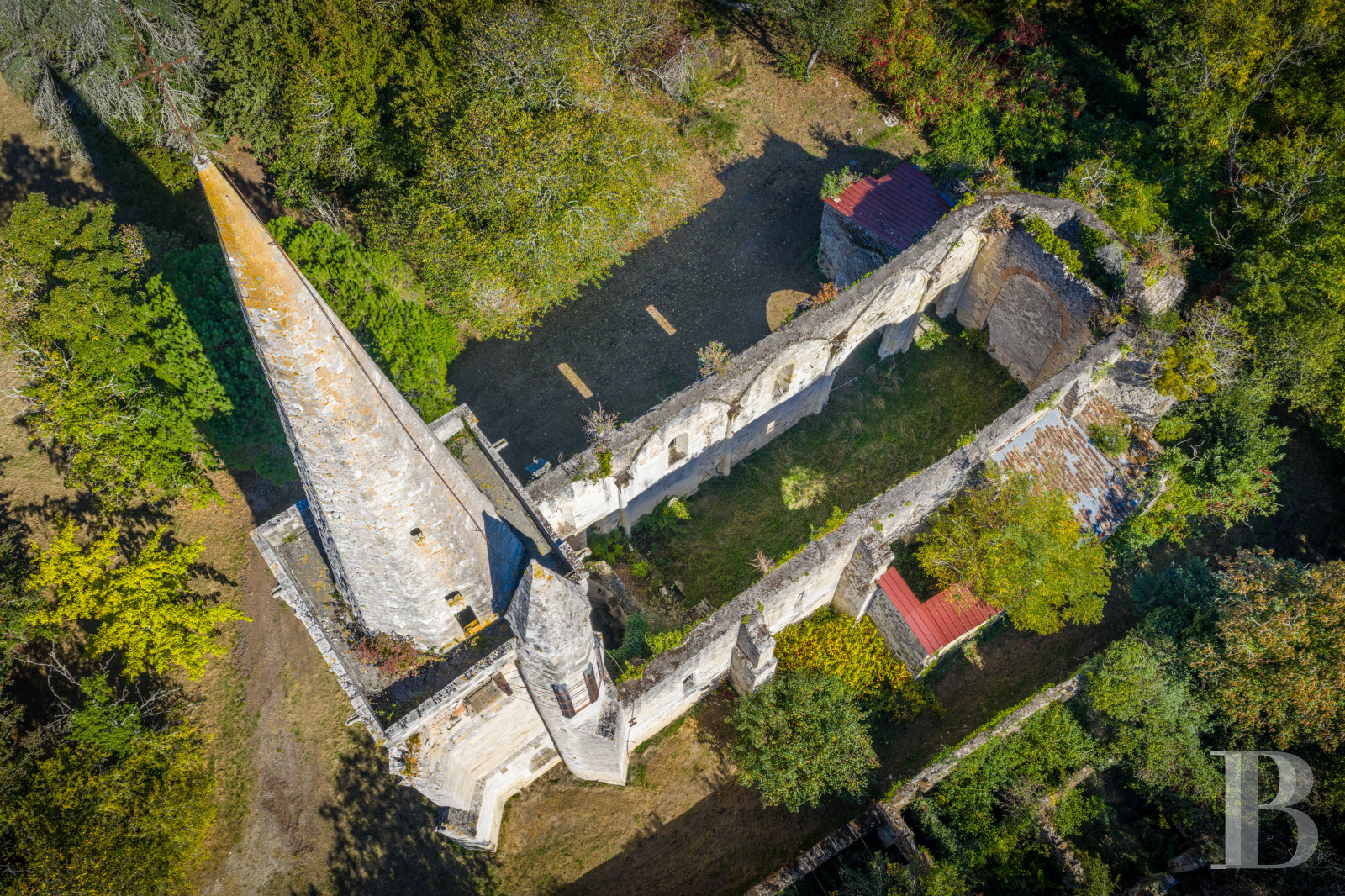
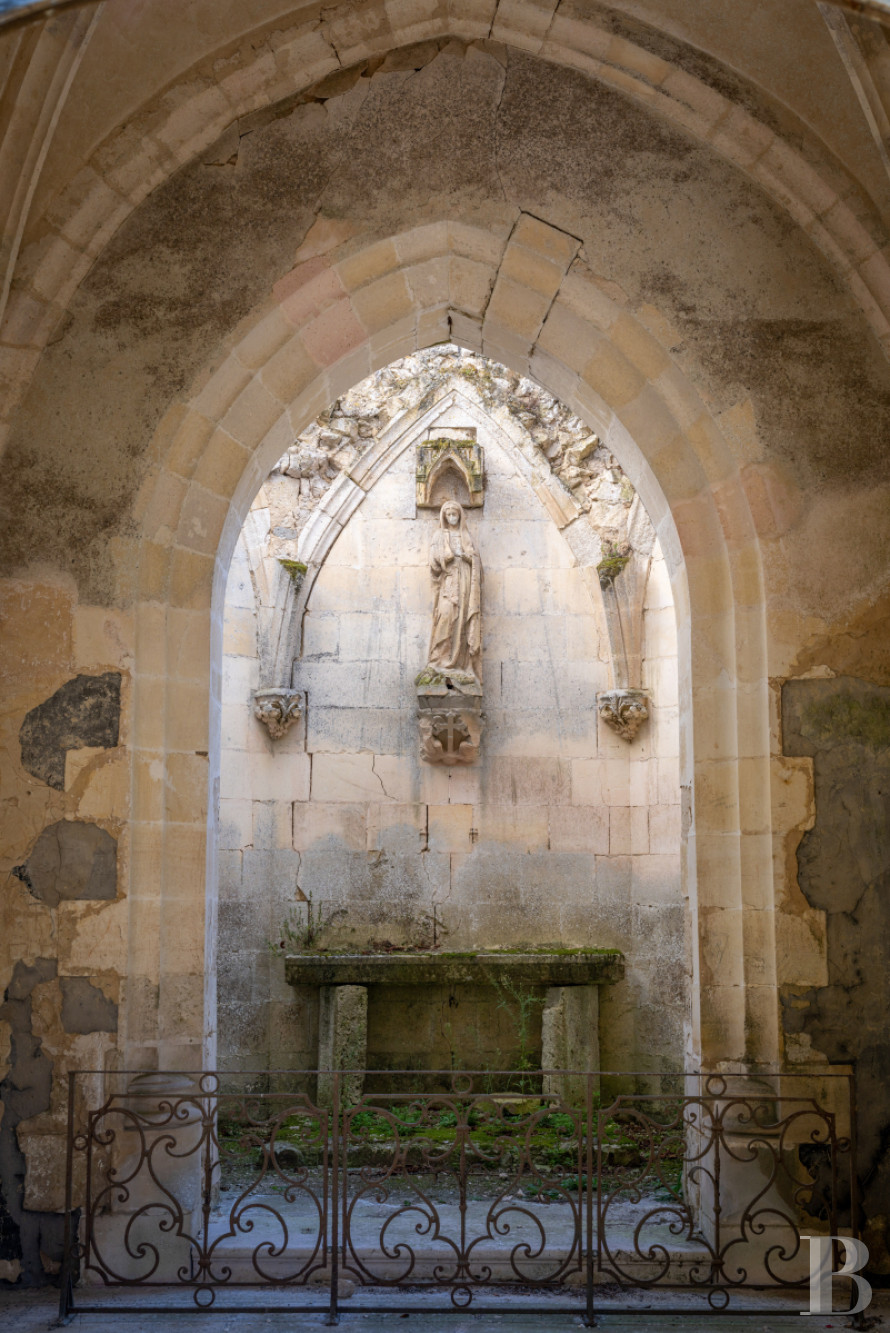
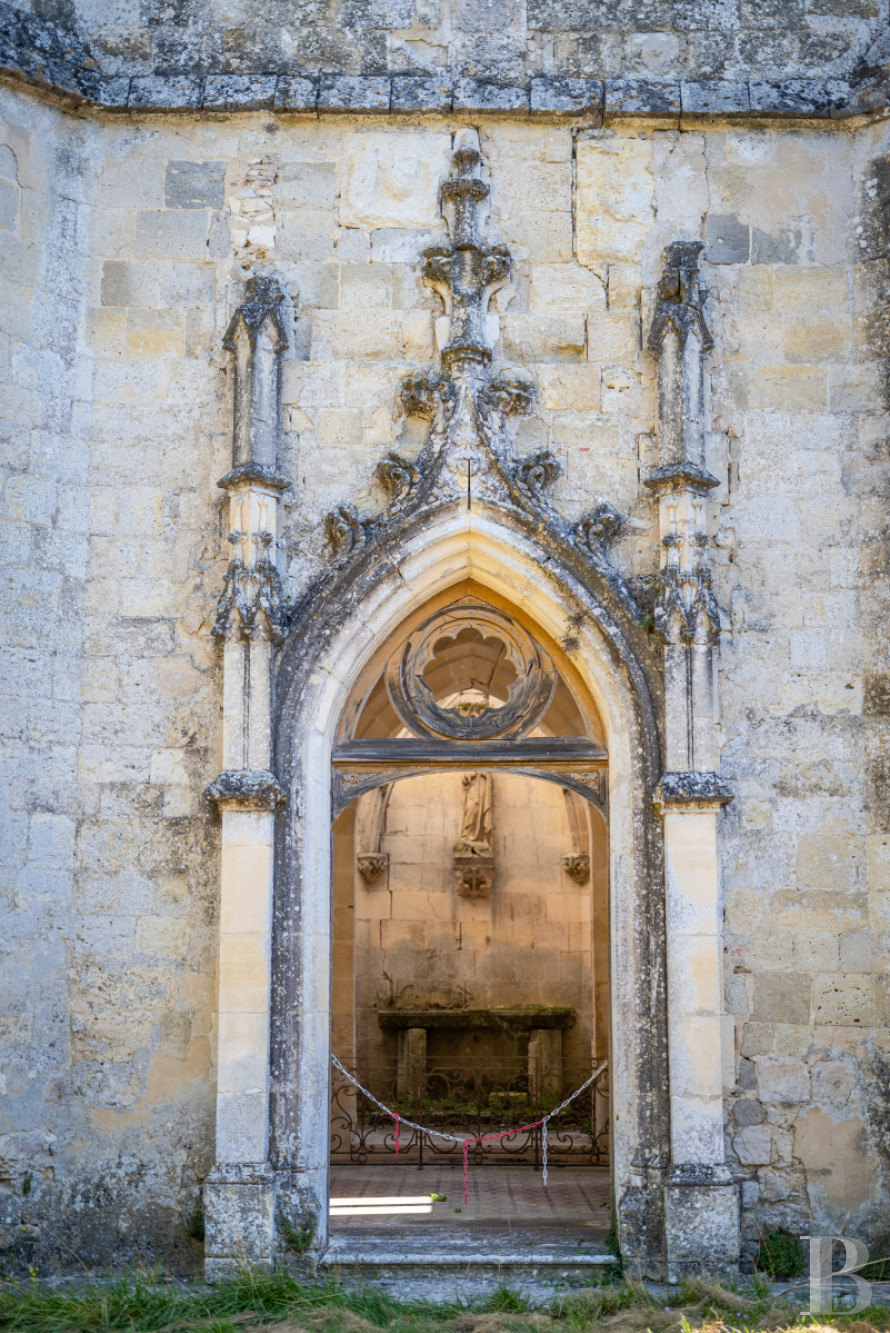
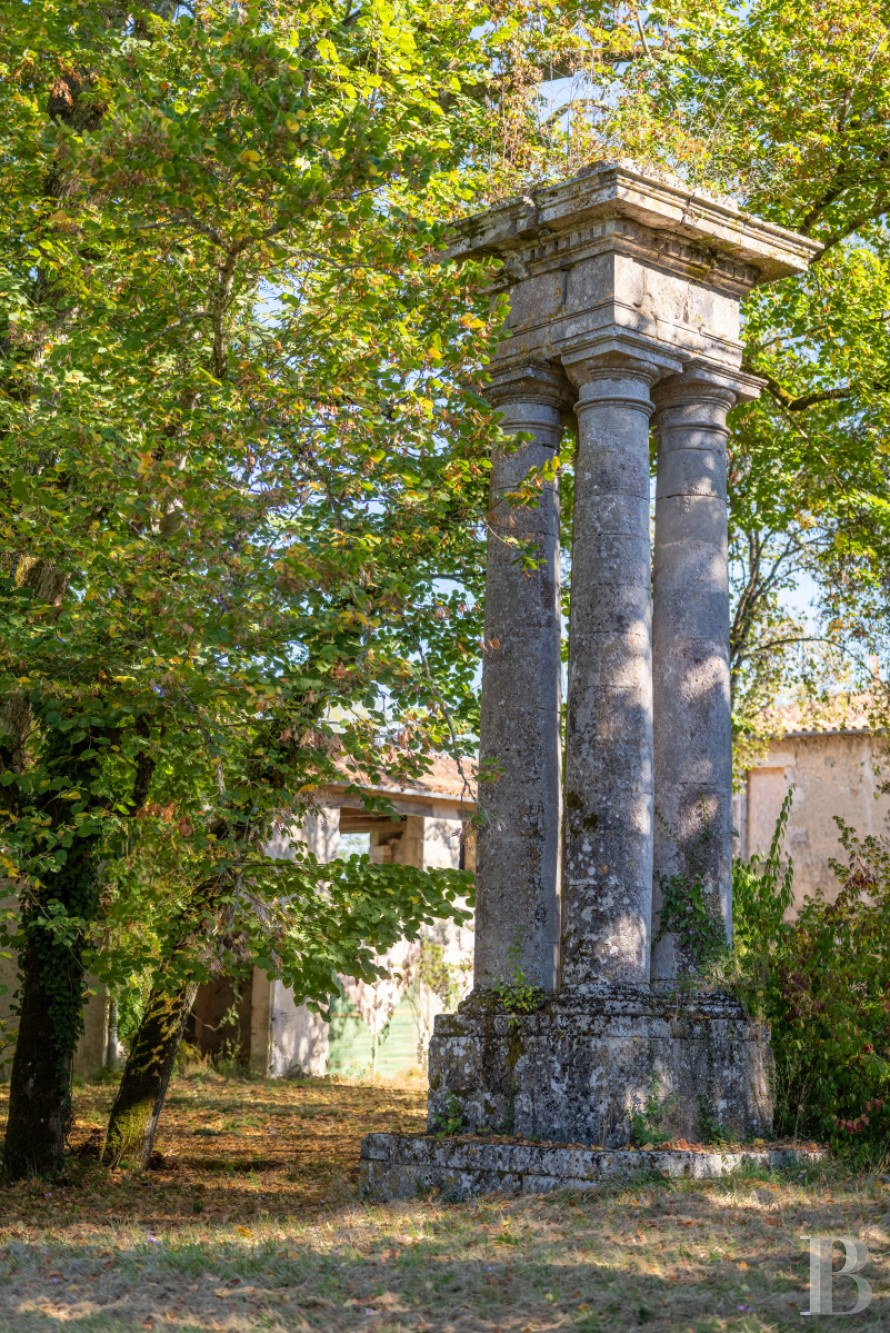
A long L-shaped building has eight double doors, which bear witness to the building’s original purpose as a stable. This former stable was converted and now serves as garages and barns. There are also the ruins of an old chateau and a tall tower that used to serve as a water tower. This tower includes a hydraulic ram pump, which is no longer in working order. Nearby, there is a parish church nave that collapsed in 1849. This church was abandoned by the chateau’s inhabitants, who converted the bell tower into a private chapel, where you can still see 17th-century painted ceilings and a sculpted salamander – an emblem of Renaissance art. Beside the chapel, a low wall demarcates a transitional area that leads to a former kitchen garden where a long greenhouse with a rounded metal frame stands. Next to it, there is a vast, grassy space demarcated by low walls and steps that lead to the walled, wooded grounds that cover over 10 hectares. These grounds, dotted with age-old oaks and cedars, are also punctuated with different constructions and sculptures, as well as a series of small remnants of medieval dwellings. Indeed, following the disappearance of two chateaux that stood opposite each other in the Middle Ages, surrounded by a village that fell into ruins, a 16th-century-style garden with fashionable Chinese influences, including a bridge and a pagoda, was created here and was later turned into an English-style garden in the 19th century. Here you can still see a former icehouse, an ornamental bridge and a construction known as the thatched house.
Our opinion
This outstanding Renaissance chateau, set in an unspoilt natural backdrop, combines architectural authenticity with delicacy. On this densely wooded estate, stonework can be admired up to great heights. The edifice’s understated elegance has its own nobility. Here, characterful traits tell a centuries-old story. The good condition of the chateau’s structure, its grounds with Romantic touches and its remarkable remnants make this haven a precious gem for any lover of built heritage. The property could be used as a private home or as an events venue for receptions and seminars. Indeed, it represents a rare opportunity with huge potential. It combines character and history in a beautiful winegrowing region in south-west France. And a buyer of this listed property could enjoy a tax break to help restore the edifice – a project that the chateau requires.
990 000 €
Fees at the Vendor’s expense
Reference 105211
| Main building floor area | 850 m² |
| Outbuildings floor area | 250 m² |
| Land registry surface area | 10 ha 94 a 56 ca |
| Total floor area | 750 m² |
Information on the risks to which this property is exposed is available on the website: www.georisques.gouv.fr
Share


NB: The above information is not only the result of our visit to the property; it is also based on information provided by the current owner. It is by no means comprehensive or strictly accurate especially where surface areas and construction dates are concerned. We cannot, therefore, be held liable for any misrepresentation.