



A 19th-century manor with over six hectares of grounds and a
horse-riding centre as an optional extra, in France’s Périgord region
horse-riding centre as an optional extra, in France’s Périgord region
Bergerac,
DORDOGNE
aquitaine
24100
FR


Location
In the west of France’s Périgord region, in the heart of the historical Aquitaine province, the beautiful valley of the River Isle separates the forests of the Double and Landais natural areas. This lush landscape with great natural wealth is vast and varied. It is made up of forests, meadows, farmland, vineyards, lakes and streams. The spectacular local region is dotted with several emblematic sites and villages that illustrate its rich past and long story, which reaches back a thousand years. These places include Saint-Émilion, Castillon-la-Bataille, Saint-Aulaye, Aubeterre-sur-Dronne, the Château de Montaigne, Échourgnac Abbey and Vauclaire Charterhouse. Local history is also marked by a tradition of glassmaking. To the east, the A89 motorway takes you to the city of Périgueux in around 30 minutes and to the city of Bordeaux, with its high-speed train station and international airport, in around 1 hour and 30 minutes. You can also reach the city of Bergerac with its airport in less than 40 minutes.
Description
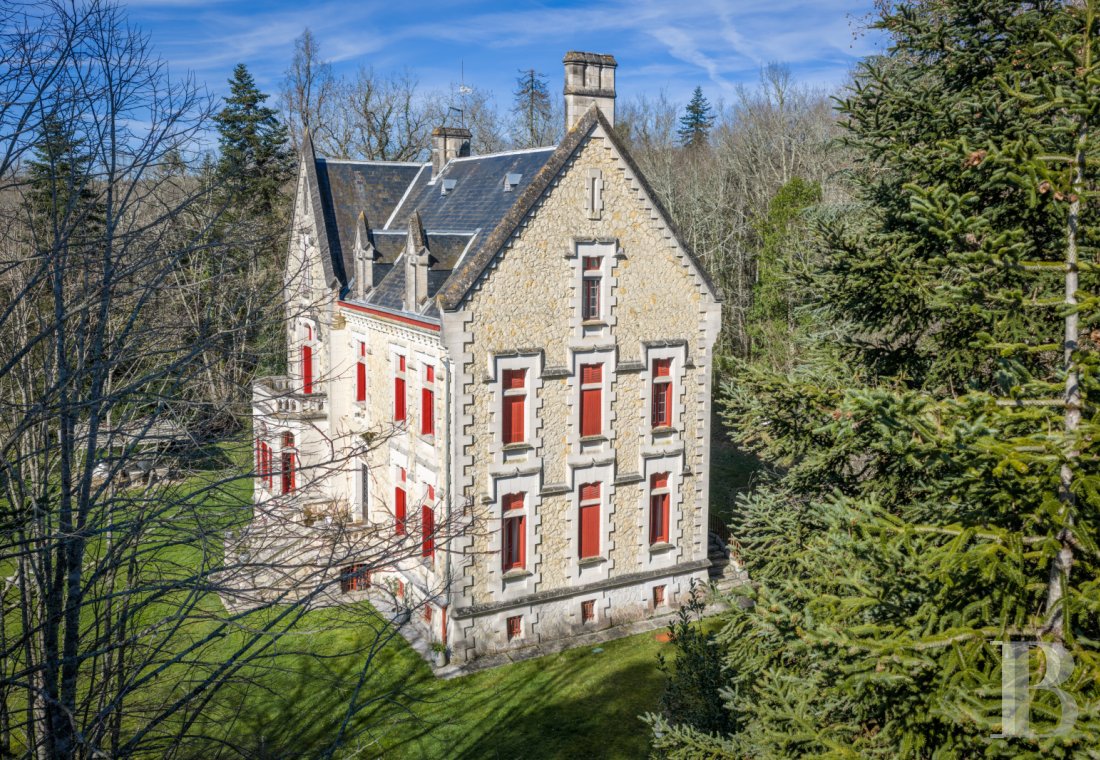
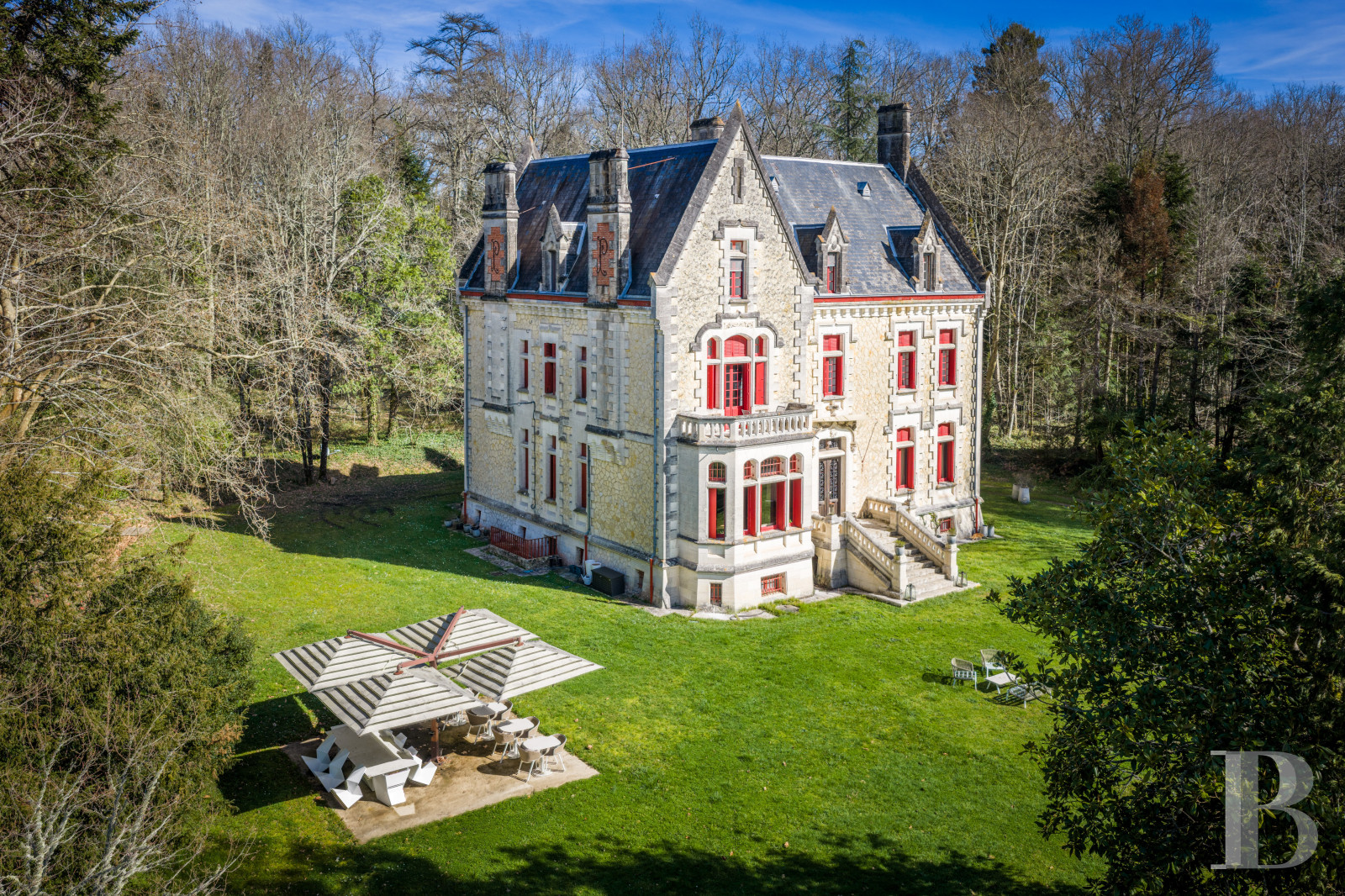
The manor towers on a wooded plateau that opens up slightly towards the south. The edifice stretches up to the treetops that surround it. It stands in a commanding position in a meadow that slopes gently down to the property’s entrance. From there, a driveway snakes up from a road on which heavy goods vehicles are forbidden. In a second clearing there is a swimming pool set in a terrace made of exotic wood. Vehicles can be parked in the shade of trees. On these grassy, well-maintained grounds where roe deer find refuge, there is neither asphalt nor gravel. At the edge of the estate, there is a paddock. Via a path beneath trees and a few stone steps, you can reach an adjoining property, available for sale as an optional extra. It includes a noble country house, a studio apartment, large outbuildings, a garden, a well filled with water all year round, a stable and a horse-riding area.
The manor
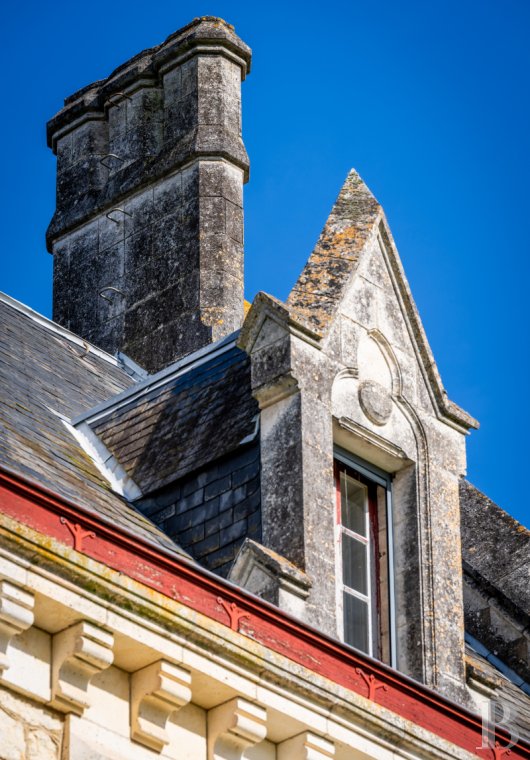
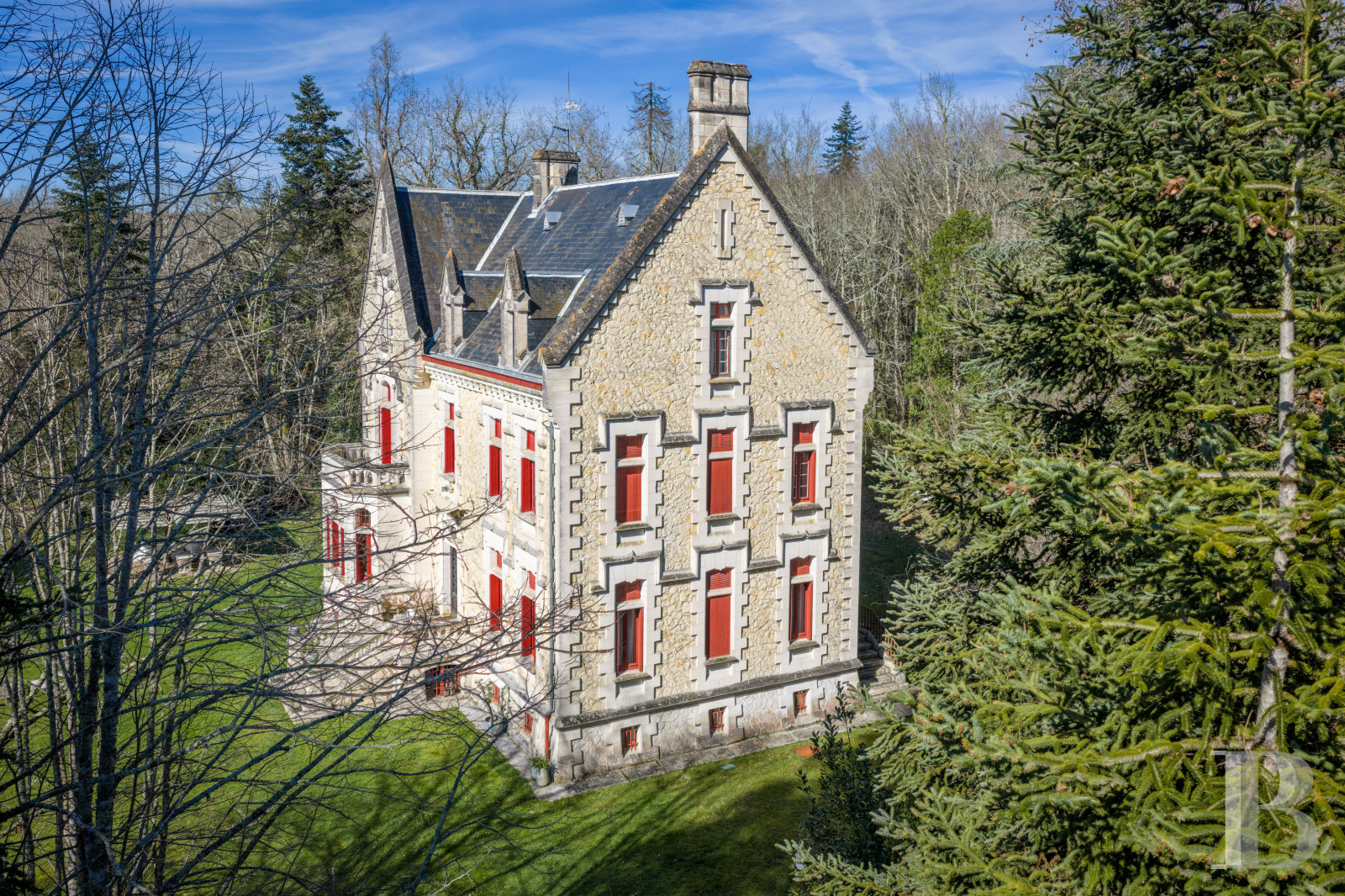
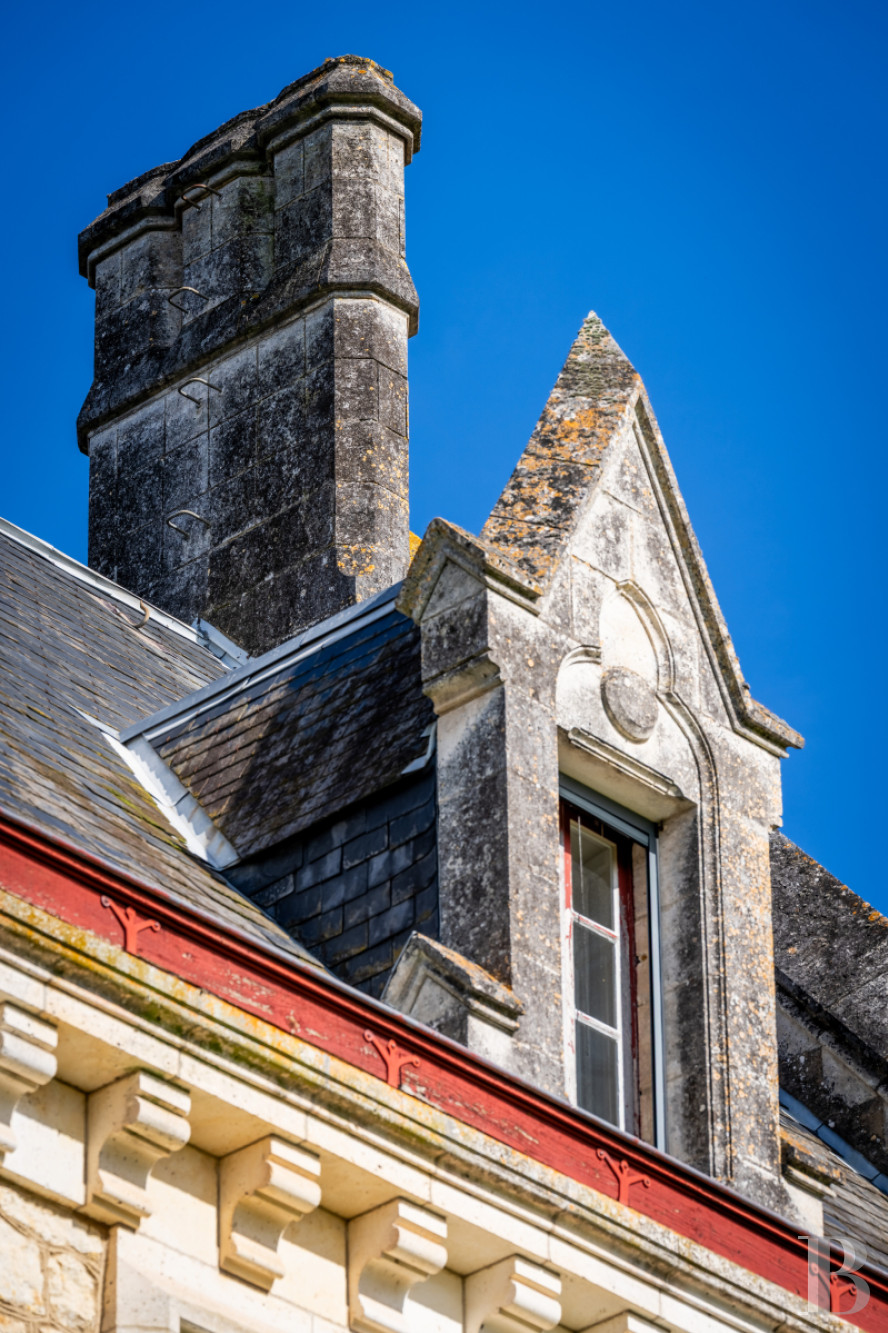
The manor was built in 1891 in a Renaissance Revival Tudor style. It stands upon a semibasement. It is made up of two rectangular sections that join each other at a right angle. The gabled slate roofs of these two sections are punctuated with dormers with sculpted triangular pediments that mirror the manor’s gable ends with their stone ridge tiles. The chimney stacks, which face the former driveway, bear monumental metal initials: those of the original owner. Three straight flights of steps, followed by a terrace, lead to the house. Another flight of steps leads down to the semibasement. The doors and windows are set in surrounds of dressed stone. There are stone-mullioned windows. The main door stands beneath a Renaissance-inspired ogee-arch lintel. The south-facing gable end features a bay window with two stone mullions. A terrace lies upon this bay window.
The first level
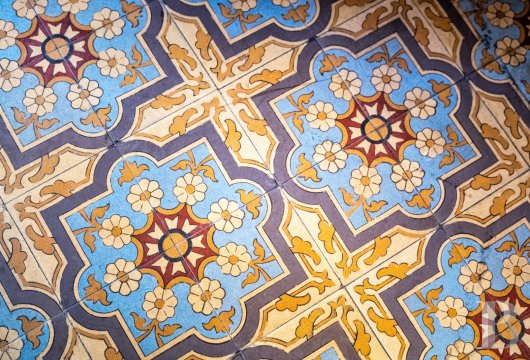
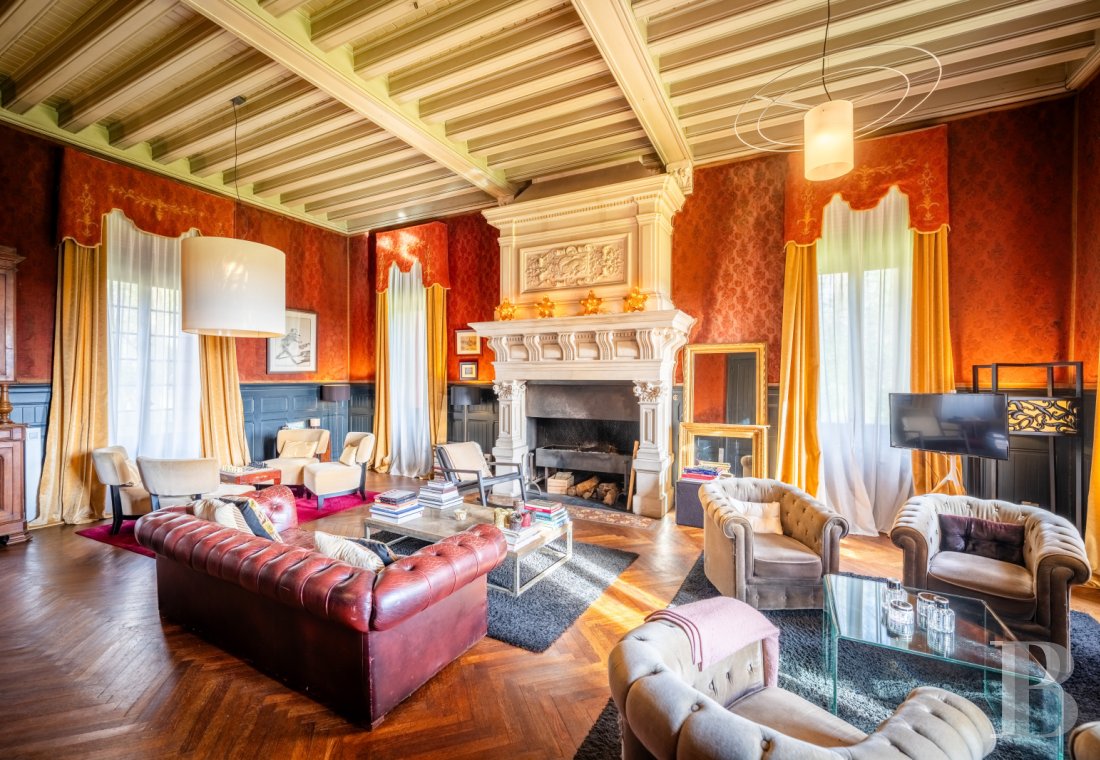
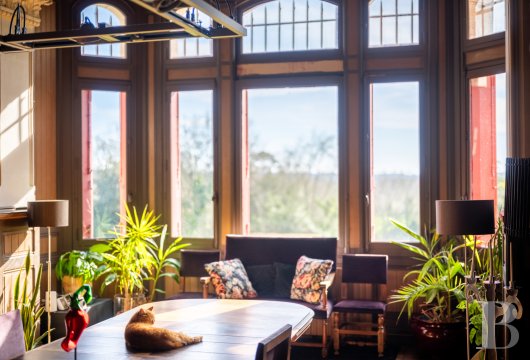
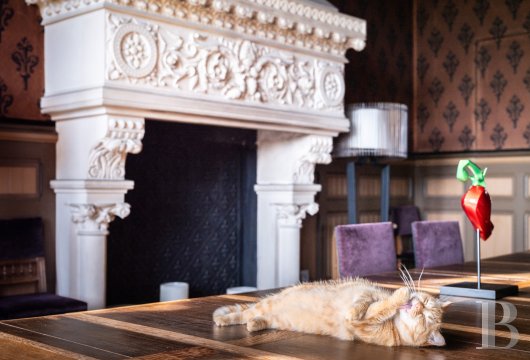
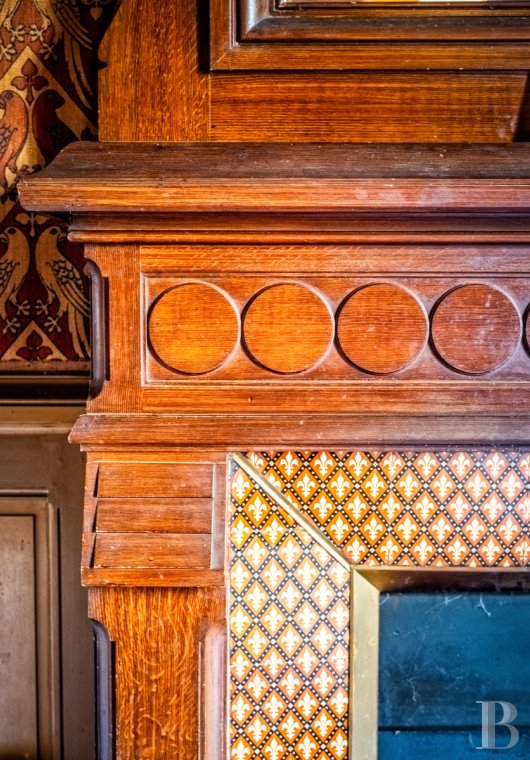
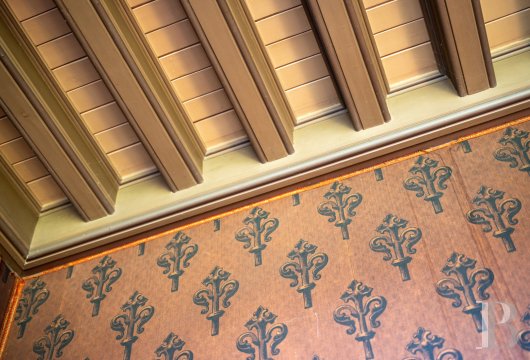
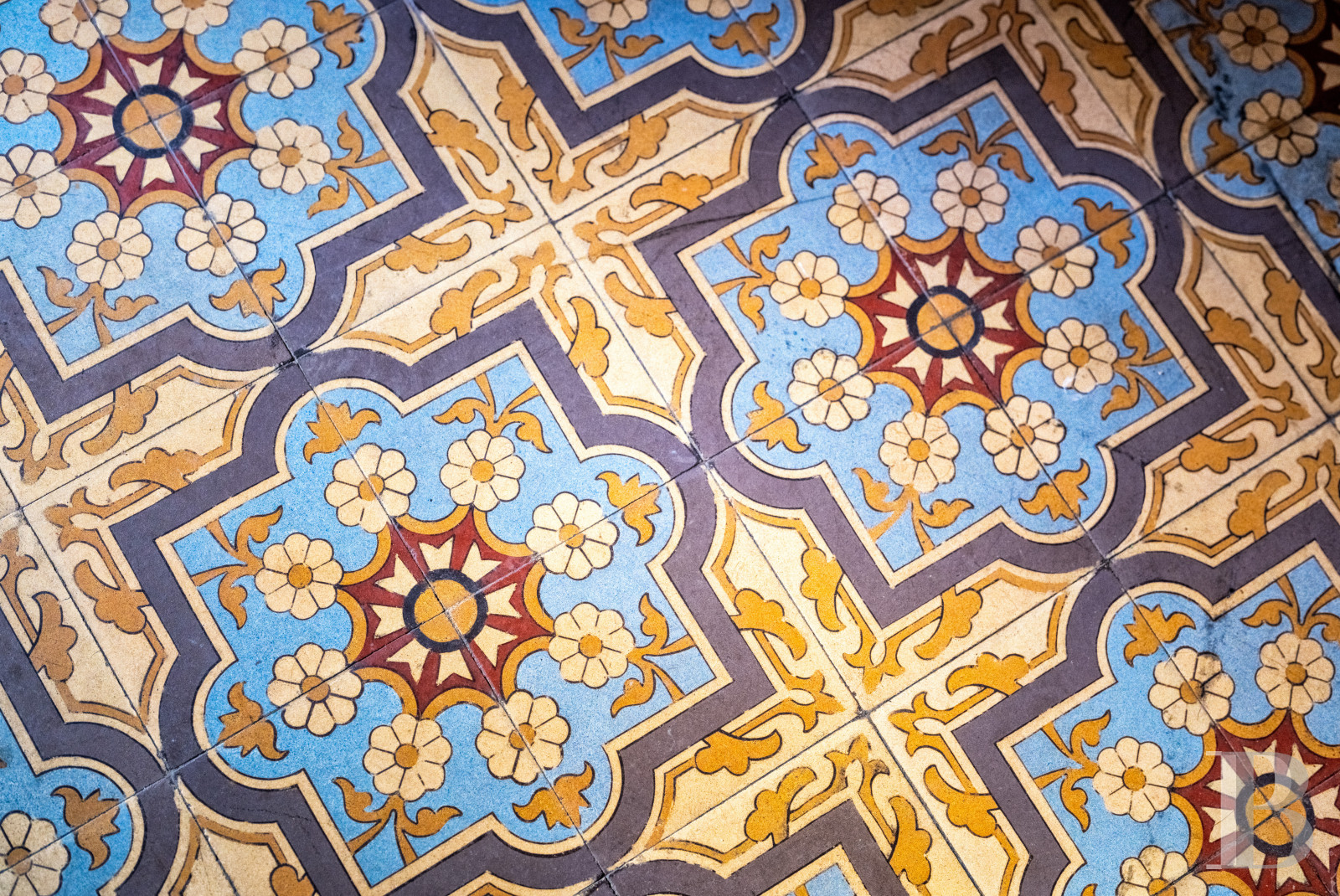
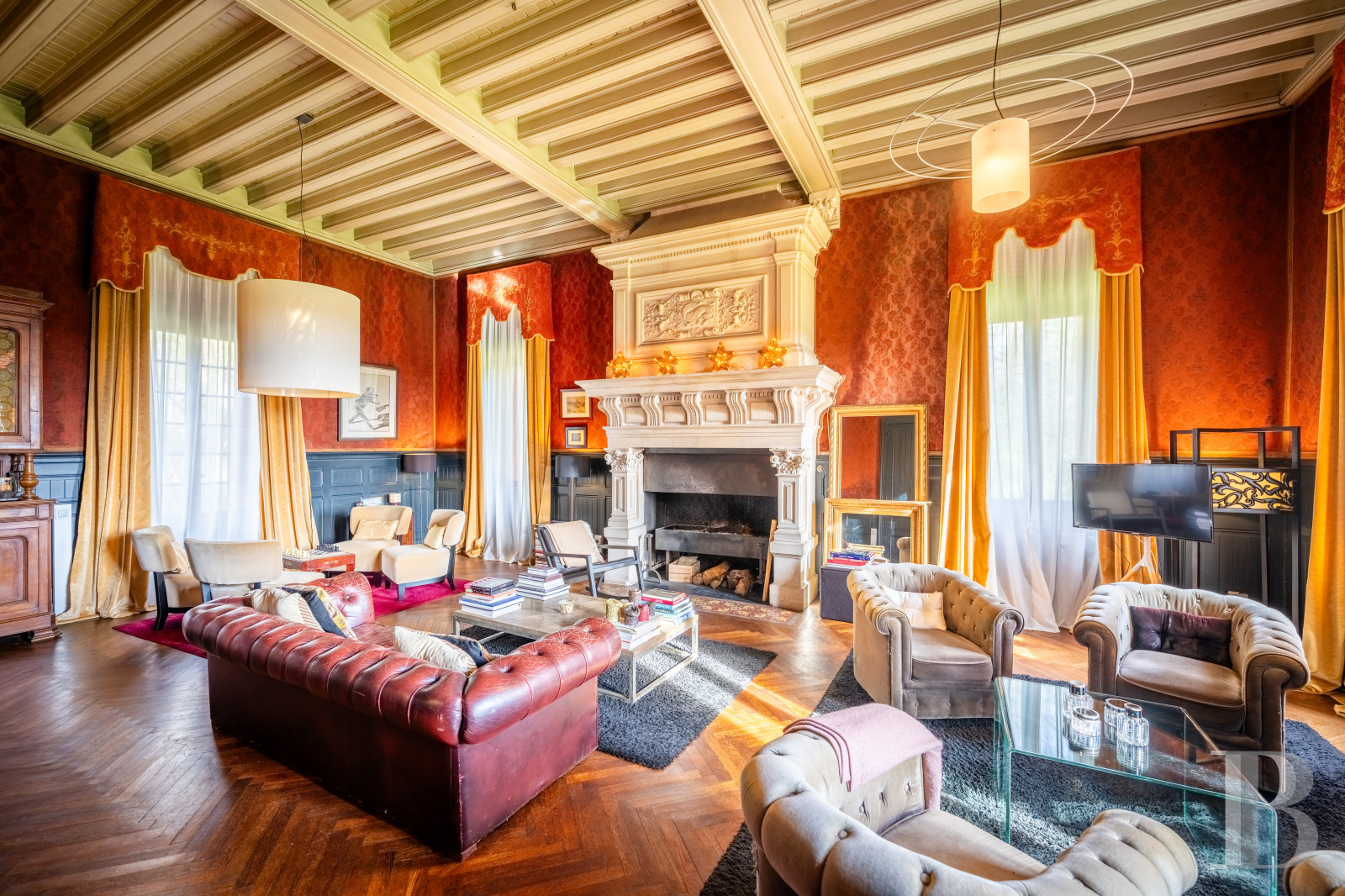
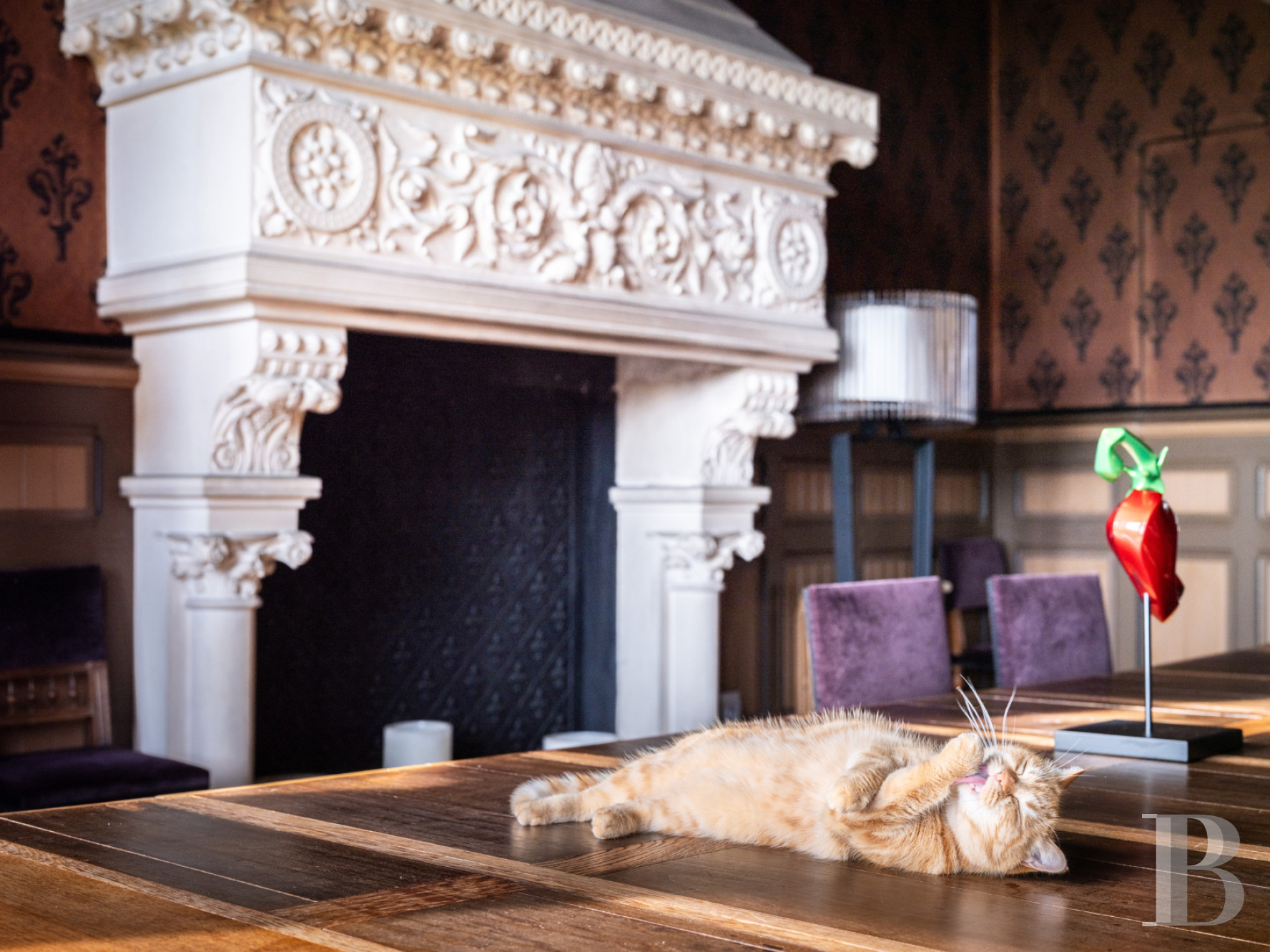
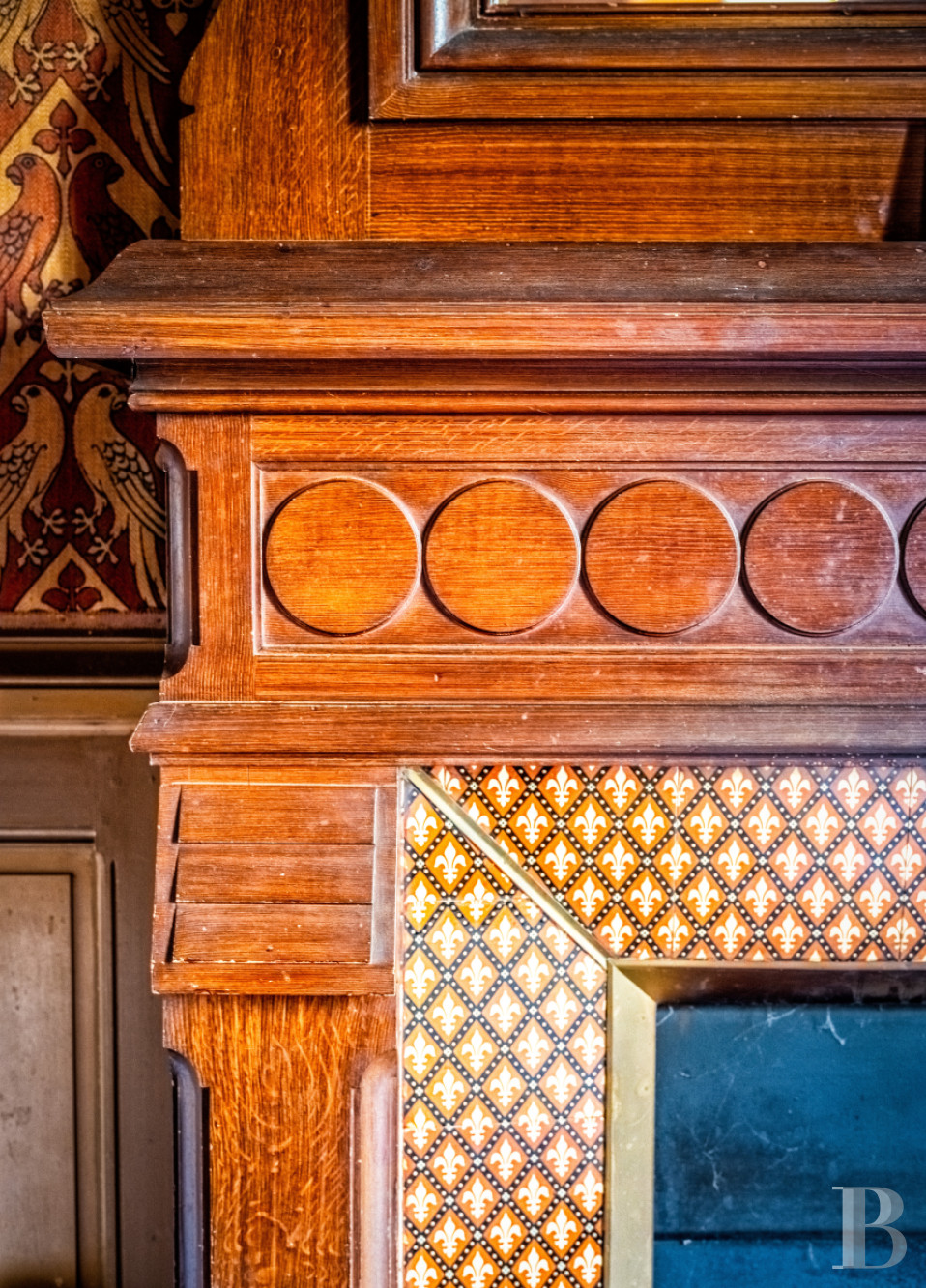
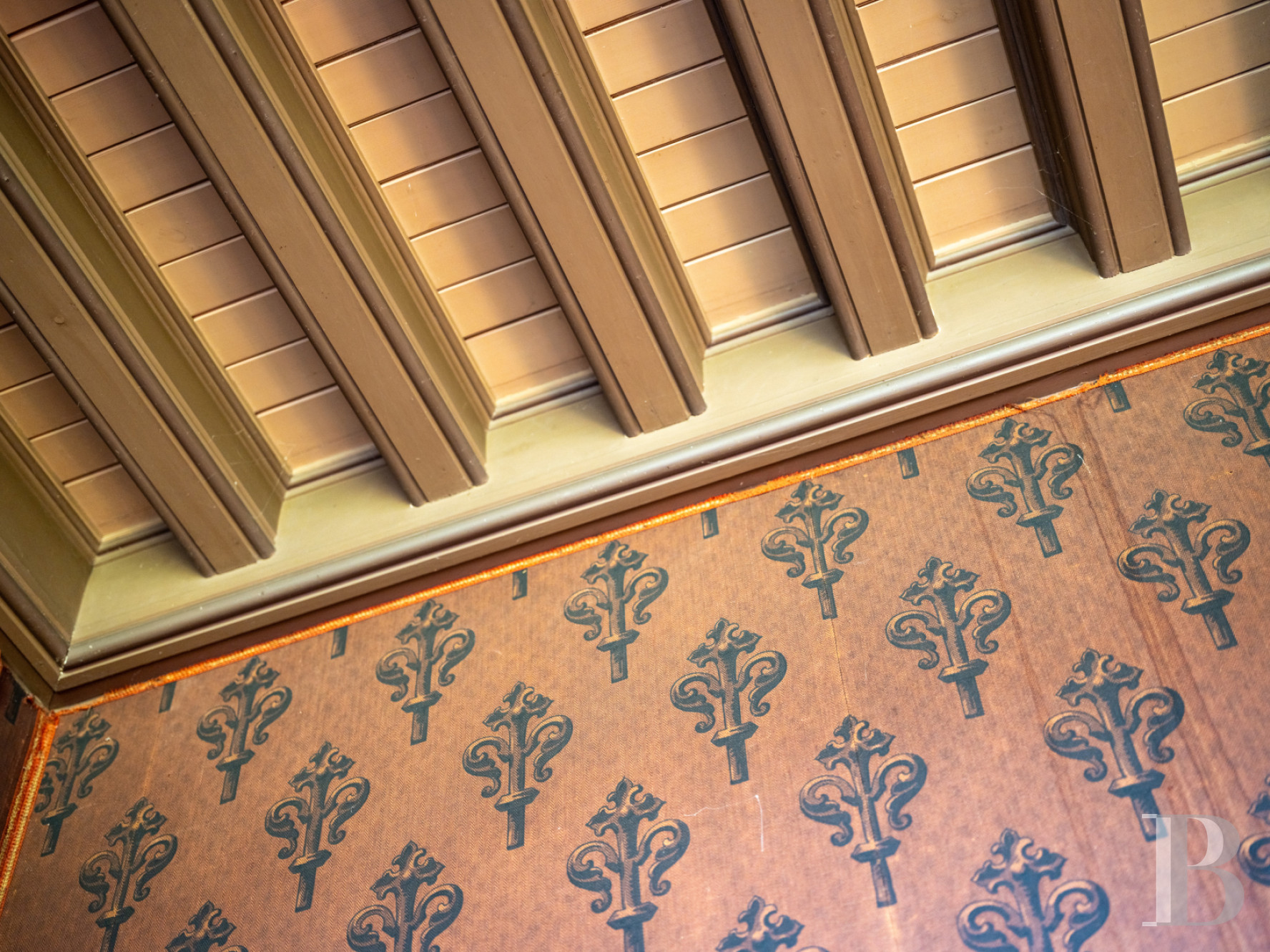
The dual-aspect entrance hall is spacious. It connects to the different reception rooms. There is a dining room with a French-style beamed ceiling and chevron parquet. A bay window bathes the room in natural light. A hidden door that is flush with wall surface leads to a flight of backstairs. There is a billiard room with floral-patterned cement tiles, a wooden fireplace adorned with ceramic tiles painted with fleurs-de-lys motifs, walls decorated with historical fabric wallpaper depicting parrots, and a remarkable coffered ceiling. French windows lead out onto a northern terrace. Five windows fill the lounge with natural light. The lounge’s majestic fireplace, made of Saint-Astier stone, mirrors that in the dining room through its antique-inspired style. One fireplace represents flames and a dragon. The other one symbolises abundance through an ear of wheat.
The second level
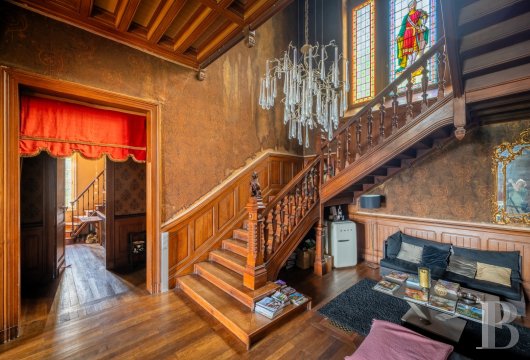
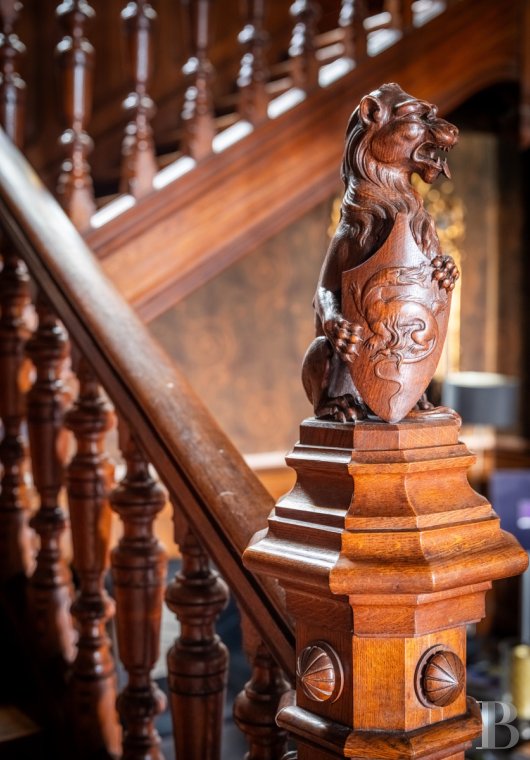
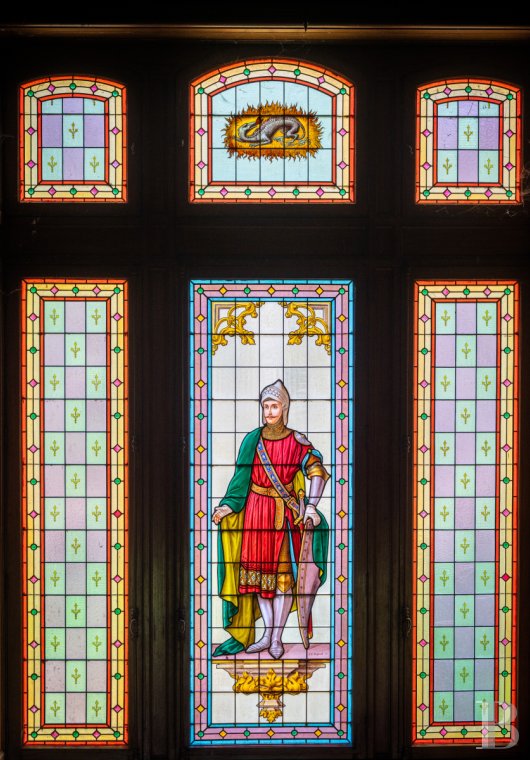
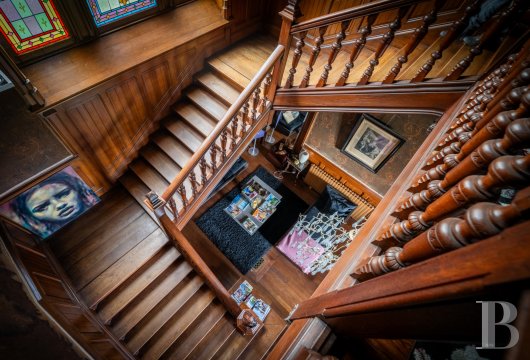
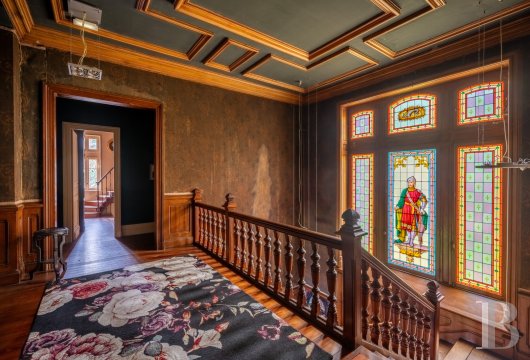
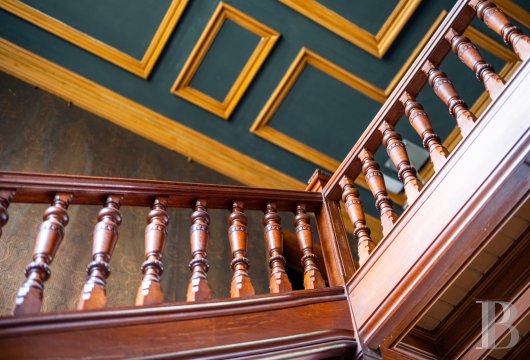
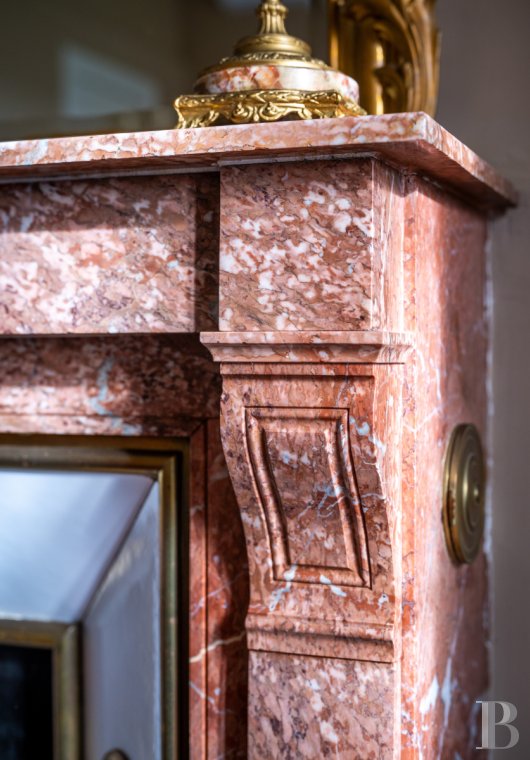
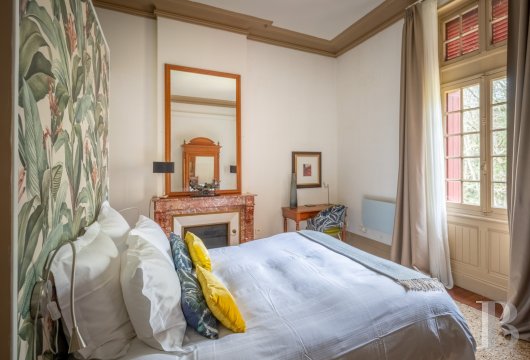
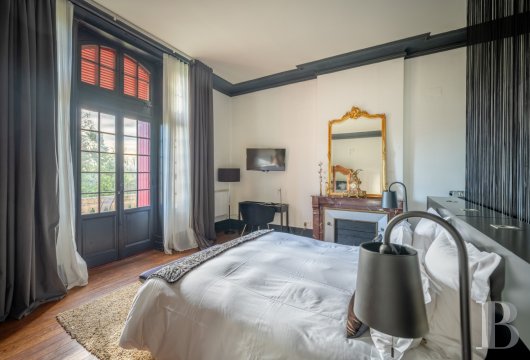
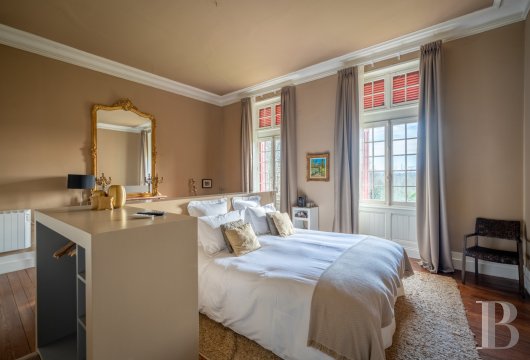
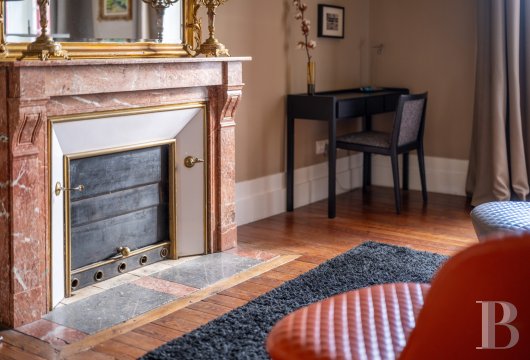
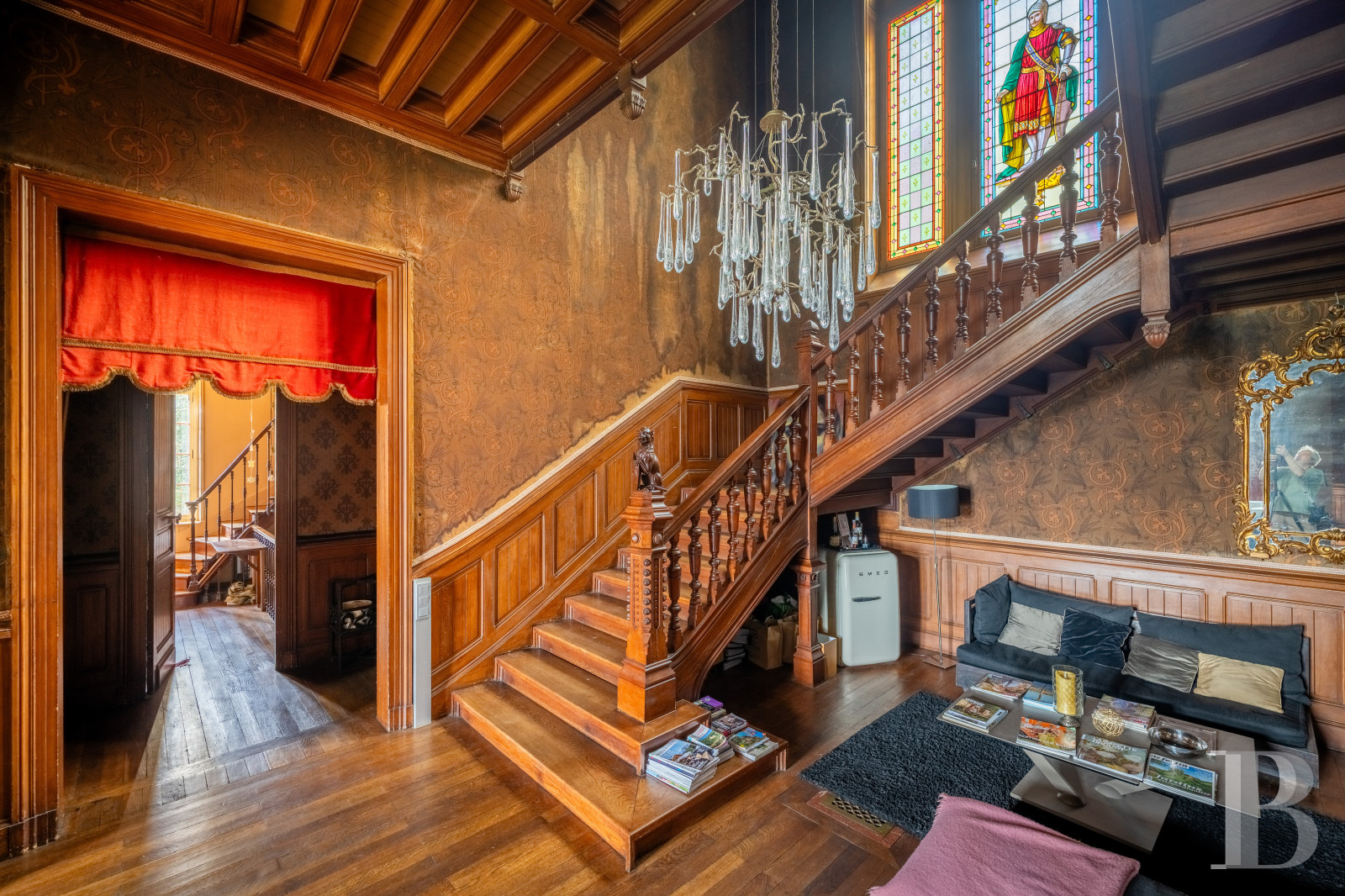
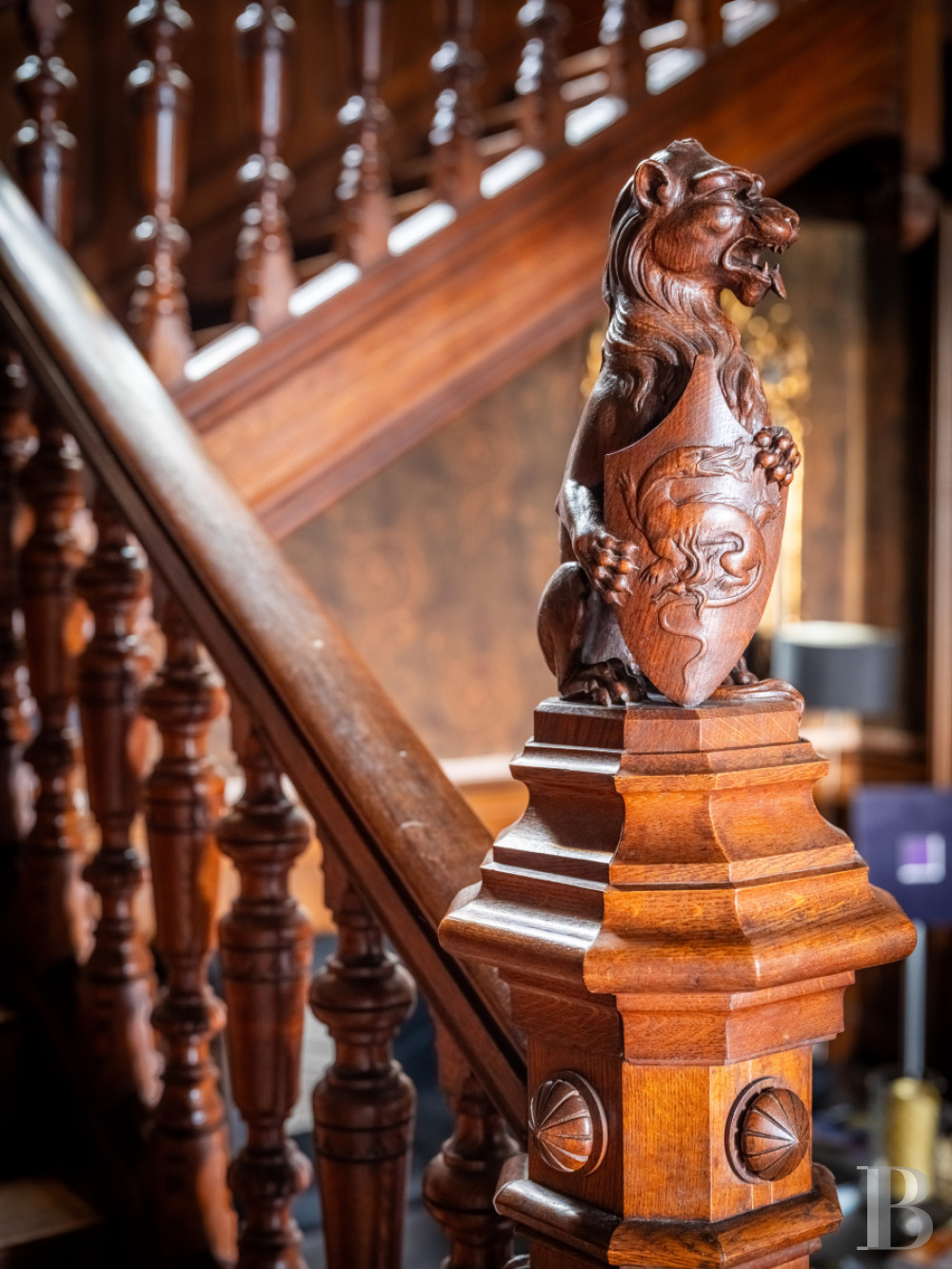
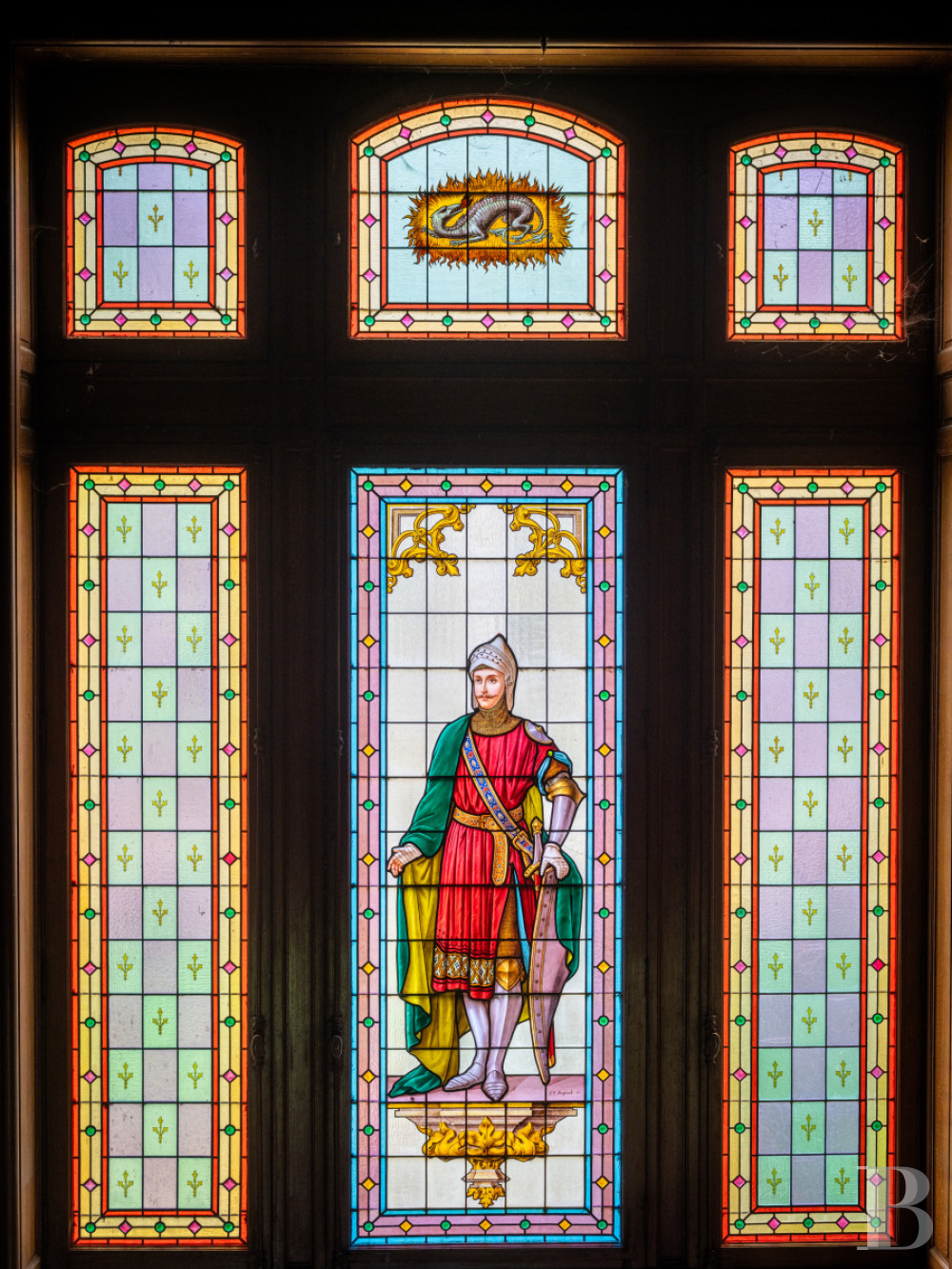
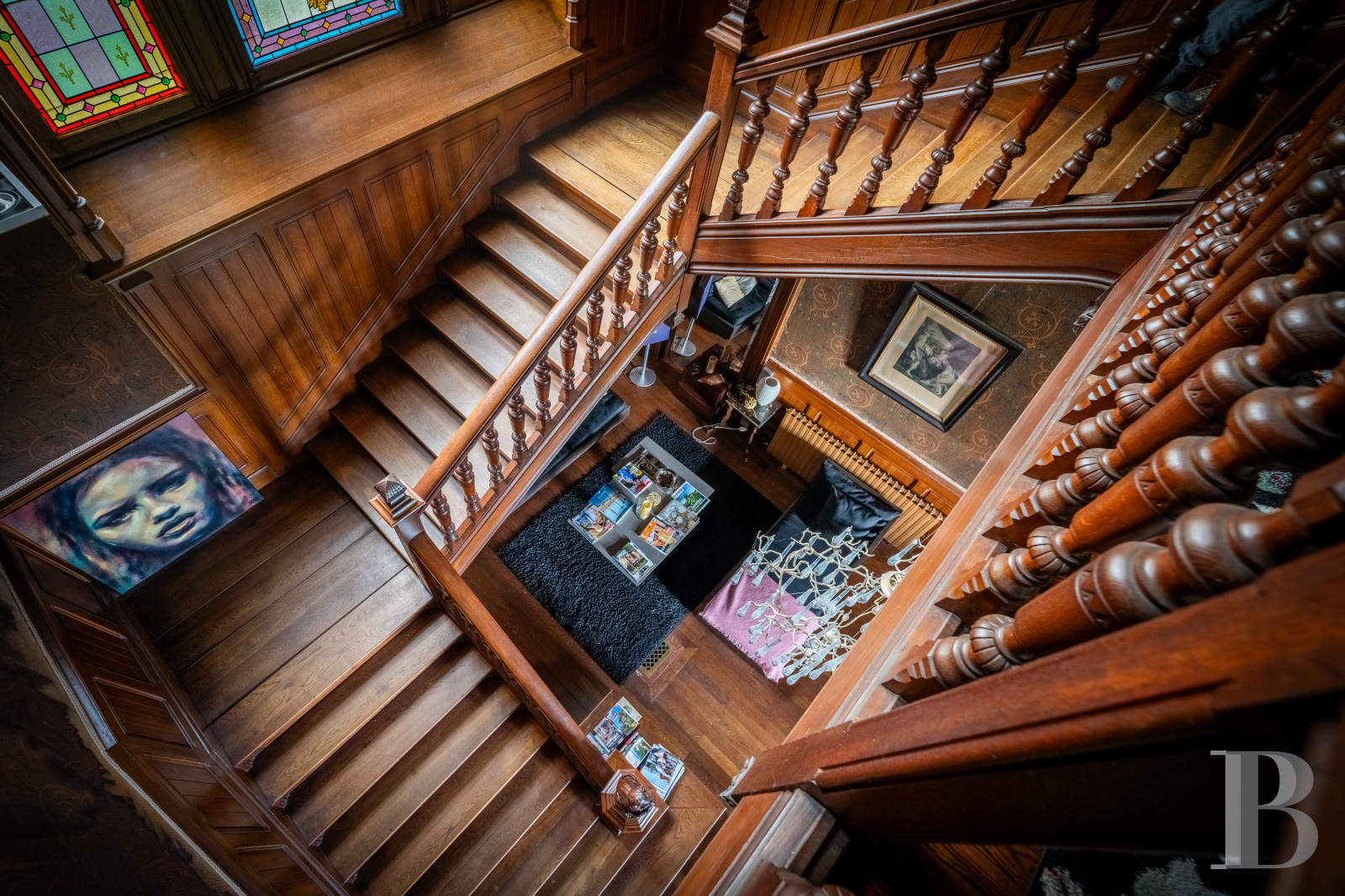
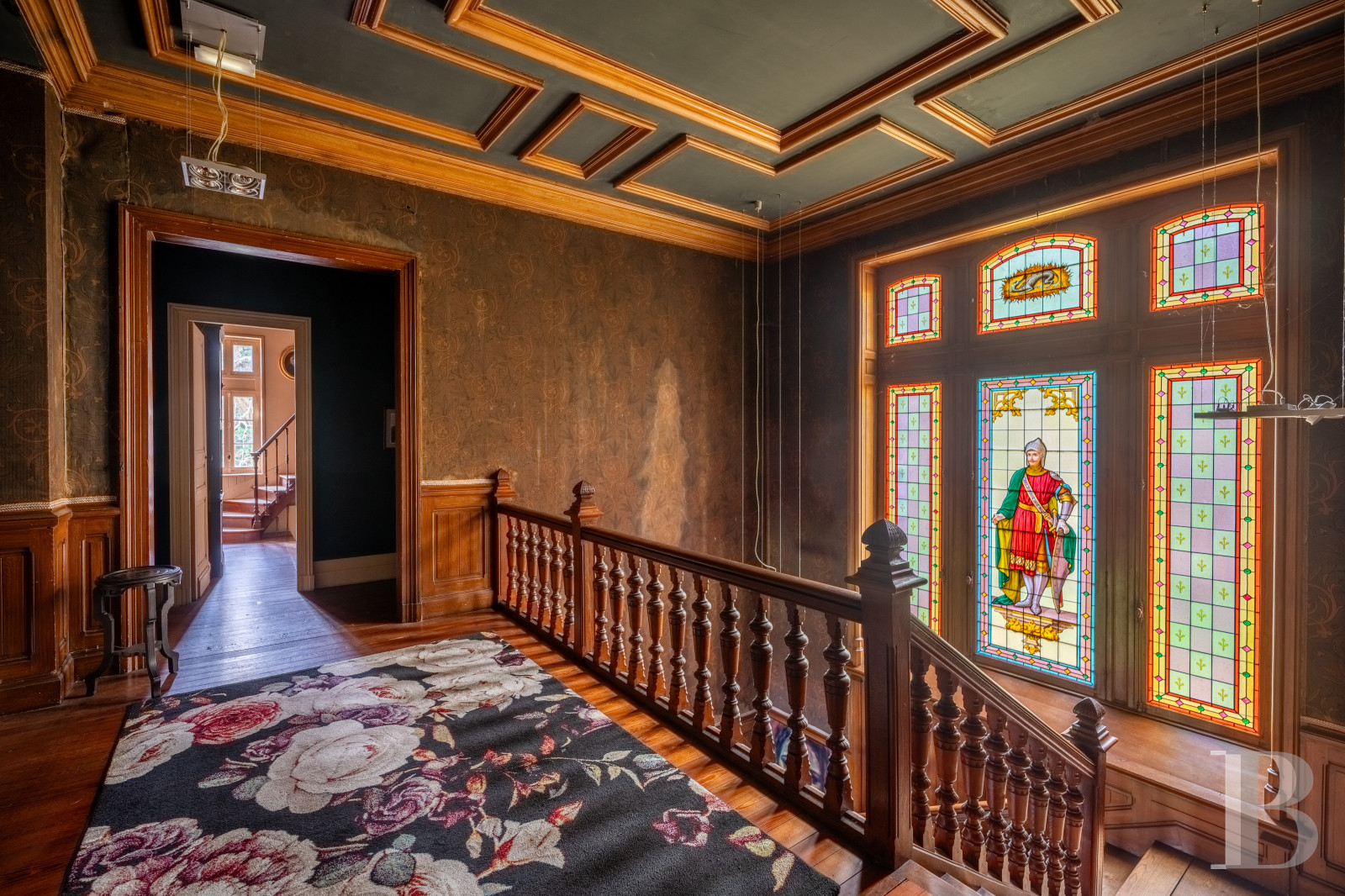
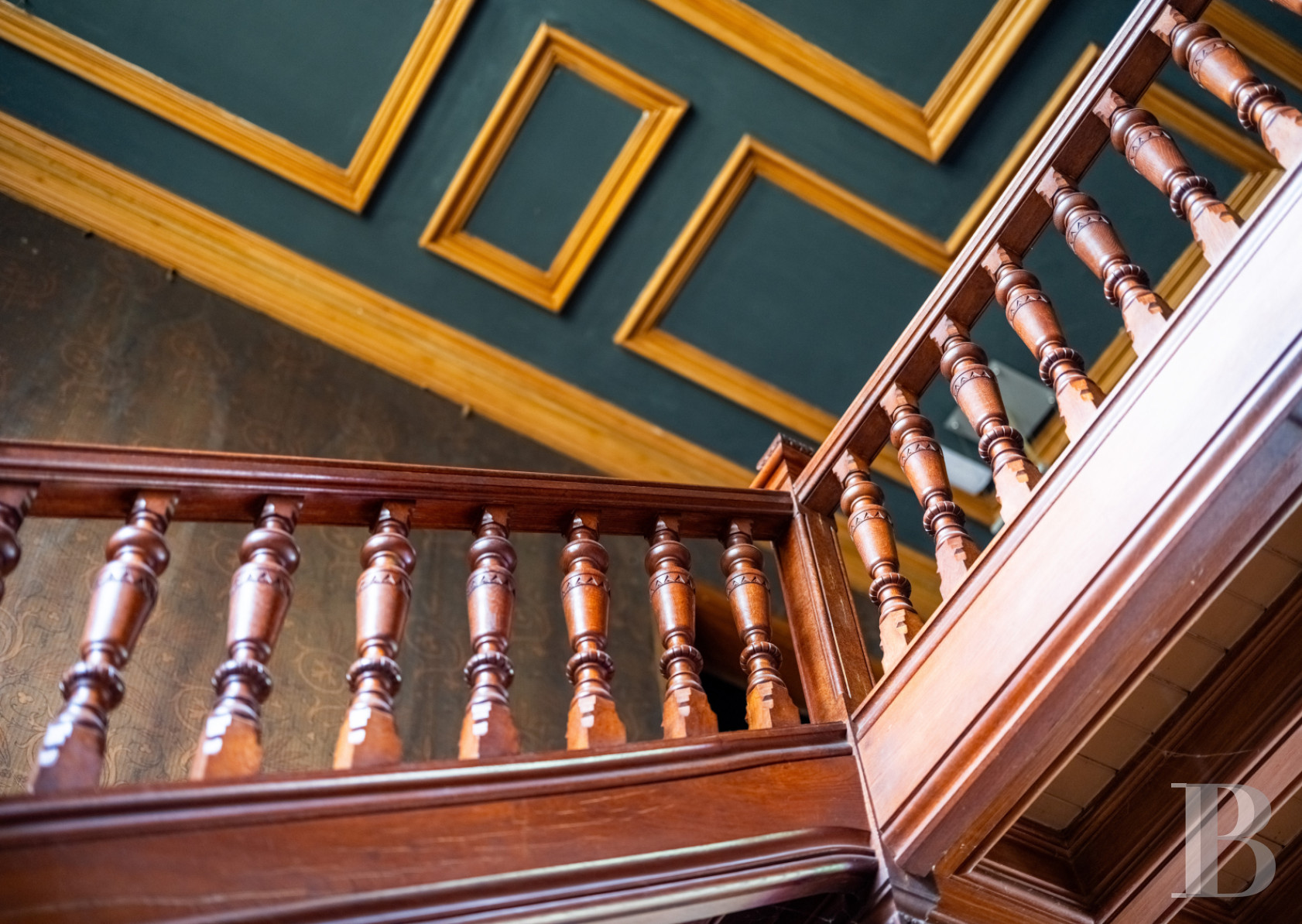
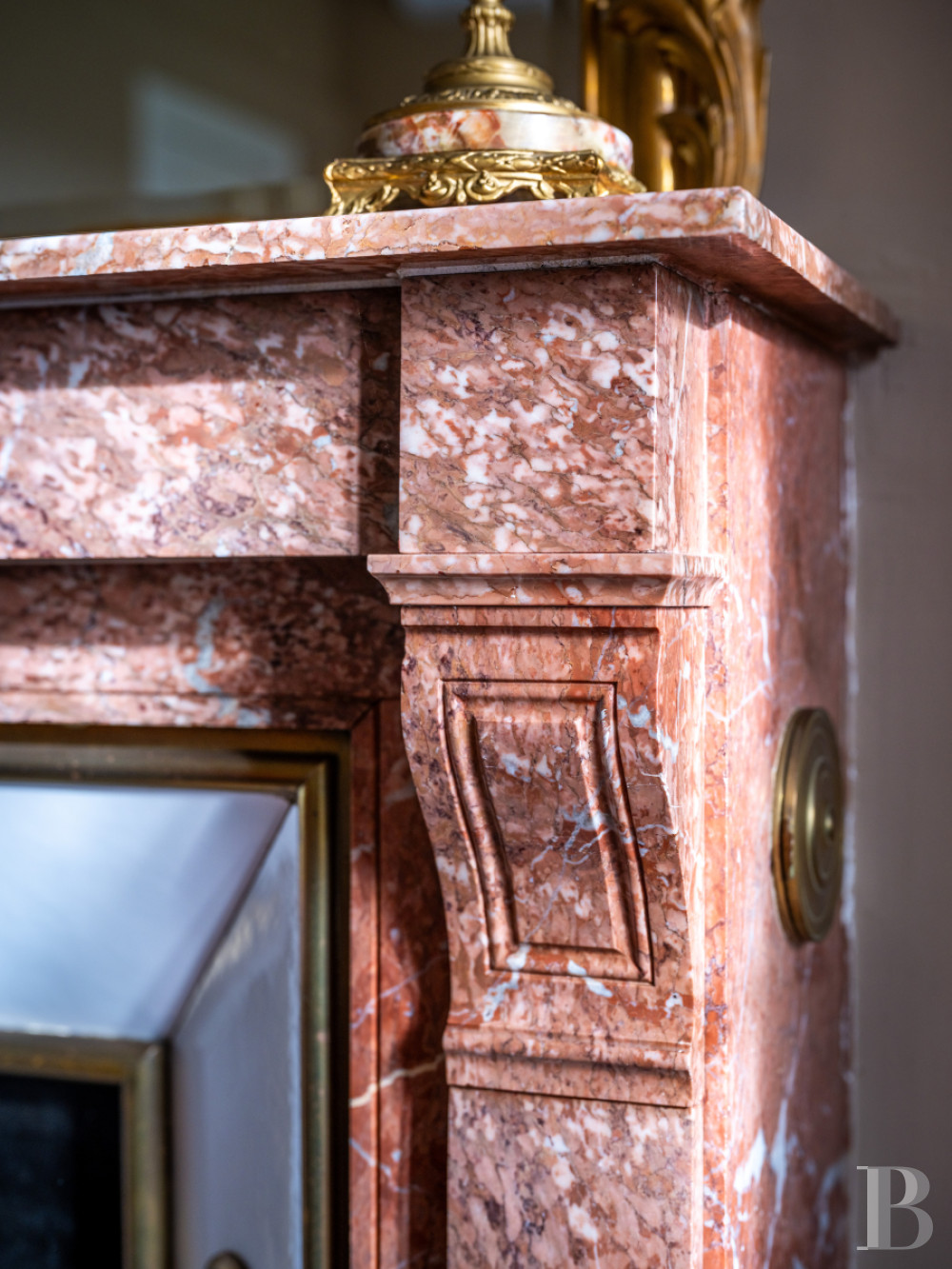
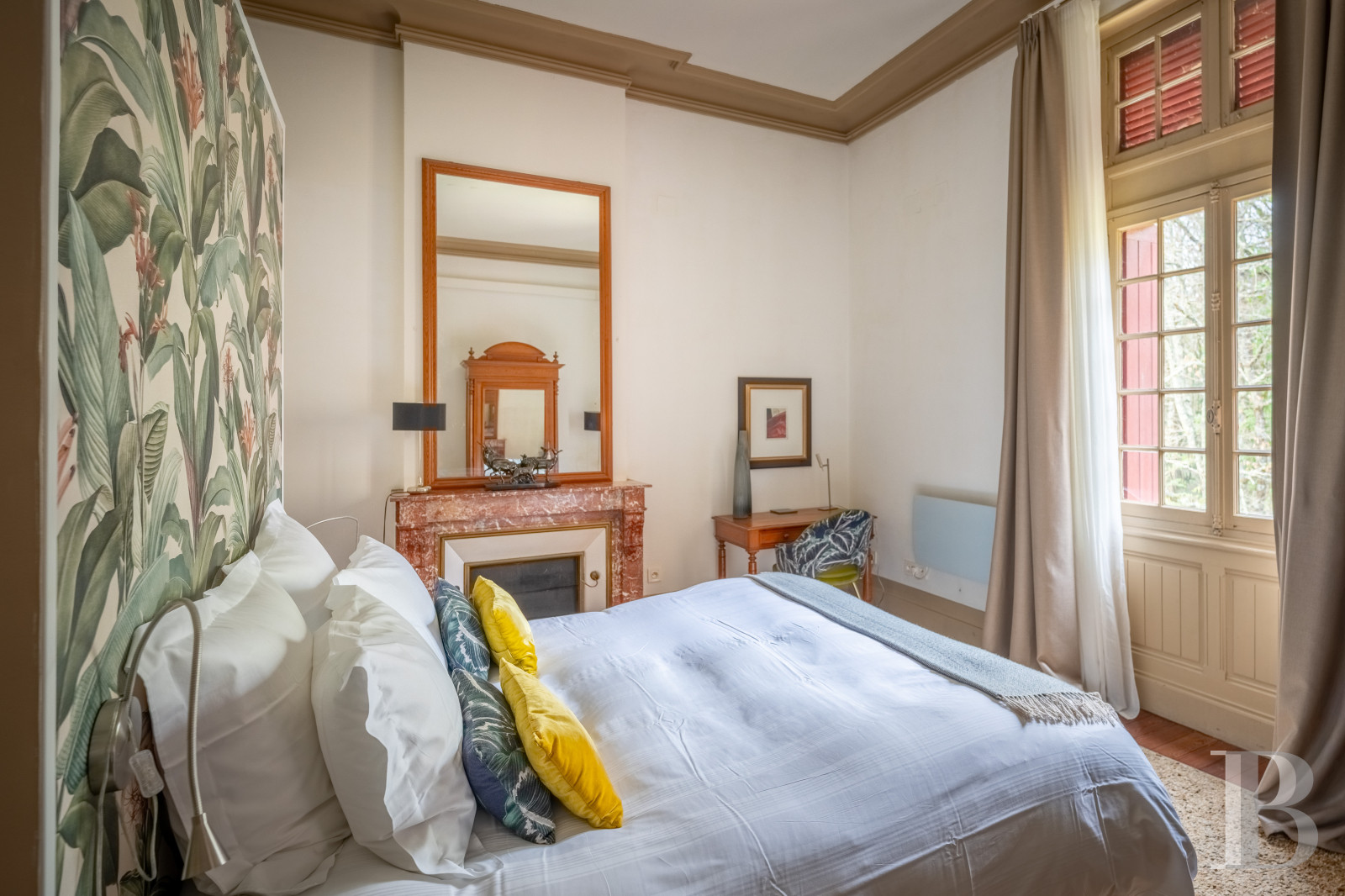
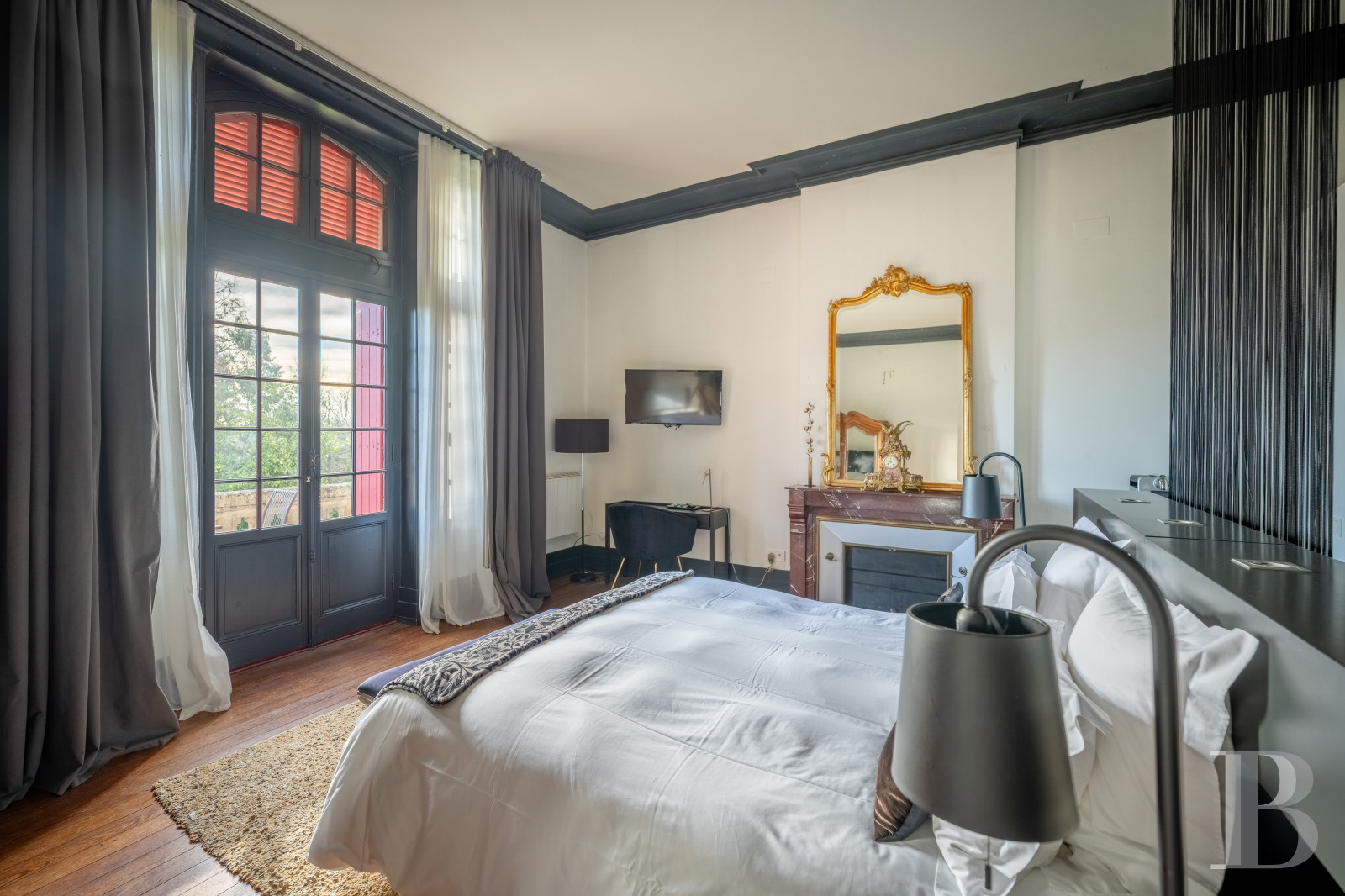
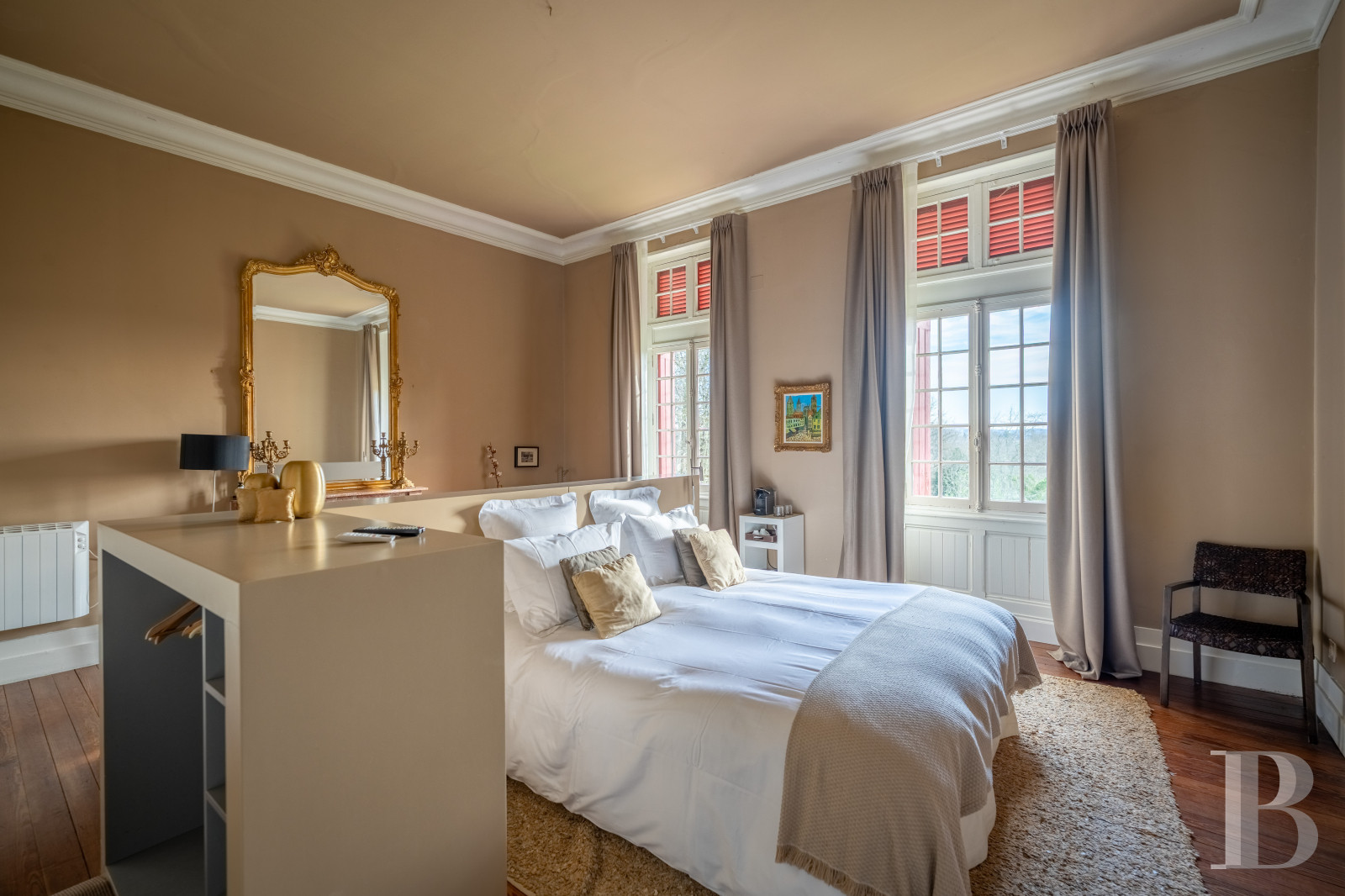
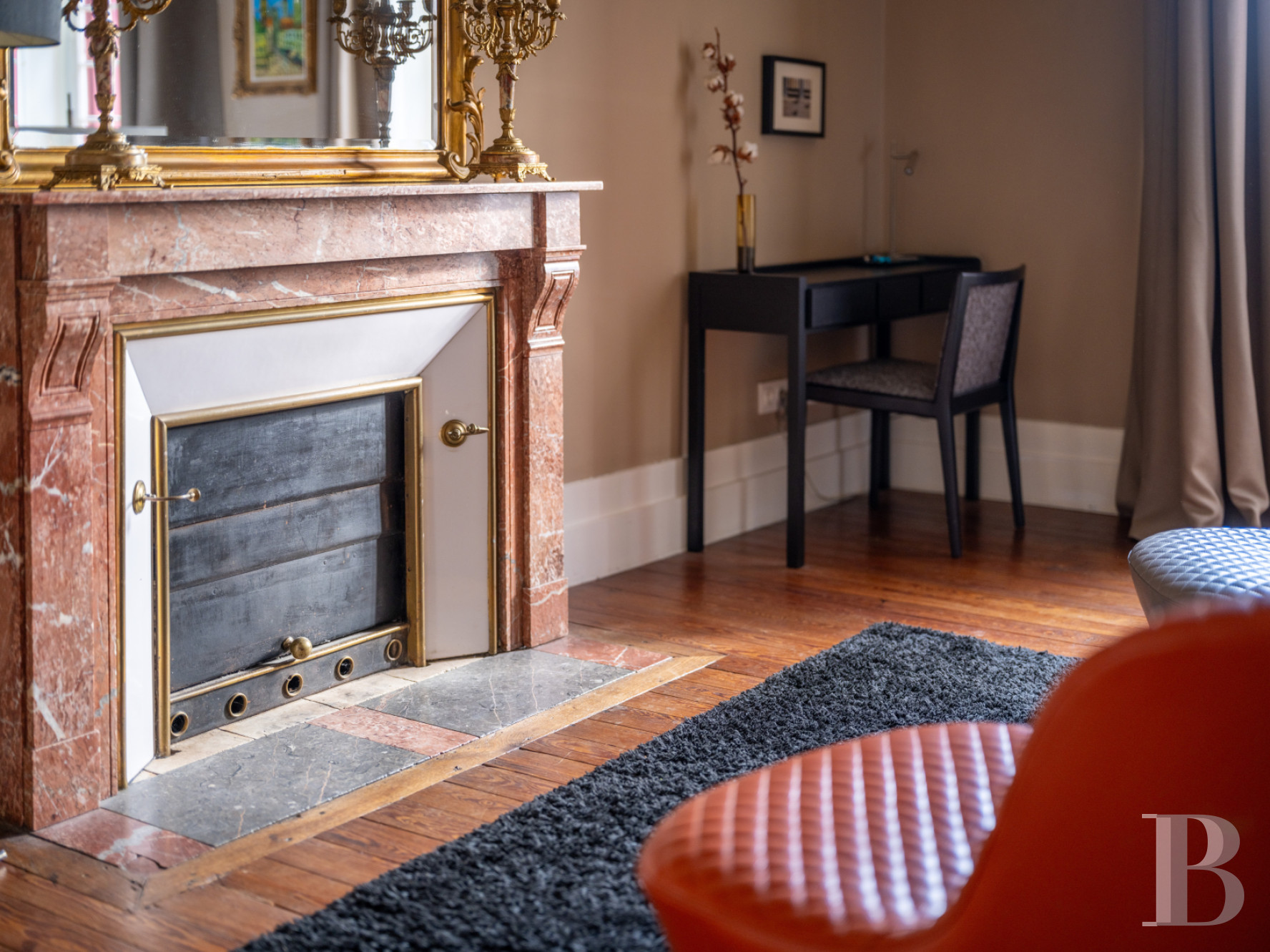
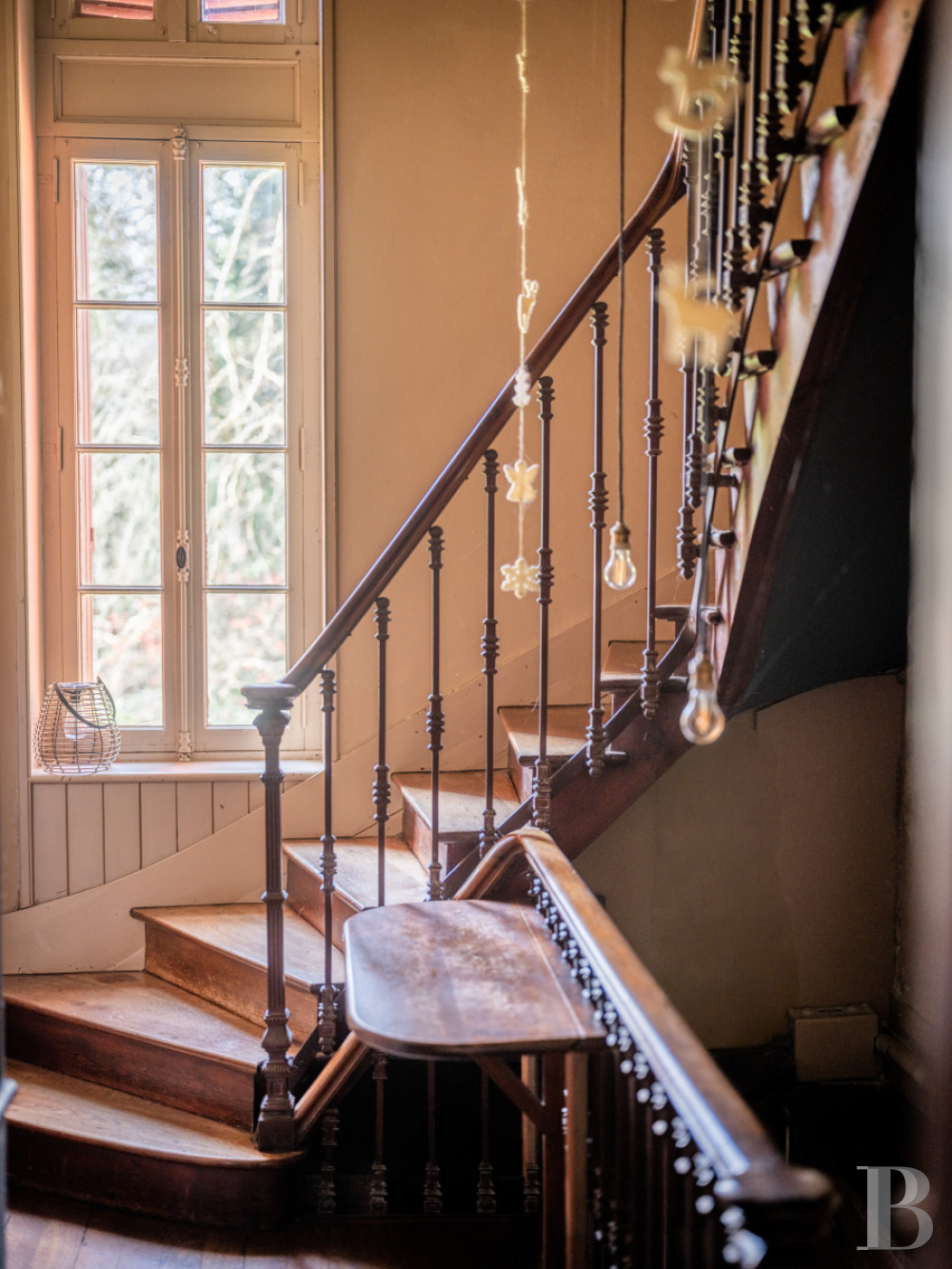
The main staircase is brightened up on the north side with an original imposing stained-glass window that dates back to 1892. In this window, the house’s original owner is depicted as a knight. The balustrade of solid wood features turned-wood balusters and, upon the starting post, a sculpted lion and dragon. This dragon is represented in six other places: on the fireplaces, the door lintels, the roof’s lightning conductor and the stained-glass window. Around the stairs, there is fabric wallpaper that was impaired by considerable water damage half a century ago. Despite this water damage, a decision to give priority to authenticity was made during the renovation, so the wallpaper has remained in its damaged state. A spacious landing connects to a flight of backstairs, a separate lavatory and four suites with bedrooms, shower rooms and a terrace upon the ground-floor bay window. Historical pinewood strip flooring extends across the rooms. Red marble fireplaces contrast with ceiling cornices and small-paned windows with Cremona bolts and fanlights. These bedrooms have been entirely renovated for guests’ comfort, with the addition of large beds, reversible air conditioning and spotlights.
The third level
The flight of backstairs leads up to the top floor, which has sloping attic ceilings. Up here there are five bedrooms with touches of comfort identical to those on the floor below it. One of the bedrooms stands out for its floor area, which exceeds 50m². It is a dual-aspect room.
The basement
A flight of backstairs leads down to the semibasement, which includes a former kitchen dating back to the chateau’s origins. It has a floor of red and white cement tiles. You can still see a monumental stone fireplace and a historical service lift down here. Today, this space is a semi-professional kitchen. A pantry and a scullery for cold food adjoin this kitchen. The rest of this lower level is made up of a workshop with a stone fireplace, a storeroom, a wine cellar, a lavatory and a technical installations room with a hot water tank and a door to a former underground passage. All the ceilings are insulated.
The grounds
The grounds are well maintained. They have been barely transformed in order to preserve the natural character of the estate and the commanding position of the house. A 2.5-hectare meadow stretches in the foreground, extended with four hectares of woods made up of various types of trees, including pines, cedars, sequoias, maples, oaks and acacias. These trees frame broad, clear vistas of the surrounding landscape.
The 16th-century noble country house, available as an optional extra
The noble country house was built in 1510. It is an integral part of the local town’s history. Back in the Age of Enlightenment, members of the family of the house’s owners served in the Palace of Versailles: one among the King's Musketeers and the other among the Guards of Honour. Today, this adjacent property has a separate entrance and a direct link with the manor via a path at the bottom of the garden. Stone steps extend this path. Renovation of the house still needs to be completed. The fine dwelling offers 222m² of liveable floor area, spread over two levels. A studio apartment with a floor area of over 40m² adjoins the house. The outbuildings that edge the courtyard offer a total floor area of 376.5m². They include a remarkable stable, a garage, a loft with a kitchen, a sheep shed and several storerooms. This extra property is also enriched with a well, which is bored down into the water table, providing drinking water, as well as a garden and a horse-riding area that is 35 metres long and 20 metres wide.
Our opinion
This majestic manor is a successful combination of masterful building work and close attention to aesthetic detail. The splendid edifice stands out for its mix of inspirations from former periods, which is characteristic of the 19th century. Inside, modern comfort dominates. Once a holiday home, the manor also belonged to the Michelin family at one point. Today, it is used as a guesthouse that serves meals. You could continue this business, making the most of the place’s good reputation and renowned quality of service. And as an optional extra, you could acquire an adjoining 16th-century property that dates back to the very origins of the estate. This additional acquisition would give you a chance to increase the hosting capacity or develop a horse-riding business here.
1 500 000 €
Fees at the Vendor’s expense
Reference 731470
| Main building floor area | 581 m² |
| Outbuildings floor area | 148 m² |
| Land registry surface area | 6 ha 41 a 76 ca |
| Total floor area | 729 m² |
French Energy Performance Diagnosis
Information on the risks to which this property is exposed is available on the website: www.georisques.gouv.fr
Share


NB: The above information is not only the result of our visit to the property; it is also based on information provided by the current owner. It is by no means comprehensive or strictly accurate especially where surface areas and construction dates are concerned. We cannot, therefore, be held liable for any misrepresentation.