



An 18th-century mansion listed as a historical monument, in a 60-hectare estate
of meadows, woods and coppices, in Normandy, 15 kilometres from Bayeux
of meadows, woods and coppices, in Normandy, 15 kilometres from Bayeux
Bayeux,
CALVADOS
lower-normandy
14400
FR

Location
The village of Vaubadon in the Calvados area, 15 kilometres from Bayeux and 25 minutes from Omaha Beach, can easily be reached from Paris in 2 hours 30 minutes via the A13 motorway and then a dual carriageway. Bayeux’s railway station and Caen-Carpiquet airport, located several kilometres away, also make regular travel easy. Cerisy forest and its surrounding countryside, boasting a considerable amount of architectural and historical heritage, are only several minutes away.
Description
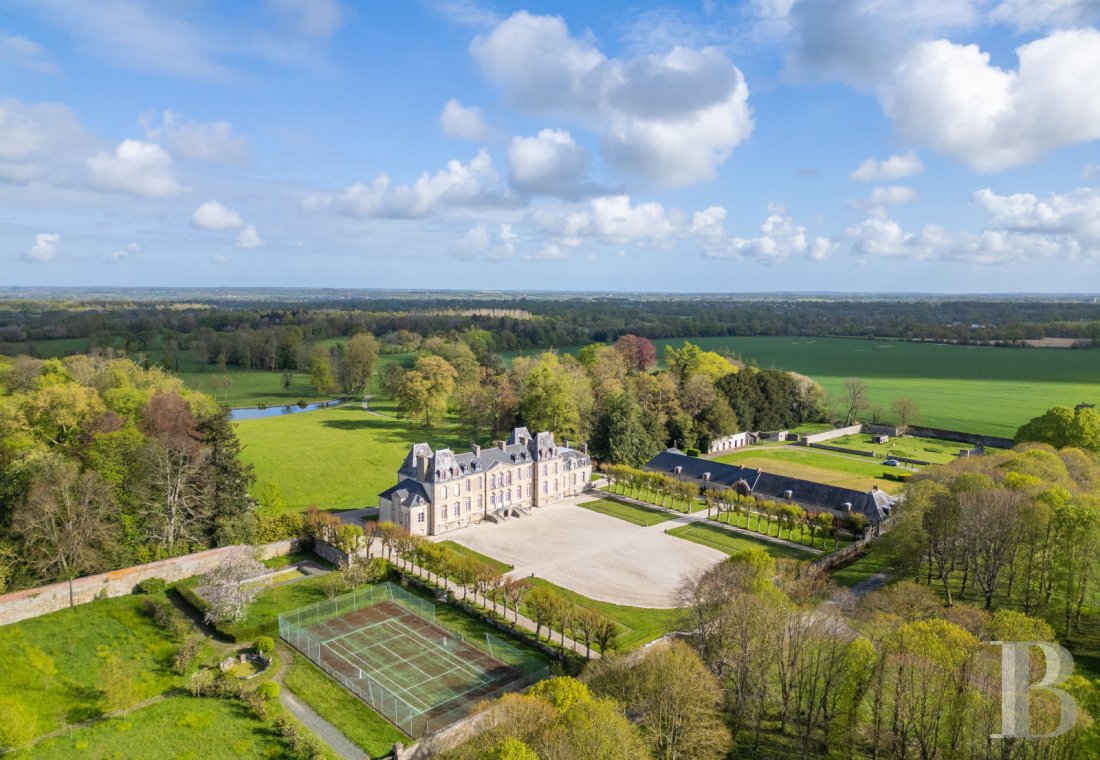
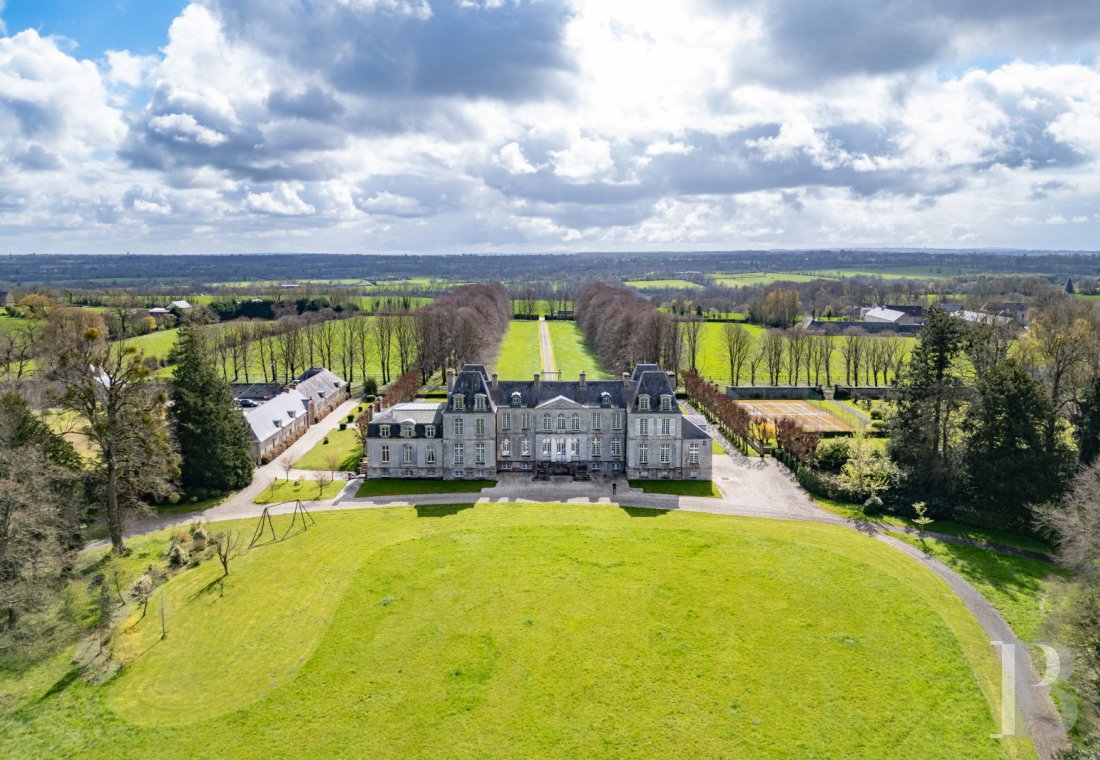
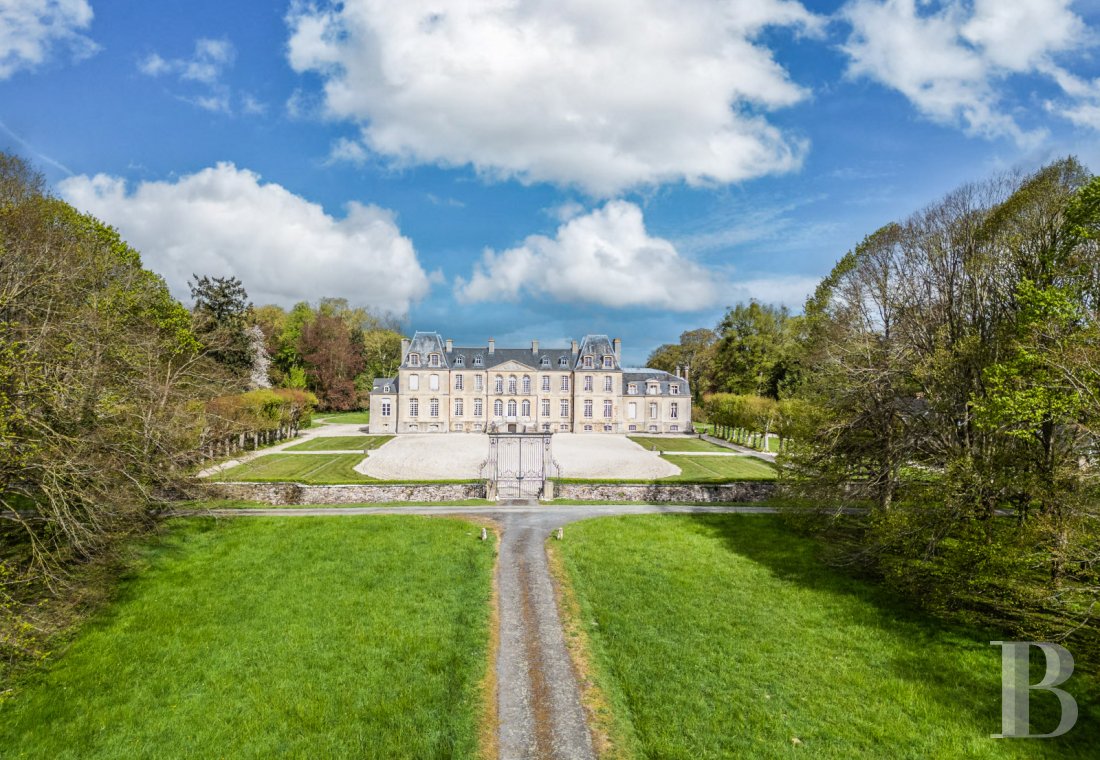
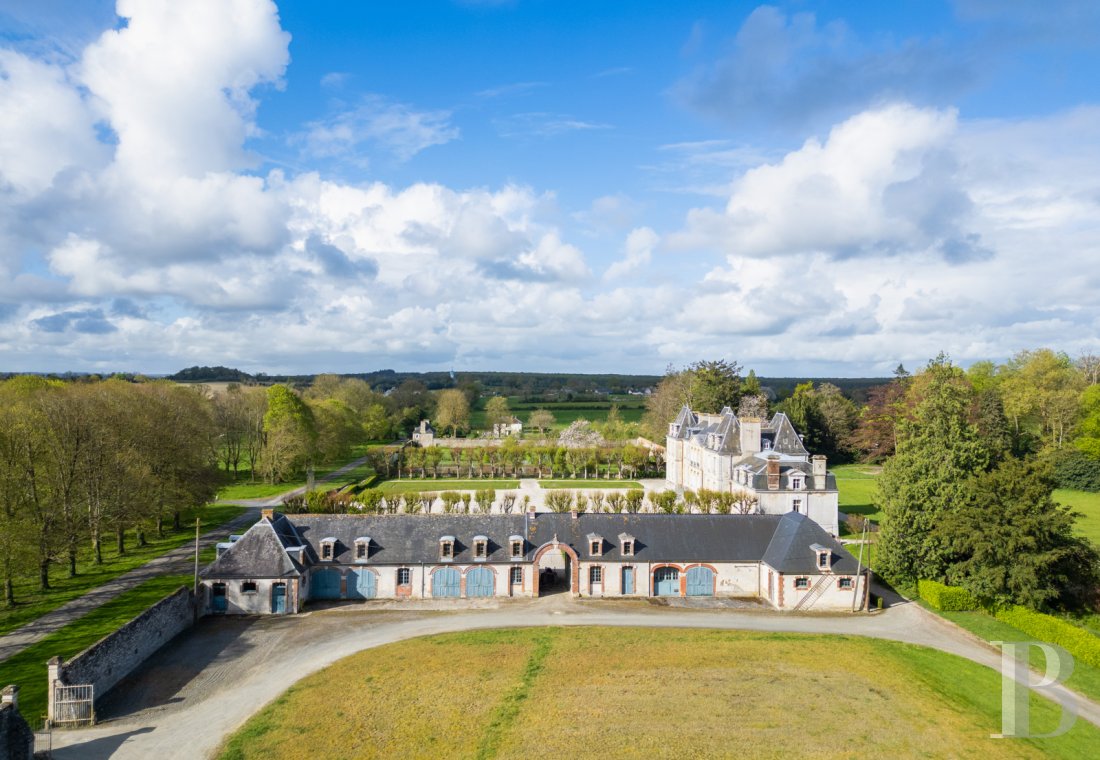
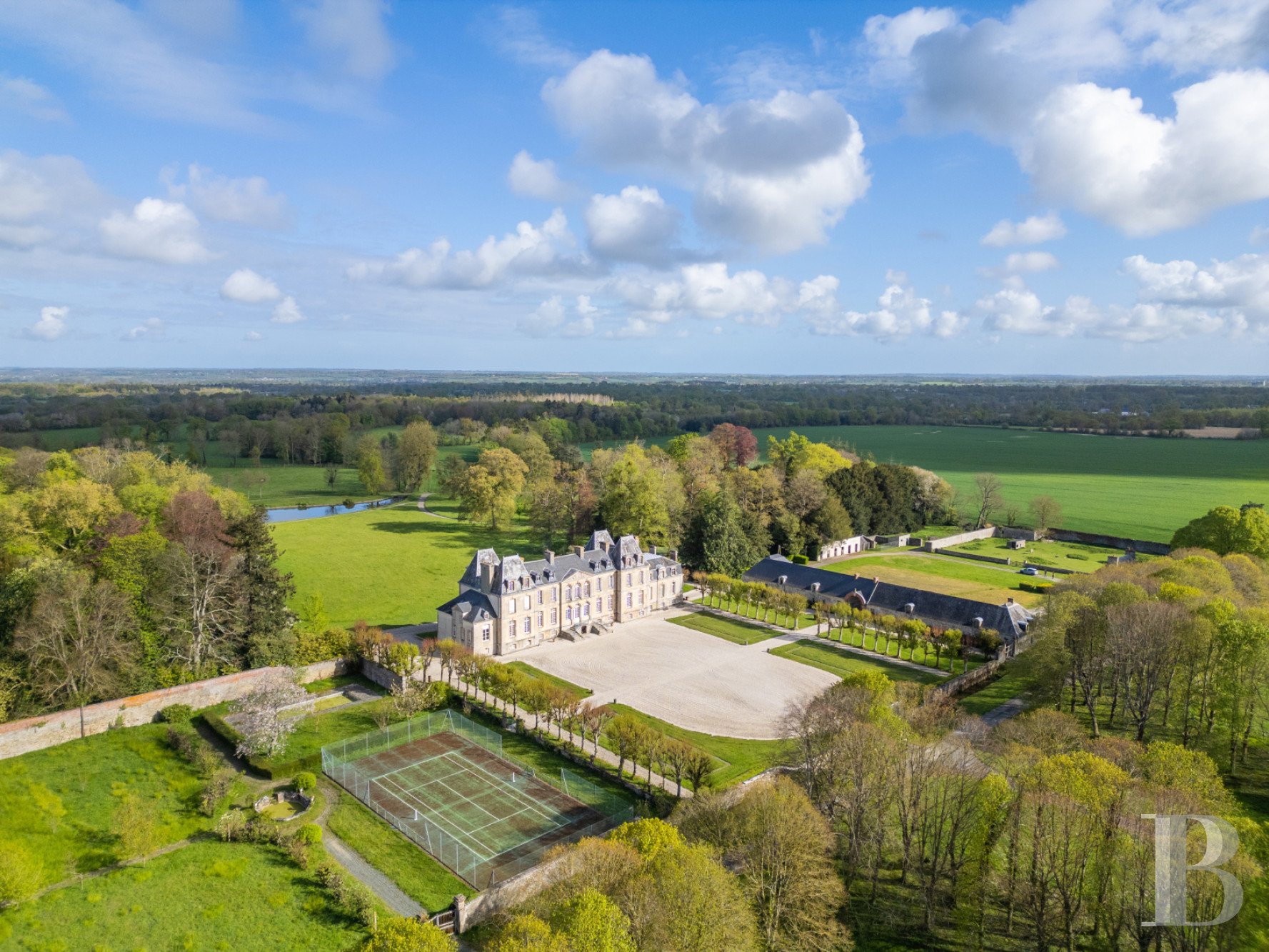
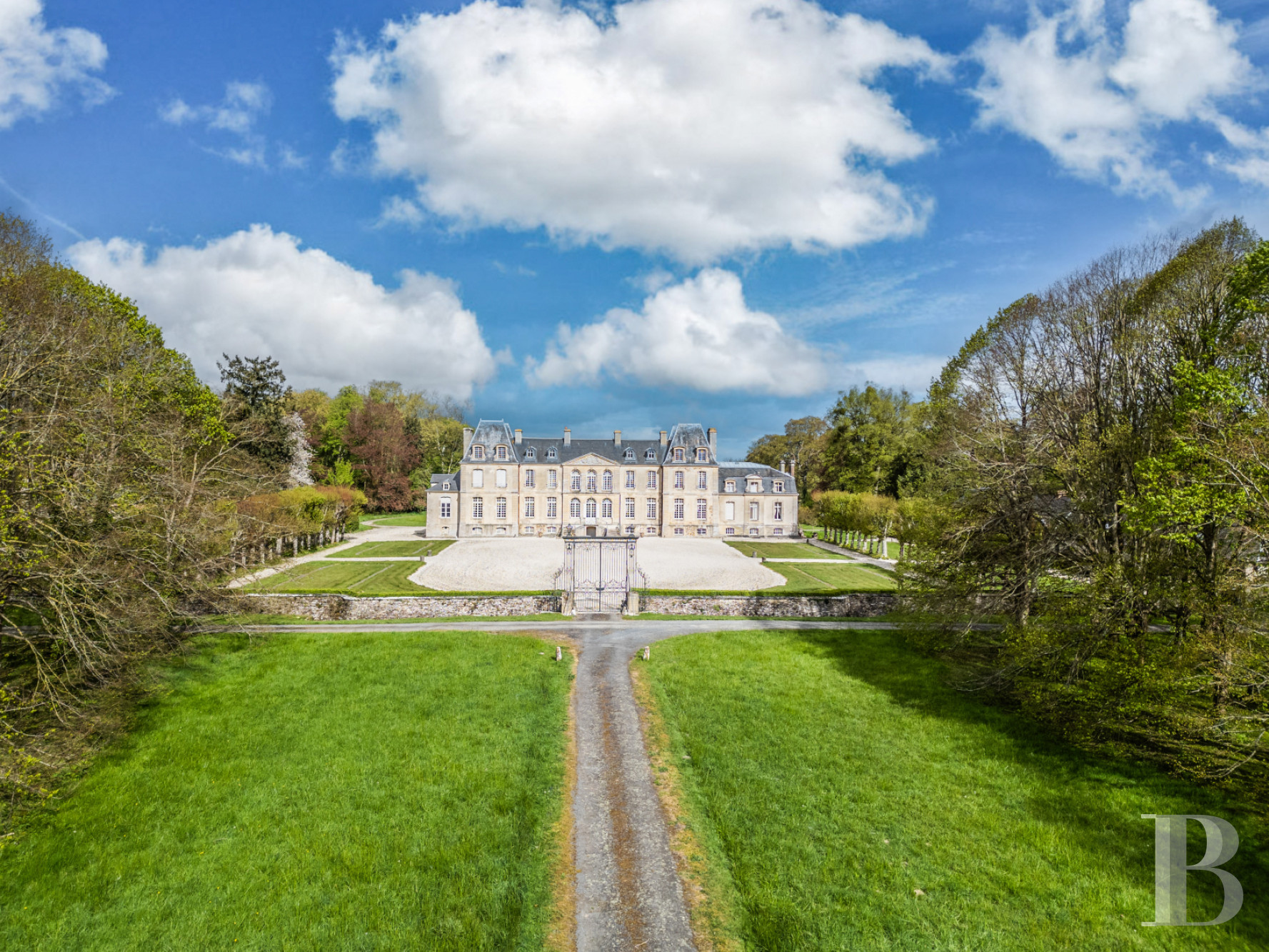
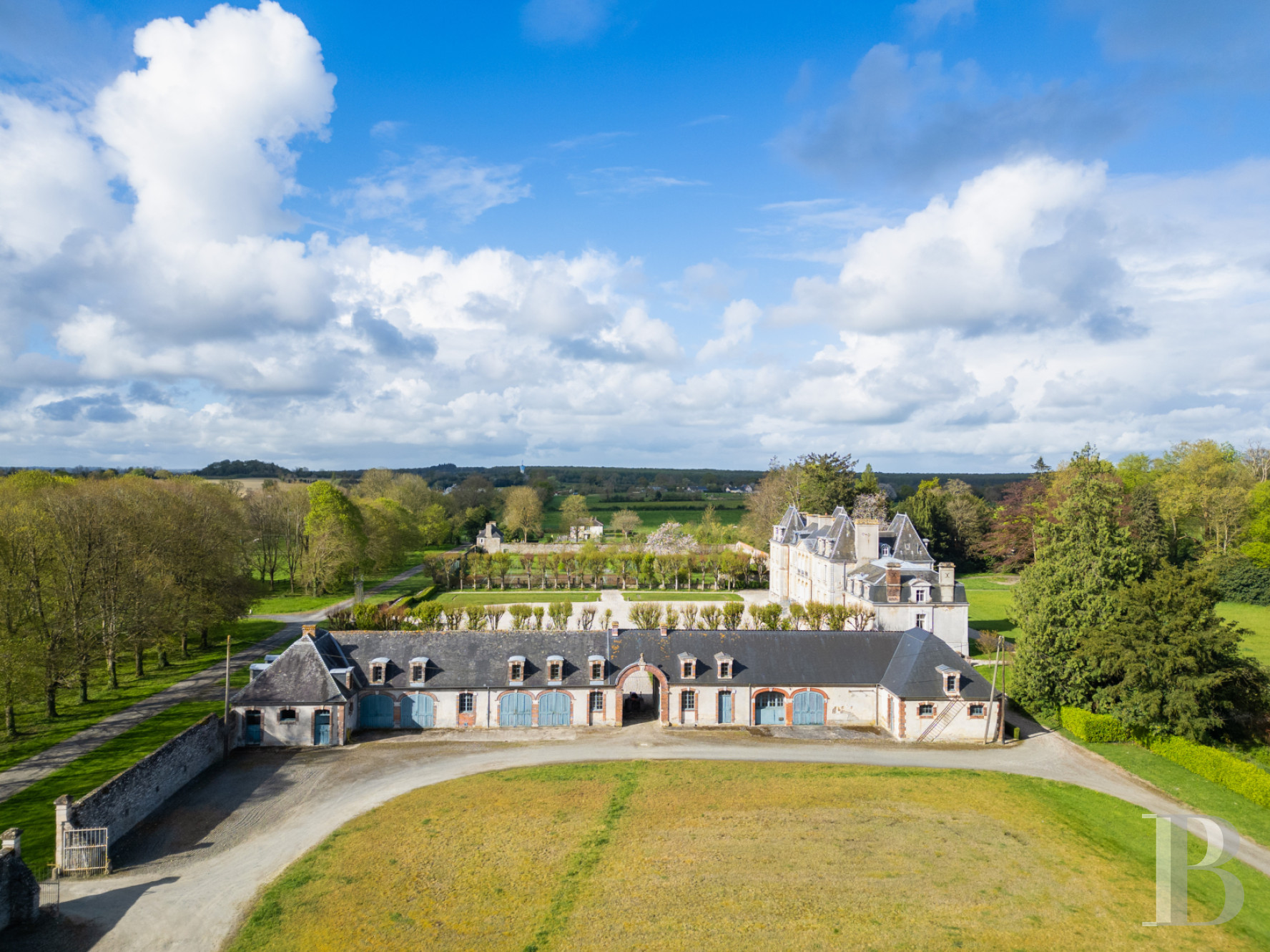
Before the entrance to the village of Vaubadon, hidden behind a thick hedge, a driveway lined by three rows of lime trees with lawns on either side stretches out in a long perspective leading into the estate. It leads to a wrought-iron gate that opens into the main courtyard surrounded by a moat. Different elements of the property stand around the courtyard: the walled vegetable garden and gardener’s house, pond, tennis courts and outbuildings, set out around a wide central courtyard.
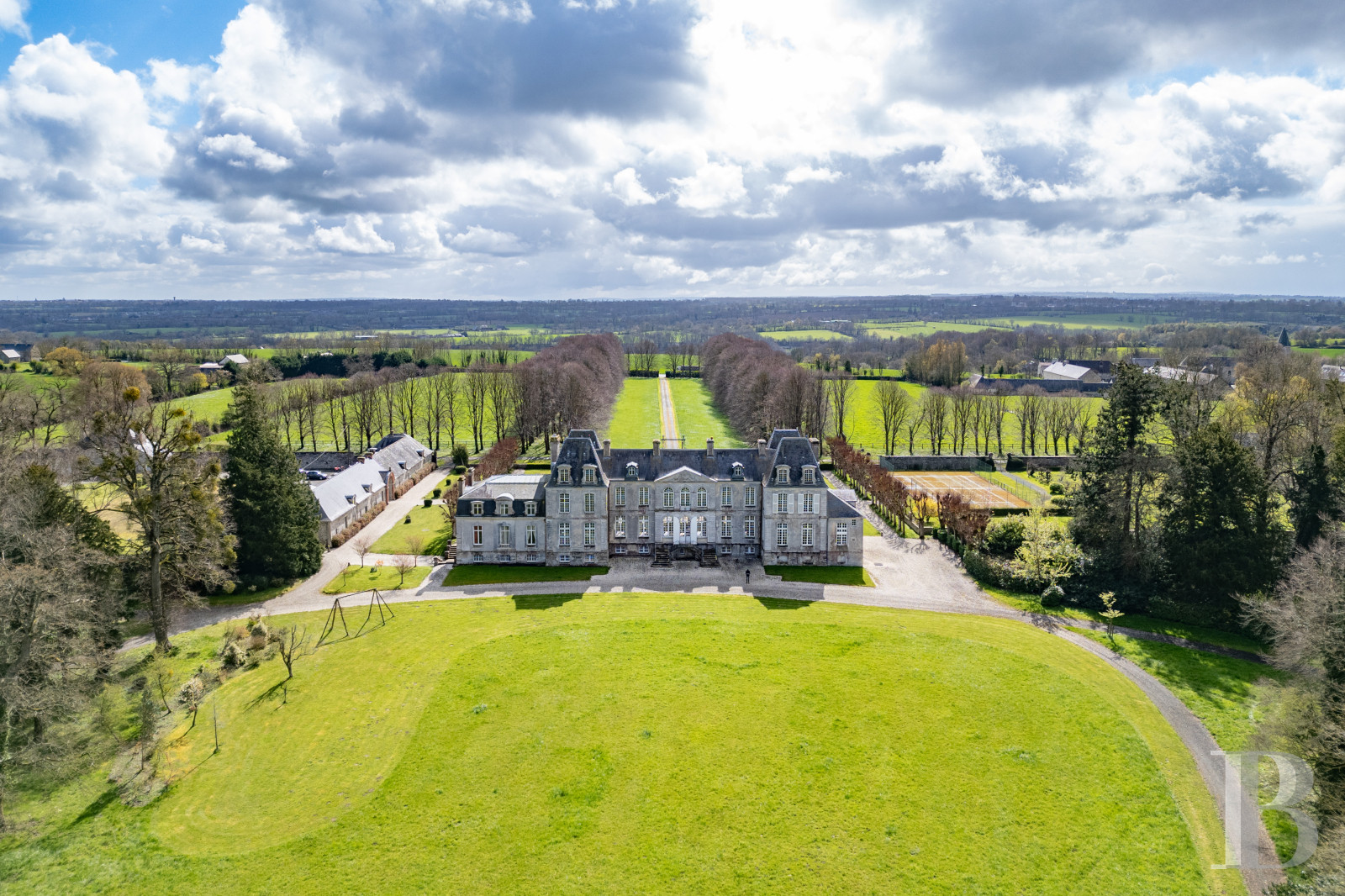
To the rear, the grounds, which are listed as a historical monument, spread out to a vast pond bordered with rhododendrons, which is not just a simple ornamental feature but a transition with the surrounding countryside, like a passage between an ordered canvas and a natural landscape left to express itself more freely.
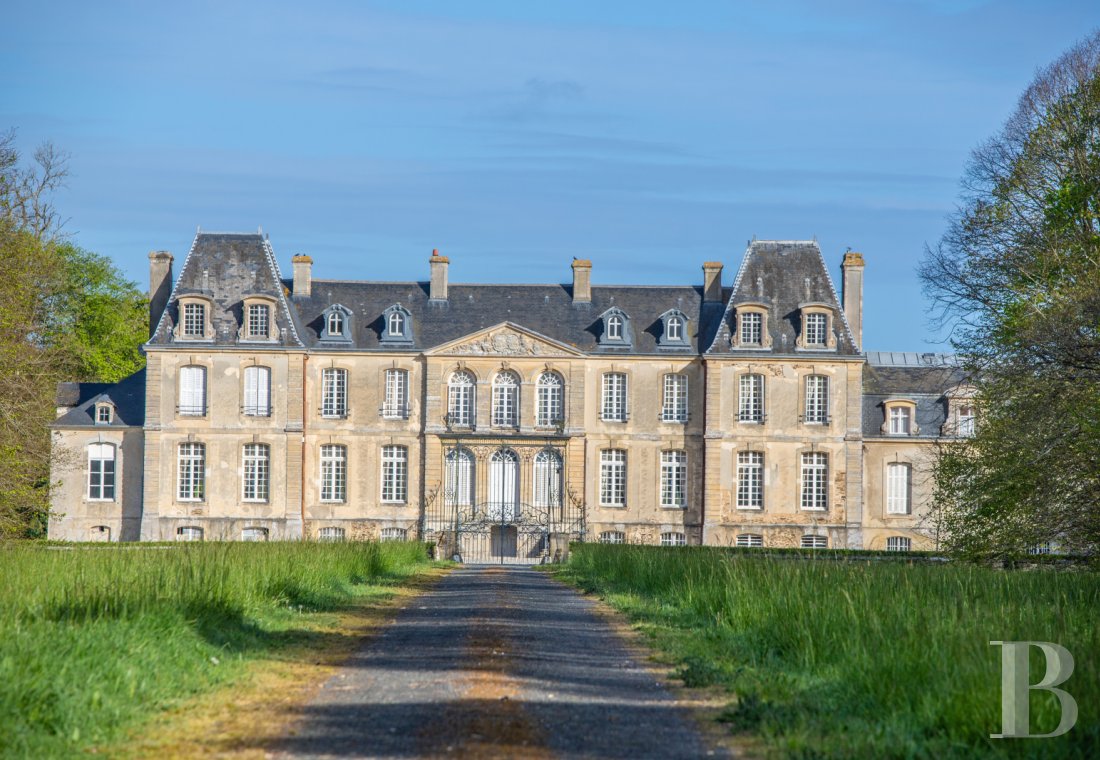
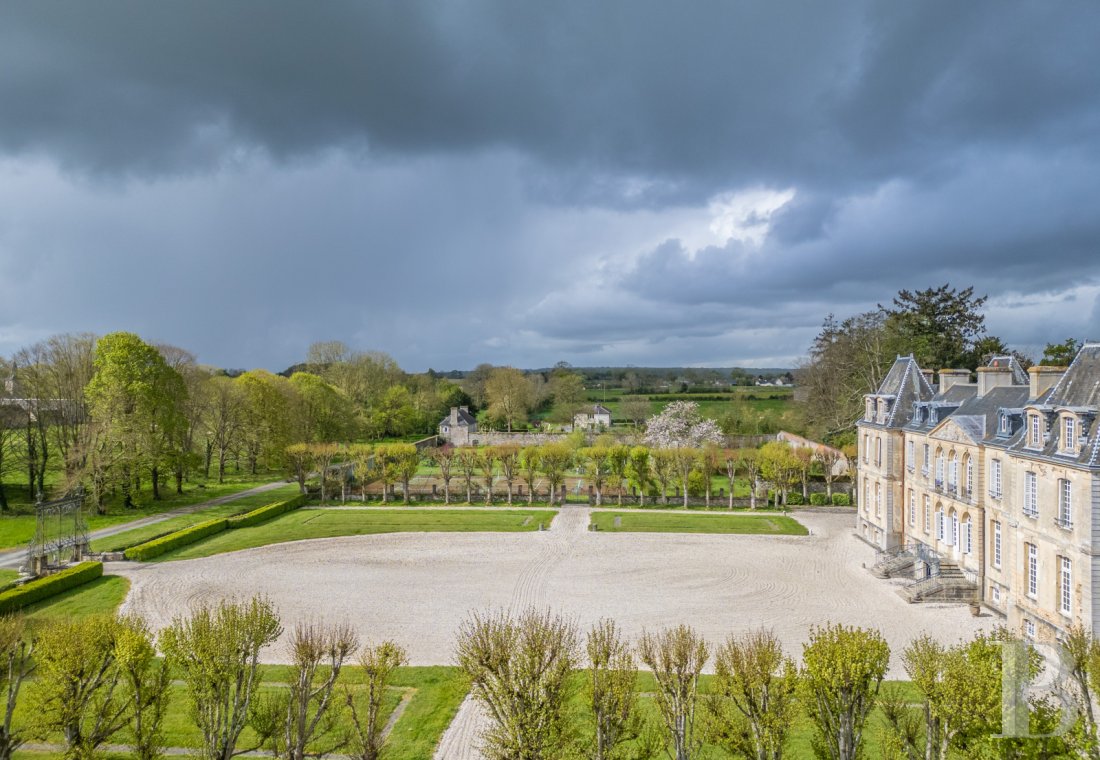
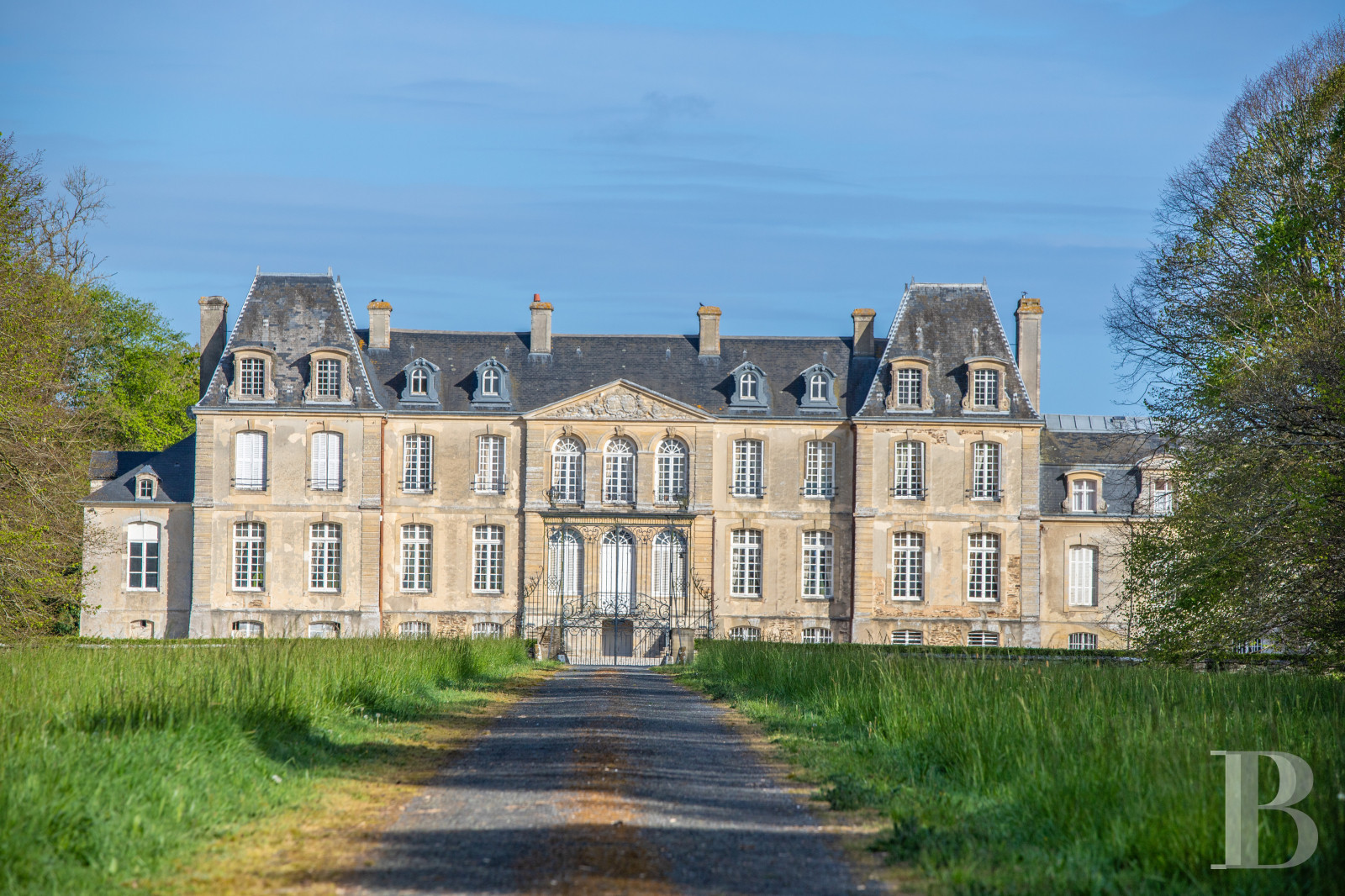
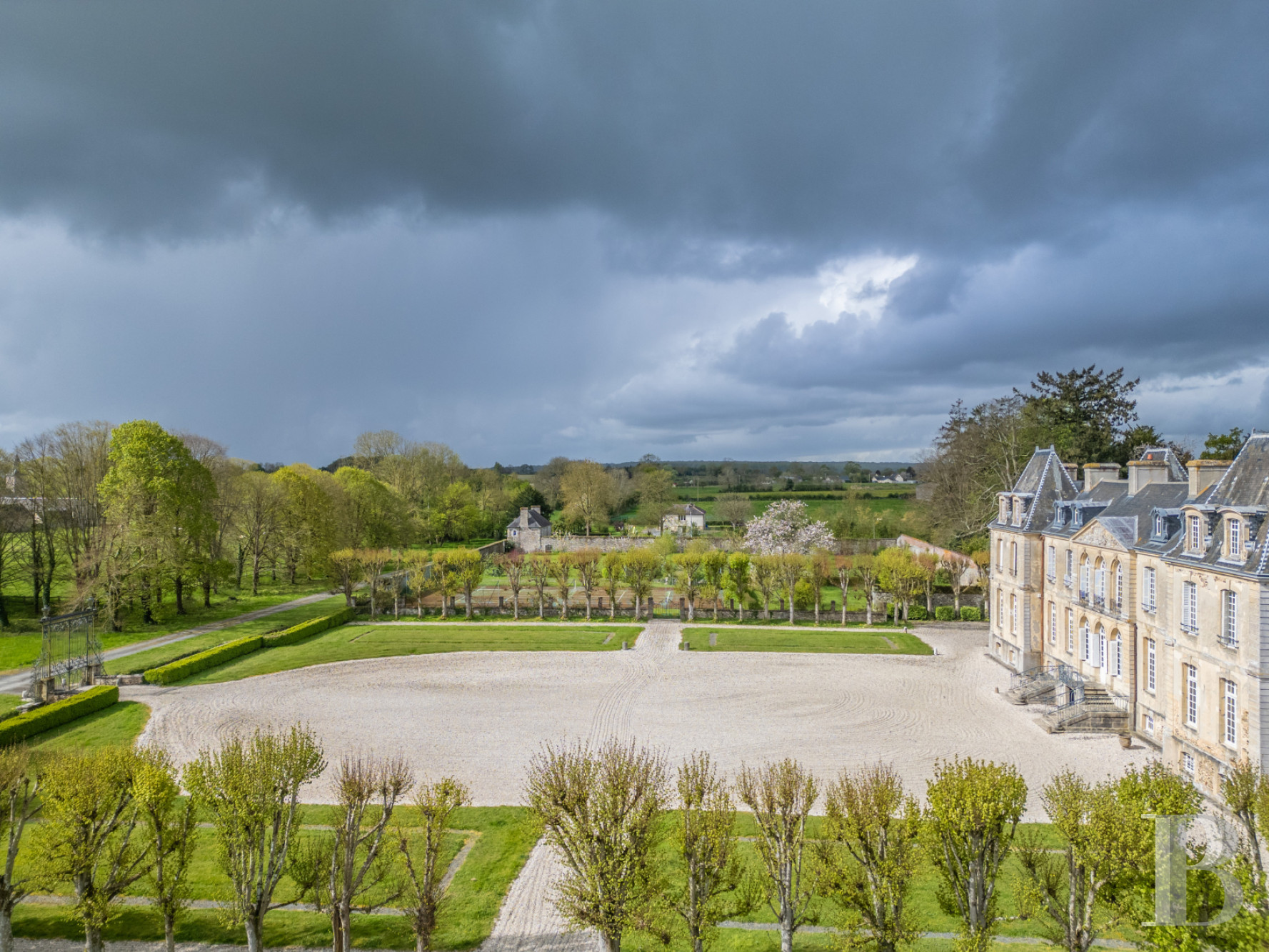
The buildings are characterised by the regularly disposed openings, tall roofs and light-coloured stones. The mansion possesses a southeast-facing facade overlooking the courtyard whose orderly layout and harmonious proportions attest to its classical character. The two-storey edifice, topped by an attic level and standing above a half-underground garden level floor, is set around an original central section to which other volumes were added in the 19th century. The slate roofs are punctuated by dormers and tall chimney stacks as well as four taller pavilion roofs, giving rhythm to the building’s silhouette and affirming the residence’s presence in the landscape. Thanks to the clarity of its architecture, plus the combination of its symmetry, layout and decoration, the mansion was listed as a historical monument in 2012.
To the rear, the grounds, which are listed as a historical monument, spread out to a vast pond bordered with rhododendrons, which is not just a simple ornamental feature but a transition with the surrounding countryside, like a passage between an ordered canvas and a natural landscape left to express itself more freely.
The buildings are characterised by the regularly disposed openings, tall roofs and light-coloured stones. The mansion possesses a southeast-facing facade overlooking the courtyard whose orderly layout and harmonious proportions attest to its classical character. The two-storey edifice, topped by an attic level and standing above a half-underground garden level floor, is set around an original central section to which other volumes were added in the 19th century. The slate roofs are punctuated by dormers and tall chimney stacks as well as four taller pavilion roofs, giving rhythm to the building’s silhouette and affirming the residence’s presence in the landscape. Thanks to the clarity of its architecture, plus the combination of its symmetry, layout and decoration, the mansion was listed as a historical monument in 2012.
The mansion
Construction on the 18th-century residence began in 1739 on the order of the Le Tellier family, who were the local barons, before being completed in the second half of the century, around 1779. It boasts classical architecture, set around a middle section flanked by two pavilions. The central part of the middle section protrudes slightly and is topped by a sculpted triangular pediment and a more intricately crafted elevation. A stoop with two flights of steps and finely crafted balusters provides a gentler touch to the strictness of the facade. The openings with ashlar surrounds combine rectangular windows on the sides and arched ones in the middle.
The ground floor
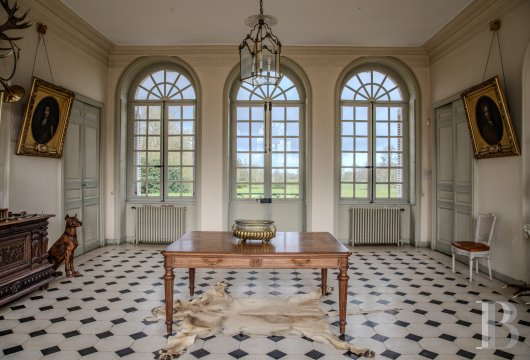
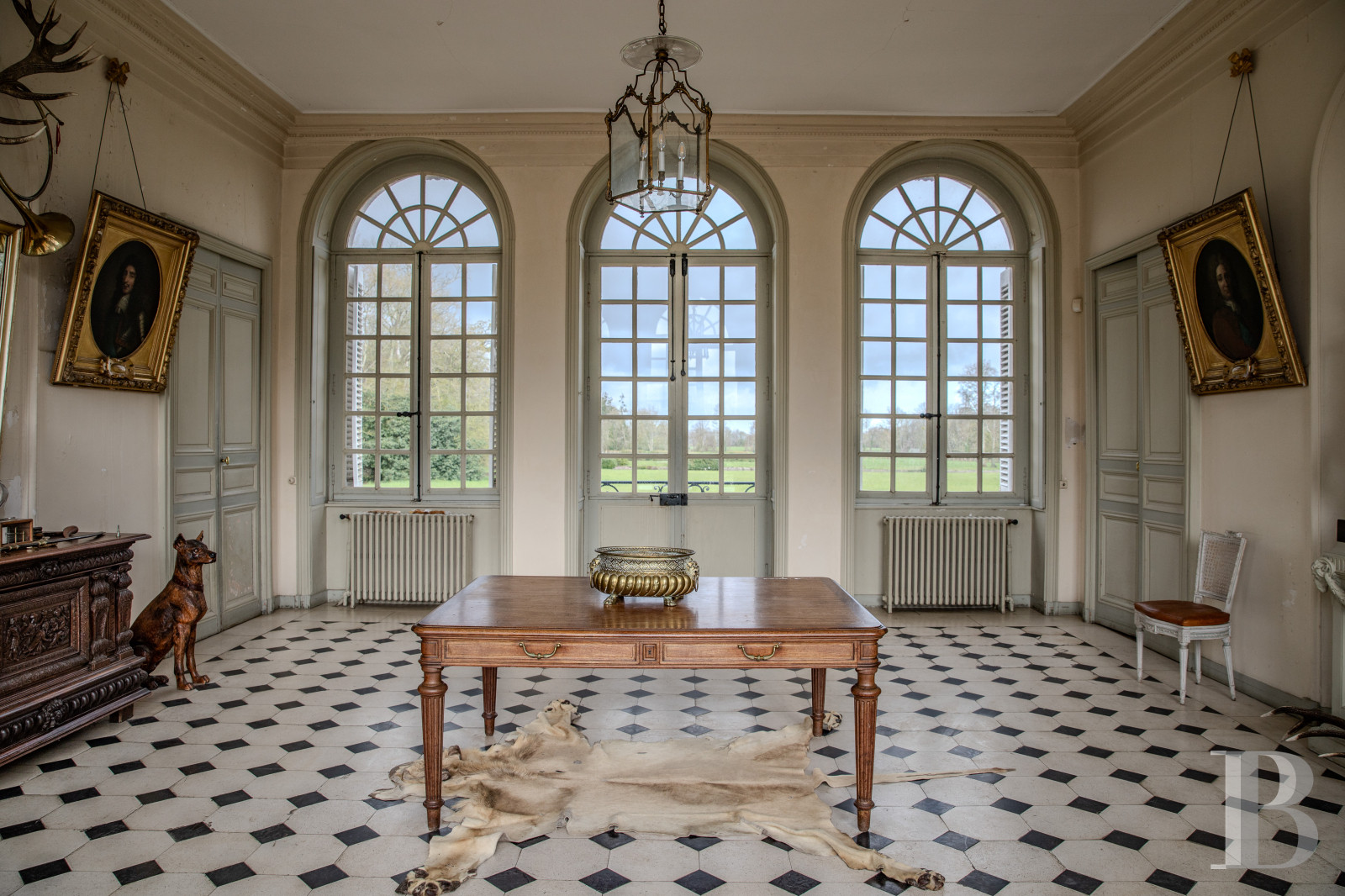
In the centre, the entrance hall is paved with taco tiling and punctuated by three semi-circular ached openings. It runs all the way through the edifice, opening up the view to the grounds and pond.
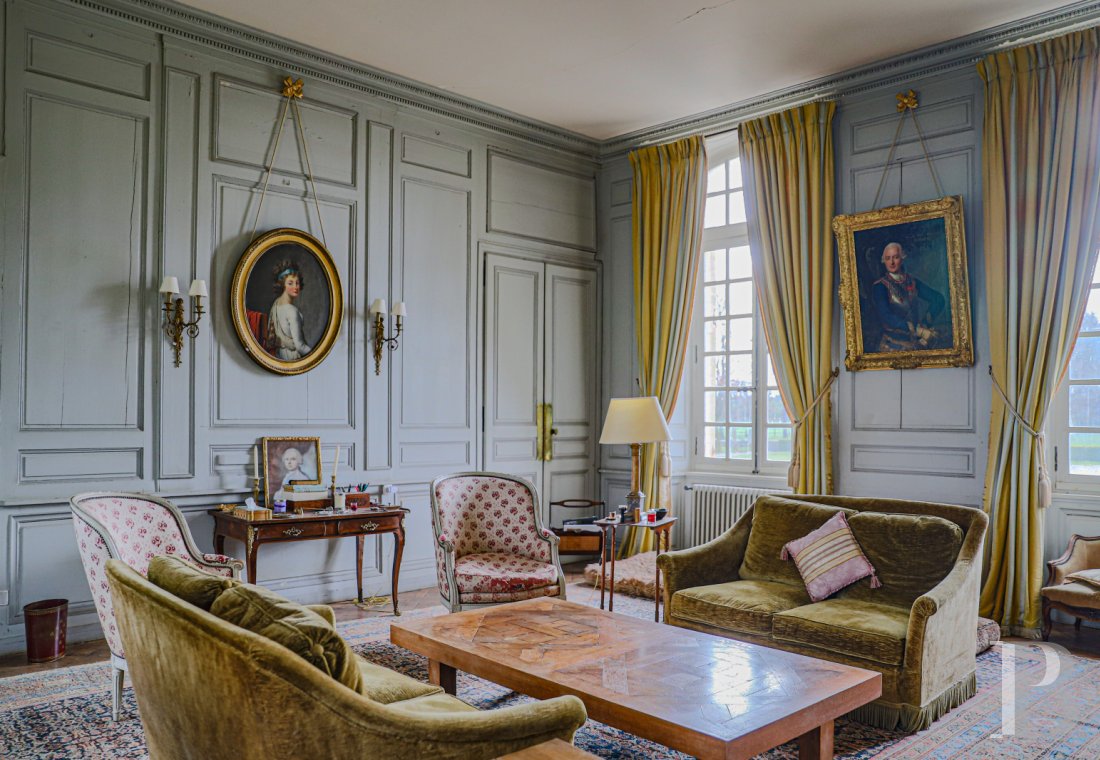
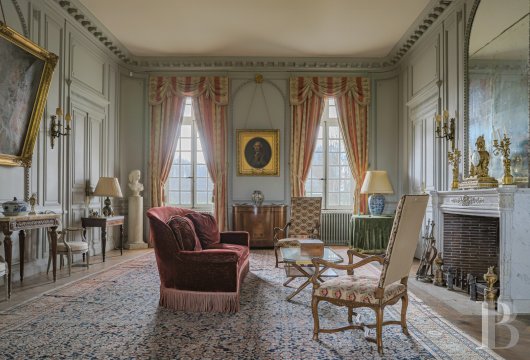
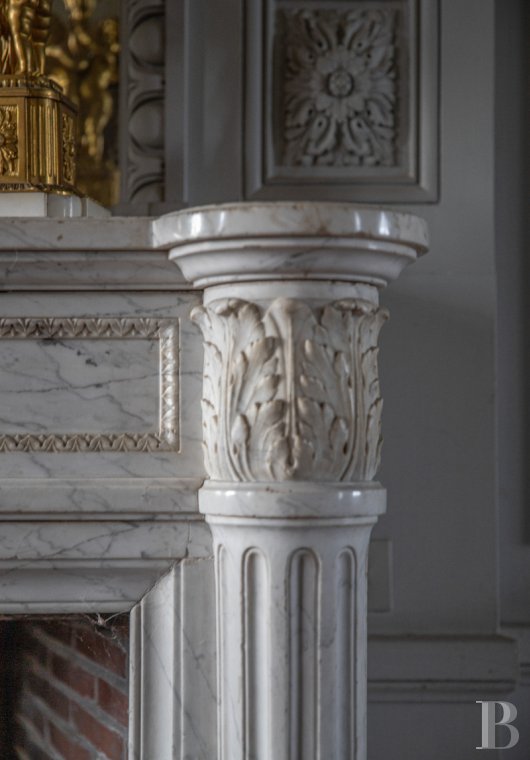
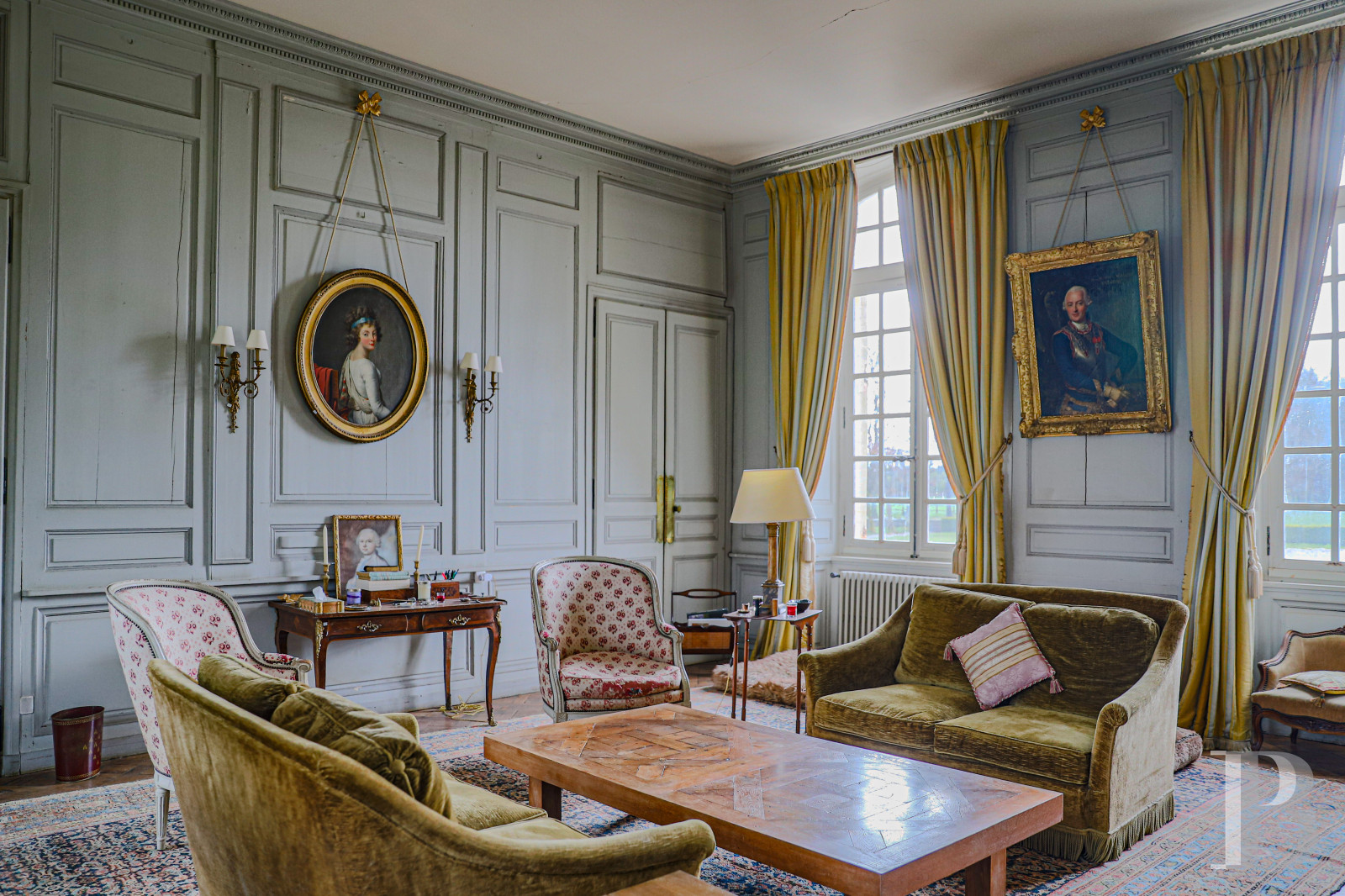
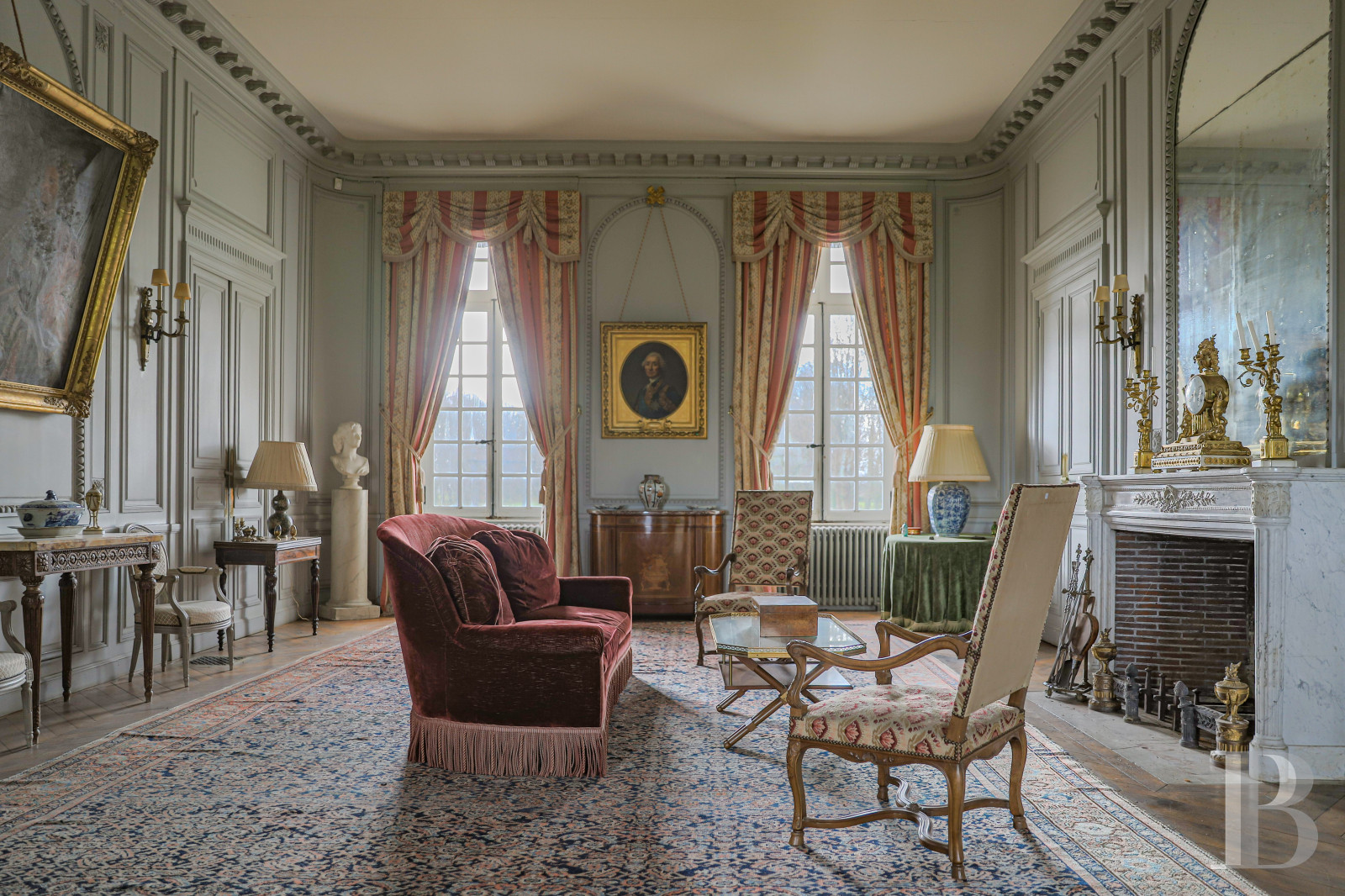
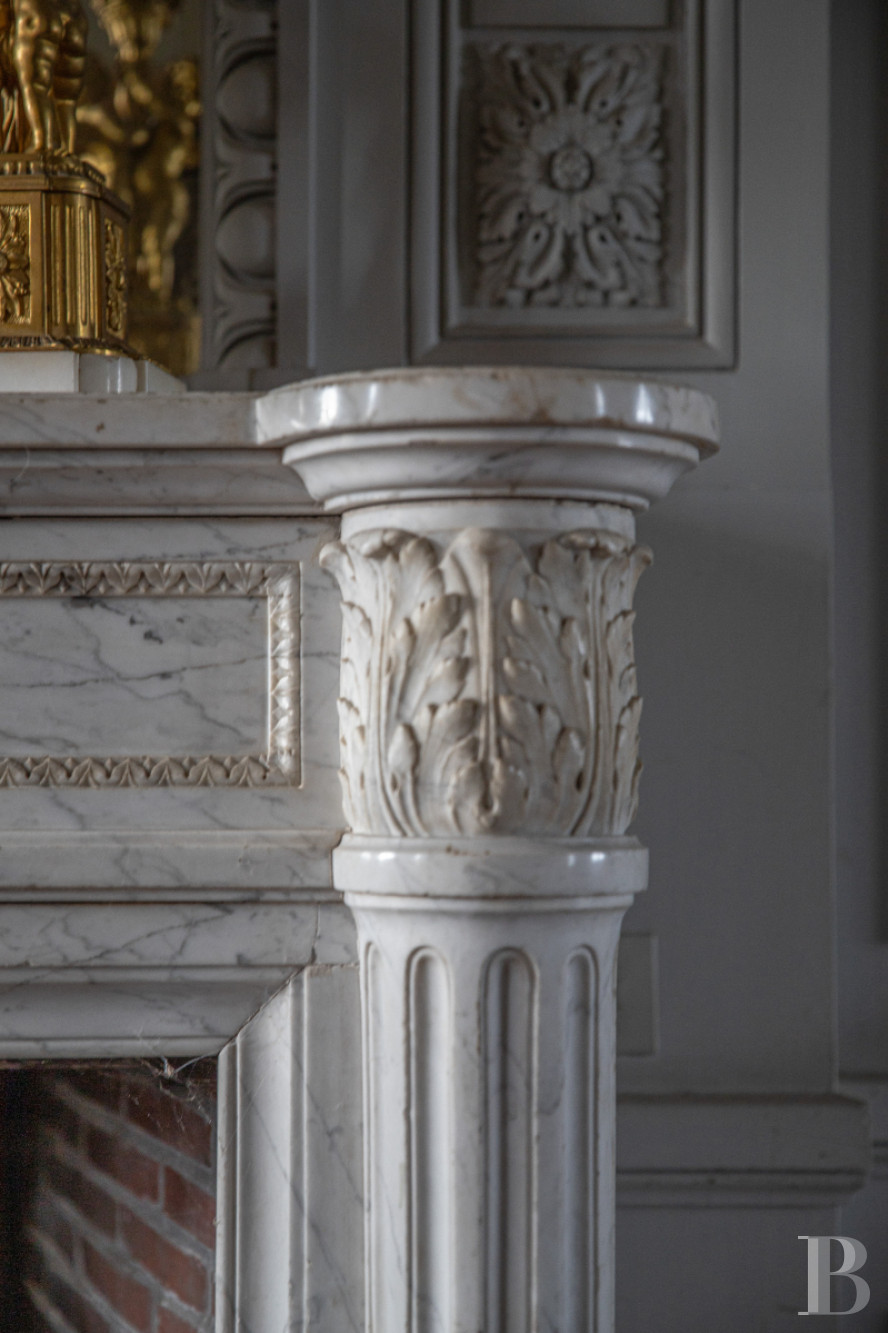
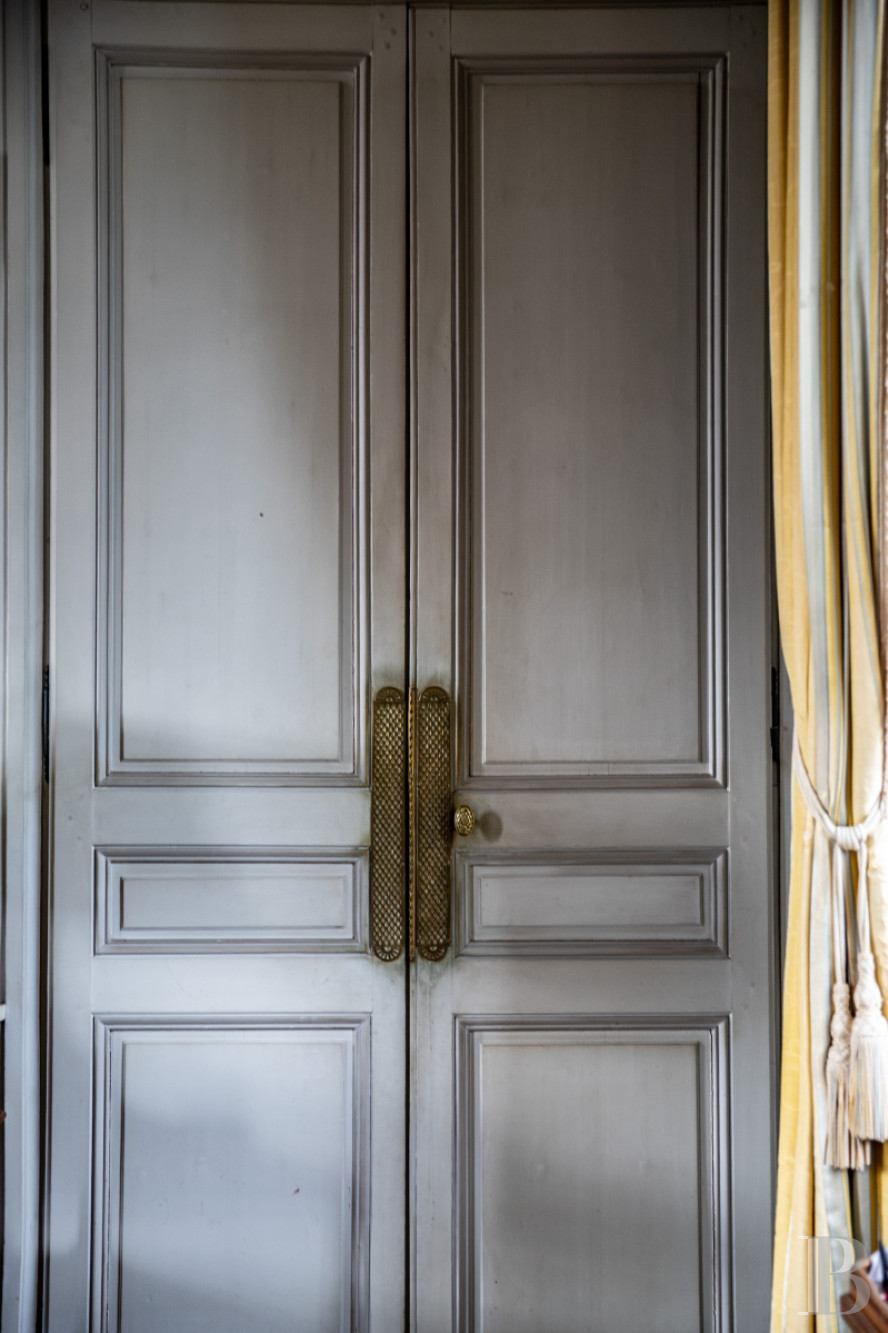
To the left, a first lounge with pastel-coloured wood panelling is set around a veined white marble fireplace and precedes a large lounge with more ample volumes whose decoration features moulded beadwork and low-arched panelling. Next to these two lounges, a third room is currently unused.
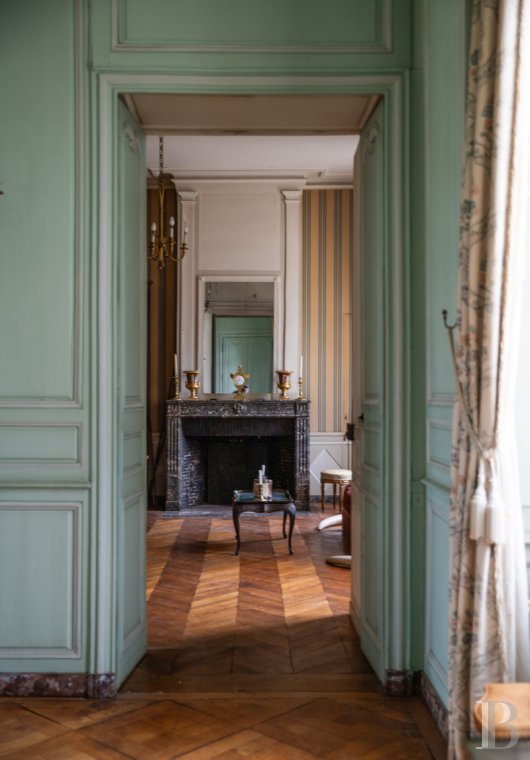
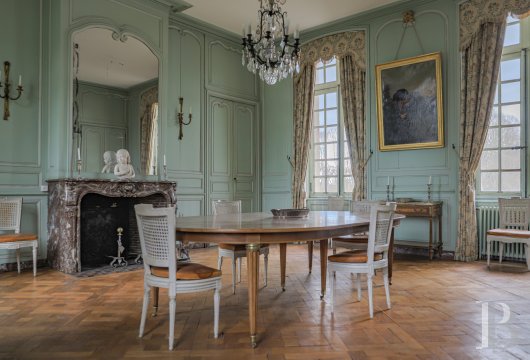
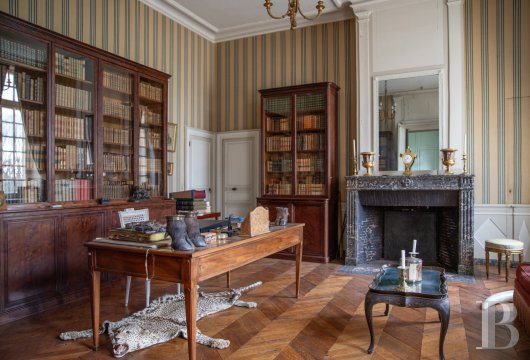
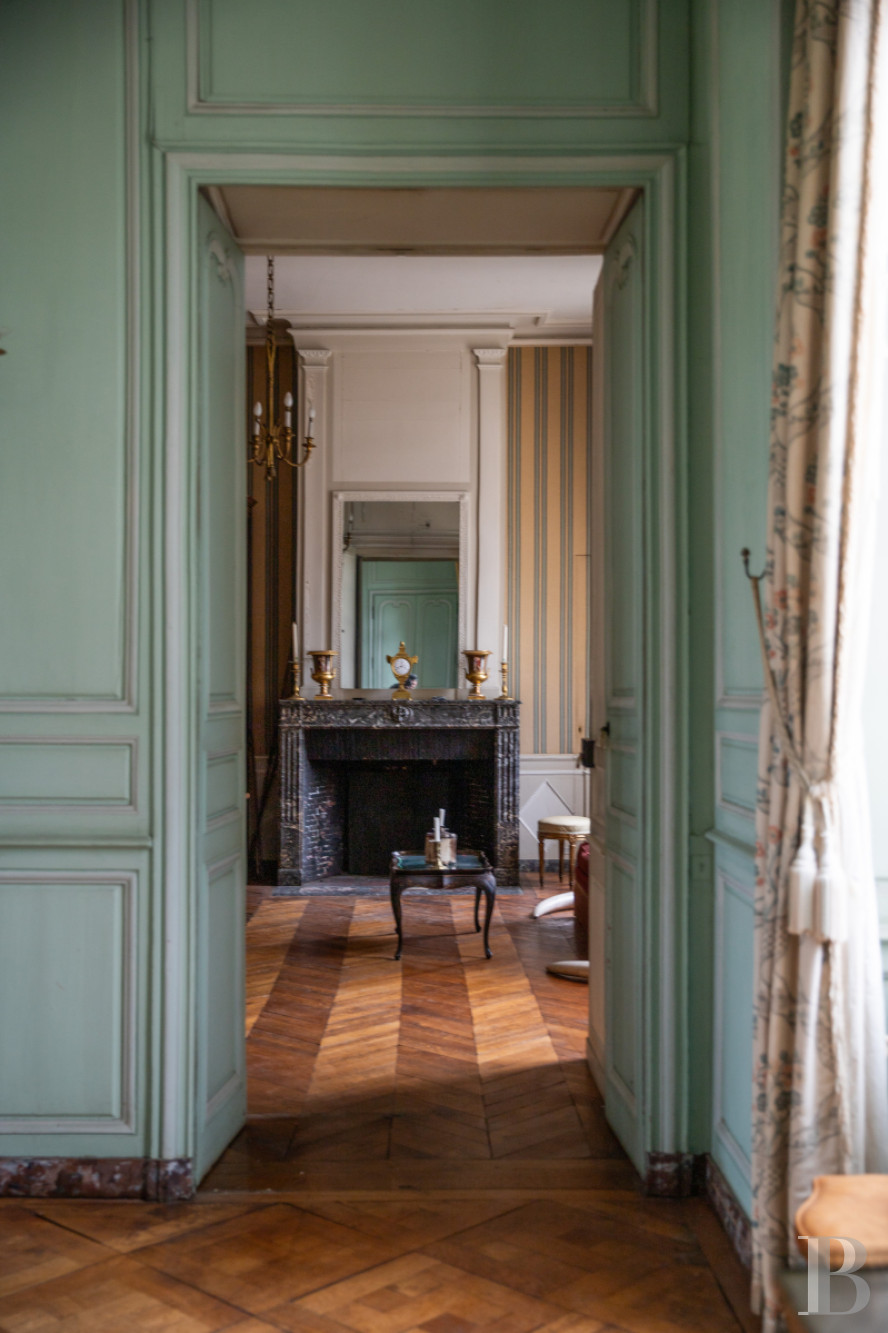
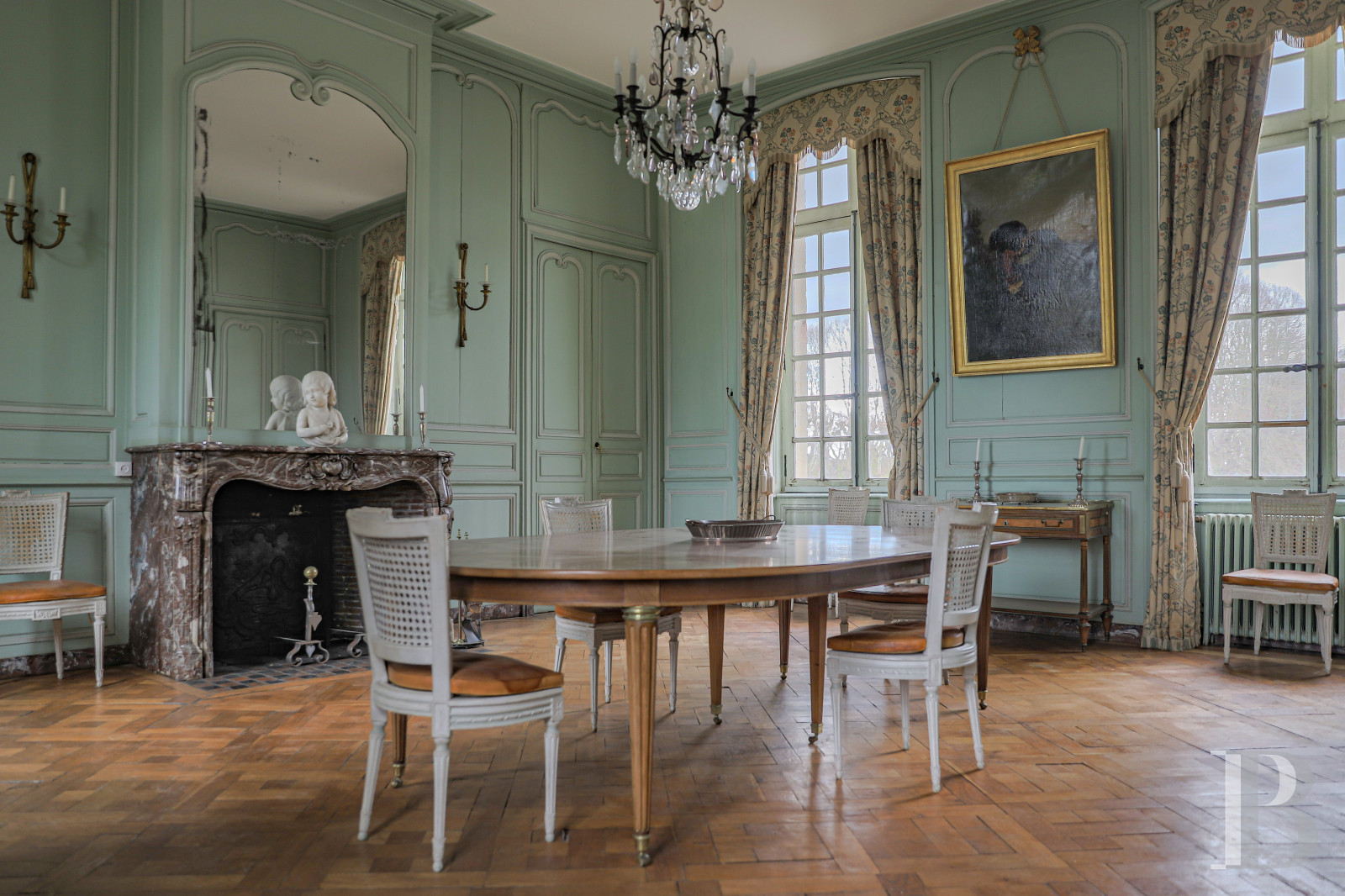
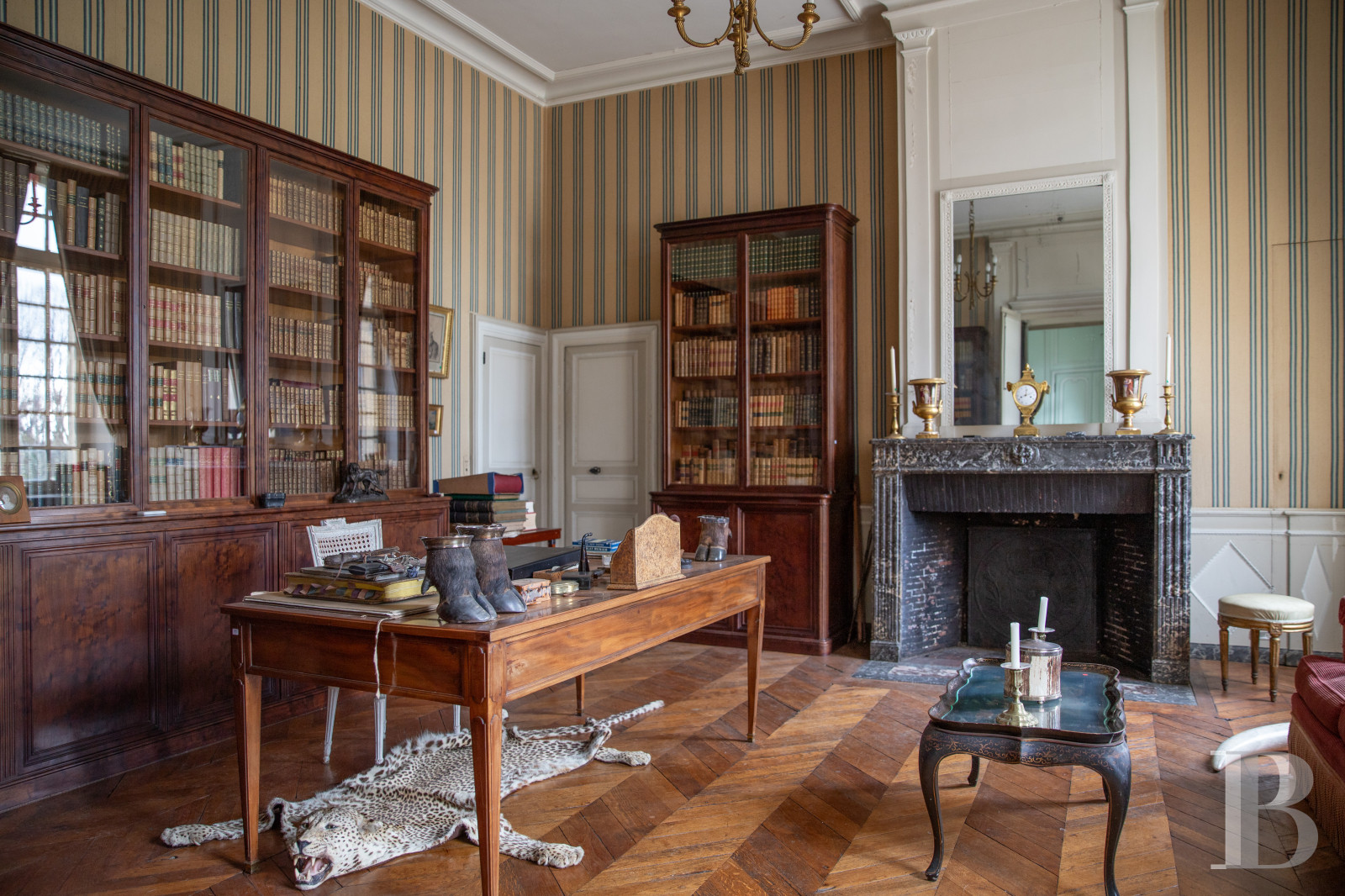
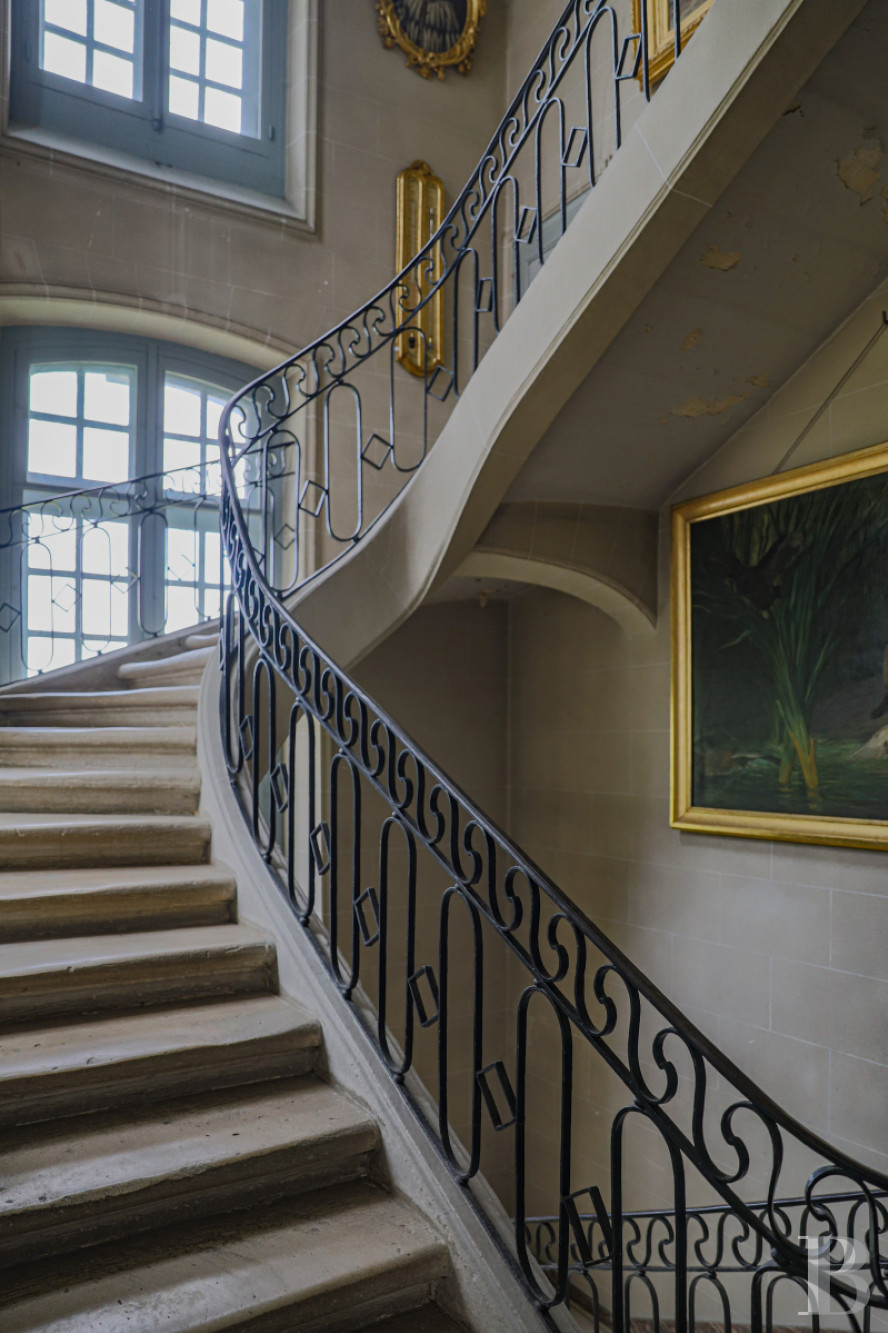
To the right of the entrance, a dining room with celadon shaded wood panelling, leads to a study, with two-tone chevron parquet flooring, followed by a hallway leading to the Caen stone monumental staircase. Further on, there is a kitchen and three bedrooms, each boasting an en suite bathroom.
The first floor
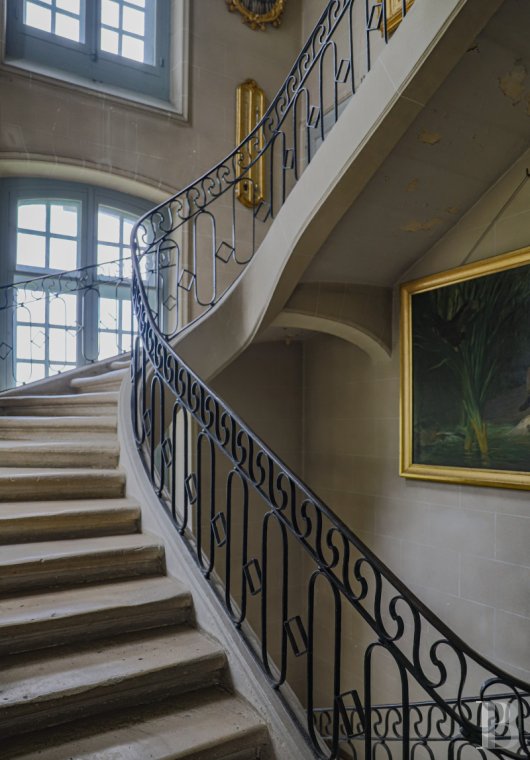
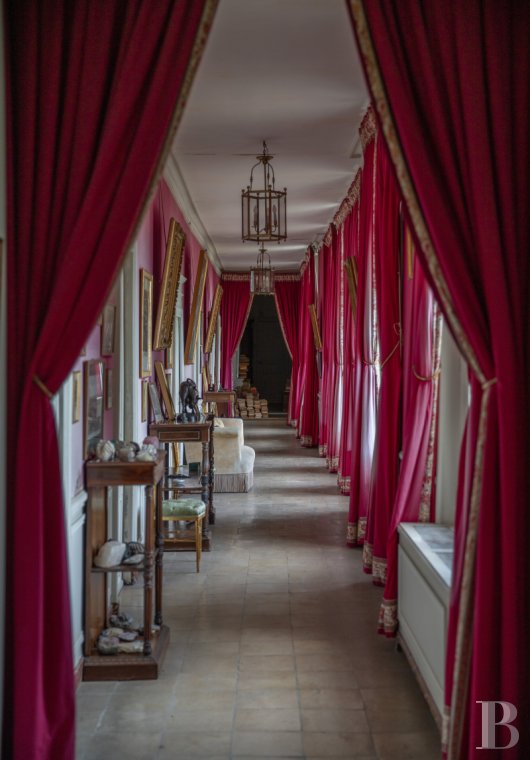
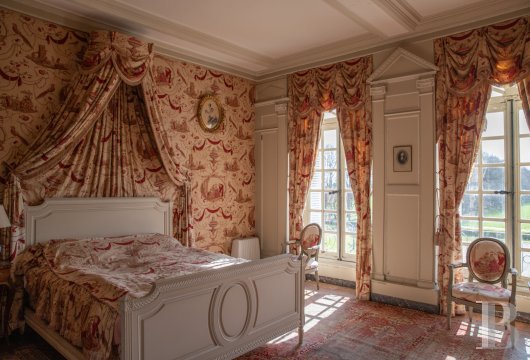
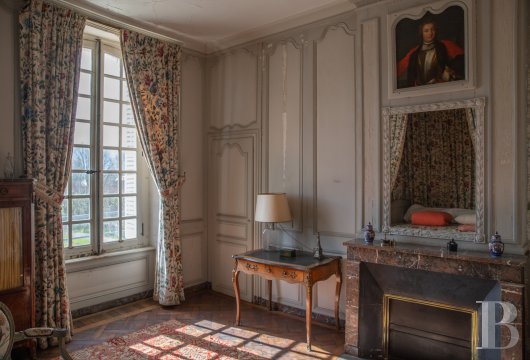
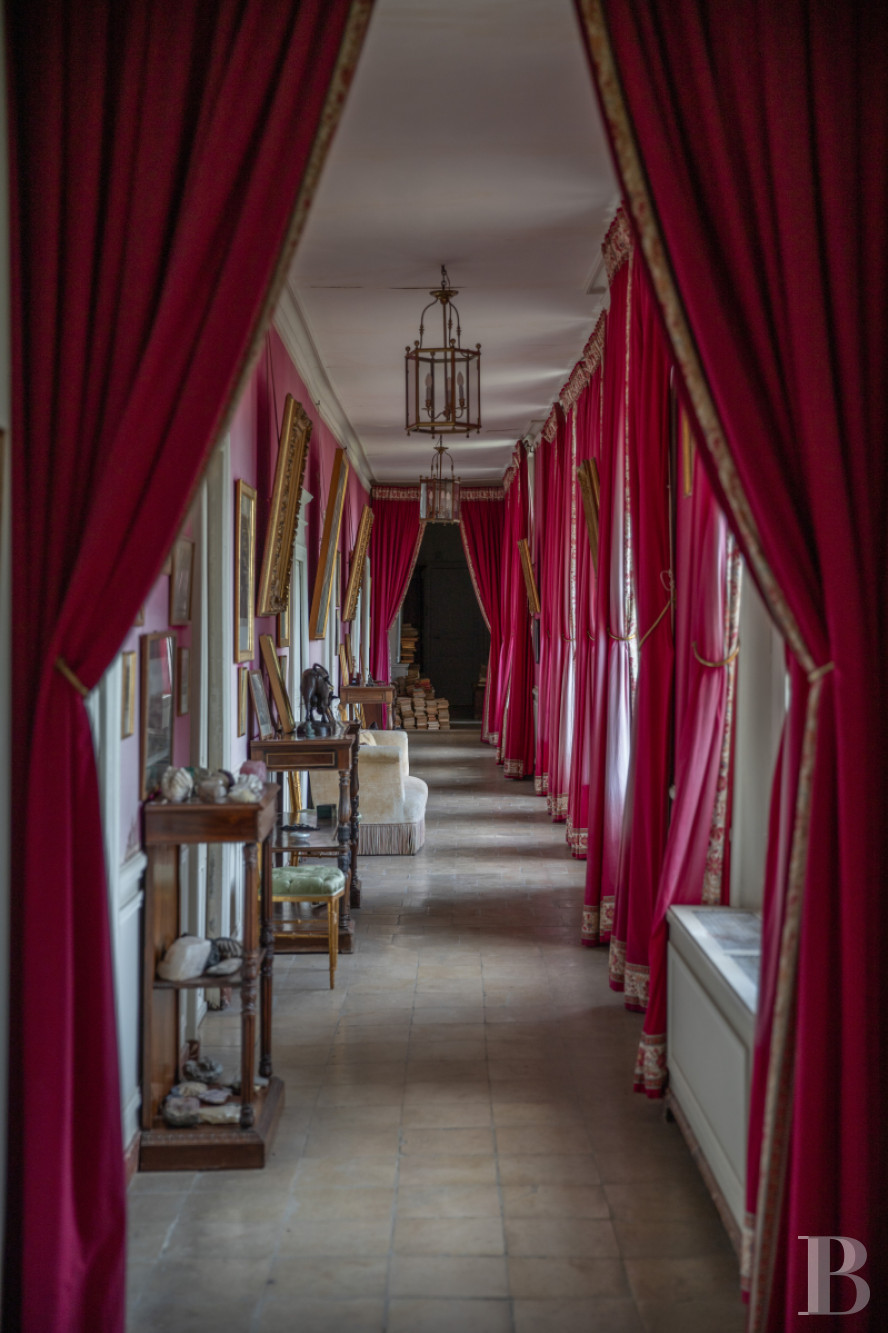
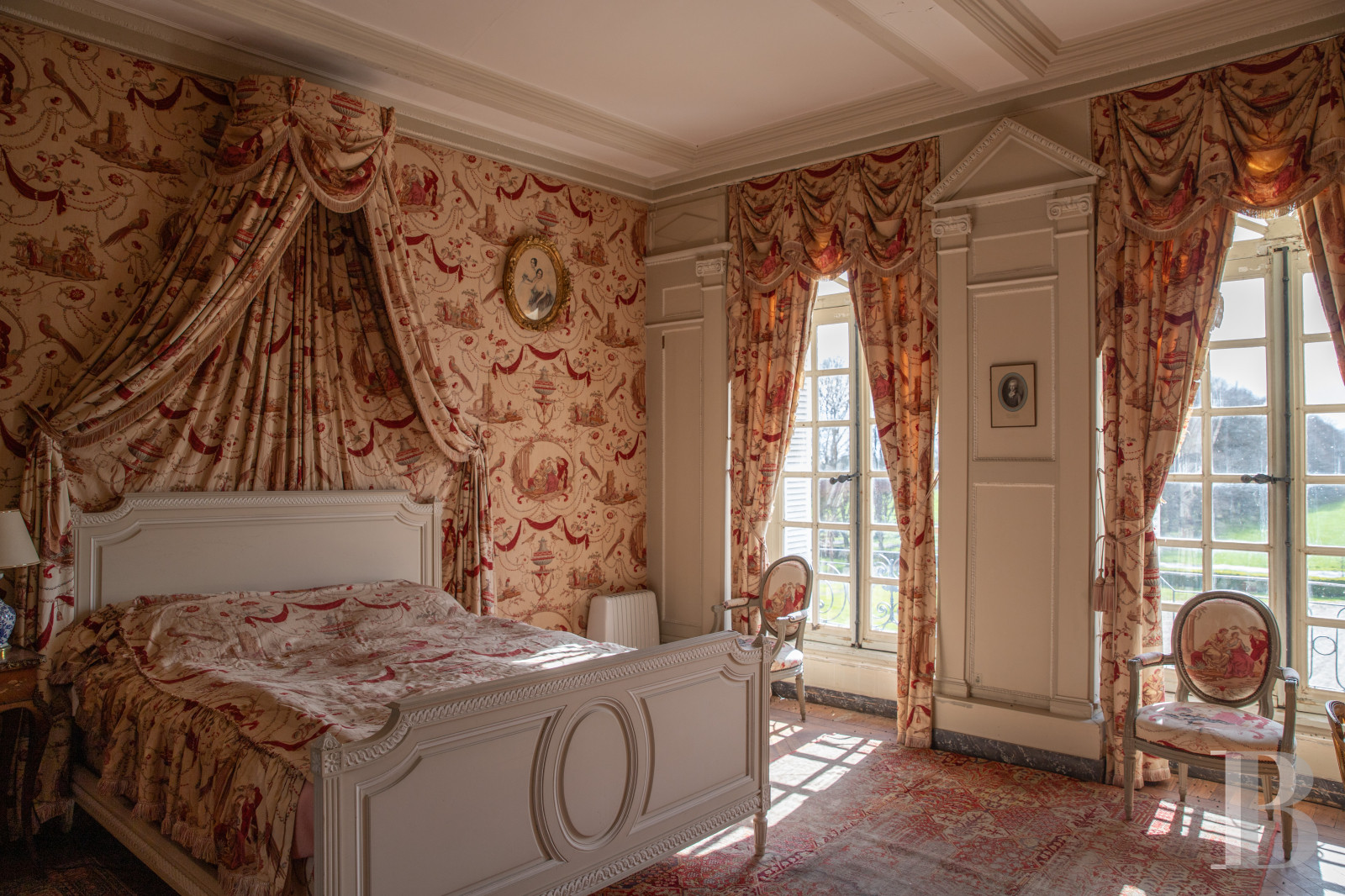
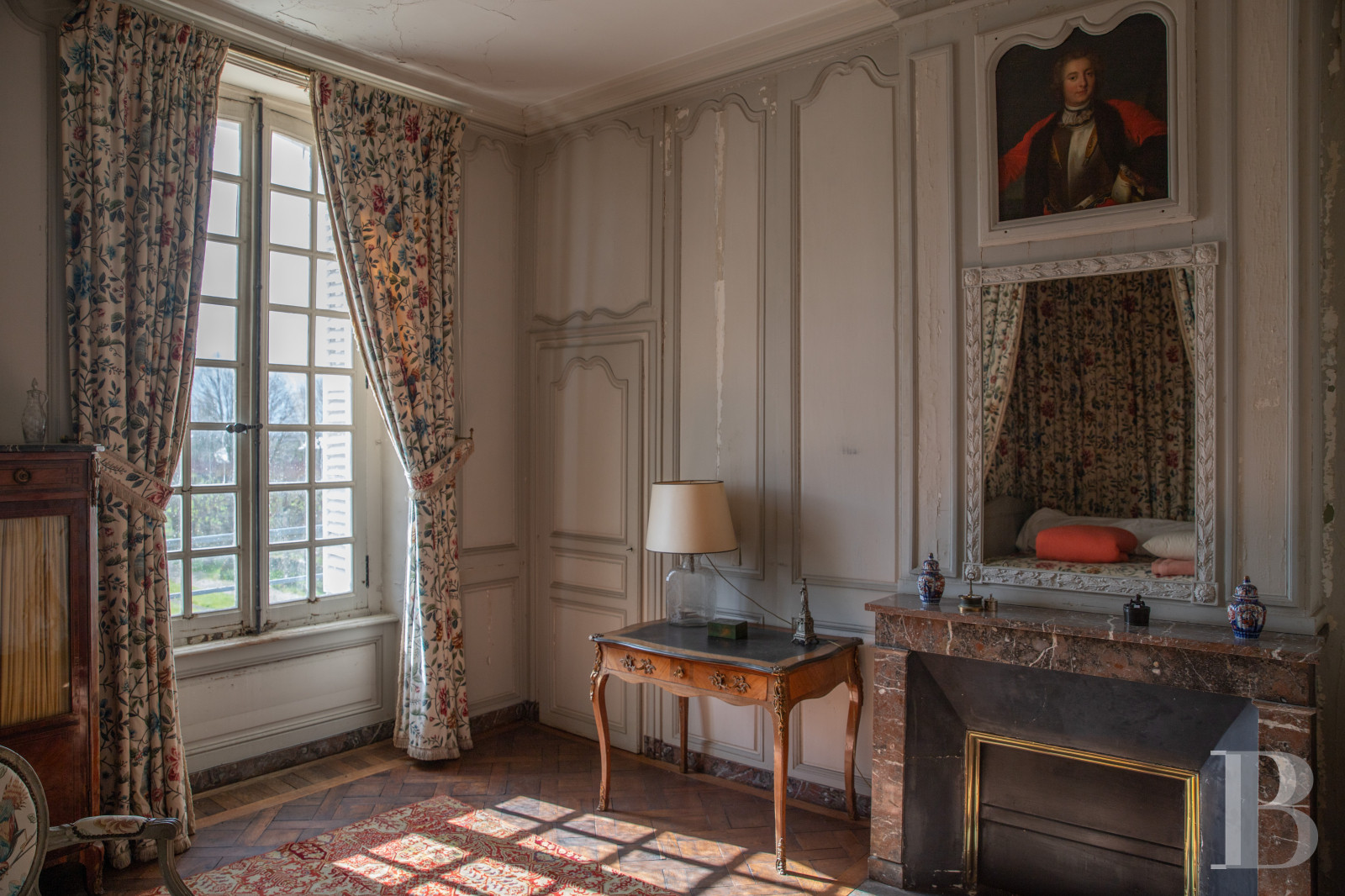
The Caen stone staircase, with a supplely shaped wrought-iron balustrade featuring geometrical shapes, climbs to the first floor. To the right, a long corridor bathed in light, boasting far-ranging views over the grounds, leads to five large bedrooms, some of which have en suite bathrooms or shower rooms. Each bedroom possesses a distinctive character, with moulded wood panelling, sophisticated draperies, patterned wallpaper, period fireplaces and four-poster beds recreating the elegance of the 18th century.
To the left, there are three further, more modern bedrooms, each with an en suite bathroom.
The second floor
This level beneath the rafters was previously reserved for the personnel. It possesses comfortable ceiling heights. A corridor paved with limestone slabs leads to several rooms, all of which boast wood stripped flooring and fireplaces. This level requires restoration work.
The outbuildings
This soberly lined, long building is made of rubble and dressed stone, with brick surrounds for the openings. Its facades are punctuated by wide, low-arched openings. On the ground floor, it includes the former horse box stalls and an old apartment, while on the top floor there is a loft with several rooms that could be converted. A central entrance porch made of brick and stone provides structure to the building, which is a fine example of well-designed functional architecture that is typical of outbuildings on prestigious estates. The gardener’s house, made of local stone, and the estate keeper’s house complete the property’s edifices.
The grounds and land
The parkland was created in the 19th century and is listed as a historical monument. It has been masterfully composed, in keeping with the character of the mansion, with ornamental gardens, alignments of lime as well as plane trees and gravelled paths. It also includes a walled vegetable garden, discrete ponds, a tennis court surrounded by old rose bushes, espalier-grown fruit trees and pruned boxwood hedges. To the rear of the residence, the gaze settles upon a perspective framed by hundred-year-old copper beech, oak and ash trees, plus more recent ornamental varieties, opening out onto a bucolic landscape where local wildlife thrives. There is also a pond bordered by rhododendrons. Woods, coppices and meadows spread out over around 60 hectares.
Our opinion
This 18th-century mansion and its 60 hectares of land are in a veritable bucolic haven, boasting a wide variety of trees. The both spacious and intimate residence, boasting symmetrical proportions and many places to get away from it all, blends seamlessly into its natural surroundings. The many reception rooms and bedrooms, which have retained the majority of their period features, provide it with a unique, distinctive and diverse character. The interior architecture is harmonious, the doors and windows on the facade boast far-ranging views towards the landscape and there are plenty of outbuildings. The estate could serve as a residence for a family seeking space, while it could also be suitable for a commercial project involving use of the outbuildings. 150 hectares of adjacent land, which are currently leased, could also be purchased.
2 730 000 €
Fees at the Vendor’s expense
Reference 714568
| Land registry surface area | 60 ha |
| Including parkland | 6 ha |
| Total floor area | 1100 m² |
Information on the risks to which this property is exposed is available on the website: www.georisques.gouv.fr
Share


- Bayeux -
- Calvados -
- Lower Normandy -
- Normandy
NB: The above information is not only the result of our visit to the property; it is also based on information provided by the current owner. It is by no means comprehensive or strictly accurate especially where surface areas and construction dates are concerned. We cannot, therefore, be held liable for any misrepresentation.