



15 minutes from Poitiers, a partly listed 19th-century chateau with medieval origins,
its outbuildings forming a hamlet, and 22 ha of grounds
its outbuildings forming a hamlet, and 22 ha of grounds
Poitiers,
VIENNE
poitou-charentes
86000
FR

Location
In the north of the historic region of Nouvelle-Aquitaine, within the Vienne département, some 15 km from Poitiers, the chateau stands in a lively village with shops, essential services and a weekly market. The Poitiers TGV station, reached in around twenty minutes, puts Paris 1 h 20 away, Bordeaux 1 h, and Paris-Charles de Gaulle airport around 2 h 30.
Description
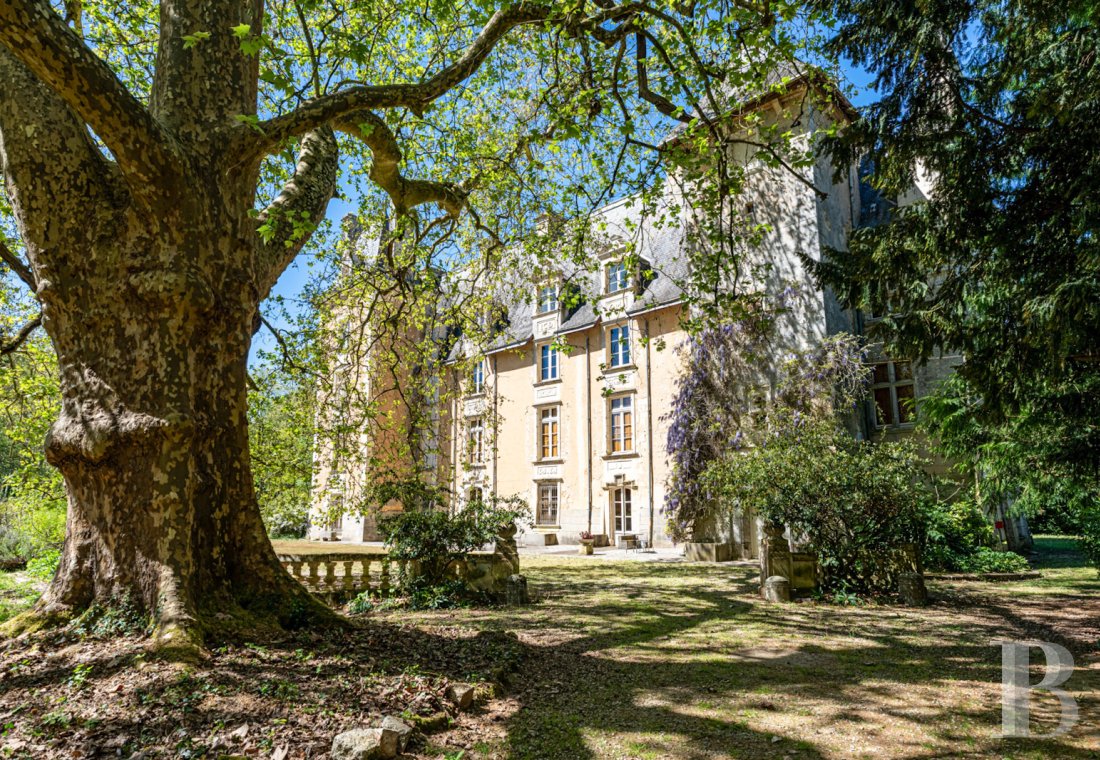
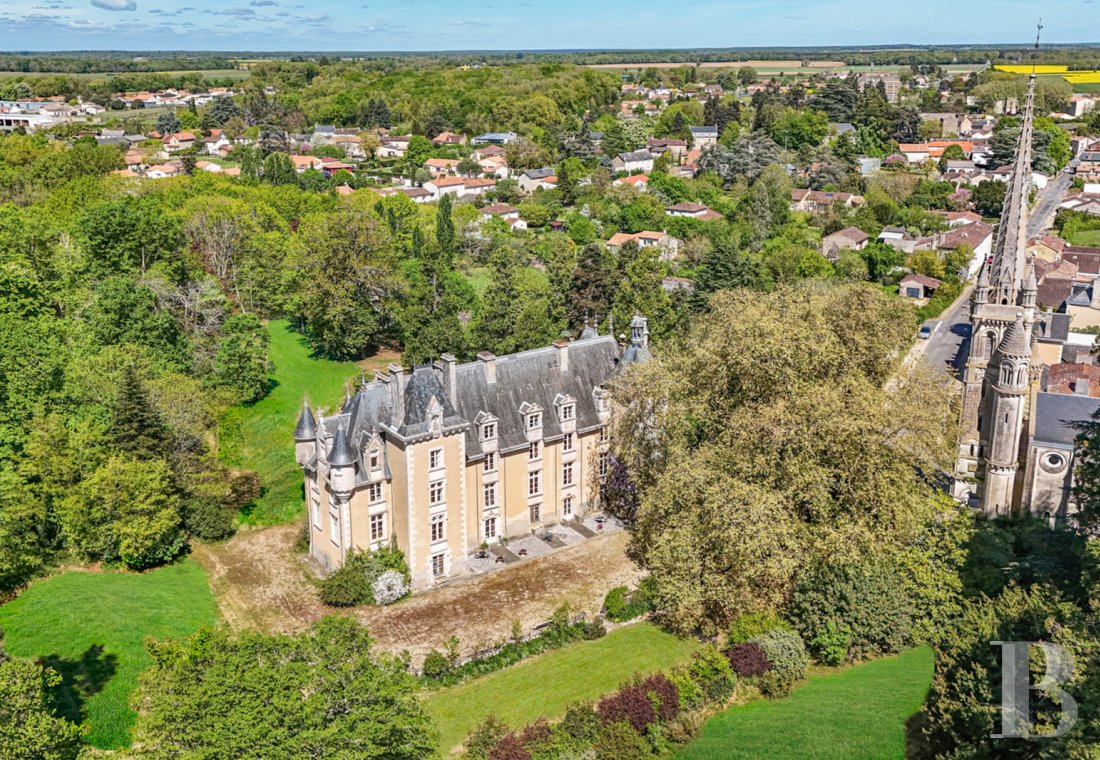
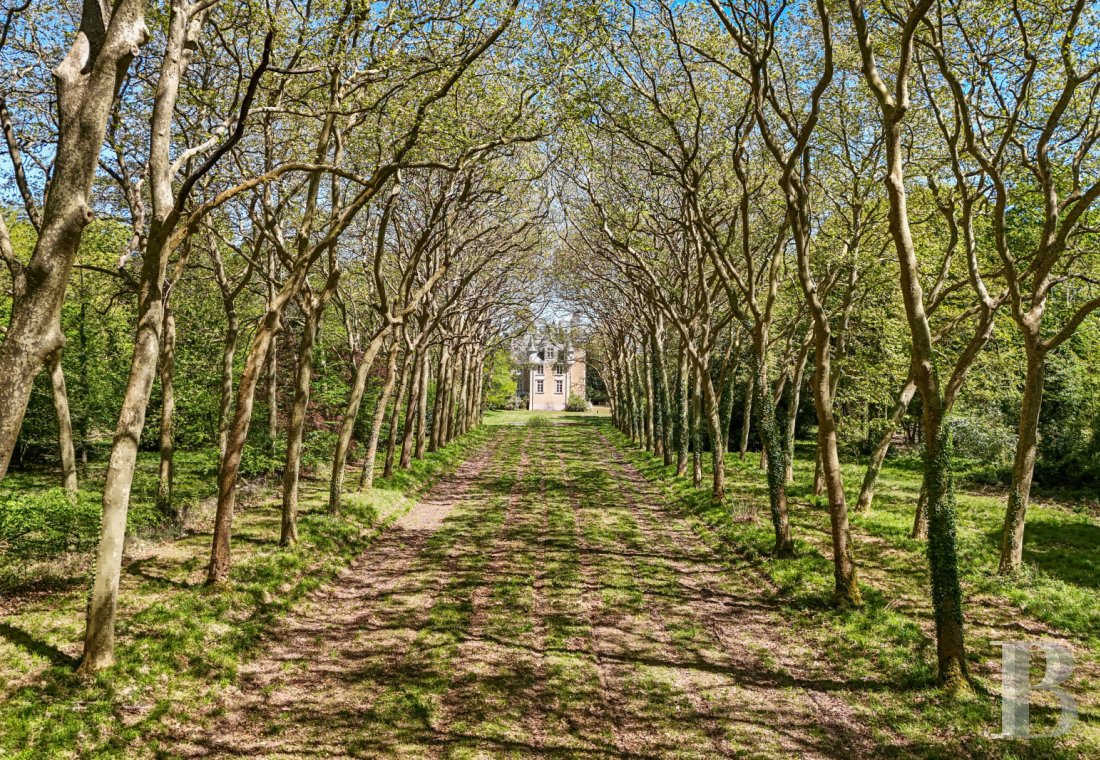
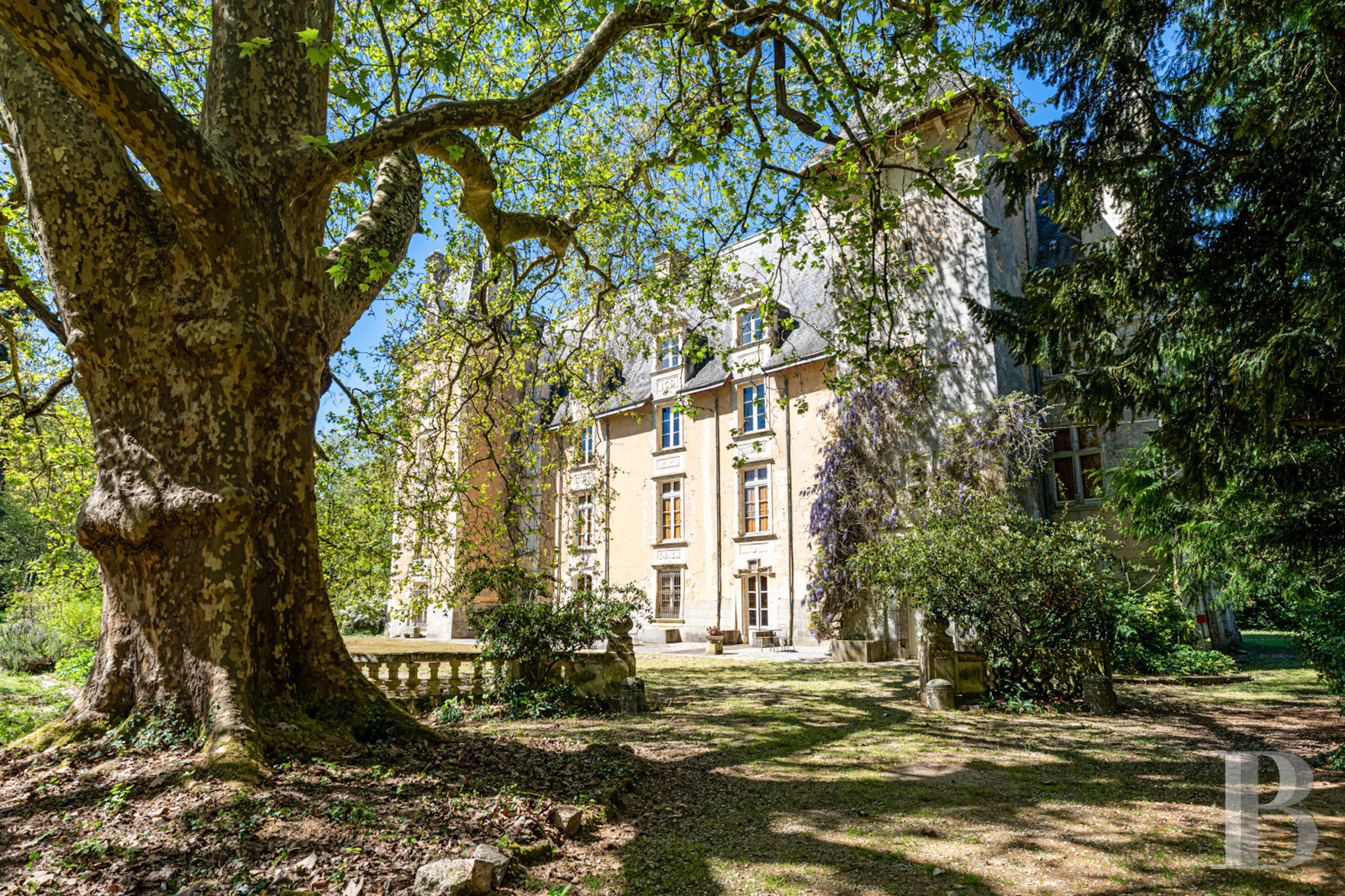
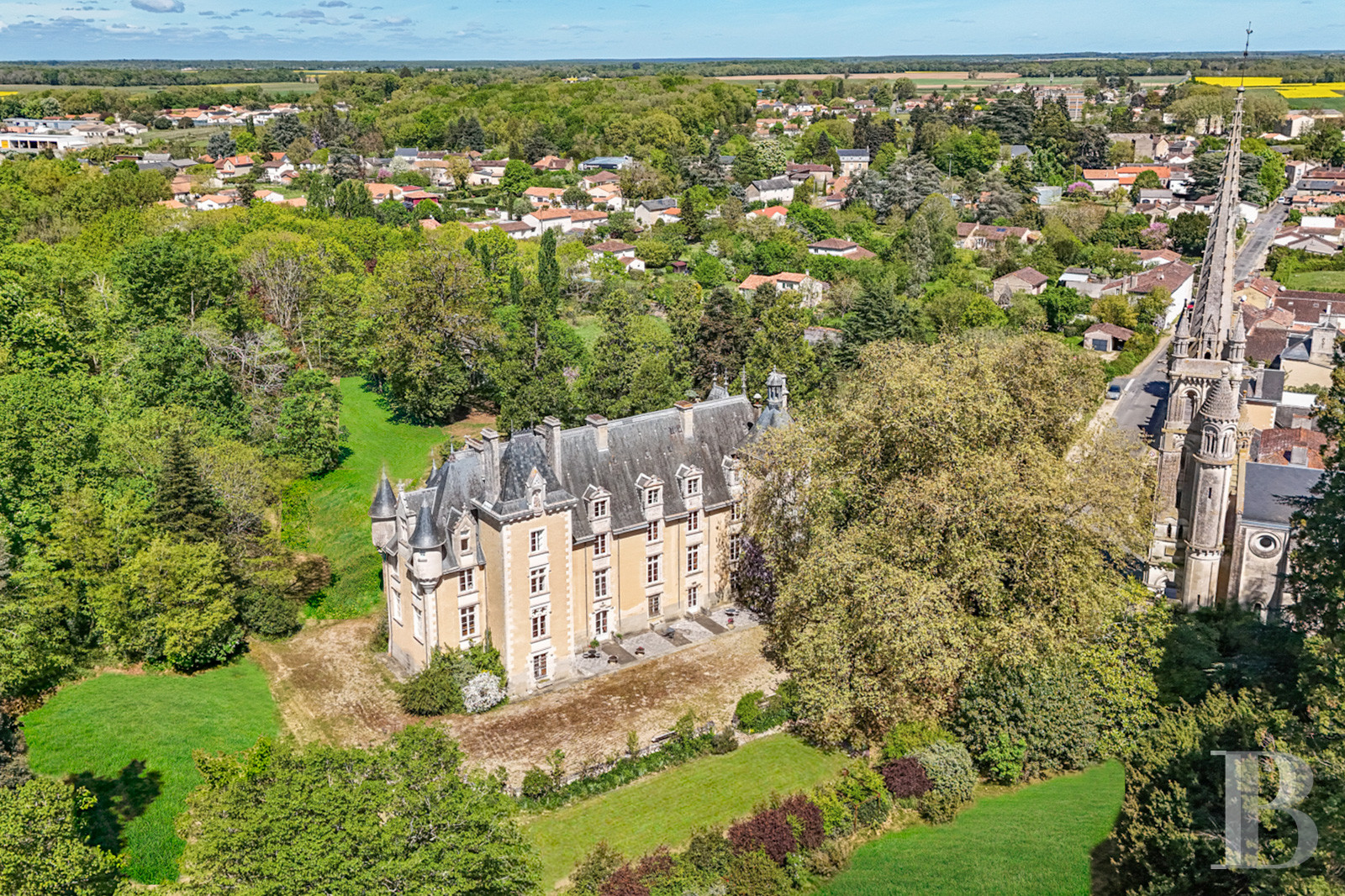
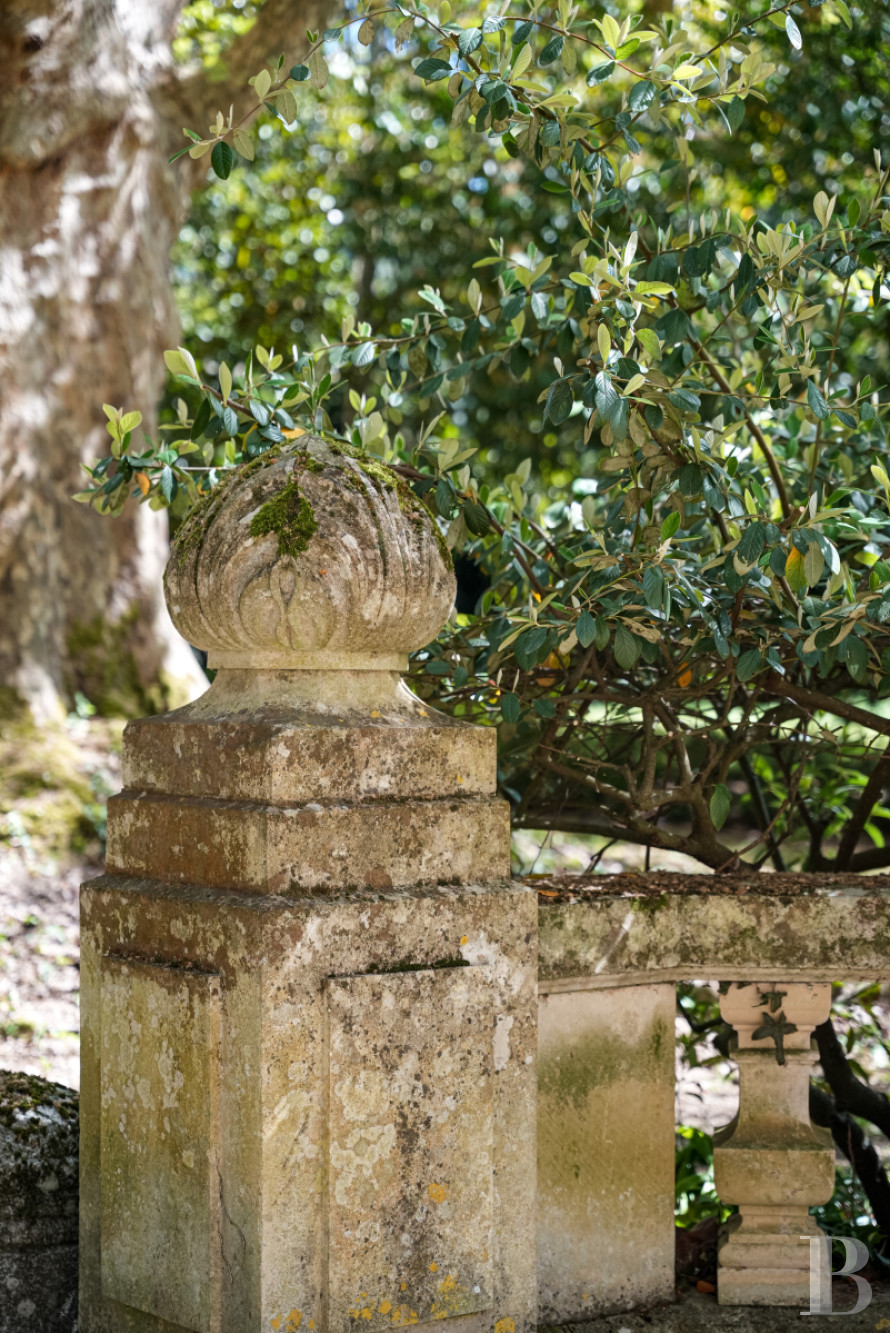
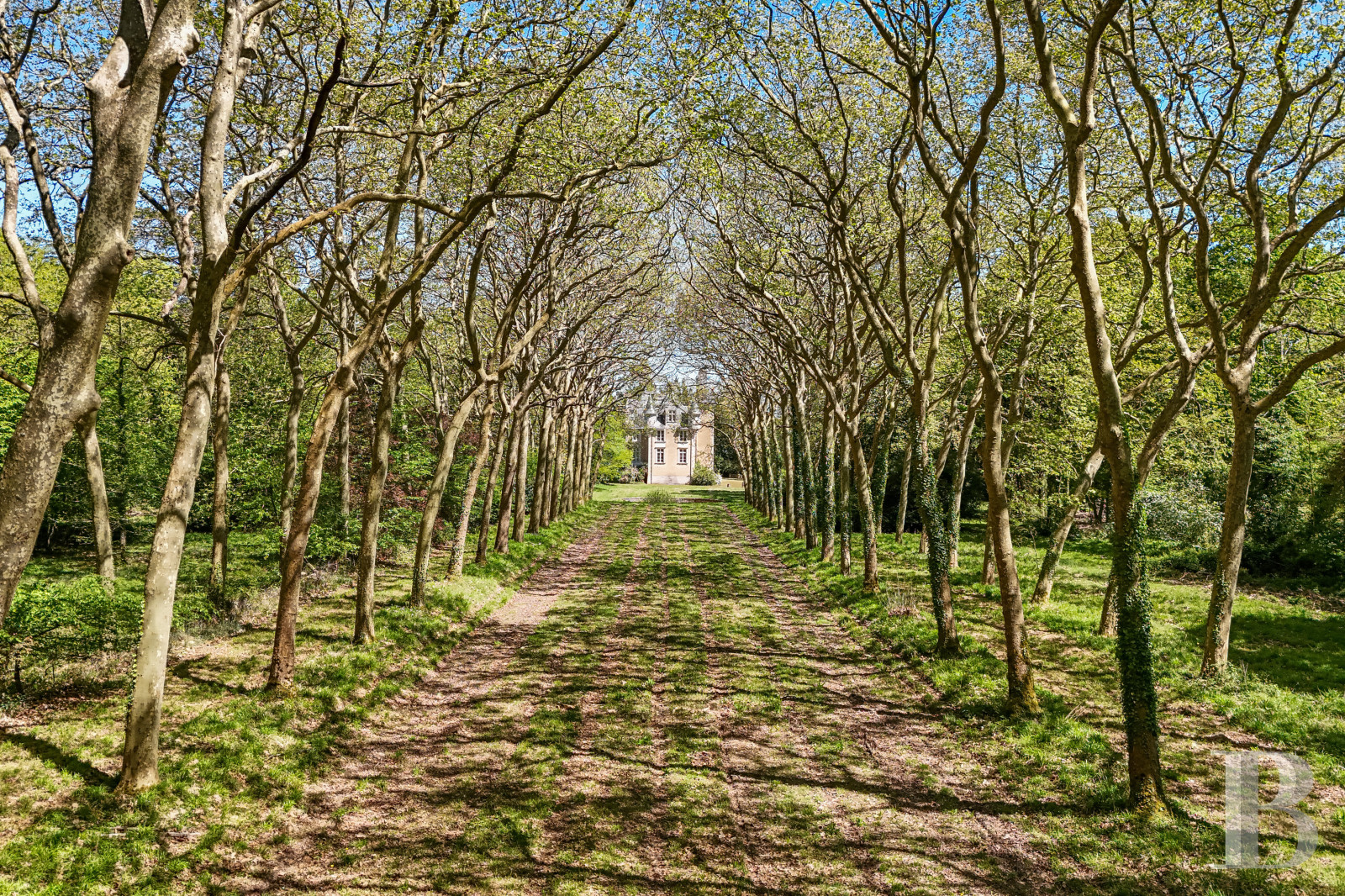
Entered through several gateways, the property lies concealed behind high walls and the canopy of mature trees. From the main entrance, the chateau reveals itself gradually through an avenue of plane trees. The building reflects several phases of construction. From the medieval period, a former keep survives, remodelled in the 14th century and listed on the Historic Monuments register. Its facade, well-proportioned, is articulated by wide windows and dormers. The roof is slated; the walls are rendered with exposed stone quoins. The principal enlargements date from the Renaissance, though the most extensive works were carried out in the 19th century. Watchtowers, dormers, wide windows and pinnacles record these successive periods. In 1356, during the Hundred Years' War, Jean II le Bon is said to have stopped here on the eve of the Battle of Maupertuis. Later, Louis XIV is reputed to have stayed en route to Saint-Jean-de-Luz for his marriage to Marie-Thérèse d'Autriche. On the balustrades of the upper windows, a Latin motto reads: Paix à cette maison — "Peace to this house". To the west, a terrace lined with columns extends into a pergola, with a fountain set on the lawn beyond. The outbuildings, set apart from the chateau, form a cluster of varied uses. The whole is surrounded by parkland, woodland, meadows and an orchard.
The chateau
The ground floor
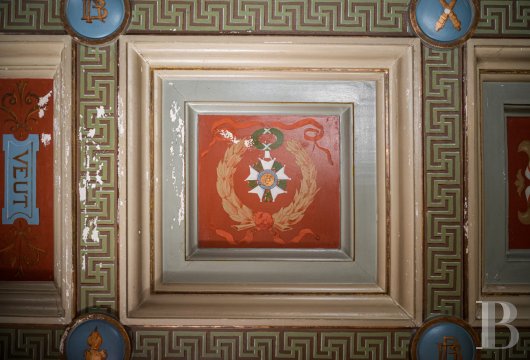
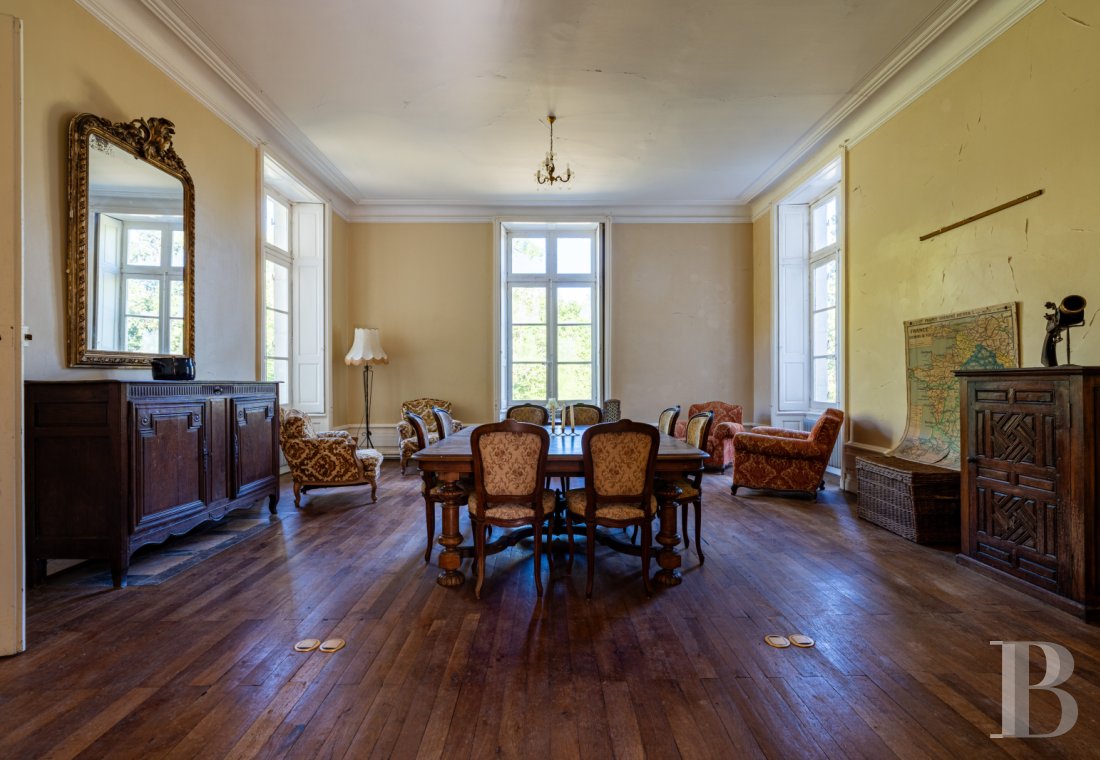
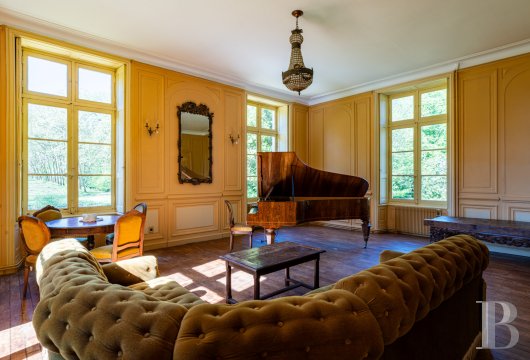
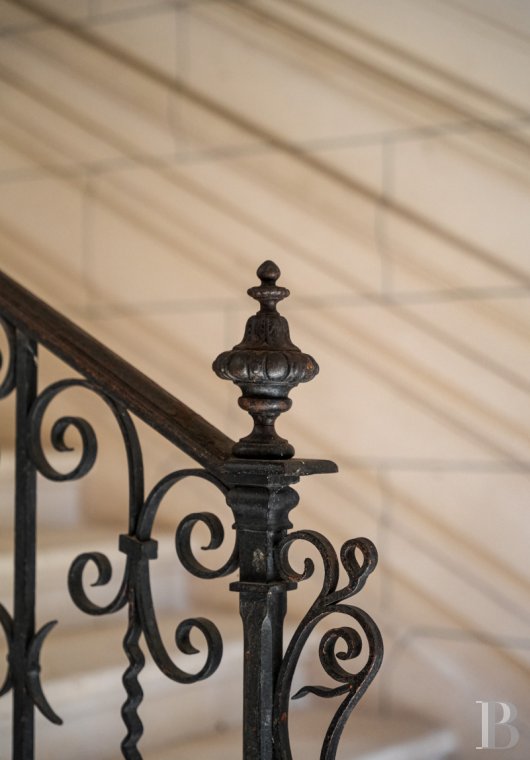
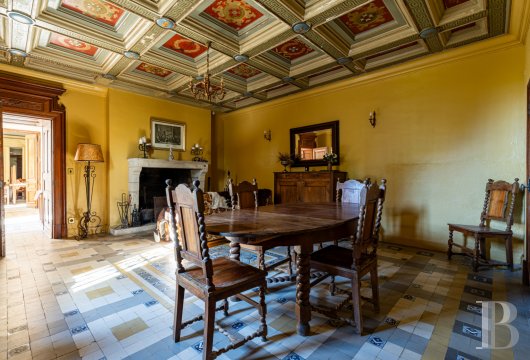
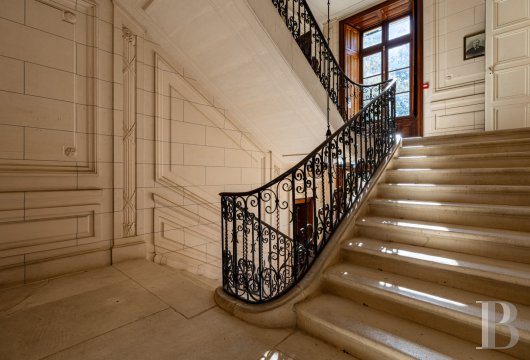
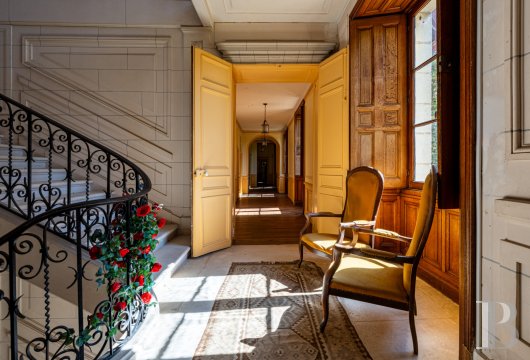
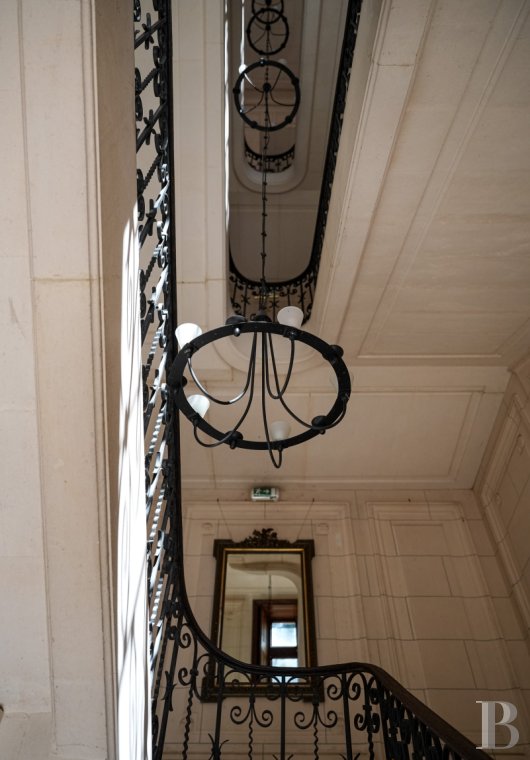
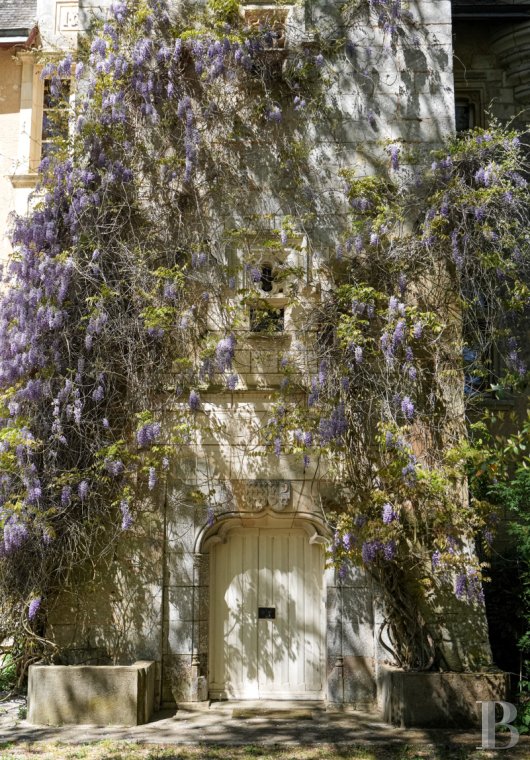
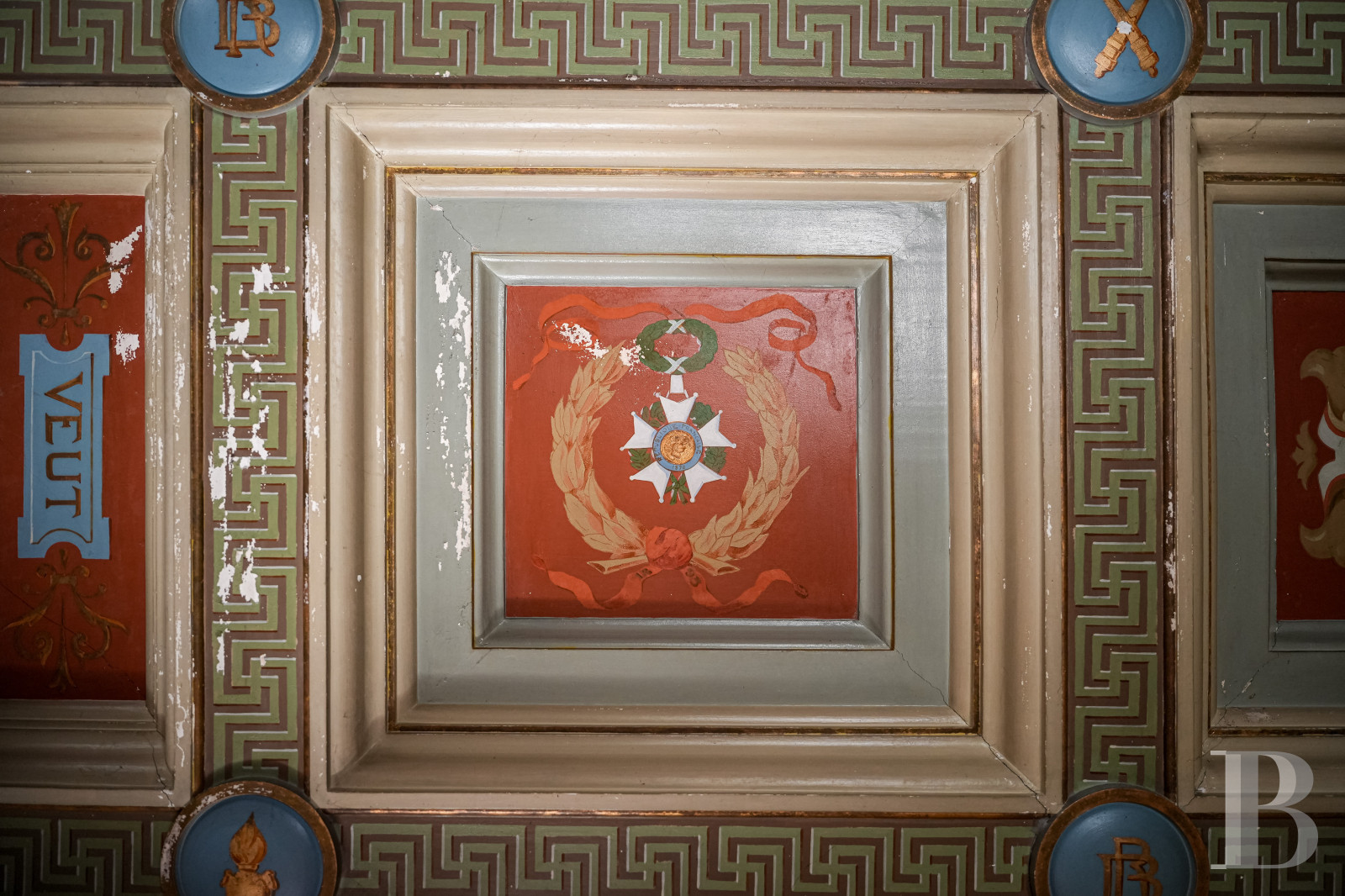
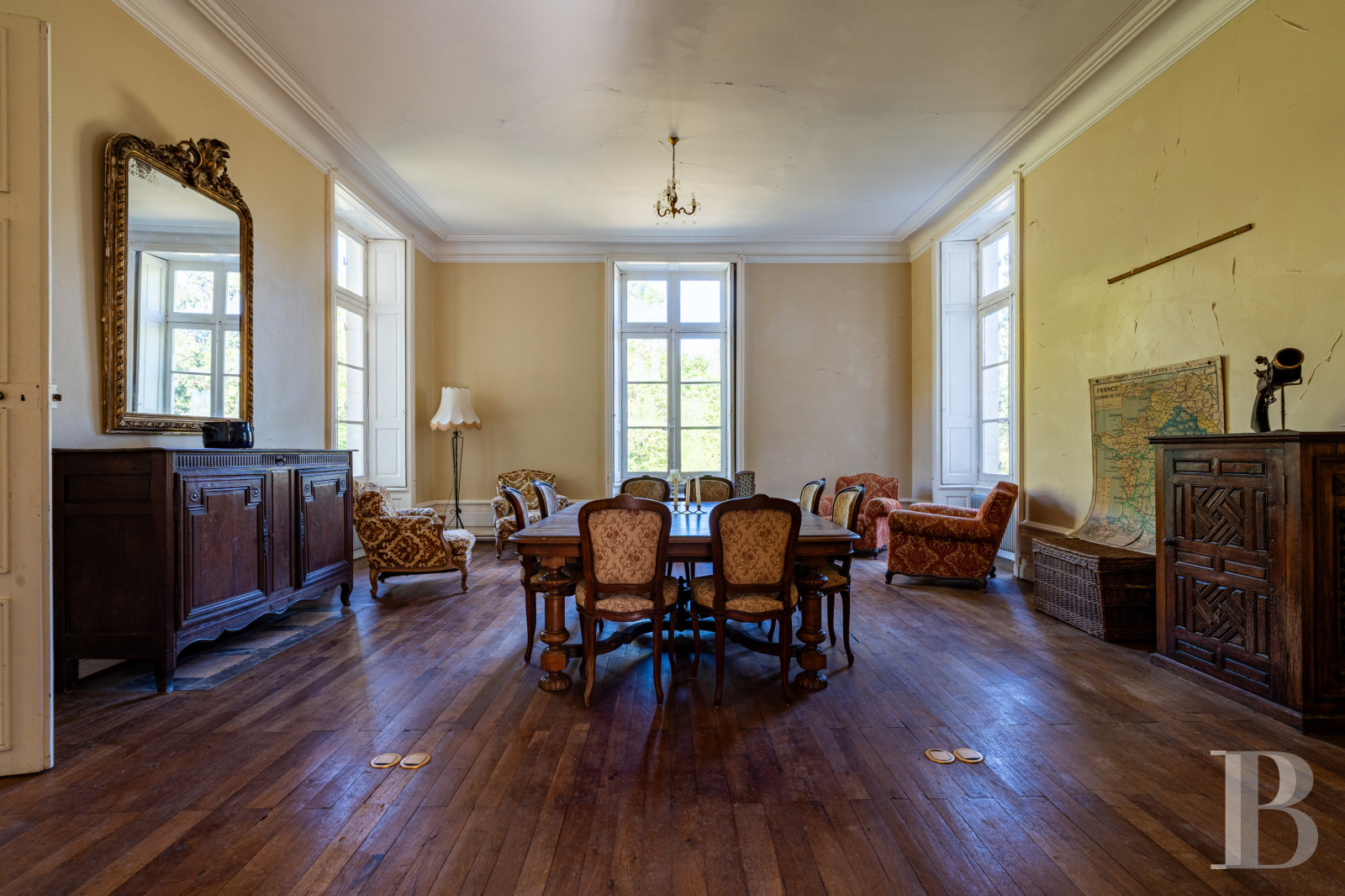
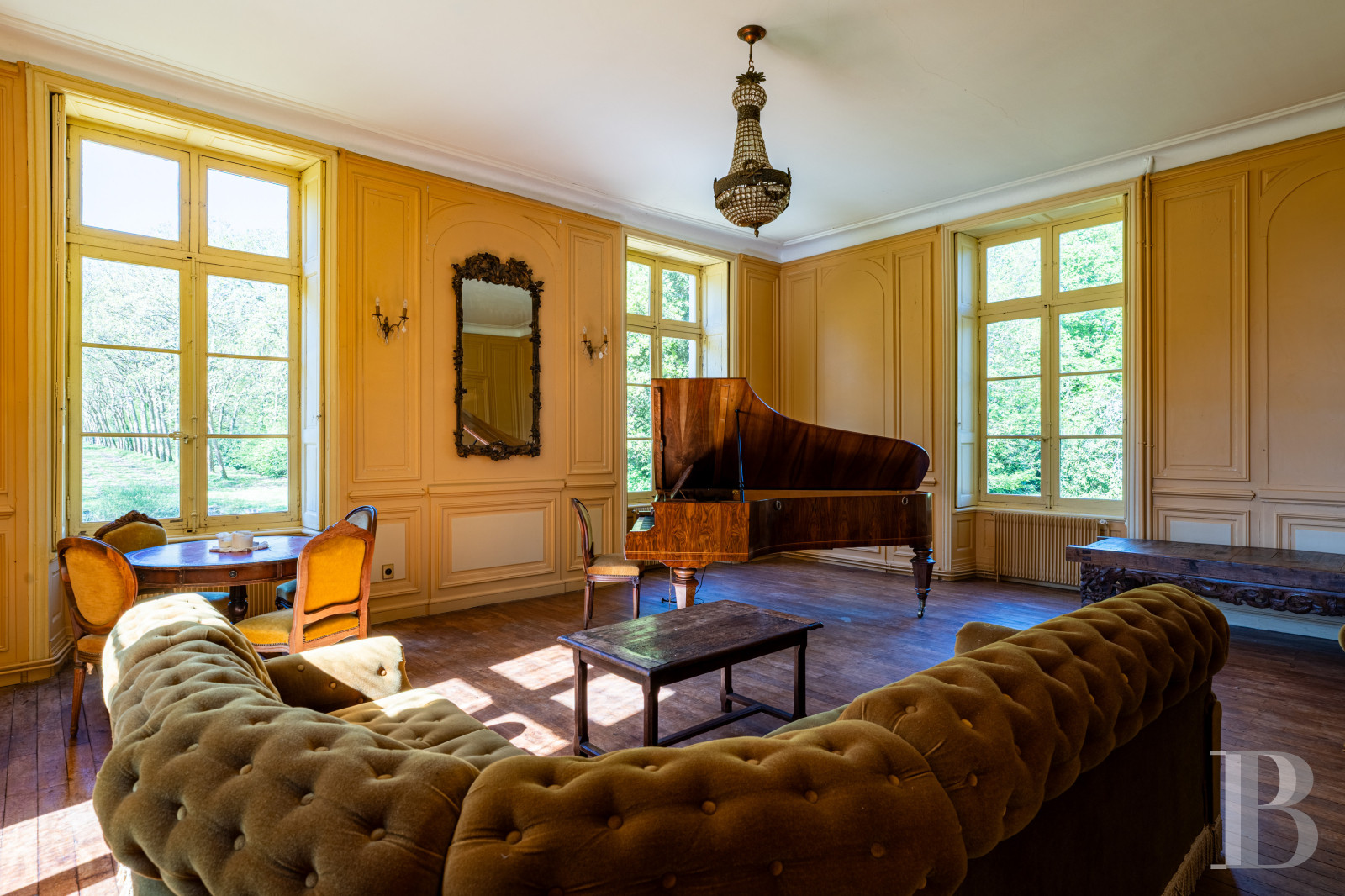
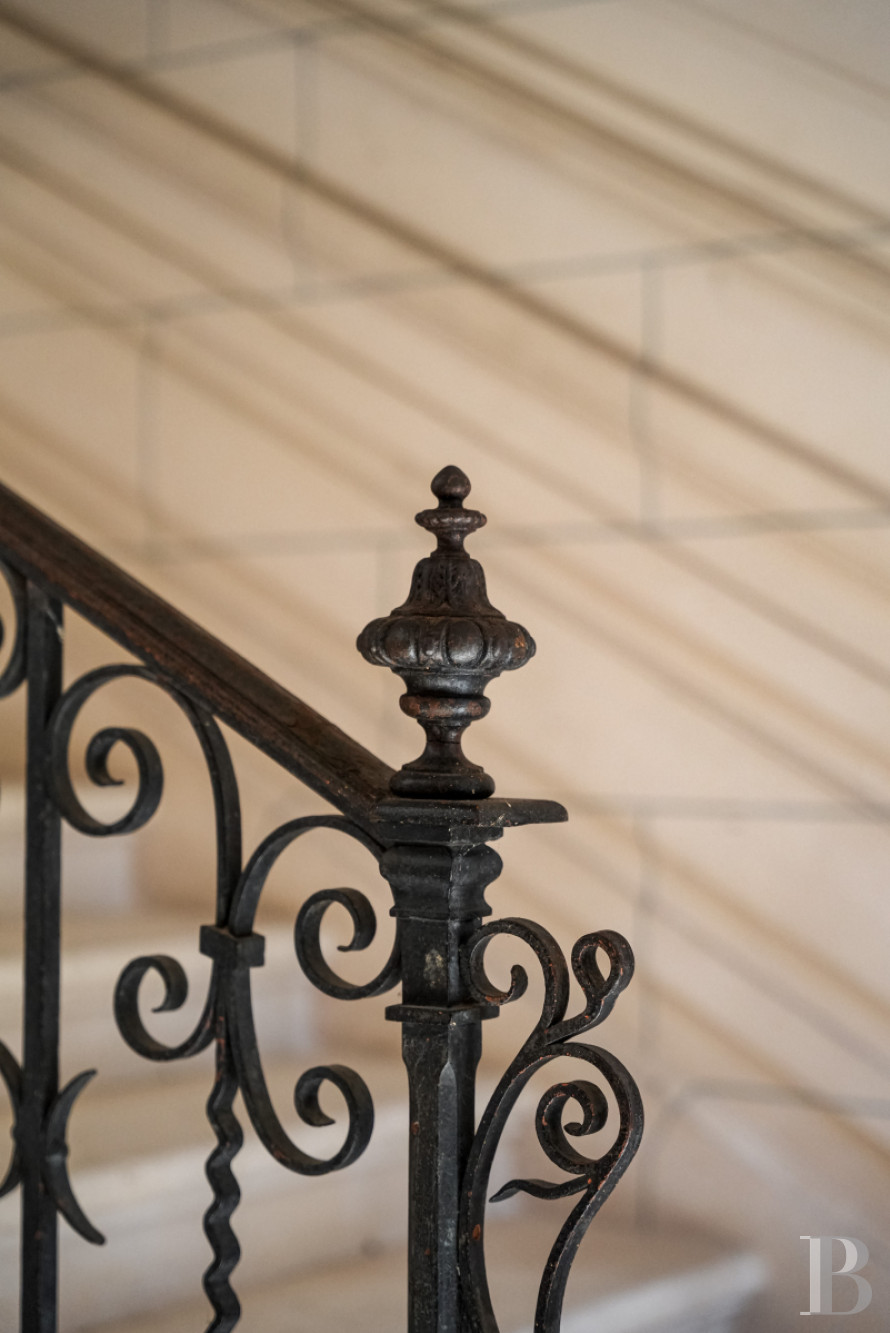
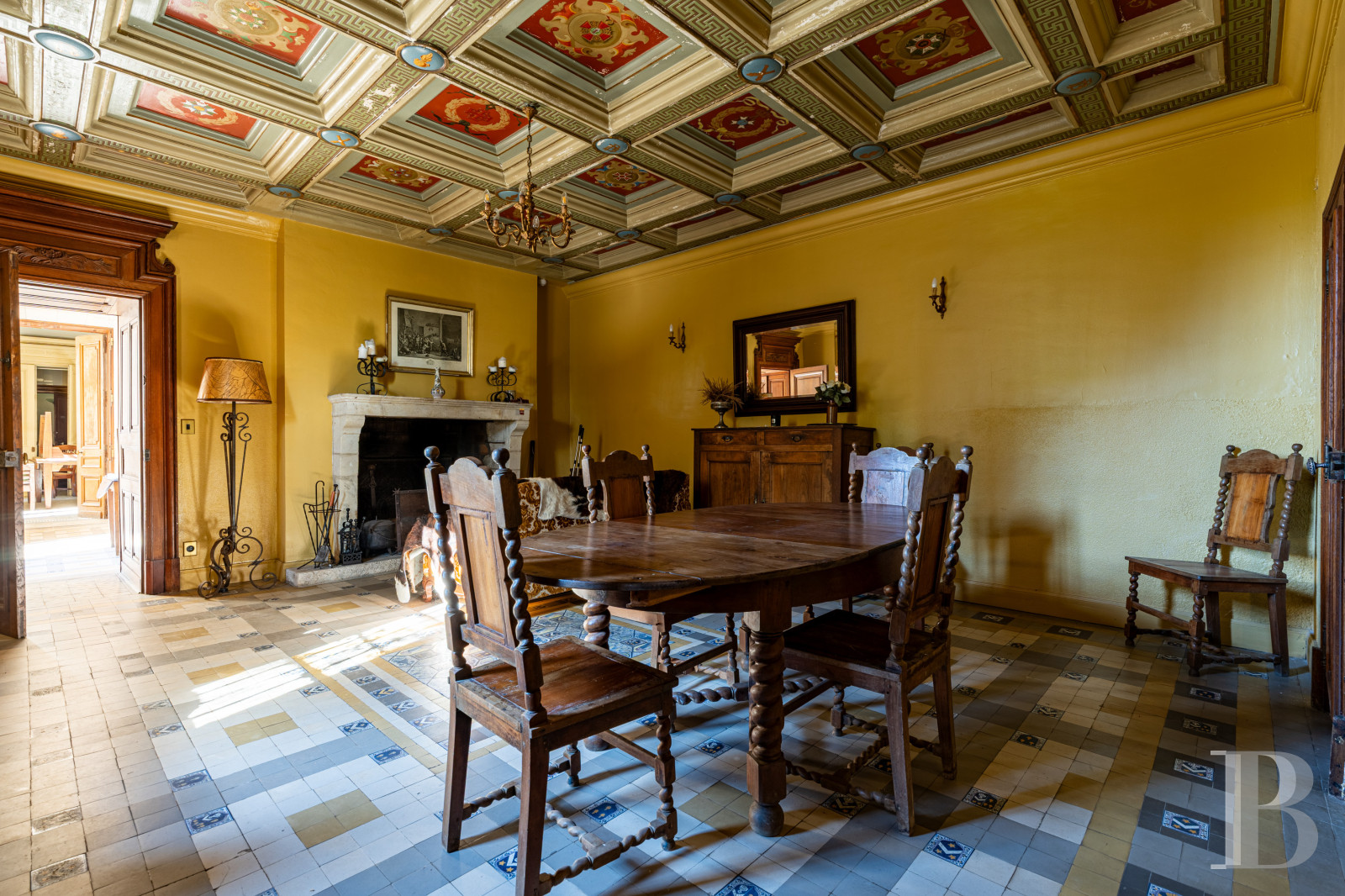
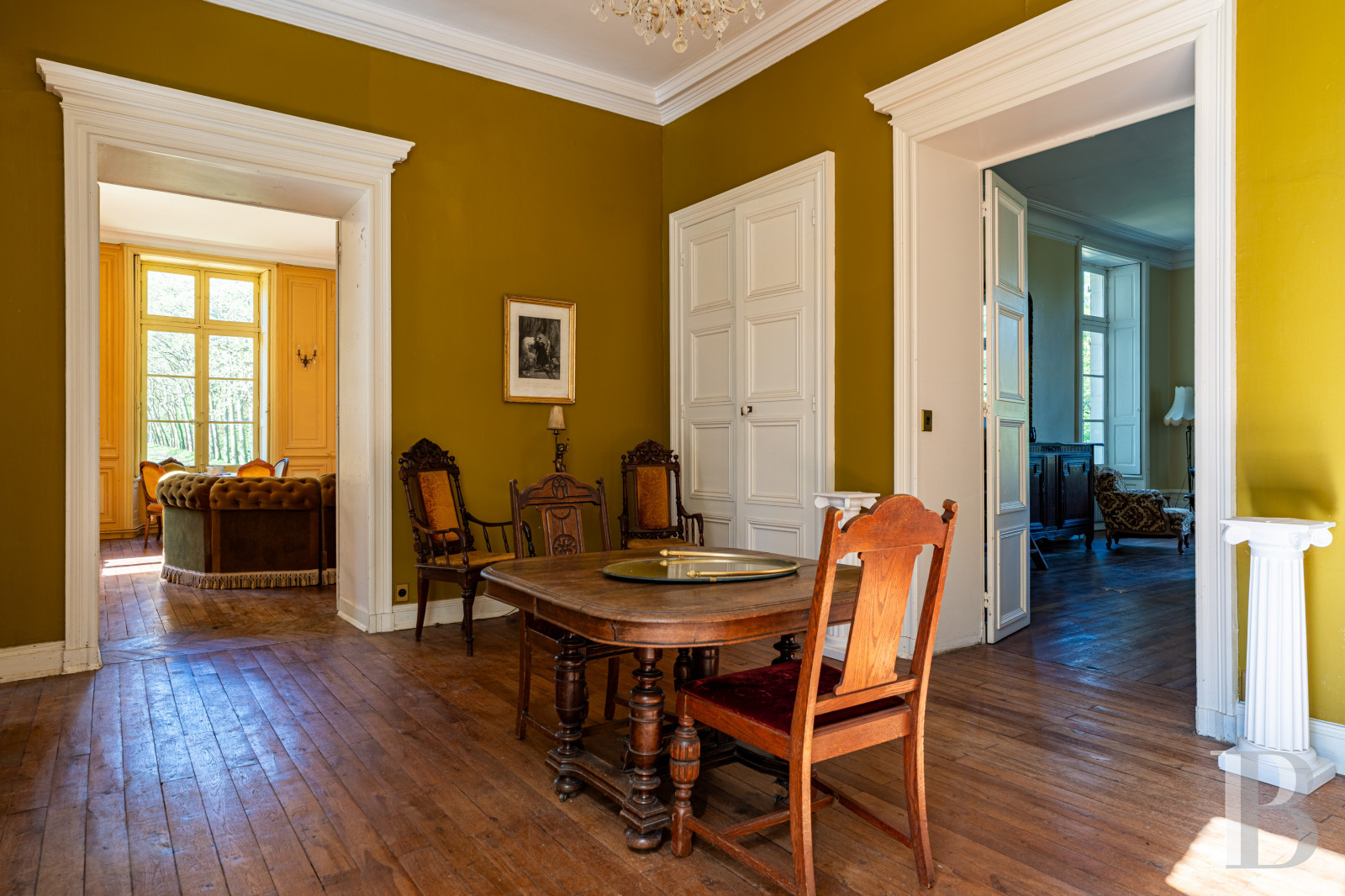
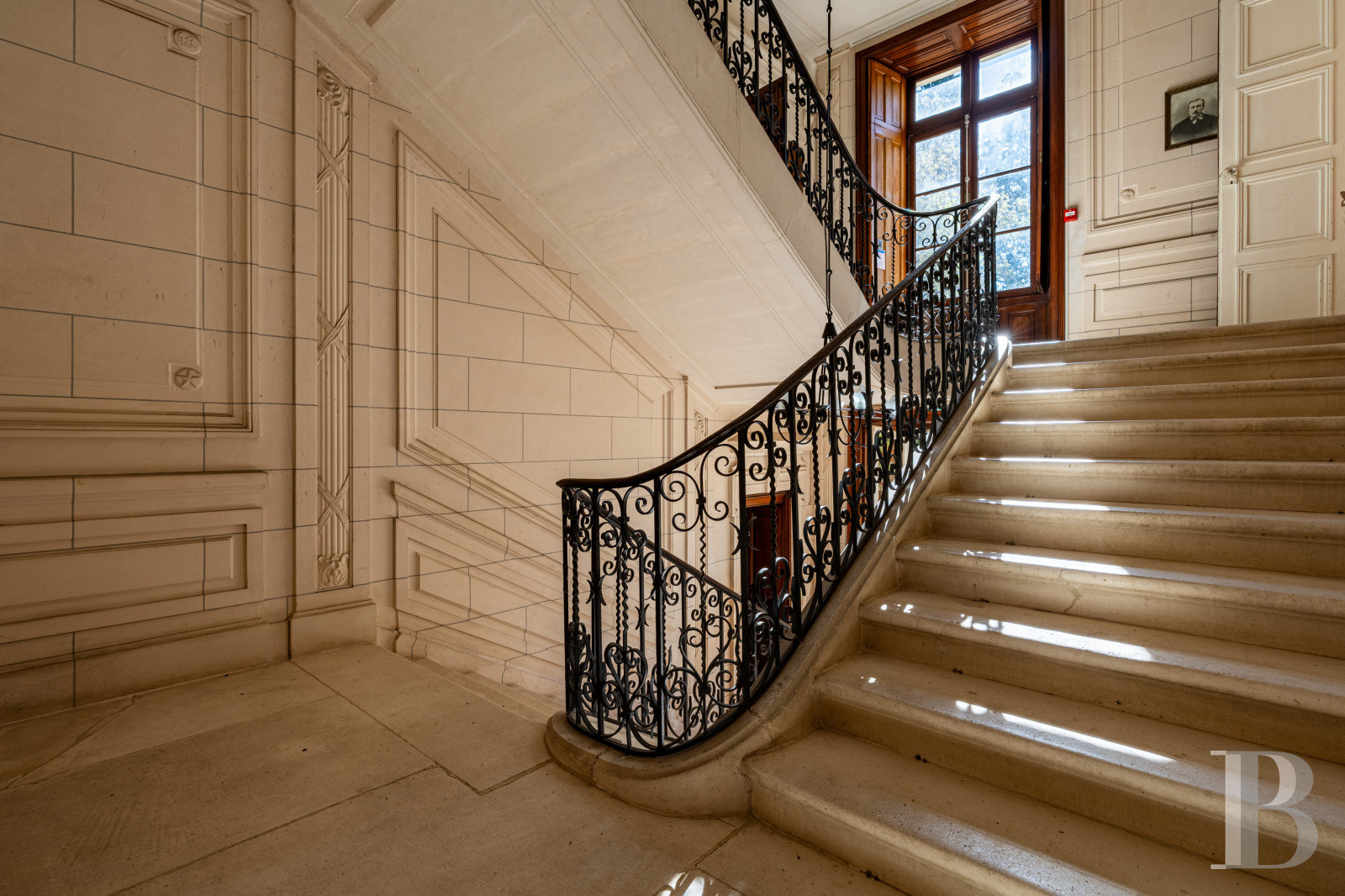
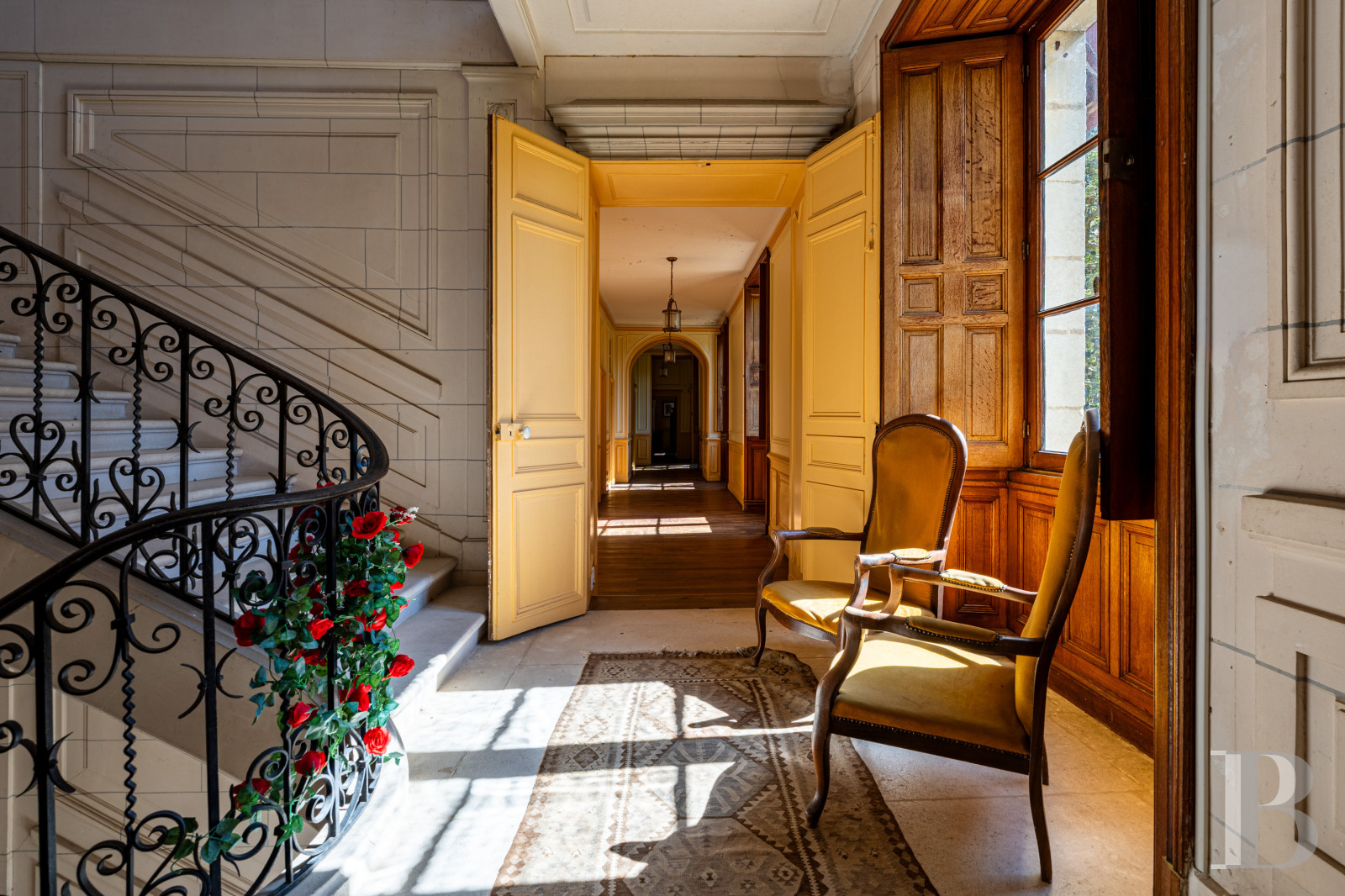
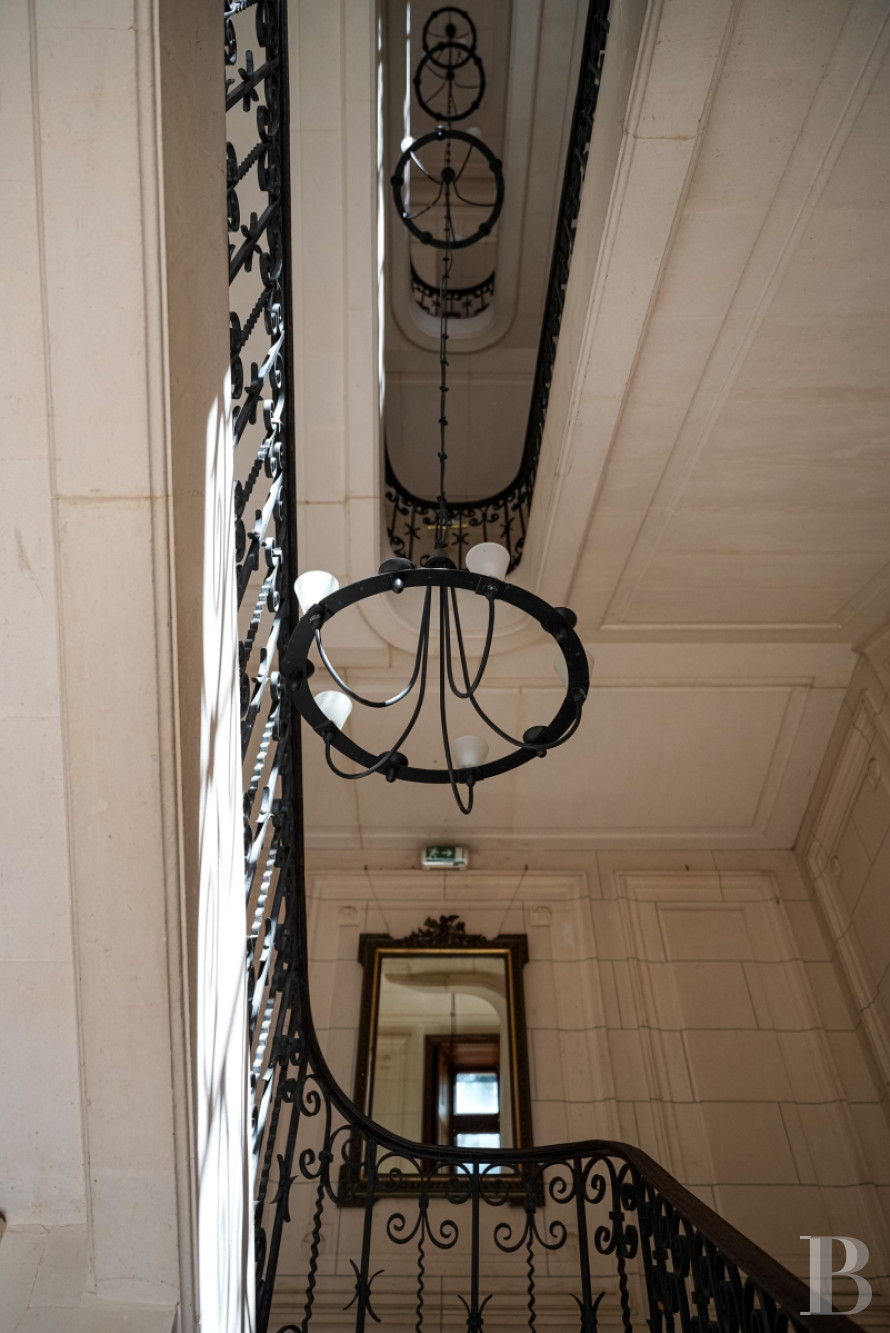
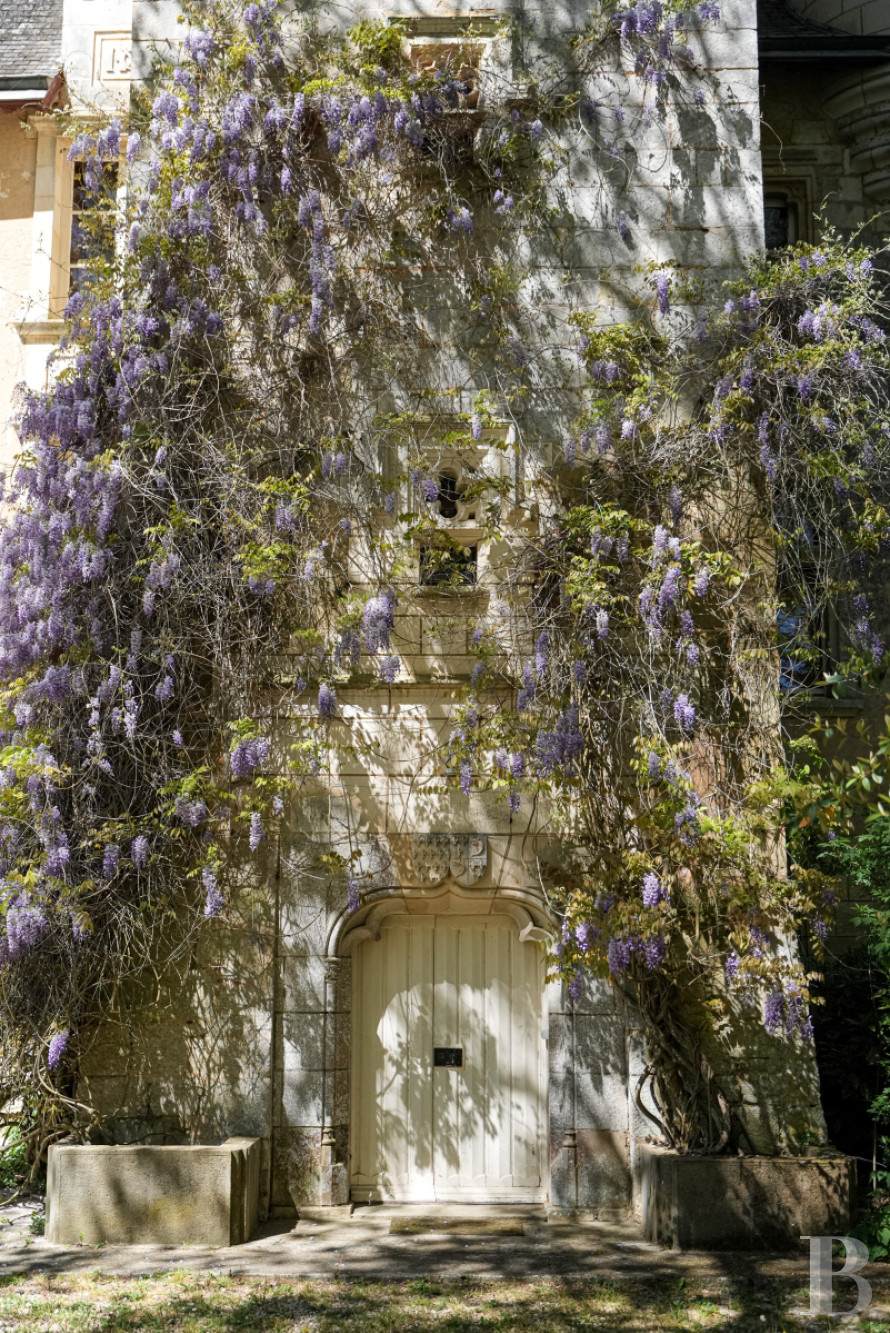
The eastern facade has three separate entrances: one leads to the stair tower, itself listed, the other two to the main and service entrances. The tiled entrance hall commands an imposing stone staircase with a wrought-iron balustrade. It also distributes three rooms: a dining room, a sitting room and a corridor. The corridor is marked by a series of pigeon-holes once assigned to the huntsmen, then used by the sisters during the period when the chateau housed a Benedictine community until the 2000s. The sitting room, open to the garden through numerous windows and French doors, retains a 19th-century tiled floor, a marble fireplace and wooden panelling. It also leads to several service rooms: a utility room connected to a storeroom and a secondary staircase, a lavatory and a smaller room. The small dining room, its coffered ceiling painted with the arms of the Beauchamp family — who directed the chateau's 19th-century transformation — and fitted with a stone fireplace, connects to the service entrance. This opens onto two kitchen rooms, with an exit to the exterior and access to a secondary staircase, older than the main one, housed in a 14th-century tower. The stone staircase, winding with an open well, also serves a back kitchen with lavatory and access to a third cellar.
The first floor
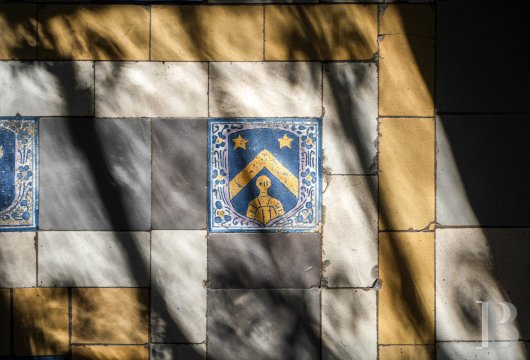
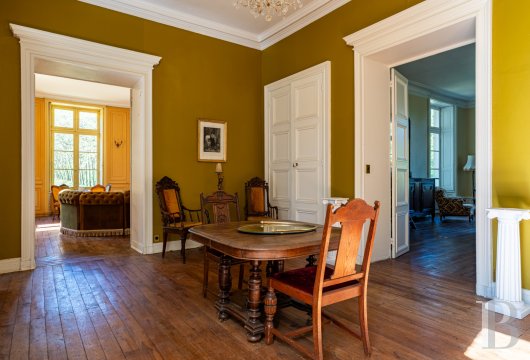
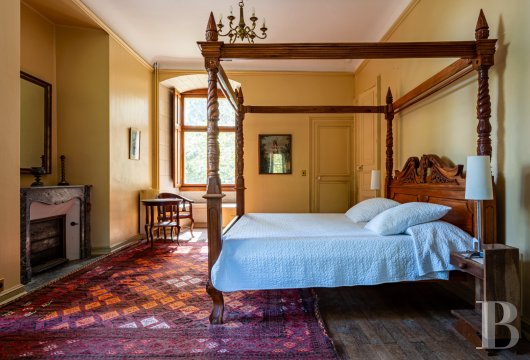
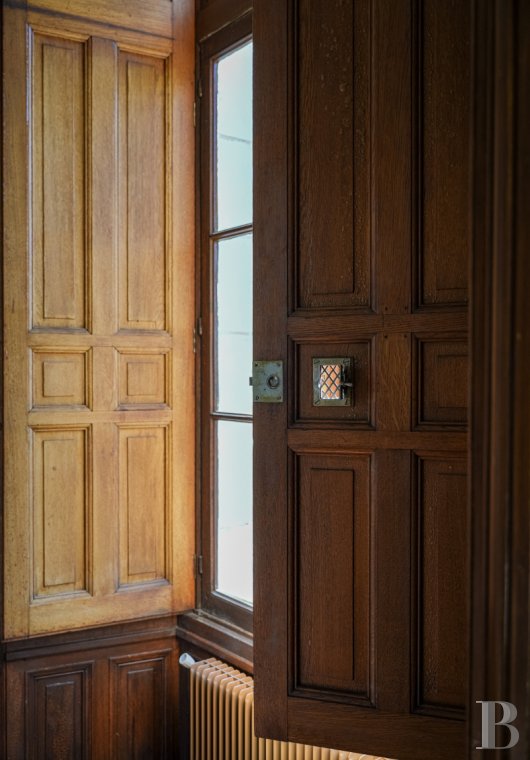
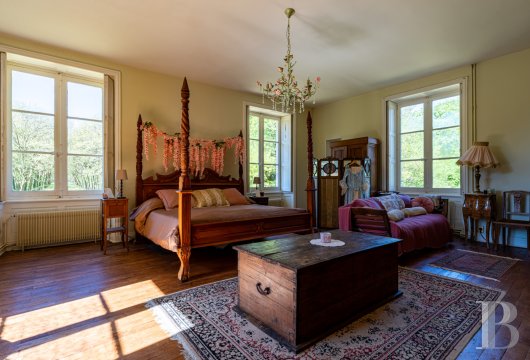
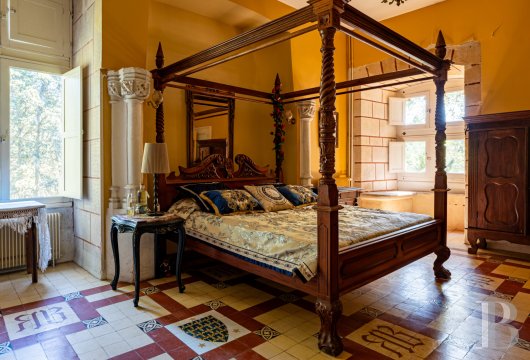
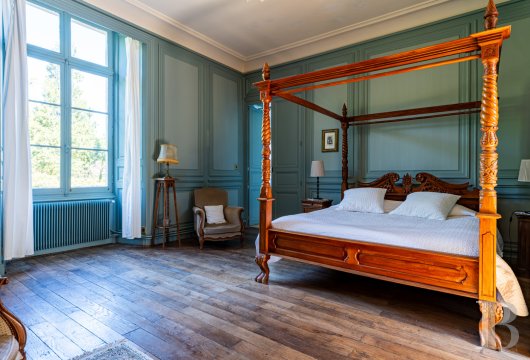
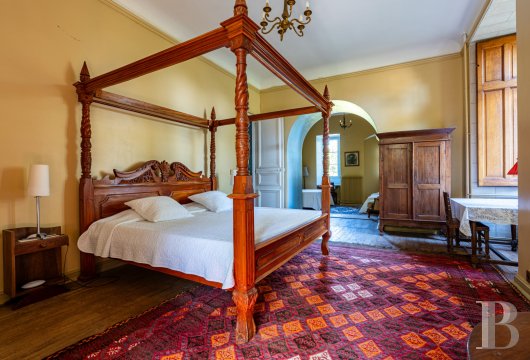
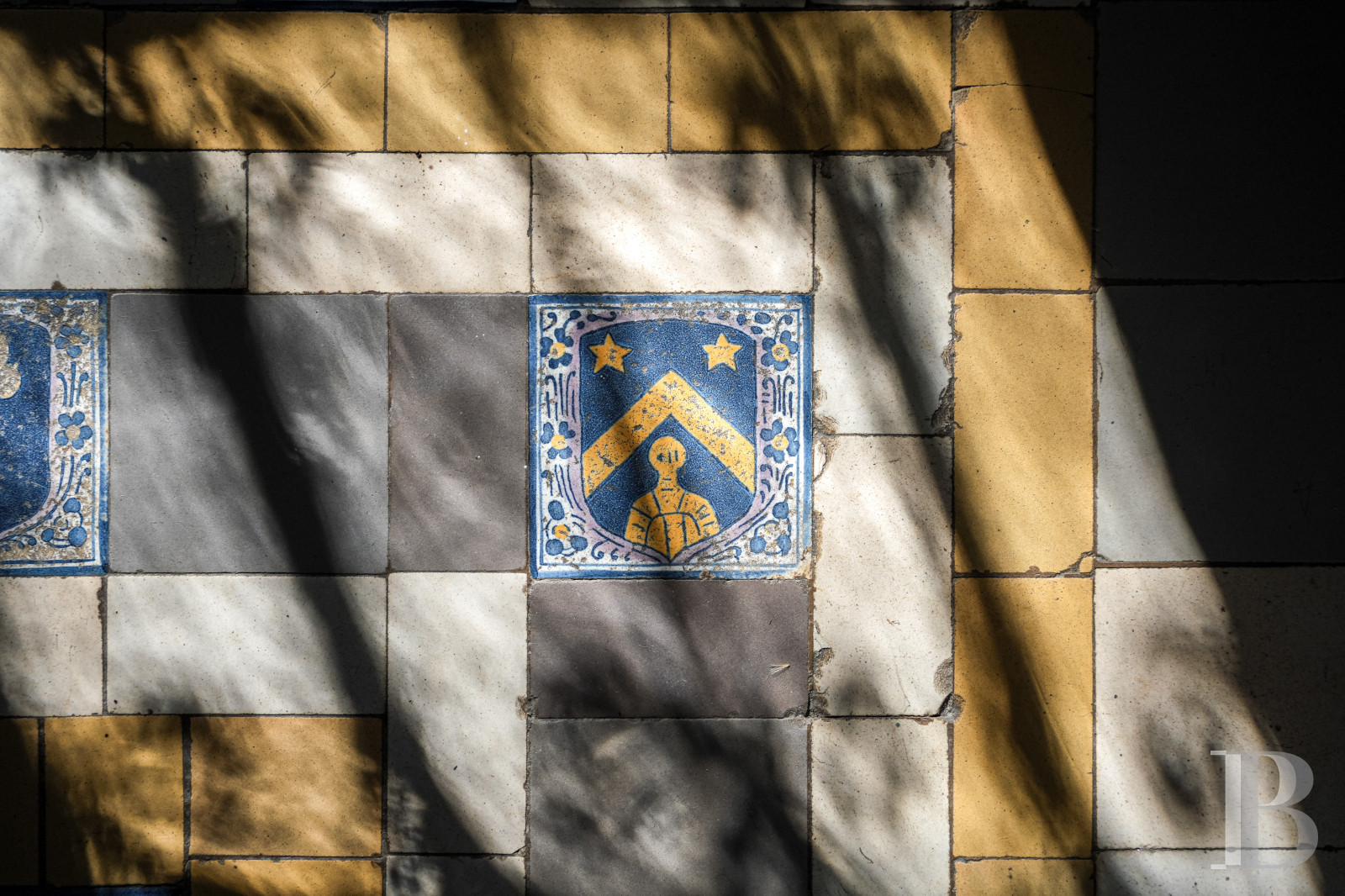
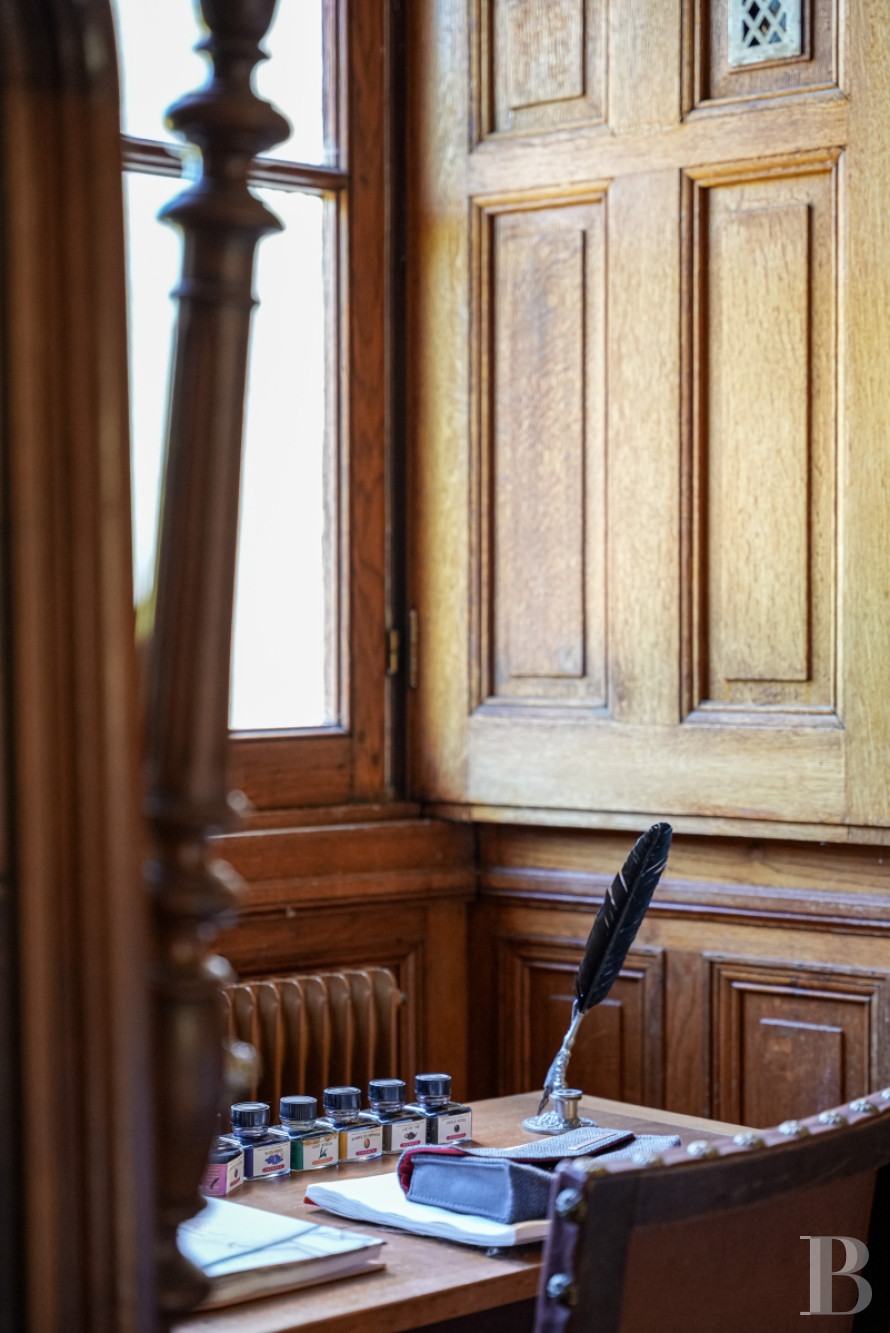
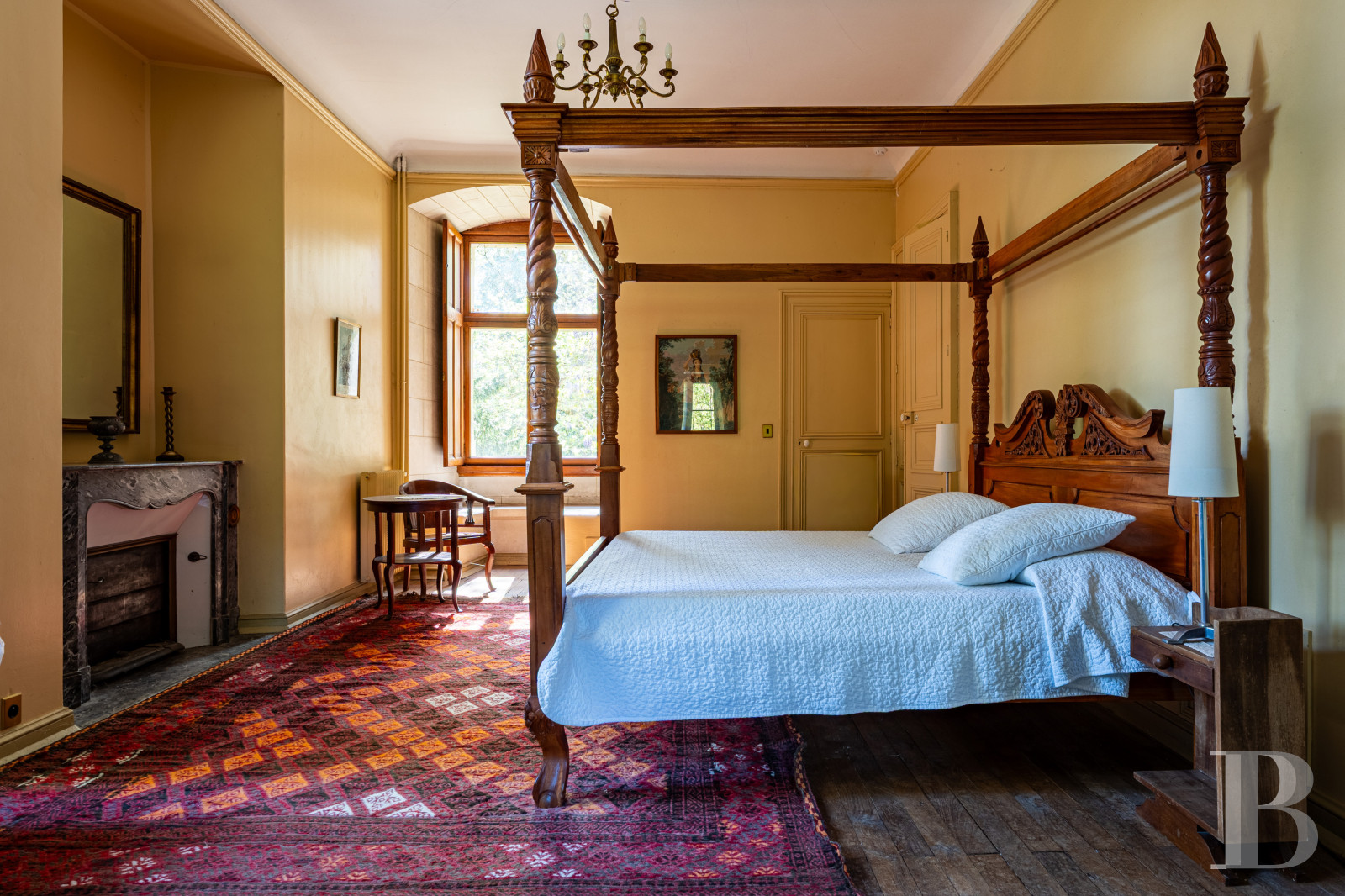
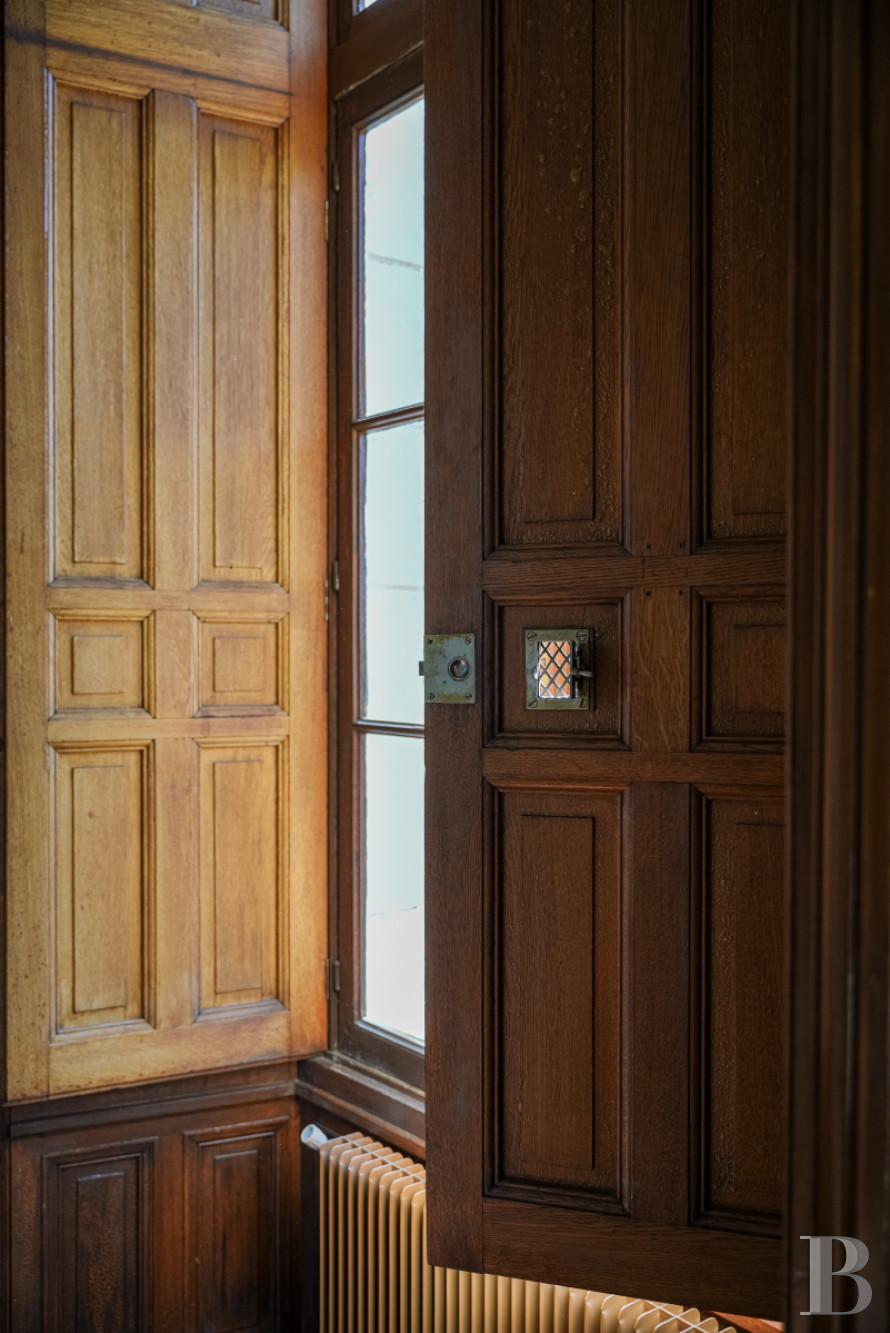
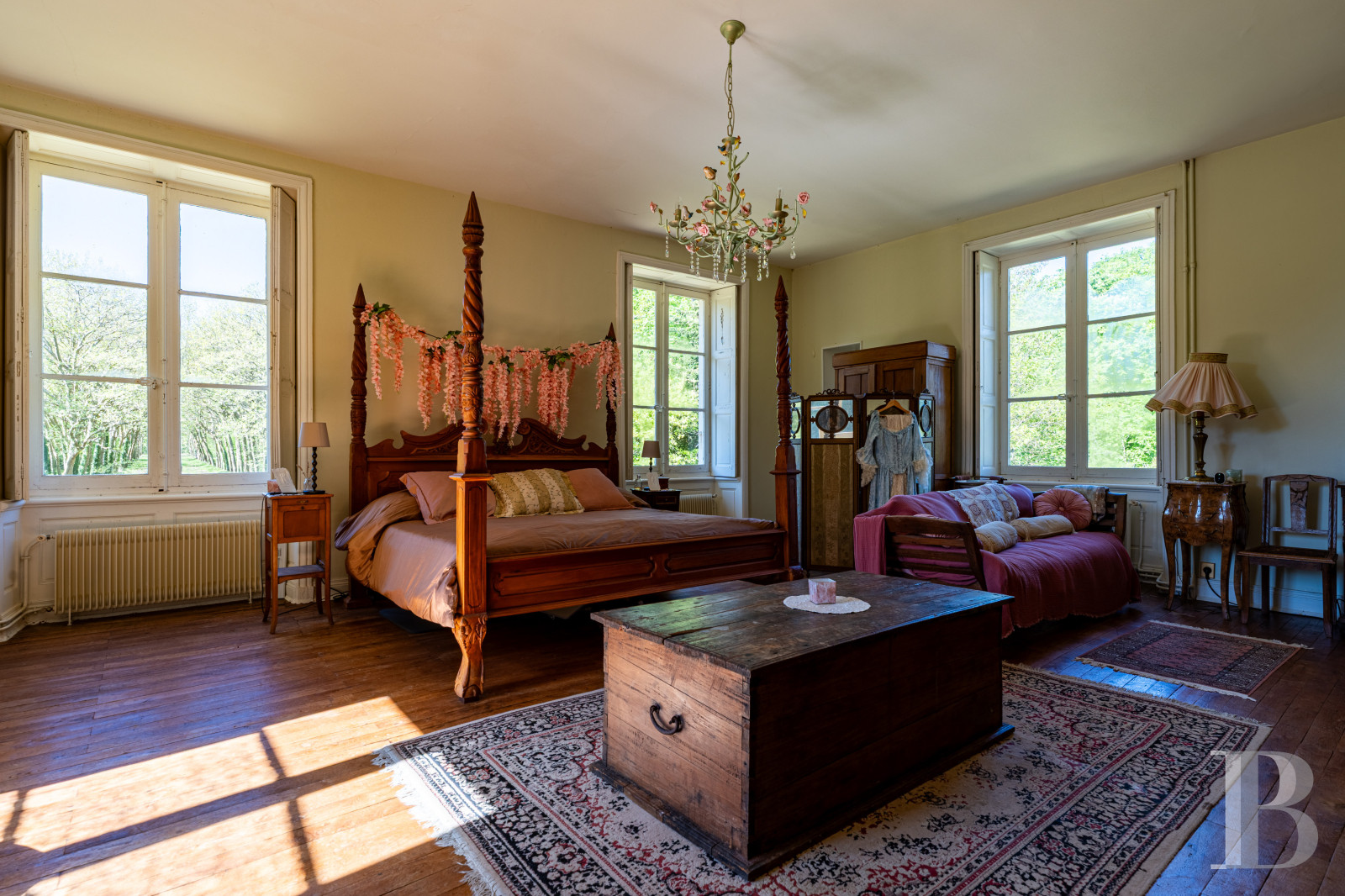
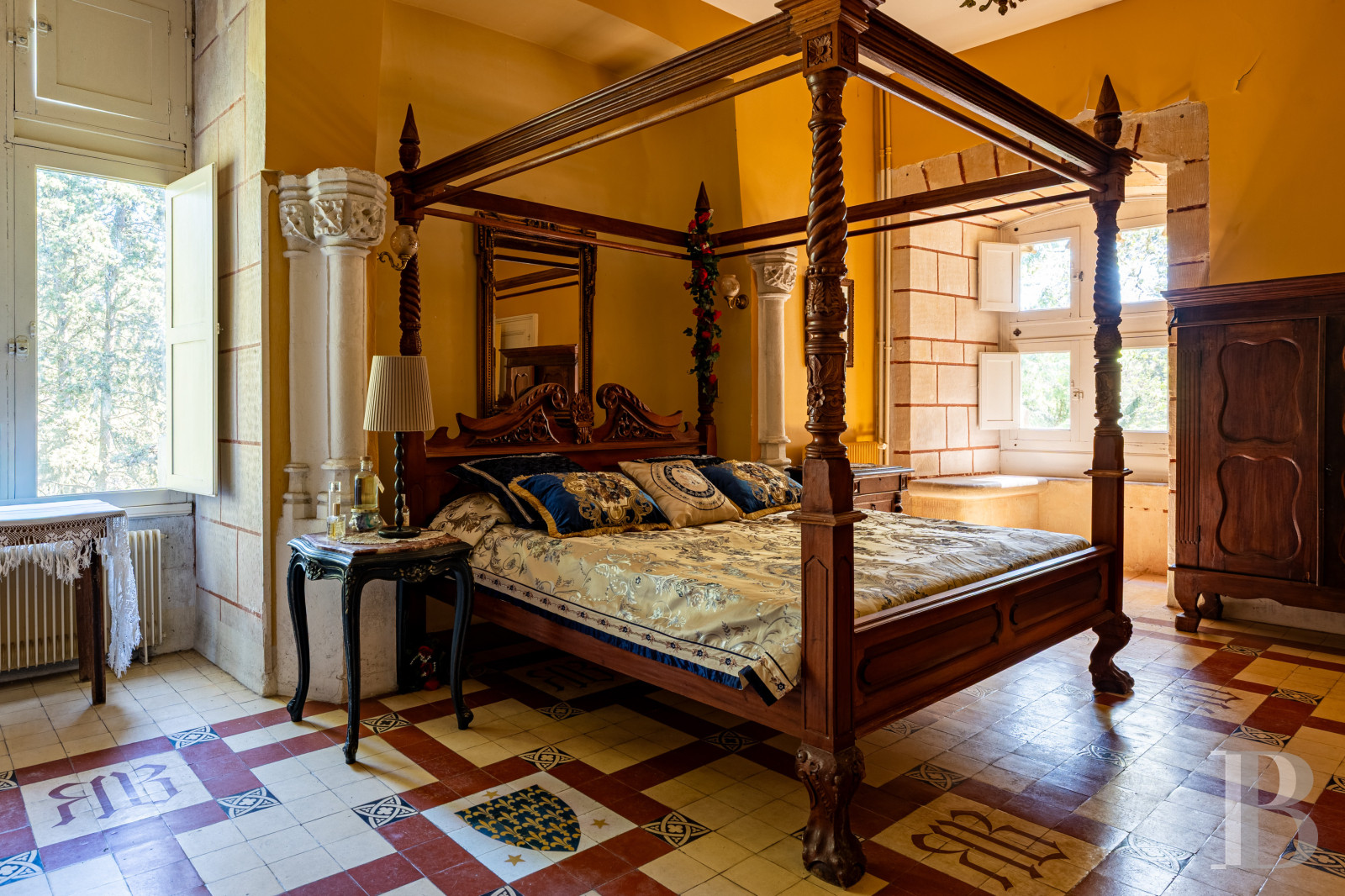
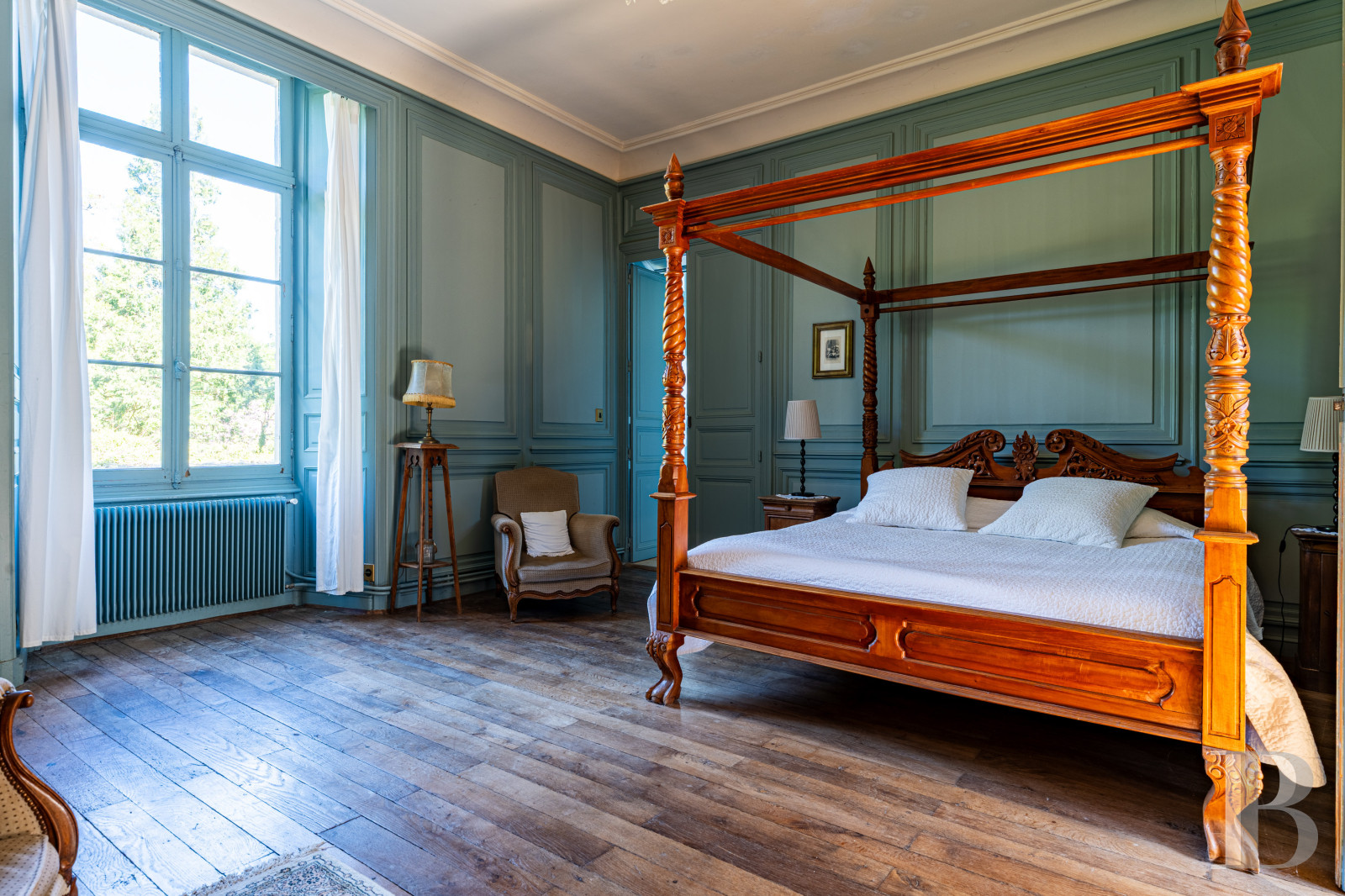
At the top of a stone staircase with a wrought-iron handrail, a landing and then an anteroom distribute two reception rooms and a library, each with wooden panelling and white marble fireplaces. Opposite the staircase, a door opens onto a corridor serving three bedrooms, each with its own bathroom and lavatory. Here too, extensive wooden panelling contrasts with marble fireplaces. The entire level is parqueted, with the exception of the largest bedroom, whose floor is paved with armorial tiles.
The second floor
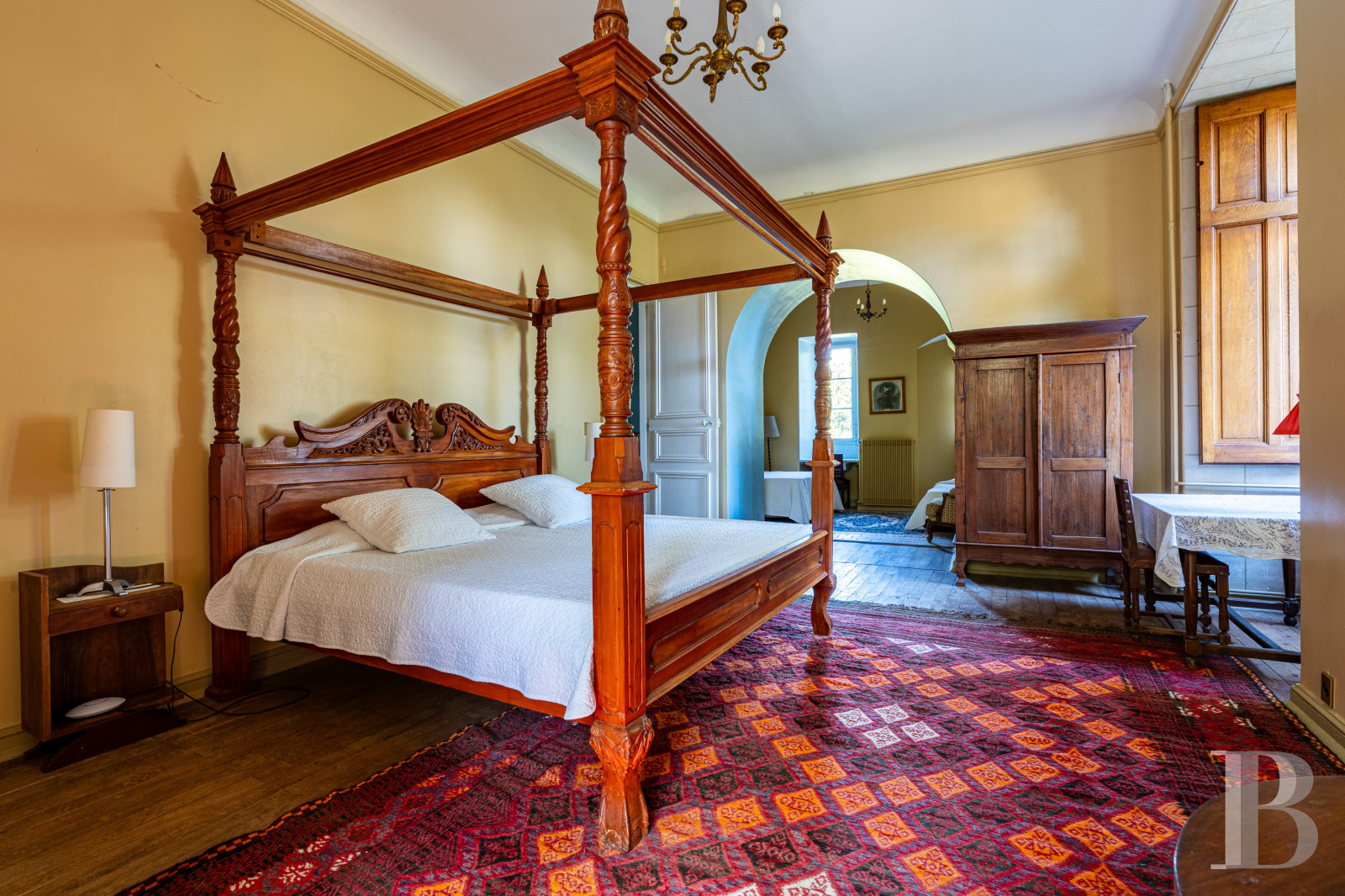
Reached by the main staircase, a landing distributes on one side three bedrooms, a bathroom and a separate lavatory; on the other, a corridor serving three bedrooms with a shared bathroom and lavatory. The level is entirely parqueted, with the exception of one bedroom, laid with 19th-century tiles.
The third floor
Also reached by the main staircase, a landing leads on one side to a double bedroom, two further bedrooms, a bathroom and a separate lavatory. On the other side, a corridor serves two communicating bedrooms linked by a small sitting room, a bathroom with lavatory, and a self-contained apartment comprising two bedrooms, a sitting room and a bathroom with lavatory. A concealed door gives access to the attic. Floors throughout are encaustic tiles, with the exception of one bedroom and a bathroom laid in parquet.
The keep
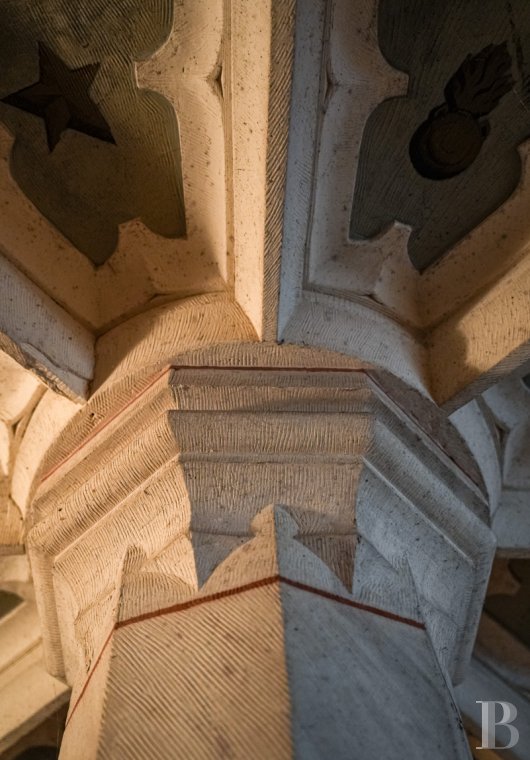
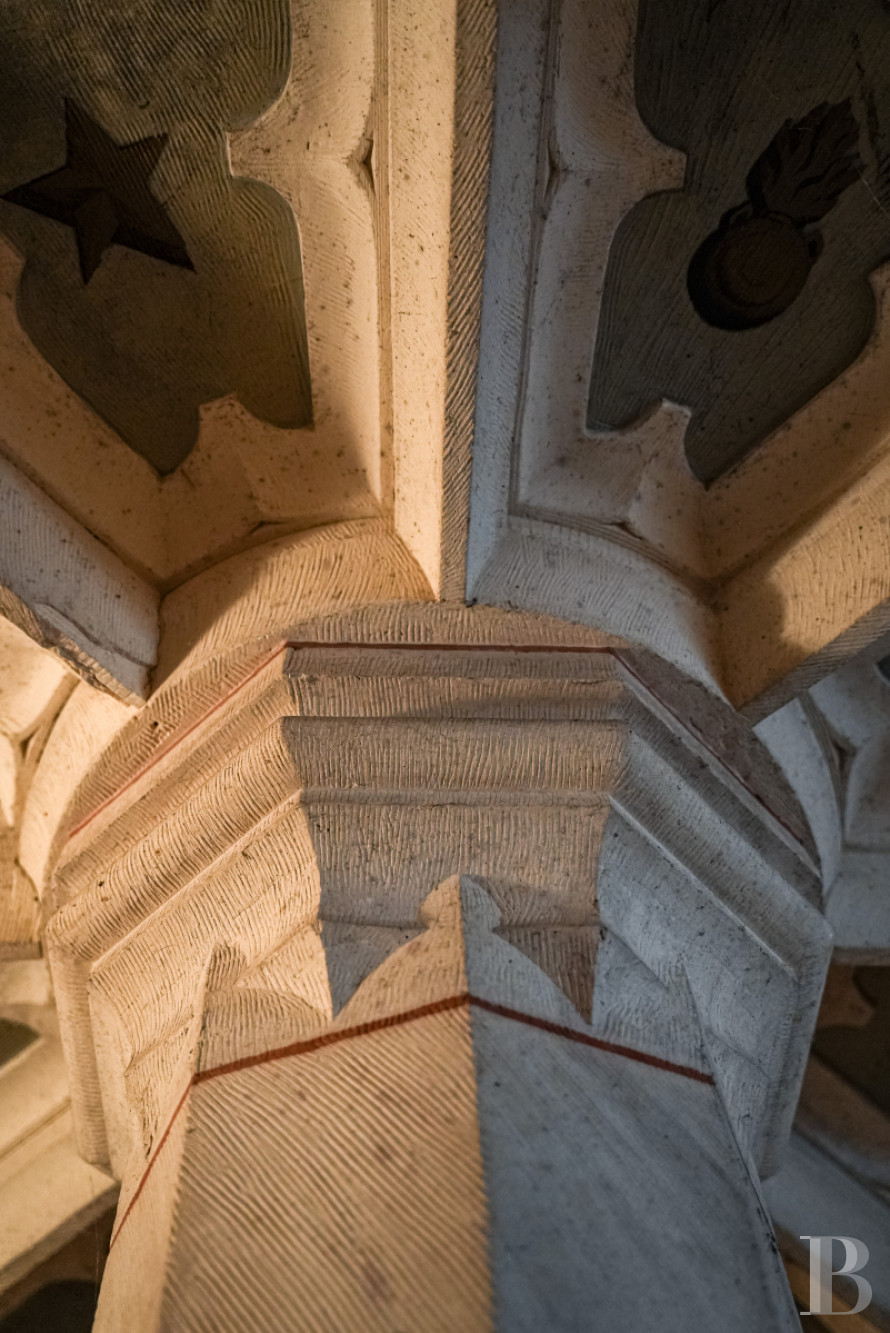
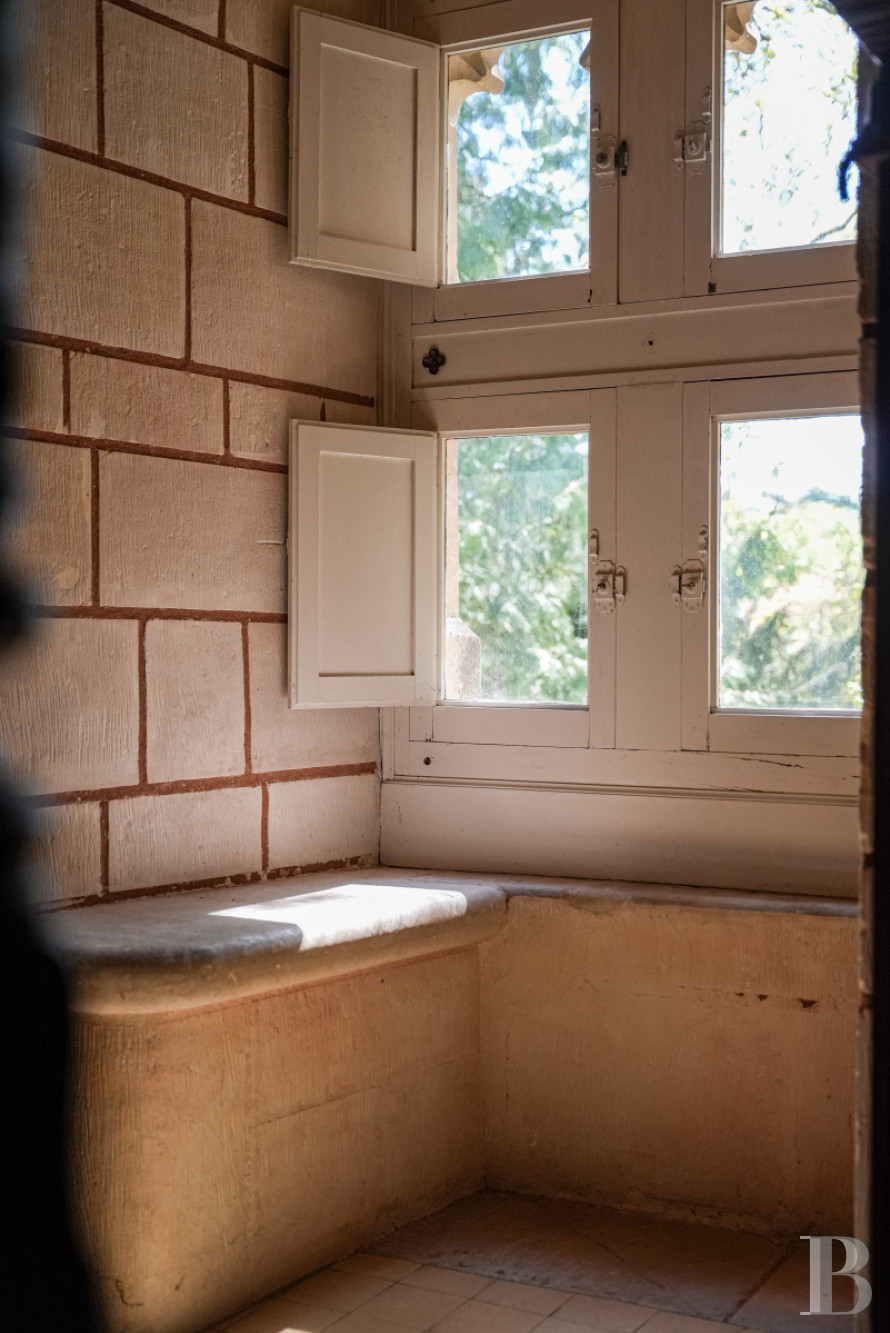
A listed element of the chateau, connected to the main body, the keep has been remodelled internally and now houses a stone spiral staircase. Its decoration, drawn from a medieval repertoire, dates from 1906. An inscription runs along one wall: Ce que Dieu veut, ne devienne failli / Toujours fidèle — "What God wills shall not fail / Always faithful." On the ground floor, two doors open respectively onto the exterior and the kitchens. The staircase serves all levels.
The lord's gallery
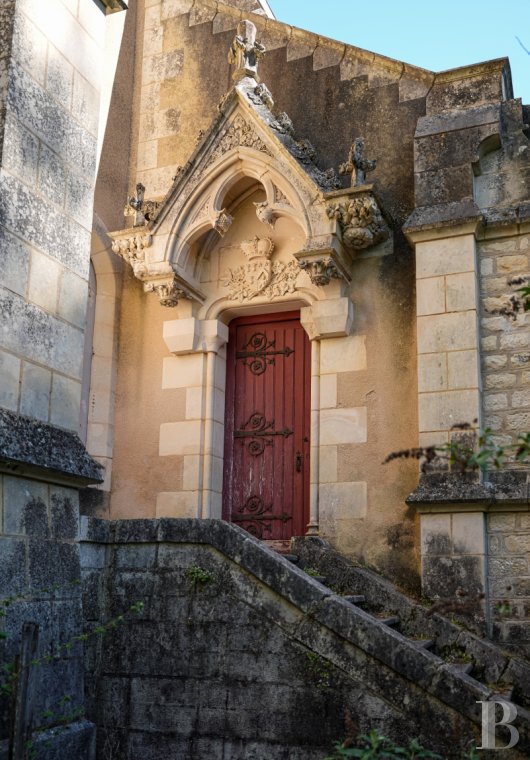
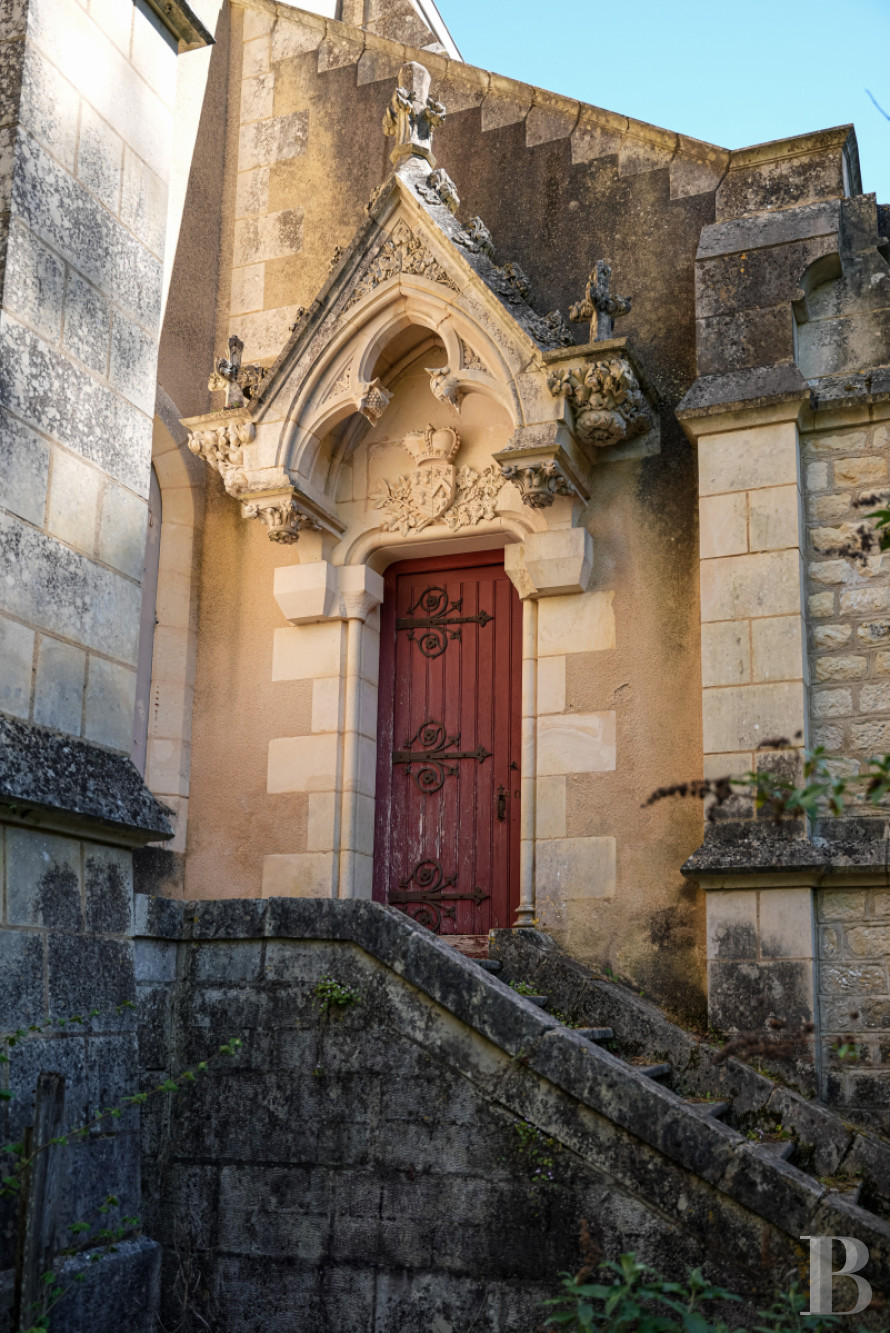
Founded in the 10th century, the village church was remodelled in the 12th, then rebuilt entirely after the Revolution. A first campaign was undertaken in 1883 to designs by Cazeaux, architect to the City of Paris and a disciple of Eugène Viollet-le-Duc, and continued by regional architects. As owners of the chateau, the Beauchamp family contributed to the financing of the whole and had a lord's gallery built adjoining the church. It is accessible privately from the chateau's garden by a dedicated staircase. A stained-glass window bearing the family arms was installed within.
La salle de réception
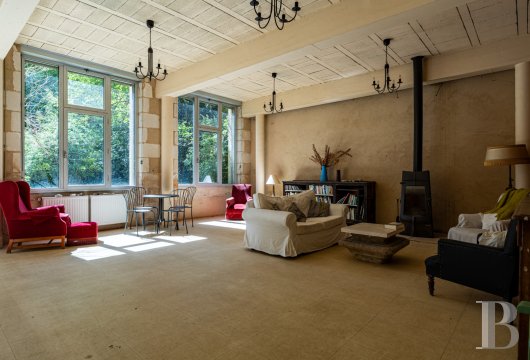
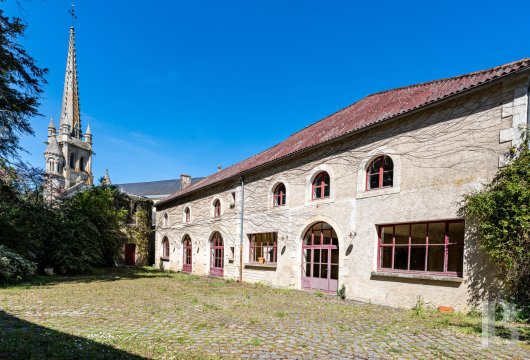
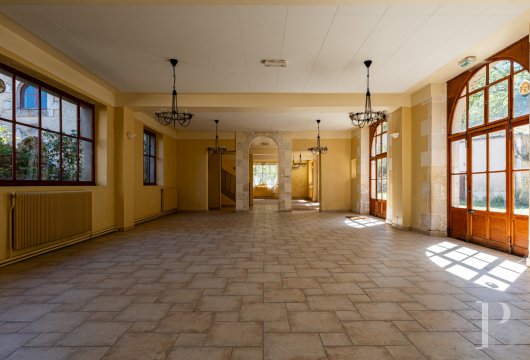
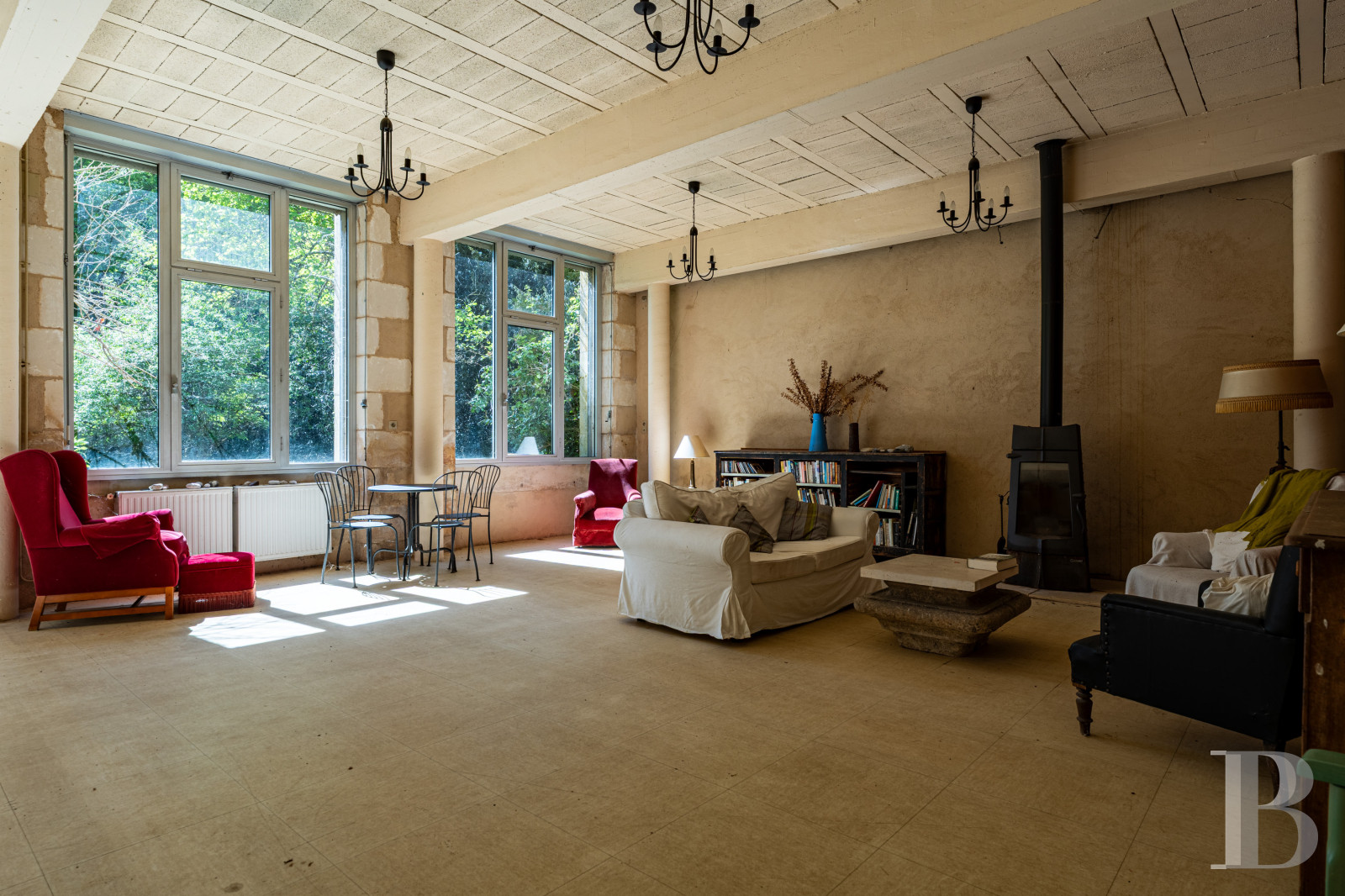
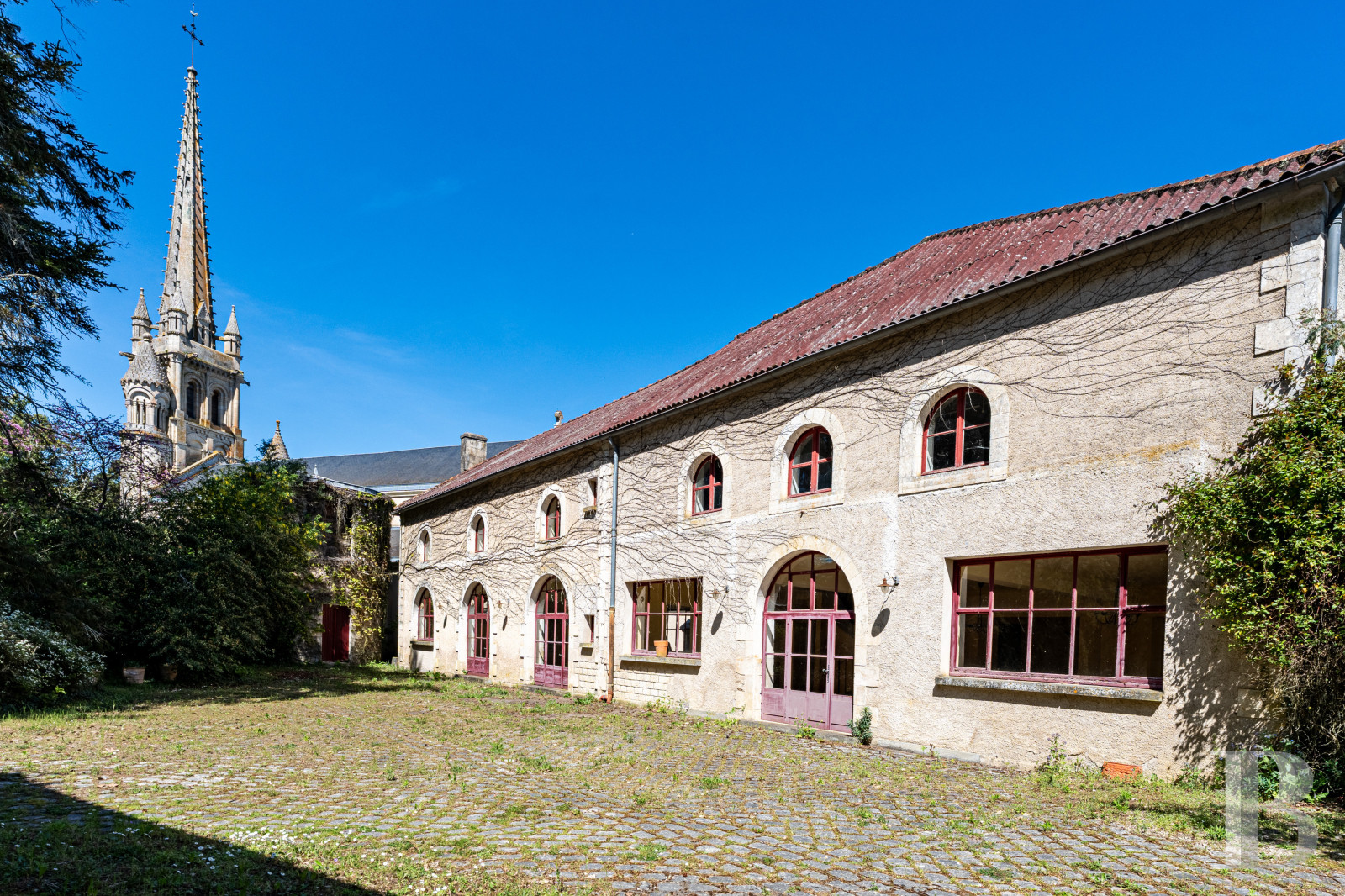
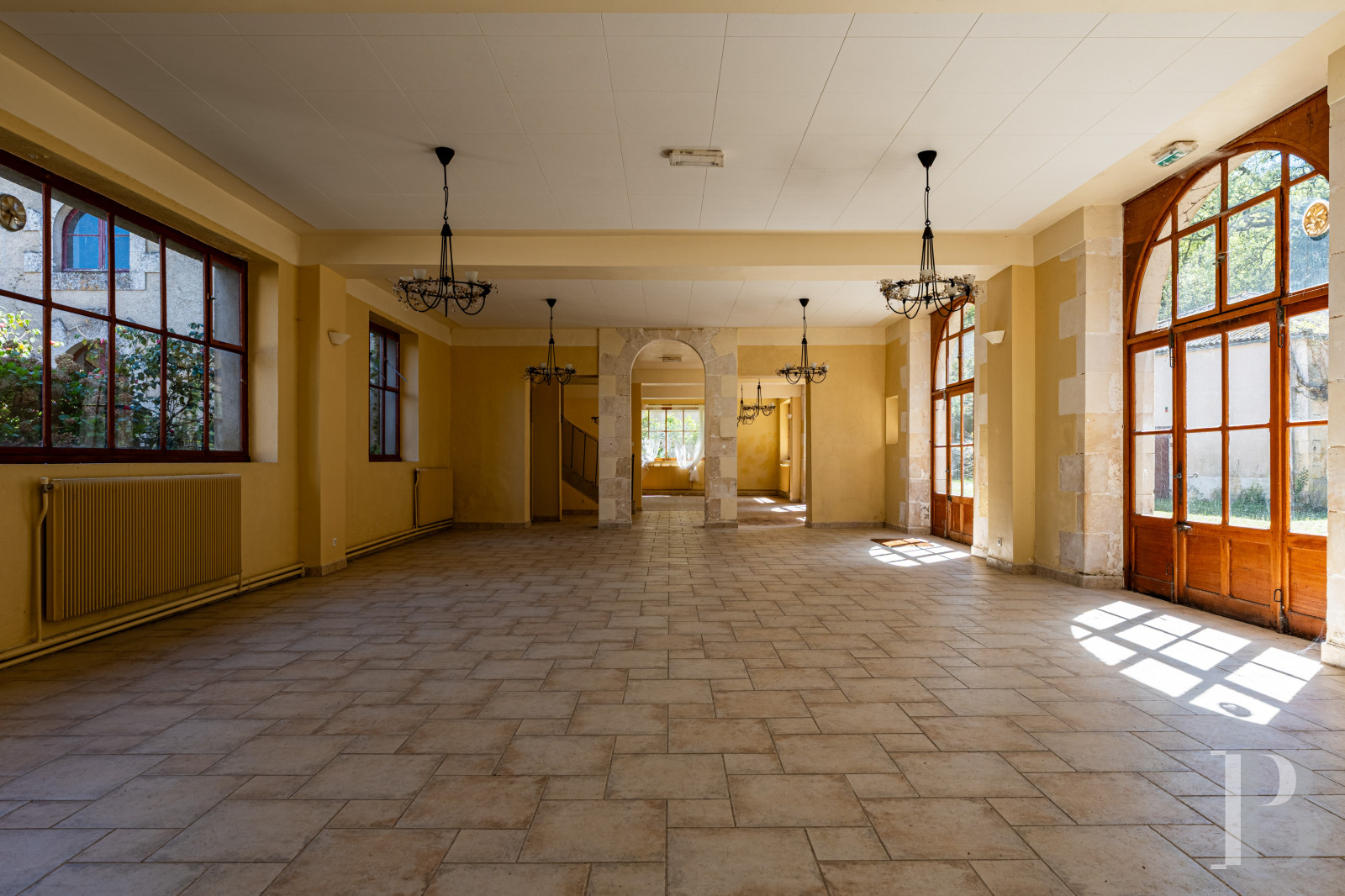
Arranged within a former 19th-century estate storeroom built on two levels, the reception room has rendered exterior walls. At approximately 230 m², with central heating and large windows on three sides, the ground-floor room seats 200 comfortably. It adjoins lavatories and a semi-professional kitchen with direct street access. On the upper level, some rooms survive, though most of the floor remains to be fitted out. As the room has not been in active use in recent years, a review of current regulatory standards will be required.
The cottage
A small rendered house of two levels, fitted out as guest accommodation of approximately 90 m². The ground floor, of nearly 70 m², comprises a sitting room, a kitchen, a bedroom and a bathroom. The upper level has two bedrooms of approximately 20 m² each.
The winery
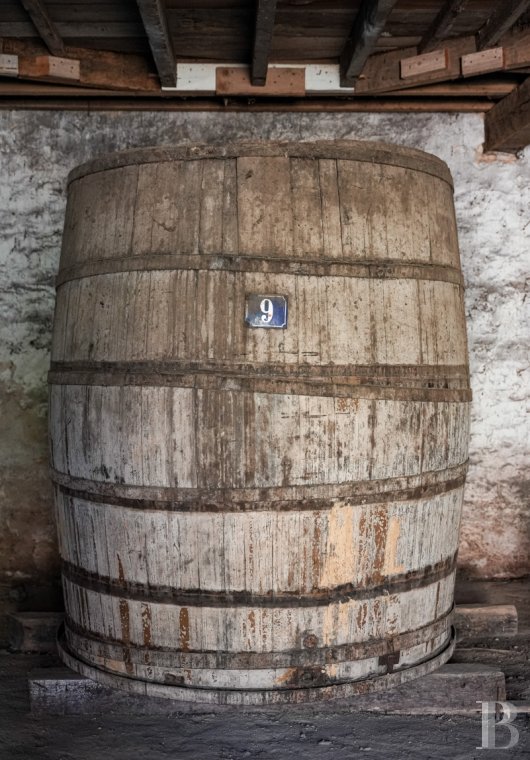
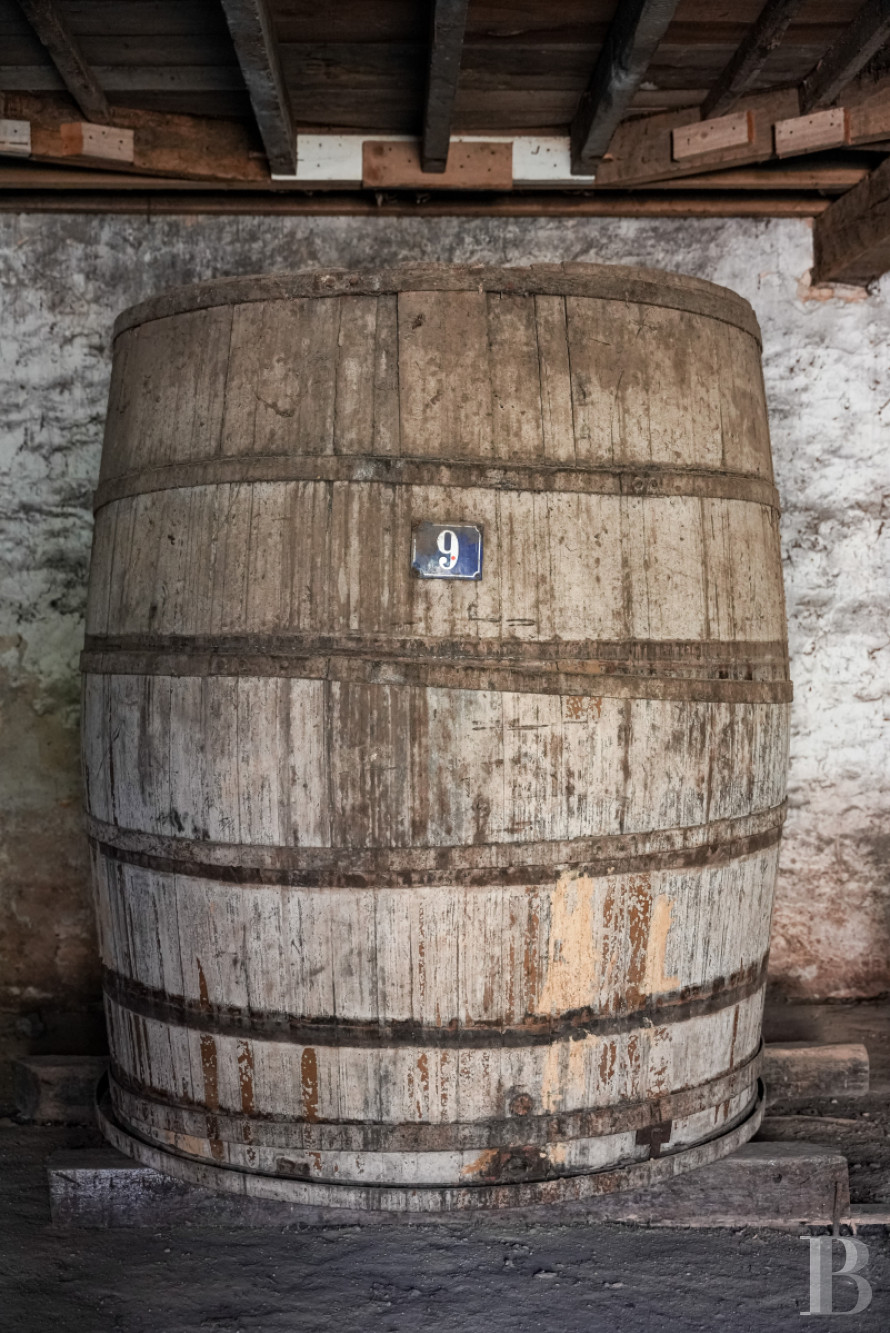
The estate produced its own wine in the 19th century, as the building of approximately 700 m² across two levels attests. The surviving equipment — presses and brick and concrete vats — points to production on a significant scale. The ground floor is divided between this historic equipment and a workshop of approximately 100 m². A steel staircase leads to the upper level, part of which serves as an attic while the other has been converted into a guest apartment with three bedrooms. An external staircase also gives access. The facades combine rendering with exposed stonework.
The orangery
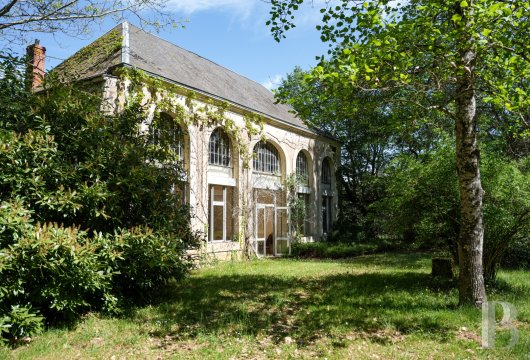
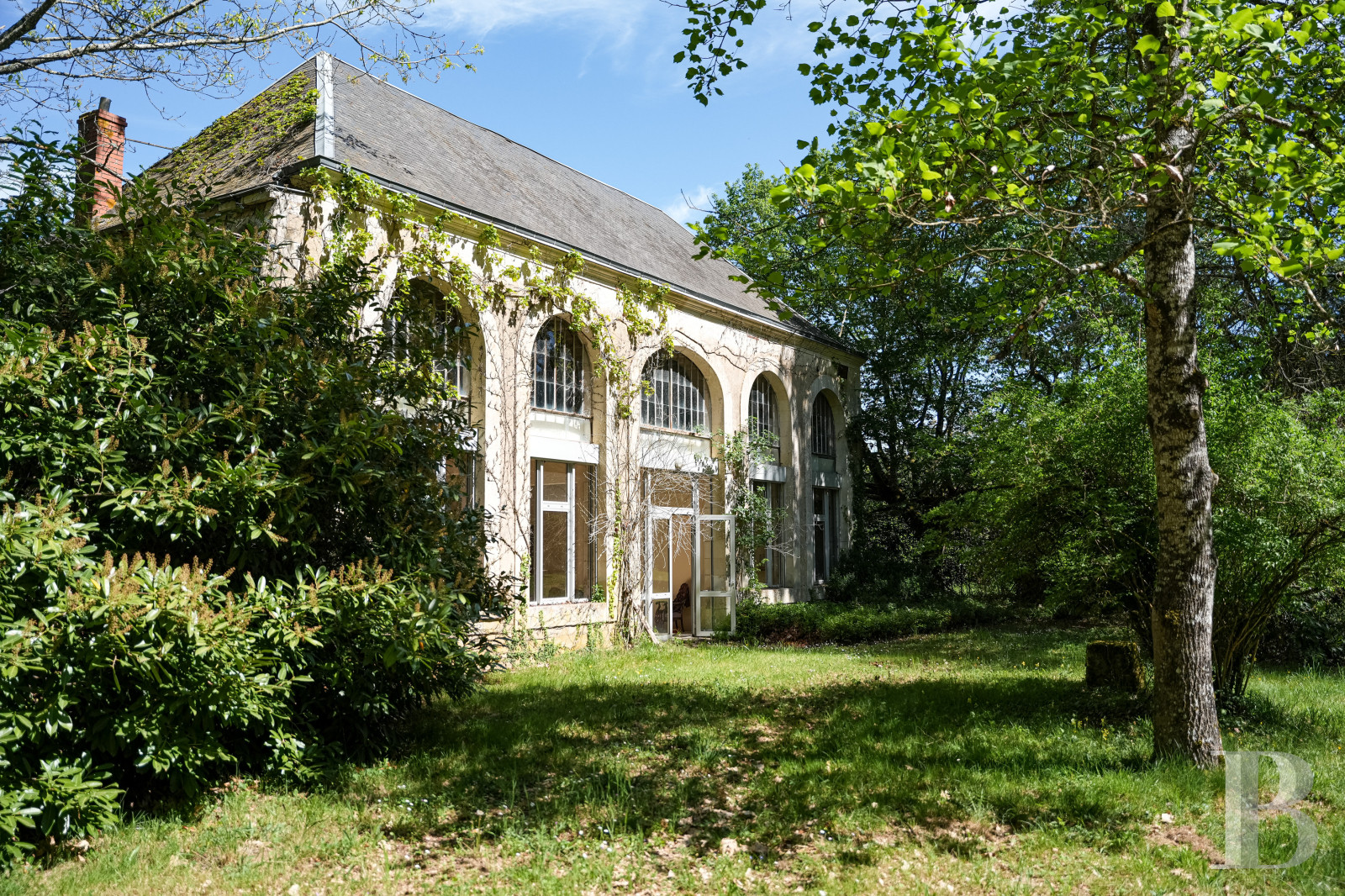
Rearranged several times and long divested of its original function, it now houses on its ground floor an open-plan apartment comprising a large sitting room, a kitchen, a bathroom and two bedrooms. The upper level remains to be fitted out.
The former staff building
Of approximately 230 m² on the ground floor and one upper level, this building was originally intended for the estate's staff. The ground floor houses a boiler room, a 6,000-litre fuel tank, an electrical transformer and a meter. The remaining rooms, little used today, require partial remedial works. The facades are rendered.
The grounds and woodland
The 22 hectares of land form an enclave that isolates the property from its immediate surroundings. To the south of the chateau, a double avenue of plane trees stretches for nearly 300 m, punctuated by a circular pond. To the north lie a former kitchen garden and orchard, with a long greenhouse set against the perimeter wall and a further pond. Specimen trees — Lebanese cedars, sequoias, conifers and oaks — structure the landscape. An axis of over 500 m opens beyond, centred on a small stretch of water and a stone statue of Joan of Arc, approximately 3 m high. A further pond, maintained by the village for hydraulic regulation, lies nearby. Of the five wells recorded on the property, only one appears still to be in use. Meadows and an orchard of pear and apple trees mark the estate's far boundary.
Our opinion
An elegant silhouette concealed within nature, heir to several centuries of history, this property — behind its articulated facades and structured grounds — preserves a singular atmosphere, one marked by a certain austerity that the recent decades of religious occupation have left behind. The rooms are vast, the layout clear, and the ornamental fabric still substantially intact: coffered ceilings, marble fireplaces, ancient floors. Yet the whole invites a redefinition of use. The architectural foundations are strong and the character pronounced, and the range of outbuildings opens the way to many possibilities — professional, familial, or both. This is a property whose full potential belongs to whoever can reinterpret its codes and restore to it warmth and presence.
Reference 866305
| Main building floor area | 900 m² |
| Outbuildings floor area | 2110 m² |
| including refurbished area | 670 m² |
| Land registry surface area | 22 ha 91 a 11 ca |
| Total floor area | 1570 m² |
French Energy Performance Diagnosis
Information on the risks to which this property is exposed is available on the website: www.georisques.gouv.fr
Share


NB: The above information is not only the result of our visit to the property; it is also based on information provided by the current owner. It is by no means comprehensive or strictly accurate especially where surface areas and construction dates are concerned. We cannot, therefore, be held liable for any misrepresentation.