



45 minutes from Saint-Malo and Mont-Saint-Michel,
an 18th-century estate with 25 ha of grounds and lakes
an 18th-century estate with 25 ha of grounds and lakes
Combourg,
ILLE-ET-VILAINE
brittany
35270
FR

Location
In Brittany's Ille-et-Vilaine department, the property sits ten minutes from Combourg — a town inseparable from the name of Chateaubriand. The chateau and grounds of Combourg inspired his celebrated « Mémoires d'outre-tombe », the founding work of 19th-century French Romanticism. The town itself gathers every shop and service; the beaches of Saint-Malo, Mont-Saint-Michel and Rennes international airport all lie forty minutes away. Trains from the local station reach Rennes, with Paris a further hour and a half on.
Description
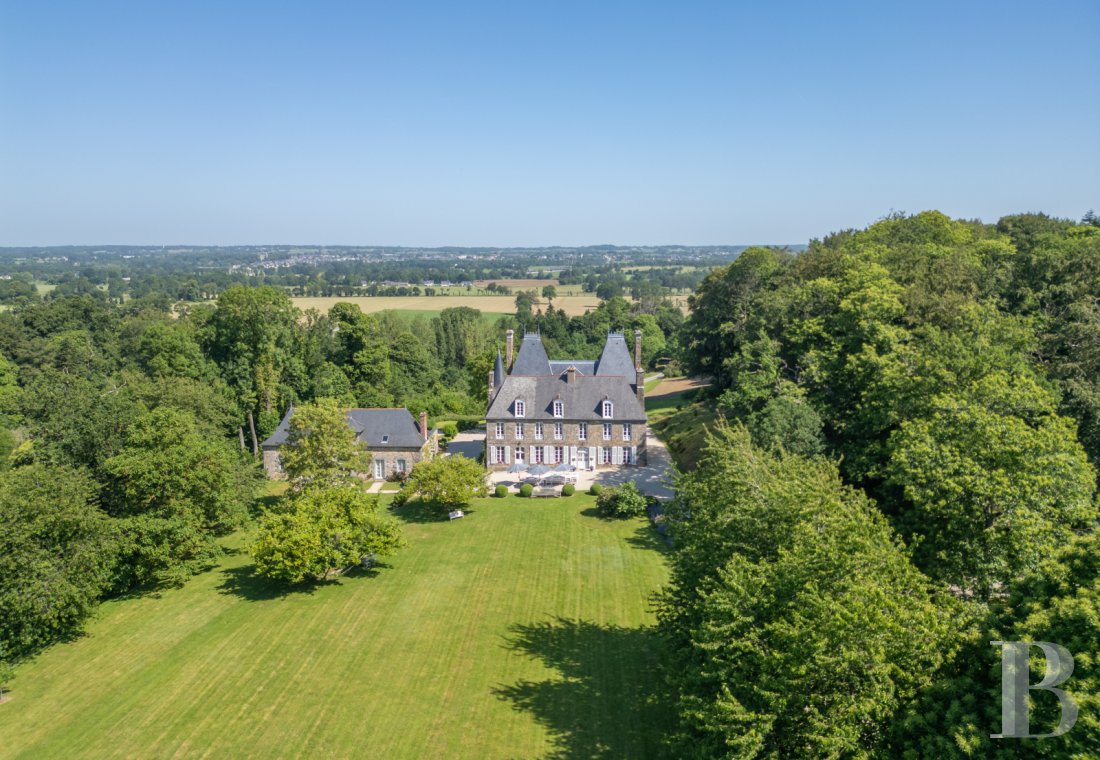
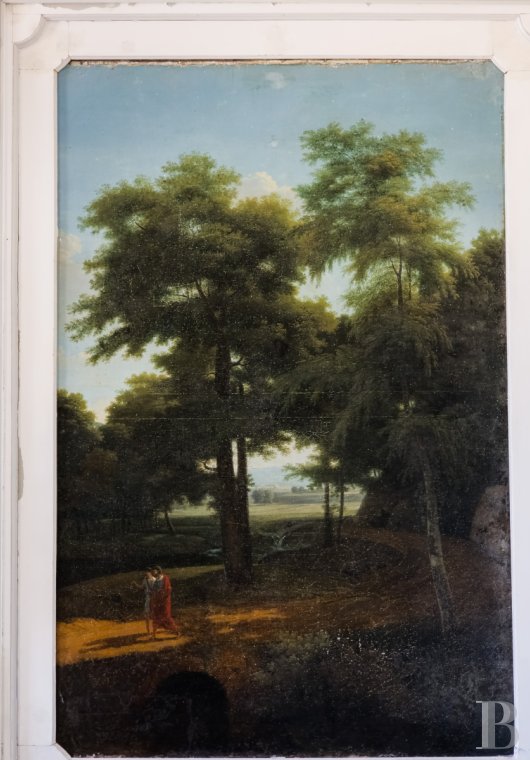
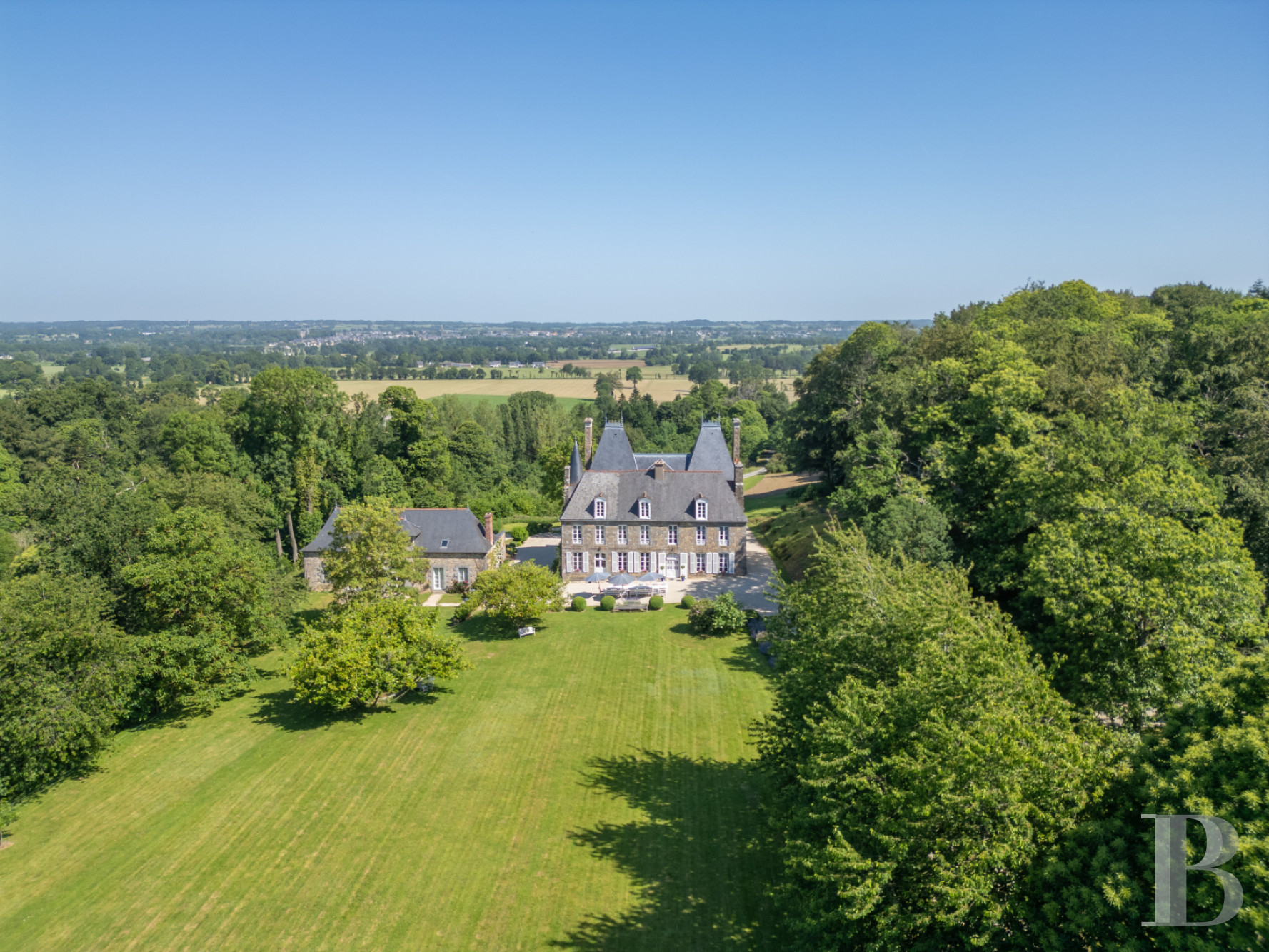
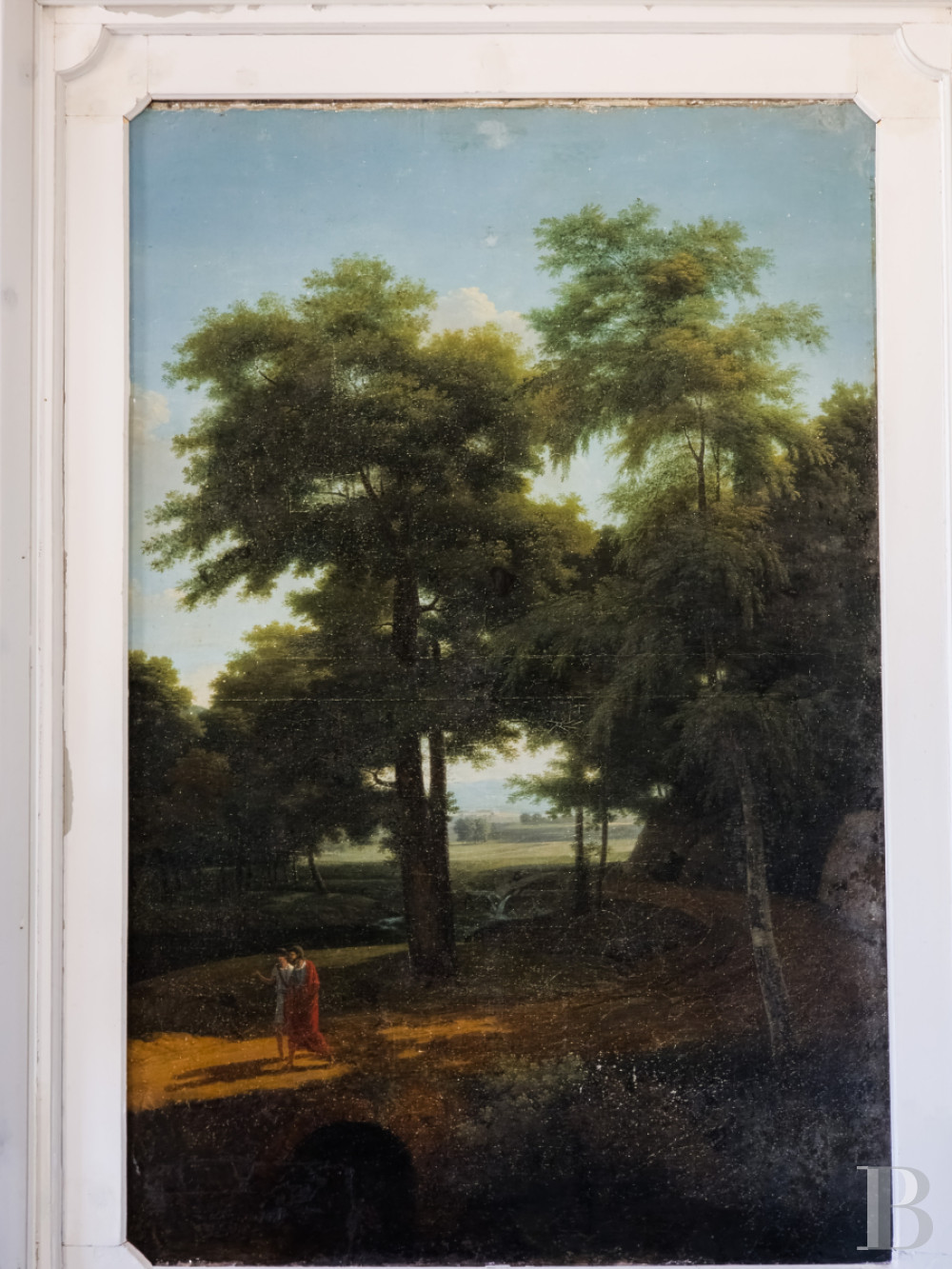
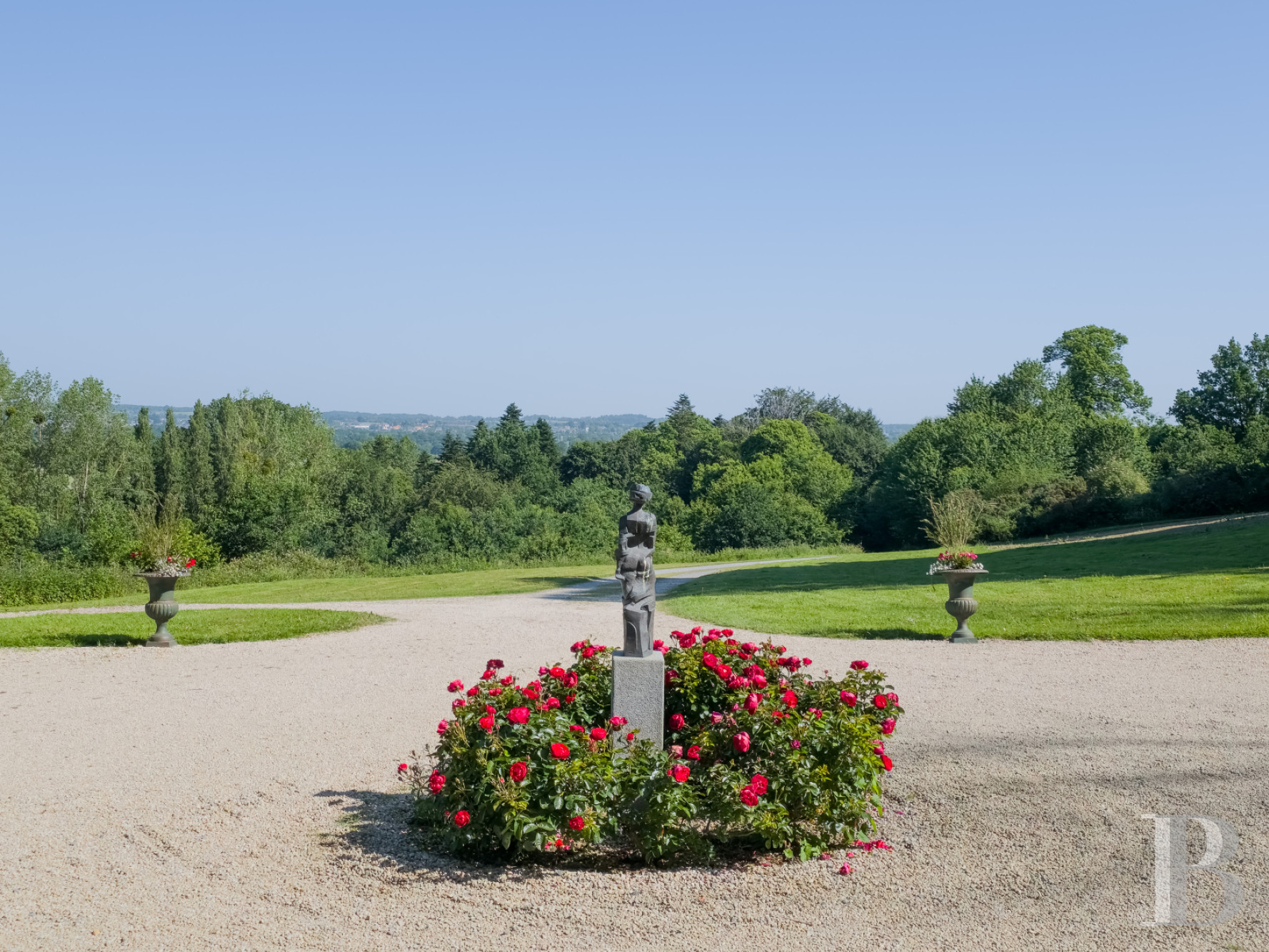
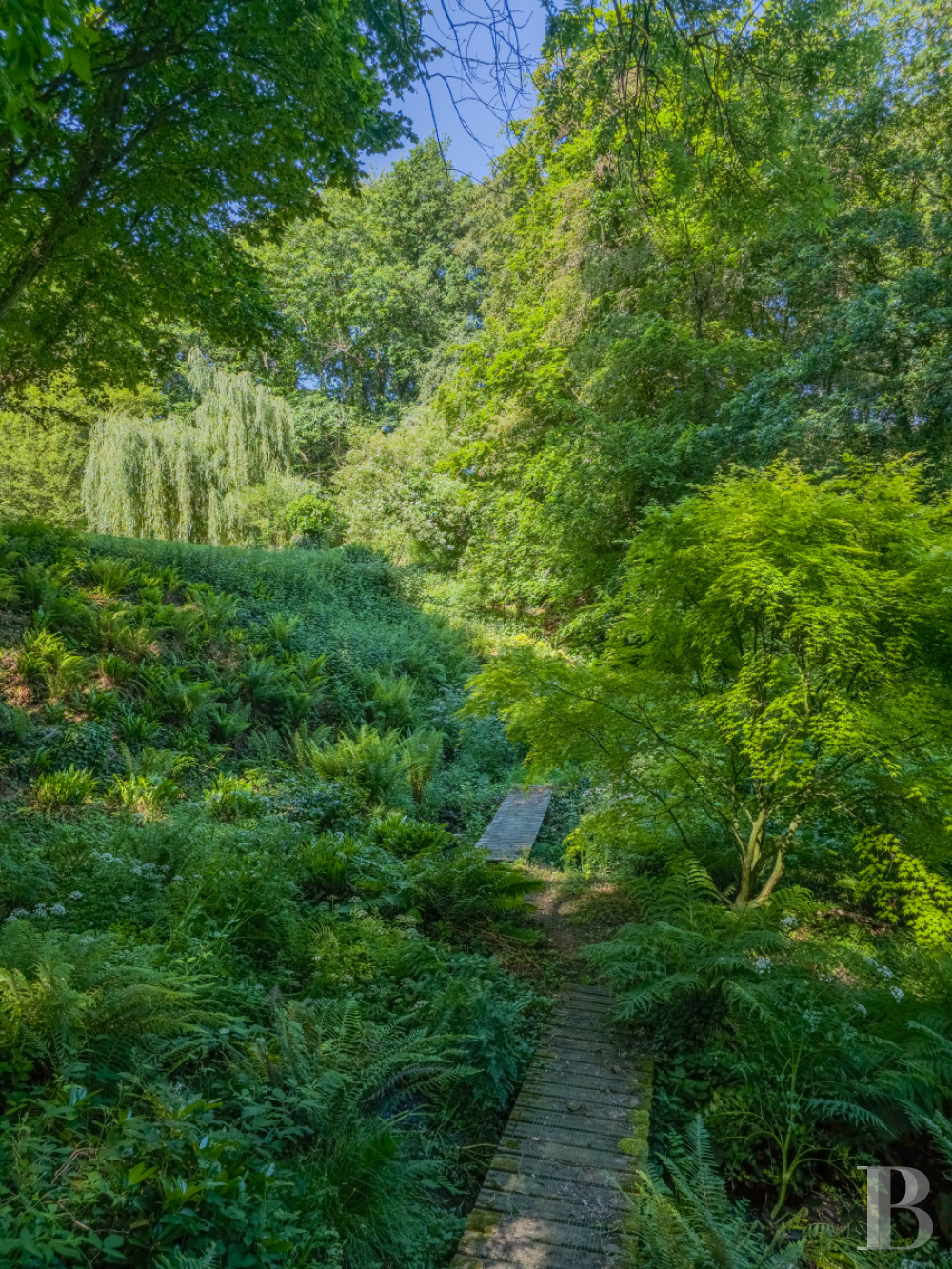
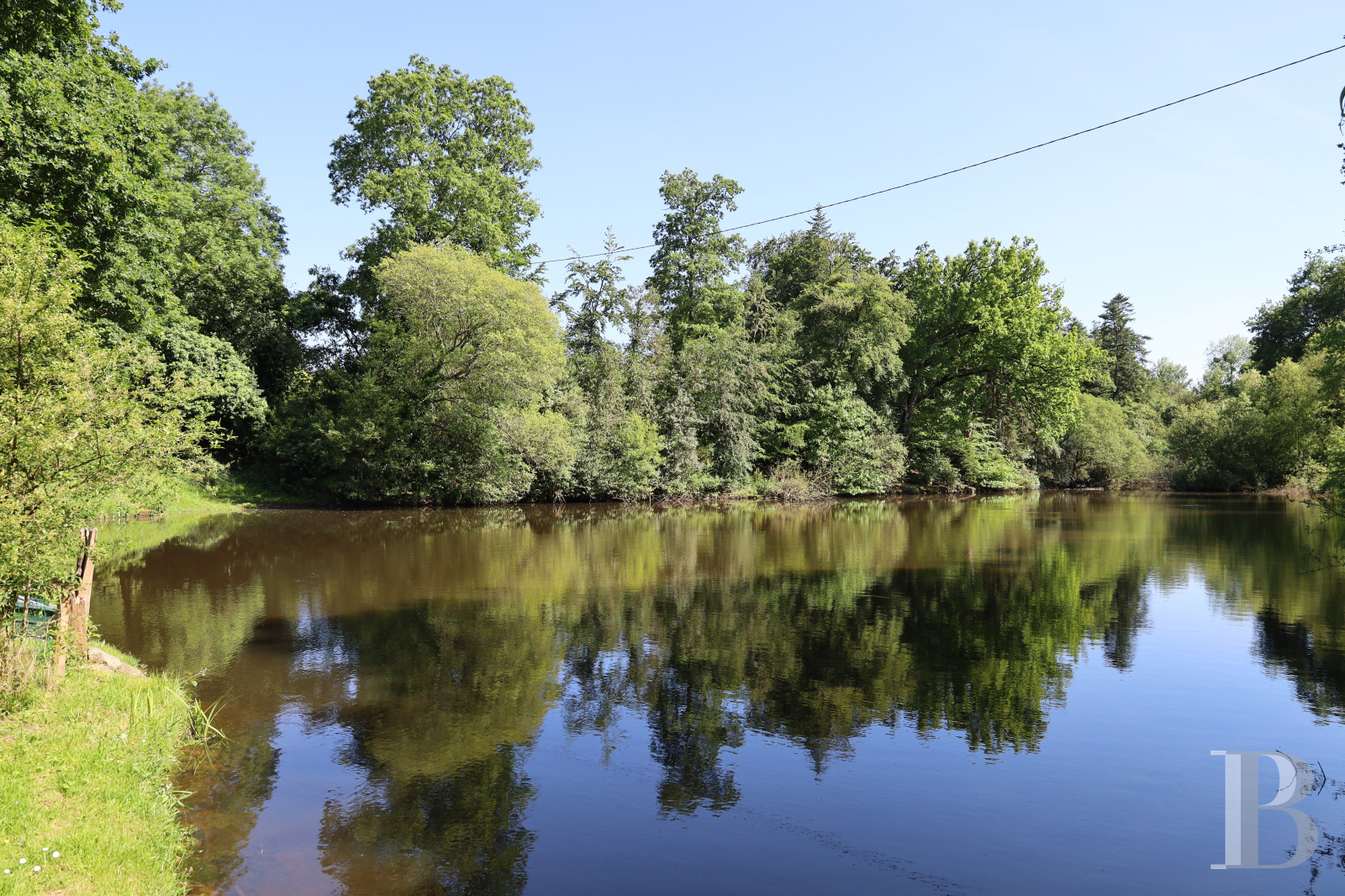
The estate brings together a chateau, three converted outbuildings, a reception hall, an outdoor pool and a chapel. It now operates as a setting for weddings, family stays and private events, with sixteen bedrooms across a total floor area of 960 m². The buildings stand within 25 hectares of grounds, where streamside paths cross a varied landscape of small valleys, woodland and lakes. Chateaubriand mentions in his writings the painter François-Agathon Pinot-du-Petit-Bois, then resident here; his canvases, recovered from the attic by the current occupants and carefully restored, now hang in the chateau's sitting rooms and bedrooms.
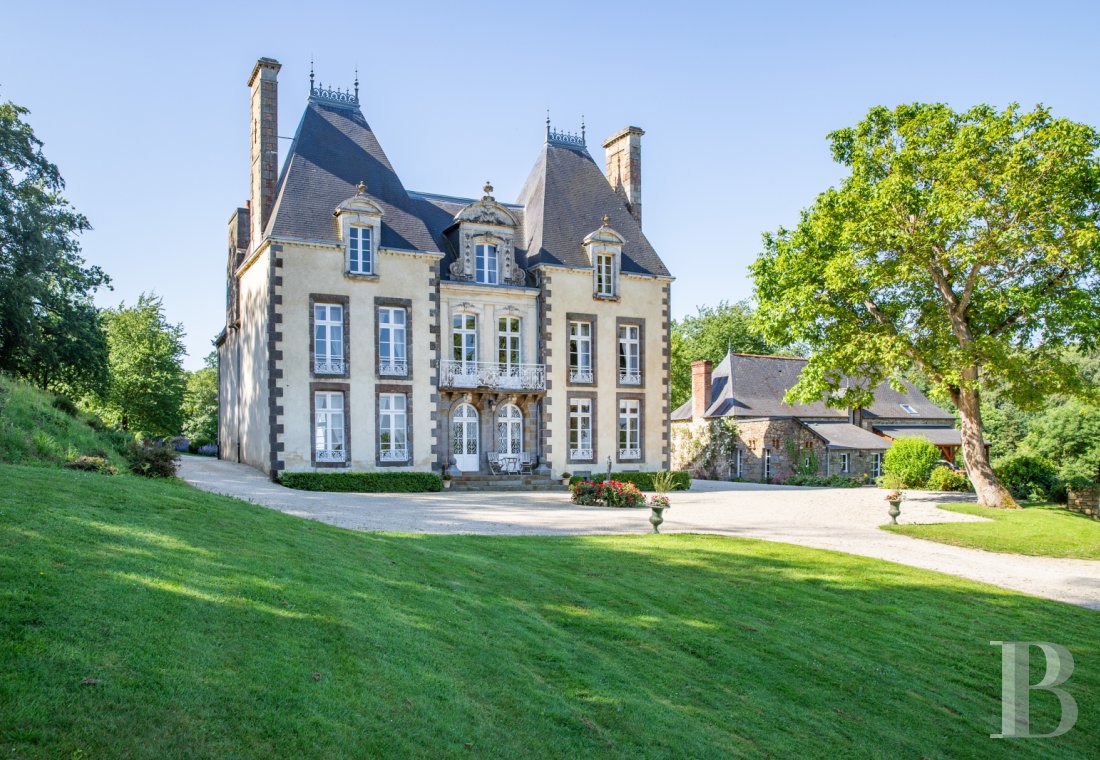
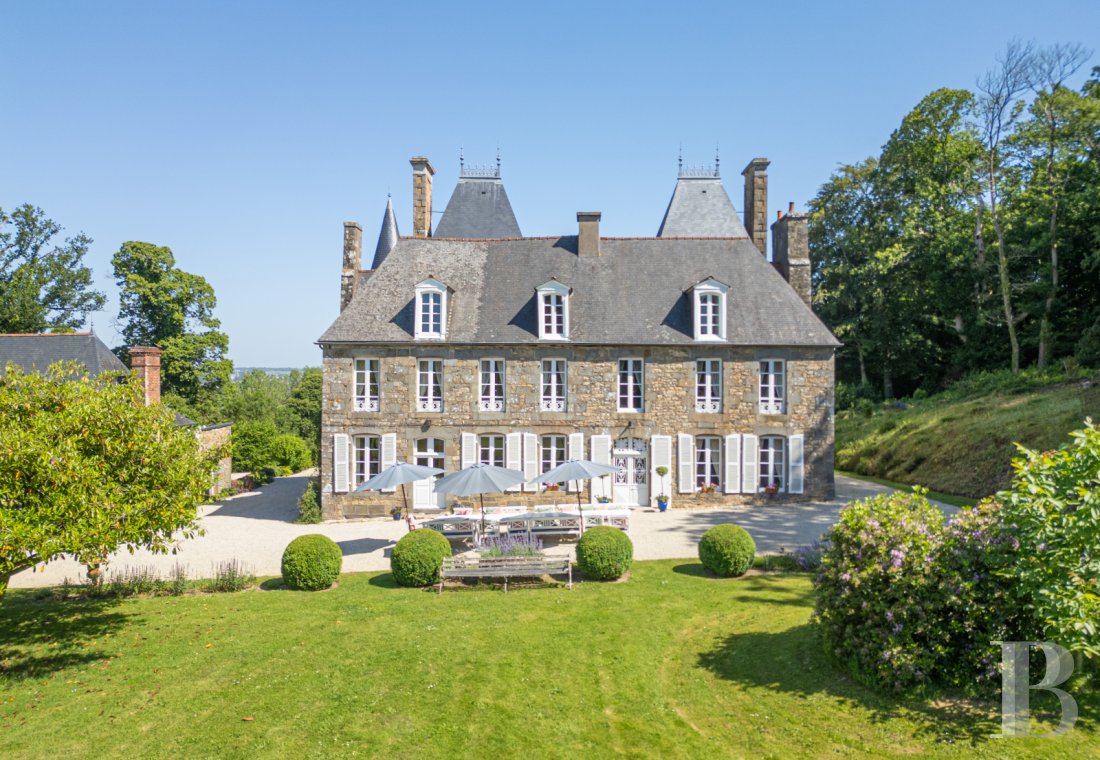
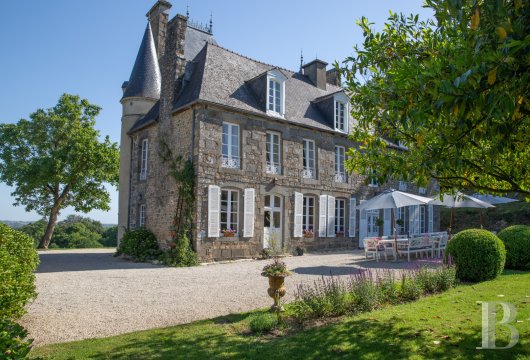
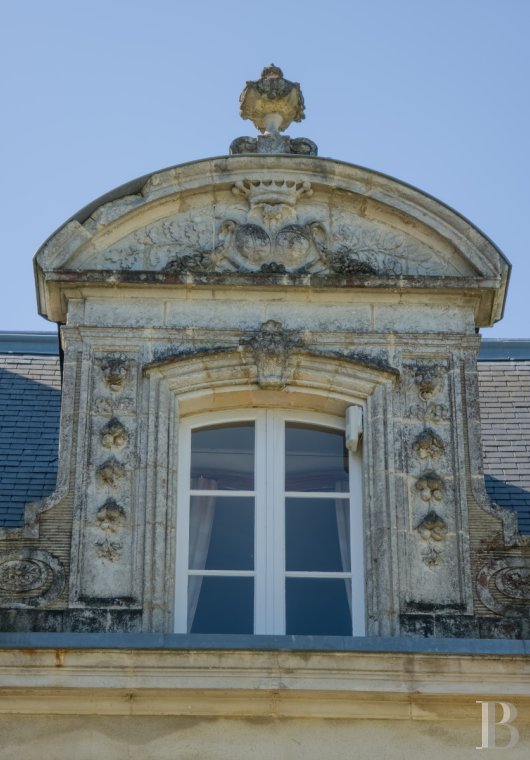
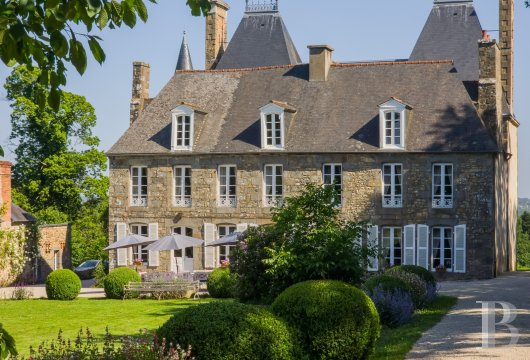
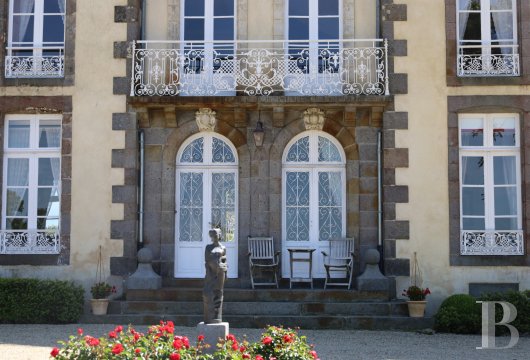
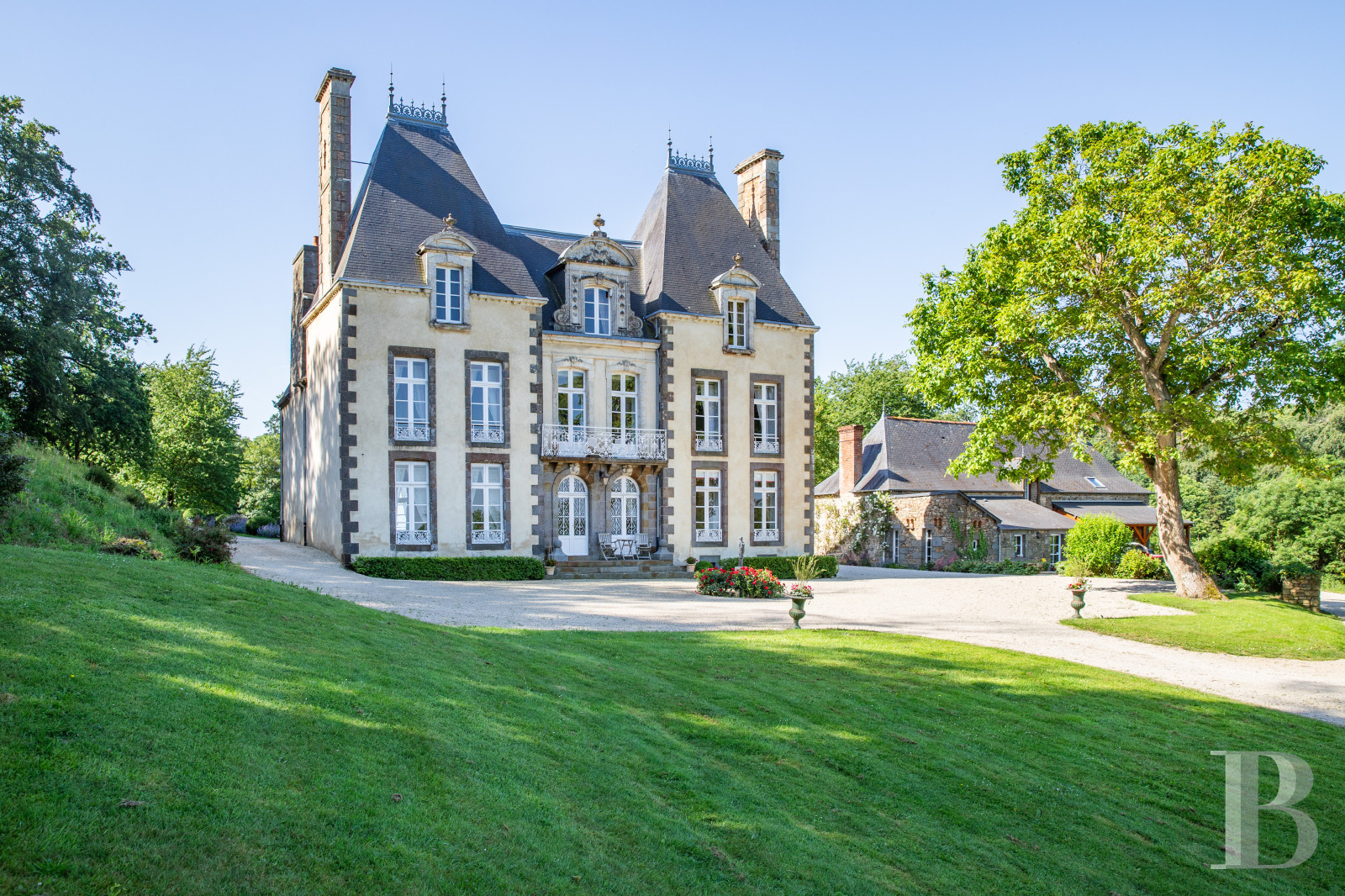
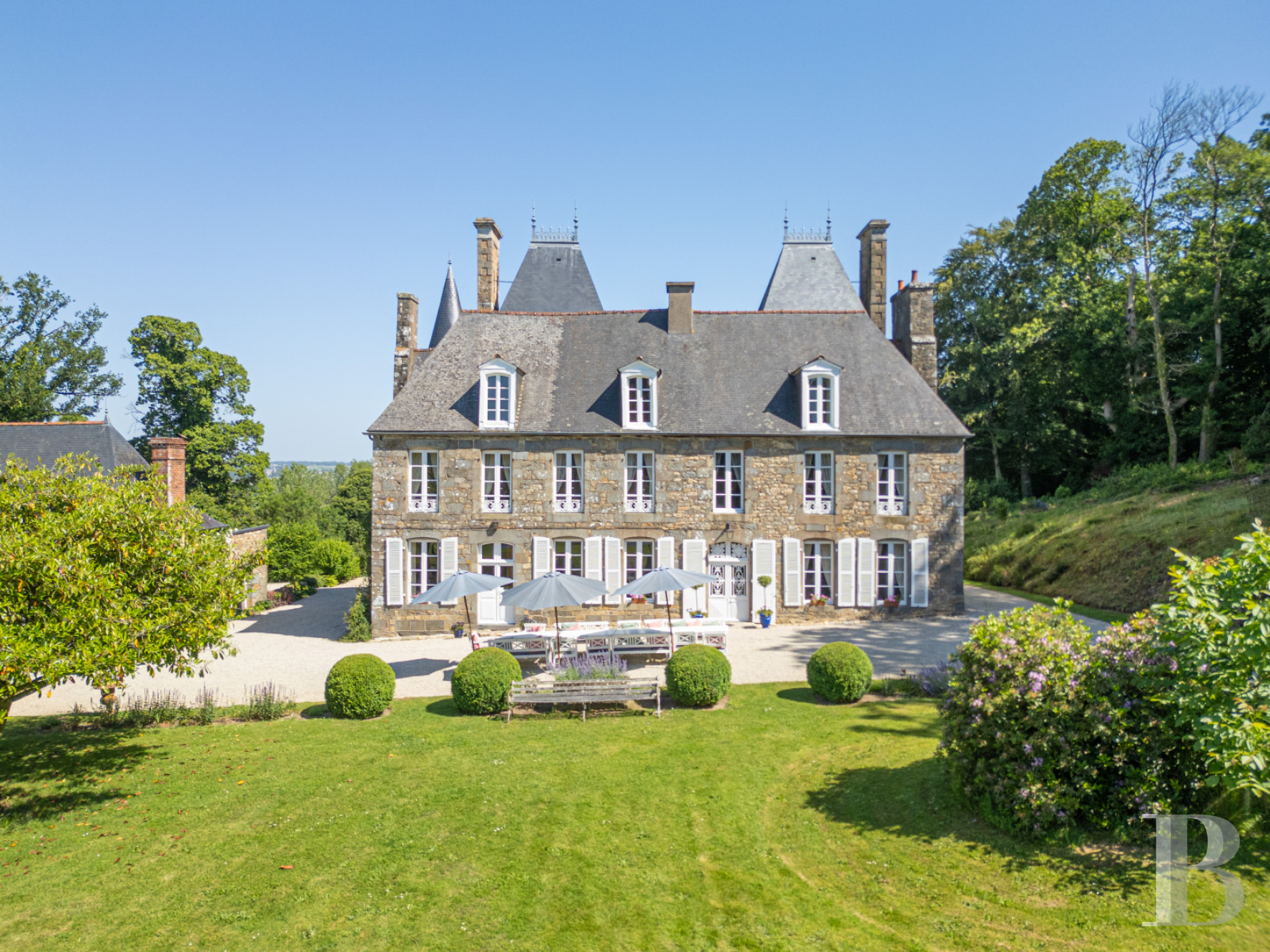
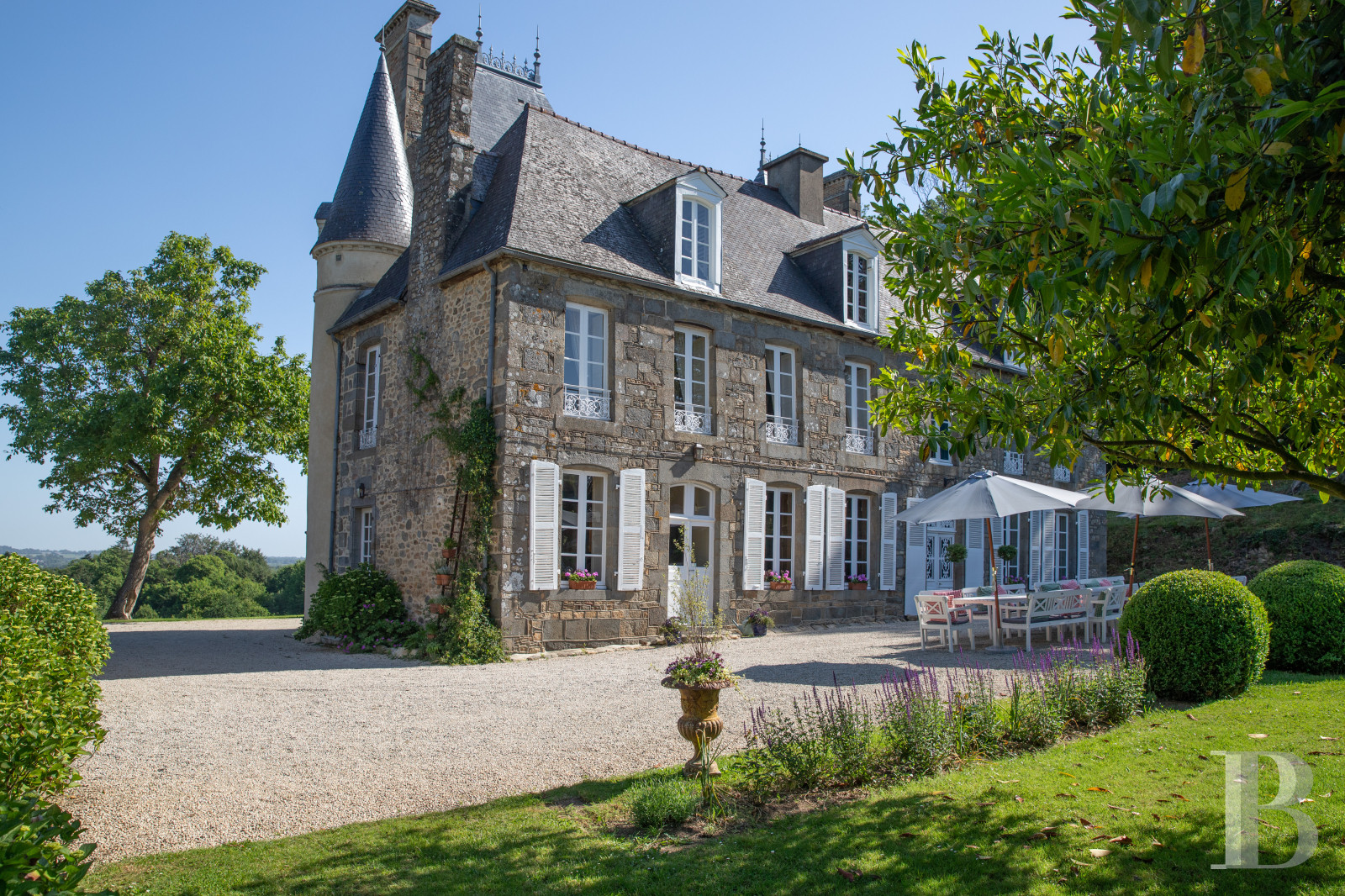
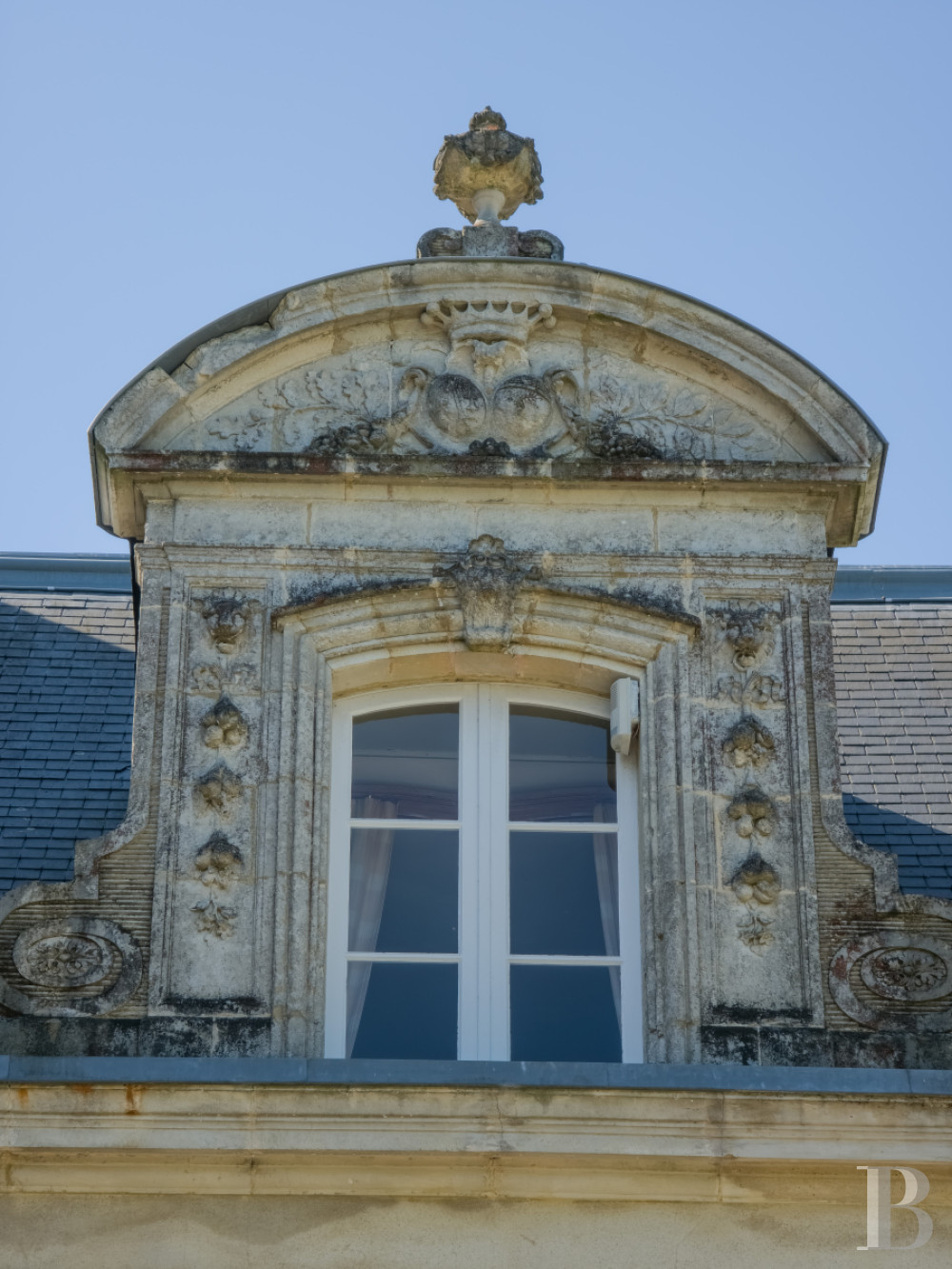
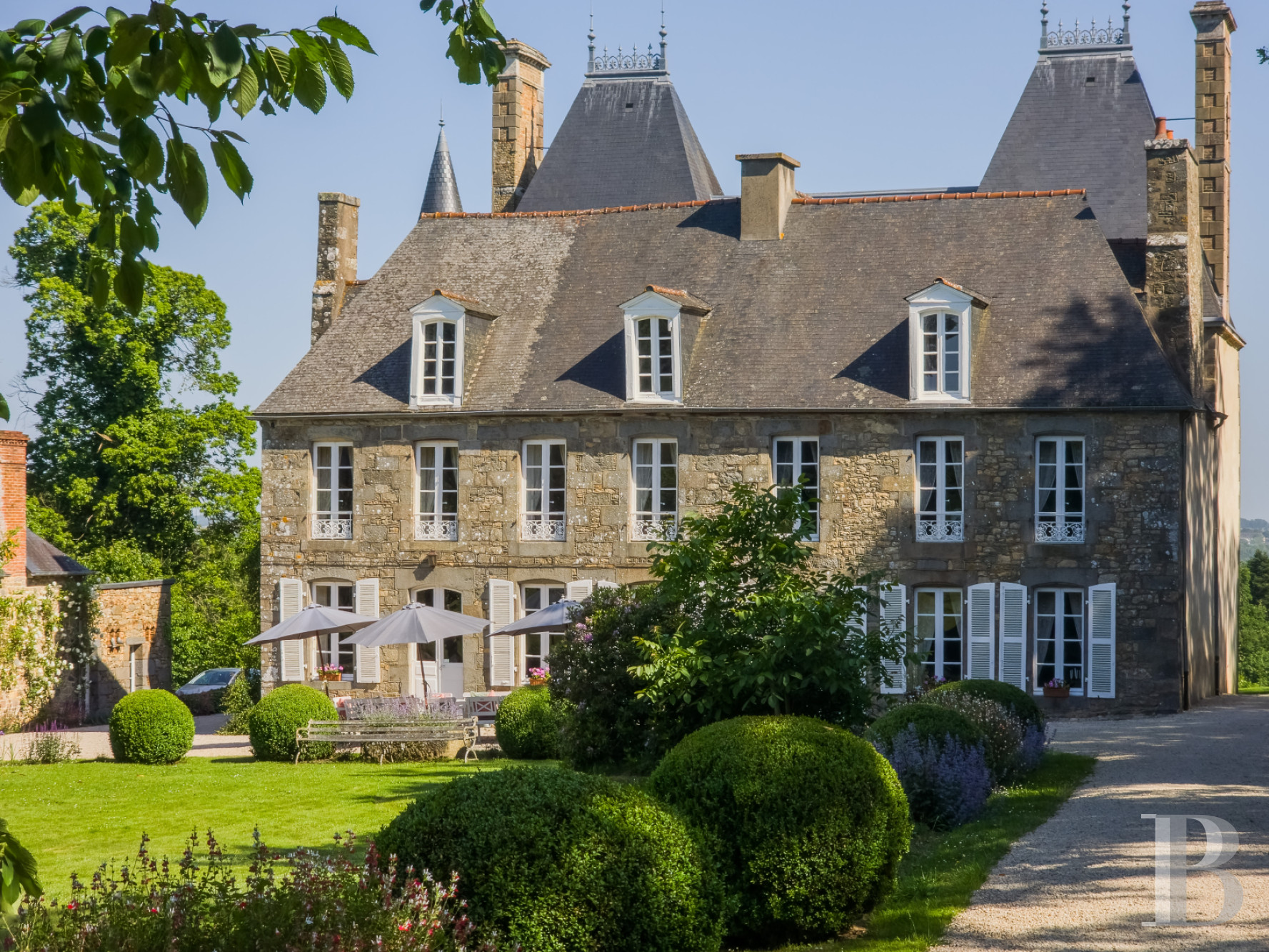
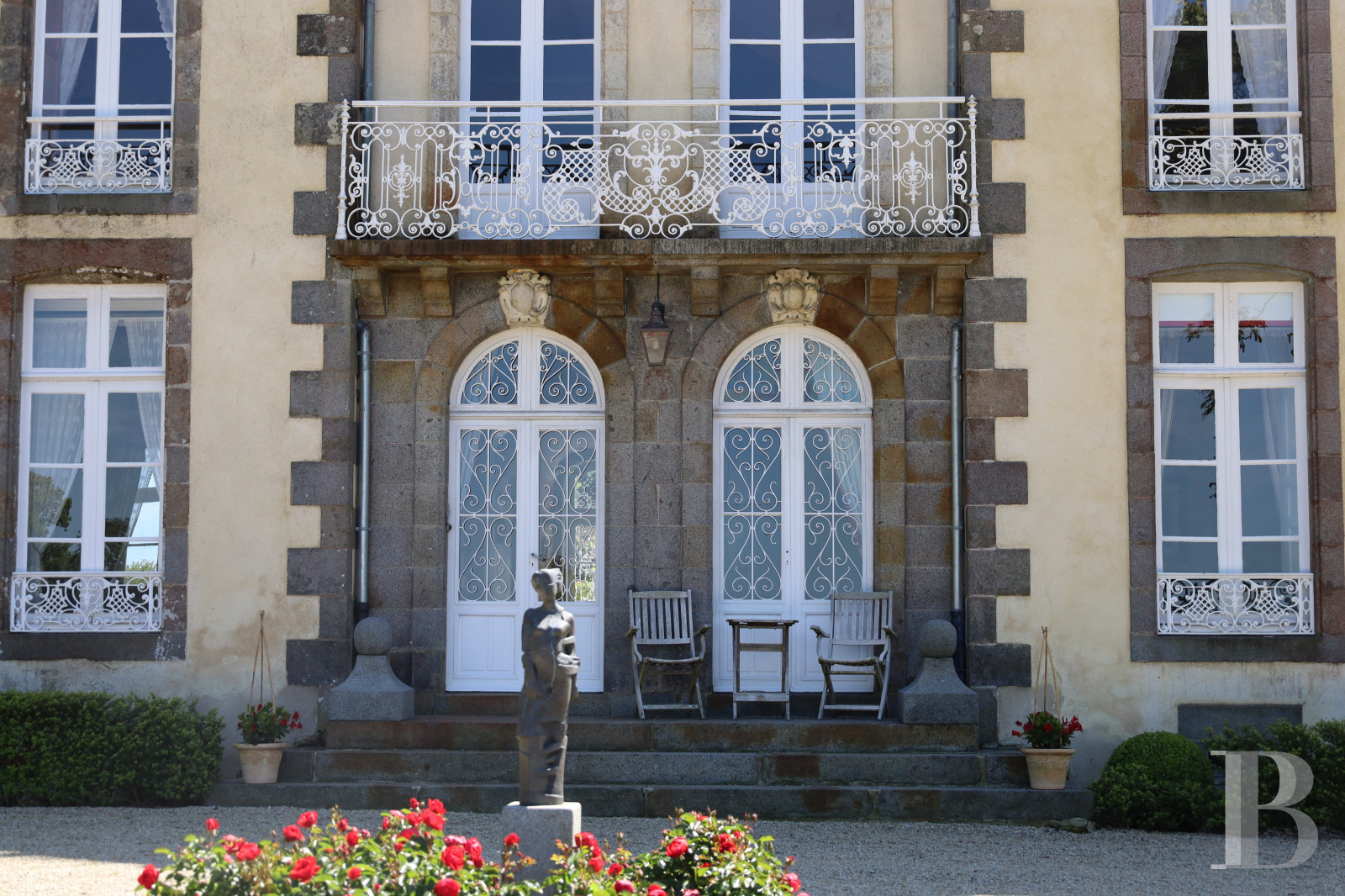
Running north to south, the principal dwelling — around 450 m², dating from the 19th century — backs onto an earlier manor whose known origins reach to 1429. To the north, the main house flanked by two pavilions rises beneath gabled slate roofs. Six regular bays articulate a slender, yellow-rendered facade across three levels, the window surrounds and quoins picked out in russet granite. A prominent scrolled-wing dormer crowned by a carved pediment marks the centre of the roofline, while a corner turret rises at the northwest. To the south, facing the great parterre, the older dwelling stands in dressed sandstone and granite — rectangular in plan, seven regular bays across three levels, beneath a slate roof.
Running north to south, the principal dwelling — around 450 m², dating from the 19th century — backs onto an earlier manor whose known origins reach to 1429. To the north, the main house flanked by two pavilions rises beneath gabled slate roofs. Six regular bays articulate a slender, yellow-rendered facade across three levels, the window surrounds and quoins picked out in russet granite. A prominent scrolled-wing dormer crowned by a carved pediment marks the centre of the roofline, while a corner turret rises at the northwest. To the south, facing the great parterre, the older dwelling stands in dressed sandstone and granite — rectangular in plan, seven regular bays across three levels, beneath a slate roof.
The chateau
The ground floor
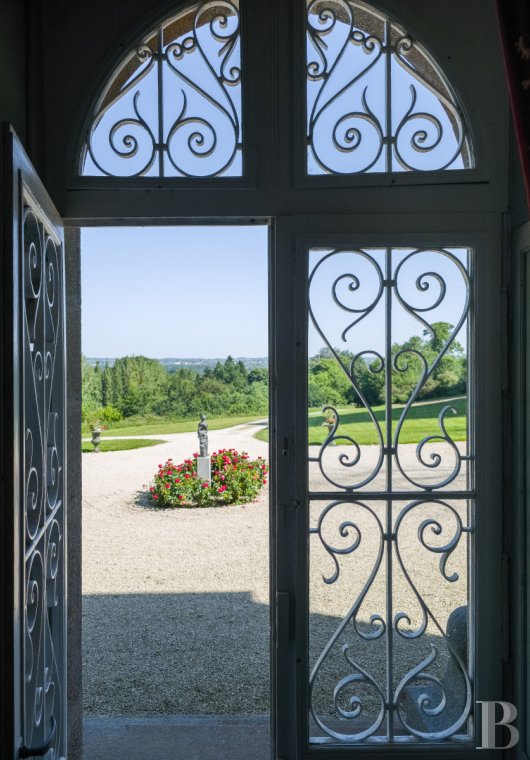
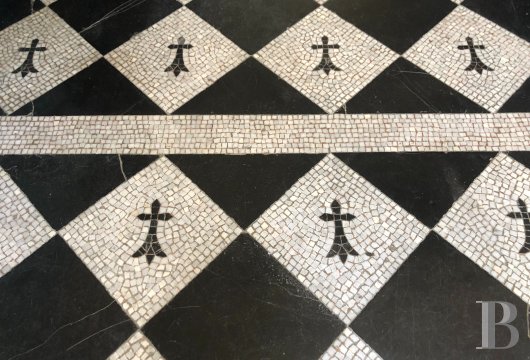
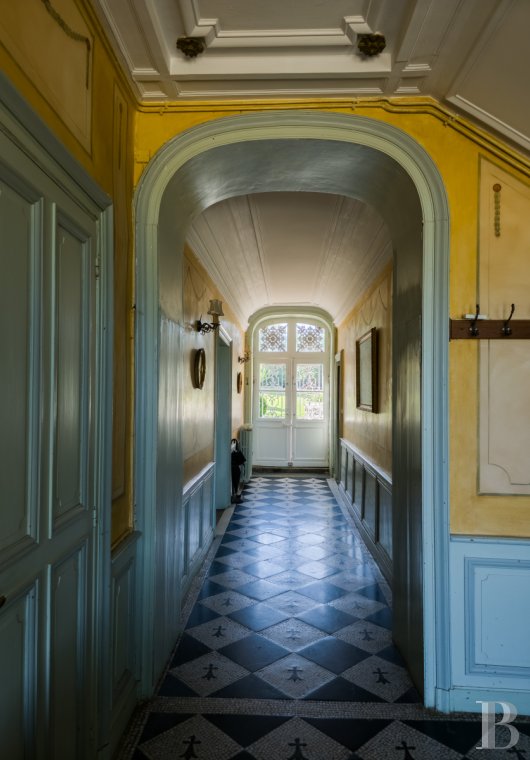
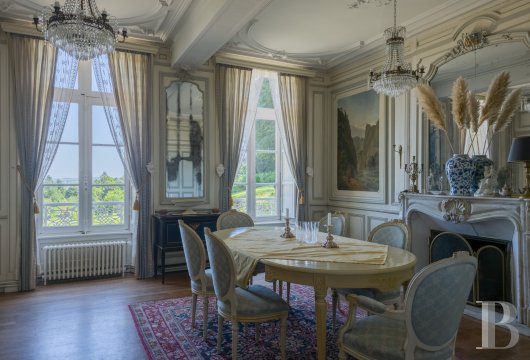
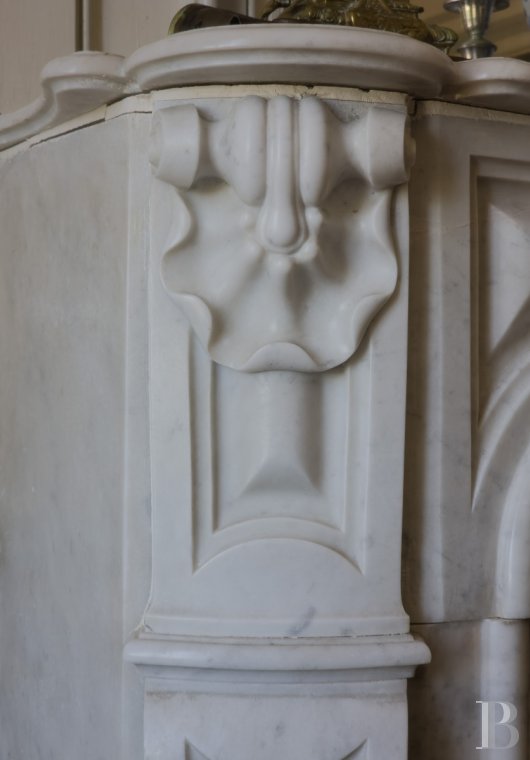
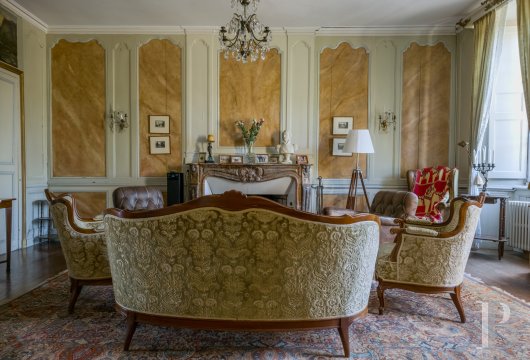
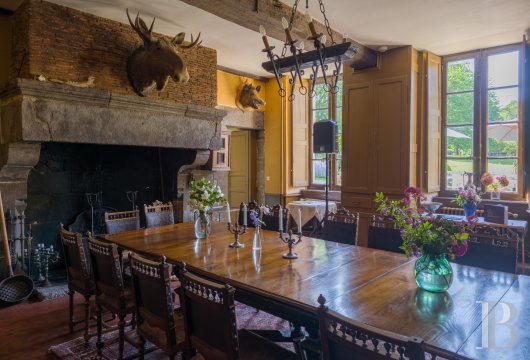
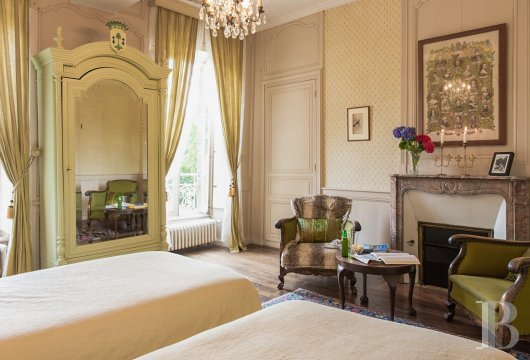
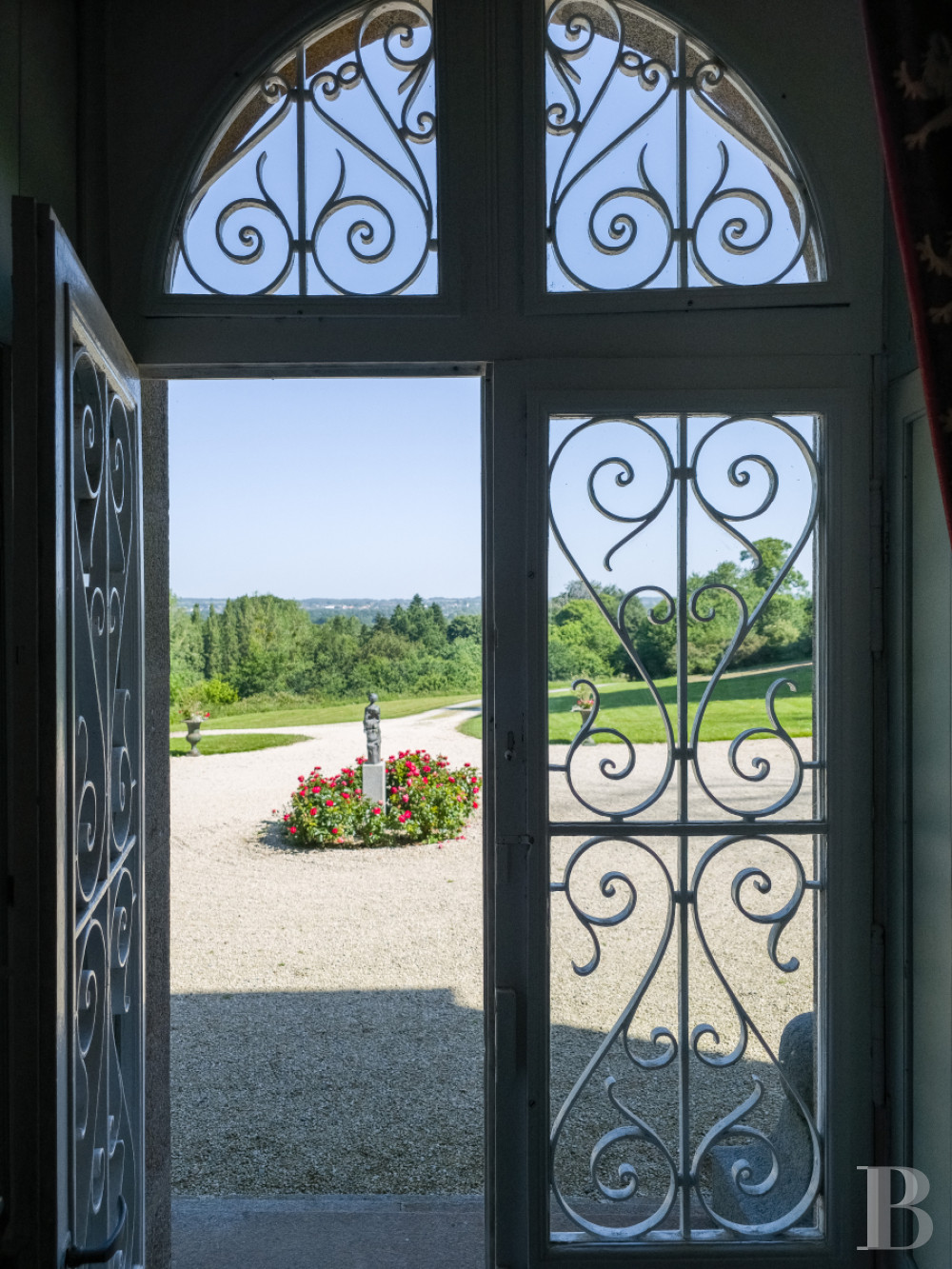
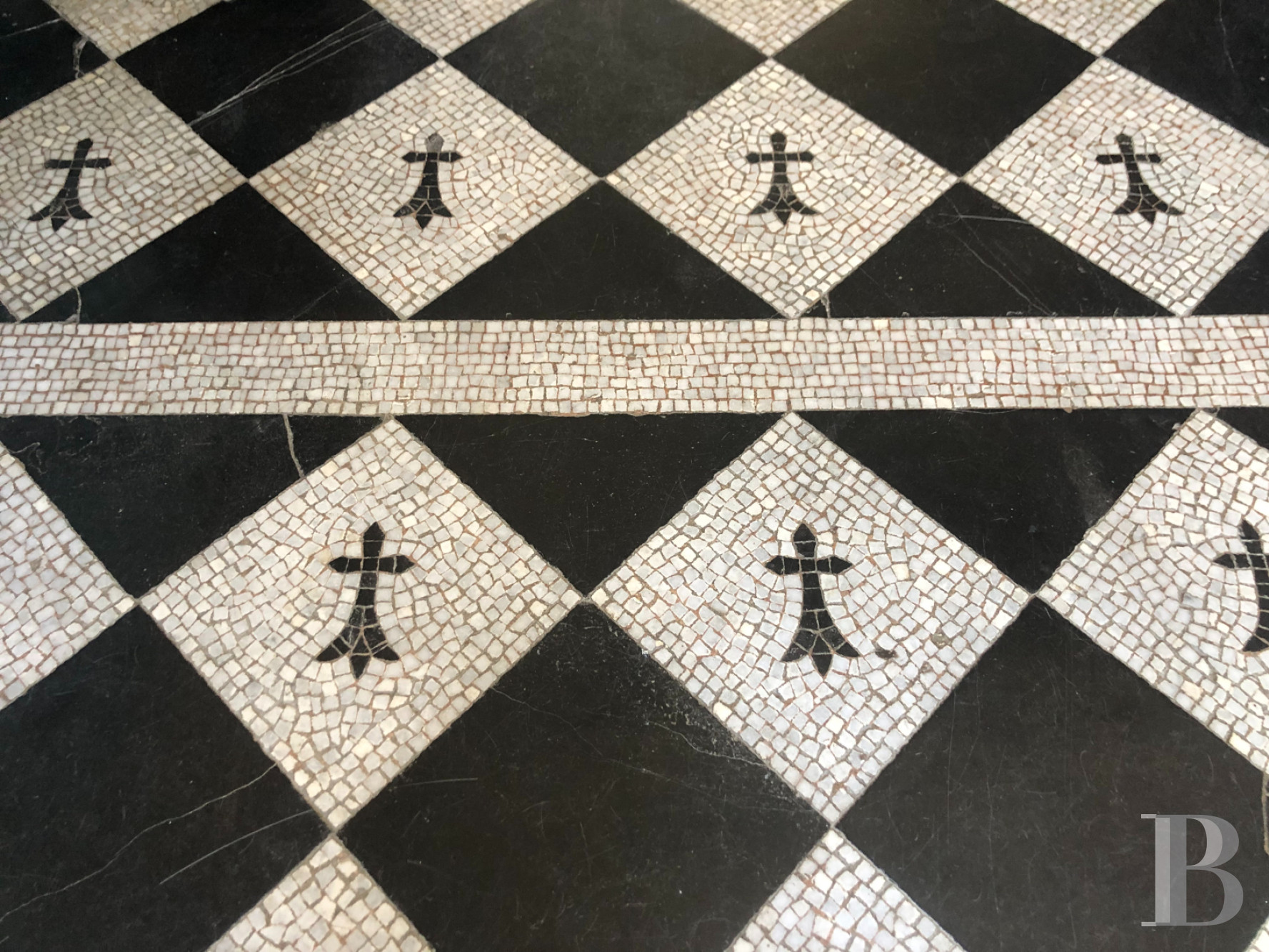
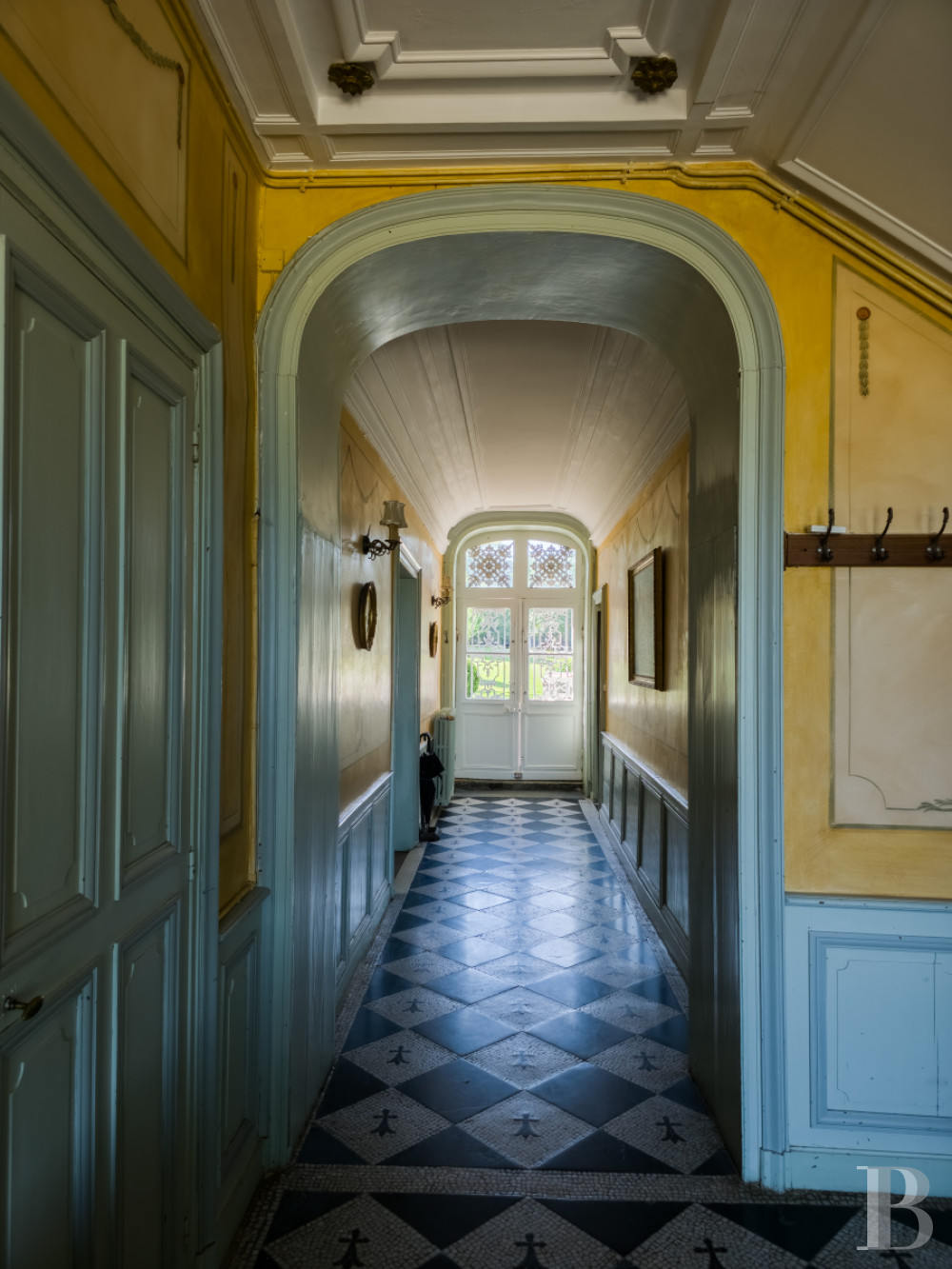
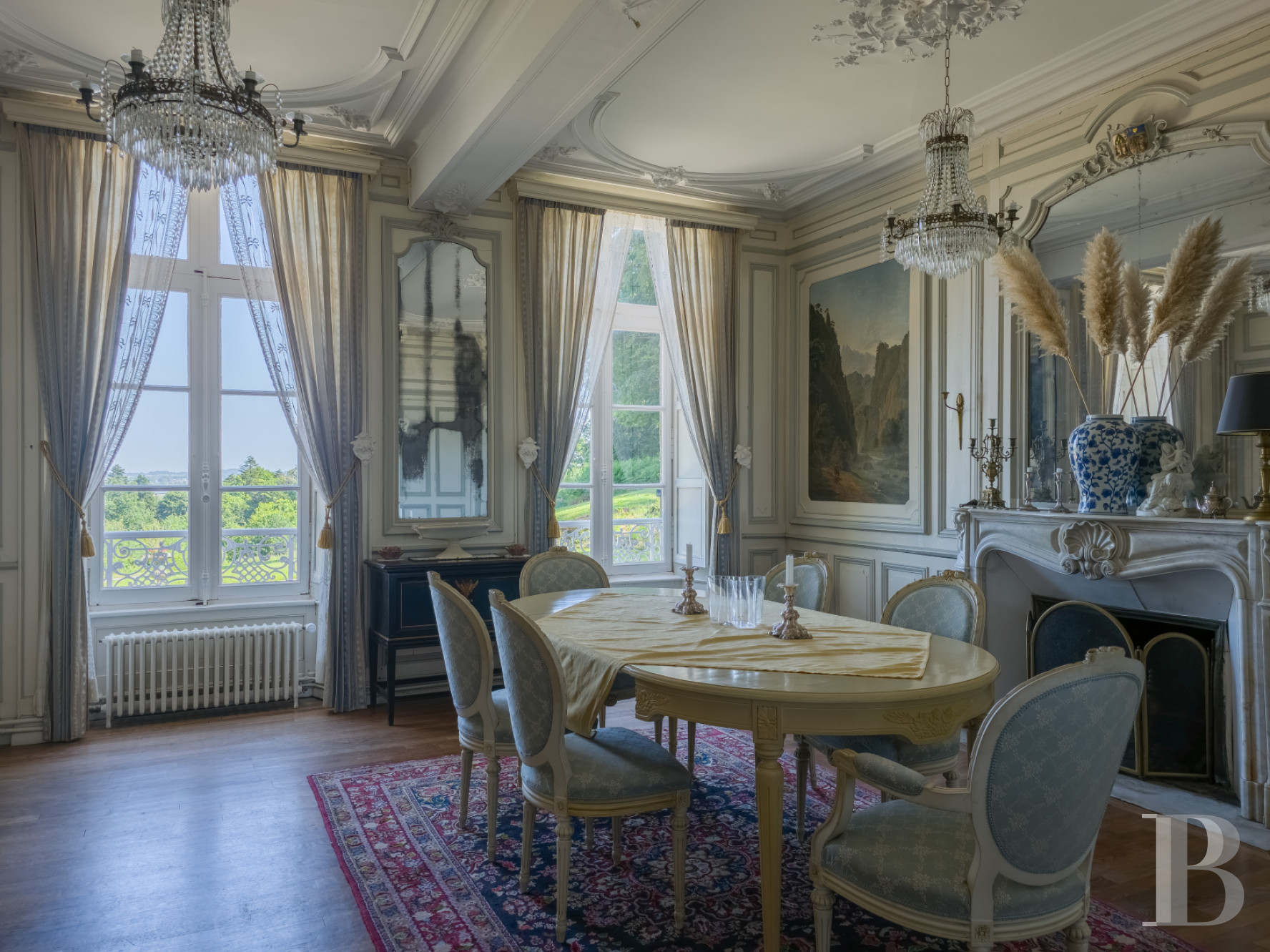
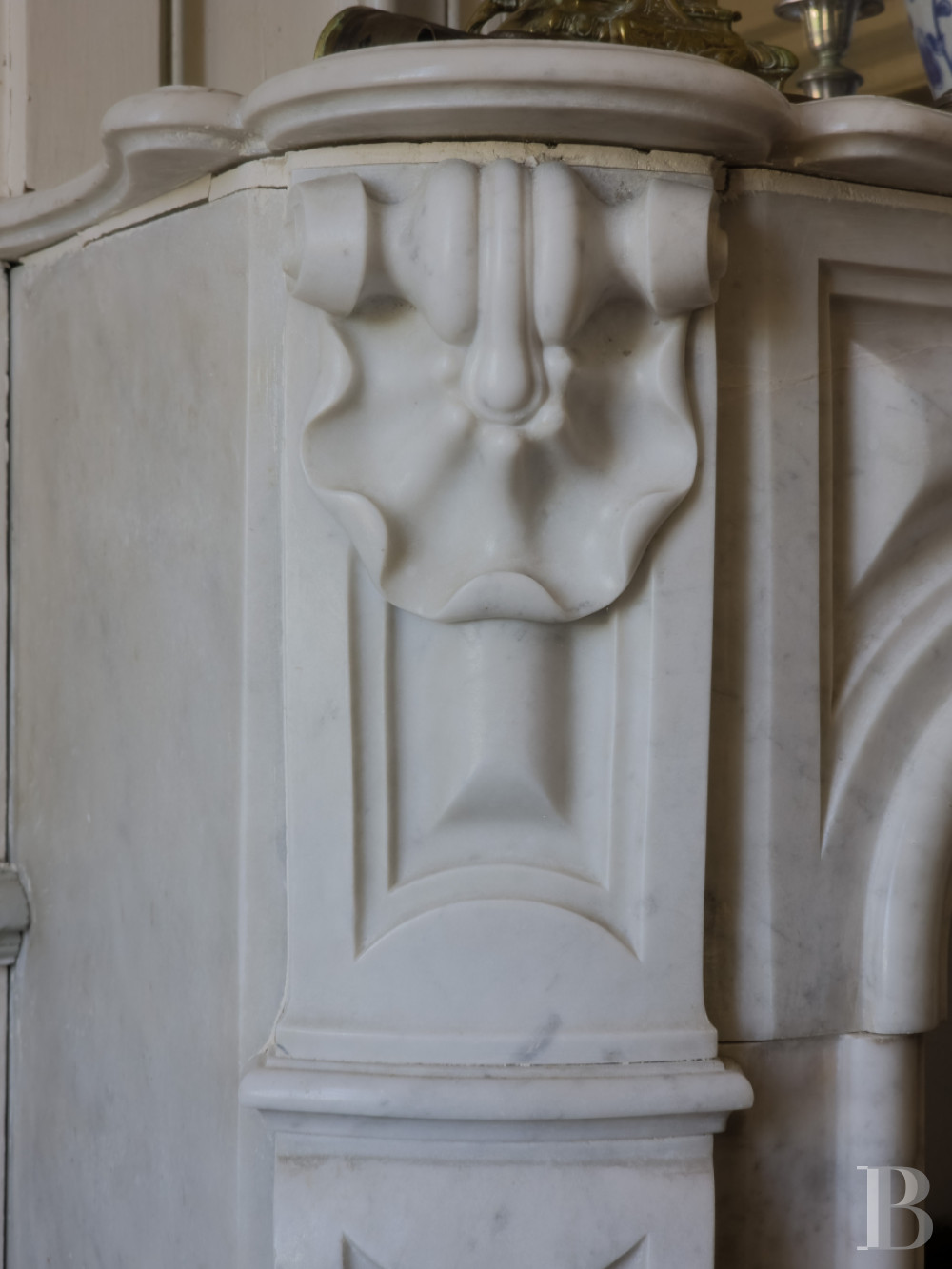
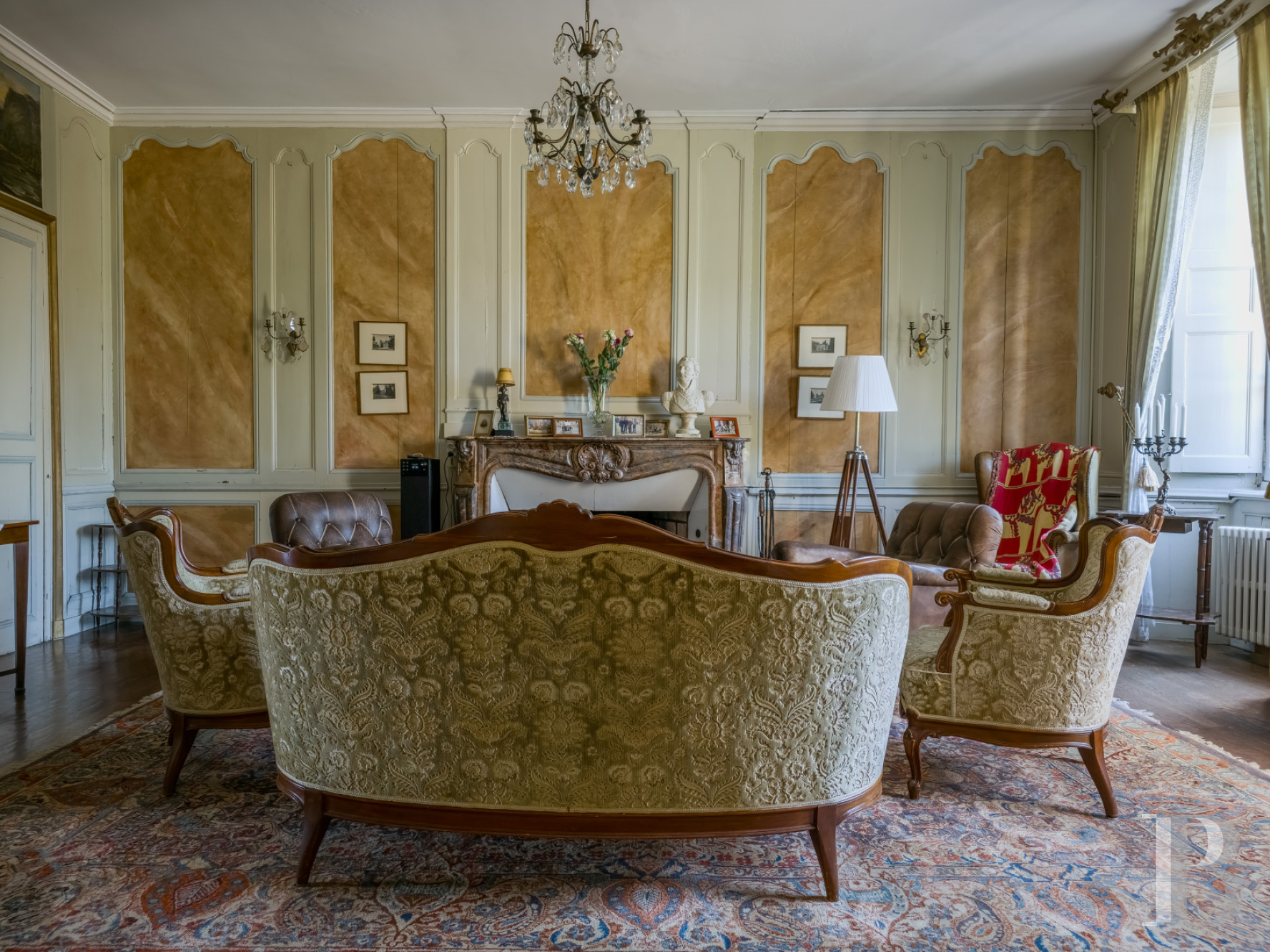
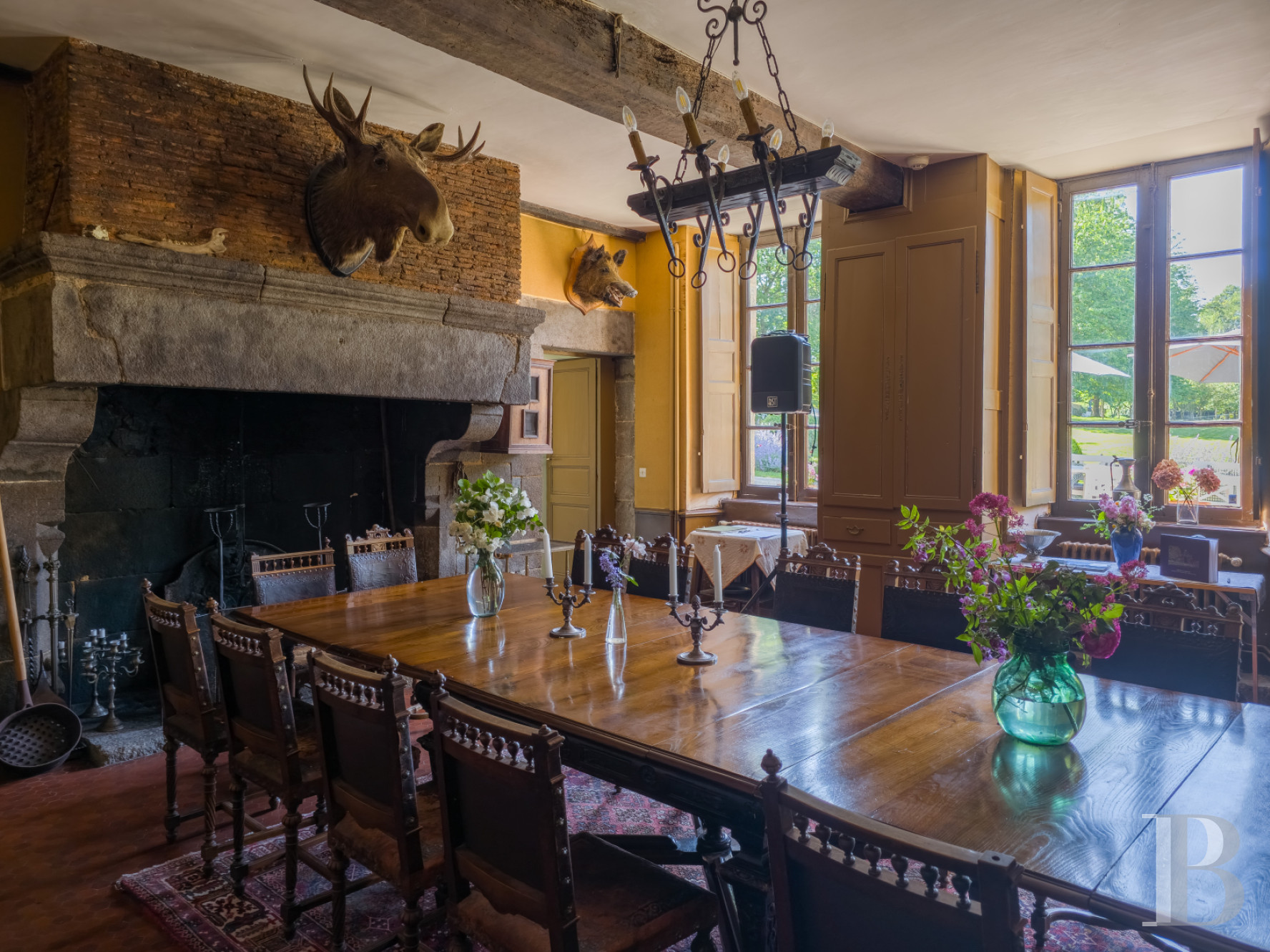
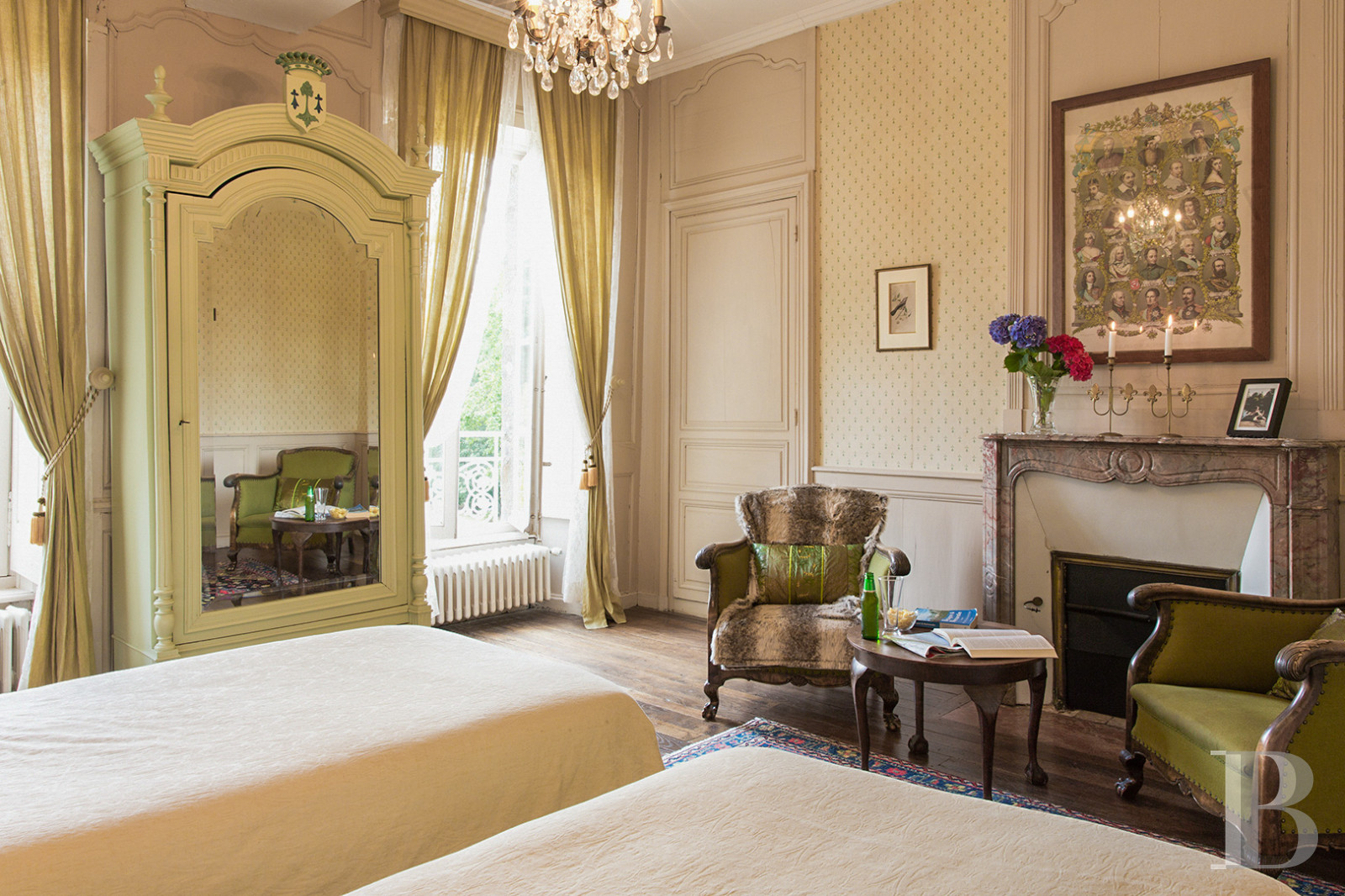
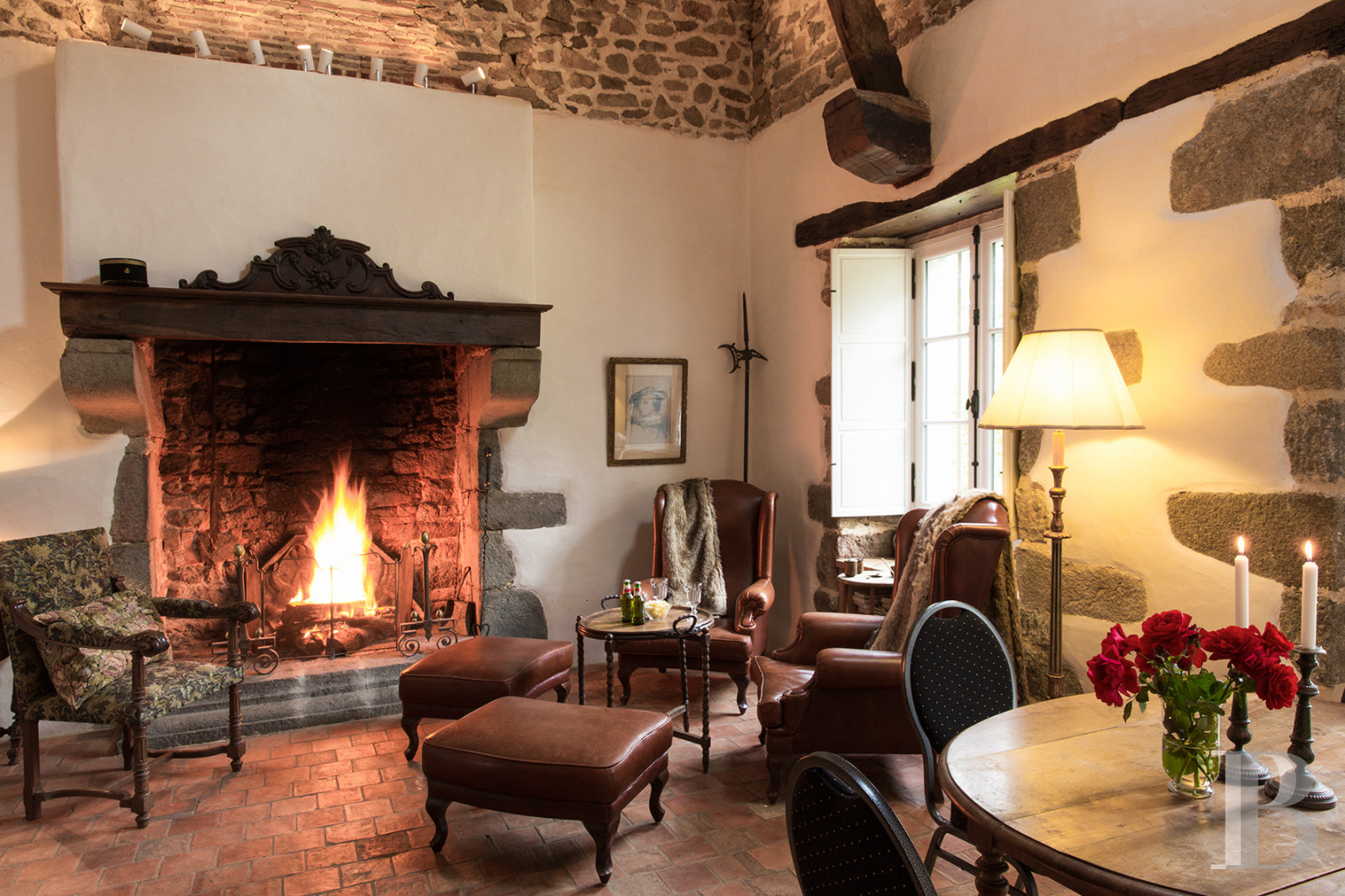
A broad, light-filled entrance hall paved with ermine-motif mosaics designed by Odorico runs the full depth of the chateau from north to south, opening onto the rooms on either side. Two parquet sitting rooms feature marble fireplaces and panelling painted by François-Agathon Pinot-du-Petit-Bois. The dining room, with its adjoining kitchen, seats twelve around a 15th-century granite and terracotta fireplace. Beyond, a parquet bedroom with marble fireplace adjoins a bathroom.
The first floor
Five parquet bedrooms with fireplaces and panelling occupy this level; two of them open onto a shower room and a bathroom.
The second floor
A parquet bedroom with fireplace, adjoining a bathroom, shares this level with three attic rooms suitable for conversion.
The basement
A cellar and a boiler room occupy the basement.
The Rose House
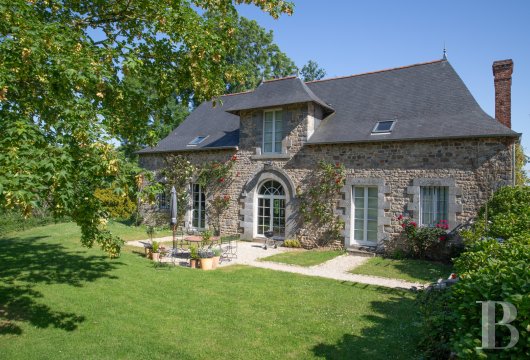
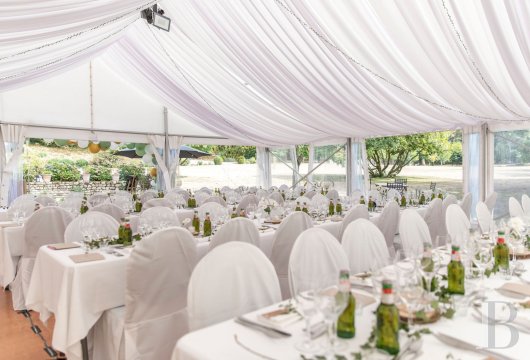
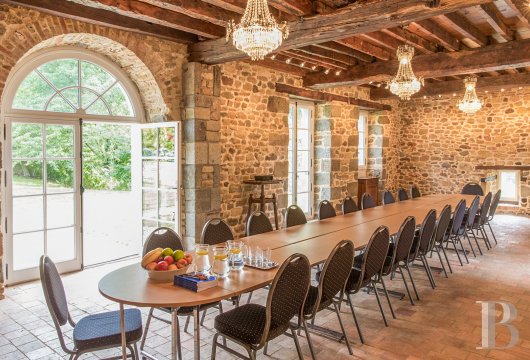
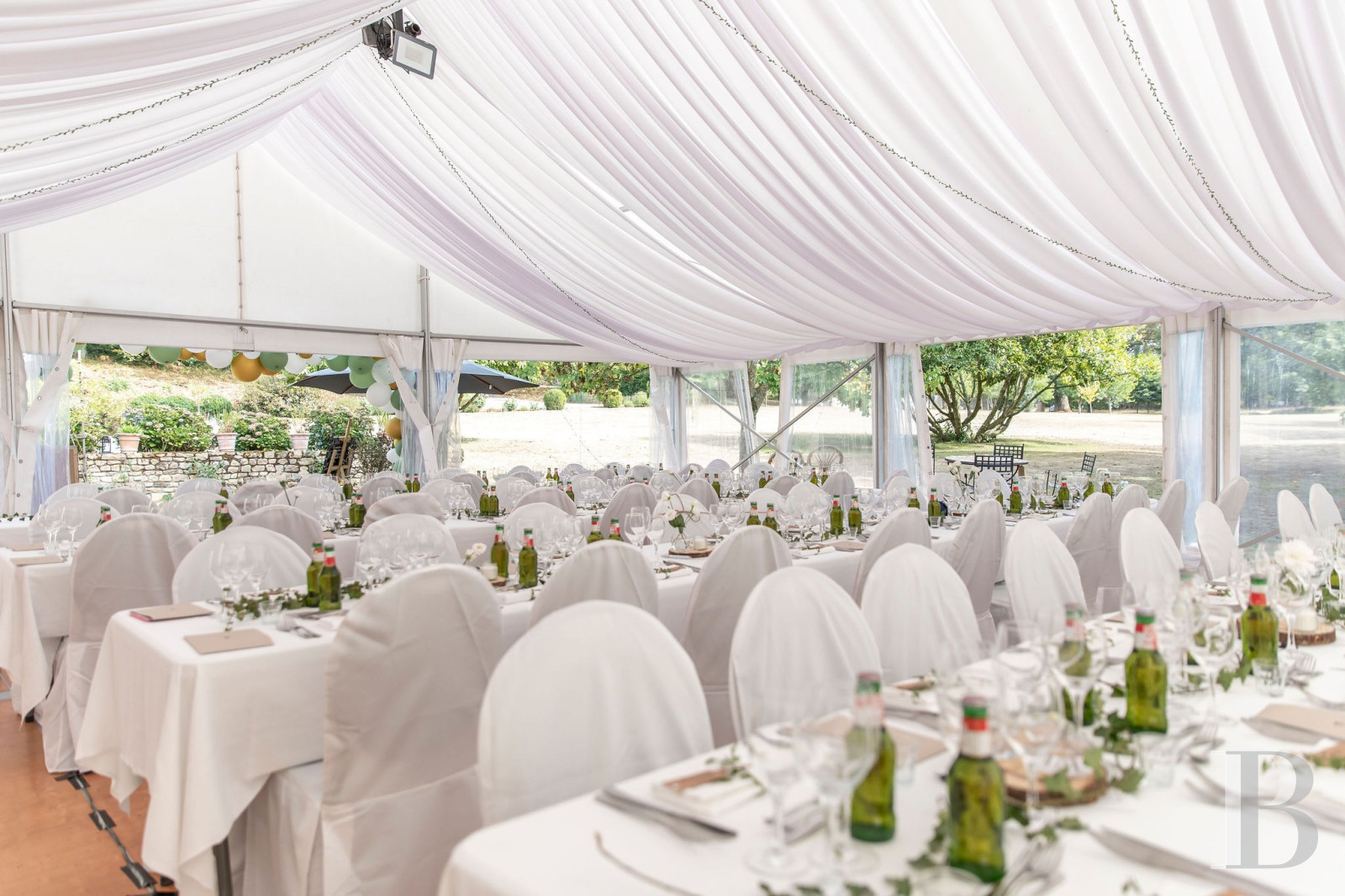
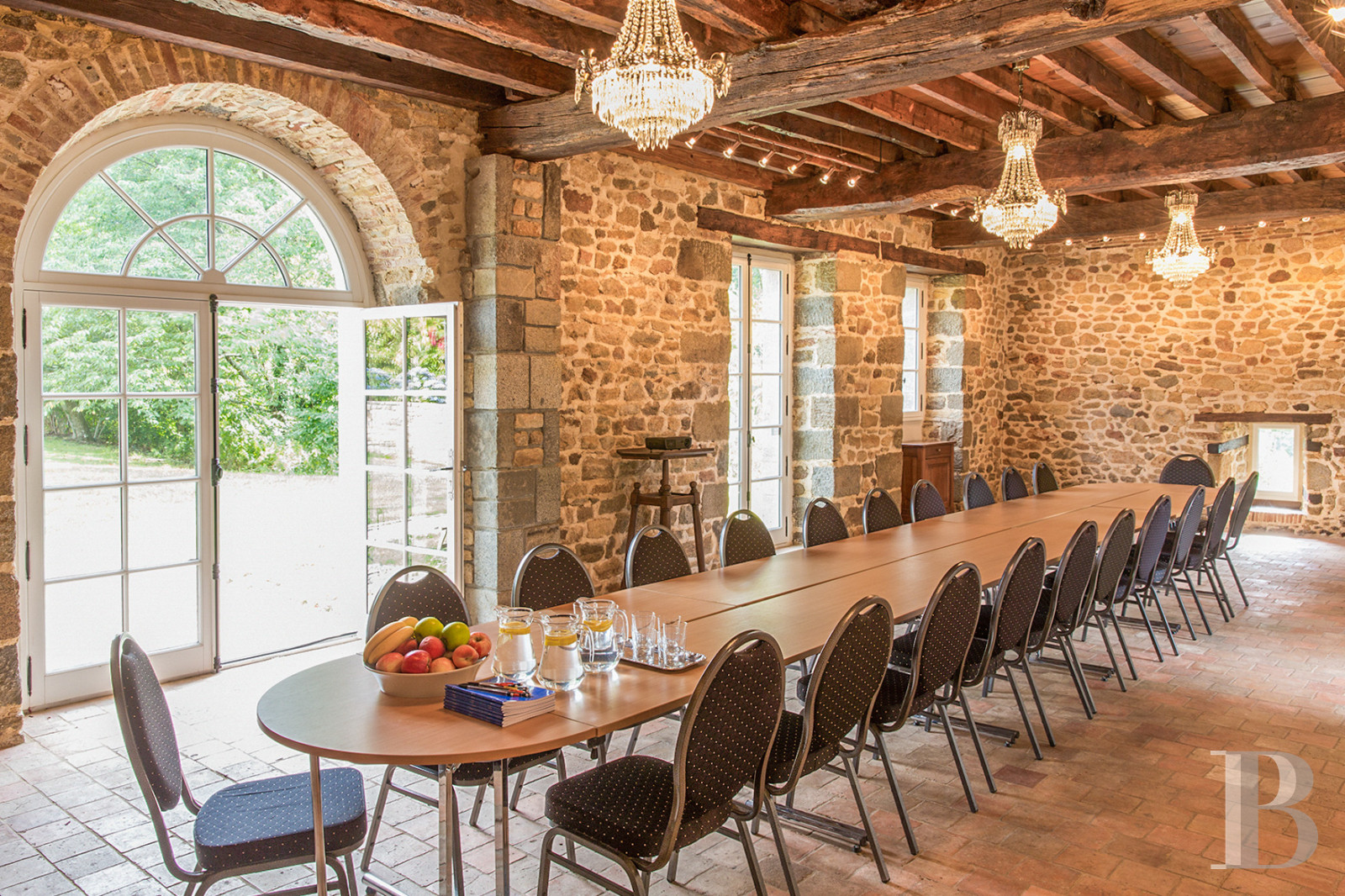
Close to the chateau, this 18th-century building houses a reception hall seating around seventy. Wide openings framed in dressed granite pierce sandstone rubble walls. A double-height sitting room, a kitchen and an upstairs bedroom complete the interior — some 170 m² in all. On the park side, a terrace can accommodate a marquee for around a hundred further guests.
The ground floor
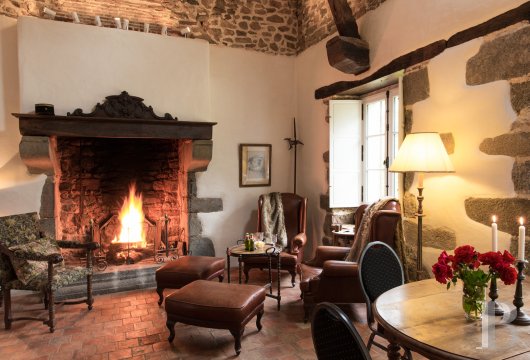
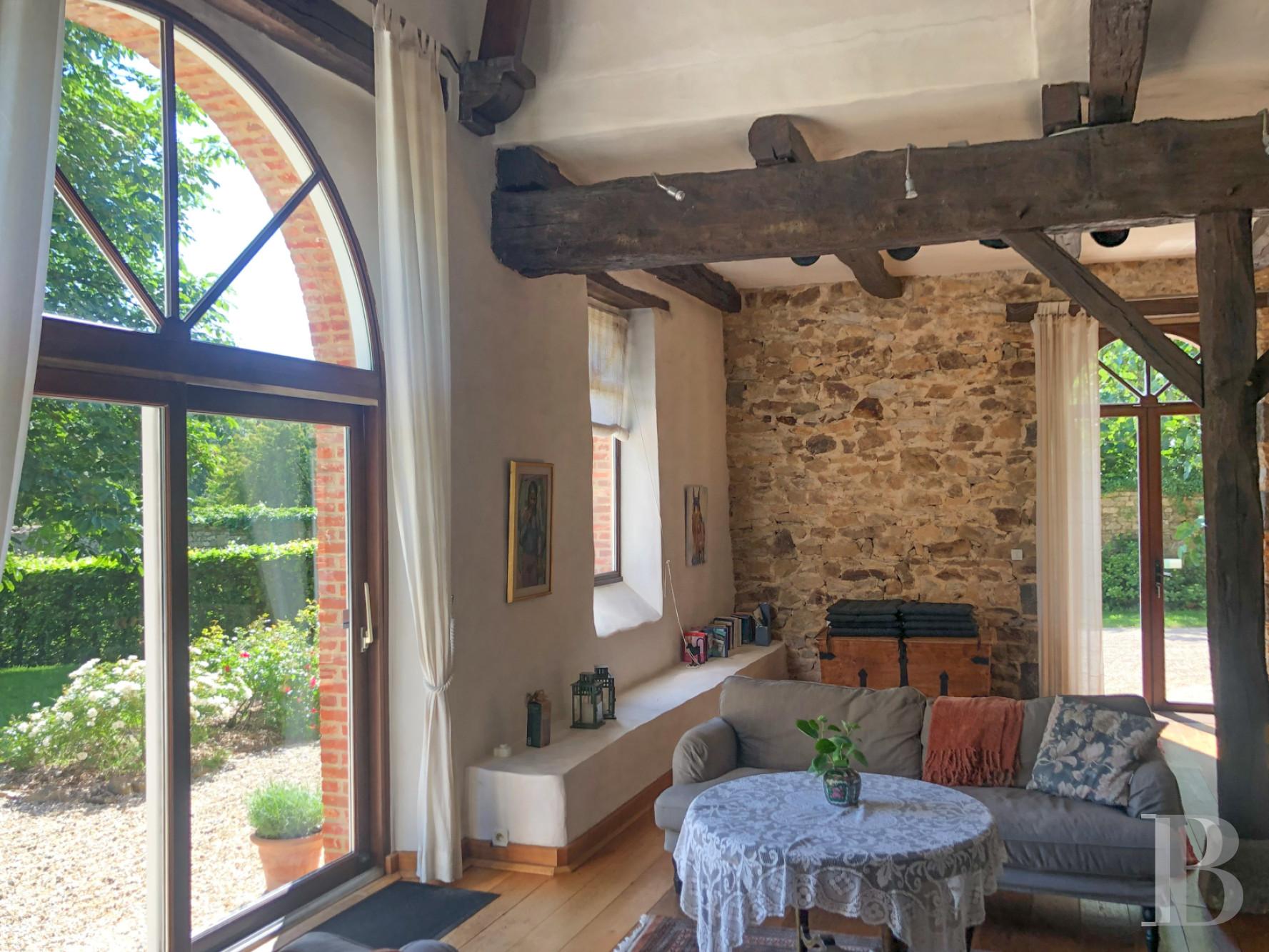
A wide round-arched window opens the reception hall southward to the grounds, where exposed beams and stonework rise above terracotta floor tiles and lime-rendered walls. A carved granite fireplace is set into one of the sitting room walls. At the rear, on the gravelled parking side, a fitted kitchen is arranged around a central island.
The upstairs
A study, a bedroom and a shower room share a single area beneath the rafters.
The Large Park House
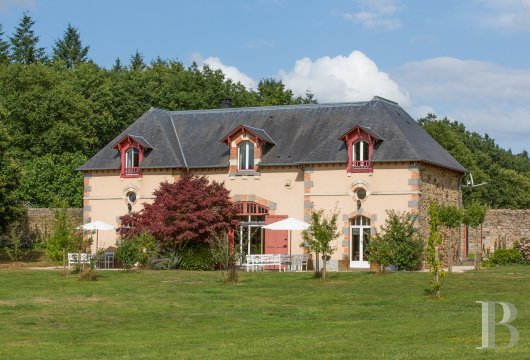
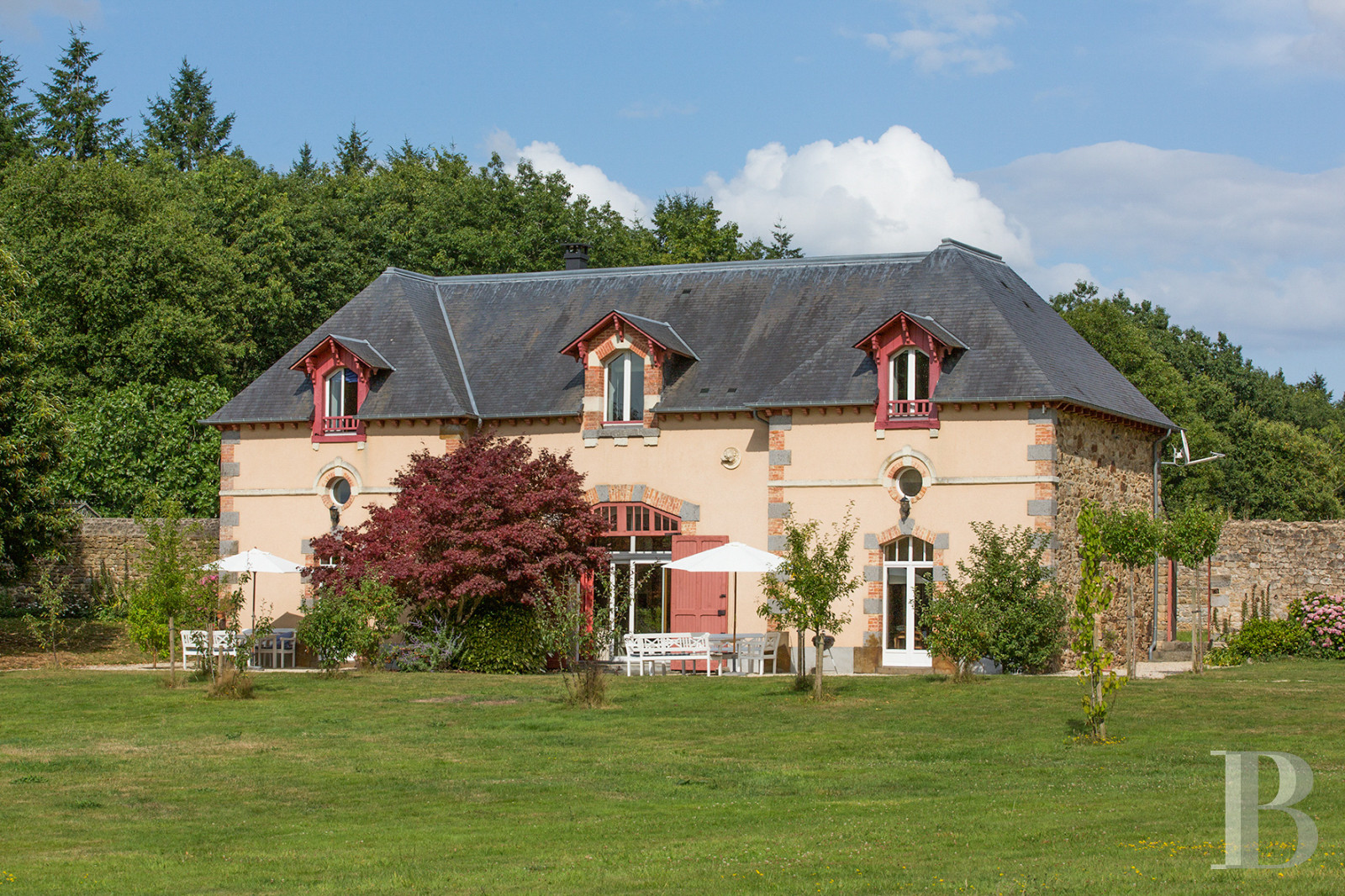
At around 200 m², the house occupies a former 18th-century stable, converted into two interconnecting gîtes that sleep six and four. A central block stands between two square-based pavilions. Three wall dormers pierce the slate roof; at ground level, a wide arched opening draws the eye through to the garden. Quoins, window surrounds and a moulded stringcourse beneath the bull's-eye window articulate a facade of pale pink render, red brick and dressed blue-grey granite.
The ground floor
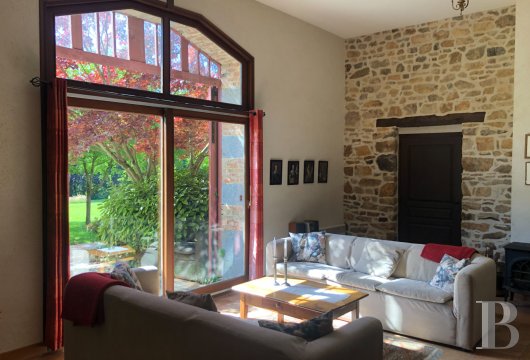
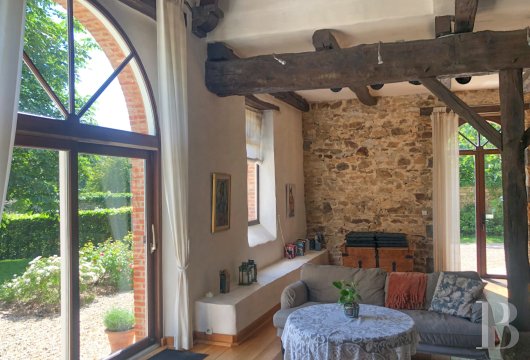
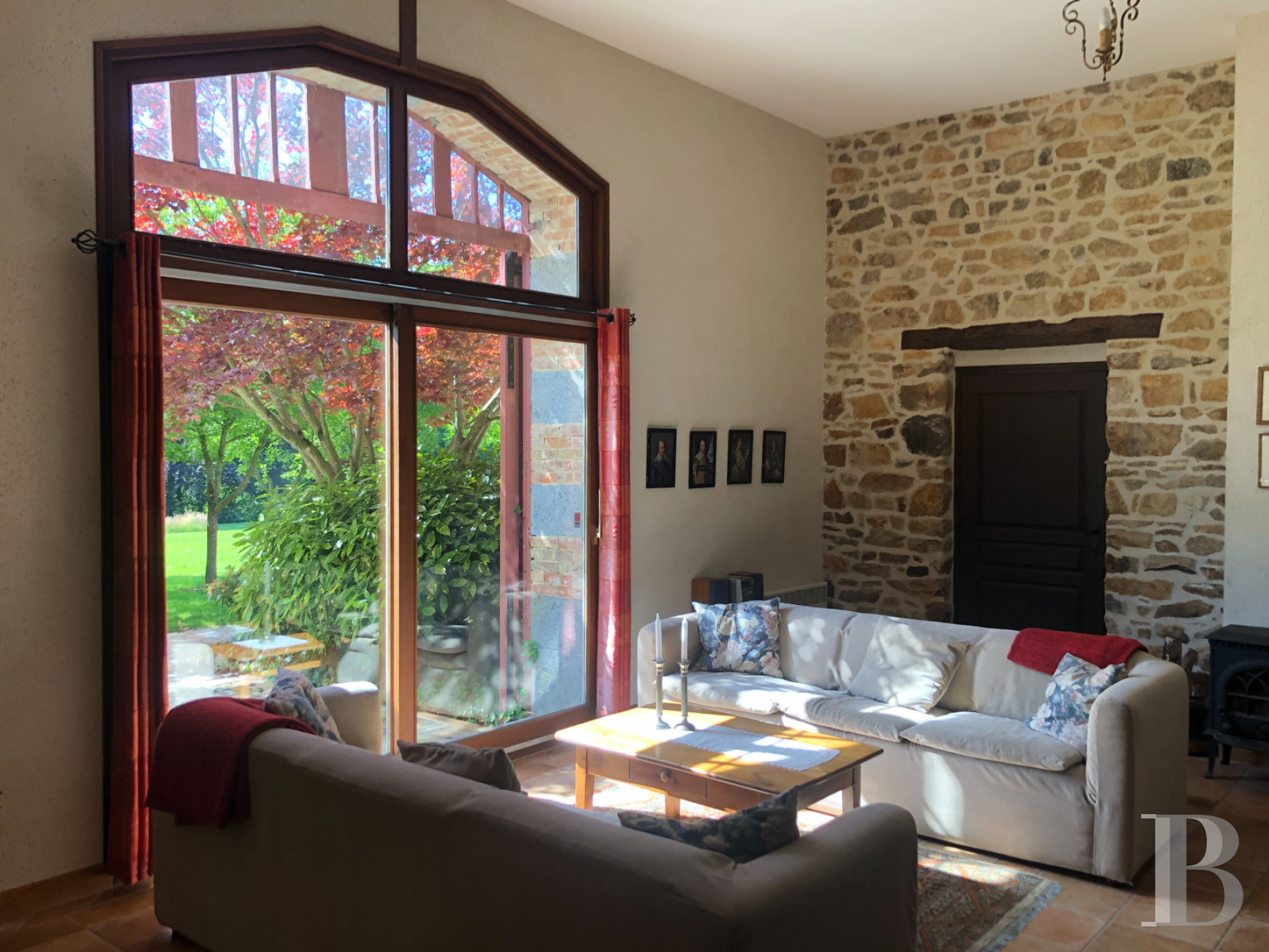
A combined sitting and living room rises beneath nearly 3.70 m of ceiling, with wide sliding glass doors onto the garden terrace; an adjoining dining room with open kitchen completes this level.
The upstairs
Three bedrooms share a bathroom and a shower room.
The Small Park House
This self-contained gîte for four occupies the north wing of the Large Park House. The ground floor brings together a living room with open kitchen and a private terrace; upstairs, two bedrooms share a shower room.
The caretaker's house
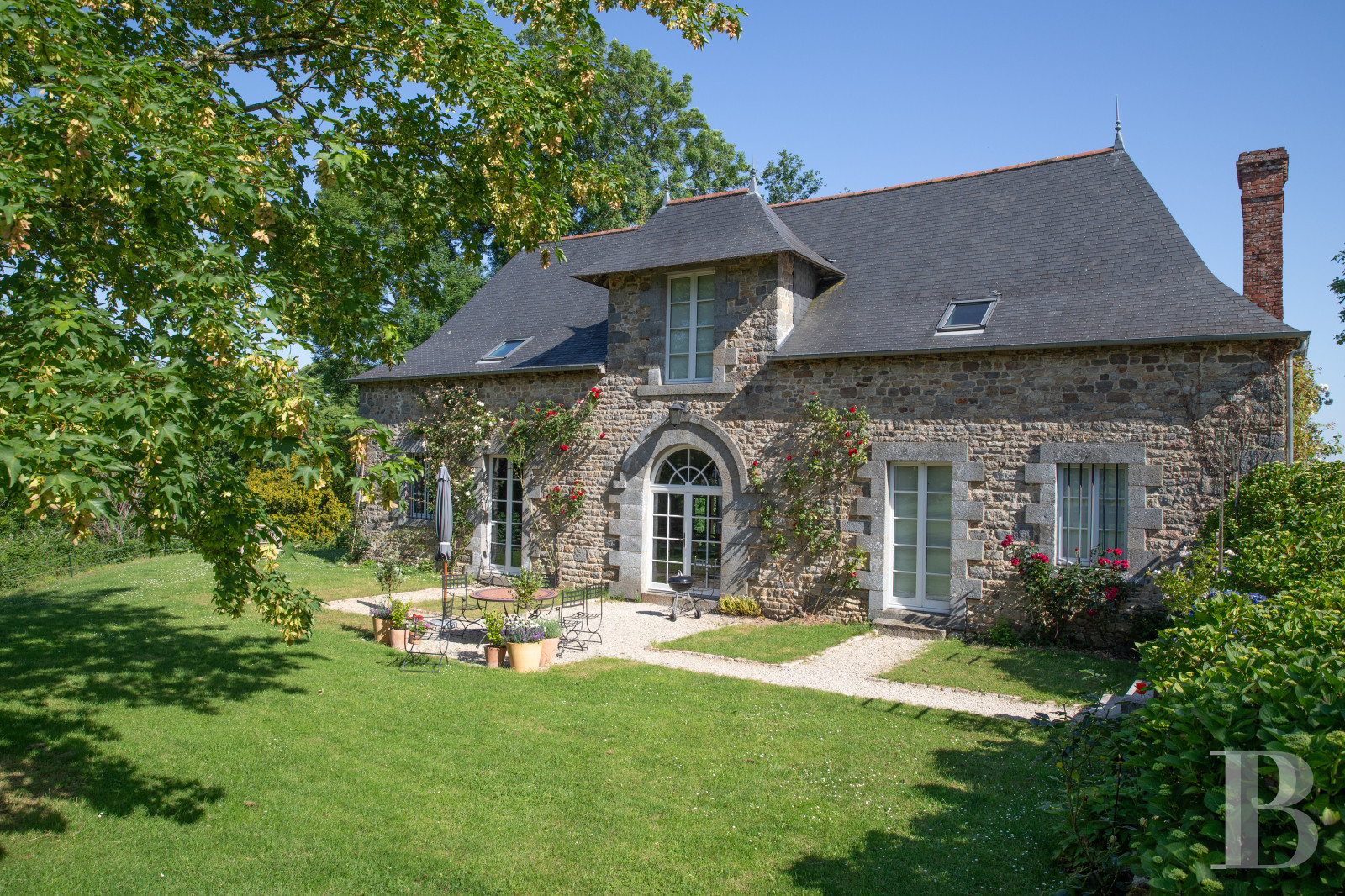
This 18th-century building has been converted into a gîte of around 140 m² sleeping six. Two levels rise beneath a slate roof, the sandstone rubble facade pierced by wide glazed openings framed in red brick.
The ground floor
At 78 m² and close to 3.40 m beneath the ceiling, the living room brings together oak parquet, exposed beams and stonework, and lime-rendered walls. A central fireplace and an open kitchen anchor the room, with wide windows onto the grounds.
The upstairs
A parquet landing leads to a bathroom and three bedrooms, with lime rendered stone walls.
The pool
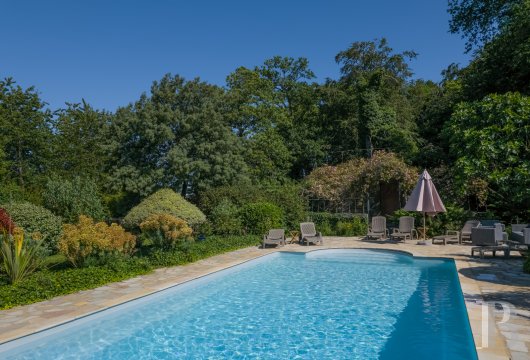
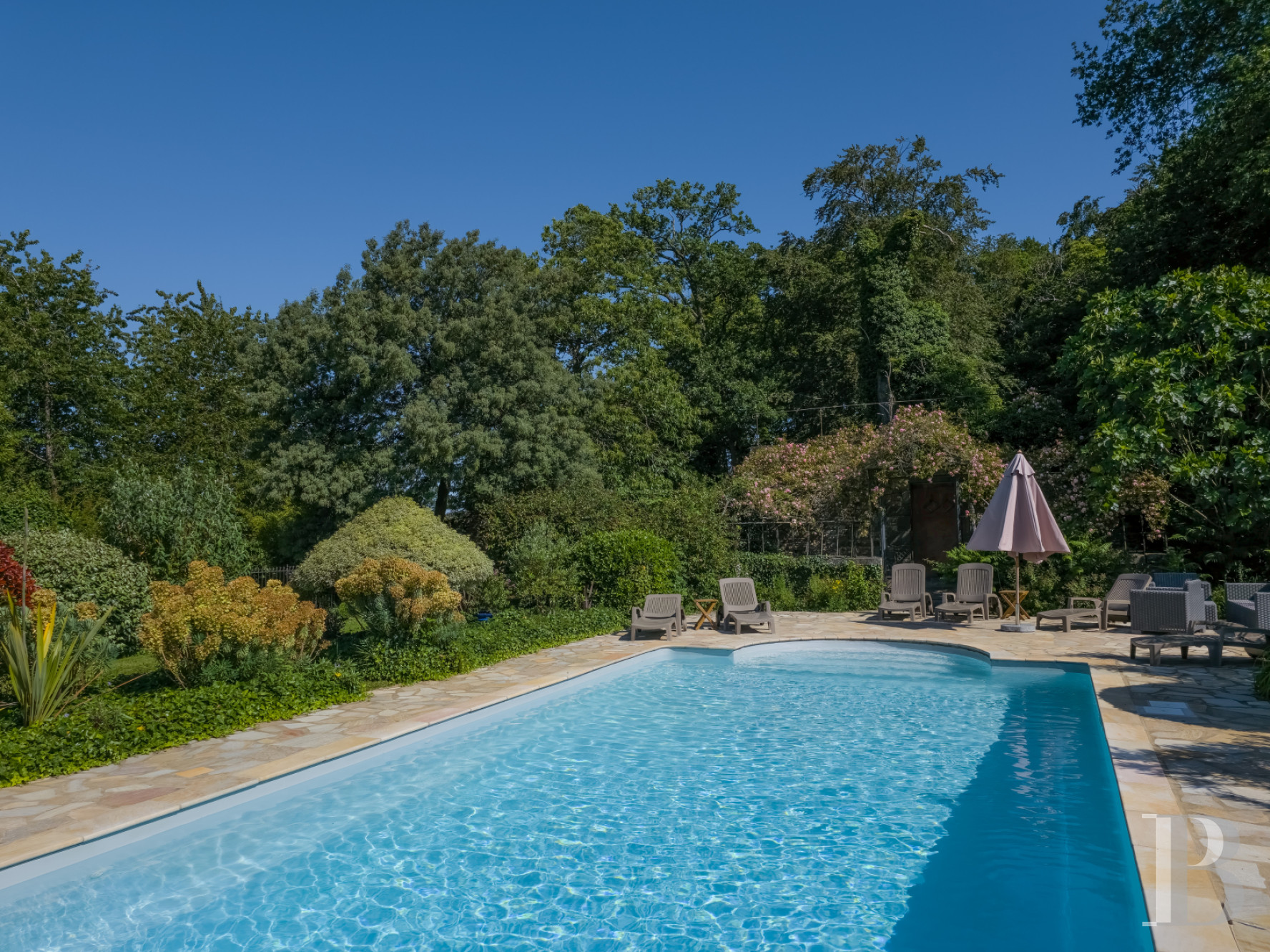
At 10 by 5 metres, the pool lies within a walled flower garden, alongside a paved terrace and a 19th-century greenhouse draped with climbing roses.
The chapel
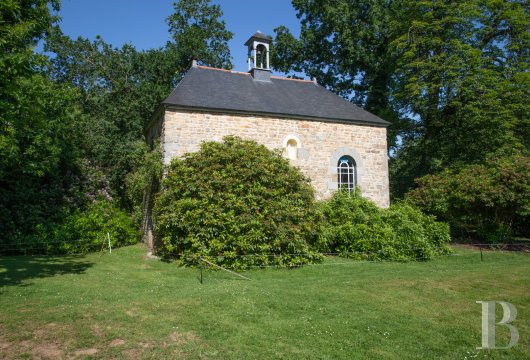
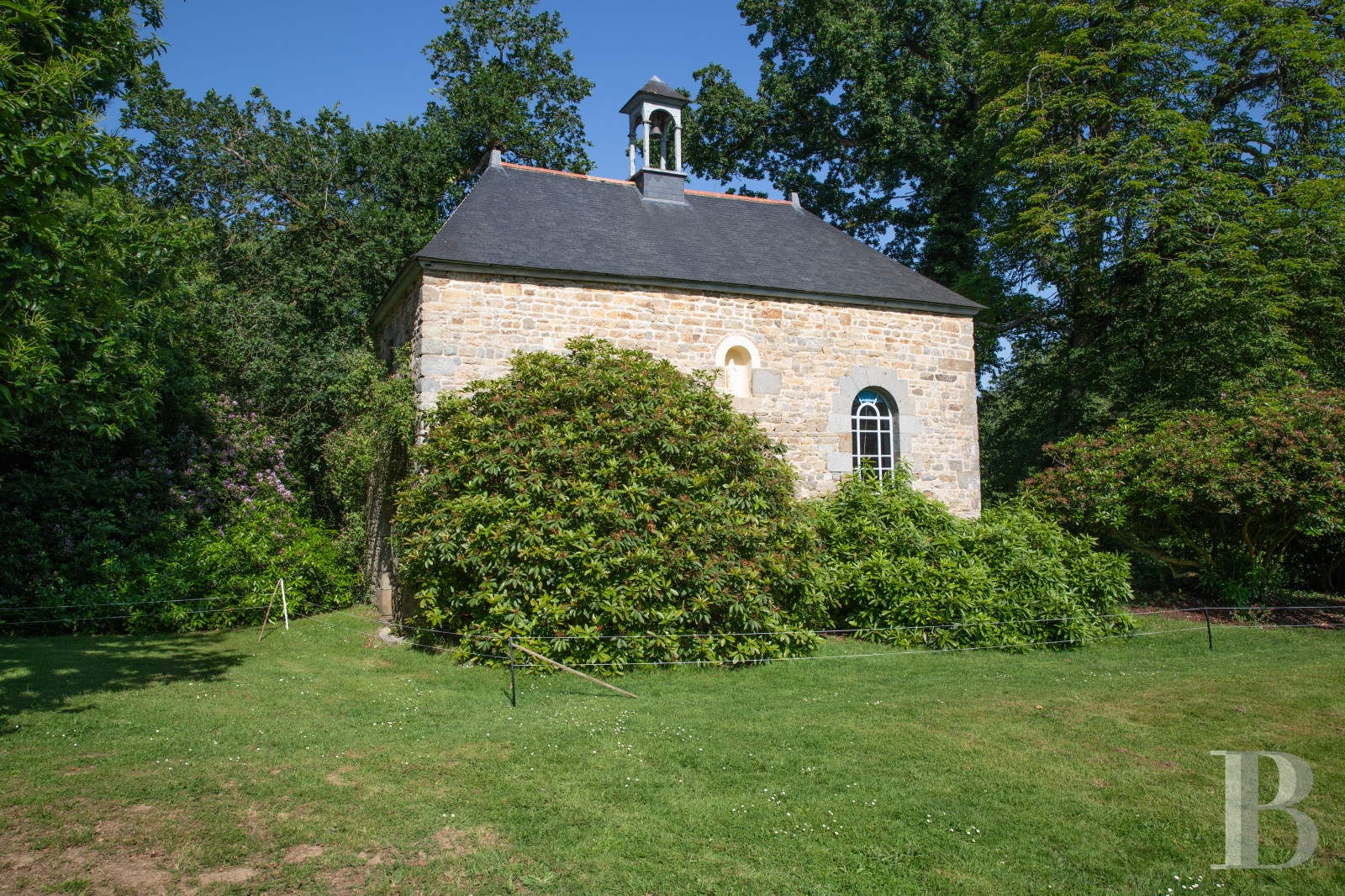
Built in 1714, the chapel seats around fifty guests for wedding ceremonies. Dedicated to Saint Anthony, it stands in sandstone rubble beneath a slate roof crowned by a small bell turret. Alongside runs a small valley lined with azaleas and rhododendrons.
The kitchen garden
Enclosed by high walls it occupies some 2,700 m².
The grounds
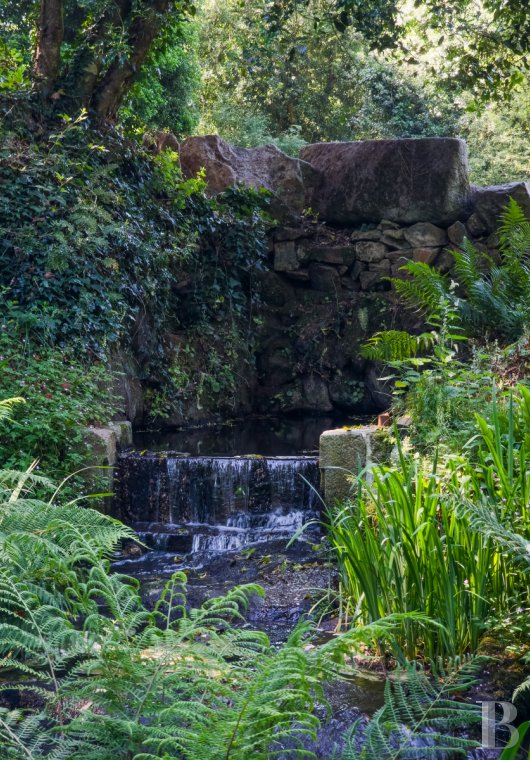
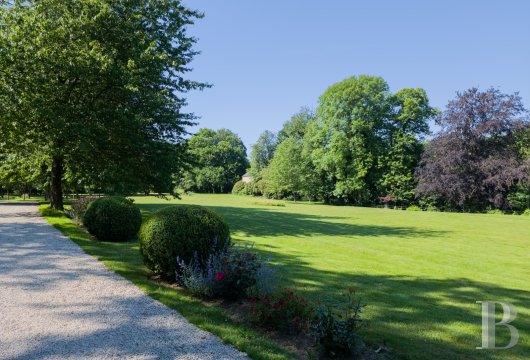
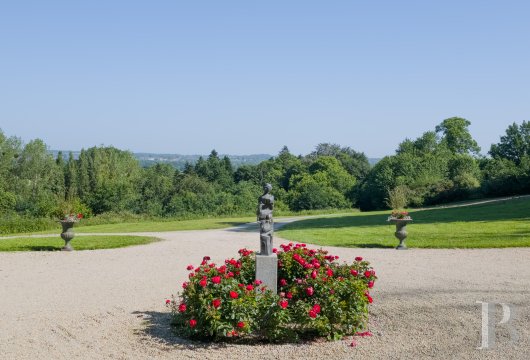
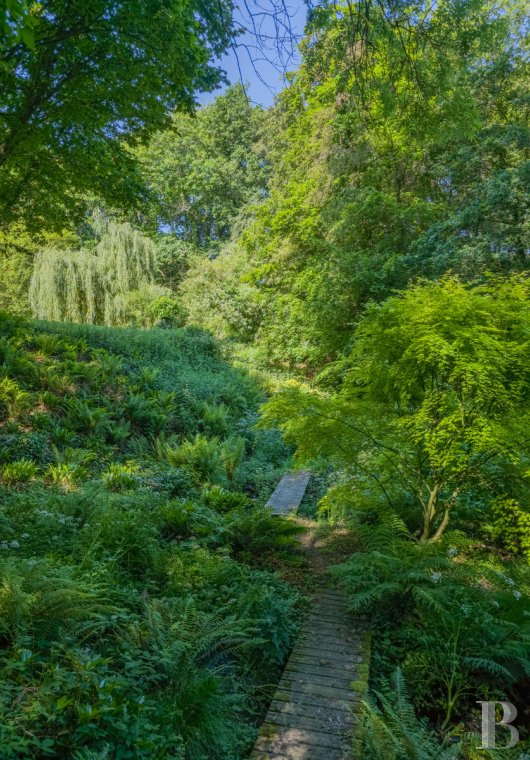
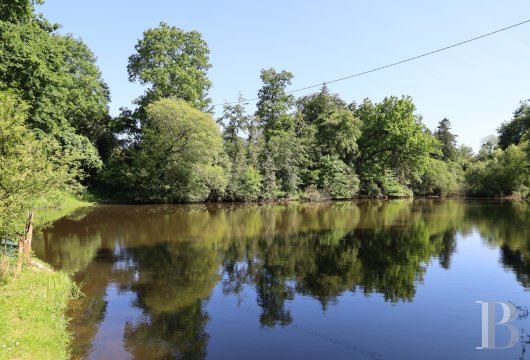
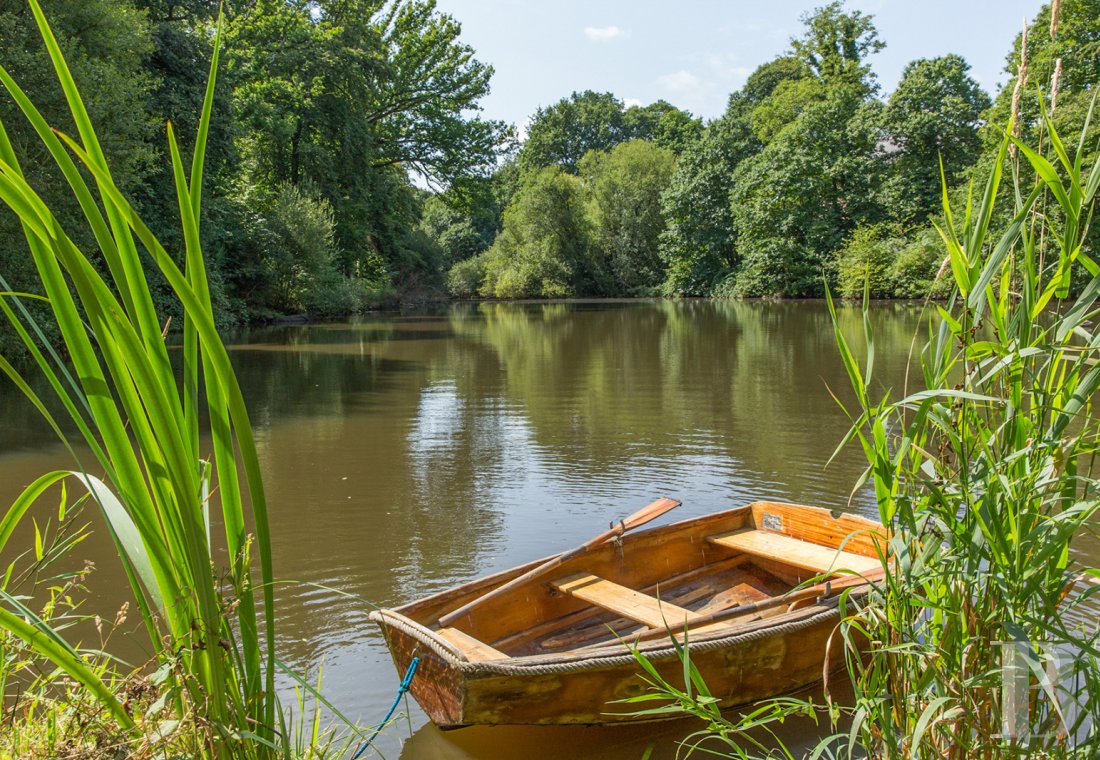
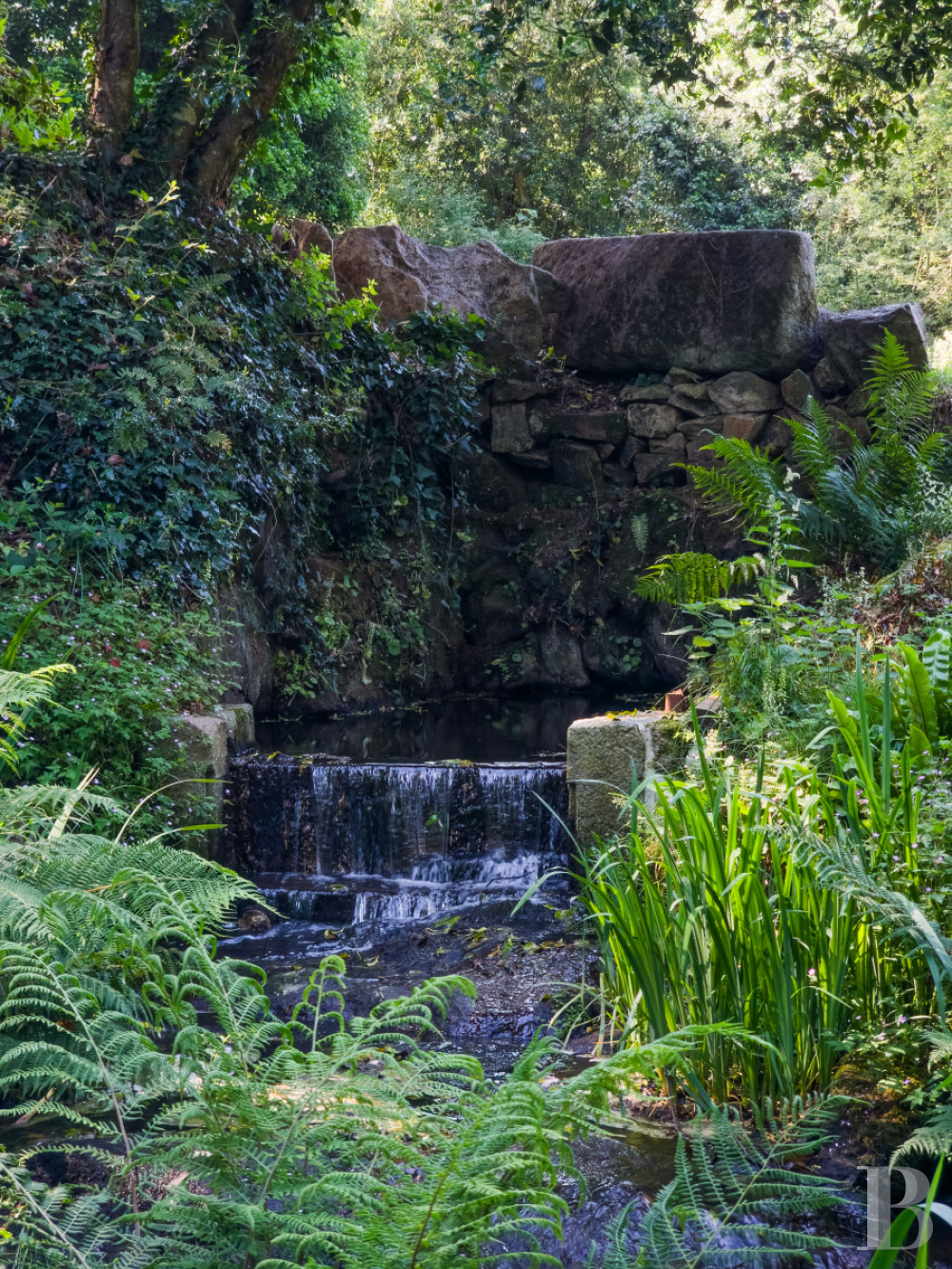
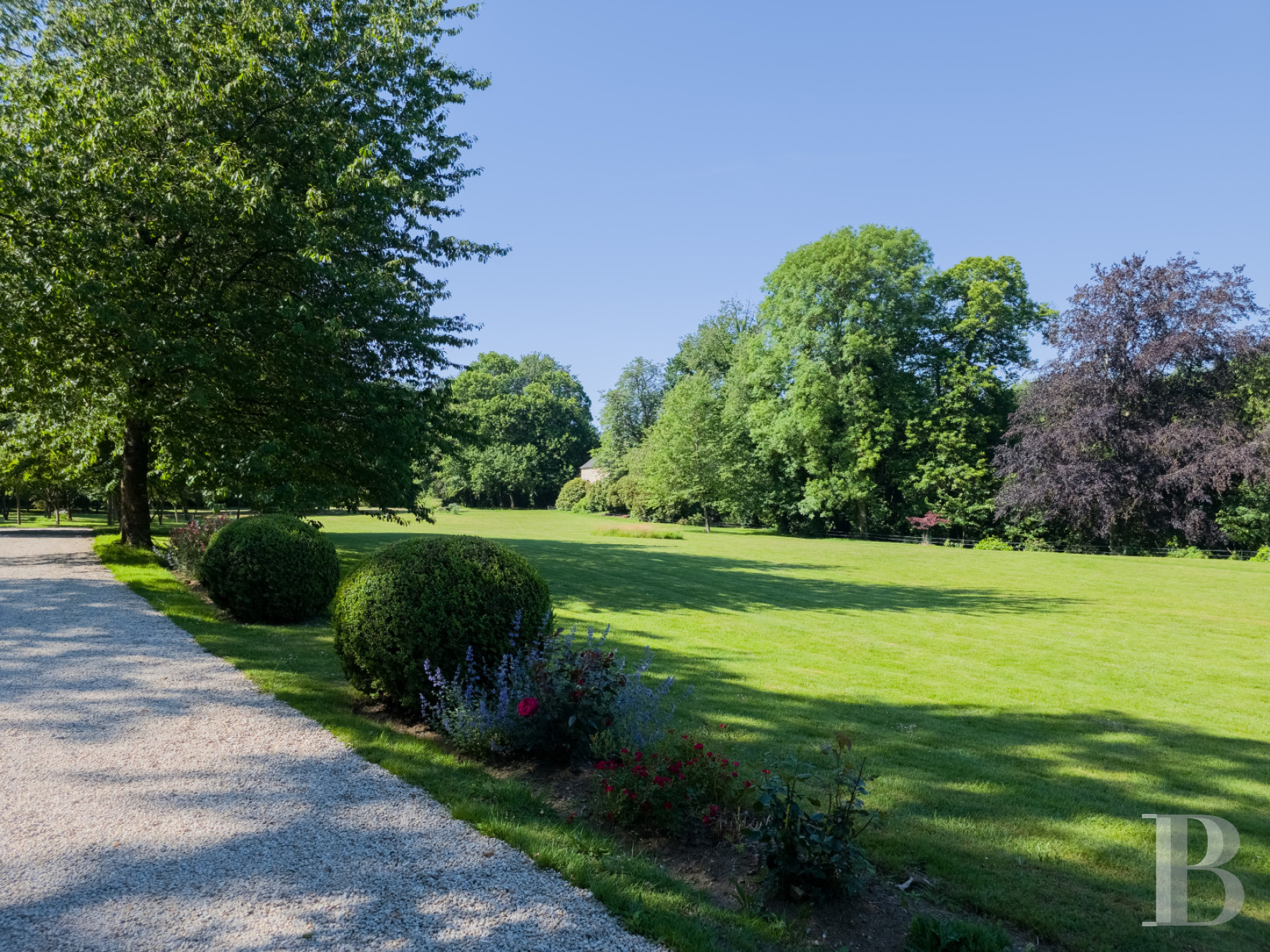
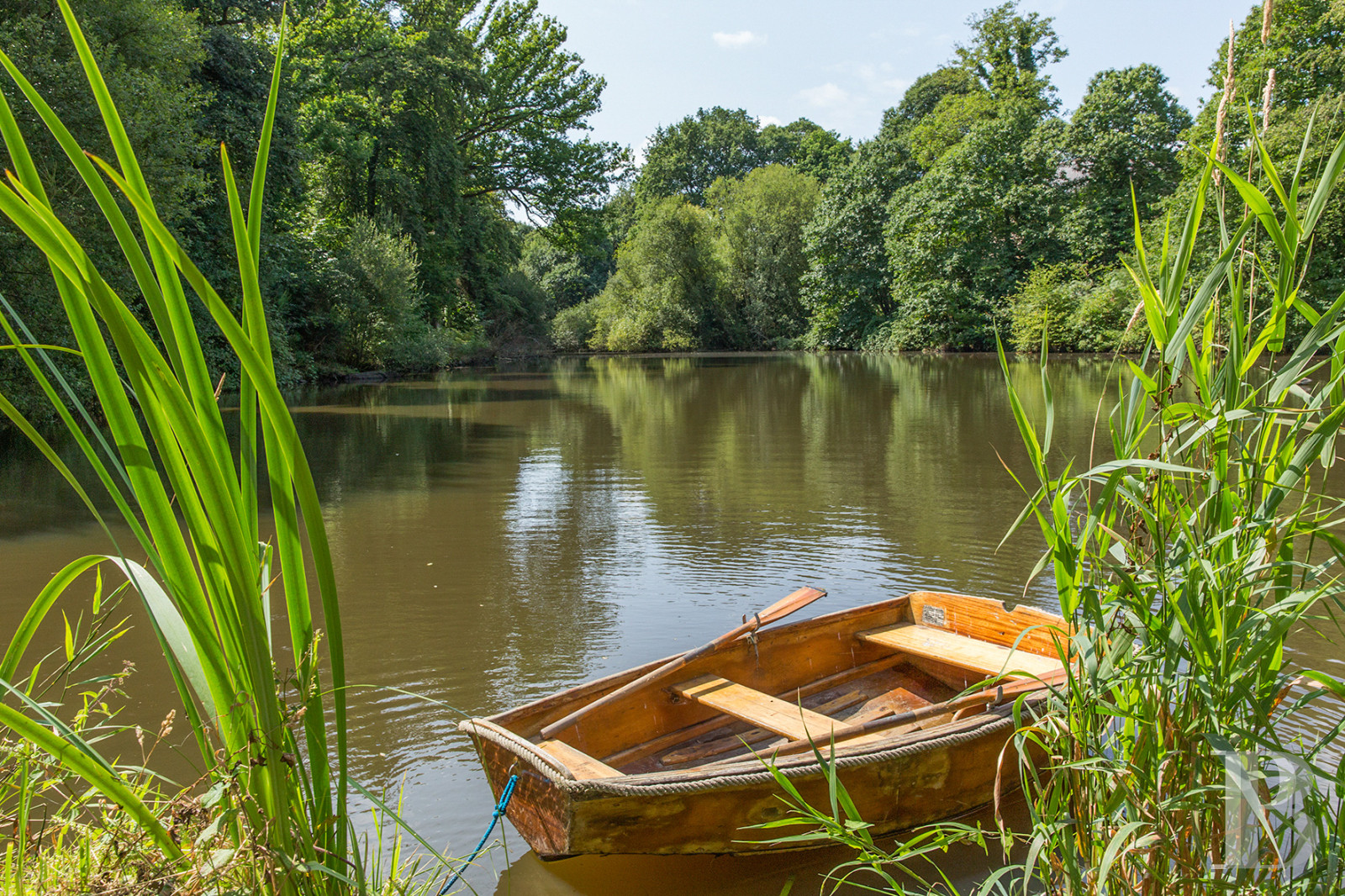
Four kilometres of maintained paths wind through 25 hectares of chestnut, oak, beech and cherry. Laid out with a landscape architect, the walks pass streams, waterfalls and lakes covering close to a hectare. The vegetation is lush, and the wildlife varied — deer, hares, foxes and birds of many kinds.
Our opinion
Set among some of Brittany's most visited landmarks, this estate offers an immersive natural setting that provides guests with a complete change of scene. Chateau, outbuildings, lakes and woodland together create an environment suited equally to family celebrations and professional gatherings. A long-established operation, it has built a loyal clientele and a proven network of service partners. The remaining floor area and potential for further conversion offer real scope for growth — all within an estate whose balance and character are already firmly in place.
Reference 440140
| Main building floor area | 450 m² |
| Outbuildings floor area | 510 m² |
| Land registry surface area | 25 ha 10 a 77 ca |
| Total floor area | 960 m² |
French Energy Performance Diagnosis
Information on the risks to which this property is exposed is available on the website: www.georisques.gouv.fr
Share


NB: The above information is not only the result of our visit to the property; it is also based on information provided by the current owner. It is by no means comprehensive or strictly accurate especially where surface areas and construction dates are concerned. We cannot, therefore, be held liable for any misrepresentation.