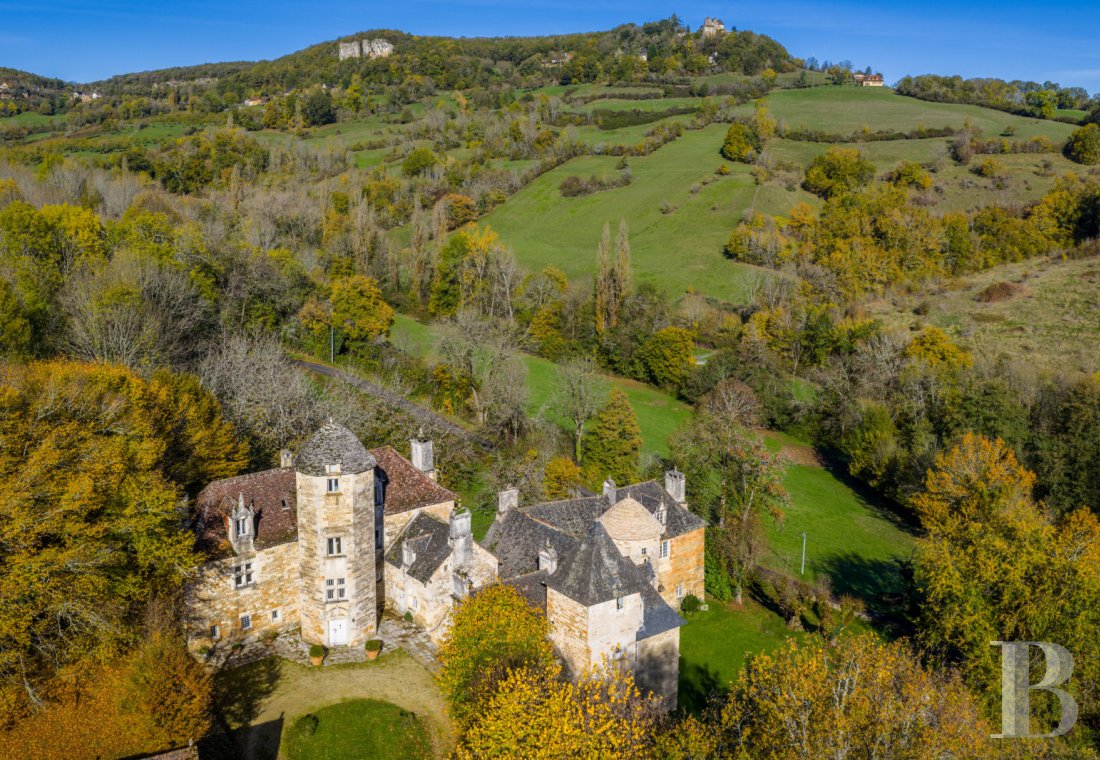




A 15th-century chateau, its outbuildings, grounds and swimming pool,
surrounded by 21 hectares of unoccupied land, along the outskirts of the Quercy region, twenty minutes from Brive-la-Gaillarde
surrounded by 21 hectares of unoccupied land, along the outskirts of the Quercy region, twenty minutes from Brive-la-Gaillarde
Brive-la-Gaillarde,
LOT
midi-pyrenees
19100
FR

Location
Located several kilometres to the south of Turenne, in one of the most beautiful villages in all of France, and in the northern most part of the Lot department, the property is nestled within the first hillsides of the former Quercy province and overlooks the switchbacks of a restricted rural road, protected by more than twenty hectares of forests and grazing pastures, the latter of which are surrounded by low shepherd’s walls. Within the triangle formed by the three towns of Turenne, Collonges-la-Rouge and Martel, which spans the administrative borders of the Corrèze and Lot departments, this picturesque Occitan region extends towards the western part of the Périgord countryside, all the way to Sarlat-la-Canéda, forty minutes away by car.
Here, protected nature, renowned gastronomy and outdoor activities come together seamlessly for the pleasure of both nature and food lovers, while all shops as well as essential and medical services are less than ten minutes away in the nearest village. Sheltered from all disturbances, the property is also only a few minutes by car from the Brive-Vallée de la Dordogne airport with daily flights to Paris in one hour and 15 minutes, whereas Brive-la-Gaillarde’s railway network is accessible in twenty minutes and the A20 and A89 motorways make it possible to reach Toulouse and Bordeaux in two hours and 2.5 hours, respectively.
Description
In the 14th century, the lands owned by the de Chabannes family were transferred to Adhémar d’Aigrefeuille, Baron of Gramat, before the de Muzac family, whose patriarch was the King of France’s sergeant-at-arms, took possession of the estate in the next century, pledging his allegiance to the Viscount of Turenne in the process. Through marriages and successive inheritances, the fiefdom was then passed down to the de Tournier family of Corrèze, followed by that of the de Materre de Chauffour family, which owned it until 1870. Left abandoned for nearly a century, the dwelling was given a new life in 1966 when a painter and his wife bought the chateau, nearly in ruins, and undertook a large-scale restoration.
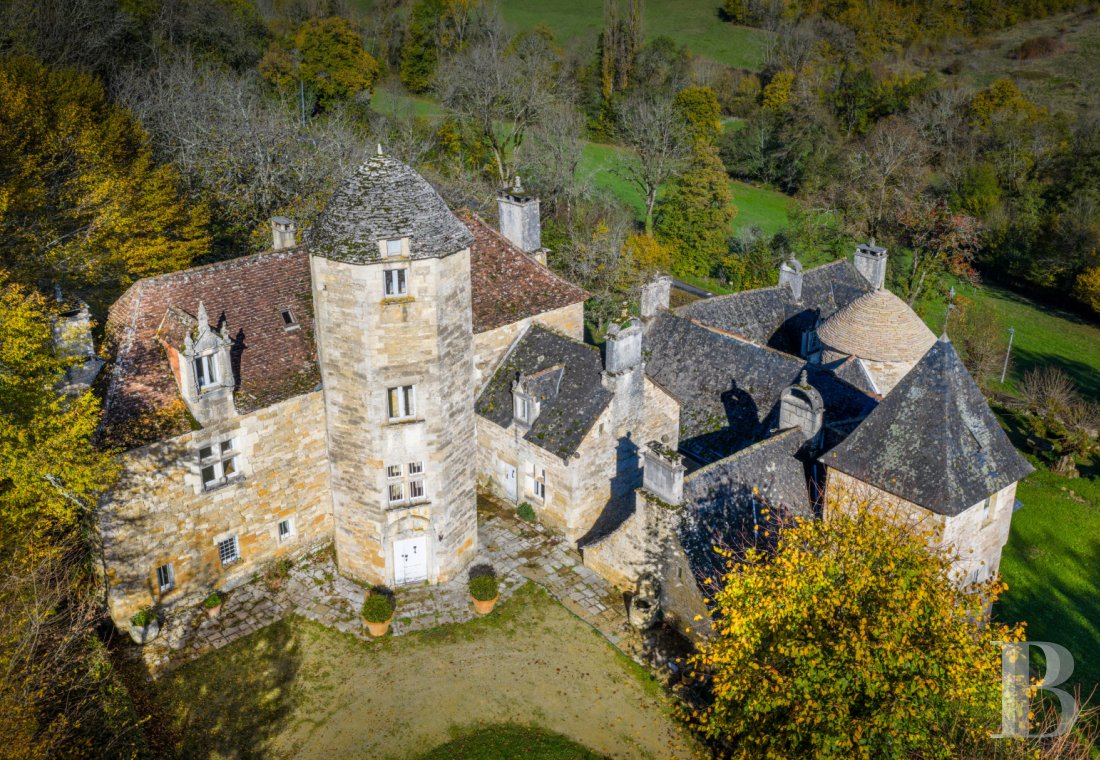
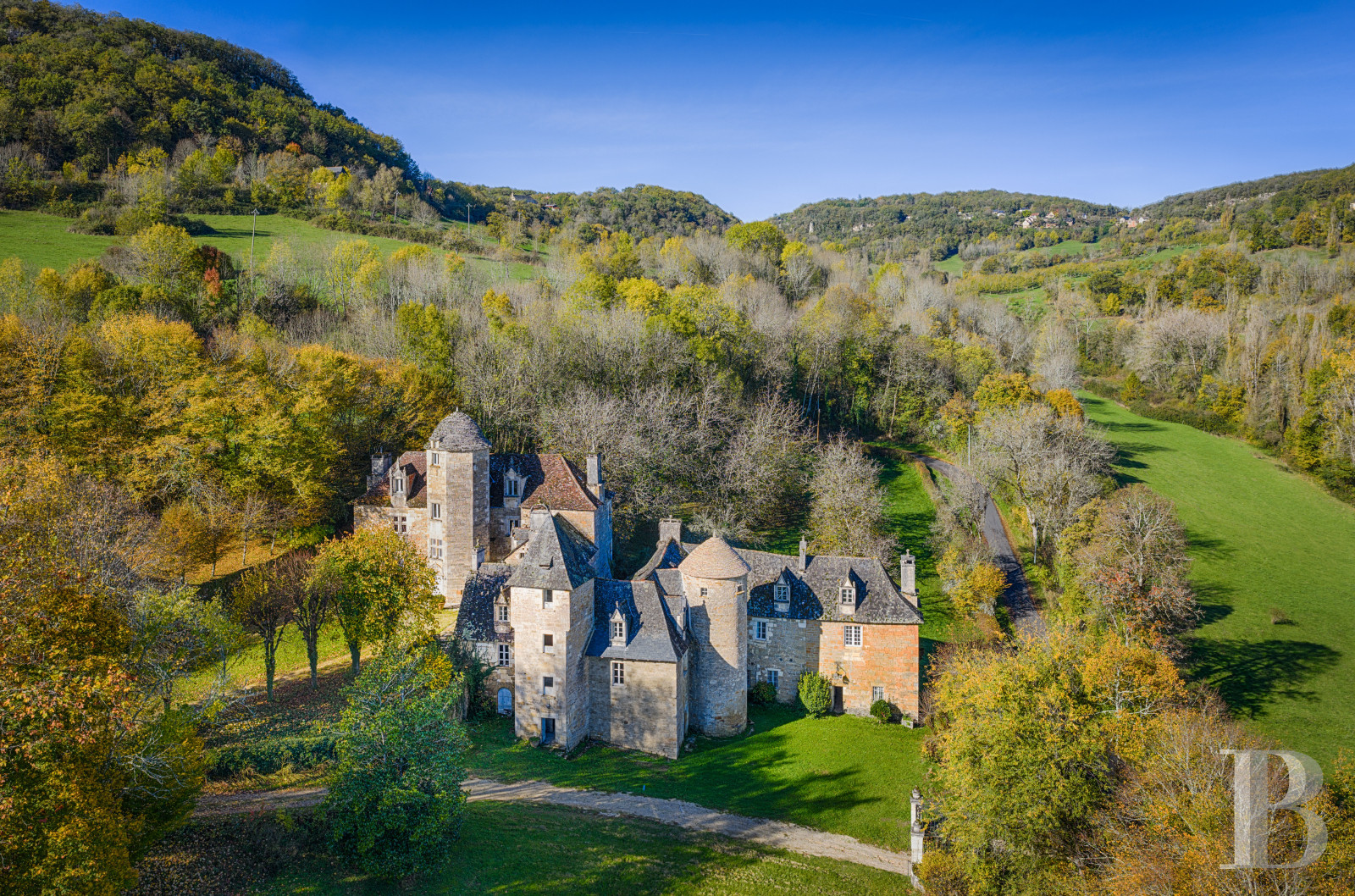
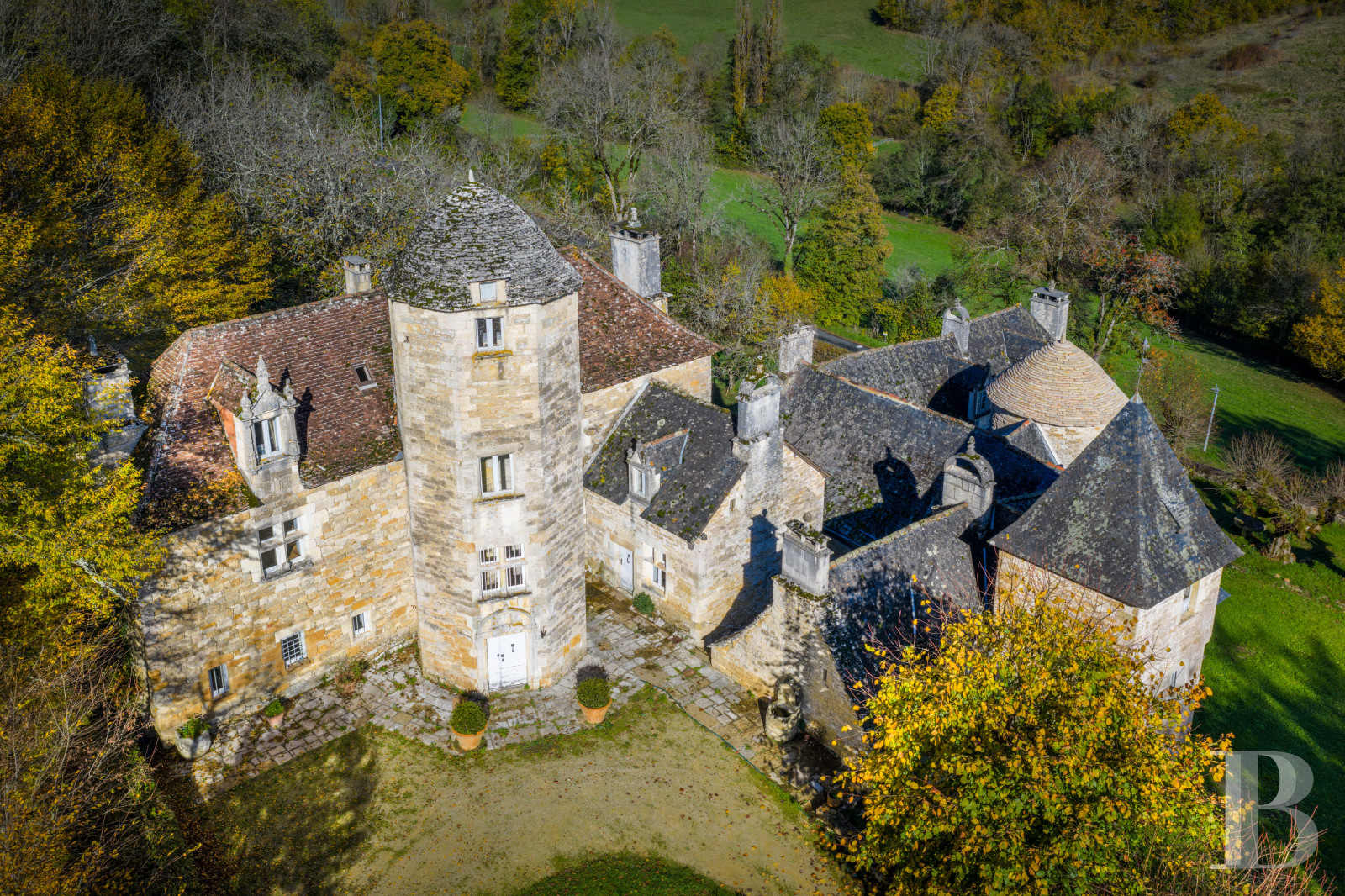
From the wrought-iron gate, which indicates the estate’s formal entrance, a gravel lane traverses a large swath of lawn and leads to the property’s upper patio, the latter of which skirts the southeast exterior of the oldest of the three dwellings. Faithful to the origin of its name, the dwelling is made up of two adjacent edifices, which hug the land’s natural slope: the older of the two is located above the more recent construction, whereas the two wings are partially connected via a third dwelling abutting a square tower-dovecote.
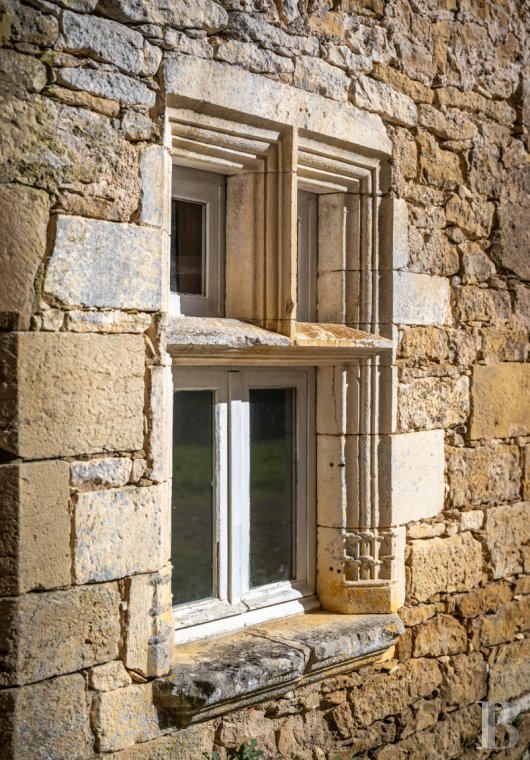
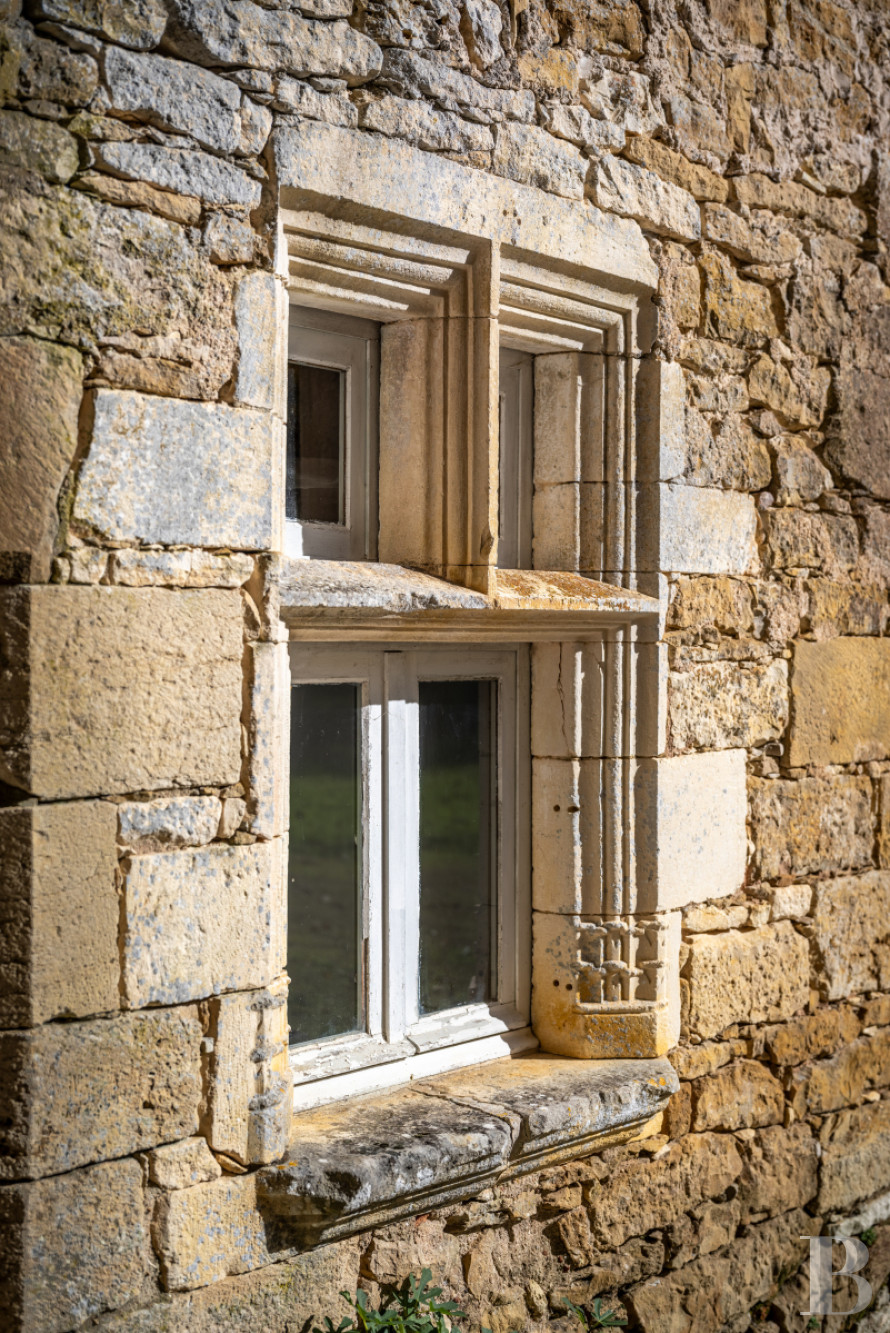
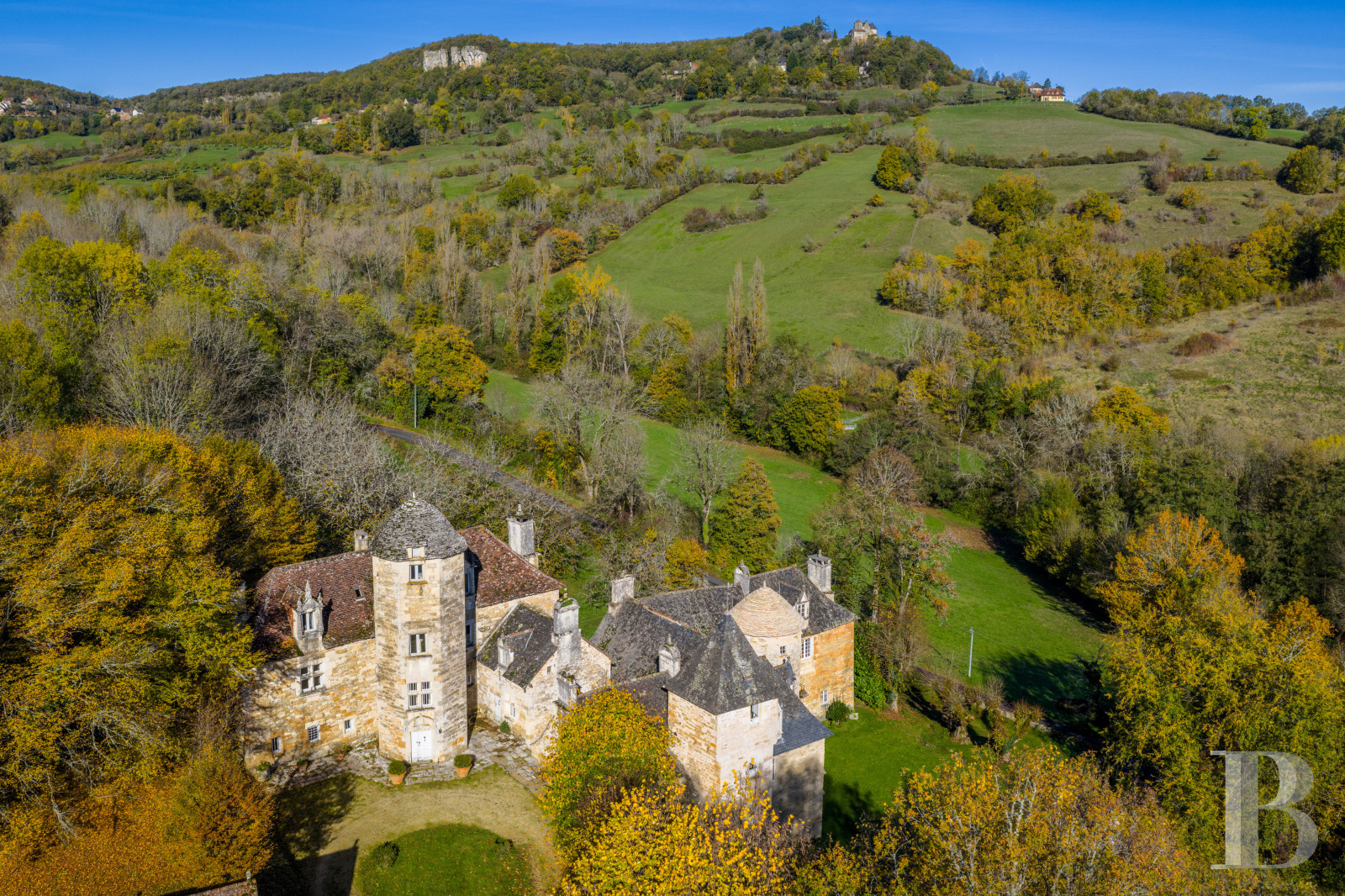
The upper edifice, from the late 15th century, is made up of a rectangular structure, the western part of which was completely reassembled with original materials recovered from the rubble after 1945, while a stately hexagonal tower, with a lauze slate tile roof, juts forward into the courtyard. In addition, mullioned windows, including two corner ones behind the dwelling, cadence its exteriors, whereas, in the interior corner of the second building, in all likelihood built in the late 17th century, a circular tower, completely rebuilt in 2025, is topped with a lauze slate roof.
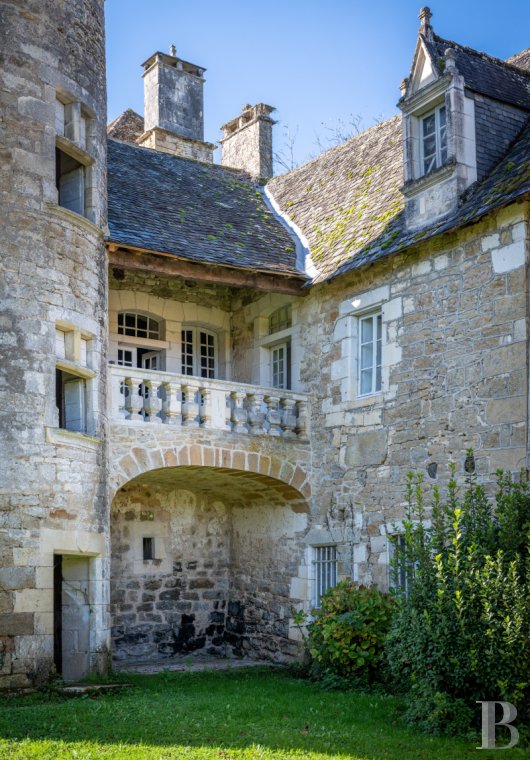
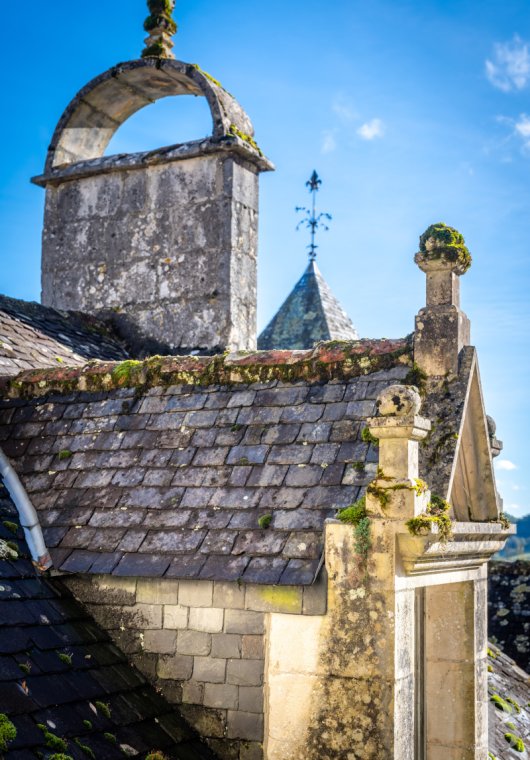
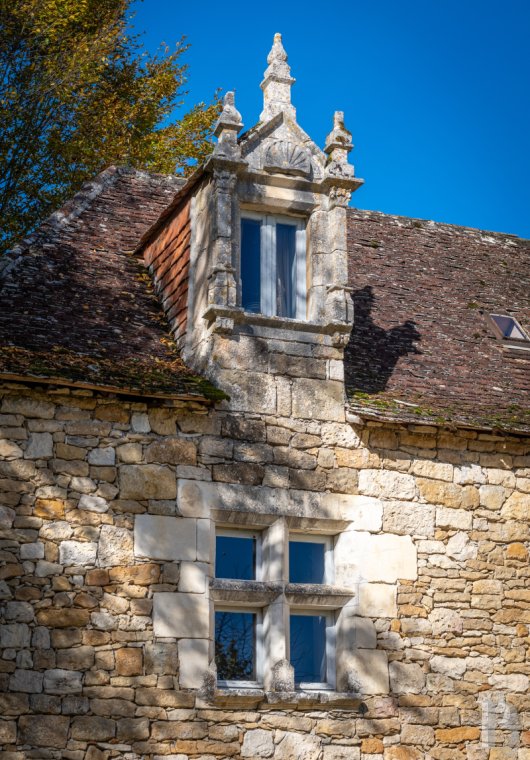
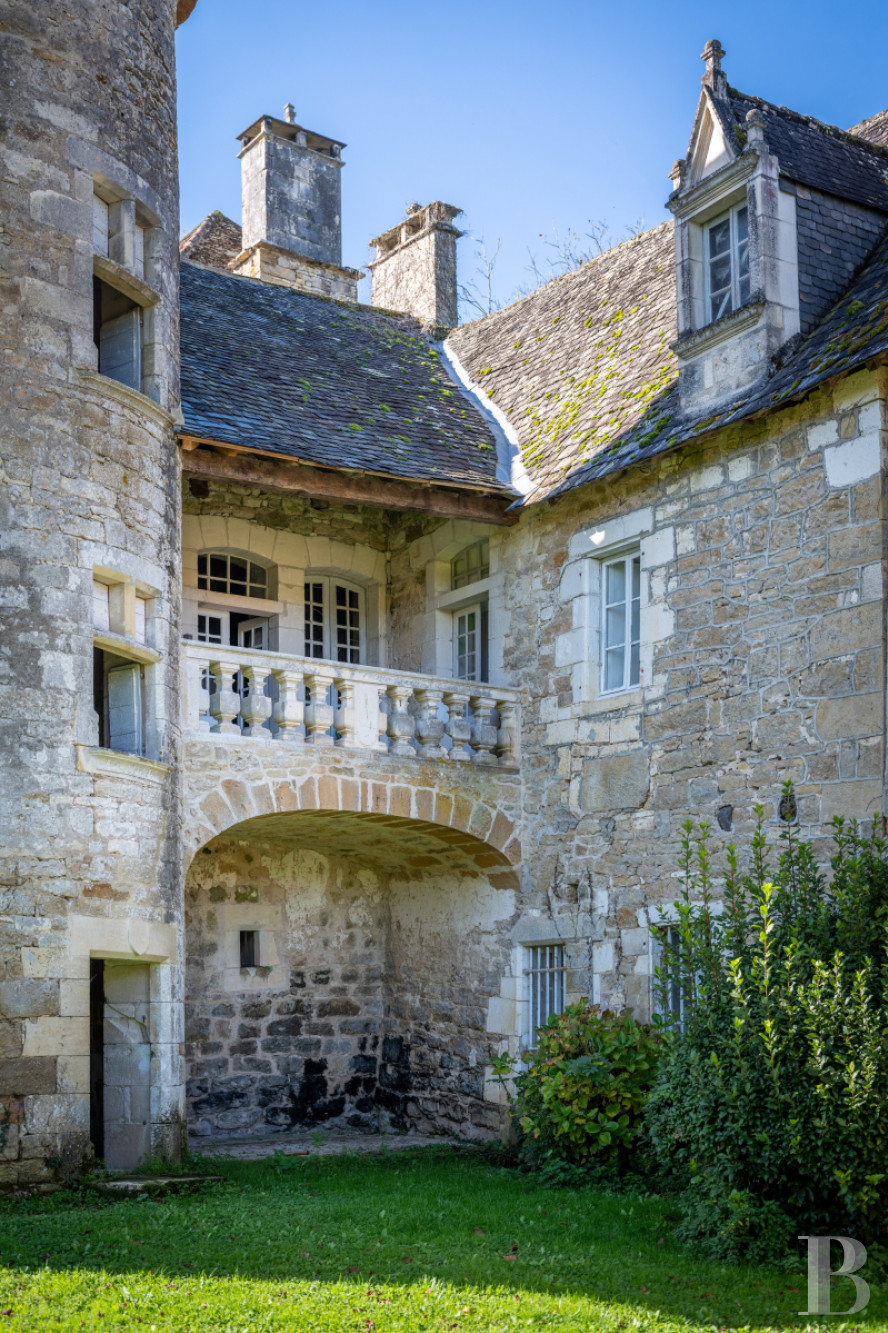
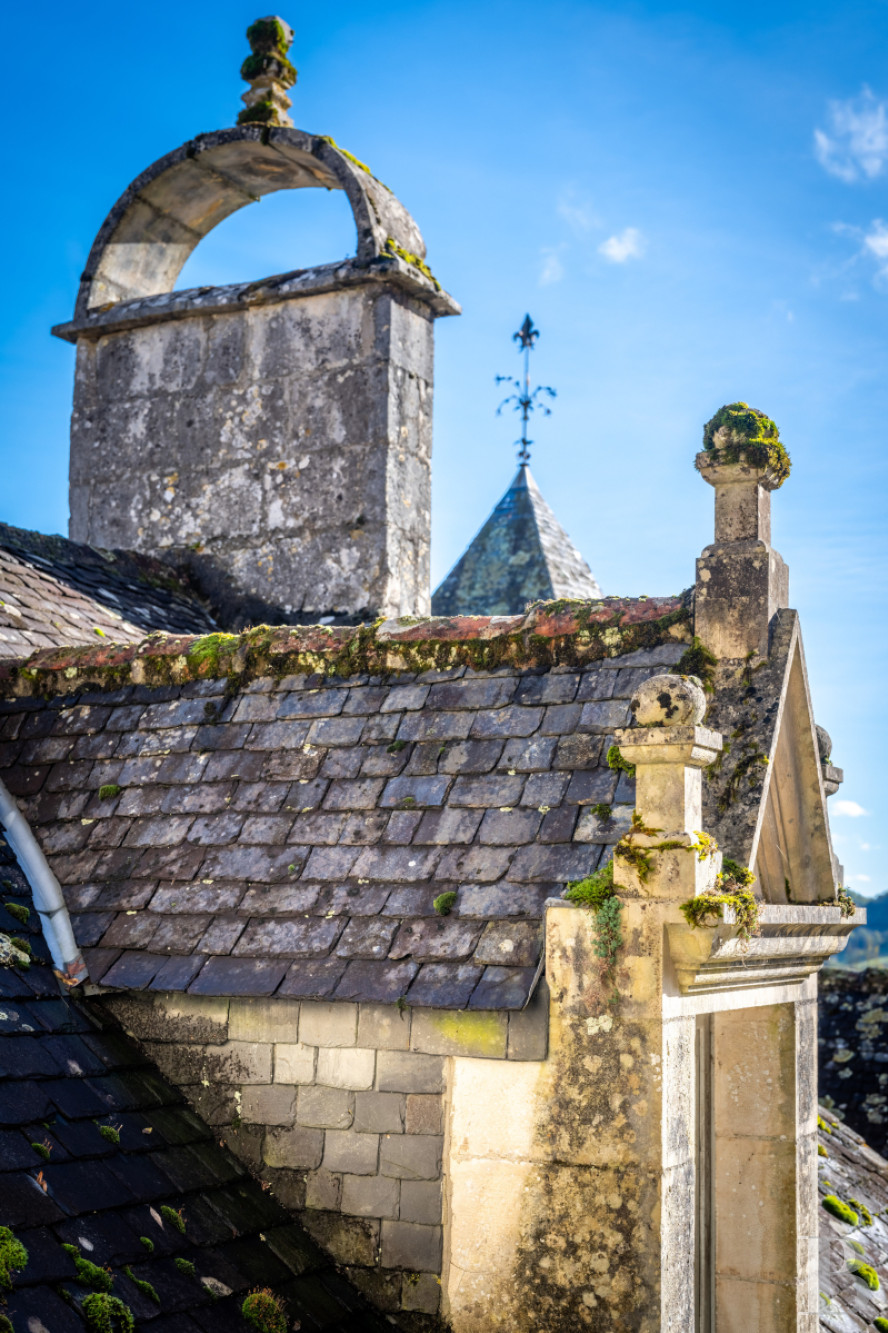
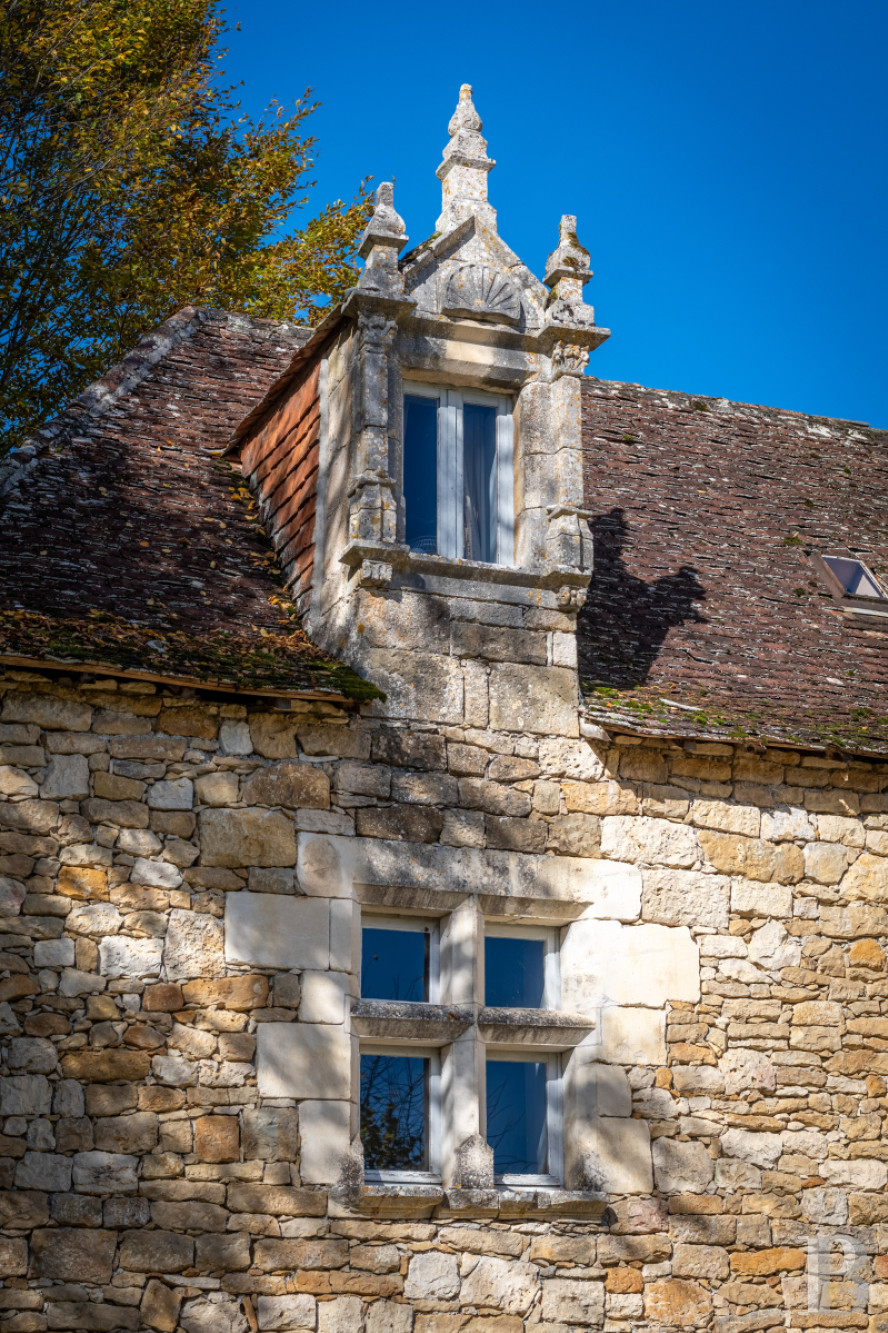
This same dwelling also features a balcony with balusters, supported by a basket-handle arch, while a series of dormers, crowned with finials, punctate the various rooftops – long, conical, pavilion and hipped – that have been deftly blended together. Lastly, slate and barrel tiles as well as tall chimneys, gracefully coiffed, create an overall aesthetic and aerial composition, whereas the outbuildings – a Limousin-style barn and a former hunting lodge – provide the finishing touches for this remarkable and historical estate.
From the wrought-iron gate, which indicates the estate’s formal entrance, a gravel lane traverses a large swath of lawn and leads to the property’s upper patio, the latter of which skirts the southeast exterior of the oldest of the three dwellings. Faithful to the origin of its name, the dwelling is made up of two adjacent edifices, which hug the land’s natural slope: the older of the two is located above the more recent construction, whereas the two wings are partially connected via a third dwelling abutting a square tower-dovecote.
The upper edifice, from the late 15th century, is made up of a rectangular structure, the western part of which was completely reassembled with original materials recovered from the rubble after 1945, while a stately hexagonal tower, with a lauze slate tile roof, juts forward into the courtyard. In addition, mullioned windows, including two corner ones behind the dwelling, cadence its exteriors, whereas, in the interior corner of the second building, in all likelihood built in the late 17th century, a circular tower, completely rebuilt in 2025, is topped with a lauze slate roof.
This same dwelling also features a balcony with balusters, supported by a basket-handle arch, while a series of dormers, crowned with finials, punctate the various rooftops – long, conical, pavilion and hipped – that have been deftly blended together. Lastly, slate and barrel tiles as well as tall chimneys, gracefully coiffed, create an overall aesthetic and aerial composition, whereas the outbuildings – a Limousin-style barn and a former hunting lodge – provide the finishing touches for this remarkable and historical estate.
The Ancient Dwelling
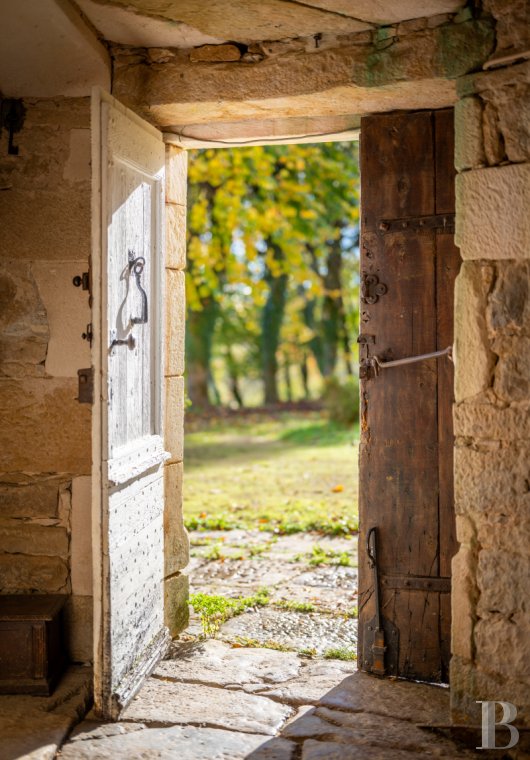
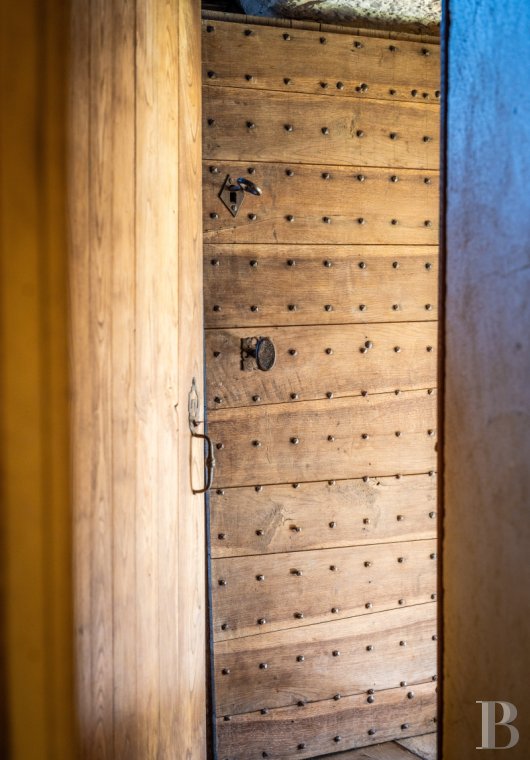
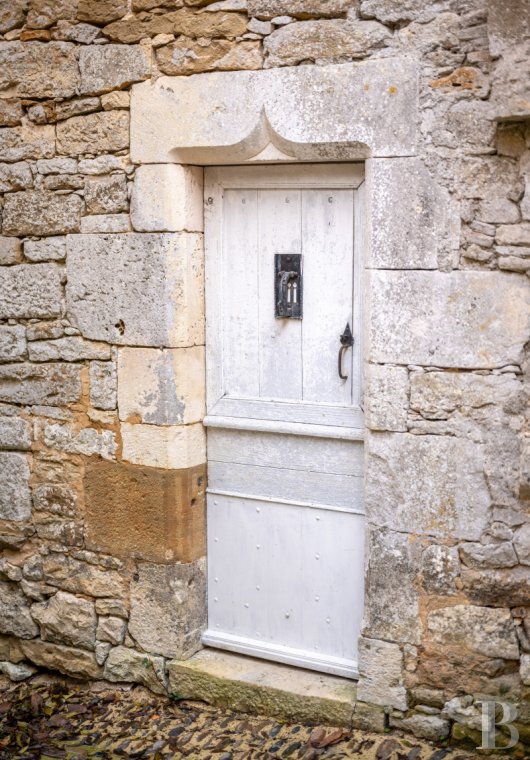
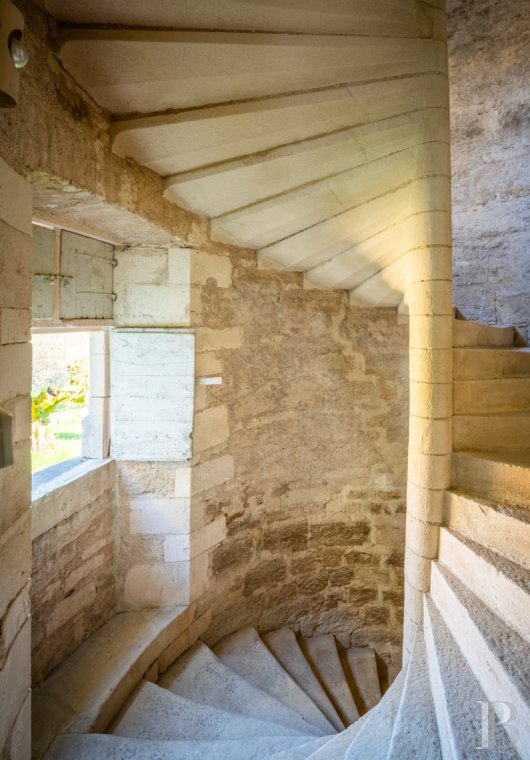
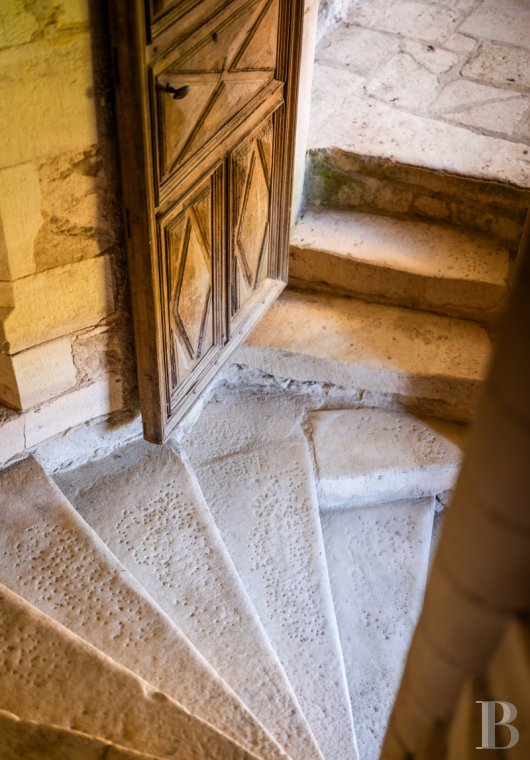
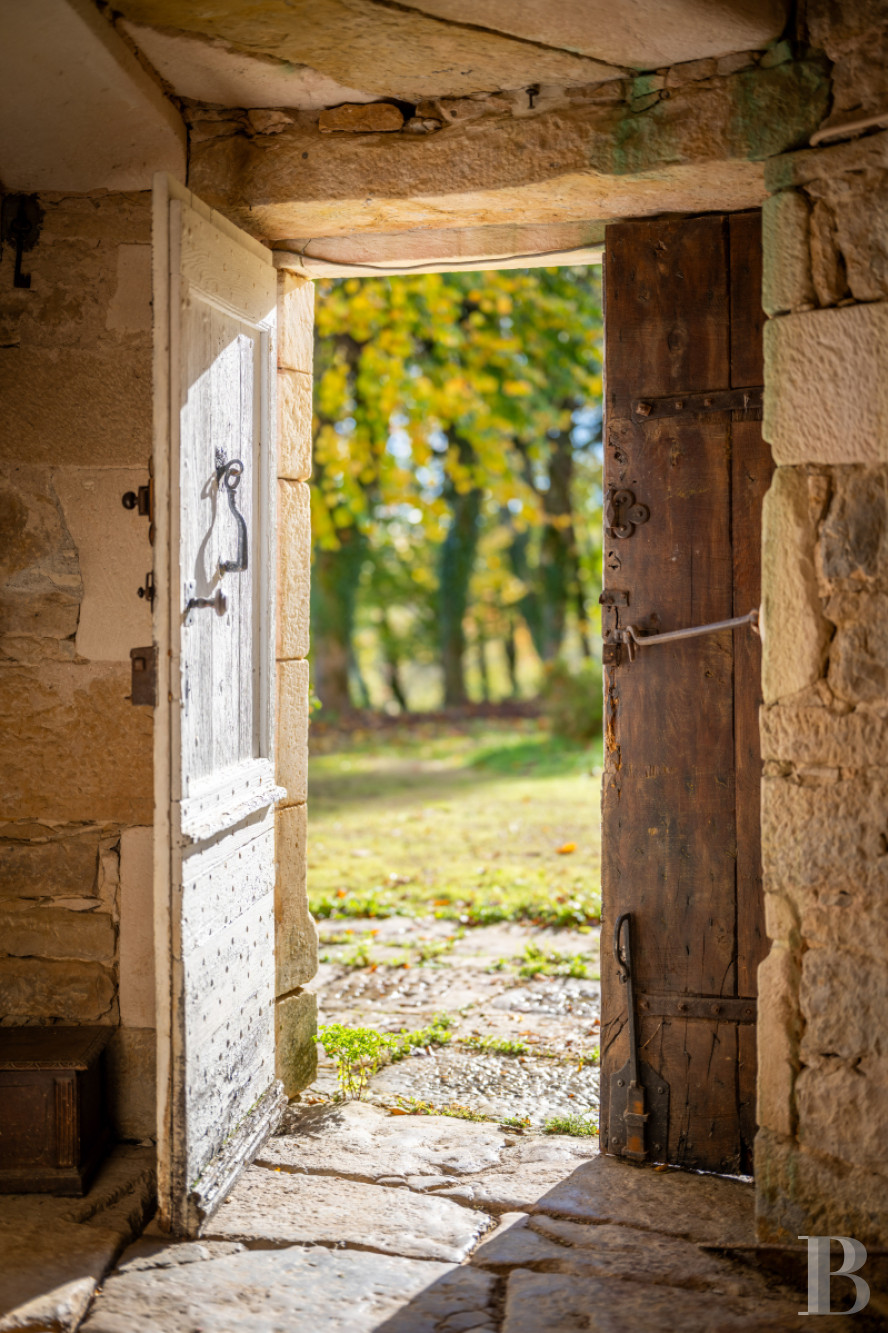
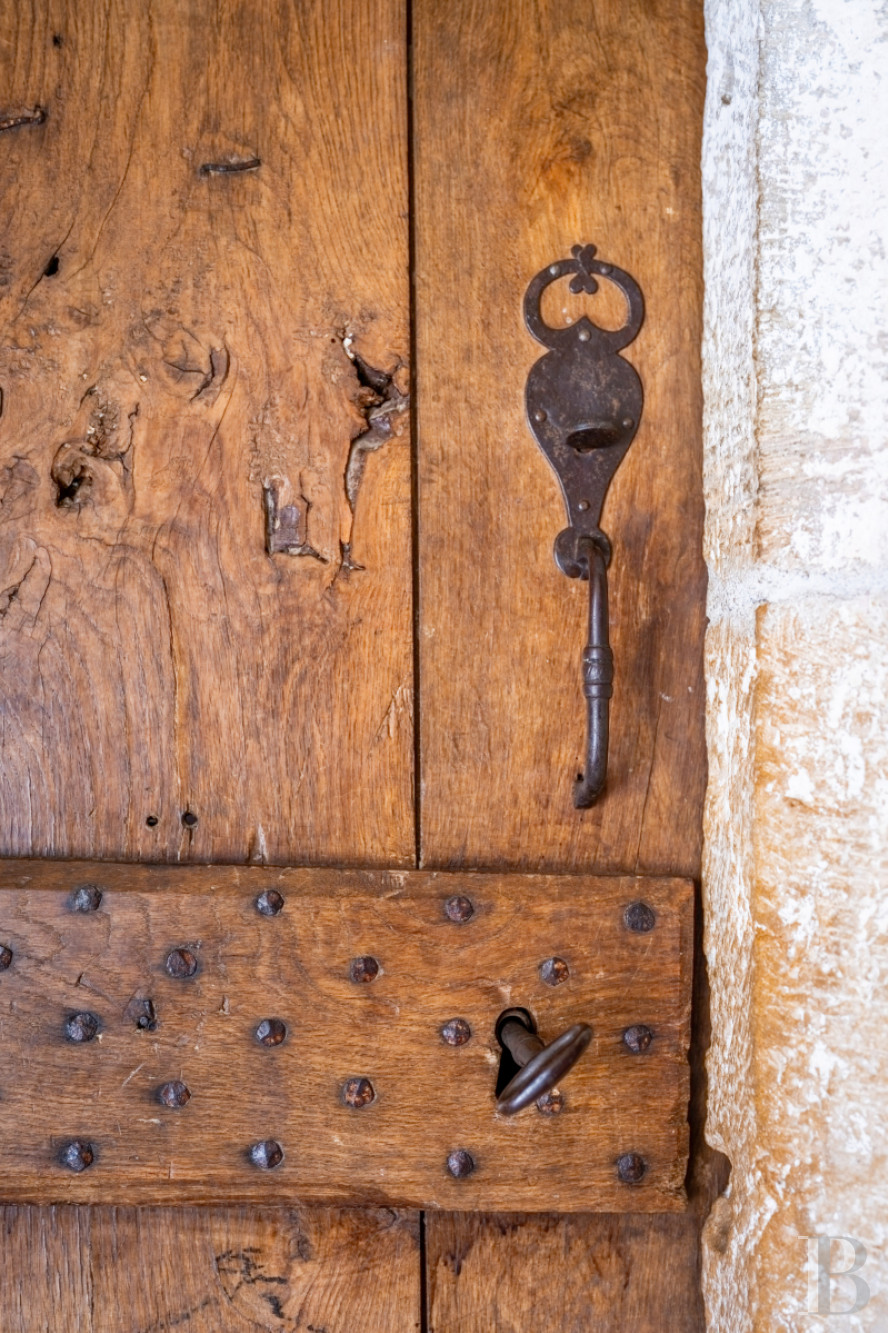
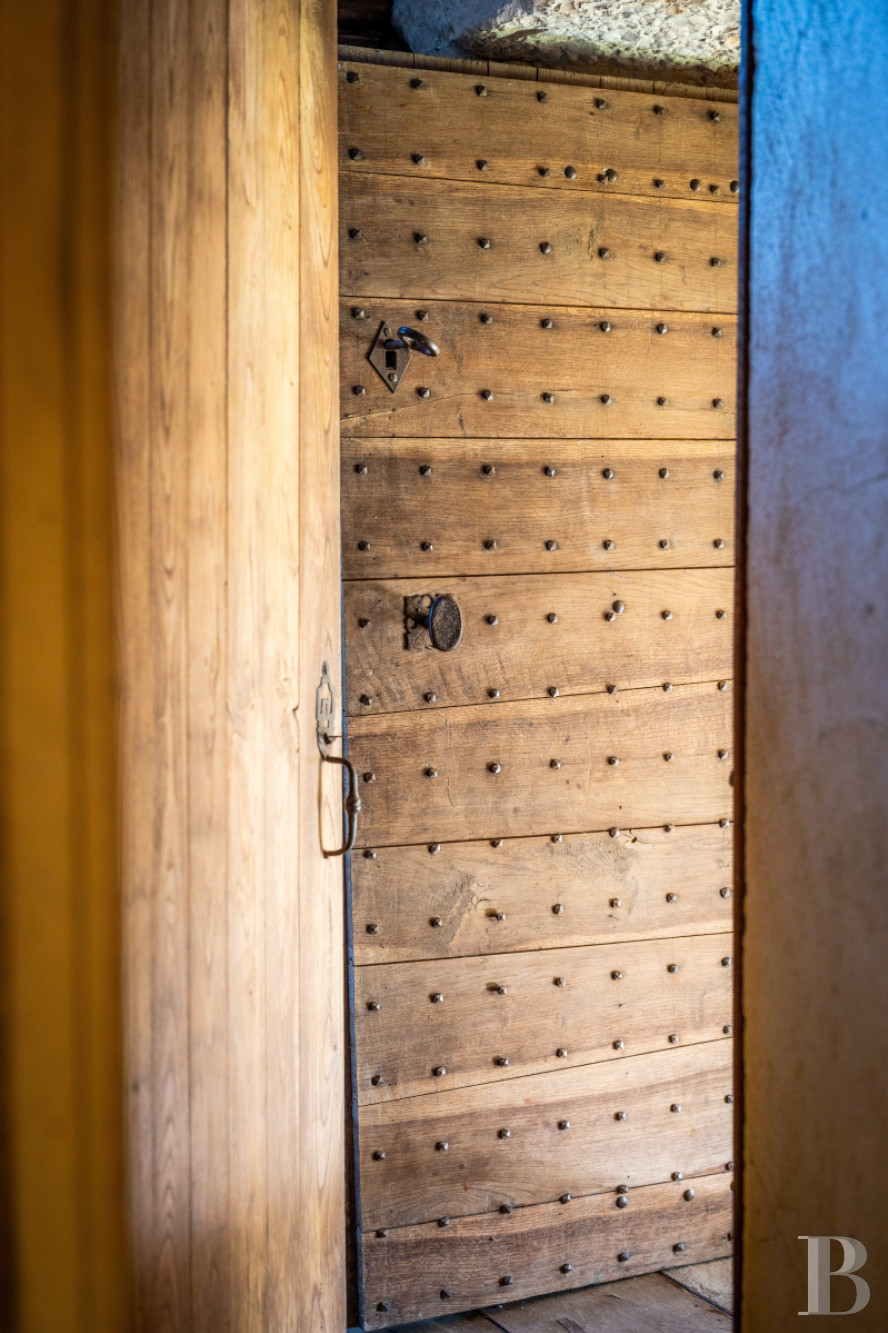
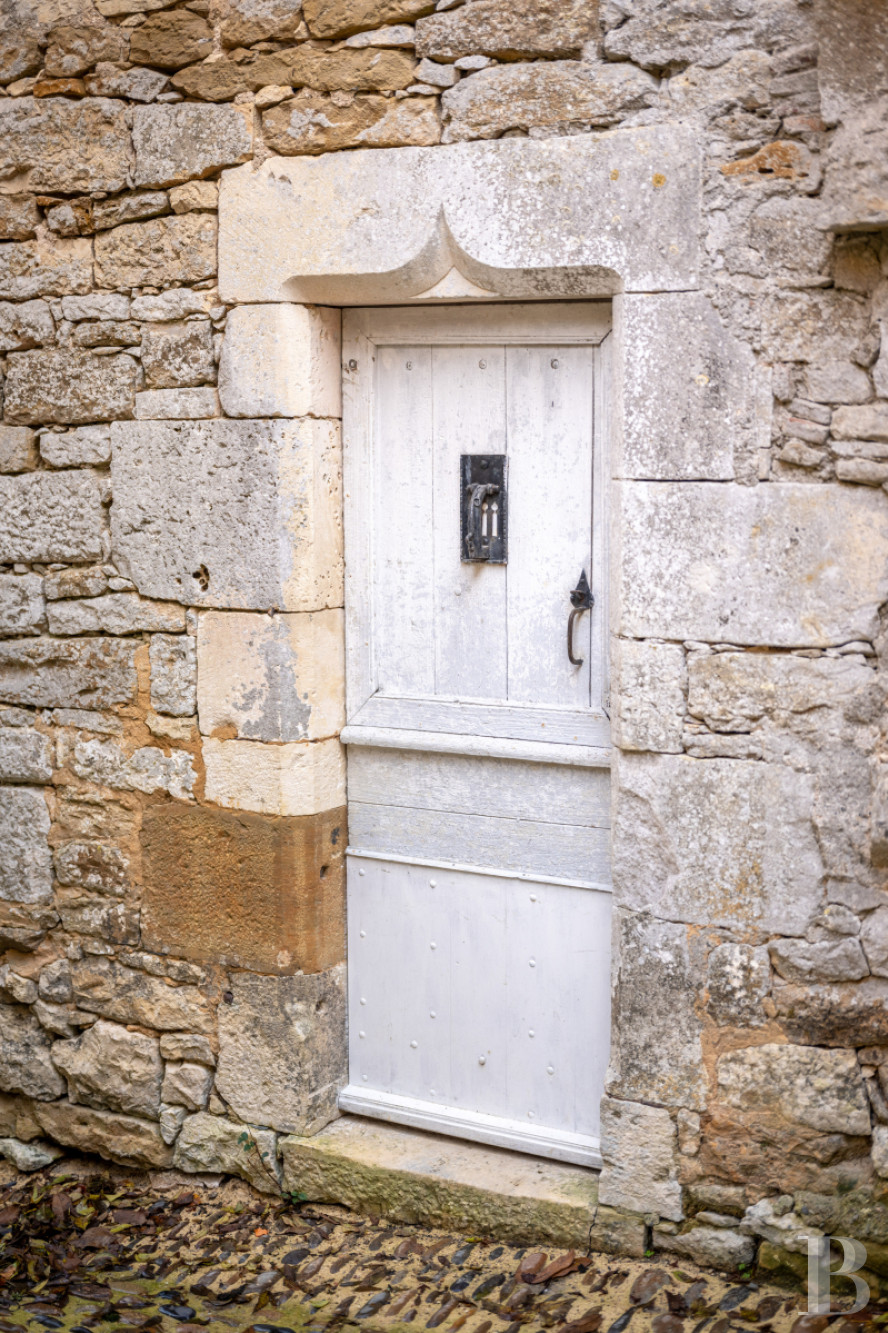
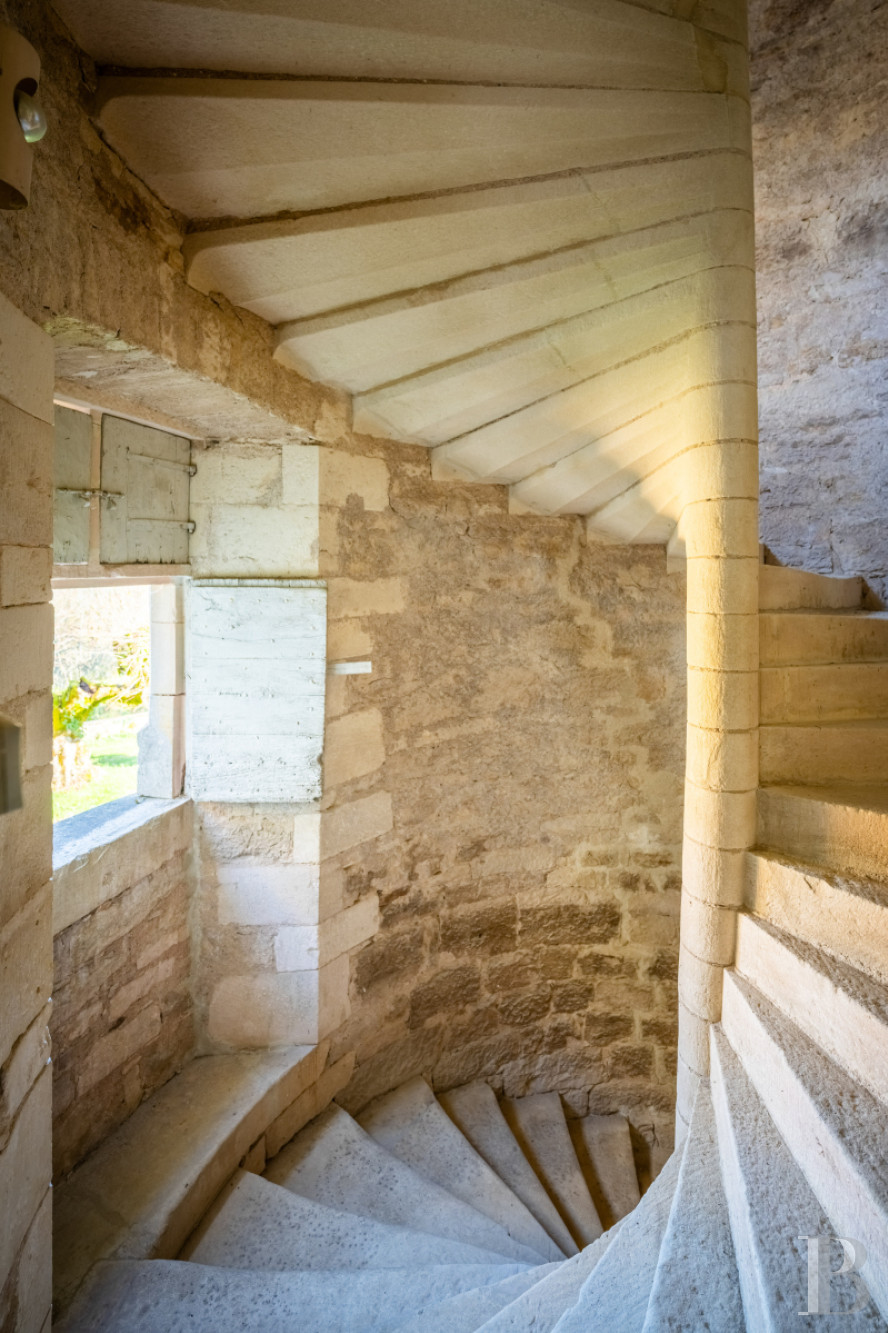
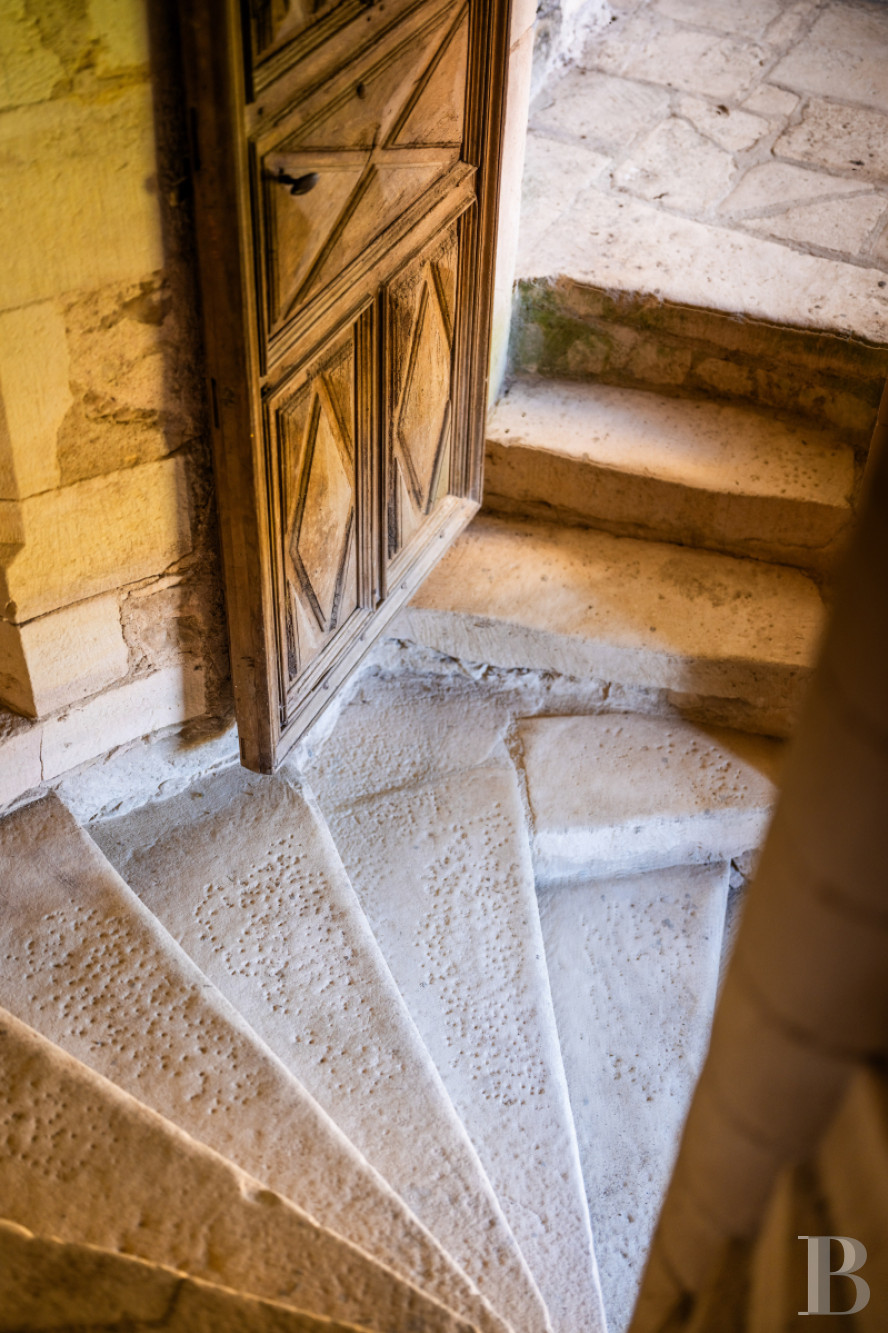
Built in the late Middle Ages, this noble dwelling, bordered by a stately swath of lawn, stands out thanks to its wooden front door, topped with a sculpted stone arch, which opens on to a spiral staircase, while its limestone rubble exterior, featuring understated ornamentation, contrasts with its architectural breadth revealed by an interplay of forms: dormer finials, chimneys and the tall tower’s four visible sides all come together to provide a visual and dynamic composition.
The ground floor
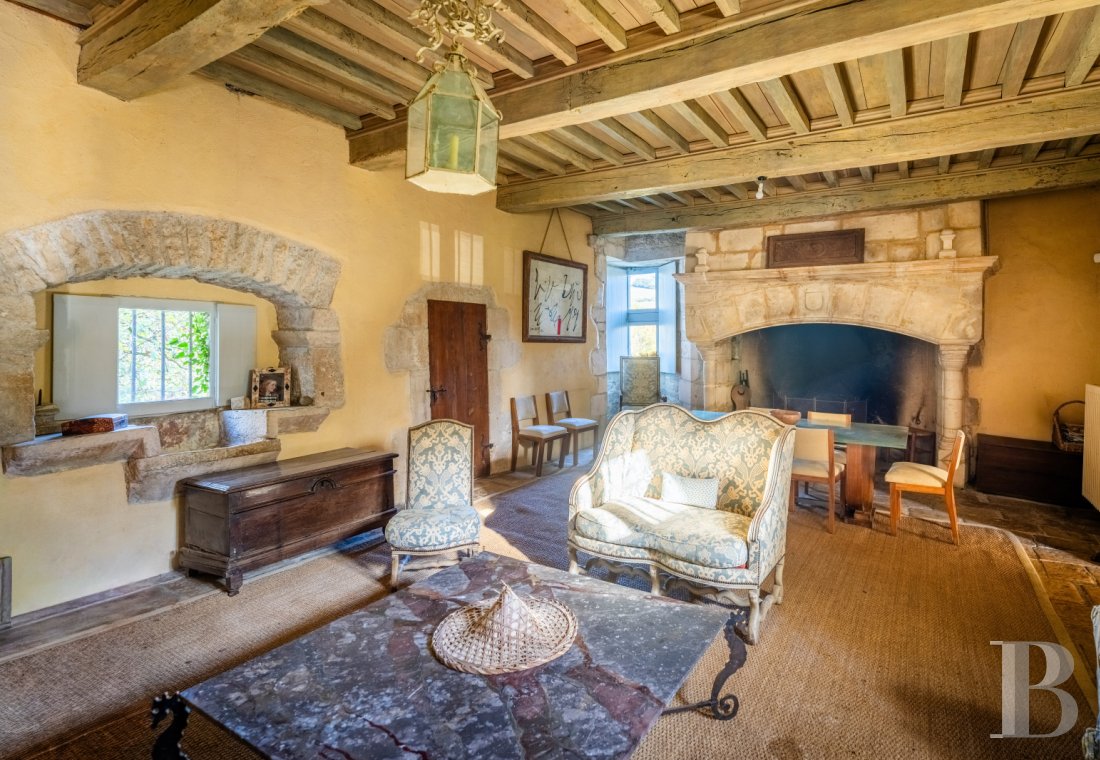
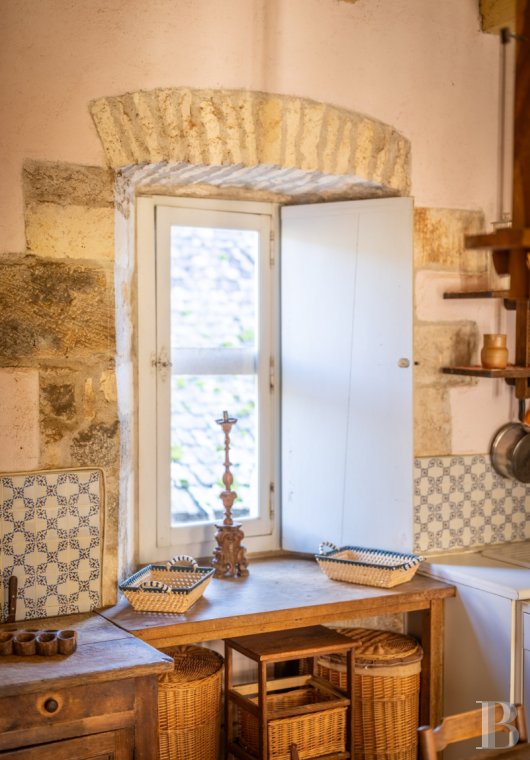
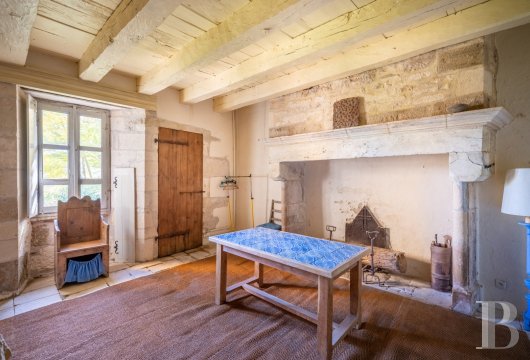
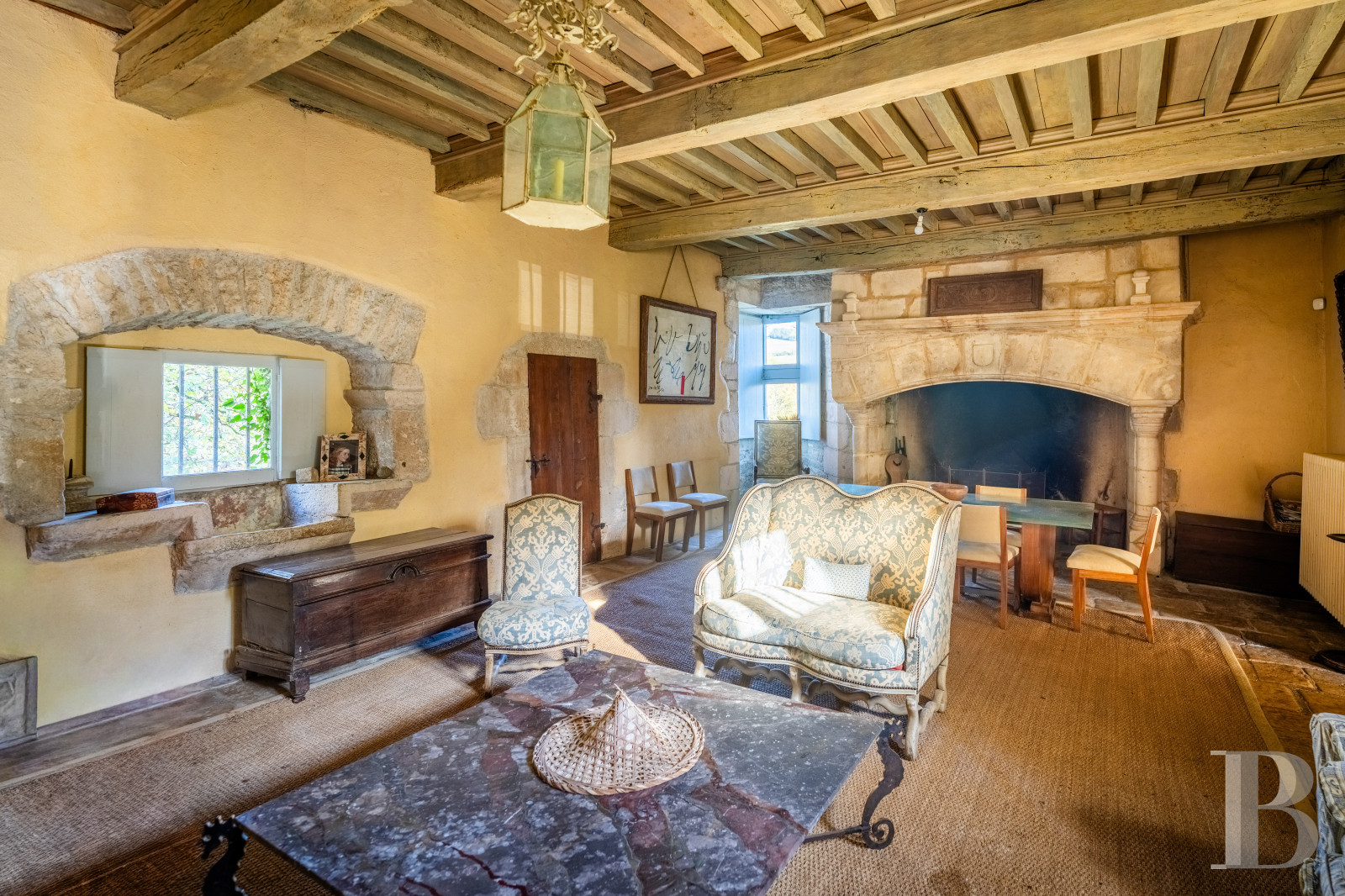
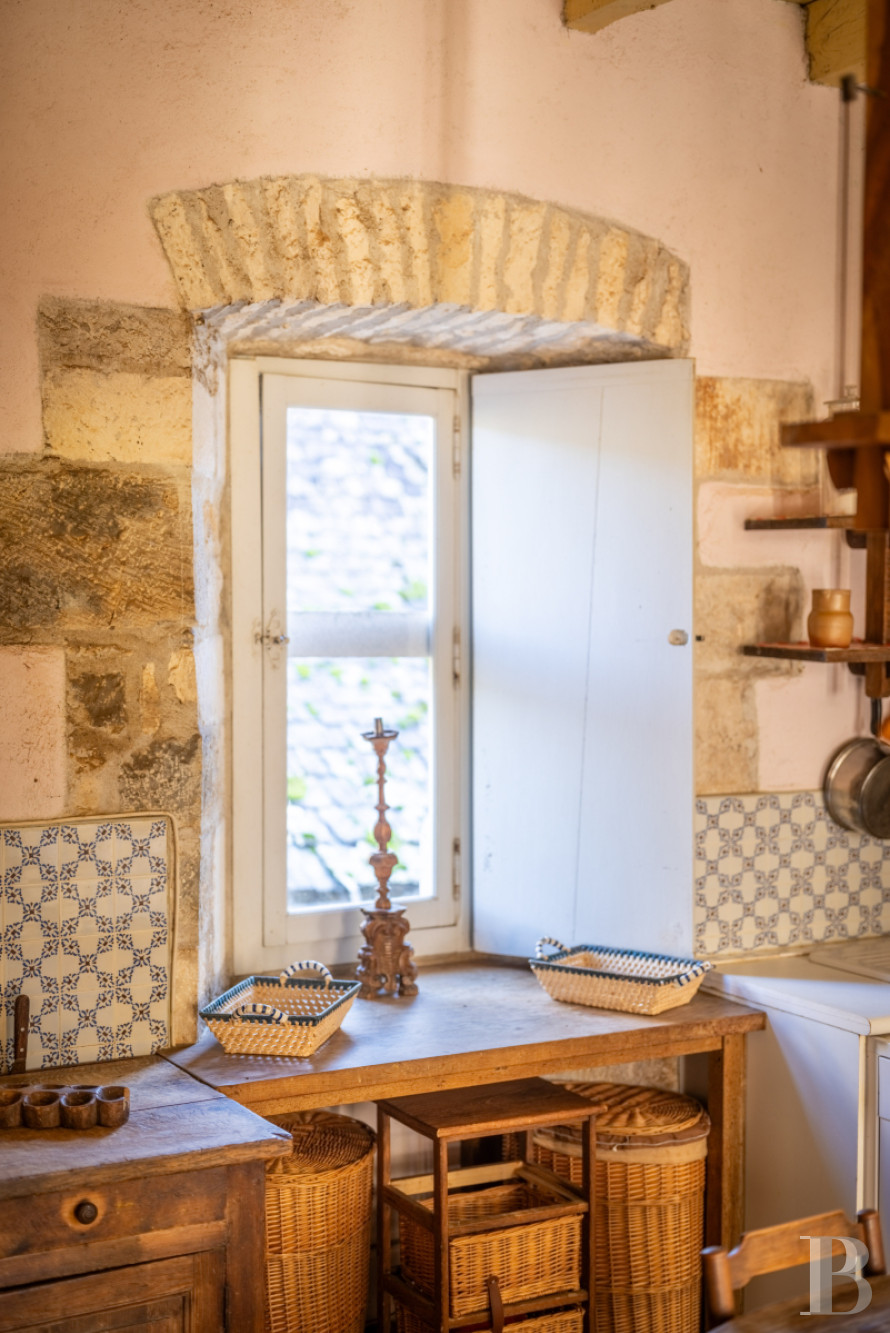
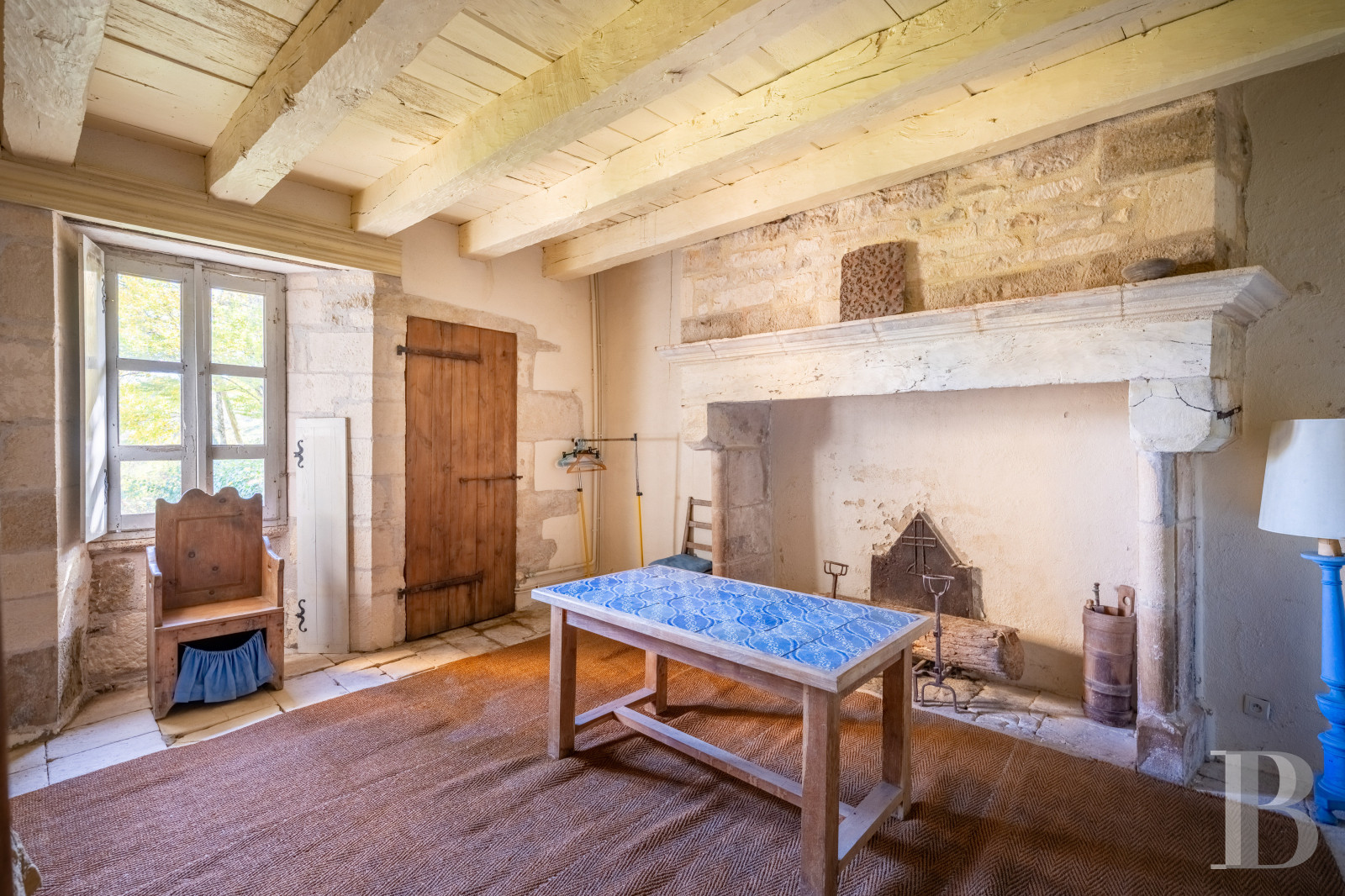
Under the flight of stairs, a hallway, with massive flagstones, leads to a drawing room, decorated with an immense fireplace and visible ceiling beams, while, following on from here, a dining room, with the same decorative details, features a geometric terracotta tile floor. As for the adjacent shower room, it was created more recently in the foyer, whereas, directly opposite, a kitchen, located in the perpendicular annexe, communicates with both the drawing room and interior courtyard.
The first floor
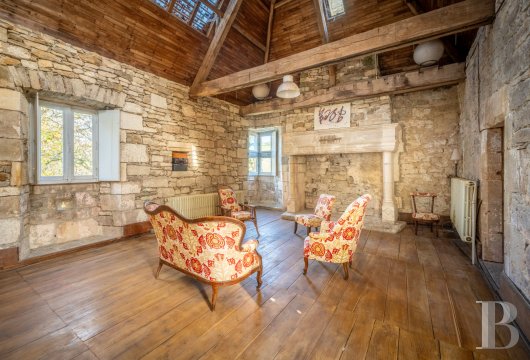
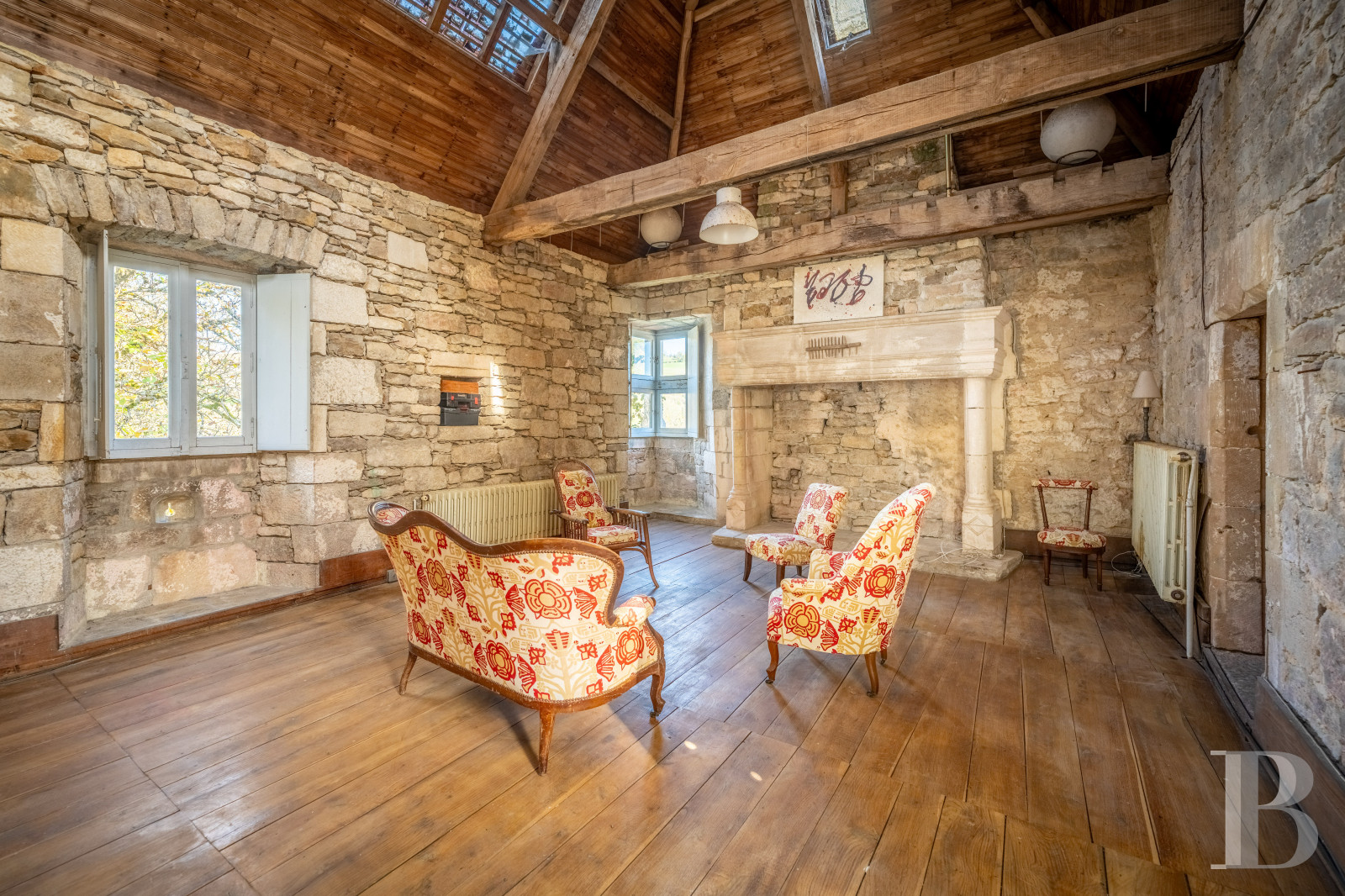
The staircase’s spiral steps ascend to a large room, with its built-in fireplace topped by an ashlar stone mantelpiece, now converted into an artist’s studio. With four windows bathing the room in abundant sunlight, visible wooden rafters, completely fitted with battens, support the roof, part of which is covered in glass tiles, which also help diffuse the light on to the room’s pointed stone walls and wide-plank, light-colour oak hardwood floors, while, a small adjacent room, under the eaves, is used for storage.
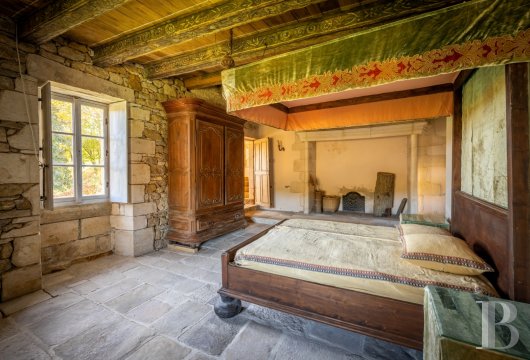
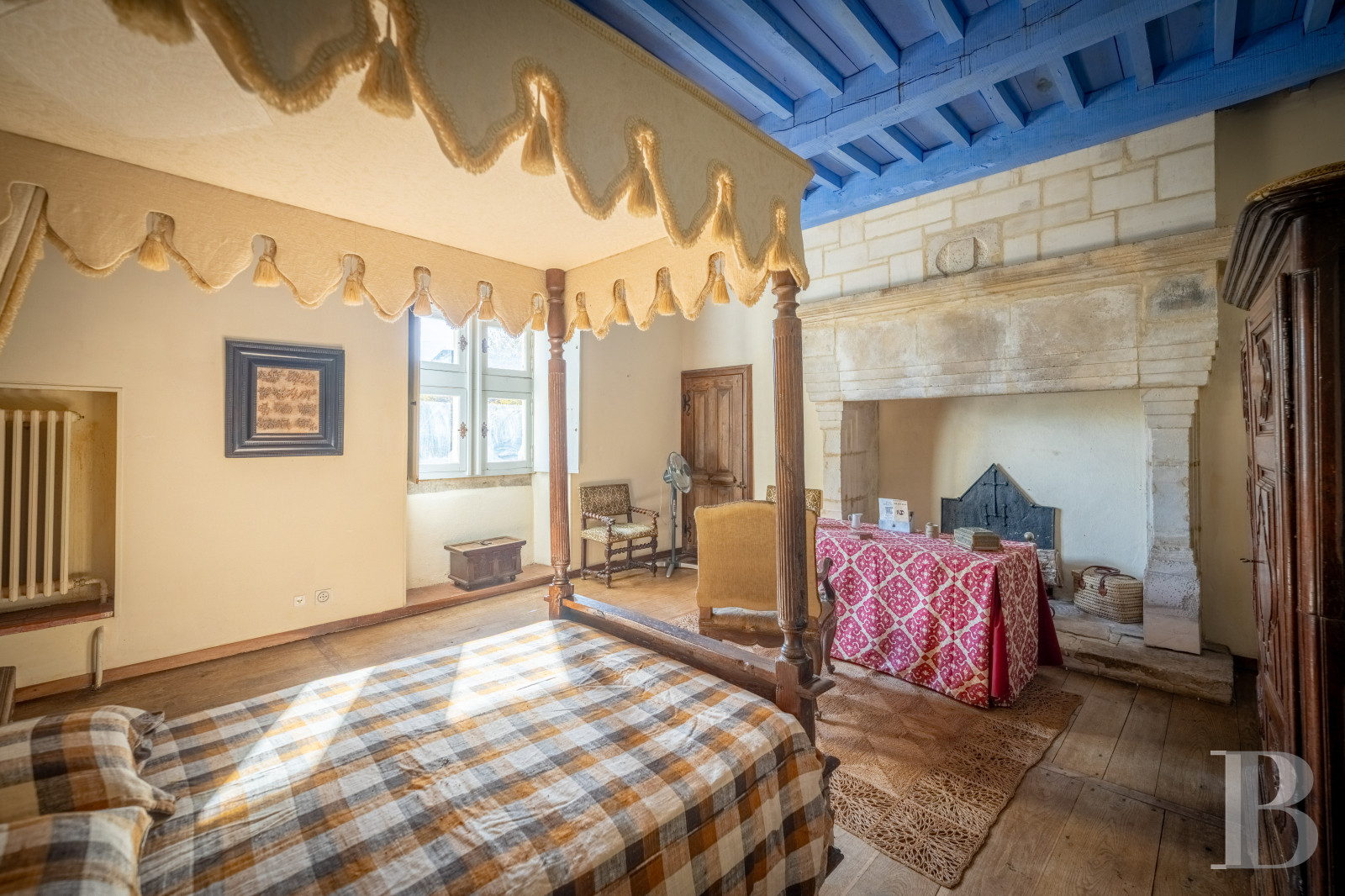
In the upper corner, a circular wooden platform, suspended from the second floor, provides a privileged view of the artworks on display, whereas, extending on from here is a bathroom with white mosaic tiles and a lavatory. Lastly, this level also includes an immense bedroom with visible ceiling beams, a ladder-patterned hardwood floor, a limestone fireplace and two windows safeguarded by interior shutters.
The second floor
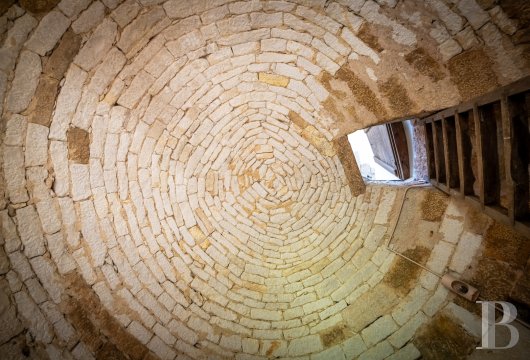
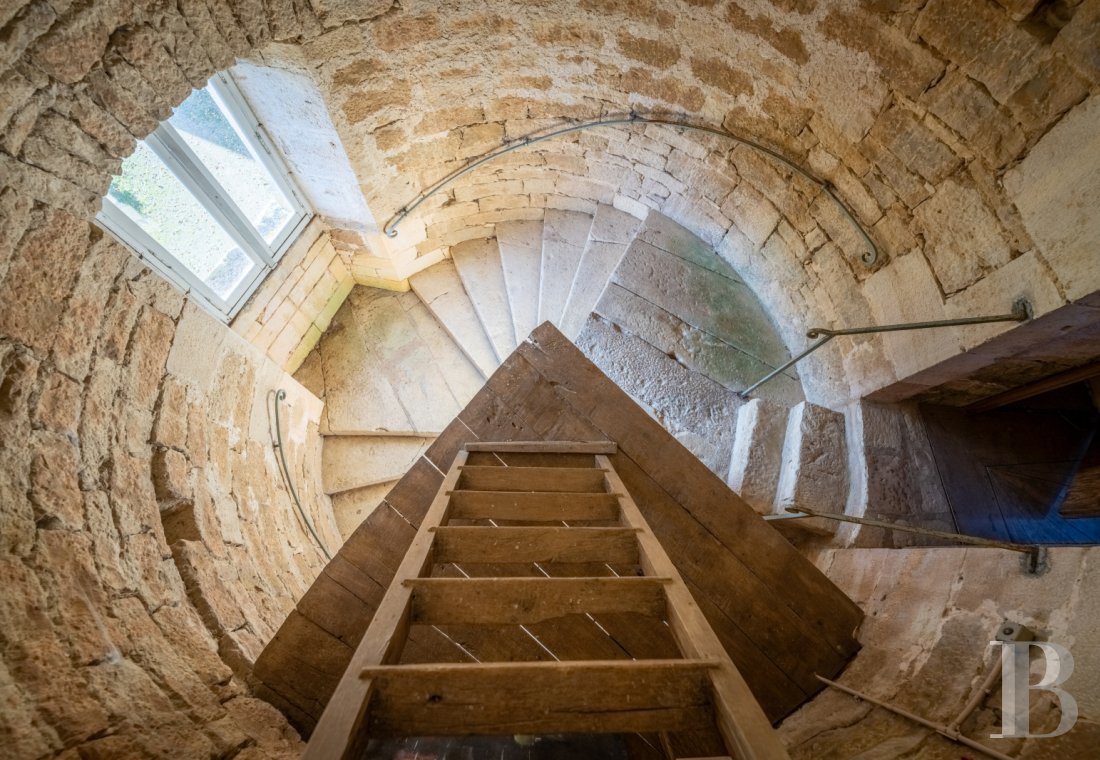
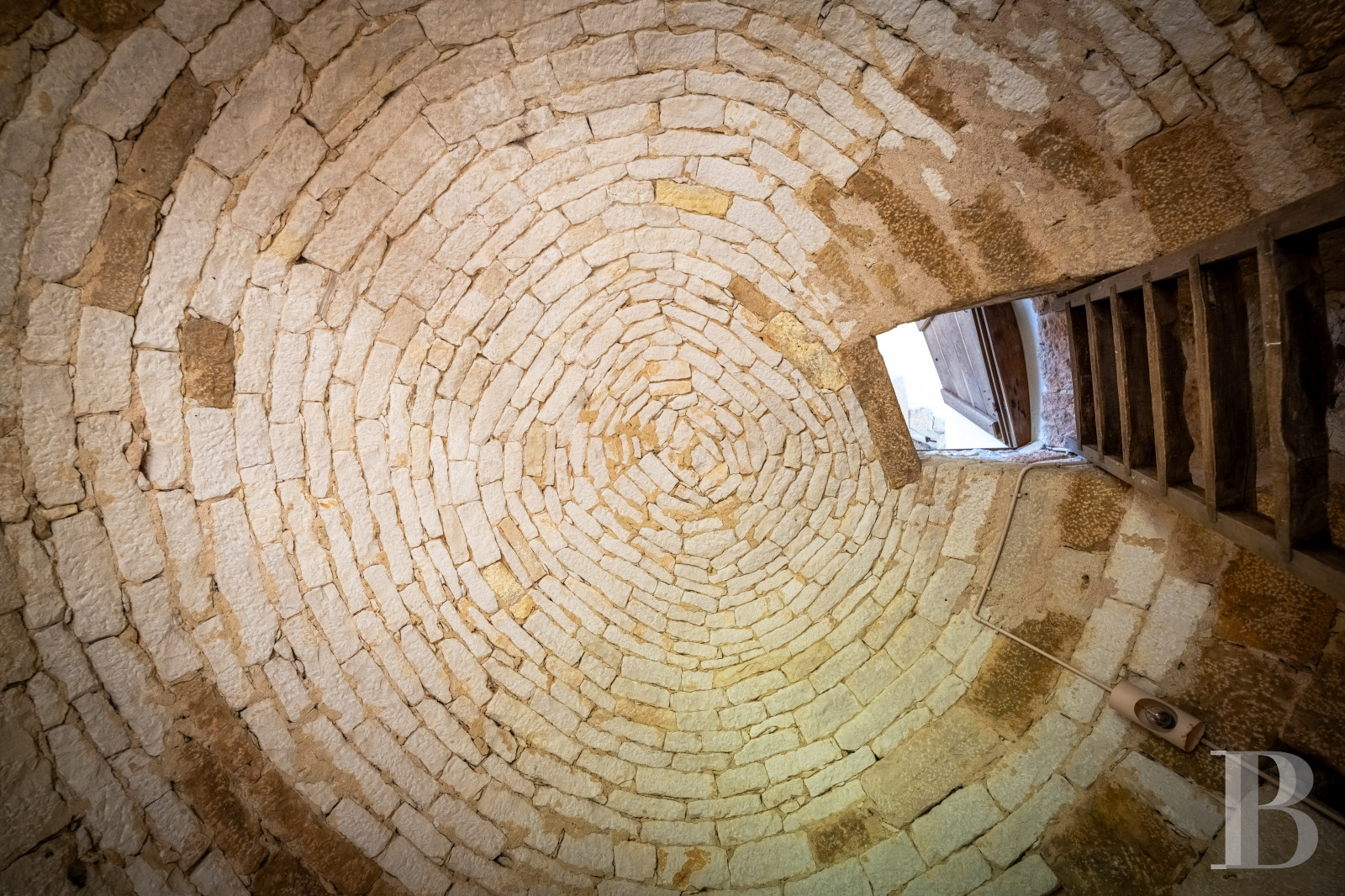
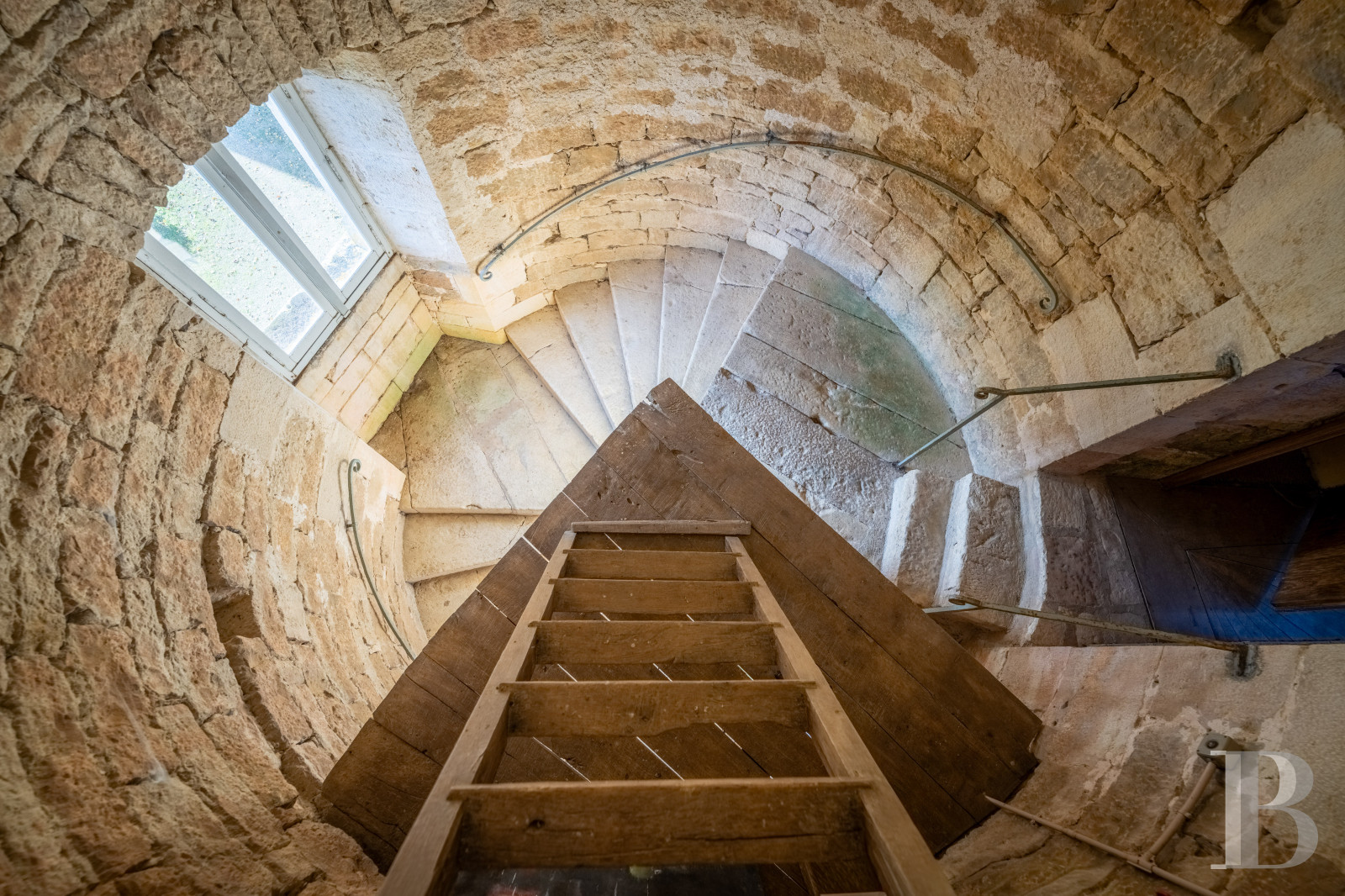
The attic level was converted into an antechamber with a lavatory, which gives on to a bedroom with a bathroom, while, at the top of the stairs, a miller’s ladder provides access to a guard room located under the tower’s vaulted slate roof.
The basement
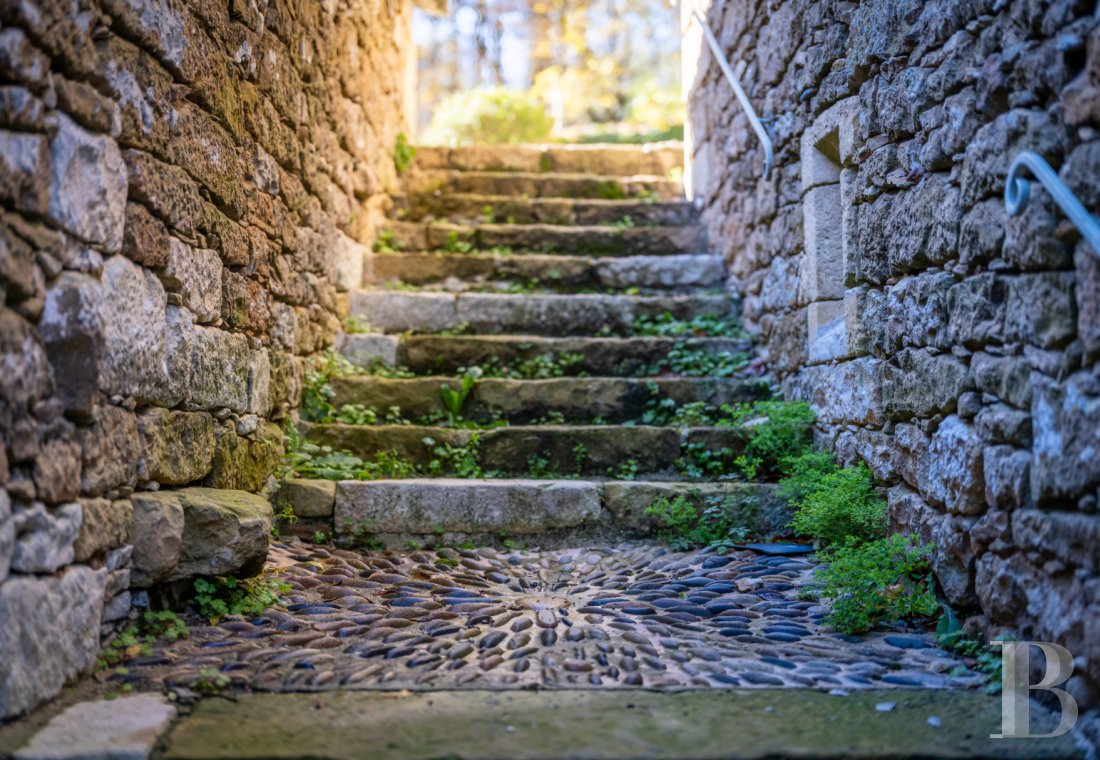
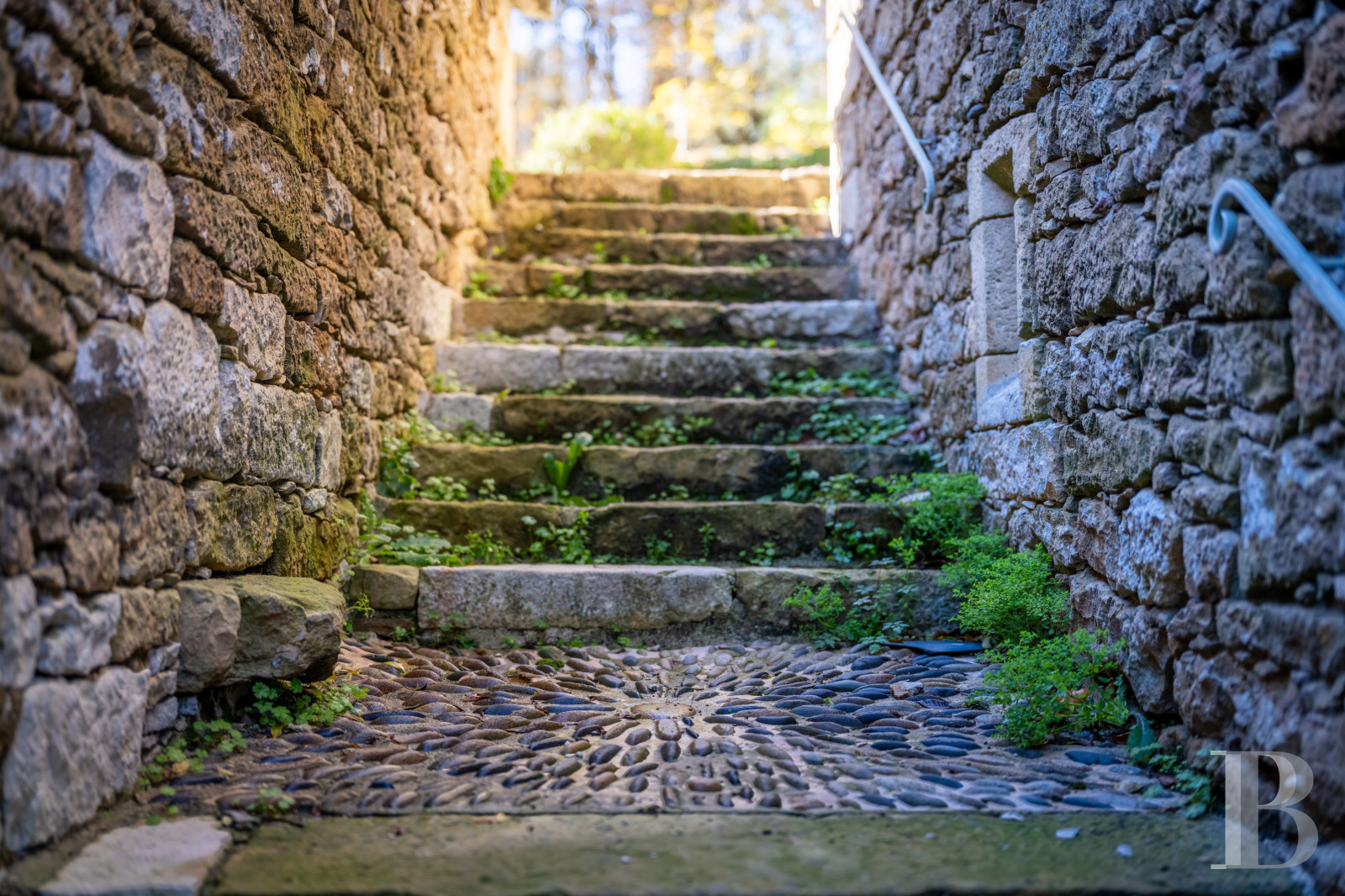
Accessible via the spiral staircase, an initial, vaulted space contains the furnace as well as the installations for the domestic water supply and communicates with the outdoor calade pebble patio located in the garden behind the modern dwelling. Like some kind of underground warren for household chores, this corridor connects the machine rooms to one another and provides access to a vaulted wine cellar with a flagstone floor, while the arch over the two exterior doors provides a smooth separation between the three dwellings.
The Modern Dwelling
Built after the 17th century at a right angle, it features a western-facing exterior embedded within the ancient dwelling, two towers – one round and the other square – and is accessible via the staircase that descends from the formal courtyard.
The ground floor
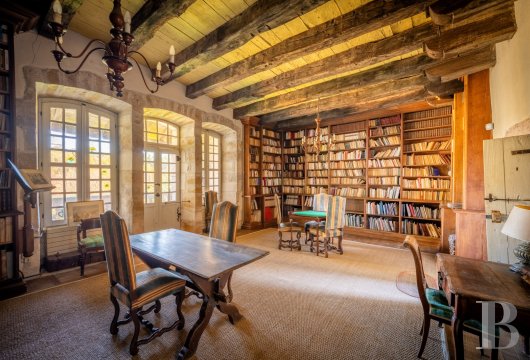
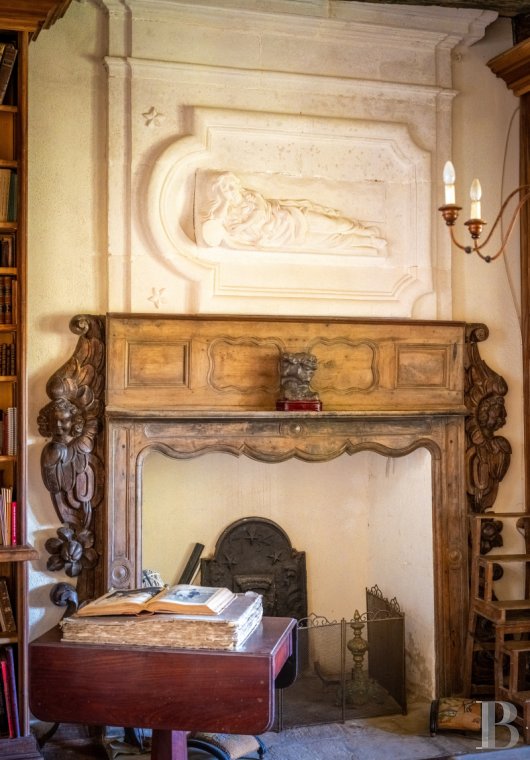
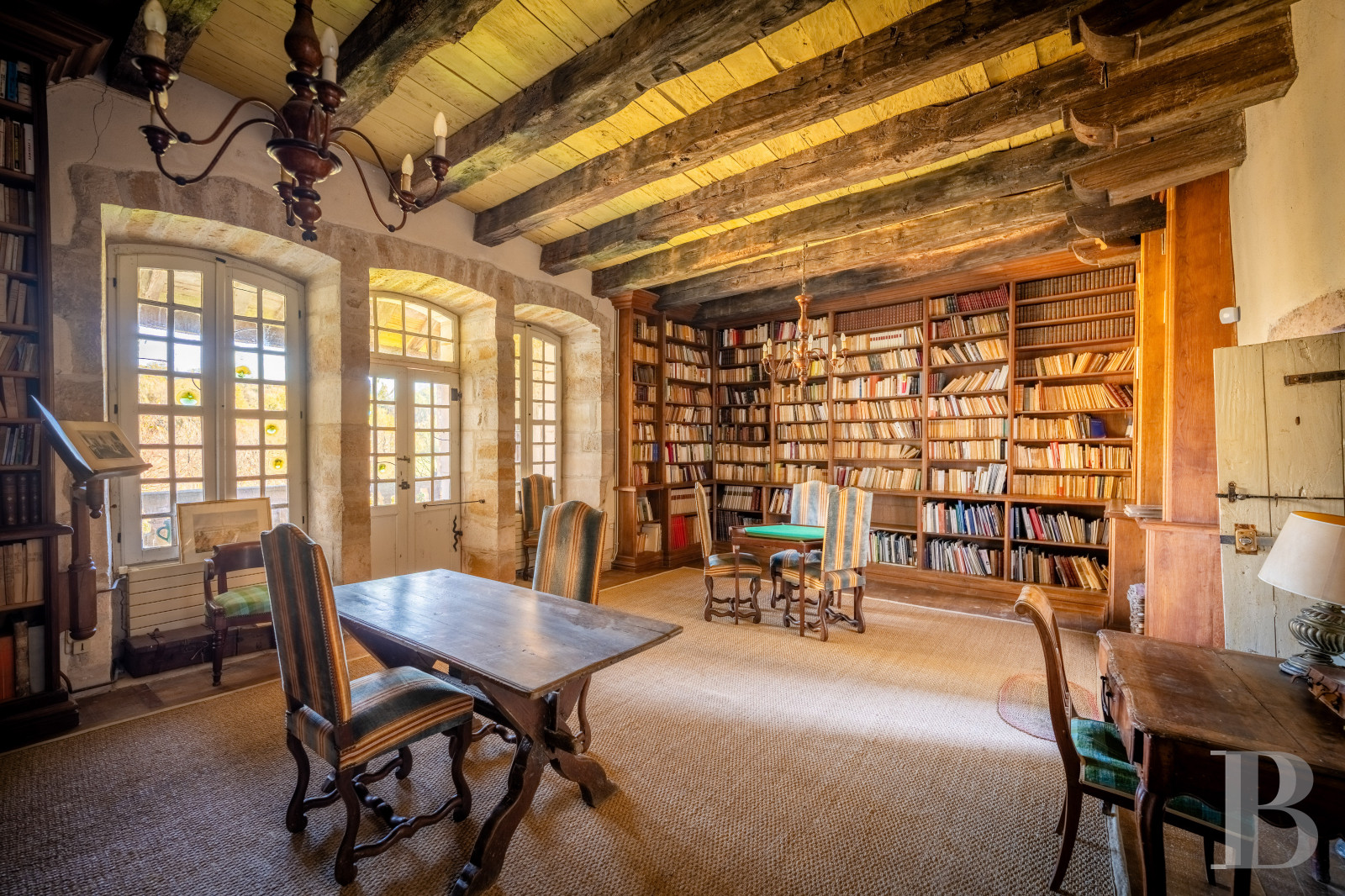
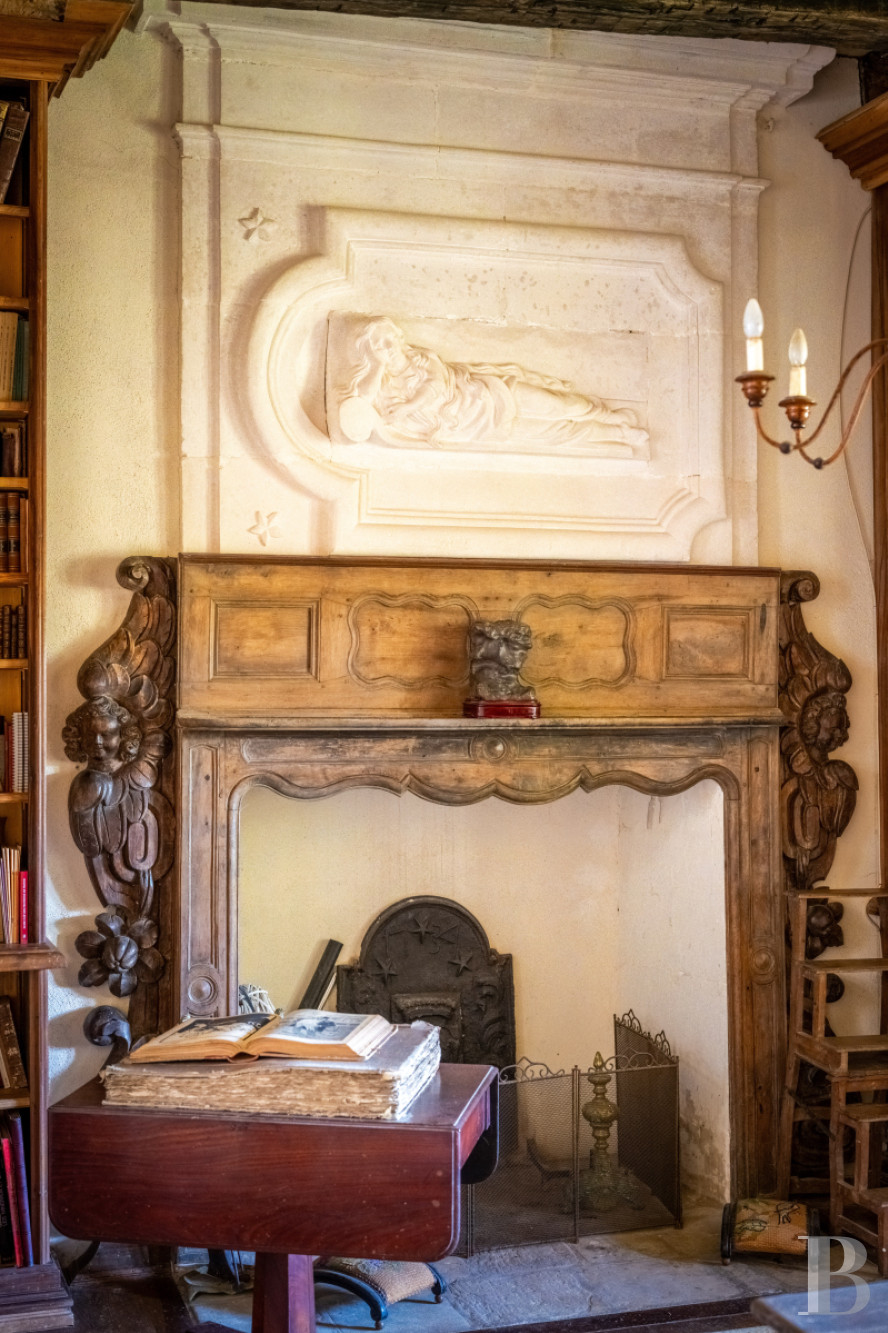
The library, an immense rectangular room, which connects the modern dwelling with the ancient one, represents the heart of this architectural composition, while its fireplace, topped with a baroque wooden mantelpiece decorated with an eye-catching bas-relief, inspired by Antiquity, endows the room with its character, simultaneously aristocratic and cosy.
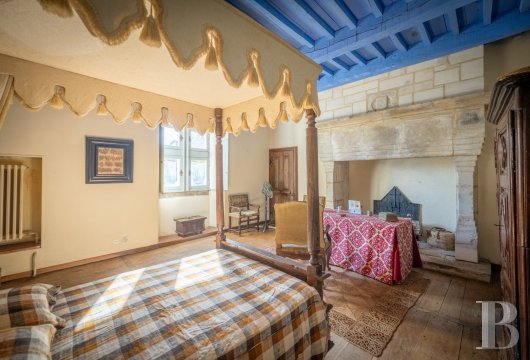
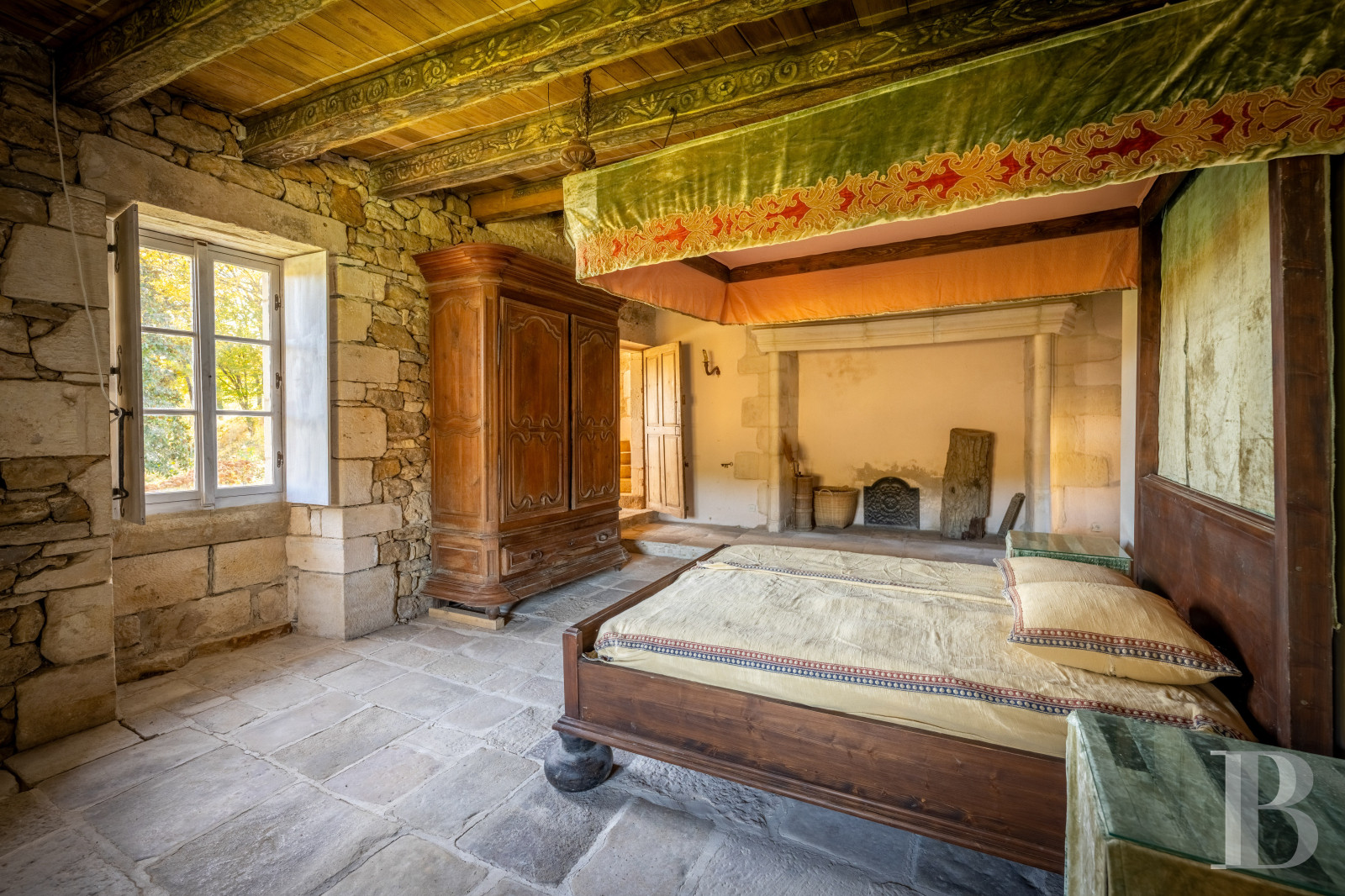
In addition, from the balcony, used as a walkway, the round tower is accessible via a spiral staircase, which provides access to an initial bedroom, with carved wooden ceiling beams, large ashlar stone floor tiles and a massive fireplace, whereas a few more steps in the tower-dovecote lead to a second bedroom, located nearby. More austere in appearance, even though it includes the same decorative features, this room is an invitation for reflection and intellectual pursuits, and was used for this very purpose by a playwright who often worked here during his creative retreats.
The first floor
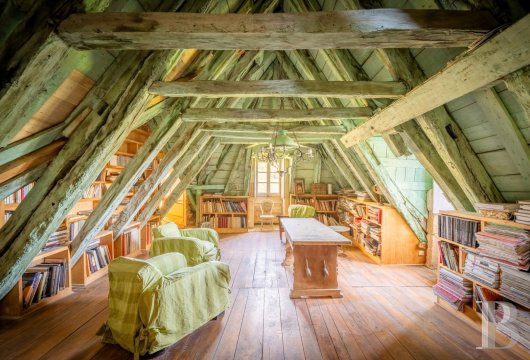
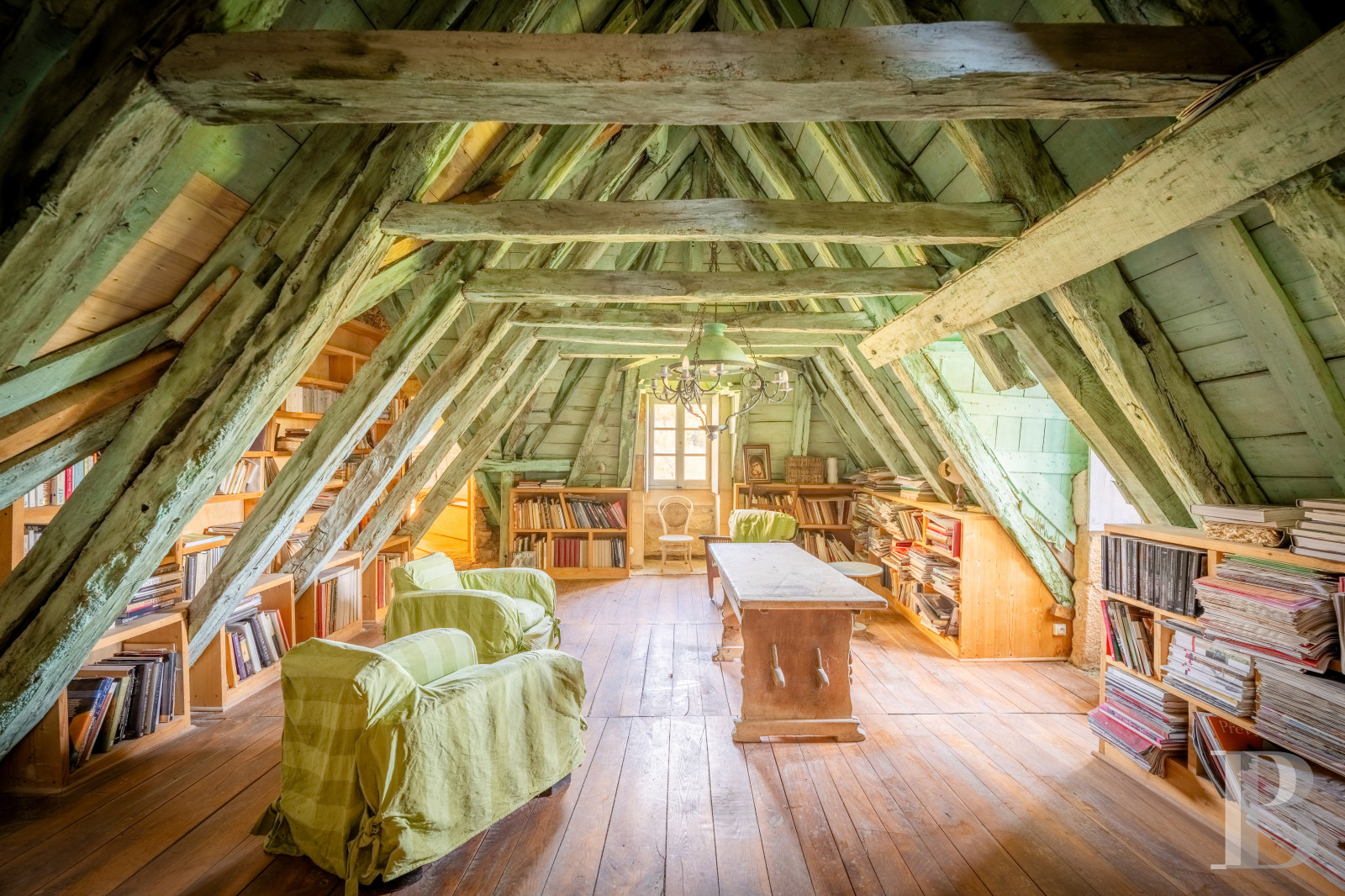
Under the trusses’ tall tie beams, more modest amenities highlight the large volumes available on this level: a reading room is flanked by three bedrooms and two bathrooms with lavatories, including a guardroom located at the top of the dovecote with breath-taking views of the grounds.
The basement
Three vaulted cellars create a web of utilitarian rooms, which all directly communicate with the dwelling’s exterior as well as the bottom floor of the two towers.
The New Dwelling
With two storeys, its first floor communicates with the modern dwelling via the library and its balcony. As a secondary wing of the chateau, it faces, to the west, a large swath of lawn with its well and orchard and concludes, to the north, the geometric alignment that it forms with the original, ancient dwelling.
The ground floor
Exclusively used as accommodations for the property’s personnel, this floor could be renovated and includes a kitchen with a storage cupboard, which has preserved its original details, as well as more modest living spaces, featuring a bathroom with lavatory and two bedrooms.
The first floor
From the balcony, a hallway leads to three adjacent bedrooms with understated décor, which share a bathroom and a shower room with lavatory.
The Outbuildings
The guesthouse
Located in the former hunting lodge, it was completely restored in 2025 to independently accommodate two people. With wide terracotta floor tiles, a shower room with a separate lavatory and a living room, topped with wooden rafters, all its amenities help create the feeling of a comfortable holiday home.
The barn
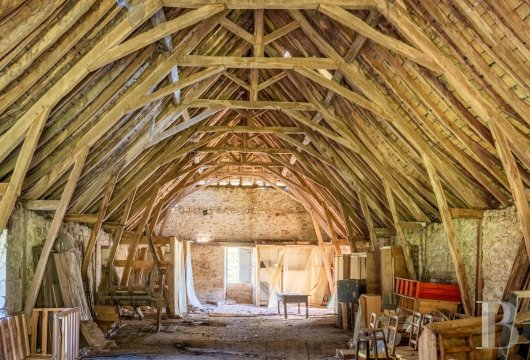
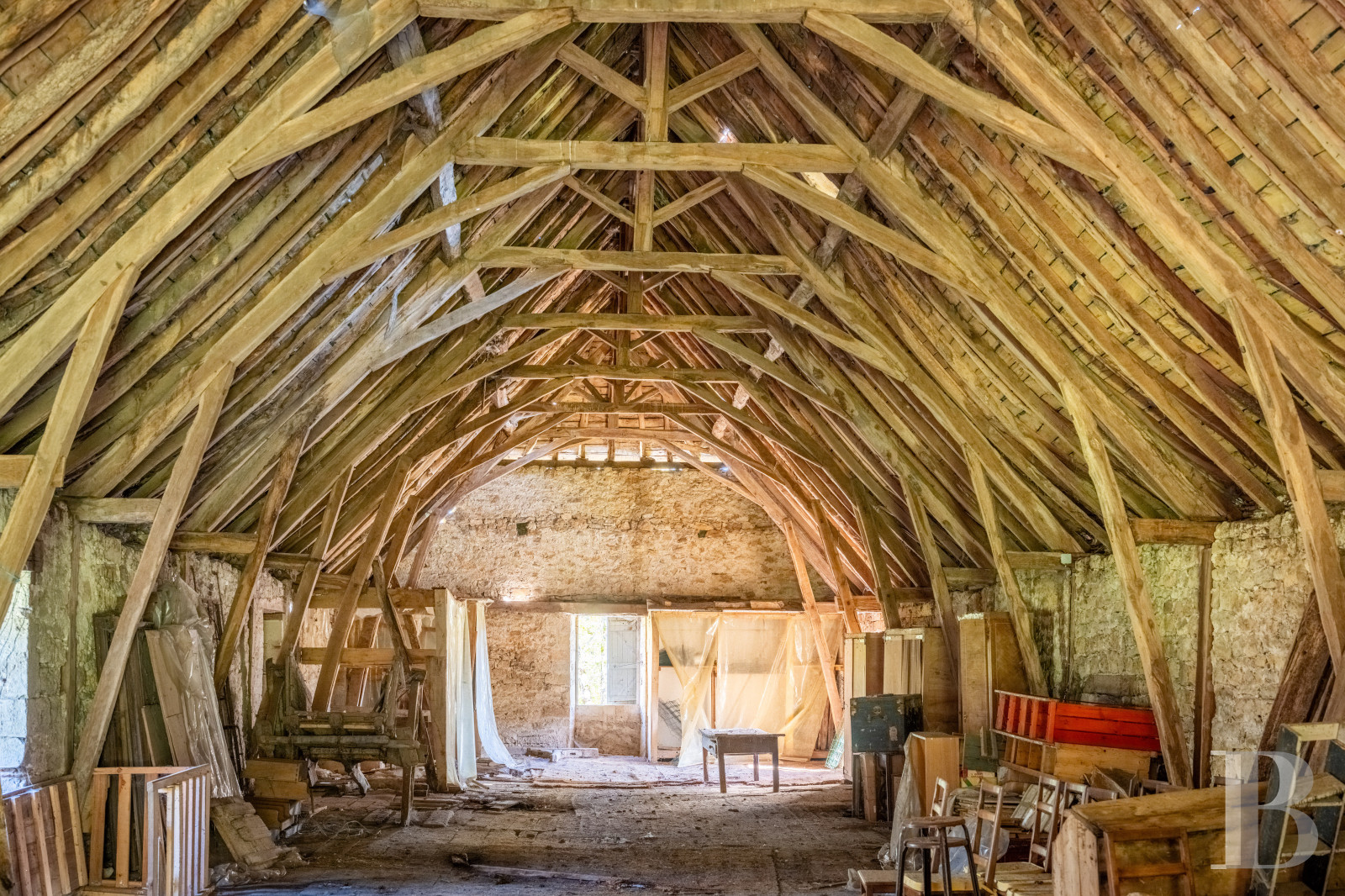
This elongated, Limousin-style barn, built out of local rubble stone, has two floors and contains historically separate spaces: stables, a saddle room, cowsheds, a granary, garages, etc. With an Allassac slate hipped roof, its four arched double doors and many oculi endow this 17th-century construction with a sturdiness and a standing on par with the chateau, whose domestic utilities it still ensures on a daily basis.
The Grounds and Swimming Pool
Past the meticulously maintained, wooded grounds of two hectares, which alternate between an orchard, lawns, flowerbeds and lanes suitable for motor vehicles, the property extends over 22 hectares of forests and rolling meadows. In addition, the estate, crisscrossed by two rivers to the east and north, reveals panoramic views of a verdant and protected landscape, while the masonry swimming pool, 5 x 10 metres, is set back from the chateau, concealed behind large hedges and surrounded by a flagstone patio and a low wall.
Our opinion
This remarkable and stately dwelling, restored respectfully by a succession of sensitive and enthusiastic artists, features architecture characteristic of the Quercy region, whose heritage enjoys worldwide recognition, as well as subtle amenities, which have provided the whole with undeniable comfort that could be easily upgraded further or charm historical home aficionados as is thanks to its undeniable authenticity.
Whether pursuing a contemporary function as a site for artistic creation or by restoring it to a more familial purpose, the next occupants will be called upon to enjoy the cheerful simplicity imposed by this chateau, now restored in terms of its fundamentals for centuries to come.
Reference 715868
| Main building floor area | 700 m² |
| Outbuildings floor area | 600 m² |
| Land registry surface area | 21 ha |
French Energy Performance Diagnosis
Information on the risks to which this property is exposed is available on the website: www.georisques.gouv.fr
Share


NB: The above information is not only the result of our visit to the property; it is also based on information provided by the current owner. It is by no means comprehensive or strictly accurate especially where surface areas and construction dates are concerned. We cannot, therefore, be held liable for any misrepresentation.