



A genuine medieval chateau, partially listed as a regional Historical Monument, with its
ramparts and guest accommodations, between Toulouse and Carcassonne in an Occitan village, twenty kilometres from Castelnaudary
ramparts and guest accommodations, between Toulouse and Carcassonne in an Occitan village, twenty kilometres from Castelnaudary
Vallègue,
HAUTE-GARONNE
midi-pyrenees
31290
FR








Location
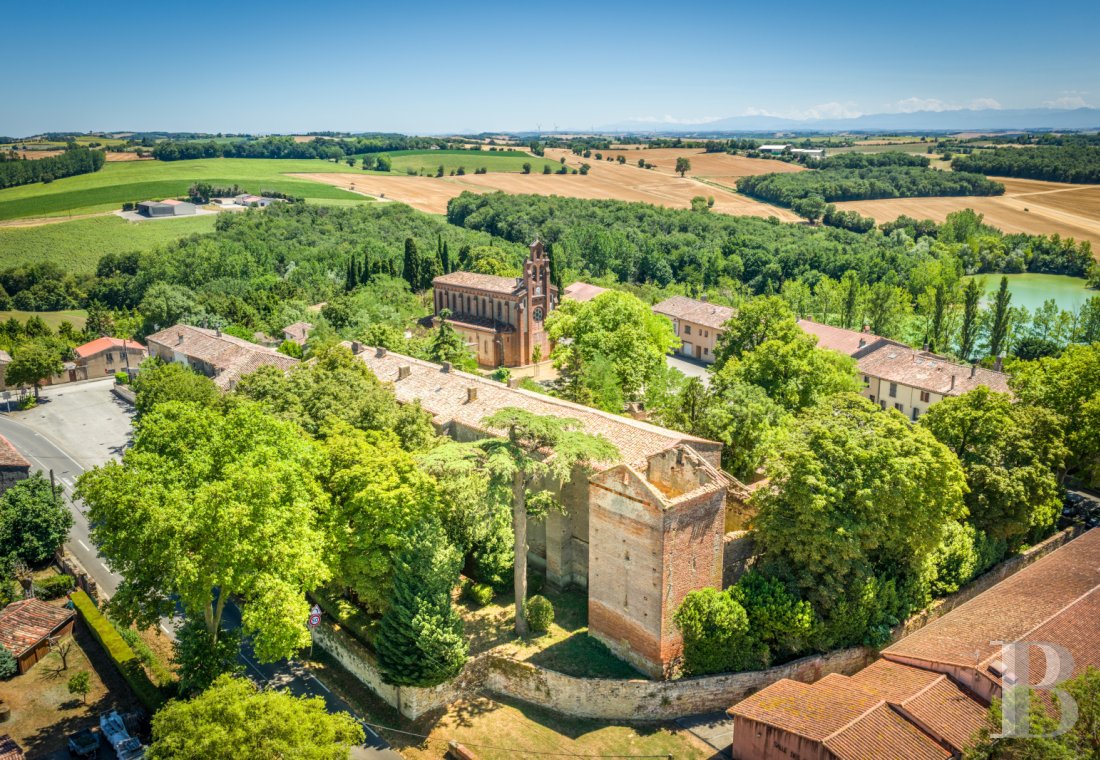
In the historic Lauragais region, approximately ten minutes from Villefranche, the former fortified village still contains, within its gently sloping backstreets, one of the few medieval chateaus that have remained intact over the centuries. Ideally located between Toulouse and Castelnaudary, it is nestled within a landscape shaped by centuries of agrarian and mercantile history: once the breadbasket of the Languedoc region, its farmhouses and dovecotes still recount the prosperity of the routes lined with dyer’s woad. In addition, the proximity of the A61 motorway and the SNCF train station make Toulouse and Carcassonne accessible in 40 and 45 minutes, respectively, while all essential shops and services for daily life can be found in the surrounding villages.
Description
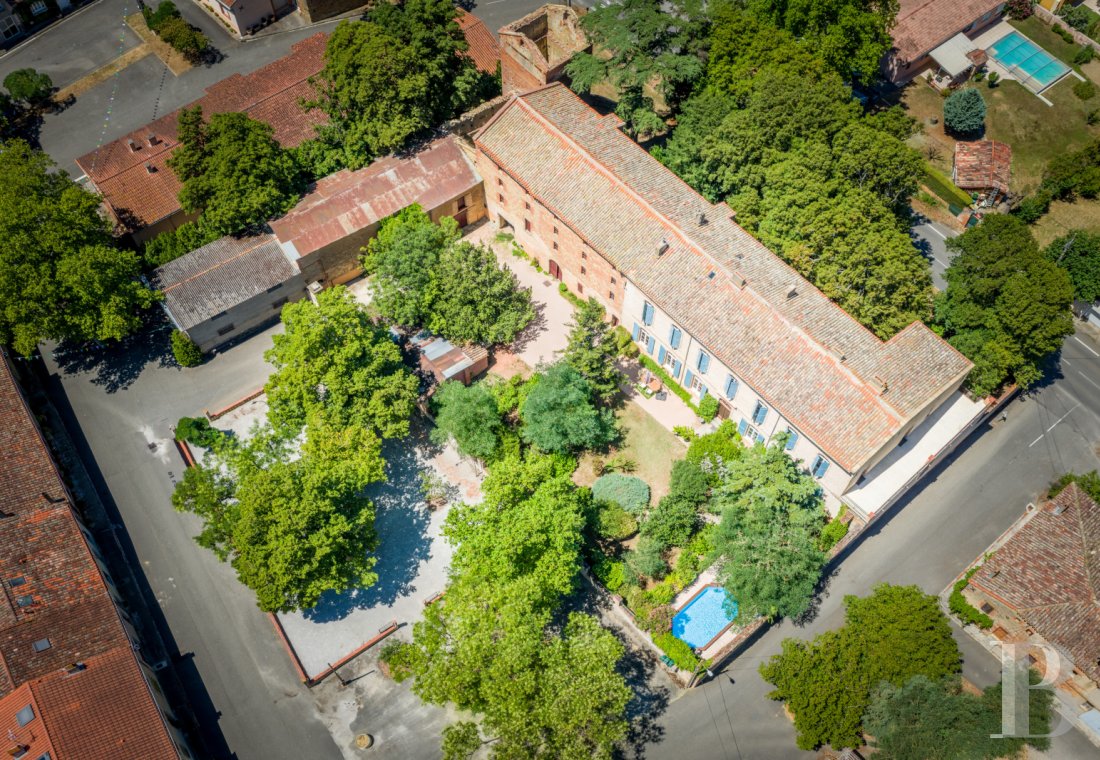
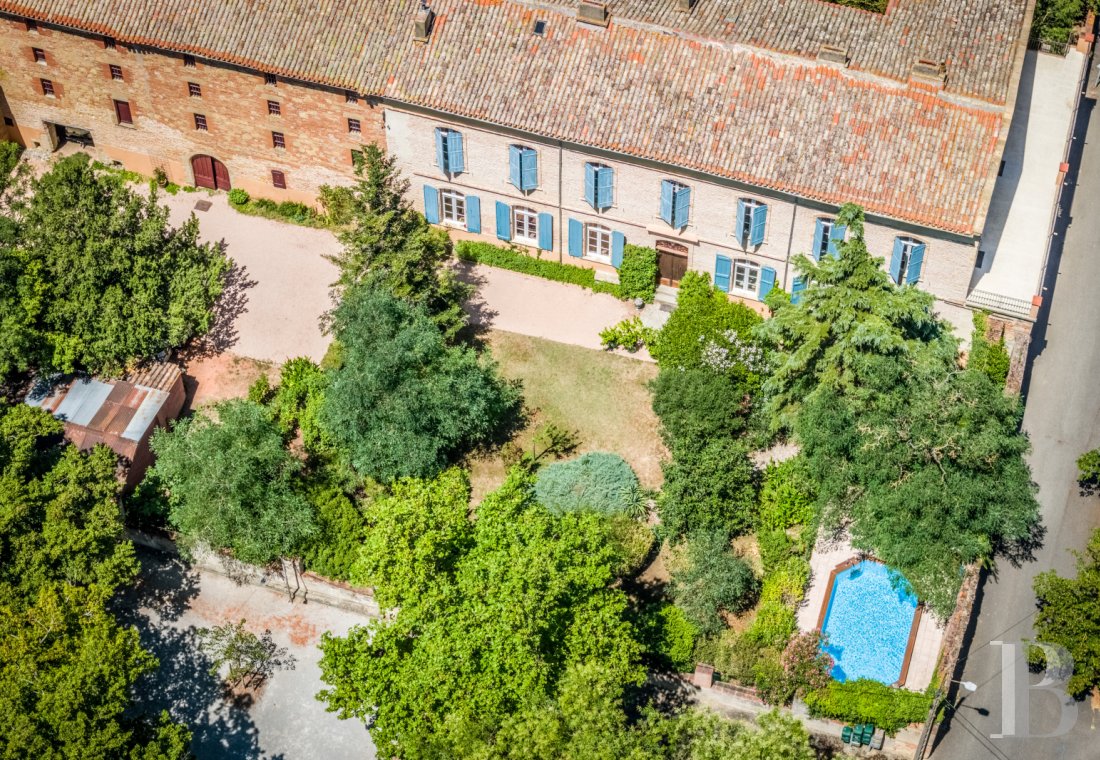
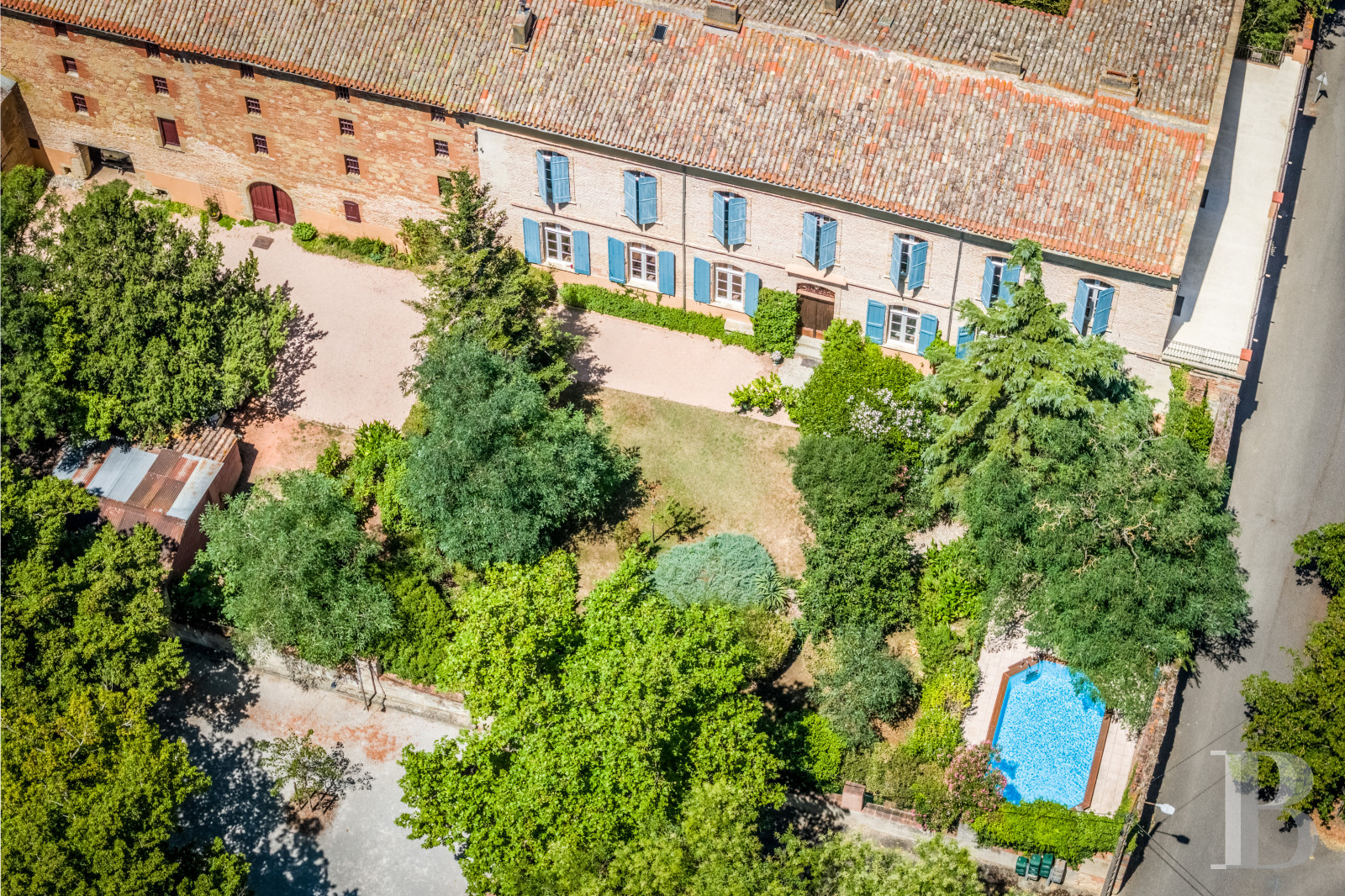
Built in the 13th century in order to keep vigil over the fertile plain, the chateau still overlooks the former fortified village, for which it once represented its defensive core. With a long façade of nearly 70 metres, flanked by towers and buttresses, its Spartan architecture conceals its continuous history, dating from the 14th century all the way to the present day: that of a former royal fortress, which then became a seigniorial residence, followed by an aristocratic dwelling and, finally, a large family home.
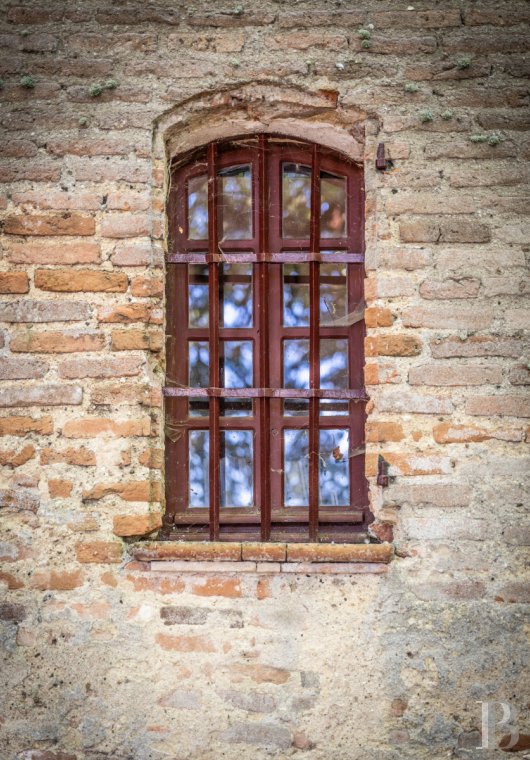
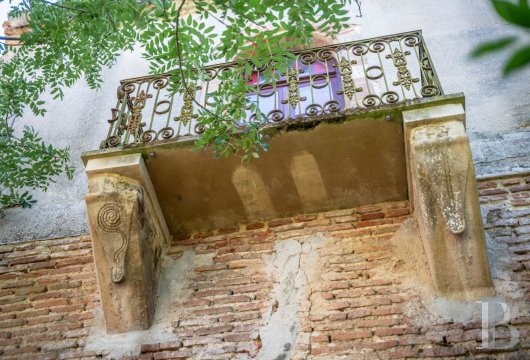
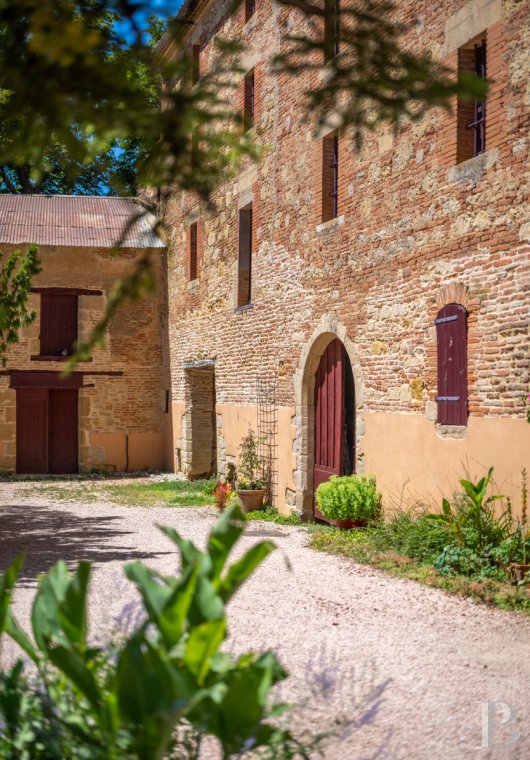
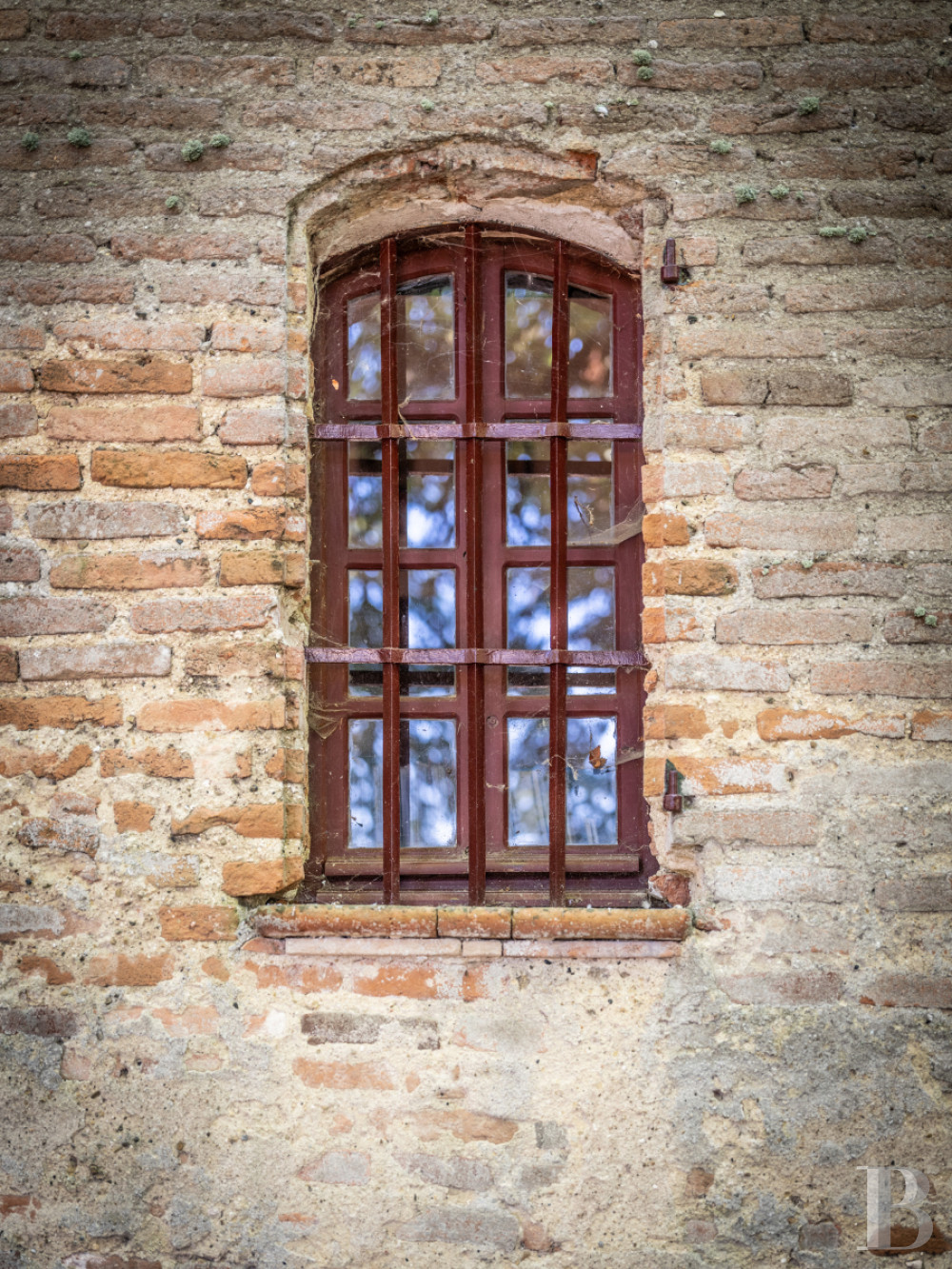
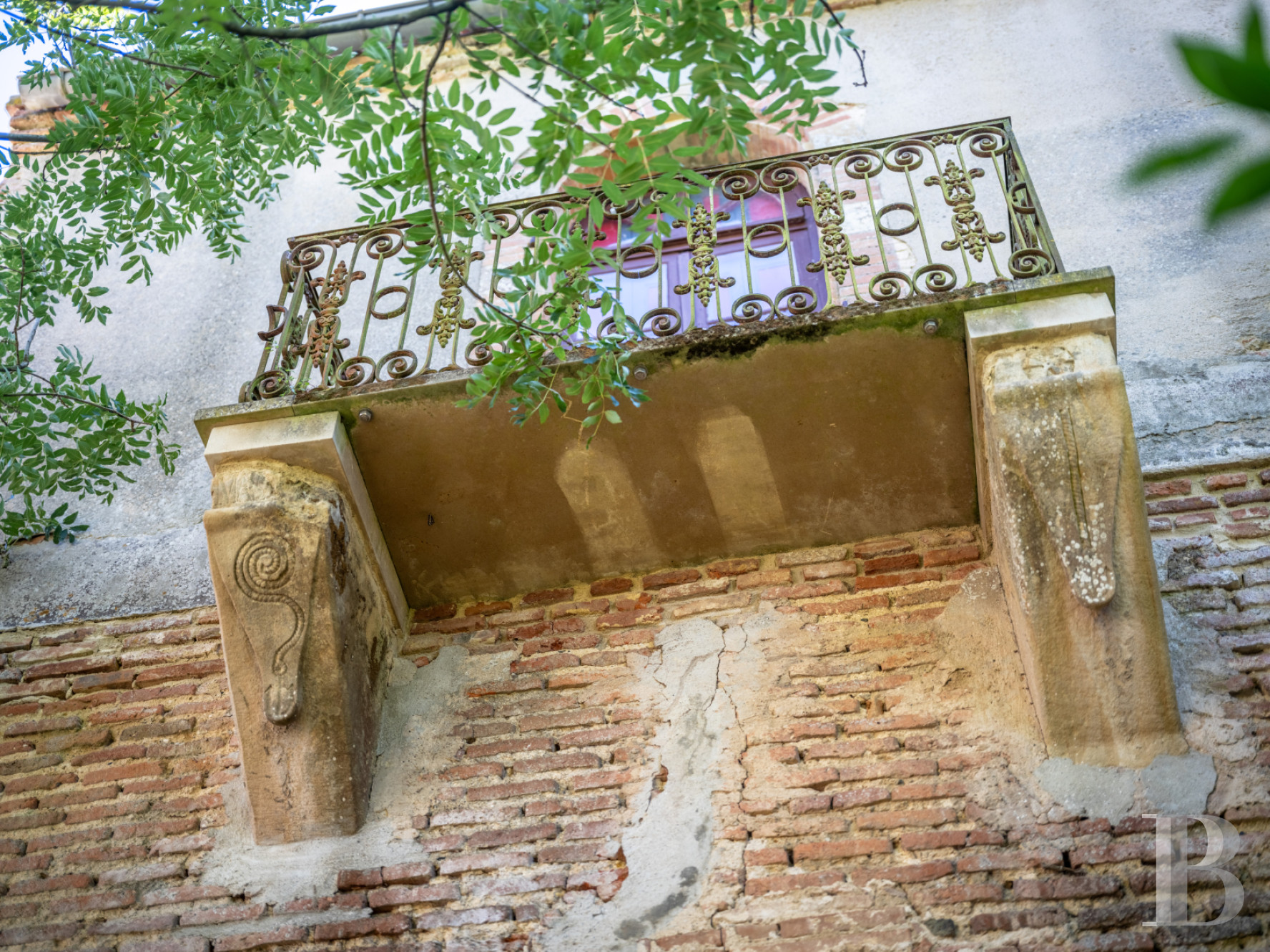
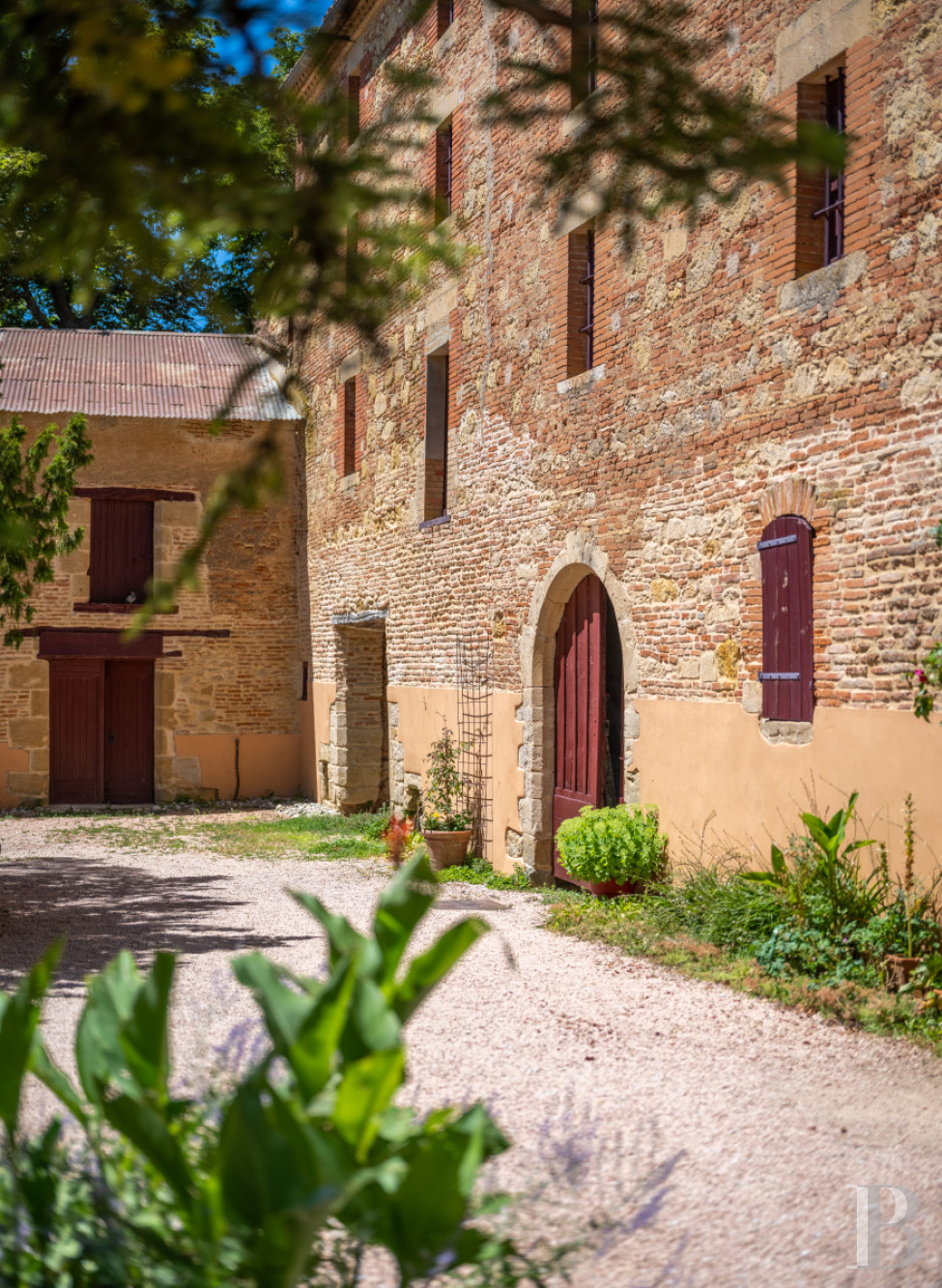
The first foundation stones, in irregular size rubble stone, still preserve the defensive precision of the Middle Ages, while, further up, its symmetrical windows, widened doors and orderly rooftops bear witness to the renovations carried out in the 17th century, when the art of living replaced its defensive purpose. This can also be seen in the small balcony, supported by two carved stone corbels, the design of which resembles an almost vegetal coil, while its wrought-iron guardrail features a décor combining scrolls with interlacing patterns, typical of the kinds of details added between the late 18th and 19th centuries, which were meant to provide a lightweight impression to these ancient exteriors. As for its construction materials, local brick and limestone, they create a dialogue between warm hues and textures, softened by the patina of time.
With an inhabitable floor area of approximately 480 m², the two-storey main building’s ground floor contains a series of adjacent living areas: a drawing room, a dining room, a study, as well as several other living spaces, supplemented by an old-fashioned kitchen, a laundry room and a chapel, while a bedroom, not far from the drawing room and kitchen, rounds out the rooms on this floor.
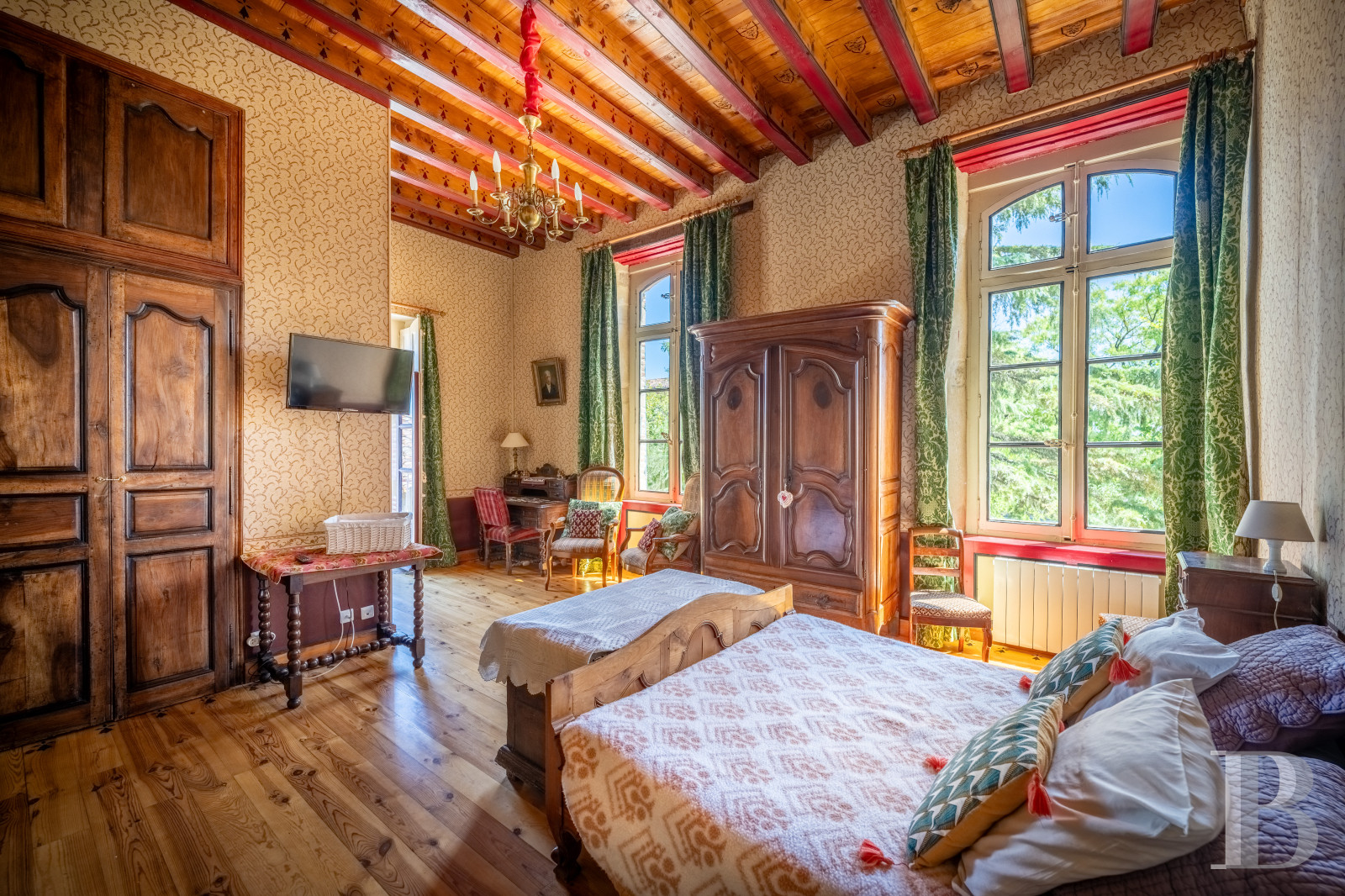
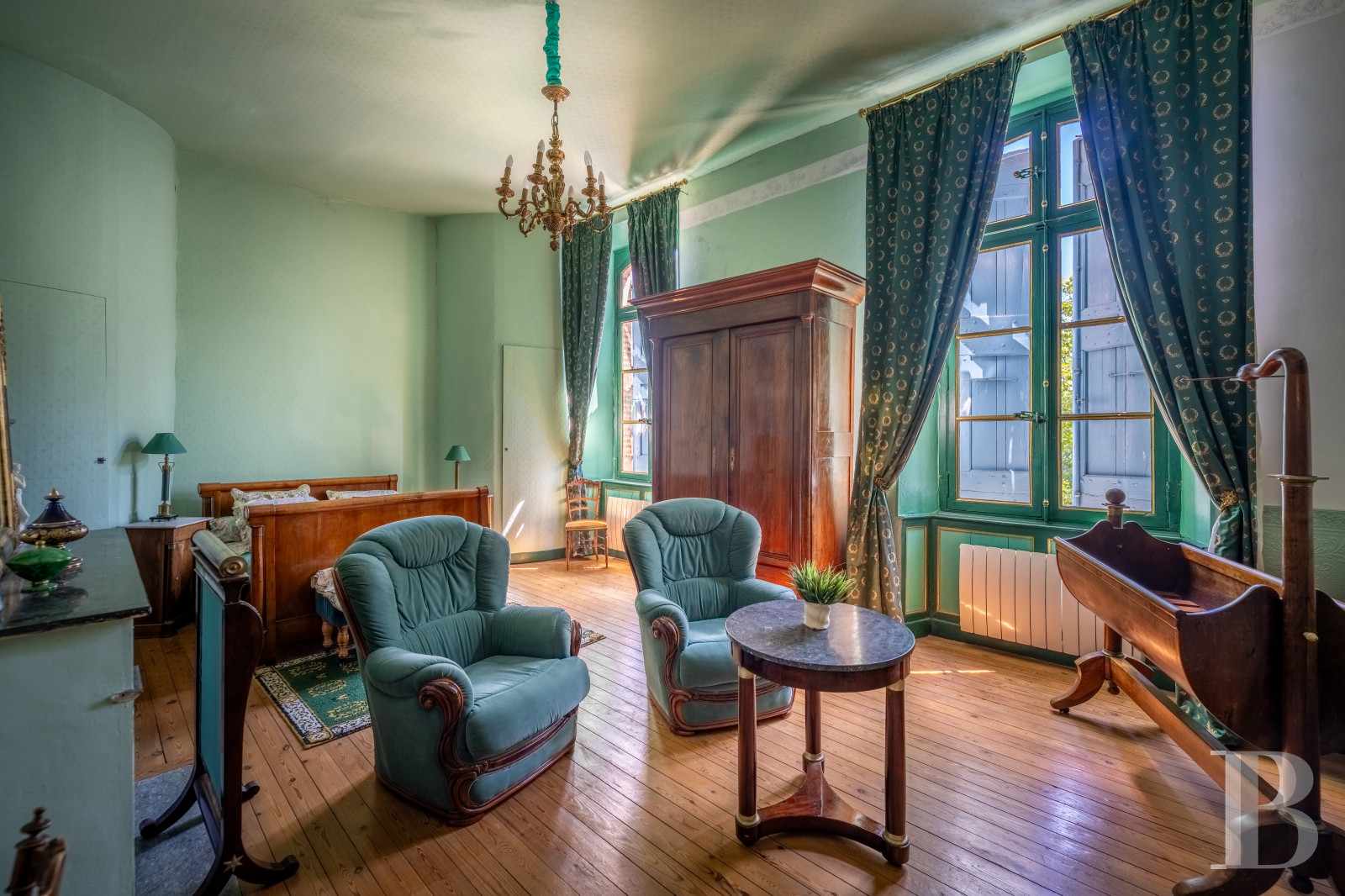
As for the upstairs level, it contains five bedrooms, some of which come with their own private sitting room or adjacent bathroom, accessible via a long hallway and two landings, which convey the building’s size and depth, whereas all of its rooms have preserved their original dimensions and its overall layout strikes a fine balance between its areas reserved for entertaining and its more private quarters.
Extending on from here, immense outbuildings with multiple ancient details, represent a considerable potential for expansion, while under its basement vaults, a medieval cellar has been listed as a regional Historical Monument and its attic spaces, granaries and drying rooms bear witness to the domestic economy of centuries past. Last, but not least, the property, partially protected as a Historical Monument, features a rare and overall cohesive feel, the result of a respectful restoration that has been on-going since the late 20th century.
The first foundation stones, in irregular size rubble stone, still preserve the defensive precision of the Middle Ages, while, further up, its symmetrical windows, widened doors and orderly rooftops bear witness to the renovations carried out in the 17th century, when the art of living replaced its defensive purpose. This can also be seen in the small balcony, supported by two carved stone corbels, the design of which resembles an almost vegetal coil, while its wrought-iron guardrail features a décor combining scrolls with interlacing patterns, typical of the kinds of details added between the late 18th and 19th centuries, which were meant to provide a lightweight impression to these ancient exteriors. As for its construction materials, local brick and limestone, they create a dialogue between warm hues and textures, softened by the patina of time.
With an inhabitable floor area of approximately 480 m², the two-storey main building’s ground floor contains a series of adjacent living areas: a drawing room, a dining room, a study, as well as several other living spaces, supplemented by an old-fashioned kitchen, a laundry room and a chapel, while a bedroom, not far from the drawing room and kitchen, rounds out the rooms on this floor.
As for the upstairs level, it contains five bedrooms, some of which come with their own private sitting room or adjacent bathroom, accessible via a long hallway and two landings, which convey the building’s size and depth, whereas all of its rooms have preserved their original dimensions and its overall layout strikes a fine balance between its areas reserved for entertaining and its more private quarters.
Extending on from here, immense outbuildings with multiple ancient details, represent a considerable potential for expansion, while under its basement vaults, a medieval cellar has been listed as a regional Historical Monument and its attic spaces, granaries and drying rooms bear witness to the domestic economy of centuries past. Last, but not least, the property, partially protected as a Historical Monument, features a rare and overall cohesive feel, the result of a respectful restoration that has been on-going since the late 20th century.
The Main Dwelling
Medieval in origin and reconverted in the 16th and 18th centuries, it includes immense living areas, fluid circulation and a series of rooms suitable for a contemporary use, while its rooms have conserved their original dimensions and its overall layout strikes the proper balance between its areas dedicated to entertaining and its more private quarters.
The ground floor
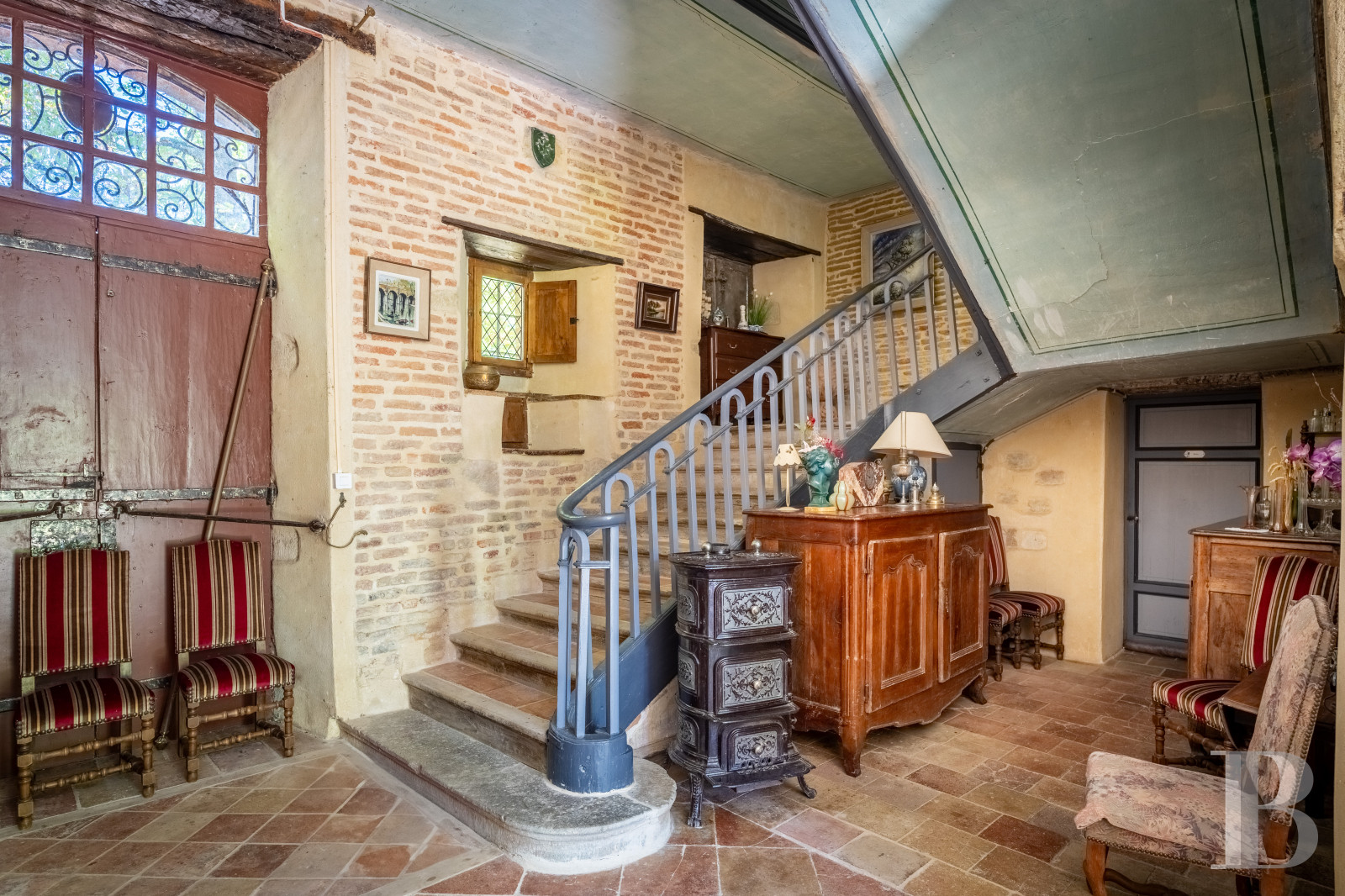
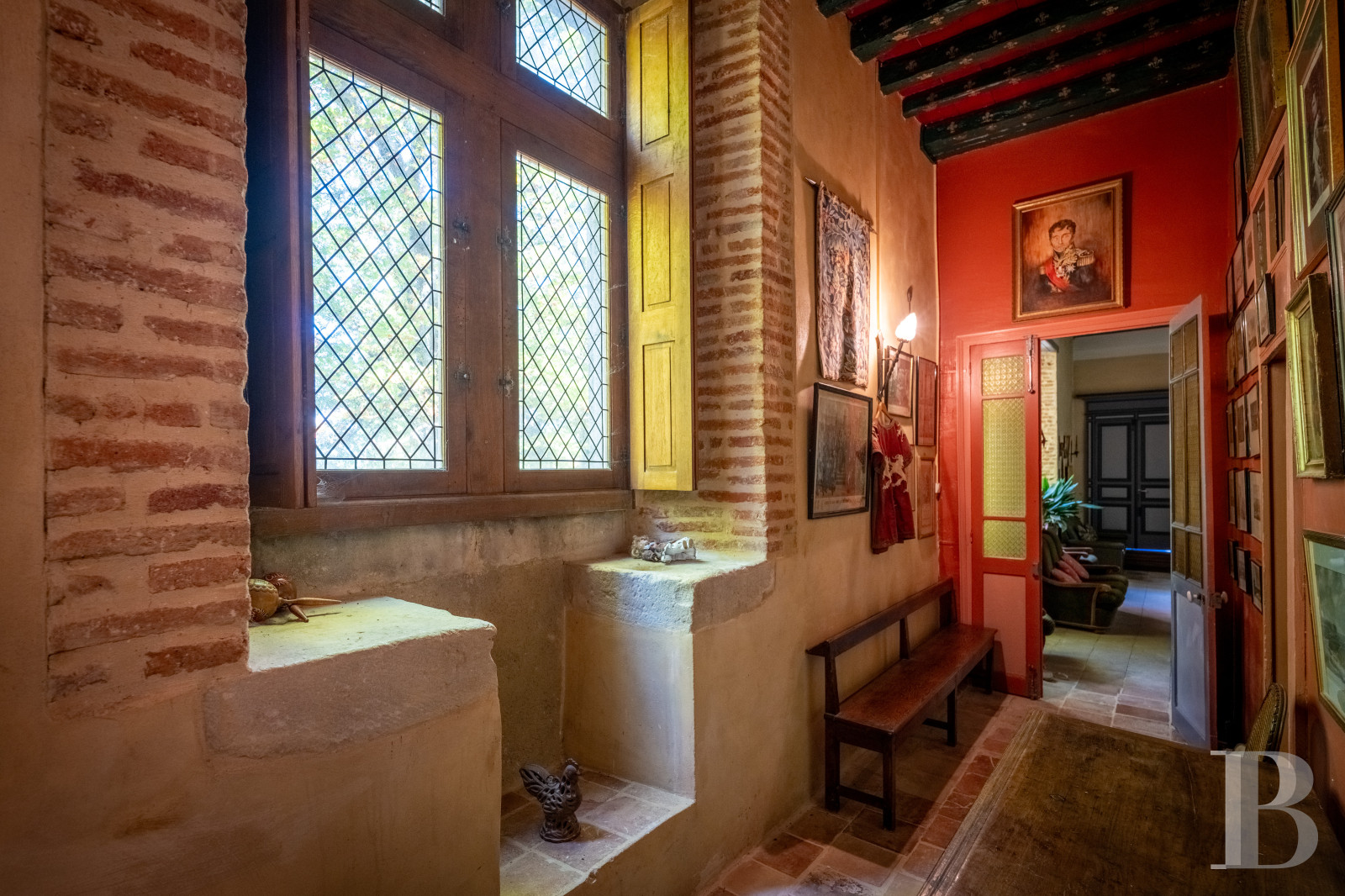
From the front door, a wide dual-aspect entrance hall, providing access to all the rooms on this level, stands out thanks to its authentic pointed brick walls and stone tile floor, while a stone staircase with a wrought-iron handrail provides upstairs access.
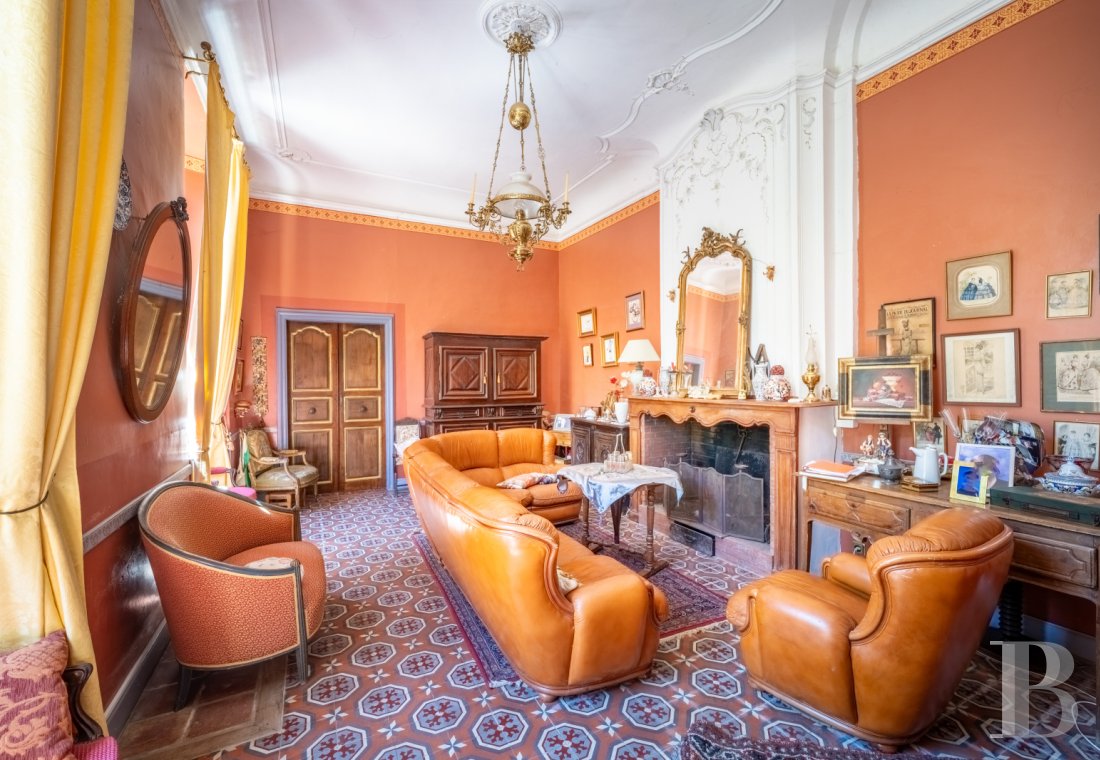
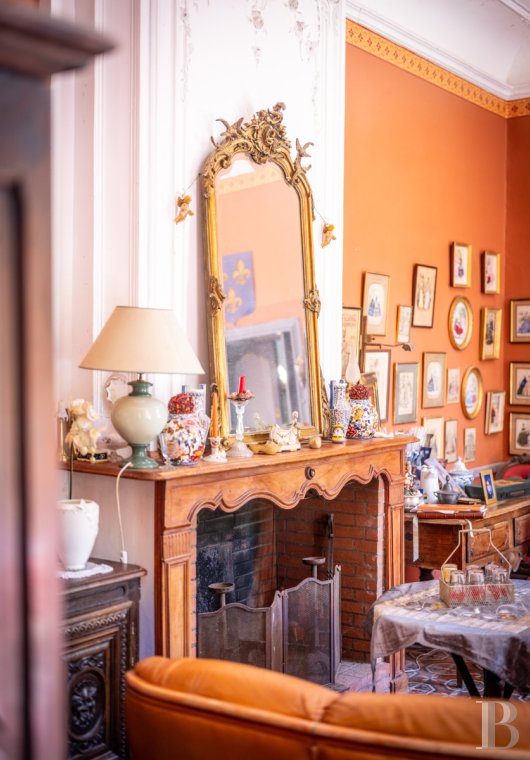
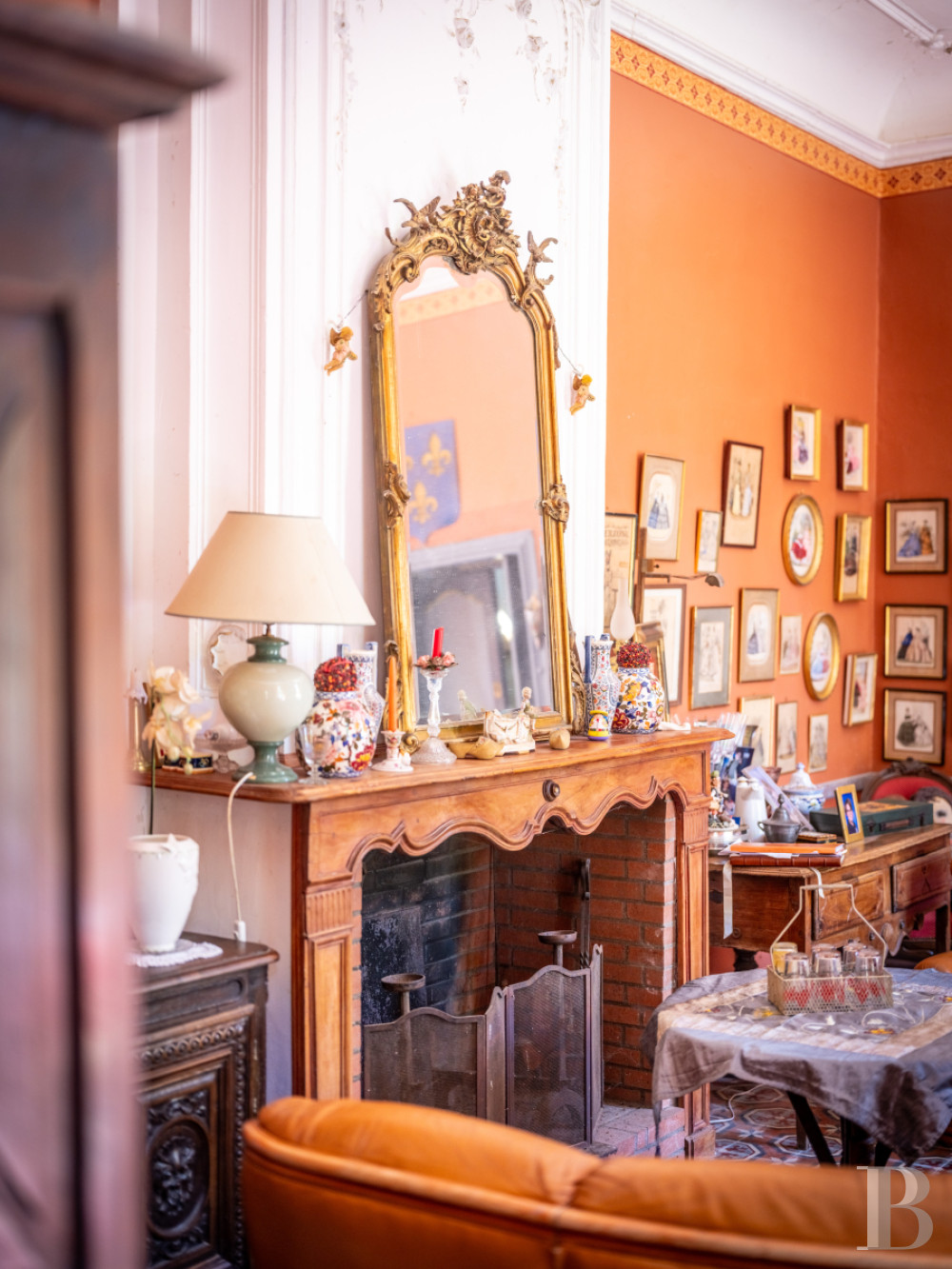
On the left, the drawing room, with tall and deep windows that open on to the garden and provide ample natural light for the room, features a cement tile floor, a subtly integrated fireplace, woodwork and walls painted a warm shade of orange, which all come together to create an extremely welcoming environment.
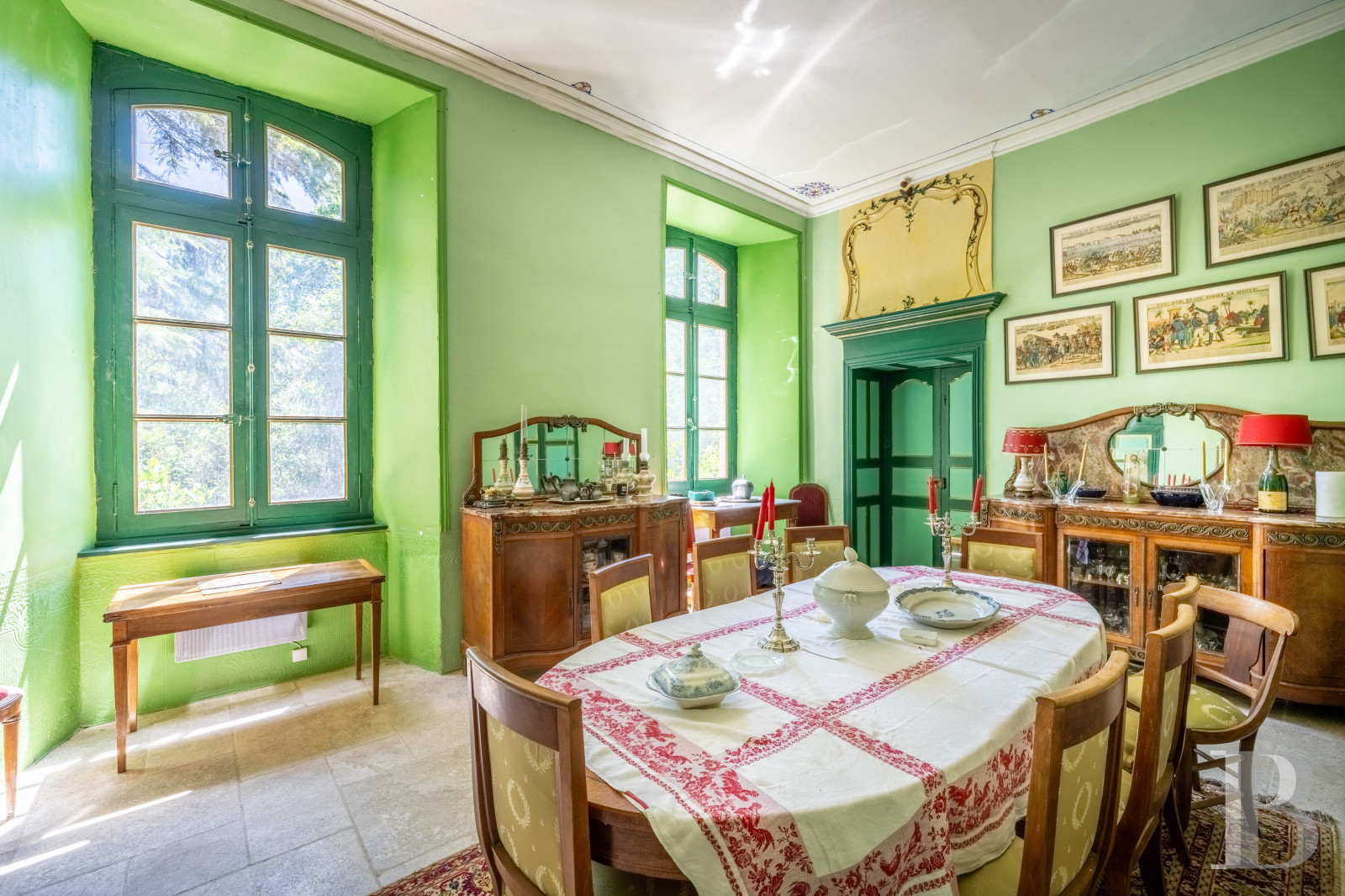
Directly opposite, on the other side of the entrance hall, the dining room, part of the same series of rooms, illuminated by two windows and decorated with an ancient hearth set within its thick wall, is ideal for meals spent amongst family or friends as well as convivial moments shared with guests.
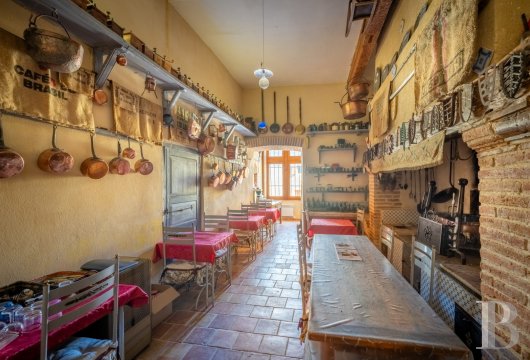
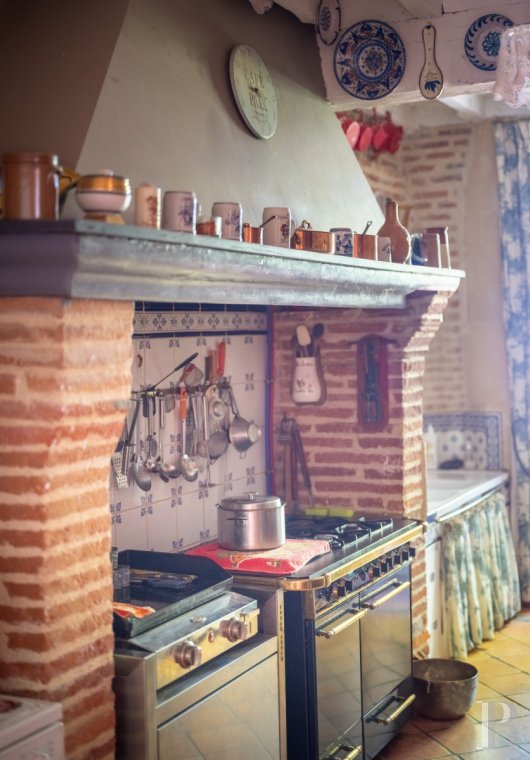
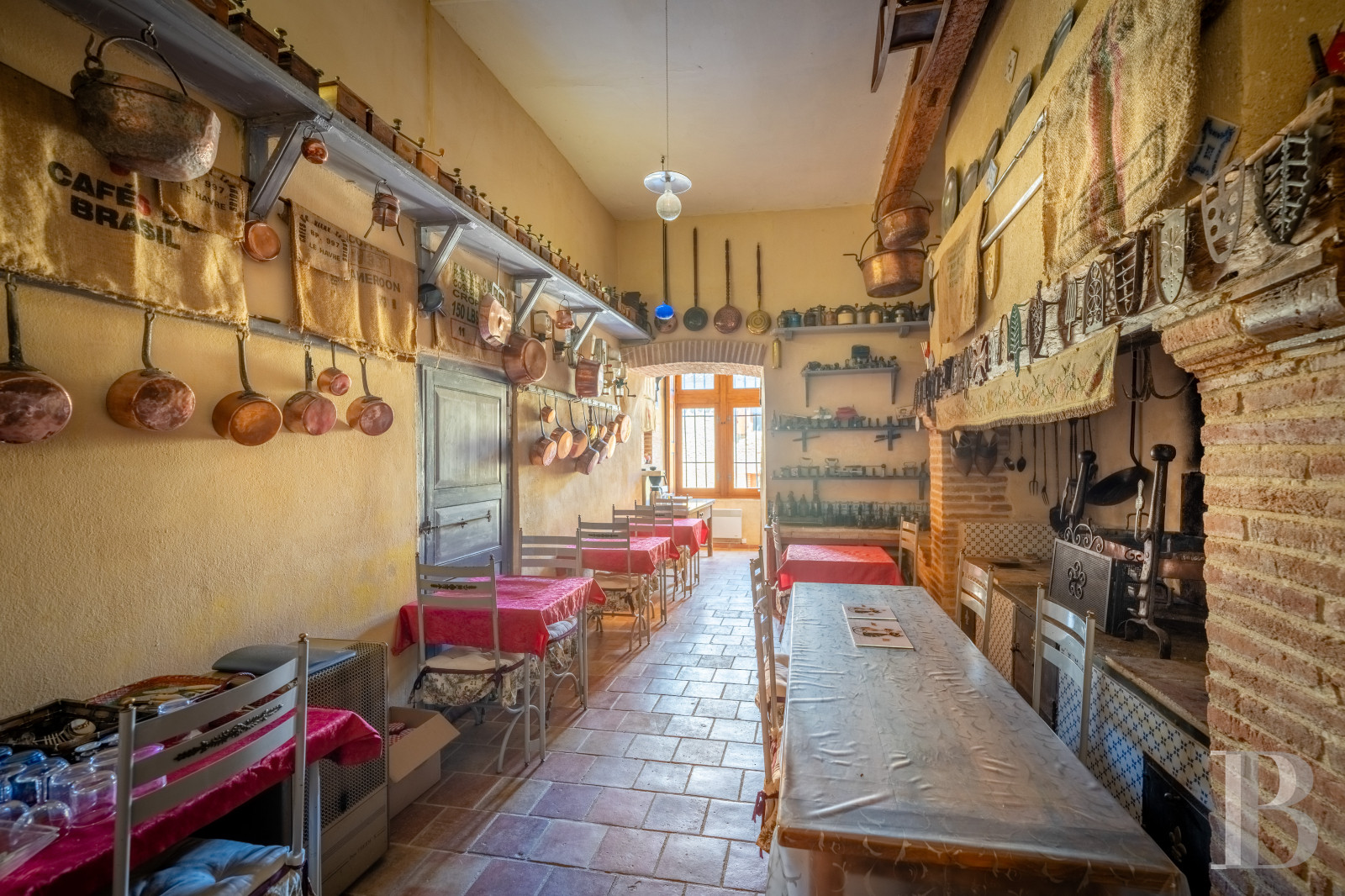
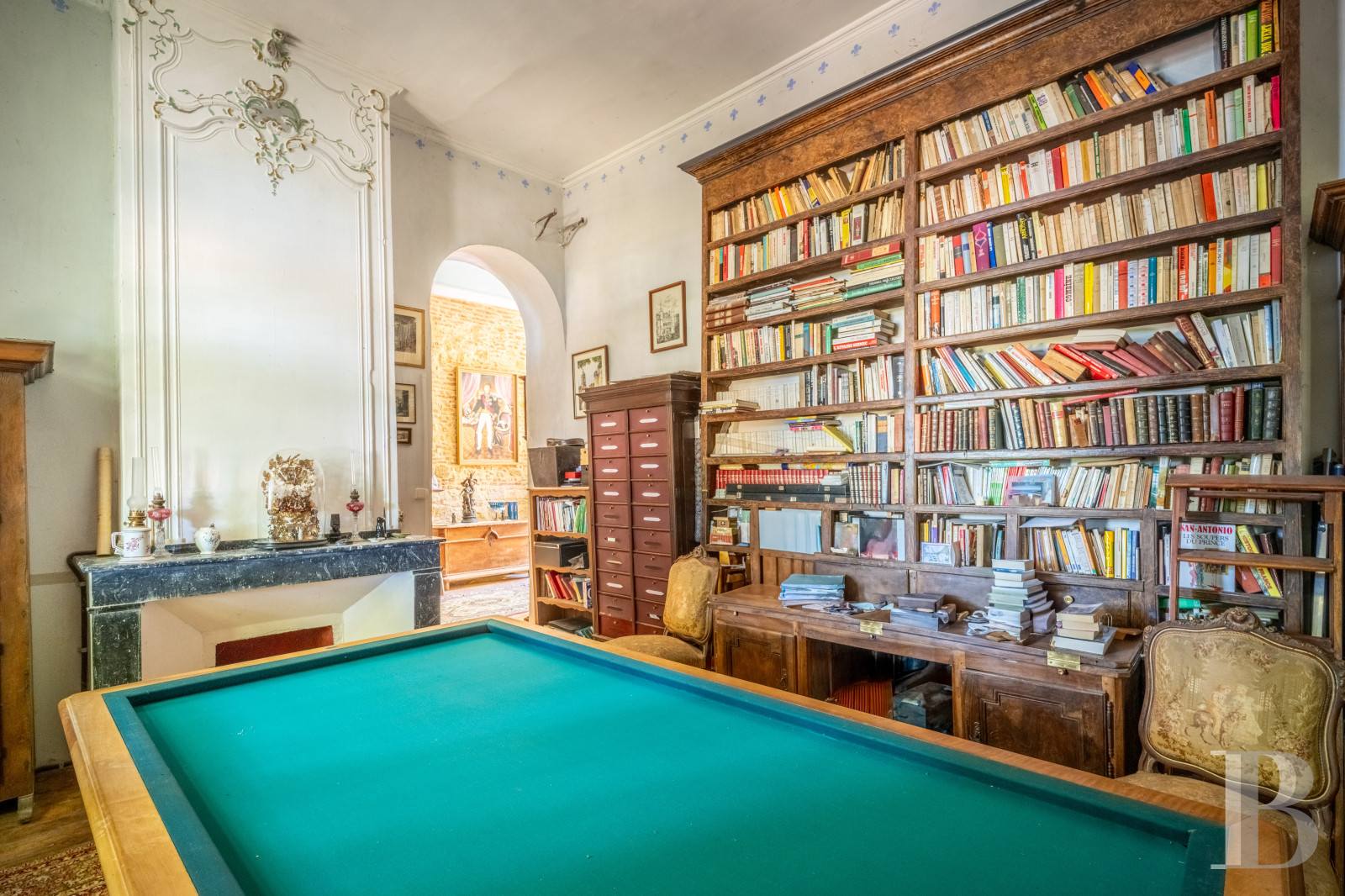
Set back and, yet, still parallel to the drawing room, the study creates a more intimate space, cadenced by bookshelves spanning an entire wall and a fireplace topped with its original mantelpiece, while, even further back, the old-fashioned kitchen is a testimony to its once pivotal domestic role, with its long utility room, cooking hearth, ancient shelves and walls where the vestiges of its inhabited daily use are still visible.
In addition, a bar, a laundry room, several utility rooms as well as a separate lavatory are located nearby, whereas a ground floor bedroom rounds out the rooms on this level. Last, but not least, a former chapel is located at one end of the wing: its proportions, windows and lines are a testament to its original design, even if its religious function has now disappeared.
The upstairs
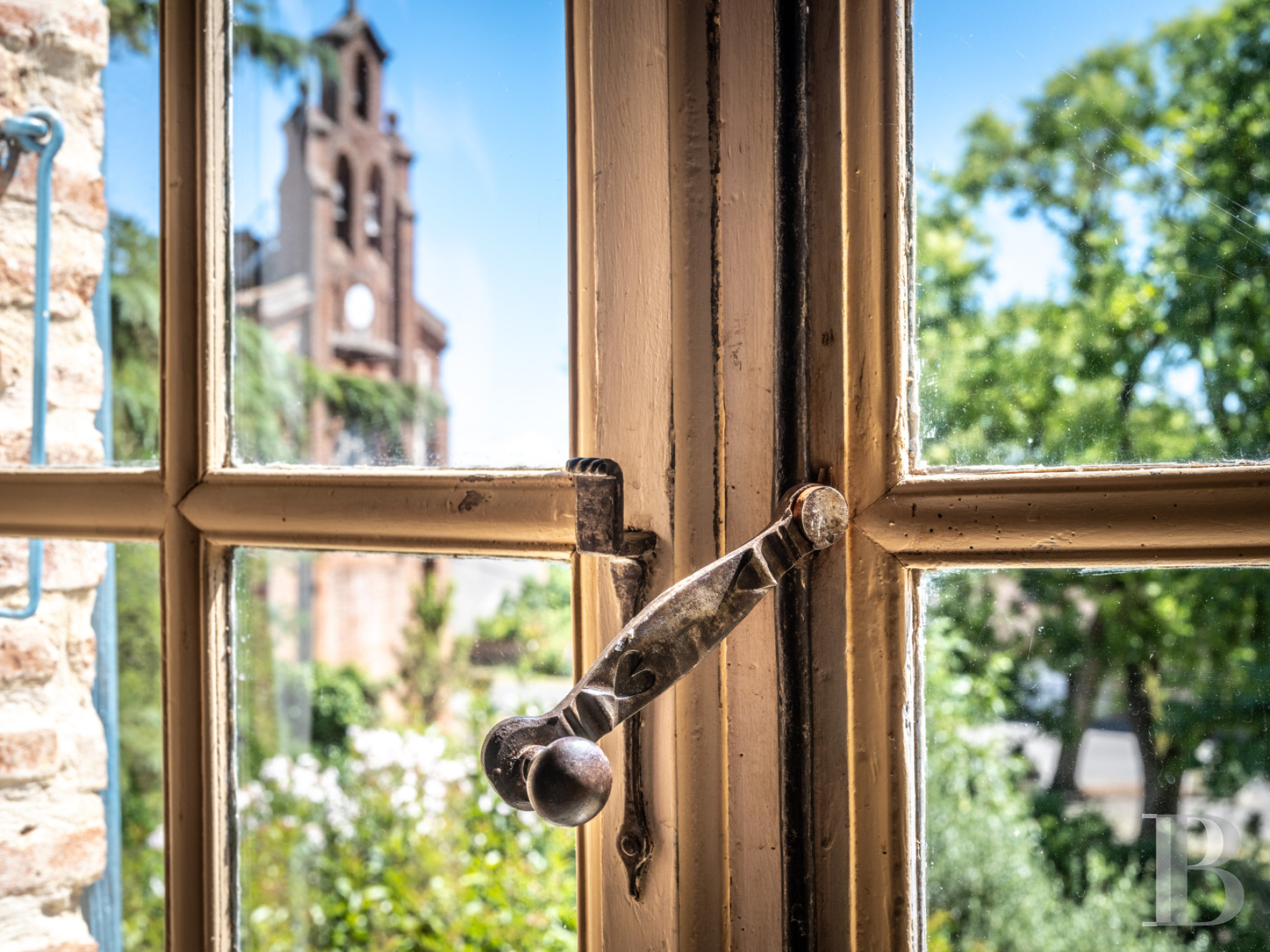
The landing provides access to the entire floor, which overlooks the garden through tall windows, the depth of which recall the thickness of its ancient walls.
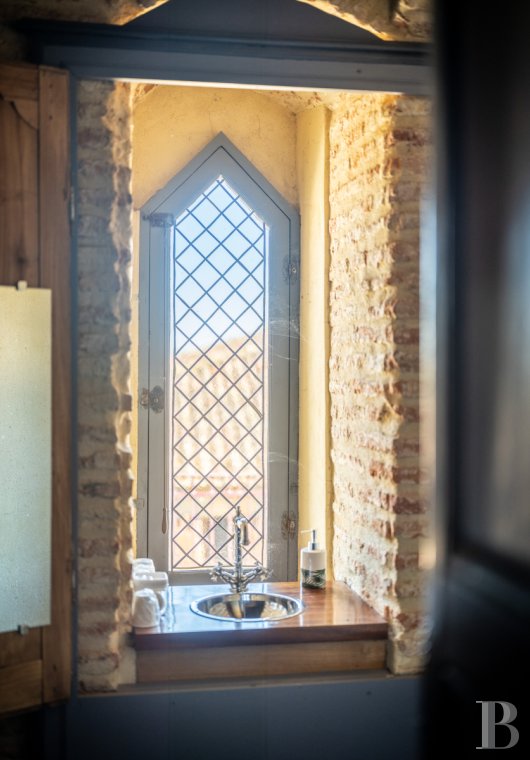
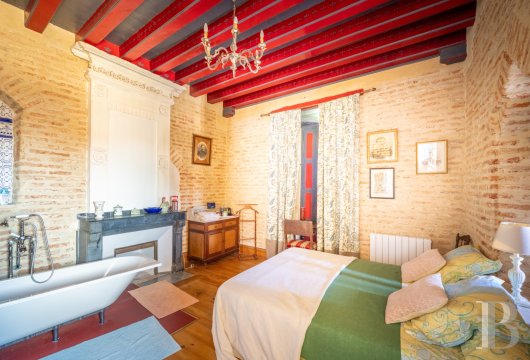
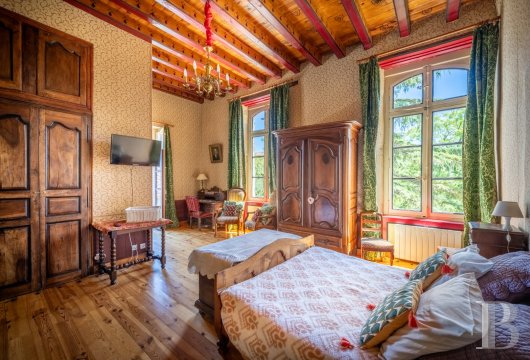
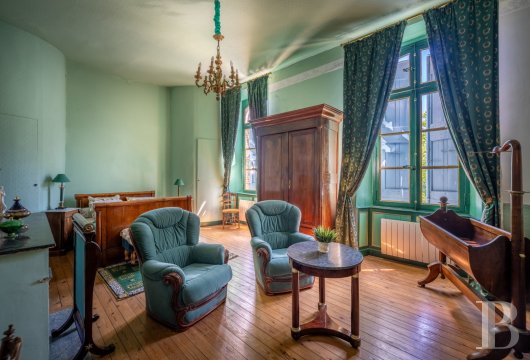
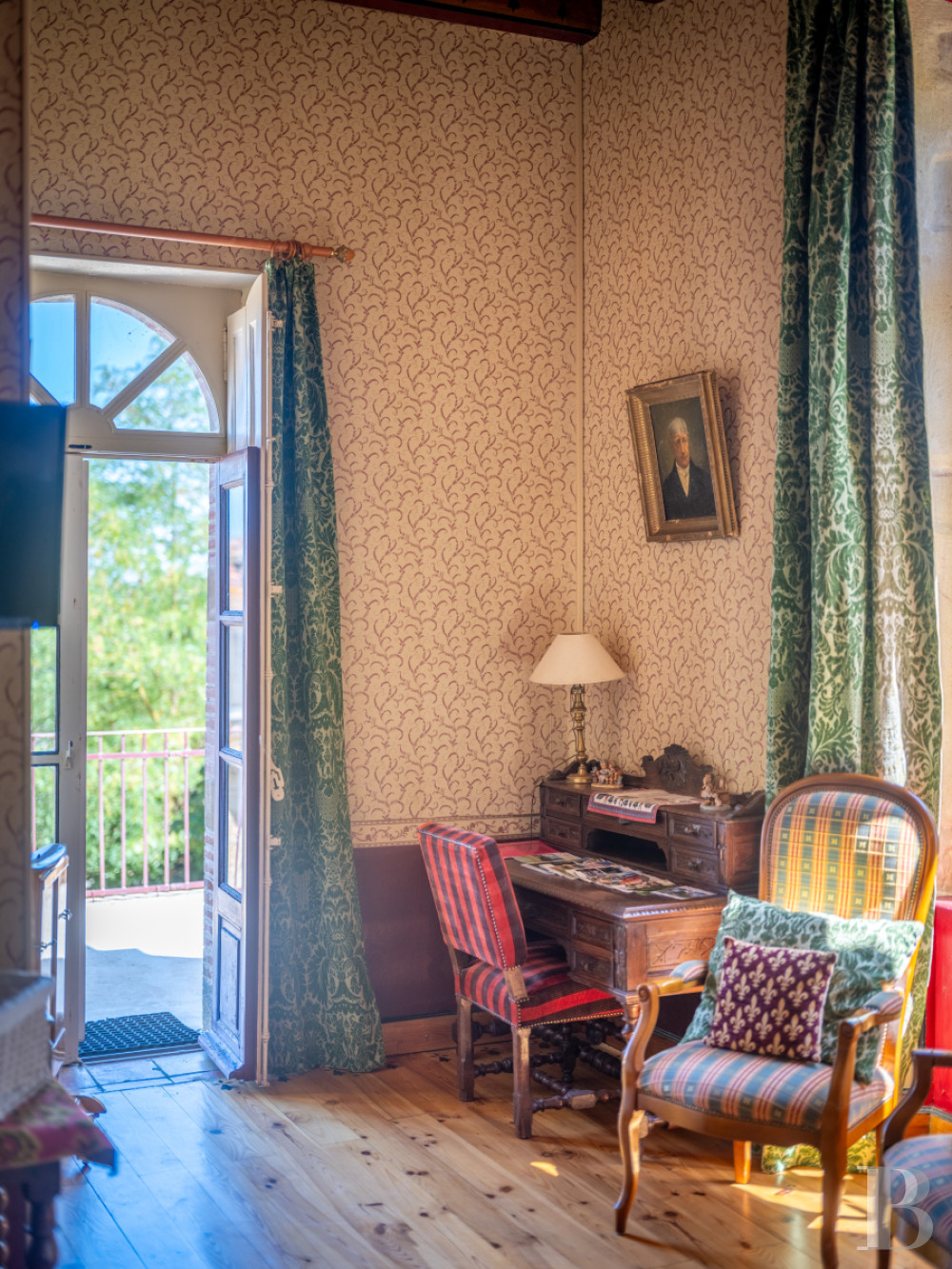
As for its bedrooms, accessible via a hallway, some of them have been converted into genuine small suites, combining sleeping quarters with an adjacent sitting room, while others have preserved the simplicity of large family dwellings. One comes with its own immense private bathroom, decorated with brick walls, visible ceiling beams and a freestanding bathtub, whereas the hardwood floors, fireplaces and tall ceilings, which can be found throughout, provide this level with a peaceful and cosy character. Devoid of all ostentation, but immersed with a soft atmosphere, ideal for welcoming guests, each room has been decorated with its own individual identity.
The Outbuildings
Extending on from the main dwelling, several annexe constructions are used for the property’s more utilitarian needs. Former agricultural buildings, they repeat the dwelling’s understated materials and proportions: brick and stone walls, barrel tile gable roofs and wide doors and windows for domestic purposes, while the upstairs levels, large granaries with visible wooden rafters, recall its former agricultural past and provide a variety of spaces available for different uses.
The group of buildings
Formerly agricultural buildings and a dwelling, they are currently used as a garage, workshops and for storage, while the upstairs levels include an immense granary/drying room, topped with visible wooden rafters, which spans an entire floor.
As for its squared-off timber structure, supported by solid posts and crossbeams, it buttresses an openwork floor once meant for drying the harvested grain and storing foodstuffs, whereas its rubble stone and brick walls still conserve the vestiges of its original ventilation shafts, ensuring the natural circulation of air. This room, which has remained intact over the centuries, provides a one-of-a-kind space, the simplicity and luminosity of which is ideal for a variety of other uses and recalls the artisanal brilliance of the once flourishing Lauragais region.
The basement
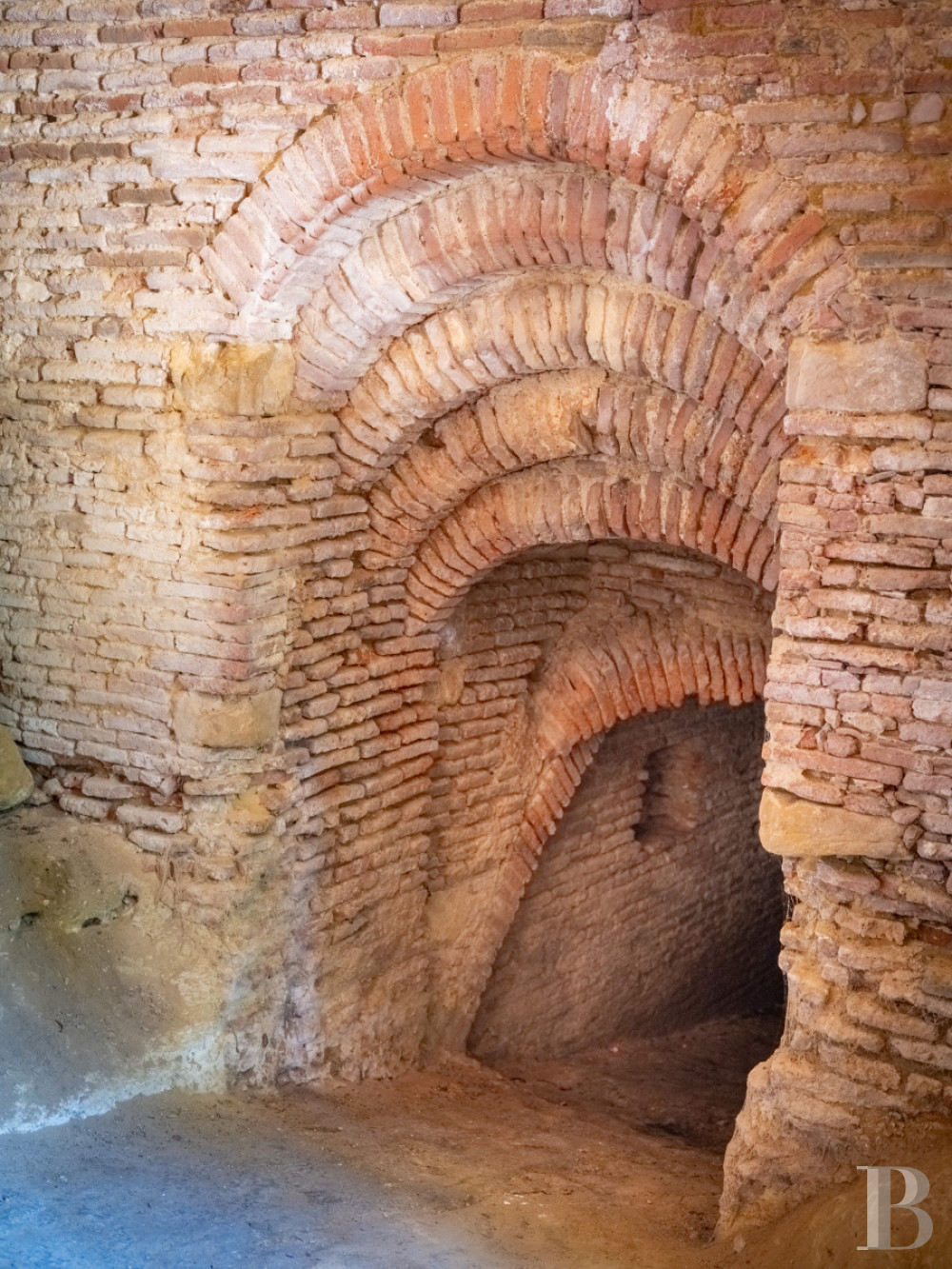
Hollowed out under the chateau and listed as a regional Historical Monument, the immense underground room, featuring high-quality masonry work, remarkably conserved transverse arches as well as barrel and ribbed local brick vaults, ventilation shafts, remnants of medieval load-bearing pillars and a burnished beaten earth floor, represents one of the chateau’s most extraordinary spaces.
The Medieval Tower
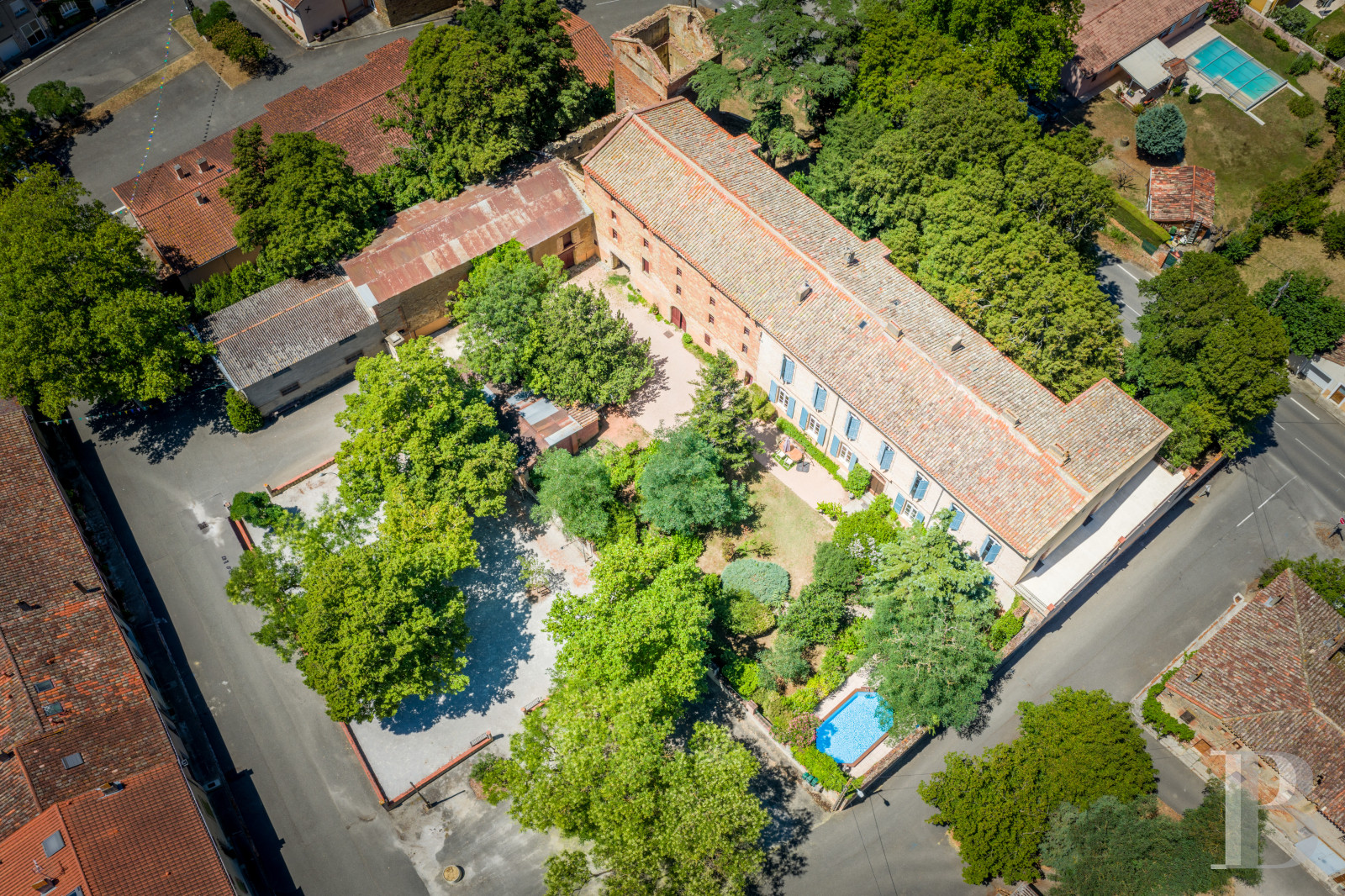
At one end of the main dwelling, its corner tower still displays the remains of its one-time defensive role as the gatekeeper to the fortified village, while, further below, the fortifications and curtain walls that still partially encircle the property and have been integrated into the garden’s overall landscape, recall its original medieval enclosure.
The Grounds
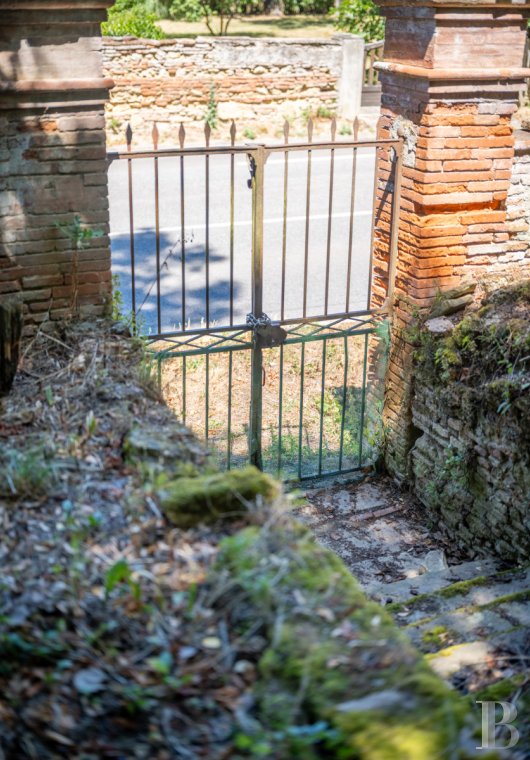
From the village square, an ornate gate opens on to a drive that leads to the chateau, while simple flowerbeds and tall trees create an understated décor, which provides glimpses of the dwelling in its entirety. Subtly marking the transition between the exterior and the chateau, this orderly area is naturally extended by a small swimming pool surrounded by vegetation, while a vegetable patch bears witness to the garden’s daily and essential role on the property.
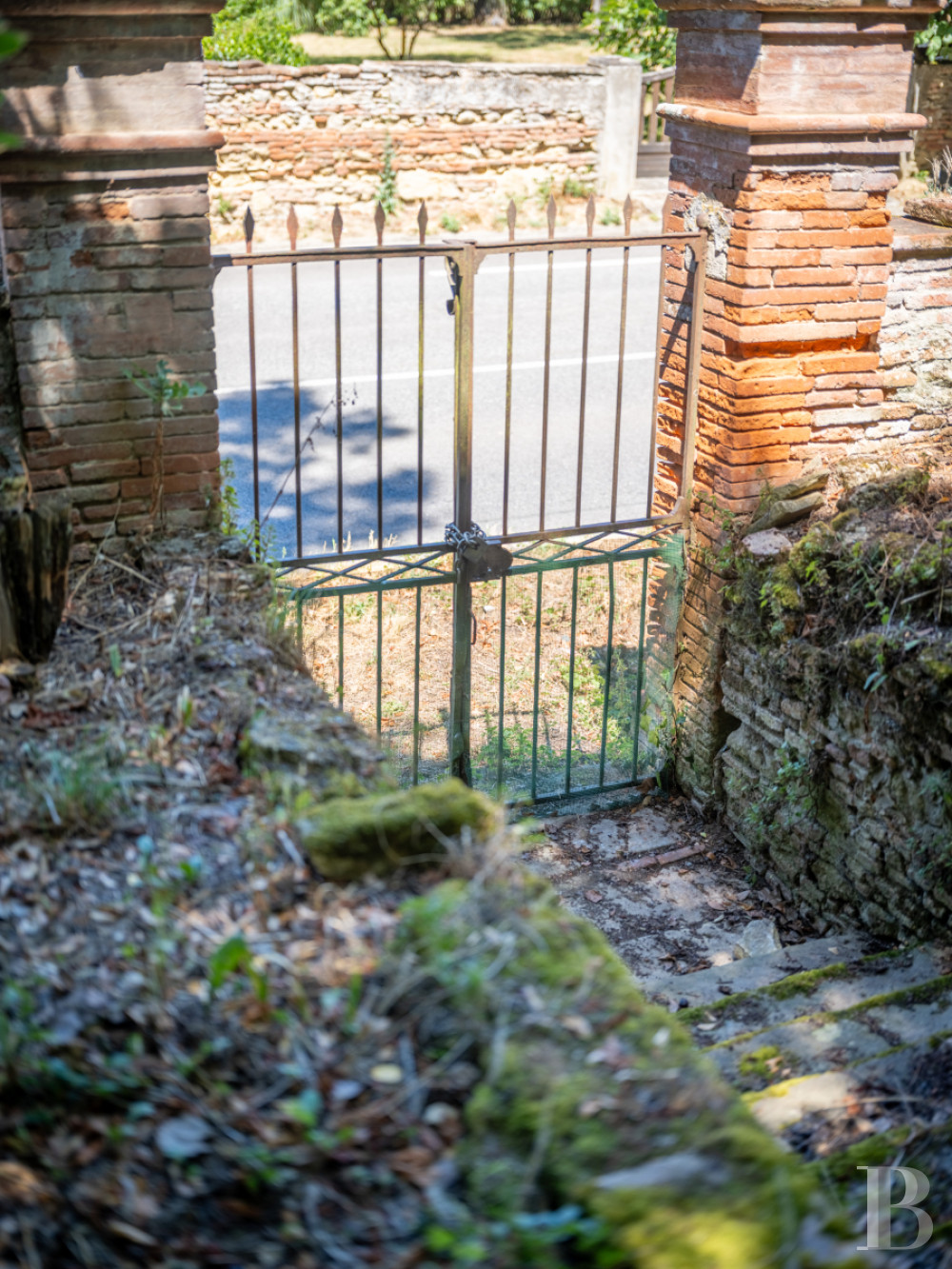
Behind the chateau, the garden, accessible via an inconspicuous gate, takes on a more shaded and secret atmosphere where walls and vestiges of the former enclosure envelop the whole and create quiet spaces and shaded clearings under the gentle vaults formed by the trees’ lofty foliage.
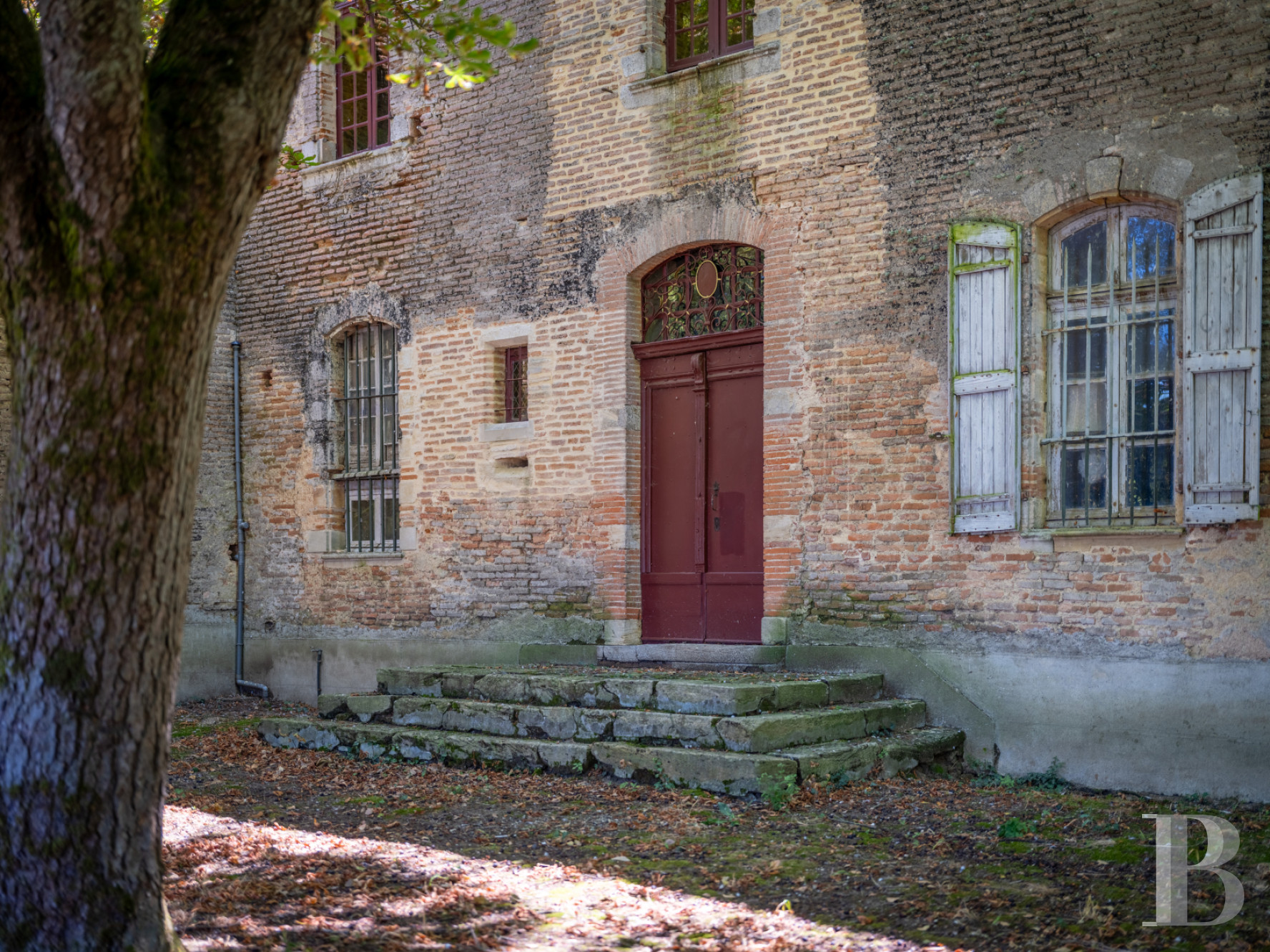
In addition, a door, preceded by several front steps, which provides access to the chateau, is currently used as a secondary entrance, but could become the primary one thanks to its exceptional design, while, past the walls, the Lauragais hillsides extend the view and recall the property’s former link with the surrounding countryside.
Our opinion
Among the rare medieval chateaus that have retained their architectural uniformity, this one deftly illustrates the way in which time has transformed a defensive structure into a comfortable dwelling, while its towers, fortifications and the precision of its vast exterior, several dozen metres long, recount a history that is both royal and human, as well as firmly anchored to the Lauragais region.
As for its restoration, carried out patiently, it has breathed new life and purpose back into the building, whilst still conserving its noble allure, whereas its proportions, original materials and the spirit of the premises have been carefully preserved and are now enhanced by an open and welcoming atmosphere.
Lastly, the guest accommodations, which have taken up residency here, expand this hospitable role and make it possible for each person to feel, for the length of their stay, the tranquillity and silent beauty of a remarkable edifice. In short, a prime and completely one-of-a-kind address, which combines its storied medieval past with an array of contemporary comforts.
Reference 578136
| Main building floor area | 458 m² |
| Number of bedrooms | 6 |
Information on the risks to which this property is exposed is available on the website: www.georisques.gouv.fr
Share


NB: The above information is not only the result of our visit to the property; it is also based on information provided by the current owner. It is by no means comprehensive or strictly accurate especially where surface areas and construction dates are concerned. We cannot, therefore, be held liable for any misrepresentation.