



Iin the footsteps of Joan of Arc, a 16th-century,
former small village castle, listed as a historical monument
former small village castle, listed as a historical monument
Neufchâteau,
MEUSE
lorraine
88300
FR

Location
This sector, in the Lorraine region, in the south of the Meuse area, near to the Haute-Marne and Vosges areas, is dominated by calm and nature, with gently undulating relief and vast forests combined with fields of crops and meadows, through which small rivers run, structuring the landscape.
The roads are quiet and the population lead a simple way of life attached to local traditions,
in an authentic and rural part of France steeped in history.
The property is located in a small village with a population of less than 100, forty-five minutes from Nancy.
According to legend, it was in this village, where her uncle Durant Laxart lived, that Joan of Arc, who was born 7 km away, stayed before travelling to Vaucouleurs, from where, in February 1429, she set off under escort to join Charles VII at Chinon in order to persuade him to drive the English out of France.
Description
The property is located in the centre of the village, opposite the church, overlooking the plain.
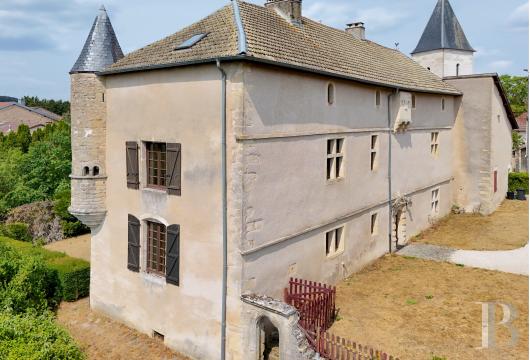
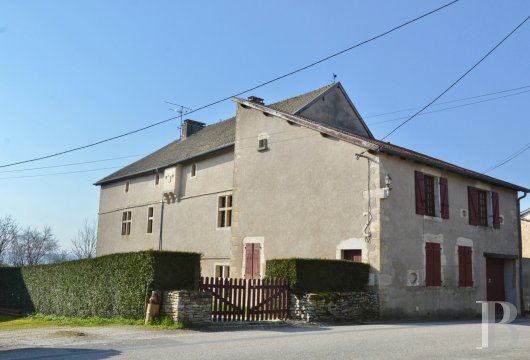
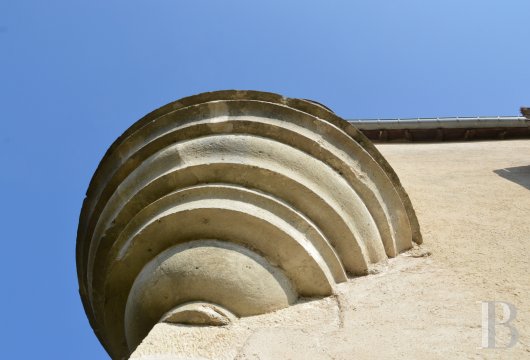
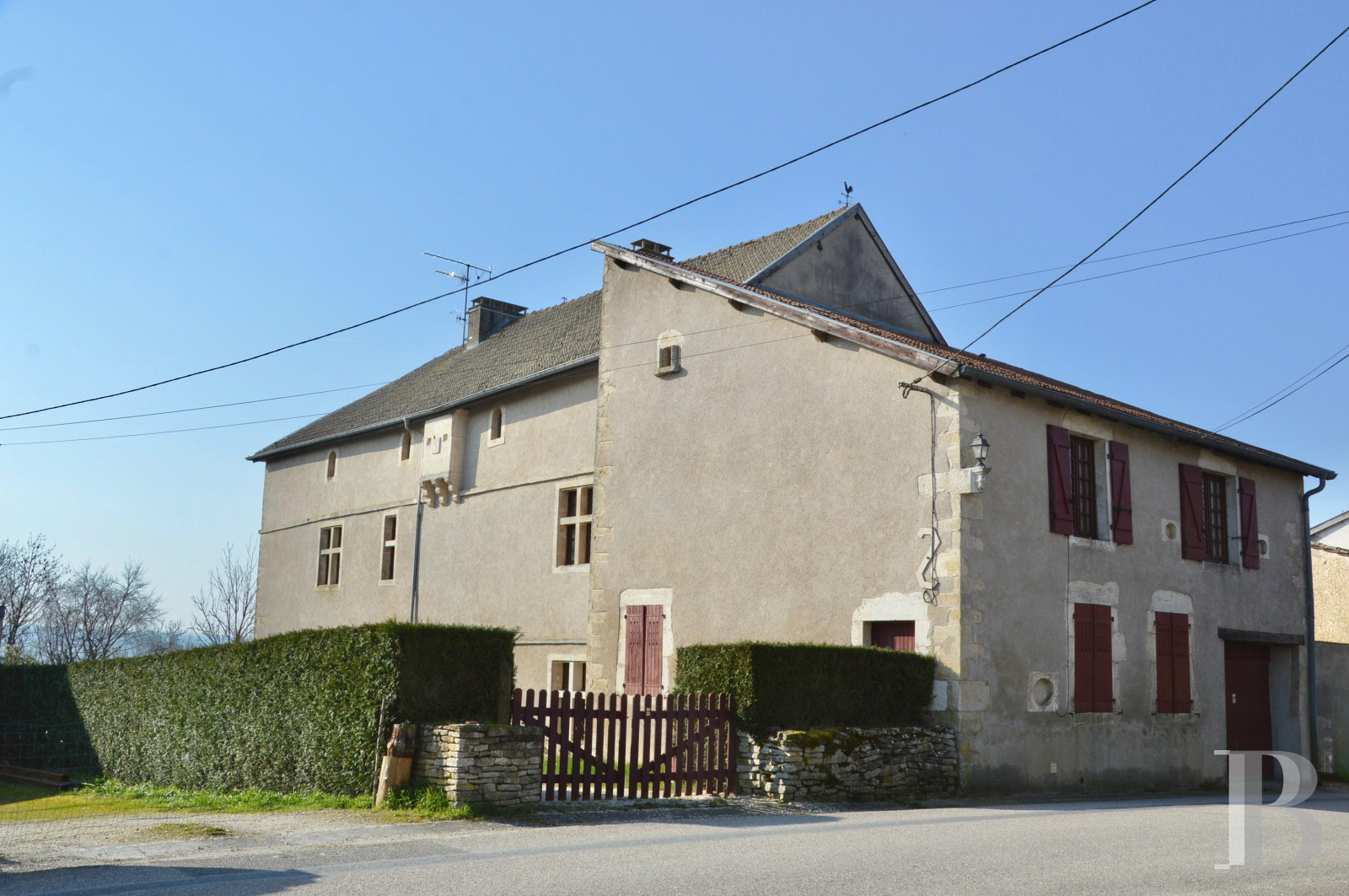
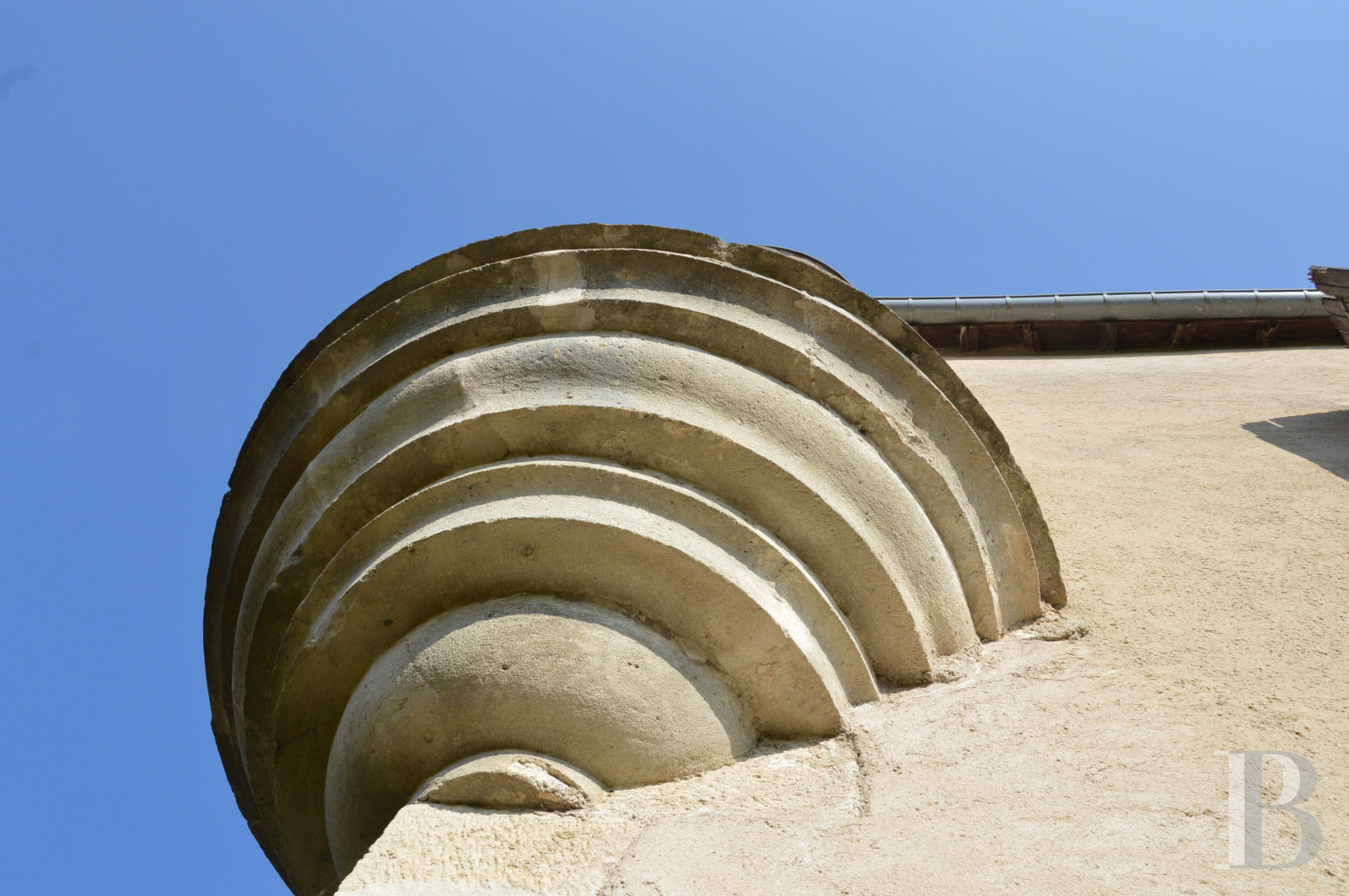
It is the result of joining two buildings built with lime rendered rubble stone. The first one stands alongside the street and was probably a former farming outbuilding. It has two storeys and a finely crafted corner bracket, four windows, three bullseye windows and a wooden garage door. Standing perpendicularly next to it, the residence’s front facade overlooks a gravelled courtyard, while there is a patio to the rear, a garden and slopes planted with fir trees, while shrubs and fruit trees stand against the southern gable end.
The property also possesses a single-storey outbuilding, situated next to the former farm outbuilding, topped with a roof of interlocking tiles.
The entirety of the main residence, the facade and roof of the outbuilding, the courtyard area and the boundary wall including a period gate are all listed as a historic monument.
It is the result of joining two buildings built with lime rendered rubble stone. The first one stands alongside the street and was probably a former farming outbuilding. It has two storeys and a finely crafted corner bracket, four windows, three bullseye windows and a wooden garage door. Standing perpendicularly next to it, the residence’s front facade overlooks a gravelled courtyard, while there is a patio to the rear, a garden and slopes planted with fir trees, while shrubs and fruit trees stand against the southern gable end.
The property also possesses a single-storey outbuilding, situated next to the former farm outbuilding, topped with a roof of interlocking tiles.
The entirety of the main residence, the facade and roof of the outbuilding, the courtyard area and the boundary wall including a period gate are all listed as a historic monument.
The former castle
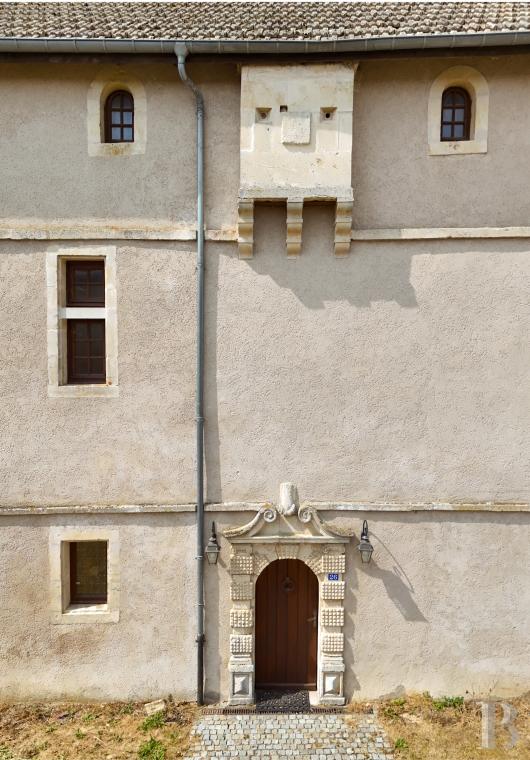
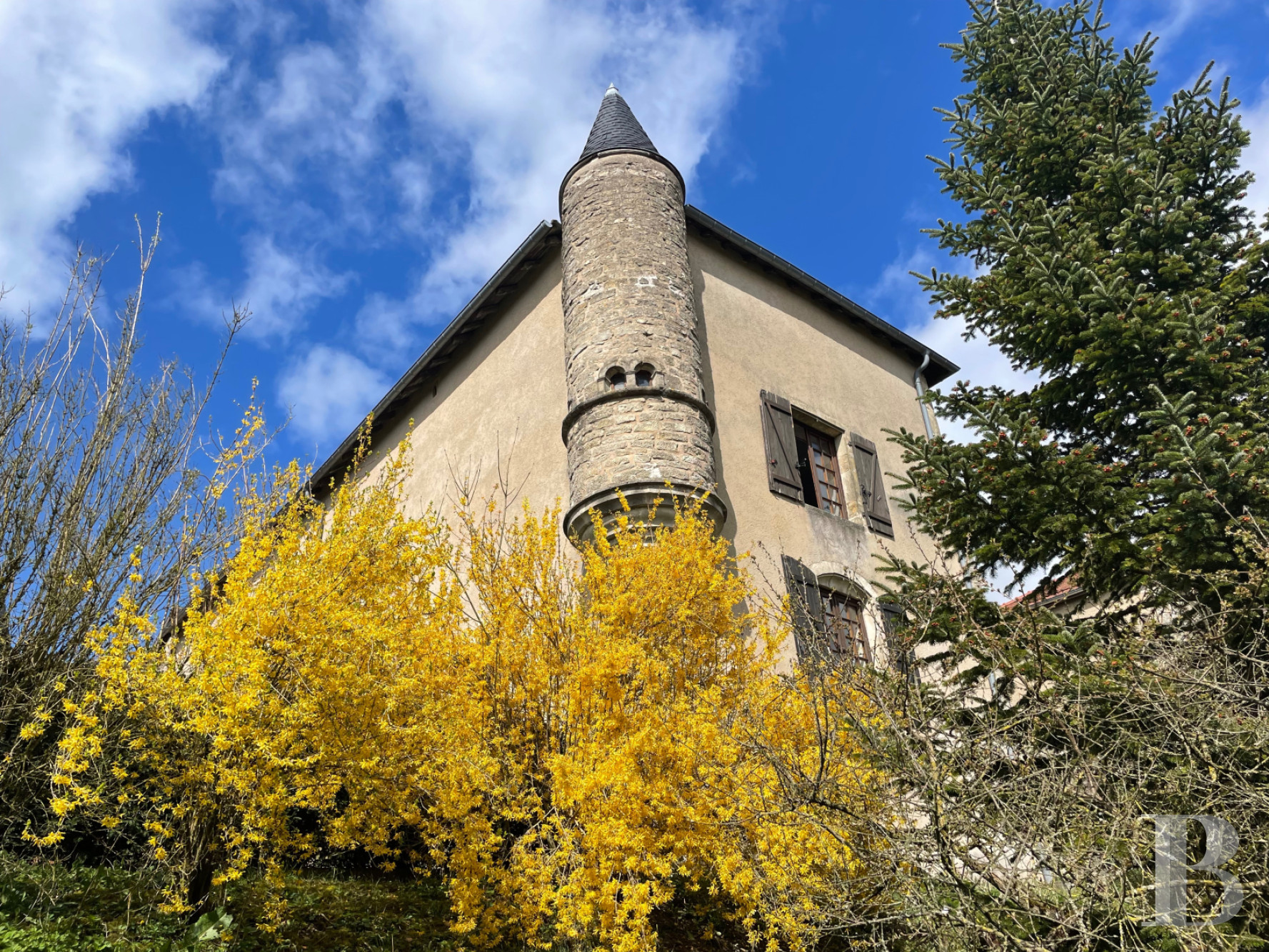
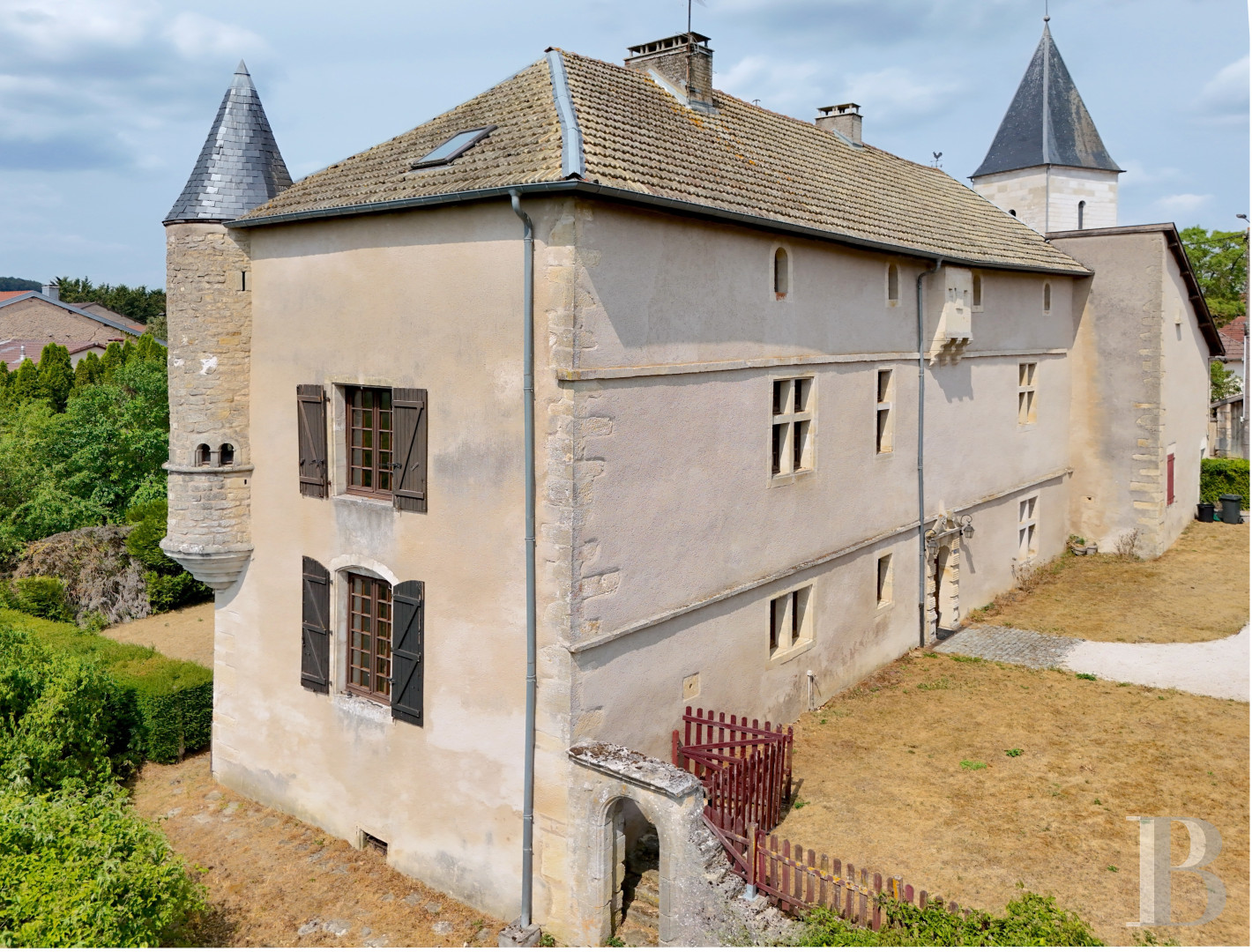
It is made up of a fortified rectangular building that was partially rebuilt in the 16th century to include two storeys beneath an attic level topped by a roof of interlocking tiles. It has retained its stone mullioned windows, arrow windows and two stringcourses underlining the main facade.
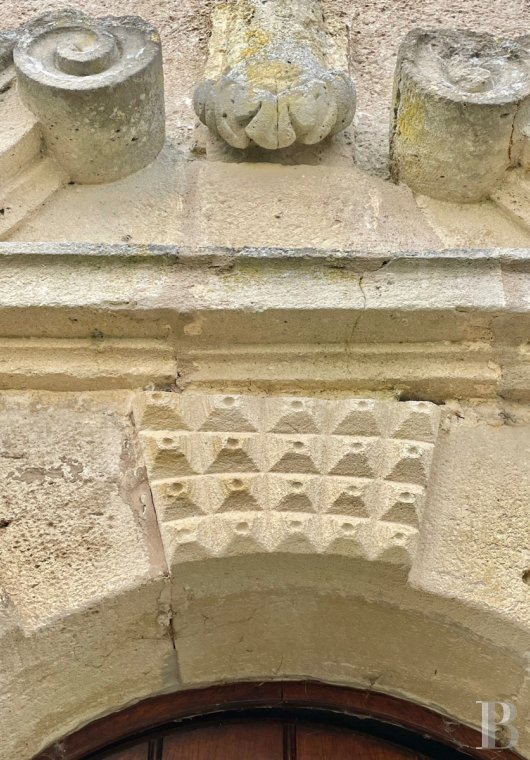
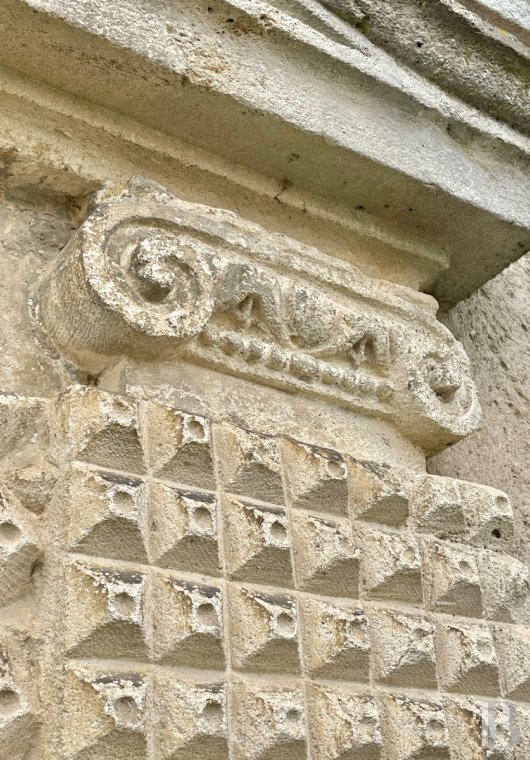
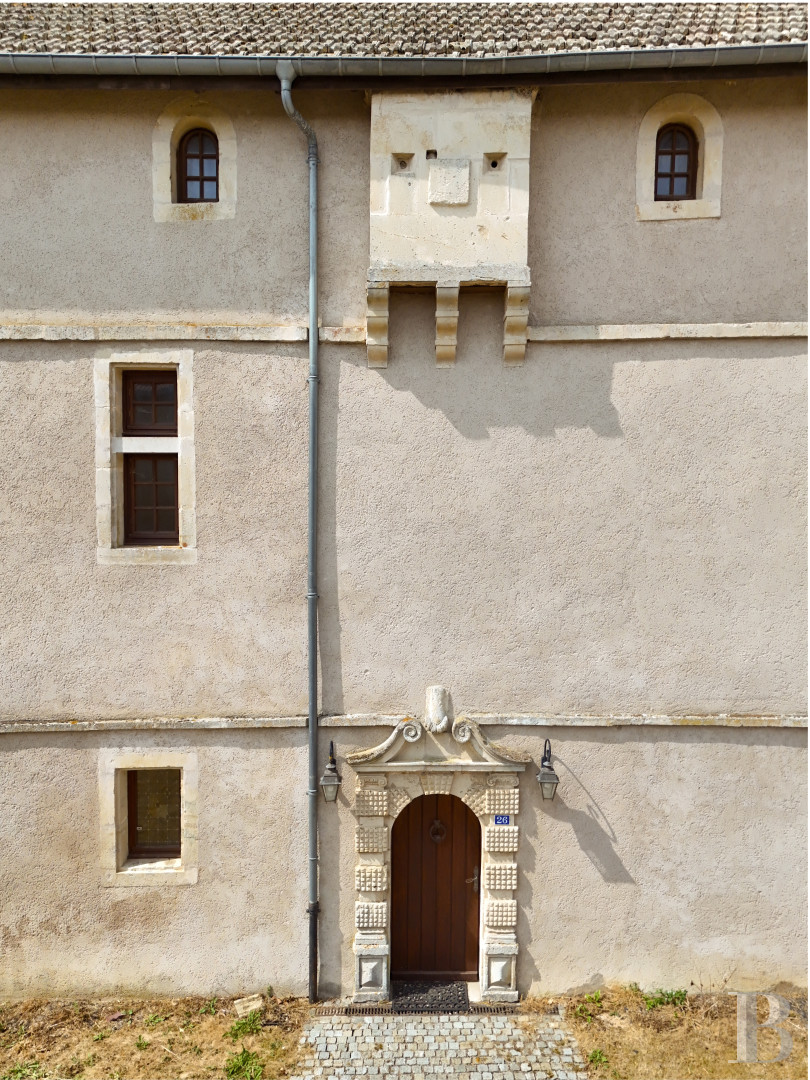
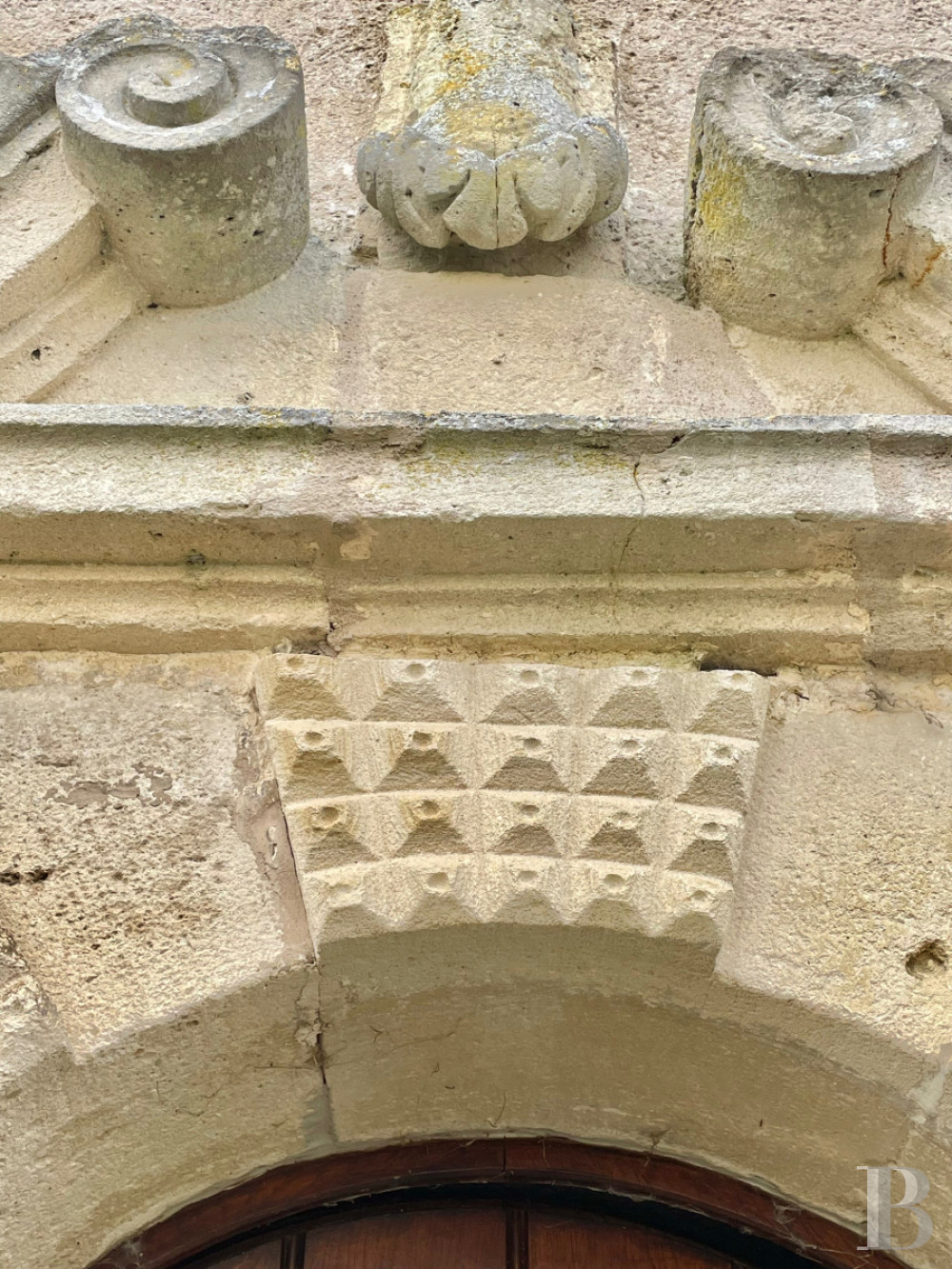
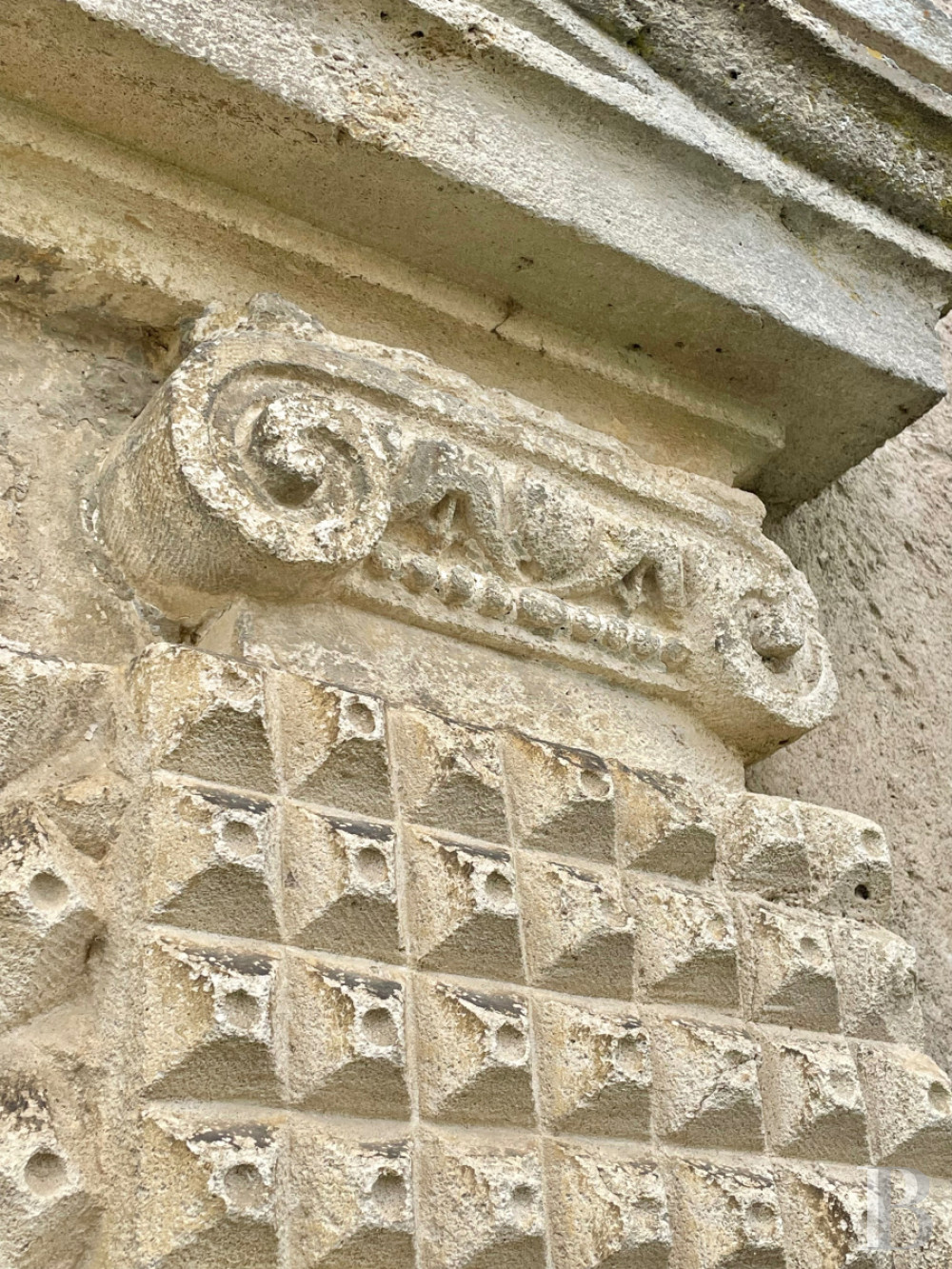
The semi-circular-arched main entrance door is framed by jambs with diamond-tipped bosses as well as ionic capitals topped by a pediment with inward spiralling scrolls. On the attic level, a brattice is supported by three consoles, ensuring a defensive function for the entrance door.
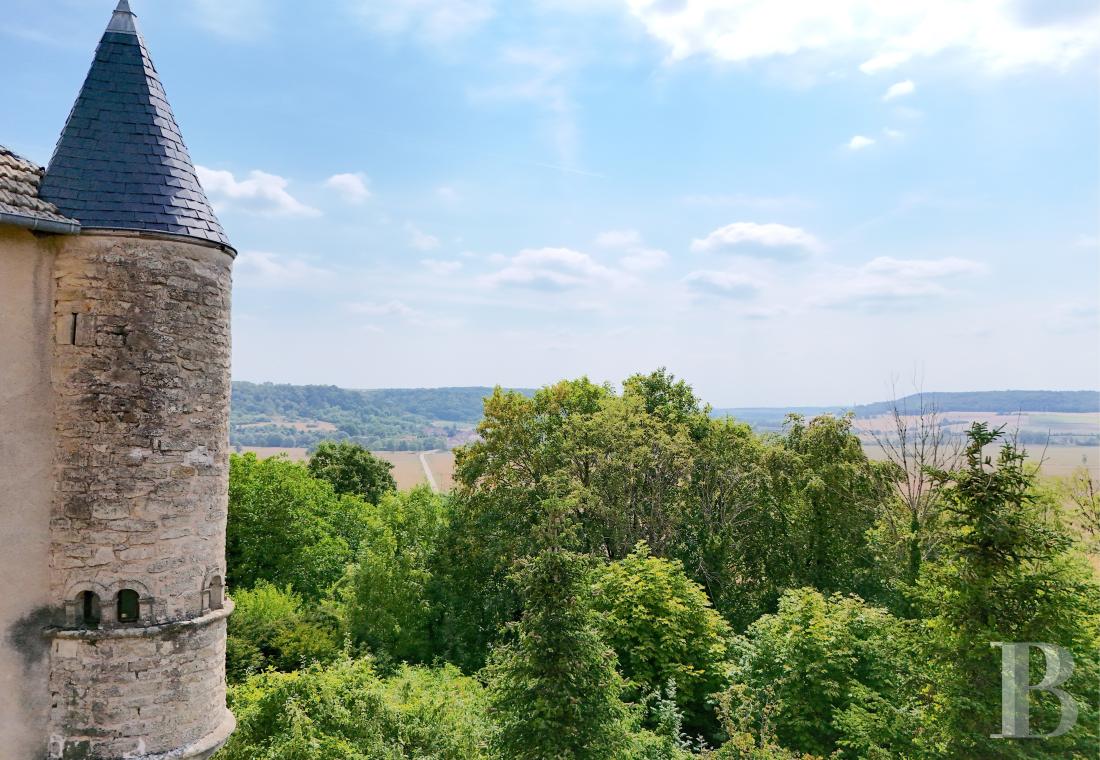
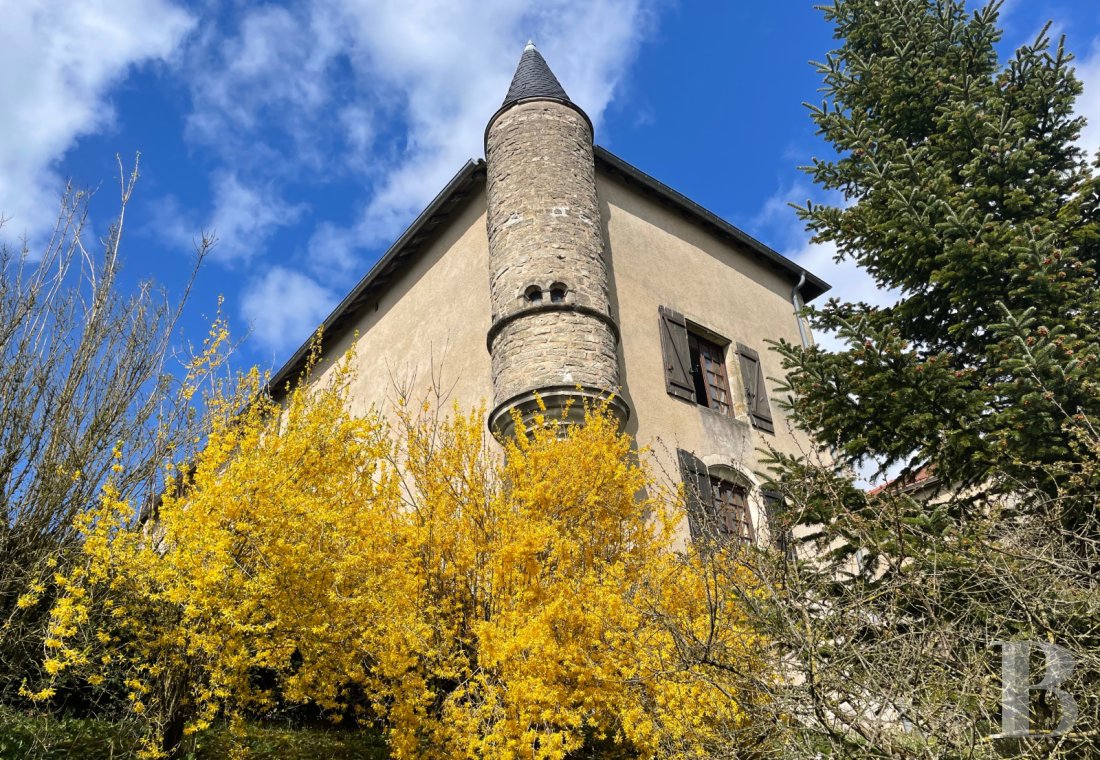
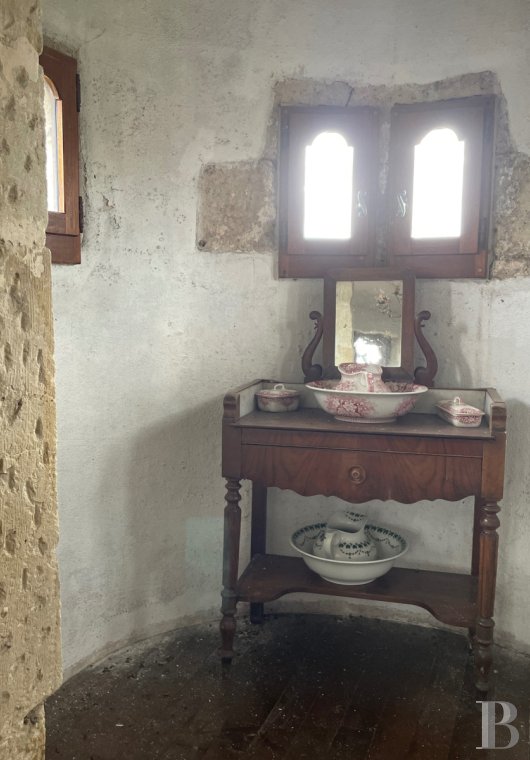
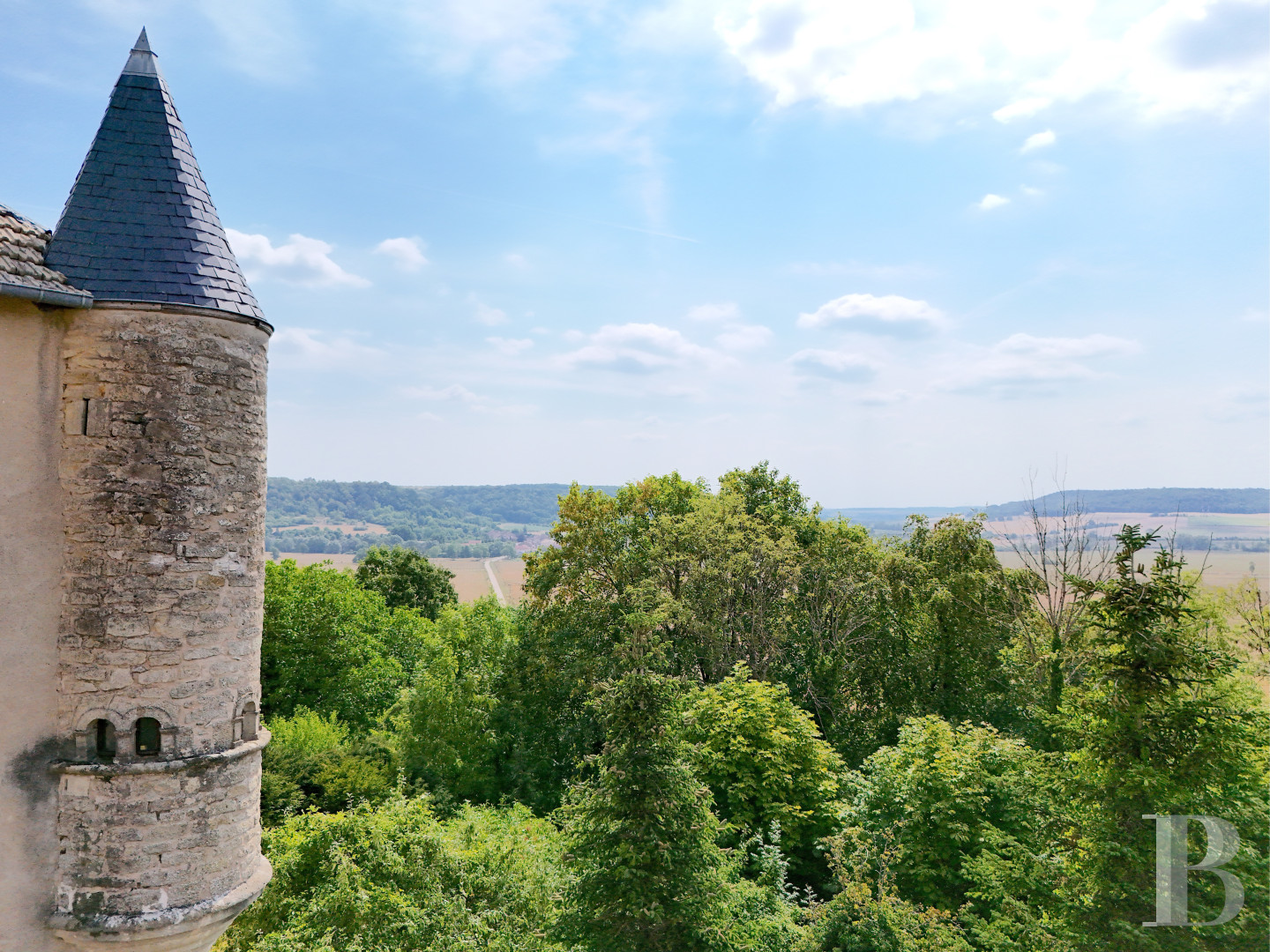
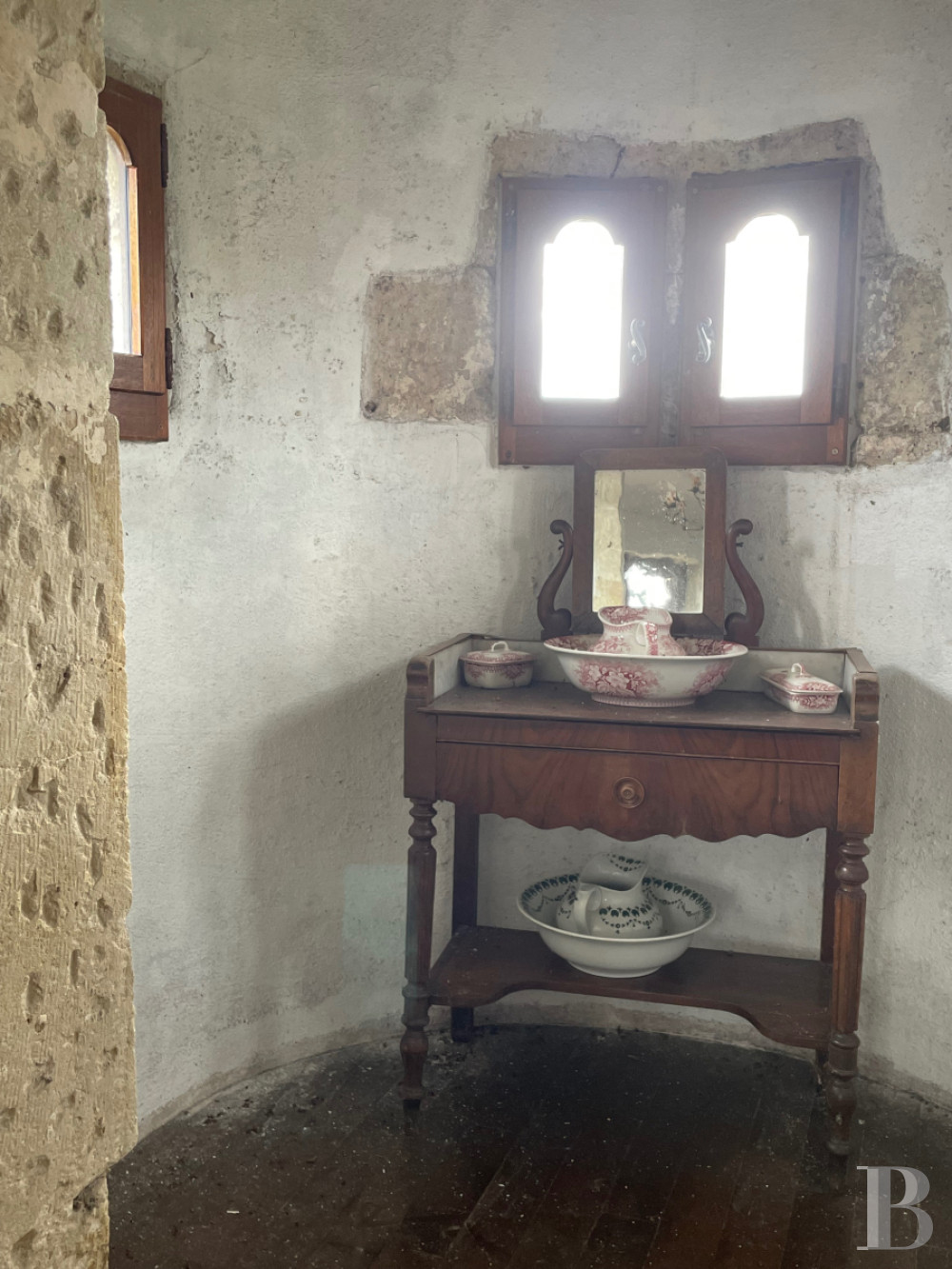
At the corner of the gable end overlooking the valley, a watchtower with six openings and arrow windows is topped by a slate pepper-pot roof.
The ground floor
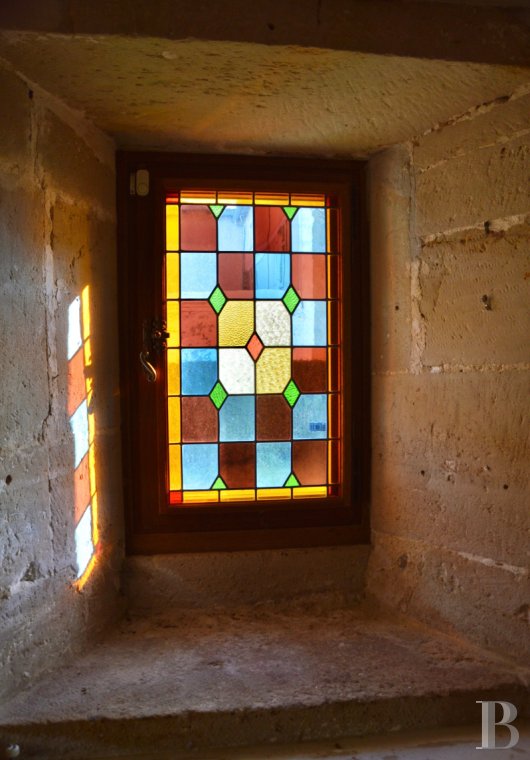
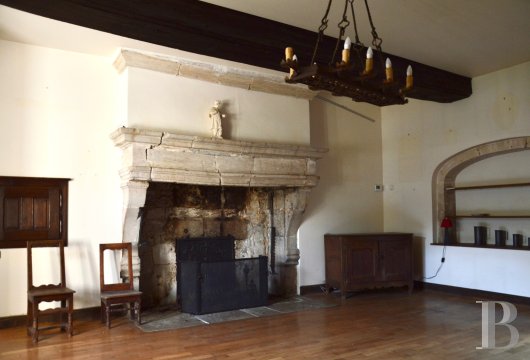
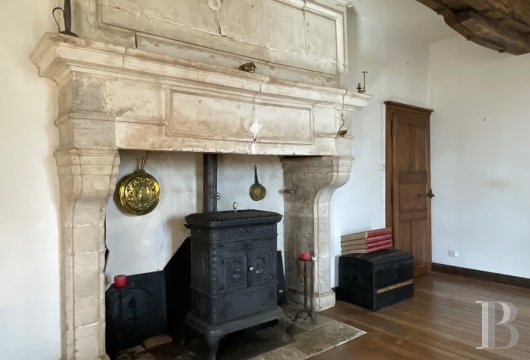
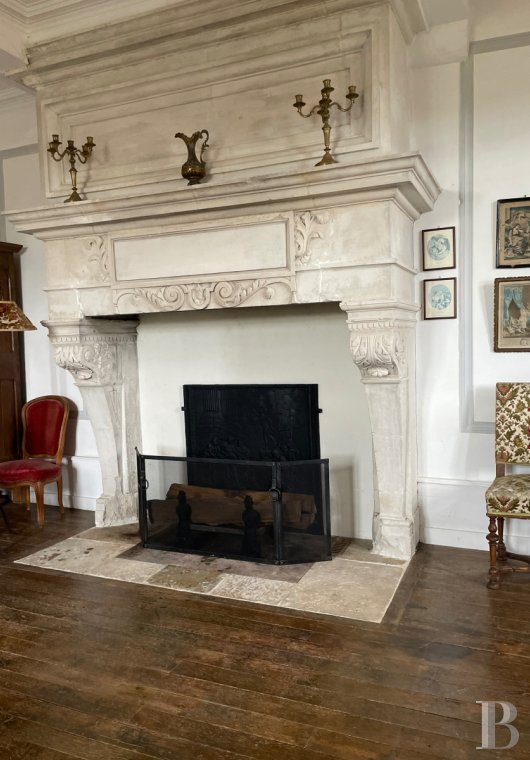
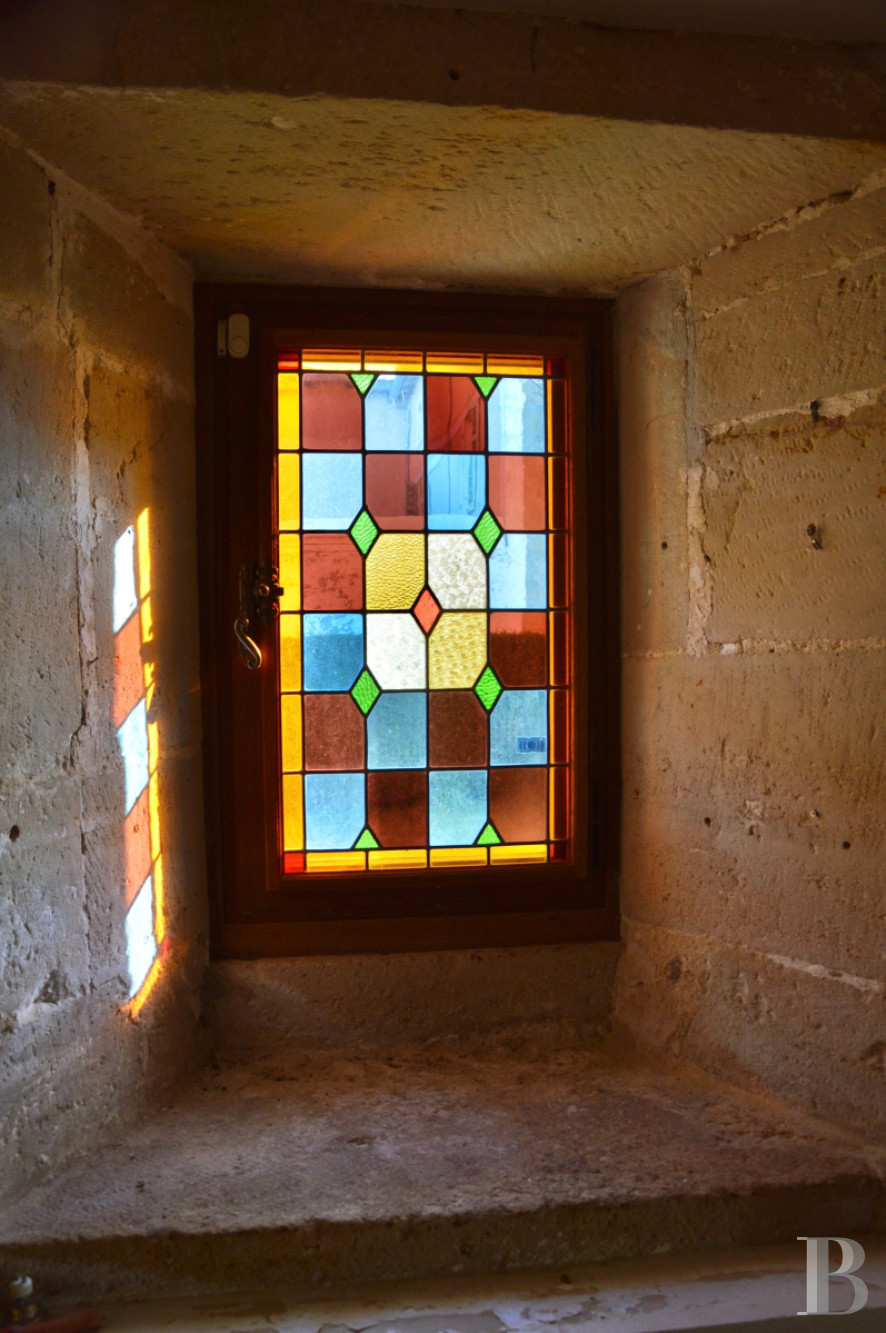
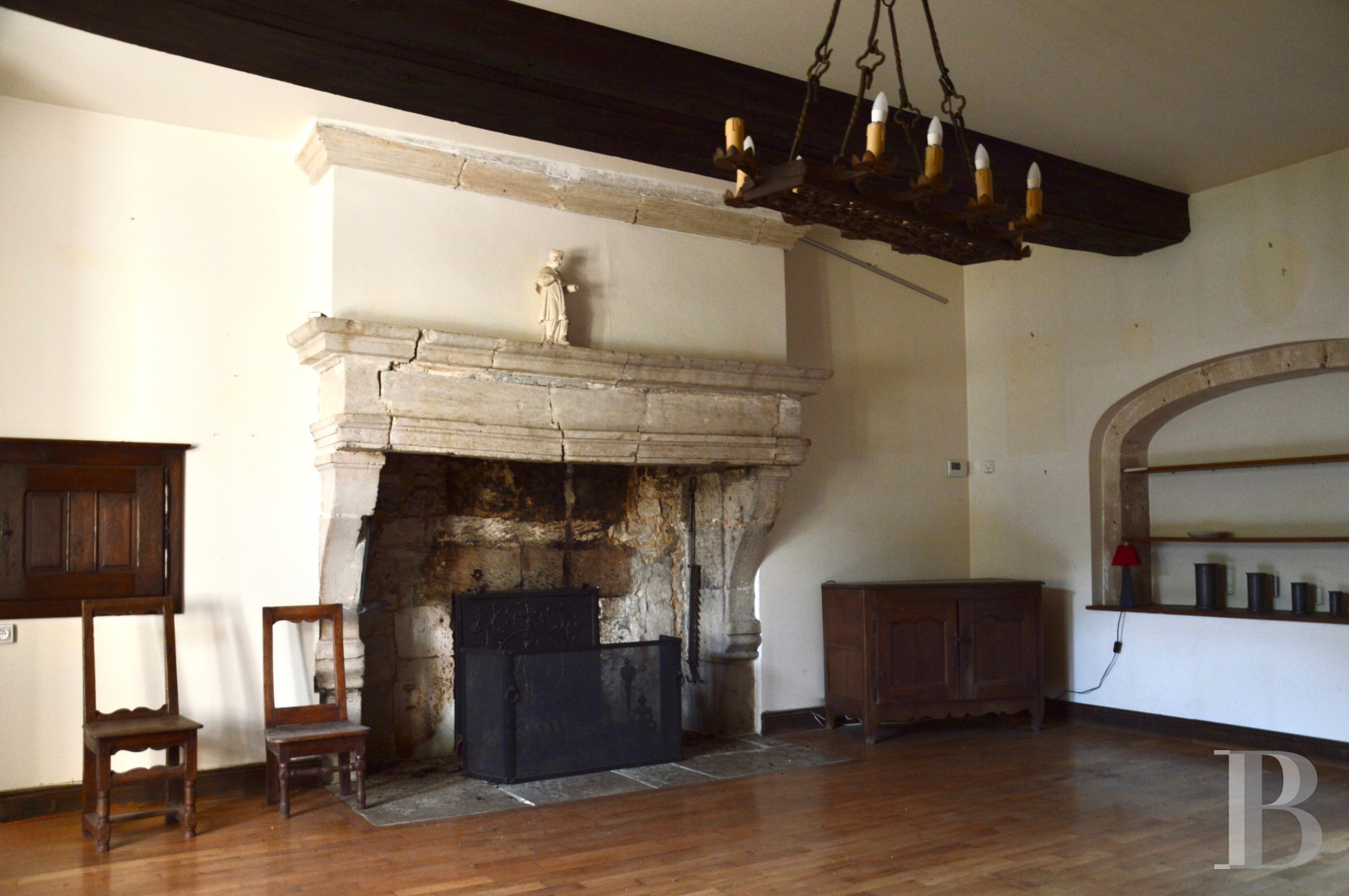
The semi-circular arched oakwood door, with a wrought-iron knocker, opens into a hall paved with stone slabs, into which light streams through a multi-coloured stained-glass window. It leads to a dining room with views of the valley that has English bond oakwood parquet flooring and a 16th-century monumental stone fireplace. The dining room leads to the kitchen via a pantry with a stone sink. The contemporary kitchen with modern floor tiles possesses French windows that open out onto the patio.
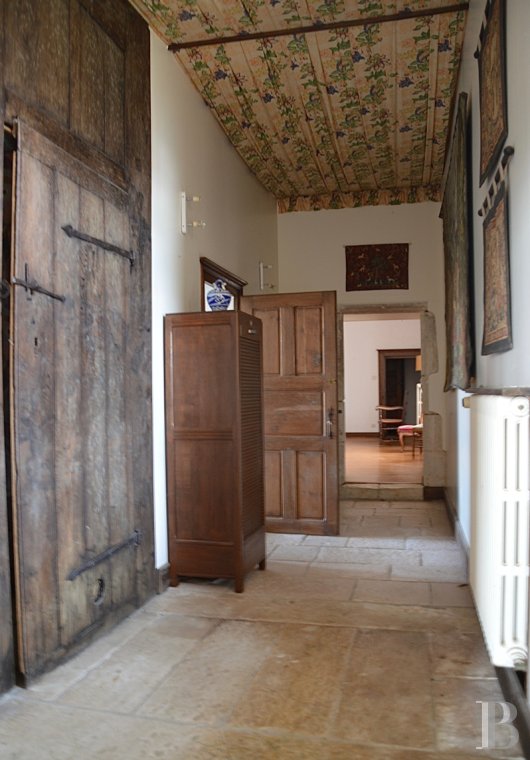
The lounge probably occupies the location of the original kitchen, because there is a stone sink, a 16th-century stone fireplace and a vast stone alcove fitted with wooden shelves. An arrow window looking toward the entrance door is concealed in a small oakwood cupboard, near to the fireplace. French windows also open onto the patio from this room. The lounge is connected to the building alongside the street via a hallway that houses a secondary staircase climbing upstairs, a bedroom with an en suite shower room and lavatory, plus a storeroom before the garage, which is fitted with an electrical door that opens directly onto the street.
The first floor
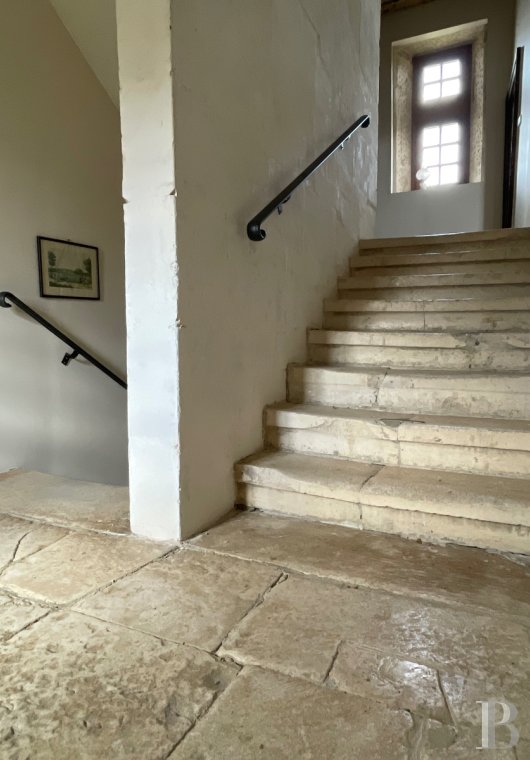
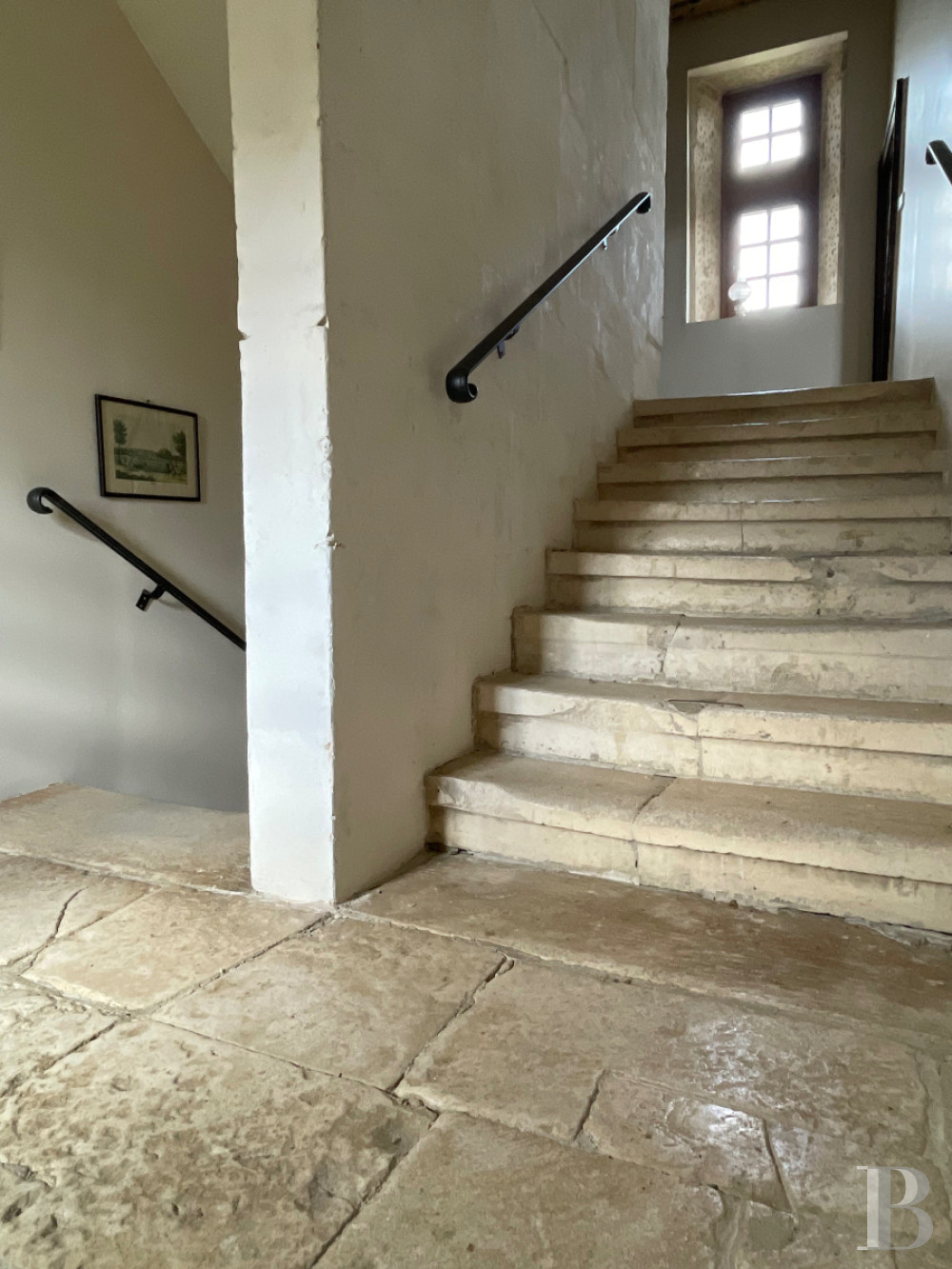
From the entrance hall, a stone staircase, which has been time-worn over the centuries, with an intermediate landing, climbs to the first floor.
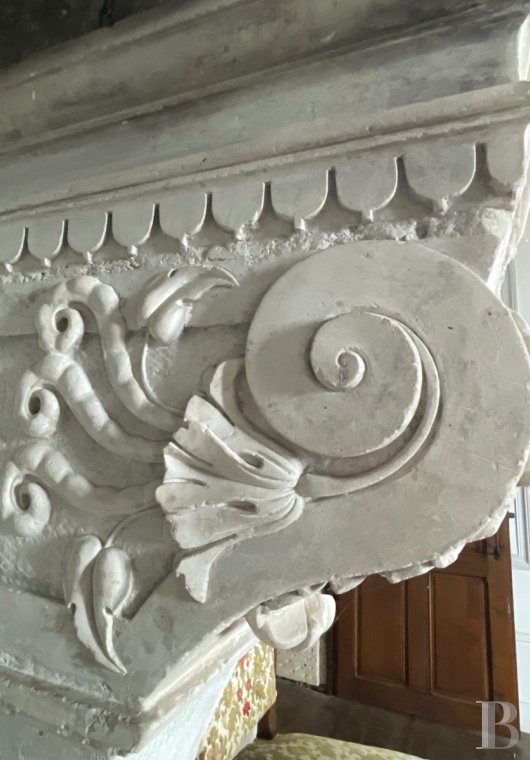
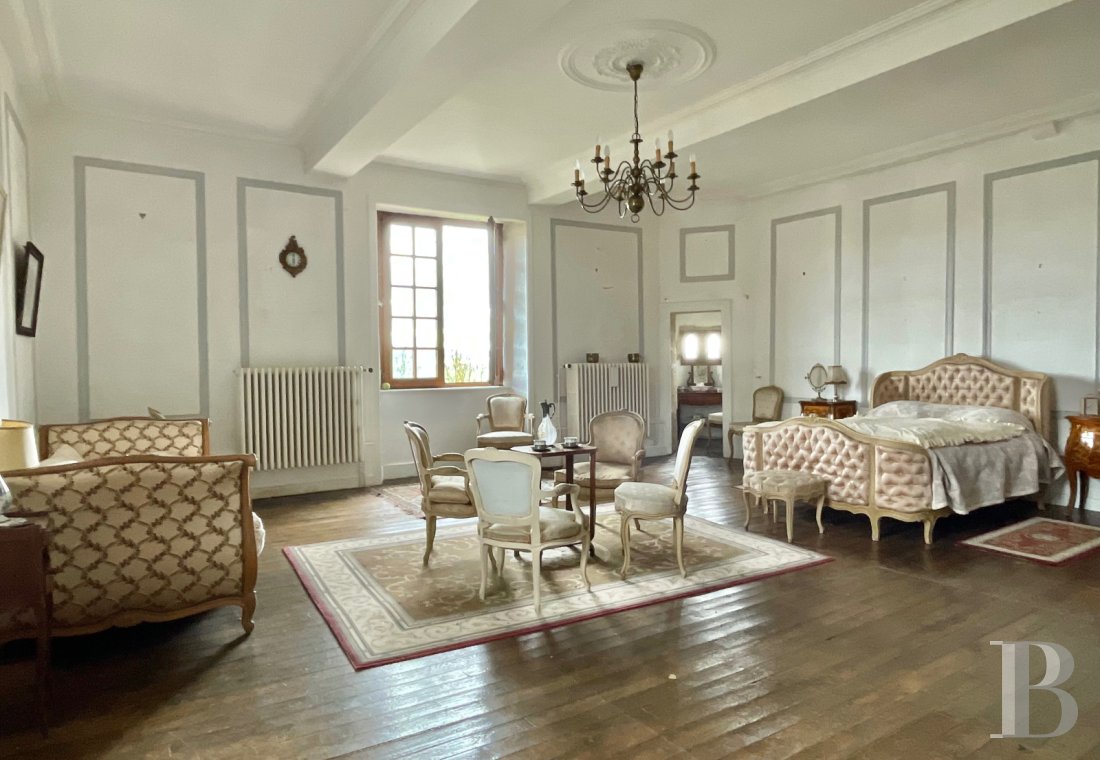
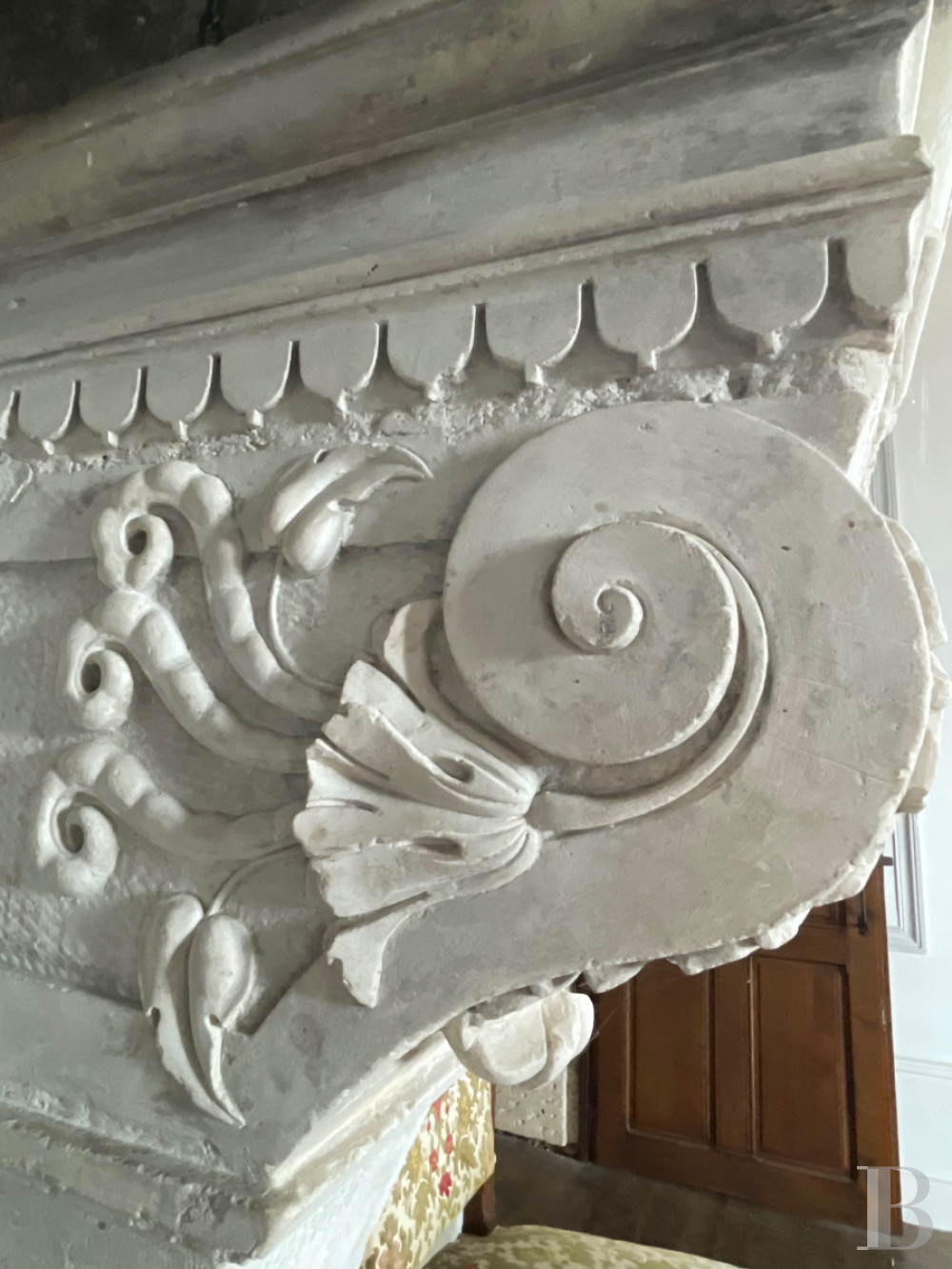
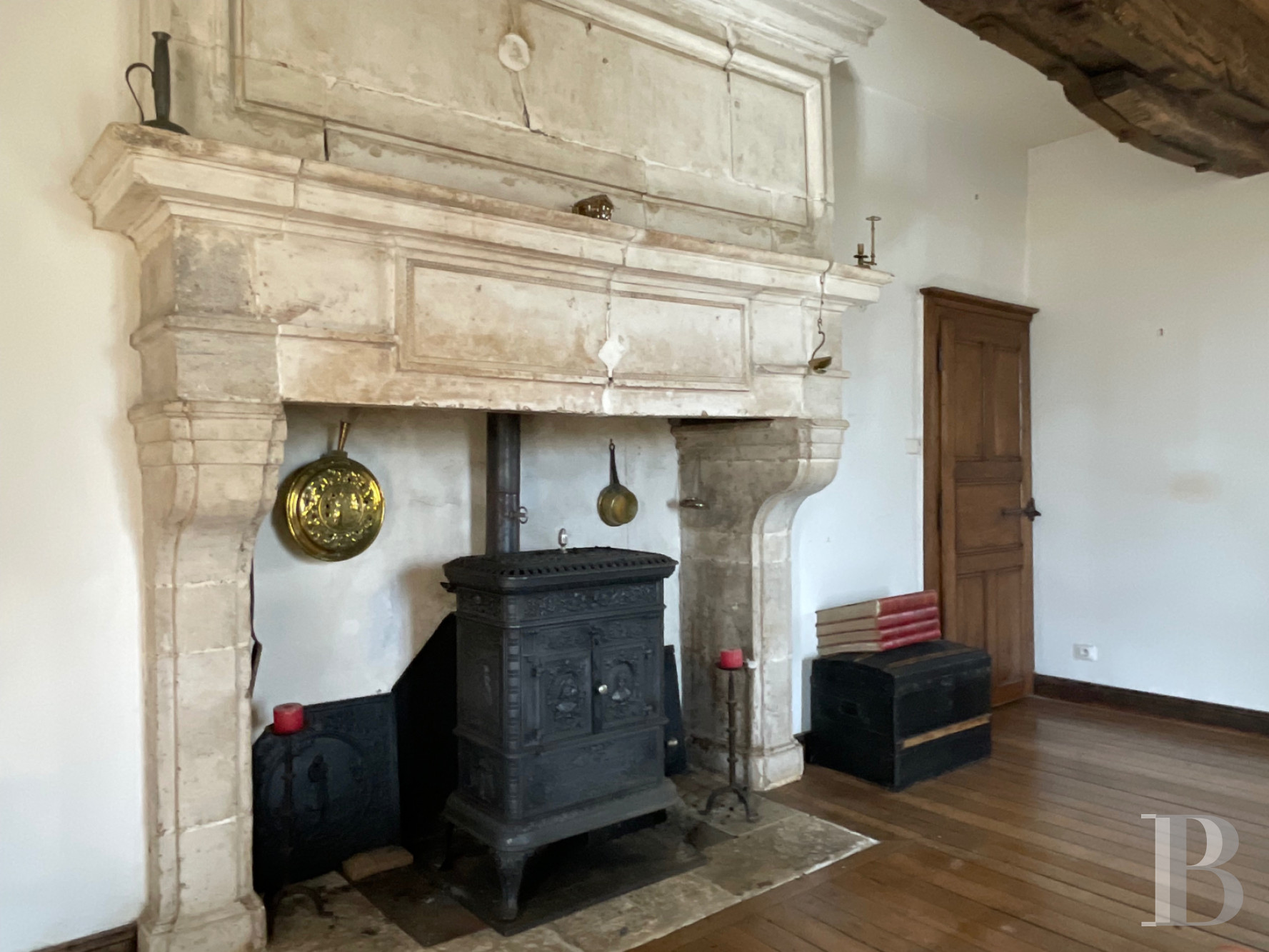
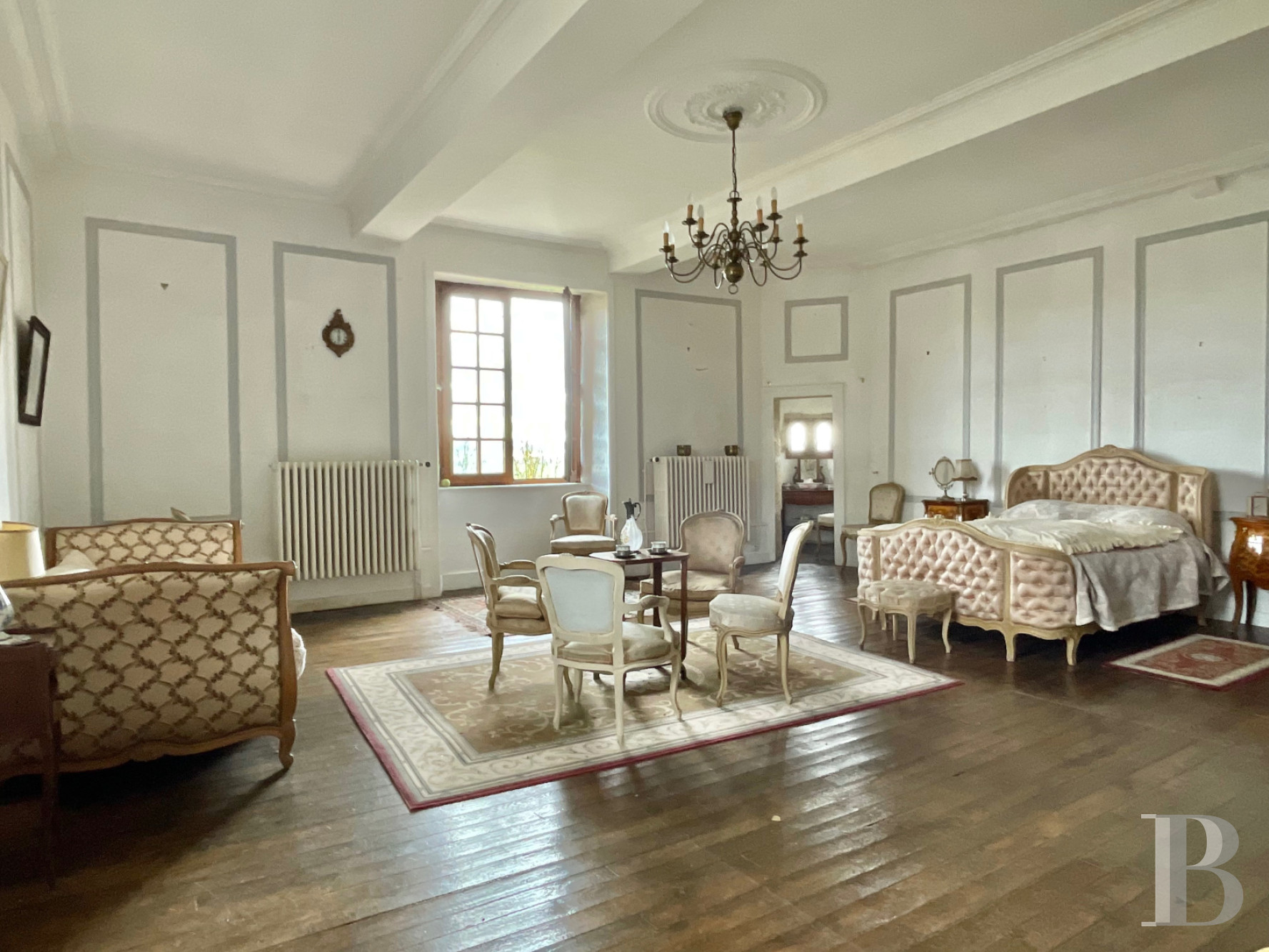
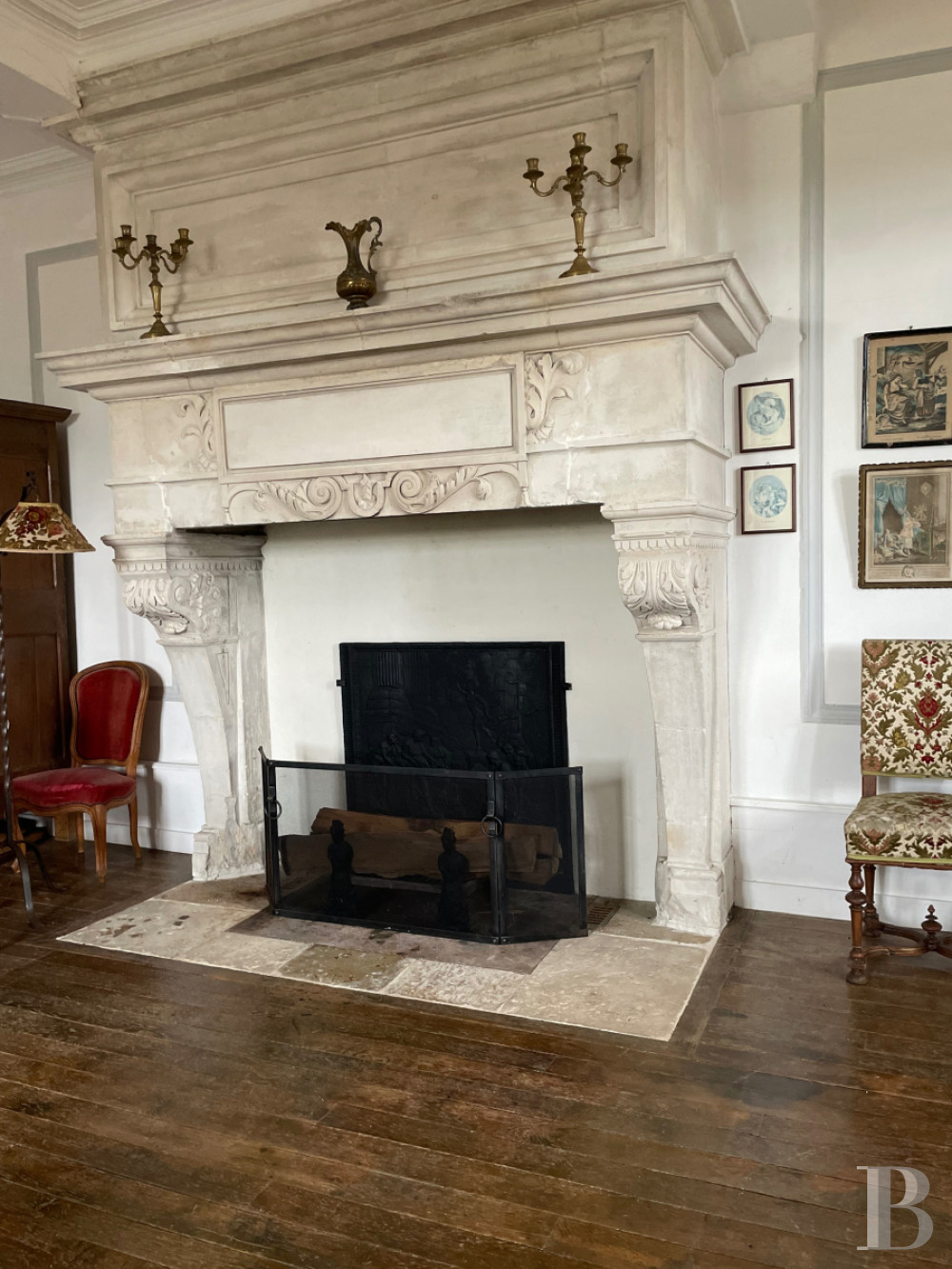
A corridor leads to an approximately 48-m² bedroom that opens onto the watchtower, which is a remarkable observation point over the valley. The 16th-century stone fireplace includes a straight hood and a moulded cornice. Its curved jambs are topped with a lintel boasting an identical cornice that is finely sculpted with shells and completed by bouquets of flowers, palm leaves, rosettes and triglyphs. The cast-iron plate adorning the fireback bears the date inscription of 1636.
This level also includes a bathroom with a shower and bath, a separate lavatory and a vast around 40-m² study that precedes the first floor of the building alongside the street, which is made up of two bedrooms, a linen room, a bathroom and a lavatory.
The second level
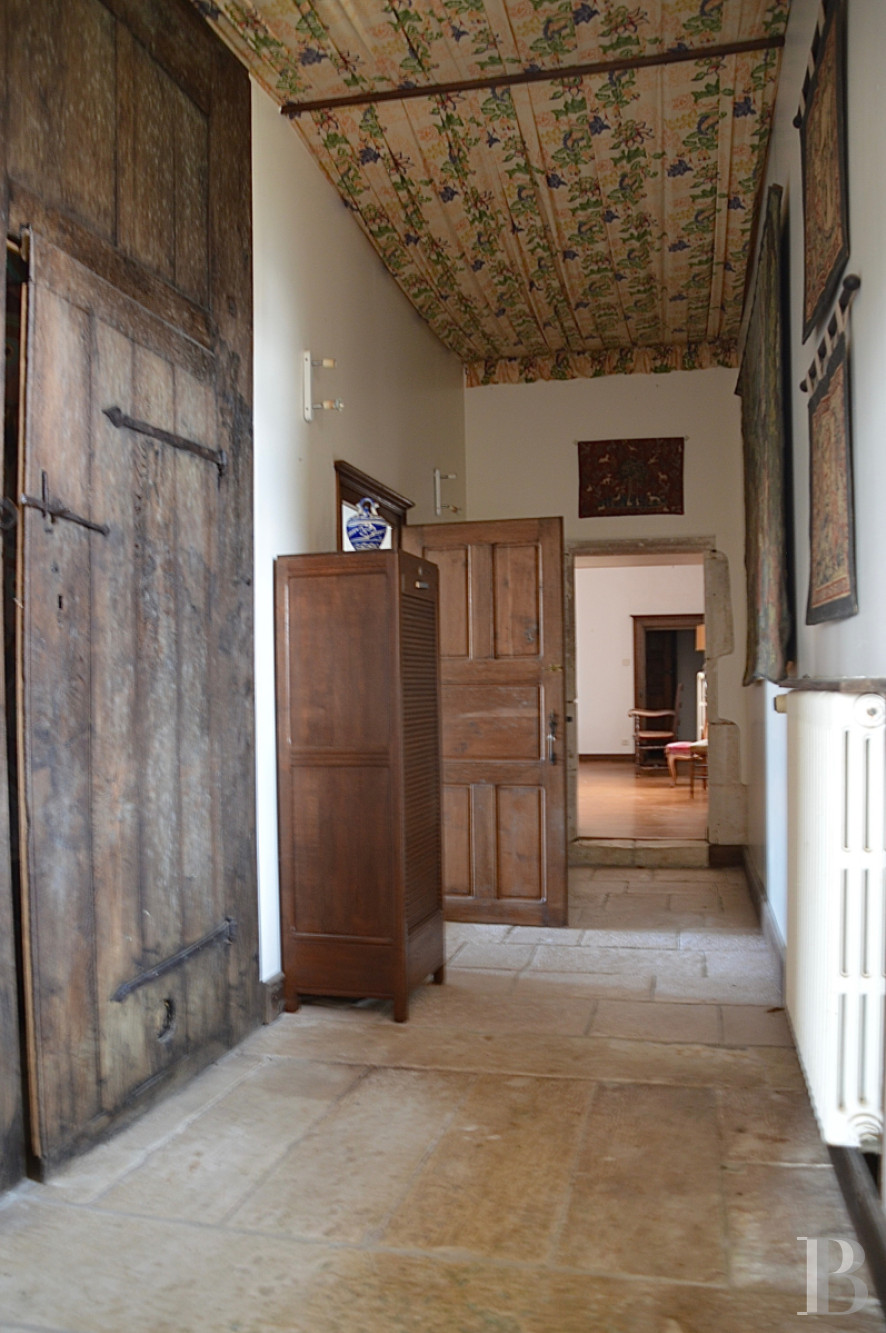
The stone staircase with an intermediate landing leading to this level is concealed behind an old oakwood door.
The floorboards are covered with glass-wool insulation material.
The basement
From the entrance hall, a door opens onto a staircase descending to two vaulted cellars, the smallest of which houses the oil-fired boiler and a water softener.
The workshop
This edifice topped by a roof of interlocking tiles stands alongside the road and perpendicularly to the house.
It can be reached via a door opening onto the road or via the garden.
Our opinion
Although the exterior of the main residence still possesses a somewhat strict, almost military character, it could easily be softened by a variety of climbing plants.
As for the interior, a fine blend of rustic charm and modern comfort makes it an excellent choice for a peaceful second home, set in a close-knit and friendly neighbourhood. However, paradoxically, the dominant and panoramic view from the rooms overlooking the valley gives a genuine impression of isolation.
Reference 392563
| Main building floor area | 421 m² |
| Outbuildings floor area | 50 m² |
| Land registry surface area | 2971 m² |
| Garage |
Information on the risks to which this property is exposed is available on the website: www.georisques.gouv.fr
Share


- Grand Est -
- Lorraine -
- Meuse -
- Neufchâteau
NB: The above information is not only the result of our visit to the property; it is also based on information provided by the current owner. It is by no means comprehensive or strictly accurate especially where surface areas and construction dates are concerned. We cannot, therefore, be held liable for any misrepresentation.