



The ruins of a historical monument listed Renaissance chateau,
plus a comfortable house and a reception venue
plus a comfortable house and a reception venue
Valençay,
INDRE
center-val-de-loire
36600
FR

Location
This property is located on the edges of the Touraine and Berry sectors, in the Indre area, in the Centre-Val-de-Loire region. The nearest town is Valençay, which, with its famous chateau, is a major tourist hub. It also has a railway station and all essential everyday shops. The surrounding countryside is typical of the Pays de Boischaut zone, punctuated with hamlets of houses with flat tiled roofs. The address is situated 1 hour from both Tours as well as Bourges and 3 hours from Paris. The high-speed TGV train stations in Saint-Pierre-des-Corps and Vierzon are 1 hour away, while the A85 and A20 motorways can be reached in 30 minutes.
Description
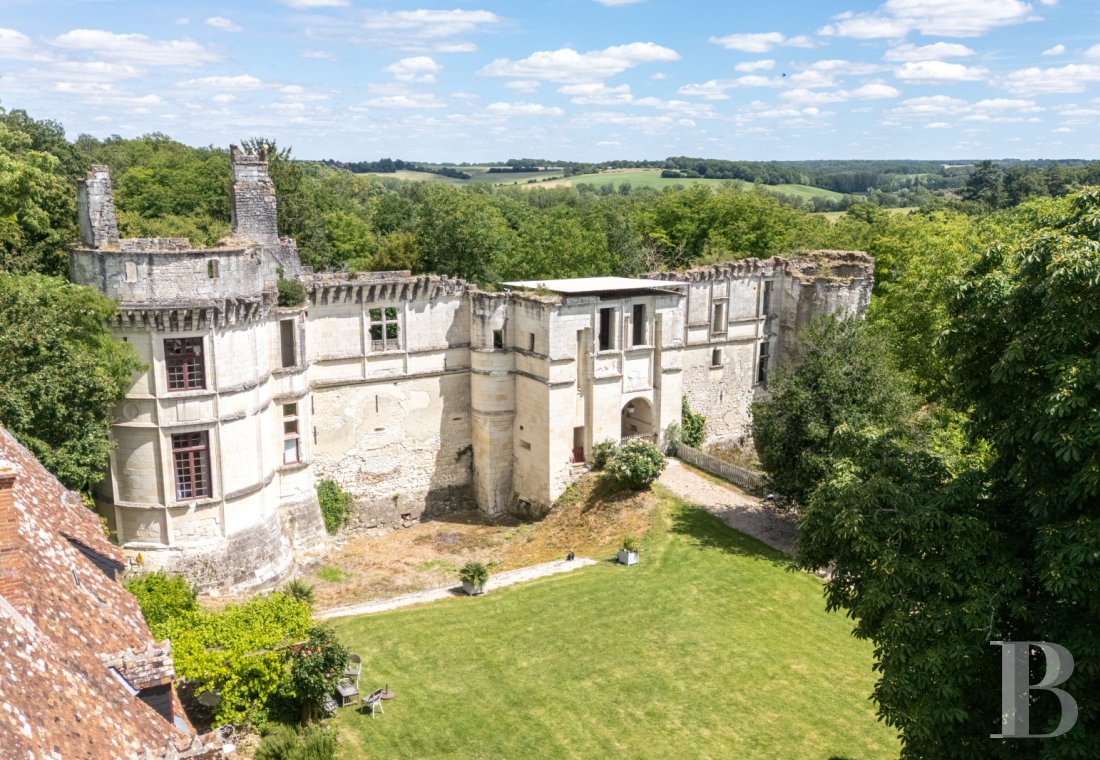
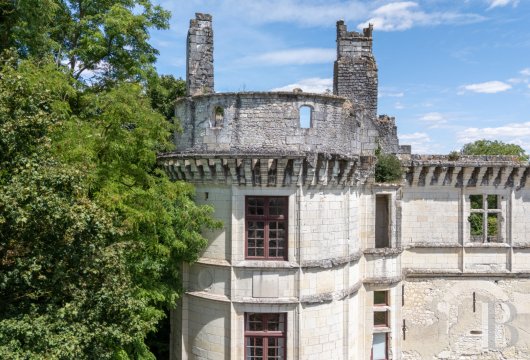
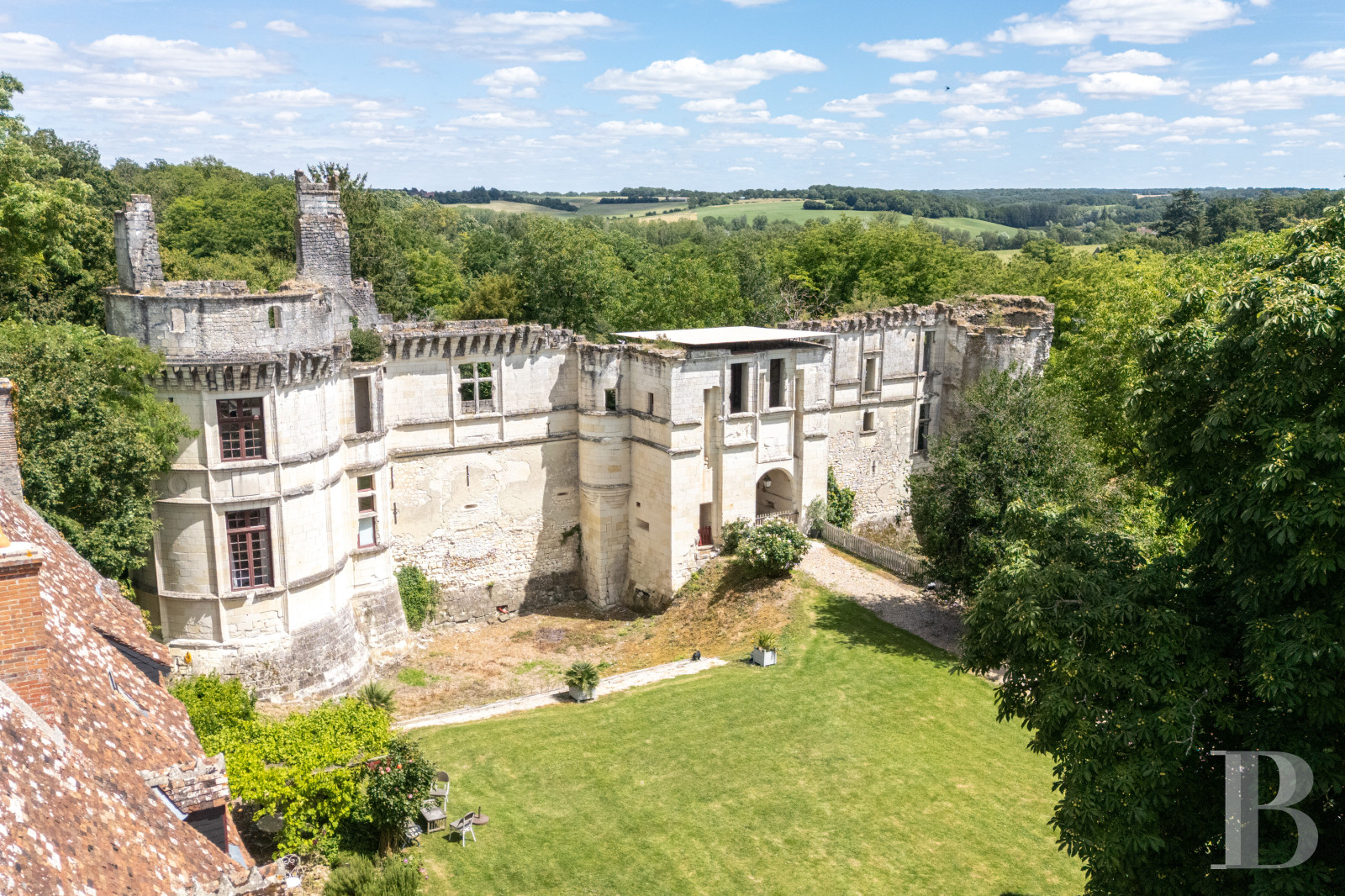
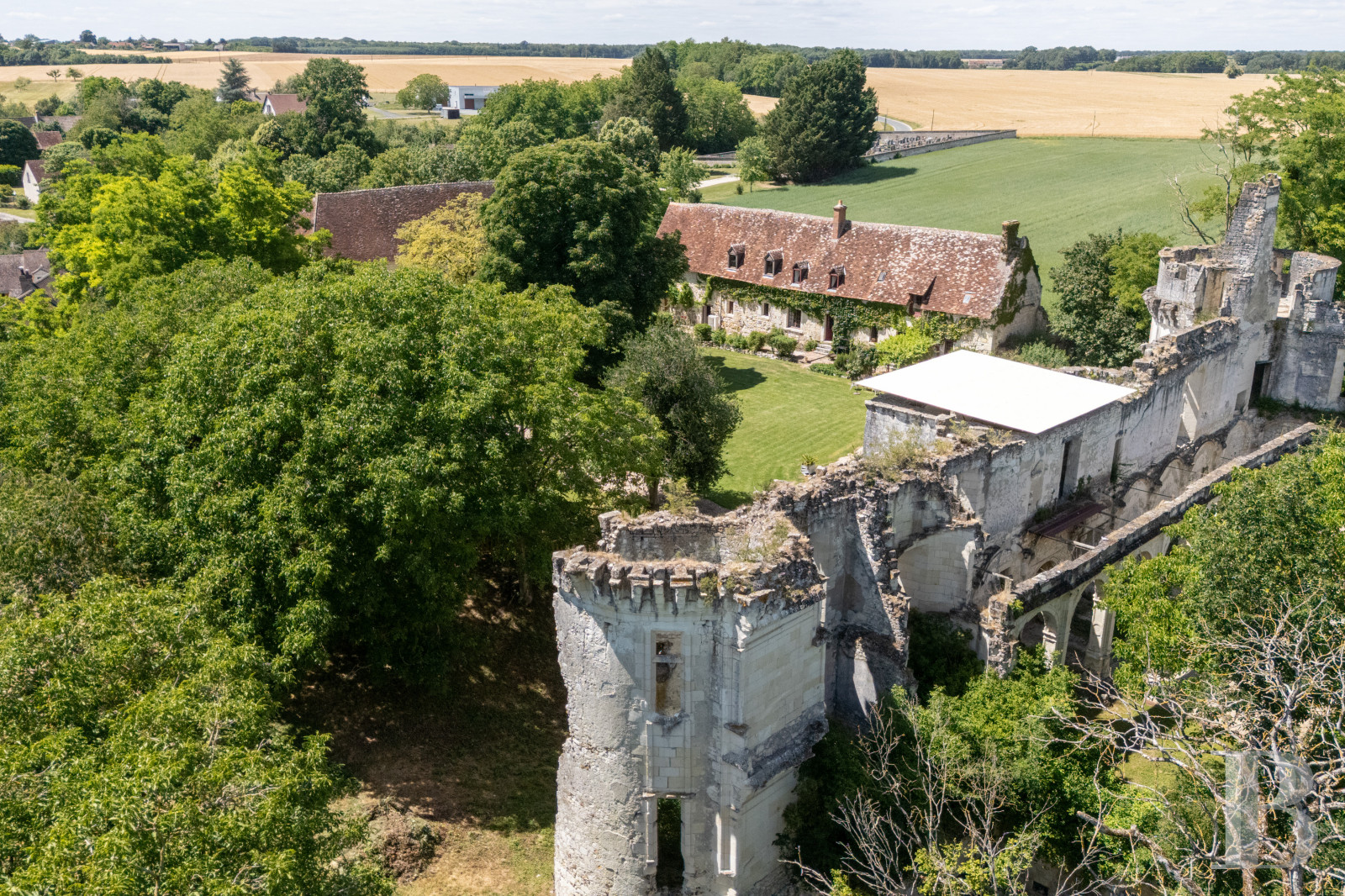
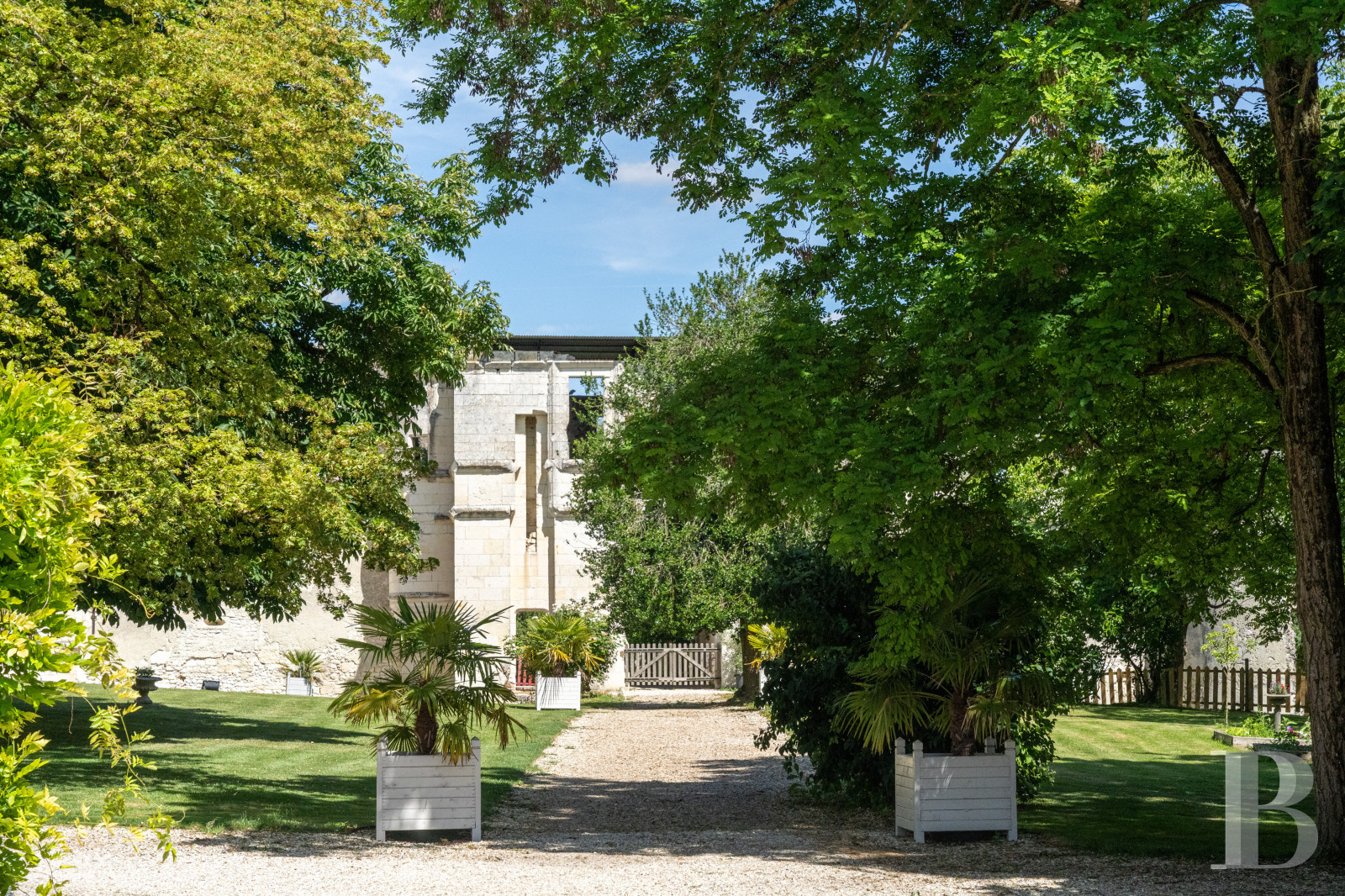
The imposing facade of the chateau’s ruins stands at the end of a vast main courtyard, beyond the deep dry moat. It pays remarkable witness to the architecture from the first Renaissance period in France. A holiday let has been created in the remaining tower. On one side of the courtyard, the former outbuildings are now a comfortable, almost 220-m², south-facing longhouse. Lastly, at the entrance to the property, a barn has been carefully restored through conversion into a large reception room that is leased out for weddings. The property is thus made up of three complementary buildings standing around a landscaped space.
The Renaissance chateau
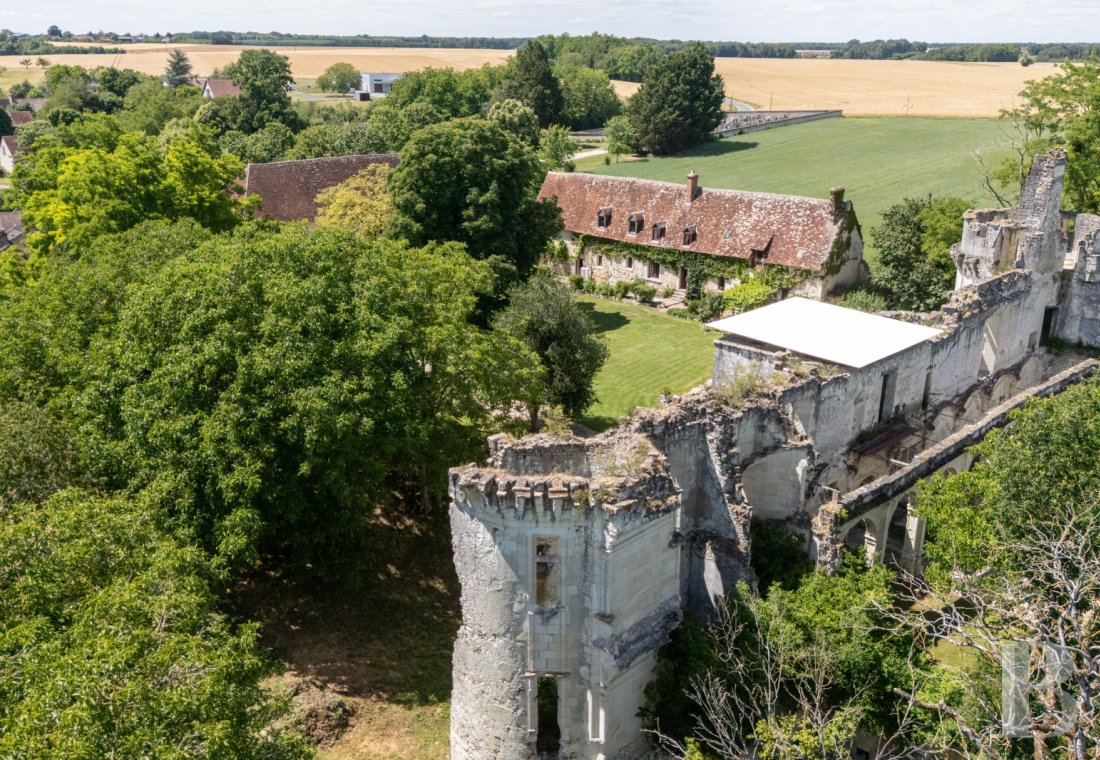
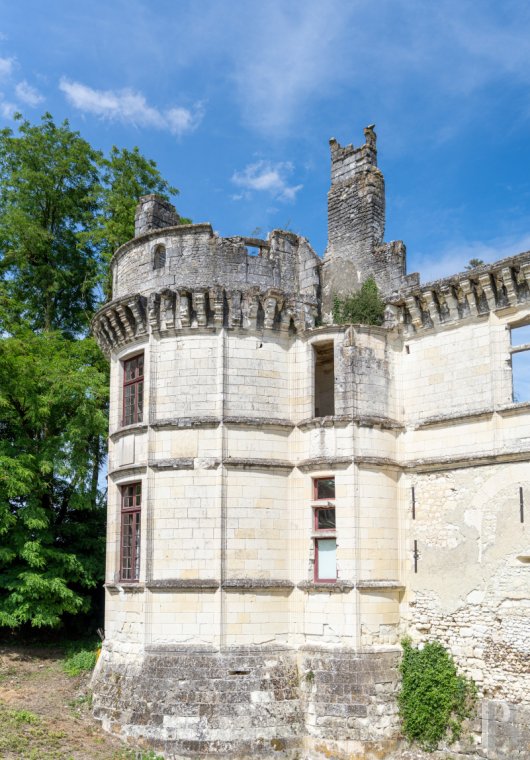
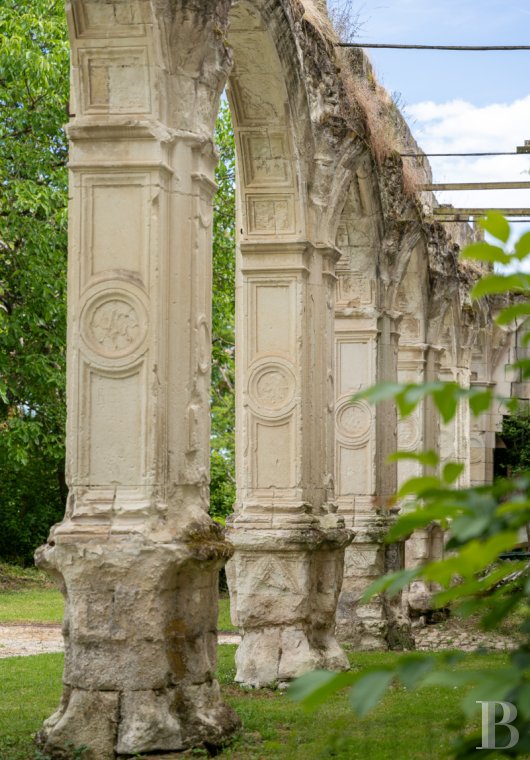
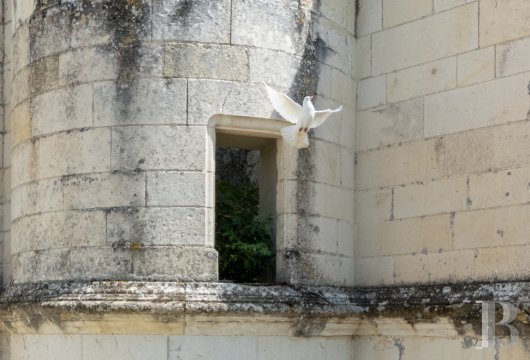
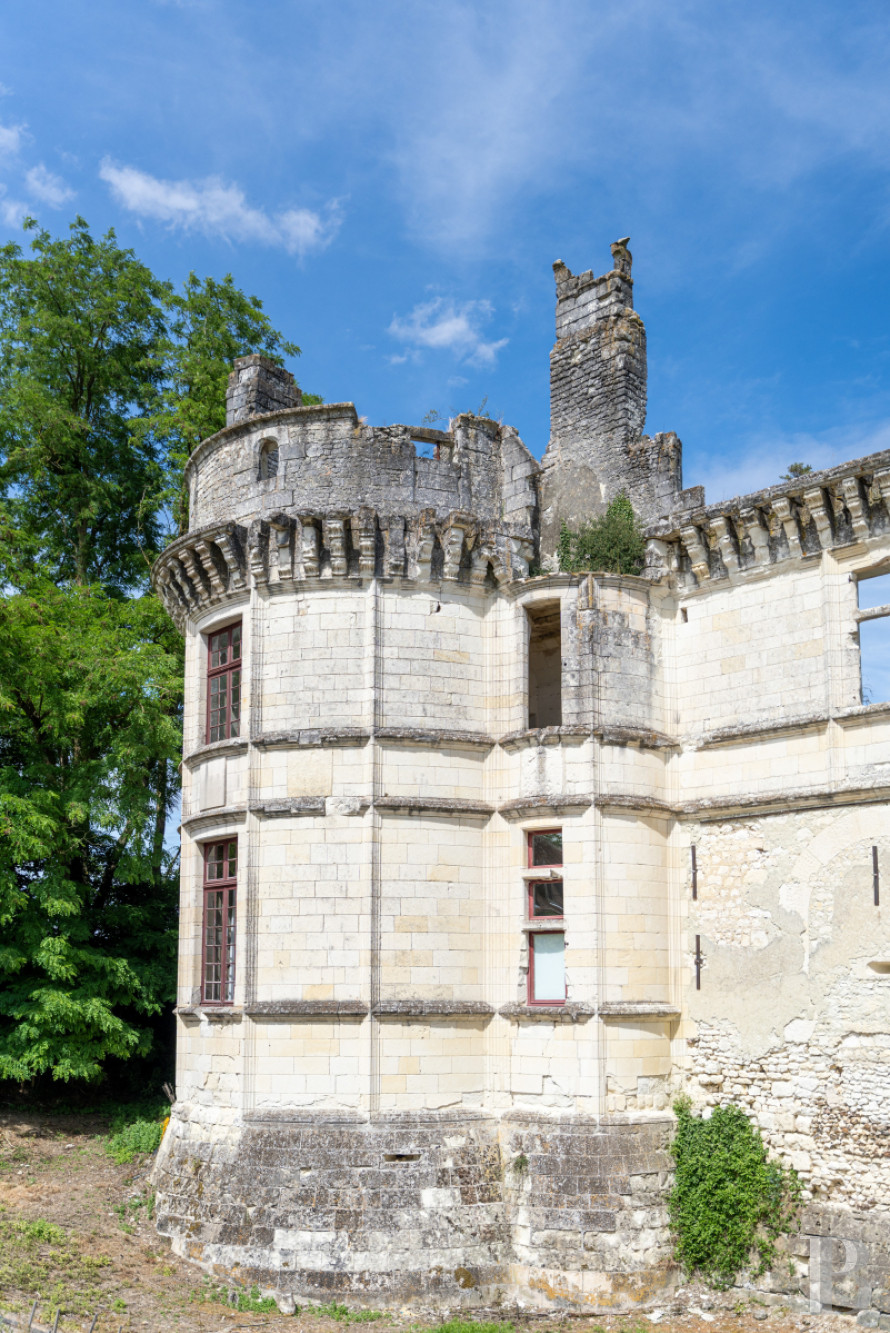
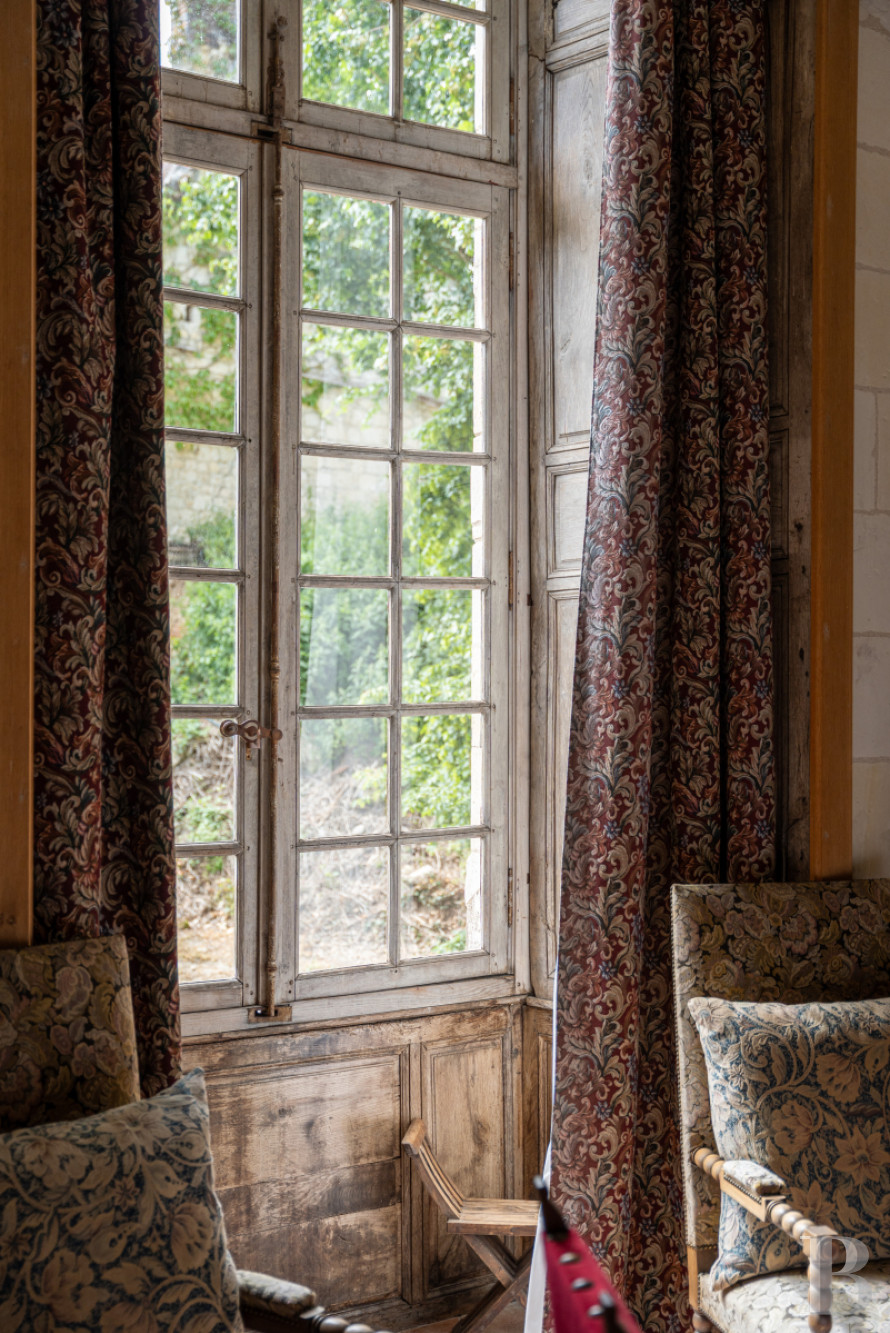
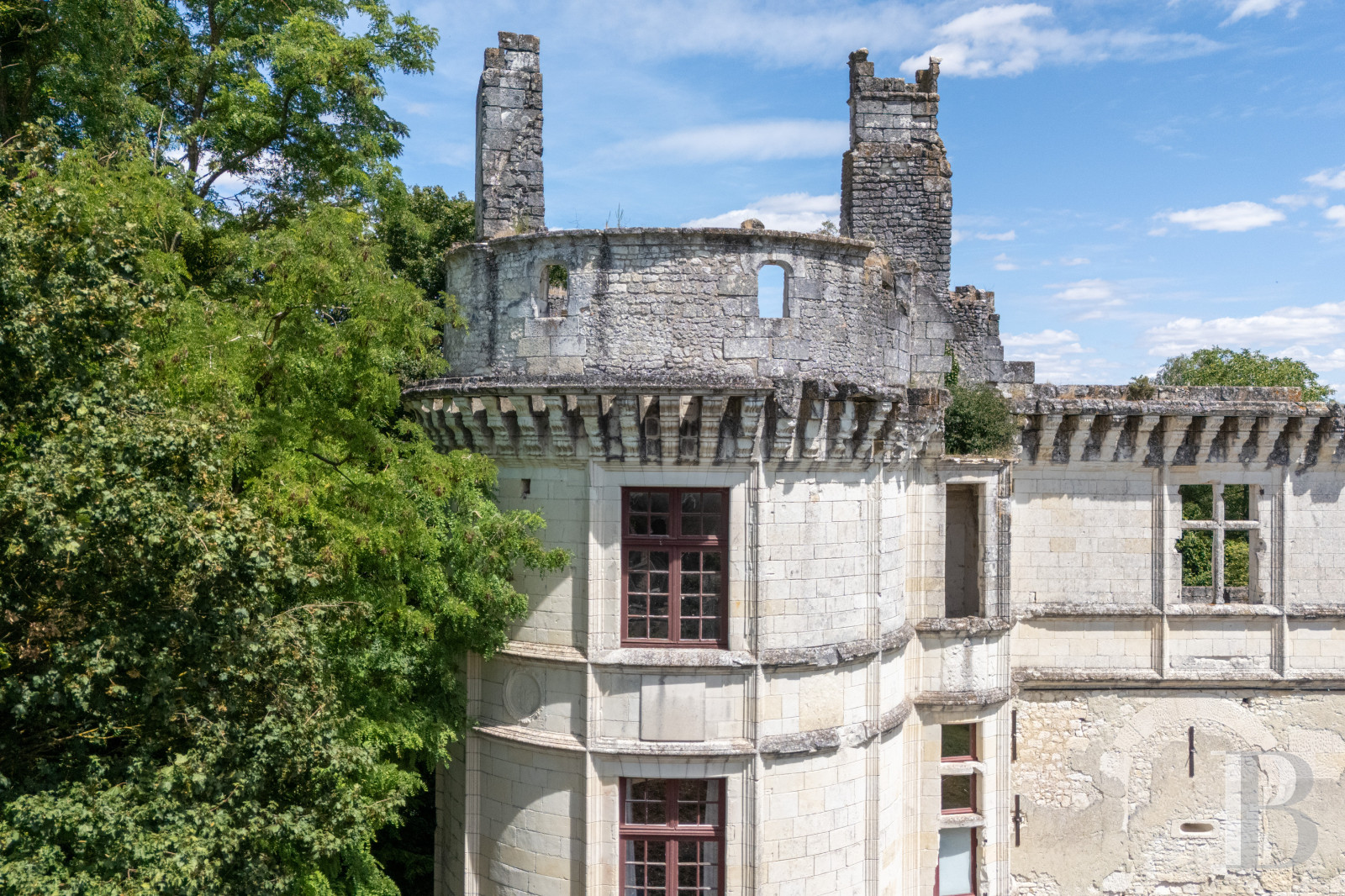
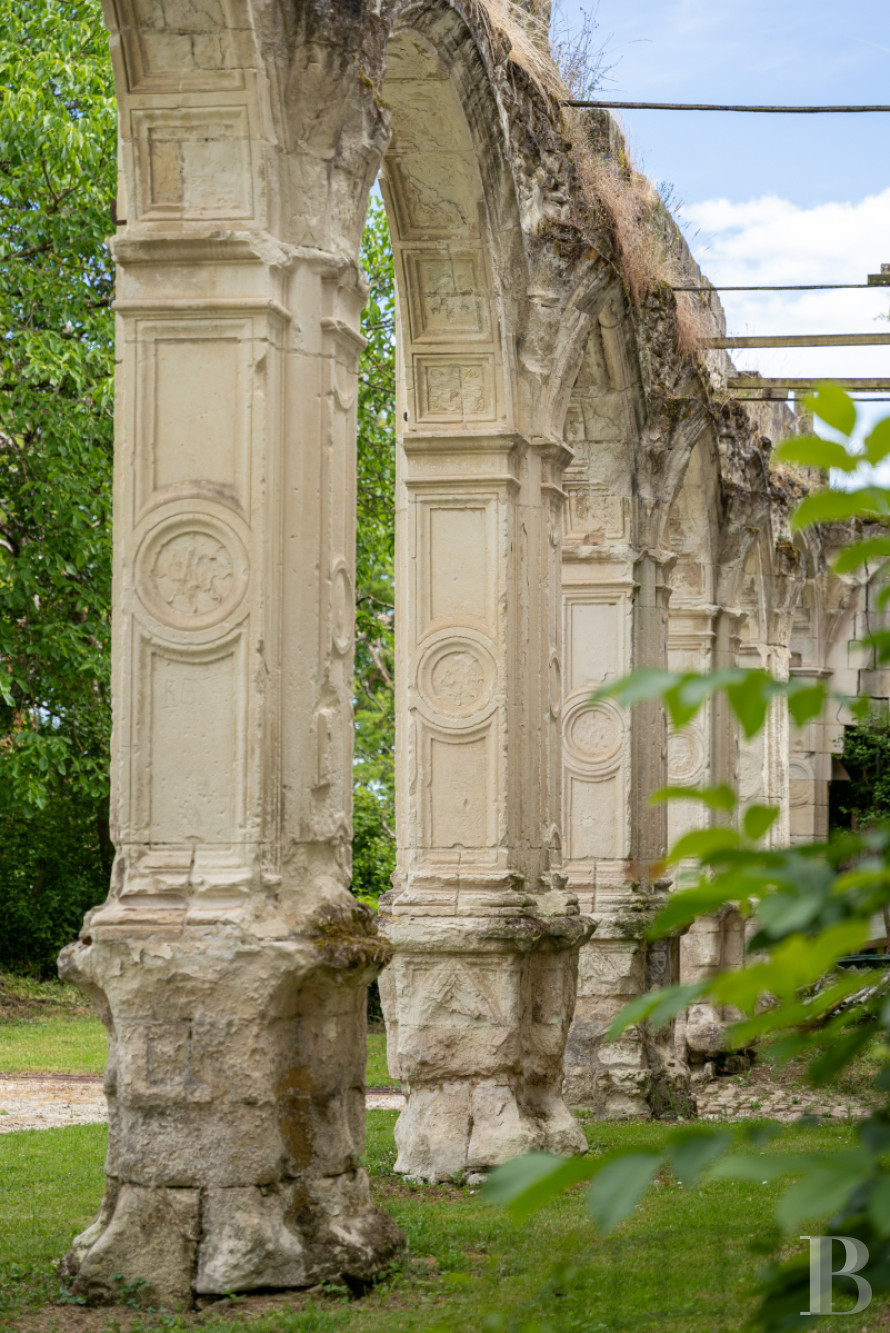
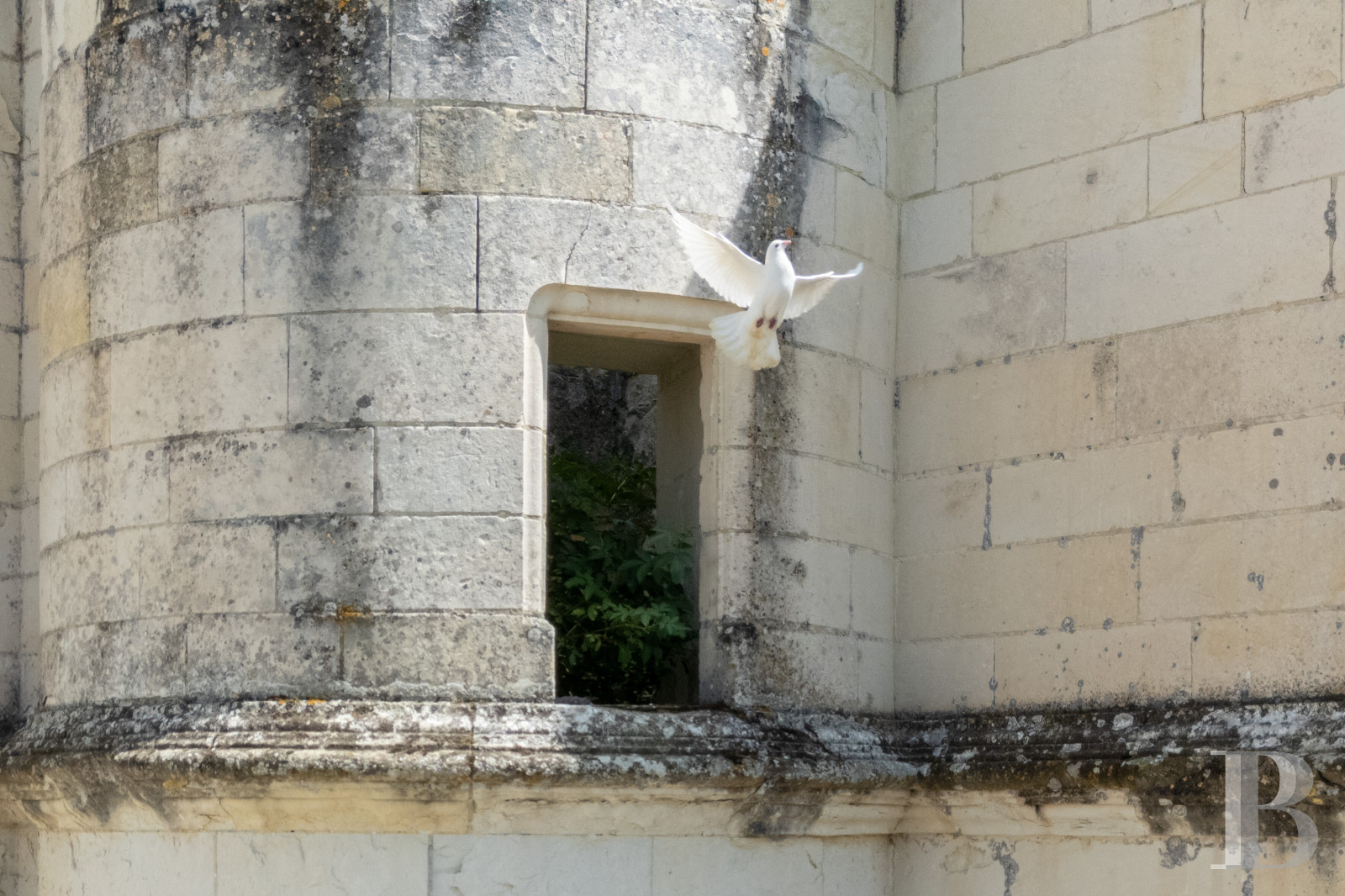
The imposing original building was built in 1500 but today all that remains is an impressive ashlar-built facade. Its centre stands out thanks to the drawbridge pavilion, which is protected from inclement weather by a temporary sheet metal roof. The edifice is flanked by two massive towers. The oldest of the two, to the south, lies in ruins. The other side still bears traces of an open gallery on the ground floor. The arcades, which were added at a later date than the external facade, inspired the ones at the Chateau of Villandry and are supported by metal structures to ensure their stability. The site has been listed as a historical monument since 1927 and is currently undergoing another classification process that may lead to benefiting from fiscal advantages.
Le gîte
The holiday let
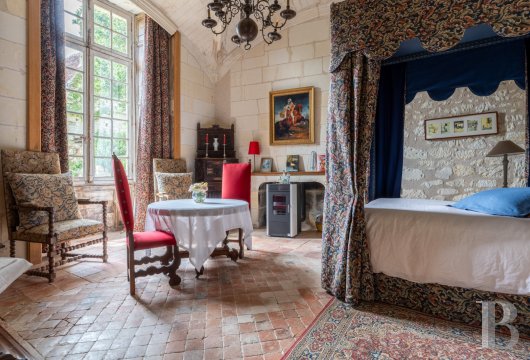
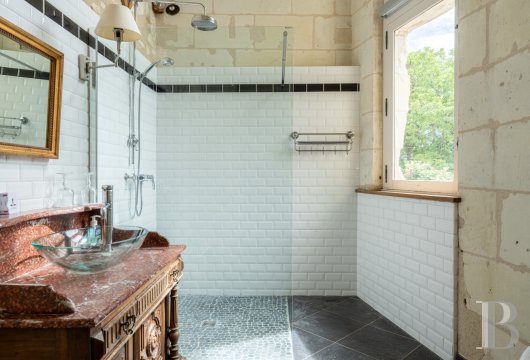
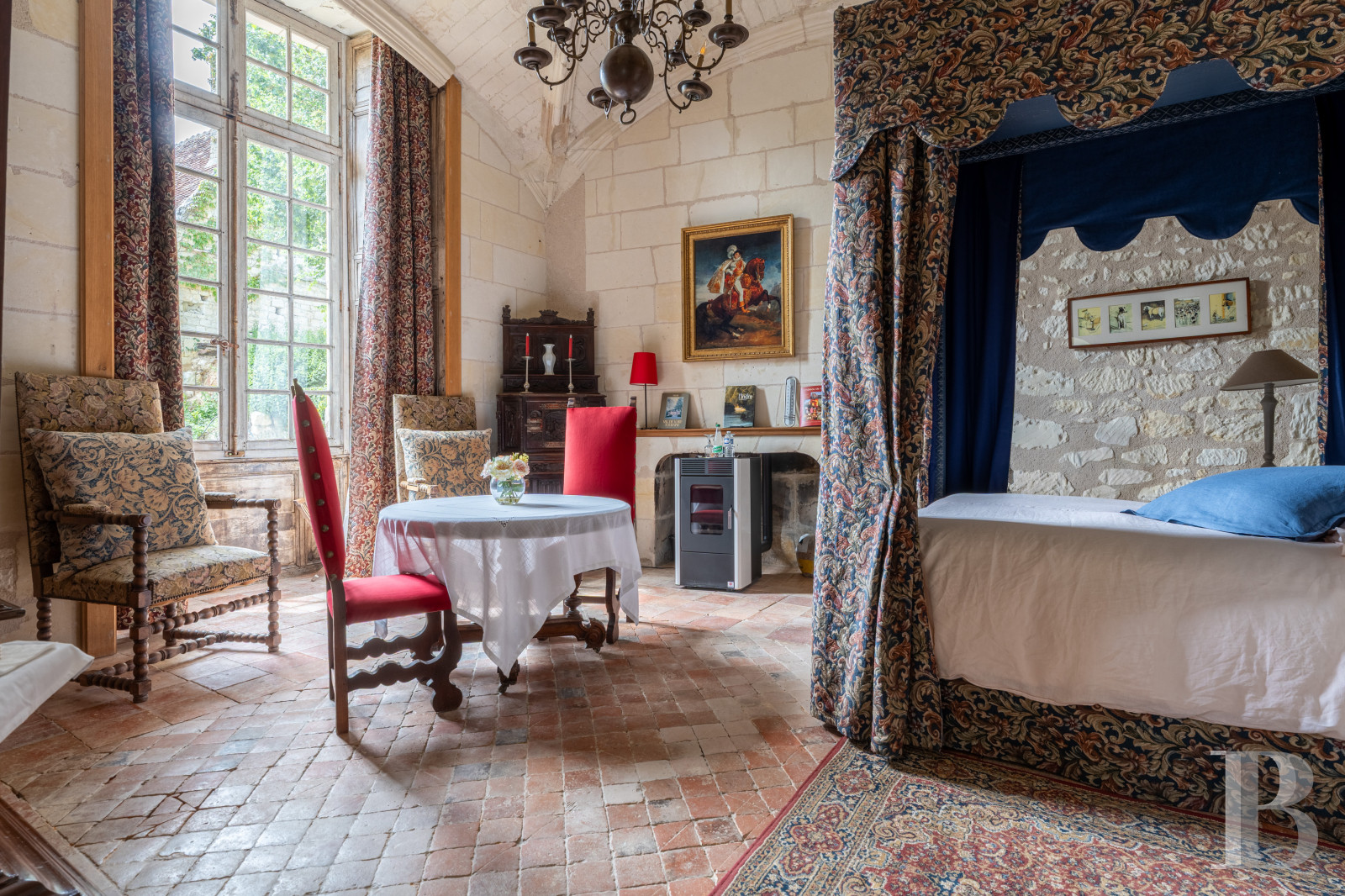
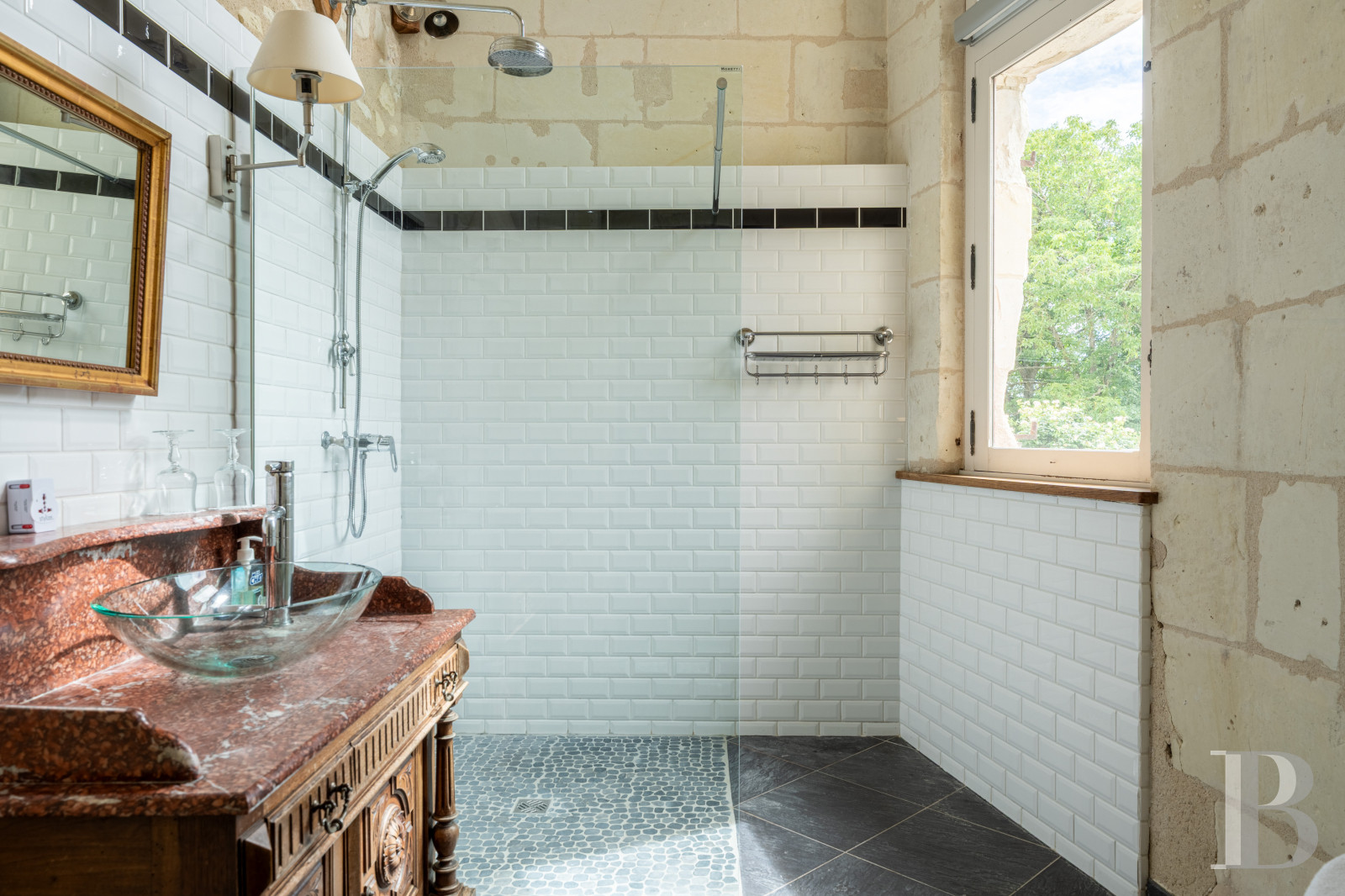
The ground floor in the northern tower is habitable and contains a holiday let with a shower room and lavatory.
The longhouse
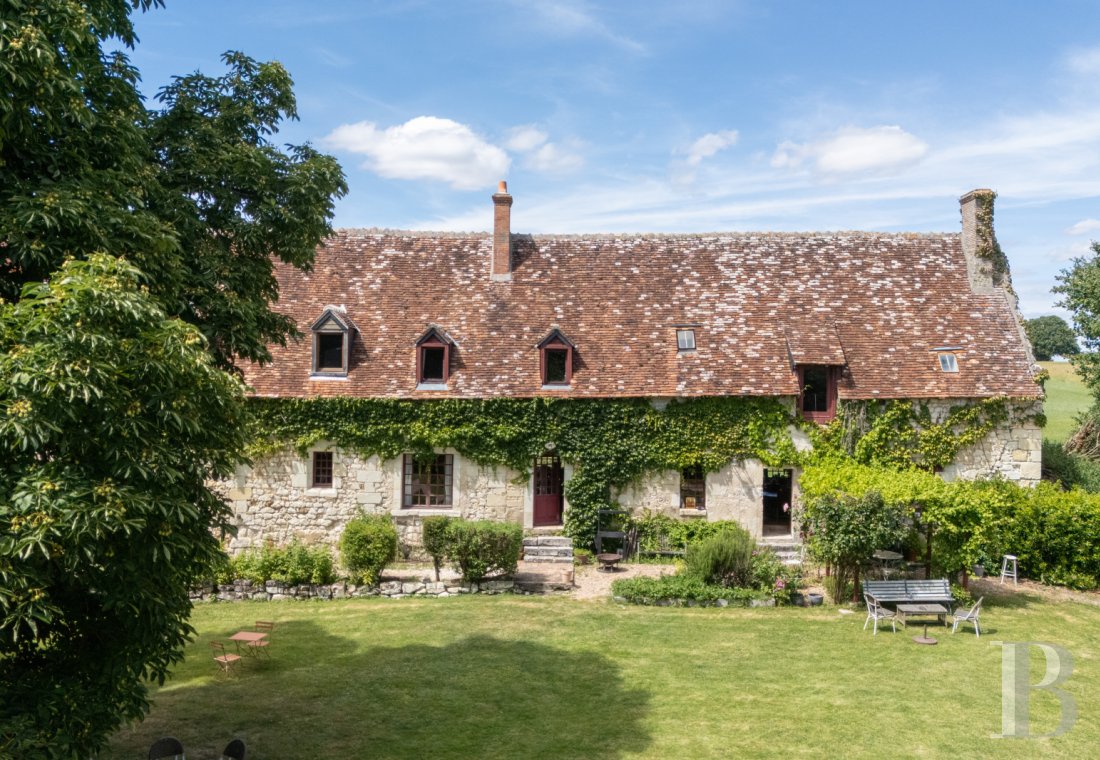
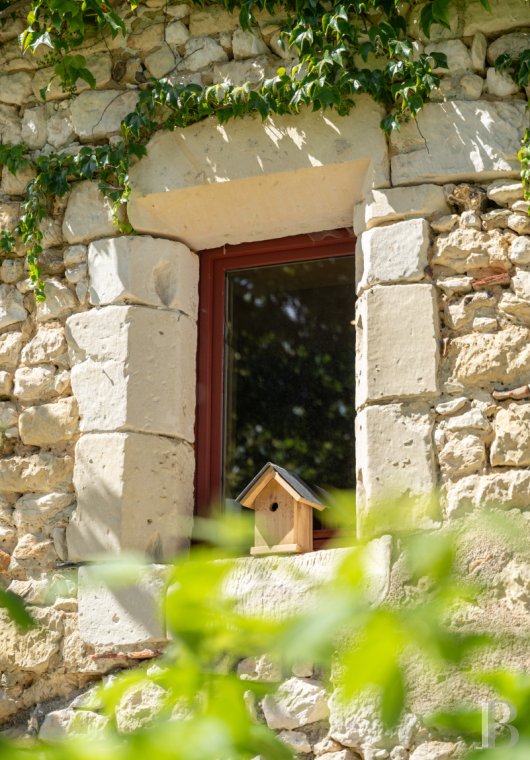
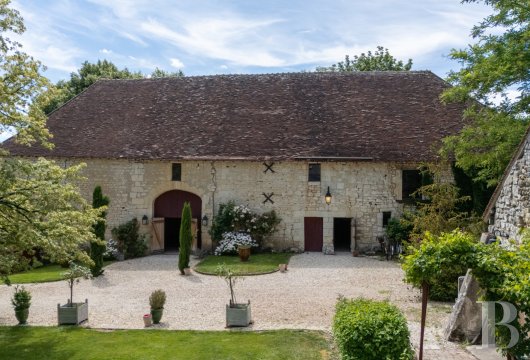
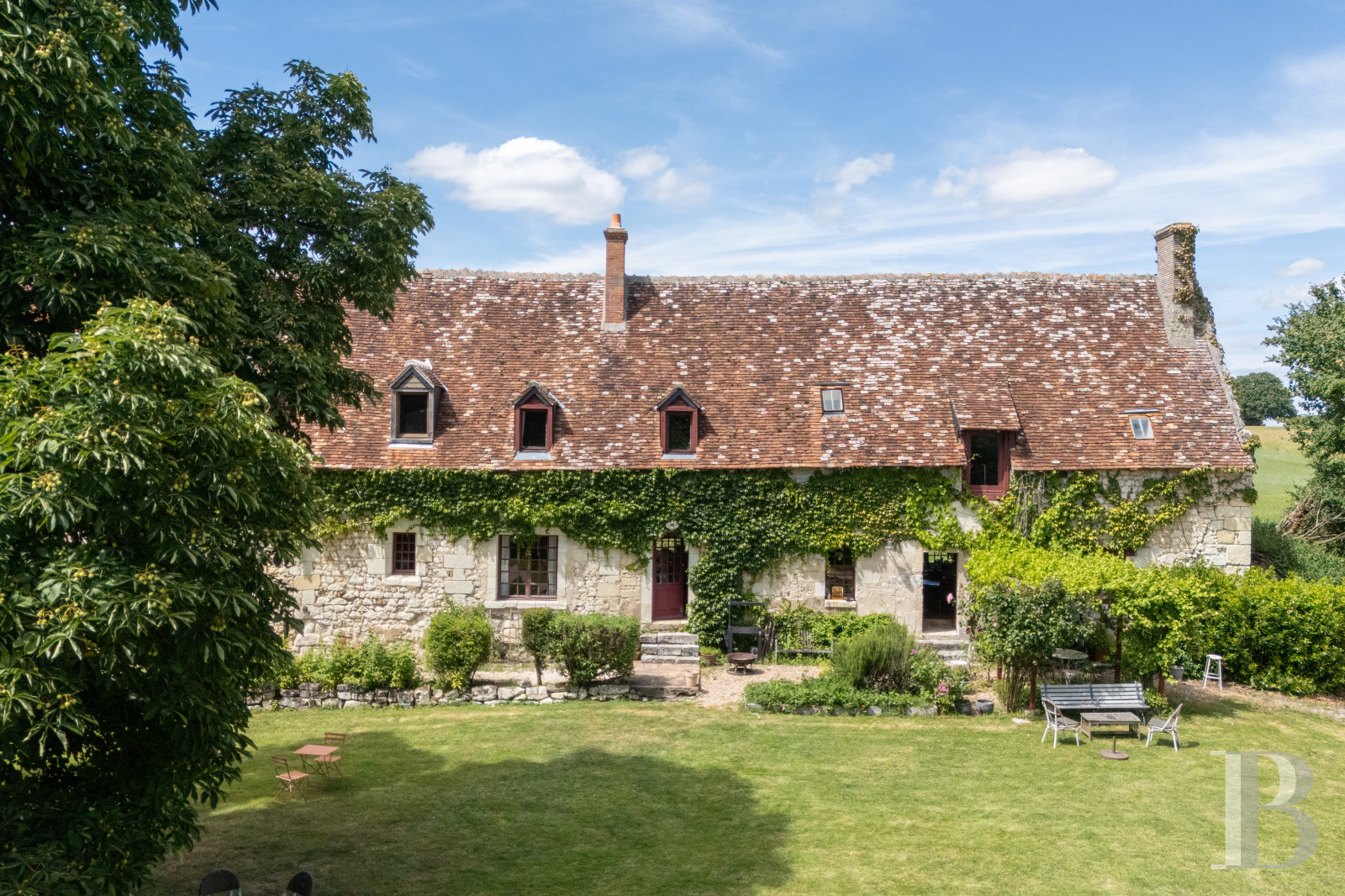
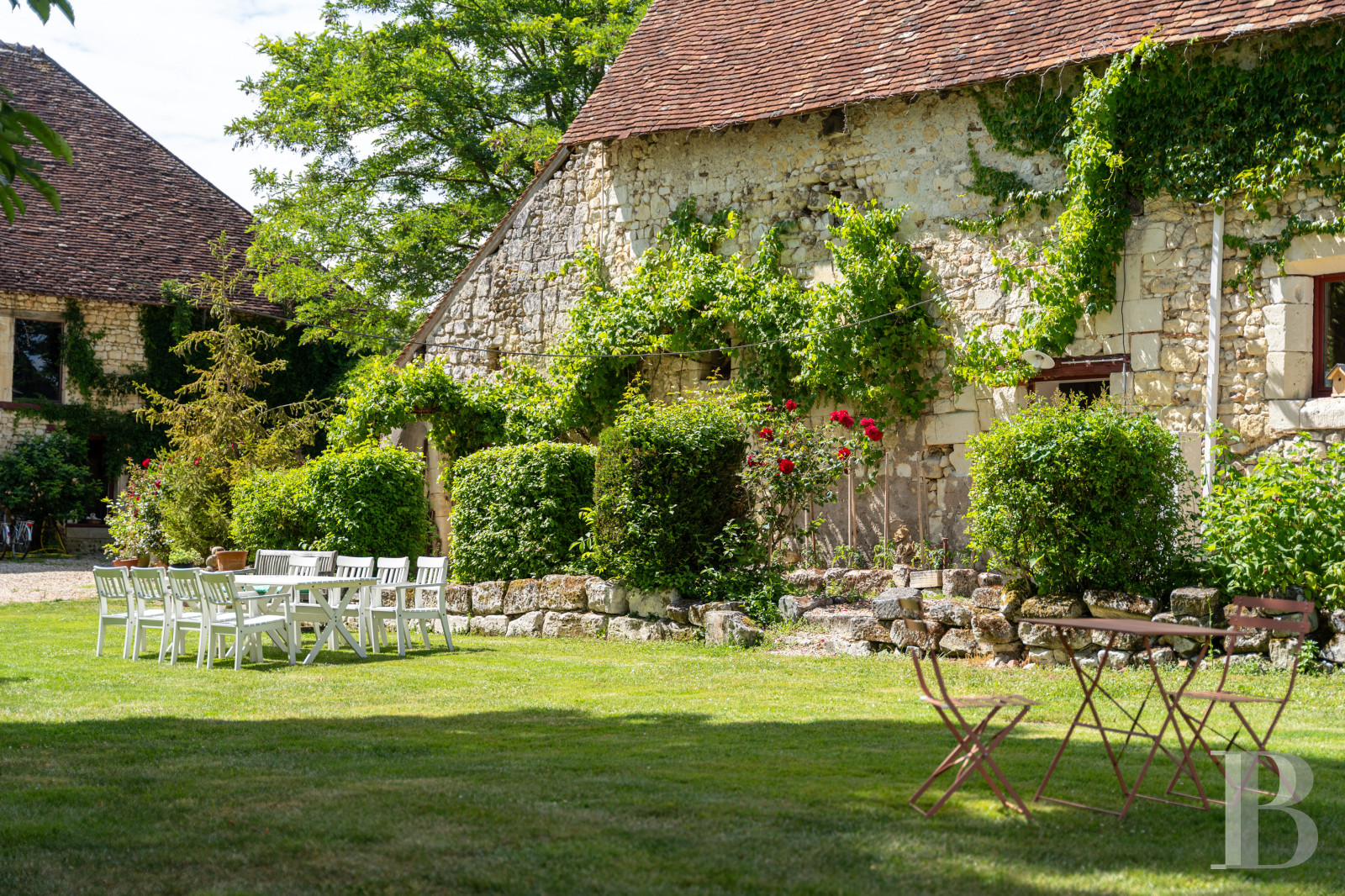
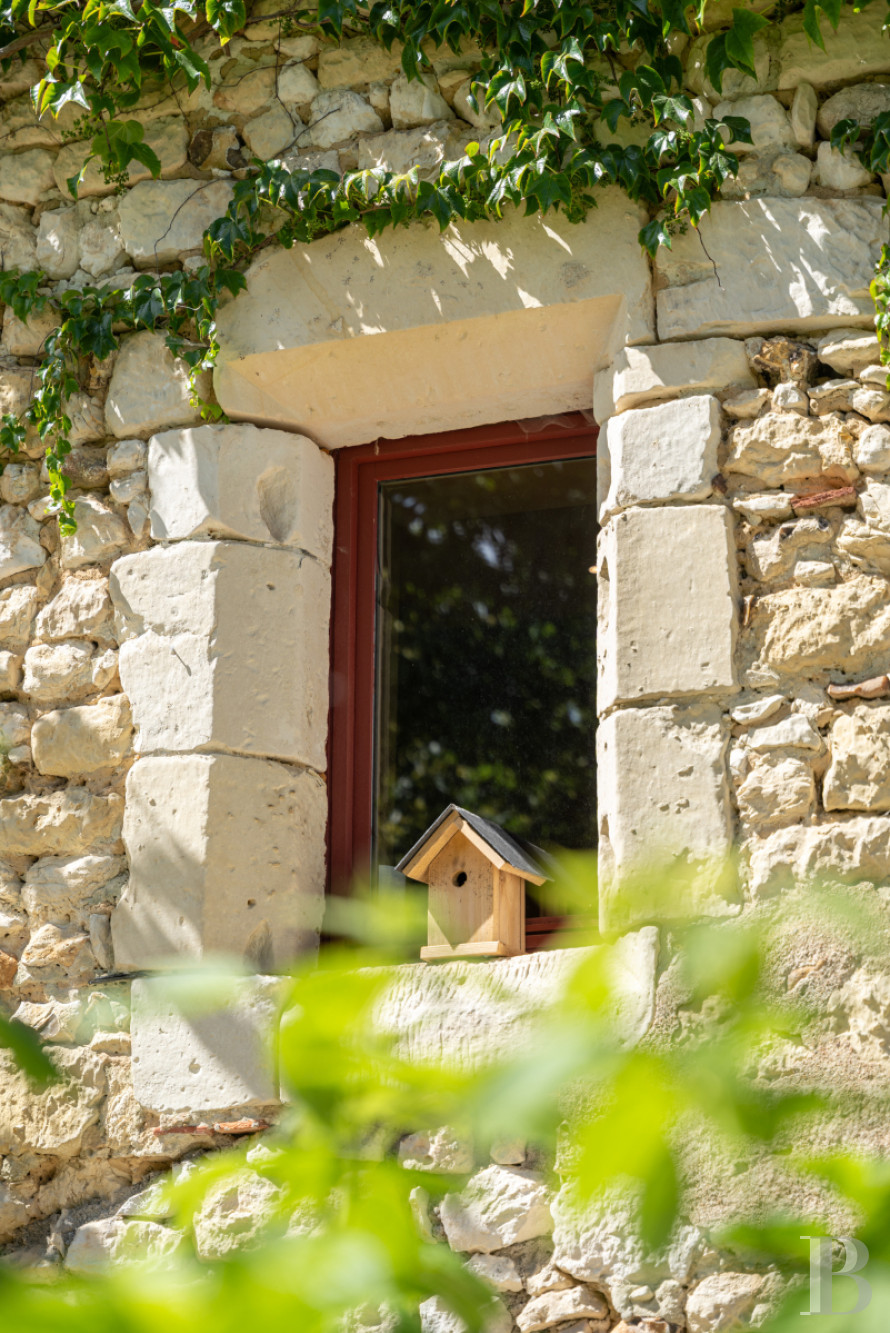
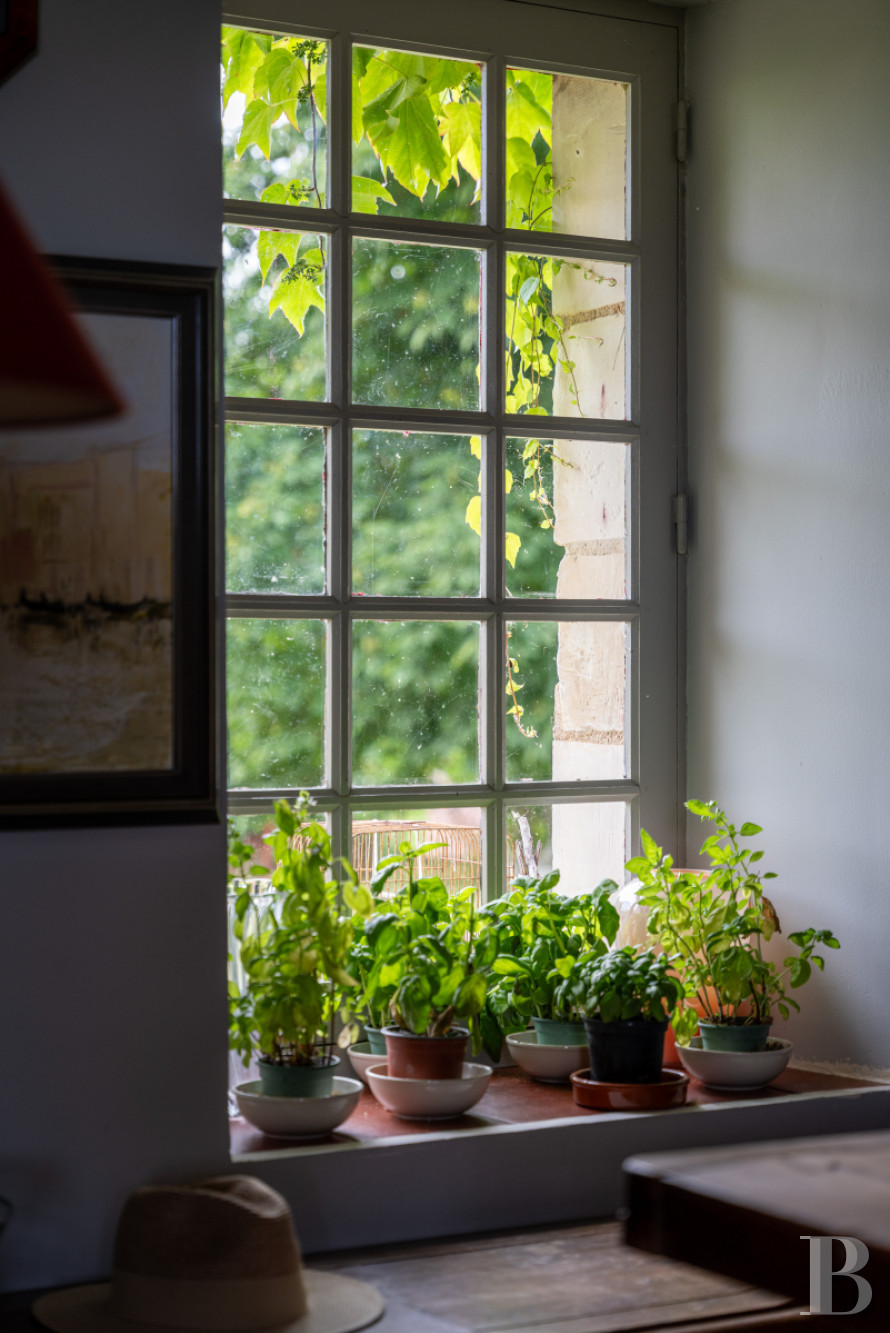
This two-storey, 16th-century wing of outbuildings is set slightly away from the main courtyard, with its top level beneath the insulated rafters. The exposed rubble stone facade with ashlar quoins and surrounds is punctuated by windows of different sizes and positions. Virginia creeper and wisteria run along its entire length, up to the eastern gable wall, which still has its original gable ramping. The gabled roof is made of period flat tiles and is punctuated with dormers and skylights through which light streams into the top floor rooms.
The ground floor
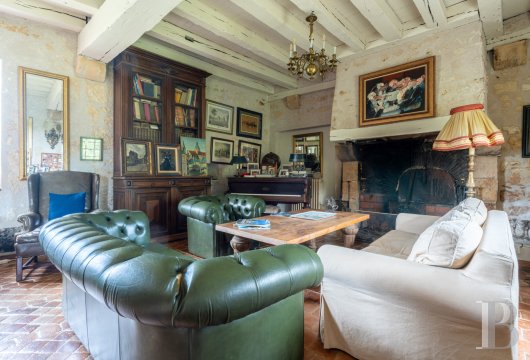
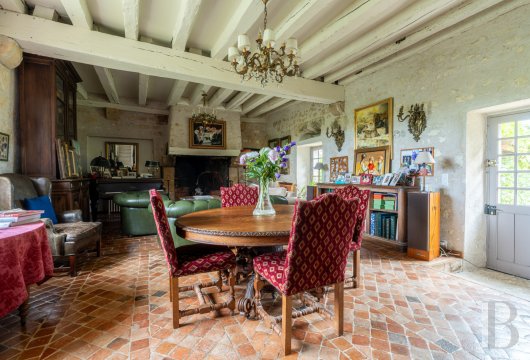
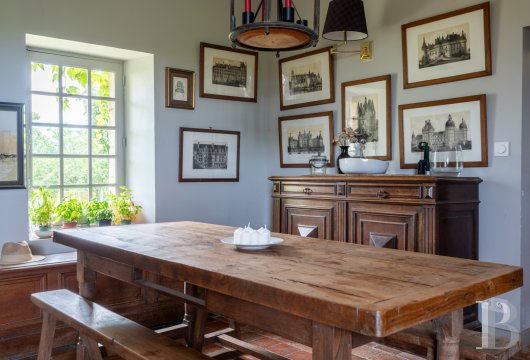
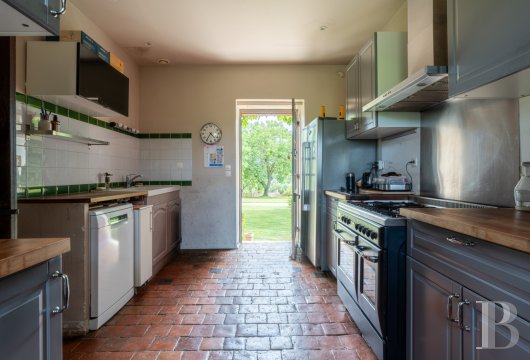
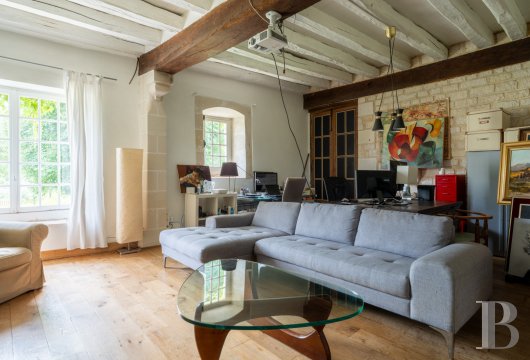
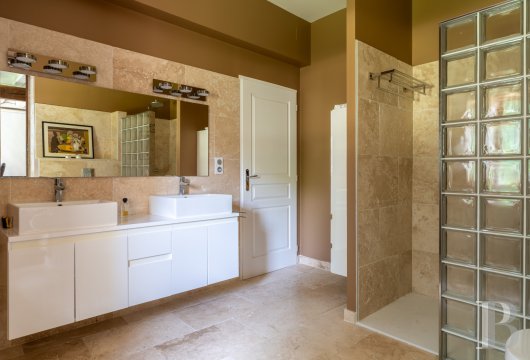
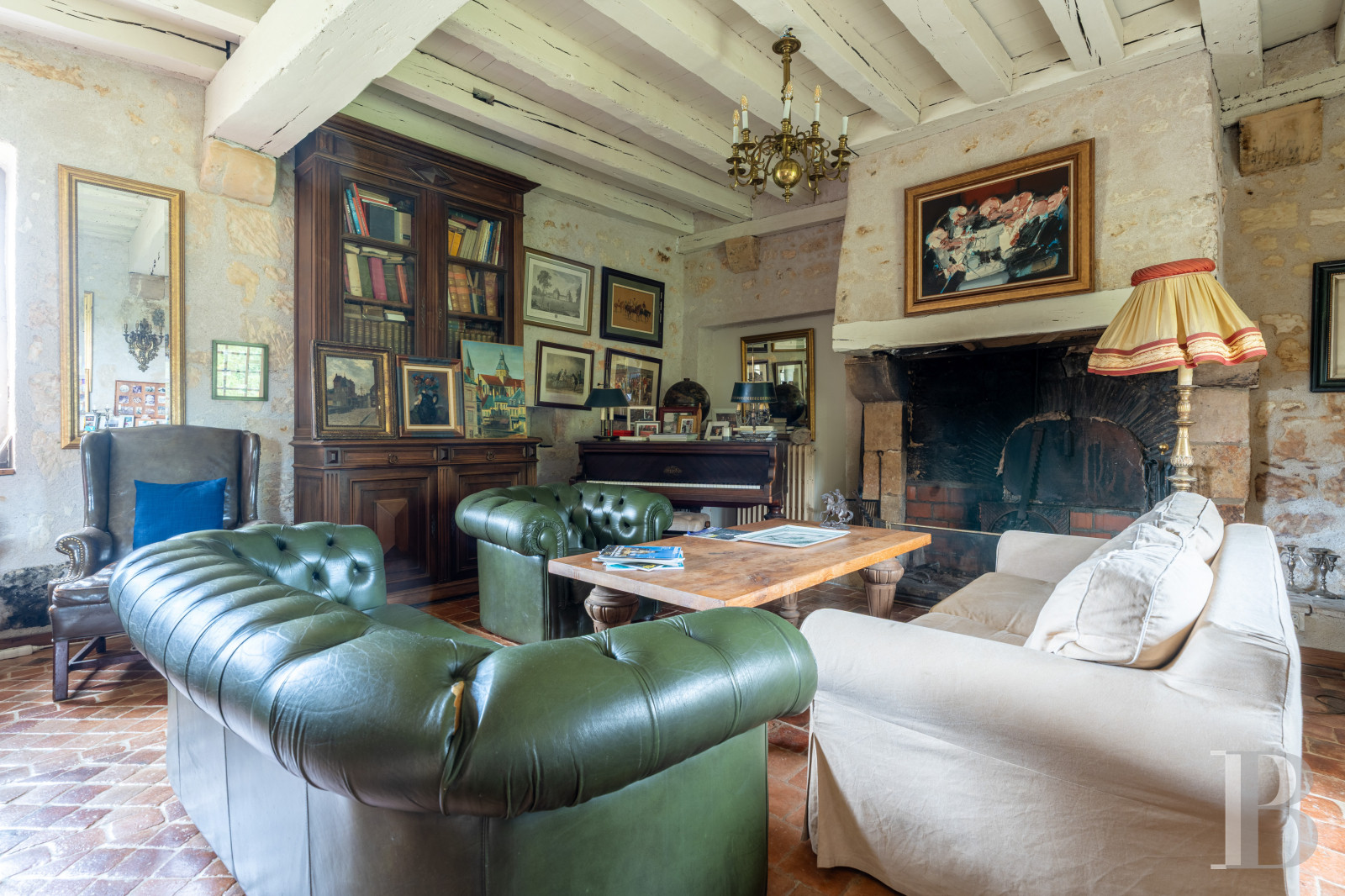
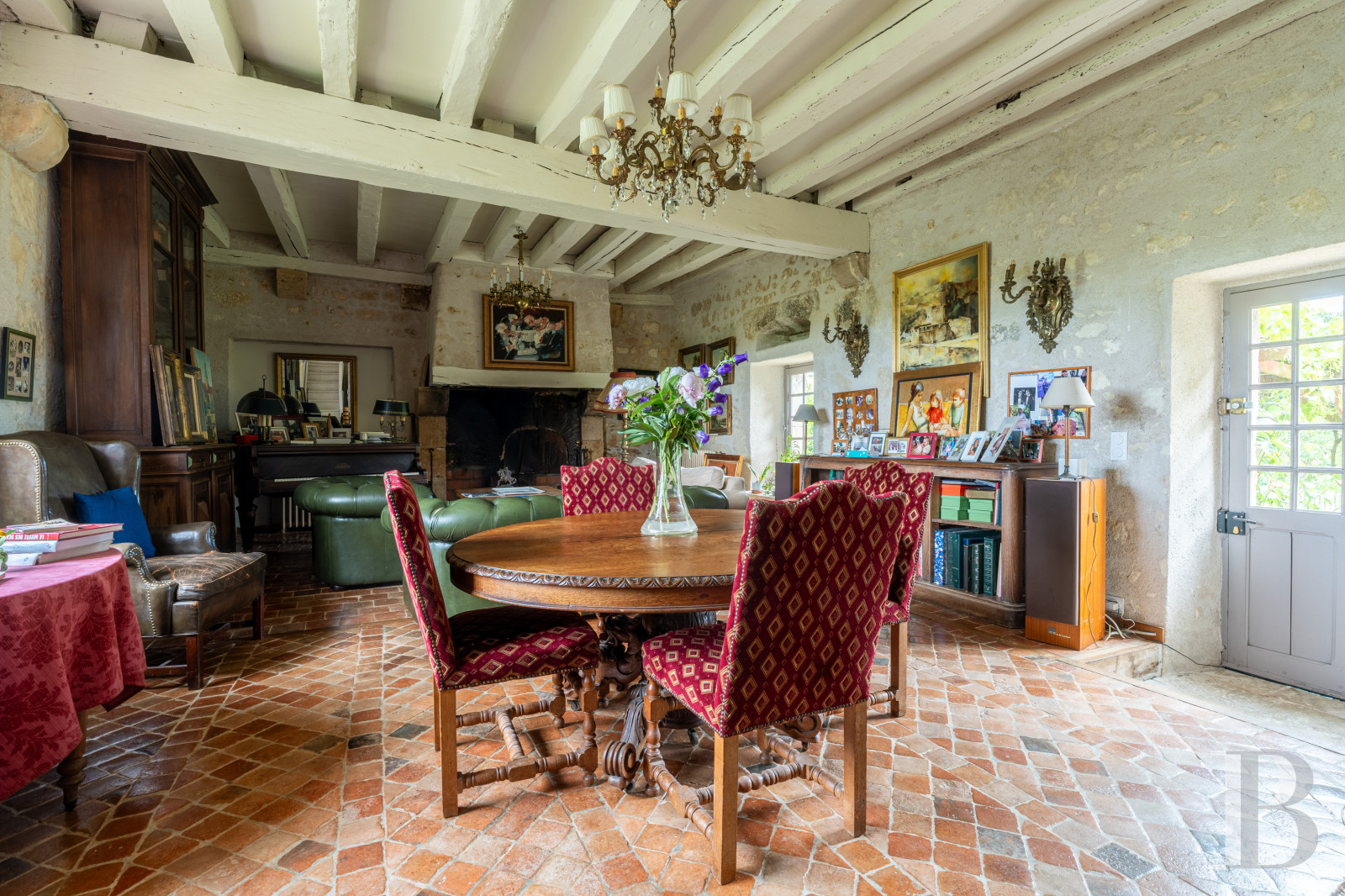
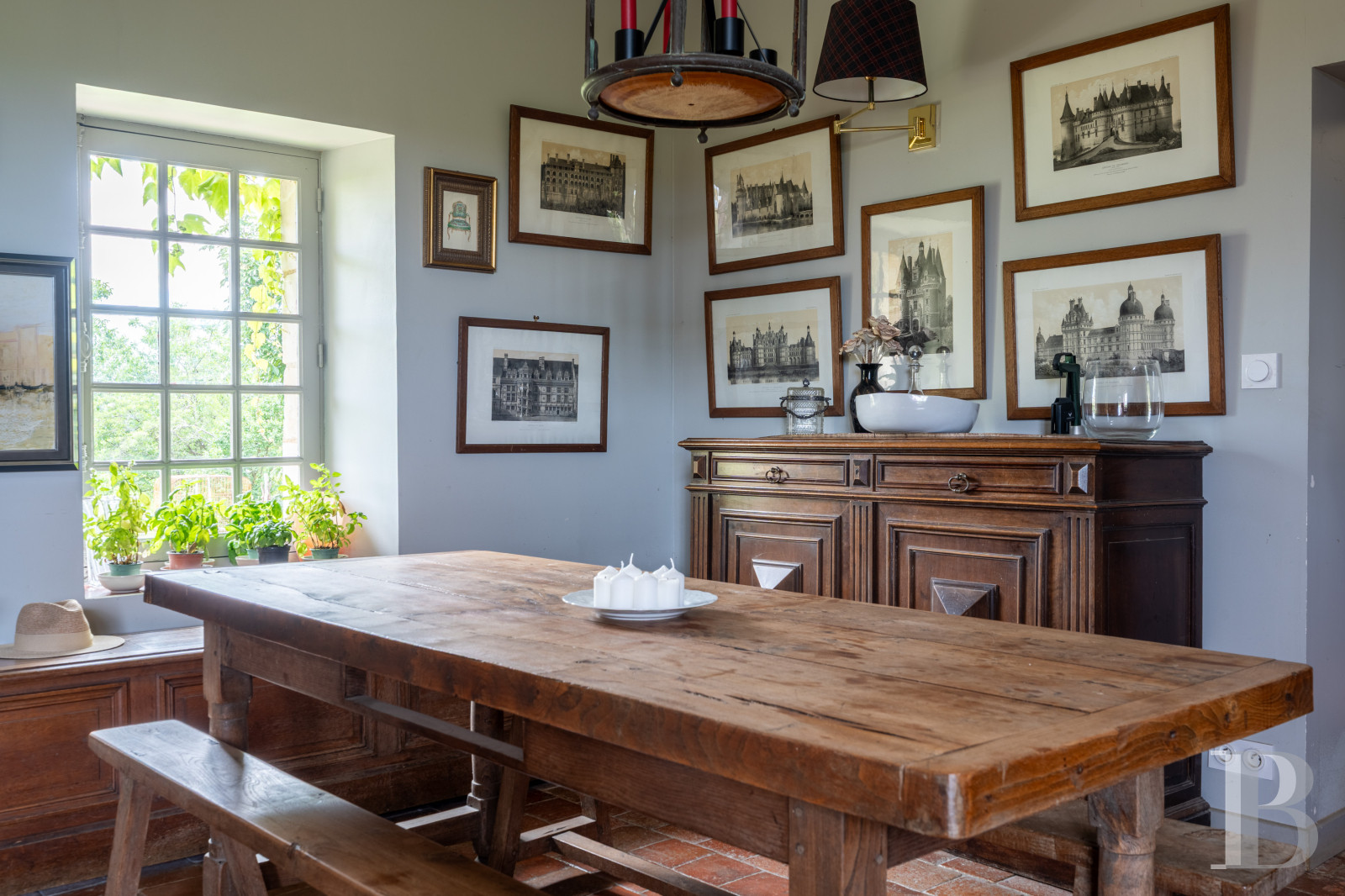
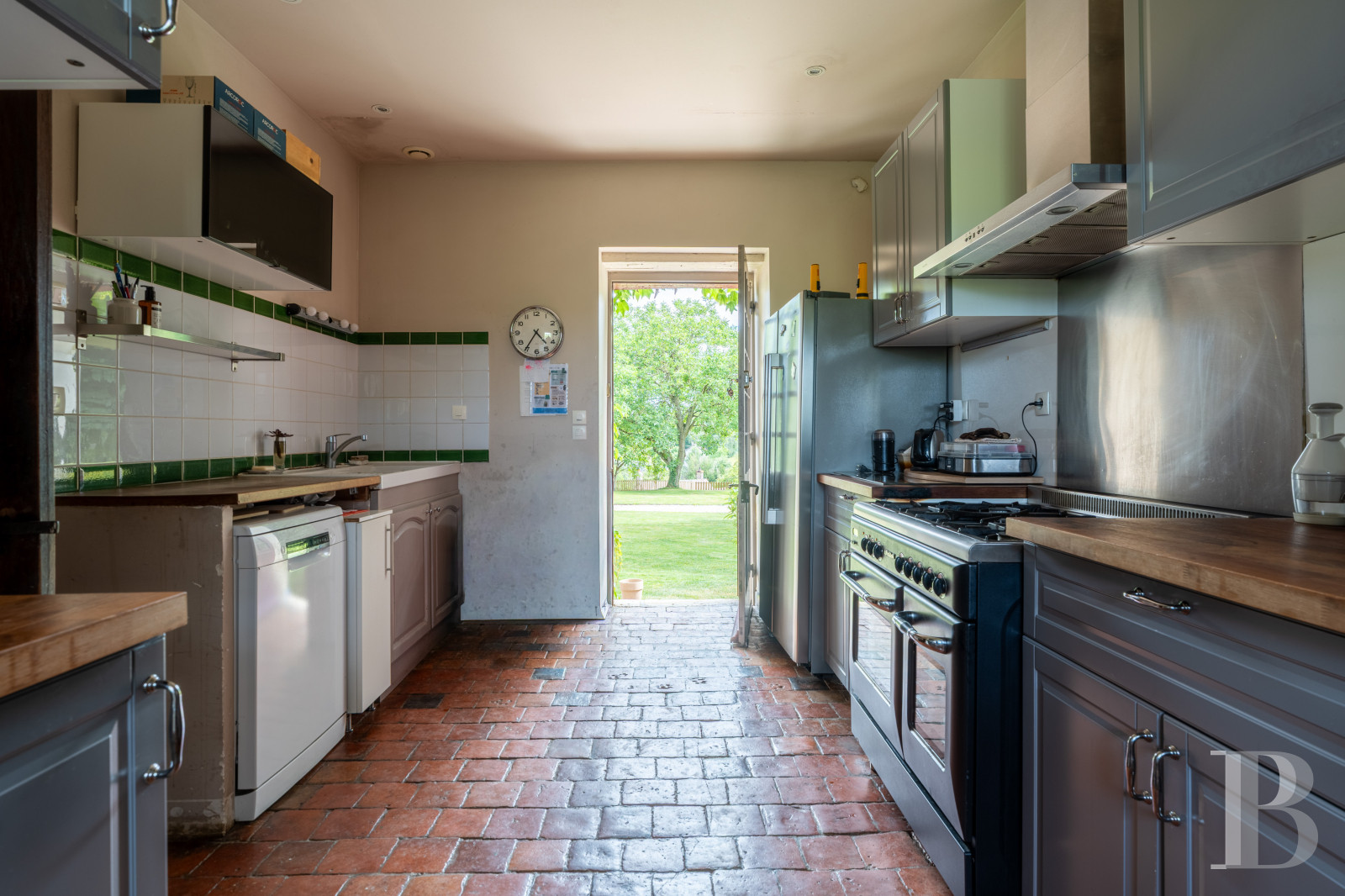
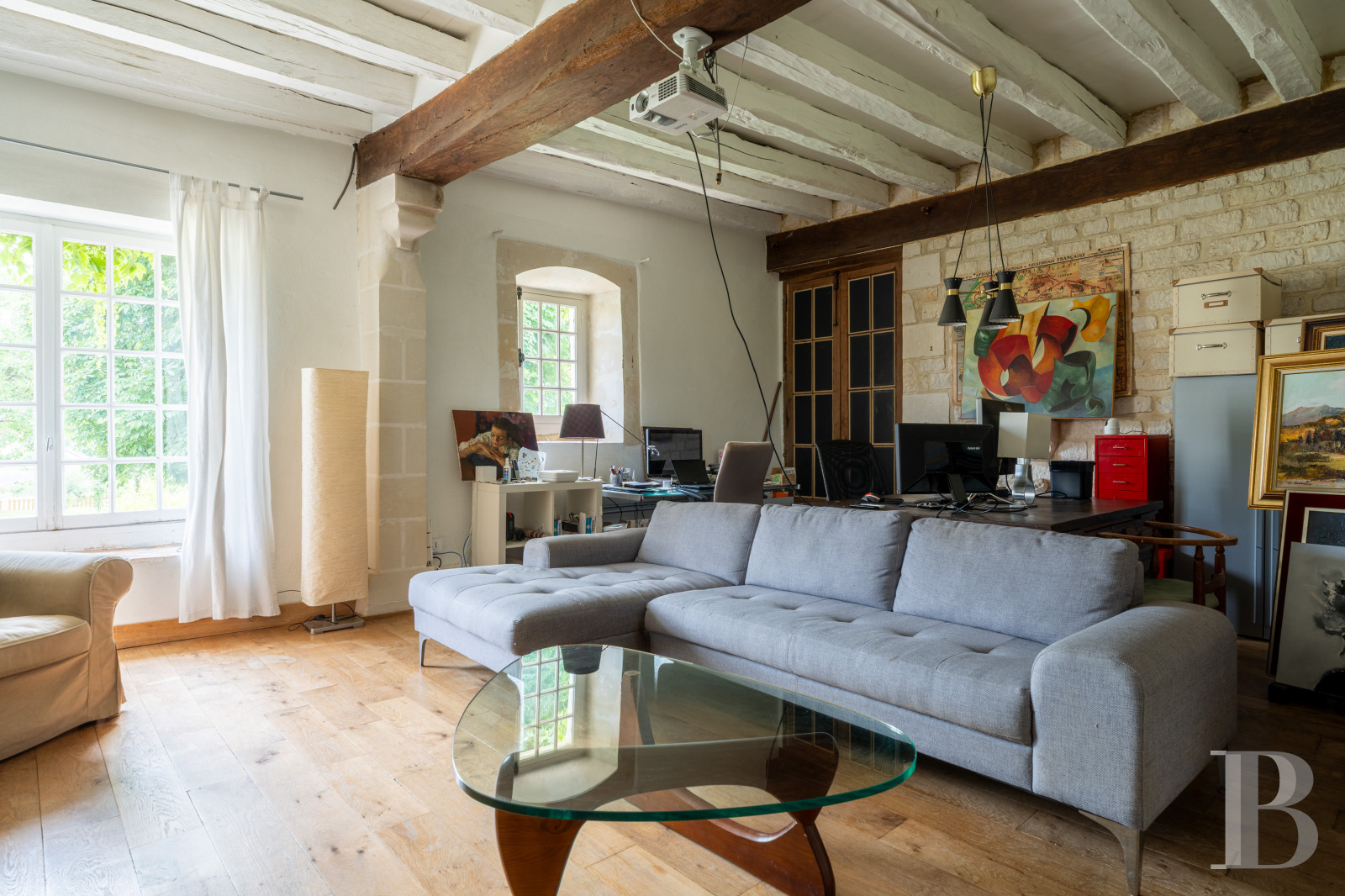
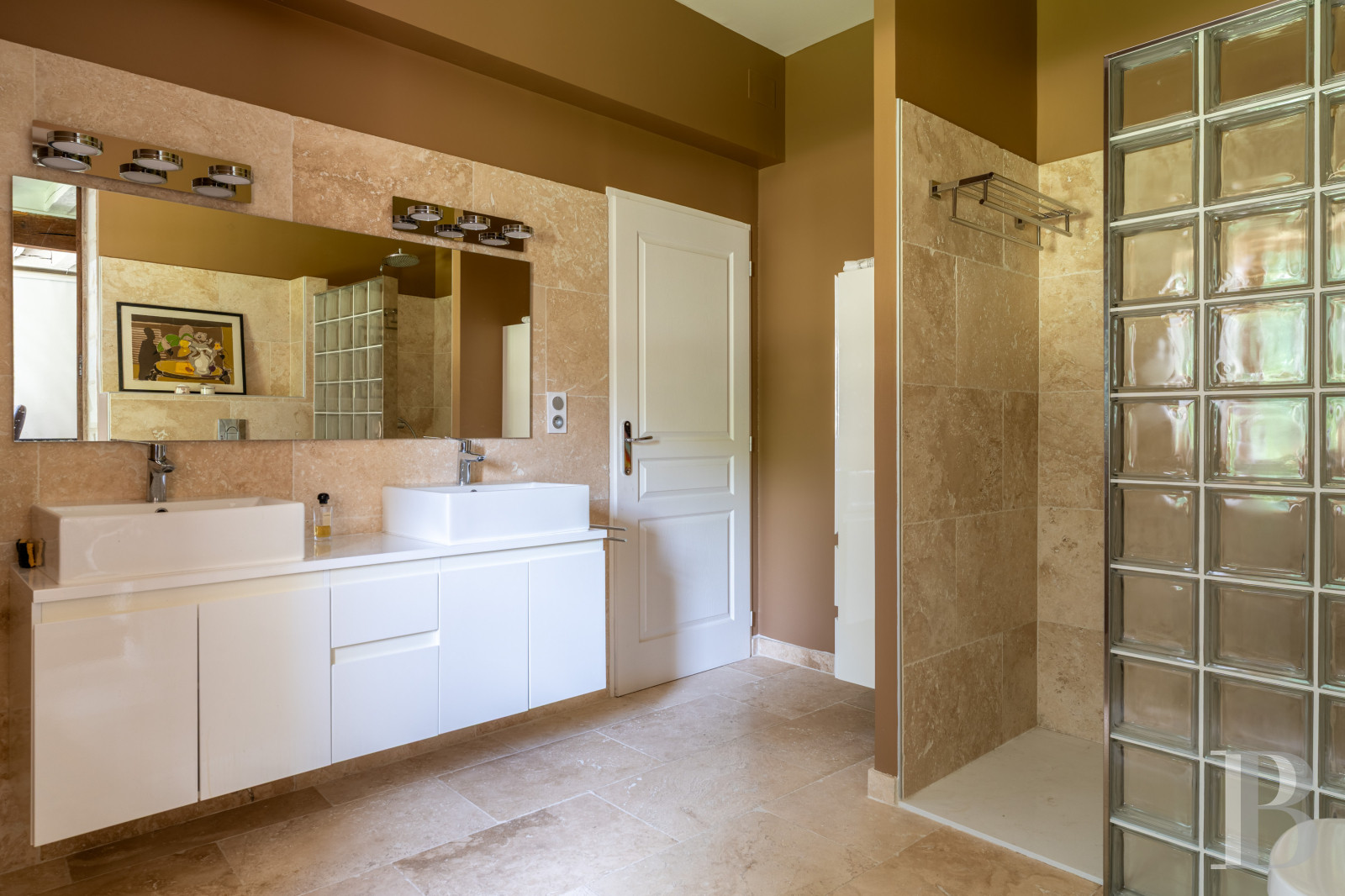
Several stone steps lead to an almost 60-m² living room, in which the floor is paved with period terracotta tiles. There is partially exposed stonework on the walls plus exposed beams on the ceiling. The back wall is occupied by a rustic fireplace incorporating an old bread oven. In the corner, a wooden staircase climbs upstairs. The neighbouring kitchen is paved with terracotta tiles. It is followed by an office / study with oakwood strip flooring and exposed beams, then a bathroom tiled with travertine stone on the floor and walls. The last room, which is currently used as a utility room, is set over two half-levels to compensate for the slope of the courtyard onto which it opens at ground level.
The upstairs
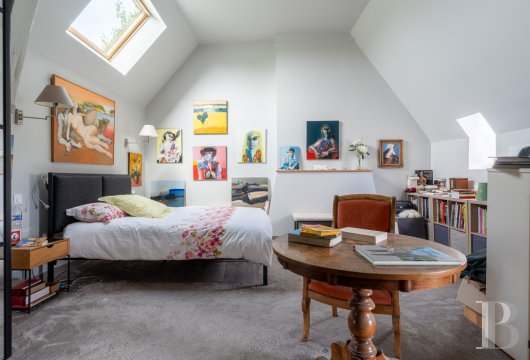
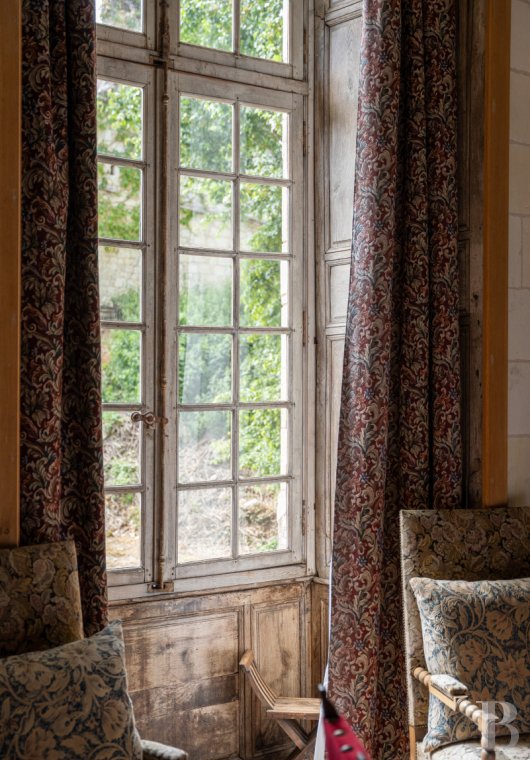
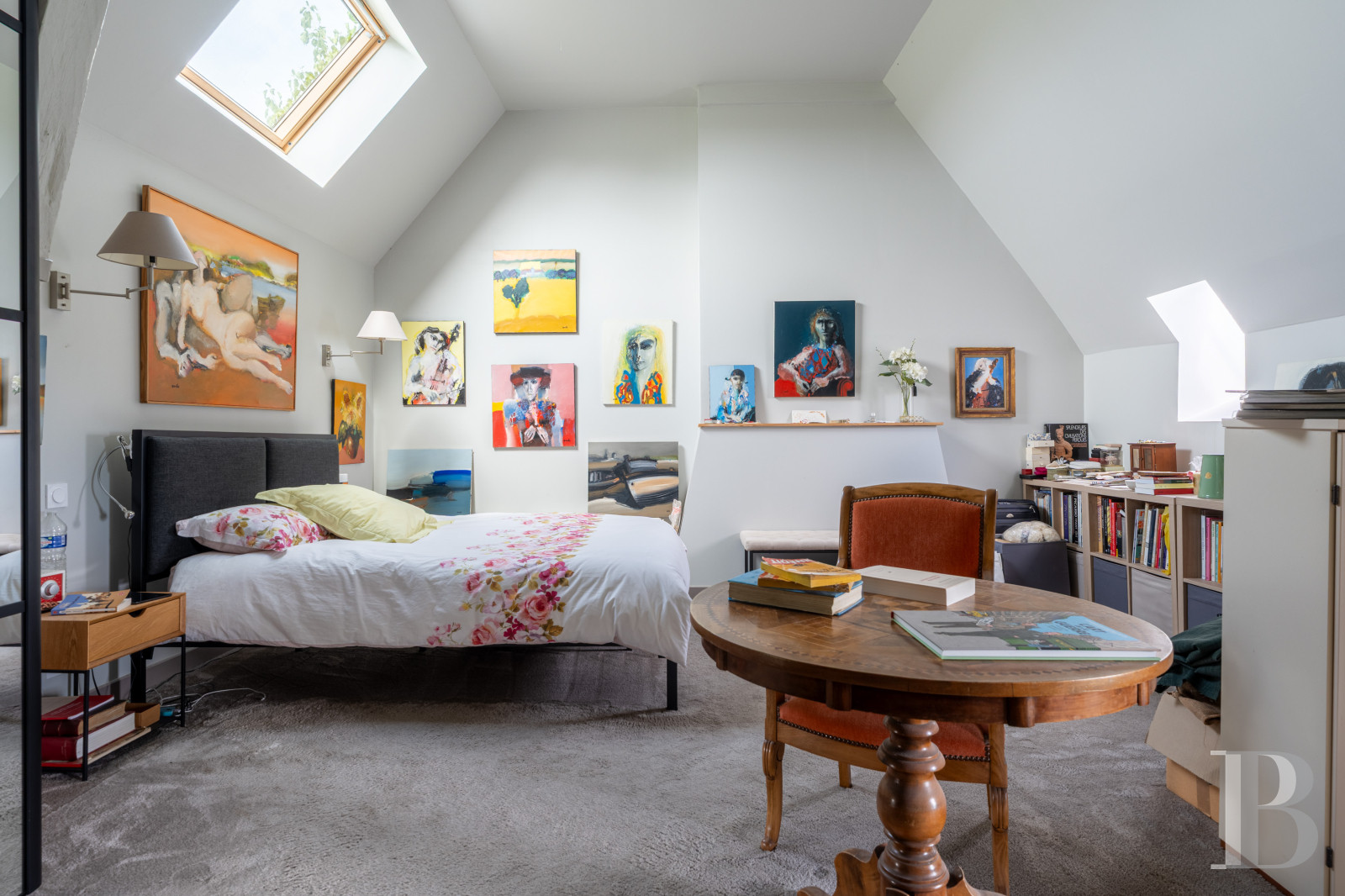
A landing leads to an around 35-m² master bedroom with white walls and a carpeted floor. Cupboards have been fitted in the low parts of the angles between the ceiling and floor. The following bedroom with wood strip flooring allows light to filter in through a skylight. Next comes a tiled bathroom, with a corner bath beneath a dormer window, while there is a shower in another corner of the room. A third bedroom is also bathed in light through a dormer. A door opens in the back wall of this room into a more than 80-m² loft which could easily be converted. There are exposed beams throughout this space.
The barn / reception room
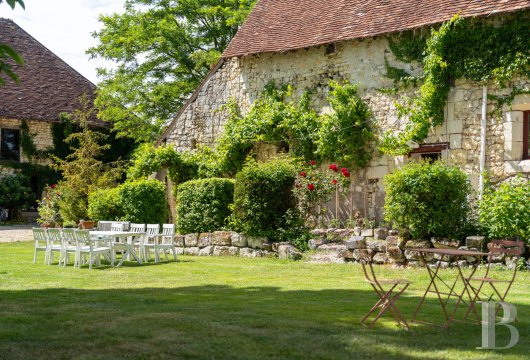
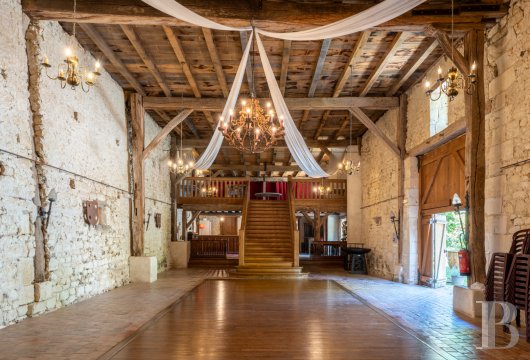
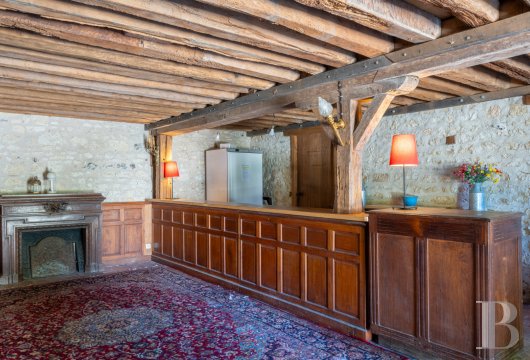
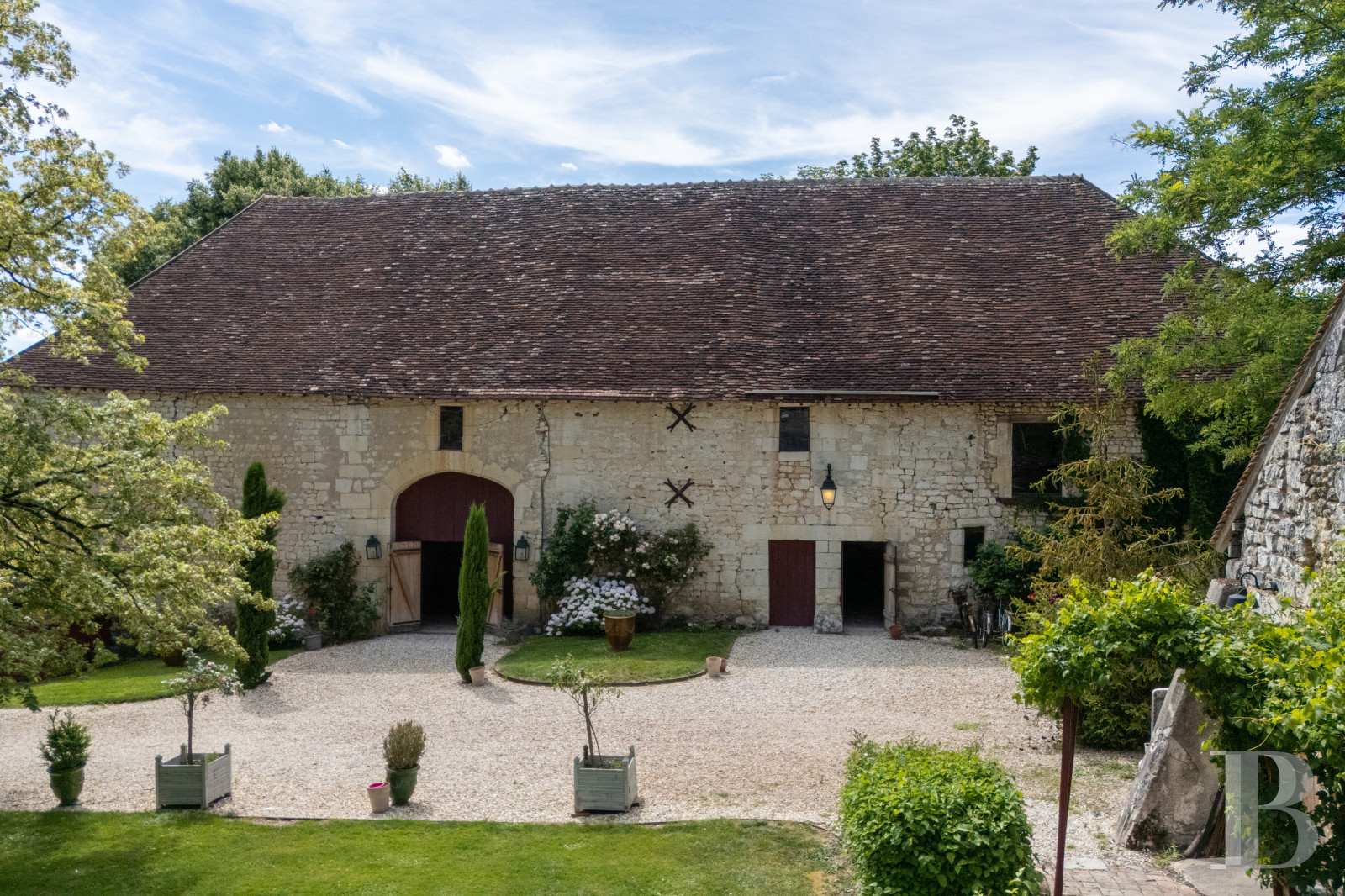
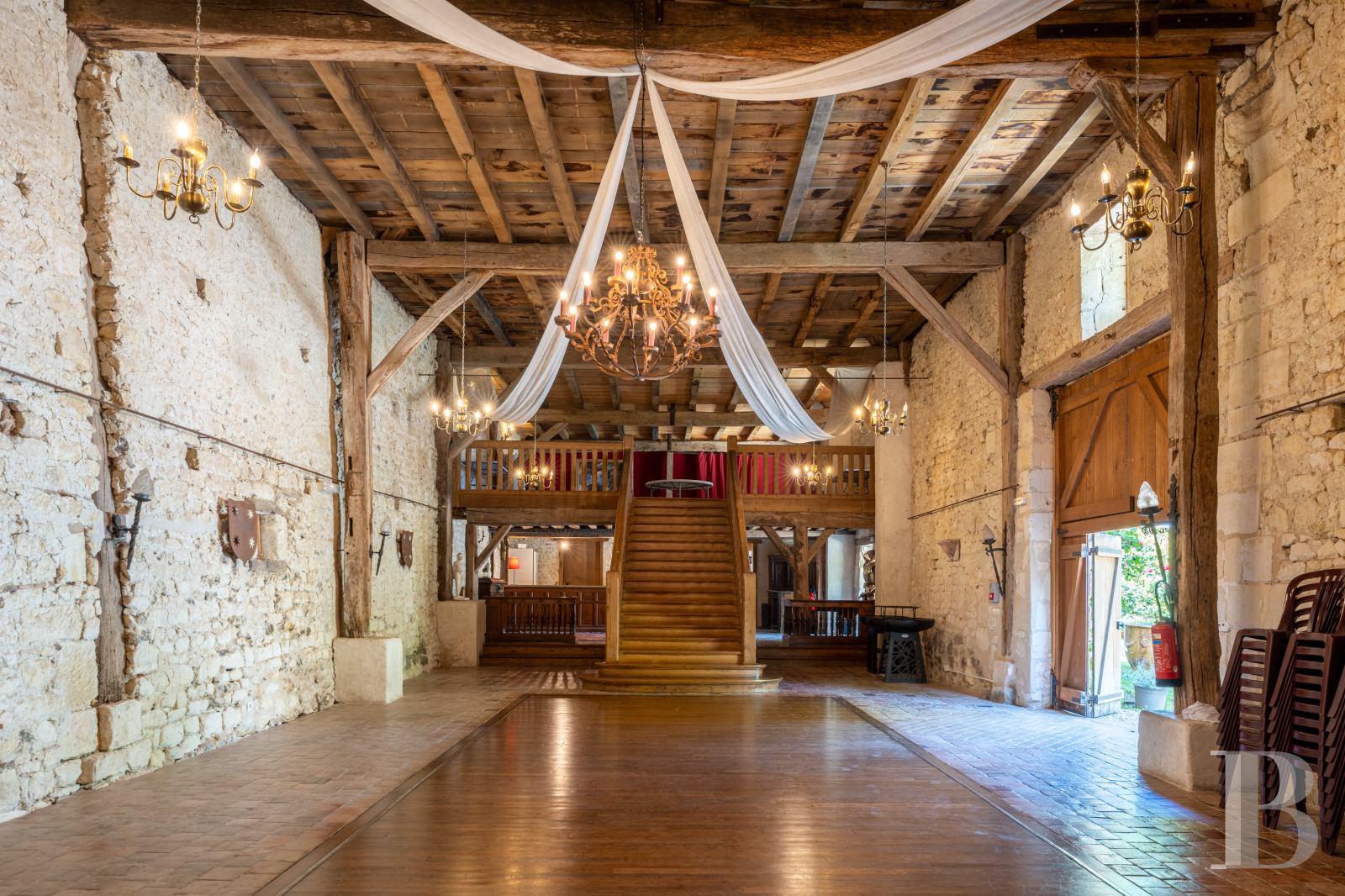
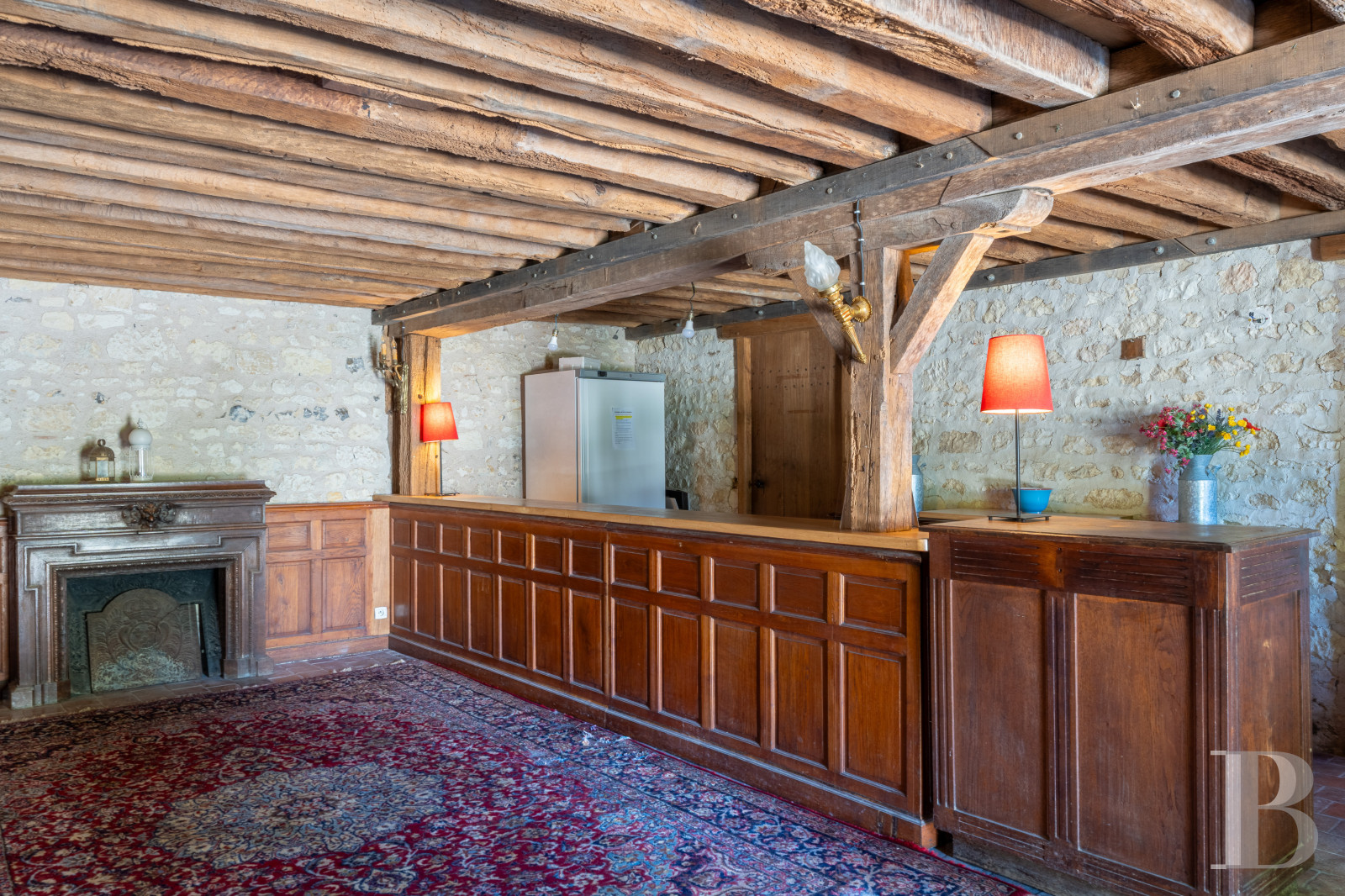
The walls boast partially exposed stonework both inside and outside. The building is topped by a roof made entirely of flat tiles. Hydrangeas and climbing roses run along the facade of the edifice, which boasts a reception volume of almost 245 m² accompanied by 85 m² of technical facilities. The floor is paved with period terracotta tiles with a parquet dance floor in the middle, while a decorative monumental fireplace occupies the back wall. A solid oakwood staircase climbs up to a mezzanine with wood strip flooring, beneath which there is a bar, with a door that opens onto the garden. To the rear, one door leads to a PRM-compatible lavatory and another opens into a semi-professional kitchen from which the exterior can directly be reached.
The exterior
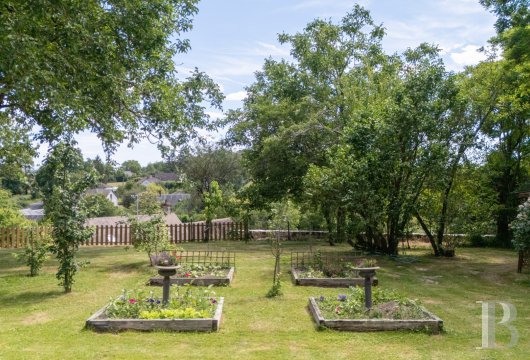
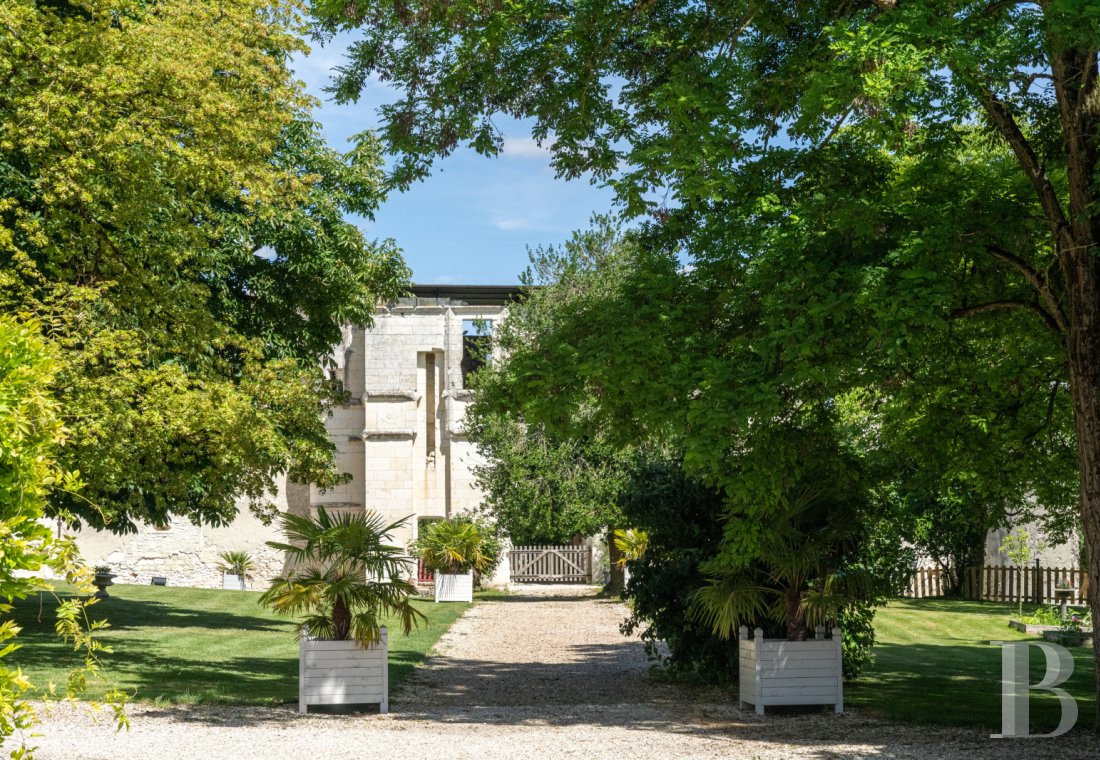
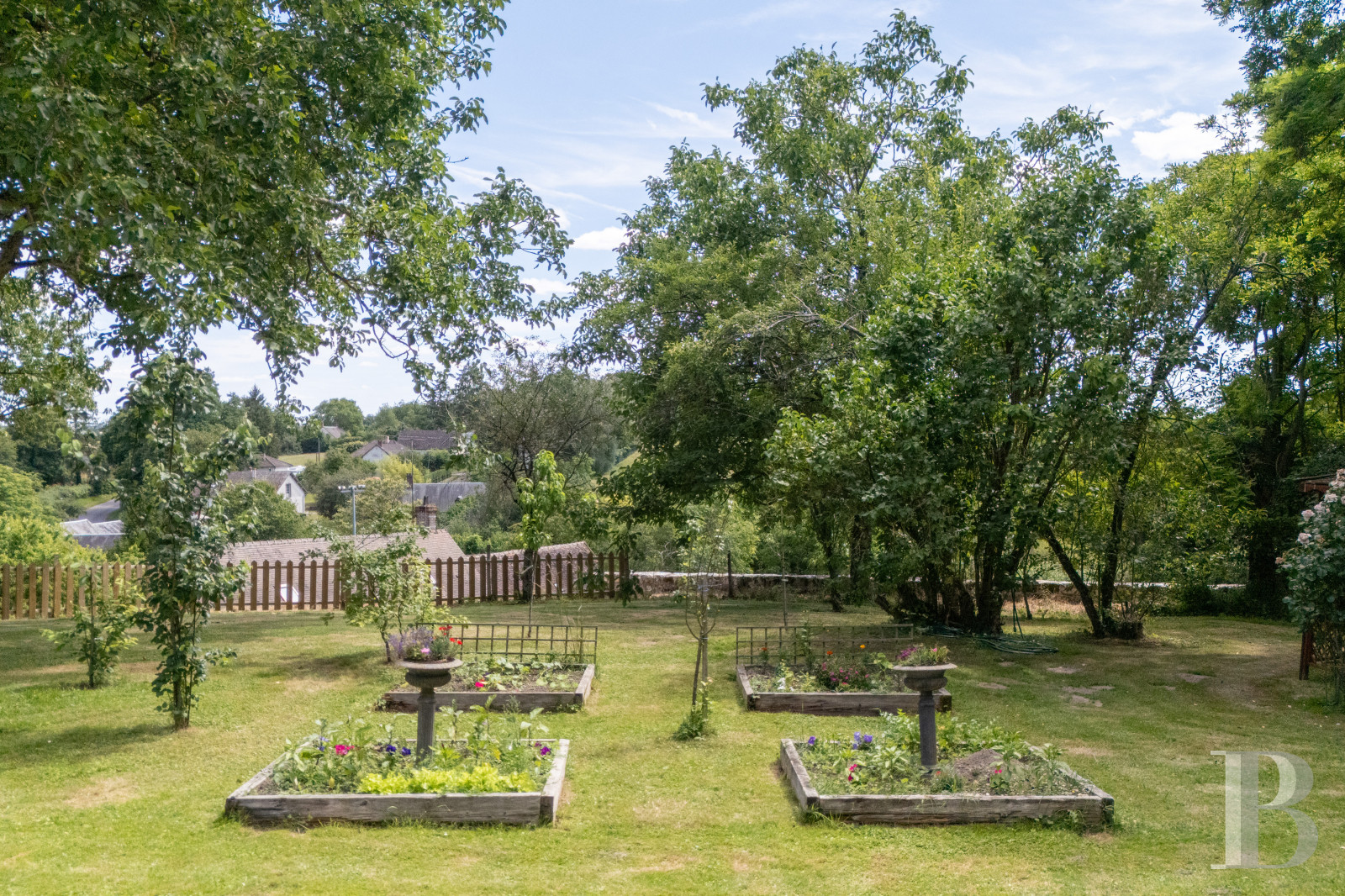
The large, landscaped, main courtyard is enclosed on three sides by the property’s buildings. A central driveway leading up to the entrance porch of the chateau runs in between two large lawned areas that are dotted with several ornamental trees. The moat, lying in front of the facade of the chateau is made up of grass covered banks that have been partially landscaped into an amphitheatre for outdoor performances. A discrete patio underlines the longhouse’s facade. To the south, the grounds open out onto a garden overlooking the village, with wide-ranging views over the surrounding countryside.
Our opinion
This property’s history dates back to the beginnings of the French Renaissance. It includes the ruins of a chateau whose arcades inspired those at Villandry and combines heritage, accommodation and reception facilities in an especially coherent whole. The comfortable longhouse, the holiday let in the tower and the barn already converted to host weddings make it possible to envisage a plethora of both private and professional purposes. Over more than twenty-five years, the current occupants have devoted their efforts to safeguarding and passing on this unique place, which is set to continue its history in a region characterised by the great chateaux of the Loire Valley.
Reference 539024
| Main building floor area | 226 m² |
| Outbuildings floor area | 370 m² |
| including refurbished area | 340 m² |
| Land registry surface area | 9223 m² |
| Total floor area | 230 m² |
Information on the risks to which this property is exposed is available on the website: www.georisques.gouv.fr
Share


NB: The above information is not only the result of our visit to the property; it is also based on information provided by the current owner. It is by no means comprehensive or strictly accurate especially where surface areas and construction dates are concerned. We cannot, therefore, be held liable for any misrepresentation.