



A medieval castle rebuilt in the 19th century, with a historical wine estate,
near Bordeaux, in a village in the Côtes de Bourg sector
near Bordeaux, in a village in the Côtes de Bourg sector
Blaye,
GIRONDE
aquitaine
33390
FR

Location
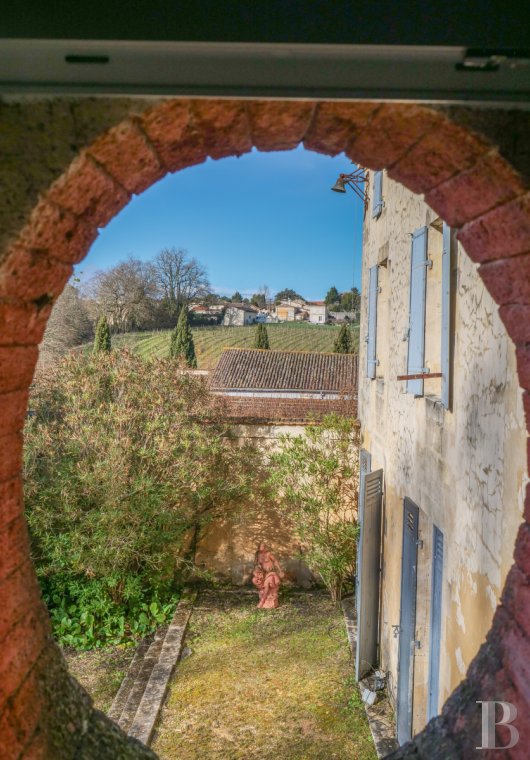
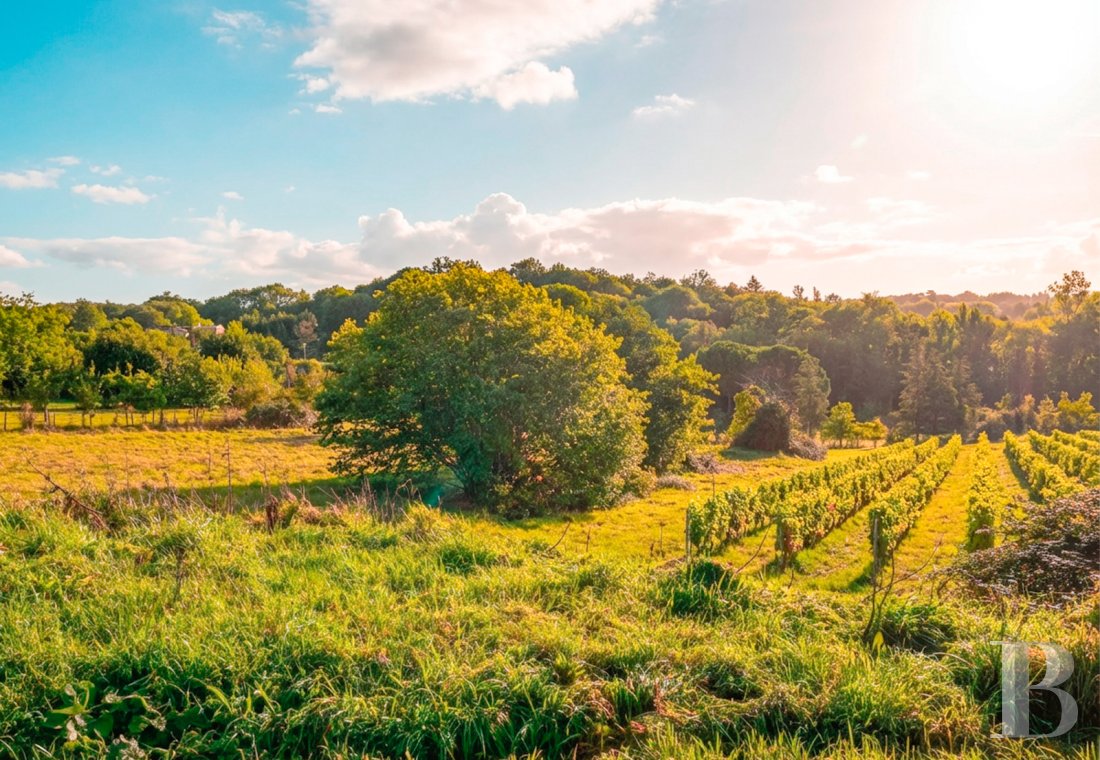
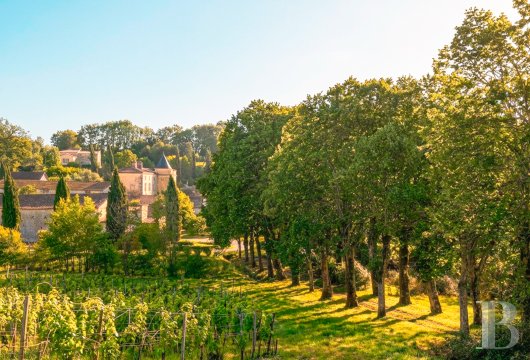
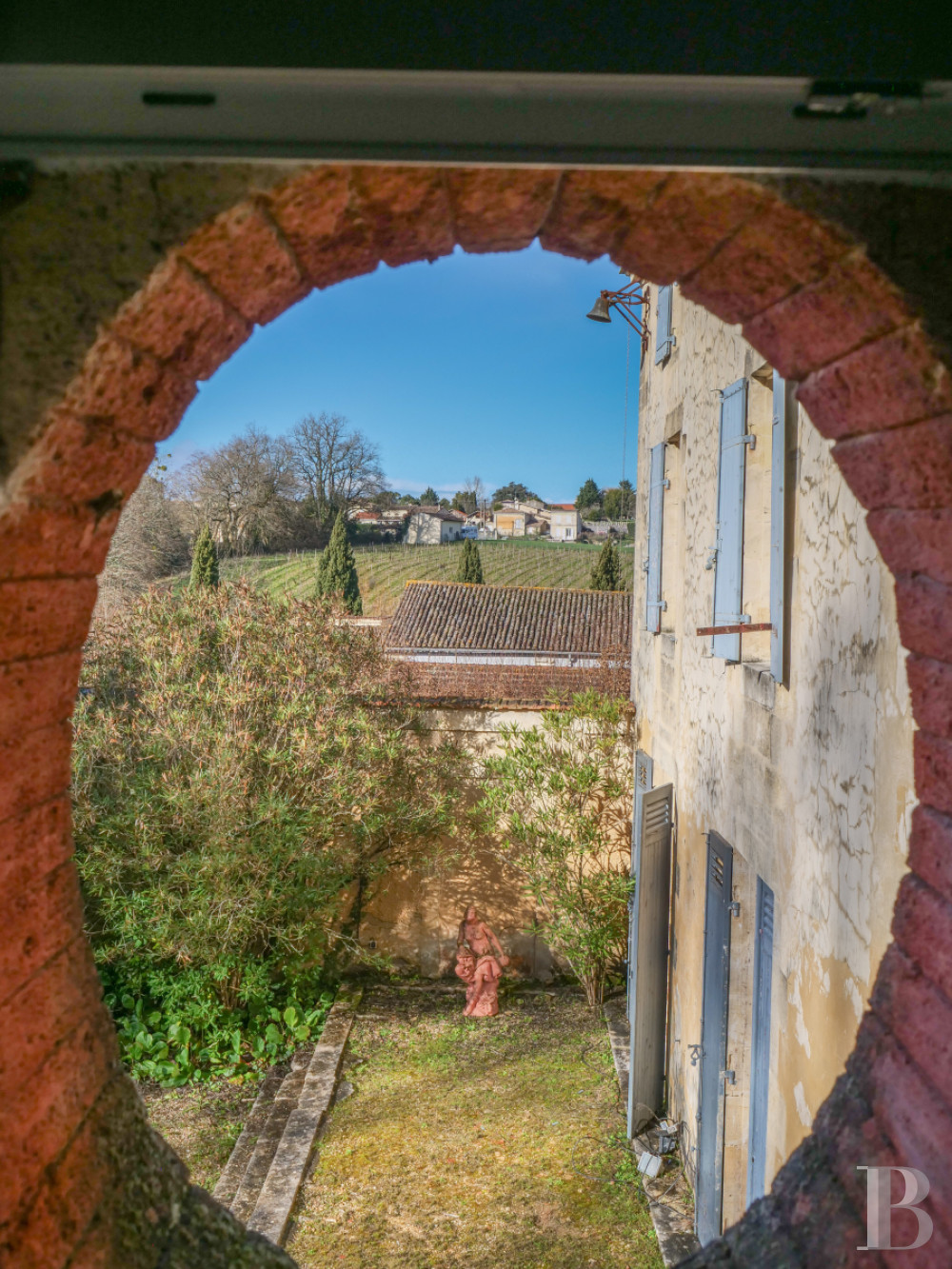
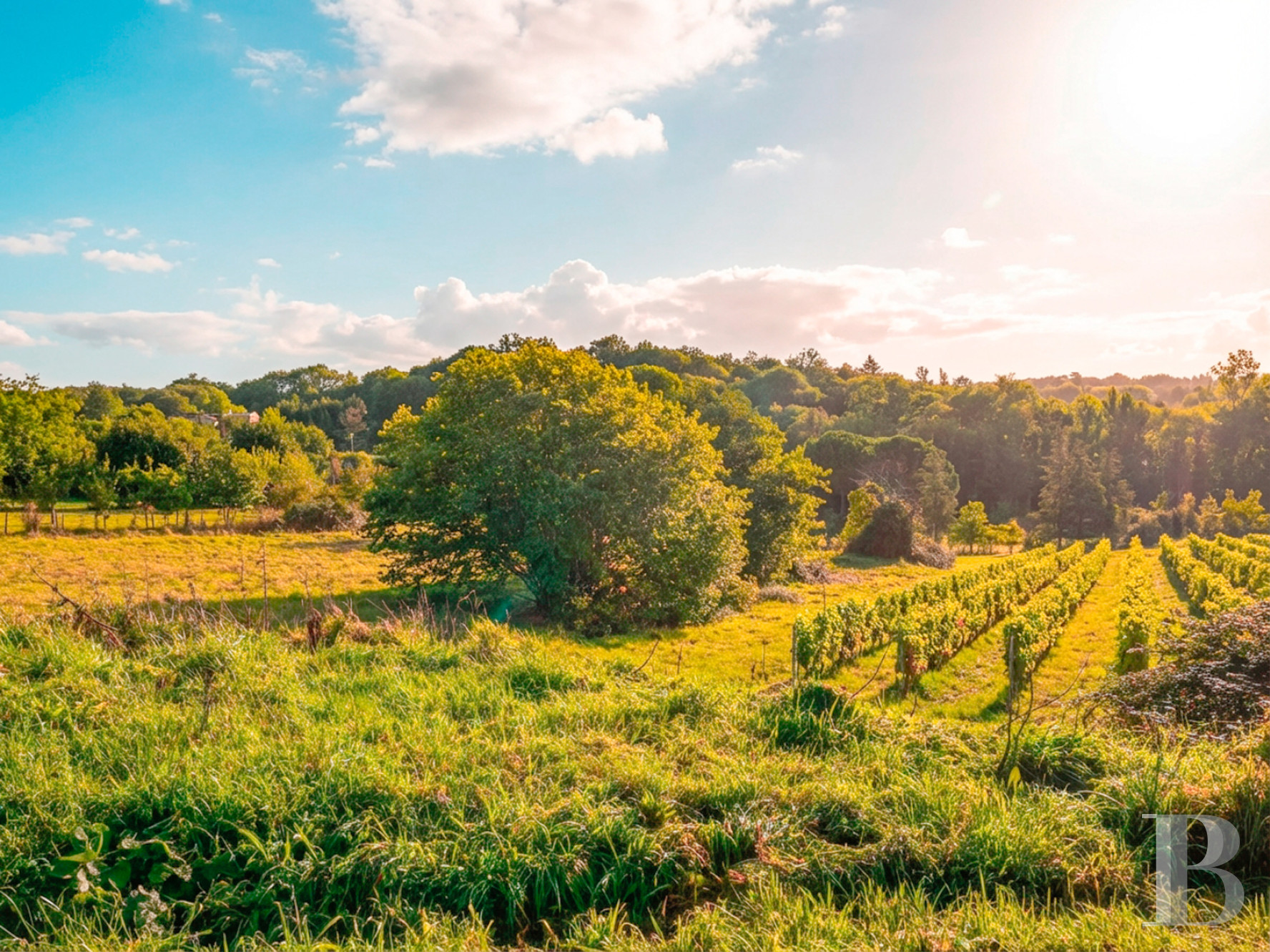
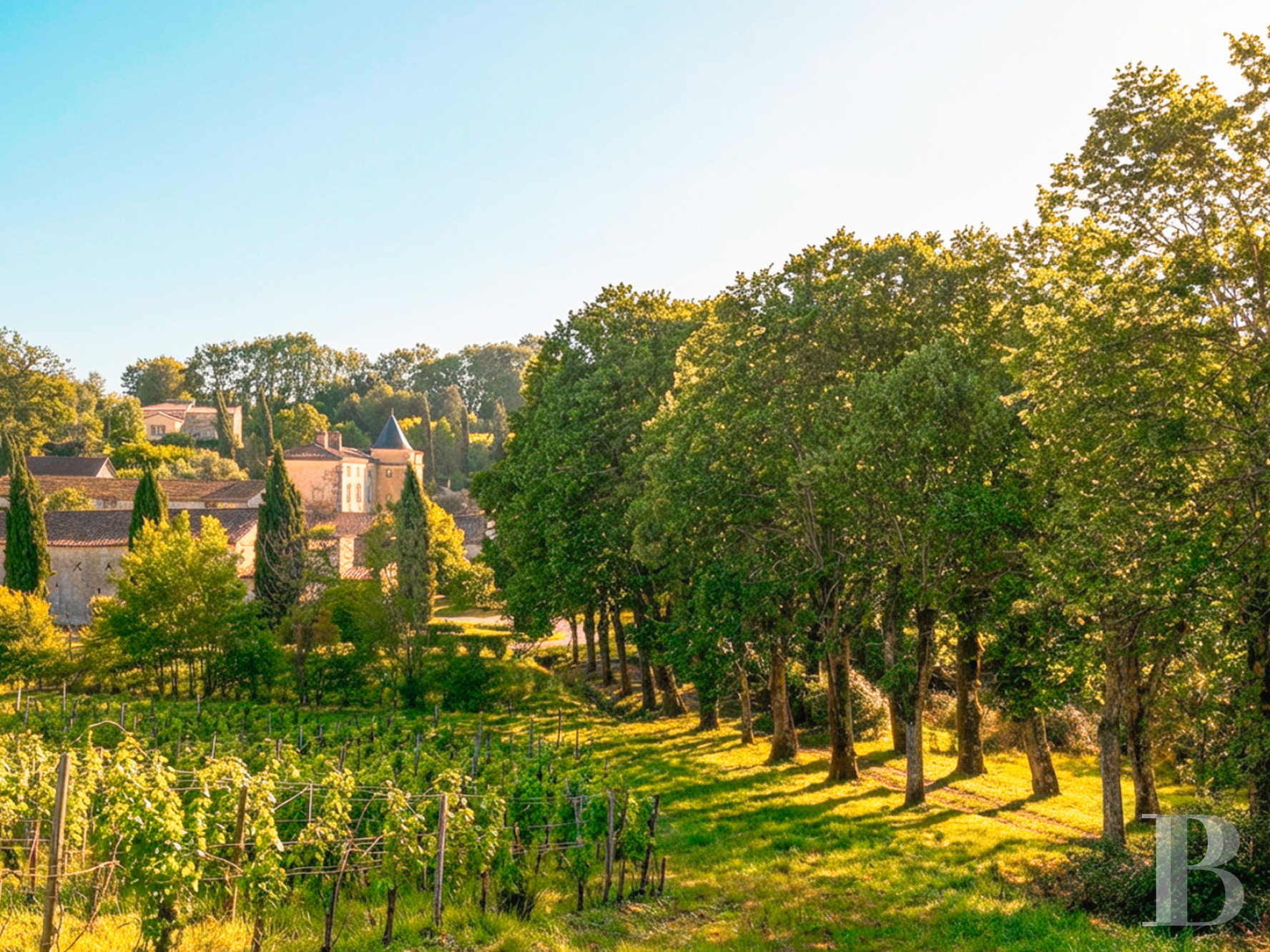
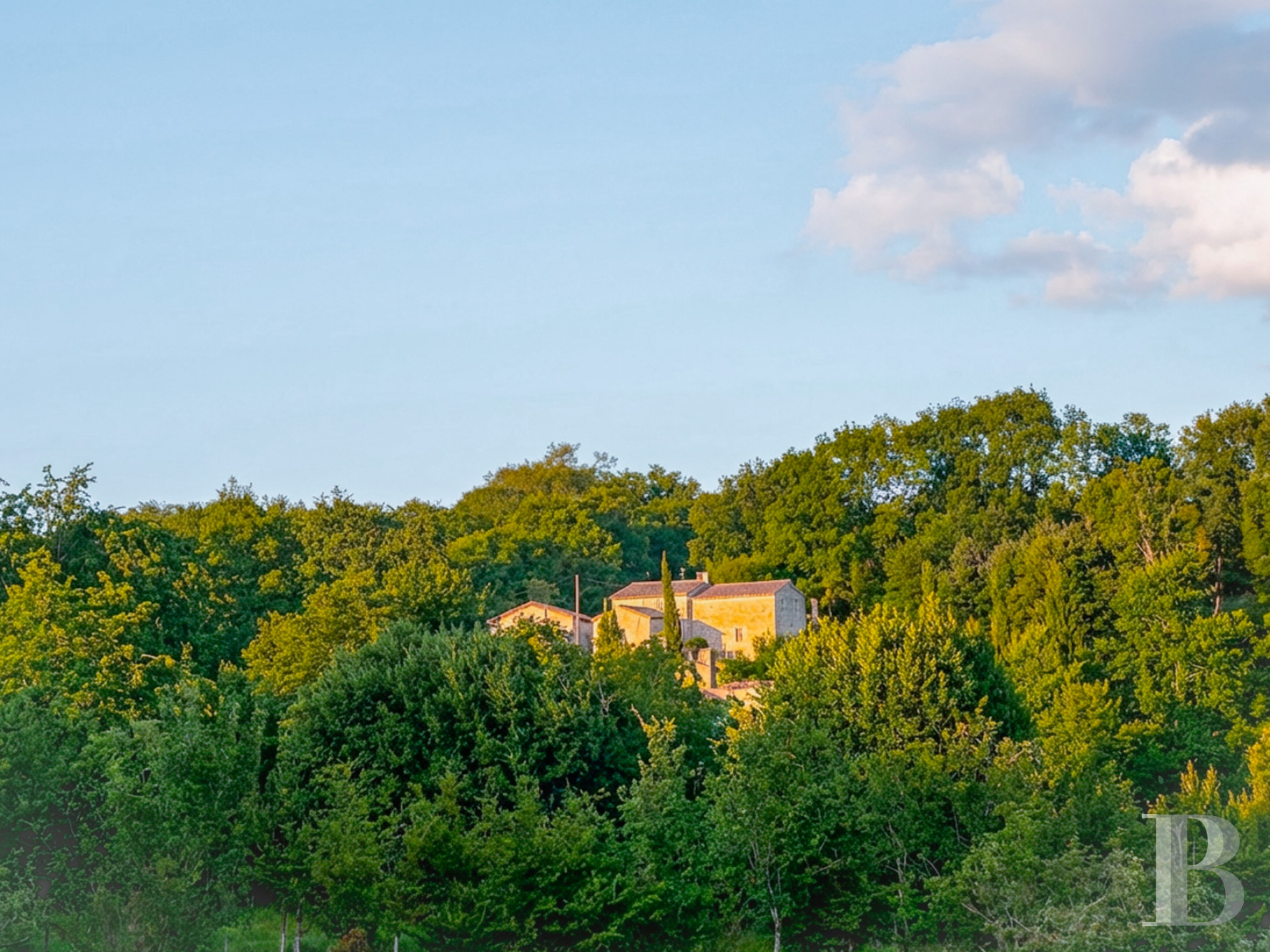
This vast Nouvelle Aquitaine region wine-making property stands in a village typical of the Gironde area countryside, 50 minutes from the centre of Bordeaux, one hour from its airport and in the heart of the Côtes de Bourg PDO vineyards. The estate spreads out over approximately 33 hectares, of which almost 13.90 hectares are made up of vines planted in gravelly-clay soils renowned for their quality. This sector, which is often nicknamed ‘Little Switzerland of Gironde’ due to its wooded slopes and sweeping views, is steeped in very ancient vine-growing tradition. The first vines were planted here in Roman times, taking advantage of the privileged aspect of the slopes and the influence on the local climate of the Gironde estuary, both of which are the source of the Côtes de Bourg wines’ unique and distinctive character.
The village is emblematic of the Gironde area’s rural municipalities, combining remarkable architectural heritage with vineyard landscapes made up of gentle slopes and lush, green terraces. At its centre, its church is listed as a historical monument. Essential shops and services can be found less than 10 minutes away by car, in the village itself as well as in the towns of Blaye and Bourg.
Description
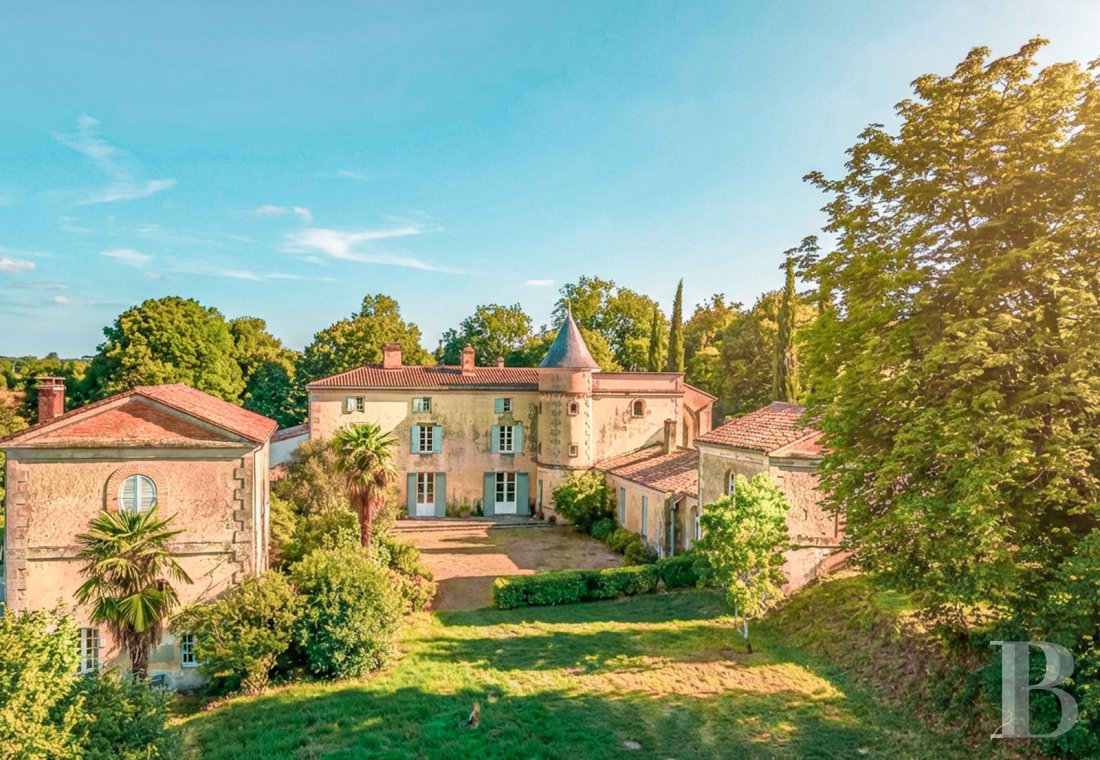
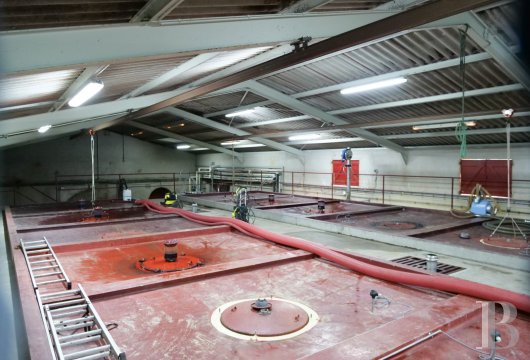
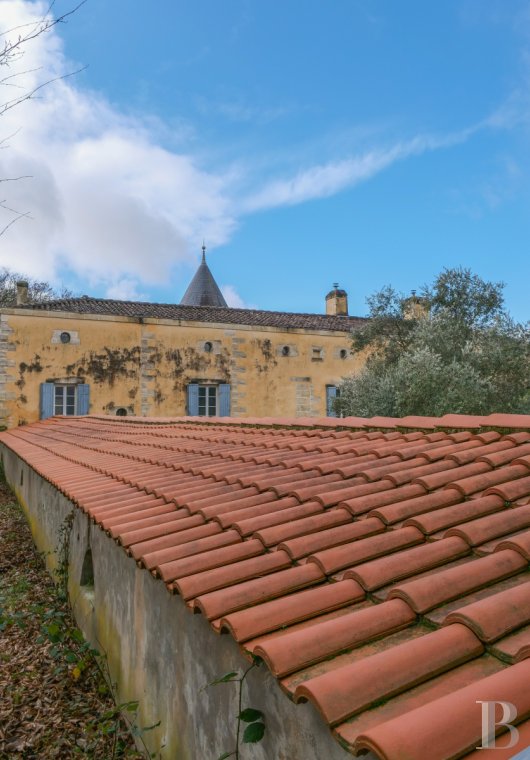
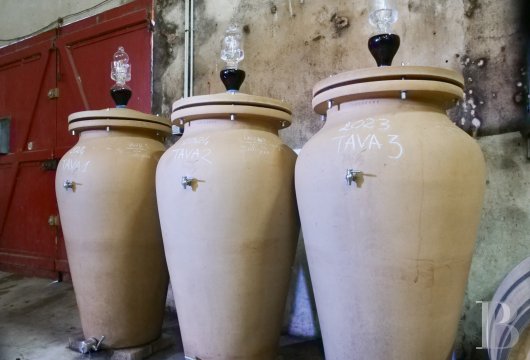
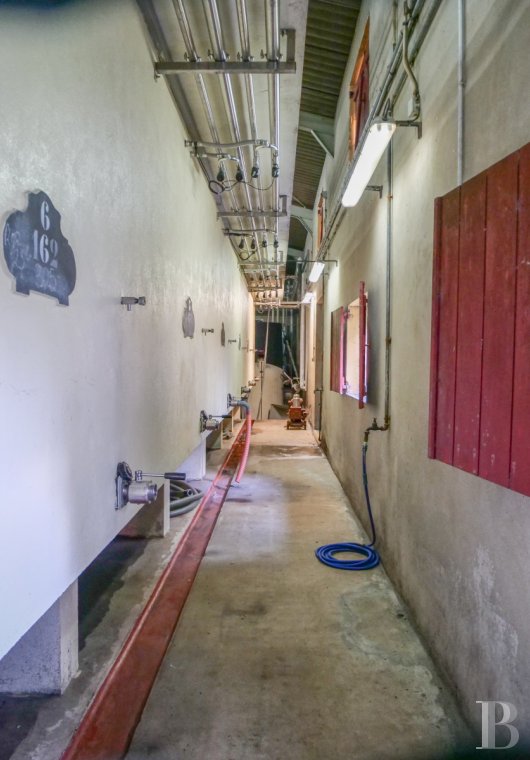
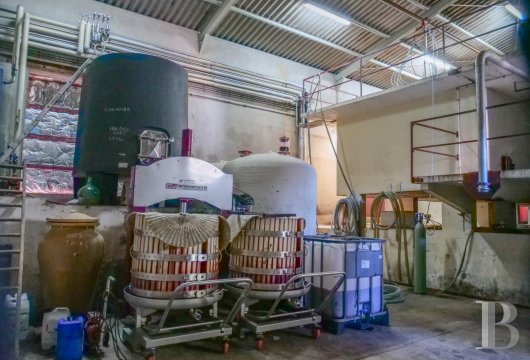
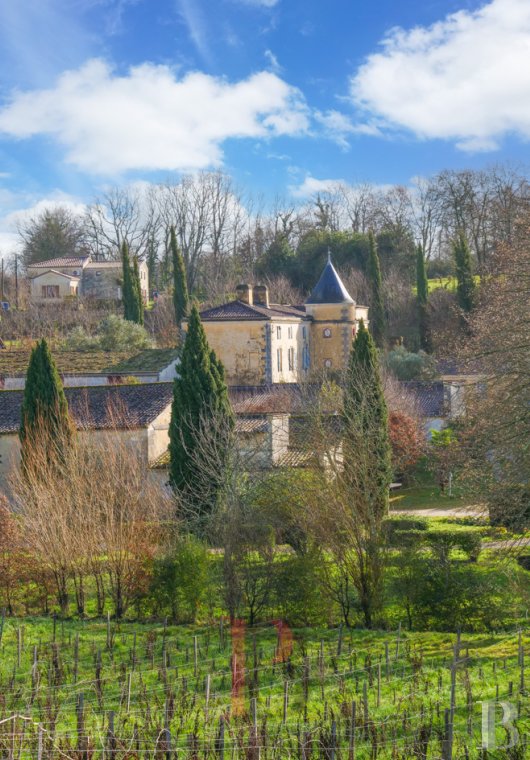
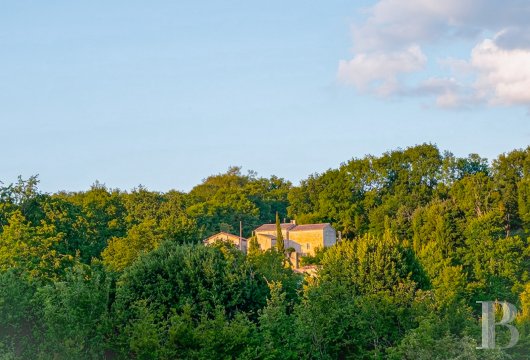
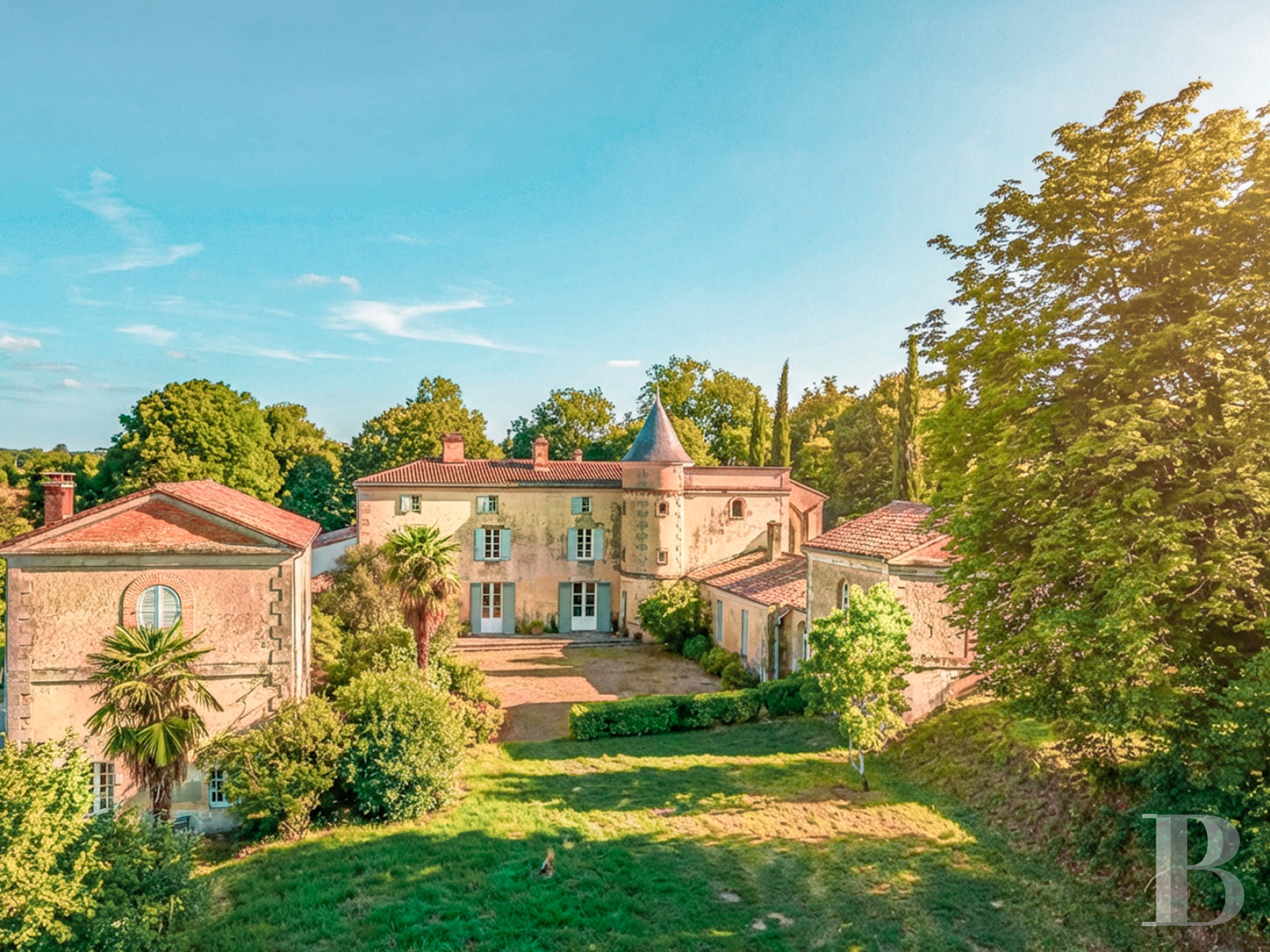
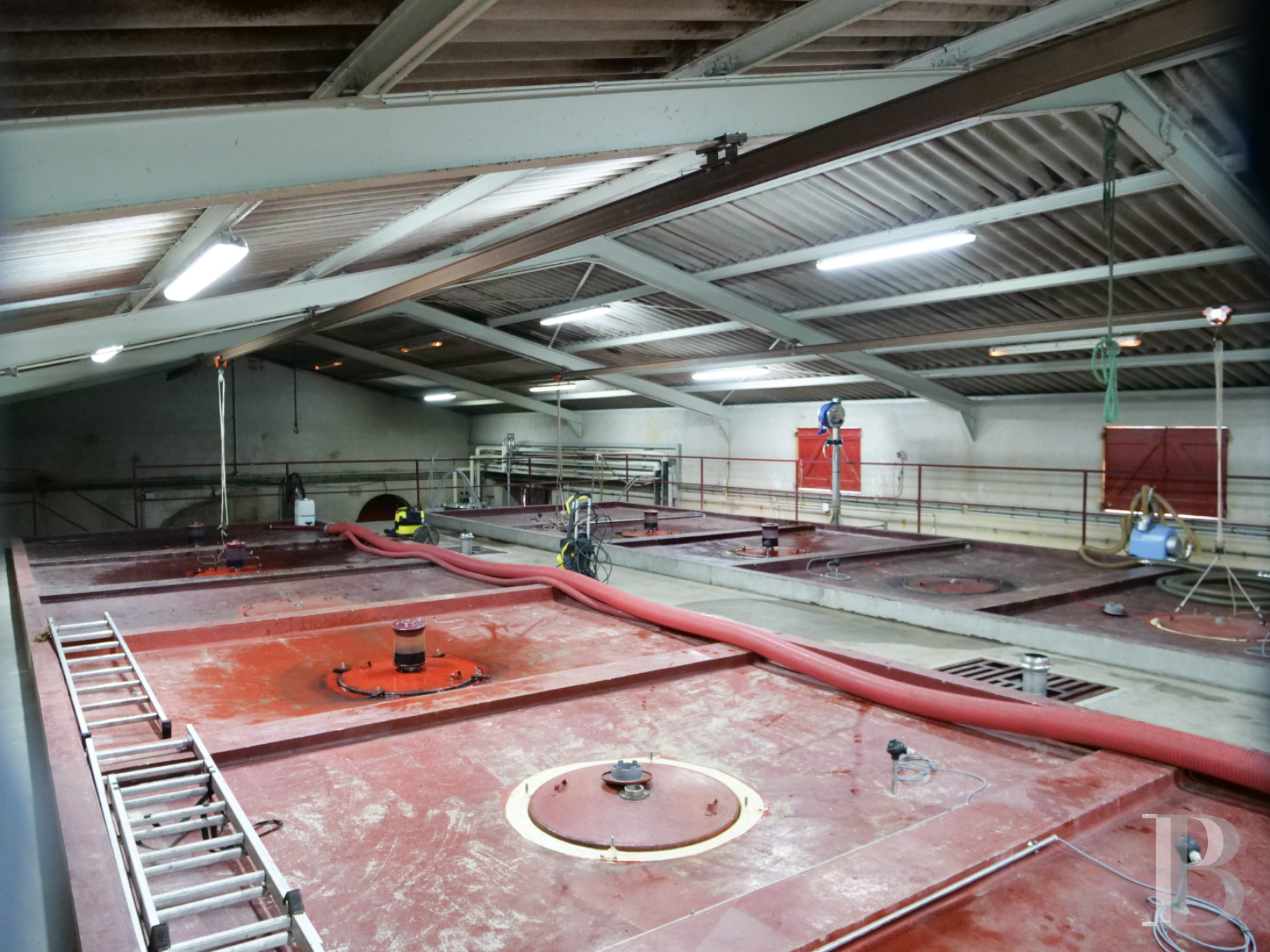
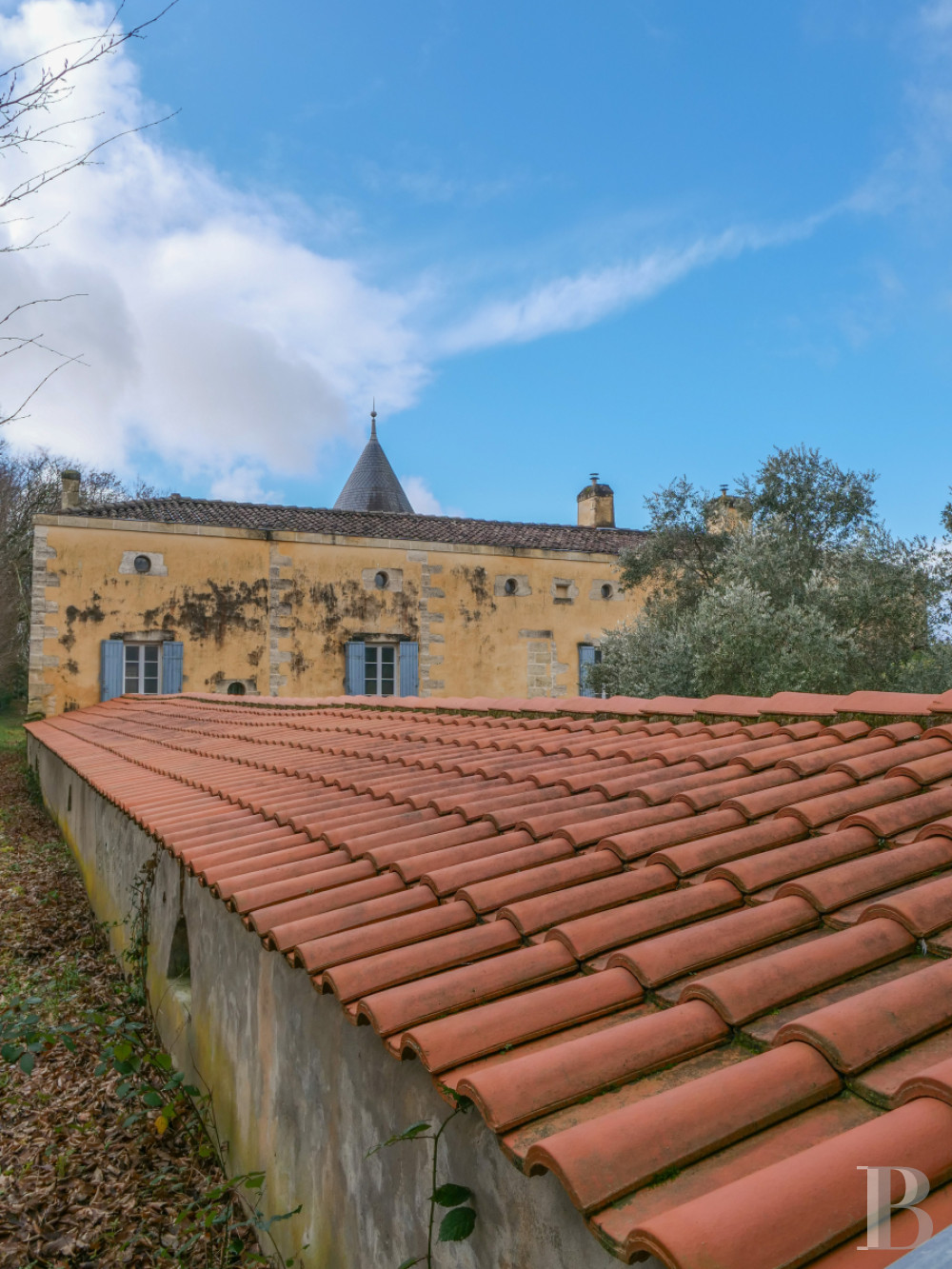
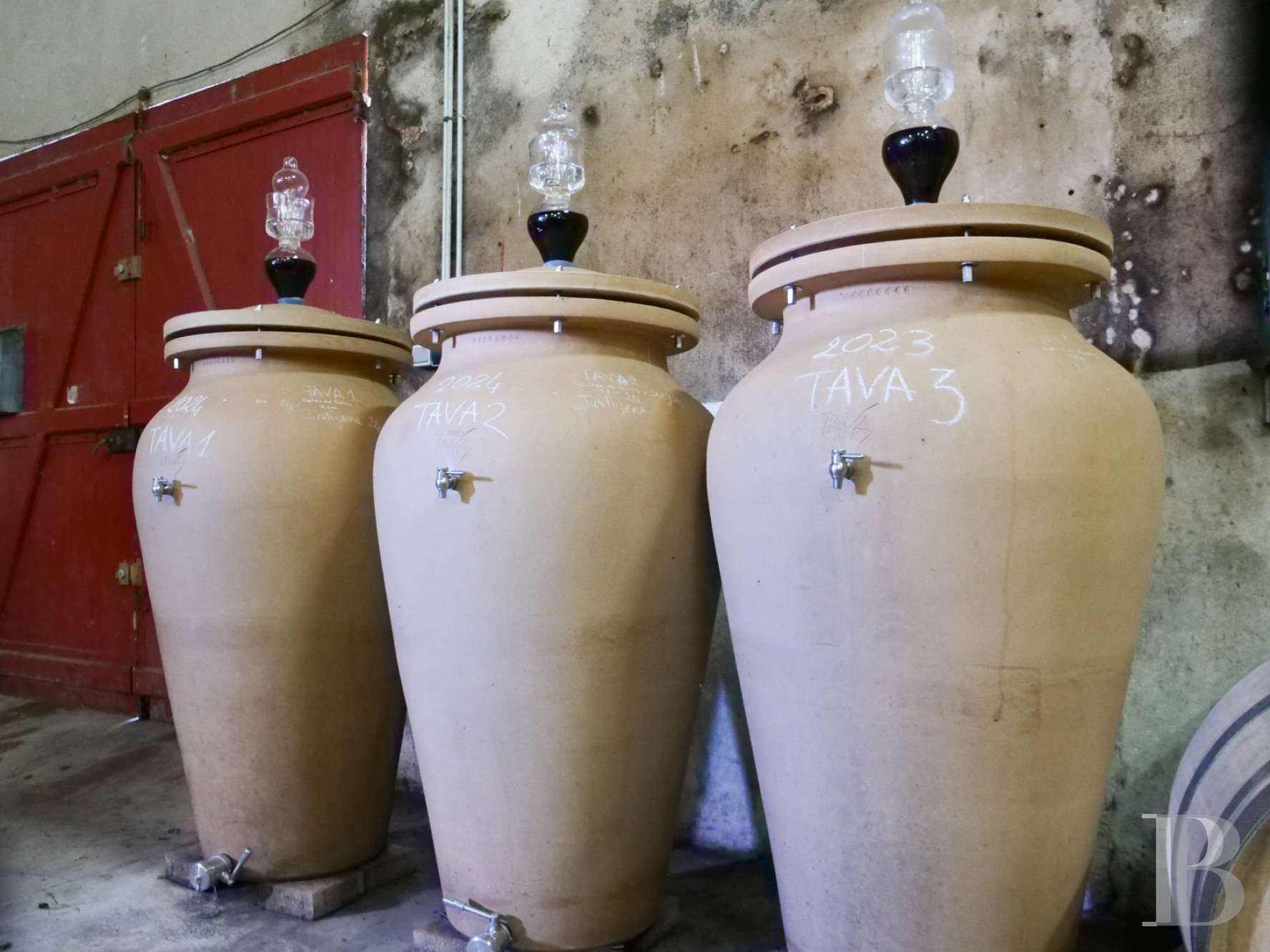
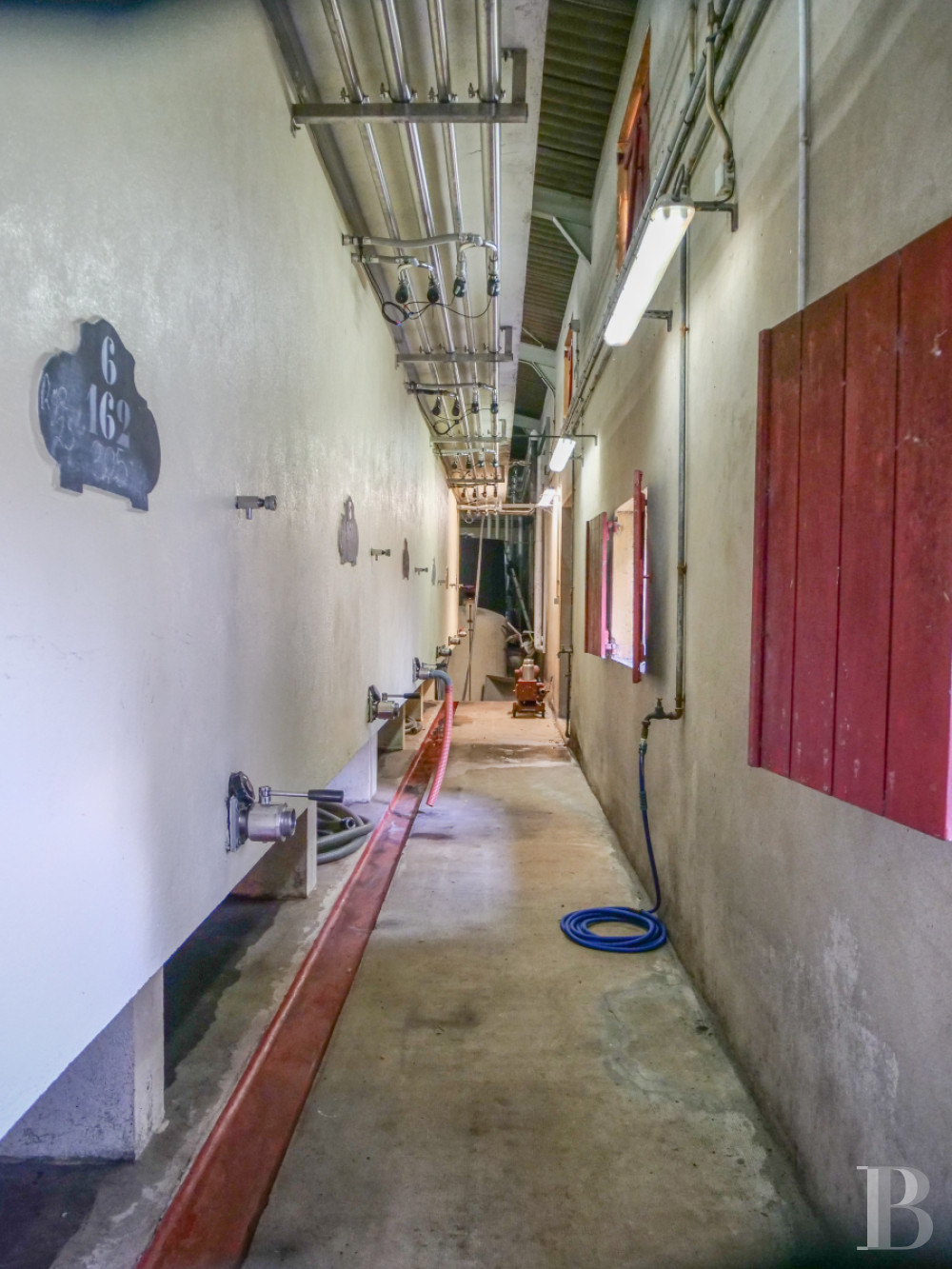
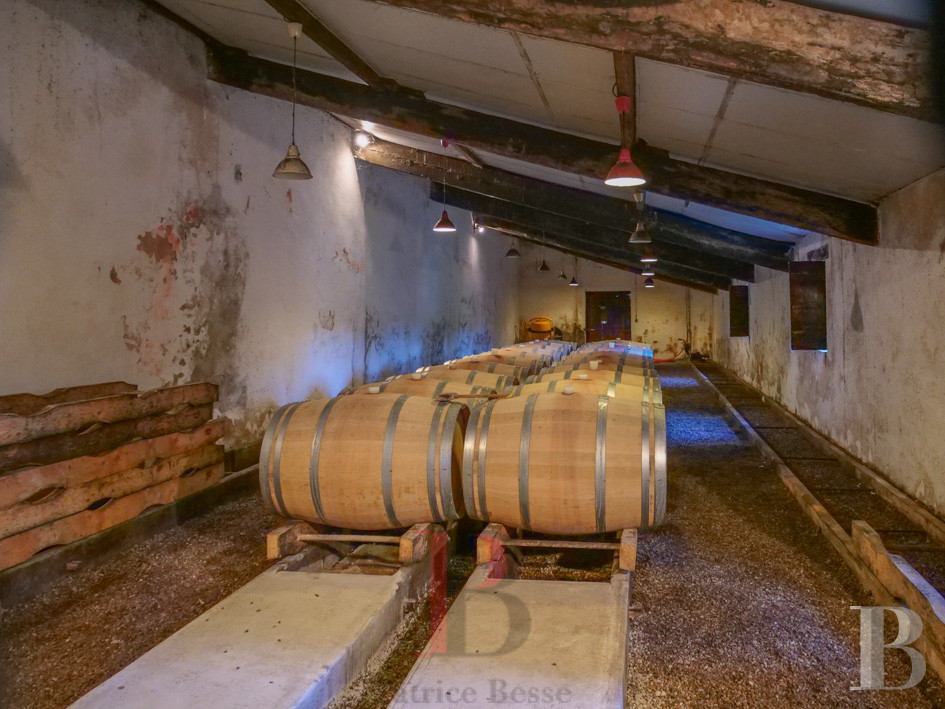
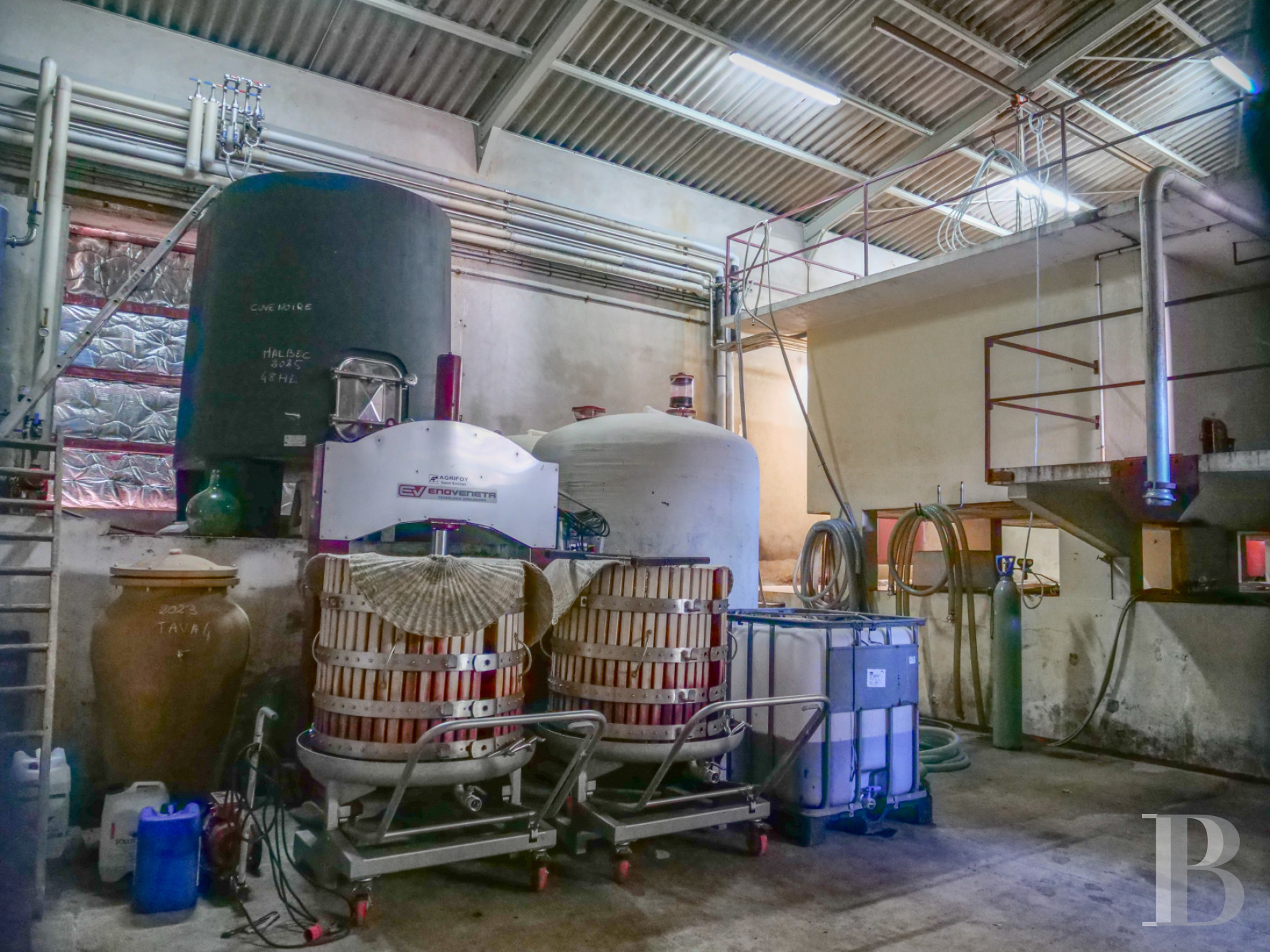
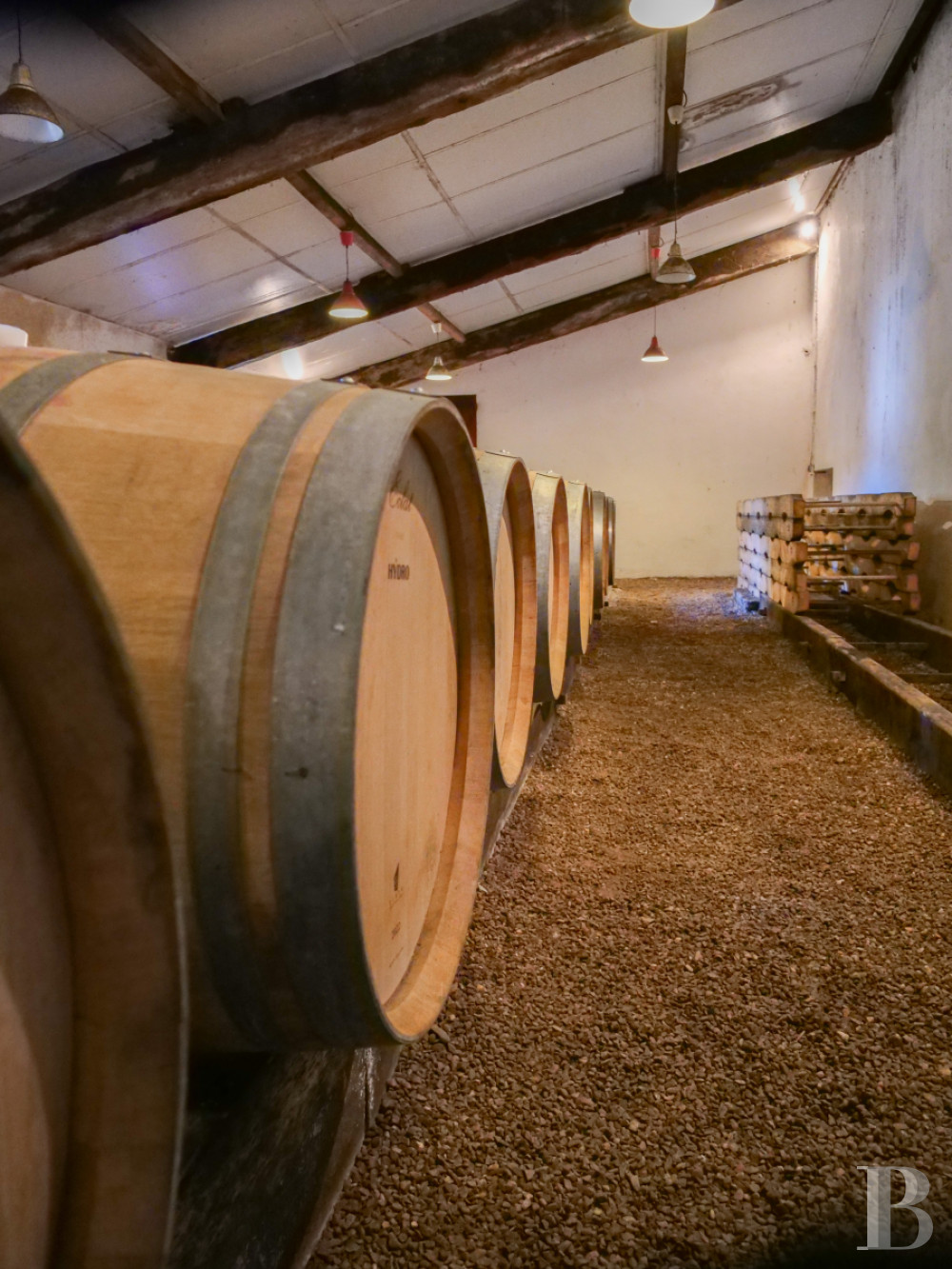
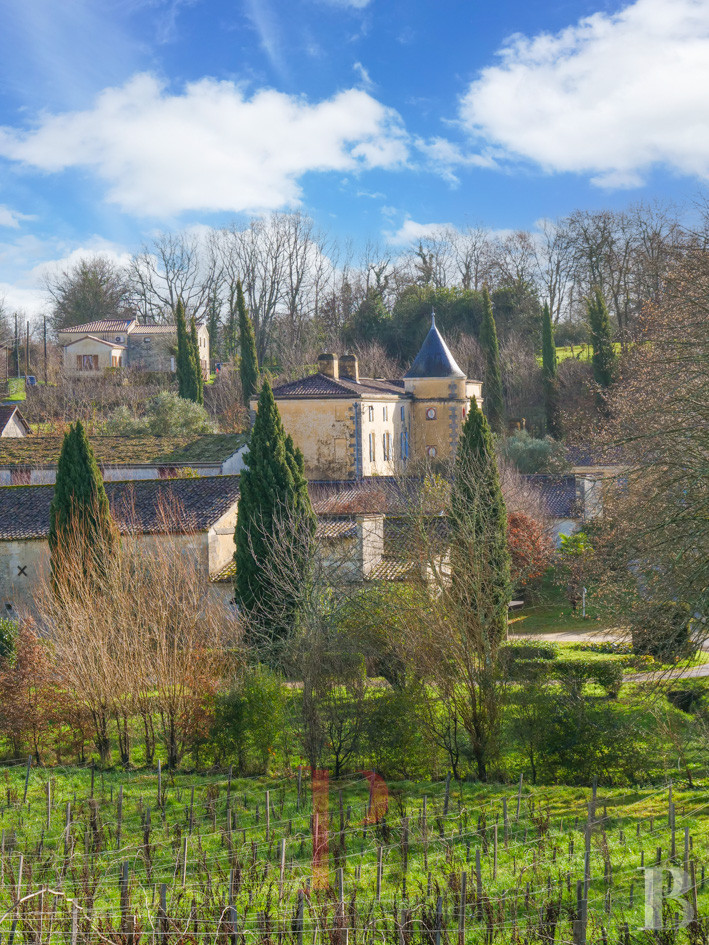
The property is dominated by the chateau, which is the main building on the estate and which stands out thanks to its emblematic tower. It is accompanied by several houses, which are conducive to a wide variety of uses and suitable for residential or hospitality projects. The estate also boasts comprehensive infrastructures, with a winery, blending cellar, a vat house equipped with concrete vats, a barrel cellar and storage cellars. Agricultural buildings, warehouses and workshops complete this coherent property, enabling immediate transmission of wine-making activity.
The thriving and well-maintained vineyard has been recently replanted and boasts a terroir conducive to environmentally friendly wine-making. The entire estate has plenty of wine tourism potential, in a peaceful and lush setting, ideal for developing accommodation solutions, tasting facilities or zones dedicated to the Bordeaux lifestyle.
The thriving and well-maintained vineyard has been recently replanted and boasts a terroir conducive to environmentally friendly wine-making. The entire estate has plenty of wine tourism potential, in a peaceful and lush setting, ideal for developing accommodation solutions, tasting facilities or zones dedicated to the Bordeaux lifestyle.
The chateau
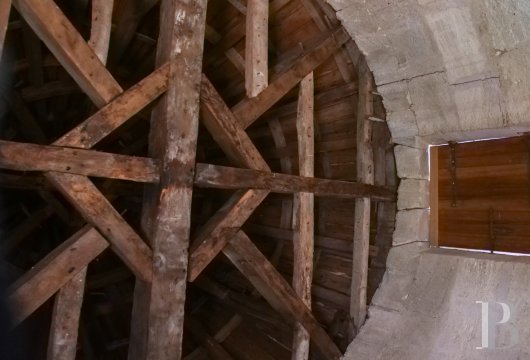
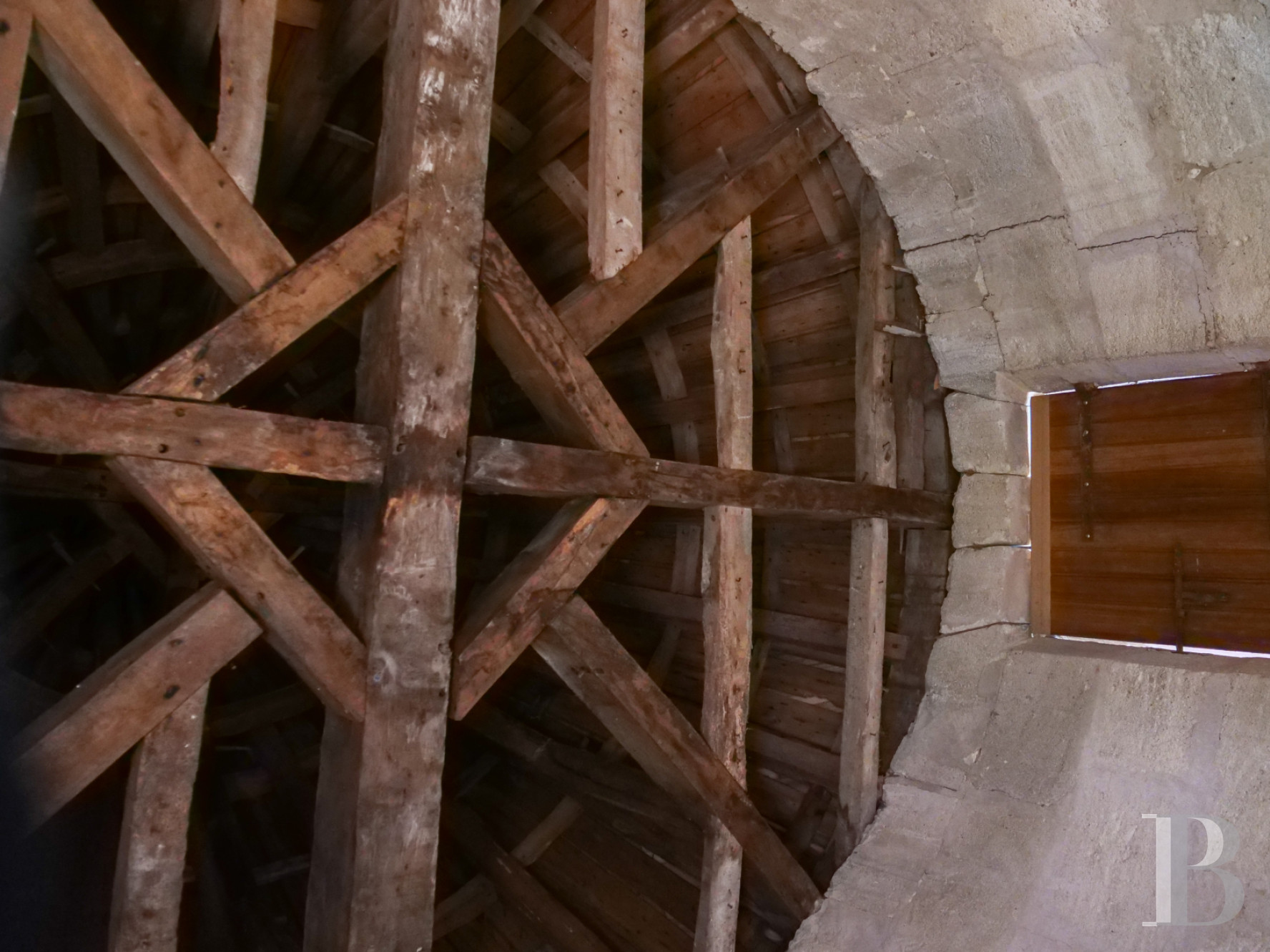
It was originally erected between the 12th and 13th centuries, in the form of a medieval manor flanked by a crenelated tower, but was rebuilt after the French Revolution, then transformed during the 19th century. Several remarkable remains pay witness to its age, including a still visible 13th-century mullion window. The chateau, which is in need of renovation, dominates the rest of the property and boasts a surface of around 630 m². The tower, whose roof frame and slate tiles were renovated between 2005 and 2010, forms the emblematic feature of the chateau’s silhouette. The interior is made up of vast rooms on the ground floor and large, partially open plan spaces on the upper floors. The general layout is conducive to a wide range of conversion possibilities, for bespoke renovation of each level. If required, plans drawn up by an architectural firm can be made available.
The ground floor
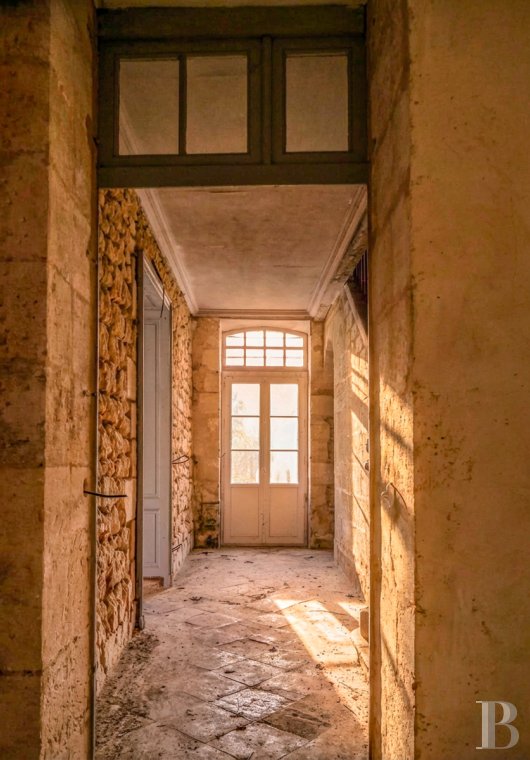
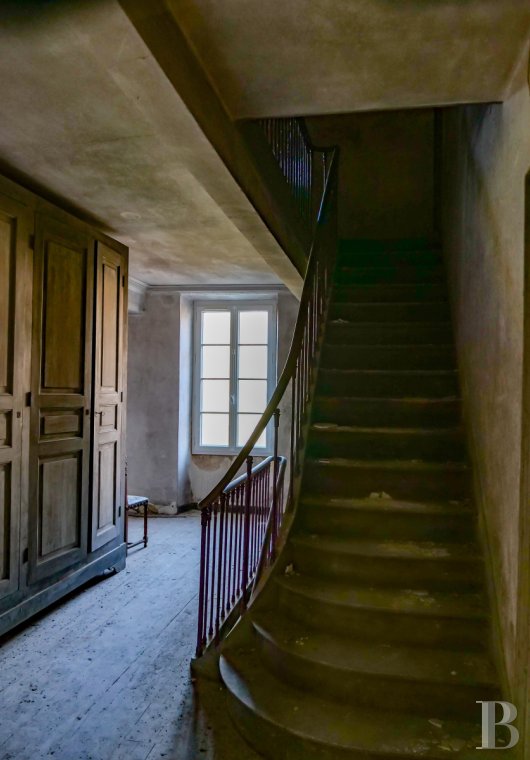
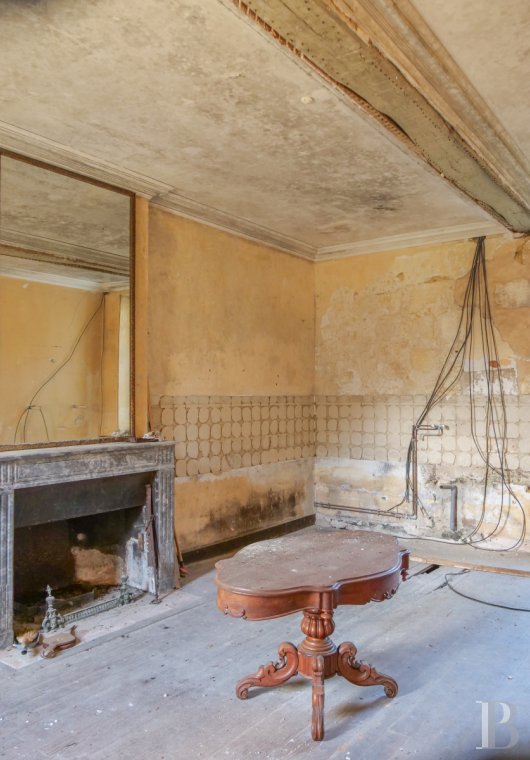
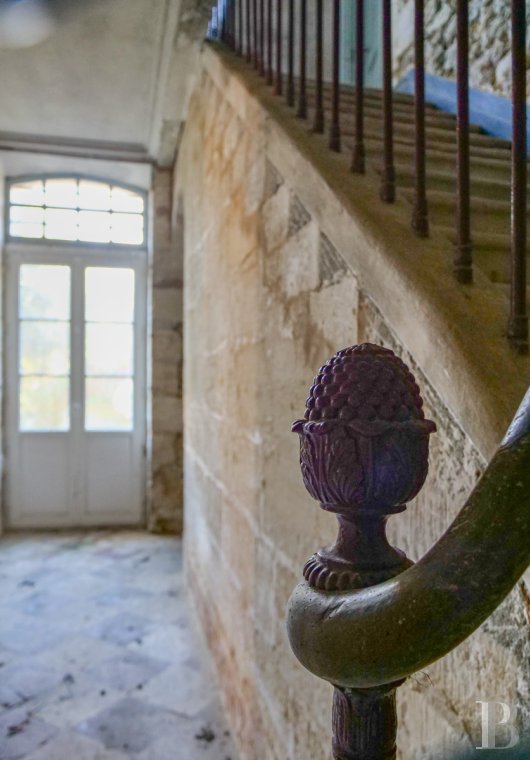
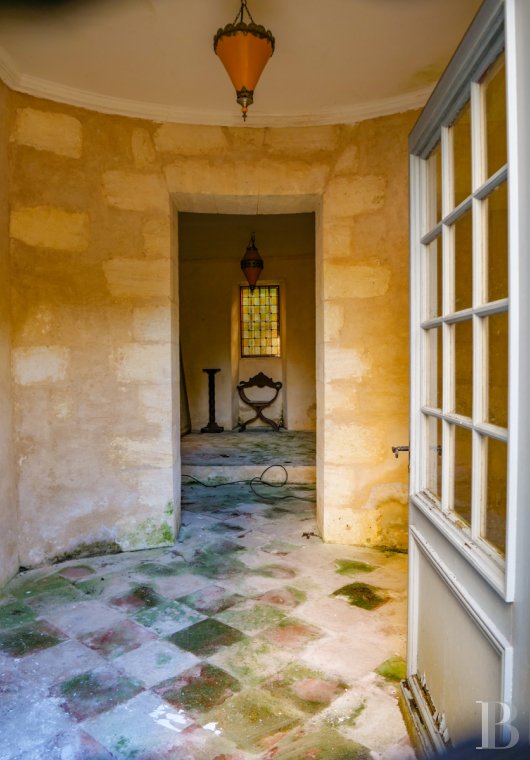
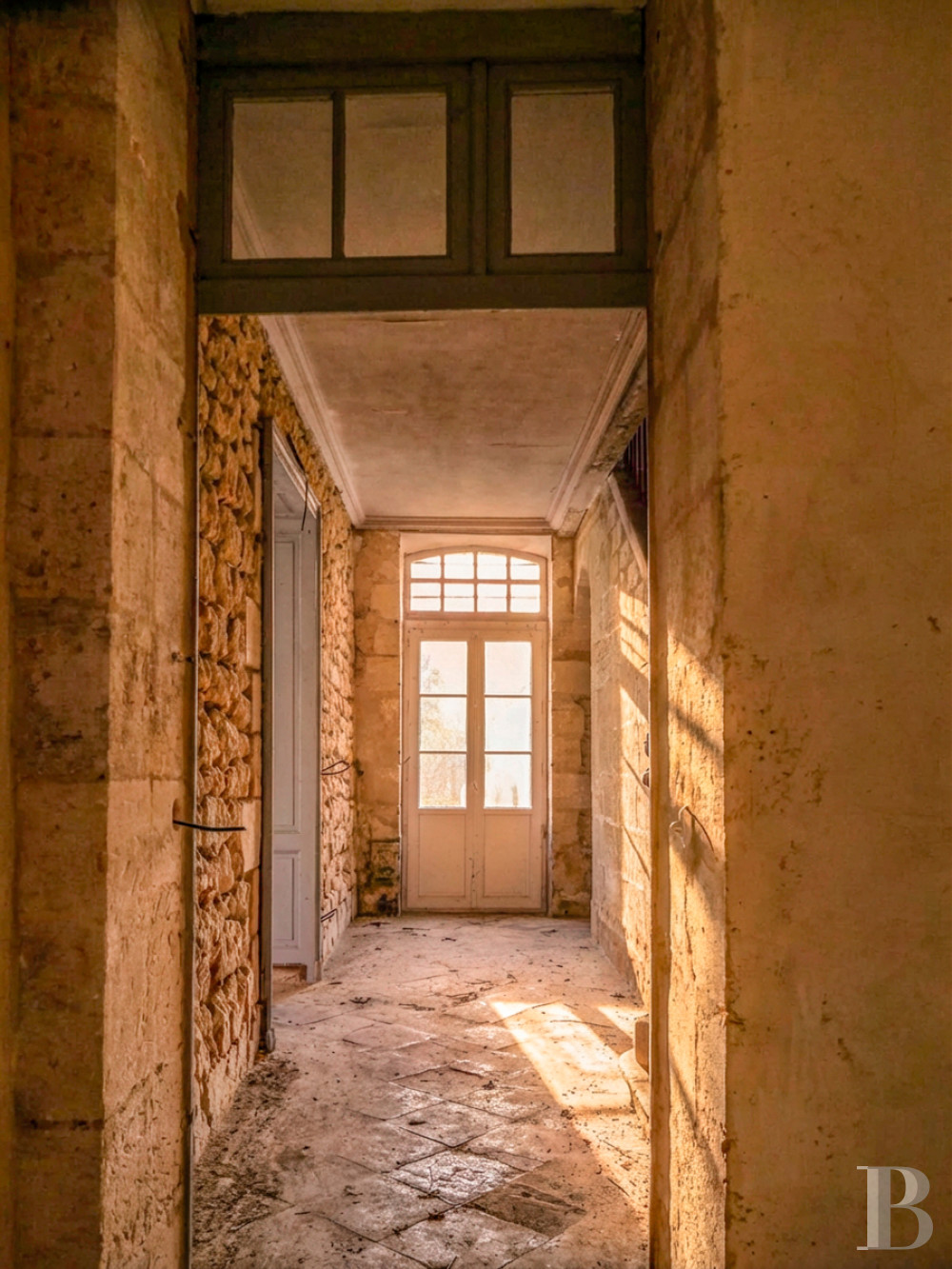
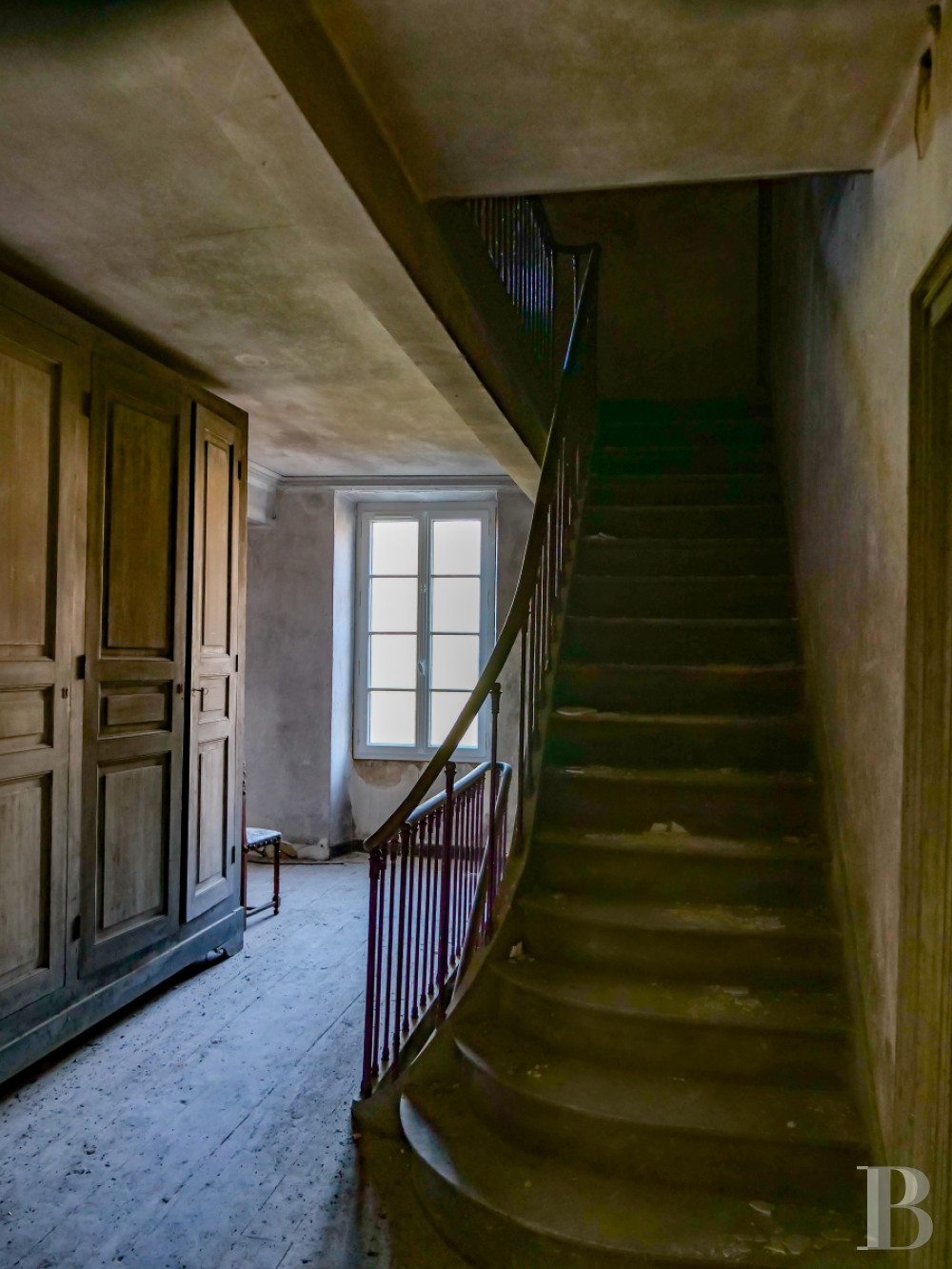
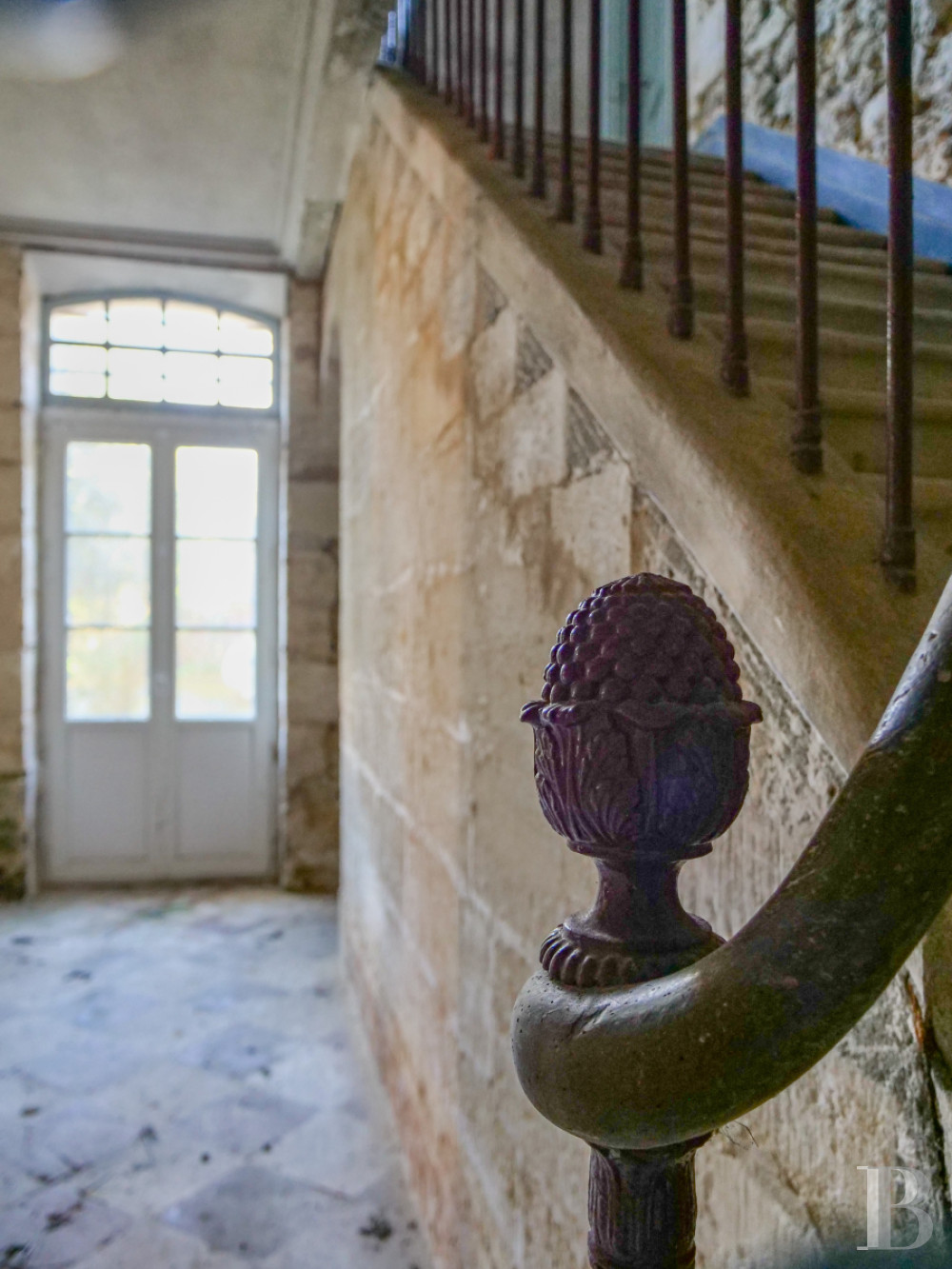
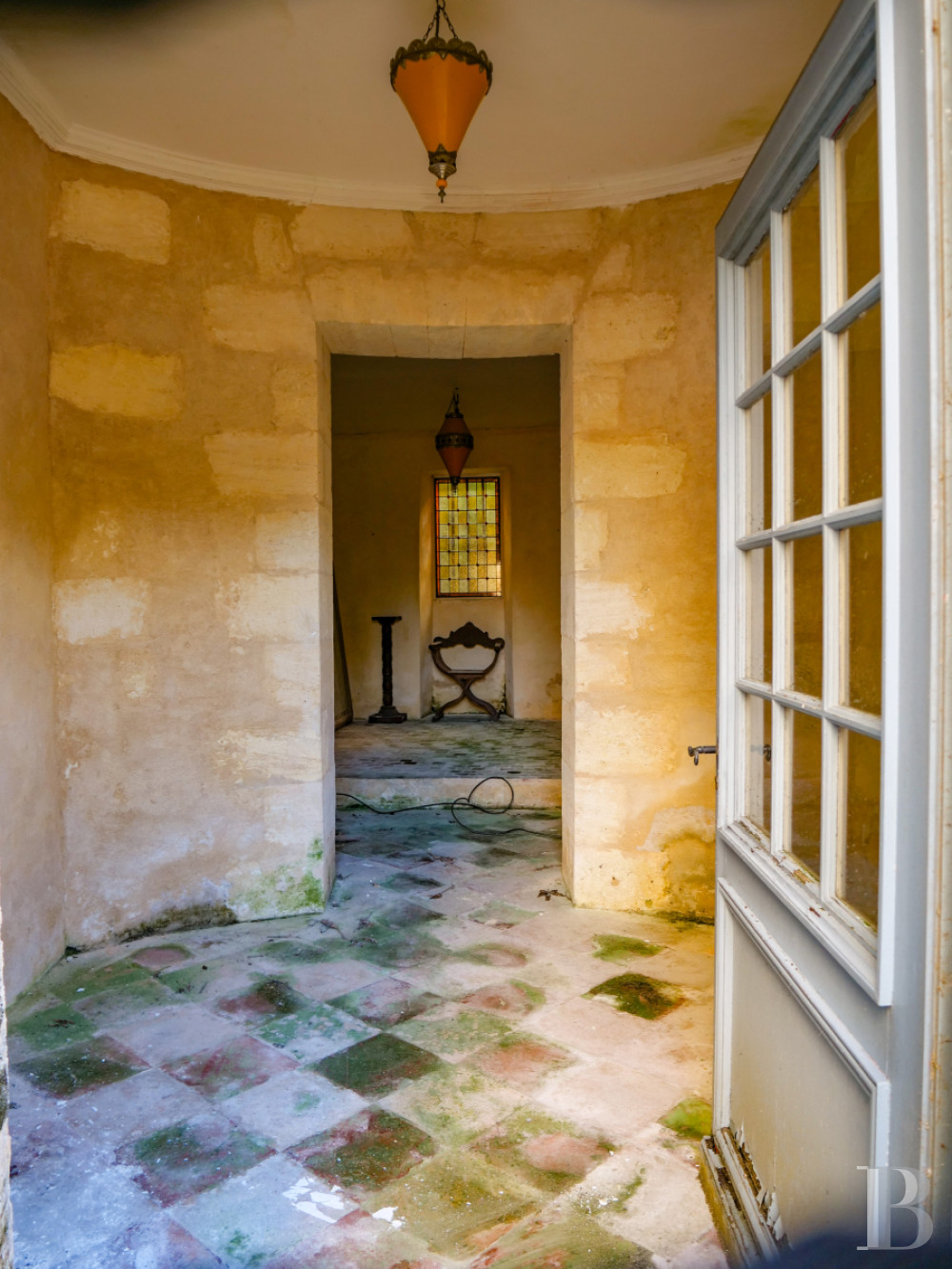
A solid wood door opening onto the patio to the northwest leads into the entrance and then a hallway. The floor is paved with stone slabs, while the walls boast exposed stonework. The upper floors can be reached from here via a stone staircase, under which there is a storage cupboard. A more than 40-m² dining room opens onto a patio to the southwest via French windows and is also bathed in light through two windows on the opposite wall, while a marble fireplace provides structure to the room. It stands next to a period, approximately 26-m² kitchen with exposed beams and a marble fireplace. Following on, a small, around 28-m² lounge opens onto the southwest patio via French windows. It also communicates with an inner courtyard via a glazed door to the northeast. There is wide, pinewood stripped flooring throughout. Next to this, there is a lavatory on a cement floor that is raised in relation to the stairwell. An almost 25-m² storeroom with a rammed earth floor and exposed beams leads to a small courtyard to the southwest and light filters into it through a northeast facing window.
A second, 18-m² period kitchen with ceramic floor tiles is bathed in light through northwest facing windows. Beneath a ceiling with exposed beams and battens, the gaze is drawn to a sink with a tiled splashback, while a stone fireplace stands against one of the walls. Several other more or less large rooms are spread out through this level, with cement or tiled flooring. The water heater can be found in one of them.
The first floor
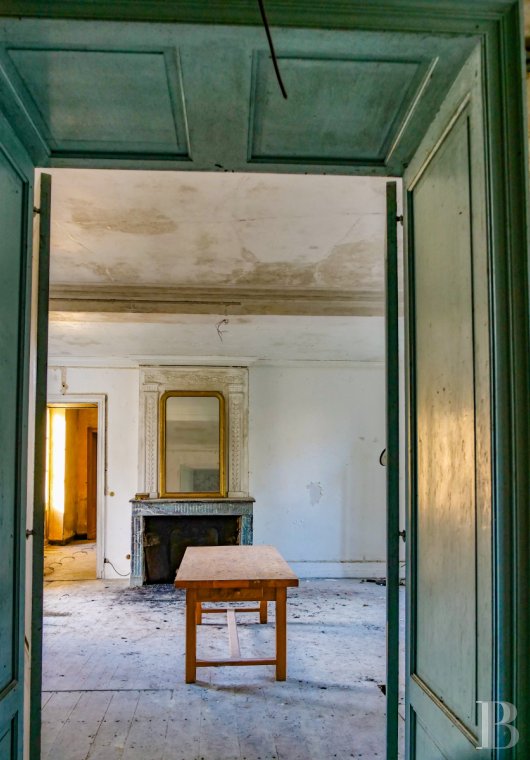
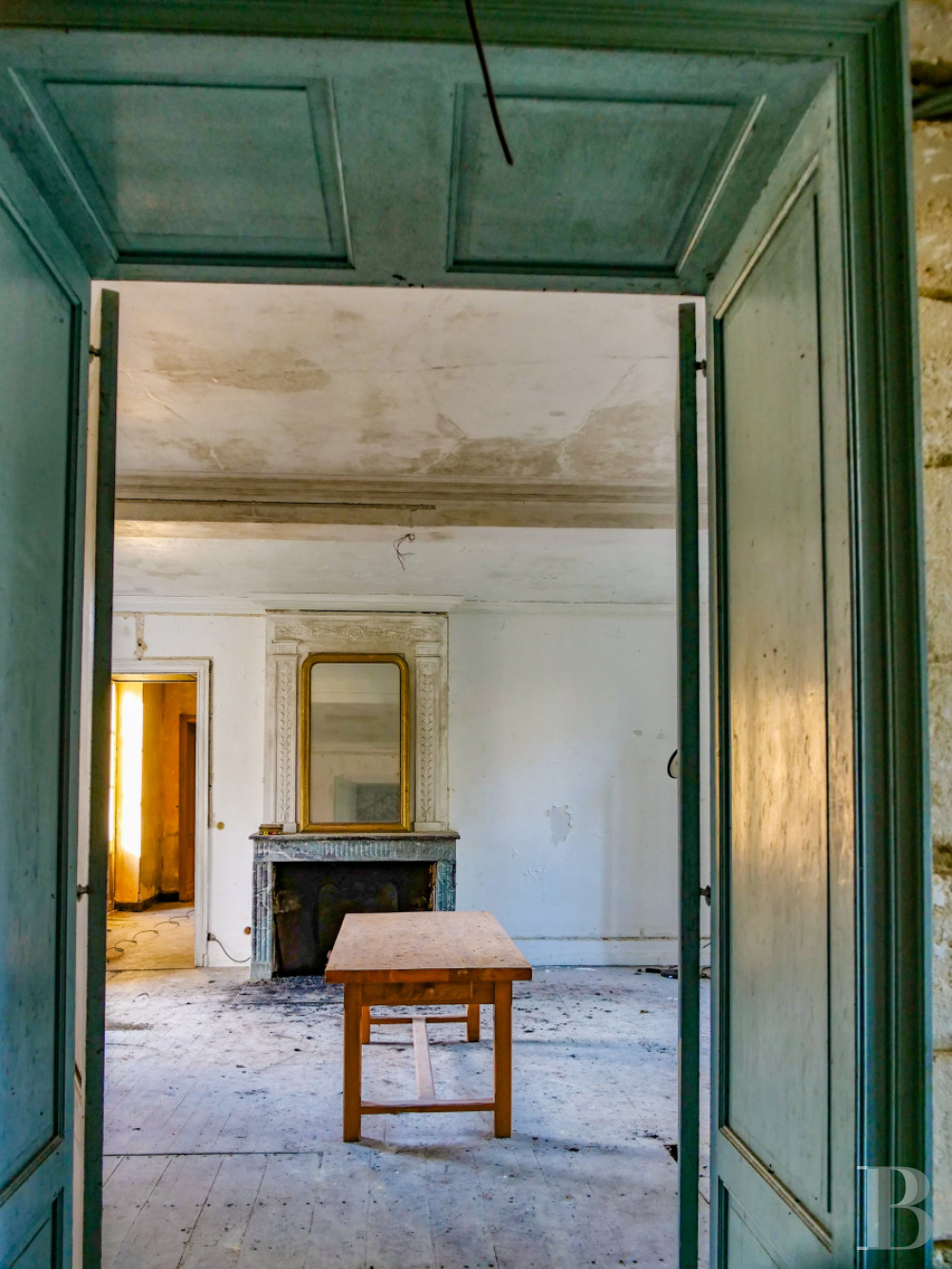
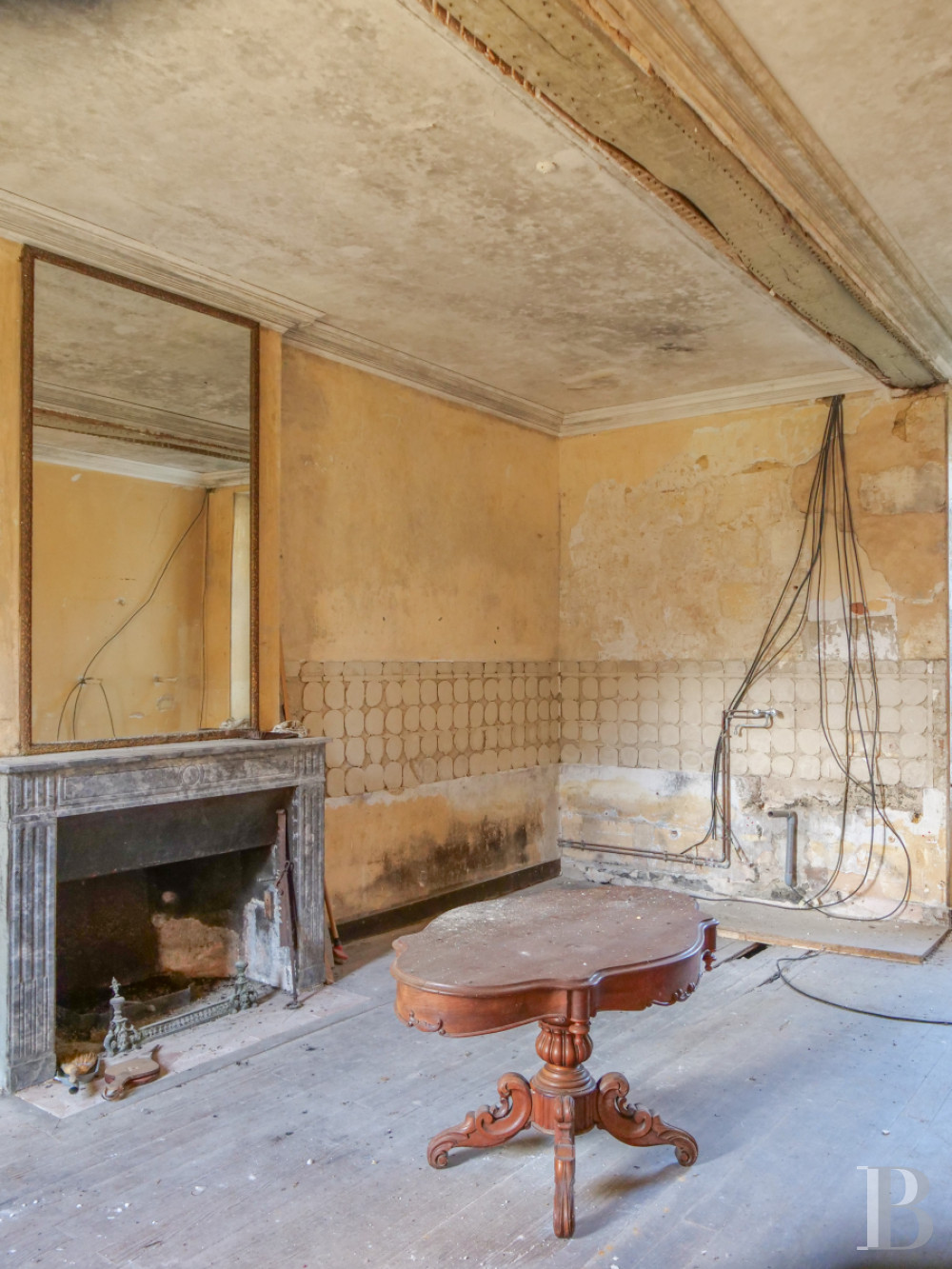
At the top of the staircase, light pours through a northeast facing window into the landing. It leads to a lavatory in which remains of a tapestry are still visible. The landing then leads to a first, almost 18-m² bedroom facing the grounds through a glazed door. The walls are painted and the ceiling is adorned with a rose moulding. In the corner, there is a marble fireplace, as there also is in a second, more than 13-m² bedroom facing southeast. In the tower, an approximately 10-m² room stands beneath a wood panelled ceiling.
A corridor leads to three other bedrooms. In the first, with a surface of more than 34 m², a wood-burning stove has been installed. The two others, with surfaces of approximately 20 m² boast similar characteristics, with pinewood flooring, painted walls and ceilings as well as fireplaces made of painted stone. The fifth bedroom also includes a cupboard, after which there is a lavatory with a washbasin.
The second floor
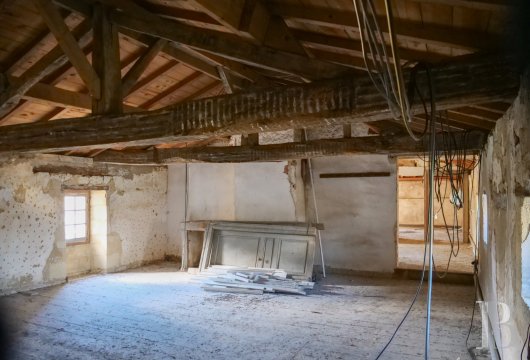
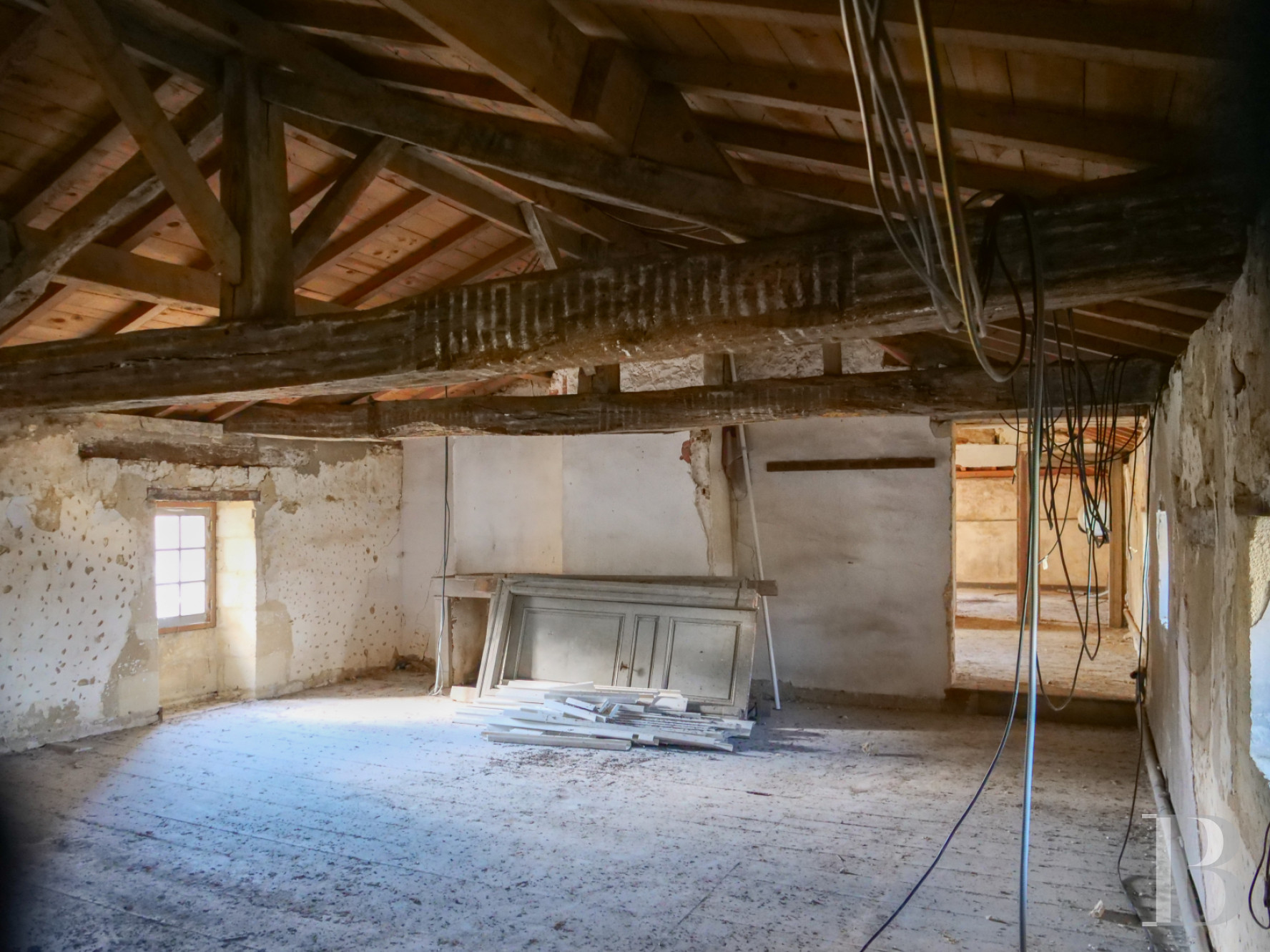
Light filters into the landing, with pinewood flooring, through a small northeast facing window. The roof frame, beams and battens are visible on the ceiling. The landing leads to three rooms one after another, covering a surface of around 100 m² and bathed in light through a number of southwest or northeast facing windows or skylights. A step leads down to four other rooms with surfaces ranging between 7 m² and 20 m².
The basement
An almost 27-m² wine cellar occupies the entire surface. It has gravelled flooring, the walls are rendered, while the ceiling is made up of wood panelling and metal beams.
The houses
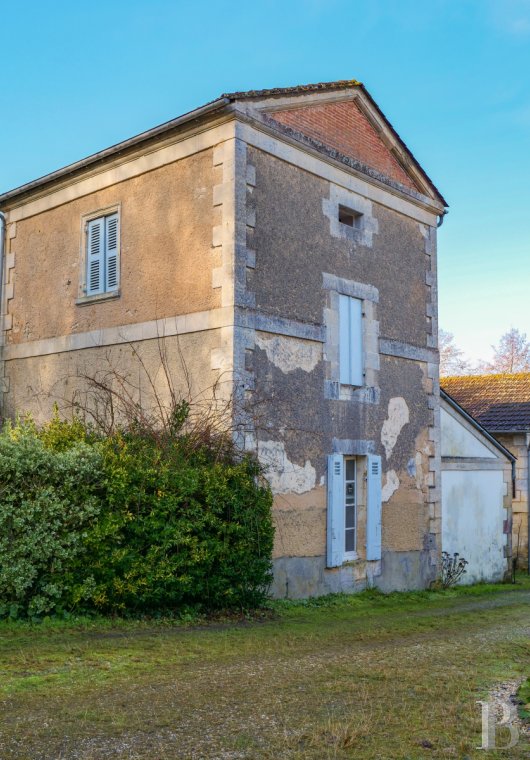
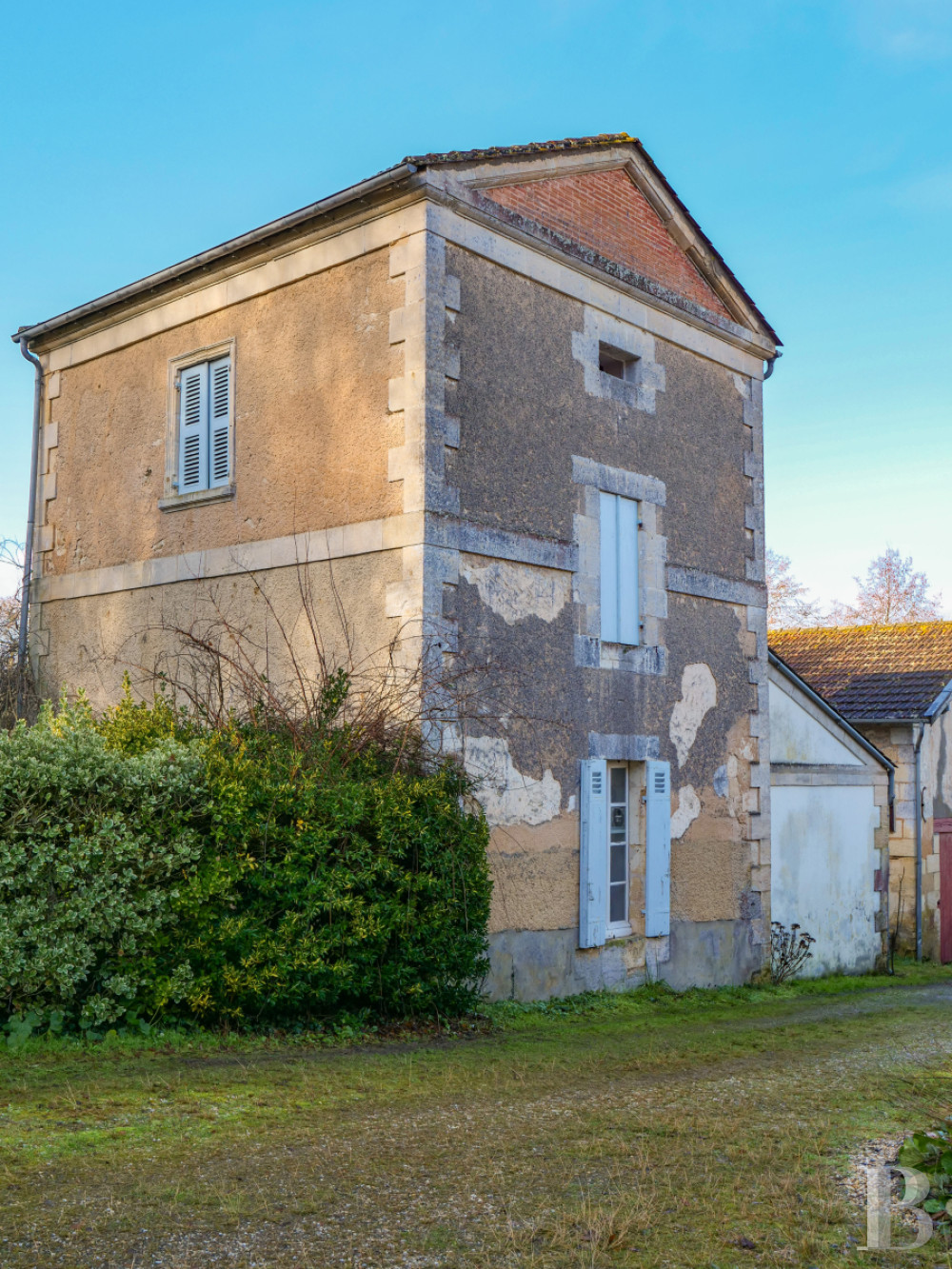
The estate includes four independent houses. A first almost 103-m² house and a second approximately 76-m² house are currently occupied. Two others, with surfaces of around 50 m² and 80 m², require renovation work.
The meadows and woods
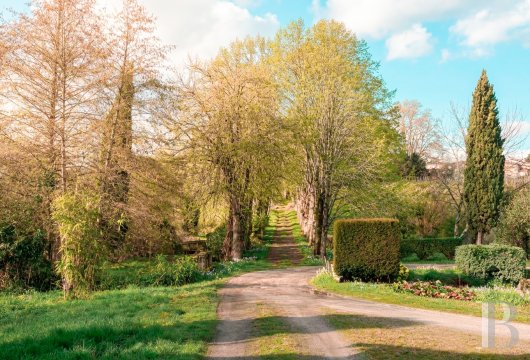
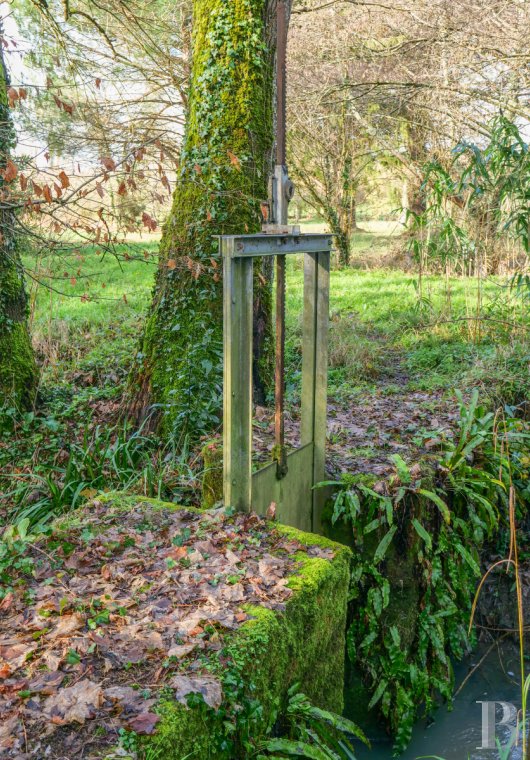
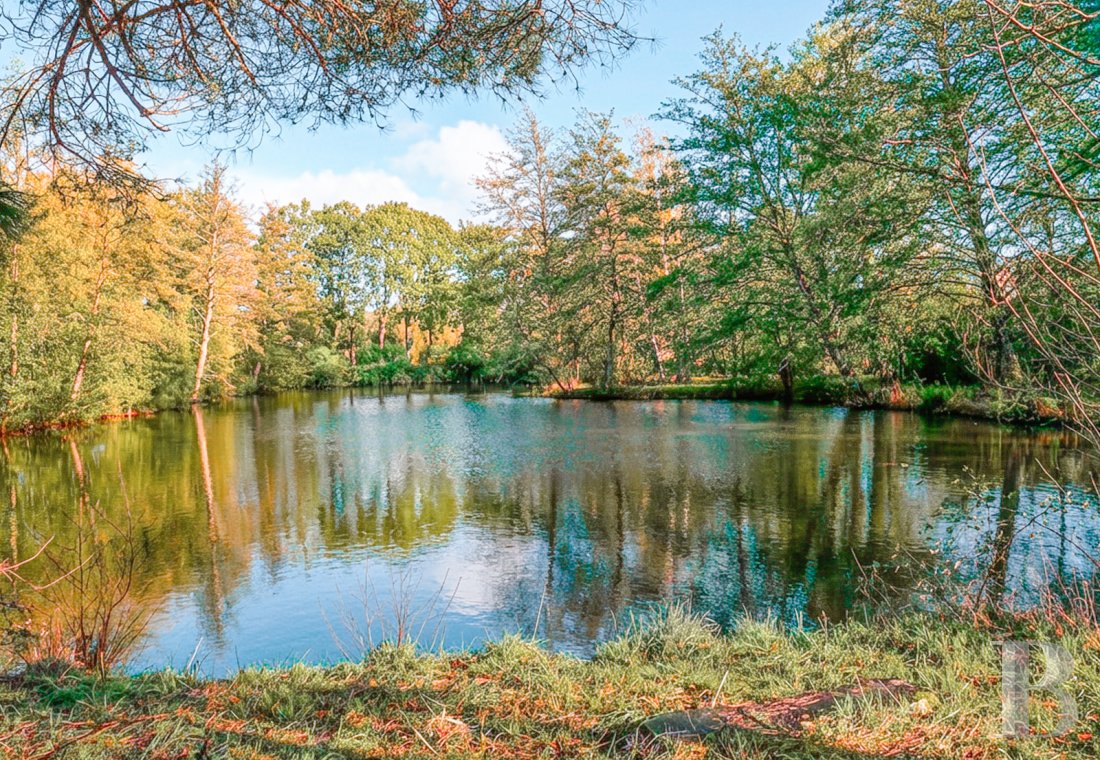
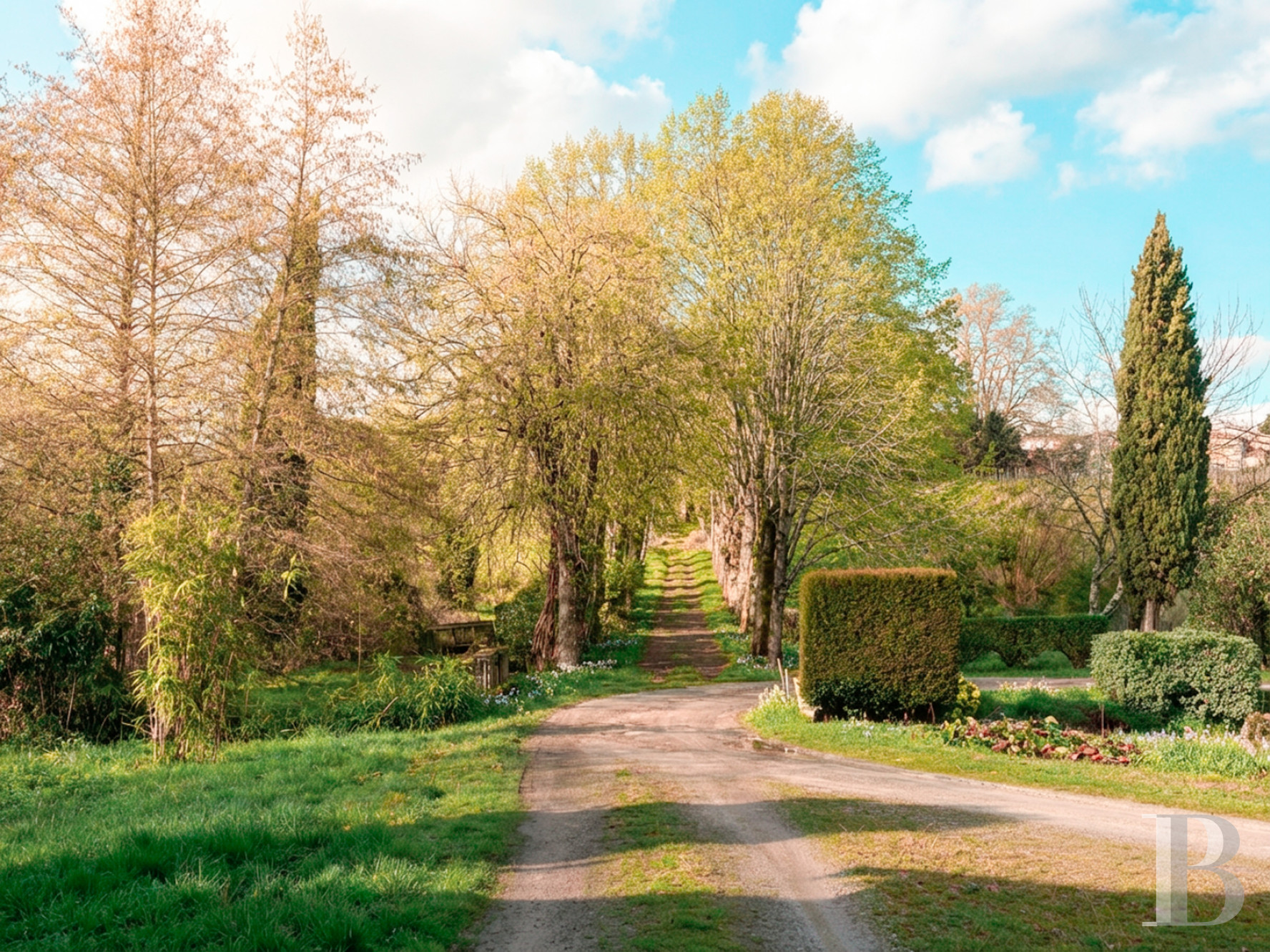
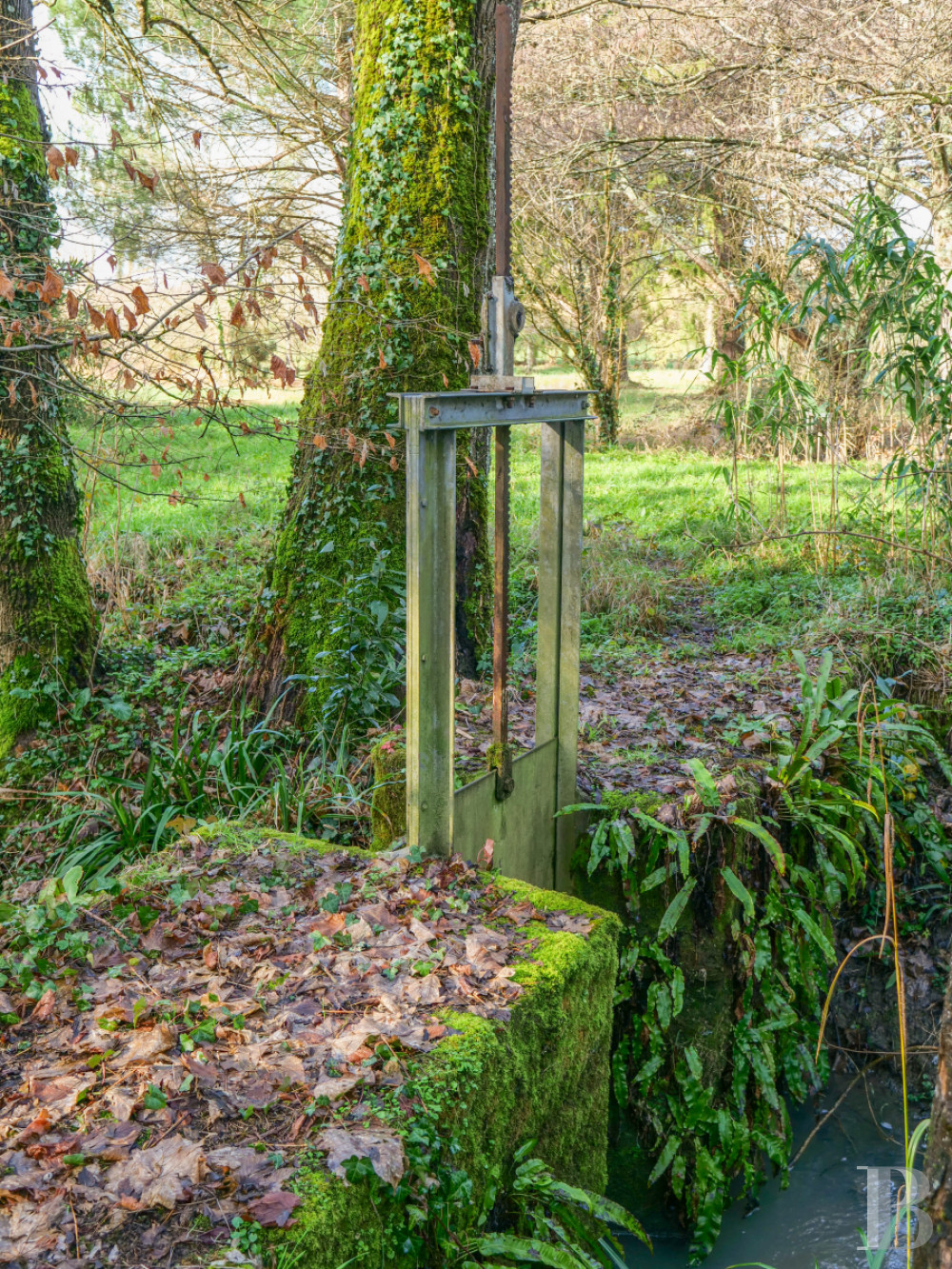
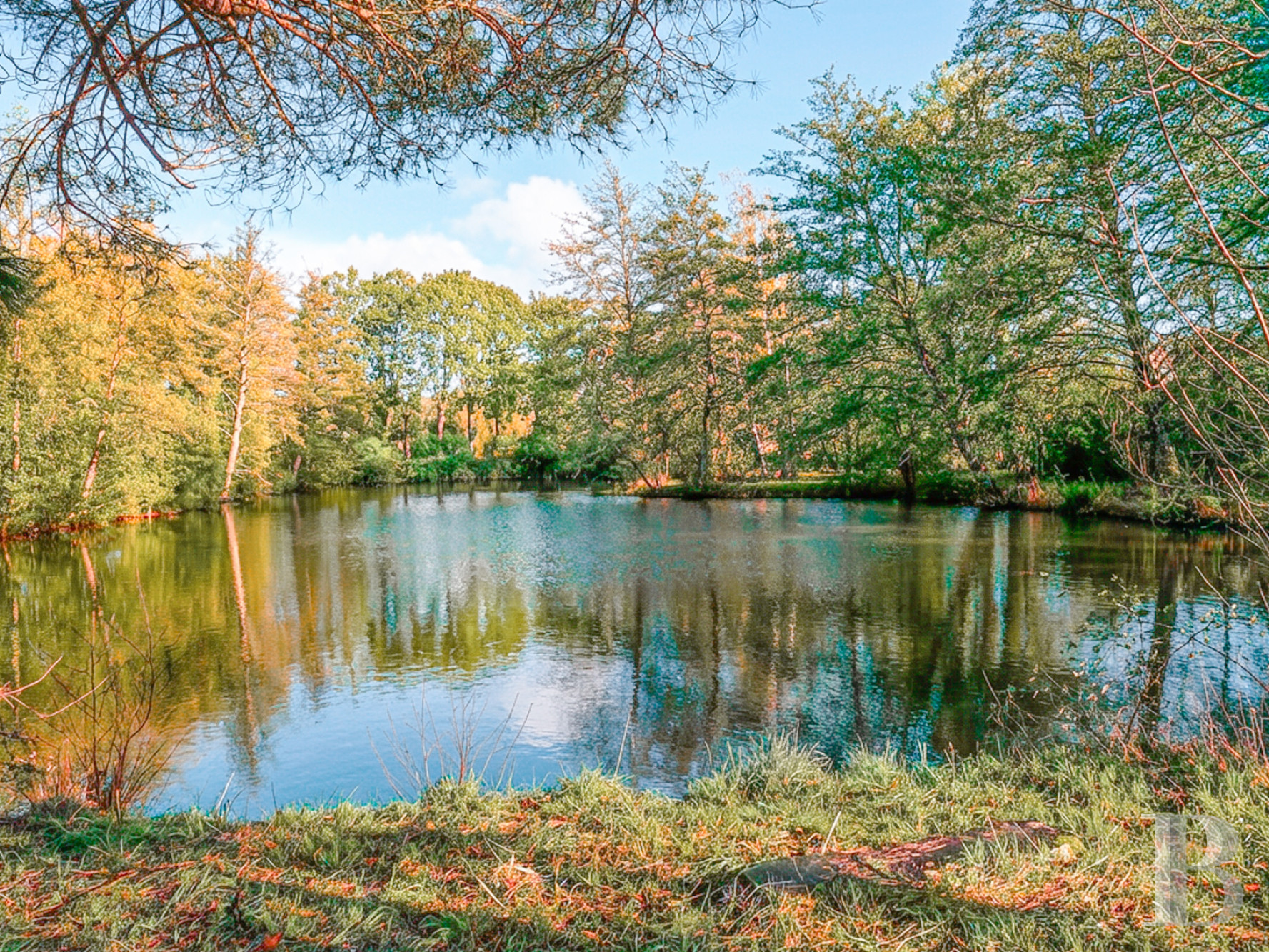
The Côtes de Bourg PDO and Vin de France certified wine-making property covers approximately 33 hectares, of which almost 14 hectares are planted with vines. The non-cultivated 15 hectares are made up of a meadow, woods and a pond created in 2002, into which a spring situated beneath the church runs. A stream, a three-level terraced garden and a bridleway form the immediate structure of the grounds surrounding the buildings.
The wine-making facilities
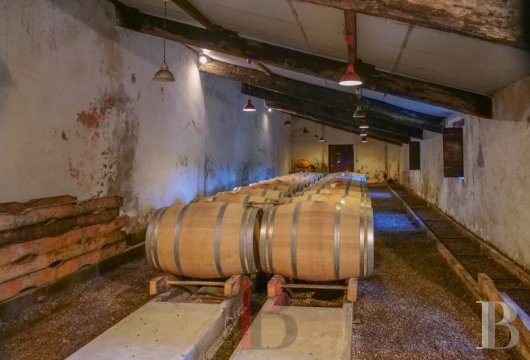
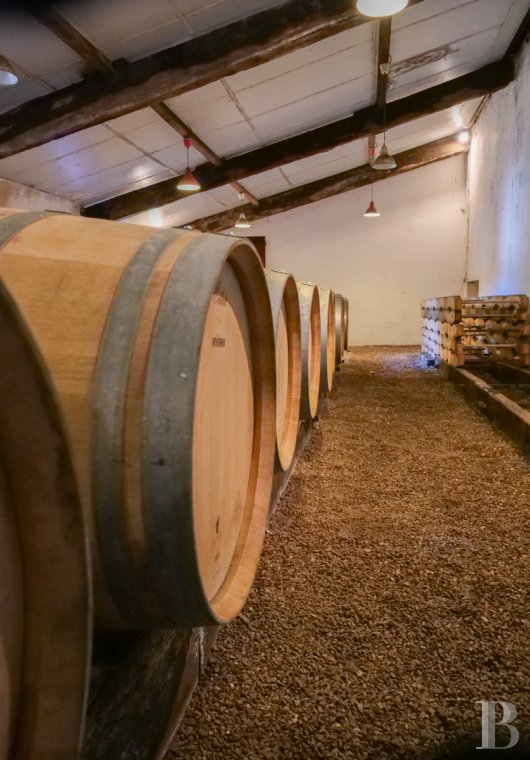
The Côtes de Bourg appellation area, which stretches along the slopes on the right bank of the Gironde estuary, is renowned for its red wines that boast structure and balance. The main grape varieties used are Merlot, Cabernet Sauvignon, Cabernet Franc and Malbec, grown on gravelly soils. Approximately 15 hectares of vines, planted on small terraces and steep slopes, are included in the sale, with the possibility of purchasing 20 extra hectares. The current owners transformed the estate into an organic wine-making and then bio-dynamic property that has held Demeter certification since 2000. This approach is based on biodiversity, respect for living organisms and the use of natural wine-making methods. The estate possesses a comprehensive array of facilities: a 317-m² winery and blending cellar, a 160-m² vat house with concrete vats, a 131-m² barrel cellar, a 123-m² storage cellar and more than 500 m² of agricultural buildings, warehouses and workshops.
Our opinion
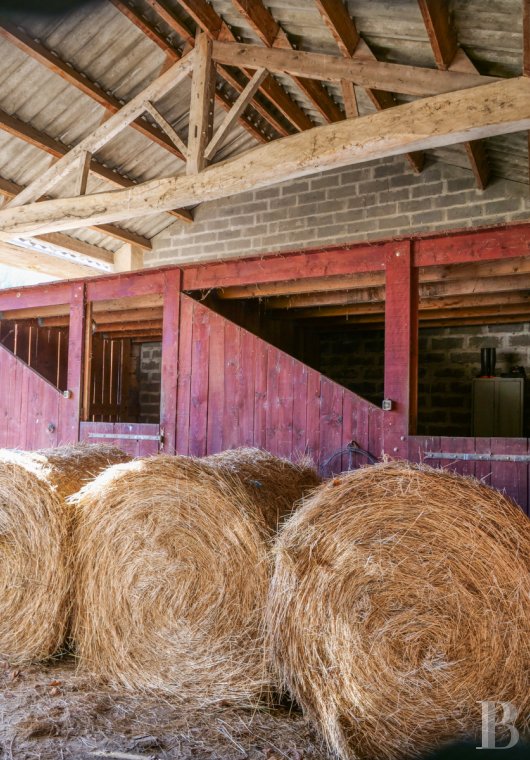
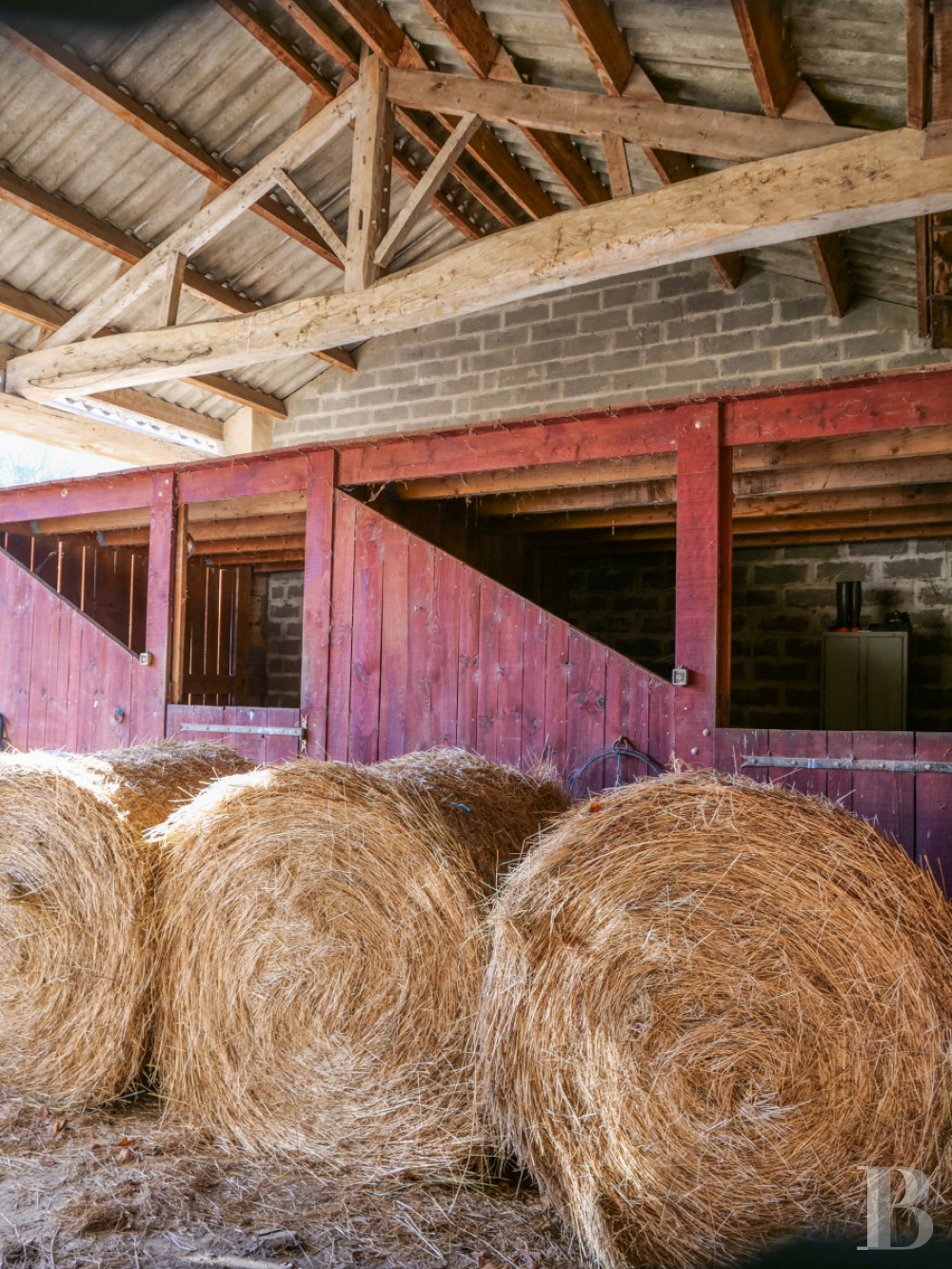
In this discrete little valley, where the vines hug the curves of the slopes as they have done since antiquity, this property boasts all the attributes of the Bordeaux wine region’s great estates: a chateau with an emblematic silhouette, many outbuildings and a top-quality vineyard that has been run rigorously over the years to become a bio-dynamic estate. The place has retained a both rural and aristocratic soul, encapsulated by the medieval rigour of its tower, the 19th-century transformations and the gentleness of the wooded landscape surrounding it. The need to renovate the chateau should not be seen as a constraint but as an invitation: to breathe new life into a residence that has dominated its surrounding lands for eight centuries and to develop a modern project, whether based on residential, wine-making or not, or also wine tourism aspects. The presence of several houses, a pond, stables, woods and comprehensive wine-making facilities bestow a high degree of independence and considerable flexibility of use on the property. It is a characterful estate that is both productive as well as poetic and should appeal to people seeking not just a production tool but a genuine living space, rooted in history and looking to the future.
1 100 000 €
Fees at the Vendor’s expense
Reference 849362
| Main building floor area | 630 m² |
| Outbuildings floor area | 206 m² |
| Total floor area | 1530 m² |
Information on the risks to which this property is exposed is available on the website: www.georisques.gouv.fr
Share


- Aquitaine -
- Blaye -
- Gironde -
- New Aquitaine
NB: The above information is not only the result of our visit to the property; it is also based on information provided by the current owner. It is by no means comprehensive or strictly accurate especially where surface areas and construction dates are concerned. We cannot, therefore, be held liable for any misrepresentation.