



A 460-m² 18th-century mansion in 9 hectares of parkland,
near the Baie de Somme, 2 hours from Paris
near the Baie de Somme, 2 hours from Paris
Abbeville,
SOMME
picardy
80100
FR

Location
This mansion is located in an environment of waterways and farmland, in the Somme area, 7 kilometres from Saint-Valery-sur-Somme, in the municipality of Lanchères, renowned for its architecture and history. Shops, services and amenities can be found nearby. The nearest coastline is 3 kilometres away, while Amiens, Lille and Paris are respectively 60, 150 and 220 kilometres away by road, with easy access to the region thanks to the A16 motorway. From the railway station in Abbeville, Paris is within 1 hour 30 minutes’ reach.
Description
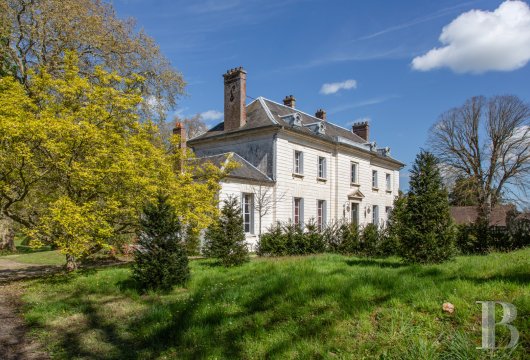
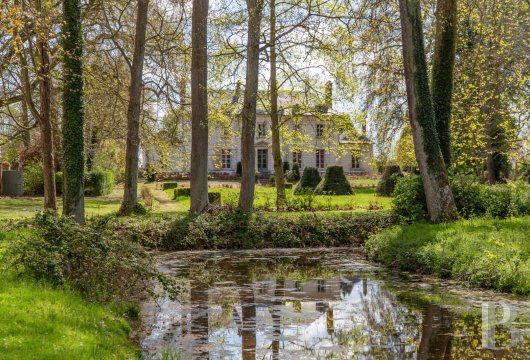
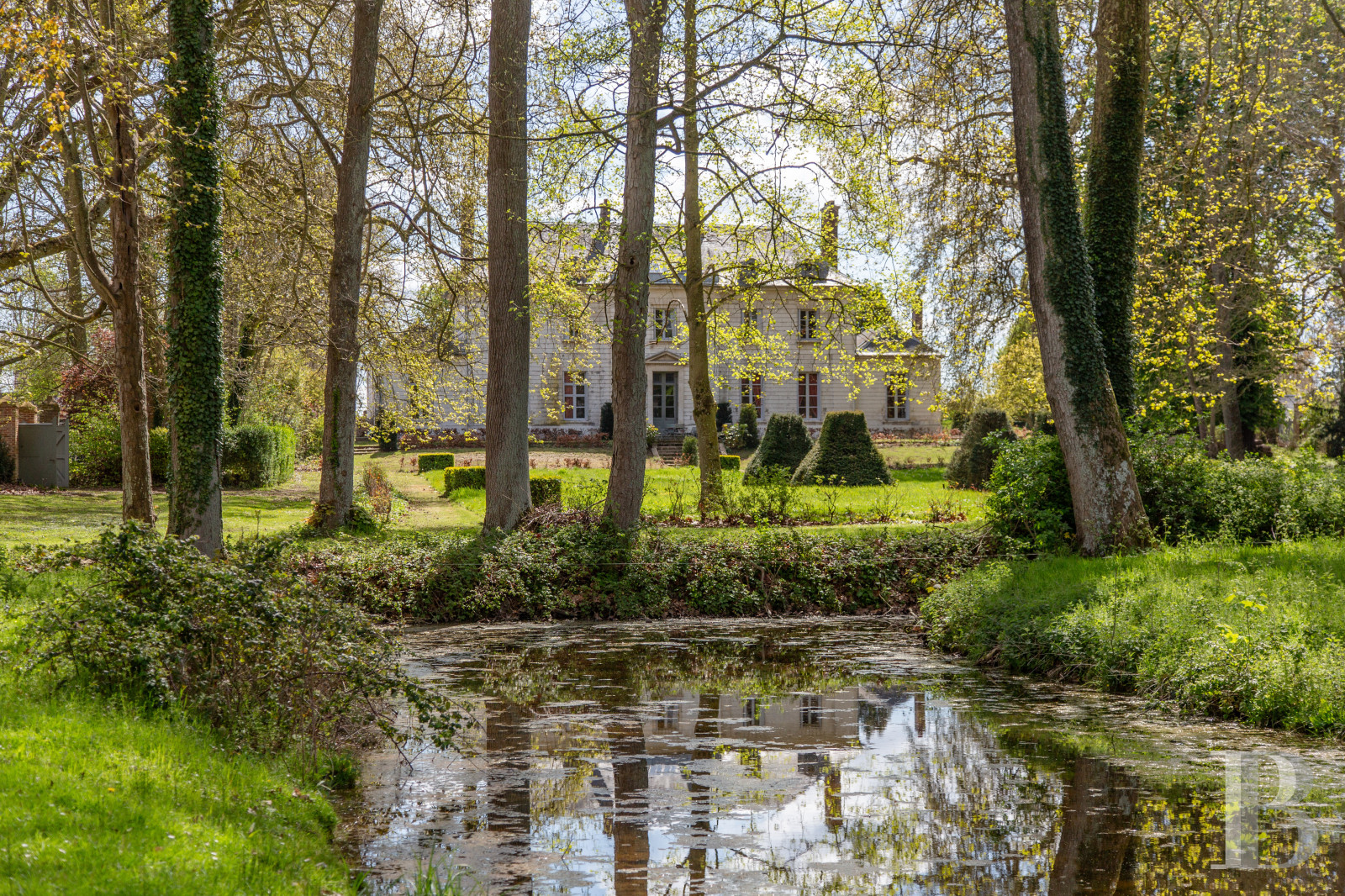
The mansion was built in 1790 for Pierre Fanneau de la Horie, lord of La Touche and the King’s engineer responsible for developments of the ports along the Picardy coastline and in the Baie de Somme. He acquired the fiefdom of Lanchères in 1774. The building that had previously stood there was entirely demolished. The architect of the residence, which was typical of the neo-classical school, was Antoine-Charles Aubert, who designed the Palais Bourbon in Paris as well as a range of buildings and townhouses that have since been demolished, including a folly that used to stand on the Chaillot hill. The canals and parkland were excavated and planted during the same era.
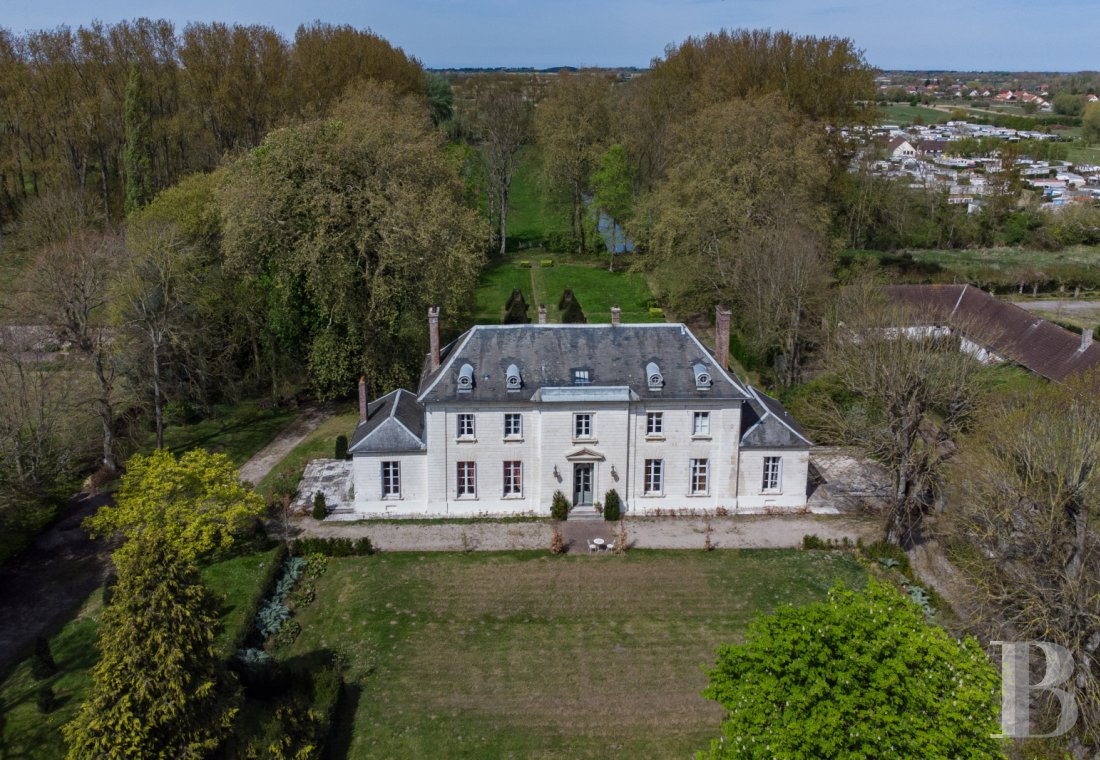
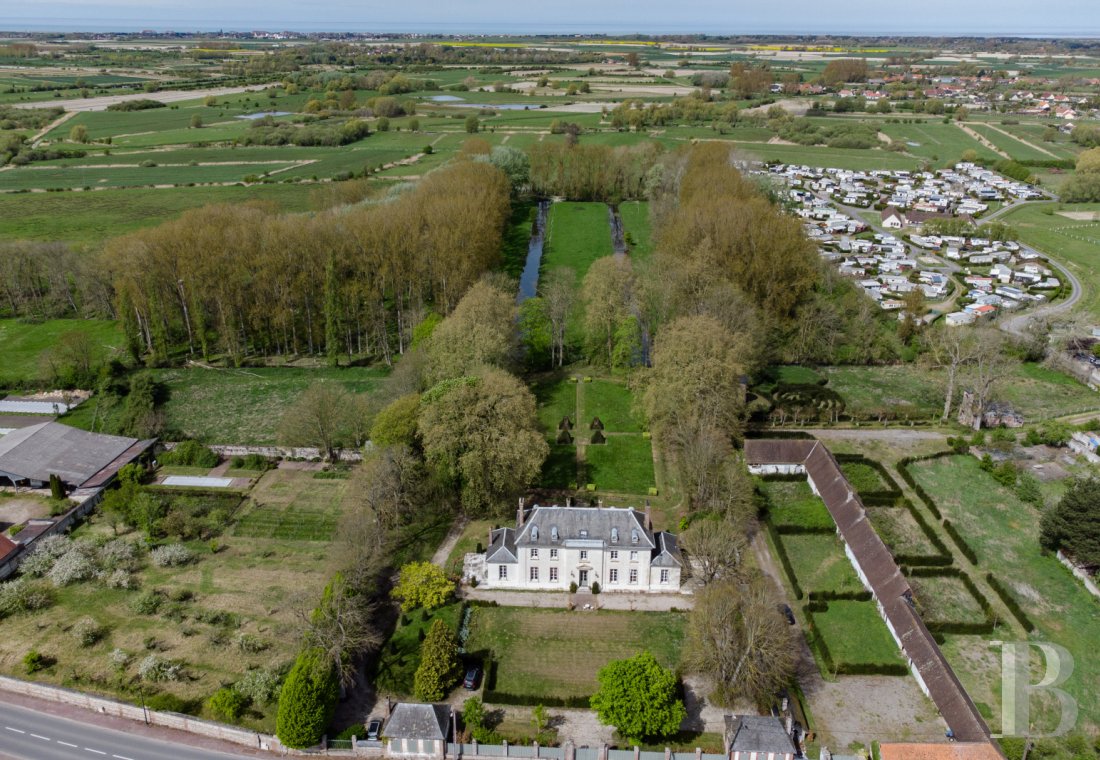
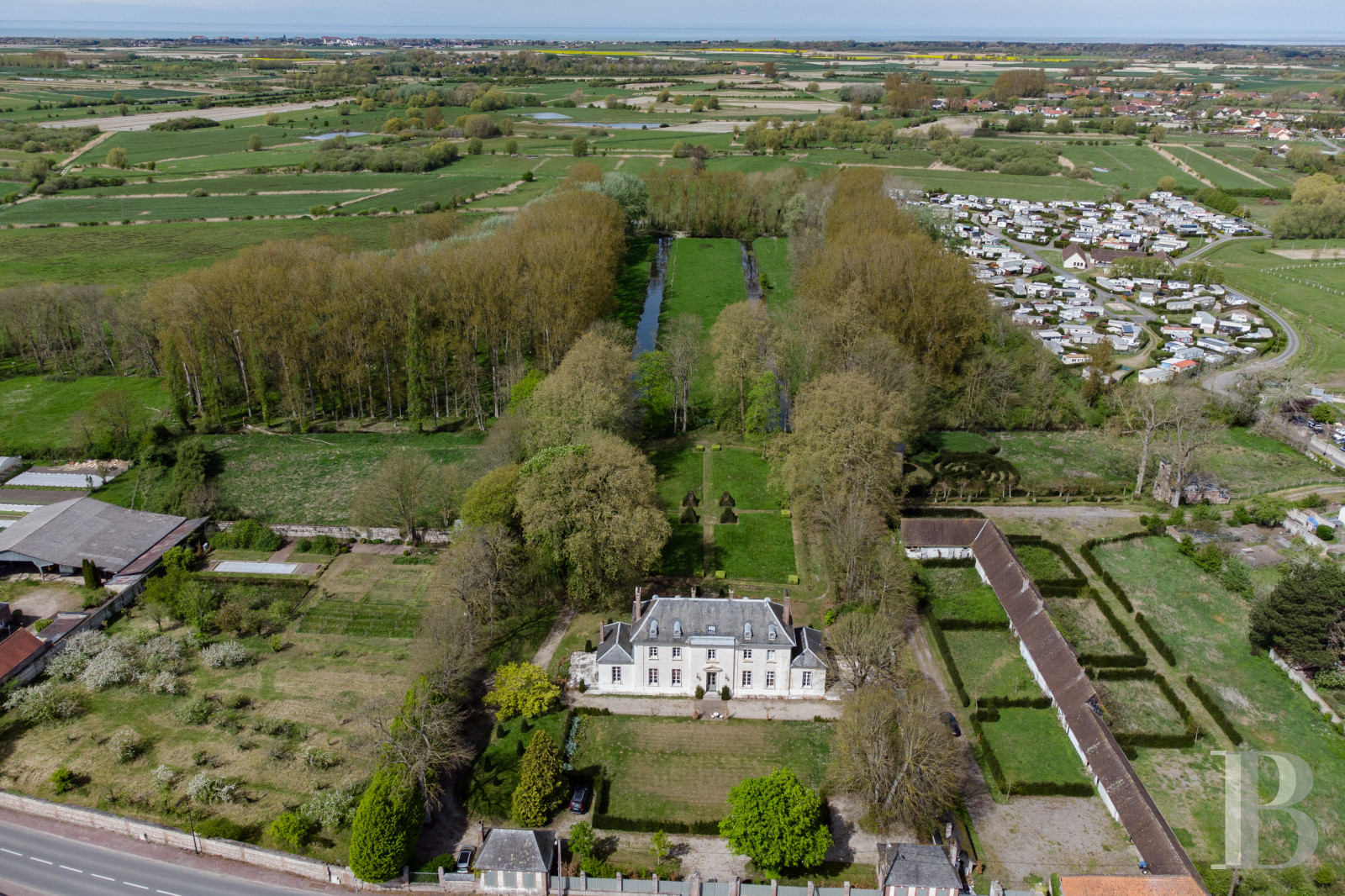
A gate opens onto a large, round lawn, planted with pruned yew trees. An also circular drive enables parking for vehicles in front of the mansion. Two pavilions, one of which is used as a garage and the other as a storeroom, are situated at each side of the courtyard’s entrance.
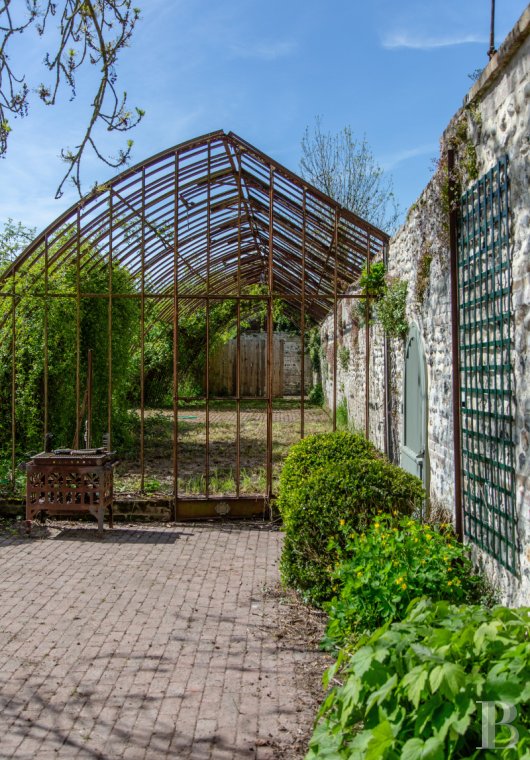
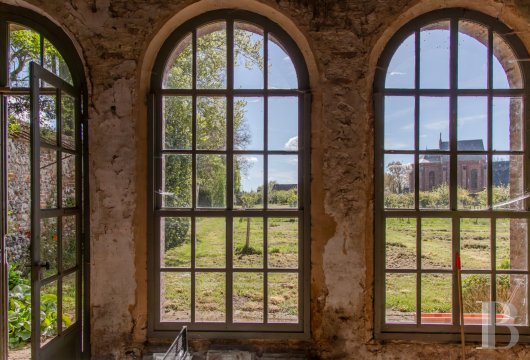
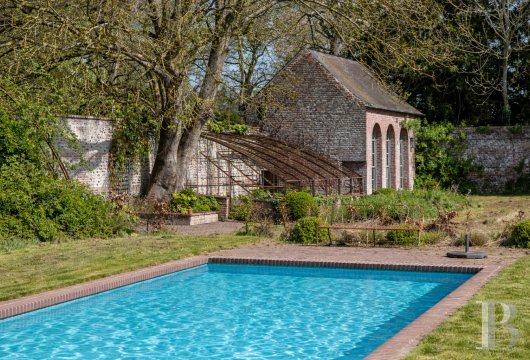
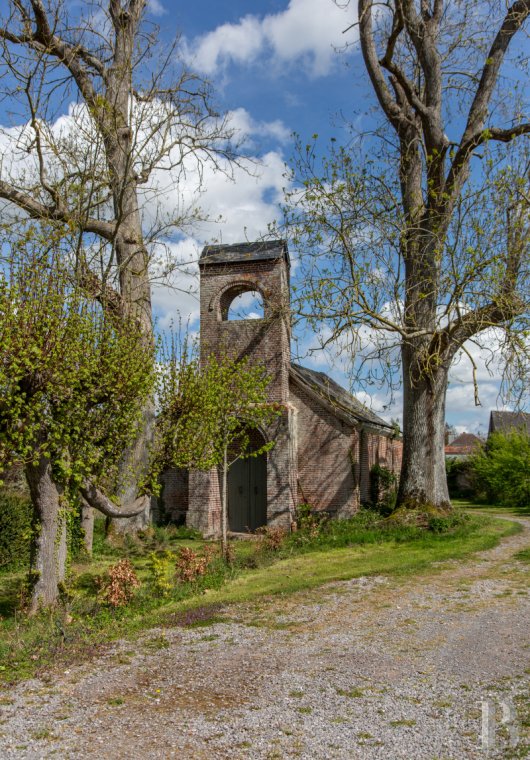
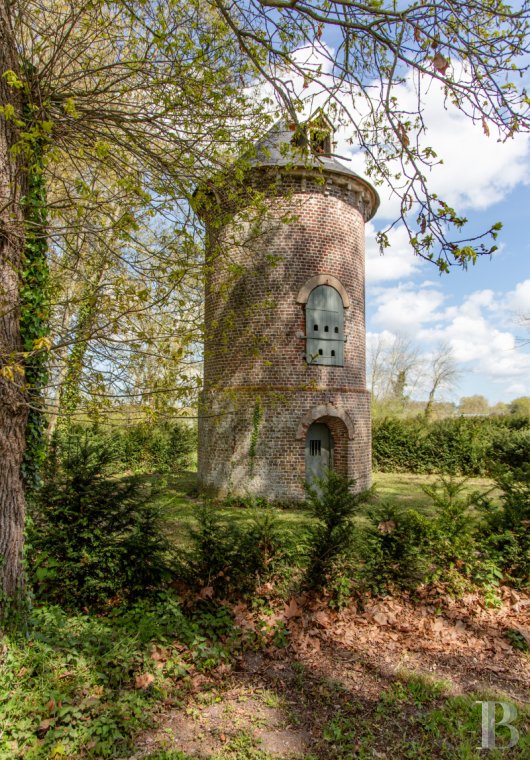
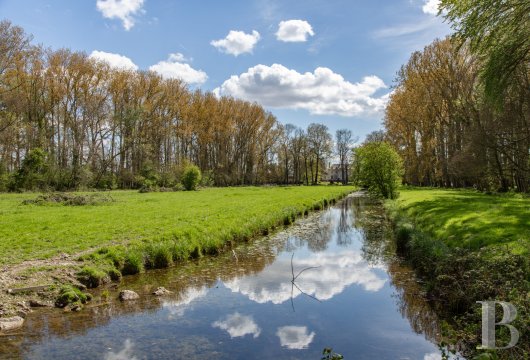
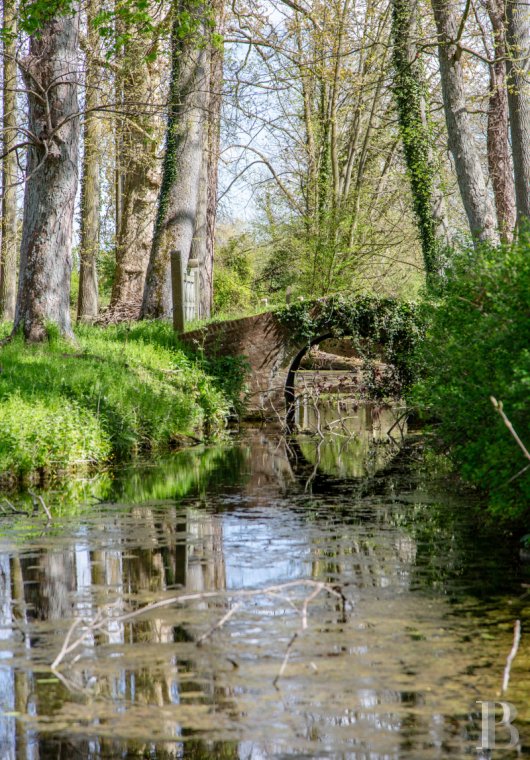
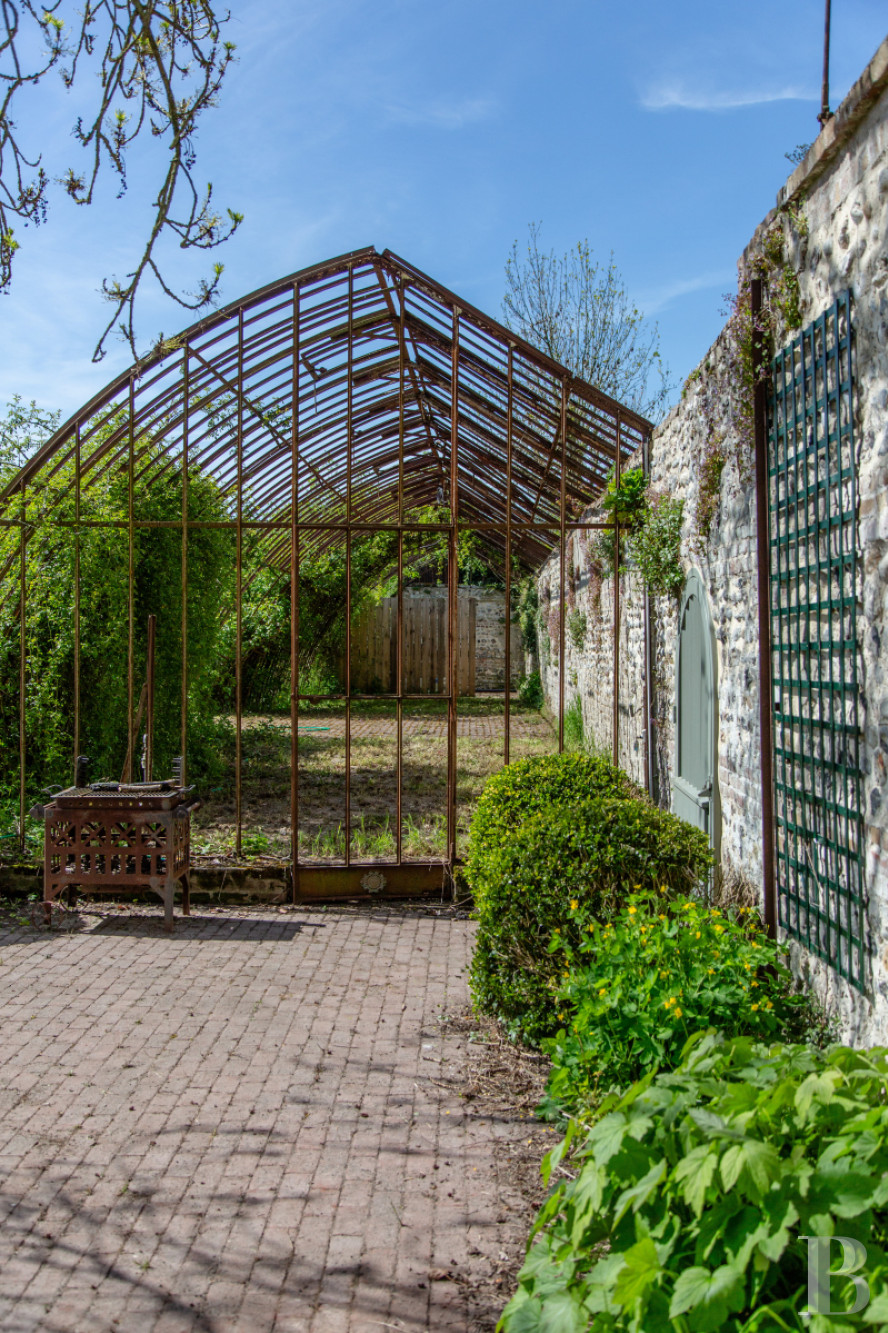
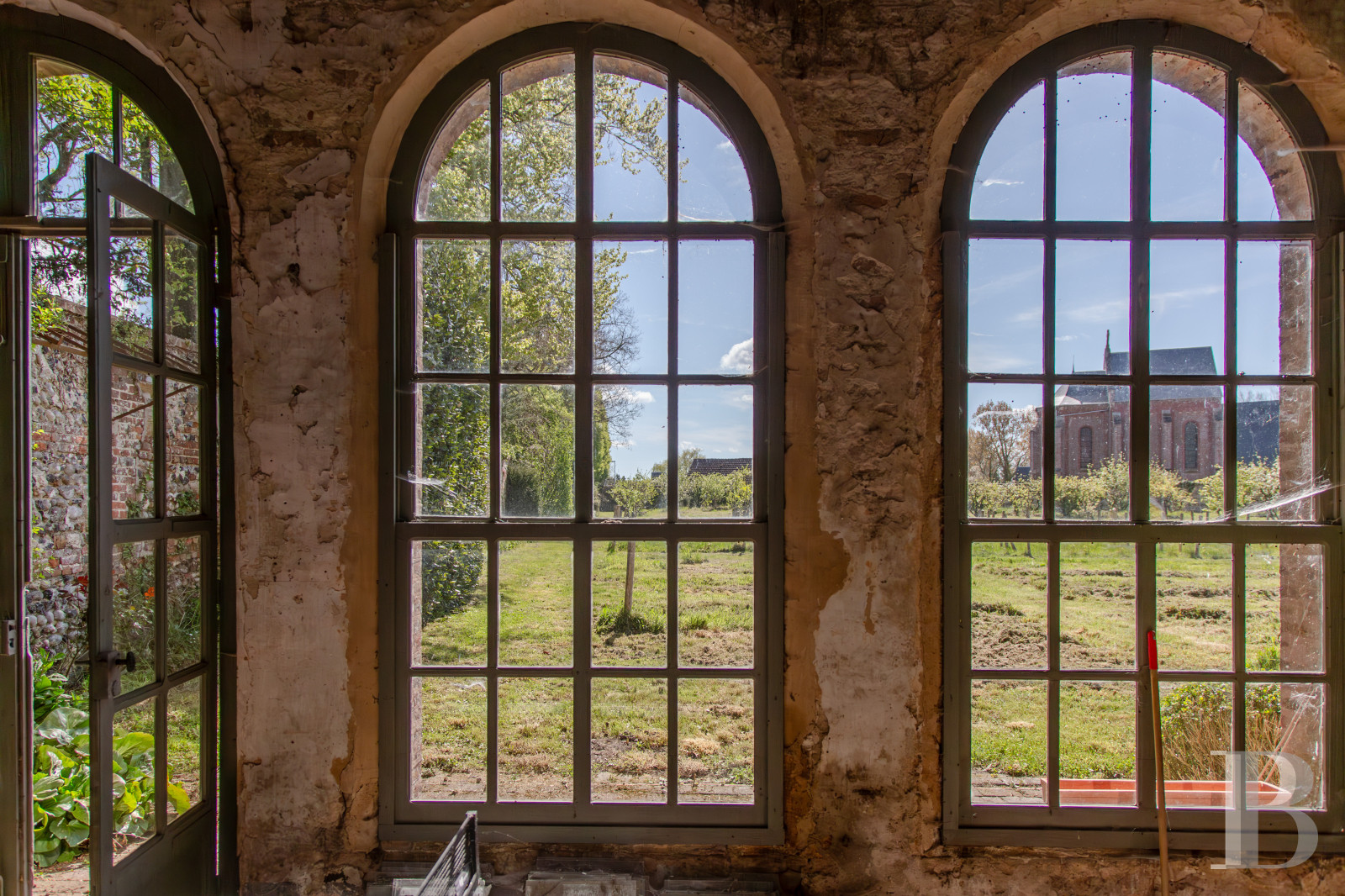
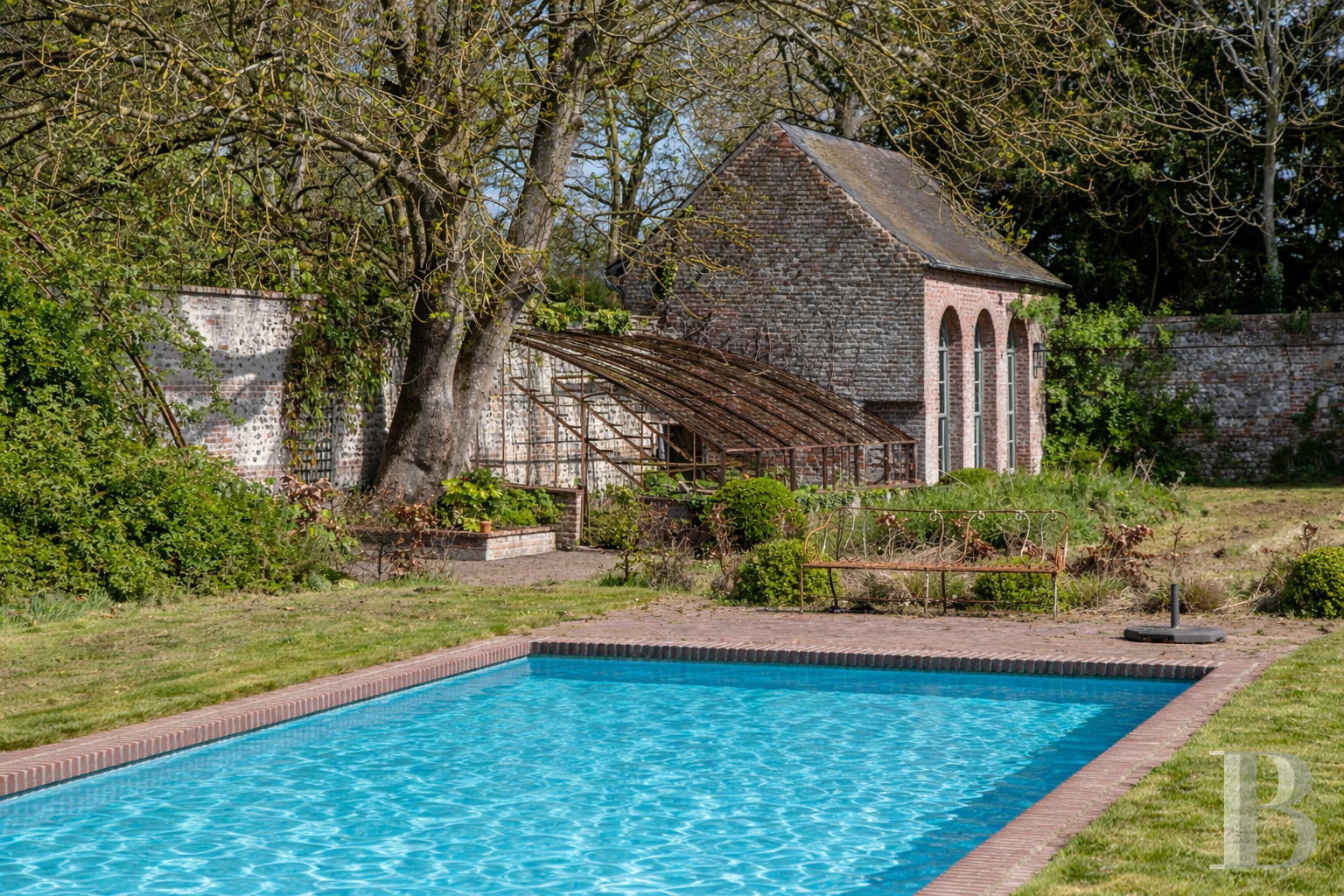
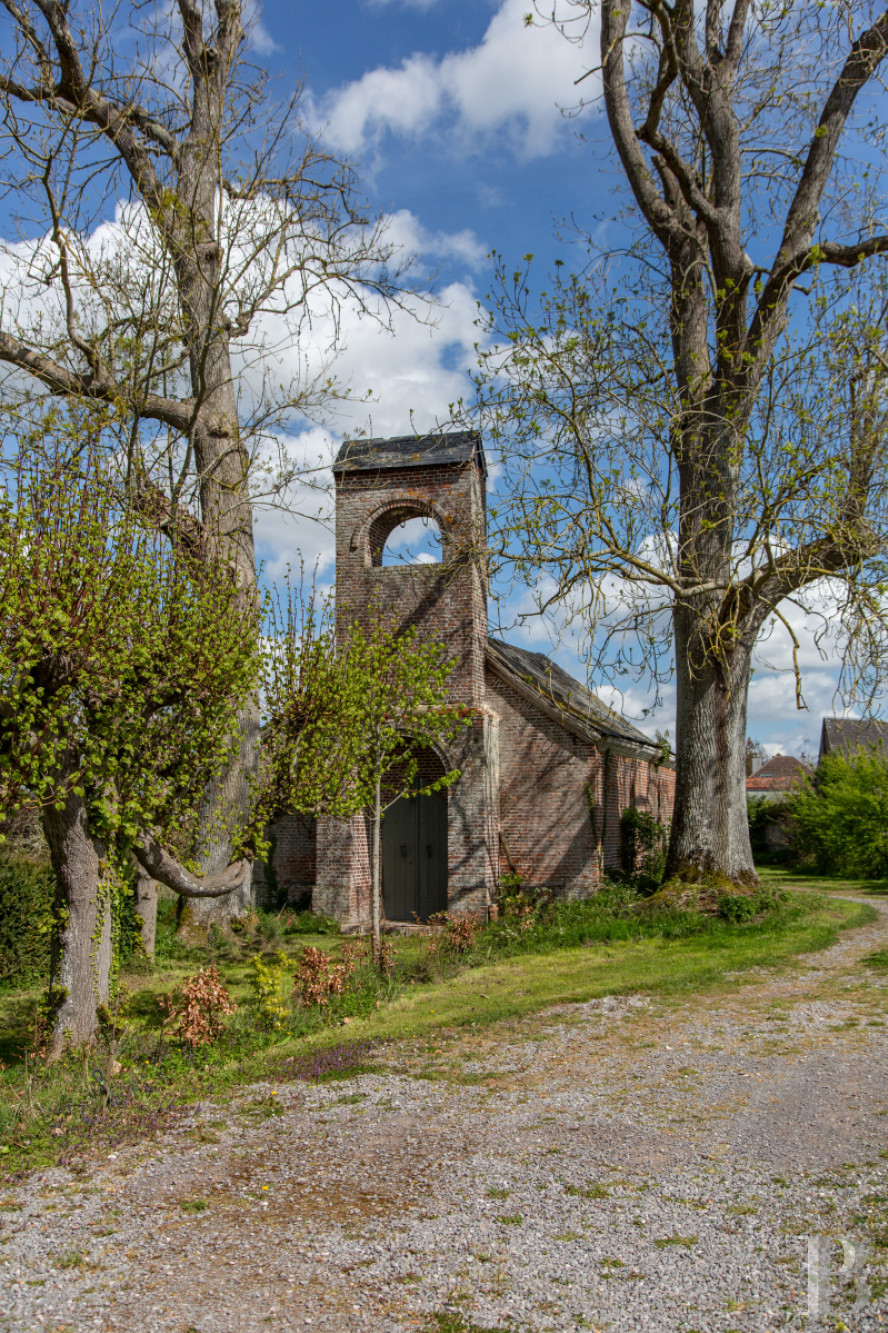
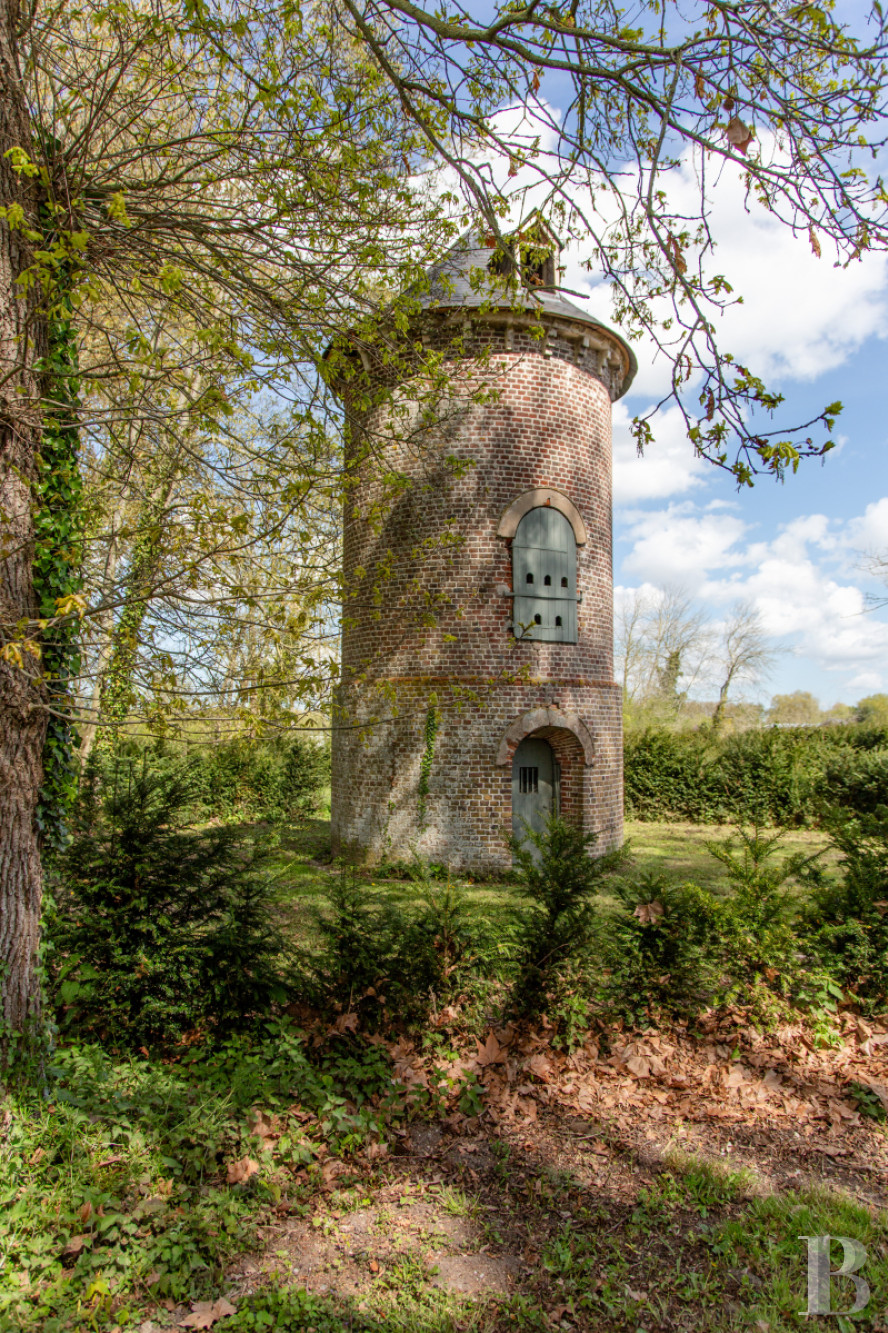
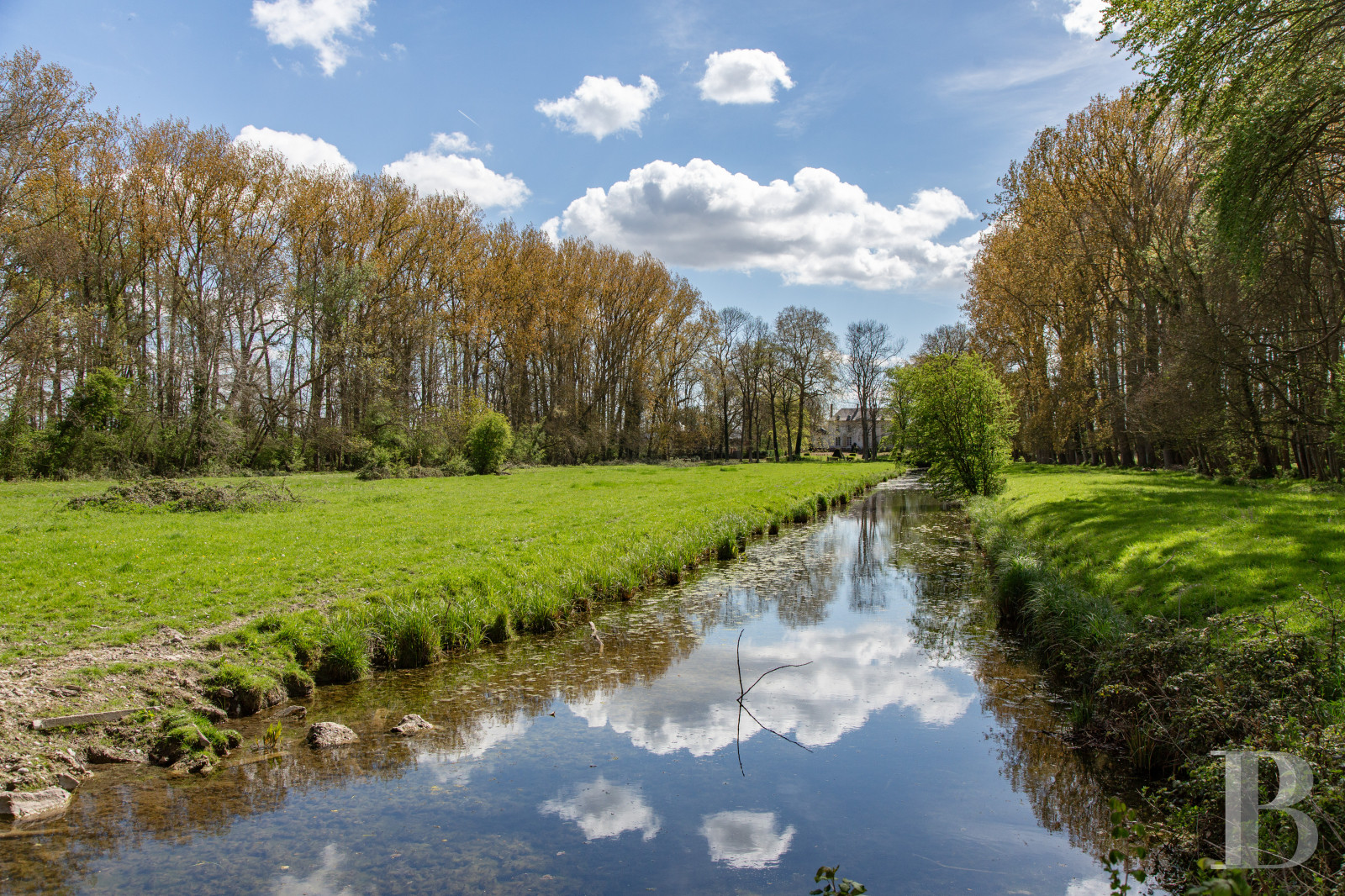
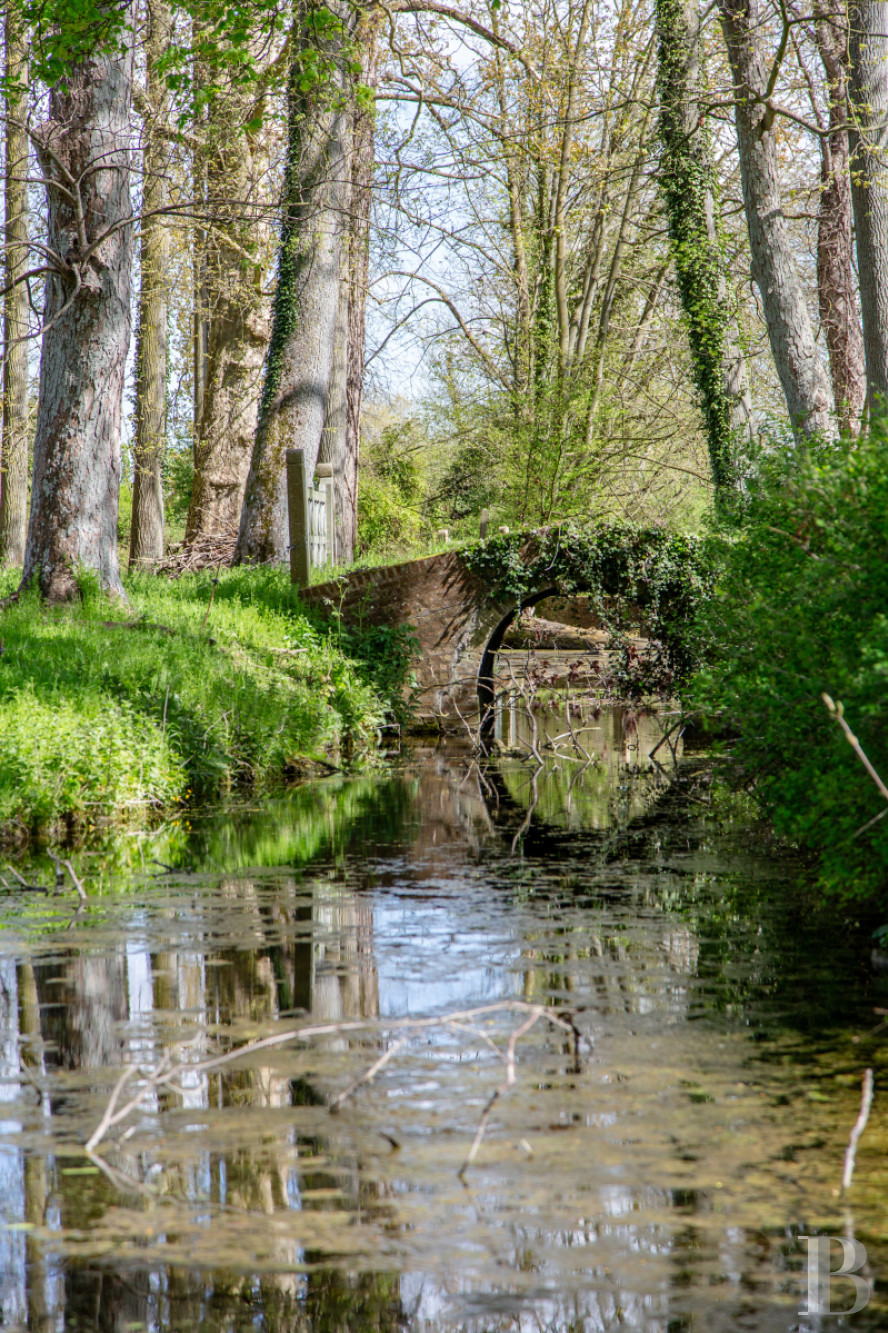
A short distance away, a chapel and dovecote seem to watch over the property while to the west there is a walled orchard with period greenhouses, an orangery used as a workshop and a swimming pool. A former farm situated to the east is adjacent to a maze of hedges. The estate boasts 9-hectares of planted parkland with an ornamental garden (listed in the Mérimée archives), an orchard, pastureland, woods and canals that are linked to the network of marshes at Lanchères and Cayeux-sur-Mer.
A gate opens onto a large, round lawn, planted with pruned yew trees. An also circular drive enables parking for vehicles in front of the mansion. Two pavilions, one of which is used as a garage and the other as a storeroom, are situated at each side of the courtyard’s entrance.
A short distance away, a chapel and dovecote seem to watch over the property while to the west there is a walled orchard with period greenhouses, an orangery used as a workshop and a swimming pool. A former farm situated to the east is adjacent to a maze of hedges. The estate boasts 9-hectares of planted parkland with an ornamental garden (listed in the Mérimée archives), an orchard, pastureland, woods and canals that are linked to the network of marshes at Lanchères and Cayeux-sur-Mer.
The mansion
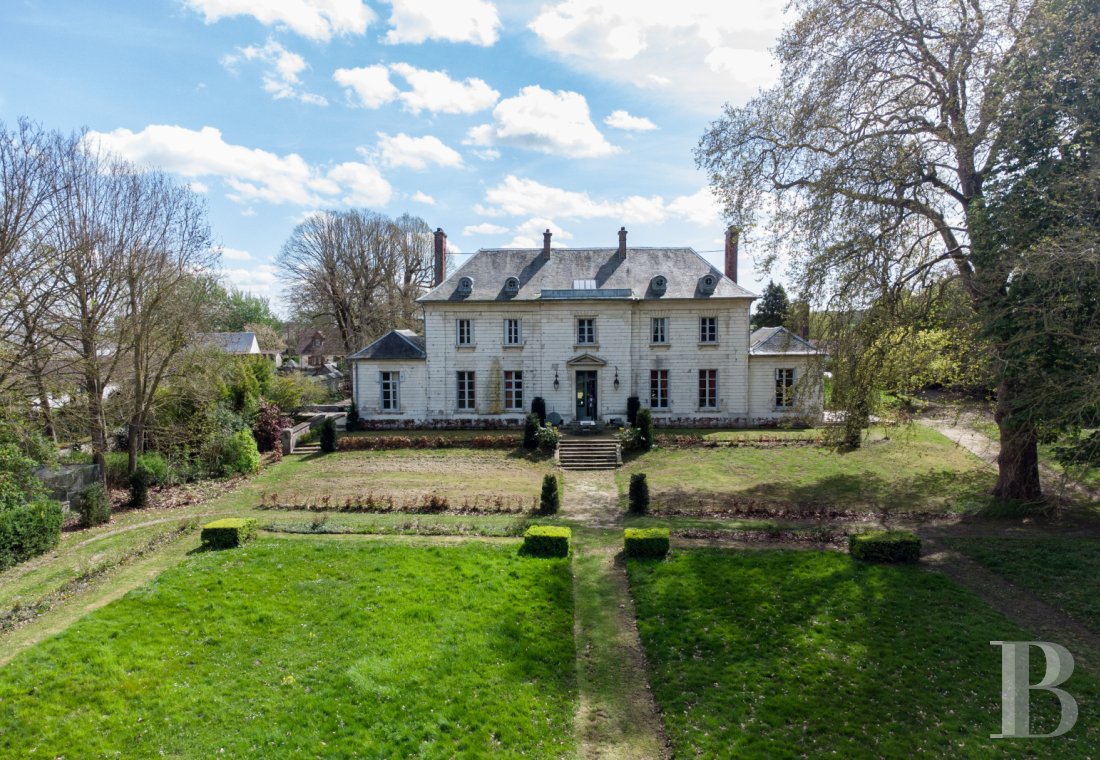
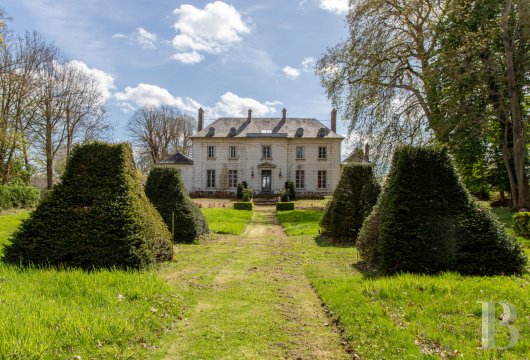
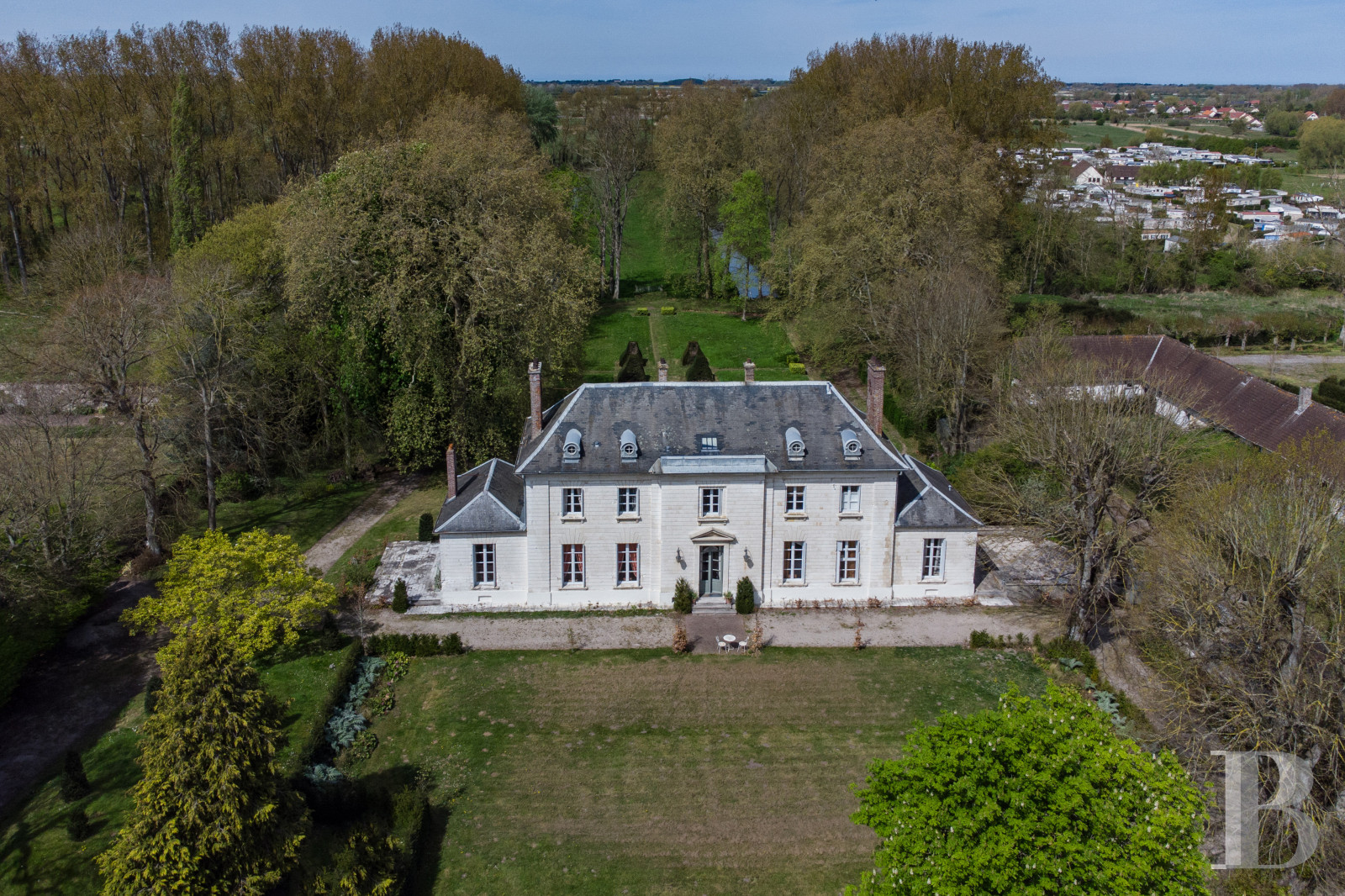
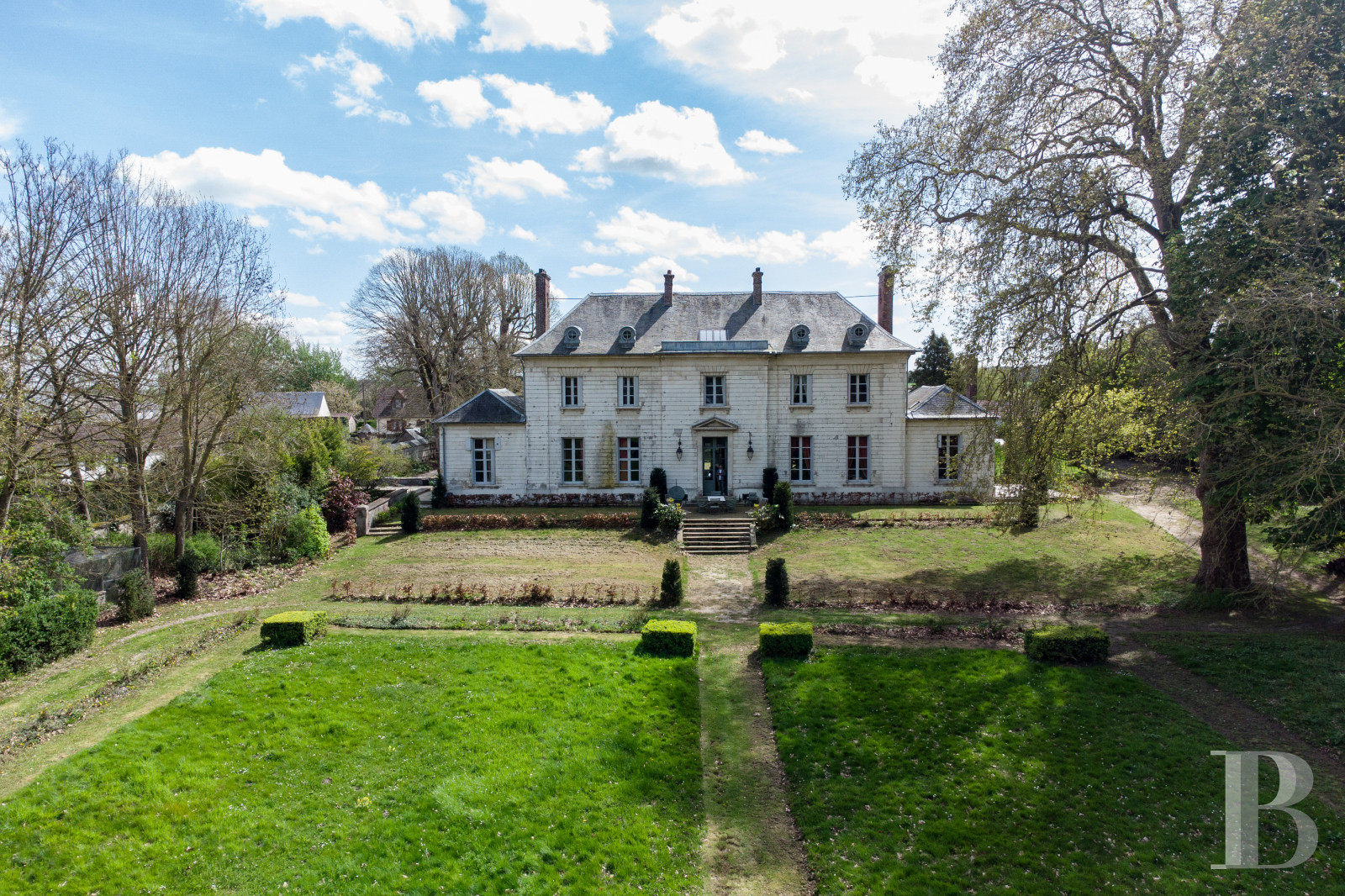
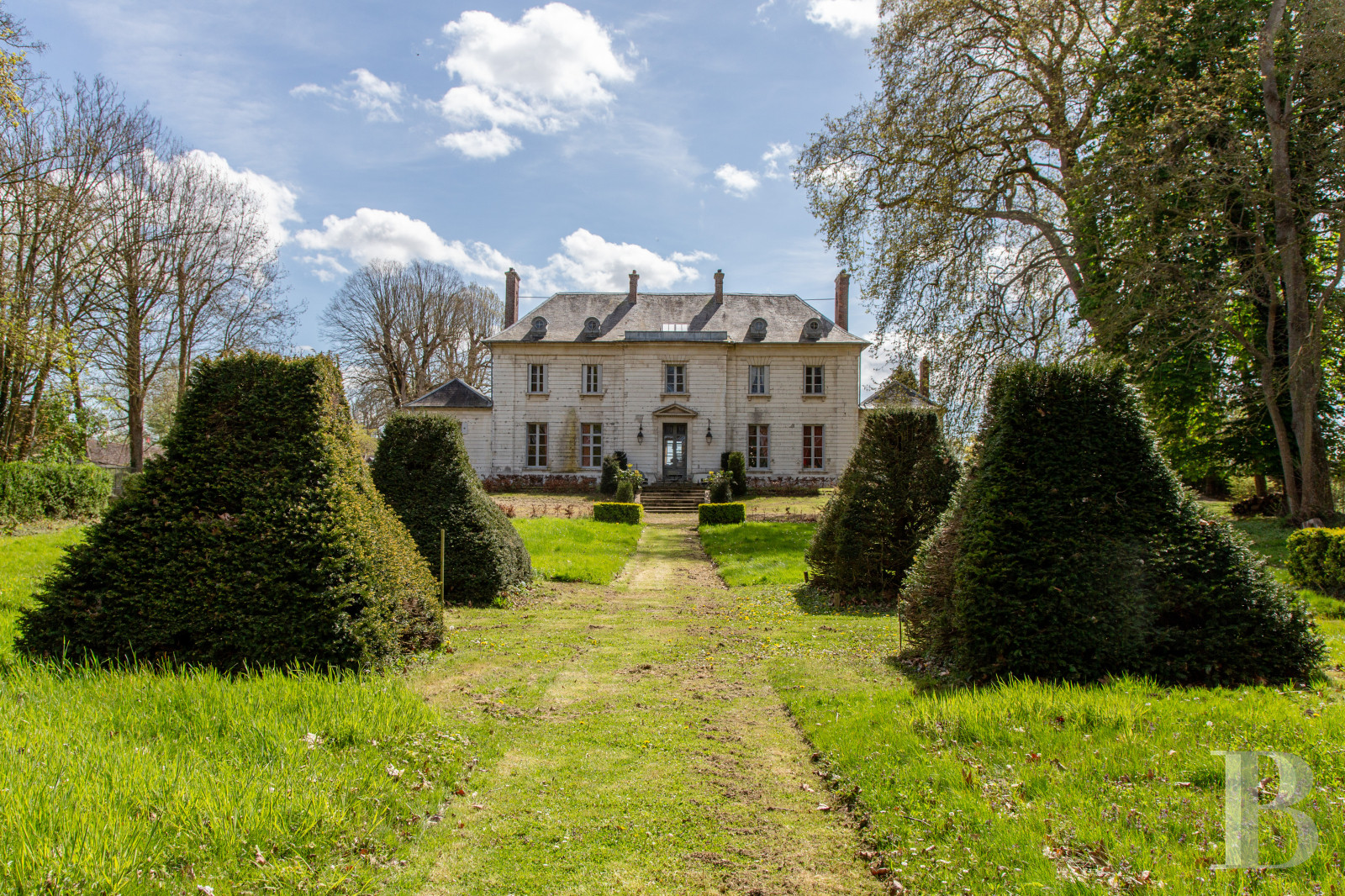
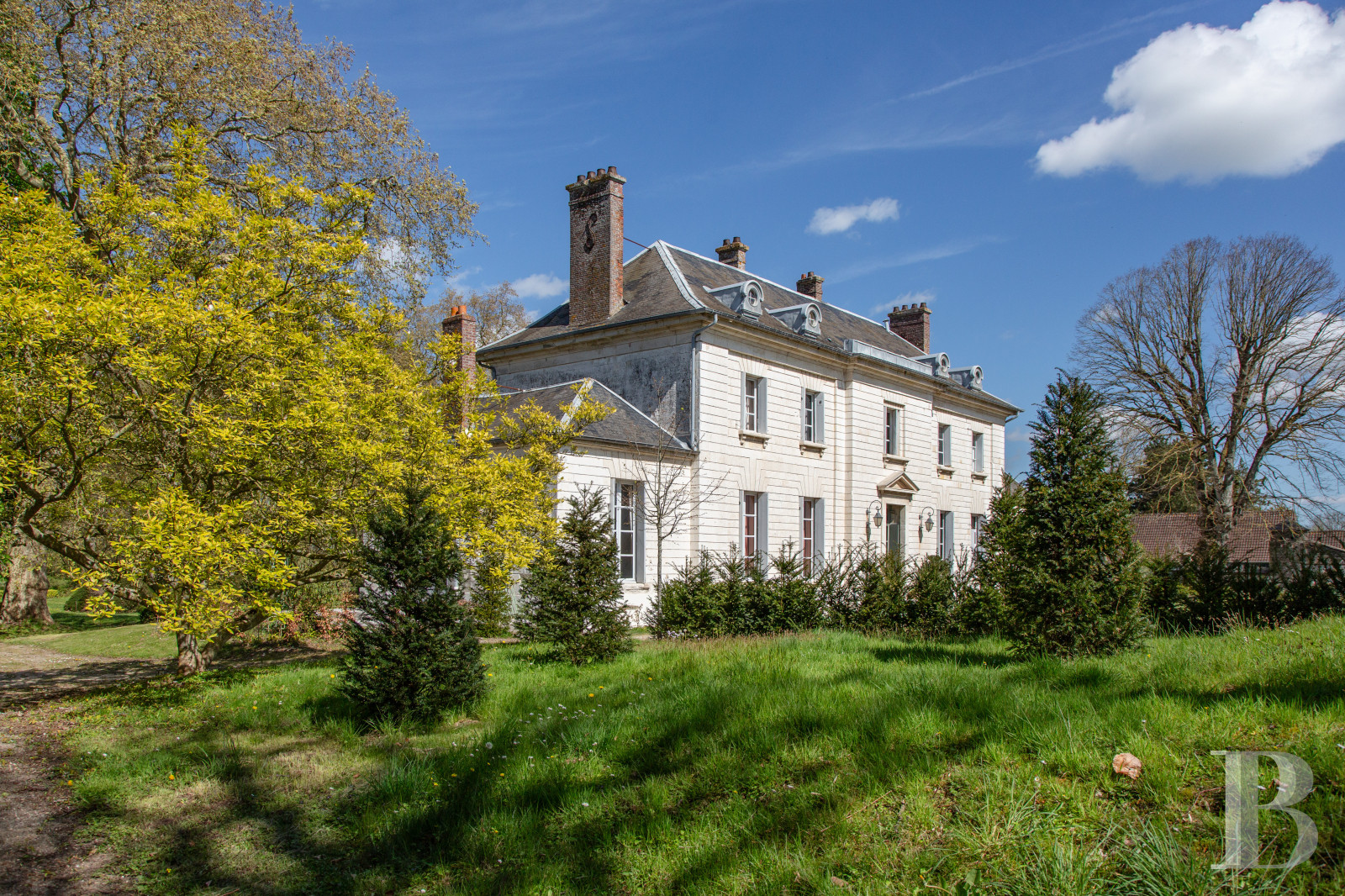
It was built following the 18th-century architectural style with a light main facade, both in terms of its layout and the colour of the region’s white limestone, outlined by delicate dark lines. The three-storey, rectangular, southeast-facing edifice is flanked by two wings on either side, while the north and south facades are symmetrically punctuated by large-paned, double-leaf windows. In the centre of the southern facade, the glazed, double-leaf entrance door is topped by a triangular pediment and framed by two French lanterns. The roof is punctuated by four bullseye windows on the north side and four on the south, as well as five red brick chimney stacks. The northwest facing facade overlooks the parkland. All the windows are fitted with external shutters.
The ground floor
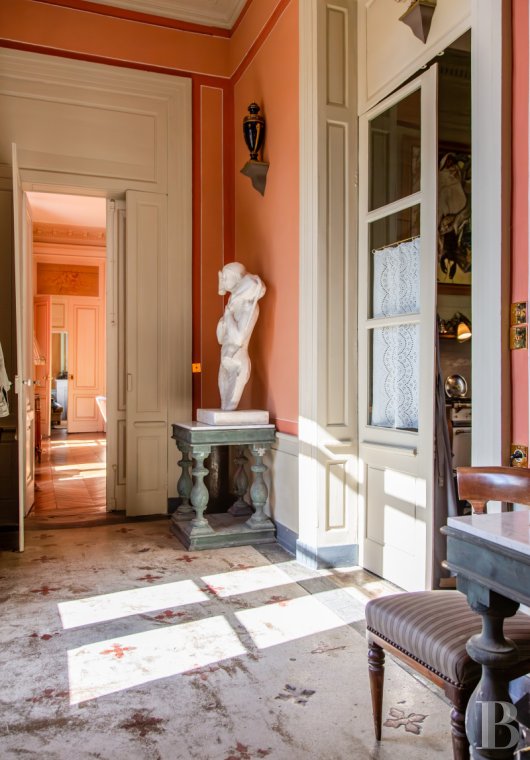
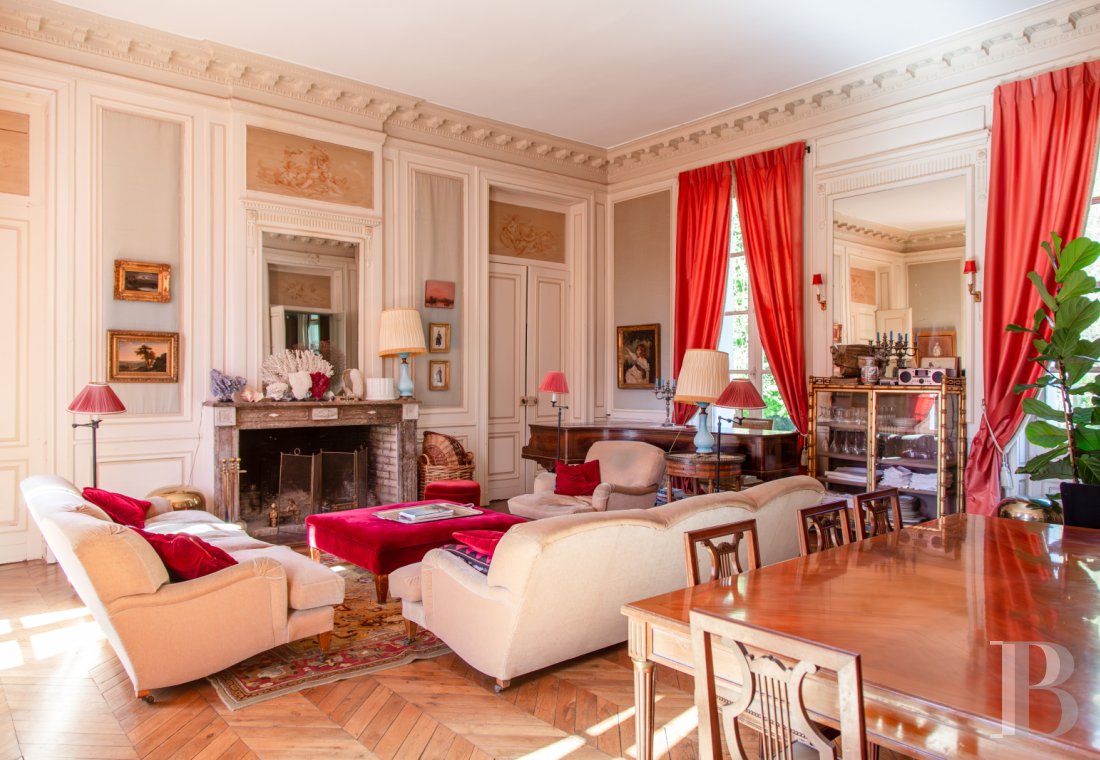
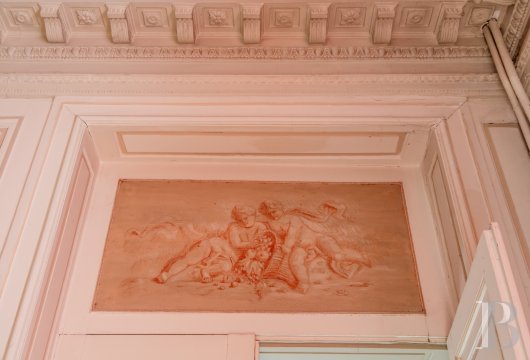
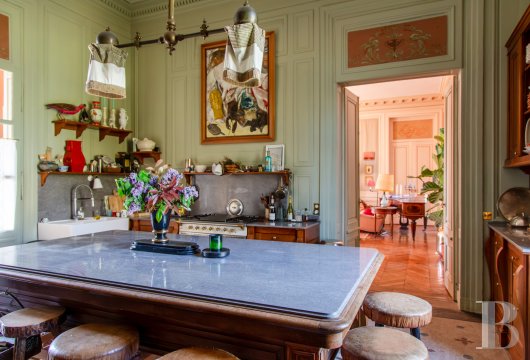
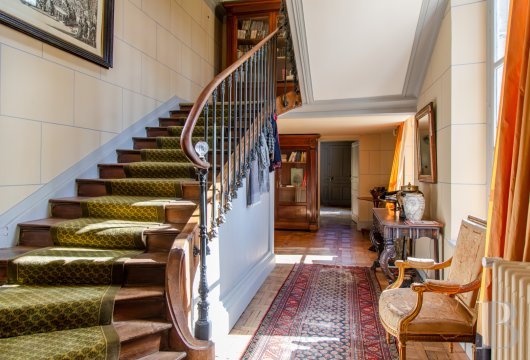
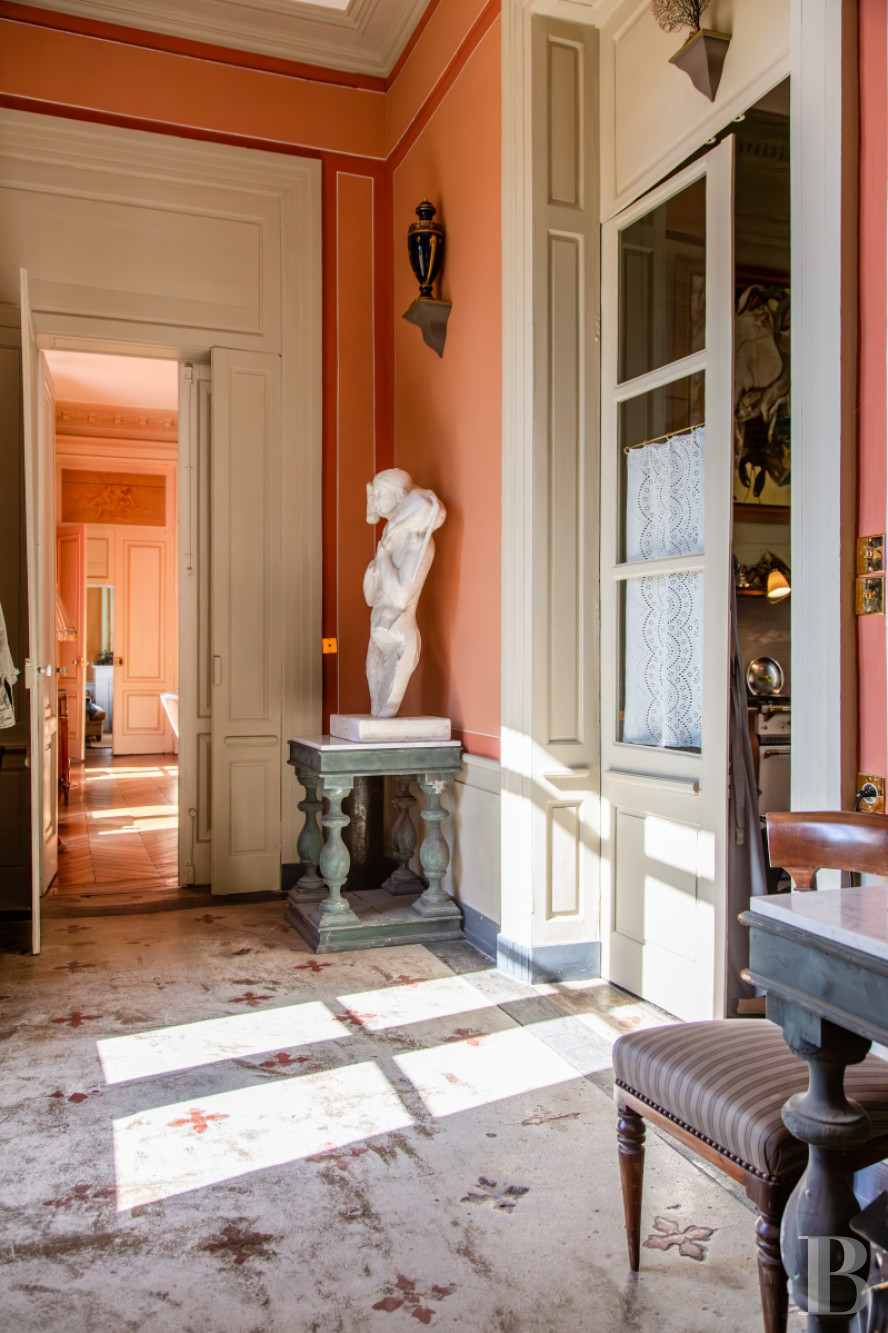
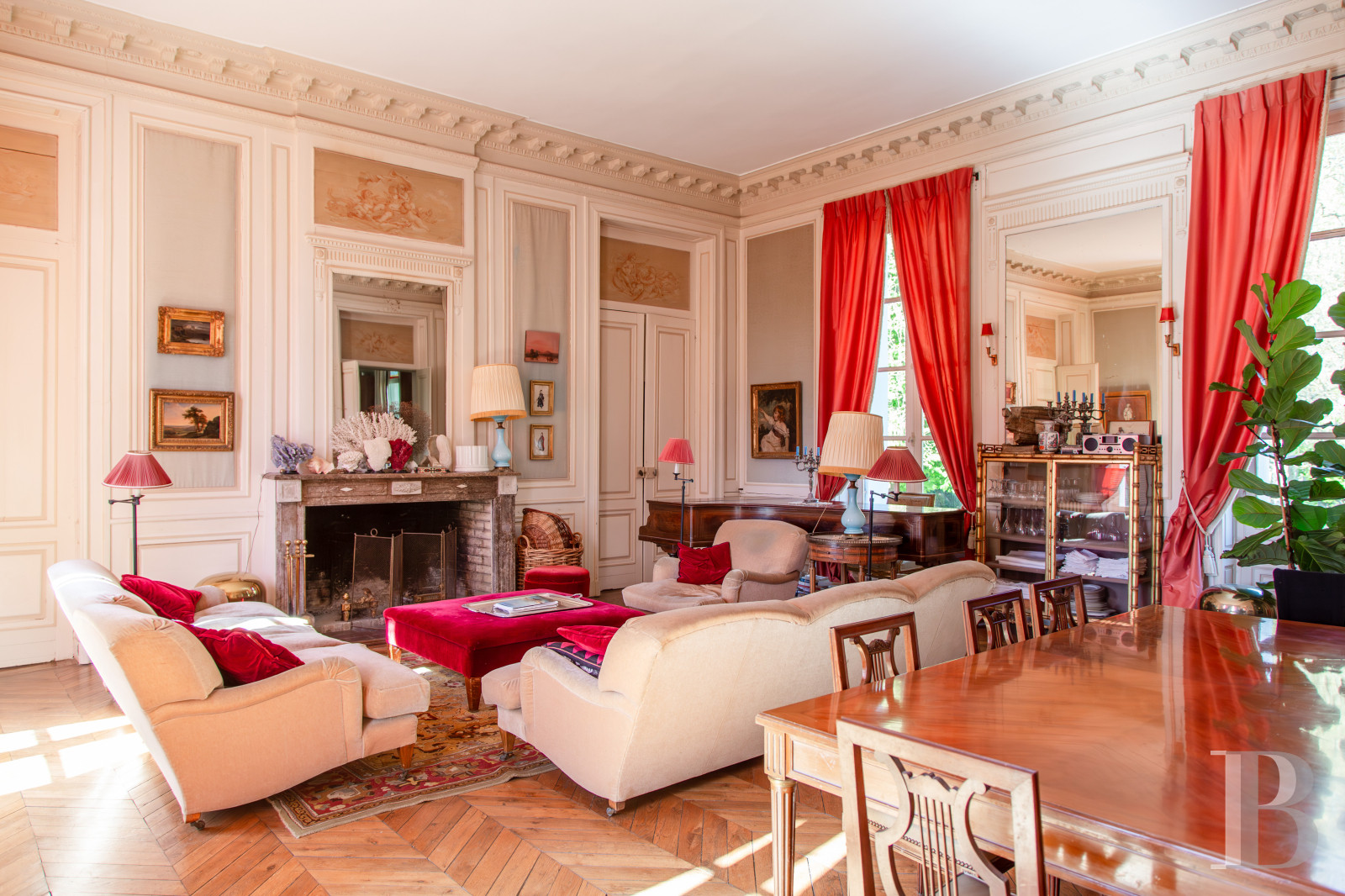
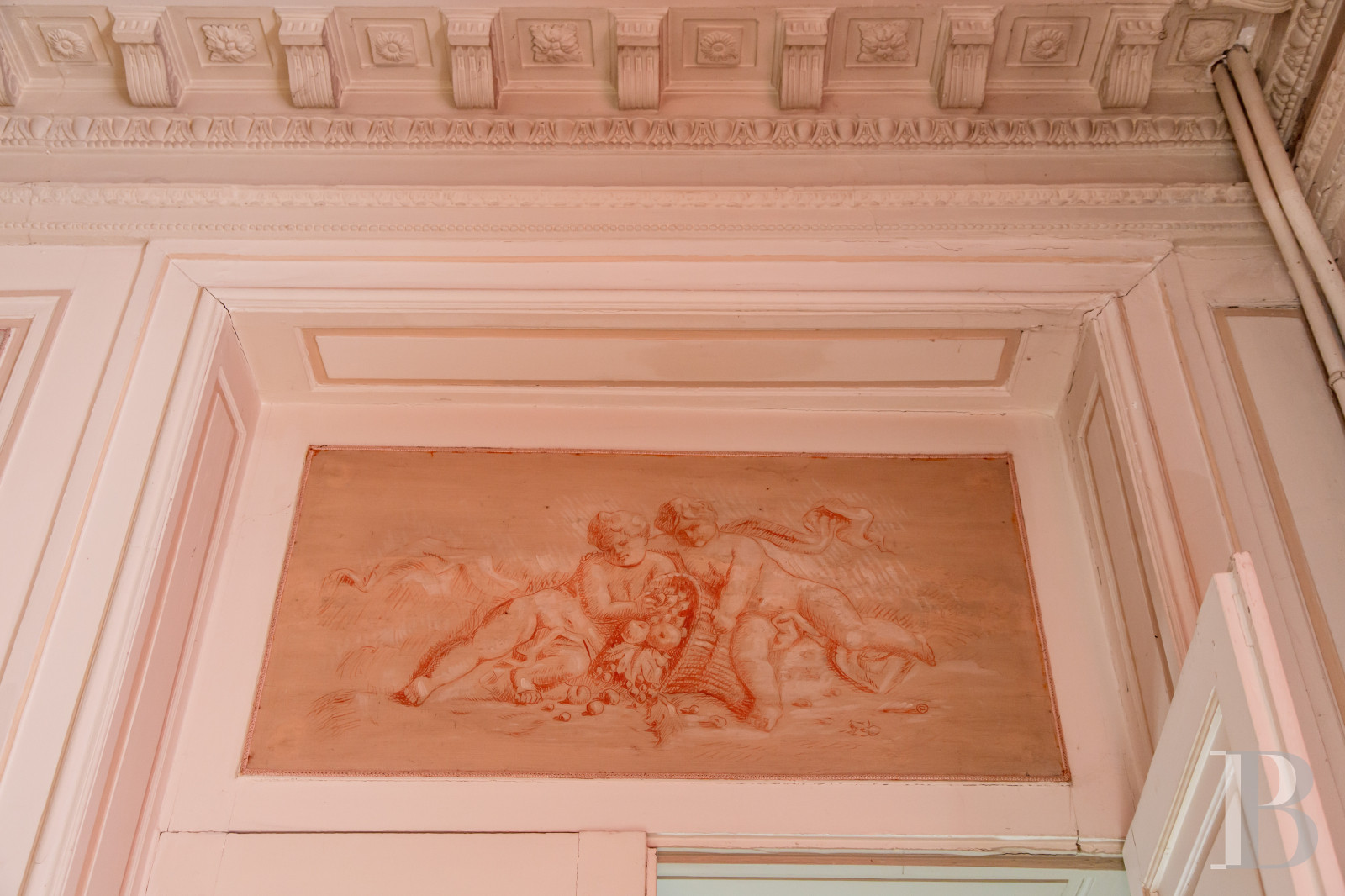
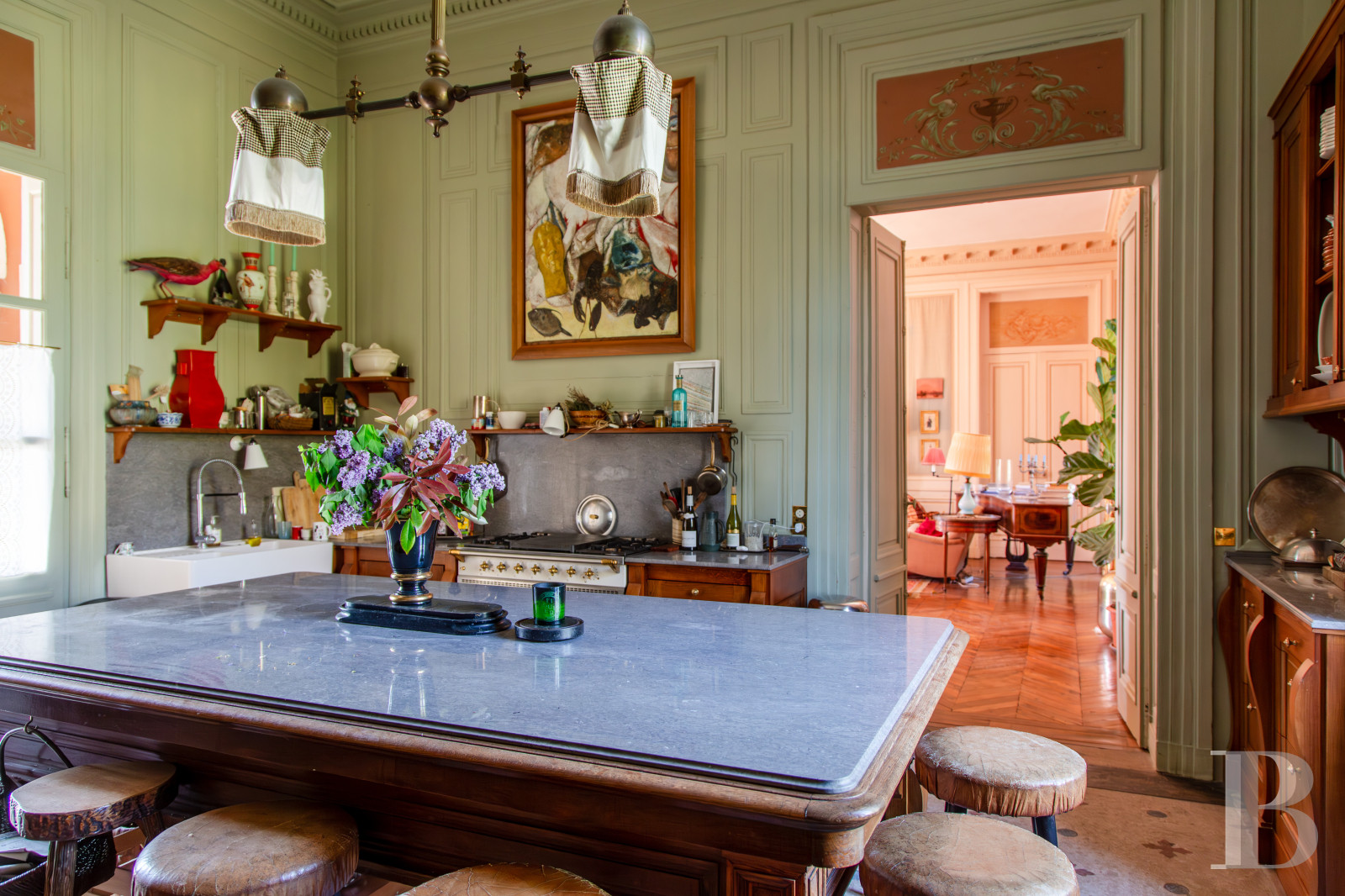
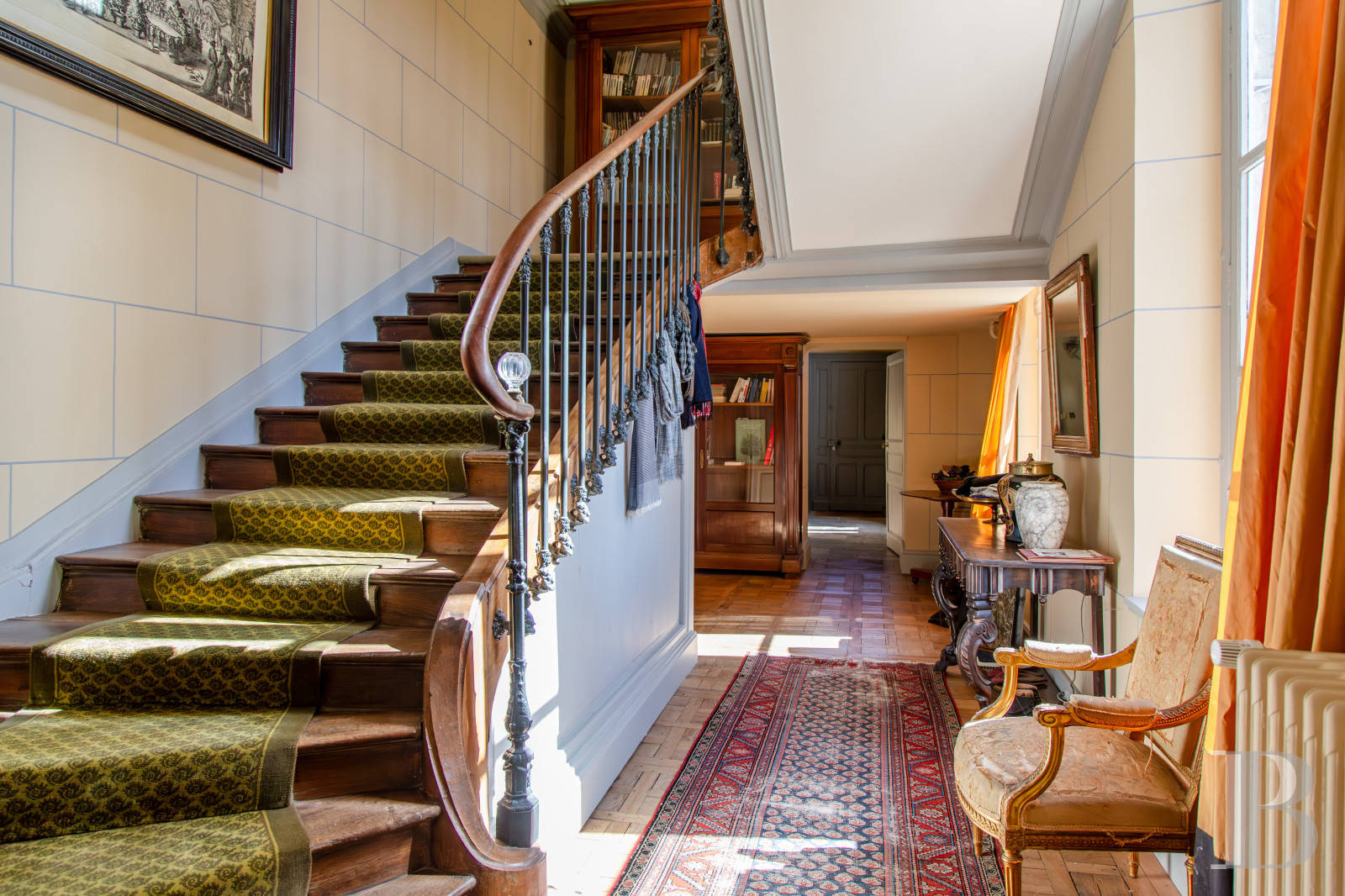
From the entrance hall, all the rooms, which are connected by double-leaf doors, are situated one after another, while a 19th-century wooden staircase climbs to the upper floors. The kitchen is sophisticatedly ornate, has a central island unit and cupboard furnishings. French windows open out onto the patio overlooking the tree-filled grounds, which can be reached by a flight of stone steps, as well the canals further away. A double-leaf door leads into the main lounge, with ceiling mouldings and chevron parquet flooring, which is bathed in light through four tall windows. The doors and fireplaces are topped by trumeau panels depicting child-like putto figures. The lounge is followed by a large room currently used as an office.
From the hall, a double-leaf door opens into a gallery that leads to a boot room as well as a suite made up of a bedroom, an exotically decorated lounge, a bathroom and storage space. A lavatory and a utility room complete this level.
The first floor
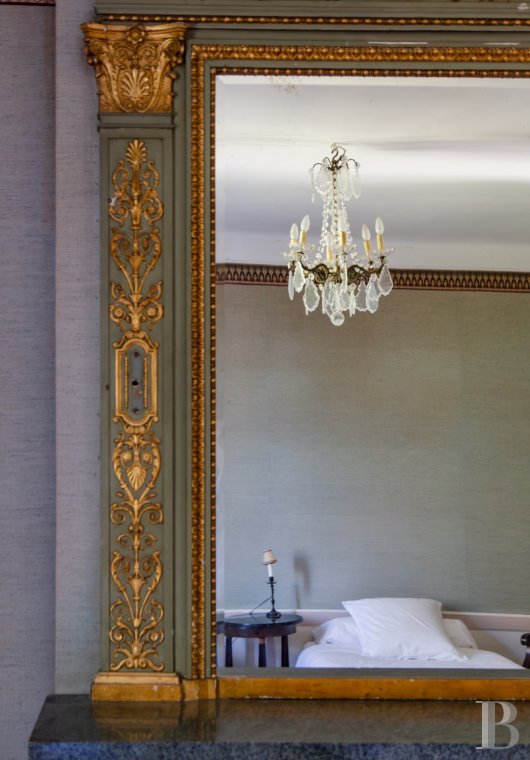
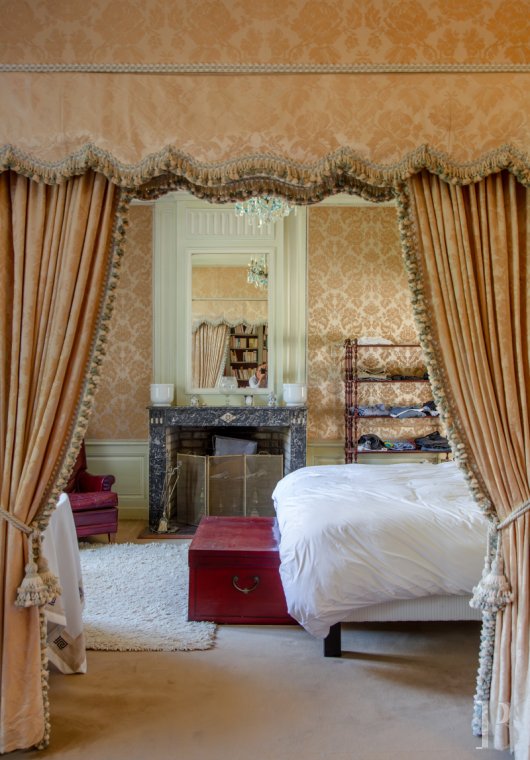
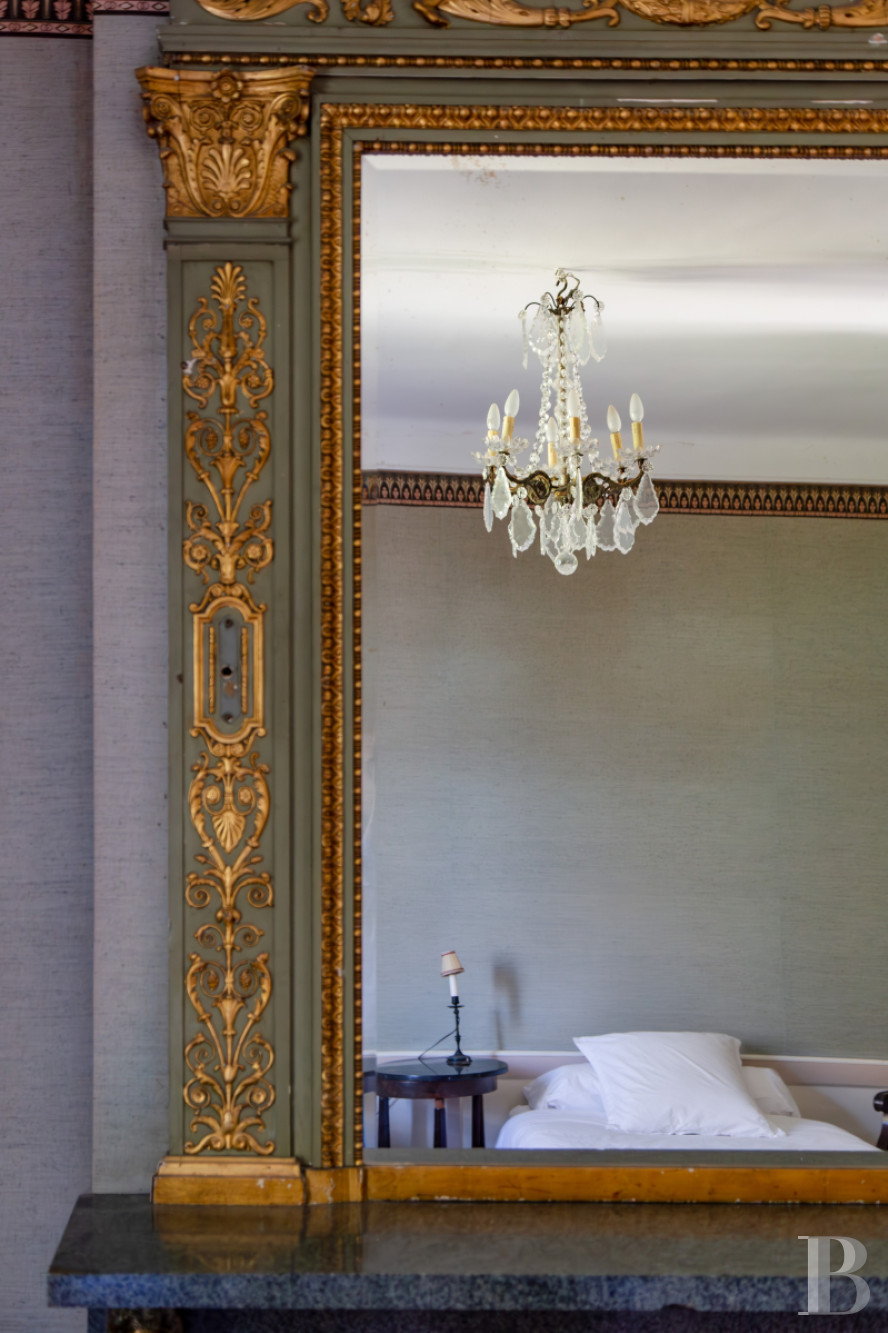
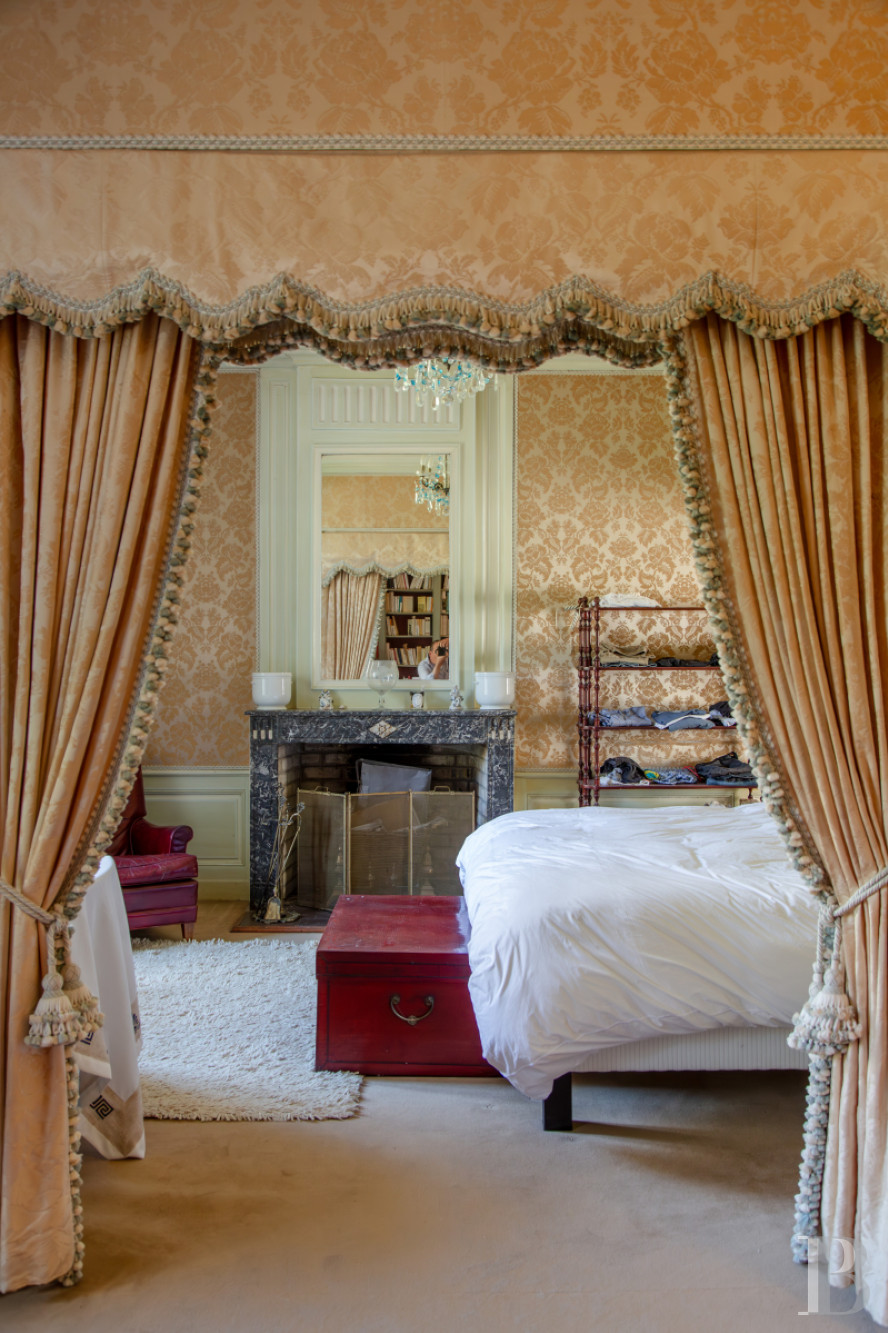
The traditional 19th-century winding staircase with a wooden balustrade climbs to an intermediate landing and the first floor. On this level, the landing leads to a bedroom with an en suite bathroom, plus four other bedrooms, a bathroom and a shower room. Three of these bedrooms boast marble fireplaces with trumeau panels, one of which is graced with gold leaf and plasterwork. Several of the bedrooms enjoy views of the grounds, while the floors are covered with soberly coloured carpets and rugs.
The attic
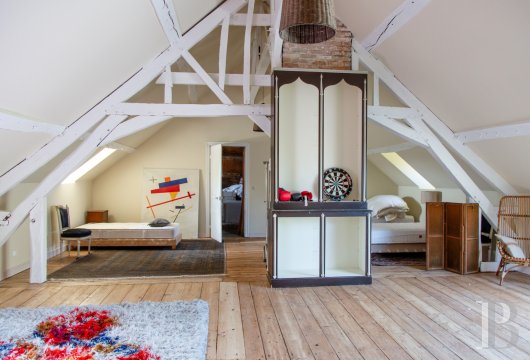
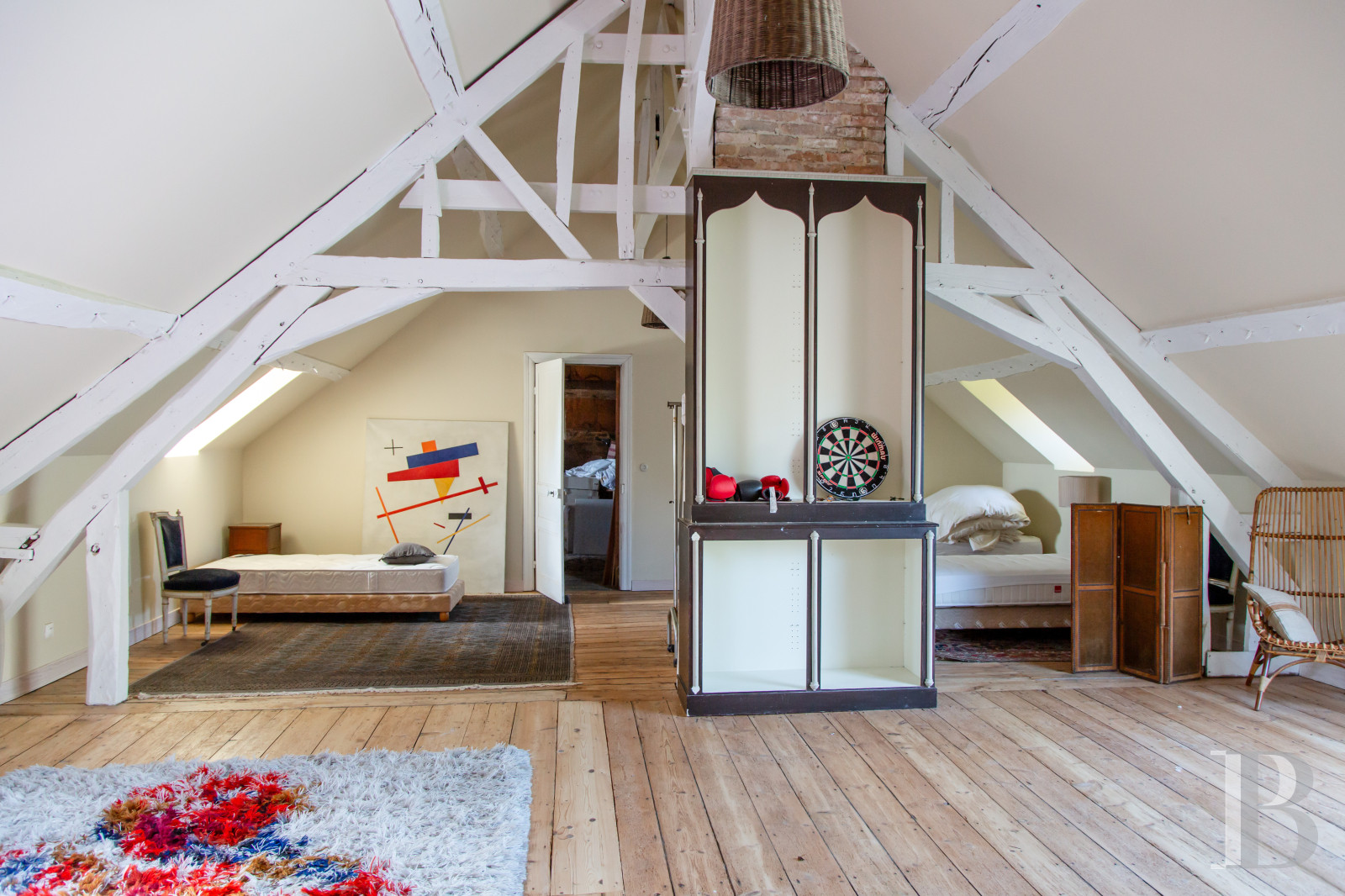
The main staircase is followed by a small staircase concealed behind a door, at the top of which a landing leads to the attic with a surface of around 121 m², including a bedroom, a bathroom, a lavatory and a large games room beneath the rafters. A door also leads to a loft that could be put to a number of purposes.
The cellar
It can be reached from the entrance hall underneath the main staircase, spreads out beneath most of the house and has a surface of approximately 170 m². It is in good condition, well-ventilated, partially vaulted and its layout enables comfortable use, particularly for storing wine and equipment.
The dovecote
It is located near to the ornamental maze created by the current occupant and is topped by a roof in excellent state. The upper part of the dovecote can be reached via a ladder, while the lower part is devoted to storage.
The funerary chapel
This red brick edifice was erected at the request of Pierre Fanneau de la Touche who was buried here in 1812, as are some of his descendants. The building is in need of considerable restoration work.
The outbuildings
Two pavilions frame the main gateway to the estate. One, which was previously the estate keeper’s house, is now used as a garage, while the other, which is likely to have been stables in bygone days, is used for storage. Several other edifices, notably farm buildings in a rickety state, are currently used for storing garden equipment.
The orchard
This large expanse was once a vegetable garden standing in front of the greenhouses where the main vegetables cooked in the mansion were grown, not far from the old orchard boasting rows of many fruit trees. It is now home to several types of fruit trees (plum, pear and cherry). At also now plays host to a 15-metre lap pool, where the summer sunshine can be enjoyed.
The grounds
They spread out over 9 hectares and are divided into different spaces: the orchard, pastureland, woods and canals. A series of uninterrupted lawns dotted with carefully pruned yew trees surround the brick patio to the rear of the edifice. The landscape is organised in such a way to draw the gaze toward the distant perspective. Further away, in the same direction opposite the rear of the edifice, another perspective emerges, with alignments of plane and lime trees forming shaded paths, adorned with hawthorns, gradually leading to other areas with distinctive ambiances, where herons’ calls and frogs croaking in the canals can be heard.
Our opinion
This remarkable 18th-century property reflects the slow passage through the eras that have shaped it, via restorations that today have enabled the mansion and its outbuildings to retain their picturesque identity. Thanks to its many living spaces, plus their layout and comfort, it is an edifice that could be suitable for a fulfilling family life and for a top-quality guesthouse activity. In addition to these many assets, its geographical location also contributes to its standing, situated in a village in a lush environment just a short way from the Côte d’Opale coastline, allowing the possibility of enjoying use of a beach hut at Cayeux-sur-Mer, organising wild duck hunting or simply enjoying reading on the patio under the amused gaze of cows grazing nearby.
Reference 550971
| Main building floor area | 490 m² |
| Land registry surface area | 9 ha 59 a |
French Energy Performance Diagnosis
Information on the risks to which this property is exposed is available on the website: www.georisques.gouv.fr
Share


NB: The above information is not only the result of our visit to the property; it is also based on information provided by the current owner. It is by no means comprehensive or strictly accurate especially where surface areas and construction dates are concerned. We cannot, therefore, be held liable for any misrepresentation.