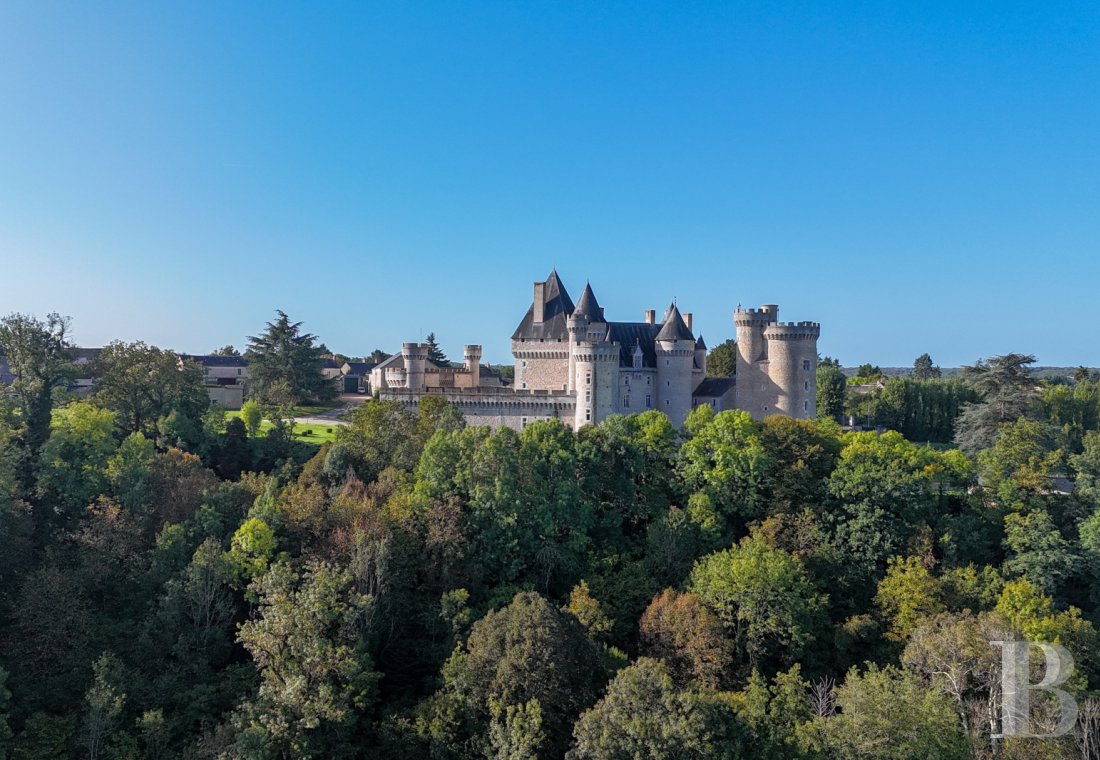




A spectacular medieval chateau, restored with hotel-standard
renovations, nestled in France’s beautiful Berry province
renovations, nestled in France’s beautiful Berry province
Châteauroux,
INDRE
center-val-de-loire
36000
FR

Location
France’s beautiful Berry area is a historical province and the former fiefdom of the Dukes of Berry, who were princes of the French royal family. To the south of this vast, bucolic region that has remained distinctly rural, the countryside is gently undulating. The Poitou province is nearby. And after that you are almost in the south of France. The Brenne regional nature park, with its thousand lakes, is close to the property, as is the delightful town of Argenton-sur-Creuse, which is officially recognised for its quaint charm and is often nicknamed the Venice of the Berry province. You can get onto a motorway in only a few minutes. On this motorway, you can reach Paris in three hours by car. From the local village train station, you can get to the town of Châteauroux, where direct trains take you to the French capital in 2 hours and 30 minutes.
Description
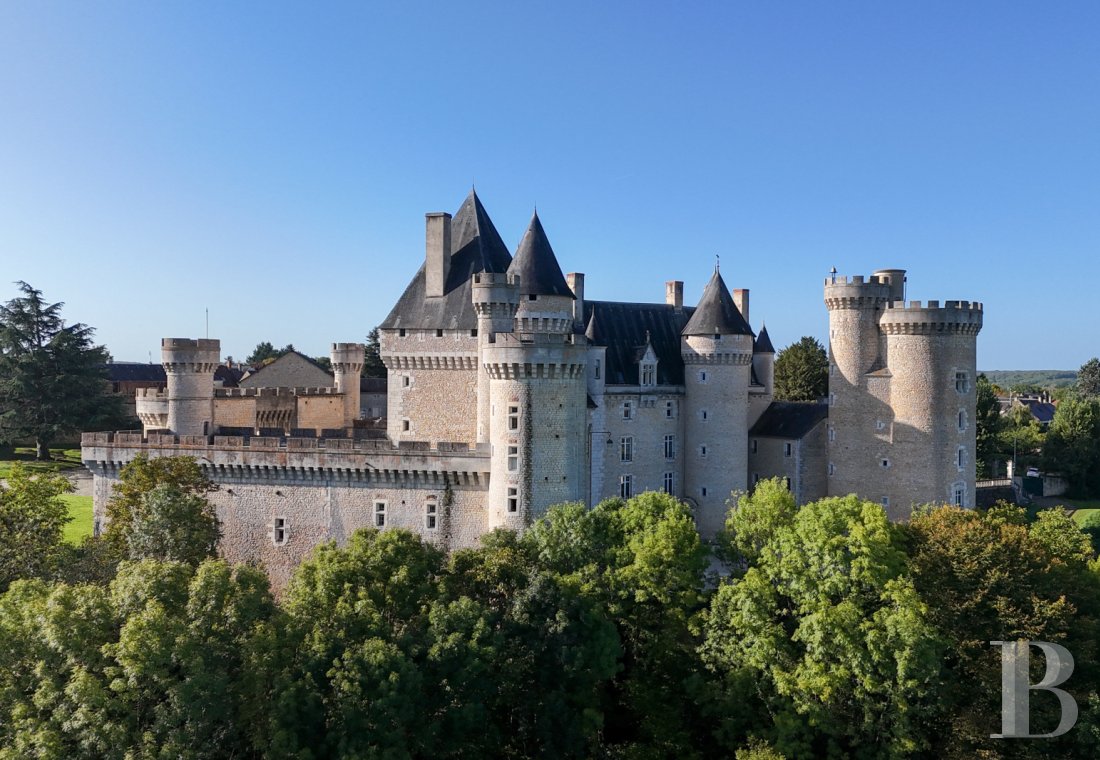
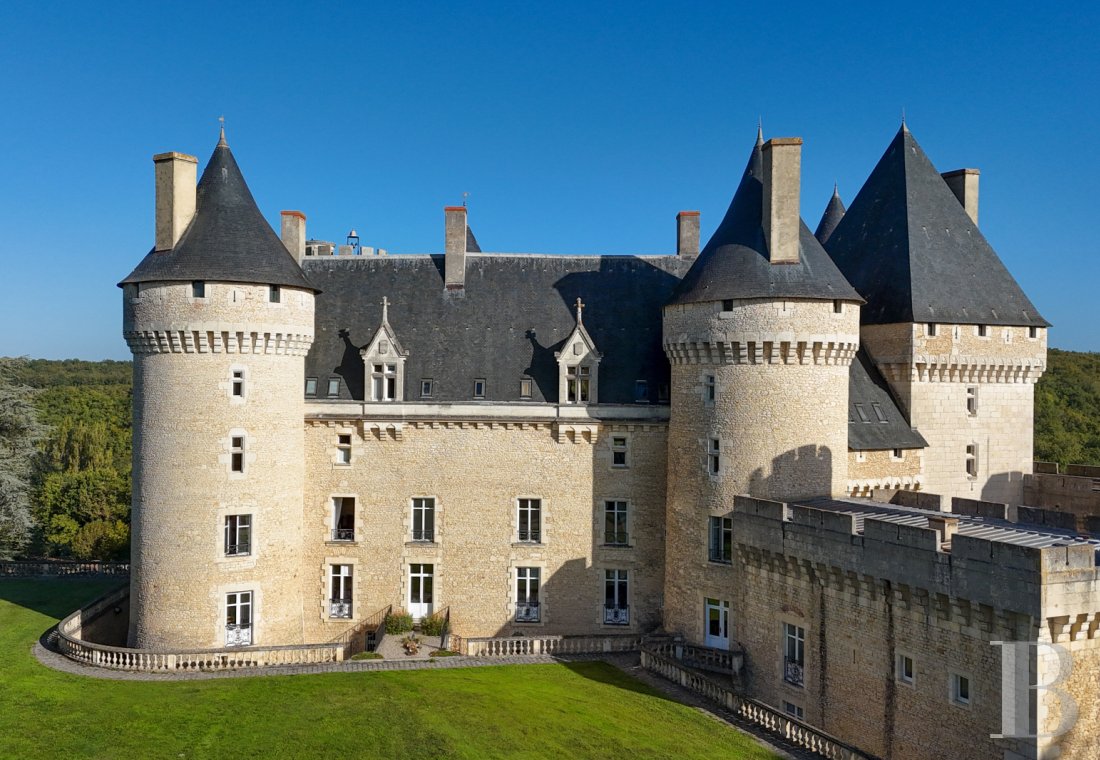
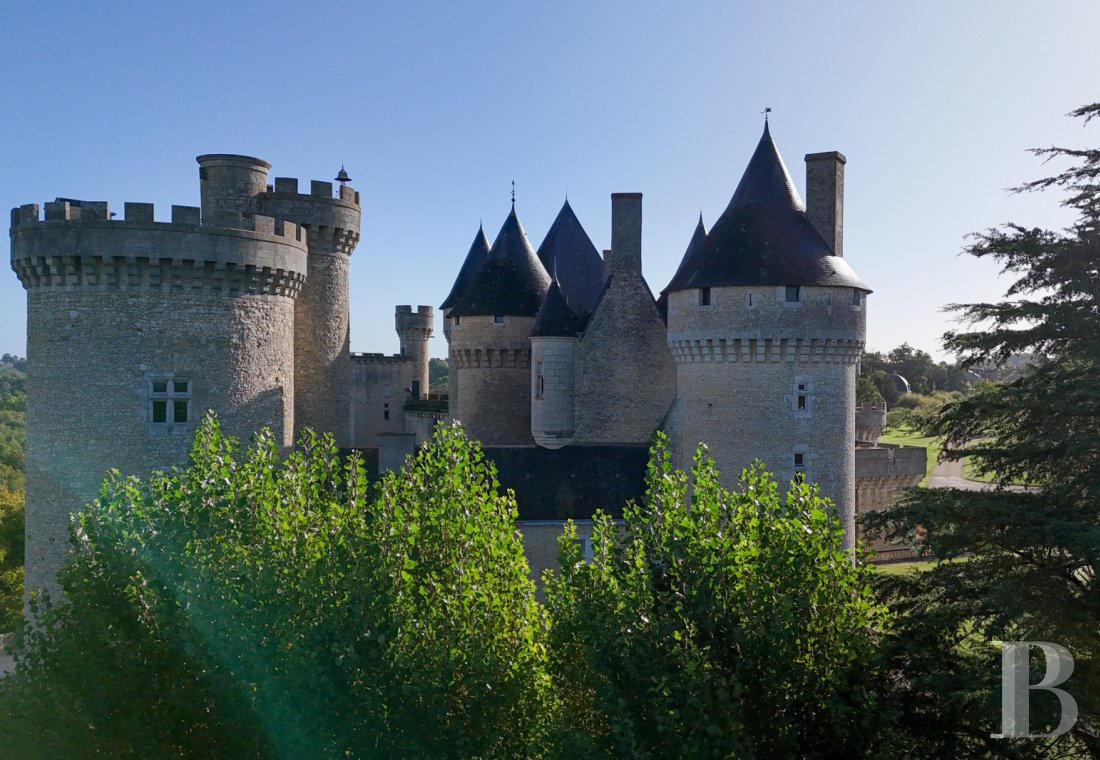
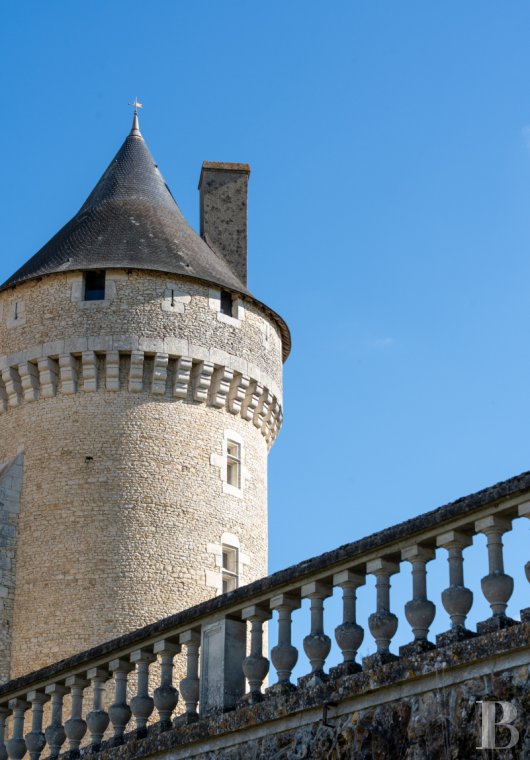
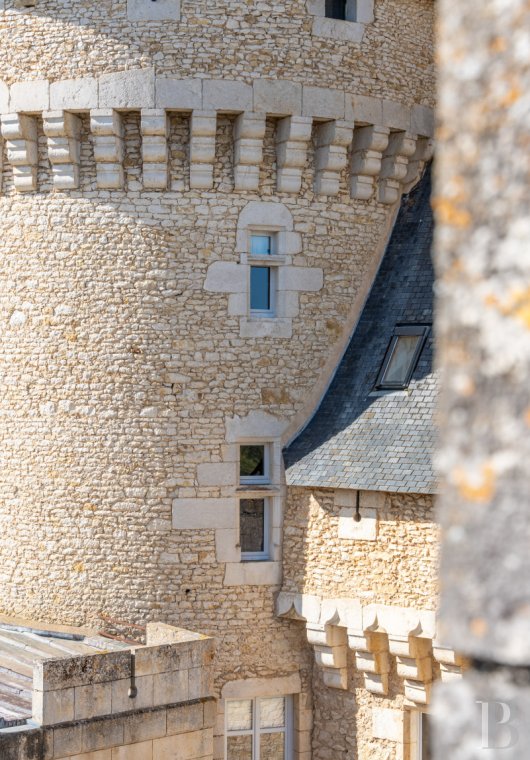
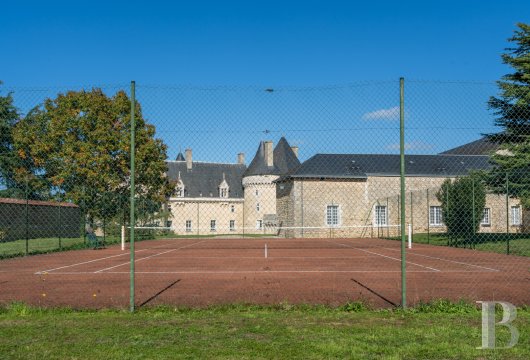
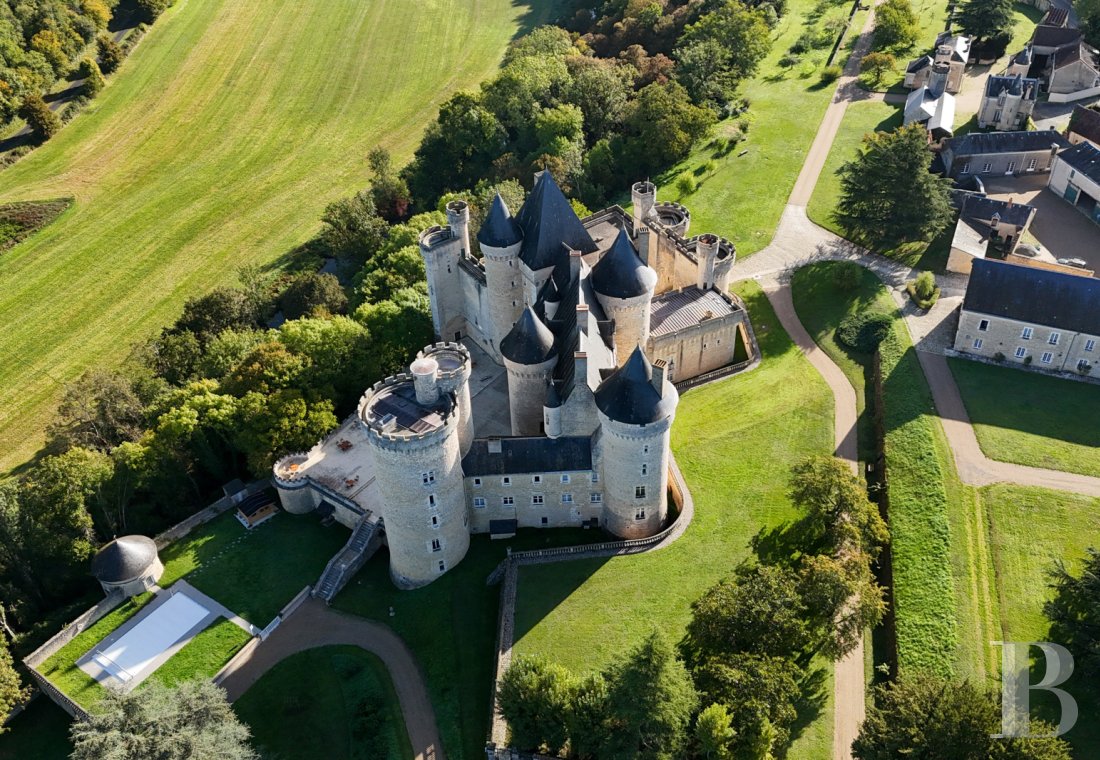
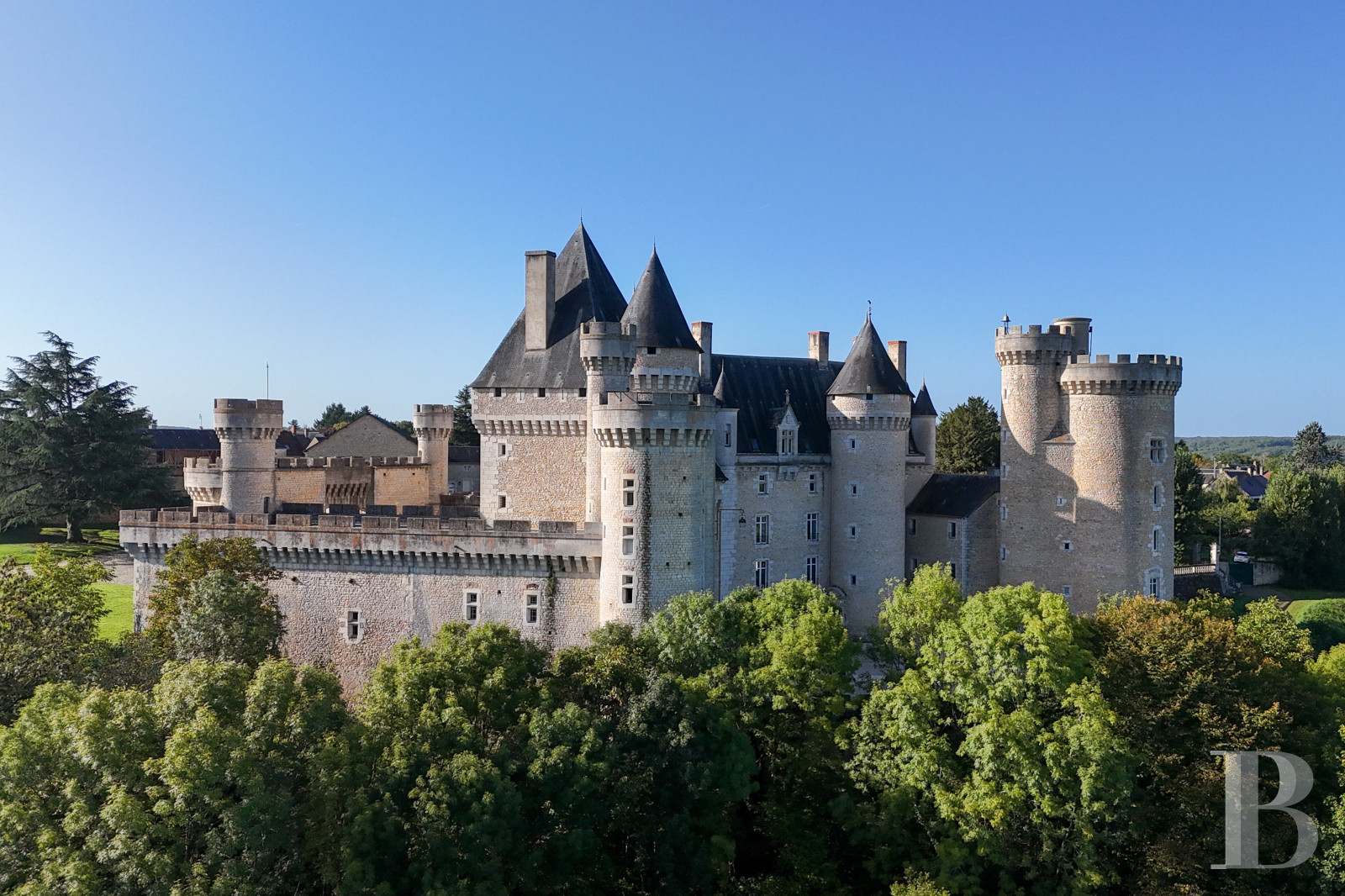
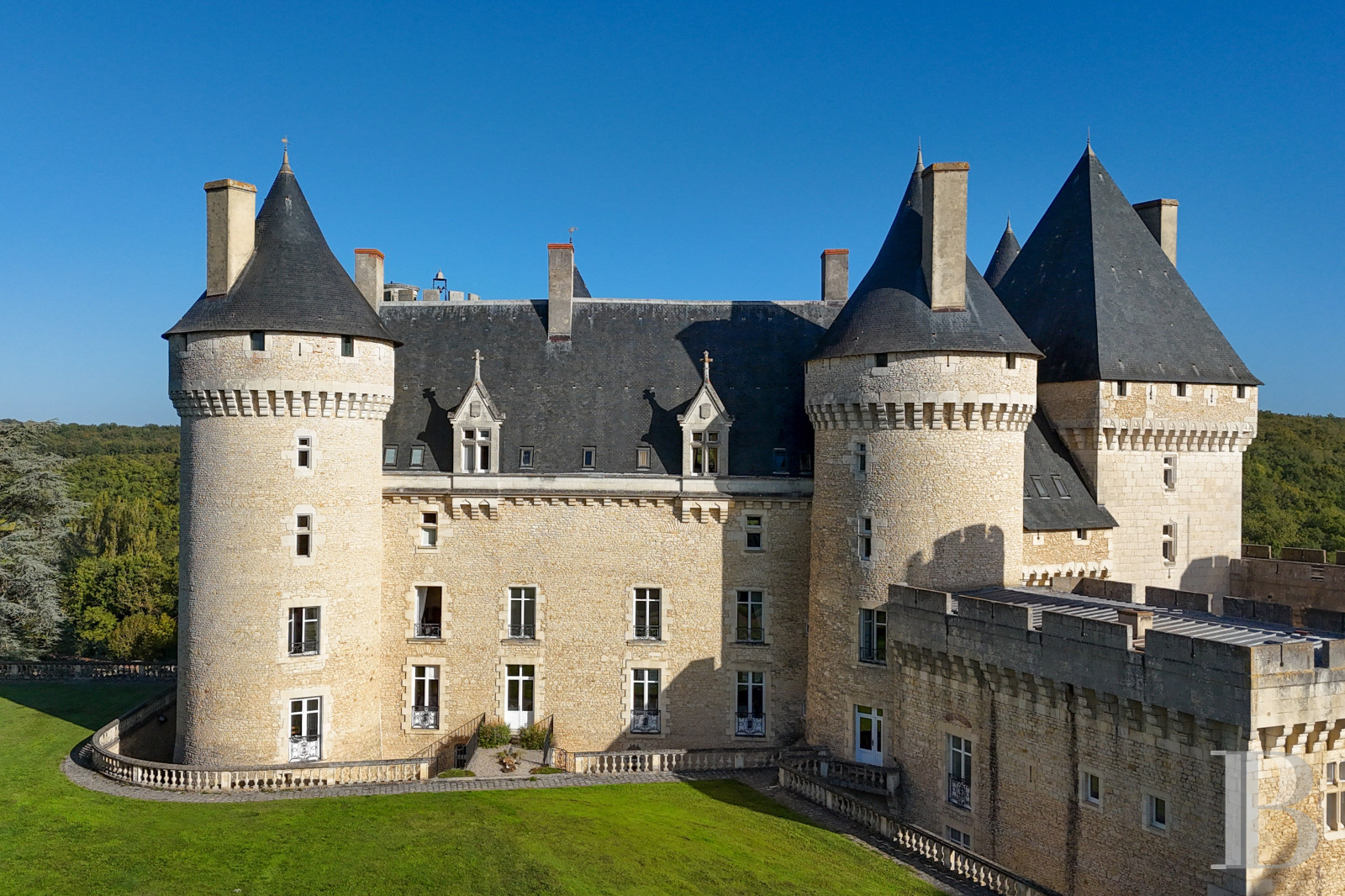
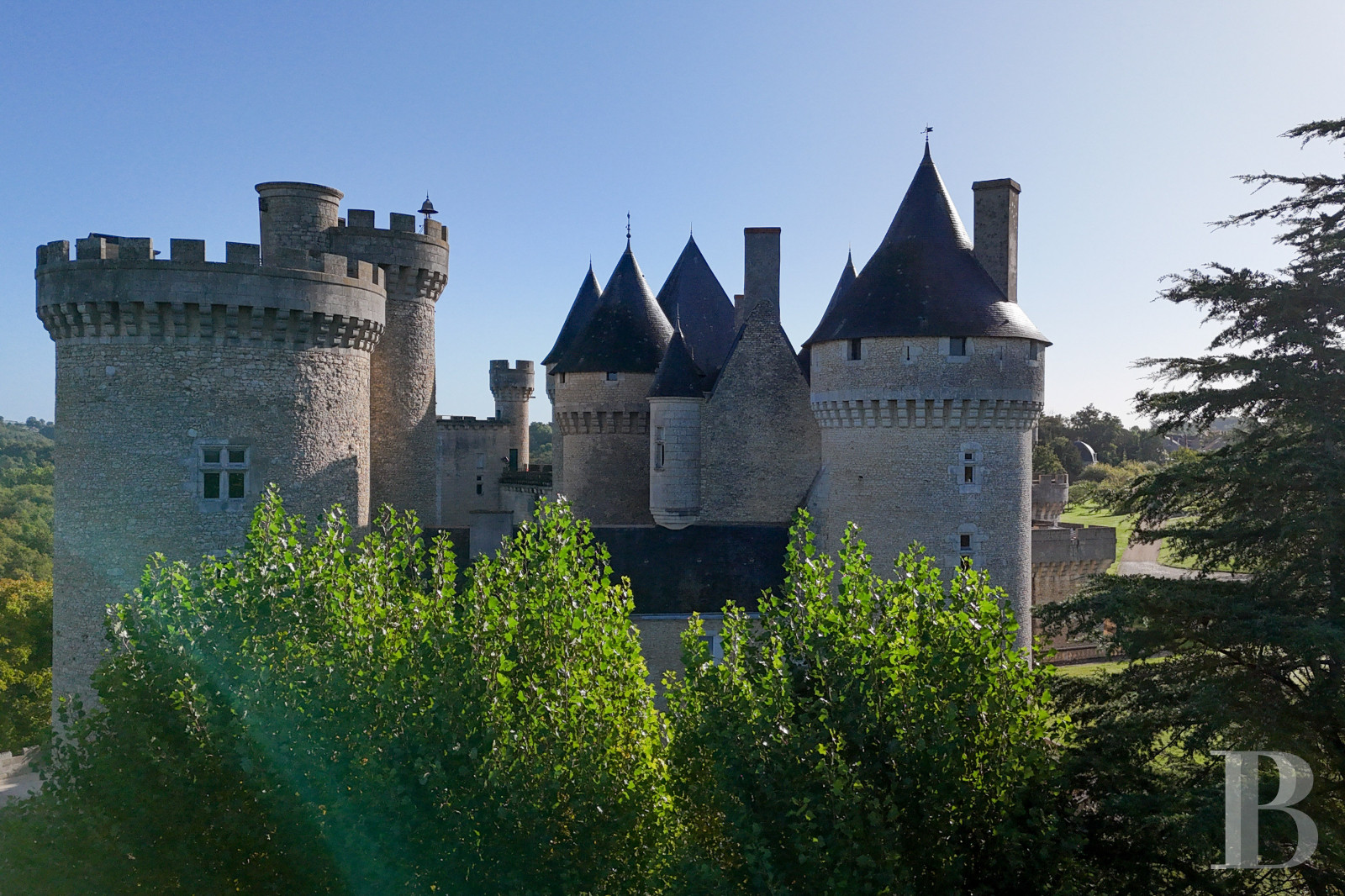
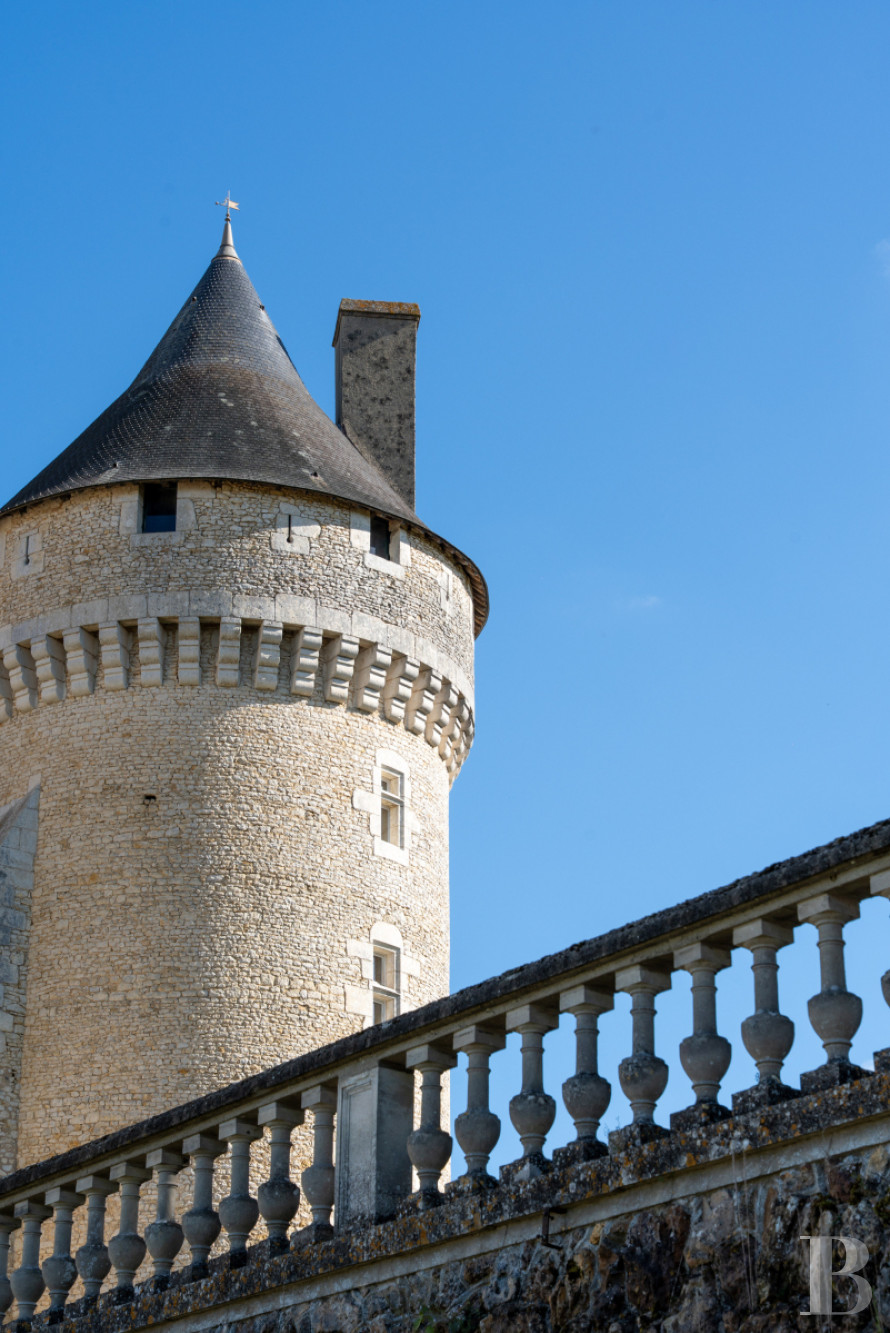
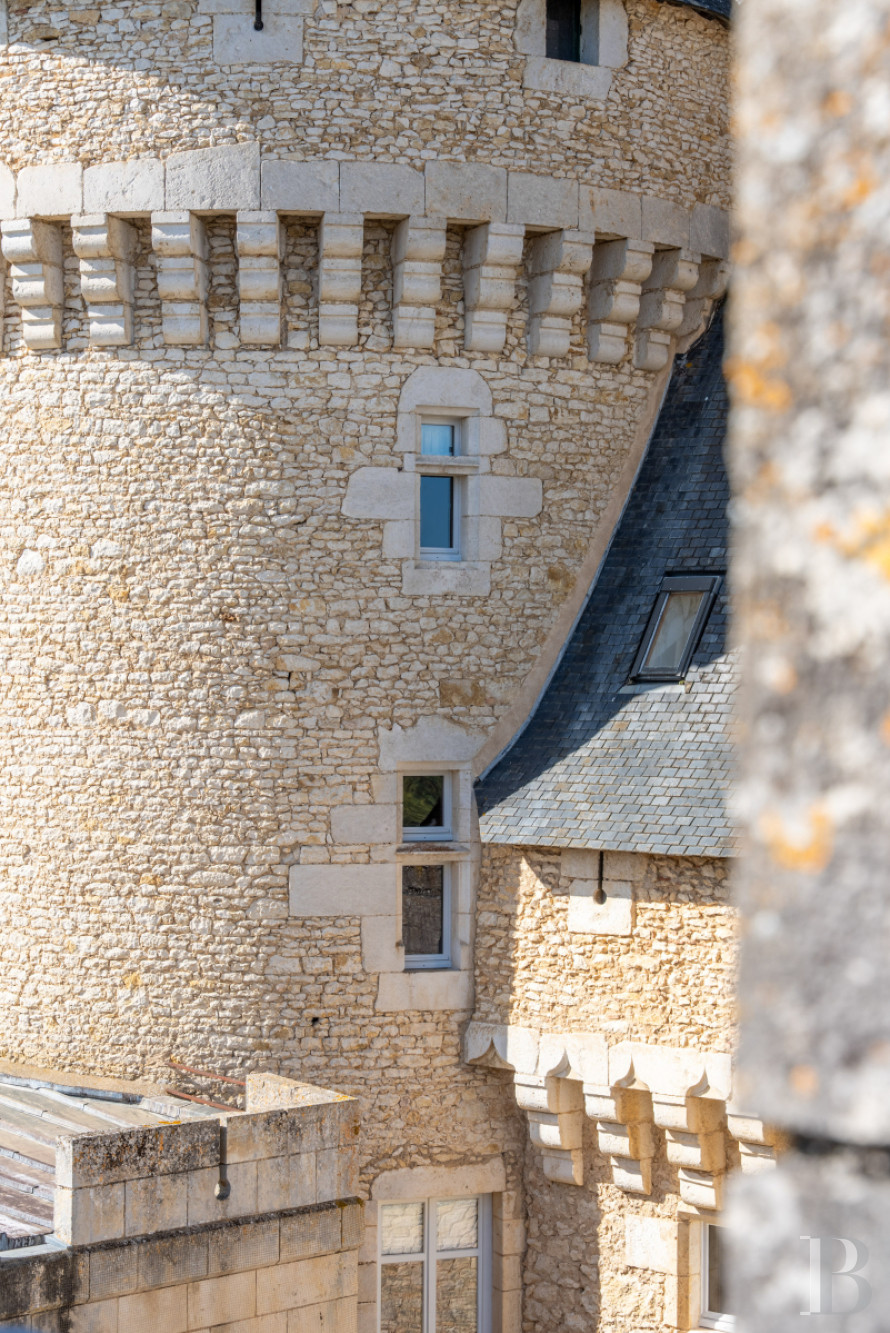
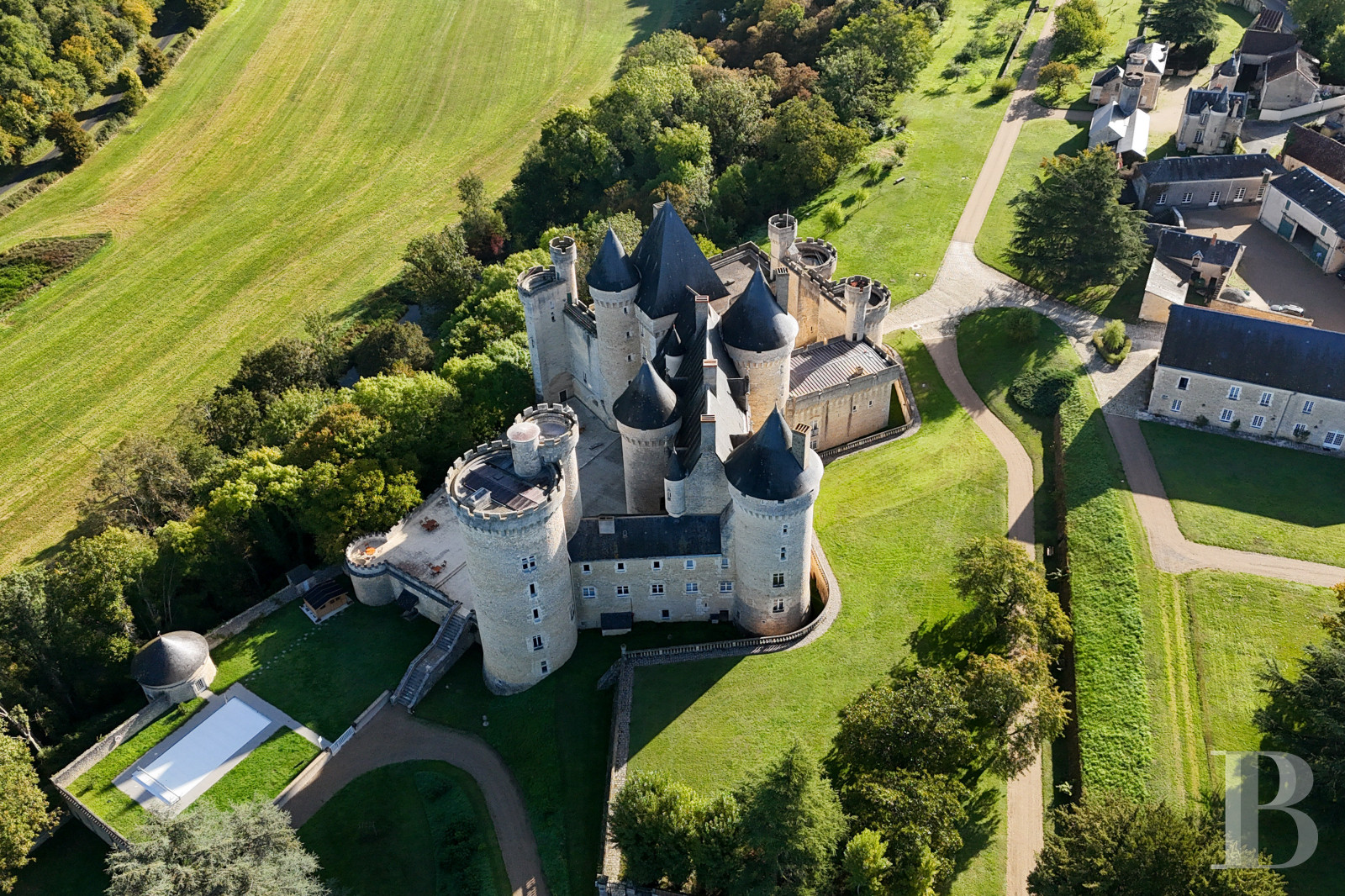
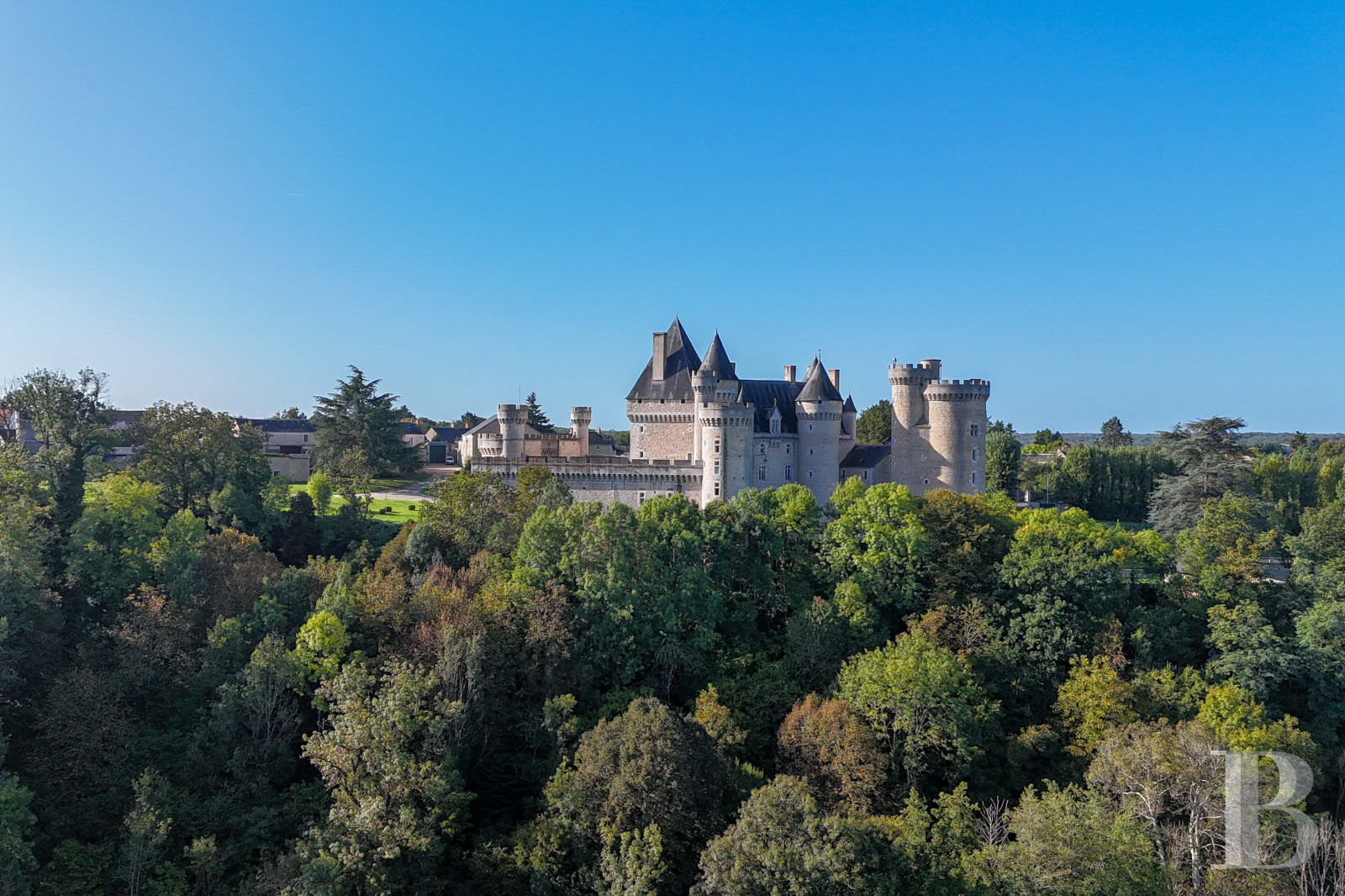
The chateau’s emblematic shape, with its tall towers and vast roofs, seems to rise up out of the landscape. The edifice was built in the 15th century. It originally had 14 towers and a keep, which made it one of the main strongholds in the region. During the French Wars of Religion, it became the property of Protestant families. Upon the orders of Cardinal Richelieu, the chateau was partly dismantled to weaken this Huguenot stronghold. Today, seven towers remain. The chateau was extensively restored in 1850 based on proposals from the famous French architect Eugène Viollet-le-Duc. Over the past thirty years, it has been renovated fully and masterfully. Several of its towers and even the keep have kept their original roof frames, which is truly remarkable given the changes made to the edifice over the centuries. All the elevations are made of rubble stone with pointing. The keep’s facade and the crenellations along the top of the gatehouse’s towers are made of ashlar. The keep, the main section and four of the seven towers are crowned with tall, steep slate roofs. The other towers have flat roofs, hidden behind crenellations. A series of outbuildings are grouped together and set back from the main edifice. They are arranged around several courtyards. The grounds slope down to a river. A swimming pool has been built on a grassy terrace. And a tennis court lies discreetly behind an outbuilding. From the property’s commanding position, you can admire far-reaching views of the surrounding landscape.
The gatehouse
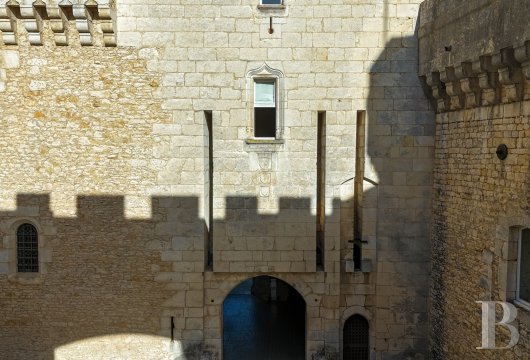
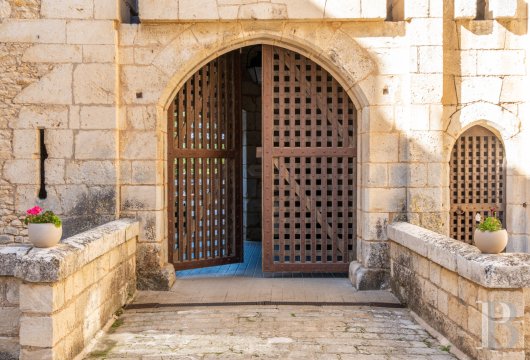
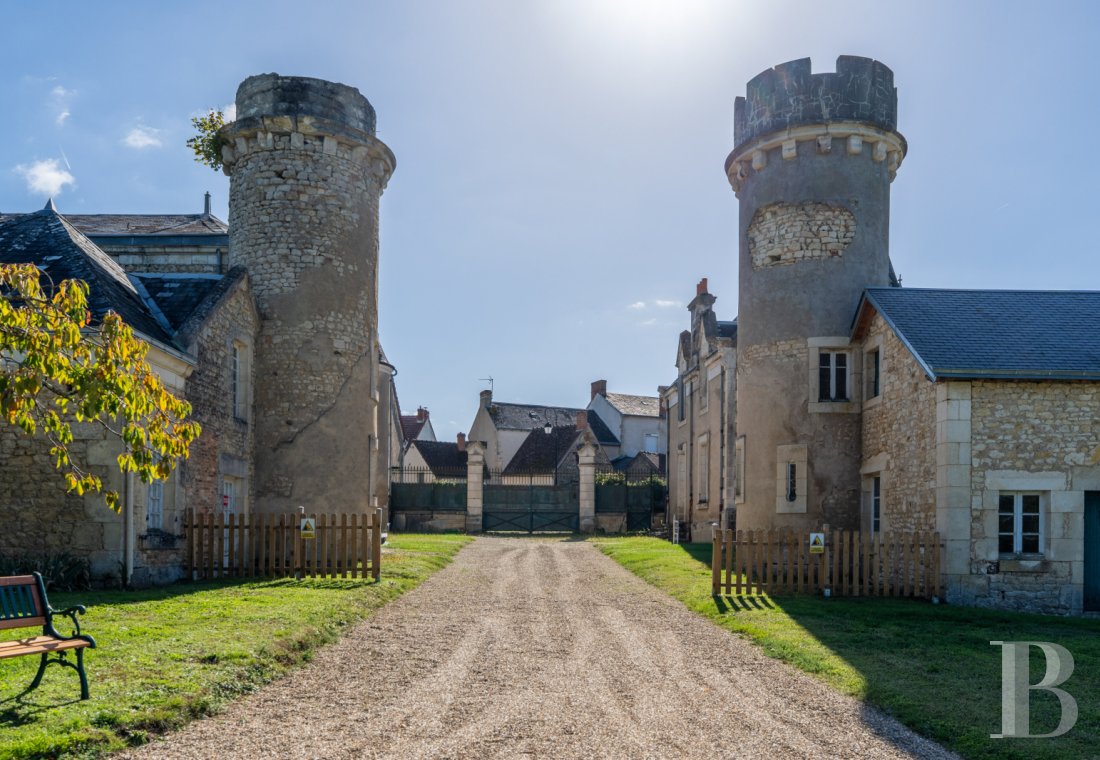
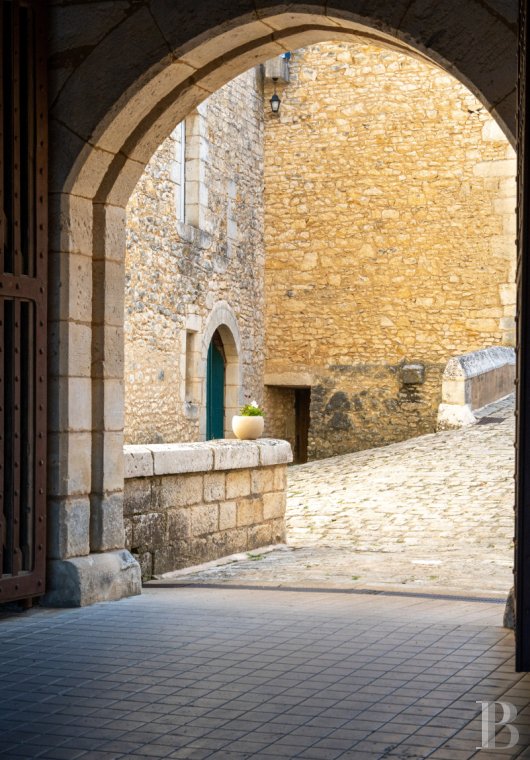
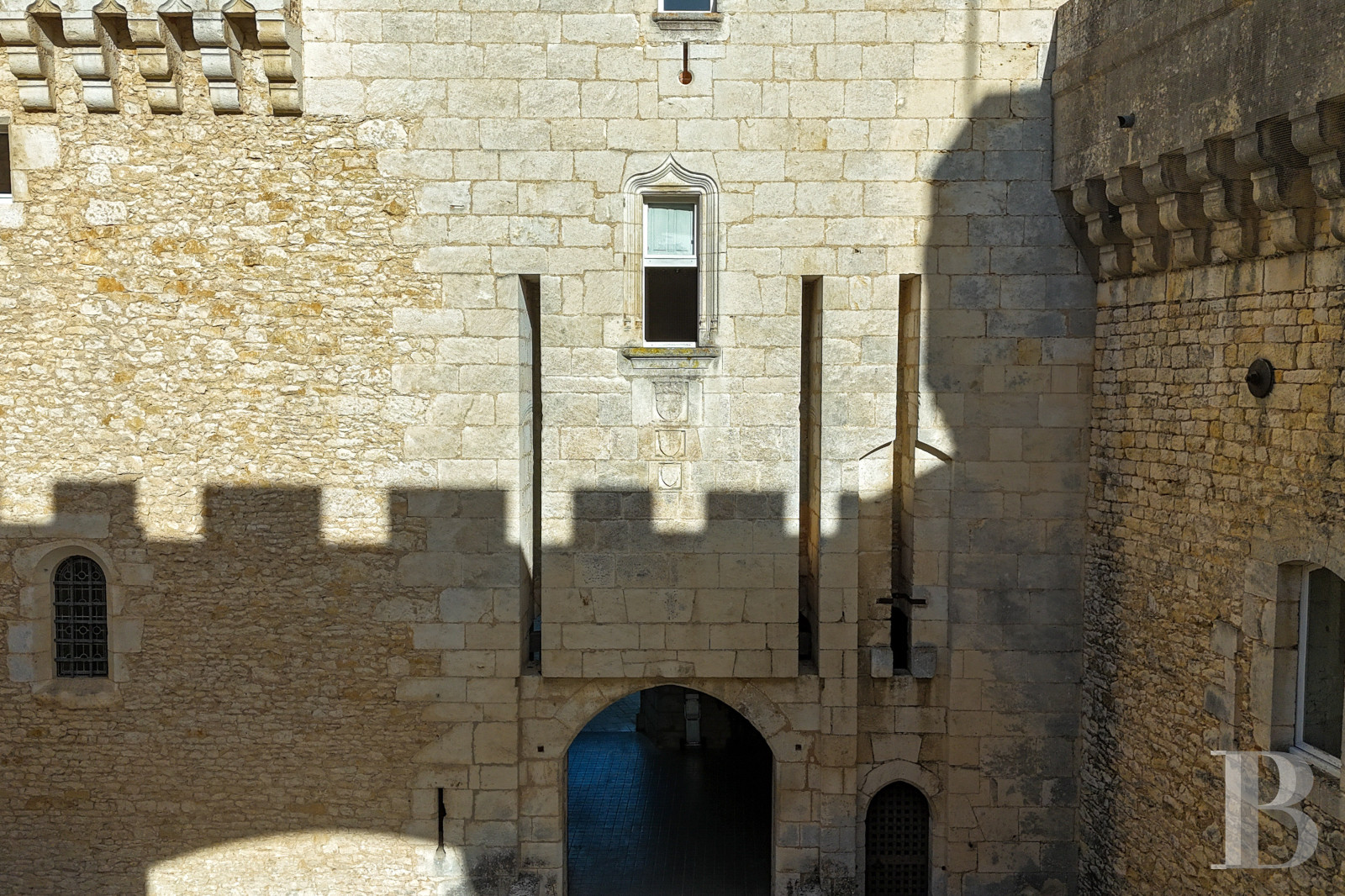
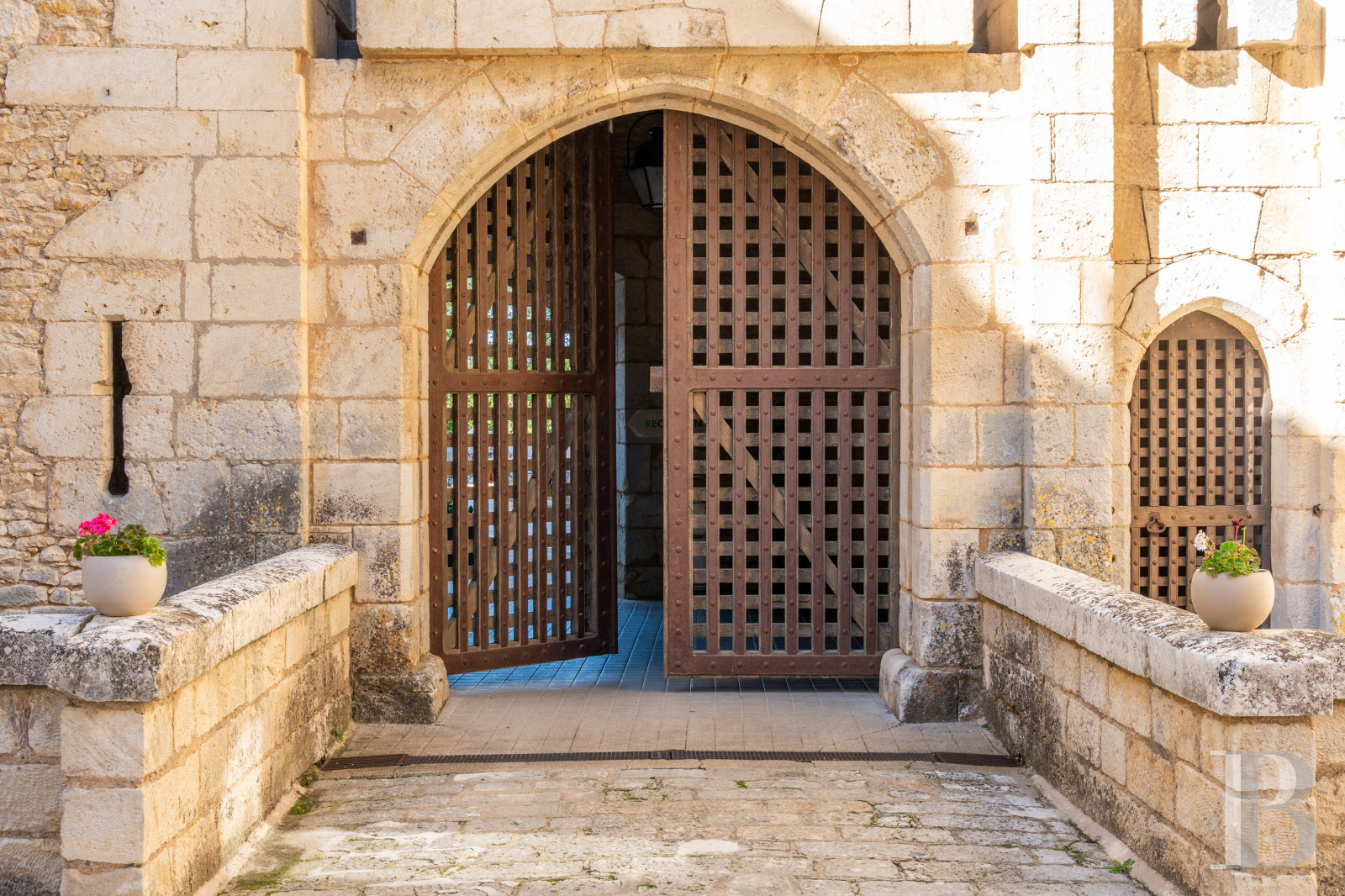
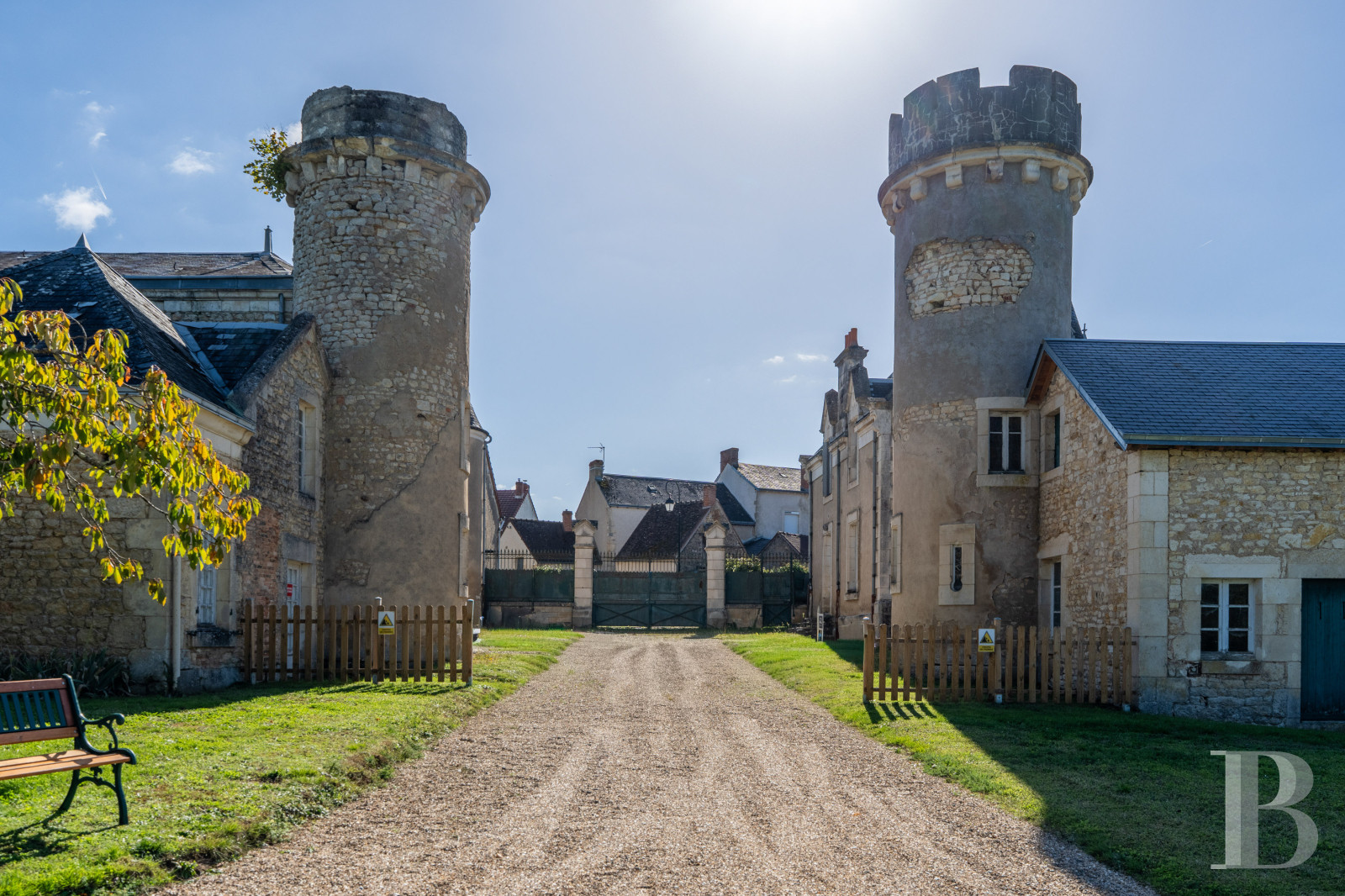
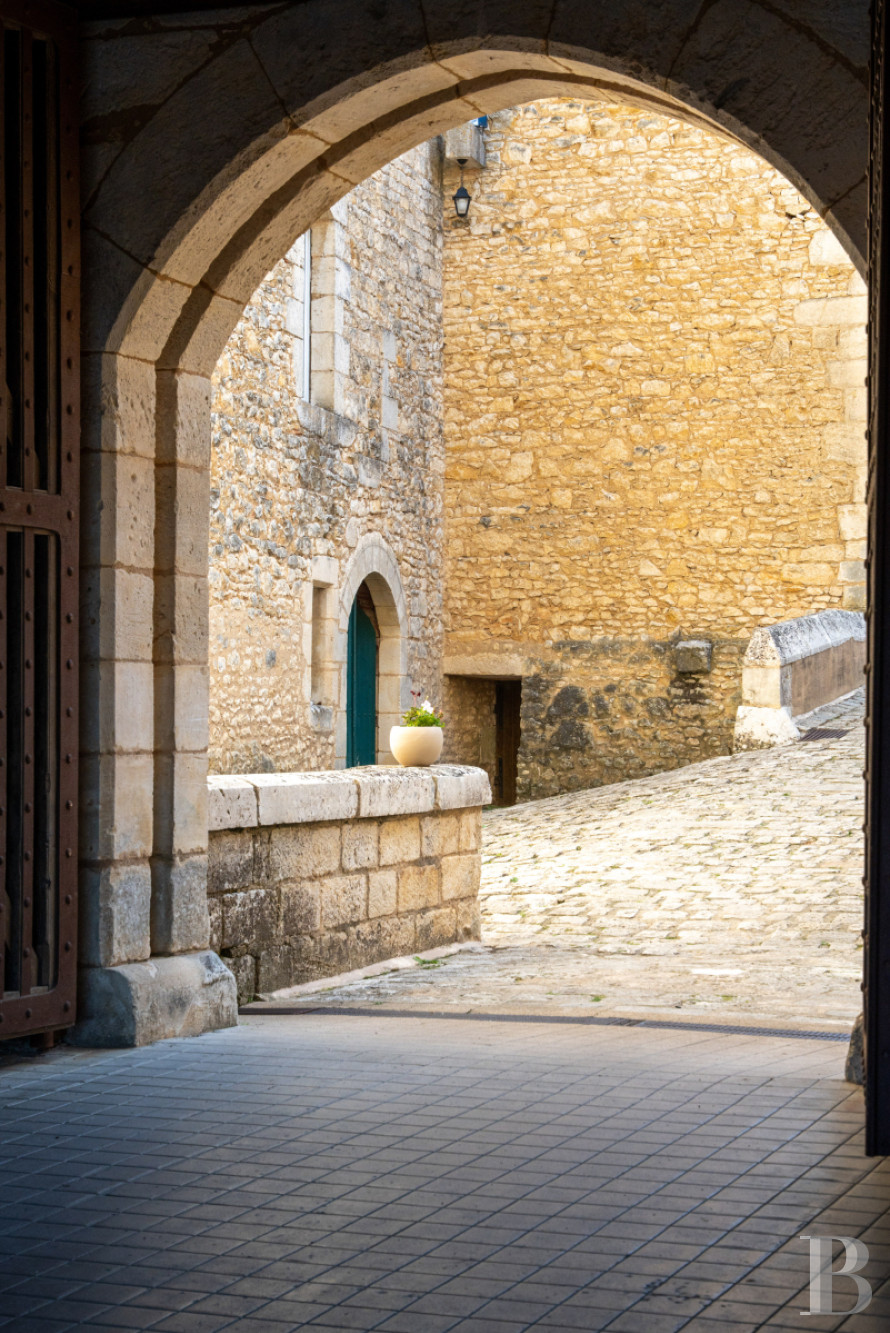
The gatehouse has two twin towers with flat roofs and crenellations. This pair of towers guards a paved entrance courtyard that leads to the keep. The keep’s facade still bears the marks of a former drawbridge, which has been turned into a stone bridge. The coats of arms of the chateau’s former lords are carved beneath 15th-century ogee arches. A timber openwork gate leads into the keep’s vaulted passageway, which takes you to the courtyard.
The main edifice
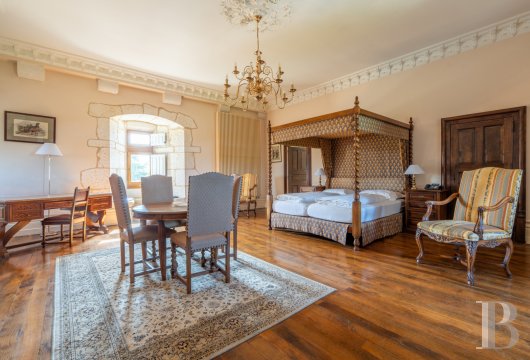
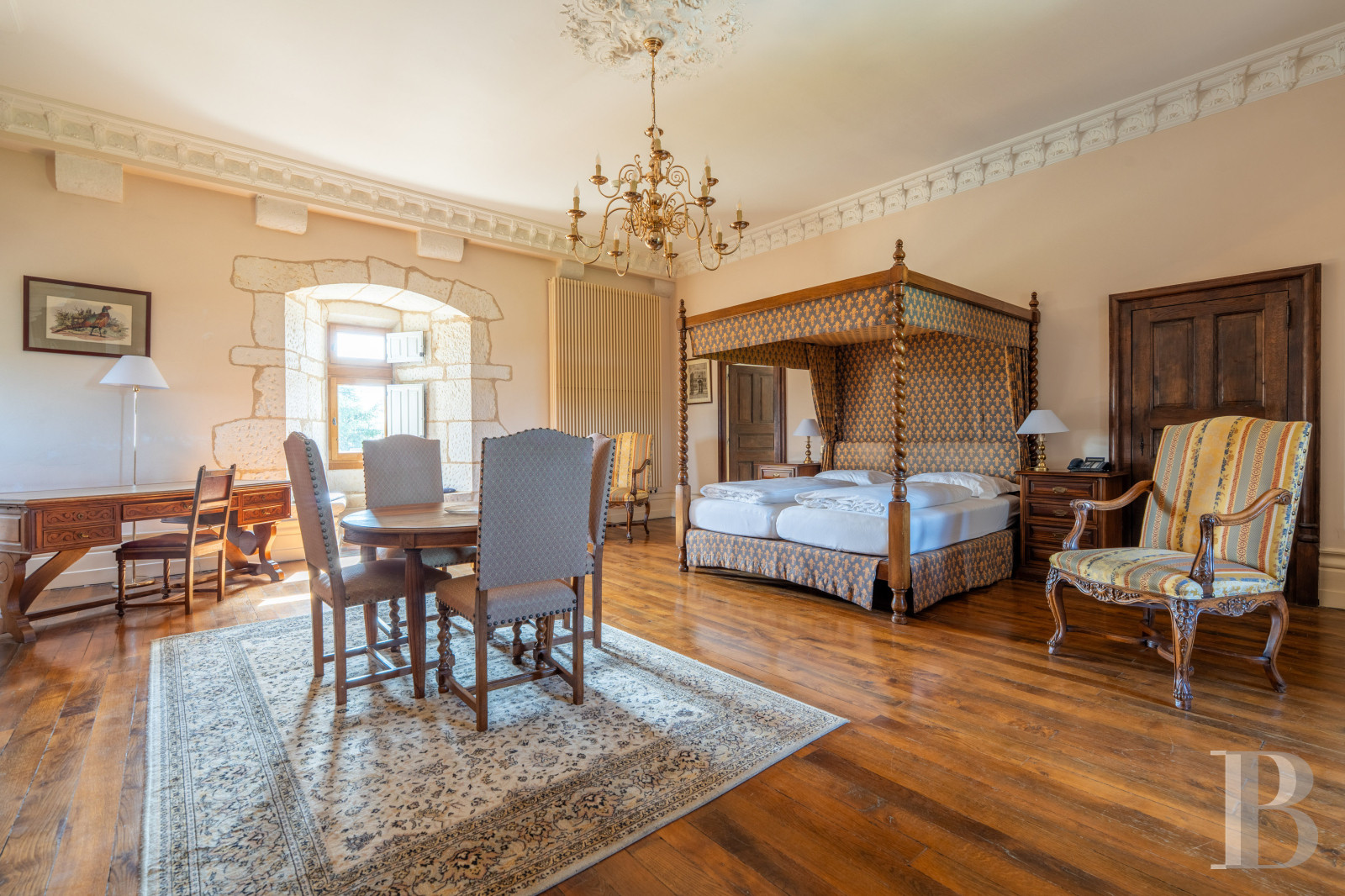
The whole edifice is in excellent condition and has been restored completely. Inside, lounges and old weaponry rooms have been remarkably well preserved, as have the 20 bedrooms, each with their en-suite bathrooms of hotel-standard comfort.
The ground floor
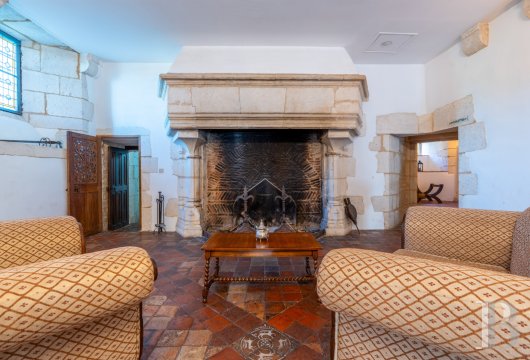
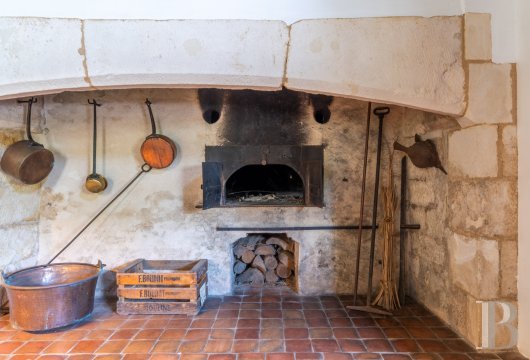
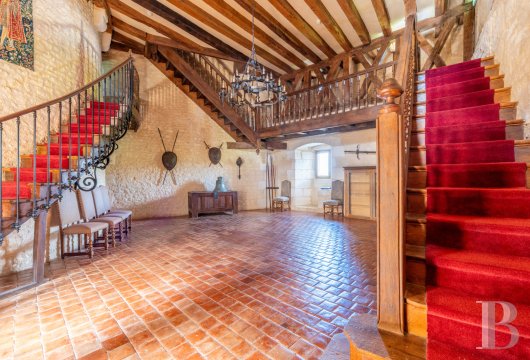
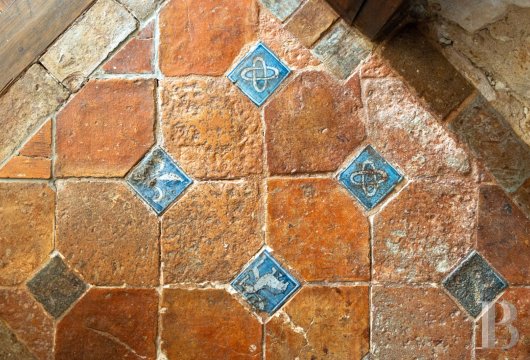
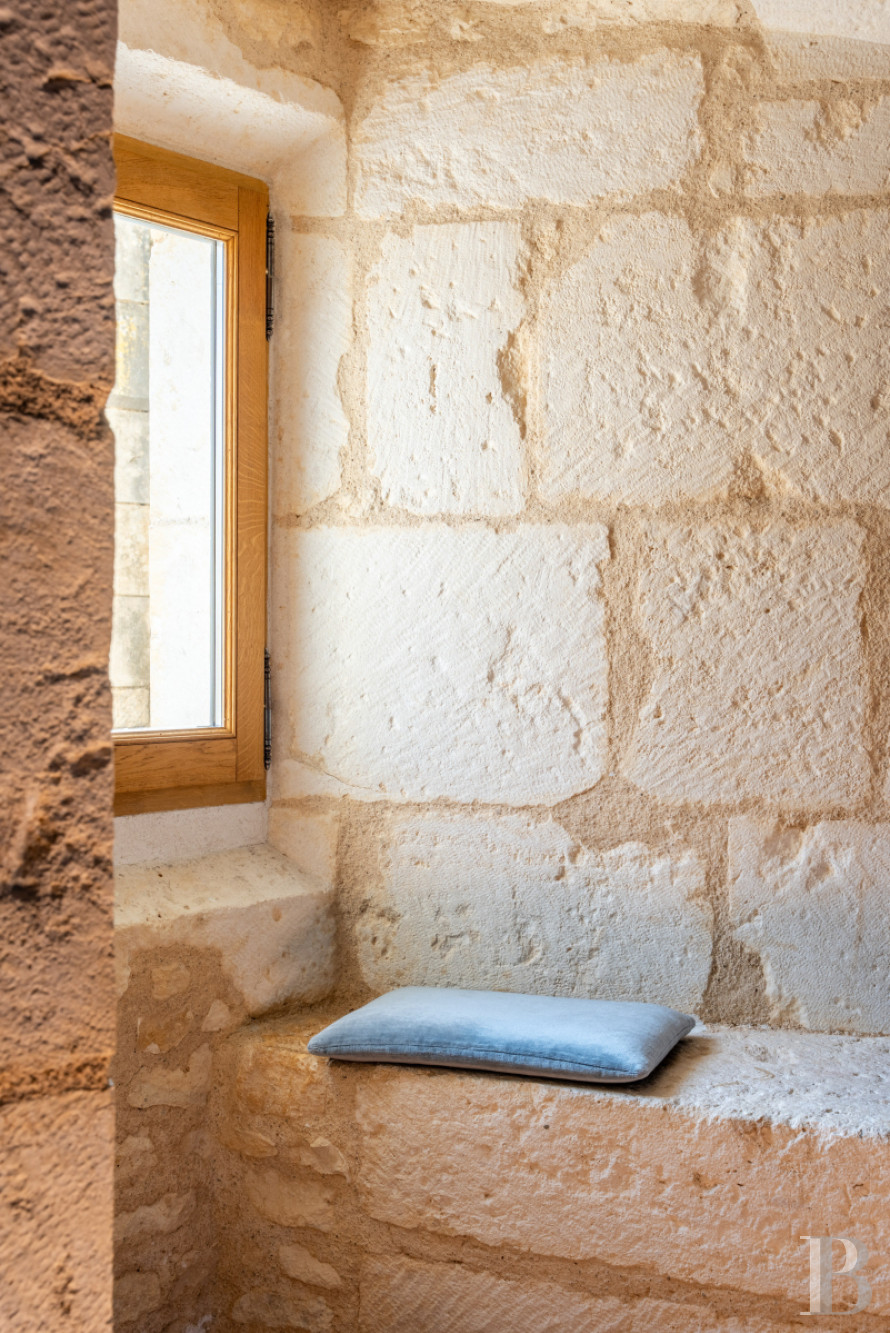
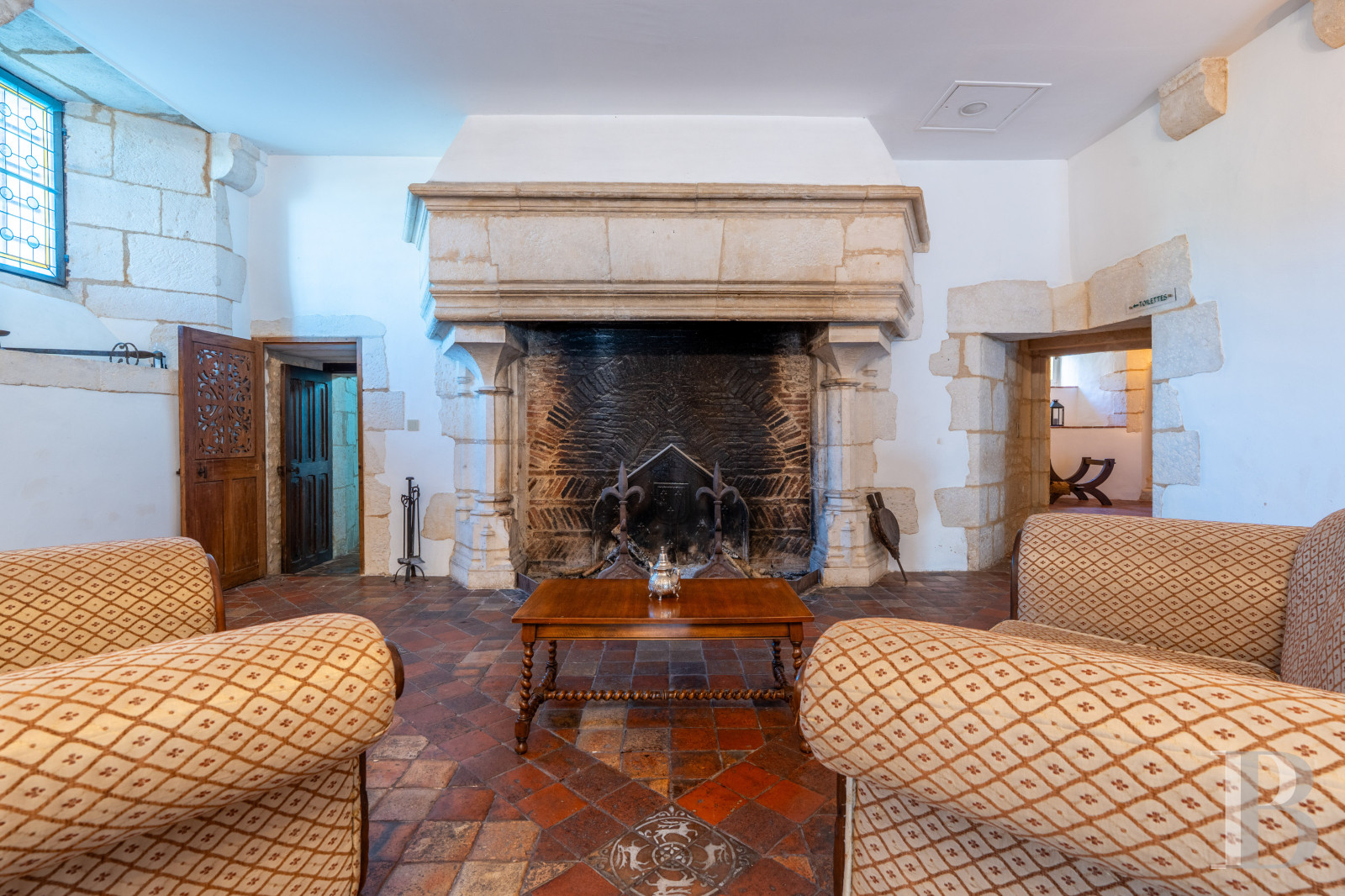
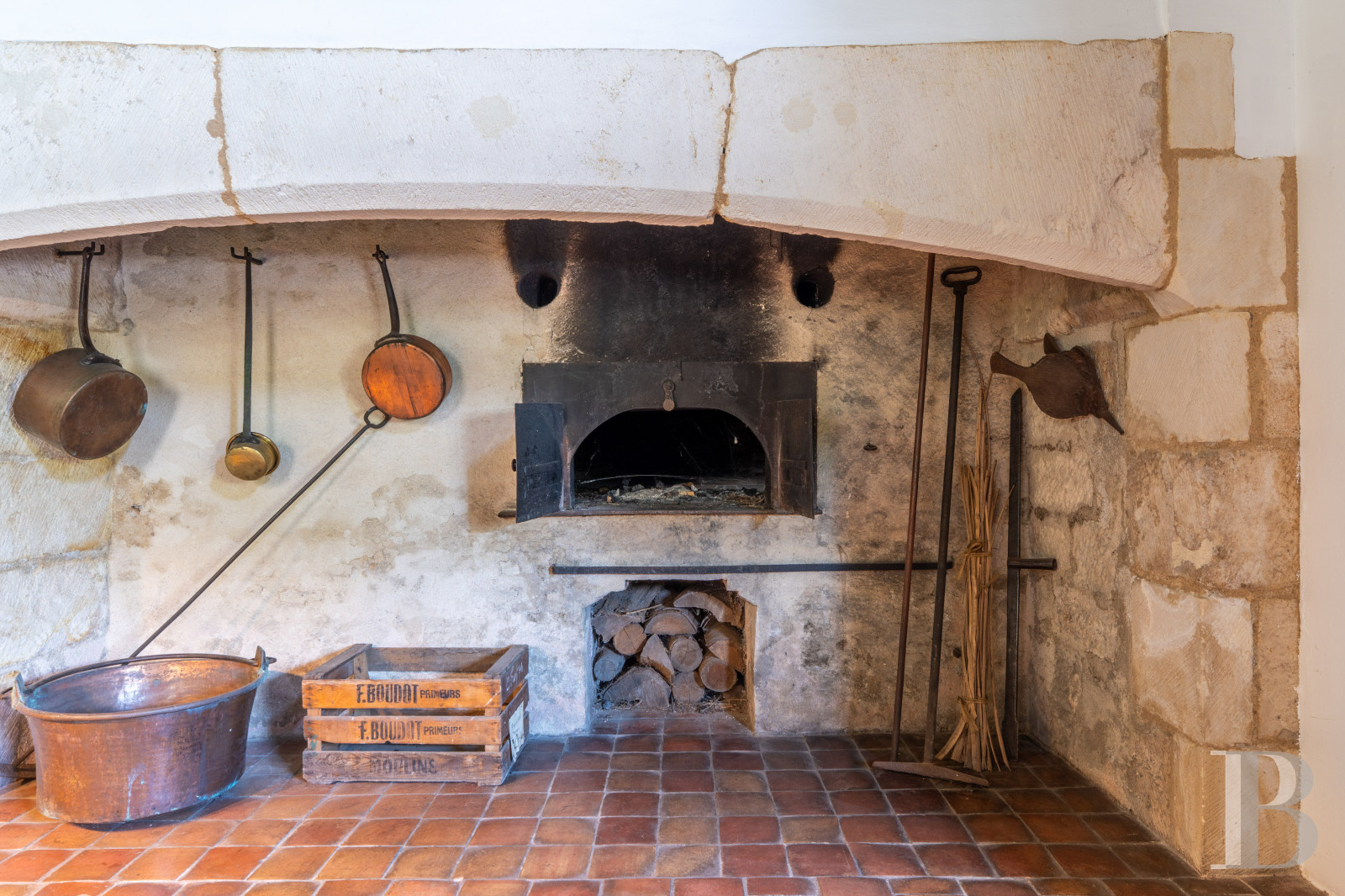
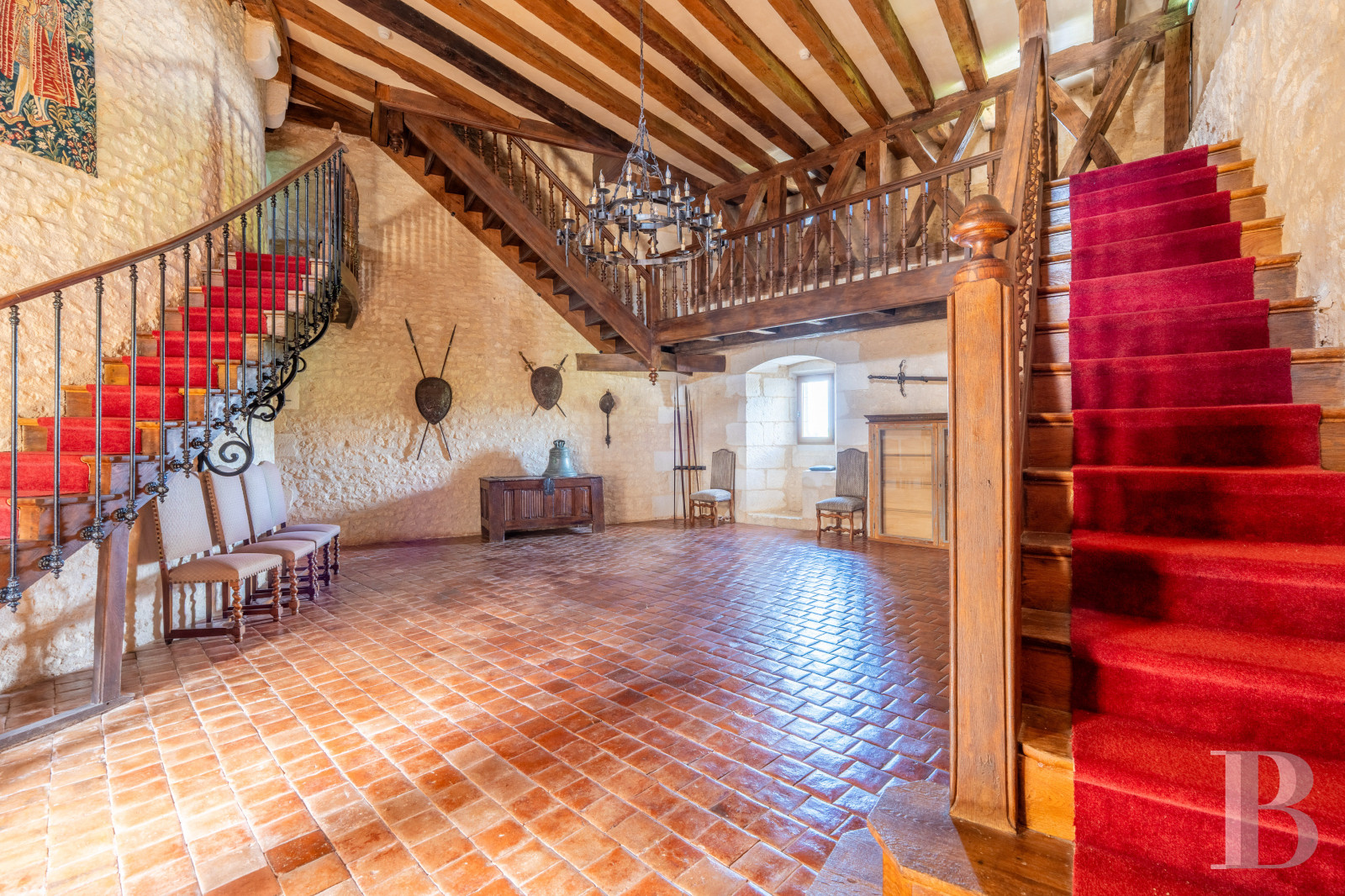
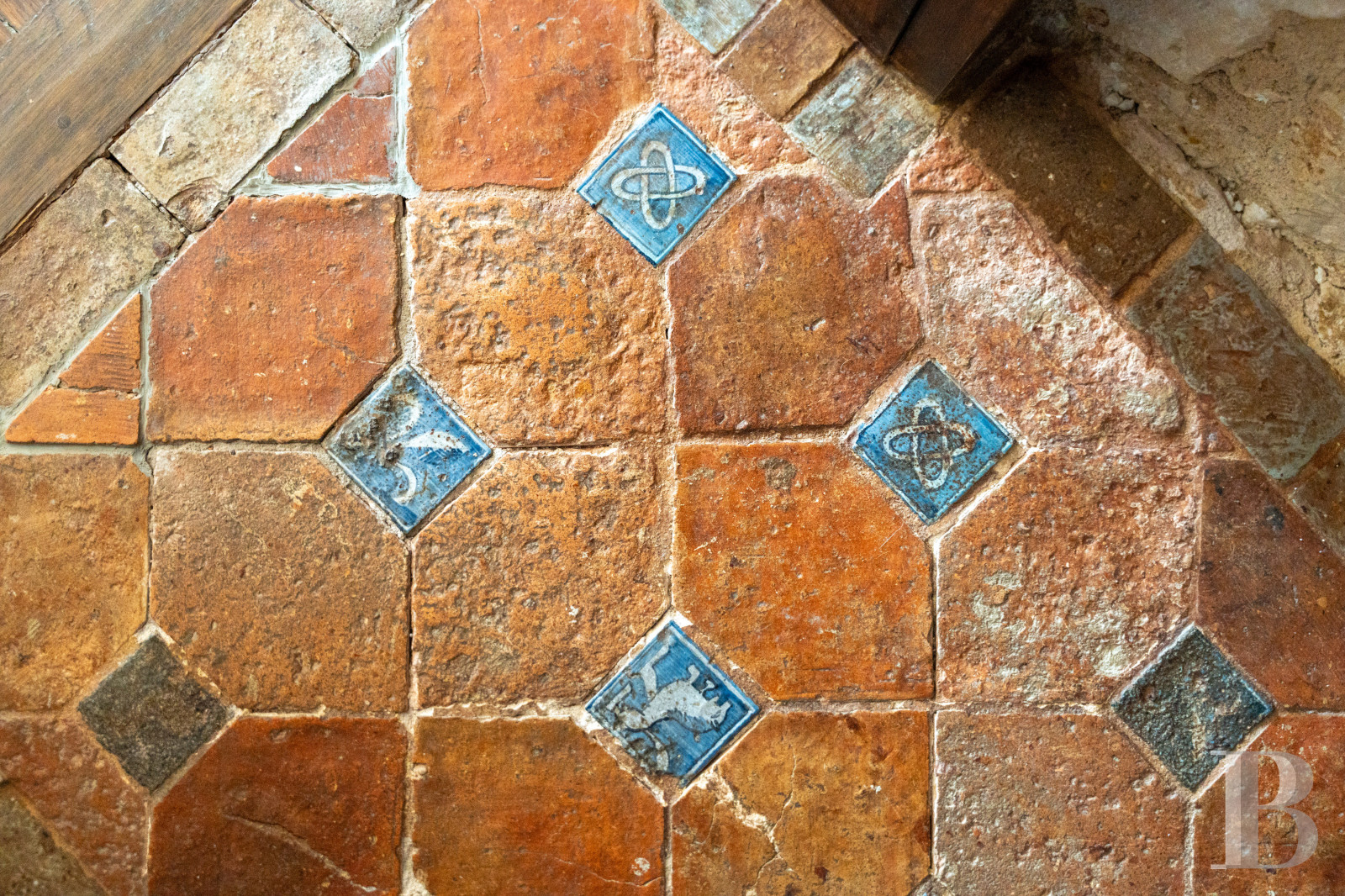
In the main wings, which form an L shape around the courtyard, there are the chateau's old kitchens and guard rooms. Today, these spaces form three large reception rooms with a medieval spirit and an office in the south tower. The floors are covered with terracotta tiles and exposed stonework forms the walls, like outside. A lift has been installed. It connects to the different levels in the edifice. The chapel has two levels. Its groined vaults reach a ceiling height of eight metres from the floor. On either side of the covered entrance area there are spare rooms, a boiler room and a sauna.
The first floor
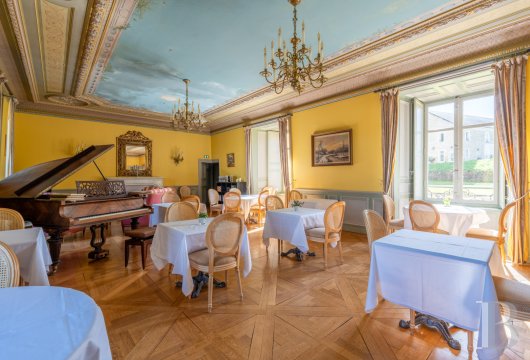
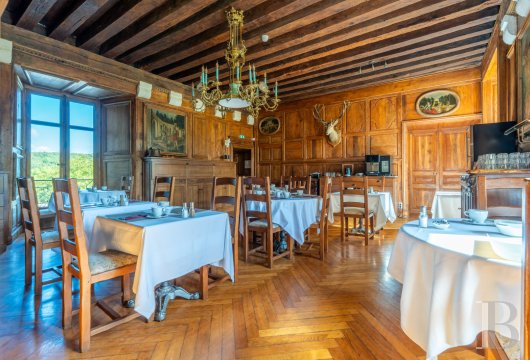
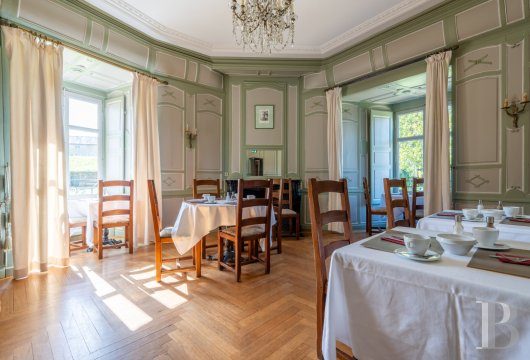
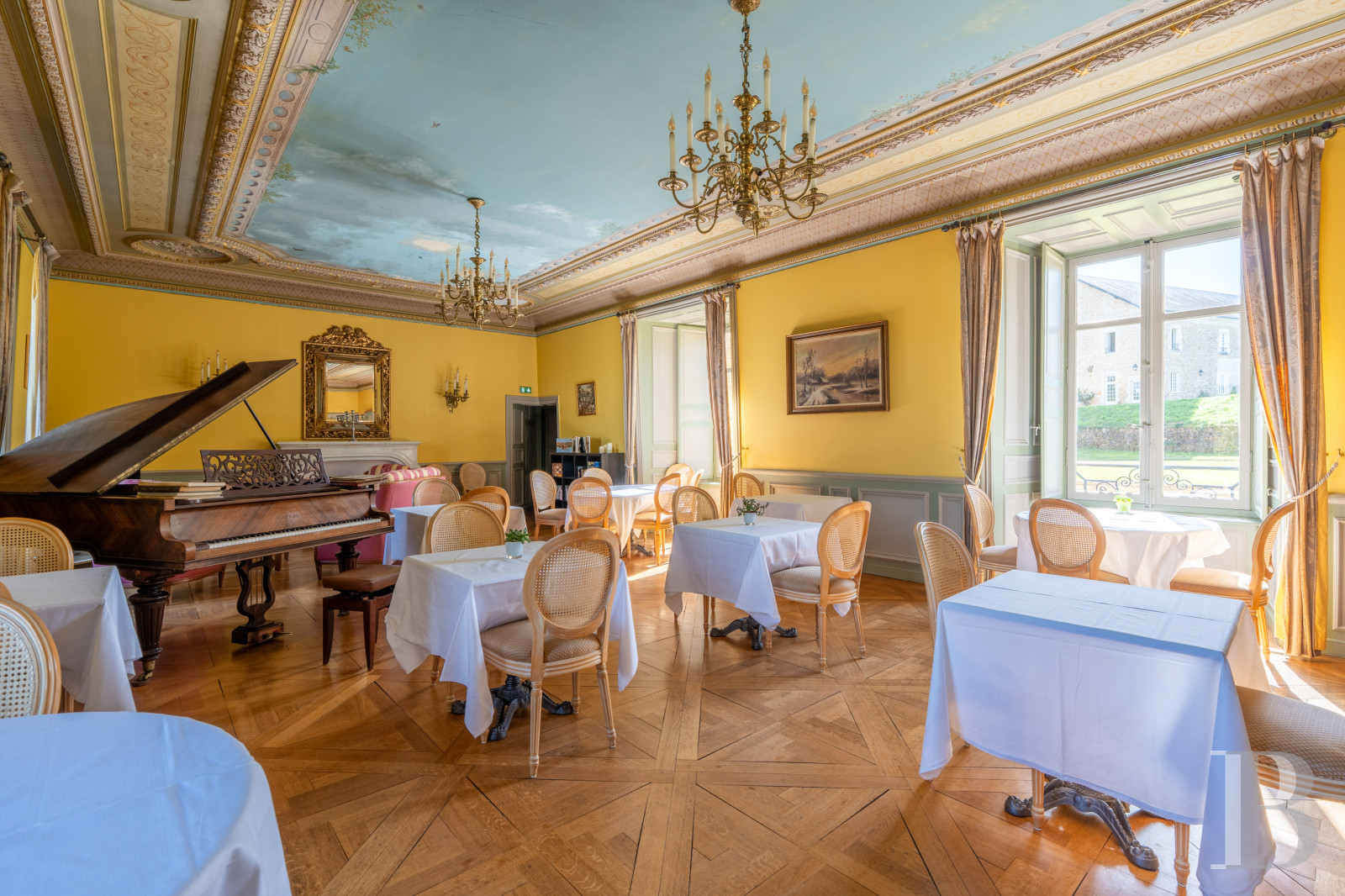
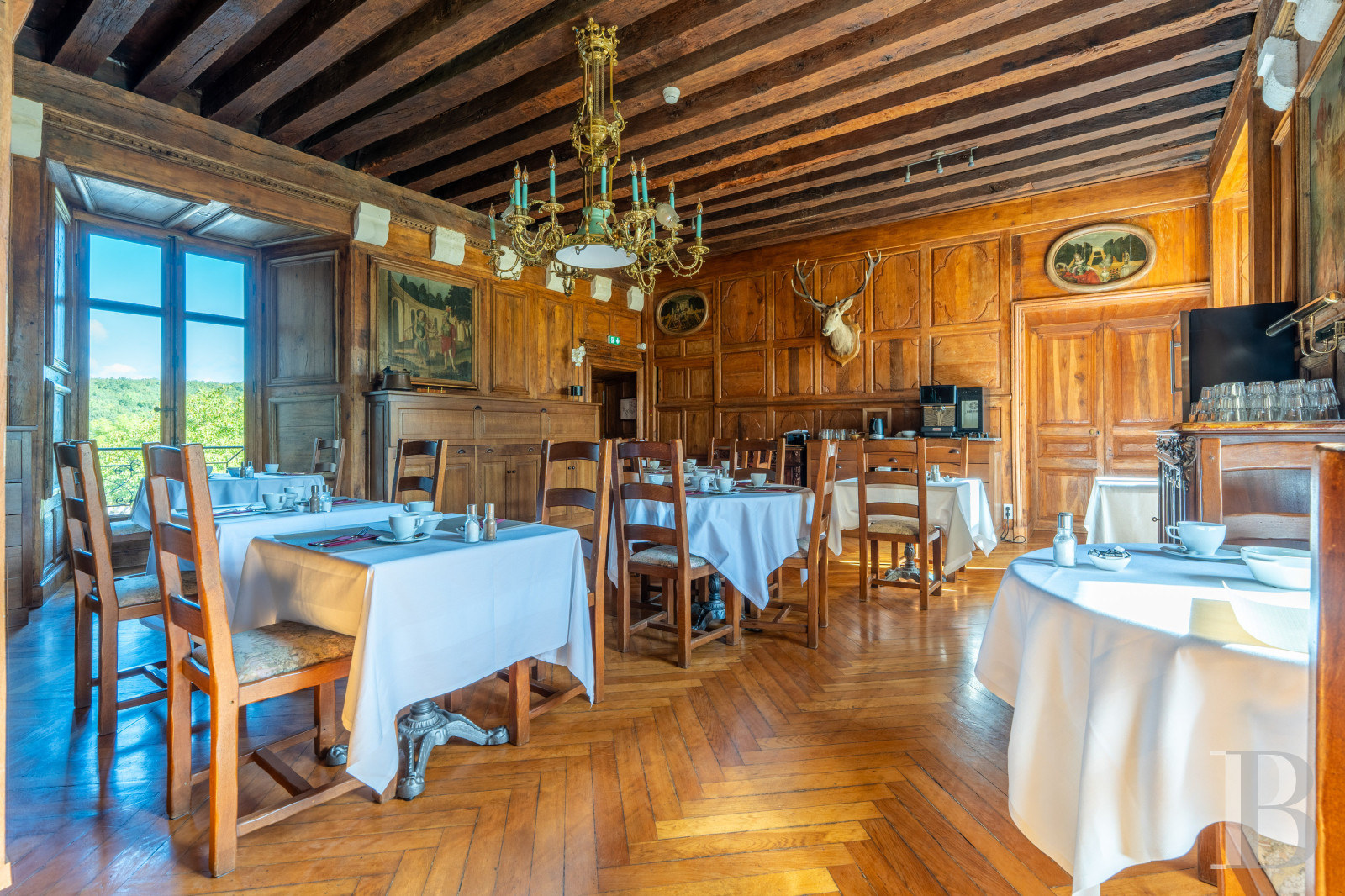
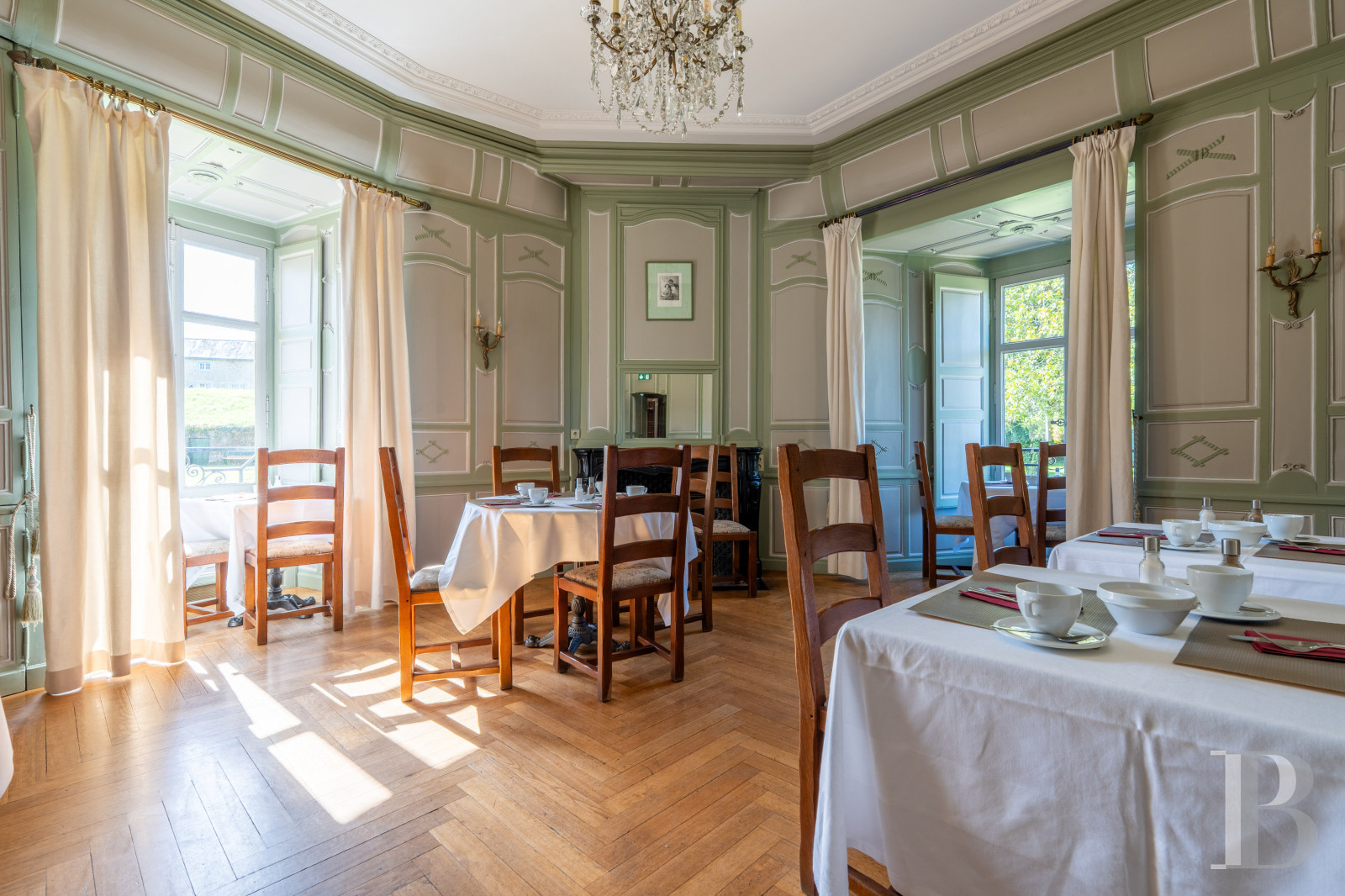
Above the large halls on the ground floor, there is a first room known as the grand reception room. This vast dual-aspect room has Versailles parquet. Its walls have dado panelling and its spectacular ceiling is in a Napoleon III style with paintwork, mouldings and a central section painted as a trompe-l’œil depicting a balustrade that looks out at a summer sky. On one side, the windows look out at the grounds and on the other side they look out at the court. Next, there is a dining room, which is also a dual-aspect space. It has herringbone parquet. The walls have old polished panelling, enhanced with 17th-century painted panels representing mythological images. There is a French-style beamed ceiling. The lift takes you straight here. A little lounge lies in the south tower. It also has herringbone parquet. Its walls are adorned with 18th-century-style wooden panelling, masterfully painted in three tones of green. In the wing that protrudes at a right angle to the main section, there is a kitchen and a lavatory. An office with wooden panelling and a staff apartment take up one side of the gatehouse.
The second floor
Inside the main section, a corridor connects to six bedrooms with their respective bathrooms. This corridor forms a link between the two main staircases. The spacious weaponry room, with two levels, leads to a last bedroom.
The third floor
The third floor has five bedrooms with bathrooms. The last one is isolated beyond the weaponry room.
The fourth floor
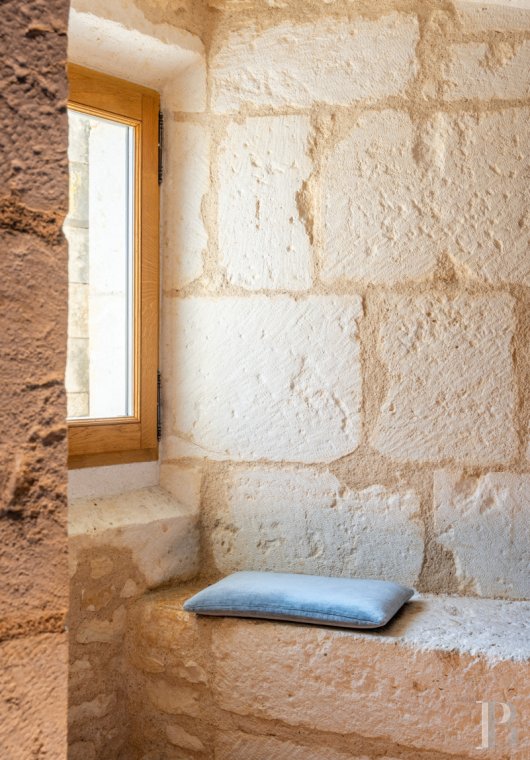
The fourth floor also has five bedrooms, as well as a reading room, which is isolated up at the top of the west tower.
The knights’ hall
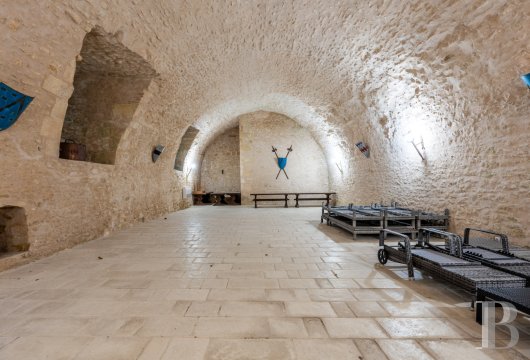
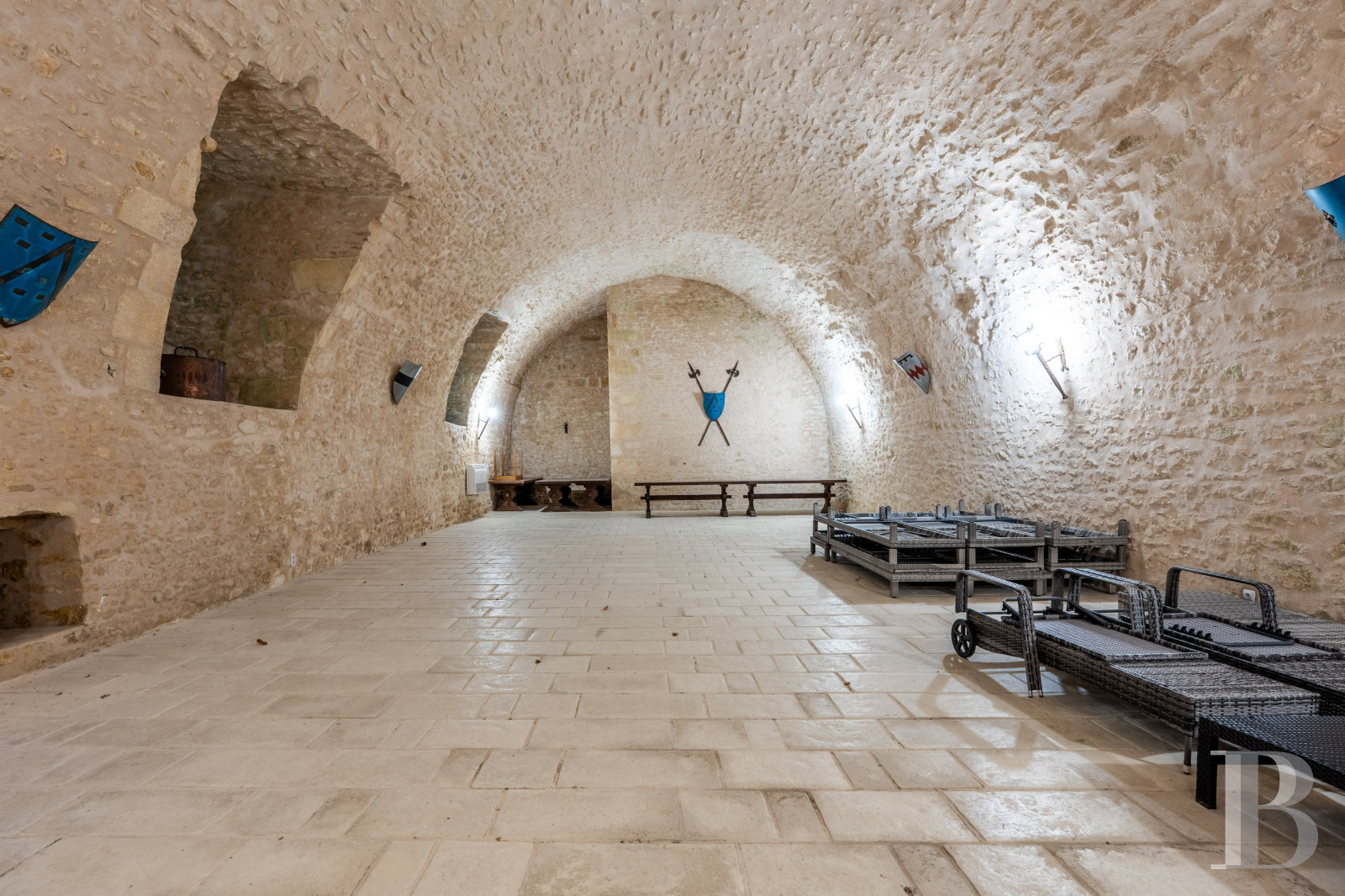
Beneath the courtyard, this hall takes up the basement of the wing that was demolished by Cardinal Richelieu. High-ceilinged, spacious and barrel-vaulted, it recalls an old church. The barrel vault is made of rubble stone with plastering that leaves the stonework slightly exposed. This hall is doubtless the chateau’s oldest part.
The large storerooms
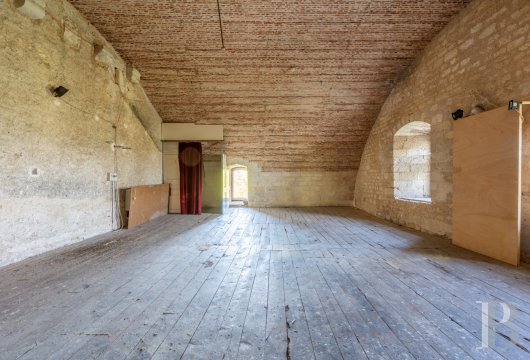
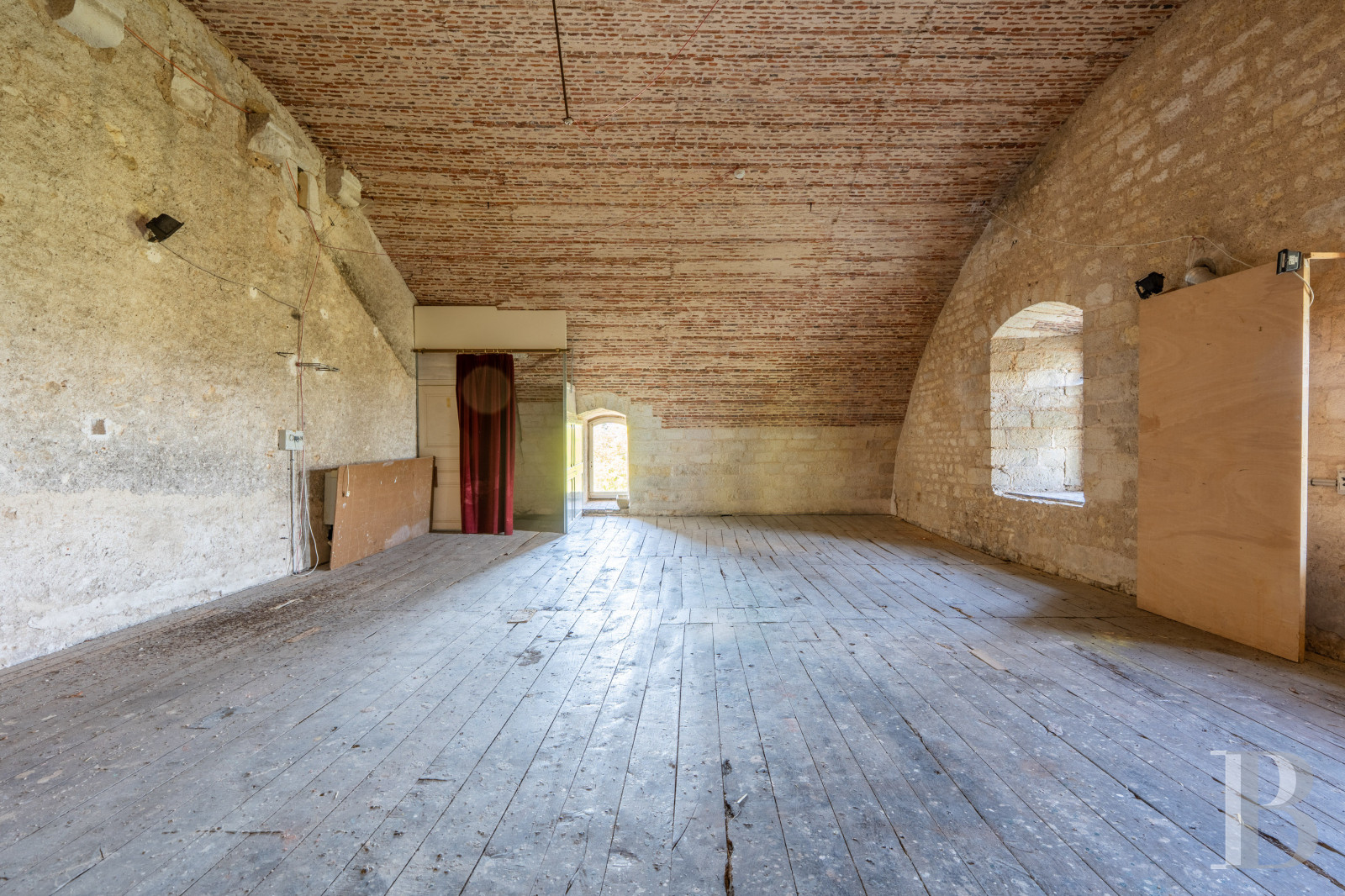
On one side of the gatehouse, there is a flat-roofed wing with crenellations. It houses a series of three extensive, authentic halls that are remarkably high-ceilinged. They have rustic wooden floors, stone walls and barrel-vaulted ceilings of brickwork. If they were restored, these halls could be used for large receptions.
The main towers
The imposing west tower marks one end of the chateau. On each of its floors, this tower has a bedroom with a bathroom and reading room. You move from one floor to another inside the chateau via three main stone spiral staircases, which are in the three towers around the terrace: one that adjoins the large west tower; a broader one that adjoins the main section and houses the main staircase; and one that adjoins the back of the keep, at the end of the covered entrance passageway. The latter two towers are crowned with a cone roof.
The old stone sheep shed
This outbuilding stands opposite the chateau. It offers a floor area of around 1,500m². The building is made of stone and crowned with a slate roof. In the main section, the ground floor includes two large meeting rooms, an office, a lounge and several technical installations rooms. Upstairs, a corridor connects to several bedrooms that are currently occupied by staff. In the wing, two comfortable suites have been created around bedrooms.
The outbuildings
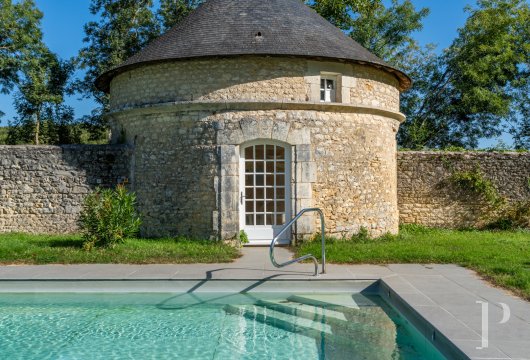
The other outbuildings were built in the 19th century in a neo-Gothic spirit. They are made of stone and are crowned with slate roofs. They stand around several courtyards next to the road. Some of them need to be fully restored. The last outbuilding stands near the property's entrance gate. It is a detached square construction, probably built in the 17th century. It is windowless and topped with a dome. It likely served as a cistern.
The swimming pool and tennis court
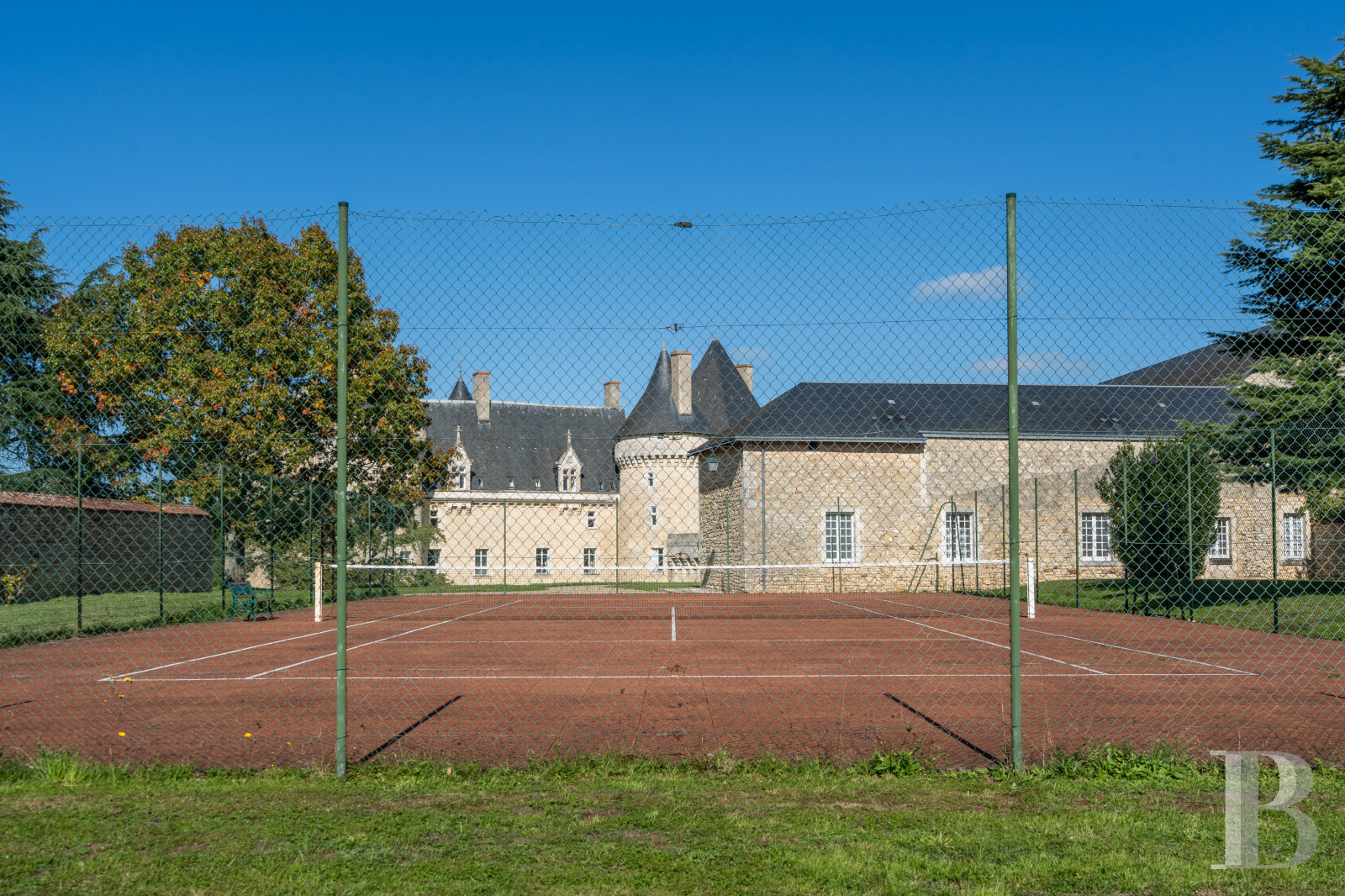
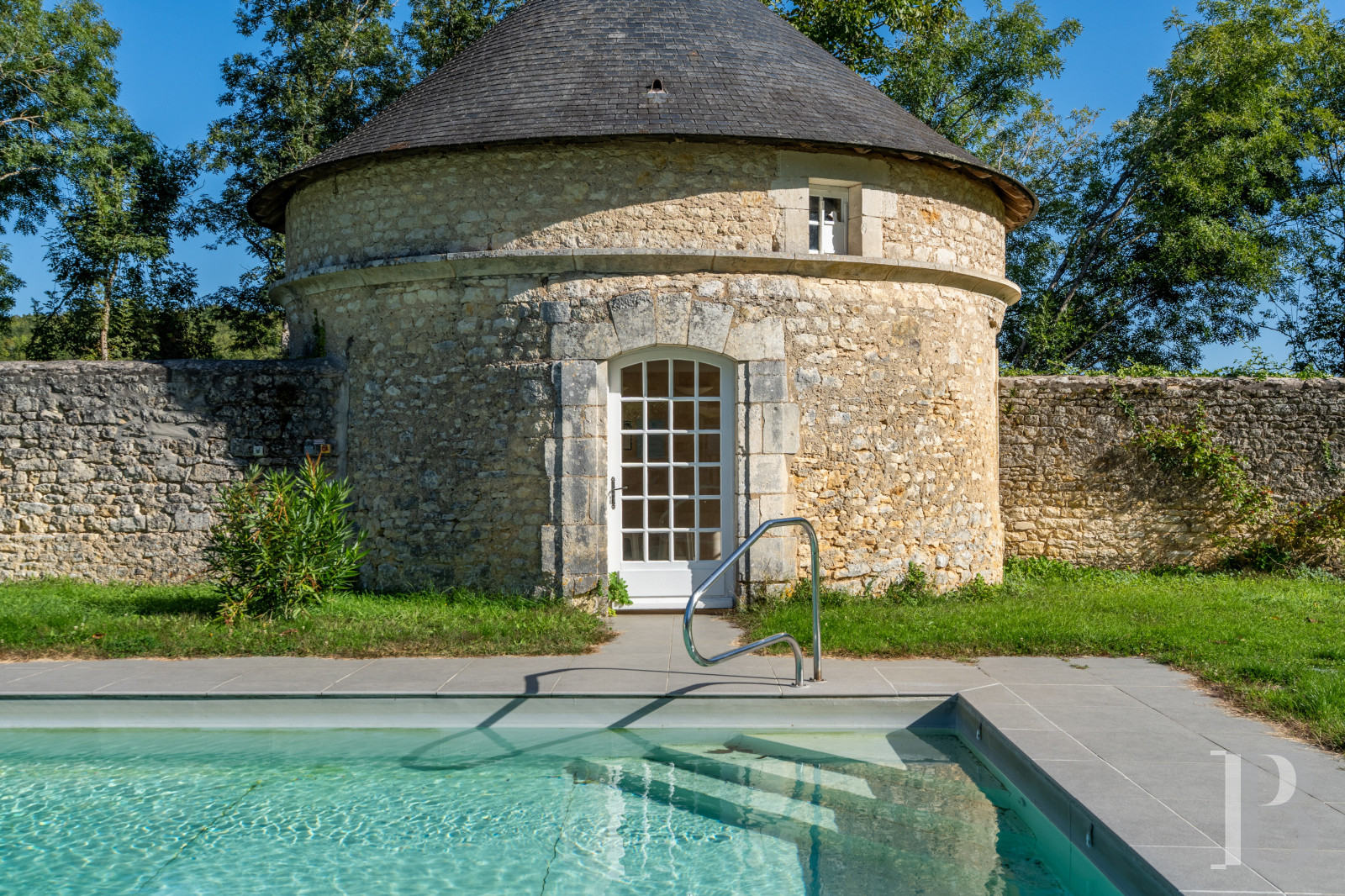
The swimming pool was built upon an earthen terrace, lower down from the main terrace. This pool is 11.7 metres long and 6.4 metres wide. It is neatly set in a terrace of stone slabs. The rest of this earthen terrace is grassy. Near the pool, a stone construction houses a changing room with a shower and lavatory. The tennis court is hidden behind the old stone sheep shed.
The grounds
Alongside the road, the grounds are enclosed with a tall stone wall. An entrance gate leads onto a long, straight driveway edged with two vast lawns. This drive leads straight to the chateau. A heliport has also been discreetly built on a grassy platform. The lower terraces are grassy too. Beyond, the grounds are wooded and slope down to the river. Tracks run through the woods. The main track runs alongside the river. The views stretch far across the landscape.
Our opinion
With its round towers, crenellations, rampart walks and machicolations, this medieval chateau is truly enchanting. The edifice stands out in France’s bucolic Berry province. It owes its current elegant shape to the famous 19th-century architect Eugène Viollet-le-Duc, whose masterful restoration of the Château de Pierrefonds in northern France inspired Neuschwanstein Castle in Bavaria, where Walt Disney drew inspiration for his Sleeping Beauty Castle. Indeed, the property’s resemblance to such Romantic monuments is striking. Recent restorations have given this medieval chateau hotel-standard comfort. It is remarkably well maintained too. Set in lush grounds with outbuildings, the splendid edifice gives a strong impression of power and constancy. This has helped make it one of the most outstanding, spectacular private strongholds in France.
3 600 000 €
Fees at the Vendor’s expense
Reference 798968
| Main building floor area | 2500 m² |
| Outbuildings floor area | 2500 m² |
| including refurbished area | 1200 m² |
| Elevator |
Information on the risks to which this property is exposed is available on the website: www.georisques.gouv.fr
Share


NB: The above information is not only the result of our visit to the property; it is also based on information provided by the current owner. It is by no means comprehensive or strictly accurate especially where surface areas and construction dates are concerned. We cannot, therefore, be held liable for any misrepresentation.