



A 19th-century chateau and its wooded grounds,
nestled within the Lacaune Mountains
nestled within the Lacaune Mountains
Lacaze,
TARN
midi-pyrenees
81330
FR

Location
The property is located in the Lacaune Mountains, the highest range of peaks in the southern part of the Massif Central highland region. Situated in the east of the Tarn department, this mid-mountain region is known for the breadth of its waterway network, including both lakes and rivers, as well as its rolling and wooded landscapes, ideal for outdoor activities and hiking.
As for the chateau, it was built on the outskirts of the town of Lacaze, which includes many essential shops as well as a medieval chateau that has now become a centre for art and history, while its expansive panoramas provide enchanting views of the Berlou and Gijou valleys below. In addition, the city of Lacaune, 20 minutes away, contains even more shops for daily life, whereas the chateau is easily accessible thanks to the Castres-Mazamet airport, one hour away, as well as the Toulouse-Blagnac and Rodez airports, which are both approximately two hours away.
Description
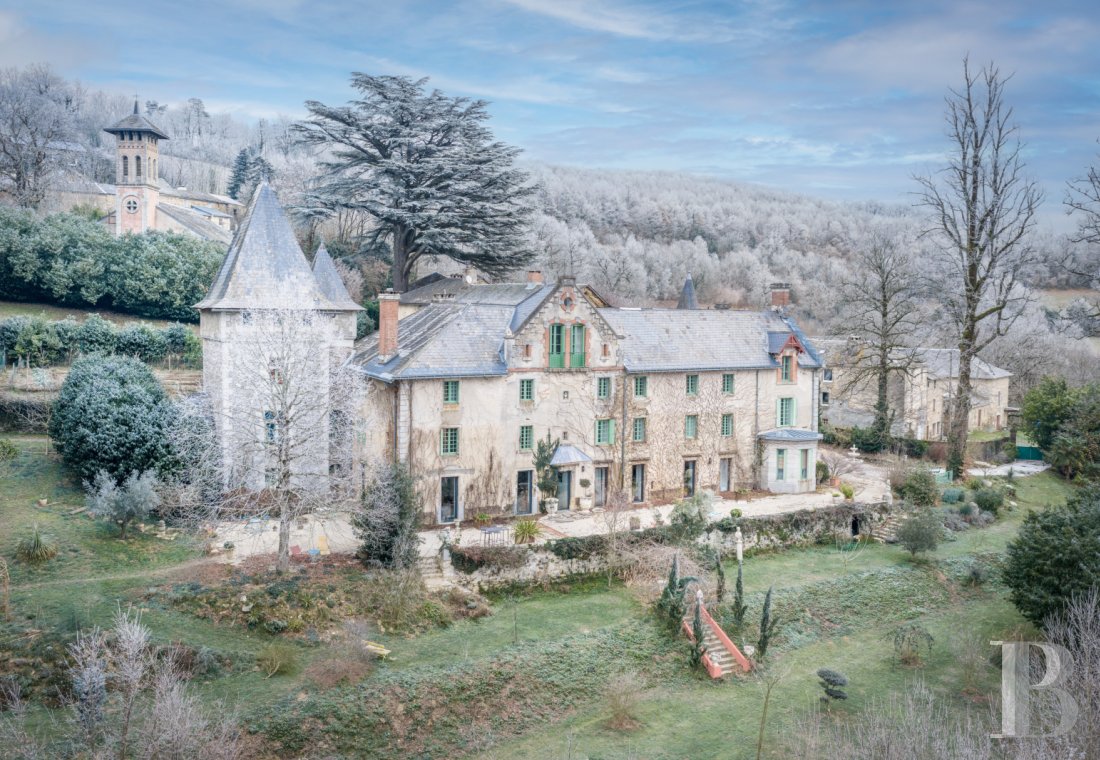
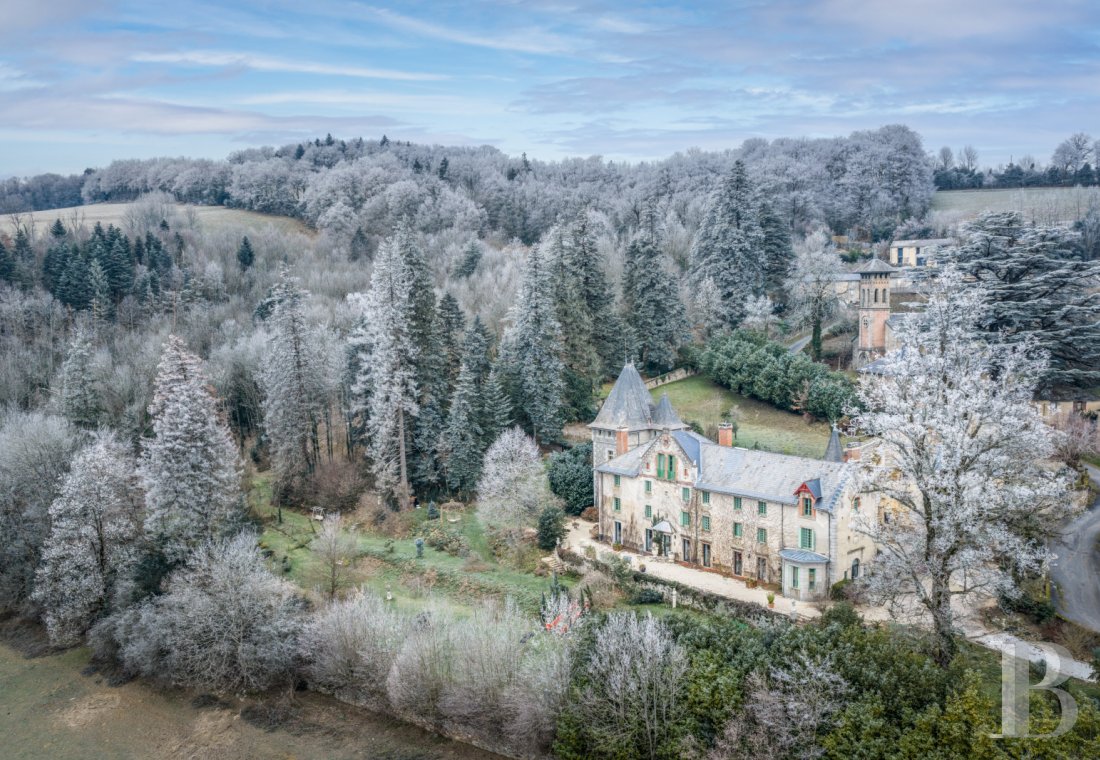
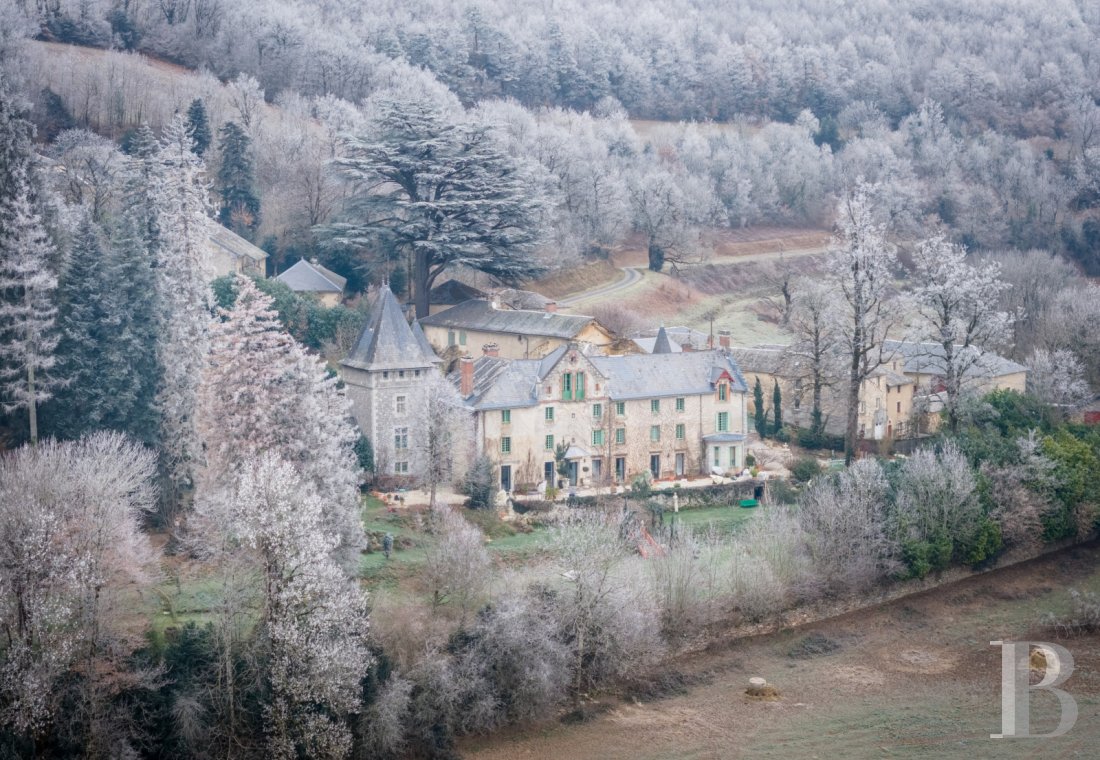
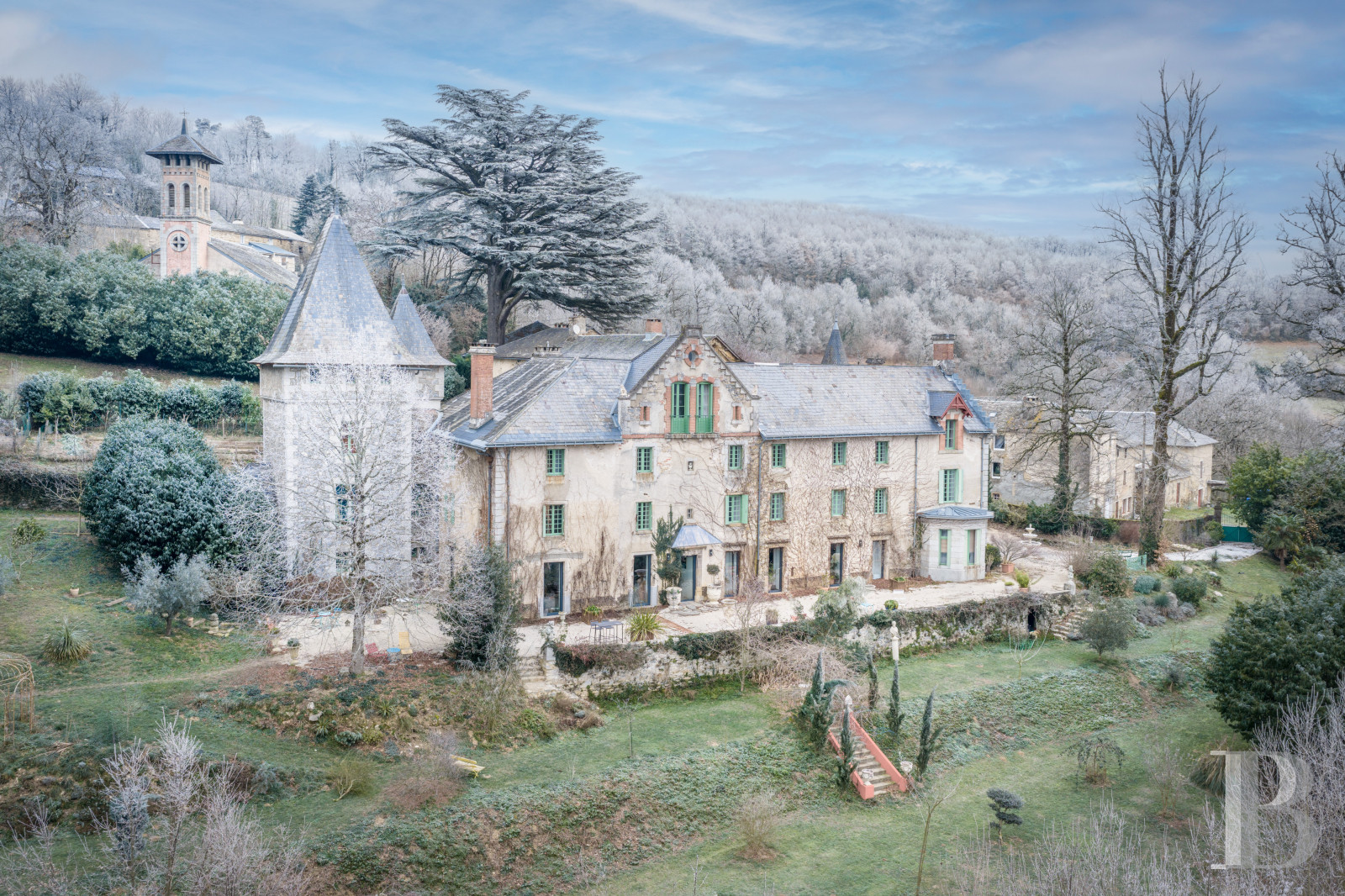
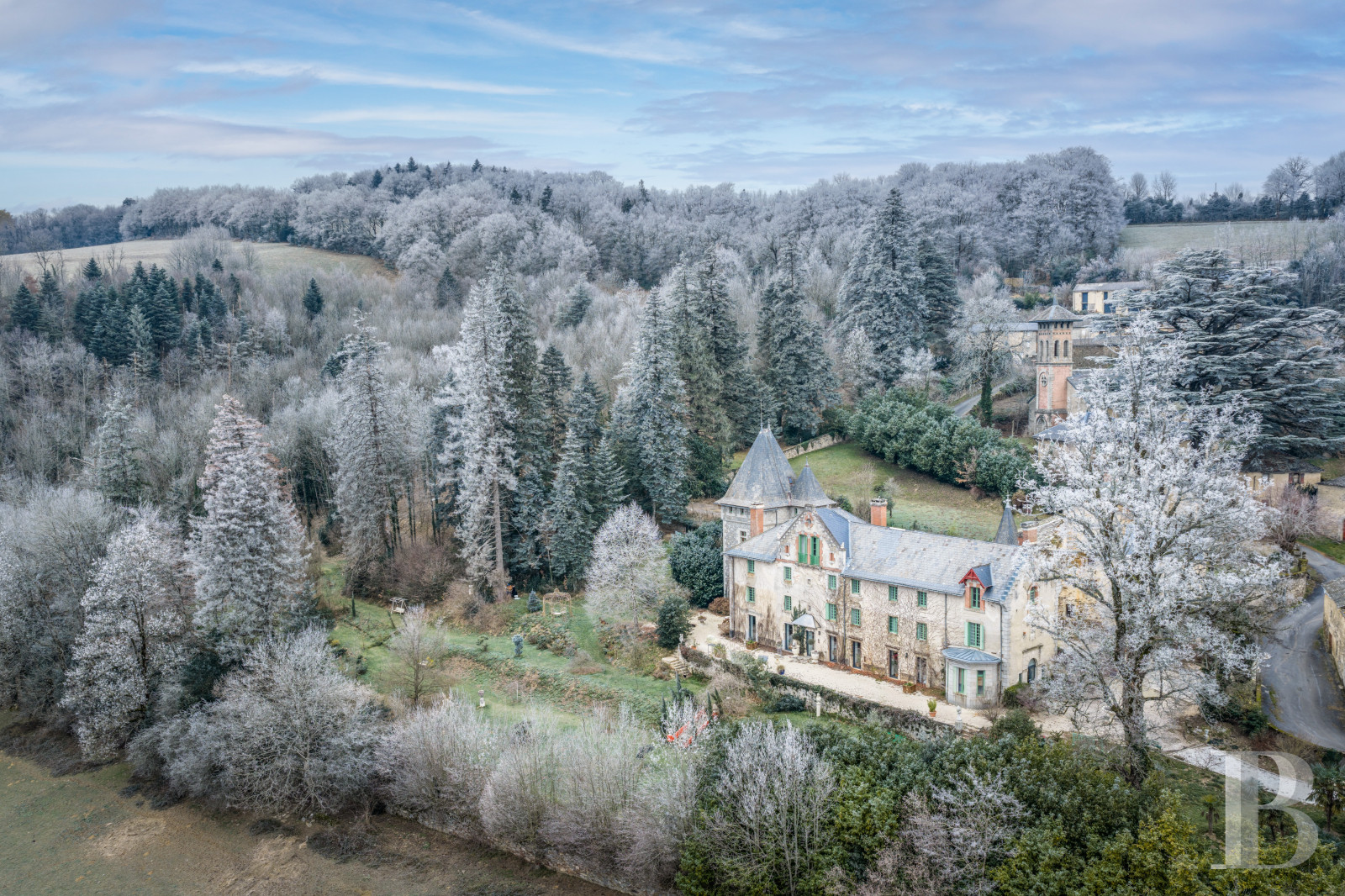
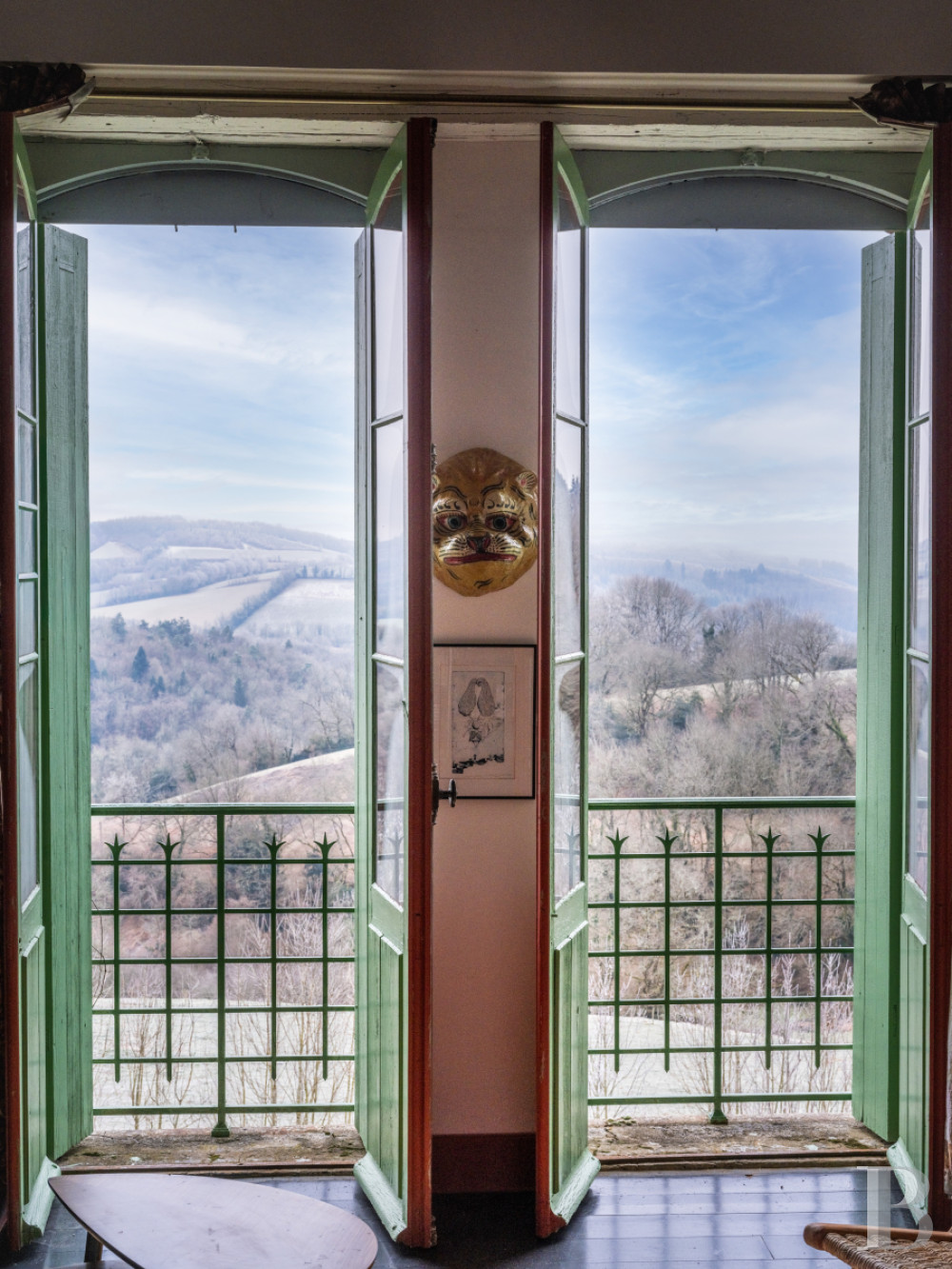
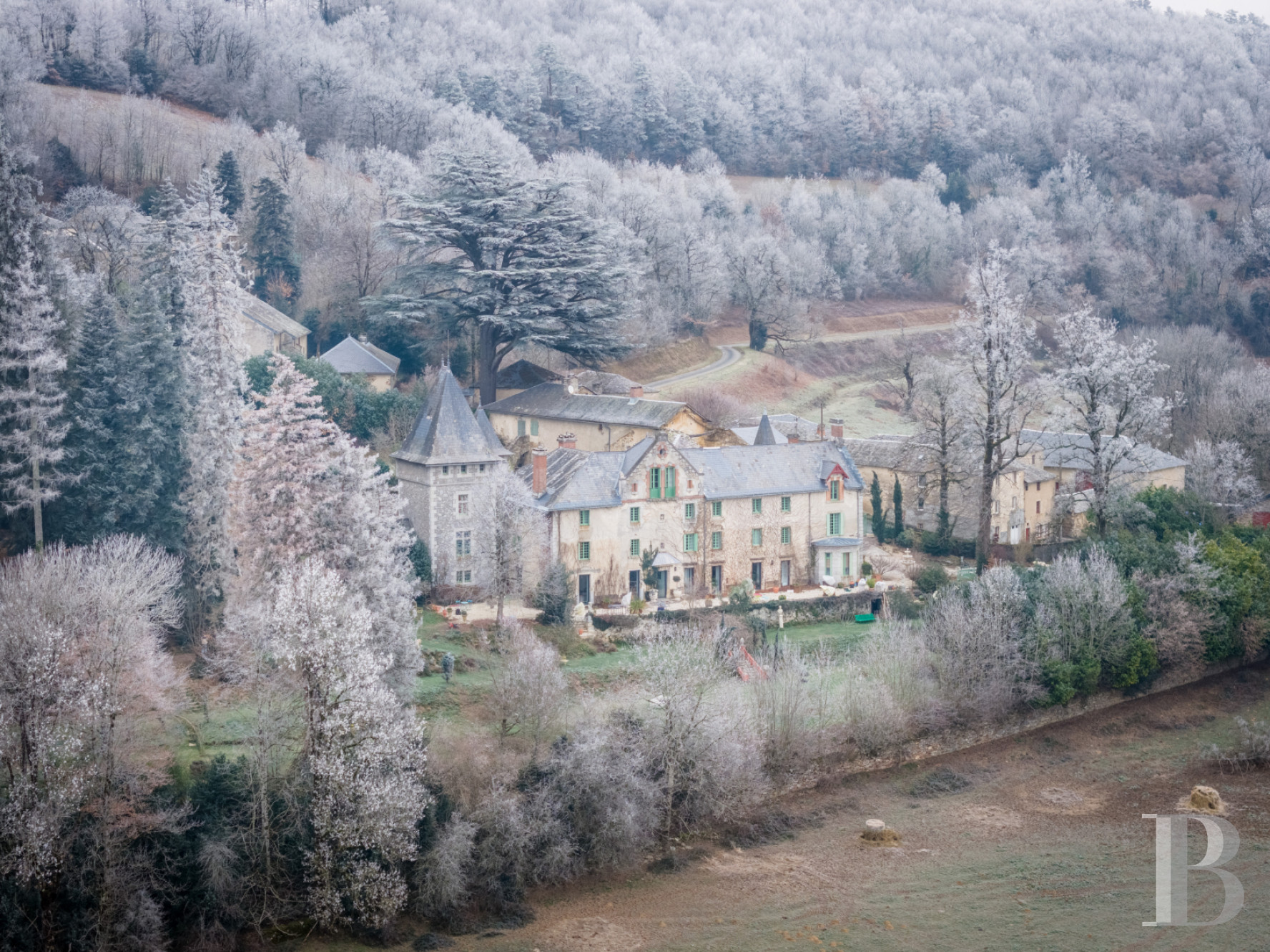
Located in a quiet hamlet, whose architectural makeup has preserved a strong rural character over the years, the chateau was restored in the 19th century over older foundations in order to provide it with its current appearance: that of an eclectic-style chateau, combining many features from the Elizabethan, medieval and Renaissance architectural vocabulary. Perched up in the heights of the valley, the central structure, facing southwest, provides unobstructed views of the countryside, made up of gently rolling hills and swaths of uninterrupted forestland.
In front of the main façade, an immense patio overlooks the terraced gardens planted with a wide variety of vegetation, whereas woods filled with tall trees extend to the west. Spanning approximately 3.7 hectares, the property is accessible via a gate that leads to a back courtyard, with a three-tiered fountain, while an outbuilding closes off the courtyard to the east.
In front of the main façade, an immense patio overlooks the terraced gardens planted with a wide variety of vegetation, whereas woods filled with tall trees extend to the west. Spanning approximately 3.7 hectares, the property is accessible via a gate that leads to a back courtyard, with a three-tiered fountain, while an outbuilding closes off the courtyard to the east.
The Chateau
Accessible via its northeast exterior, the chateau, organised around a central structure extended by a right-angle wing to the northeast, which creates a narrow entrance courtyard, includes a ground floor, two upper floors and a converted attic level.
As for its main façade, it is organised into eight asymmetrical bays, while its central axis, featuring a large pediment, includes three vertical rows of windows crowned with straight lintels, the attic portion of which boasts low-arched geminated windows, as well as a small bull’s-eye window.
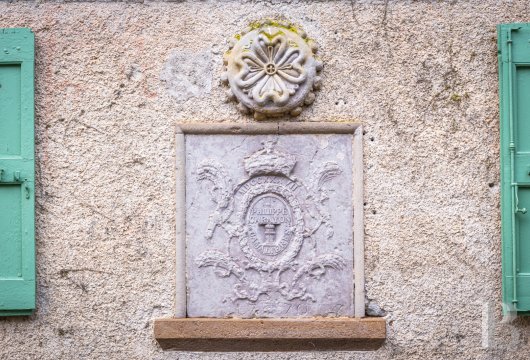
In addition, the door located directly below the pediment is decorated with a moulded surround as well as a keystone displaying a coat-of-arms, whereas a second coat-of-arms, more detailed and with the same motto – Fayre Pla Layssa Dire – is located above an entablature. As for the last vertical row of windows, it features a bay window on the ground floor and a single dormer window on the second, while ashlar stone or a combination of brick/stone surround all of the chateau’s windows/doors.
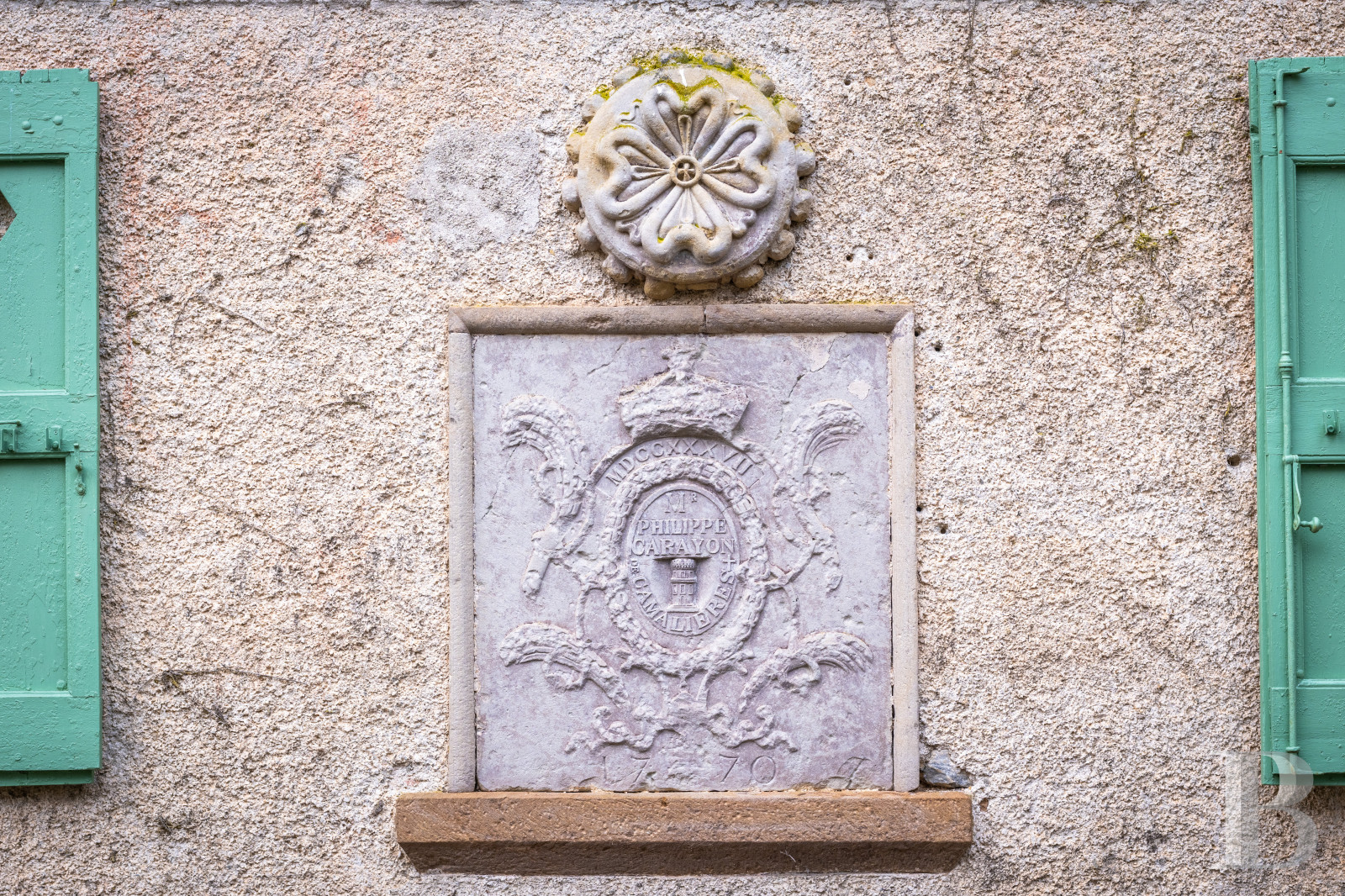
To the southeast, its gable end stands out thanks to finely carved ashlar stone highlighting its corners and roof edges, whereas a single bay includes a door surrounded by rusticated stonework, a carved coat-of-arms and an inscription carved into the apron wall of an arched window, the whole topped with a brick chimney, which adds the finishing touches to this eye-catching composition.
Featuring a main entrance with a wide, low-arched contemporary door, which is then topped with 18th-century coat-of-arms, as well as those of the de Carayon family from the 19th century, located between two windows, the chateau also boasts a round tower integrated into the back of the building, three arched windows forming a triptych on the second floor, as well as original plaster-coated rubble stone exteriors, whereas, to the north, a square tower is connected to the main dwelling via a narrow corridor.
Here, granite and rubble stone were used for the tower’s quoins and window/door surrounds, while a single bay on its southwest exterior is cadenced by cross-windows on each of its three levels as well as small windows under its eaves. Last, but not least, the chateau is topped with a slate roof and its brick chimneys are crowned with stone cowl heads.
The ground floor
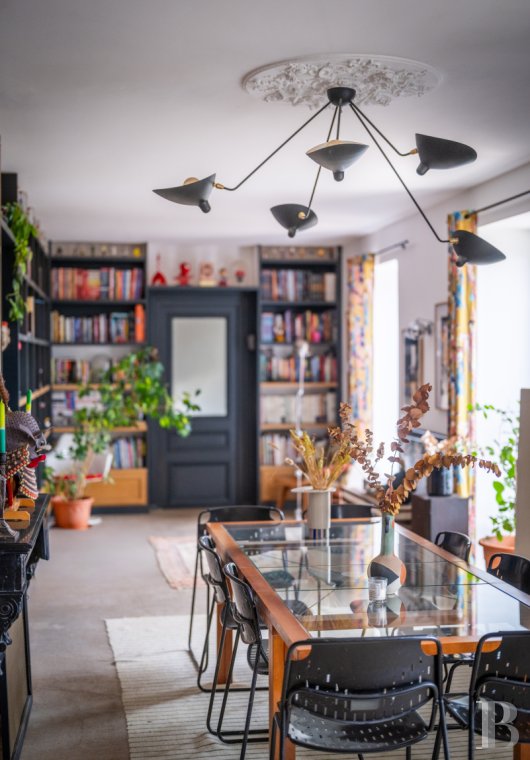
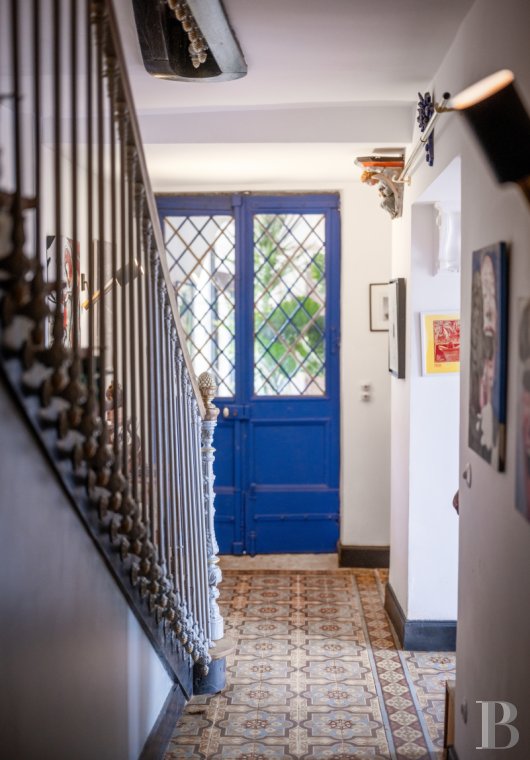
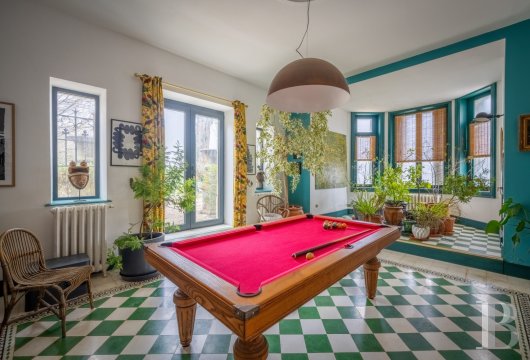
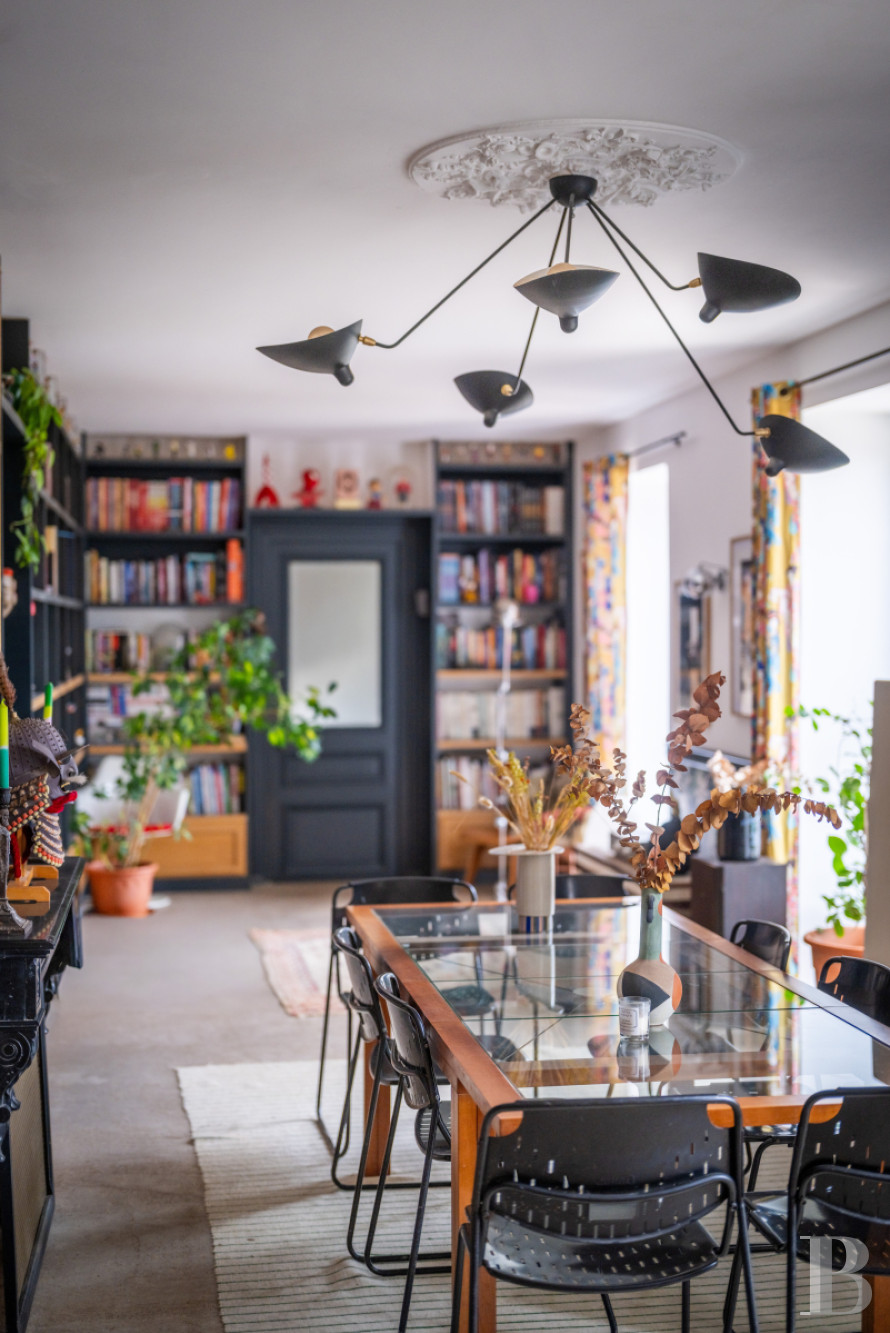
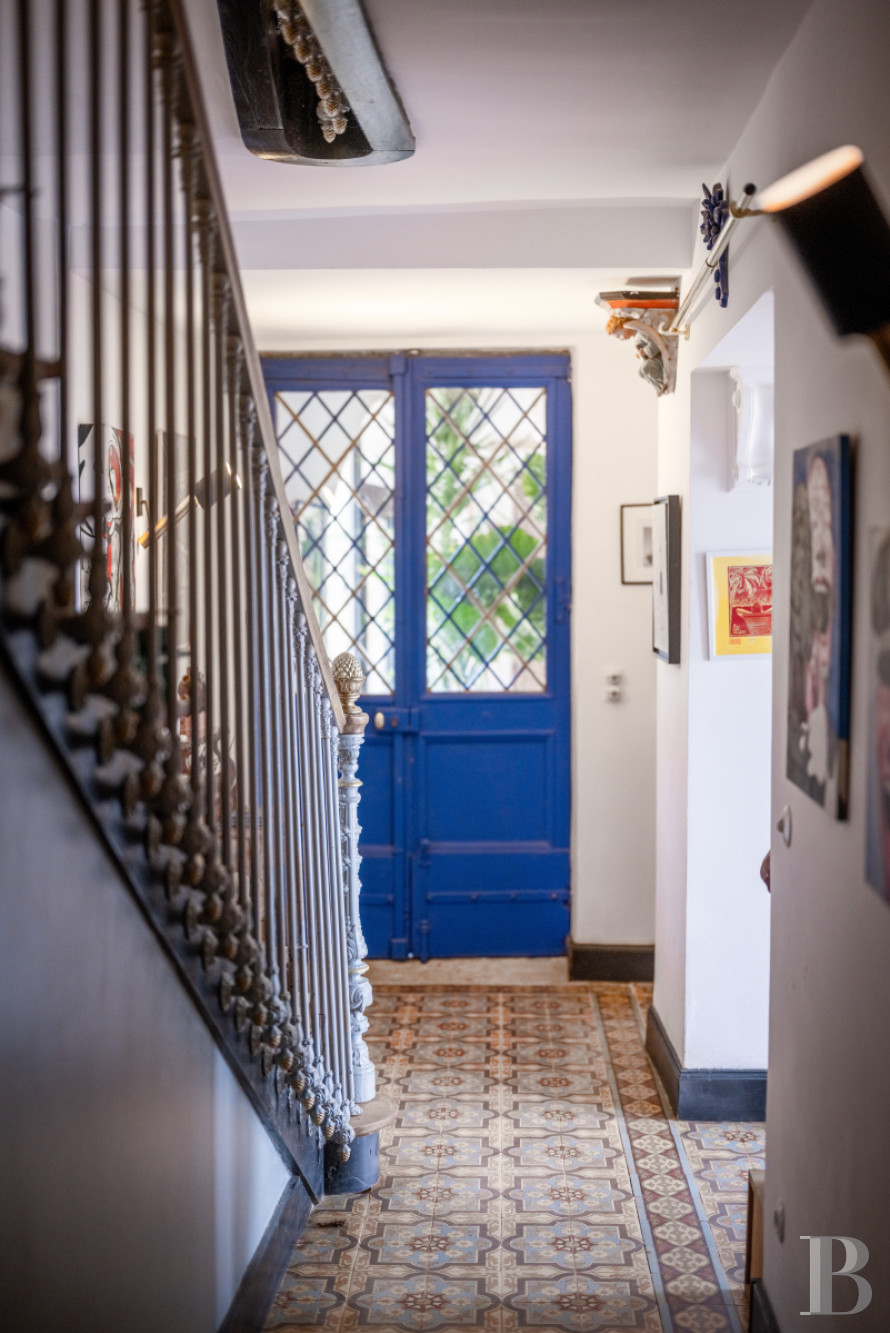
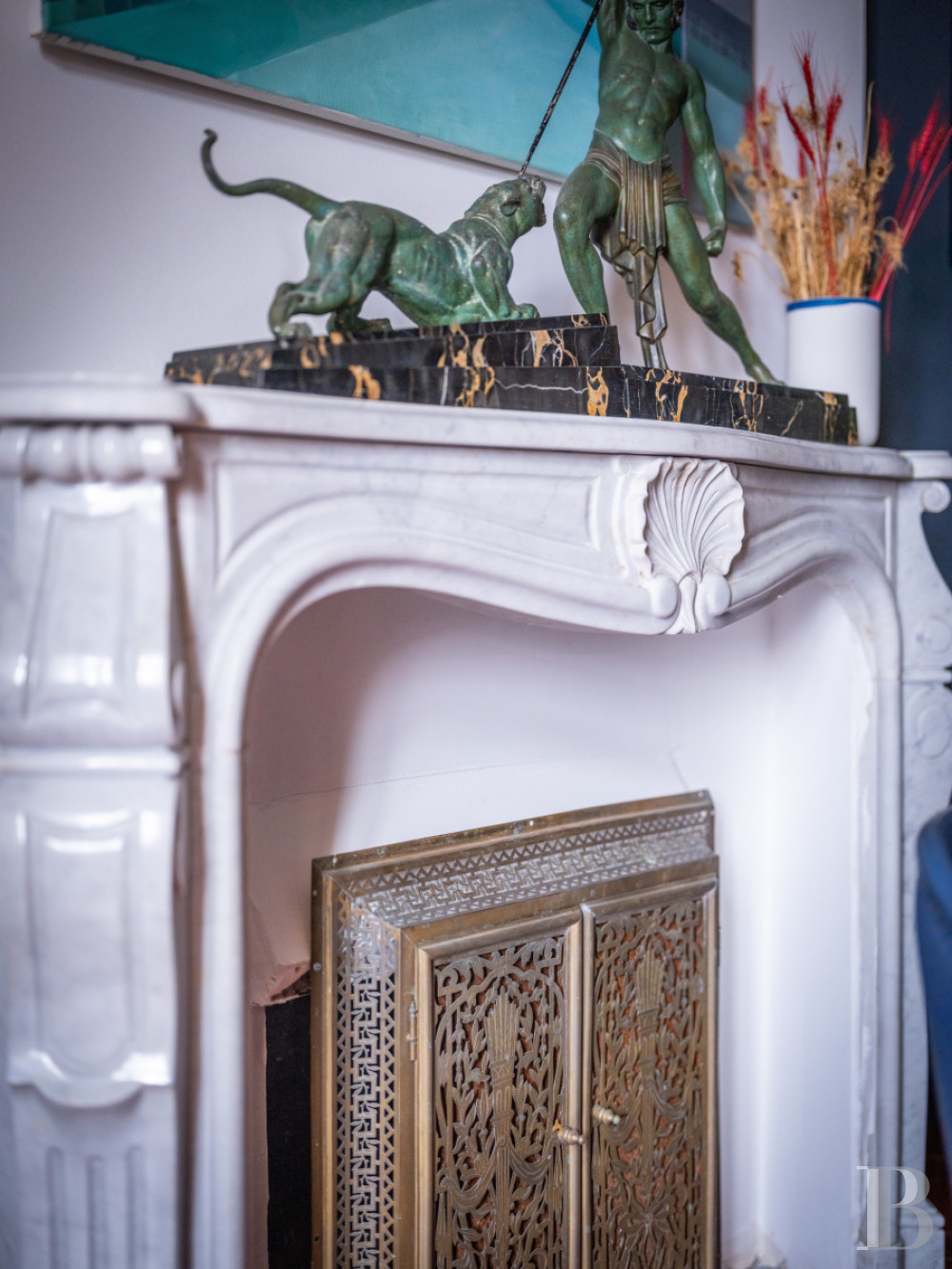
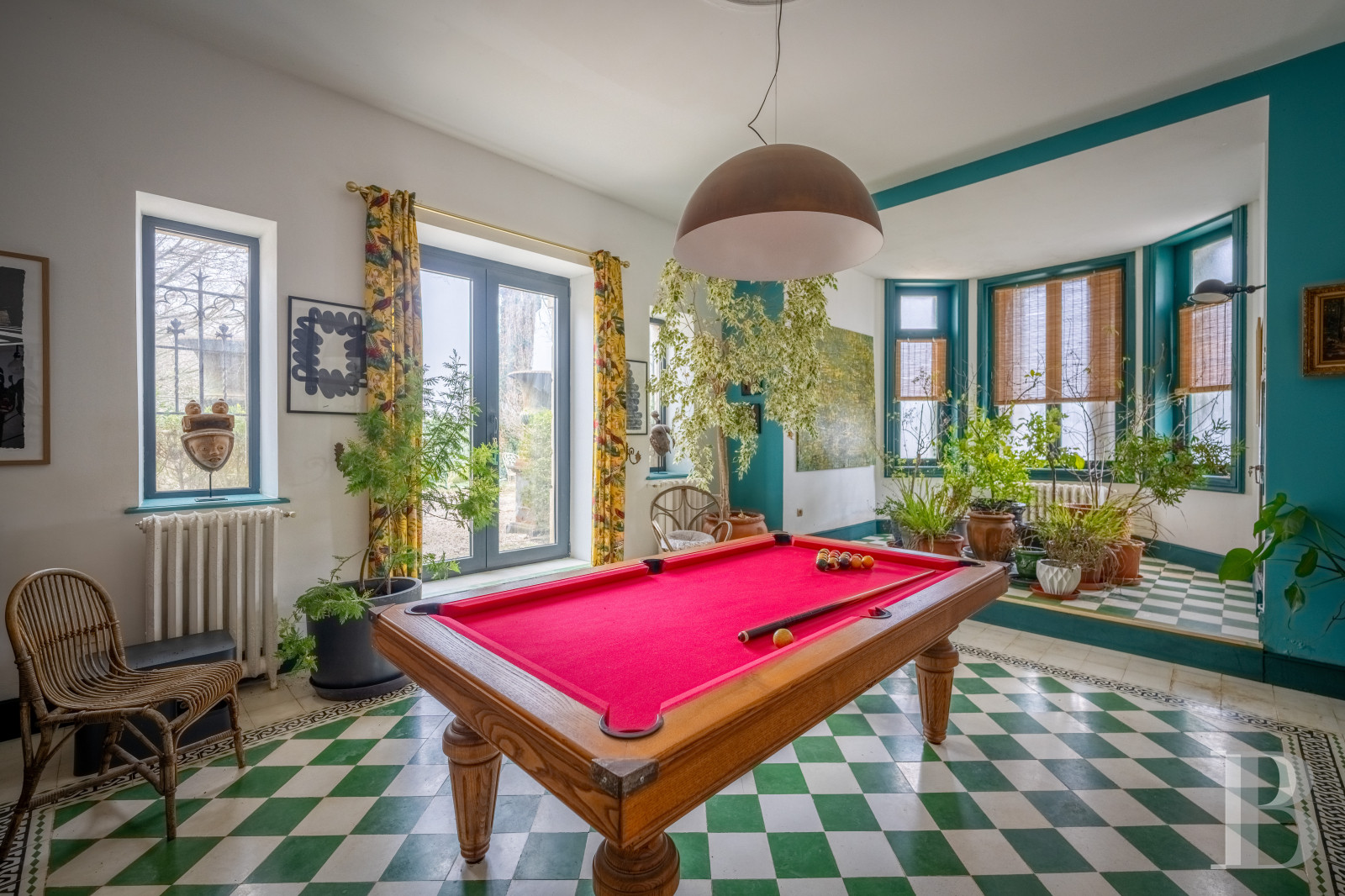
The entrance hall, with original schist flagstone floors and soaring floor-to-ceiling heights, provides access, on one side, to a staircase communicating with several guest bedrooms, and, on the other, to a hallway that leads to the staircase to the main living quarters, while, directly opposite the front door, is a dining room. The latter, 13 metres long, is bathed in light thanks to four windows overlooking a patio to the west, whereas built-in bookshelves span three walls and frame a classical-style black marble fireplace. With polished concrete floors, the room gives on to a billiard room, located to the south and featuring a bay window as well as two-toned floor tiles with a decorative frieze.
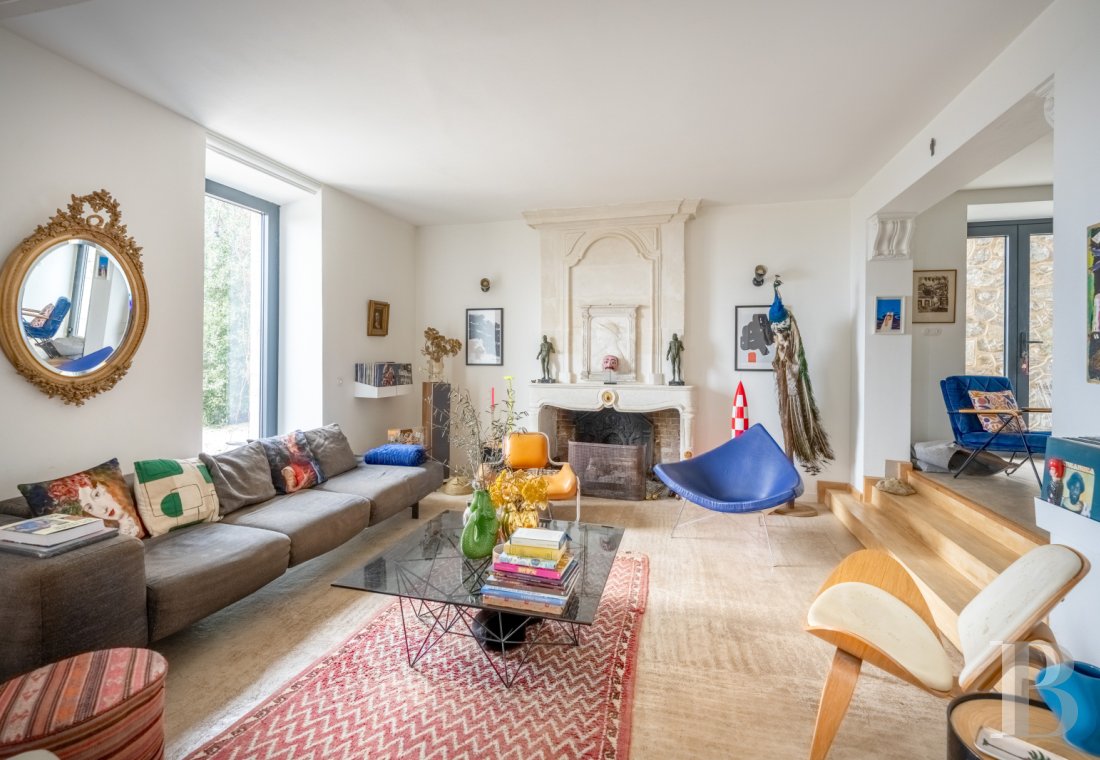
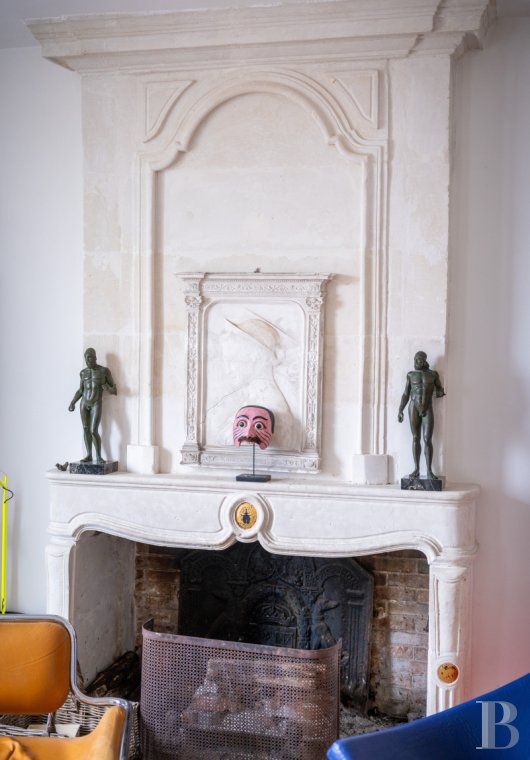
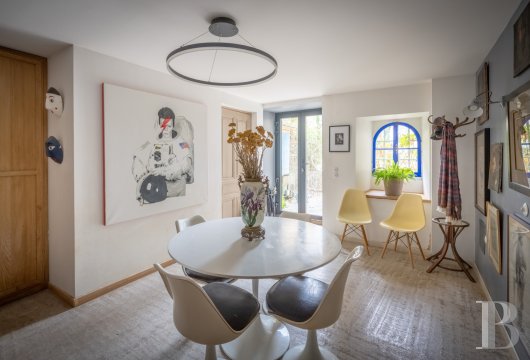
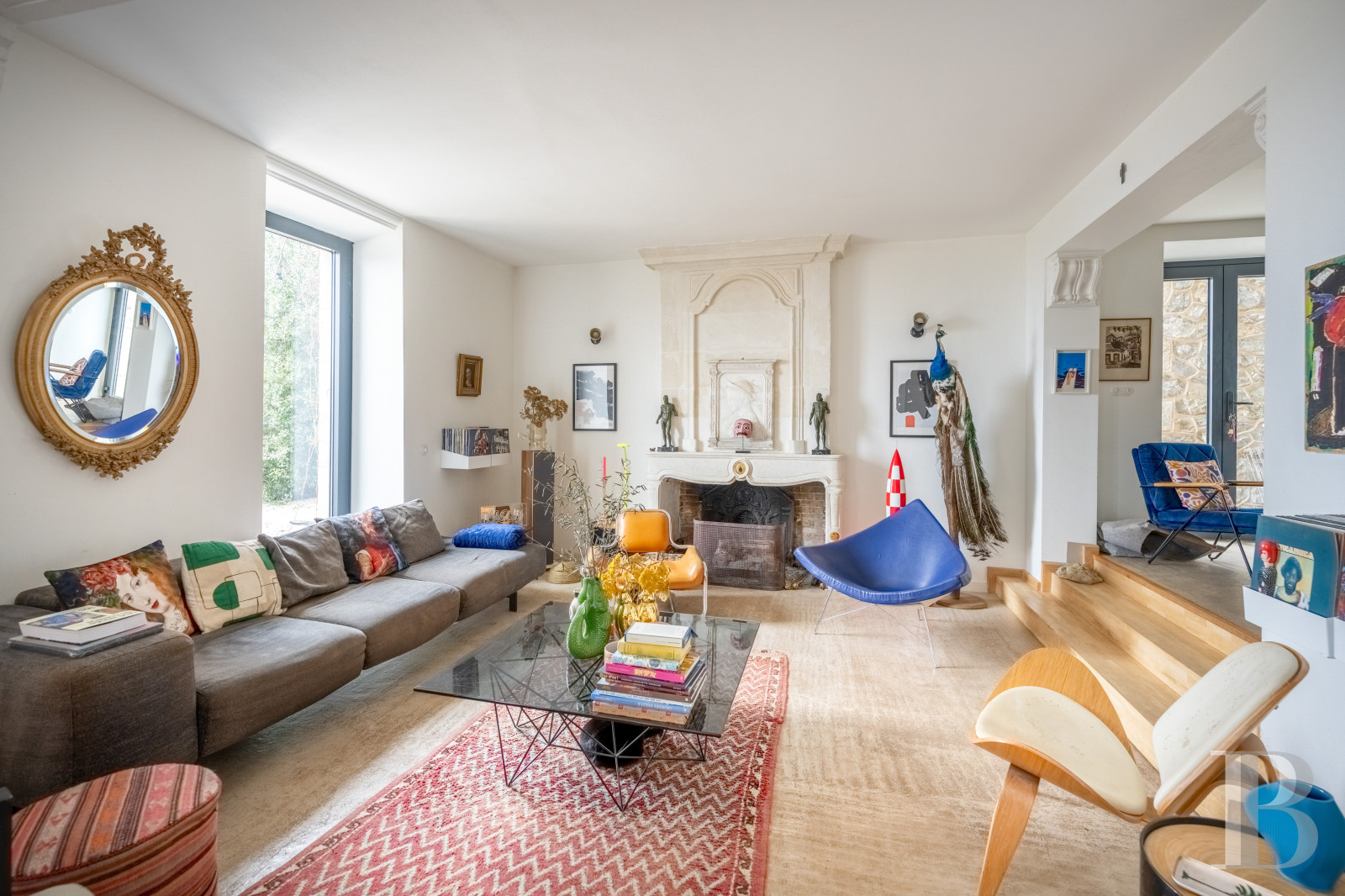
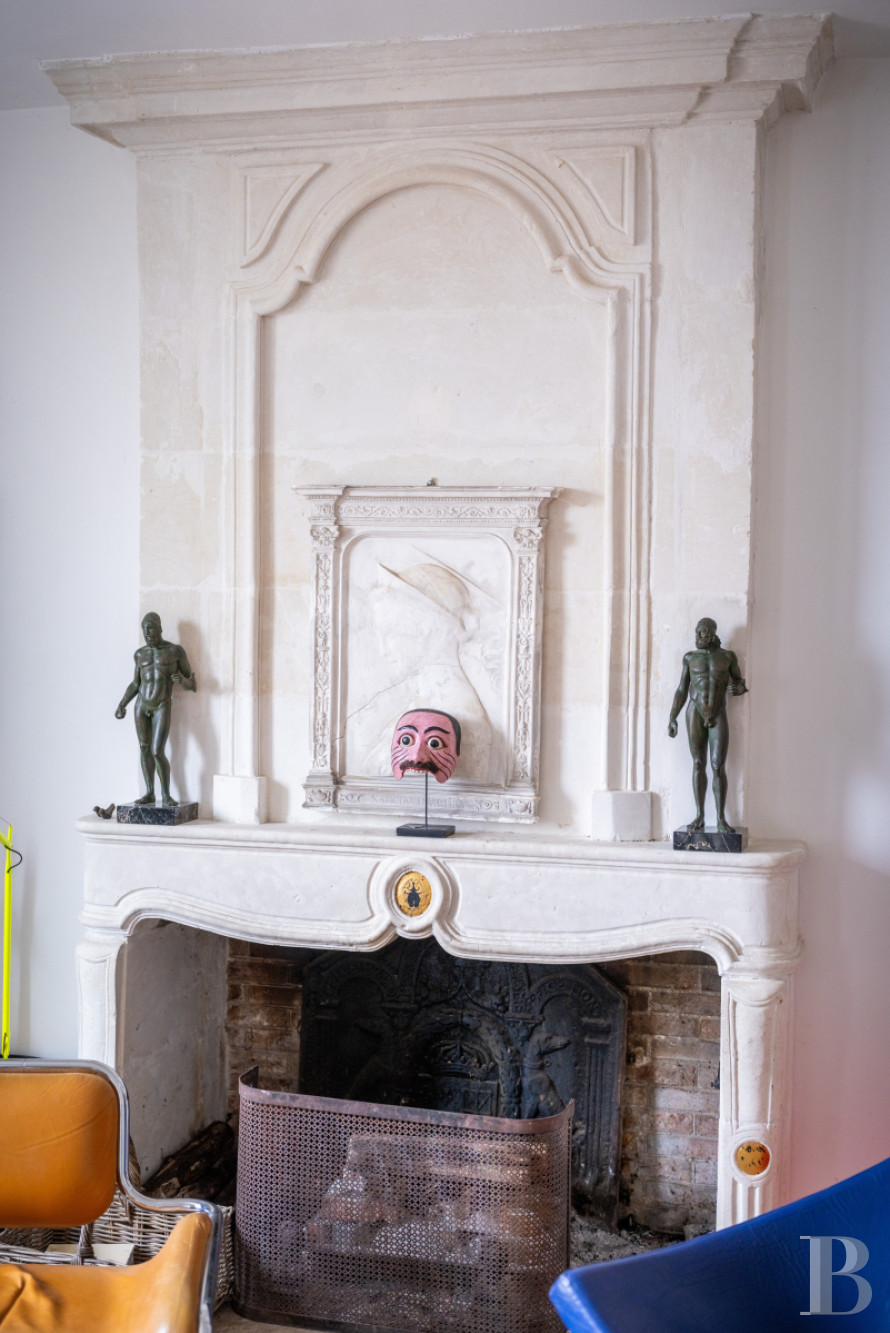
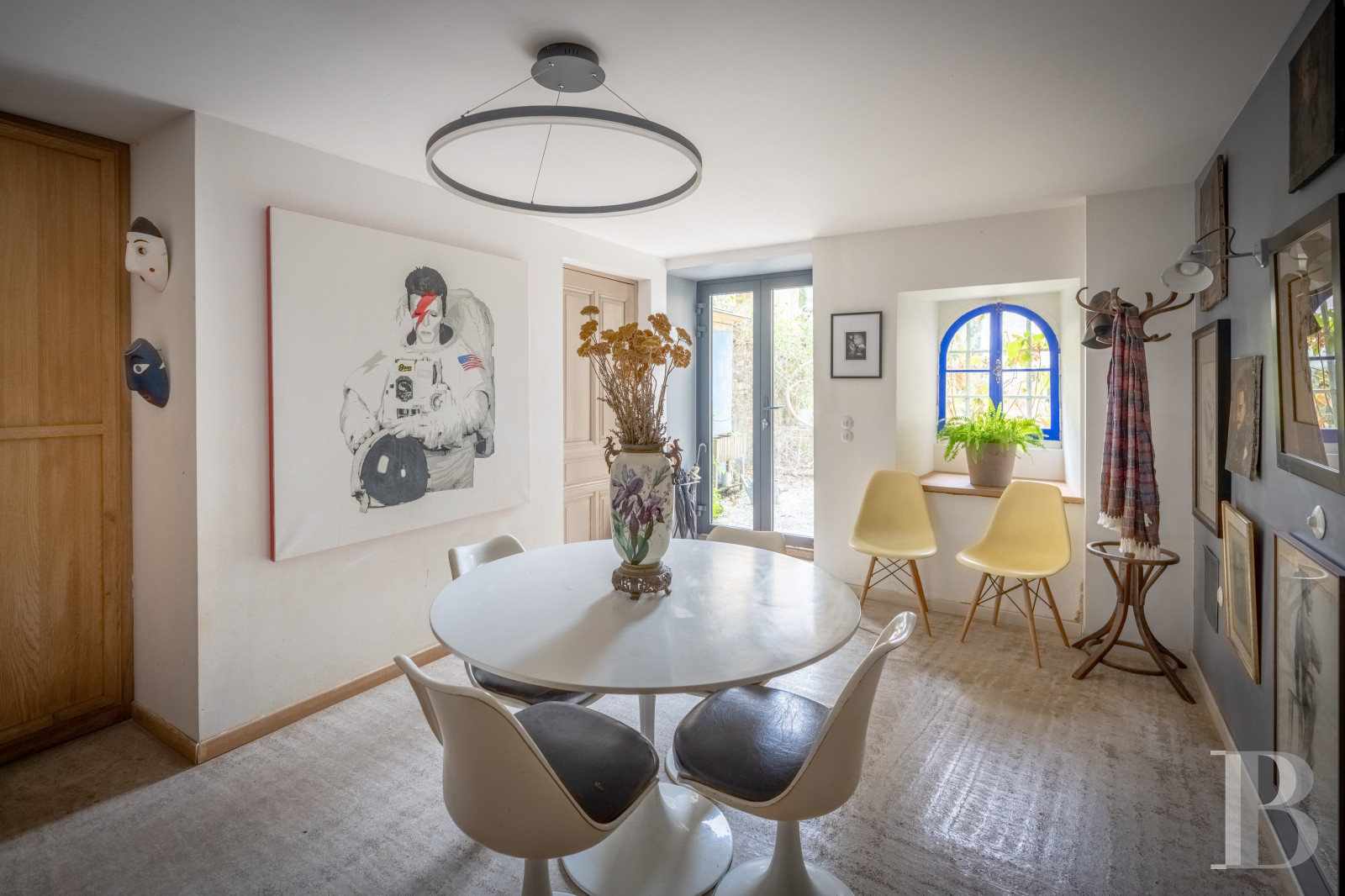
On the other side, the dining room gives on to a living room, decorated in pale shades with moulded scroll-shaped corbels and an ashlar stone fireplace with curvilinear décor, whereas two steps provide access to a kitchen, decorated in an understated and, yet, contemporary style. With a polished cement floor, its custom-made solid oak cabinetry alternates with natural stone worktops and credenzas, while, at a right angle, a second small dining room communicates with a utility room, a furnace room and the rear courtyard.
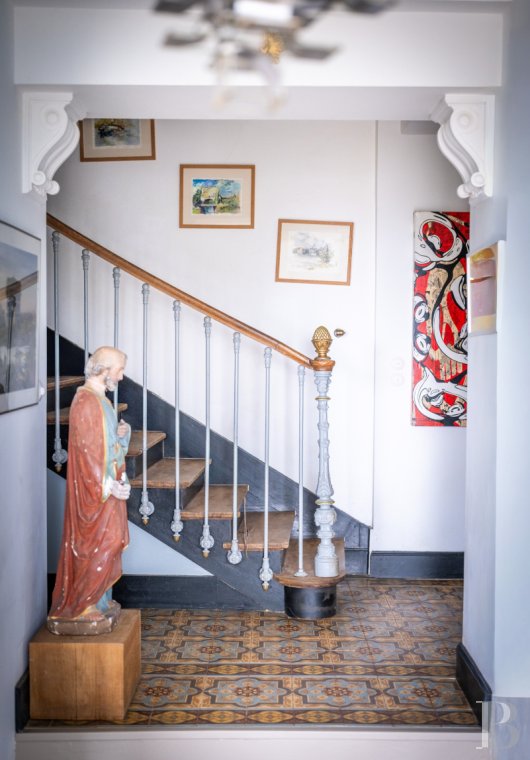
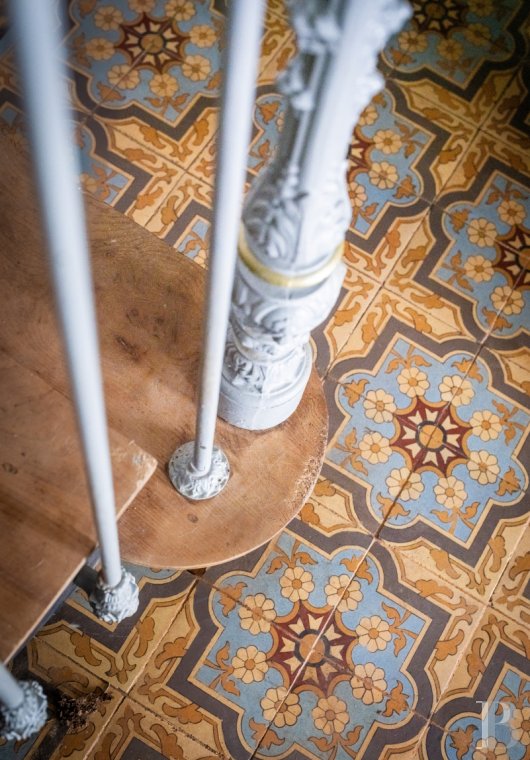
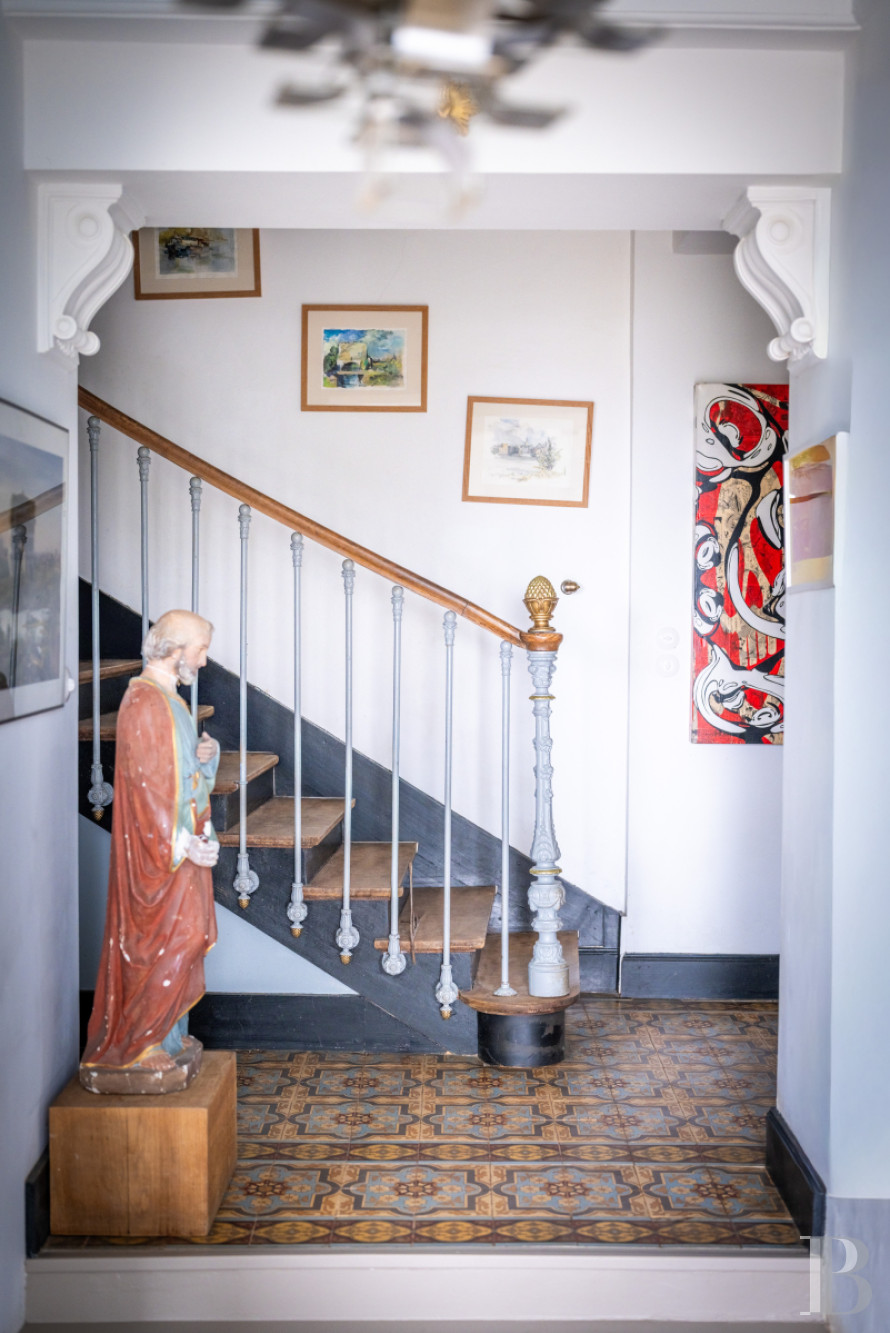
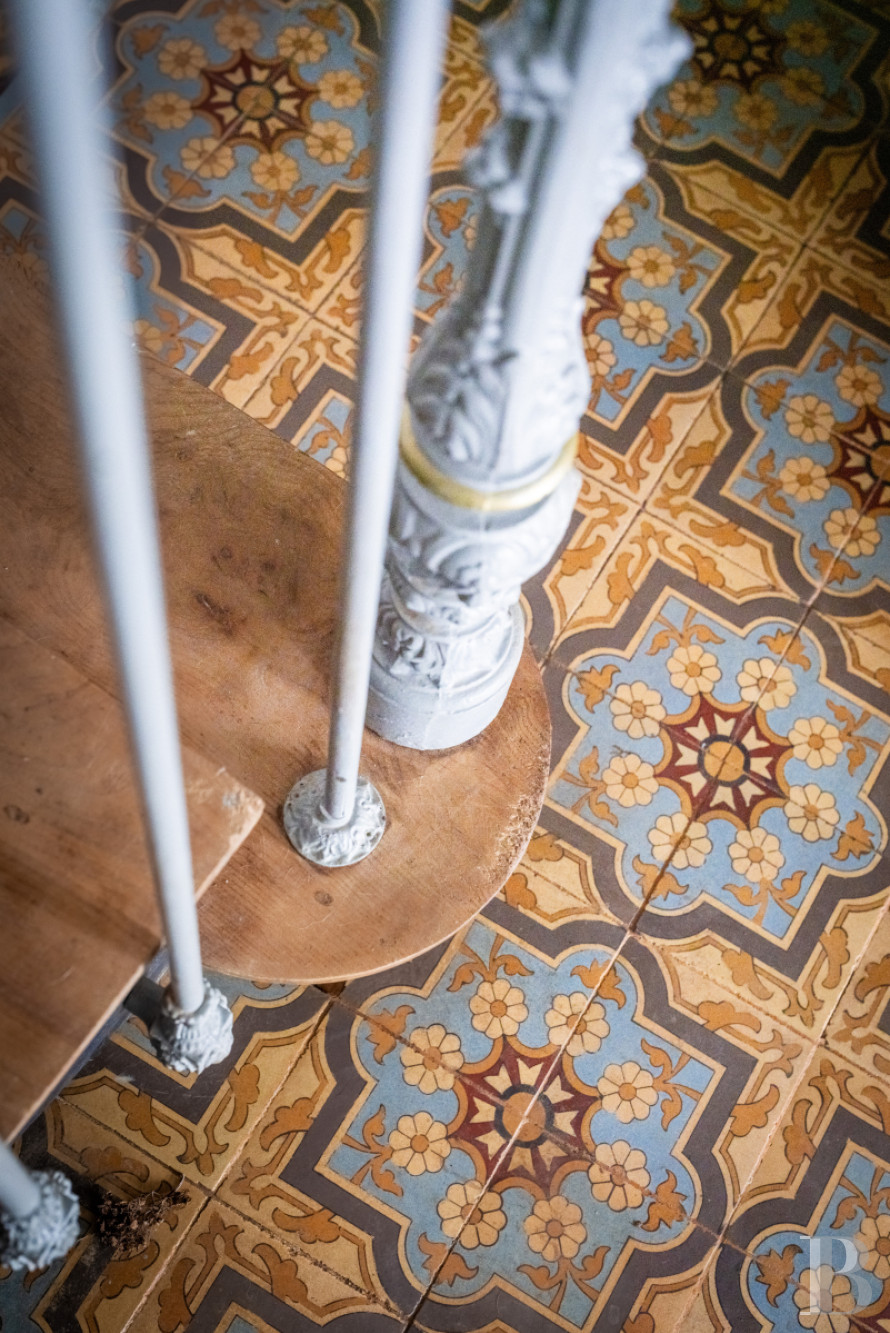
In addition, from the kitchen, the tower is accessible after traversing a small corridor with a lavatory, followed by an immense study and a pantry, while the chateau has preserved many of its 19th-century details, such as its interior and exterior window/door frames, as well as a delicately ornate metal staircase and its oak steps, which ascend to a landing with cement floor tiles in shades of ochre and blue.
The first floor
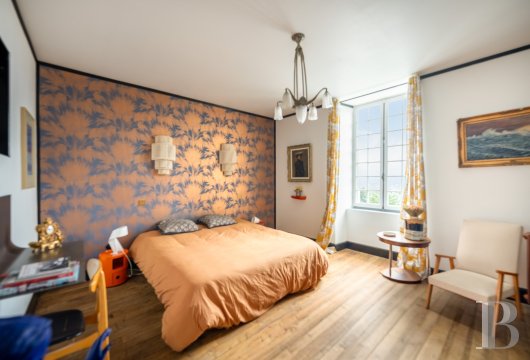
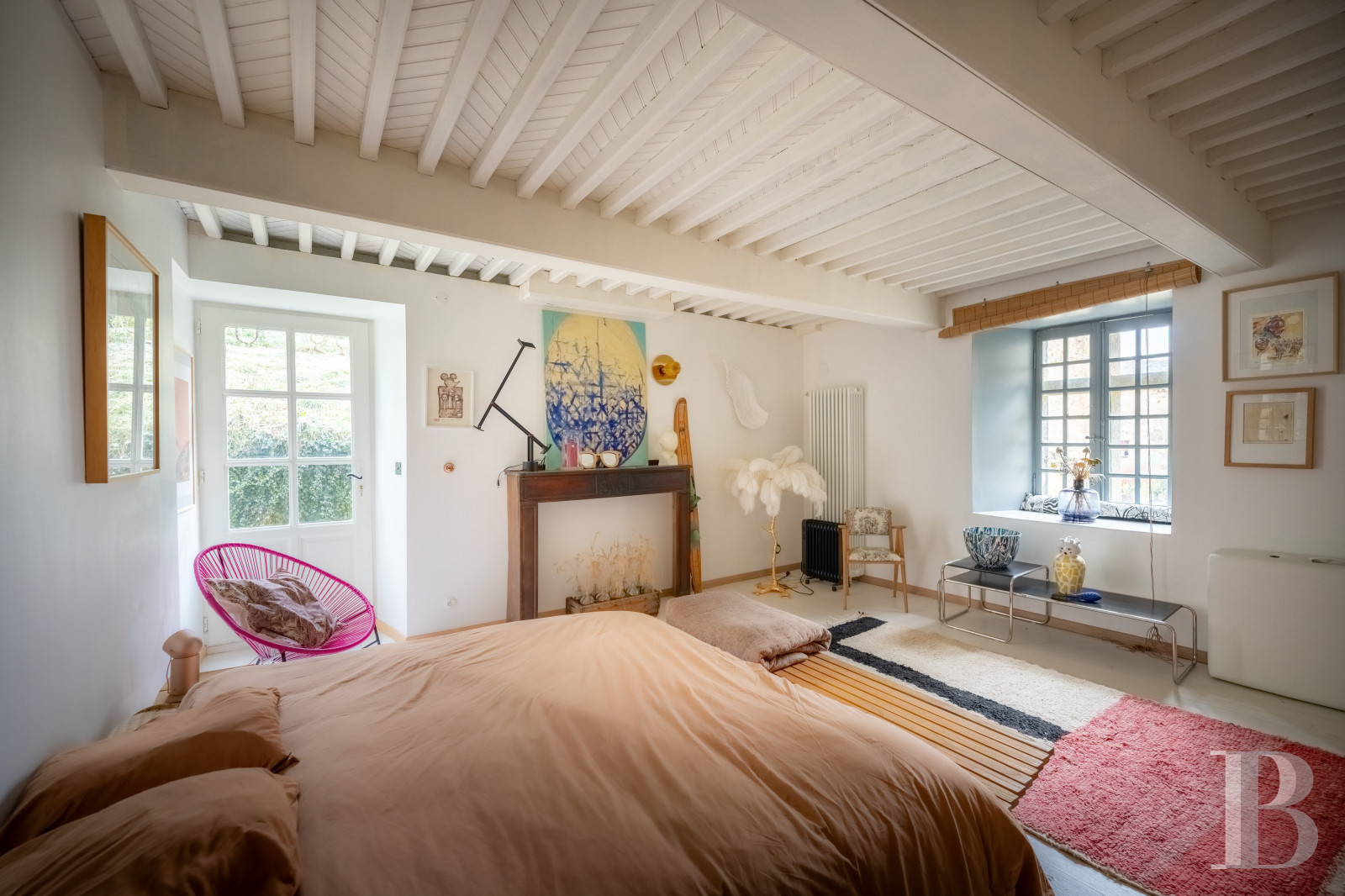
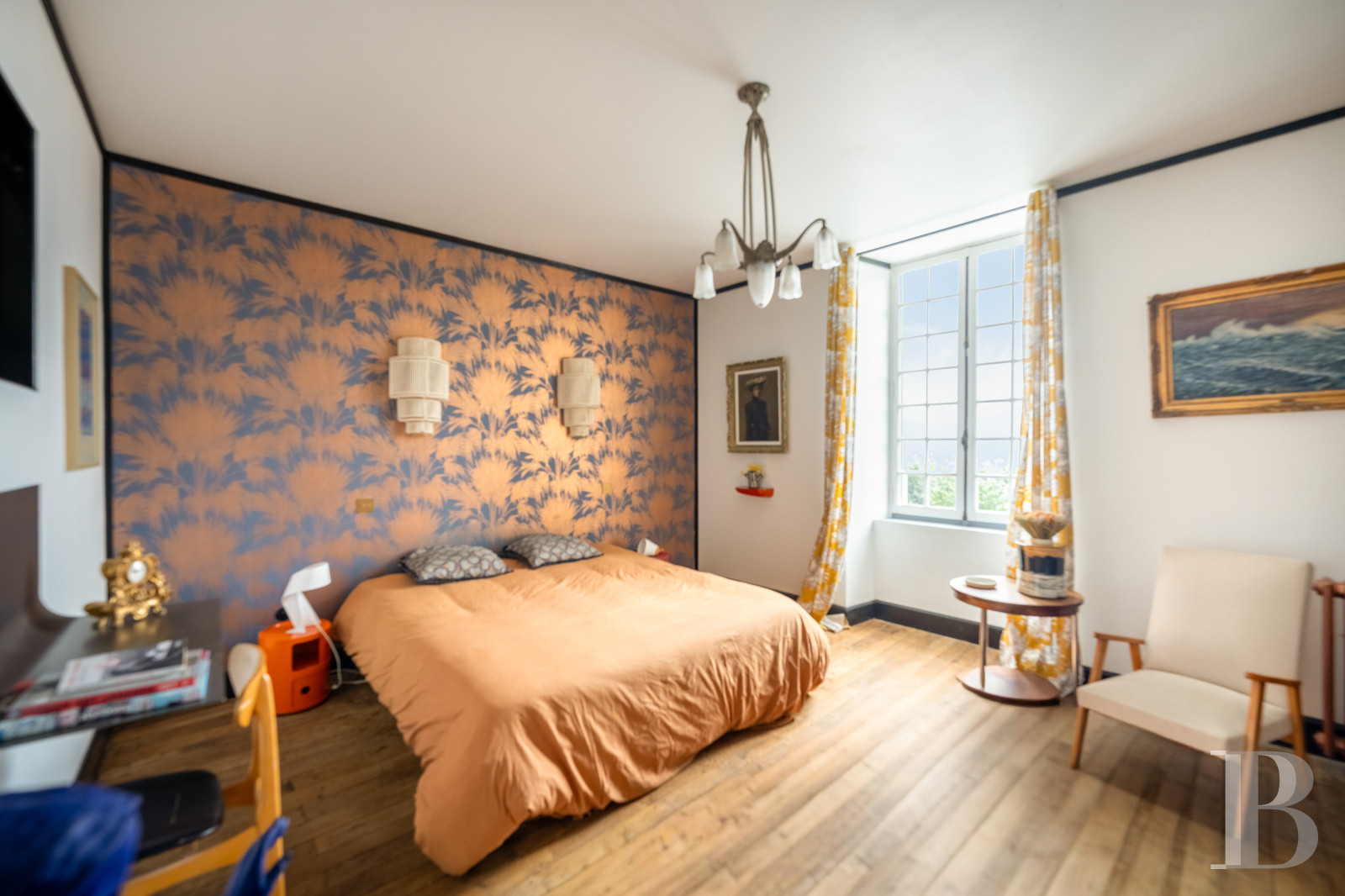
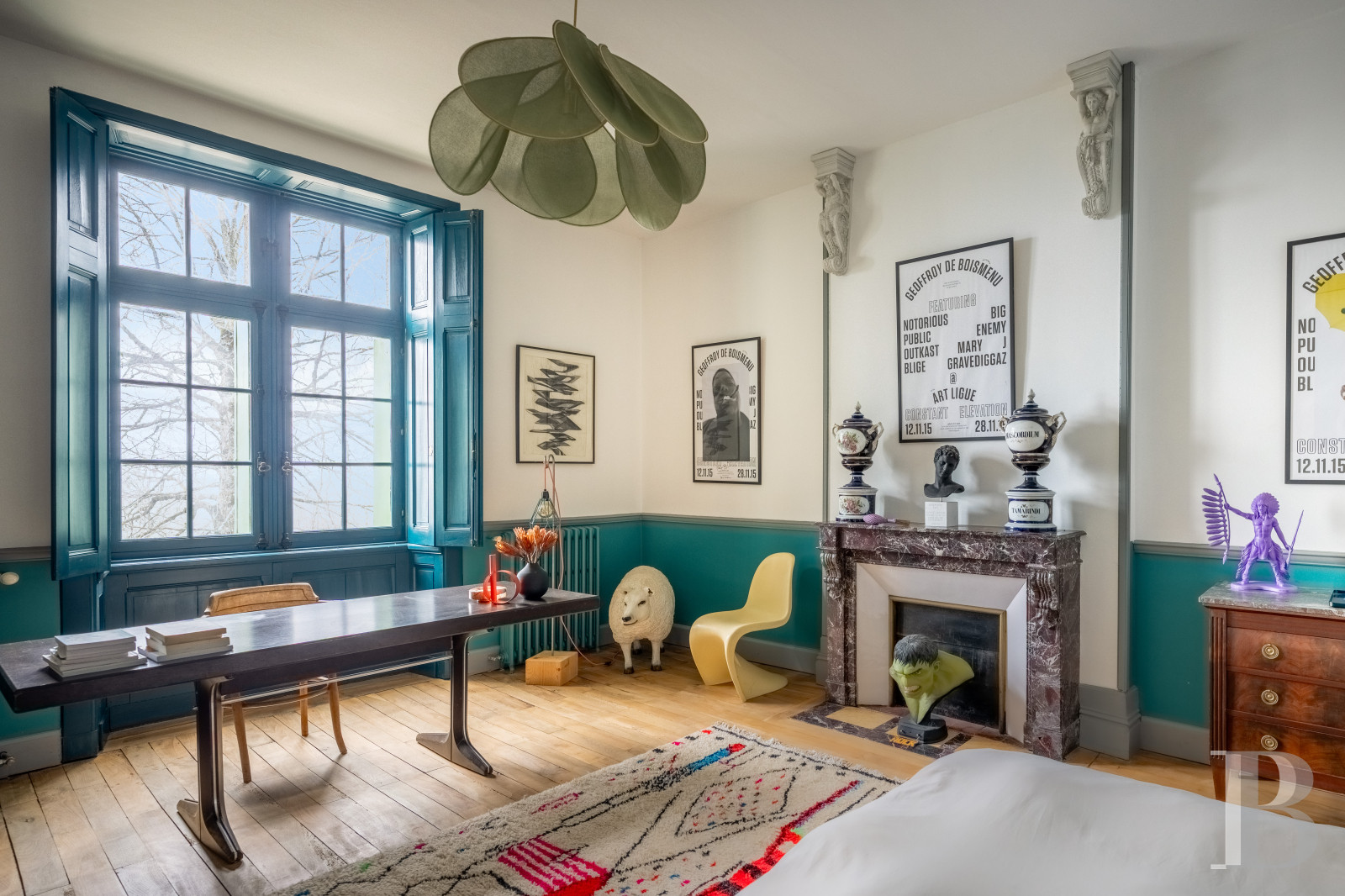
This floor, dedicated to the chateau’s main living quarters, contains an initial bedroom, topped with visible ceiling beams and decorated with an ancient fireplace, of which only its carved wooden mantel remains, while a game room, with parquet floors like the rest of the rooms on this level, leads to two adjacent bedrooms, both facing southwest and having preserved their original window frames, which are sometimes highlighted with deep wooden side panels.
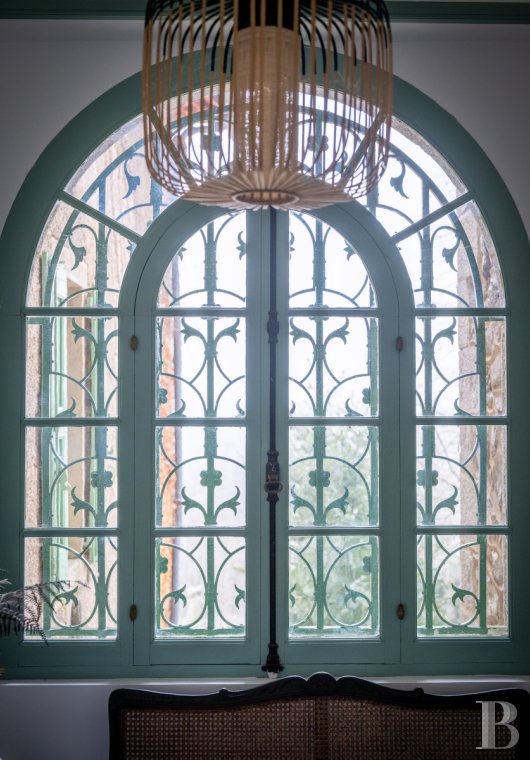
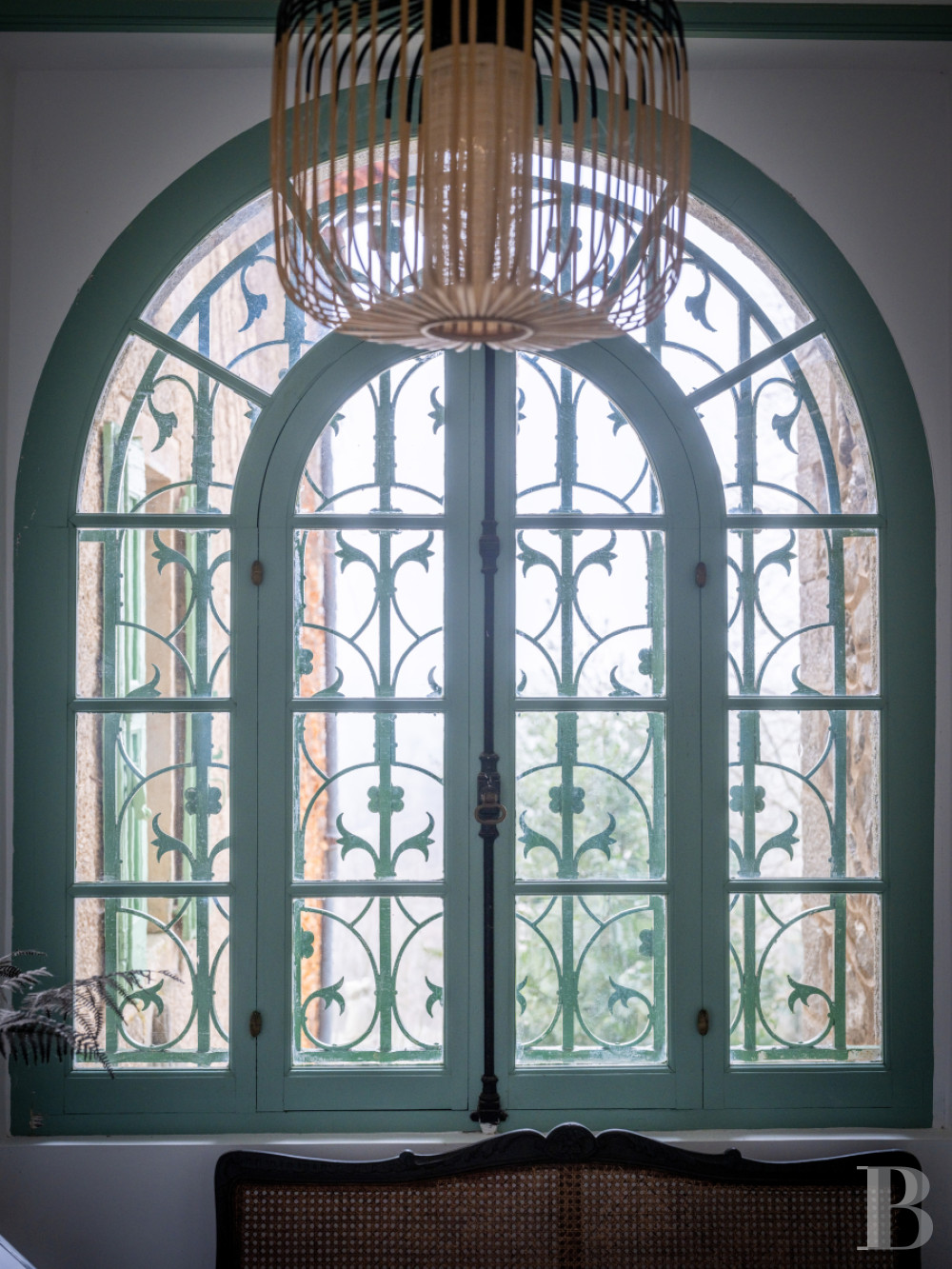
These two bedrooms share a bathroom, accessible from the game room, whereas, in the tower, a hallway, bathed in light thanks to a window decorated with a floral motif grill, leads to a shower room and a fourth bedroom, which features a wide cross-window and a classical-style red marble fireplace.
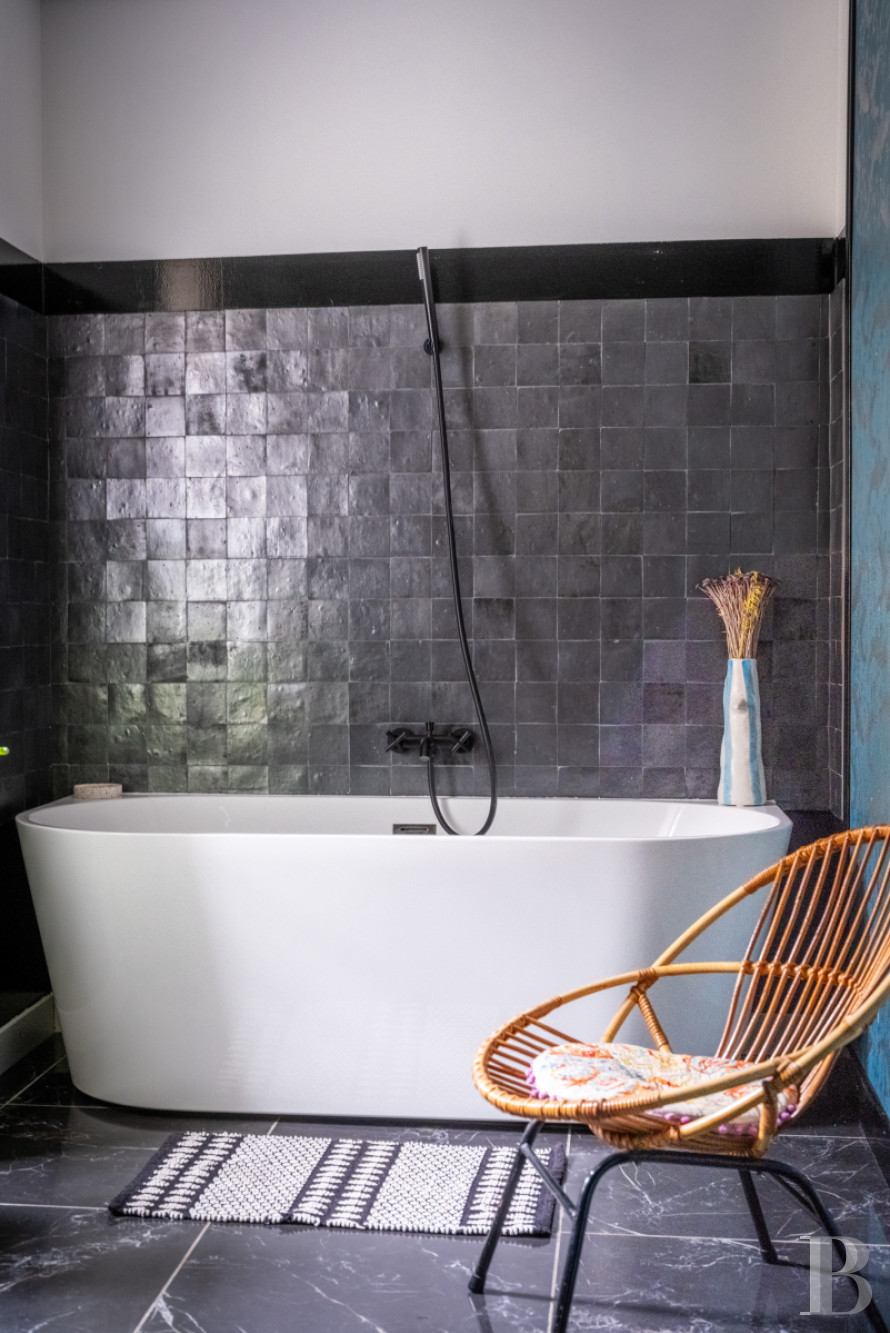
Back in the ground floor entrance hall, a wooden staircase with a balustrade leads to the part of this floor reserved for guests: an initial bedroom includes a small corridor providing access to a lavatory located in the round tower and a bathroom decorated with zellij mosaic tiles, while a second bedroom also comes with its own adjacent bathroom with lavatory, also featuring zellij tiles as well as a terrazzo marble floor. Like in the chateau’s permanent living quarters, this part of the chateau boasts parquet floors and windows overlooking the gardens to the southwest.
The second floor
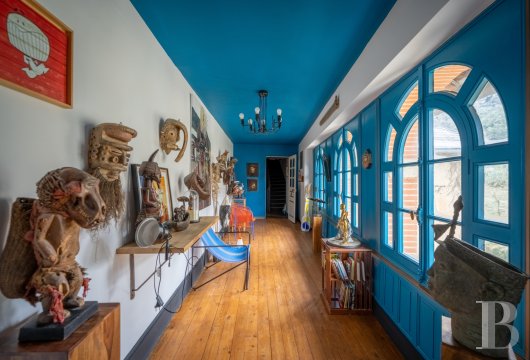
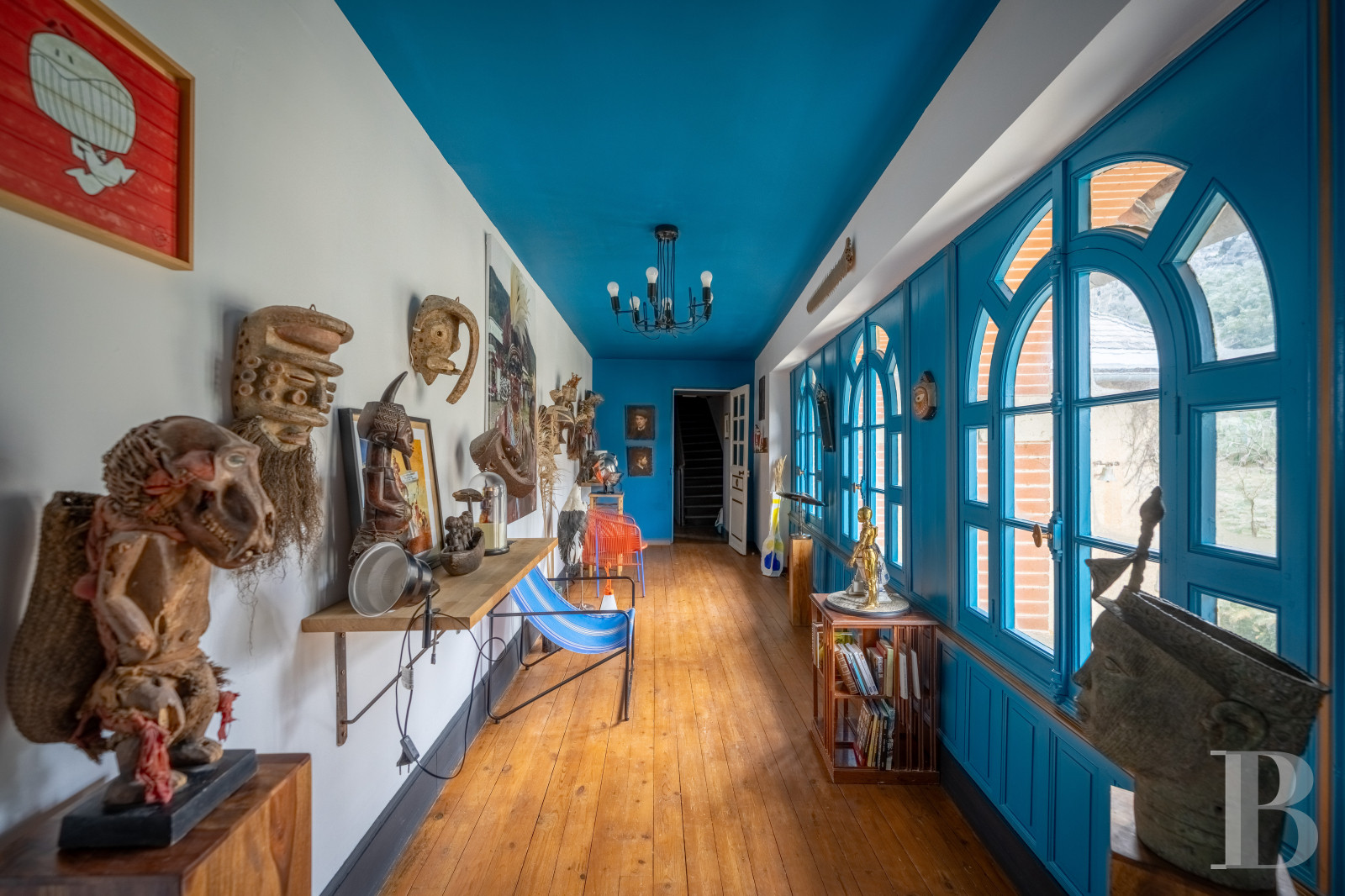
The landing communicates with an immense custom-built wardrobe, whereas a long hallway, flooded in light by a series of three windows, could be used as an exhibition space, thanks to its gallery-like atmosphere, and leads to a library. The latter, more than 13 metres long, features bookshelves spanning two of its four thick walls, painted in shades inspired by Mondrian, as well as an ashlar stone fireplace in the middle.
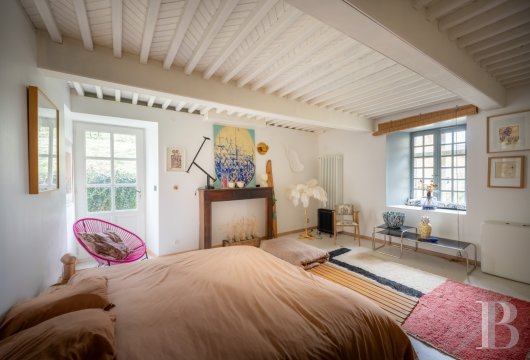
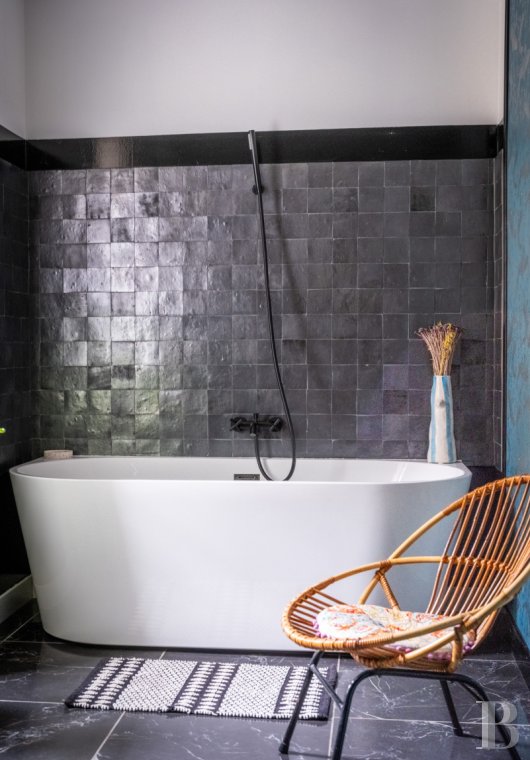
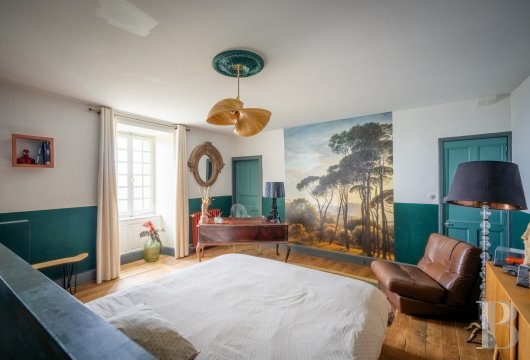
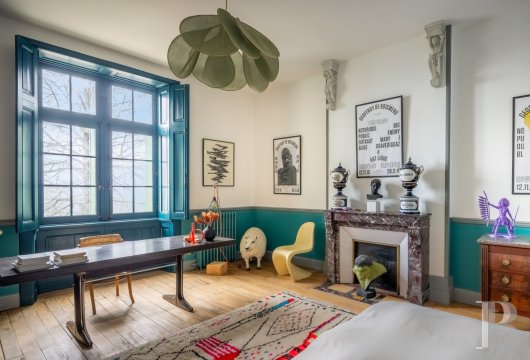
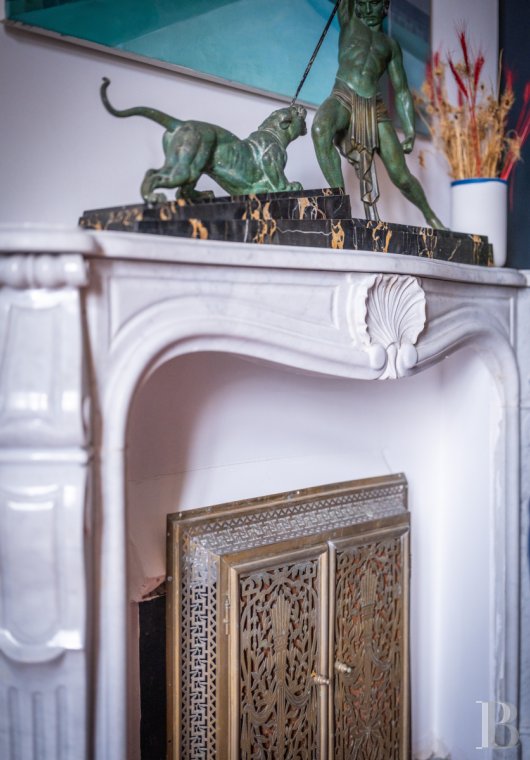
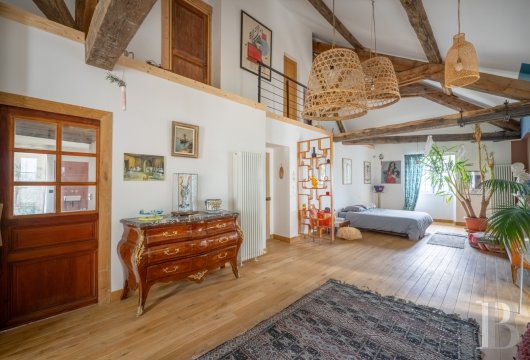
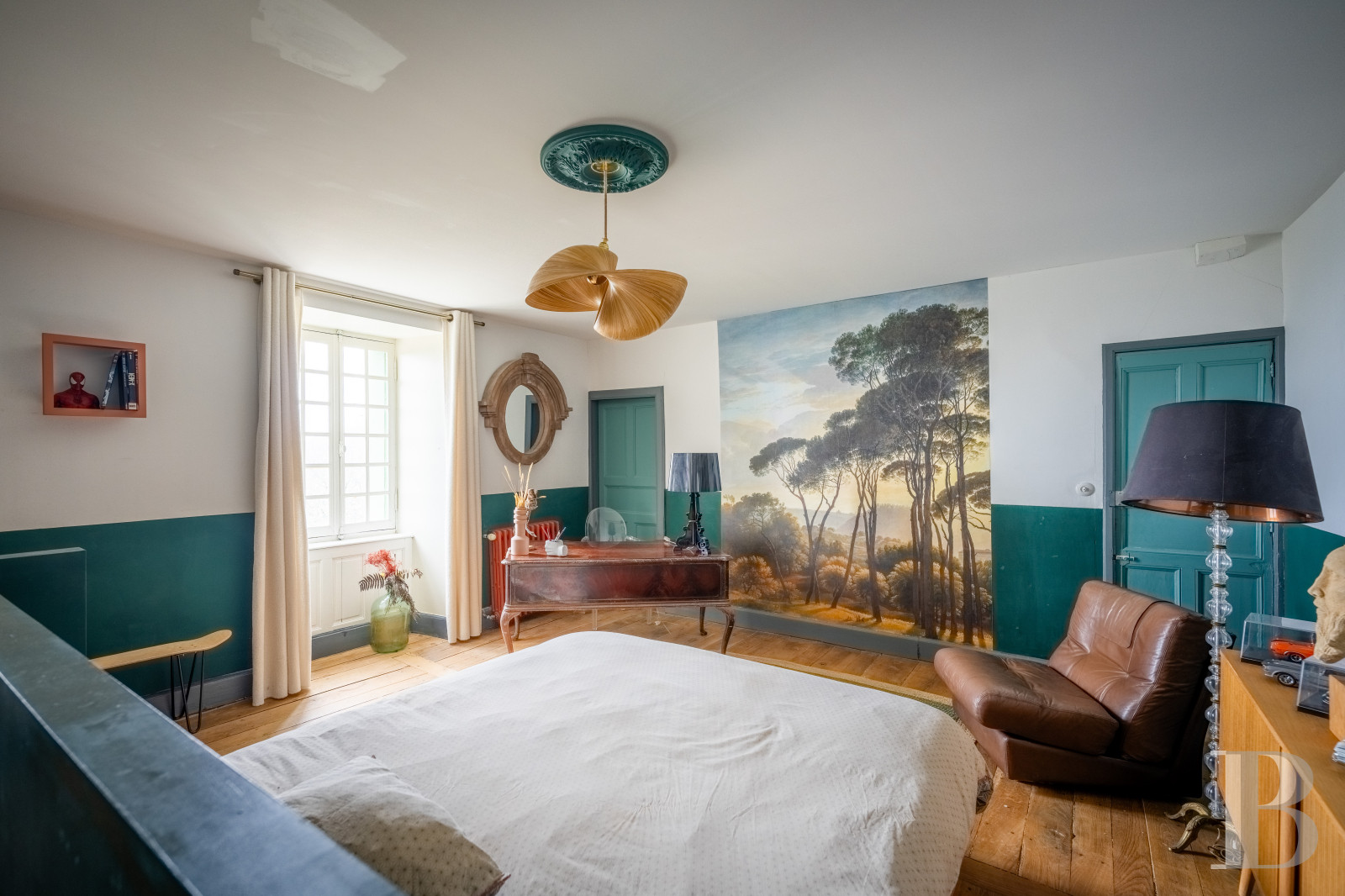
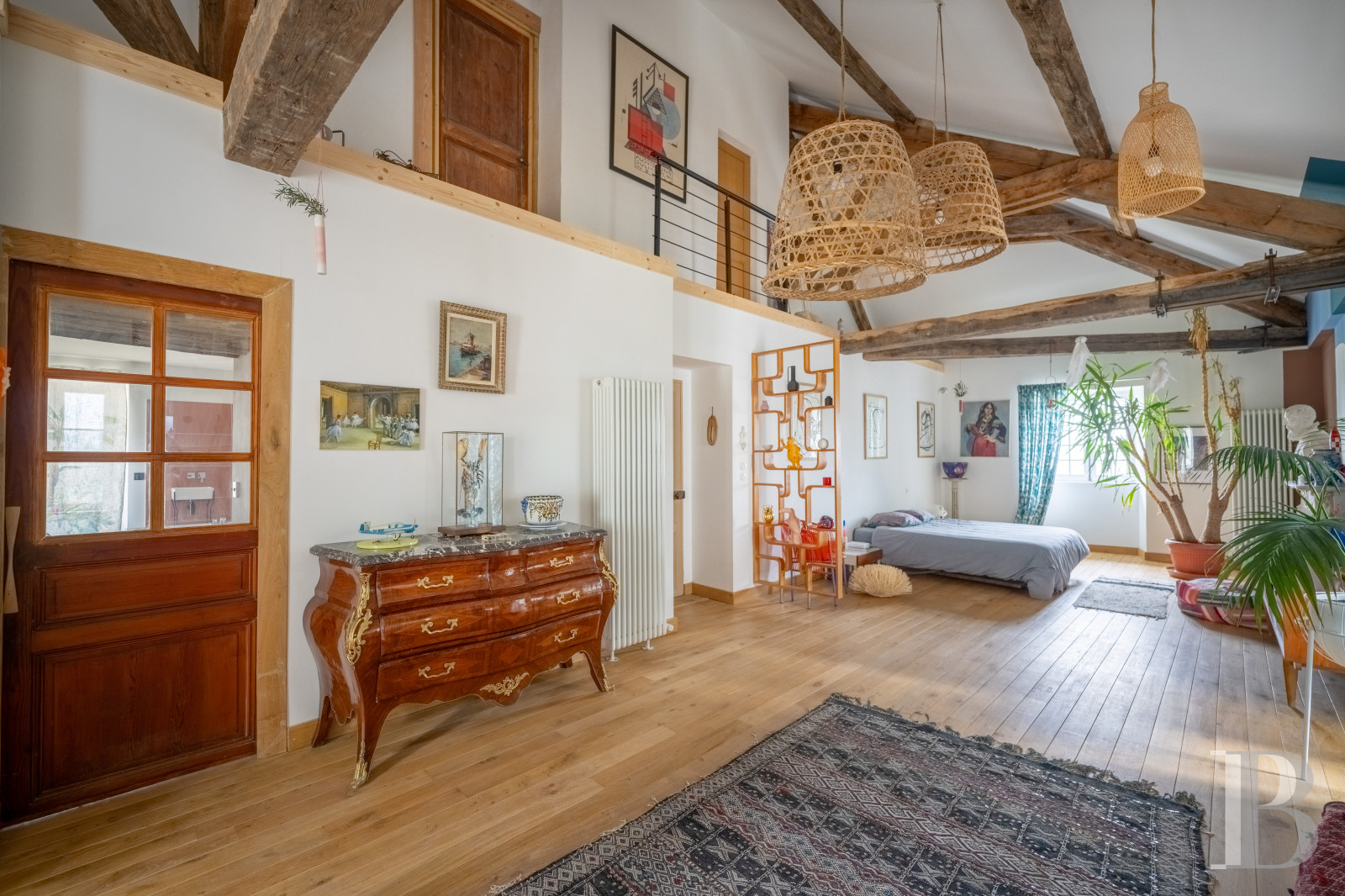
To the south, a large game room, with triple exposure, includes a lavatory located in the round tower, while, on the other end of the chateau, an immense suite extends over approximately 100 m², and includes a bedroom, nearly 12 metres long, with soaring floor-to-ceiling heights, visible wooden rafters and a black-veined white marble fireplace, as well as a bathroom, with a bathtub and a shower, featuring a contemporary design and an original grey marble fireplace.
The whole, located in the tower, also boasts an immense study with hexagonal terracotta tile floors, a white marble fireplace and a deep window with natural wood panelling. Lastly, a staircase leads to a sitting room located under the tower’s eaves, a true refuge whose wooden rafters, remarkably preserved, provide glimpses of its intricate joinery.
The attic
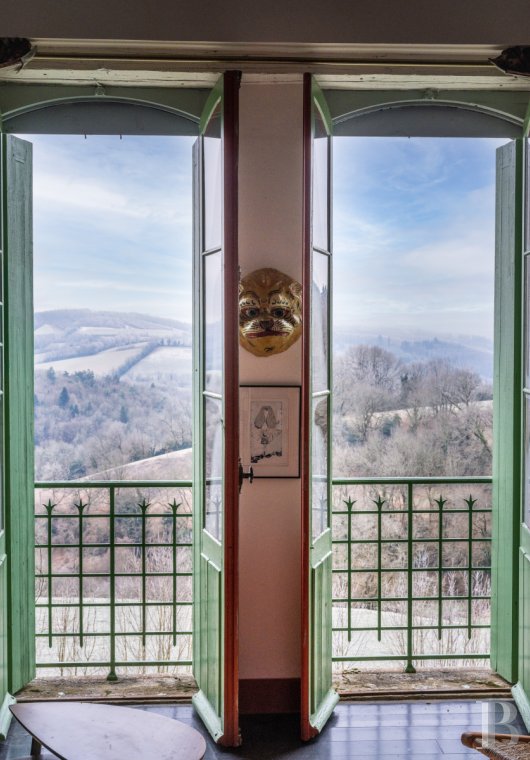
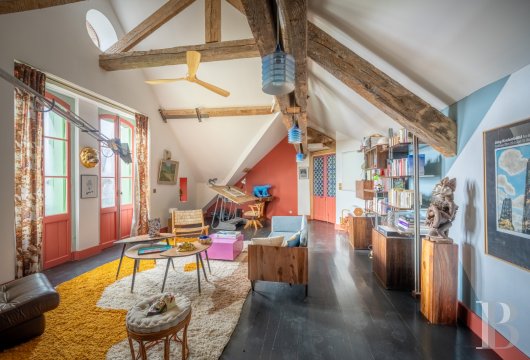
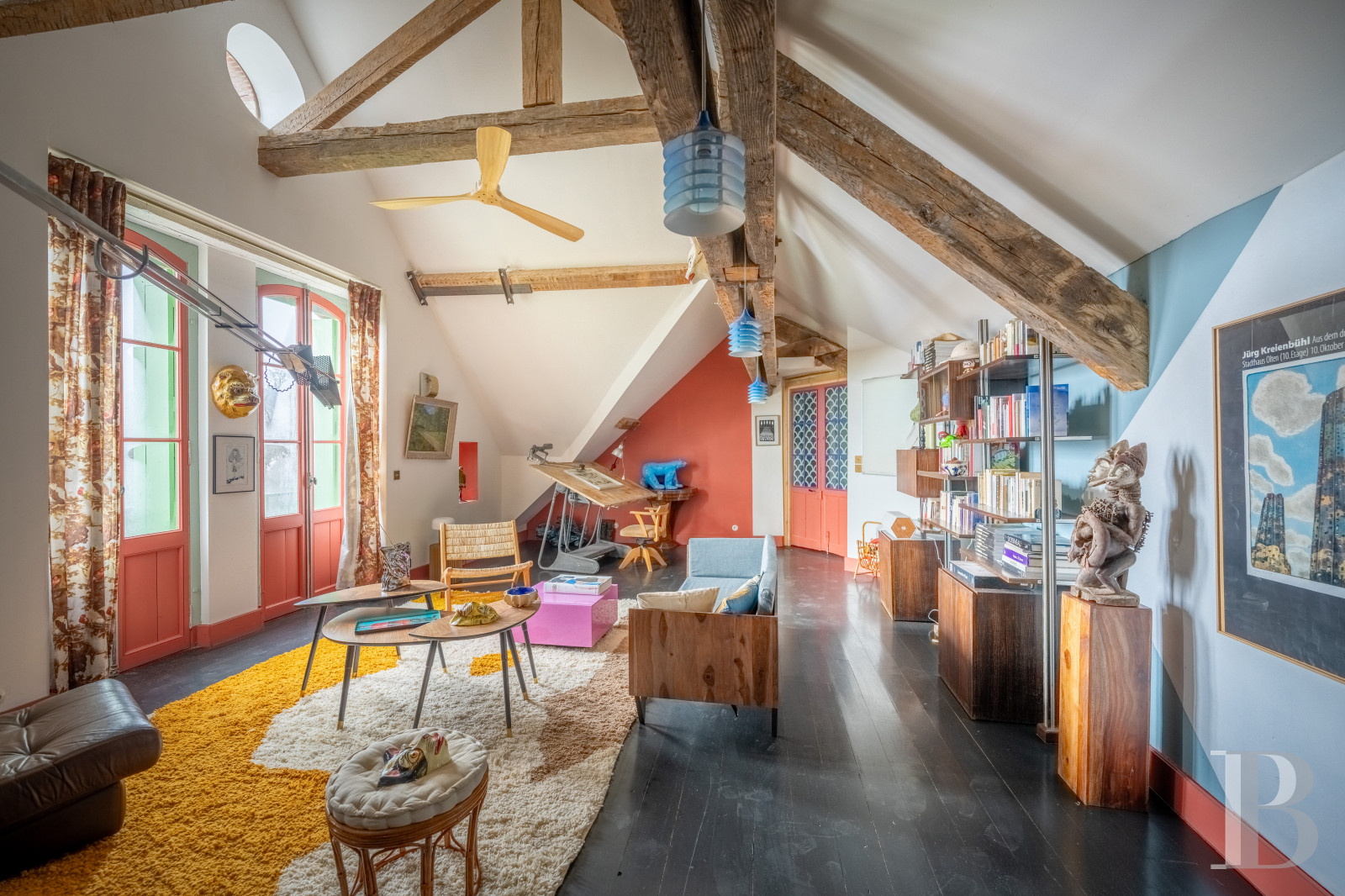
A second, independent suite was created on this floor, behind the pediment’s large geminated windows, the latter of which provide expansive views of the valley. Facing this panorama, a living room features soaring floor-to-ceiling heights as well as visible wooden rafters, while two adjacent bedrooms, with sloping ceilings, precede a large shower room with a lavatory. In addition, a storage space, accessible from the landing, is used as an attic.
The Grounds
A former outbuilding, constructed out of rubble stone and topped with a slate roof, abuts the chateau on one side and is currently used to store feed and equipment. As for the garden, it is accessible from the gravel patio located at the foot of the southwest exterior, via two masonry staircases, and is structured into two successive levels, planted with a wide variety of trees, shrubs, perennials, grasses and climbing vegetation.
In the back, not far from the vegetable garden, a number of fruit trees have also been planted, such as apples, pears, persimmons, plums, cherries, walnuts and apricots, while, in the lower section, a Japanese-style garden was created and includes a Japanese dogwood, azaleas, camellias and bamboo.
As for the three hectares of woods, they are carefully maintained and crisscrossed with paths, shaded by the foliage of a wide variety of tall multi-century trees, such as oaks, chestnuts, maples, beeches, Douglas firs and yews.
Our opinion
This chateau, on the outskirts of a village in the Lacaune Mountains, stands out thanks to its subtle balance between eye-catching architecture and manicured, landscaped grounds. Although reinterpreted in the 19th century in a masterfully eclectic style, each of the chateau’s stately exteriors recounts a phase in its history, without ever disrupting its overall harmony.
As for its sizeable proportions, fluid interior circulation and abundant natural light, they come together to create a dwelling ideal for both family life and entertaining, while its woods, terraced gardens and unobstructed views of the valley blend in seamlessly with this region’s countryside. This cohesive and welcoming chateau, sheltered from view, but providing panoramic views of its natural setting, draws its inherent charm from both its breath-taking architecture as well as the gentle silence of its surrounding landscape.
Reference 825729
| Land registry surface area | 3 ha 76 a 16 ca |
| Main building floor area | 824 m² |
| Number of bedrooms | 9 |
| Outbuildings floor area | 86.5 m² |
| Number of lots | 2 |
Aucune procédure en cours menée sur le fondement des articles 29-1 A et 29-1 de la loi n°65-557 du 10 juillet 1965 et de l’article L.615-6 du CCH
French Energy Performance Diagnosis
Information on the risks to which this property is exposed is available on the website: www.georisques.gouv.fr
Share


NB: The above information is not only the result of our visit to the property; it is also based on information provided by the current owner. It is by no means comprehensive or strictly accurate especially where surface areas and construction dates are concerned. We cannot, therefore, be held liable for any misrepresentation.