



A medieval chateau, with national Historical Monument status,
and 12 ha of woods and meadows, on the outskirts of a village in the Lauragais region
and 12 ha of woods and meadows, on the outskirts of a village in the Lauragais region
Toulouse,
AUDE
languedoc-roussillon
31000
FR

Location
The estate is located in the middle of the Occitanie region and in the east of the Haute-Garonne department, on the edge of a small plateau and near a village, from which it is separated by the narrow Gardijol River valley. As for the village, it was mentioned distinctly for the first time in 1292, while in previous documents, the hamlet had been simply referenced: a charter from 979 cites the name “Marcheisco” and another text from 1191 mentions the name “Marquino”, after lord Pierre de Marquein – known as Subirat – and his wife Jeanne Albia donated some of their possessions to the Knights Hospitaller of Rival, not far from the town of Saint-Michel-de-Lanès.
In addition, all local shops are within 15 minutes in the village of Villefranche-de-Lauragais, while the property is one hour from the Toulouse-Blagnac airport and fifteen minutes from the A61 motorway, the latter of which makes it possible to reach Andorra in two hours.
Description
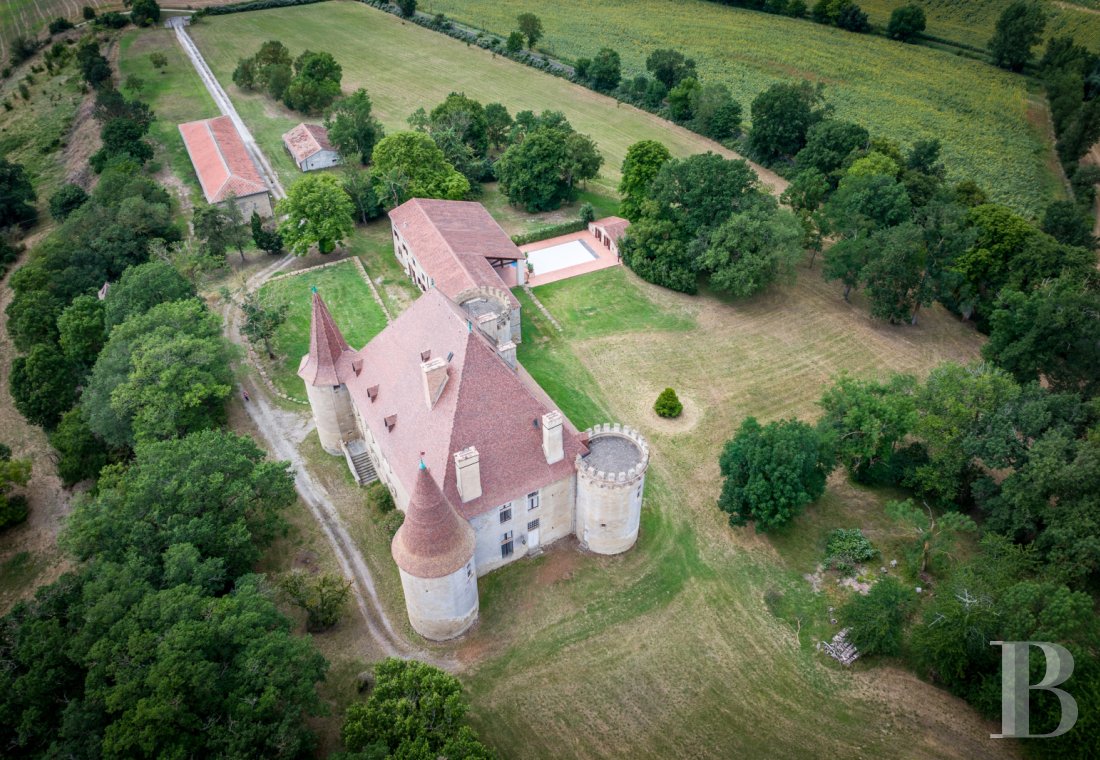
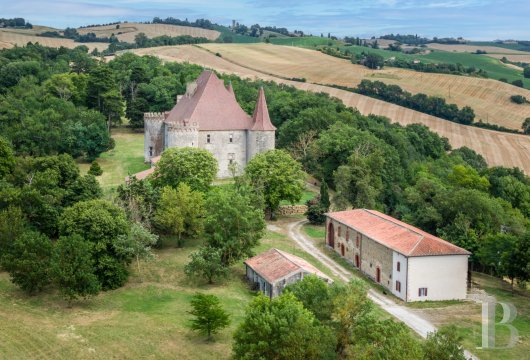
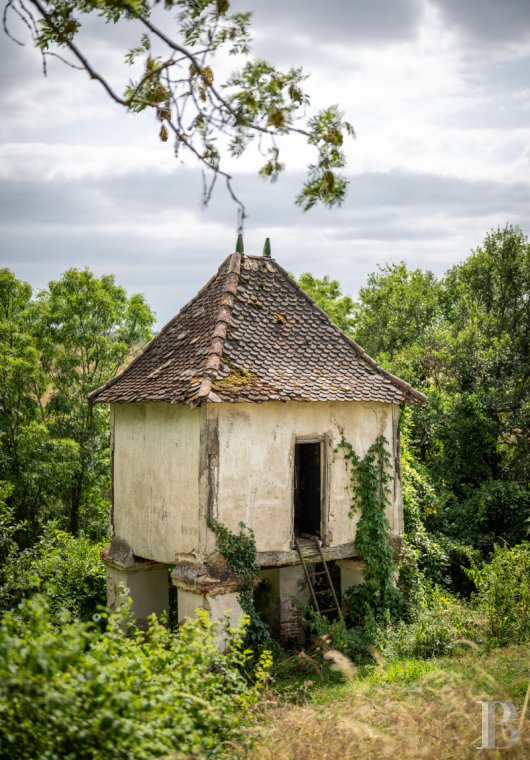
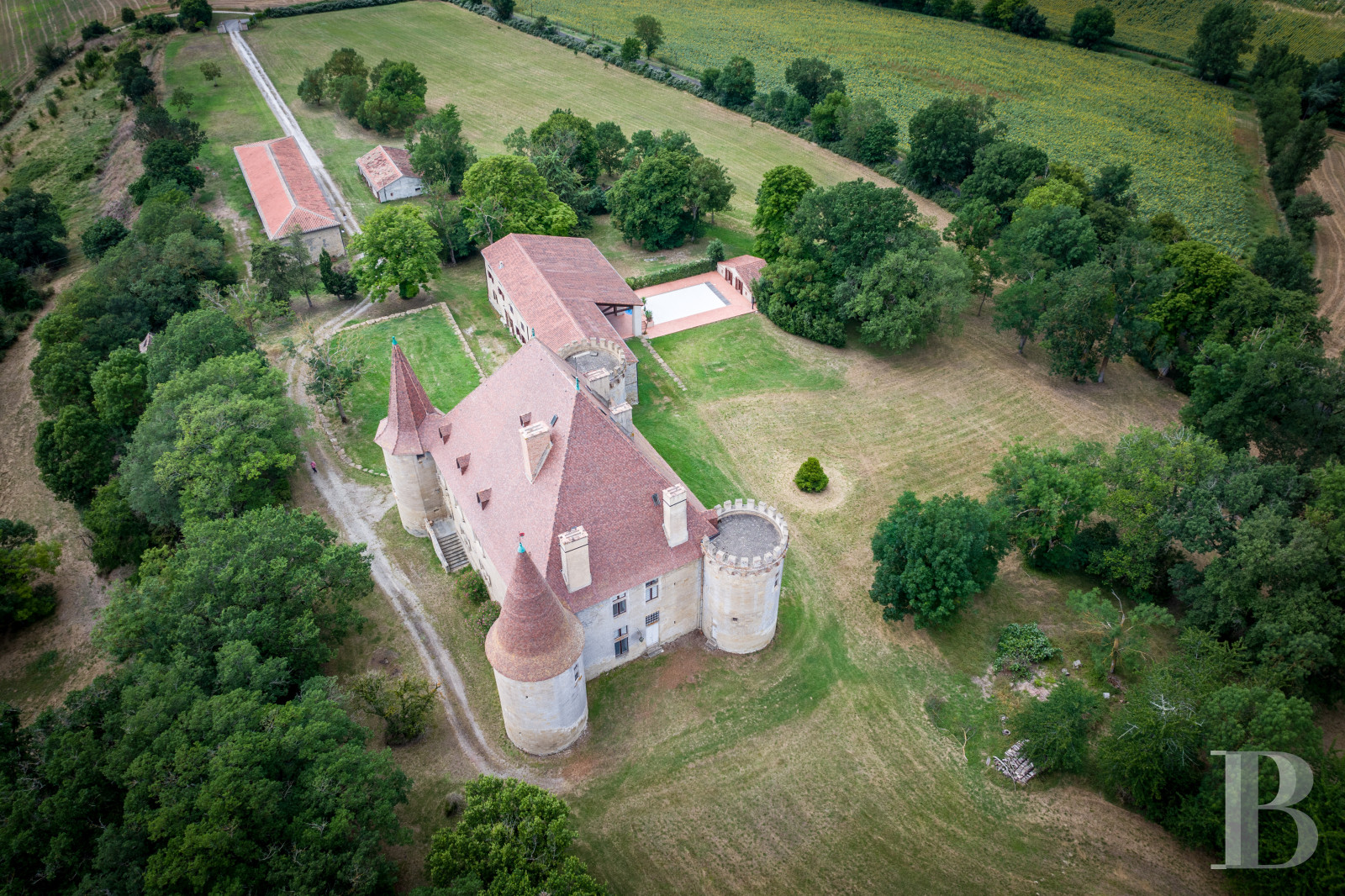
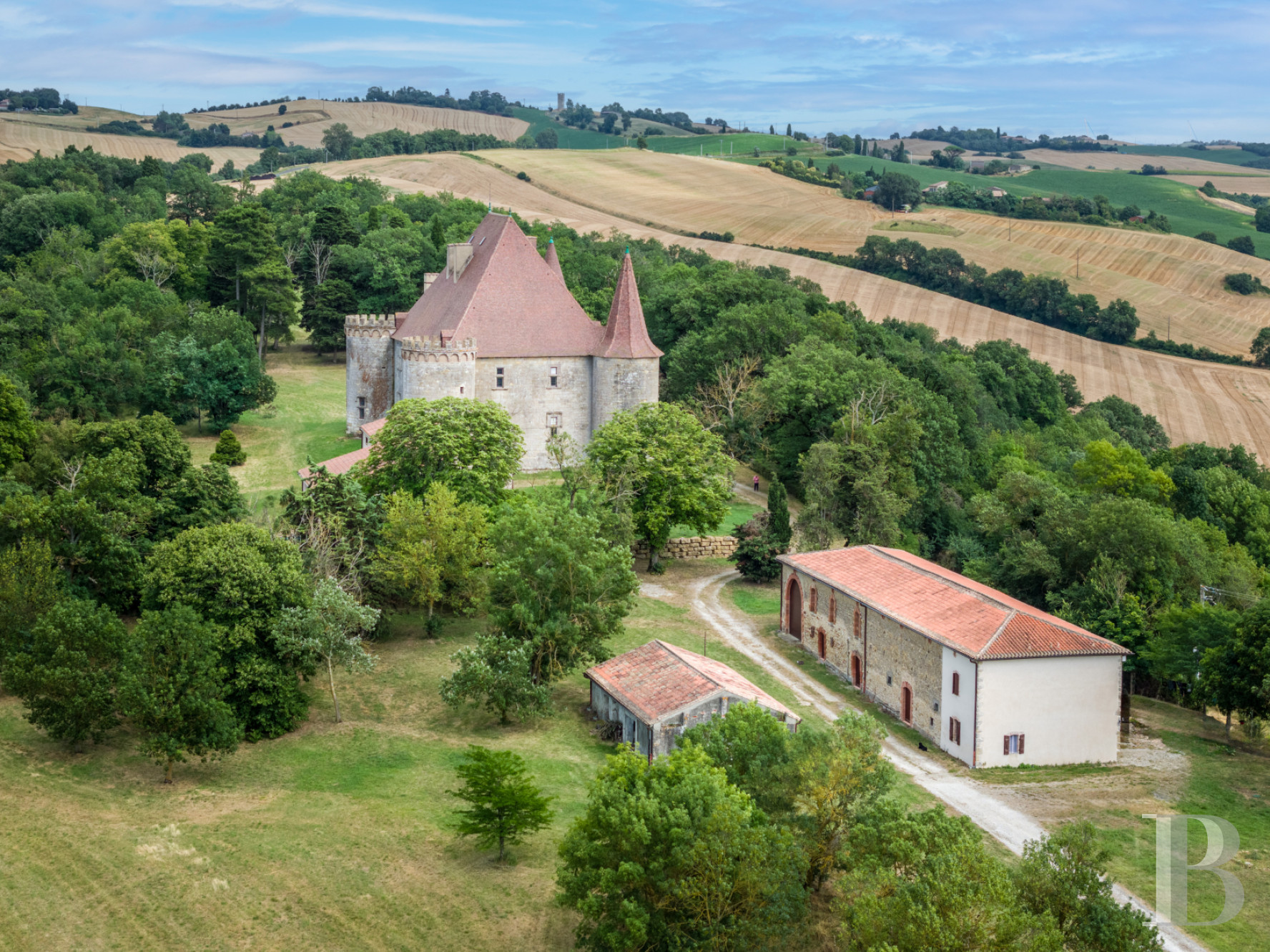
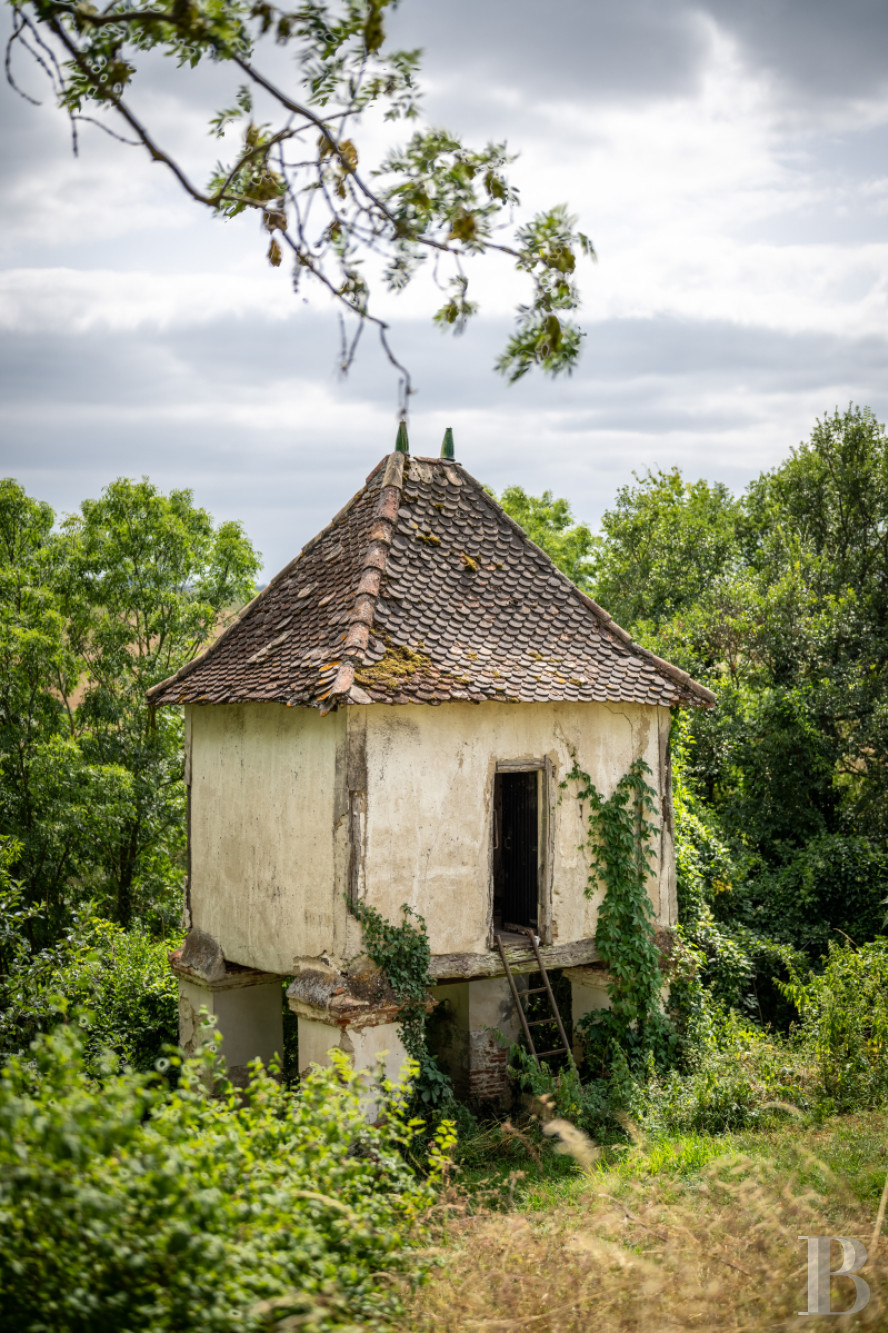
The impressive chateau is surrounded by meadows and copses as well as landscaped grounds designed in the late 19th century, while, sheltered from all disturbances and encircled by majestic trees, the edifice’s imposing stature can still be glimpsed from afar amidst the neighbouring valleys and forests. A large lane separates the estate from a country road, while outbuildings – an agricultural storage building, a workshop and a caretaker’s flat – are located a few metres from here, and the former staff quarters, quite altered compared to their original state, can be found to the west of the chateau, as can a 17th-century dovecote on stilts, constructed on the plateau’s southern slope.
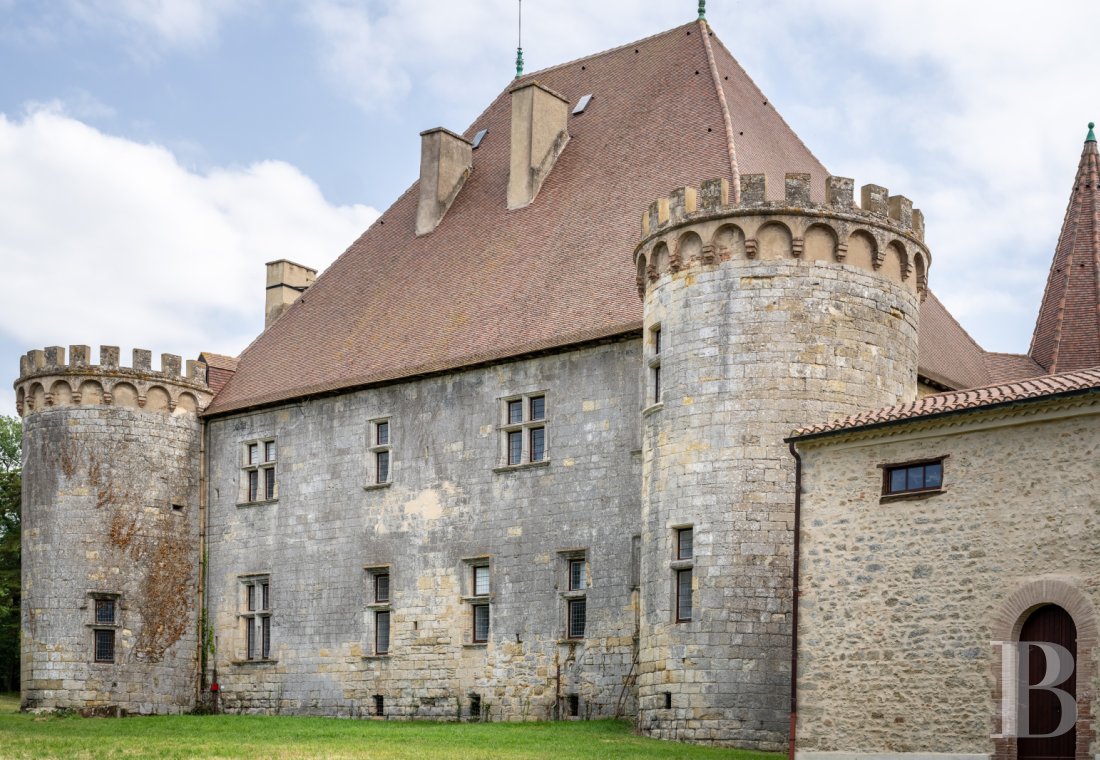
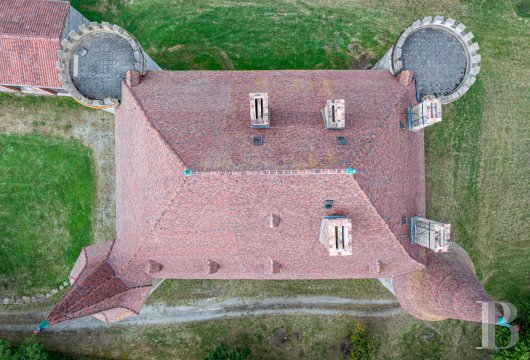
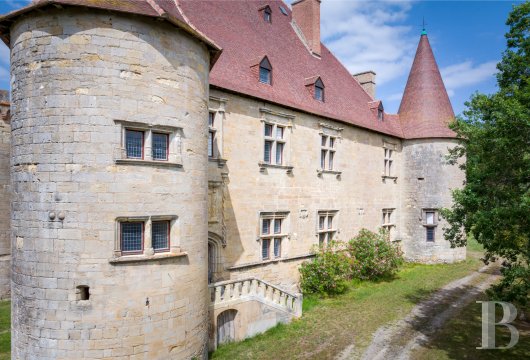
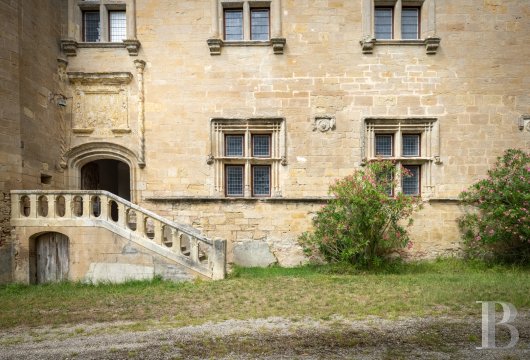
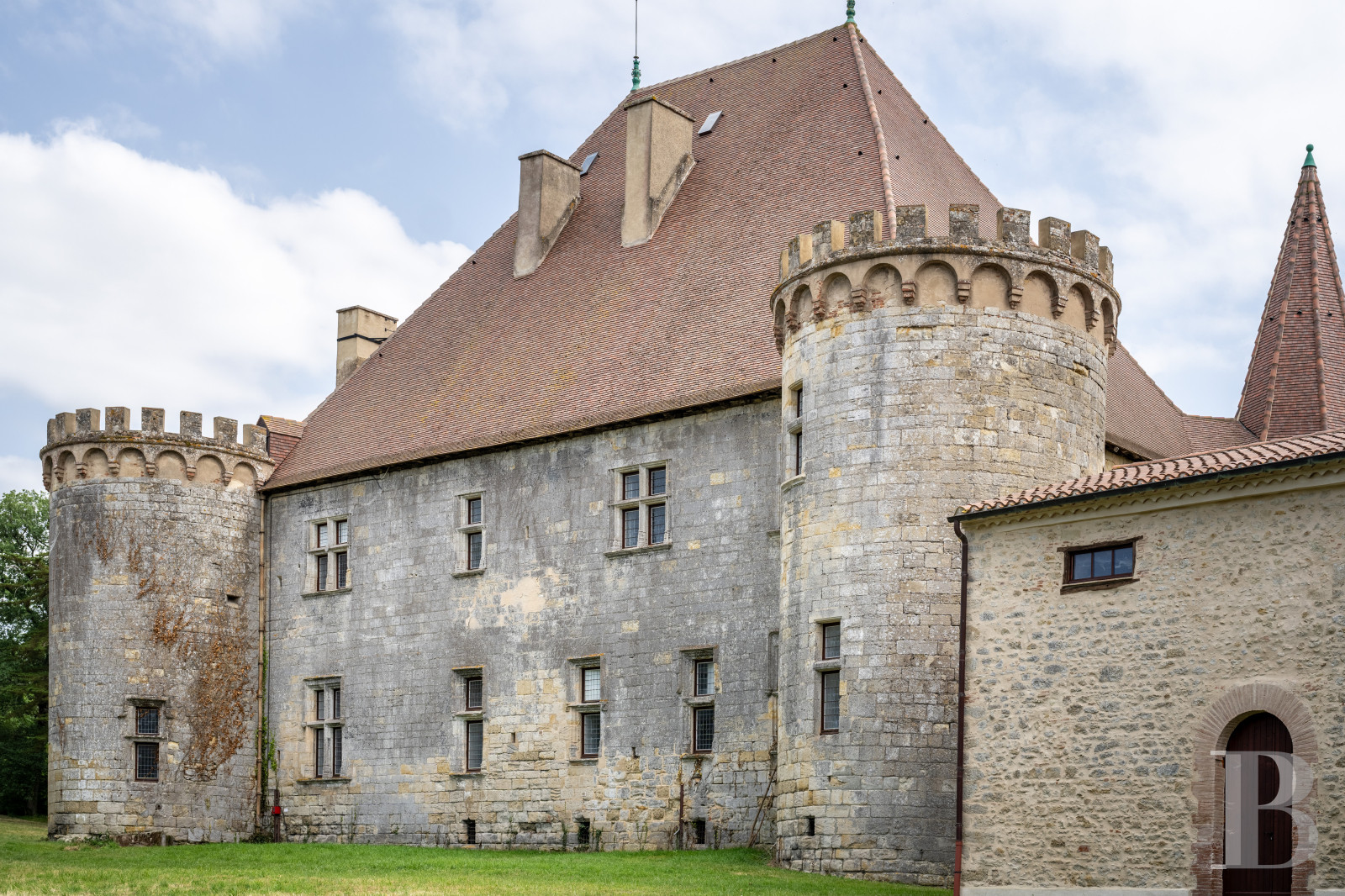
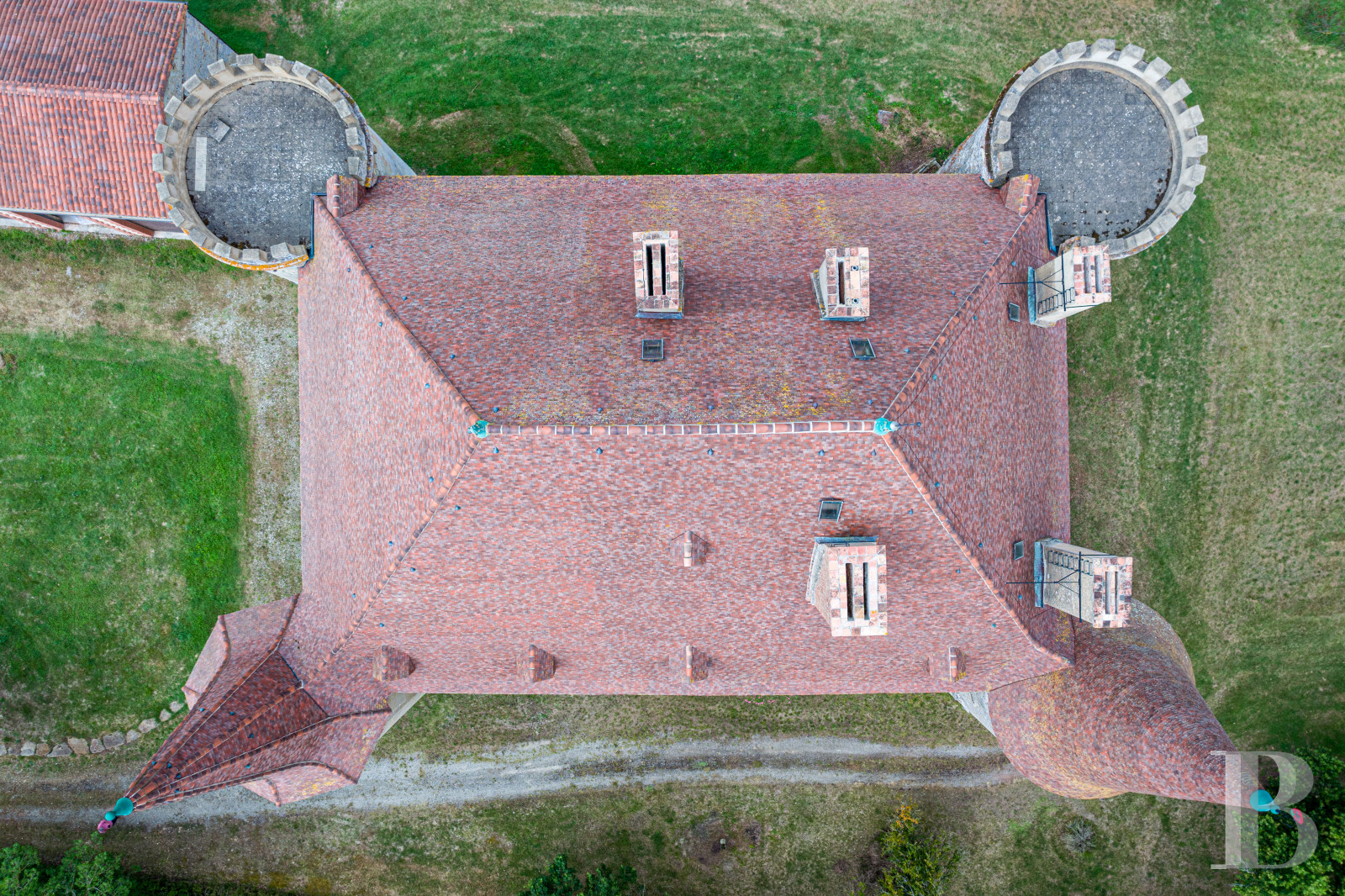
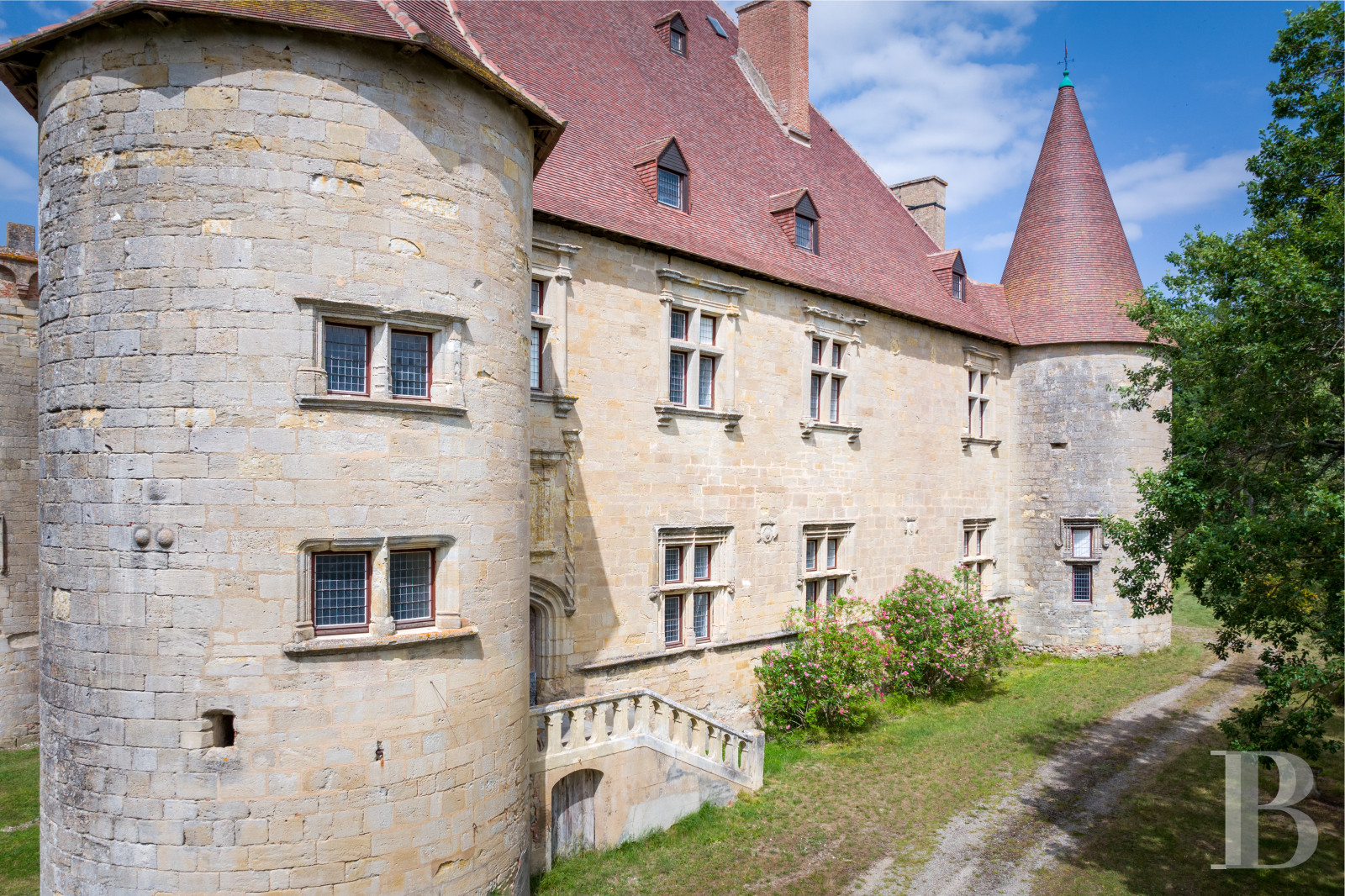
Stylistically and structurally, the chateau, which should more accurately be described as a “lordly fortified dwelling”, seems to date from the reign of King Charles VIII or Louis XII, whereas, in actuality, it was built in 1539. Featuring an elongated quadrangular-shaped double-wide main building, 27 metres long by 18 metres wide, crowned with a towering roof clad in flat tiles with both square and rounded edges, some of which have been nailed down, and buttressed on each corner by round towers, with an external diameter of approximately 7.5 metres and wide enough to cover a portion of dwelling’s exterior, the edifice is cadenced by embrasures on each floor, which overlook both the main entrance and the southern curtain wall.
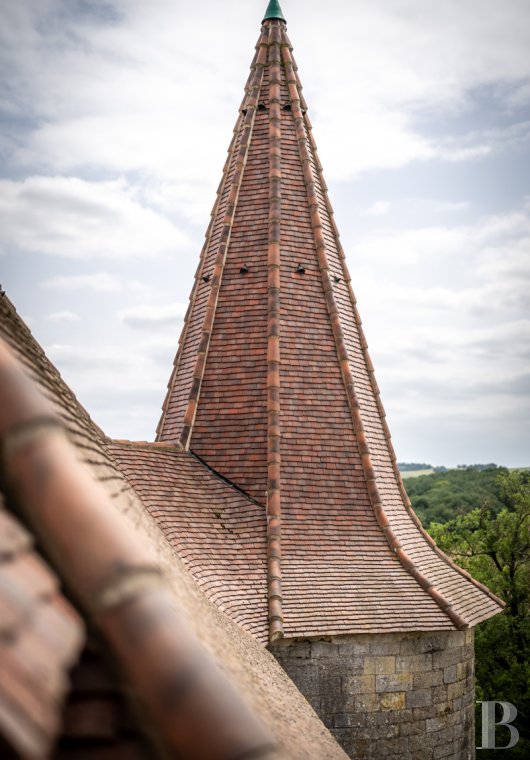
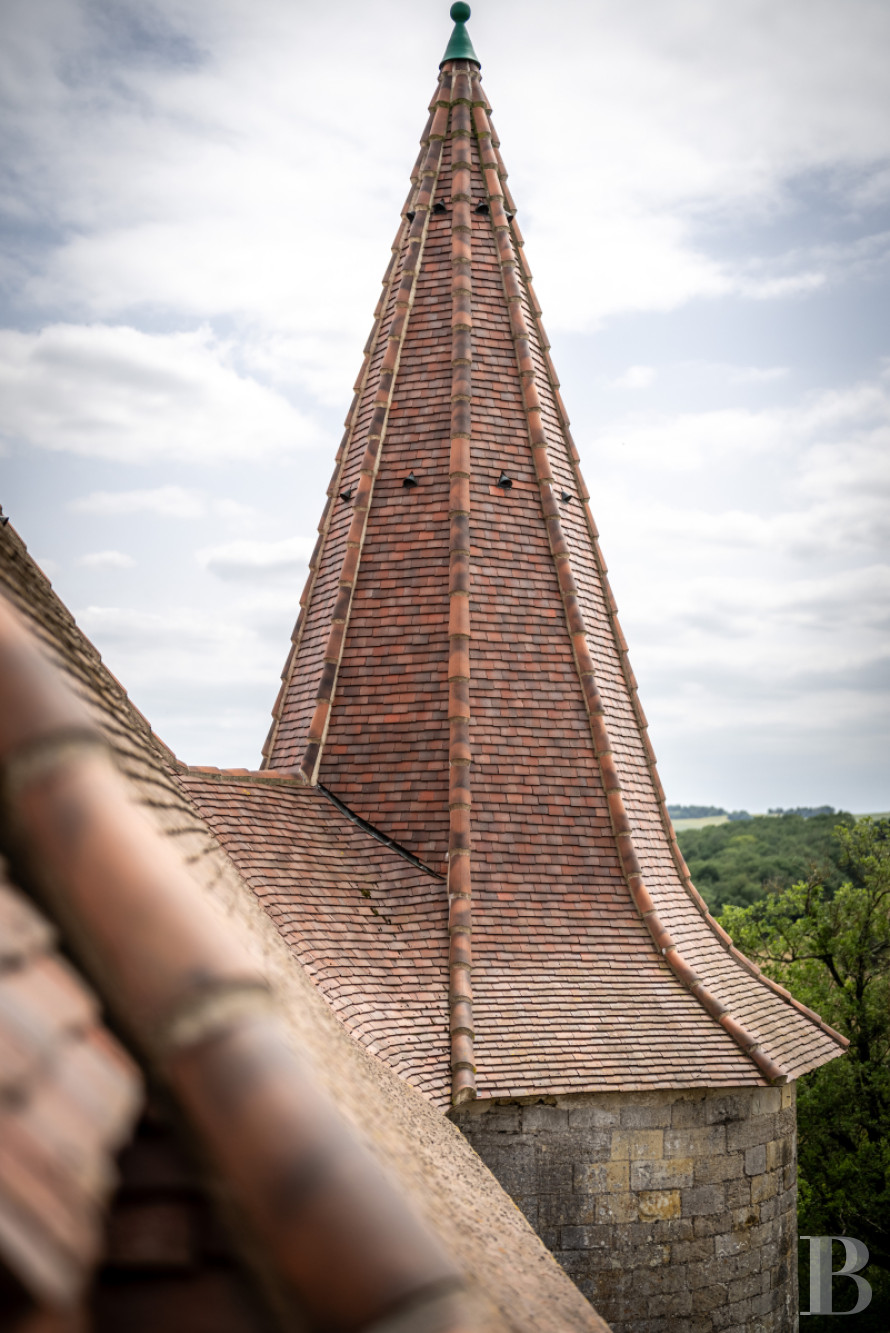
In addition, the southwest tower’s roof boasts a ribbed appearance thanks to its mortar-secured barrel tiles, while the southeast tower, whose wooden rafters and tiles were restored in the early 20th century, is crowned with a smooth and conical pepperpot roof. As for the walls, constructed out of regularly coursed ashlar calcareous sandstone, they feature an average thickness of nearly 1.5 metres.
Recognised as a national Historical Monument in 1972, the edifice’s architectural protection concerns its exteriors as well as its tall roof, which covers an impressive attic level topped with pavilion-style wood rafters.
Stylistically and structurally, the chateau, which should more accurately be described as a “lordly fortified dwelling”, seems to date from the reign of King Charles VIII or Louis XII, whereas, in actuality, it was built in 1539. Featuring an elongated quadrangular-shaped double-wide main building, 27 metres long by 18 metres wide, crowned with a towering roof clad in flat tiles with both square and rounded edges, some of which have been nailed down, and buttressed on each corner by round towers, with an external diameter of approximately 7.5 metres and wide enough to cover a portion of dwelling’s exterior, the edifice is cadenced by embrasures on each floor, which overlook both the main entrance and the southern curtain wall.
In addition, the southwest tower’s roof boasts a ribbed appearance thanks to its mortar-secured barrel tiles, while the southeast tower, whose wooden rafters and tiles were restored in the early 20th century, is crowned with a smooth and conical pepperpot roof. As for the walls, constructed out of regularly coursed ashlar calcareous sandstone, they feature an average thickness of nearly 1.5 metres.
Recognised as a national Historical Monument in 1972, the edifice’s architectural protection concerns its exteriors as well as its tall roof, which covers an impressive attic level topped with pavilion-style wood rafters.
The Chateau
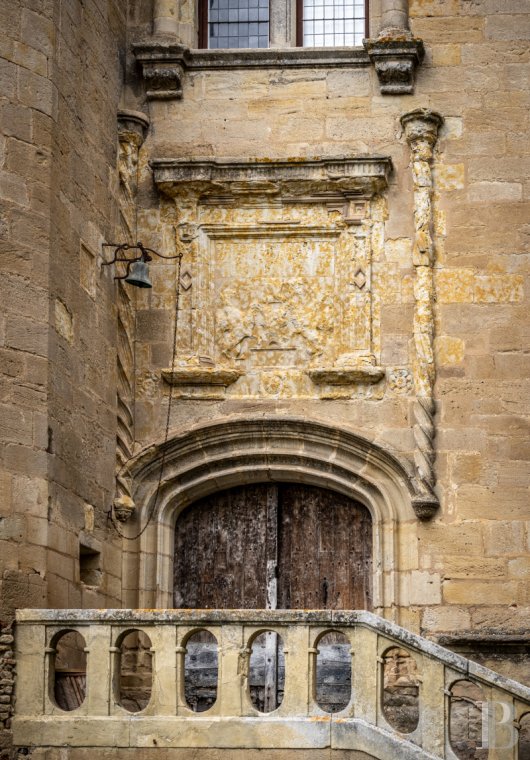
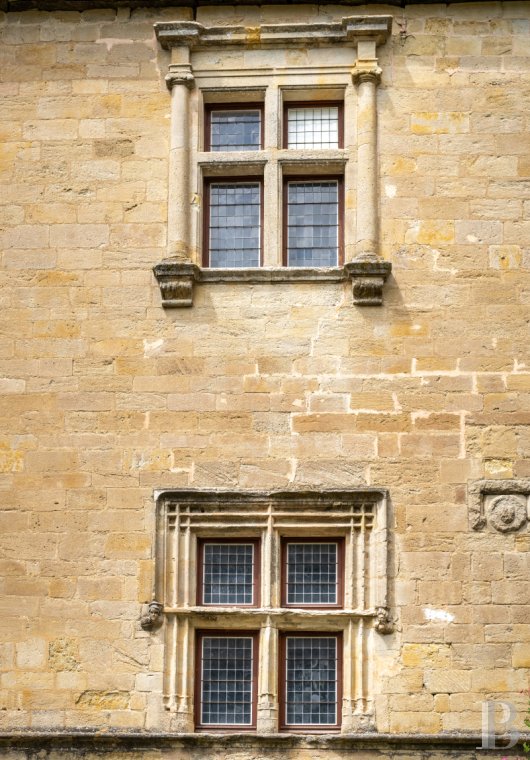
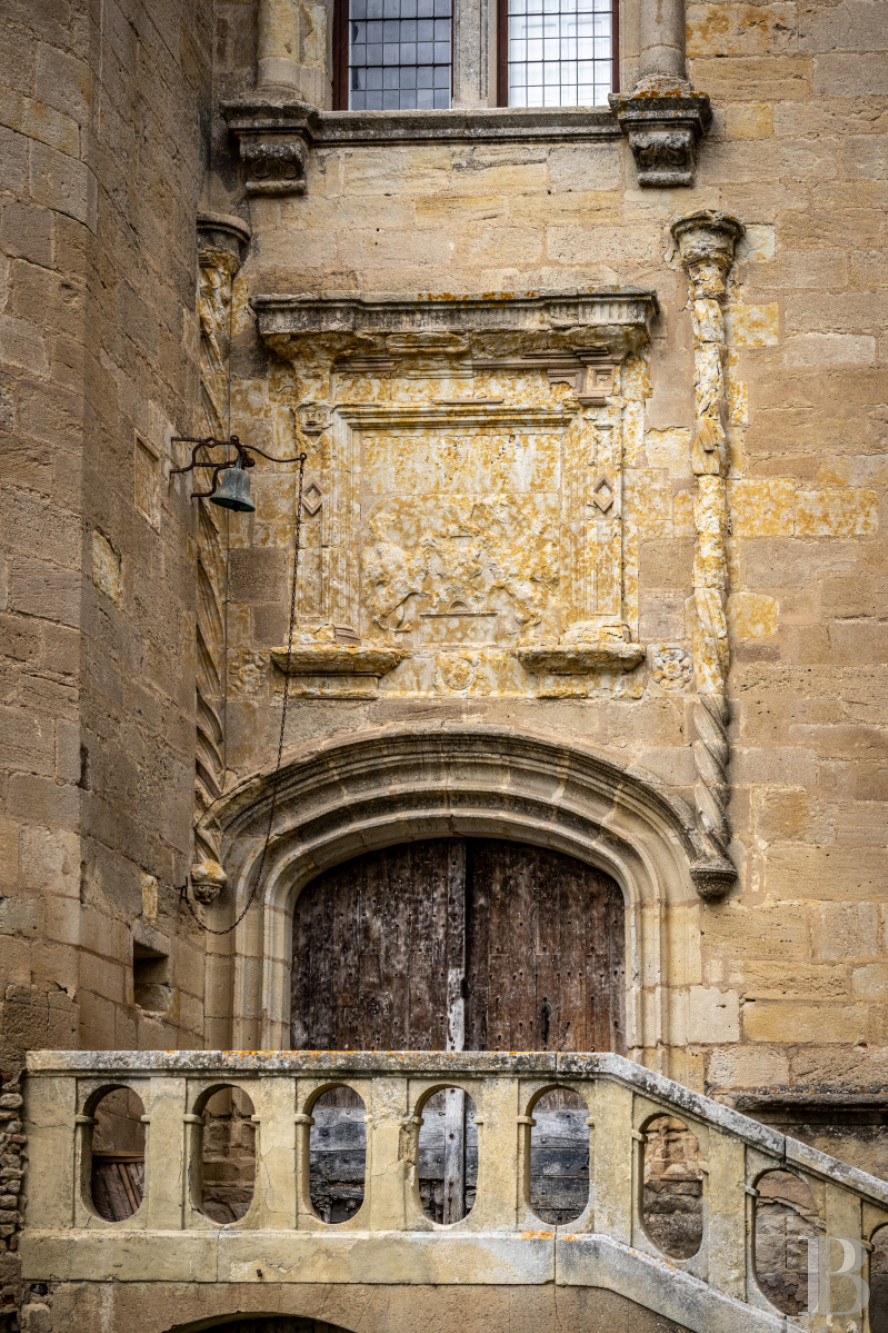
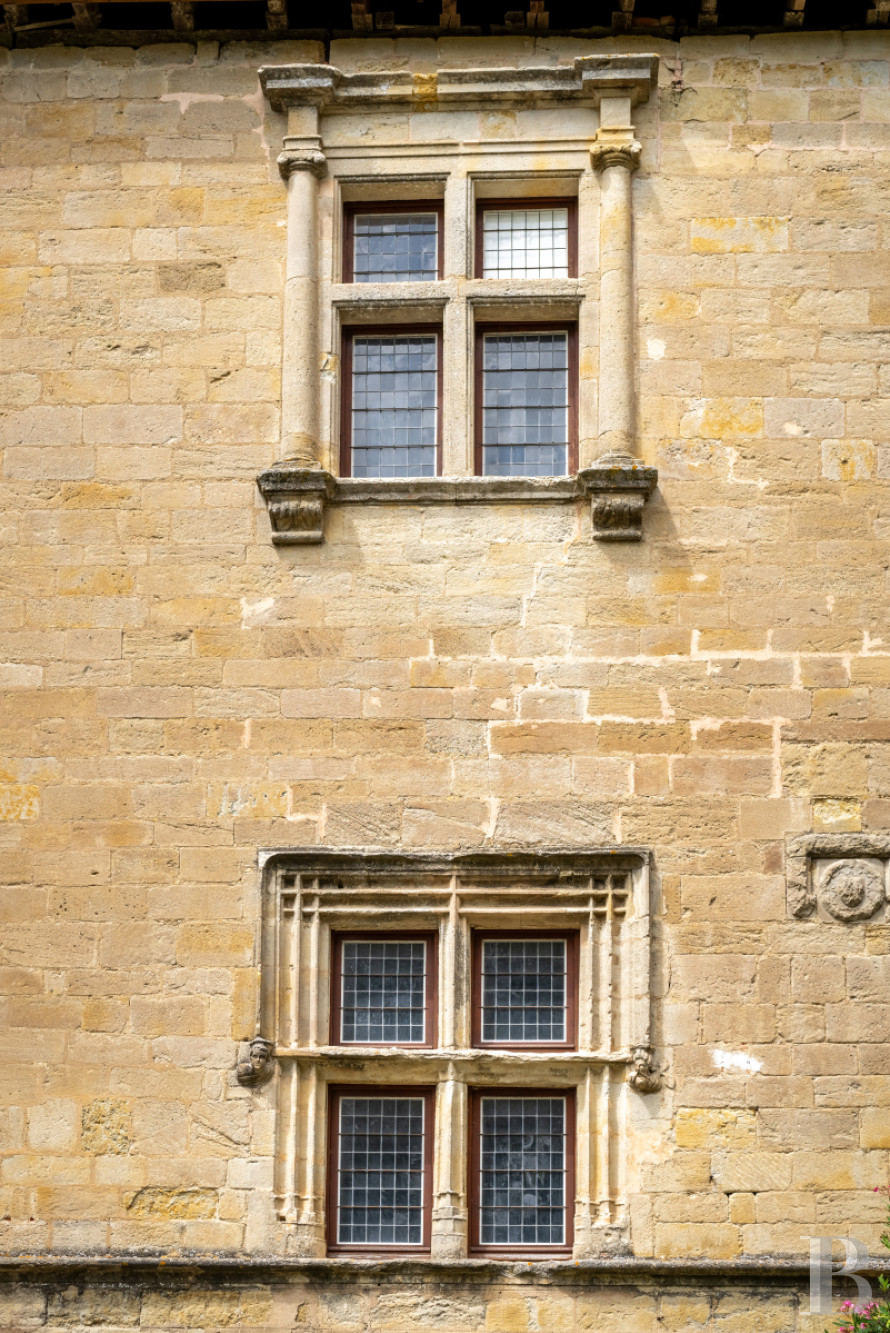
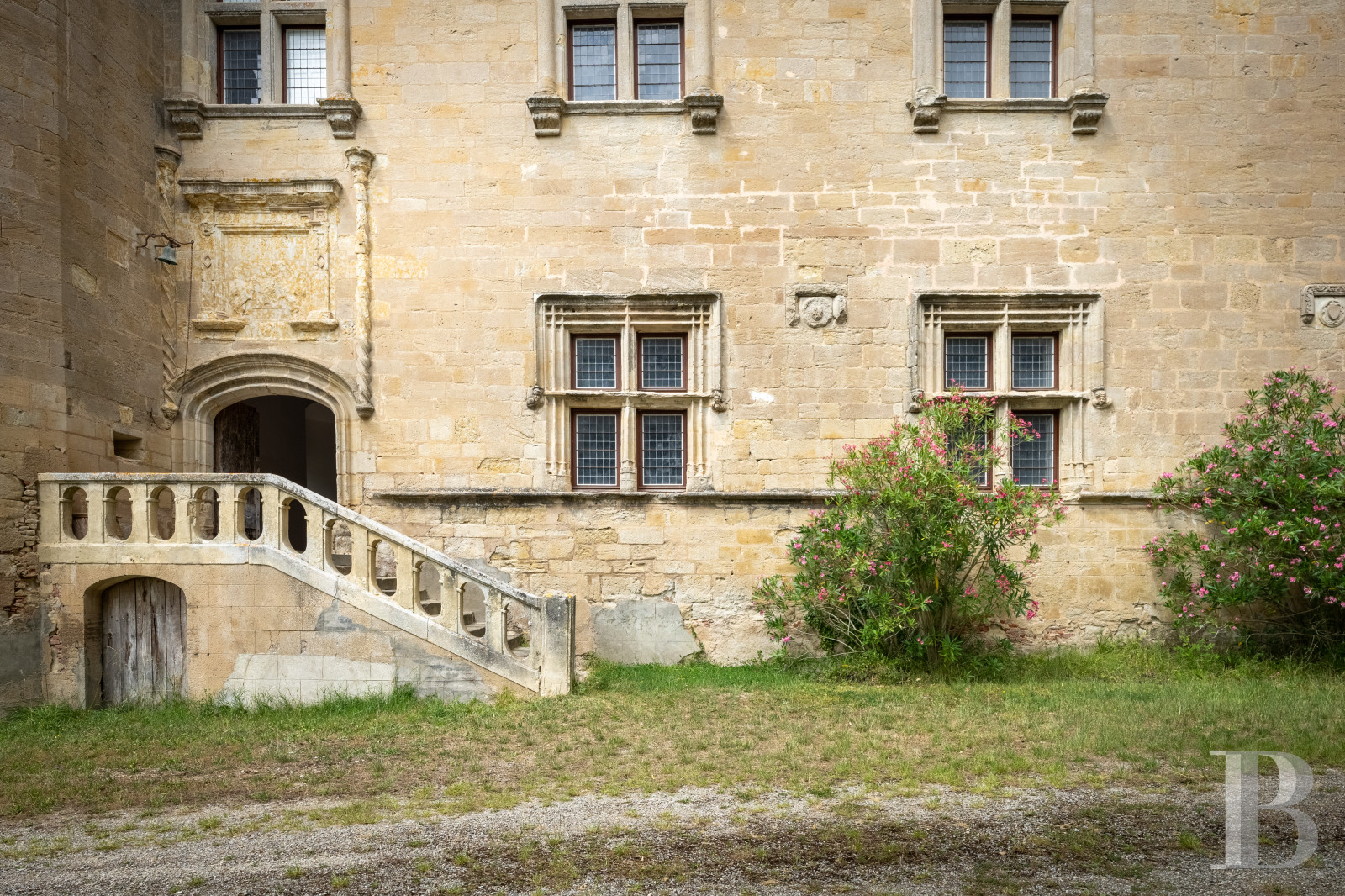
The ornamental architecture of its four upstairs windows is typical of the Renaissance and features a complete ionic order with embedded columns resting on projecting corbels, the latter of which also support the windowsills, while their lintels are topped with a rectilinear entablature, but no pediment. However, the severe minimalism of the chateau’s exterior décor – only its capitals and corbels feature sculpted elements – is surprising when considered that the edifice dates from 1539.If the dwelling therefore appears to embody the medieval tradition, the chateau’s layout did incorporate new innovations in terms of circulation: this compact design, two rooms wide, was rather uncommon during this time, whereas its small round corner towers, designed with square rooms, as well as its annexes also corresponded to a new trend in the architecture of wealthy homes. However, the style of the décor surrounding its windows and doors, as well as the design of its main entrance, cross windows and towers fall under the more traditional manner of the late Gothic style, i.e. the late 15th century.
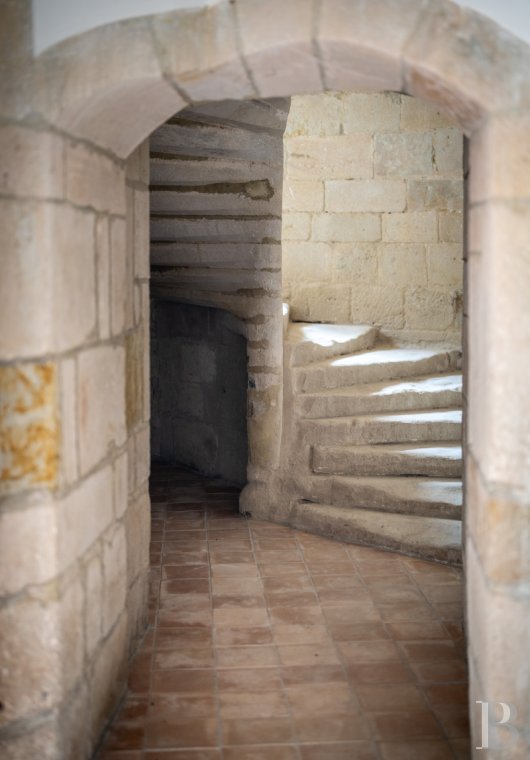
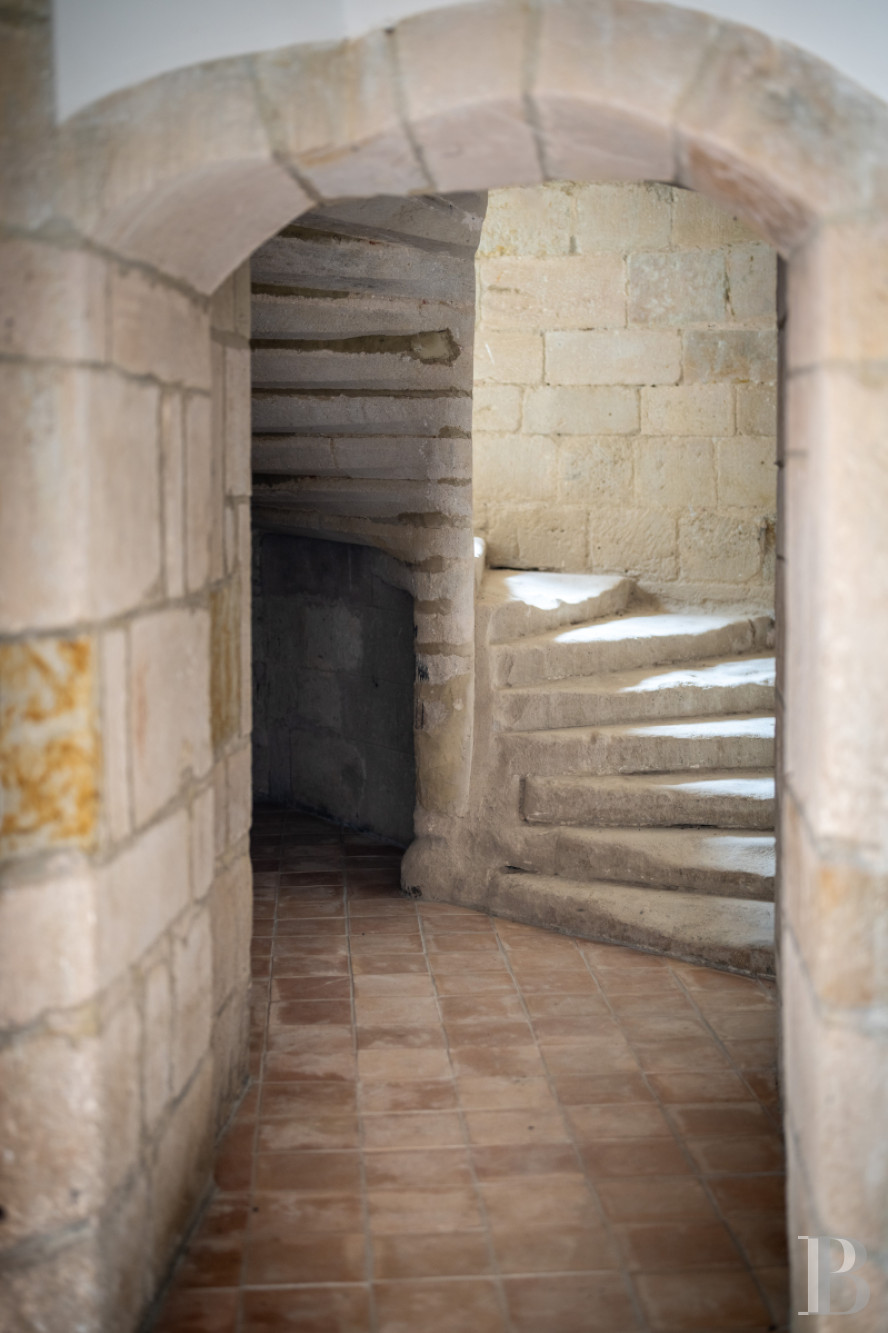
As for the tower’s spiral staircase, it is also medieval in style, as are the edifice’s many massive fireplaces with moulded mantels and prominent cornices.
The ground floor
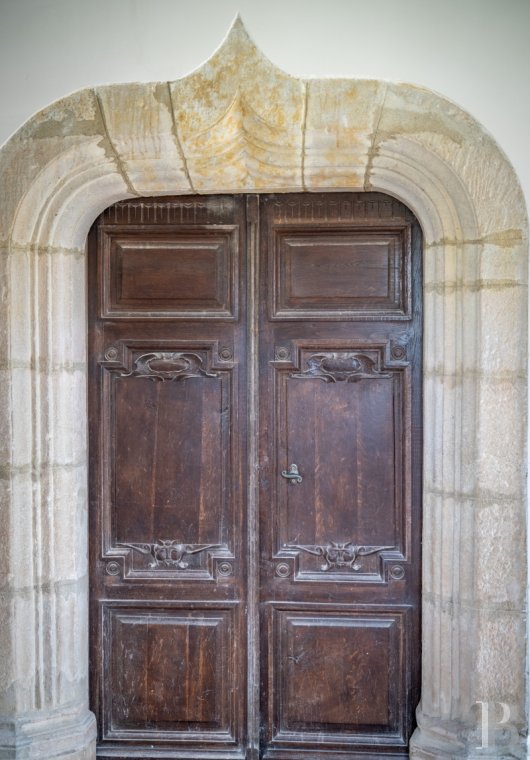
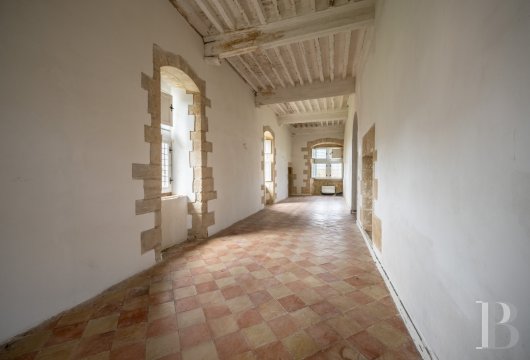
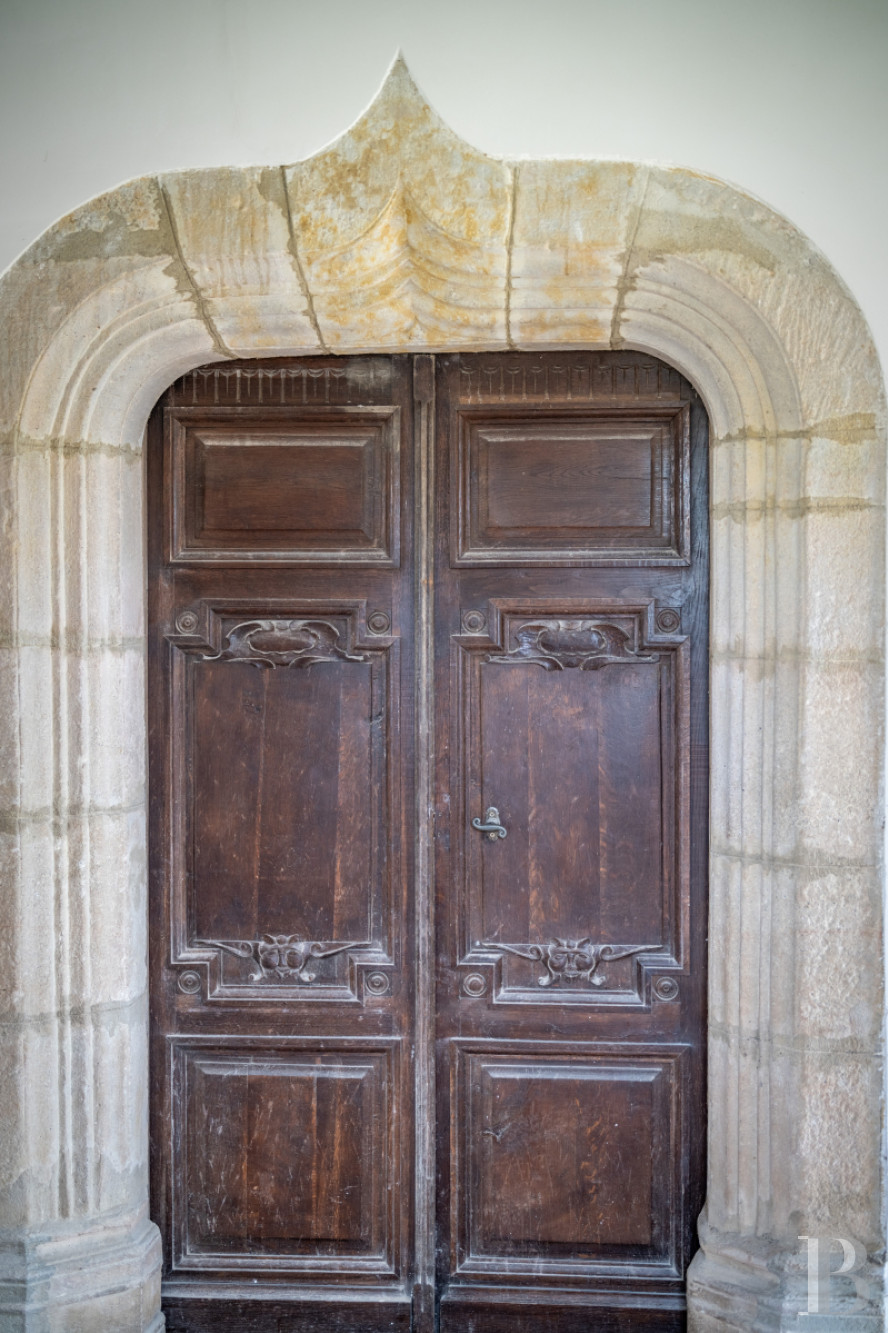
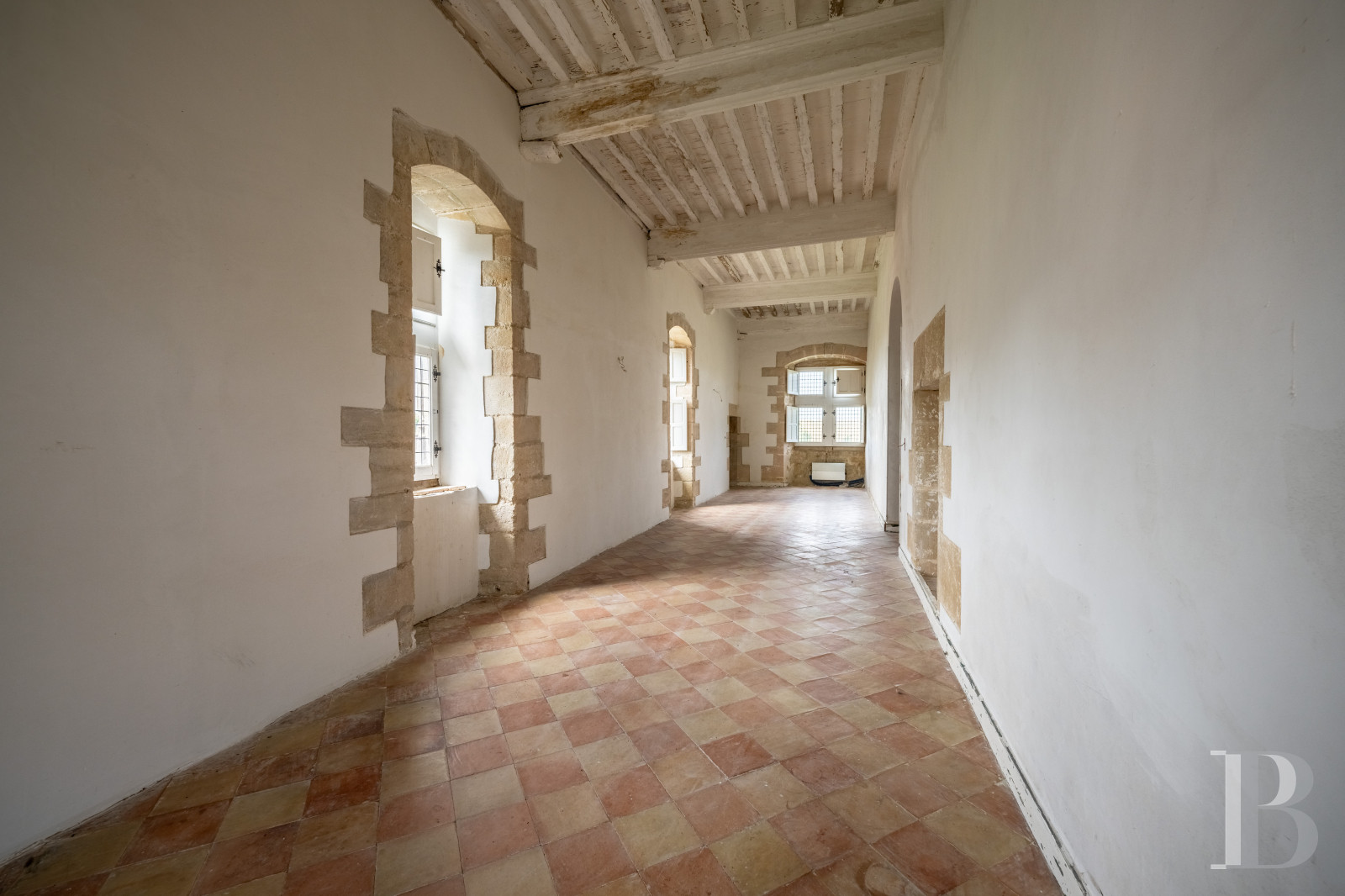
The dwelling’s basic layout is rather simple in design: once through the gate and the chateau’s solid wood double doors, visitors will find, on the ground floor, a narrow hallway that traverses the dwelling from south to north and provides access to six large rooms. To the left is the base of the spiral staircase that ascends to the first floor as well as the attic level, while, at the back of the hallway, with terracotta floor tiles and visible ceiling beams, a cross window provides light for the northern part of the corridor, which is also bathed in light to the west by two mullioned windows. In addition, to the left of the cross window, in the corner, a door opens on to a bedroom located in the northeast tower, while to the right, the shear wall is cadenced by two similar windows topped with ogee-shaped lintels.
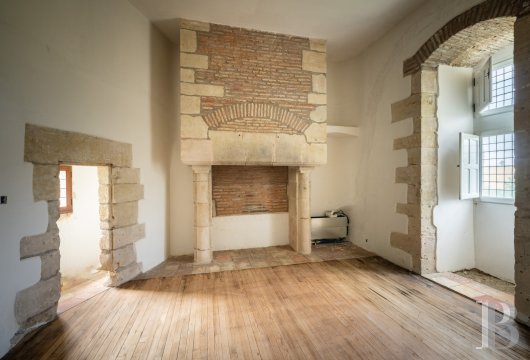
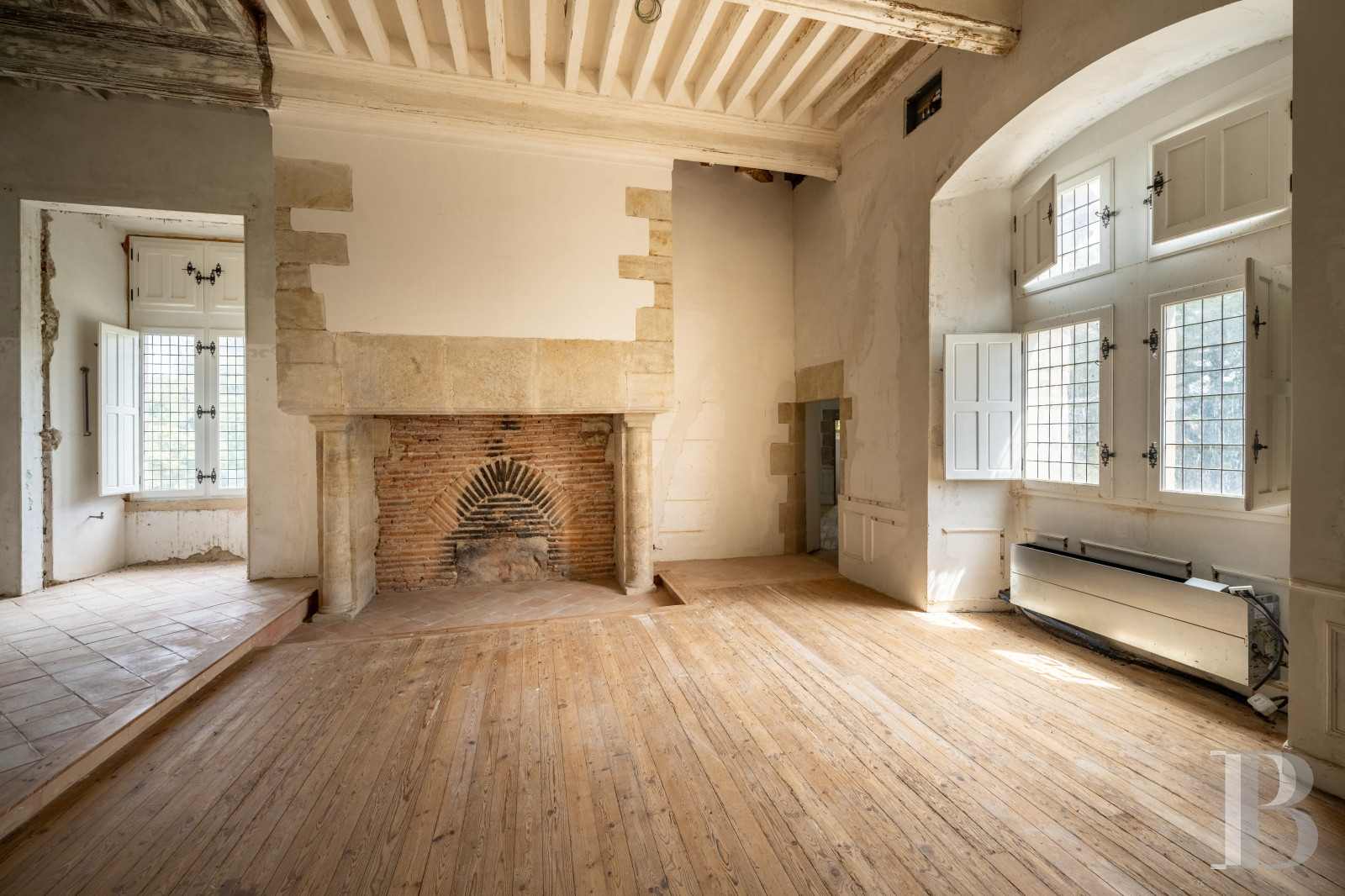
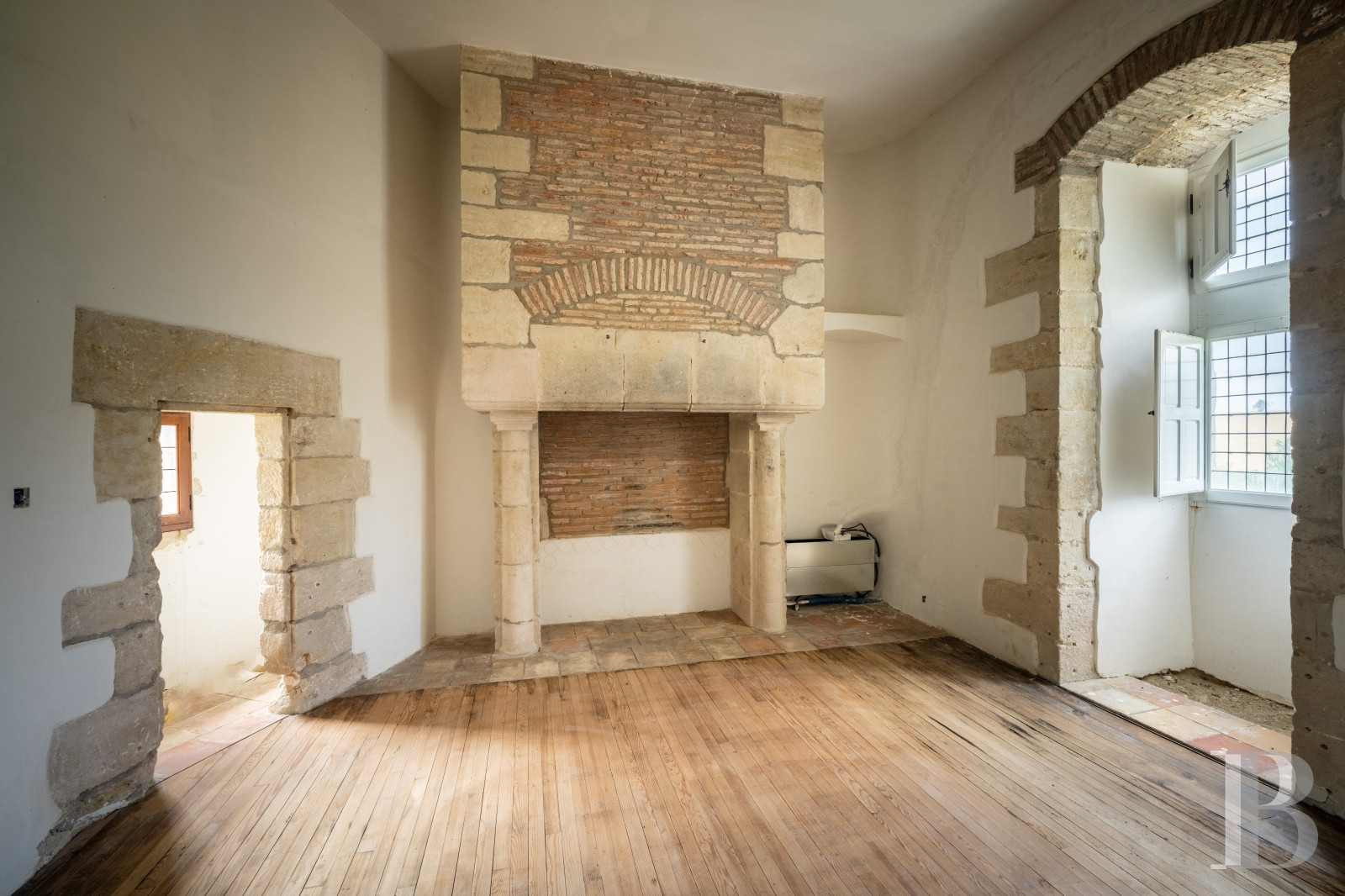
The first door in the hallway provides access to a suite of rooms, facing fully south and enjoying a view overlooking the small valley and neighbouring hillsides, while this space includes an immense hall with two cross windows, an enormous fireplace with a moulded and sculpted cornice, devoid of all decorative elements, in the late Gothic style, an original five-bay ceiling with visible beams and joists, as well as a chevron parquet floor.
Tucked into a corner to the left of the fireplace, a diagonal passageway located in the windowless shear wall provides access, via a rather elaborate design, to either an adjacent bedroom or another adjoining room, whereas on either side of the main hallway are two large bedrooms, each with a room in the adjacent tower, which could be used as a wardrobe.
The upstairs
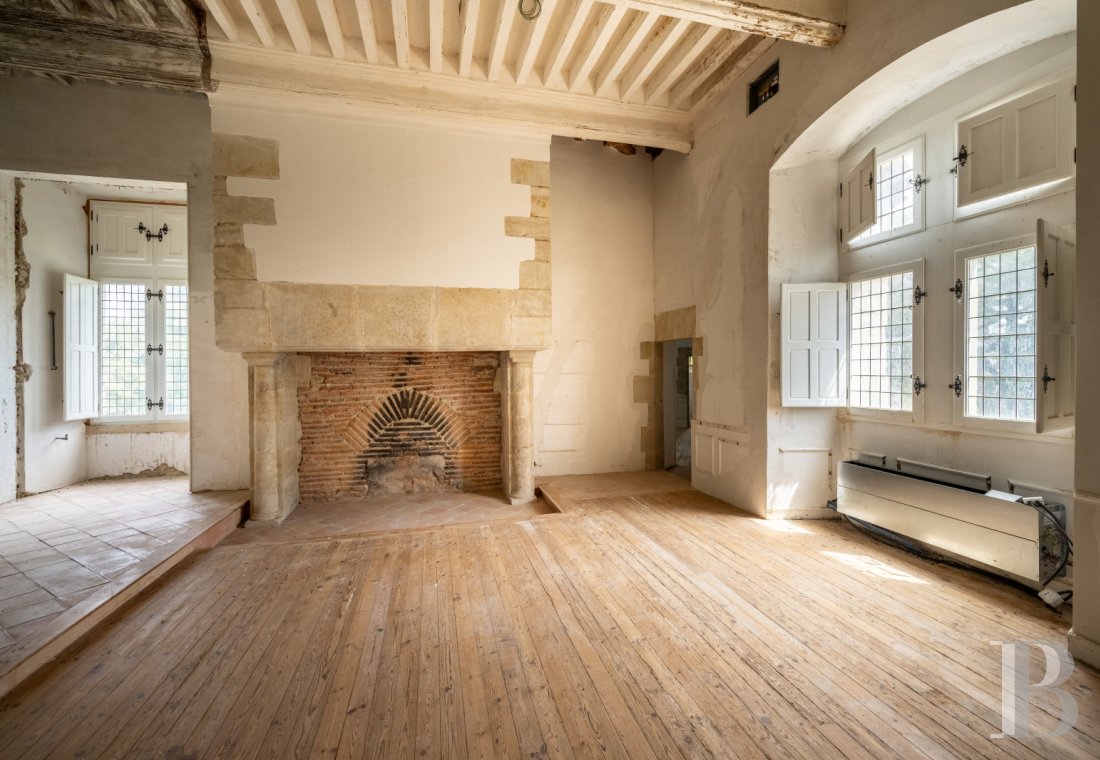
Three staircases currently provide access to the upstairs floor, two of which were built out of wood and another, spiral in shape, out of stone, while the hallway that communicates with the different rooms on this level features a terracotta tile floor, visible ceiling beams painted white, like the walls, and pointed ashlar stone around the windows and doors. Currently there are nine bedrooms on this level, boasting visible ceiling beams and narrow-plank parquet floors, two of which are located in the former grand hall and one with a monumental stone and brick fireplace, whereas the layout of the other bedrooms has remained identical since the 15th century.
Spacious in size, two of the bedrooms come with their own bathrooms, located in the towers, while all are bathed in light by cross windows, safeguarded by white shutters: on the chateau’s northern exterior, their moulded surrounds are rather understated in appearance, but on the edifice’s southern side, they are flanked by pilasters resting on corbels as well as half-columns supporting an entablature.
The attic
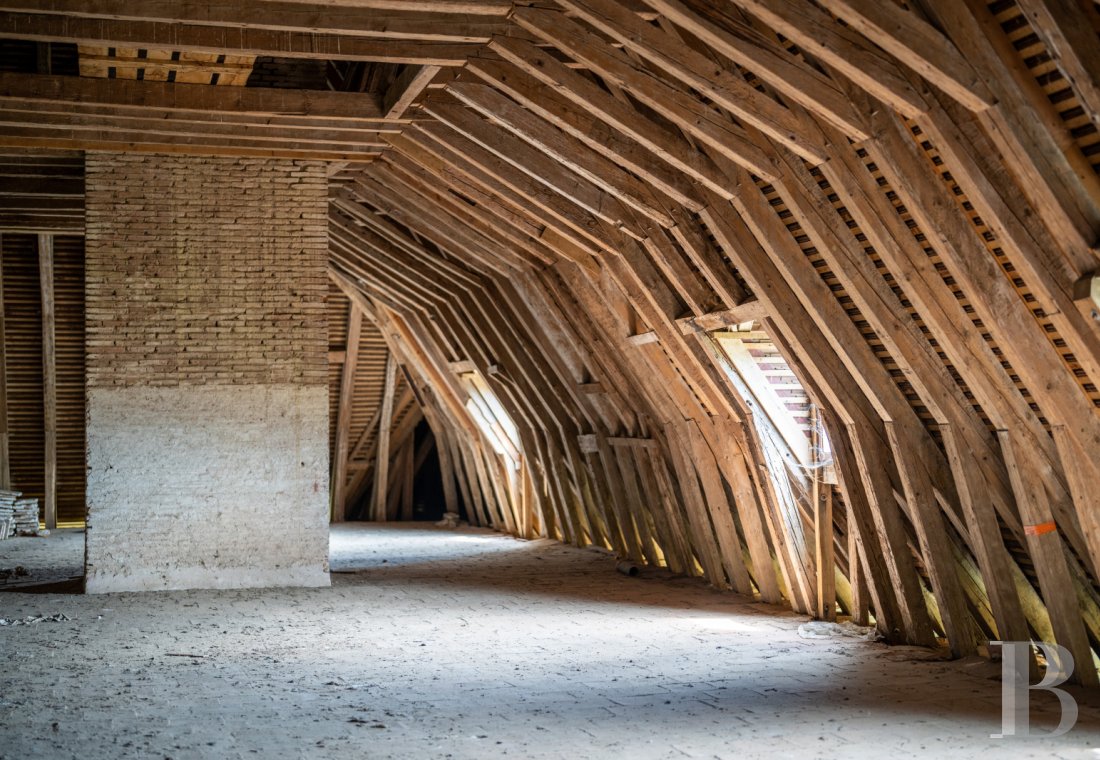
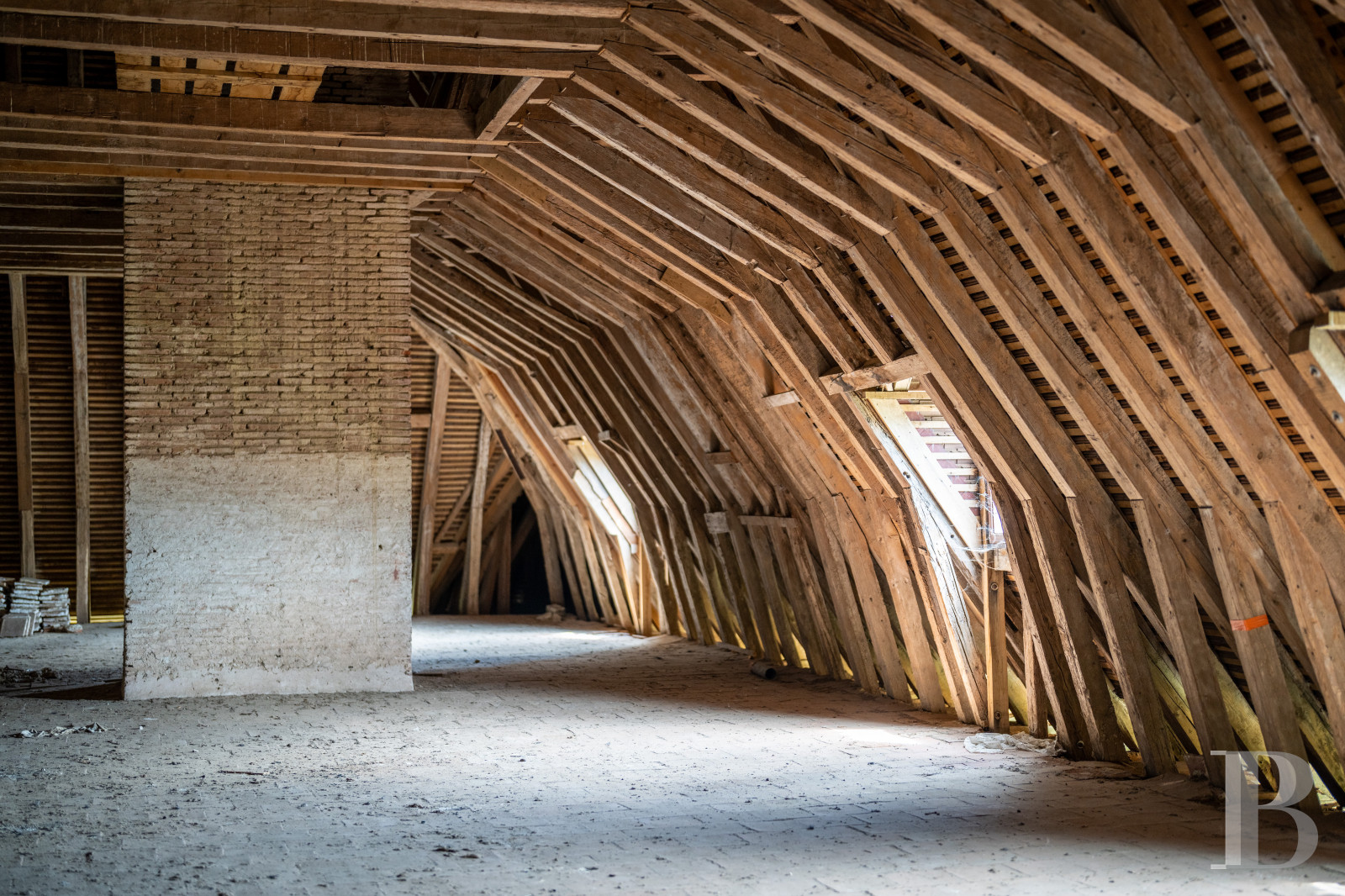
With rectangular terracotta floor tiles, this level spans the entire chateau and features a genuine work of art: a traditional medieval rafter-trussed wooden roof frame, a structure that is rarely found in today’s world and which appears to belong to the fortified dwelling’s initial construction, thereby dating it to the 15th century.
The Outbuildings
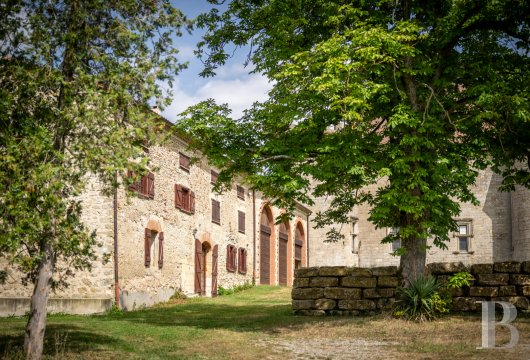
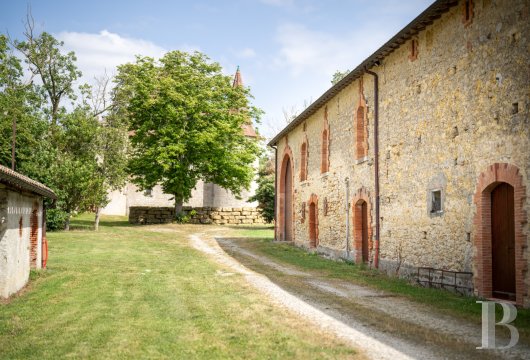
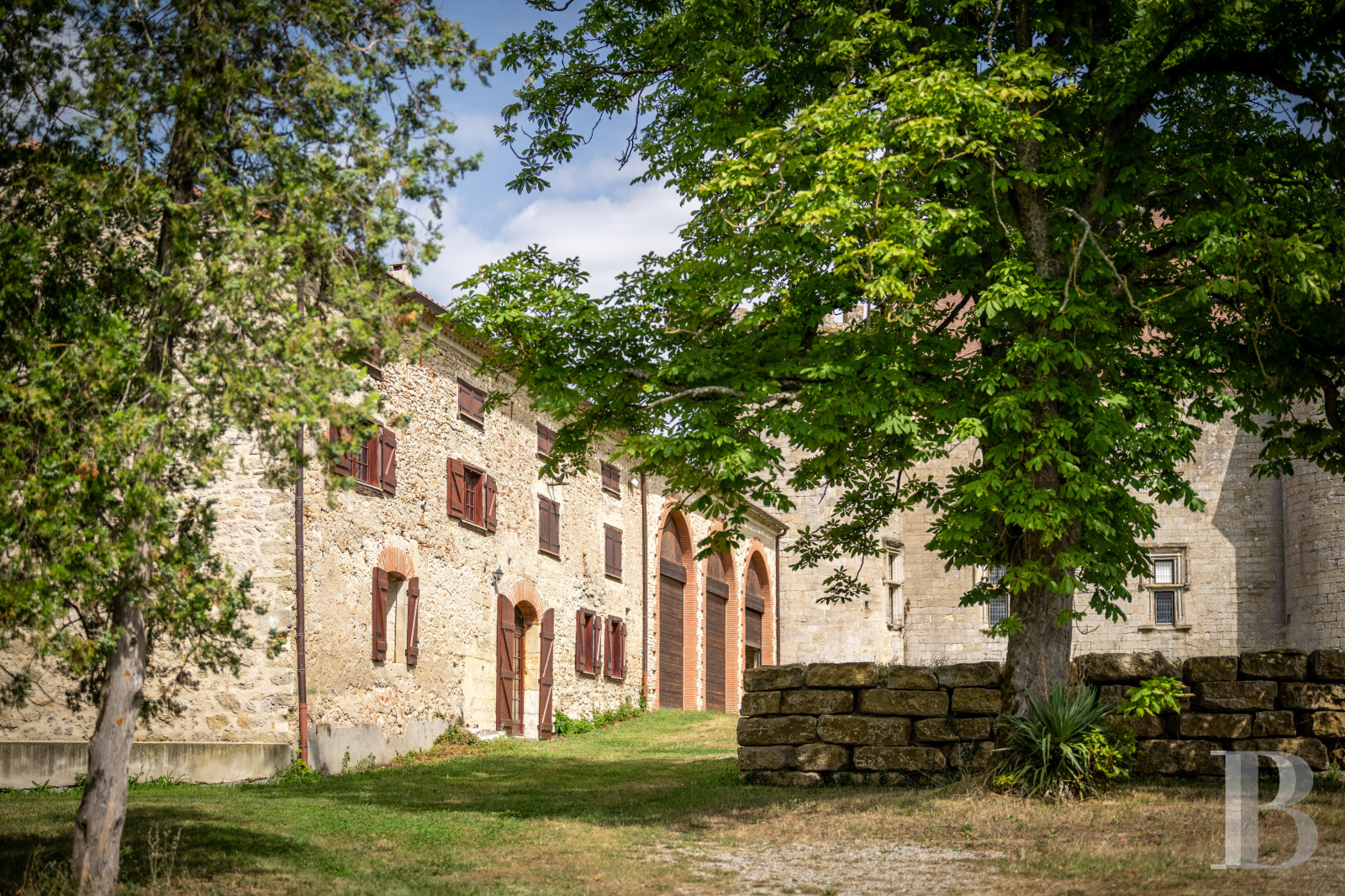
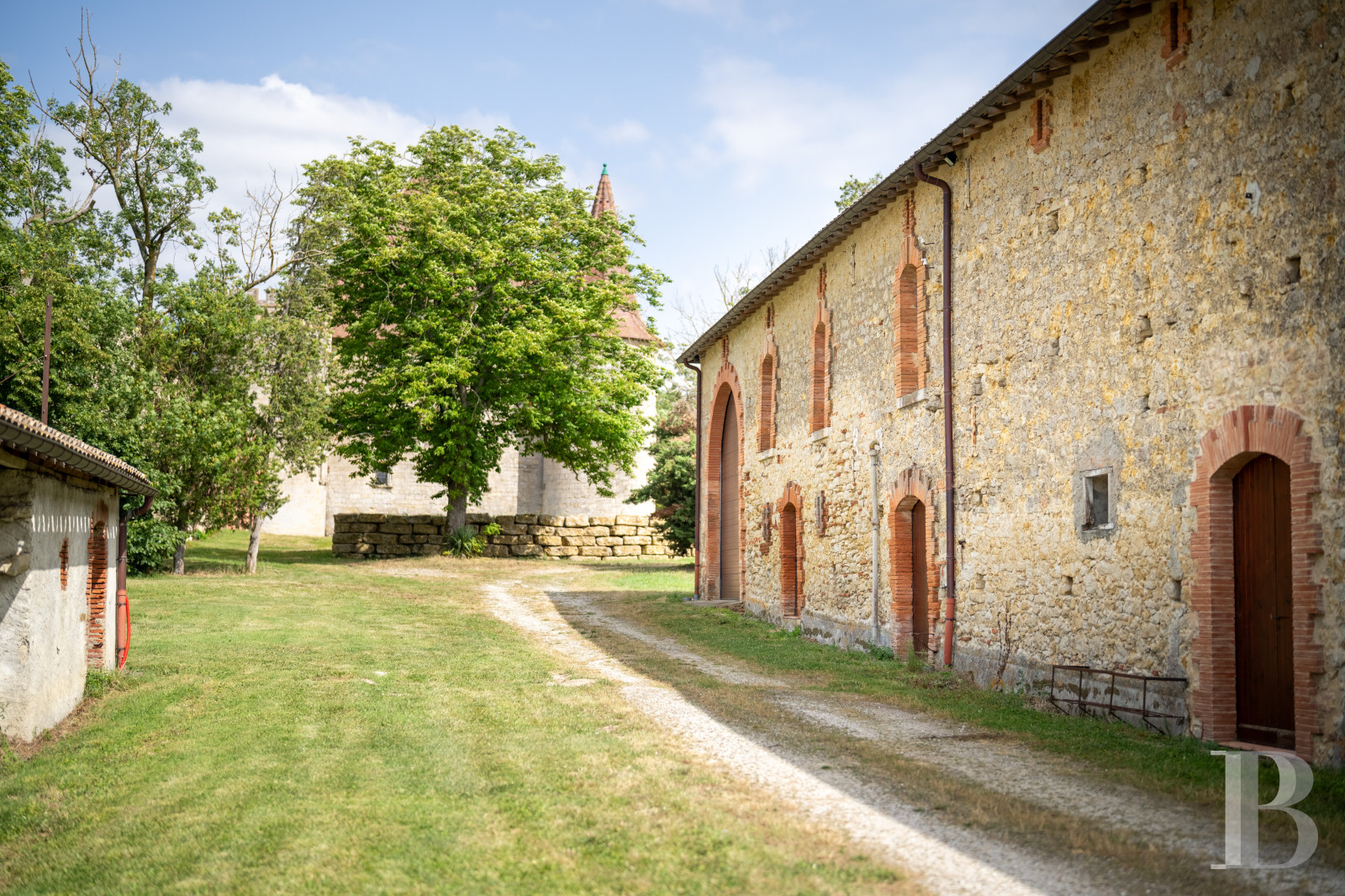
These consist of two distinct buildings, located on either side of the drive in front of the chateau.To the left of the drive, which leads to the edifice, a large three-storey holiday cottage, with rubble stone exteriors, rectilinear or arched windows and doors and a barrel tile gable roof, features a large living room and three bedrooms with a shower room on the first floor. Decorated simply with wide floor tiles, a fireplace and visible ceiling beams in the living room, the holiday cottage is extended by a wide porch roof near the swimming pool in the back, while, abutting this dwelling, an agricultural storage building, with large arched doors surrounded by brick and topped with a barrel tile roof, extends towards the chateau.
To the right of the drive, the second outbuilding, with rubble stone walls, a barrel tile hipped roof and arched windows and doors surrounded by brick, includes a large garage, a workshop and a caretaker’s flat.
The Grounds
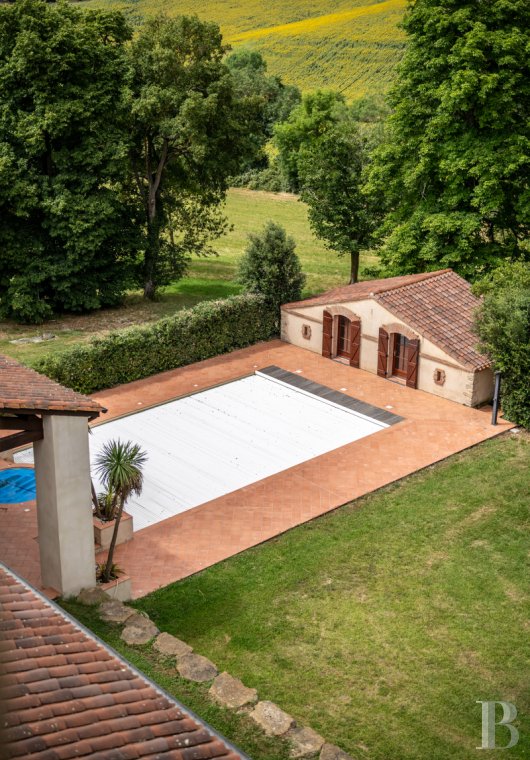
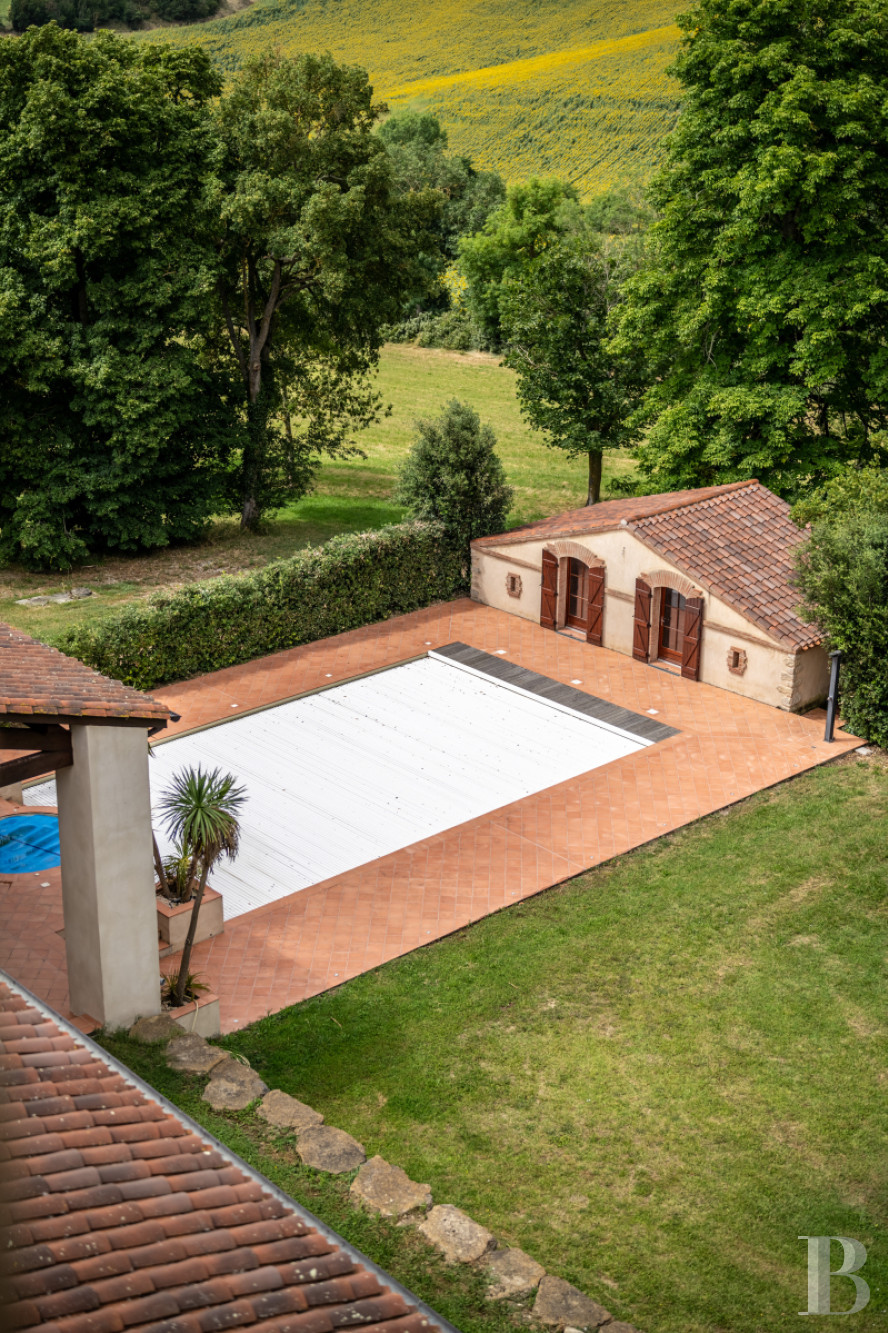
The chateau is surrounded by 12 hectares of meadows and woods, while oaks, maples and beeches, planted in groves or forming verdant hedges, create extremely dense patches of vegetation, which are, in turn, scattered here and there with individual ornamental shrubs, some of which feature colourful blossoms during the spring and summer.Behind the holiday cottage, a heated swimming pool, of approximately 12 x 6 metres, is surrounded by a tile deck, whereas a small one-storey cottage is located off to one side and the whole is sheltered from view thanks to a hedge.
Our opinion
This chateau, recognised as a national Historical Monument, and its outbuildings create an architectural composition where each stone and piece of wood recount a story, encouraging both occupants and visitors to immerse themselves in a universe where architectural elegance and historical treasures go hand in hand.
Within this noble dwelling’s many interior spaces, terracotta and wood are prominently featured, with shapes, colours and textures that range from the typical to the singular, while the chateau’s structural works and, specifically, its roof were recently restored. However, the rest remains a blank canvas for those who would like to inhabit this stately dwelling and provide it with a renewed sense of self and update its medieval details with their own personal vision, all of which must be refurbished so that the premises can fully rekindle their inherent spirit as well as take on new eye-catching amenities.
Exclusive sale
2 350 000 €
Fees at the Vendor’s expense
Reference 288843
| Land registry surface area | 12 ha |
| Main building floor area | 900 m² |
| Number of bedrooms | 9 |
| Outbuildings floor area | 800 m² |
| including refurbished area | 1000 m² |
French Energy Performance Diagnosis
Information on the risks to which this property is exposed is available on the website: www.georisques.gouv.fr
Share


NB: The above information is not only the result of our visit to the property; it is also based on information provided by the current owner. It is by no means comprehensive or strictly accurate especially where surface areas and construction dates are concerned. We cannot, therefore, be held liable for any misrepresentation.