



A listed 18th-century chateau with medieval origins, outhouses and grounds, tucked
away on the hills of France’s Drôme department, in the south-east of the country
away on the hills of France’s Drôme department, in the south-east of the country
Valence,
DROME
rhones-alps
26000
FR

Location
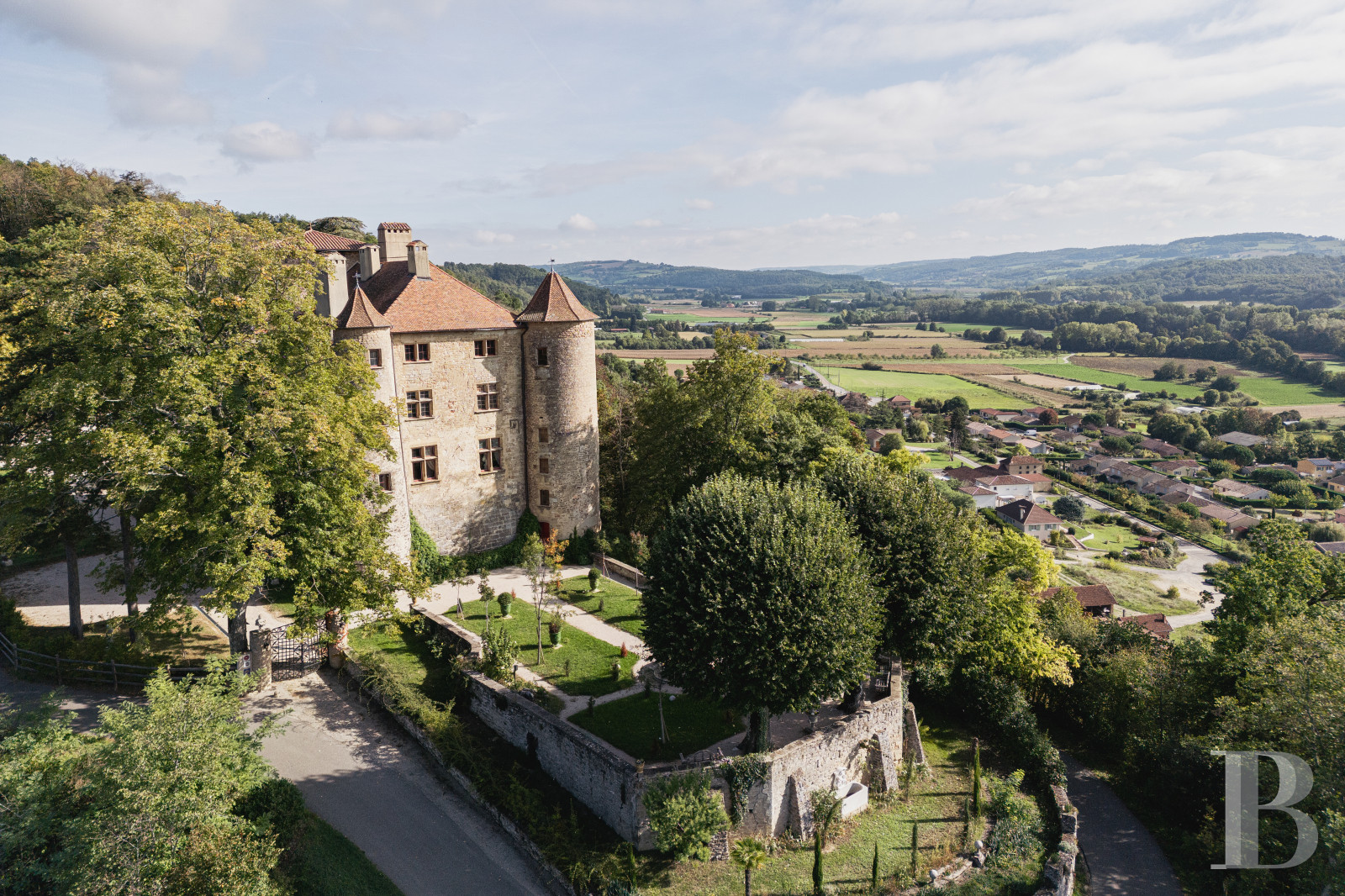
The property lies in the north of France’s Drôme department. It looks out over the valley of the River Herbasse. From the chateau, you can admire far-reaching vistas of landscapes that form a patchwork of orchards, woods and meadows. This unspoilt bucolic environment is dotted with old dwellings and farms. The local village offers shops and amenities for everyday life. The nearby towns of Romans-sur-Isère and Valence are vibrant economic and cultural hubs. You can reach them easily. You can also get to the cities of Lyon and Grenoble in less than an hour by car via the A7 motorway. From a high-speed train station in Valence, you can get to Paris in just over two hours by rail. And Lyon and Grenoble international airports offer flights too.
Description
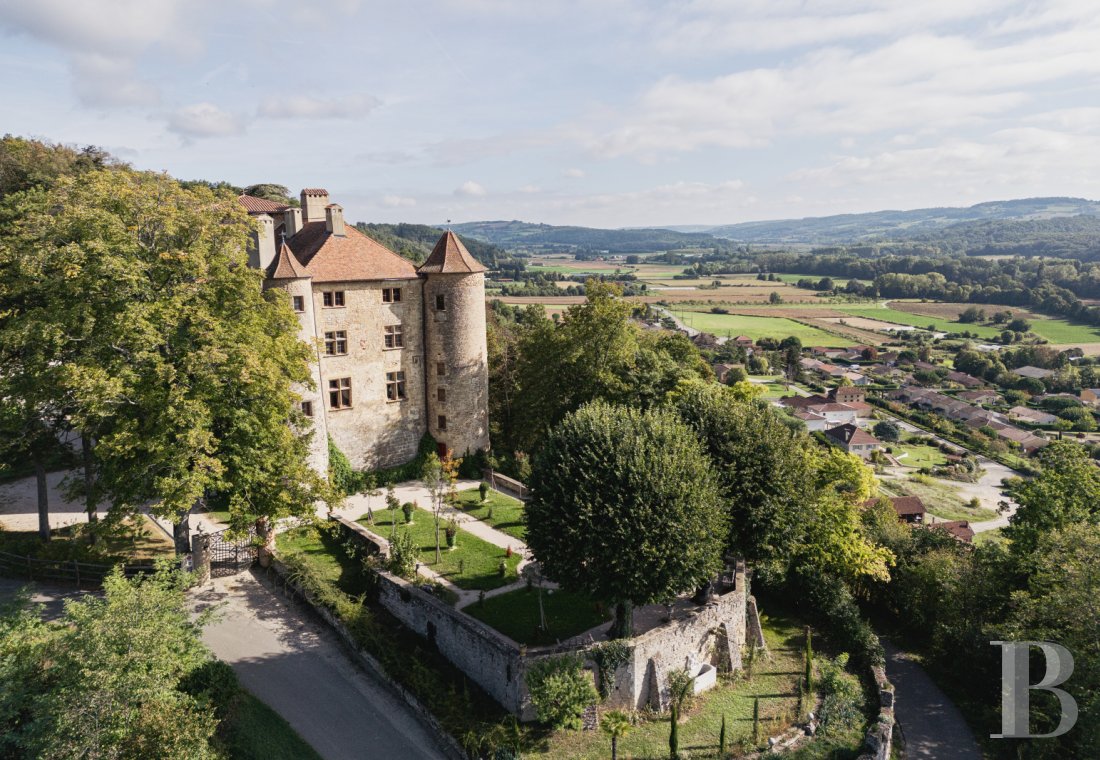
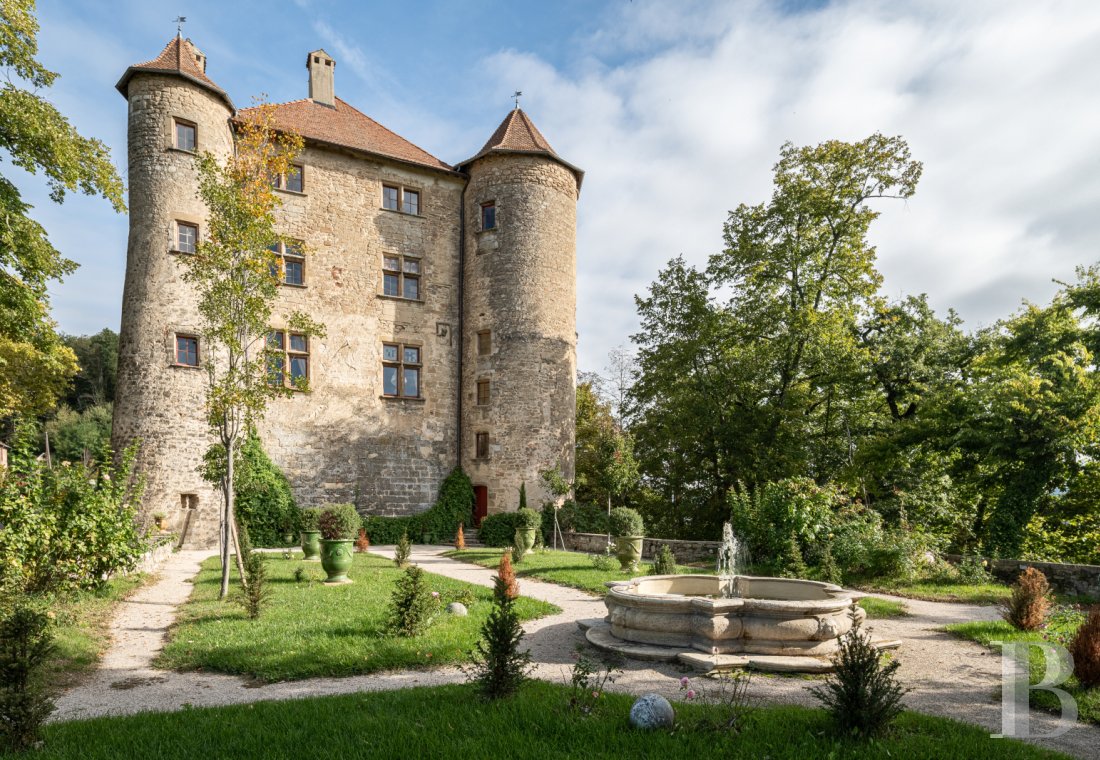
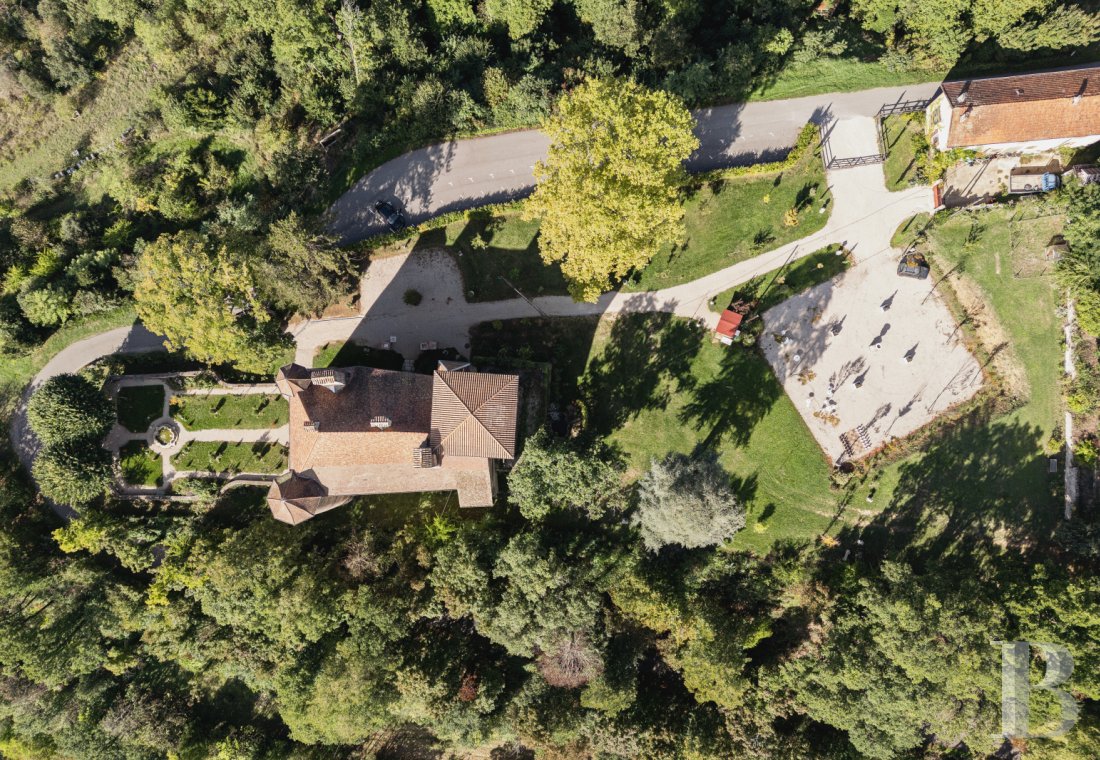
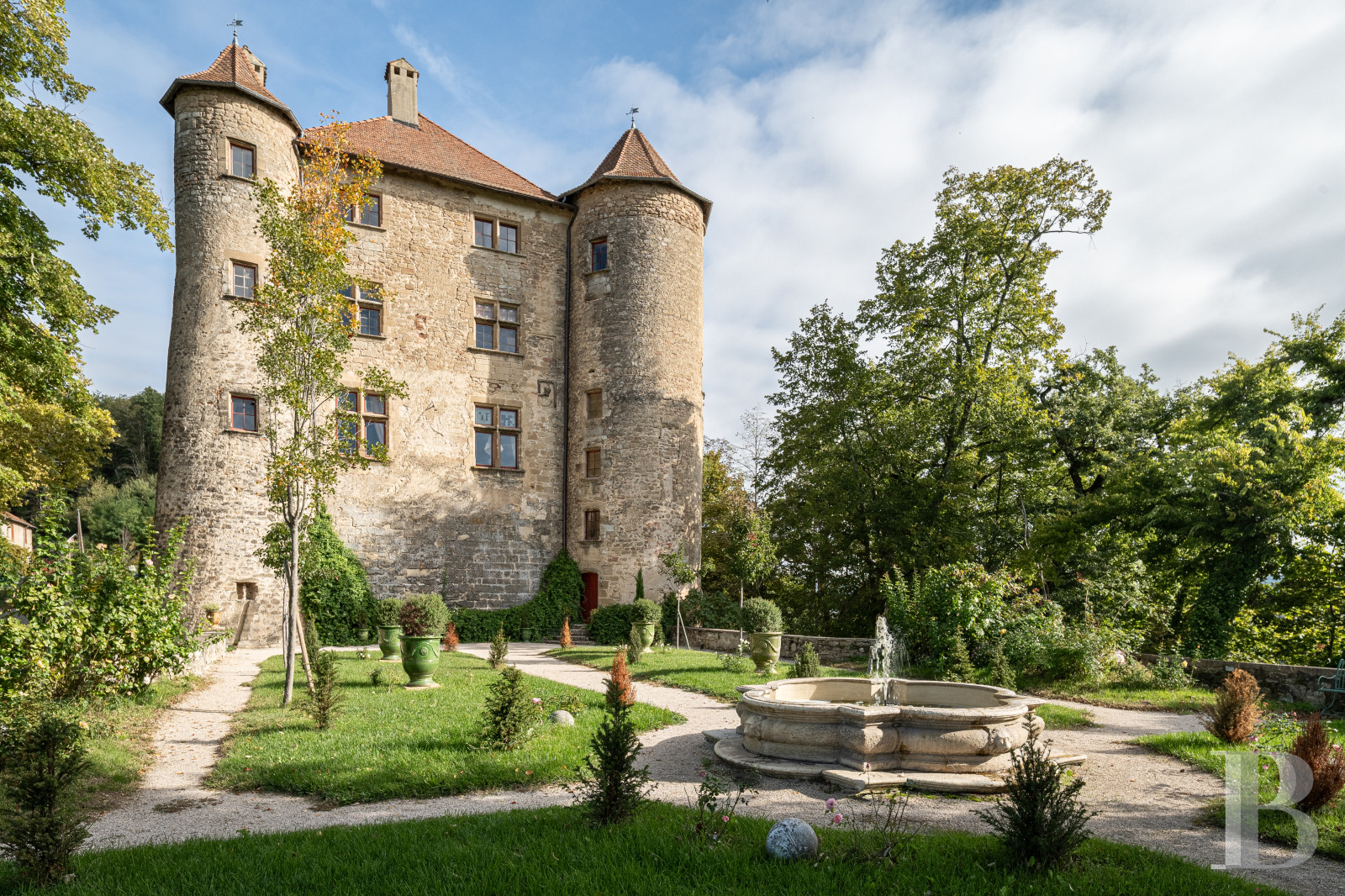
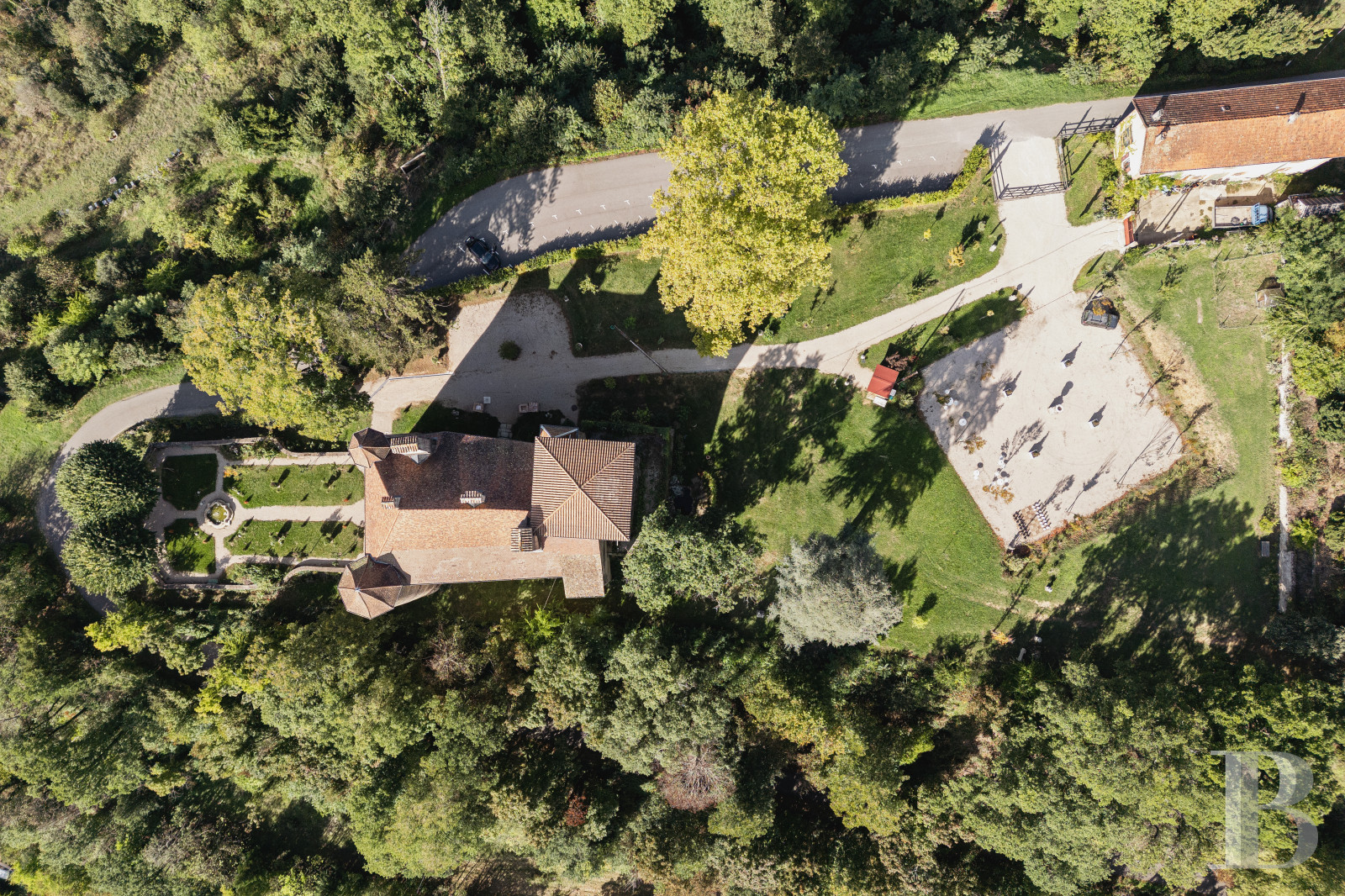
The chateau and its outhouses form a coherent series of buildings in the middle of tree-dotted grounds, which lie slightly above the road that leads to the local village. The chateau is rectangular in shape with an adjoining tower at each corner and a square keep that adjoins the northern elevation. It offers a 720m² floor area and has a ground floor, a first floor, a second floor and a third floor. Multi-sloped roofs with old tiles bear witness to successive construction projects on the edifice. The stone elevations display pale-ochre pointing. They are punctuated with both evenly spaced windows and older openings too, reflecting the edifice’s evolution over the centuries. A straight driveway runs through the grounds to the outhouses, which are set back. There is a former stable, an orangery, a barn and a woodstore. They are arranged around a courtyard. Tall trees form a natural barrier that separates the chateau from its immediate surroundings. A vast terrace stretches southwards and a landscaped garden slopes gently down to lower land. The whole complex was designed as a seigneurial estate but on a limited scale, with each building playing a role in a well-structured arrangement.
The chateau
The chateau is listed as a historical monument. It is one of the main attractions in built heritage in the local region. Back in the 10th century, a motte-and-bailey castle stood on this site. Over the course of the 12th and 13th centuries, this castle became a veritable fortress. Later, at the end of the Middle Ages, in was extensively redesigned. And in the 17th century it became a pleasure chateau. Indeed, the edifice reflects social and architectural evolutions over the course of many centuries. In the 20th century, it successively belonged to different families. Then, in the early 2000s, it was gradually abandoned. Since 2019, major renovation work has breathed new life into this remarkable monument.
The ground floor
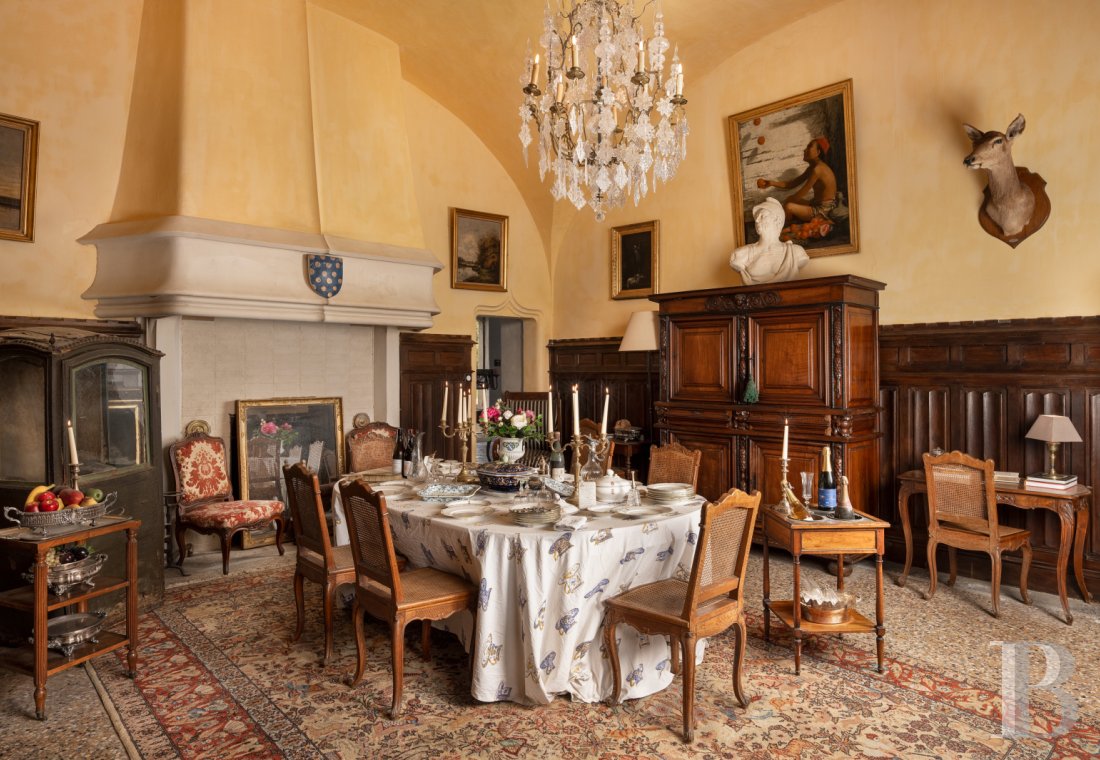
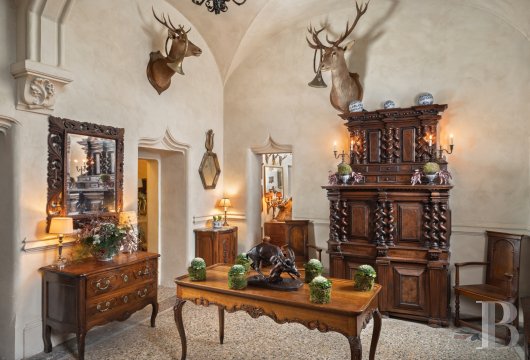
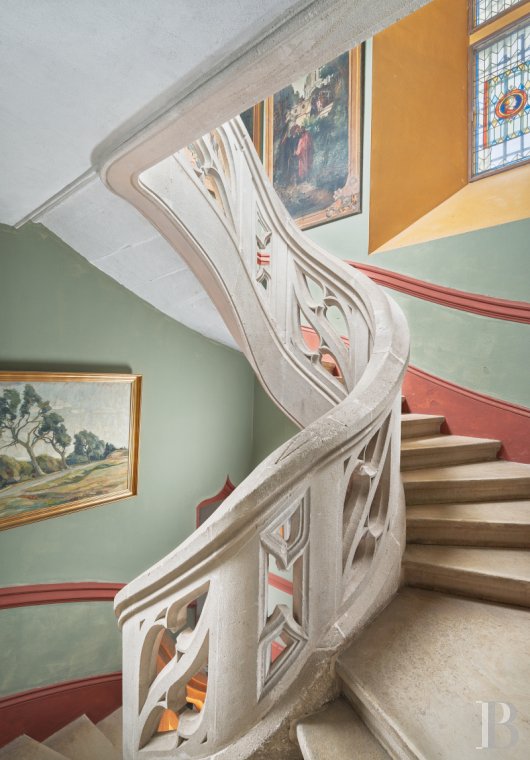
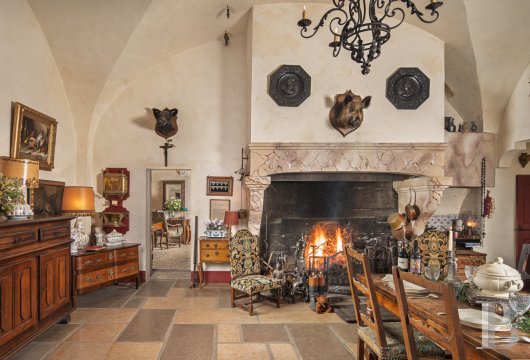
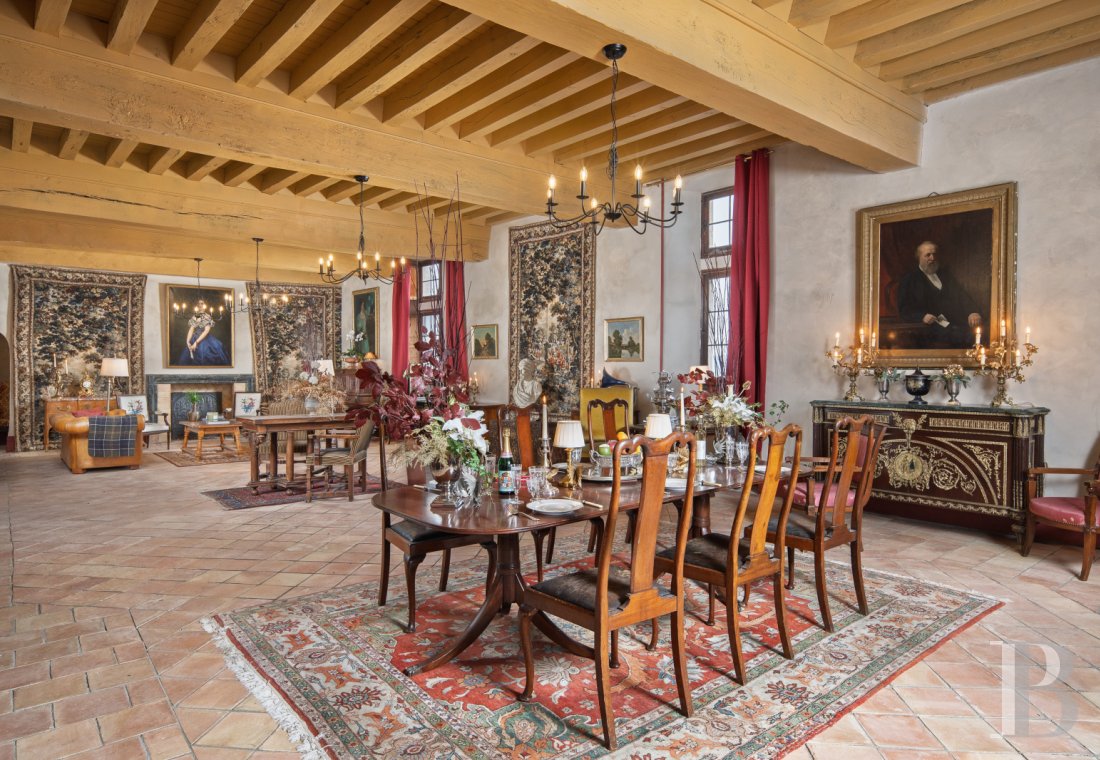
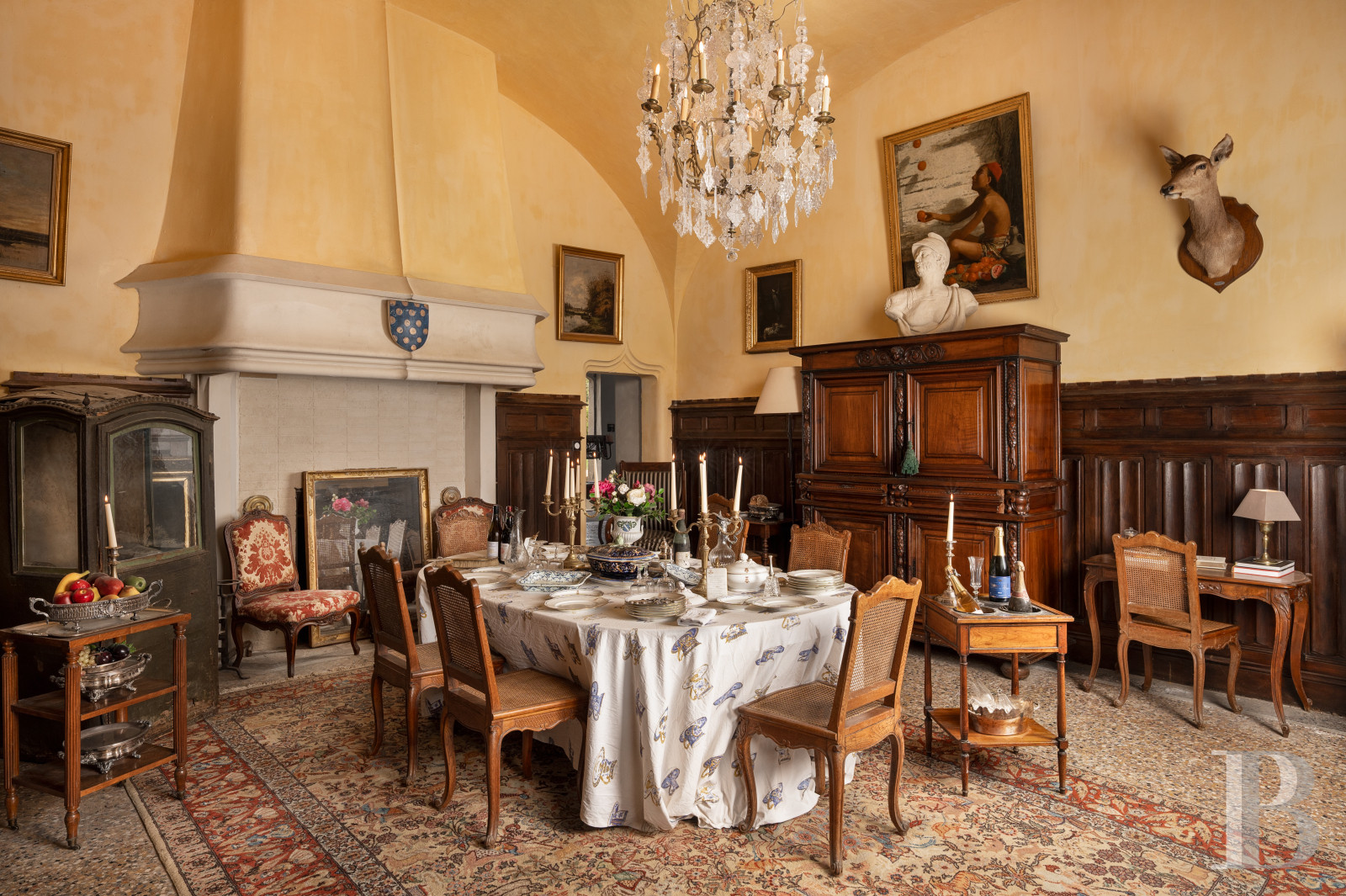
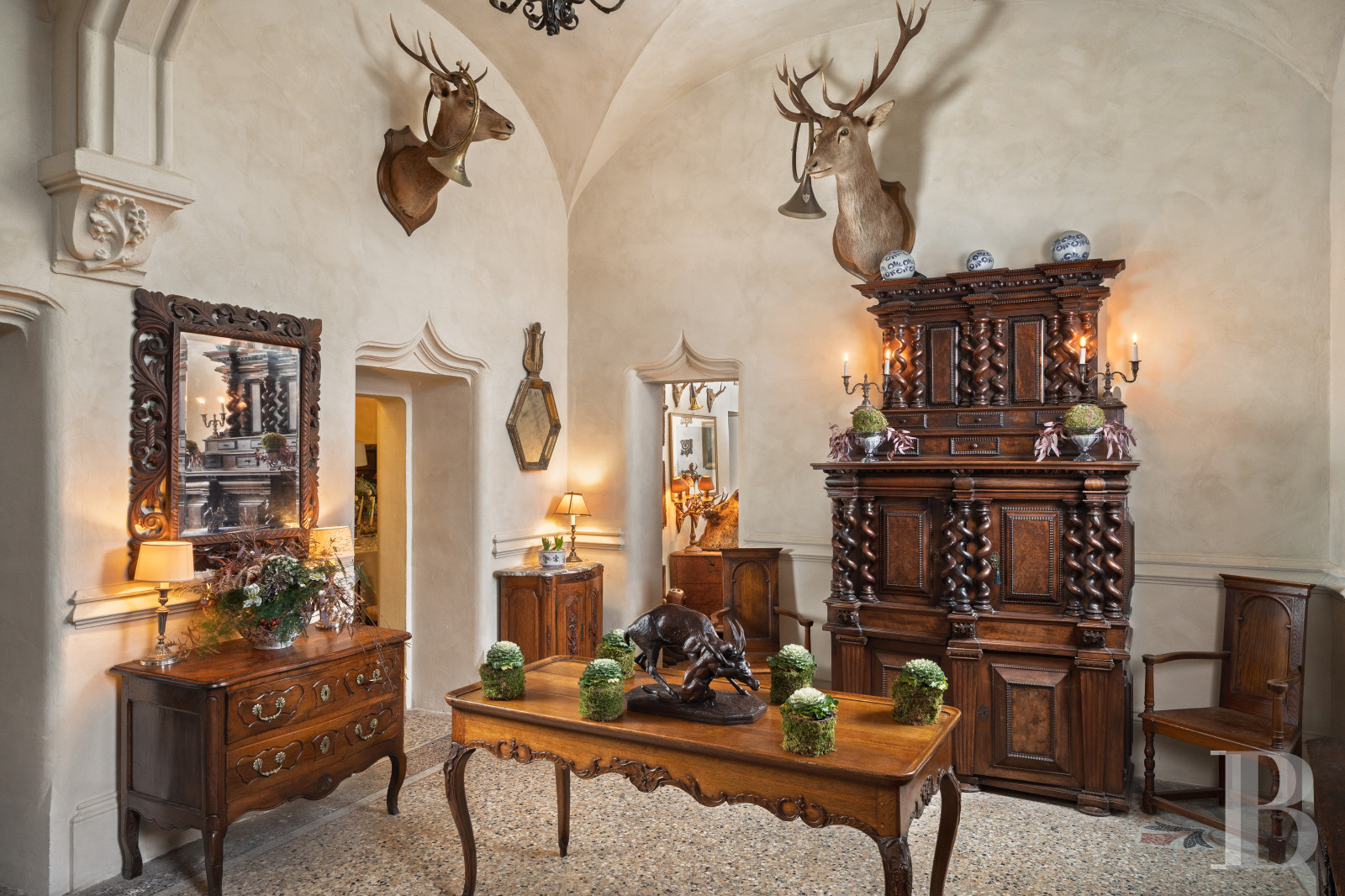
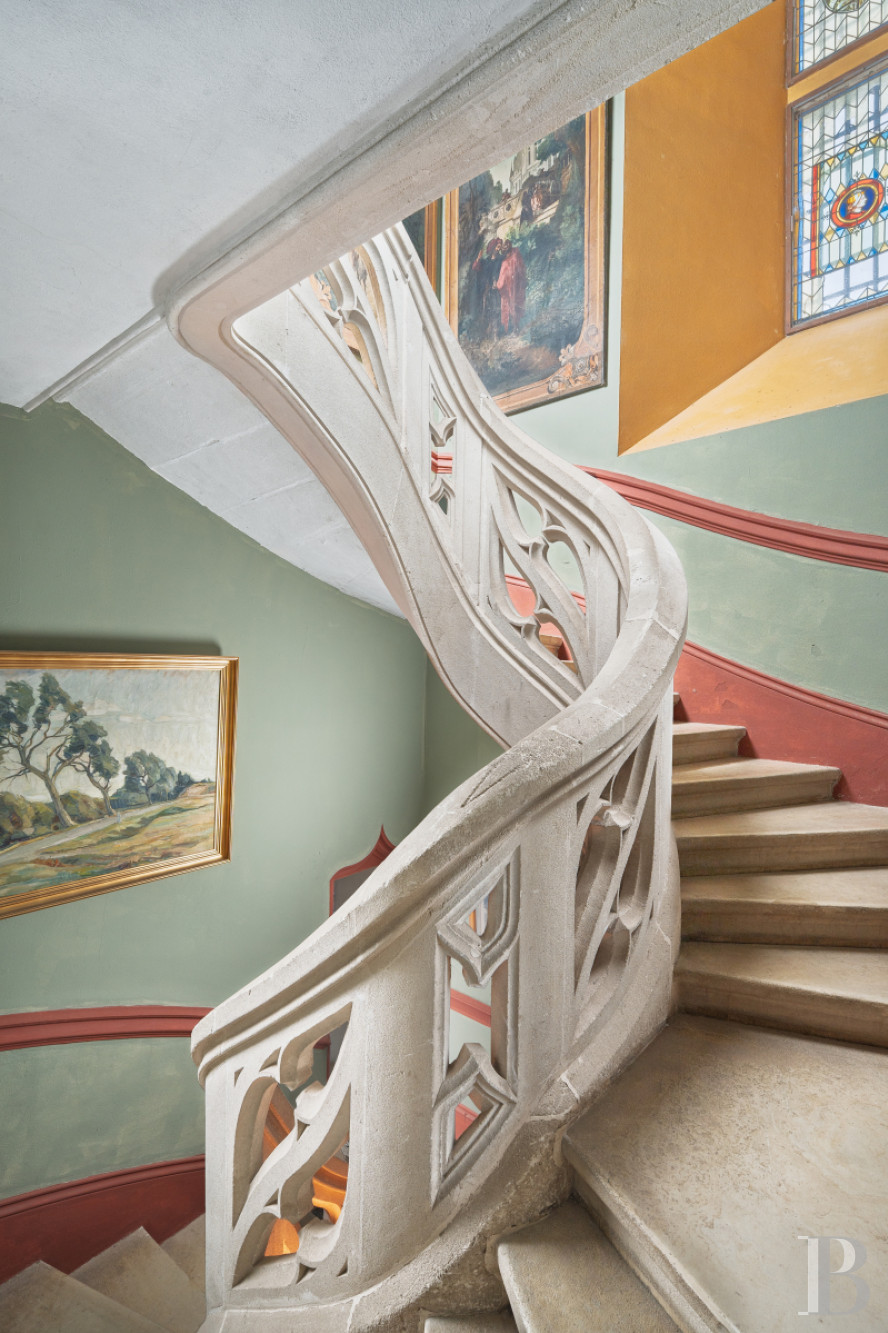
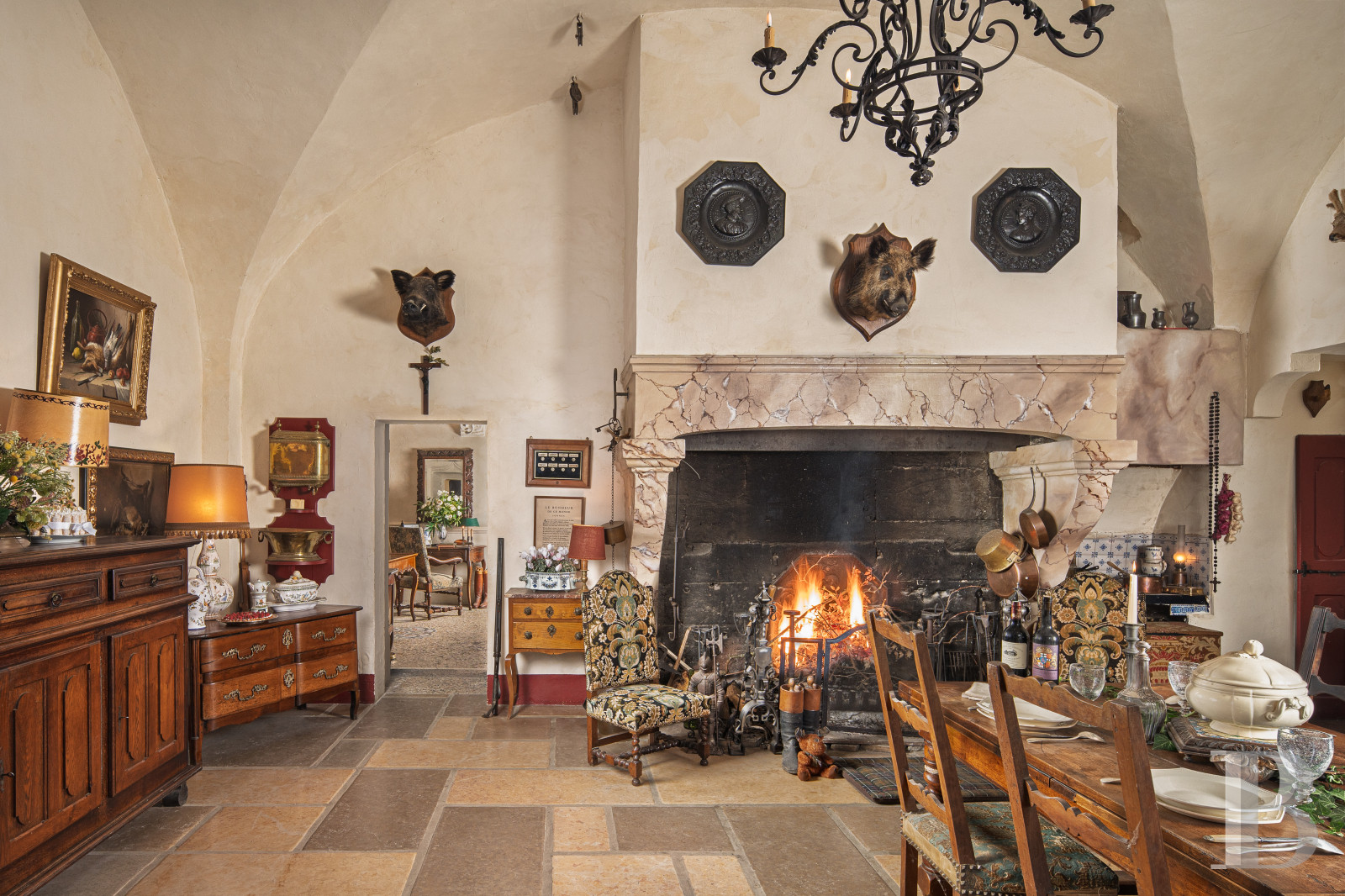
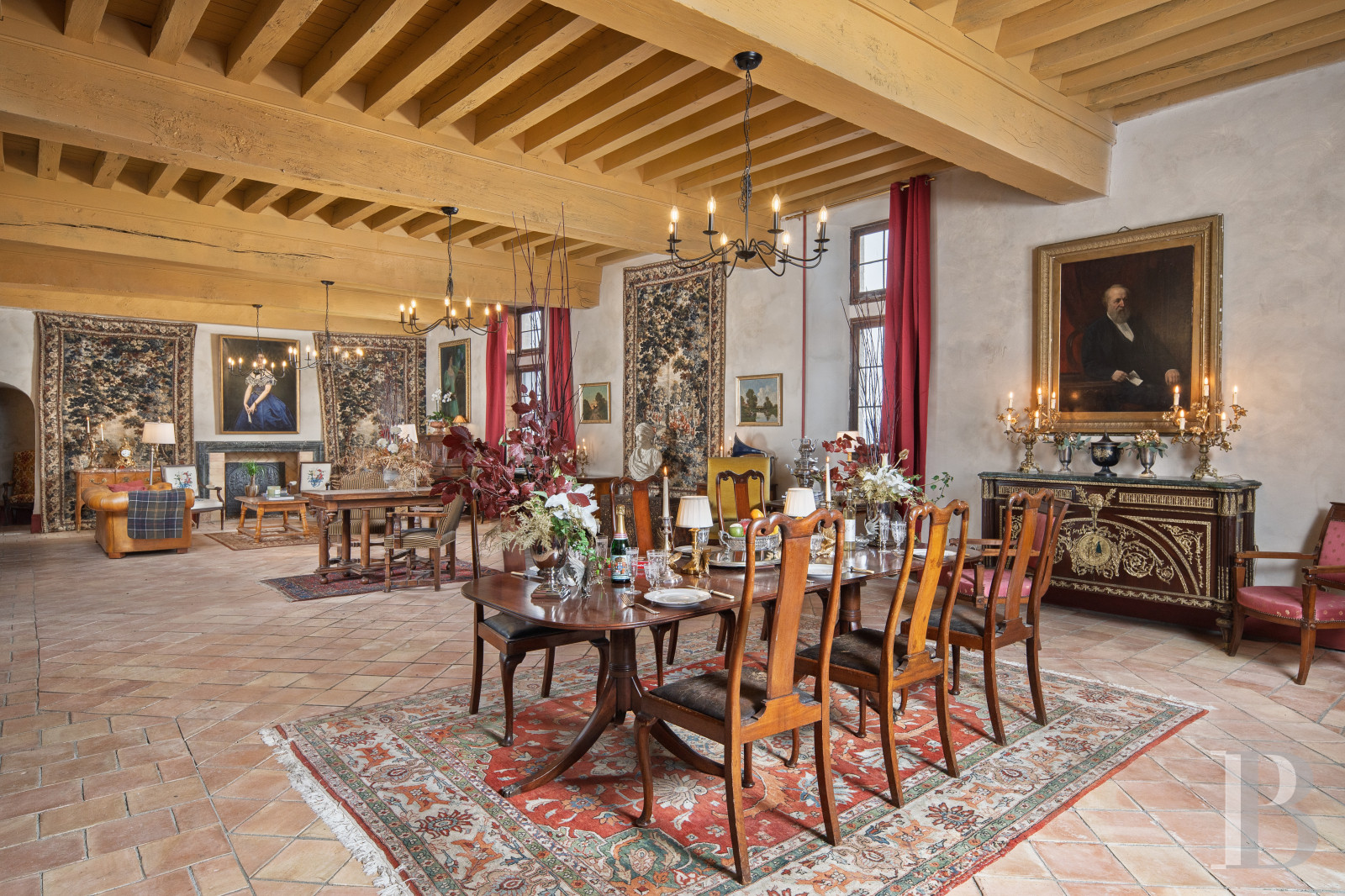
Beyond the entrance door, which has kept its medieval structure, the ground floor is arranged around a central hallway with a double vault forming a cross and a terrazzo floor embellished with a dolphin-tail motif in the middle. On the right, there is a smoking room. Straight ahead, there is a dining room with a monumental fireplace, finely carved wooden panelling, three sideboards and a terrazzo floor. It connects to a medieval kitchen with a stone floor. This kitchen, which has remained intact, has a large fireplace, a roasting spit, an old five-burner stove, a chopping table and a stone sink. On the left, there is a grand 18th-century staircase made of tuffeau stone. It is filled with natural light from stained-glass windows bearing the Savoy cross coat of arms. These stairs lead up to the first floor. In one of the towers, a spiral staircase leads to all the floors. A storeroom, a separate lavatory and a cellar complete the ground floor.
The first floor
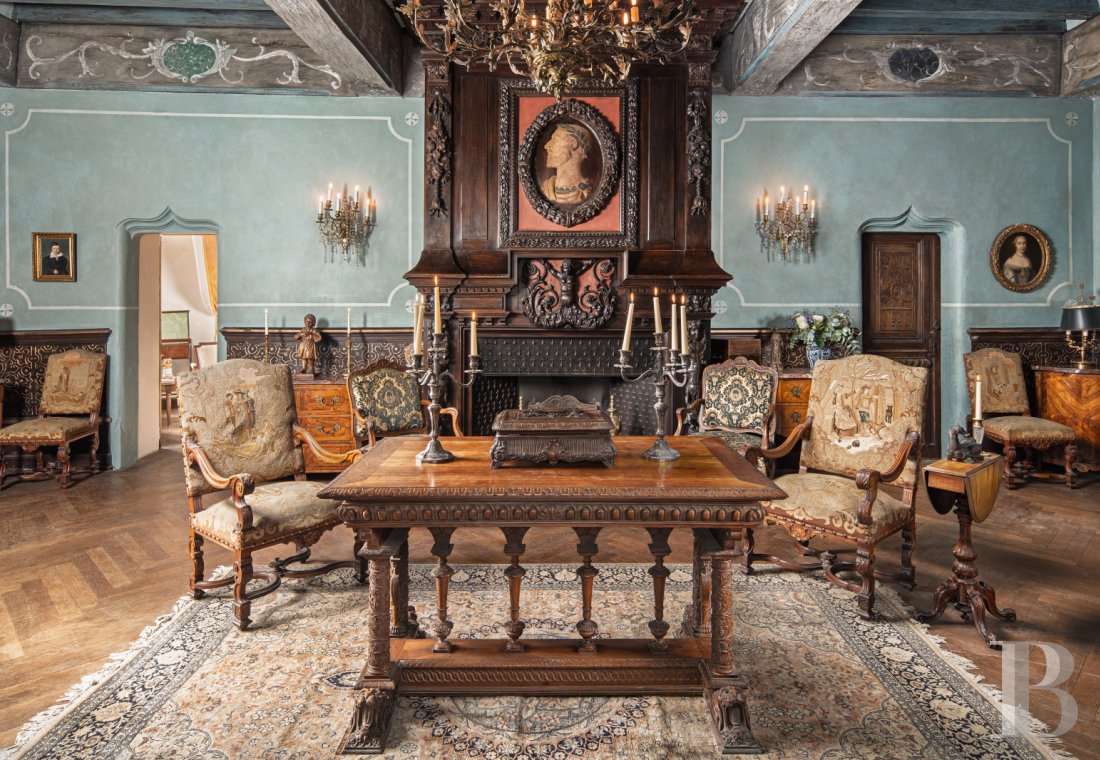
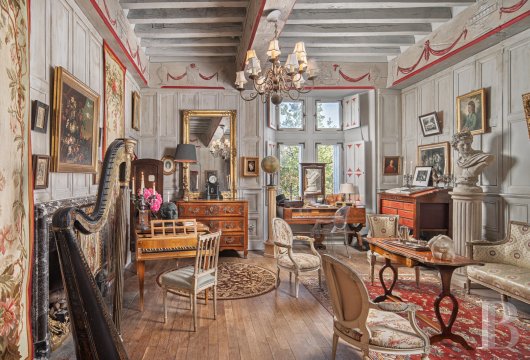
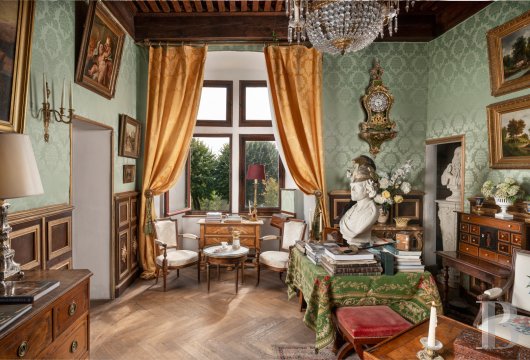
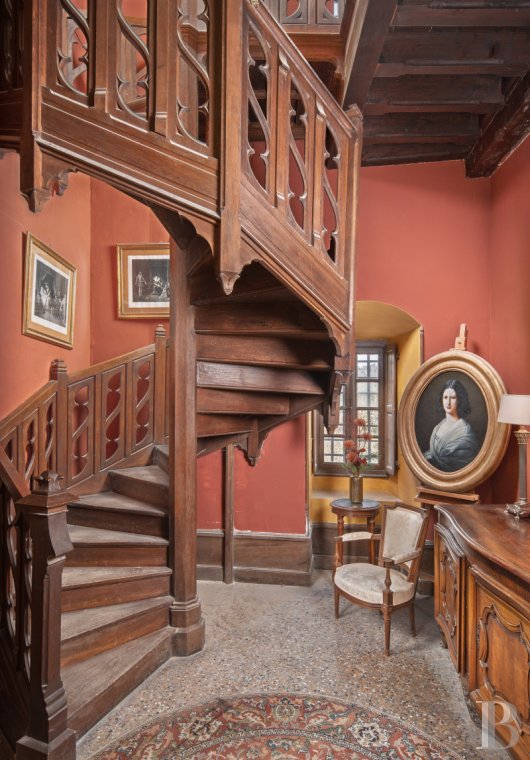
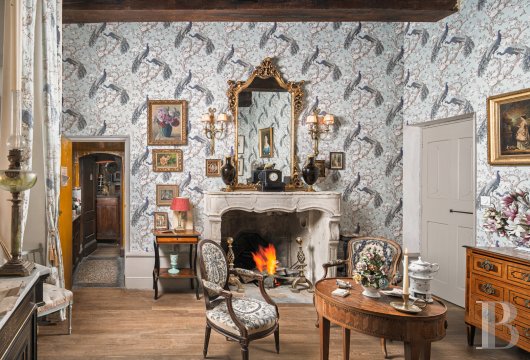
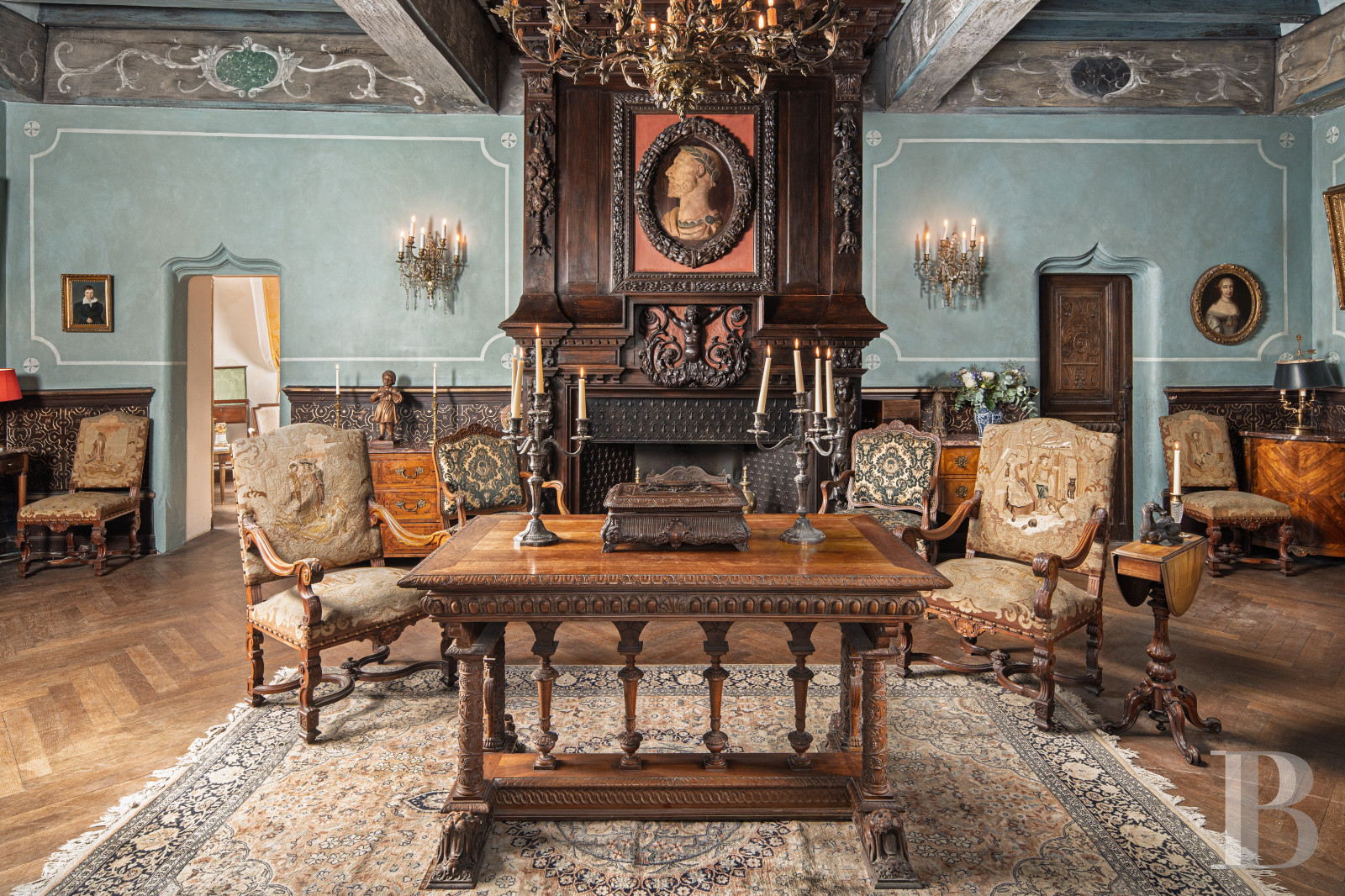
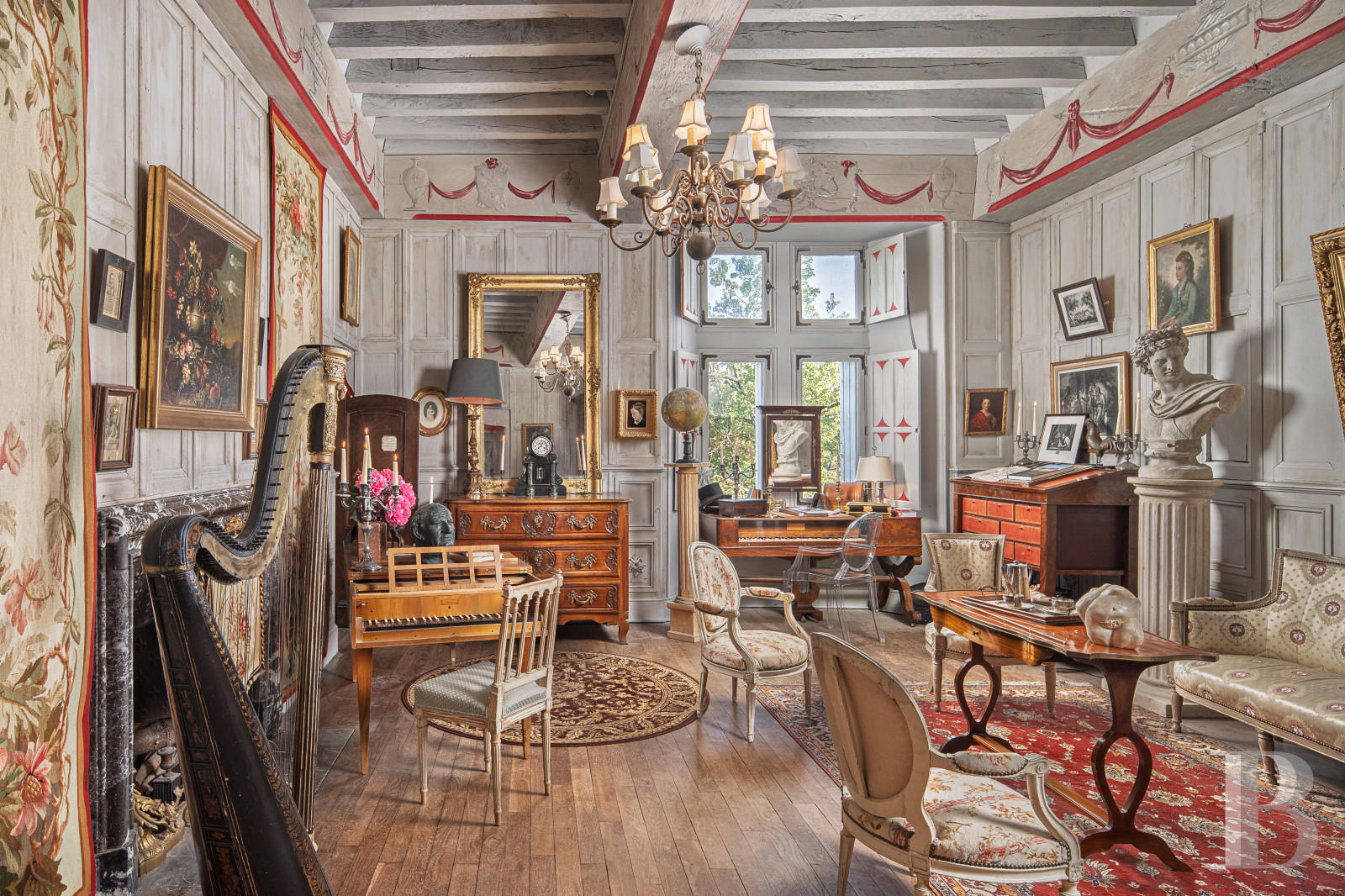
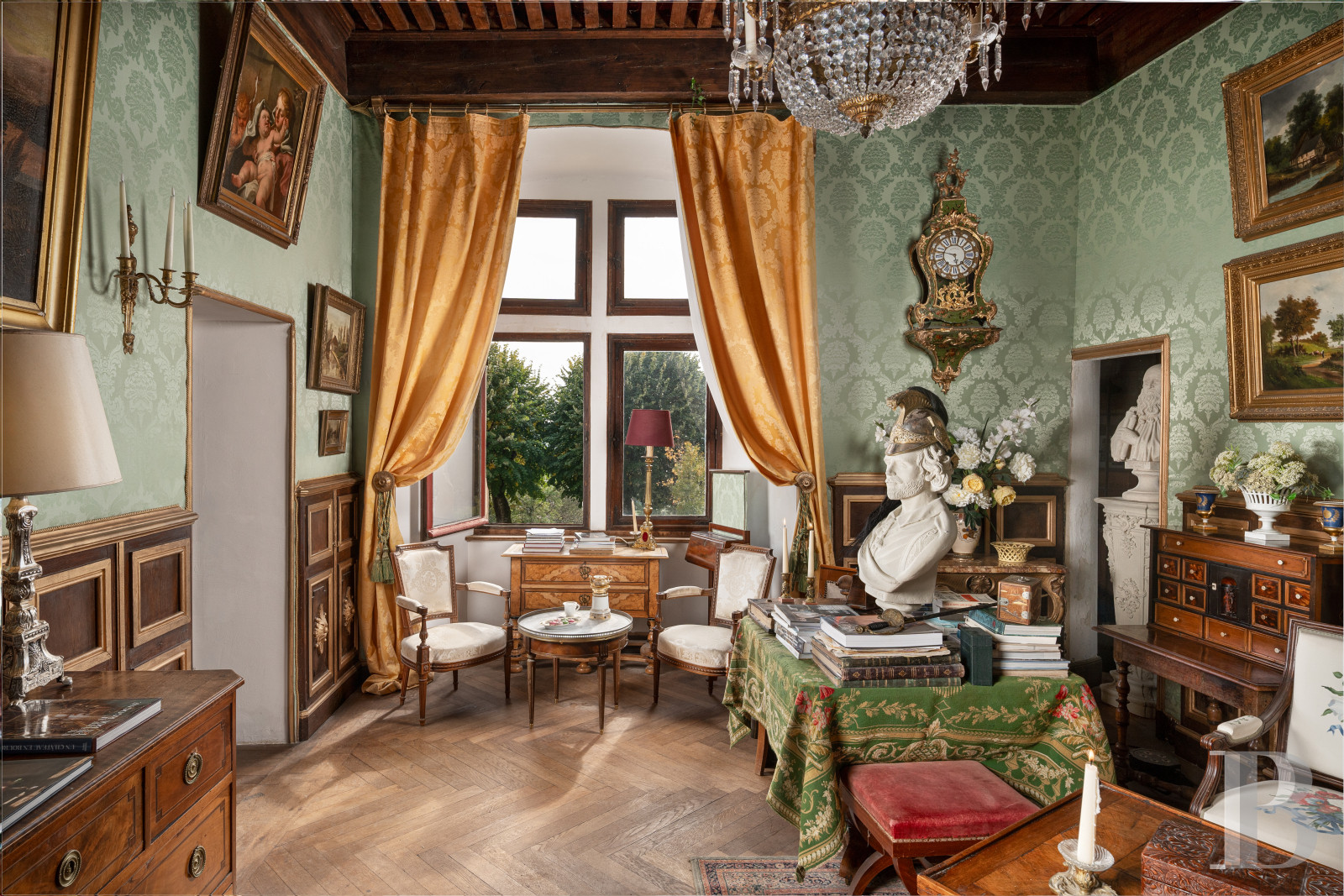
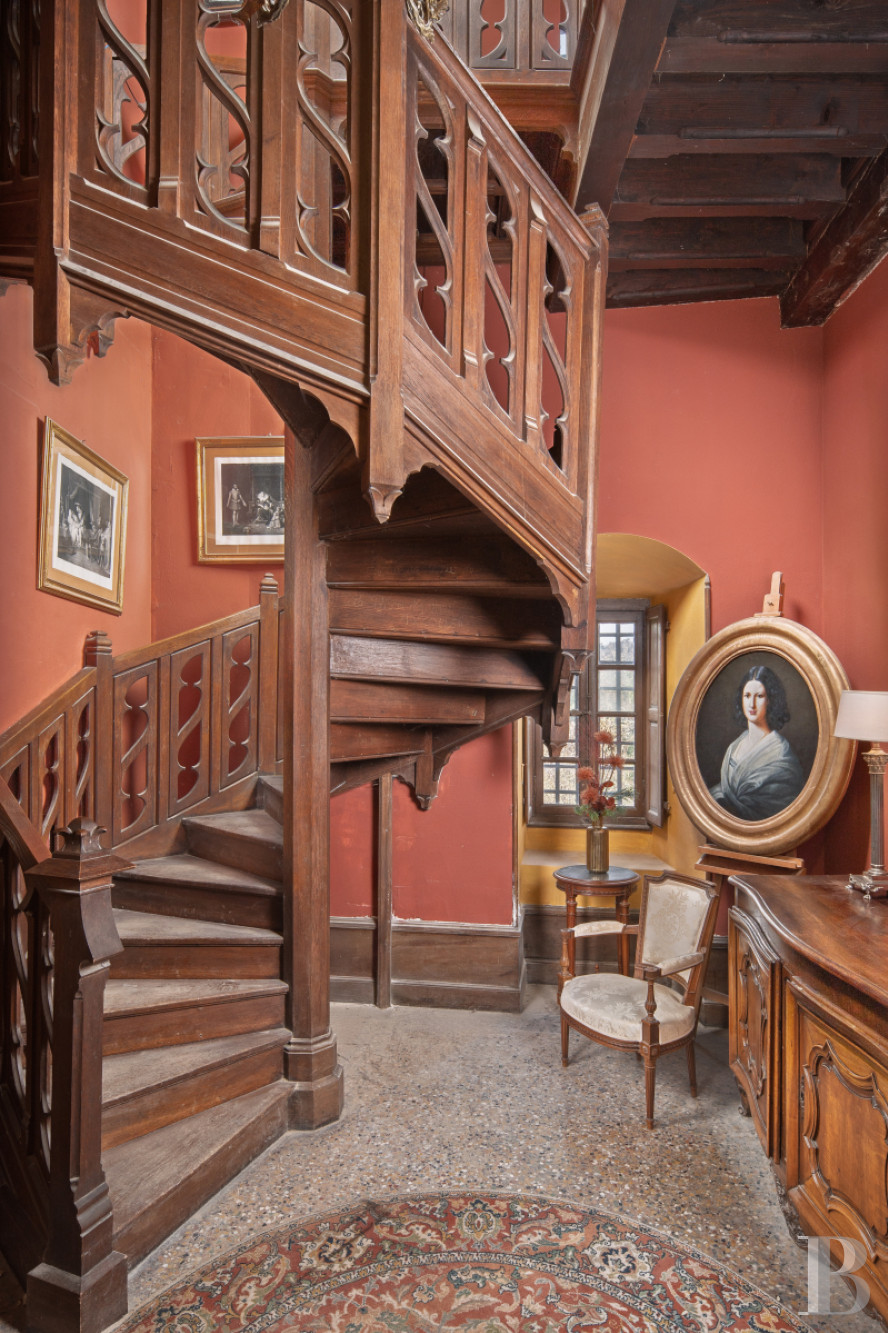
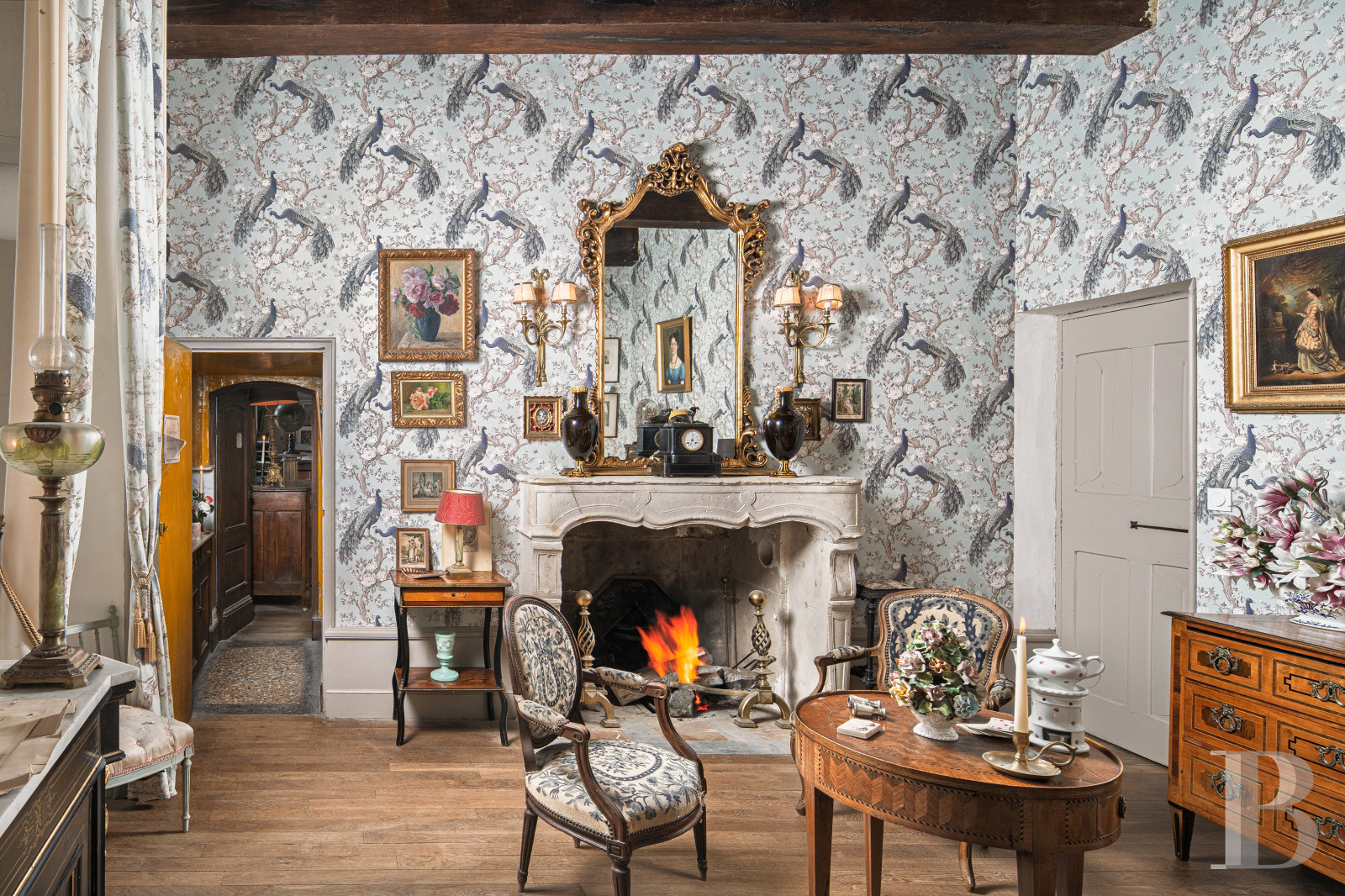
The first floor is dedicated to the reception rooms. It is arranged around a vast landing. There is a small lounge with a ceiling in the style of the famous Hache family of cabinetmakers from Grenoble, with 18th-century wooden panelling highlighted with gilding, Lyon green-silk lampas, oak herringbone parquet and a white marble fireplace. A cabinet of curiosities extends this lounge. There is also a large lounge, likewise created in the 18th century. It stands out for its French-style beamed ceiling and its fireplace with Mannerist decor featuring Ronsard and Melusine. A paper base course with a cordwain effect and oak parquet underline the formal character of this room. Another reception lounge – the “Salon de compagnie” – has 18th-century wooden panelling that was enhanced in the 19th century. Its painted decor was reproduced based on archives. There is also a fireplace and oak parquet. There is a boudoir too. It is cosier in style. It has a French-style beamed ceiling, flowery wallpaper, a white stone fireplace and wood-strip flooring. A bathroom and a storage space complete this first floor. A second neo-Gothic staircase, made of oak, dates back to the 19th century and mirrors the form of the grand tuffeau-stone staircase. It leads up to the second floor.
The second floor
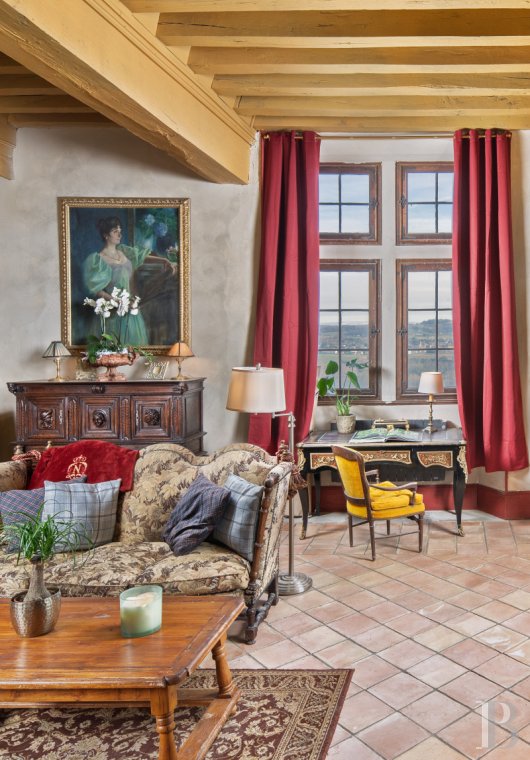
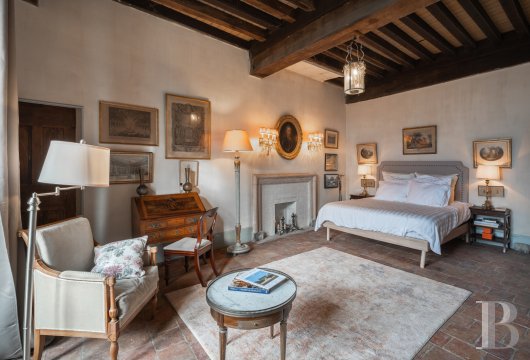
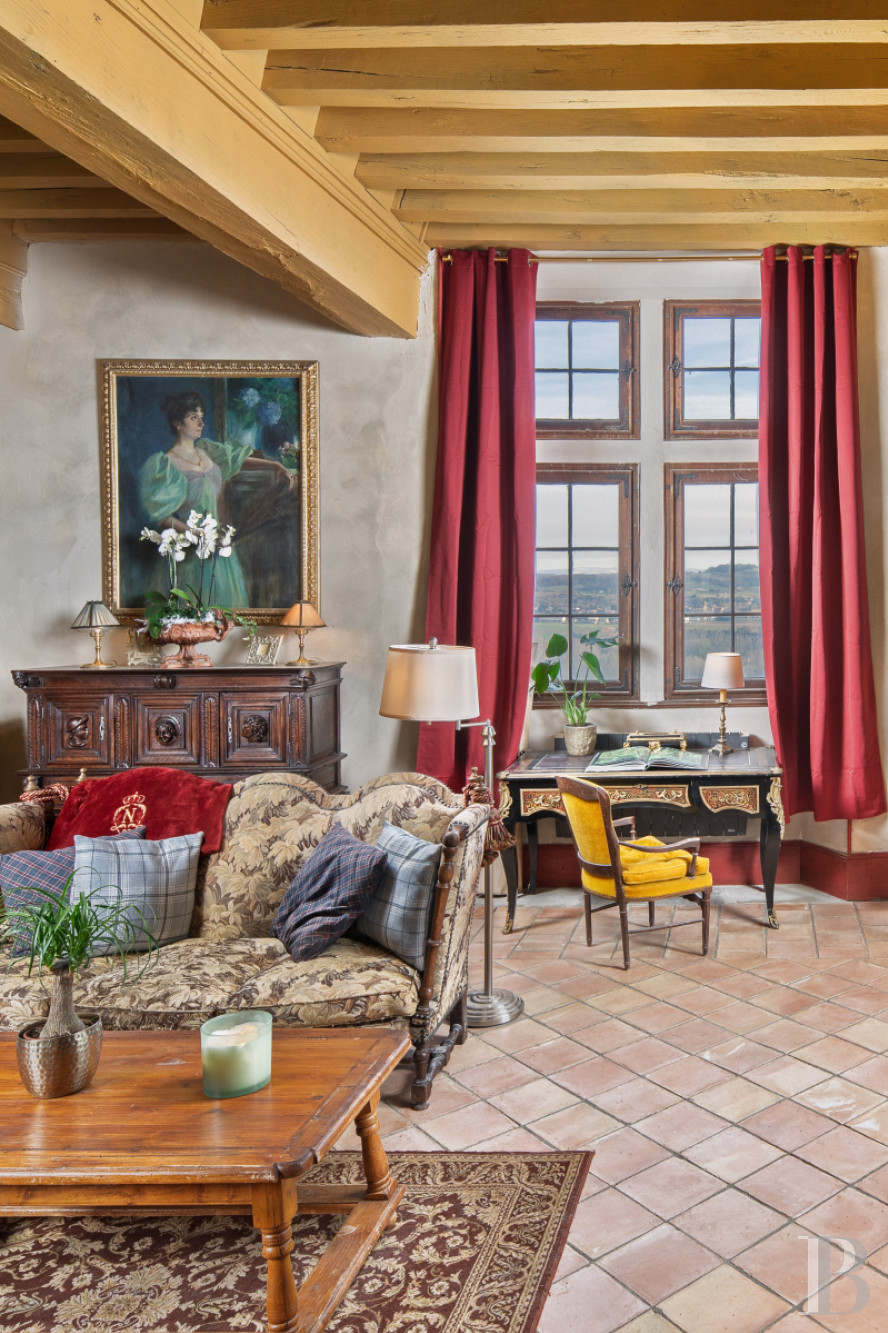
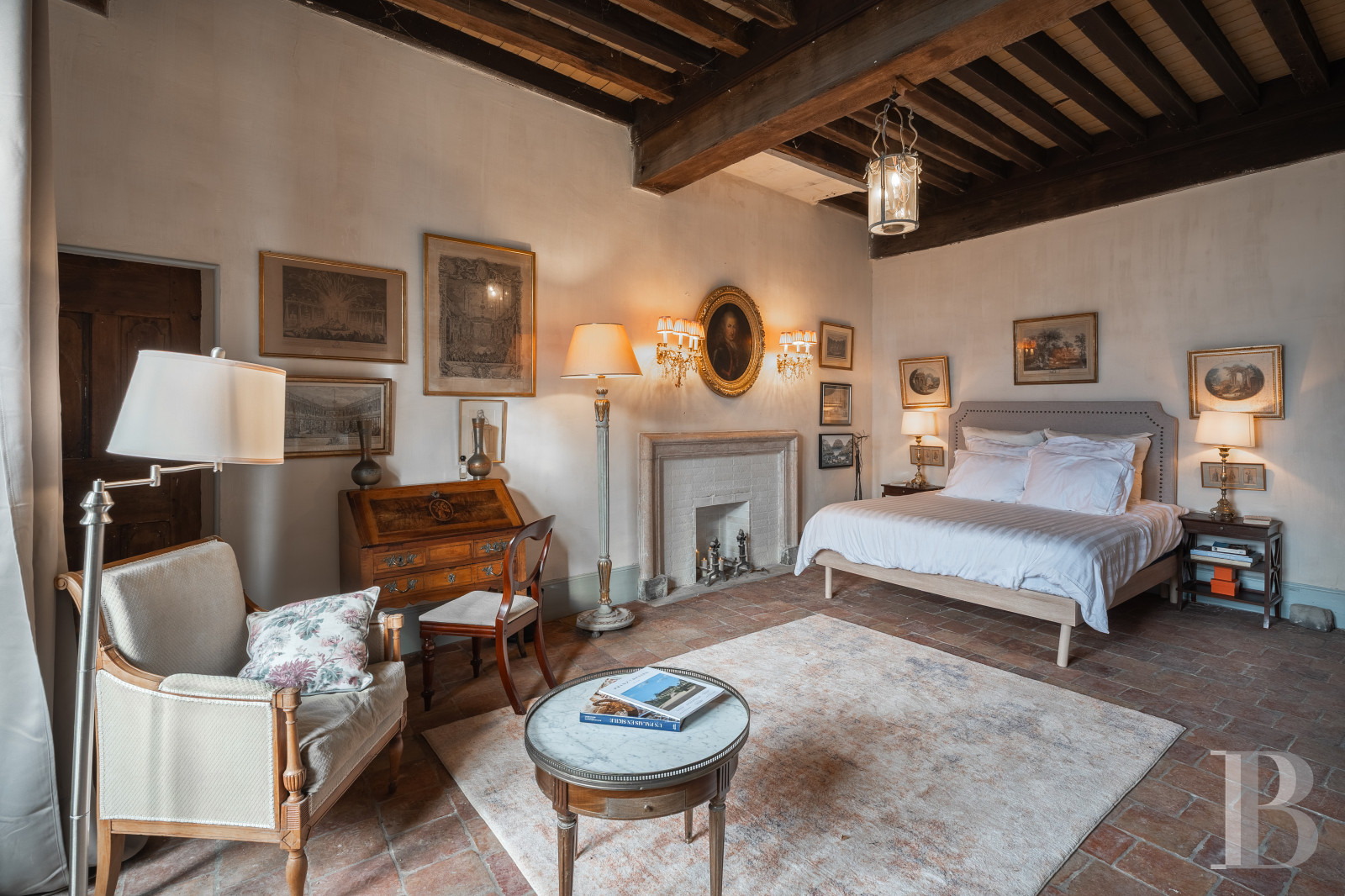
On the second floor, you first step into a vast gallery bathed in natural light. This versatile space is ideal for receptions and exhibitions. Two bedrooms complete this level. Each one has a terracotta-tiled floor, a French-style beamed ceiling and a fireplace. There is also a chapel with a sacristy. It has a vaulted ceiling, a floor of stone slabs and 18th-century wall paintings. It includes an altar, a tabernacle and religious objects. A recently developed fitted kitchen, a utility room and a shower room complete this second floor.
The third floor
The third floor was once used for domestic staff. It includes several modest bedrooms. Up here there is also a former prison, which bears witness to the feudal role this chateau once played. There is also a door to a viewpoint where you can admire a spectacular view of the surrounding landscape.
The outhouses
The main outhouse is made of stone with ochre rendering, framed with brickwork. It has a ground floor and a first floor. Inside, there is a lounge, three bedrooms, a former bathroom and a kitchen. Next, there is a dovecote, a small orangery, a barn and a stable with a saddle room. This series of 19th-century buildings could be renovated to develop all kinds of activities here in relation to the chateau.
The grounds
The grounds cover around 11 hectares and include a wide range of backdrops, including woods, a garden that flourishes in all seasons, and a former kitchen garden. There is also a wide range of varieties of trees, including maples, cedars, plane trees, linden trees and several rare kinds with great botanical interest. Special rose bushes dot the paths and viewpoints too. On the south side, a landscaped garden brings out the Renaissance facade of the chateau. A vast terrace leads to a French formal garden with straight paths, topiary yews and a round ornamental pond. On the north side, the atmosphere is cosier. A stone construction with embankments forms a terrace with a nymphaeum. The estate has been restored with respect for its original spirit. It is classical in layout, yet inspired by English aesthetics in its vistas. This outdoor space has remained faithful to the art of gardens of the 18th and 19th centuries.
Our opinion
This chateau tells a 1,000-year-old story. It has evolved over the centuries without losing its unique character. It towers majestically on its peaceful estate dotted with tall trees. The dwelling is a truly comfortable home, ready for a family to settle into it straight away. Yet it could also host tourists or be given all kinds of other purposes. The charming property has been restored with the splendour of the late 18th century and early 19th century. It forms a coherent, authentic whole. Some parts still need to be restored, giving you the chance to write the next chapter in the chateau’s long story.
Reference 706086
| Main building floor area | 761 m² |
| Outbuildings floor area | 333 m² |
| including refurbished area | 202 m² |
| Land registry surface area | 11 ha 36 a 59 ca |
| Total floor area | 720 m² |
Information on the risks to which this property is exposed is available on the website: www.georisques.gouv.fr
Share


NB: The above information is not only the result of our visit to the property; it is also based on information provided by the current owner. It is by no means comprehensive or strictly accurate especially where surface areas and construction dates are concerned. We cannot, therefore, be held liable for any misrepresentation.