



A listed 17th-century chateau with outhouses and vast grounds, including
woods and an orchard, near the bay of the River Somme in northern France
woods and an orchard, near the bay of the River Somme in northern France
Abbeville,
SOMME
picardy
80100
FR

Location
Set deep in open country yet close to the sea, the chateau stands within a hamlet in an unspoilt rural setting. The village has a long history and retains several heritage buildings, among them a timber-framed church dating from the 15th and 16th centuries.
The landscape is one of open plains and shallow valleys; a market town a few kilometres away serves everyday needs. Amiens is some thirty kilometres distant, Abbeville twenty minutes by road. The Somme Bay, renowned for the diversity of its wildlife, is reached in around forty minutes.
The chateau occupies a territory steeped in history, long positioned on the strategic axis between Paris and Flanders, and valued today for its tranquillity and the quality of its landscapes.
Description
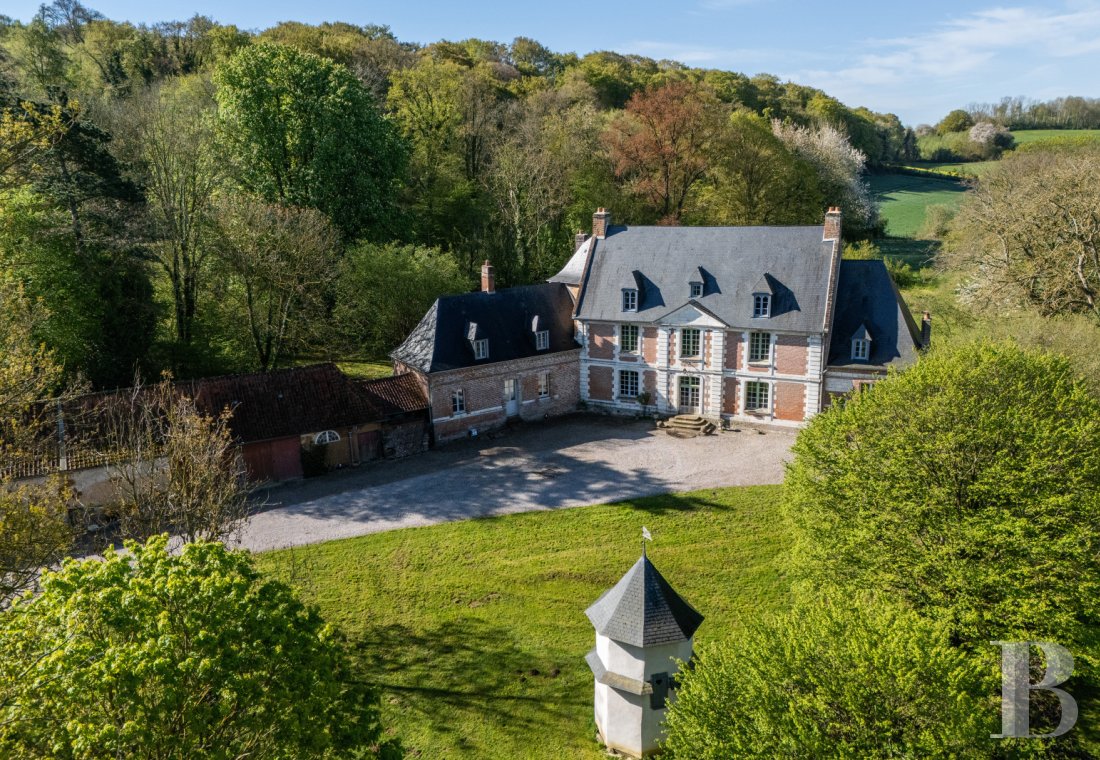
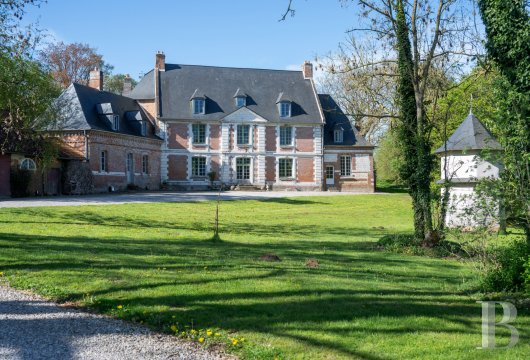
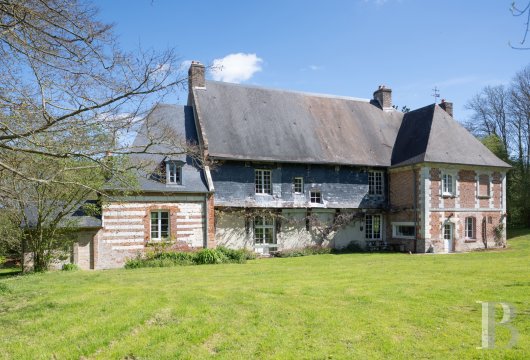
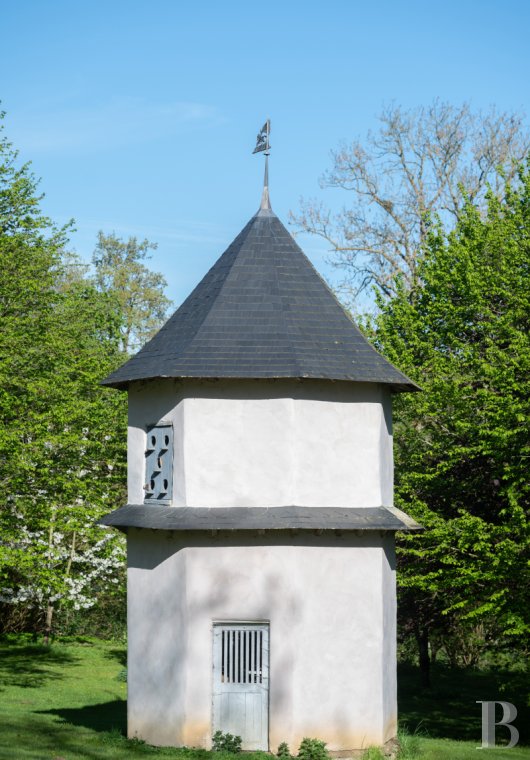
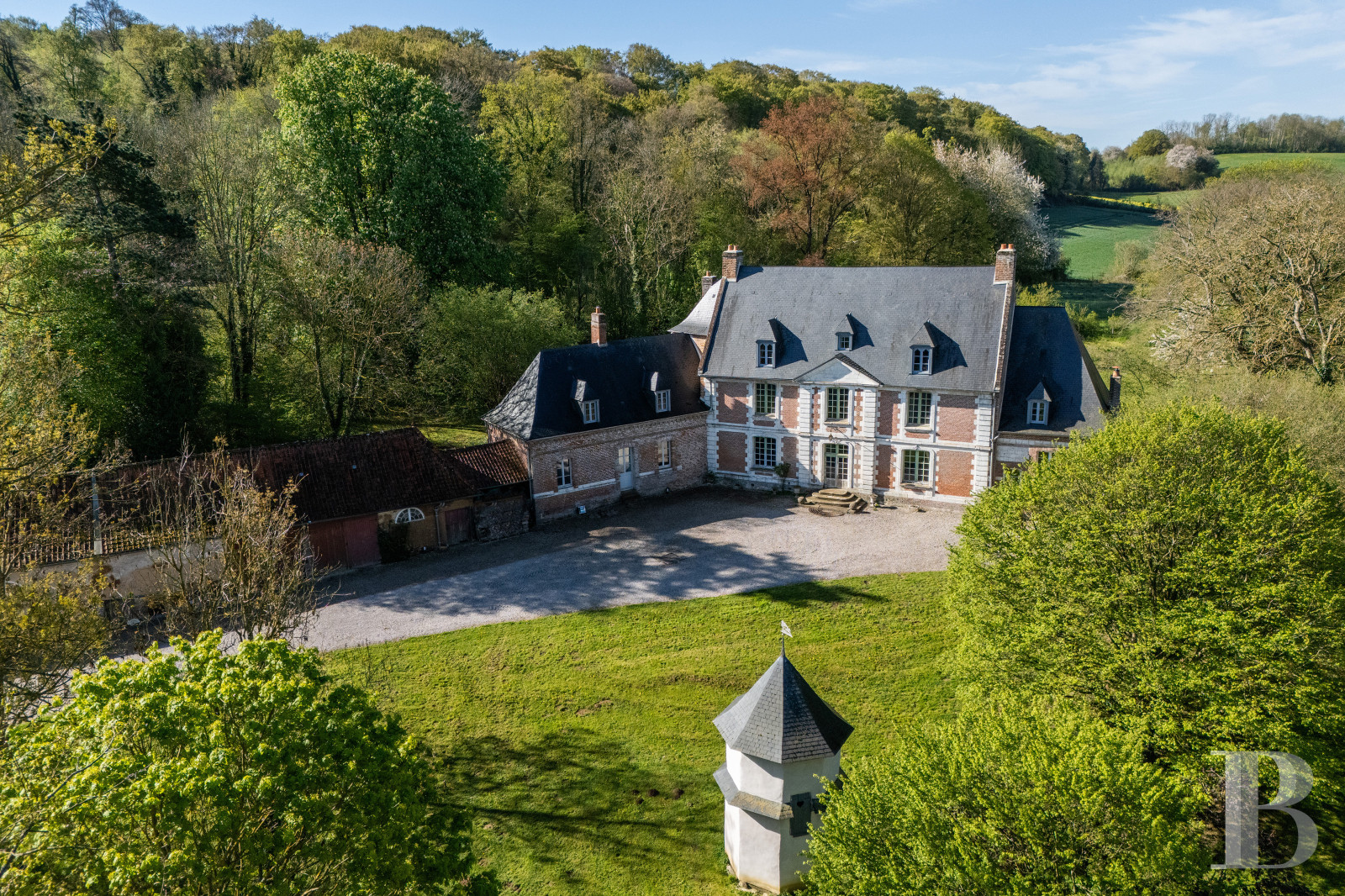
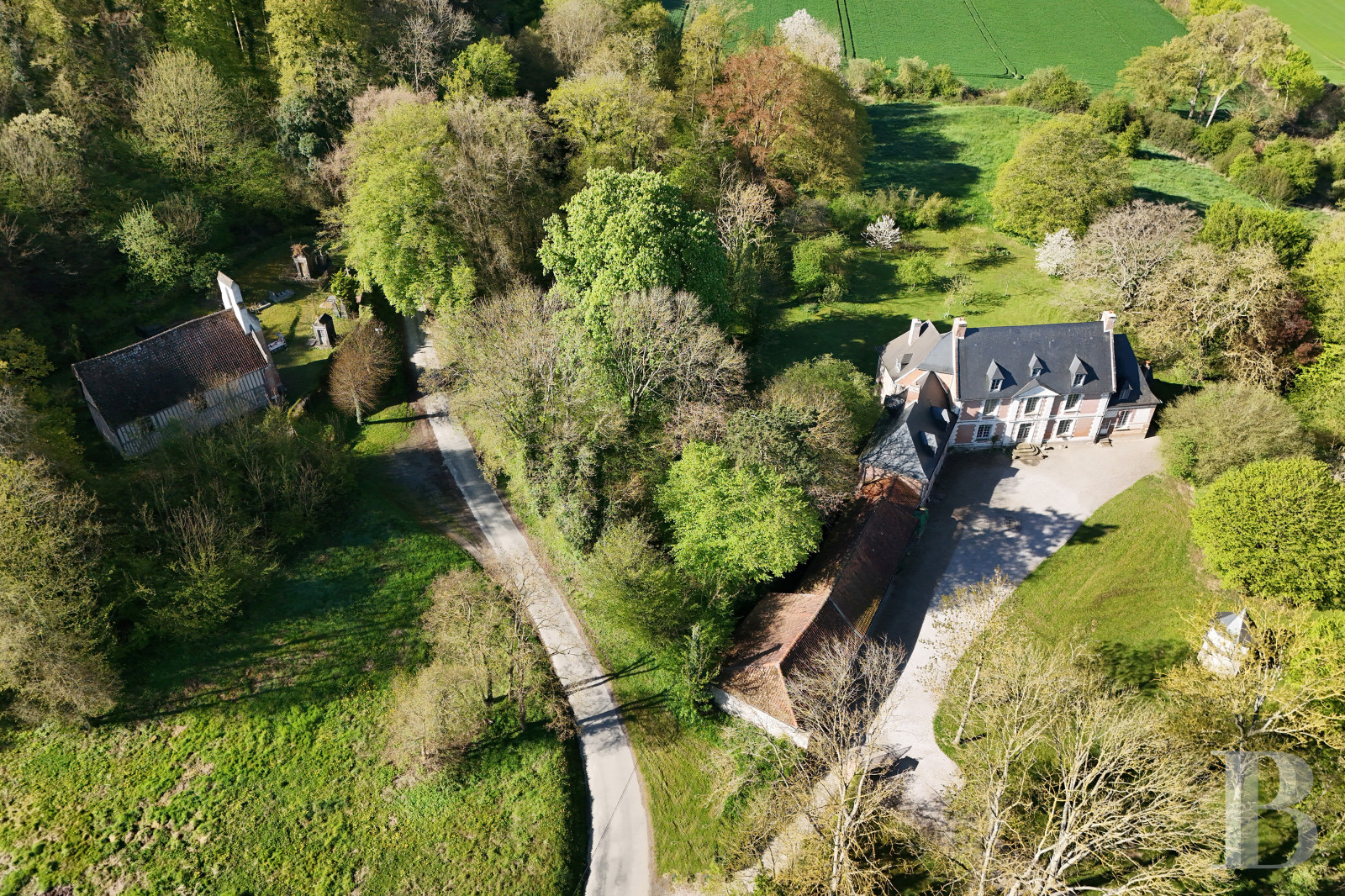
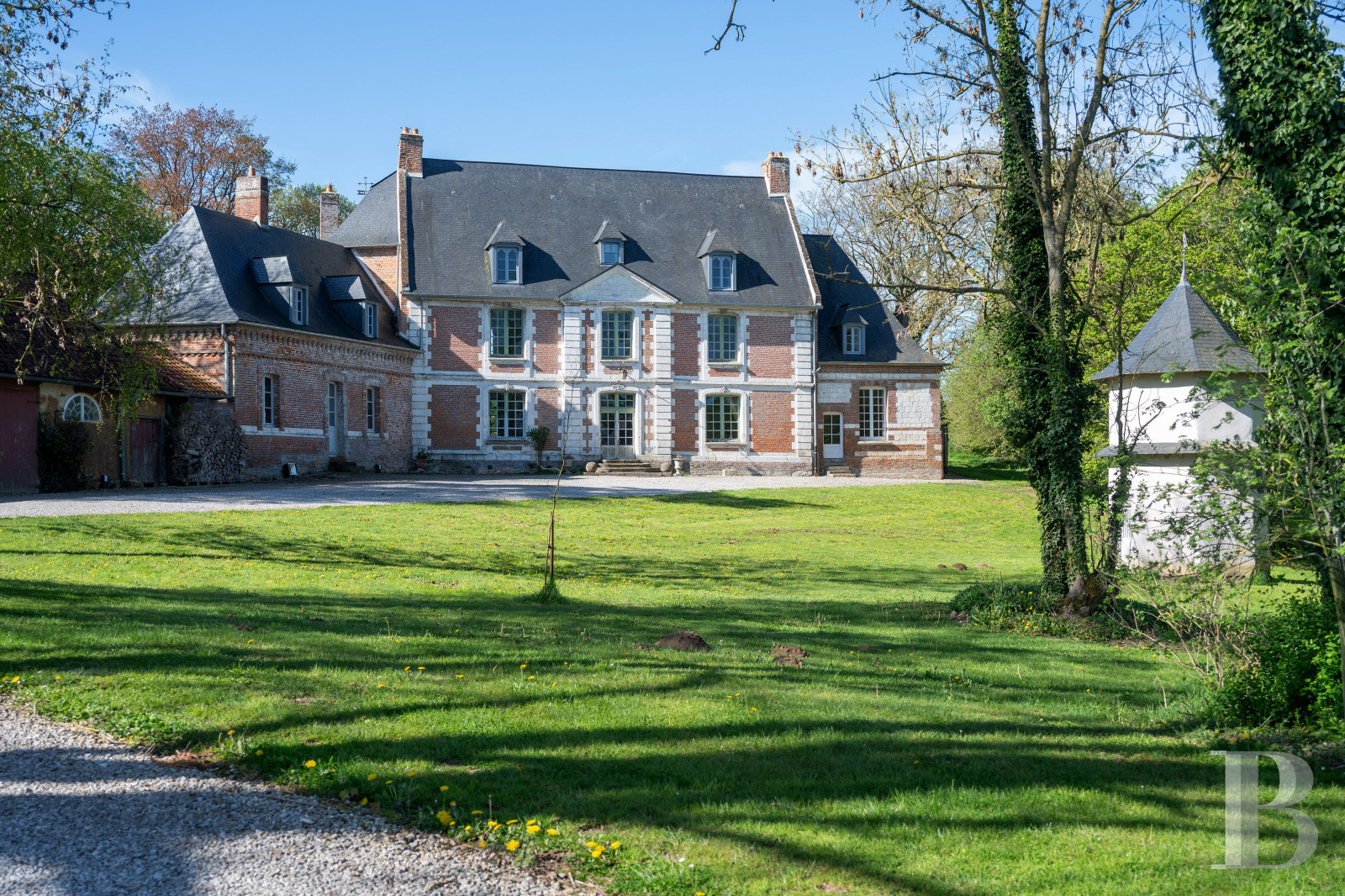
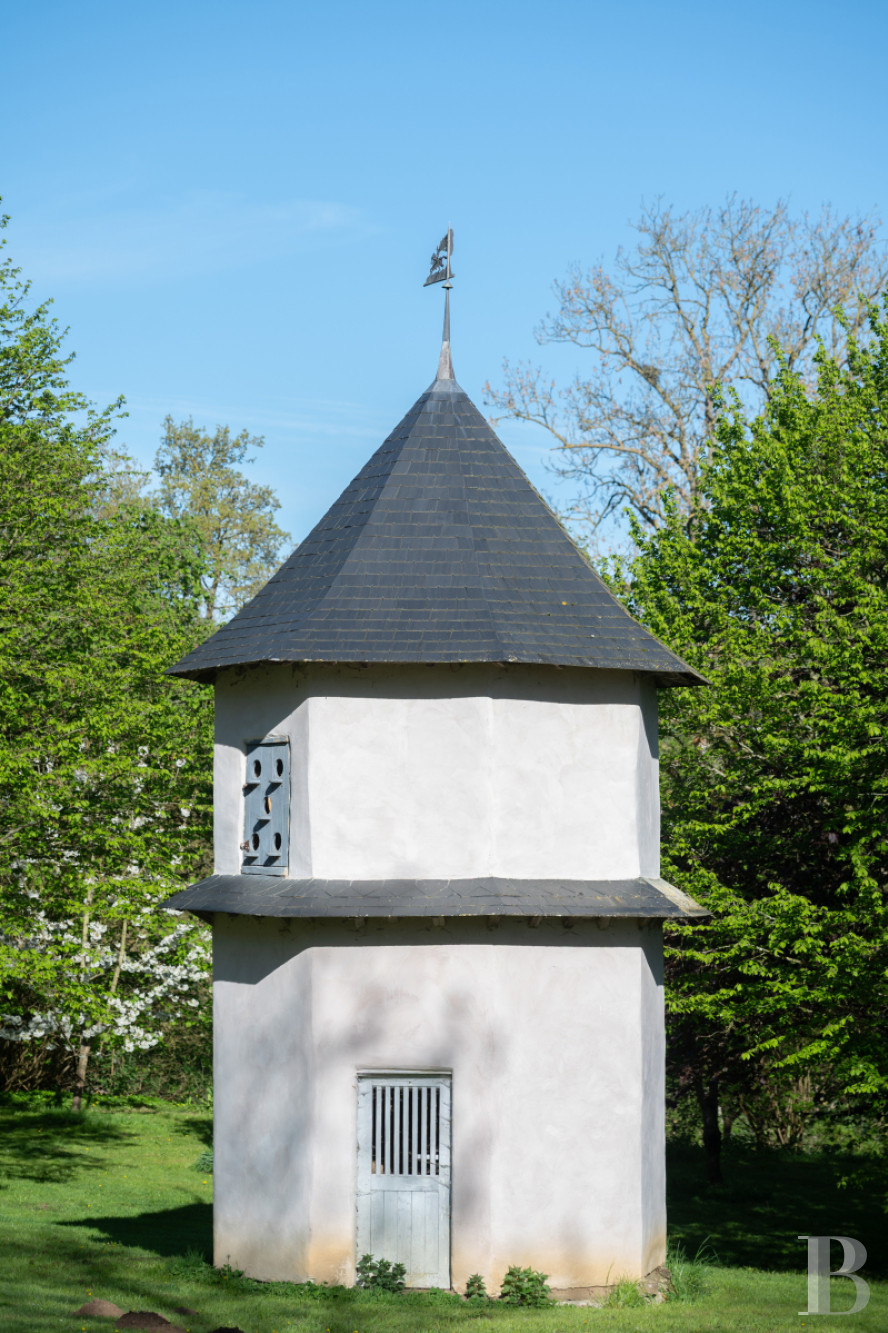
Screened from view and set on slightly rising ground, the chateau — classically composed and positioned at the edge of a wood — looks out over fields and open ground beyond the hamlet's rooftops. Lawns and ornamental trees form a verdant setting on all sides. A 15th-century dovecote, fully restored, stands on the main lawn, its polygonal silhouette a distinctive presence.
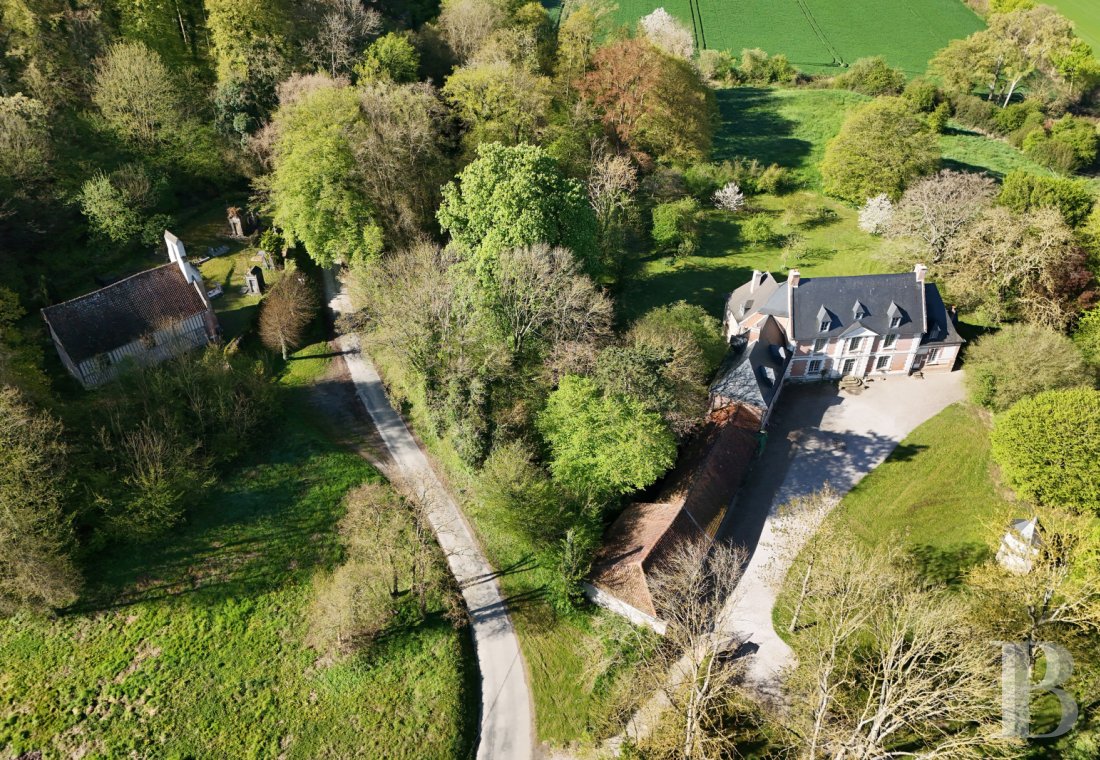
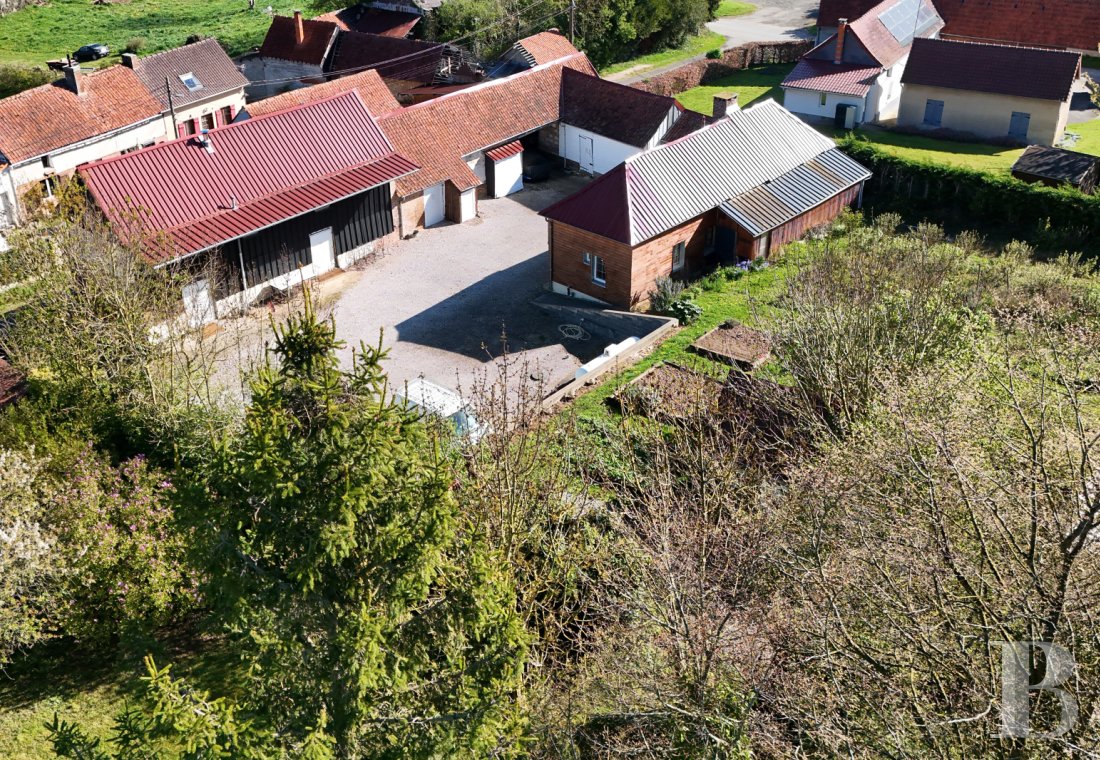
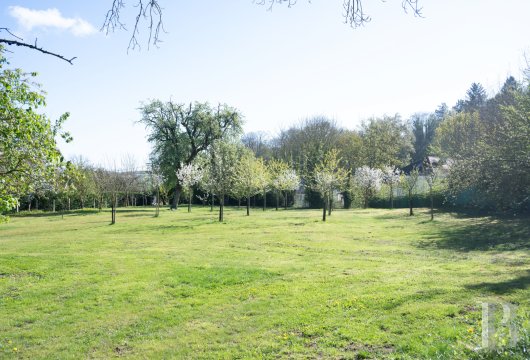
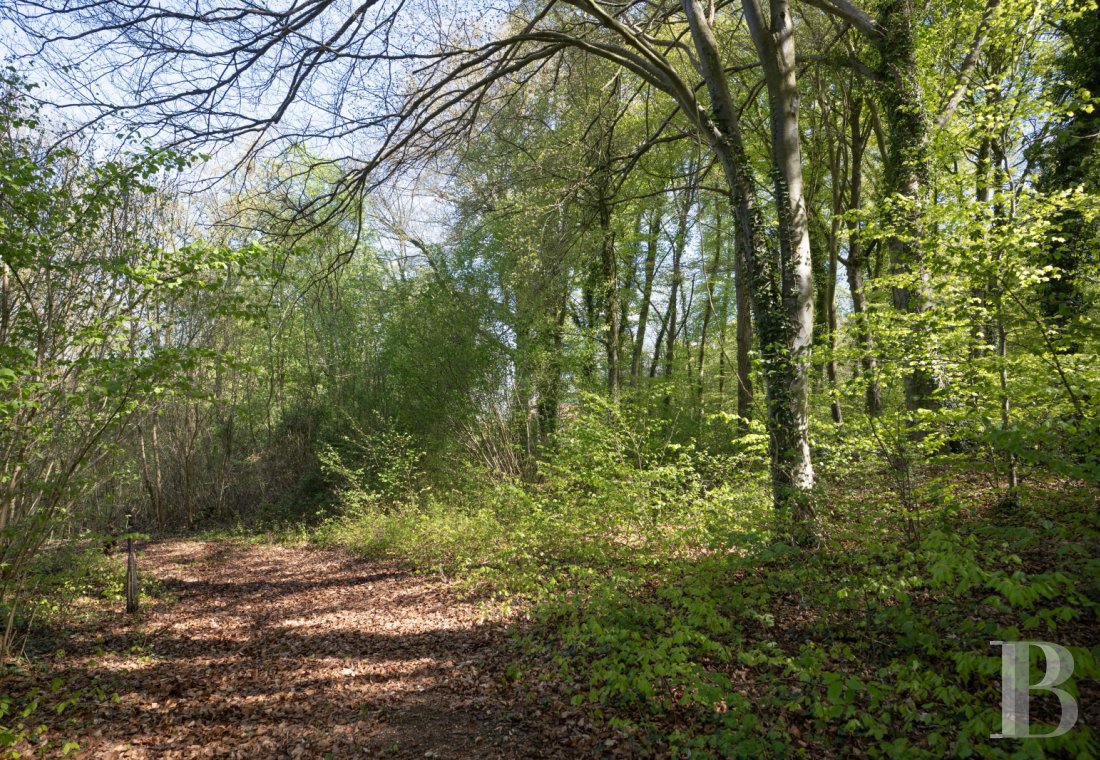
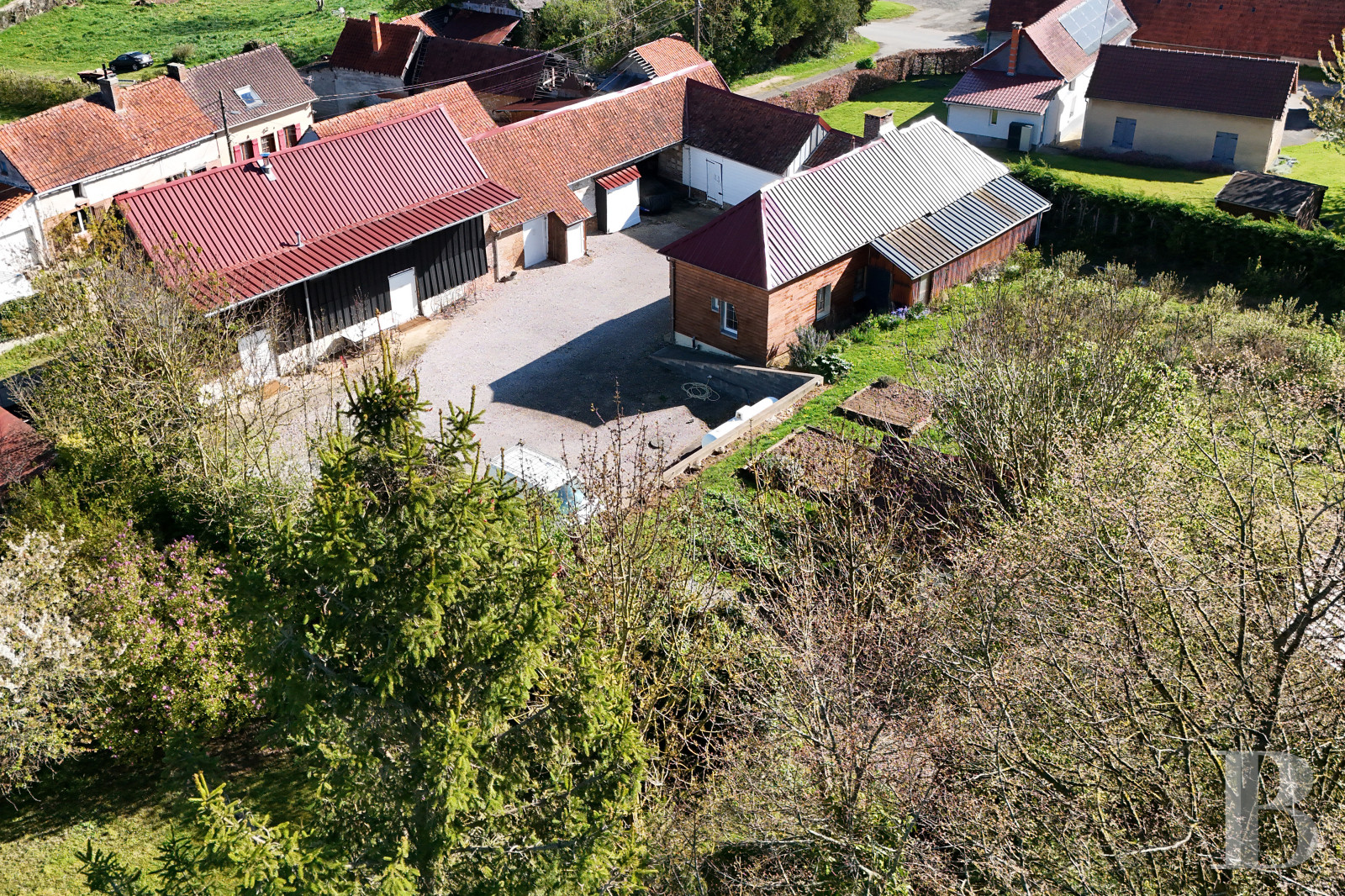
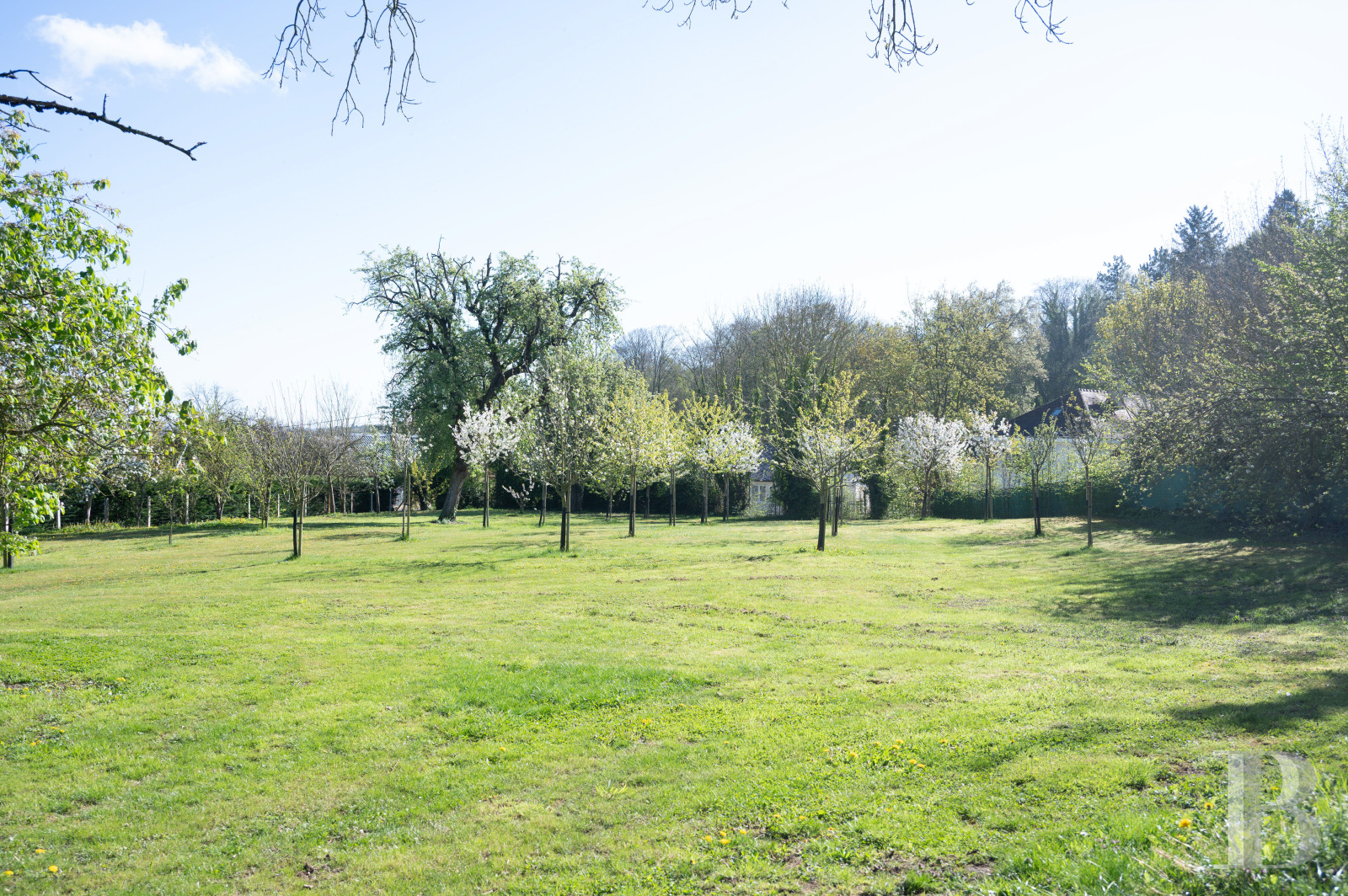
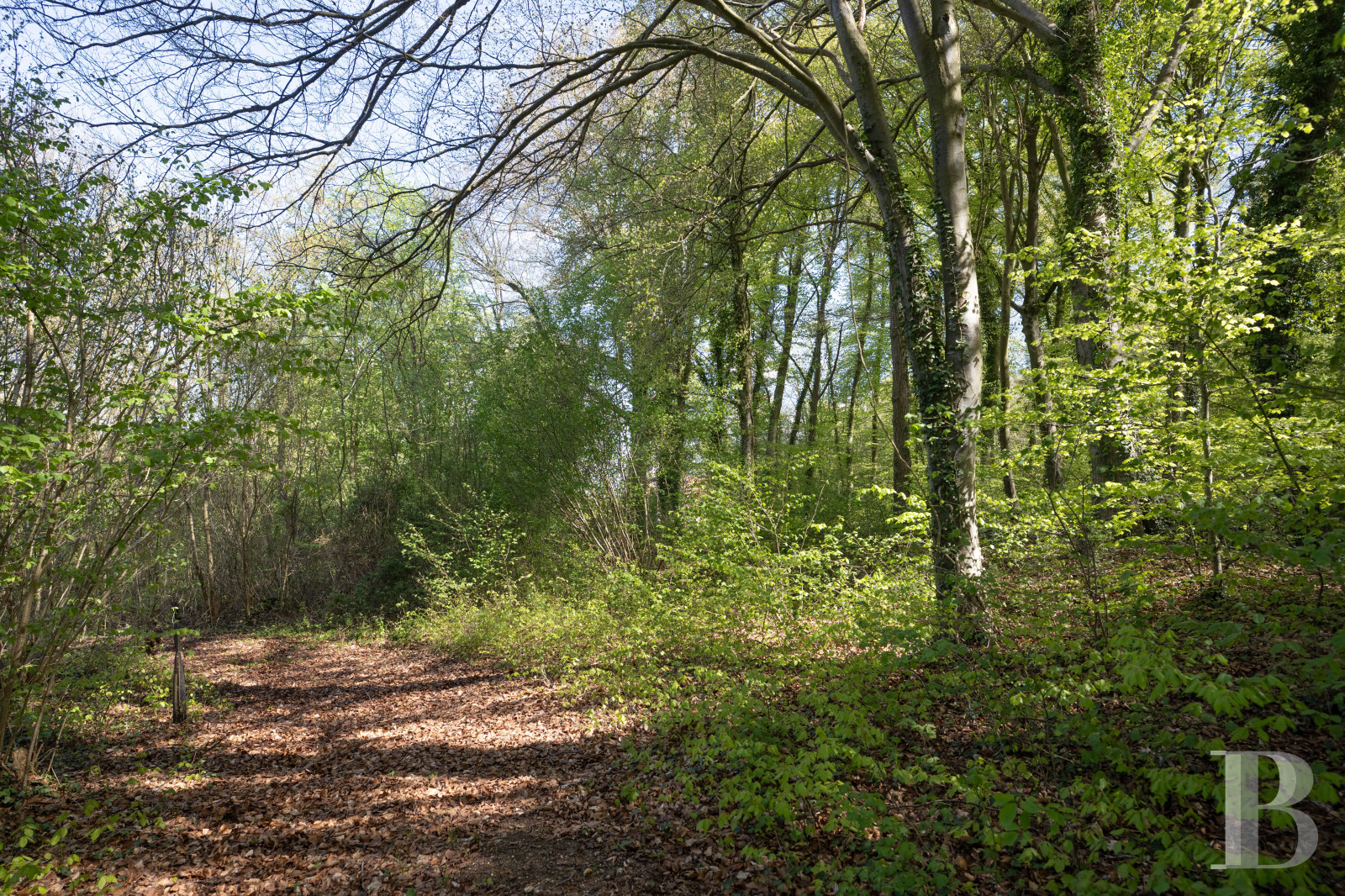
Several outbuildings complete the estate: the service quarters adjoin the main house, while at the far end of the park, on lower ground, a former farm — now converted into a distillery — and a caretaker's house offer the possibility of independent use. The park, of around 3 ha, surrounds the buildings. It comprises extensive lawns leading to an orchard planted principally with apple trees, and a section of woodland.
Several outbuildings complete the estate: the service quarters adjoin the main house, while at the far end of the park, on lower ground, a former farm — now converted into a distillery — and a caretaker's house offer the possibility of independent use. The park, of around 3 ha, surrounds the buildings. It comprises extensive lawns leading to an orchard planted principally with apple trees, and a section of woodland.
The chateau
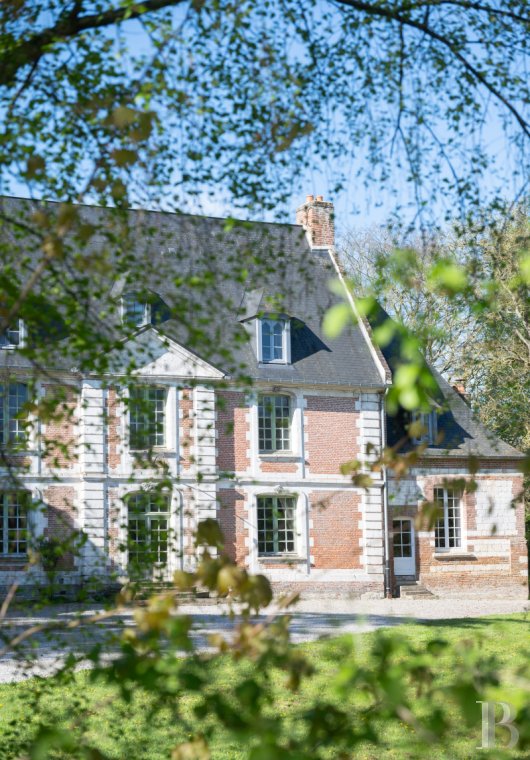
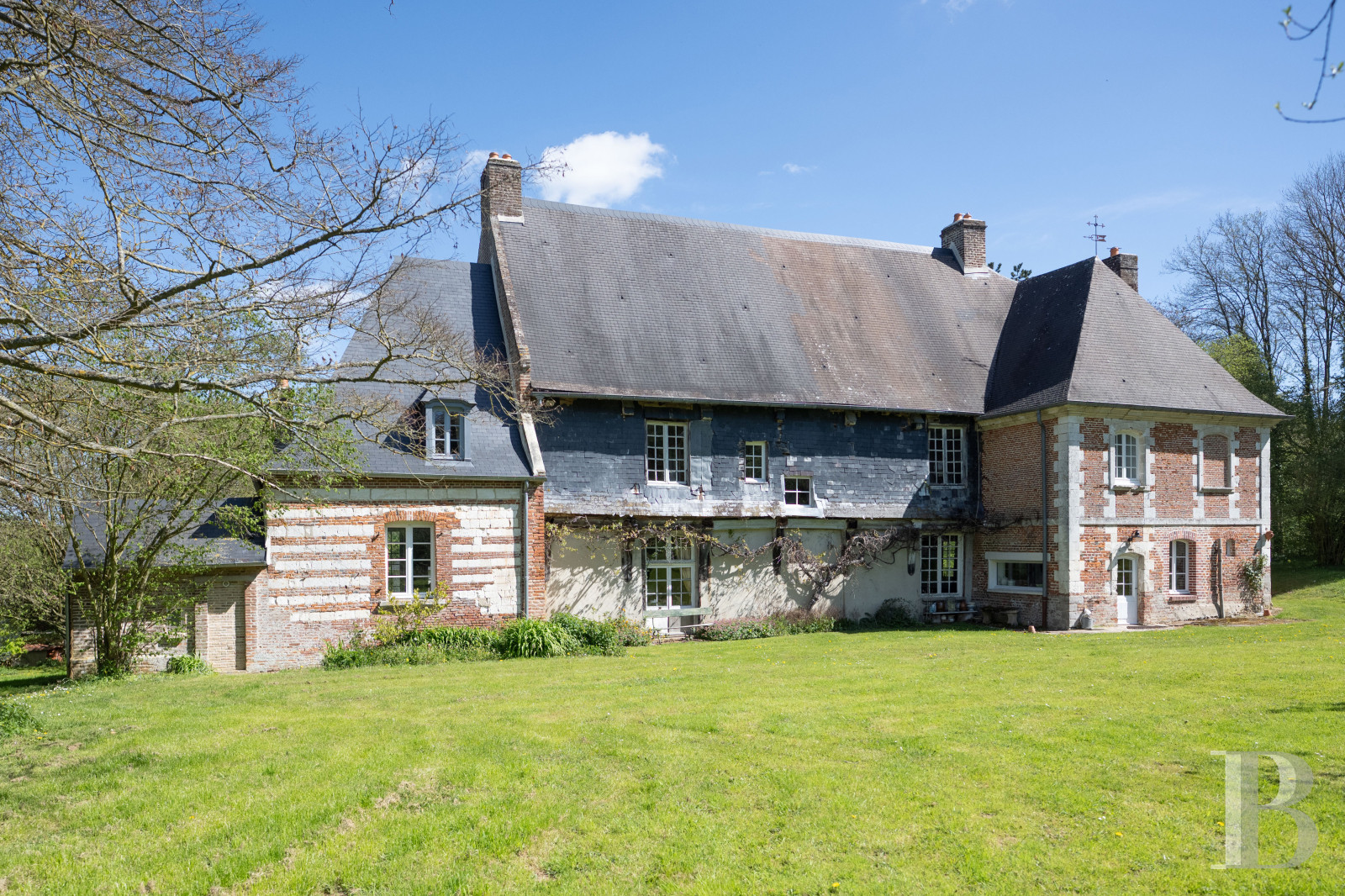
Listed as a historic monument, the chateau traces its origins to a 13th-century medieval lordship, still legible in certain surviving sections. A 15th-century timber-framed and cob manor house followed, of which several elements remain. The present character was established in the 17th century, when the addition of a brick and stone facade marked a decisive shift toward classical architecture.
Further work in the 17th and 18th centuries brought wooden panelling, decorative interiors and new proportions — all without disturbing the underlying structure. The accumulation of these successive periods gives the building a rare architectural depth.
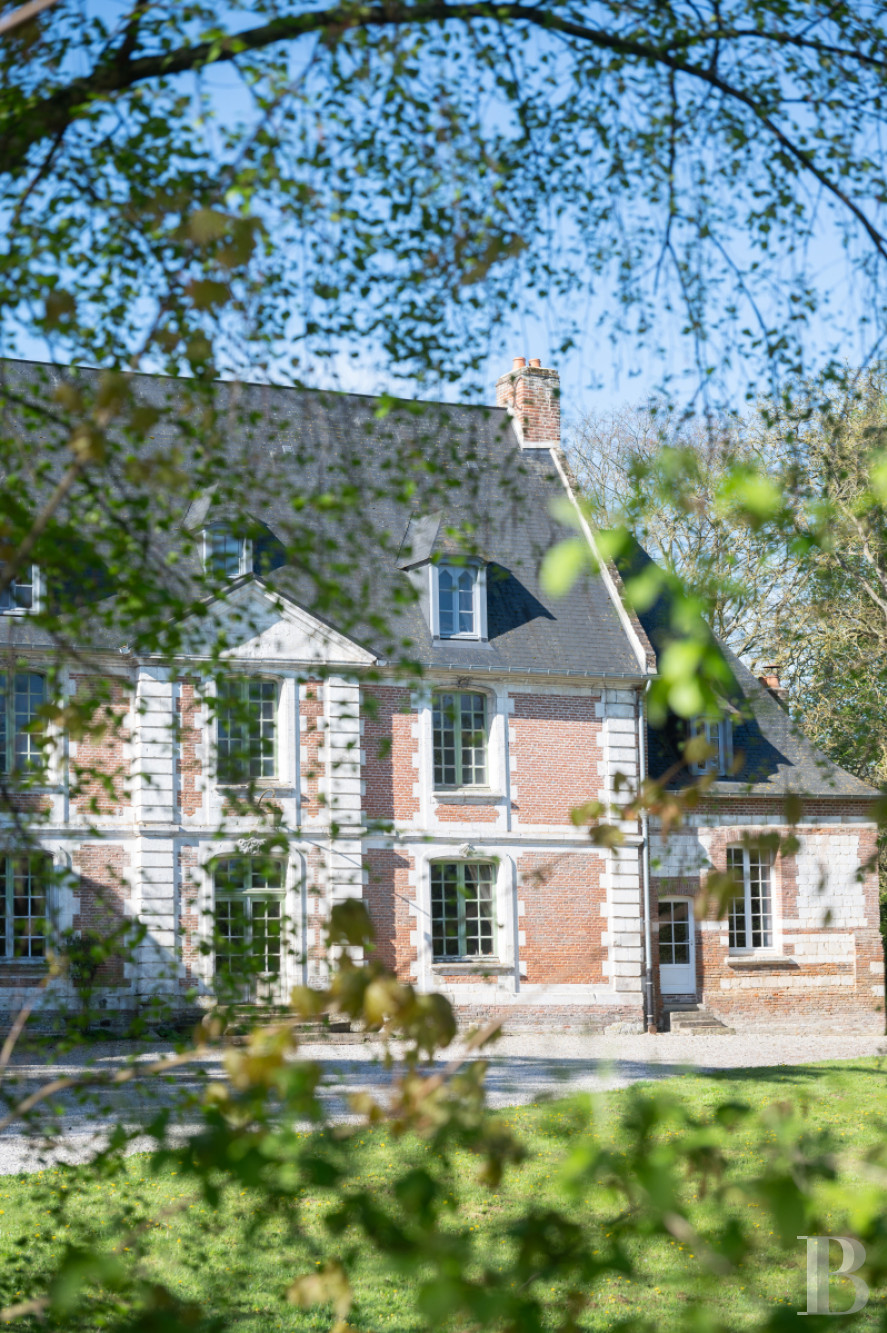
Entry is through an ornate wrought-iron gate flanked by brick piers, opening onto a gravelled courtyard. Tall windows bordered by stone quoins punctuate the facade in regular bays. The slightly projecting central section extends into a lower wing and a building adjoining the end wall, which contains a self-contained apartment. A steeply pitched slate roof pierced with dormers crowns the whole. The chateau comprises four bedrooms, two reception rooms and a dining room, with several further rooms awaiting conversion.
The ground floor
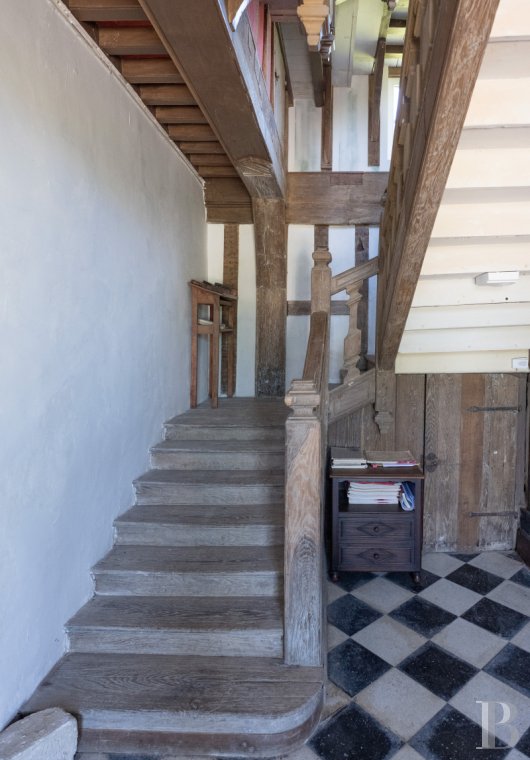
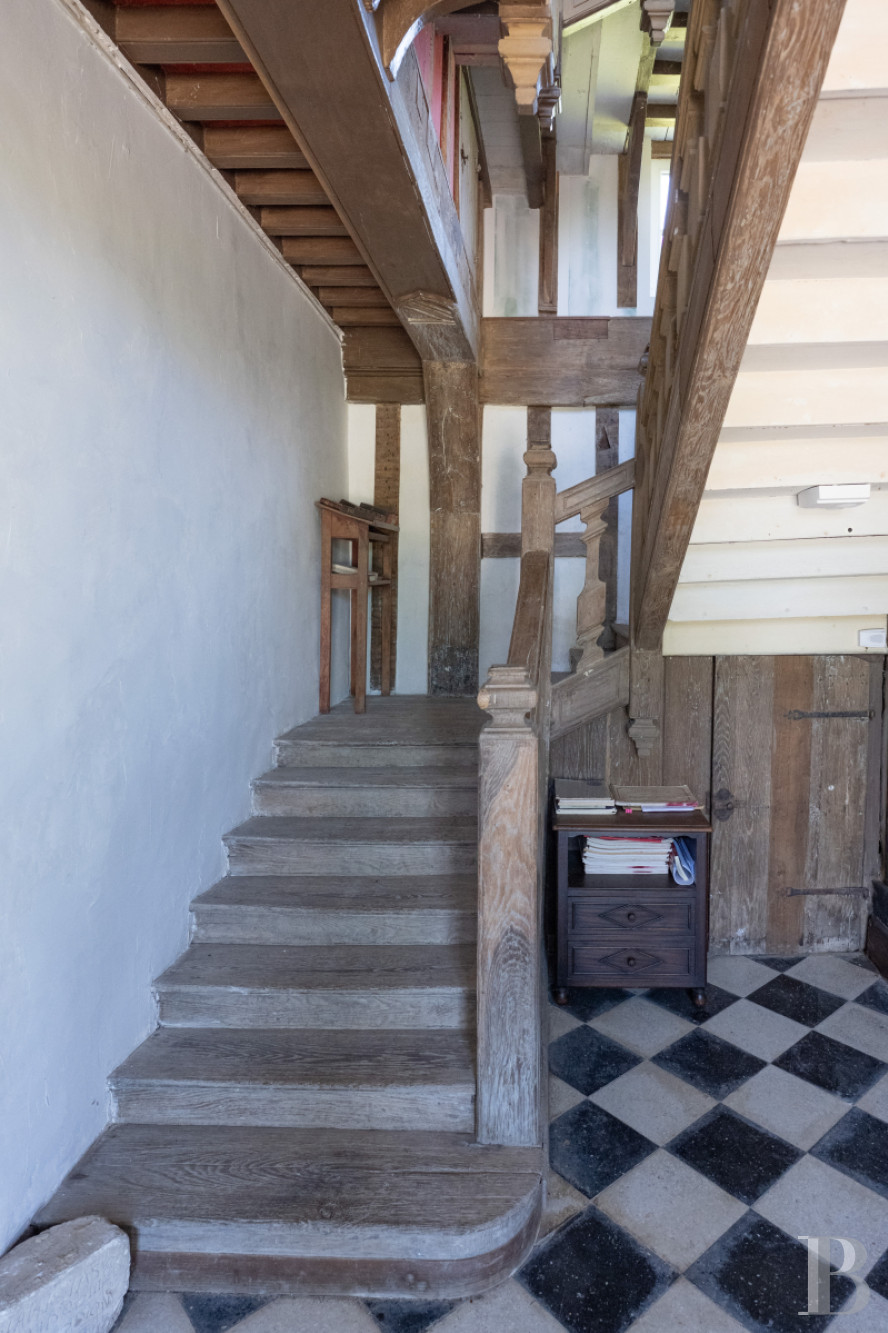
Reached by a perron, entry is through a glazed door whose stone surround is crowned by a carved scallop shell. The vestibule beyond rises to a generous ceiling height; its floor is laid in black and white chequerboard and its walls retain exposed timber framing. A Louis XIII-period wooden staircase with shallow treads rises to the upper levels.
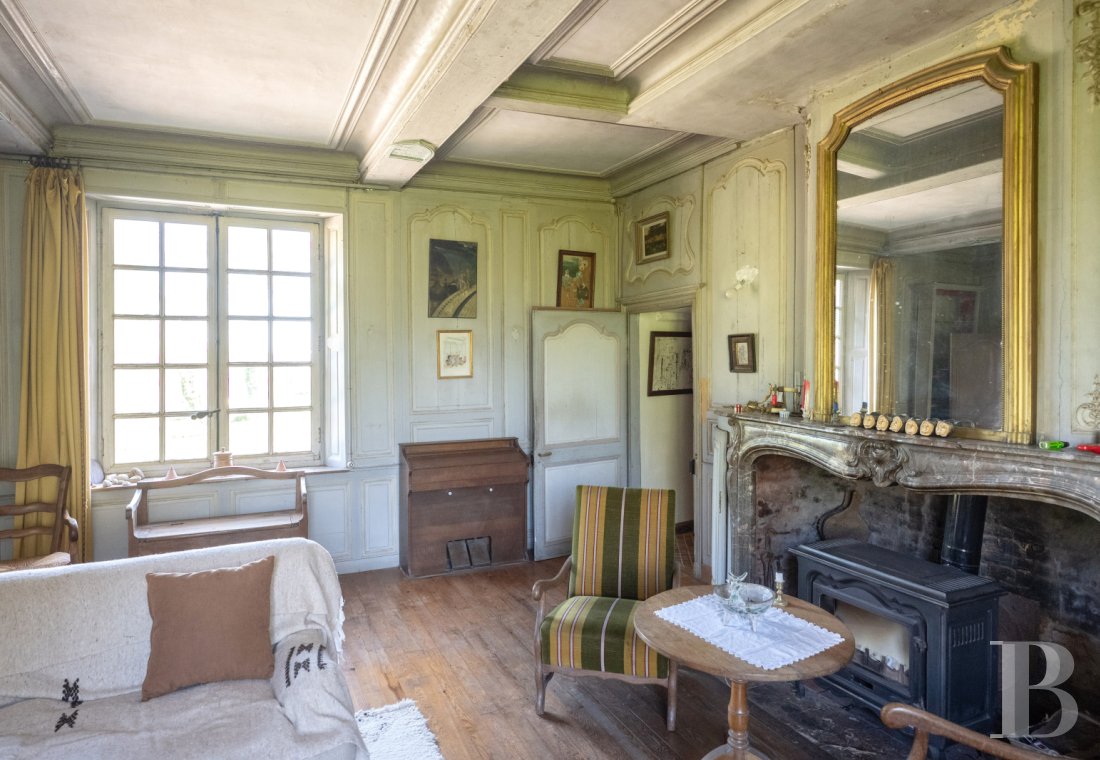
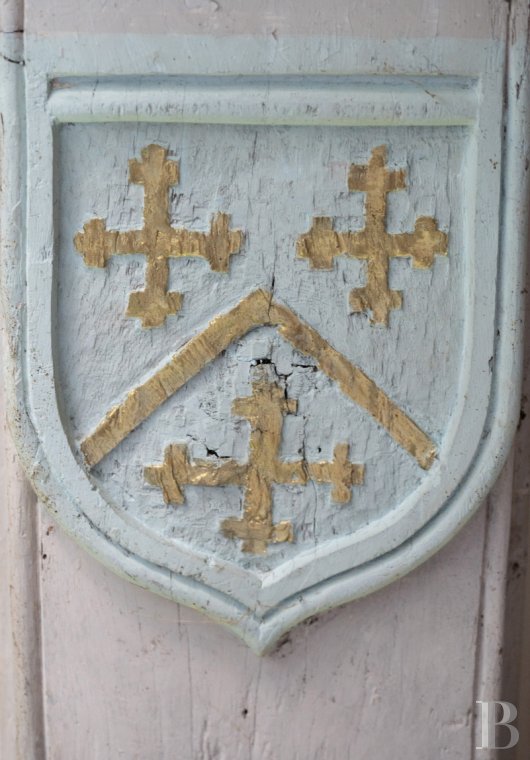
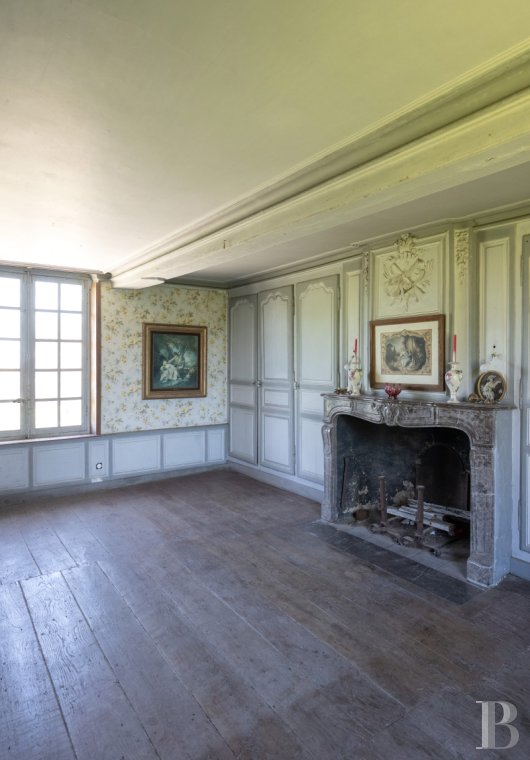
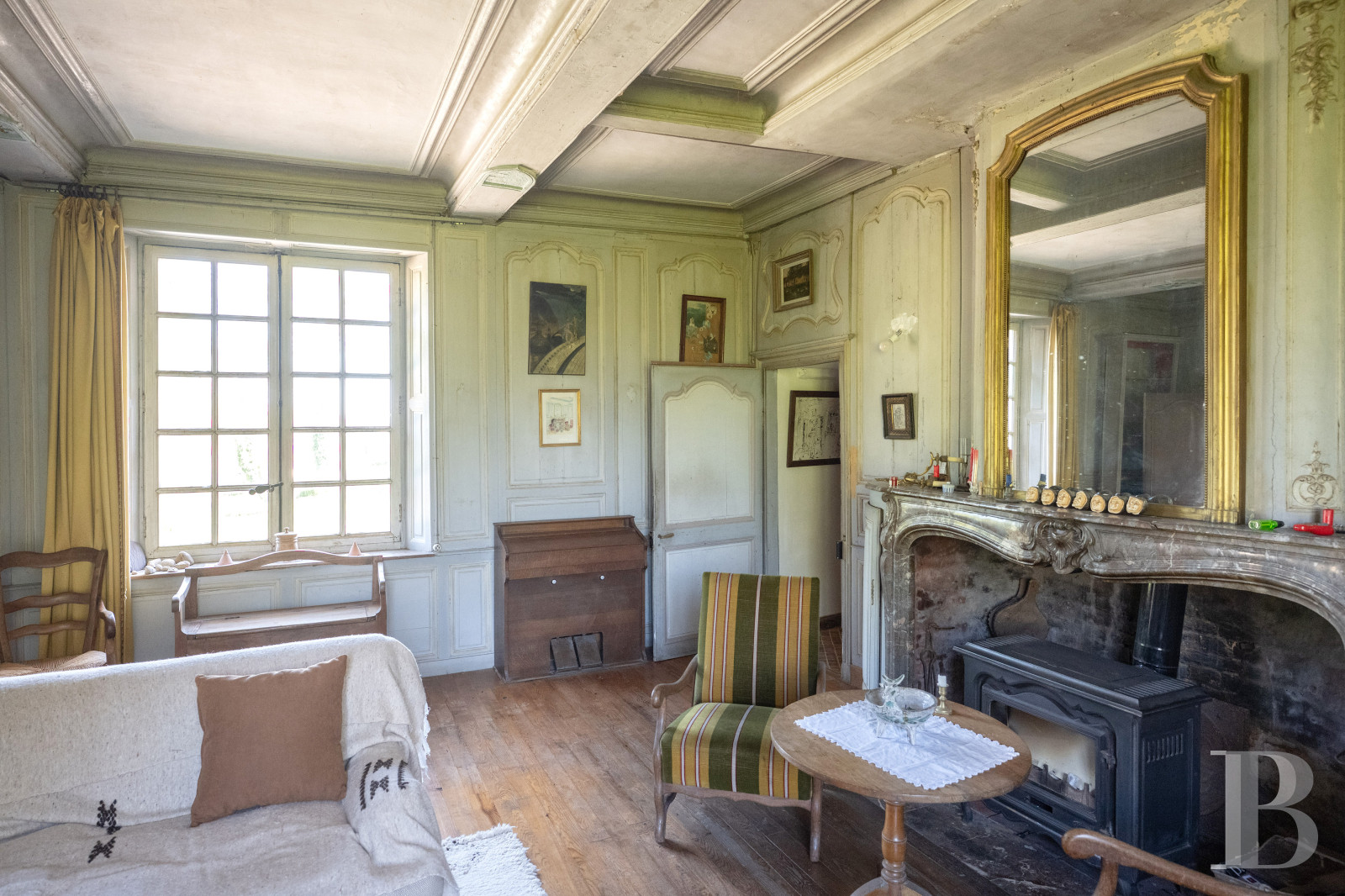
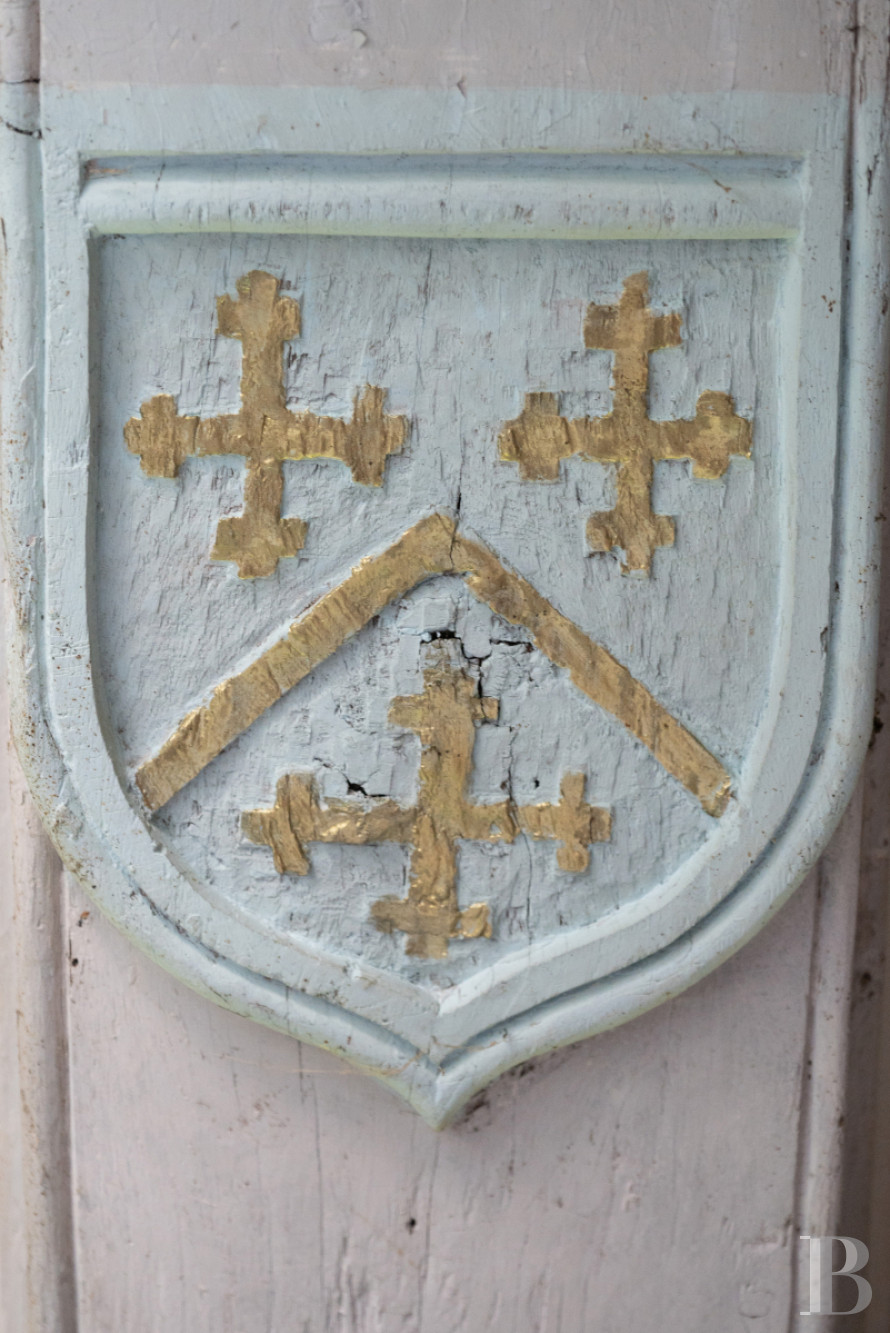
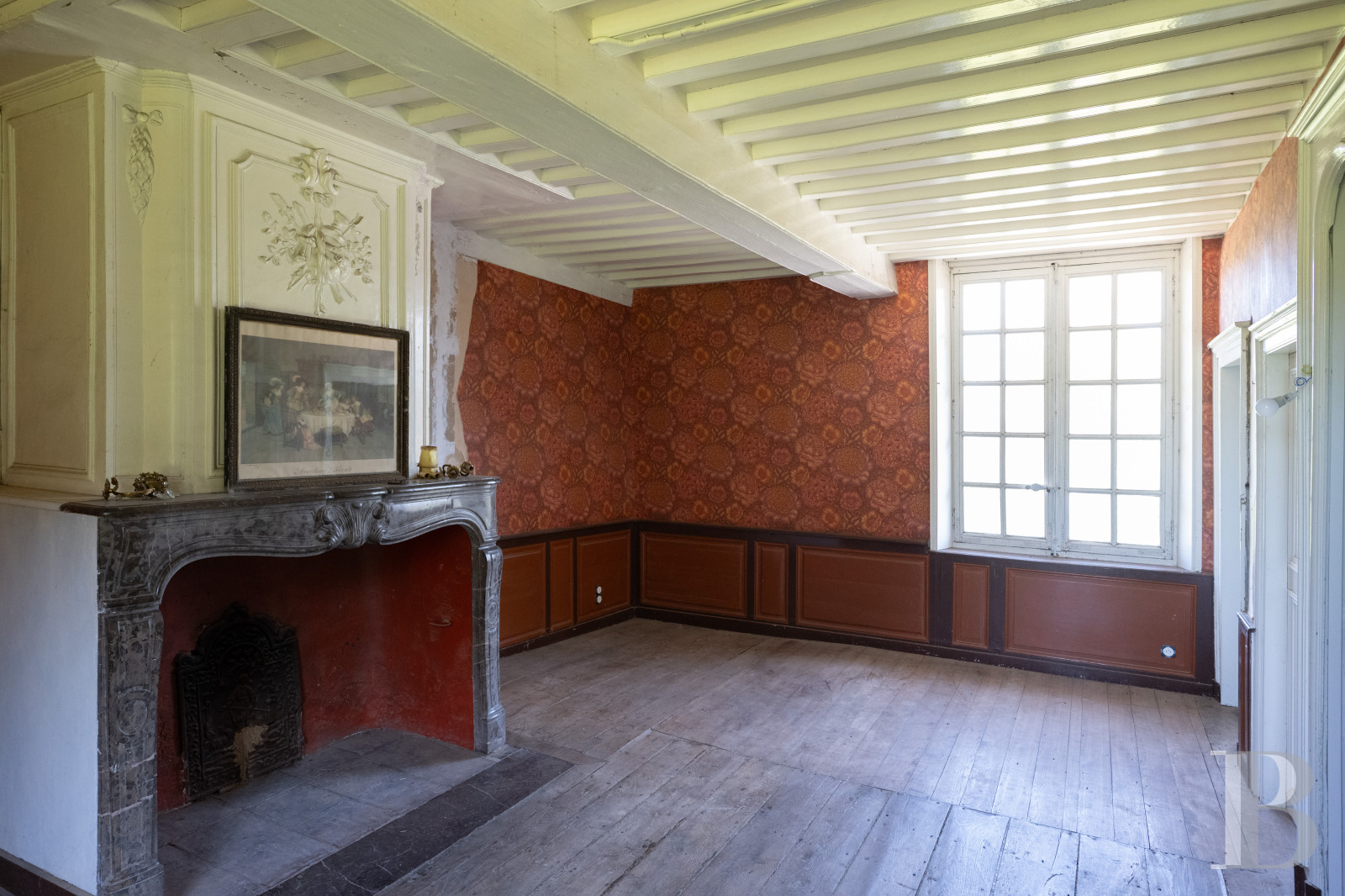
To the left, a first reception room enjoys dual-aspect light. A marble fireplace, 18th-century panelled walls with mouldings picked out in contrasting tones, and a ceiling of exposed beams give the room considerable character. Several joists still bear traces of coats of arms chiselled away during the Revolution.
Beyond lies the oldest part of the chateau, now fitted as a kitchen — the original 13th-century dwelling, beneath which the former dungeons serve as a cellar. Brick and stone walls, vaulting and original openings have all been preserved. A long glazed bay, added more recently, overlooks the park and floods the room with light. The floor is laid with encaustic tiles in geometric patterns.
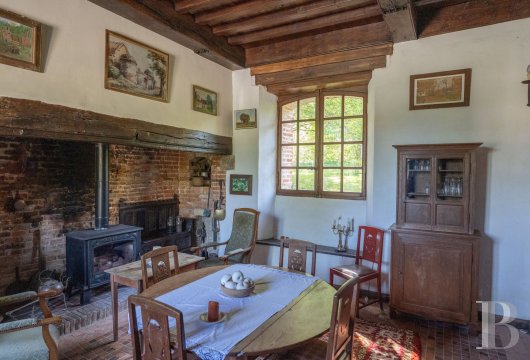
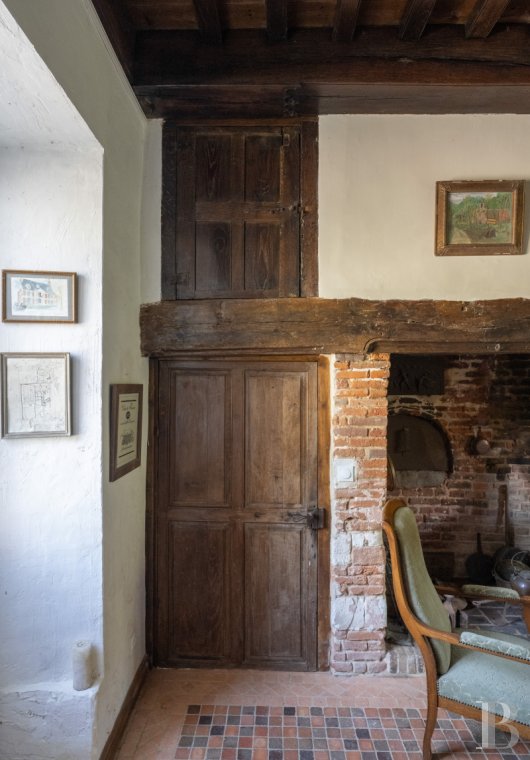
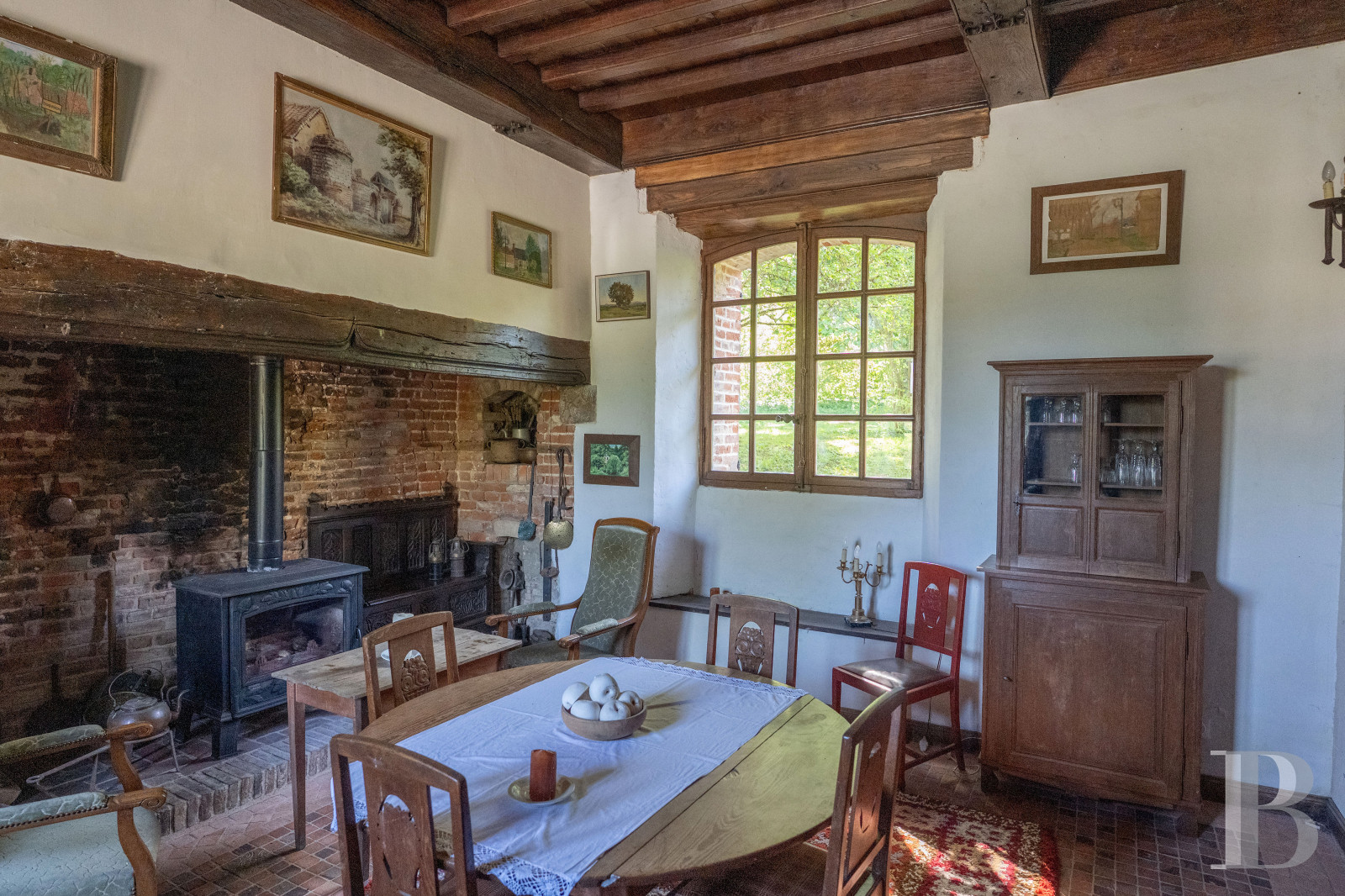
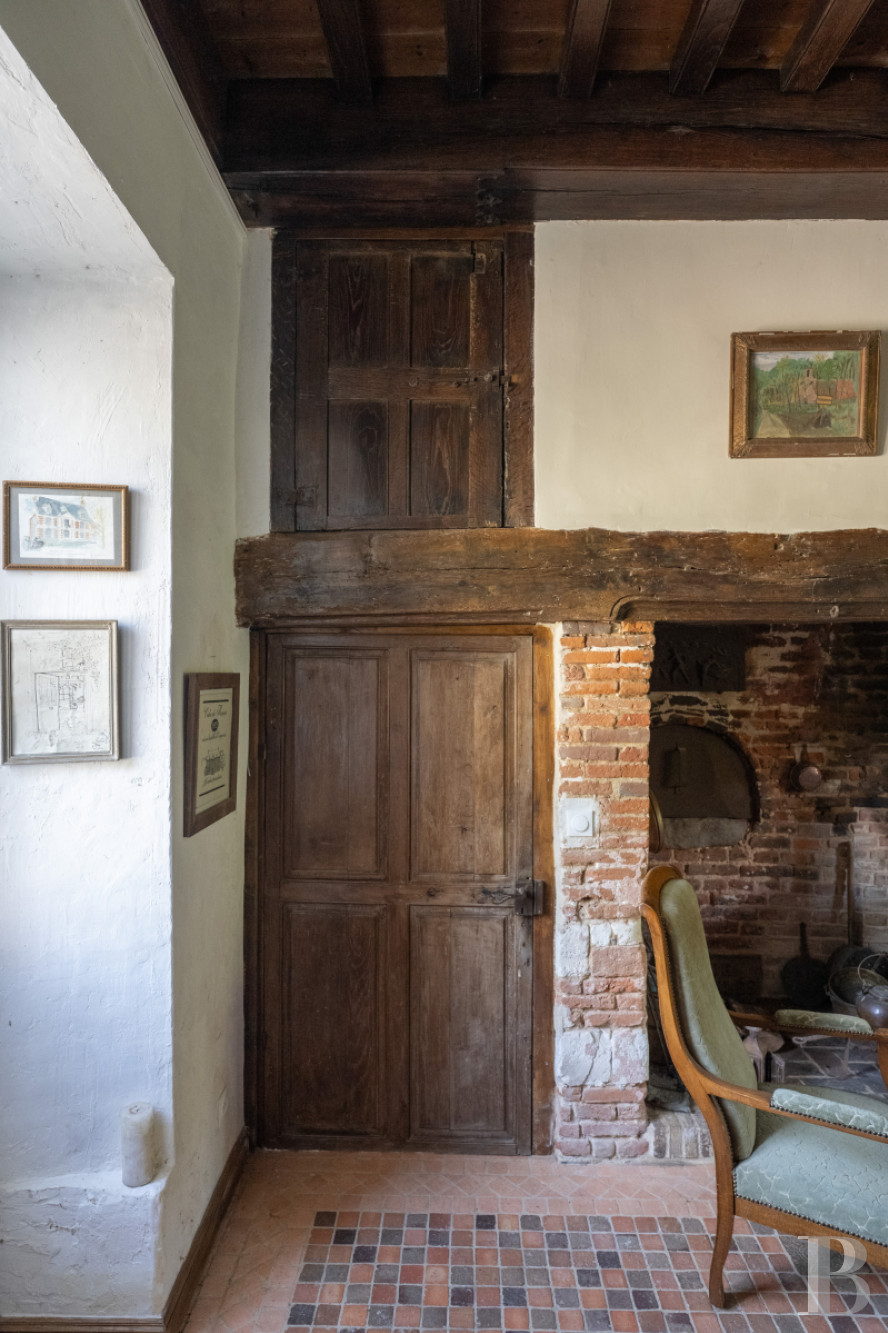
In the left wing, a small sitting room is arranged around a large brick fireplace. A concealed entrance formed by cupboard doors leads through to the kitchen, where a bread oven and stove occupy the hearth. The ceiling has exposed beams; the floor, square terracotta tiles. The room connects to a more rustic space with brick walls — still to be put to use — from which a passage descends to a medieval cellar.
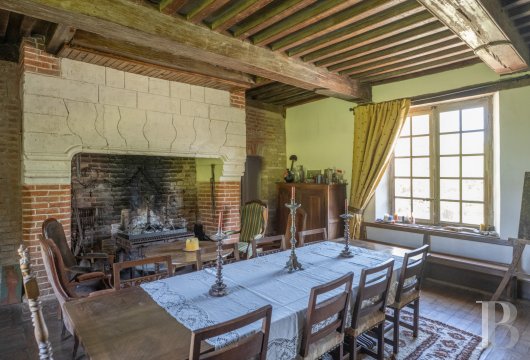
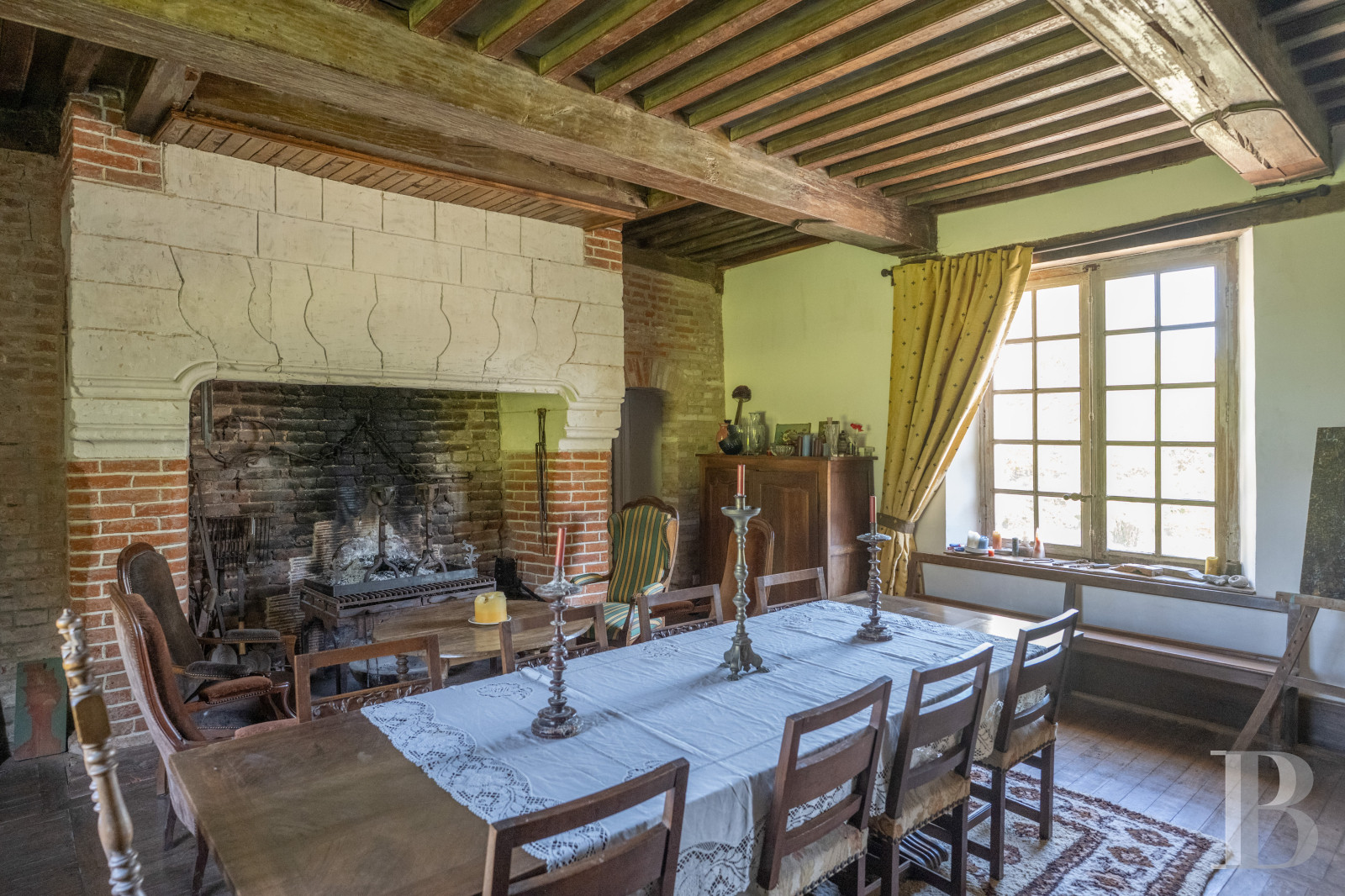
To the right of the entrance, the dining room is arranged around an imposing fireplace whose stone and brick mantel retains the piercings for the original roasting spits. Dual-aspect light, a French-style beamed ceiling, timber-framed and cob walls, and a floor of antique straight-laid parquet complete the room. It connects to a self-contained apartment in the right wing, also accessible from outside, comprising a large room with a kitchen, brick fireplace and terracotta-tiled floor, and above, a mezzanine bedroom under the roof with a bathroom.
The first floor
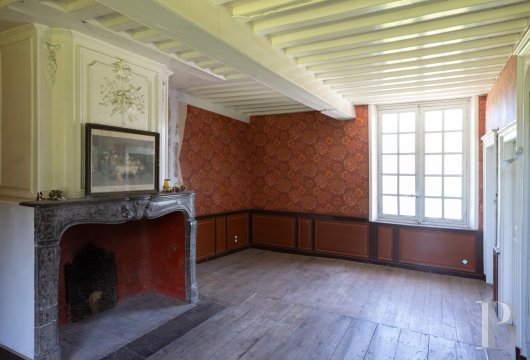
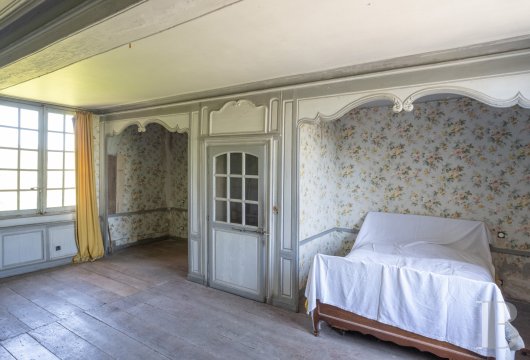
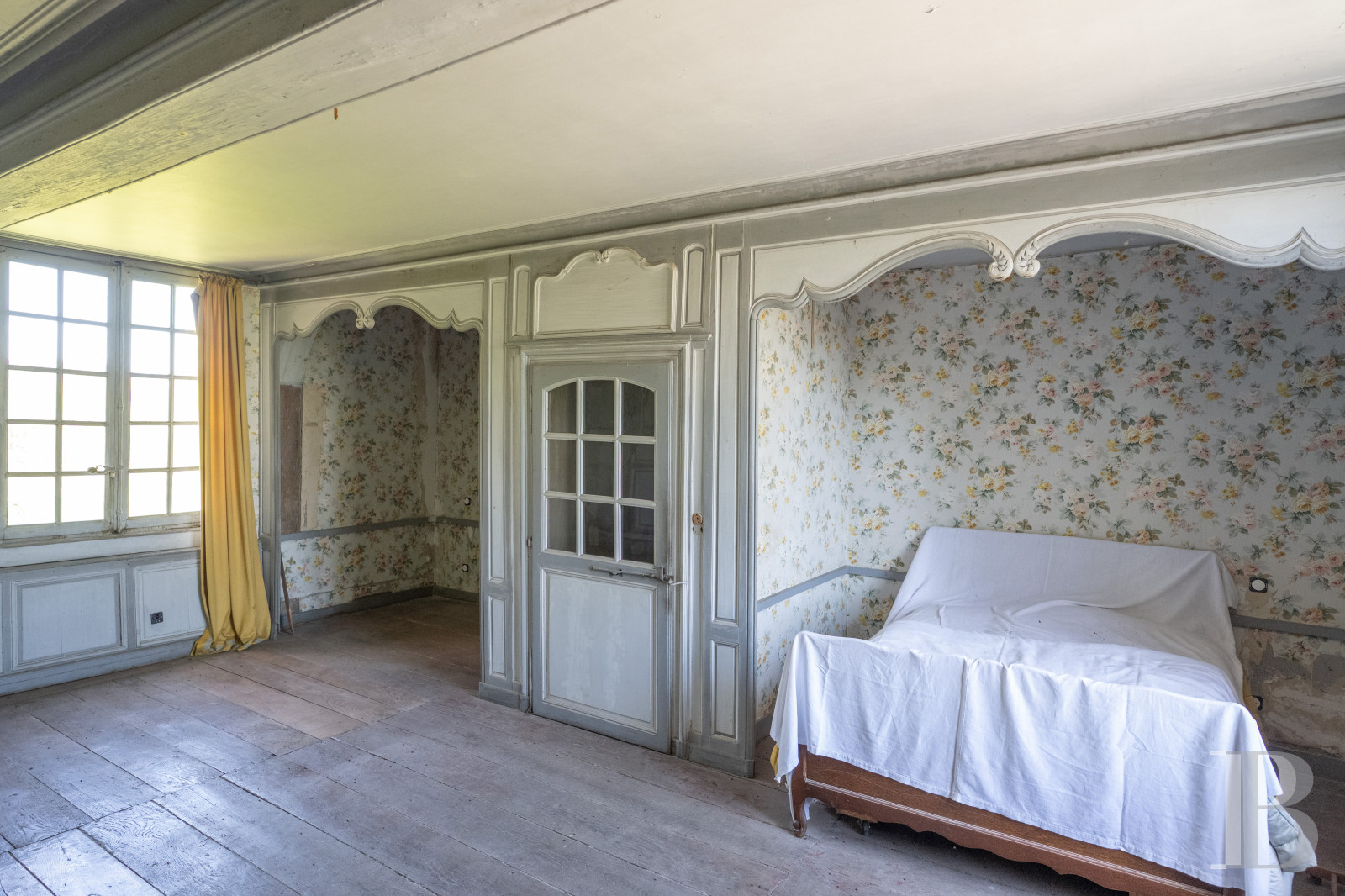
A wooden staircase with broad treads, turned balusters and a moulded handrail leads to a landing from which all rooms are reached. The first bedroom is lined with dado panelling and antique wallpapers, and has an open alcove and a marble fireplace. Two large windows make it very light; the ceiling carries painted exposed joists and the floor is wide-board parquet. A bathroom adjoins.
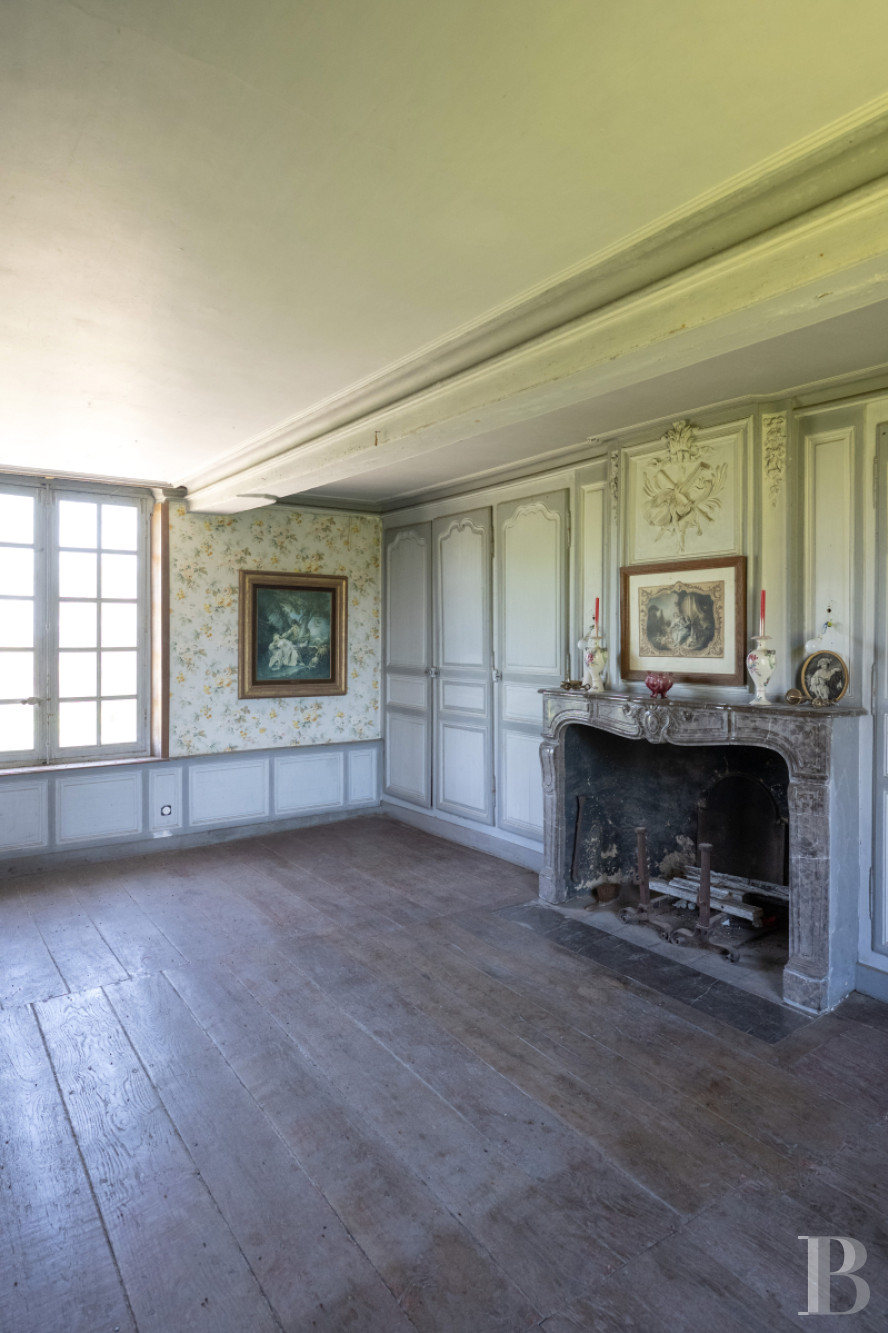
The second bedroom has a fireplace with a moulded mantel set into full-height panelling with decorative panels. A carved trumeau marks the room's central axis; two alcoves flank the door. The ceiling, painted, has exposed beams; the floor is antique wide-board parquet. The bathroom beyond connects to a third bedroom, simpler in character, with a fireplace surmounted by a trumeau, antique wallpapers and a small-paned window. The floor is antique parquet laid over a brick base. Additional floor area at this level offers scope for extension or reconfiguration.
The second floor
The top level extends across the full footprint of the chateau beneath an exposed frame of large-section antique timbers that reflect the original structure. Currently used as an attic, it remains to be converted and offers significant potential.
The outbuildings
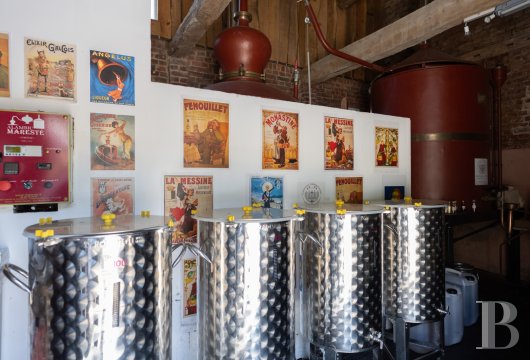
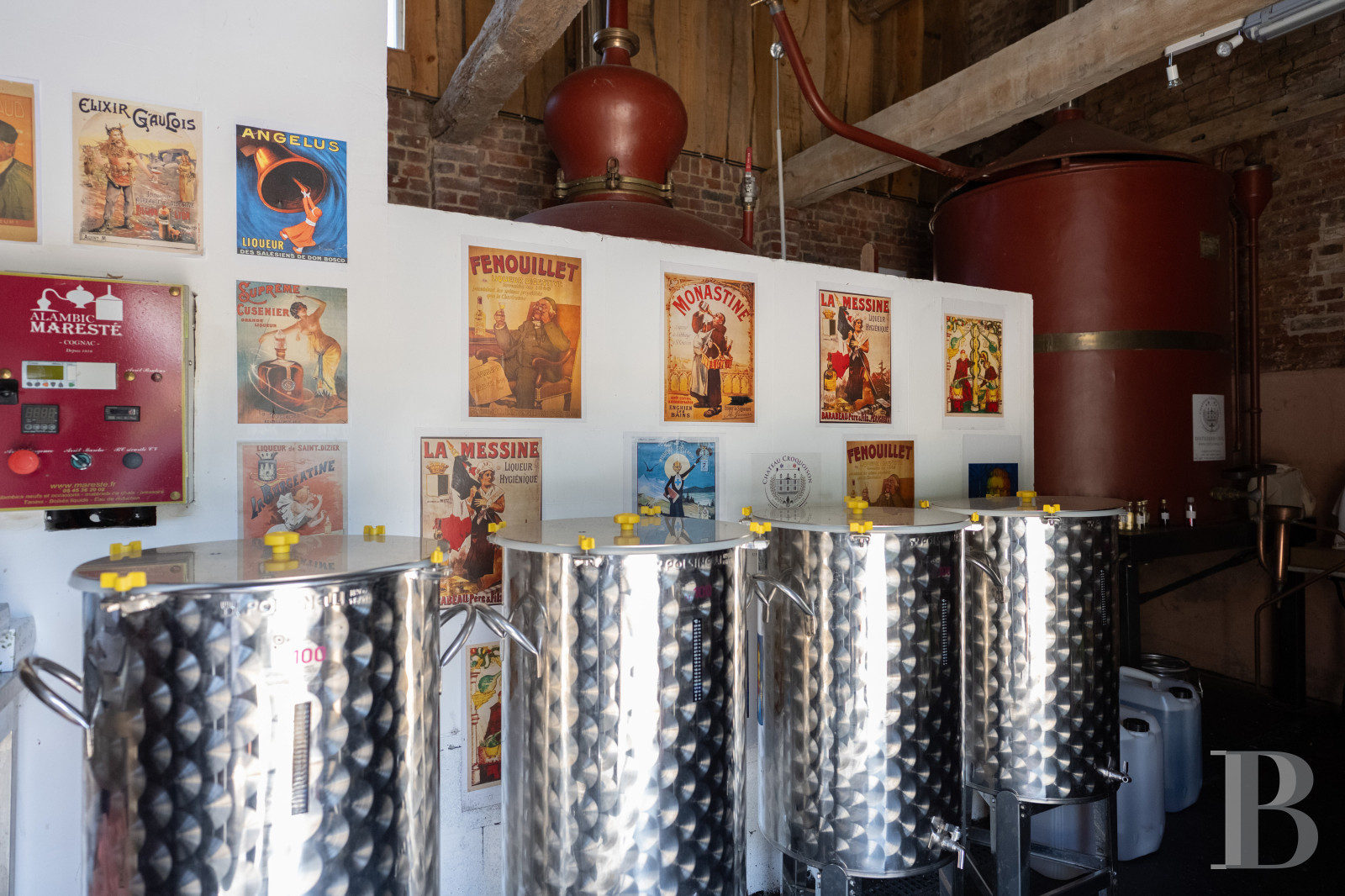
The chateau is extended by the service quarters, used for storage. A path runs through the park to the farm complex and the caretaker's house, which can be occupied independently. A distillery has been established in the former agricultural buildings. It is arranged in two distinct areas: a production room equipped with a still and vats, and a second fitted for reception and tasting. Further buildings surround the distillery, organised around a courtyard, provide additional space suited to a variety of uses.
The park
Covering around 3 ha, the grounds are laid out around the buildings in several distinct areas. An orchard of apple and pear trees occupies part of the grounds, extending into lawns and a denser belt of woodland along the boundary that forms a natural screen against the surrounding countryside. Near the chateau, an octagonal dovecote with a conical roof is a distinctive presence.
Our opinion
A chateau for those with a feeling for history — attentive to the original elements still in place and to what the estate can still become. Significant restoration has already been completed, roof and sanitary installations among them, and can be taken further to bring the estate to its full potential, at a level of comfort suited to contemporary use. The configuration lends itself to use as a family home or a hospitality project, and the outbuildings and distillery extend those possibilities further. An estate that belongs to a long continuum — to preserve, and to carry forward through time.
Reference 676575
| Main building floor area | 410 m² |
| Outbuildings floor area | 240 m² |
| Land registry surface area | 2 ha |
Information on the risks to which this property is exposed is available on the website: www.georisques.gouv.fr
Share


- Abbeville -
- Hauts-de-France -
- Picardy -
- Somme
NB: The above information is not only the result of our visit to the property; it is also based on information provided by the current owner. It is by no means comprehensive or strictly accurate especially where surface areas and construction dates are concerned. We cannot, therefore, be held liable for any misrepresentation.