



A remarkable property for events, accommodation and gastronomy in a corner of France
renowned for its natural beauty and art of living, 40 minutes from Toulouse and Montauban
renowned for its natural beauty and art of living, 40 minutes from Toulouse and Montauban
Gaillac,
TARN
midi-pyrenees
81600
FR

Location
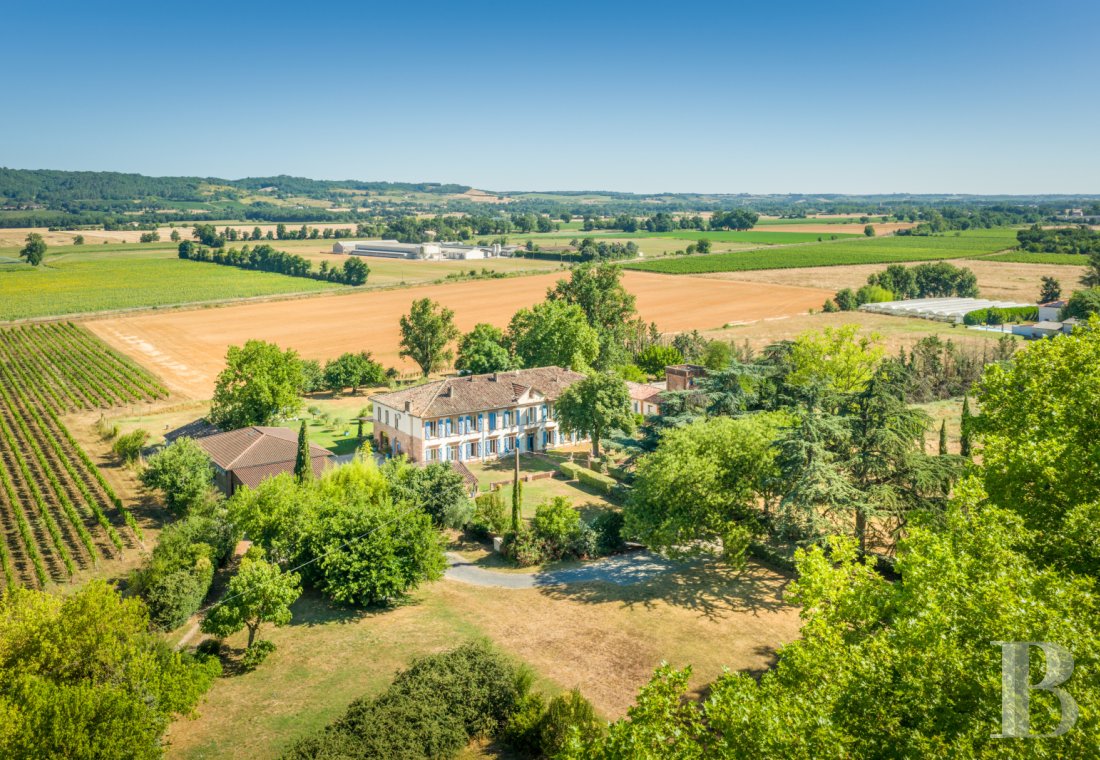
The property is nestled in the one of the most emblematic landscapes of France’s Tarn department, which draws countless visitors. Here, in south-west France, you find the undulating expanses of Gaillac vineyards, the enchanting silhouettes of medieval hilltop villages and the Gothic architectural splendour of the city of Albi. The hillside patchworks of vines, woods and crops are dotted with bastides – small, fortified towns that were built in south-west France in the Middle Ages – and with warm-toned brick dwellings. The nearby river, discreet yet vital, has irrigated this region for centuries. The area combines a certain art of living, which includes colourful open-air markets and summer festivals, with a wealth of built heritage, an example of which would be Albi, a charming episcopal city listed as a UNESCO World Heritage Site. You can get to the property easily. Albi and the town of Gaillac offer shops for everyday needs, while the city of Toulouse with its international airport is just 45 minutes away.
Description
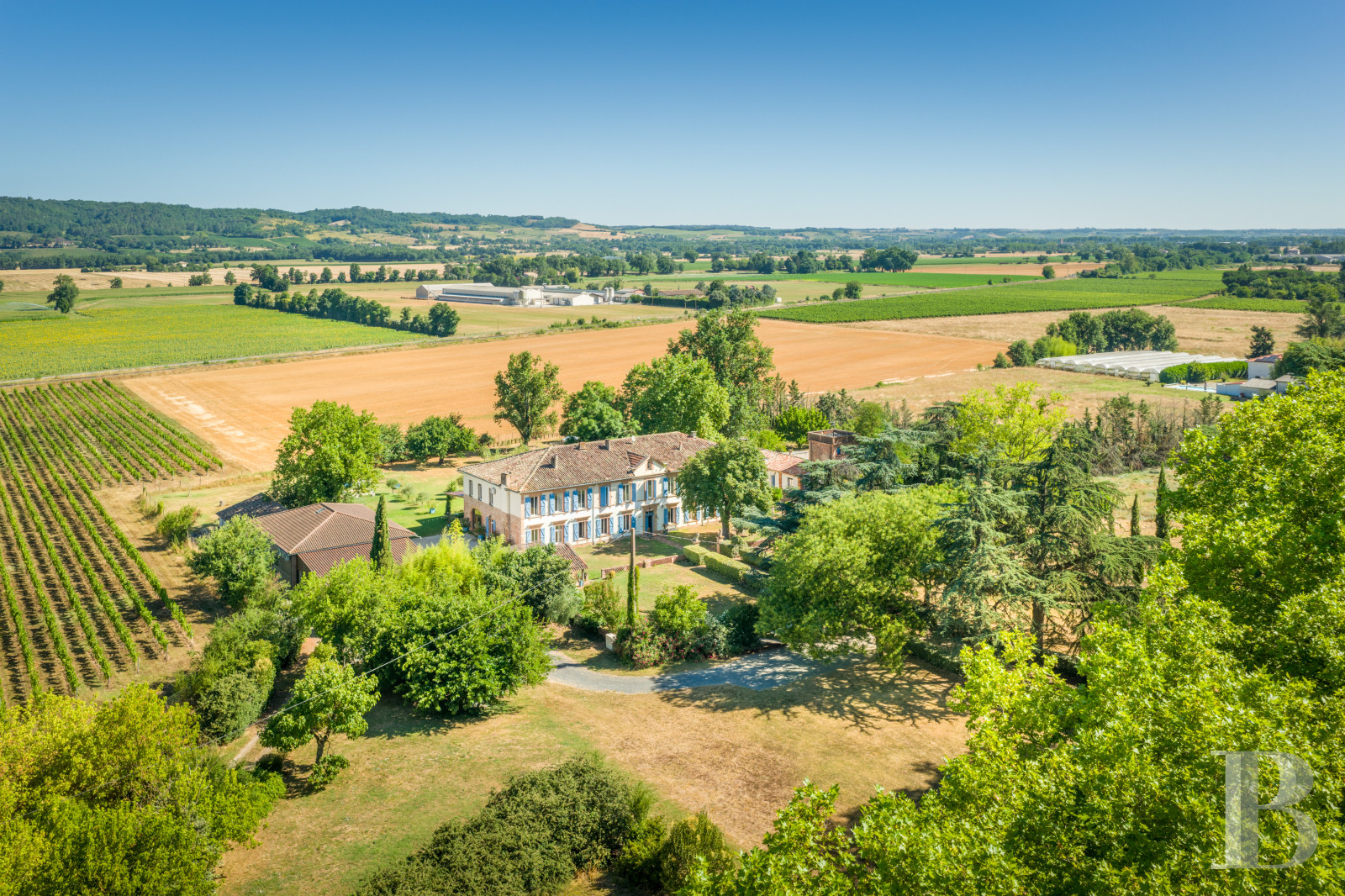
Tucked away among vineyards and fields, the property stands out for its balance and harmony. A long driveway lined with trimmed hedges and punctuated with stone statues leads to a neatly designed court of honour, which draws your gaze to the main house. This edifice, a grand dwelling with a ground floor and first floor, has an even design and is long and rectangular in form. Its elevations combine brickwork with pale rendering. They are punctuated with a harmonious series of windows fitted with painted shutters and spaced out in a majestic arrangement. The house is crowned with a tiled roof that completes the edifice with understated elegance. Tall trees, including slender cypresses, age-old plane trees and imposing cedars, create a protective environment around the main dwelling. Spread out around the edifice are several outhouses, including a huge reception hall set back from the grand dwelling, a brick lodge and, opposite the latter, a building that is bathed in natural light and that lends itself to a range of possibilities. A former dovecote, converted into a dwelling, is more vertical in form and, in line with it, a workshop and boiler room edge the parkland. Among this series of buildings and natural spaces, the grand house stands proudly as the property’s centrepiece – the jewel in its crown – and bears witness to a refined art of living that endures today.
The main edifice
The main edifice is a token of 19th-century neoclassical architecture. Its design is symmetrical with brickwork paired with pale rendering. This showcases the even spacing of the windows. Its well-balanced design, punctuated with blue shutters, gives the whole place a bright, understated kind of elegance that is emblematic of grand rural homes in the Toulouse area.
The ground floor
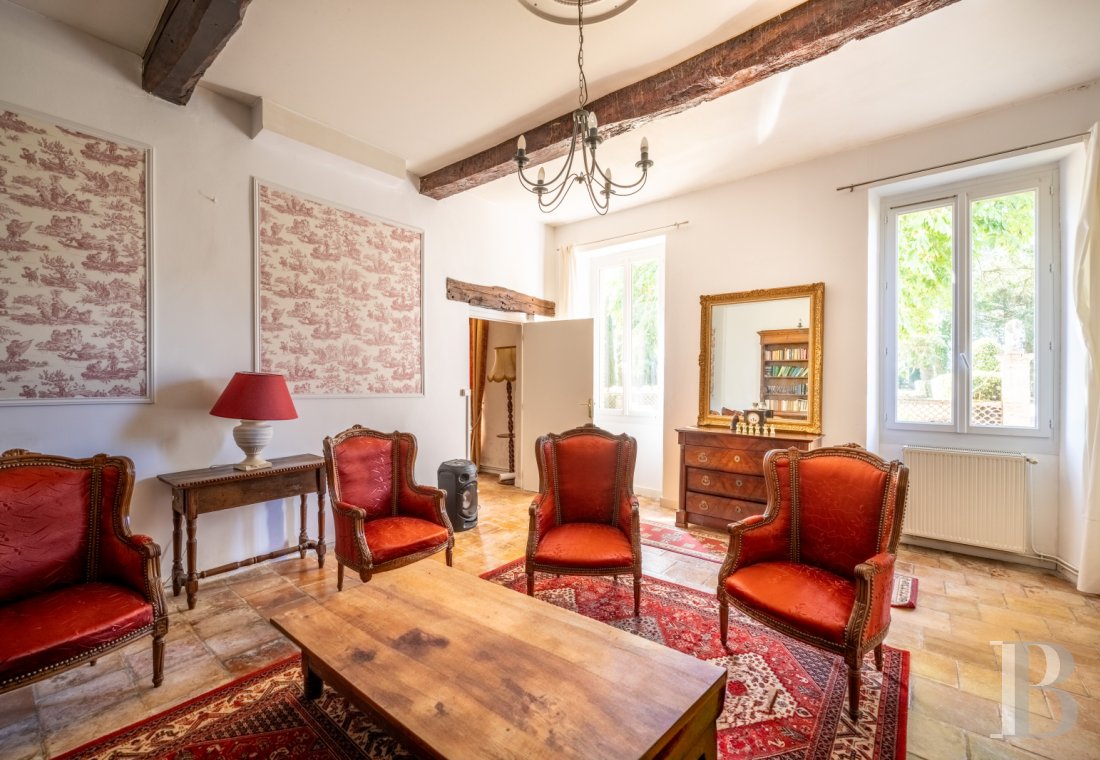
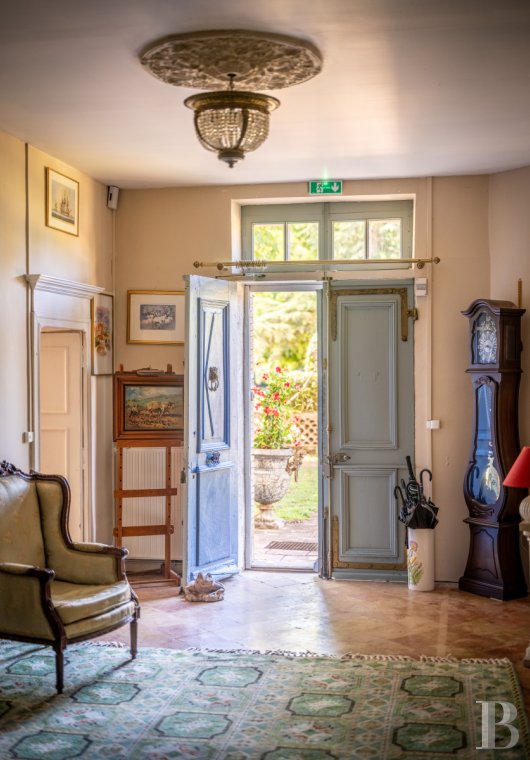
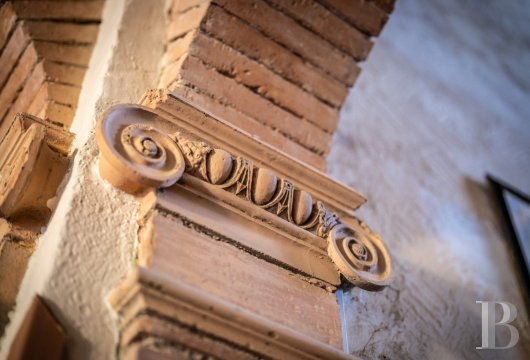
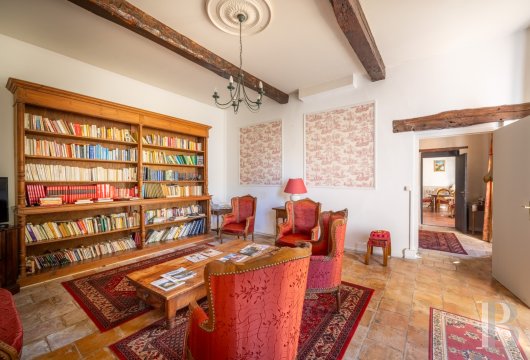
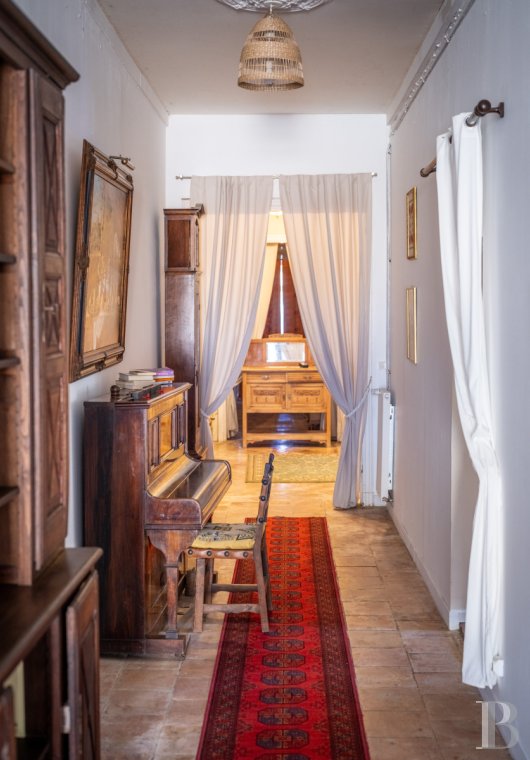
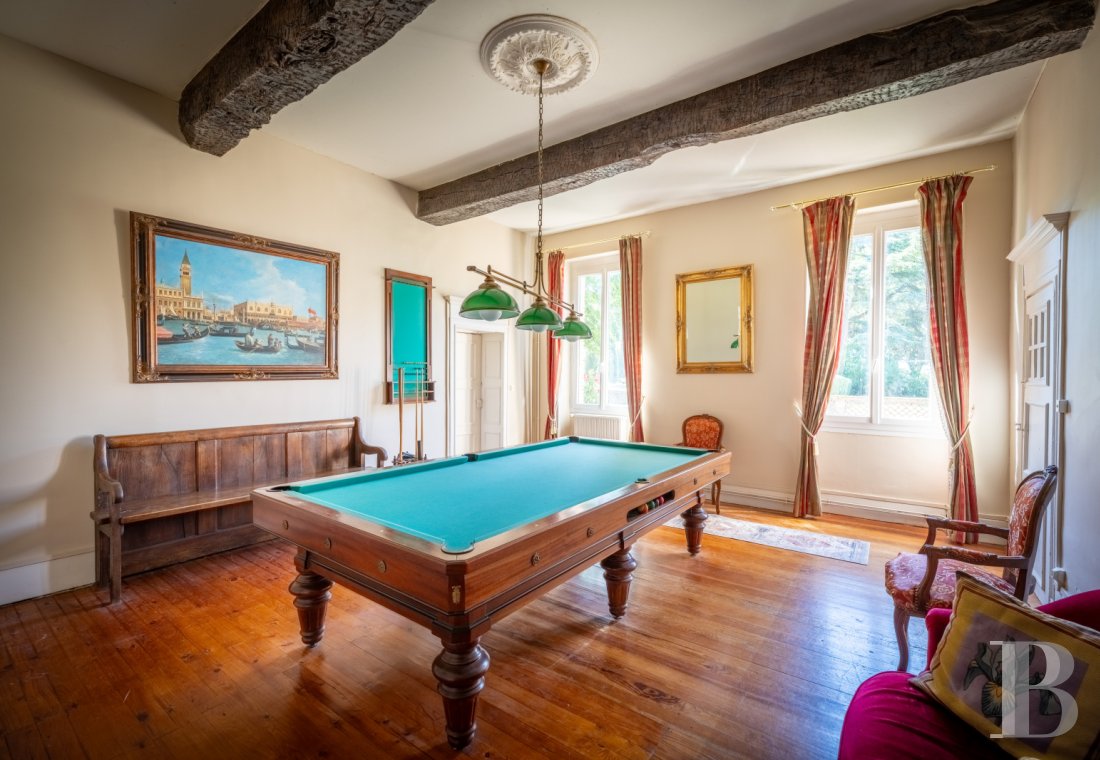
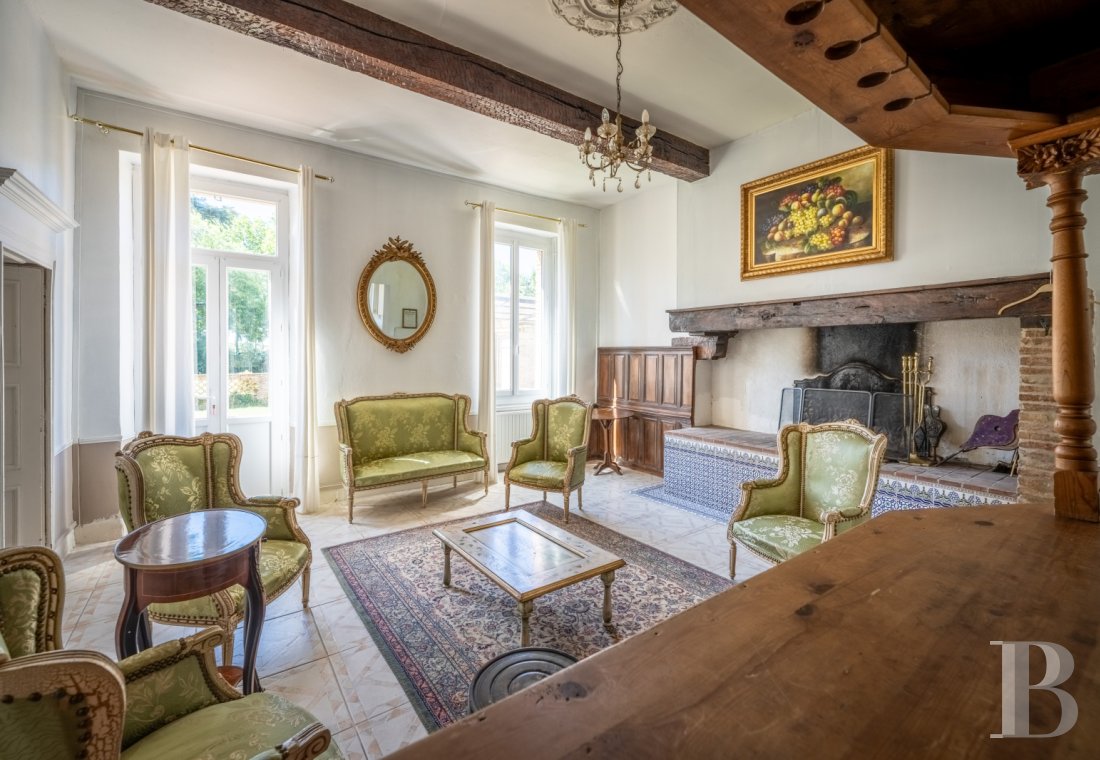
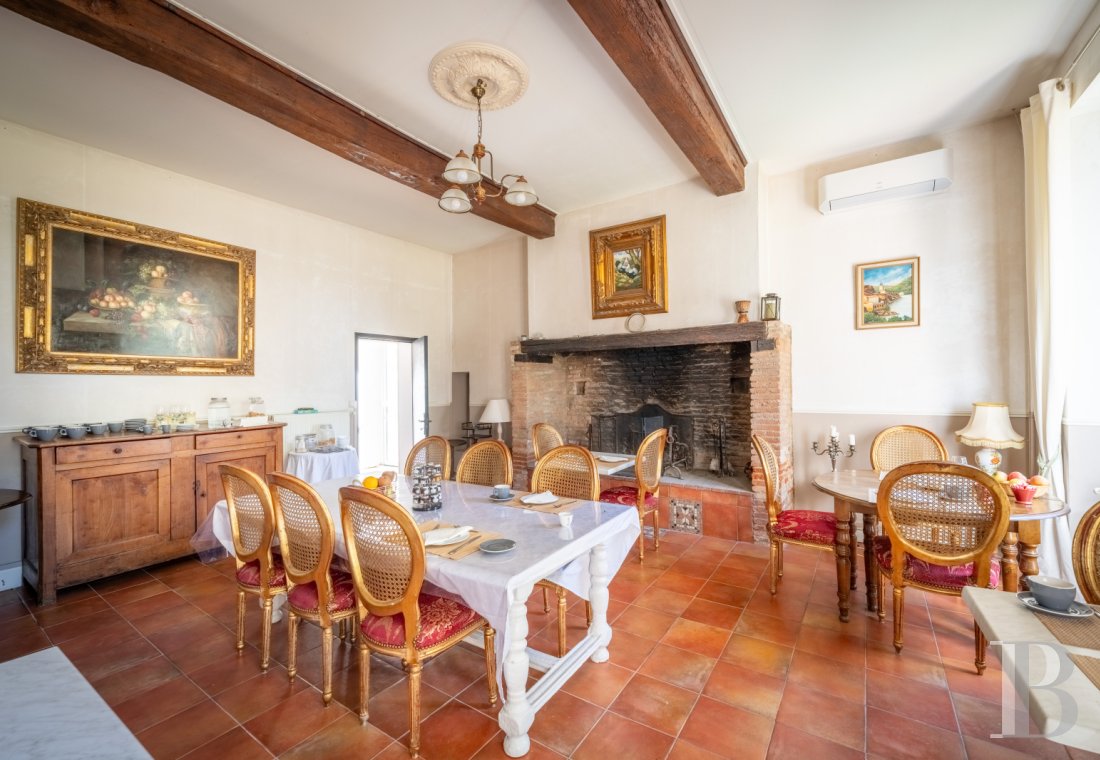
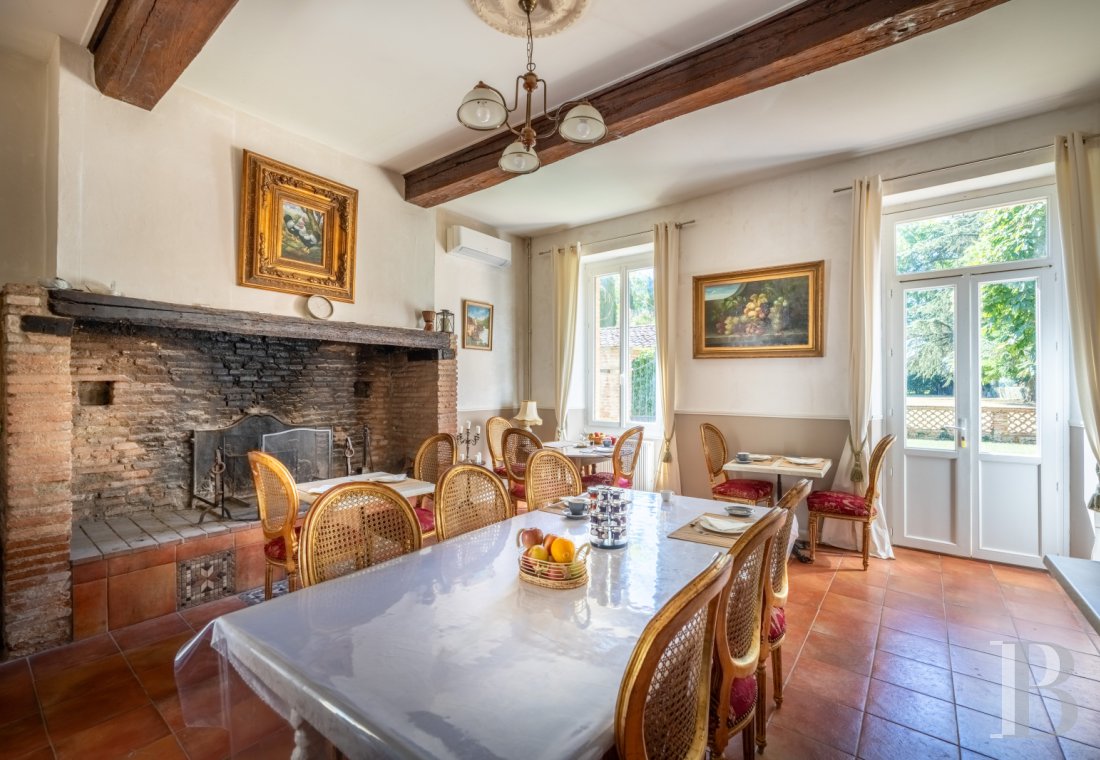
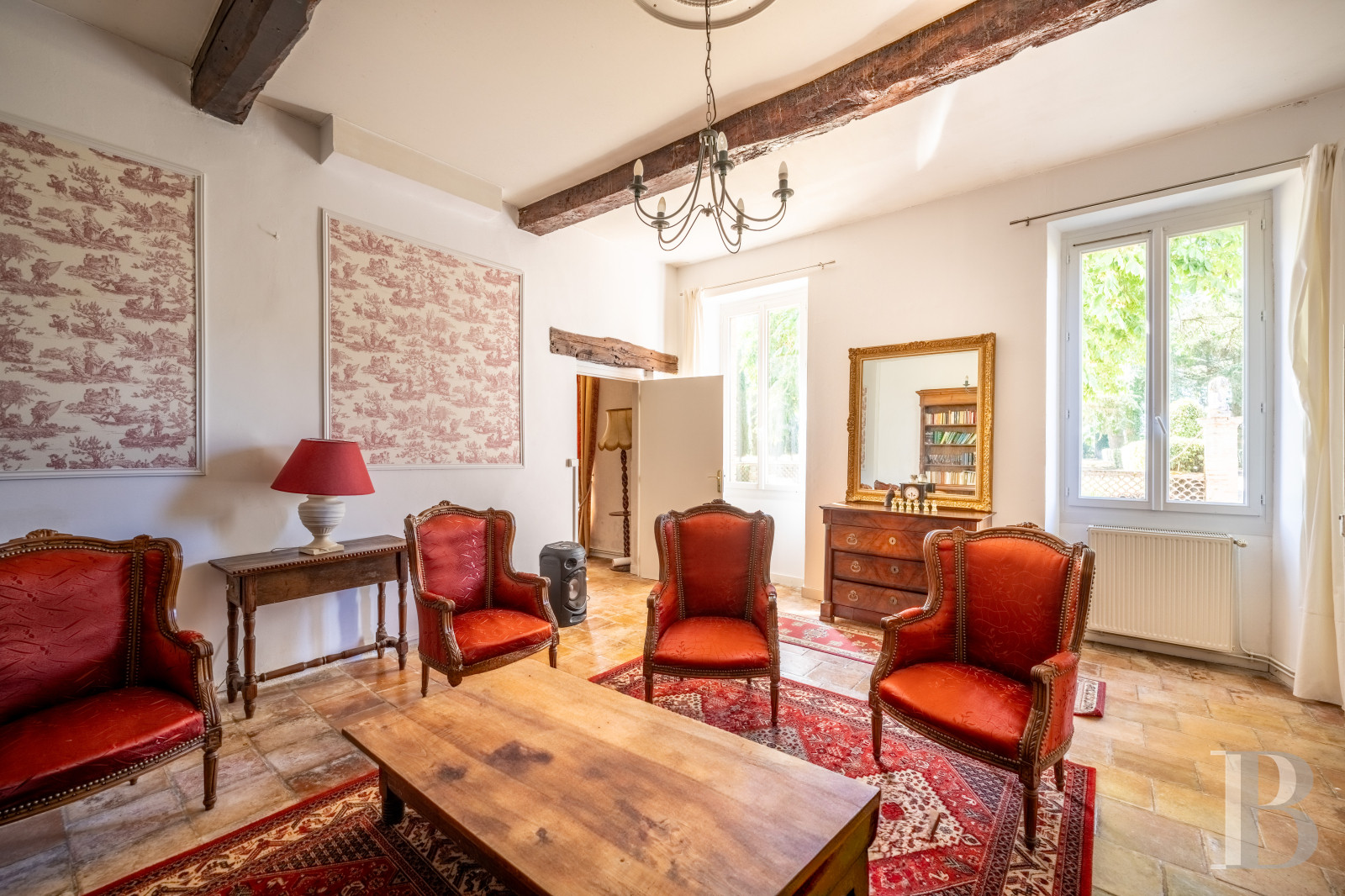
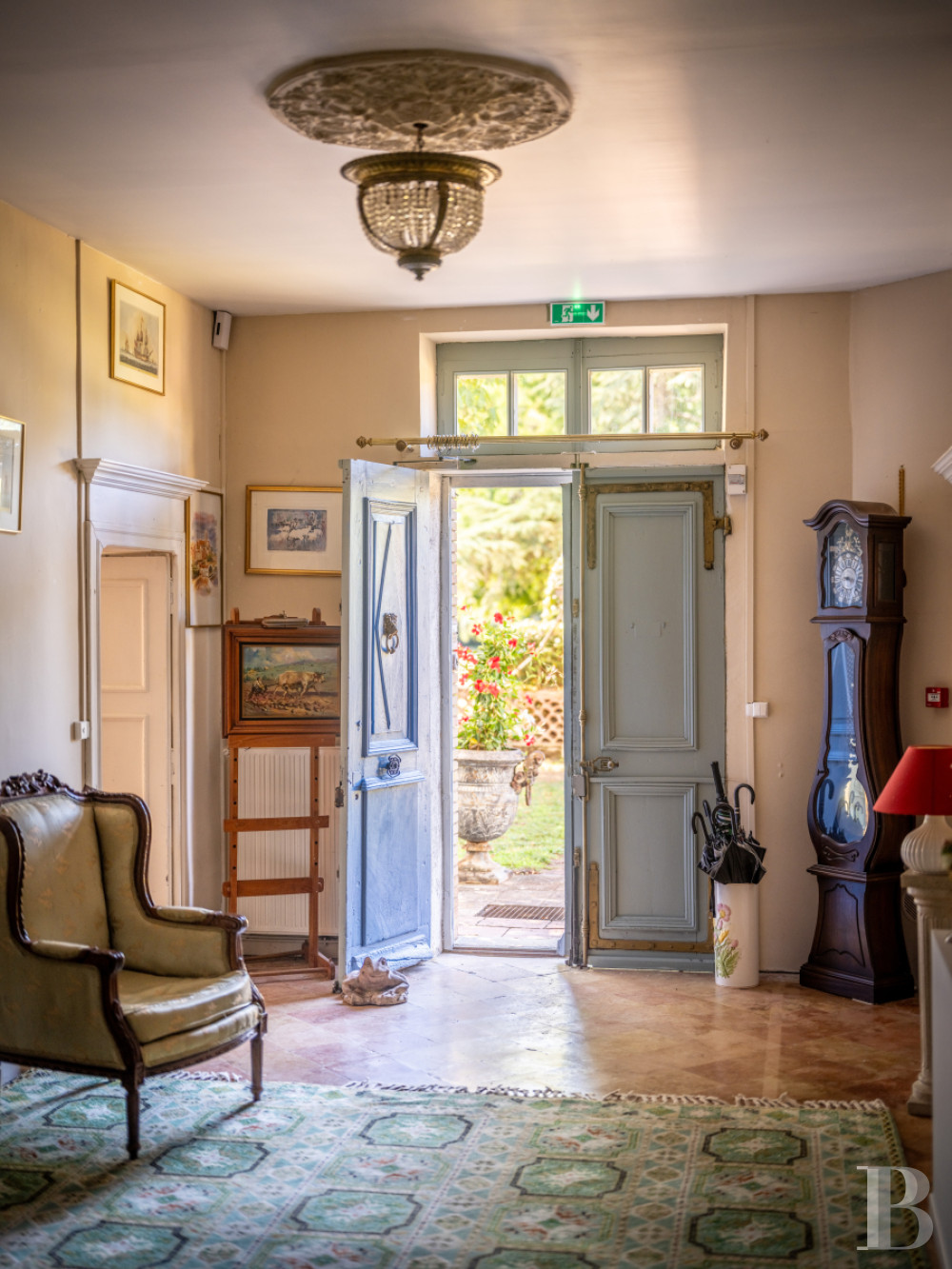
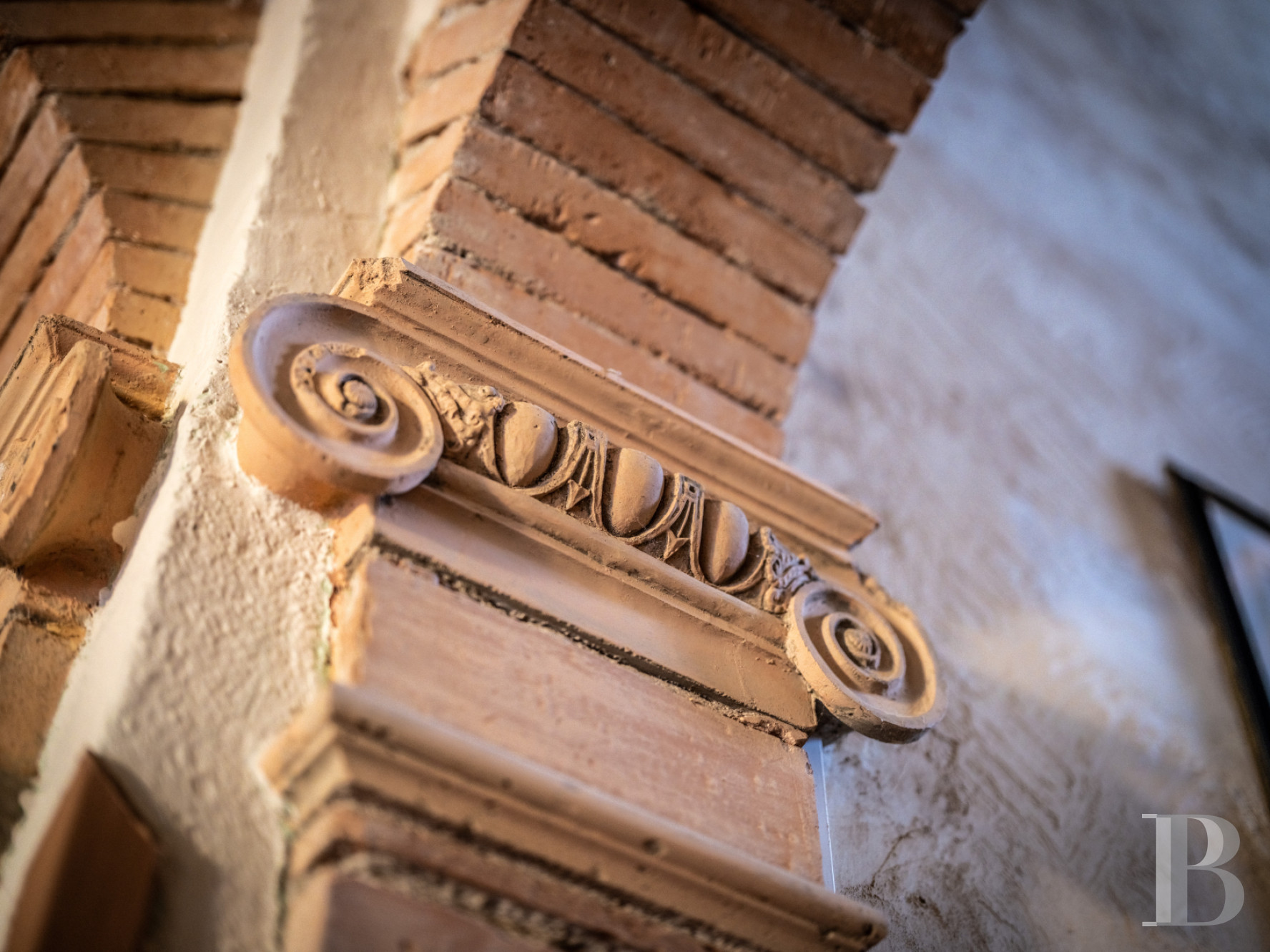
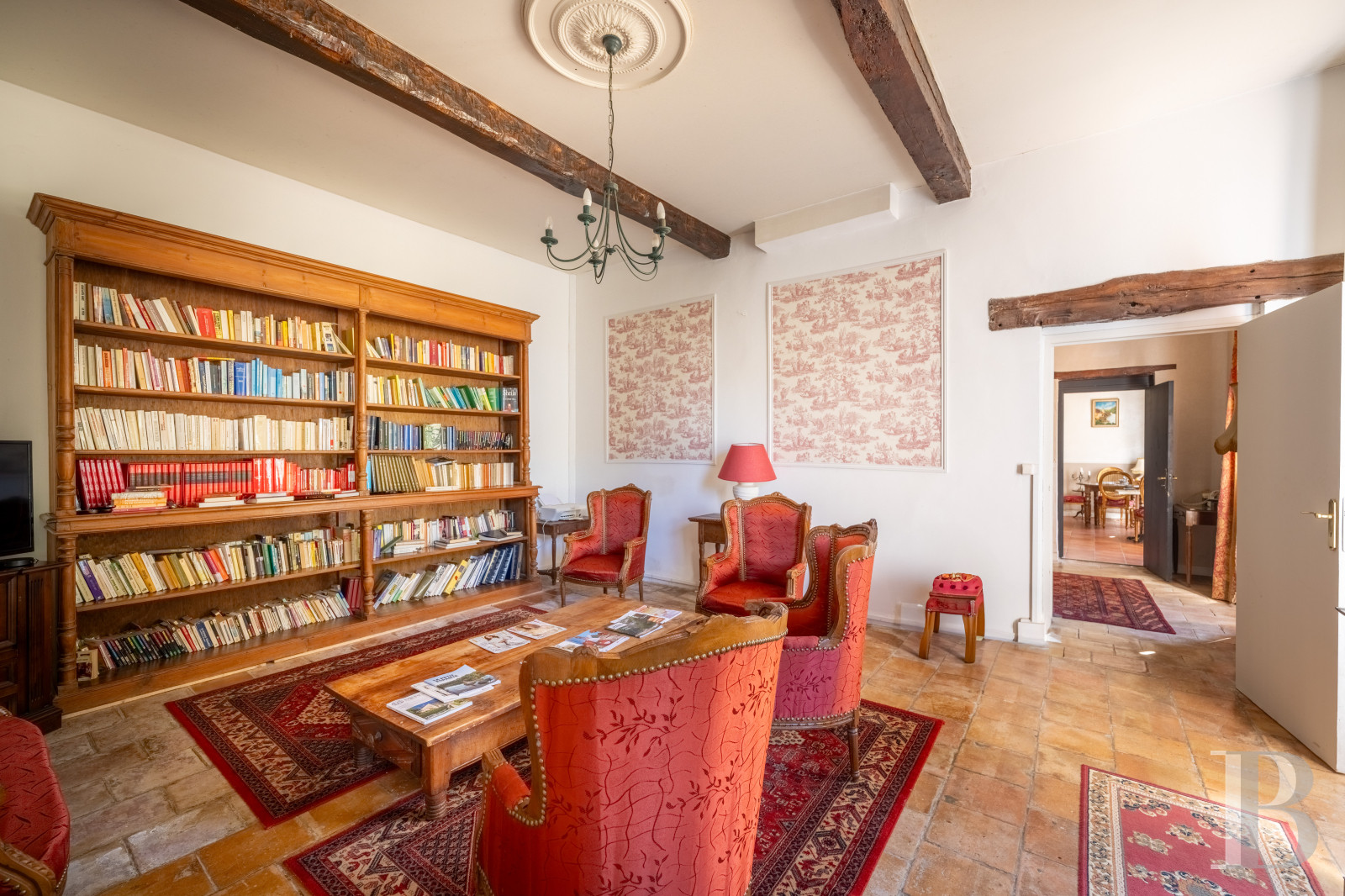
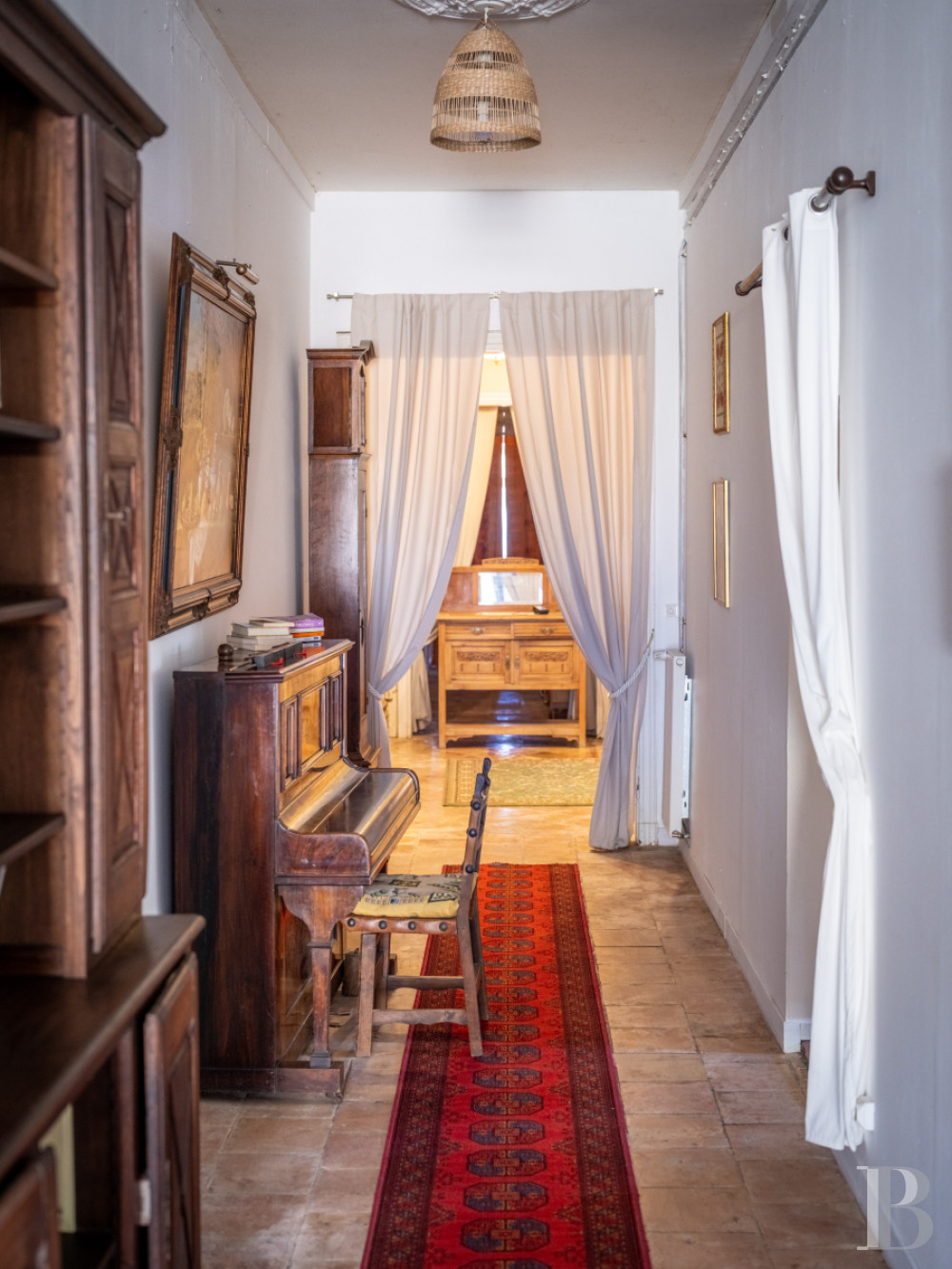
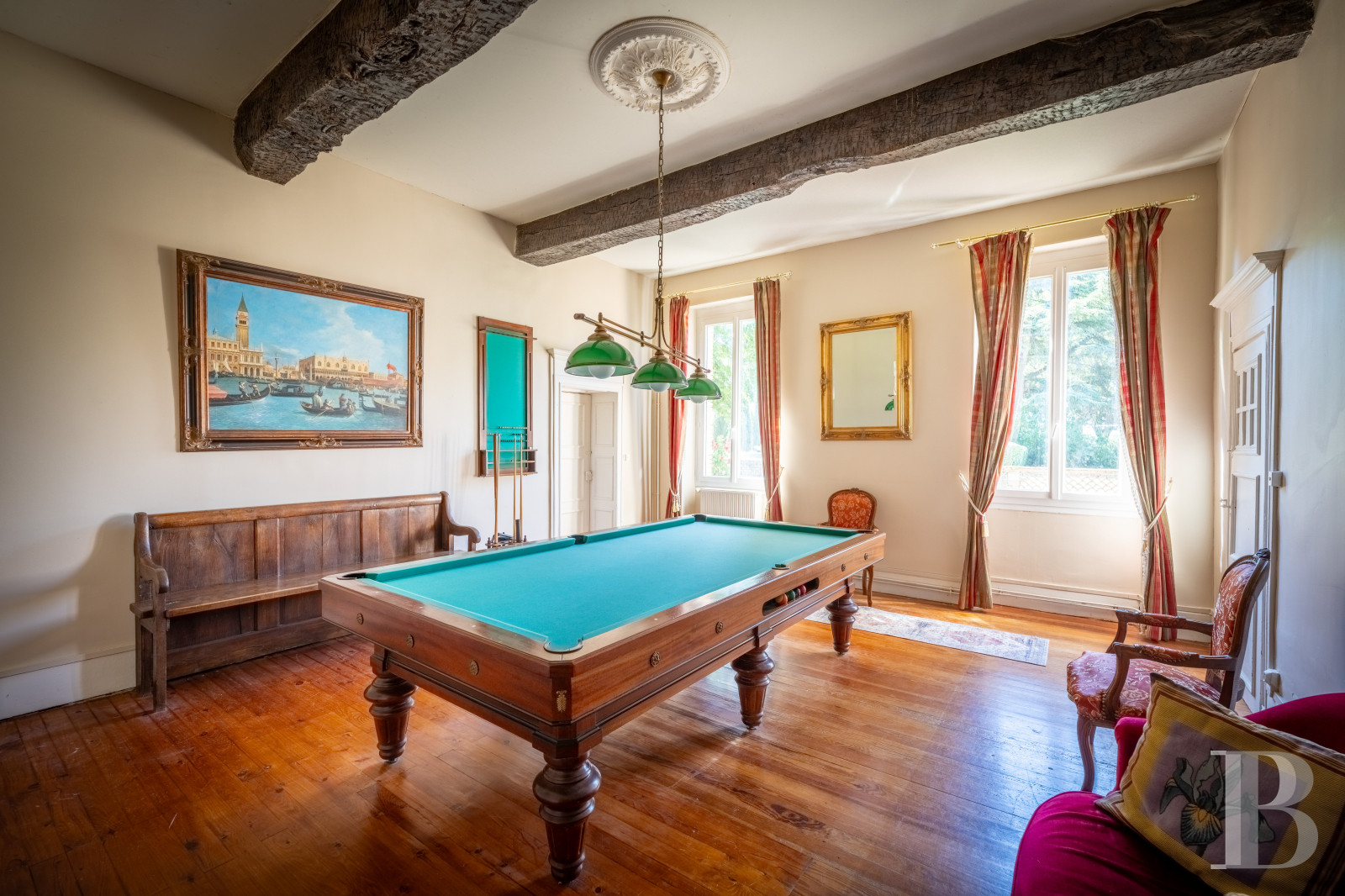
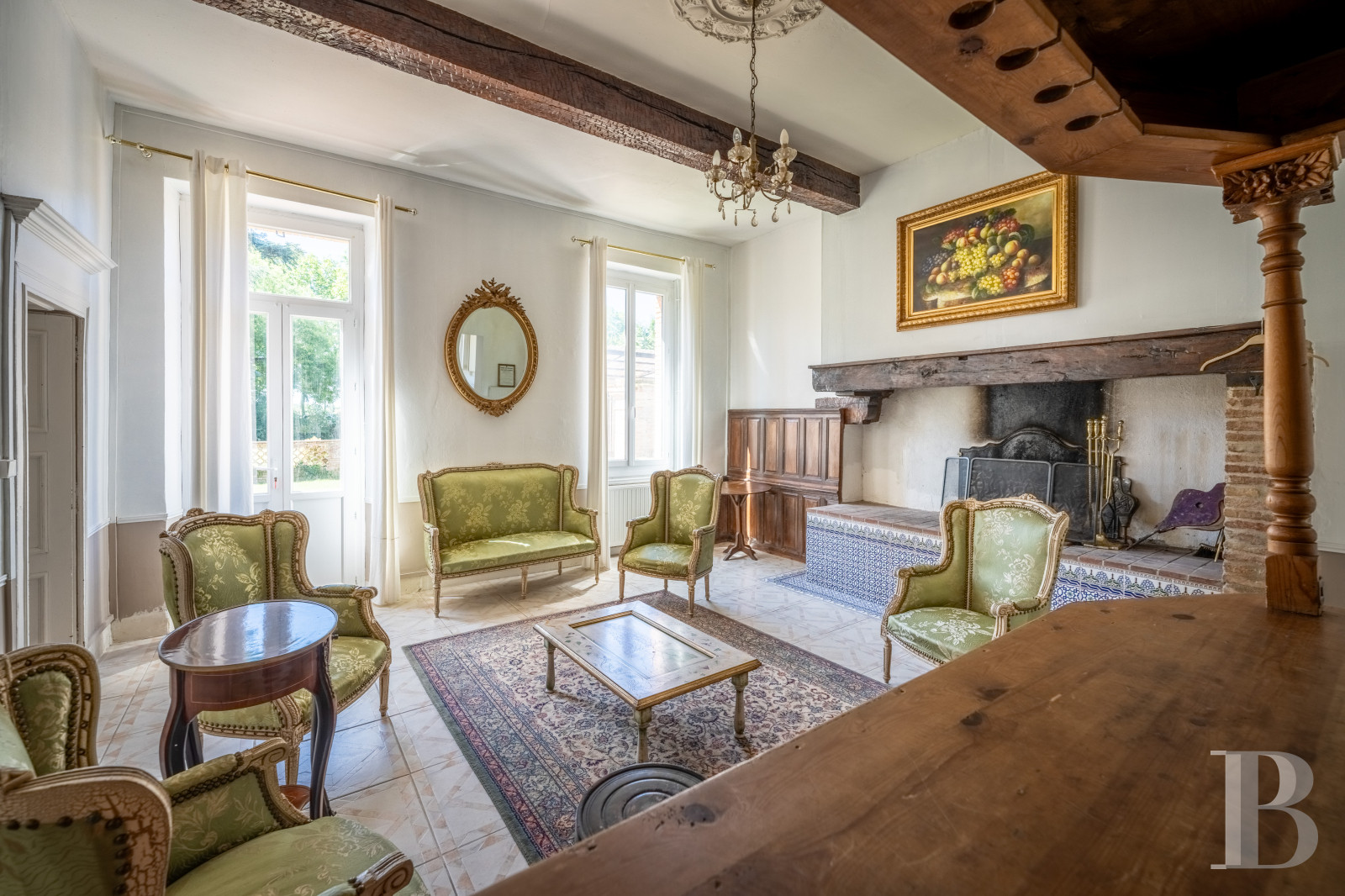
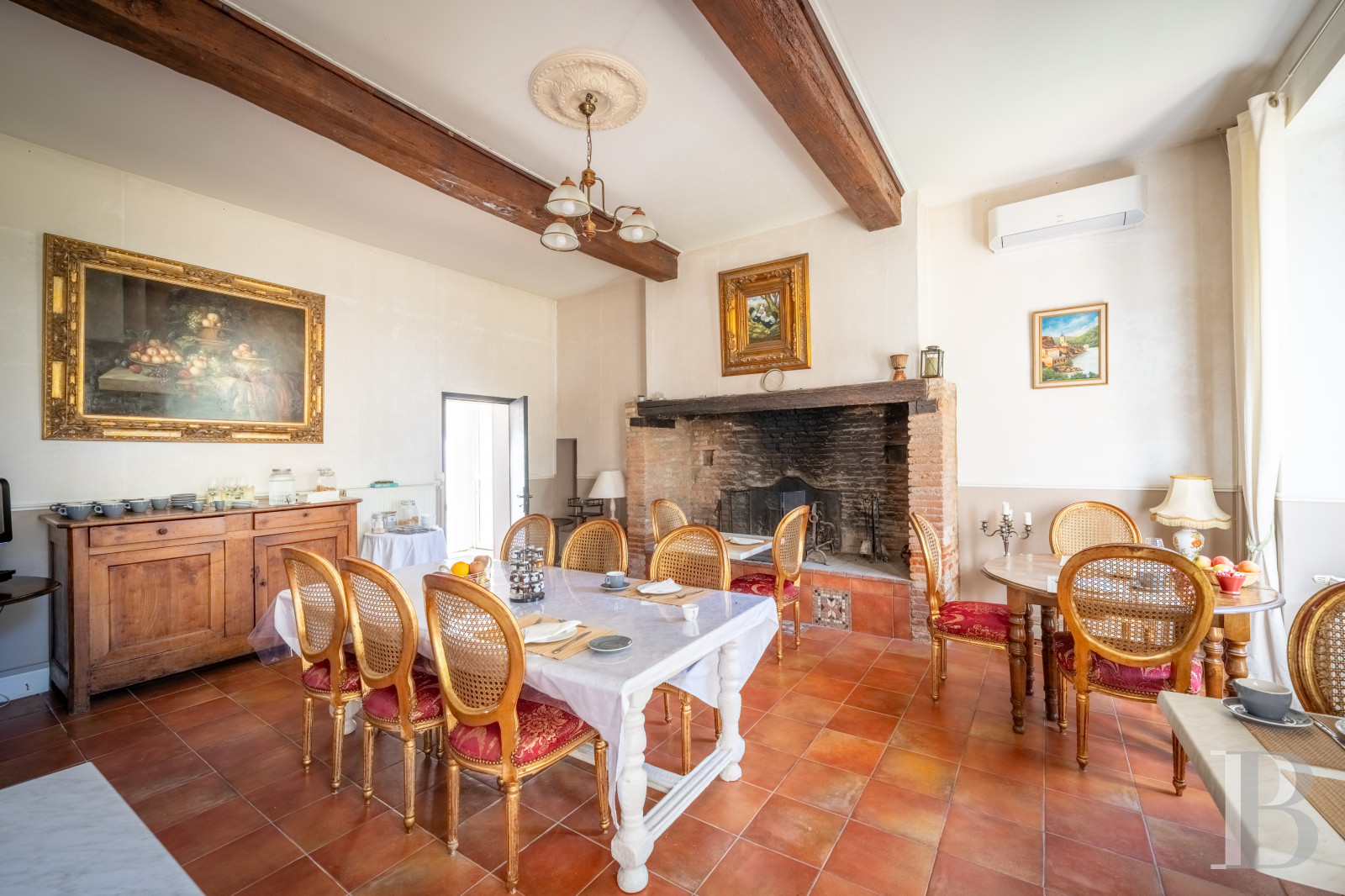
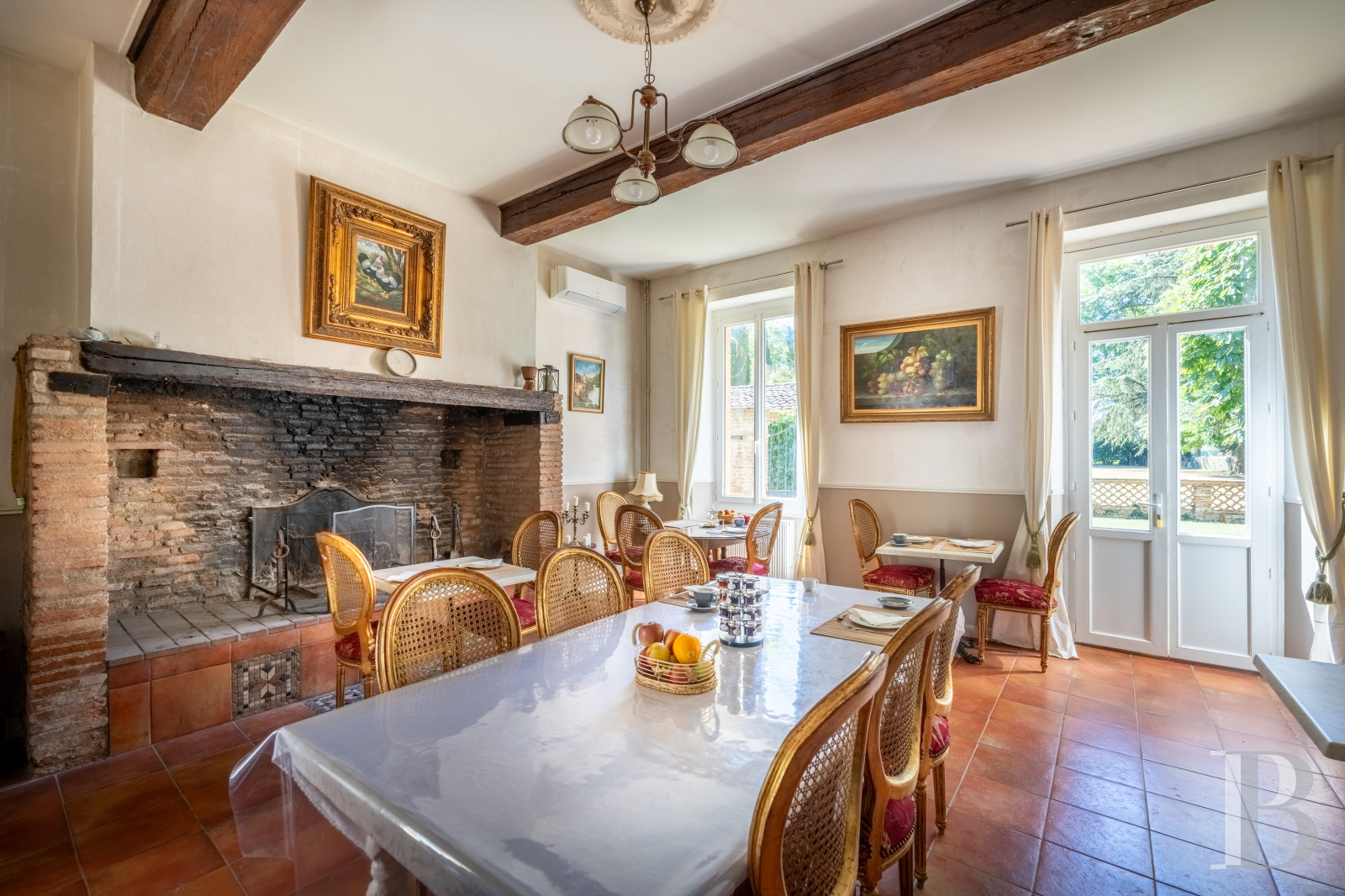
An elegant central hallway with brick archways connects to all the rooms on the ground floor. The floor’s stone tiles with their patina of age and the broad flight of stairs that leads up to the first floor underline the house’s monumental character. In the left wing, there is a series of lounges. The first one, which has been turned into a bar, has kept an imposing brick fireplace with a timber mantelpiece and a ceiling punctuated with exposed beams. The room connects to a corridor that leads to a restaurant, so you can spend time here before or after a meal in a warm, friendly ambience. Next, there is a second lounge, which is cosier. It connects to a billiard room – a leisure space that naturally extends the reception rooms. In the right wing, a corridor leads to a library with a stone floor, bathed in an abundance of natural light from tall windows. In line with it, another room – a dual-aspect space – leads to a lift discreetly integrated into the layout. Further on, there is a first dining room. It stands out for its imposing brick fireplace, its exposed beams of solid wood and its floor of terracotta tiles. At the back of the house, there are spaces designed for dining. A vast restaurant room, which looks out at the grounds, lies beside a professional kitchen designed to cater for many guests. A second kitchen, more homely in size, completes this series of rooms. A cold room, a cellar and a hallway leading to a lavatory fit into the layout well. Two long tiled corridors give structure to the whole interior. Everywhere, old materials – brick, timber, stone and terracotta – blend well with natural light from tall windows that face the parkland, giving the ground floor an atmosphere that is at once noble and welcoming.
The first floor
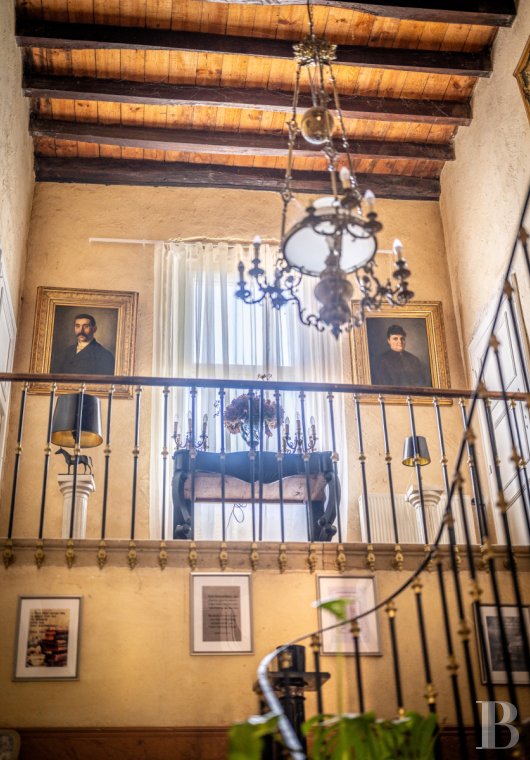
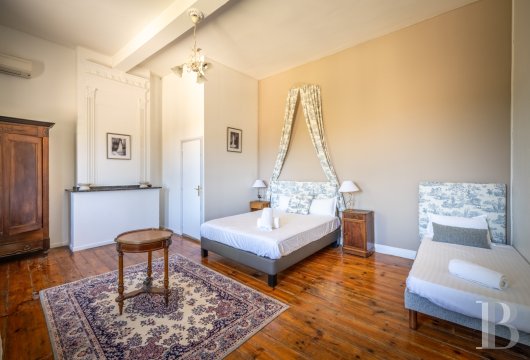
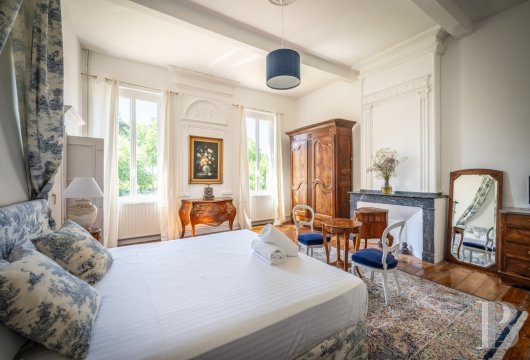
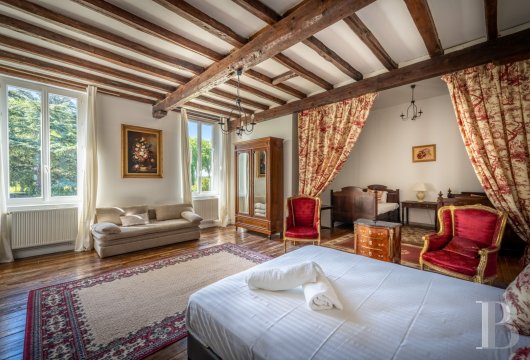
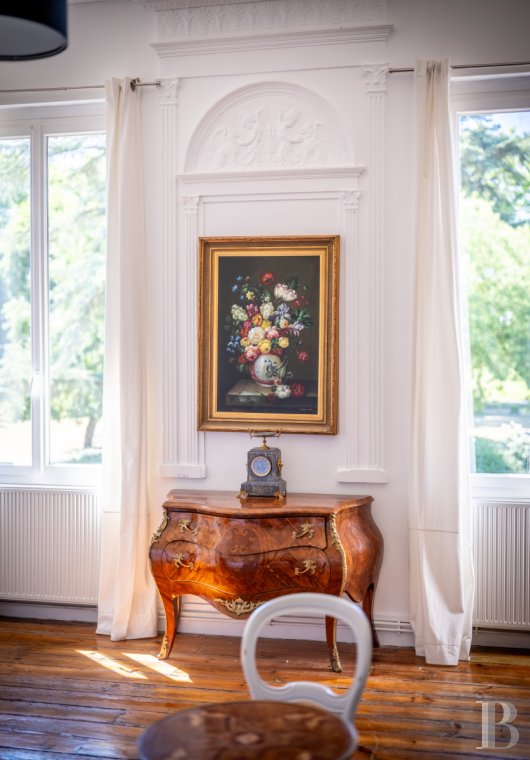
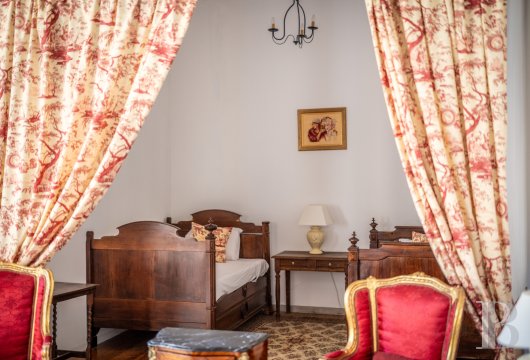
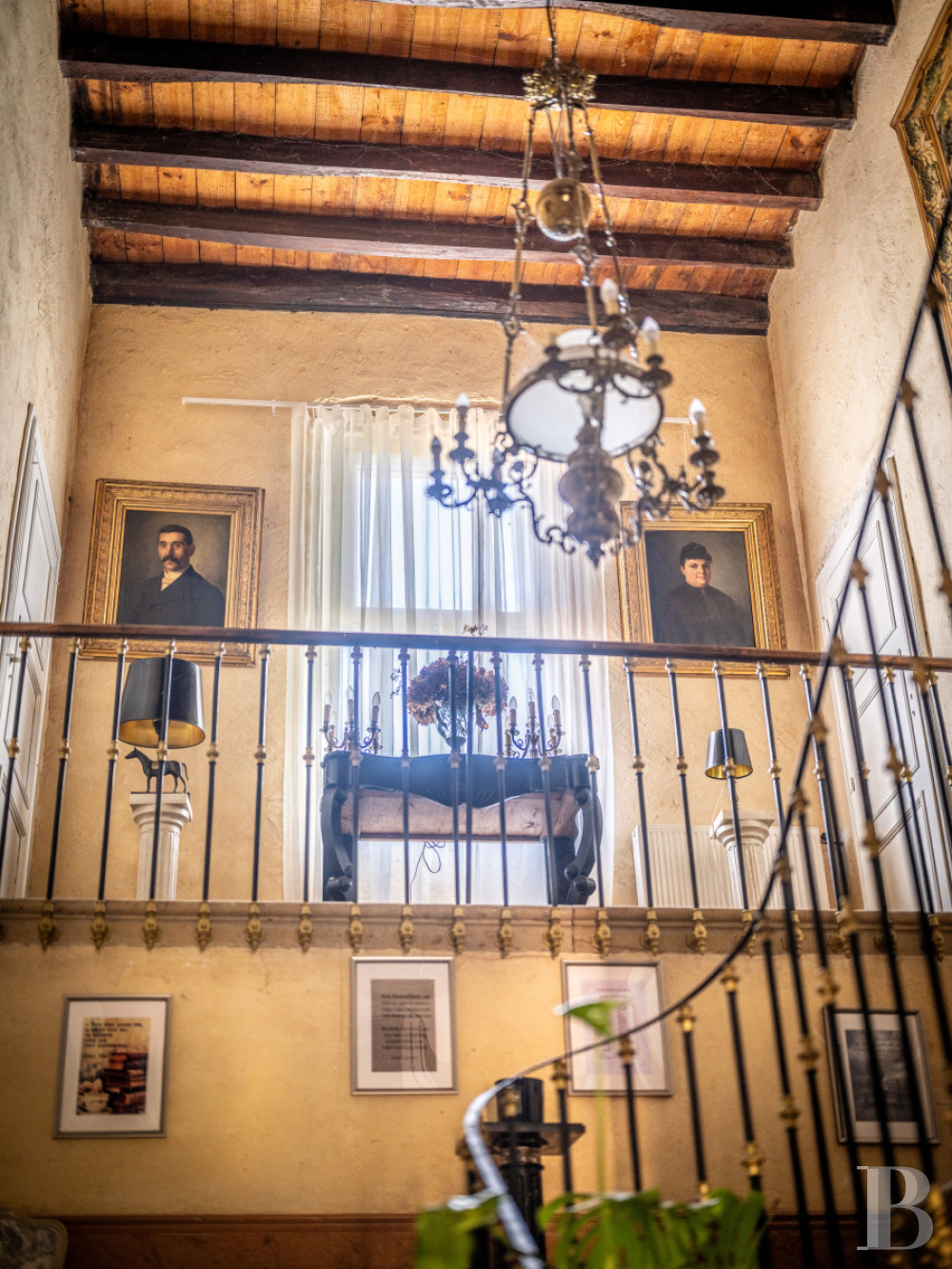
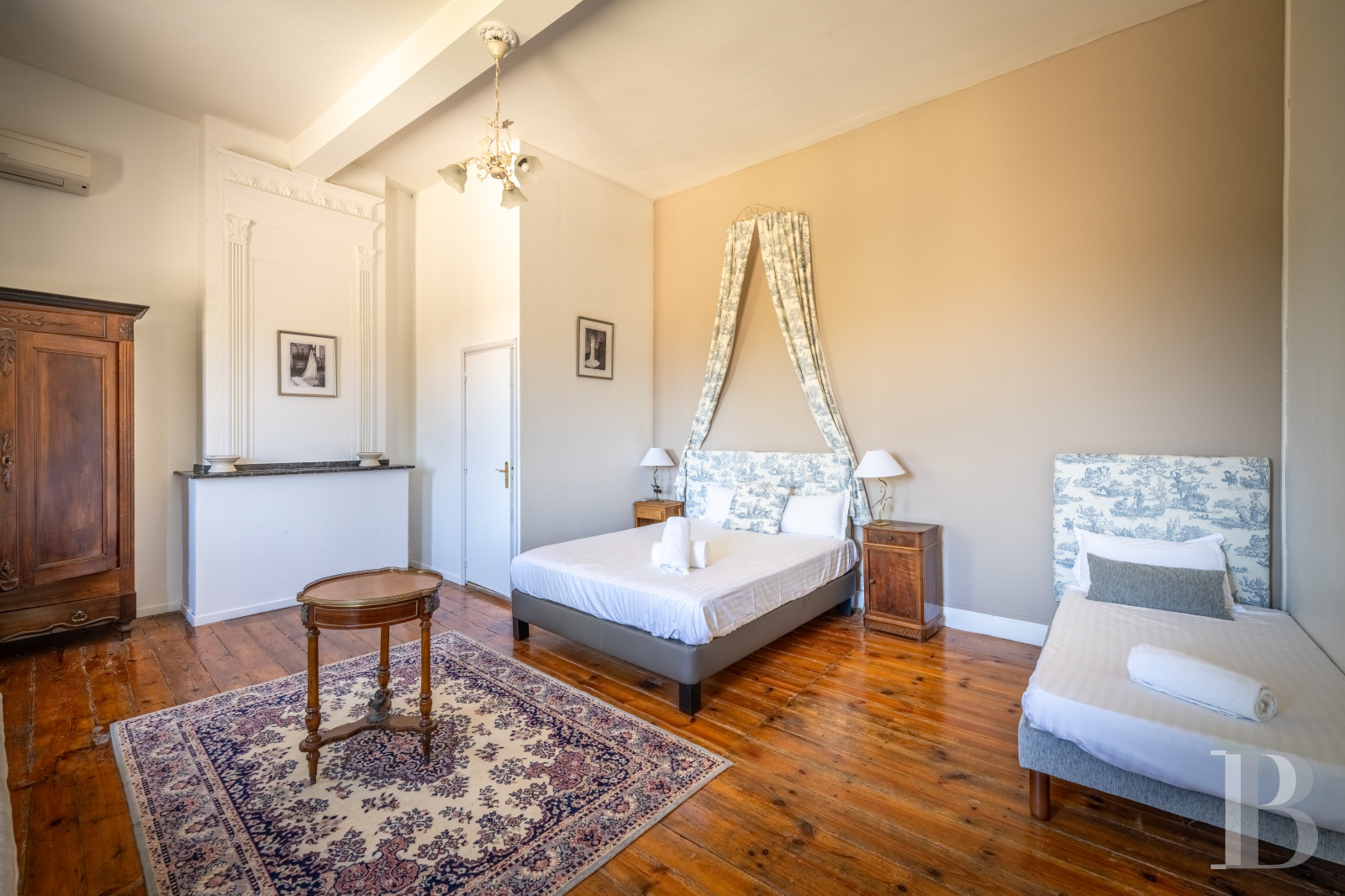
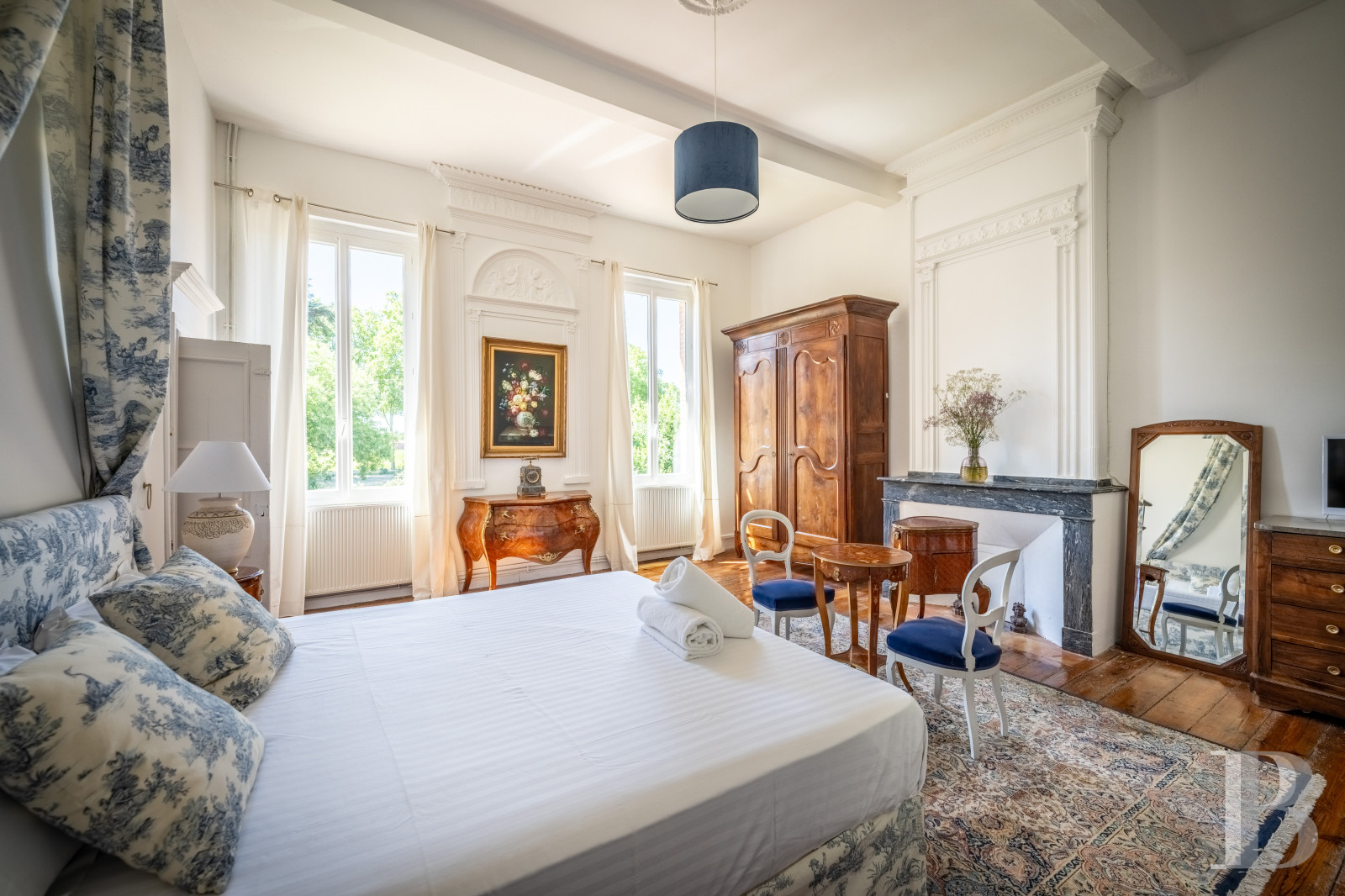
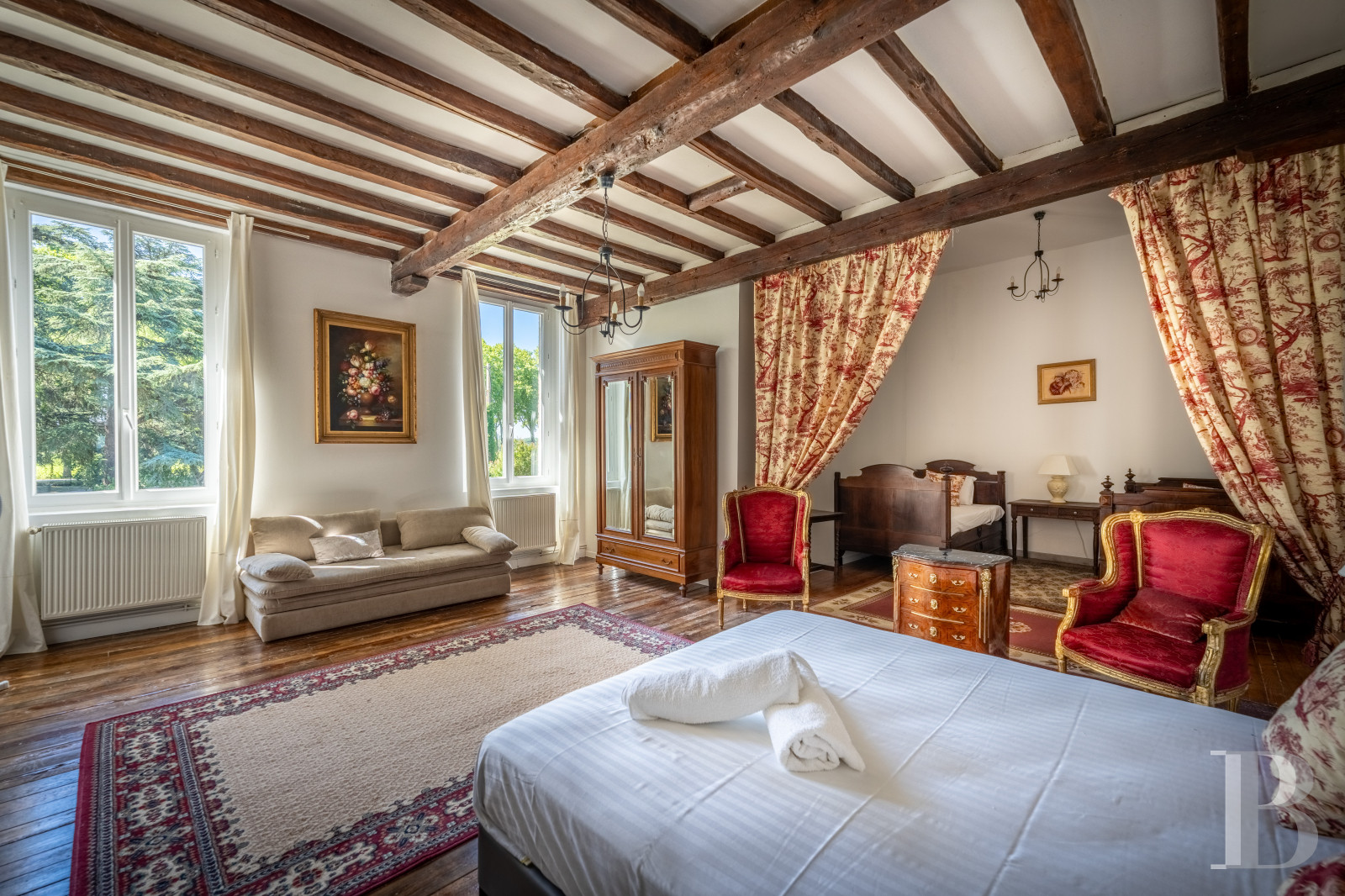
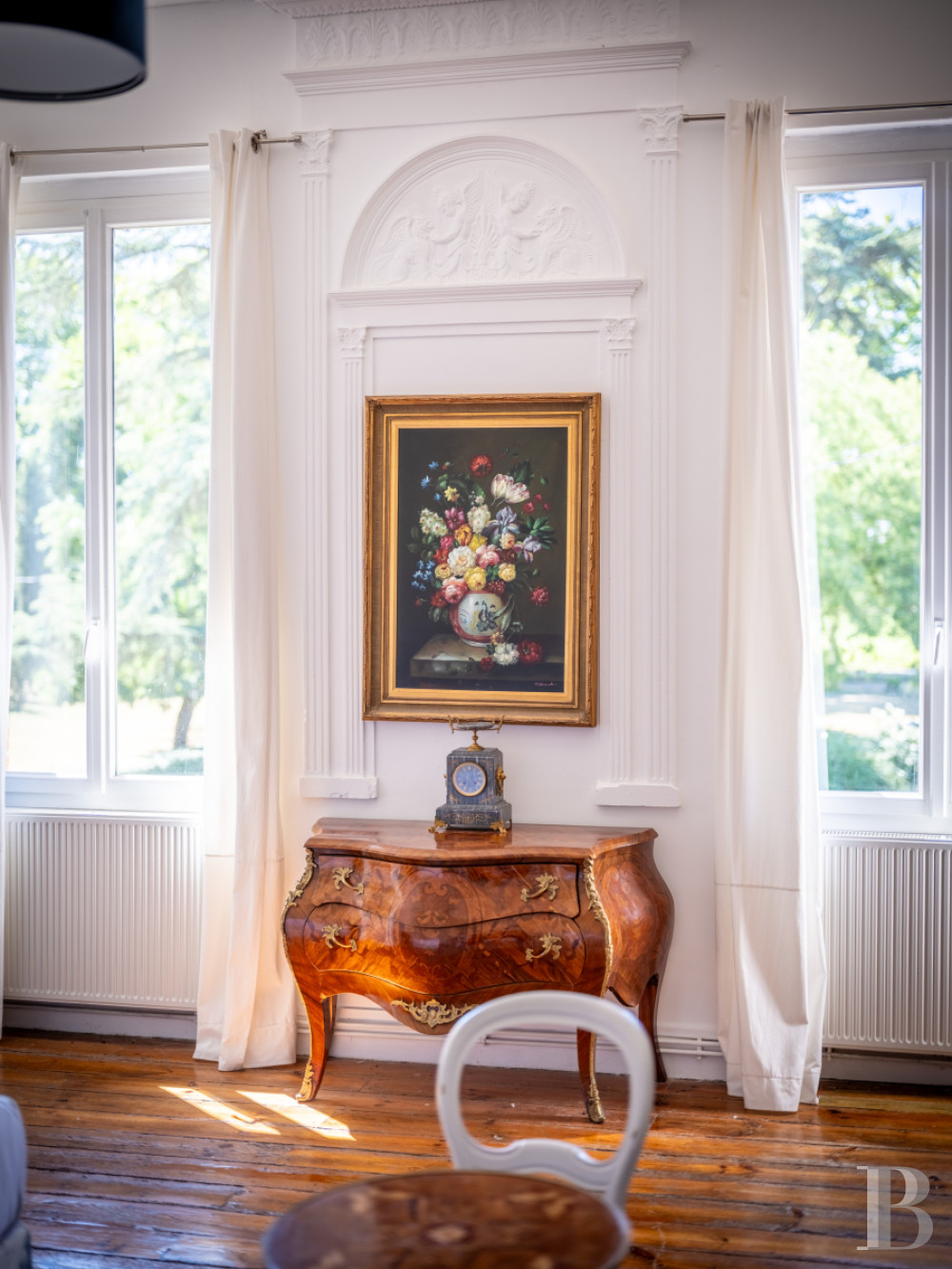
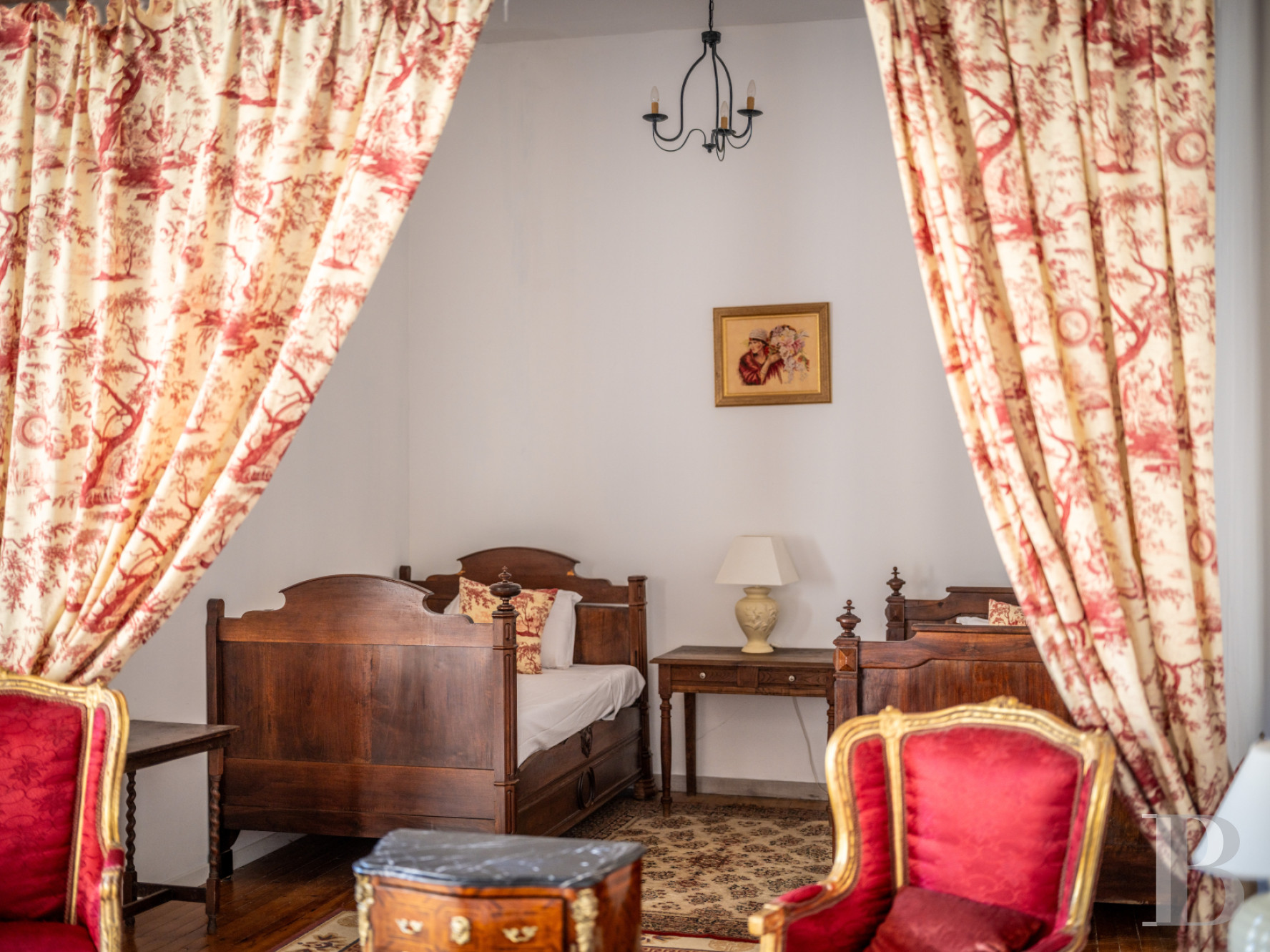
A monumental staircase with broad stone steps leads from the entrance hall up to the first floor. Its wrought-iron balustrade with golden details, its spacious stairwell bathed in natural light from a large window and its hanging chandelier together create a sumptuous climb up that heralds the splendour of the upstairs rooms. These stairs take you up to a long corridor that connects to 11 bedrooms, each with their own en-suite bathroom. The evenness of the layout, the natural brightness from the tall windows and the well-balanced proportions give this first floor a calm, harmonious atmosphere. Each bedroom has its own subtle character. Some have kept a marble fireplace with a trumeau panel with mouldings. Others reveal the house’s old age with ceilings of exposed beams. Several of them have four-poster beds that underline the welcoming charm of the place. Old wood-strip flooring with a patina of age combines well with pale walls to create a decor that is at once simple and refined. So, this first floor not only stands out for the coherence of its layout but also for the diversity of its ambiences that make each bedroom a unique refuge, conducive to rest and reflection.
The second floor
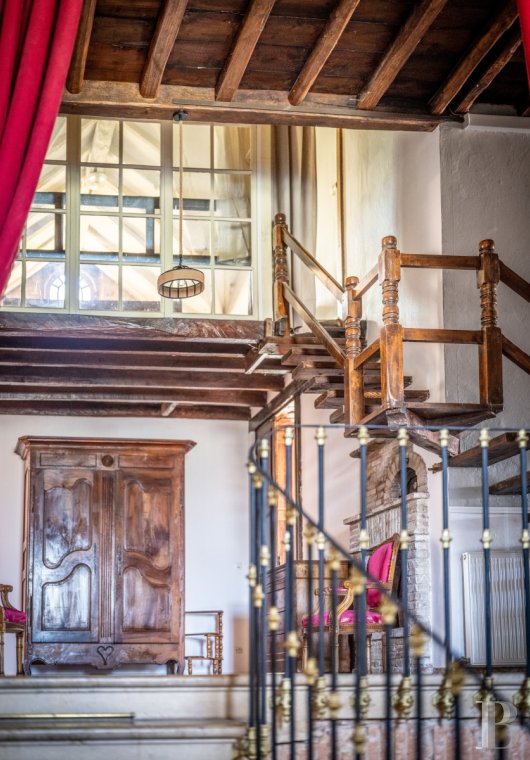
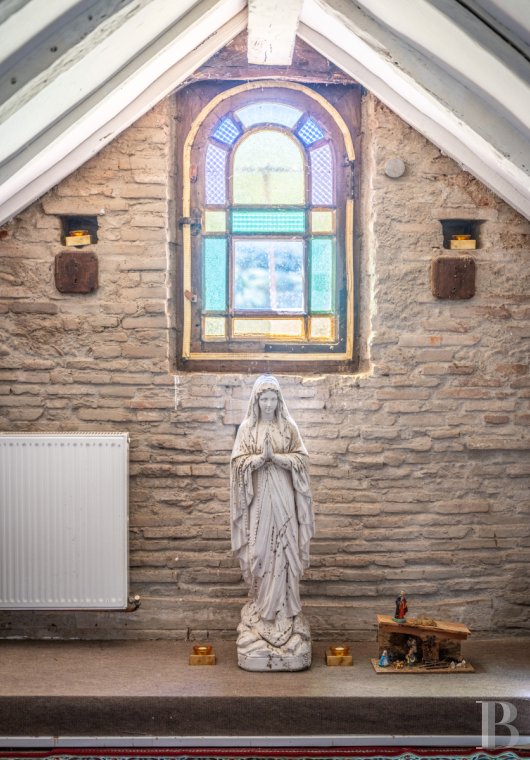
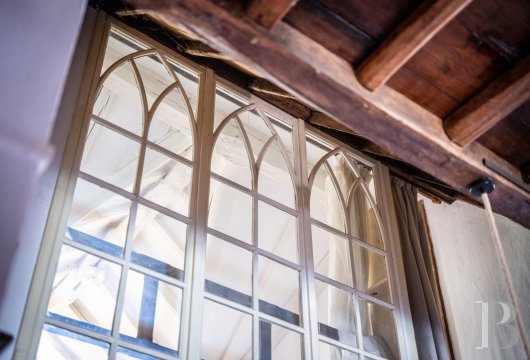
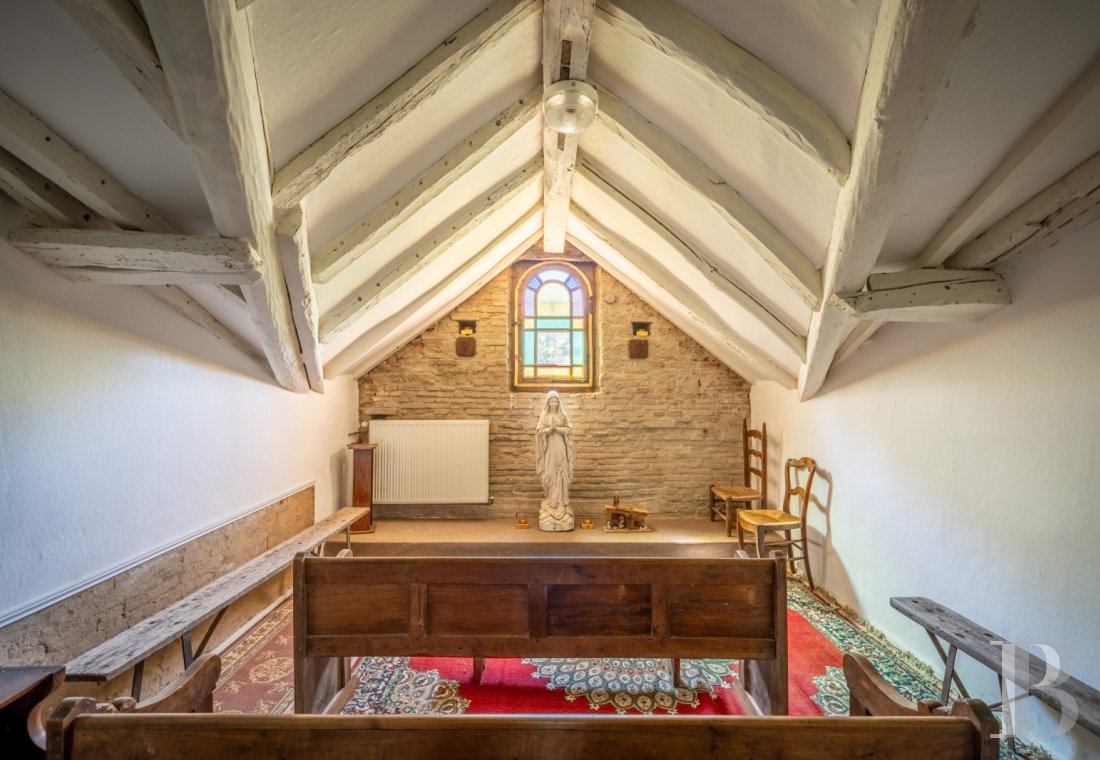
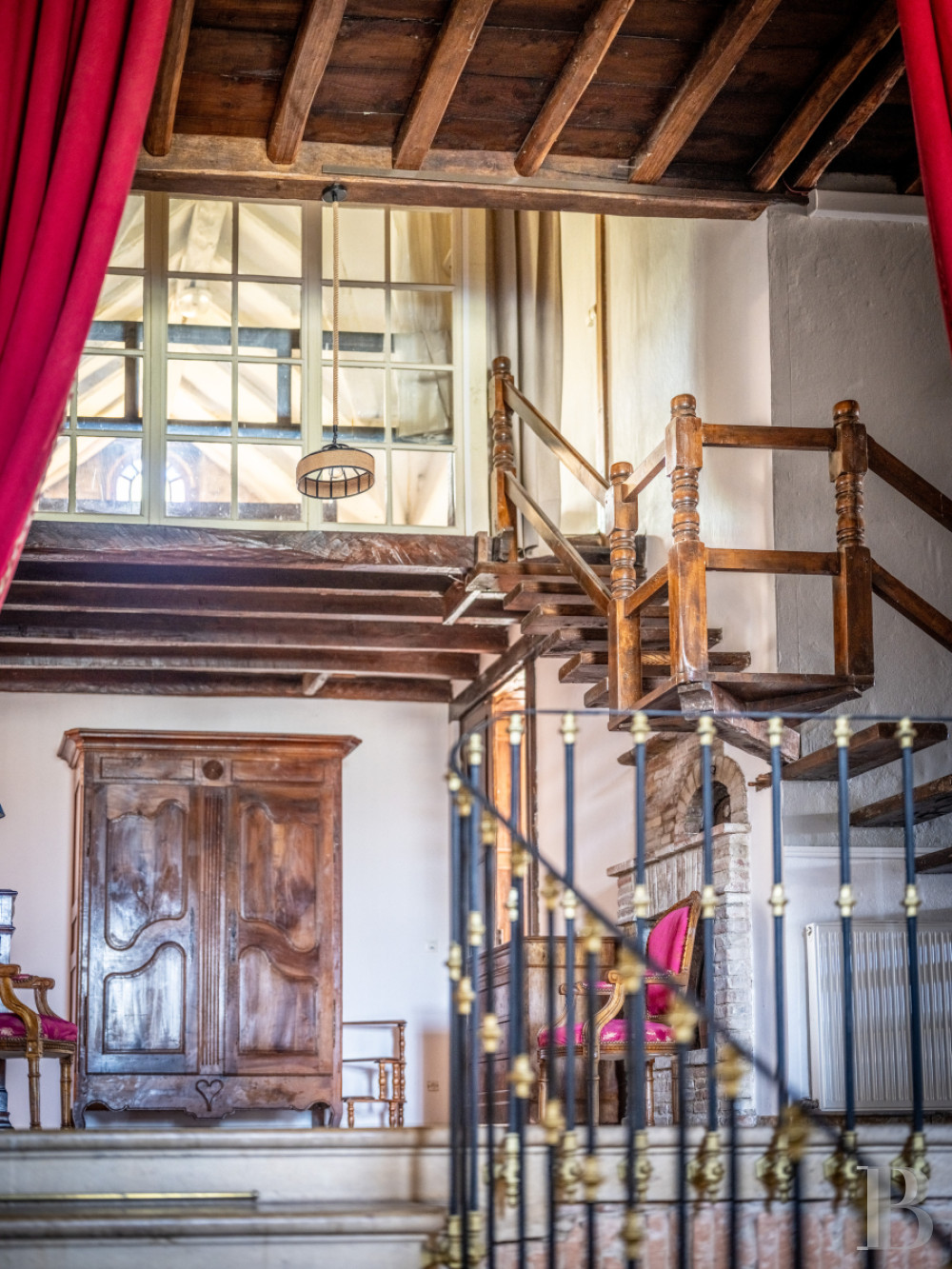
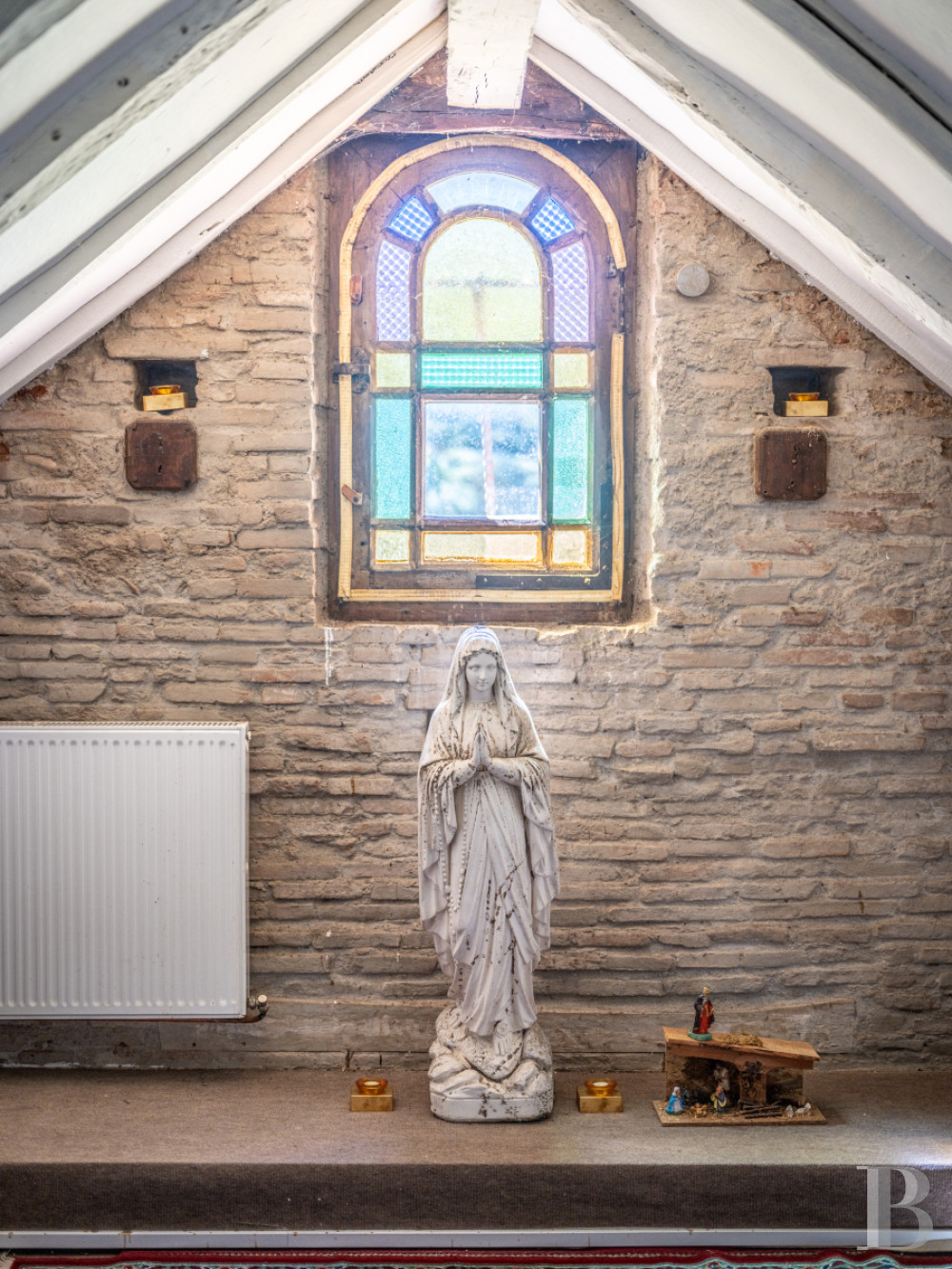
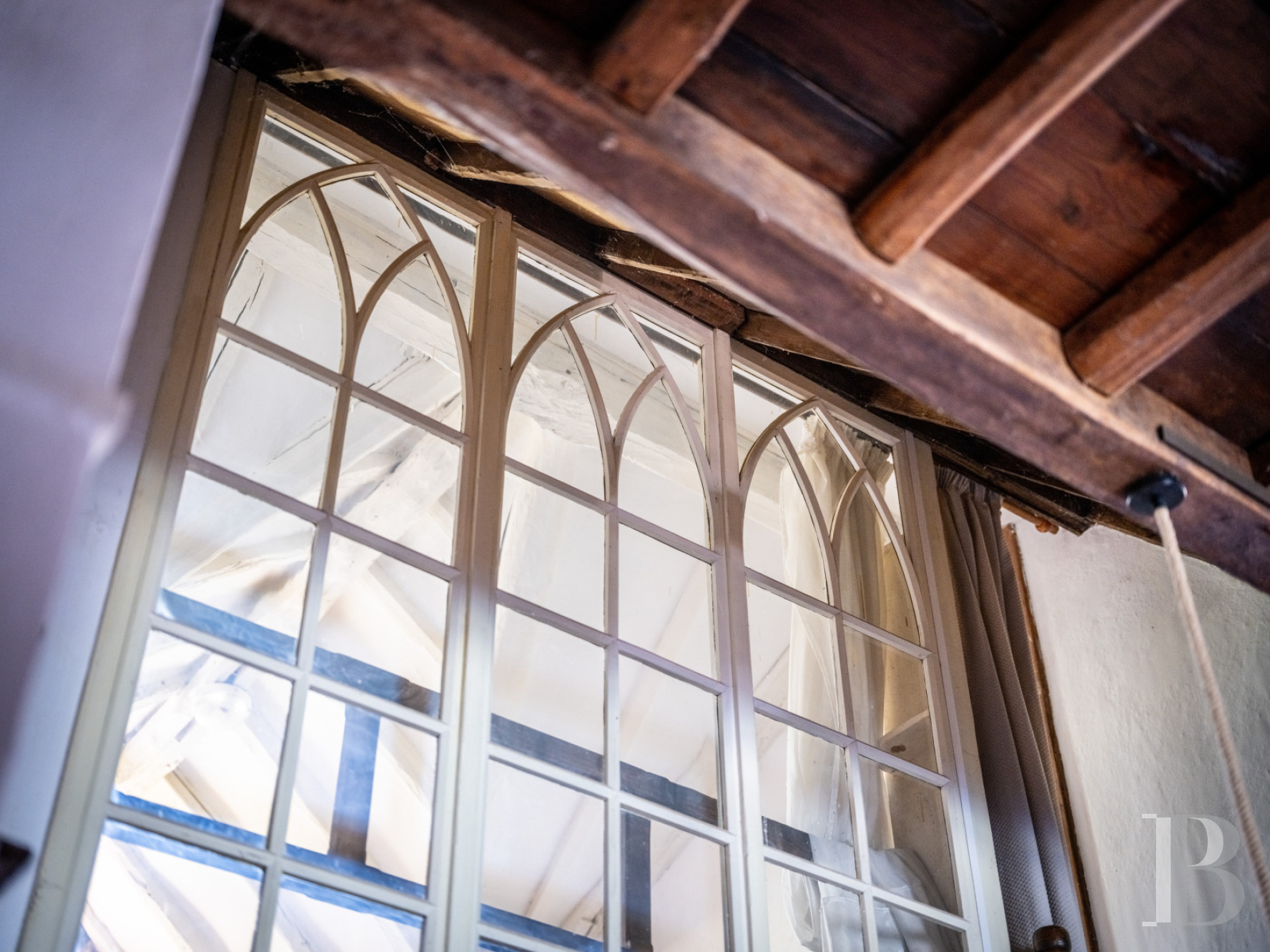
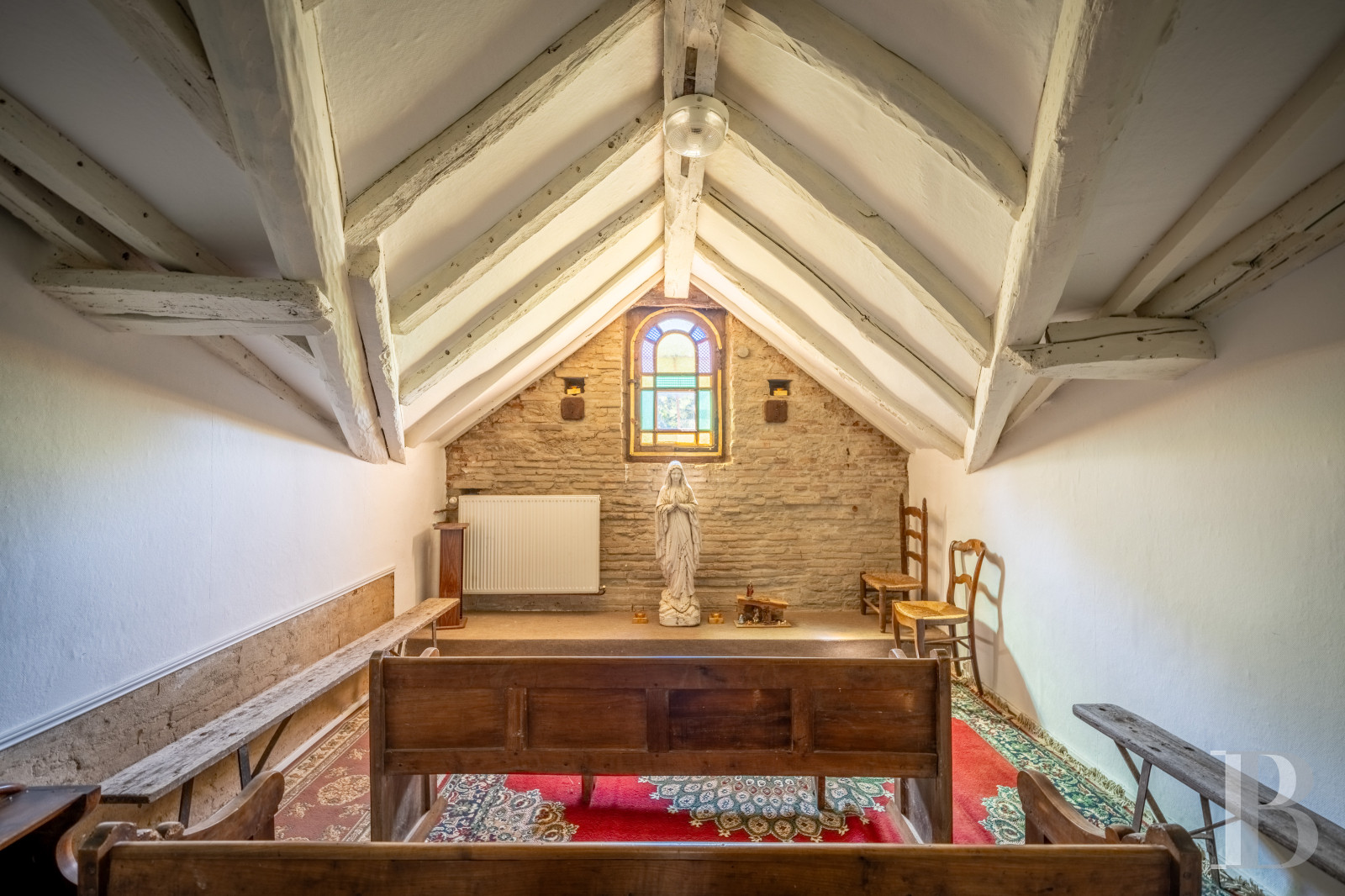
From the central landing on the first floor, opposite the grand staircase that links the ground floor to the first floor, a narrower staircase made of old timber leads up to the second floor. It follows the wall up to a gallery. Behind a glazed partition of pointed arches, there is a surprising place: a small private chapel, discreetly nestled in the roof space. This space, with its timber roof frame painted white, fits snugly beneath low beams. At one end, a stained-glass window brings soft light inside. Walls of exposed stonework underline the plainness of this place of contemplation. A statue of the Virgin Mary stands upon a simple altar. A few timber benches with a patina of age face the stained-glass window and remind us that this chapel was designed to host private religious services and silent prayers. Austere and well-preserved, this chapel extends the spiritual and family character of the estate, offering residents a space for contemplation where time stands still, suspended between heaven and earth. The rest of this roof space, beneath an old timber frame, is taken up by attic rooms: a long corridor lined with former domestic staff bedrooms creates an atmosphere frozen in time – a space waiting for you to give it fresh purpose.
The reception hall
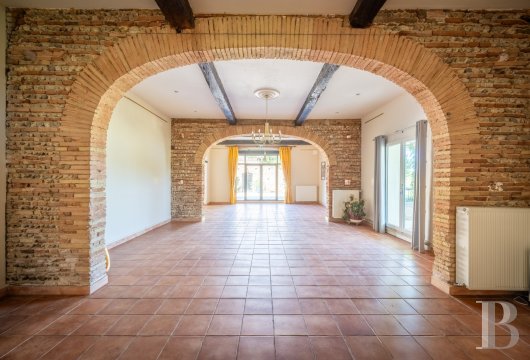
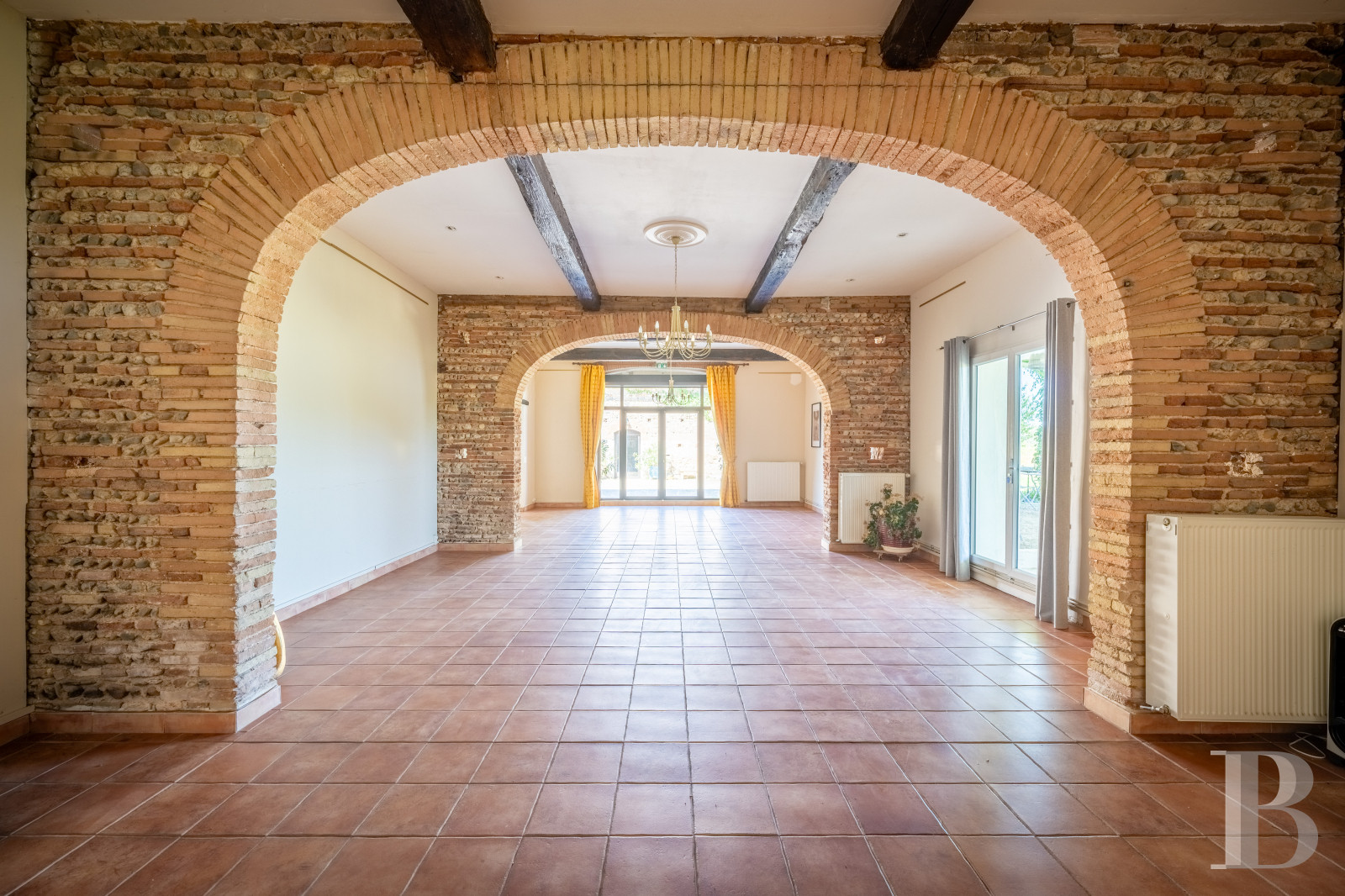
The reception hall lies perpendicular to the main house and is set back slightly from it. A former wine storehouse of red brick offers a vast space where receptions can be hosted. Its elevations, partially covered with vines, reminds us of the place’s agricultural past. Today, it is the perfect venue for weddings, dinners and seminaries. The interior is made up of two huge connecting halls, bathed in natural light from broad garden-facing windows. Here, natural light is everywhere, reflected in the terracotta floor tiles and brightening up the exposed roof frame, which is painted in a deep blue tone. The first hall, which faces the outdoor space, is remarkably transparent with glazed wall portions. It invites guests to enjoy festivities in the surrounding landscape where trees form a natural decor with colours that change with the passing of the seasons. The second hall that adjoins the first one has a cosier design with brick arches. Both halls are punctuated with monumental chandeliers brought back from travels. These chandeliers are suspended like precious lanterns, emitting warm light. Each sparkle from them turns the hall into a sumptuous, enchanting palace. A side corridor conveniently connects to a professional kitchen, a storeroom, a cloakroom and a lavatory – practical rooms that help ensure that receptions here run smoothly.
The dwelling and dovecote
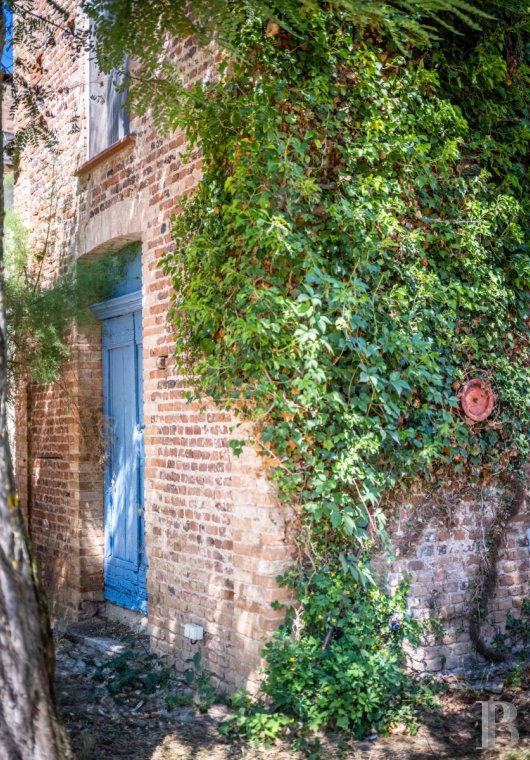
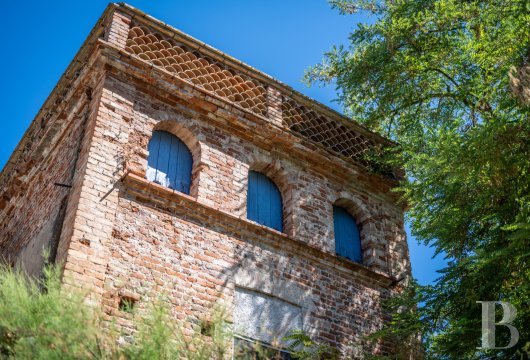
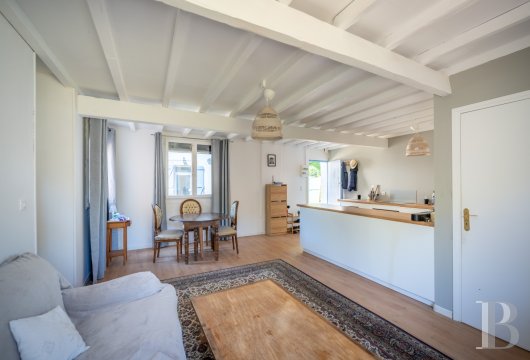
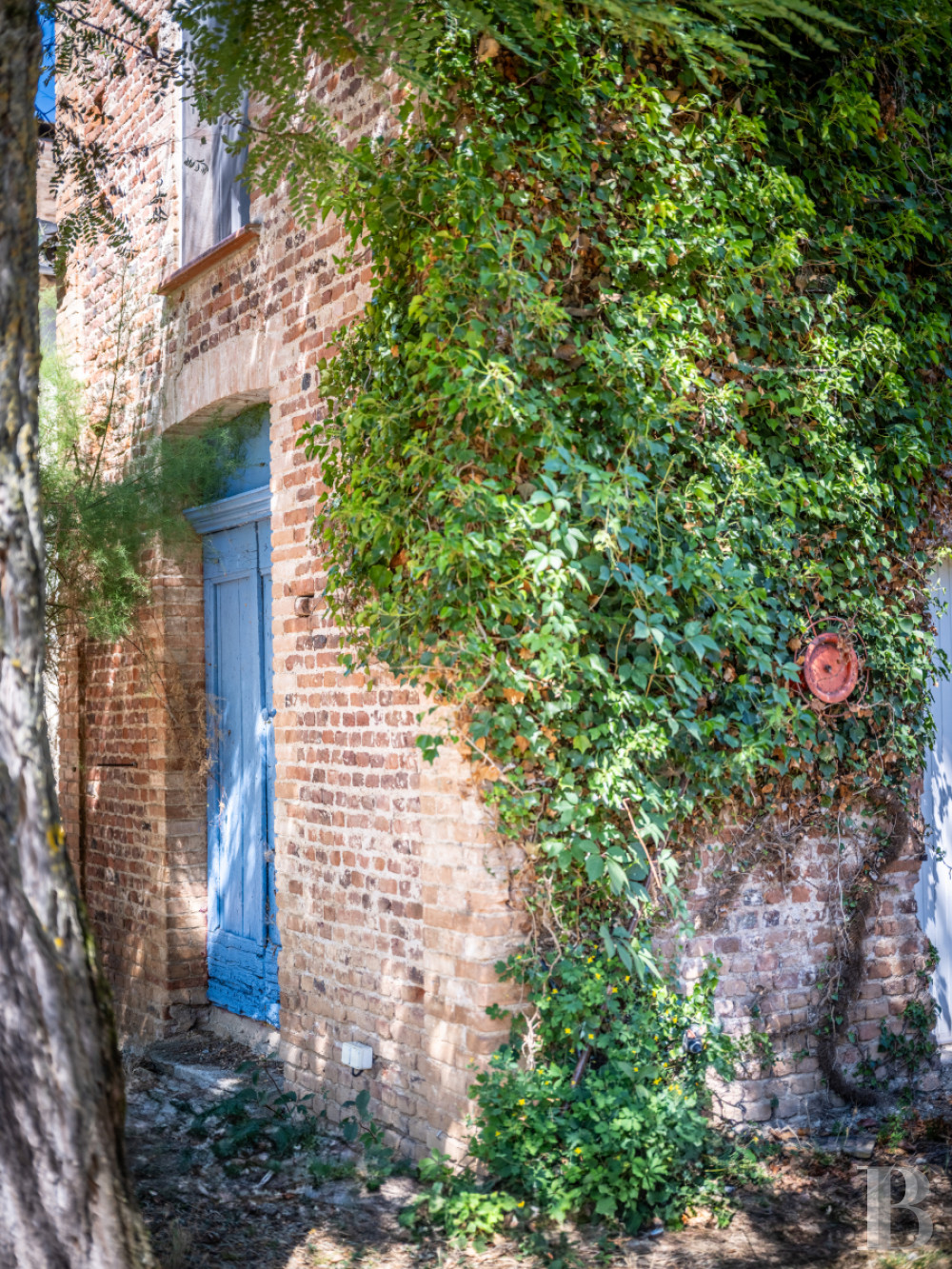
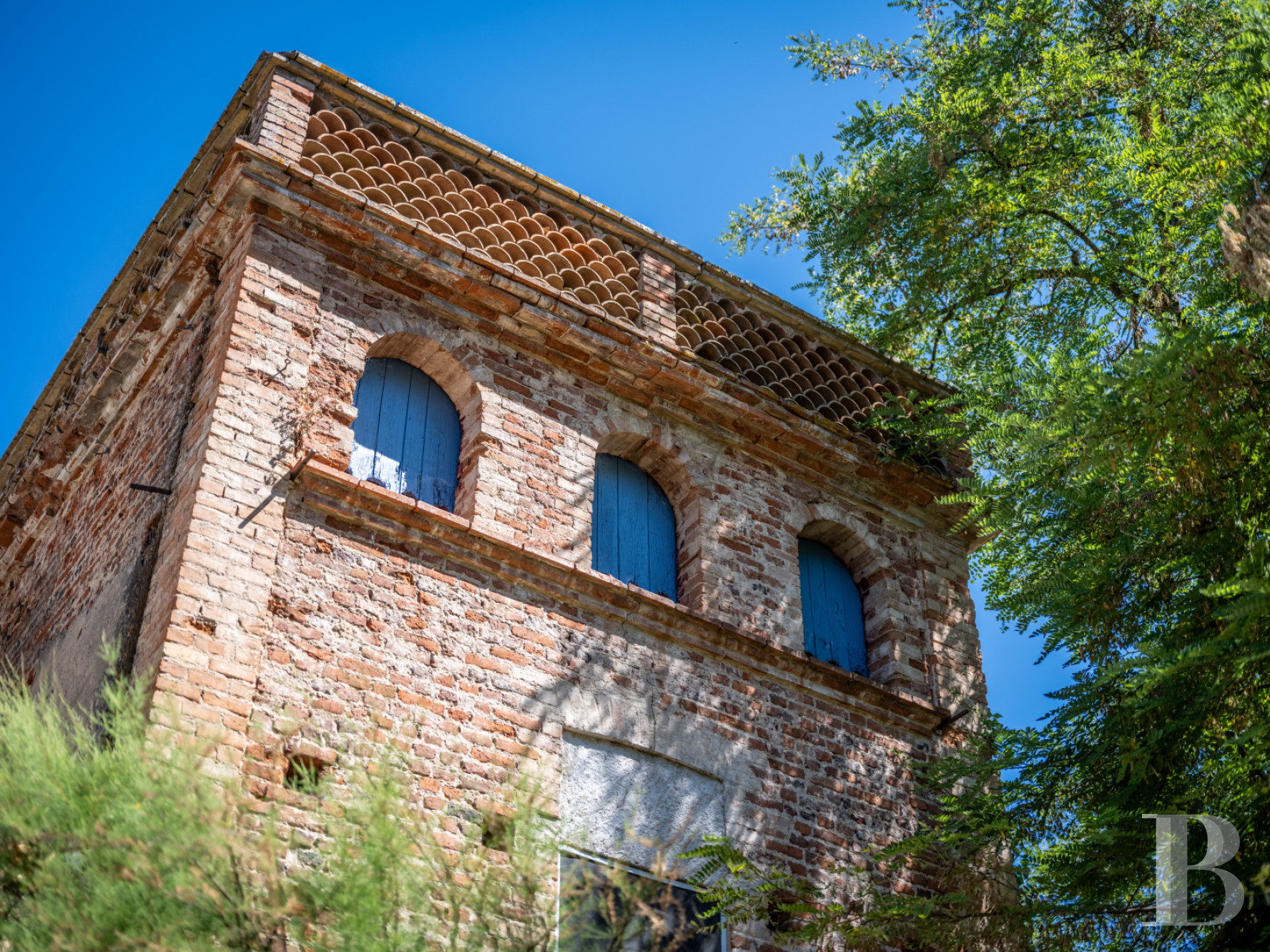
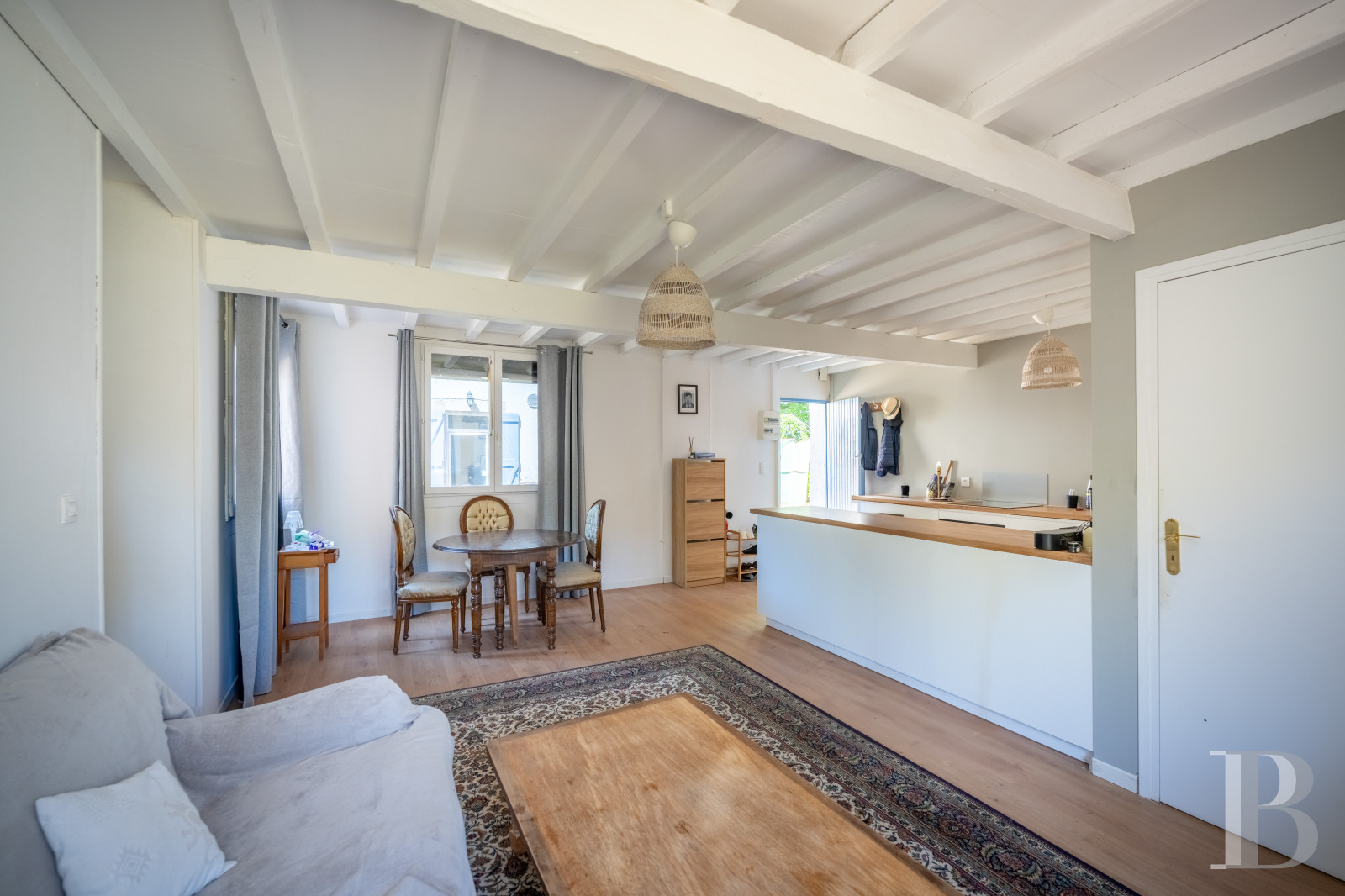
Set back from the main edifice, a small dwelling is extended with a dovecote of Toulouse brick with arched openings and an upper frieze of openwork that make it a token of built heritage. Together, the two buildings, partially covered with vegetation that softens their lines, form a geometric L-shaped silhouette that stretches up to the sky. Inside, a lounge is extended with a contemporary-style kitchen with a large work surface of pale wood. The contrast between this plain design and the whitened ceiling beams creates a bright, friendly atmosphere. An adjoining shower room completes this interior discreetly and practically. There is a cosier lounge too. With its soft tones and pale wood-strip flooring, it offers a refuge for relaxation. Its white, simple staircase leads to the dovecote’s upper floors. Up here, there is a bedroom with a floor of broad wood strips. It makes us forget the original purpose of this tower, now converted into a space for rest. With its fine finishes, this self-contained dwelling could serve as a separate home or as a gîte or guesthouse.
The outhouses
The outhouses complete the series of buildings and give the property balanced, practical coherence. In line with the dwelling that adjoins the dovecote, there is a building that houses a spacious workshop and a technical installations room with a boiler. These discreet, practical rooms make the property self-sufficient. In front of the main edifice, two other outhouses display symmetry. Their shape, punctuated with a pediment, semicircular arches and brickwork, sets the tone right from the entrance to the property. The first one houses a vast hall with glazing that looks out at the parkland. Its interior with exposed beams and terracotta floors offers an adaptable space that could be used just as easily for private purposes as for collective activities. It could be turned into a self-contained apartment, a meeting room or a friendly space where receptions in the main edifice could be continued. The second one is smaller in size, but is designed in the same architectural spirit. It houses a lavatory.
The grounds
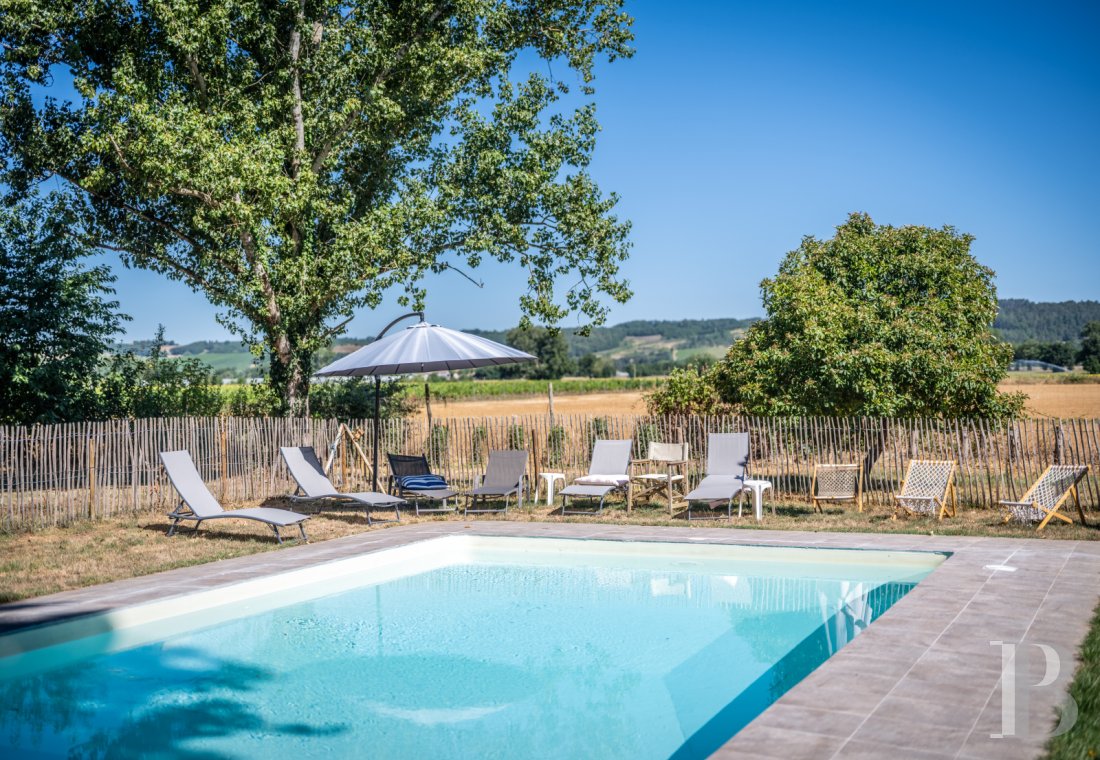
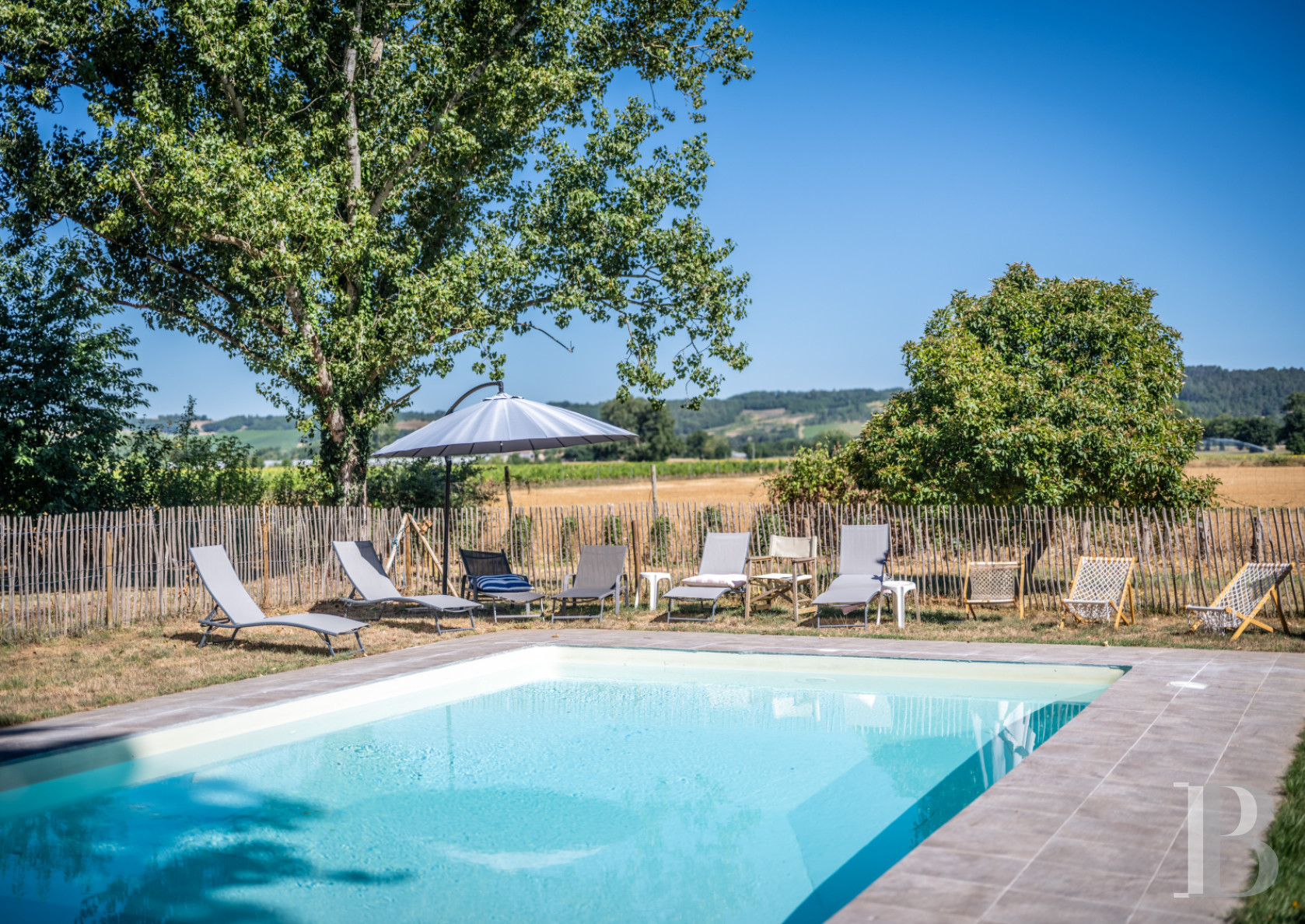
The grounds cover over 2.5 hectares. The landscaped parkland blends harmoniously with the surrounding countryside and the vineyards of a neighbouring chateau. There is a subtle balance of human mastery and wild liberty between the tree-lined driveways and the open, unspoilt backdrop of fields. Behind the main edifice, vast terraces extend the catering halls. They lead straight out onto lawns and invite guests to enjoy open-air gatherings in a natural continuation of the interior. Paths lined with cypresses open up straight views that draw your gaze to distant horizons or cosy glades. Age-old cedars and plane trees with imposing branches provide much shade and contrast with the suppleness of recently planted weeping willows. The grounds unfold like a series of paintings, each one with a different scale and tone of light. Dotted around this lush backdrop are statues and benches: figures of permanence among the vegetation and discreet stopping places conducive to contemplation. Set back, a swimming pool lies in the landscaped environment. From this pool, you can admire sweeping views of the surrounding fields and vineyards. The pool adds a space for rest and relaxation in these vast grounds.
Our opinion
This remarkable estate, today used for events, offers spacious lounges, vast reception halls and convenient outhouses. The property already hosts weddings, seminars and professional gatherings. The harmony of its architecture and the brightness of its interior make it a venue ready for use, where conviviality goes hand in hand with elegance. Its ideal location, with several characterful towns nearby, in a beautiful French region renowned for its vineyards, is yet another asset that makes this place a true gem. Every aspect of this property points to a range of fruitful projects. It could be the site of a prestigious restaurant, a high-quality training centre, an artistic residence scheme or simply a family home combined with guest accommodation managed by a steward. In short, this property is a unique haven, steeped in history yet also equipped for fresh projects, spearheaded by anyone who wants to write the next chapter in this place’s story.
1 390 000 €
Fees at the Vendor’s expense
Reference 748253
| Main building floor area | 900 m² |
| Outbuildings floor area | 400 m² |
| Land registry surface area | 2 ha 59 a 55 ca |
| Elevator | |
| Total floor area | 1300 m² |
French Energy Performance Diagnosis
Information on the risks to which this property is exposed is available on the website: www.georisques.gouv.fr
Share


- Gaillac -
- Midi-Pyrénées -
- Occitania -
- Tarn
NB: The above information is not only the result of our visit to the property; it is also based on information provided by the current owner. It is by no means comprehensive or strictly accurate especially where surface areas and construction dates are concerned. We cannot, therefore, be held liable for any misrepresentation.