



In Burgundy, in Colette's country, 2 hours from Paris,
a Belle Époque seaside-style villa set within just over 1 ha, fully furnished
a Belle Époque seaside-style villa set within just over 1 ha, fully furnished
Saint-Sauveur-en-Puisaye,
YONNE
burgundy
89520
FR

Location
La propriété, se trouve à mi-chemin entre deux villages, dont l’un, Saint-Sauveur-en-Puisaye, concentre l’ensemble des commerces de la vie quotidienne, une maison de santé qui rassemble plusieurs médecins de spécialités différentes, ainsi que de nombreux restaurants et ateliers d’artistes. L’agriculture et l’artisanat structurent l’économie locale, dans une région également touristique, portée notamment par le château de Saint-Fargeau, le chantier médiéval de Guédelon, le parc de Boutissaint et le lac du Bourdon, où diverses activités nautiques se déploient en période estivale.
Auxerre, 35 minutes away, has a station with trains to Paris in under 1 hour 45 minutes. Cosne-Cours-sur-Loire est à 30 min. Paris est accessible en près de 2 h par l’autoroute A6, tandis que l’aéroport de Paris-Orly est à une durée équivalente.
Description
Waymarked paths cross an open, rolling landscape of hedgerows, ponds, woodland and low hills, threaded by quiet country roads.
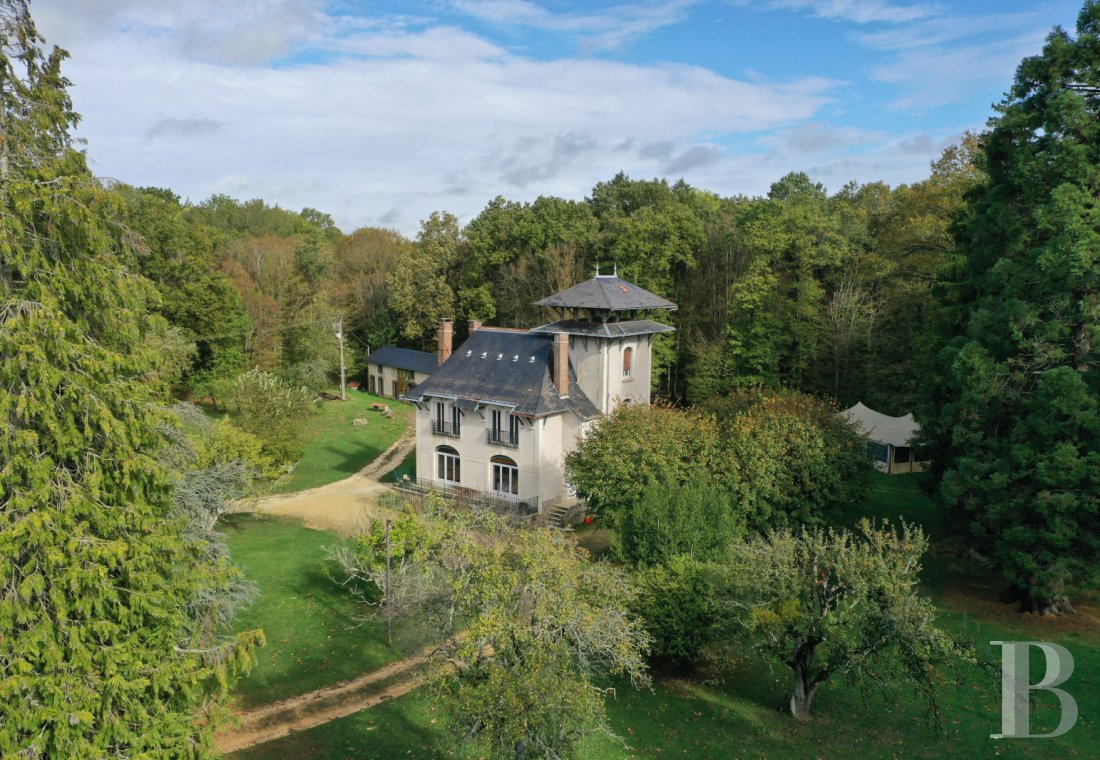
A double wrought-iron gate marks the entrance to the grounds, where a curved drive loops in front of the villa before continuing to the outbuilding at the rear. A separate access leads to parking for up to ten cars. Woodland borders the property, and an old well remains on site.
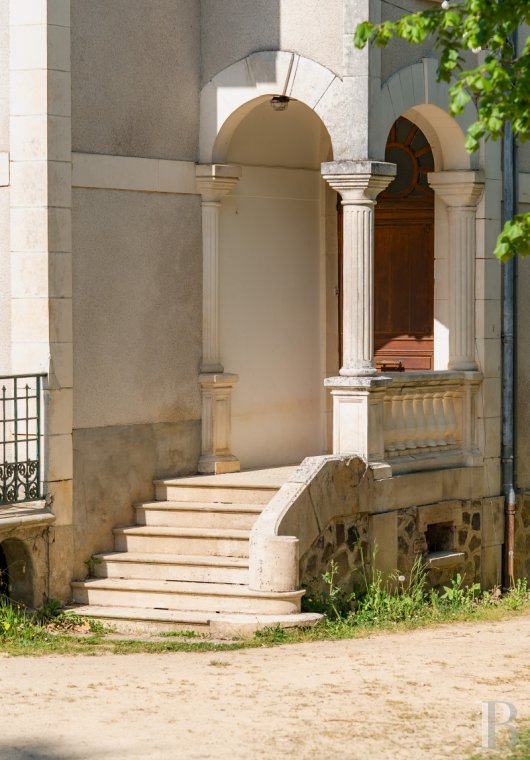
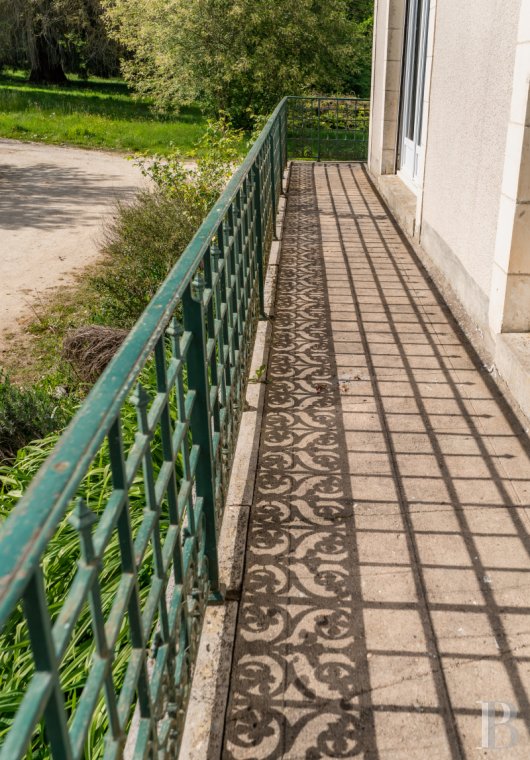
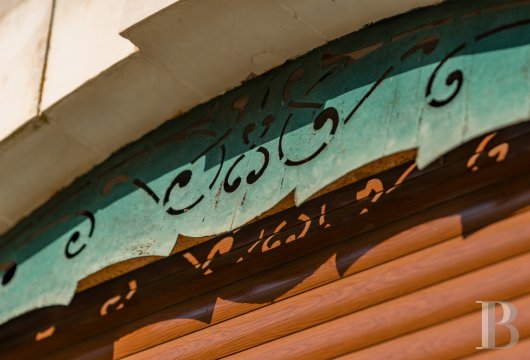
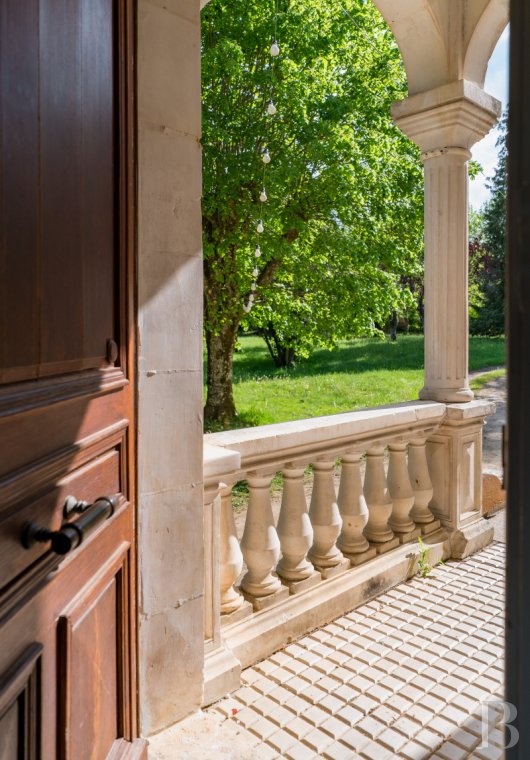
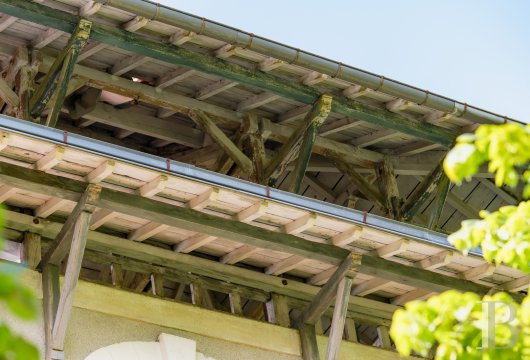
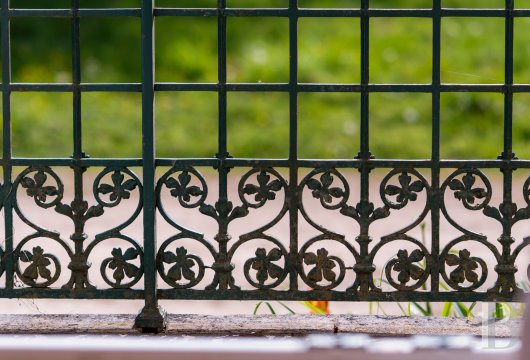
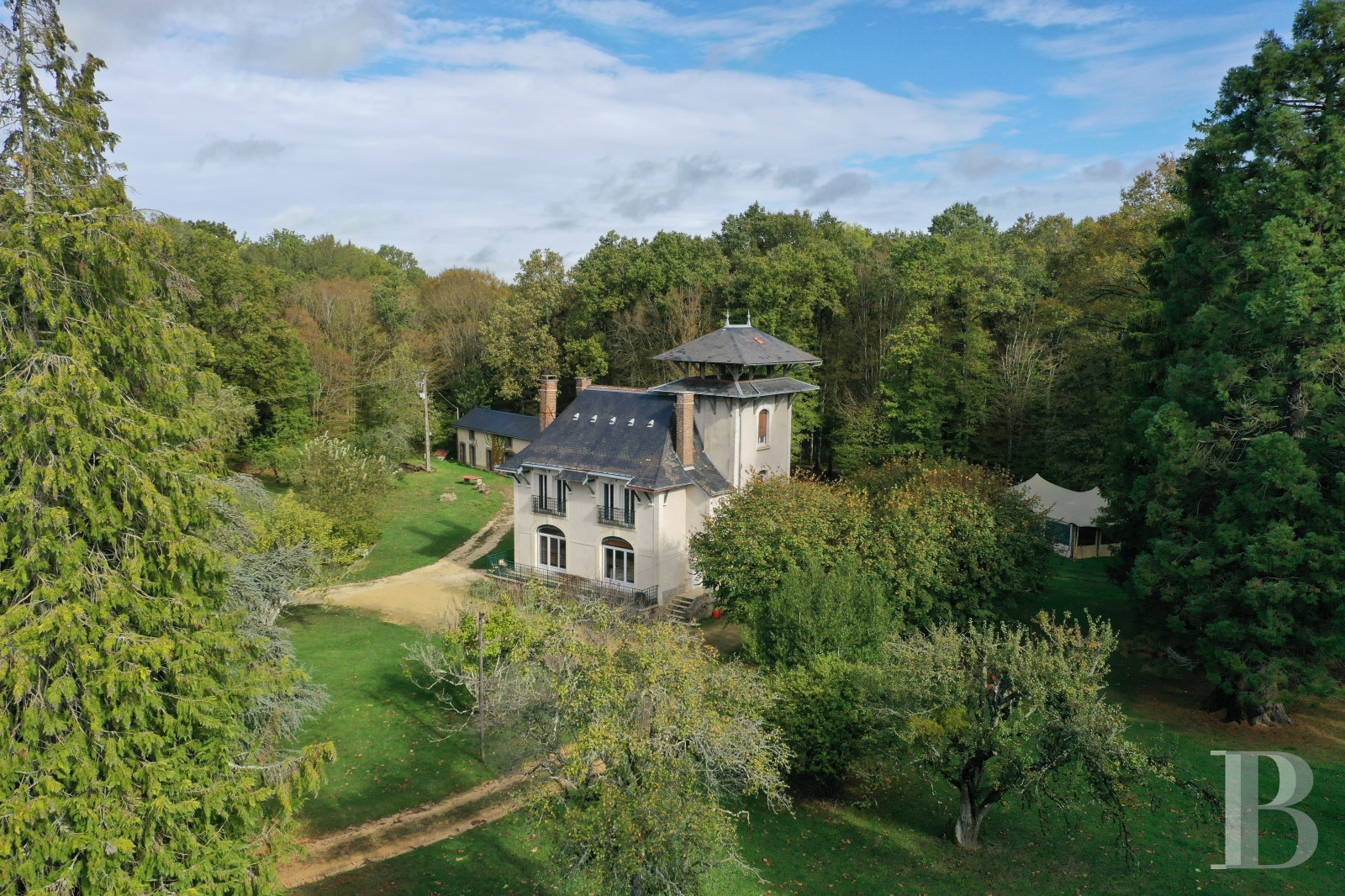
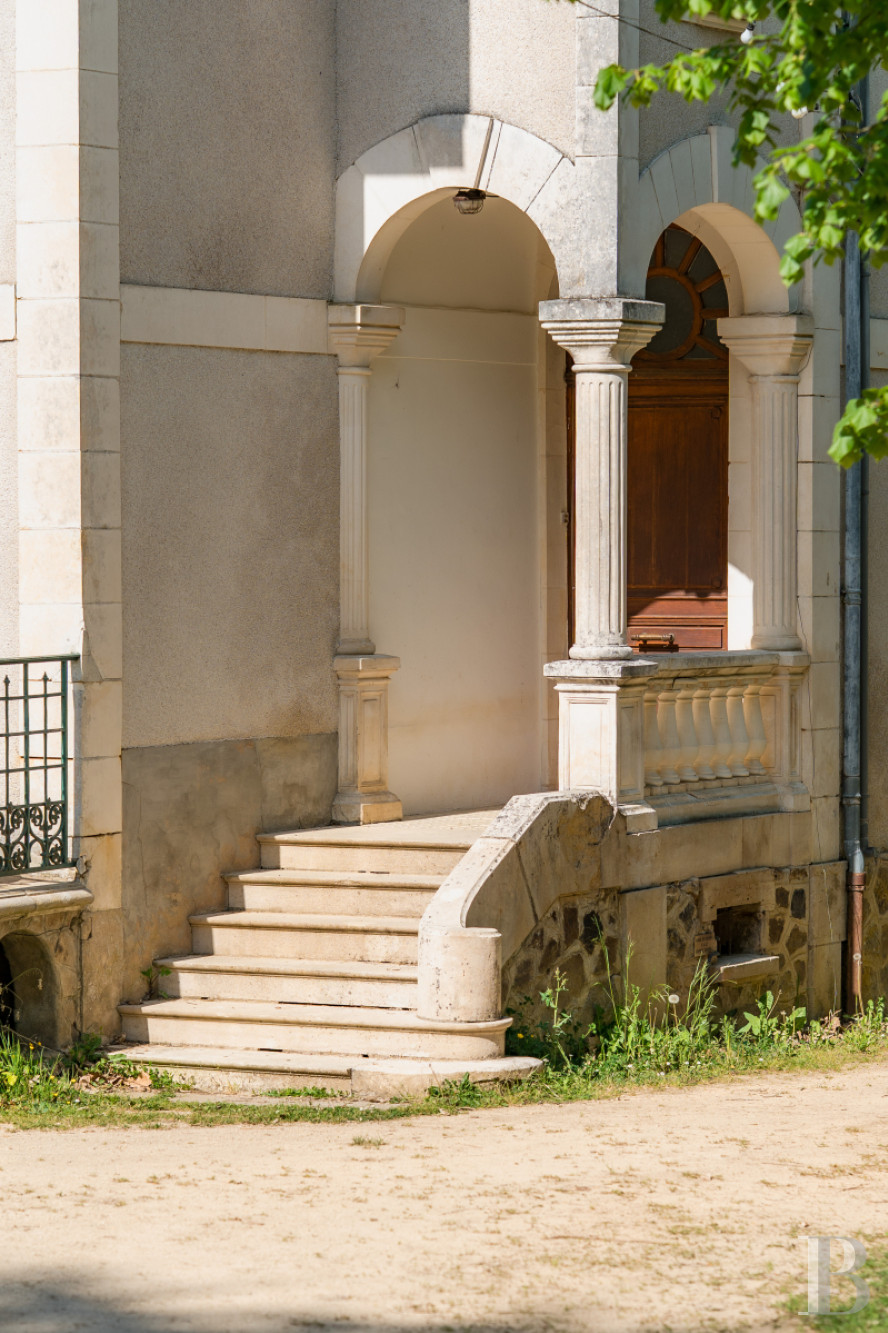
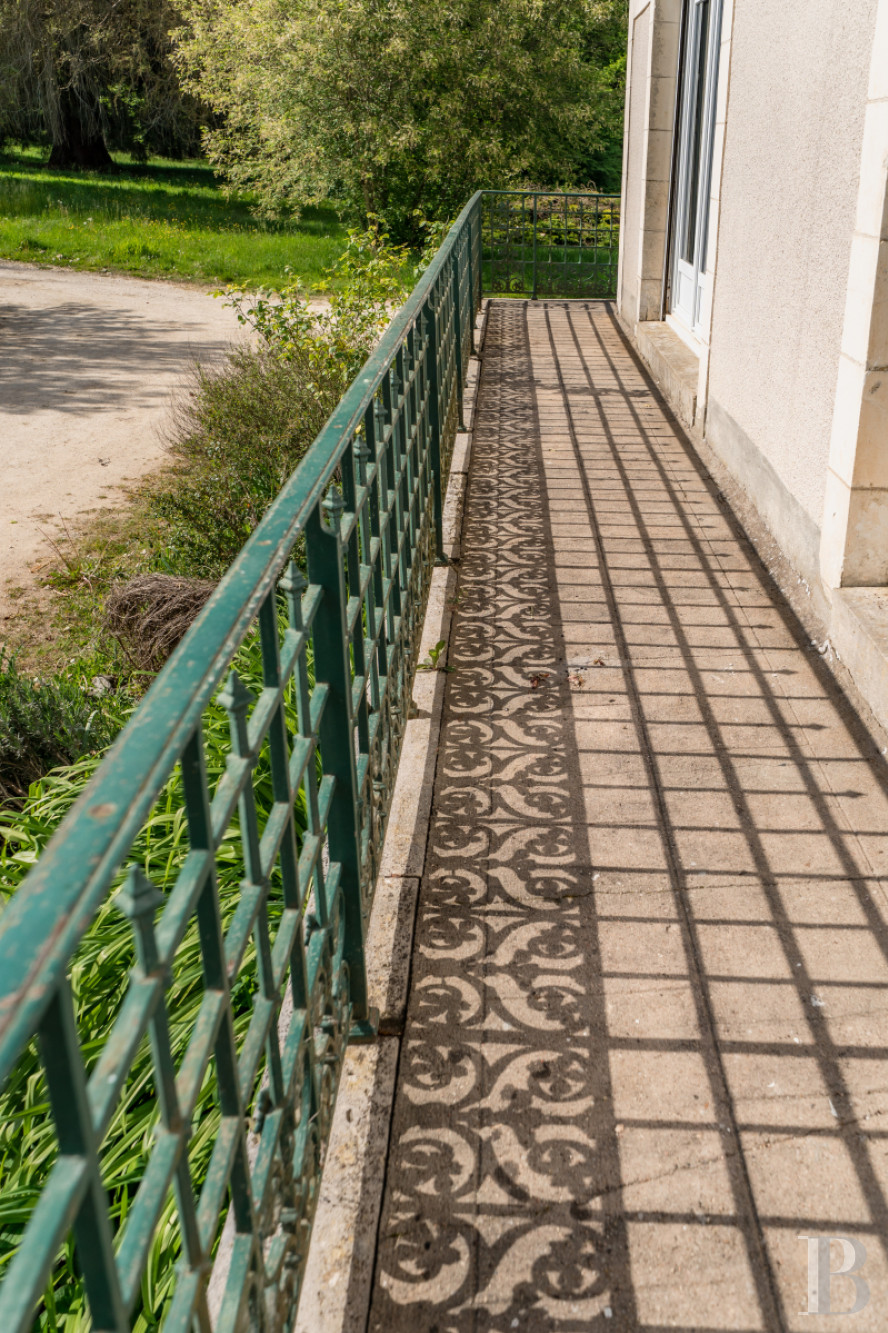
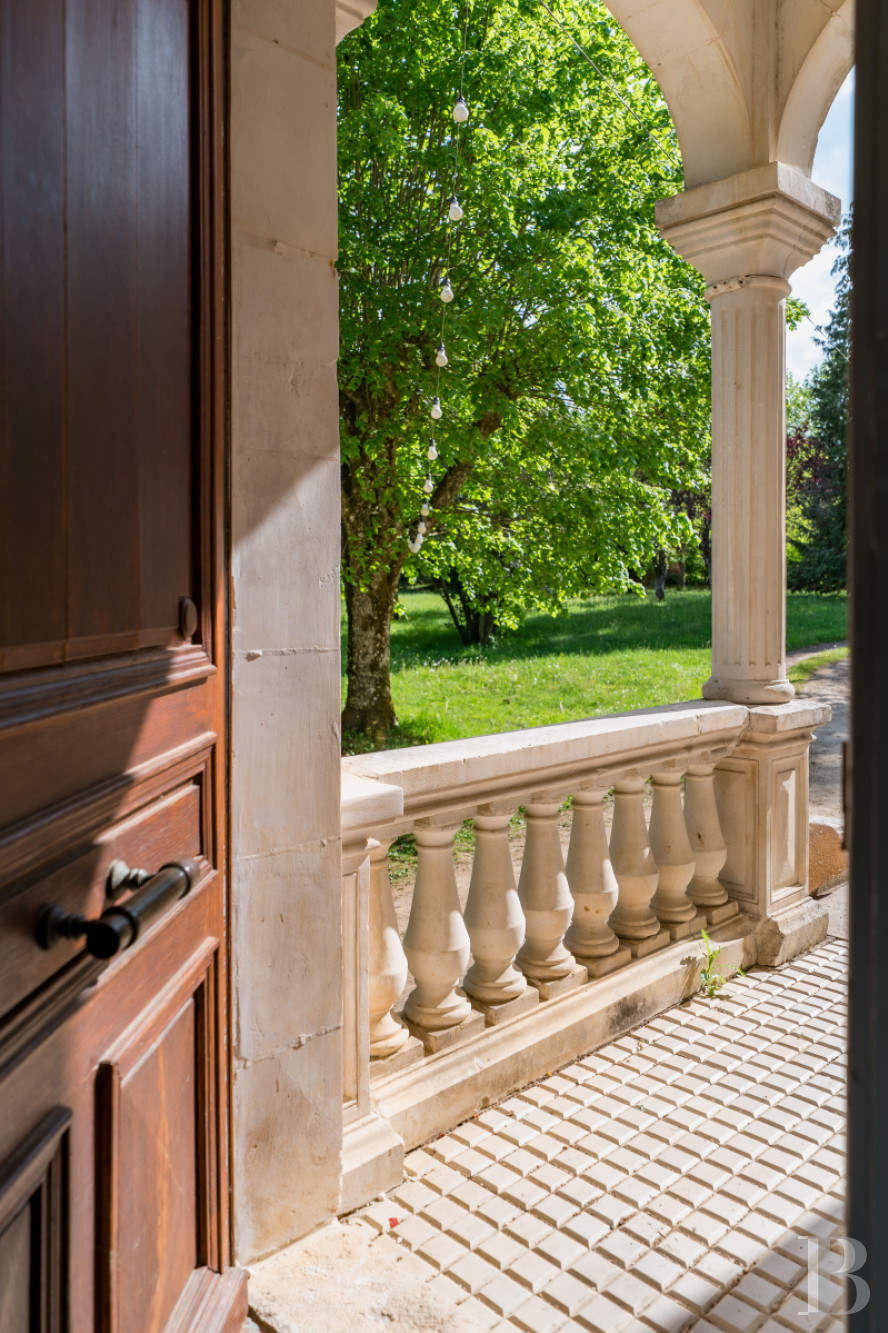
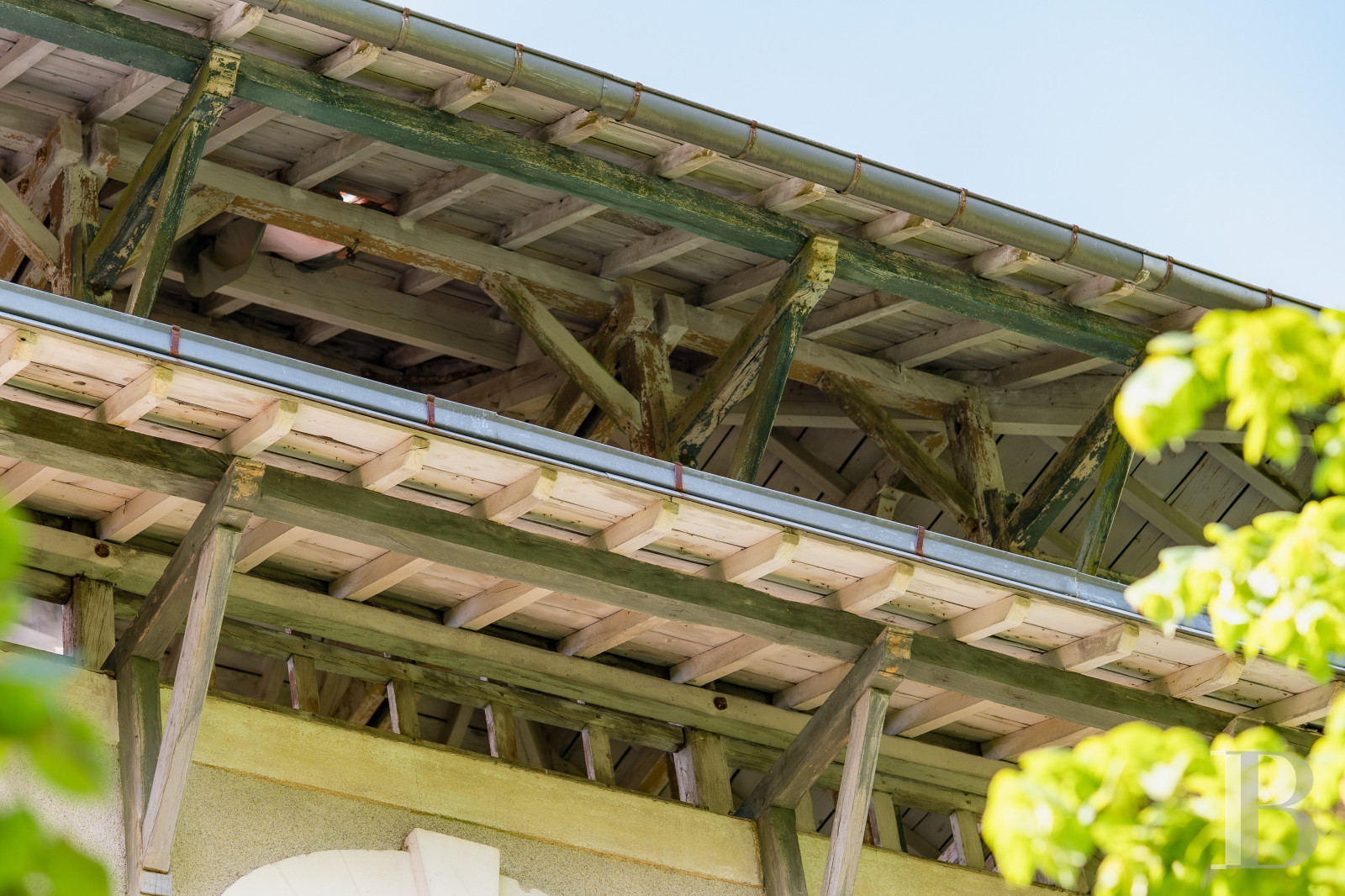
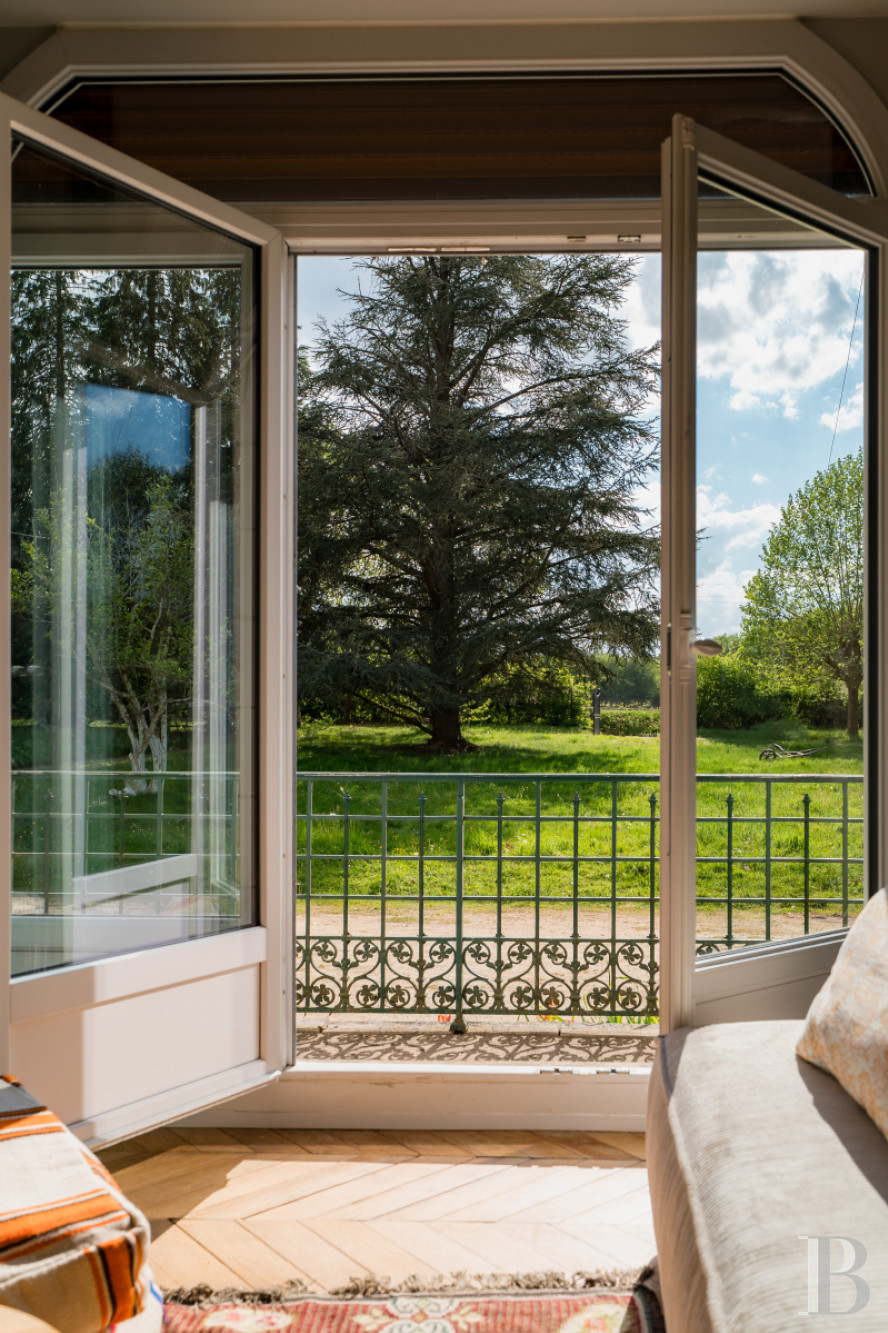
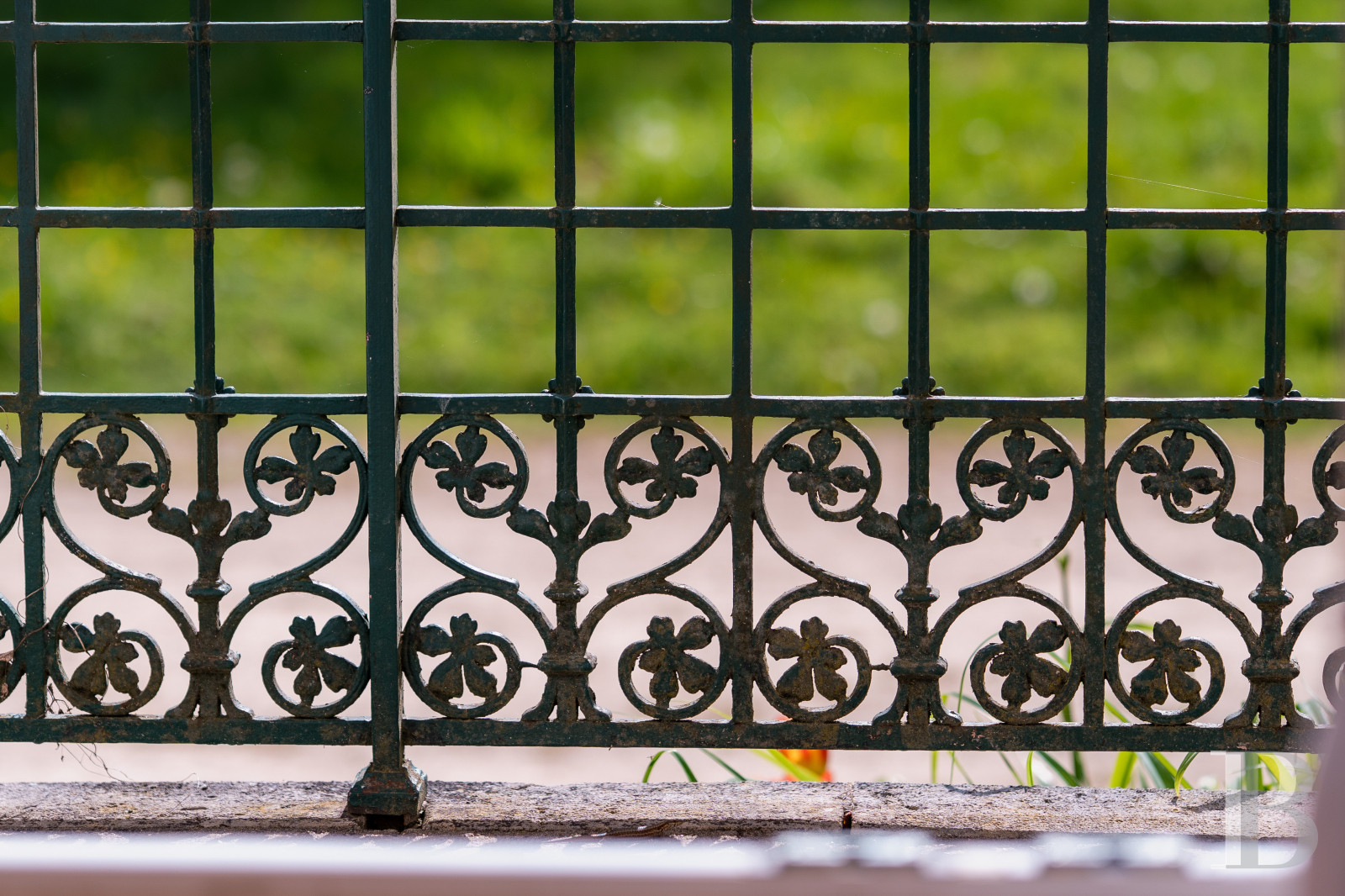
The main entrance is distinguished by classical columns supporting an alcove, a pear-wood baluster railing and a door surmounted by a glass segmental-arched fanlight. Facing south-west, built over a cellar and rising three levels, the building has an asymmetric composition. Its principal volume, rendered in a pale finish, carries a two-pan slate roof marked by shed dormers. At one corner, a slightly projecting square tower supports a covered belvedere. Large round-arched glazed bays punctuate the ground-floor facade, above which a continuous balcony runs the full width of the level, protected by an ornamental metal railing. On the first level, paired windows open onto small projecting balconies.
A double wrought-iron gate marks the entrance to the grounds, where a curved drive loops in front of the villa before continuing to the outbuilding at the rear. A separate access leads to parking for up to ten cars. Woodland borders the property, and an old well remains on site.
The main entrance is distinguished by classical columns supporting an alcove, a pear-wood baluster railing and a door surmounted by a glass segmental-arched fanlight. Facing south-west, built over a cellar and rising three levels, the building has an asymmetric composition. Its principal volume, rendered in a pale finish, carries a two-pan slate roof marked by shed dormers. At one corner, a slightly projecting square tower supports a covered belvedere. Large round-arched glazed bays punctuate the ground-floor facade, above which a continuous balcony runs the full width of the level, protected by an ornamental metal railing. On the first level, paired windows open onto small projecting balconies.
The villa
The ground floor
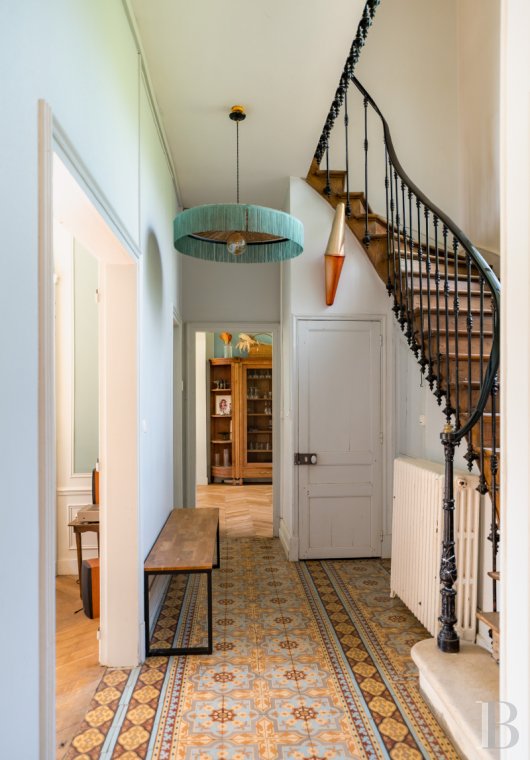
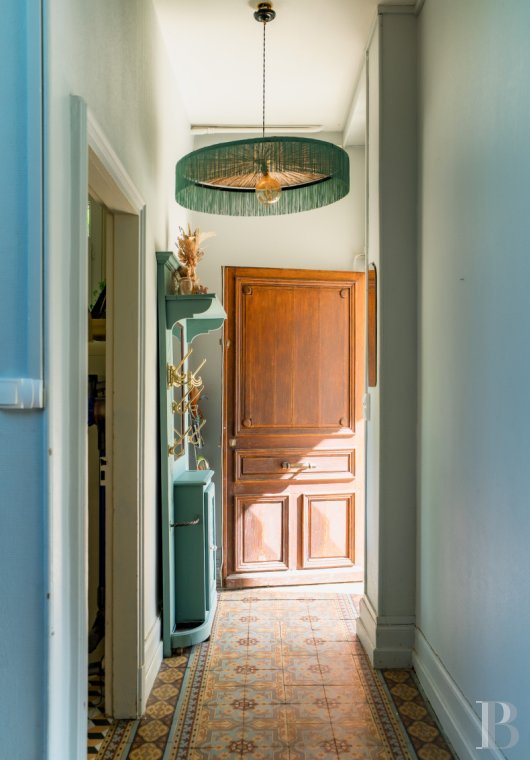
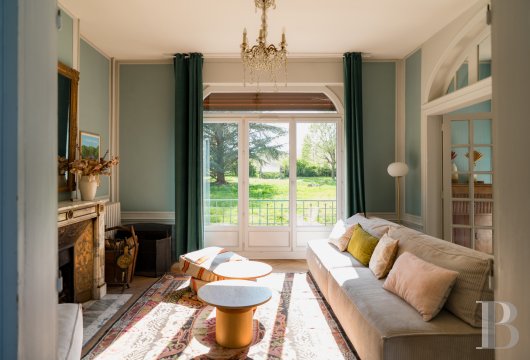
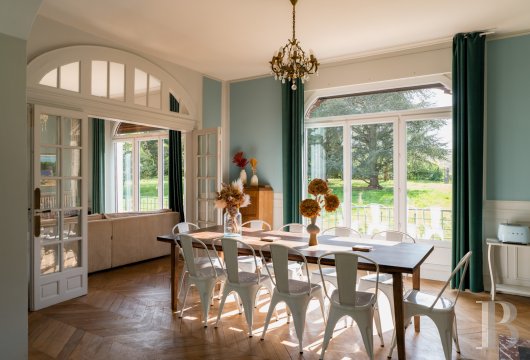
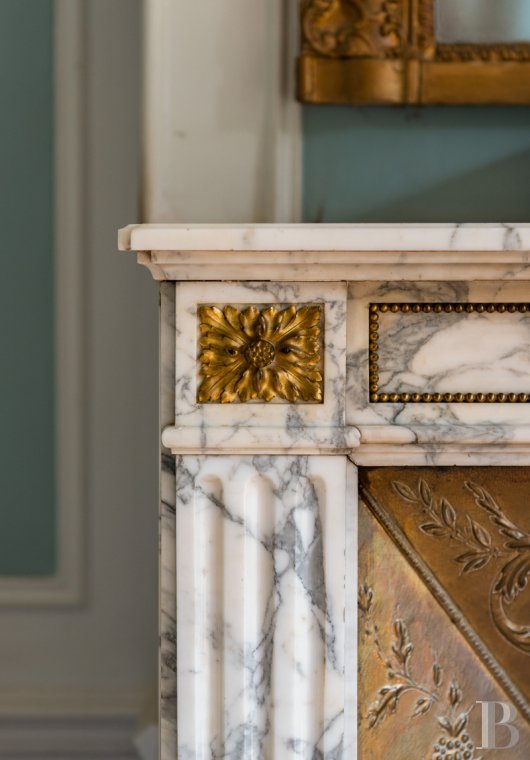
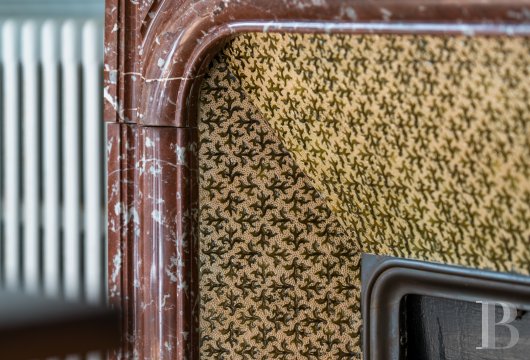
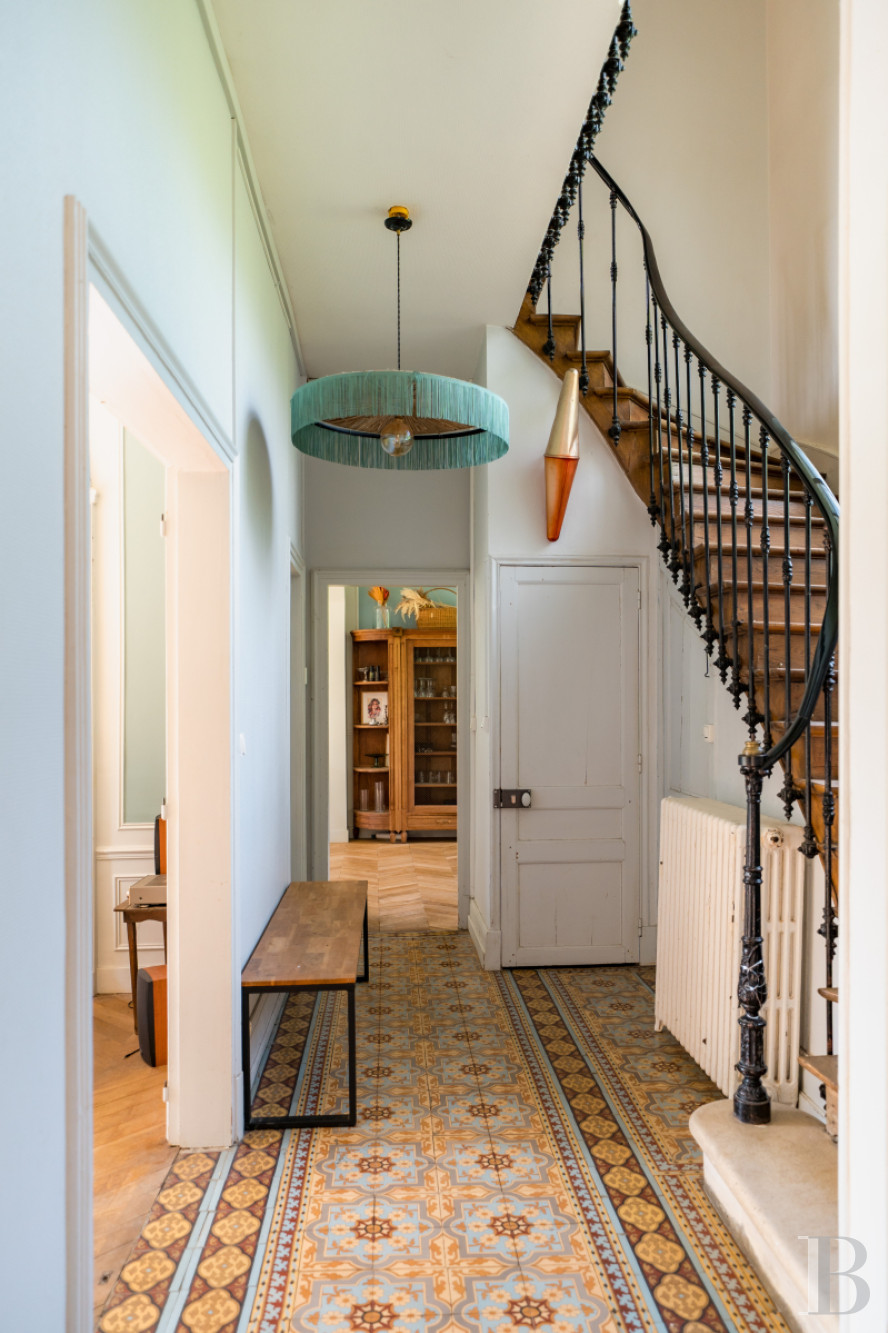
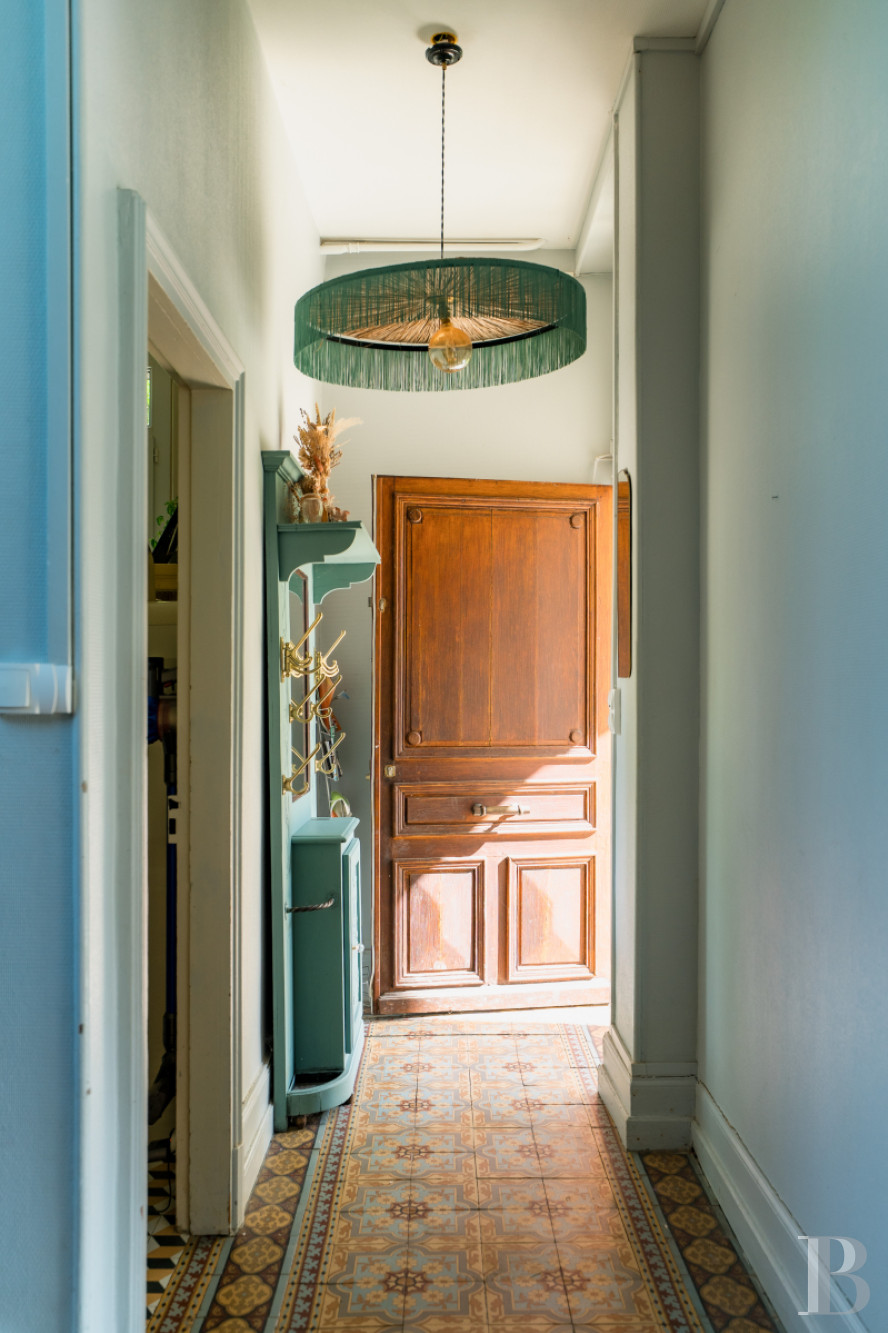
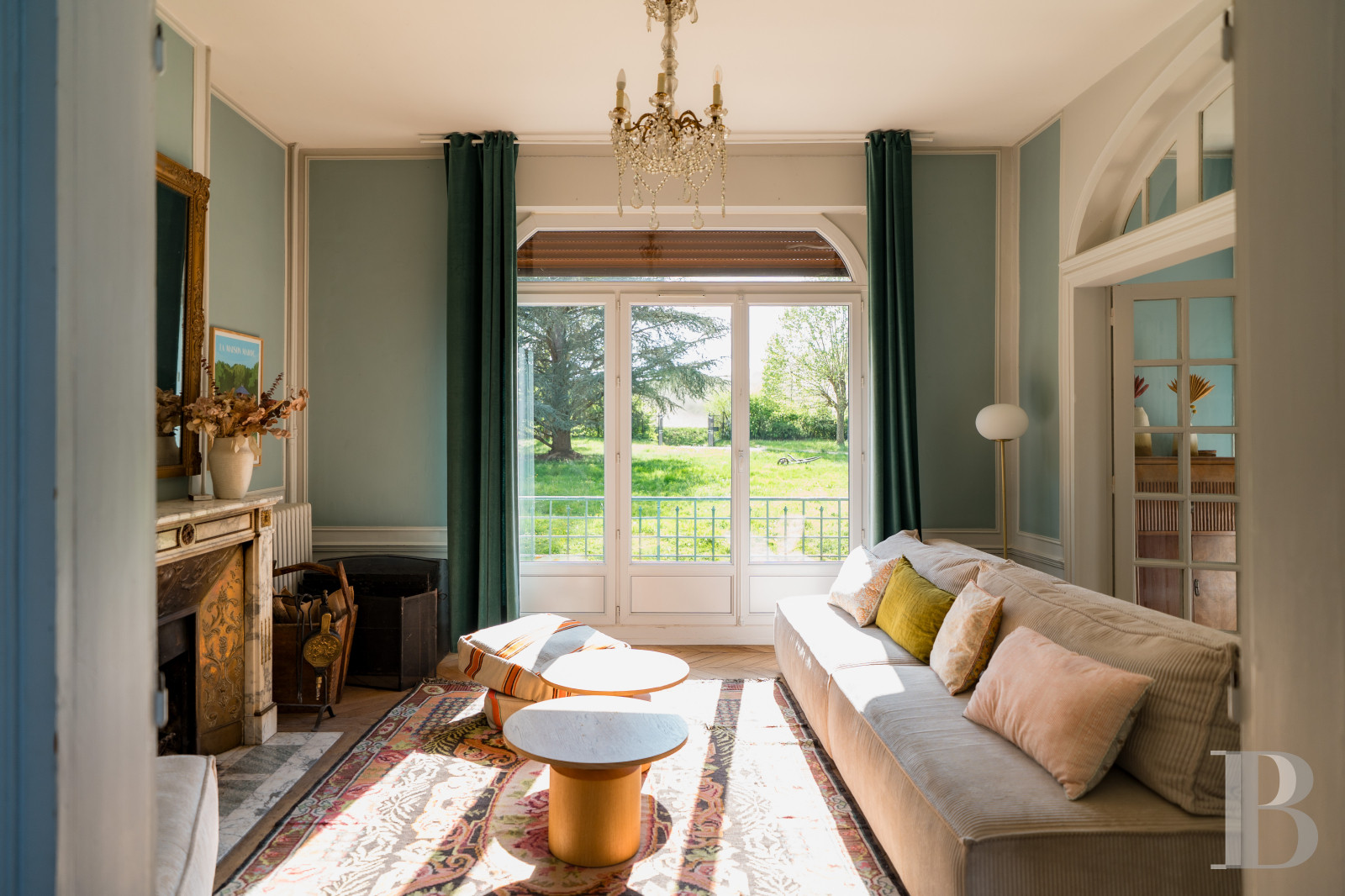
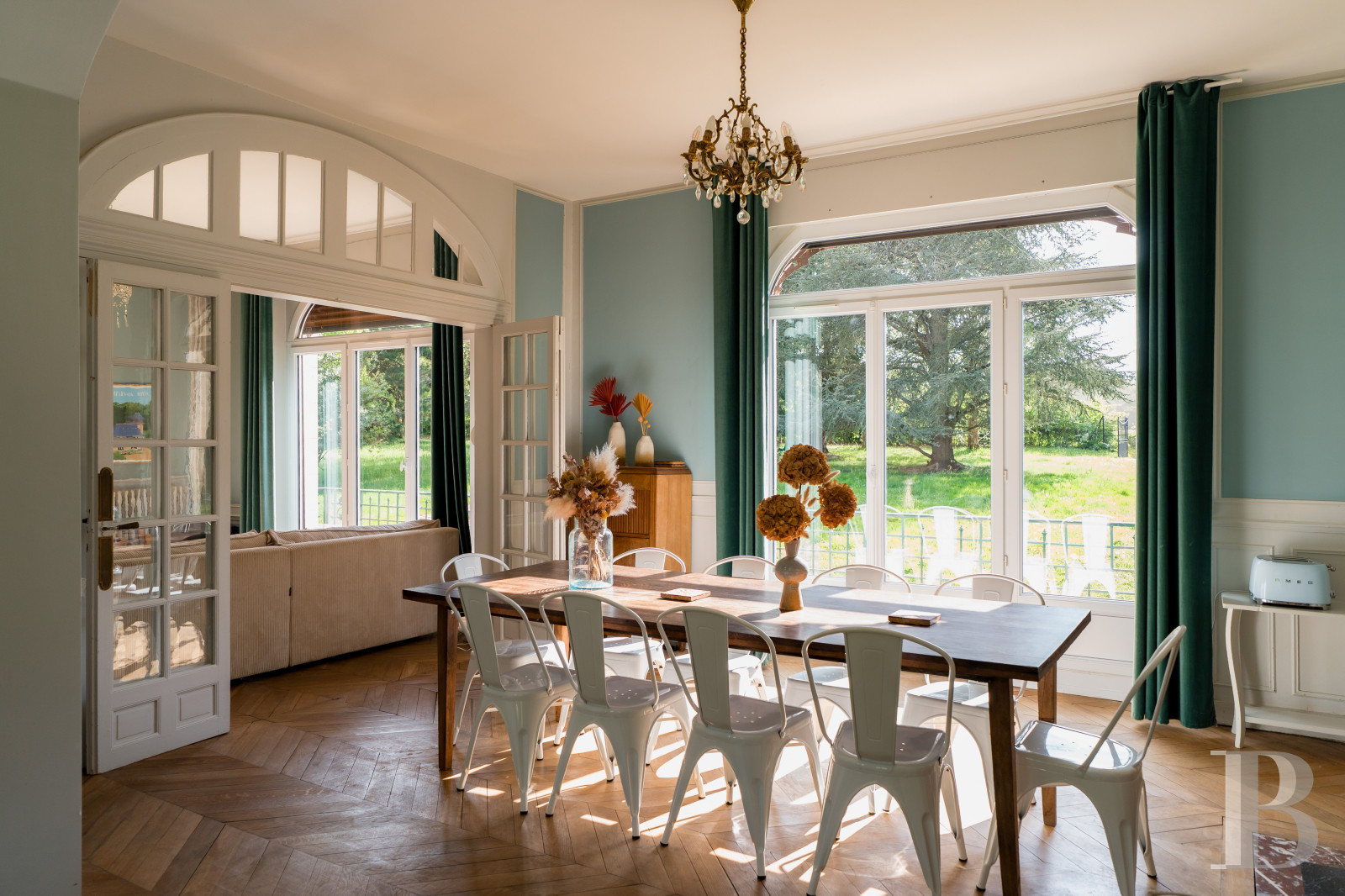
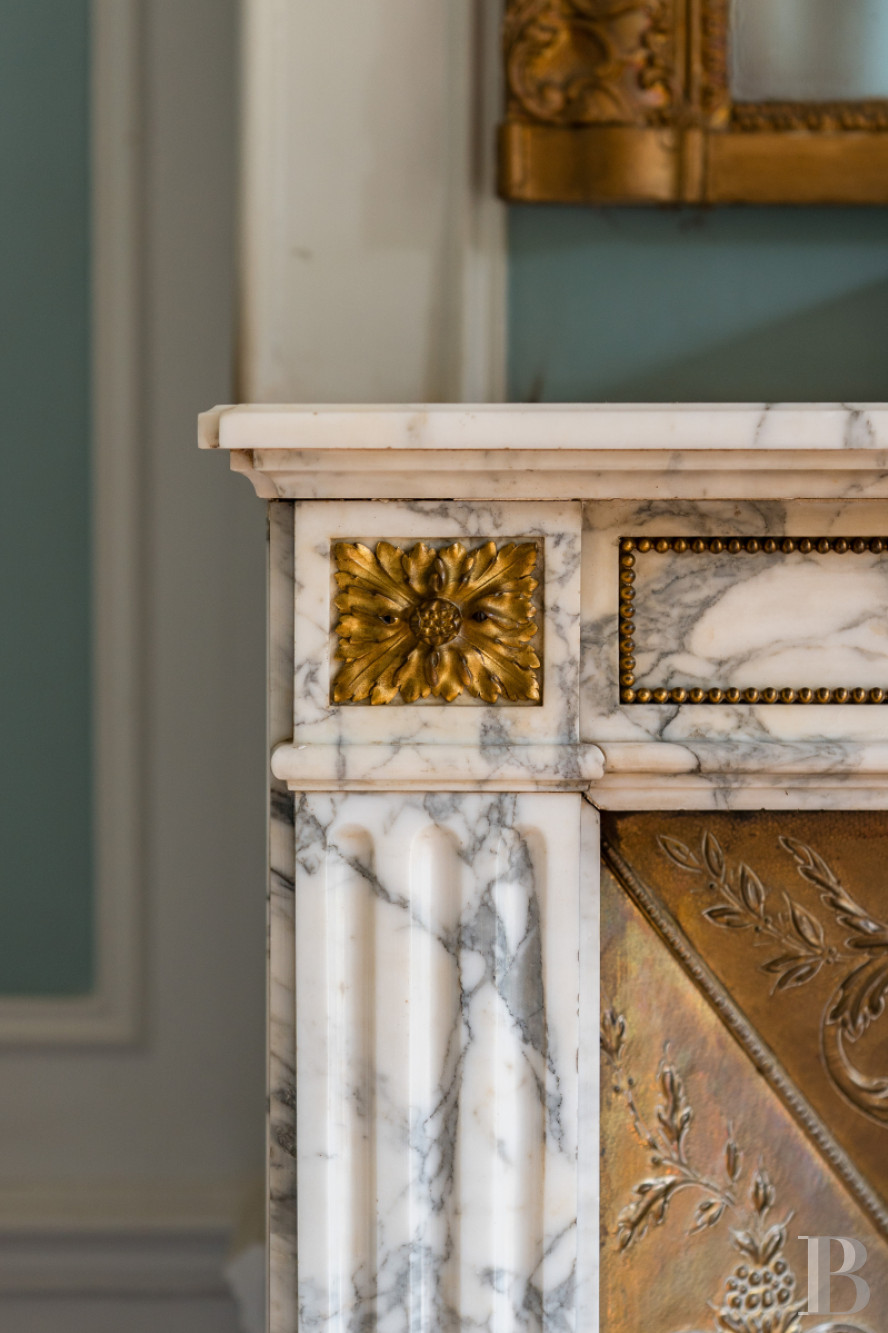
A corridor lined with original ceramic tiles — geometric lines and symmetrical floral motifs whose relief effect provides structure to the interior — leads to a fitted kitchen with storage, lit by a window, and to a guest lavatory with a white porcelain basin. The drawing room has chevron parquet flooring and a marble fireplace with a raised surround embellished with medallions and gilded elements on the white mantel. A triple glazed door with large panes, surmounted by a glass fanlight, separates it from the dining room, which also has a marble fireplace and a splayed bay with cross-motif glazing. Dual-aspect, the dining room looks over the grounds and connects to a veranda at the rear, built at the same period, now housing the wood-burning heating system.
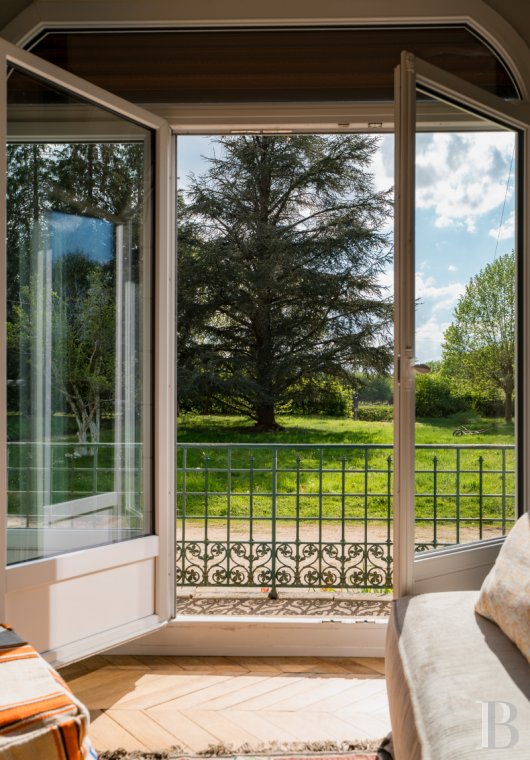
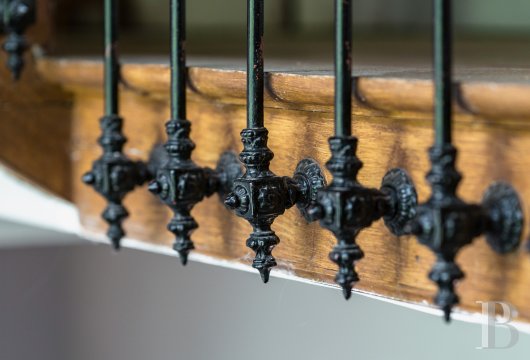
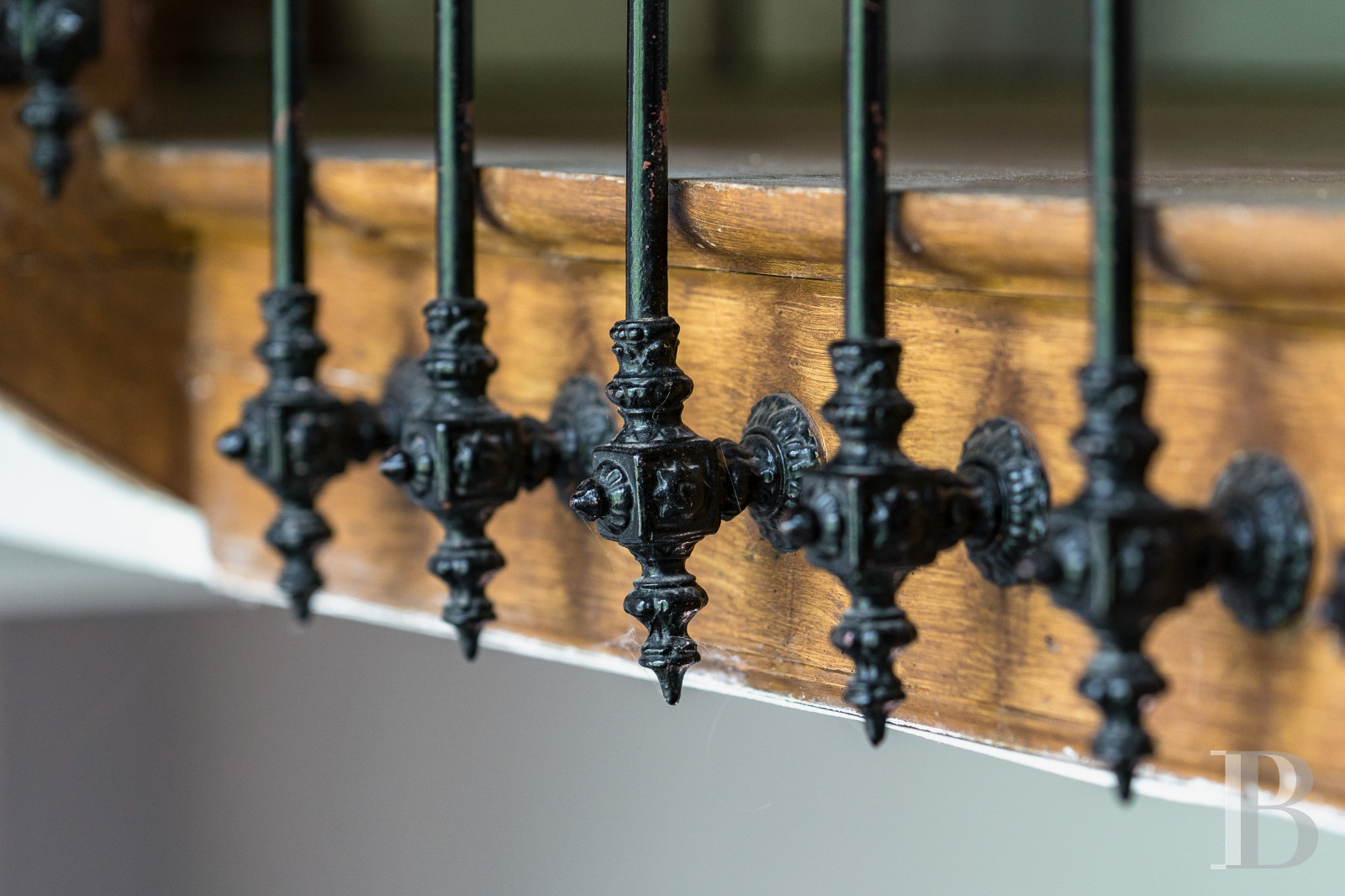
Each of the reception rooms opens onto the continuous balcony through a large glazed bay and is distinguished by dado panelling and broad rectangular moulded panels. From the dining room, a round-arched opening leads to a further room where ironwork frames a third bay at the rear of the house. A timber turning staircase with handrail rises from the entrance hall to the upper levels; the first tread, in stone, is scroll-shaped.
The first floor
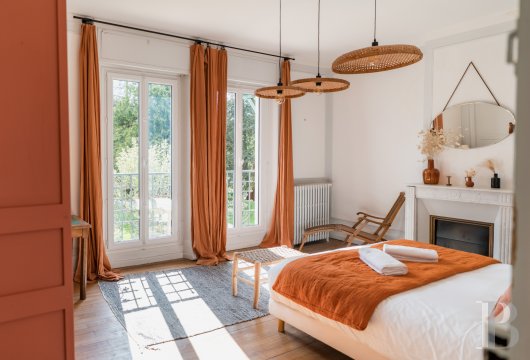
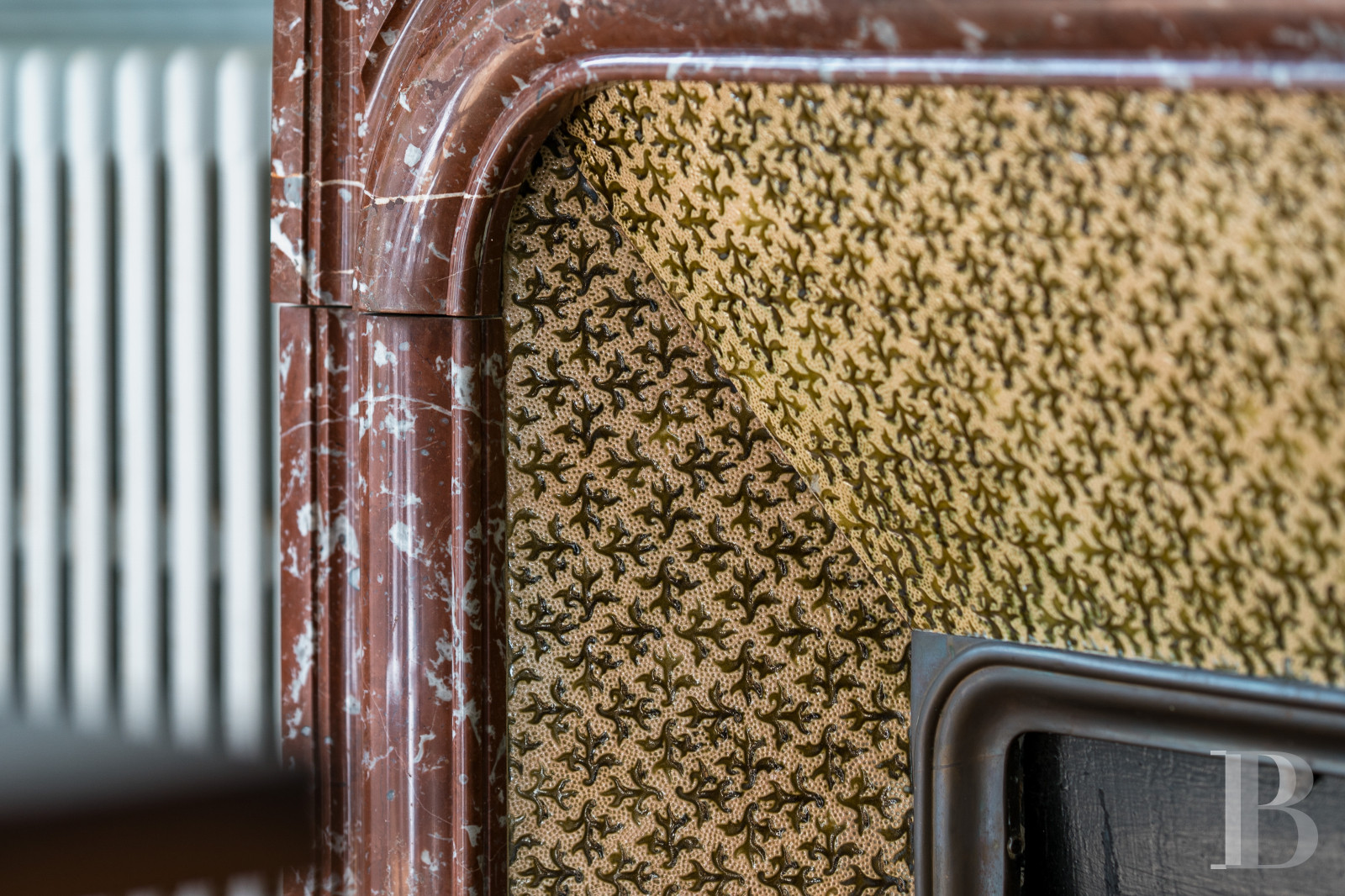
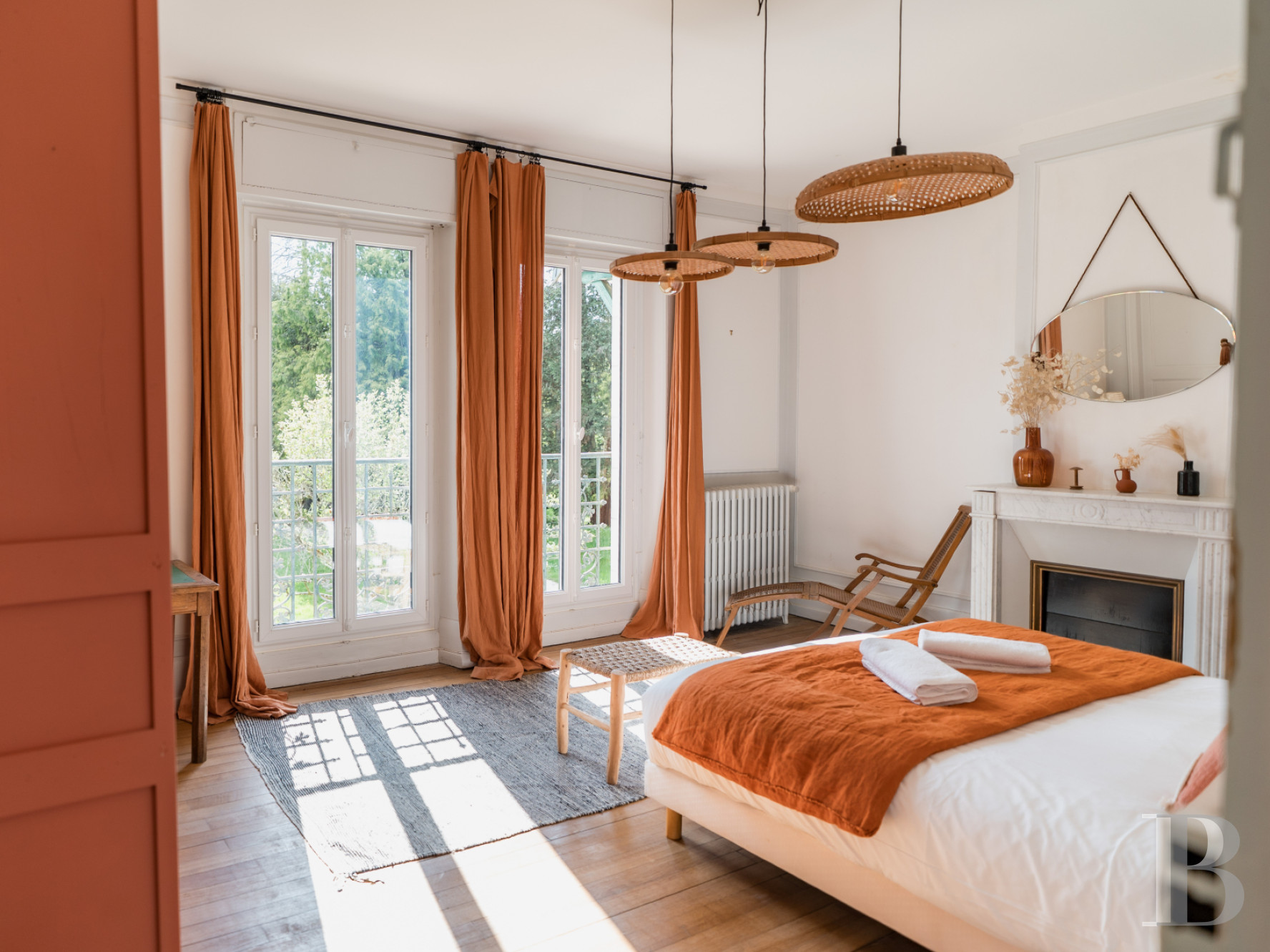
A landing with oak flooring leads to a bathroom clad, on the floor and across several wall sections, in octagonal solid-glaze Briare enamel tiles from a manufacturer whose origins date to 1845. A separate area is fitted with wardrobes and an independent lavatory. The same landing serves three bedrooms, each with a marble fireplace; two are lit by paired windows on the principal facade, fitted with finely wrought metal railings. One retains its original wallpaper, set within large and medium frames, and has an oak floor. Another, with white-painted walls, looks out over the surrounding countryside. The third, at the end of the corridor and facing north, has an en-suite shower room.
The second floor
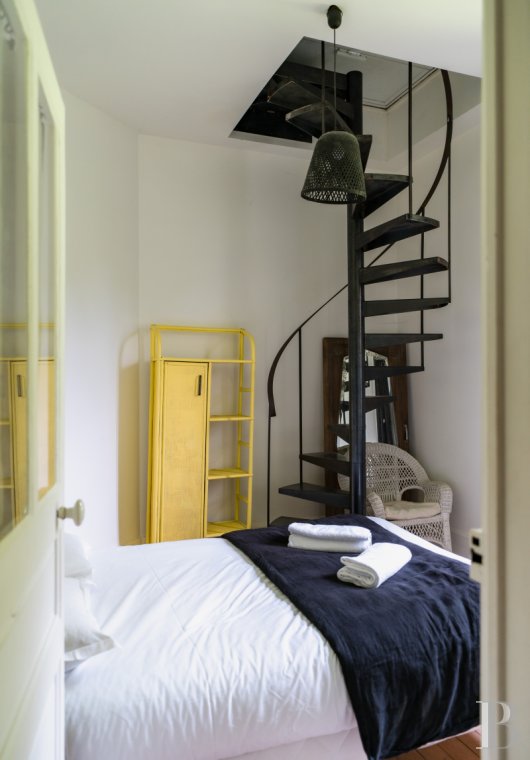
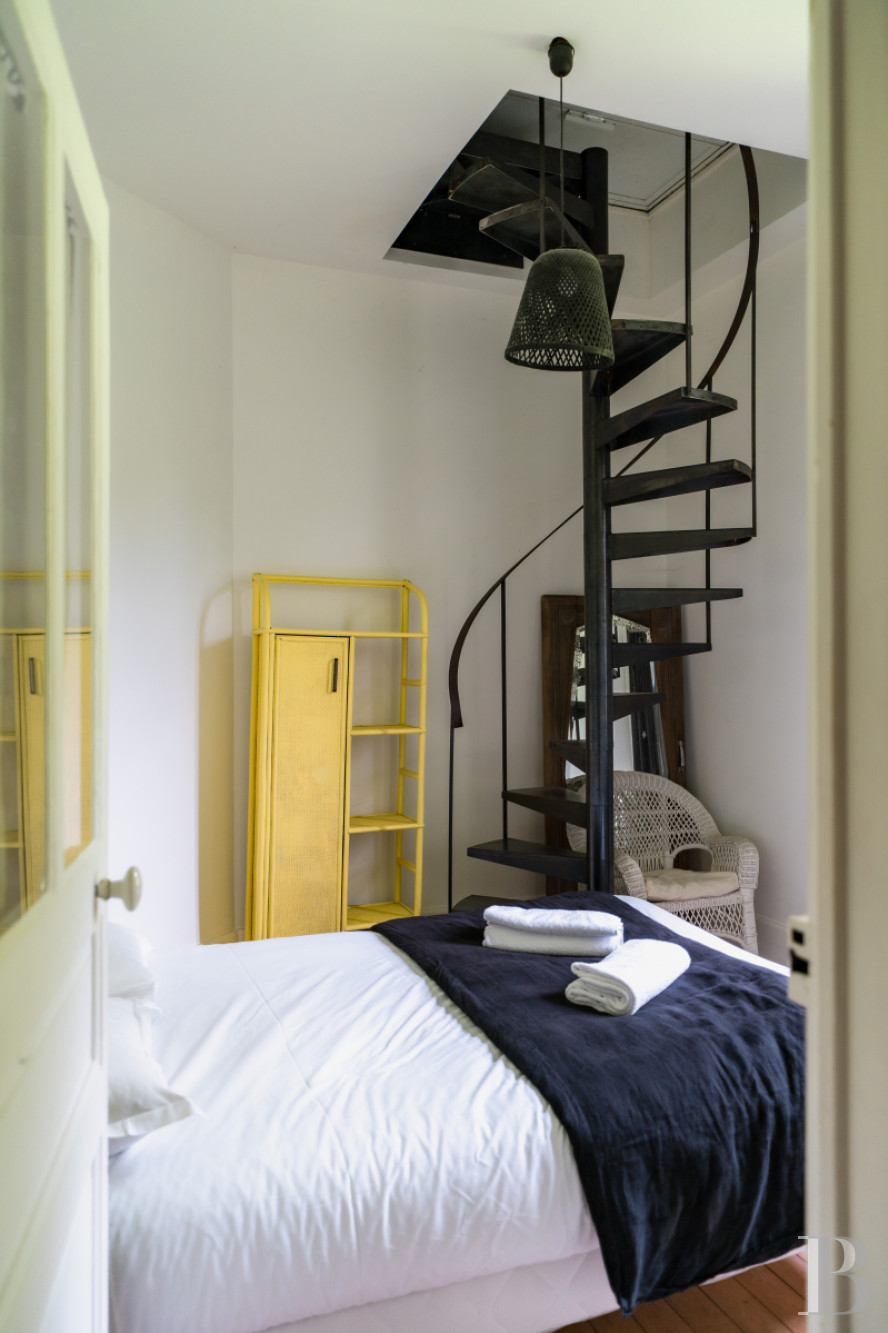
A parquet landing, its walls enlivened by hand-painted floral motifs, leads to a large children's dormitory beneath exposed roof timbers, readily convertible into a bedroom. At the far end, a second bedroom connects via a metal spiral staircase to the belvedere, with views over the wooded grounds. The floor throughout is oak.
The outbuilding
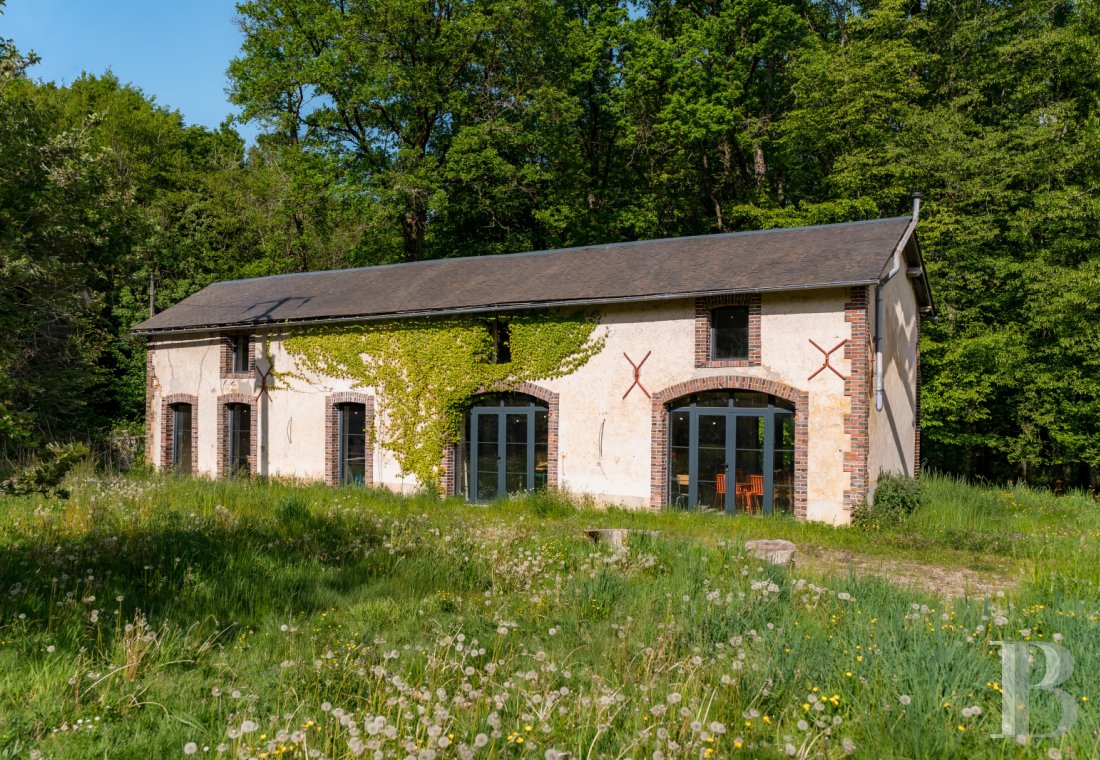
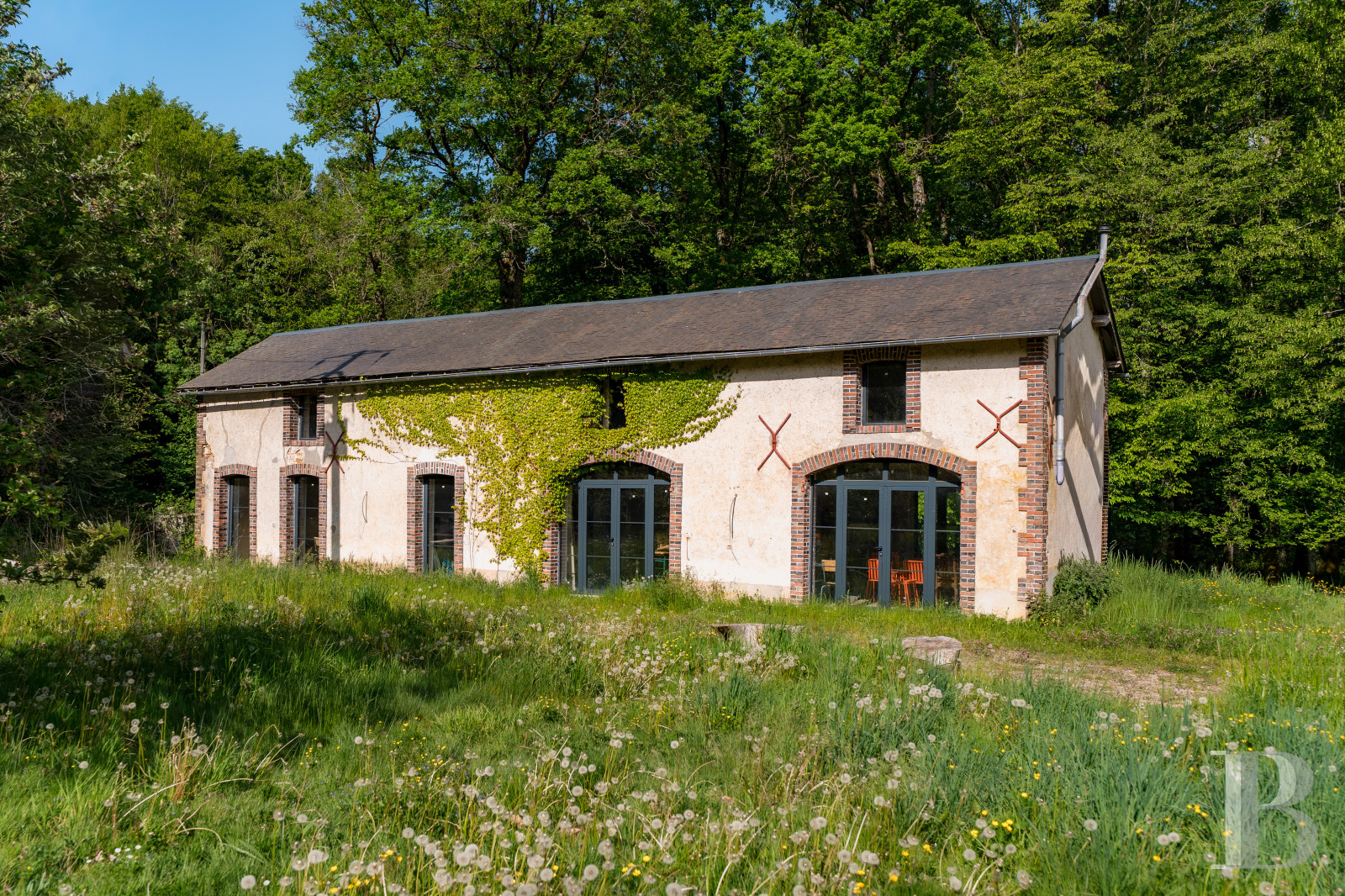
Rising one level, it has an elongated form with rendered walls punctuated by regularly spaced segmental-arched bays, whose surrounds and quoins are in exposed brick. Wide sliding glazed bays alternate with narrower openings across an ordered facade. The two-pan slate roof has a slight overhang at the gable end. The principal facade is partly covered by climbing vegetation extending around the bays; metal cross elements fixed to the wall echo traditional structural devices. Positioned at the edge of the grounds and alongside the woodland, the building opens onto natural meadow.
The ground floor
Structural works have been completed, but the rooms remain to be fitted out. A corridor serves two rooms and a large dual-aspect sitting room with an air-source heat pump; a concrete staircase at one end rises to the upper level.
The upstairs
A landing serves three rooms currently being fitted out, each plumbed for a shower. Double-glazed roof windows light the level throughout.
The grounds
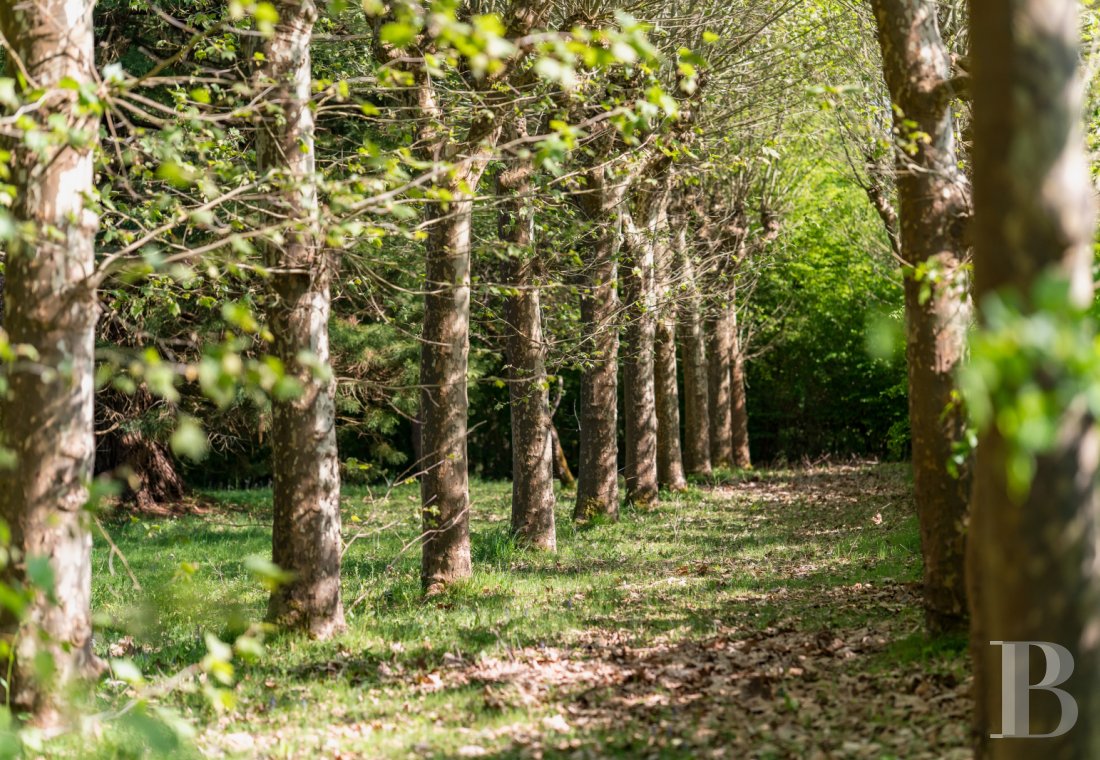
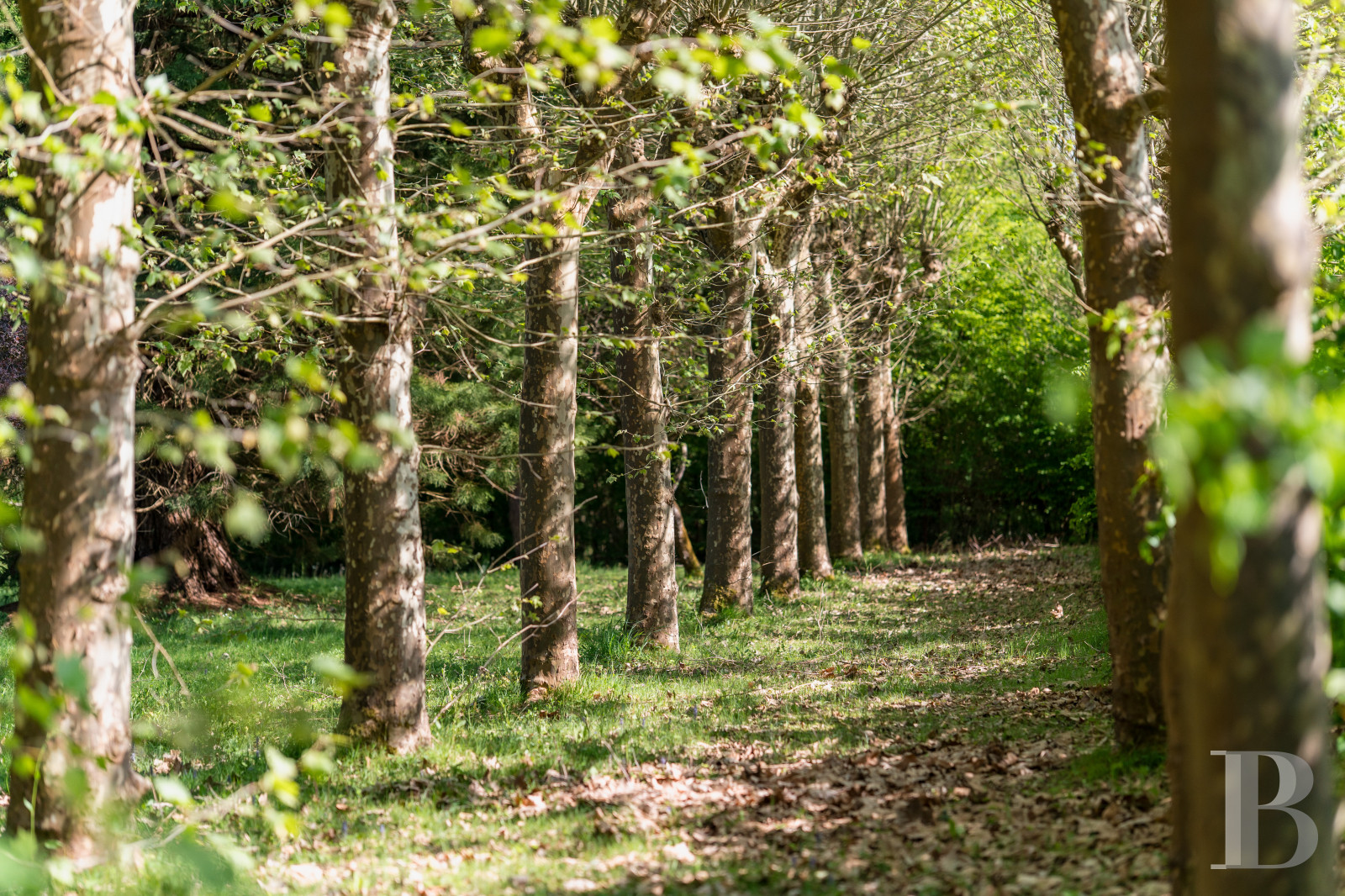
Two alignments of plane trees flank the entrance to the property. Mature trees are planted throughout,cedars of Lebanon, redwoods and oaks, alongside ornamental species including white and pink magnolias and several rose bushes. Near the outbuilding, mature apple and pear trees still bear fruit; the pears used to produce eau de vie. Woodland borders the grounds, accessible through a gap that invites walking and cep gathering in autumn. Close to the villa, a wooden seating area offers a place to rest.
Our opinion
A 1920s villa whose free composition and pronounced vertical presence set it apart from its surroundings. The original decorative elements, preserved and legible, speak a language particular to the interwar period — geometric lines and broad openings alternating across facades that face the grounds. From the belvedere, the relationship to the surrounding landscape becomes the objective — an uncommon outlook over the grounds and woodland.
The property is is sold fully furnished.
595 000 €
Fees at the Vendor’s expense
Reference 211488
| Main building floor area | 173 m² |
| Outbuildings floor area | 140 m² |
| Land registry surface area | 1 ha 48 a 85 ca |
| Including parkland | 14885 m² |
| Total floor area | 300 m² |
French Energy Performance Diagnosis
Information on the risks to which this property is exposed is available on the website: www.georisques.gouv.fr
Share


NB: The above information is not only the result of our visit to the property; it is also based on information provided by the current owner. It is by no means comprehensive or strictly accurate especially where surface areas and construction dates are concerned. We cannot, therefore, be held liable for any misrepresentation.