



In the Cotentin bocage, 15 min from Saint-Lô,
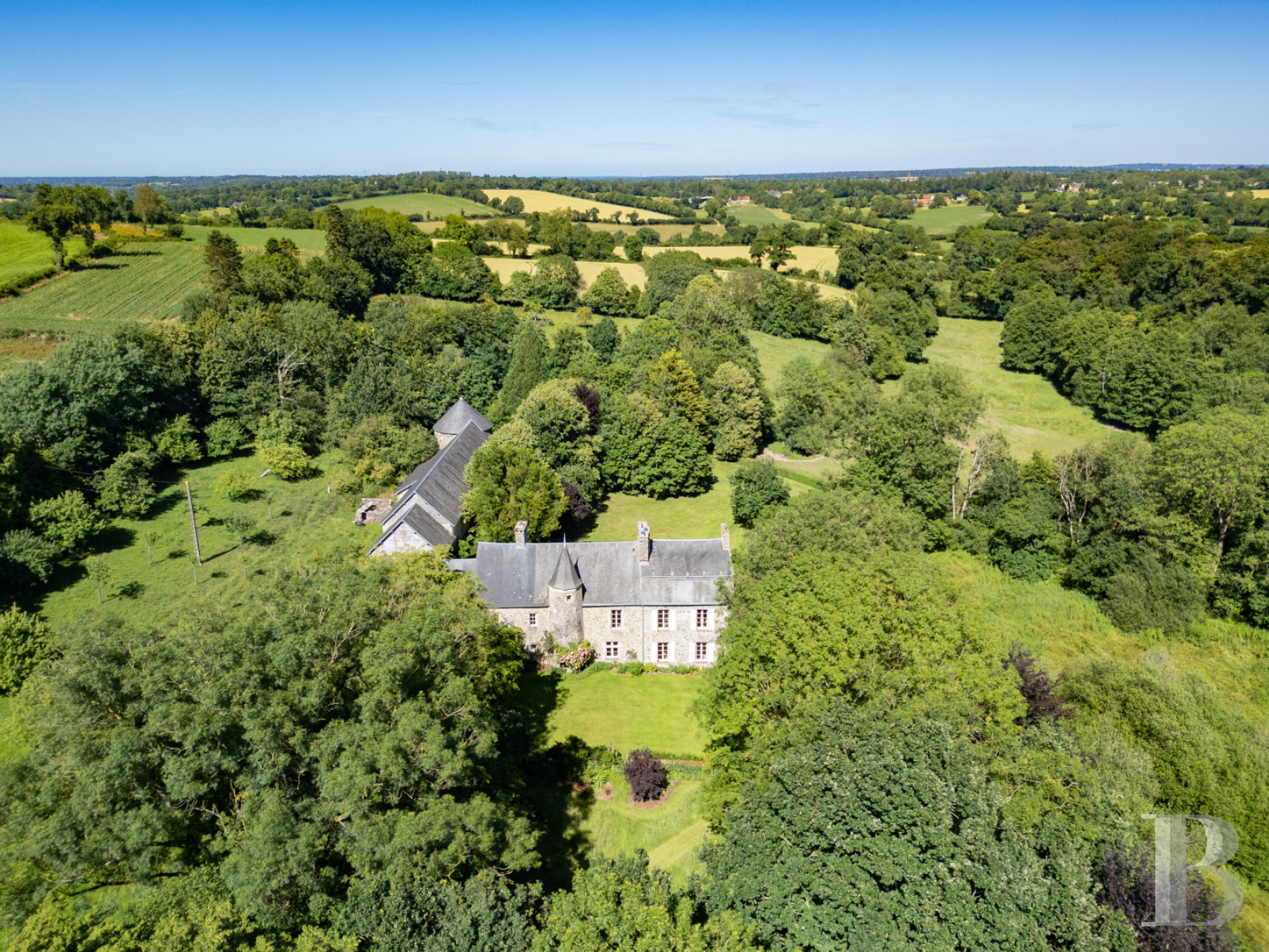
a 15th- and 18th-century manor house, with service quarters and dovecote on an 8 ha estate
a 15th- and 18th-century manor house, with service quarters and dovecote on an 8 ha estate
Marigny-Le-Lozon,
MANCHE
lower-normandy
50570
FR

Location
In Normandy, in the Manche département, the property stands between the Coutançais and the Saint-Lô bocage. Local vernacular architecture recalls the rigour and elegance of Cotentin building traditions. Only minutes away, the town of Saint-Lô provides all everyday shops and services. Its railway station reaches Paris-Saint-Lazare in 3 hrs. The west-coast shoreline and the D-Day landing beaches are around 30 min away.
Description
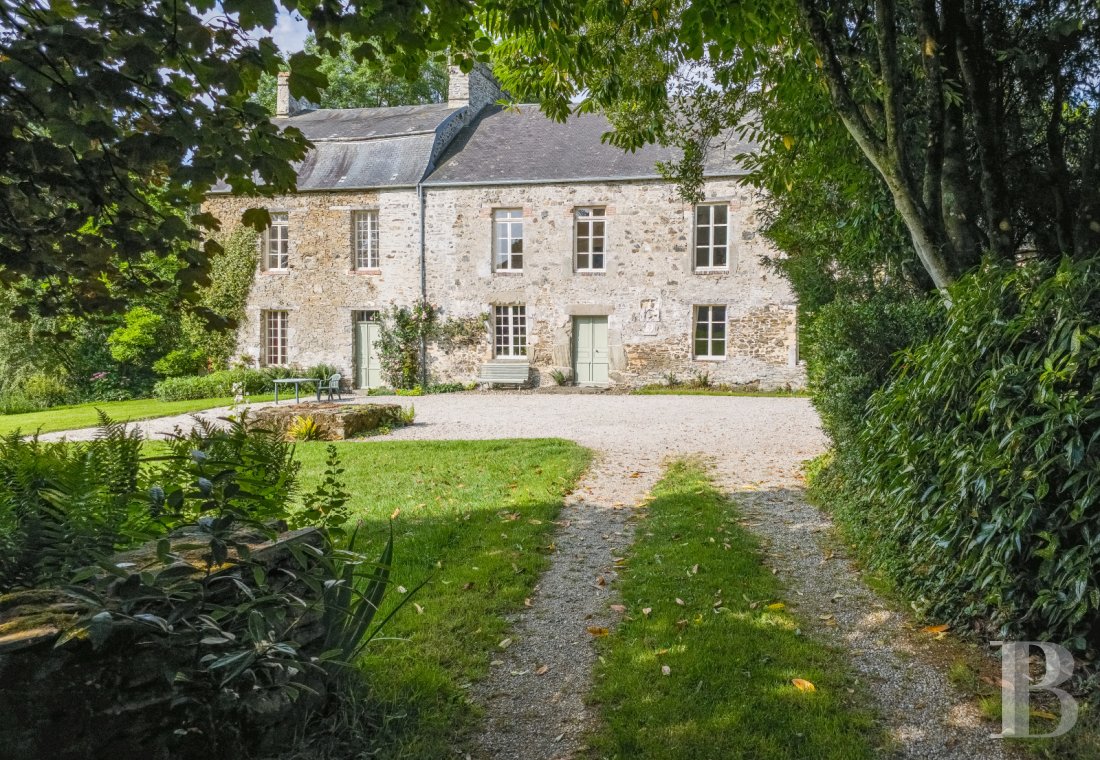
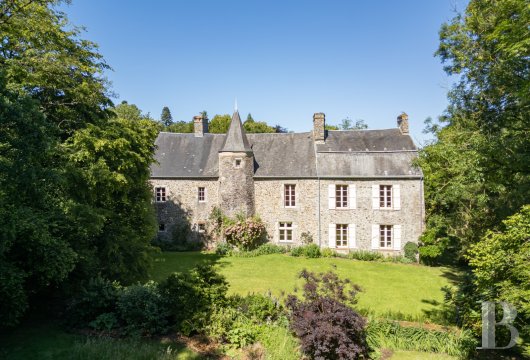
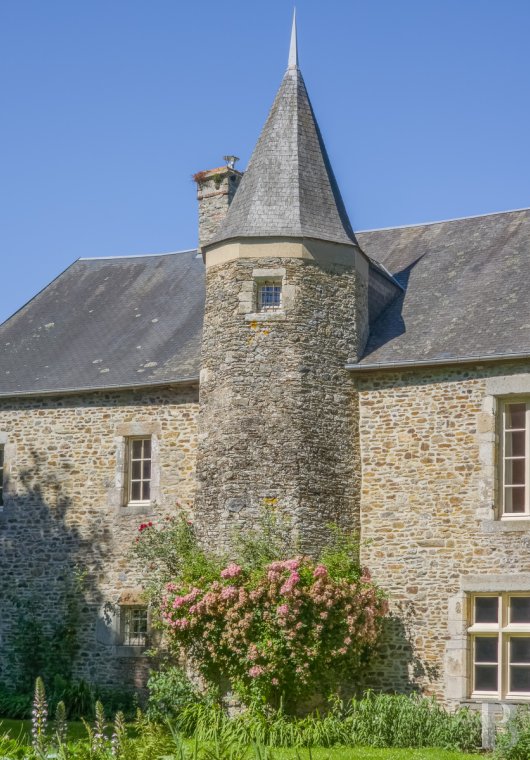
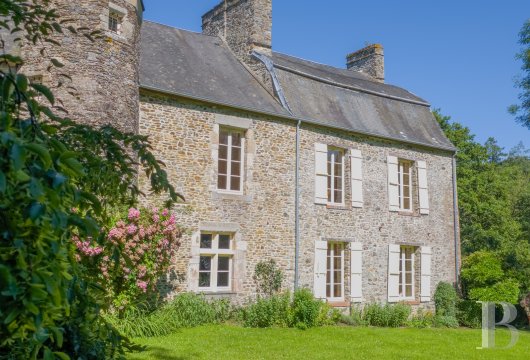
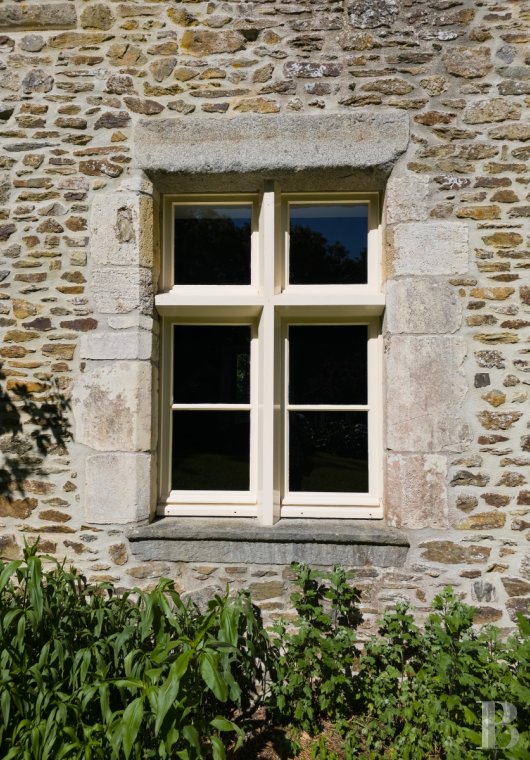
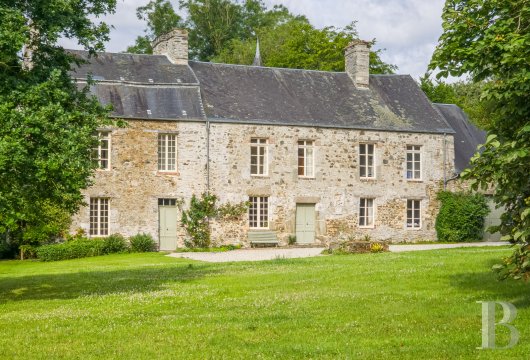
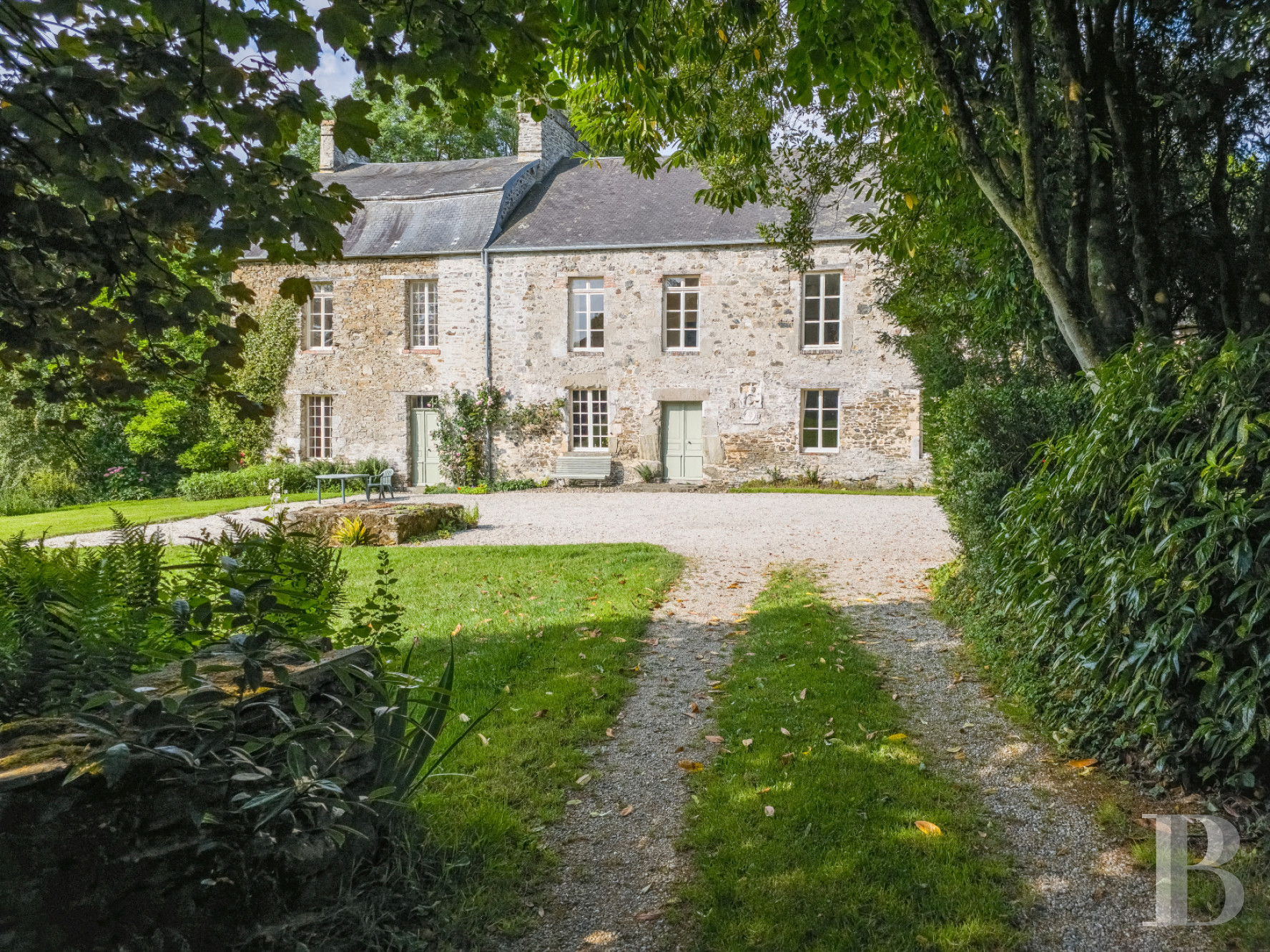
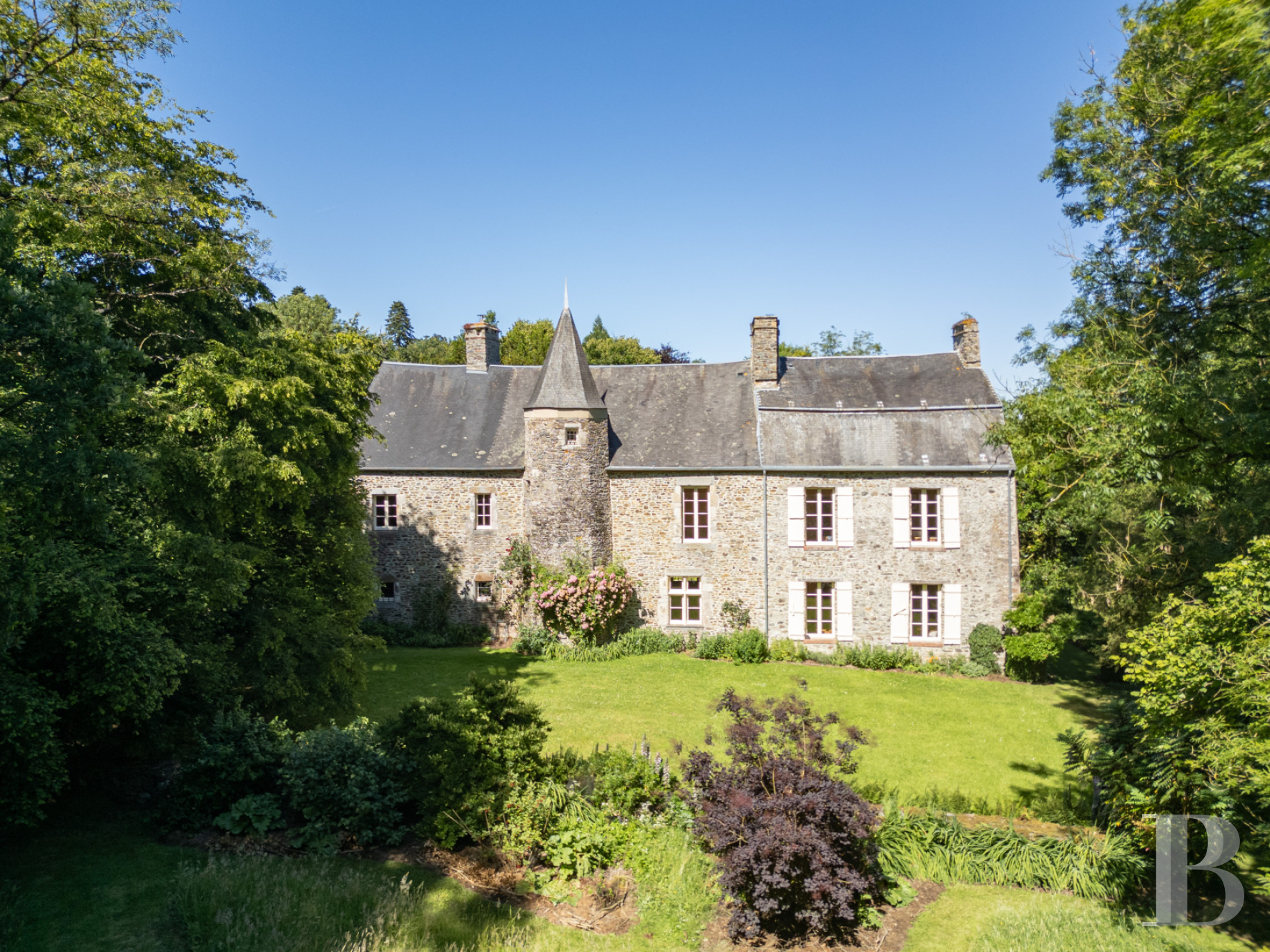
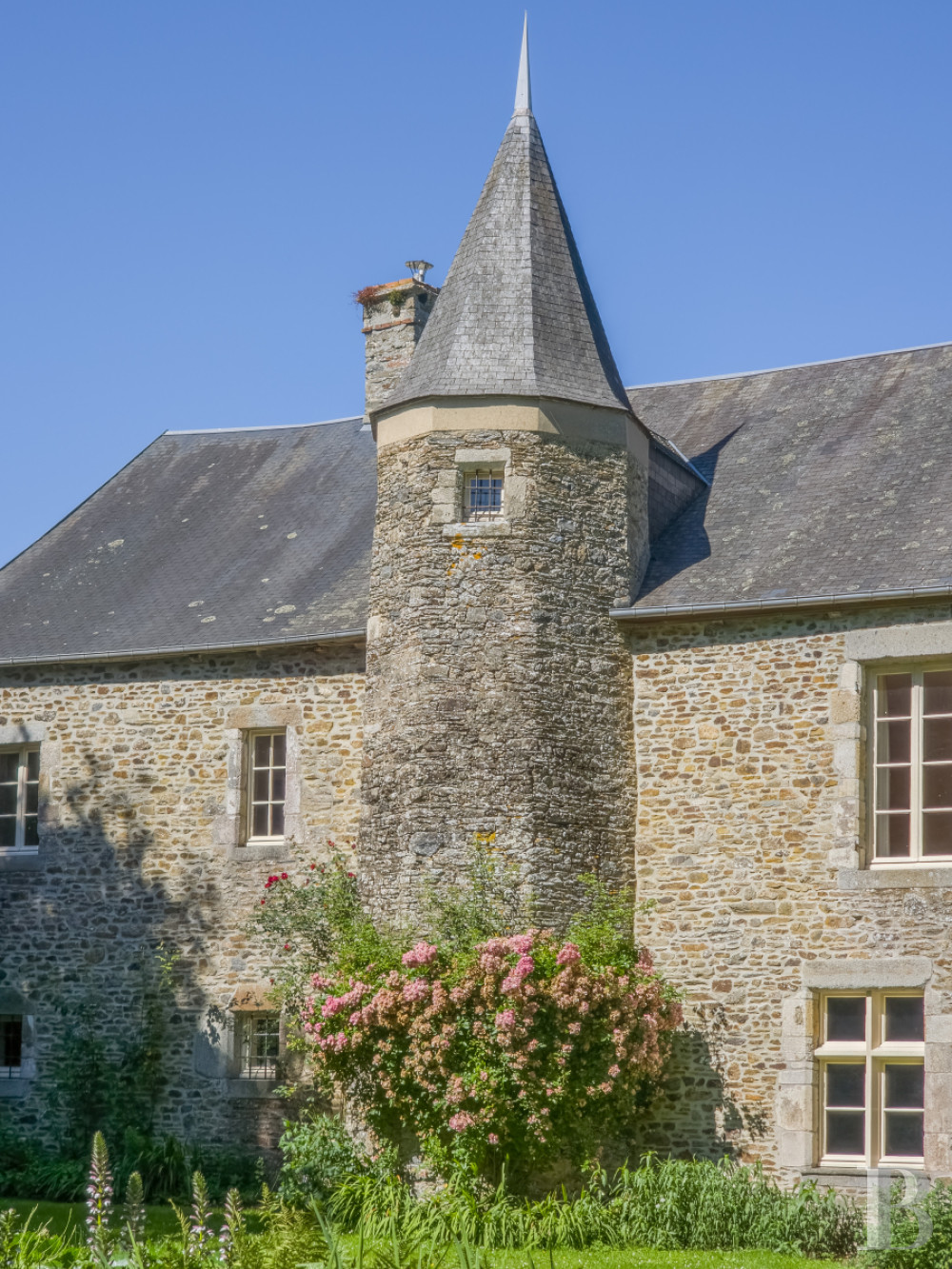
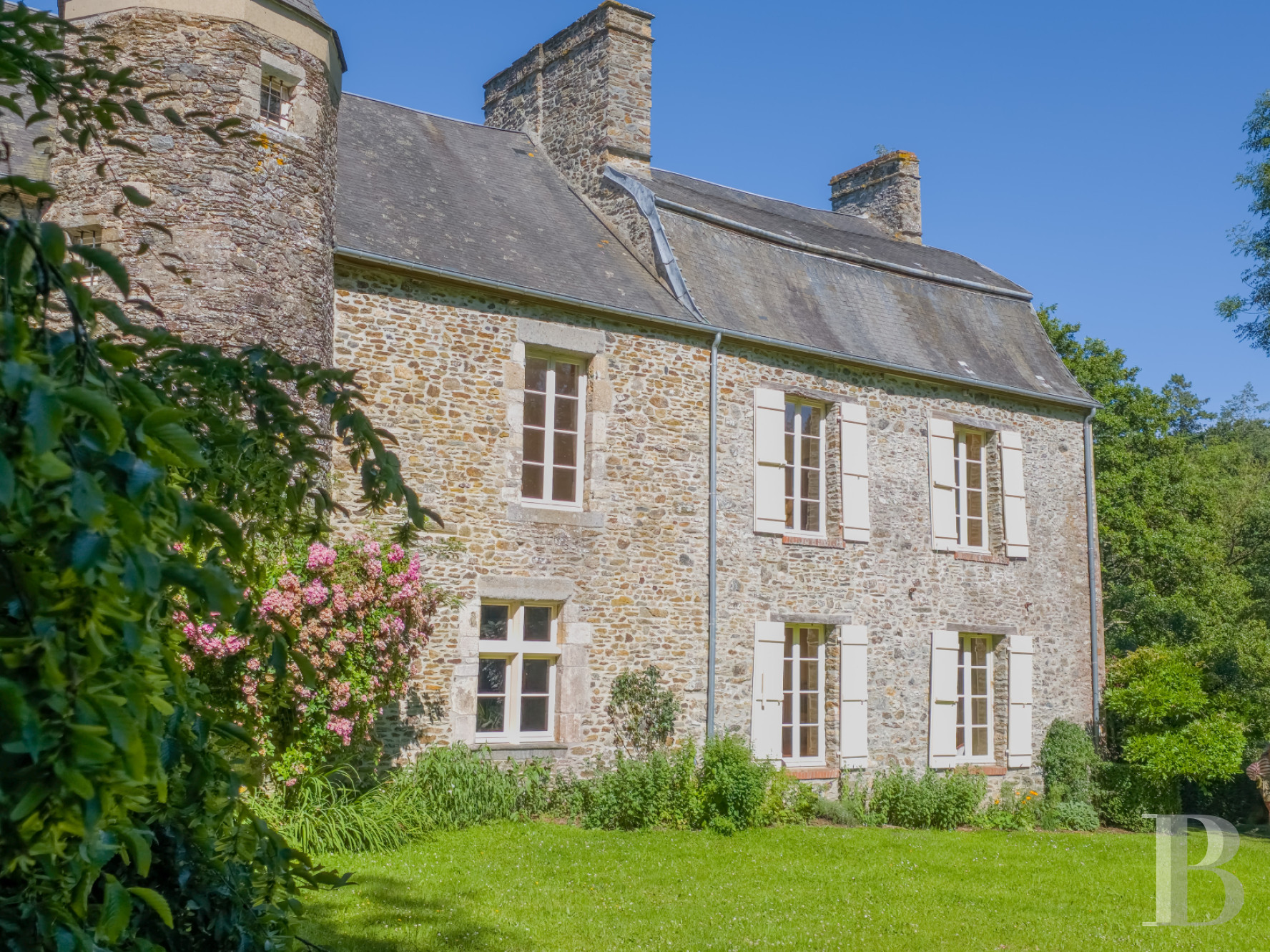
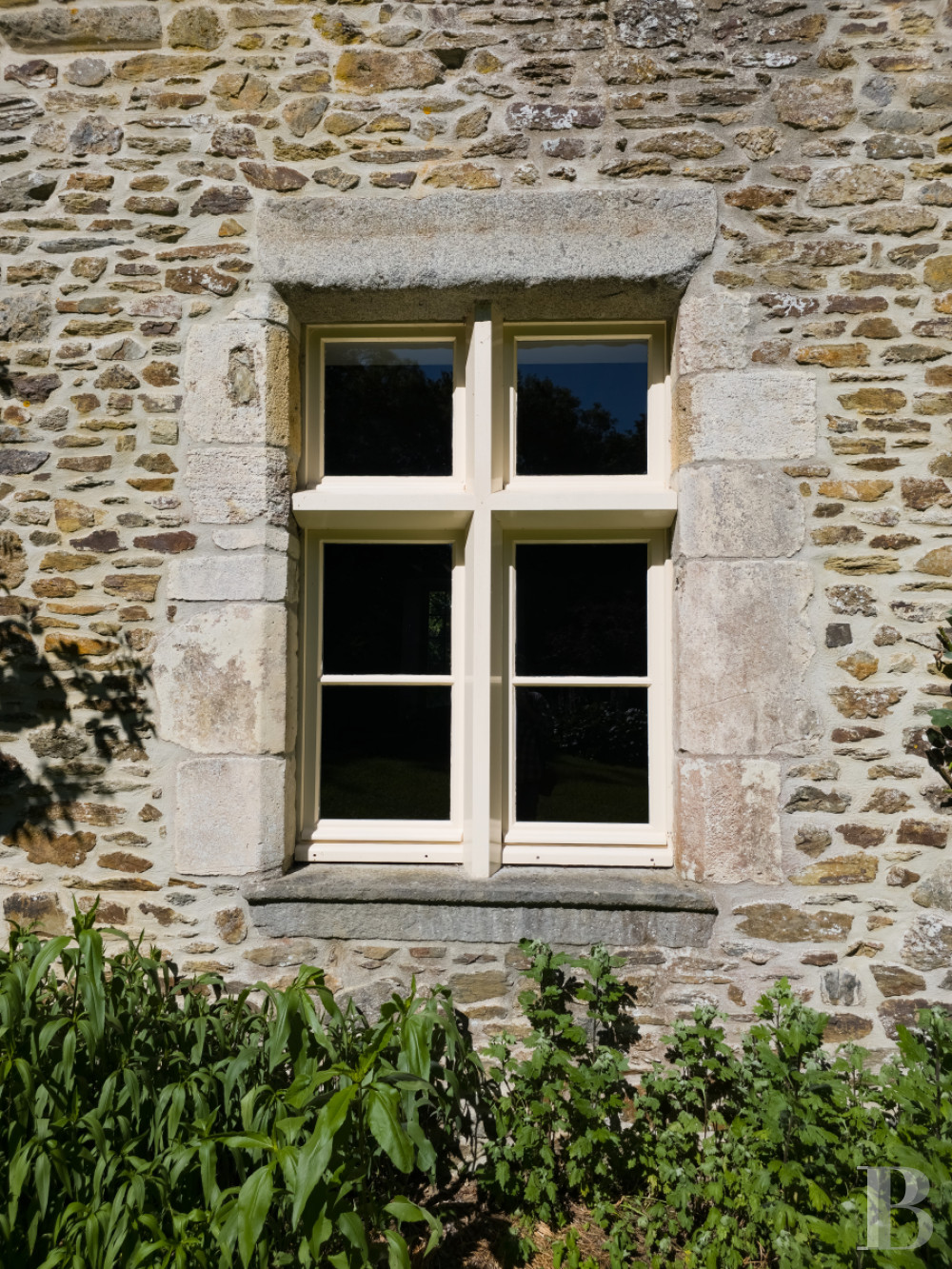
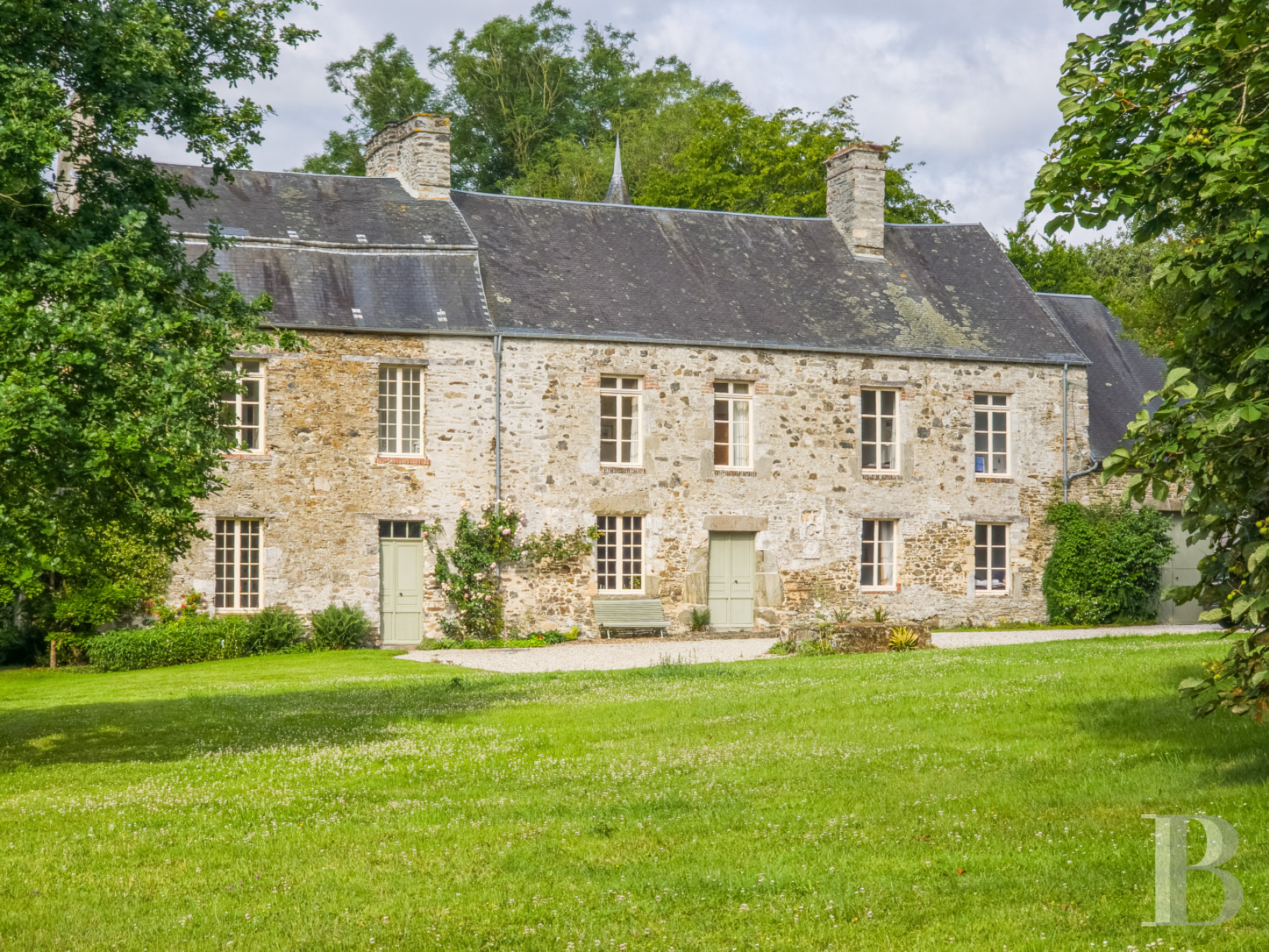
A wooded drive descends from the road into a small valley. The manor comes into view beyond the dovecote and service quarters. Once a Protestant household, it was the property of the Dagobert family. A broad gravelled forecourt, centred on a stone well, fronts the courtyard elevation. The architecture reflects two distinct building campaigns, spanning the 15th and 18th centuries. The main building rises over a ground floor and upper level, with attic space beneath a slate roof pierced by multiple windows. On the garden side, a circular stair tower topped with a slated pepper-pot roof punctuates the elevation, and the stone walls are set with broad cross-mullioned windows. The two wings connect at each level and can be fitted out as self-contained dwellings.
The manor house — 18th-century wing
This wing faces east, south and west.
The garden-level floor
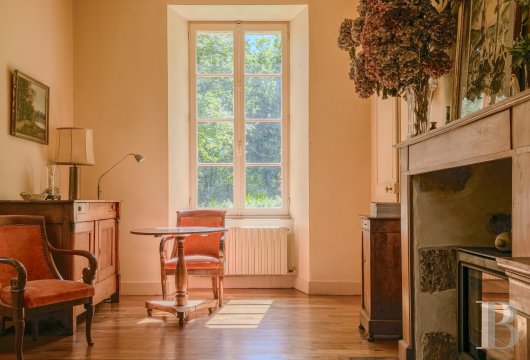
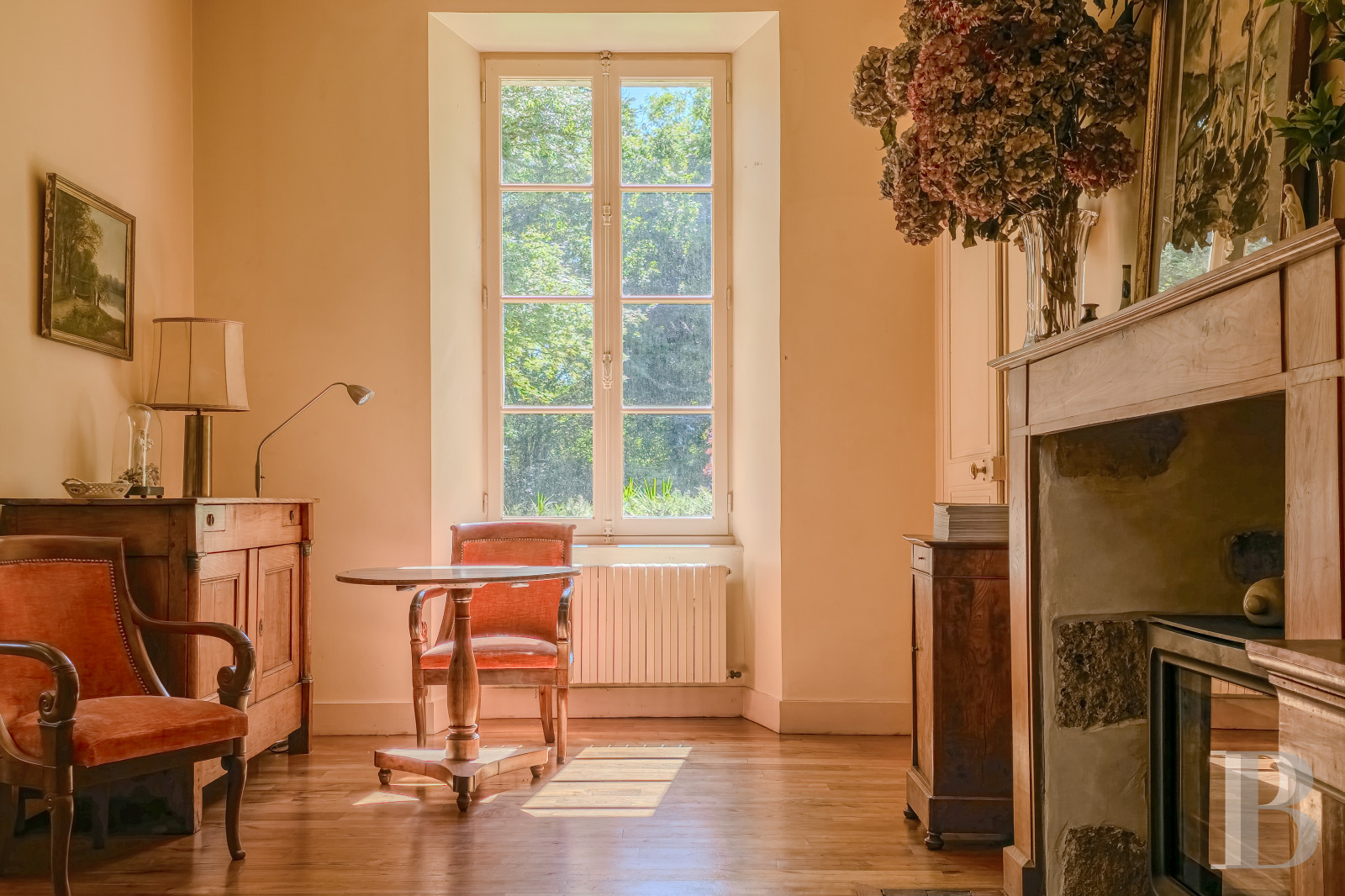
A courtyard entrance opens into a vestibule laid with period terracotta tiles, from which a timber staircase rises to the upper level. Beyond, a drawing room extends with oak parquet flooring, a joist ceiling and a timber fireplace paired with a stove; a tall window opens westward onto the garden. A broad opening leads to a dining room with several windows onto the park. Set at a right angle, the terracotta-tiled kitchen overlooks both the park and the courtyard.
The first floor
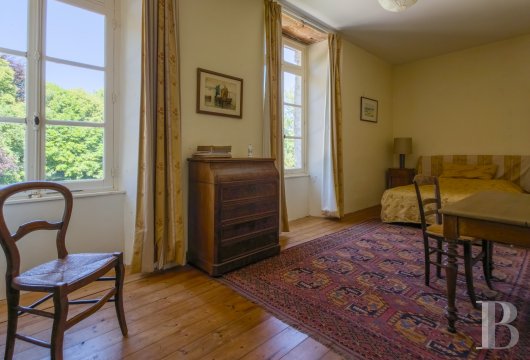
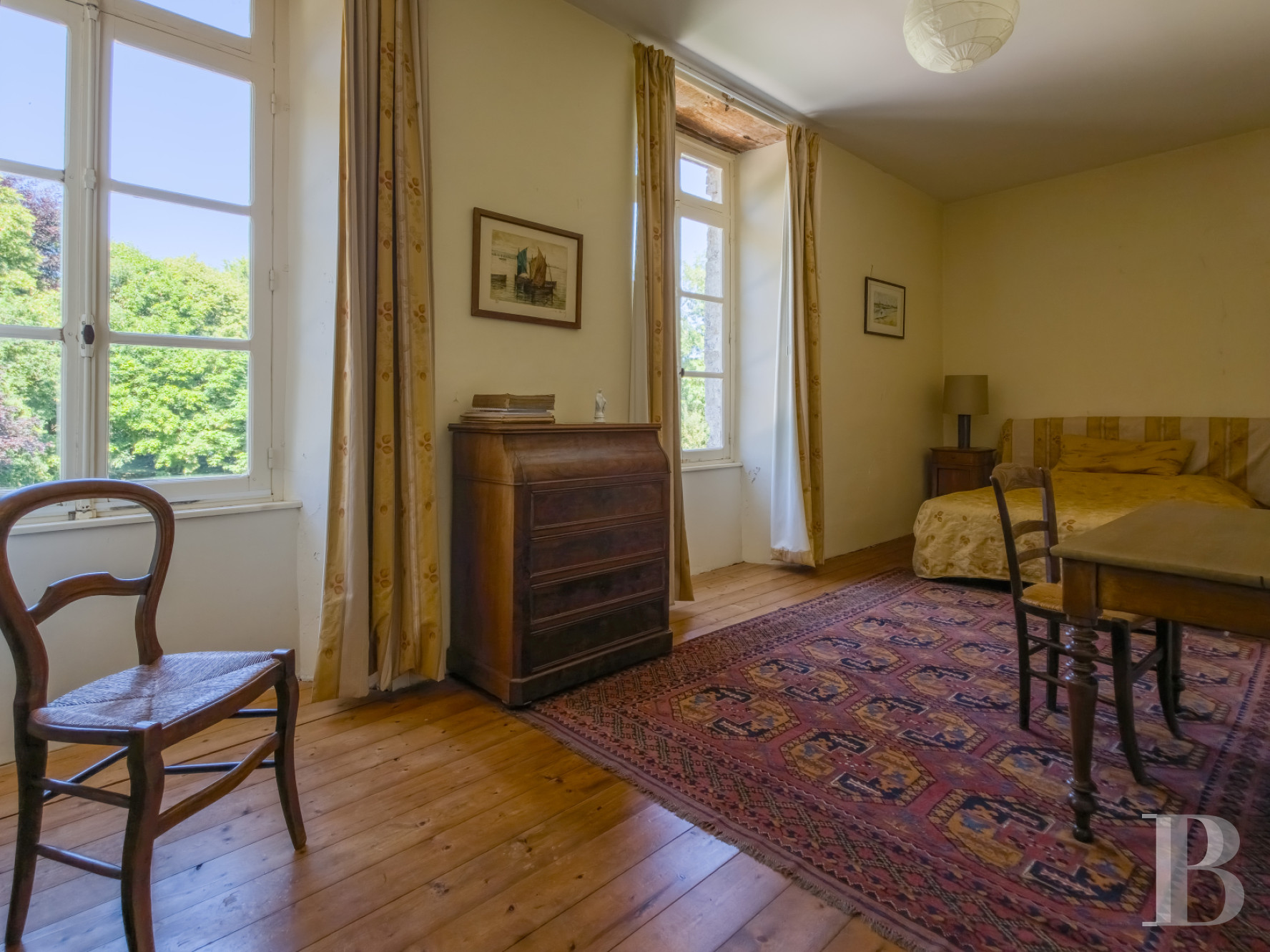
The landing gives onto a corner study with 2 large windows framing the park. Two well-proportioned bedrooms follow, one south-facing and one west-facing. A bathroom and separate lavatory complete the level. Pine parquet runs throughout.
The manor house — 15th-century wing
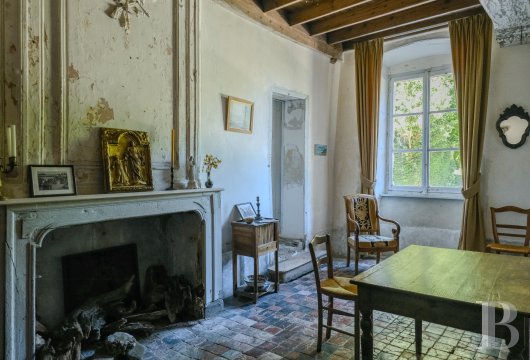
The courtyard entrance leads directly into a drawing room. Though habitable, this wing awaits some renovation and finishing work.
The garden-level floor
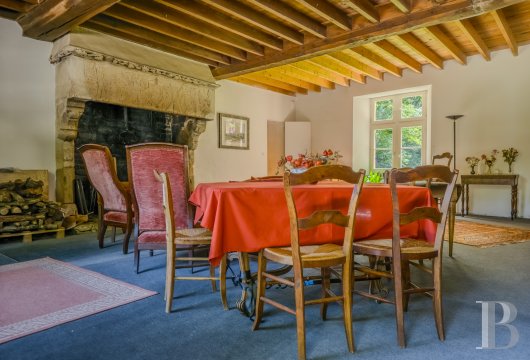
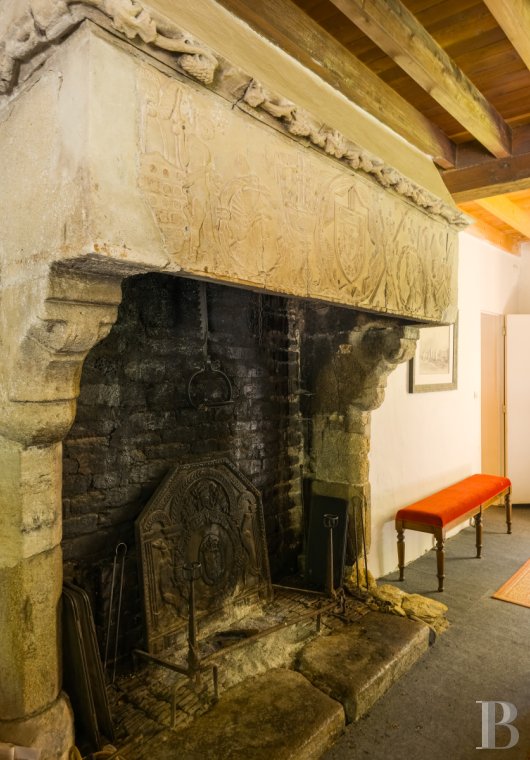
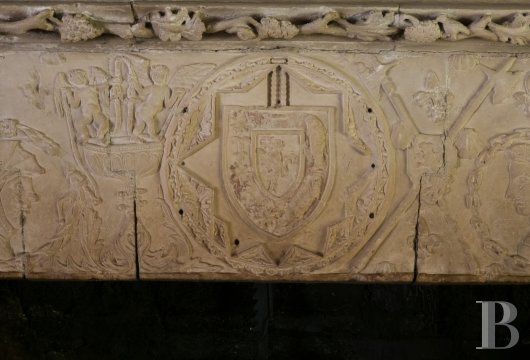
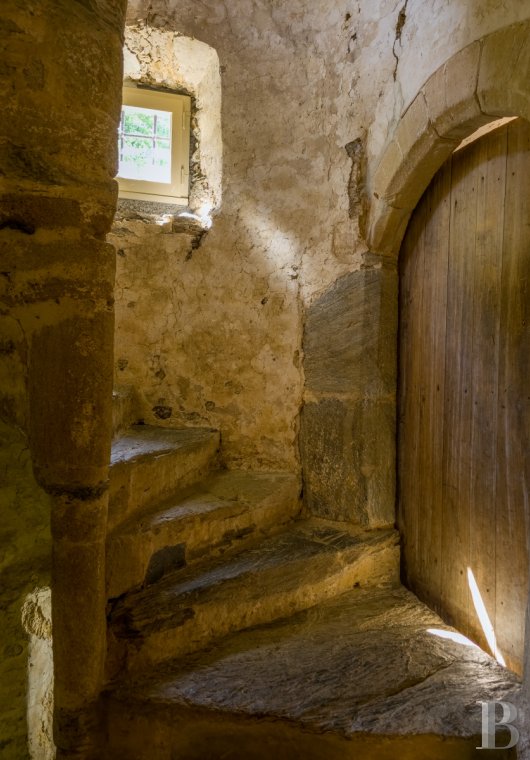
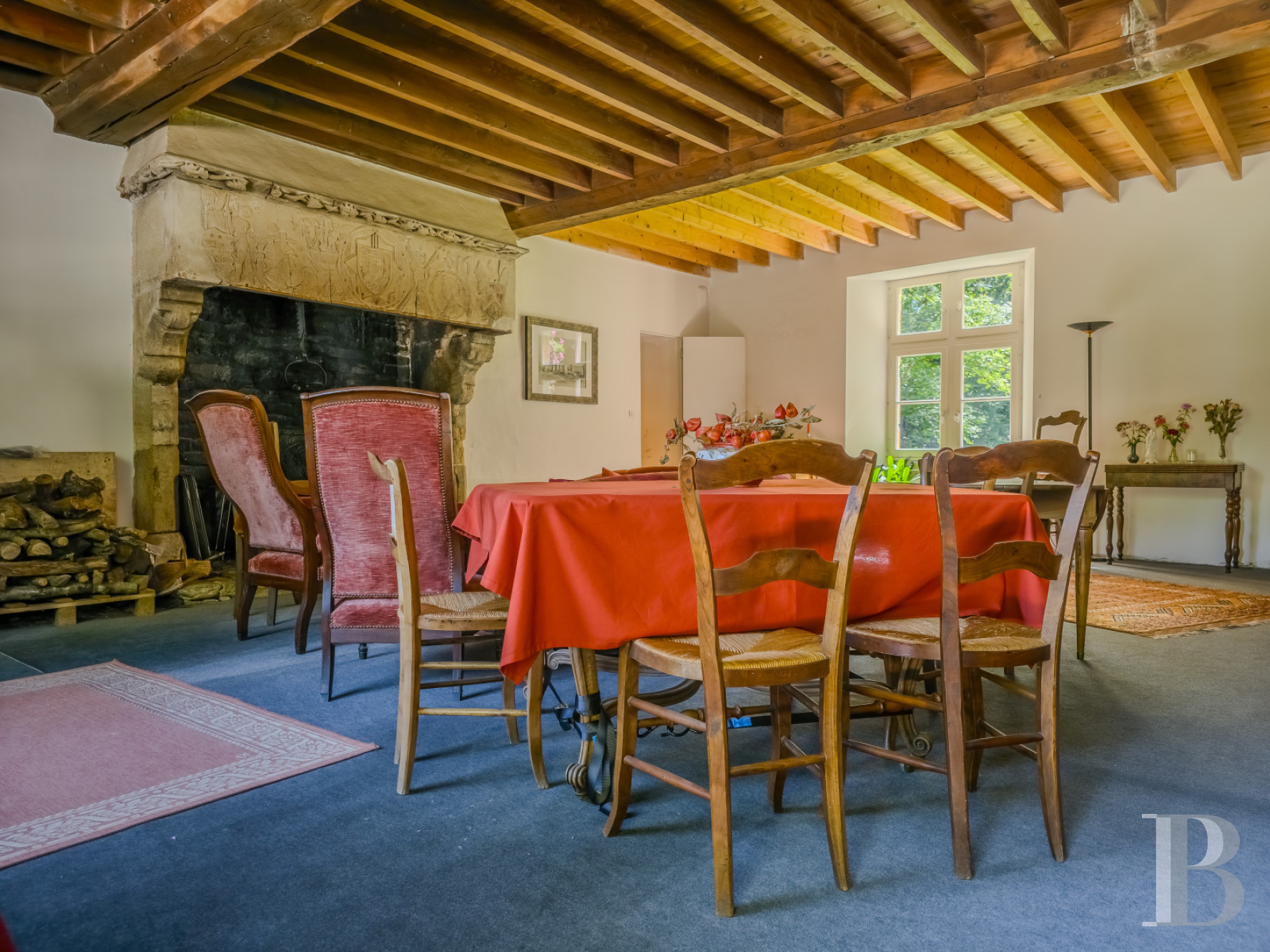
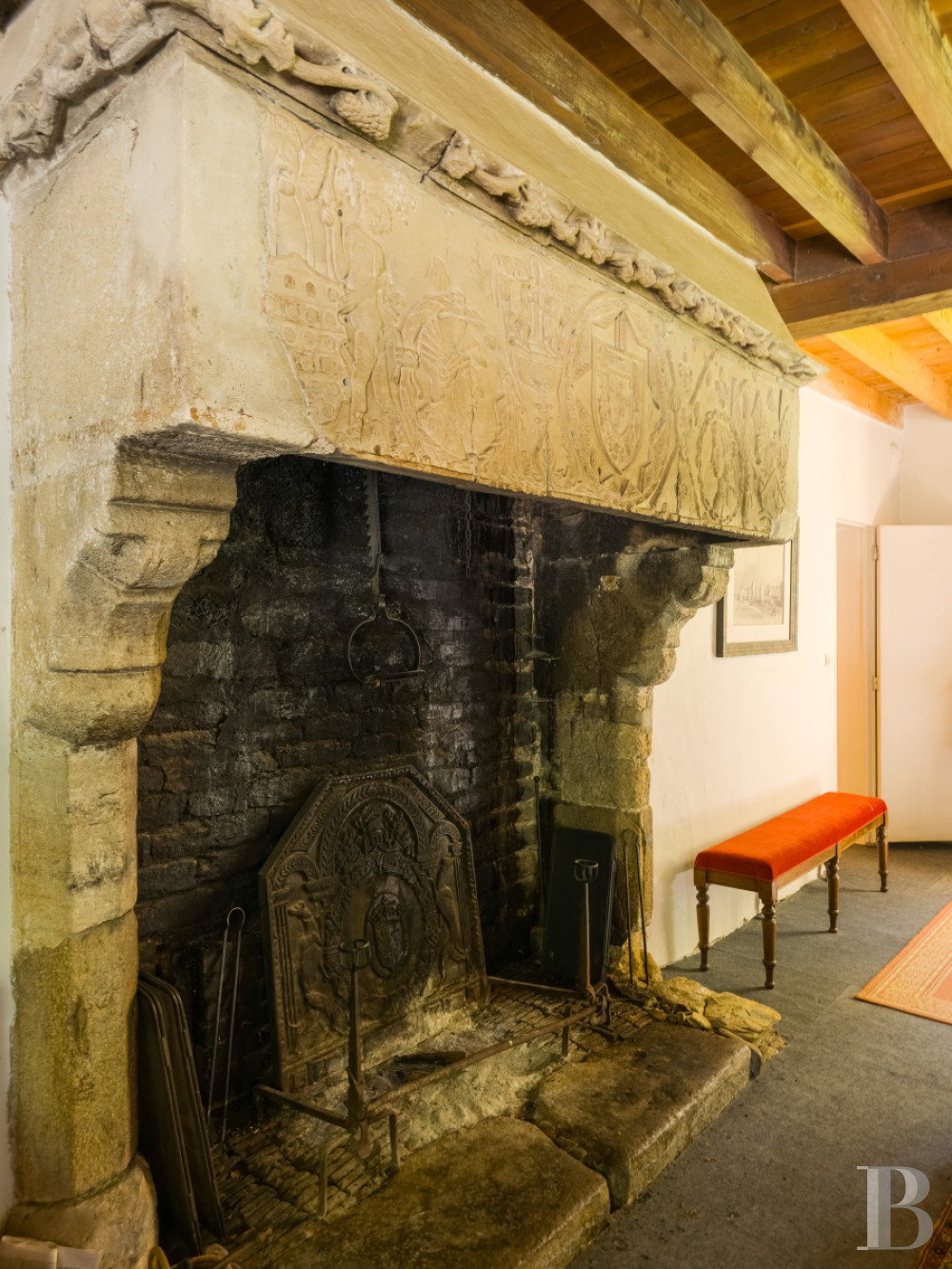
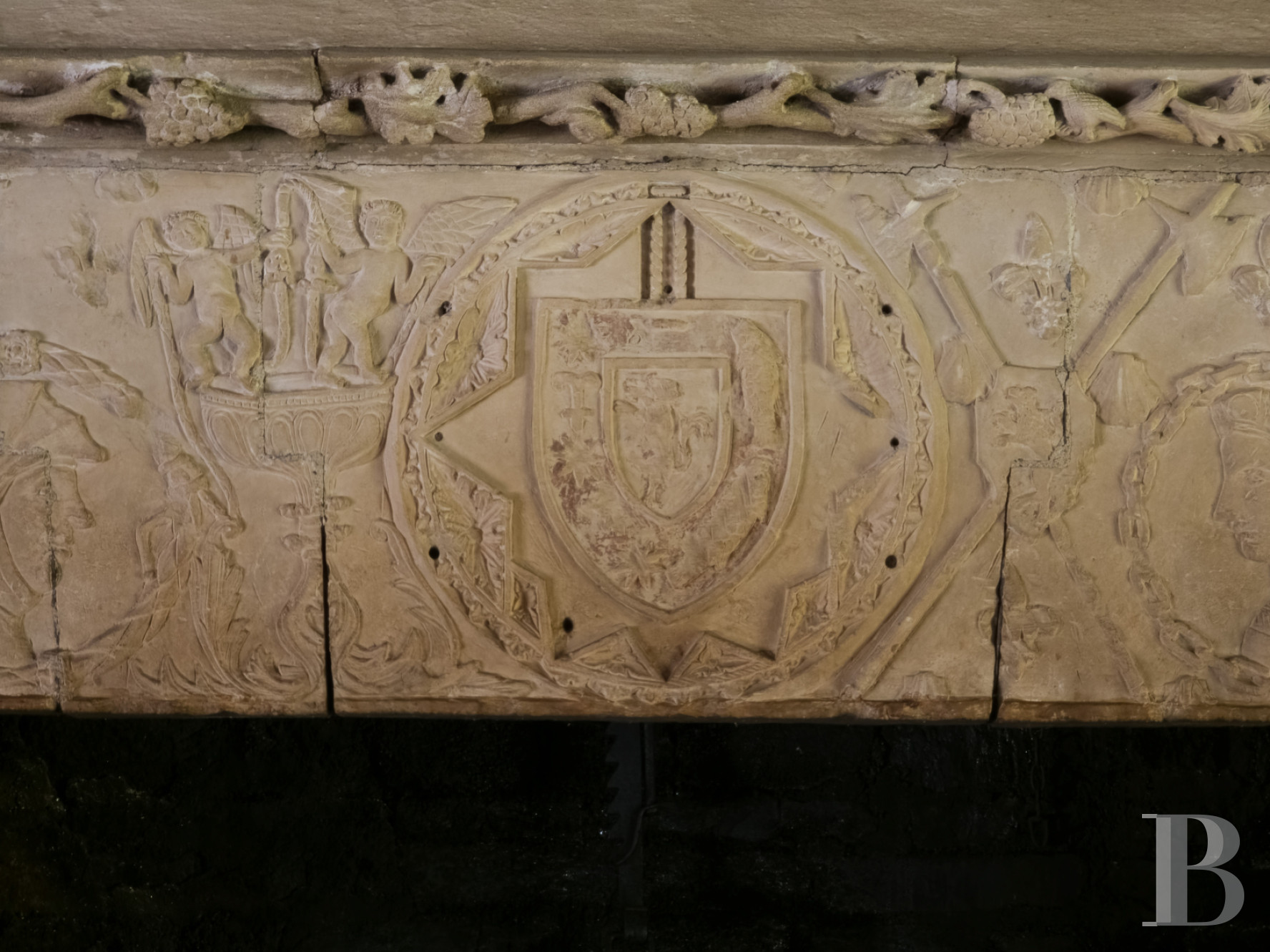
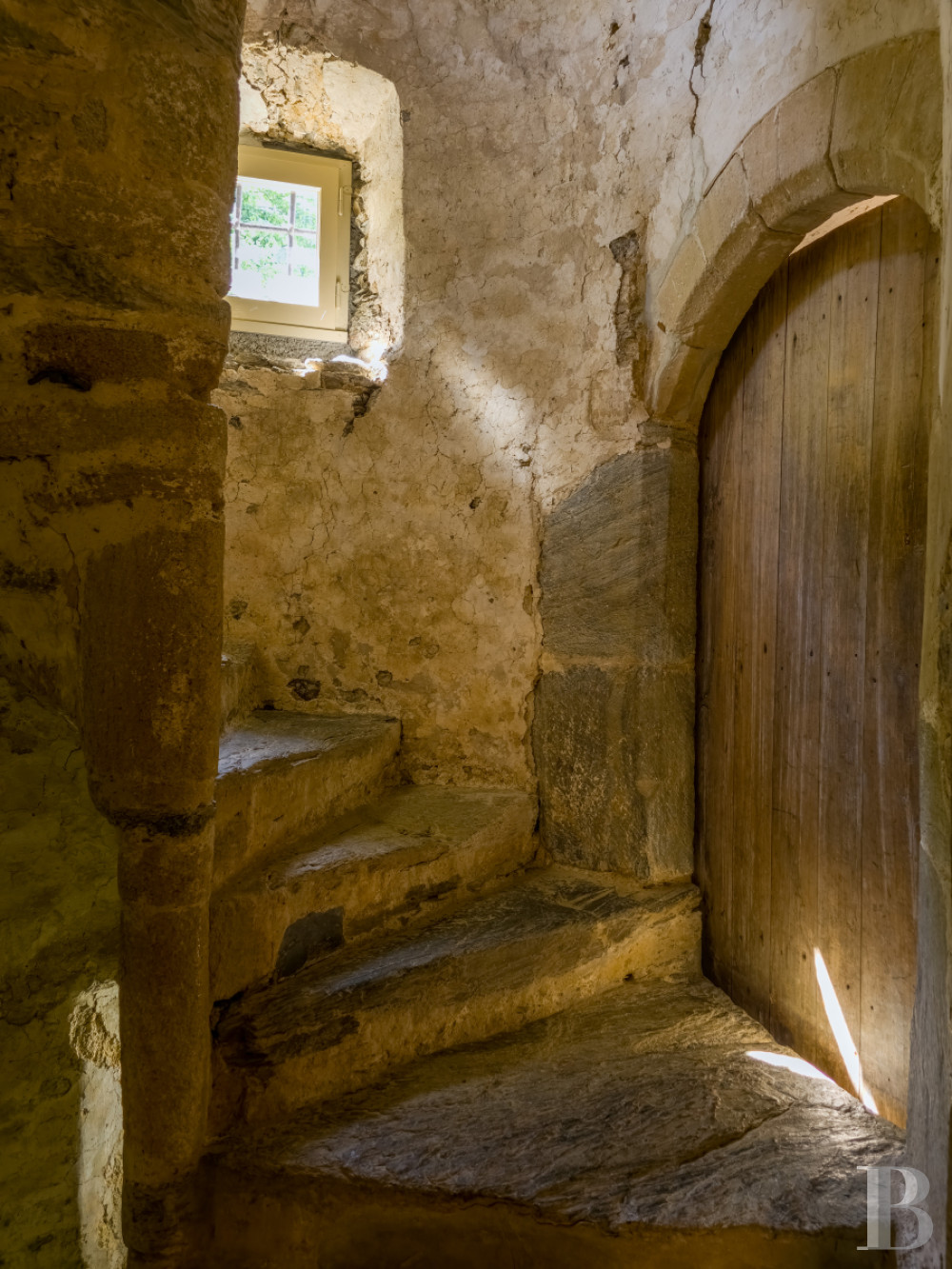
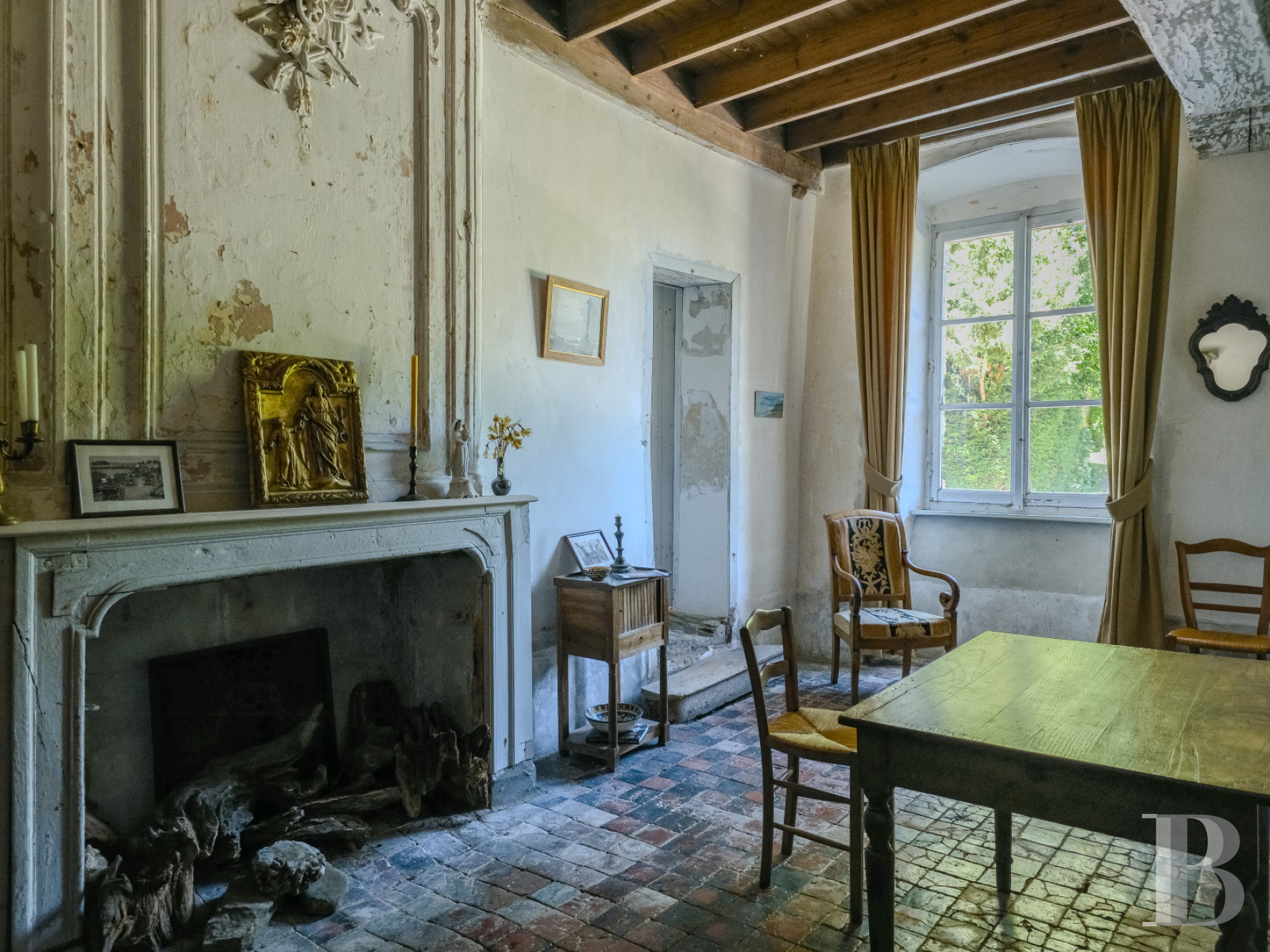
At its centre, a large dual-aspect drawing room has a regular sequence of oak joists forming the ceiling above a monumental late-15th-century limestone fireplace; the concrete floor is covered with carpet. An adjacent study, laid with period terracotta tiles, has a stone fireplace with a moulded overmantel and a ceiling of exposed oak joists. A tall large-paned window opens onto the park. A corridor leads to a linen room, a storeroom and a garage. The slate-flagged spiral staircase beside the drawing room rises to the upper level and the attic.
The first floor
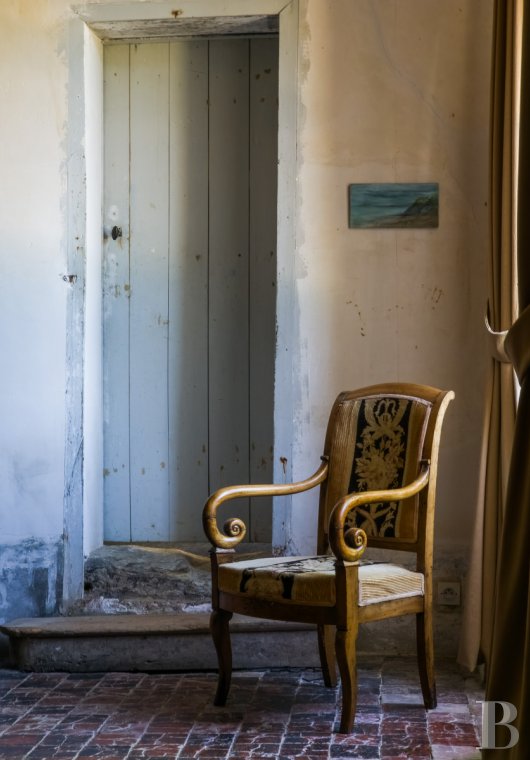
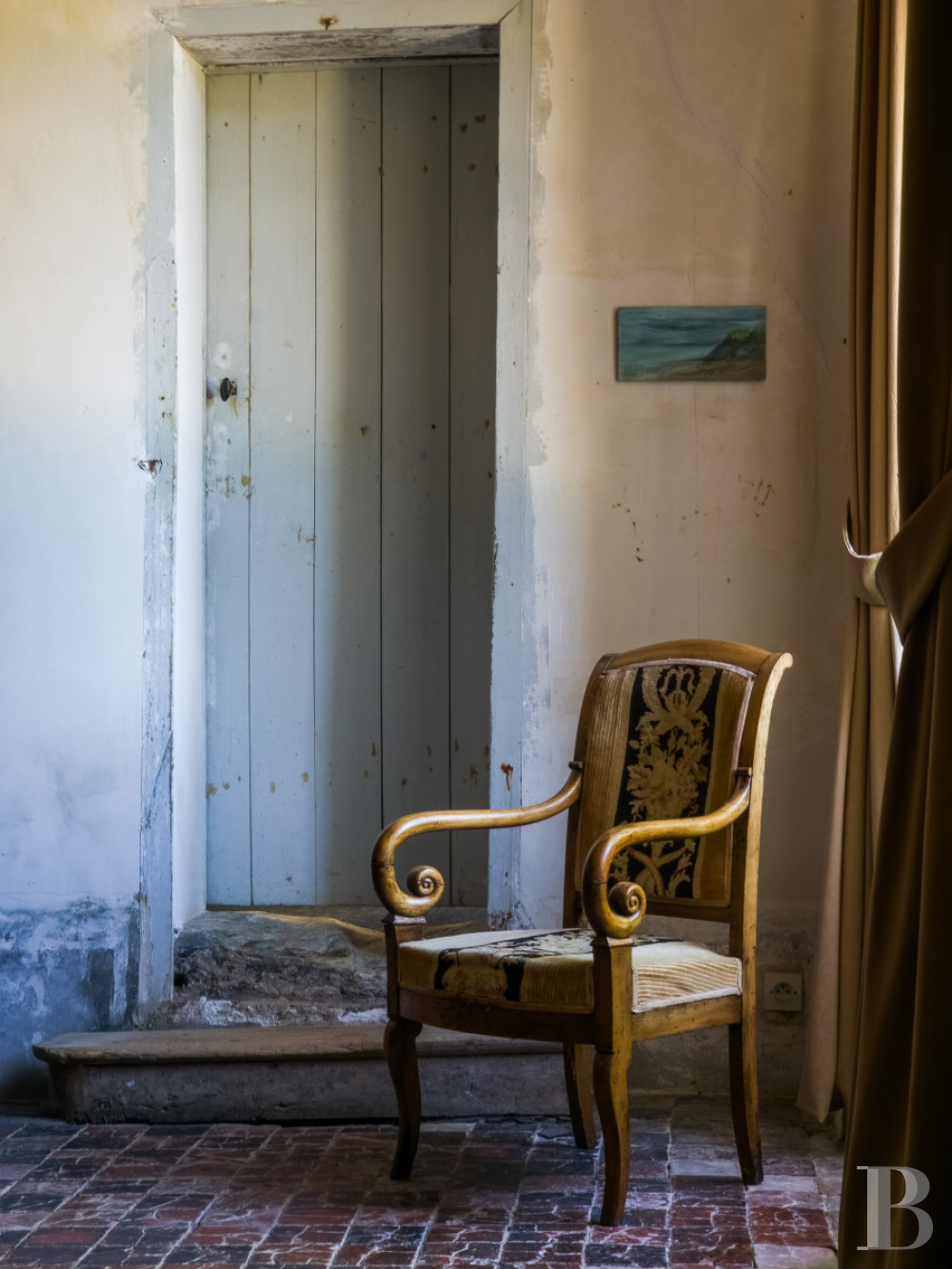
Beyond a round-headed arch with a dressed-stone jamb, a corridor leads to a first bedroom with parquet flooring. At the end of the corridor, a glazed door opens onto a second bedroom, pierced by two windows towards the grounds. On the far side of the staircase, a round-headed opening closed by a raw timber door hung on its ironwork gives onto an anteroom laid with wide-board parquet and lit by a small-paned window. Facing it, a third bedroom draws generous light from a tall window. A fourth bedroom is arranged in an L shape, with a small-paned window to the rear garden. A bathroom and separate lavatory occupy the far end of the corridor.
The service quarters
A broad round-headed opening, outlined in dressed stone, hints at a former cart passage. Small-paned frames double the other windows. The ground level houses a stable with capacity for two horses. Above, former single-storey spaces extend beneath the roof, once used to store hay. A narrow vertical opening, resembling an arrow slit, recalls the traditional ventilation slits of the region's barns.
The dovecote
It retains close to 800 nesting holes, a scale that reflects the estate's former significance.
The grounds
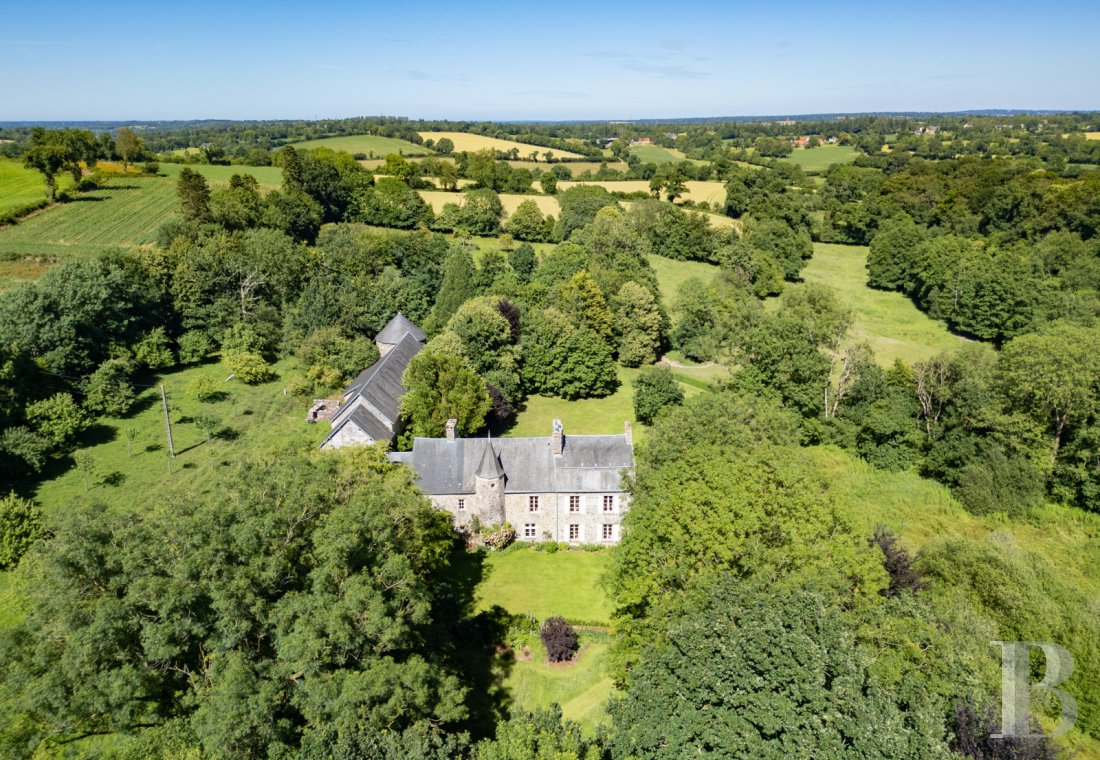
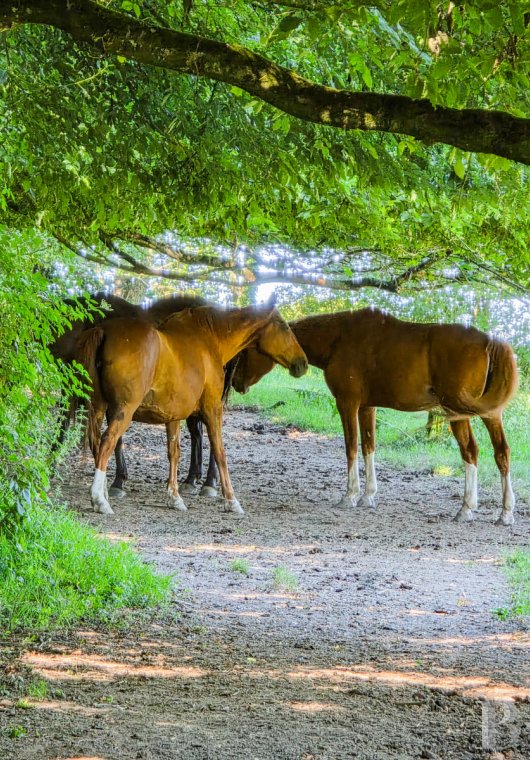
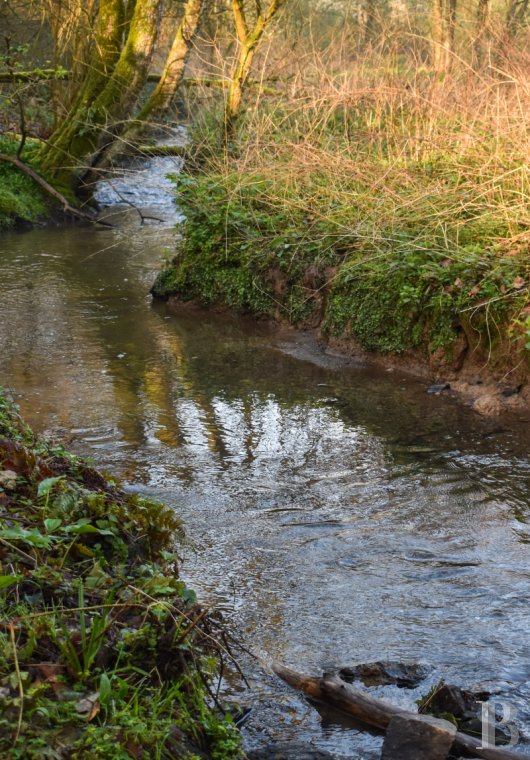
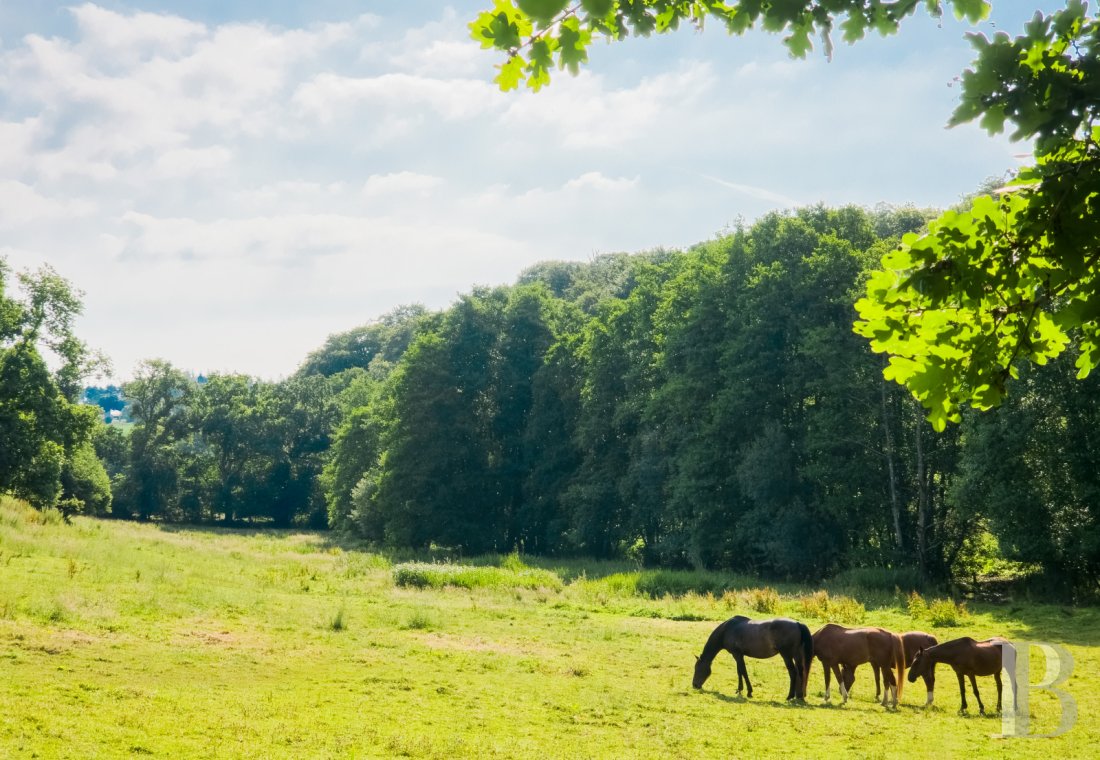
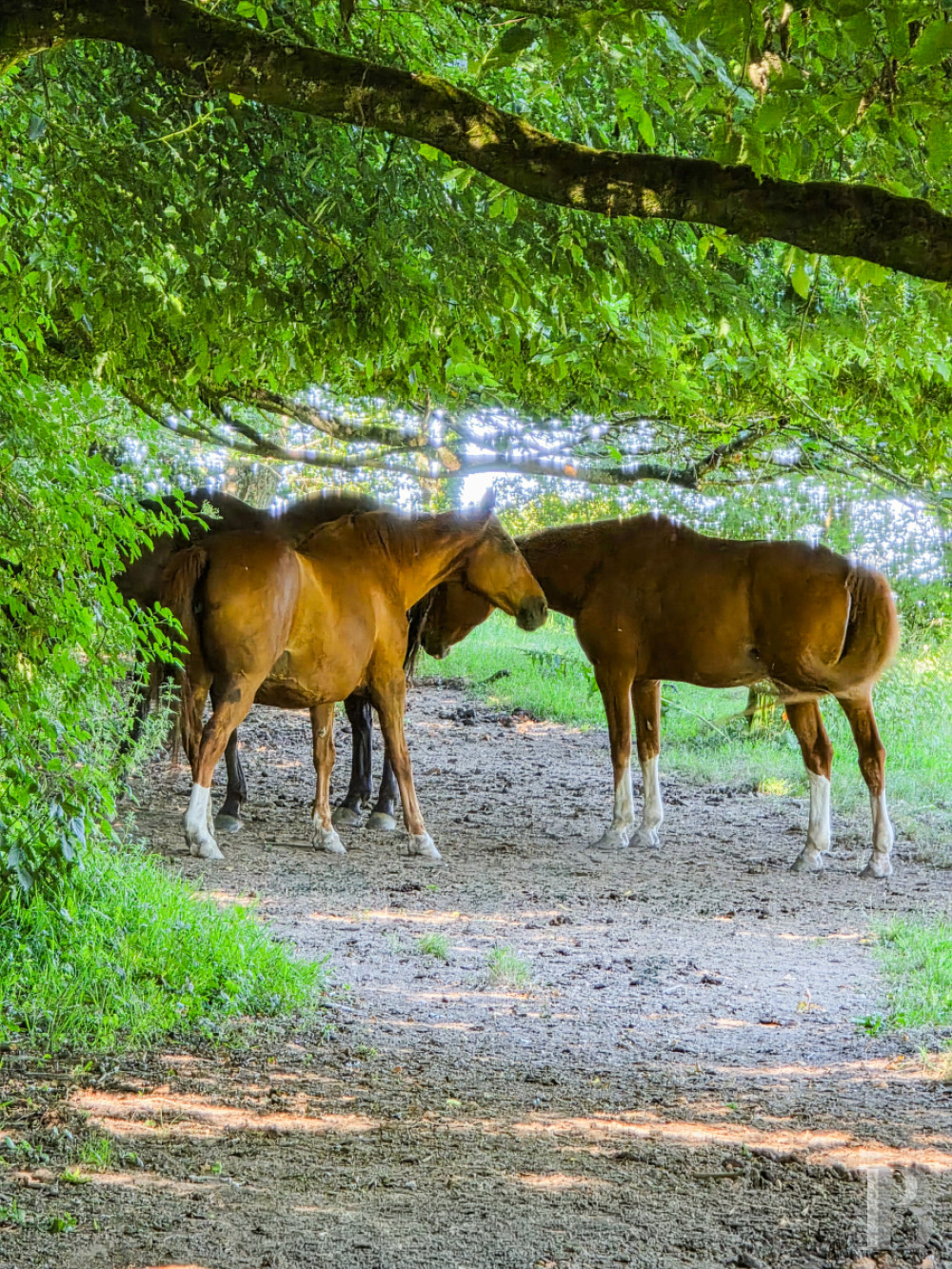
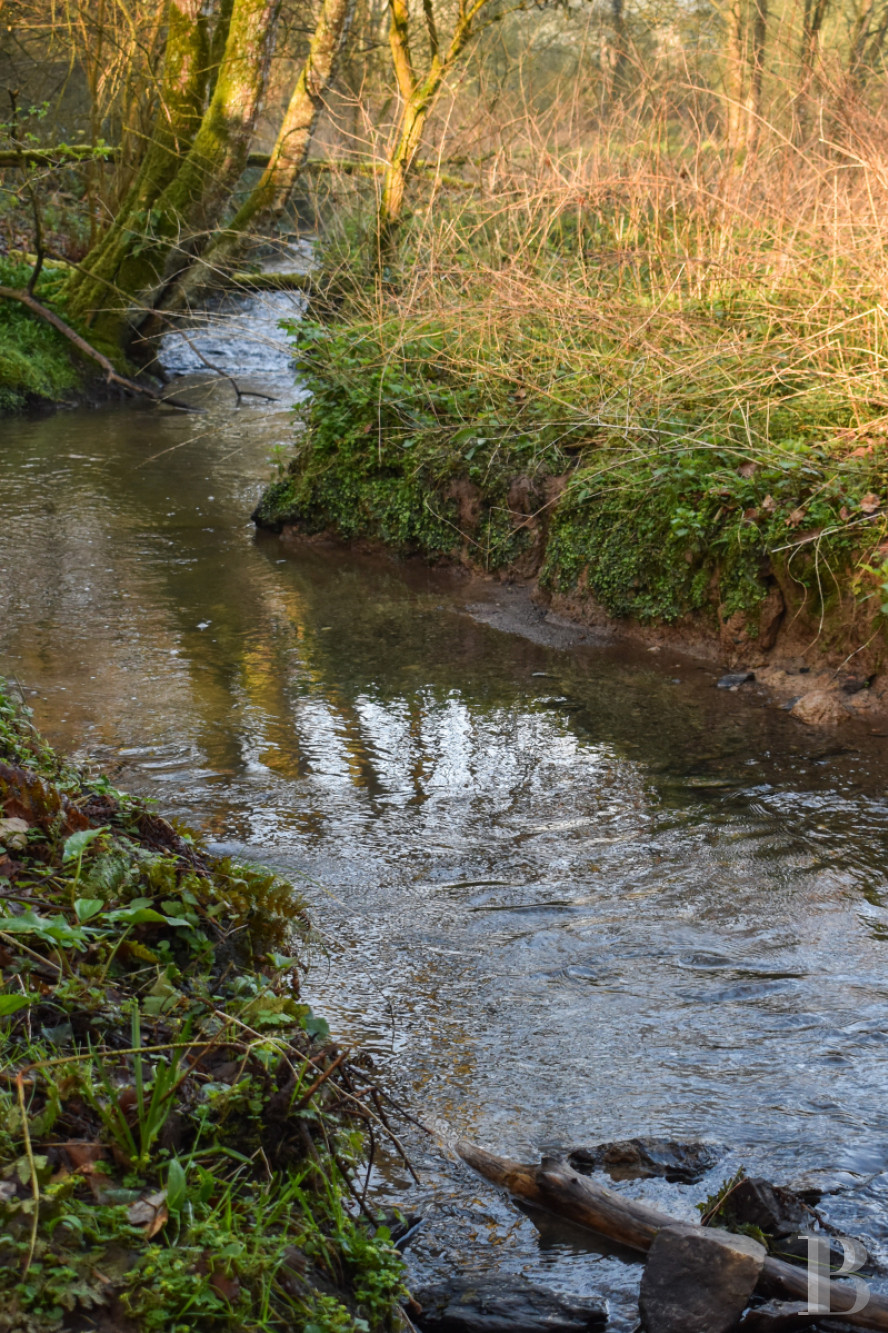
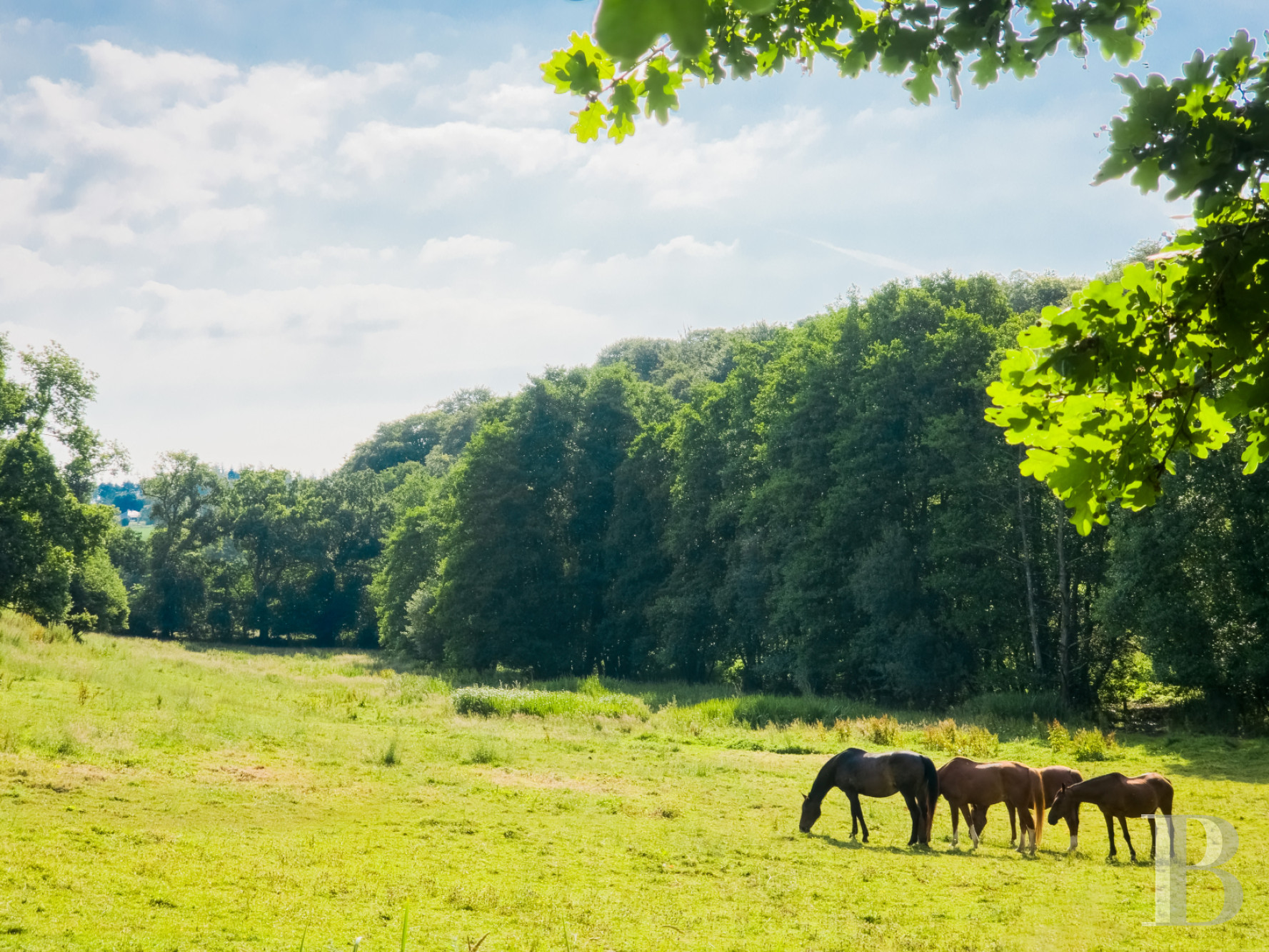
They extend around the manor house and the service quarters over nearly 8 ha in a single sweep. Immediately around the buildings, a landscaped garden of some 8,000 m² is enclosed by dry-stone walls. Tall trees offer their shade while beds of perennials line the paths. Beyond, the estate takes on a more pastoral character. A planted drive leads to a bridge crossing the stream and reaching a wood. The pond, ringed by trees, is served by a walking path that continues through the property. The pastures are now given over to horses and carry the views onward to the wooded edges. To the north-west of the manor house, the orchard retains a productive vocation and still yields fruit for cider-making. Plantings include daffodils, primroses, foxgloves, ferns, wild garlic, wisteria, honeysuckle, jasmine and clematis. Tall copper beeches, a giant sequoia and several lime trees stand among the most remarkable specimens in the grounds.
Our opinion
Gathered around a manor house whose oldest parts date back to the late Middle Ages, the estate preserves a remarkable coherence between dwelling, service quarters, dovecote and grounds. The alterations carried out in the 18th and 19th centuries have not obscured the legibility of this historic arrangement, still perceptible in the organisation of buildings and landscape alike. The orchard, pastures, stream, pond and woodland form a setting that appears to have taken shape over time rather than by design. A property well suited for horse owners and for a large family, whose interest lies as much in the quality of its architecture as in the balance it maintains with its land.
Reference 568908
| Main building floor area | 330 m² |
| Outbuildings floor area | 240 m² |
| Land registry surface area | 8 ha 38 a |
French Energy Performance Diagnosis
Information on the risks to which this property is exposed is available on the website: www.georisques.gouv.fr
Share


NB: The above information is not only the result of our visit to the property; it is also based on information provided by the current owner. It is by no means comprehensive or strictly accurate especially where surface areas and construction dates are concerned. We cannot, therefore, be held liable for any misrepresentation.