



A manor built in the 1930s to welcome the Parisian jet-set,
with a swimming pool and outbuildings in parkland, in the Chevreuse Valley
with a swimming pool and outbuildings in parkland, in the Chevreuse Valley
Chevreuse,
YVELINES
ile-de-france
78460
FR

Location
This property is located in the heart of the Yvelines area among the preserved landscapes of the upper Chevreuse Valley regional natural park, between forests, wet meadows and winding waterways. The manor is situated on the outskirts of a village and enjoys a peaceful environment while remaining close to shops and services in a nearby municipality with a wealth of heritage. It is only 15 kilometres from Versailles, 35 kilometres from Paris and can be easily reached via minor roads. The RER B terminus station is 4 kilometres away and puts the French capital within less than one hour’s reach. The Paris-Orly and Roissy-Charles-de-Gaulle airports can be reached within 45 minutes, while the Massy high-speed TGV train station is 17 minutes away by car.
Description
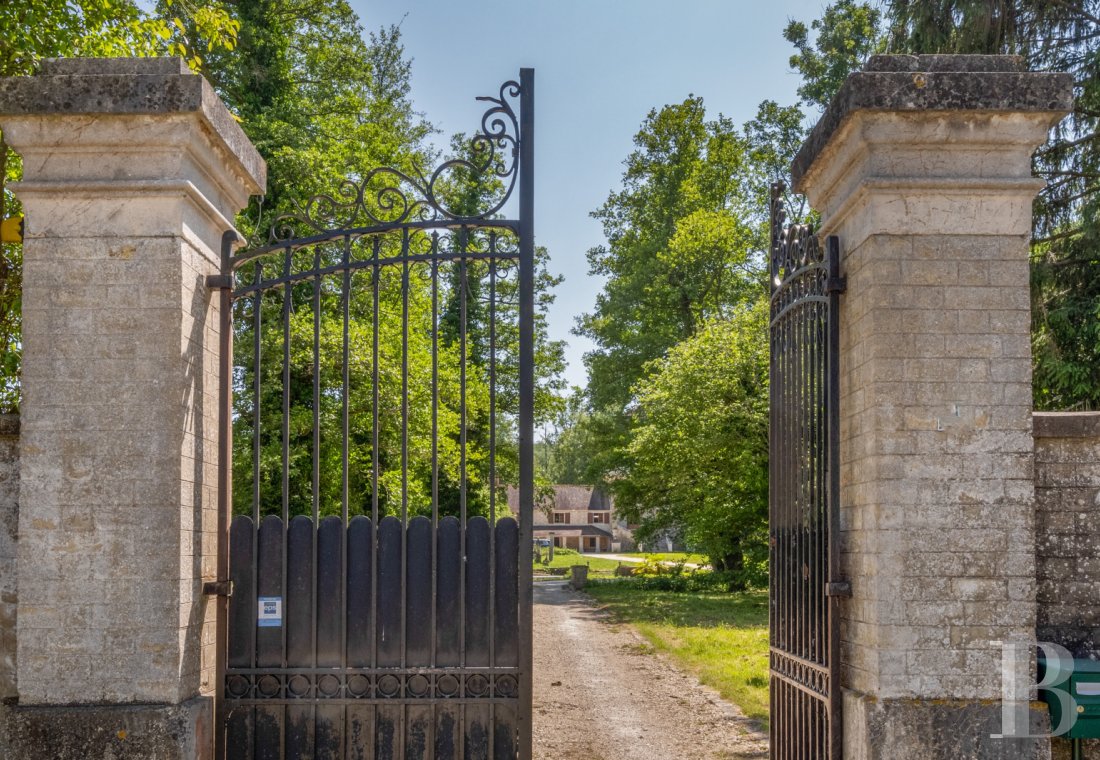
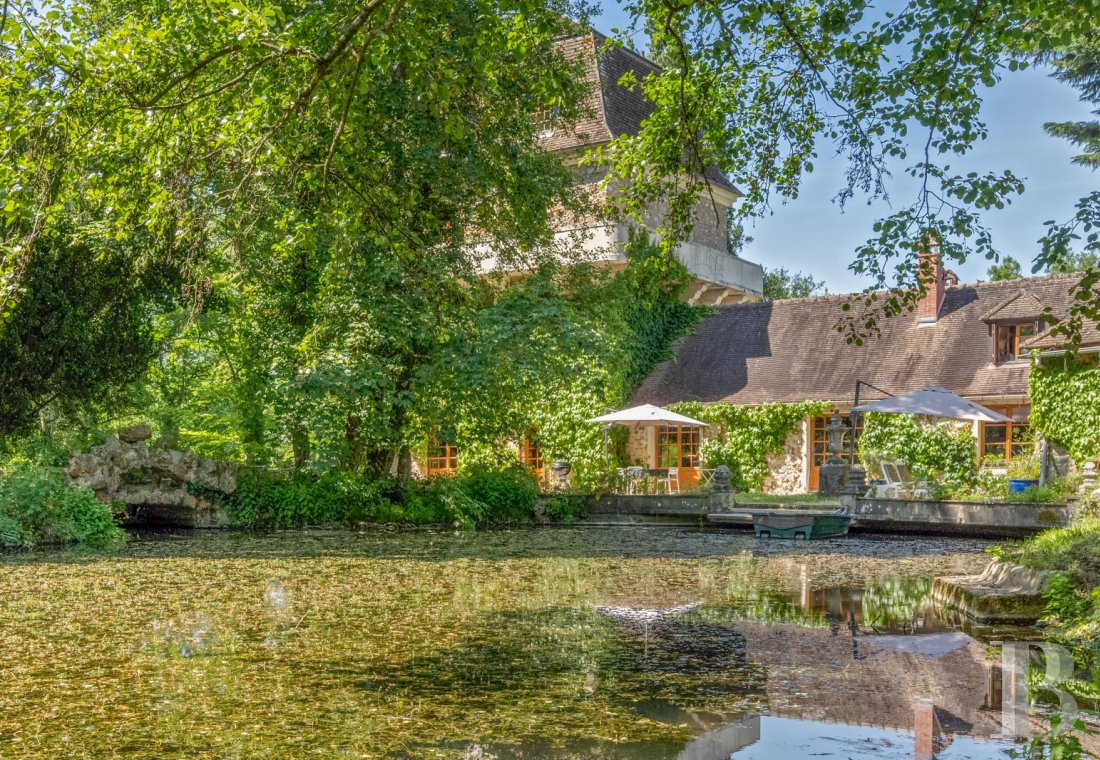
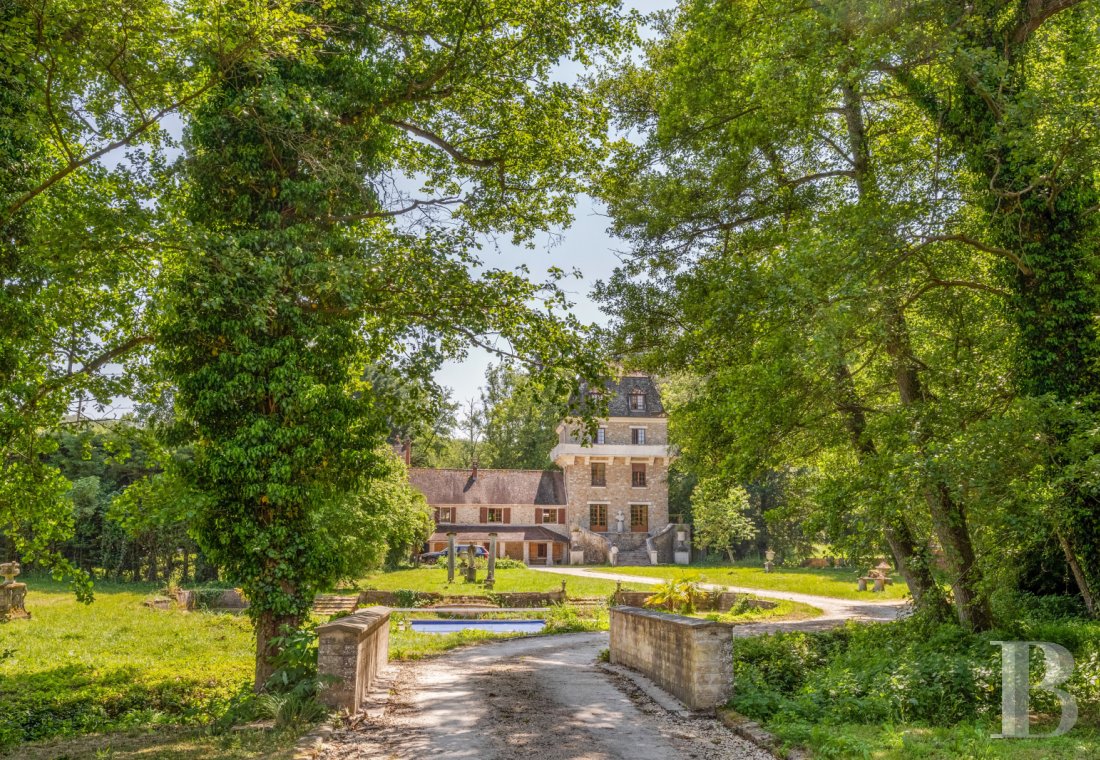
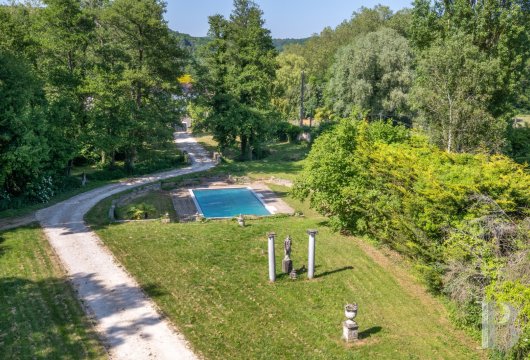
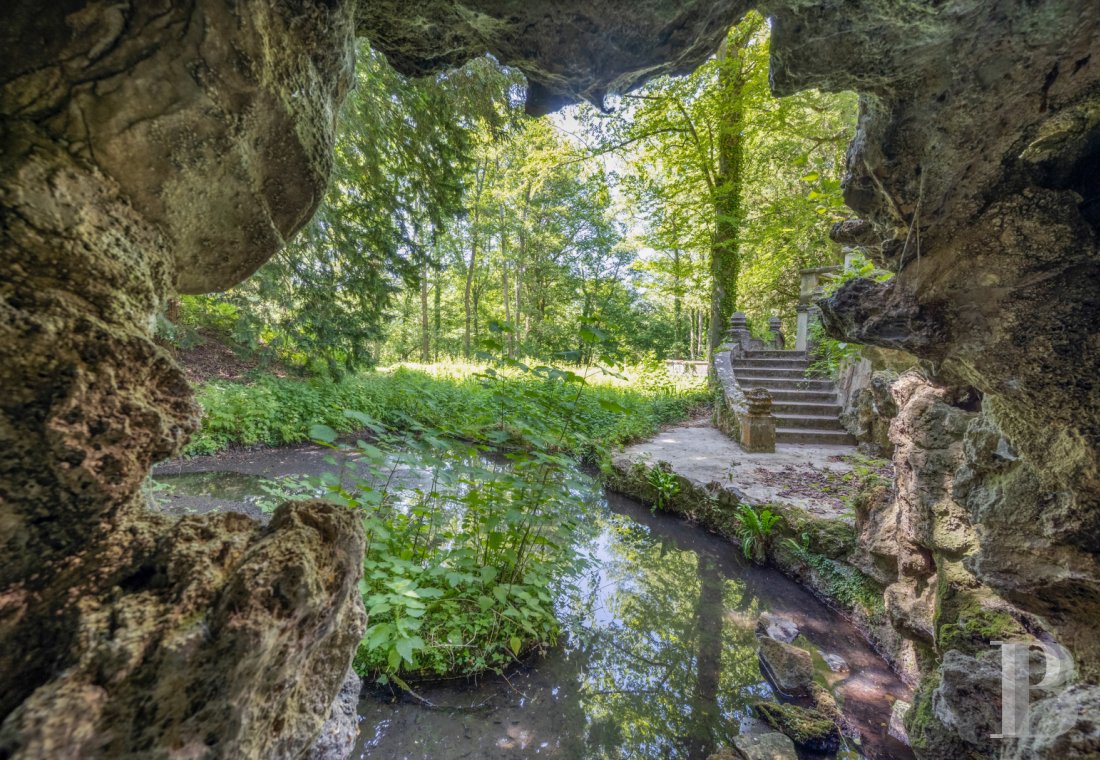
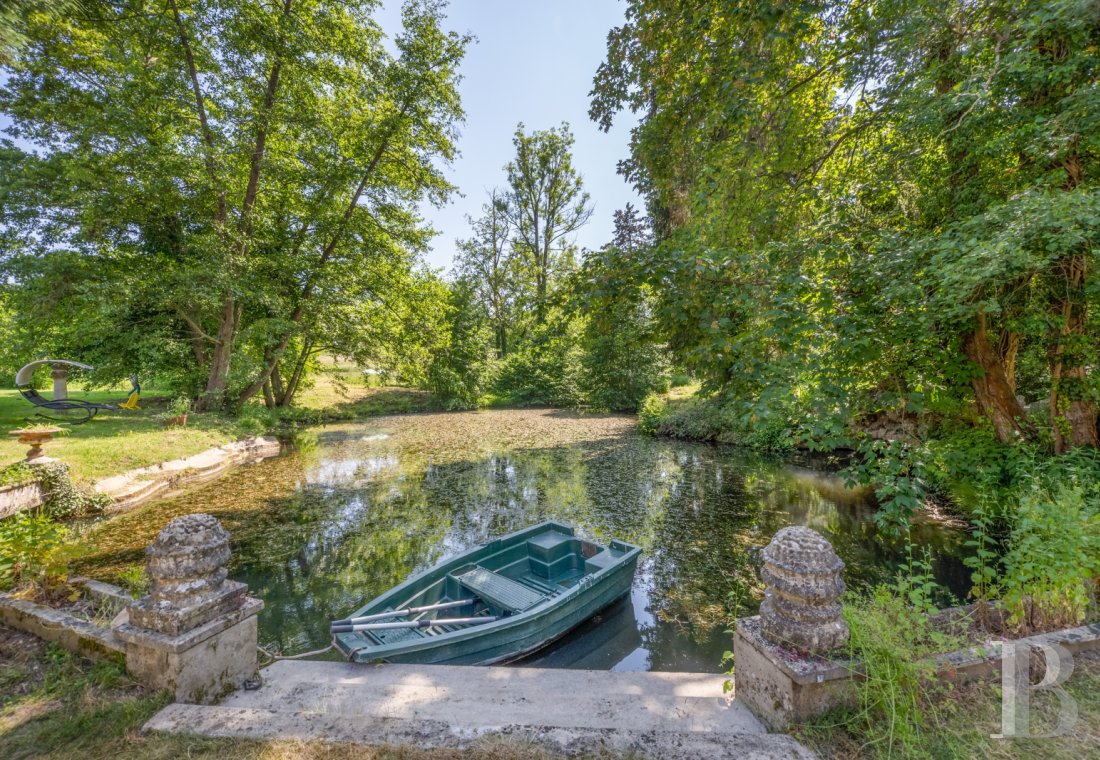
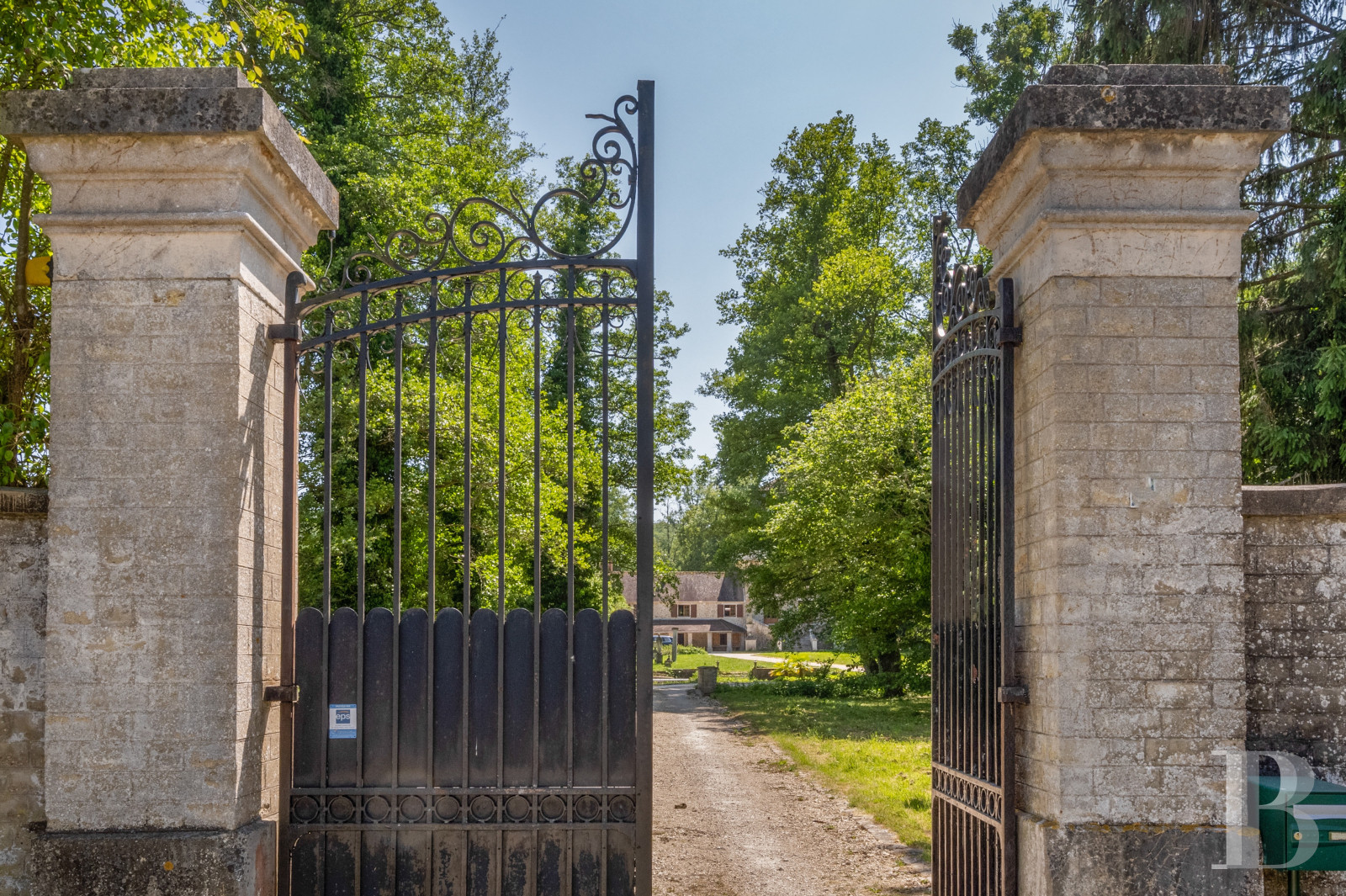
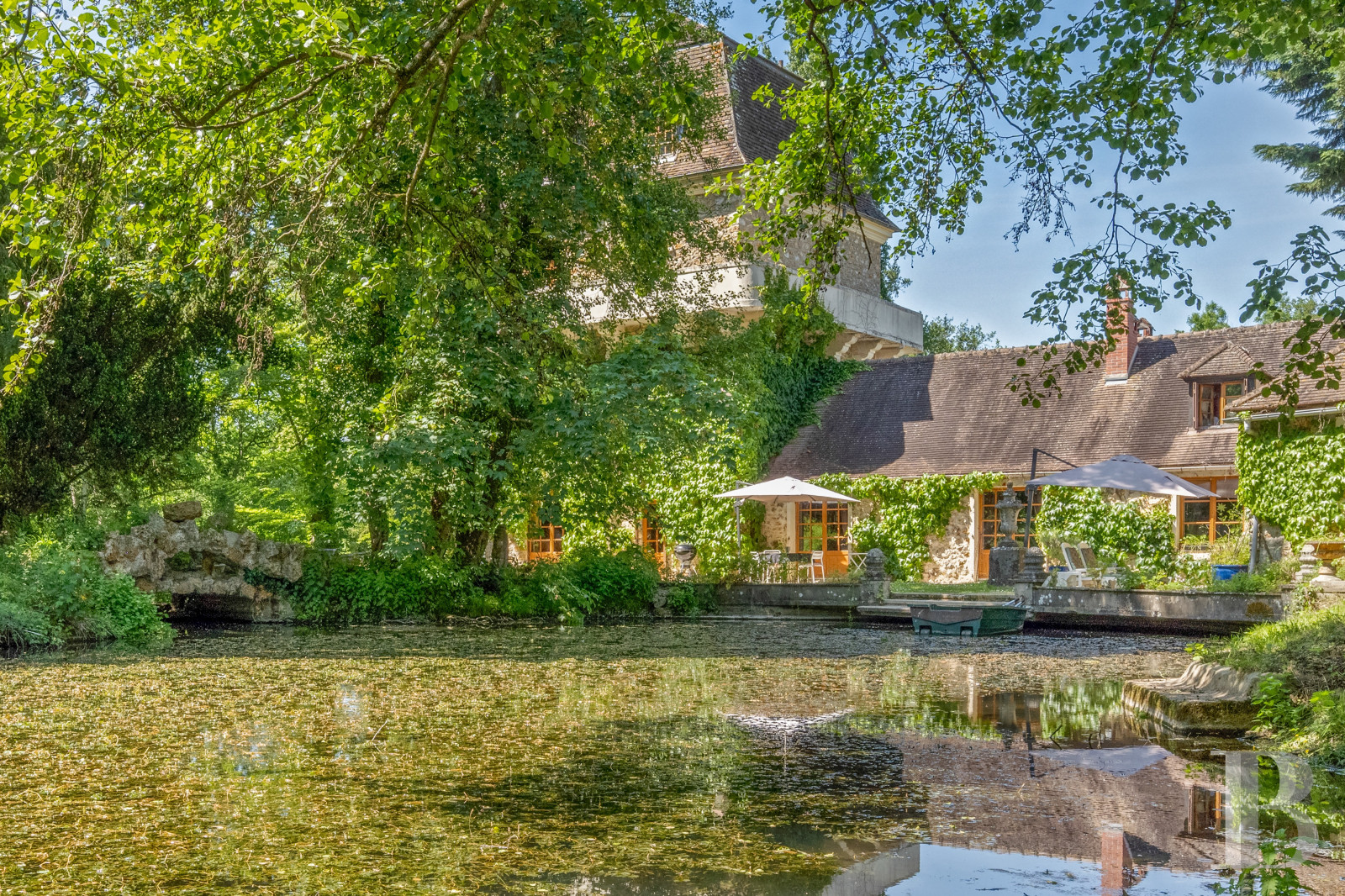
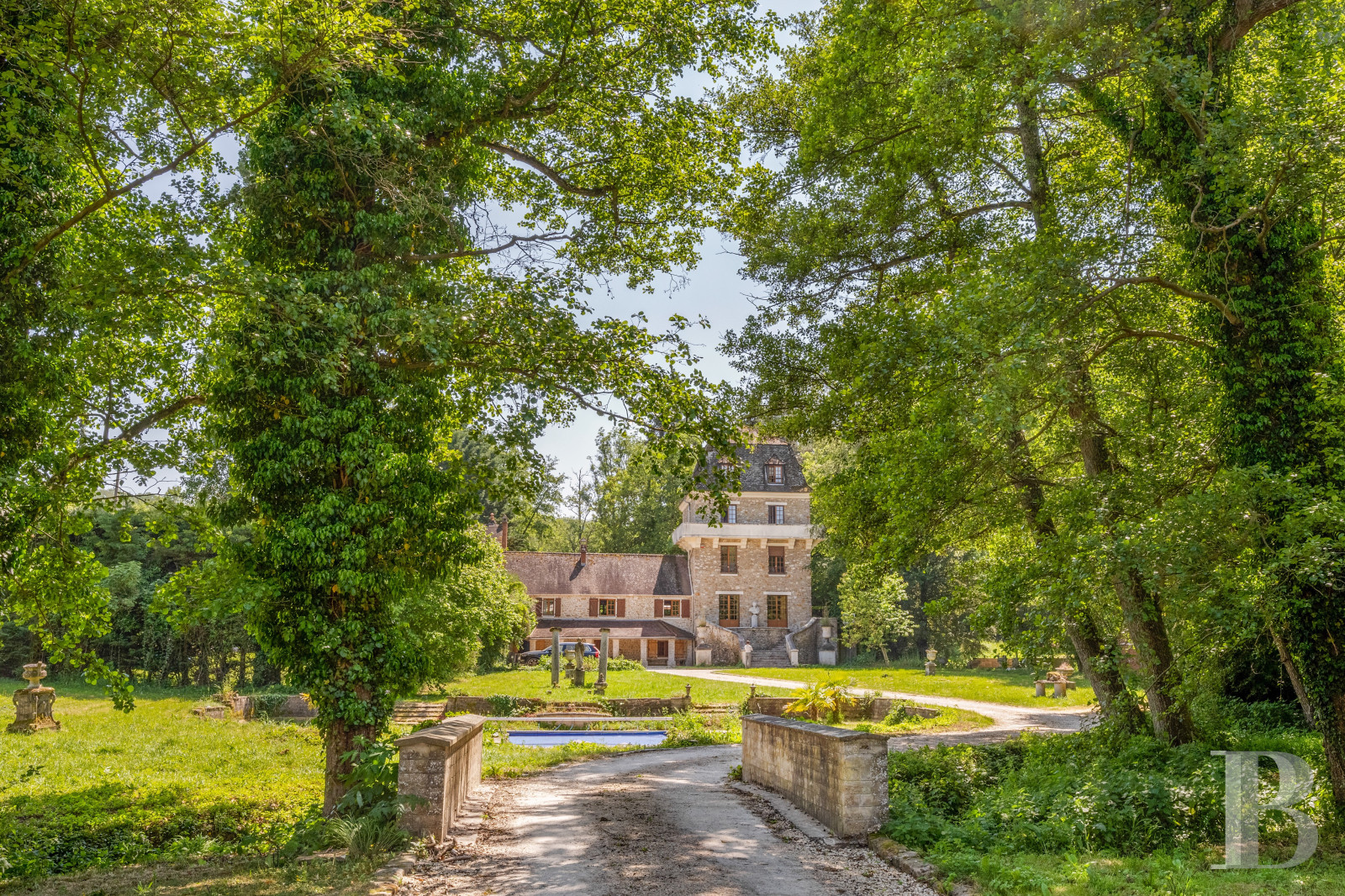
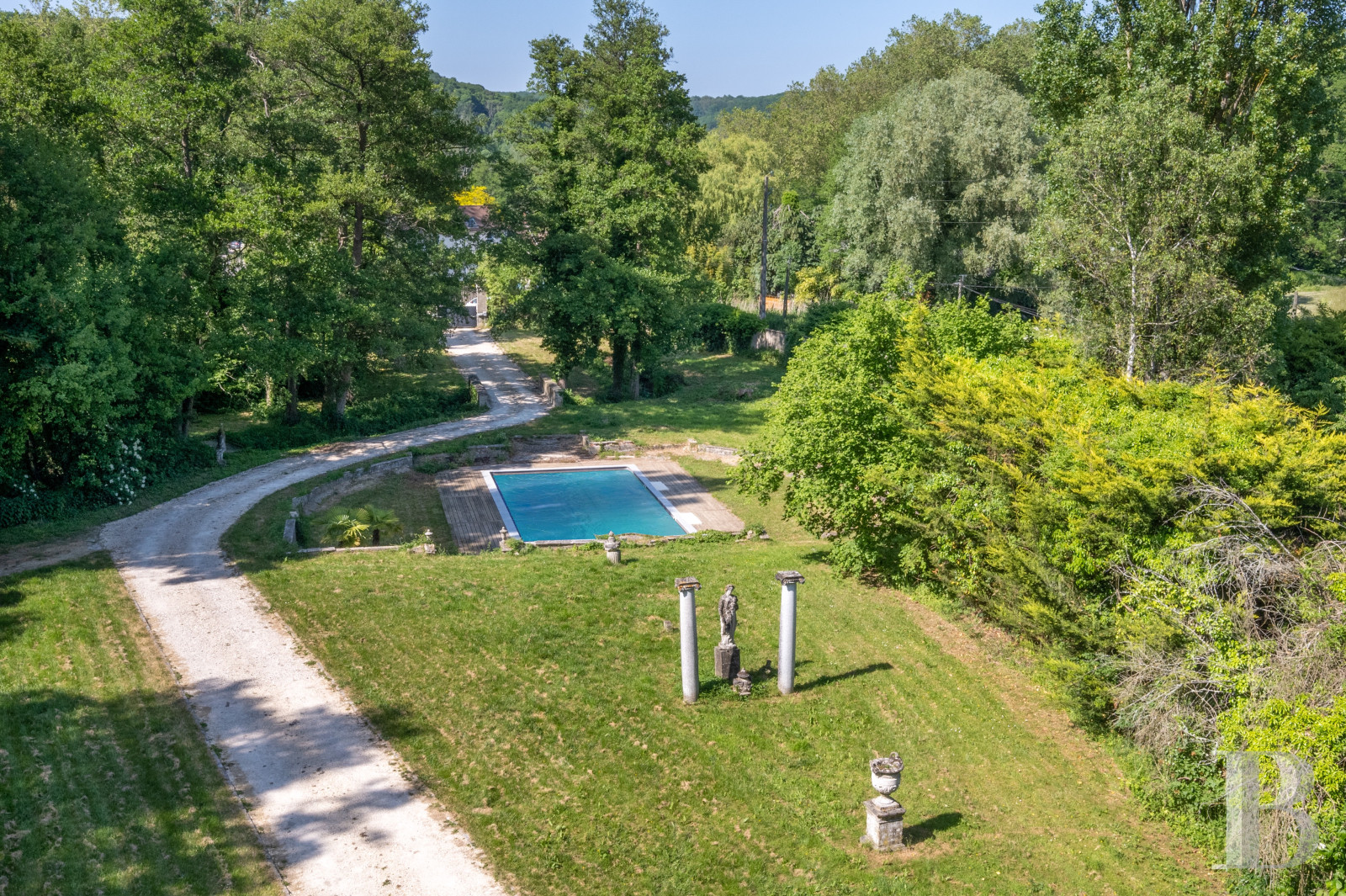
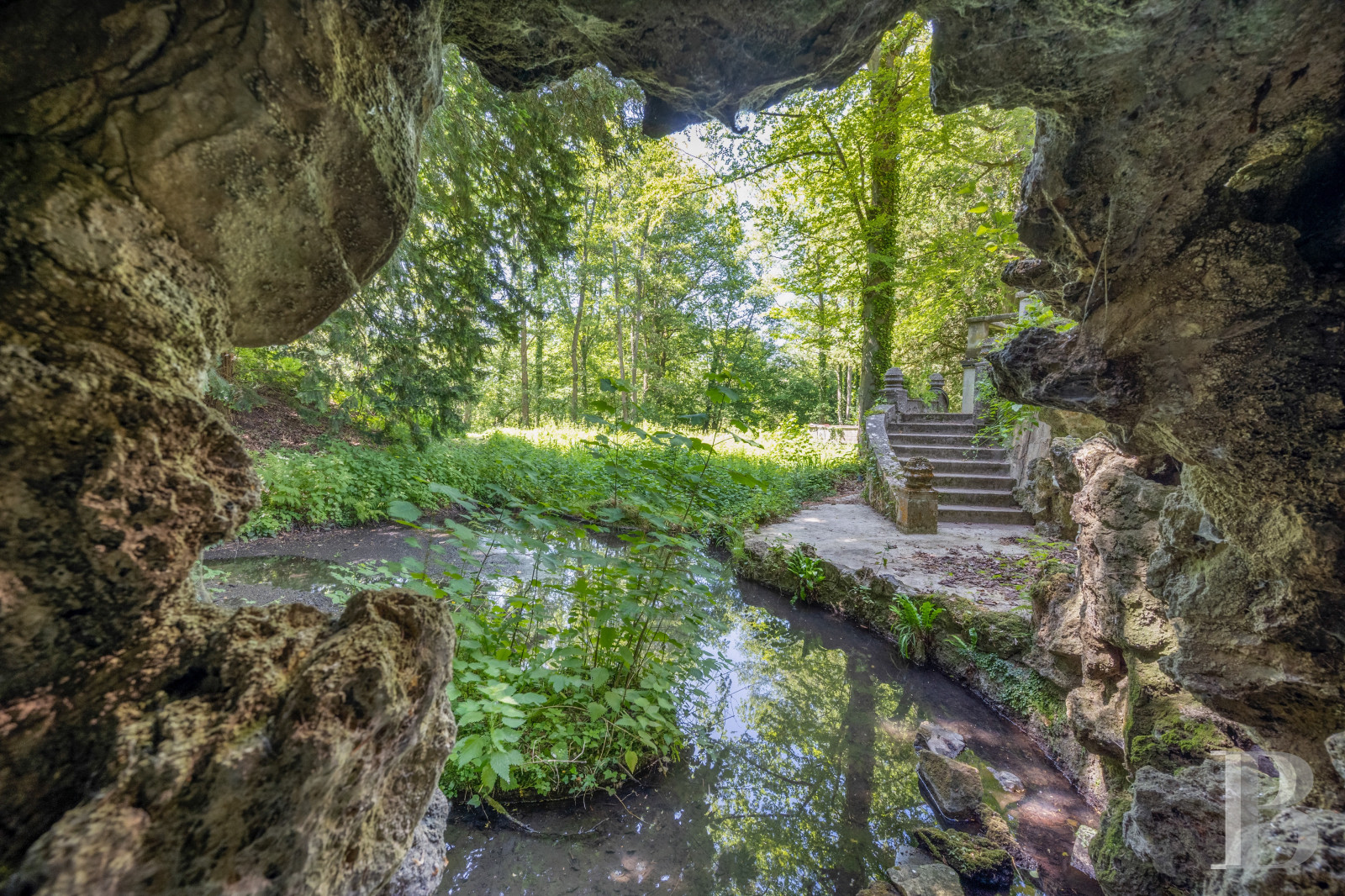
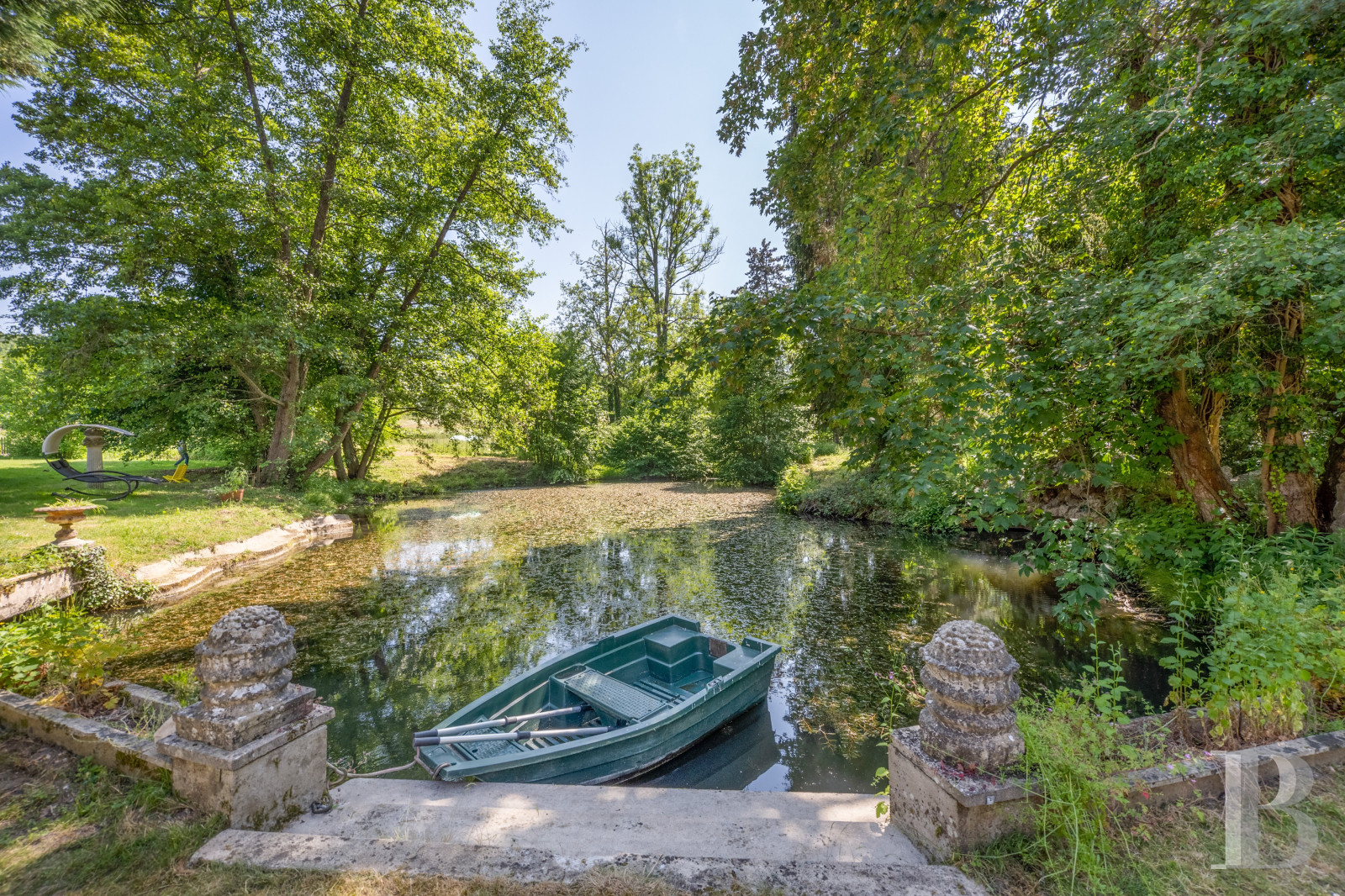
This landscaped property, tucked away behind its gates on the edge of a heritage-rich village in the Chevreuse Valley, spreads over 2 hectares around a manor built of millstone erected in the 1930s. The estate is made up of two distinct parts: at the front, a vast, open garden includes the drive, parking area and a heated swimming pool, while to the rear, the grounds are wooded. The Romanticism inspired water feature overlooks a grotoo in the grounds and leads to a stone staircase. The paths following the natural bends of the stream are an invitation for a stroll, while the pond and waterfall that can be found in the garden help to create the poetic ambiance exuded by the place.
The five-storey manor boasts 360 m² of living space over fourteen rooms. All of the property's reception rooms open onto the landscaped gardens. The eight bedrooms and office are spread accross the upper floors and share three bathrooms.
The lower level of the property is devoted to leisure pursuits and technical facilities.
The outbuildings are situated discretely on the edge of the wooded areas without disrupting the harmony of the site.
A partially restored guests’ house, a separate pavilion converted into an office and several sheds are also part of the property.
The estate has retained the imprints of its architectural and landscaped history and was first mentioned in the 17th century, specifically regarding a water mill whose remains can be found in the basement. In the early 20th century, it became the residence of Gustave Quinson, a major figure in Paris theatre circles. Artists, authors and comedians from the Parisian jet-set were welcomed here, including Sacha Guitry, Pierre Fresnay or Mistinguett, which helped the property to gain a lasting place in the region’s cultural heritage.
The five-storey manor boasts 360 m² of living space over fourteen rooms. All of the property's reception rooms open onto the landscaped gardens. The eight bedrooms and office are spread accross the upper floors and share three bathrooms.
The lower level of the property is devoted to leisure pursuits and technical facilities.
The outbuildings are situated discretely on the edge of the wooded areas without disrupting the harmony of the site.
A partially restored guests’ house, a separate pavilion converted into an office and several sheds are also part of the property.
The estate has retained the imprints of its architectural and landscaped history and was first mentioned in the 17th century, specifically regarding a water mill whose remains can be found in the basement. In the early 20th century, it became the residence of Gustave Quinson, a major figure in Paris theatre circles. Artists, authors and comedians from the Parisian jet-set were welcomed here, including Sacha Guitry, Pierre Fresnay or Mistinguett, which helped the property to gain a lasting place in the region’s cultural heritage.
The main house
Its millstone facades punctuated by windows with a variety of dimensions are adorned, on the northern part of the building, by a continuous balcony overlooking the valley. The steeply sloped roofs dotted with dormers are typical of the inter-war architecture of villas in the Île-de-France region.
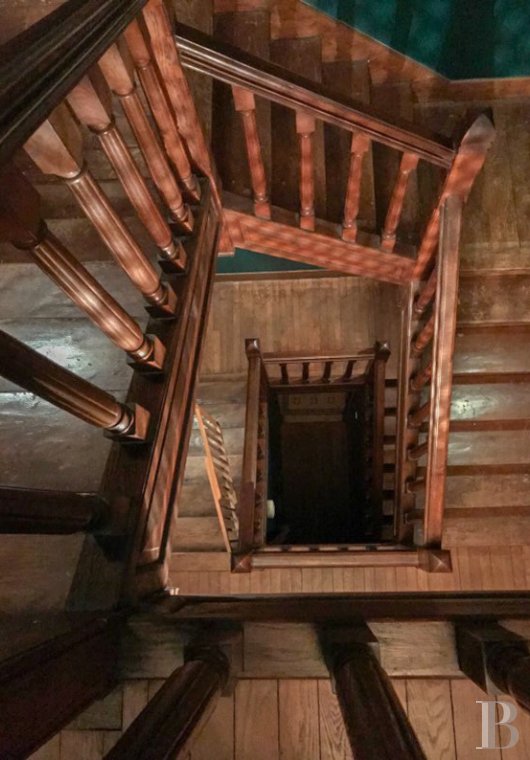
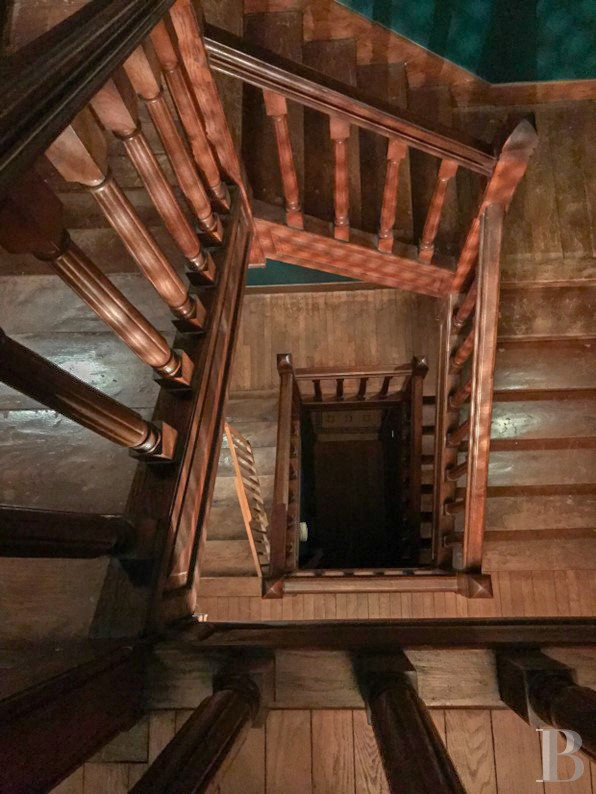
From the outside, a large, stone, double staircase leads to the main level. A hall leads to the main reception rooms where the property's main staircase is located. The staircase stands out thanks to its geometric composition, made up of solid wood flights of steps and guard-rails with turned balusters set around a central stairwell, providing it with a sculptural appearance.
In an ambiance that remains faithful to the house’s 20th-century origins, the interior layout is fluid, with rooms here and there.
The garden level
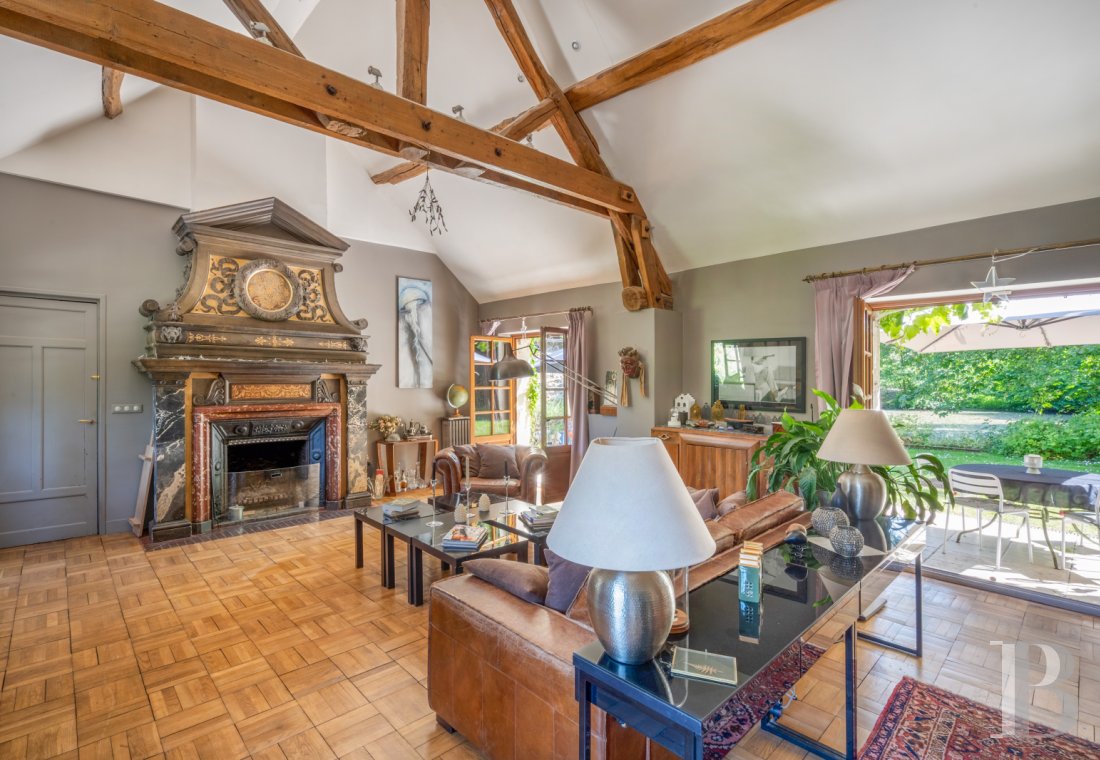
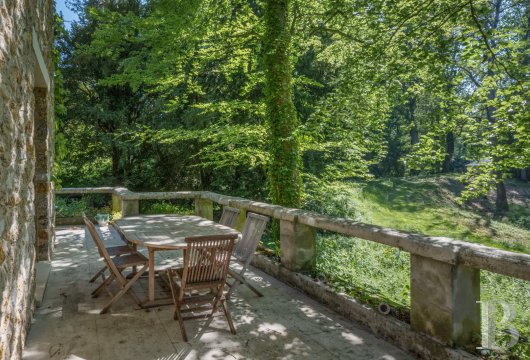
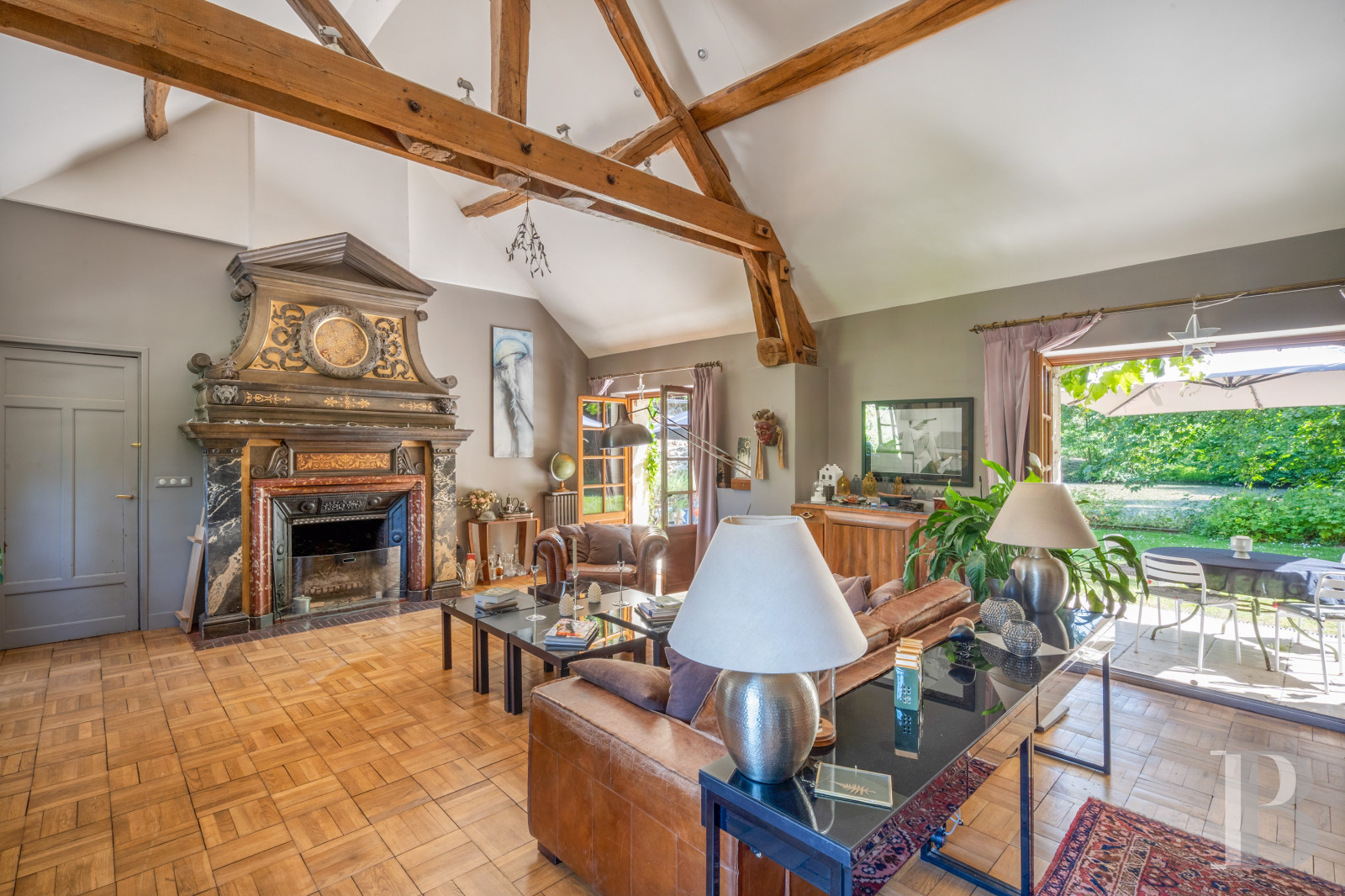
The living room possesses wide openings onto the patio that overlooks the grounds. Following on from it, a lounge with a cathedral ceiling boasts a period monumental, stately fireplace. Made up of a triangular pediment resting on marble jambs, this Italian, Neo-Renaissance-inspired fireplace dominates the room with its contrasting colours and richly sculpted decoration (including lions, scrolls and serpent motifs) in a particularly bold and eclectic decorative atmosphere, which is bathed in light through the large doors and windows opening out onto the garden.
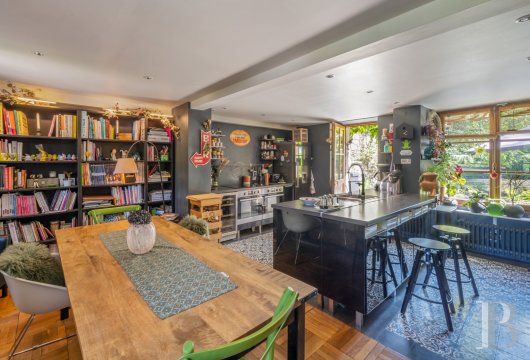
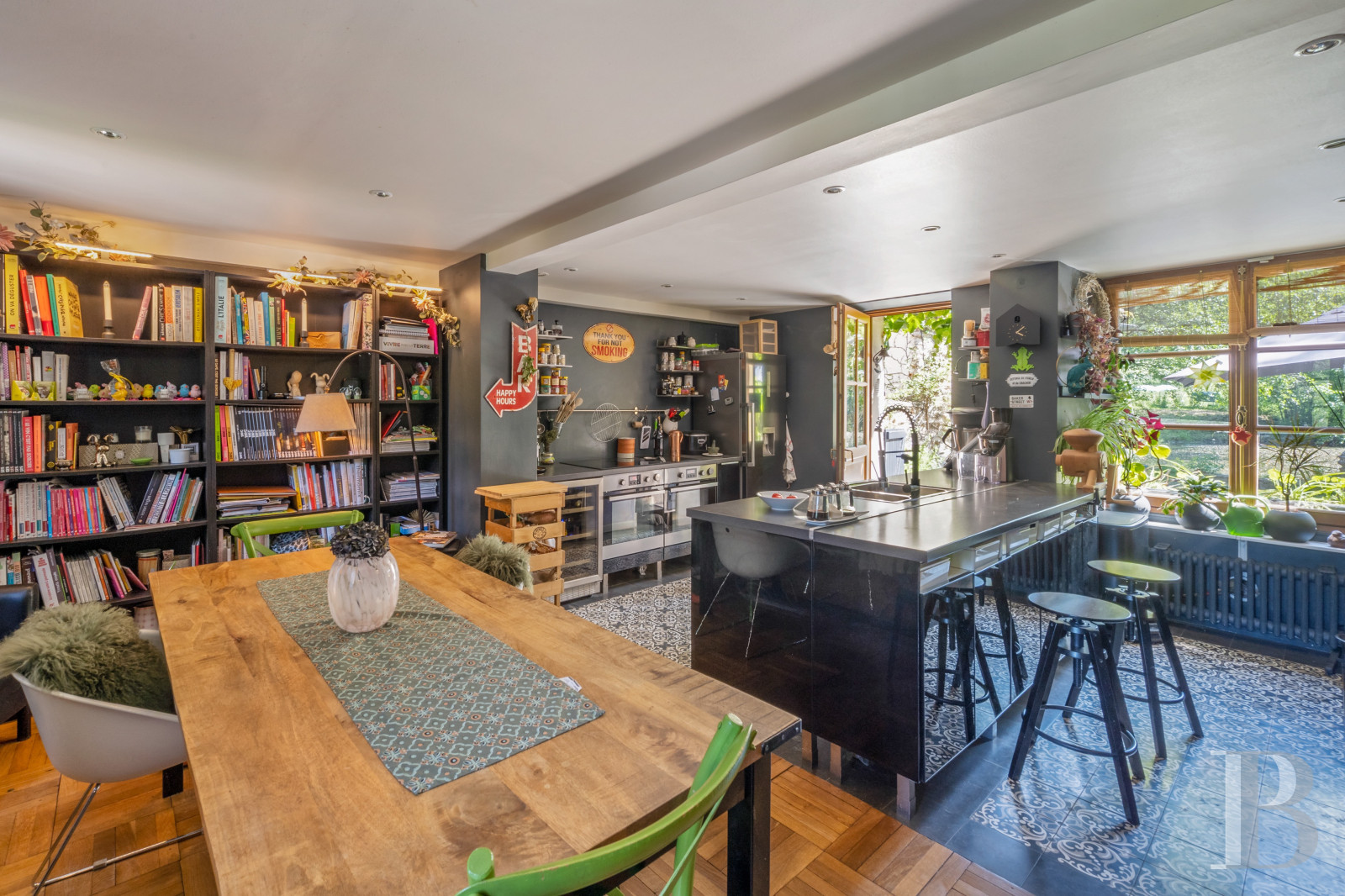
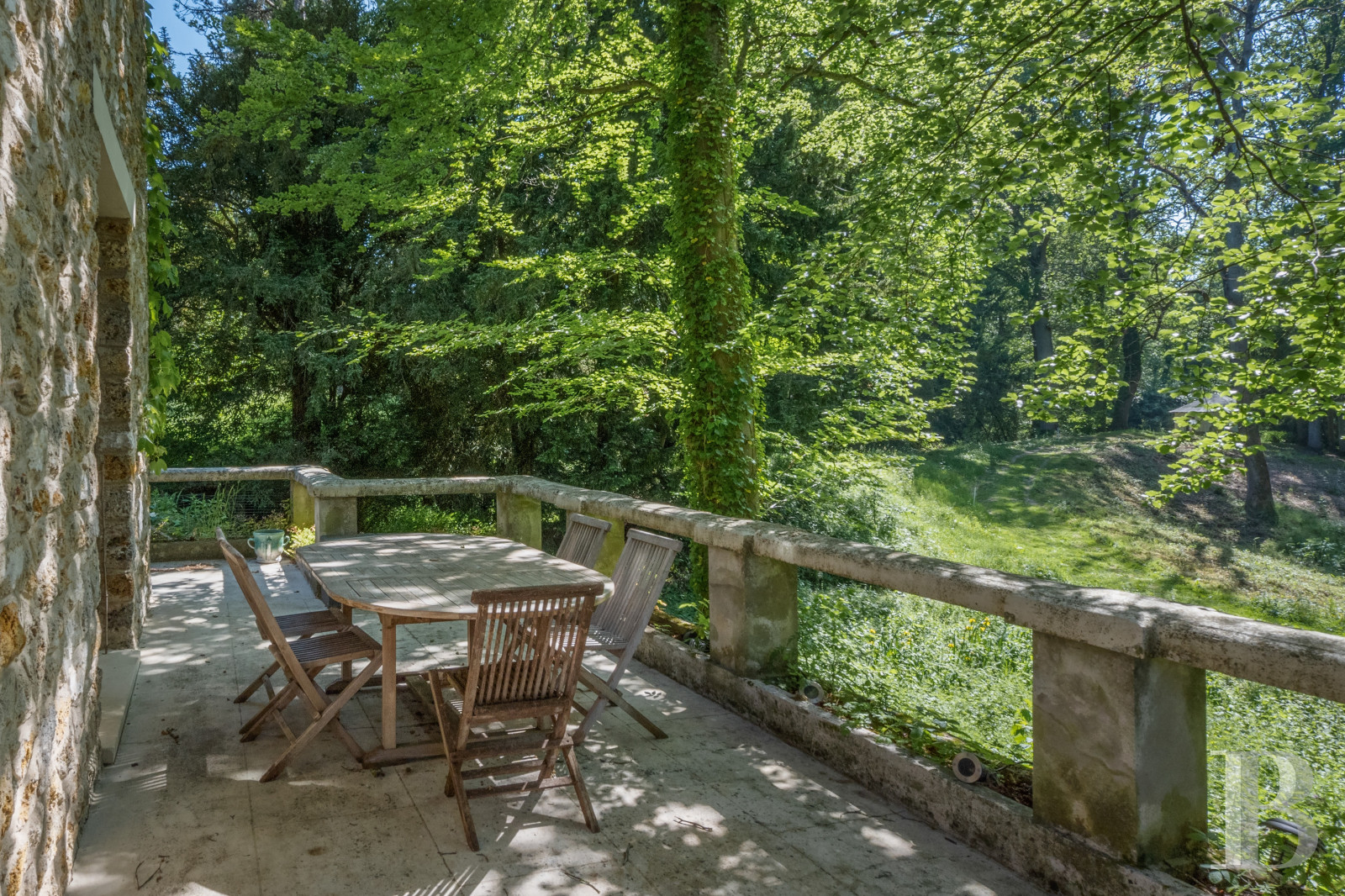
Next to it, the kitchen, which is also equipped with bookshelves, leads to a utility room. This level boasts two patios. The first is south-facing and overlooks the pond, while the other faces west, in the shade of the beech trees on the edge of the forest.
The first floor
A landing leads to two inter-connected bedrooms, used as an office, as well as a bathroom with a shower and a separate lavatory. Through the windows, views of the grounds and the surrounding trees can be enjoyed.
The second floor
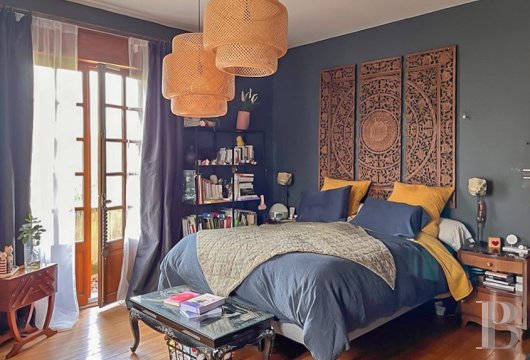
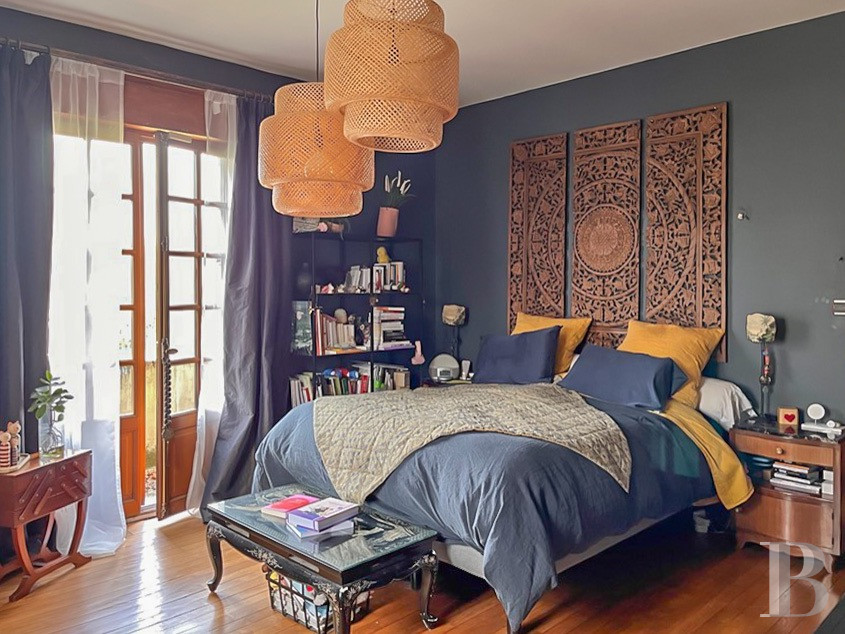
This level boasts a vast bedroom with a walk-in wardrobe and bathroom with a shower. A continuous balcony, which can be reached from the various rooms on this level, offers views of the valley and village which spread out to the north.
The third floor
The top level contains three further bedrooms plus a shower room with a lavatory.
The lower garden level
It can be reached via the northern facade and includes the residence’s technical facilities.
Beneath an awning, there is an entrance to a cinema room. An office and a self-contained studio apartment, which are currently used as a fitness room with a sauna and shower room, can also be found on this level.
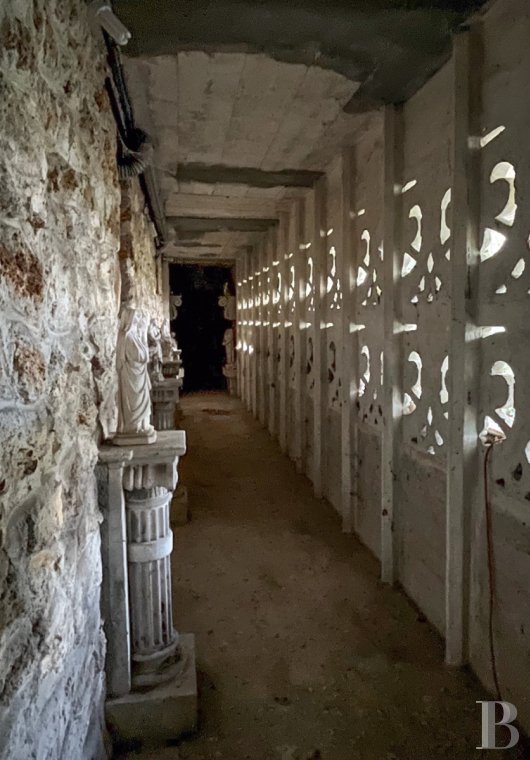
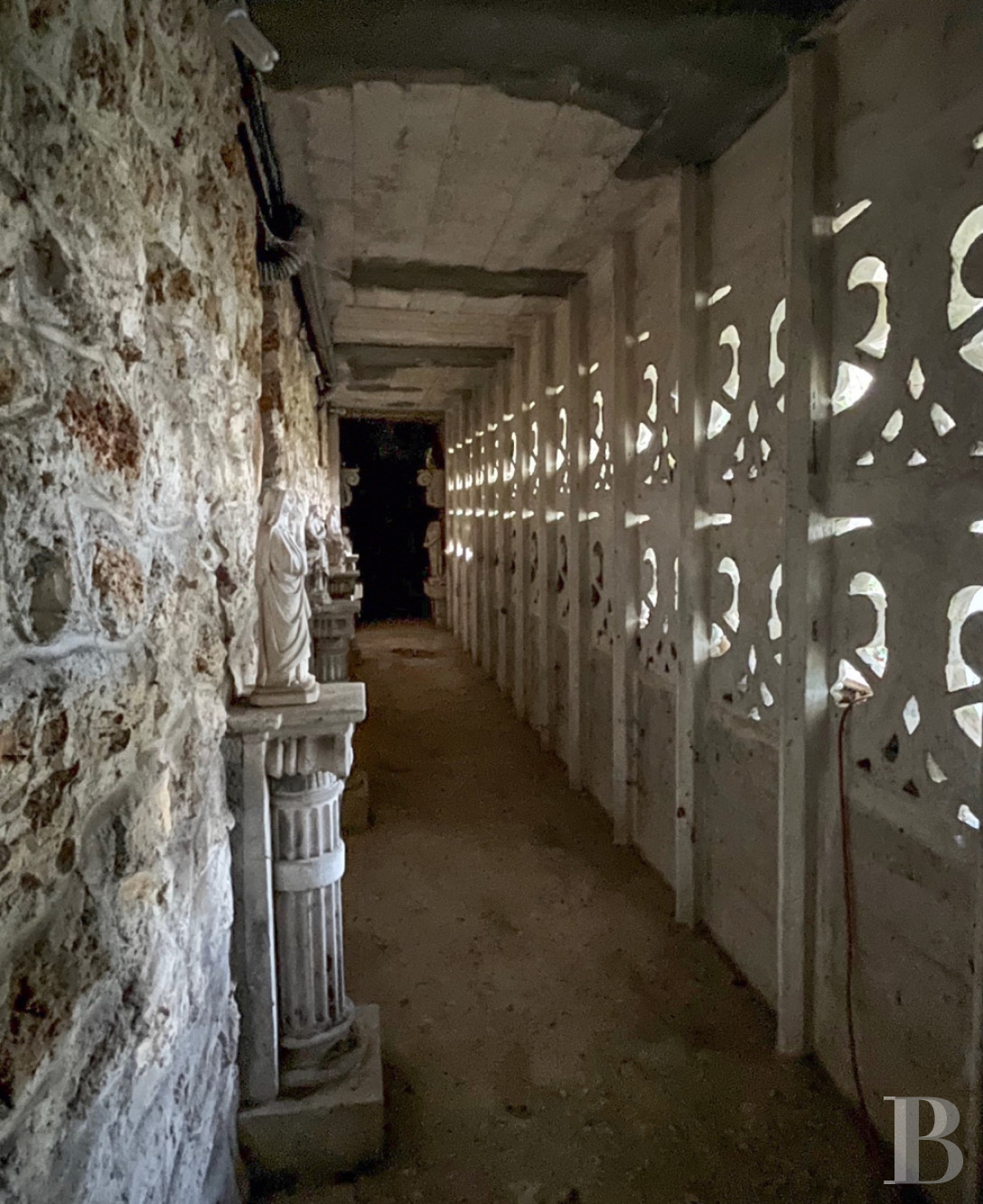
In a gallery separated from the garden by an openwork wall, there is an oratory that was created by the wife of the man who had the house built. It includes a small chapel as well as baptismal fonts.
The grounds
They have a surface of around 2 hectares and are made up of two separate landscaped sections. At the front, an almost 6,000-m² wide open garden includes a recently and fully restored 12-metre by 6-metre swimming pool, as well as parking spaces and sheds for equipment storage.
To the rear, the environment is of a wilder nature, with approximately 14,000 m² of woods, clearings and water features. A pond feeds a waterfall which, depending on the season, cascades down in a curtain-like flow in front of a grotto with a rockery style typical of 19th-century Romantic gardens. It is an invitation to to stroll between the different levels on a journey punctuated by bridges, steps and paths that wind their way along beside the watercourse and through the lush natural surroundings. A watercress bed, a functioning beehive, an orchard of fruit trees and a meadow housing a natural source springing from a moon-shaped pond enhance the site’s standing and diversity.
The outbuildings
The property boasts several outbuildings in the immediate vicinity of the manor. A self-contained pavilion currently used as an office stands above a basement level covering the entire floor area and could be used for a professional activity away from the main residence.
A partially restored guests’ house is made up of a living room, a kitchen area as well as a shower room and possesses potential for use as a self-contained reception area.
An open-sided shed located opposite a water feature could be put to use for various purposes requiring shelter. At the front of the estate, a second roofed shed with a concrete floor provides parking capacity for two vehicles on the one hand as well as space for storing logs in a woodstore.
Our opinion
This manor, which is a short distance from Paris, combines the ambiance of a large Île-de-France region property imbued with a certain eccentricity stemming from its location and history. With its outbuildings and outdoor features, the estate is an invitation to contemplate and listen to the ever-present sounds of nature. Here, water serves both as the central theme of the landscape design and as the property’s defining feature. Whether along a path bordered by trickling water, in the breeze rustling through the foliage, or by the warmth of the fireplace, the residence offers, with understated elegance, a true sanctuary conducive to rejuvenation.
2 250 000 €
Fees at the Vendor’s expense
Reference 847172
| Main building floor area | 360.3 m² |
| Outbuildings floor area | 57 m² |
| including refurbished area | 22 m² |
| Land registry surface area | 2 ha |
| Total floor area | 360,3 m² |
French Energy Performance Diagnosis
Information on the risks to which this property is exposed is available on the website: www.georisques.gouv.fr
Share


NB: The above information is not only the result of our visit to the property; it is also based on information provided by the current owner. It is by no means comprehensive or strictly accurate especially where surface areas and construction dates are concerned. We cannot, therefore, be held liable for any misrepresentation.