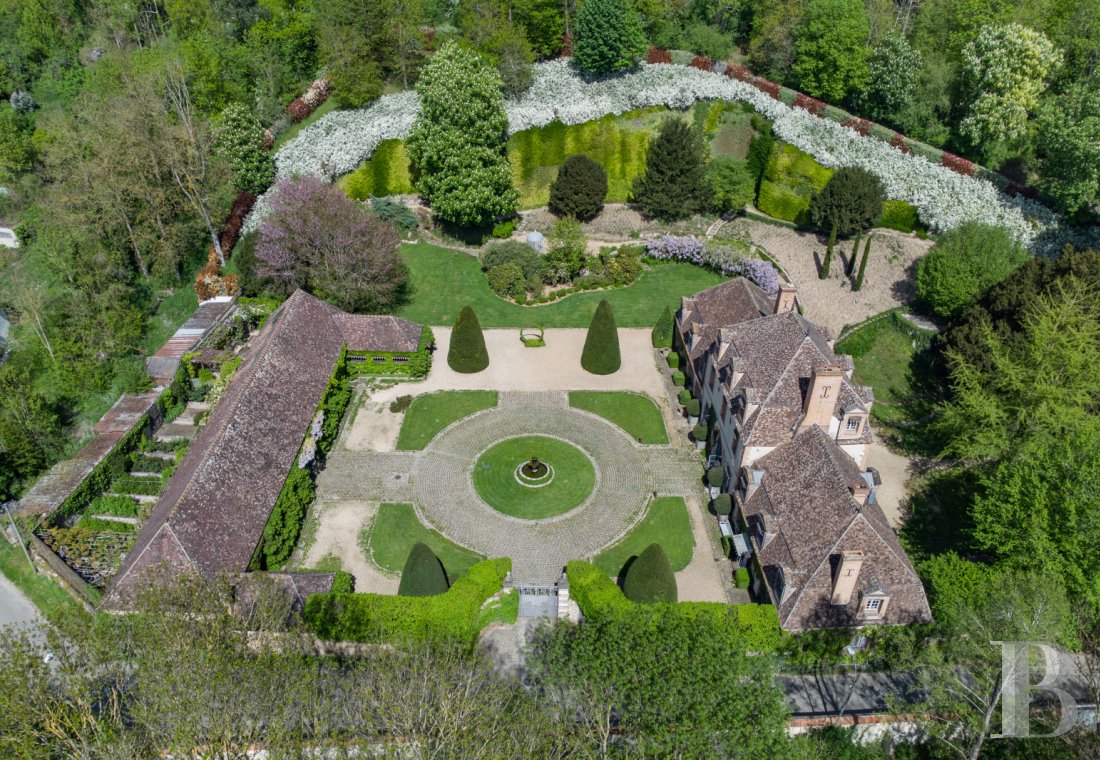




A 17th-century manor house with more than 1 hectare of enclosed grounds,
in the Eure Valley, with outbuildings and an indoor swimming pool
in the Eure Valley, with outbuildings and an indoor swimming pool
Houdan,
EURE-ET-LOIR
center-val-de-loire
78550
FR

Location
This property is located in a hamlet surrounded by meadows, woods and arable land, on the edge of the Eure-et-Loire and Yvelines areas, in the Centre-Val-de-Loire region. A village very nearby is home to several shops and services as well as a primary school. The municipalities of Nogent-le-Roi, Dreux, Houdan or Epernon can be reached in between 8 to 20 minutes. Paris is just over one hour away, via the N10 or N12 major roads and then the A12 motorway. From the railway stations in Dreux, Epernon or Houdan, Paris-Montparnasse can be reached in around 45 minutes.
Description
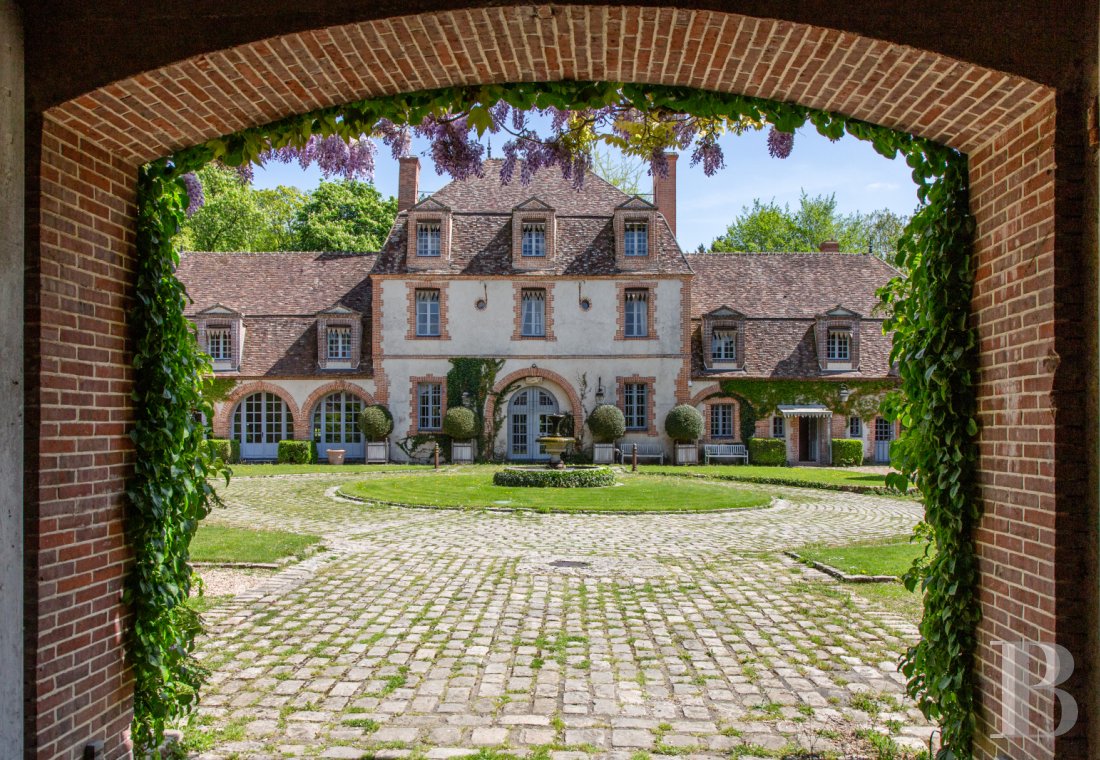
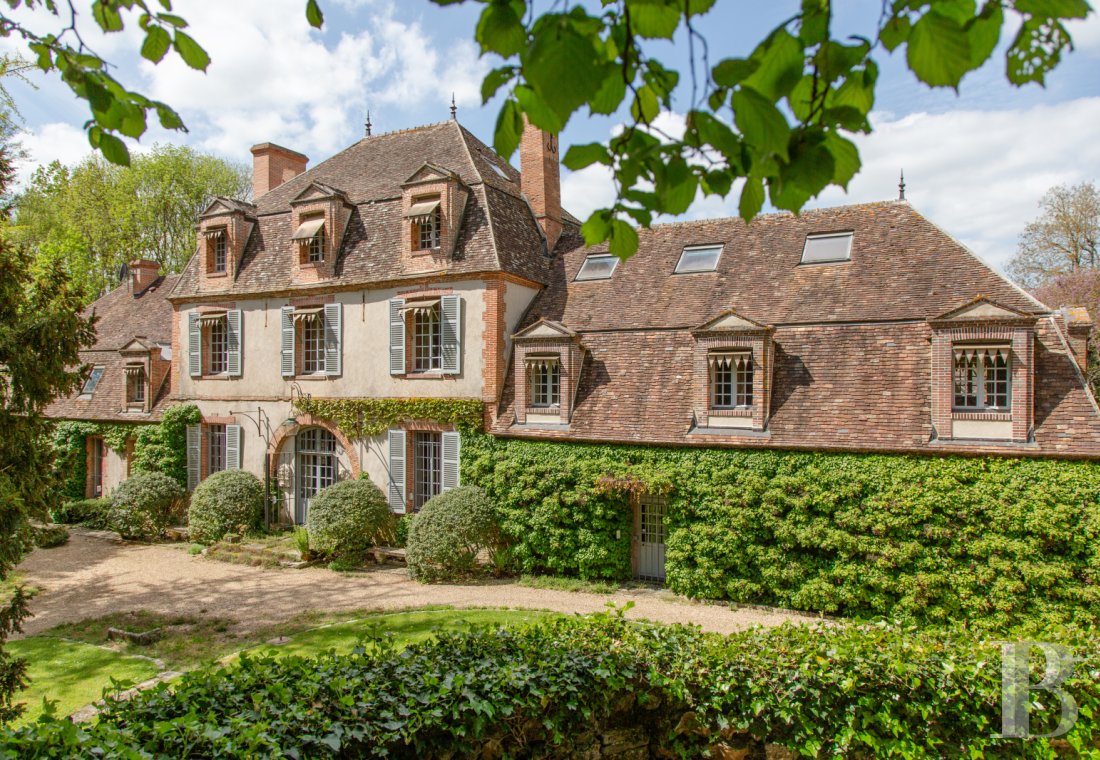
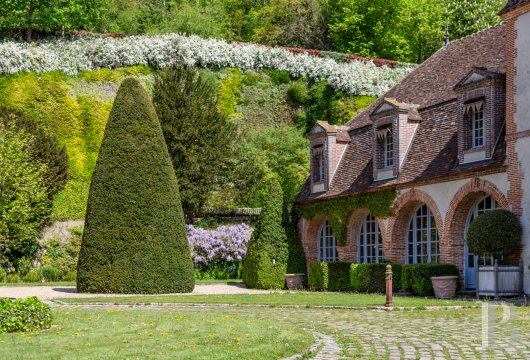
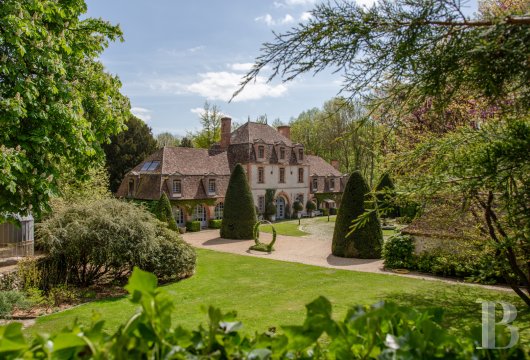
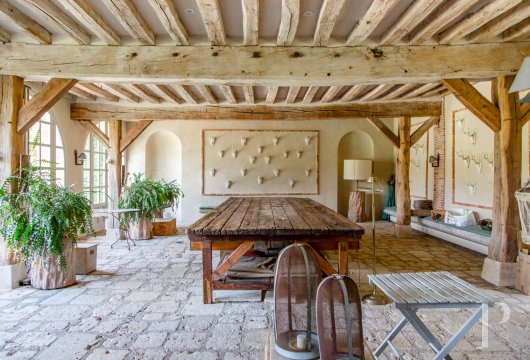
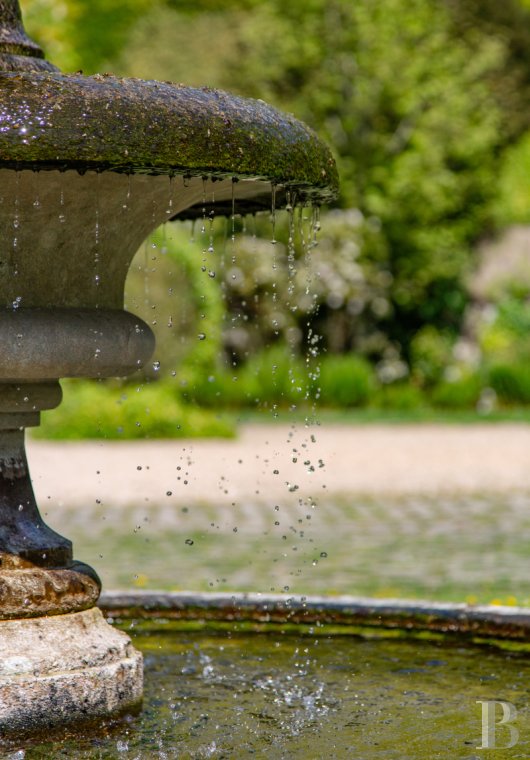
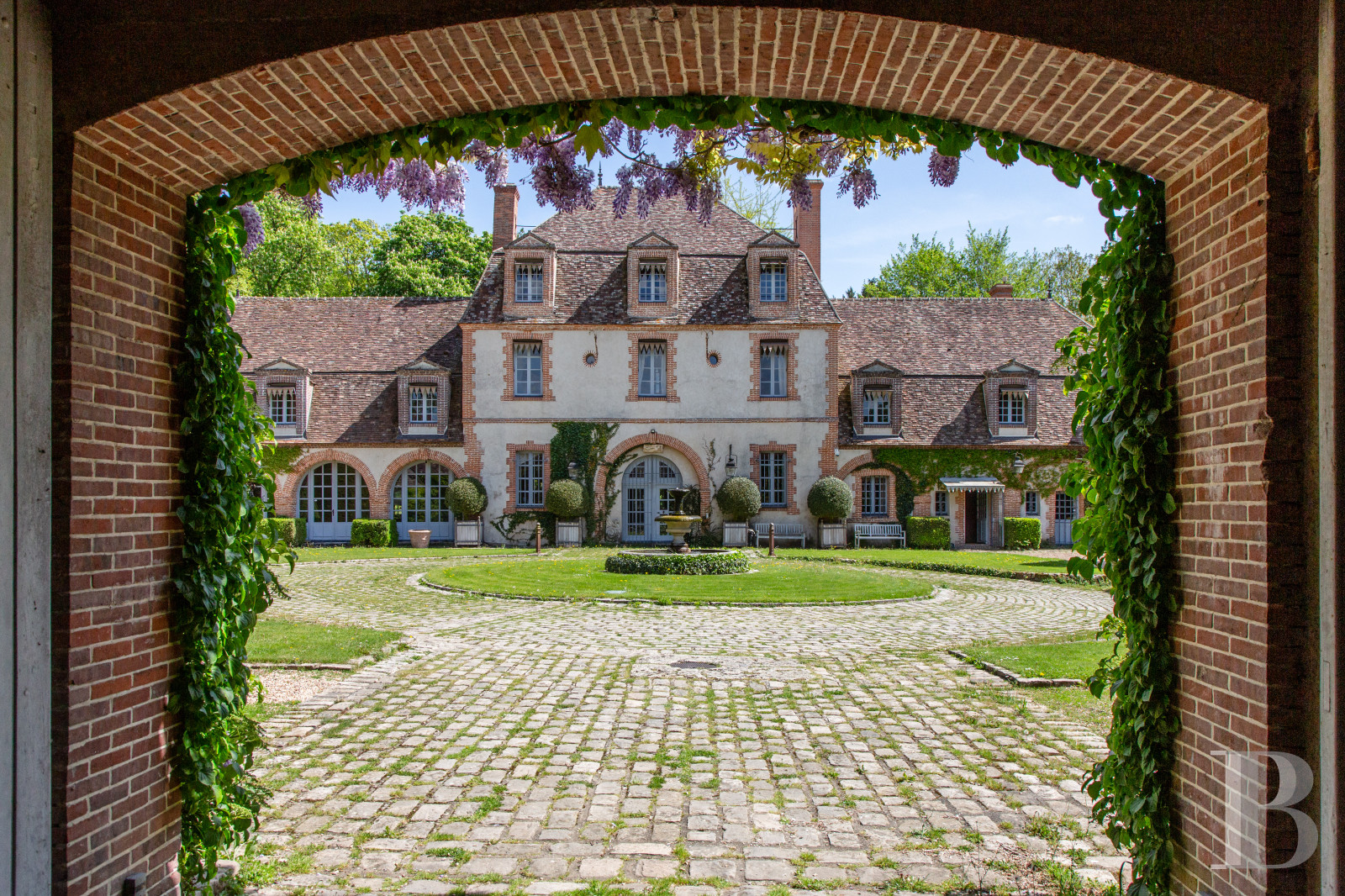
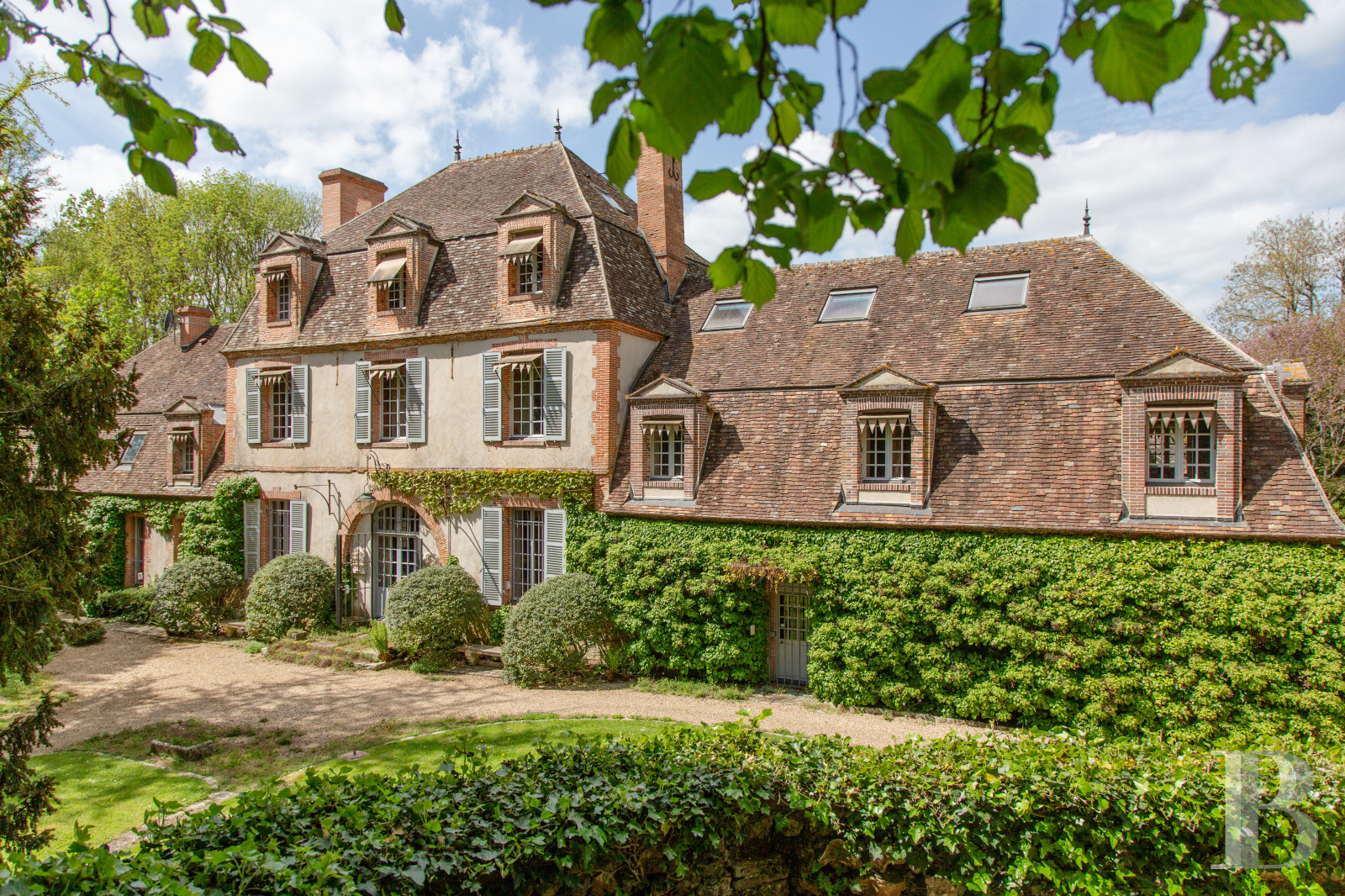
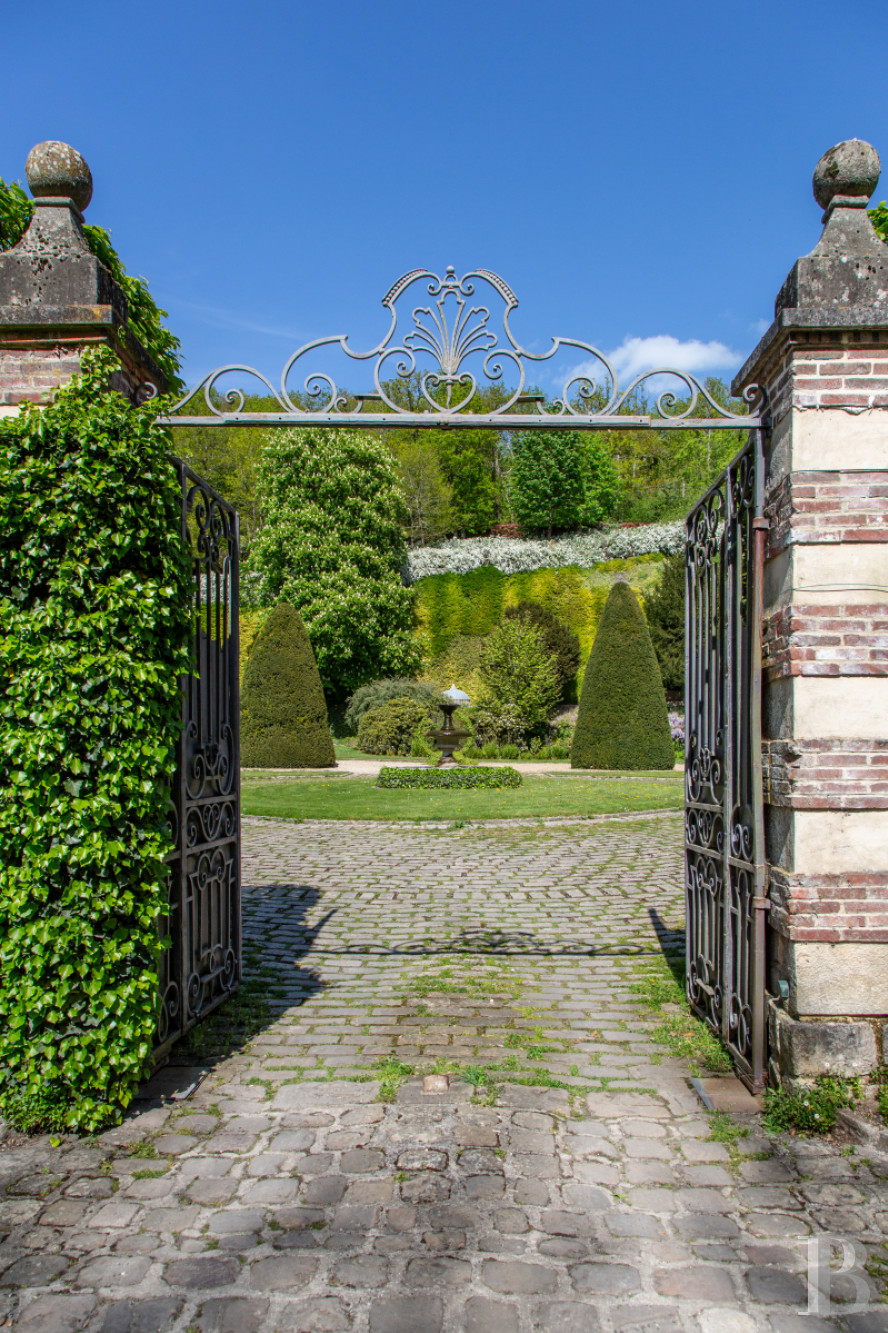
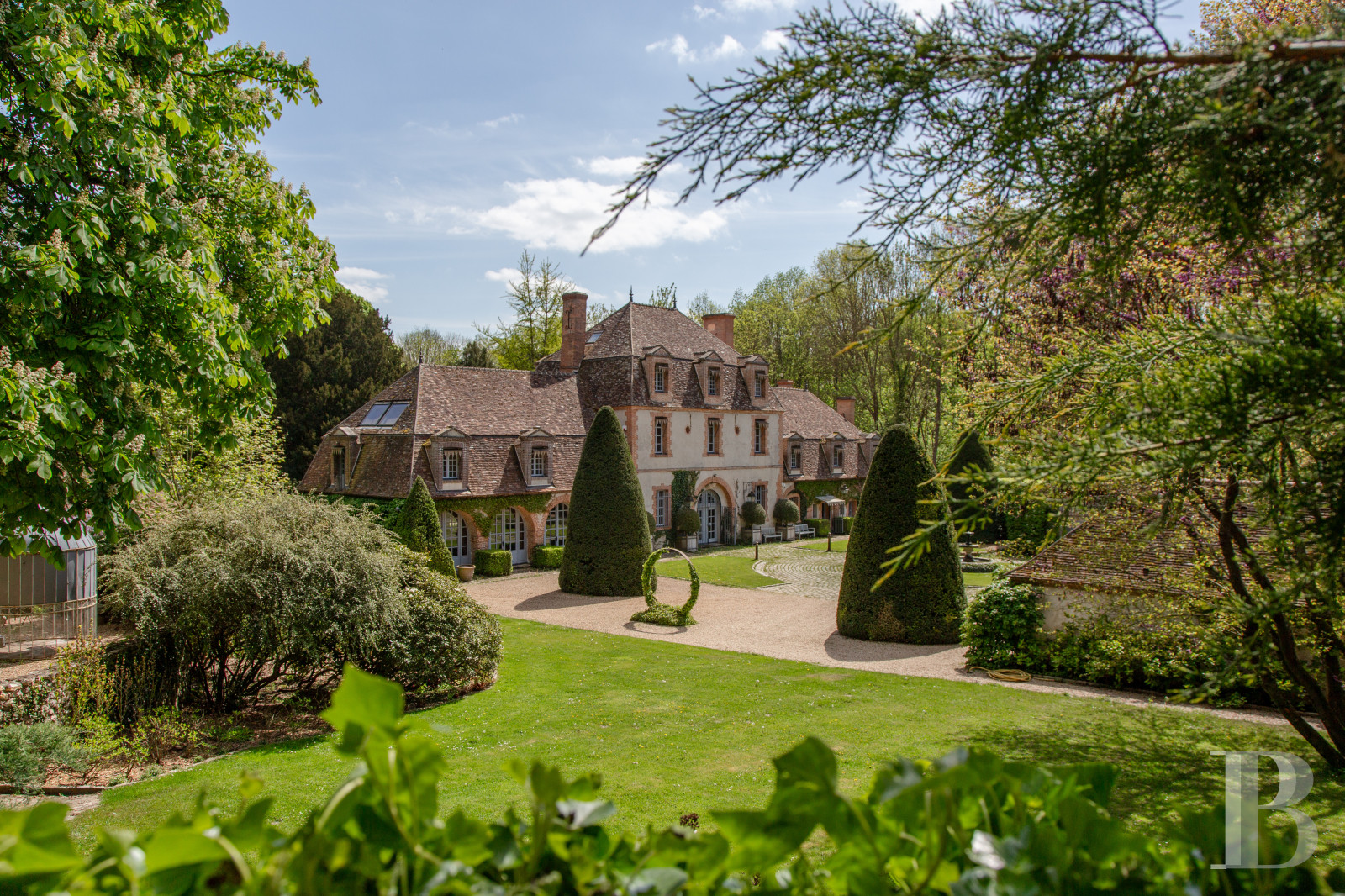
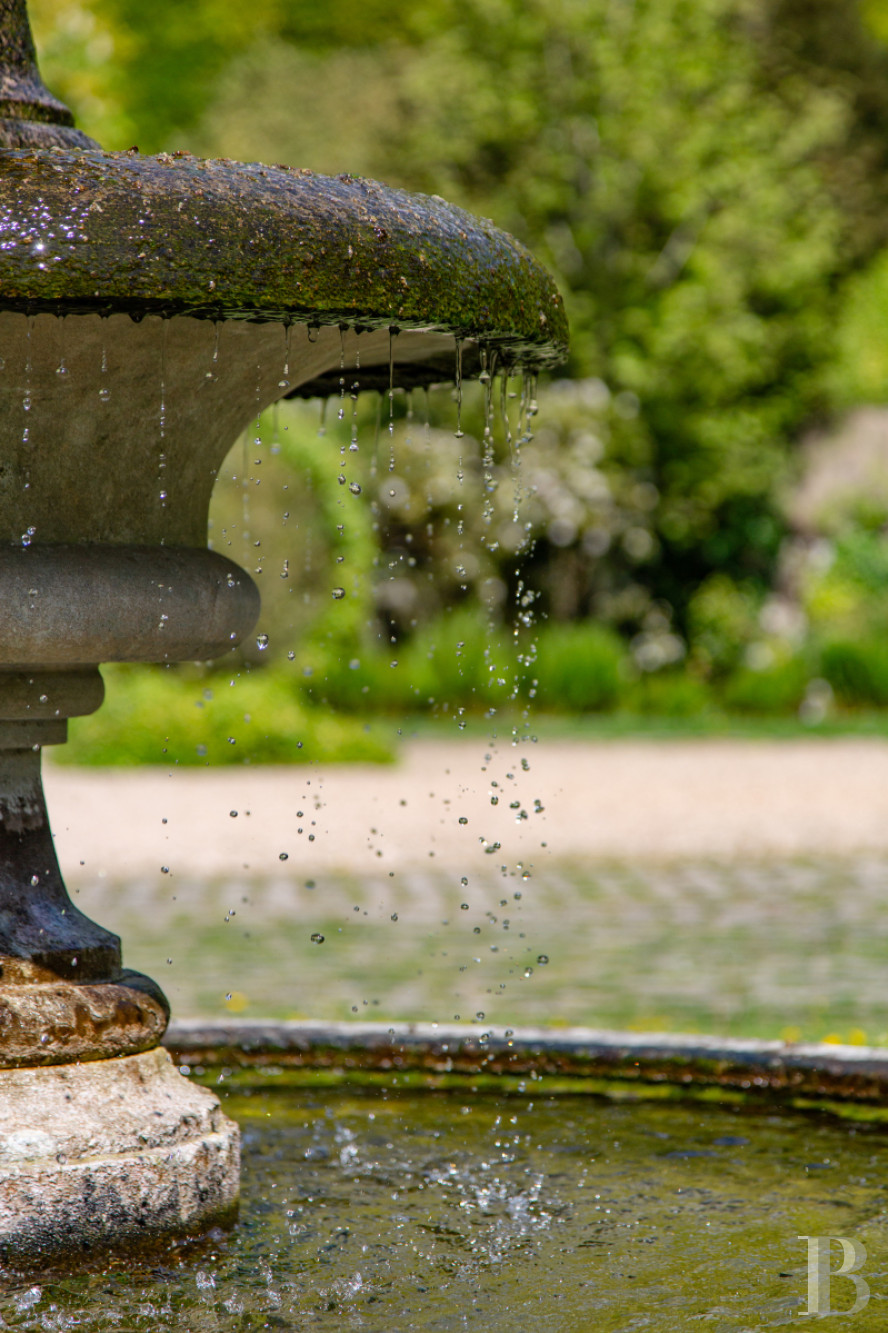
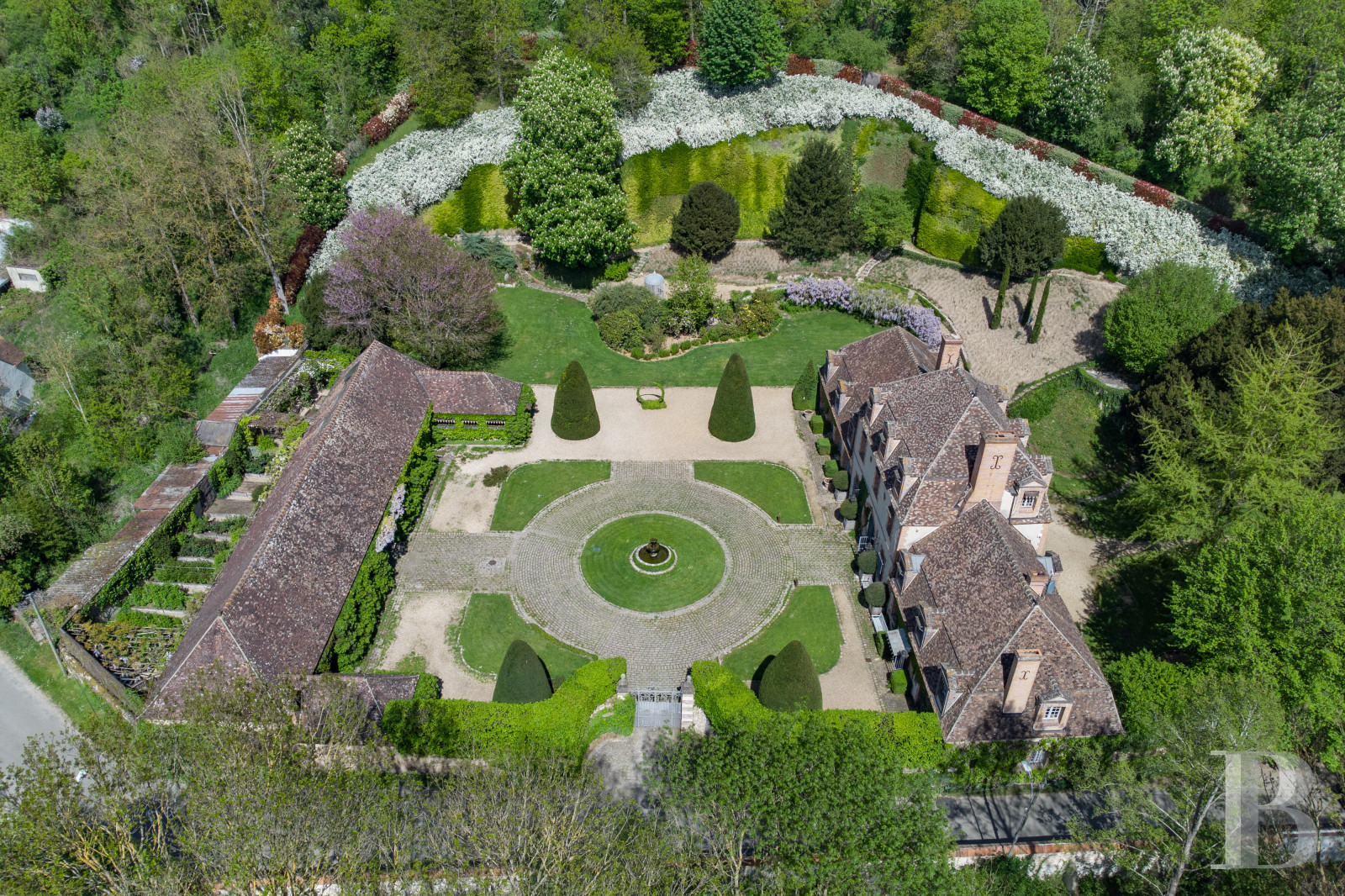
This manor house, which was built in the 17th century, between the reigns of Henri IV and Louis XIII, was originally attached to the neighbouring castle, for which it was most likely the steward’s residence. The residence is made up of a three-storey main section flanked by two wings each with one level less. The lime-rendered facades are punctuated by door and window surrounds as well as quoins made of brick. The steeply-sloped roofs made of flat tiles are dotted with tall gable dormers, with triangular pediments, as well as skylights. The manor house stands opposite an outbuilding, made up of a barn and an indoor swimming pool. The two buildings are separated by a square paved courtyard in which there is a pond. The garden spreads out to the east and is organised into several distinctive spaces linked by paths. It is surrounded by a stone wall bordered by tall hedges on one side and an imposing cliff covered in vegetation on the other. It is dotted with many types of trees, some of which are one-hundred-years old.
The manor house
The garden-level floor
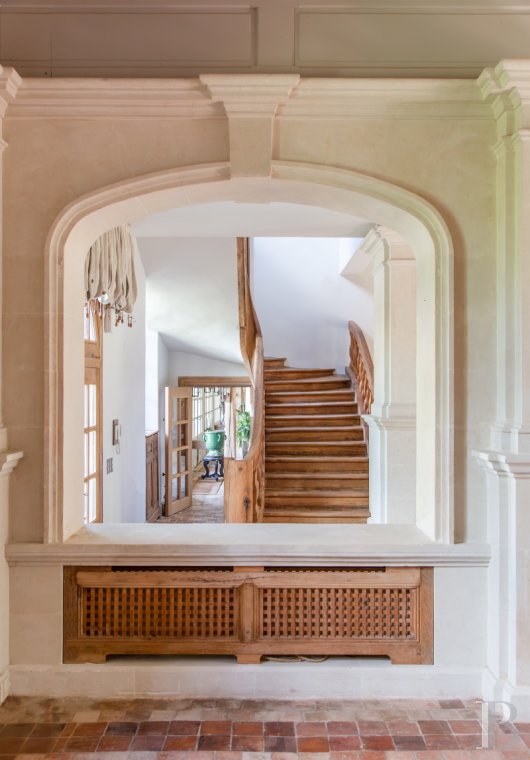
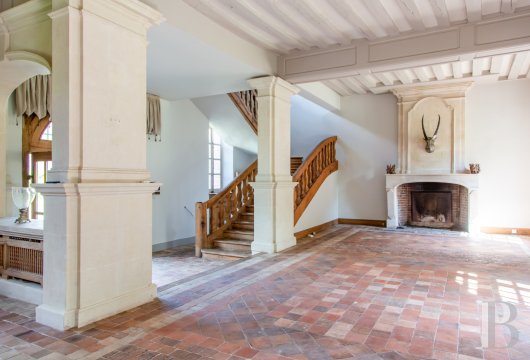
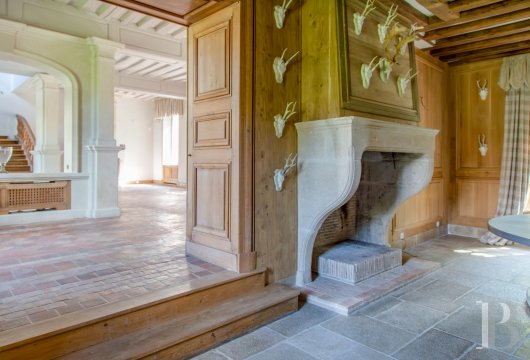
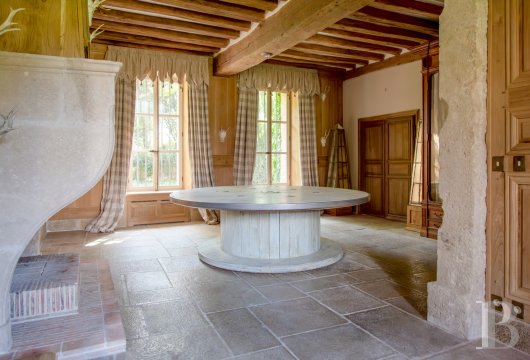
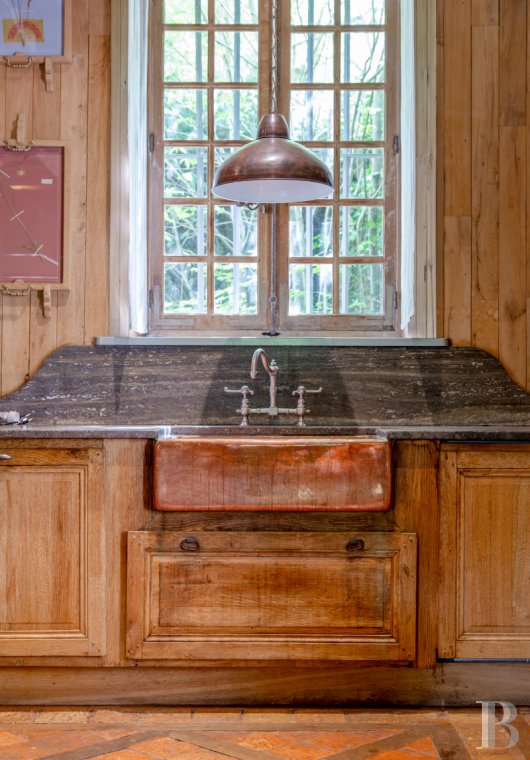
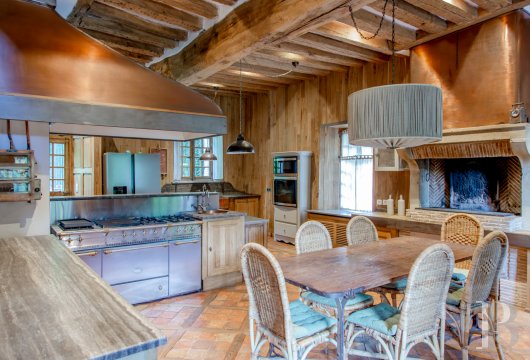
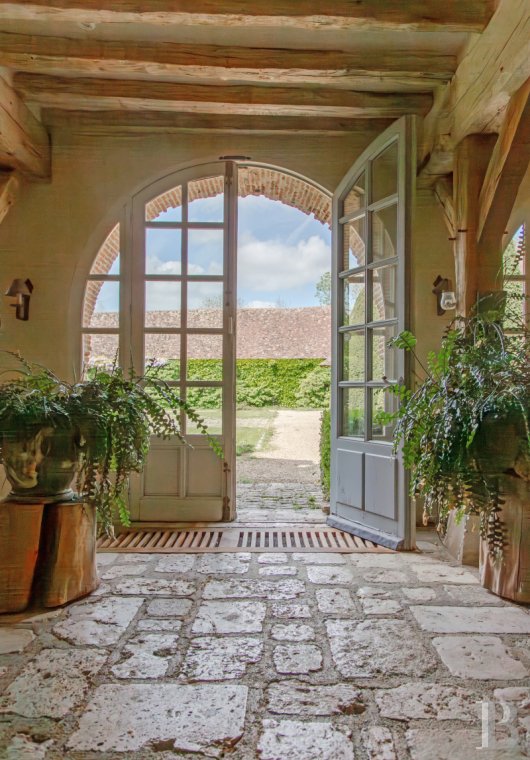
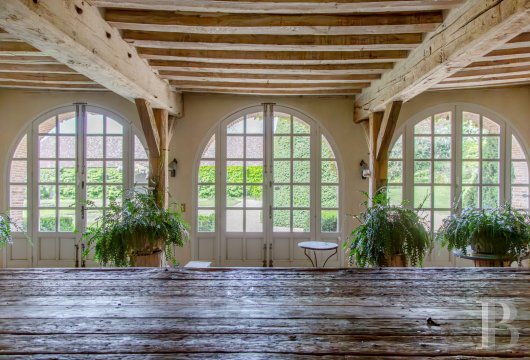
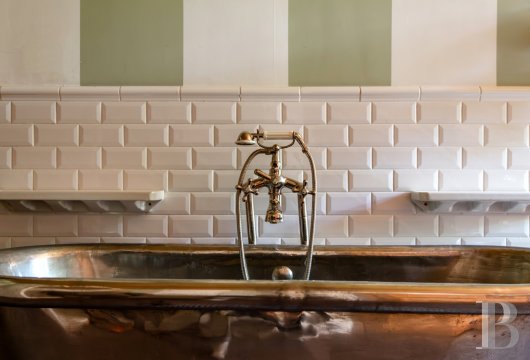
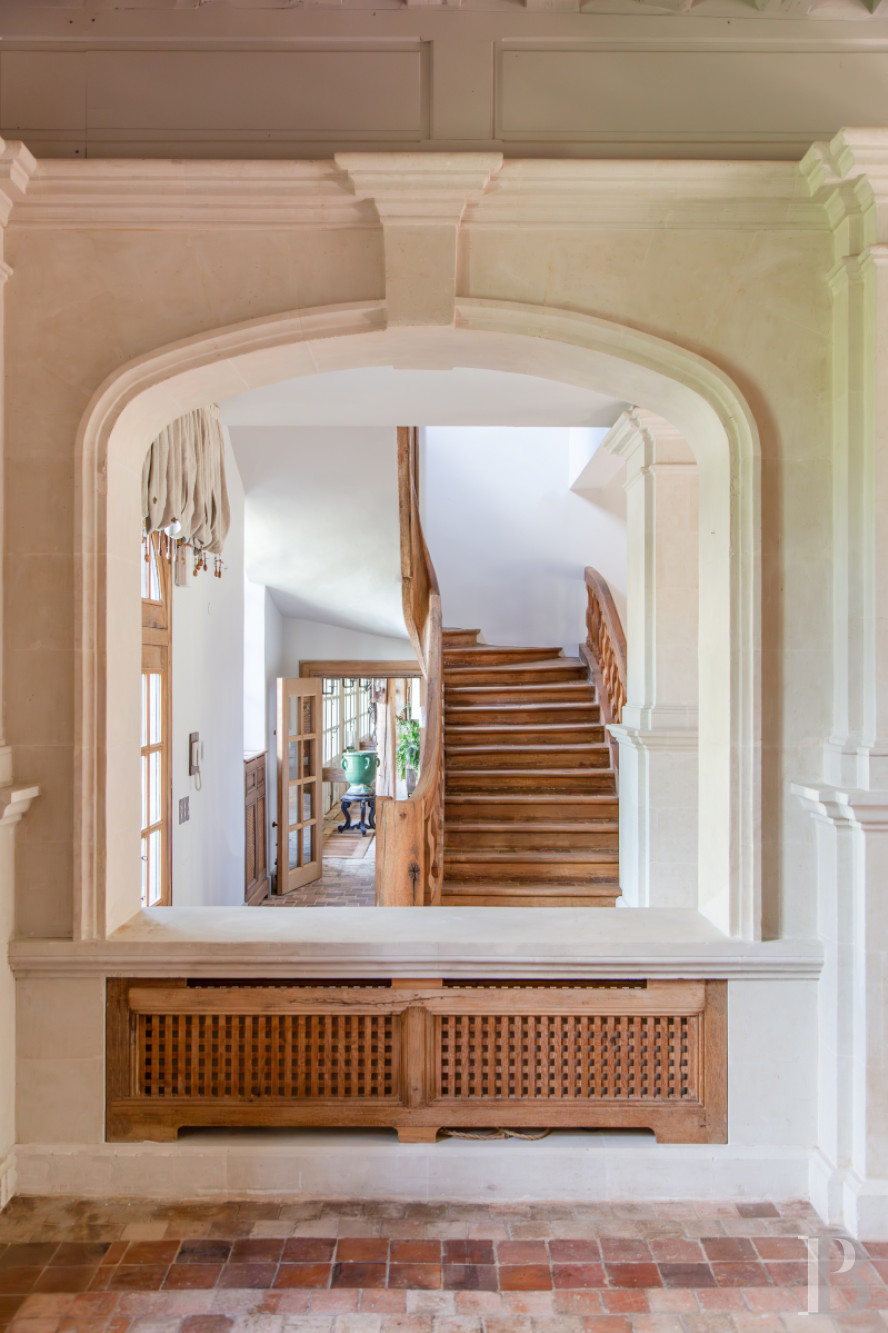
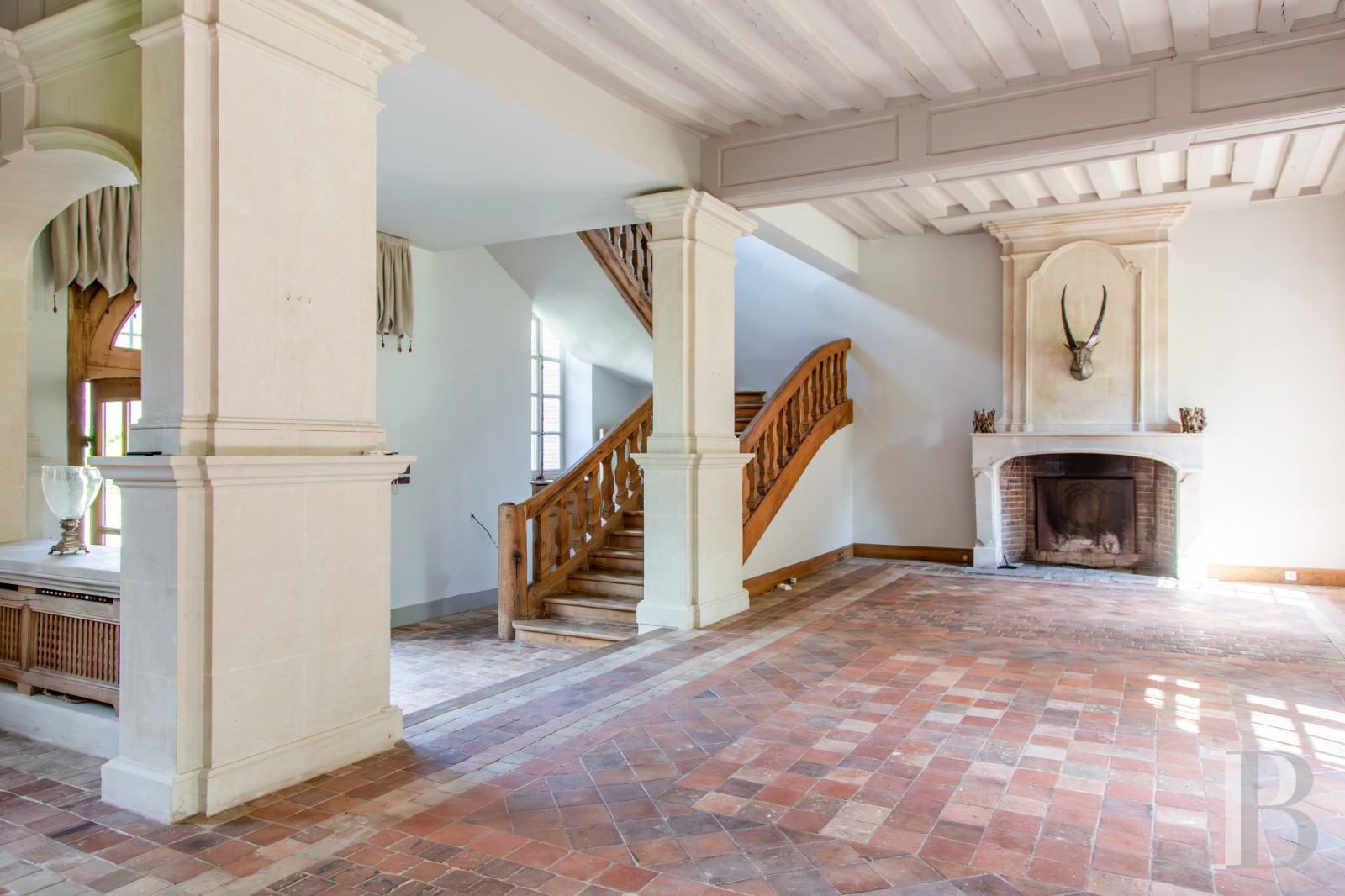
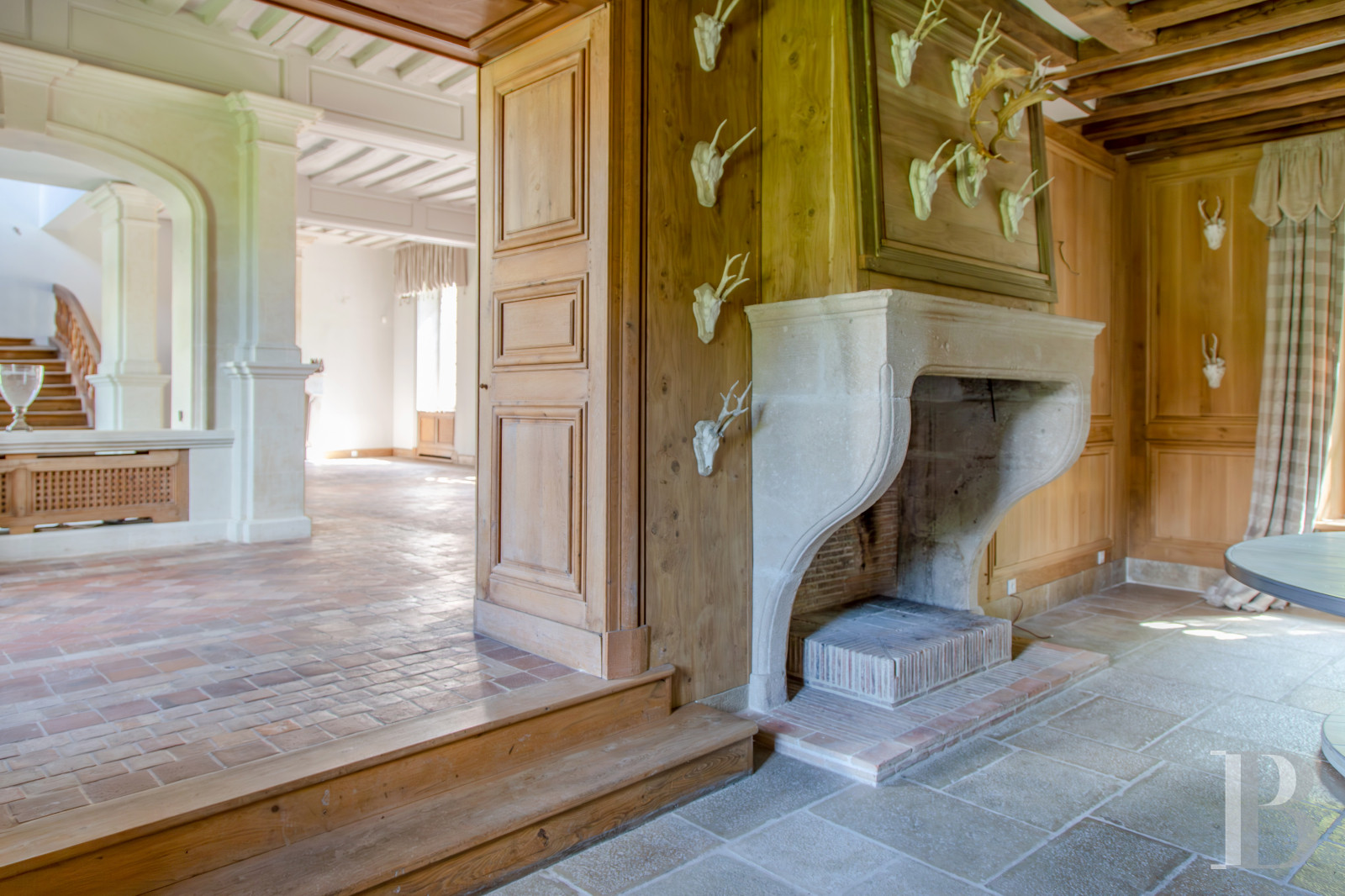
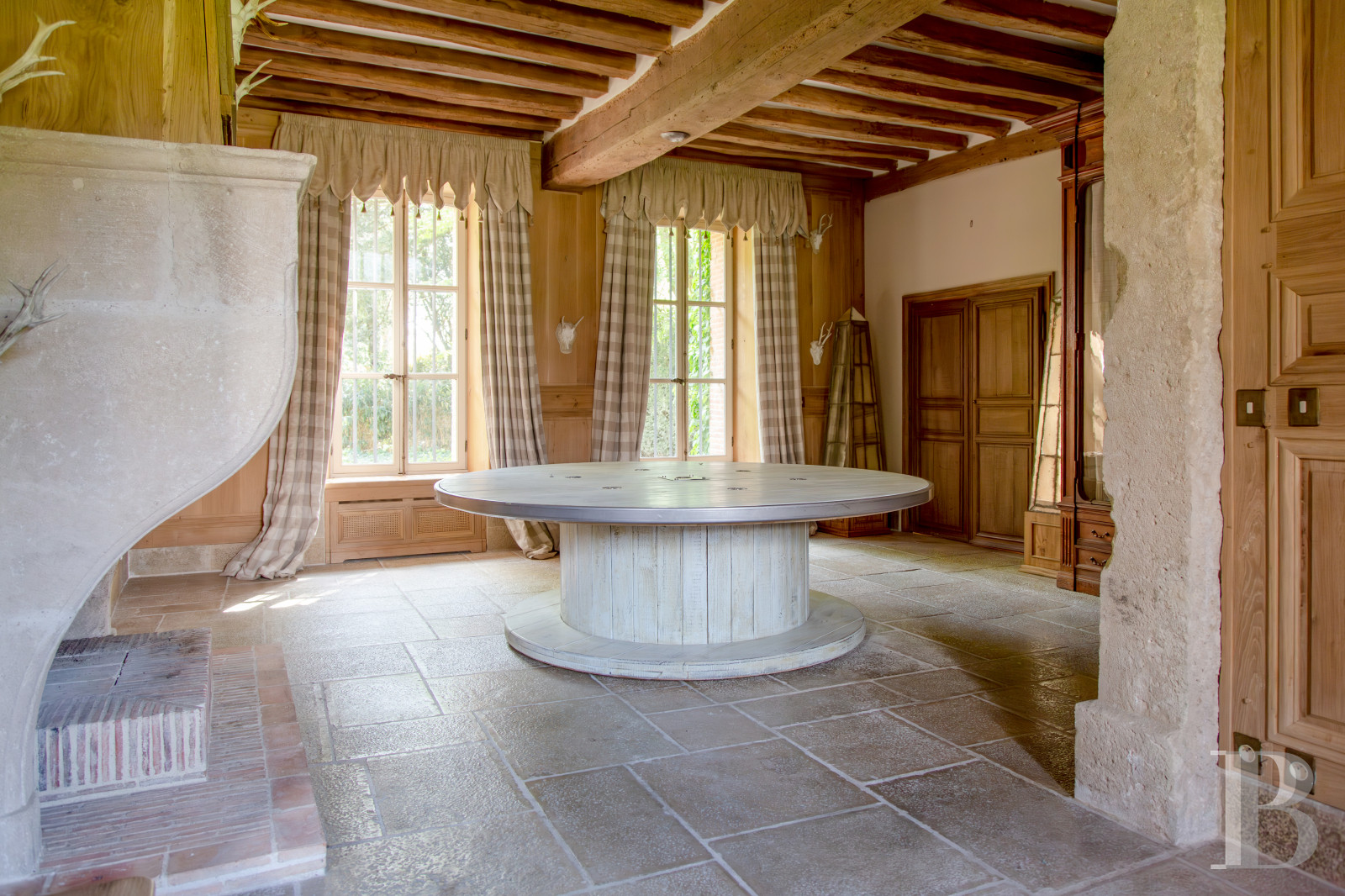
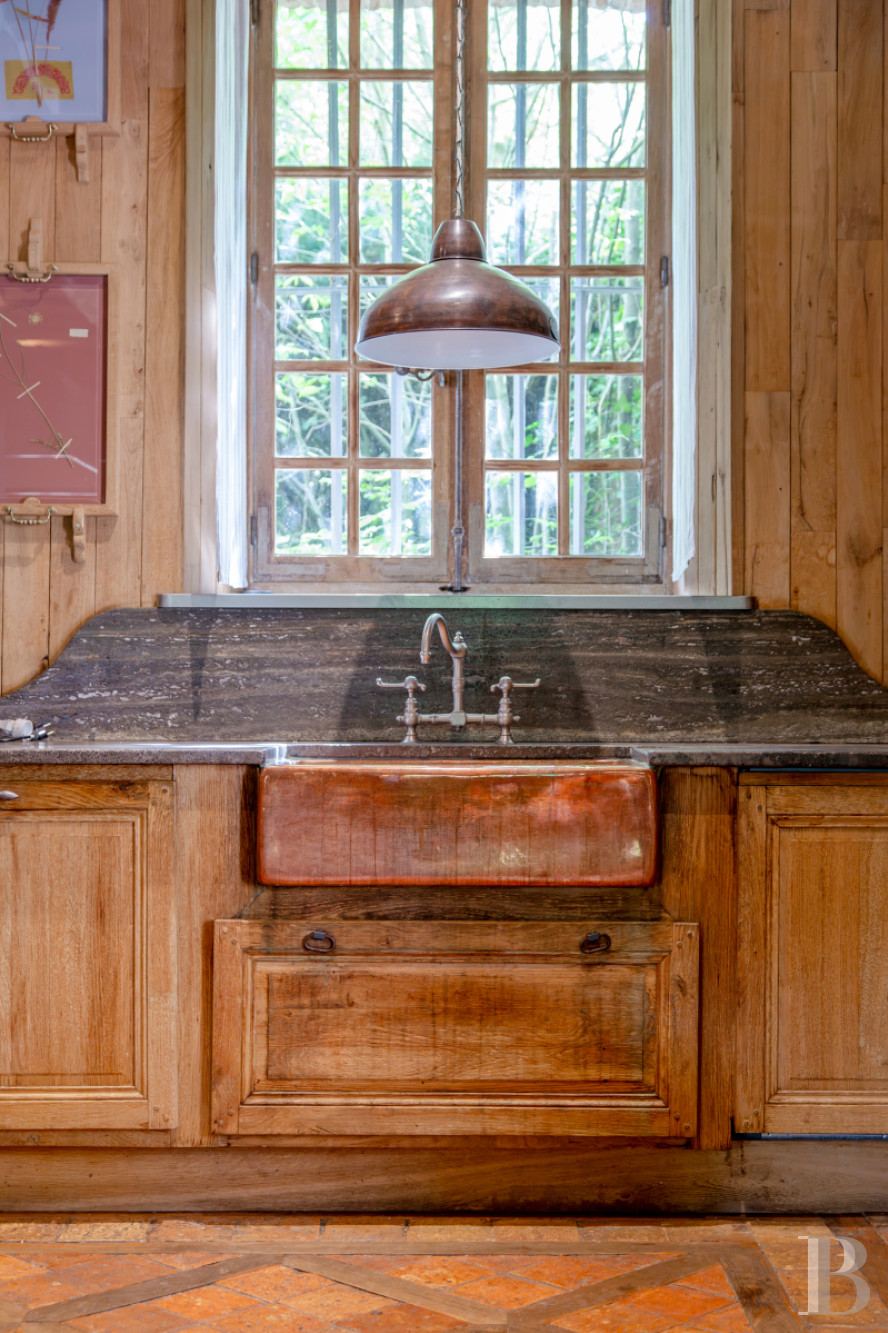
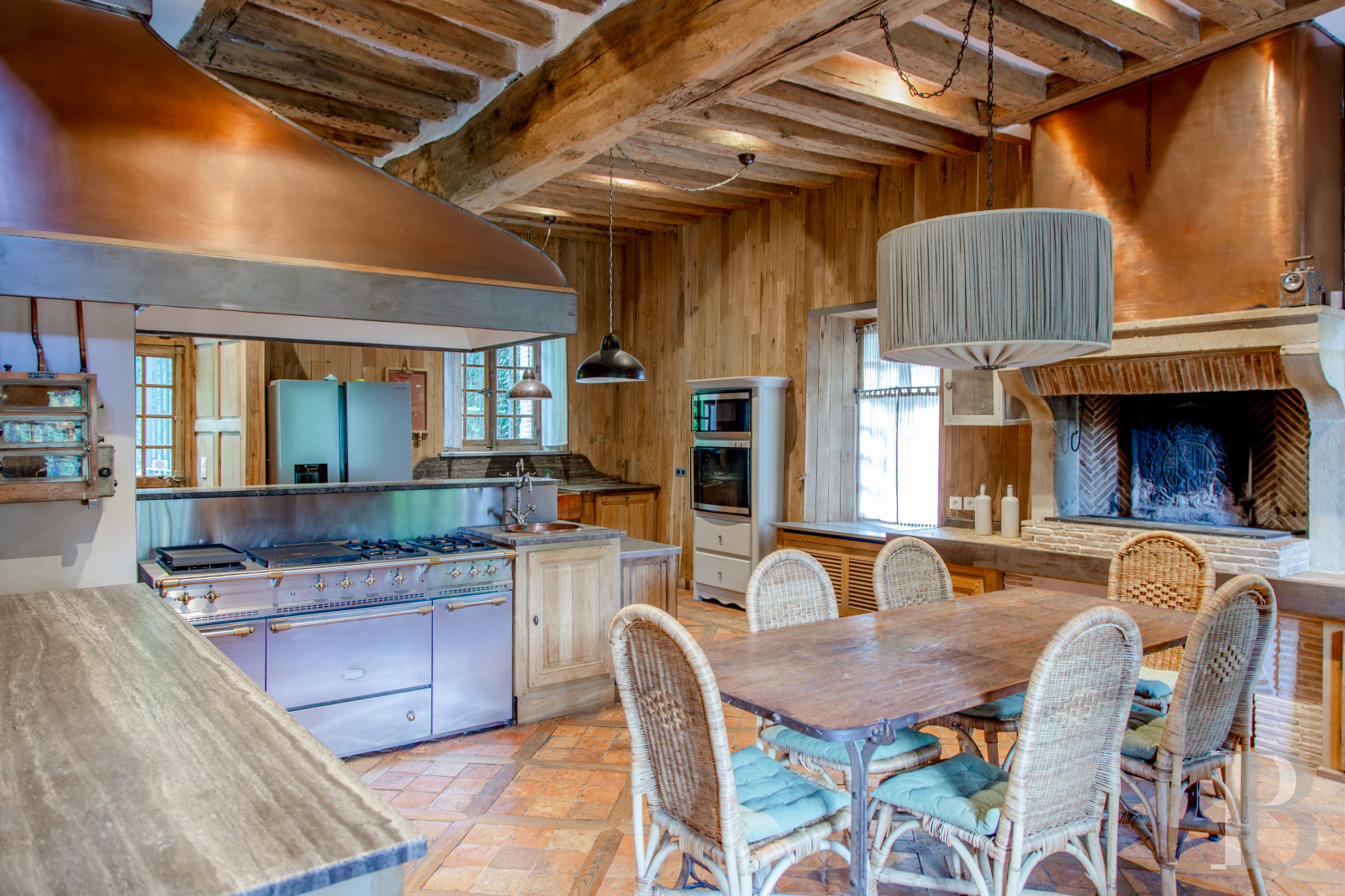
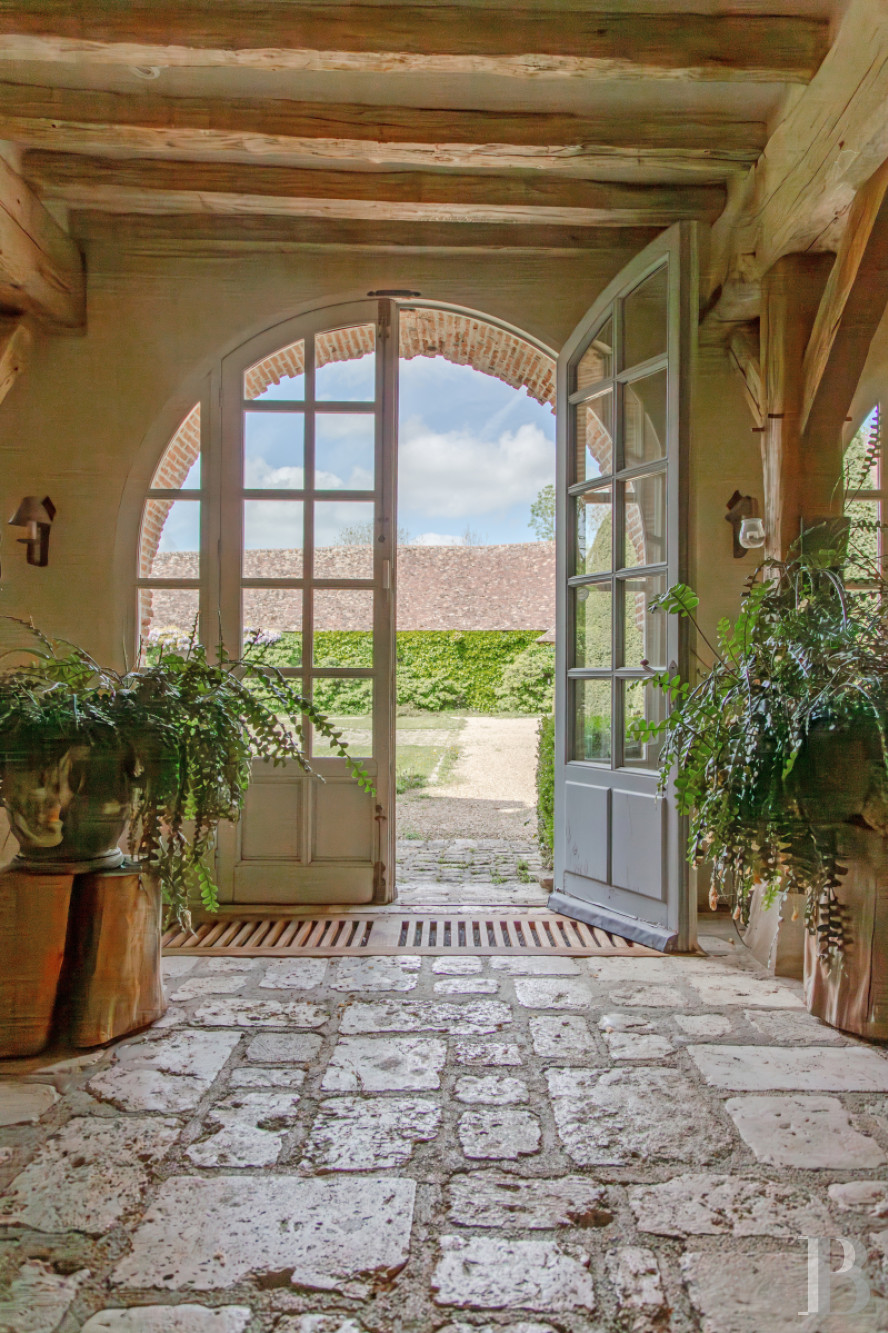
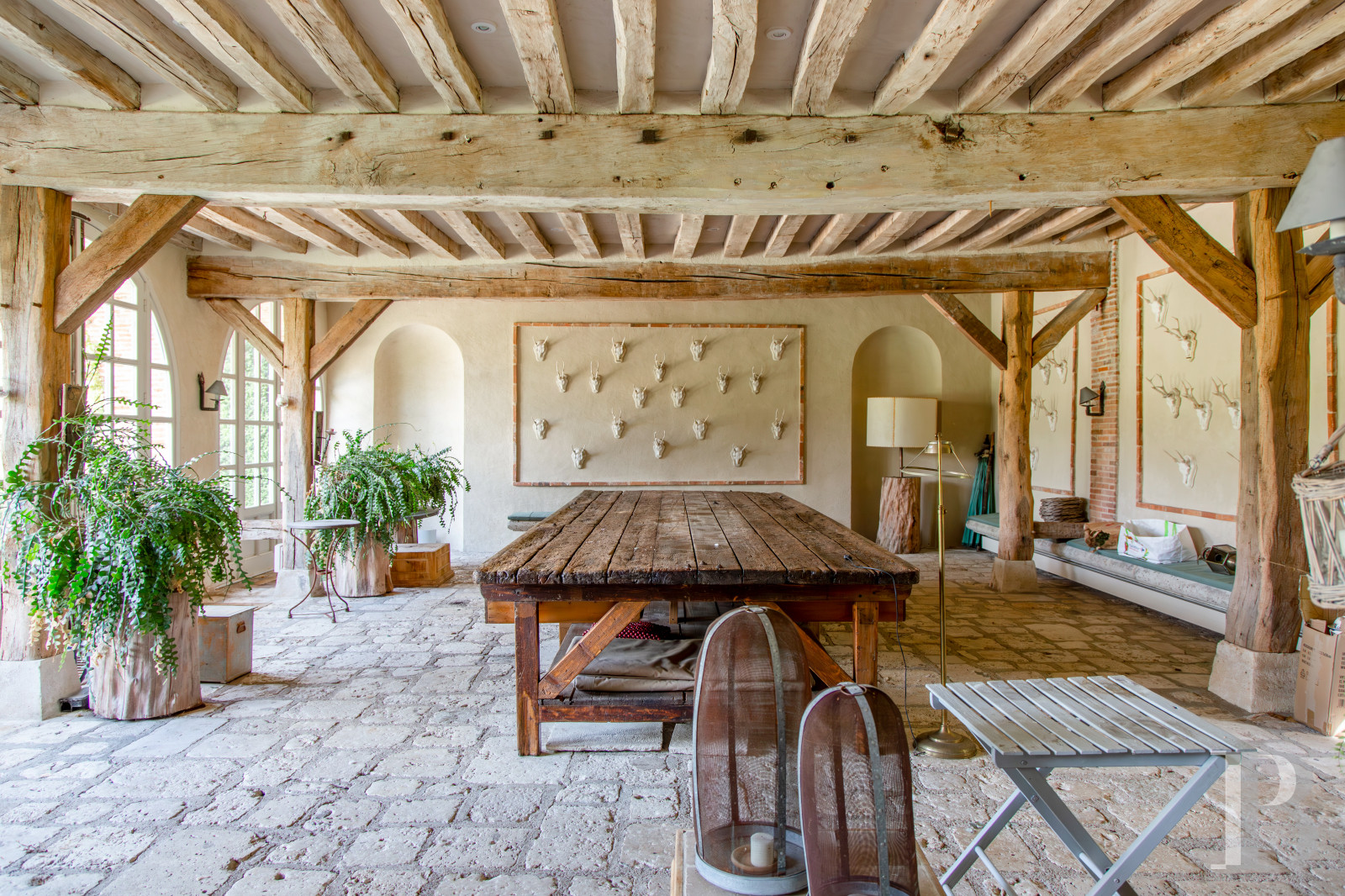
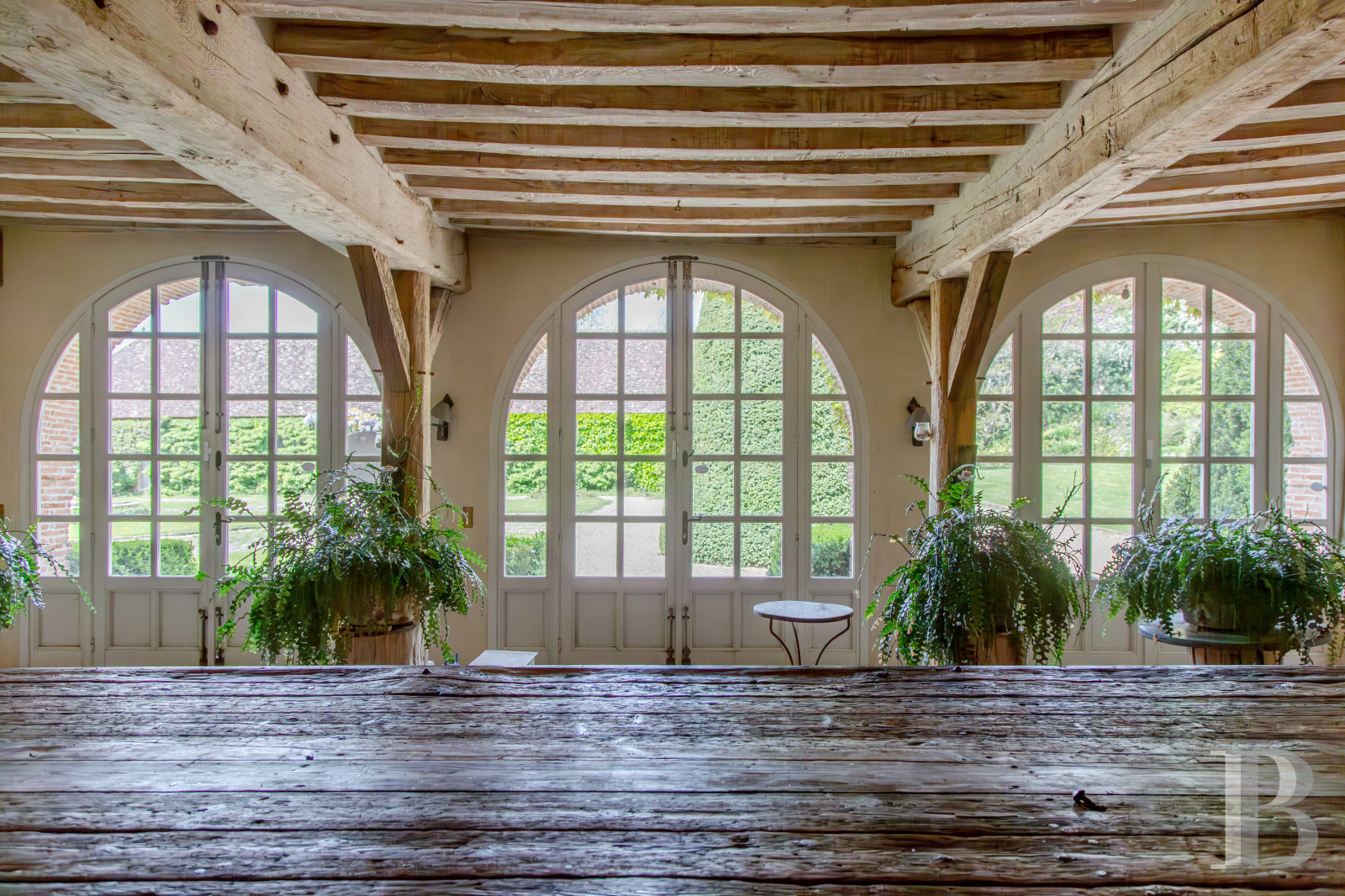
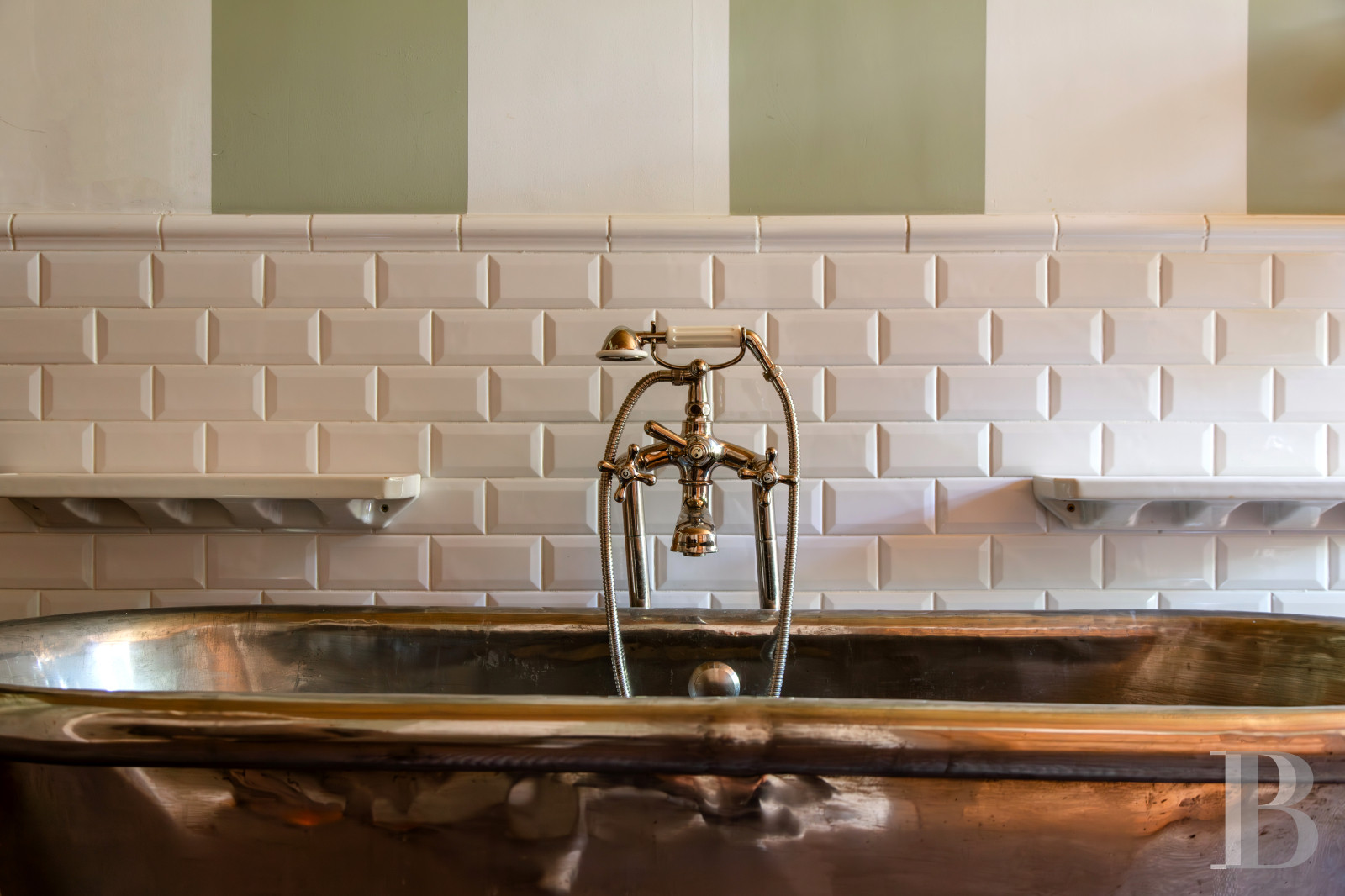
It has been restructured to place greater emphasis on the large reception rooms. A former dual aspect passage was removed to create a central lounge of impressive size that opens on one side onto the courtyard and on the other into the grounds. After the lounge, there are a dining room and a kitchen in the southern wing. The floors are paved with period terracotta tiles. The materials used prominently feature wrought-iron, copper and wood. Stone fireplaces with open hearths can be found in each room. Opposite, the north wing is occupied by a more than 90-m² conservatory. The space is bathed in light through four wide, semi-circular arched French windows looking out onto the courtyard.
The first floor
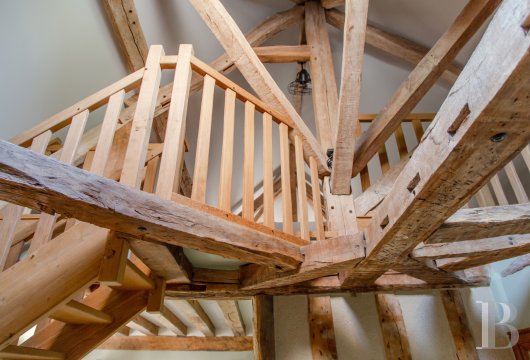
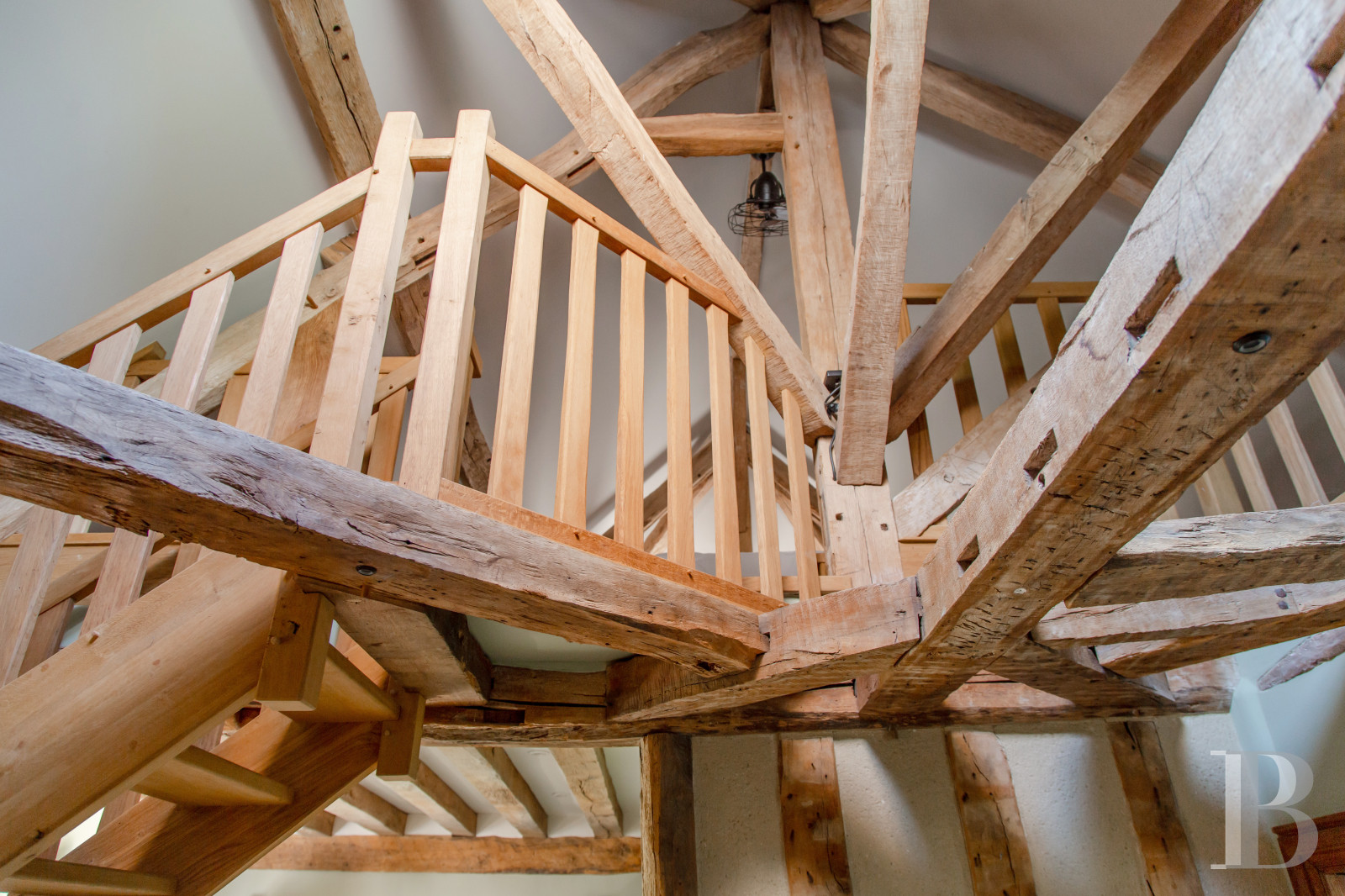
From the lounge, a staircase with finely crafted oak balusters climbs above the conservatory to an almost 70-m² games room with a ceiling height of more than 5 metres, topped by a bedroom on a mezzanine with an en suite bathroom. In the central section, a corridor leads to a bedroom with an en suite bathroom and walk-in wardrobe. The southern wing houses a lounge, an office, a service apartment and a staircase down to the kitchen.
The second floor
This level is made up of three bedrooms bathed in light, each with en suite bathrooms, overlooking the garden. In one of the bedrooms, a staircase leads to further space beneath the rafters of the monumental, exposed roof frame.
The outbuildings
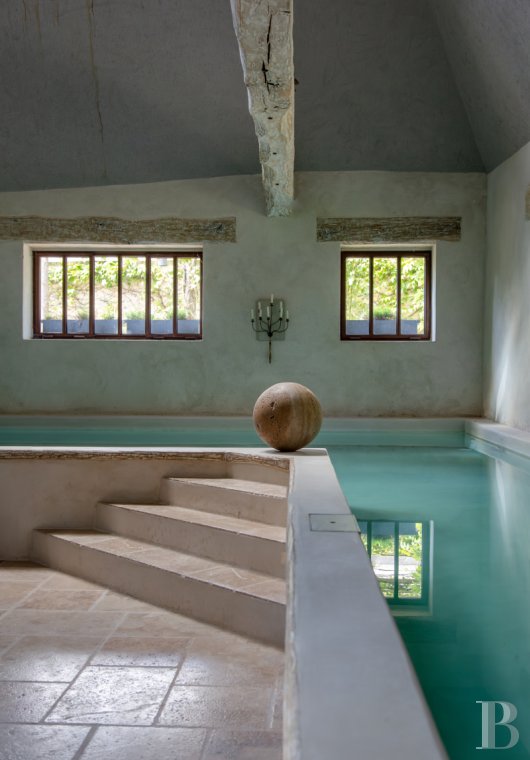
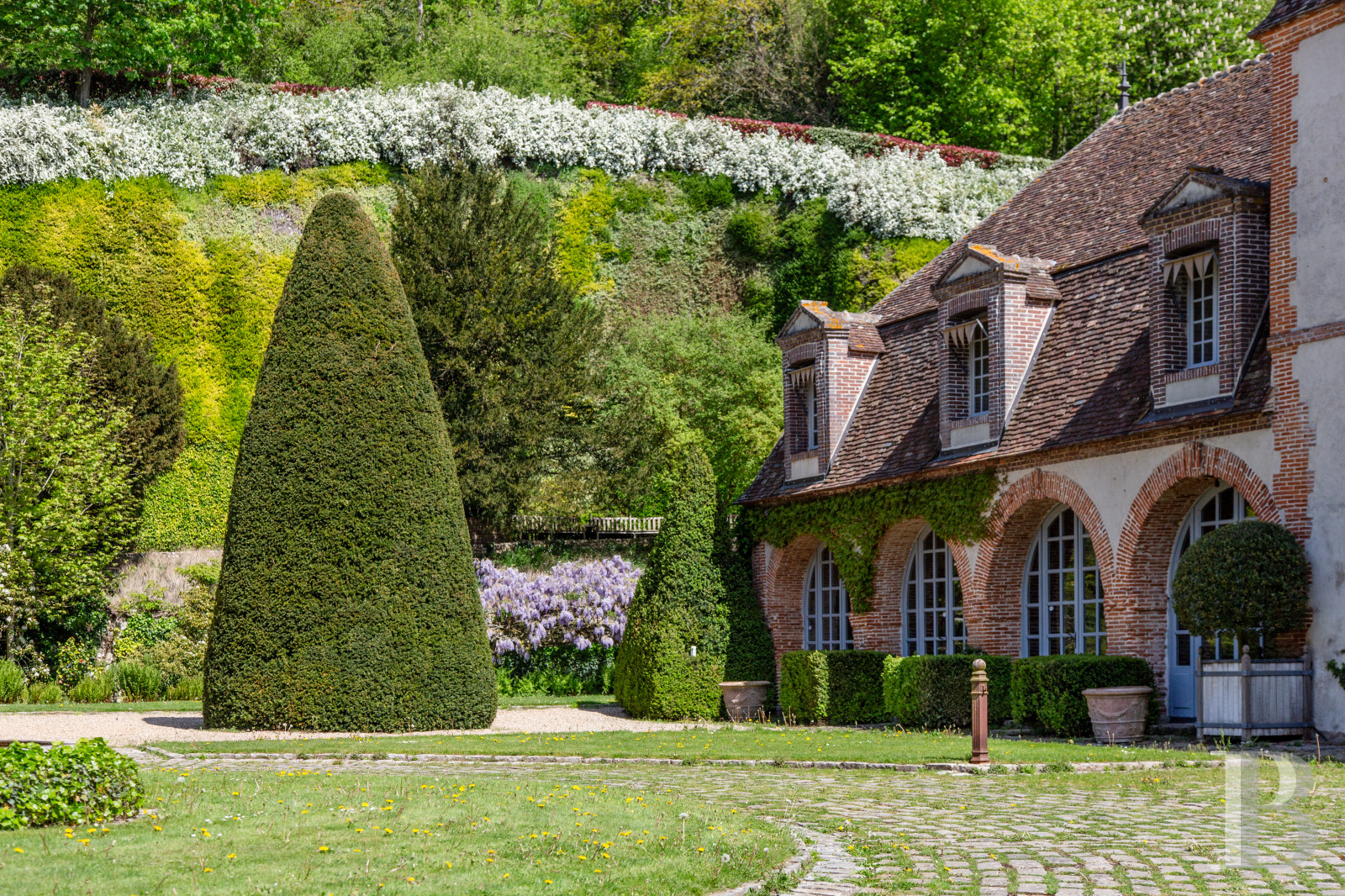
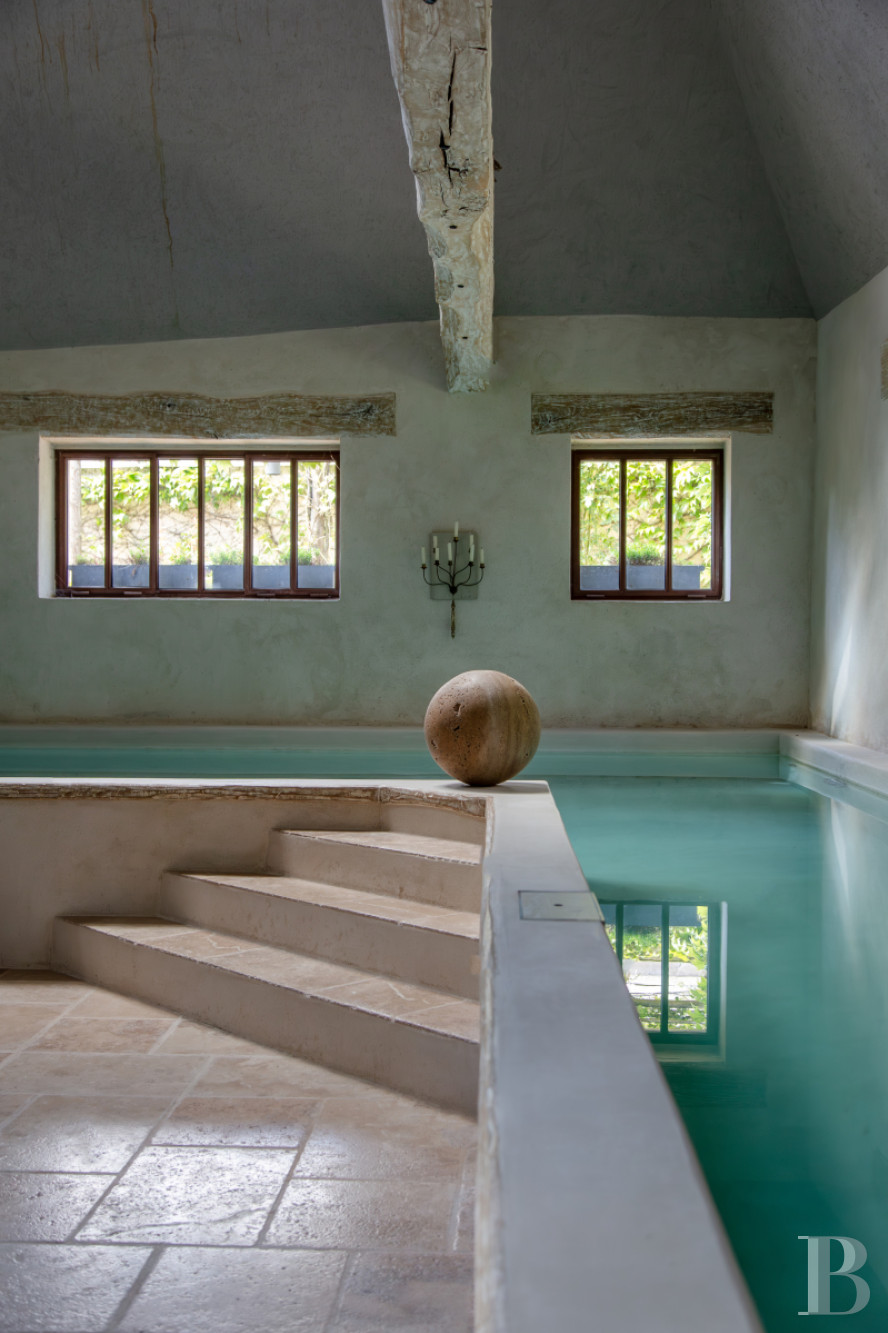
The first, around 250-m² outbuilding stands opposite the residence. It houses an approximately 113-m² barn with a workshop and a vast amount of storage space, as well as an indoor swimming pool which is bathed in light through the regularly-sized windows and skylights. Beneath the exposed roof frame, a mezzanine overlooks this space. A cloakroom with a shower room is also included in this building. Further away, in the grounds, a separate, small, thatched edifice stands amongst the trees. It is topped with a thatched roof, is partially covered by vegetation and includes a bedroom as well as a shower room. Honeycomb cellars can be reached from the garden.
The grounds
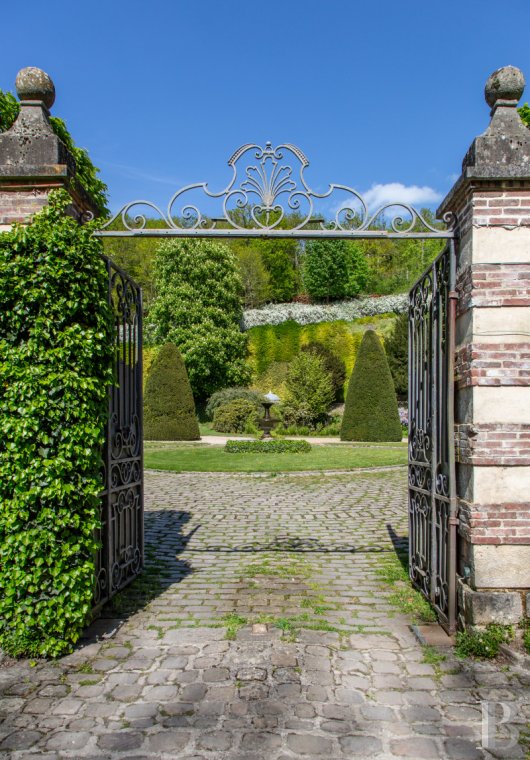
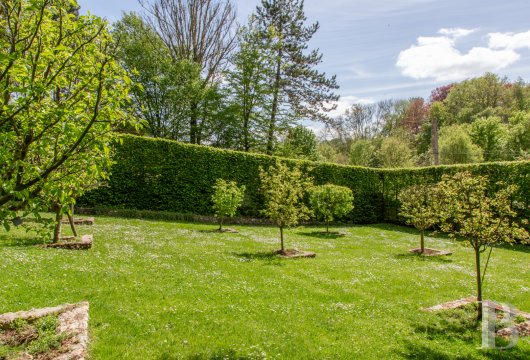
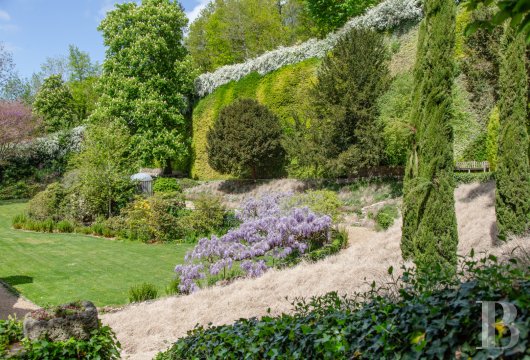
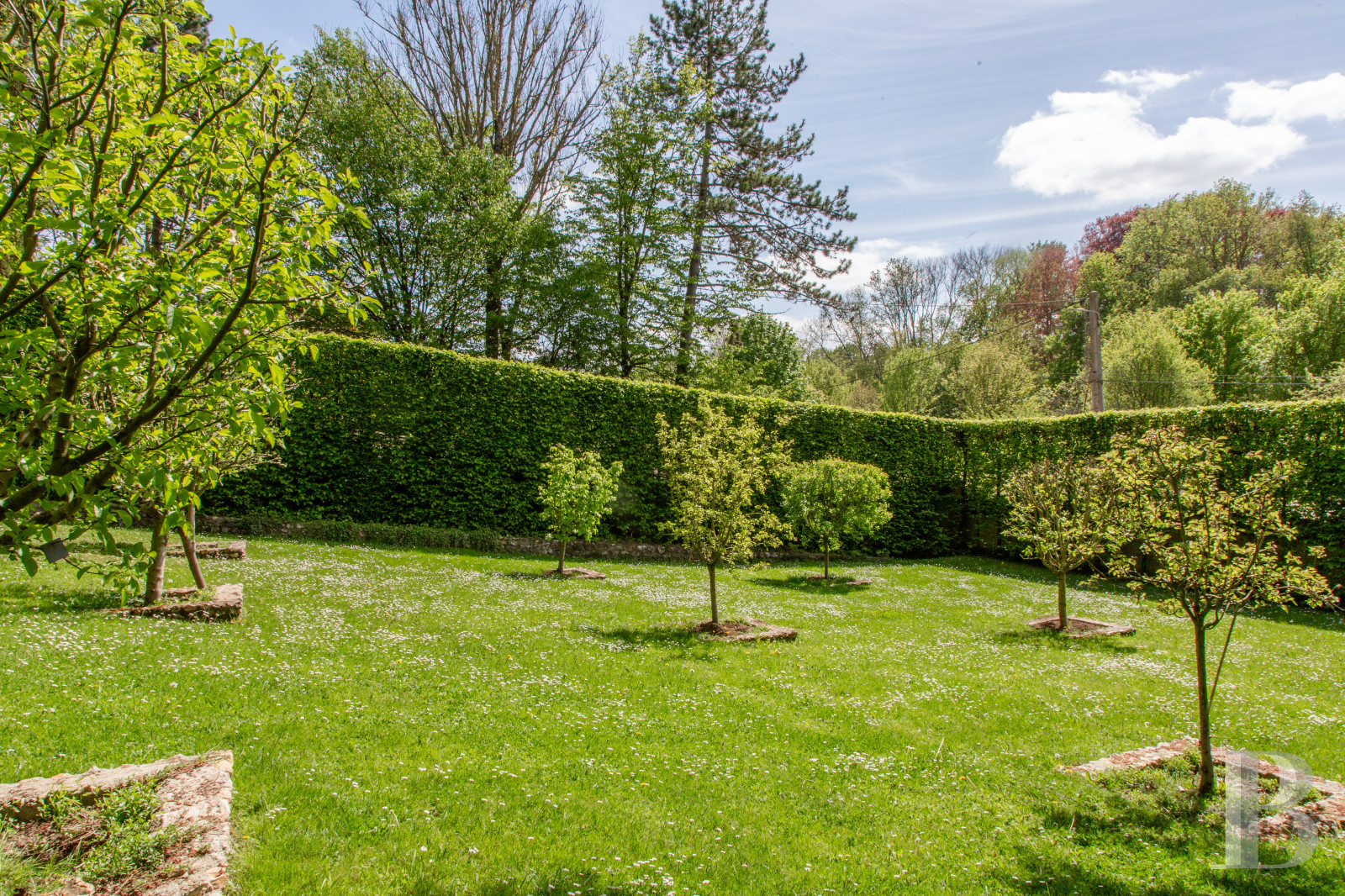
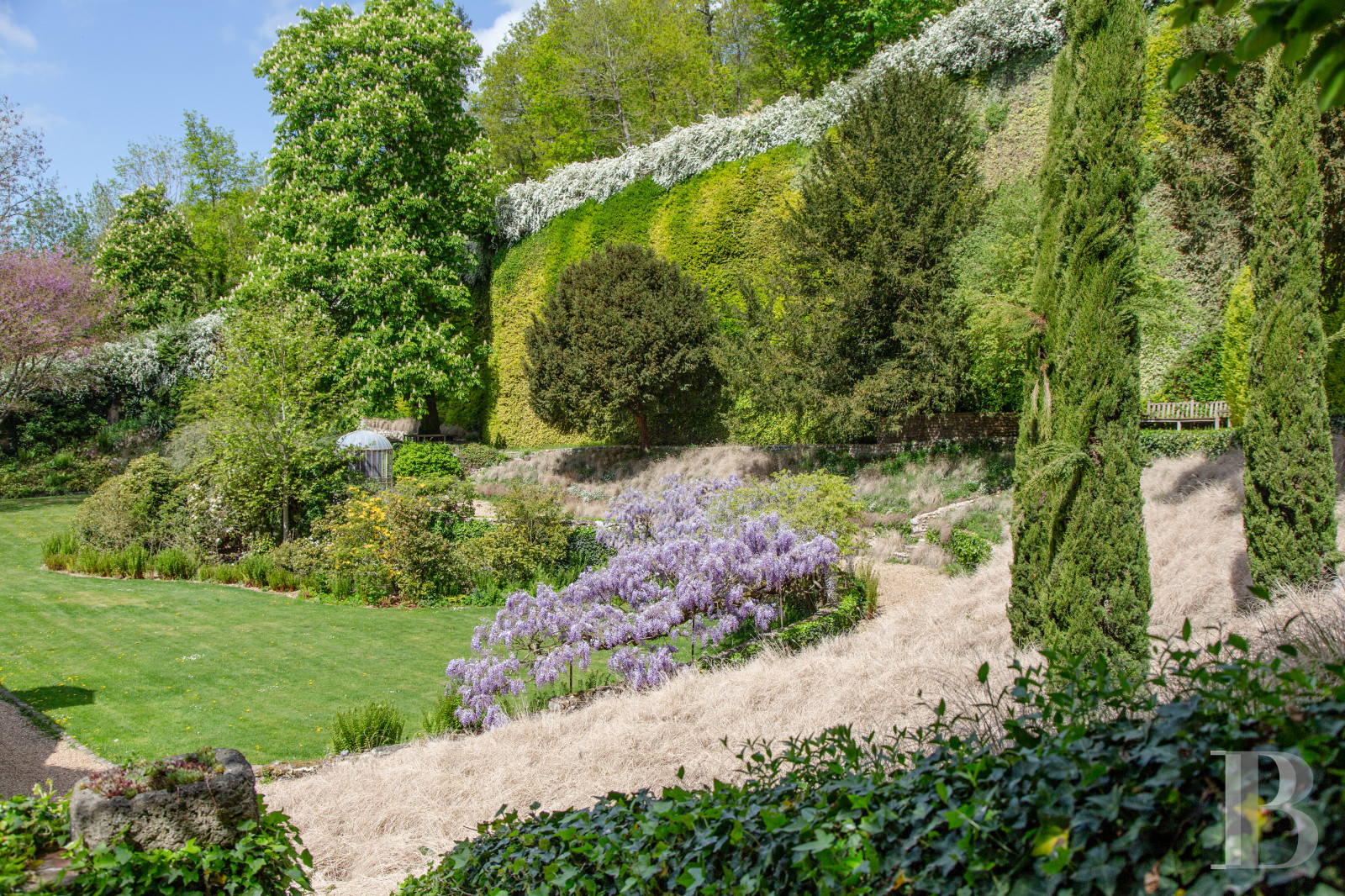
They spread over a little more than 1 hectare and are enclosed on one side by a stone wall bordered by tall hedges and on the other by the relief of the land and more than 700 m² of a cliff covered in vegetation. The paths and plantations, which take advantage of the land’s unevenness to create a number of spaces as well as unexpected nooks and crannies, give structure to the grounds. A large lawned area is adjacent to an orchard, as well as small terraces dotted with rose bushes, peonies and hundred-year-old trees. To the rear of the outbuildings, there is a vegetable garden.
Our opinion
Not far from Paris, this elegant and voluminous 17th-century manor house was restored by decorator Pierre Cruège in the middle of the previous century. Since then, the successive occupants have continued in the vein of his unique and apposite work. The transformations carried out have not sought to preserve period features but rather perpetuate their spirit. The edifice’s volumes have been expanded, its perspectives accentuated and materials used with refinement, in a constant search for a balance between form and function. In keeping with the residence, this approach has also been followed in the garden, with paths, variations and undulations, graced by the scents of roses and wisteria.
2 850 000 €
Fees at the Vendor’s expense
Reference 319268
| Main building floor area | 695 m² |
| Outbuildings floor area | 296 m² |
| Land registry surface area | 1 ha 7 a 89 ca |
| Including parkland | 10100 m² |
French Energy Performance Diagnosis
Information on the risks to which this property is exposed is available on the website: www.georisques.gouv.fr
Share


NB: The above information is not only the result of our visit to the property; it is also based on information provided by the current owner. It is by no means comprehensive or strictly accurate especially where surface areas and construction dates are concerned. We cannot, therefore, be held liable for any misrepresentation.