



A late-19th-century house with a garden and outbuildings in a village
among vineyards and scrubland, 30 minutes north of Béziers in southern France
among vineyards and scrubland, 30 minutes north of Béziers in southern France
Saint-Nazaire-de-Ladarez,
HERAULT
languedoc-roussillon
34490
FR

Location
The house lies in a village in the west of France’s Hérault department, in the country’s Occitania region. This rural village, which only has around 350 inhabitants, is tucked away in the foothills of the mountains around the River Orb valley. It is part of the surrounding area of influence of Béziers, a vibrant city only 30 minutes away. The environment has a Mediterranean climate and is part of the spectacular Haut-Languedoc regional nature park, where the area’s remarkable natural heritage is protected. You can get to the village from airports and high-speed train stations, notably in Béziers (30 kilometres away), Montpellier (90 kilometres away), Carcassonne (80 kilometres away) and Toulouse (170 kilometres away). The village is also equidistant from the A9 and A75 motorways that run through Béziers.
Description
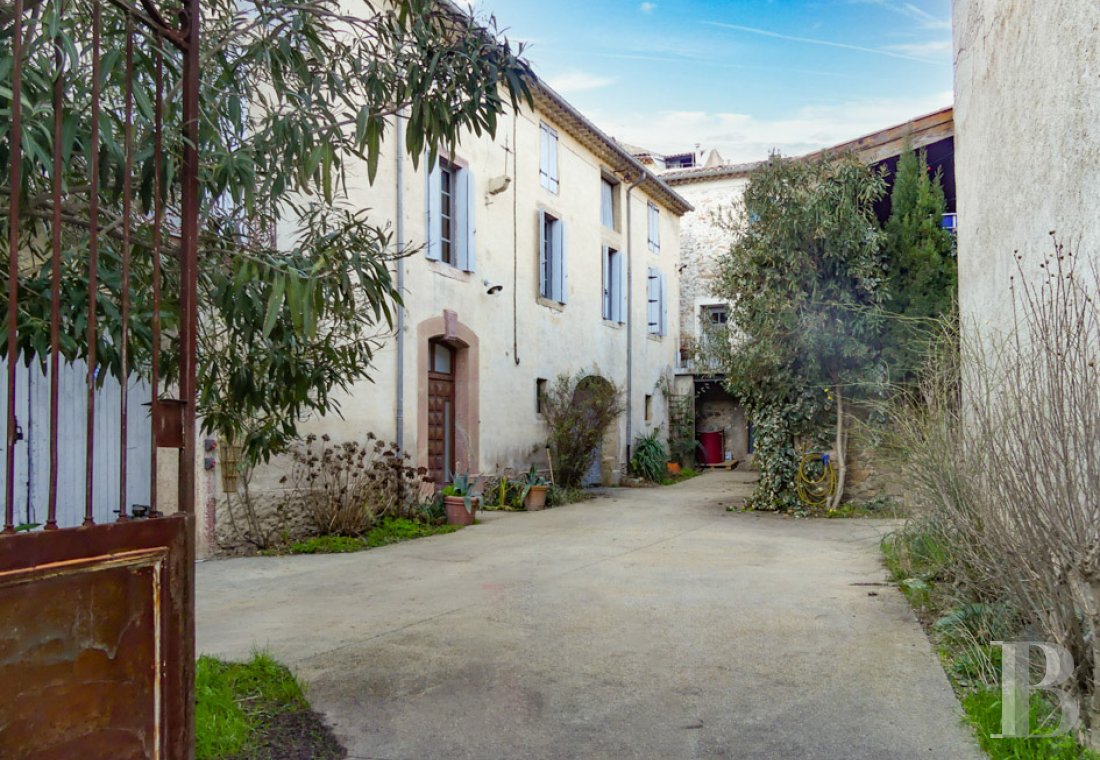
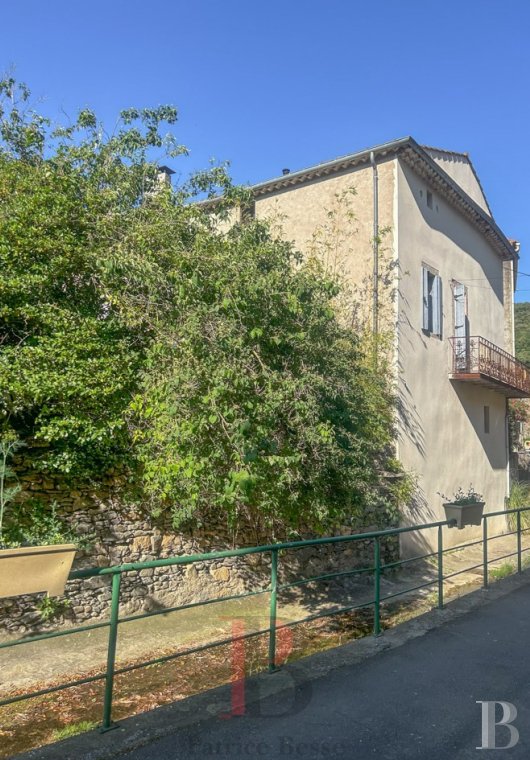
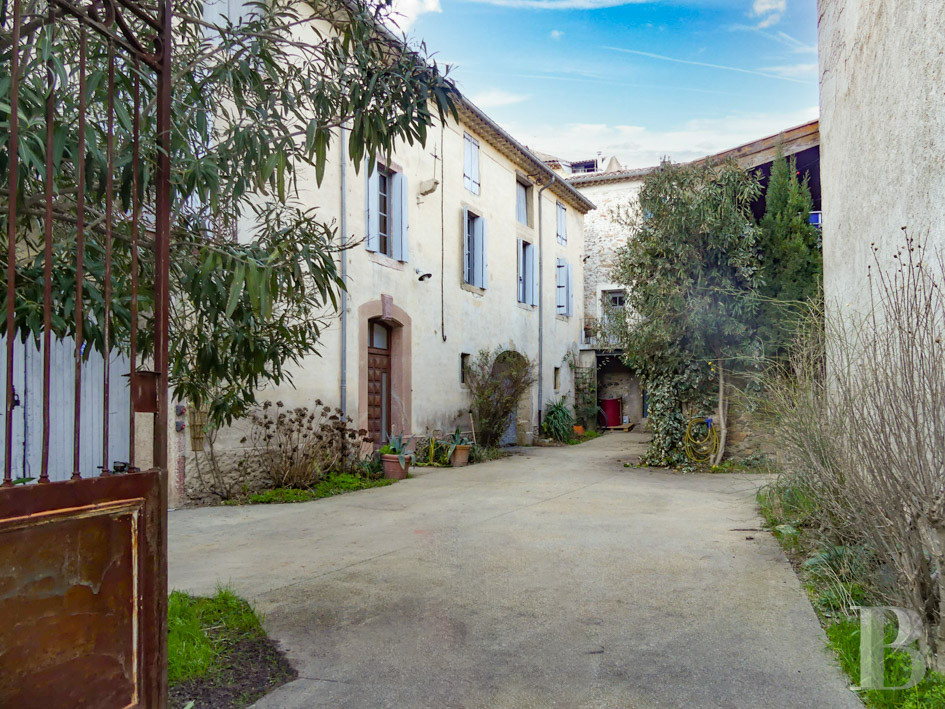
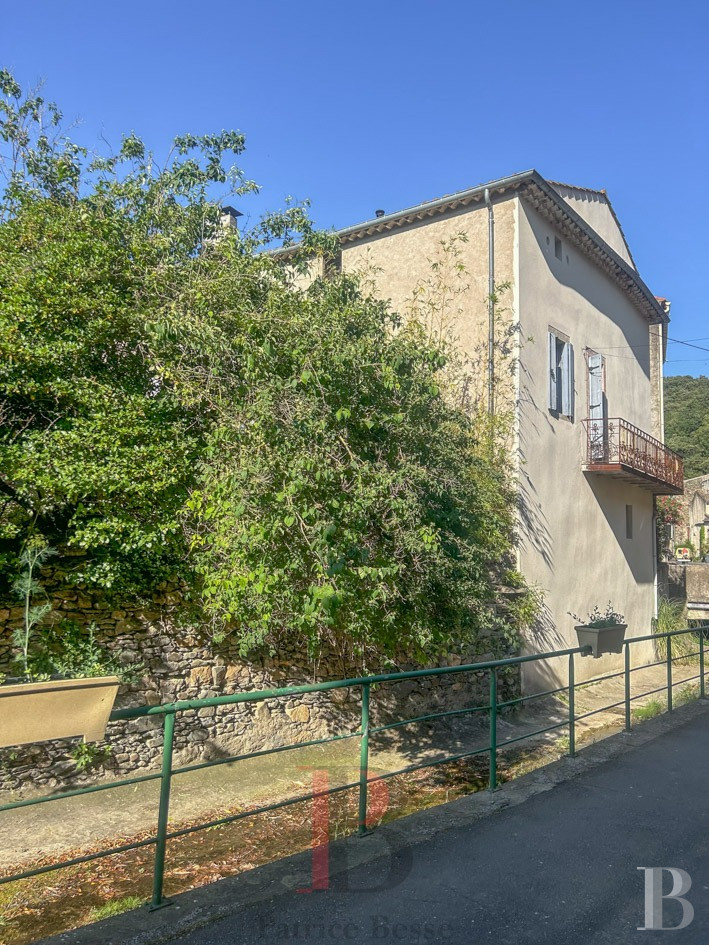
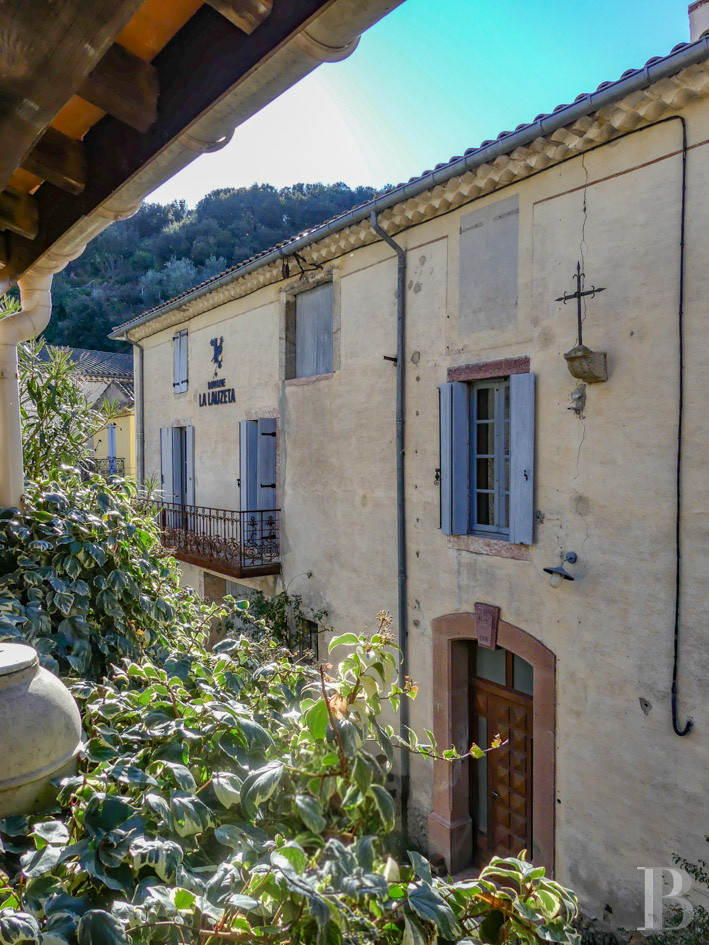
The property’s buildings form a U shape around a rectangular courtyard. There is a garage, an agricultural storehouse, a wine storeroom, an annexe and a house with a 185m² floor area. You reach the property over a little stream. A wrought-iron gate leads into the courtyard. The plain edifice stands in the heart of the village. It was built at the end of the 19th century, then redesigned over different periods. It has a ground floor, a first floor and a second floor in the roof space. Behind the house, a two-fold garden covers 290m² and extends alongside the stream. The current owner oversaw a partial renovation of the main house. It has elevations of dressed stone and rubble stone. Its facade faces east. The tiled gable roof is underlined with a double-row génoise cornice, filled in with rendering like that which coats the elevations.
The house
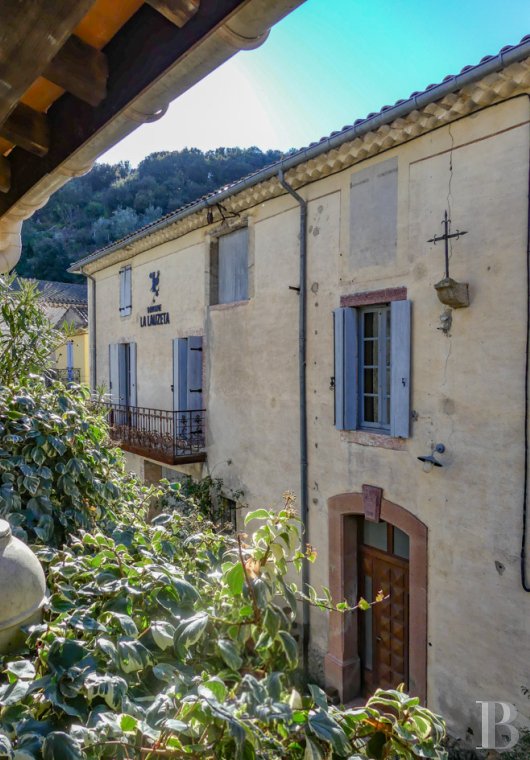
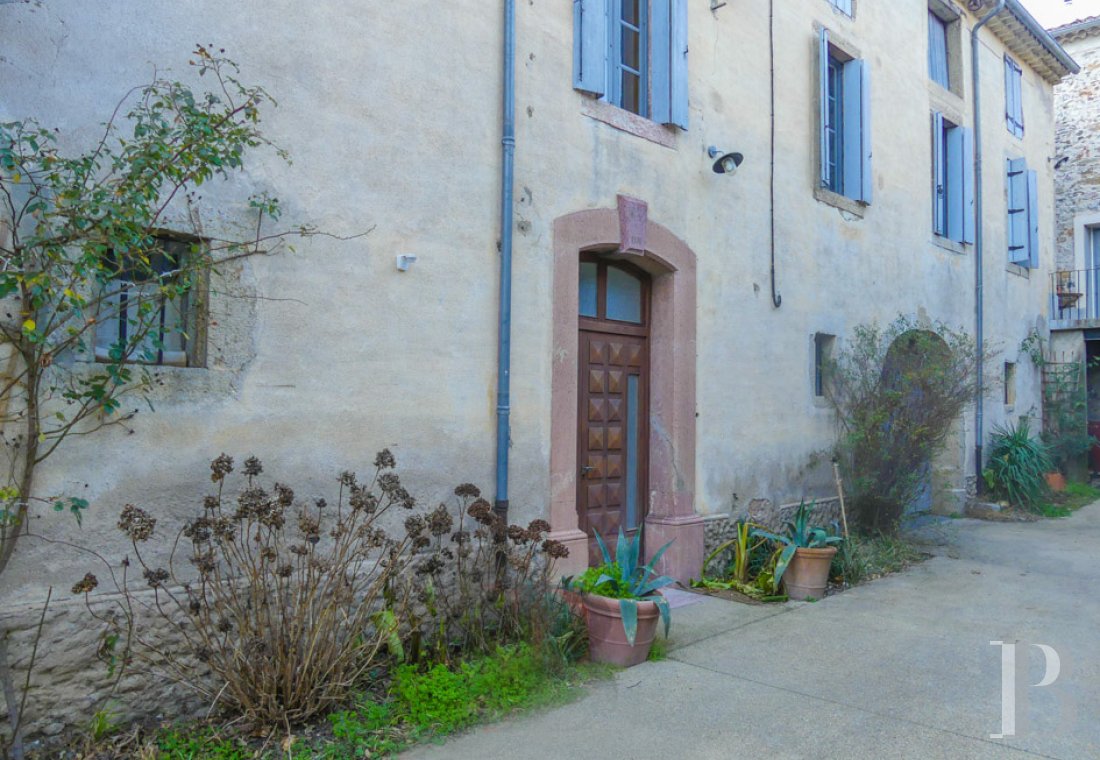
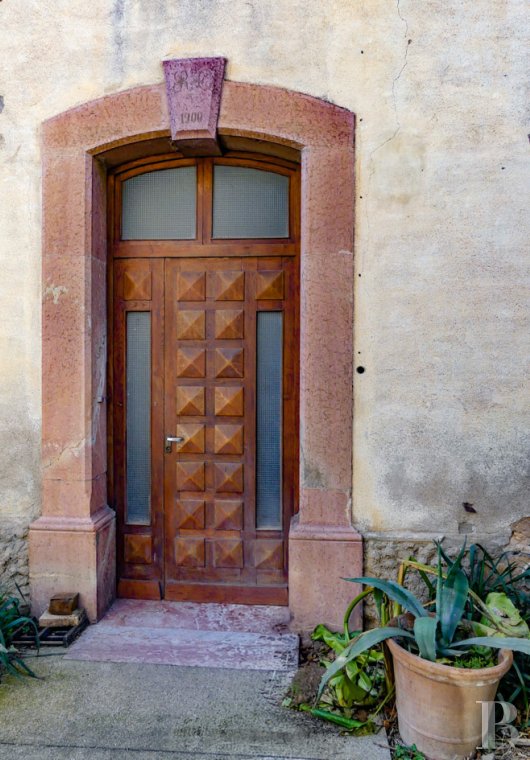
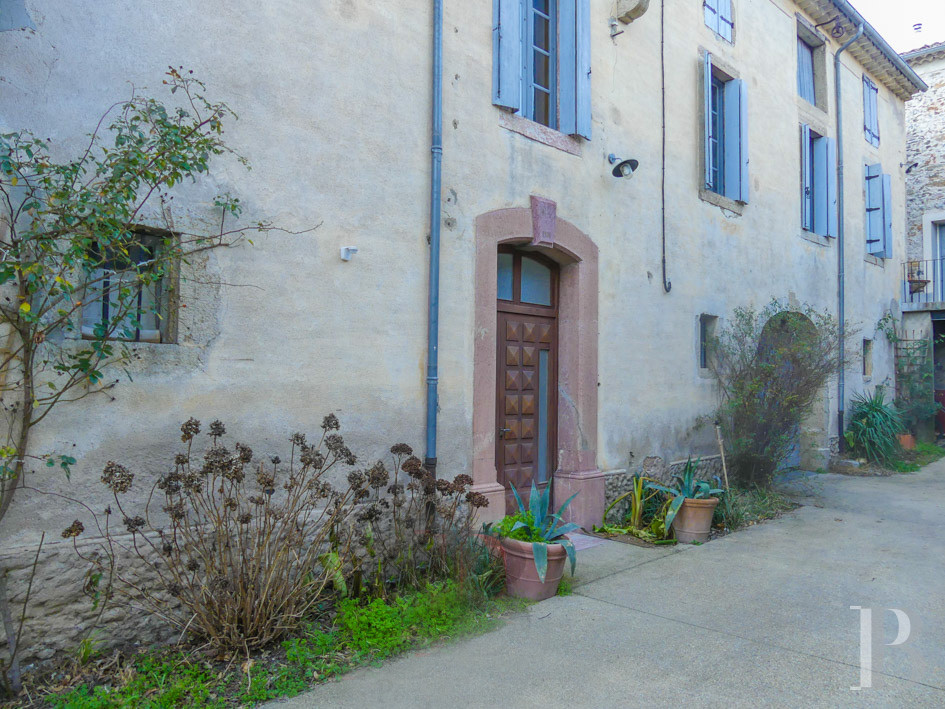
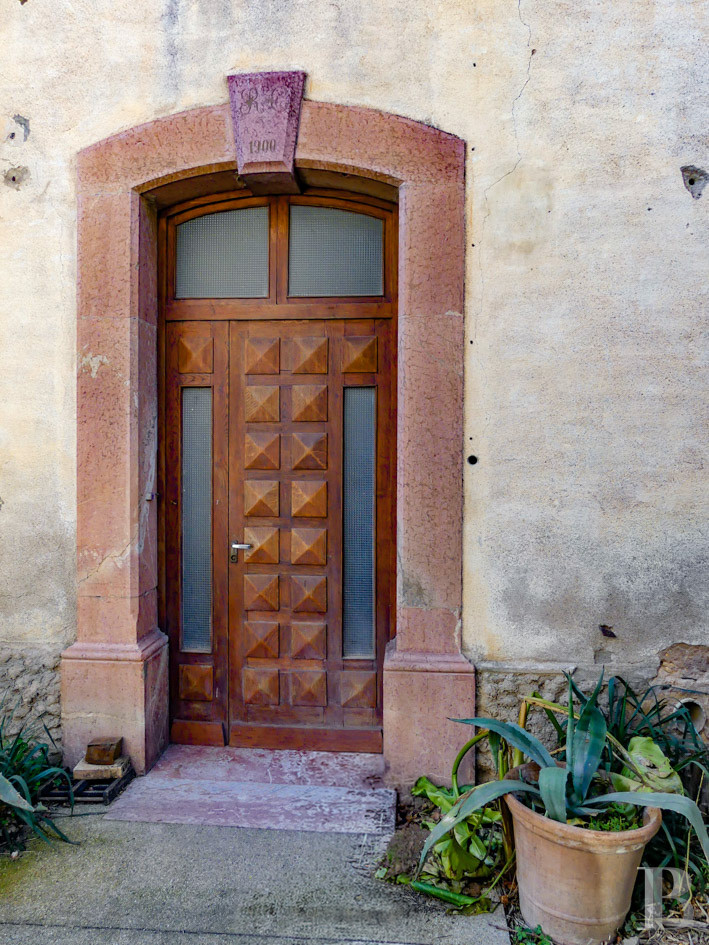
The house has two garage doors, two dormers and an entrance door. Among the facade’s six openings along the first floor, two are doors leading out onto a continuous balcony with a wrought-iron balustrade. This balcony takes up a corner of the building and leads to a south-facing door. Six windows are spaced out across the second floor, bringing light inside. Two of them are broader in shape. Each window is wooden-framed, single-glazed and fitted with wooden shutters that are painted. The entrance door stands in the middle. Like the windows, it is set in a surround of dressed stone.
The ground floor
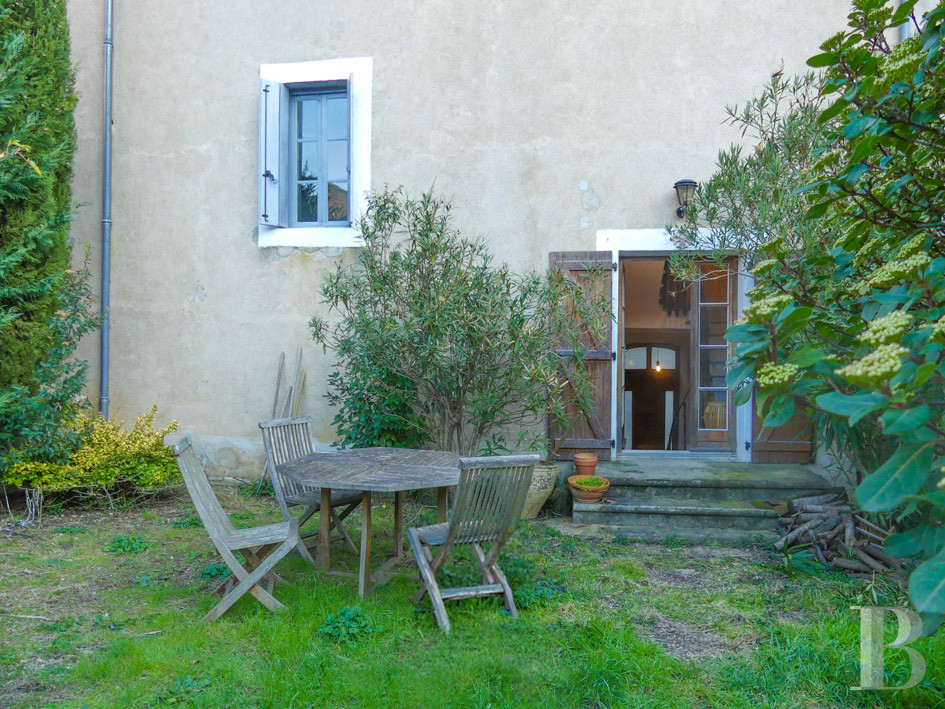
From the court, a glazed wooden door beneath a fanlight, in the middle of the building, leads into a hallway with a staircase. The floor is adorned with hexagonal terracotta tiles. From here, a right-hand door leads into a fermenting room and a left-hand door leads into a wine storeroom. This level is entirely dedicated to vinification. The staircase leads up to the first floor, where you find all the everyday rooms for living. On an intermediate landing, there is a glazed door serving two purposes: it leads out to the back garden and fills the hallway with an abundance of natural light.
The upstairs
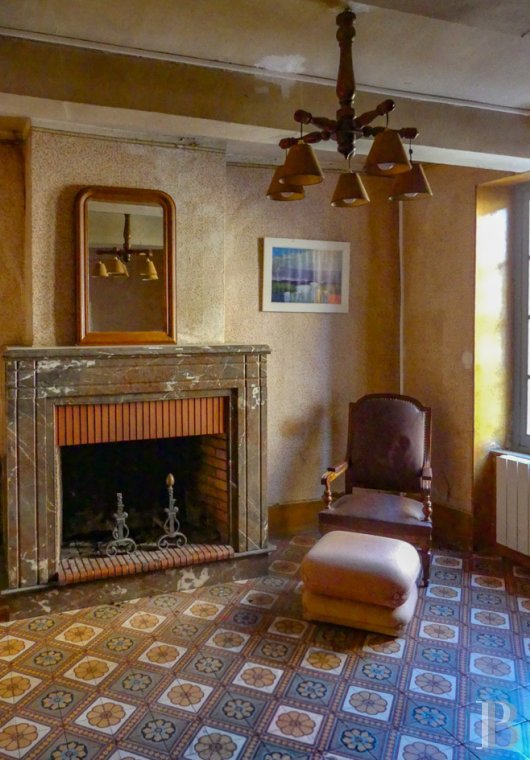
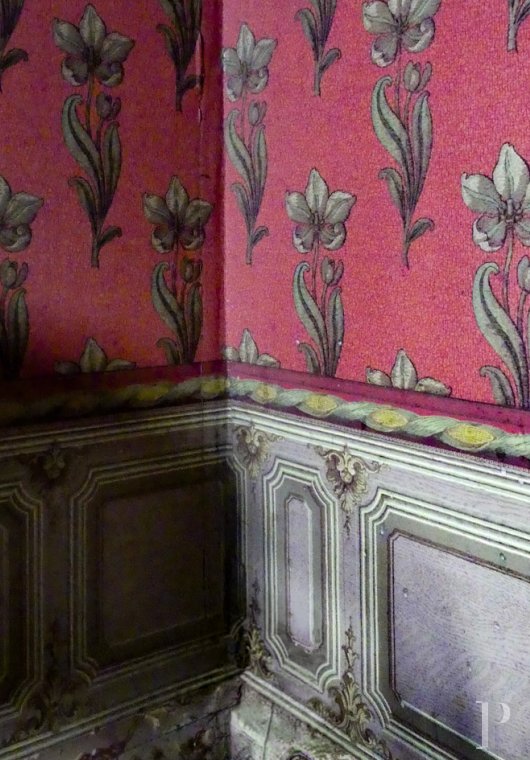
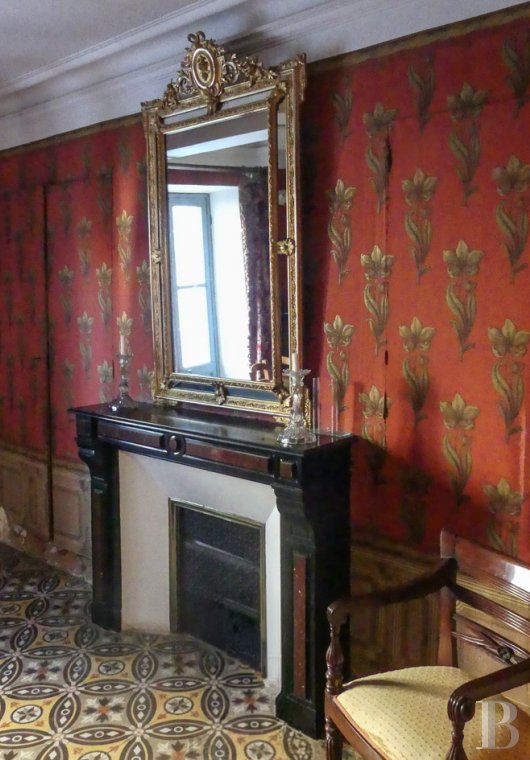
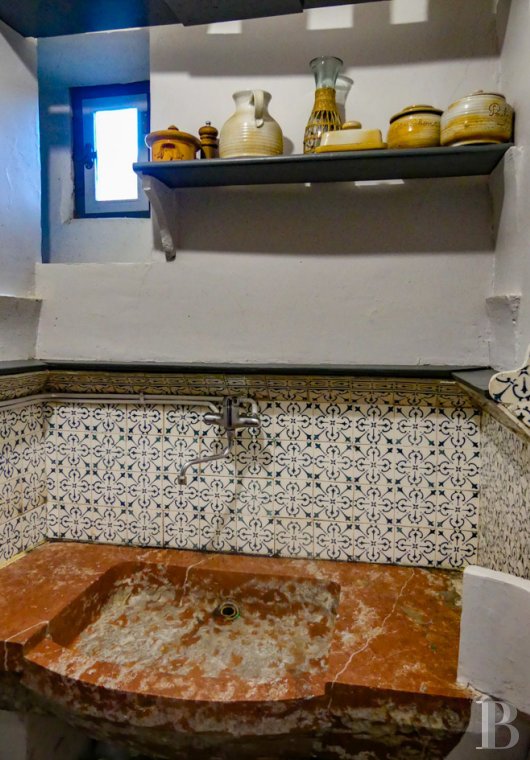
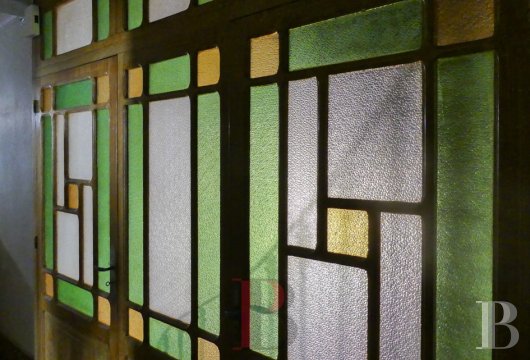
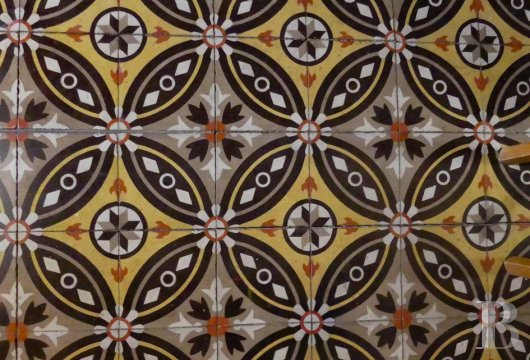
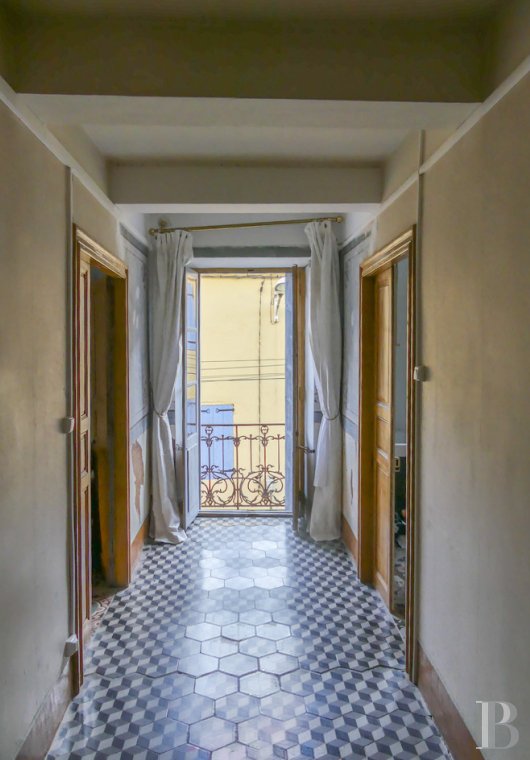
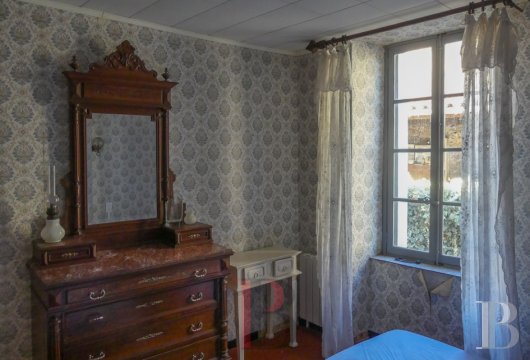
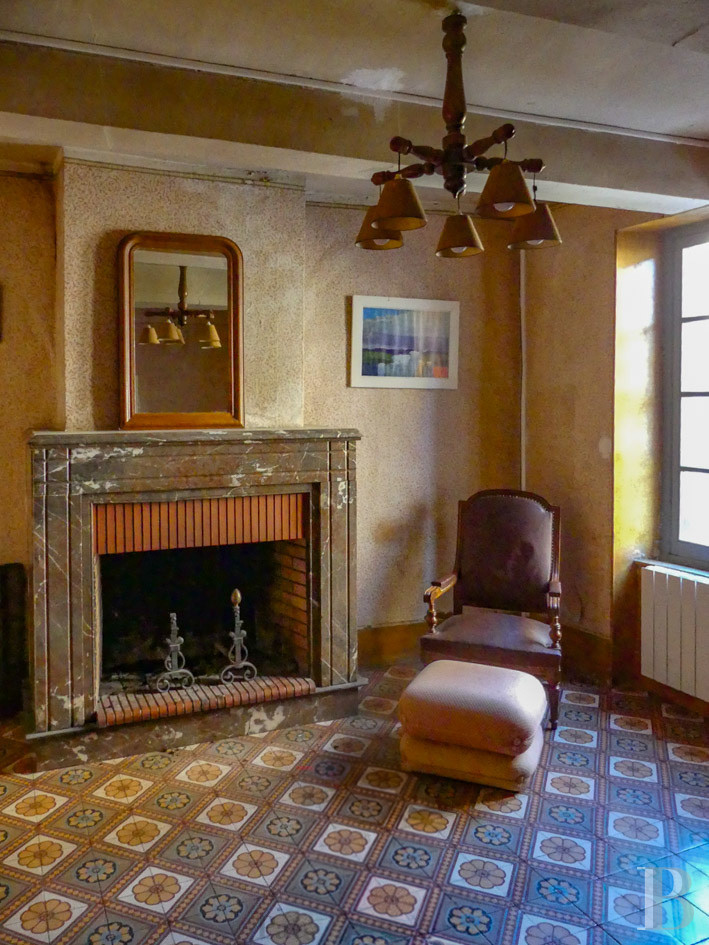
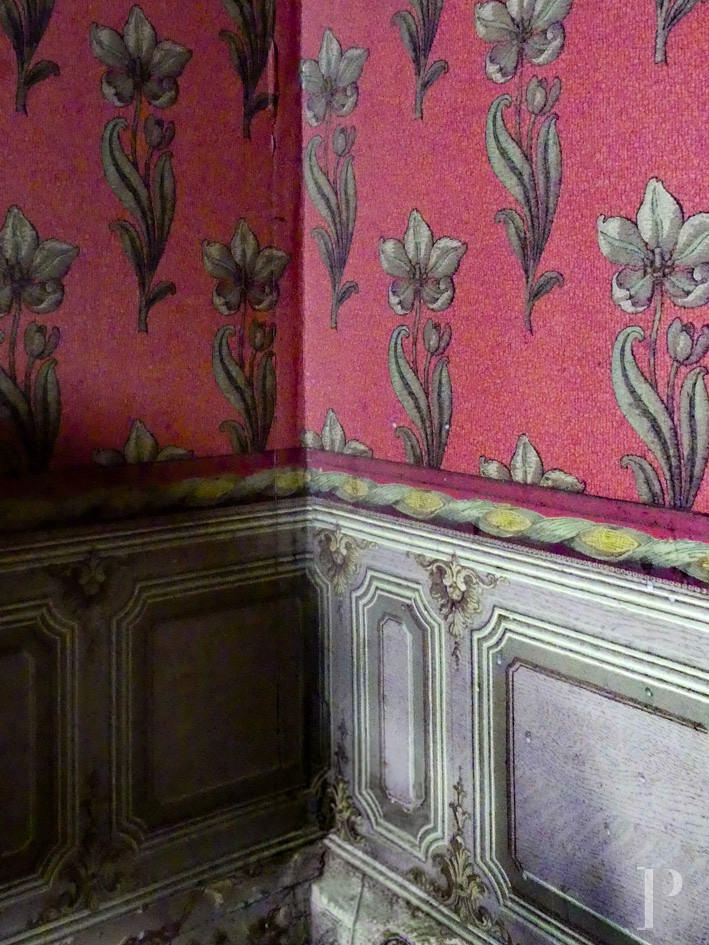
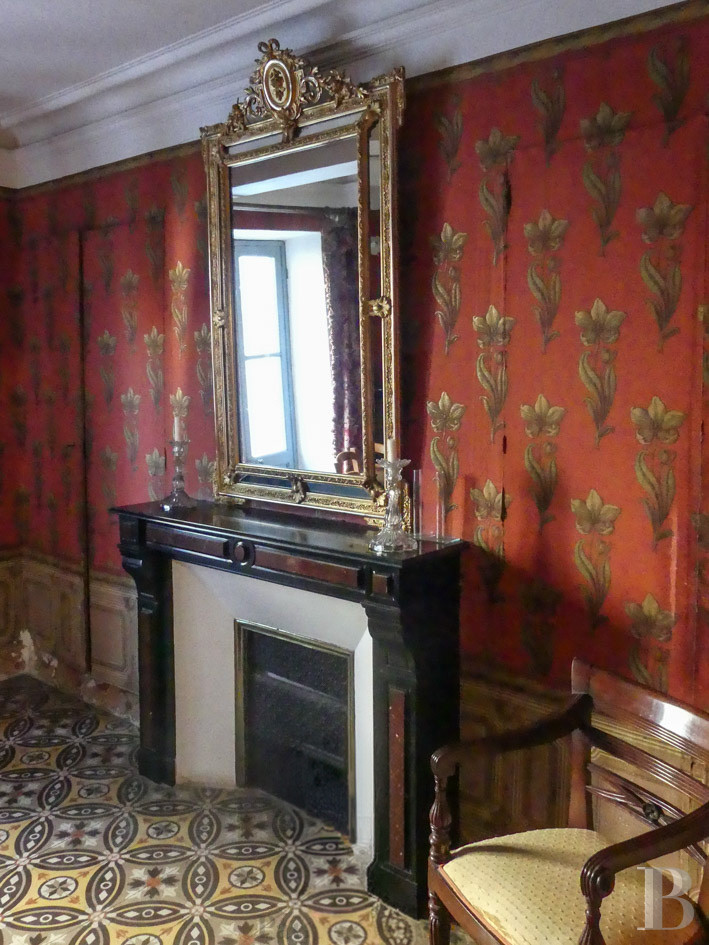
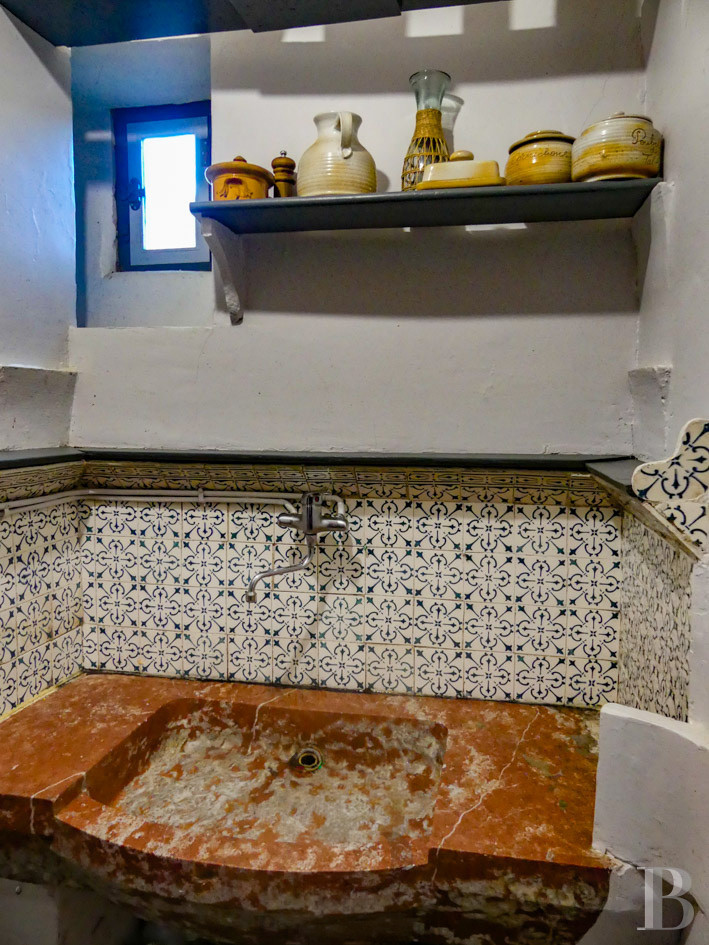
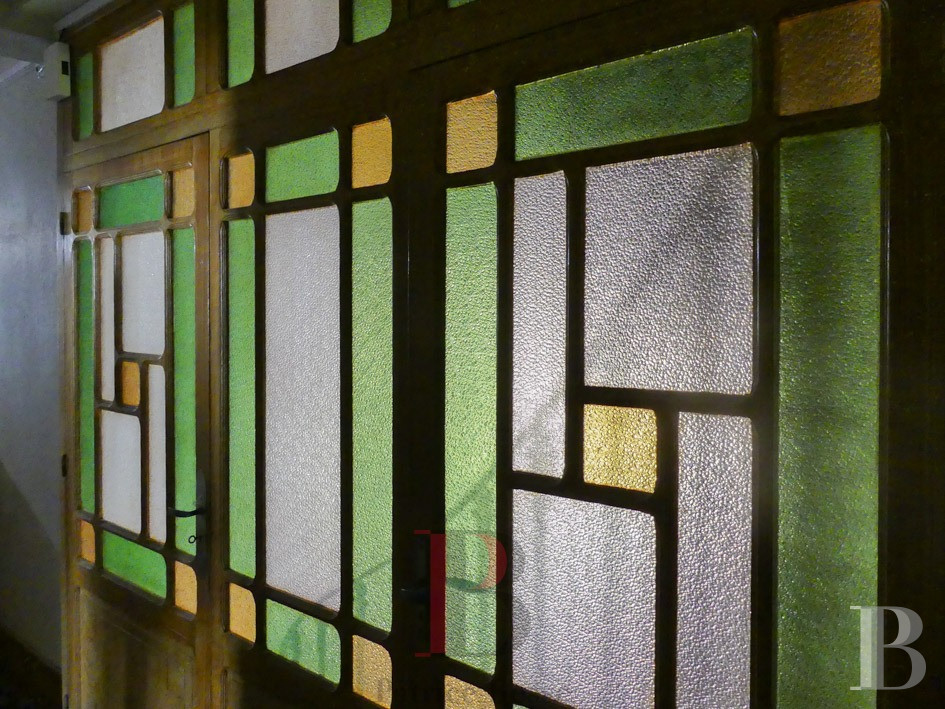
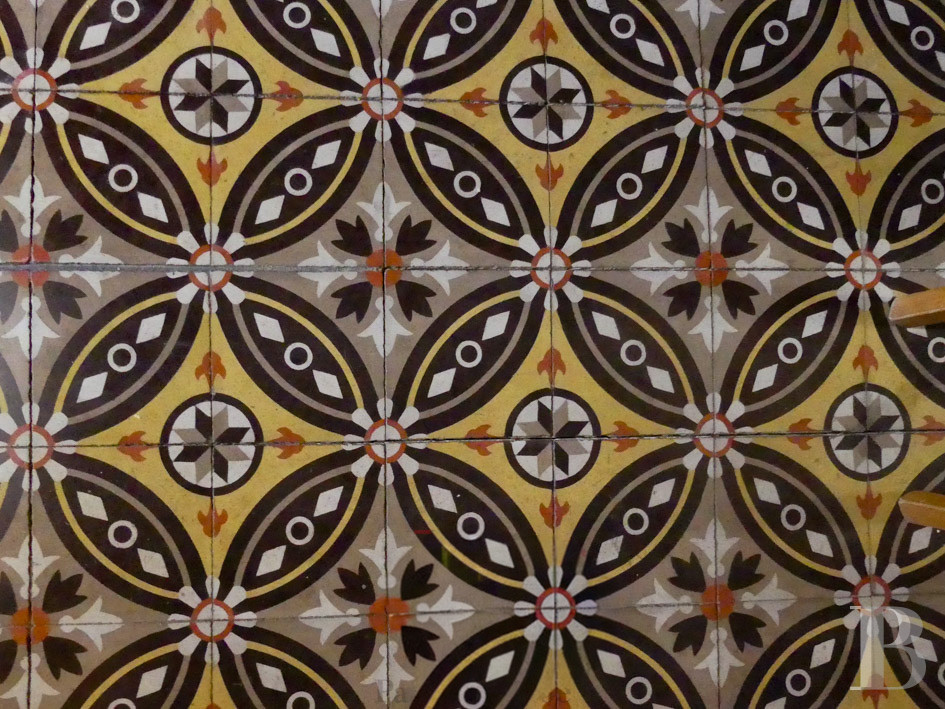
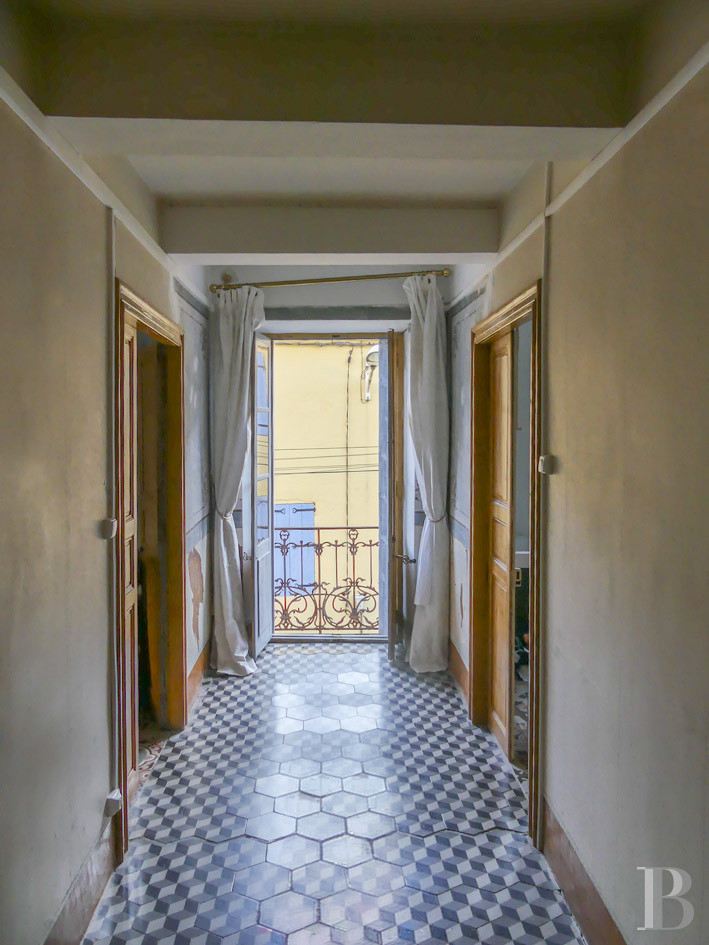
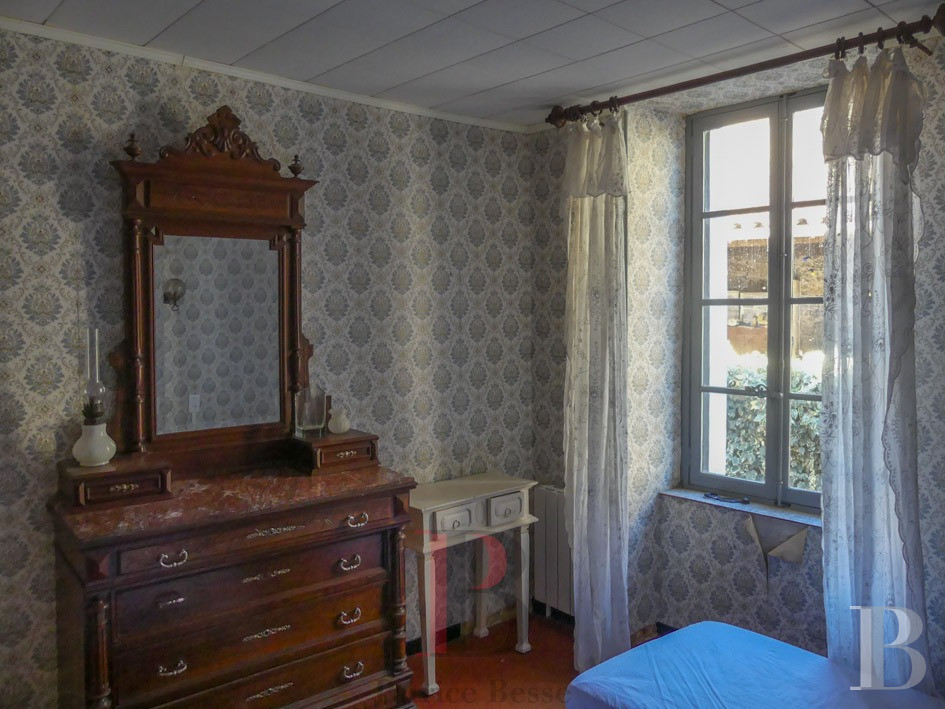
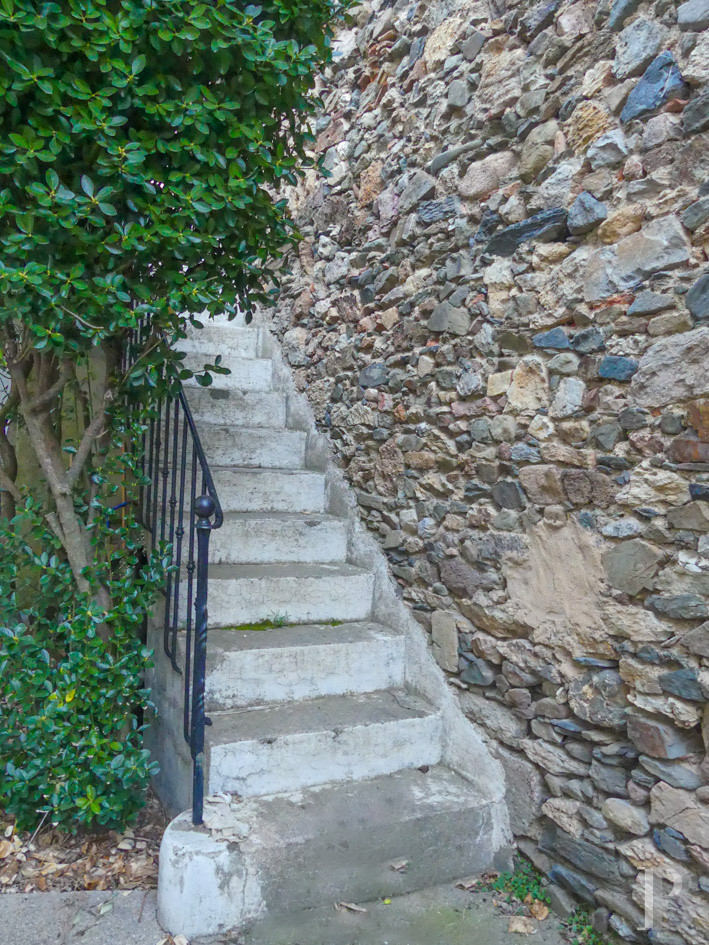
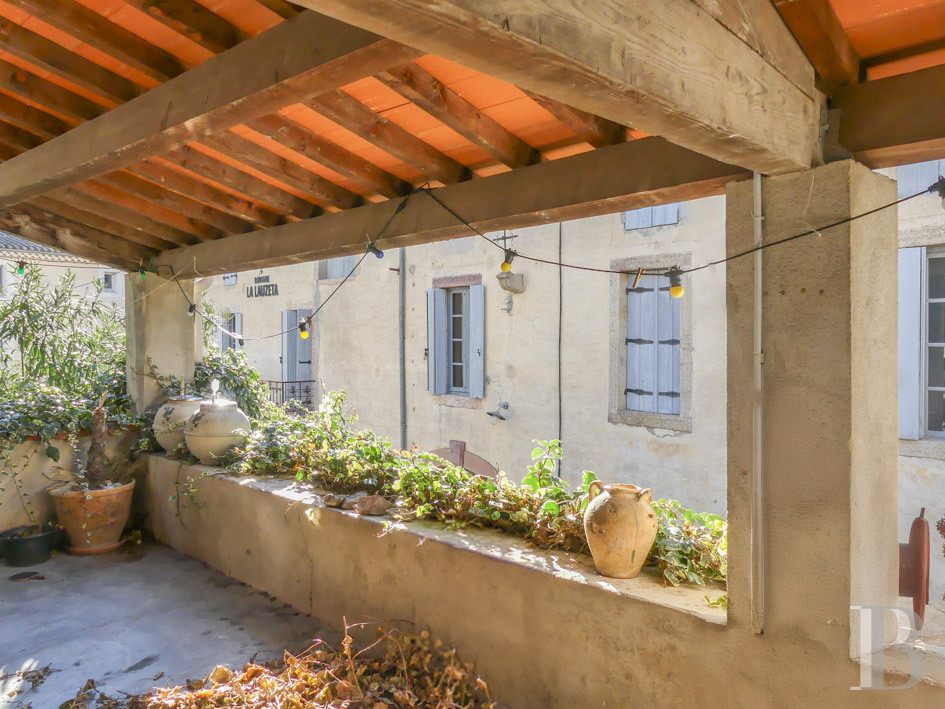
From the landing, you cannot see the stairwell, hidden as it is behind art deco glazing made up of vivid colours. A long corridor connects to the different rooms on this floor. In the middle, it is split into two sections by similar art deco glazing. These two glazed partitions add undeniable decorative value to the house and spare it from wintery draughts. They also used to separate the bedrooms from the reception rooms. On one side of the partition, the floor is covered with black, grey and white cement tiles. On the other side, terrazzo, with similar colours, forms the flooring. Opposite the staircase, a door leads into the lounge. This lounge is plainly adorned with a marble fireplace from the 1930s or 1940s. In the middle of the room, a window looks out at the courtyard and casts natural light onto the room’s original flooring of cement tiles. Beyond it, there is a dining room that has kept its atmosphere from the previous century with its original wallpaper, its old fabrics and its cement-tile flooring with colourful geometric tracery. Two secret cupboards frame a marble fireplace. An east-facing glazed door leads out onto the continuous balcony that runs around the house’s south-east corner. Opposite, a double door leads to a kitchen, which is filled with natural light from a garden-facing window. A sink made of red Languedoc marble, surrounded by original ceramic tiling, sets the tone for the room, where past and present combine in both the fixtures and fittings. Beyond a pellet stove there is a recently restored bathroom that you can reach from the end of the corridor. It has a bath, a shower, a washbasin and a lavatory. The original floor has been preserved. Only the walls have been redecorated with recent ceramic tiling. It lies opposite a first bedroom that has real character and looks out at the court. At the other end of the corridor, on the other side of the glazed partition, there are three bedrooms spread out on either side, as well as an office, a storeroom, a bathroom with a lavatory, a shower room and a lavatory. Apart from the three bathrooms, which were recently renovated completely, the other rooms have kept their original style – mostly a 1920s style. In this part, the floors are mostly covered with terracotta tiles. At the end of the corridor, you can reach a first terrace on the north side. This terrace connects to an outbuilding with an office on the ground floor and a bedroom on the first floor. This terrace, between two buildings, can be reached straight from the court via a flight of steps. It leads to a vast covered terrace.
The attic
You reach the loft from the staircase that climbs up from the middle of the first-floor landing. This loft is divided into two parts. It extends across the entire house and could be converted through major renovation work. With the addition of windows of different sizes, much natural light could be brought inside and the space insulated better, especially given that the current windows are only protected by wooden shutters. The floor is covered with a thick layer of fibreglass, which insulates the lower levels.
The annexes
The two-floor apartment
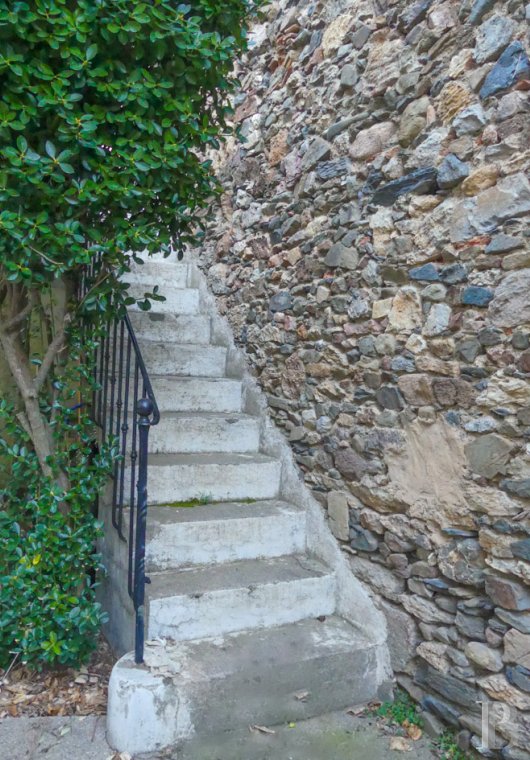
You can reach this two-floor apartment via stone steps or from the first floor of the main house. Renovated by the current owners, it lies down from the small terrace. It houses a ground-floor room, used as an office, with a black marble fireplace and a floor of cement tiles in a black-and-white checked pattern. A wooden staircase painted white leads up to the first floor, which is used for storage, especially archived documents. Original terracotta tiles cover the floor. Each of these two floors has a window and in-built pinewood cupboards. Lastly, in the basement of this annexe, there is the owner’s private wine cellar.
The west wing
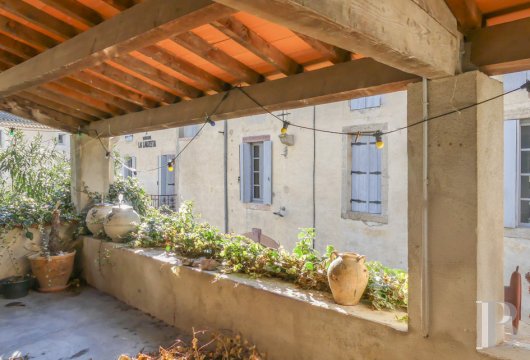
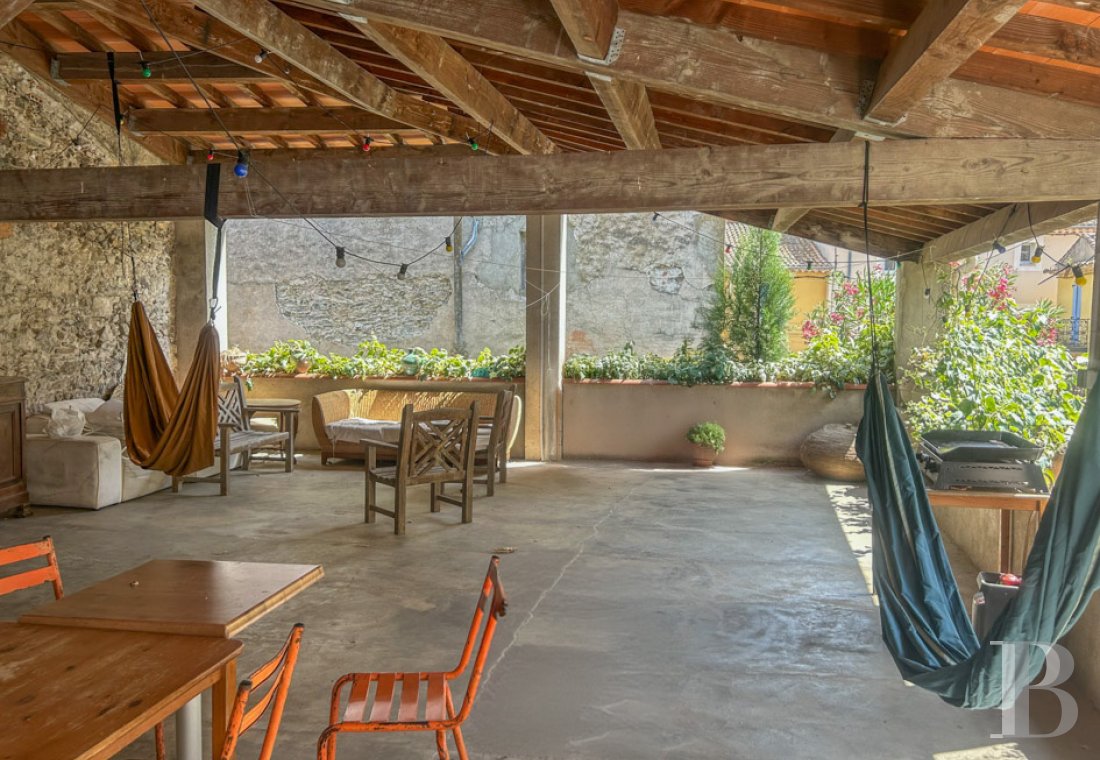
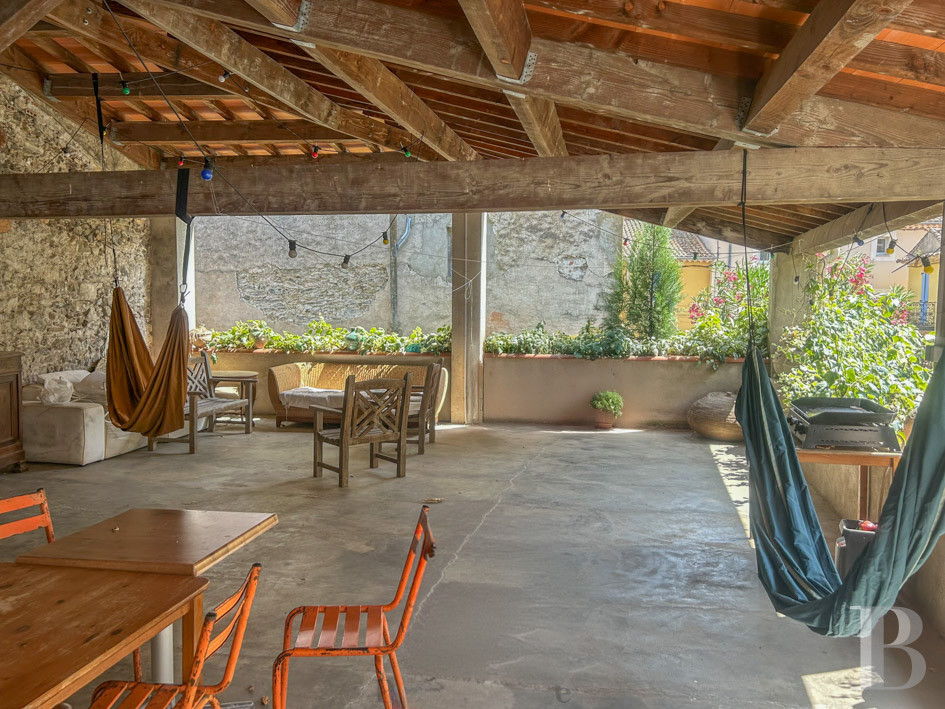
On one side of the court, beside a cypress, a wooden double garage door leads into a storeroom, which is used for storage. The floor is made of concrete and the ceiling is structured into arched bands of terracotta tiles. Above this storeroom, there is a vast covered terrace with a 75m² floor area. It lends itself to many different uses, ranging from meals to games and naps in hammocks and deckchairs in absolute privacy. Plants climbing up the stone walls give this terrace character that is typical of the south of France.
The garden
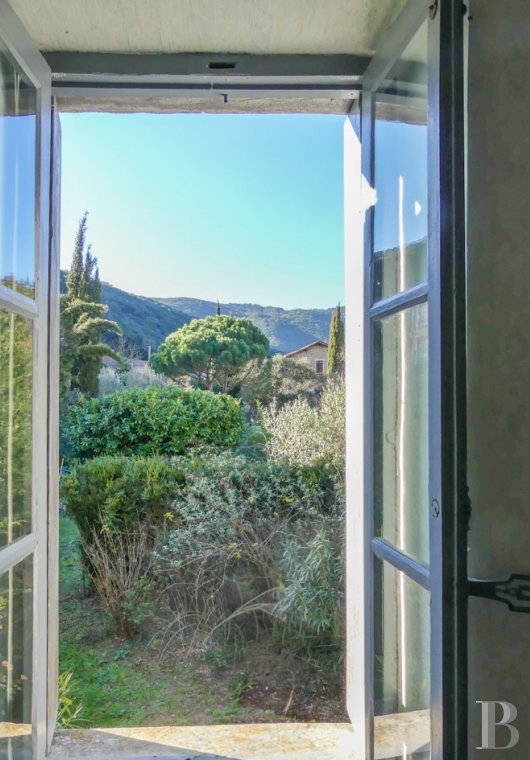
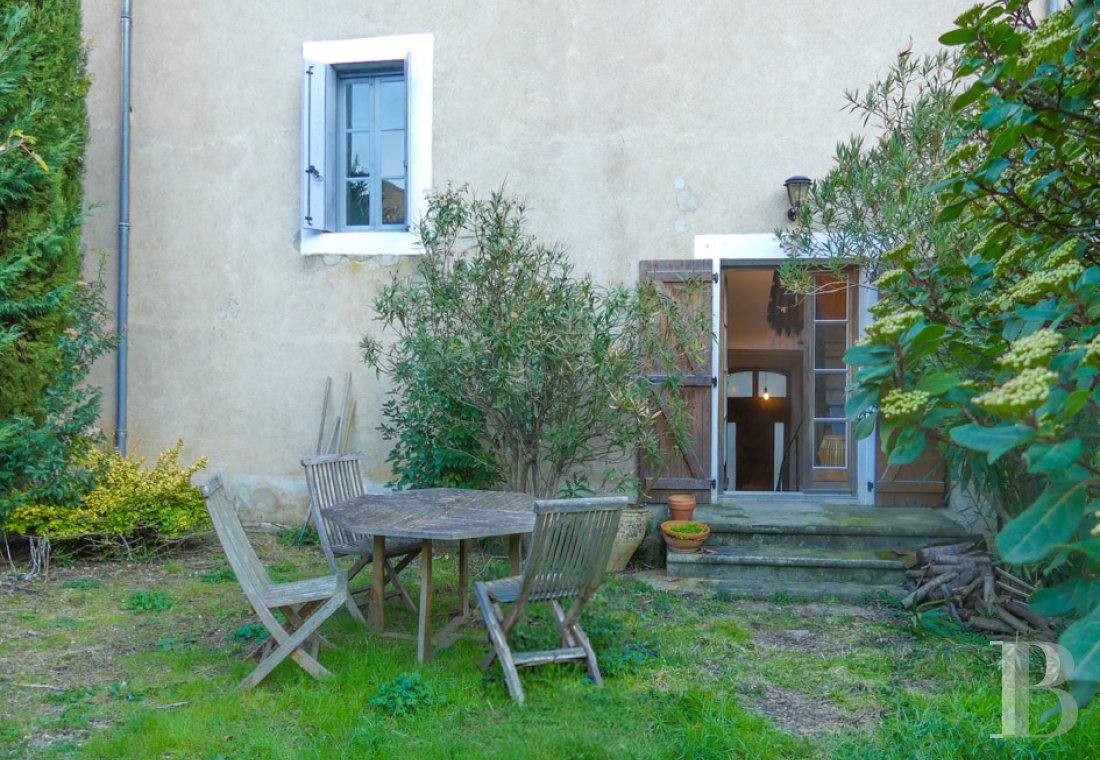
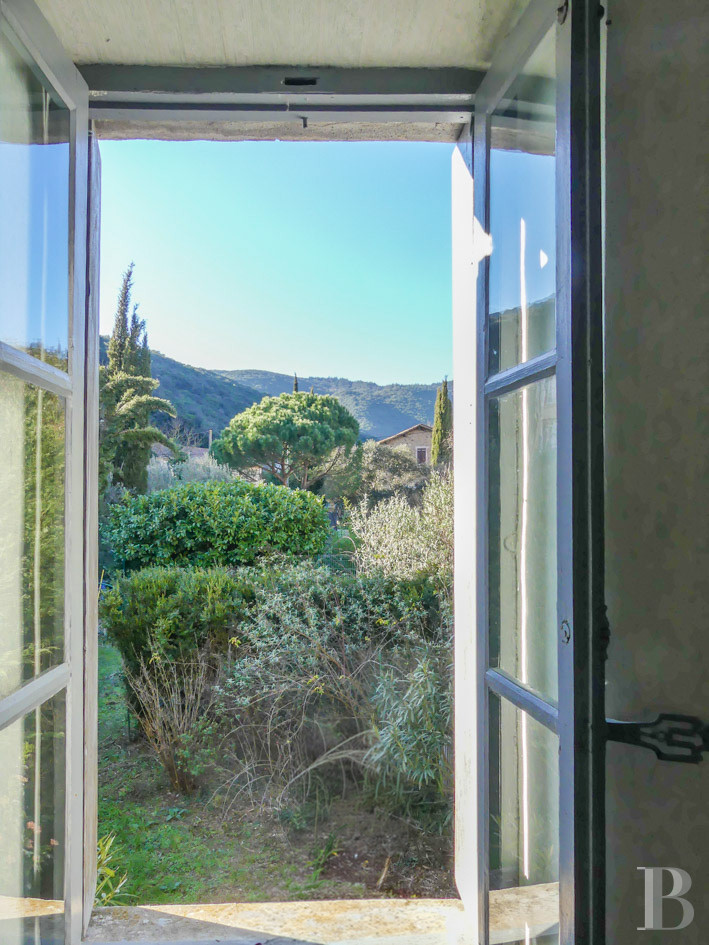
From the glazed door on the intermediate landing, three steps lead down to the garden at a lower level. This garden is divided into two parts, separated by a hedge. The lawns are dotted with Mediterranean plants of different varieties, including an oleander, a cypress and an olive tree. The garden covers around 300m². It is enclosed and enjoys absolute privacy thanks to vegetation.
Our opinion
This charming dwelling reflects the very soul of the peaceful village in which it stands. It mirrors its quaint backdrop through the quality of its materials, the openness of its form and the soft vitality of its colours. With the spacious rooms of their traditional design, the buildings could even become a farm complex in working order. Indeed, this was once its purpose. And you have the option of acquiring another dwelling nearby. It lies on the surrounding slopes and needs to be restored. The property’s many outbuildings could be rented out as accommodation for tourists. They could be renovated to become gîtes set in a bucolic environment. In short, this unique property opens up an exciting range of possibilities in a beautiful landscape tucked away in a corner of southern France where lives follow the seasons and harvests. This characterful haven is a delightful gem that evokes rural nobility while remaining unpretentious.
Reference 458225
| Main building floor area | 185 m² |
| Outbuildings floor area | 280 m² |
| including refurbished area | 35 m² |
| Land registry surface area | 442 m² |
| Including parkland | 287 m² |
| Total floor area | 220 m² |
| Garages | 2 |
French Energy Performance Diagnosis
Information on the risks to which this property is exposed is available on the website: www.georisques.gouv.fr
Share


NB: The above information is not only the result of our visit to the property; it is also based on information provided by the current owner. It is by no means comprehensive or strictly accurate especially where surface areas and construction dates are concerned. We cannot, therefore, be held liable for any misrepresentation.