



A former 19th-century coaching inn,
1 hour 30 minutes from Paris, in a village in the Yonne area
1 hour 30 minutes from Paris, in a village in the Yonne area
Joigny,
YONNE
burgundy
89300
FR

Location
This property is located near Joigny, in the centre of a village with a population of around 1,000, situated along the meanders of the River Yonne, after which the area in which it is situated is named, in the north of the Burgundy region. Reminders of its medieval past are still visible in the village, which contains a variety of shops, while services, schools and essential everyday infrastructures can be found in nearby Joigny. The property is situated in a setting that is typical of the Yonne Valley, in a sector dotted with villages boasting renowned heritage and blessed with undulating landscape made up of arable land, wooded slopes and vineyards. Sens and Auxerre are 30 minutes away, while Paris can be reached in 1 hour 30 minutes thanks to regular daily services from the train station in Joigny and the proximity of a motorway junction 11 kilometres away on the A6.
Description
The former coaching inn built in 1847 stands next to a fortified gateway that is one of the few remaining witnesses to the village’s medieval past. The property is enclosed behind old walls and has two entrances: one directly into the courtyard and the other lower down via the garden.
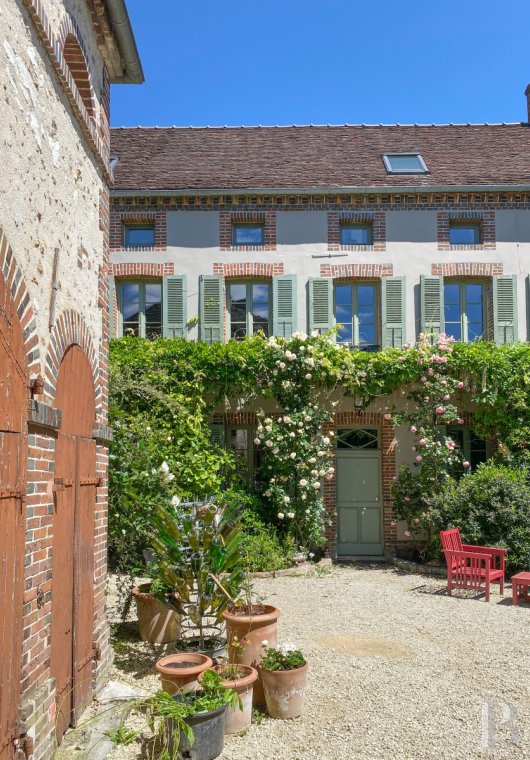
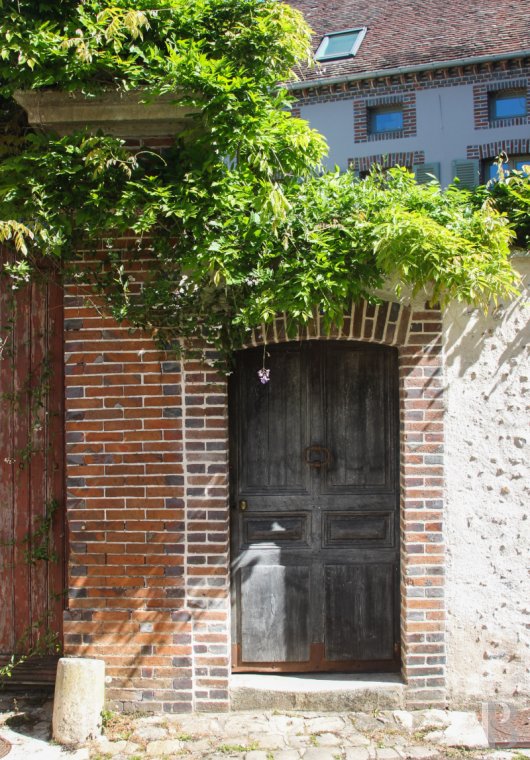
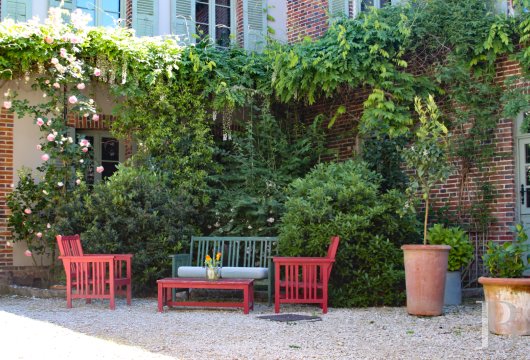
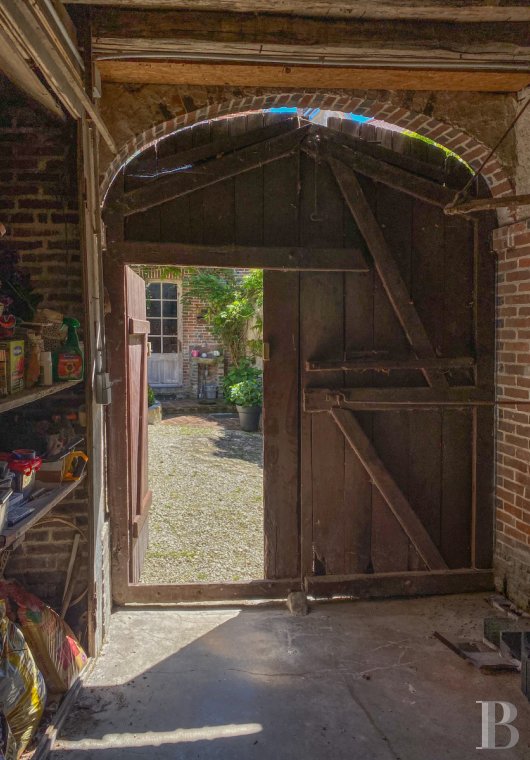
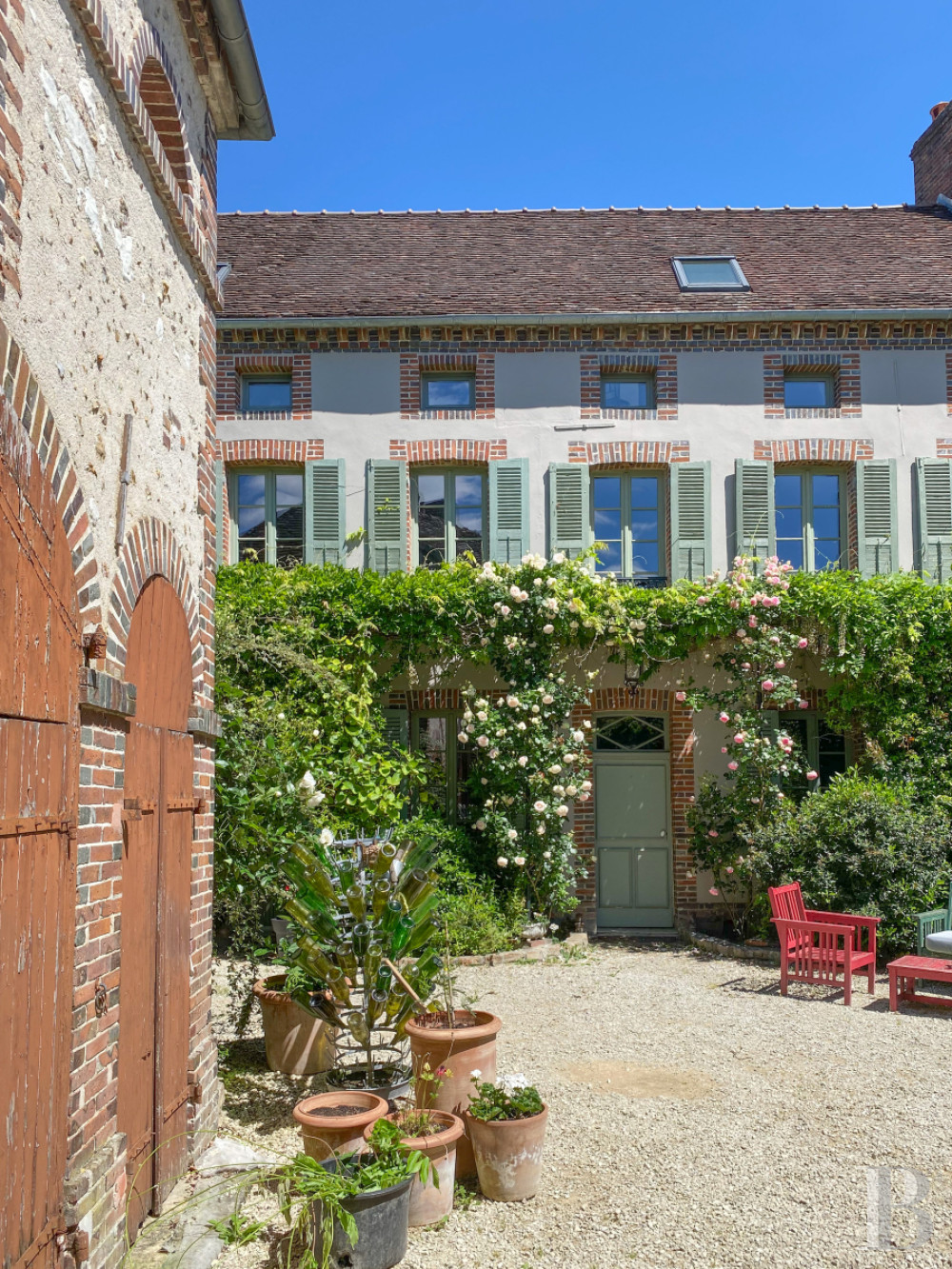
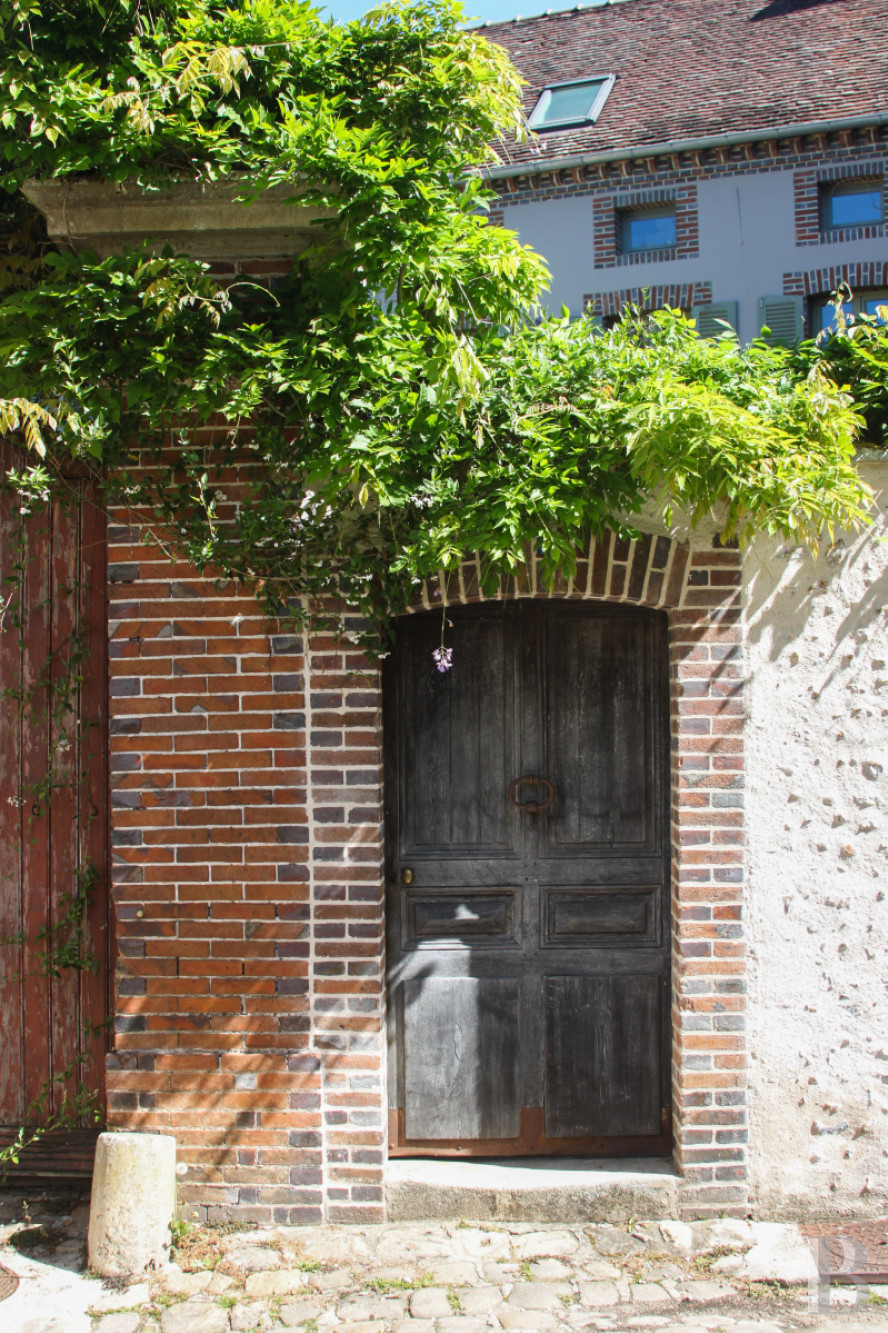
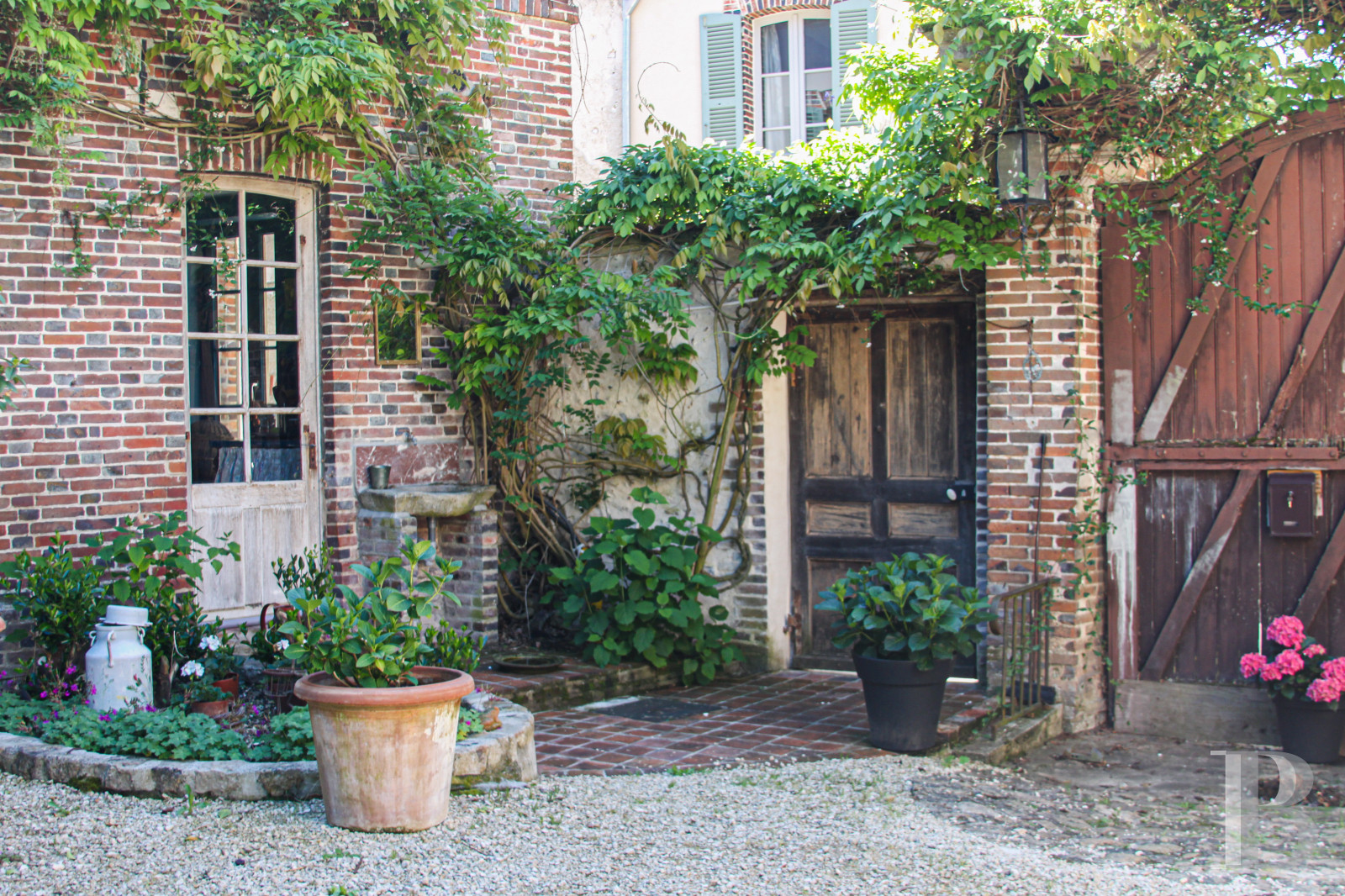
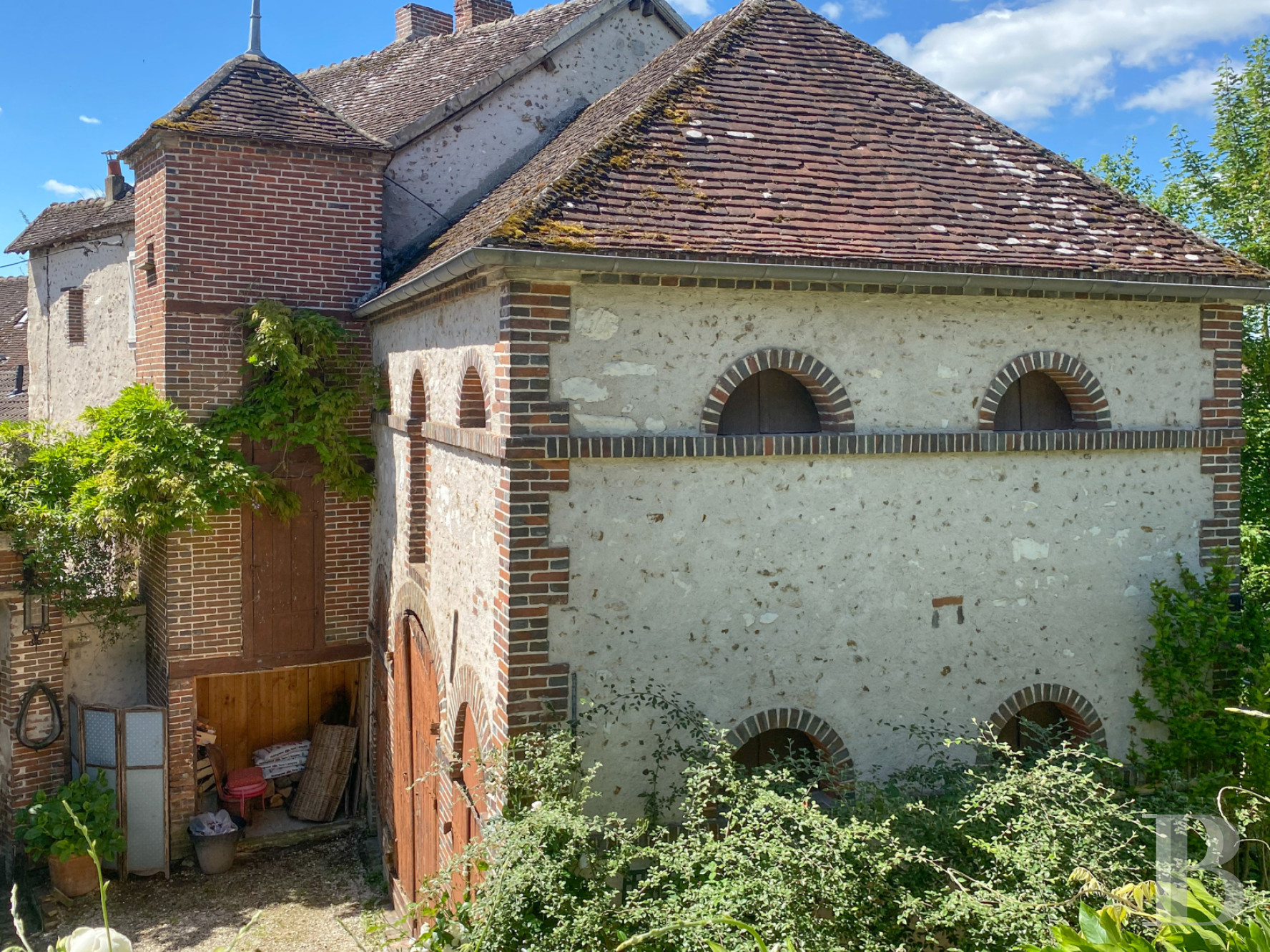
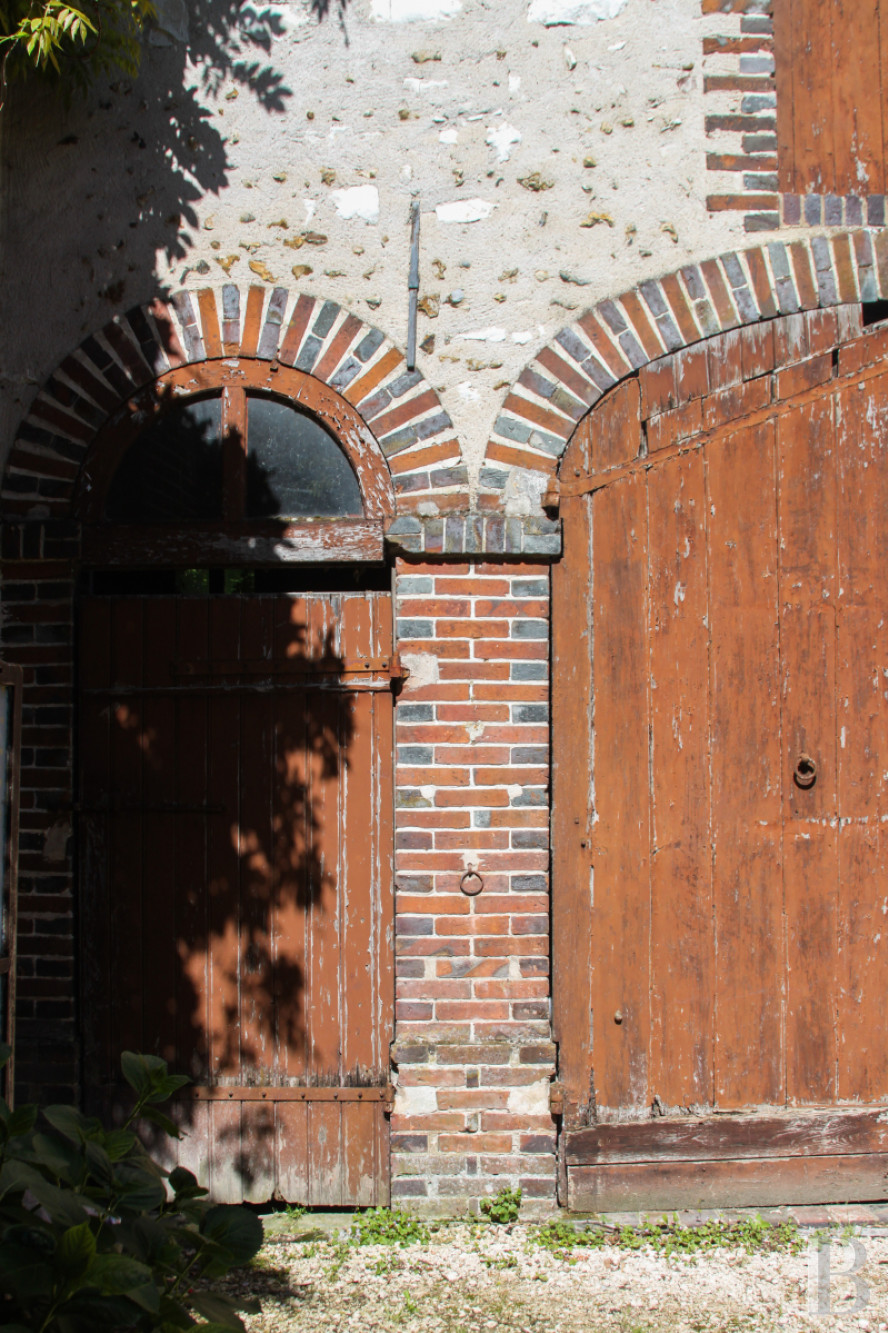
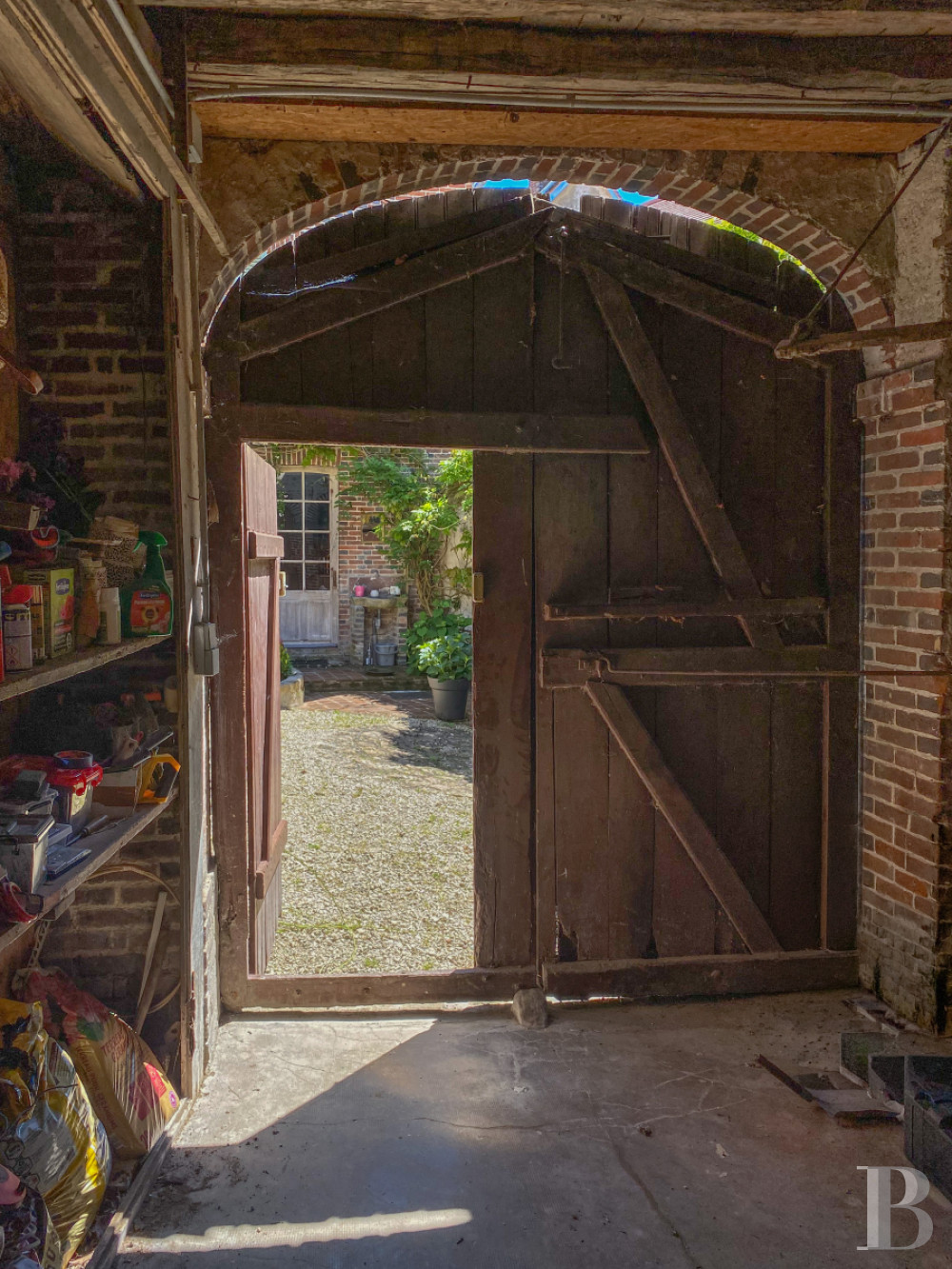
The main entrance is through a wooden carriage gate framed by solid brick pilasters accompanied by a separate pedestrian entrance. The house opens directly onto the gravelled courtyard as do the former stables, which still possess a dovecote.
Lower down in the plot, a footbridge leading to the garden crosses the River Vrin, which runs through the property before flowing into the River Yonne downstream. A private washhouse is sited on the waterway’s passage.
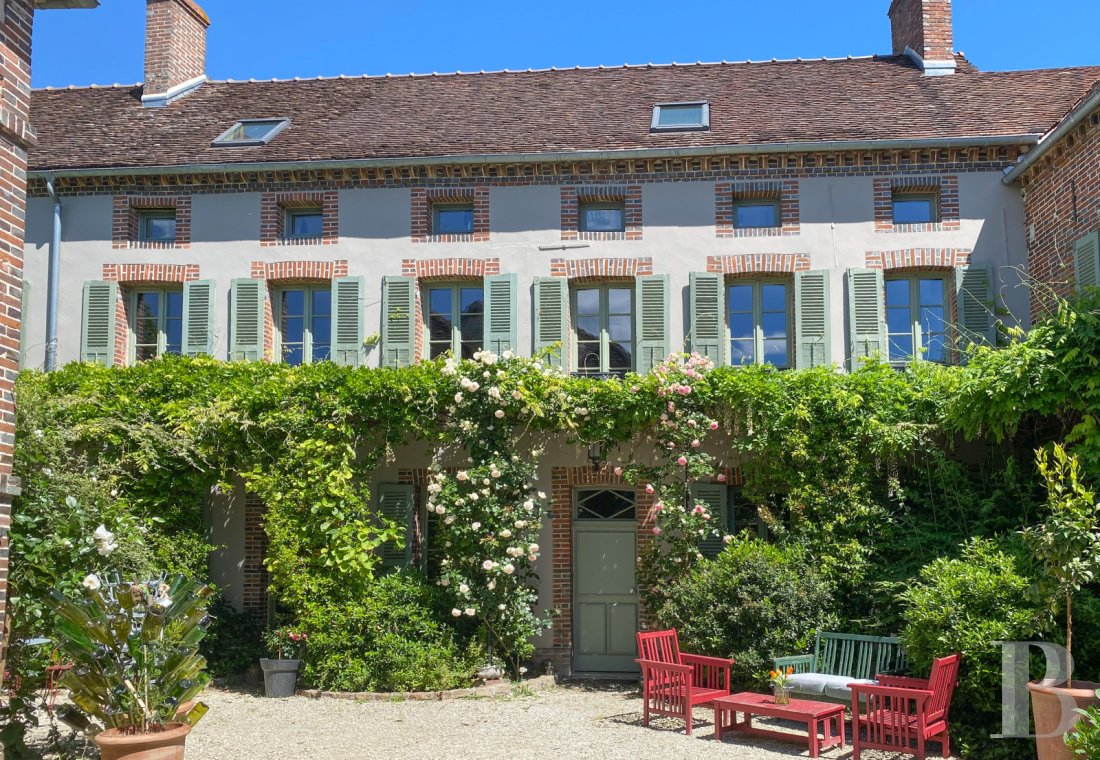
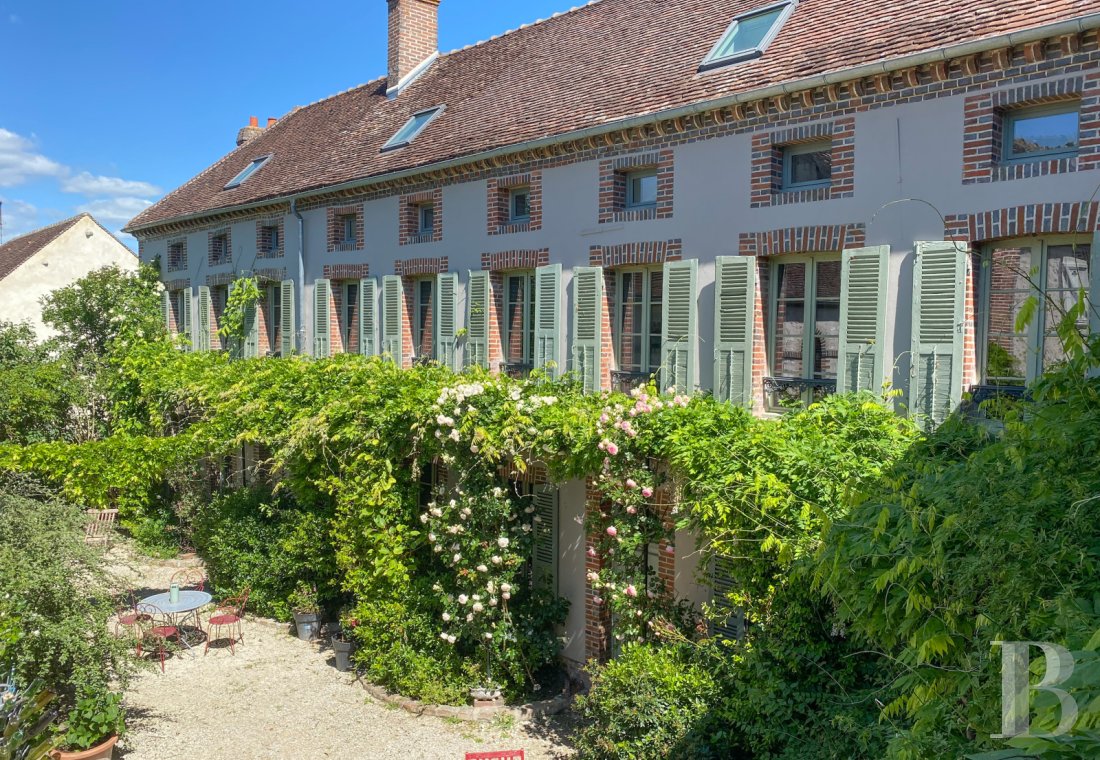
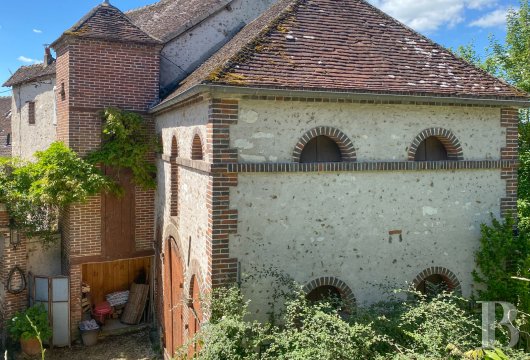
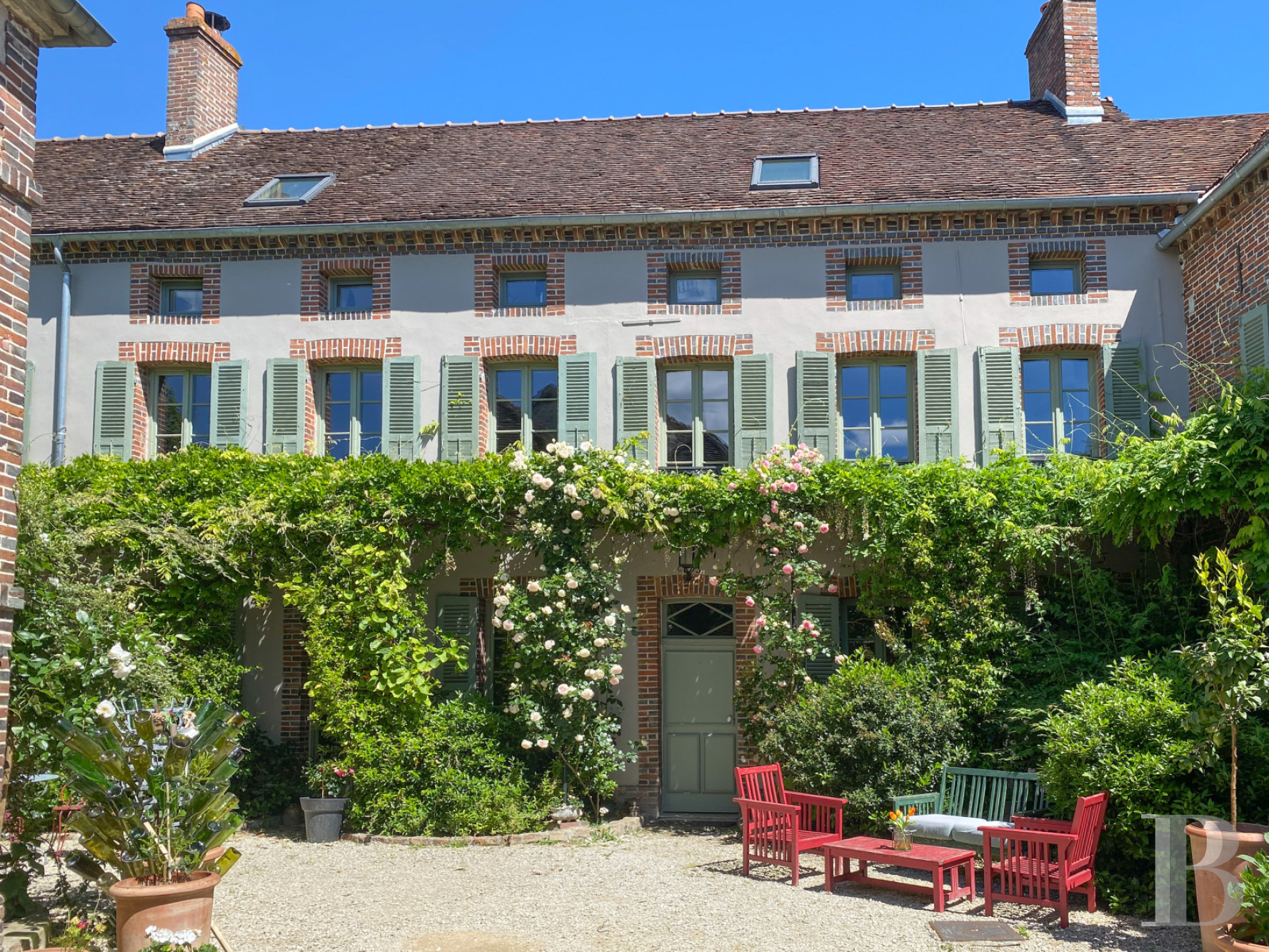
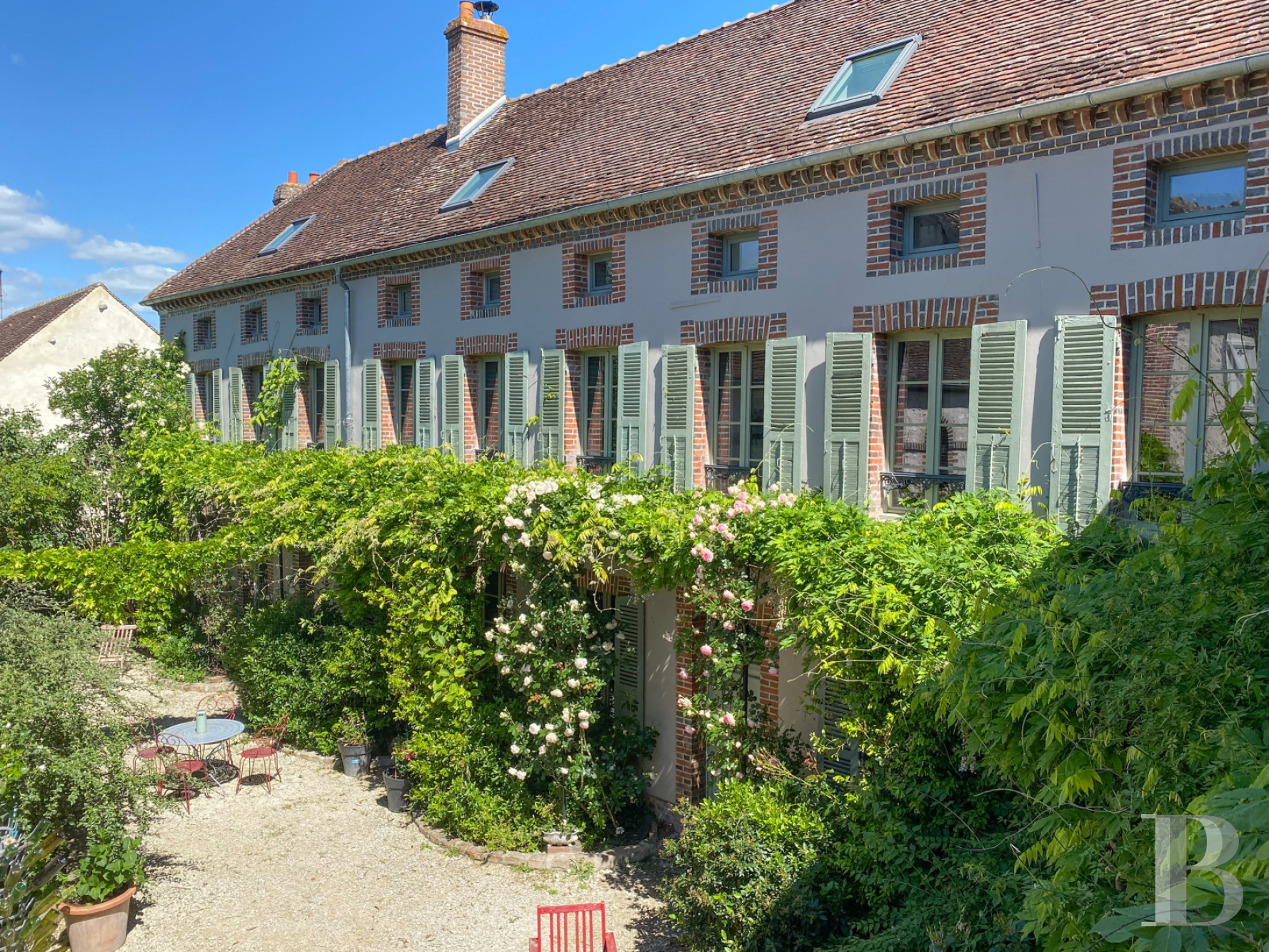
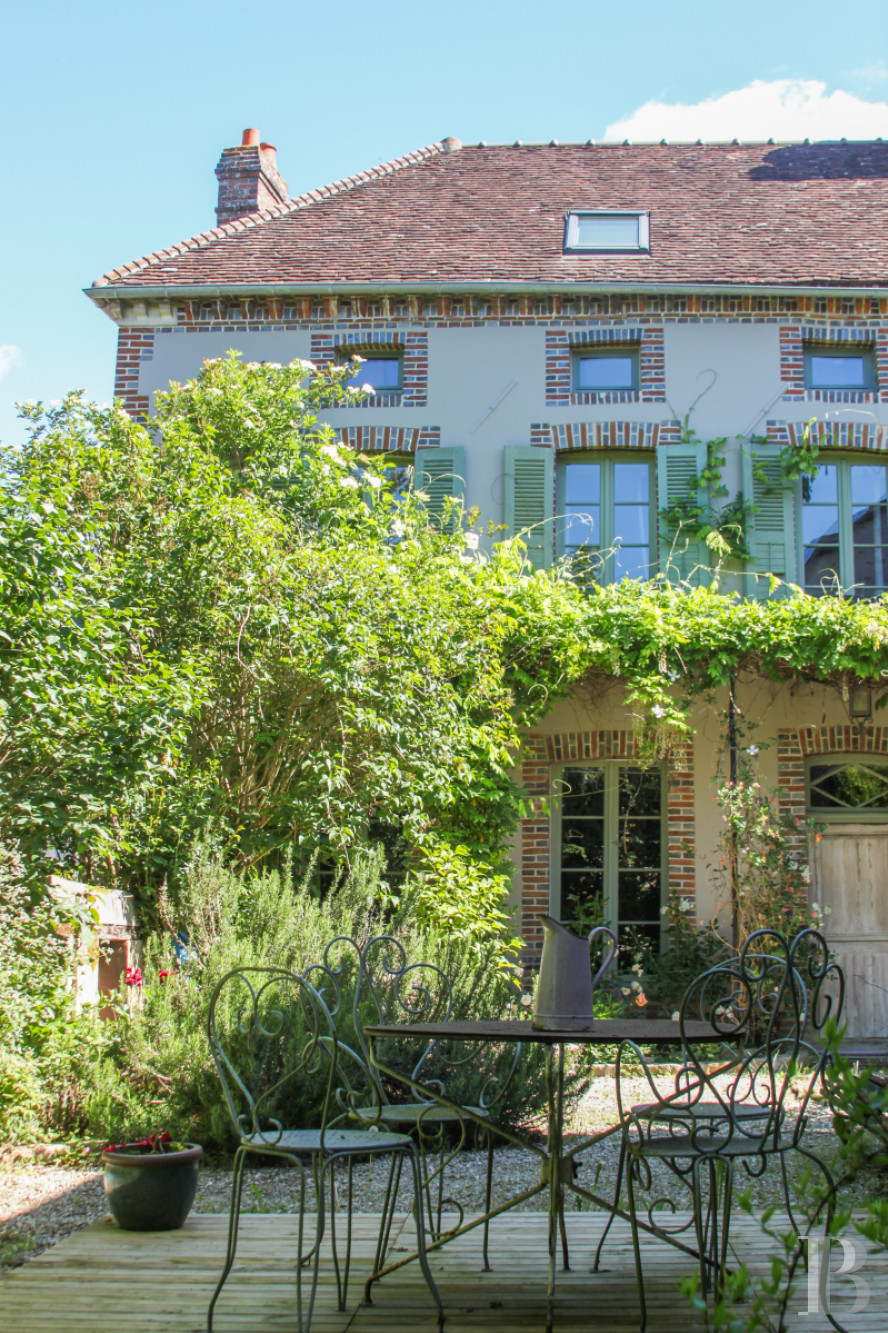
The residence is L-shaped and its three-storey, southwest facing main section boasts facades rendered in grey stone shades, while the secondary wing is made up of exposed brickwork. Light filters into the upper level through skylights and a series of small rectangular windows.
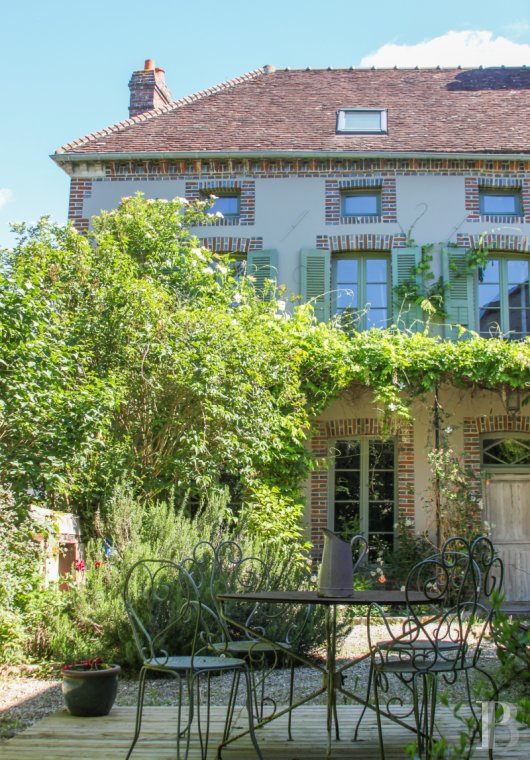
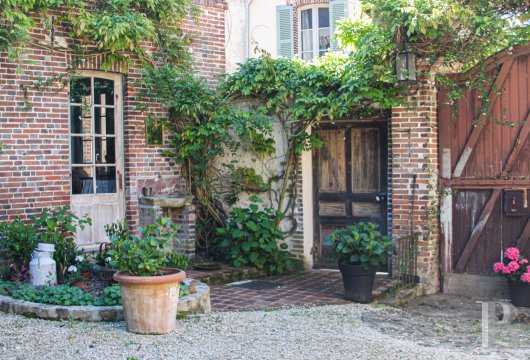
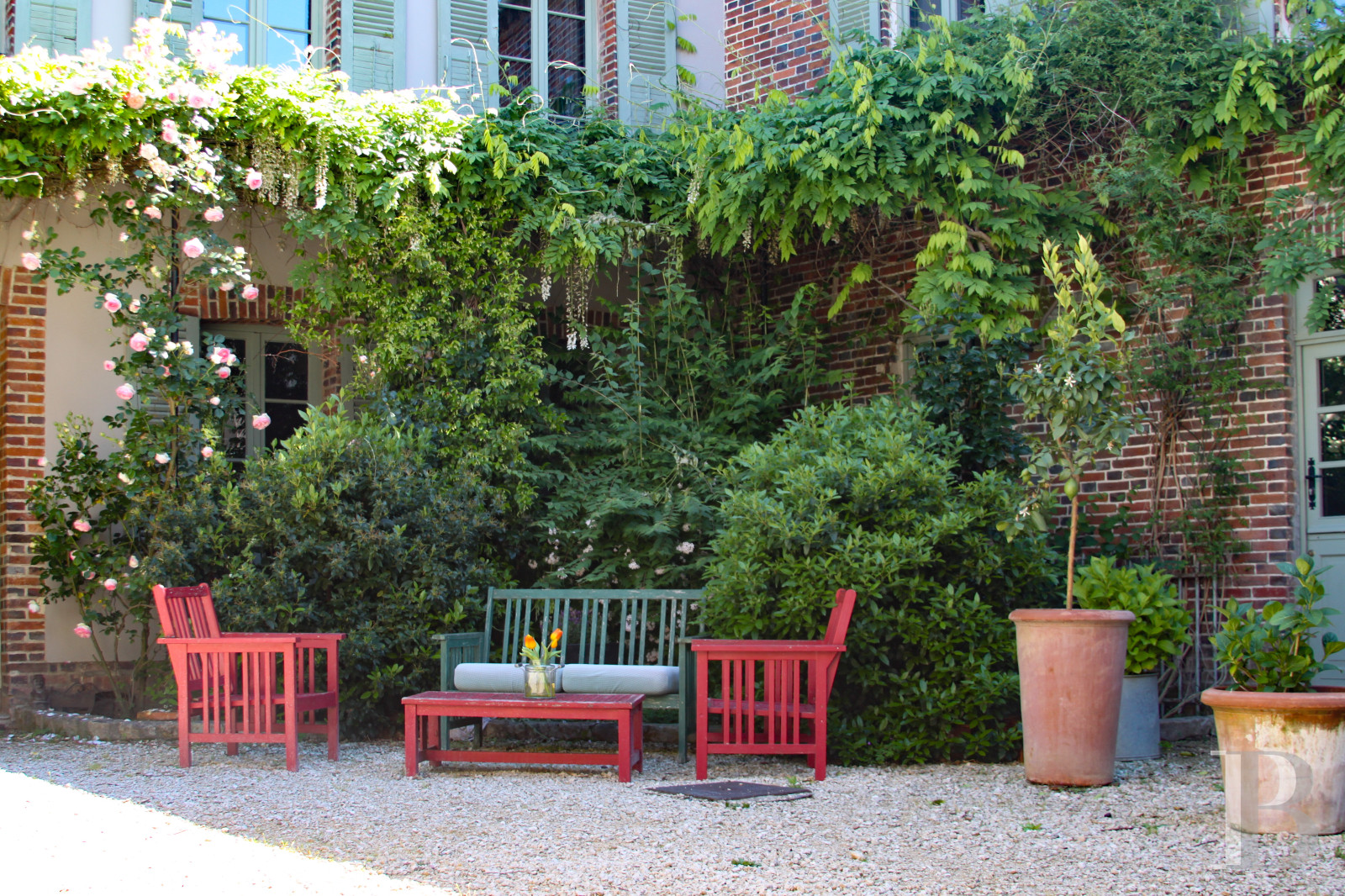
The buildings are topped with roofs made of traditional Burgundy flat tiles. The facades are punctuated by arched windows as well as doors with brick surrounds and fitted with louvred shutters in a shade close to almond green. A metal trellis stands against the facades, on which wisteria has grown, providing shade and flowers in the spring, while jasmine also grows along the structure. Flower beds and plants can also be found at the foot of the house’s elevations.
The main entrance is through a wooden carriage gate framed by solid brick pilasters accompanied by a separate pedestrian entrance. The house opens directly onto the gravelled courtyard as do the former stables, which still possess a dovecote.
Lower down in the plot, a footbridge leading to the garden crosses the River Vrin, which runs through the property before flowing into the River Yonne downstream. A private washhouse is sited on the waterway’s passage.
The residence is L-shaped and its three-storey, southwest facing main section boasts facades rendered in grey stone shades, while the secondary wing is made up of exposed brickwork. Light filters into the upper level through skylights and a series of small rectangular windows.
The buildings are topped with roofs made of traditional Burgundy flat tiles. The facades are punctuated by arched windows as well as doors with brick surrounds and fitted with louvred shutters in a shade close to almond green. A metal trellis stands against the facades, on which wisteria has grown, providing shade and flowers in the spring, while jasmine also grows along the structure. Flower beds and plants can also be found at the foot of the house’s elevations.
The house
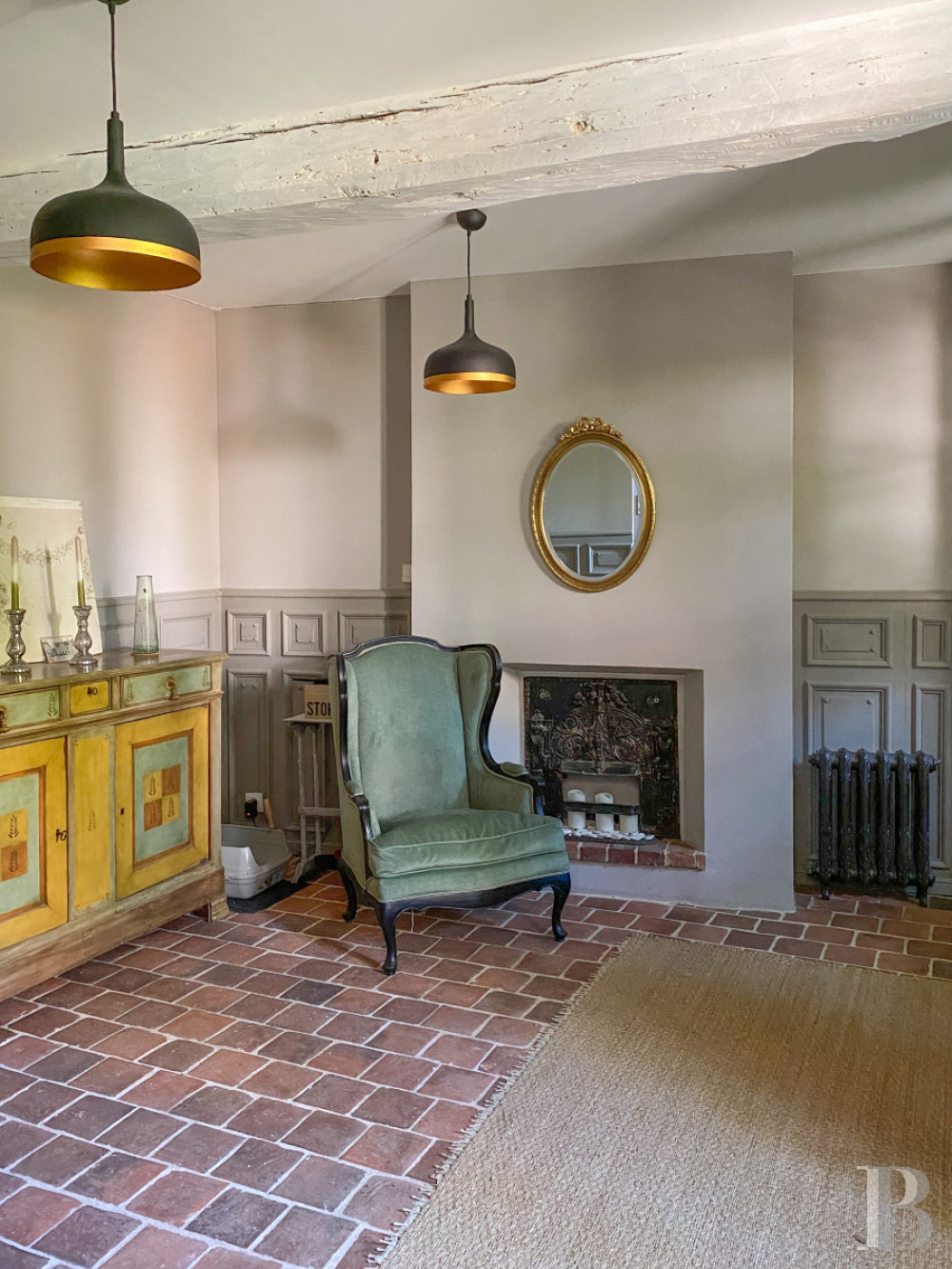
The two buildings have been fully renovated. As a result, they boast a modern appearance and contemporary comfort while preserving the original materials. Several entrances lead into different parts of the ground floor, while the many doors and French windows provide plenty of means of access to the courtyard and garden.
The ground floor
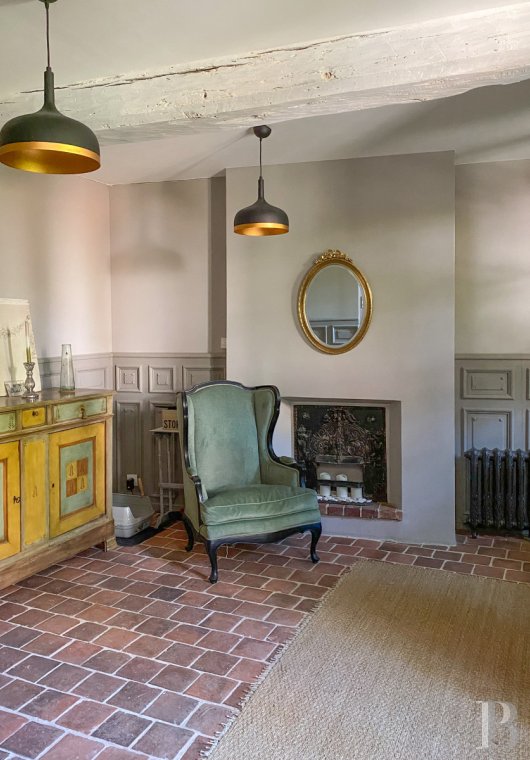
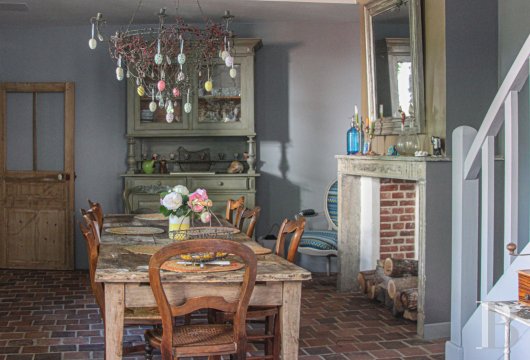
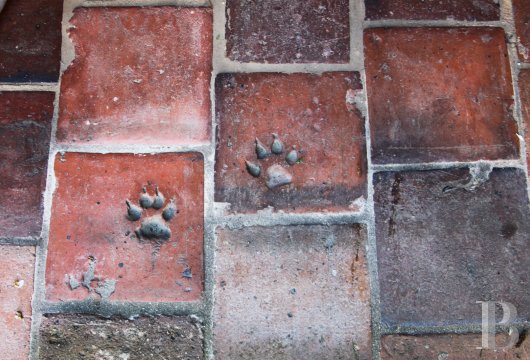
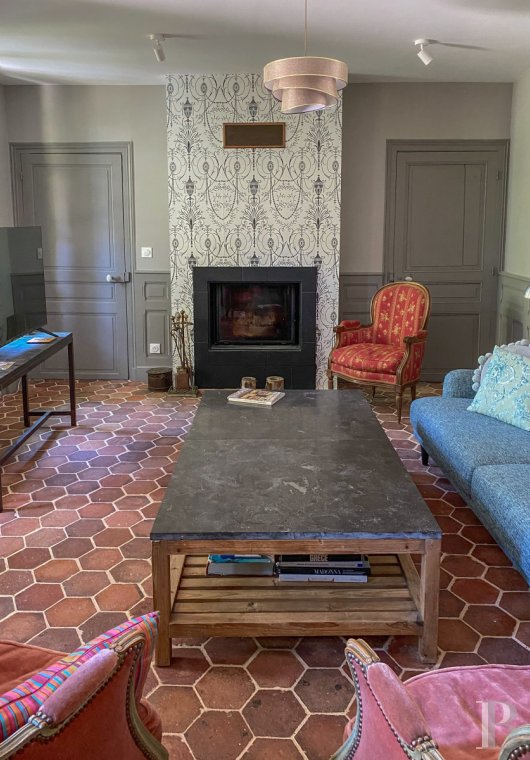
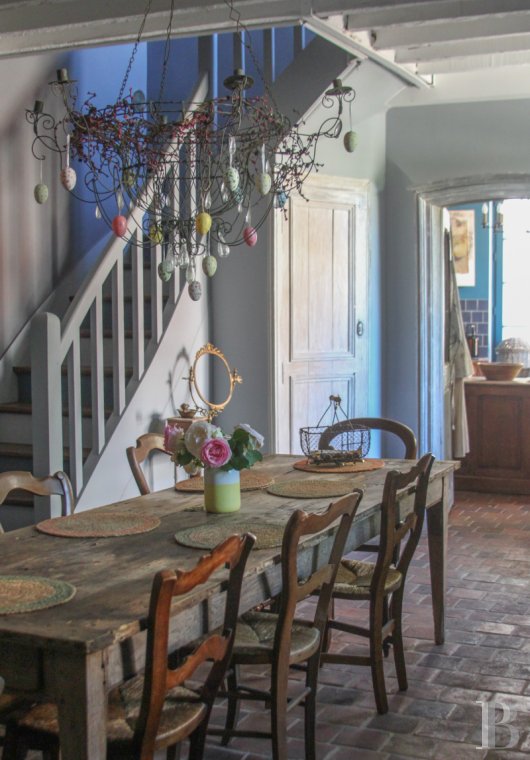
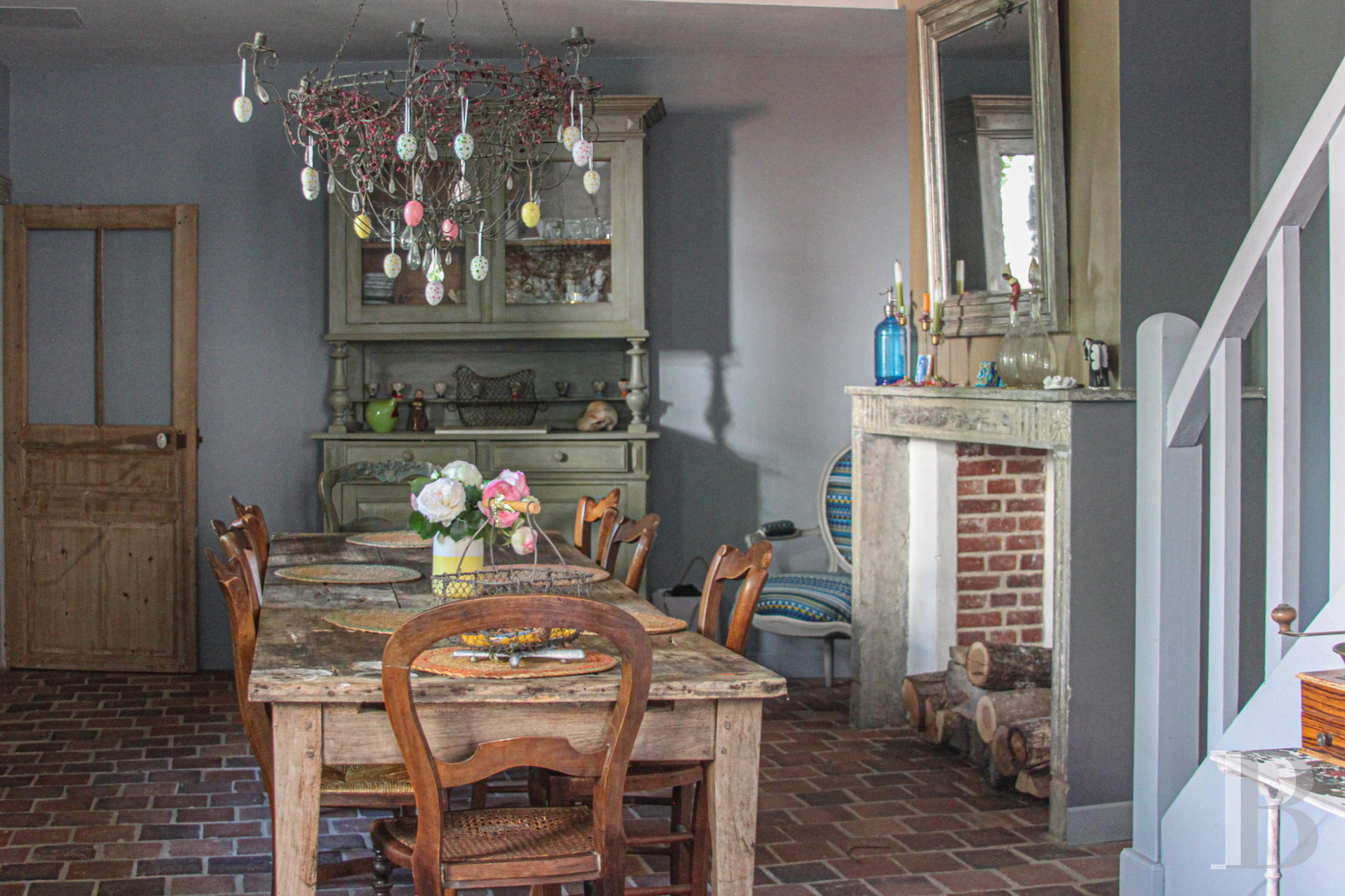
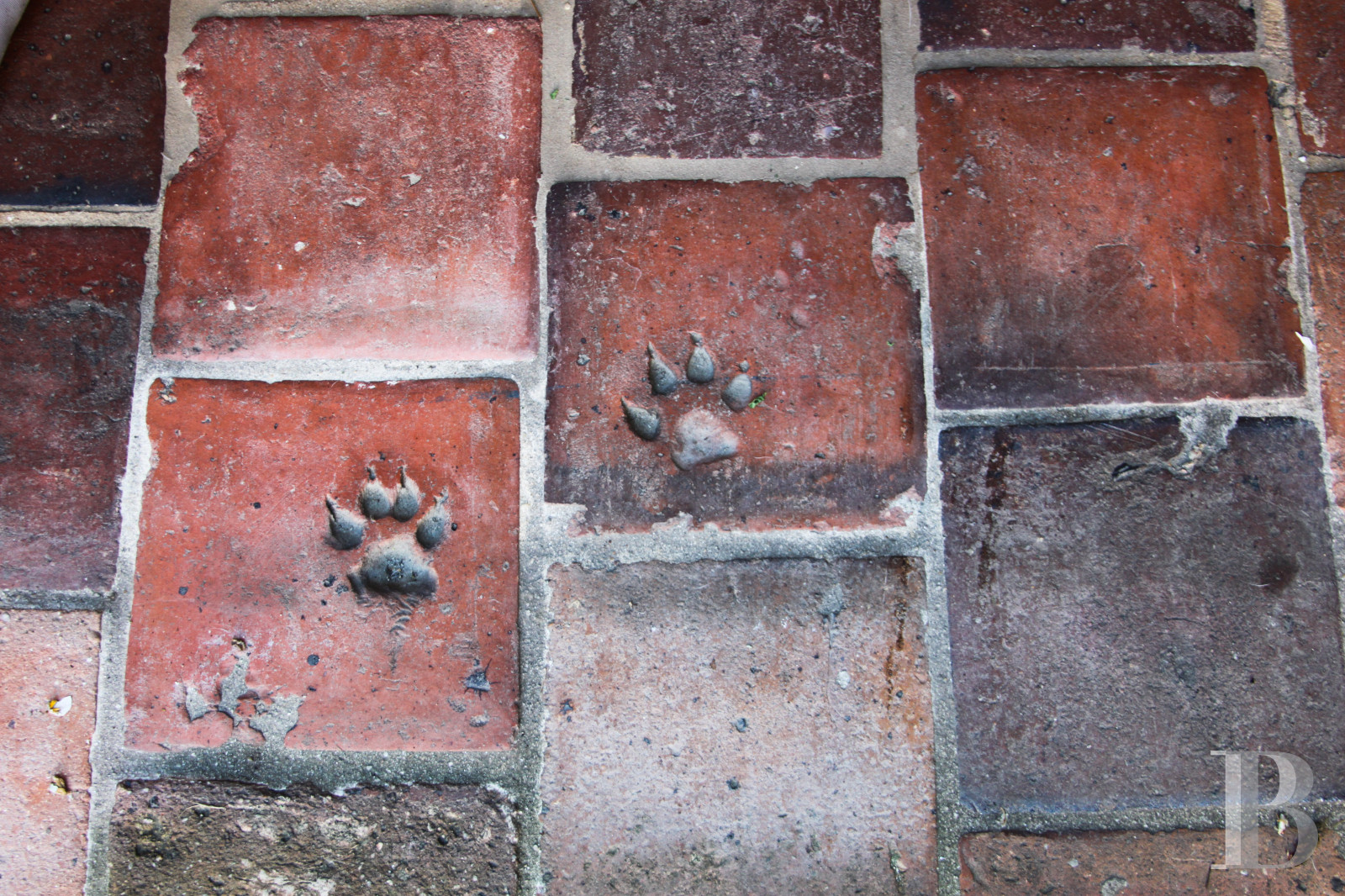
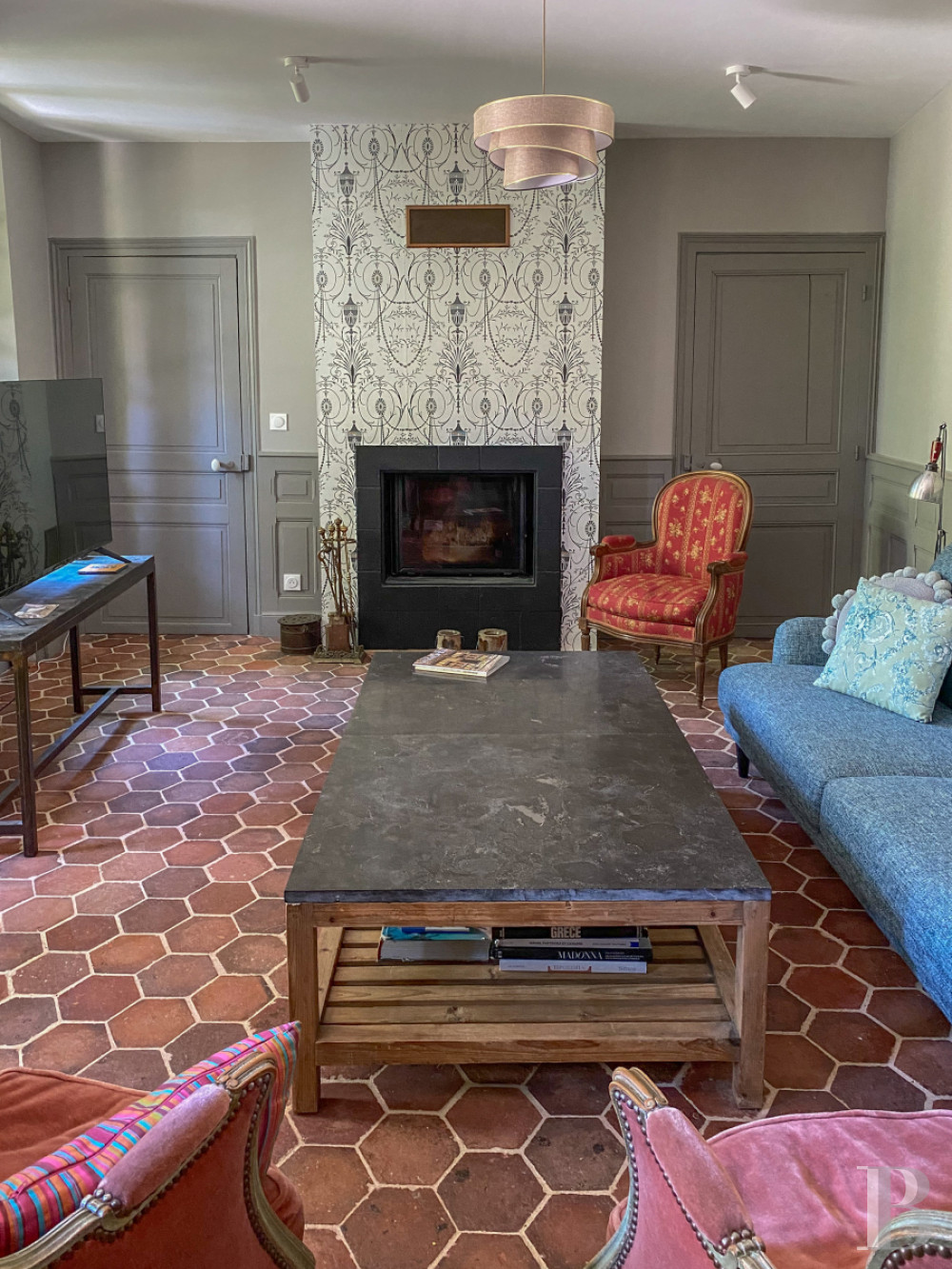
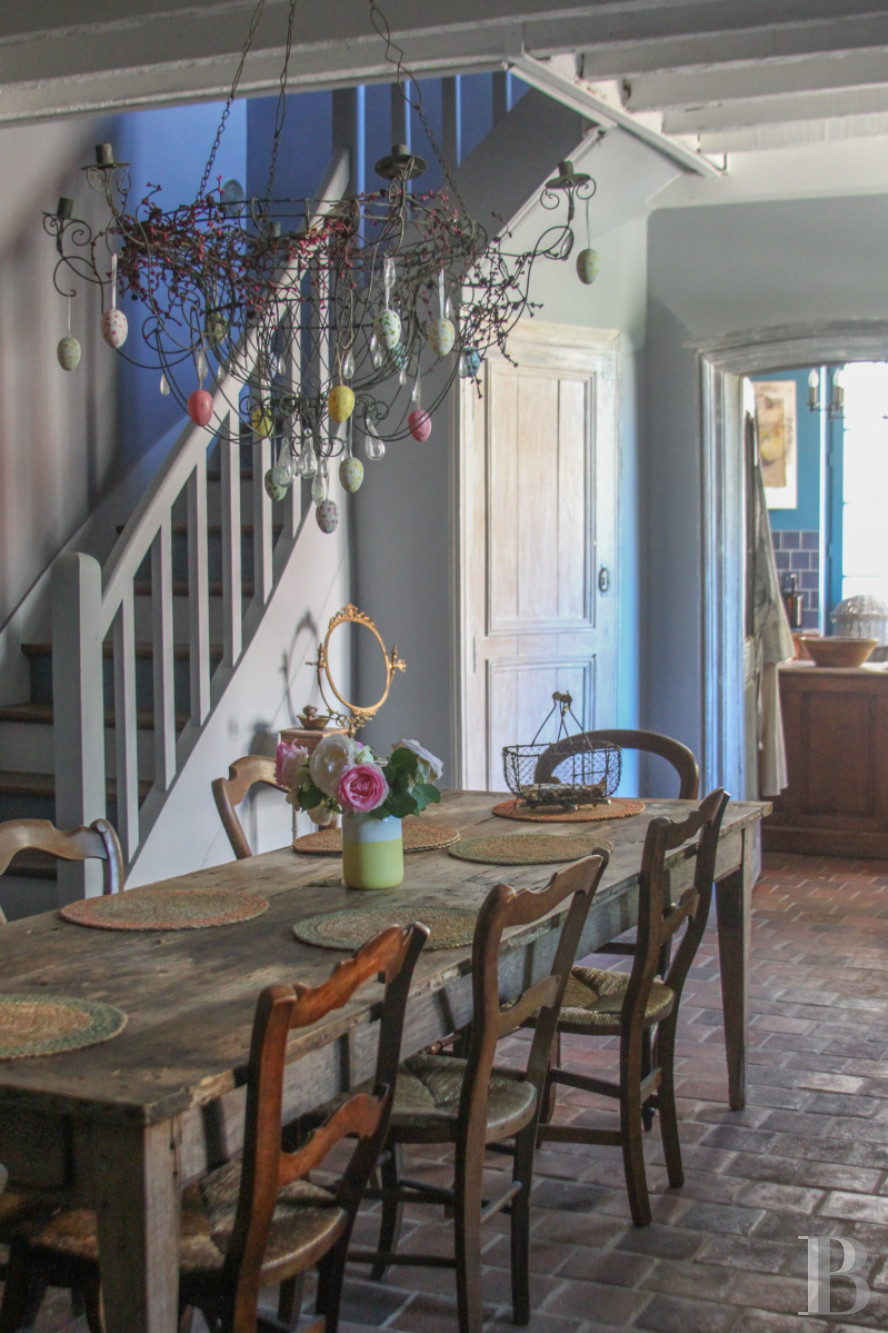
The entrance hall leads to the various living rooms, on one side and the other, to the wooden staircase that climbs upstairs and to the cellar. To the left, a hallway leads to a lounge with a wood-burning insert and then to a room currently used as an office that could be converted into a bedroom, with an en suite shower room and separate lavatory. Between the two rooms, a second staircase climbs to a self-contained bedroom upstairs. To the right of the entrance, in the wing, there is a vast dining room followed by the kitchen, both of which open onto the courtyard via glazed doors. A lavatory can be found beneath the staircase leading upstairs. The floors on this level are made up of square or hexagonal period terracotta tiles.
The first floor
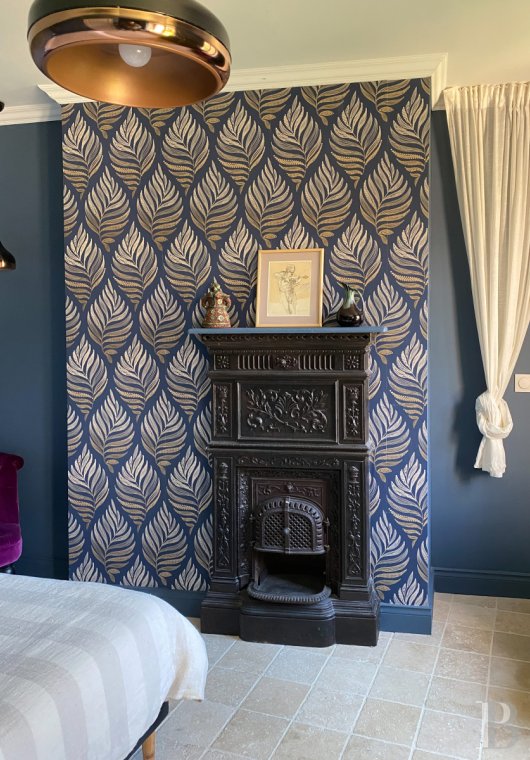
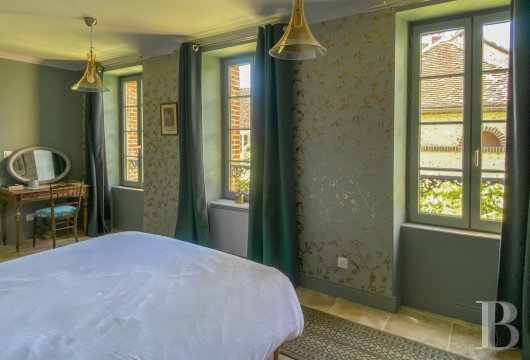
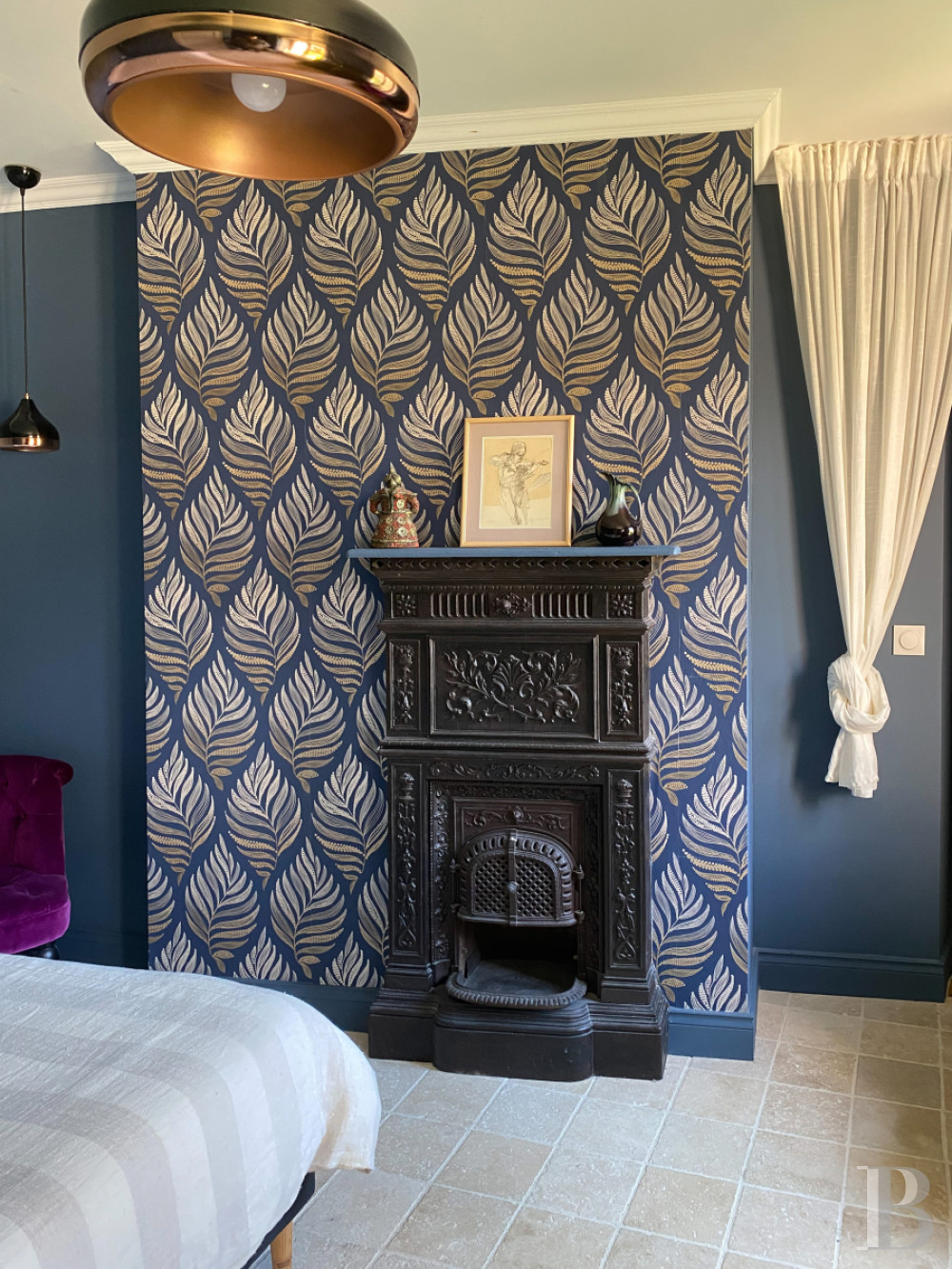
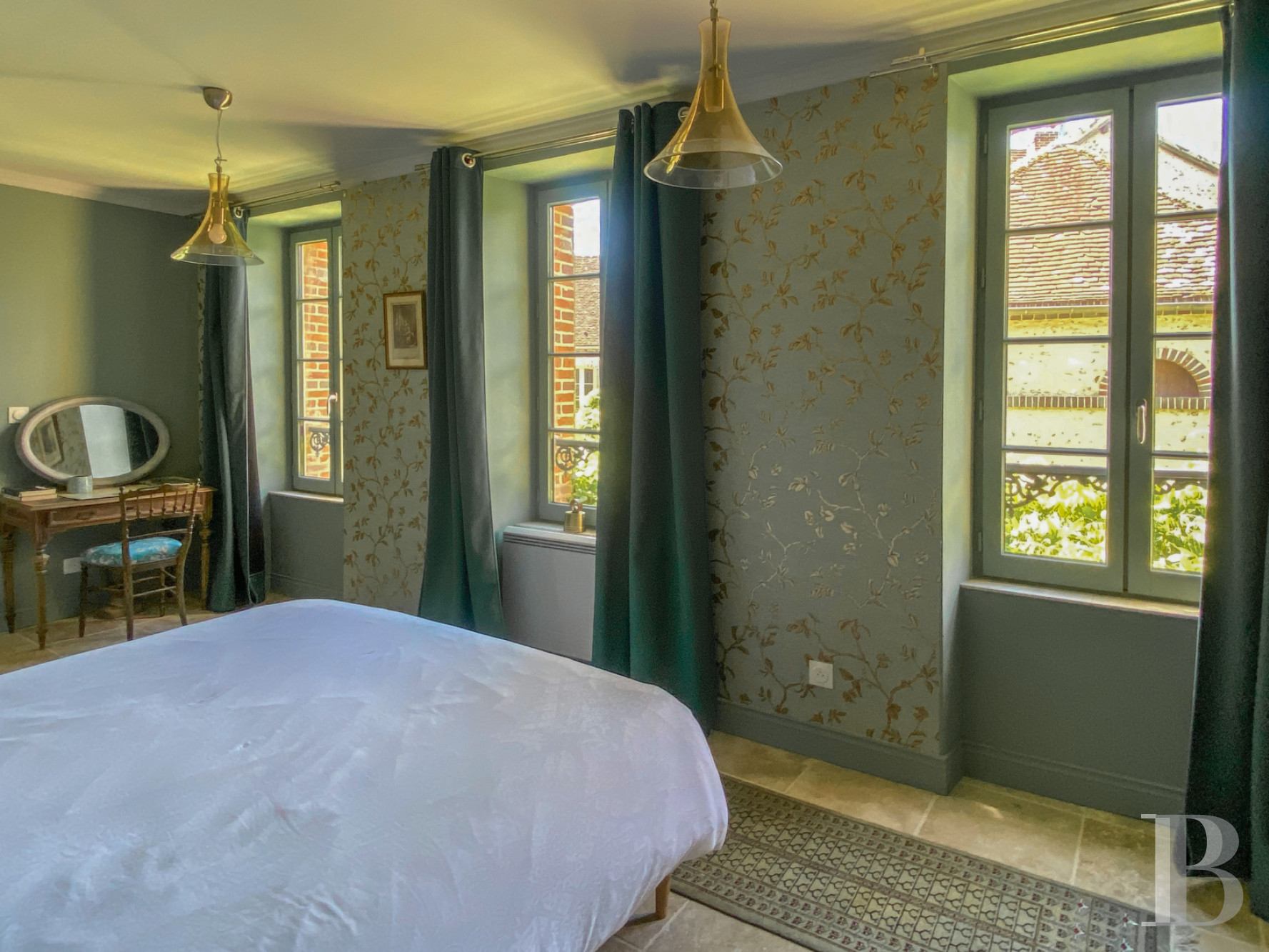
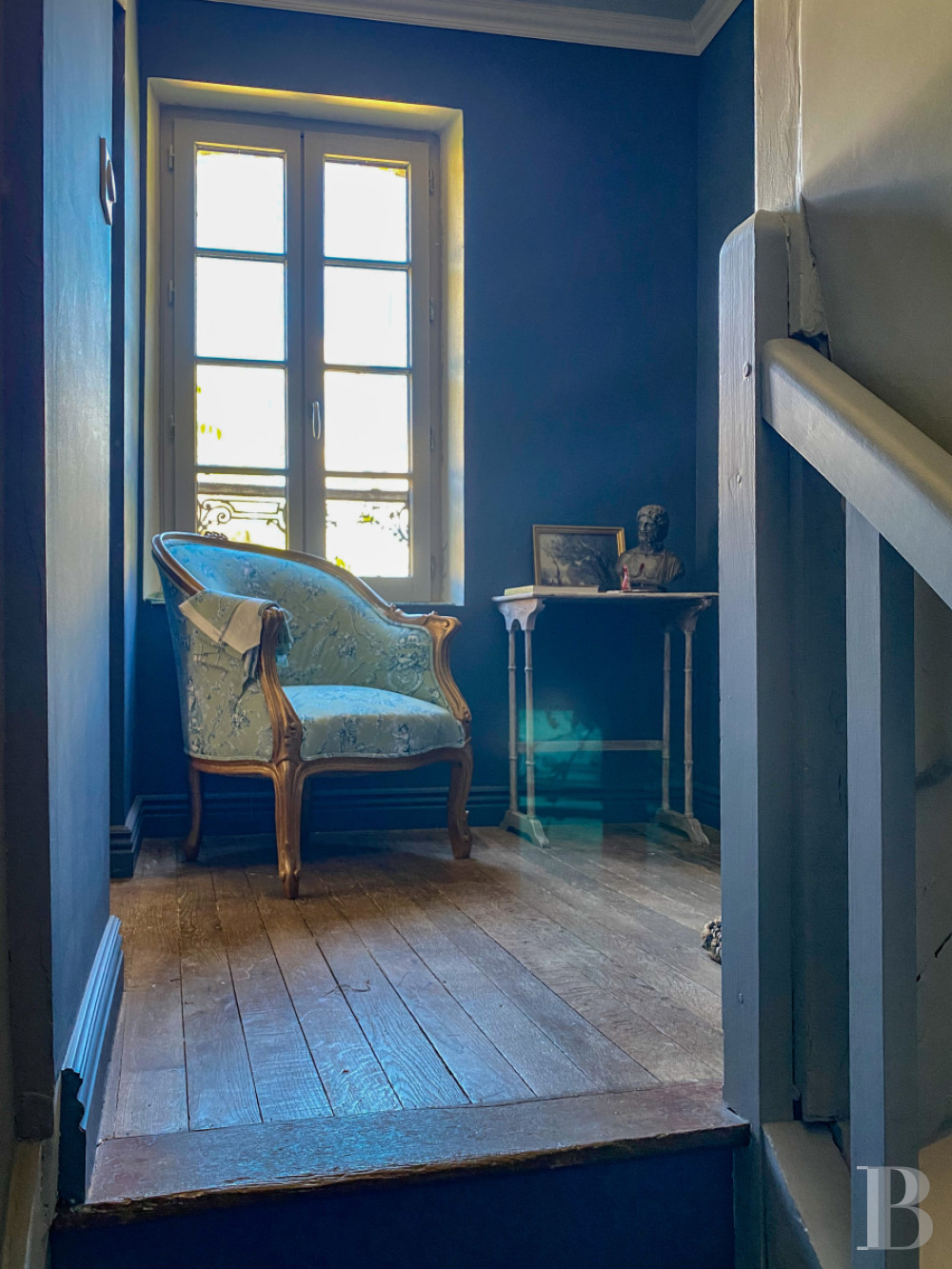
In the main section, there are three bedrooms, two of which can be reached from the landing at the top of the wooden central staircase. The third, self-contained bedroom can be reached by the staircase in the east of the building. Each of the three bedrooms possesses an en suite shower room and a separate lavatory, while the floors are paved with travertine stone slabs.
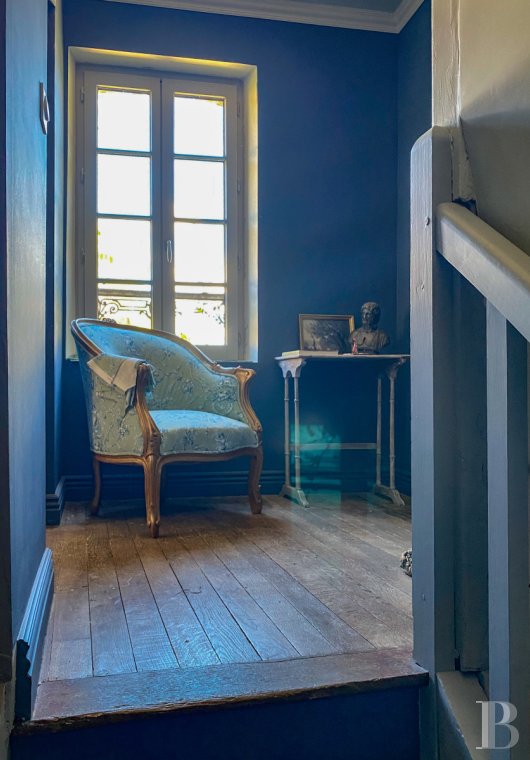
In the wing, a landing paved with terracotta tiles leads firstly to a room that can be used as an office or a workshop and then to the fourth bedroom on this level, which also boasts an en suite shower room. Thanks to the large windows on this level, it is bathed in light.
The attic
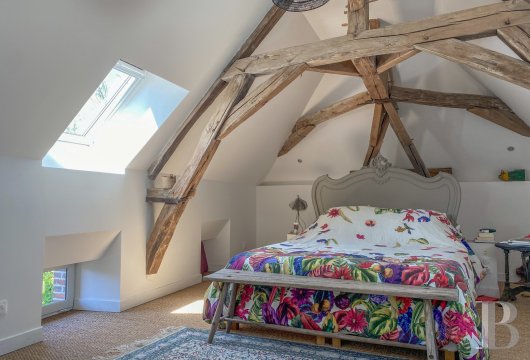
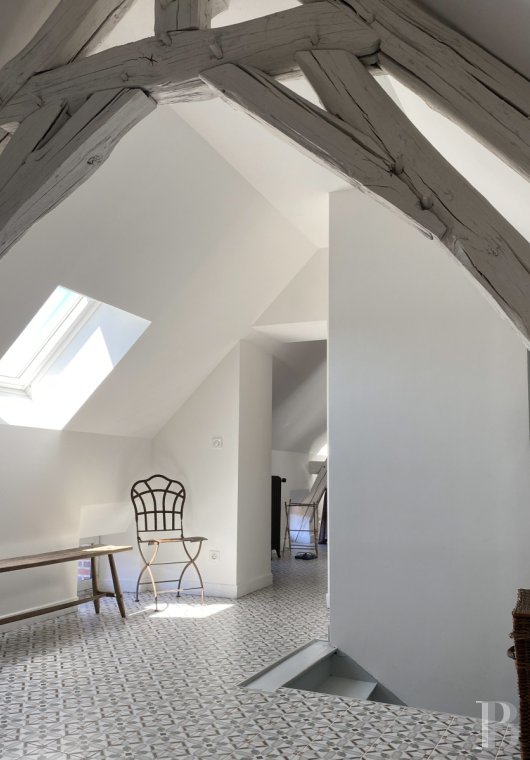
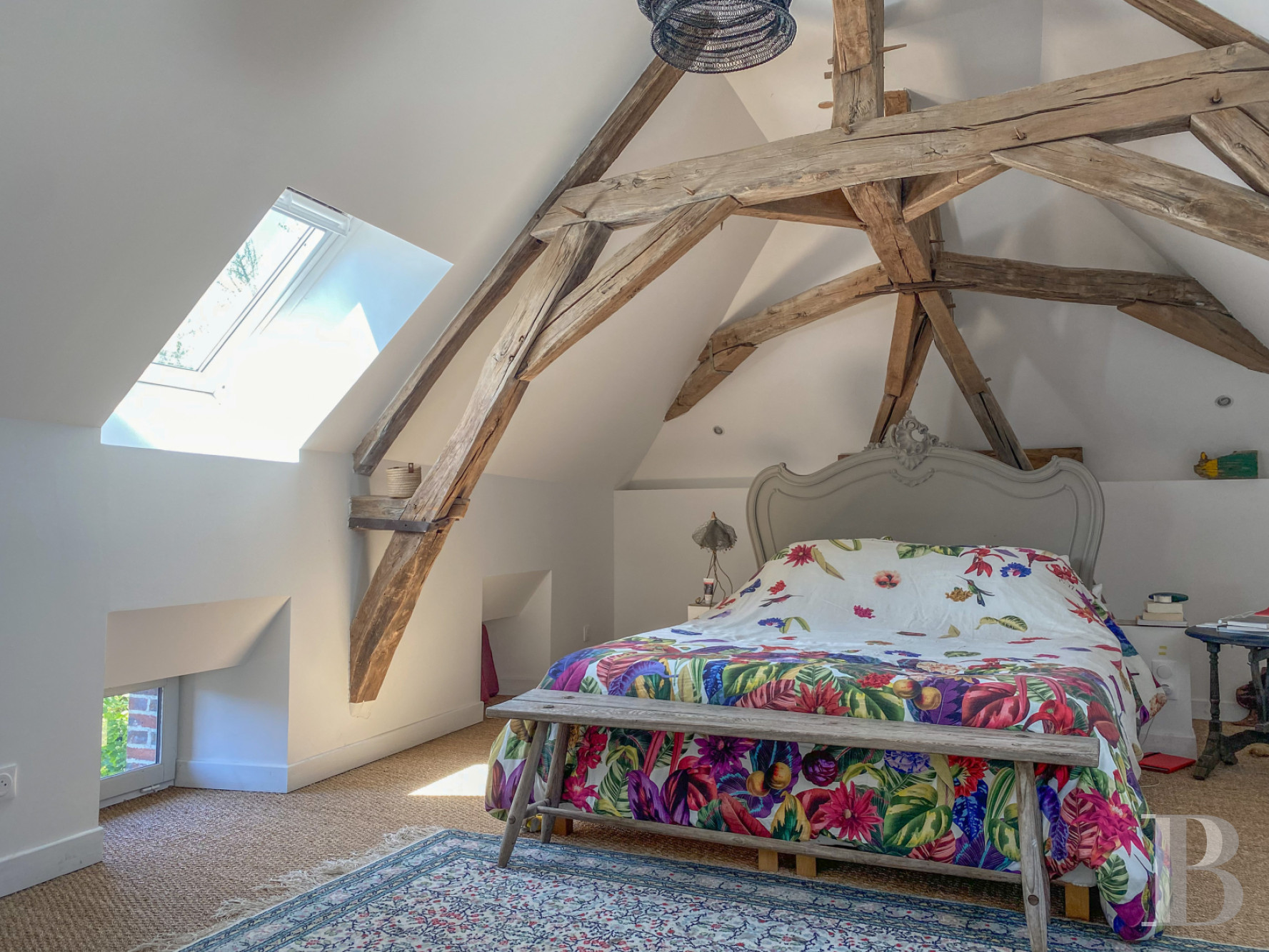
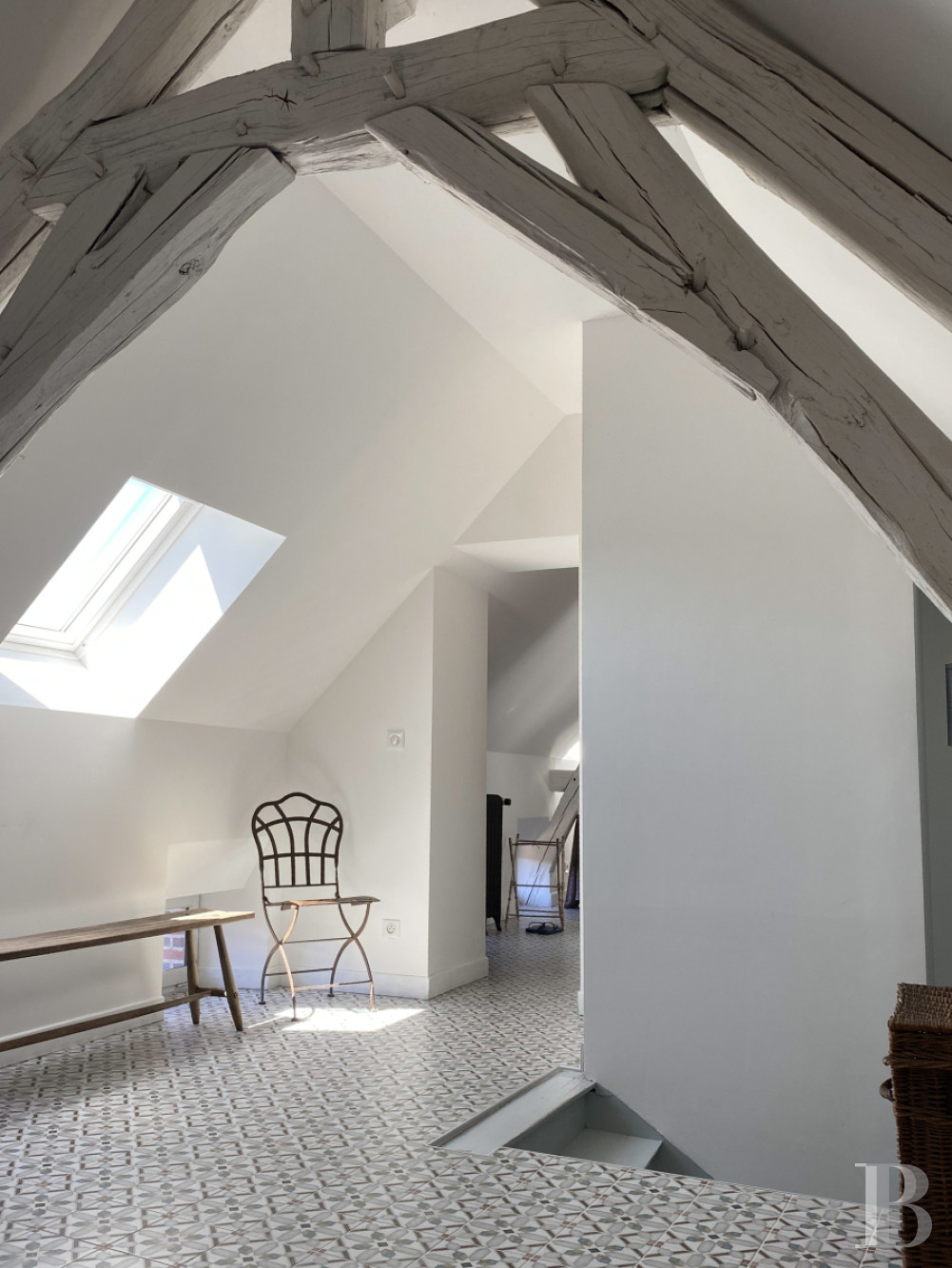
The attic level in the main building, whose ceiling climbs right up to the roof ridge, has been converted into a living space designed as a self-contained apartment. At the top of the central staircase, a vast open volume includes a space that could serve as a living room or storage space, on one side, and an open-plan kitchen with a dining area on the other. There is also a shower room with a lavatory. This level is generously bathed in light, which is reflected by the light-coloured and traditionally patterned floor of cement tiles that is complemented by the white-painted exposed roof frame. The large sized bedroom possesses seagrass flooring which combines nicely with the unfinished wood of the exposed roof frame.
The former stables
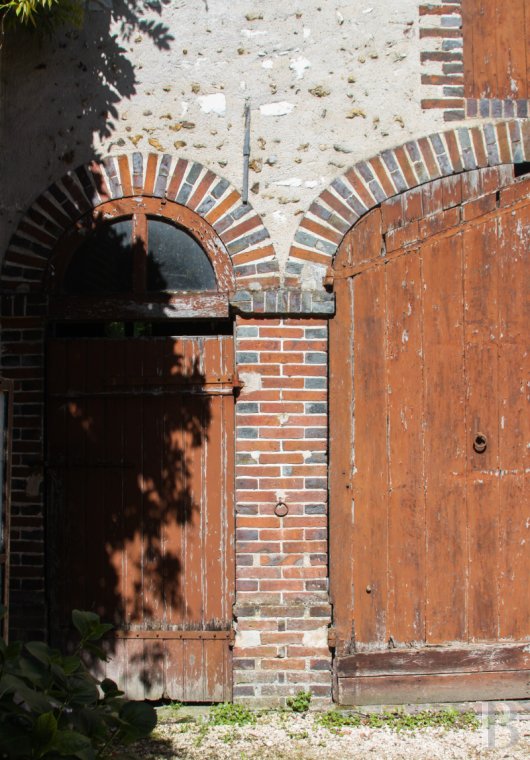
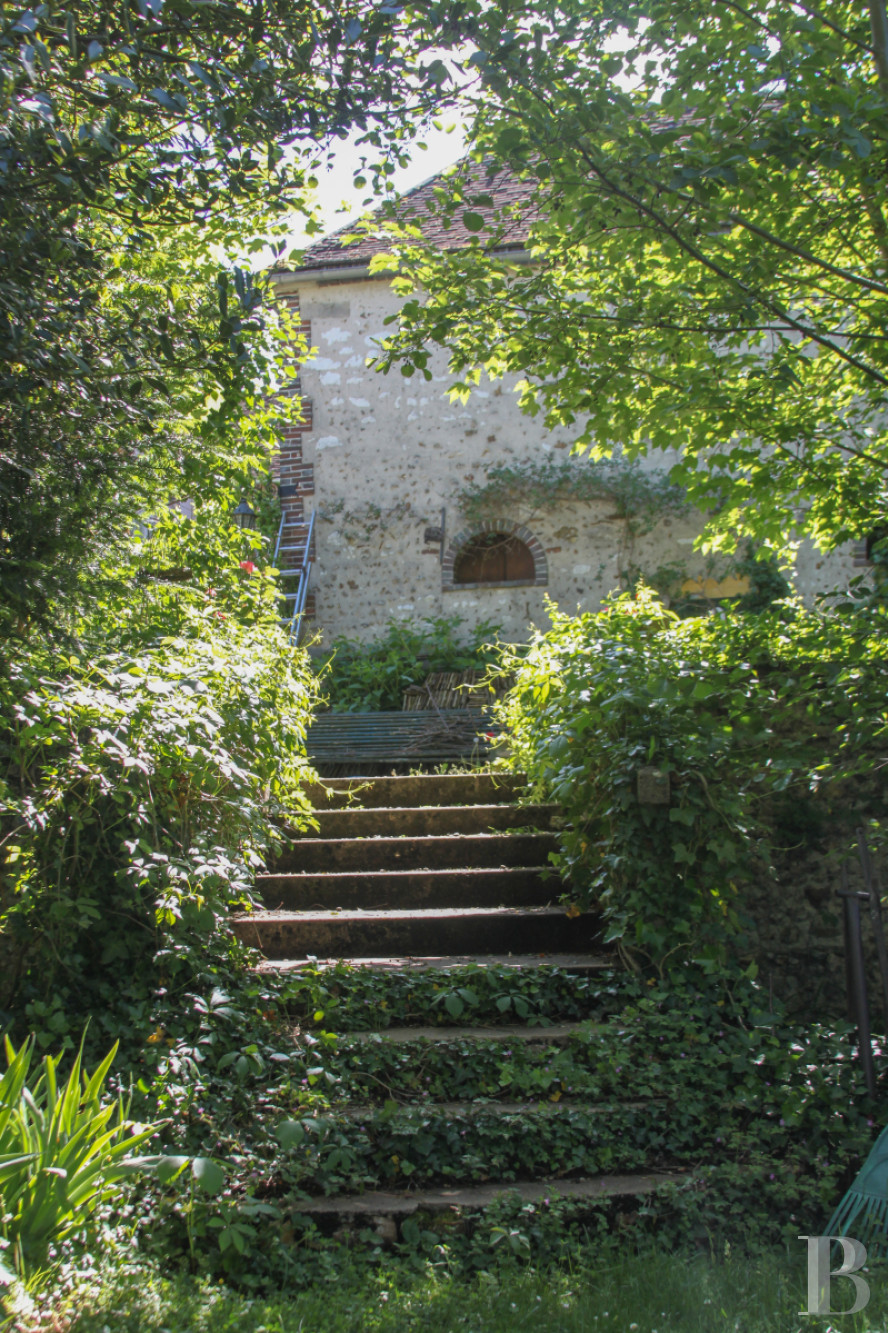
This edifice is made of rendered stone and is also topped by roof of flat tiles. The architectural elements on its facade are underlined by brickwork, laid out around the imposing arched door. They include a garage with capacity for one vehicle, a storeroom and then, following a series of stone steps, a vast, vaulted cellar. A staircase climbs from the garage to the attic level, which overlooks the courtyard, from where the dovecote can be reached. The flooring is made from period tiles.
The courtyard and garden
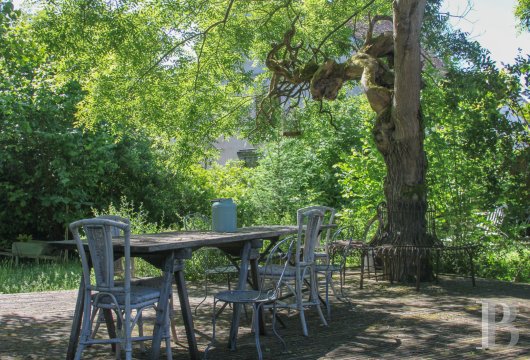
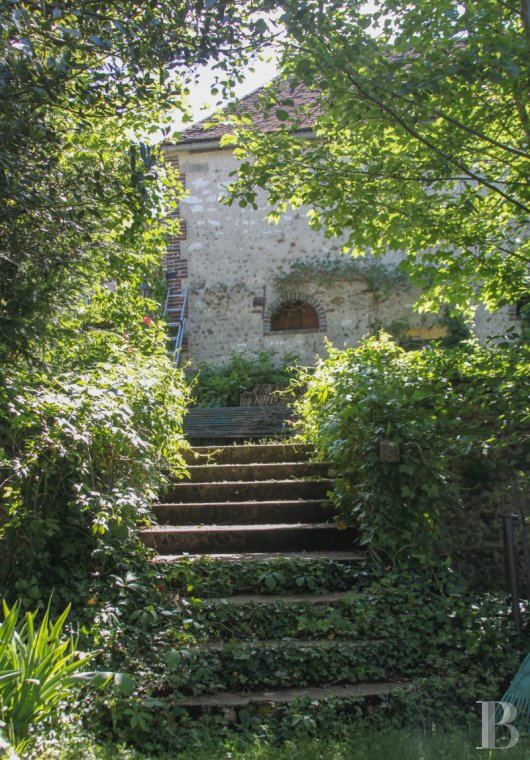
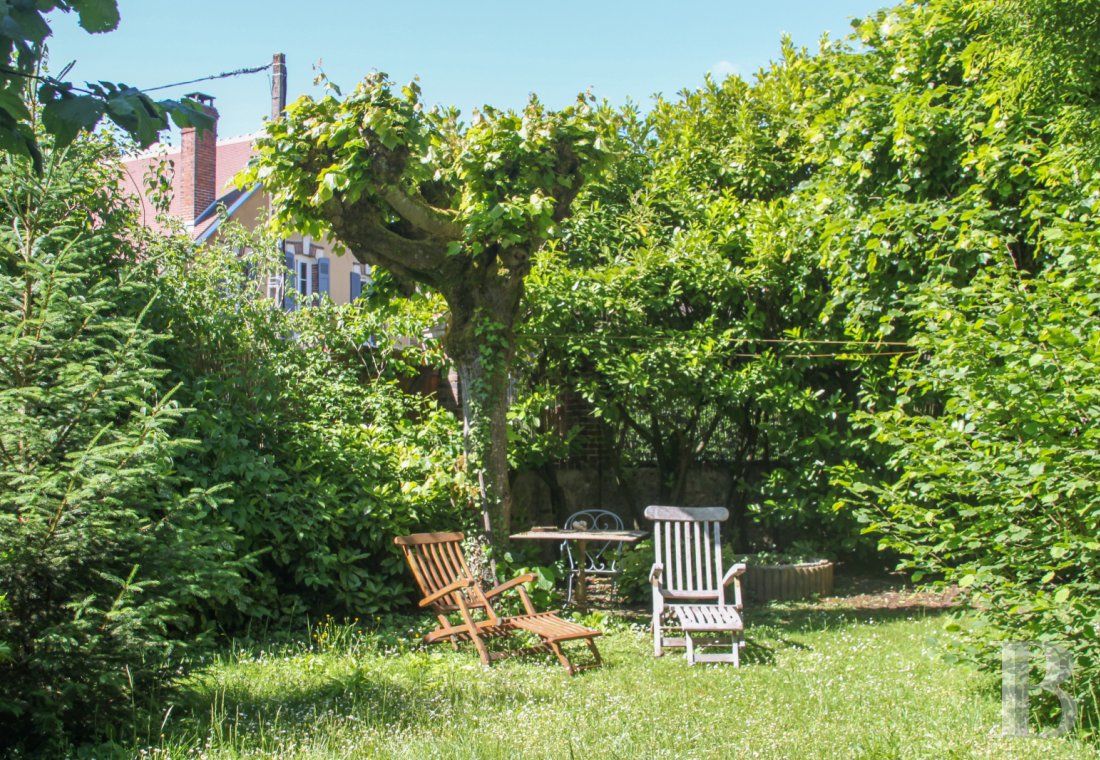
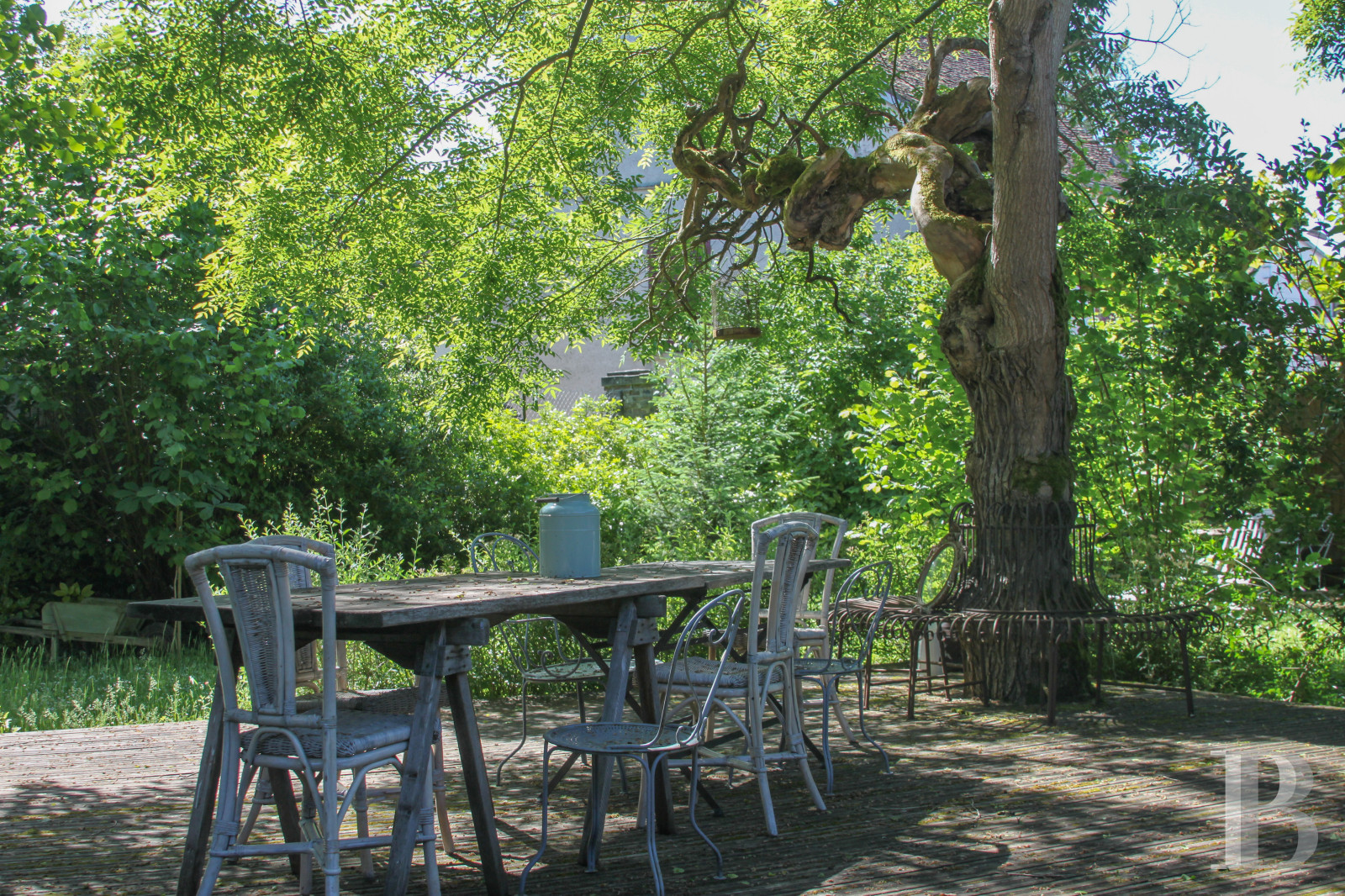
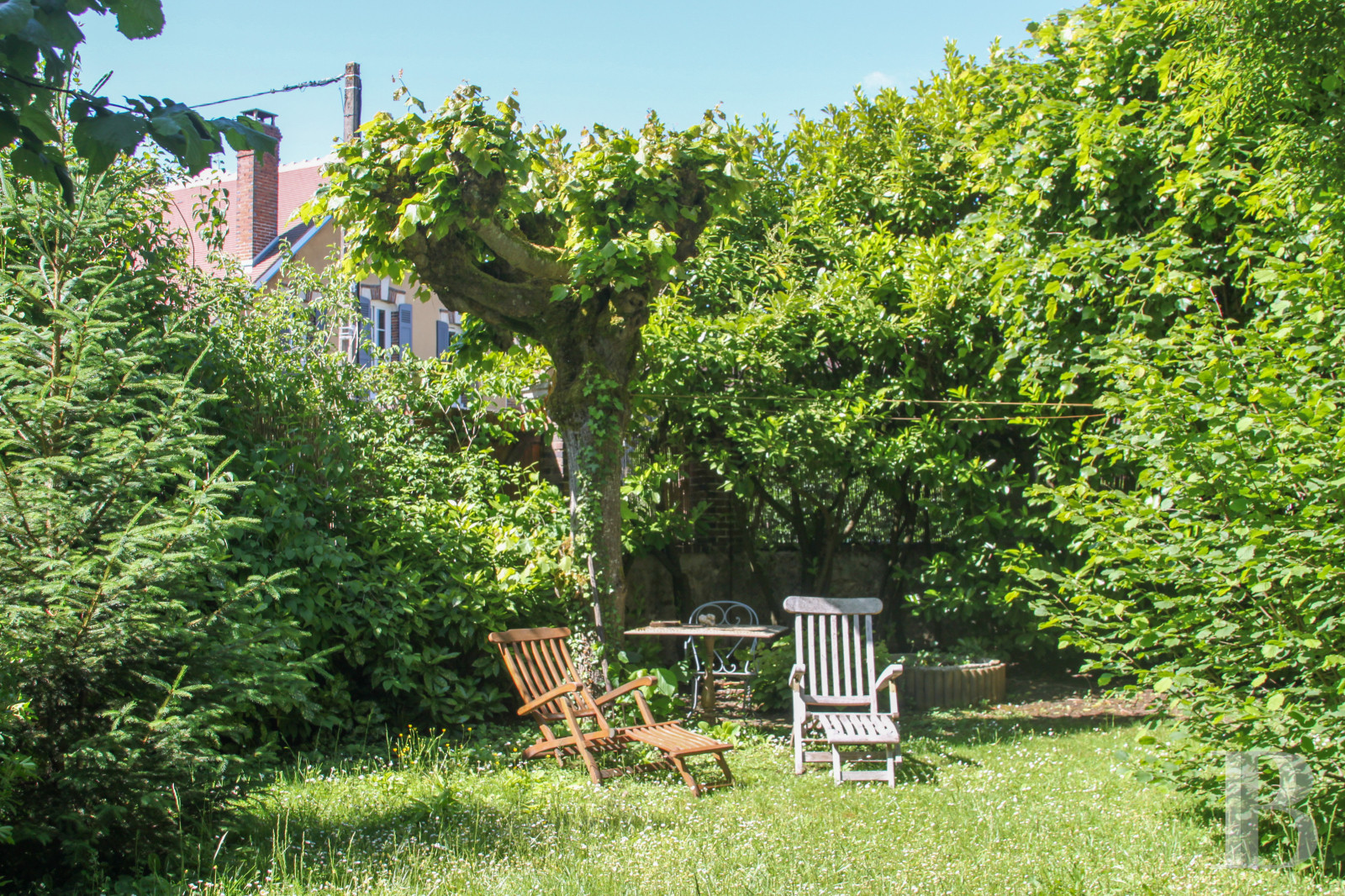
They form a natural extension of the interior. The gravelled courtyard is dotted with many plants, while the green and tree-lined garden boasts a variety of types, including acacia, lime and a ginkgo. The presence of the River Vrin running through the property before flowing into the River Yonne provides the place with a unique ambiance. The water is only a few paces away, after descending the several steps leading to the former washhouse. Outside the garden’s walls, the communal washhouse serves as a reminder of the historical link between the village and the waterway.
Our opinion
This former coaching house is an important and historically symbolic property in the village in which it is located and has lost none of its coherence and authenticity. The stables, dovecote, footbridge crossing the River Vrin and the washhouse make it a lively property, closely linked to water and to the village’s history. The period materials have been skilfully preserved by the renovation, while providing modern comfort but not distorting the residence’s original spirit. The many doors and windows opening onto the courtyard and garden provide continuity between the interior and exterior, making this a select address, suitable for use as a family home or for receiving guests. It could also be used as a reception venue or a rented out as holiday cottage, thanks to the possibility of dividing the house into a series of separate spaces.
500 000 €
Fees at the Vendor’s expense
Reference 925176
| Main building floor area | 250 m² |
| Outbuildings floor area | 45 m² |
| Land registry surface area | 840 m² |
French Energy Performance Diagnosis
Information on the risks to which this property is exposed is available on the website: www.georisques.gouv.fr
Share


NB: The above information is not only the result of our visit to the property; it is also based on information provided by the current owner. It is by no means comprehensive or strictly accurate especially where surface areas and construction dates are concerned. We cannot, therefore, be held liable for any misrepresentation.