



A discreet, renovated 13th-century dwelling with six bedrooms, a court, a garden, a pool
and a converted storehouse, nestled in a small town 20 minutes from the city of Avignon
and a converted storehouse, nestled in a small town 20 minutes from the city of Avignon
Avignon,
GARD
languedoc-roussillon
84000
FR

Location
The property lies in the historical centre of a town in France’s beautiful Gard department. This town has fewer than 4,000 inhabitants. It offers a wealth of built heritage, including four listed monuments: a chateau, a church, a grand townhouse and, near the property, a former Knights Templar commandery. The well-preserved town also has a remarkable natural backdrop, with a Natura 2000 conservation zone (Costières nîmoises) and two natural zones listed for their ecological, faunistic and floristic interest. The famous winegrowing areas of Lirac and Tavel, with their protected designation of origin accreditations, are nearby too. The Mediterranean Sea is less than 40 minutes away by car. And the high-speed train stations in the local cities of Avignon and Nîmes are less than 25 minutes from the property. Lastly, there are airports in the cites of Nîmes, Montpellier et Marseille, all a short distance from the property.
Description
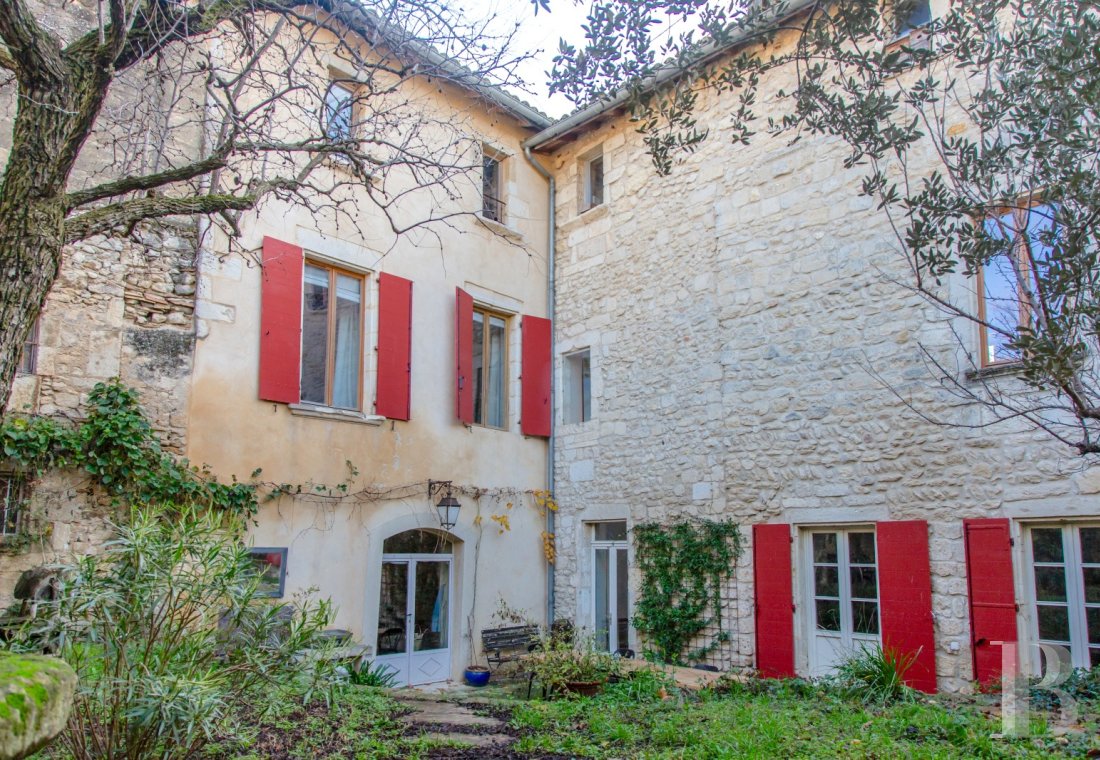
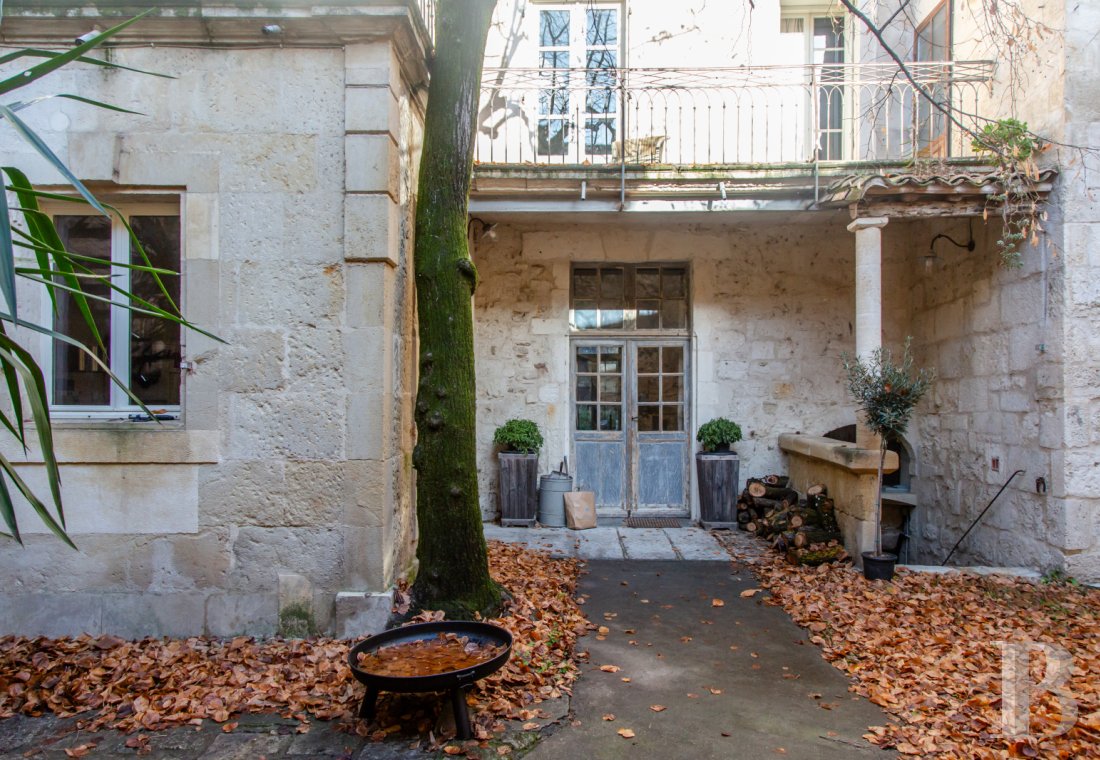
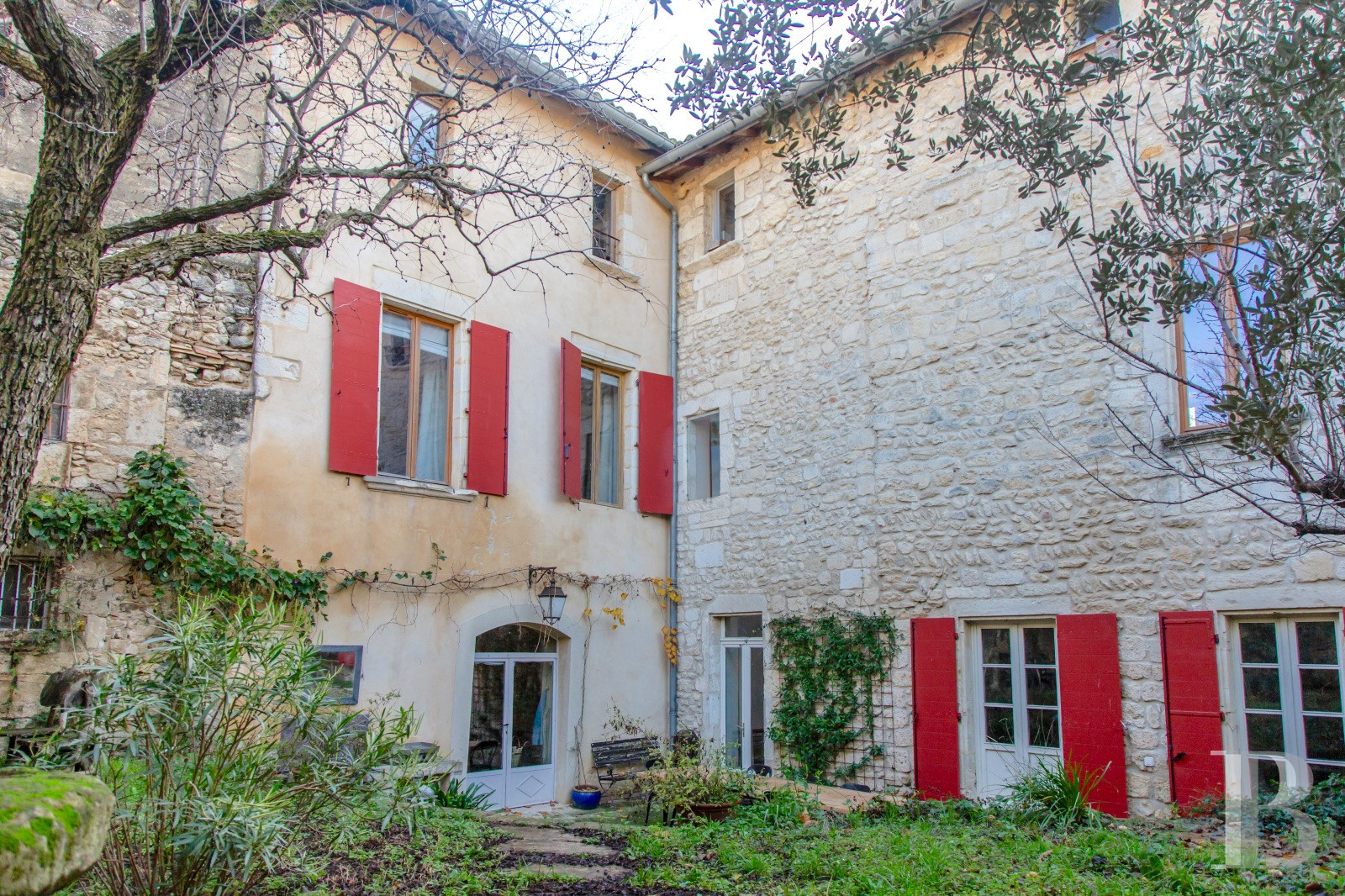
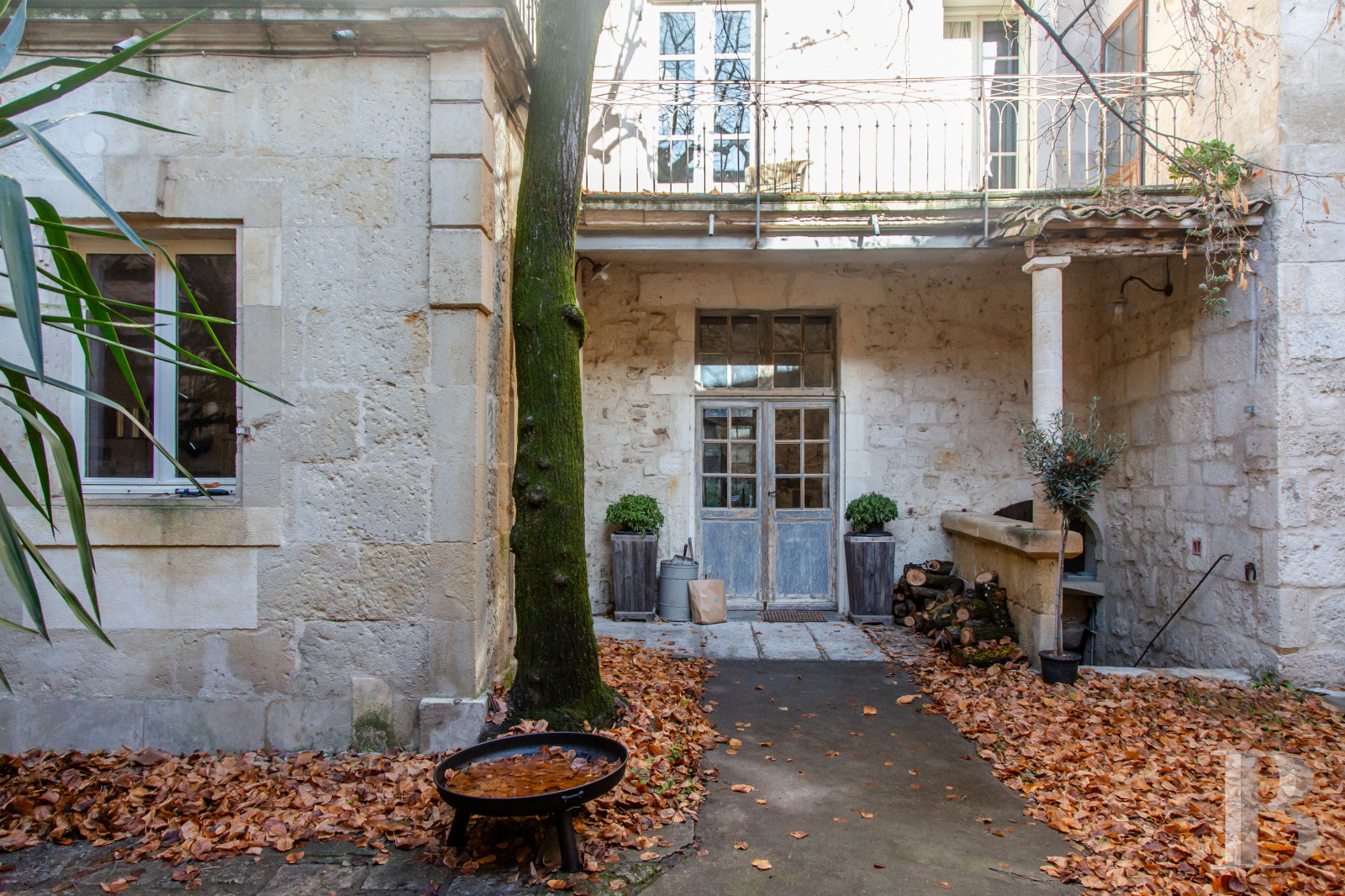
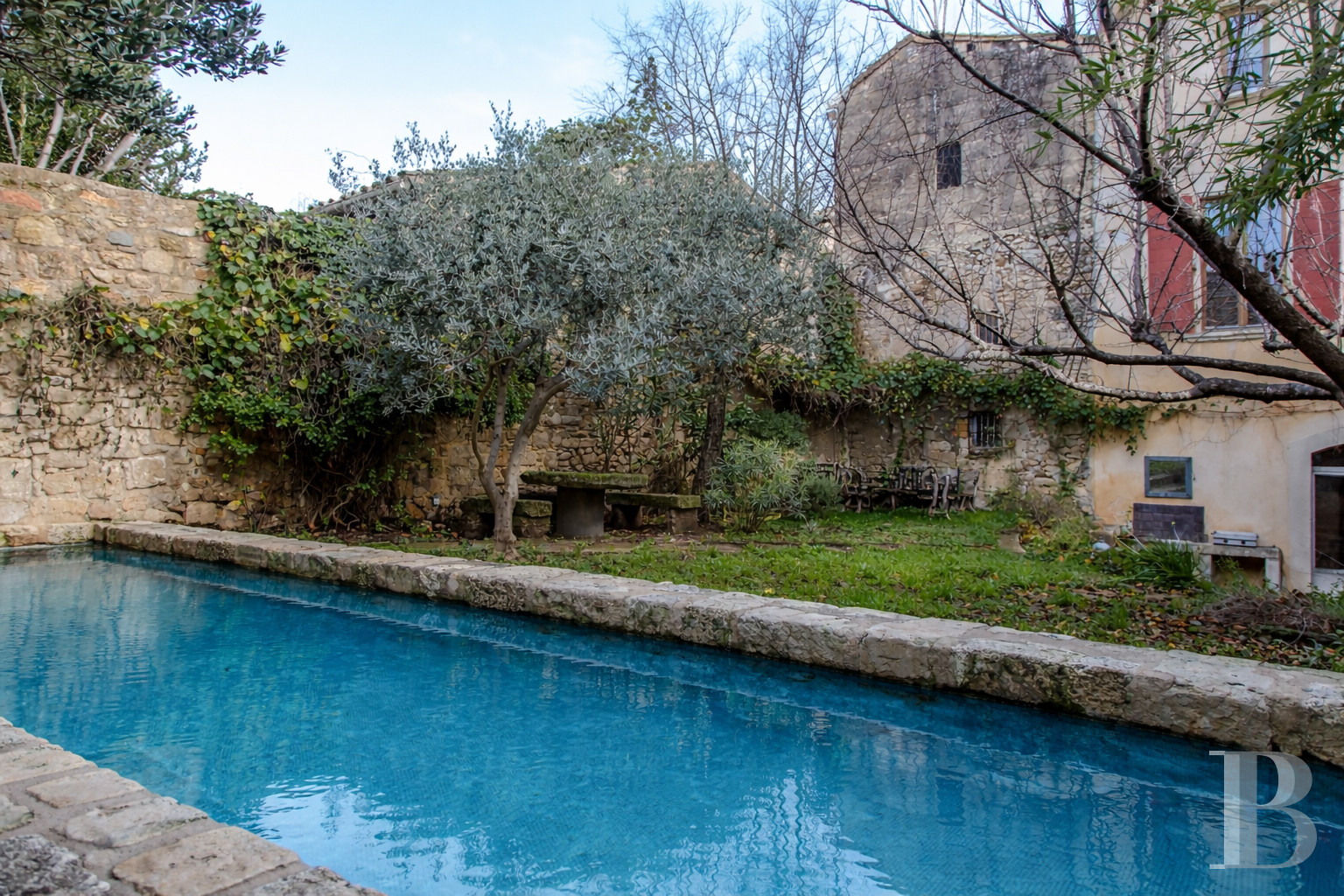
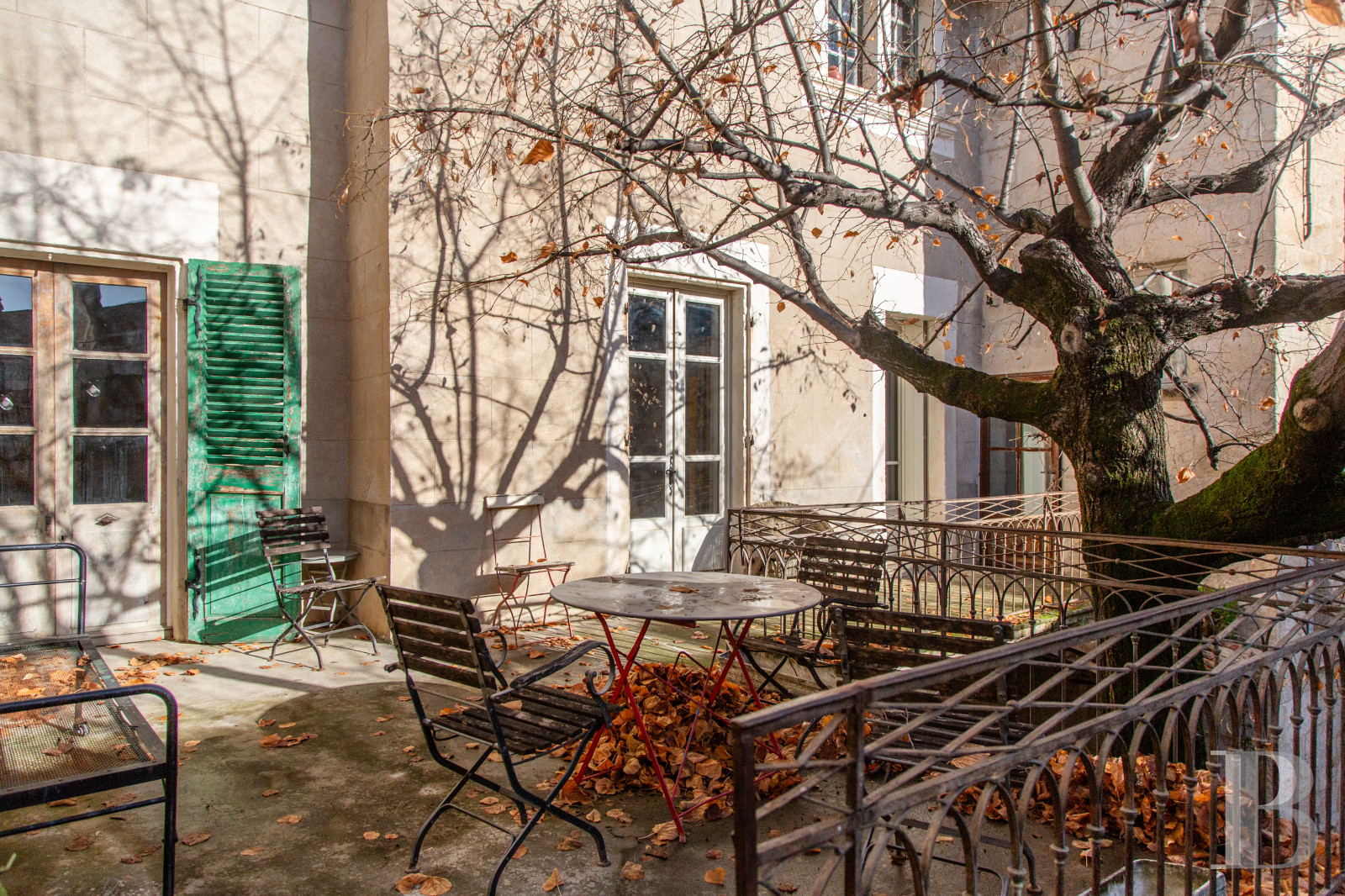
The house stands on an enclosed plot that covers around 500m². You reach it from one of the calmest streets in the town centre. The property has its own garage. There is a main house and, at a right angle to it, a former straw storehouse, with a separate door leading out into the entrance court. Part of this old storehouse was recently transformed into a vast self-contained apartment with two bedrooms. The buildings offer a total floor area of almost 360m². A court on the south side and a garden on the north side frame this enclosed plot, which enjoys absolute privacy. A tall tree stands in the entrance court, which has a cobblestone path of local pebbles. This court provides the perfect buffer between the street and the dwelling. A raised walkway, added later, looks down at the terrace. This raised walkway is edged with a plainly designed wrought-iron balustrade. On the north side, the house leads out into a garden with a discreet swimming pool set in a raised section at the top of broad steps. These broad steps, which recall the terraced seating of an amphitheatre, separate a tree-dotted section from the paved terrace lower down. The house was probably built in the late 13th century or early 14th century, where old outbuildings belonging to the Montfrin Knights Templar commandery once stood. The Templars settled here in 1169 and stayed here until the Order of the Knights Templar was disbanded in 1312. The commandery and its annexes were then transferred to the Order of the Knights Hospitaller. On these remnants, which have escaped history’s twists of fate, including possible Saracen forays, a dwelling was built at the end of the 18th century, upon the medieval ground-floor rooms and the tunnel-like vaulted cellar. The property has kept the scale of the Knights Templar structure, as well as many remarkable architectural features, including fragments of stone-mullioned windows, the vaults of the lower rooms and medieval lintel keystones. To ensure comfort and insulation, modern wrought-iron window frames, crafted finely, have tastefully replaced old ones here and there. The windows are fitted with traditional wooden shutters that are painted red, which is a widespread tradition here in France’s Languedoc province.
The main house
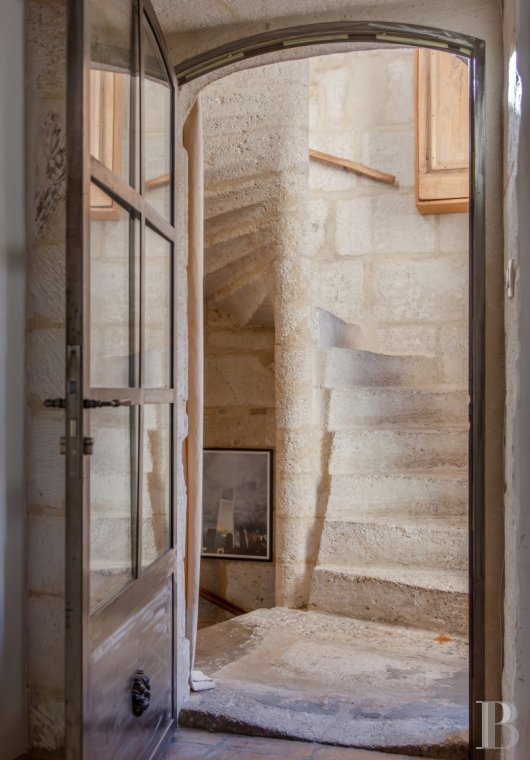
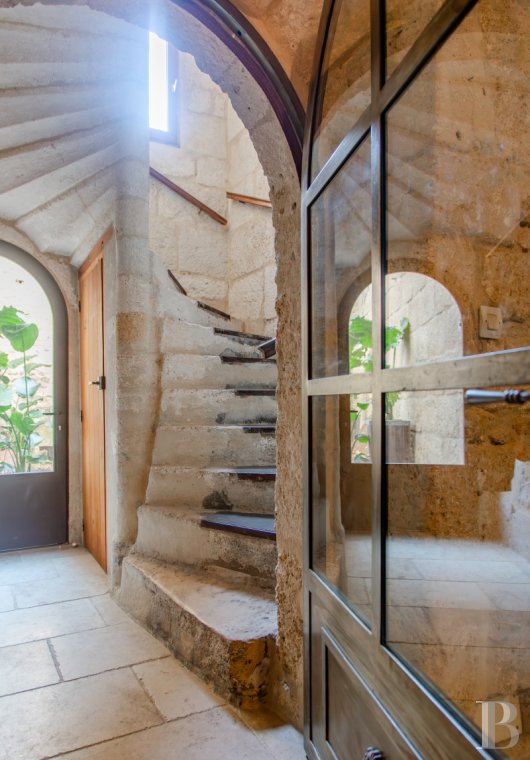
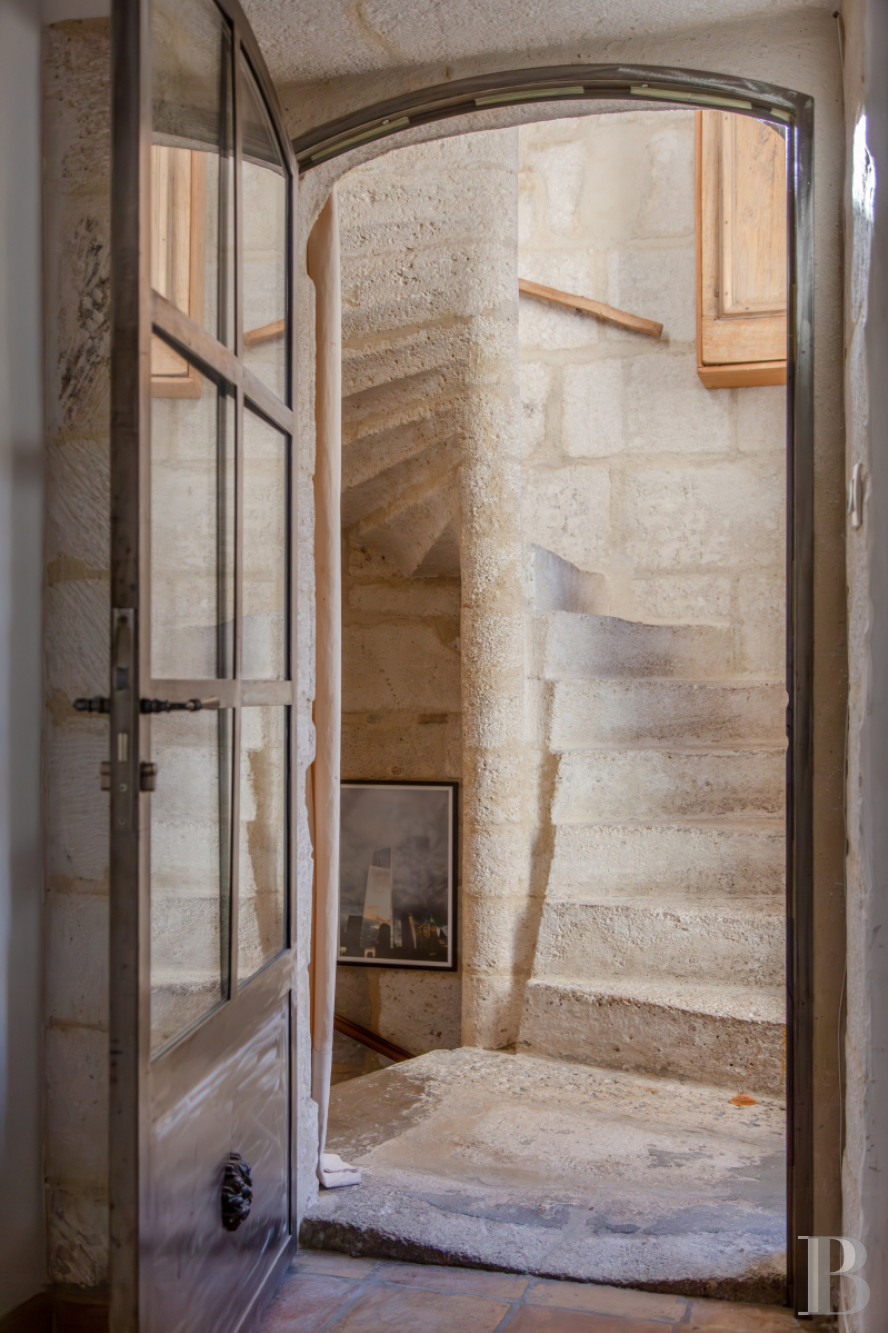
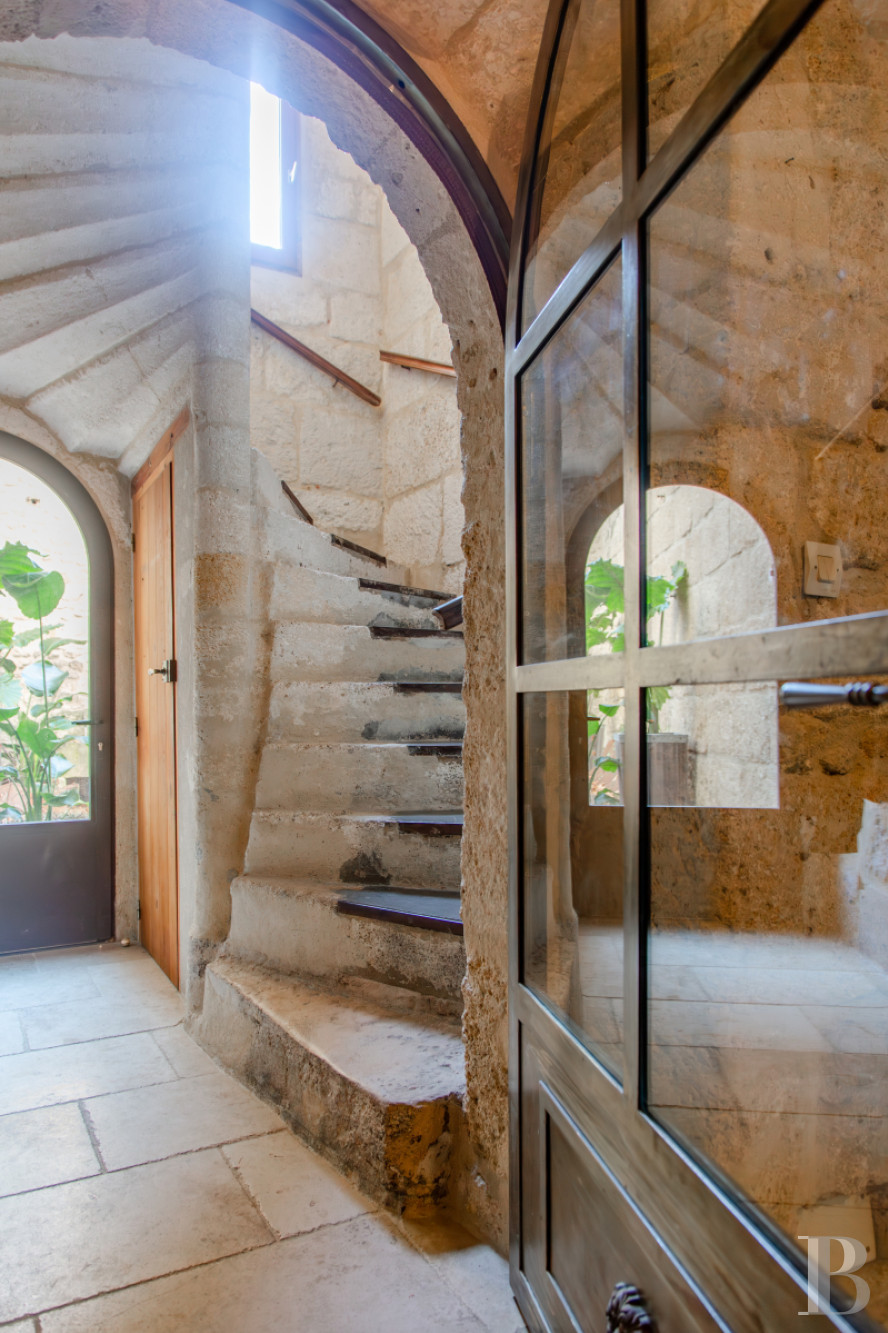
The house has been fully restored since 2020 with respect for its rich past and many remarkable historical features. It has a vaulted basement, a ground floor, a first floor and a second floor. It forms an S shape on a plot of around 500m². It is centred upon a main section, which is flanked with two short sections that protrude at a right angle: one on the court side on the south-west side and one on the garden side on the north-east side. It offers a total floor area of around 250m². A square corner tower facing north and south adjoins the court-facing elevation. It houses a spiral staircase of local stone from the 13th century. These stairs connect to the two upper floors and the roof, where a roof terrace could be made. The tower has a series of asymmetrical arrow slits that offer a range of views, like paintings, of the town’s rooftops below and its chateau up in its commanding position.
The basement
The basement is an important feature of the house in terms of built heritage. It extends beneath half of the house. Its vaulted tunnel-like cellar with opus incertum stonework is a mystery that remains unresolved today. We do not know when it dates back to, though it is doubtless the oldest part of the property. Perhaps it was never related to the property. But what was it used for? Was it a lower room set back from the neighbouring Knights Templar commandery? Or was it an underground passageway via which people, with their goods, could flee an enemy? Or was it simply a storehouse for goods? In any case, today, it is the ideal wine cellar, with a constantly cool temperature. And during heatwaves it is the perfect refuge too.
The ground floor
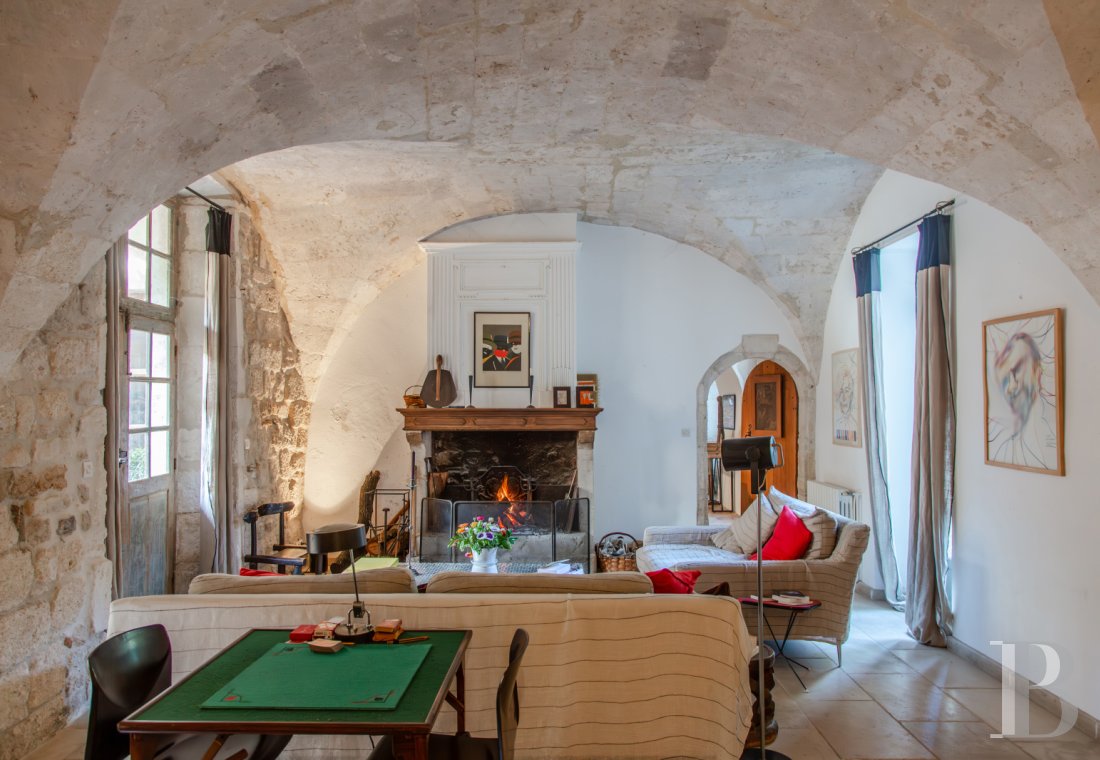
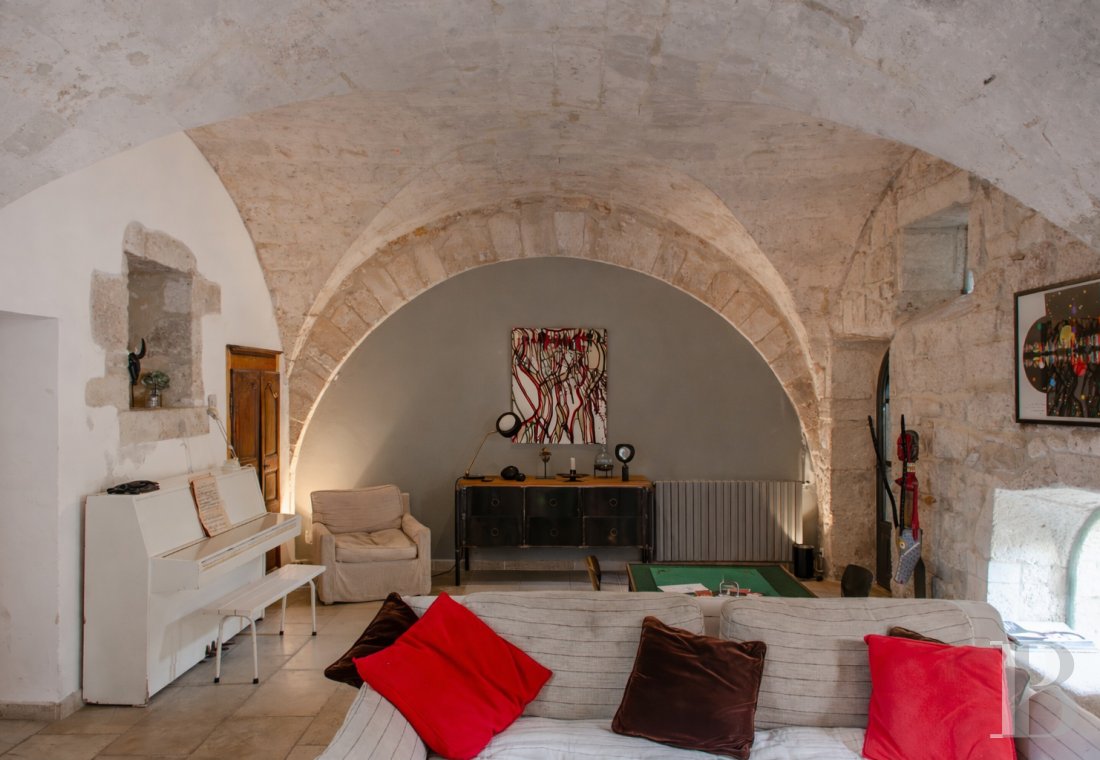
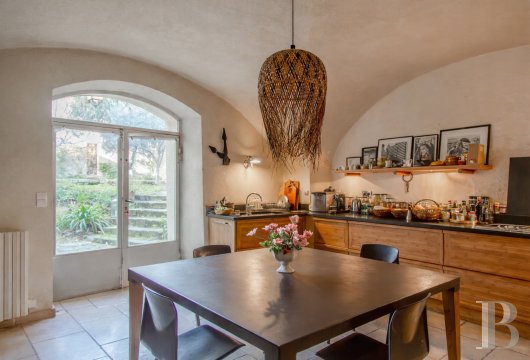
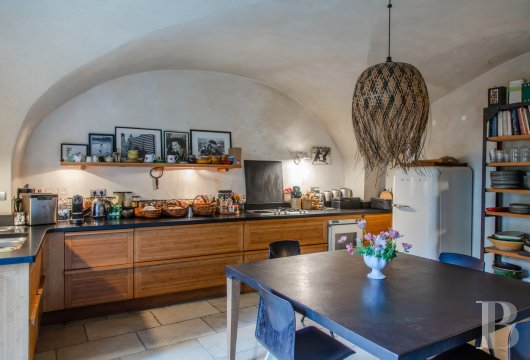
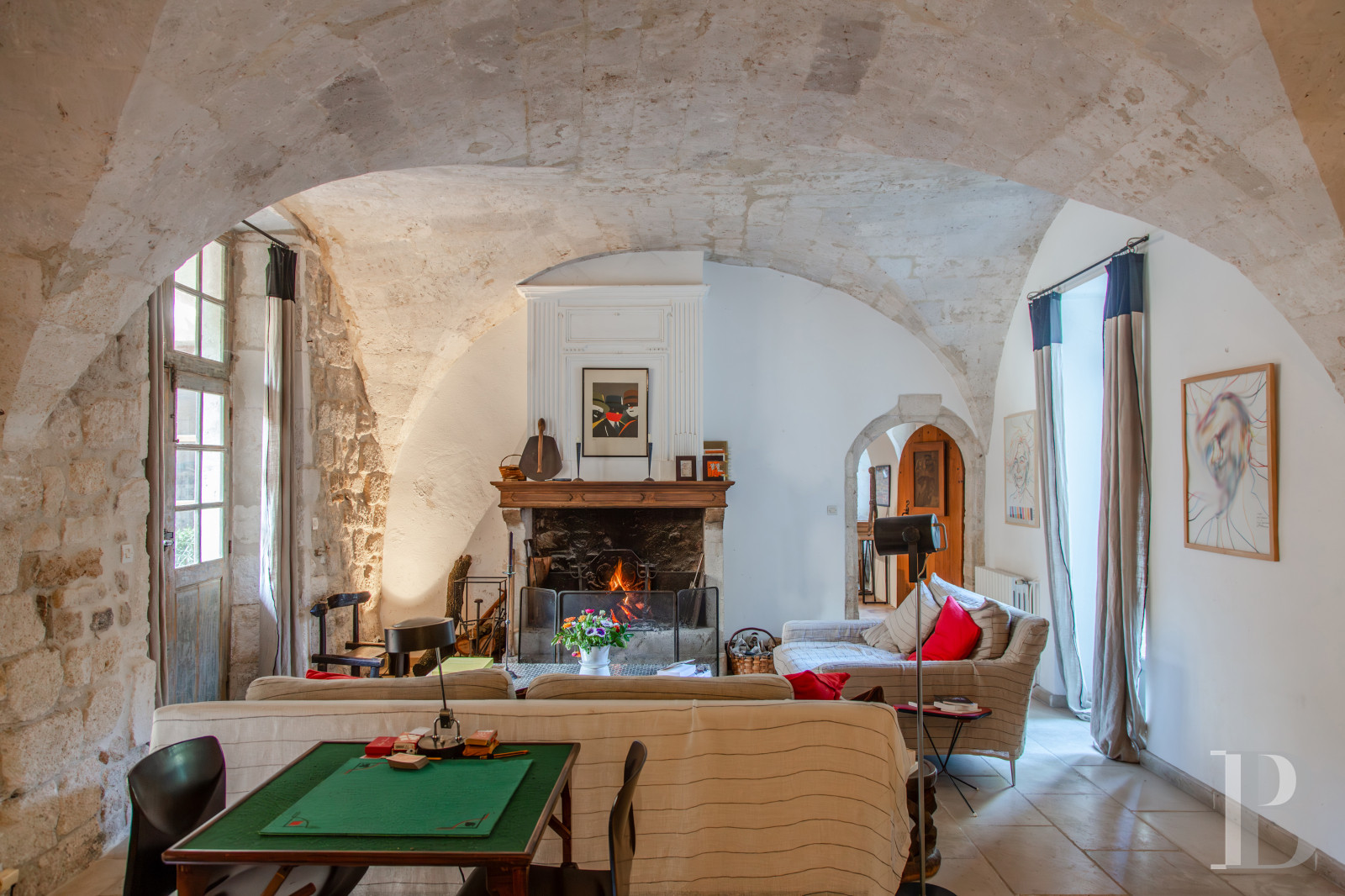
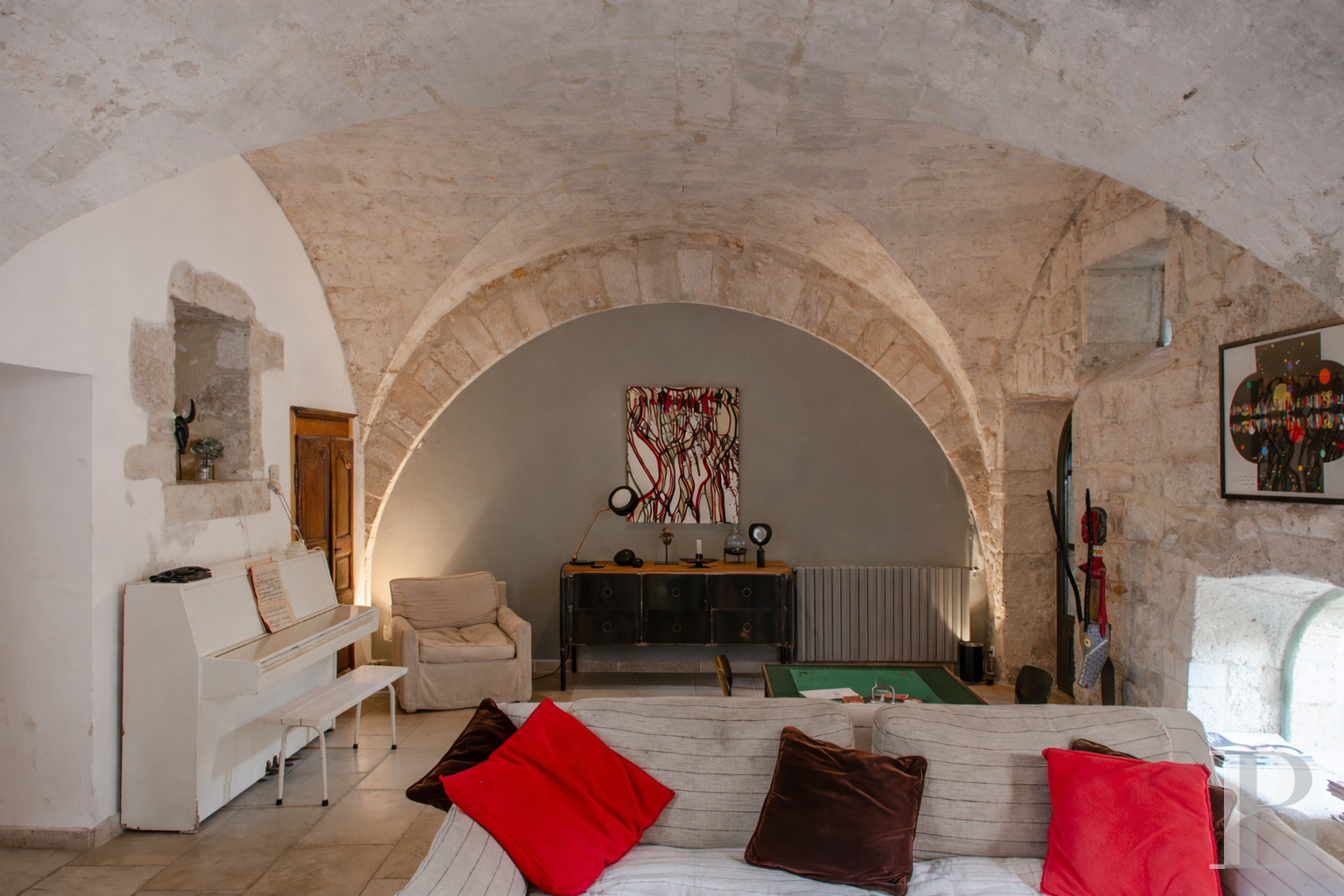
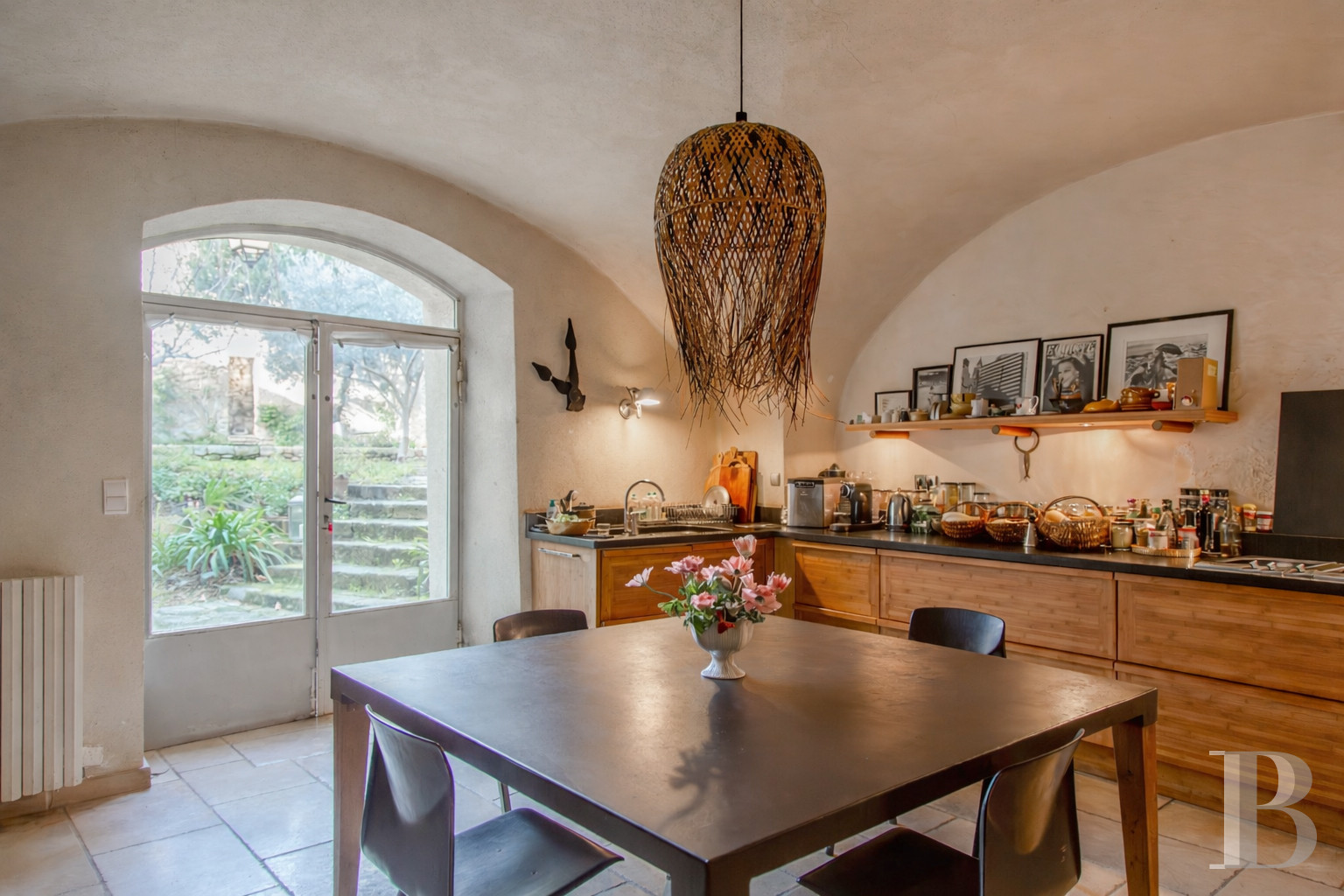
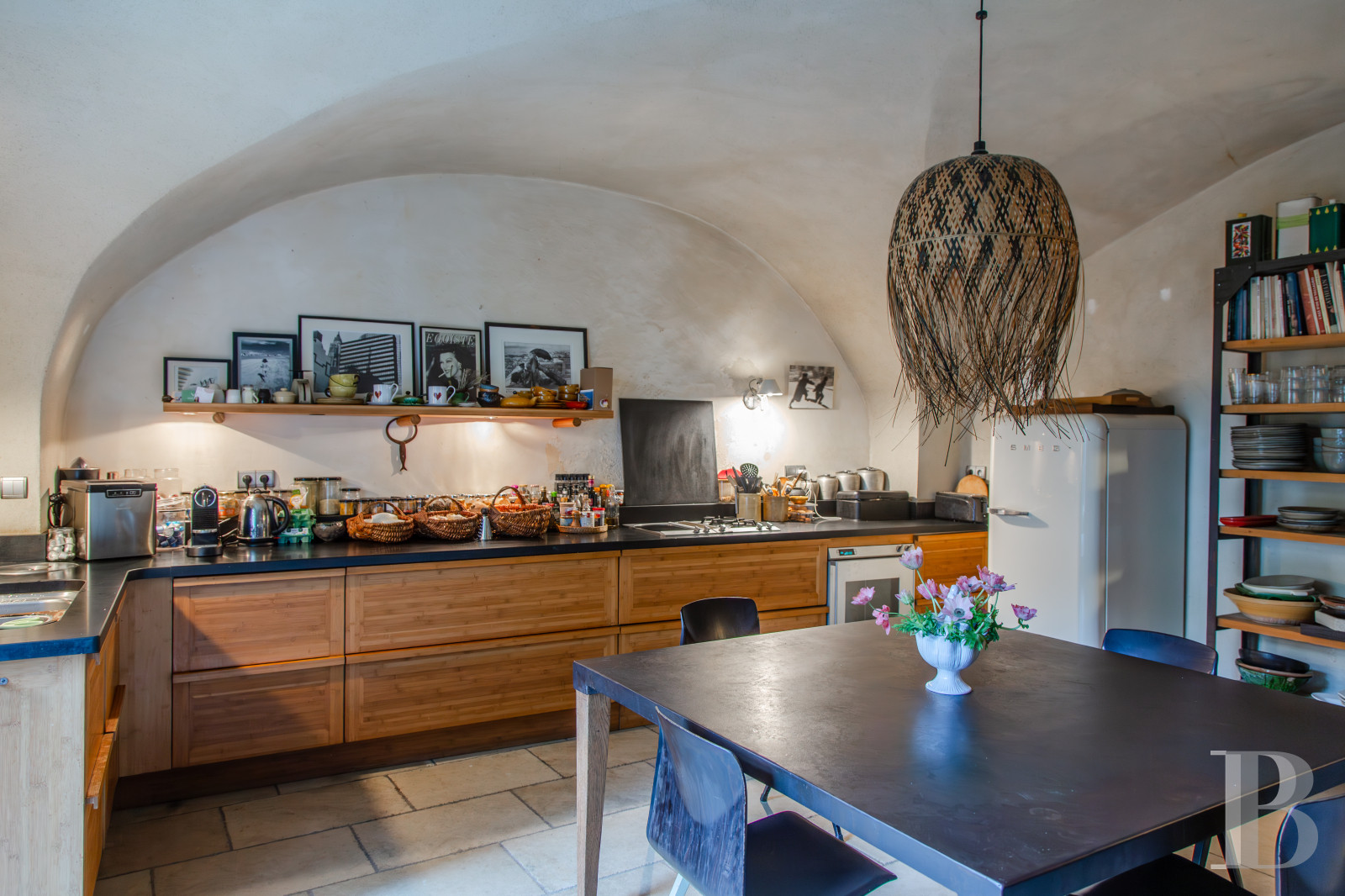
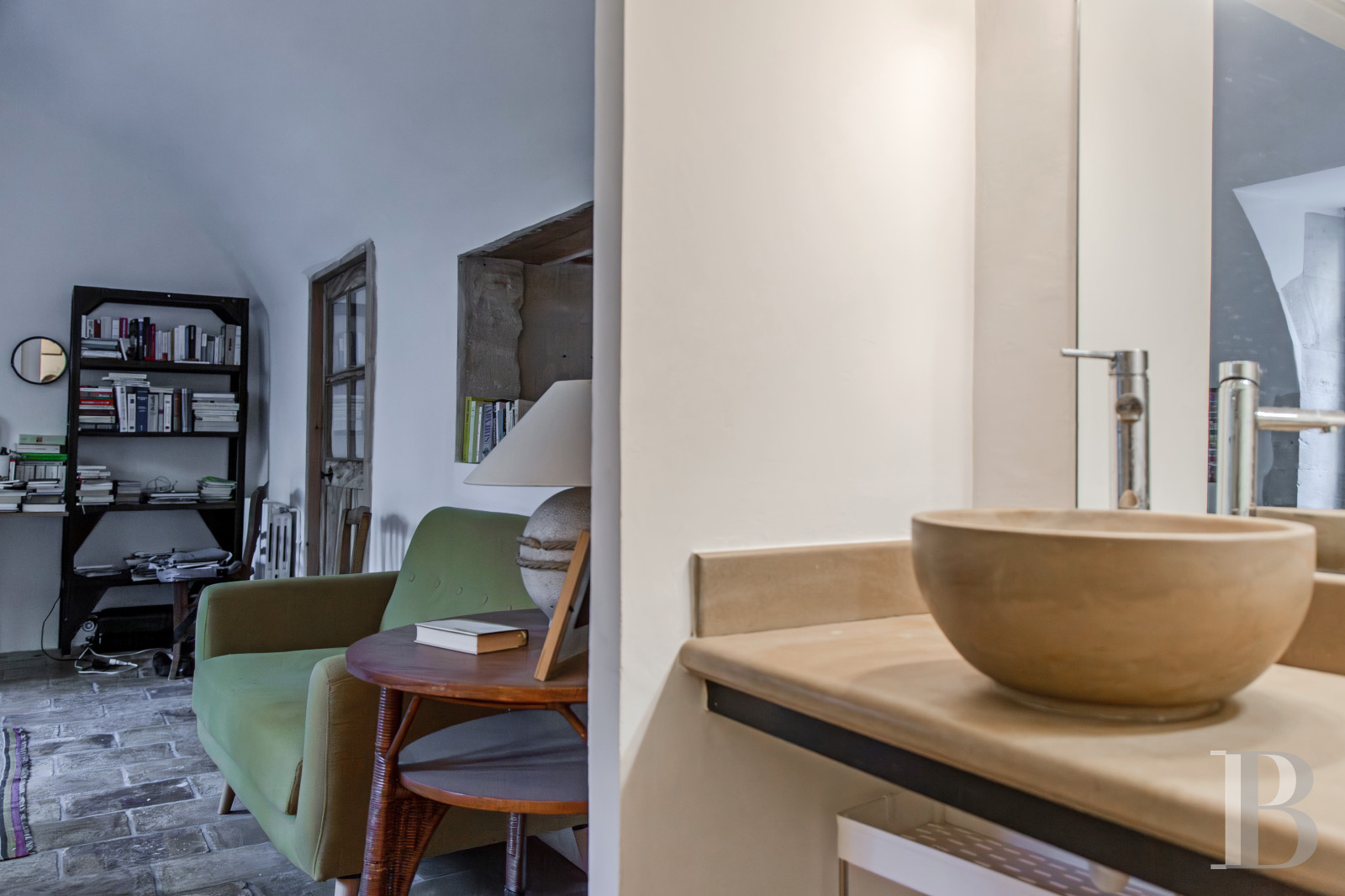
The ground floor leads out to the cobblestone court on the south side and to the garden on the north side. It has three connecting rooms with groined vault ceilings formed by the intersection of two barrel vaults – a system from the Roman era that was often used in France’s Languedoc province in the Middle Ages. The largest of these three rooms is a dual-aspect lounge with a 19th-century fireplace in perfect working order. This fireplace has stone legs, a mantelpiece of sculpted wood and a stucco trumeau panel with mouldings. The kitchen, housed in a section that protrudes at a right-angle on the north-east side, has been renovated in a modern style. The third room is used as an office or as a bedroom with a shower room. It looks out at the garden. It is extended with a utility room that looks out at the court. The walls are lime-plastered in an ivory tone, revealing door surrounds of two types of local stone, which shows that the property was redesigned over different periods of history. The floor is covered with slabs of Montpellier stone, from quarries in France’s Hérault department.
The first floor
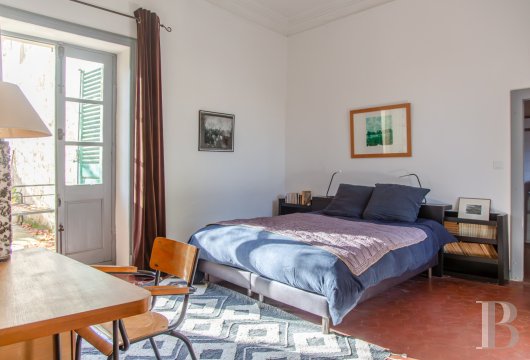
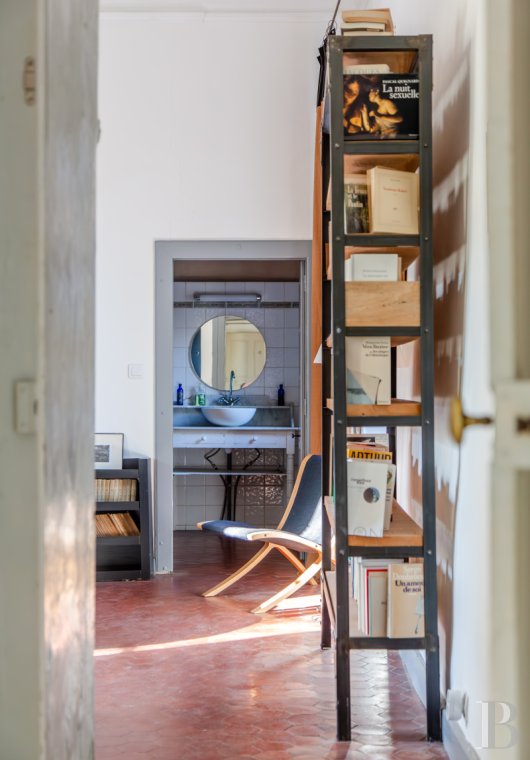
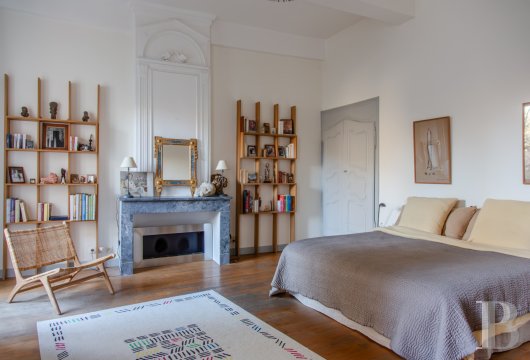
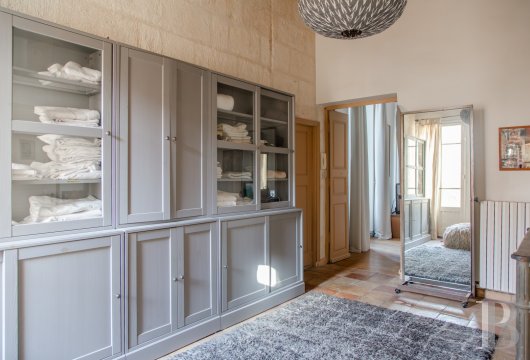
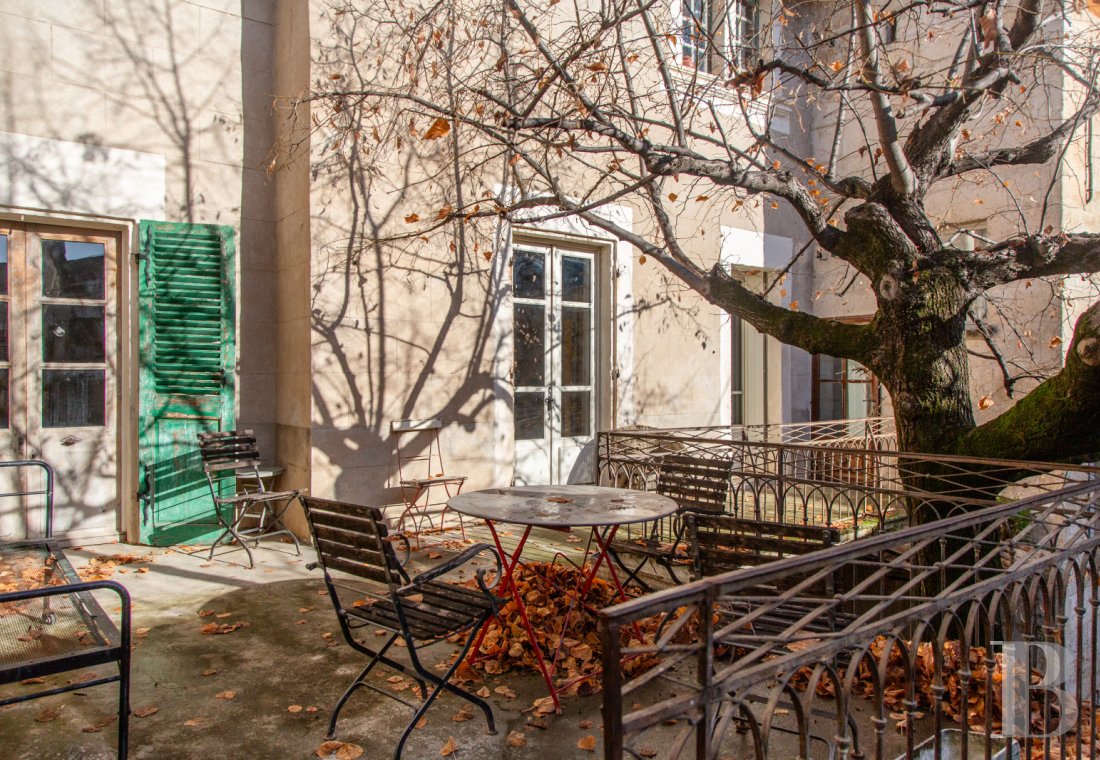
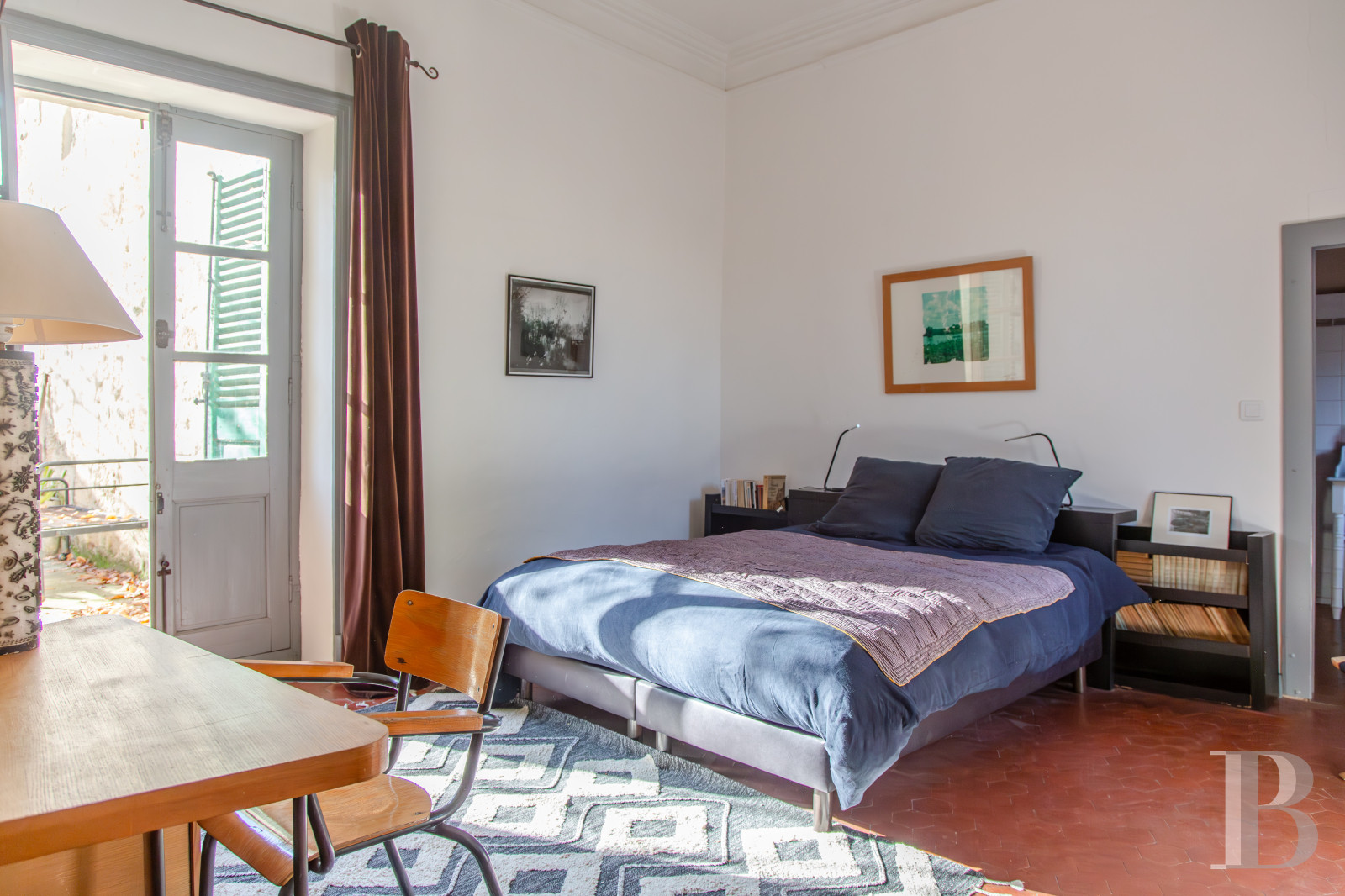
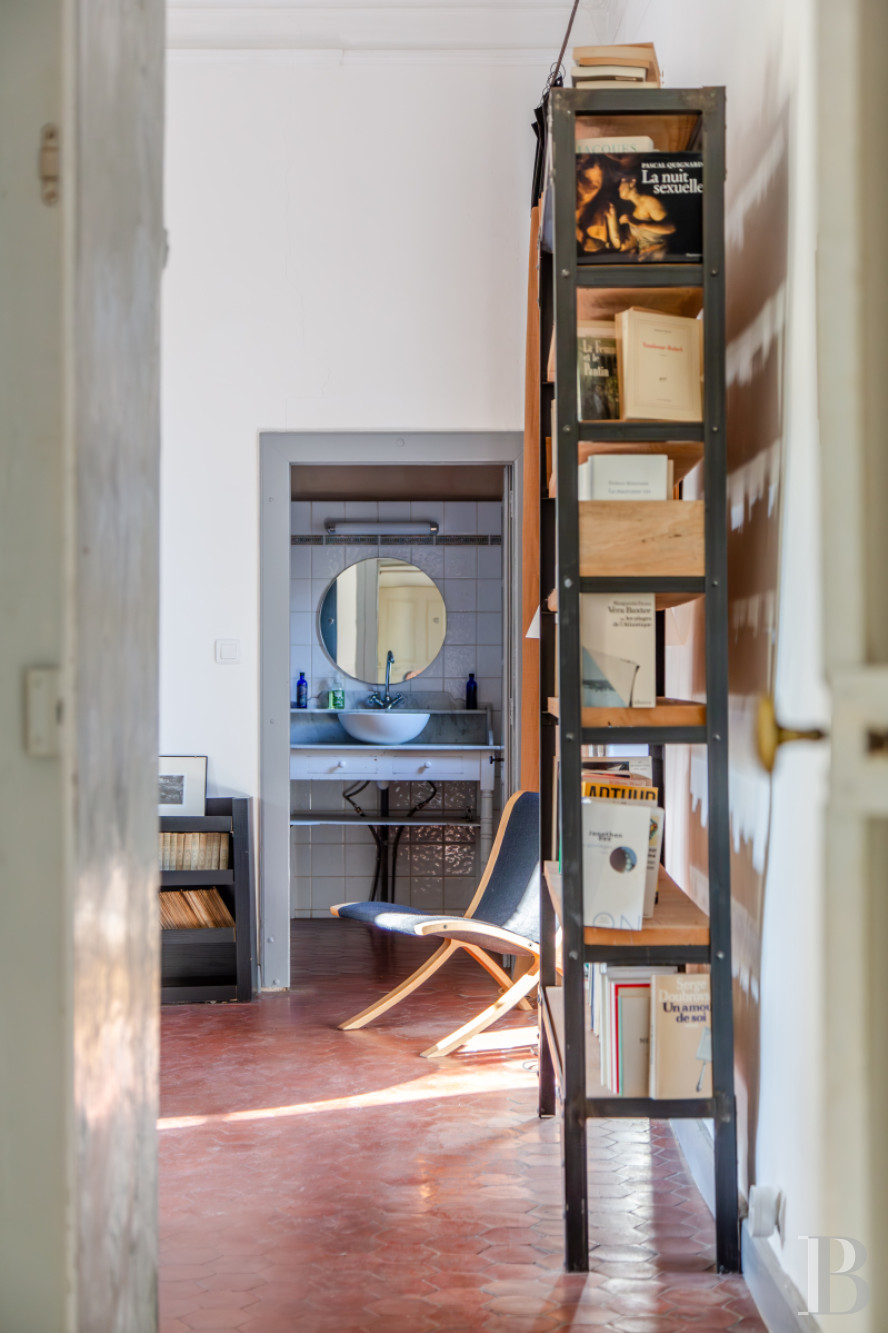
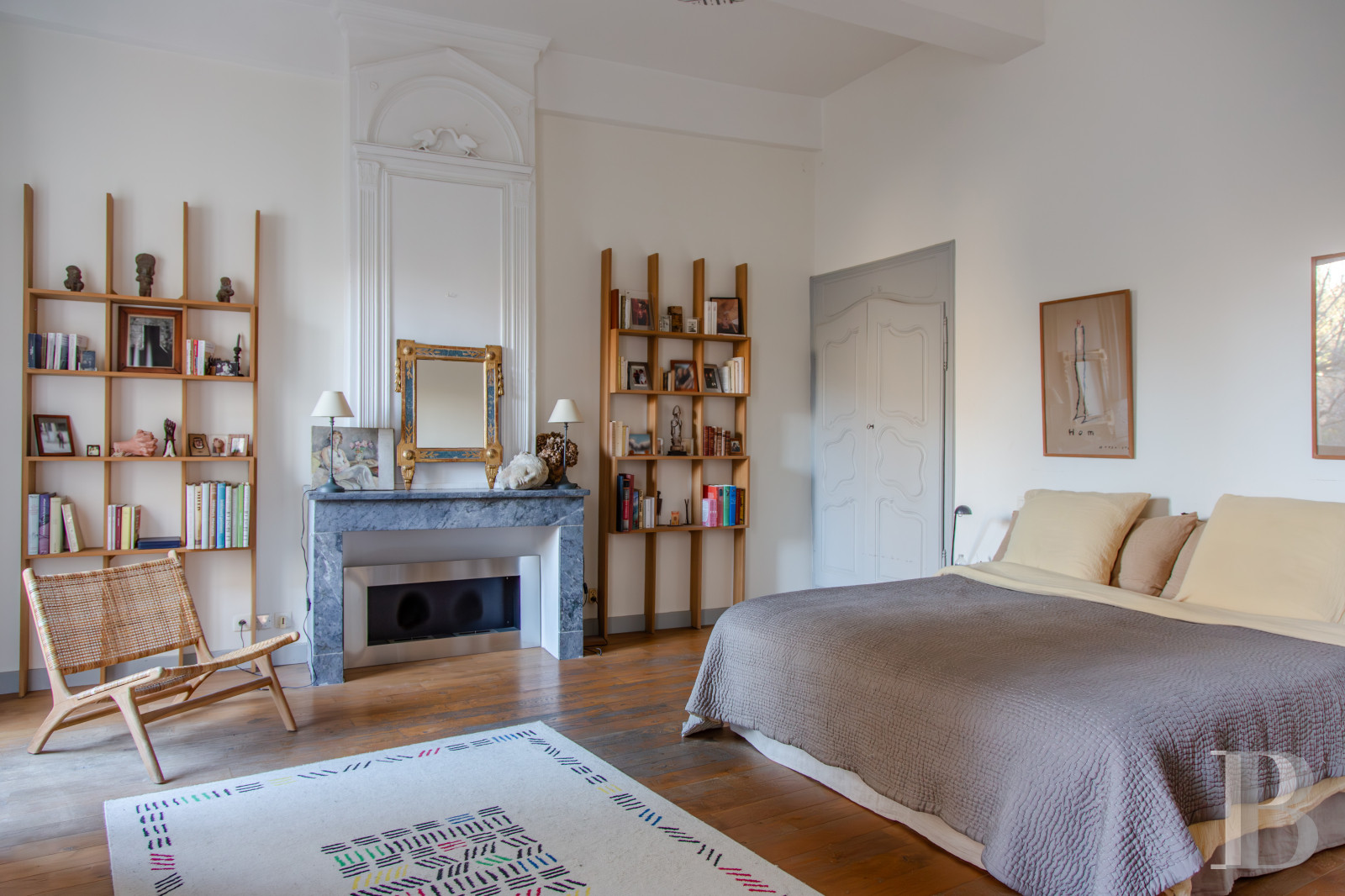
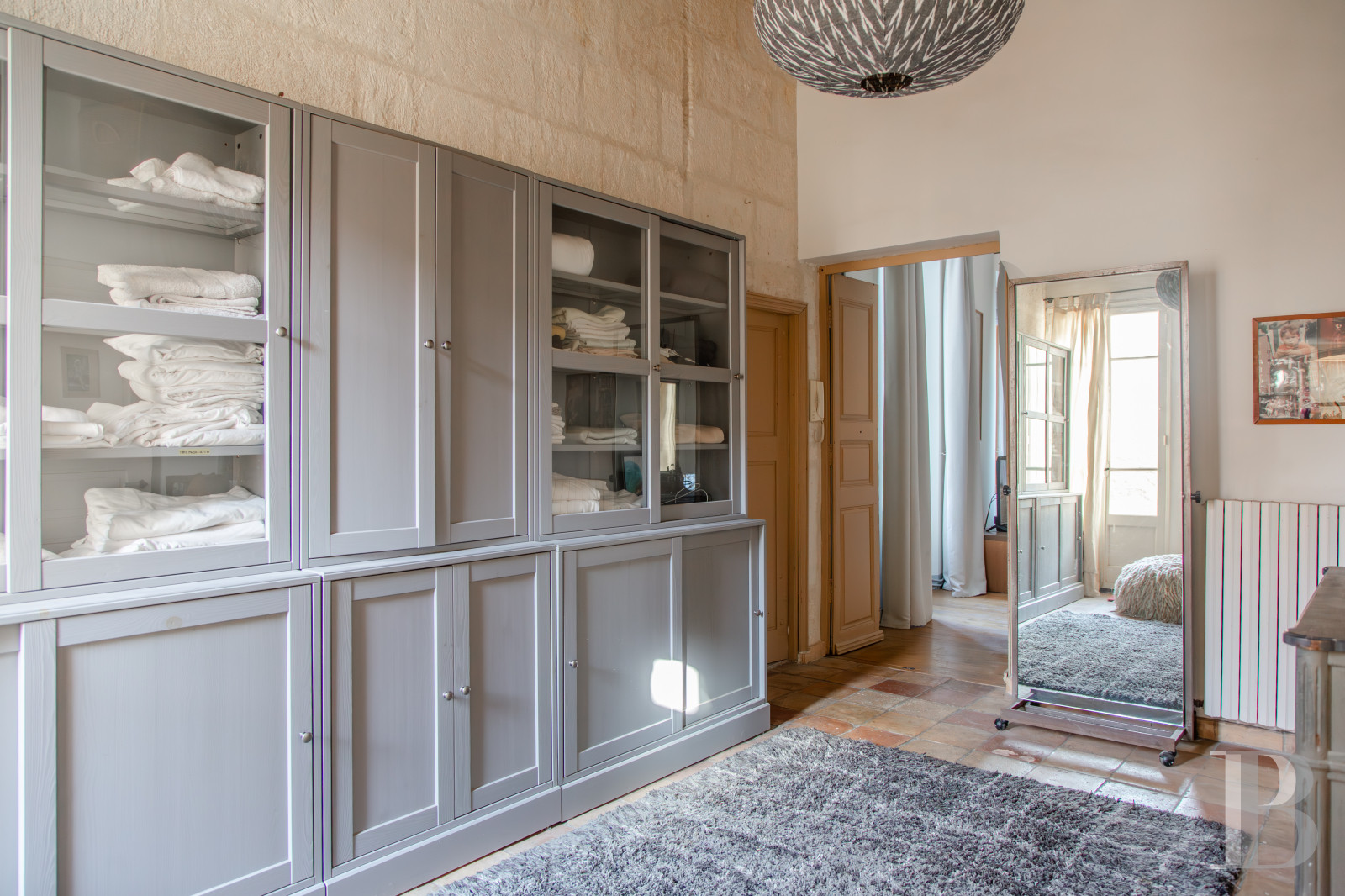
A landing door that ensures insulation takes you into a totally different ambience: here the 18th and 19th centuries follow on from the Middle Ages. Yet the heterogeneous character of the house is preserved. Indeed, the edifice’s mix of construction periods is a major aspect of its unique richness. On the court side, there is a broad terrace with a walkway that runs along the full breadth of the elevation, connecting to two of the bedrooms. From this terrace and walkway, a door also leads in to the former straw storehouse, which is now a dwelling. A corridor connects to the bedrooms, each of which has their own shower room or bathroom. The bedrooms look out at both the court and garden. So natural light, which changes with the passing of the seasons, passes all the way through them. One of the bedrooms has, above its fireplace, a so-called marriage trumeau panel from the late 18th century that bears two doves. This underlines the house’s status as a family home. On the garden side, a third bedroom enjoys a west-facing position in the other section extending at a right angle. The walls are whitened with lime plastering. Wood strip flooring extends across the bedrooms and cement tiles adorn the floors of the hallways.
The second floor
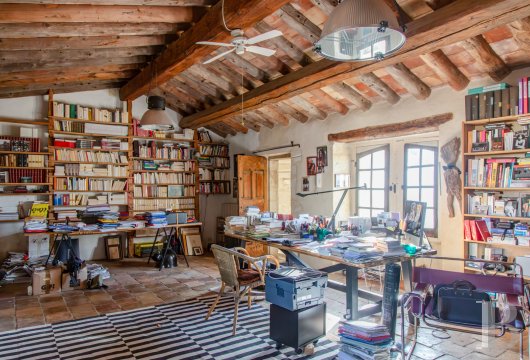
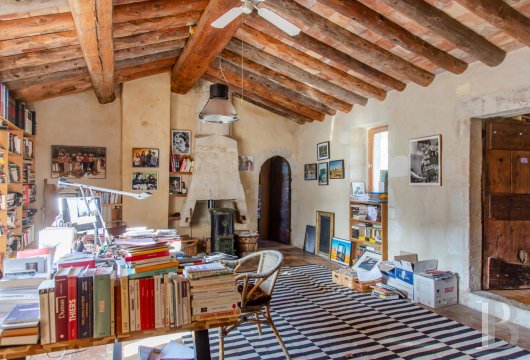
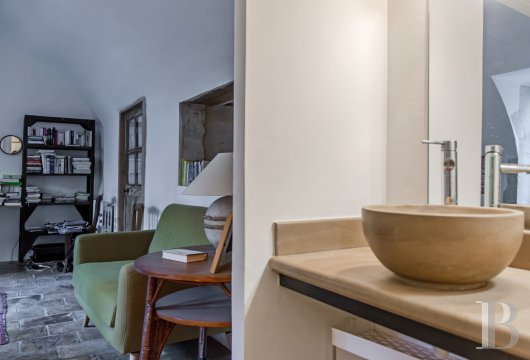
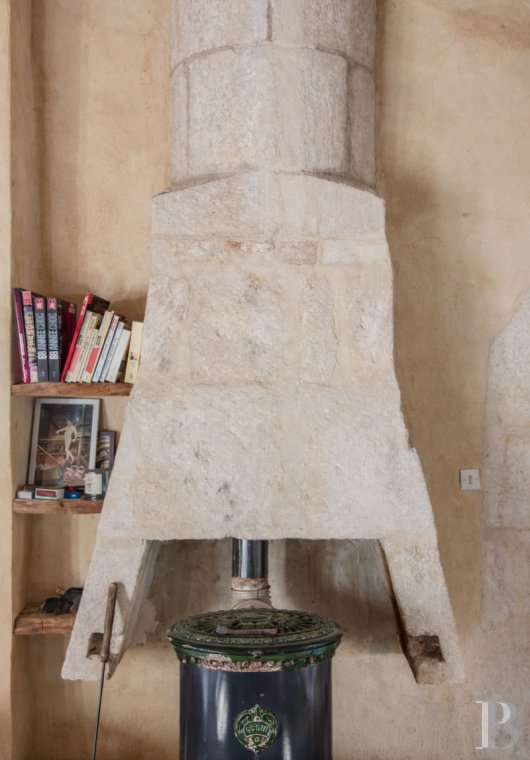
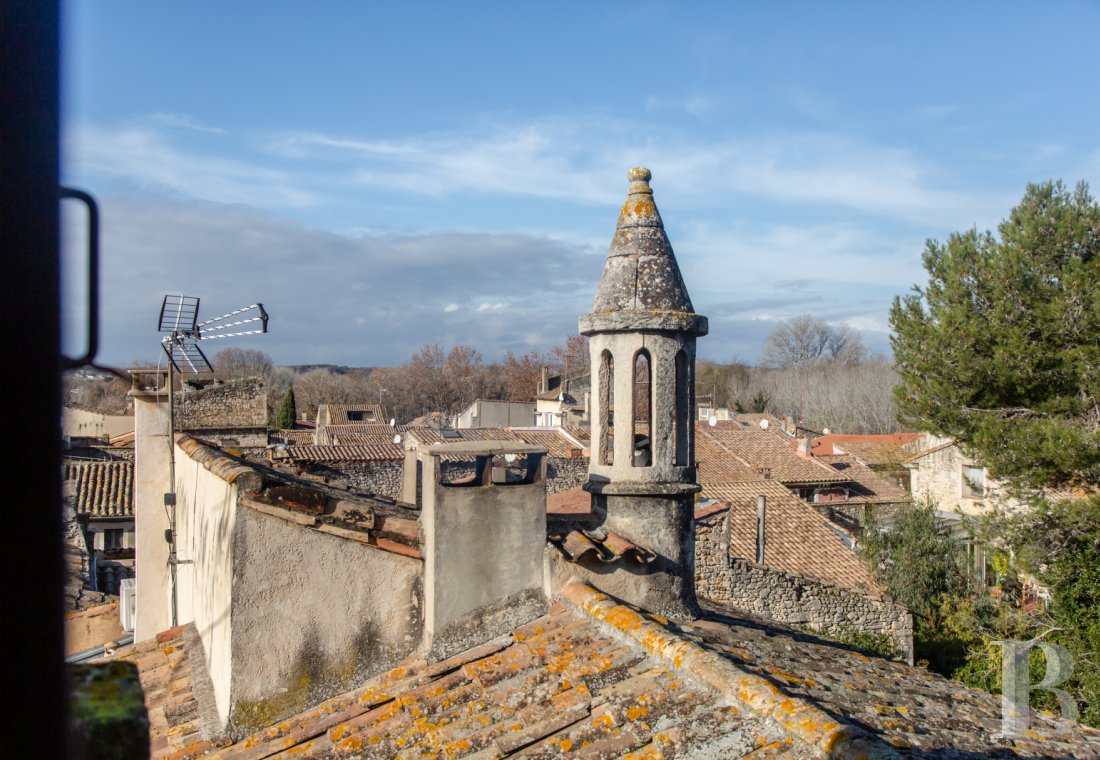
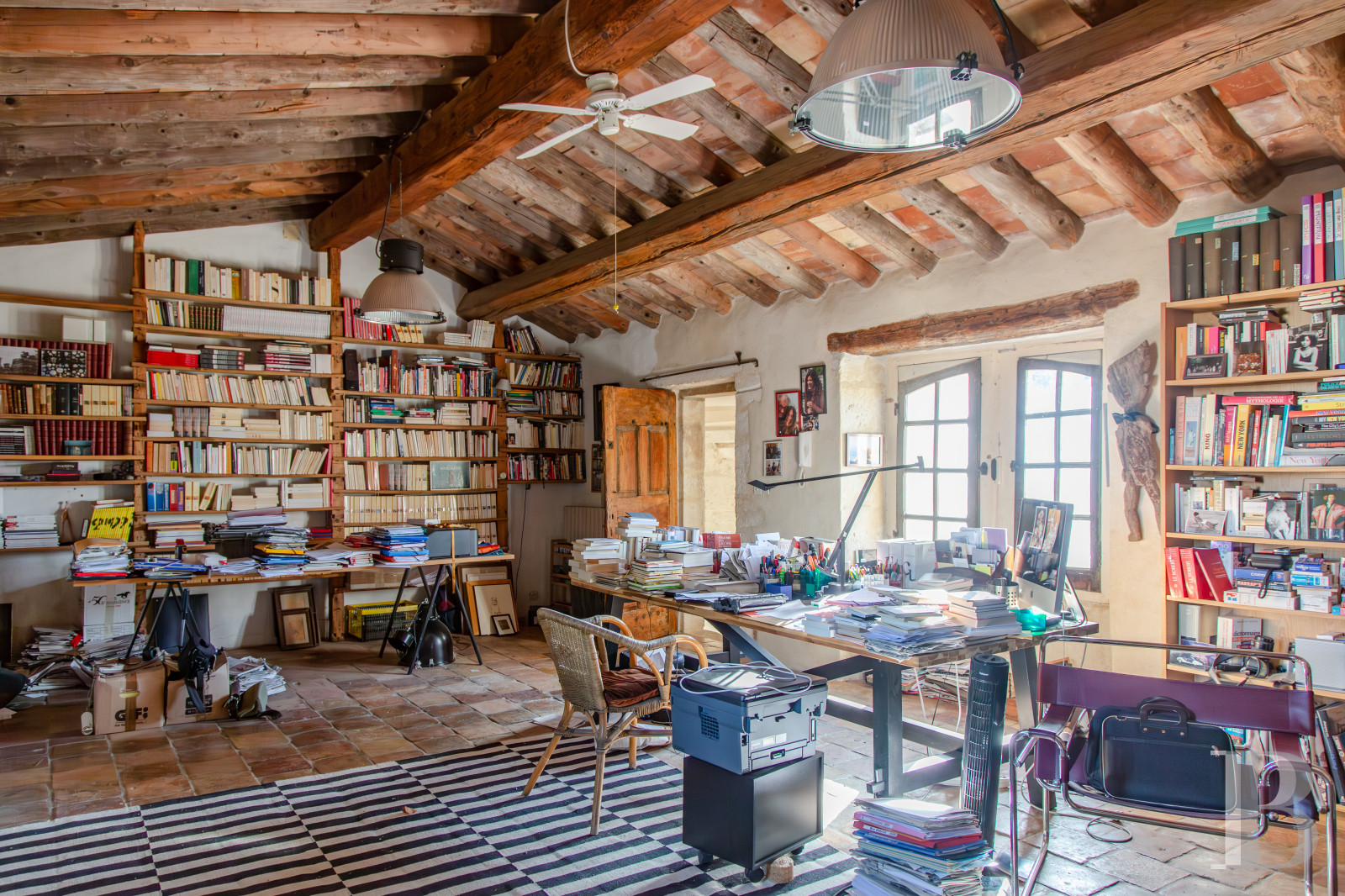
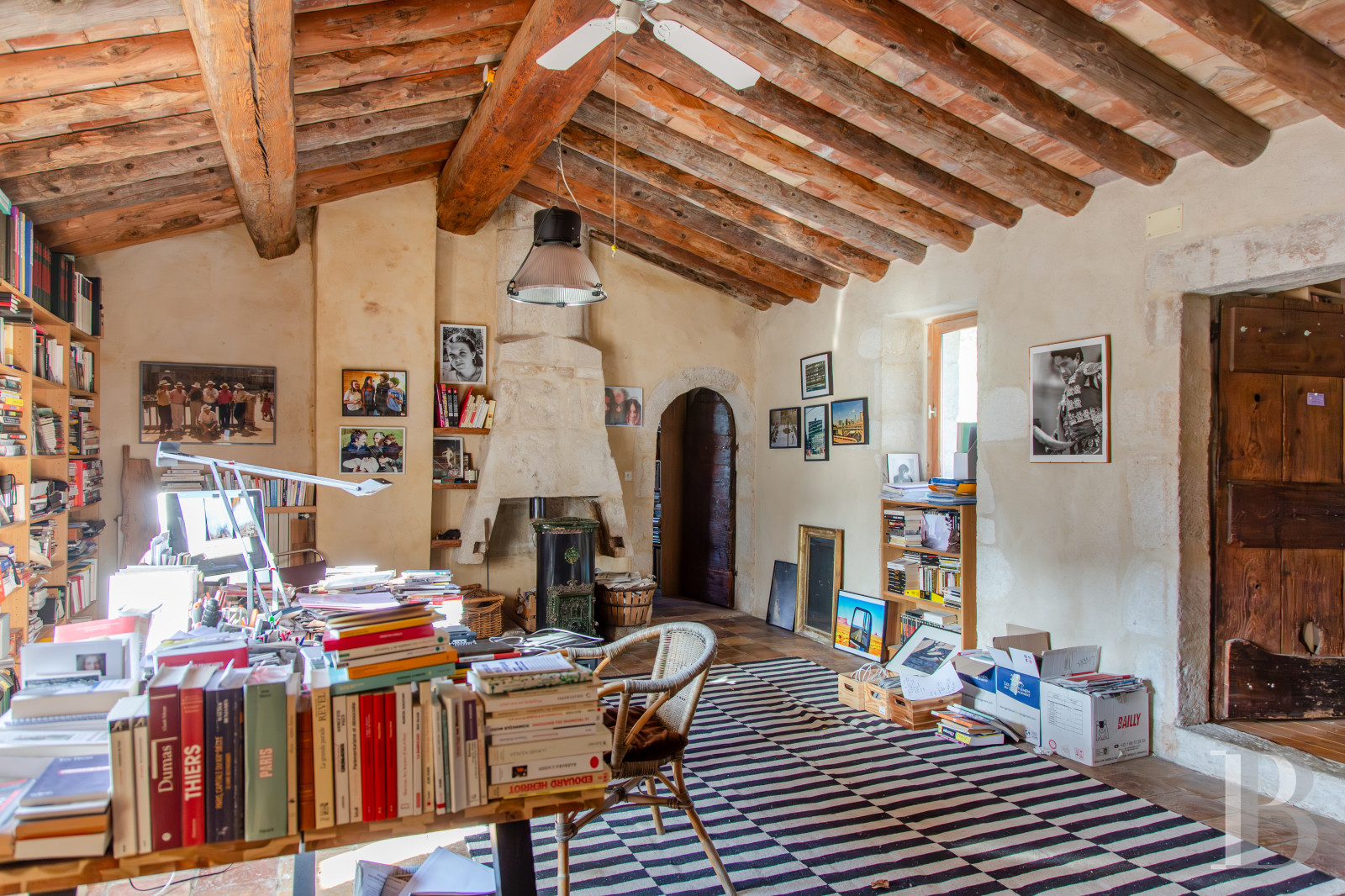
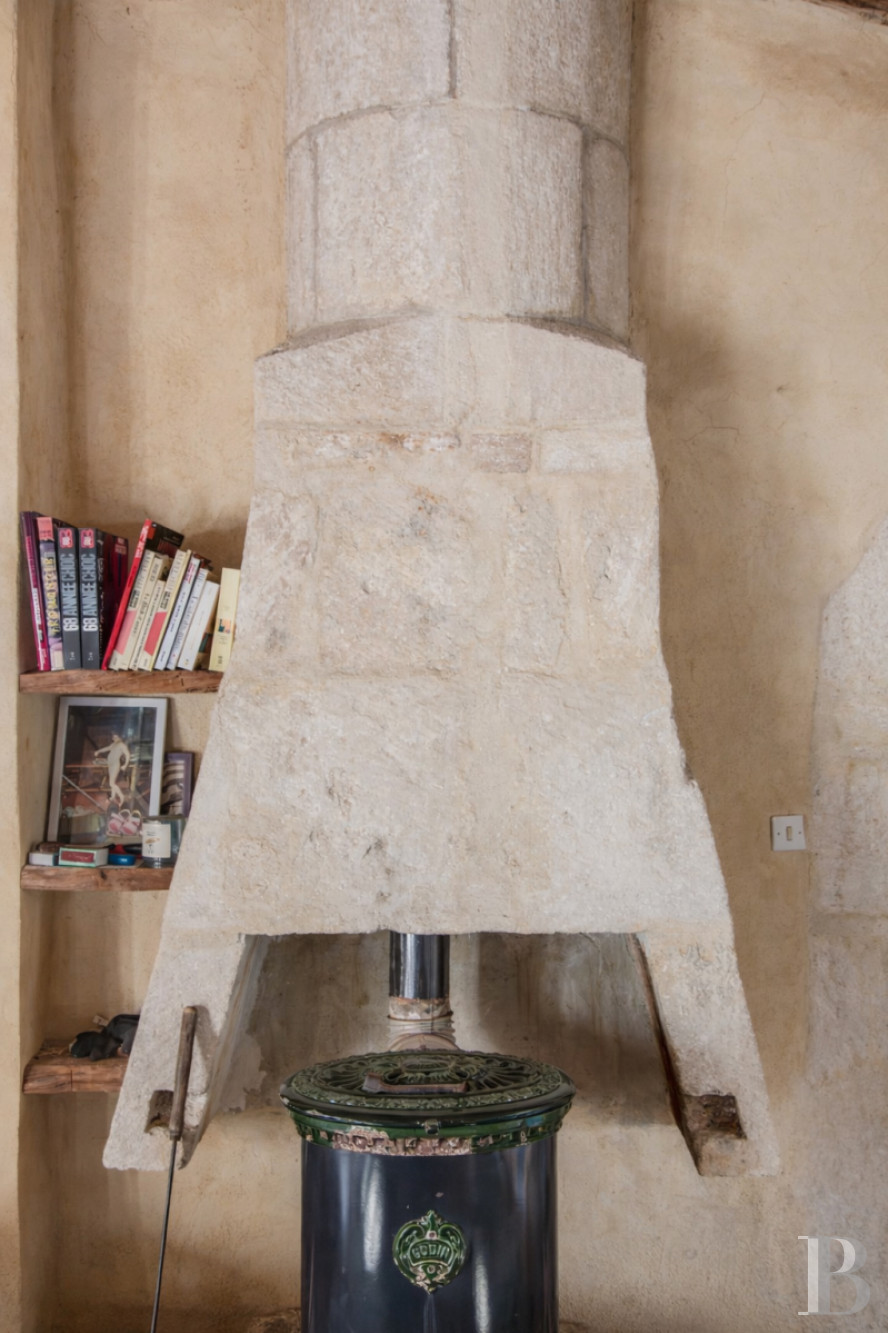
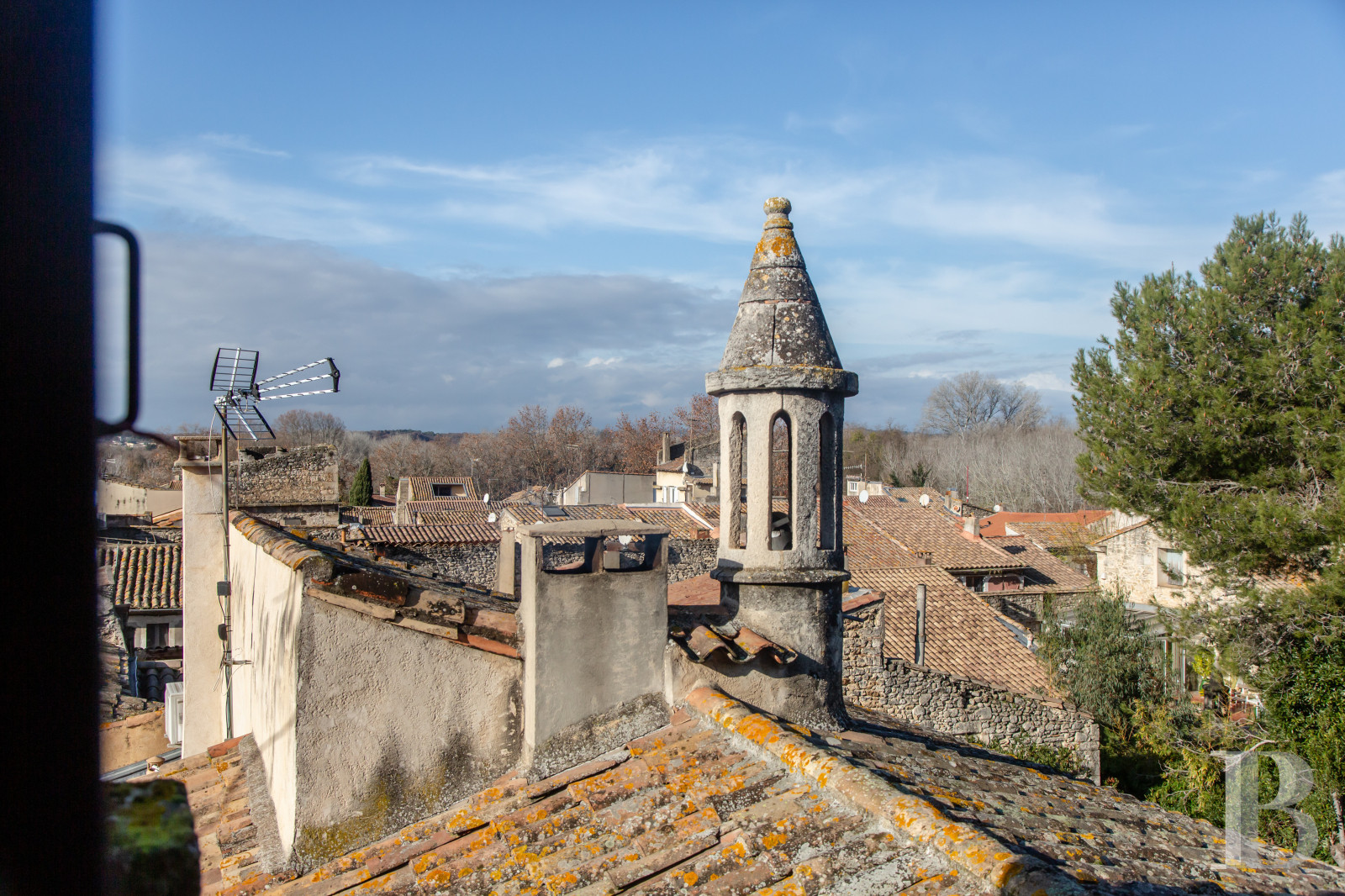
The spiral staircase connects to the second floor. This floor has two connecting rooms on the south side, without a right-angled section on the court side, though there is a right-angled section, used as a bedroom, on the east side, where the garden is. The landing leads into a spacious room that serves as a reading room, beneath an exposed roof frame with rectangular terracotta tiles placed between the insulation and the barrel tiles. And beyond the reading room, there is a cinema room. The walls are white with lime-plastering and the floors are covered with old Provençal terracotta tiles traditionally used in roof spaces. This floor also has a special architectural feature: a so-called Saracen fireplace with an imposing pyramidal hood that stretches up outside, ending with a stone minaret-like chimney stack upon the roof.
The attic
At the top of the spiral staircase, a door opens on the north side, facing the Saracen fireplace’s minaret chimney stack and leading to a space demarcated by two metal girders. Here a roof terrace could be created, offering a view of the town’s rooftops and the countryside of France’s Gard province in the distance.
The straw storehouse and self-contained apartment
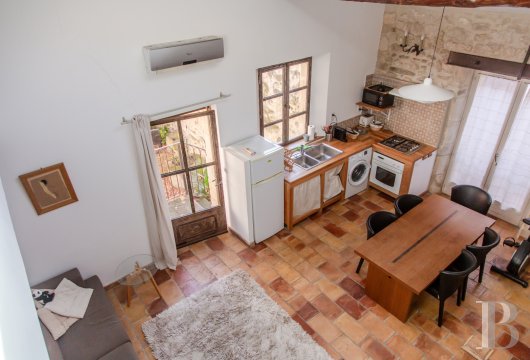
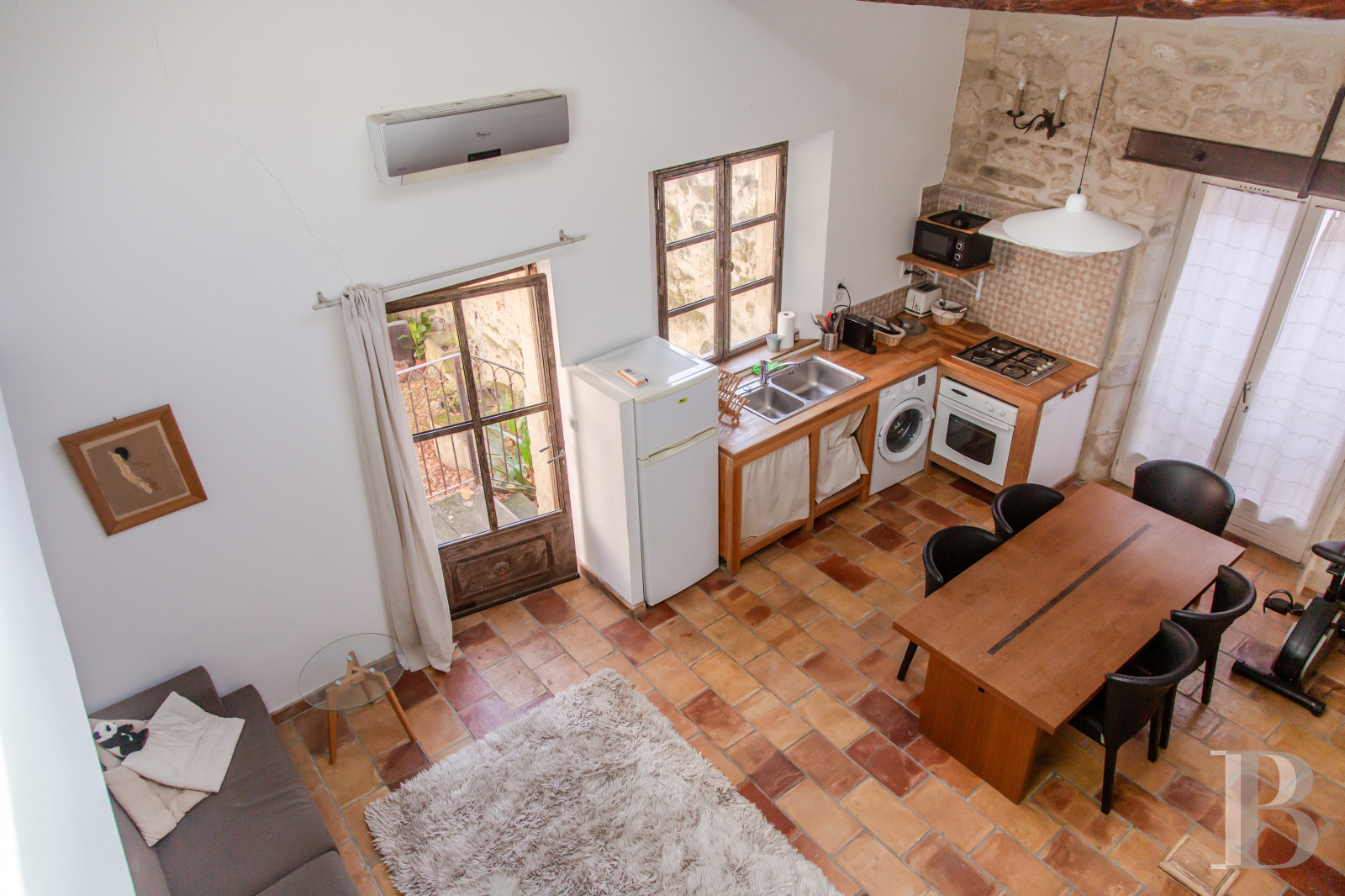
The old agricultural building where fodder would be stored was first converted into an austere stopover gîte for pilgrims on the Camino de Santiago pilgrims’ way. More recently, its ground floor became the house’s garage. And its first floor, which you can reach from the court via a separate metal staircase, has been turned into a comfortable apartment. The latter has a large fitted kitchen, a lounge, two bedrooms, two bathrooms and a lavatory. The apartment offers a floor area of roughly 100m². The floors, roof frame, roofing and insulation had to be completely restored to make the storehouse inhabitable. This whole restoration project was carried out with respect for regulations in place for preserving the backdrop of several listed monuments nearby.
The garden
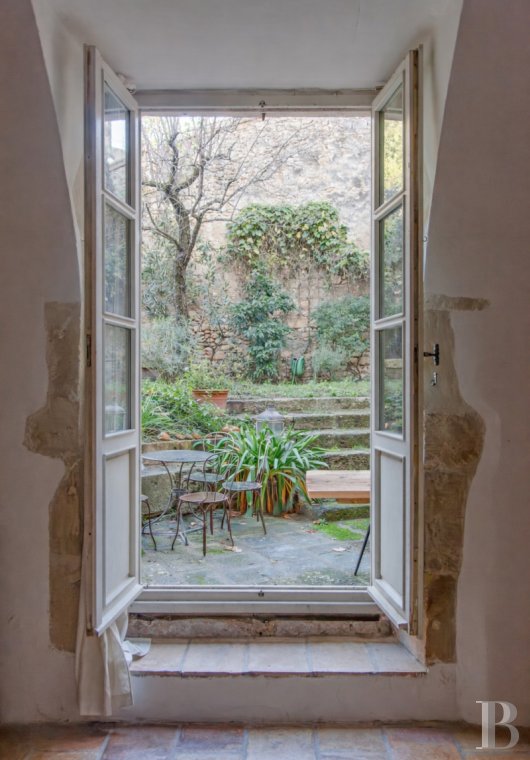
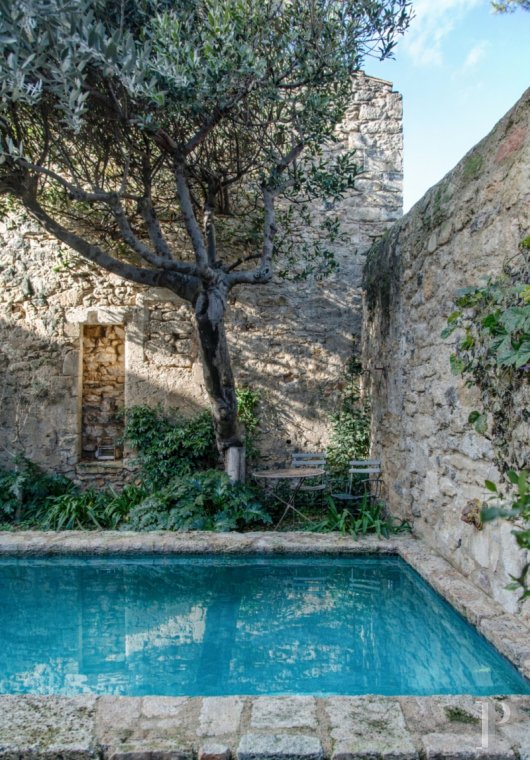
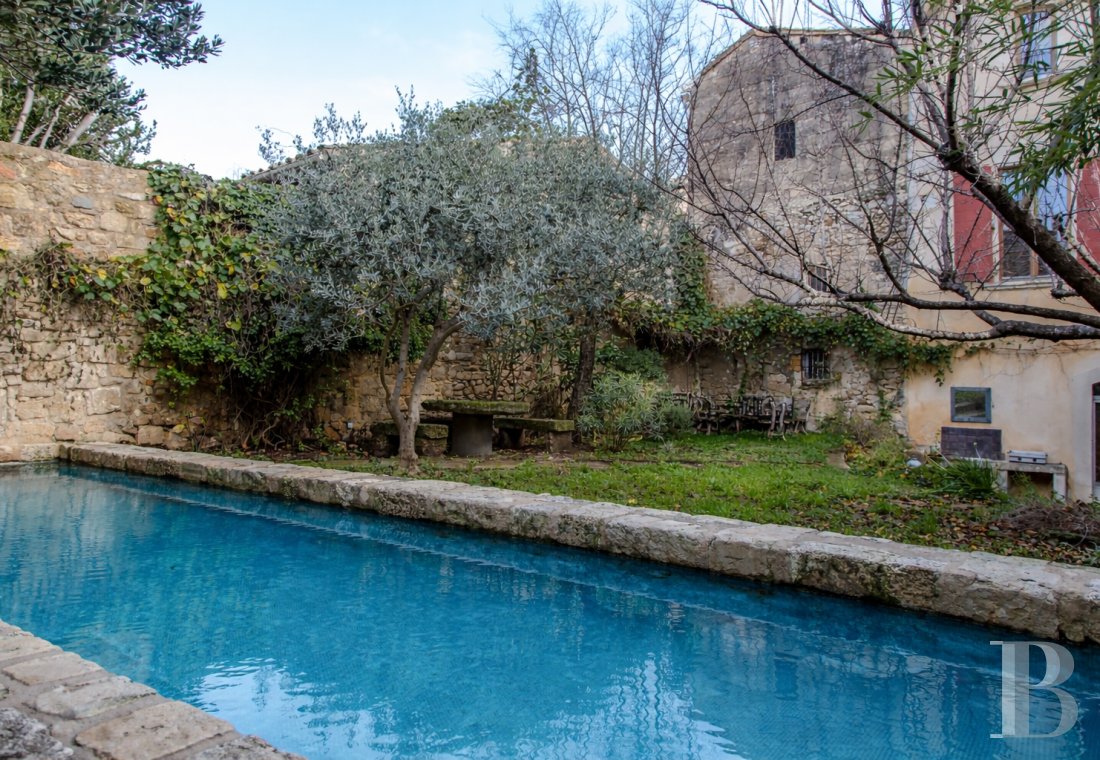
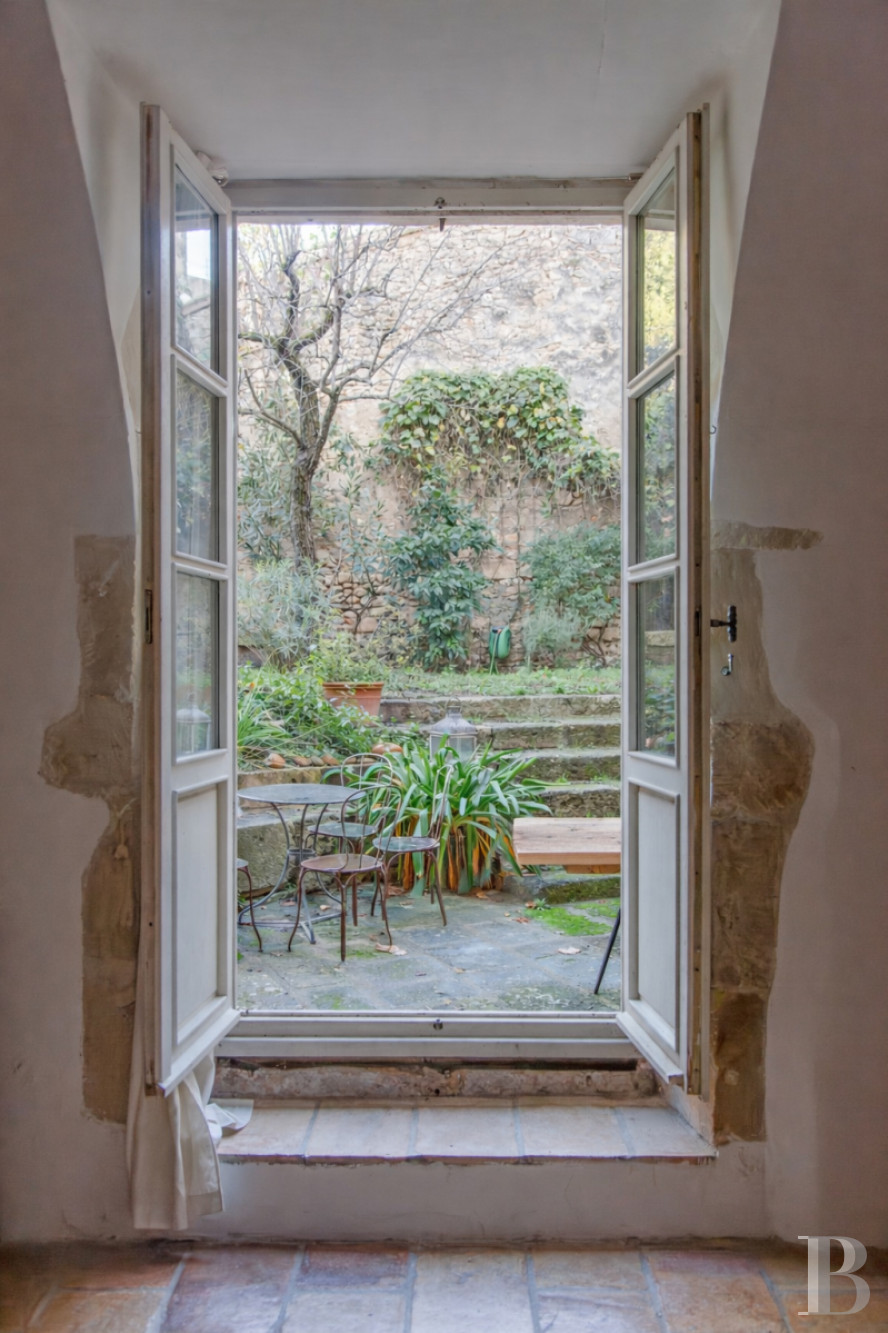
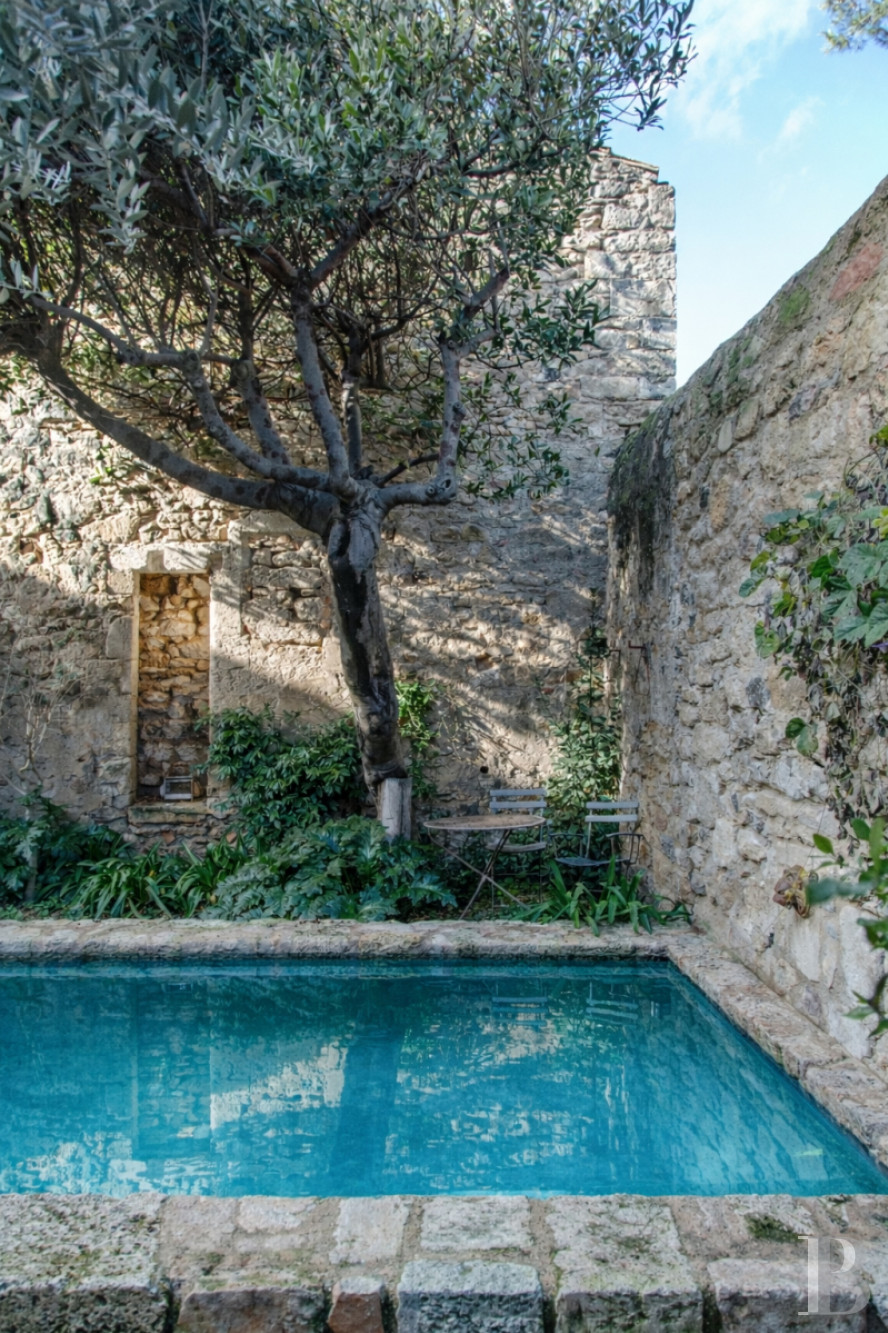
The garden is entirely walled and enjoys absolute privacy. Despite covering only around 500m², it gives a real impression of vastness. This sense of vastness is largely due to the garden’s design like a natural amphitheatre, based on a gentle slope, with the creation of distinct sections that are almost naturally separated from each other. The swimming pool, which lies at the top of the slope, cannot be seen from the foot of the house, where a long terrace extends with paving of local stones from Les Baux-de-Provence. This terrace can be used as a summer dining area. The relation between the largely mossy limestone paving and the olive trees and other vegetation is seamless. The low flight of broad steps, which recall the terraced seating of an amphitheatre, leads up to the swimming pool, which is edged with a raised ledge of large stones. These steps help create the illusion of a bigger outdoor space. In short, this garden is a true masterpiece of landscaping.
Our opinion
This delightful property is a splendid gem with true character. You barely notice this discreet haven as you wander down the narrow street in the quaint town. Yet as you step through its gate, the home immediately offers you so much. You are struck by its complete calm, its timeless beauty, its rich story and its promise of happiness. Six centuries of the art of living have combined to produce this unique refuge and dazzling jewel of built heritage. It is a home for families, lovers, artists or thinkers. Indeed, it will be whatever you make it. Yet it also has the capacity for hosting guests in the secrecy of its enclosed plot. Though nestled in a town centre, this property enjoys absolute privacy. From outside, you cannot imagine the extent of possibilities of such a secret sanctuary.
Reference 988290
| Land registry surface area | 444 m² |
| Main building floor area | 314 m² |
| Number of bedrooms | 6 |
| Outbuildings floor area | 41 m² |
French Energy Performance Diagnosis
Information on the risks to which this property is exposed is available on the website: www.georisques.gouv.fr
Share


NB: The above information is not only the result of our visit to the property; it is also based on information provided by the current owner. It is by no means comprehensive or strictly accurate especially where surface areas and construction dates are concerned. We cannot, therefore, be held liable for any misrepresentation.