



A residence with a courtyard, to be renovated and enhanced,
in a village at the foot of the Alpilles mountains, tucked away in an ancient abbey
in a village at the foot of the Alpilles mountains, tucked away in an ancient abbey
Saint-Rémy-de-Provence,
BOUCHES-DU-RHONE
provence-cote-dazur
13210
FR

Location
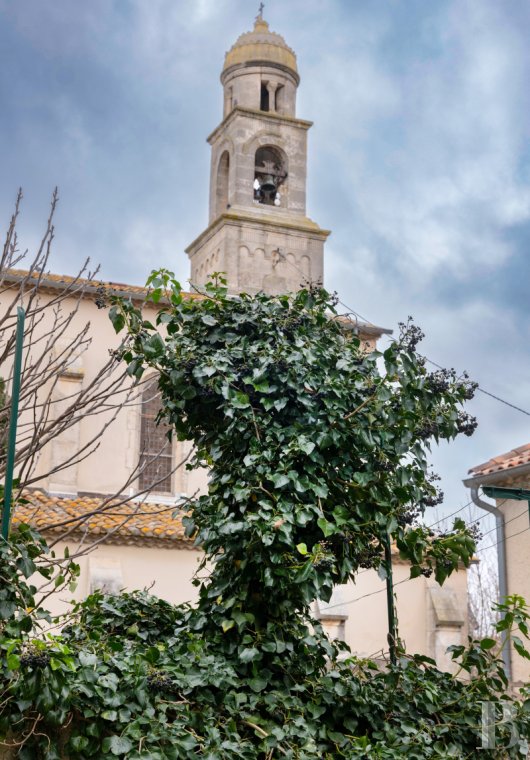
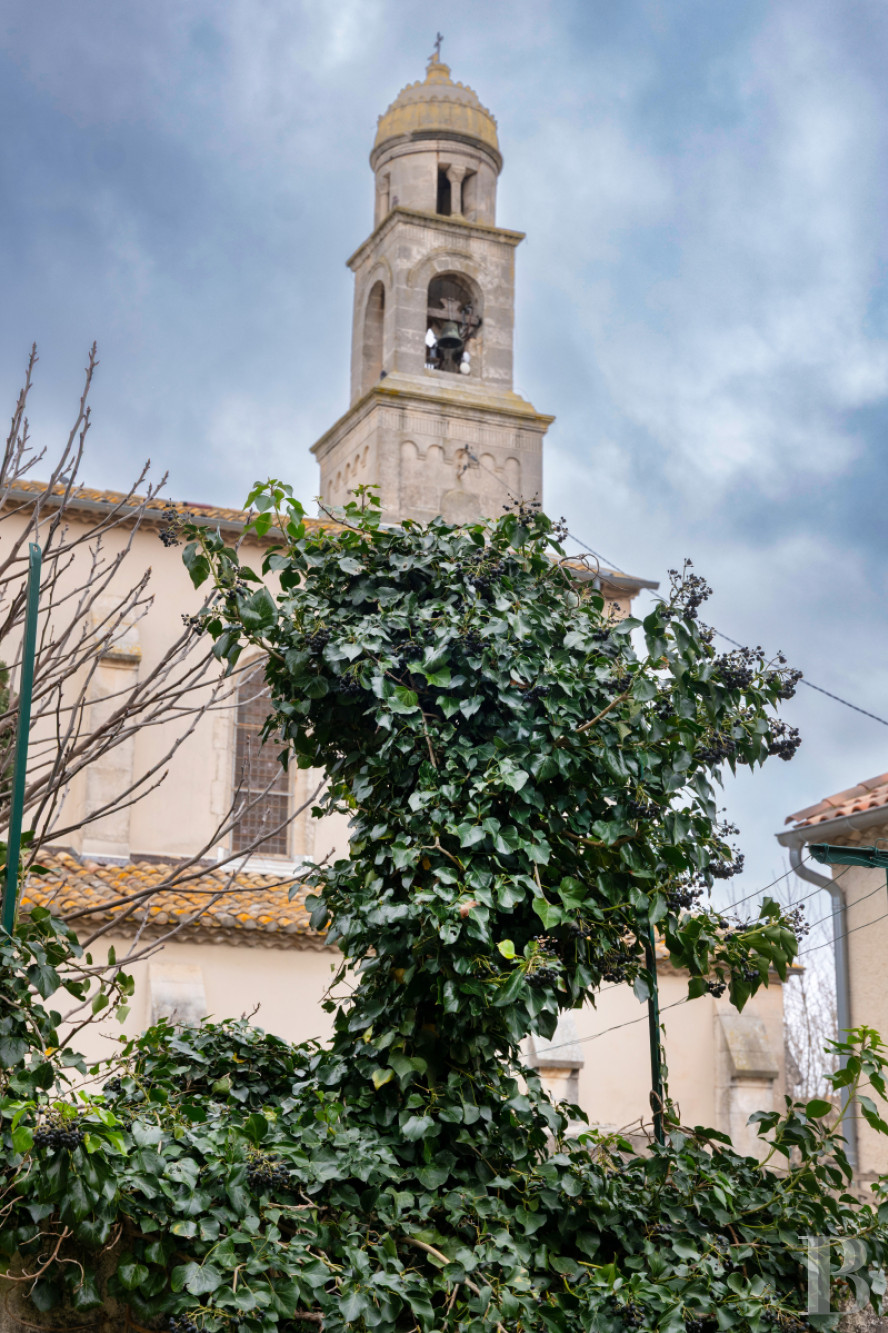
In Provence, in the north of the Bouches-du-Rhône area, very near Eygalières, only 10 kilometres from Saint-Rémy-de-Provence and 30 kilometres from Avignon’s high-speed TGV train station, this village is made up of two hamlets around the remains of a Cistercian abbey. The local community is actively involved in vegetable growing and handicrafts, with produce sold locally around its Romano-Byzantine church, schools, supermarket, bars and restaurants. A market with a typical Provence ambiance is held here every week. The house stands within the walls of a 12th-century Cistercian nunnery dedicated to Our Lady. It held the rights to local eel fishing and hemp was grown here, providing a certain amount of prosperity until the 16th century.
Description
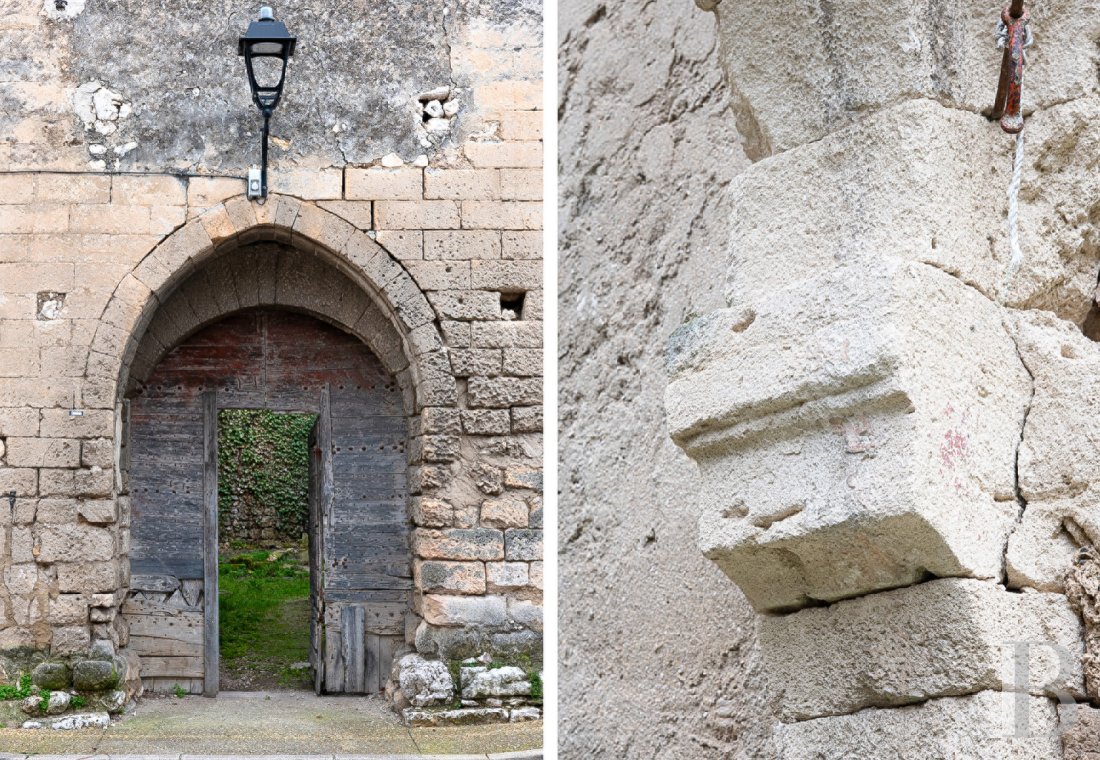
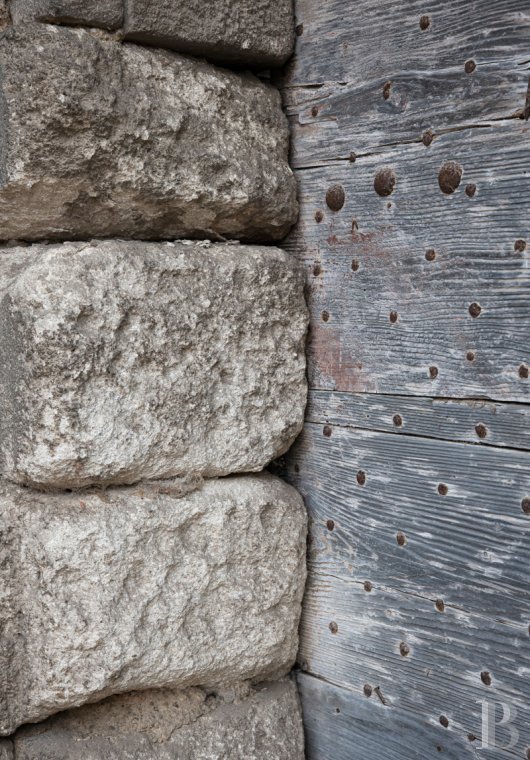
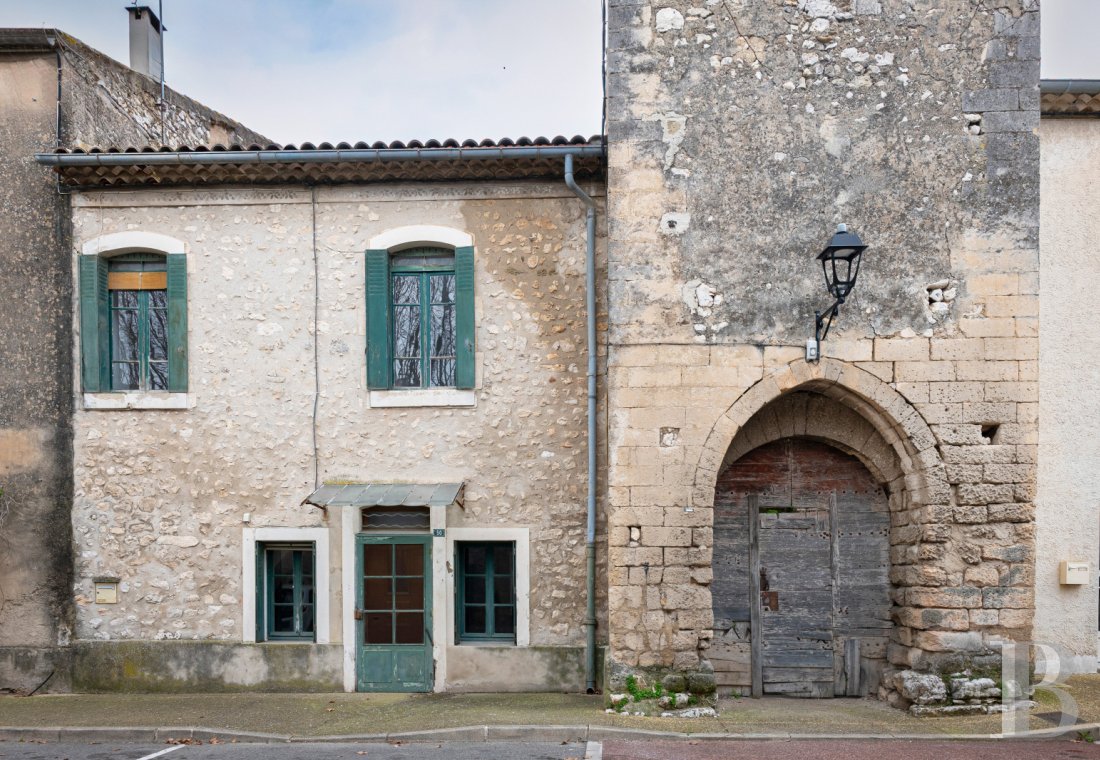
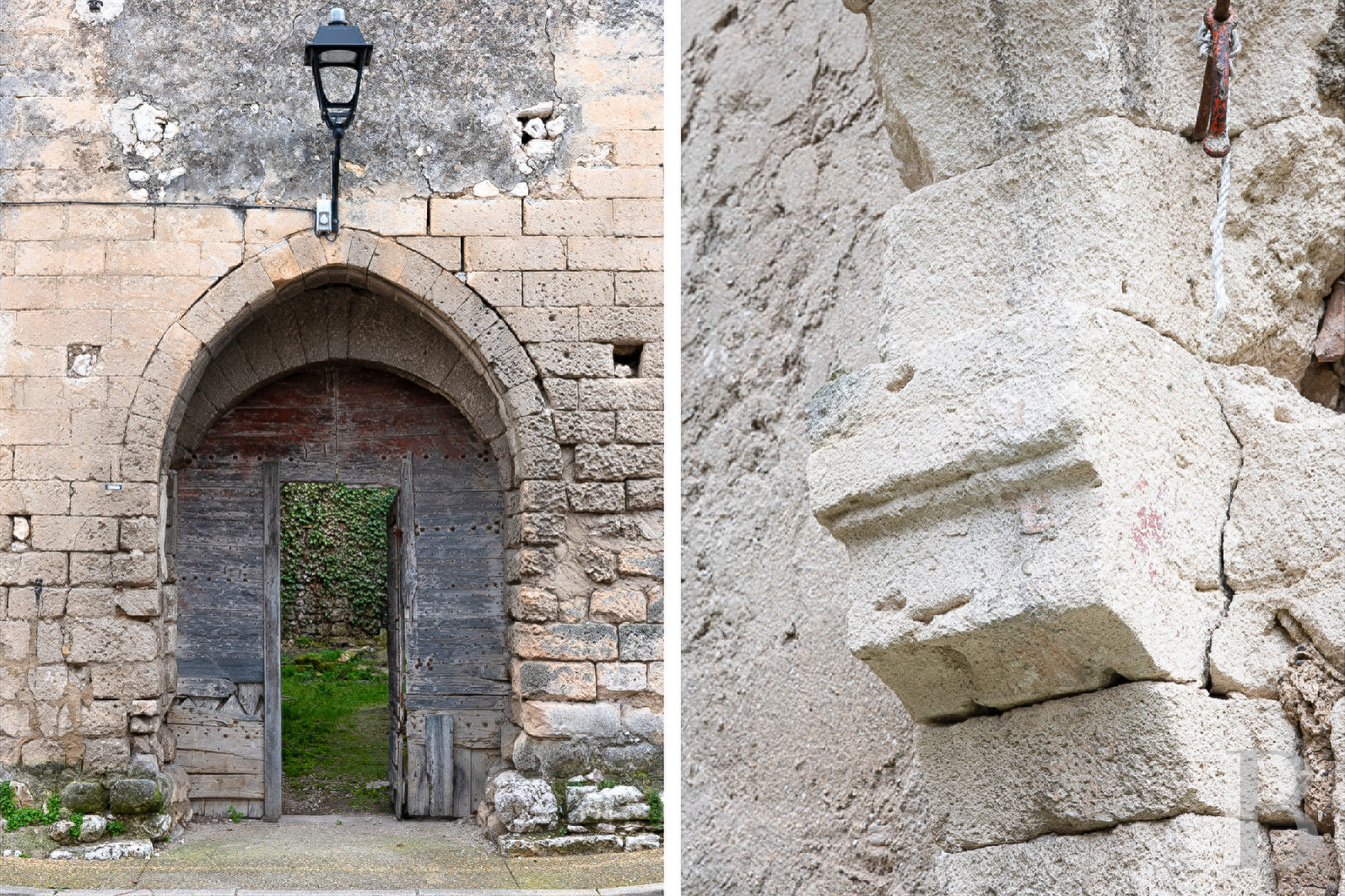
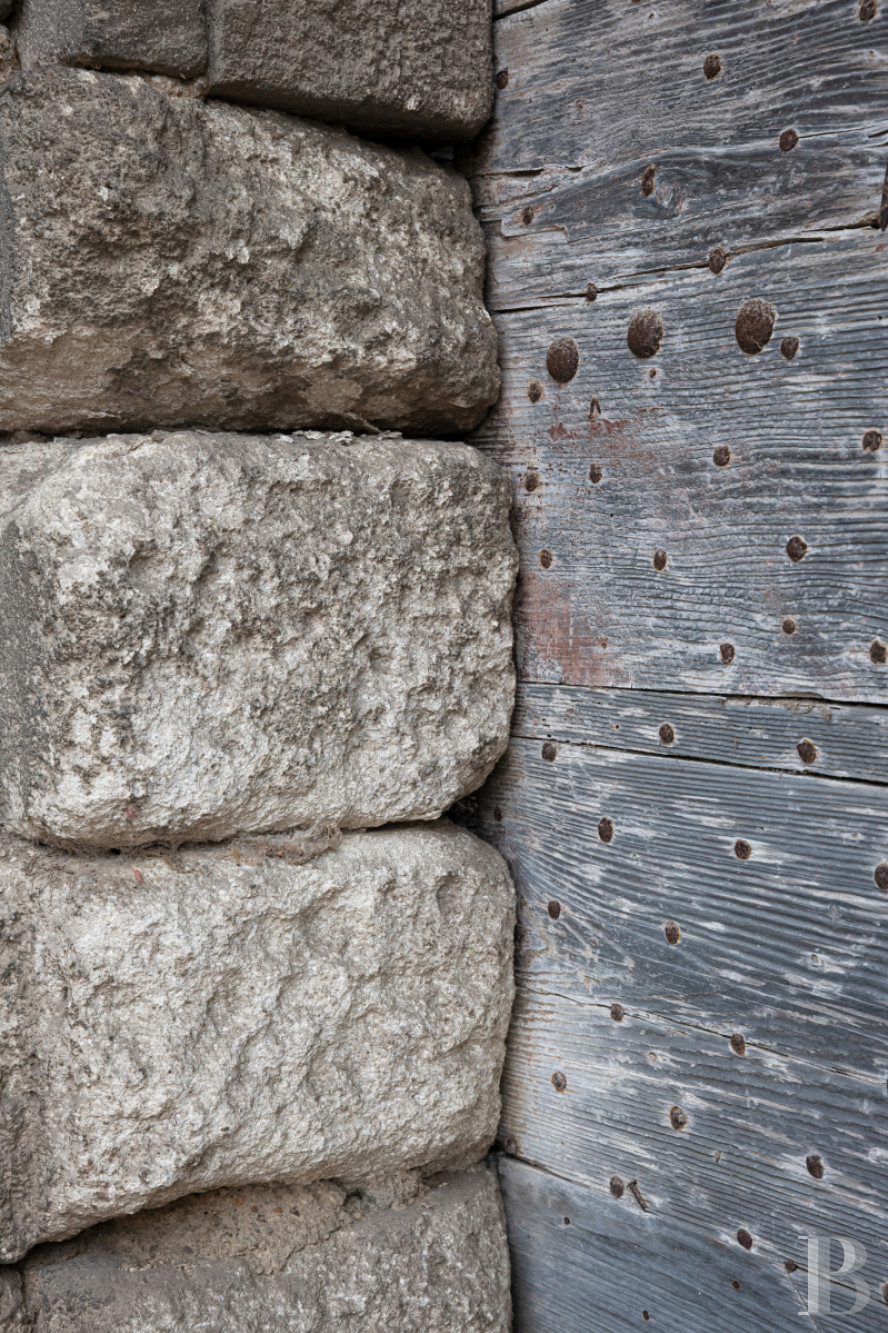
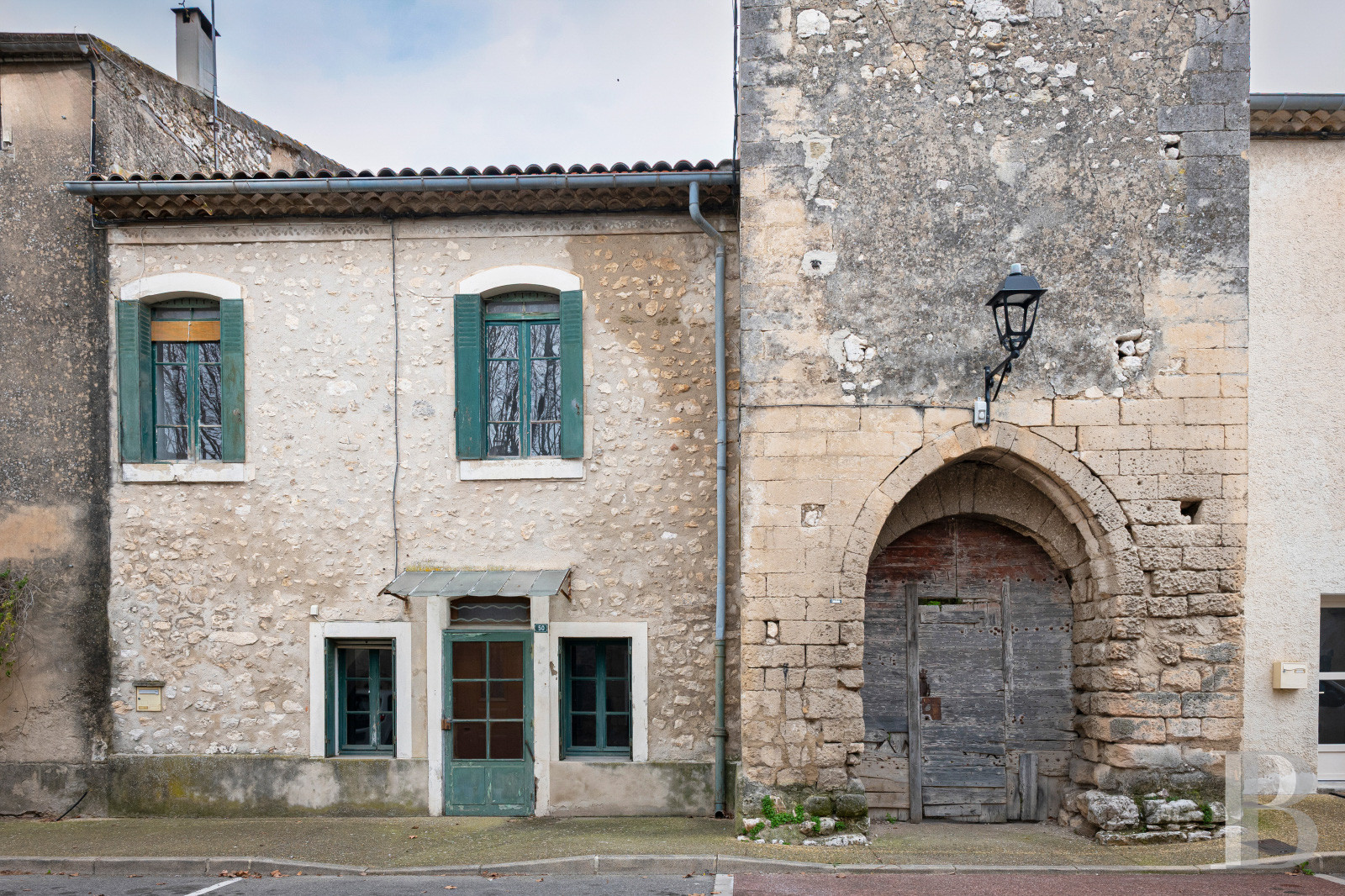
The house’s facade overlooks the main square of the village. To the right, the property includes a square stone defensive tower with a pointed-arched porch at its base. To the left, the corner tower, which is part of the neighbouring property, is another vestige of the fortified walls. The heavy wooden postern in the square tower, which is wide enough for a cart, has a pedestrian door in it, providing access to the residence. Above it, there is a semi-circular arch within a pointed arch illuminated by an antique lamp. The tower overlooks the two-storey house, with a rendered stone facade beneath an almost flat roof of barrel tiles. The main entrance is via a door fitted with anti-mosquito and anti-insect netting, flanked by two windows, above which there are two others but offset in relation to their position. The house, which will be partially and temporarily habitable during the necessary renovation (of the structure and finishing), has a surface of approximately 110 m², to which future occupants could add the more than 70 m² of attic space after conversion. An around 60-m² courtyard and an almost 30-m² terrace add to the enjoyment of outdoor living in a climate which is very pleasant throughout the year.
La maison
The ground floor
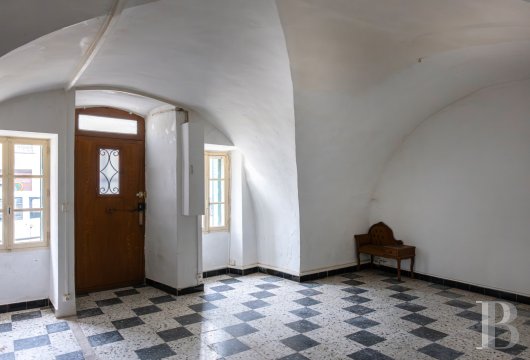
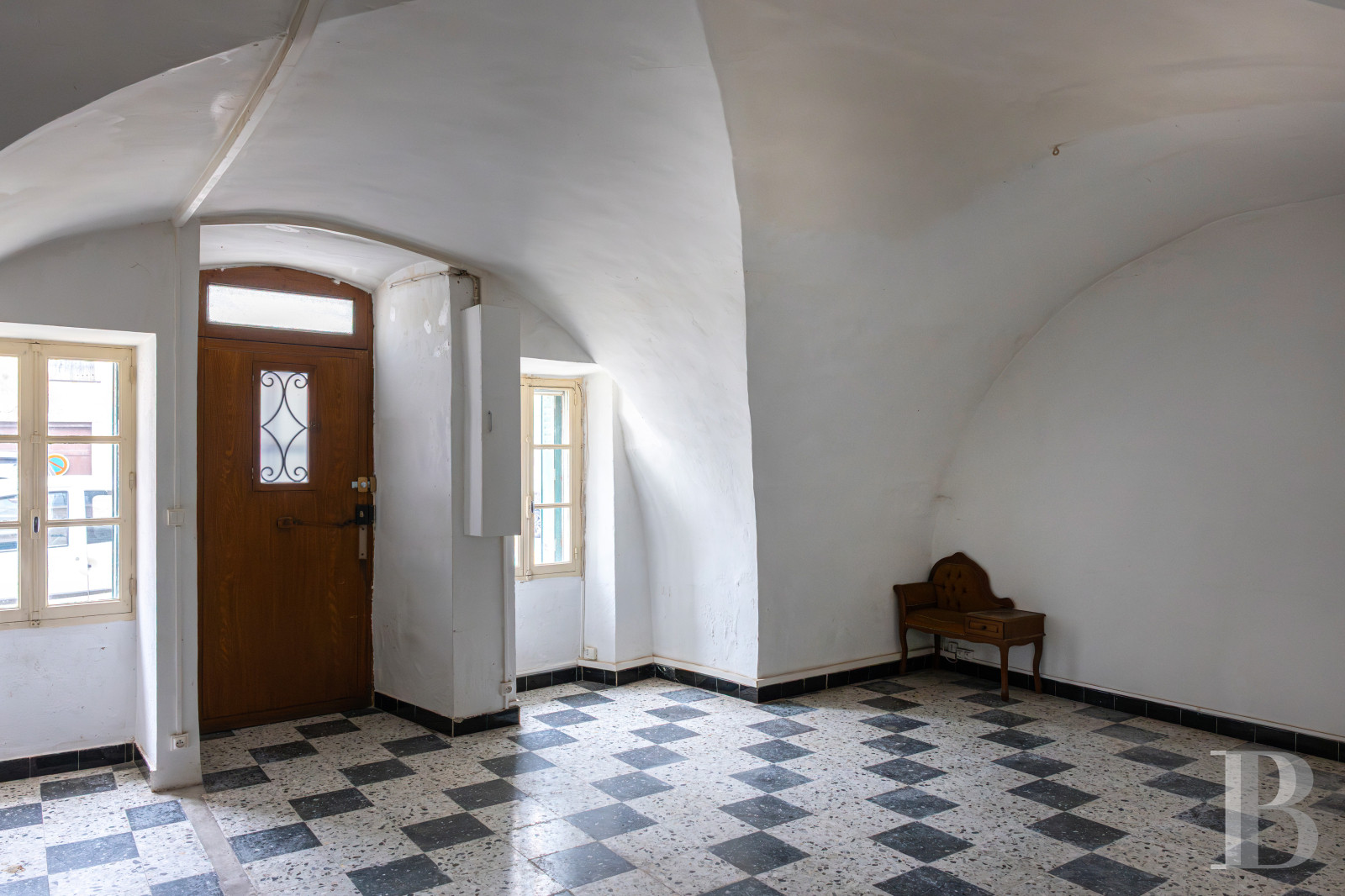
The entrance door, with a glazed Judas hole, opens directly into the lounge with a quadruple vaulted ceiling whose arches descend to the floor and, together with the four semi-circular load-bearing walls, create a slight recess within the room. The locally quarried stone has been plastered over in this room. The morning sunlight illuminates the black and white tiled floor through the windows overlooking the square. Another window opens onto the courtyard, making it possible to see visitors coming through the postern in the square tower.
On exiting the lounge, a corridor running parallel to the kitchen leads to a lavatory and a door opening into the courtyard.
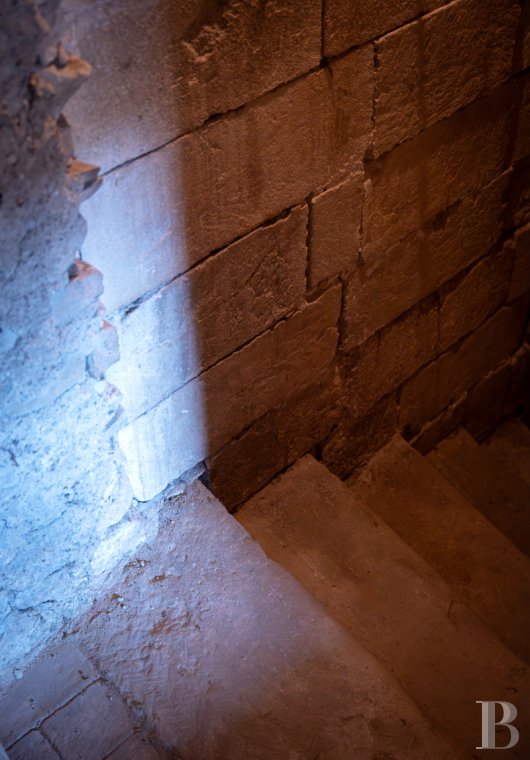
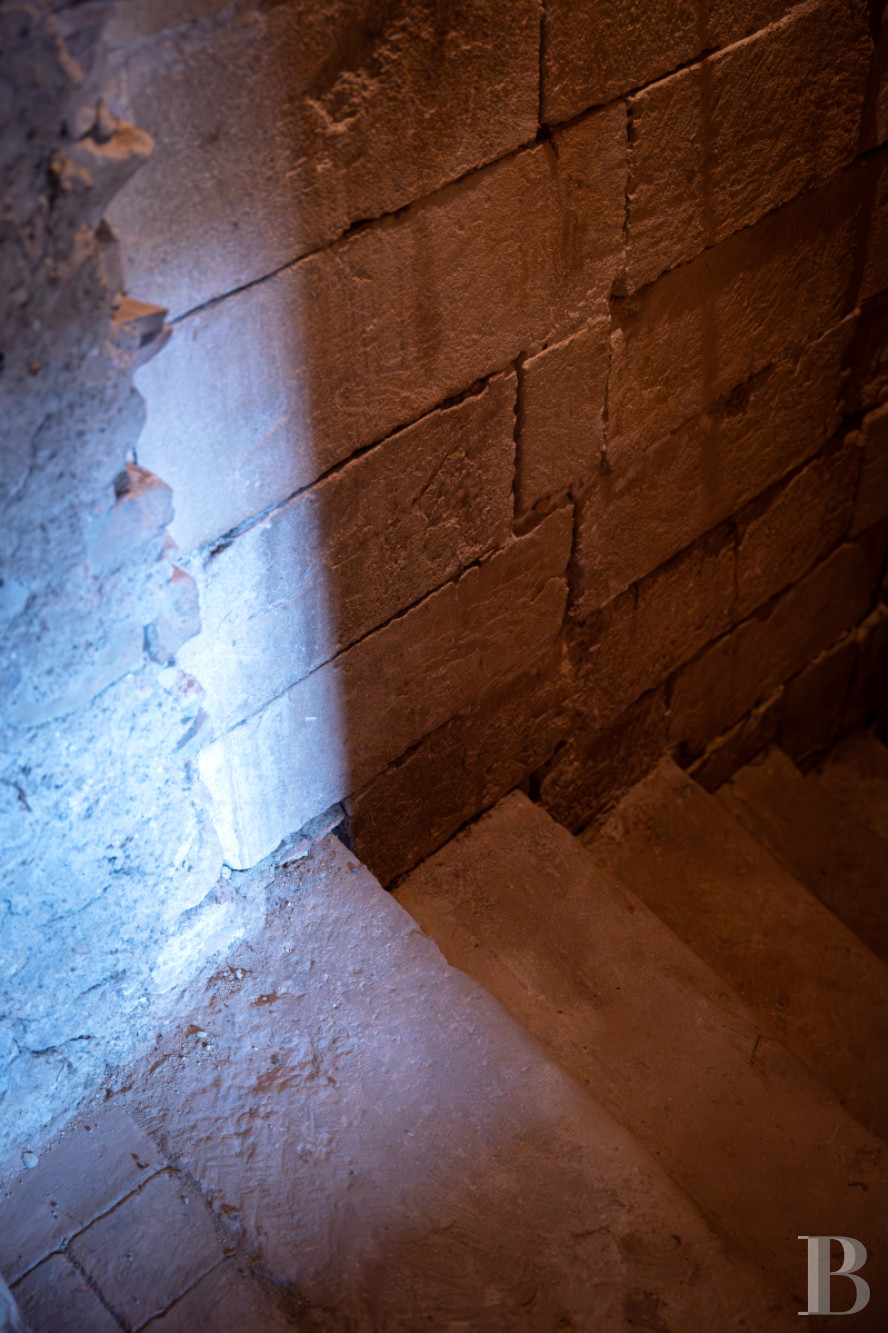
A stone staircase, consolidated with cement to level the steps worn down by repeated usage, leads upstairs.
The upstairs
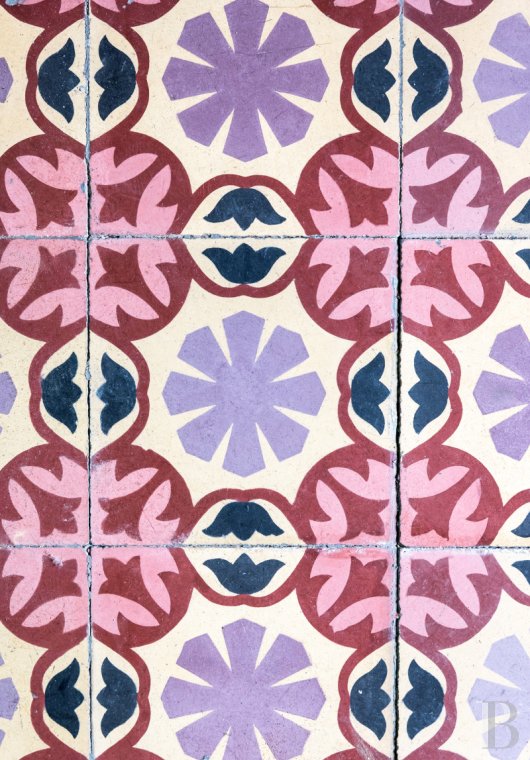
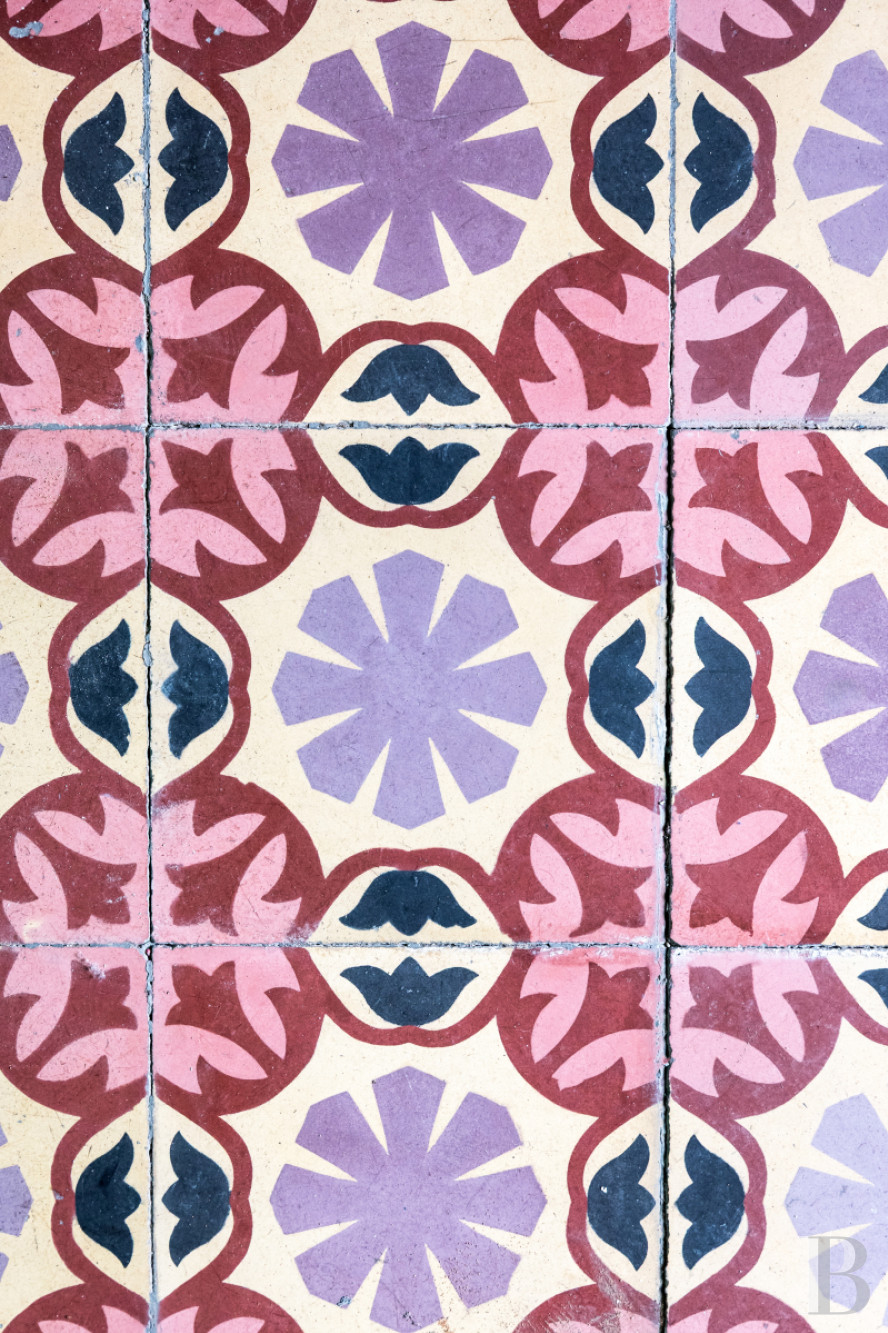
On this level, a corridor leads to three bedrooms and a shower room, meaning half of the house could be habitable over spring and summer during renovation work. Suspended ceilings have been installed; it is possible that they may conceal French-style beamed ceilings. One of the bedrooms has period cement tiled flooring in shades of purple. Lastly, a stone quarter turn staircase leads to the attic level, which awaits conversion.
The attic
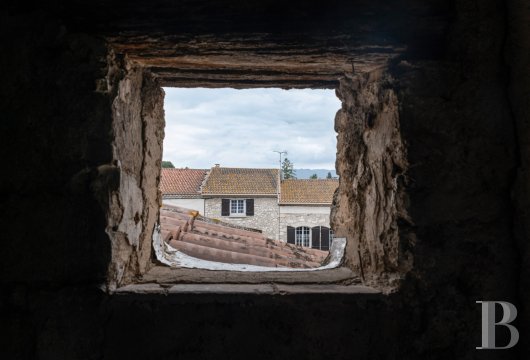
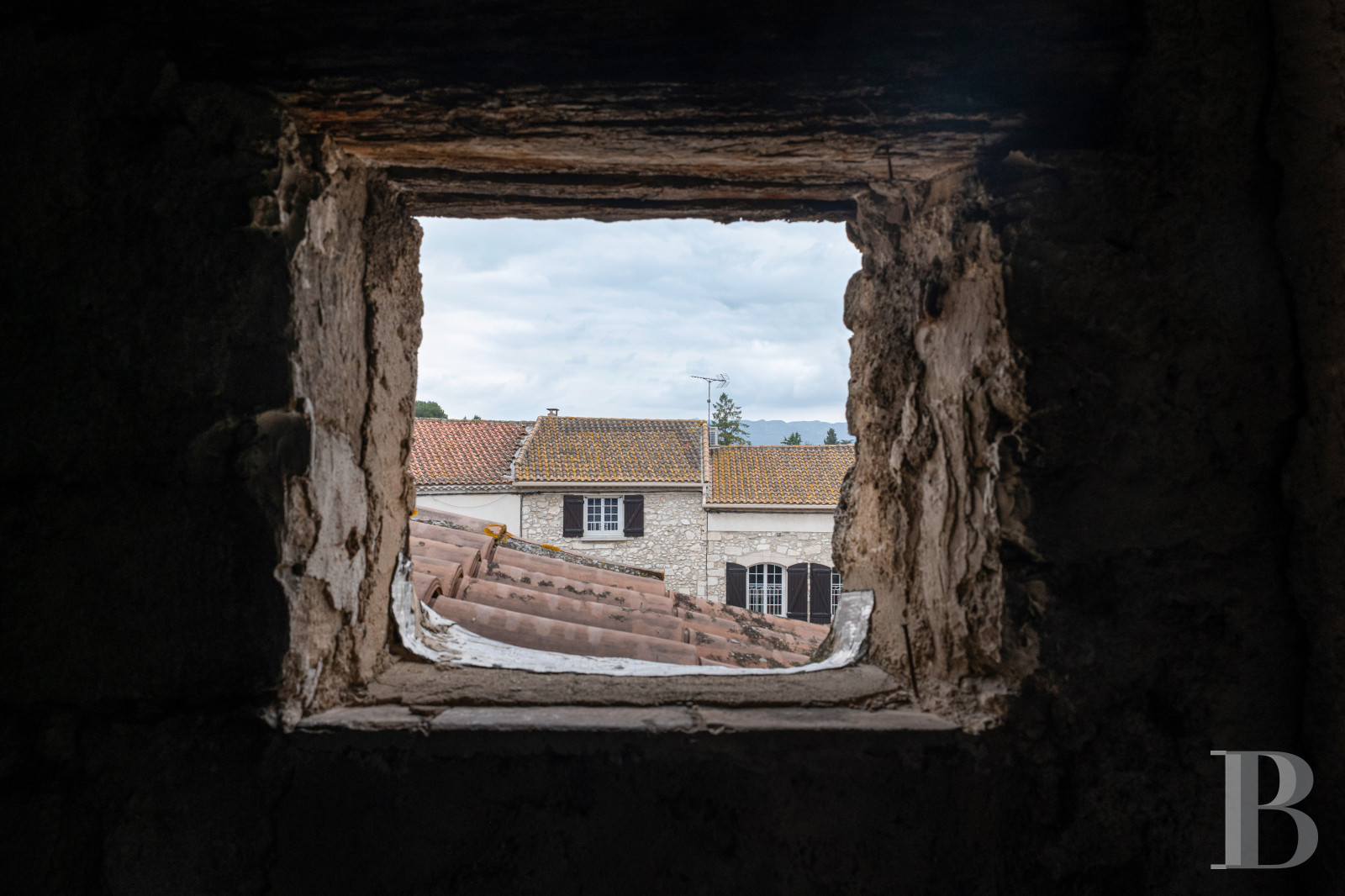
The attic is divided into two parts beneath the rafters, with the roof frames and tiles requiring restoration. The purlins and joists do not display the same sloping pitch throughout. A carefully considered study of how to use the space, from floor to ceiling, would be beneficial before any conversion.
The courtyard
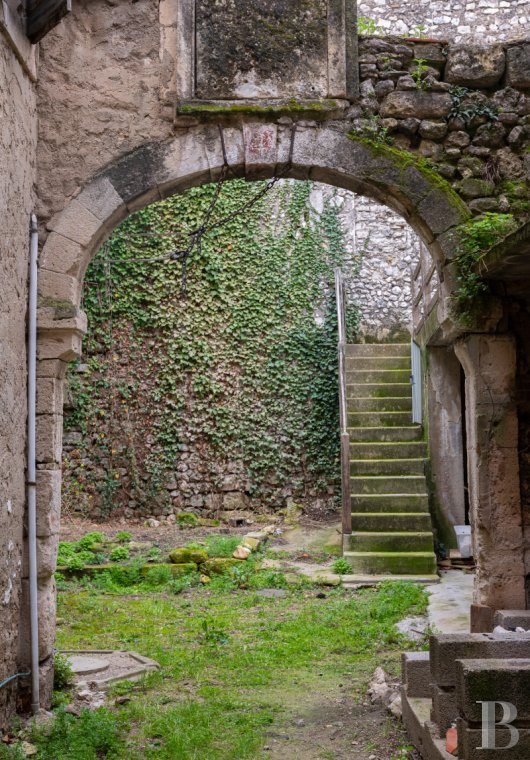
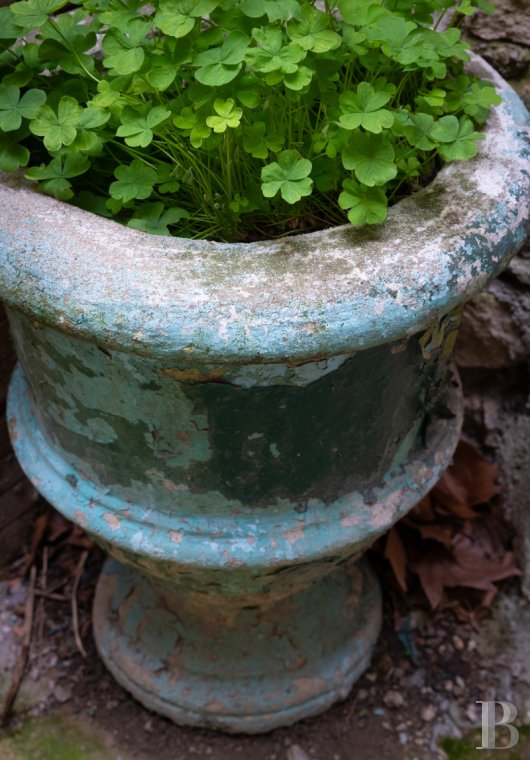
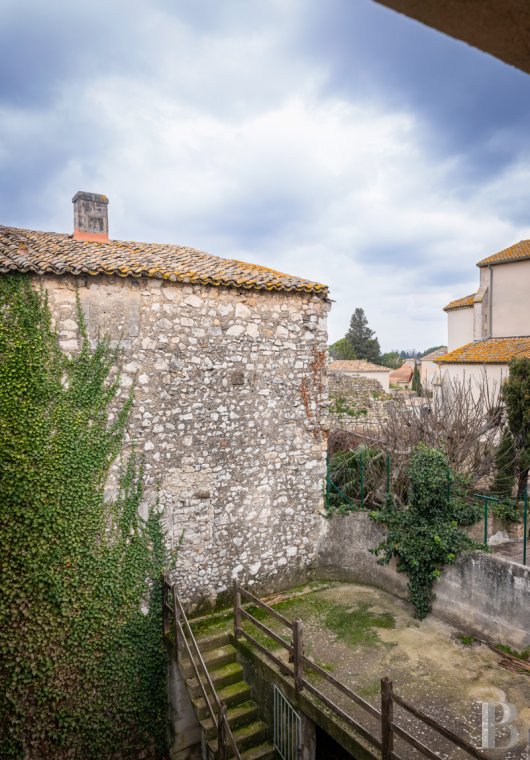
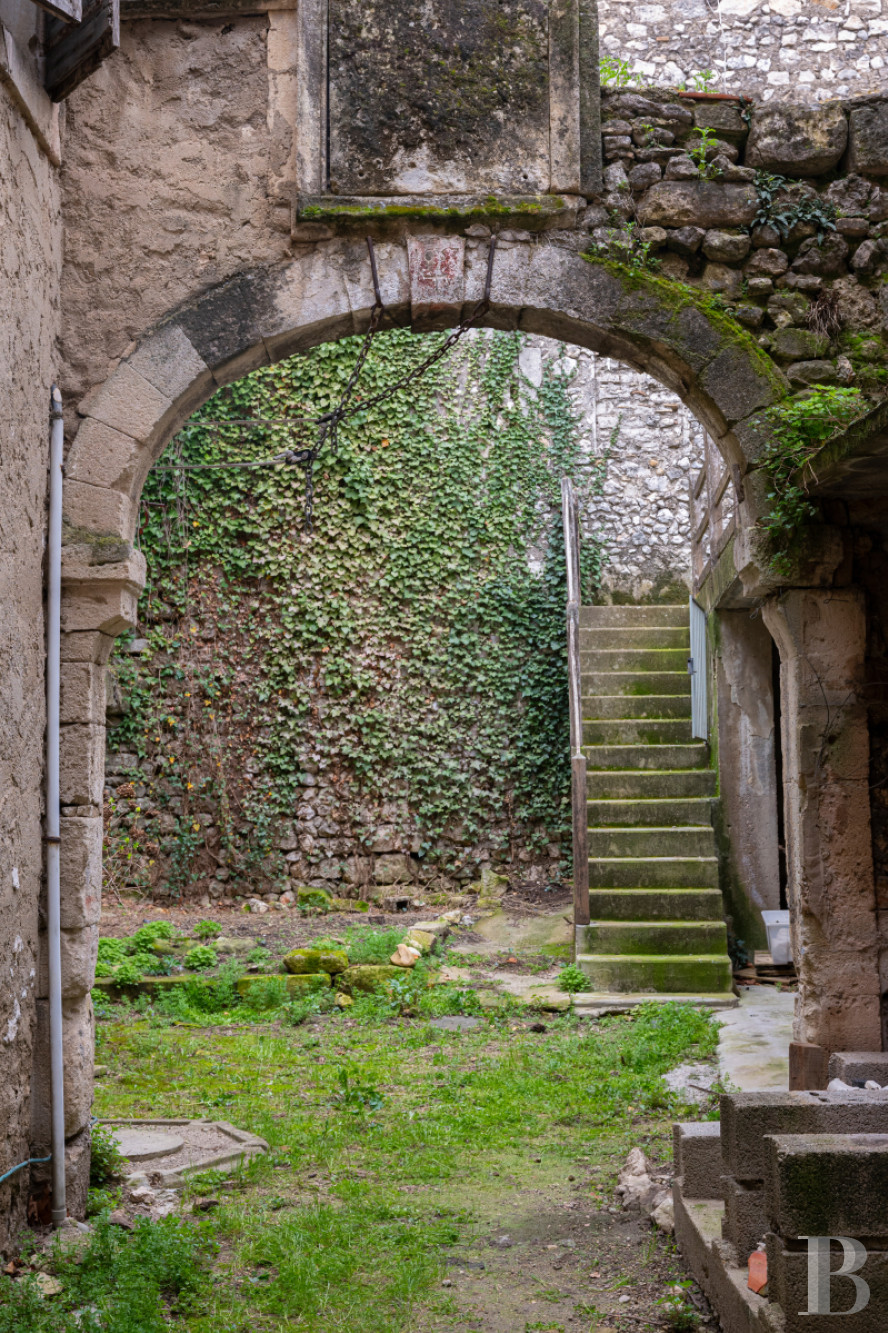
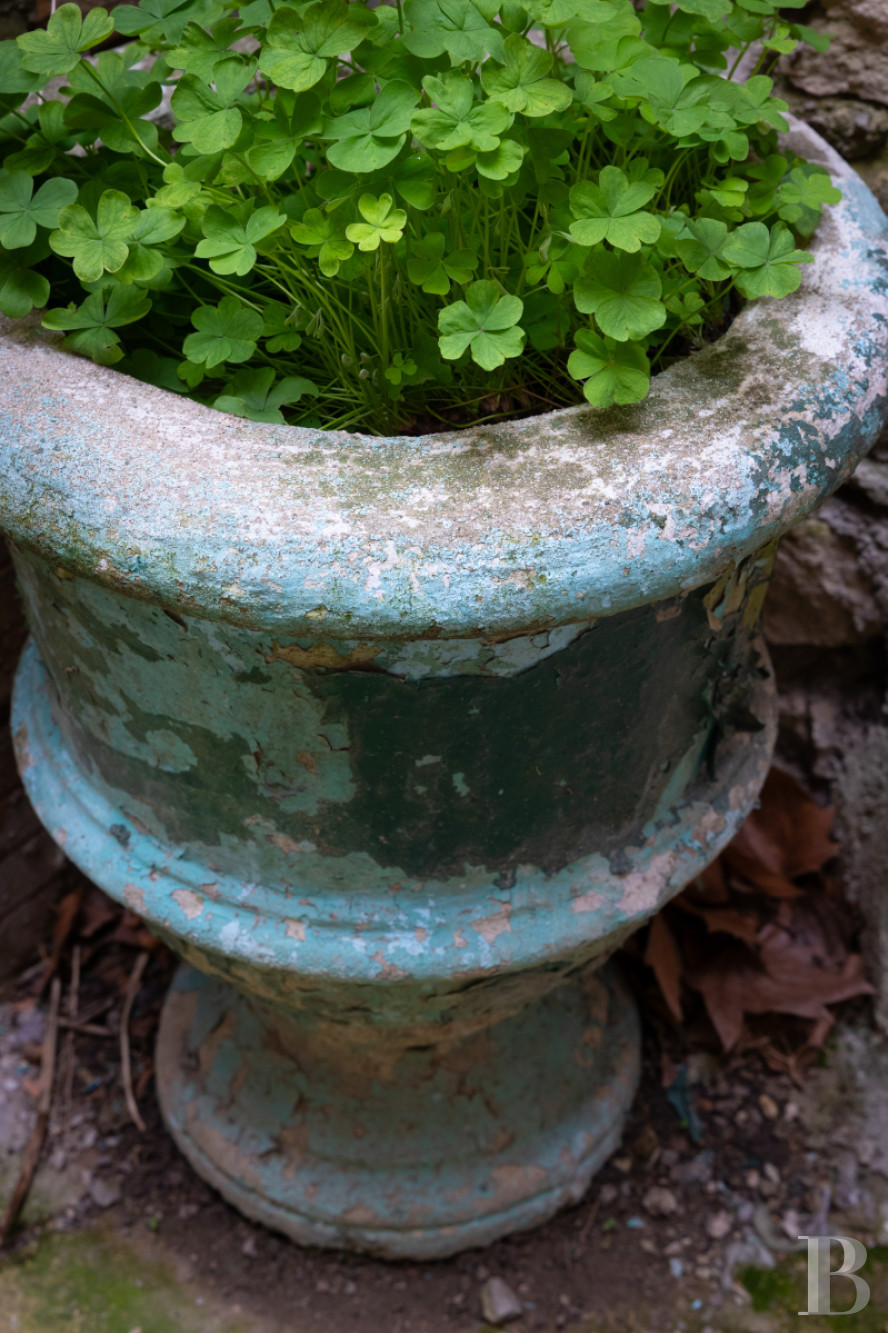
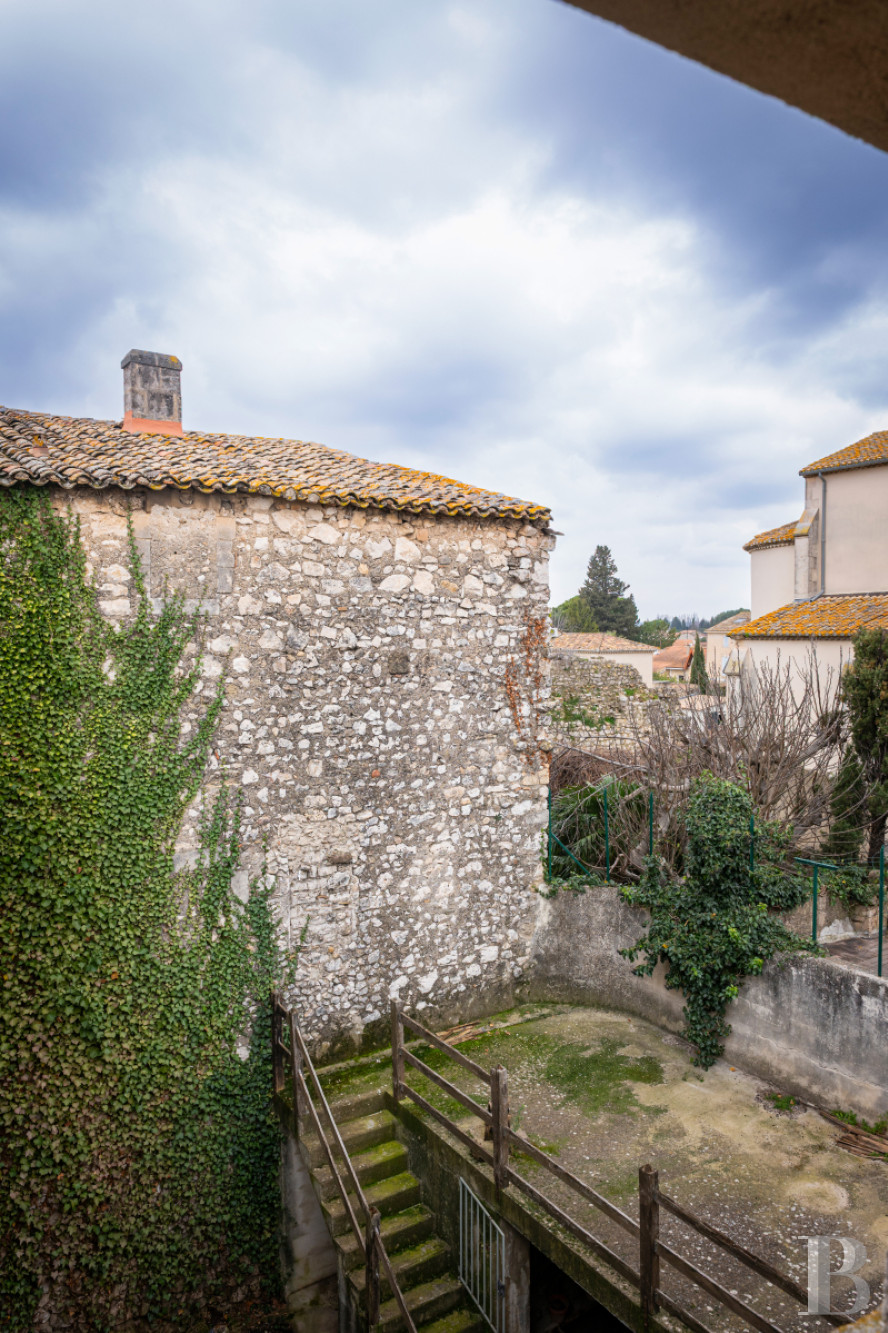
It spreads over approximately 60 m² to the north, like the terrace, and is shaded from the heat of the sun. There is a second semi-circular arch supported by columns with undecorated square capitals, faithful to the Cistercian tradition. It boasts a clearly visible keystone, which is another reminder of the abbey’s former presence, like the tower and its passageway. Three high walls surround the courtyard, one of which is partially covered with Virginia creeper. A Medici vase holding plants marks the bottom of the straight flight of steps climbing up to the raised terrace.
The terrace
It is half the size of the courtyard, from which it can be reached via a flight of stone steps and over which it offers plunging views. It is lined by a partially damaged wooden guard-rail, a parapet and two low walls, all of which are made of stone. The concrete flooring and its raised elevation in relation to the house provide an escape from the evening dew.
Our opinion
In this dynamic village, which is nevertheless protected from mass tourism, time seems to have stood still as history has passed by. The centuries have slid gently by, allowing entropy to take its slow course and feudal memories to endure. However, the windows on the top floor point to a subtle detail: their offset position is medieval but their dimensions and the discrete curve of the entablature is characteristic of a much later date than the 13th century, especially as the house is encompassed by the former abbey’s walls, which is a sign of political stability. In this edifice, the roof and level of interior comfort require upgrading while extra surface can be gained in the attic. Yet, a great freedom of restoration combined with a deep appreciation for these ancient, time-honoured buildings will be a blessing to future occupants and their aesthetic sensibilities.
Reference 901779
| Main building floor area | 110 m² |
Information on the risks to which this property is exposed is available on the website: www.georisques.gouv.fr
Share


NB: The above information is not only the result of our visit to the property; it is also based on information provided by the current owner. It is by no means comprehensive or strictly accurate especially where surface areas and construction dates are concerned. We cannot, therefore, be held liable for any misrepresentation.