



A 16th-century and early 20th century house to be restored,
in a peaceful village in Central Brittany
in a peaceful village in Central Brittany
Saint-Gilles-Pligeaux,
COTES-D'ARMOR
brittany
22480
FR

Location
This property is located in Saint-Gilles-Pligeaux, a municipality with a population of almost 300 that is situated in the rural landscape of central Brittany, made up of arable land, meadows and woods. The village is modest in size, traditionally laid out and set around the parish buildings as well as Saint-Gilles church, built between the late 15th and 16th century.
The small, characterful town of Quintin, where shops, services and renowned architectural heritage can be found, is around 15 kilometres away. Guingamp is almost 25 kilometres away and boasts more shops, a station from where high-speed TGV trains put Paris within less than 3 hours’ reach, as well as links to various towns and cities in the region, such as Brest, Morlaix, Lannion, Saint-Brieuc or Rennes via the RN12 road.
Description
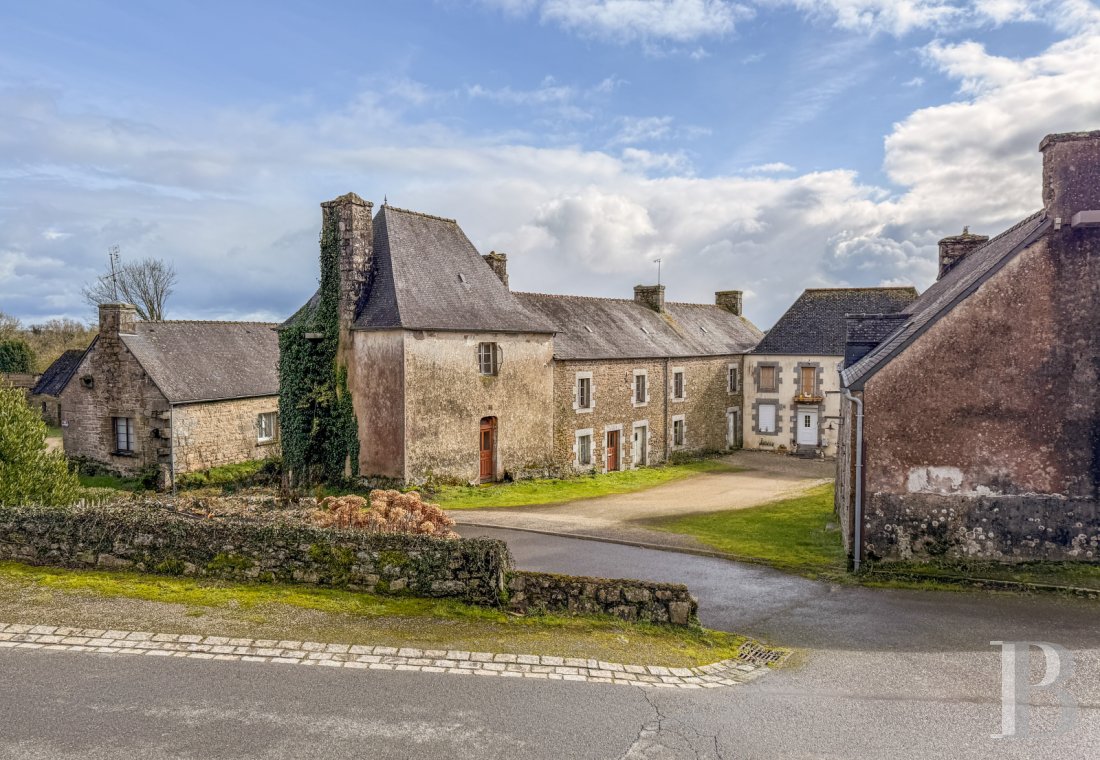
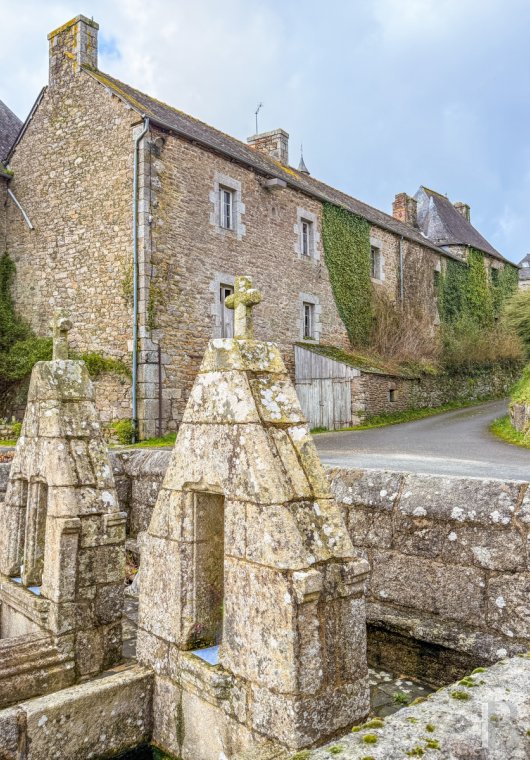
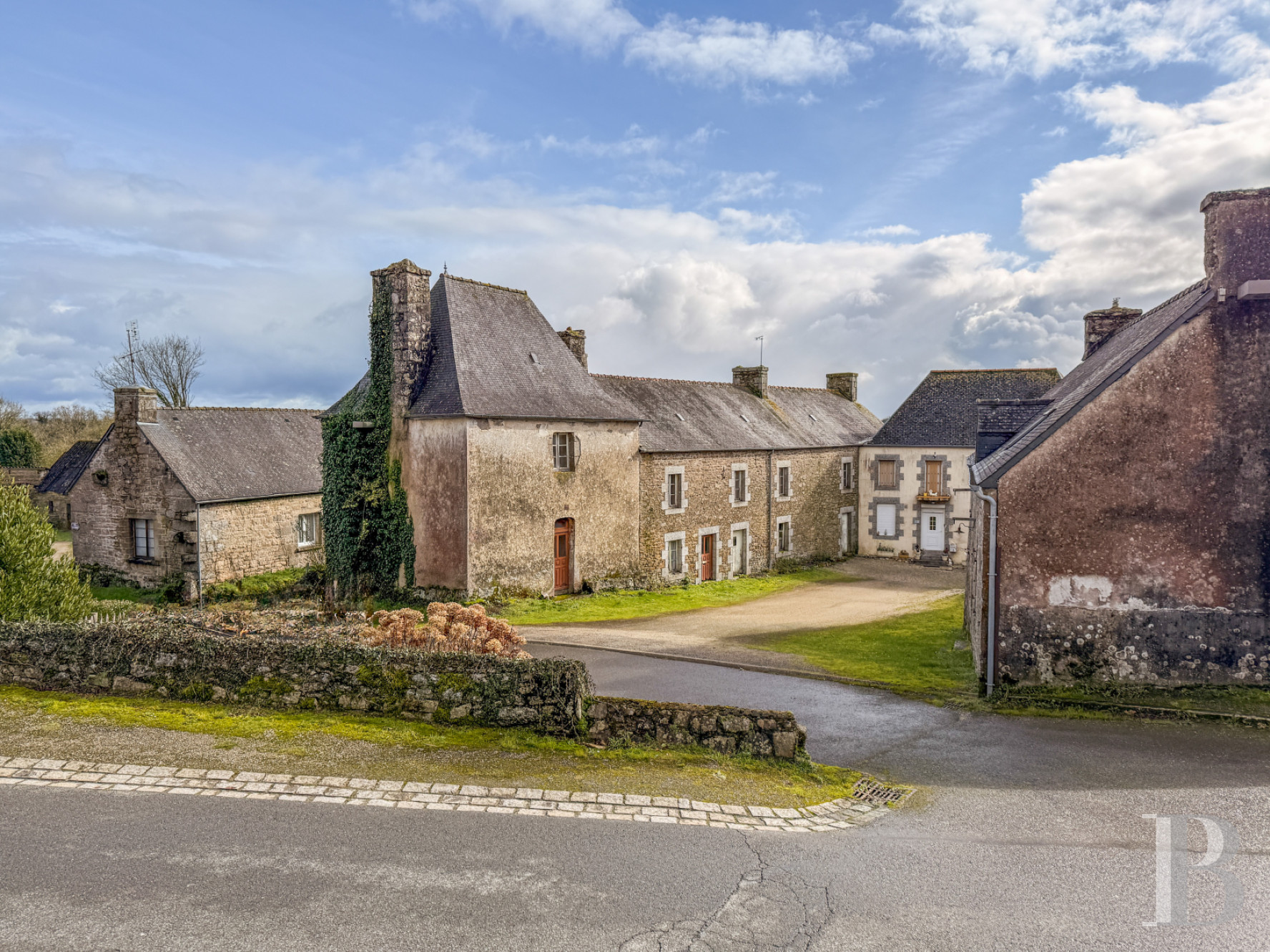
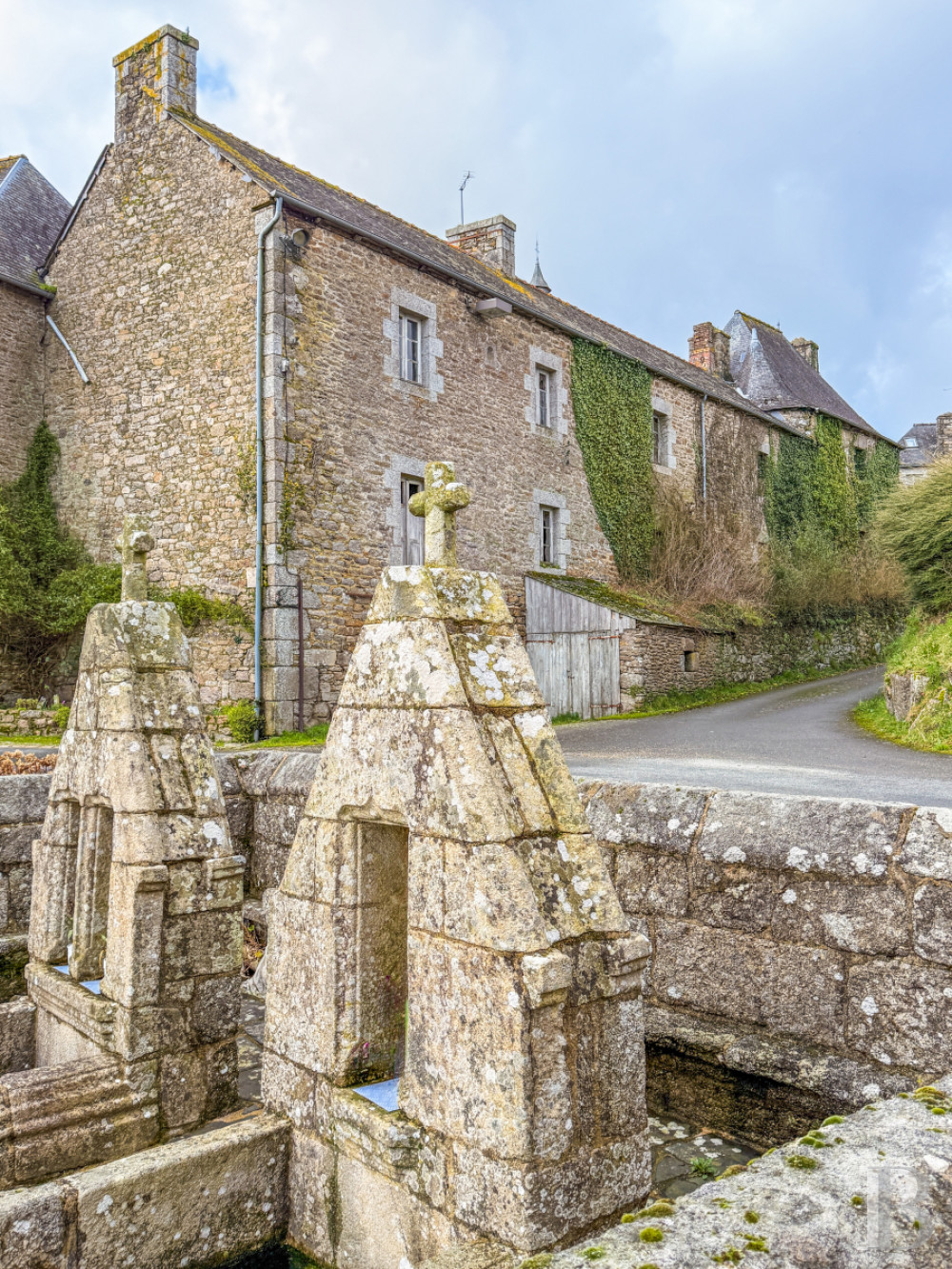
This residence is located in the centre of the village, in the immediate vicinity of the church and fountain, both of which are listed historical monuments.
It is made up of two interconnected, semi-detached buildings.
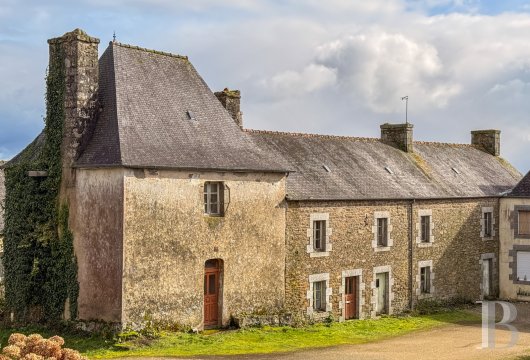
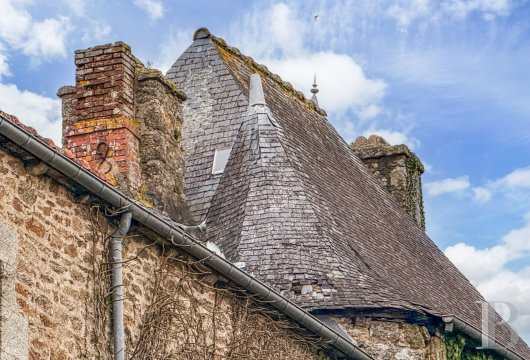
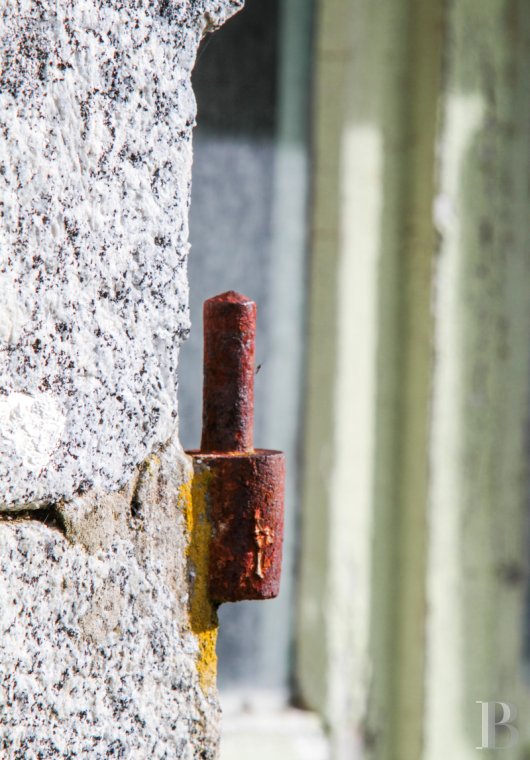
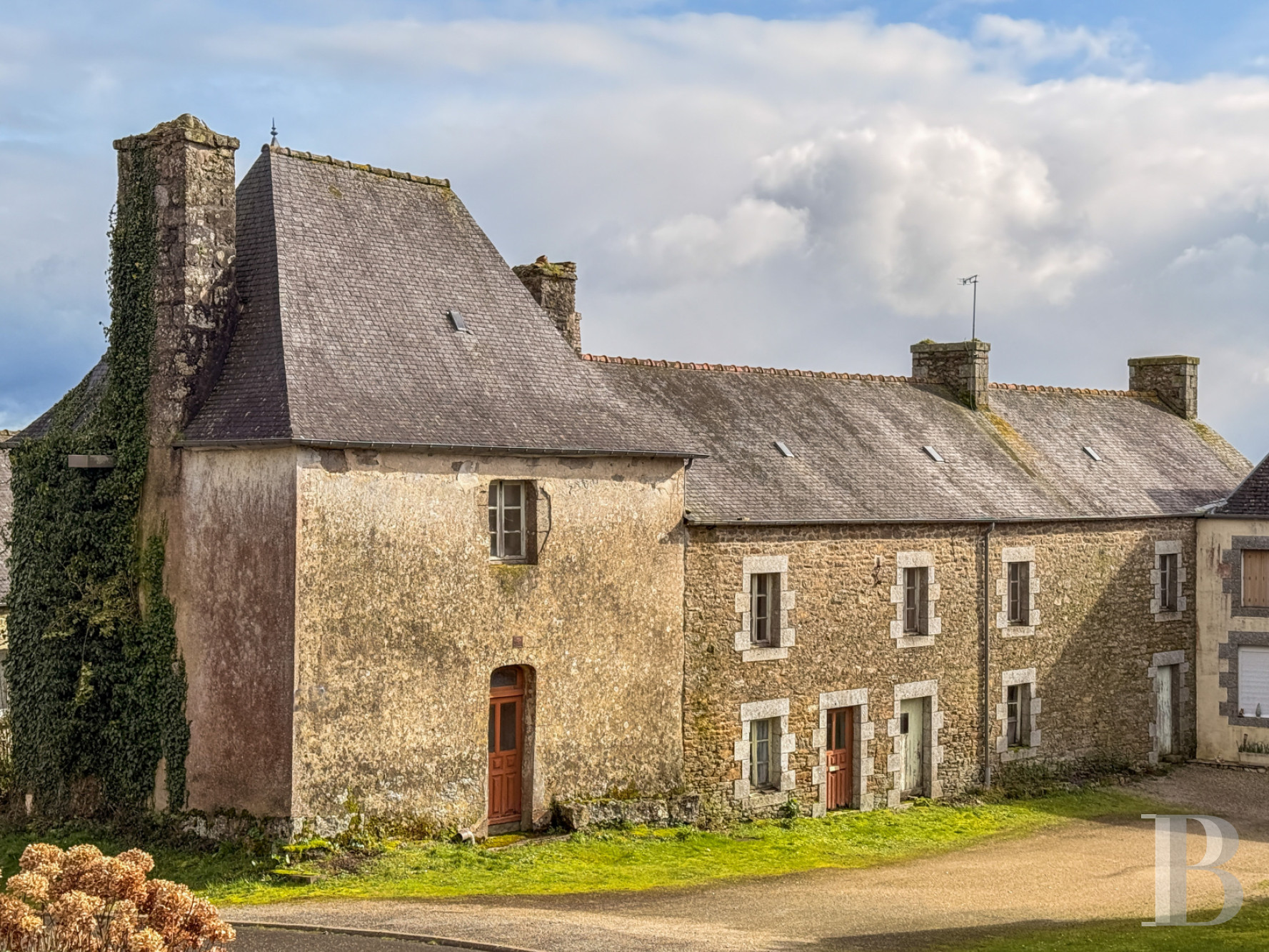
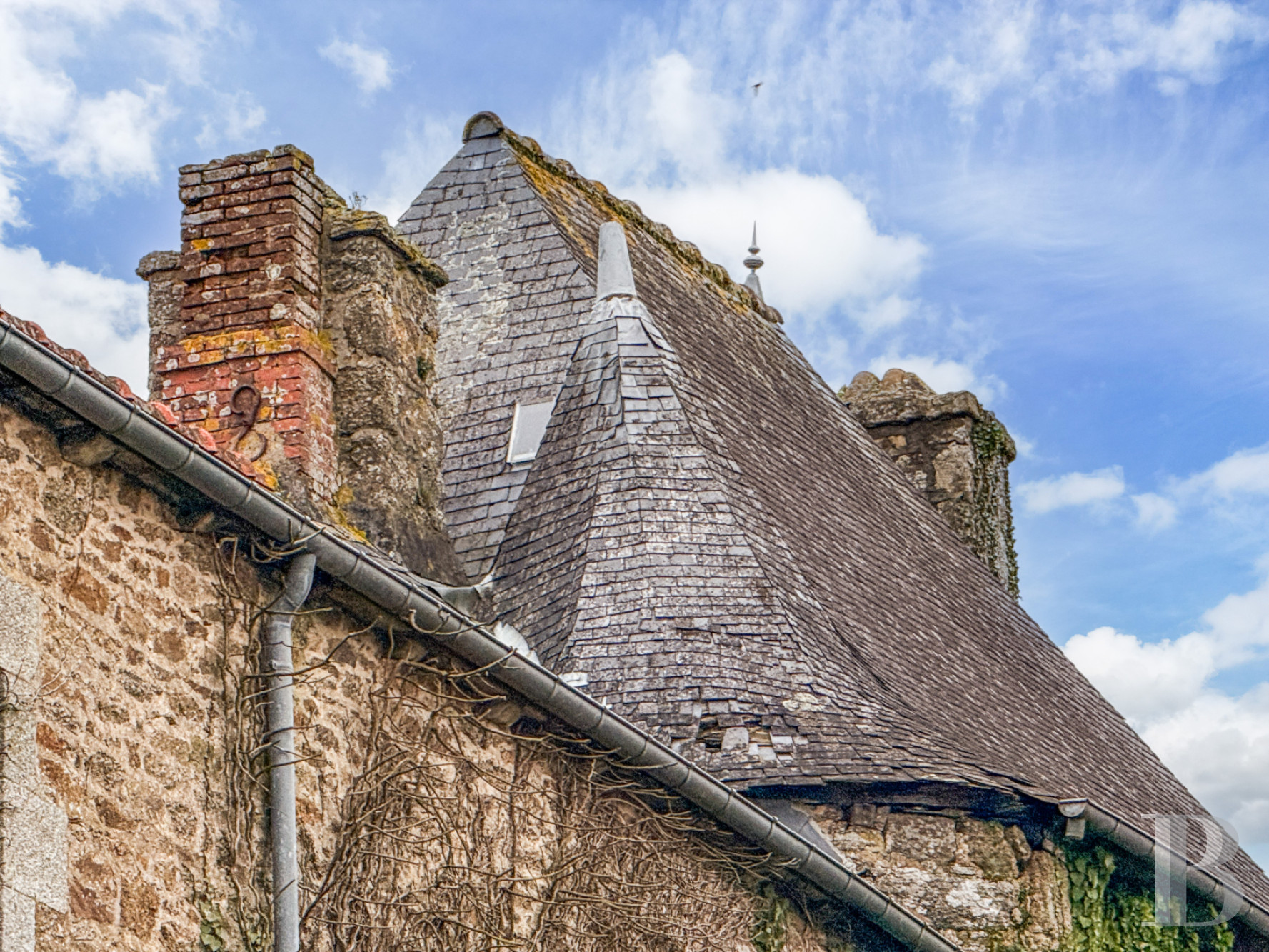
The oldest is located on the corner of a street. In the 18th century, it was a court where justices of the peace pronounced fair judgements. The two-storey building with a steep slate roof and simple volumes is made of rubble stone covered with time-worn rendering. A gable end without windows is topped by a tall stone chimney stack. The modestly sized openings are sporadically laid out. The wooden entrance door topped by an arched lintel opens directly from the courtyard. To the rear, a tower-shaped section with a slate roof adjoins the building, marking the intersection between the two parts. It is most likely a former staircase tower, which is common in the region’s old, rural residences.
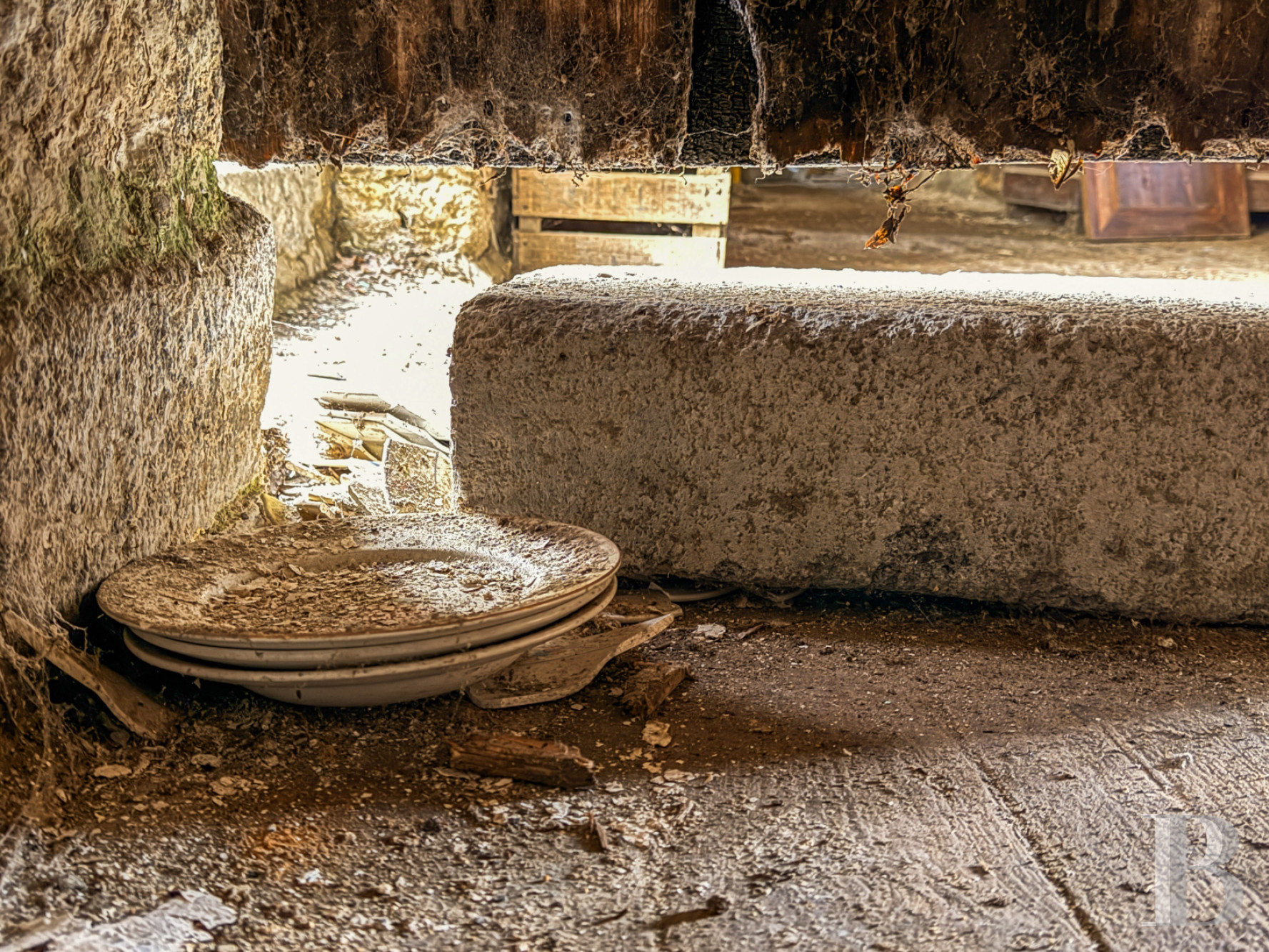
The more recent edifice is a longer building with annex sections formerly used for storage. The facade is made of rubble stone with ashlar door and window surrounds. On the lower part to the rear, a double-leaf, carriage gate can be found beneath the ground floor, marking the entrance to a large storehouse, plus a stone lean-to stands against the wall.
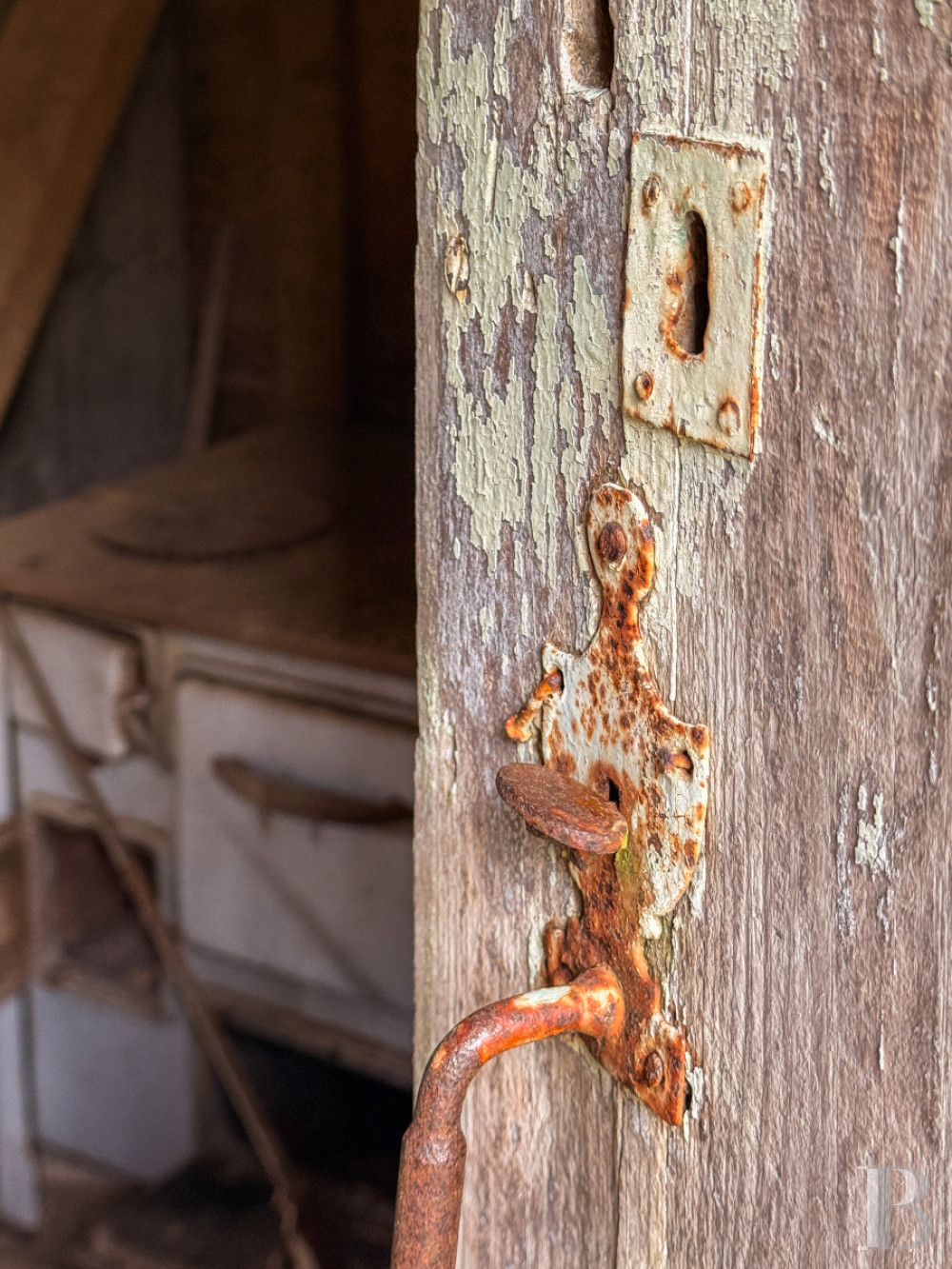
The two buildings stand in a U-shaped complex set around a partially closed courtyard. Originally, the different houses were part of the same family property. Over time, several parts were sold, leading to the establishment of rights of way and easements in the courtyard. The last occupants left at the end of the 1980s. Since then, the interiors have remained in their original state.
It is made up of two interconnected, semi-detached buildings.
The oldest is located on the corner of a street. In the 18th century, it was a court where justices of the peace pronounced fair judgements. The two-storey building with a steep slate roof and simple volumes is made of rubble stone covered with time-worn rendering. A gable end without windows is topped by a tall stone chimney stack. The modestly sized openings are sporadically laid out. The wooden entrance door topped by an arched lintel opens directly from the courtyard. To the rear, a tower-shaped section with a slate roof adjoins the building, marking the intersection between the two parts. It is most likely a former staircase tower, which is common in the region’s old, rural residences.
The more recent edifice is a longer building with annex sections formerly used for storage. The facade is made of rubble stone with ashlar door and window surrounds. On the lower part to the rear, a double-leaf, carriage gate can be found beneath the ground floor, marking the entrance to a large storehouse, plus a stone lean-to stands against the wall.
The two buildings stand in a U-shaped complex set around a partially closed courtyard. Originally, the different houses were part of the same family property. Over time, several parts were sold, leading to the establishment of rights of way and easements in the courtyard. The last occupants left at the end of the 1980s. Since then, the interiors have remained in their original state.
The former court
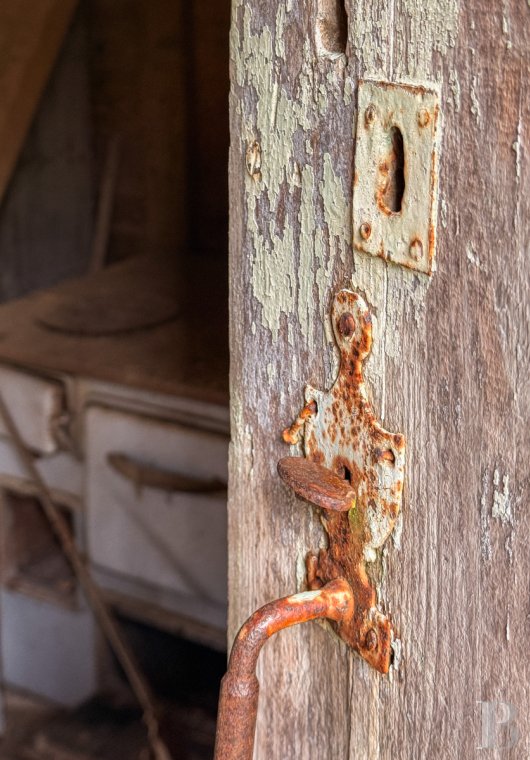
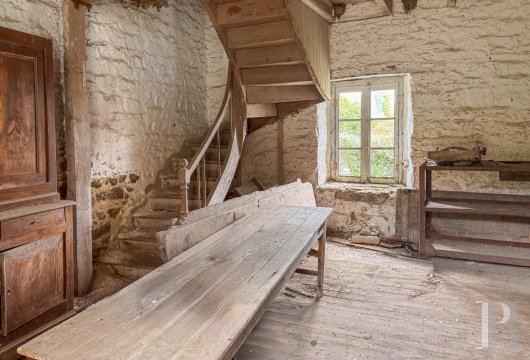
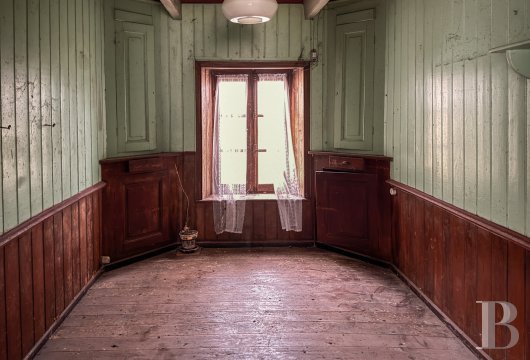
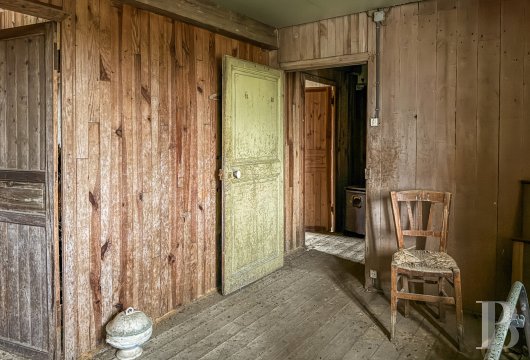
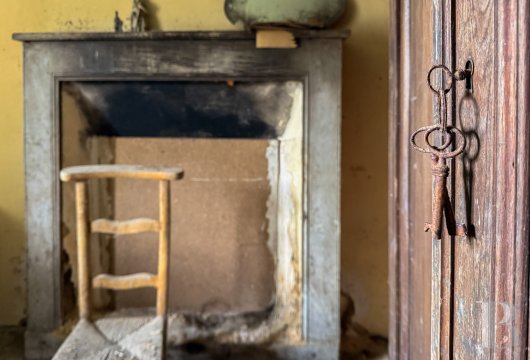
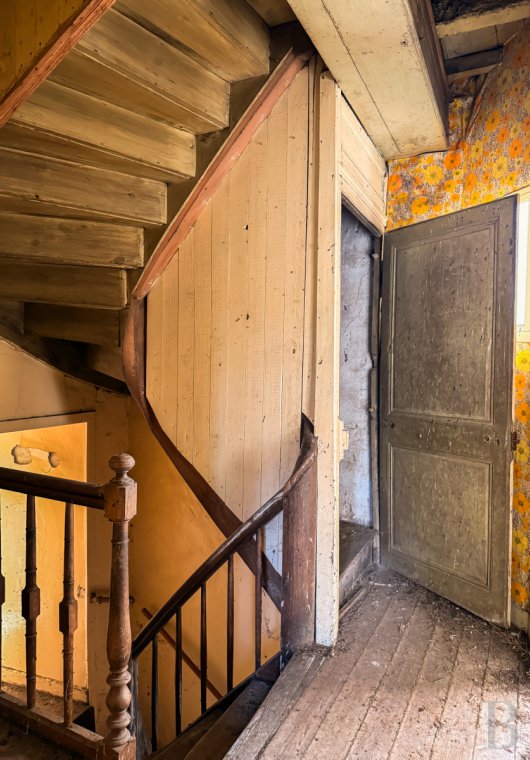
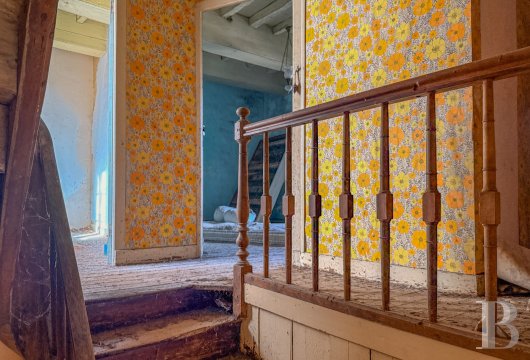
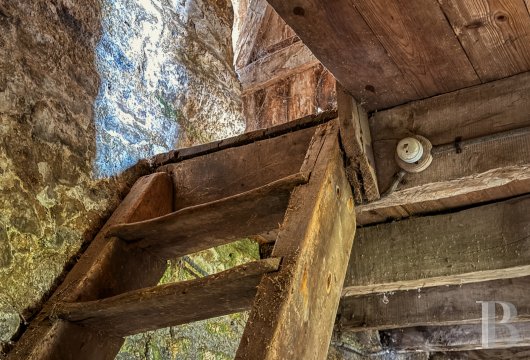
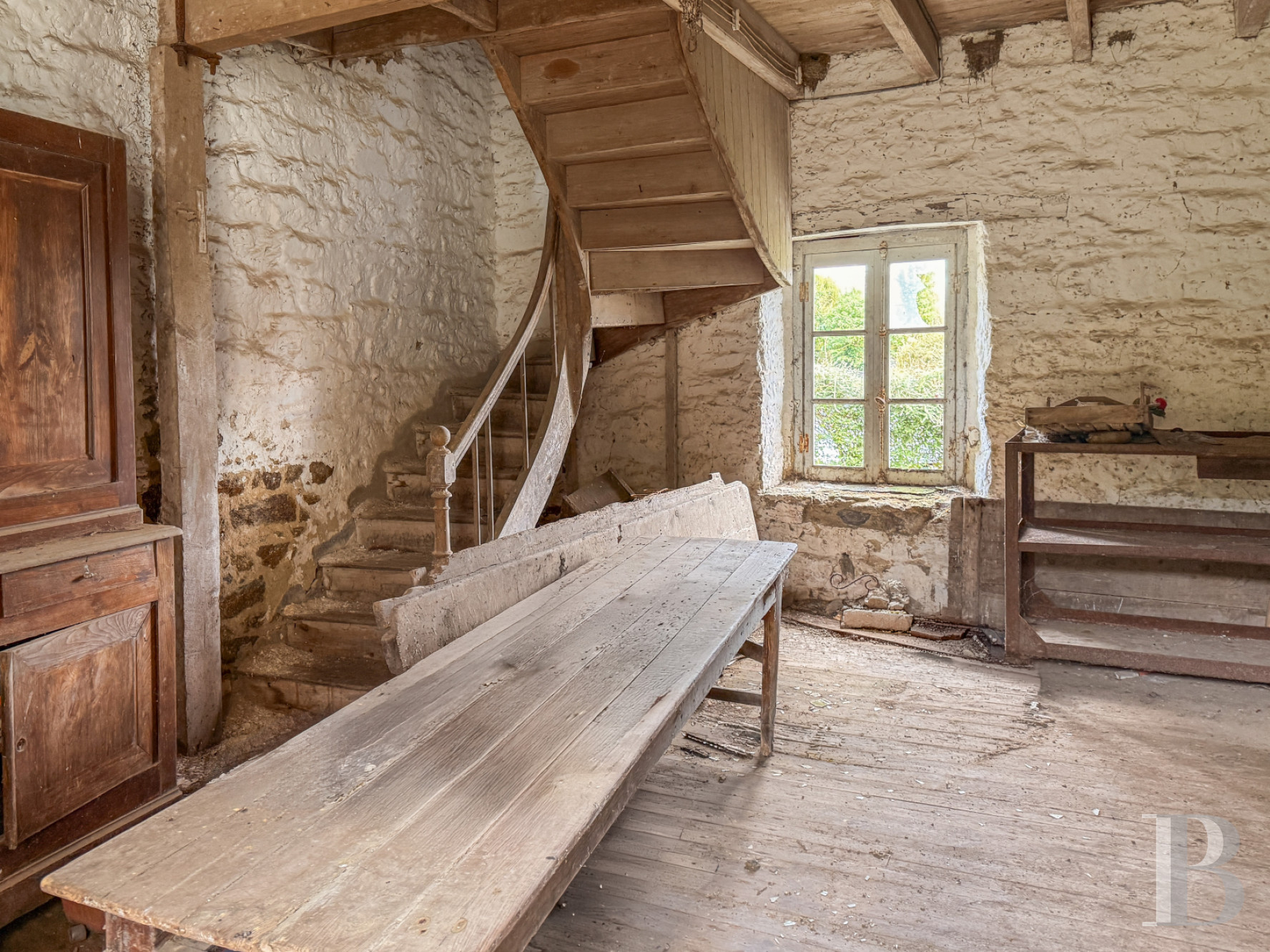
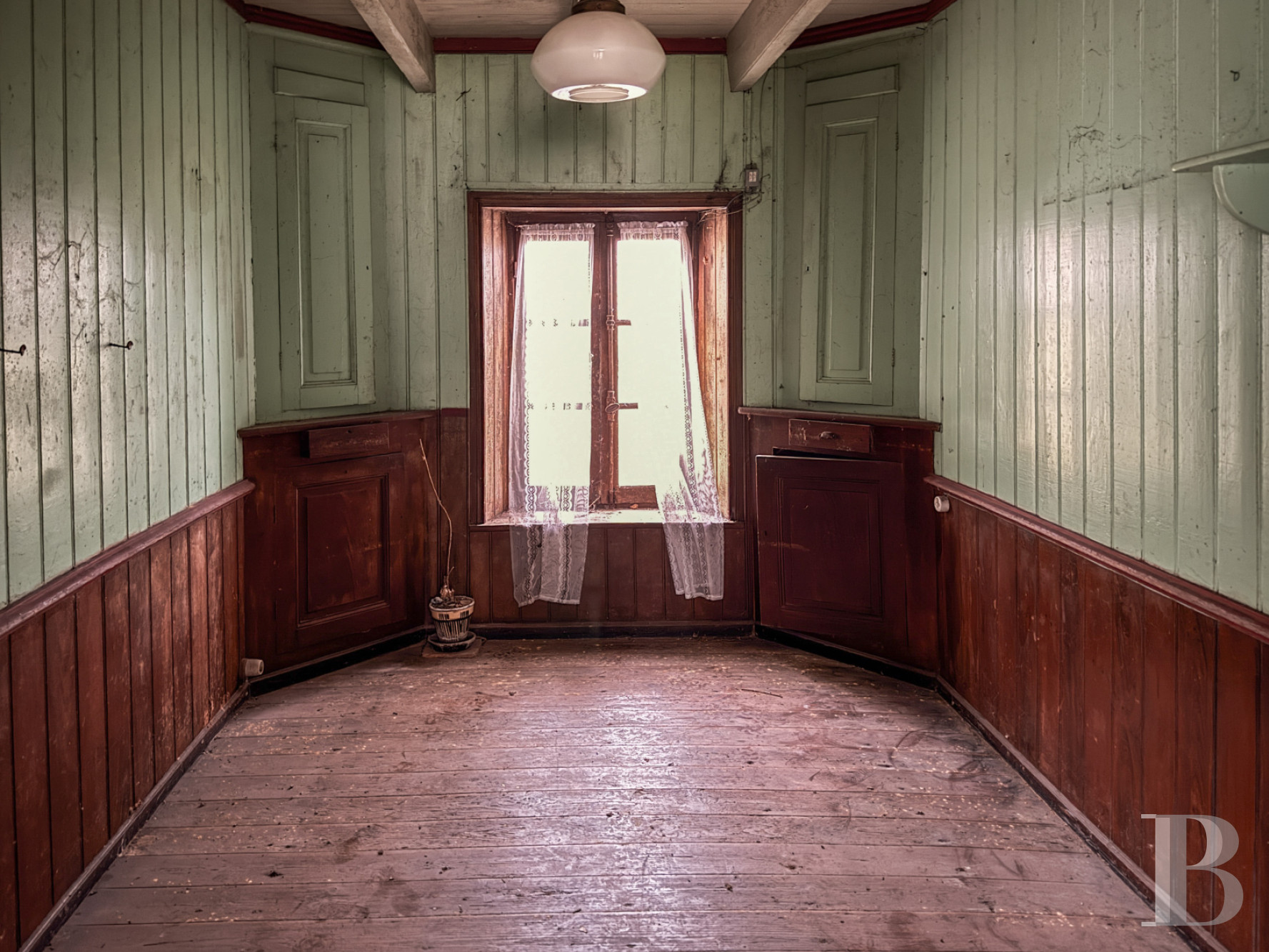
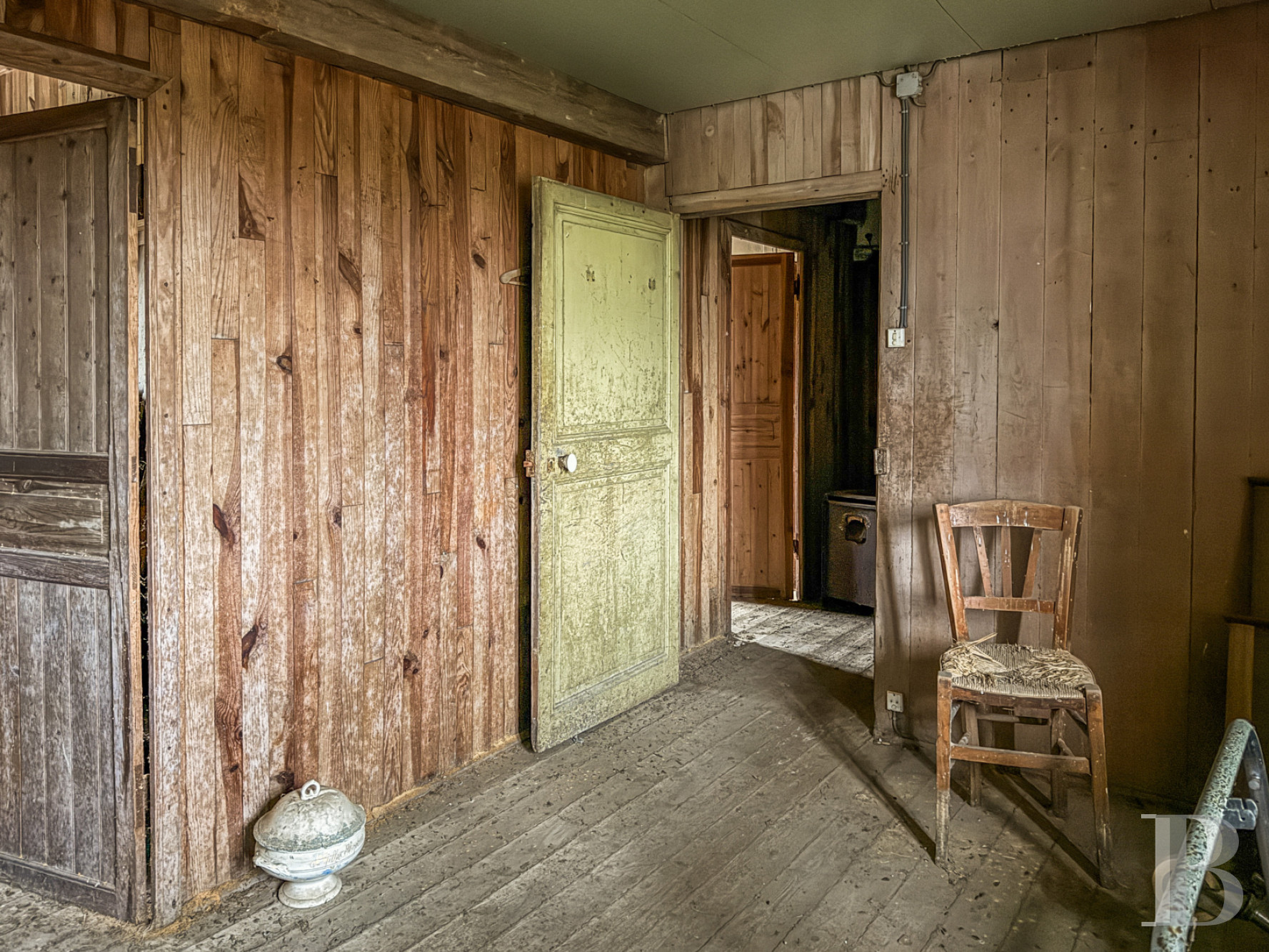
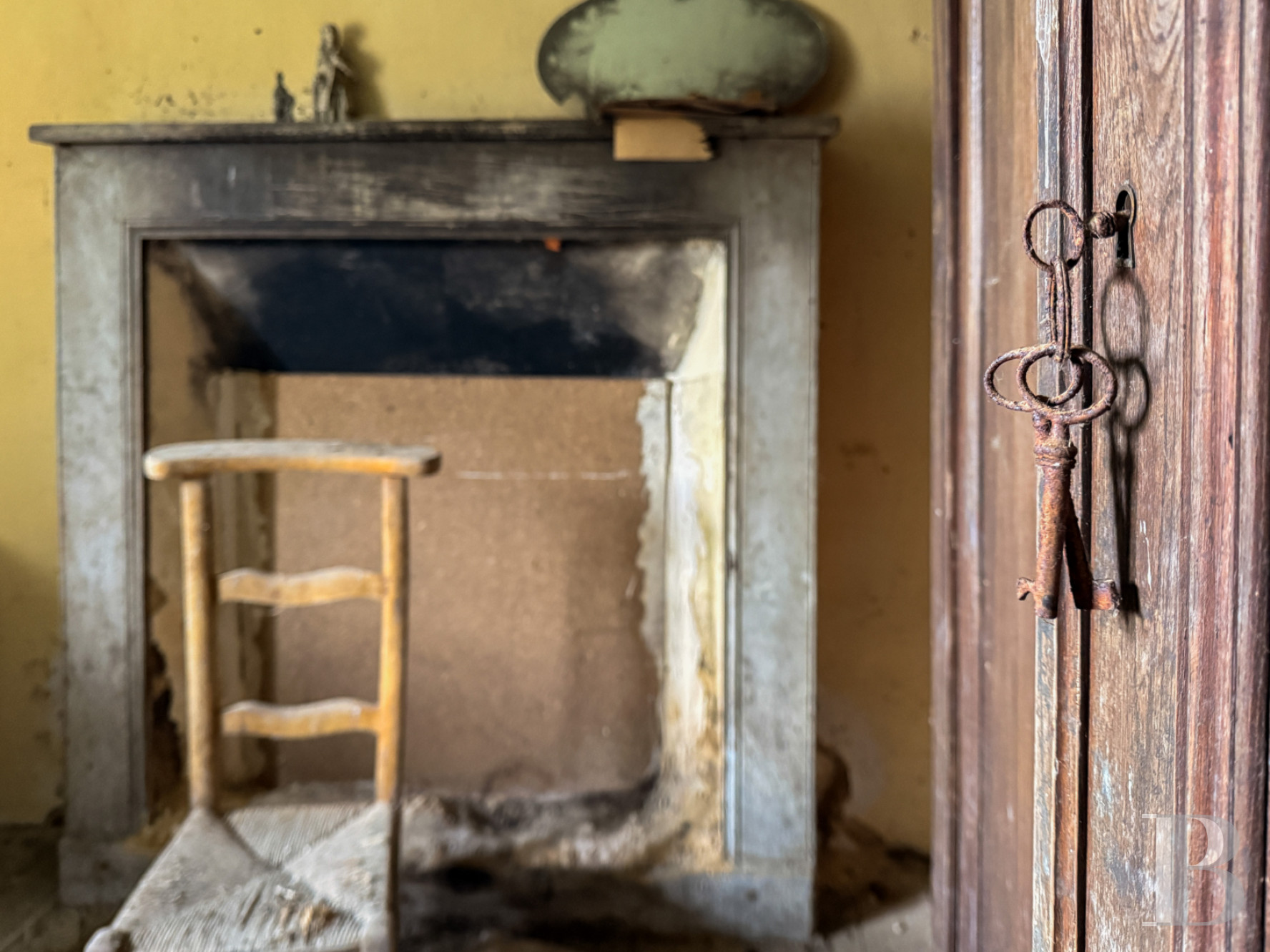
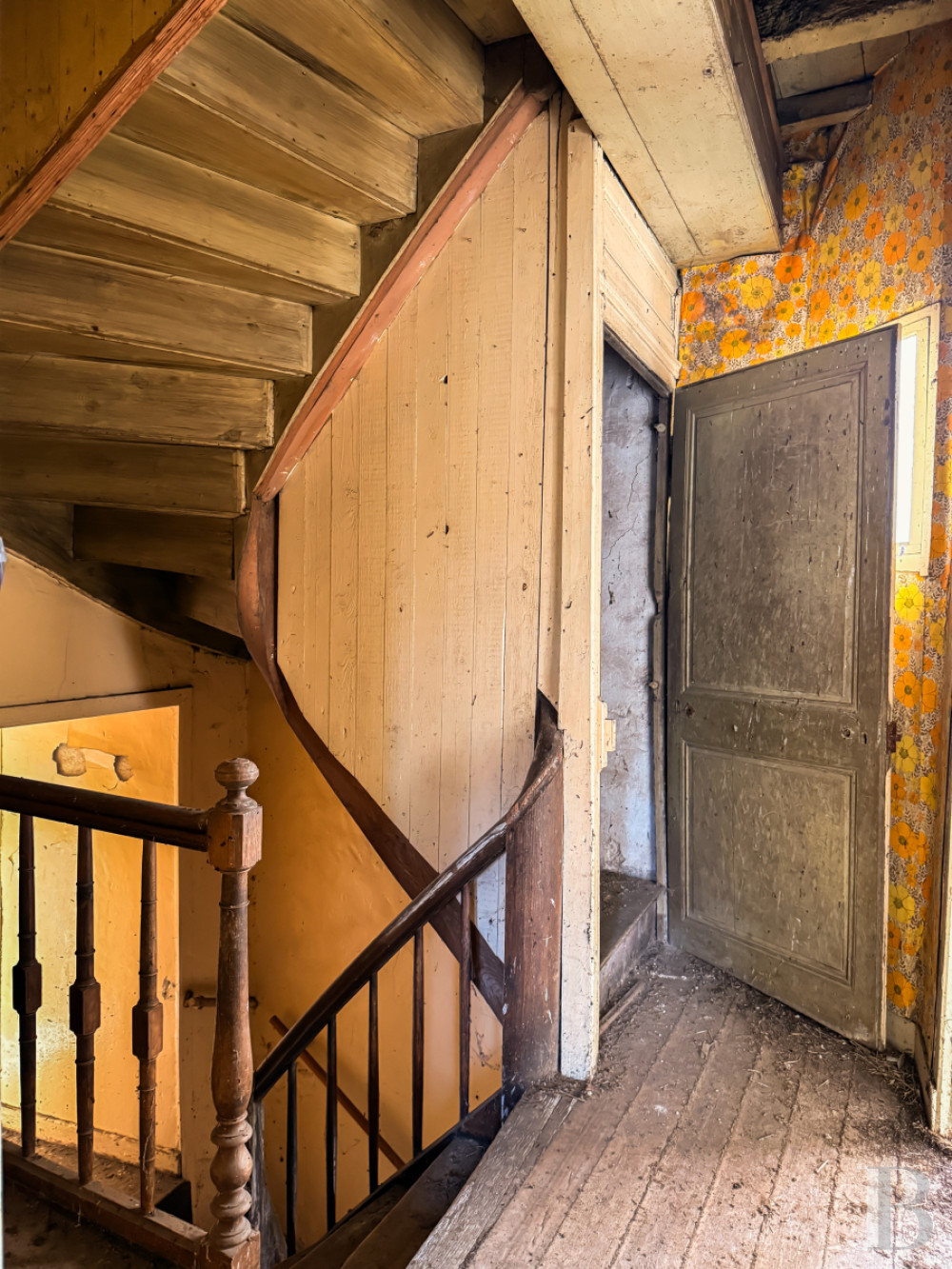
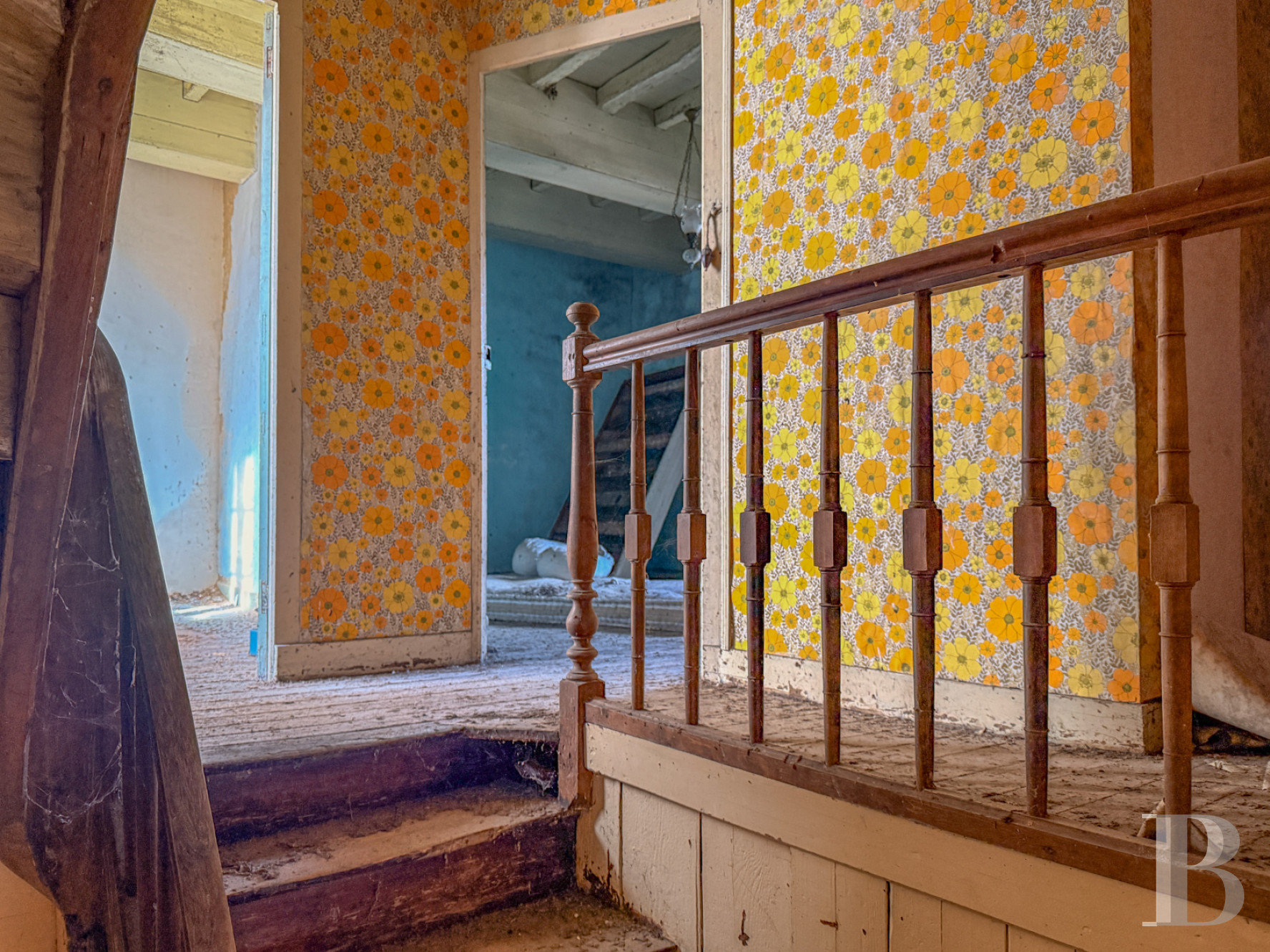
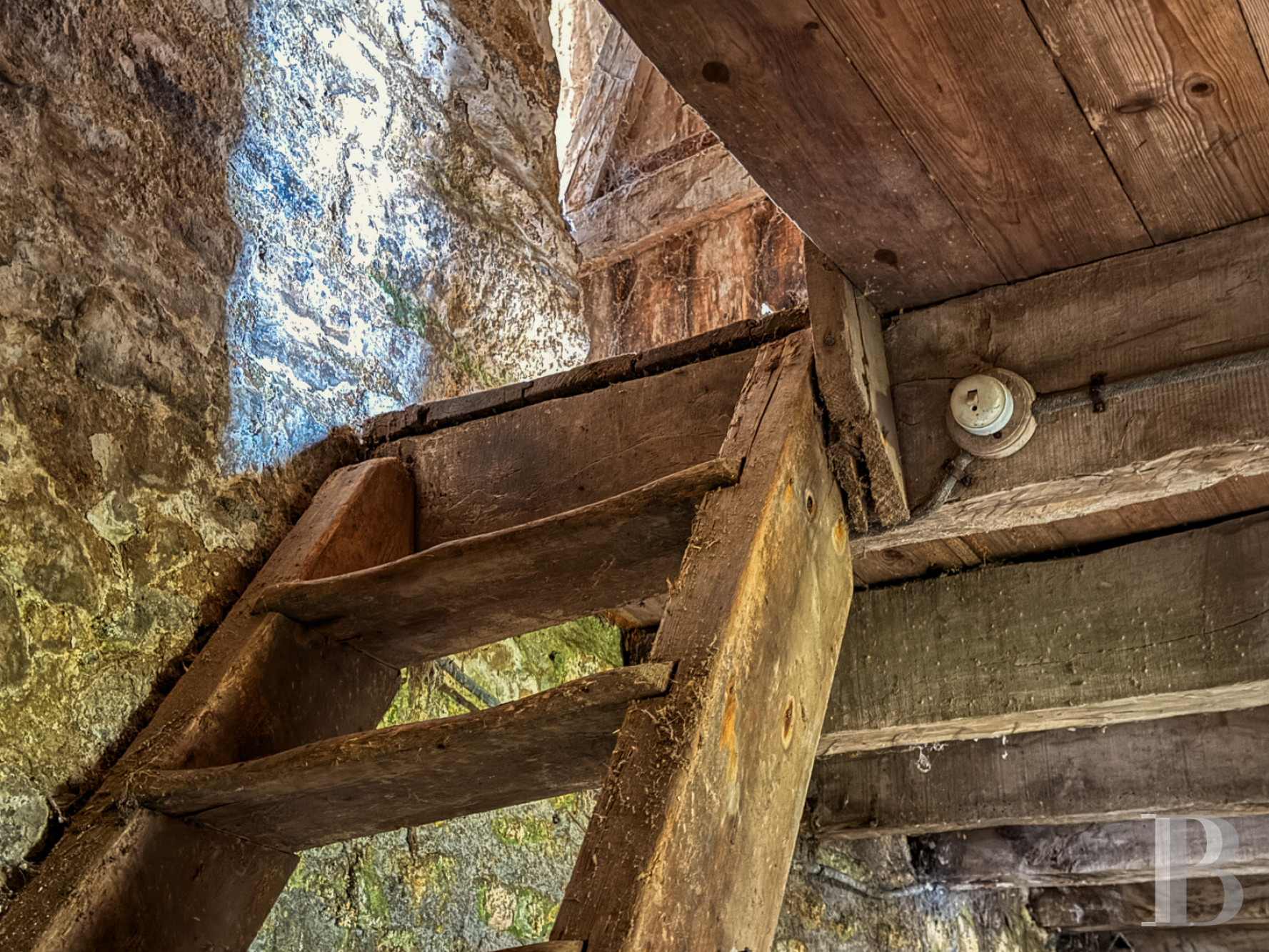
On the ground floor, a hallway leads to a dining room, a bathroom and a lavatory. The interior fittings date back to the 1980s and display signs of wear and tear. On the upper floor, a landing leads to a bedroom, an office and a corridor which in turn leads to the bedrooms in the adjoining building. The fittings include wood-panelling, period wood stripped flooring and a decorative fireplace. The period staircases between the different levels are still in place, while in the loft, the entire original roof frame still remains.
The house
This rectangular building with a gabled slate roof stands next to another house, which is currently occupied, built at a later date and closes the bottom of the courtyard.
The interior is divided into two distinct sections.
The first contains the living rooms, made up of a dining room, a small lounge and a kitchen. A staircase climbs to the upper floor, where there are five bedrooms.
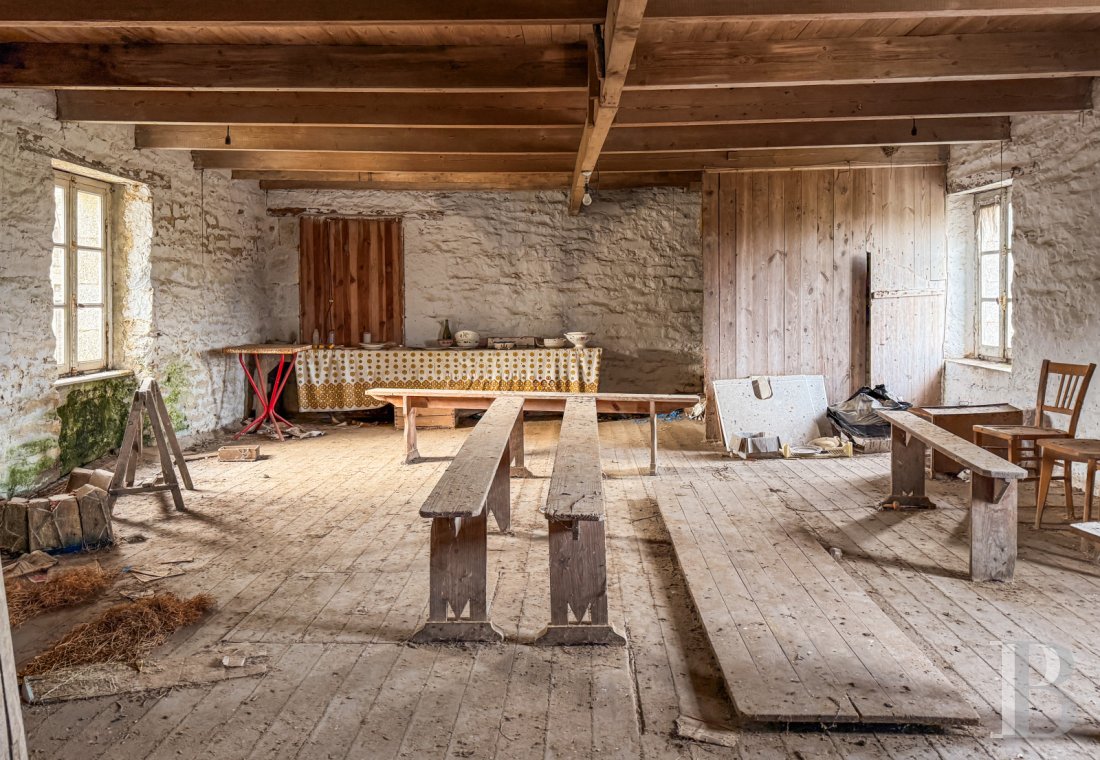
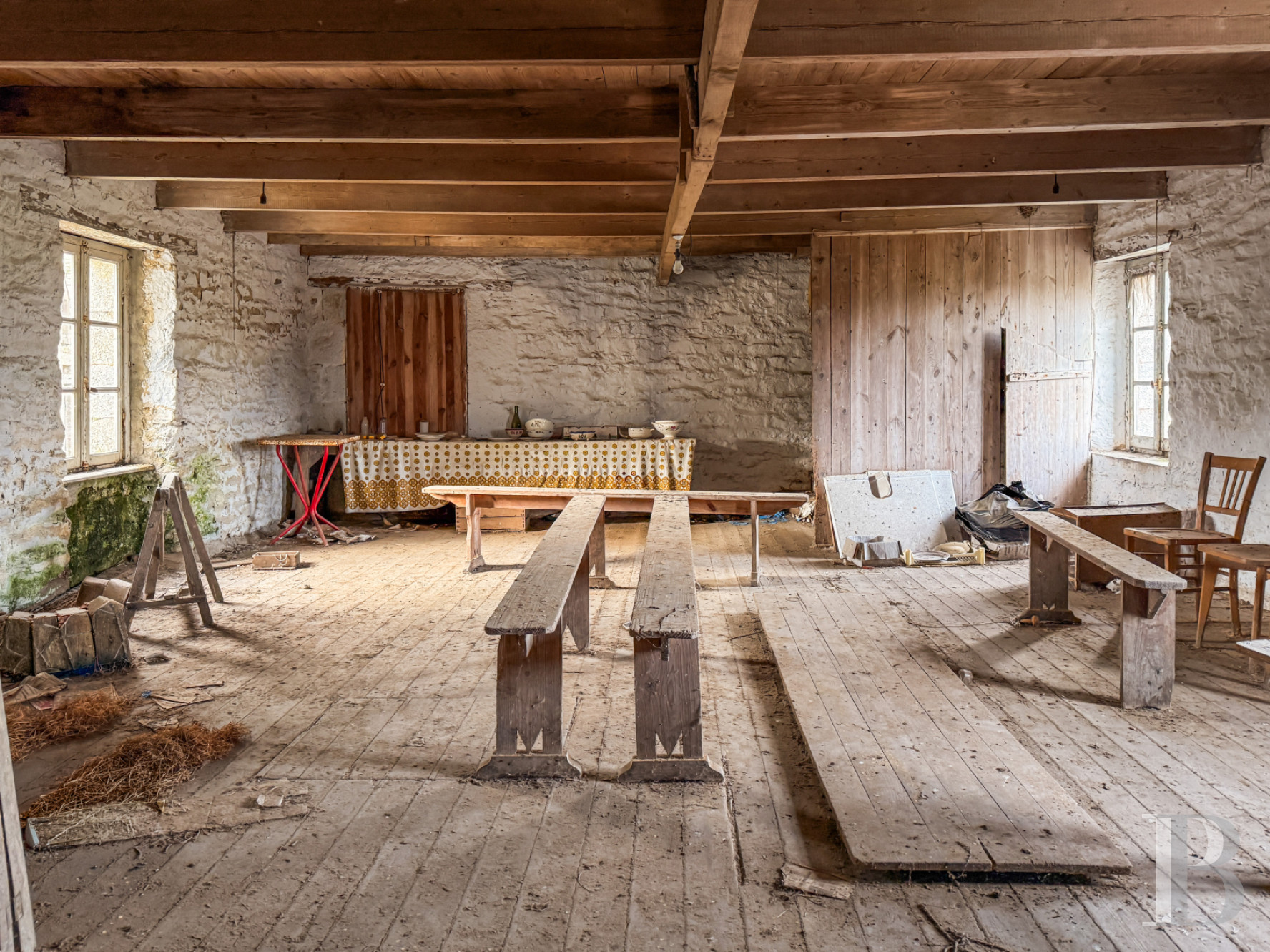
The second section includes a garage on the garden level and a storeroom on the ground floor, while a former banqueting room can be found on the upper floor. The walls mostly boast exposed stonework, covered at some points in limewash, while there are also French-style beamed ceilings, skeleton staircases, wooden floorboards and single-glazed windows in the unbroken panes.
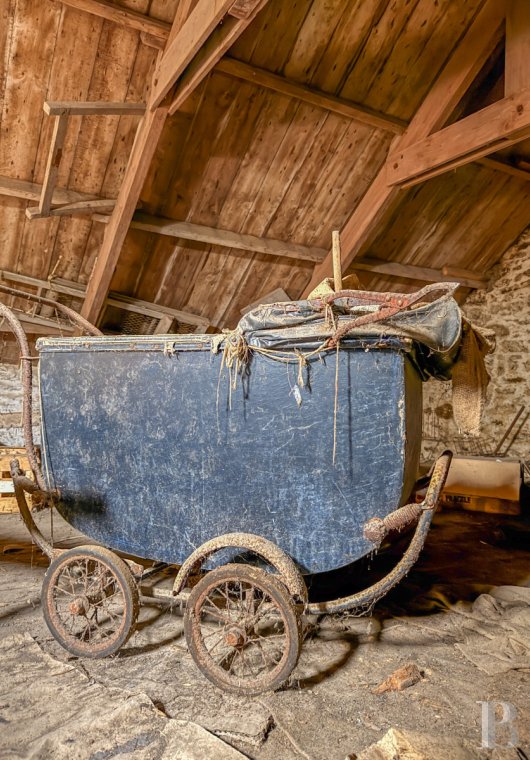
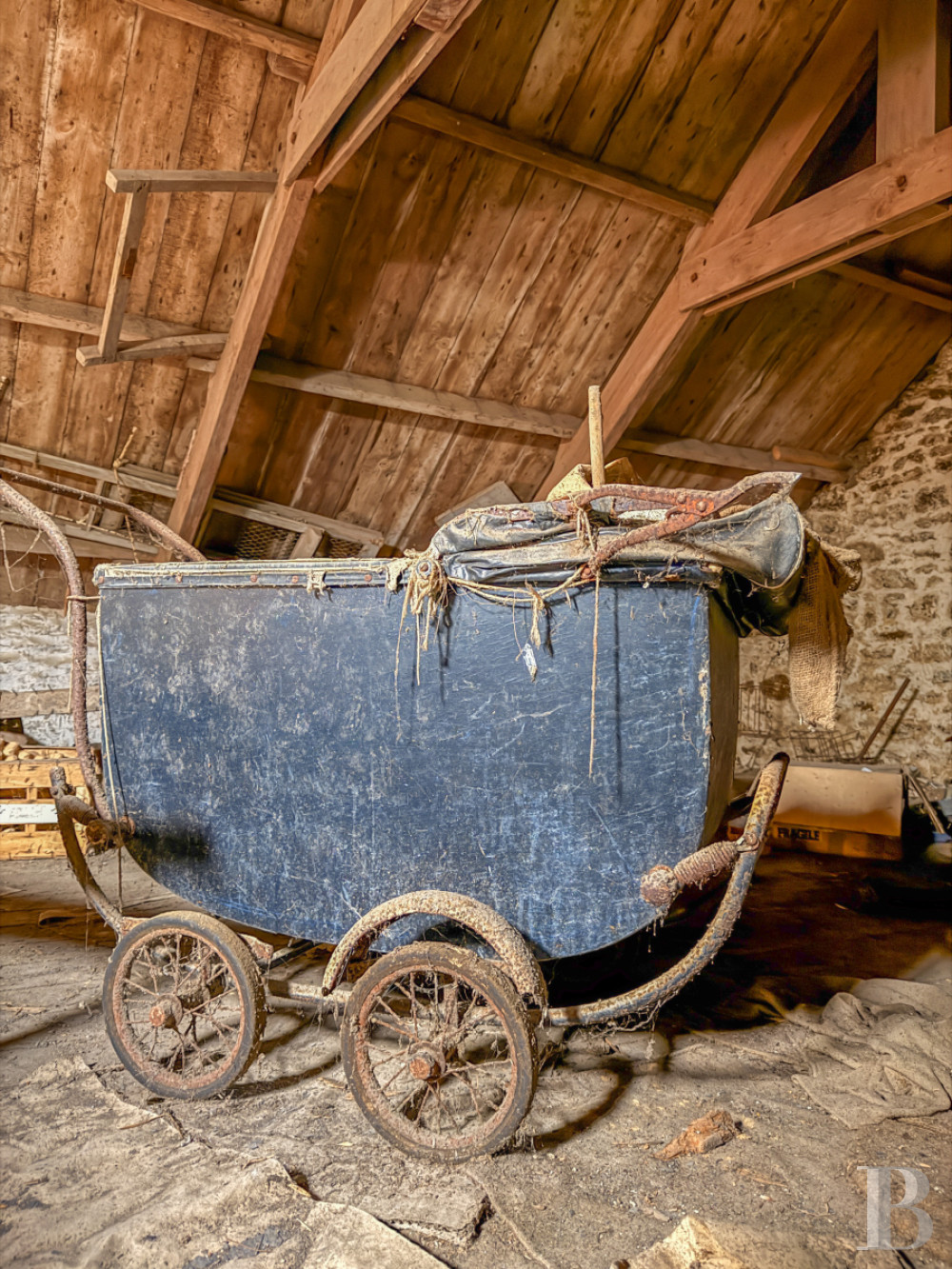
Two separate lofts can still be reached and cover the entire surface of the house.
The courtyard
It is shared with two other houses and each of them has the right to a private space along the facade of 2-metres stretching into the courtyard. Discussions with the other users should be undertaken concerning creation of a private parking space as well as a patio, plus the issue of the existing easements and rights of way.
Our opinion
This village house boasts somewhat out-of-the ordinary dimensions, with almost 560 m² of floor surface as well as several period features. Due to the immediate proximity of the church and fountain, which are listed historical monuments, there are demanding heritage requirements, meaning a careful approach to any restoration work must be adopted. The presence of neighbours, as in any location in the heart of a village, may not be suitable to certain projects.
However, the price level means that the property is in a category that has become rare on the market for such a surface and potential for conversion.
It is a property chiefly aimed at well-informed buyers who appreciate old buildings and are ready to carry out a well thought out renovation.
Reference 250146
| Land registry surface area | 688 m² |
| Main building floor area | 558 m² |
| Number of bedrooms | 6 |
| Outbuildings floor area | 10 m² |
Information on the risks to which this property is exposed is available on the website: www.georisques.gouv.fr
Share


NB: The above information is not only the result of our visit to the property; it is also based on information provided by the current owner. It is by no means comprehensive or strictly accurate especially where surface areas and construction dates are concerned. We cannot, therefore, be held liable for any misrepresentation.