



A monastically peaceful artist’s residence,
in a preserved, rural village in the Alpilles
in a preserved, rural village in the Alpilles
Saint-Rémy-de-Provence,
BOUCHES-DU-RHONE
provence-cote-dazur
13210
FR


Location
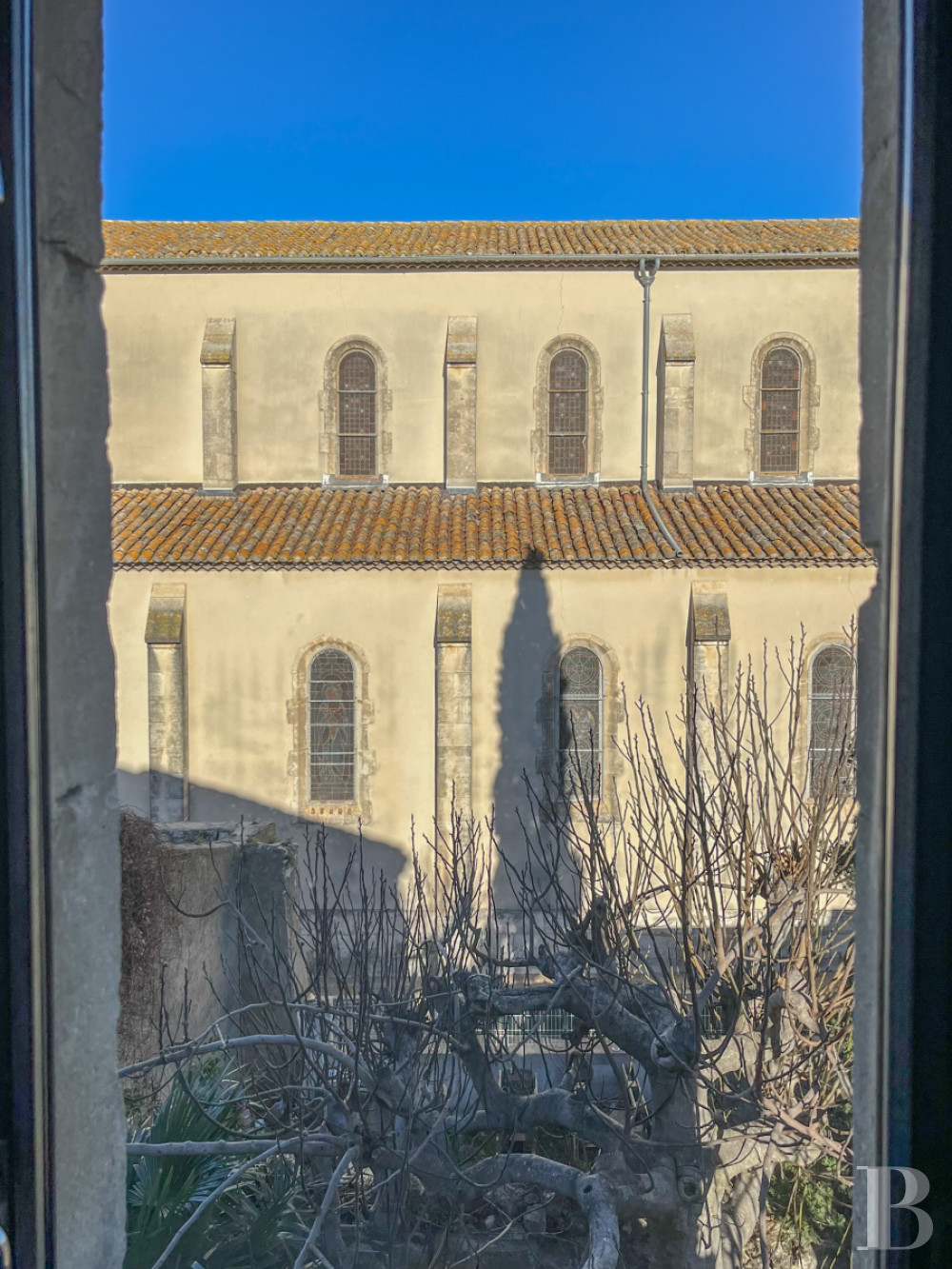
This property is located in the west of the PACA region and the north of the Bouches-du-Rhône area, in the Alpilles mountain range. It is situated very near to Eygalières, only 10 kilometres from Saint-Rémy-de-Provence and within 30 kilometres’ reach of the high-speed TGV train station in Avignon. The village in which it stands is formed by two hamlets and the remains of an imposing Cistercian abbey. Market gardening activity and the craft traditions of Provence have helped to remarkably boost its population, which has tripled since the 1960s. The fortunate outcome of this is that the Romanesque/Byzantine church and this old stone residence are surrounded by convenience shops. Furthermore, the Alpilles and Luberon regional natural parks are very close.
Description
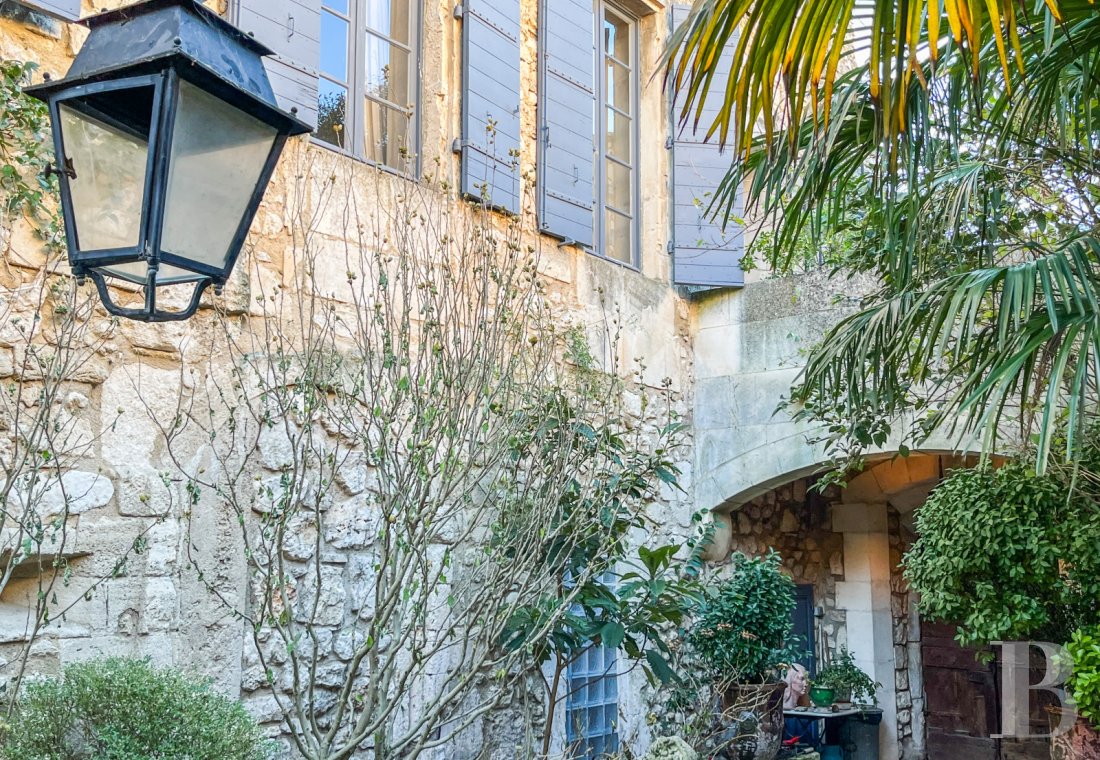
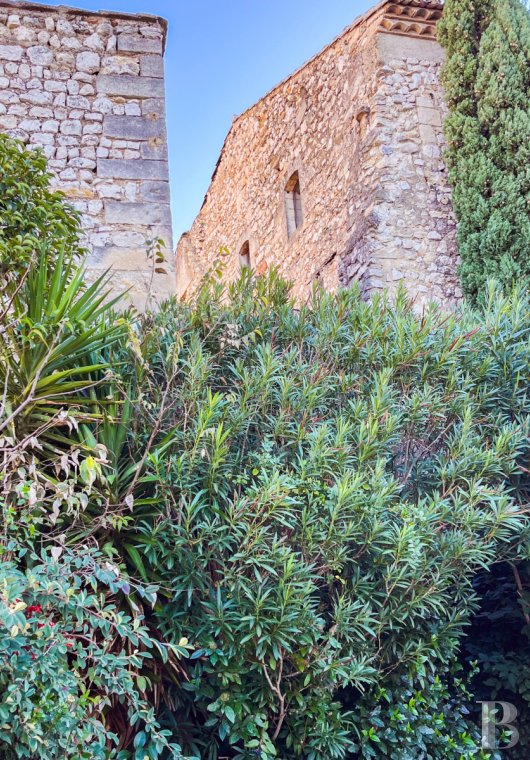
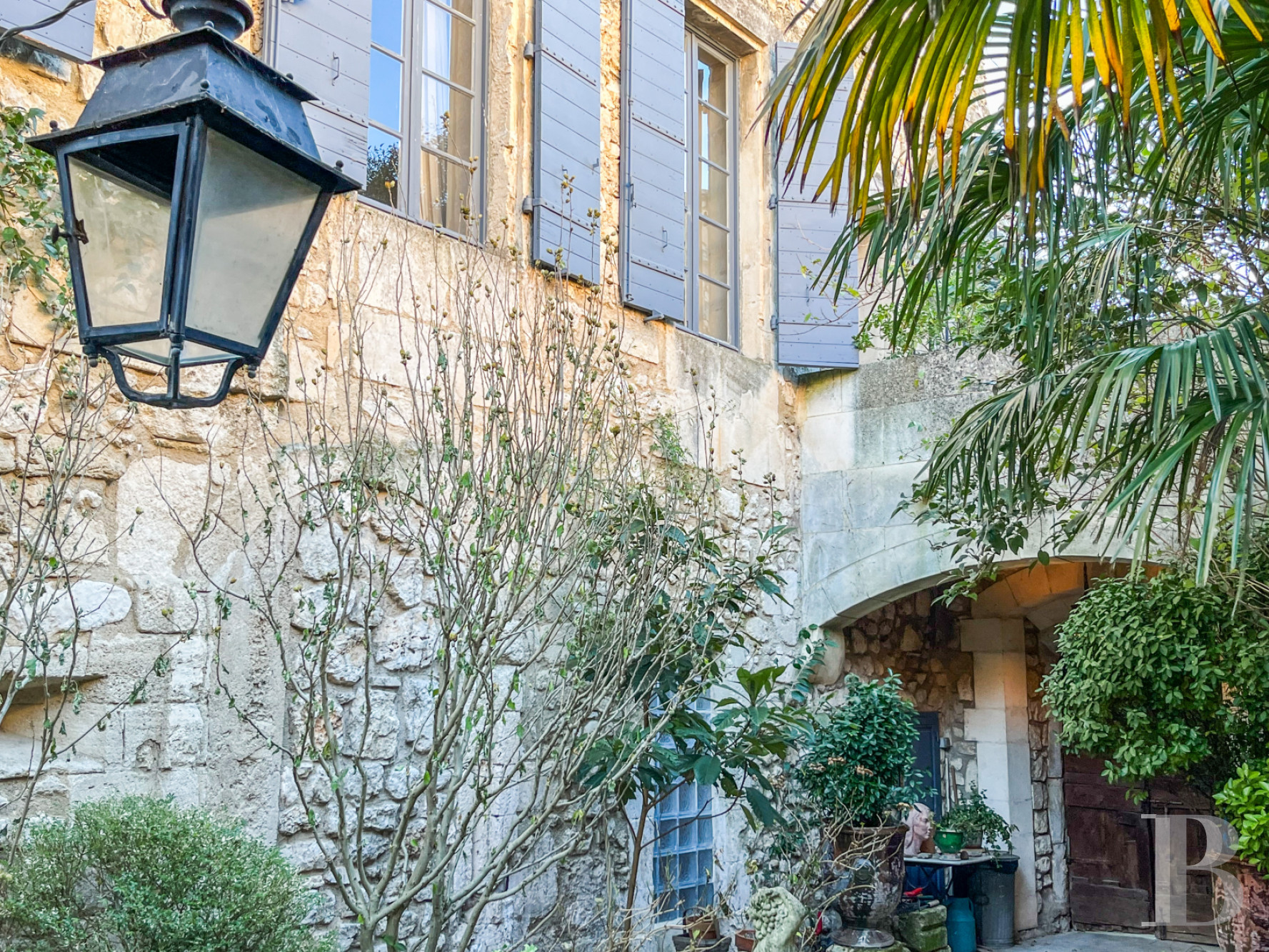
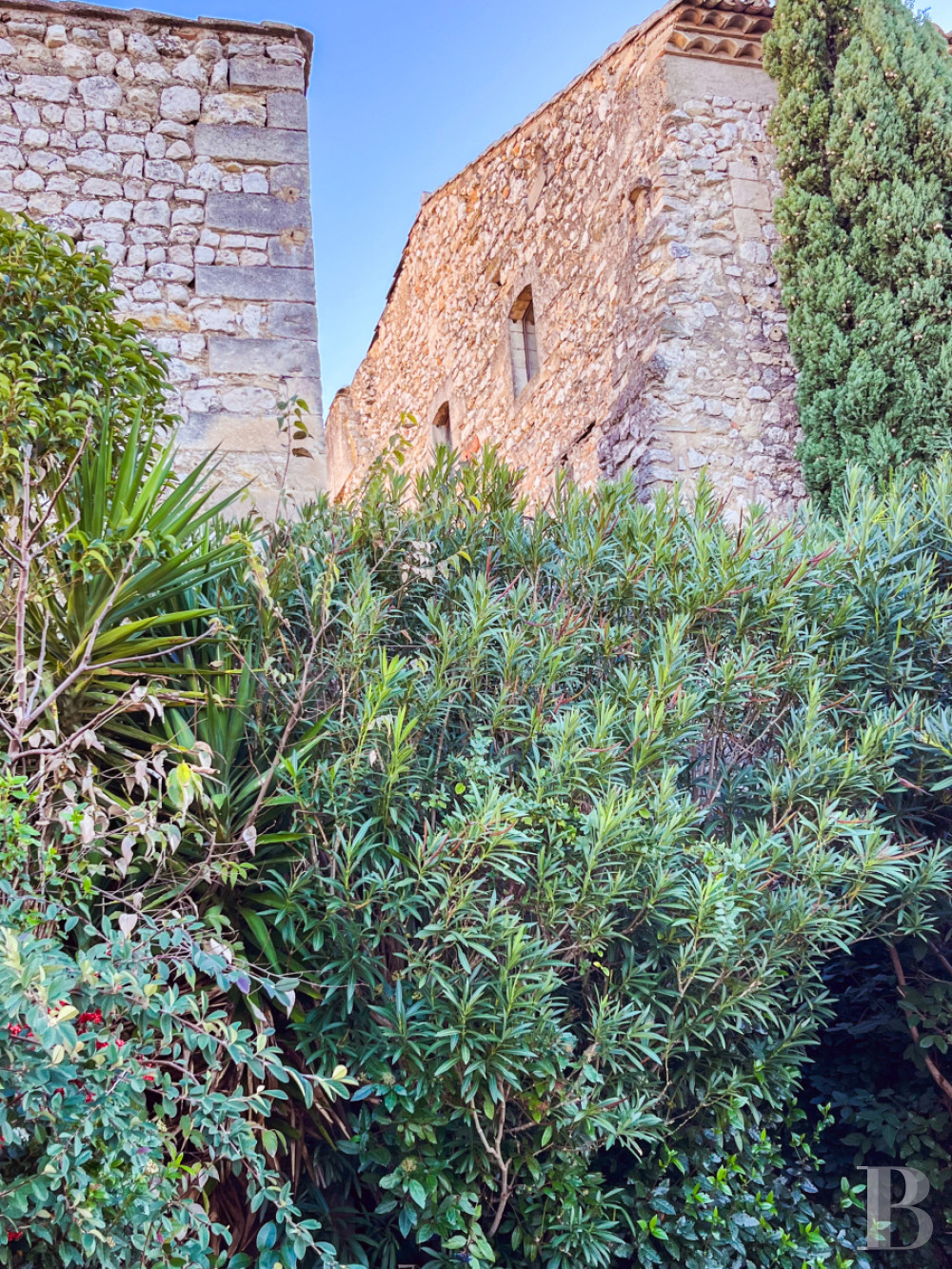
This house with neighbouring buildings on either side is nested in the medieval walls. Its wooden archway is concealed in a semi-circular arch covered by a canopy of cypress trees. The stone facade, topped by a roof of half-round tiles underlined by a double genoise corbel, dates from the 13th century. The two-storey building currently houses an osteopathic practice on the ground floor. With no specifically ordered décor, cornices or rows of windows, it is difficult to guess the purpose and what goes on behind the openings, dotted in an almost random fashion and fitted with shutters. Indeed, the windows are a combination of modern wider ones and smaller openings of medieval origin. The uniform outer shell of the residence nevertheless boasts a certain suppleness through, on one hand, the light-colours of the rubble stone and ashlar door and window frames of different sizes, and, on the other, the random layout of the windows and elegant scalloped frieze of half-round tiles, which is the only indication visible to the eye of the flat roof. The east to north orientation is a wise element in the building’s design in this countryside bathed in sunshine.
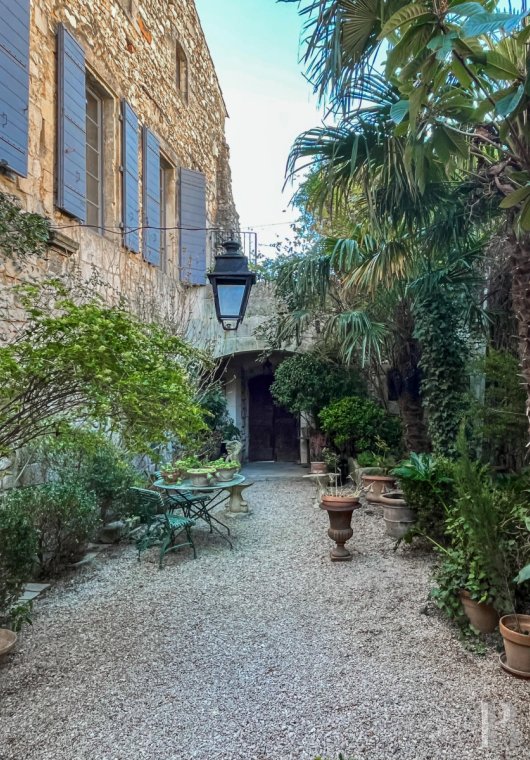
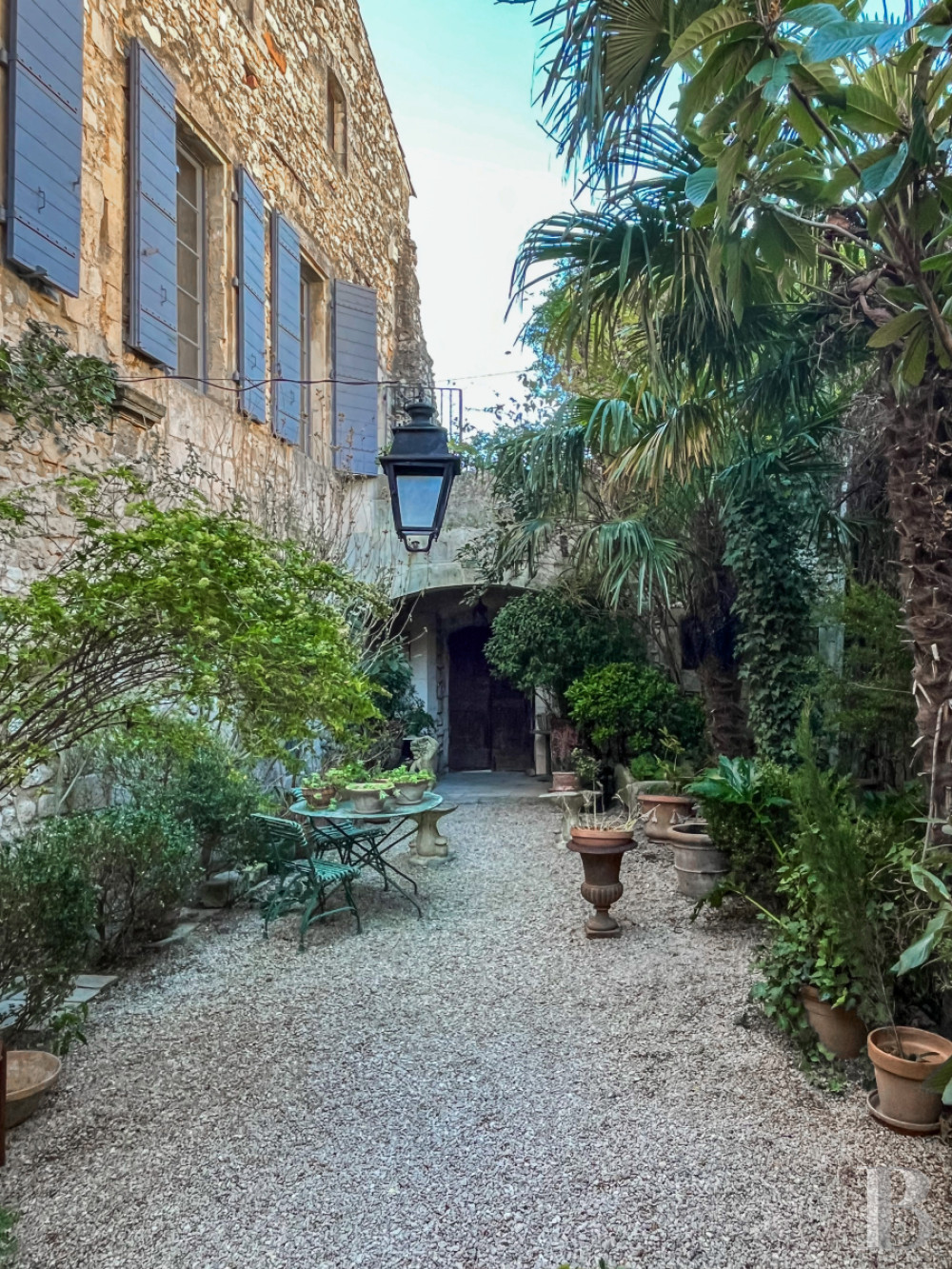
The entrance door is to the left of the facade, via a double-leaf, solid wood door, dotted with wrought-iron studs. Behind it, a light-coloured gravelled courtyard, dotted with Mediterranean plants, fire pots and Medicis vases, illuminated by an antique lantern, forms the level from which the approximately 25-m² vaulted cellar, boasting masonry worktop and shelves, can be reached.
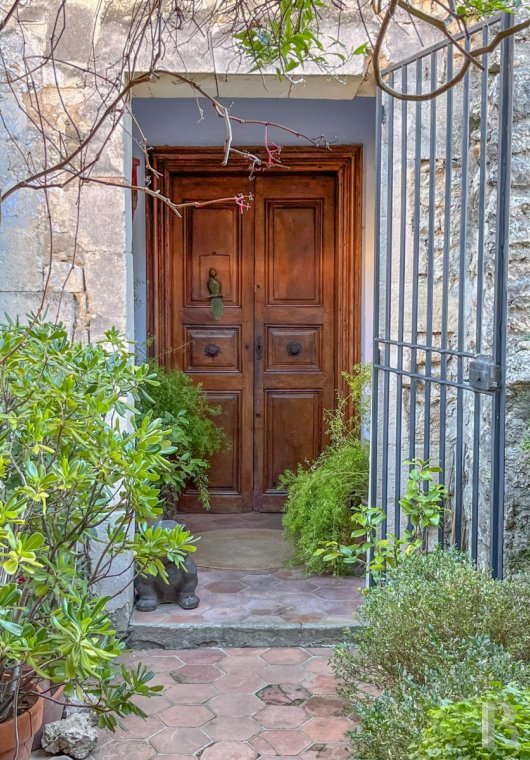
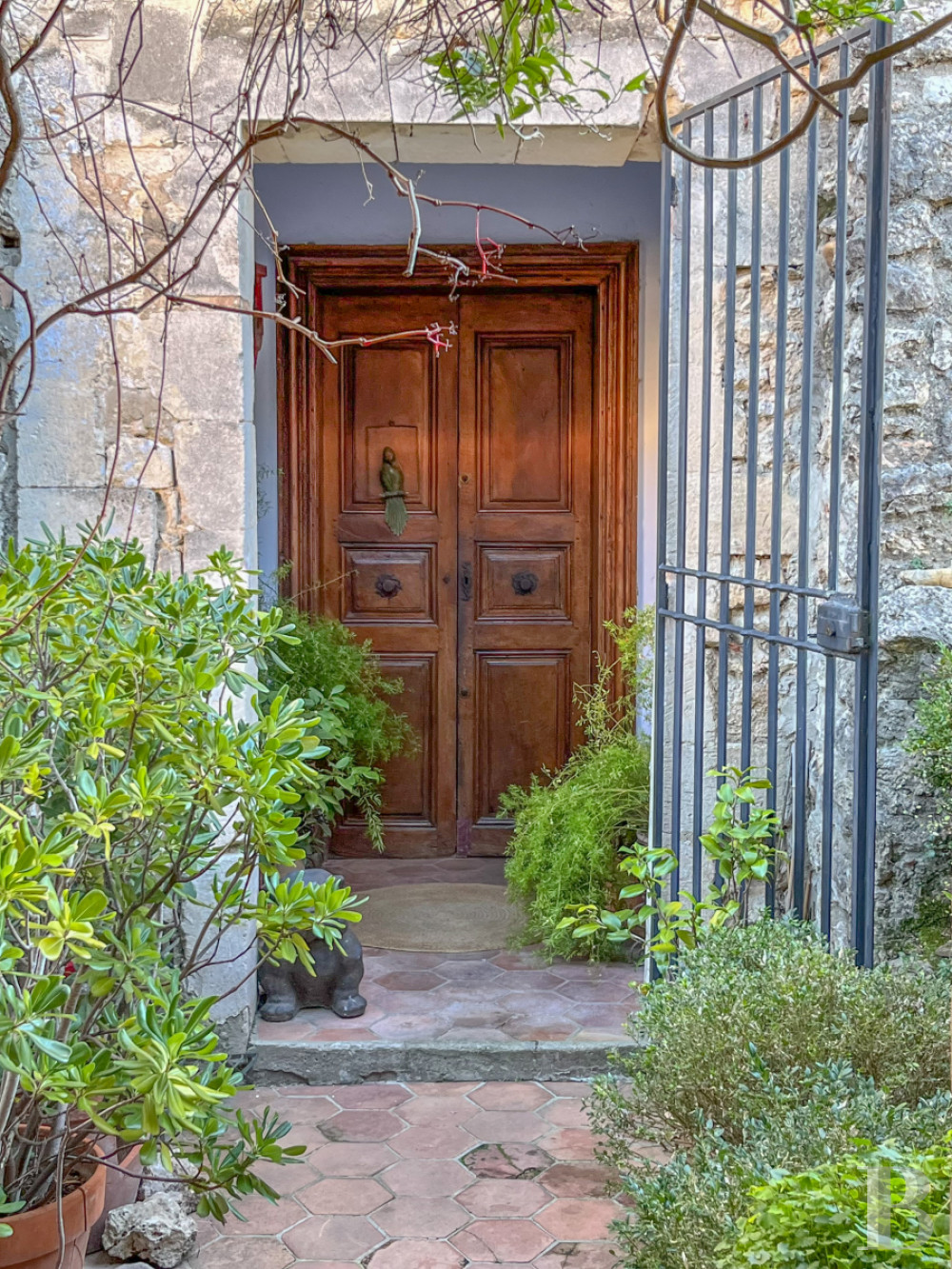
The entrance to the house is via a turning staircase and a small stone bridge paved with hexagonal terracotta tiles forming a foliage adorned patio above the courtyard. In a medieval carved stone frame, a wrought-iron gate acts as further security for the double-leaf, solid wood door with moulded panels, featuring a parrot-shaped door knocker.
The transformations undertaken in various stages since the 13th century have conferred its current appearance on the residence, in which certain work remains to be completed. It is not overlooked by any neighbours.
The entrance door is to the left of the facade, via a double-leaf, solid wood door, dotted with wrought-iron studs. Behind it, a light-coloured gravelled courtyard, dotted with Mediterranean plants, fire pots and Medicis vases, illuminated by an antique lantern, forms the level from which the approximately 25-m² vaulted cellar, boasting masonry worktop and shelves, can be reached.
The entrance to the house is via a turning staircase and a small stone bridge paved with hexagonal terracotta tiles forming a foliage adorned patio above the courtyard. In a medieval carved stone frame, a wrought-iron gate acts as further security for the double-leaf, solid wood door with moulded panels, featuring a parrot-shaped door knocker.
The transformations undertaken in various stages since the 13th century have conferred its current appearance on the residence, in which certain work remains to be completed. It is not overlooked by any neighbours.
The house
The first floor
It is entirely paved with hexagonal terracotta tiles, while the ceilings boast either mouldings or exposed beams.
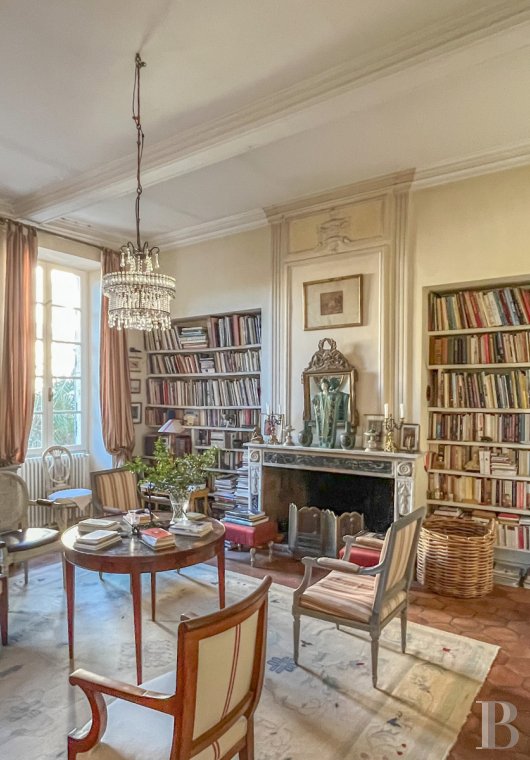
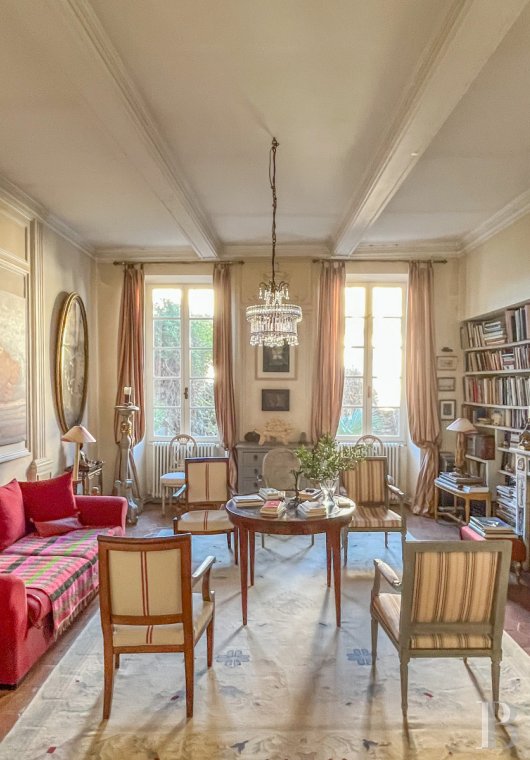
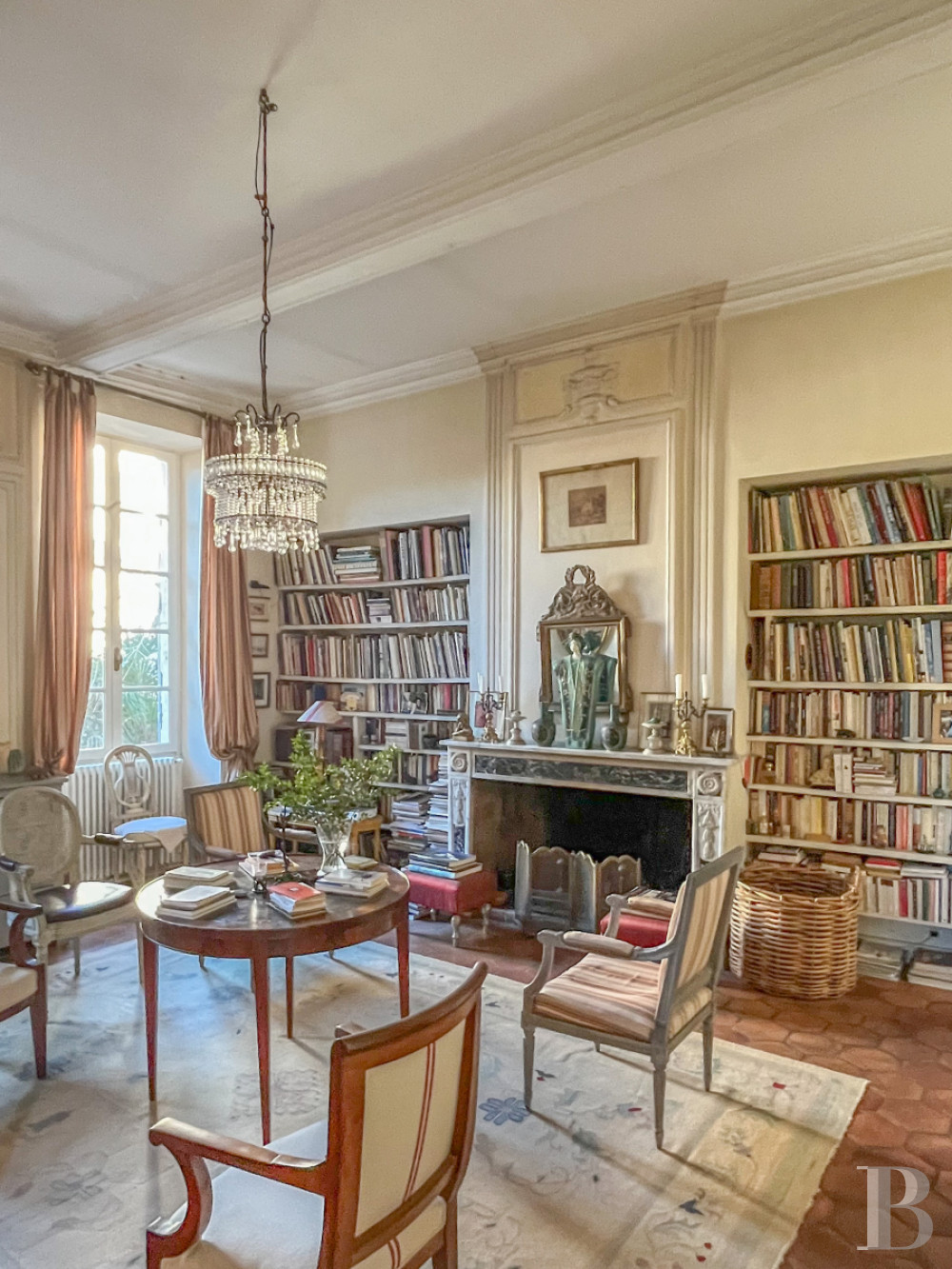
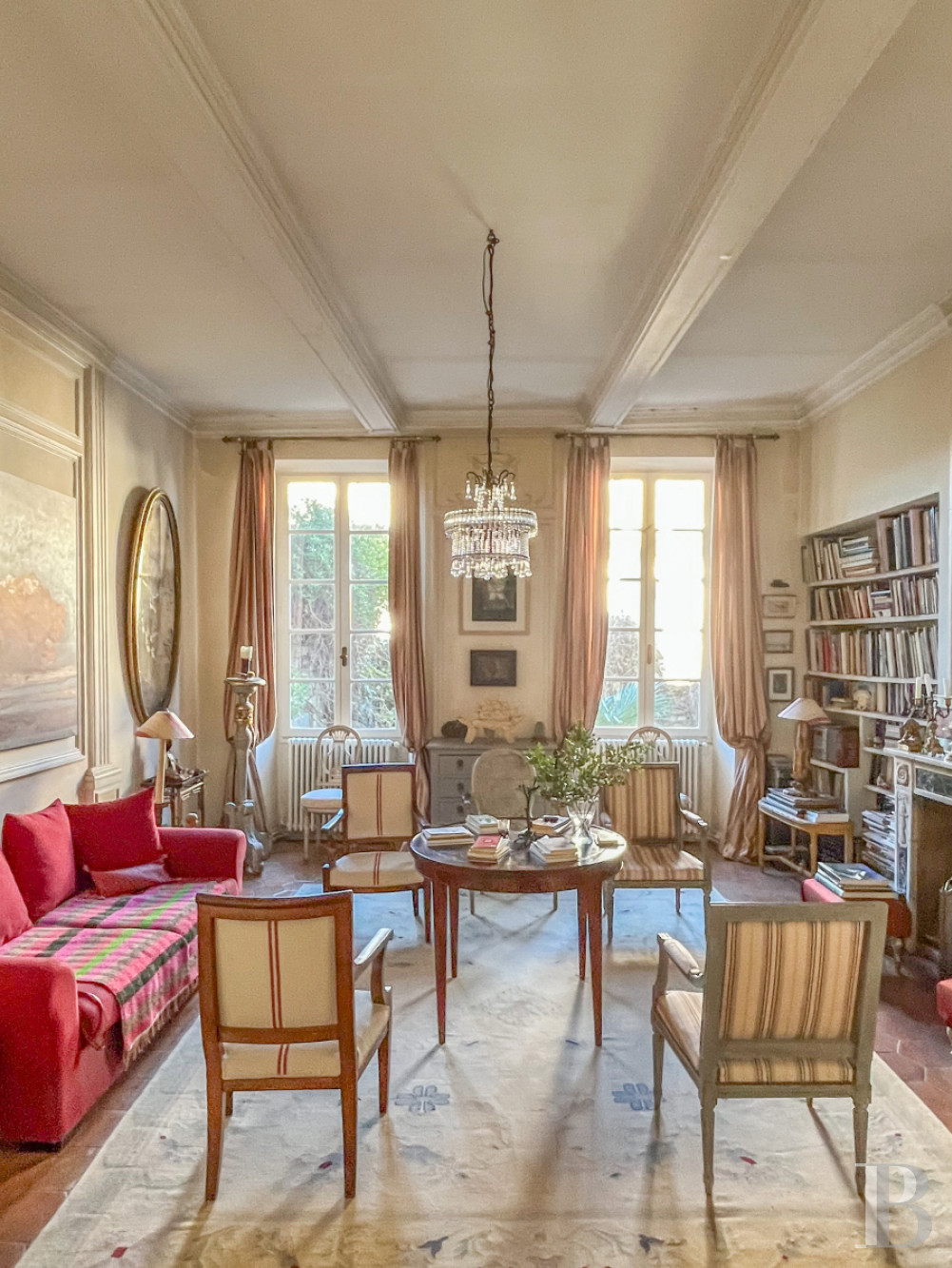
The entrance hall is bathed in light through a tall window standing opposite a double-leaf wooden door. A table, several chairs, plants and paintings fit nicely into the space. It leads directly to the lounge, on whose ceiling there are two coffered beams. A fireplace with sculpted floral and ribbon patterns, topped with an overmantel made up of twin-tone marble, is framed by bookshelves. On the wall perpendicular to this, there are two tall, large-paned windows.
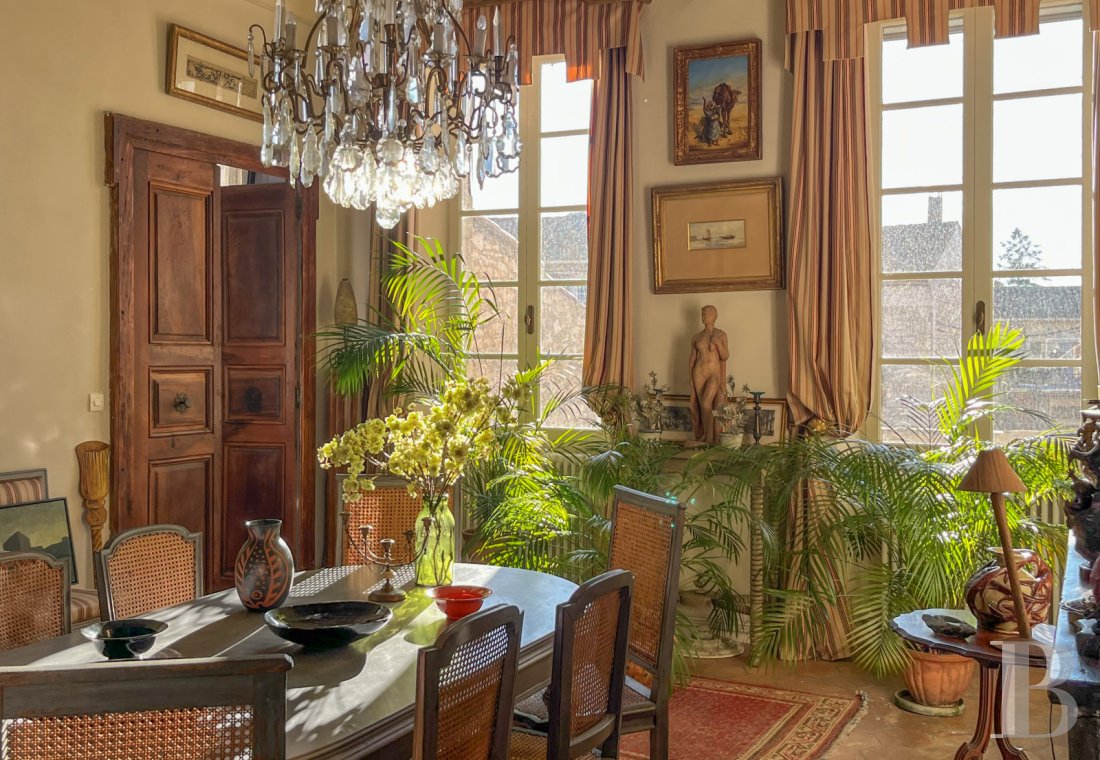
As in the lounge, the dining room also boasts tall windows, as well as a double-leaf, panelled wooden door, which is replicated on the entrance to the kitchen. A dark-coloured marble fireplace with red veining stands against one of the walls and boasts a large trumeau mirror with a sculpted and gilded frame.
The kitchen possesses an antique style thanks to the tiled worktop, its tall period window, sculpted stone hood and exposed beams, which are probably remnants of the decorative features before the 19th-century transformations.
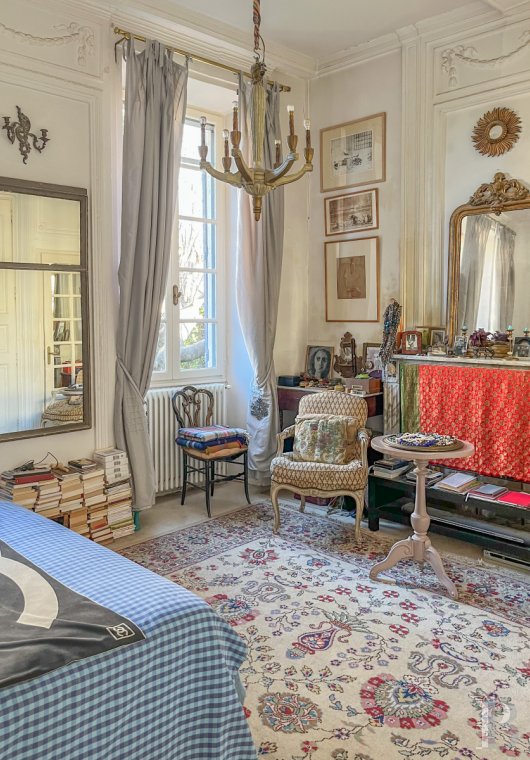
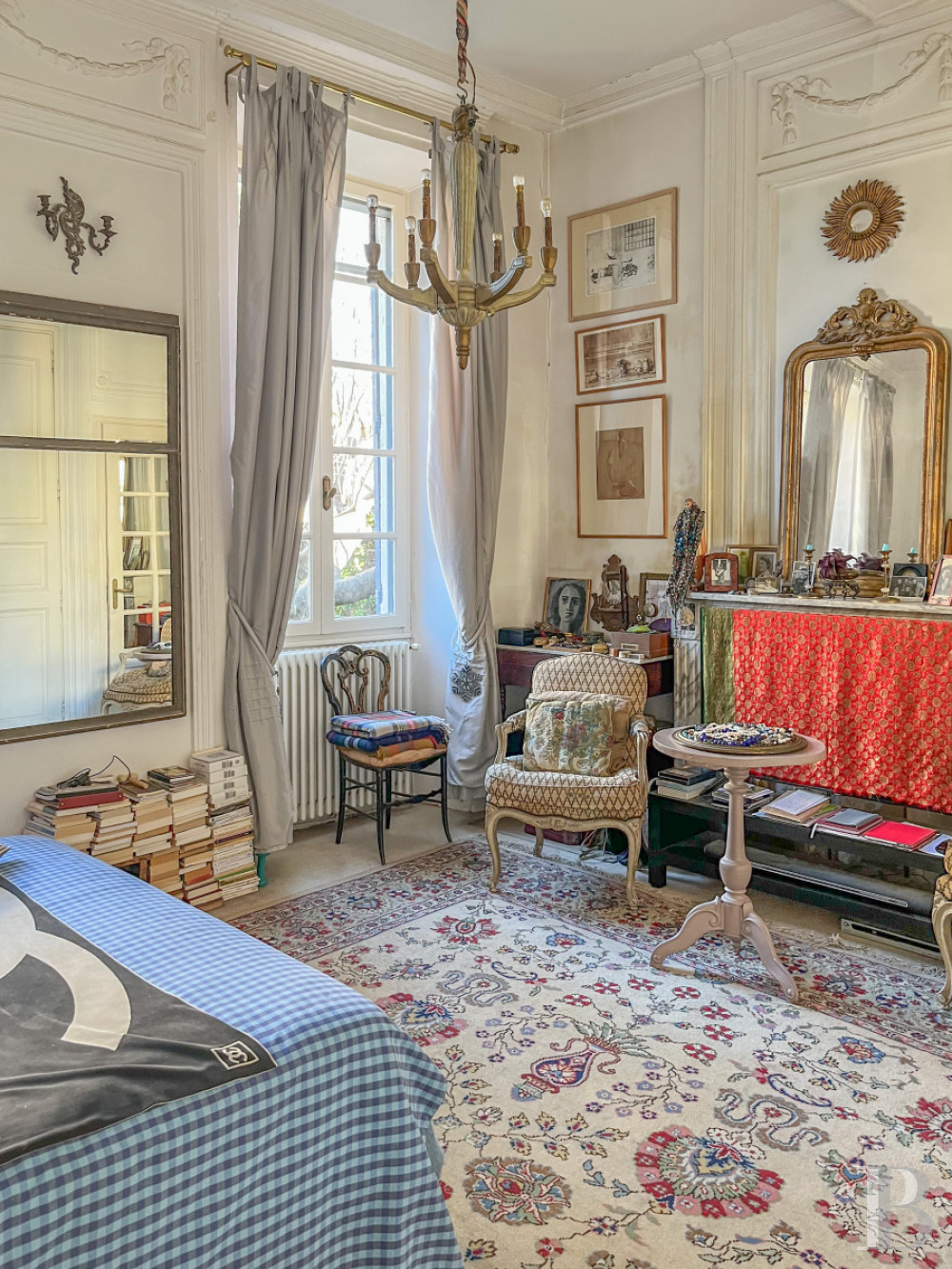
Nearby, a bedroom with an en suite bathroom echoes the design of the lounge and dining room, with a moulded and decorated ceiling, an overmantel and panelling on the walls, as well as a white marble fireplace with grey veining.
An office is adjacent to the kitchen, making it possible to keep an eye on the cooking whilst working. At the end of this long narrow room with a smooth ceiling and bookshelves, through an archway with convex angles, there is a spiral staircase with steps suspended from the delicate balustrade. It is a veritable decorative highlight of the property and climbs to the upper floor.
The second floor
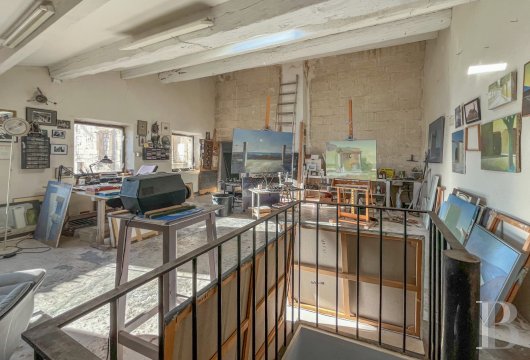
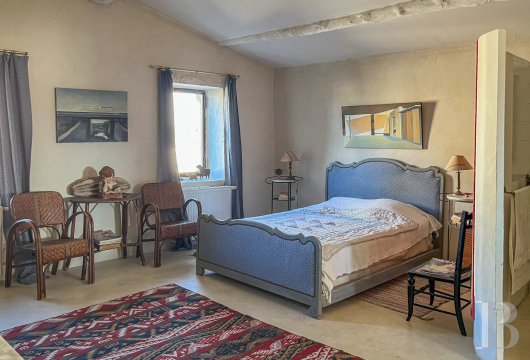
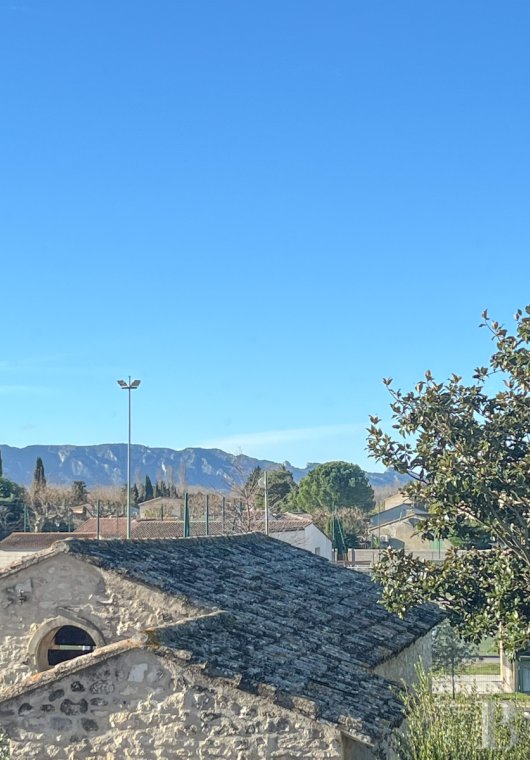
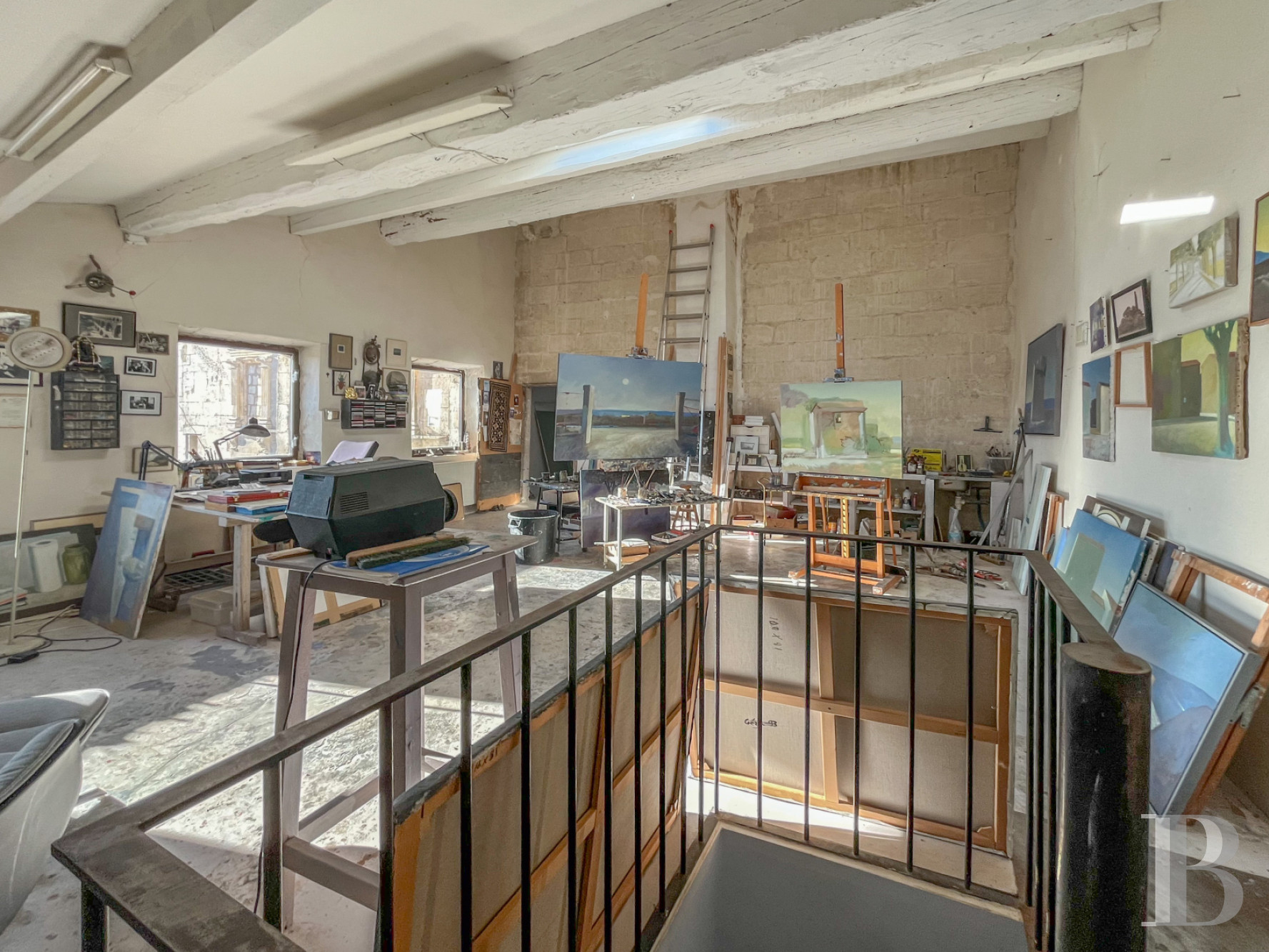
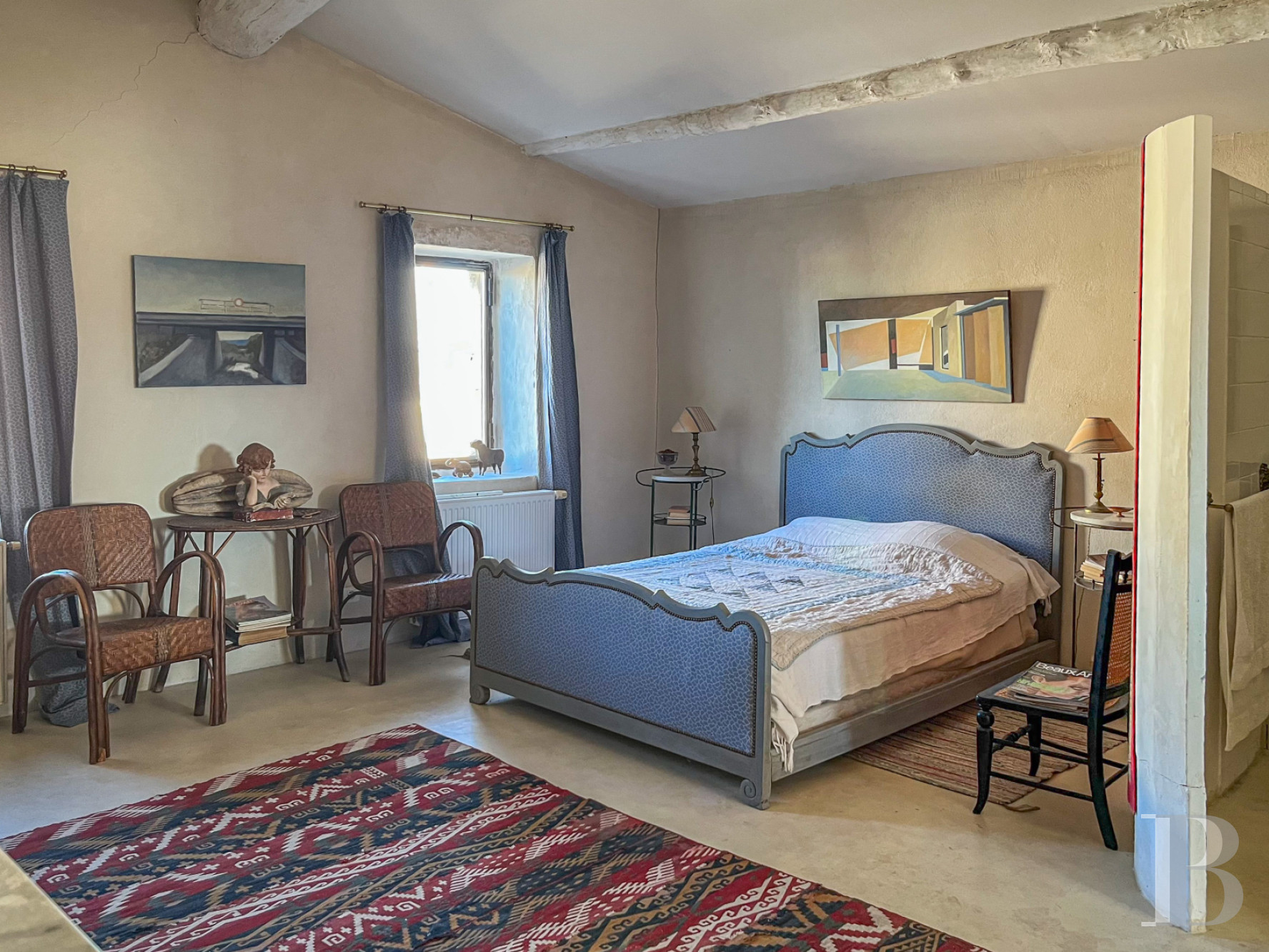
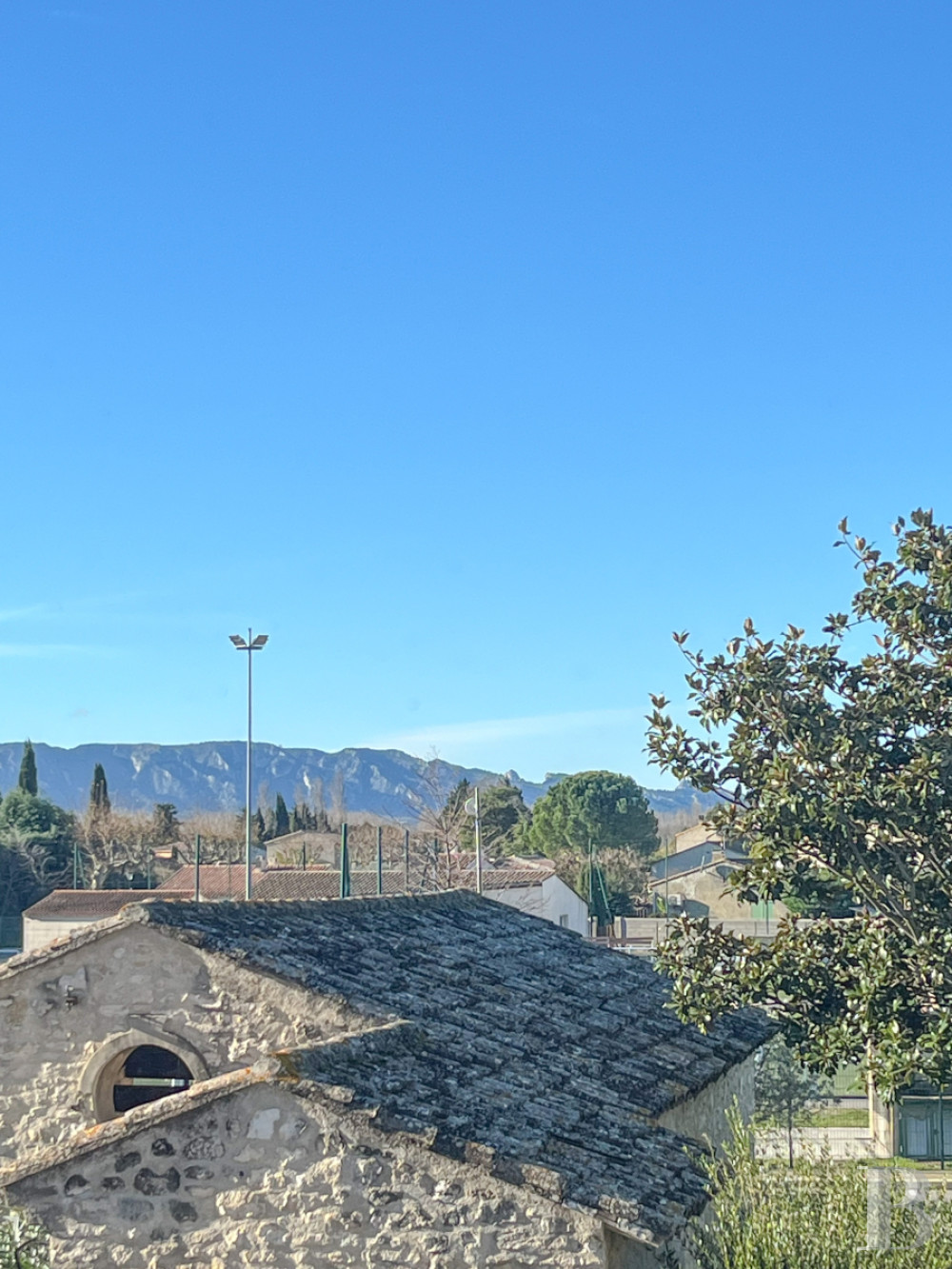
The 360° spiral staircase climbs up to the top of the house where landscape worthy of a Renaissance painting and untouched by modernity can be admired. Beneath the rafters and the slightly arched roof, there is an artist’s studio next to a bedroom and a shower room, as well as two other rooms awaiting conversion according to the future occupants’ tastes. The flooring is covered with a coat of leveller that is robust, flexible and resistant to cracks. The exposed beams and ceilings are painted white. At certain times of the day, the light streaming in through the skylights, as well as through the three large windows with massive frames overlooking the courtyard, creates orange/yellow nuances on the walls’ stones and lime pointing.
The courtyard
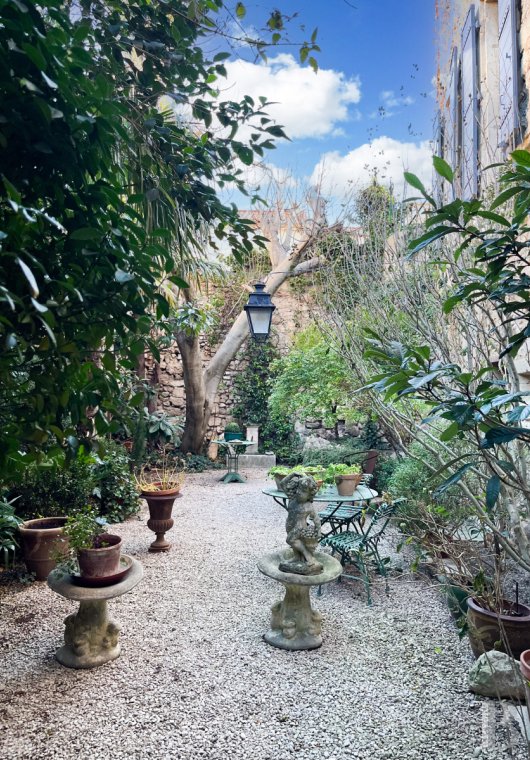
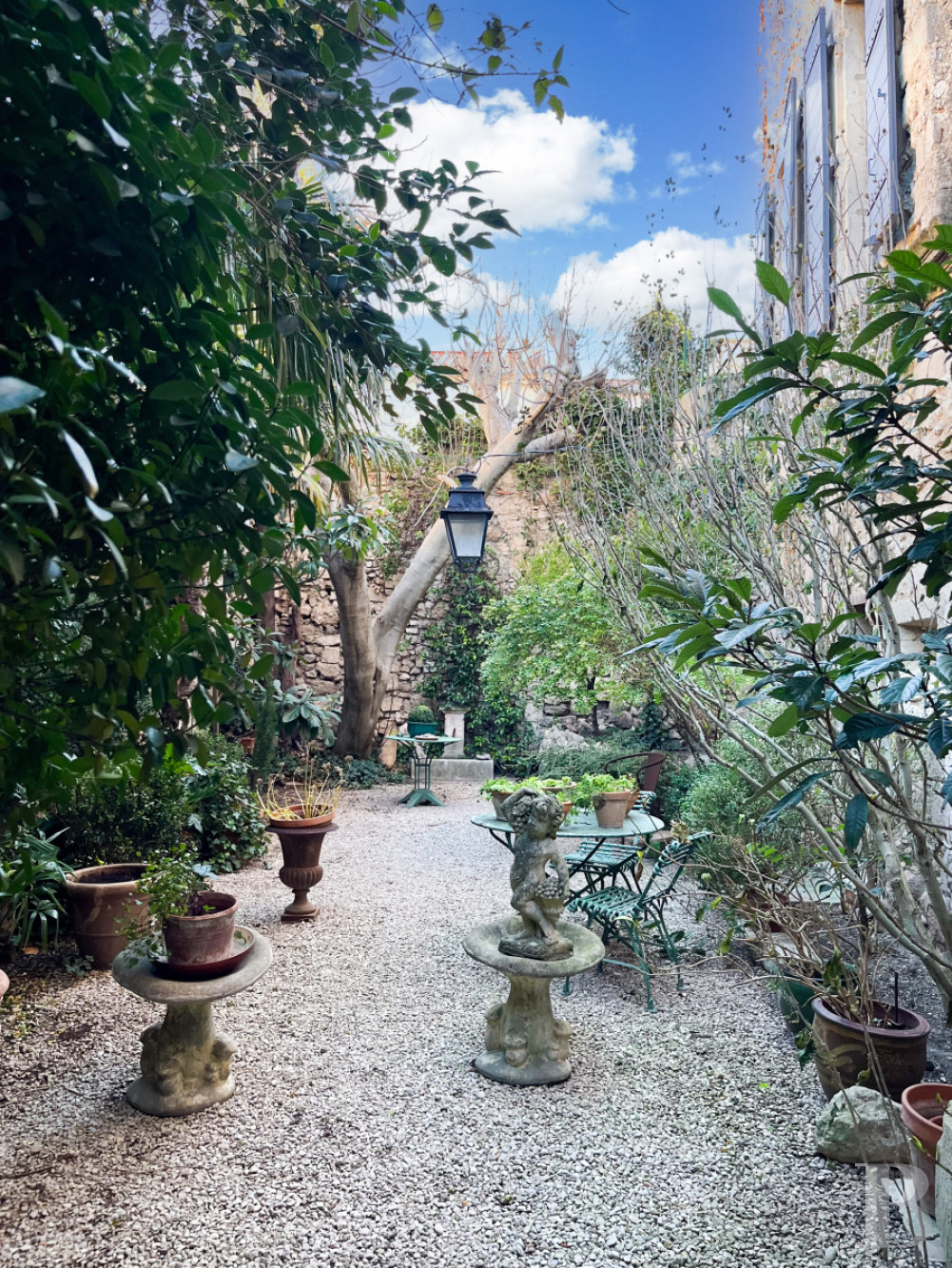
The approximately 75-m² gravelled courtyard is slightly lower than the passing street, from which it can be reached via an arched passageway, boasts plenty of foliage and is sheltered from view by tall stone walls. Around its edges, it contains a large fig tree, two medlars, a cypress, boxwood hedges, two palm trees, hydrangeas, ferns, climbing and succulent plants, sculptures and a small stone fountain, all illuminated by a lantern.
Our opinion
This residence is a combination of styles, history and listings, made of stones steeped in centuries of history and bathed in bright sunlight. It is difficult to say if it is a village residence, a monastic edifice, a noble-person’s home or a fortified house. The 18th-century inspired décors and moulding as well as the subtly austere exposed beams give it more of a canonical feel. Lastly, the very modern spiral staircase with its many colourful reflections like ‘Joseph’s coat of many colours’ not only evokes the importance of the Bible in Cistercian constructions but also the current taste for including modern elements in the most refined expressions of our religious heritage. As a result, this house manages to be both of our time and of the past. Its appearance is typical of the region and is reminiscent of what inspired Mistral, Pagnol, Van Gogh or Daudet. It should also be noted that this very lively village has not surrendered to mass tourism, which is not the least of its qualities.
490 000 €
Fees at the Vendor’s expense
Reference 928620
| Land registry surface area | 296 m² |
| Main building floor area | 290 m² |
| Number of bedrooms | 2 |
| Number of lots | 8 |
Aucune procédure en cours menée sur le fondement des articles 29-1 A et 29-1 de la loi n°65-557 du 10 juillet 1965 et de l’article L.615-6 du CCH
French Energy Performance Diagnosis
Information on the risks to which this property is exposed is available on the website: www.georisques.gouv.fr
Share


NB: The above information is not only the result of our visit to the property; it is also based on information provided by the current owner. It is by no means comprehensive or strictly accurate especially where surface areas and construction dates are concerned. We cannot, therefore, be held liable for any misrepresentation.