



An 18th-century patrician dwelling, conducive to a variety of interpretations,
in the ancient Roman city of Arles, within the greater Provencal region
in the ancient Roman city of Arles, within the greater Provencal region
Arles,
BOUCHES-DU-RHONE
provence-cote-dazur
13200
FR

Location
In the western part of Provence and the Bouches-du-Rhône department, Arles is located between the Alpilles Mountains, the Camargue countryside and the Mediterranean. As the beneficiary of a long history lulled by the Rhone River, the breadth of its many Unesco World Heritage monuments contributes to the quality of its cultural life, internationally renowned in many artistic fields, while its museums, foundations, galleries, numerous shops, a large green market and restaurants participate in creating a dynamic city centre.
In addition, its SNCF train station makes it possible to reach Paris as well as several other major French cities via high-speed rail, whereas regional trains and the A54 motorway provide access to the region’s other cities, including Avignon, 35 kilometres away.
Description
The small street, within immediate proximity to the ancient Roman arena and theatre, is located in the heart of Gallo-Roman Arles. Here, each street and each stone is marked by history, while successive generations and buildings have helped highlight its existing antique edifices. As for the Hauture hillside, situated in the city’s historical sector, it combines the monumental outlines of imperial Antiquity with the architectural beauty that later Provencal powers brought to this city, whereas this neighbourhood has been able to successfully preserve its residential charm despite, like in all Western cities, the town’s westward expansion.
Thanks to a 19th-century local scholar, we now know that the property, enclosed by walls, was made up of two dwellings in 1735 before being sold by a squire from Avignon. Facing east-west, this three-storey ashlar stone dwelling features an inhabitable floor area of approximately 290 m² and was built above a basement of cellars, which was once used to ensure the dwelling’s overall sanitation.
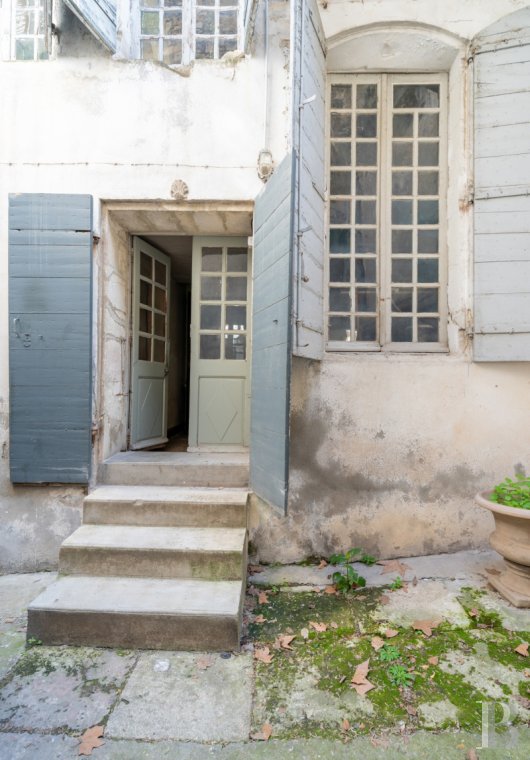
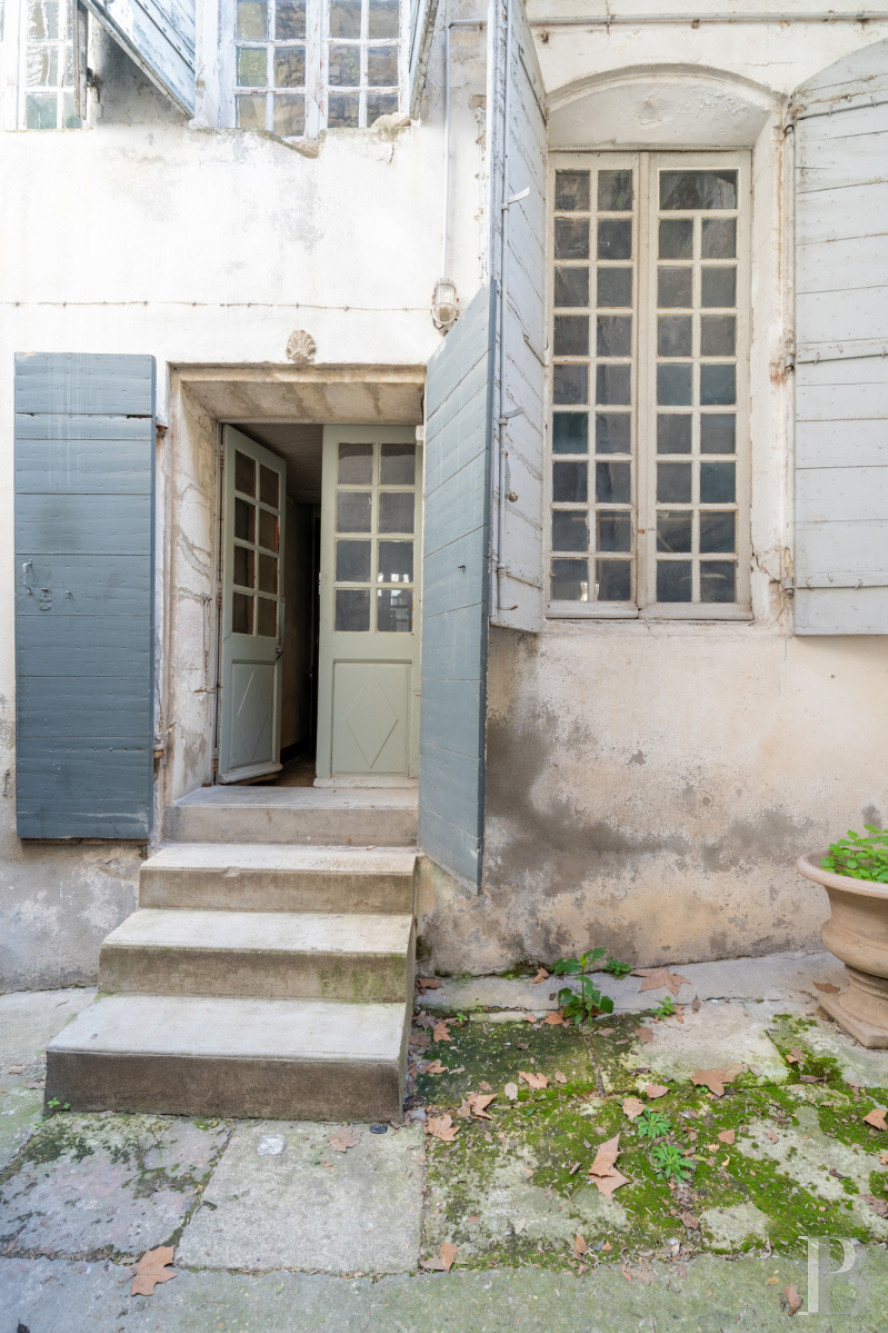
With rectangular, small-paned windows on its two lower floors, topped with arched entablatures and safeguarded by solid metal and wooden shutters, its burnished plaster-coated exteriors blend in seamlessly with the other buildings on the street, while its heavy wooden entrance, decorated with scrollwork, a low arched stone entablature and a typically Rococo-style cartouche, confirms the building’s Regency-Louis XV architectural origins.
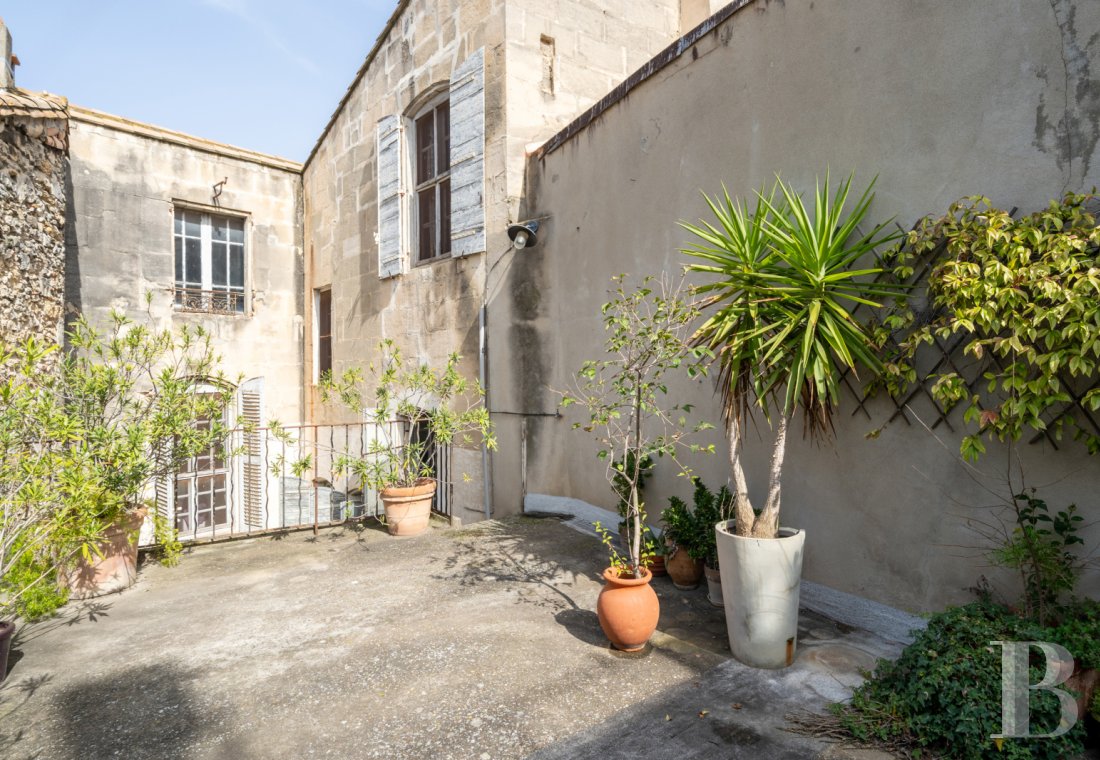
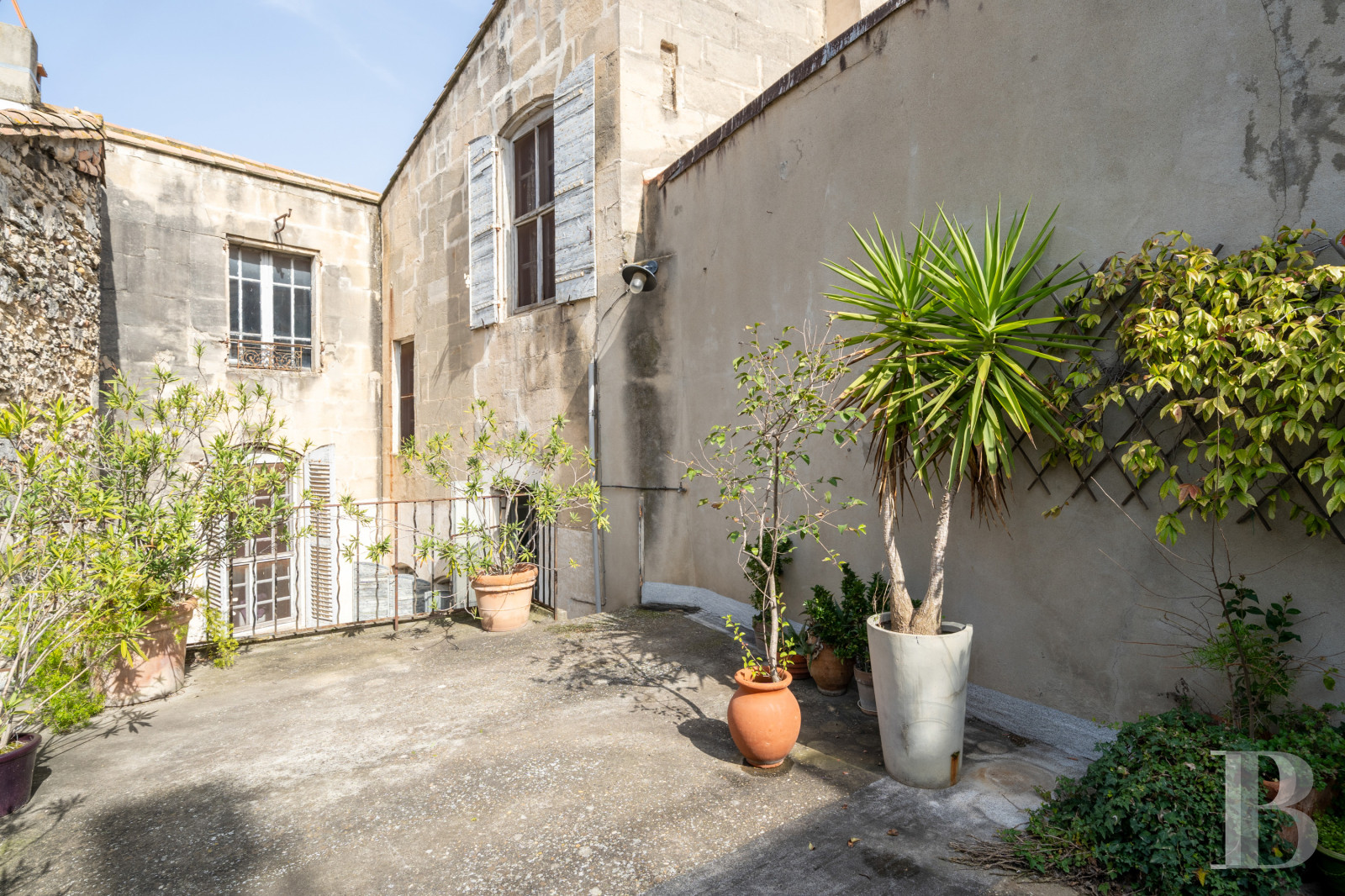
Lastly, the dwelling boasts a verdant concrete patio, of approximately 40 m² and accessible from the first floor, a garage, located below, similar in size and topped with a mezzanine, as well as a rear stone courtyard.
Thanks to a 19th-century local scholar, we now know that the property, enclosed by walls, was made up of two dwellings in 1735 before being sold by a squire from Avignon. Facing east-west, this three-storey ashlar stone dwelling features an inhabitable floor area of approximately 290 m² and was built above a basement of cellars, which was once used to ensure the dwelling’s overall sanitation.
With rectangular, small-paned windows on its two lower floors, topped with arched entablatures and safeguarded by solid metal and wooden shutters, its burnished plaster-coated exteriors blend in seamlessly with the other buildings on the street, while its heavy wooden entrance, decorated with scrollwork, a low arched stone entablature and a typically Rococo-style cartouche, confirms the building’s Regency-Louis XV architectural origins.
Lastly, the dwelling boasts a verdant concrete patio, of approximately 40 m² and accessible from the first floor, a garage, located below, similar in size and topped with a mezzanine, as well as a rear stone courtyard.
The Dwelling
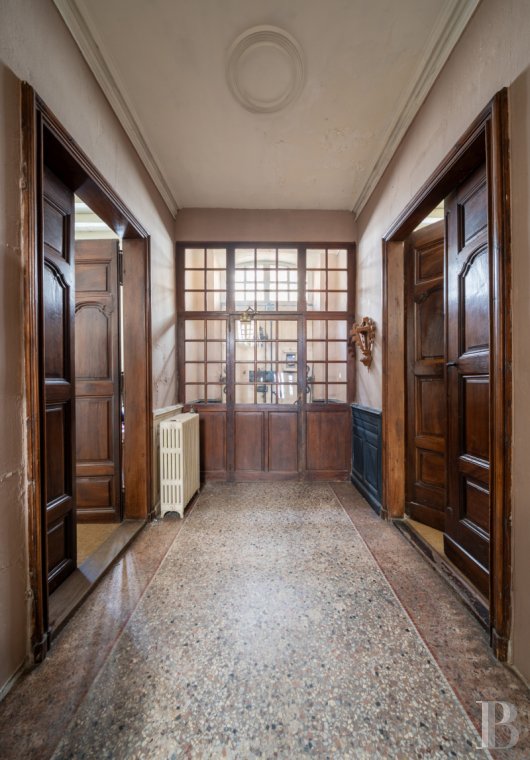
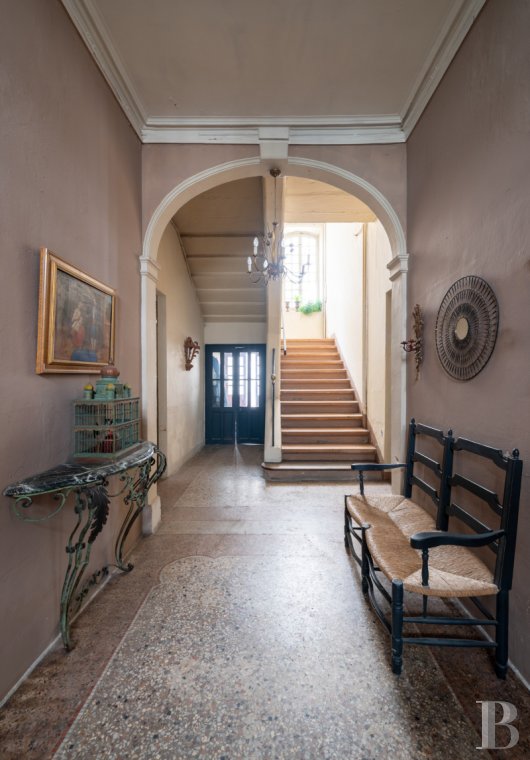
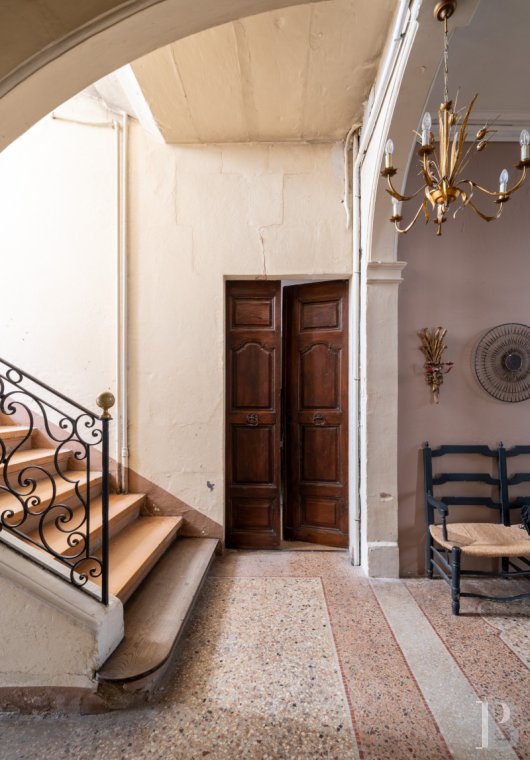
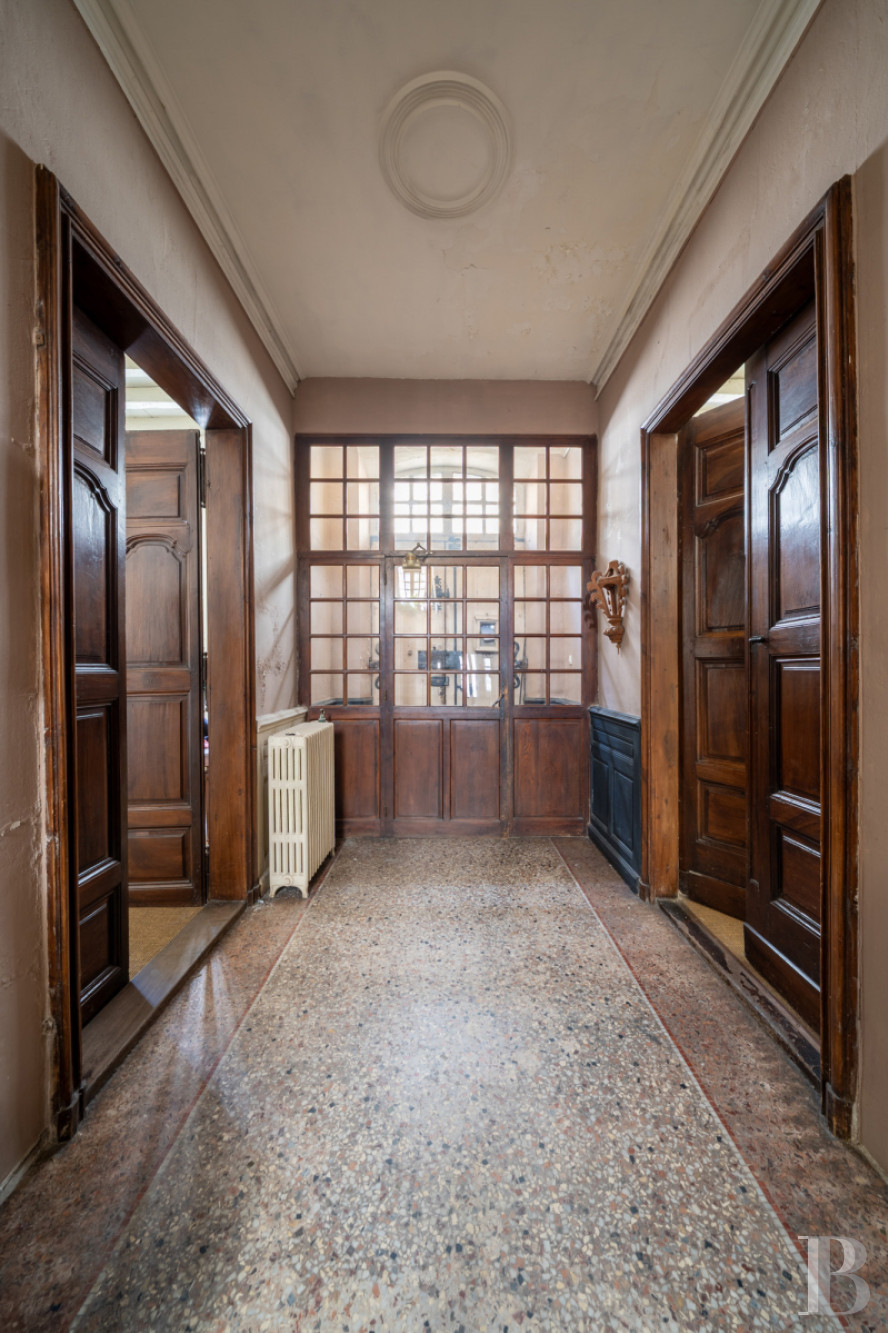
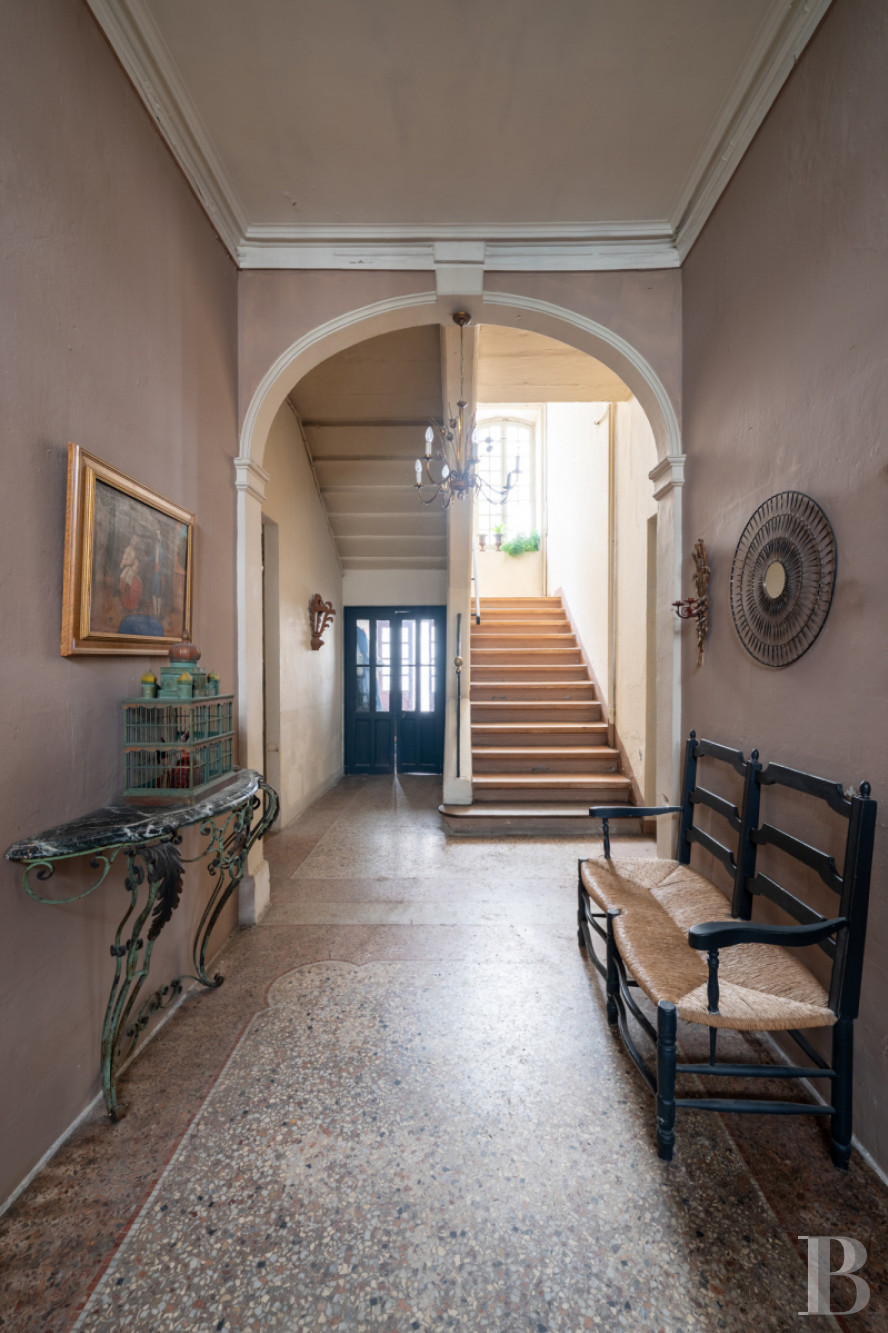
The dwelling’s front door opens on to a vestibule, separated from the rest of the house thanks to a small-paned glass and wood partition, in all likelihood from the 19th century and used to insulate the rest of the dwelling from cold winter days, which gives on to the entrance hall decorated with wooden wainscoting and an original Italianate terrazzo floor, surrounded by a frieze.
The use of this material, composed of marble and earthenware fragments combined with lime or clay, has been passed down over the centuries in Italy, ever since the heyday of Pompeii, and had a major influence on the south of France before becoming overwhelmingly popular once again in the 1930s with the arrival of Art Deco as well as its industrialisation around 1950.
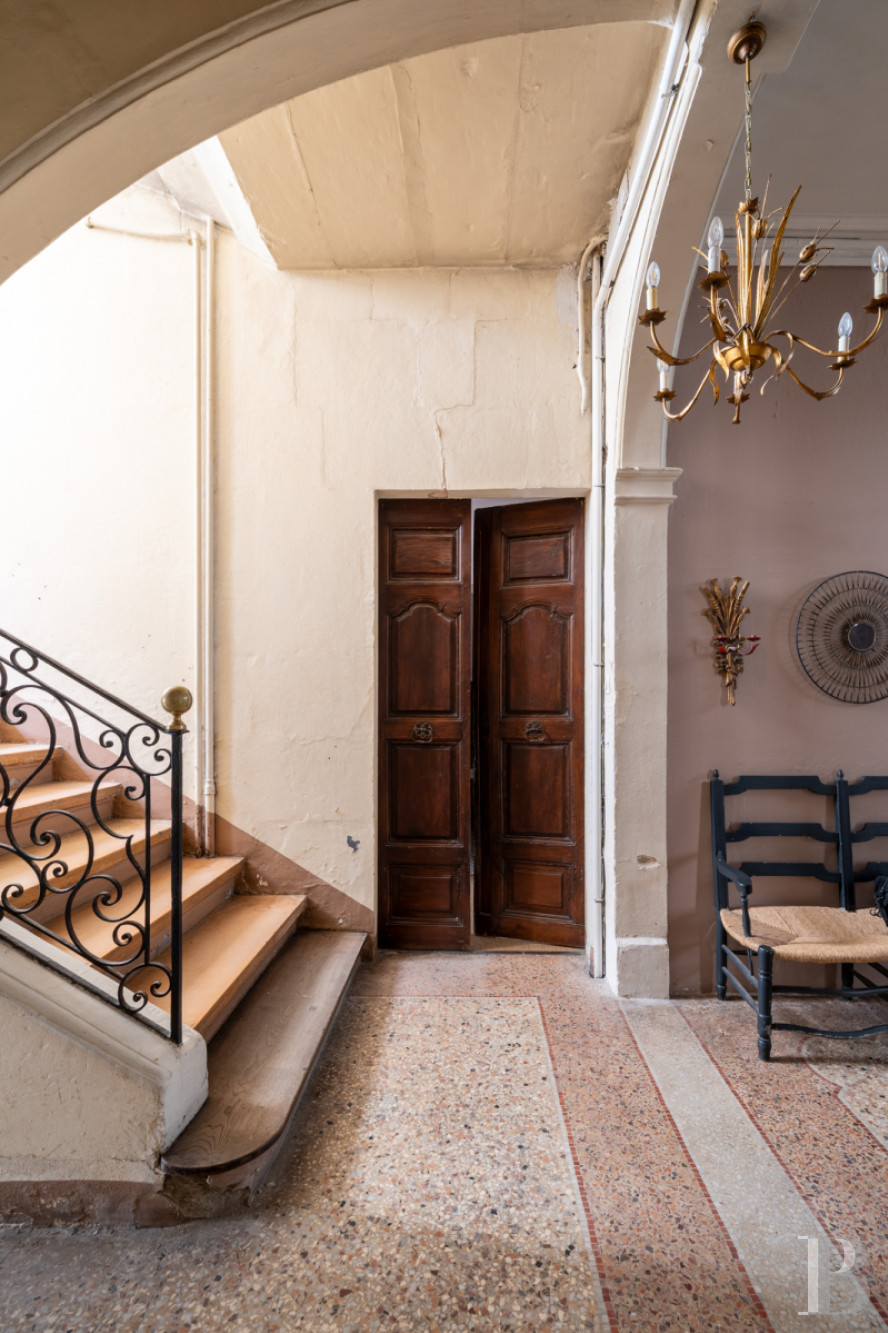
In addition, directly opposite the front door, an archway flanked by slender Doric pilasters provides a solemn tone for the base of the staircase around which the entire dwelling is structured.
The ground floor
The rooms on this floor are symmetrically arranged around the entrance hall, the latter of which is embellished by its wooden décor. Two bedrooms and two sitting rooms face each other, one of which has been equipped with a water mains inlet, while subsequent renovations made it possible to install the necessary bathroom and lavatory for this floor.
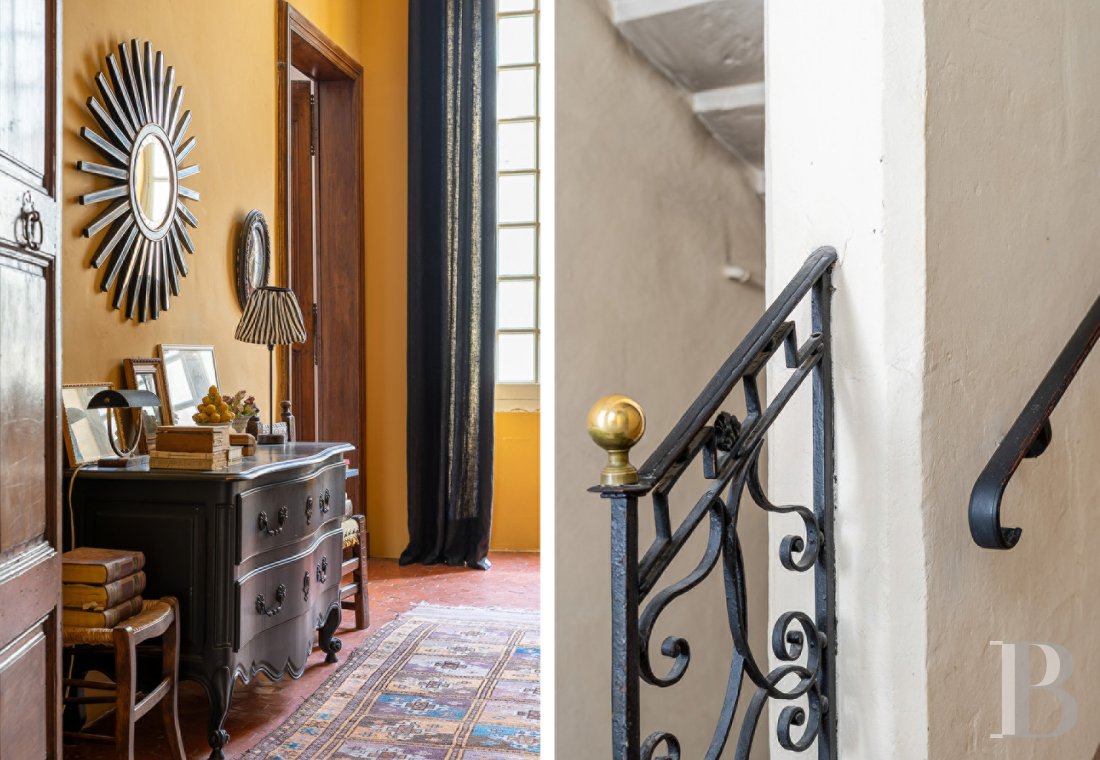
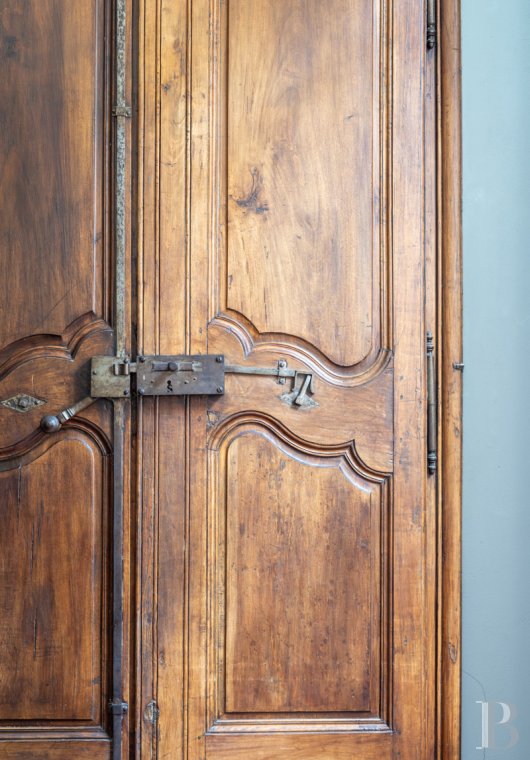
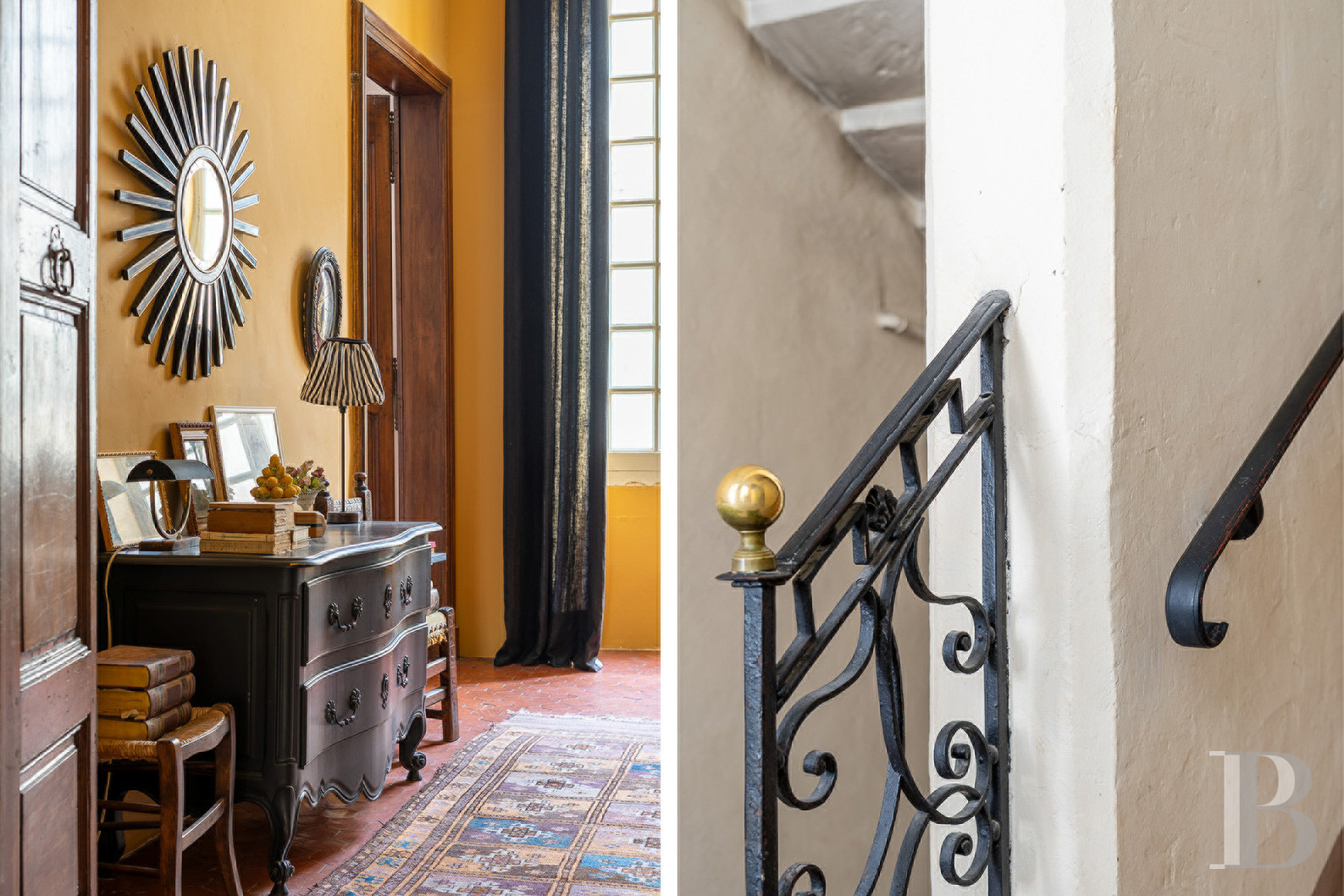
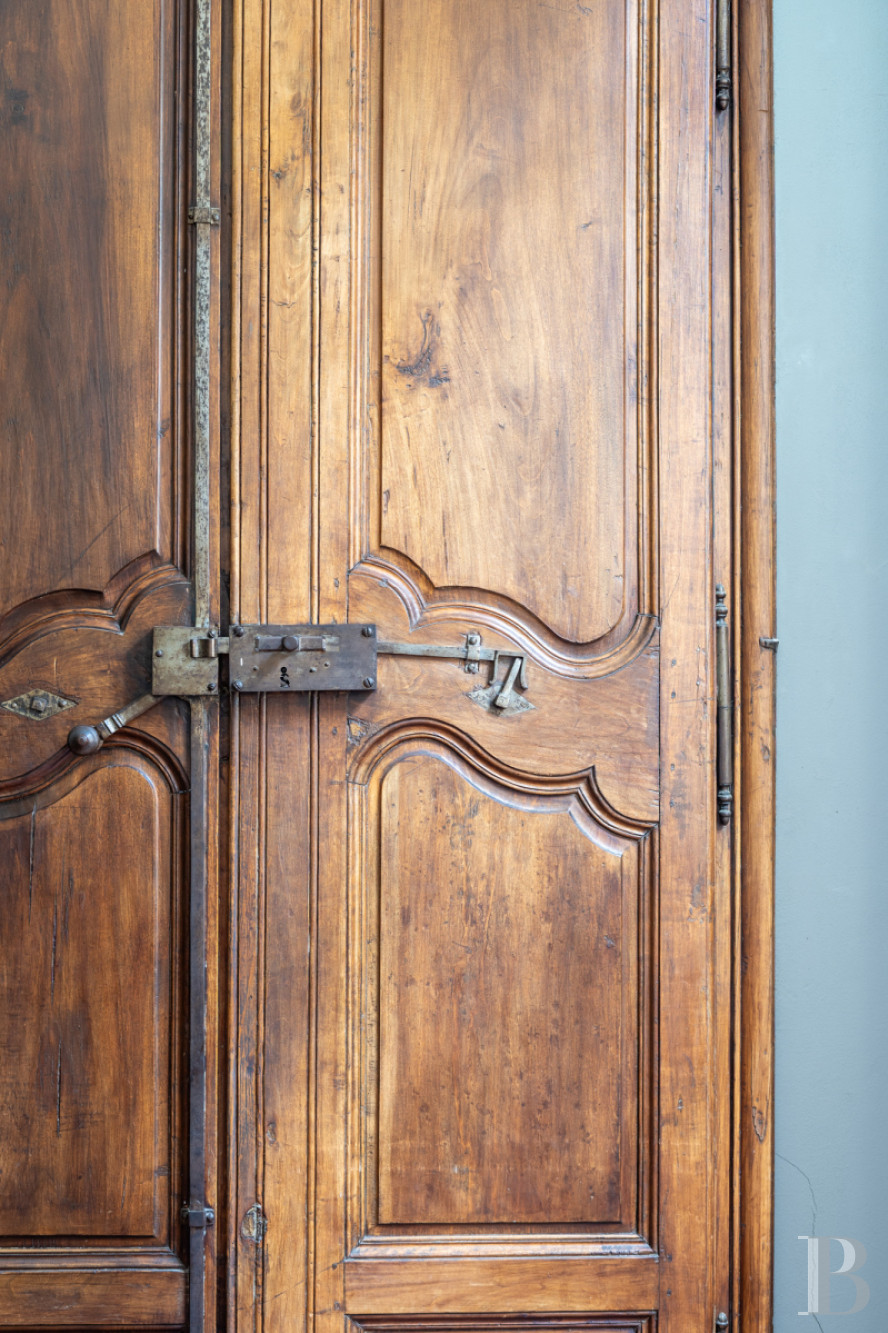
As for the series of polished oak double doors, they create the dwelling’s decorative leitmotif on every floor and vertically cadence the warm, uniform colours of its walls, whereas, under the staircase’s vault, two tall small-paned windows bathe its Barbentane stone steps in abundant sunlight, the latter of which are safeguarded by a wrought-iron bannister. Last, but not least, towards the back of the entrance hall, a door opens on to the rear courtyard as well as a garage whose door gives on to the adjacent street.
The first floor
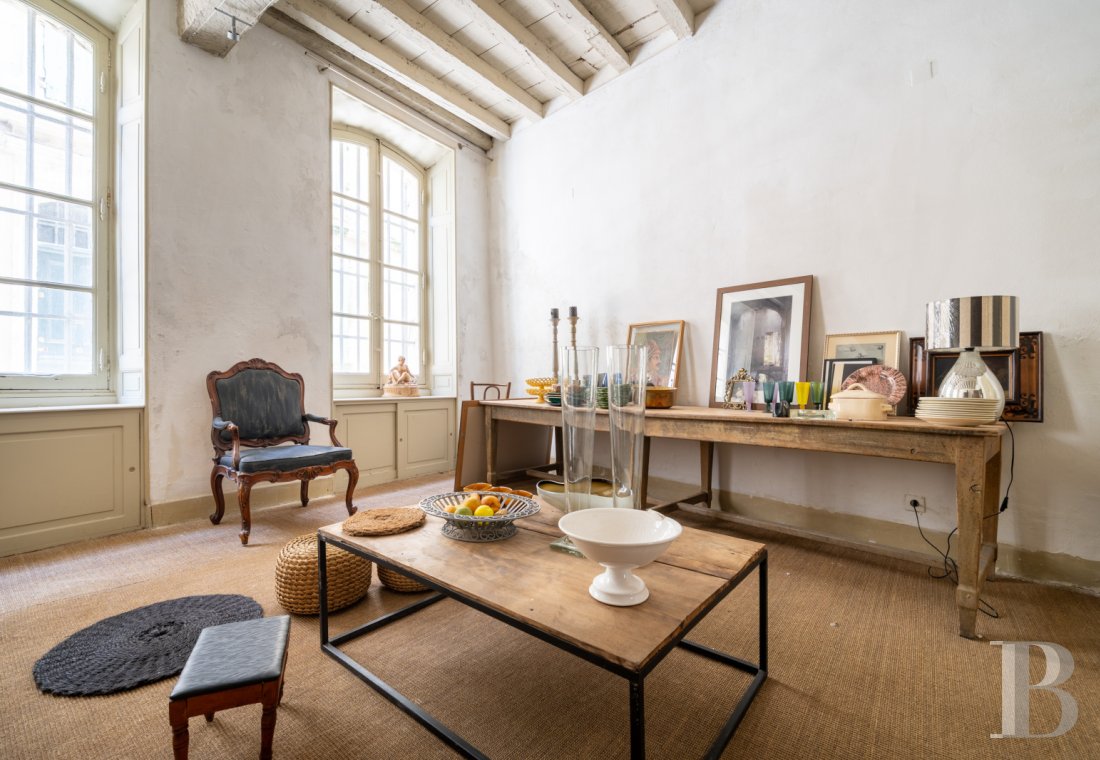
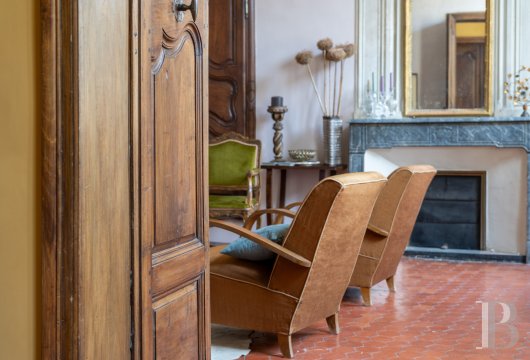
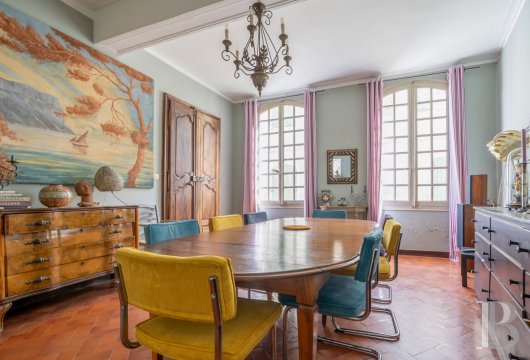
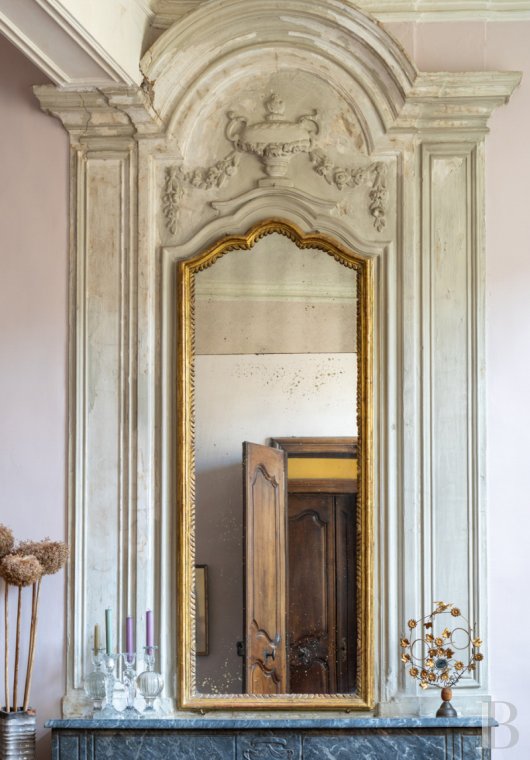
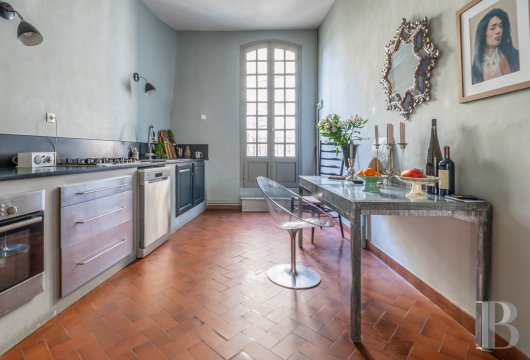
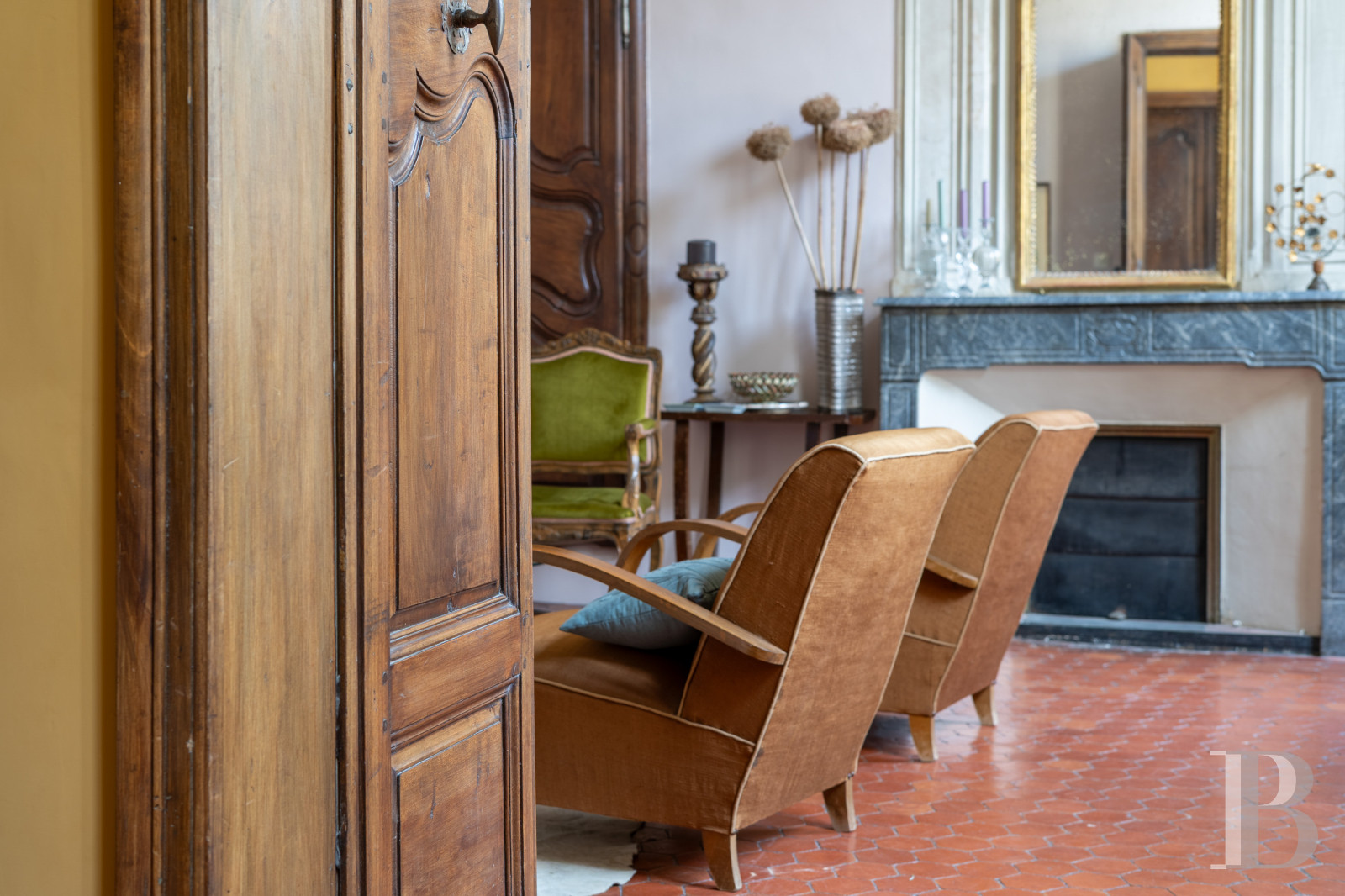
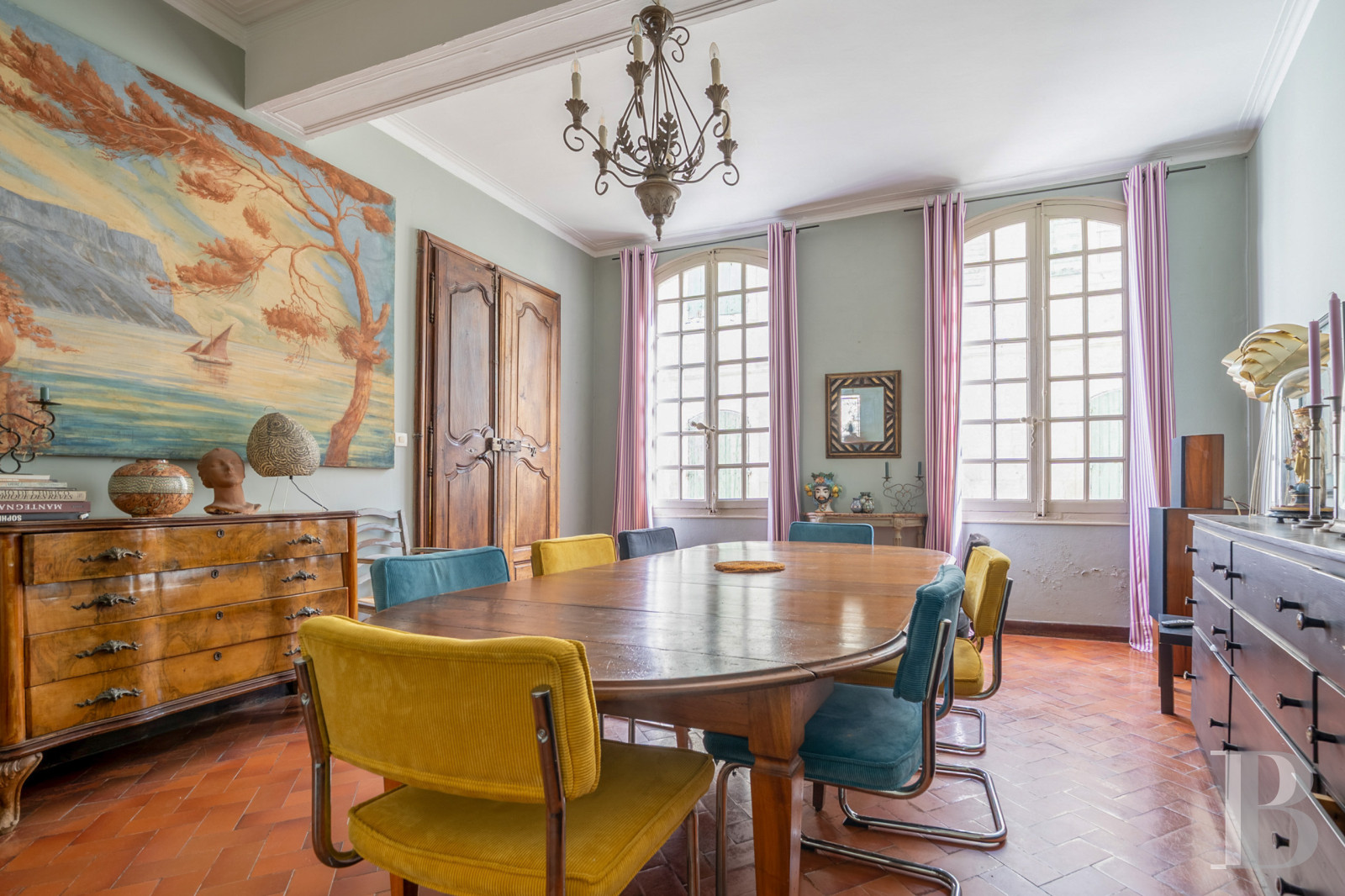
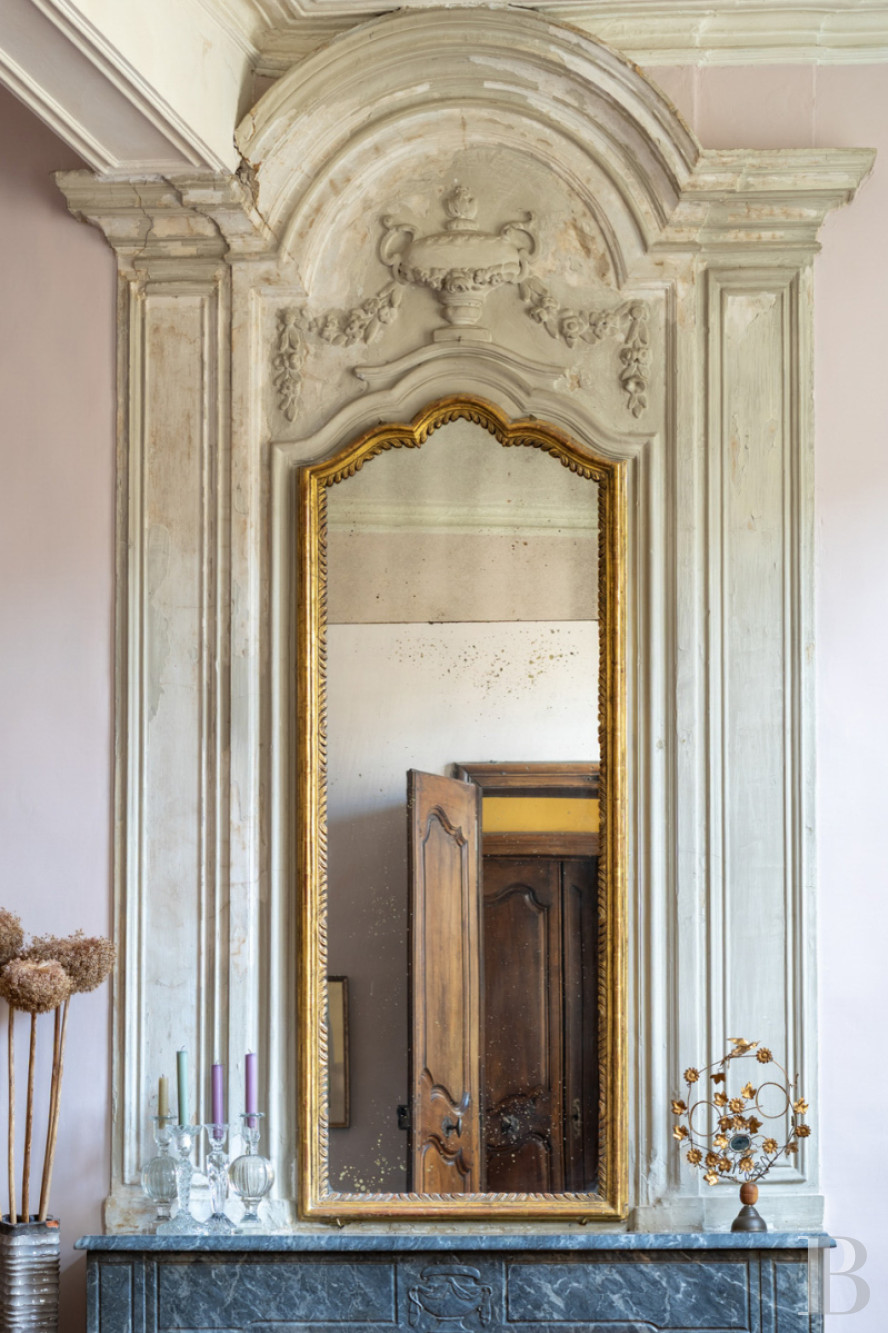
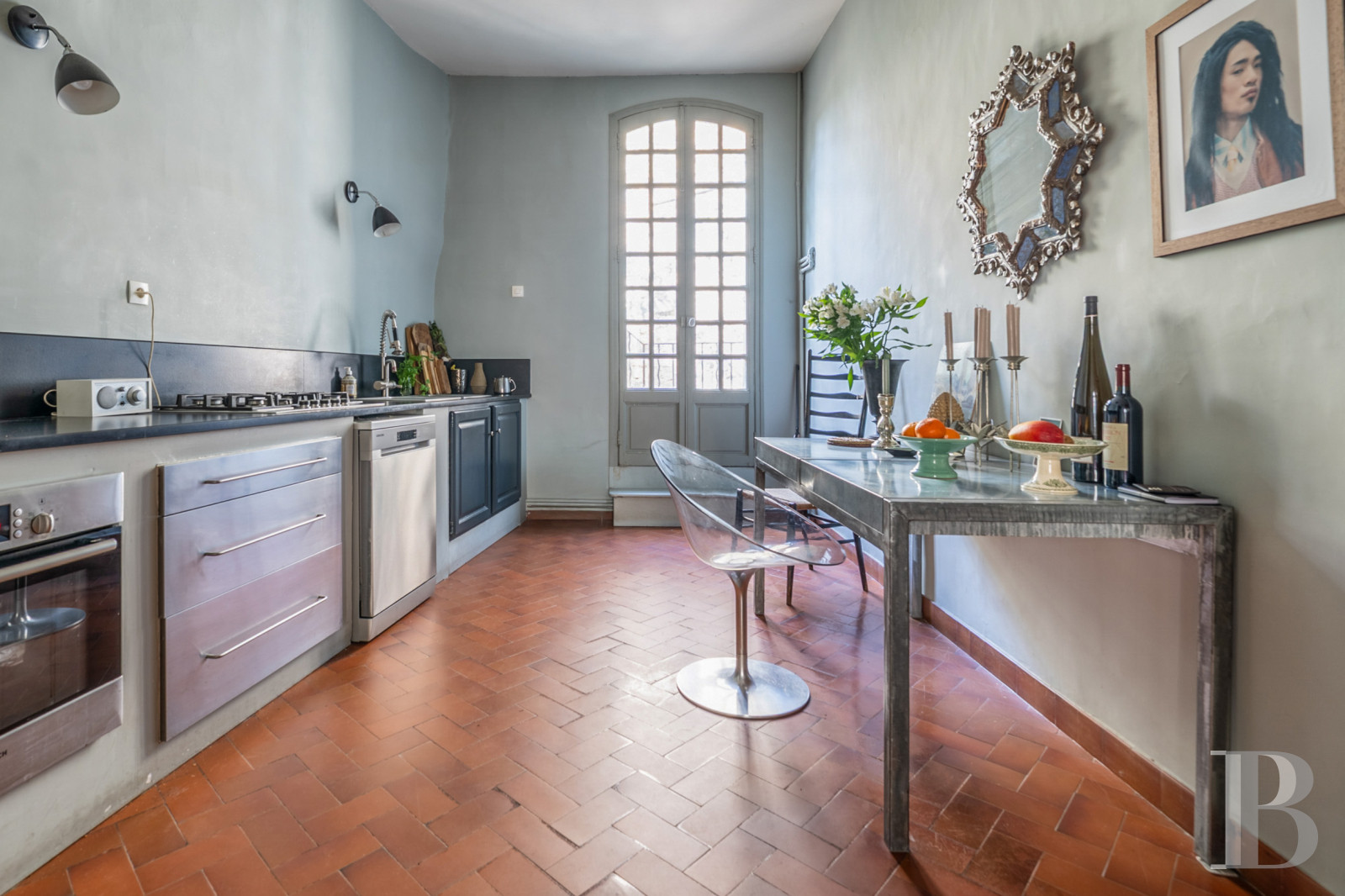
At apéro hour, the setting sun’s last light warmly grazes the kitchen’s glass door and a series of steps that lead to the patio, while the adjacent dining room provides access to the living room and a study whose original hexagonal terracotta floor tiles gleam with faded footsteps. As for the living room’s fireplace, it features a mirror topped with a bas-relief of a ceremonial cup flanked by flowering garlands as well as two symmetrical niches on ether side, one of which is clad in diagonal-shaped panelling decorated with moulded scrollwork typical of the French Rococo style.
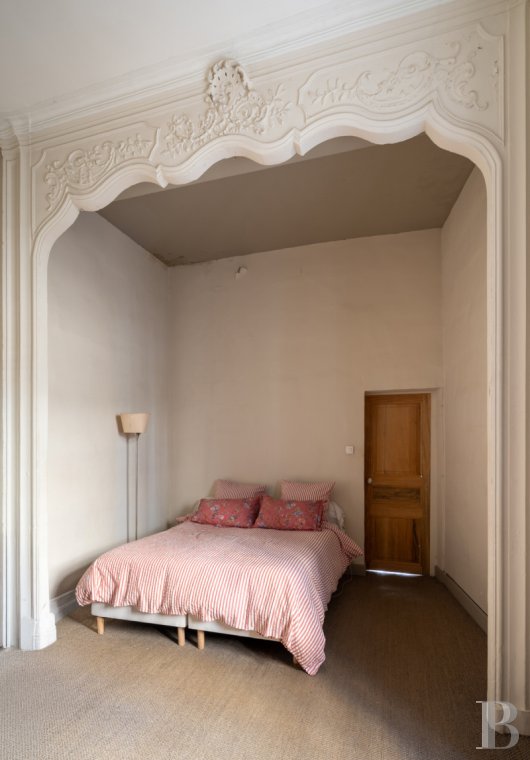
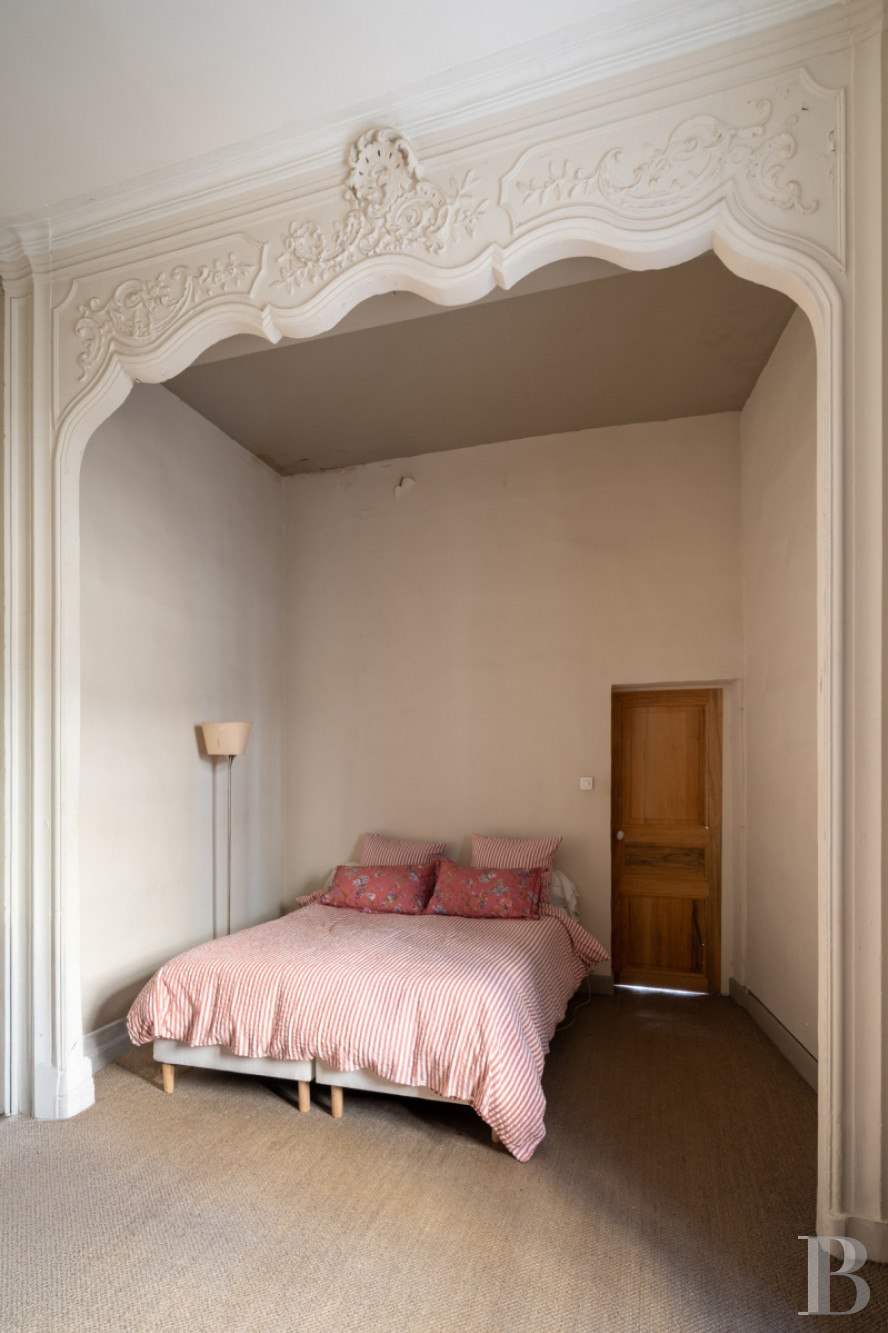
In addition, a third bedroom, located on this level, contains a bed placed within an immense moulded alcove featuring an eye-catching design of Italianate curves and counter-curves, while a door, located in the alcove itself, currently provides access to a bathroom, which was, in all likelihood, a former antechamber.
The second floor
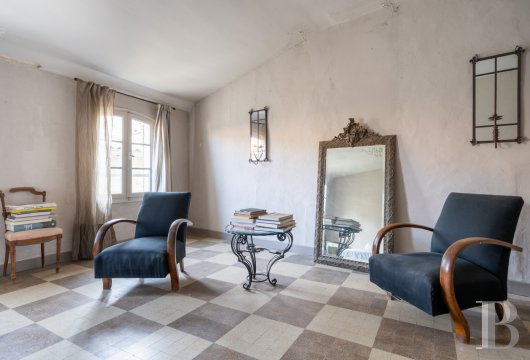
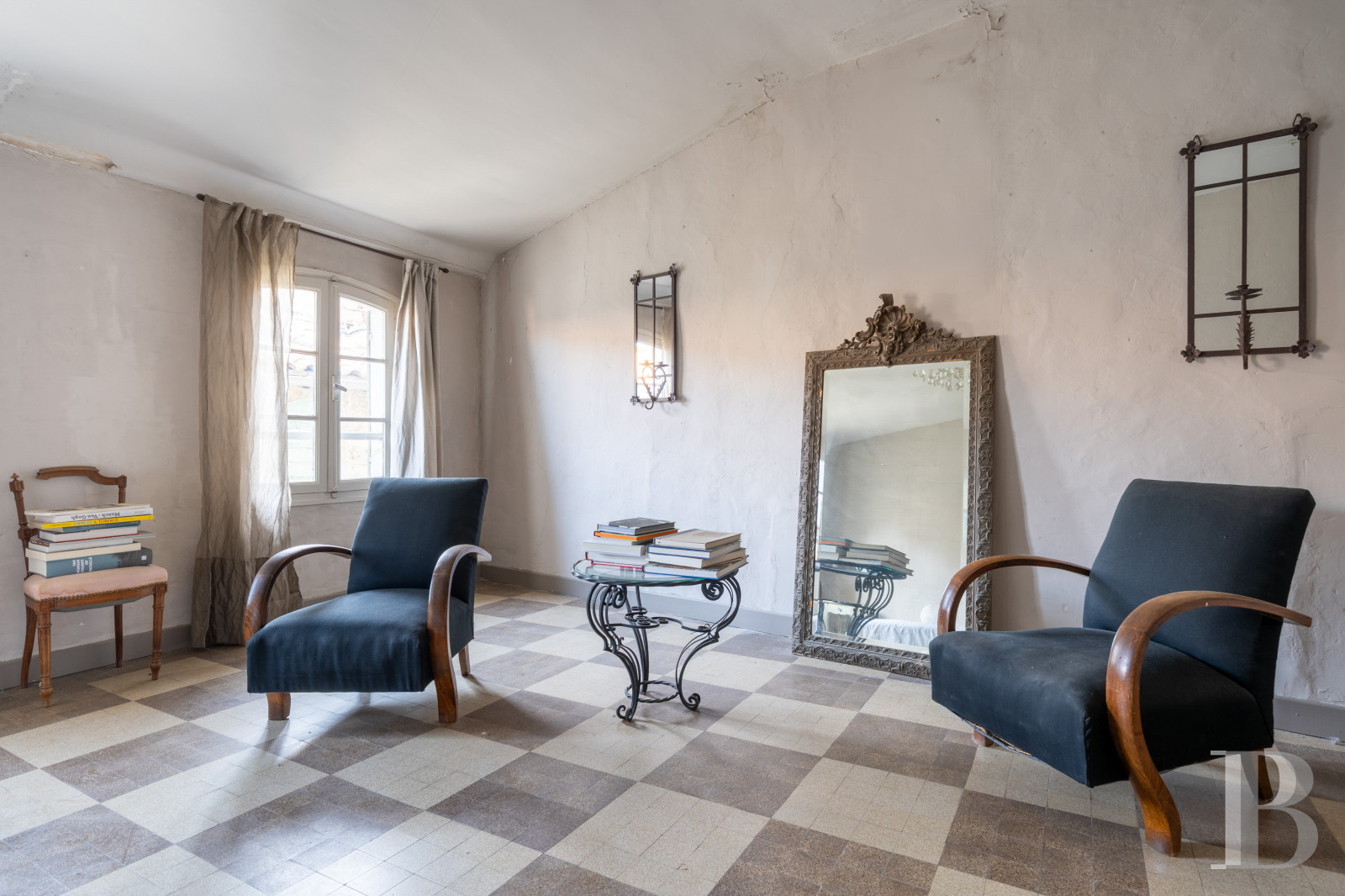
Two bedrooms and a shower room, a lavatory, utility room and convertible attic spaces, of approximately 30 m², are located above the first floor living areas and organised, according to a quadrangular layout nearly identical to the lower floors, around a central vaulted staircase. With floor tiles throughout – original terracotta ones for the attic and utility room and more modern versions in the other areas – one of the bedrooms enjoys breath-taking views of the neighbouring buildings’ barrel tile roofs.
The basement
This area is accessible from the ground floor via a stone staircase and features three large vaulted stone cellars, which extend underneath the entire dwelling and are currently used as machine rooms for the hot water heater and fuel tank as well as for storage.
The Patio
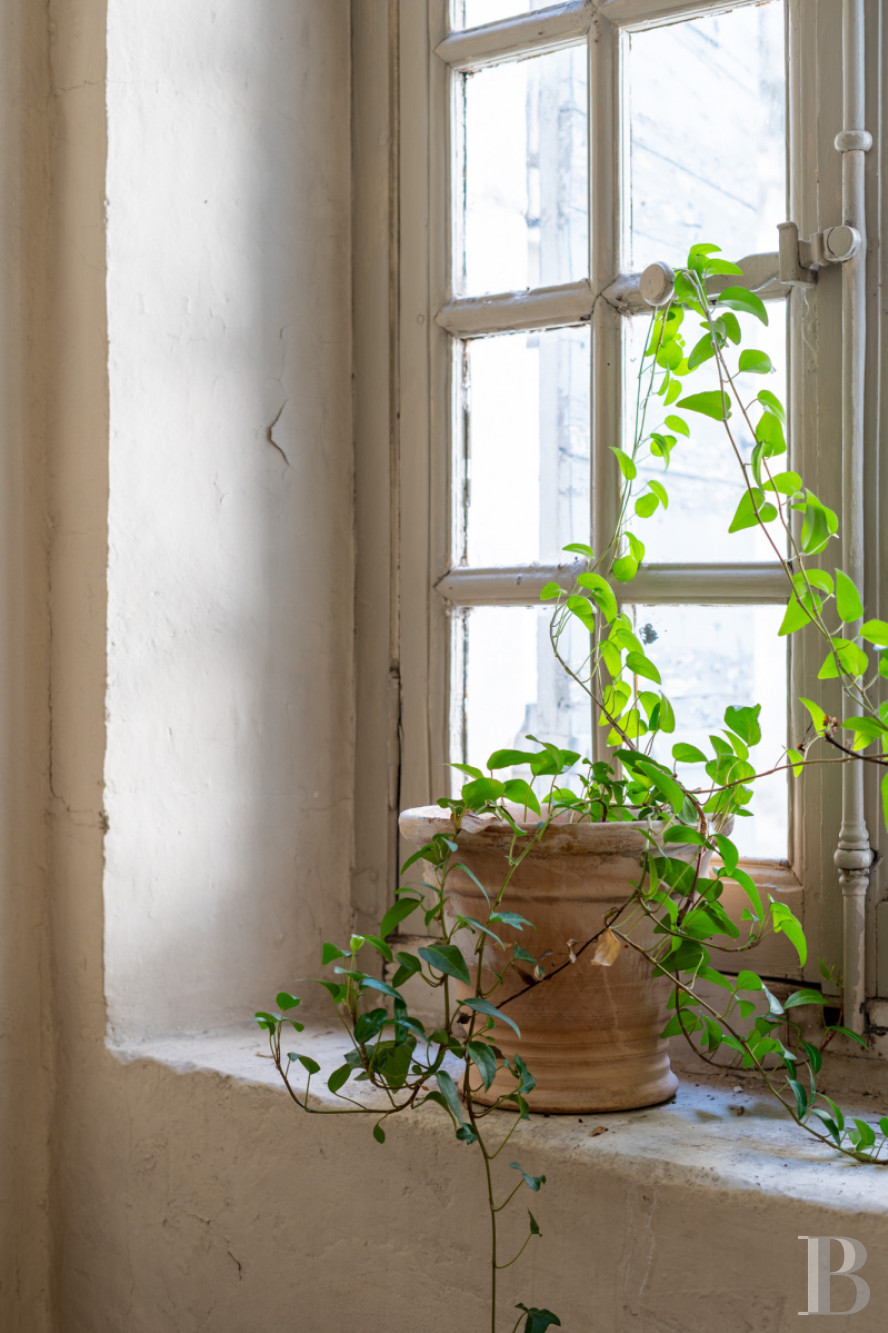
Large terracotta pots planted with shrubs and other Mediterranean varietals provide a verdant touch for this concrete patio, of approximately 40 m², bordered by walls and understated wrought-iron railing. With plunging views of the rear courtyard, towards the back of the patio, an openwork lean-to, topped with barrel tiles and located next to a former oven, offers welcome shade and incredible vistas of the sunset’s orangey hues.
The Garage
Accessible from the street next to the property via the rear courtyard and featuring approximately 36 m² of concrete flooring, it is topped with an ancient wooden mezzanine, equivalent in size to the lower floor and reachable via a straight wooden staircase. It should be noted that, in case this building is transformed into another purpose, it will require some renovations in order to ensure its overall stability and refurbish its interior.
Our opinion
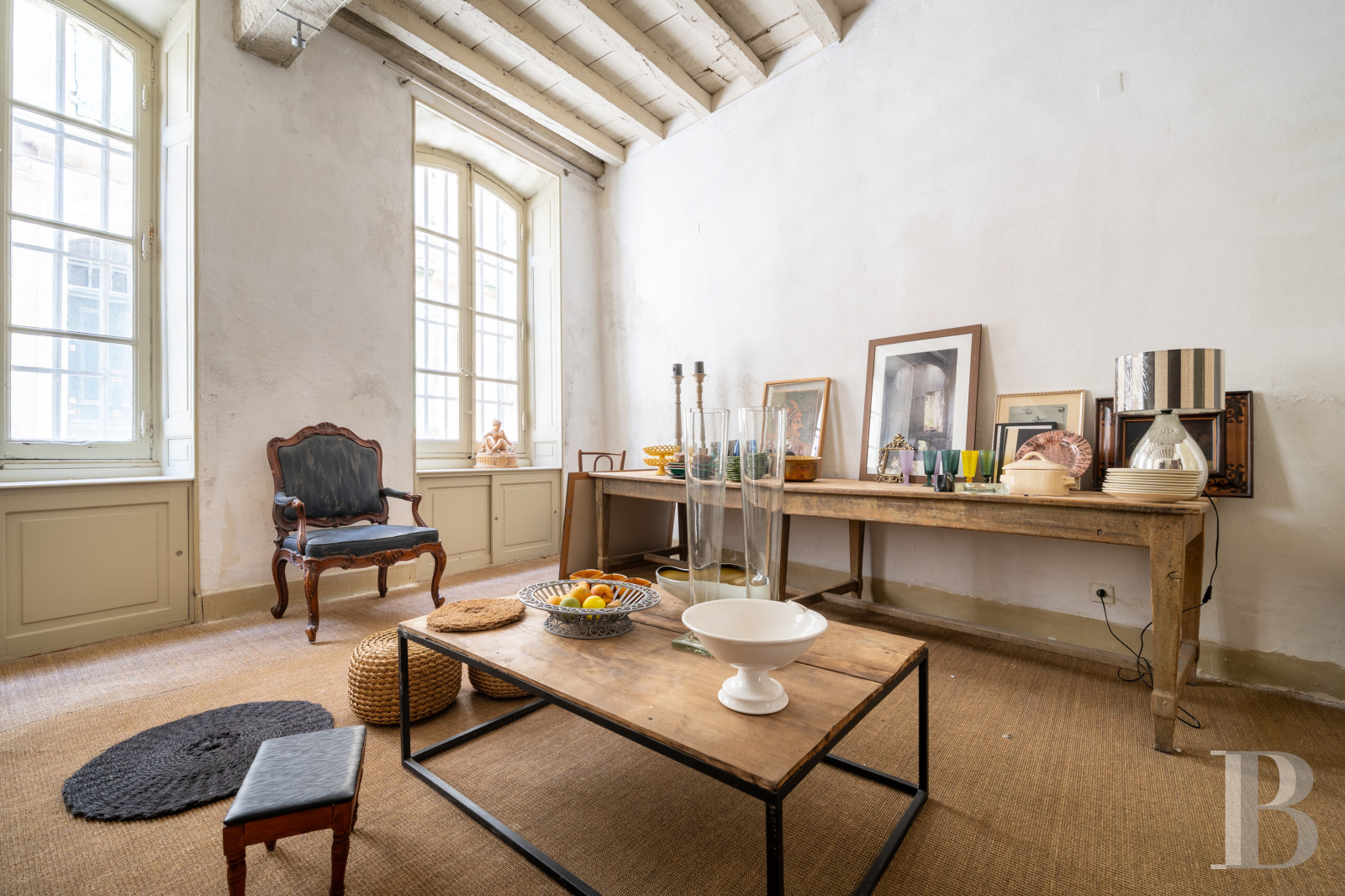
During the Ancien Regime, it was common for some lordly dwellings to foster a noble and, yet, understated living environment, while the sumptuous aesthetic of its curvilinear décor, specifically chosen, is voluntarily associated with the dark colour of its many wooden details and original terracotta floor tiles. A minimalist style that corresponds perfectly with contemporary tastes focused on quality materials and plenty of sunlight.
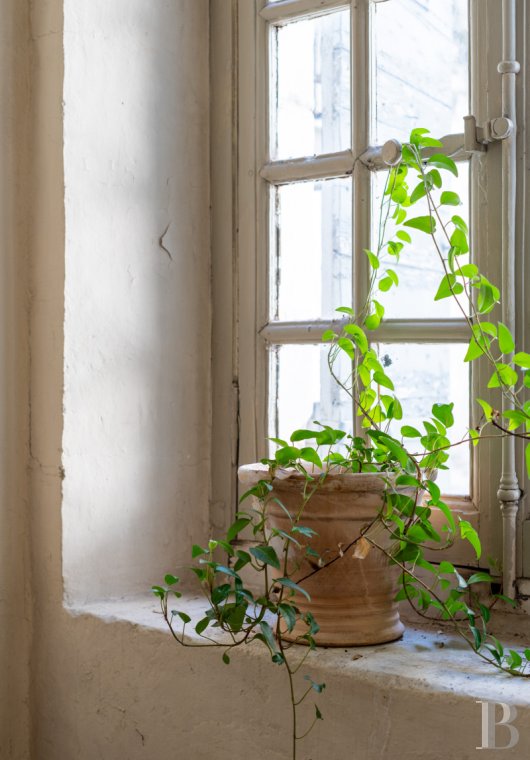
Protected from the region’s intense summer heat, rays of sunlight still slant through this ancient edifice’s windows in order to illuminate its smooth walls decorated with crown moulding, while the layout of this corner property provides a number of possibilities for its future occupants whether they imagine adapting it to a full-time residence or a commercial/artistic project, which, within the context of the building, are the most feasible. Regardless, one’s imagination will be essential in creating and guiding a future project for this dwelling, one that patiently awaits the refurbishments and embellishments it so clearly deserves.
1 500 000 €
Fees at the Vendor’s expense
Reference 523776
| Main building floor area | 290 m² |
French Energy Performance Diagnosis
Information on the risks to which this property is exposed is available on the website: www.georisques.gouv.fr
Share


NB: The above information is not only the result of our visit to the property; it is also based on information provided by the current owner. It is by no means comprehensive or strictly accurate especially where surface areas and construction dates are concerned. We cannot, therefore, be held liable for any misrepresentation.