



A 17th-century manor, with outbuildings and 2.5-hectare
grounds, perched up on a hill on the outskirts of Amboise
grounds, perched up on a hill on the outskirts of Amboise
Amboise,
INDRE-ET-LOIRE
center-val-de-loire
37400
FR


Location
In the Indre-et-Loire department, within the greater Centre-Val de Loire region, Amboise enjoys a particularly advantageous position on the banks of the large royal river, only two hours and 20 minutes from Paris, while the A10 and A85 motorways are easily accessible and the train station provides rail service to the capital about twenty times a day.
As for the property, it is set back from the city, whose famous chateau overlooks its narrow historic streets, lined with shops, cafés and a cinema, whereas, in this area, recognised as a Unesco World Heritage Site and incorporated within the Loire-Anjou-Touraine regional natural park, the landscape features some of the country’s most beautiful monuments.
Description
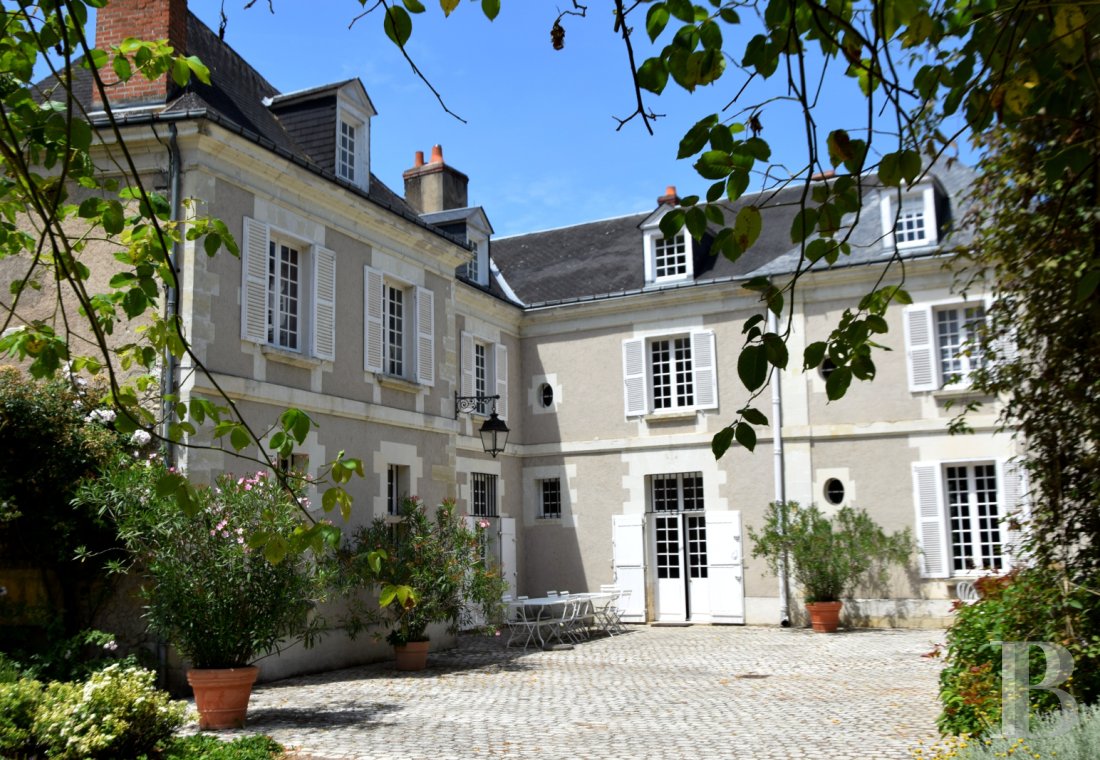
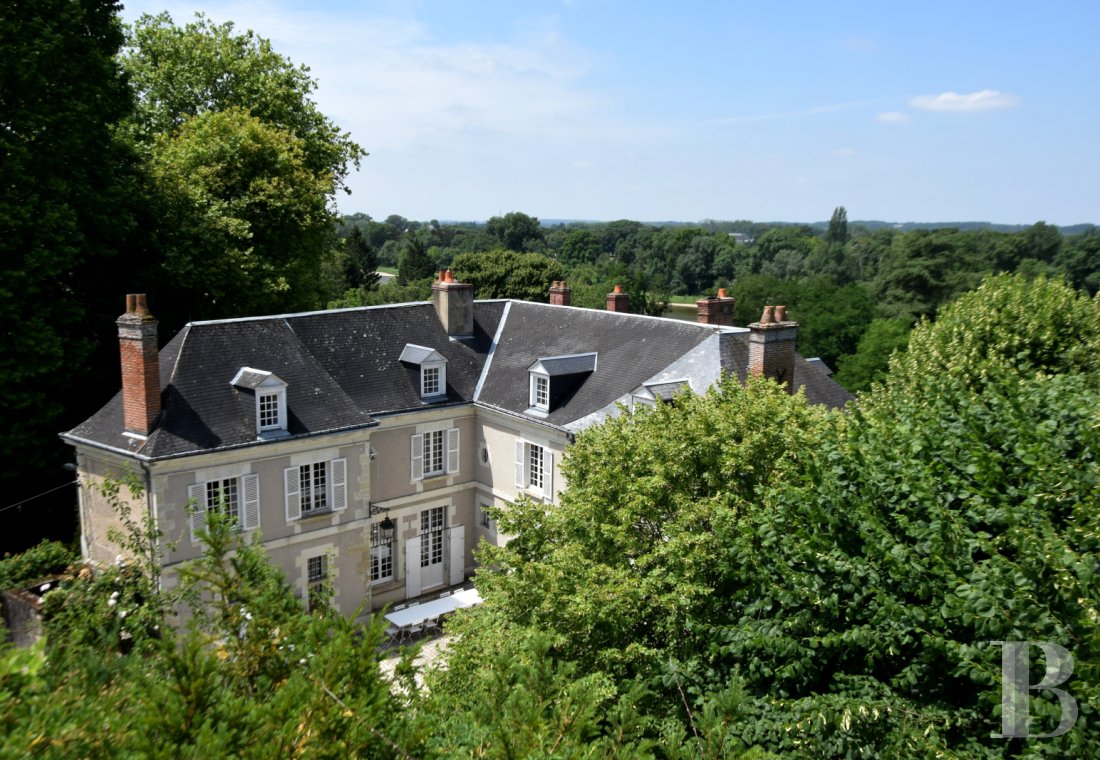
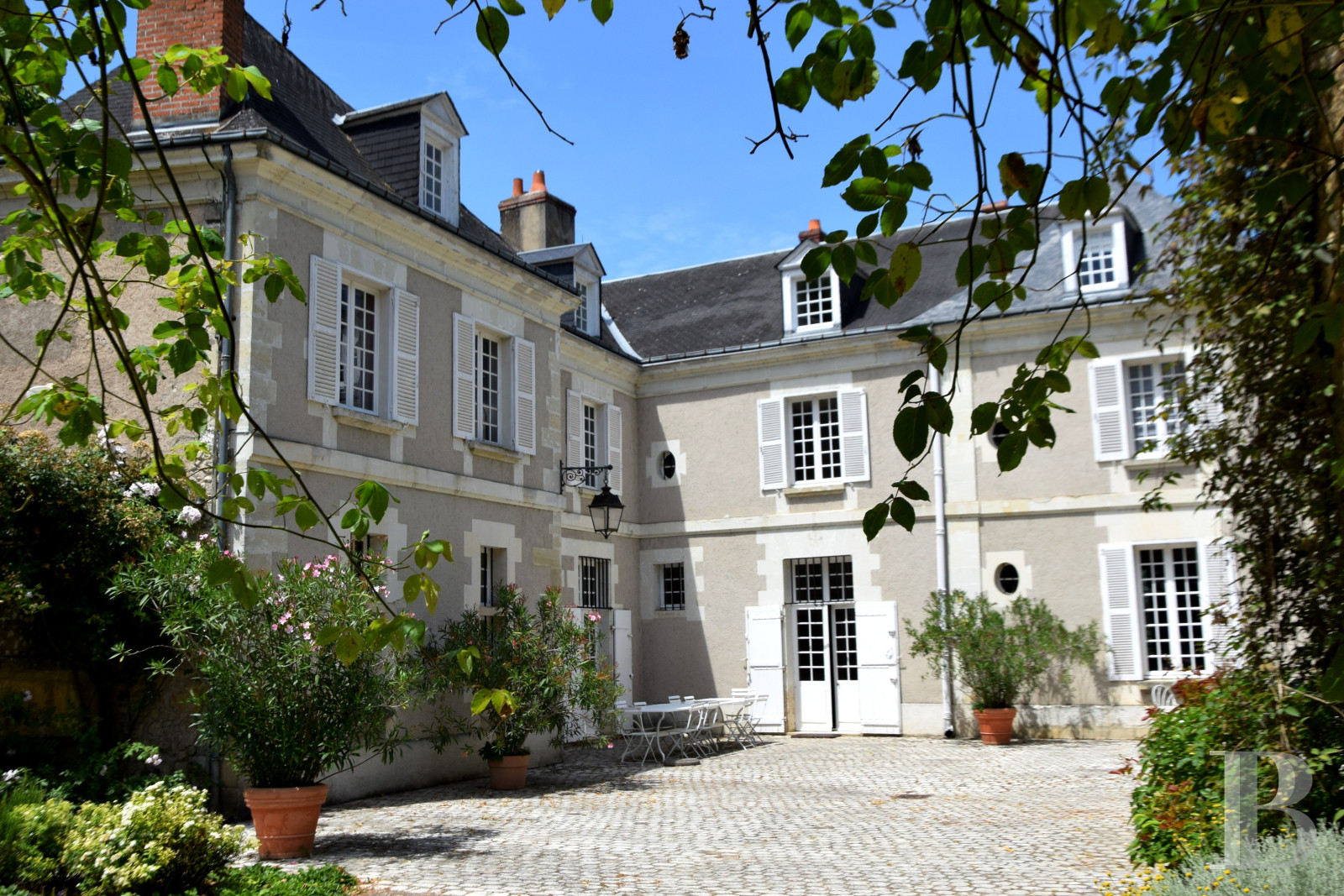
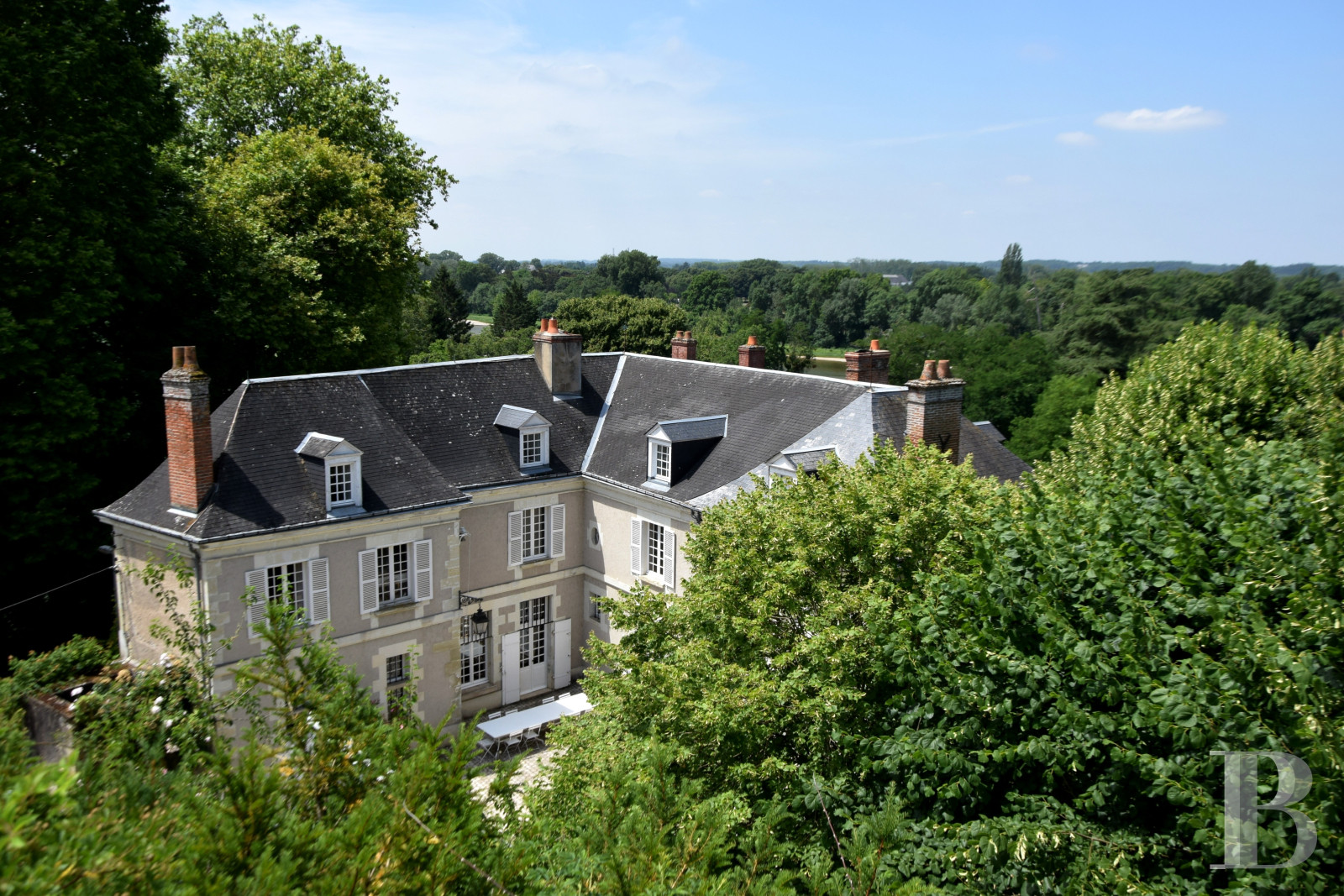
The manor and its grounds, buttressed by strong retaining walls and overlooking the Loire Valley, are accessible by vehicle via an immense gate, which opens on to a front courtyard. Built in the 17th century and modified in the 19th, the L-shaped manor, located in the northwest corner, features a slightly offset pavilion on each end, as well as three storeys topped with a floor under the eaves, which is, in turn, bathed in light thanks to its gabled dormers.
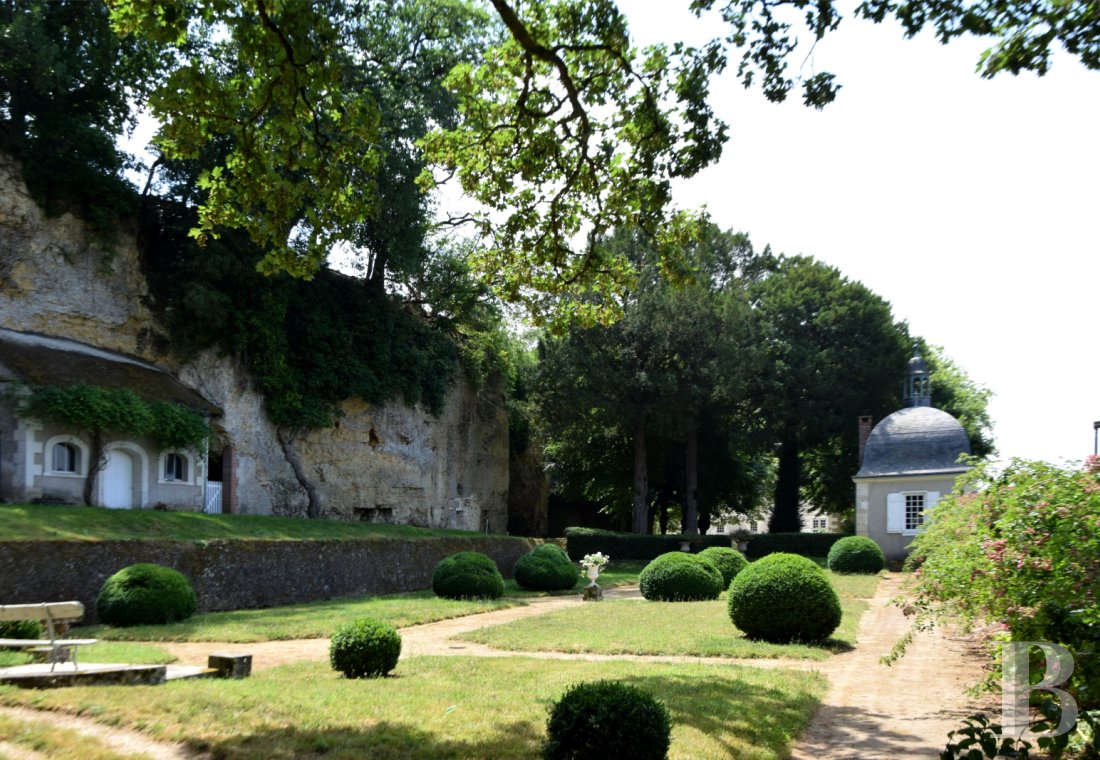
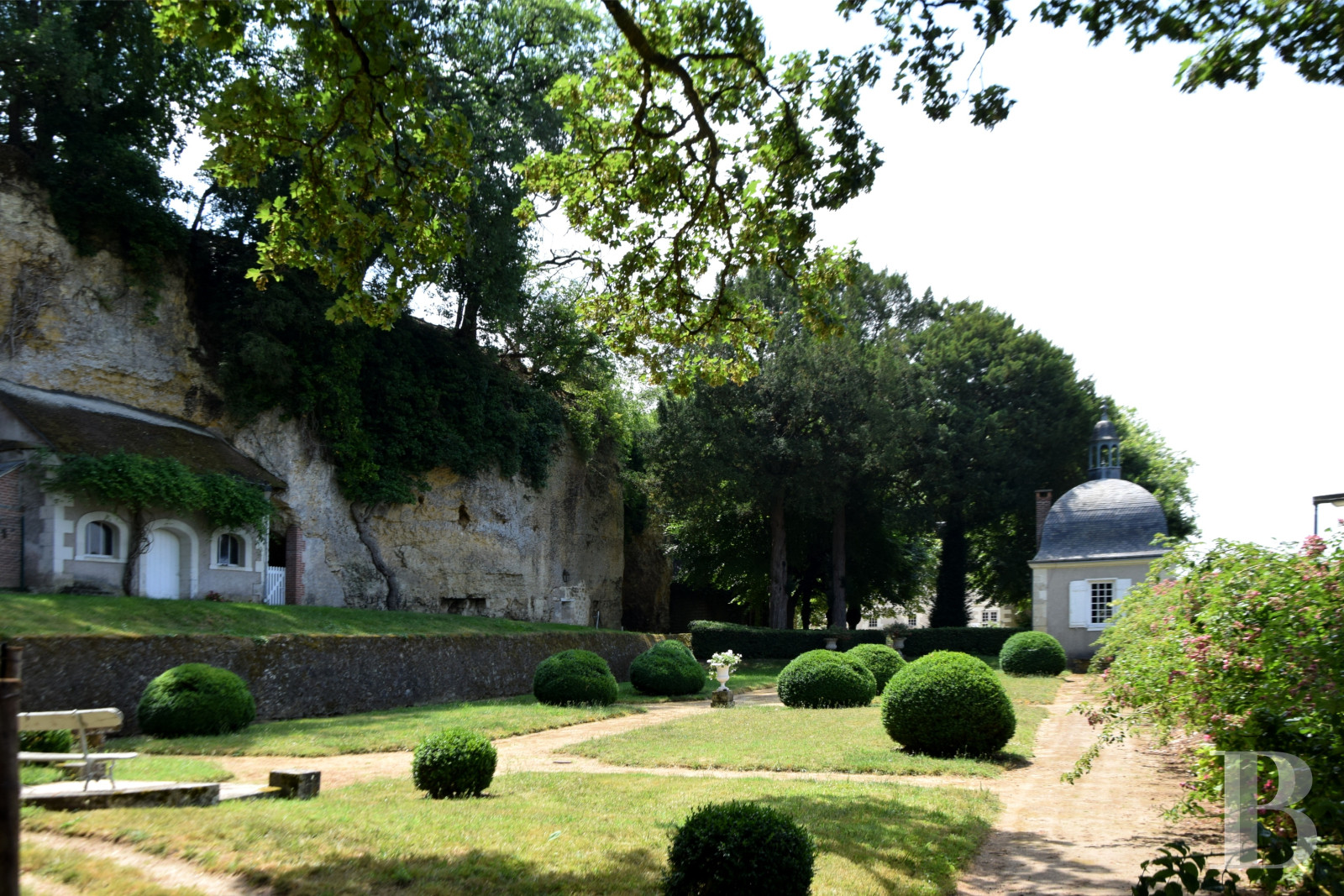
With plaster-coated exteriors bookended with stone quoins, the manor is cadenced by wide windows safeguarded by louvred shutters as well as several bull’s-eye windows, whereas, on the garden side, solid shutters or grills provide protection for the dwelling’s windows. Featuring a fibre-cement roof over the central wing and slate versions over the lateral pavilions, directly opposite the manor, a group of outbuildings abut the rocky hillside, after which the estate was named, while a formal garden acts as a link between the patio and an ornamental pavilion.
As for the grounds, with a wooded area overlooking a pasture, they exude a bucolic and peaceful ambiance.
With plaster-coated exteriors bookended with stone quoins, the manor is cadenced by wide windows safeguarded by louvred shutters as well as several bull’s-eye windows, whereas, on the garden side, solid shutters or grills provide protection for the dwelling’s windows. Featuring a fibre-cement roof over the central wing and slate versions over the lateral pavilions, directly opposite the manor, a group of outbuildings abut the rocky hillside, after which the estate was named, while a formal garden acts as a link between the patio and an ornamental pavilion.
As for the grounds, with a wooded area overlooking a pasture, they exude a bucolic and peaceful ambiance.
Le manoir
The garden-level floor
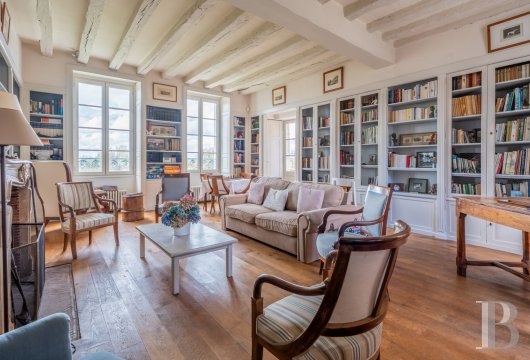
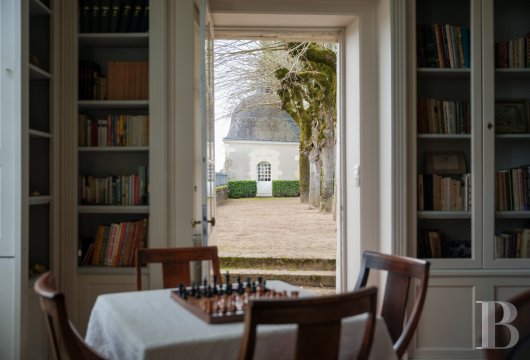
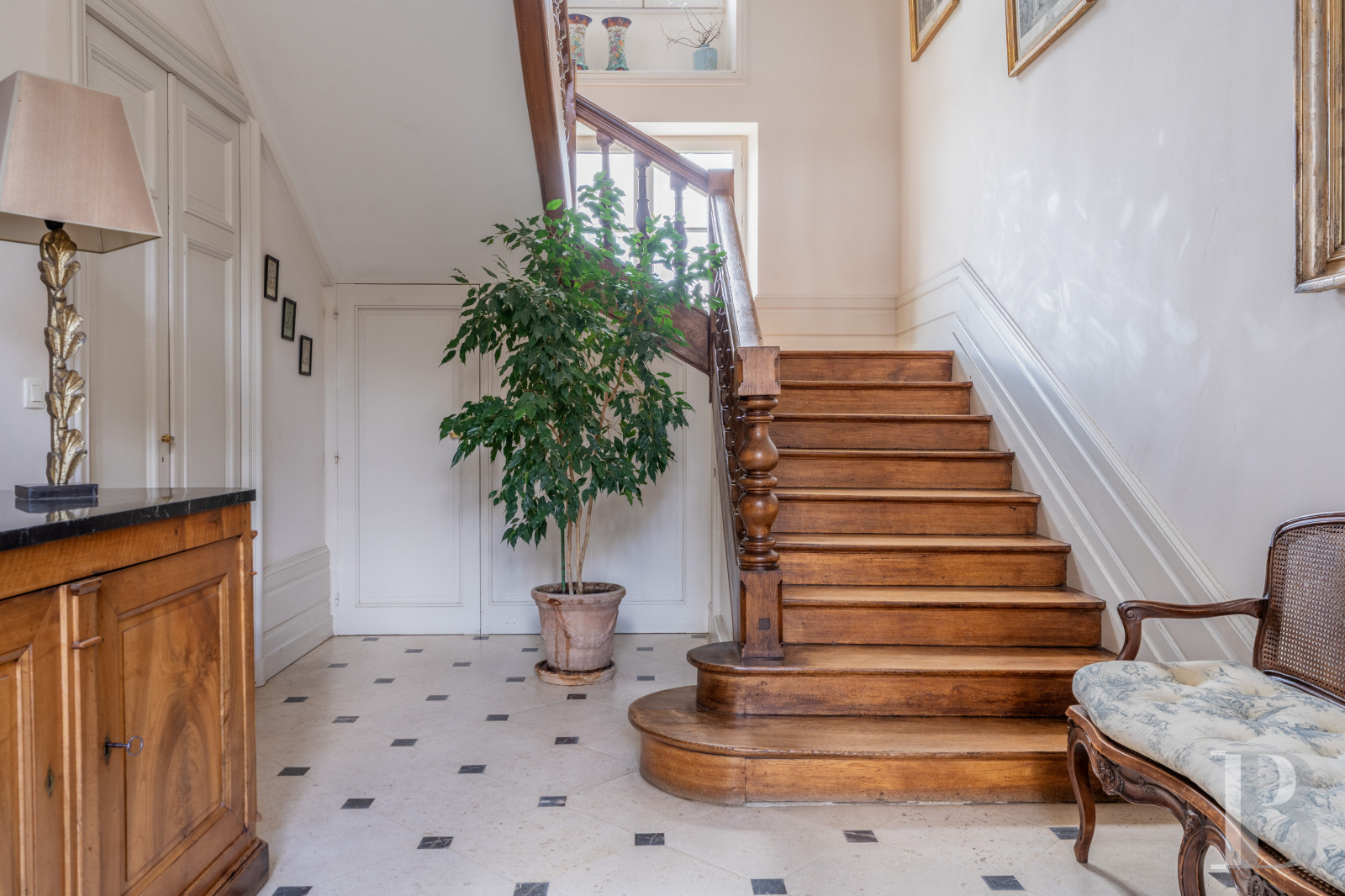
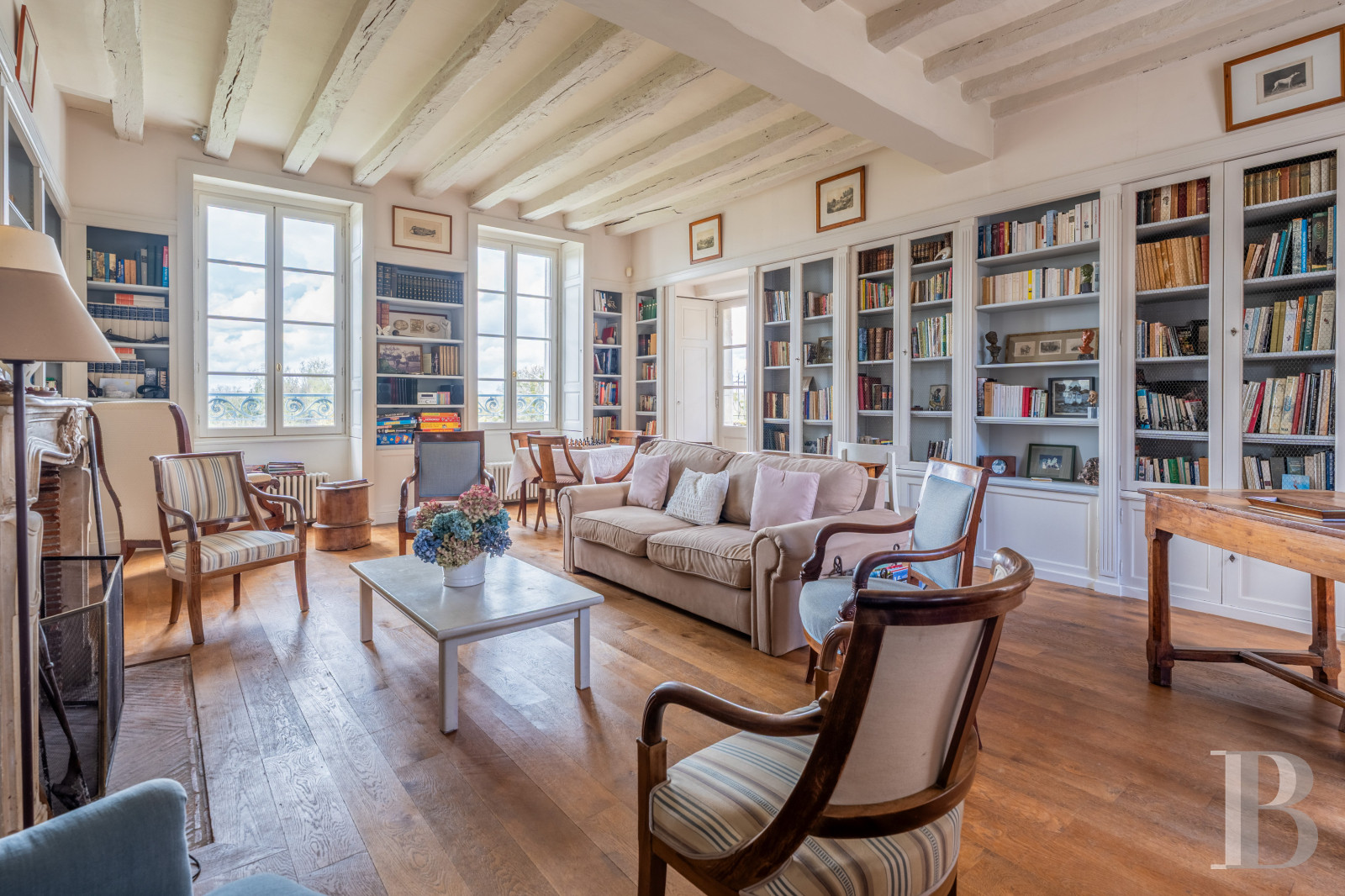
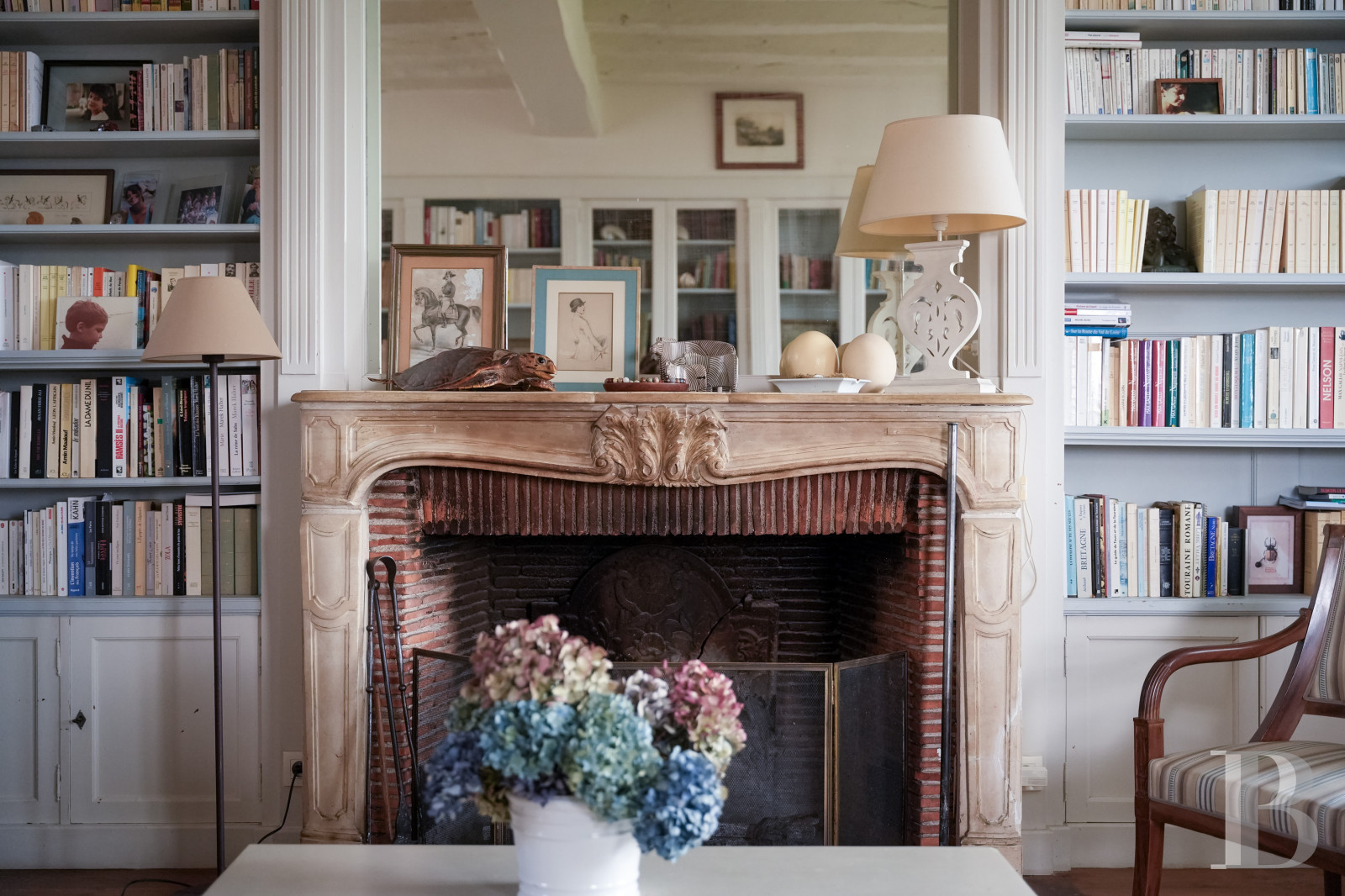
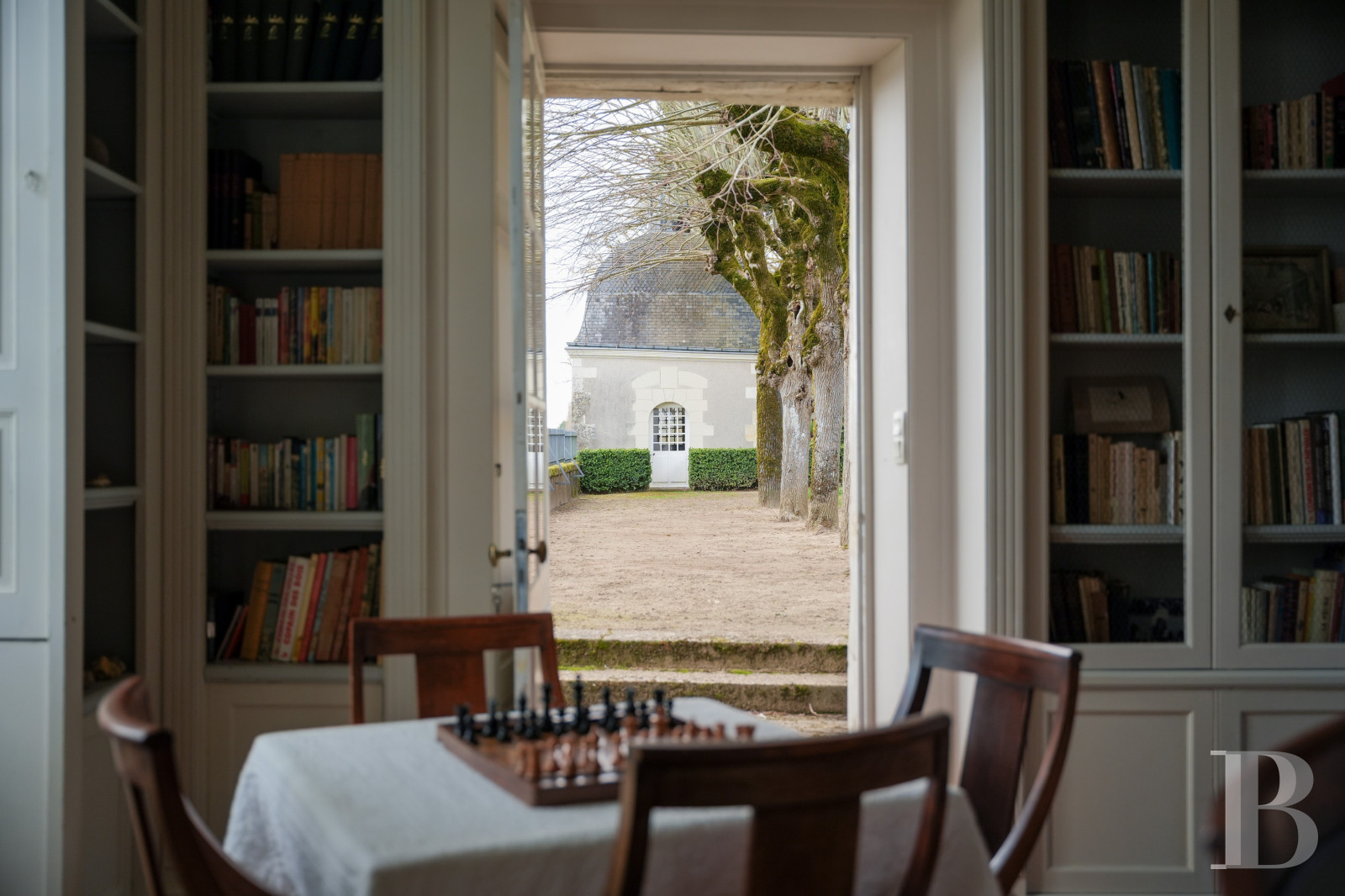
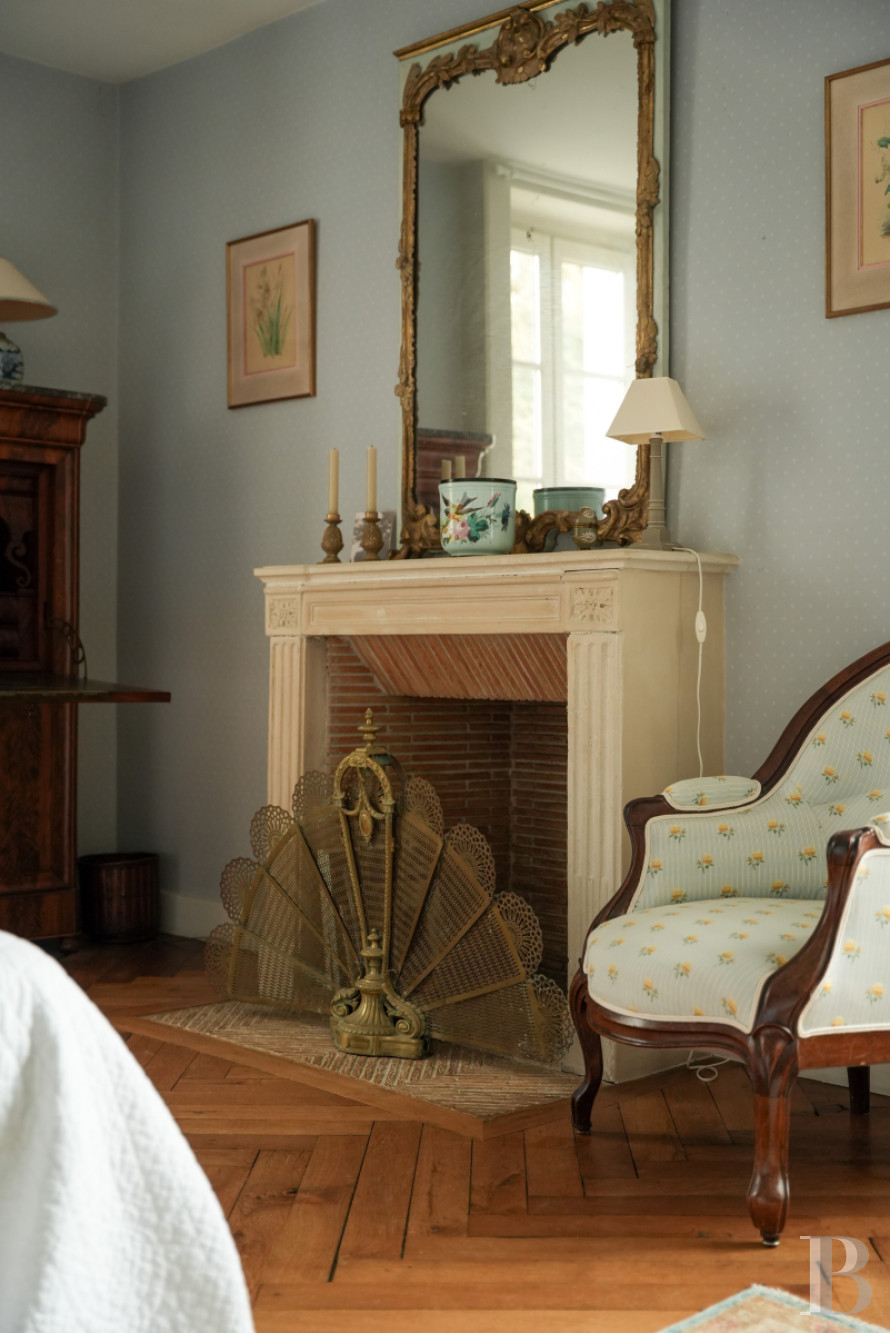
From the courtyard, the front door opens on to an entryway with a wide staircase and slate cabochon stone floor tiles, while a library, located on one side, features triple exposure, a Louis XV-style stone fireplace and visible ceiling beams painted white.
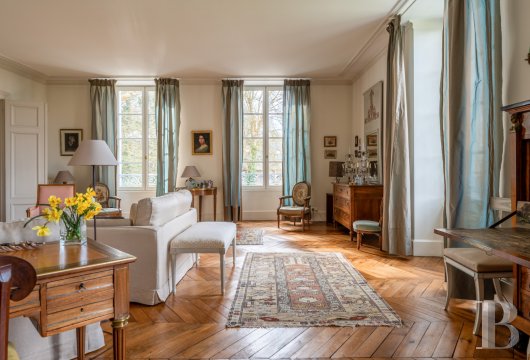
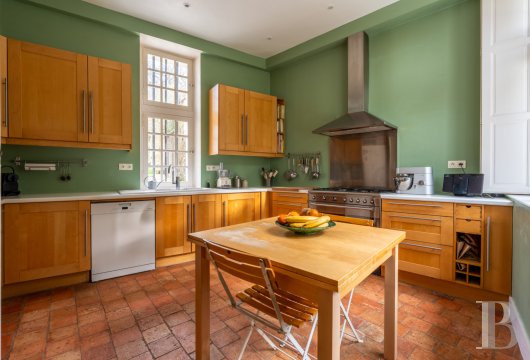
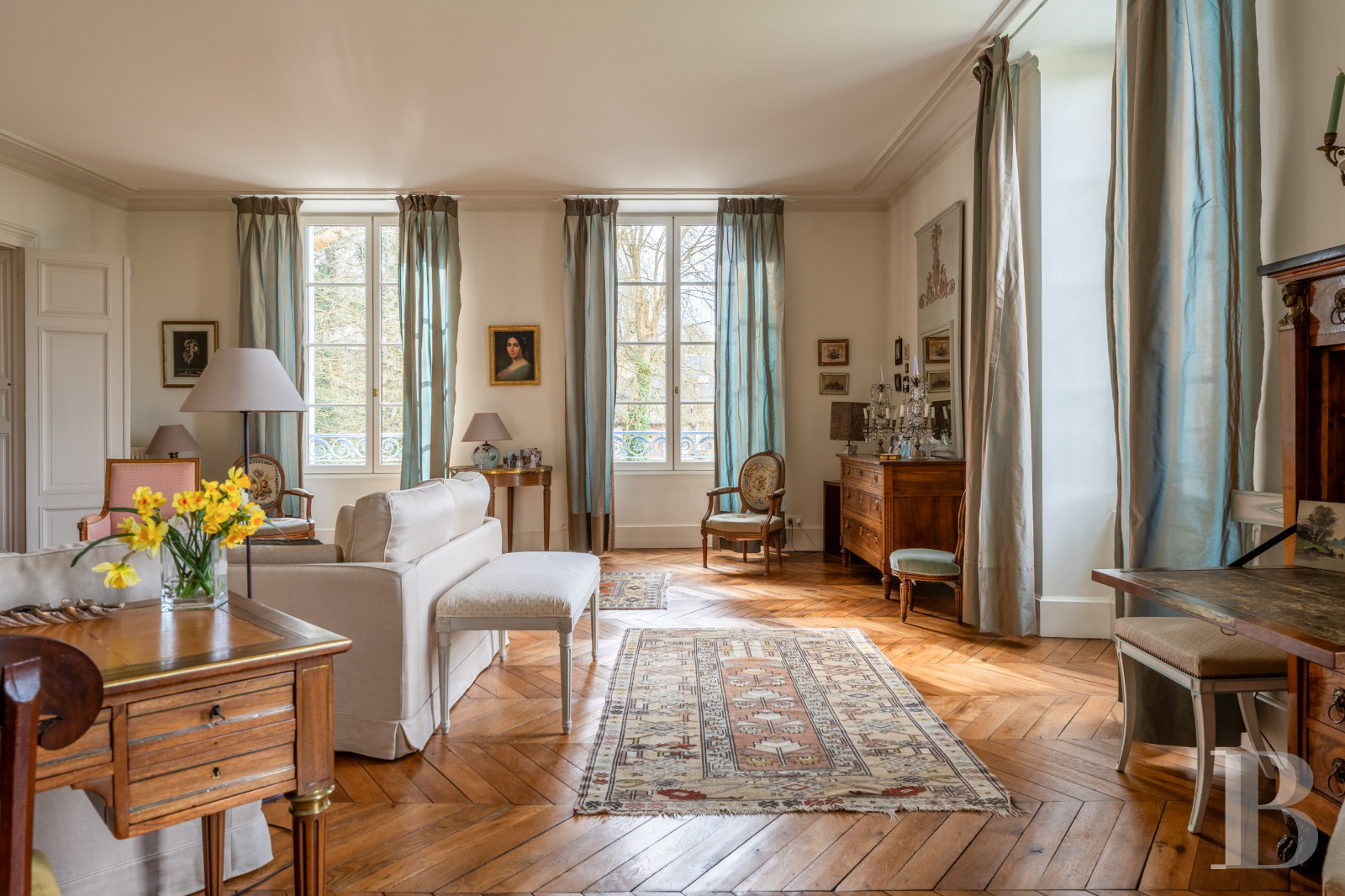
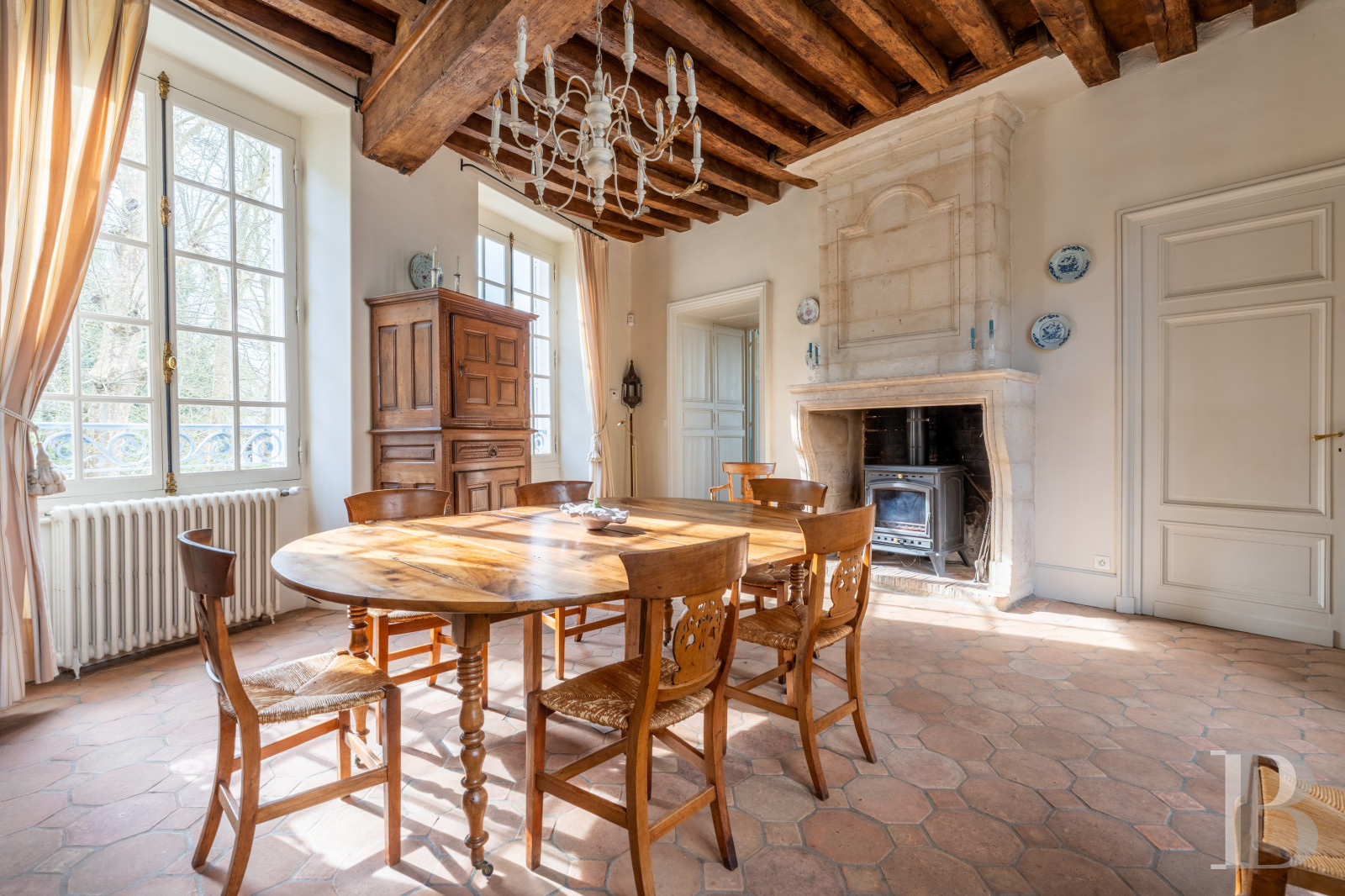
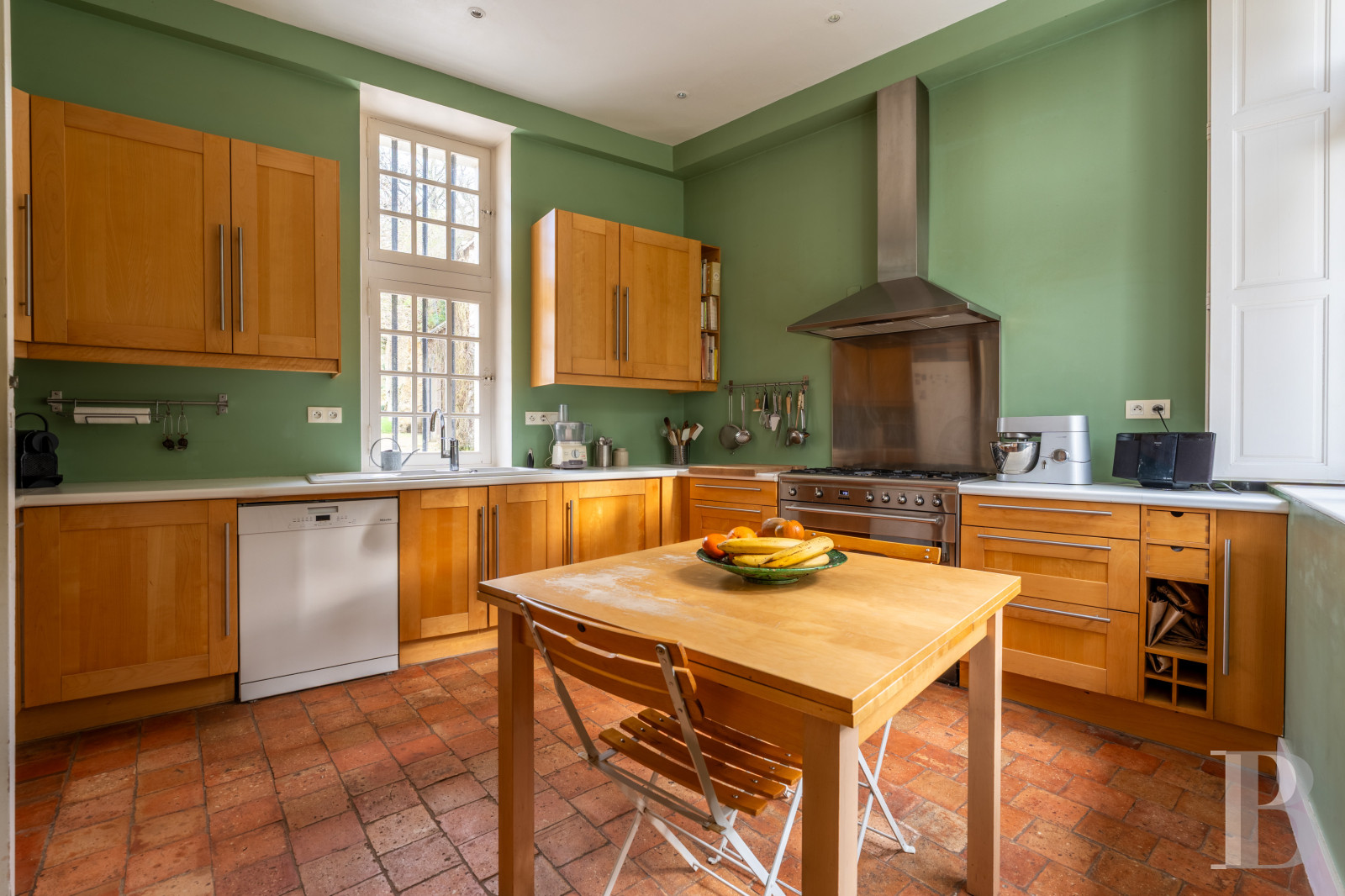
On the other side of the entryway, a corner living room is illuminated thanks to four windows, whereas double doors open on to a dual-aspect dining room with a 17th-century stone fireplace, terracotta floor tiles and visible ceiling beams. Following on from here is a doorway, accessible from the outside, which gives on to a service staircase, while, lastly, a fitted kitchen is located on one end of the manor.
The first floor
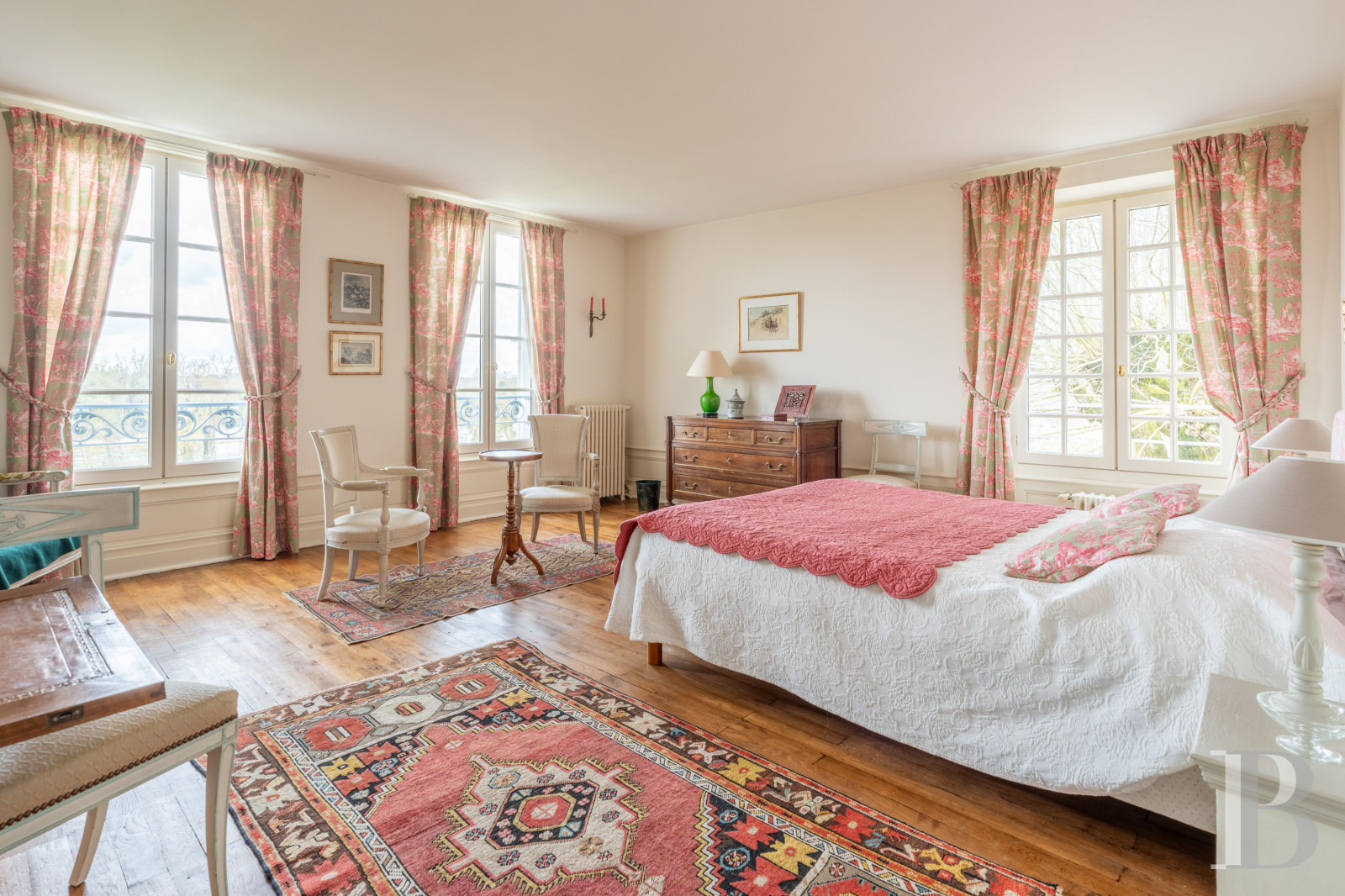
The wide three-flight winding staircase, made out of solid wood, was a result of the modifications made to the dwelling by the famous architect Auguste Perret in the 1920s. Upstairs, a landing provides access to five bedrooms, each with a fireplace and parquet flooring, while three bathrooms and a lavatory are also located on this level. With double-glazed windows facing the street, a straight modern staircase ascends to the next floor.
The second floor
Under the eaves, this level contains three bedrooms, a dormitory, two bathrooms and a lavatory, while provisions have been made for two more bathrooms and this floor’s dormer windows provide breath-taking views of the valley.
The intermediate level
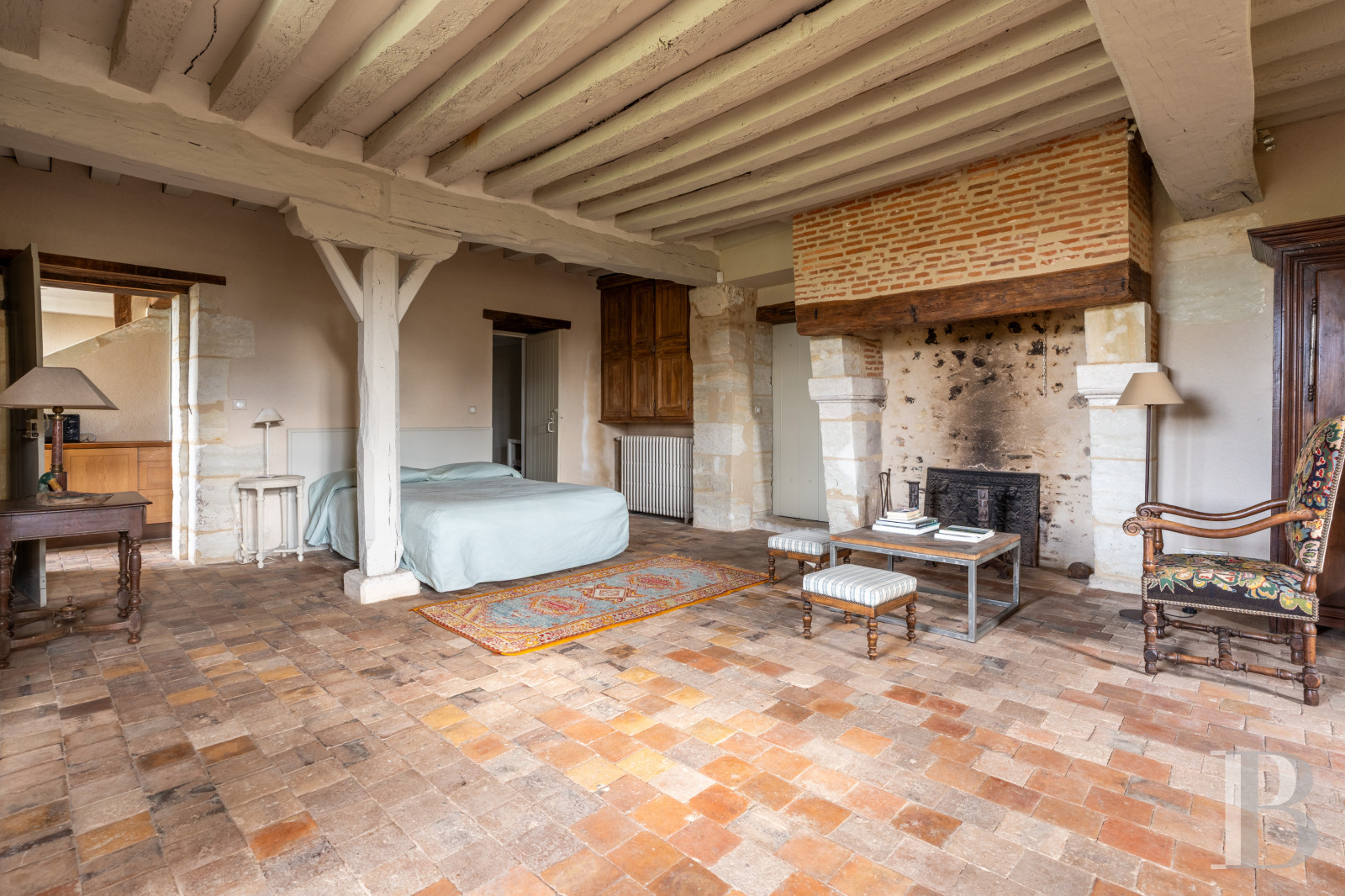
With cross-windows throughout, former 17th-century kitchens have been transformed into a studio flat with original terracotta floor tiles, painted wooden ceiling beams and an impressively large brick and stone fireplace on one side of the main room.
With a bathroom and a kitchen, the flat is completely self-contained, while at the top of a couple of stairs, a door provides direct outdoor access and gives on to a small gravel patio facing southwest, planted with wisteria and hydrangeas. Lastly, this floor also includes several utility rooms, such as a linen closet and a boiler room.
The basement
A staircase provides access to vaulted cellars, some of which are topped with ribbed arches.
The Outbuildings
The pavilion
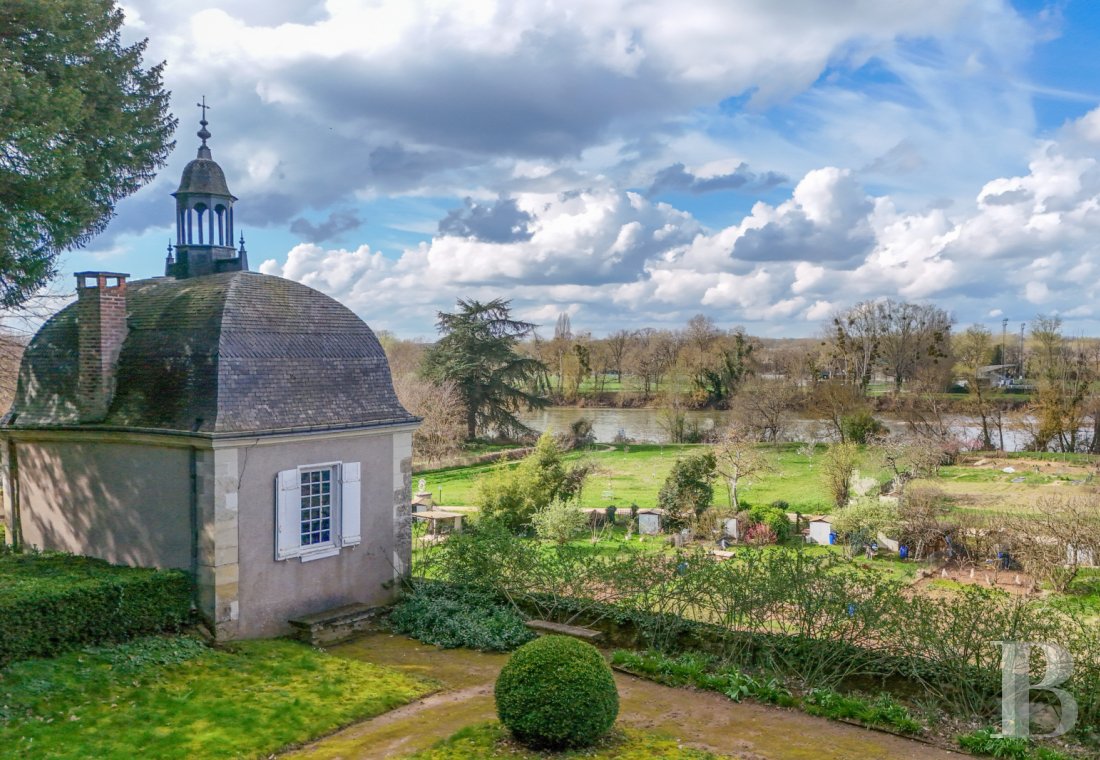
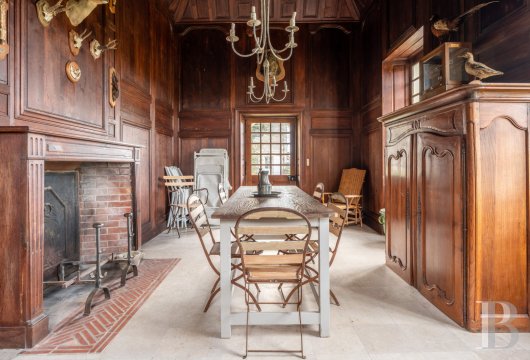
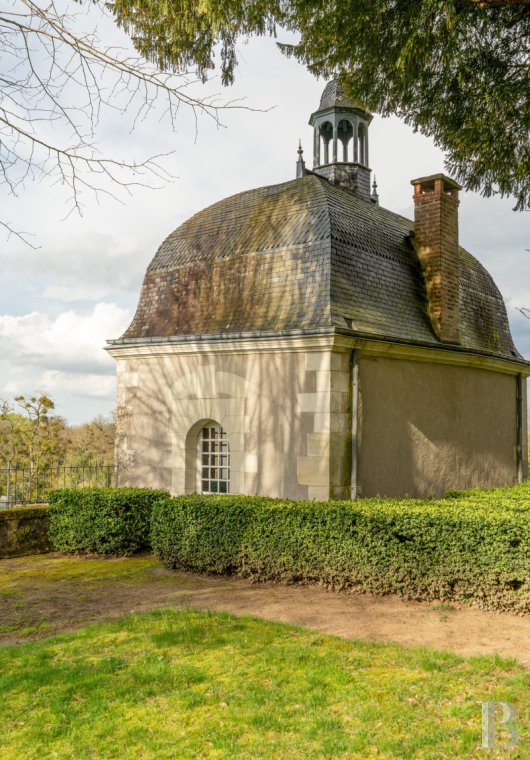
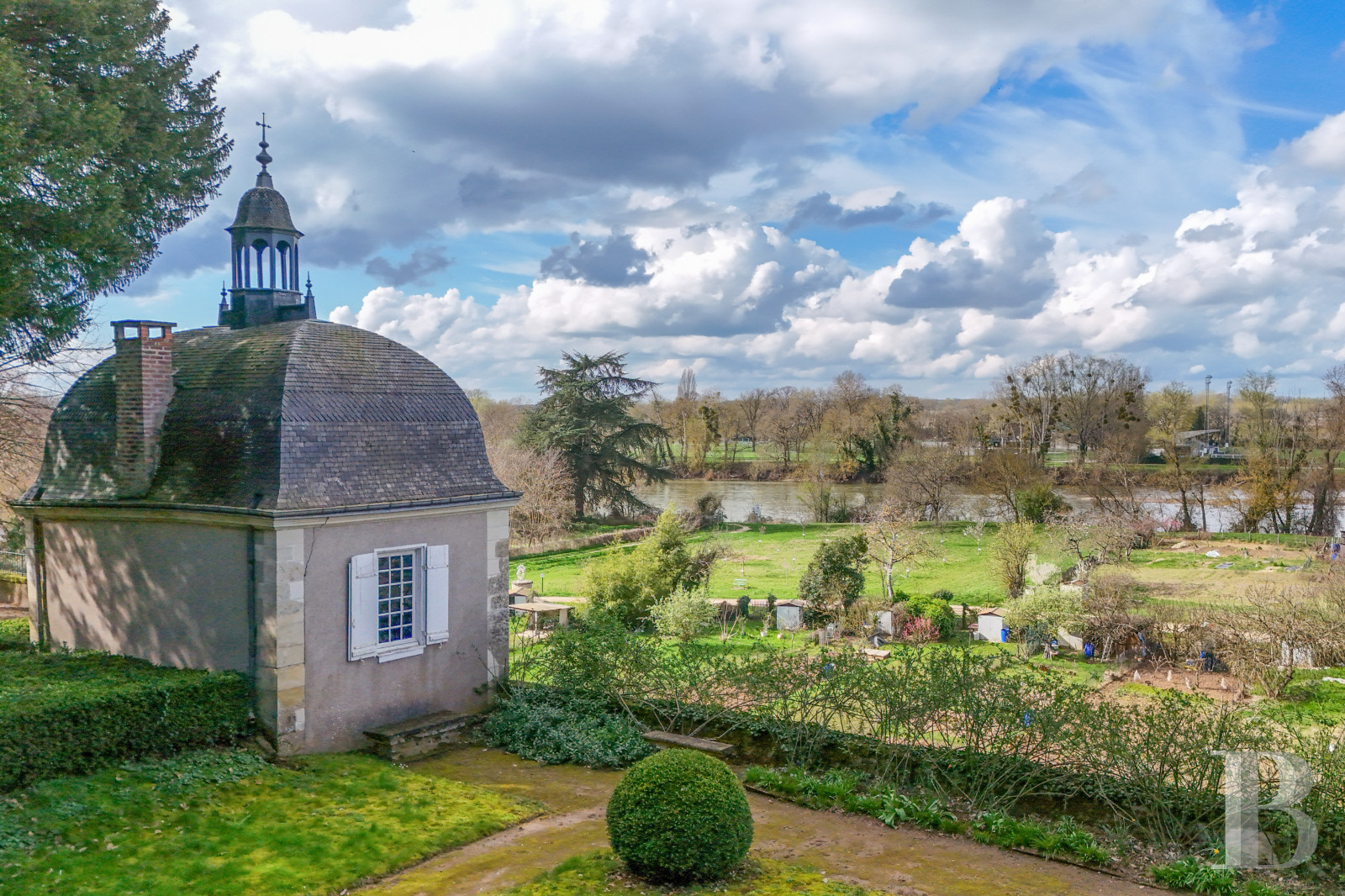
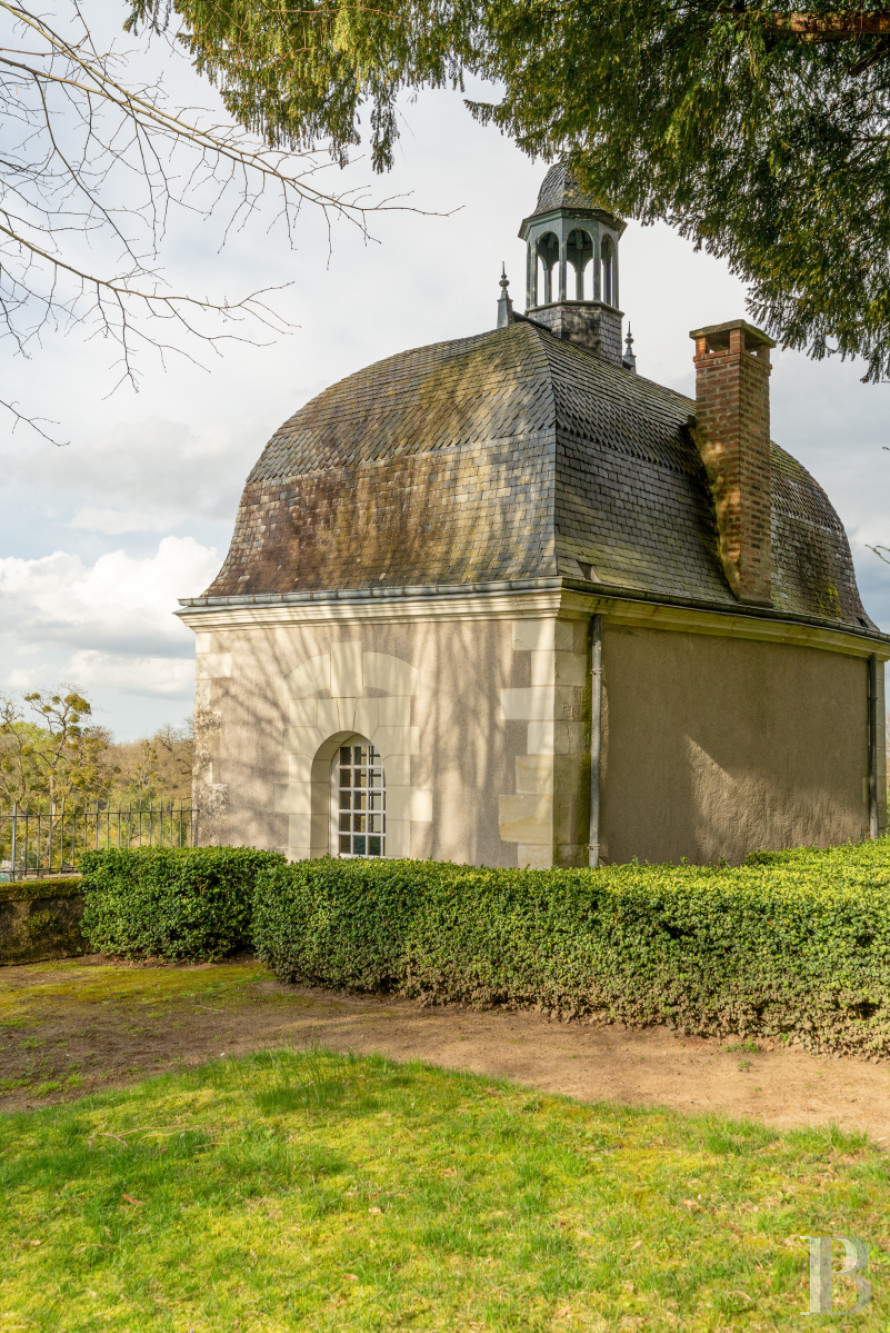
Nicknamed “Belle-Roche’s amazing weathervane”, it is a testament to 17th-century pleasure palaces. Built next to the patio, it is topped with a slate square bell roof, the latter of which is crowned with a small turret. Diminutive in size and with windows on three of its four sides, its walls and coffered ceiling are lined with woodwork added in the 19th century, as was a fireplace, while local lore has it that some of its décor came from the Chanteloup chateau.
The caretaker’s house
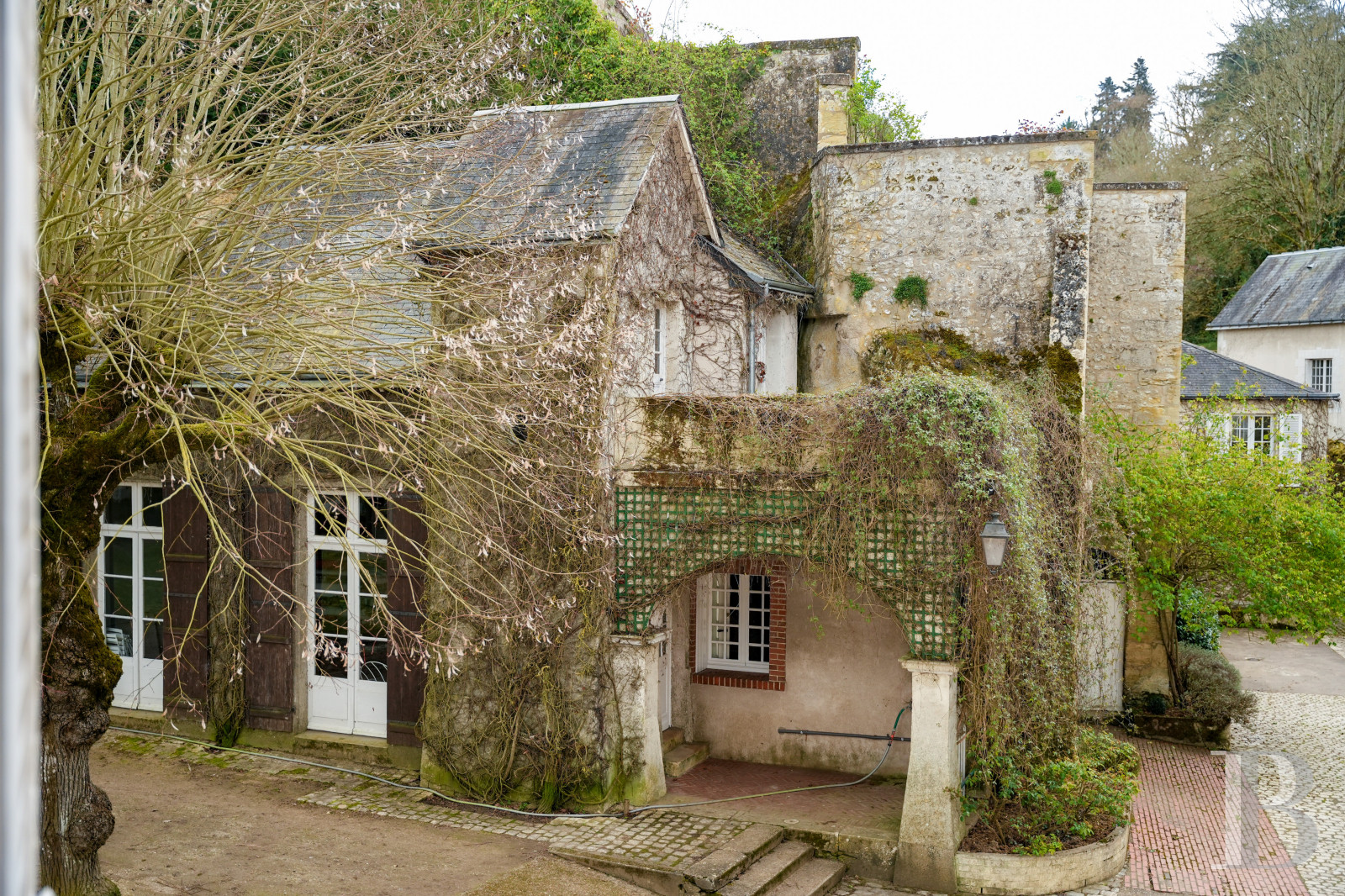
On one side of the entrance gate, it abuts the rocky hillside and is sheltered from view thanks to an exterior wall festooned in climbing roses and jasmine. Featuring a foyer, a living room, a bedroom, a kitchen and a bathroom, the whole, in need of a makeover, was recently inhabited.
The workshop
Facing the gate and next to the caretaker’s cottage, a basket-handle arched doorway, with wooden double doors, provides access to an immense space, partially carved out of the rock, which is used as both a garage and a workshop, while a former fruit press is located in the back, along with its masonry vats.
The gardener's house
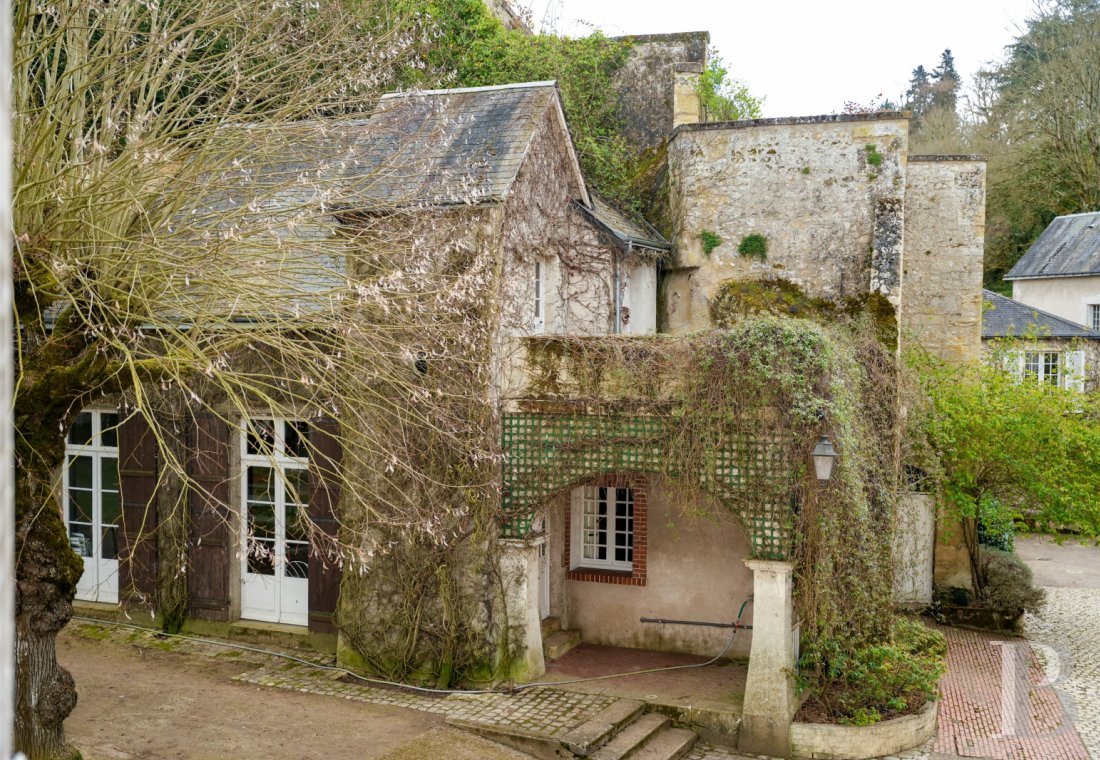
Abutting the rocky hillside, this two-storey edifice, in need of a restoration, is blanketed in Virginia creeper, while a wide overhang, topped with a terrace, was added in the 1930s. On the ground floor, a living room looks out on to the garden thanks to two windows, while a wooden staircase ascends to the upper level with a bedroom under the eaves.
The Troglodytic Caves
Made up of large stone cavities, both natural and human-made, these troglodytic caves are typical of the banks of the Loire, while immense in size and plentiful in number, they represent, in total, several hundred square metres of floor area. Currently used as outbuildings, their interiors were carefully examined and the subject of a detailed report.
The Formal Garden and Lower Grounds
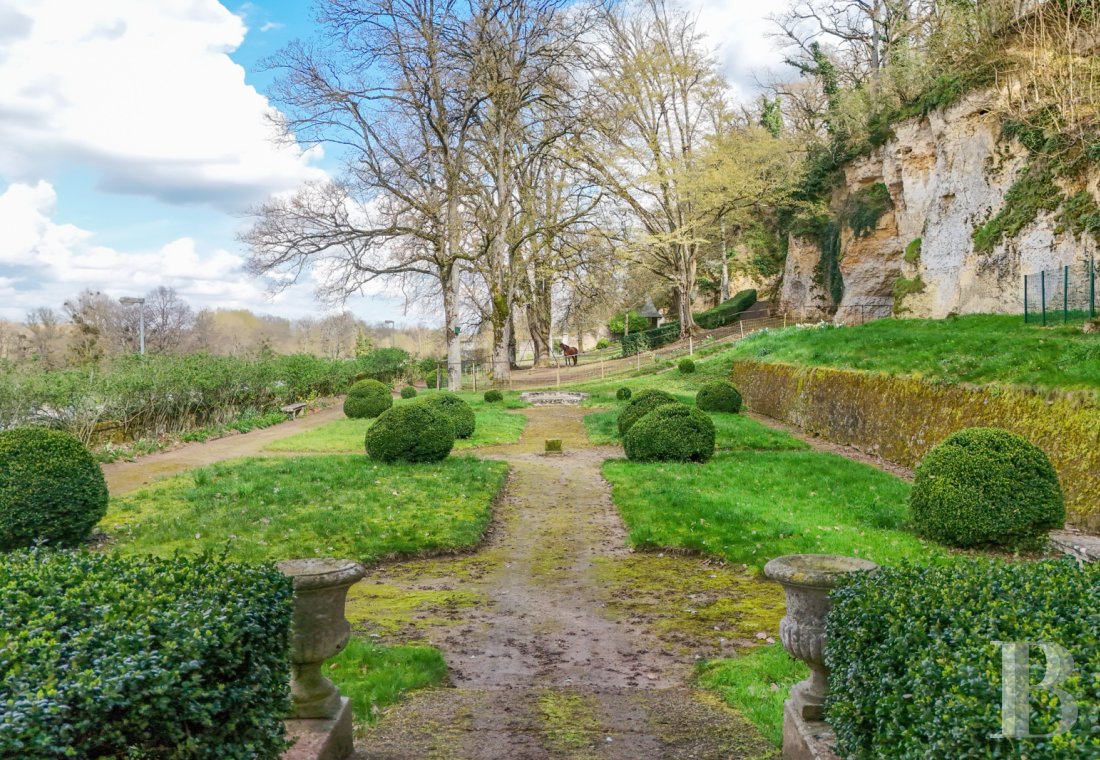
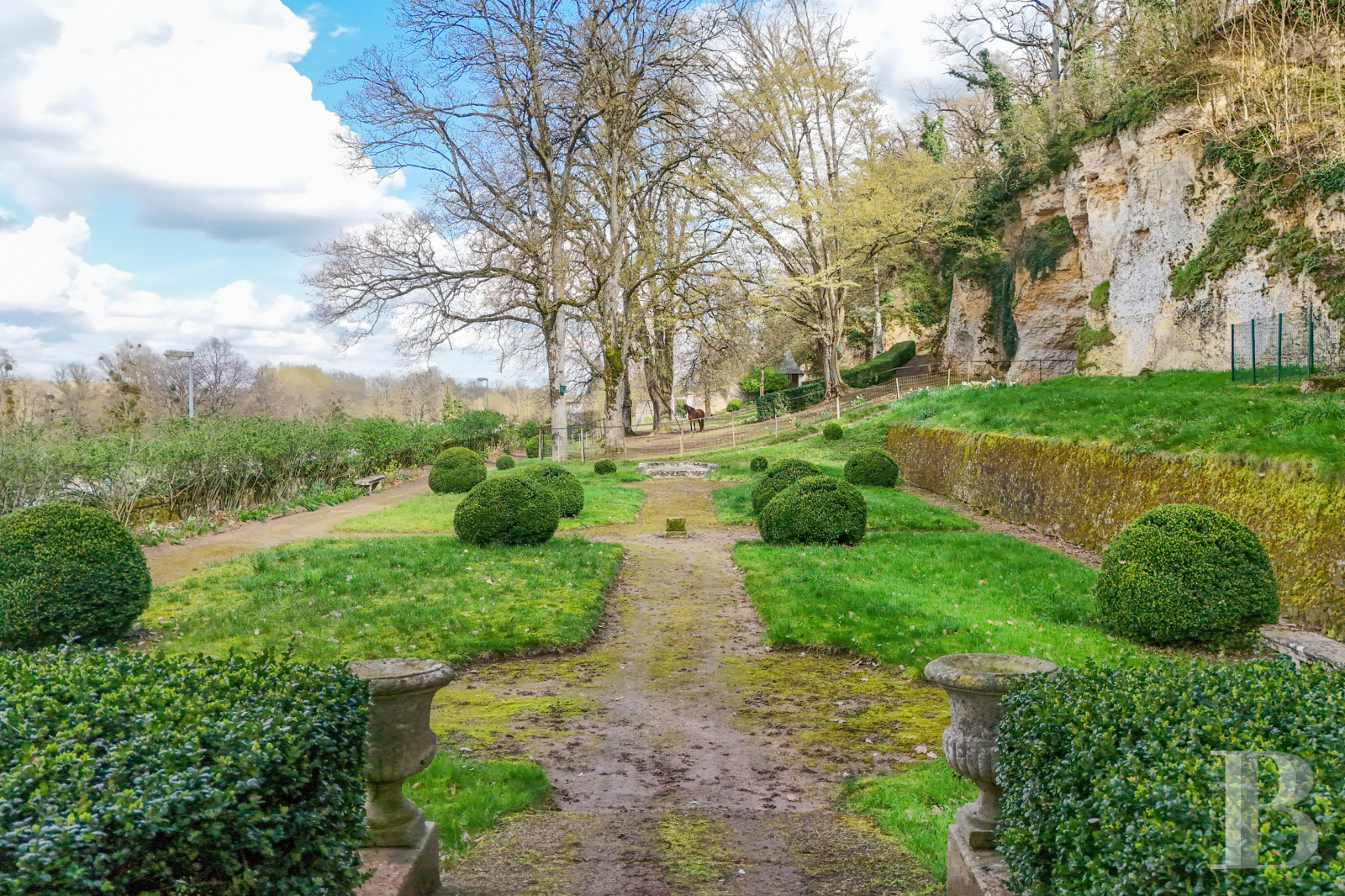
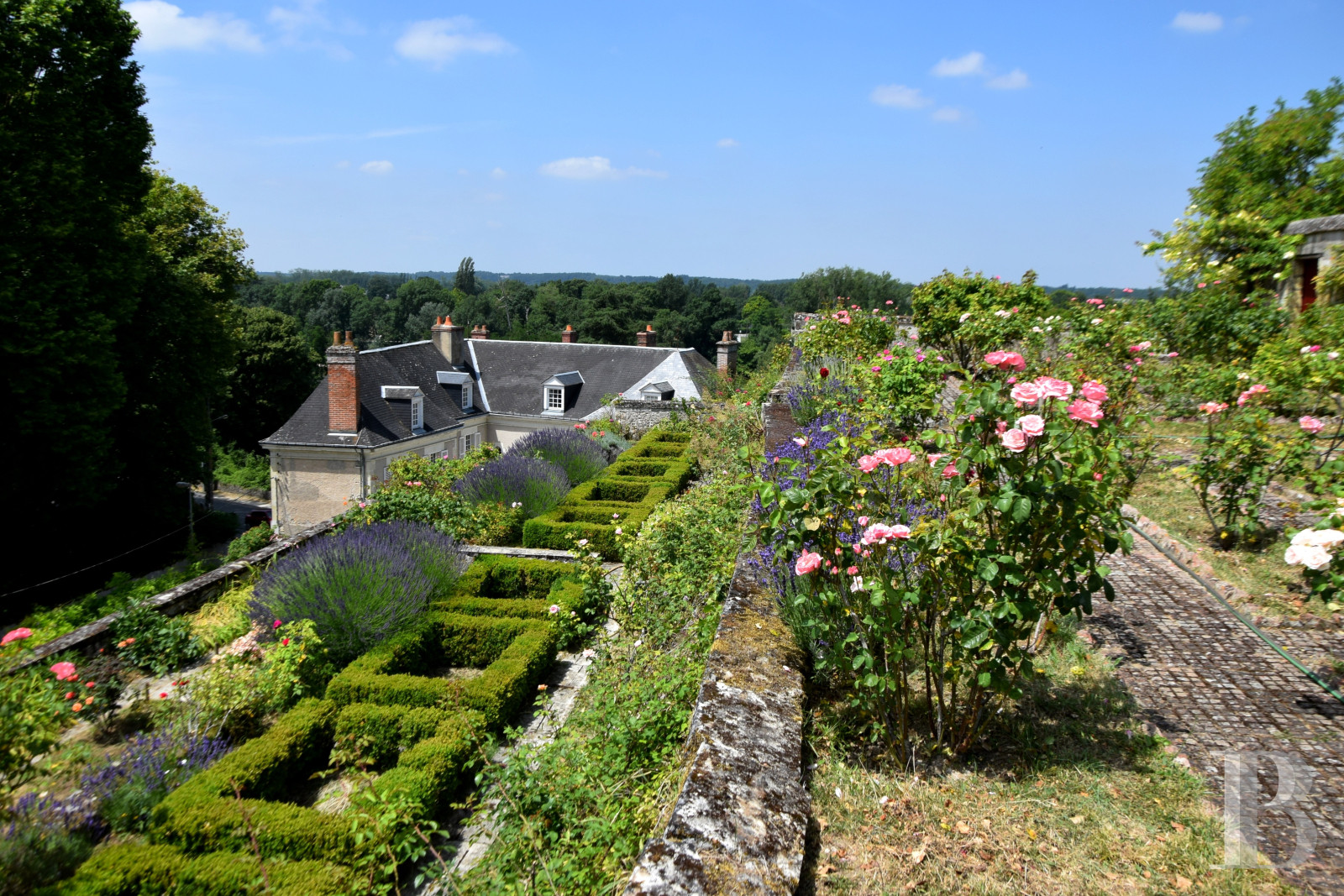
To the east of the dwelling, a grassy patio is lined by a double row of lime trees, which leads to the 17th-century pavilion, as well as the formal garden – accessible via an opening flanked by a double hedge of pruned boxwoods – composed of four rectangular patches of lawn, punctuated here and there with spherical topiaries, and overlooking the valley.
Further on, a field extends all the way to an initial stone enclosure wall with a central wrought-iron gate, which is near a small oratory, open on one side and topped with a hipped roof, while the grounds continue their descent down the hillside along the adjacent street.
The Vegetable Garden and Upper Grounds
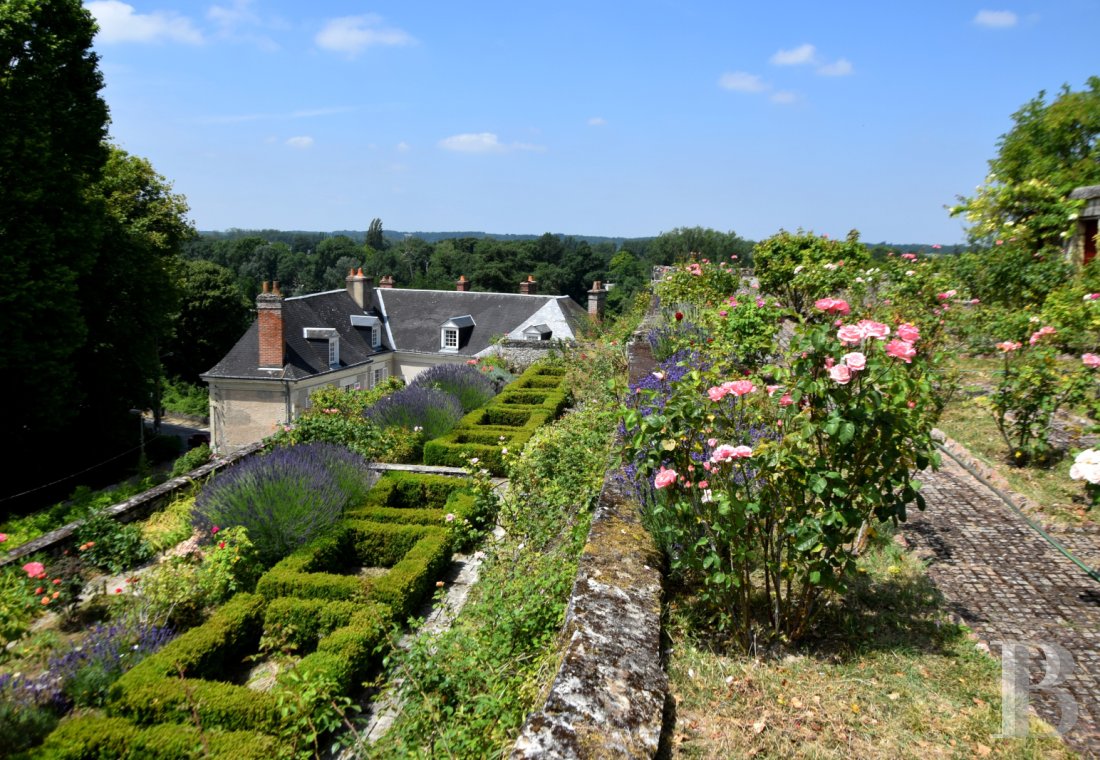
From the courtyard near the caretaker’s cottage, a pedestrian path, lined with espaliered apple and pear trees, leads to the vegetable garden, which is also accessible by vehicle via a red wooden gate. Facing southwest and landscaped into several terraces, the lower section is arranged into several rectangular areas of pruned boxwoods and lavender, while, a door, in the stone enclosure wall, leads to the “upper grounds”, made up of grassy pastures and woods.
Our opinion
Surrounded by its wooded grounds and perched up on a hill, this stately property resembles a chateau from the Loire Valley, while, from its cobblestone courtyard, the dwelling also resembles a private mansion with its classical architecture and formal garden.
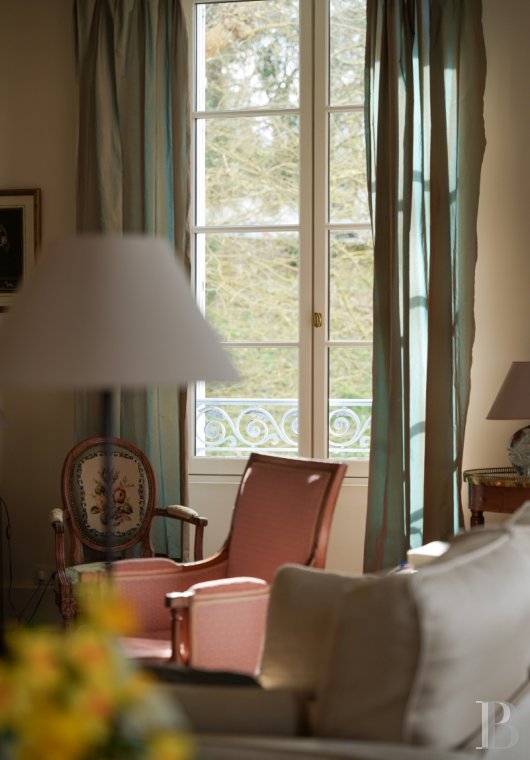
Carefully remodelled and maintained over the years by its current occupants, its interior, particularly sunny, has been furnished in a comfortable and tasteful manner, whereas, the grounds, extending over several levels, provides a variety of different outdoor areas for the delight of both parents and children alike. Ready to welcome a large family, friends or an activity centred around guest accommodations and holiday cottages in the various outbuildings, this estate is not just remarkable, it is spectacular.
Reference 449376
| Main building floor area | 450 m² |
| Outbuildings floor area | 90 m² |
| including refurbished area | 60 m² |
| Land registry surface area | 2 ha 53 a 99 ca |
French Energy Performance Diagnosis
Information on the risks to which this property is exposed is available on the website: www.georisques.gouv.fr
Share


NB: The above information is not only the result of our visit to the property; it is also based on information provided by the current owner. It is by no means comprehensive or strictly accurate especially where surface areas and construction dates are concerned. We cannot, therefore, be held liable for any misrepresentation.