



A former mill, transformed into a family home, with outbuildings,
a mill run and an enclosed, landscaped garden, 70 minutes from Paris, in Normandy
a mill run and an enclosed, landscaped garden, 70 minutes from Paris, in Normandy
Évreux,
EURE
upper-normandy
27000
FR

Location
In the Eure department and the greater Normandy region, the property is located on a branch of the Iton River, a fish-stocked waterway to the southwest of Evreux, while a number of hiking paths crisscross the surrounding verdant hillsides and wooded valley. For centuries, spinning mills, paper mills and foundries utilised the hydraulic power of the river, before the arrival of flour mills with electric turbines helped contribute to the region’s economic rise from 1870 onwards.
As for the mill, it is one of the last vestiges of this industrial golden age, whereas its location, in a quiet rural village of 700 inhabitants, is only two kilometres from shops and services, as well as ten minutes away from Evreux and its train station, situated halfway between Paris and the Norman coast.
Description
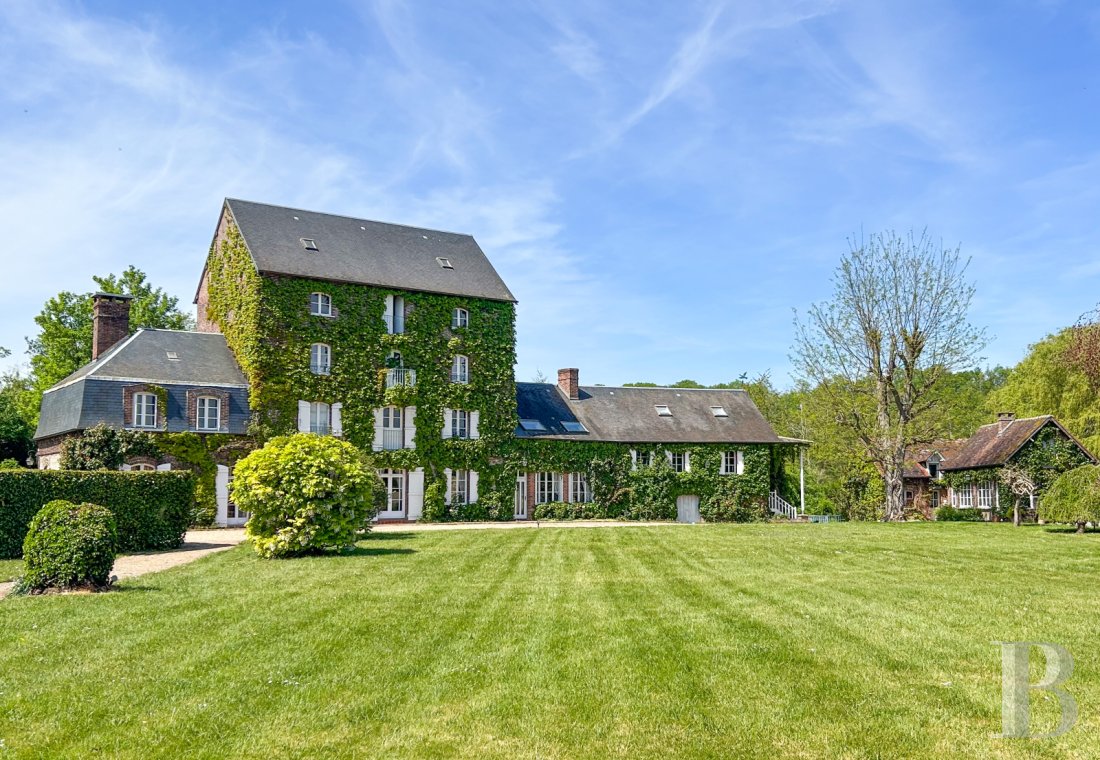
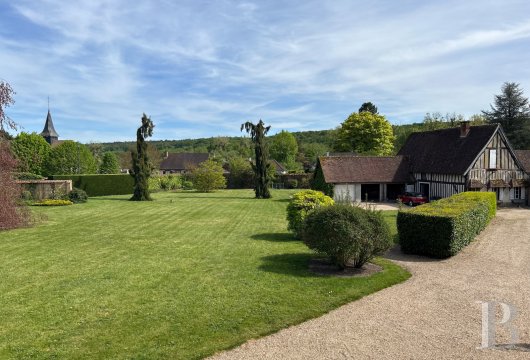
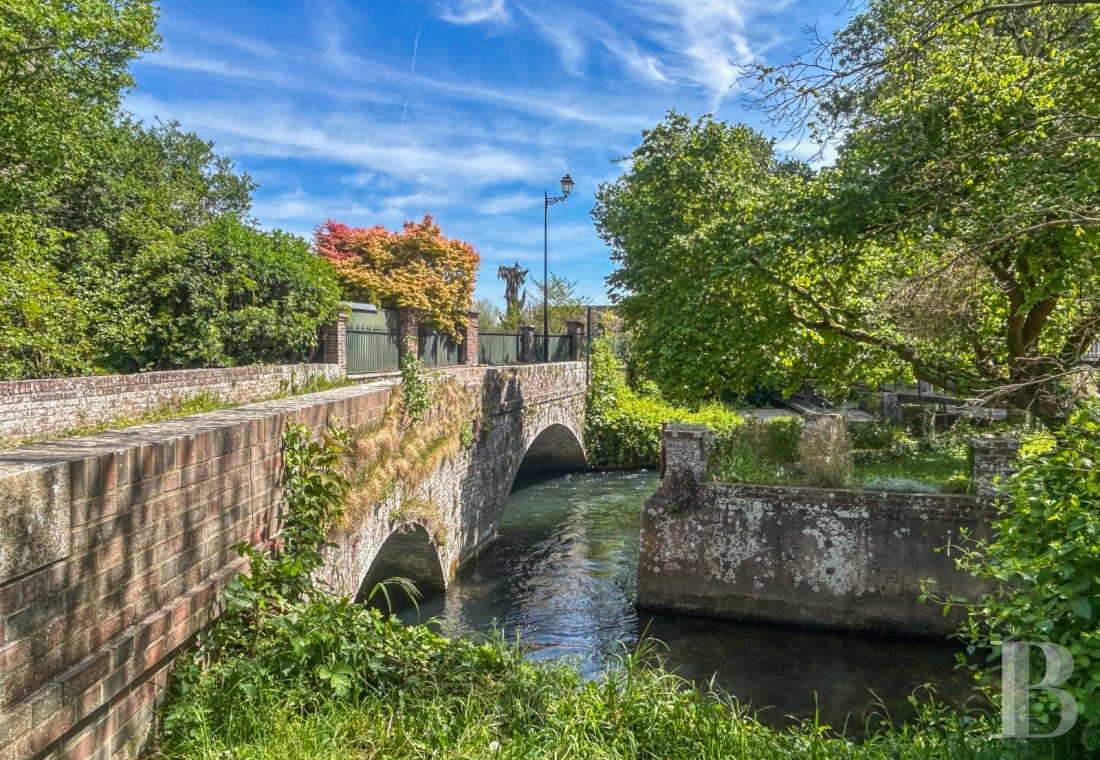
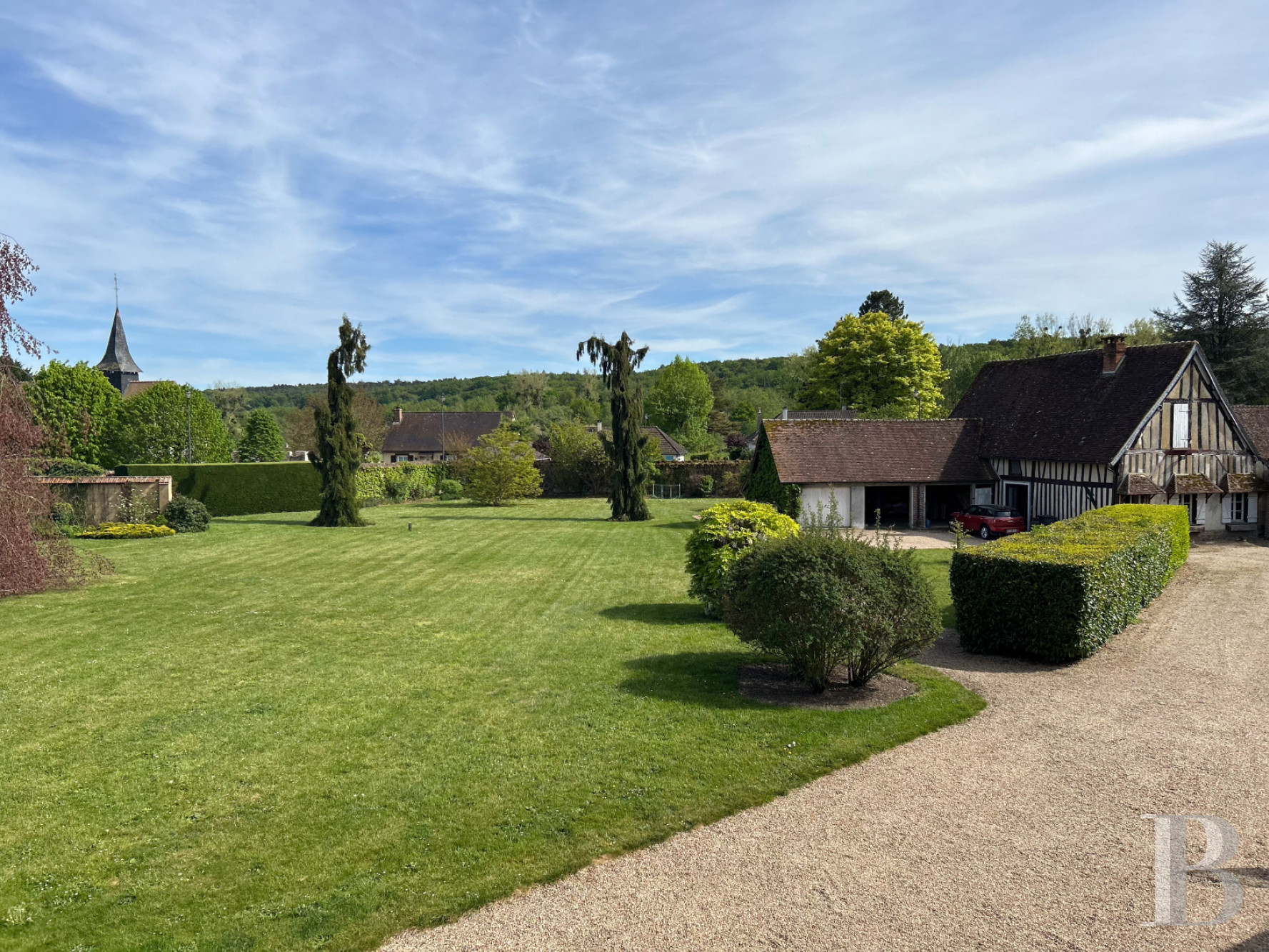
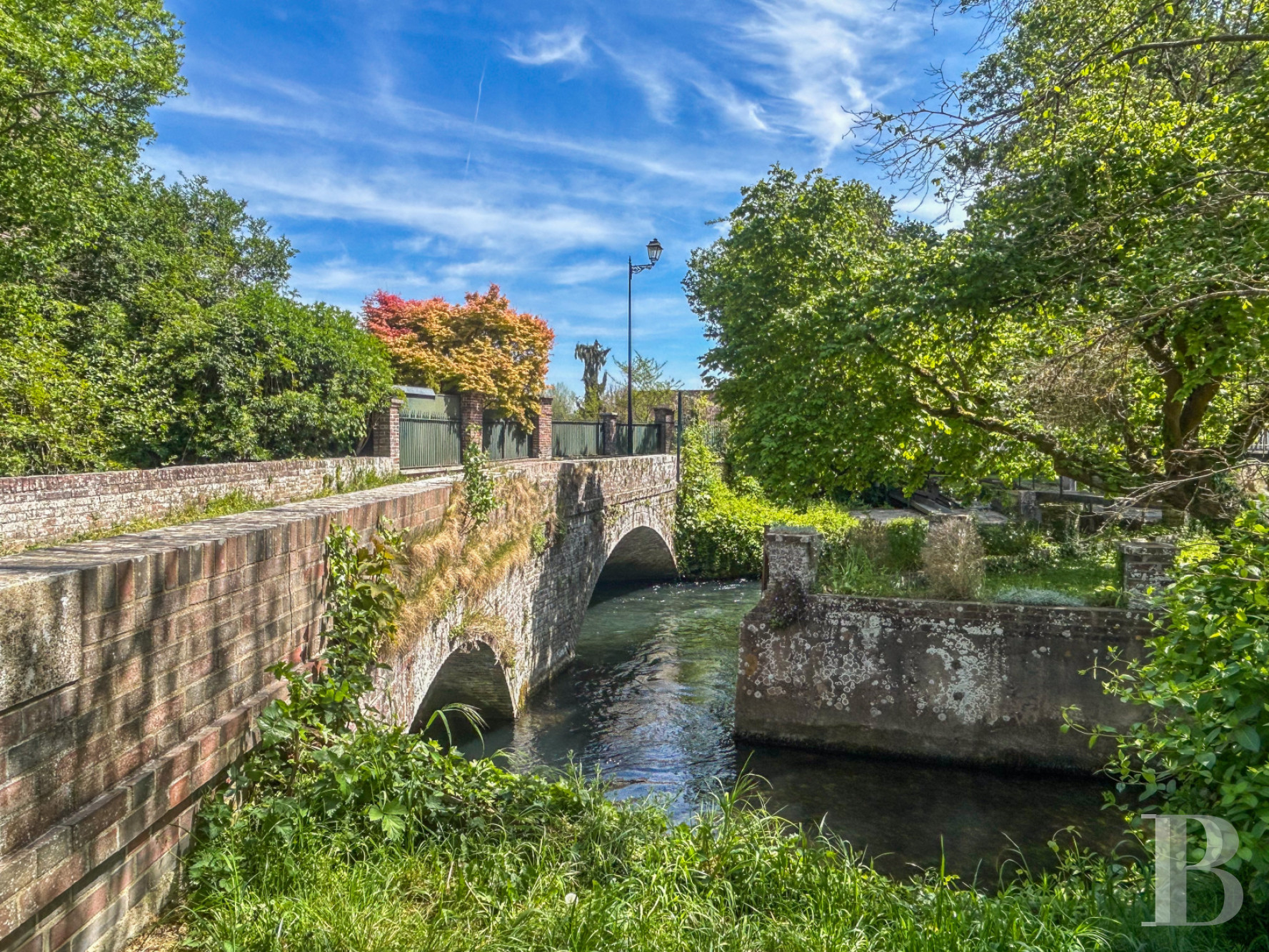
Surrounded by a garden of approximately 7,000 m², overlooking the river, the property is largely enclosed by stone walls or solid fencing atop low walls, cadenced by pillars, as well as dense vegetation and its mill run, off to one side. Accessible via a small local road, which traverses a river, a wide wrought-iron gate gives on to a gravel lane, which communicates with the property’s different buildings, such as a cottage, of approximately 60 m², with half-timbered walls and a flat tile gable roof, located near the property’s entrance.
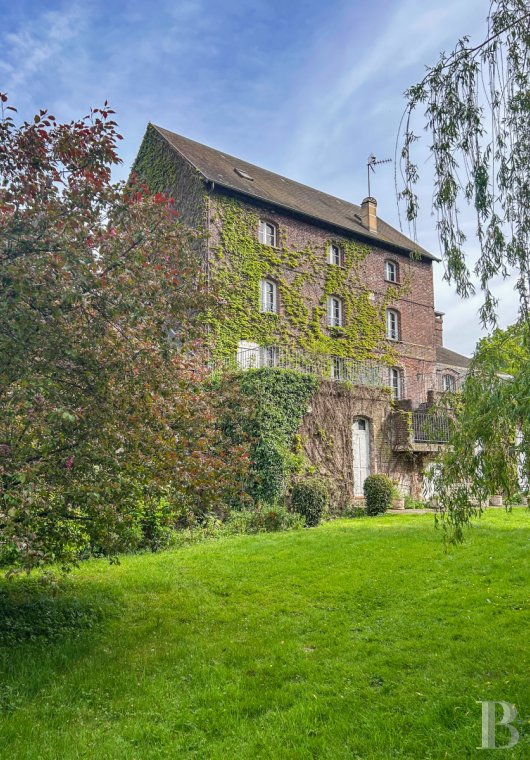
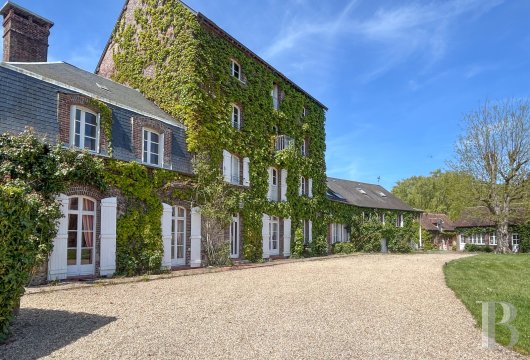
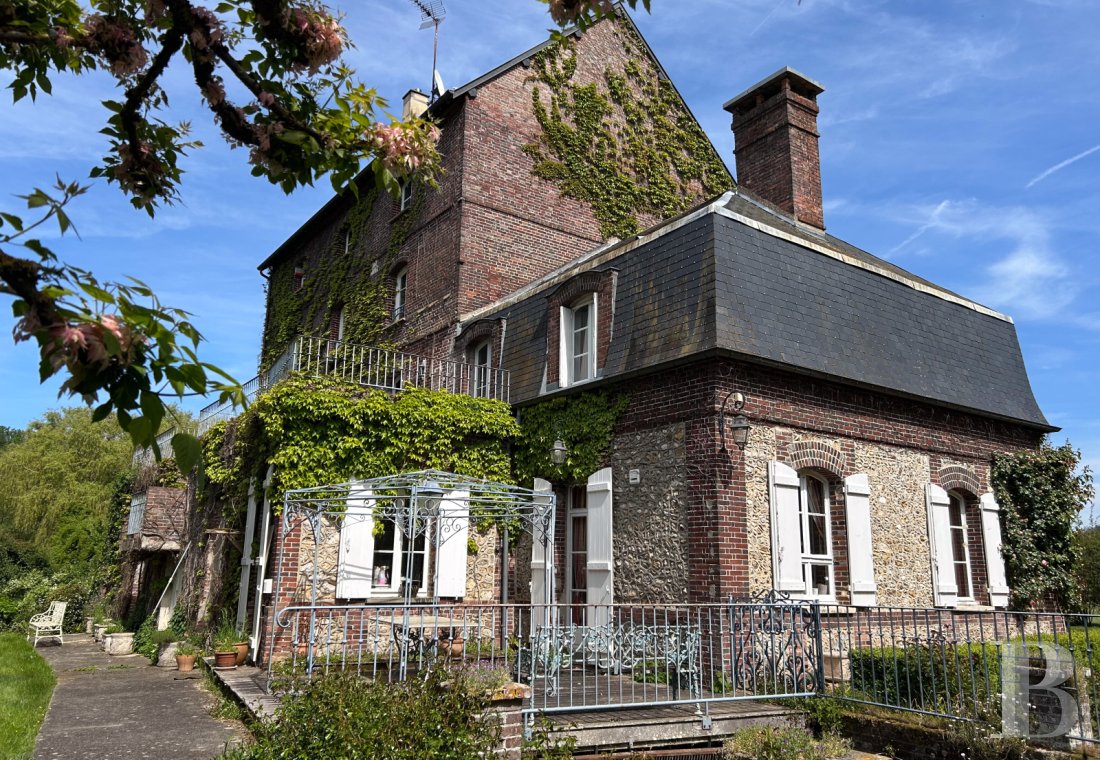
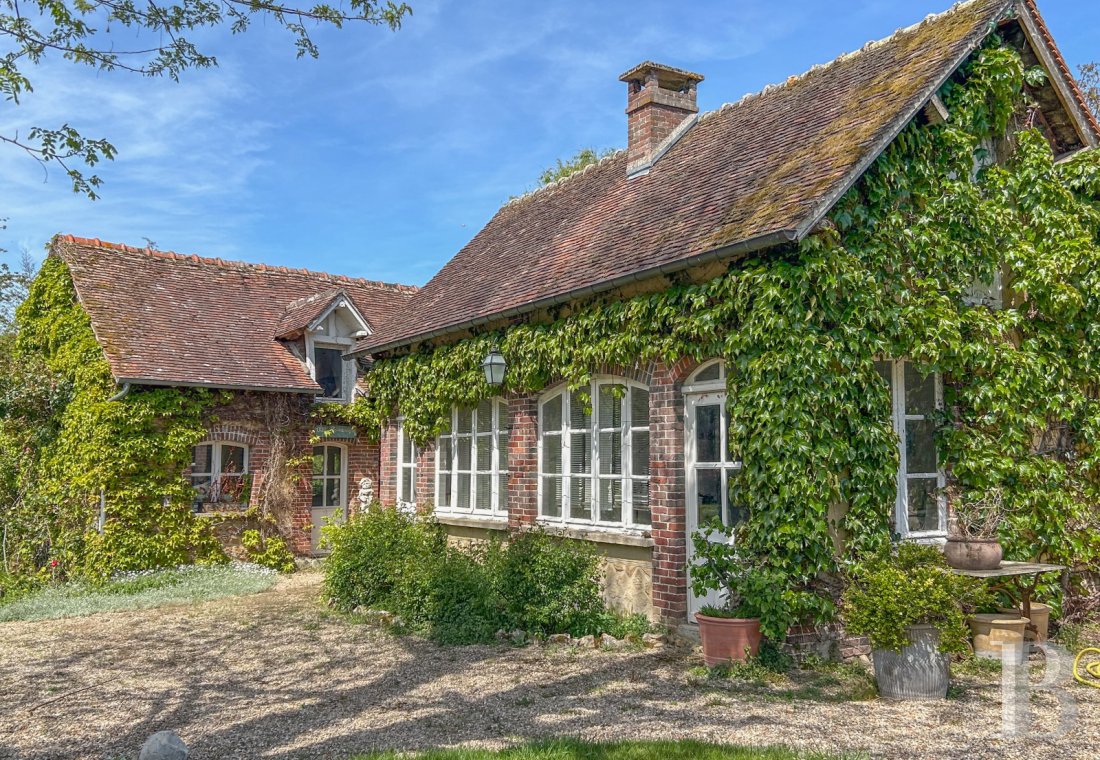
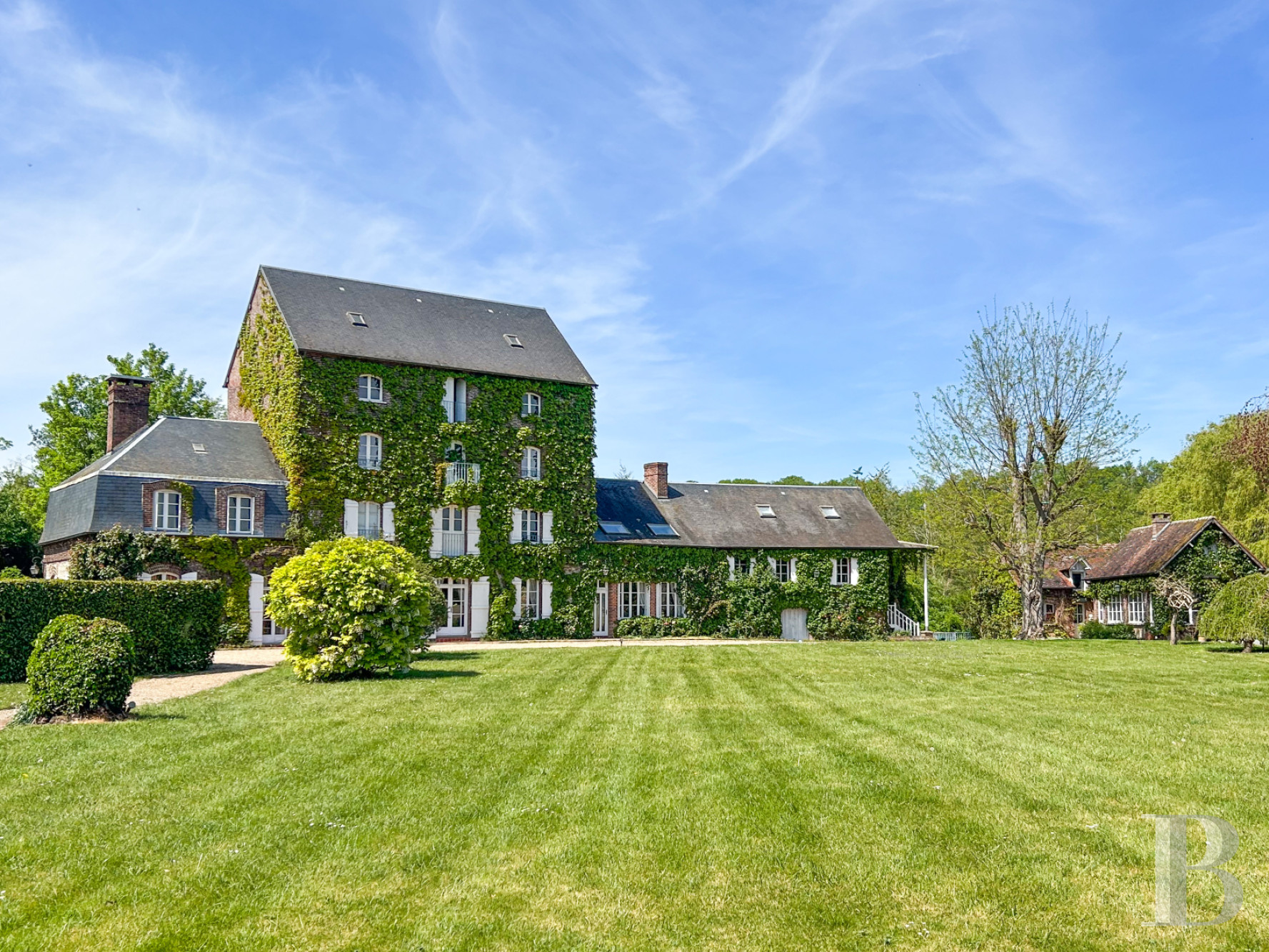
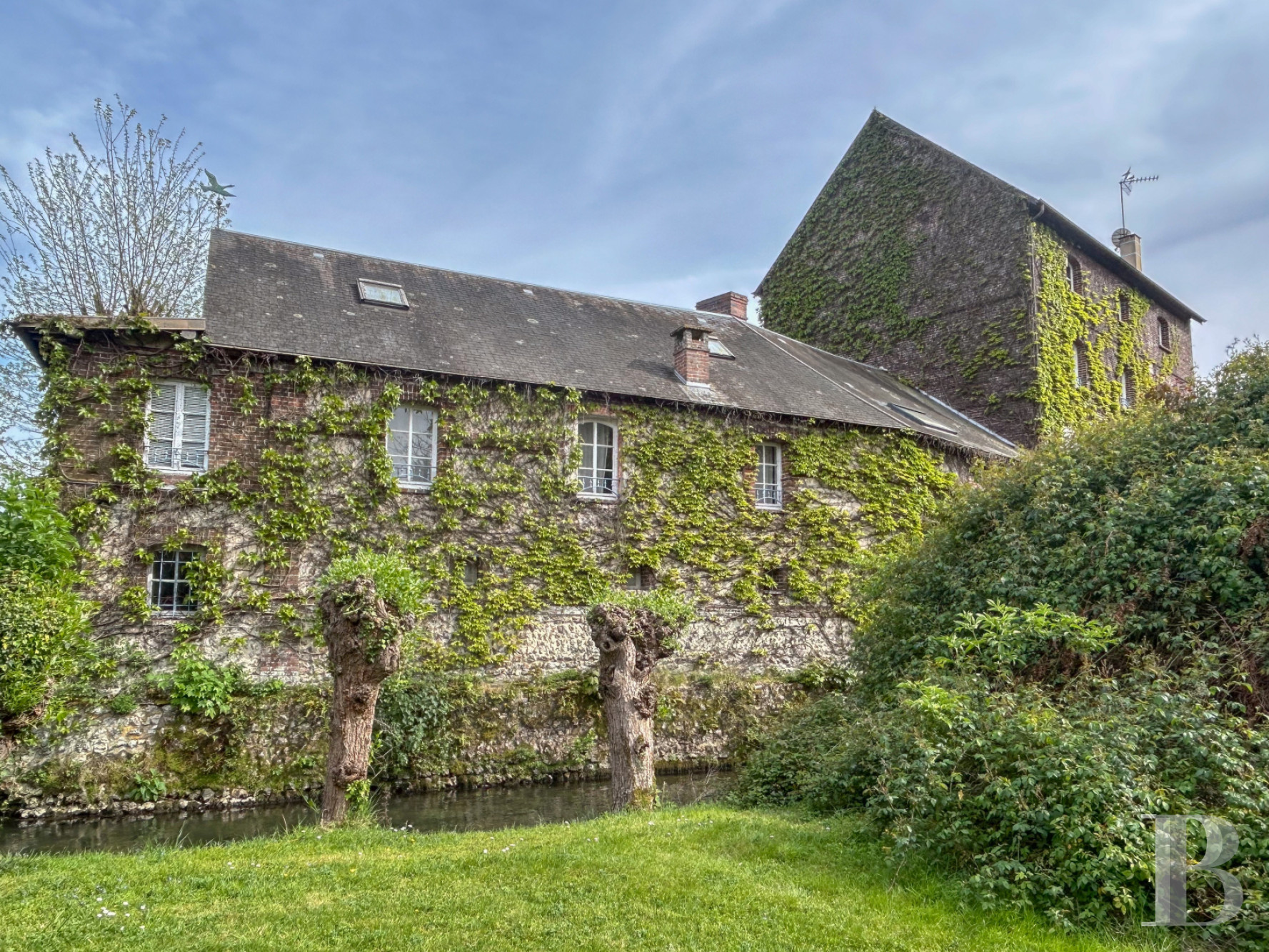
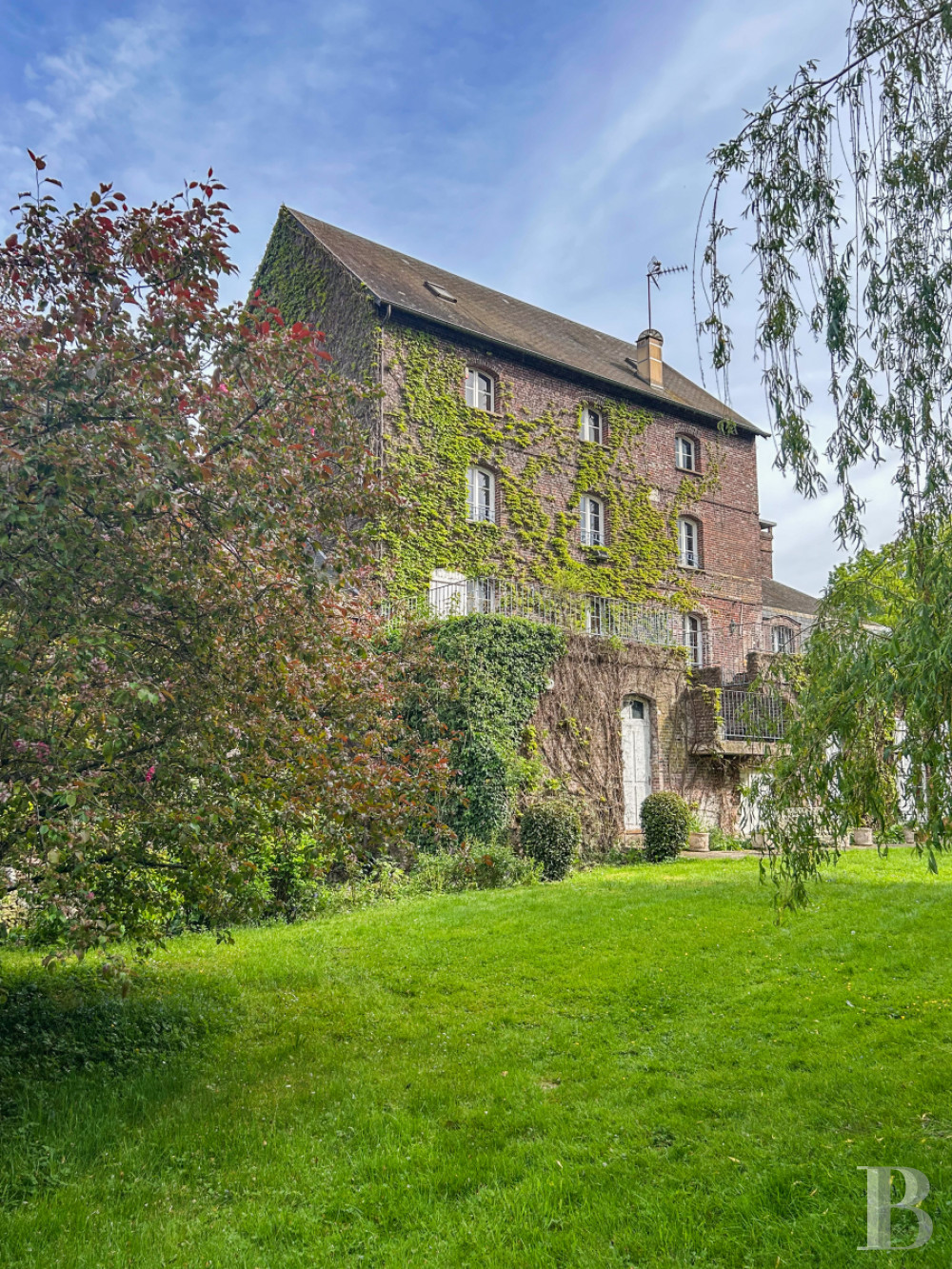
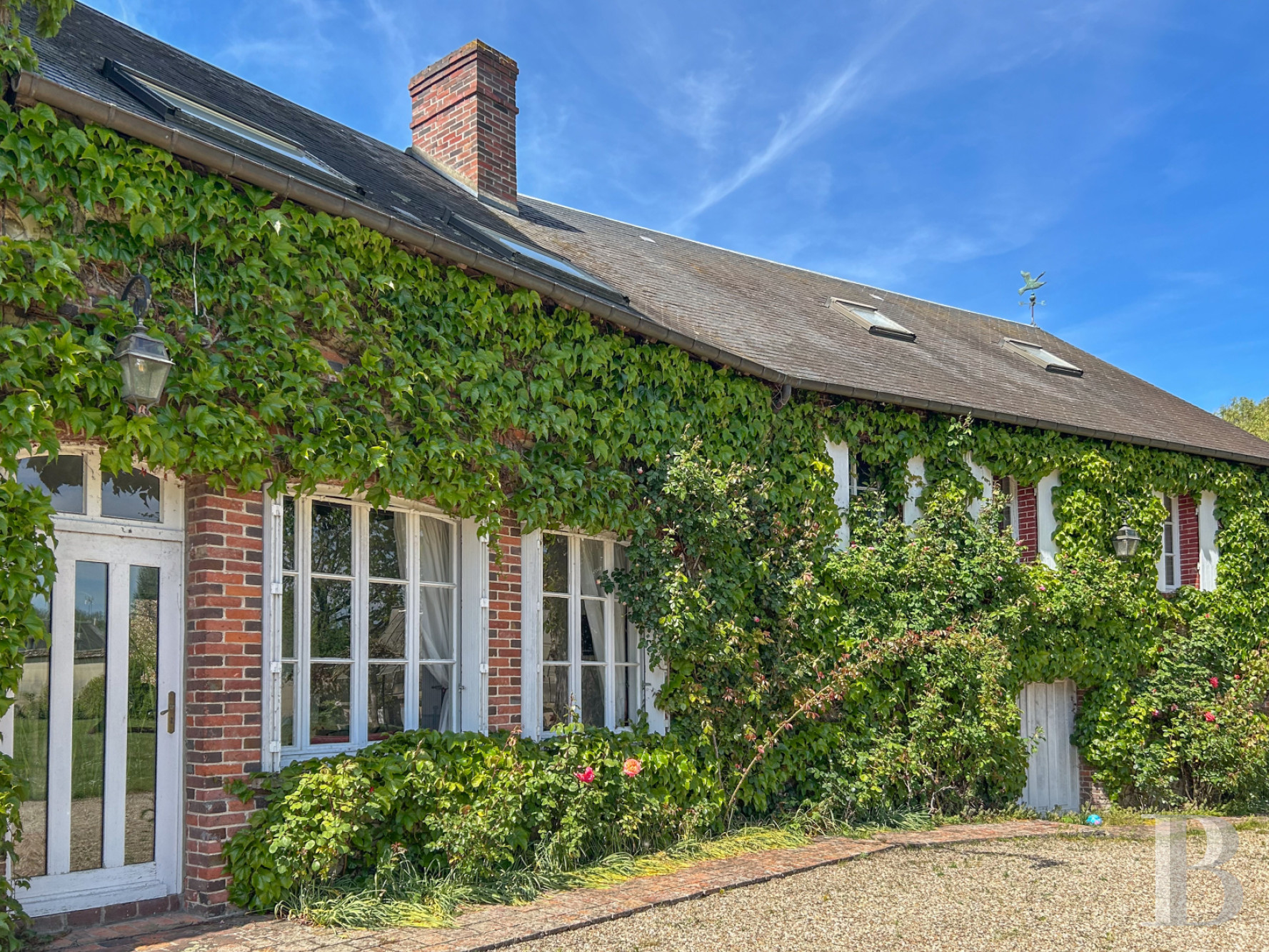
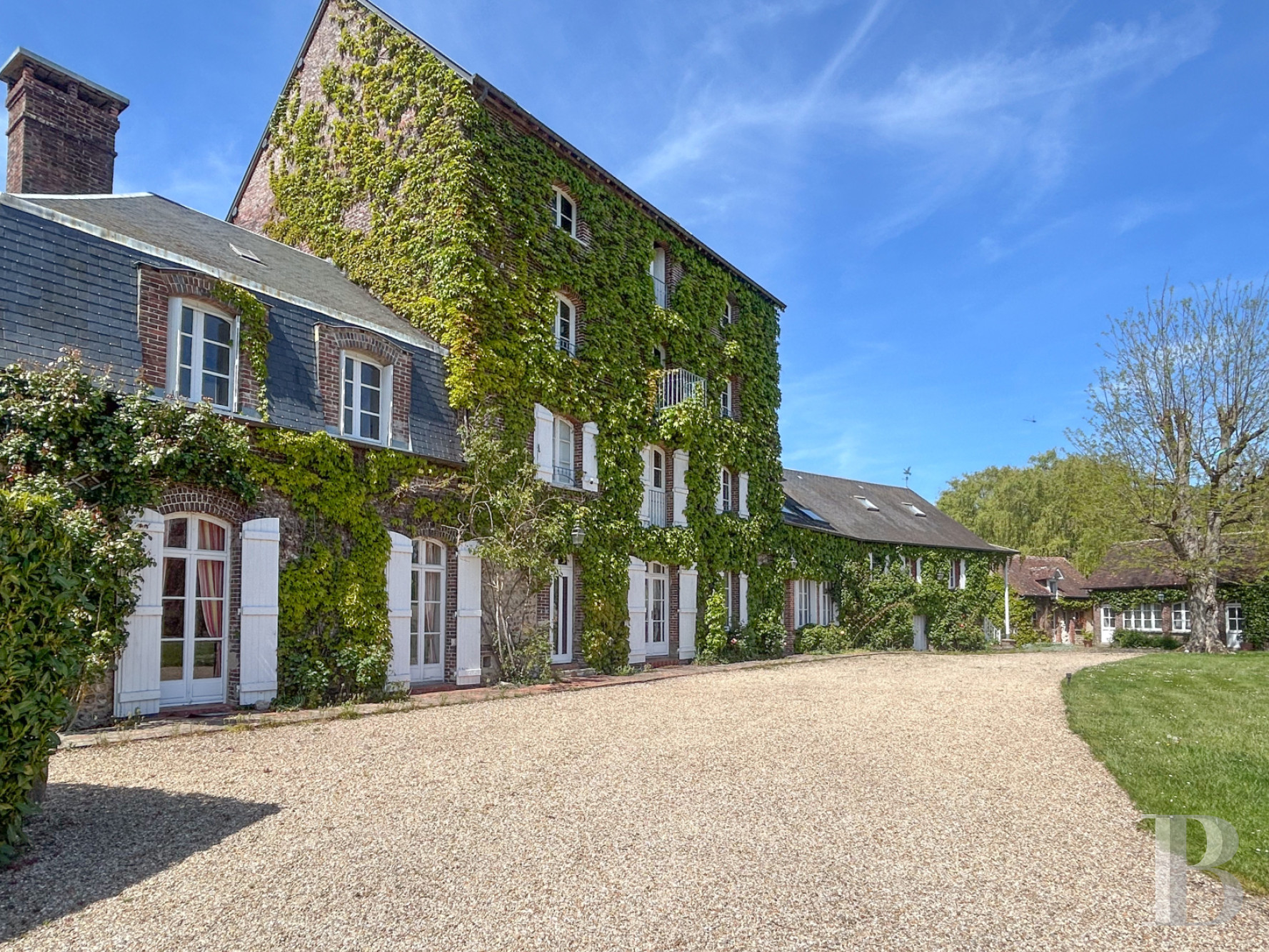
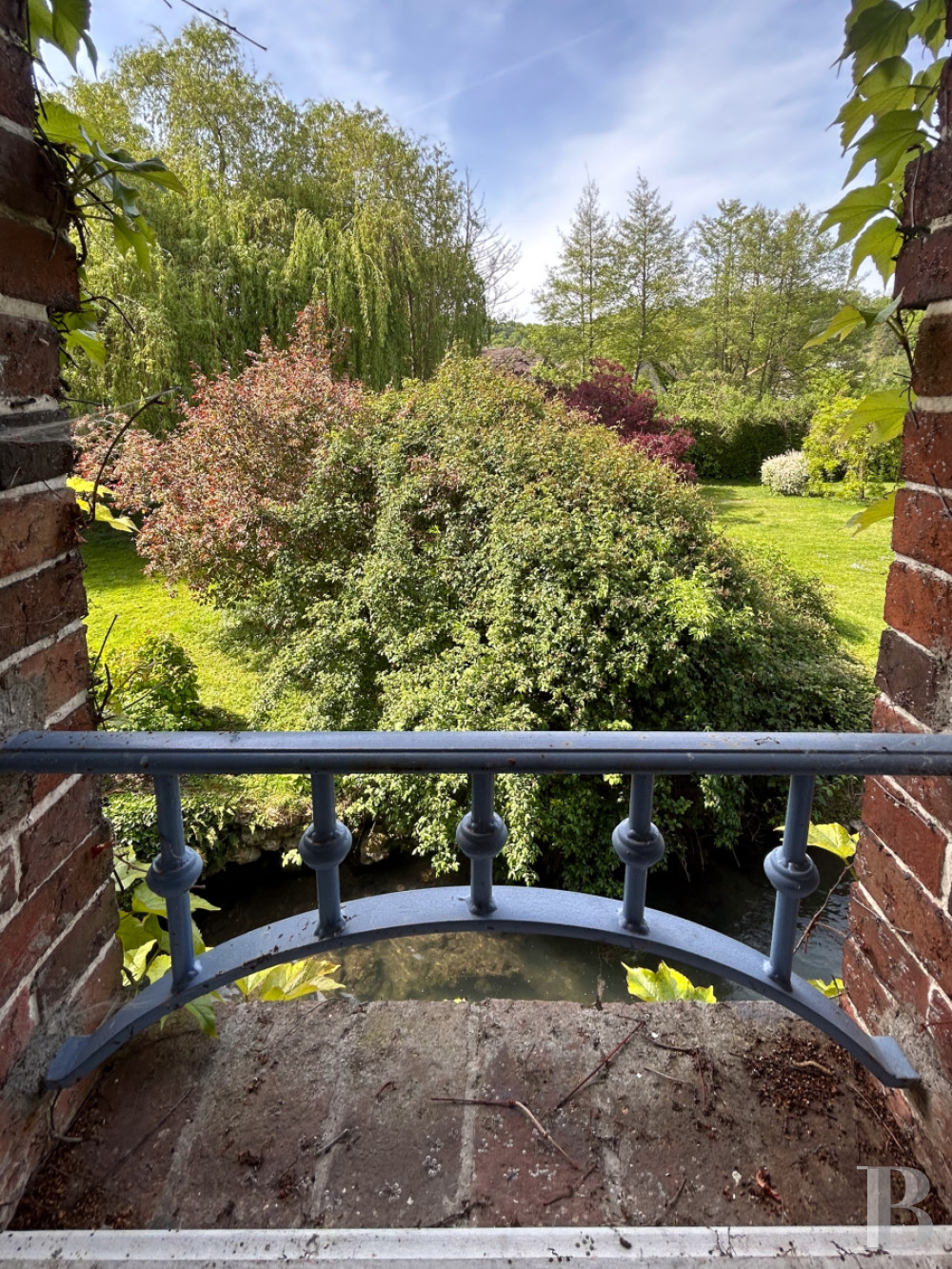
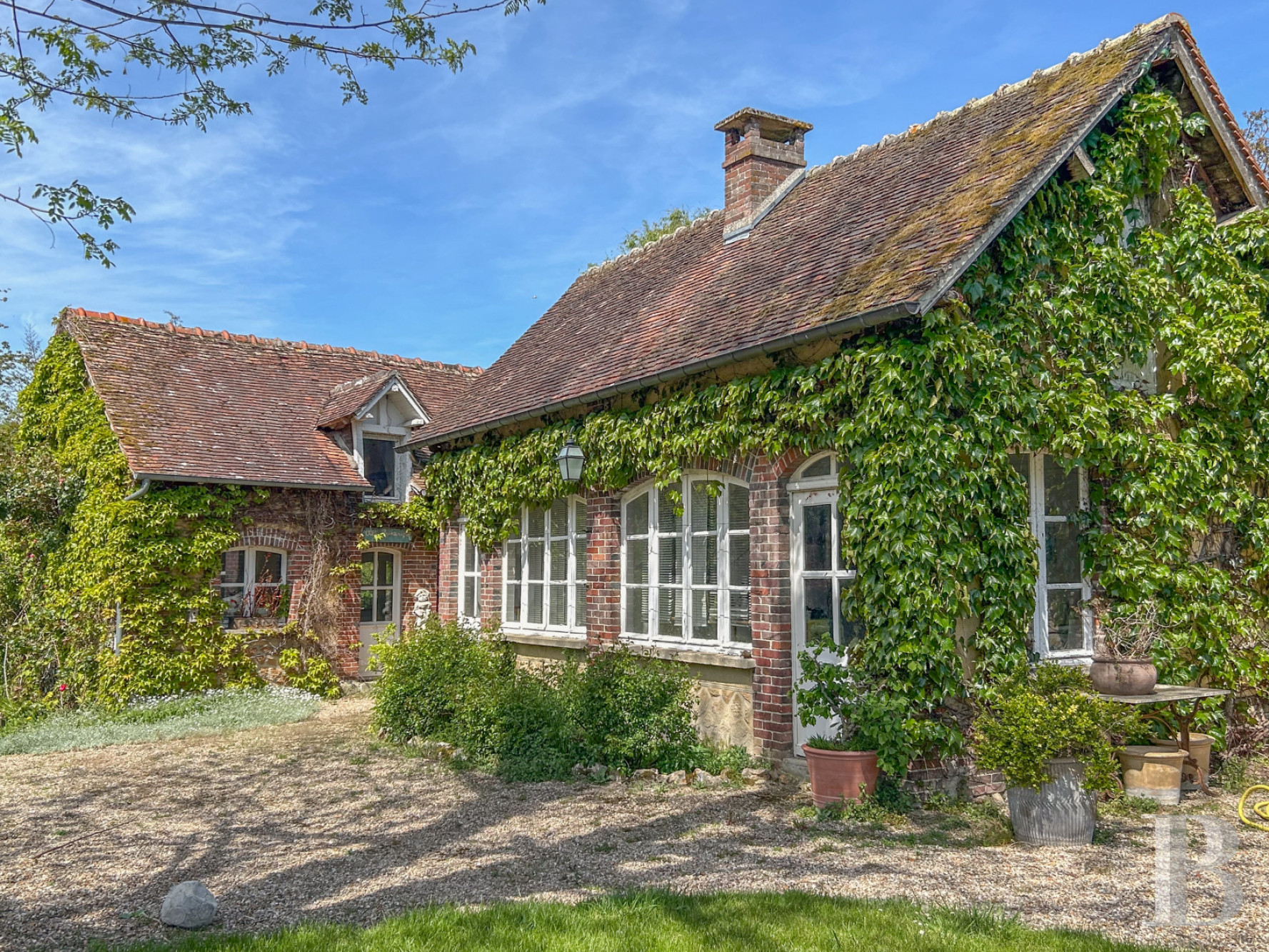
In addition, a perpendicular wing contains three garages, one of which is a lock-up, whereas the main dwelling stands a little further on. With approximately 500 m², eight bedrooms and three bathrooms, the central structure, topped with a slate gable roof, boasts six storeys, including a basement level, while festooned in impressive Virginia creeper, its brick exterior, to the southeast, is cadenced by three low-arched windows on each floor, which are, in turn, safeguarded by white shutters and openwork wrought-iron guardrails.
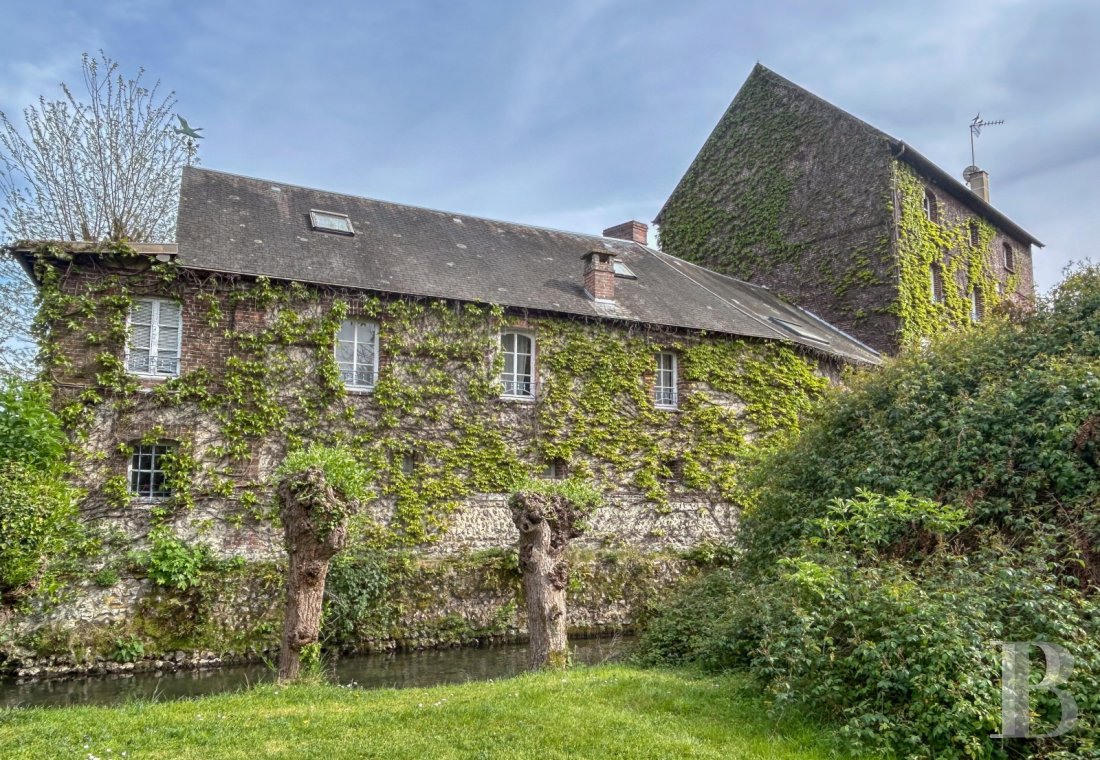
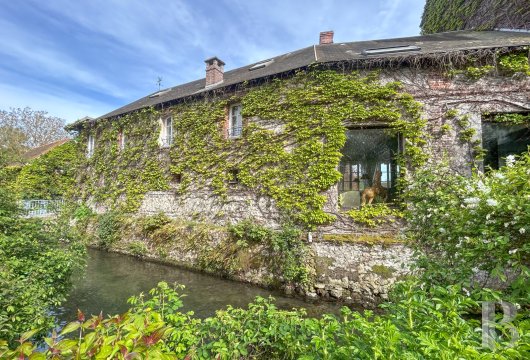
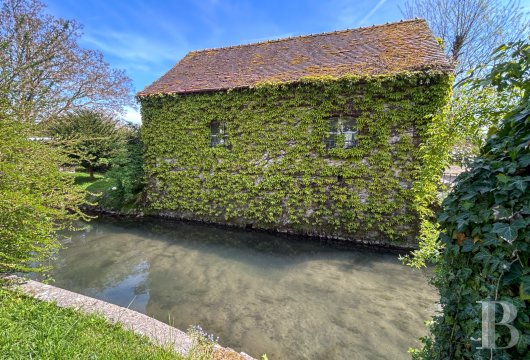
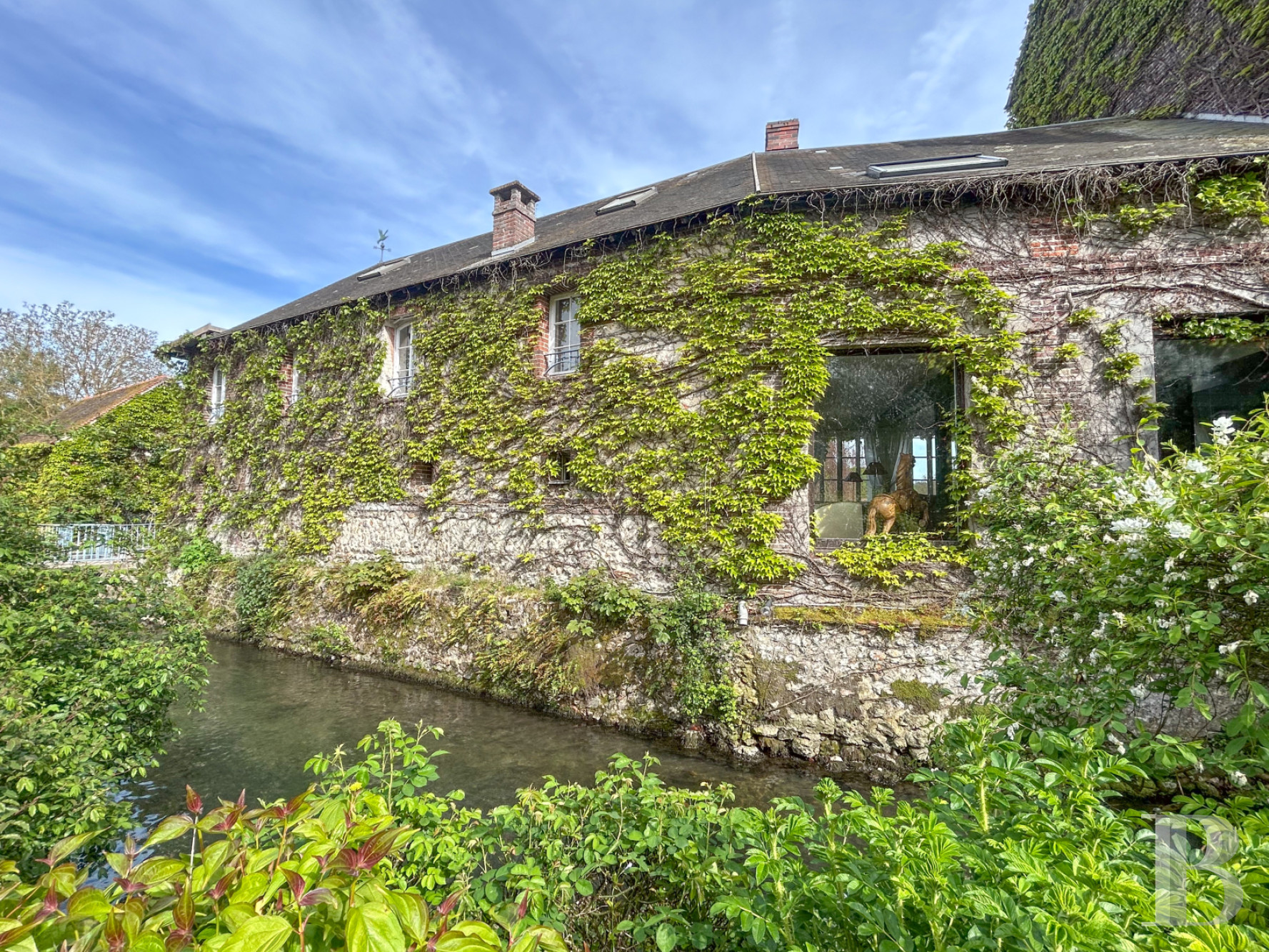
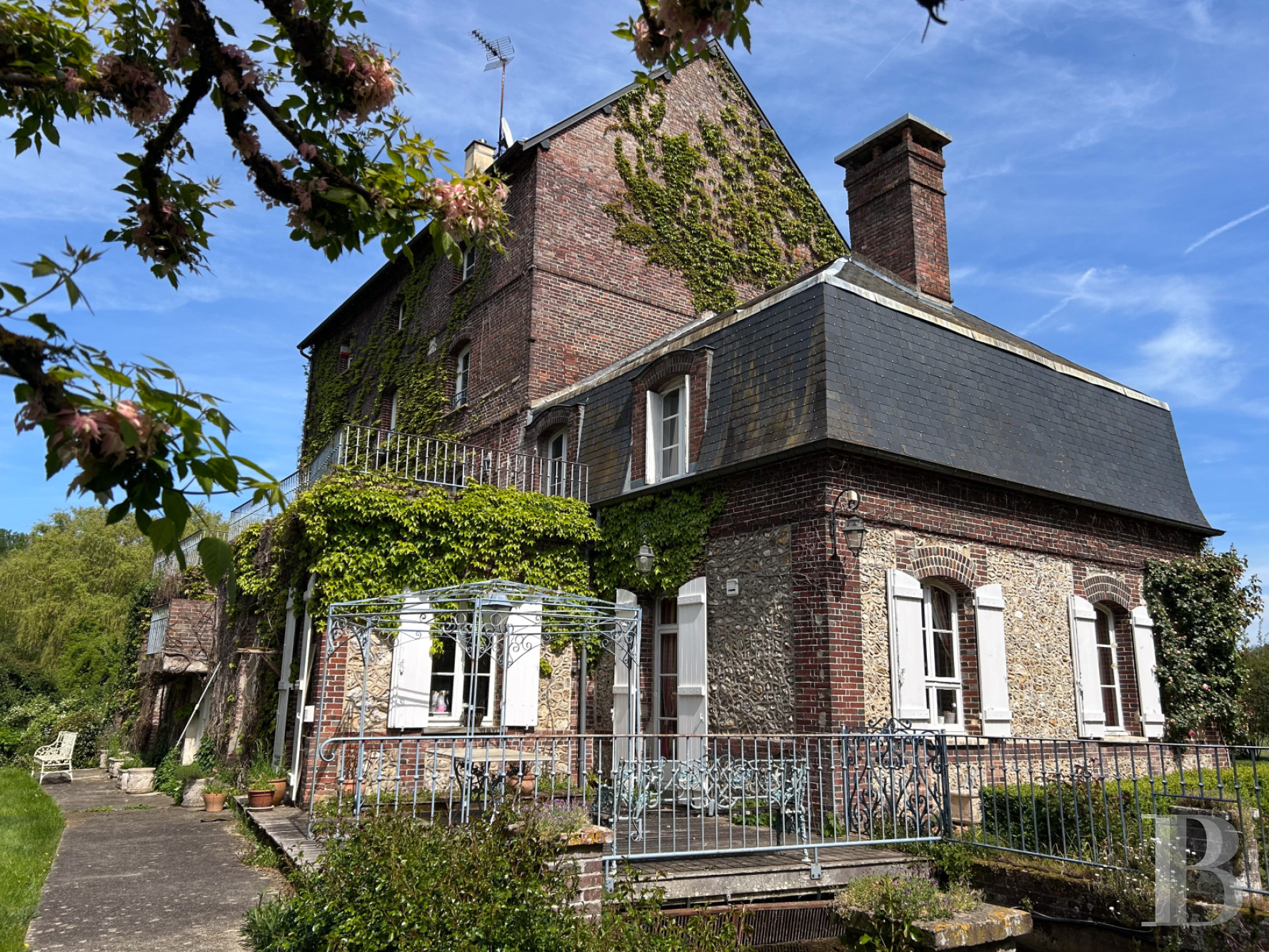
With two wings, which extend the building on either side, the first, with two storeys, was built out of burrstone and topped with a Mansard roof, whereas, the second, with three storeys, including one under the eaves, curves slightly forward. As for the mill’s northwest exterior, it reveals its monumental foundations, which are rooted in the clear, flowing water, while two more outbuildings and a greenhouse, located at the end of the drive and behind the main dwelling, are accessible via one of the property’s many wooden bridges.
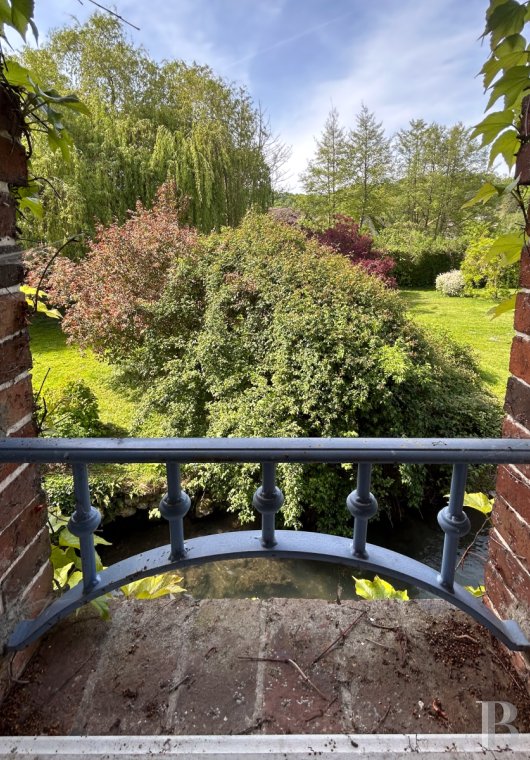
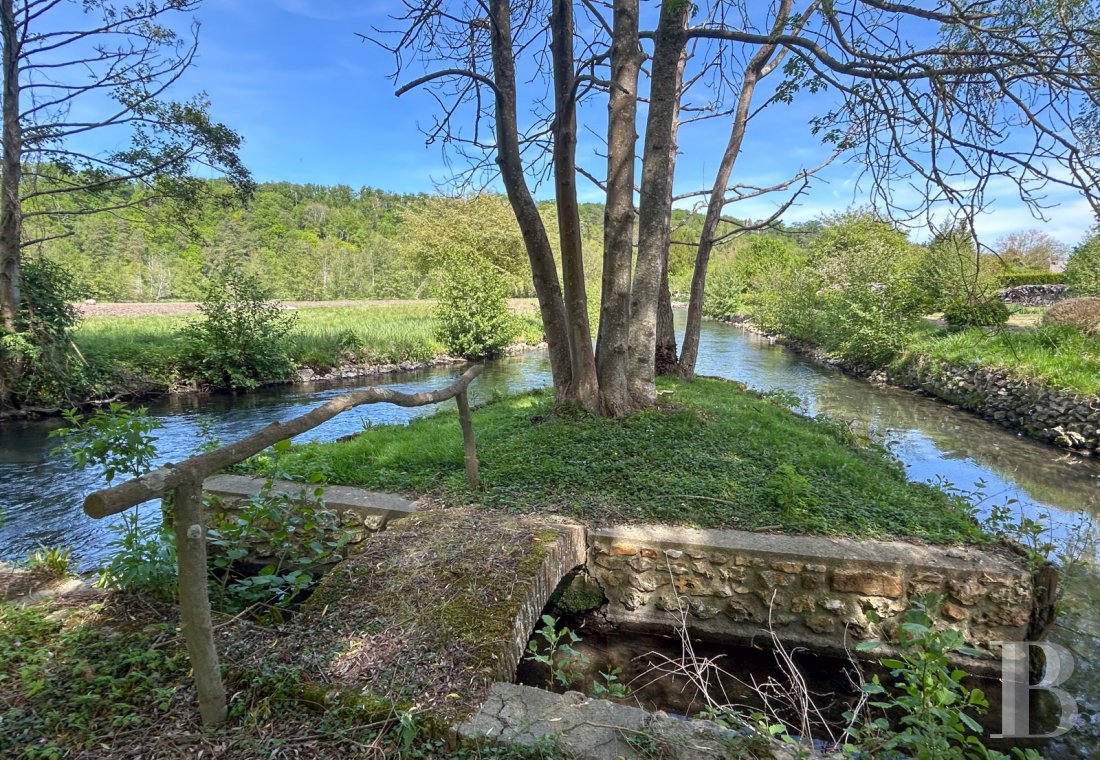
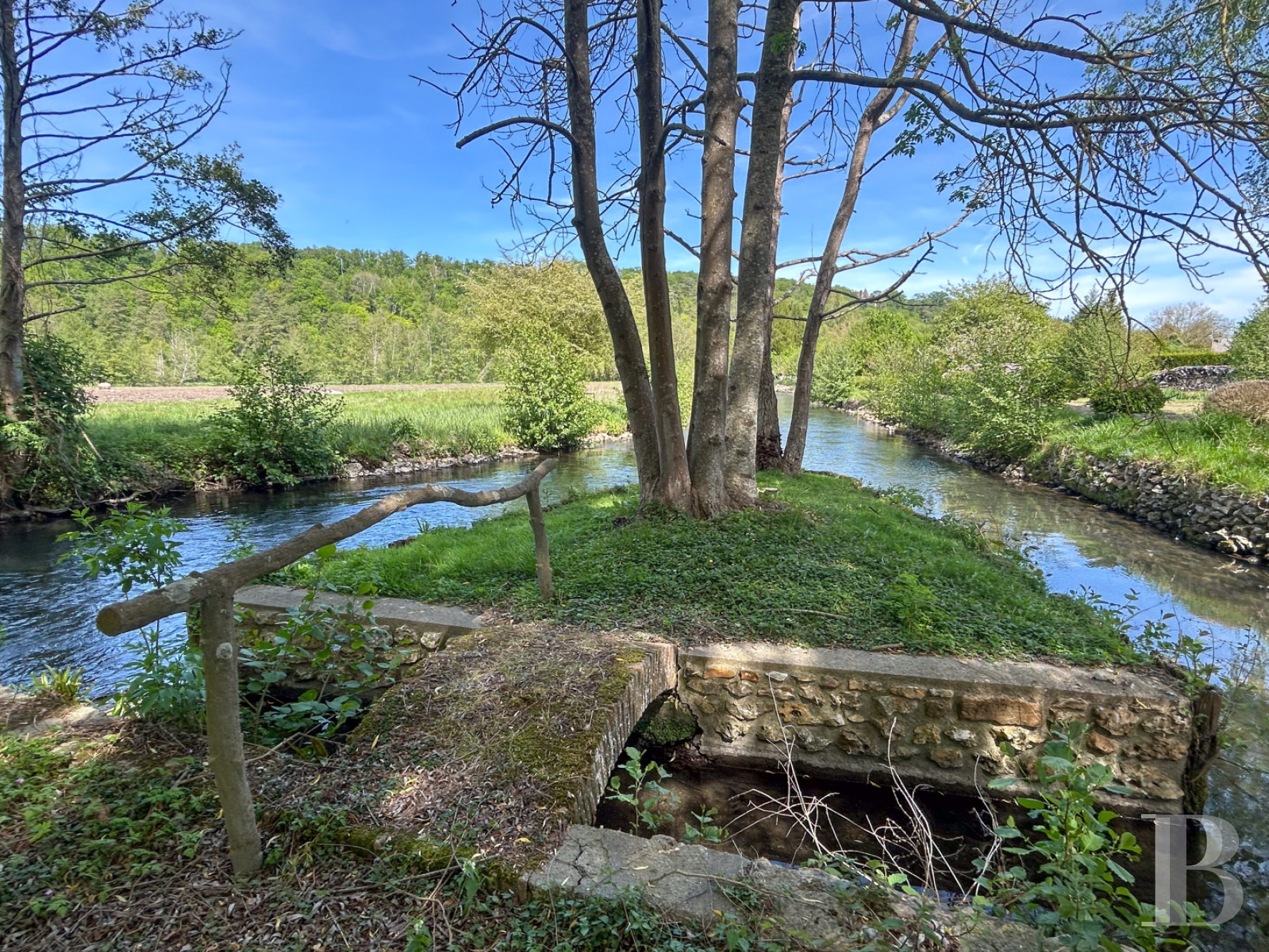
Lastly, attached to the central structure, above the water, an original extension, containing the mill’s machinery, is crowned with immense terraces accessible from the dwelling’s interior, whereas the property’s lush garden extends to the other side of the road, where a sluice gate system and a gazebo can be found on two small islands.
In addition, a perpendicular wing contains three garages, one of which is a lock-up, whereas the main dwelling stands a little further on. With approximately 500 m², eight bedrooms and three bathrooms, the central structure, topped with a slate gable roof, boasts six storeys, including a basement level, while festooned in impressive Virginia creeper, its brick exterior, to the southeast, is cadenced by three low-arched windows on each floor, which are, in turn, safeguarded by white shutters and openwork wrought-iron guardrails.
With two wings, which extend the building on either side, the first, with two storeys, was built out of burrstone and topped with a Mansard roof, whereas, the second, with three storeys, including one under the eaves, curves slightly forward. As for the mill’s northwest exterior, it reveals its monumental foundations, which are rooted in the clear, flowing water, while two more outbuildings and a greenhouse, located at the end of the drive and behind the main dwelling, are accessible via one of the property’s many wooden bridges.
Lastly, attached to the central structure, above the water, an original extension, containing the mill’s machinery, is crowned with immense terraces accessible from the dwelling’s interior, whereas the property’s lush garden extends to the other side of the road, where a sluice gate system and a gazebo can be found on two small islands.
The Mill
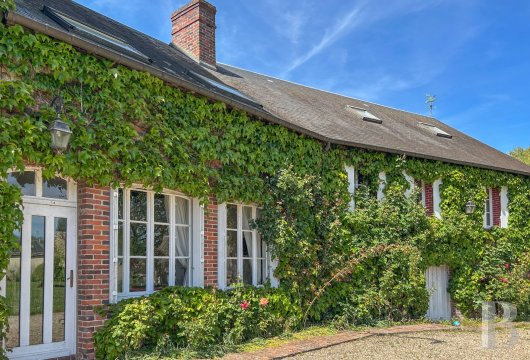
From the gravel courtyard, a partially glazed door is used as the main entrance, while several pairs of glass double doors also give directly on to the patios surrounding the ground floor’s rooms. In addition, an exterior wooden staircase, located at the end of the first wing, communicates directly with the first floor, whereas many rooms boast dual or triple exposure, thereby bathing them in light all day long.
The ground floor
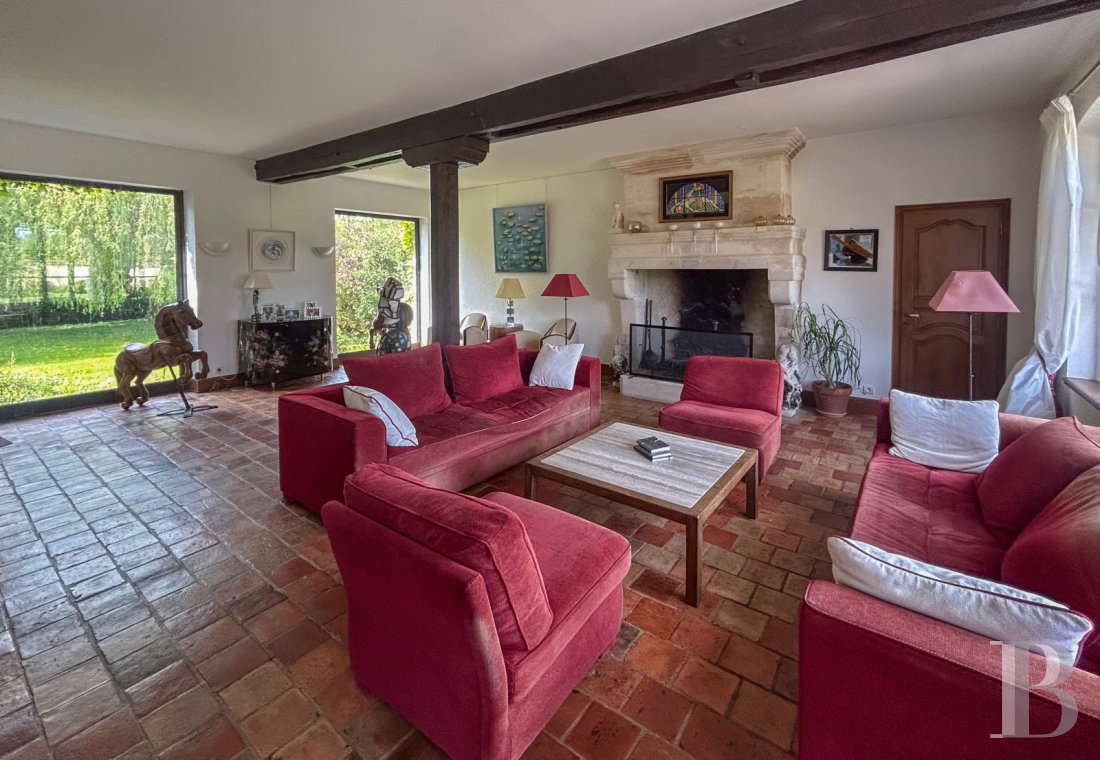
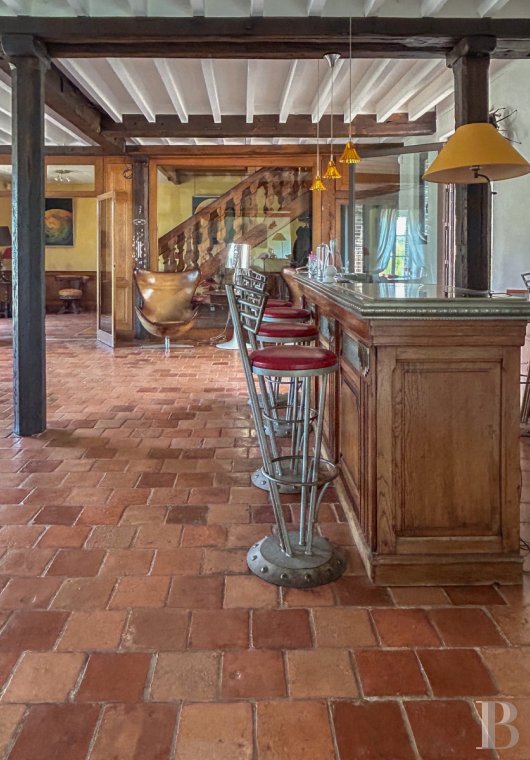
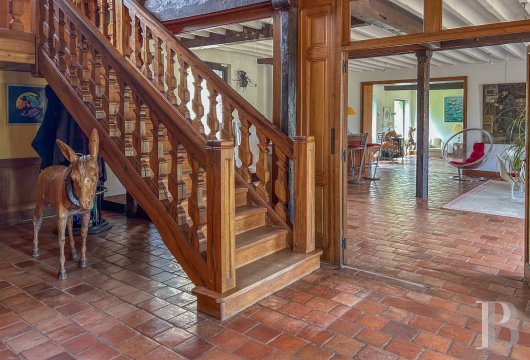
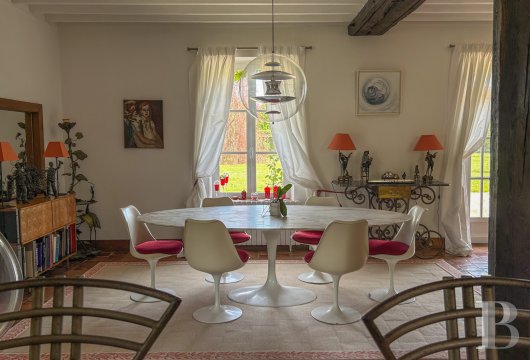
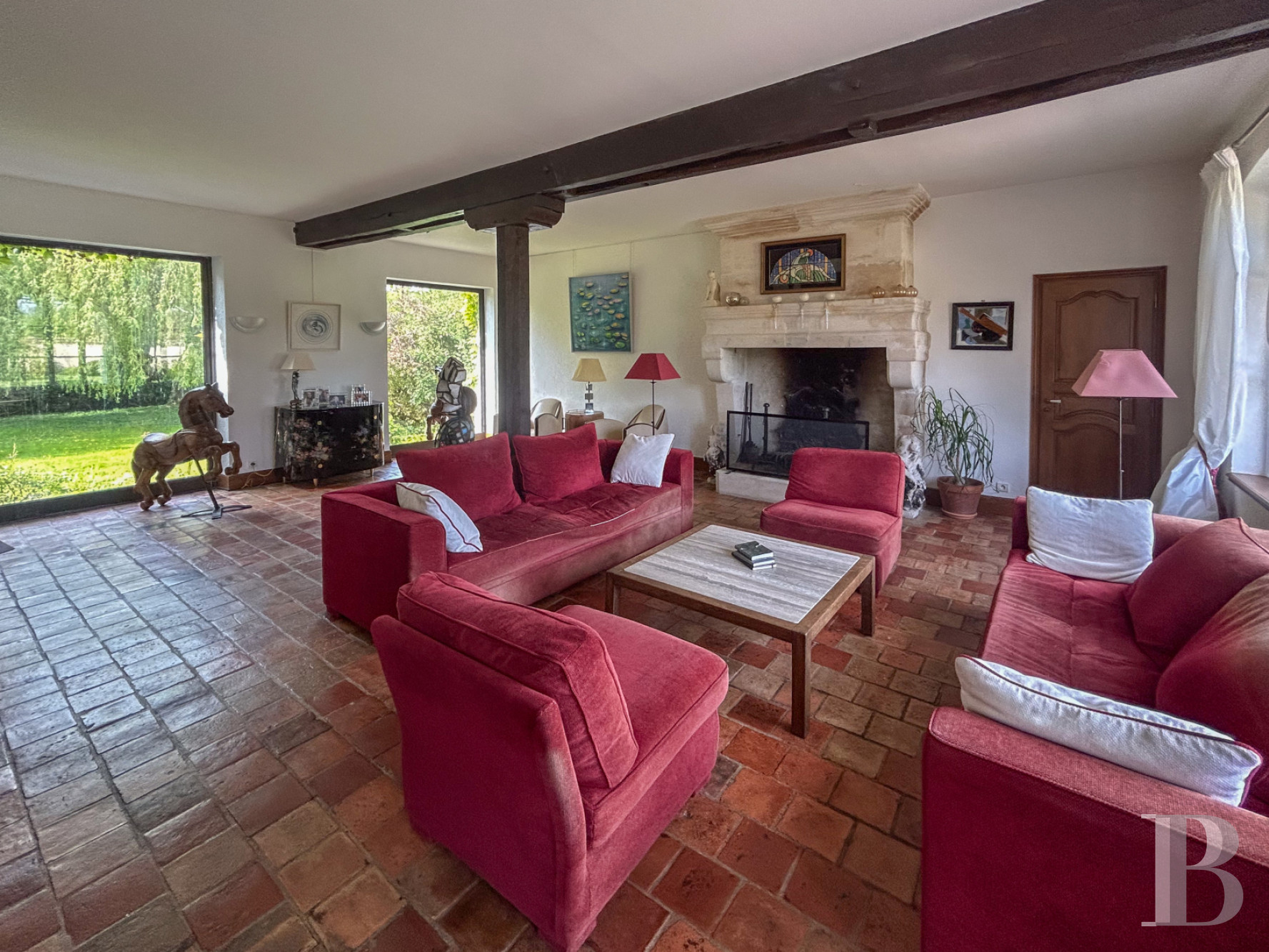
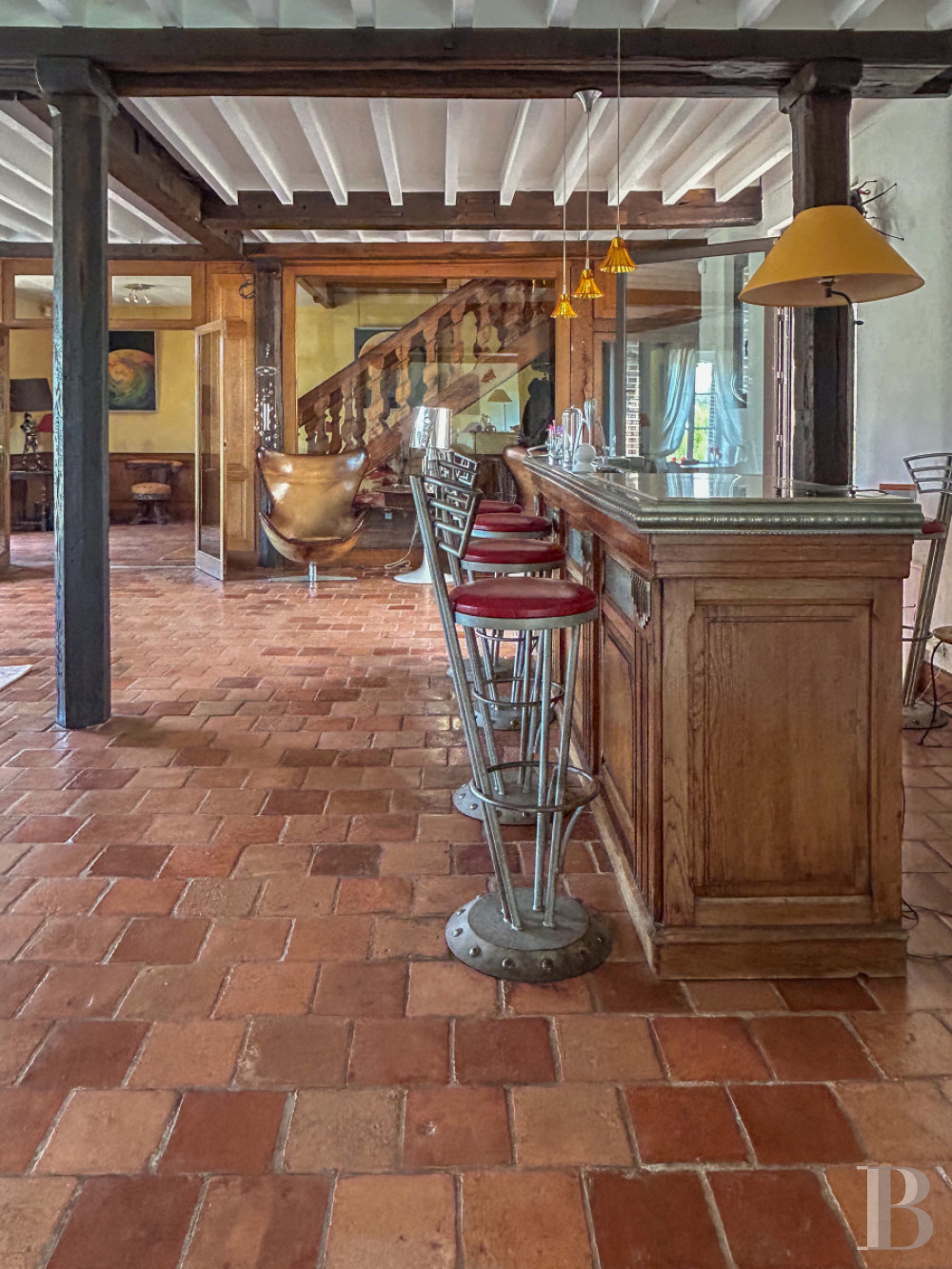
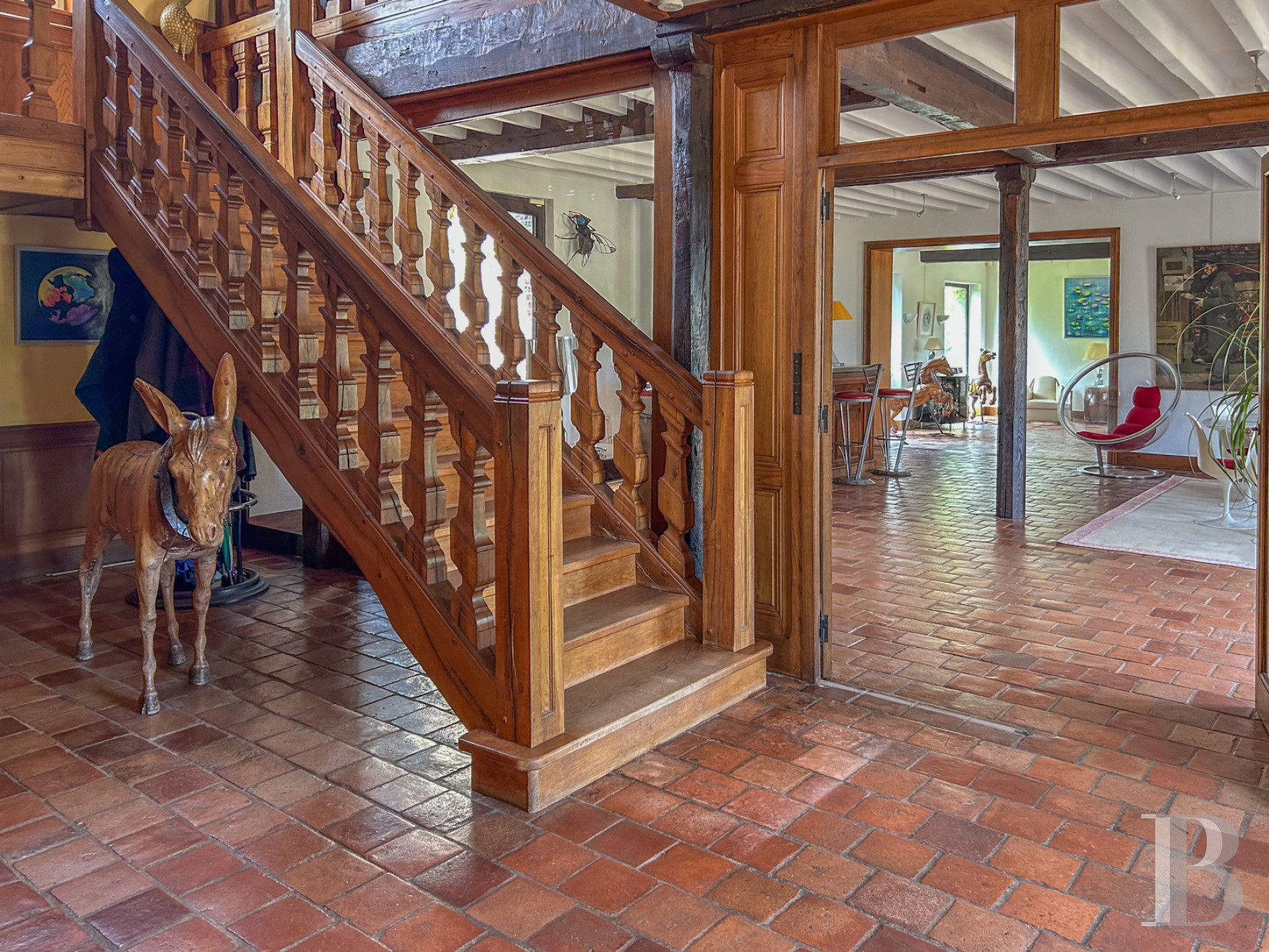
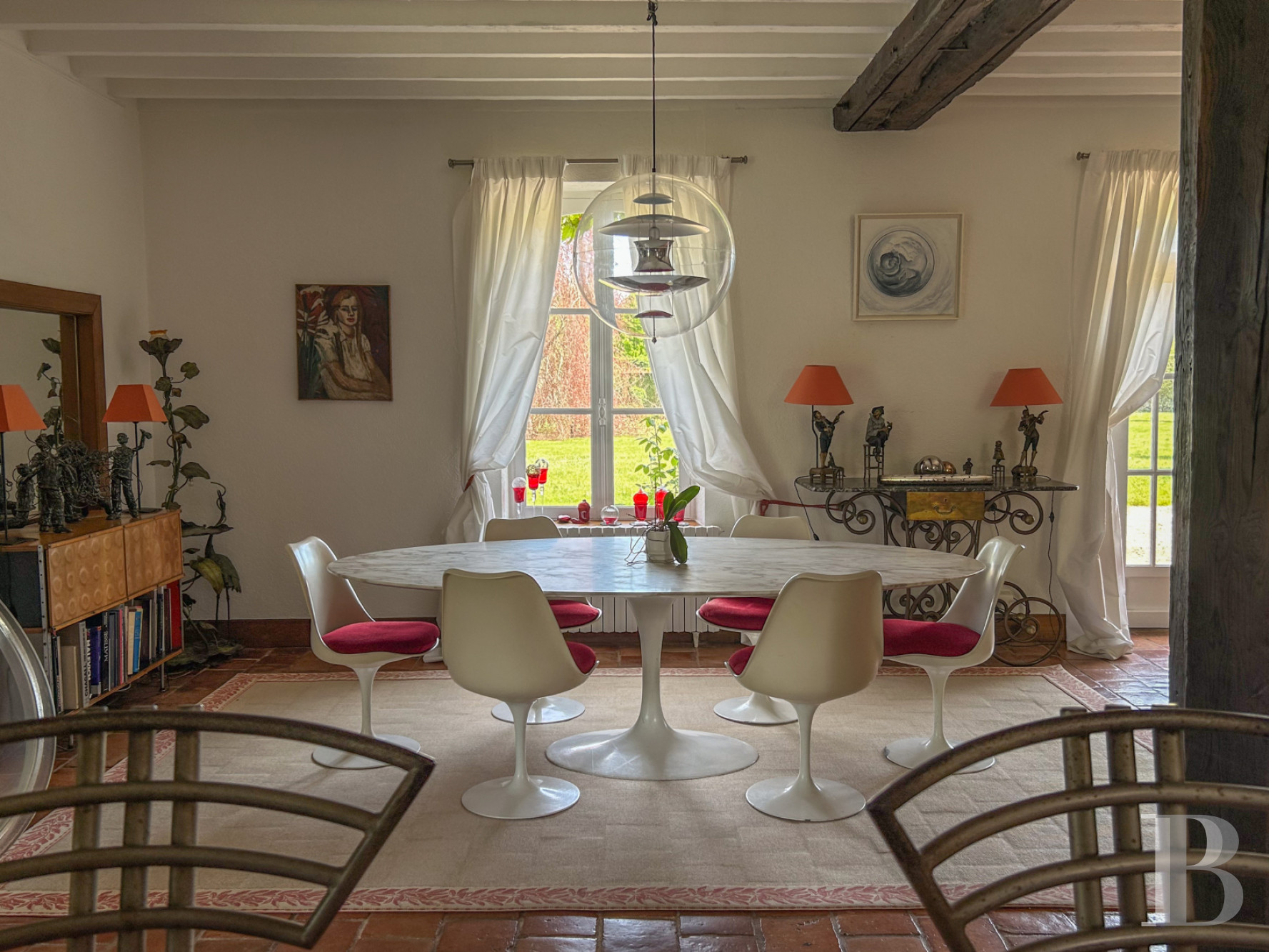
In the entryway, of nearly 30 m², an impressive double quarter-turn wooden staircase leads to the upstairs, whereas, on one side, an immense living area extends behind tall picture windows and features an adjacent dining room and living room, which are heated by a stone fireplace.
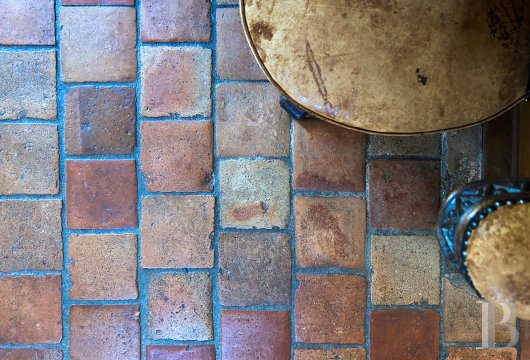
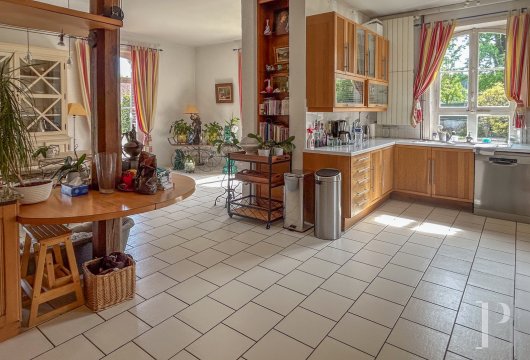
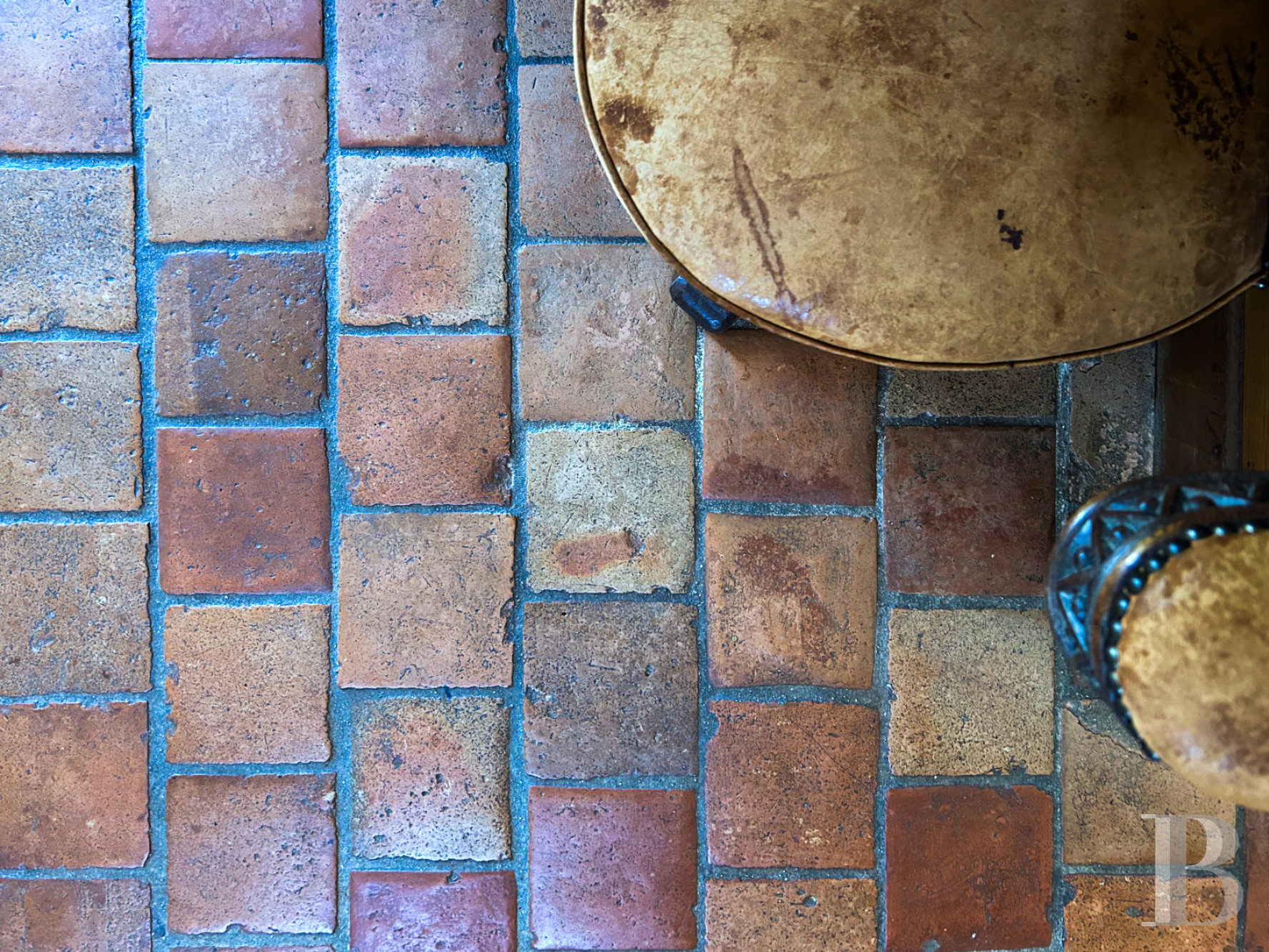
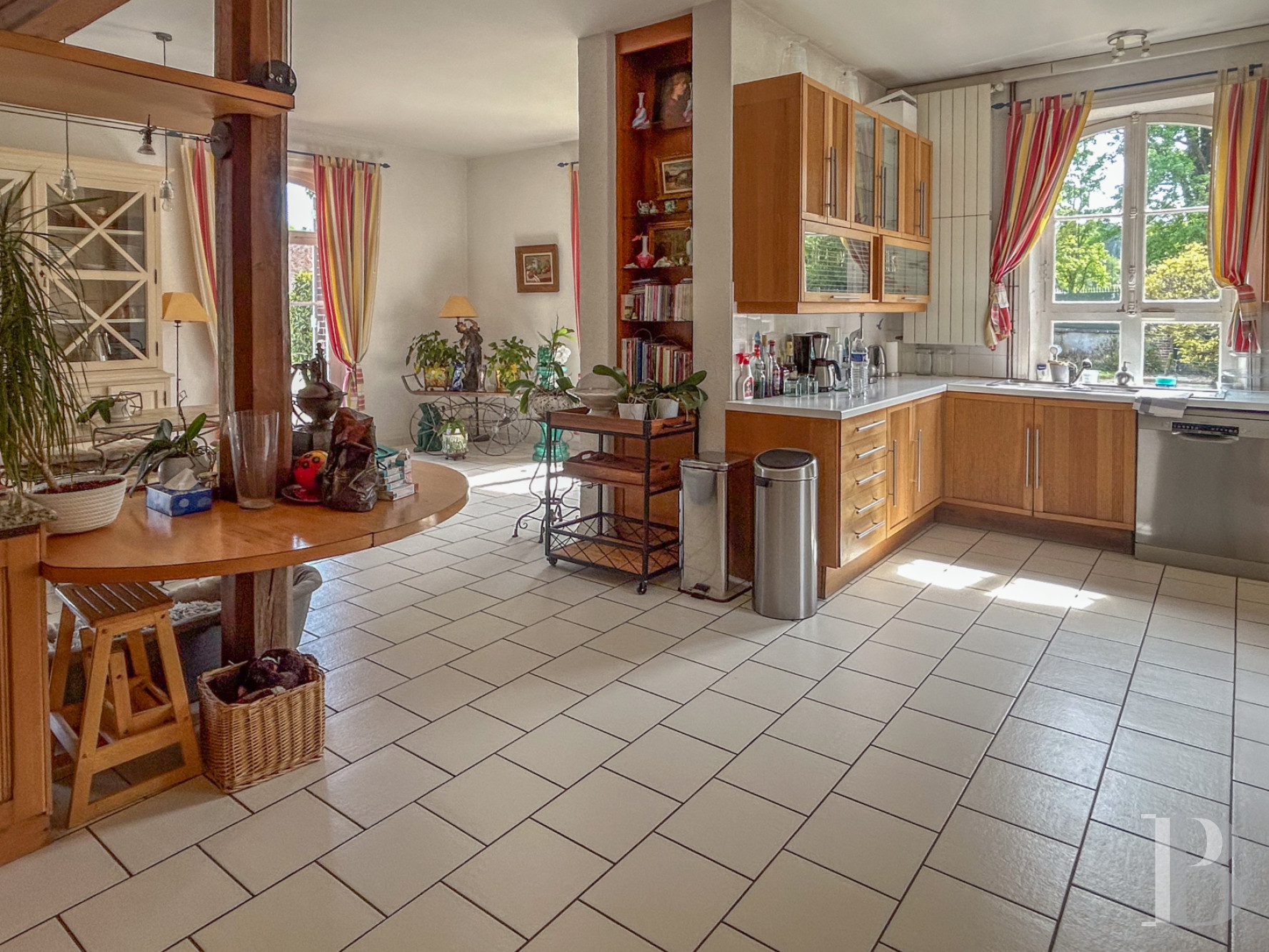
As for the second set of stairs, it is located behind a door, while terracotta floor tiles and visible ceiling beams can be found throughout this level. Punctuated by many windows looking out over the mill run or drive, the dwelling’s white walls match its ceiling beams, whereas, on the other side of the entryway, a kitchen was created in one of the mill’s wings. Also used as a dining room, the kitchen communicates with a utility room and provides access to a wooden patio, overlooking the mill run and decorated with a wrought-iron gazebo, while a lavatory is located underneath the large staircase.
The intermediate level
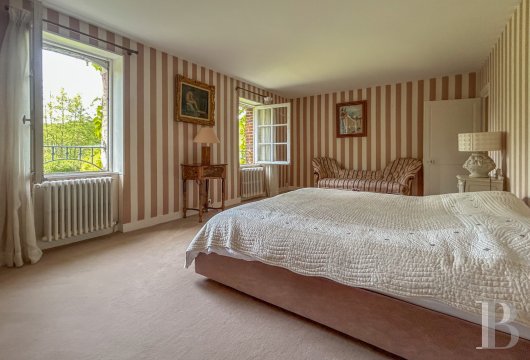
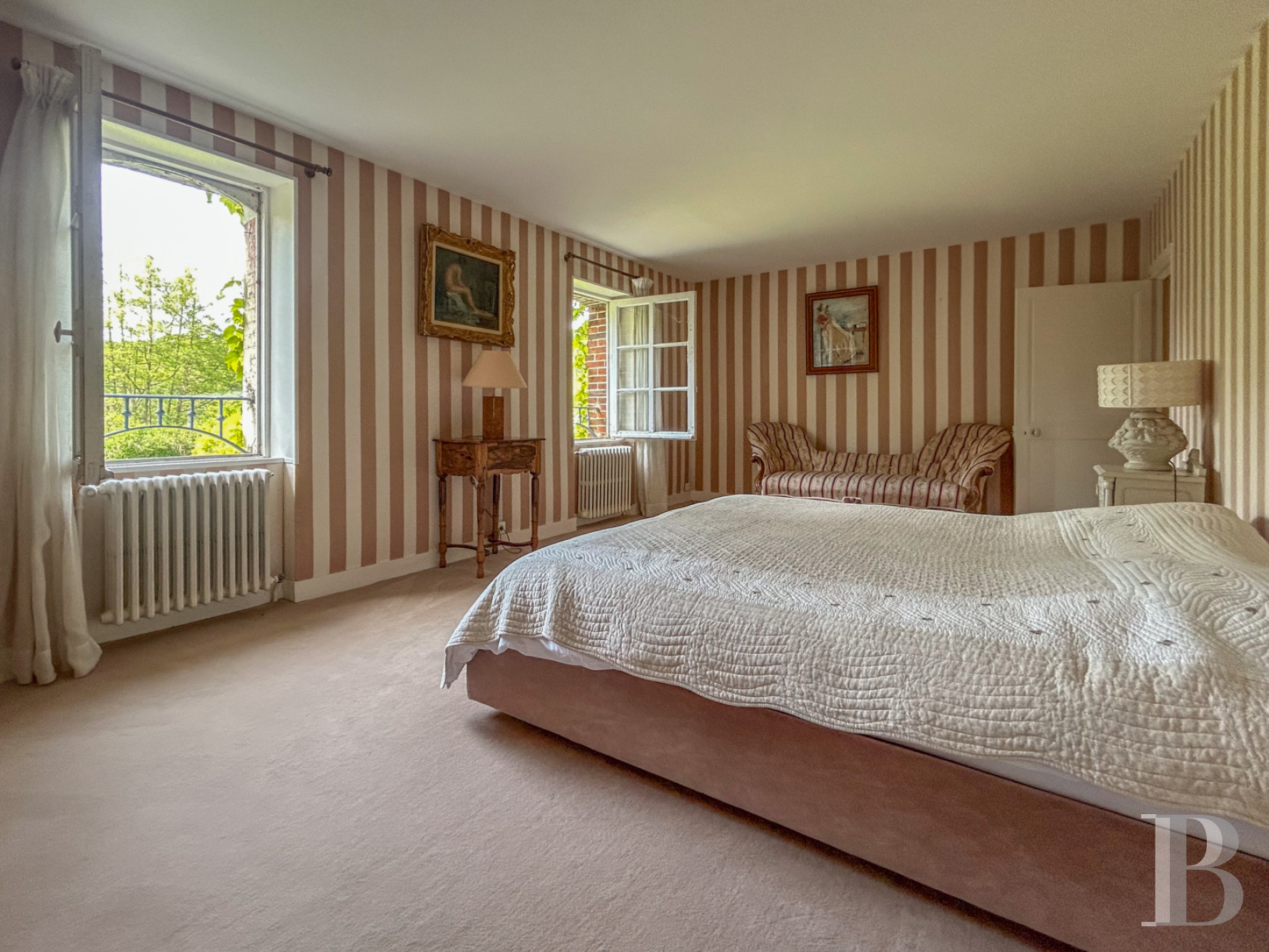
Located in the first wing, this level is accessible from the dwelling’s three staircases, the third one of which is located outside, making it possible to separate this area from the rest of the building, depending on one’s needs. With three bedrooms, including two facing the mill run, a lavatory and a shower room, its light-colour carpeted floors contrast nicely with its walls, which are either painted or upholstered in vertically striped stretched fabric.
The first floor
This floor is accessible from the main staircase, which provides access to an L-shaped landing, surrounded by balustrades, which is currently used as a study-library, and provides access to a linen cupboard and a wardrobe.
On one side, a parental suite opens on to a large wooden terrace, bordered by a guardrail and located on top of the former machine room, the latter of which overlooks the mill run, whereas the bedroom also abuts an immense wardrobe and a large bathroom, as well as a lavatory.
In addition, a small hallway leads to a door and, after a few steps, communicates with a bedroom with a sloping roof, two wide skylights and a window on its gable end, which is also accessible from the half-floor, while, following on from the study, a narrow corridor provides access to three more bedrooms and a shower room, located above the kitchen.
The second floor
Accessible from the first-floor landing, this floor contains one room, of approximately 90 m², extending over the central structure’s entire surface, which features carpeted floors, walls upholstered in vertically striped fabric, a number of windows bathing this space in ample light any time of the day or year, as well as visible ceiling beams, painted white, details that can also be found in most of the mill’s bedrooms.
The third floor
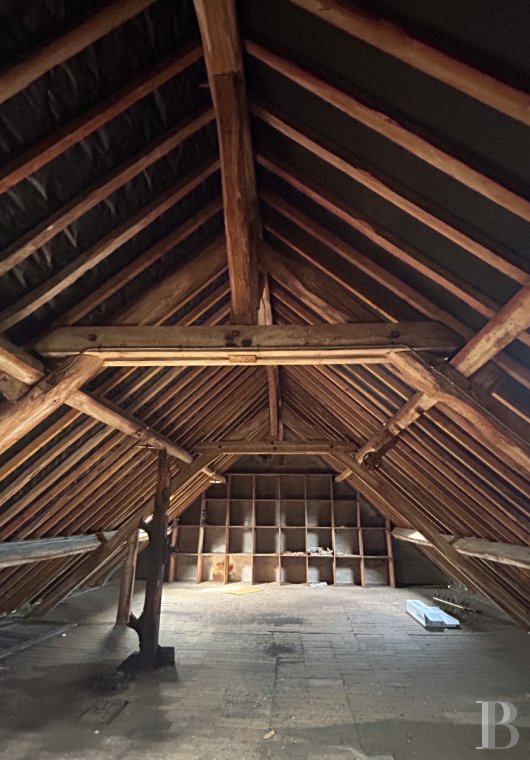
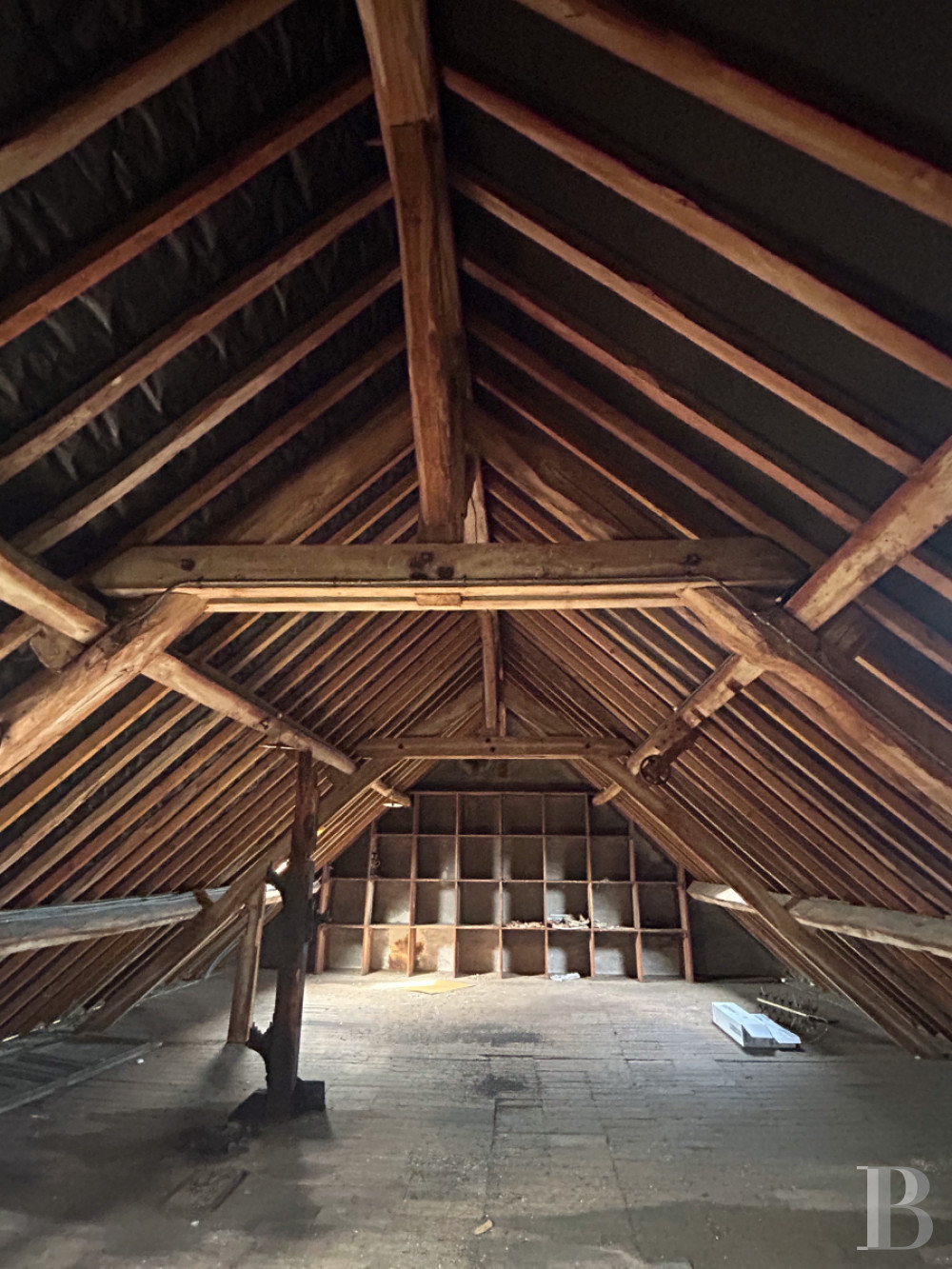
From a small staircase, located in the living room on the second floor, an initial attic extends across this level’s entire surface, while all the elements here are in their original state and recall the building’s industrial past, such as brick walls, untreated floor planks, visible wooden joists and planking, as well as the racks where the machinery was once stored.
The fourth floor
Under the eaves, it is similar to the previous floor, while the wooden framework’s rafters, purlins and joists are all original.
The basement
The first, partially underground and climate-controlled, is accessible from the first wing and used as a wine cellar, while, next door, under the white exterior staircase, the second contains storage areas, specifically for the garden’s equipment. As for the third, it is located above the mill run and includes the mill’s technical machinery, such as an alternator, generator, etc.
The Outbuildings
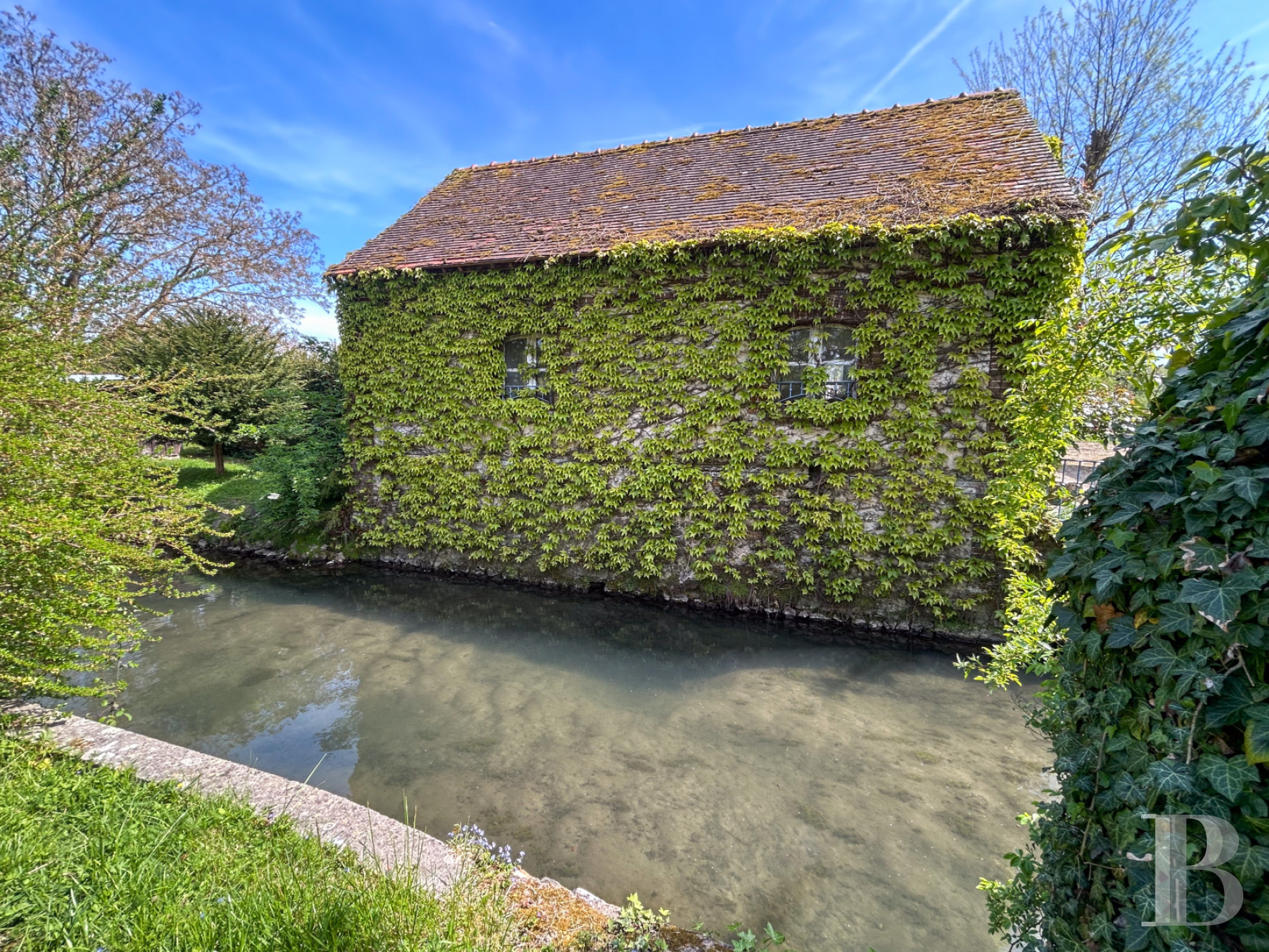
These consist of self-contained accommodations and three garages, located at the property’s entrance, as well as two small cottages, at one end of the garden, which are currently used as an artist’s studio.
The small dwelling
With half-timbered walls, rubble stone foundations and a flat tile roof, one side of which, quite steep, extends over the enclosure wall towards the street, this building recalls traditional Norman architecture, while the ground floor, accessible via an individual door or glass double doors, features two rooms and a lavatory with tile floors and white walls. As for the upstairs level, it includes a partially convertible attic space.
The garage
At a right angle to the small cottage, this building features two open-air, cobblestone spaces, while a more recent lock-up garage, adjacent to the others, is accessible via a metal door.
The gardener's house
At the end of the drive and abutting the property’s enclosure wall on its northern side, it was built in a similar style to the mill and features a game room upstairs, under the eaves.
The workshop
Perpendicular to the first and separated from it by several metres, it enjoys dual exposure with three large windows and a partially glazed door.
The greenhouse
Abutting the enclosure wall and extending on from the artist’s studio, it was built out of glass and iron over a stone foundation.
The Garden and Mill Run
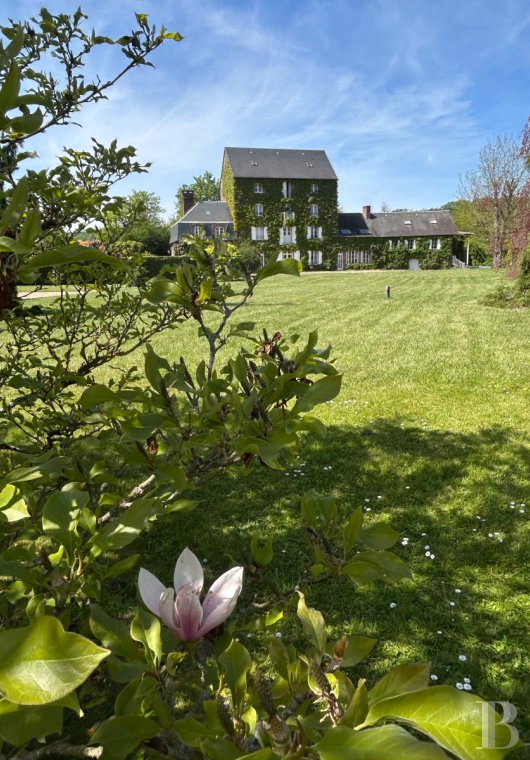
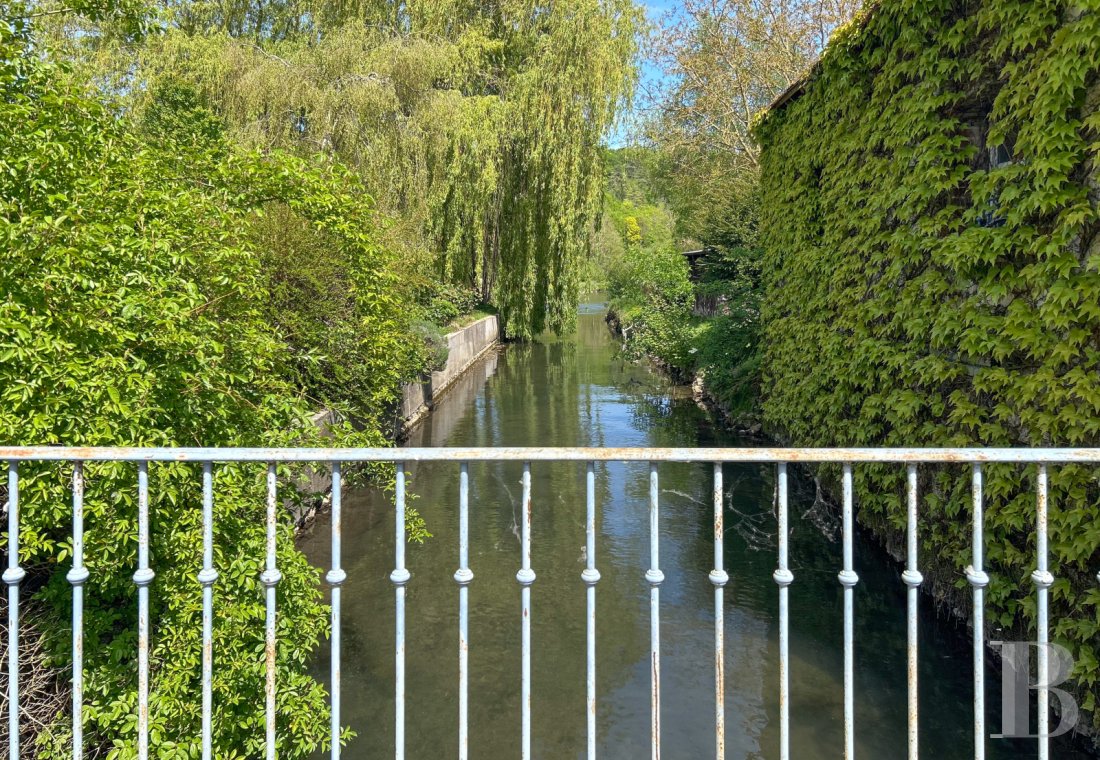
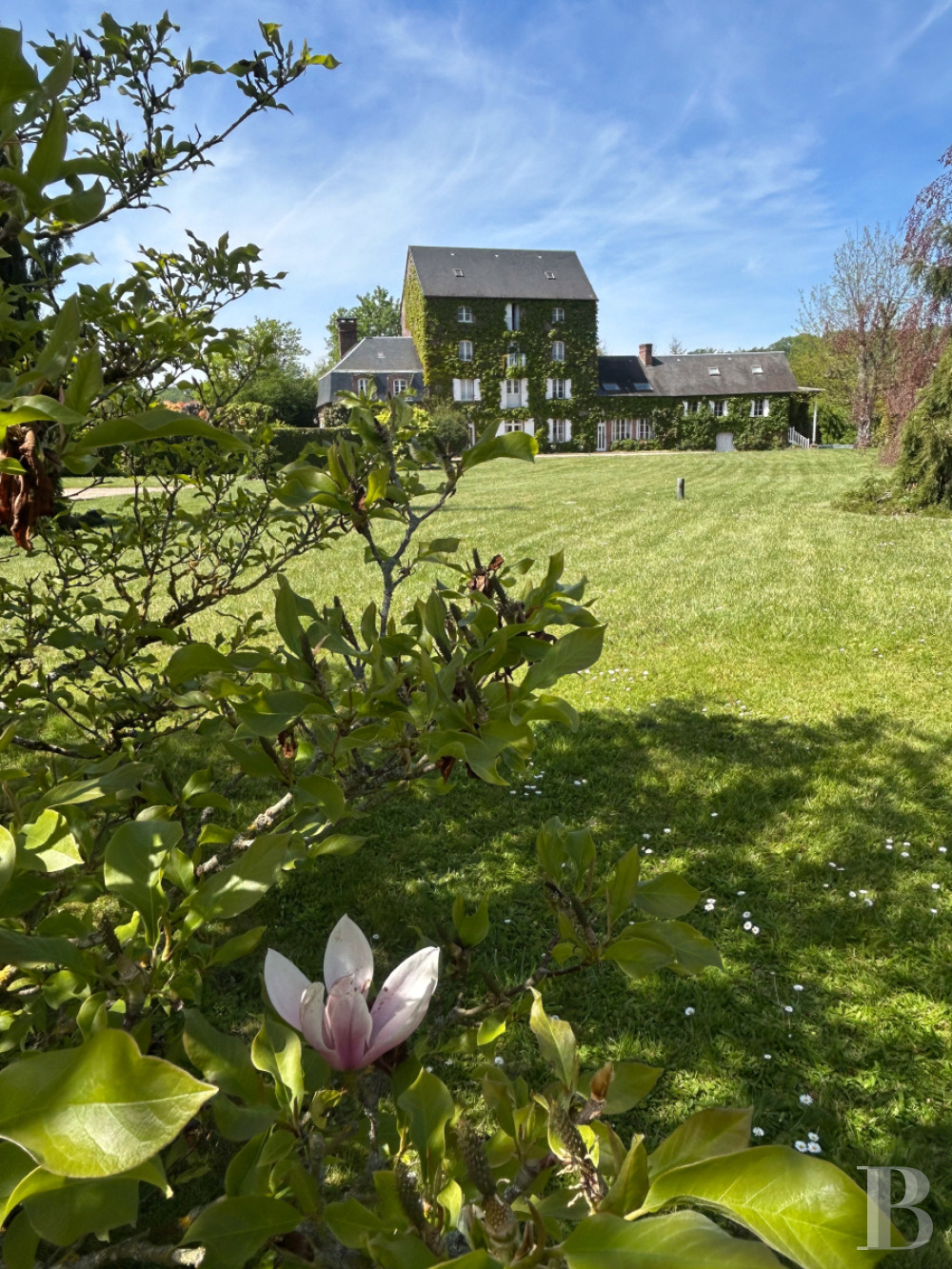
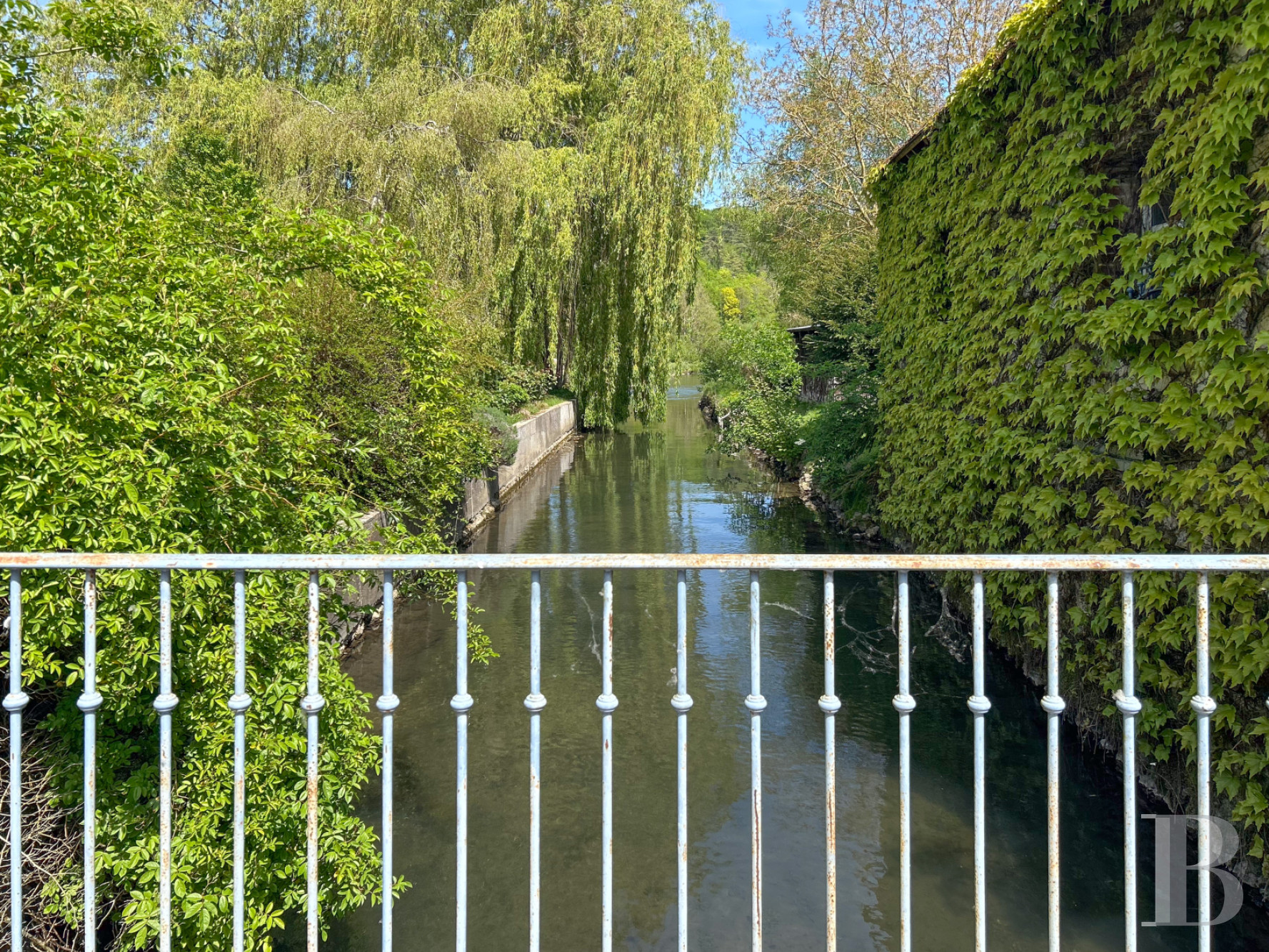
The garden is landscaped into two separate areas around the buildings: on one side of the drive, swaths of lawn lie alongside flowering shrubs and groves of trees, including two giant weeping sequoias and an elegant southern magnolia. In addition to a verdant Virginia creeper festooning the mill’s exteriors, rosebushes also embellish its periphery, while, after crossing over one of the estate’s many wooden bridges, the atmosphere becomes more intimate around the mill run, bordered by wisteria, lilacs, willows and alders.
Our opinion
Surrounded by its colourful flowering garden, this property, emblematic of the region’s industrial past, has been reconverted into a stately family dwelling, while, sheltered from view and immersed in peace and quiet, without being isolated, it is bathed in constant light thanks to its many wide windows facing the surrounding nature.
As for the mill run, whose output is regulated upstream, it flows calmly through the garden, whereas the adjustability of the manor’s interior spaces, its many convertible surfaces and outbuildings are ideal for a number of exciting projects.
In addition, the mill could also fulfil a desire for self-sufficiency in terms of energy through the production of electricity or, to a lesser extent, food, thanks to its alluvial soil, while it is quite common to see an egret or a brook trout make a surprise cameo on this enchanting property, where murmuring water, timeless stone and a bucolic landscape not only blend together seamlessly, but create a relaxed and peaceful environment for all to admire.
1 150 000 €
Fees at the Vendor’s expense
Reference 423345
| Main building floor area | 500 m² |
| Outbuildings floor area | 150 m² |
| Land registry surface area | 7195 m² |
French Energy Performance Diagnosis
Information on the risks to which this property is exposed is available on the website: www.georisques.gouv.fr
Share


NB: The above information is not only the result of our visit to the property; it is also based on information provided by the current owner. It is by no means comprehensive or strictly accurate especially where surface areas and construction dates are concerned. We cannot, therefore, be held liable for any misrepresentation.