



In the Ouche valley, 20 minutes from Dijon,
a converted mill with a pool and 1.4 ha grounds
a converted mill with a pool and 1.4 ha grounds
Dijon,
COTE-D'OR
burgundy
21000
FR

Location
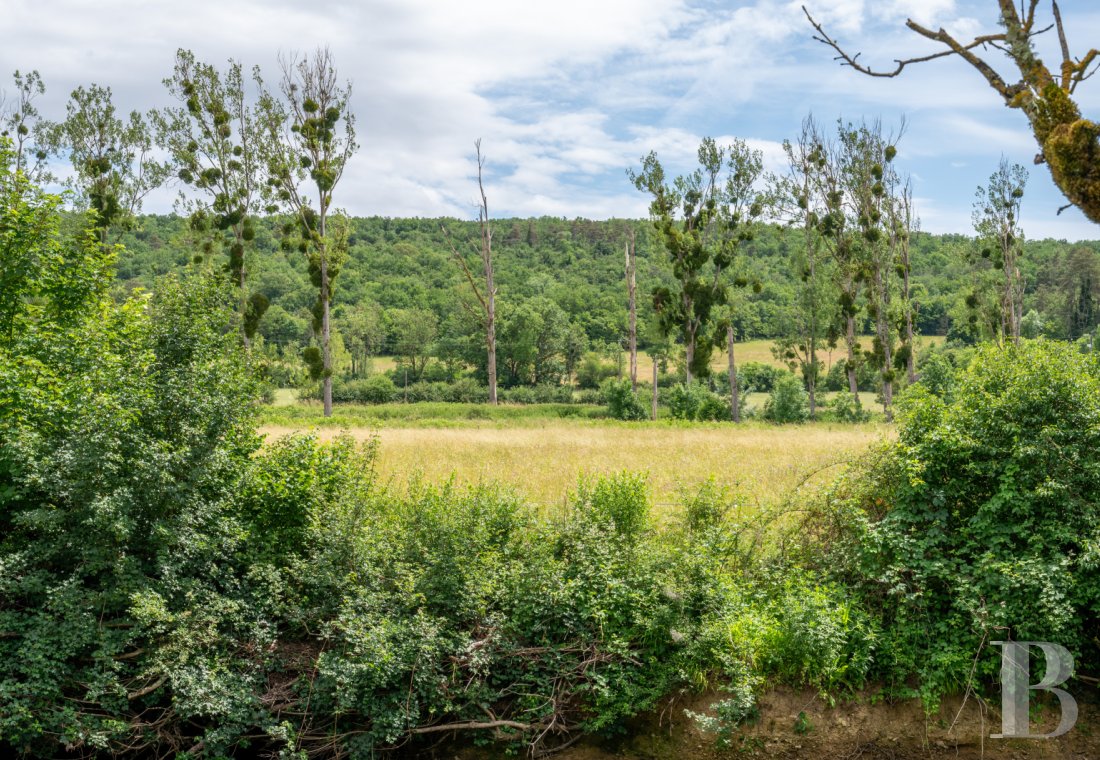
Set in the upper valley of the River Ouche, the property occupies a natural setting where the river and the Canal de Bourgogne connect a succession of historic villages between Dijon and Beaune — two cities that define Burgundian life, the first renowned for its gastronomy, the second for its grands crus. The canal is accessible on foot.
Fleurey-sur-Ouche, five minutes by road, has shops, services and schools. The Chassagne golf course is also five minutes away; the Dijon-Prenois racing circuit, 18 minutes. The TGV station at Dijon, 20 minutes distant, puts Paris within 1 hour 40 minutes by rail. By road, the capital is three hours via the A6 motorway; Lyon, two hours on the same route. Geneva and Basel are respectively 2 hours 45 minutes by car.
Description
Dated "1790" on a dressed-stone block and recorded on the Cassini map, the mill was acquired in 1834 by the Côte-d'Or departmental authority to regulate the water intake for lock 38 of the Canal de Bourgogne. A private buyer acquired it in 1984 as a ruin and rebuilt it entirely between 1986 and 1989, in a contemporary interpretation of rural Burgundian architecture, using the mill's original stones.
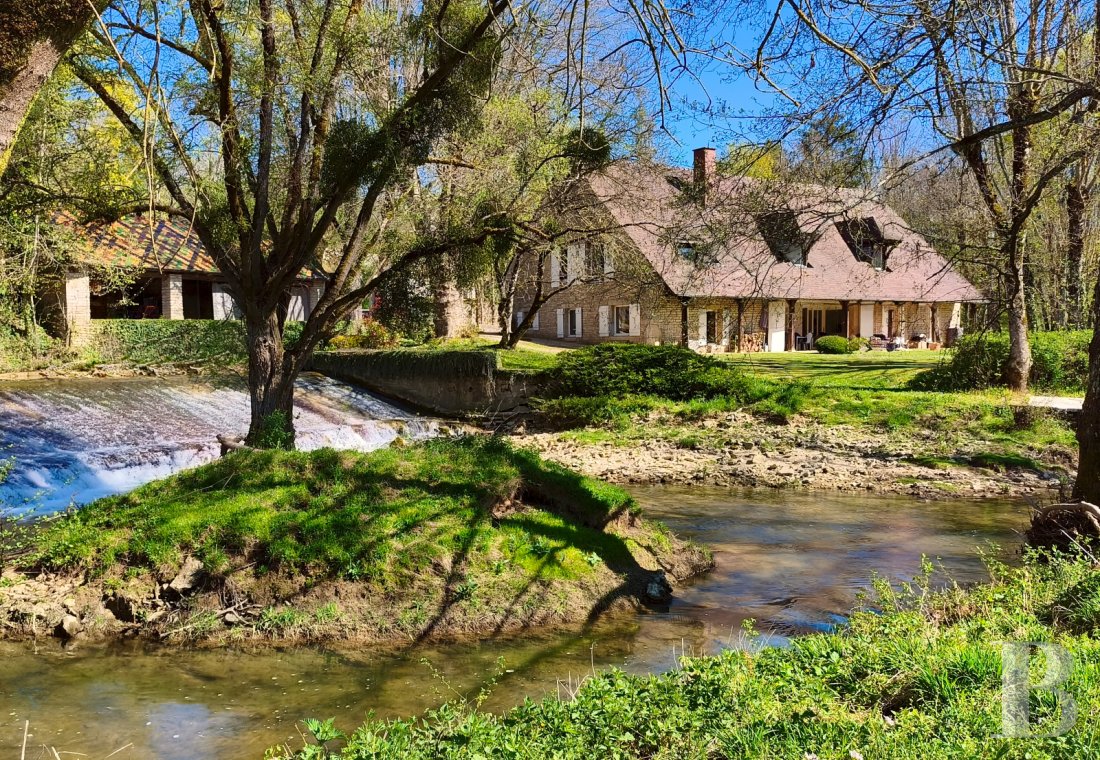
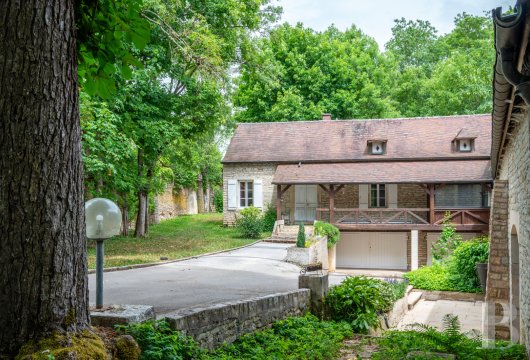
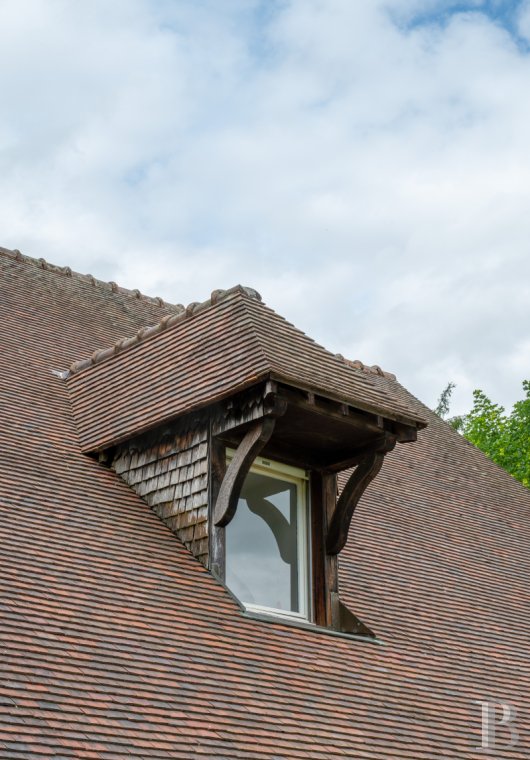
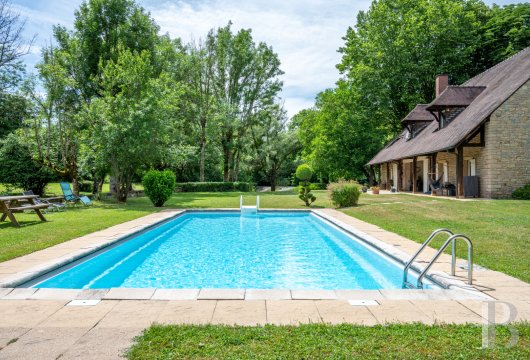
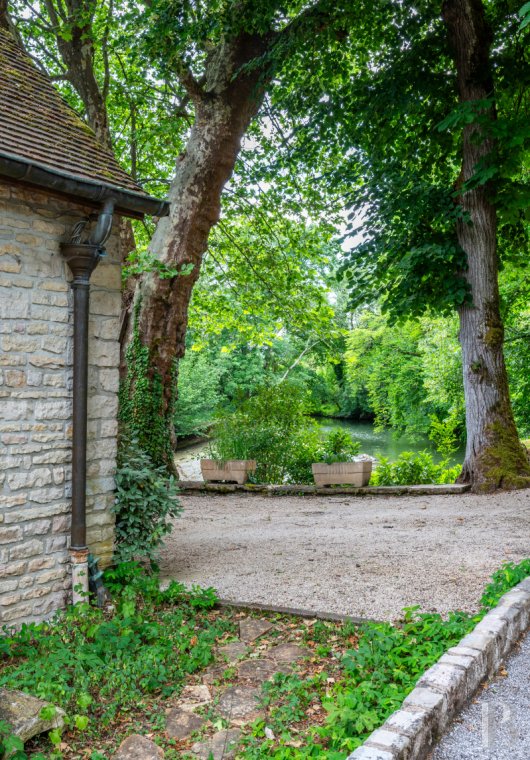
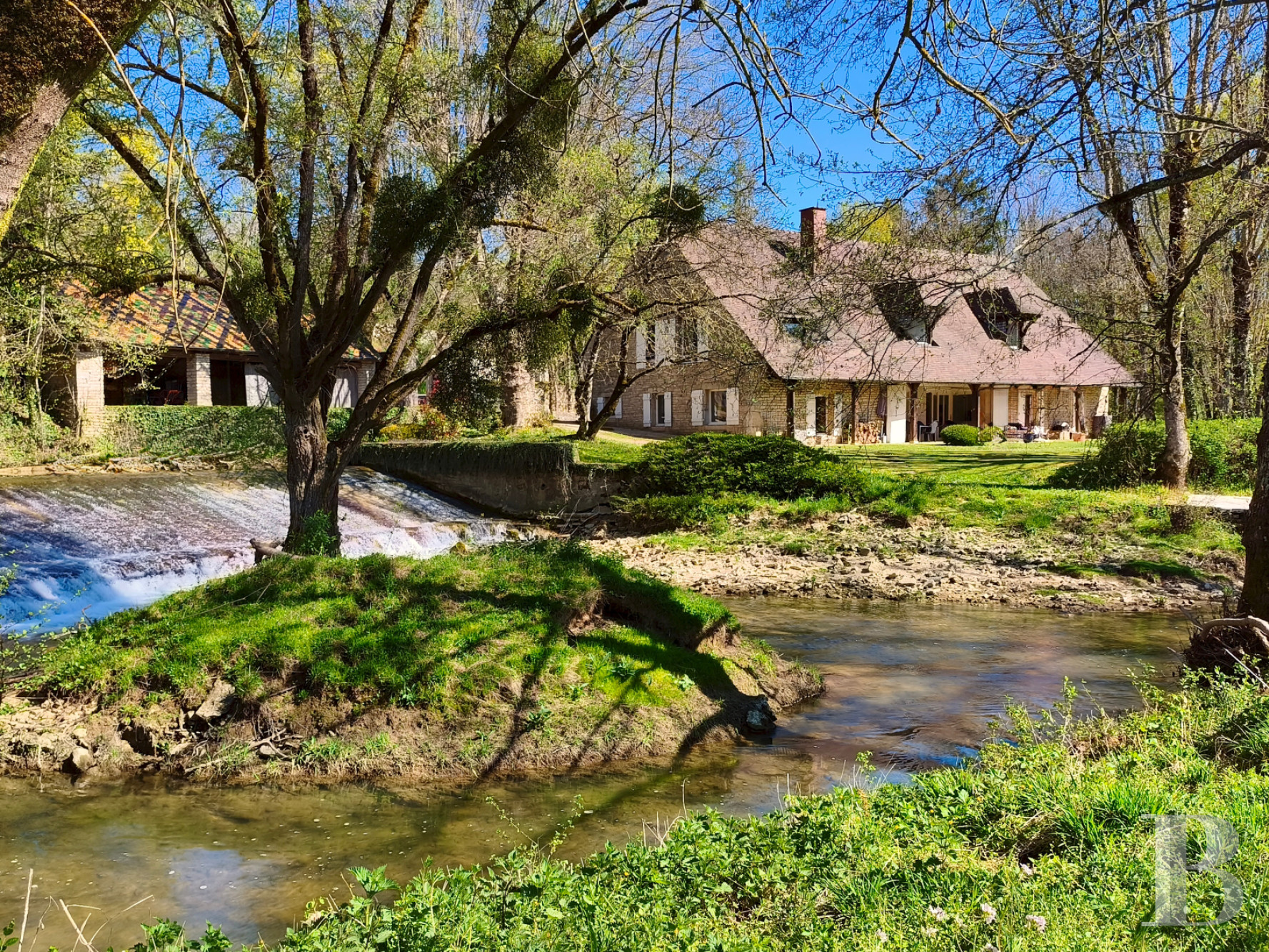
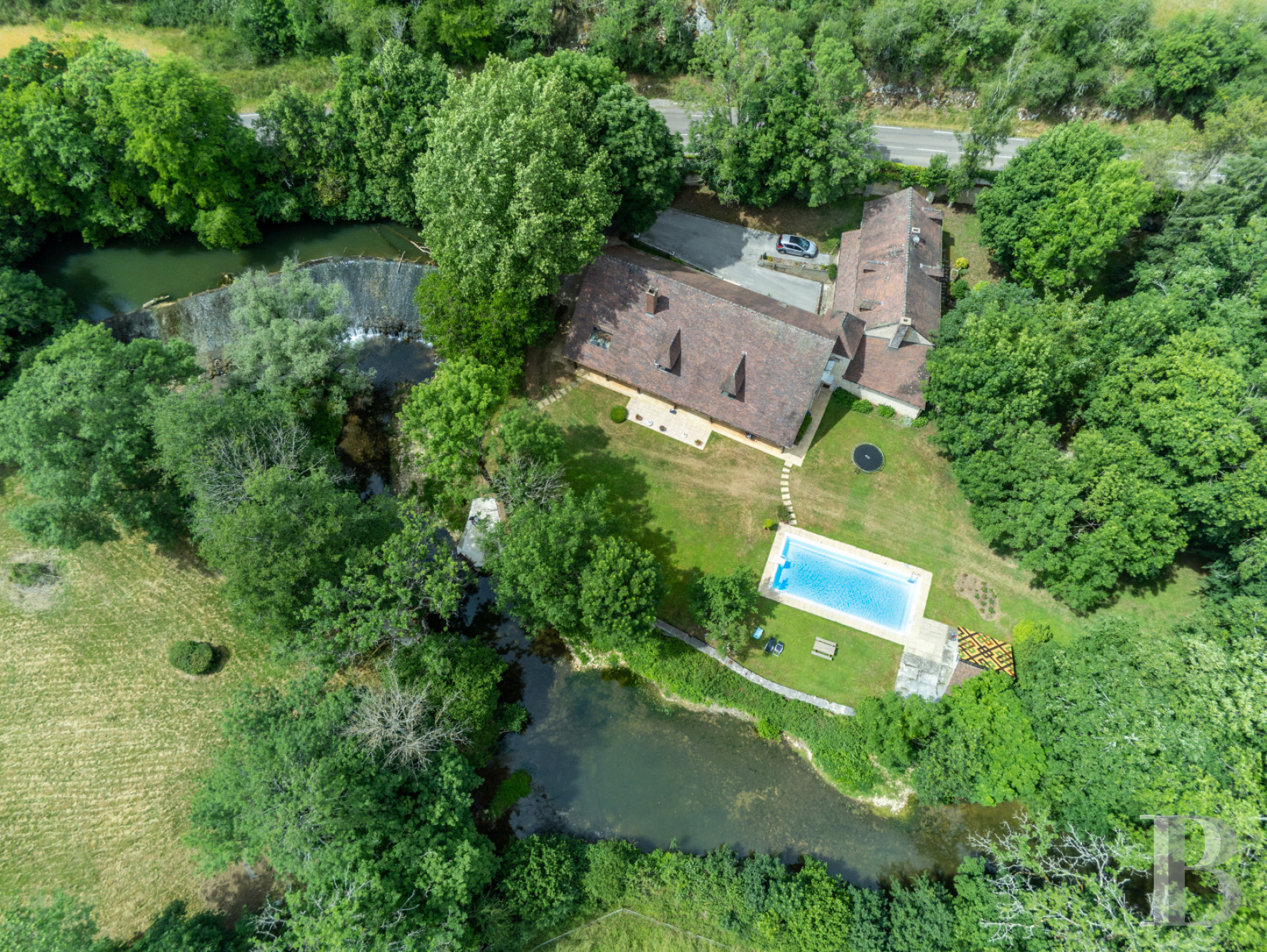
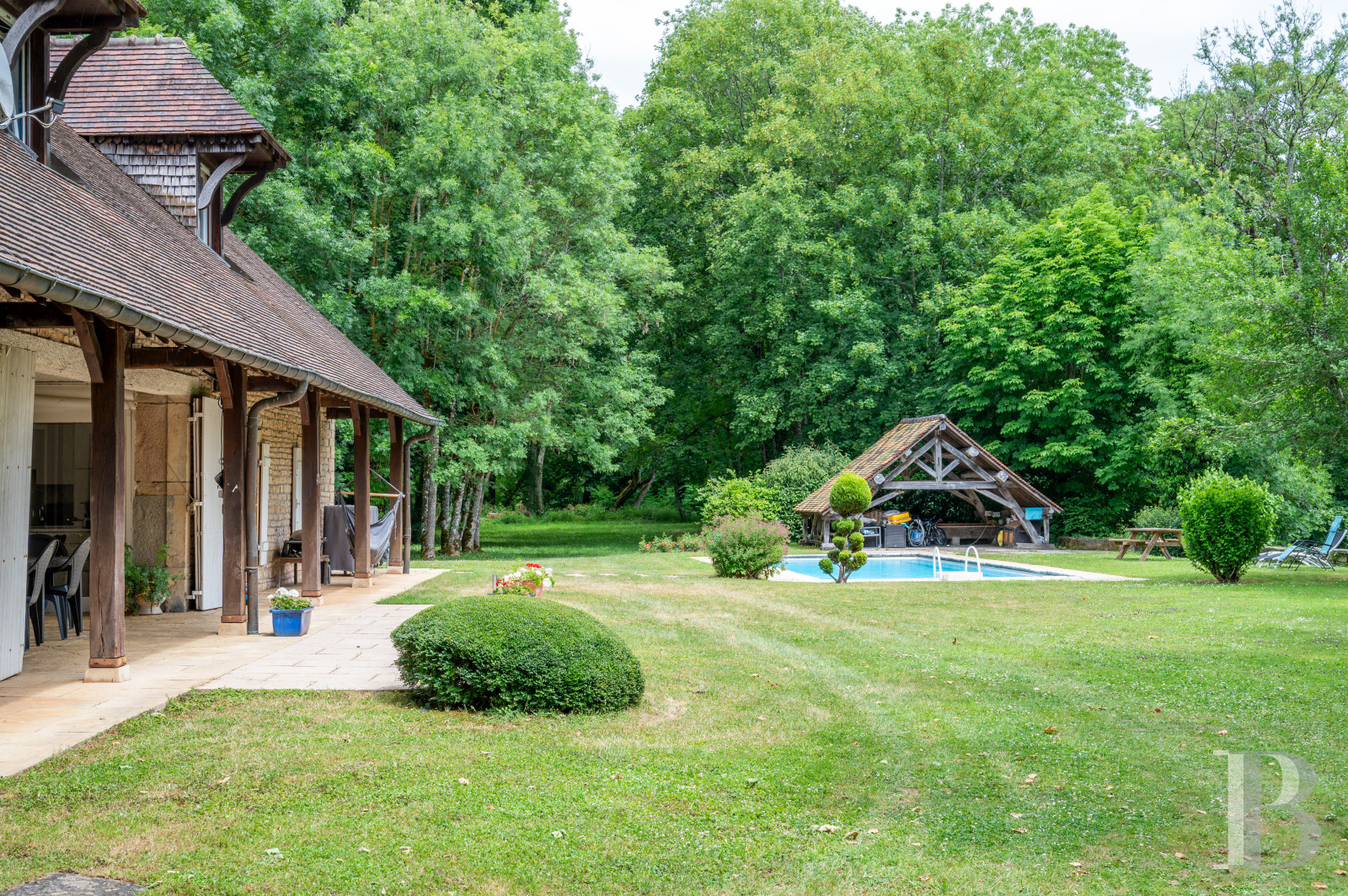
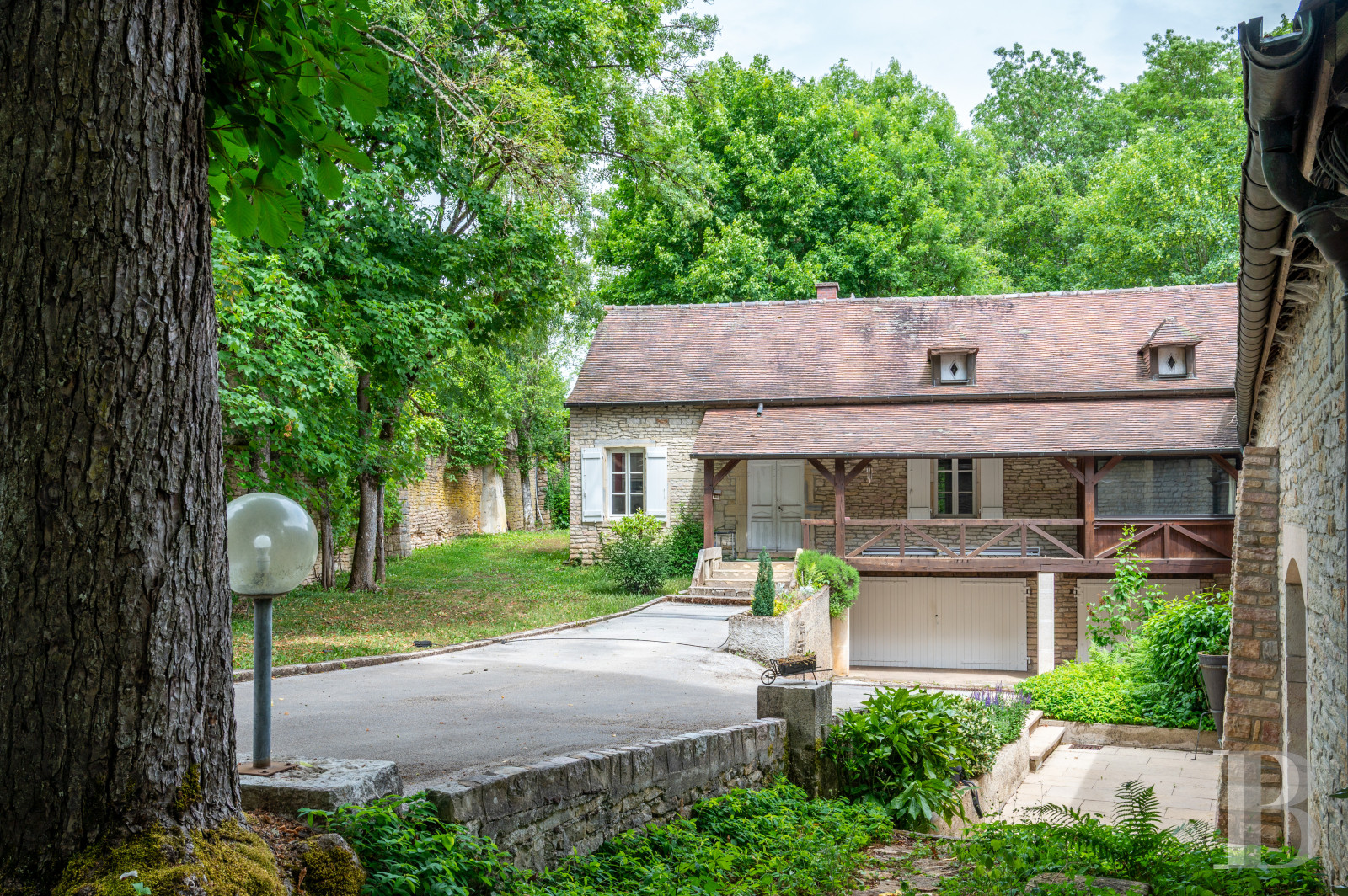
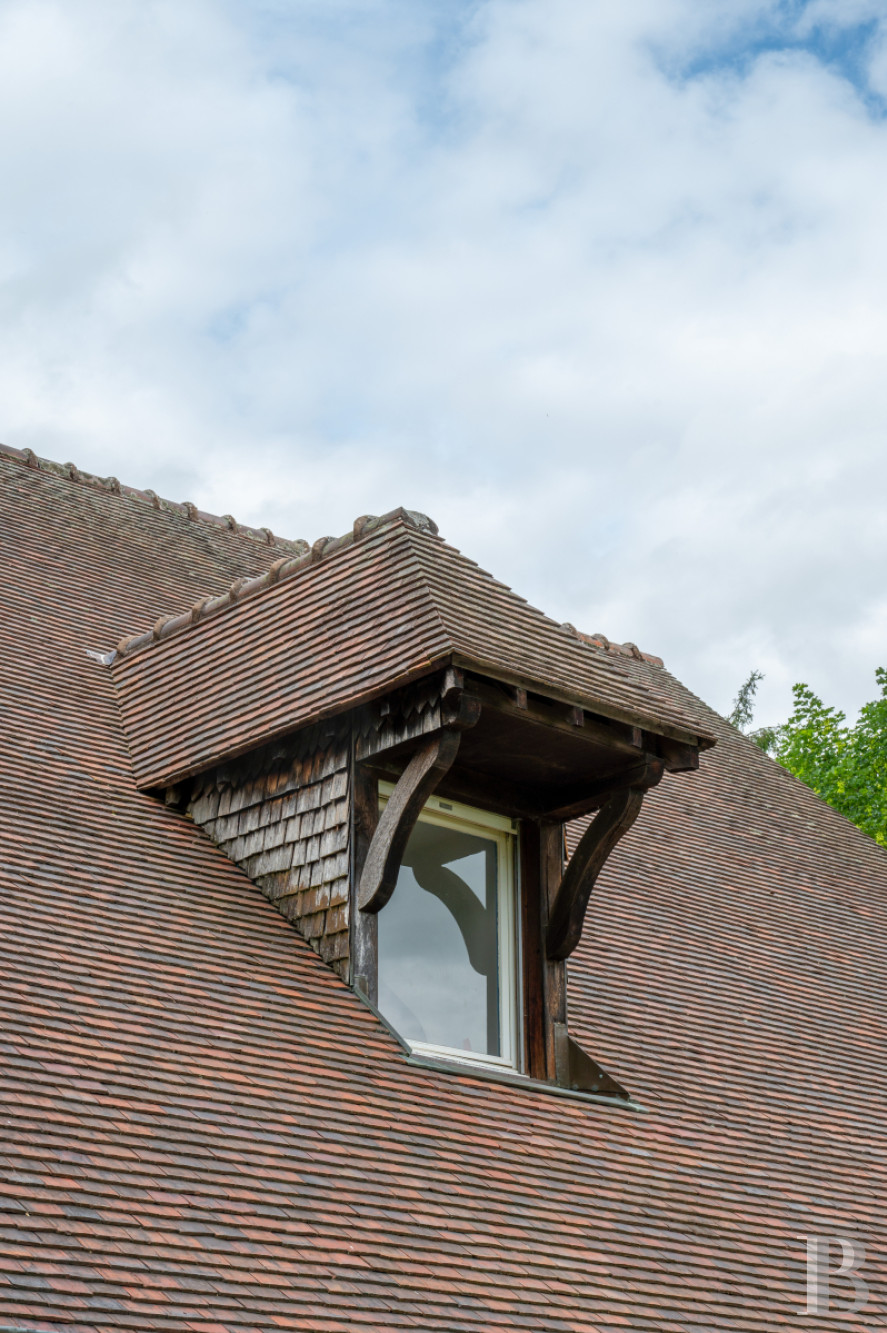
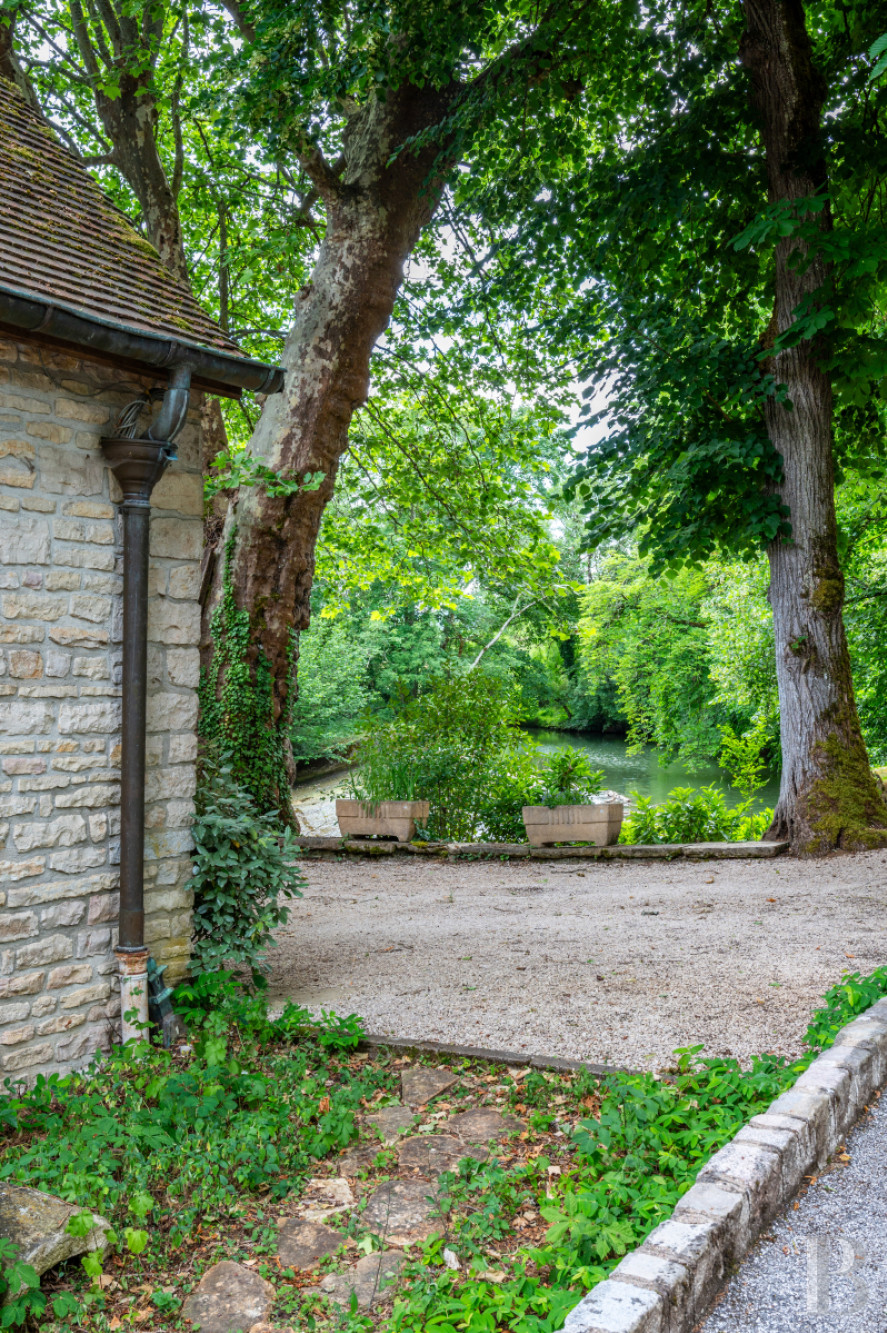
Two dressed-stone wings on an L-plan, each under a gabled flat-tile roof, form a house of approximately 420 m² of living area; a pavilion-roofed turret marks their junction. To the north, a carriage gate opens onto a courtyard serving two independent entrances and the garages. Beyond the gate, the road disappears behind trees and the sound of water. Open to the south with no overlooking, a covered terrace runs the full length of the facade, leading onto grounds planted with mature trees and edged by the Ouche.
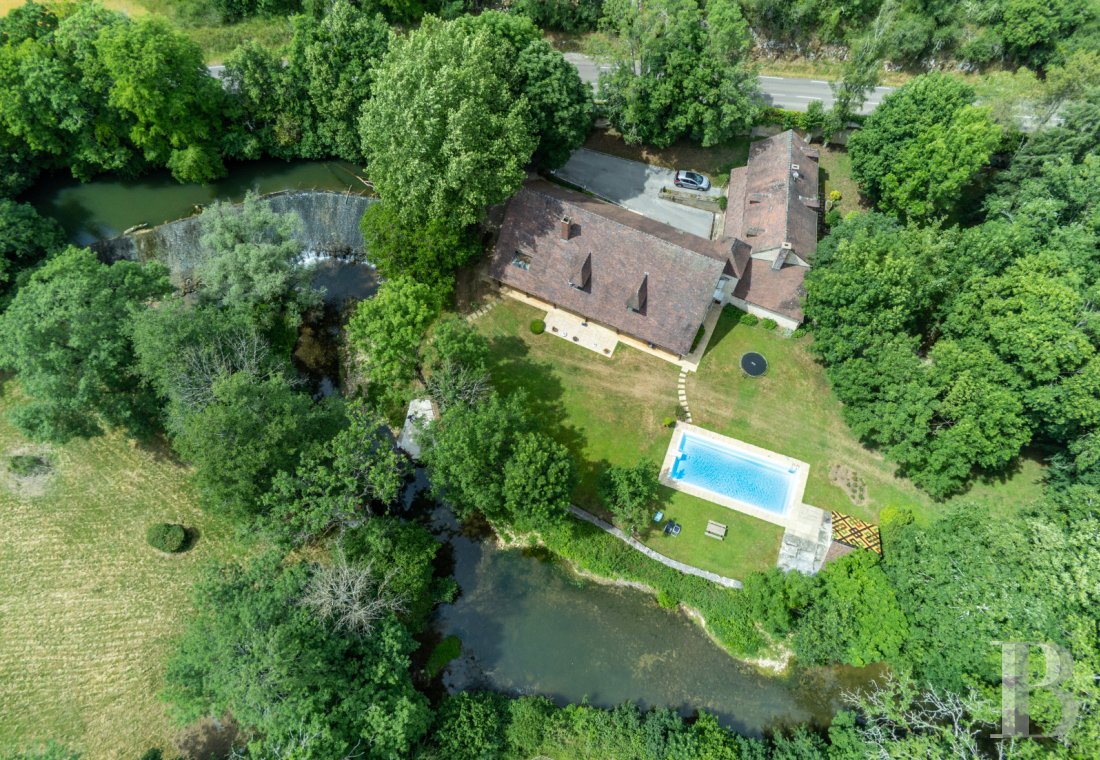
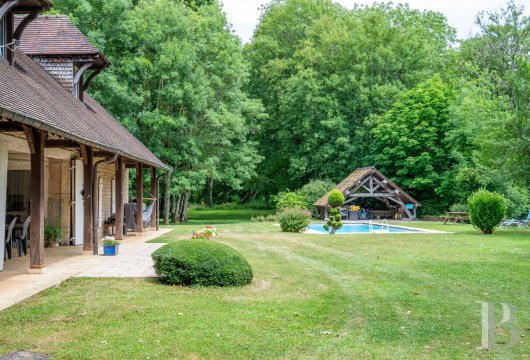
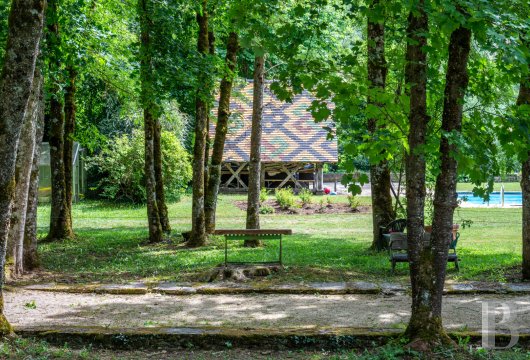
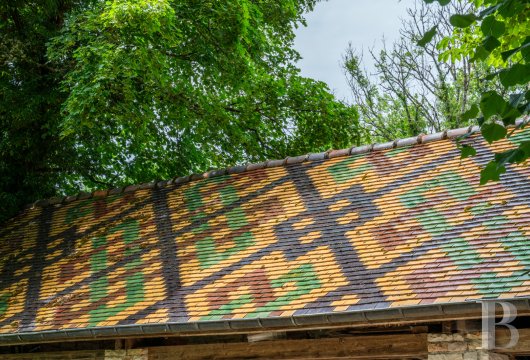
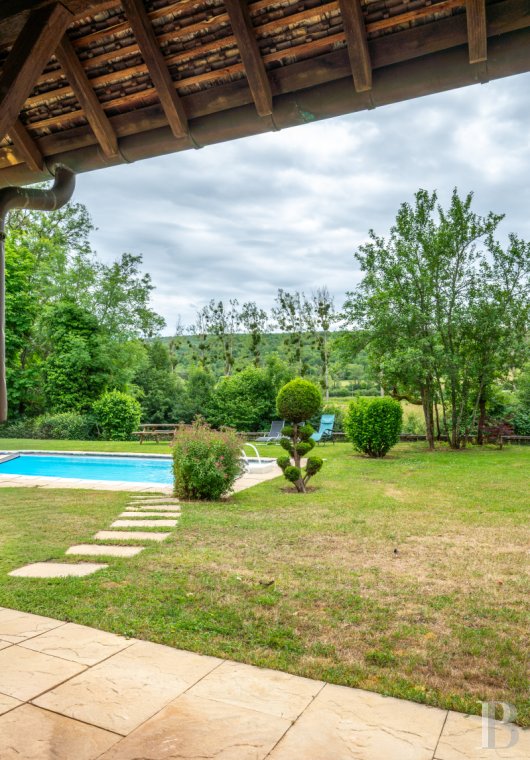
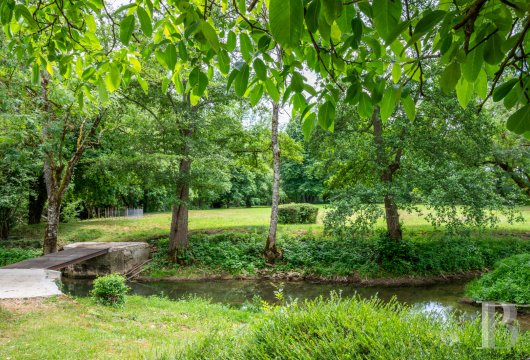
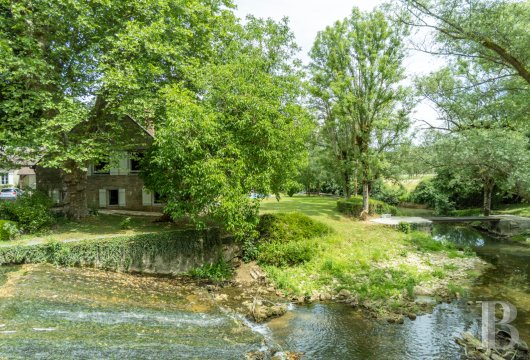
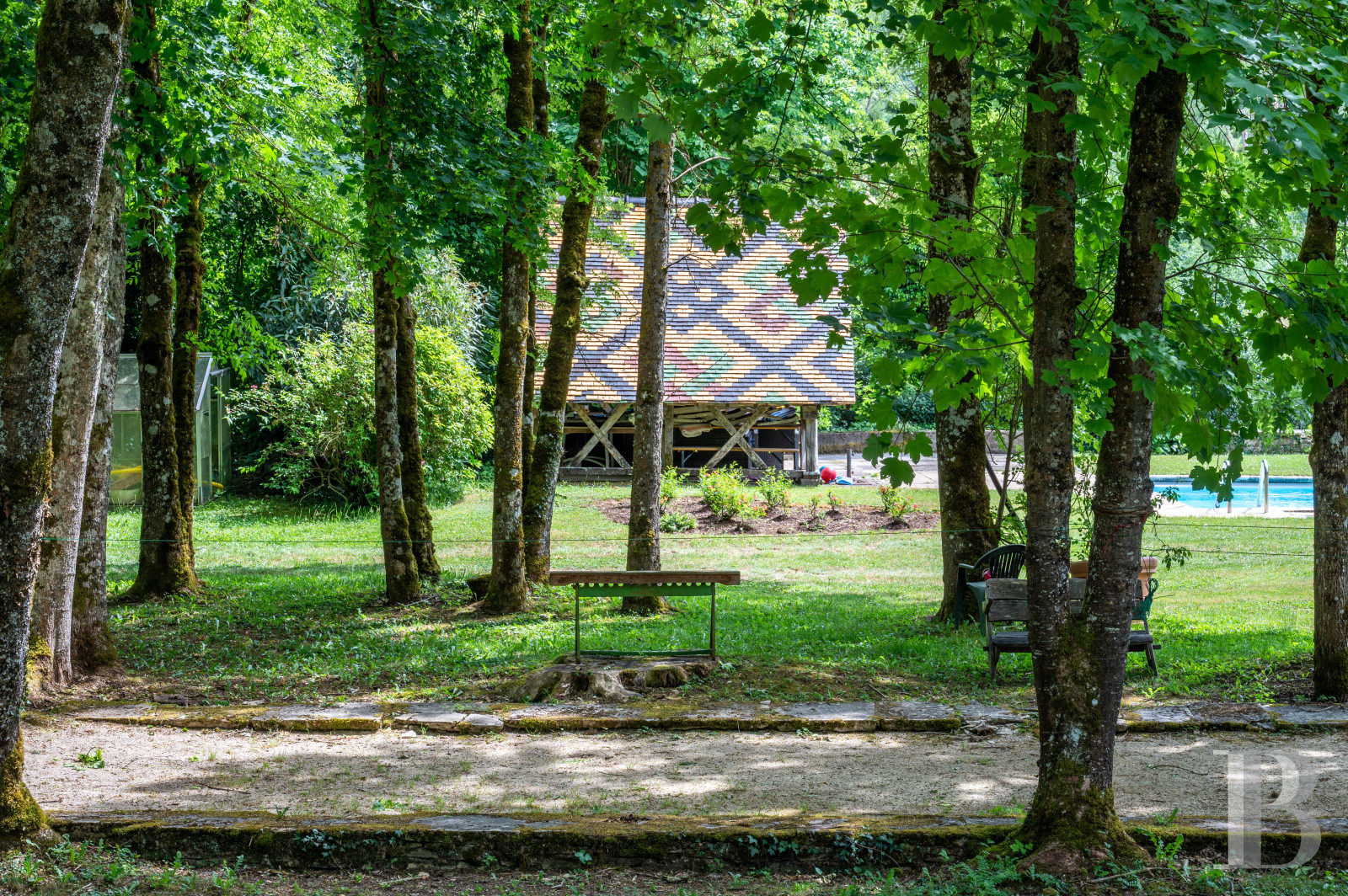
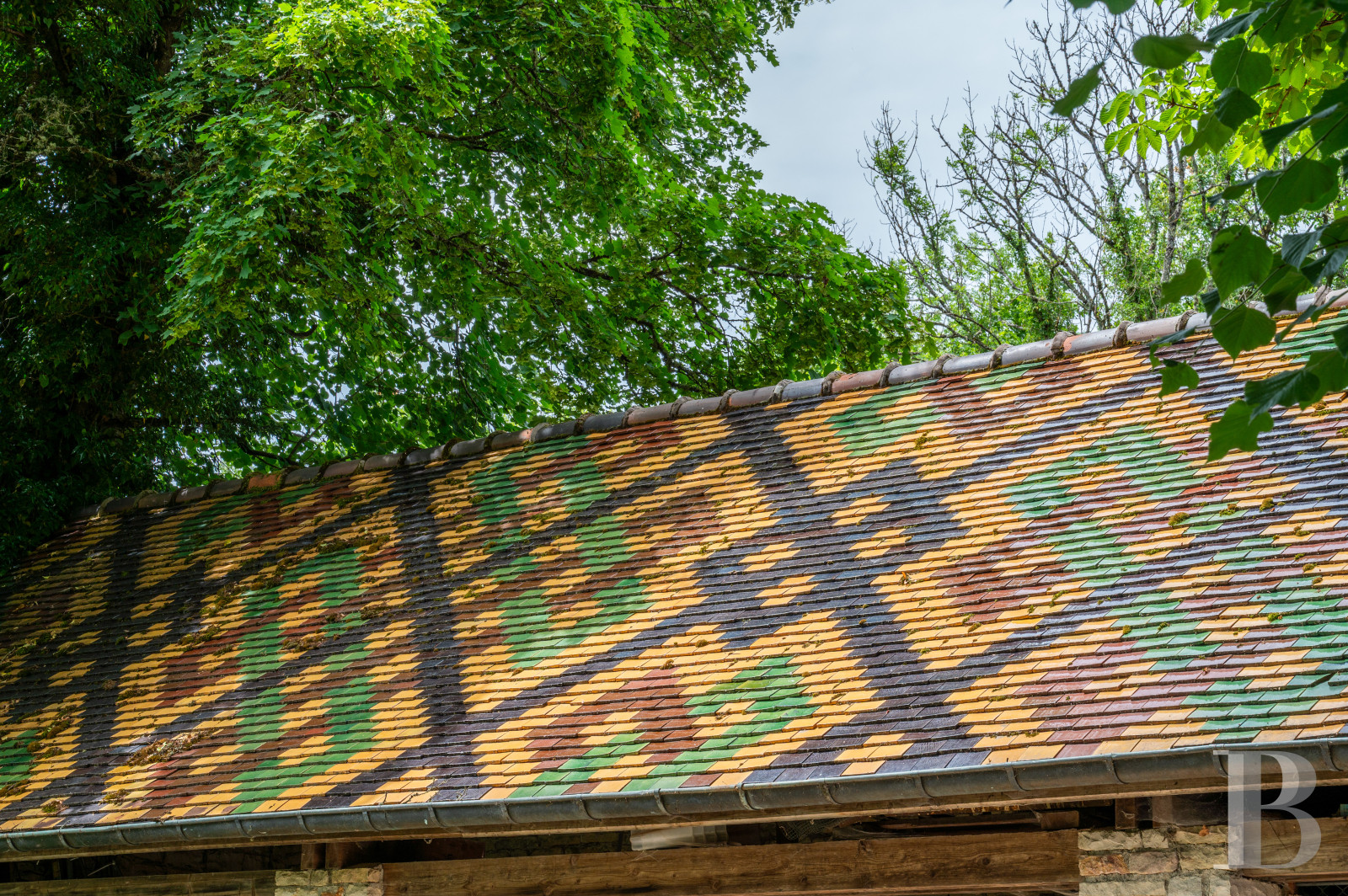
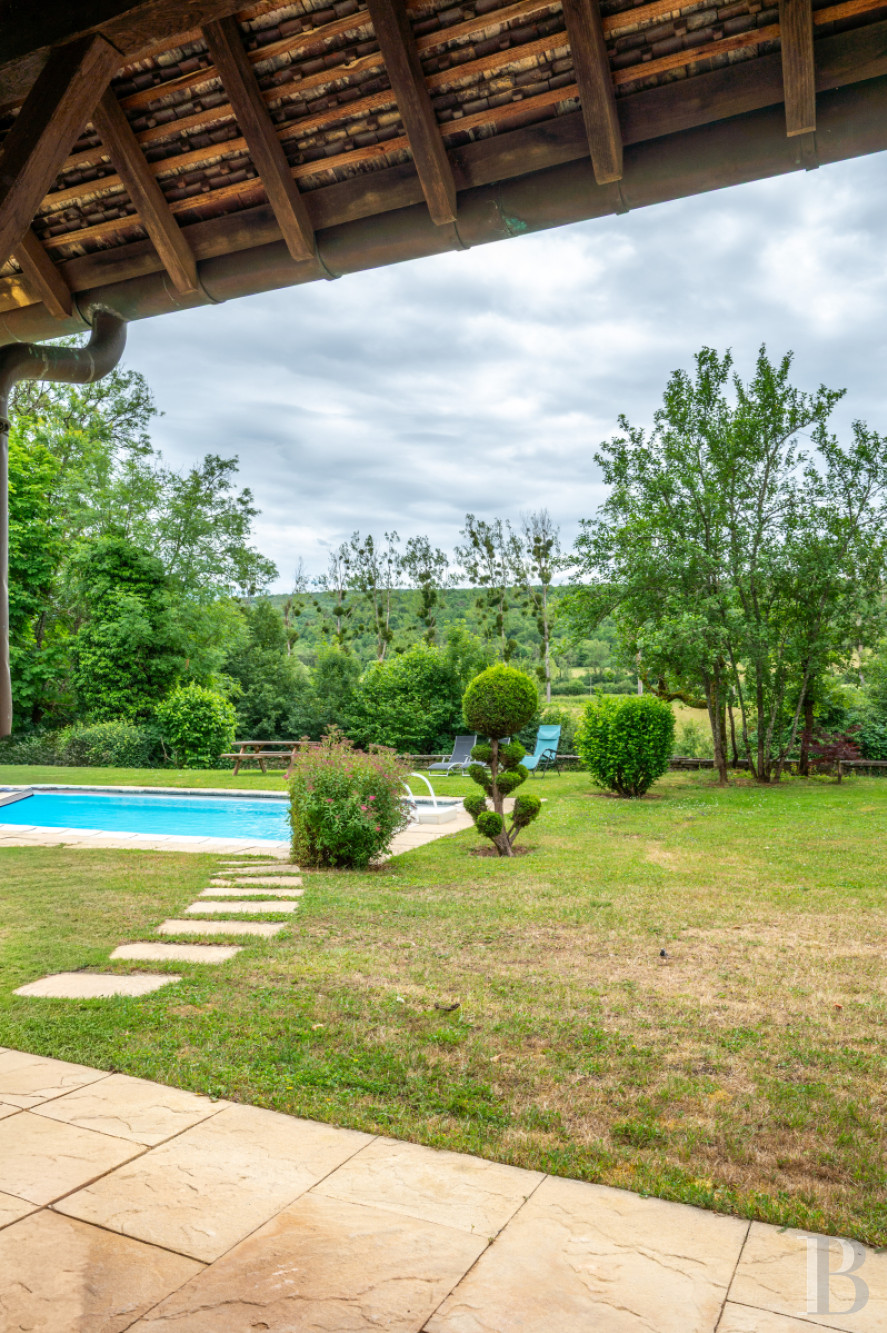
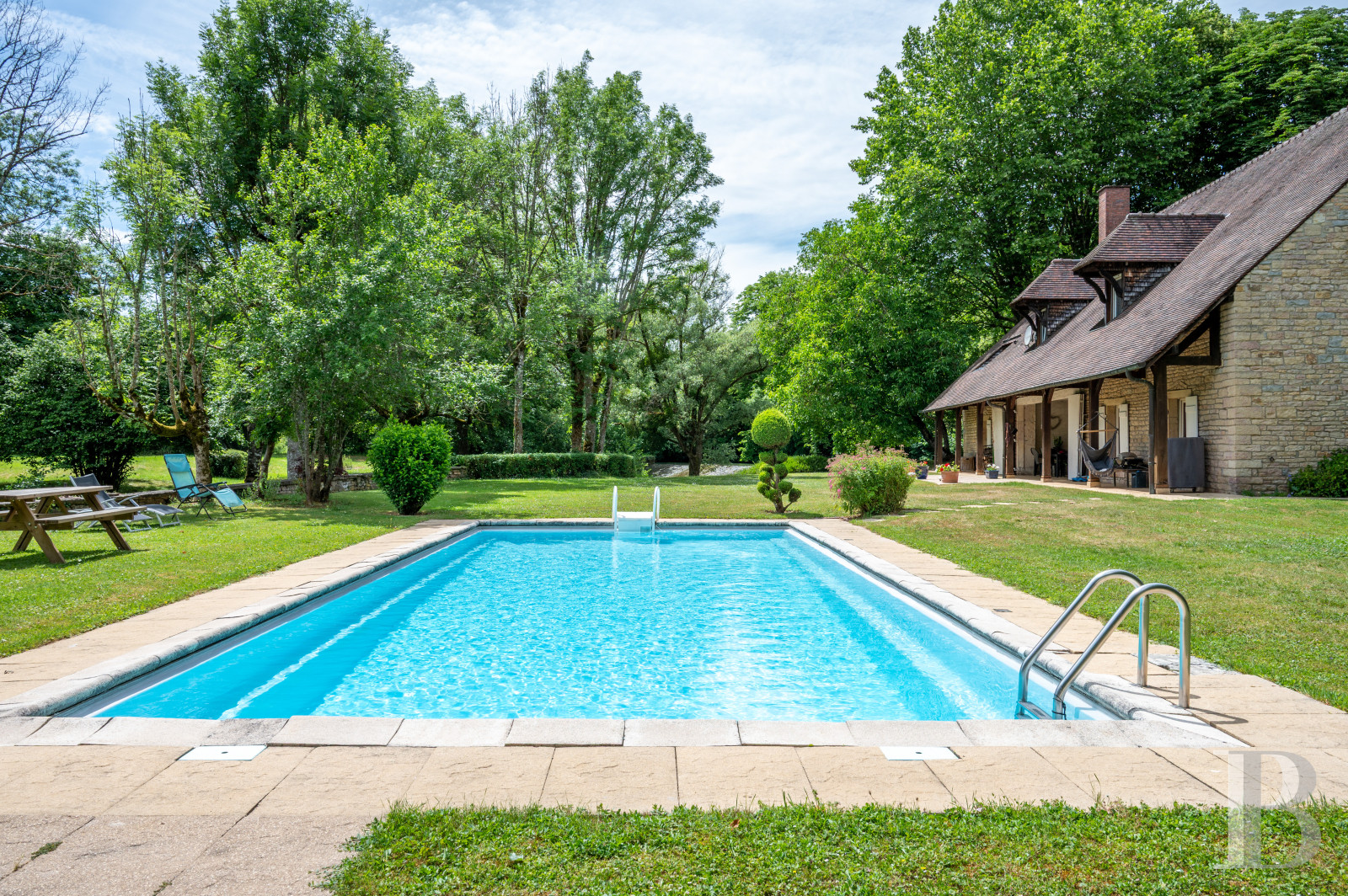
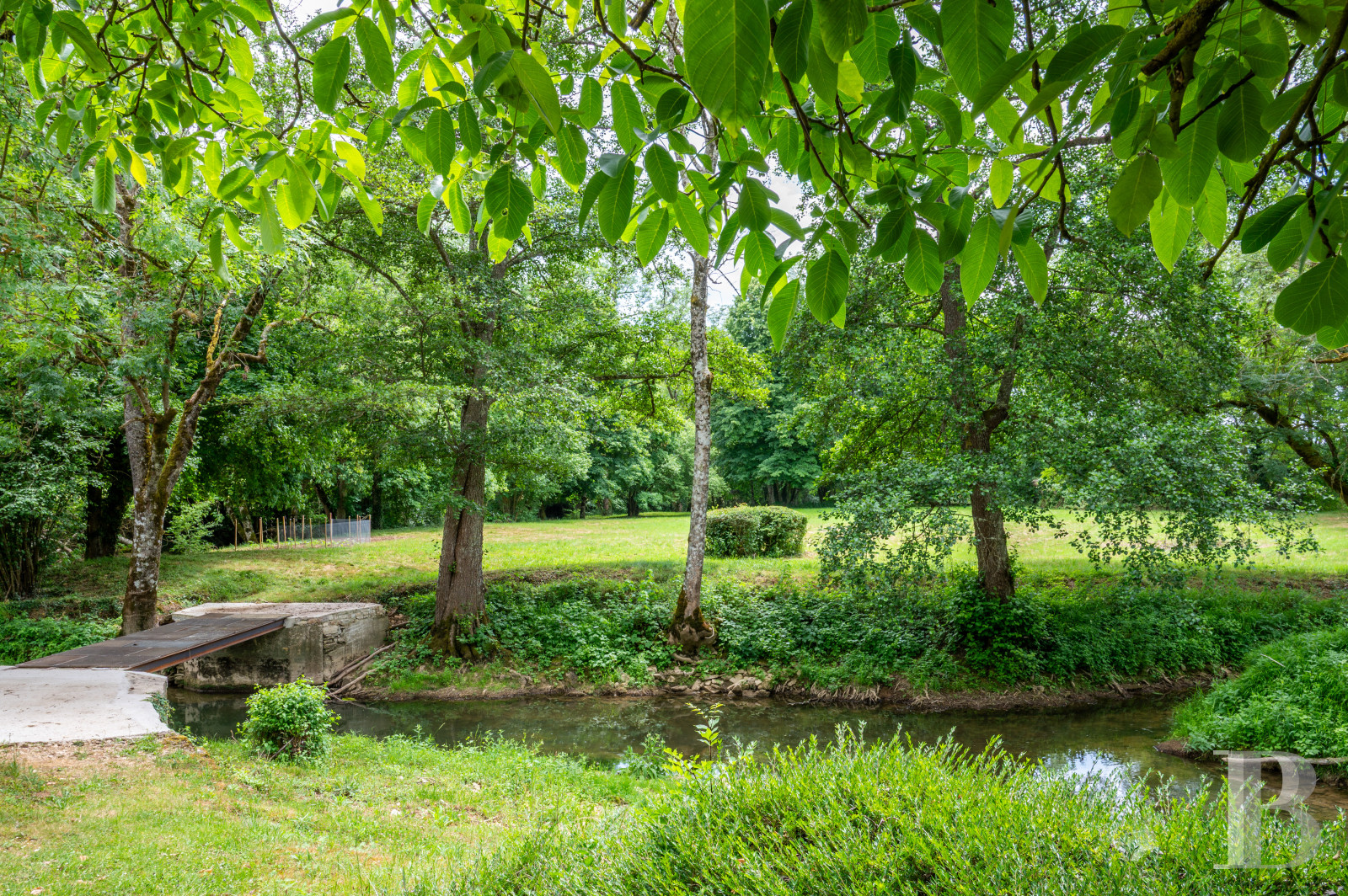
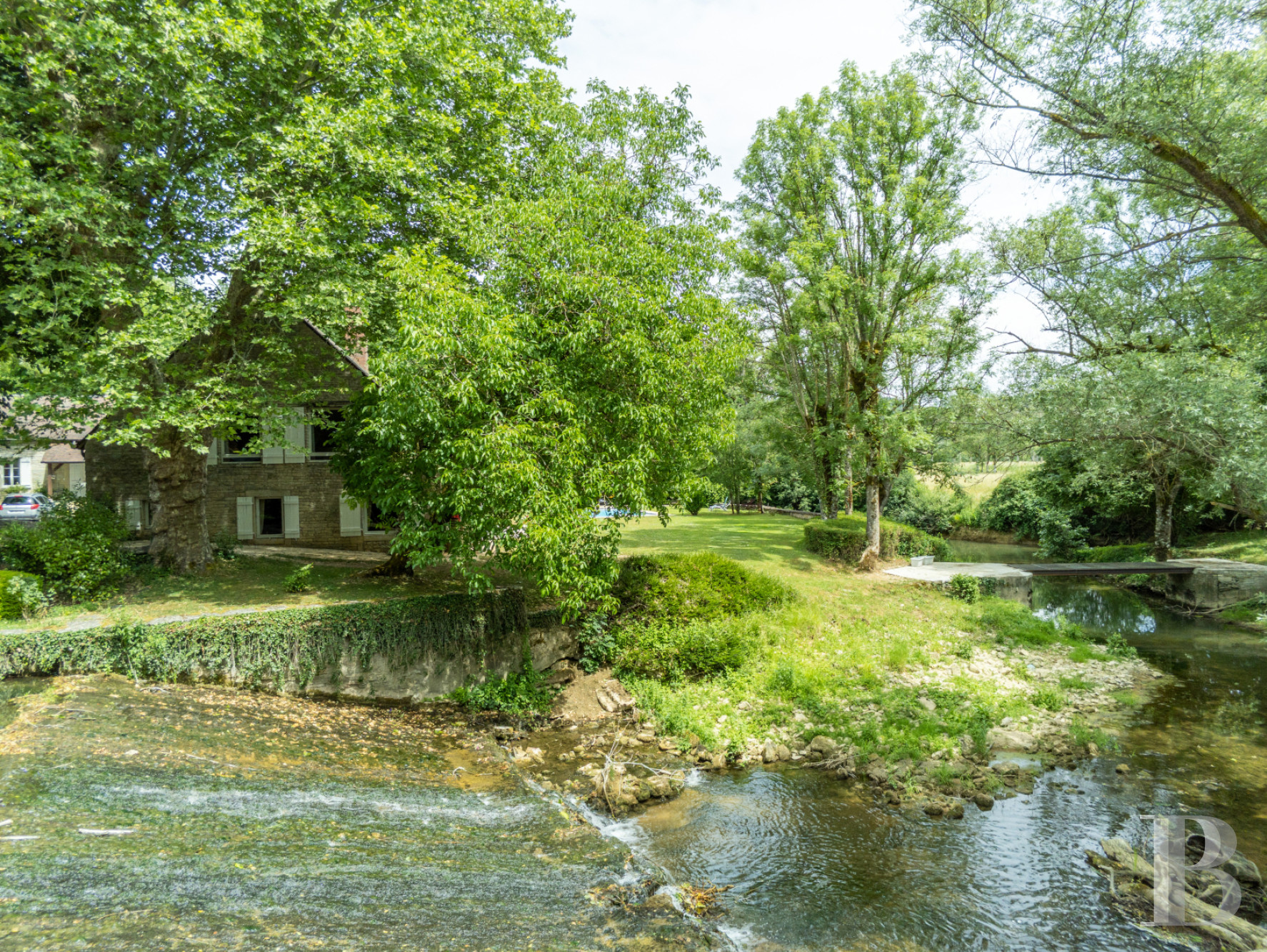
To the south-west, the river forks into two arms around a grassed island of 4,630 m², reached by a footbridge. To the north-west, the waterfall — a remnant of the original mill mechanism — fills the site with a permanent murmur. The grounds hold a 12 m × 6 m pool with a shelter roofed in glazed polychrome geometric tiles in the Burgundian tradition, its structure in exposed timber framing, and an open barn of some 60 m² under matching roofing.
Two dressed-stone wings on an L-plan, each under a gabled flat-tile roof, form a house of approximately 420 m² of living area; a pavilion-roofed turret marks their junction. To the north, a carriage gate opens onto a courtyard serving two independent entrances and the garages. Beyond the gate, the road disappears behind trees and the sound of water. Open to the south with no overlooking, a covered terrace runs the full length of the facade, leading onto grounds planted with mature trees and edged by the Ouche.
To the south-west, the river forks into two arms around a grassed island of 4,630 m², reached by a footbridge. To the north-west, the waterfall — a remnant of the original mill mechanism — fills the site with a permanent murmur. The grounds hold a 12 m × 6 m pool with a shelter roofed in glazed polychrome geometric tiles in the Burgundian tradition, its structure in exposed timber framing, and an open barn of some 60 m² under matching roofing.
The main house
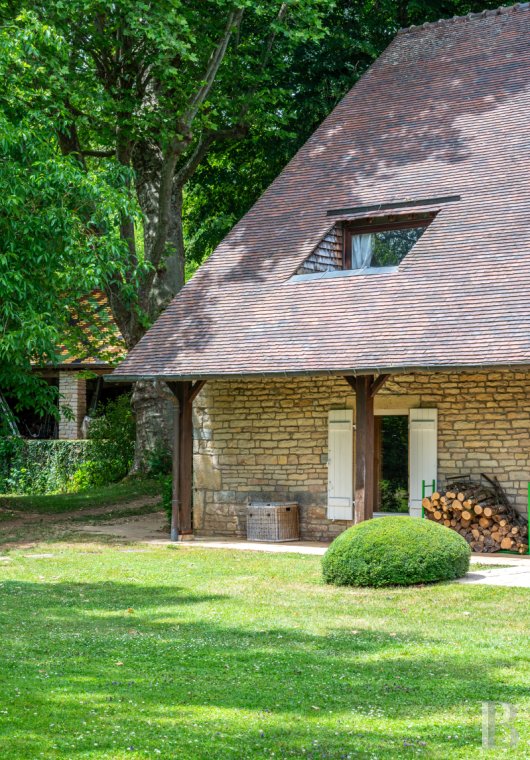
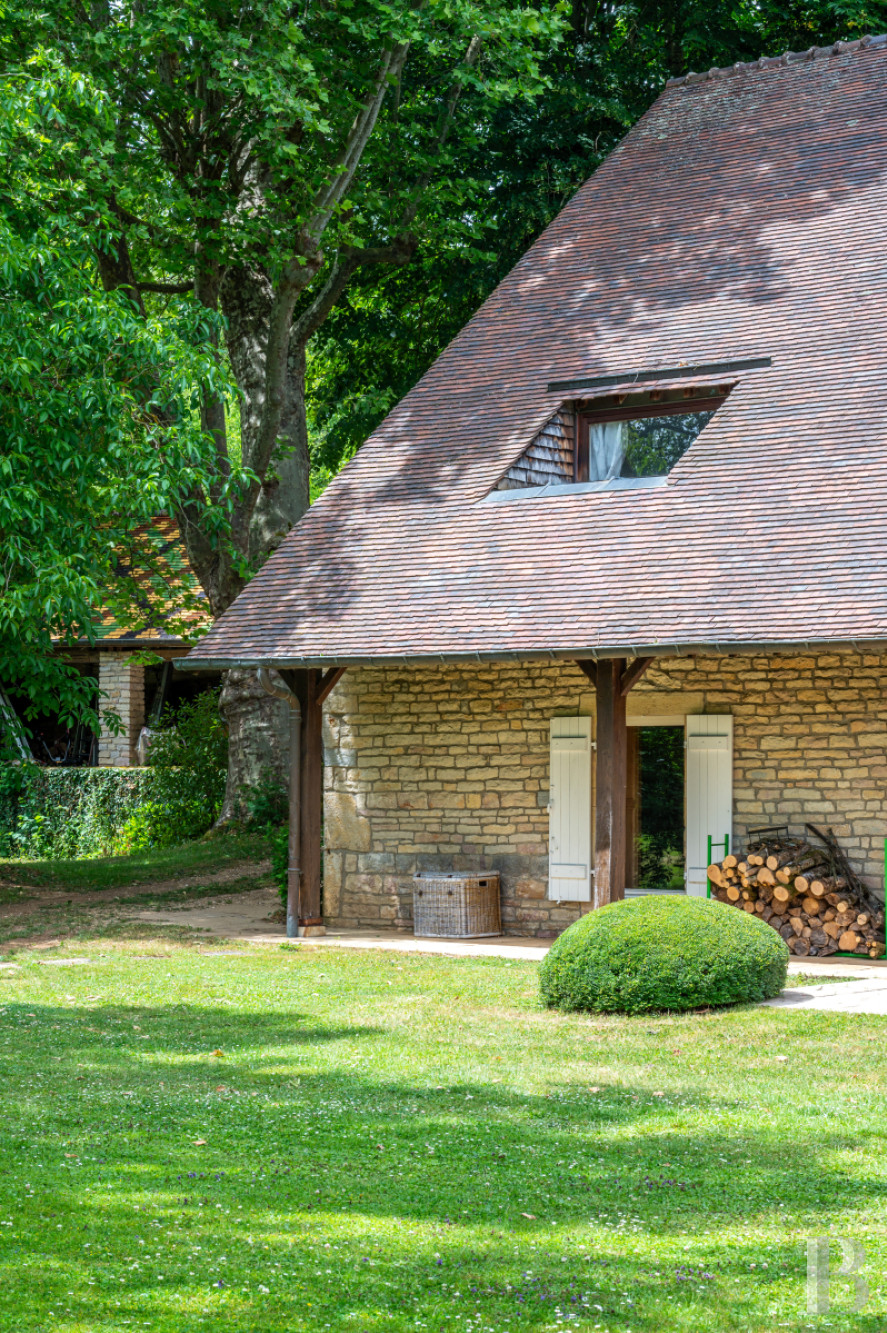
Built in dressed stone, two levels high and south-facing, the main house stands under a gabled flat-tile roof. An adjoining turret with a pavilion roof marks the junction with the secondary house, set at right angles. The stone-framed windows are fitted with timber shutters.
The ground floor
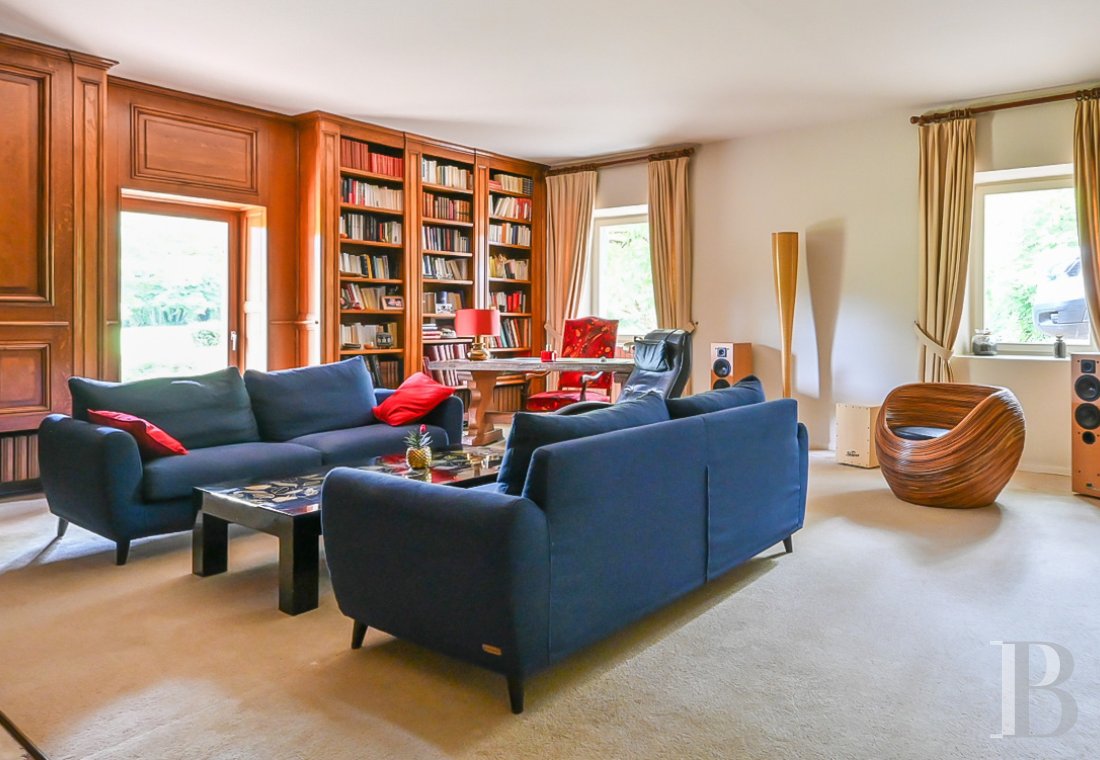
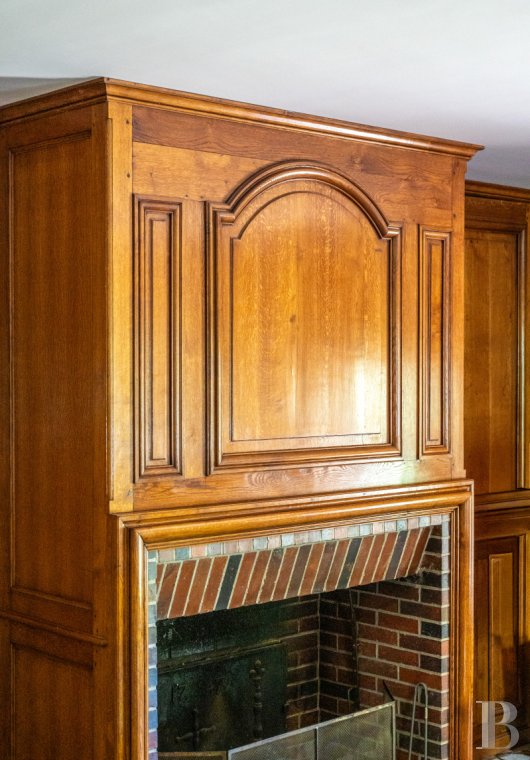
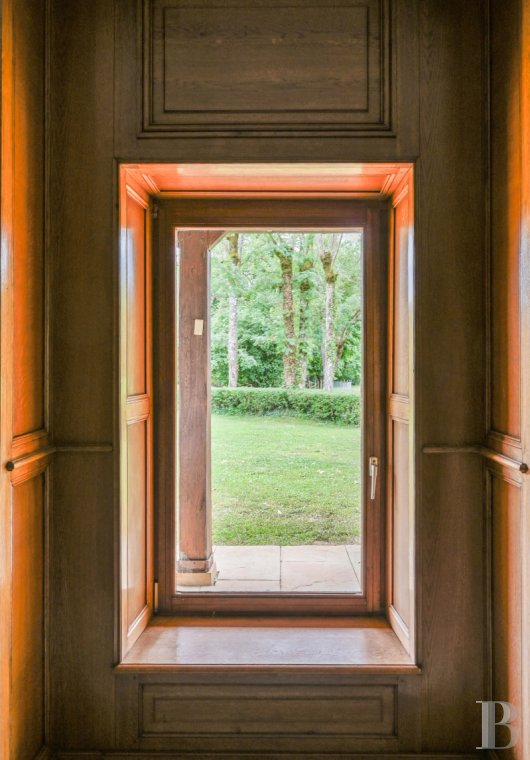
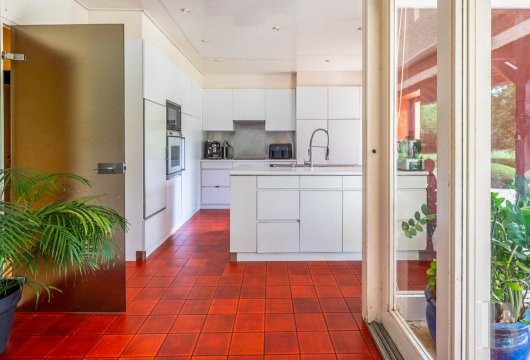
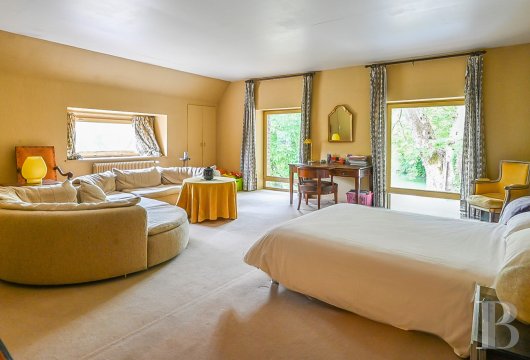
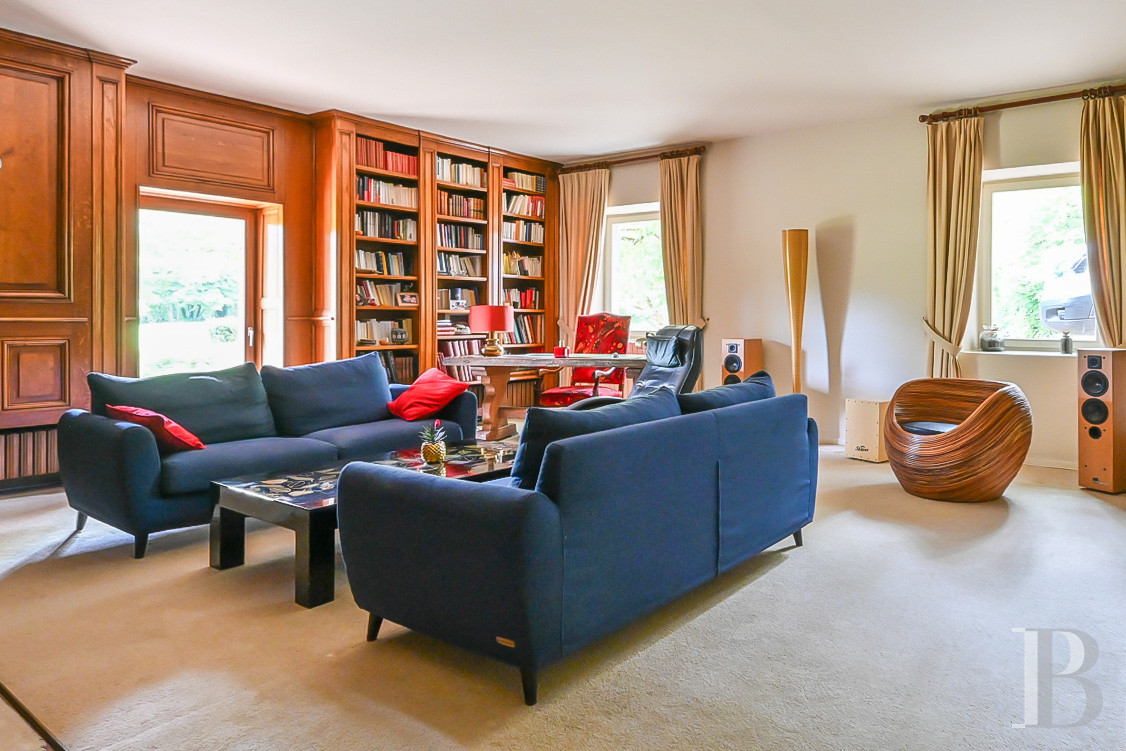
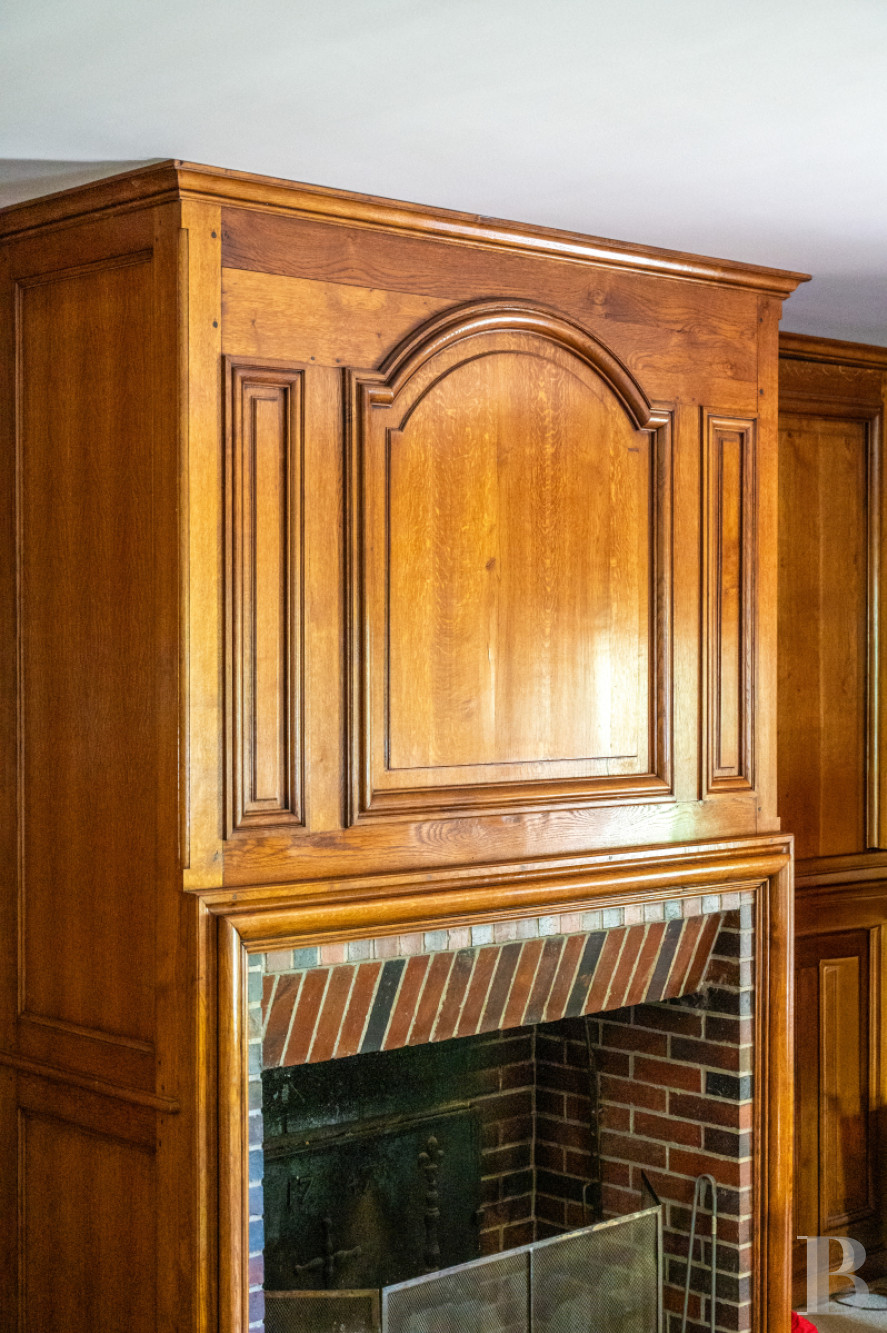
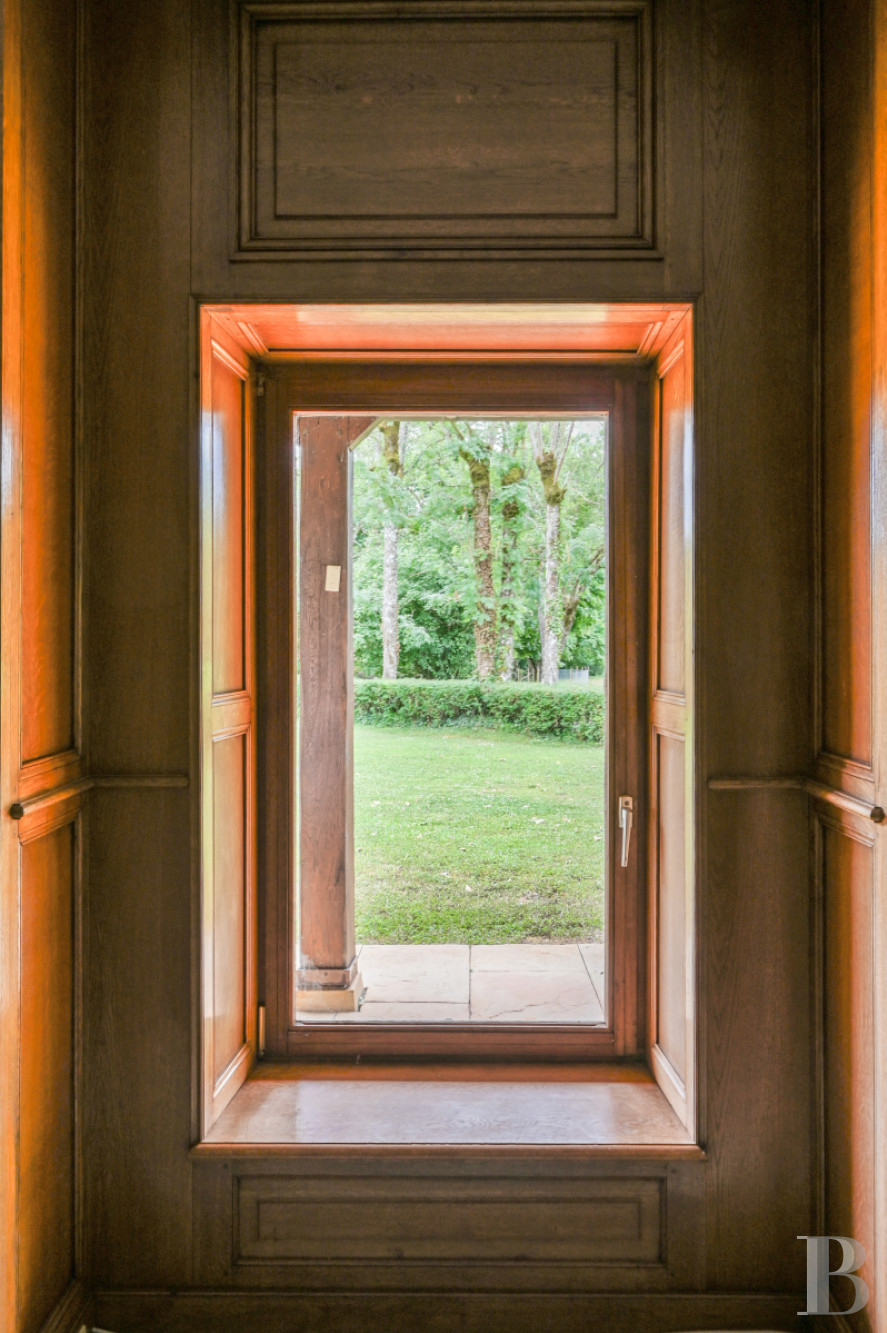
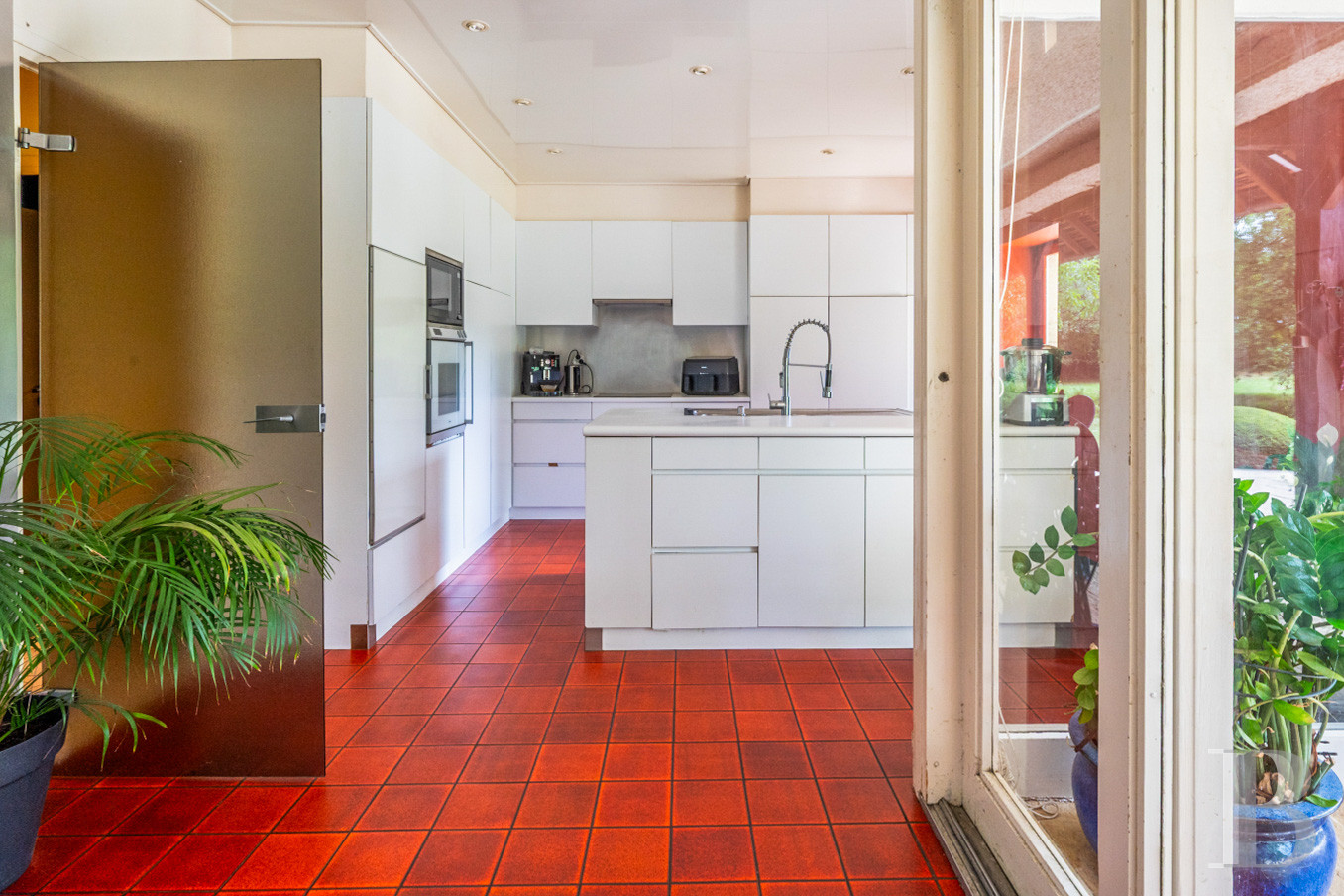
The tiled vestibule opens onto the drawing room, arranged as two distinct areas. The first is organised around a brick-hearth fireplace; two walls are panelled in wood to their full height, one incorporating a bespoke bookcase. The second, slightly raised, has windows framing the waterfall. The dining room draws light through sliding doors opening onto the terrace and grounds beyond. The kitchen, fitted with a central island, follows in sequence: its white cabinetry contrasts with the red tiled floor, and large glazed doors open to the garden. A hallway distributes a monochrome bedroom — walls, carpet and curtains in a single colour — with wardrobe and a dark blue satin-finish bathroom, served by its own storage and bathroom. A service corridor leads to a utility room, laundry, lavatory and boiler room.
The upstairs
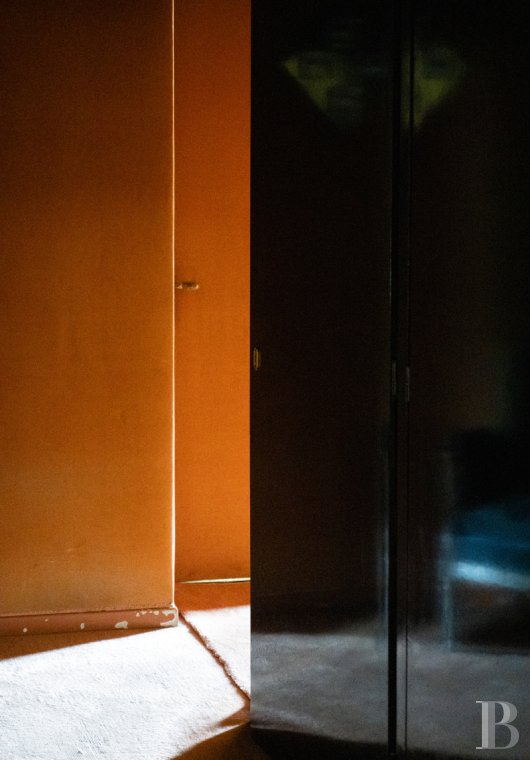
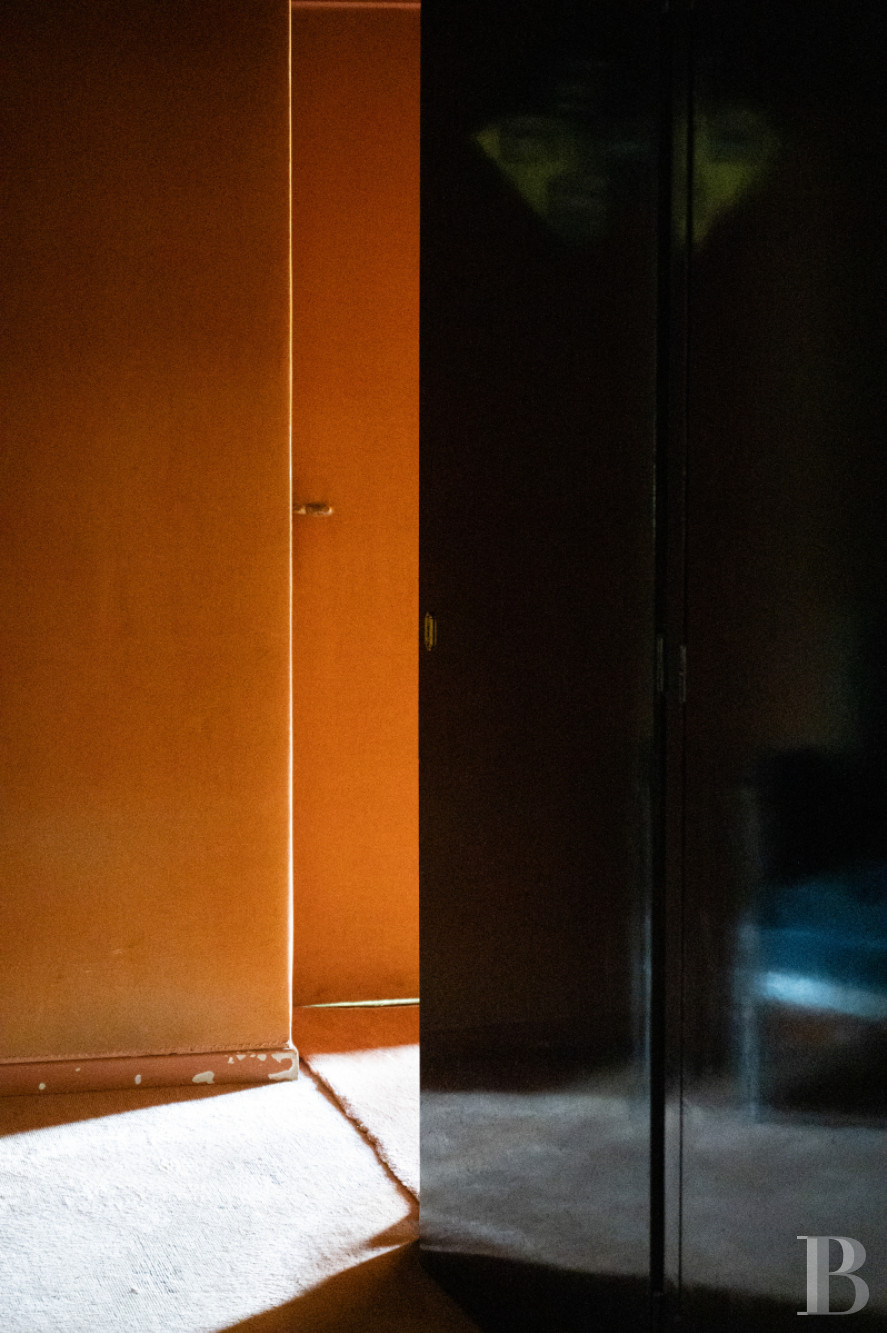
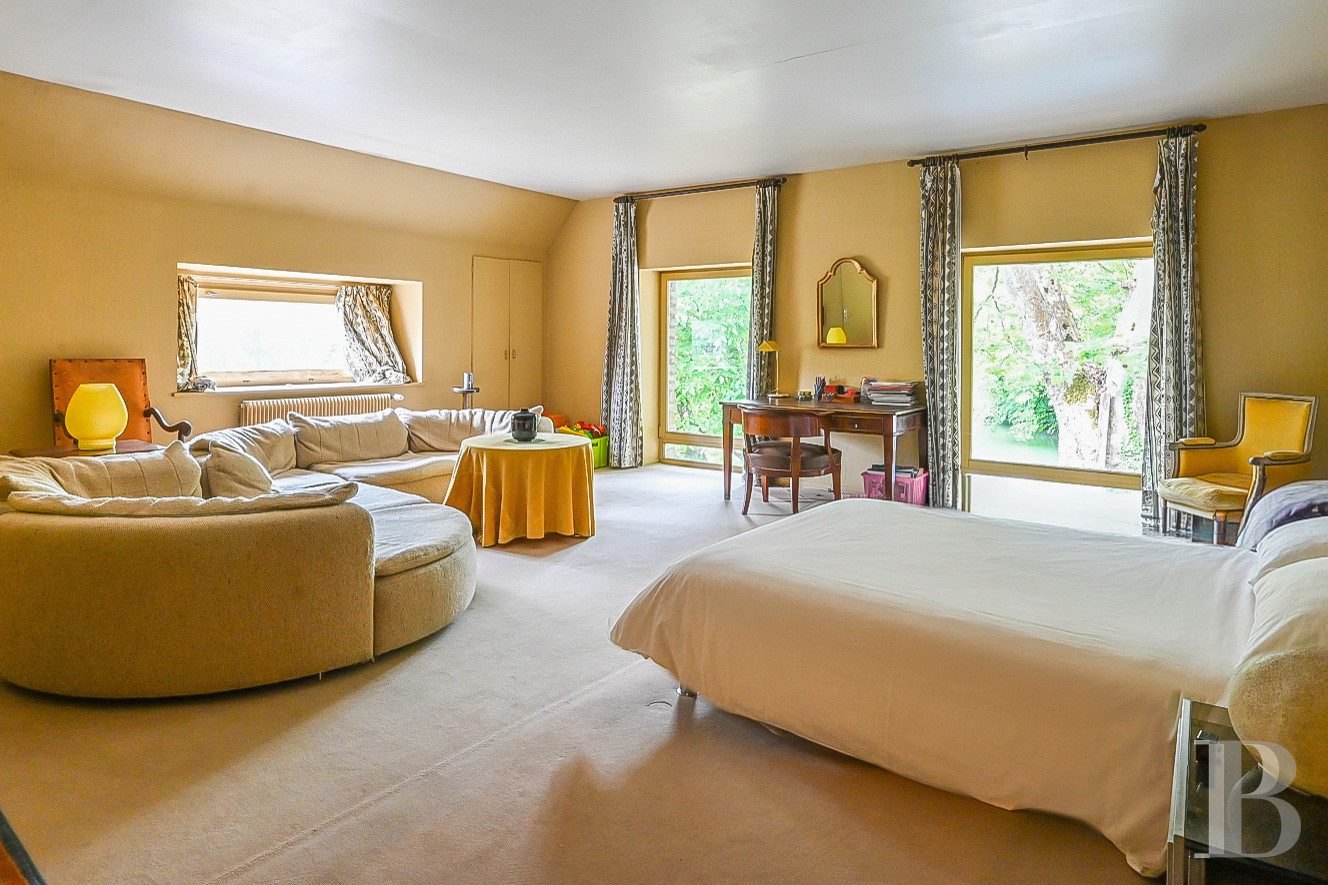
The red-walled landing distributes the principal bedroom, which has two tall west-facing windows framing the waterfall and an elongated south-facing window taking in the valley. Fitted wardrobes line the walls; a lavatory, shower room and small kitchen complete the suite of rooms. A door opens to the unconverted attic, which retains its potential for development.
A corridor extends the landing to three further bedrooms, each with wardrobes and views over the grounds. They share a bathroom with bath and shower, and a lavatory. Beyond, a second corridor lined with storage cupboards leads to a study overlooking the courtyard, additional storage, and a staircase connecting to the annexe.
The annexe
Set at right angles to the main house and turret and running east-west, the annexe has two levels: a semi-basement and a garden-level floor. Unoccupied for several years, it requires complete refreshment.
The garden-level floor
A long flat-tile canopy, set in the continuation of the roofline, runs almost the full length of the facade and serves two entrances. The vestibule distributes a bedroom with double French doors, a lavatory, a shower room and a storage room. Further along, a dual-aspect sitting room with parquet flooring and a wood-burning insert opens onto both the courtyard and the garden. The adjoining kitchen is stone-flagged, with space for dining. A concealed staircase provides an internal passage to the main house..
The basement
Accessible from both the courtyard and the main house, the semi-basement holds two garages, a cellar, and the boiler room at the junction of the two wings, with independent access to the garden.
The outbuildings
The pool shelter was built using the mill's original timber framing, under a gabled glazed-tile roof. Open on all four sides with no partitions, it provides shade and ventilation, with storage for pool furniture and maintenance equipment. The barn, of some 60 m², echoes the the patterned glazed-tile roofing; accessible from the courtyard, its south facade faces the waterfall. Currently used for storage, it retains its potential for conversion.
The grounds
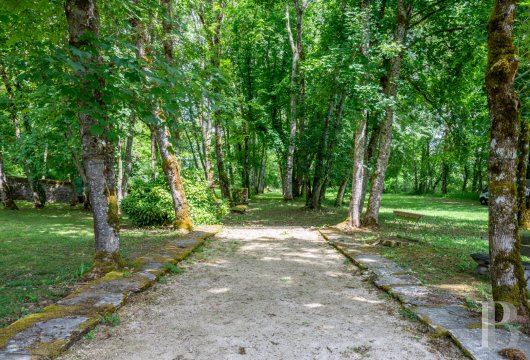
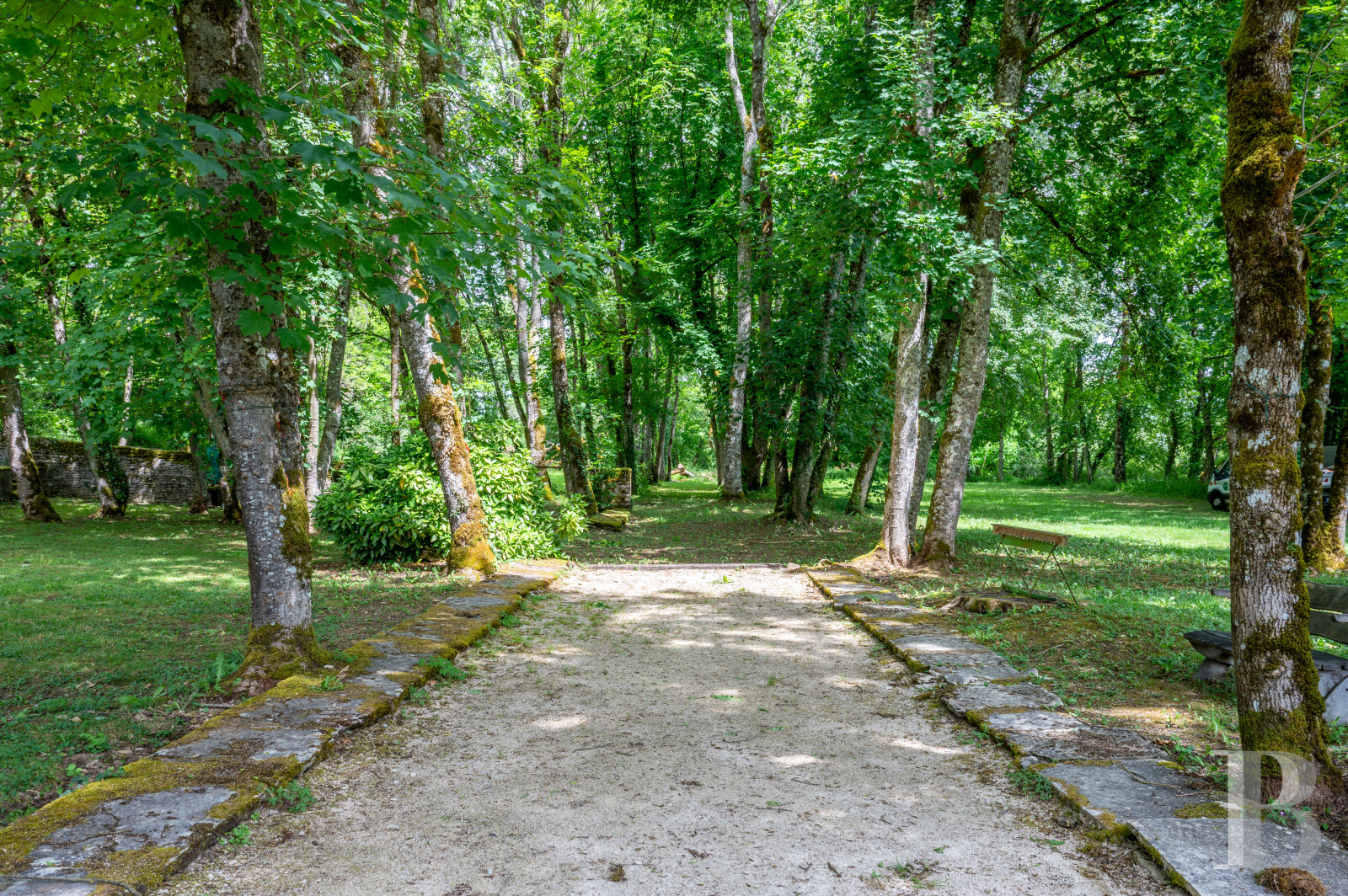
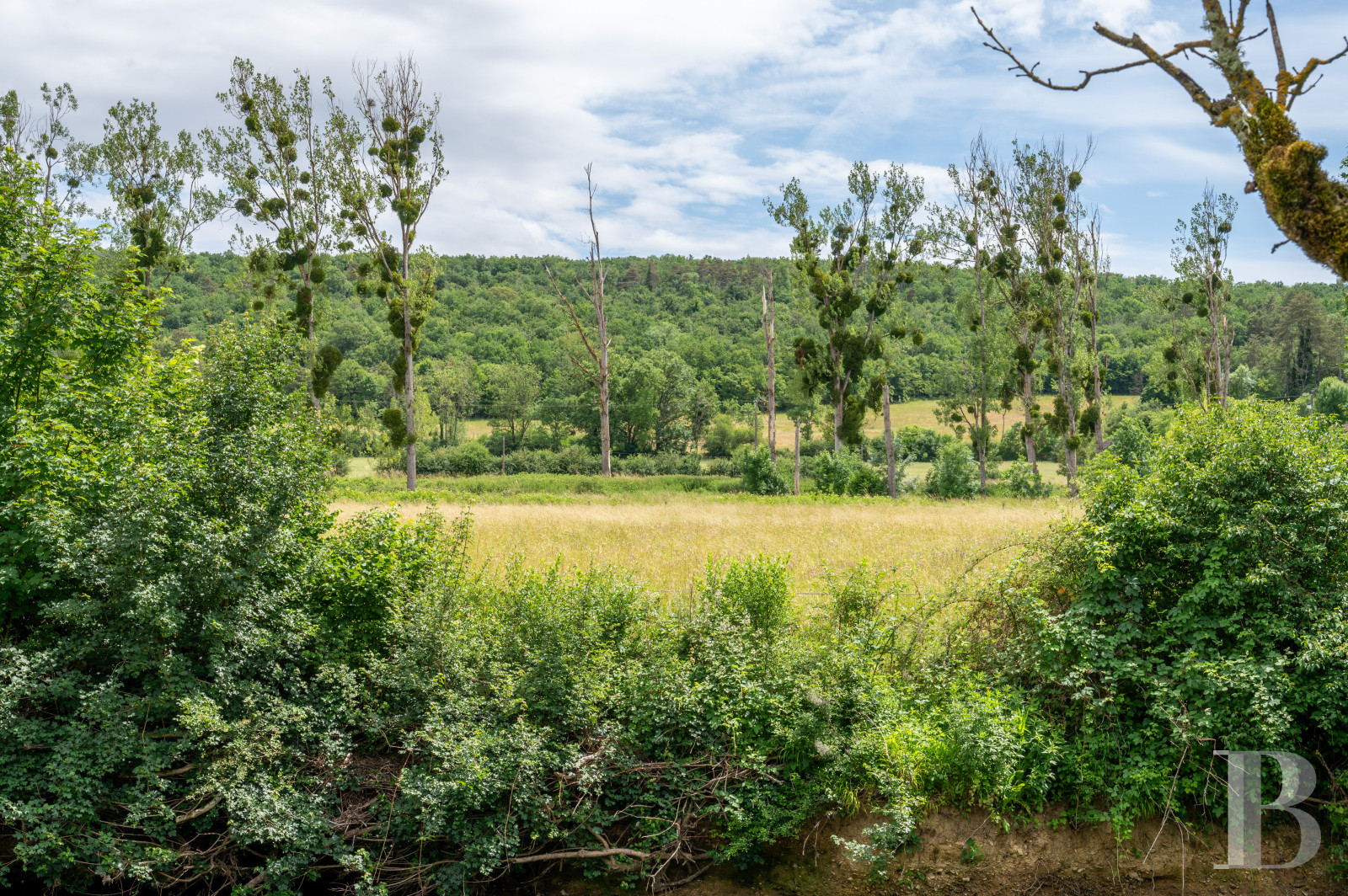
Sloping gently from the road to the river, the grounds are held by stone-walled terracing. Largely grassed and planted with shrubs and box, they include a pétanque court in the shade of mature trees. Beyond, open pasture scattered with mature oaks, beeches, ashes and hazels extends to the water's edge.
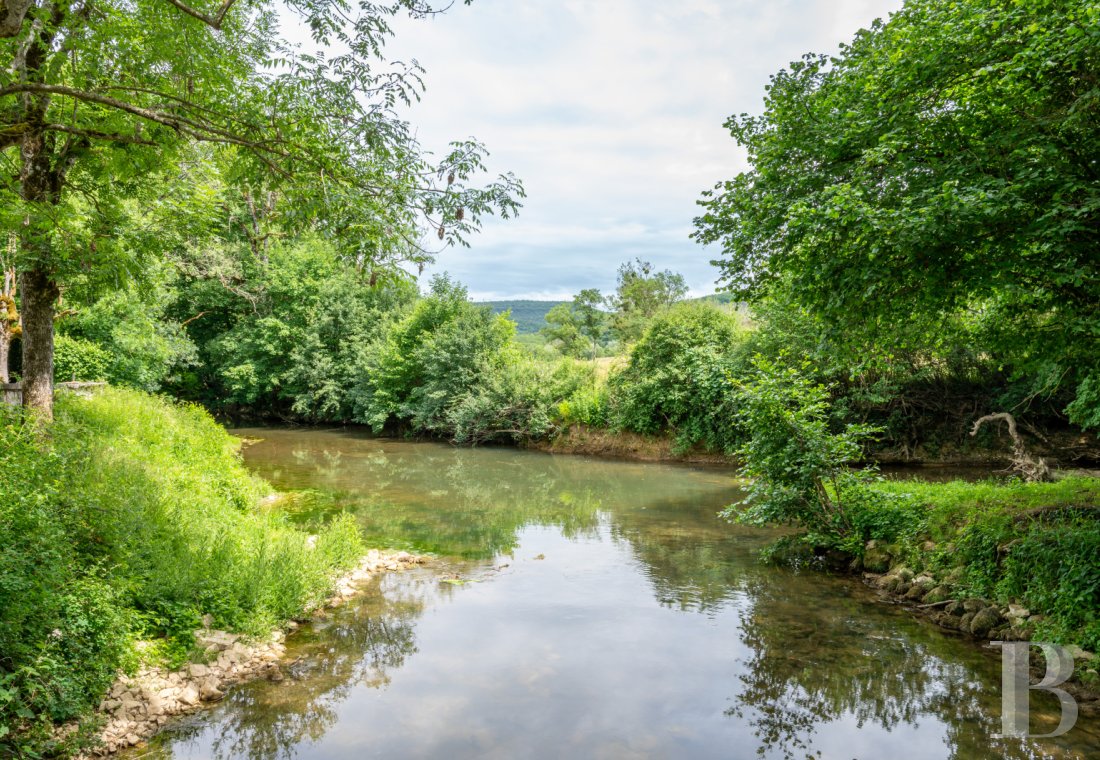
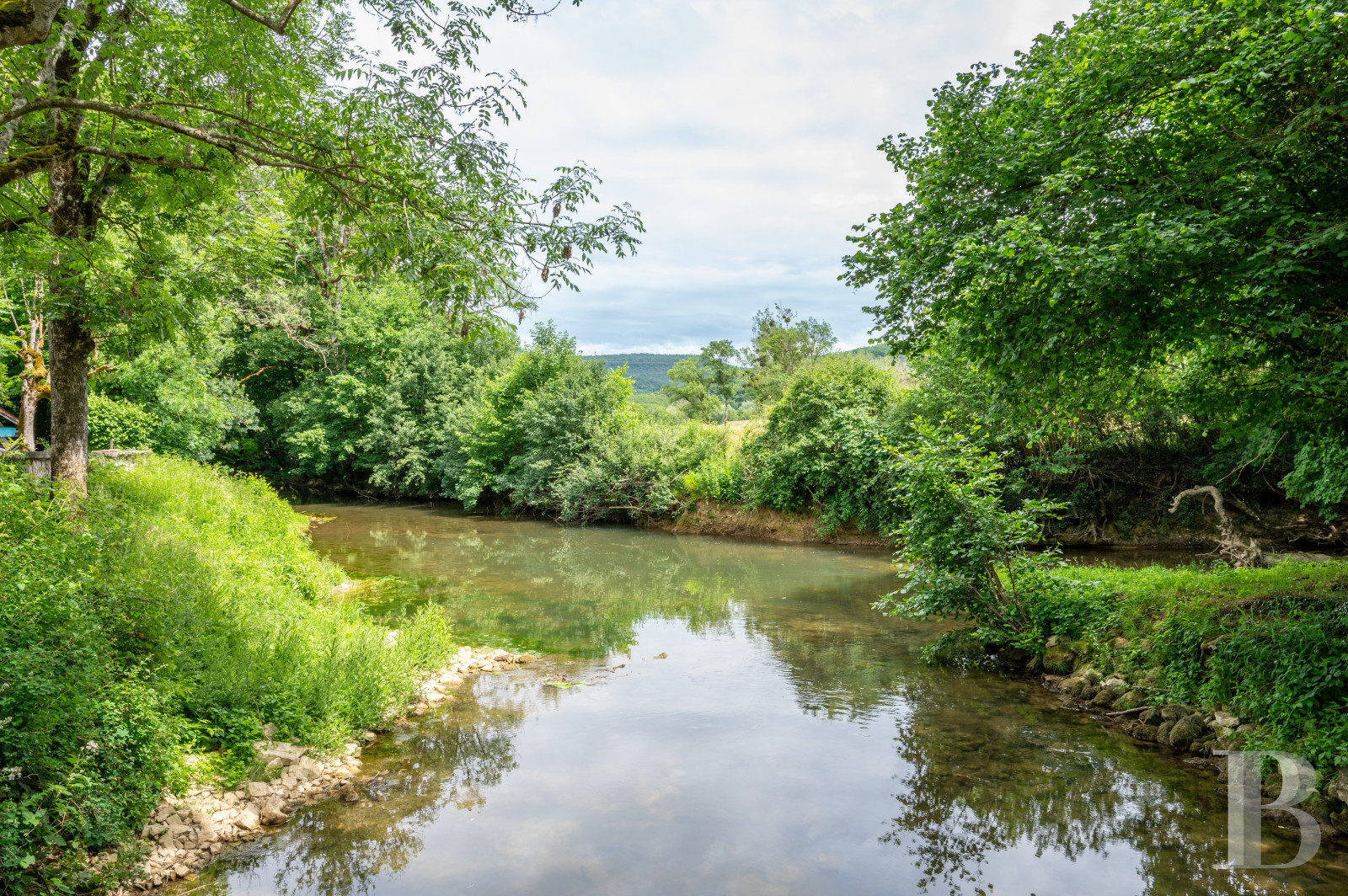
The River Ouche, a first-category fishing river, borders the grounds to the south; the property includes both banks. To the south-west, the river forks into two arms around a grassed island of 4,630 m², reached by a footbridge. To the north-west, the waterfall maintains its permanent murmur. The Canal de Bourgogne, accessible on foot, opens onto an extensive network of walking and cycling routes.
Our opinion
A property that simultaneously feels removed from it all and at the heart of things. The river, the waterfall and the grounds offer a remarkable natural setting that draws life outside.
The interiors are unambiguously of their decade: the 1980s, when excess was not just permitted but expected. The monochrome sitting room with its low corner sofa, the textile-wrapped bedrooms, the graphic colour contrasts and dramatic lighting form a committed aesthetic — assured in its own terms, and now ready to be reconsidered. Restoration of the original spirit, or transformation into a contemporary language equal to the proportions and the views, the next chapter is unwritten. The annexe and the barn point to other horizons, for guests, for growth, or for a professional practice.
850 000 €
Fees at the Vendor’s expense
Reference 844492
| Main building floor area | 420 m² |
| Land registry surface area | 1 ha 46 a 20 ca |
French Energy Performance Diagnosis
Information on the risks to which this property is exposed is available on the website: www.georisques.gouv.fr
Share


NB: The above information is not only the result of our visit to the property; it is also based on information provided by the current owner. It is by no means comprehensive or strictly accurate especially where surface areas and construction dates are concerned. We cannot, therefore, be held liable for any misrepresentation.