



A converted watermill from 1850 with a 1,500m² floor area, outhouses
and four hectares of grounds by a river, only an hour from Paris
and four hectares of grounds by a river, only an hour from Paris
Saint-Cyr-sous-Dourdan,
ESSONNE
ile-de-france
91410
FR

Location
The property lies around 40 kilometres south-west of Paris, in France’s Essonne department in the Île-de-France region that extends around Paris. It is close to the country’s Yvelines and Eure-et-Loir departments too. The village where it lies was mentioned as early as in 1218. It neighbours a town with royal origins, considered the cradle of the House of France. This town offers shops and services for everyday needs. From the local train station, you can get to Paris in 35 minutes via two daily train journeys in the morning and evening. Orly international airport is only 50 minutes away. The property is also close to the A10 and A11 motorways, as well as the N20 trunk road and the Paris region’s outer ring road.
Description
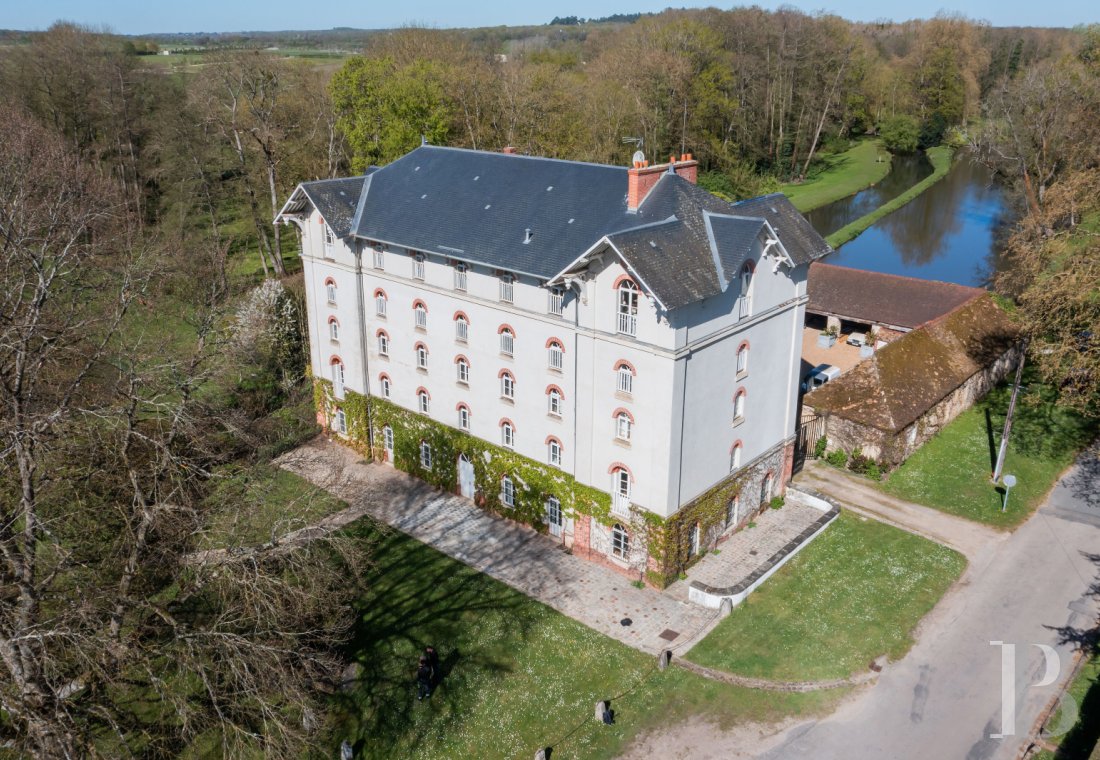
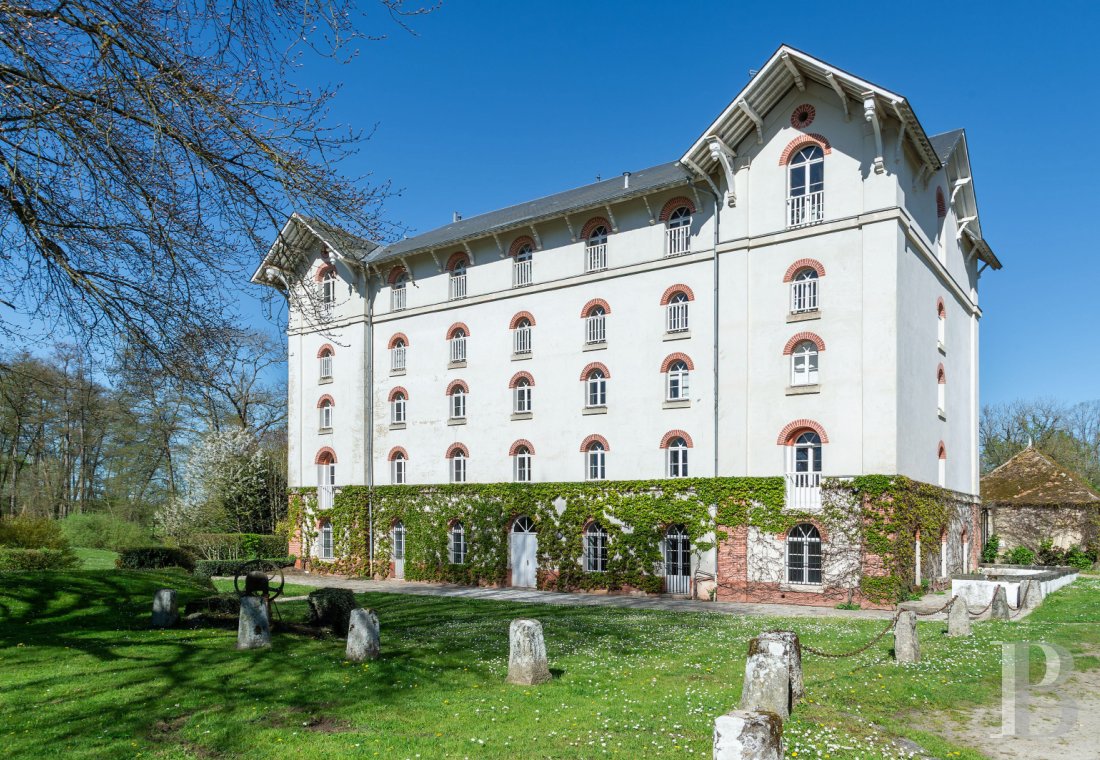
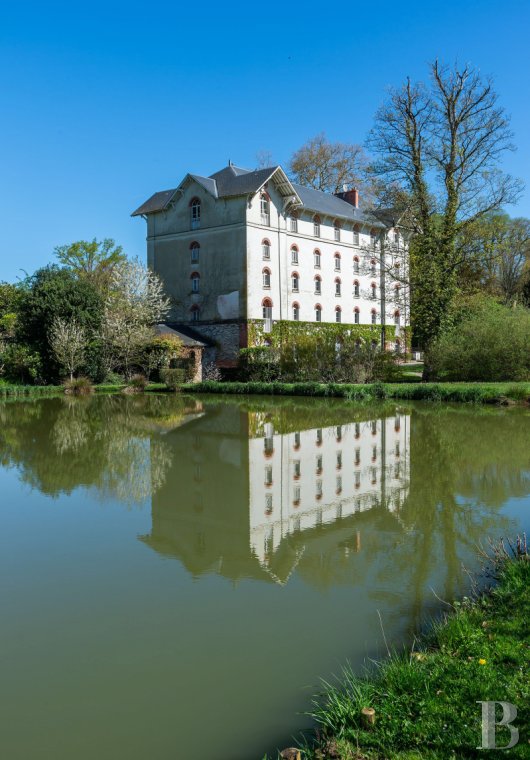
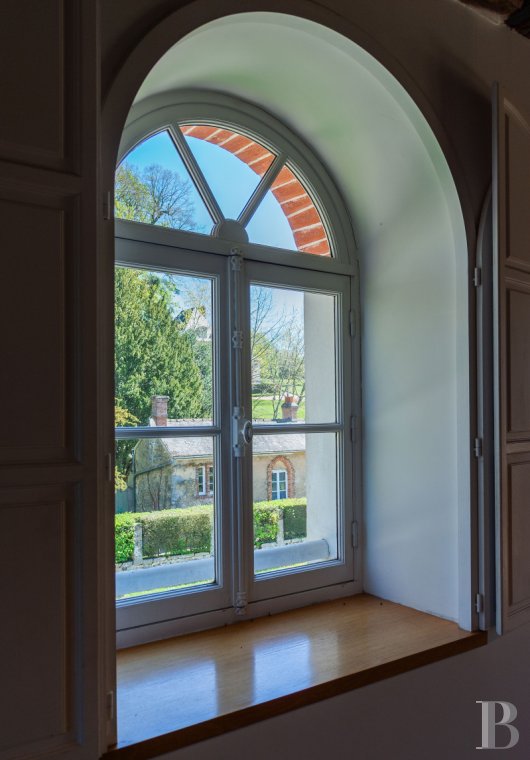
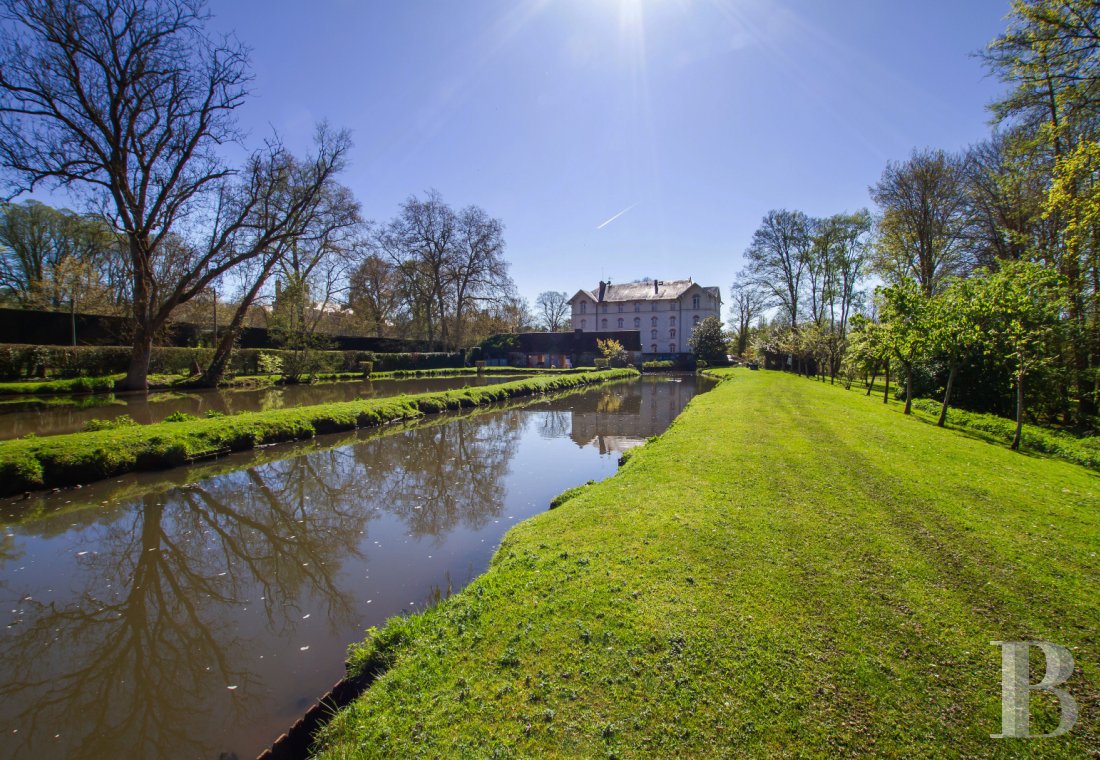
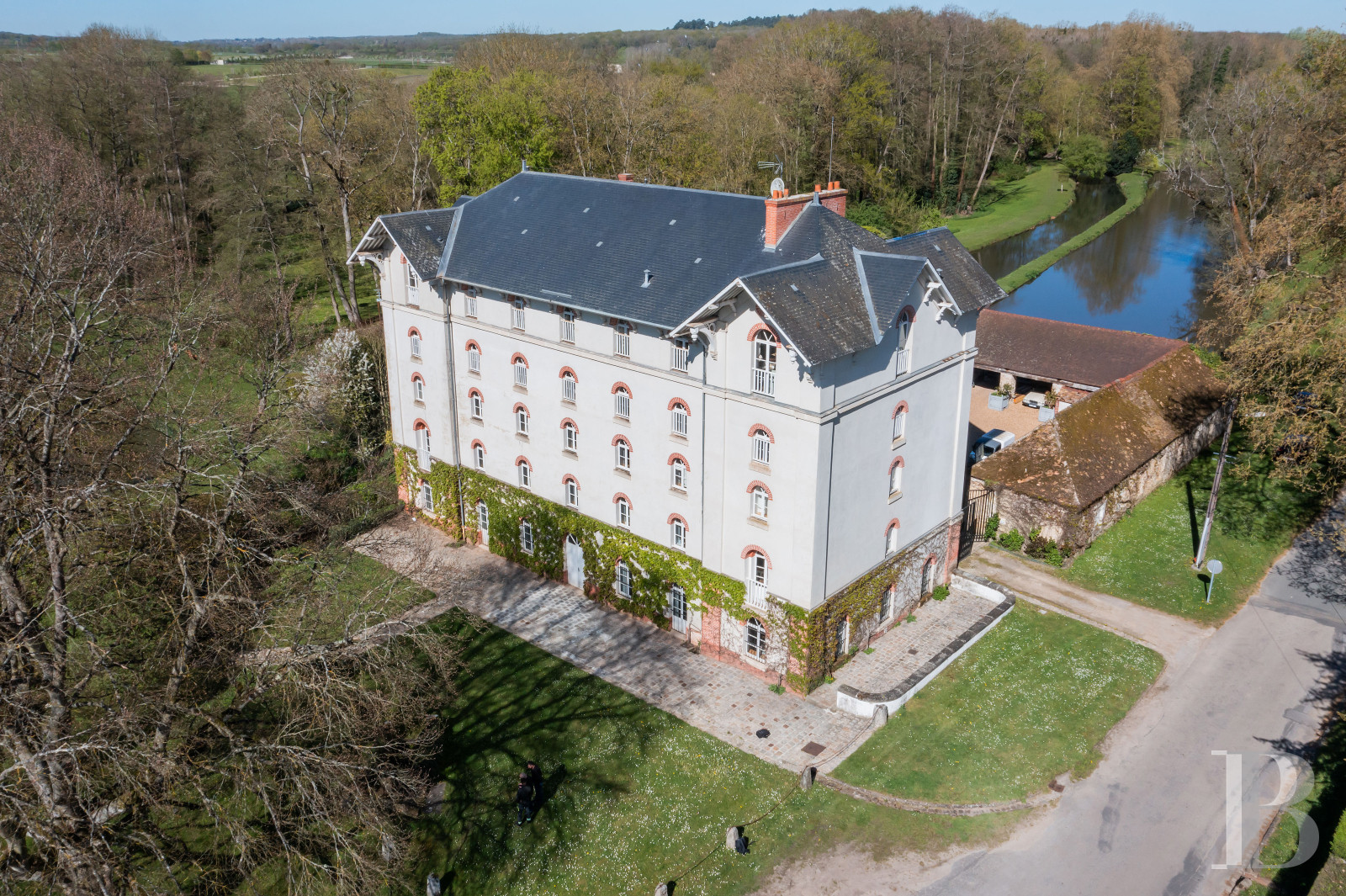
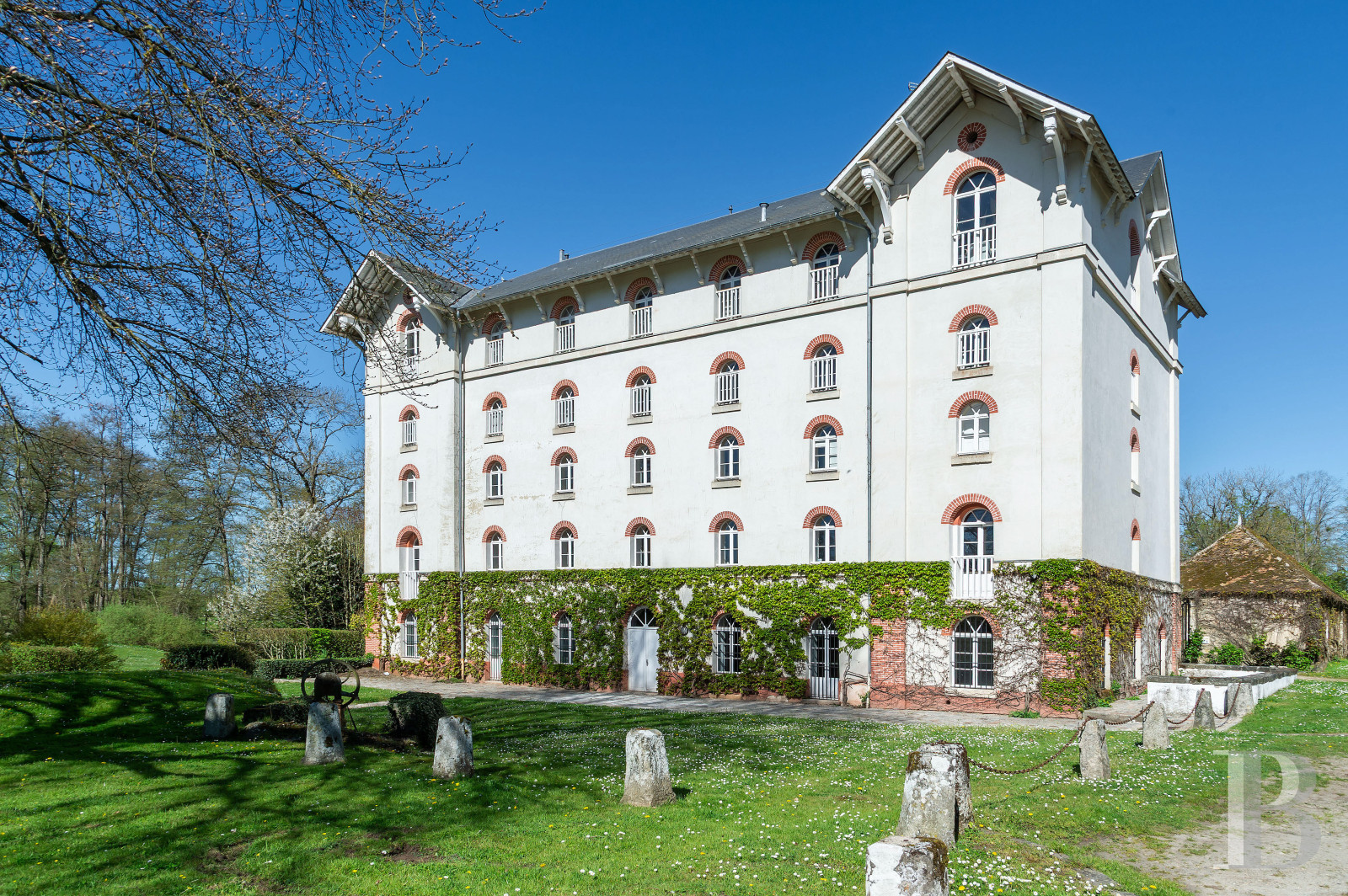
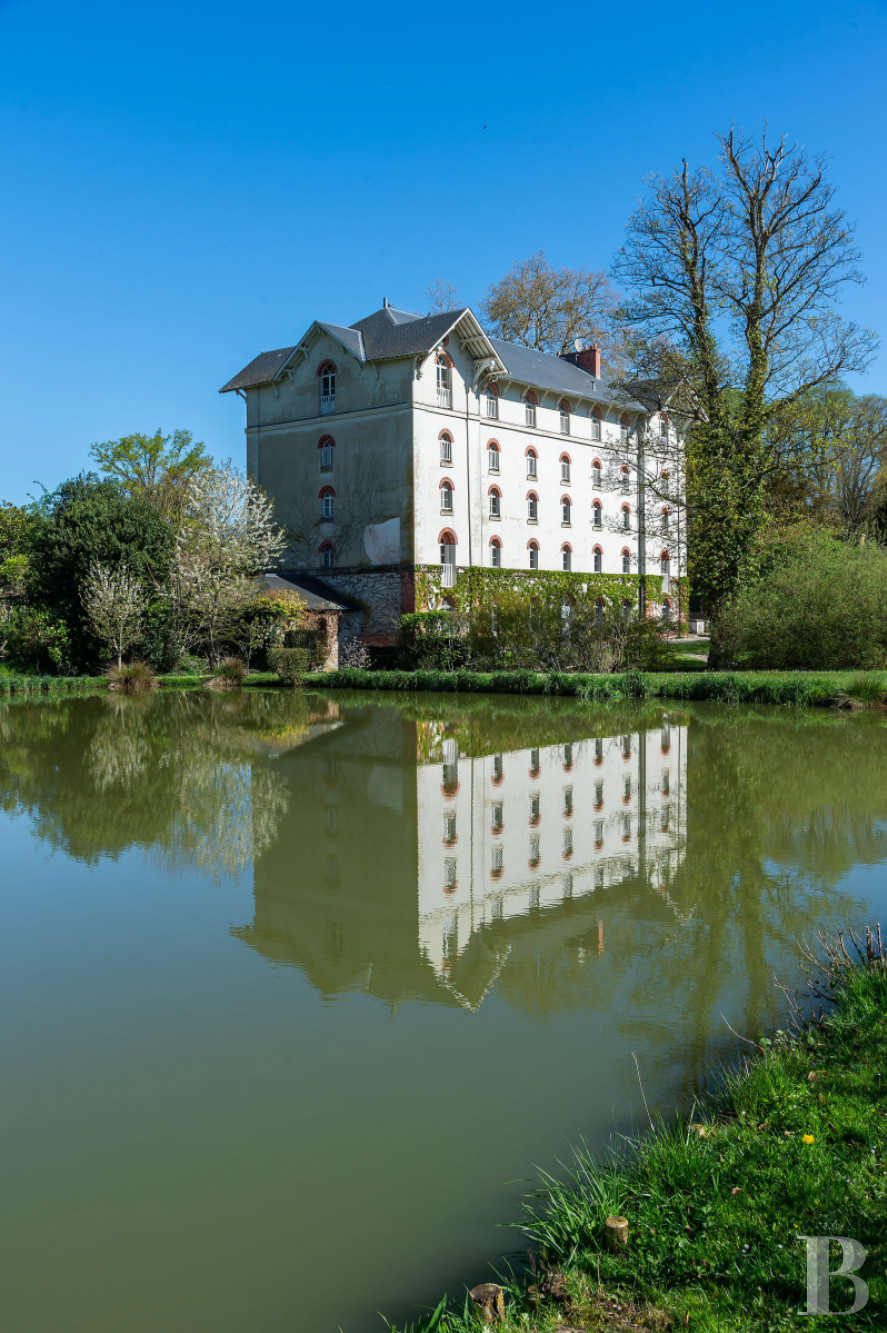
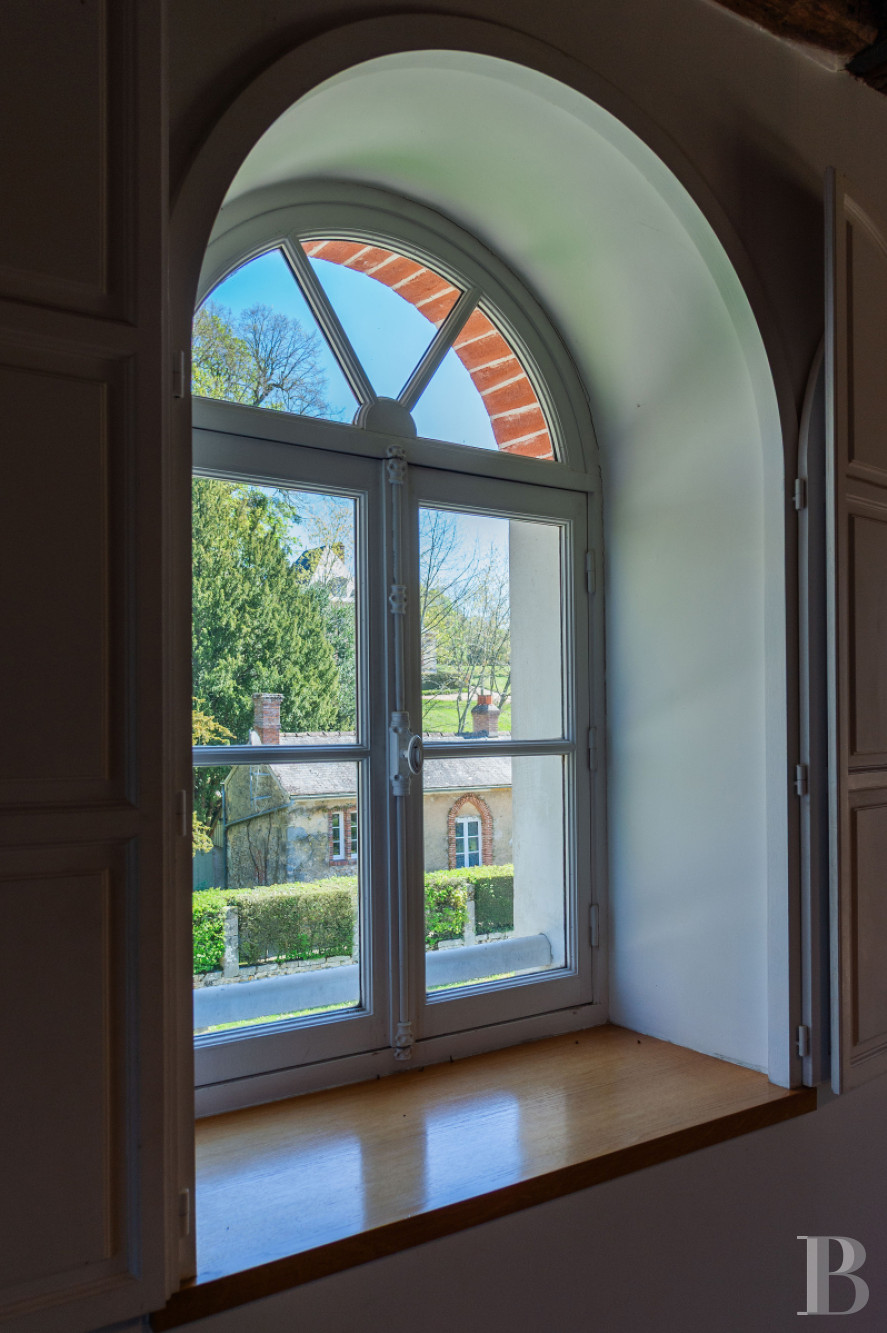
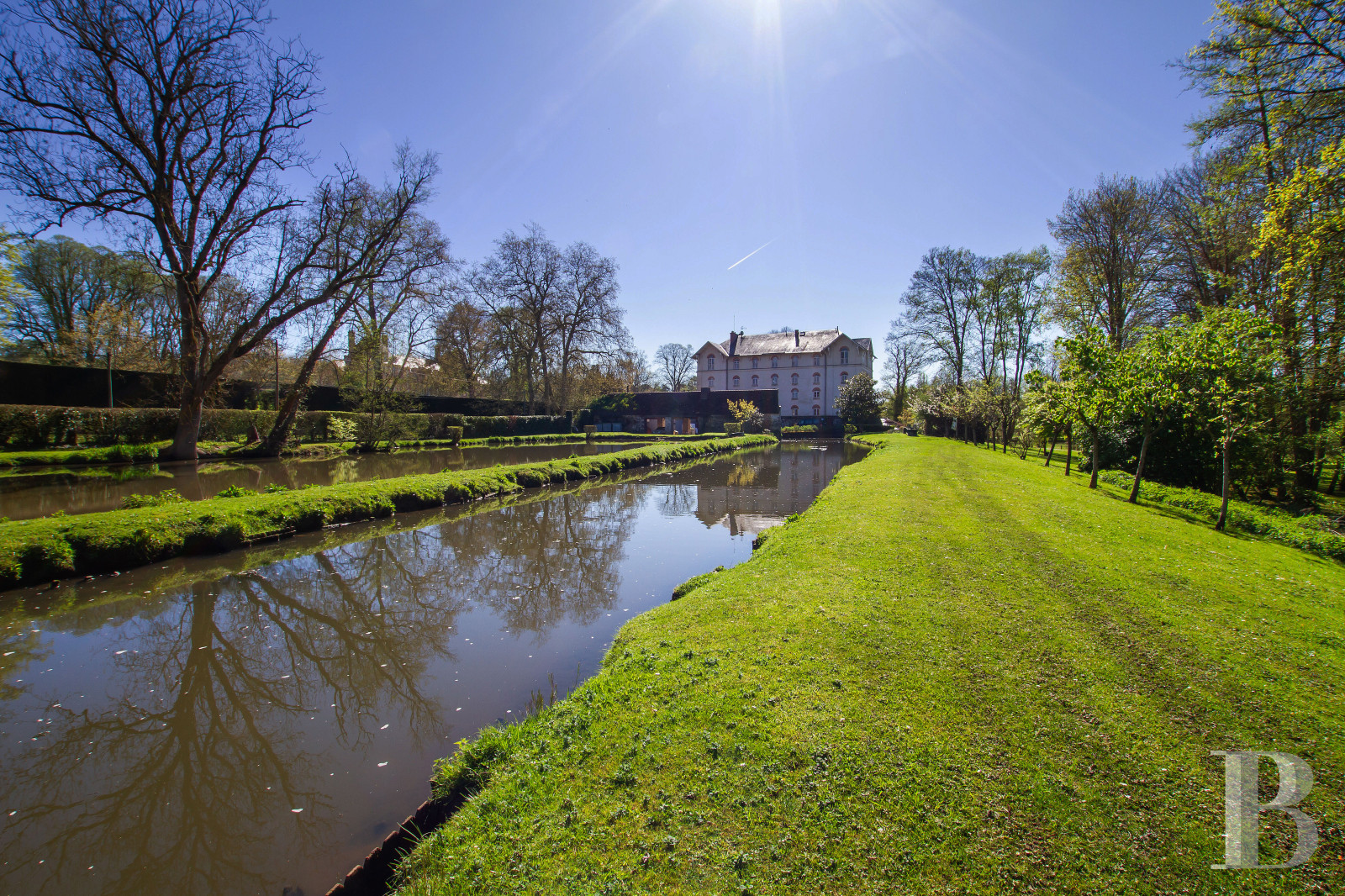
The remarkable watermill stands in front of an expanse of water that reflects the edifice marvellously. Today, the mill does not have an inalienable right to make use of the river water here, but it nevertheless dates back to the year 1512. It was doubtless altered and rebuilt in the 17th century, as the L-shaped series of outhouses suggests. Today’s property neighbours a chateau, which used to be part of a larger estate. The watermill was rebuilt in the middle of the 19th century where two old mills once stood. More recently, the edifice was restored between 2002 and 2010. It has a ground floor, a first floor, a second floor, a third floor and a fourth floor in the roof space. A pavilion adjoins each end of the building. Each of these pavilions has a single bay of windows in their gable ends. The main embellishments are made of wood. There are windows with glazed arched fanlights with radial pane bars. Finely crafted guardrails are fitted in front of them. And remarkable timber corbels, also finely crafted, support the pavilion roofs. The spectacular size and shape of the edifice – with its five levels and rectangular plan – give the property an almost palatial dimension. Indeed, this grand character is as surprising as it is awe-inspiring. Moreover, the building's architectural evenness gives it an Italian style that recalls the noble warehouses that dot Lombardy and Veneto. The doors and windows are capped with semicircular arches of brickwork. In a classical arrangement, these openings are spaced out evenly. They punctuate each level with their pleasant, repeated motif. This design is the undeniable signature style of mills from the Second French Empire and which we can see in other local mills. The style underlines the period’s architectural character in this region of France.
The watermill
The ground floor
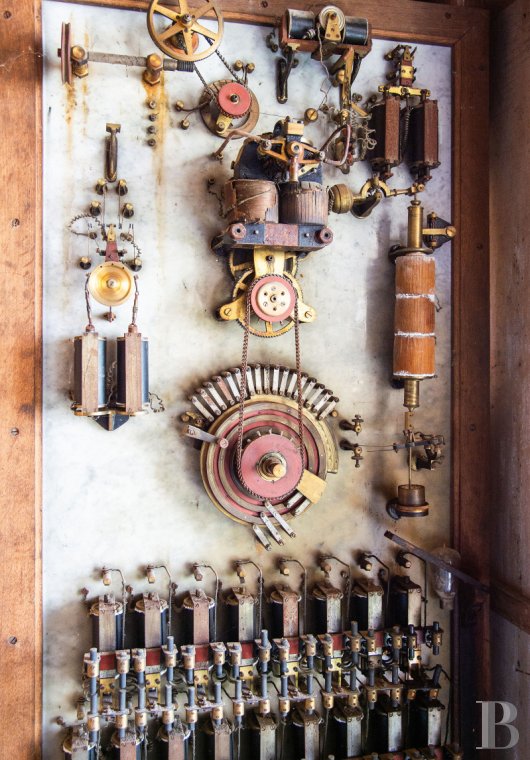
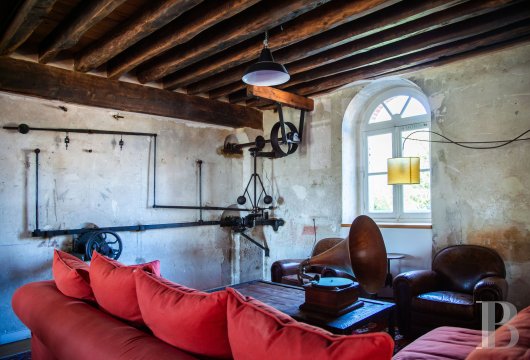
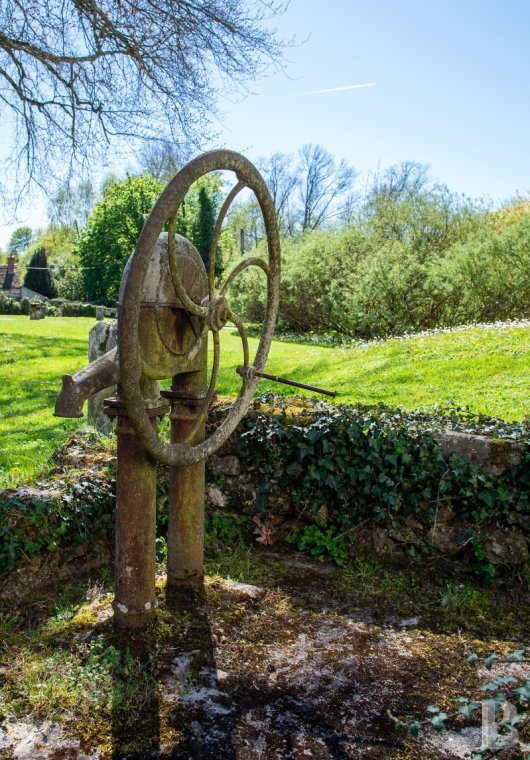
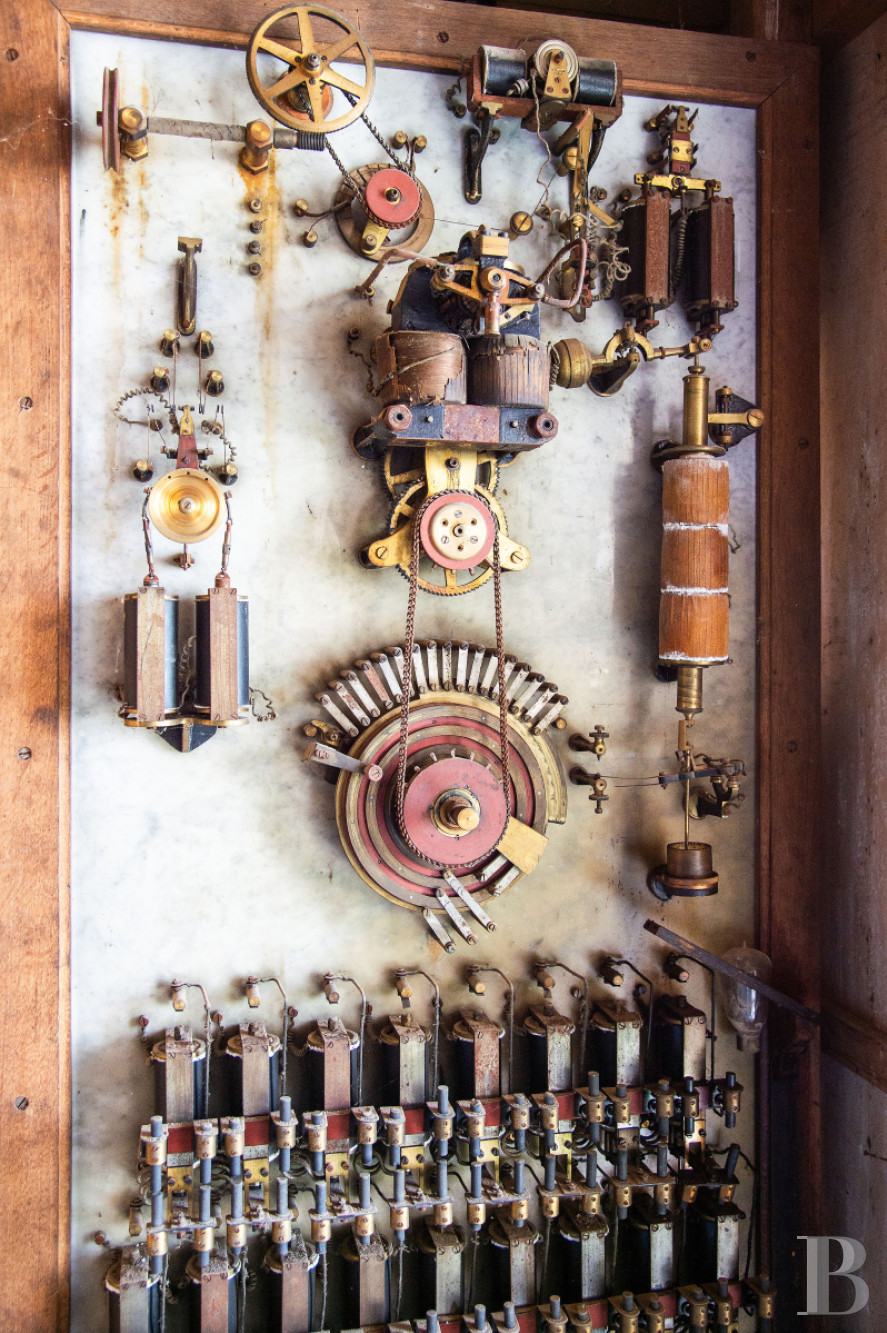
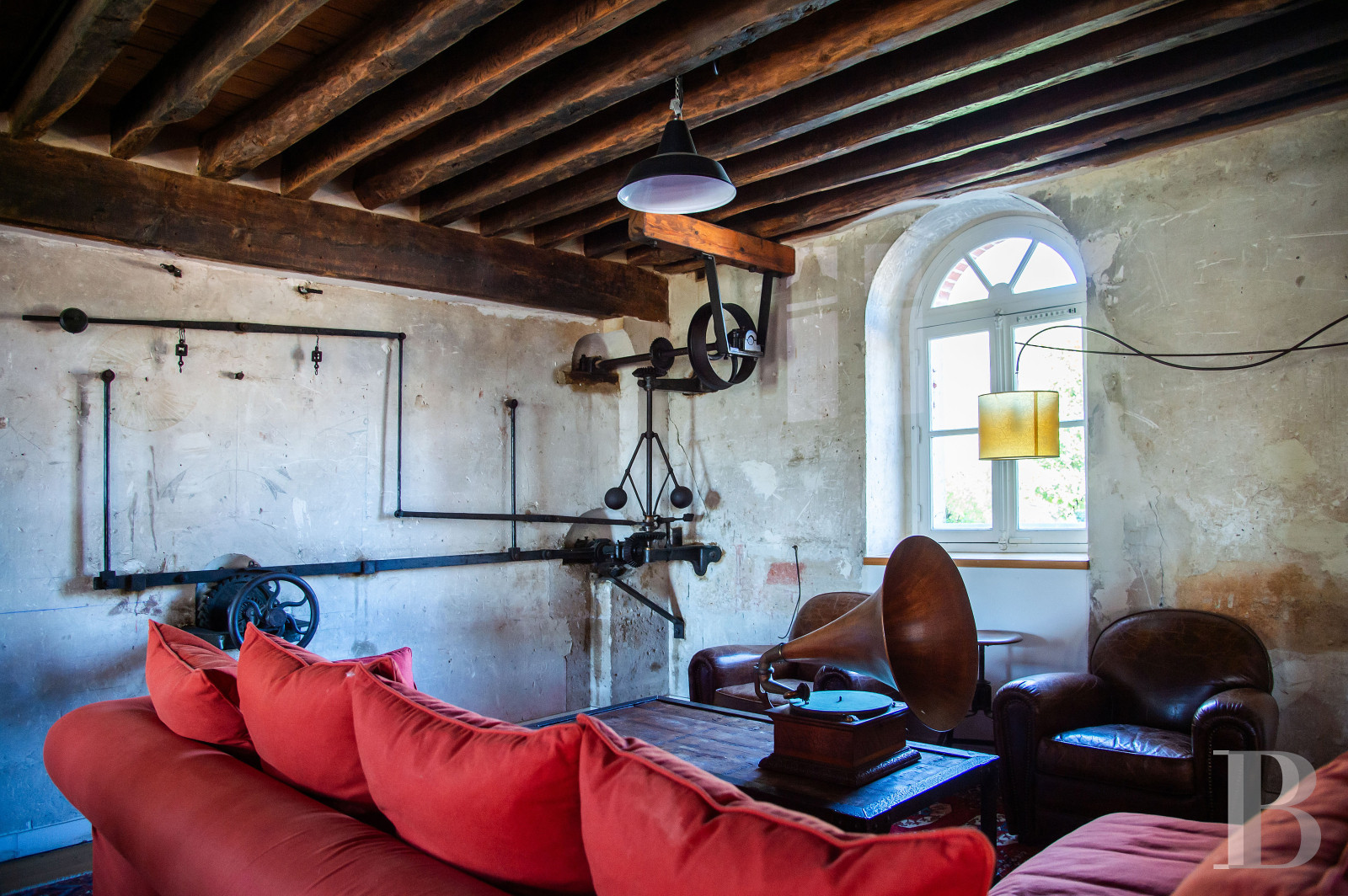
You enter the watermill from the court. A few steps take you up to the entrance door. The entrance hall has a tiled floor, painted walls and exposed beams. It takes up almost the entire ground floor. On the north side, the hall connects to two rooms. The first one is used as a utility room and the second one as a technical installations room, including for heating and networks. Another utility room is hidden away on this floor. On the south side, there is a room where the watermill’s old machinery can be seen, as well as a passageway to the waterwheel and waterfall. There is also an air-conditioned wine cellar on this floor. A stairwell and a lift connect to the different levels.
The first floor
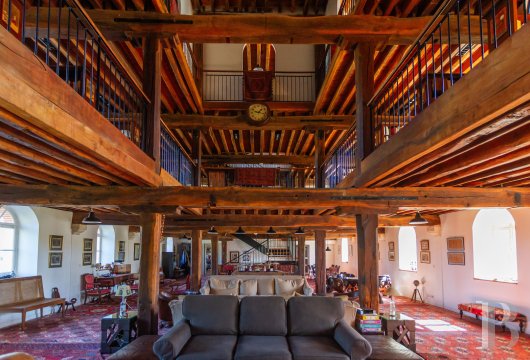
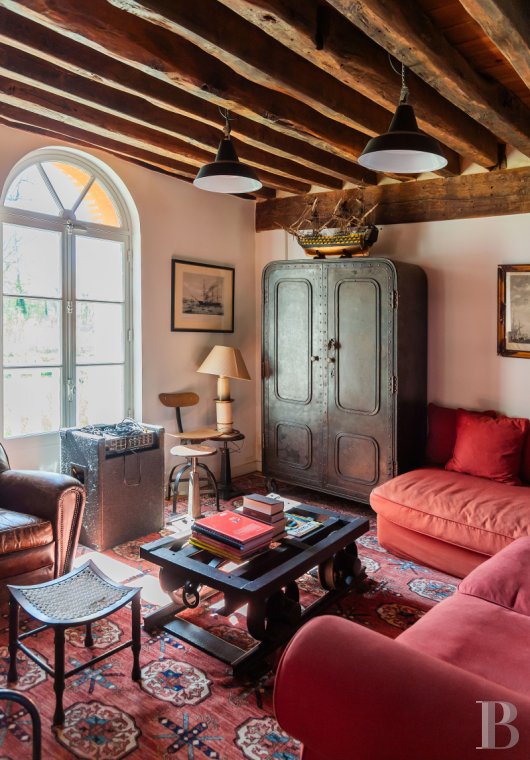
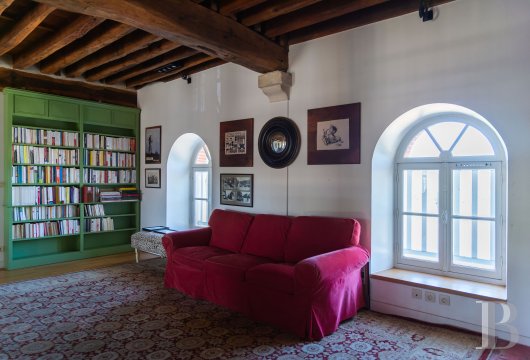
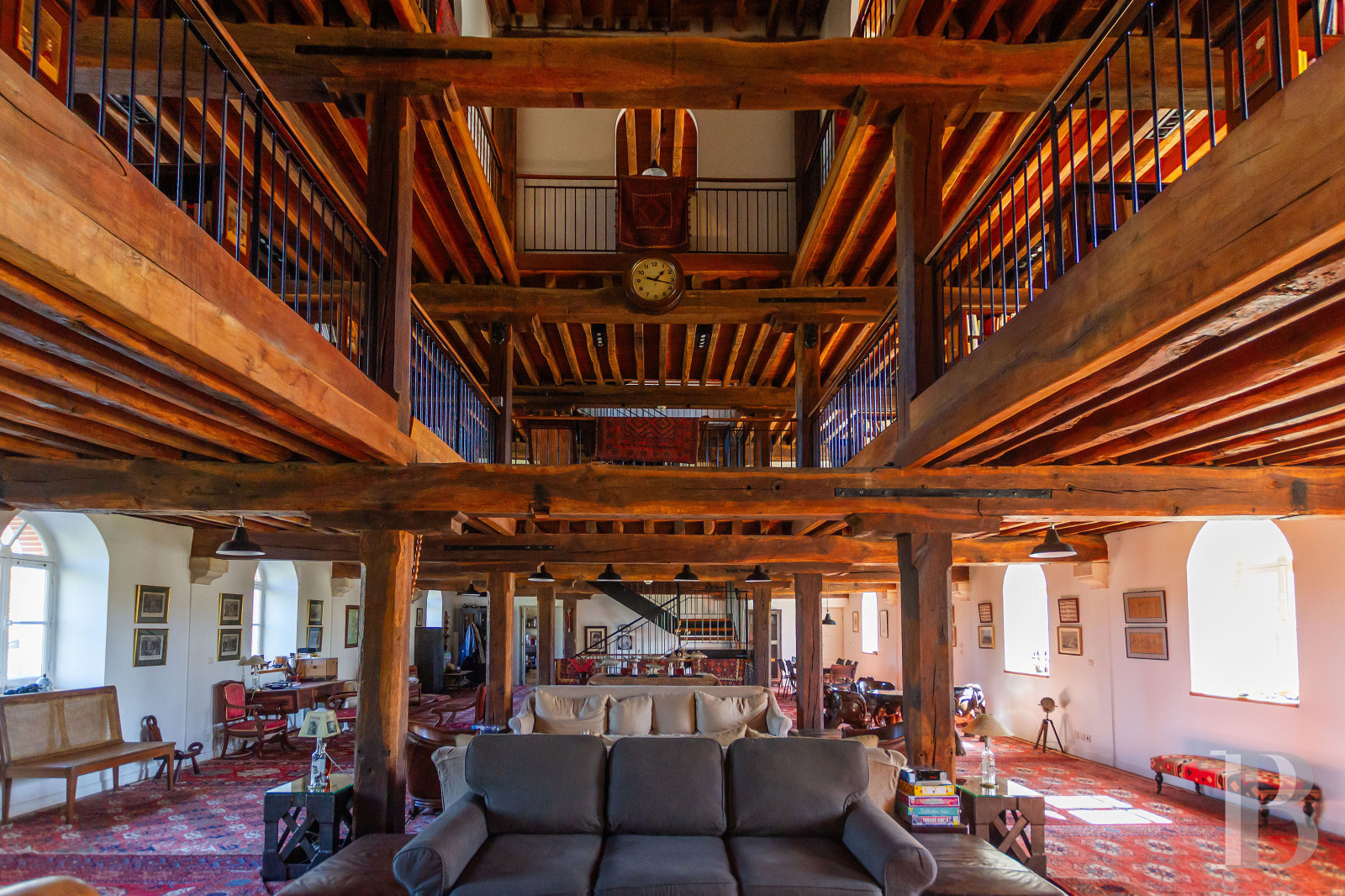
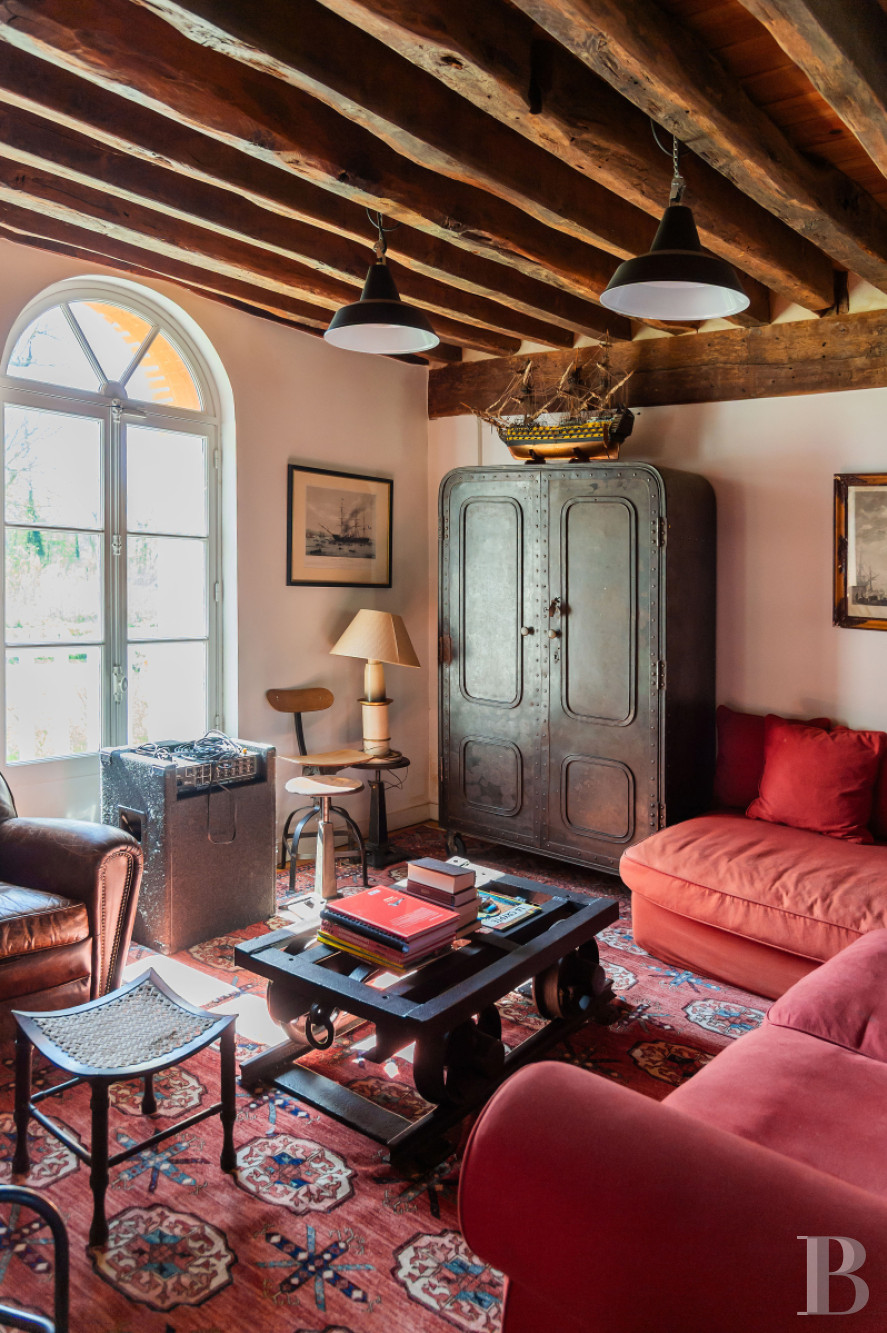
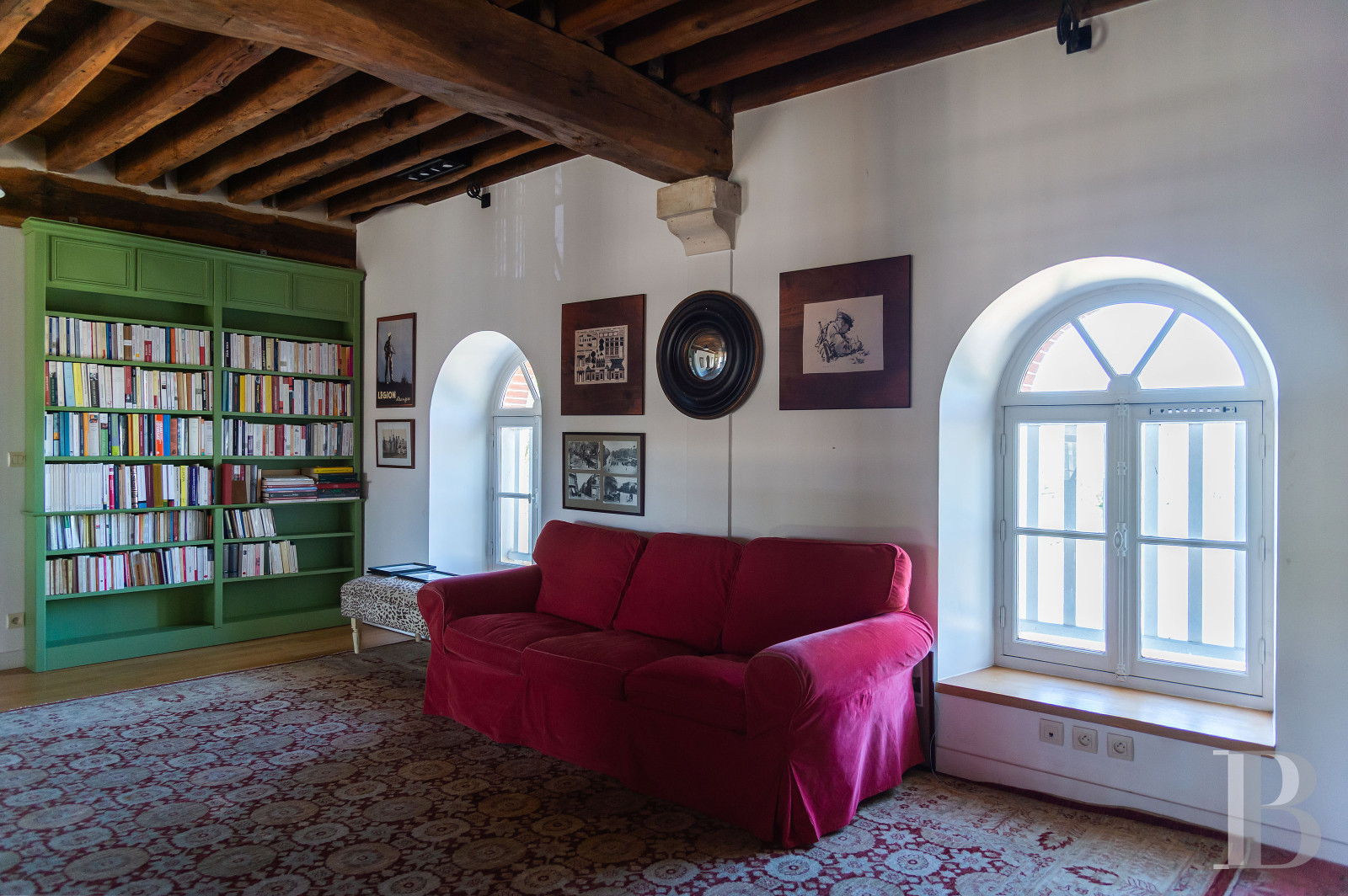
Beneath a remarkable timber frame, the first floor extends with astonishing spaciousness. Here, the watermill’s entire building structure is showcased. The arched windows set in the thick walls let natural light inside and offer views of the grounds. This light plays with the shadows of the timber beams like a Flemish chiaroscuro painting. In the middle, a double-floor atrium extends up through the edifice. Beyond the lift and metal stairs, there is a vast kitchen. This long, spacious kitchen is bathed in golden natural light from two arched windows in line with the architectural style of the facade. The timber frame of dark joists and raw beams covers the space. The characterful structural parts give this floor a rooting in the period of its original purpose as a production site.
The second floor
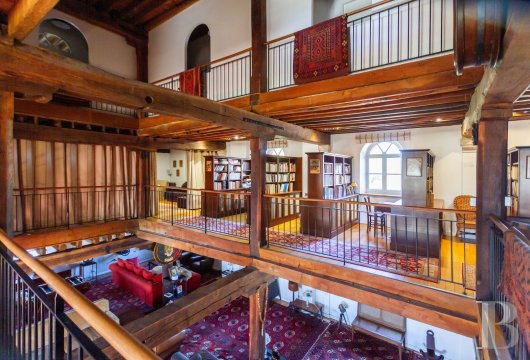
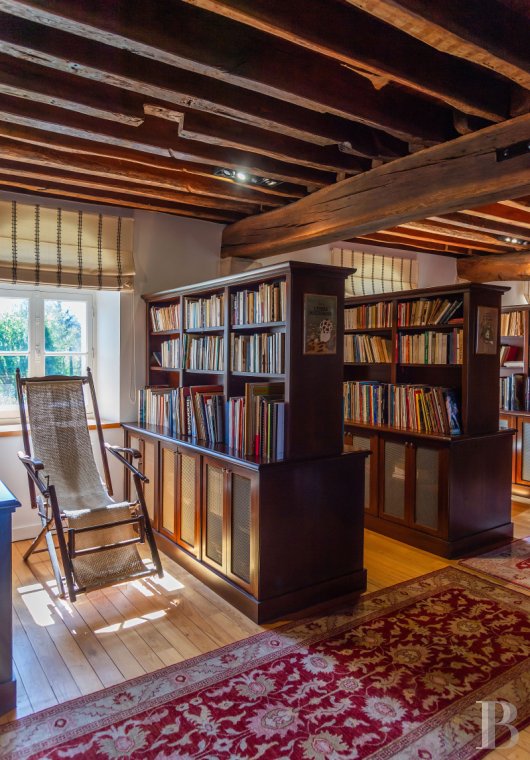
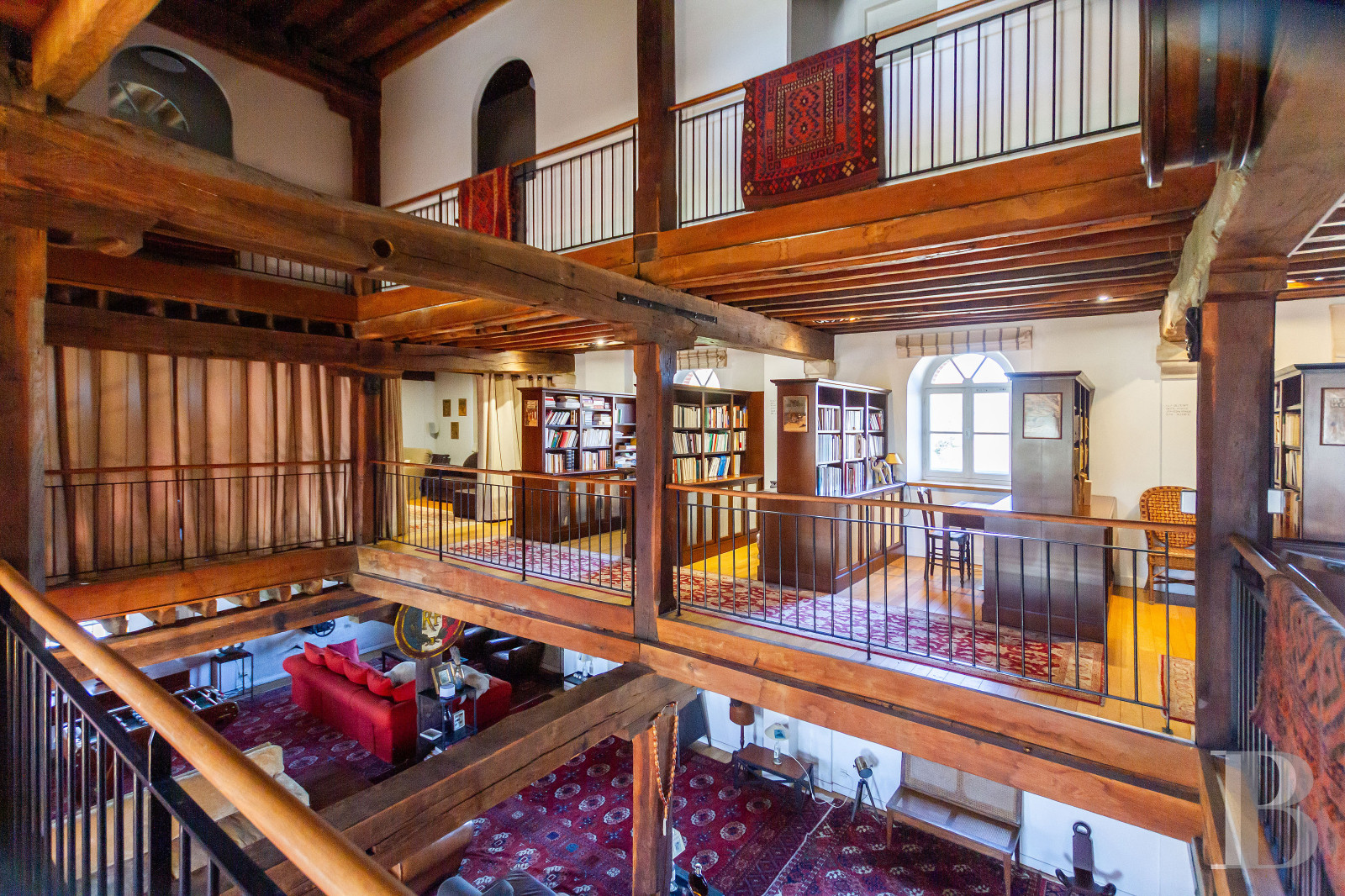
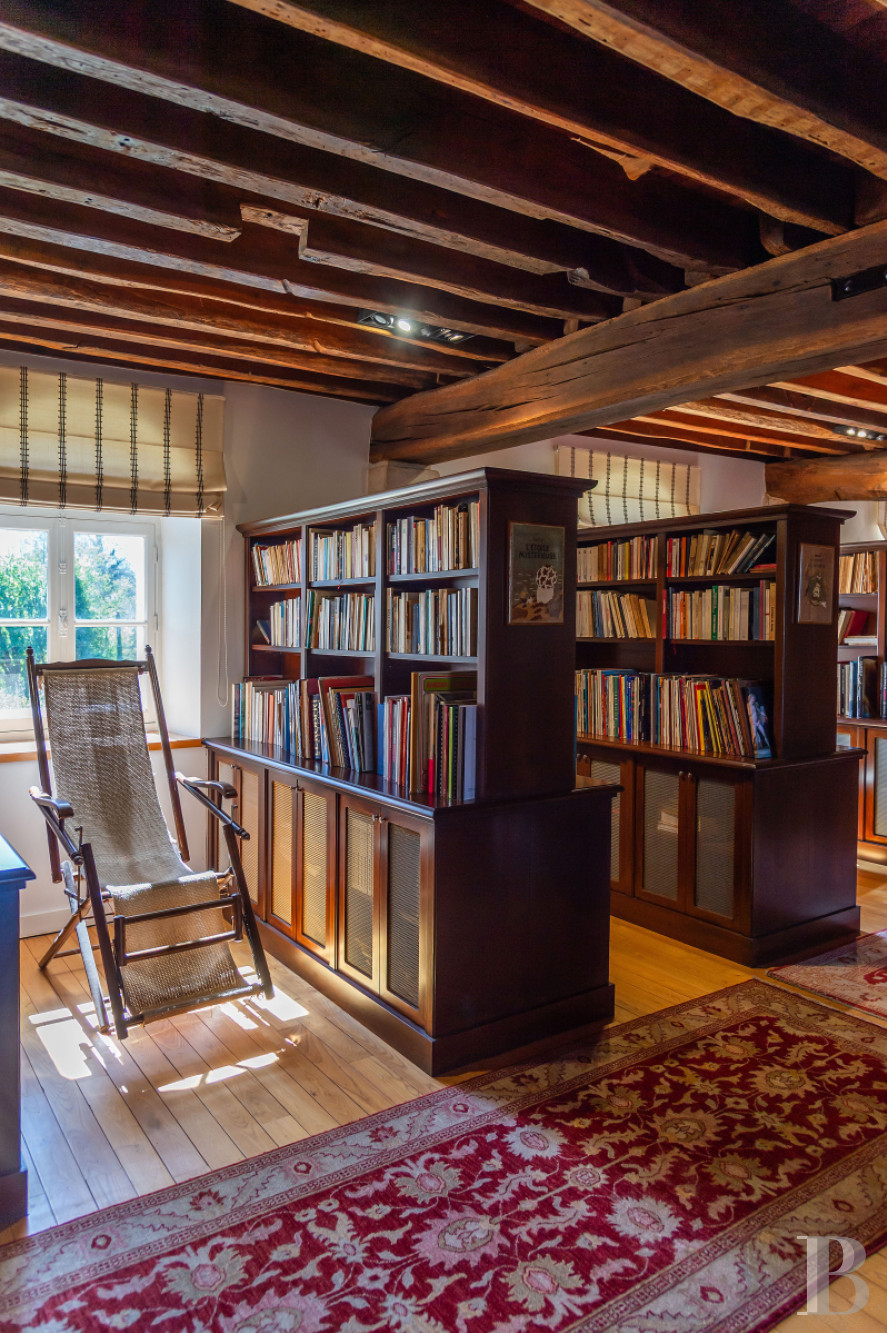
The second floor offers a 305m² floor area. A gallery with wood strip flooring runs along the full breadth of the watermill. You can see it from the lounge. It is largely filled with bookcases. Indeed, there are thousands of tomes categorised and neatly placed in fine wooden items of furniture that stand between the pillars, recalling the libraries of monasteries or of Oxford university colleges. The old timber framework is present here too, its joists running above the bookshelves like the ribs of a Gothic vaulted ceiling. In the middle, the space opens out in a way that very few dwellings do, looking down through the atrium from the library to the lounge below. At the ends of this second floor, there are four bedrooms with a bathroom.
The third floor
The third floor offers a floor area that is similar to that of the other floors. It forms a transitional space with wood strip flooring. To the right, two reading spaces lead into a room through a semicircular-arched passageway. There are four bedrooms and a bathroom in the same layout as on the floor below. Their arrangement illustrates the huge hosting capacity of the edifice with its many bedrooms, underlining the watermill’s purpose as a reception venue. The middle of this third floor is surrounded by walls and arched windows in a masterful combination of perspectives. It opens out into the atrium that looks down at the lounge. There is also a sauna and a linen room on this floor.
The fourth floor
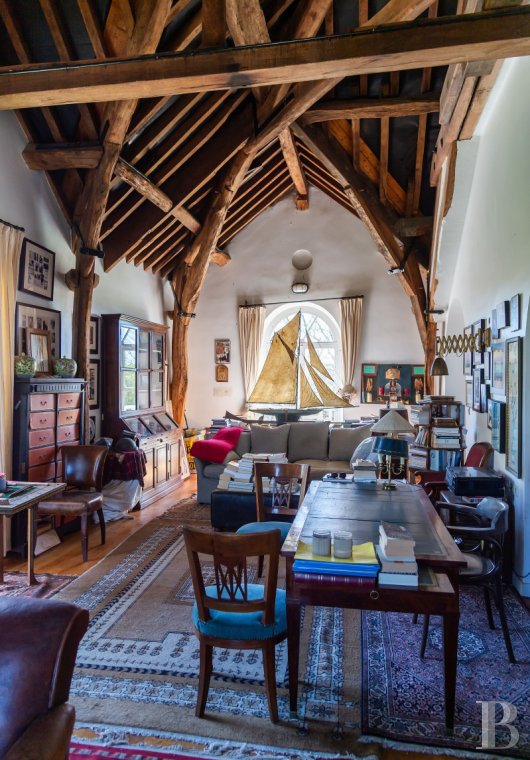
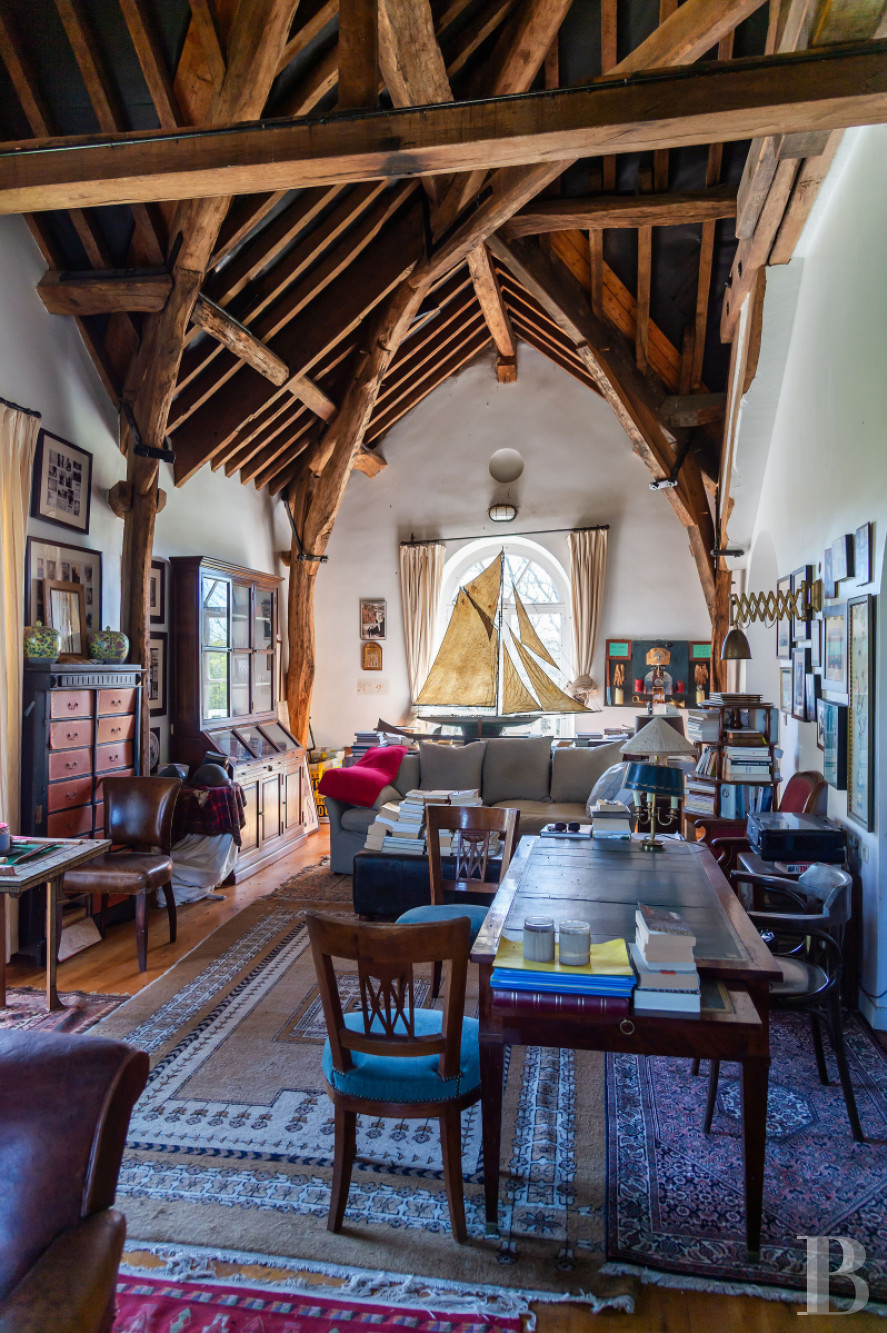
Up in the roof space, the old architecture is truly striking. The exposed beams of the monumental oak roof frame set the tone. The tightly fitted rafters and thick purlins draw an even geometric design. The space is astonishingly vast and you can move smoothly through it. It is bathed in natural light from the sides. This light plays with the shadows of the old timber beams. The layout suggests a storeroom where fabric curtains serve as lightweight partitions while preserving the original volume and the view of the nave-like space with its cathedral ceiling. Finally, at one end, there is a last room, hidden away within the structure: a remarkable office, whose arched windows offer pleasant views of the landscape outside.
The outhouses
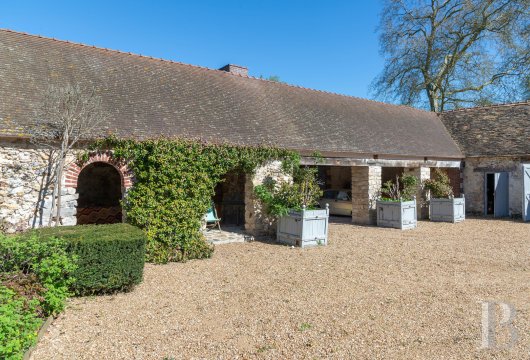
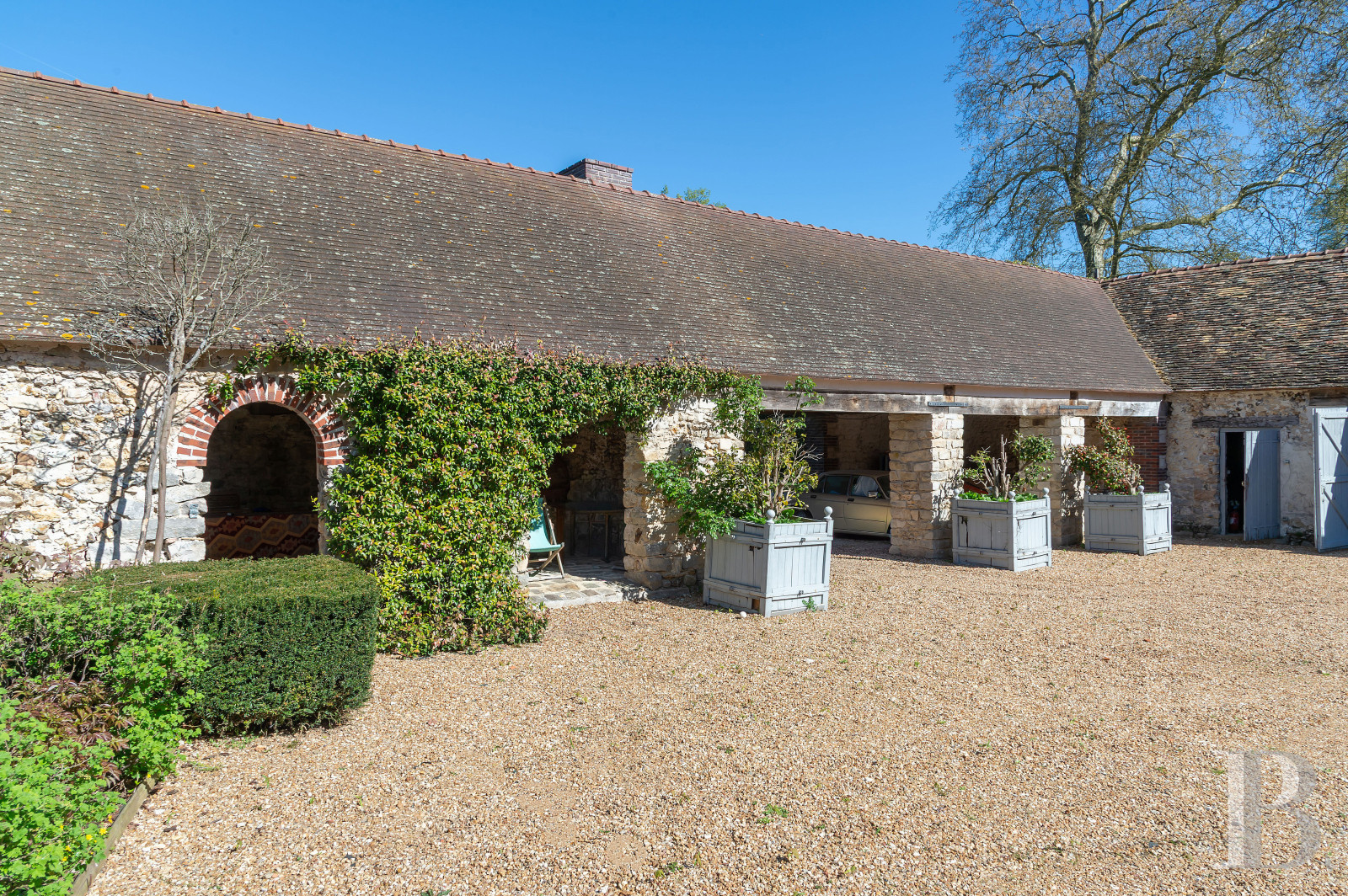
Opposite the watermill, there is a series of buildings with a total floor area of around 200m² and that forms an L shape around a vast court. Beyond it, the waterway runs around the groups of buildings, reflecting the roofs and the foliage of tall age-old trees. The L shape is punctuated with open-sided shelters and openings. These spaces create subtle passageways that offer views of the garden and water beyond the buildings. The former barns have kept their large doors. A brick dormer protruding from the roof reminds us that their haylofts were once used too. It has the same form as those of the watermill’s windows. Further on, beside the water, there is a burrstone house with a 160m² floor area. It is waiting to be restored.
The grounds
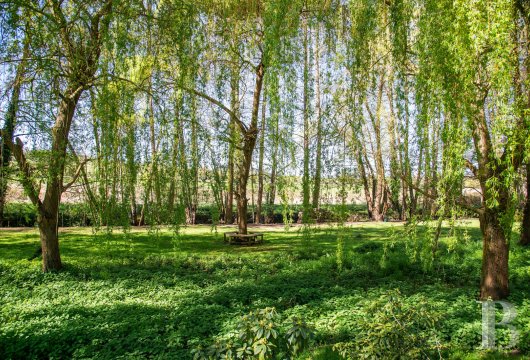
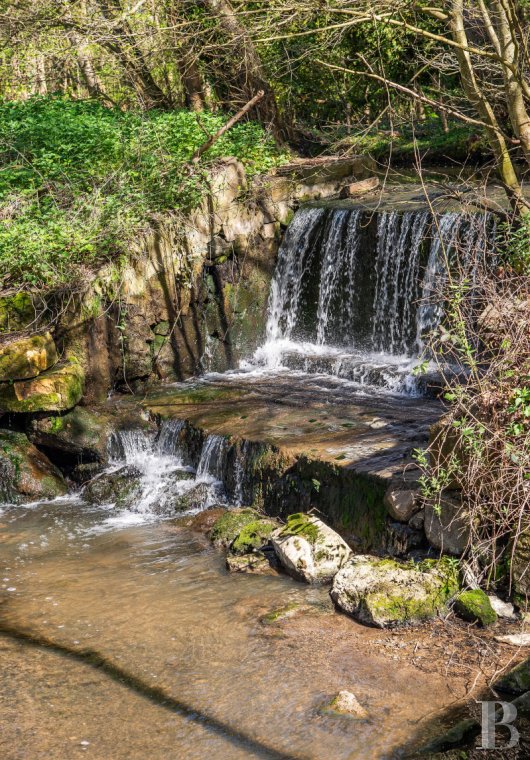
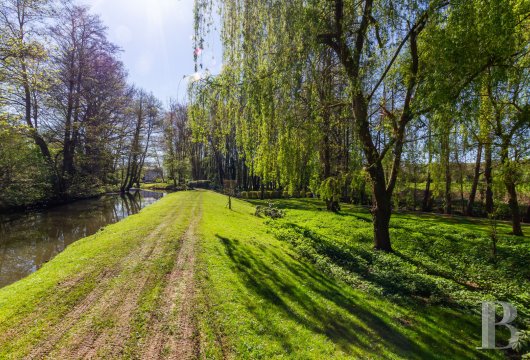
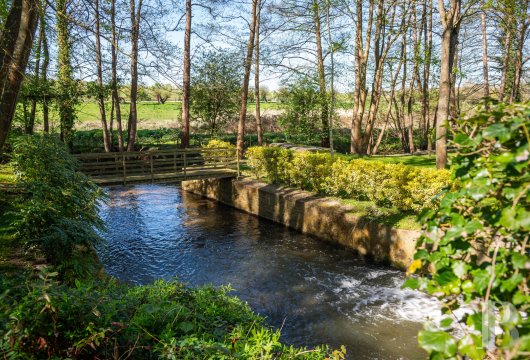
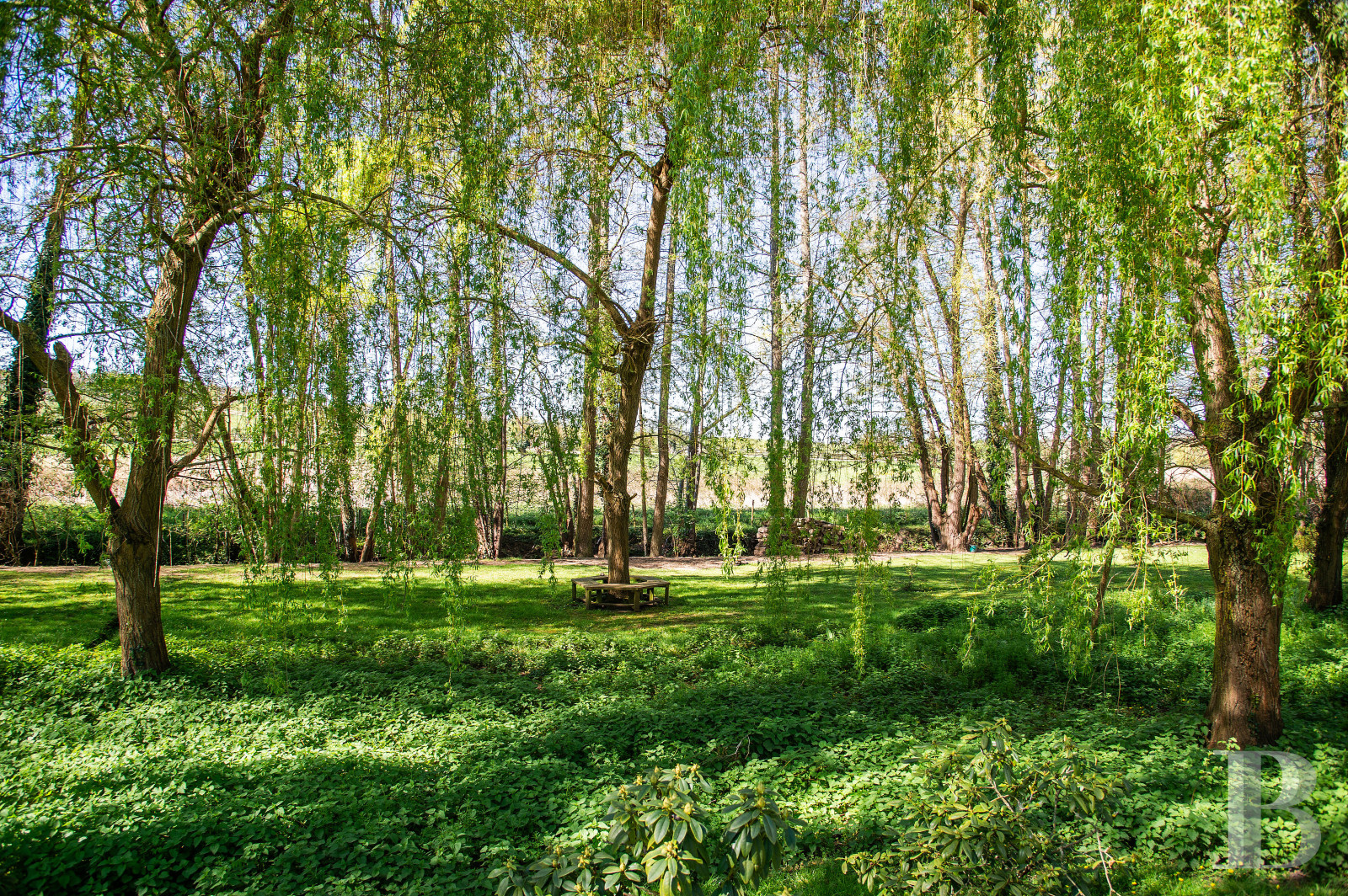
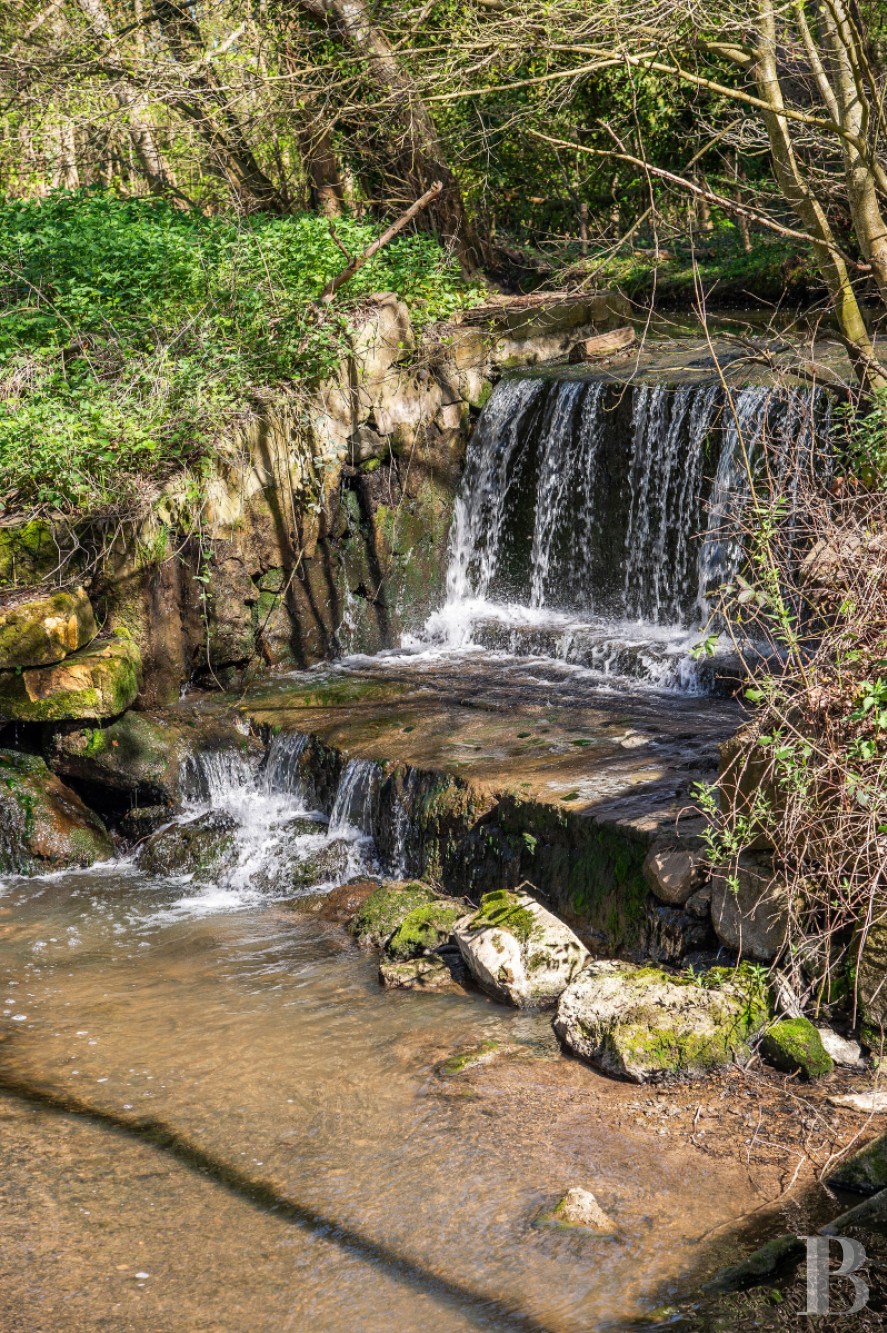
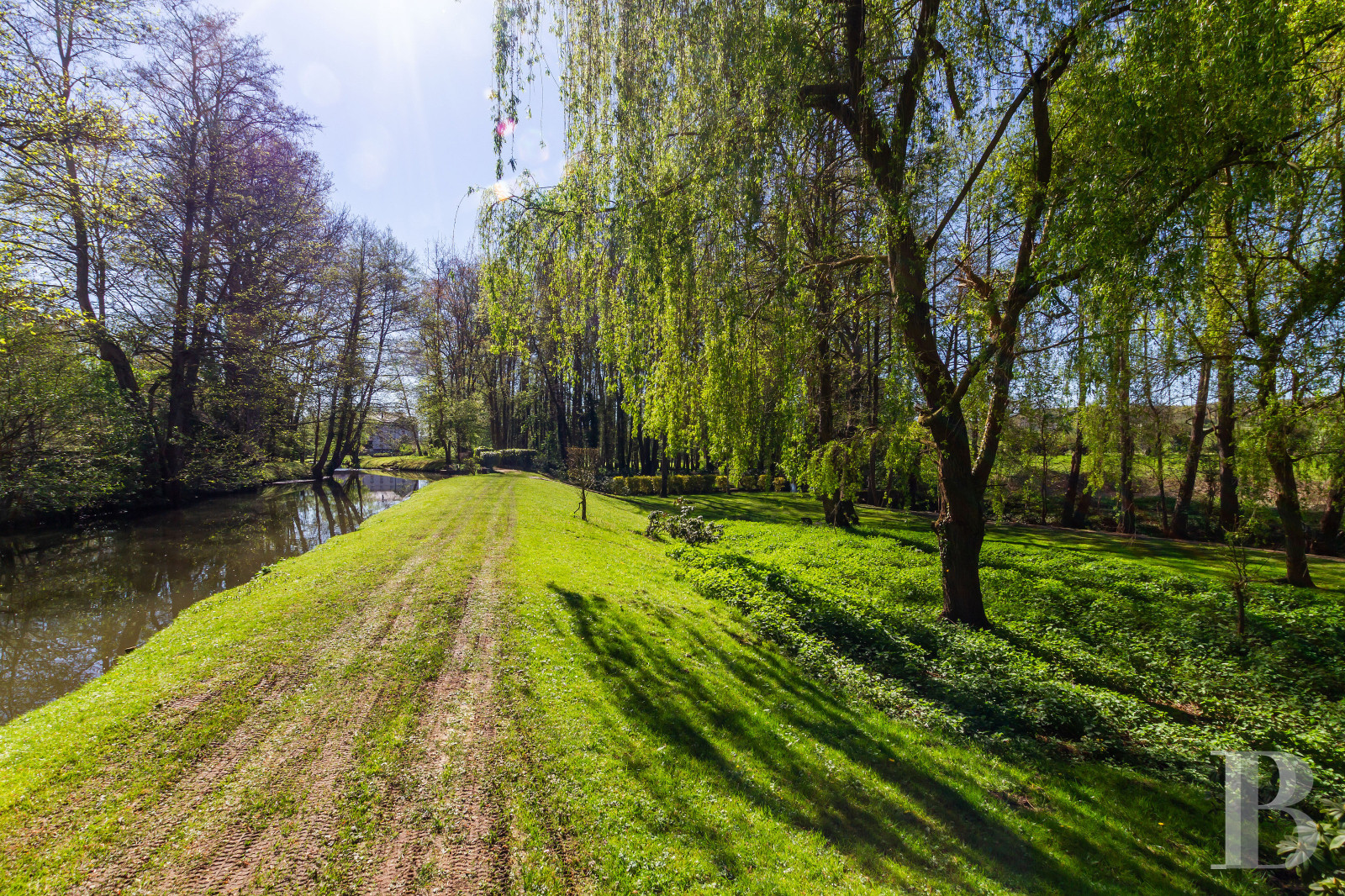
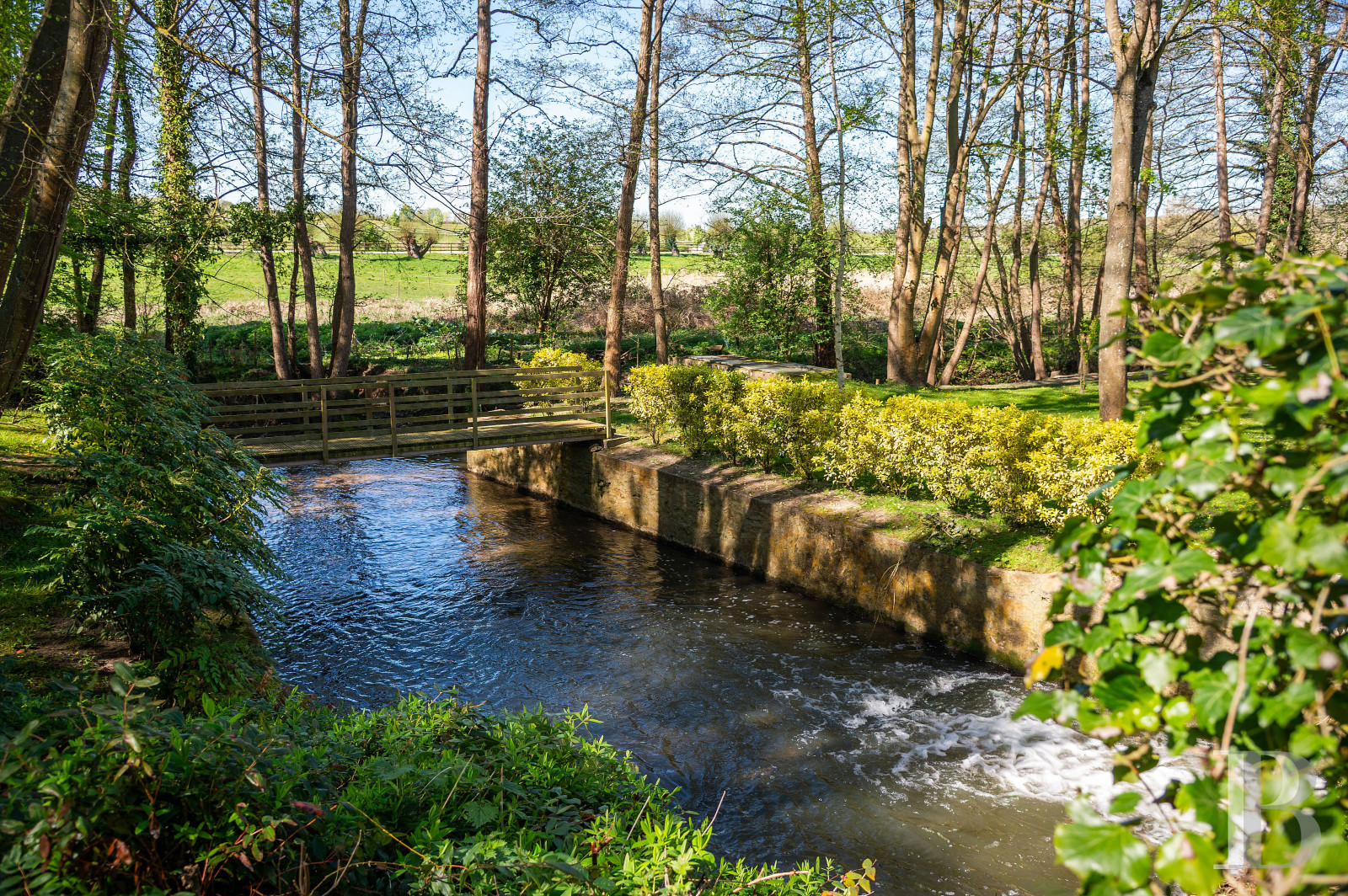
The vast expanse of water by the entrance to the watermill reveals that water is king here. Indeed, this expanse of water is a token of the mill’s past. Now its hydraulic engineering has given way to a pleasant landscaped space. The grounds extend around the river and its millraces. A canal with grassy banks forms a straight vista with reflections of the stone elevations and tall trees. The slender shapes of poplars, ashes, cedars and willows punctuate the space and end at the boundaries of the estate where a little waterfall constantly babbles, providing the property’s signature sound.
Our opinion
This remarkable watermill with its 1,500m² floor area is truly emblematic of 19th-century architecture. Indeed, it is a gem of history and built heritage and a precious token of hydraulic engineering and landscaping. Today, it stands out as a cathedral of timber and stone. It offers you endless possibilities for fresh projects and new purposes. It will delight any lover of architecture who seeks to combine modern comfort with the charm of old, rustic building materials. Furthermore, the outhouses, which include a 160m² dwelling and a 200m² series of annexes, make it possible to adapt the property in even more ways, perhaps separating private life from working life here or creating self-contained accommodation for friends and family. With its four hectares of enchanting grounds, time seems to stand still on this property. And its expanse of water and private millraces make the splendid watermill feel like a majestic chateau protected by a moat.
3 725 000 €
Fees at the Vendor’s expense
Reference 495658
| Main building floor area | 1500 m² |
| Land registry surface area | 4 ha |
| Elevator |
French Energy Performance Diagnosis
Information on the risks to which this property is exposed is available on the website: www.georisques.gouv.fr
Share


NB: The above information is not only the result of our visit to the property; it is also based on information provided by the current owner. It is by no means comprehensive or strictly accurate especially where surface areas and construction dates are concerned. We cannot, therefore, be held liable for any misrepresentation.