



A refined early-20th-century house, built of granite and designed to showcase
granite, nestled in a calm neighbourhood in the French city of Nantes
granite, nestled in a calm neighbourhood in the French city of Nantes
Nantes,
LOIRE-ATLANTIQUE
pays-de-loire
44100
FR


Location
The city of Nantes is the administrative centre of France’s Loire-Atlantique department and the historical capital of the Duchy of Brittany. Today, it is the capital of France’s Pays de la Loire region. The city combines economic vibrancy with a high quality of life. Indeed, in Nantes you find a remarkable wealth of built heritage and the city is just a short distance from the Atlantic Ocean. The property is tucked away in the west of the city, in the Zola district – a calm residential area. This spot is well connected to public transport. Nantes train station, from where you can reach Paris in just two hours by high-speed rail, is only around 20 minutes from the home by bicycle or via public transport. And trams and buses smoothly take you into the city’s historical heart with its monuments, including Nantes Cathedral and the Château des Ducs de Bretagne, as well as the River Loire quaysides. On foot from the property, you can easily reach shops and amenities.
Description
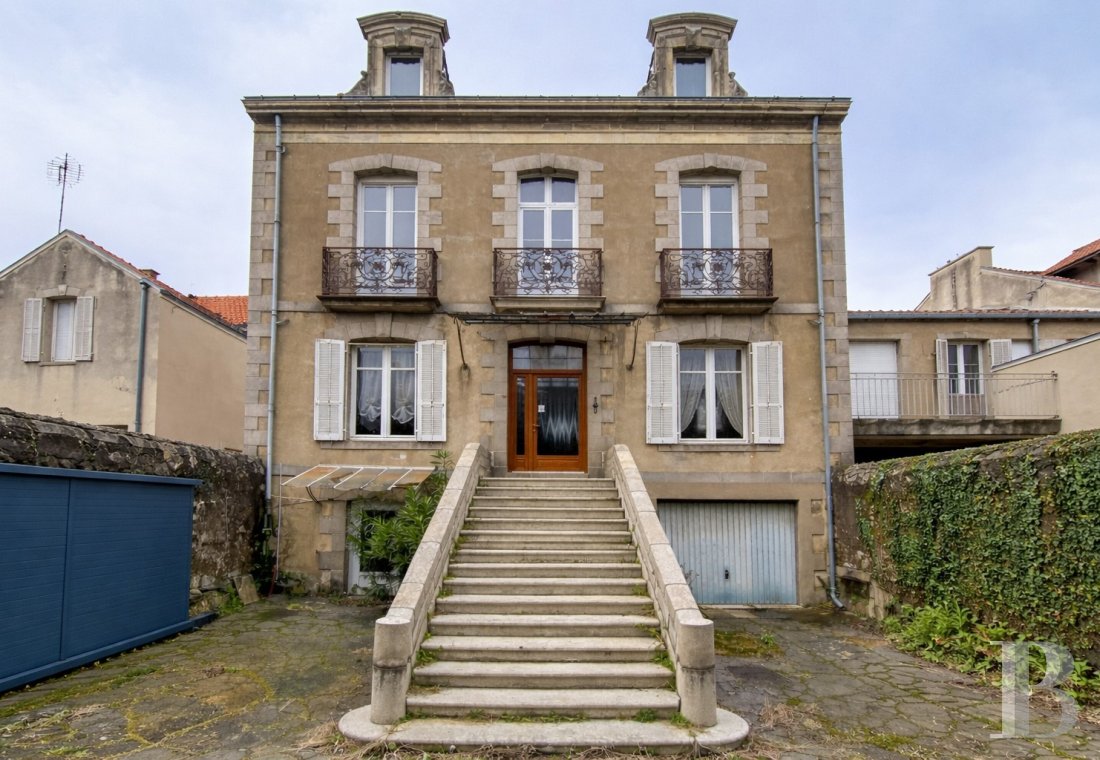
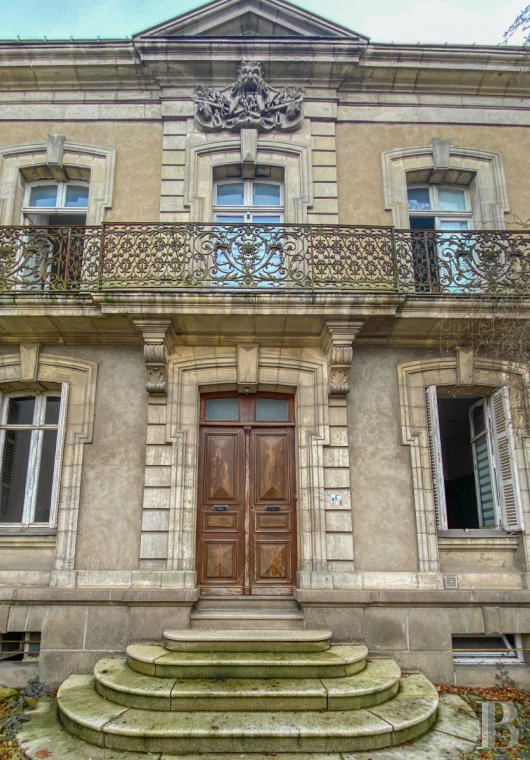
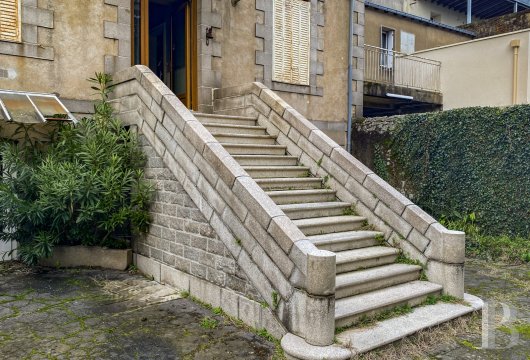
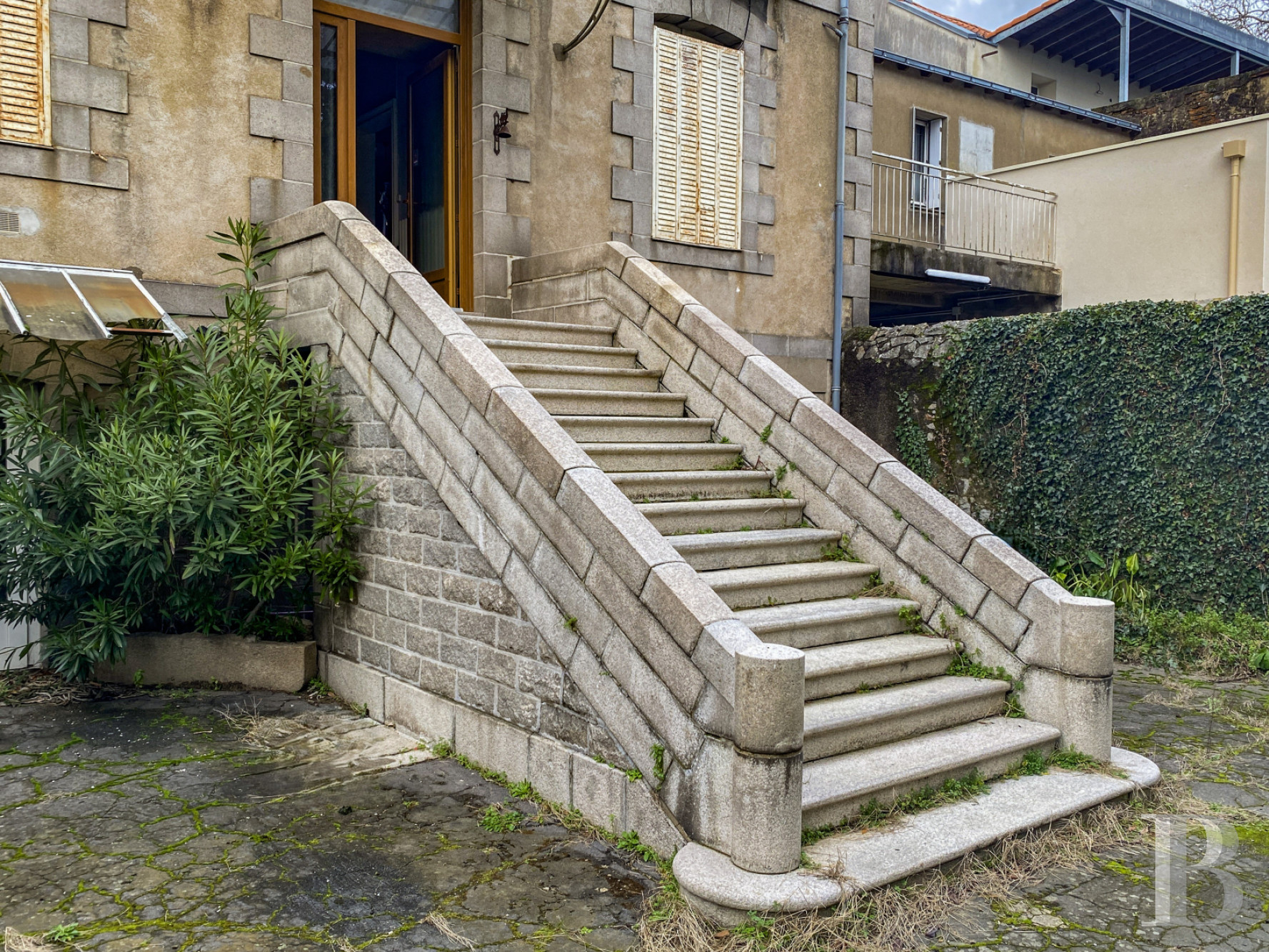
The house is set back from a calm road. It reveals itself discreetly. Wrought-iron railings upon a low wall with granite coping stones marks the plot’s front demarcation, yet without hiding the house’s impressive facade. Your gaze is drawn to the facade, while a central gate invites you to step from the public pavement into the private plot. A few granite steps, smoothened by time, lead up to a double door of sculpted wood beneath an arched glazed fanlight. The house was built in around 1920 for a granite quarry manager. So, in its very material, the edifice bears the footprint of its history. Stone, which is omnipresent here, gives structure to both the building and its outdoor spaces. The house has a garden-level floor, a ground floor, a first floor and a second floor in the roof space. It offers a total floor area of 216m². The gently sloping plot gives structure to the rooms and uses. Level with the street, the ground floor houses the reception rooms. Bedrooms lie in the two upper floors. Lower down, the garden-level floor houses a garage and spare rooms, with a door leading straight out into the courtyard. On the street side, the walled garden extends the facade and gives the house privacy. On the side, a lateral lane runs perpendicular to the street. It runs alongside the edifice and leads to the back of the plot. It takes you to a broad sliding gate that leads into a stone-walled garden. This garden is partly paved. You can park two vehicles in it, in addition to the garage, in the shade of two large magnolias. The house’s garden-level floor lies level with this back garden. And in the middle of the rear elevation, a monumental flight of granite steps with a granite balustrade leads upwards. This straight flight of steps links the back garden to the south hallway on the ground floor – a remarkable architectural transition from the outside into the reception rooms.
The house
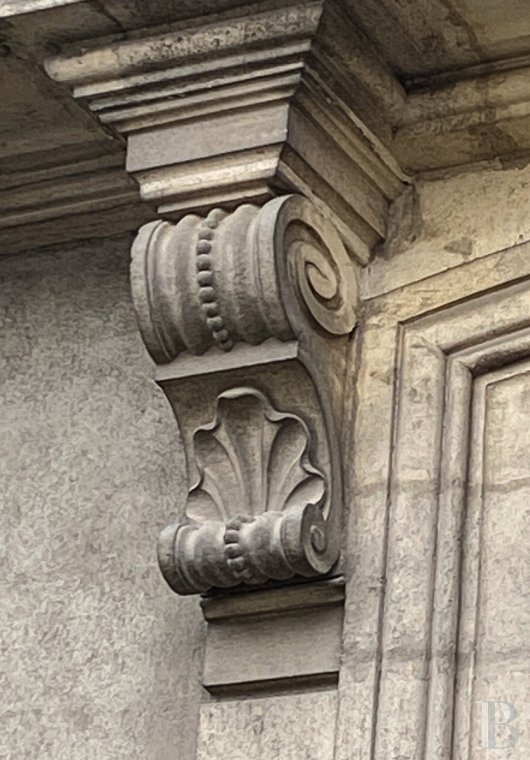
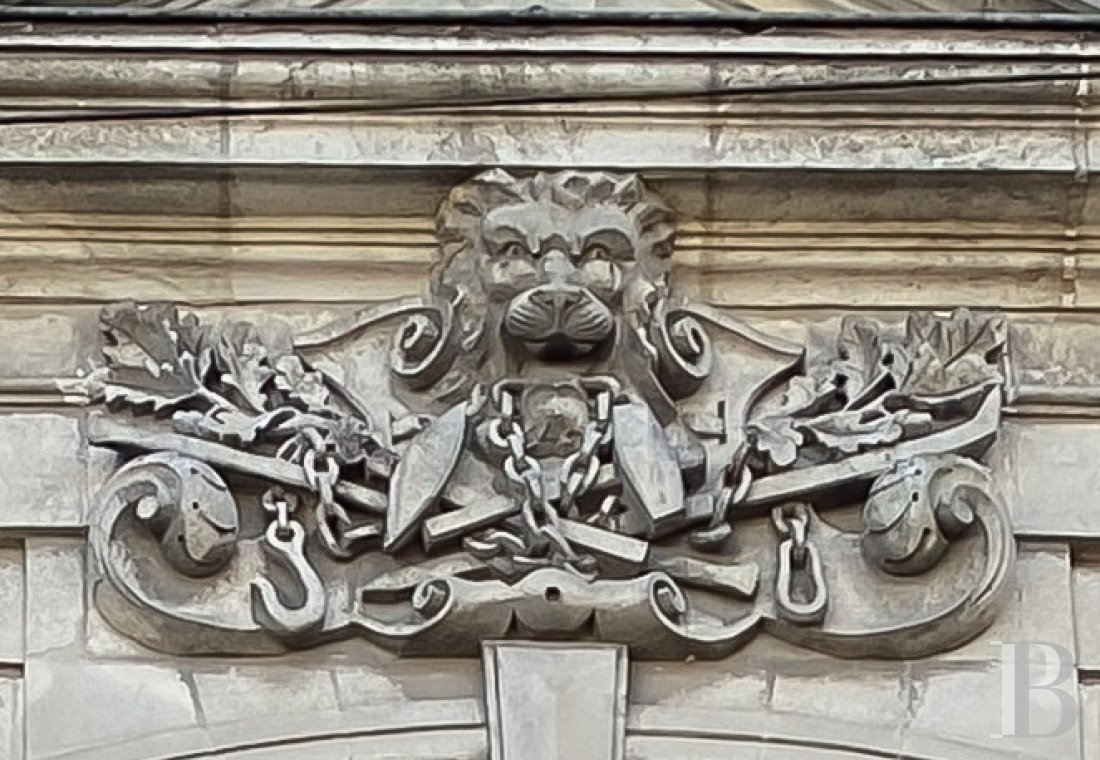
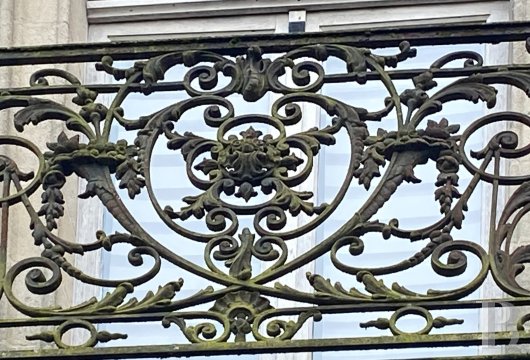
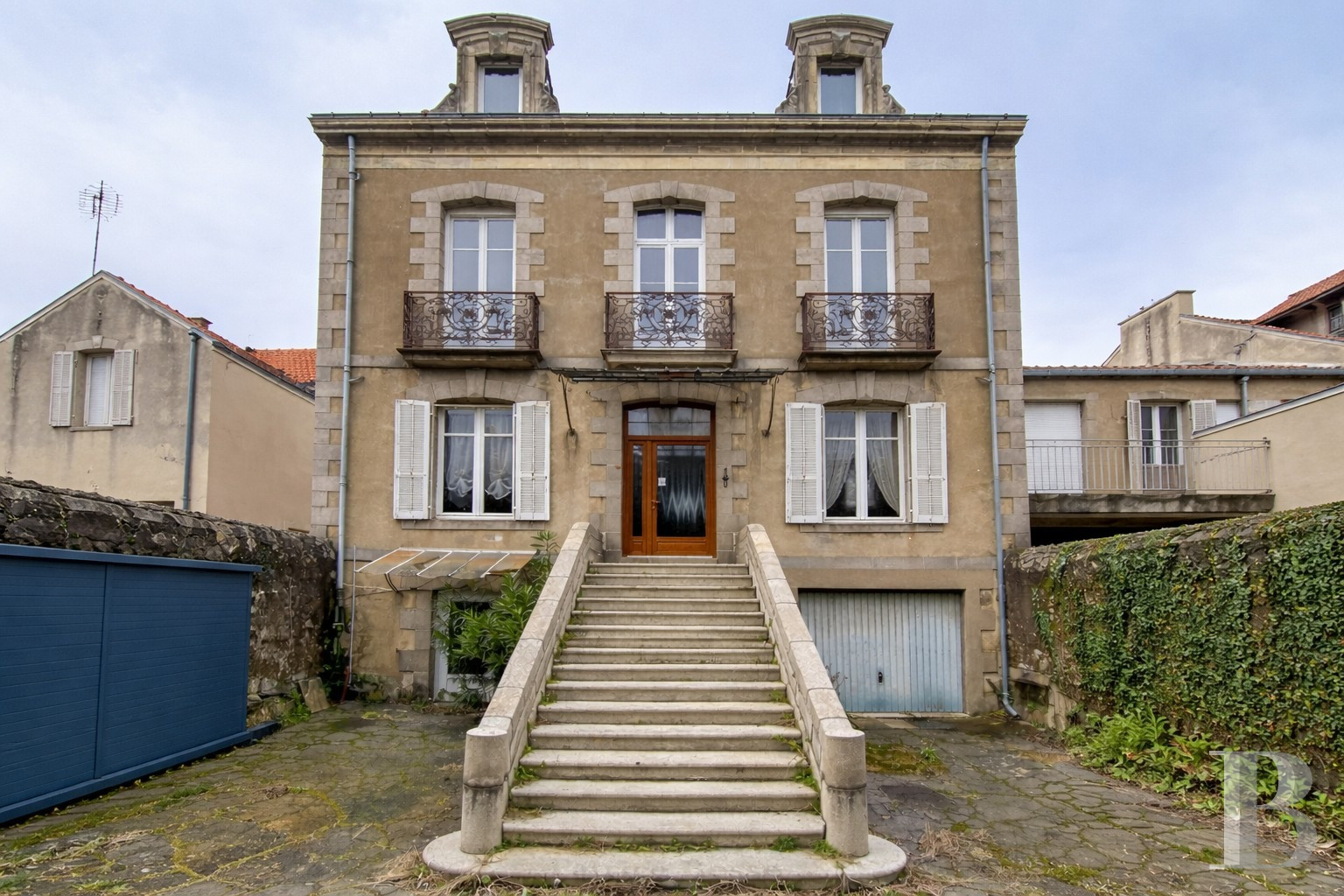
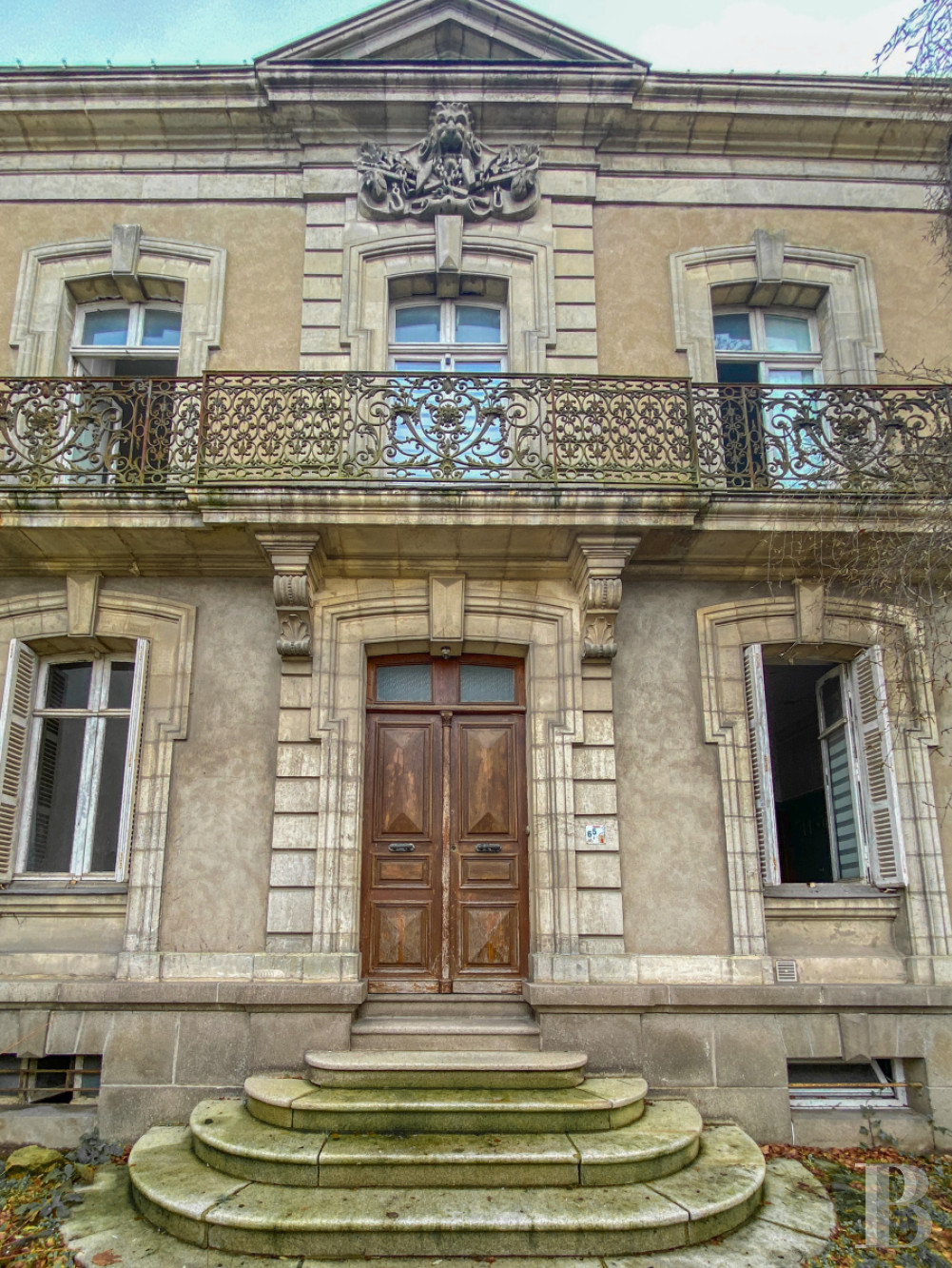
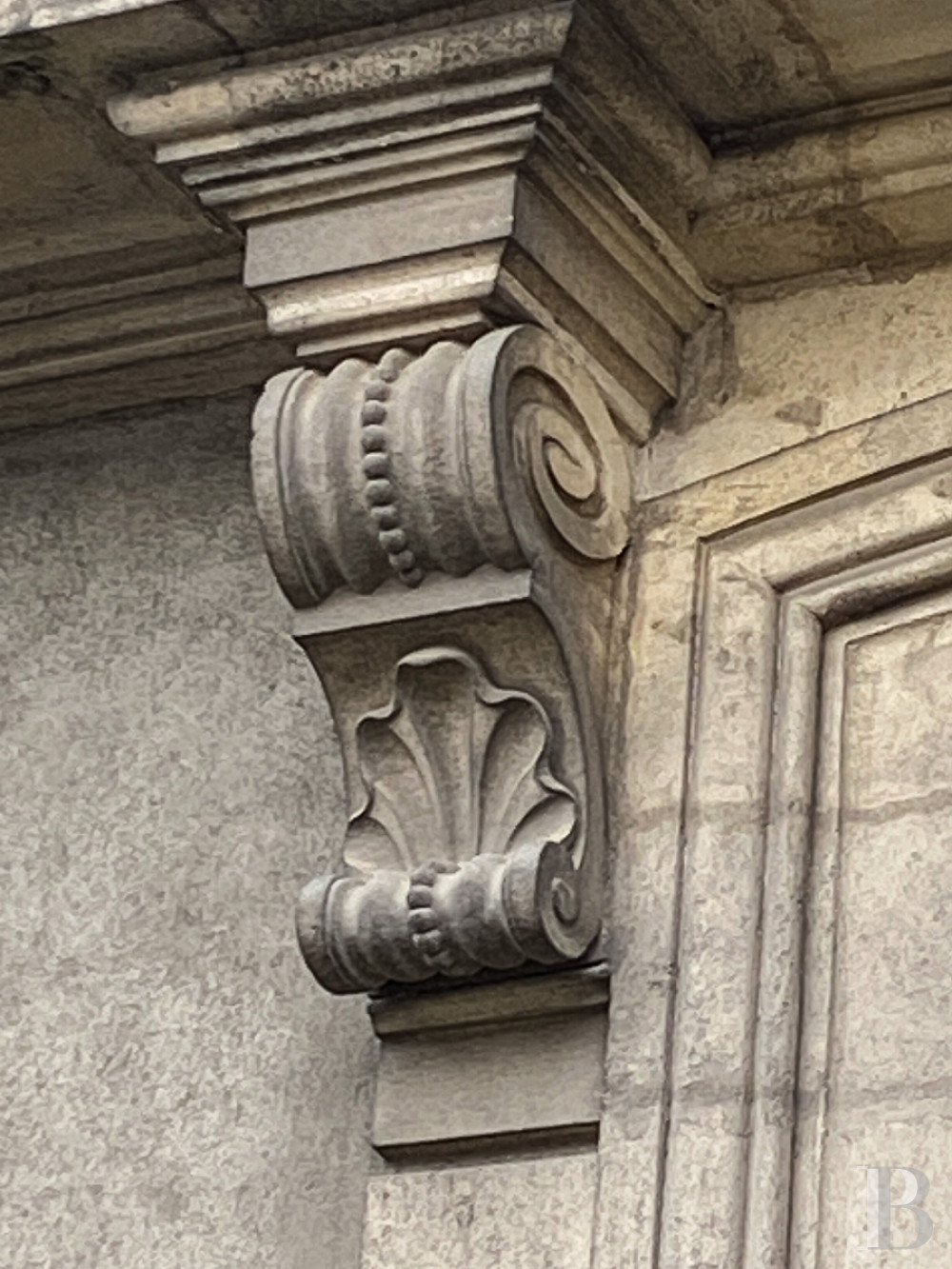
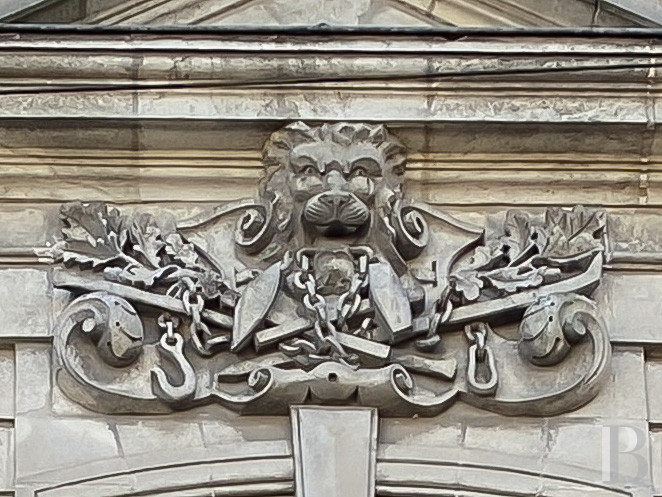
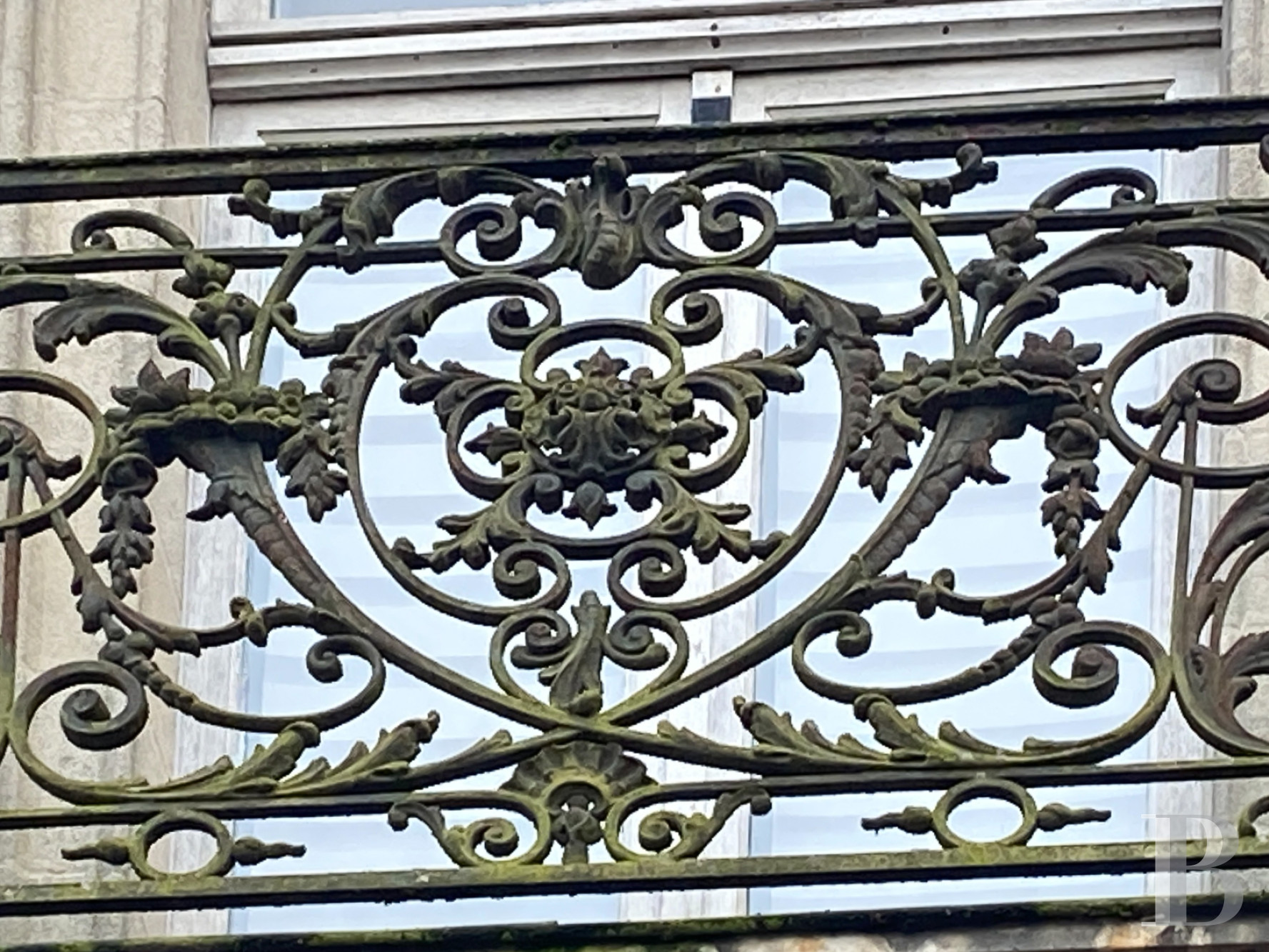
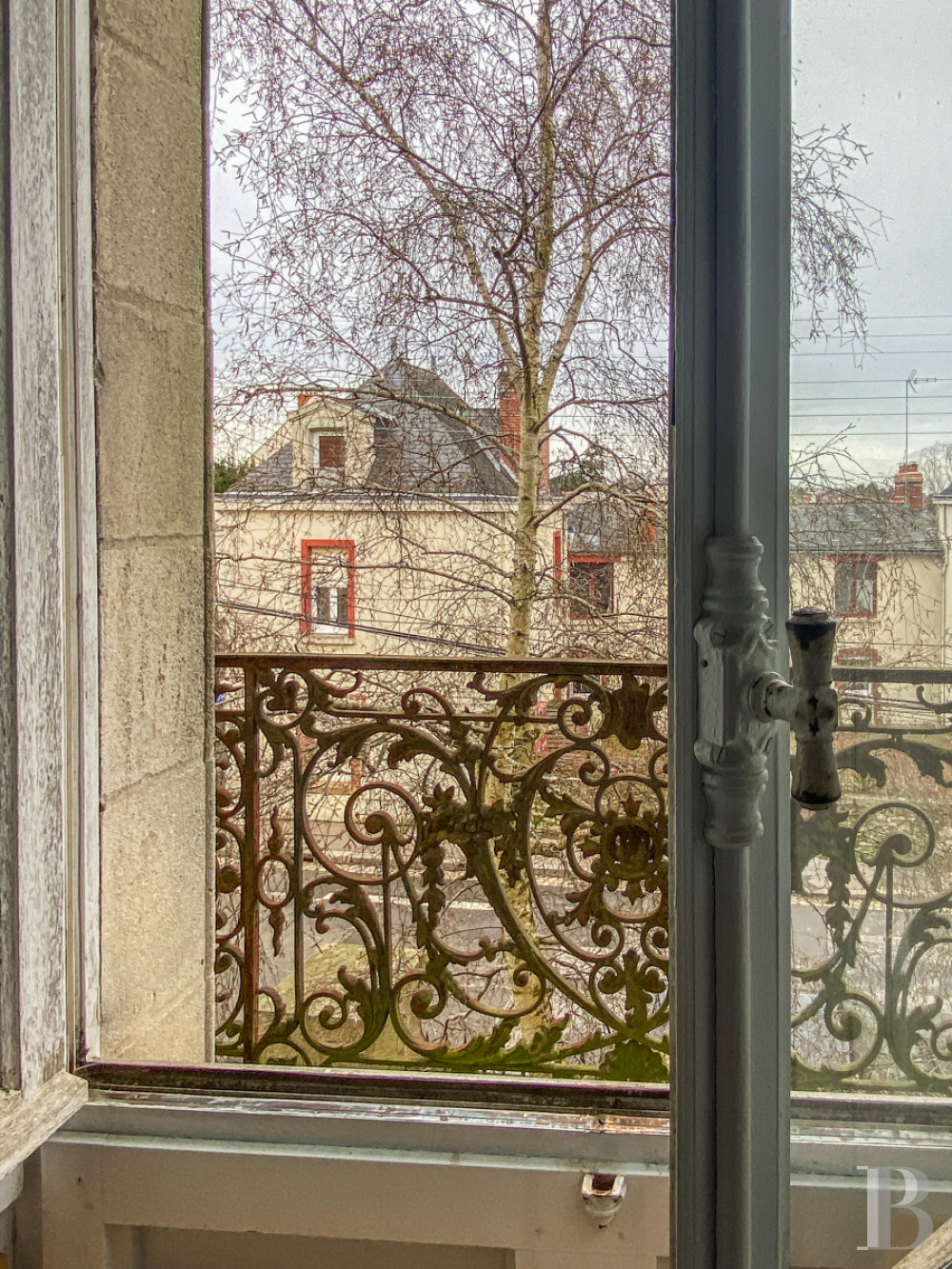
The street-facing facade, rendered with beige and greyish tones, is punctuated with quoins and window and door surrounds of dressed stone. On the ground floor, three slightly arched openings add to the edifice's plinth course. Two tall windows fitted with louvred shutters frame a central entrance door of solid wood with panels edged with mouldings. On the first floor, three tall windows stand behind a continuous balcony with a finely crafted wrought-iron balustrade – a centrepiece of the magnificent edifice. This wrought-iron guardrail with foliage motifs rests upon a stone base with a cornice of mouldings, supported by corbels sculpted with an acanthus motif. Above the central window, there is a remarkably refined stone cartouche: a lion’s head framed between foliage scrollwork, quarrying tools and a chain – an allegory of work and prosperity and a token of the business activities of the house’s first owner. It is positioned beneath a pediment, which crowns the facade. On the court side, the rear elevation, which has three levels, displays a symmetrical arrangement dominated by granite. A straight flight of generously broad steps, edged with balustrades of solid stone, leads up to the ground floor. This flight of steps is monumental in character. The first floor is punctuated with three French windows that lead out onto individual balconies fitted with wrought-iron balustrades. The top floor, in the roof space, has two granite dormers with arched pediments. These dormers are harmoniously integrated into the slate roof.
The ground floor
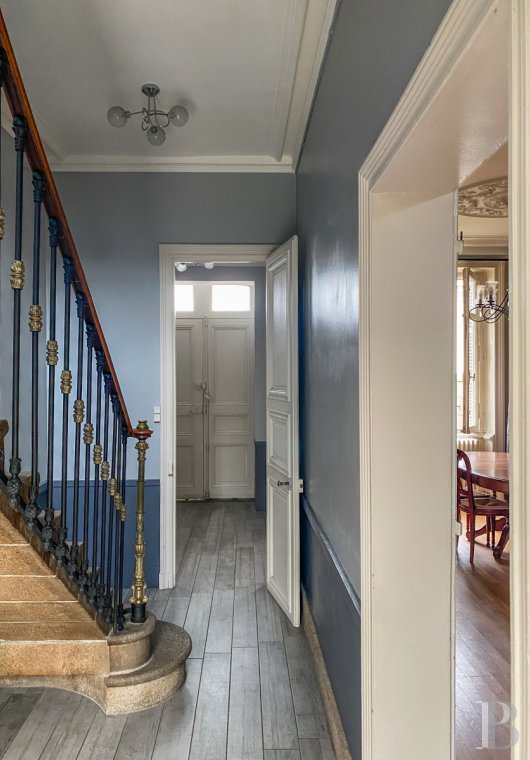
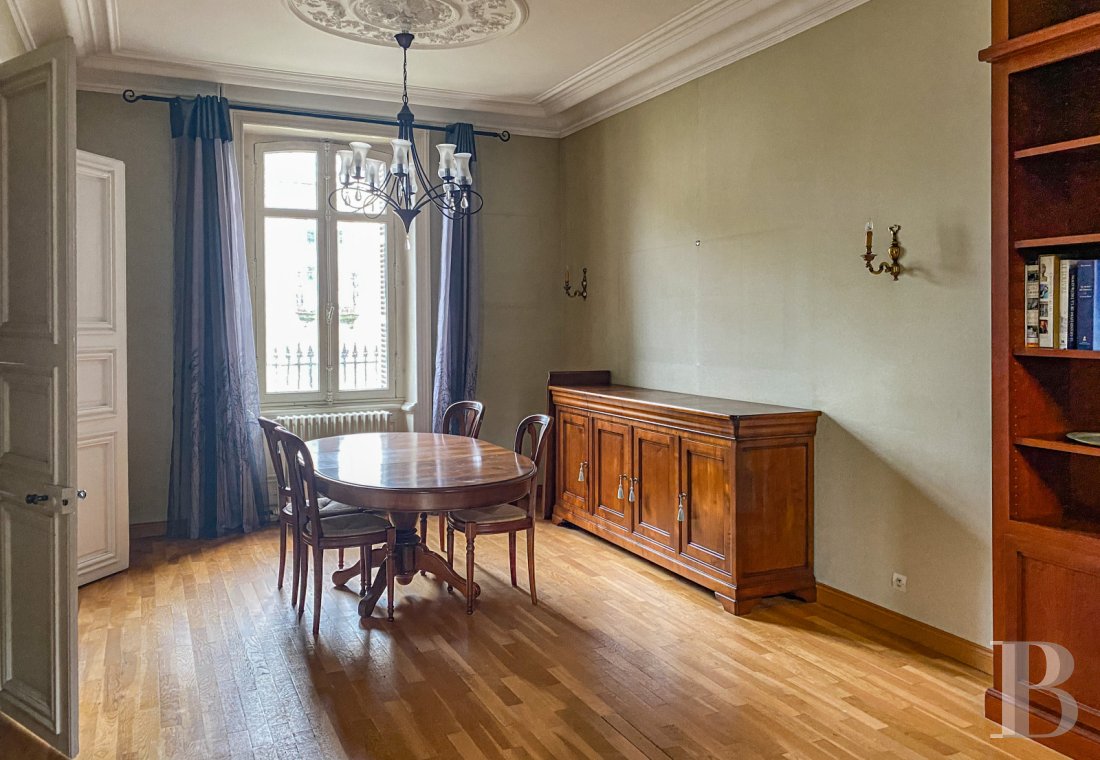
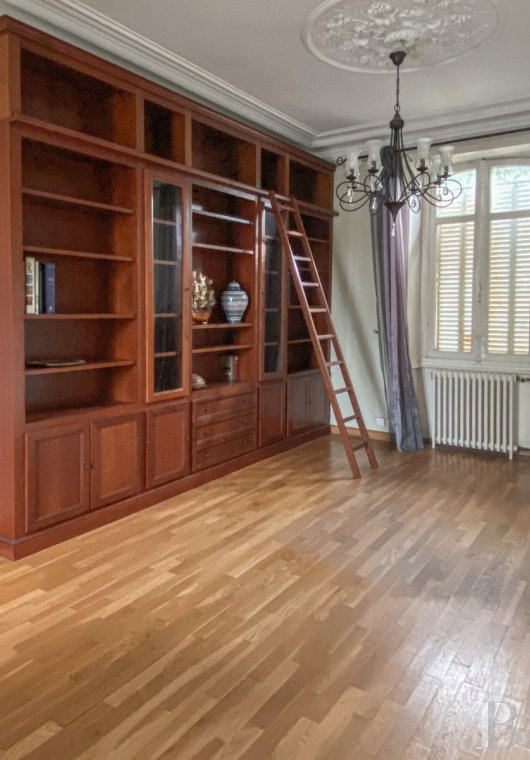
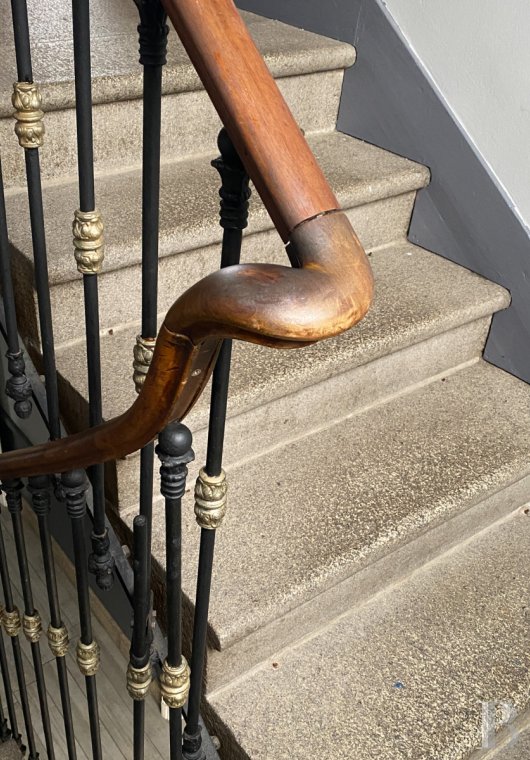
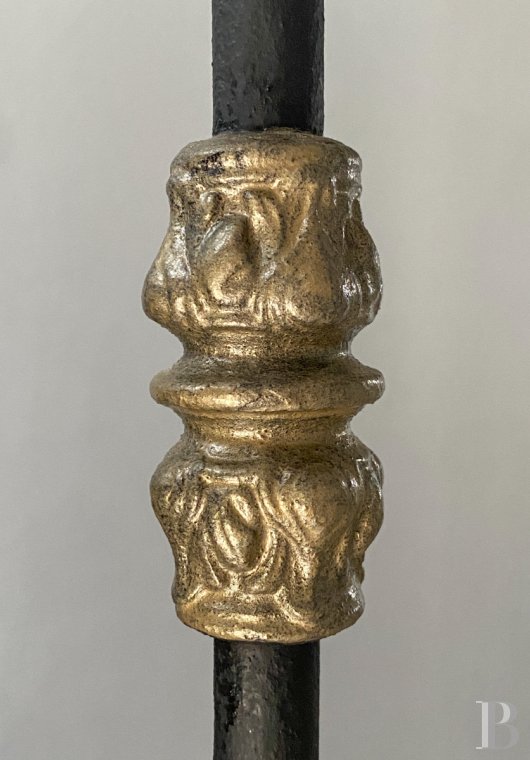
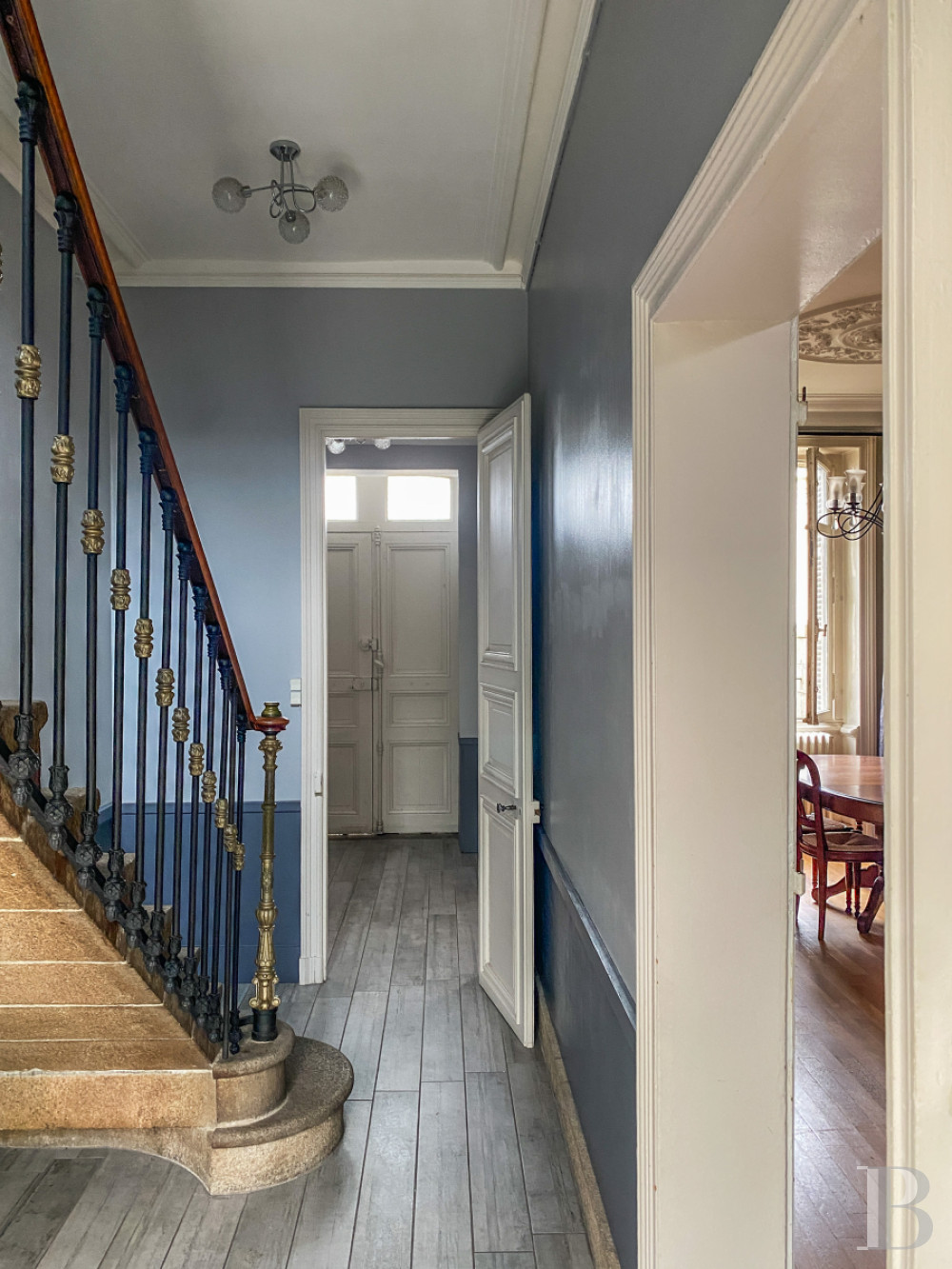
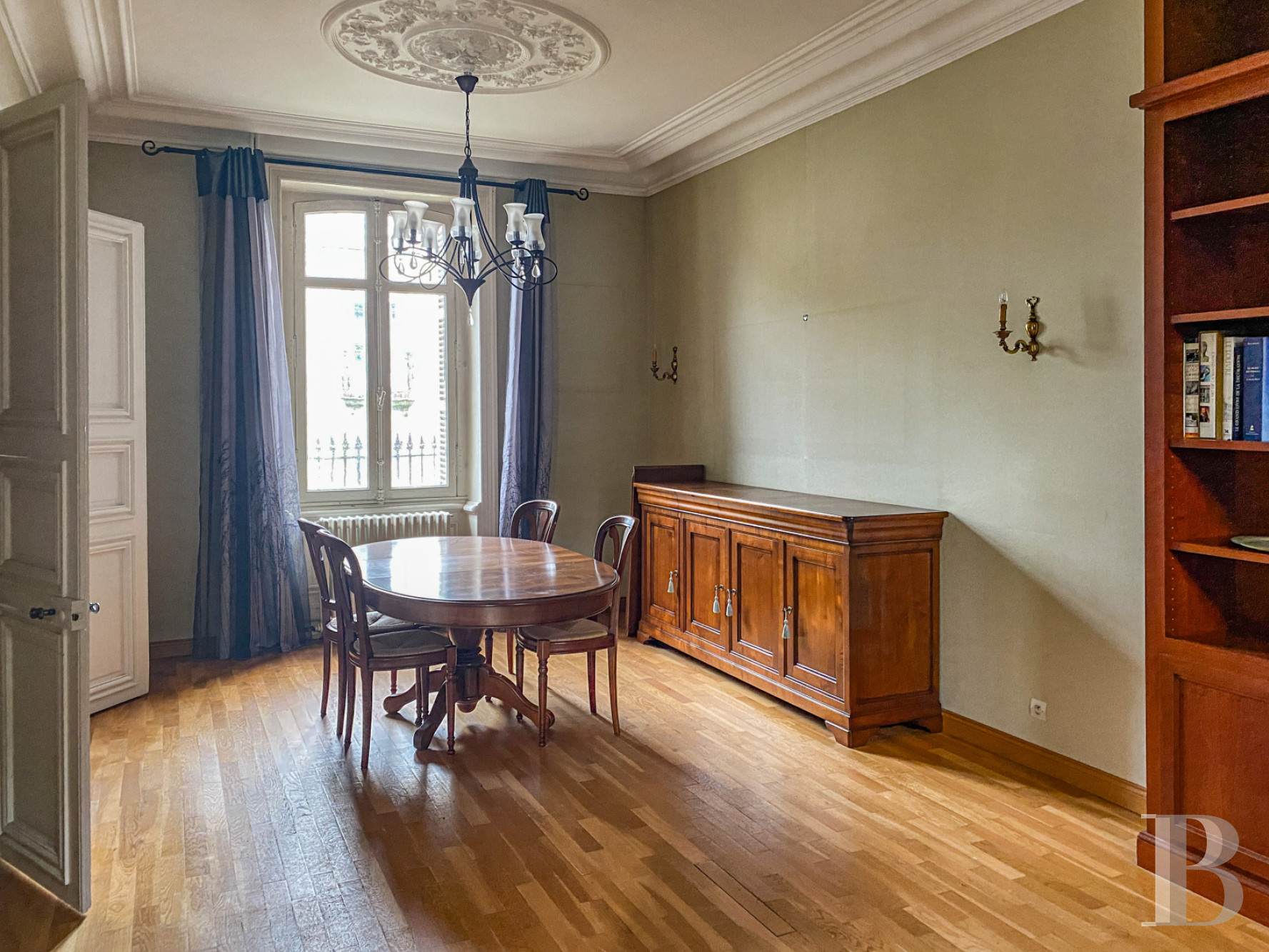
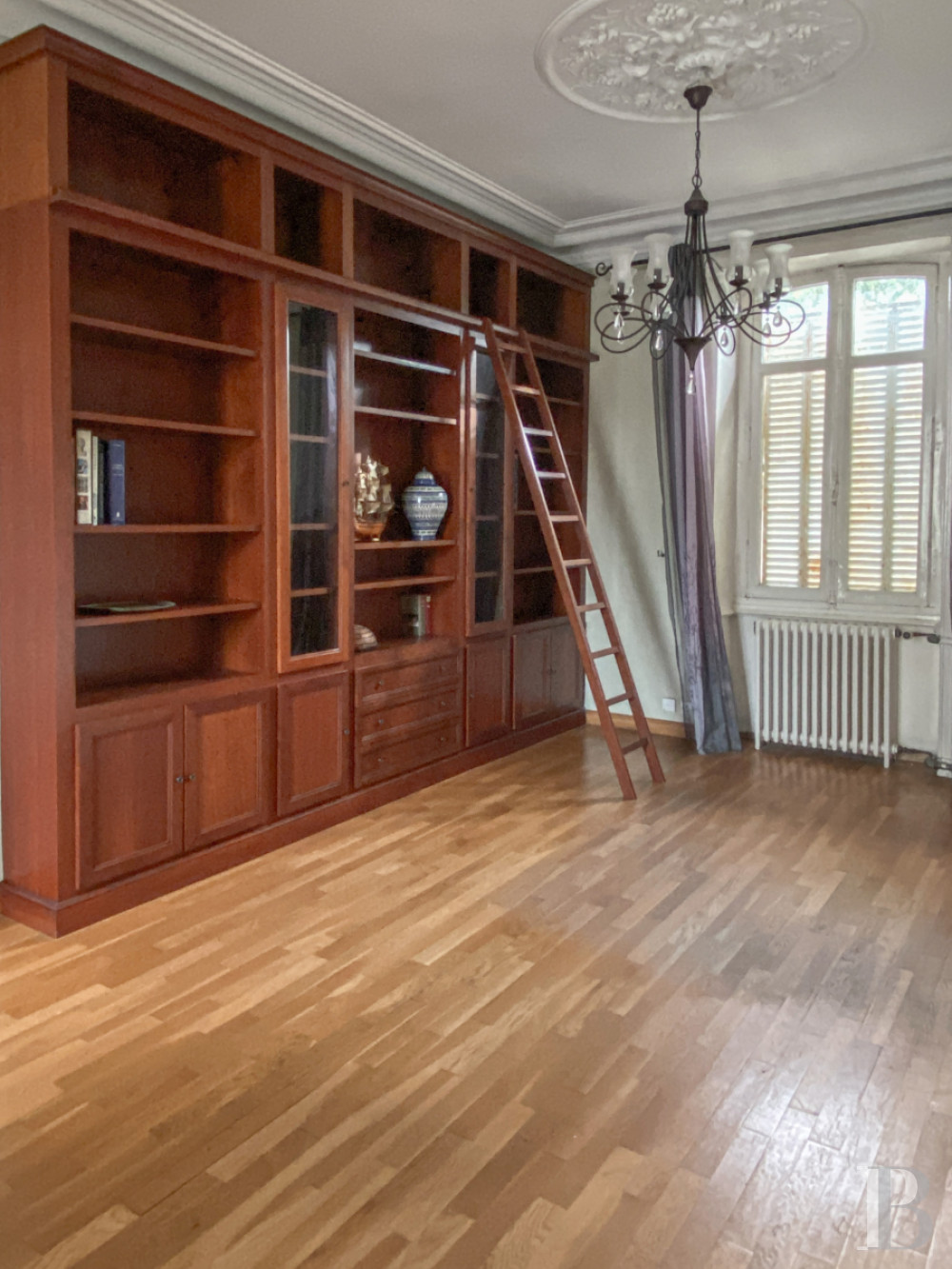
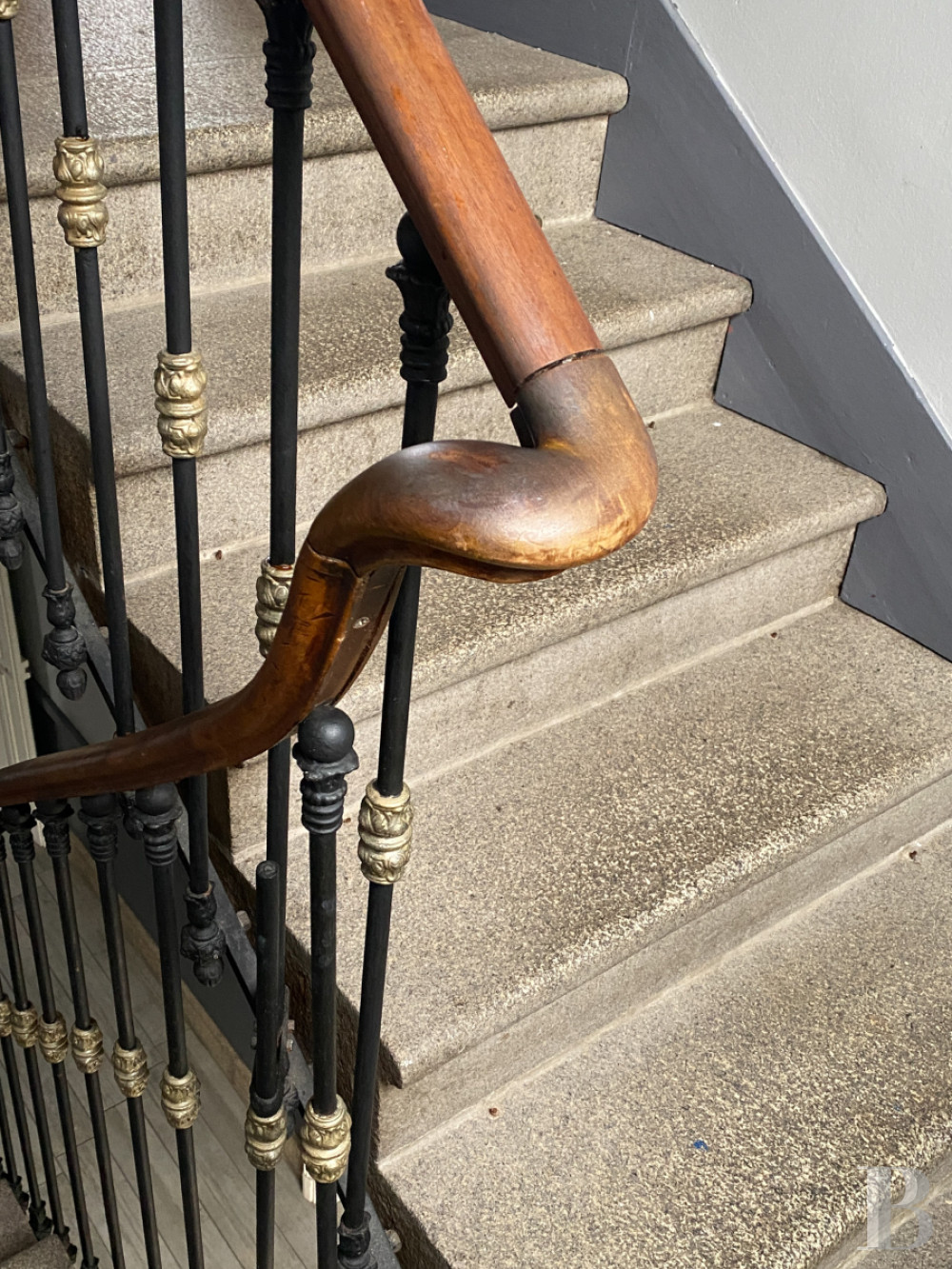
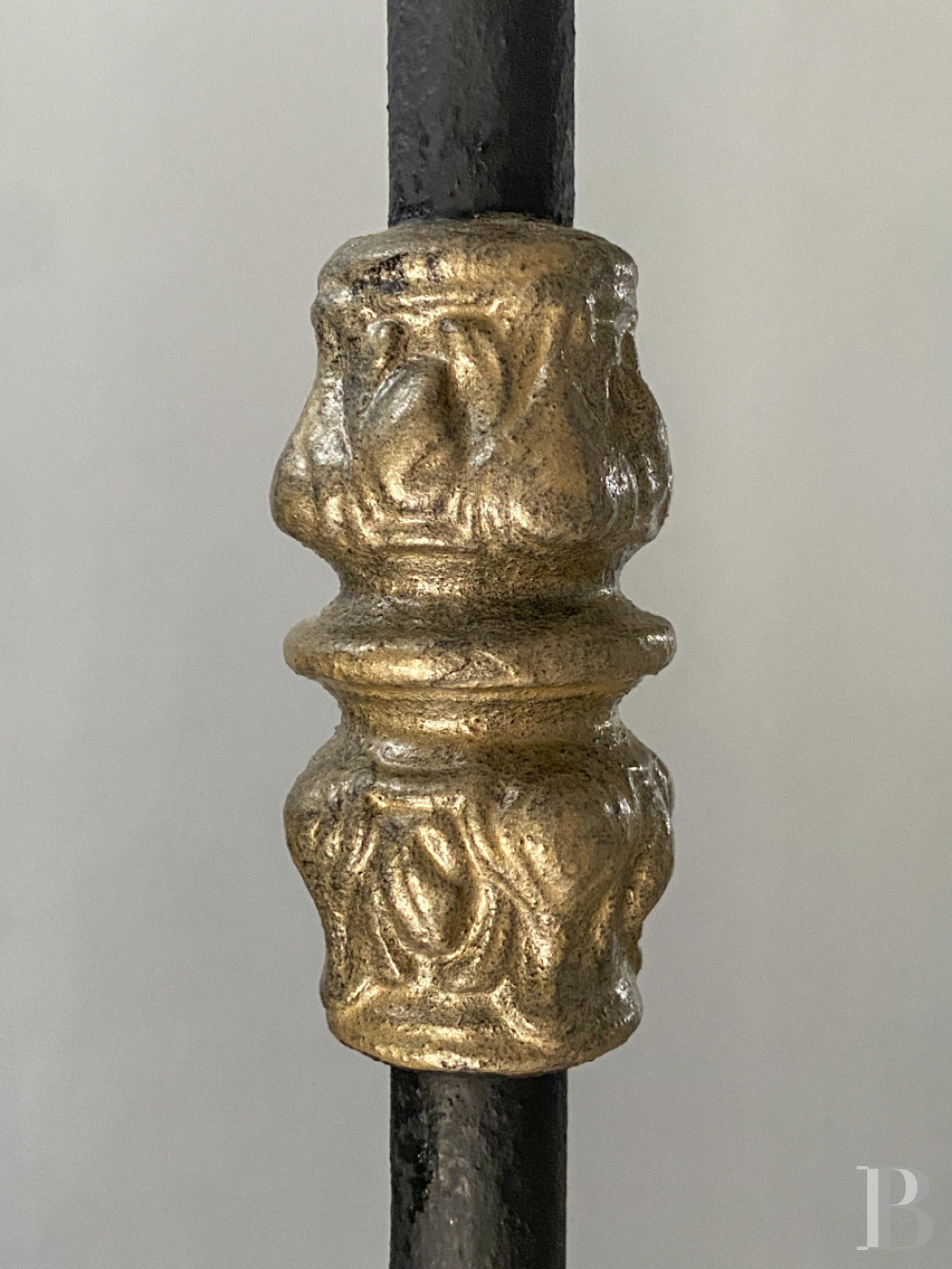
On the street side, a double door of sculpted wood leads into a first entrance hall with a tiled floor. A glazed fanlight bathes this hallway in natural light. On one side, a large double door invites you to discover the lounge. On the other side, a hallway leads to an office. Straight ahead, in line with the entrance door, there is a second hallway. The office looks out at the street through a tall window. This room could also serve as a lobby. The ceiling bears a small ceiling rose and is edged with mouldings. The lounge and dining area form a vast dual-aspect room with solid-wood strip flooring. Two ceiling roses embellish the ceiling: one above each section of the spacious room. Cornices with mouldings give structure to the two spaces. From the second hallway, on the south side, a remarkable granite staircase made of grey granite leads upstairs. Its black wrought-iron balustrade is embellished with gold rings in a neoclassical spirit. The bottom of the banister forms an elegant curl. This wooden handrail supports you as you climb upwards. A glazed door fills the hallway with natural light and leads out to the back garden via a monumental flight of outdoor stone steps. Opposite the lounge, there is a fitted kitchen. A secondary staircase links this kitchen down to the garden-level floor.
The first floor
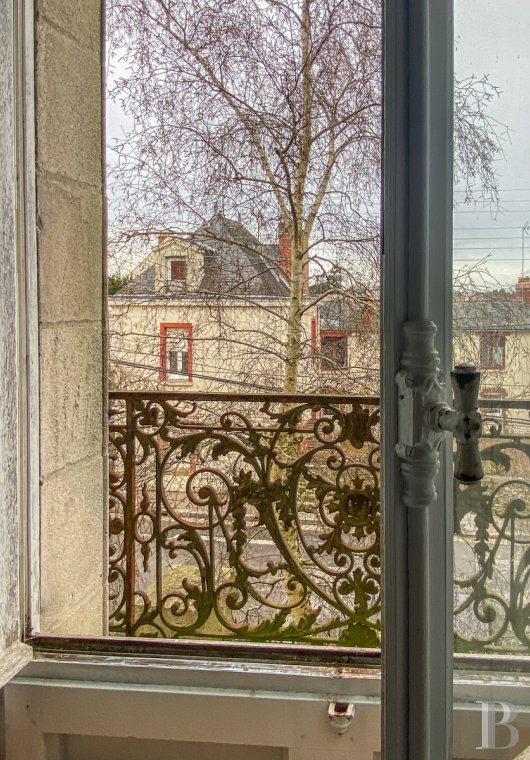
The granite staircase leads up to a landing that connects to four bedrooms, a shower room and a separate lavatory. In the bedrooms, ceiling roses and cornice mouldings embellish the ceilings. The rooms are spacious, with comfortable ceiling heights and tall windows that bathe the whole first floor in natural light. The first bedroom looks out at the back garden through a tall double-glazed window fitted with an electric roller shutter. On the other side of the staircase, the fourth bedroom, which leads to the third bedroom, also looks out at the back garden and is extended with a balcony too. The second and third bedrooms look out at the street. Their wooden-framed windows are fitted with indoor wooden shutters. These rooms look out at the continuous balcony, which cannot be reached from them. A shower rooms lies between these two bedrooms, as does a lavatory.
The second floor
The second floor lies in the roof space. You reach it from the granite staircase. Up here, two bedrooms enjoy comfortable ceiling heights up to the roof frame, even though they have sloping attic ceilings. One of these bedrooms is filled with natural light from two dormers. This spacious room is extended with a space that could serve as a walk-in wardrobe. The other bedroom is smaller. It could serve as an office or television lounge. It is filled with natural light from a dormer. Also on this top floor, there is a bathroom with a bathtub, a shower and a double washbasin. A roof window fills it with natural light. The rest of this top floor includes a separate lavatory and a storeroom.
The garden-level floor
You reach the garden-level floor from the kitchen via the secondary staircase or from the back garden. This lower level used to house a medical practice. The ceiling height down here is lower that on the floors above. There are two main rooms. Each one has a door that leads outside: one leads out into the courtyard and the other one leads out to the side lane. A hallway connects to these rooms. There are also technical installations rooms down here, including a room that houses a former heating oil tank, which has now been cleaned out, as well as a garage.
The garden
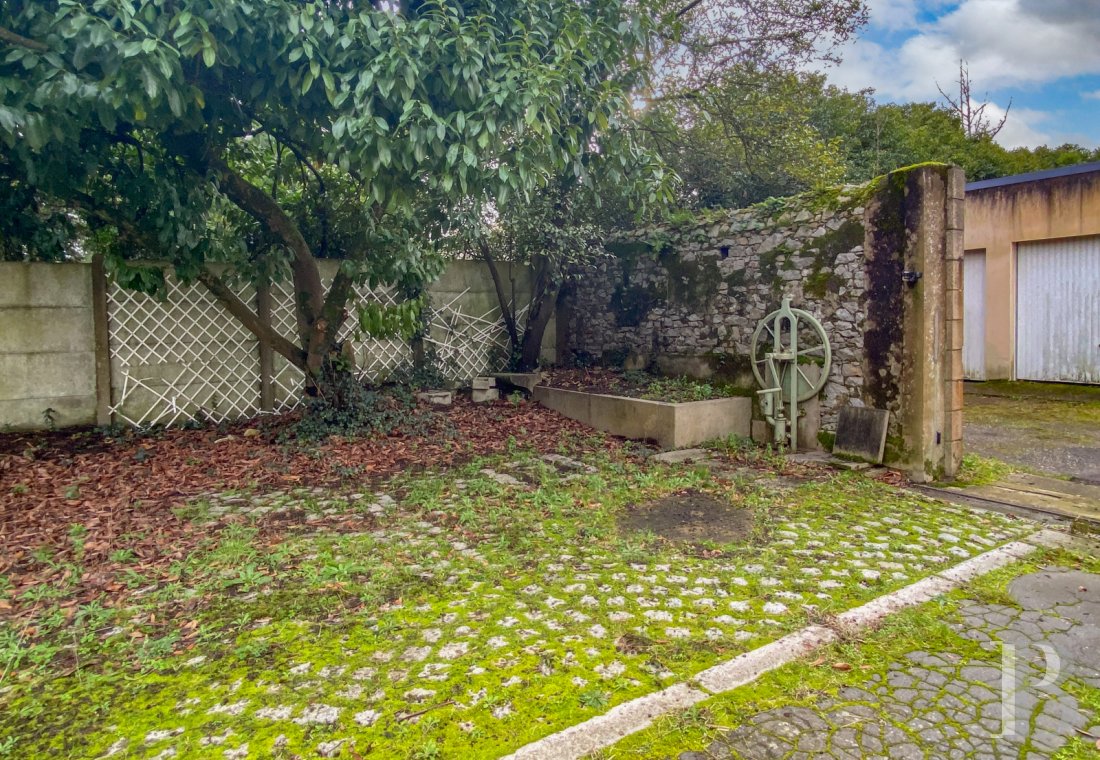
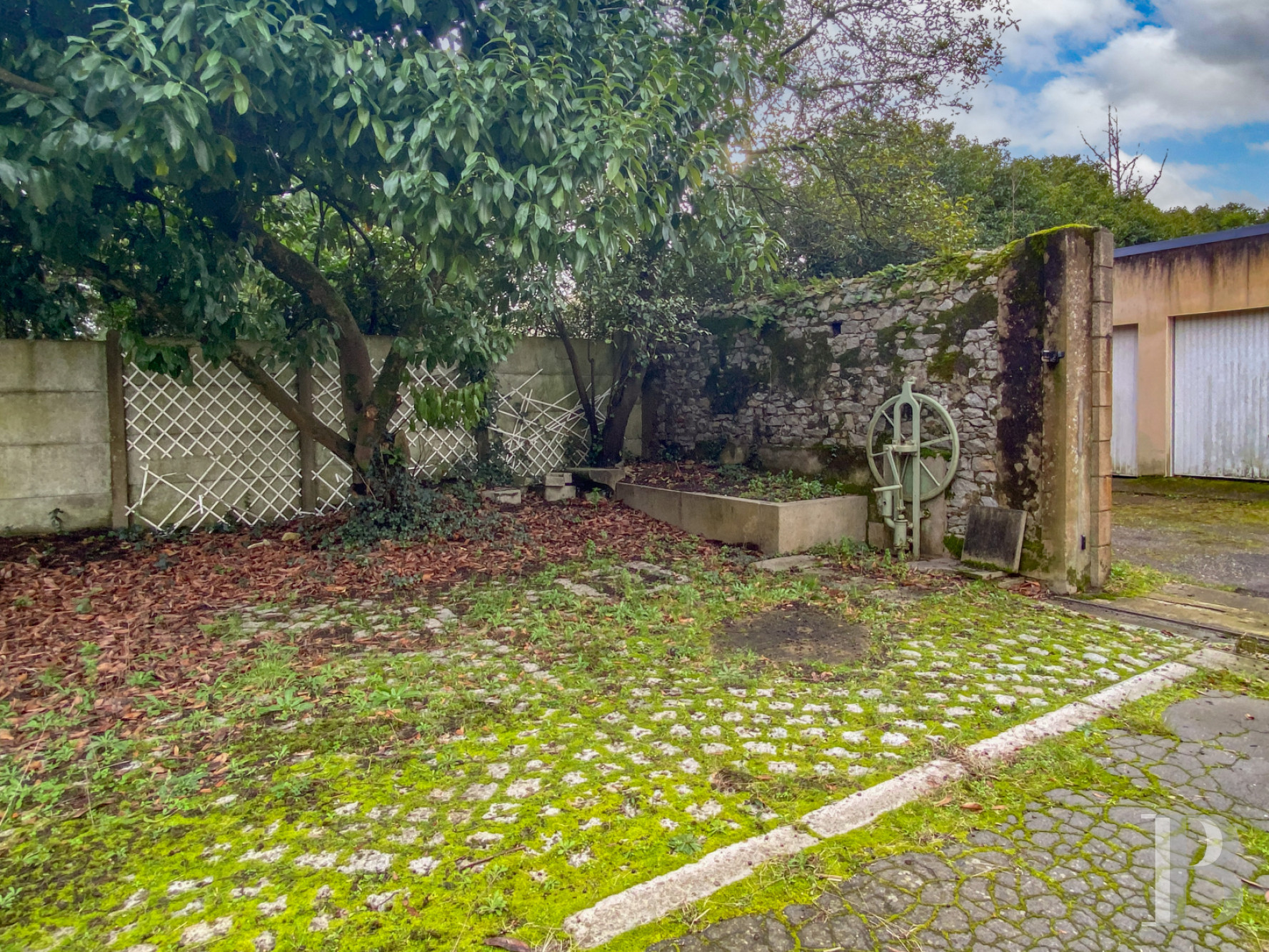
In front of the house, there is a small walled garden in the shade of a birch tree. It separates the facade from the street. At the back, there is a bigger outdoor space that is partly paved. Several vehicles can be parked here. A mossy stone wall encloses this space. There is also a former well here. It still has its wheel pump, but which is purely decorative today. Vegetation has gradually taken over the paving stones.
Our opinion
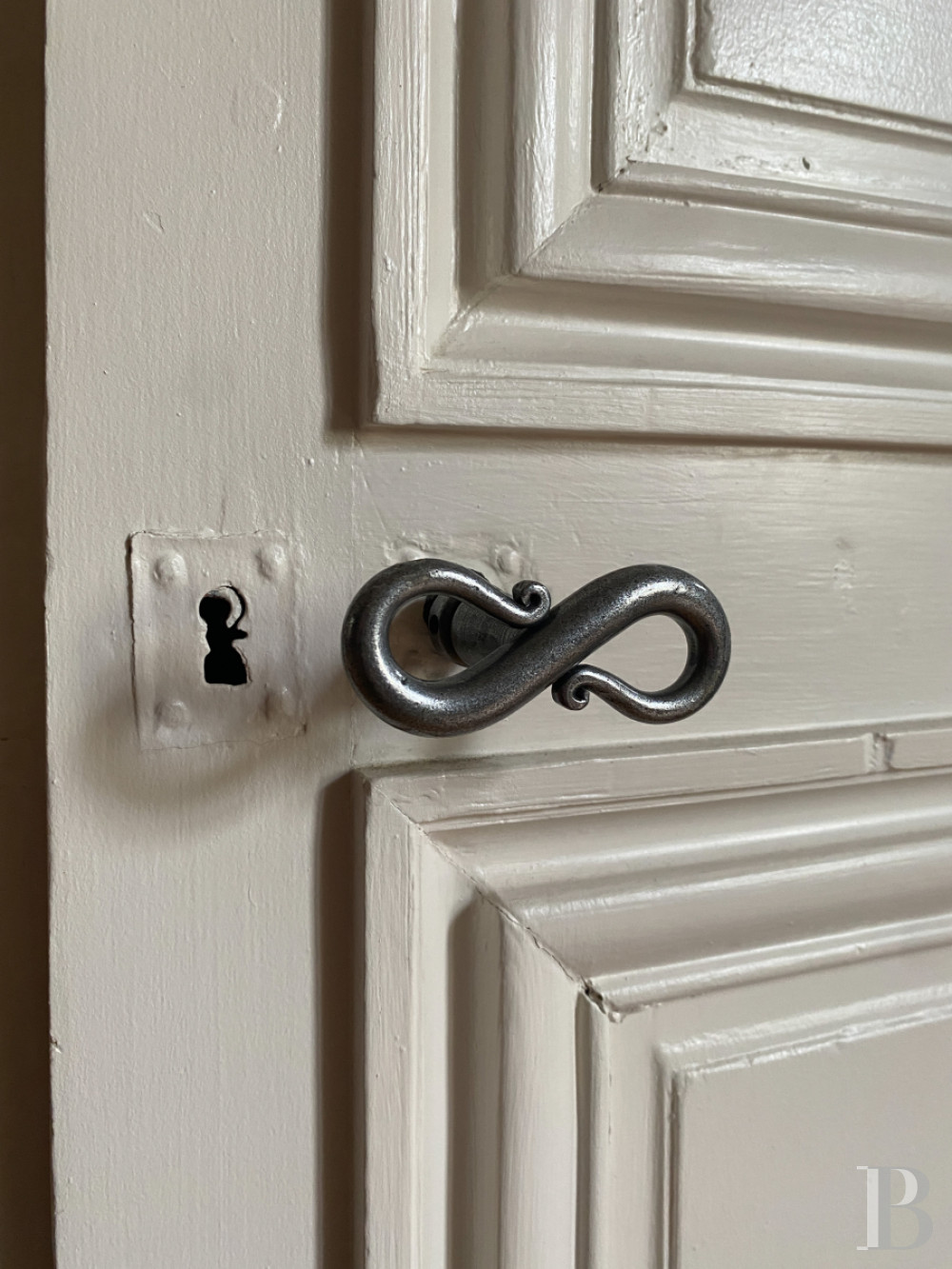
This magnificent property is a charming townhouse that is typical of the interwar period in the city of Nantes. The stone edifice tells the story of an entrepreneur in granite, who ordered construction of his family home with granite from his own quarry. The whole dwelling has kept its original embellishments, including a wrought-iron guardrail, a finely crafted staircase balustrade, ceiling roses, mouldings and sculpted corbels. All these features bear witness to the care that was taken in building this home masterfully. Today, the dwelling still asserts its unique identity and character. The property needs to be freshened up somewhat and adapted to modern standards of comfort, but its potential is huge. Indeed, this gem of built heritage is full of promise.
670 000 €
Fees at the Vendor’s expense
Reference 691451
| Land registry surface area | 314 m² |
| Main building floor area | 216 m² |
| Number of bedrooms | 5 |
French Energy Performance Diagnosis
Information on the risks to which this property is exposed is available on the website: www.georisques.gouv.fr
Share


NB: The above information is not only the result of our visit to the property; it is also based on information provided by the current owner. It is by no means comprehensive or strictly accurate especially where surface areas and construction dates are concerned. We cannot, therefore, be held liable for any misrepresentation.