



An elegant 19th-century manor house with a tree-filled garden,
5 minutes from the centre of Albi
5 minutes from the centre of Albi
Albi,
TARN
midi-pyrenees
81000
FR



Location
This property is located in Albi, the administrative hub of the Tarn area, in a landscape shaped by history and dominated by the monumental silhouette of the Saint Cécile Cathedral with its red colour, identical to the surrounding brick houses, which earned the Episcopal City inclusion on UNESCO’s World Heritage list in 2010. The edifice is situated in a residential neighbourhood to the north of the city, in a calm area overlooking the river. Albi city-centre can be reached from the house in 10 minutes by bicycle or 5 minutes by car. Toulouse-Blagnac airport is 55 minutes away.
Description
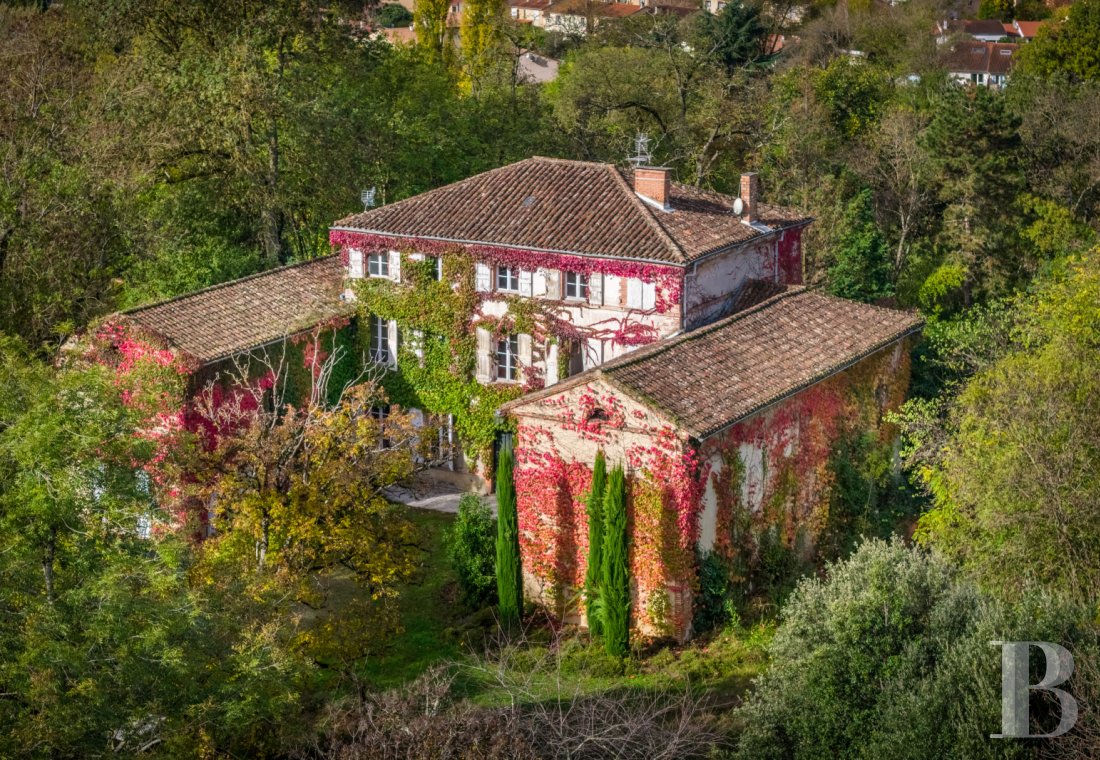
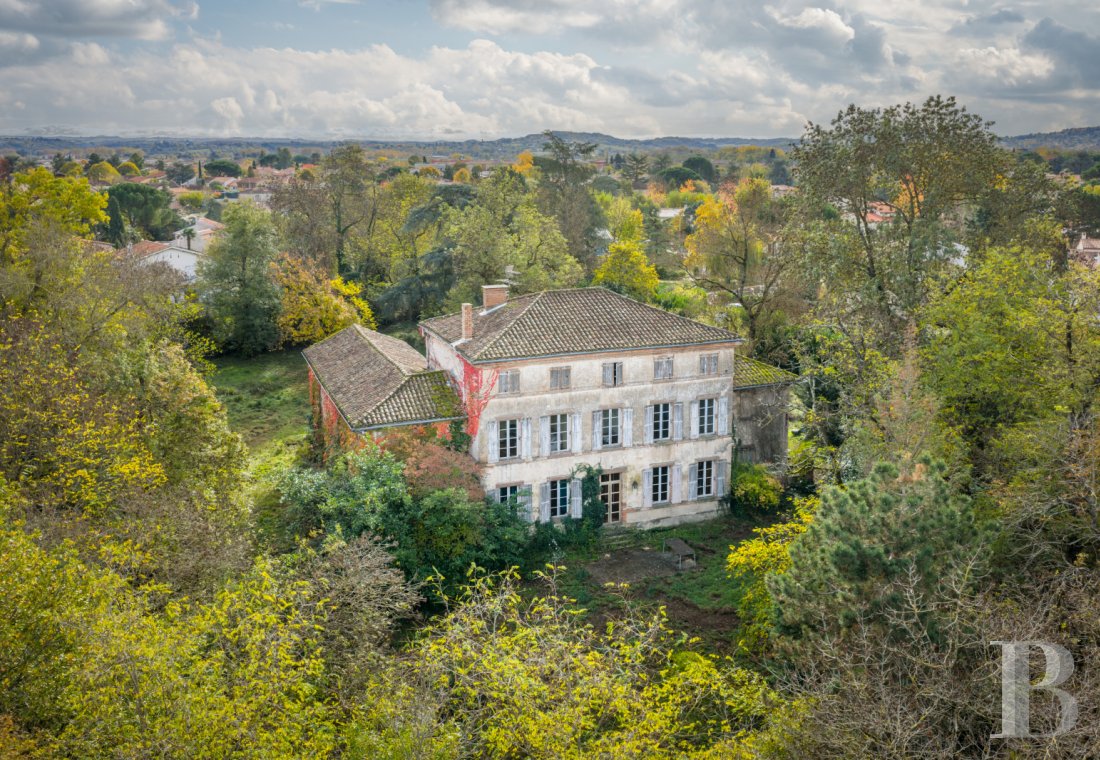
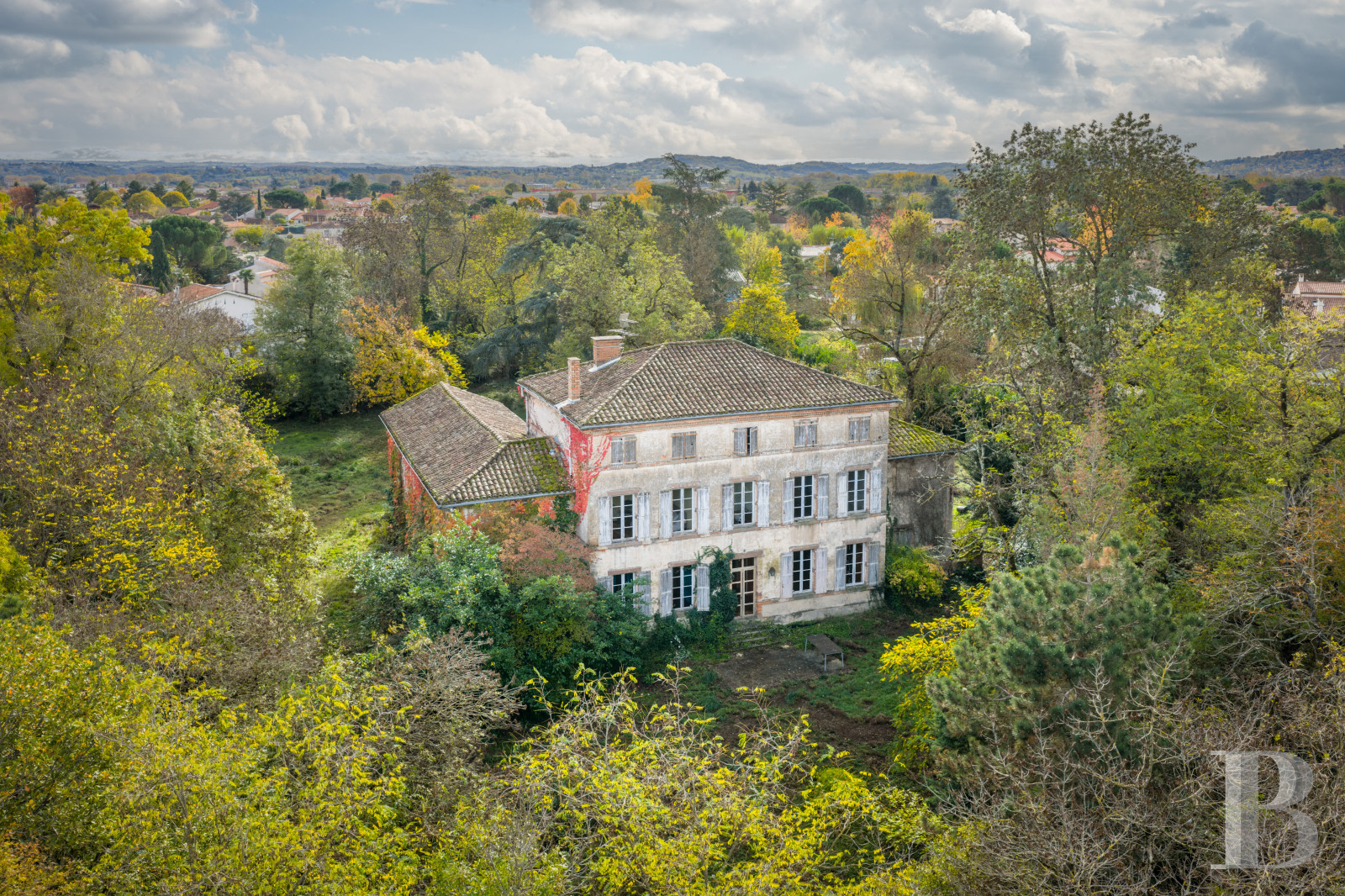
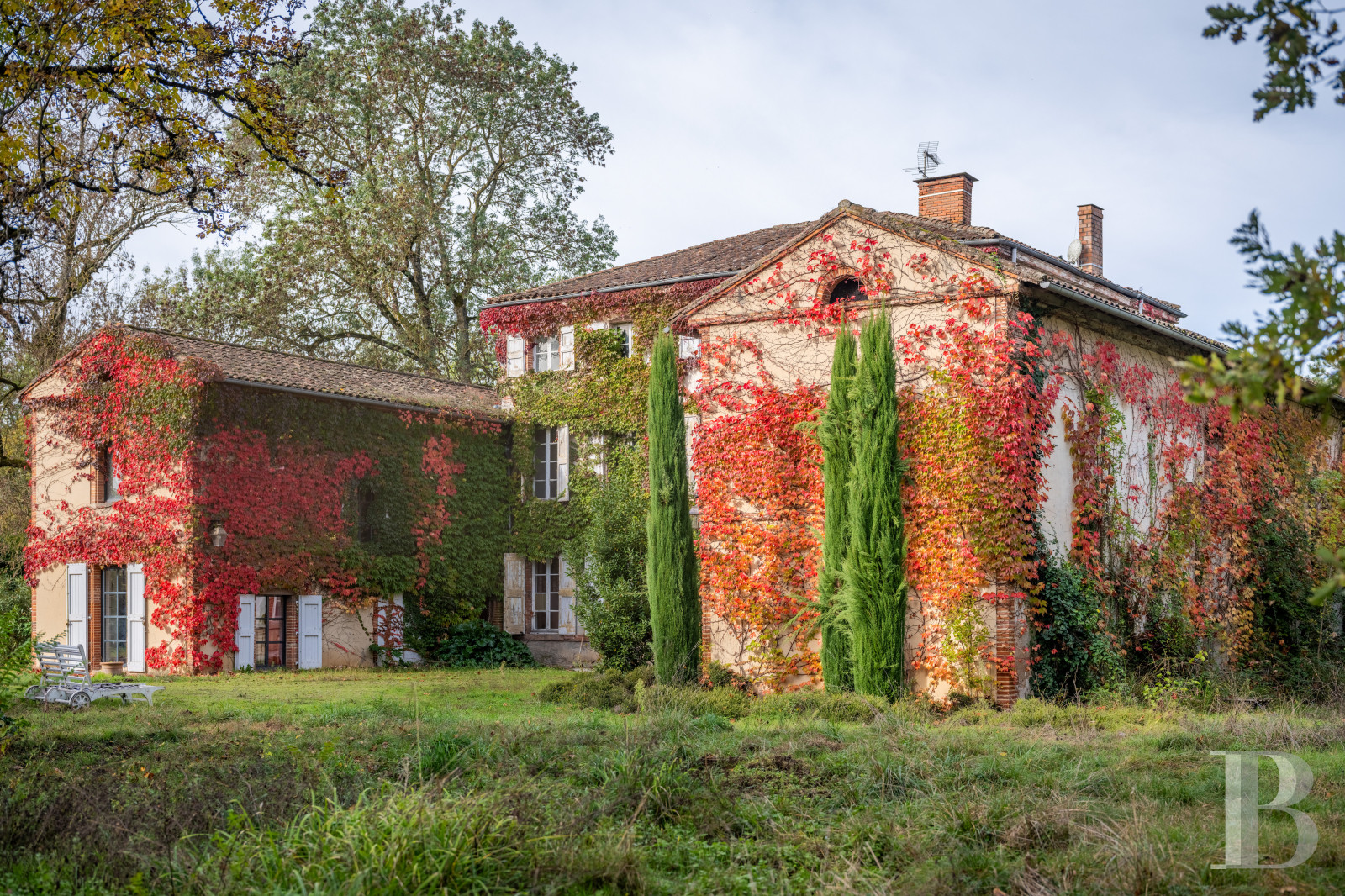
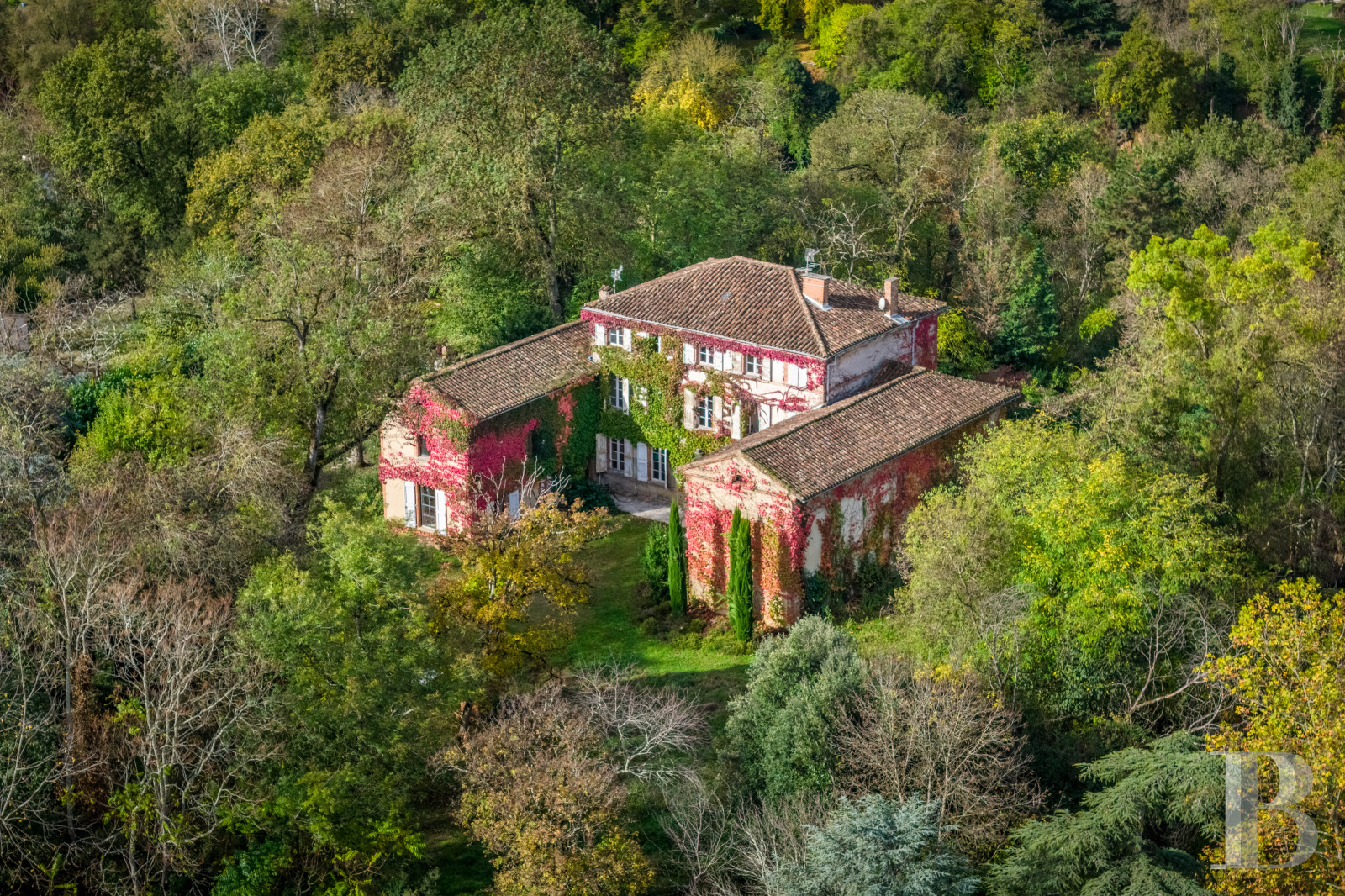
The house appeared in a more modest format on the Napoleonic land registry of 1810, in simple cuboid form surrounded by a garden and crops. Its current appearance is a result of the successive transformations carried out in the 19th century. It is now an imposing and balanced manor house, whose presence on the edges of a now urbanised sector can be explained by its former estate that originally occupied the area. It is located on the south bank of the River Tarn, which it overlooks from a steep slope, almost in a belvedere style position. In the approximately 5,500-m² plot, the edifice is nestled among a wide variety of tall and old trees whose branches provide shade and privacy that is rare within a city. It occupies the centre of the garden, which spreads out all around, like a protective barrier of vegetation.
The manor house
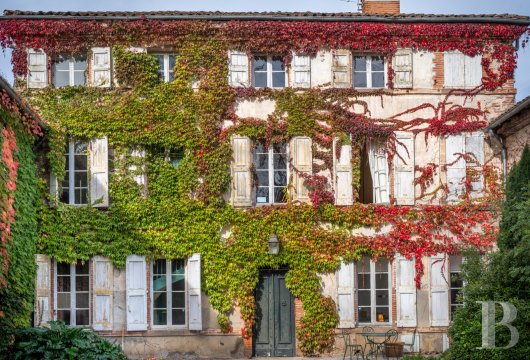
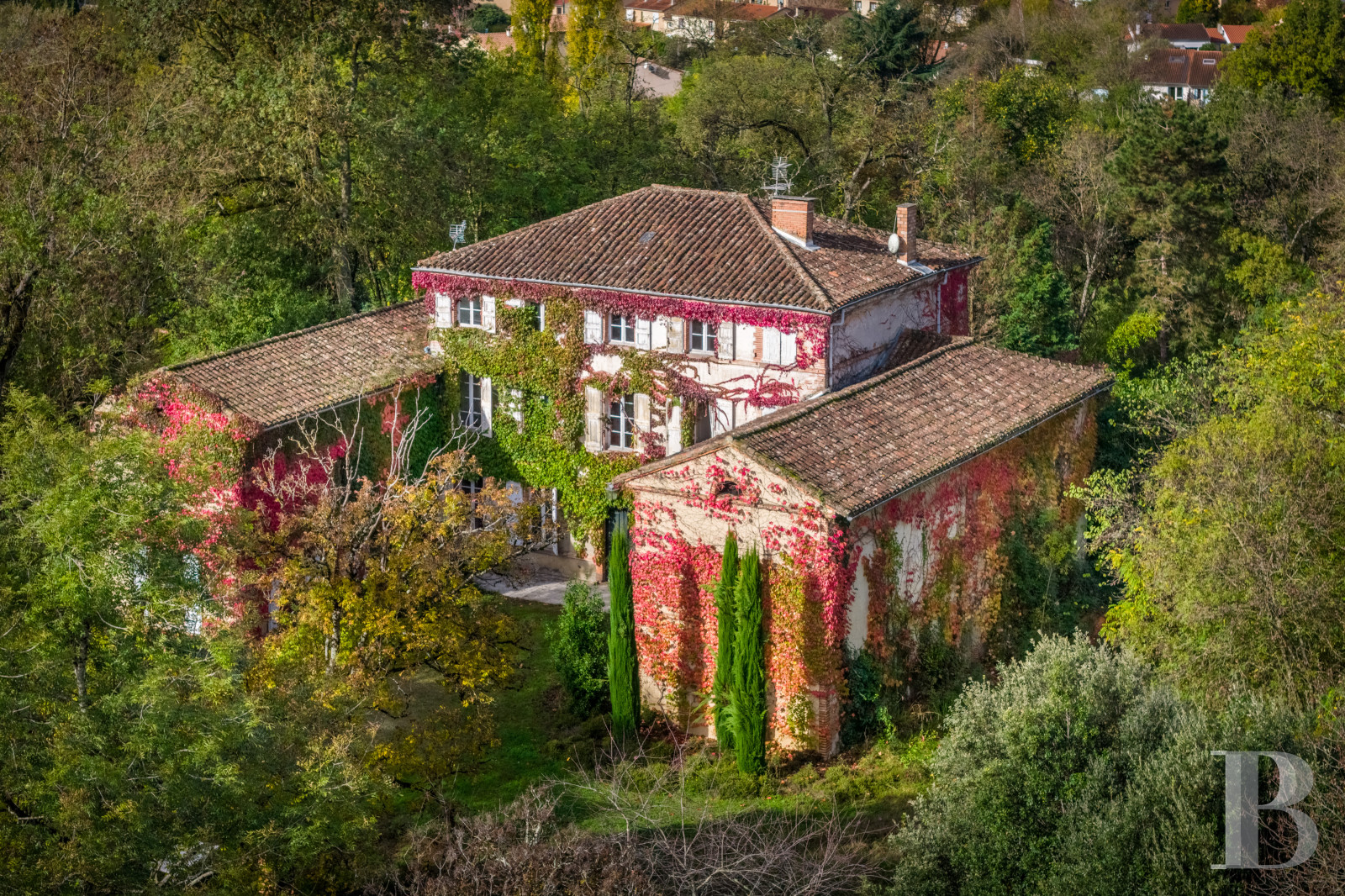
The building boasts a symmetrical layout, with a southeast/northwest oriented main section flanked by two equally sized wings. The central section possesses a ground floor, first floor and top floor beneath the rafters, with a facade punctuated by five aligned vertical rows of openings, each of which is underlined by brick surrounds, creating a mixture of materials specific to the architecture of Albi. As the seasons pass, the Virginia creeper partially enveloping the elevations bestows changing hues on the facade, from gentle green in the spring to deep red in the autumn. To the rear, a small, paved patio expands outward towards the garden as a natural extension of the residence. The two wings, which were formerly for farming usage and drying out the harvest, are more sober in character, with fewer openings, solid facades and a less strict layout. On the two southeast facades, a brick double belt course stretches from one side of the gable end to the other to form a discrete tympanum punctuated by a half-moon bullseye window. Their relative austerity echoes the rigour of the central section, forming, together with the courtyard between them, a coherent whole.
The central section
The ground floor
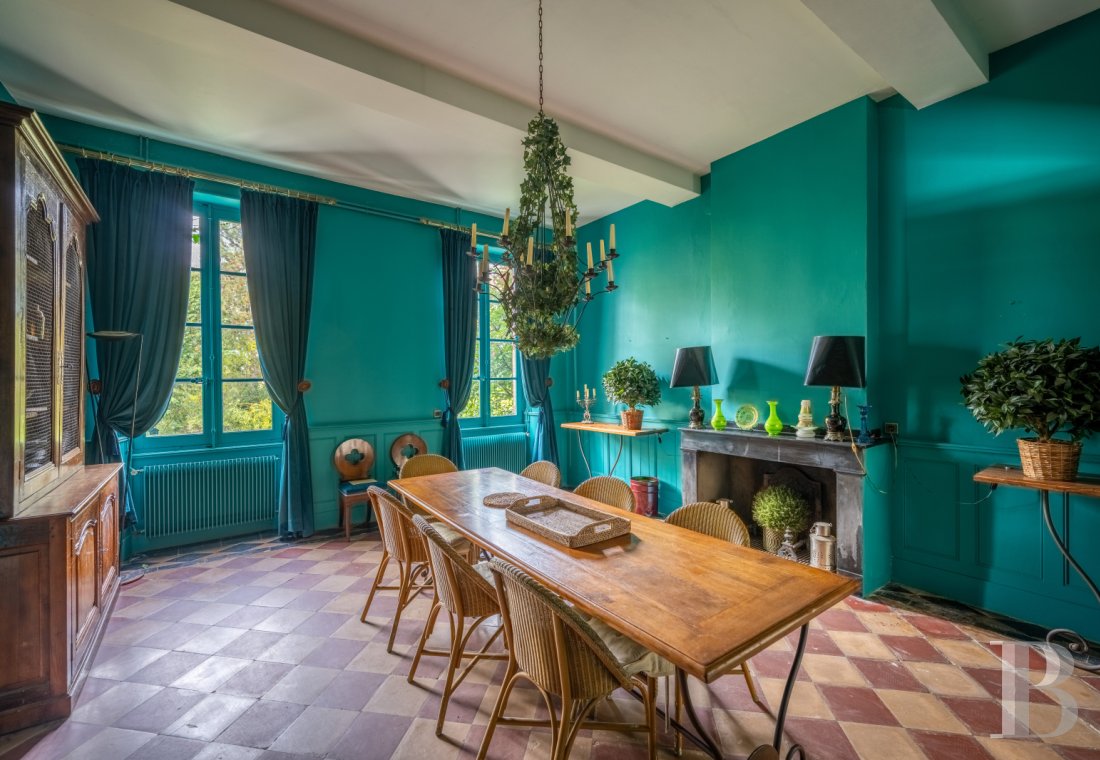
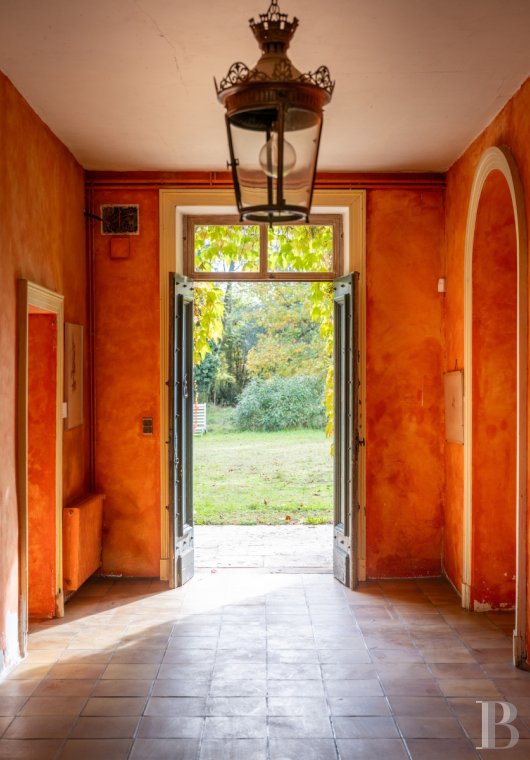
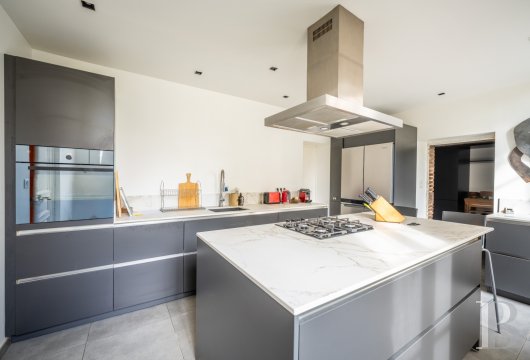
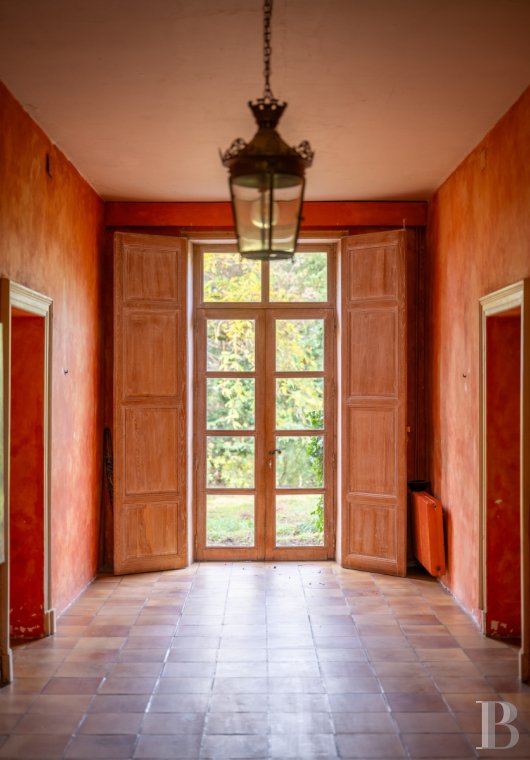
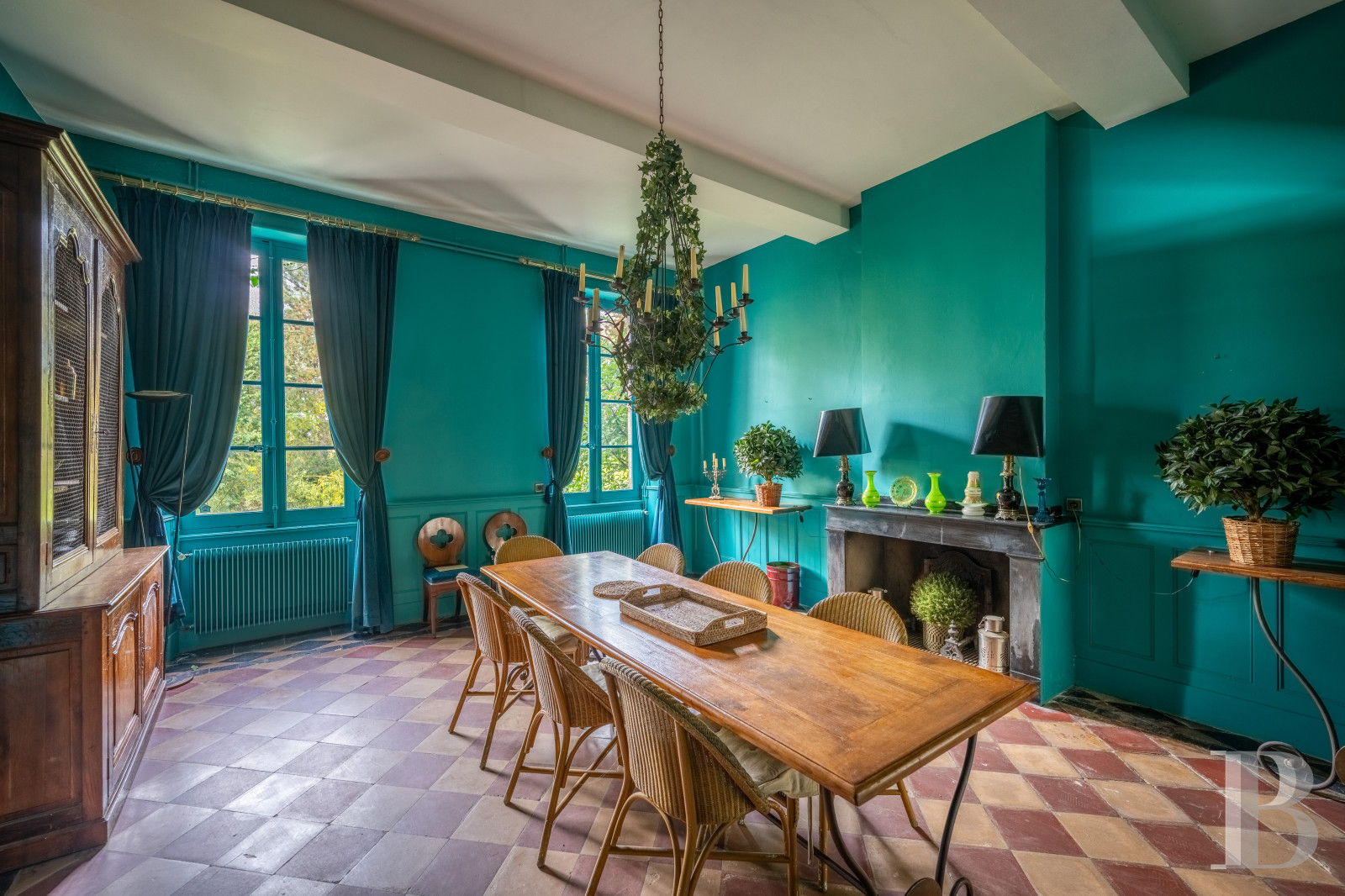
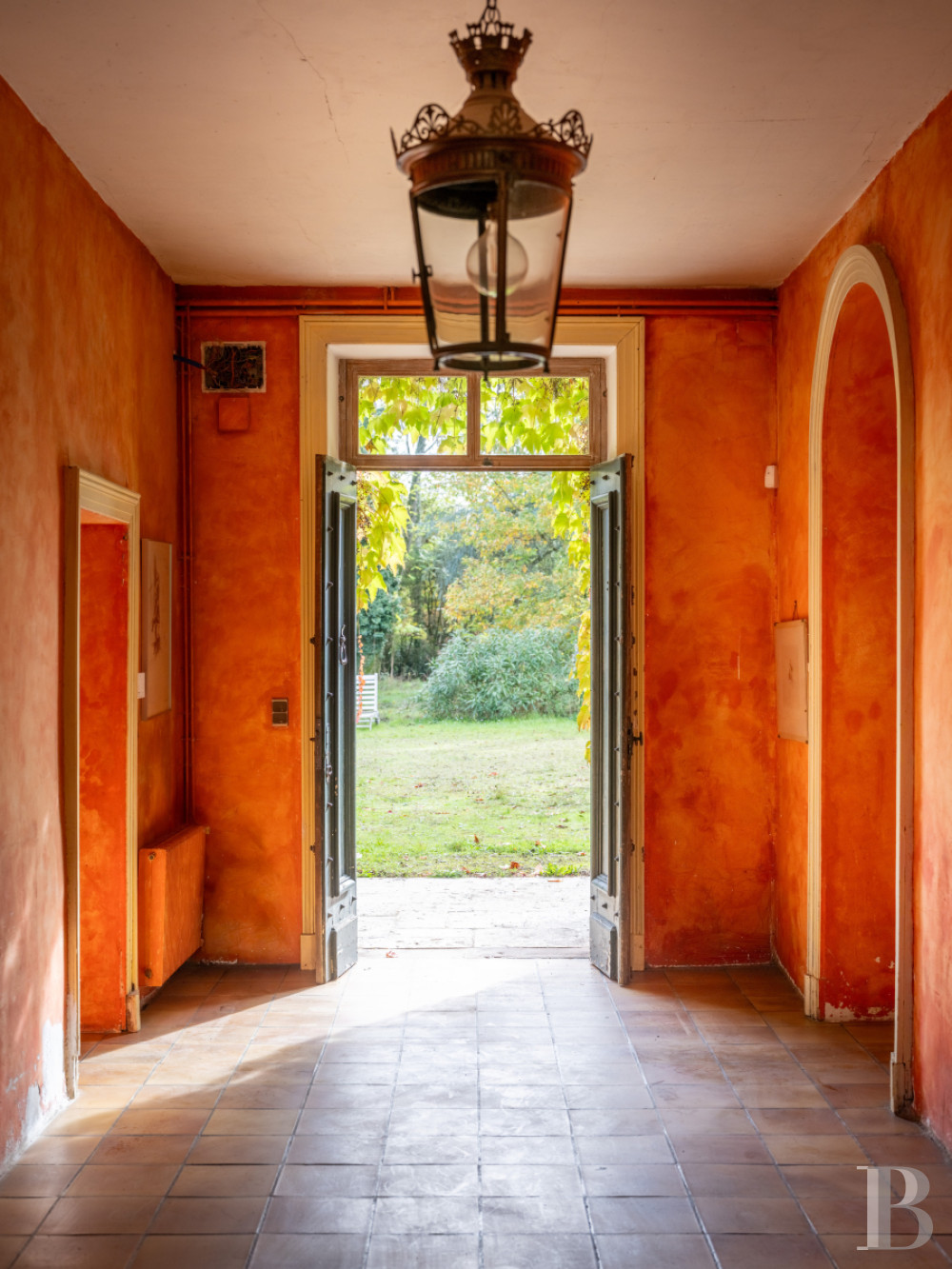
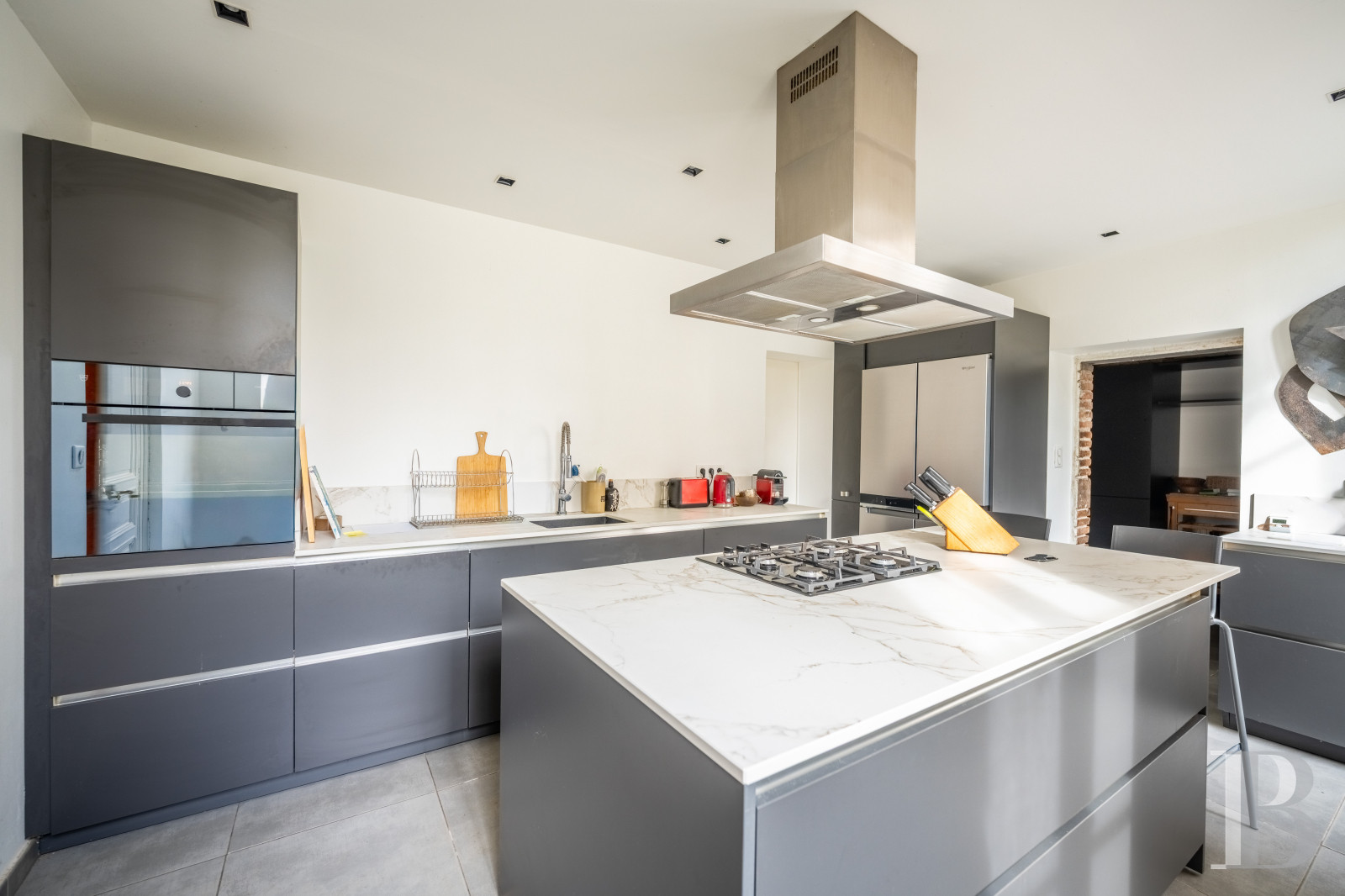
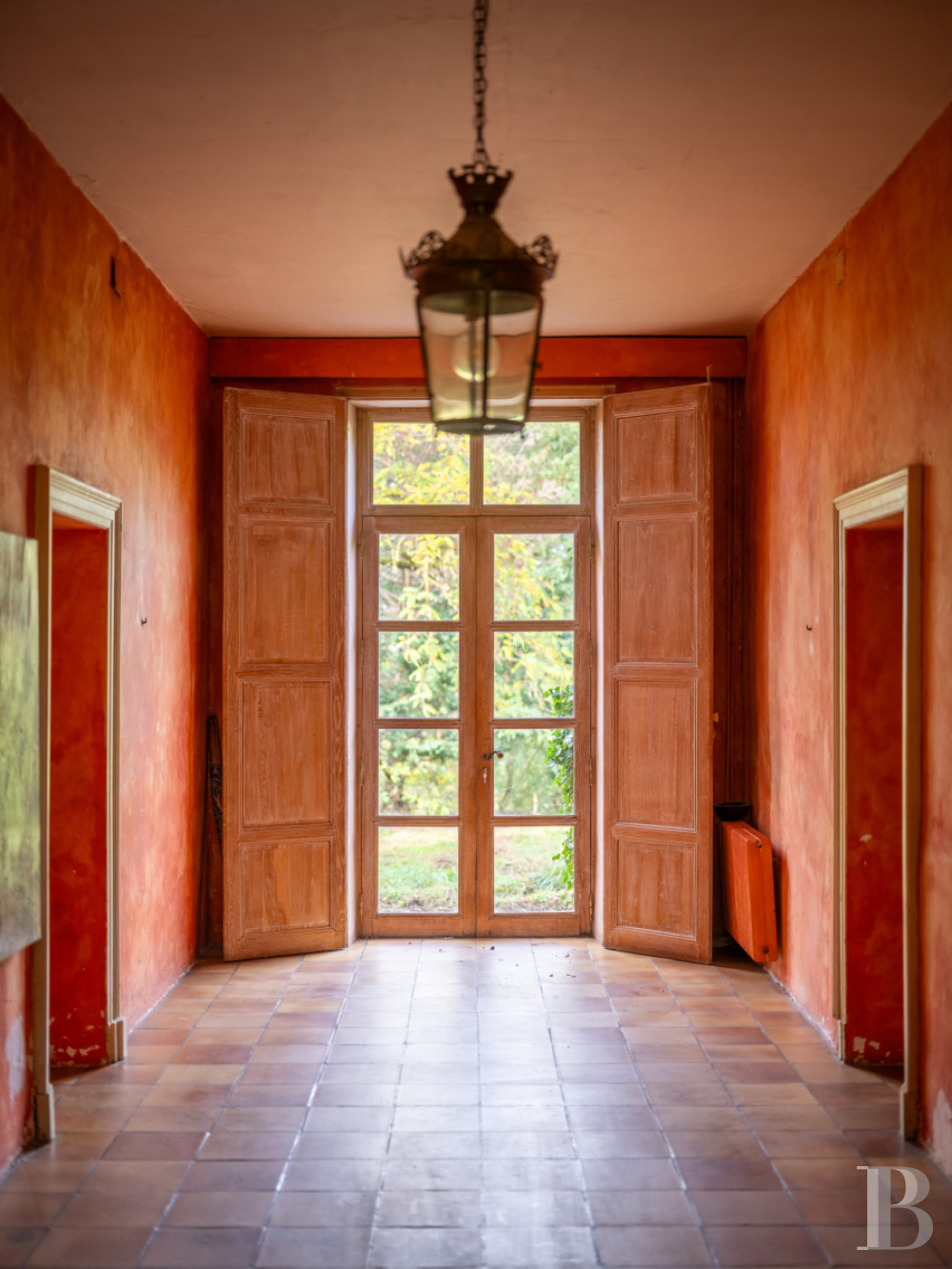
A large hall runs through the edifice, linking the main entrance with the exit to the rear. On one side, there is a recently renovated kitchen combining simplicity and functionality, opening onto a utility room and storeroom. Next to the kitchen, a dining room faces the rear garden. This room boasts a generous ceiling height, a classical fireplace on one of the walls and dual-coloured terracotta floor tiling, providing the space with a vibrant warmth.
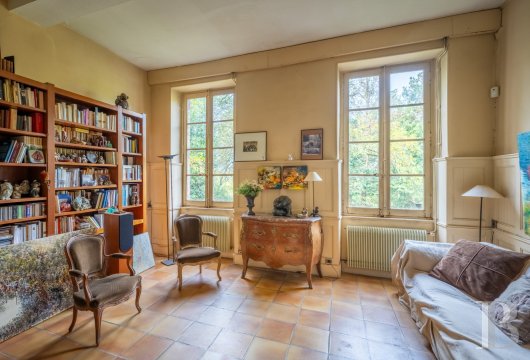
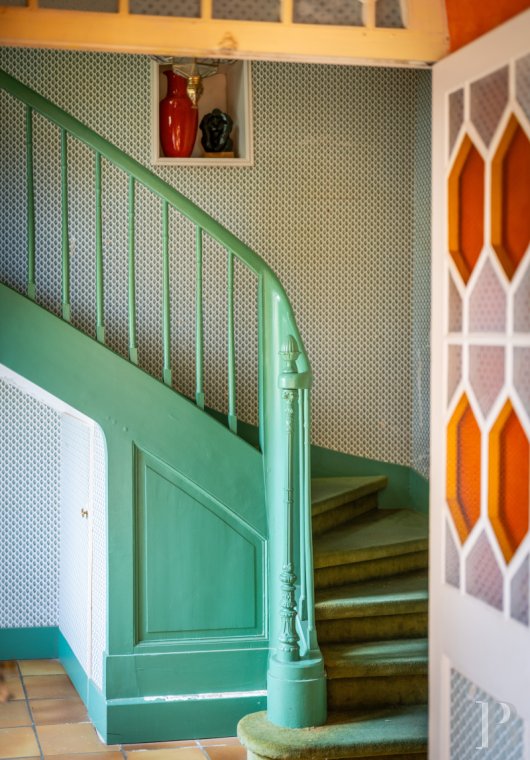
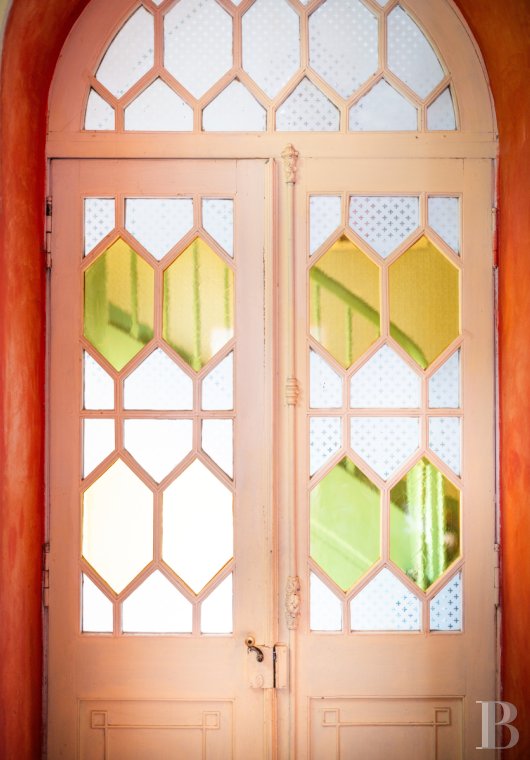
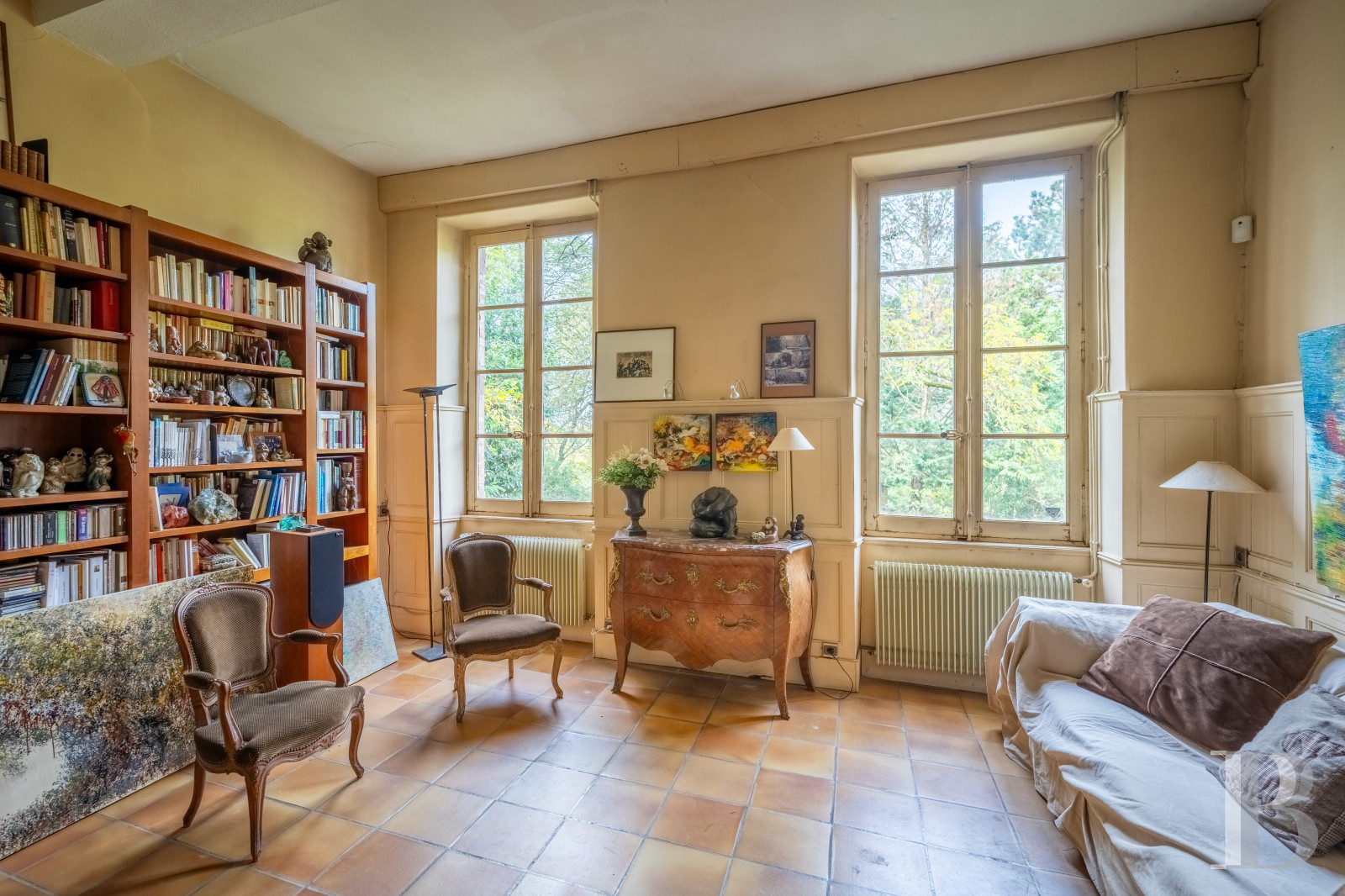
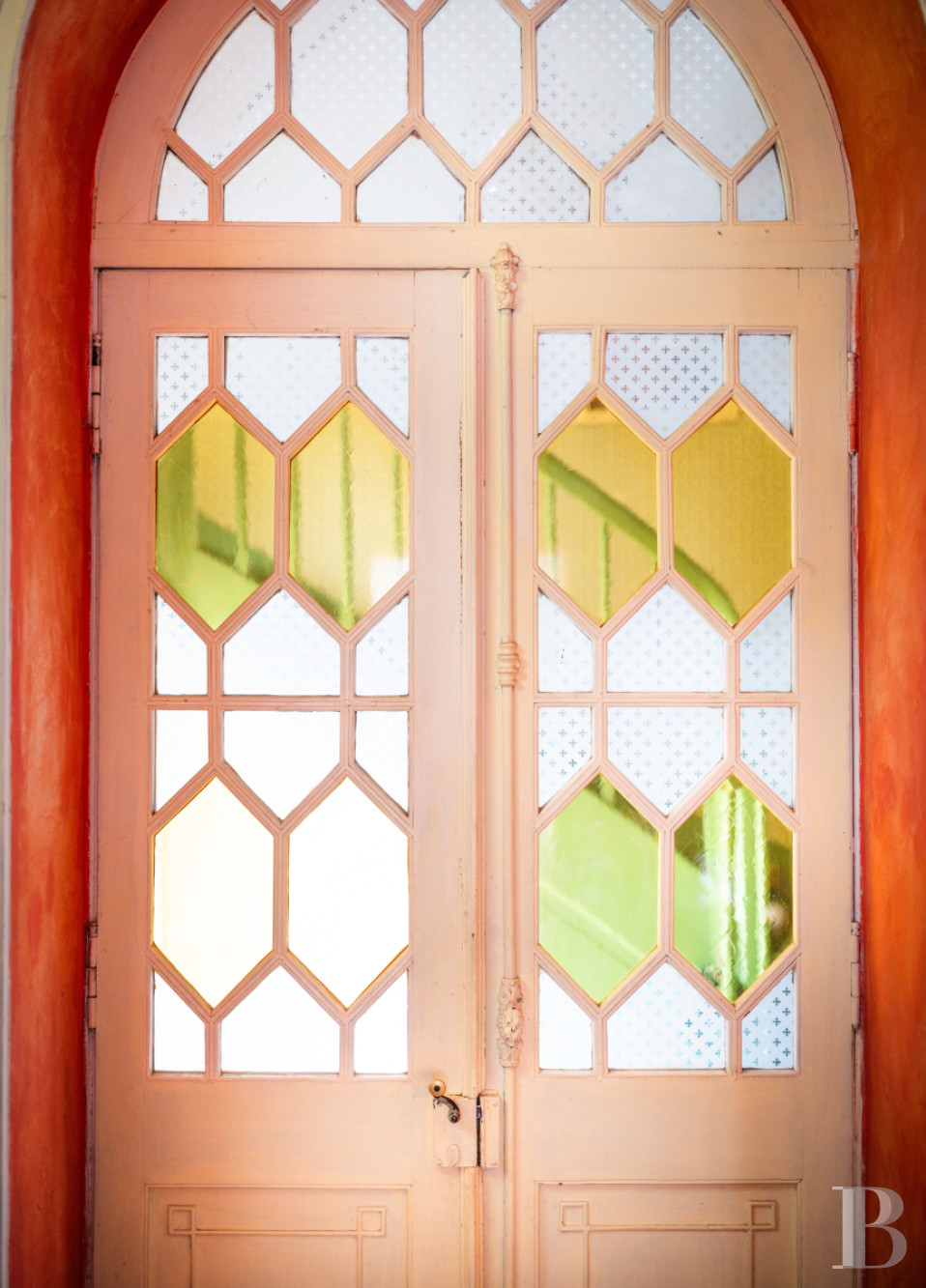
On the other side of the hall, in the lounge there is still some of the original 19th-century wood panelling. It also looks out onto the garden to the rear. The adjoining stairwell is one of the house’s more remarkable features and is typical of the 19th century: a glazed door with hexagonal panes alternating between translucent and coloured glass, an original wooden frame and railings, plus a finely decorated stair stringer.
The first floor
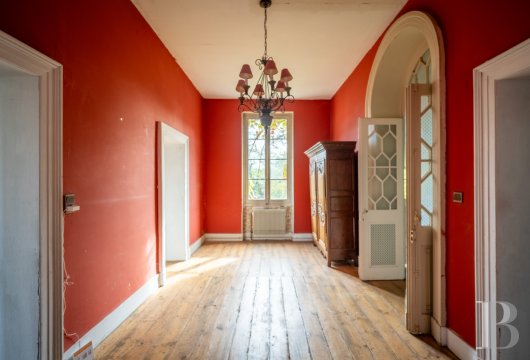
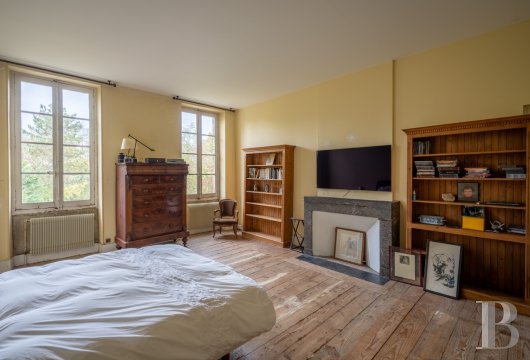
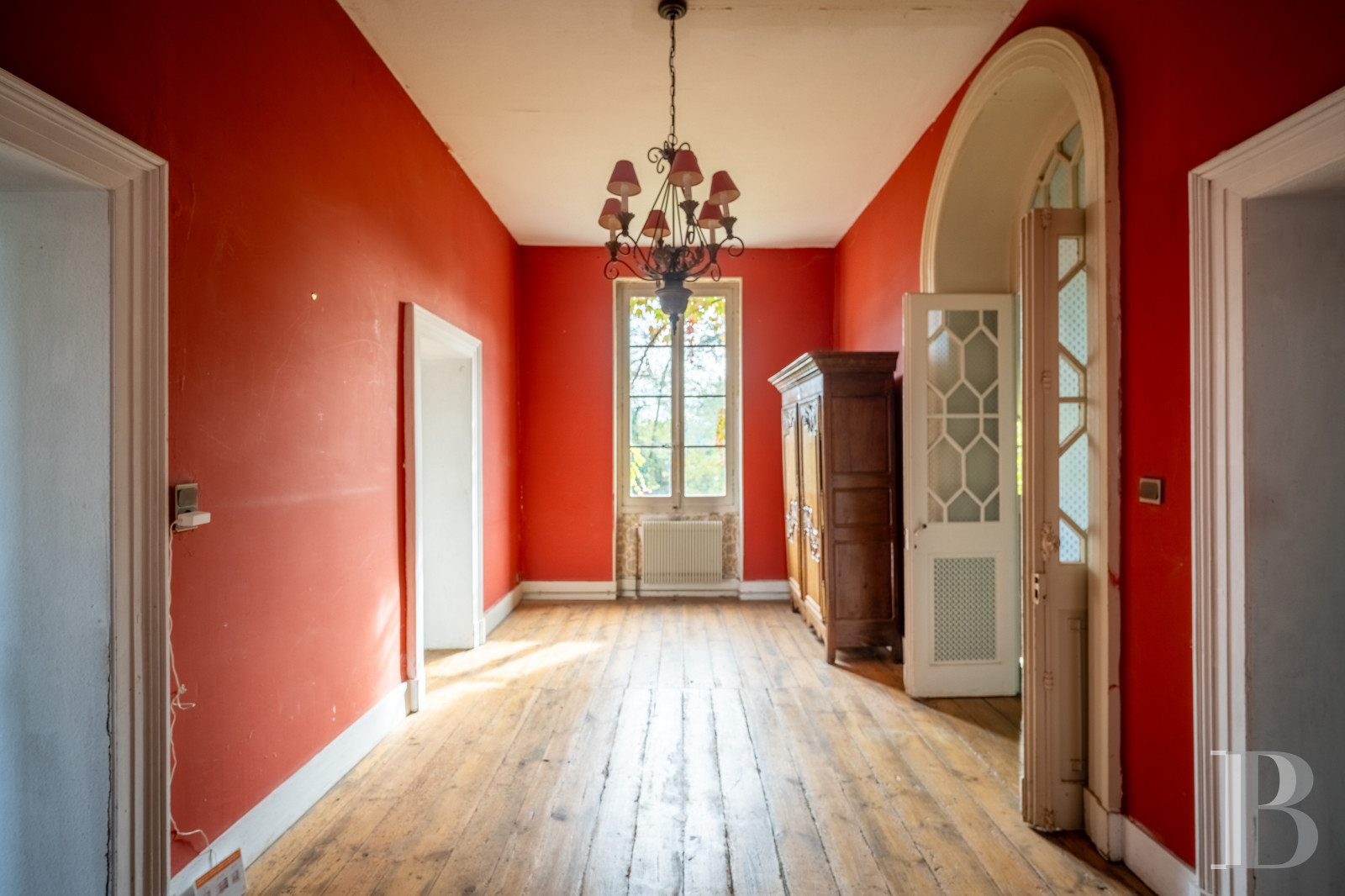
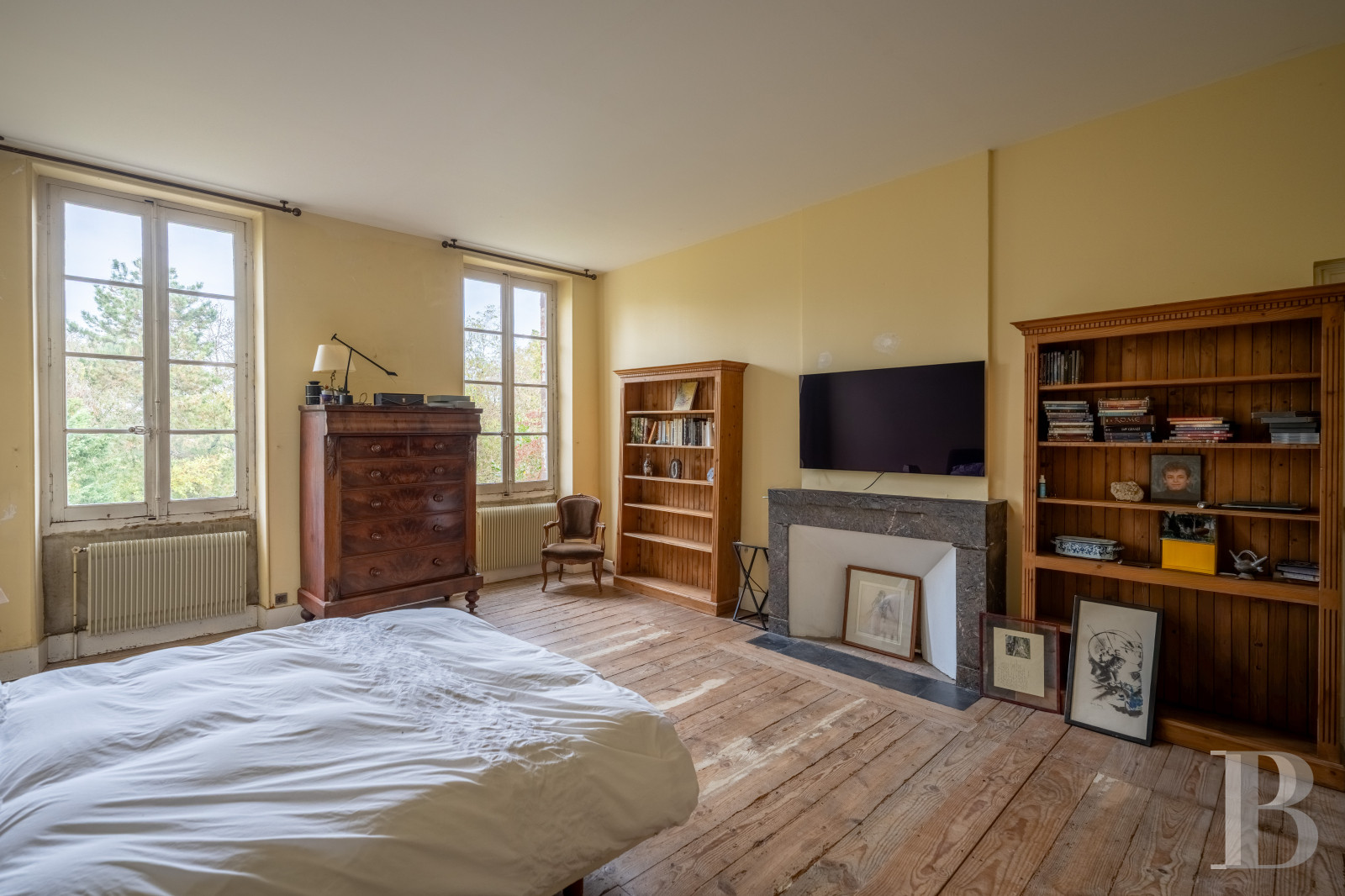
The landing leads to a bathroom, with a lavatory, overlooking the courtyard. On one side, a glazed door similar to the one on the ground floor opens into a vast hallway. Light streams through two windows overlooking the rear garden into the master bedroom, which boasts a grey marble fireplace and solid wood stripped flooring. The second bedroom, which is the same size but more soberly decorated, has not been furnished; a small adjoining room occupies part of the south wing. Between both of them, a large space is used as a laundry room or walk-in wardrobe. A last bedroom, which overlooks the courtyard, possesses a fireplace and washbasin.
The second floor
Though it has a lower ceiling, this level has an identical layout to the first floor. There are three rooms that could be used as bedrooms, while a smaller one could serve as an office or storeroom. Two more rooms await conversion. A shower room with a lavatory, located above the one on the first floor, overlooks the courtyard.
The south wing
On the ground floor, there is a small apartment with a separate entrance from the southeast facade. It includes a living room with a small open-plan kitchen, a shower room and a bedroom facing the courtyard. A second entrance leads to two old rooms that are used for storage as well as to a staircase to the upper floor, where a games room is in the process of being renovated.
The north wing
The north wing is more rustic in character and has remained in the same condition as in the 19th century. There is a large wooden vat remaining from a past produce processing activity, as well as a drying room upstairs that connects to the residence’s master bedroom. A two thirds section of the wing does not have any floorboards at the first-floor level, meaning there is a vast amount of space with an imposing ceiling height available for major developments.
The garden
This space surrounding the house is filled with trees of many varieties, planted in landscaped garden style. At the centre of the main visual axis, a brick pedestal marks the spot of a former well, now collapsed. However, another well exists at the entrance to the property. To the south, a small single-storey annexe building is used for storage. Planning regulations allow the installation of a swimming pool, for which the eastern part of the garden appears the most suitable.
Our opinion
This is a unique house, combining the architectural heritage of Albi with a green environment giving the property a very cossetted feeling. It is naturally ideal for a large family wishing to enjoy a peaceful setting, steeped in history and also close to the city-centre. The wings are currently separated from the main section but could be connected to create further living space or other possible purposes. Thanks to being made up of three separate volumes, the property could be divided into several different homes without disturbing its architectural harmony. The house has been lived in for two successive centuries and has retained the atmosphere of a peaceful dwelling, which now awaits occupants able to reveal its full potential and prolong its destiny.
Reference 532781
| Land registry surface area | 5481 m² |
| Main building floor area | 315 m² |
| Number of bedrooms | 5 |
French Energy Performance Diagnosis
Information on the risks to which this property is exposed is available on the website: www.georisques.gouv.fr
Share


- Albi -
- Midi-Pyrénées -
- Occitania -
- Tarn
NB: The above information is not only the result of our visit to the property; it is also based on information provided by the current owner. It is by no means comprehensive or strictly accurate especially where surface areas and construction dates are concerned. We cannot, therefore, be held liable for any misrepresentation.