



55 minutes from Toulouse, a Basque inspired 19th-century manor house,
with ornamental grounds, outbuildings and 15 hectares of land
with ornamental grounds, outbuildings and 15 hectares of land
Montauban,
TARN-ET-GARONNE
midi-pyrenees
82000
FR

Location
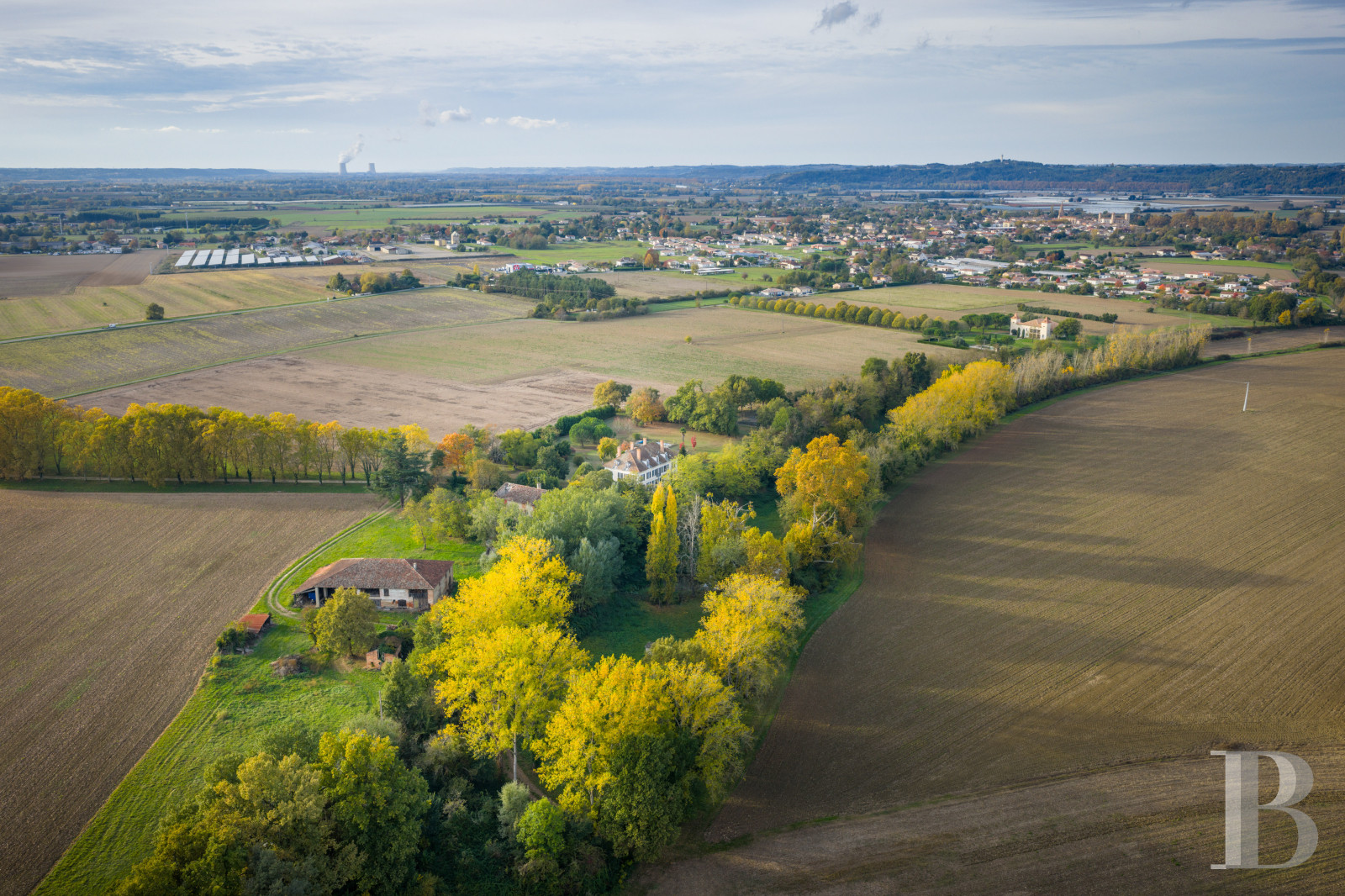
This property is located at the gateway to a sacred asylum founded in the 12th century by the monks of Moissac, in the western reaches of the Tarn-et-Garonne area, in a part of the Occitanie region combining, undulating landscape, medieval memories and a gentle way of life. The village, which is preserved thanks to three Natura 2000 areas and as many natural zones of interest in ecological, wildlife and plant-life terms, is a lively one that perpetuates the spirit of Gascony fortified villages, while also offering modern amenities: convenience stores, medical services, schools, a multi-media library and a museum, which all pay witness to how dynamic it is. The surrounding towns can be easily reached by TER regional express trains from a station 15 minutes away. Montauban plus Toulouse and its international airport can be reached in 35 and 55 minutes respectively by road. The motorway 17 minutes away further adds to the property’s excellent accessibility.
Description
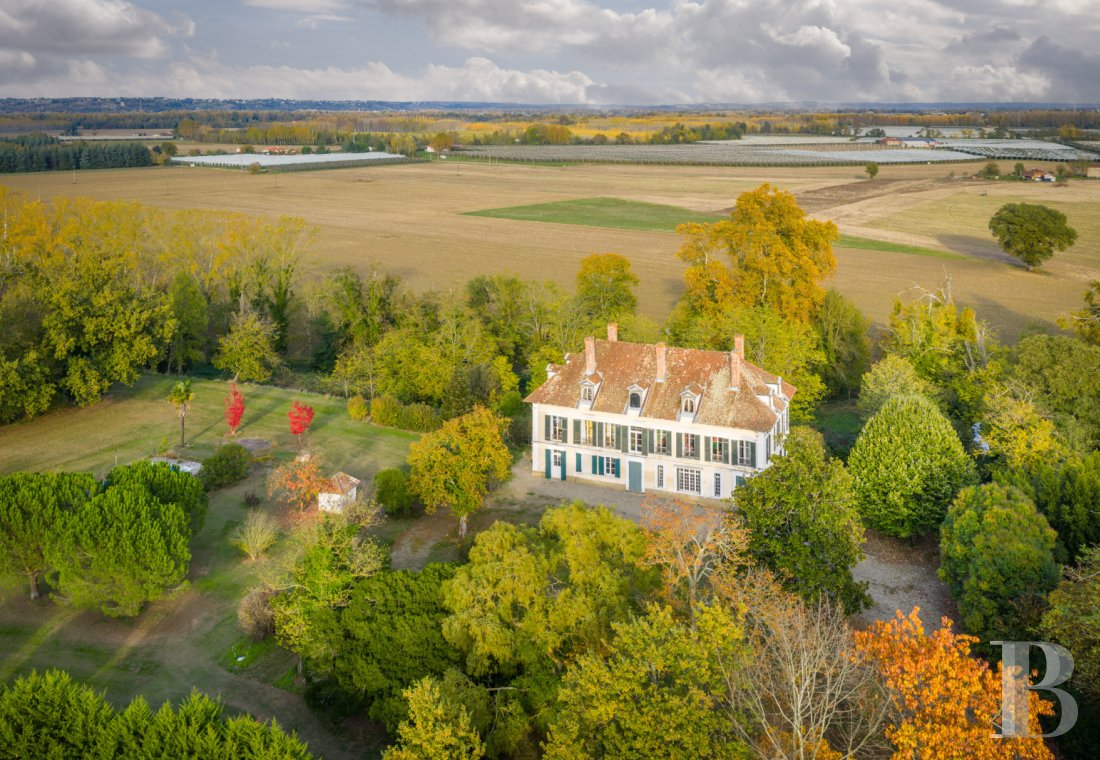
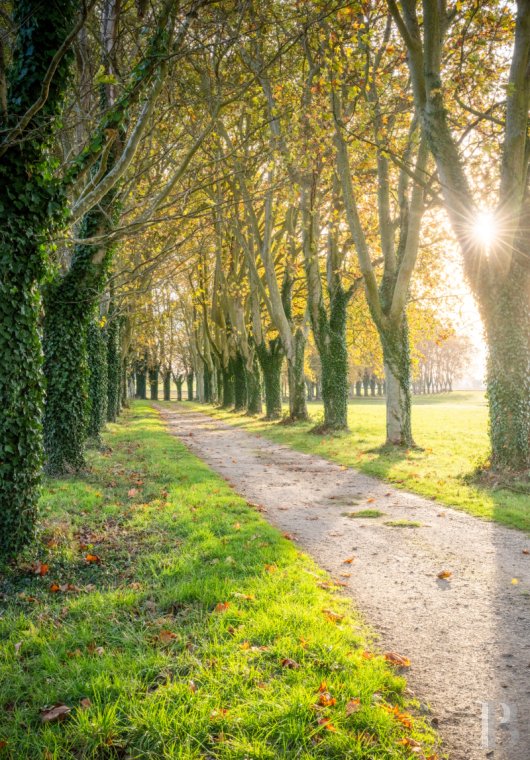
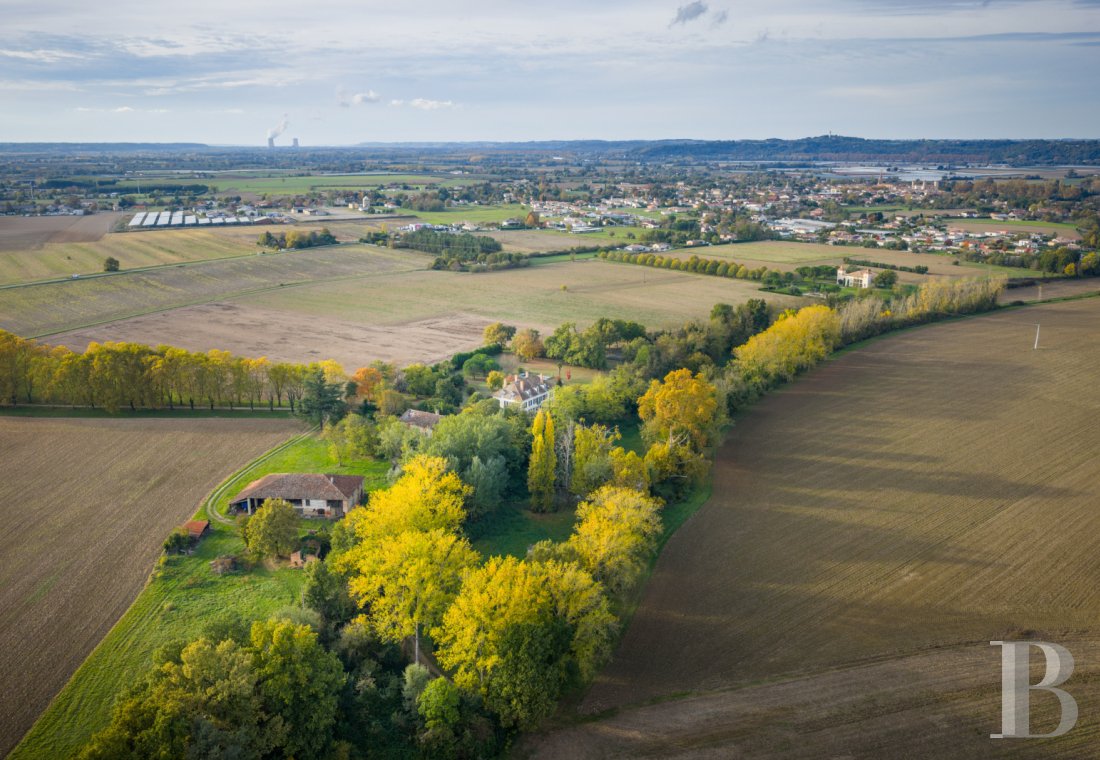
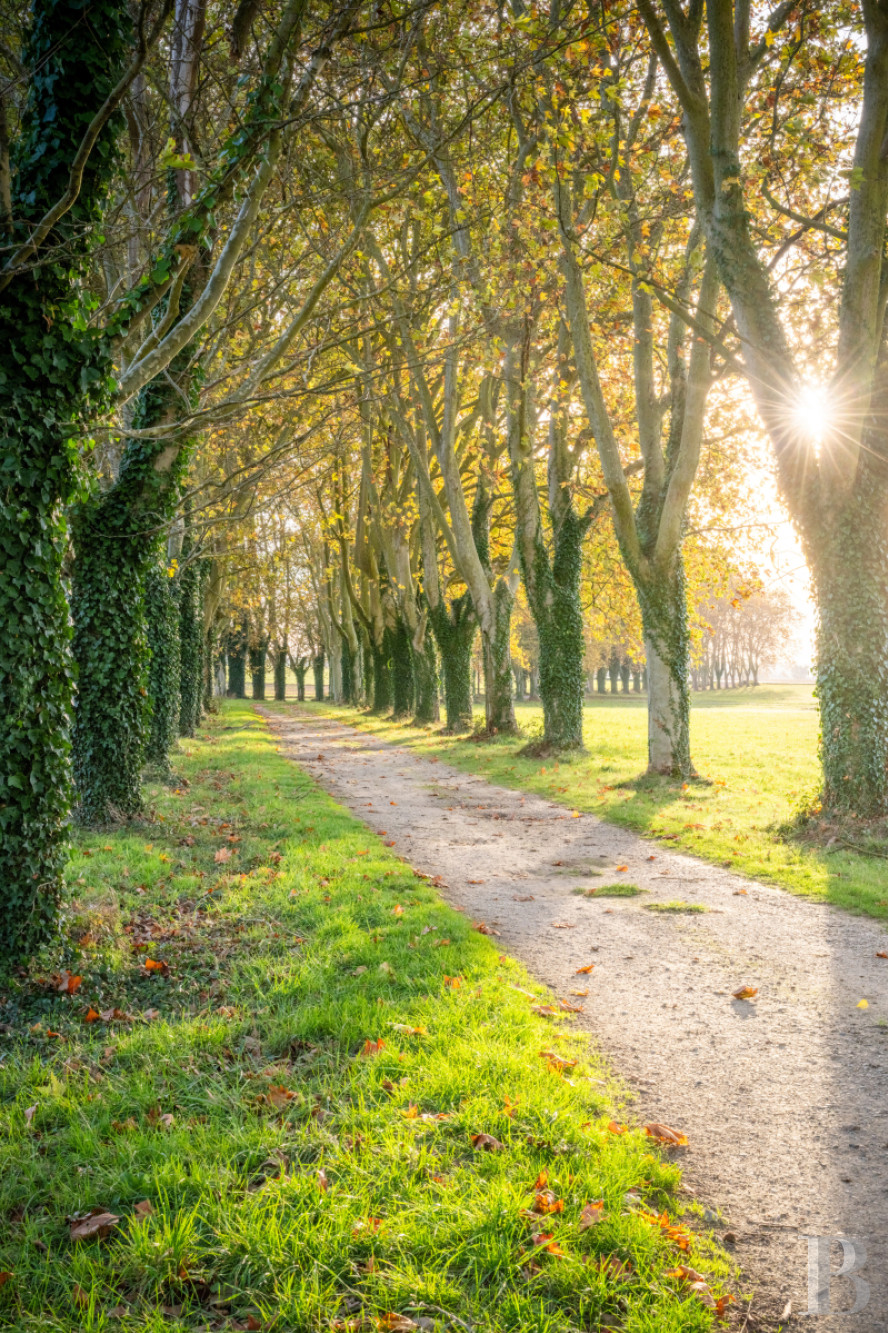
Within the valleys and terraces of France’s own Tuscany, the property stretches over around fifteen hectares. A long drive lined with hundred-year-old plane trees descends gently to a double-leaf gate marking the entrance to the estate.
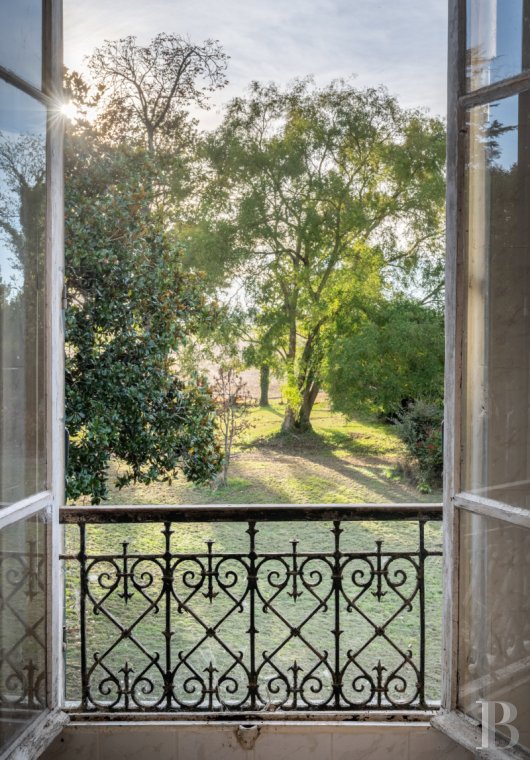
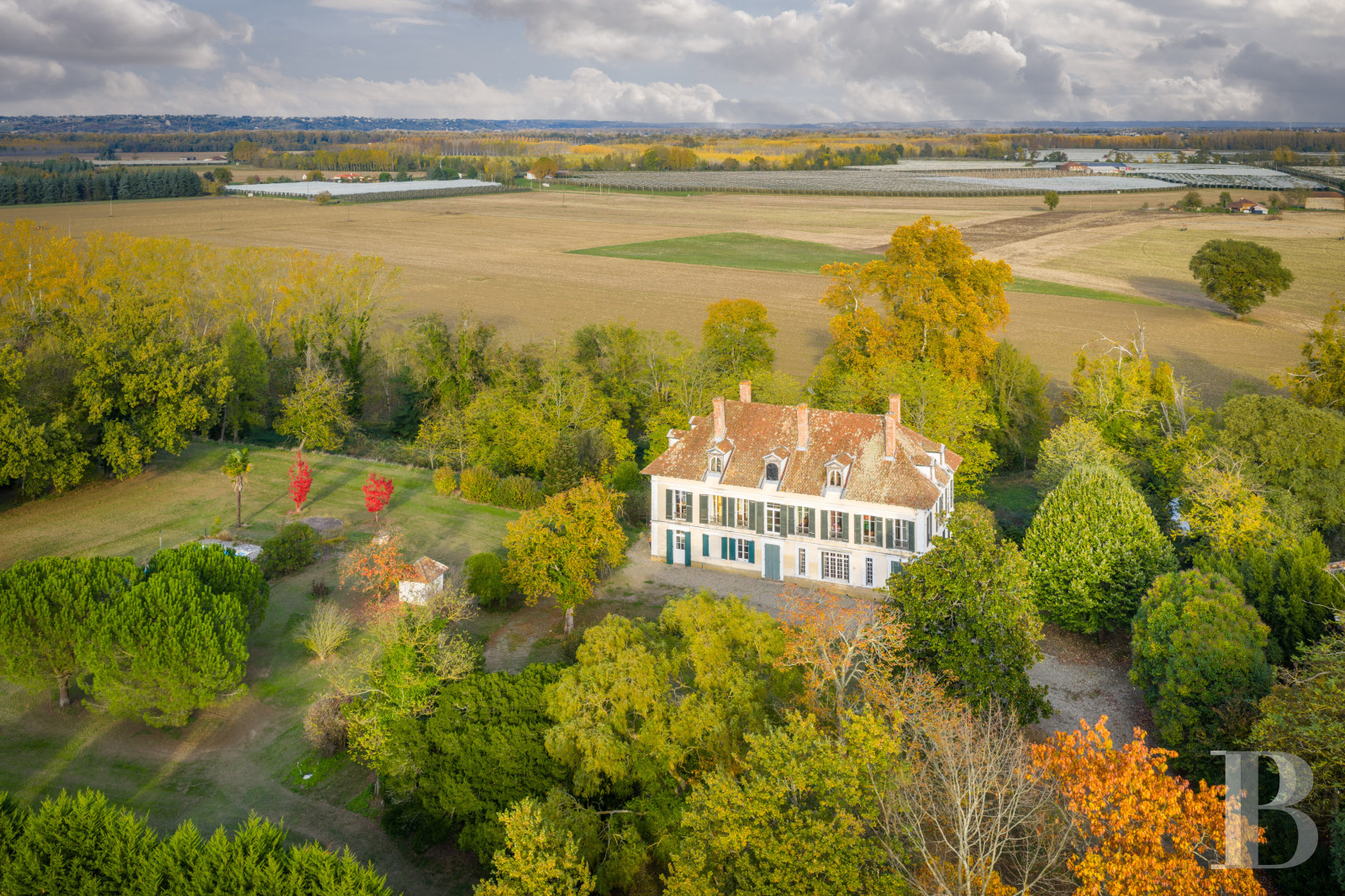
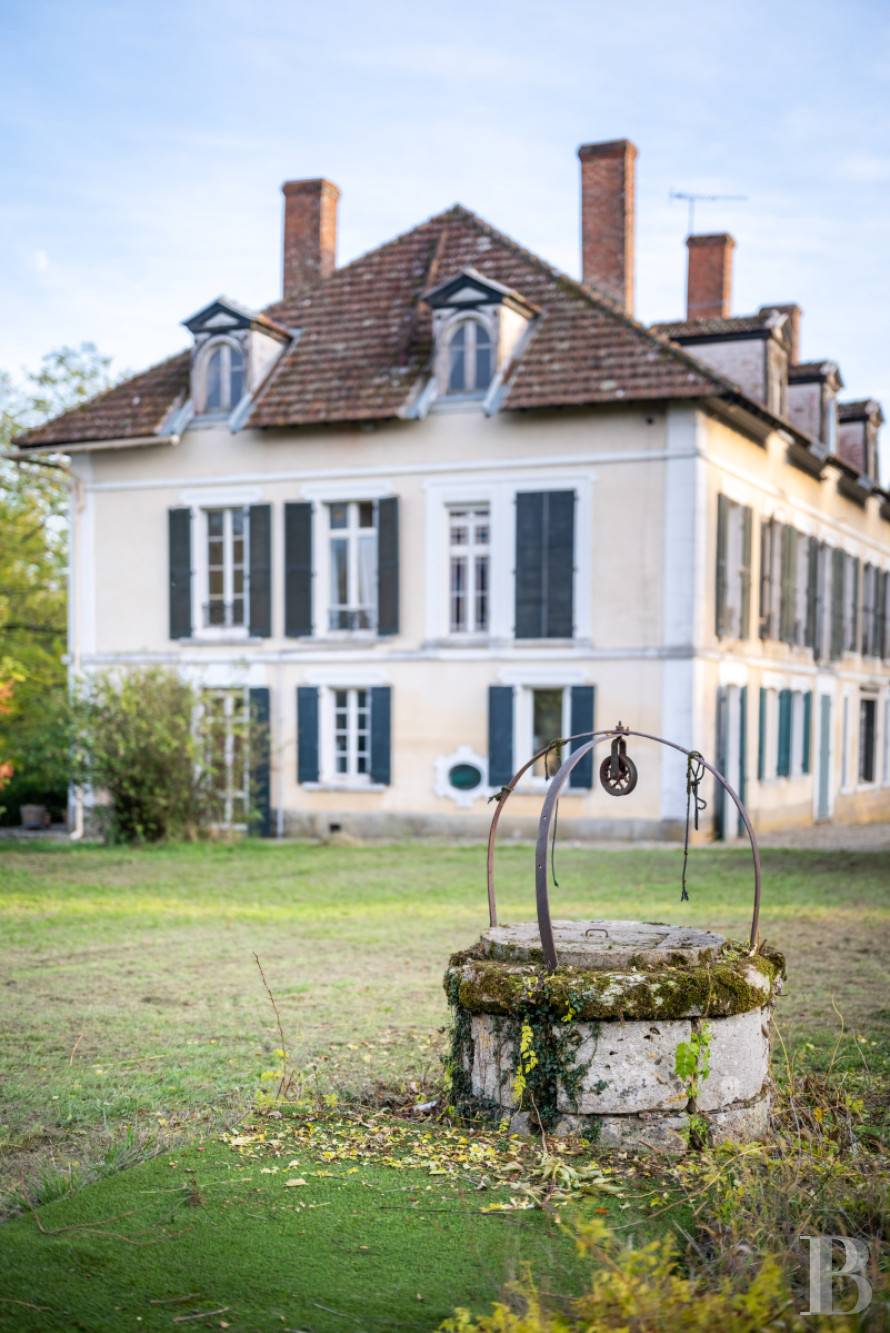
A gravelled drive then leads to the manor house whose origins date back to the 17th century. It was a farm at the time and already belonged to the current owners’ family. In the 19th century, an ancestor decided to renovate the edifice in the Basque style that she was very keen on. The east-west oriented, three-storey edifice was built overlooking the former bed of the River Garonne, benefiting from views over the surrounding fields.
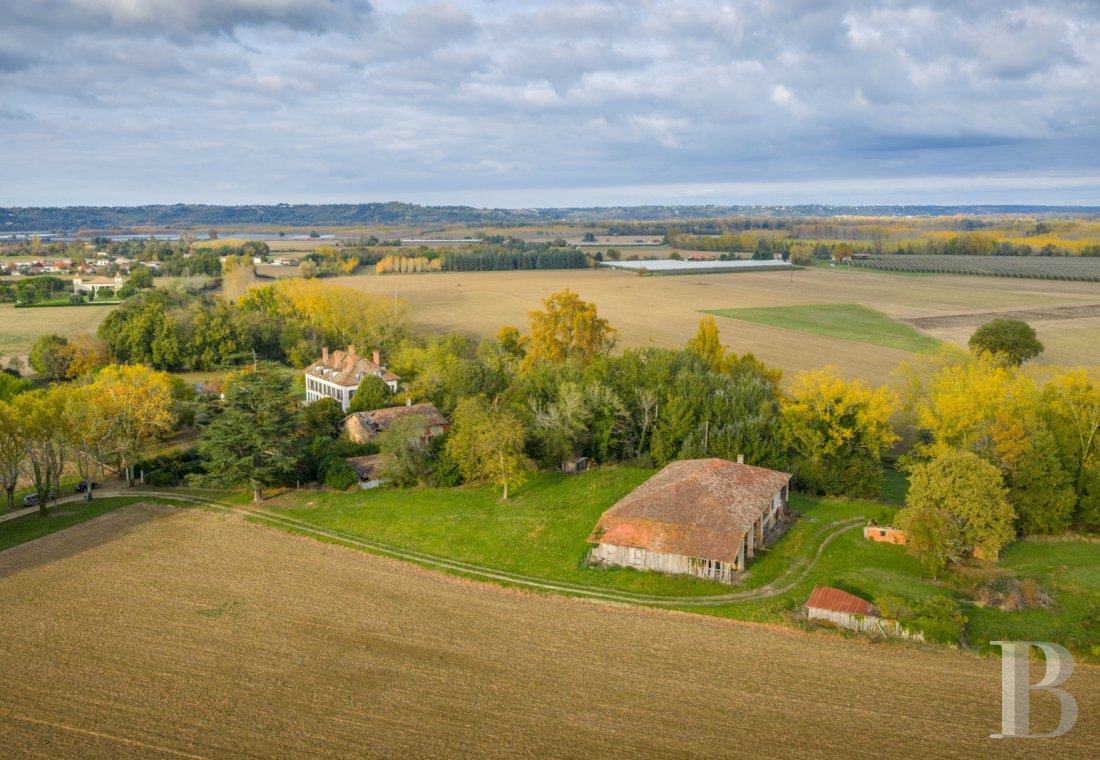
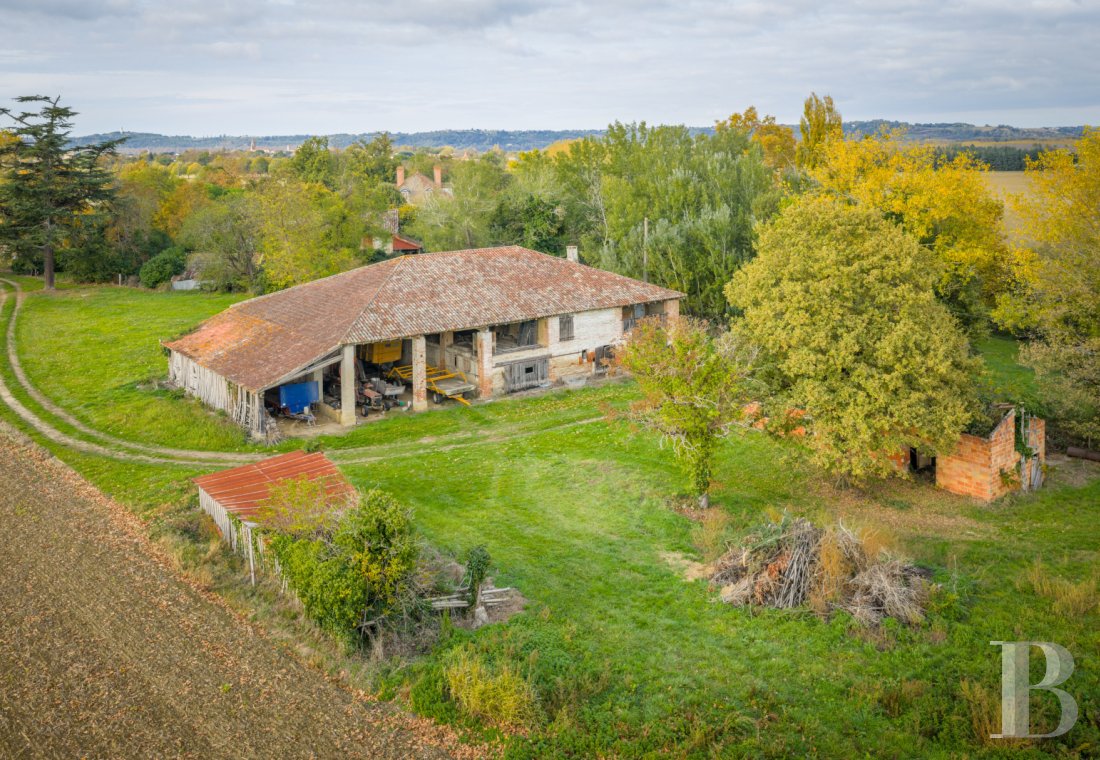
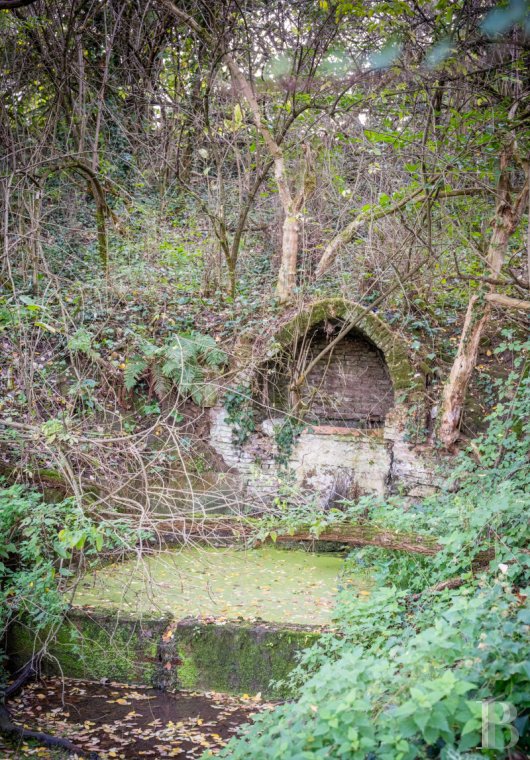
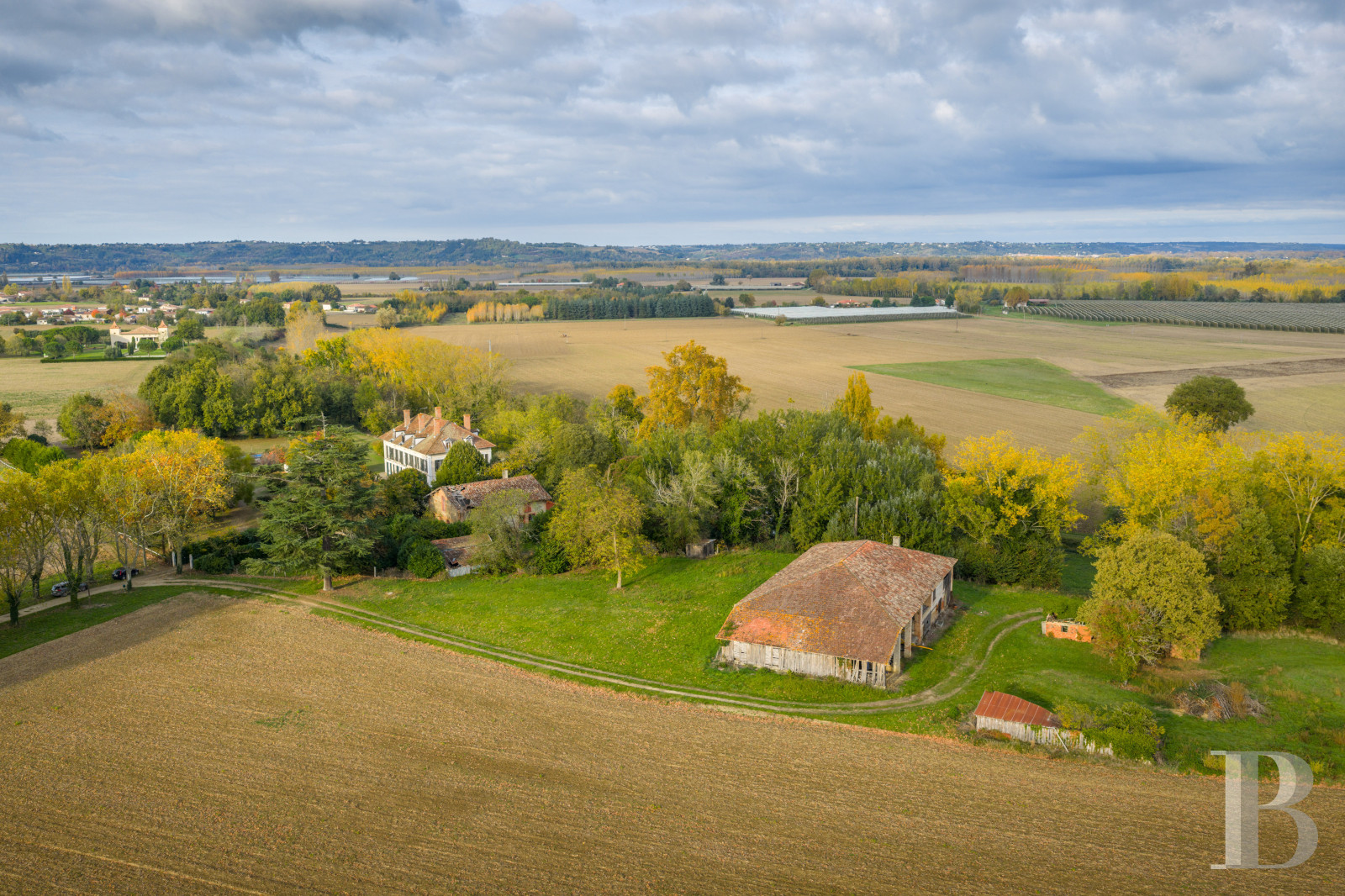
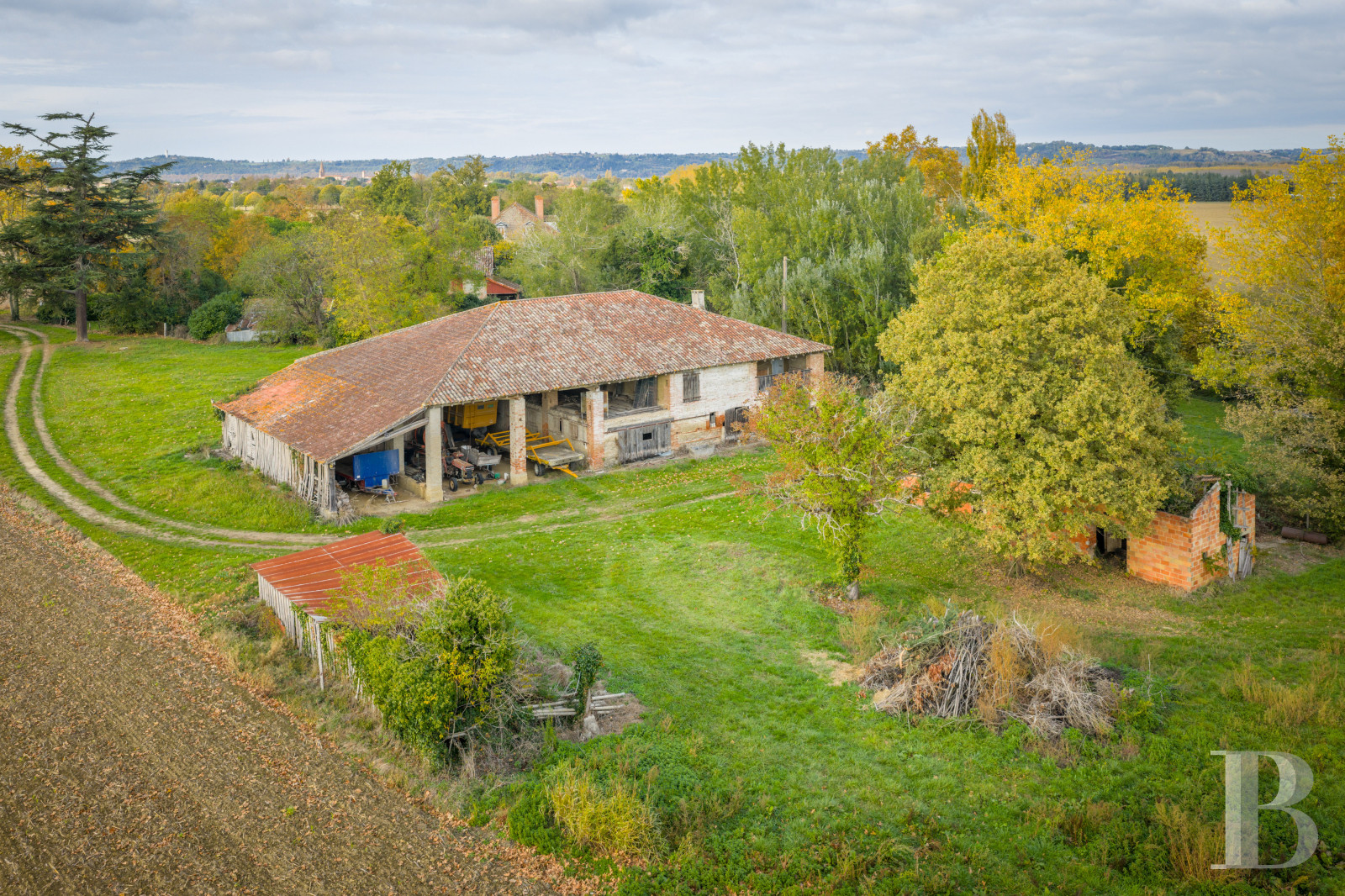
The estate keeper’s house is set back slightly, as is an enclosure and outbuildings, while an agricultural storage building stands to the south, partially converted into accommodation for the tenant farmers. All the buildings, made of terracotta bricks, adobe bricks and river pebbles, topped by roofs of flat interlocking tiles or barrel tiles, are spread harmoniously between the garden, meadows and agricultural land. Lastly, the garden is adorned with a spring flowing into a pond, a swimming pool and a tennis court.
While the original volumes and period features have been duly respected, the buildings now require complete renovation to be carried out to render them habitable and comfortable. Its geographical location, extent and the diversity of its various indoor and outdoor spaces provide it with potential for plenty of purposes.
A gravelled drive then leads to the manor house whose origins date back to the 17th century. It was a farm at the time and already belonged to the current owners’ family. In the 19th century, an ancestor decided to renovate the edifice in the Basque style that she was very keen on. The east-west oriented, three-storey edifice was built overlooking the former bed of the River Garonne, benefiting from views over the surrounding fields.
The estate keeper’s house is set back slightly, as is an enclosure and outbuildings, while an agricultural storage building stands to the south, partially converted into accommodation for the tenant farmers. All the buildings, made of terracotta bricks, adobe bricks and river pebbles, topped by roofs of flat interlocking tiles or barrel tiles, are spread harmoniously between the garden, meadows and agricultural land. Lastly, the garden is adorned with a spring flowing into a pond, a swimming pool and a tennis court.
While the original volumes and period features have been duly respected, the buildings now require complete renovation to be carried out to render them habitable and comfortable. Its geographical location, extent and the diversity of its various indoor and outdoor spaces provide it with potential for plenty of purposes.
The manor house
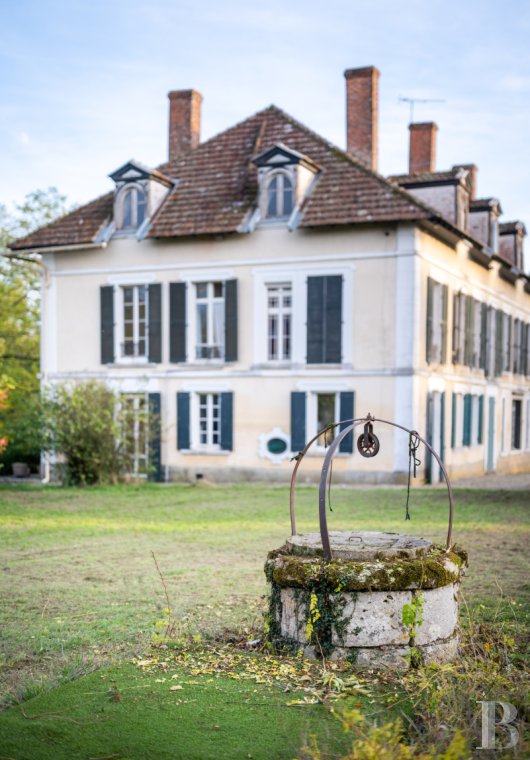
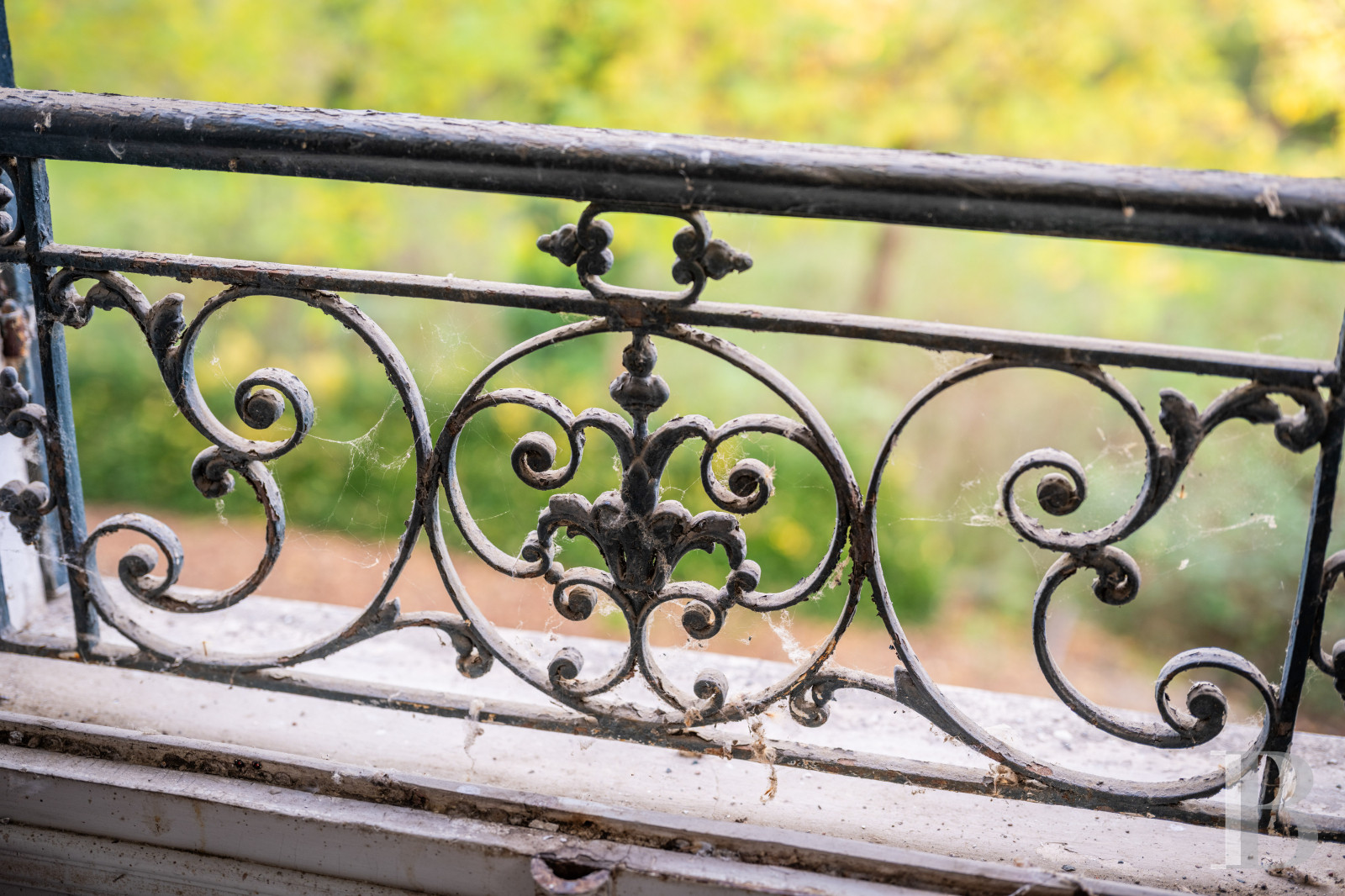
It is spread over three storeys and approximately 720 m². Its architecture is classical, with regular rendered facades punctuated by rectangular windows fitted with green-painted wooden shutters. Beautiful light streams into the upper floors throughout the day. The window and door surrounds, stringcourses and quoins stand out thanks to white rendering. Its hipped roof made of interlocking tiles is topped by five pink brick chimney stacks, while ten dormers allow light to stream into the loft.
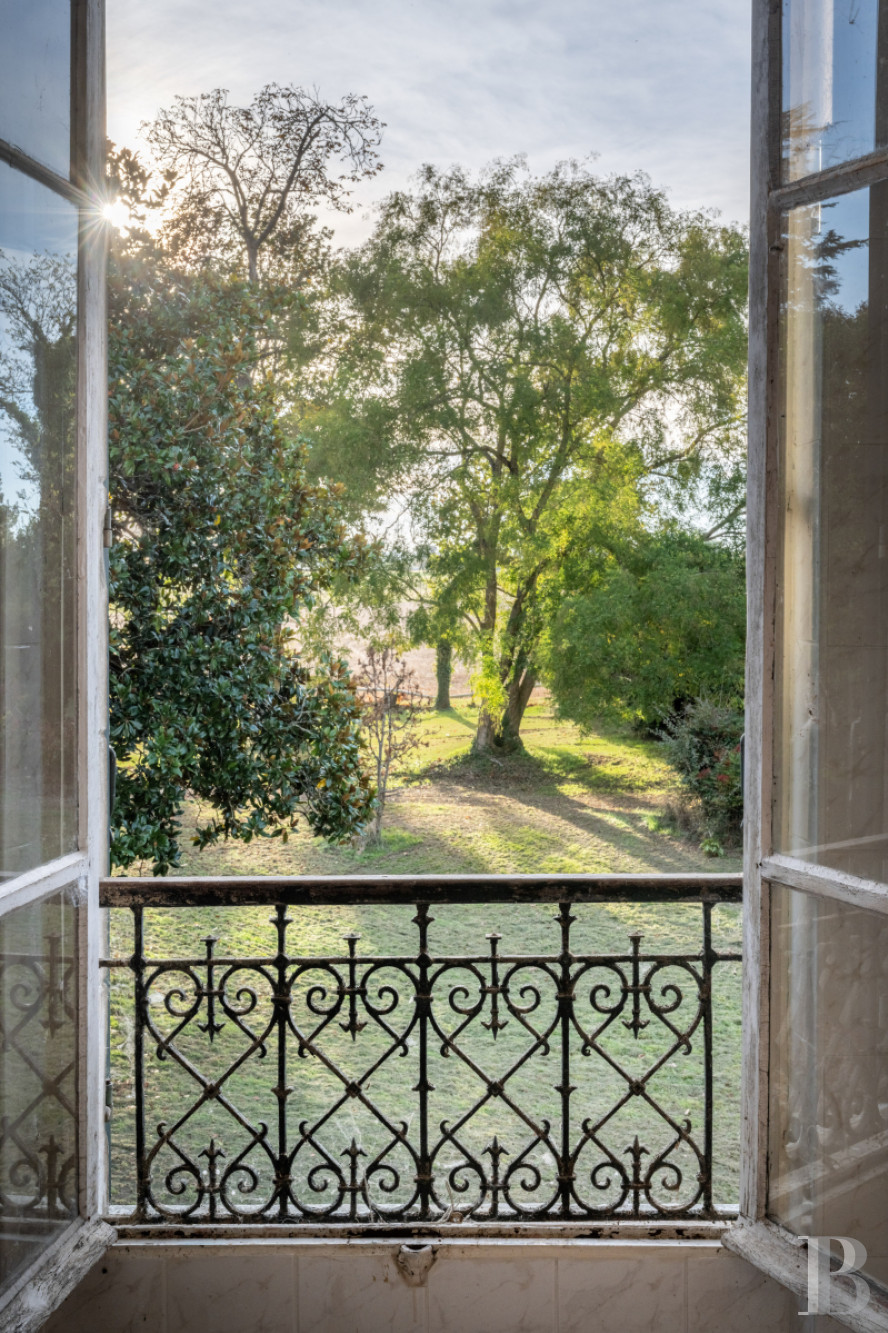
To the east, the views over the meadows and fields in the lower part of the estate can be enjoyed from a patio. The grounds stretch out around the house’s three other elevations.
The ground floor
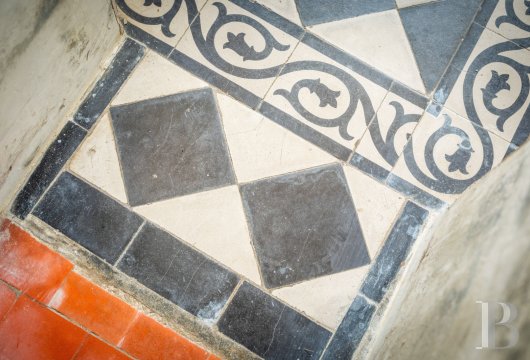
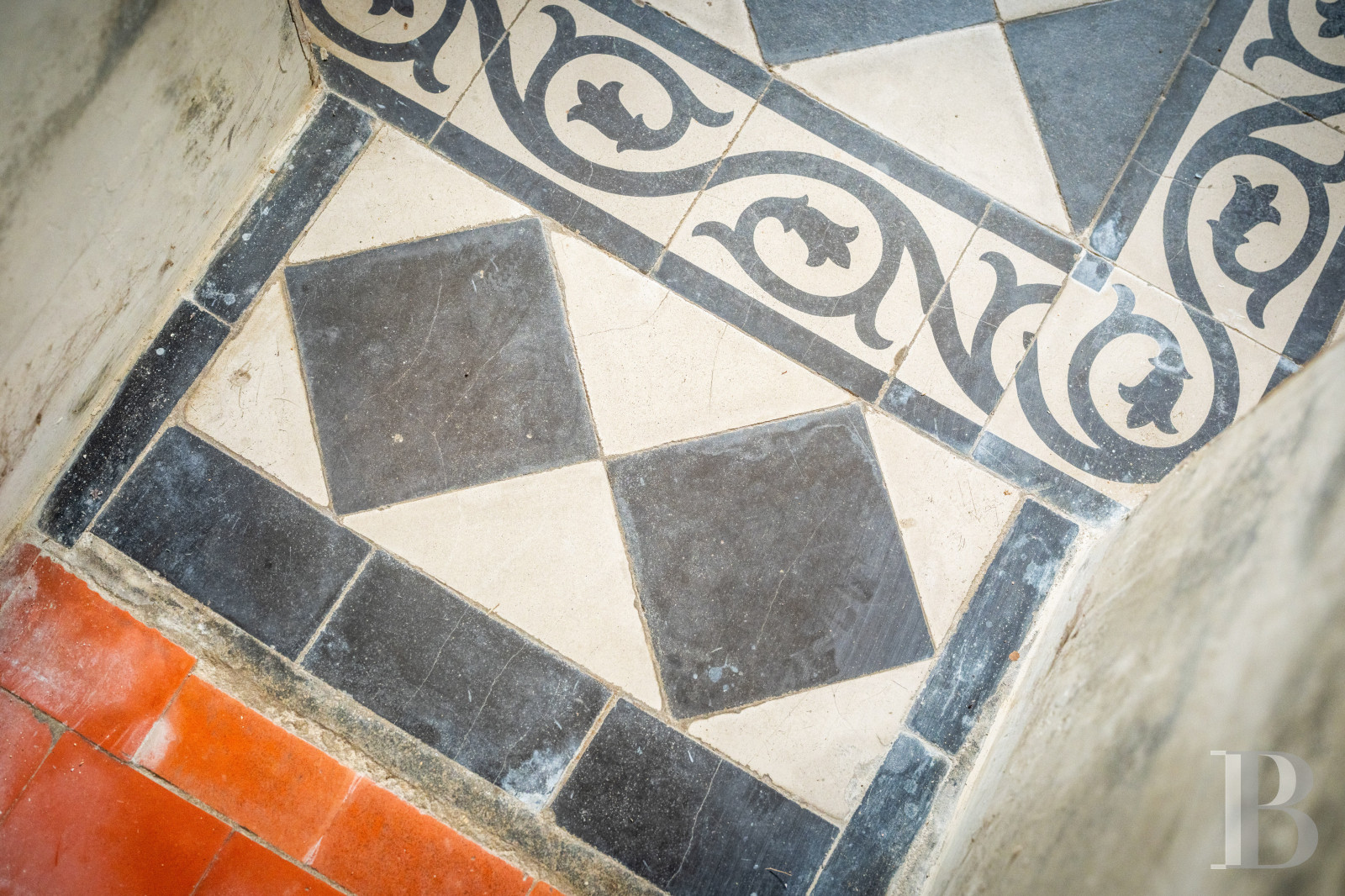
A flight of steps climbs up to the main entrance through a double-leaf door set slightly to the right of the centre. It opens into a hall illuminated by a four-leaf window and adorned, from floor to ceiling, with chessboard patterned black and white cement tiles bordered by a frieze of fleur-de-lys and scrolls, white and light yellow geometrically patterned wainscotting and exposed joists painted white.
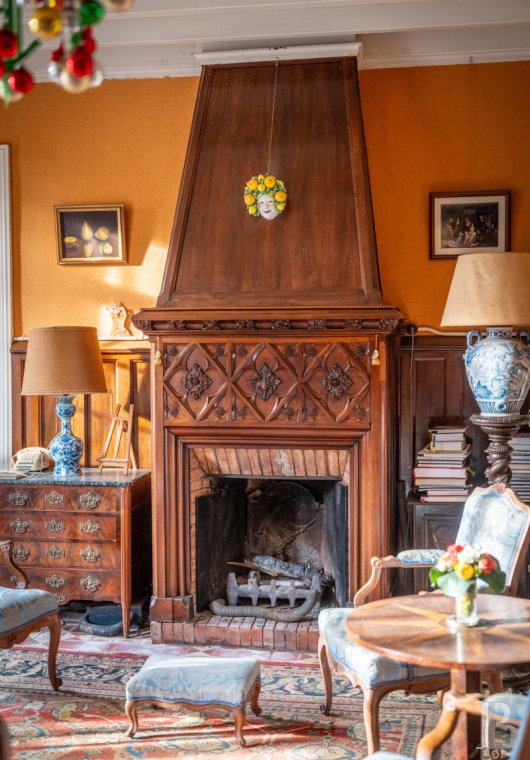
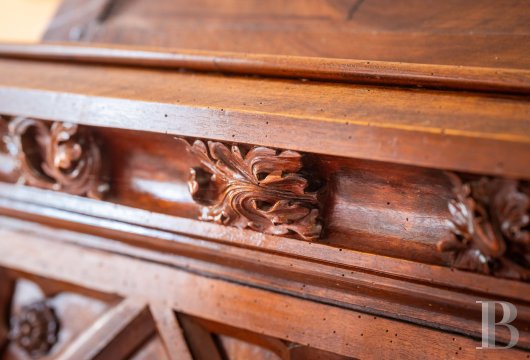
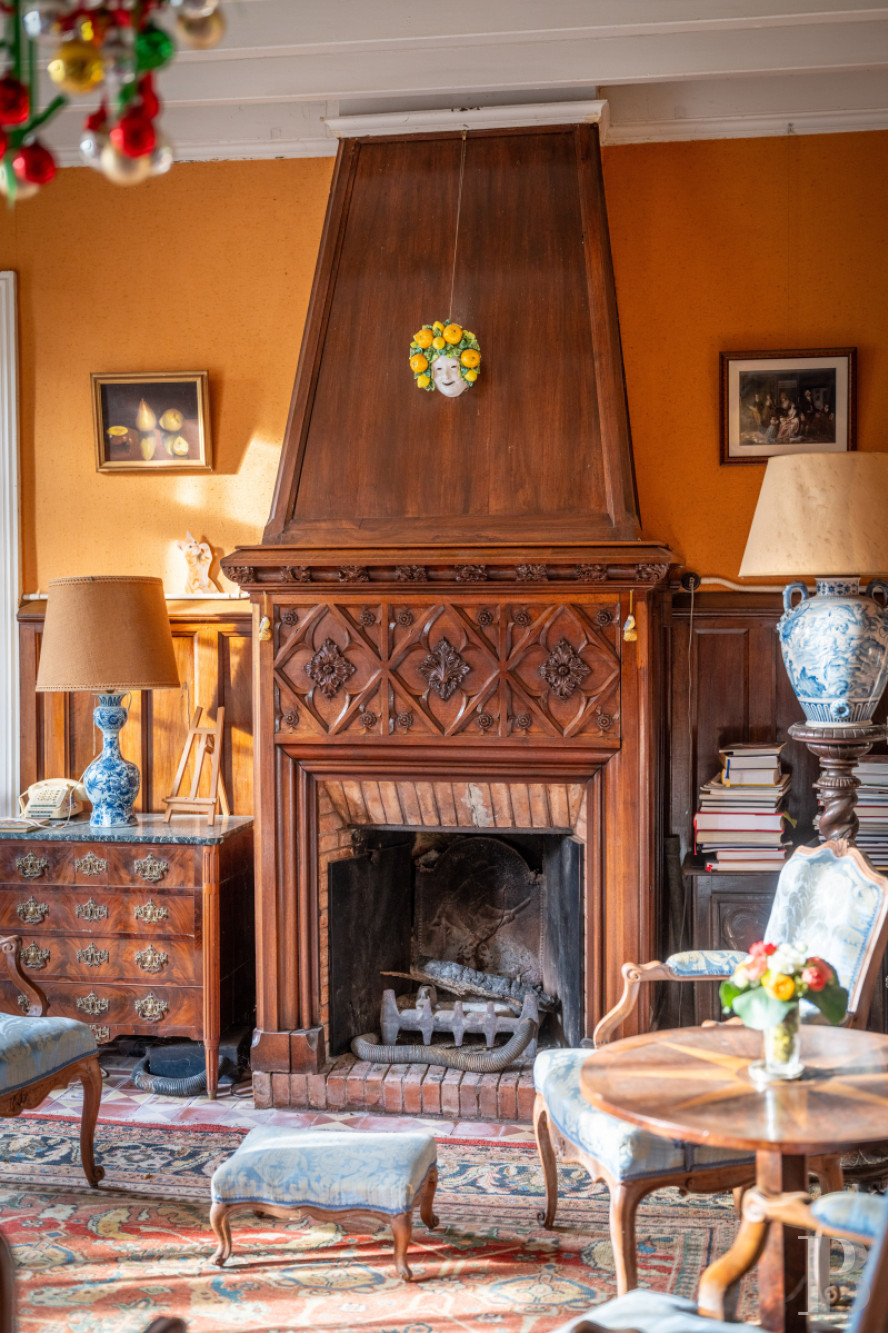
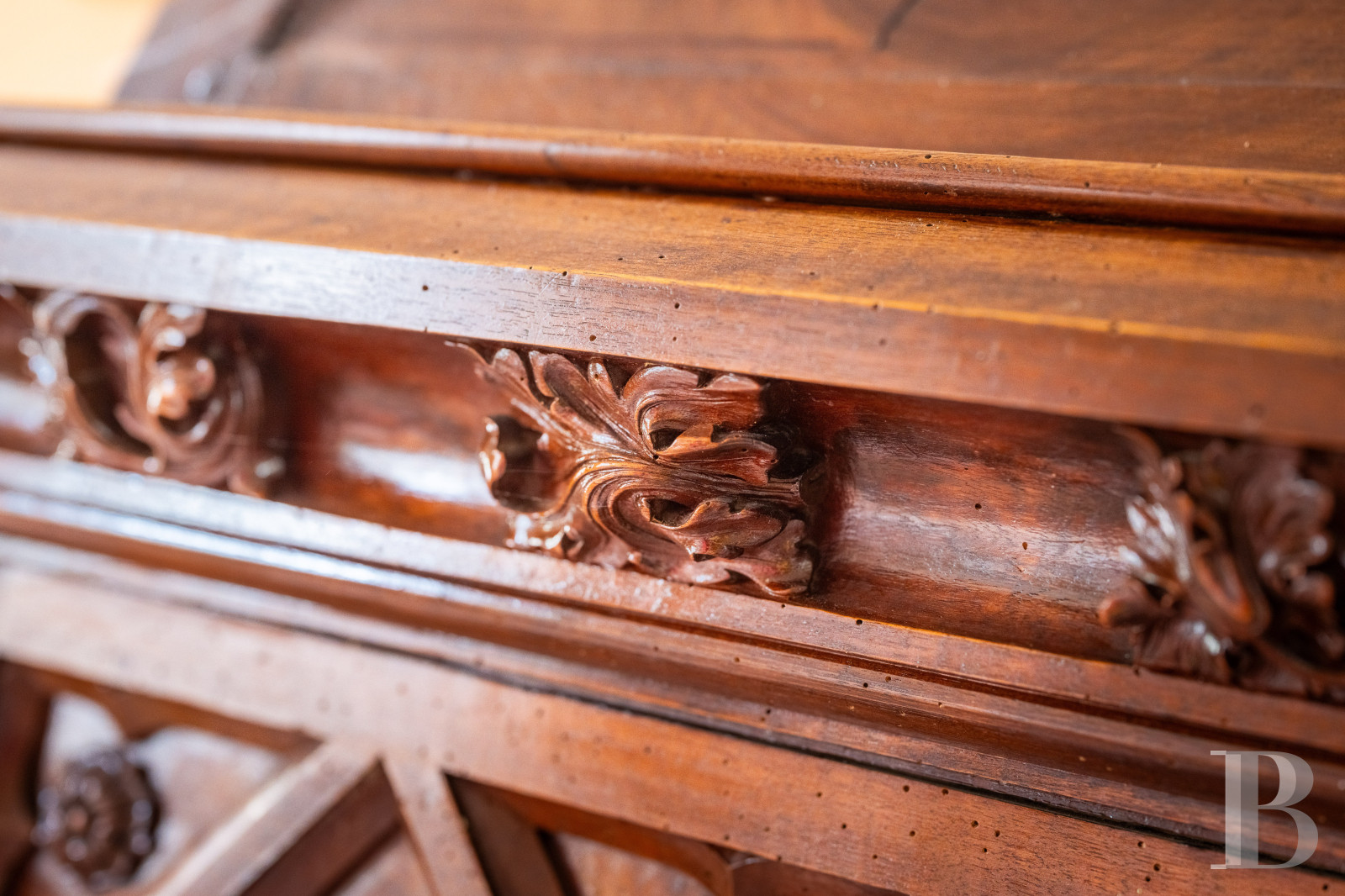
To the left, the hall leads to a study, into which gentle light filters from the west through two single leaf and one four-leaf windows, all with glazed fanlights. The decoration is of medieval inspiration, marked by a wooden and pink brick troubadour style fireplace in the middle of one of the walls. The lintel boasts an opulently sculpted decoration of a trio of lozenge-shaped panels with acanthus leaves in the centre, palm leaf motifs, floral cabochons in the corner of each panel and a frieze of scrolls formed by acanthus foliage. The chessboard patterned floor is made up of beige and ochre cement tiles decorated with chivalric motifs and heraldry featuring a wolf’s head. The brightness of the room is enhanced by the white-painted exposed joists.
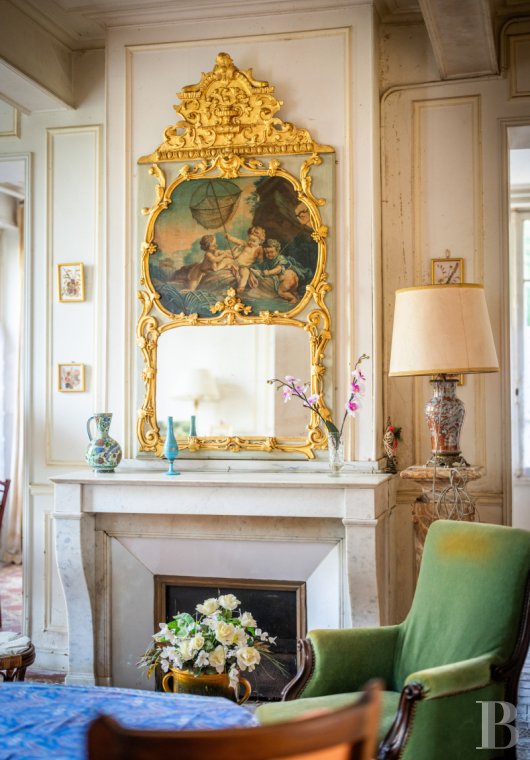
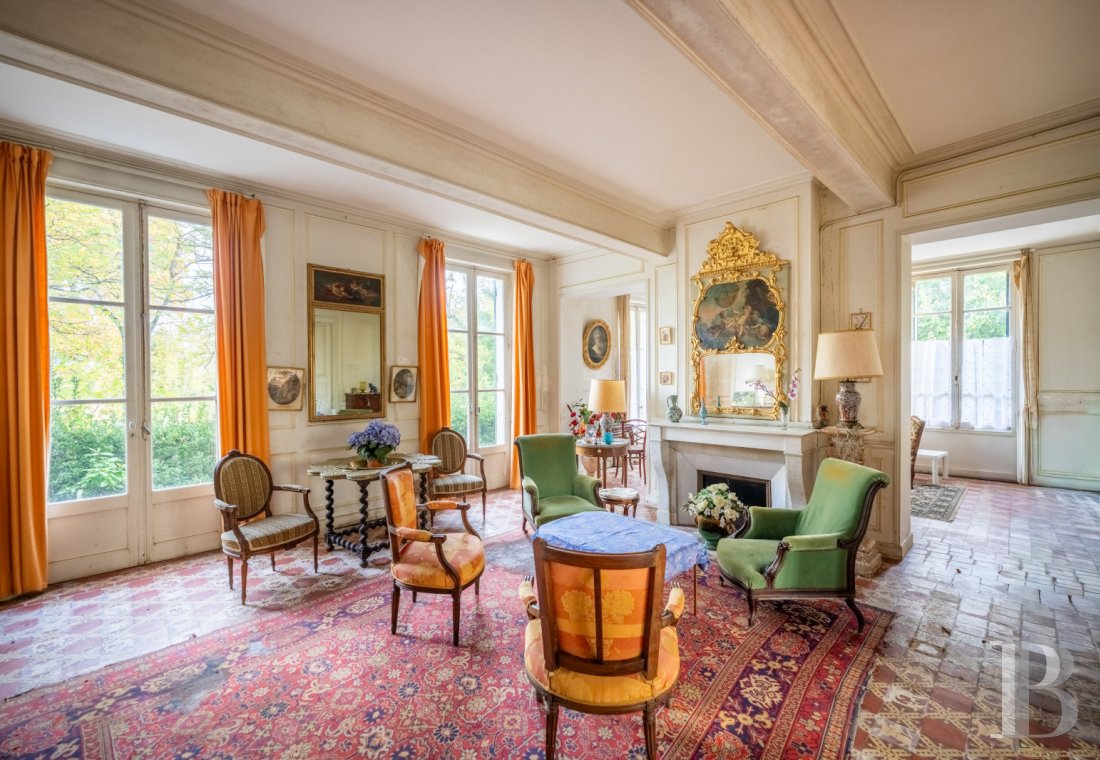
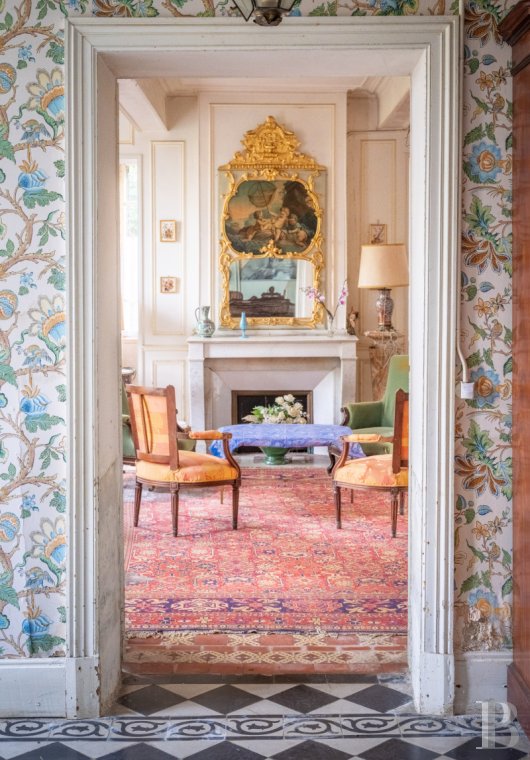
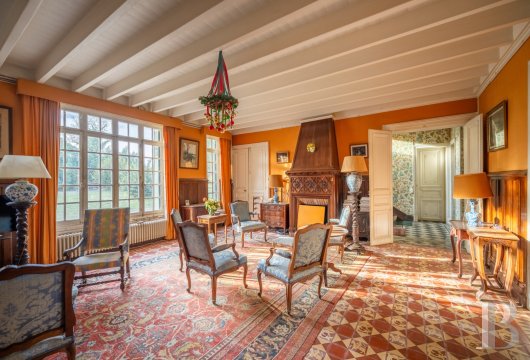
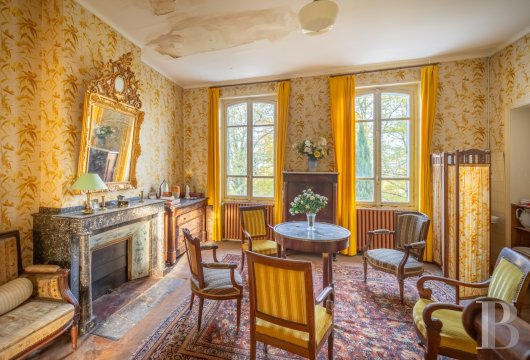
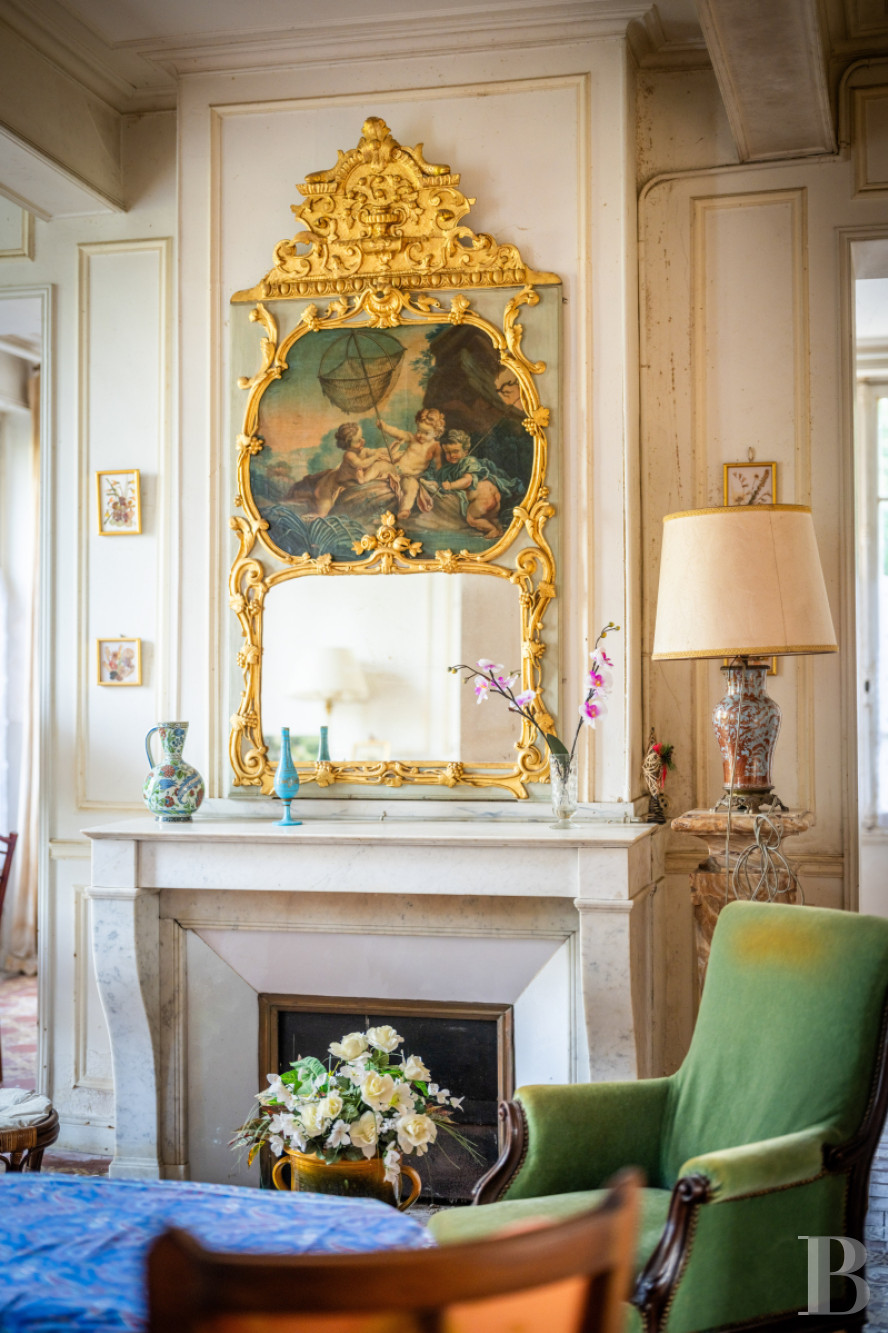
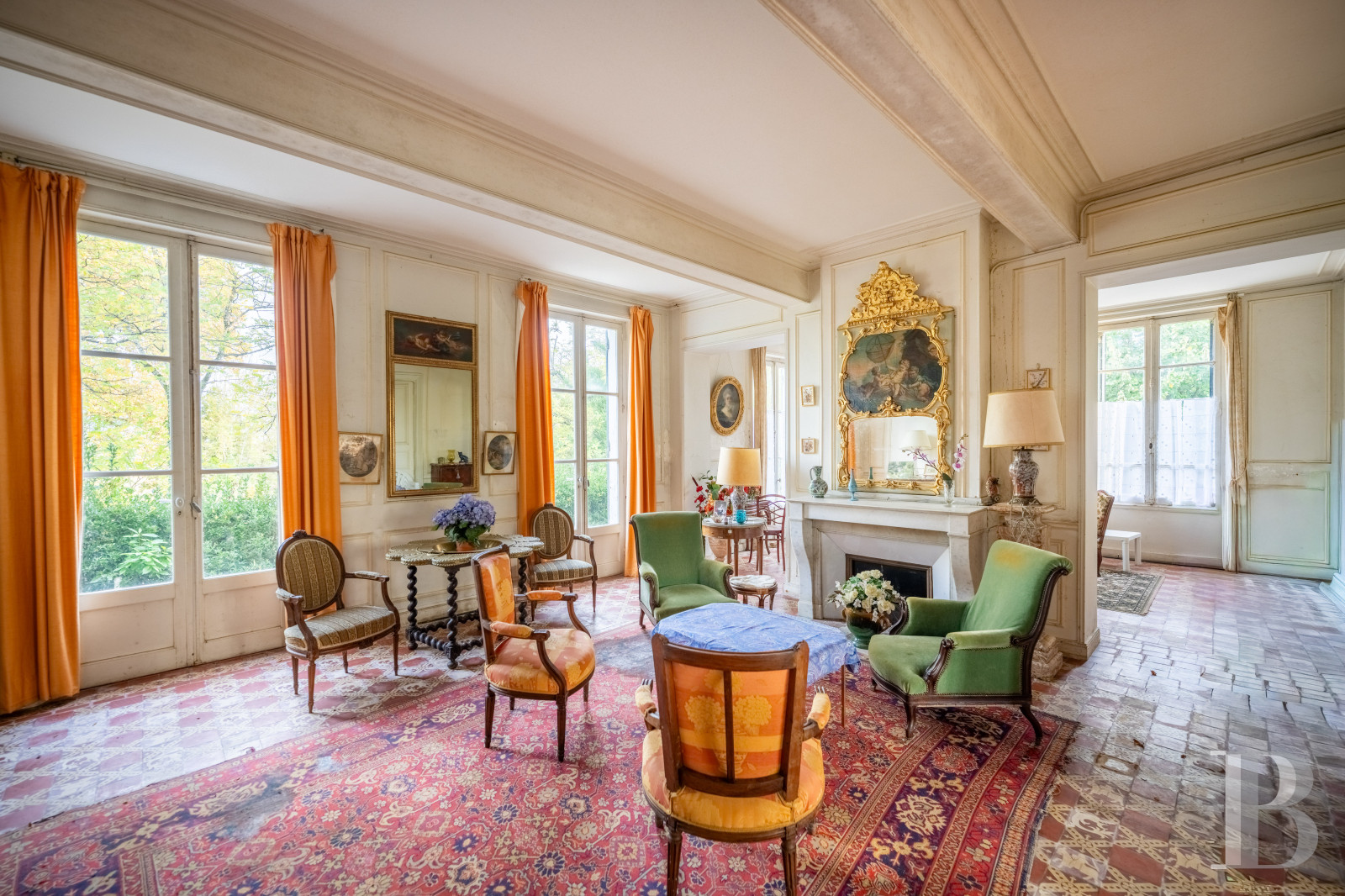
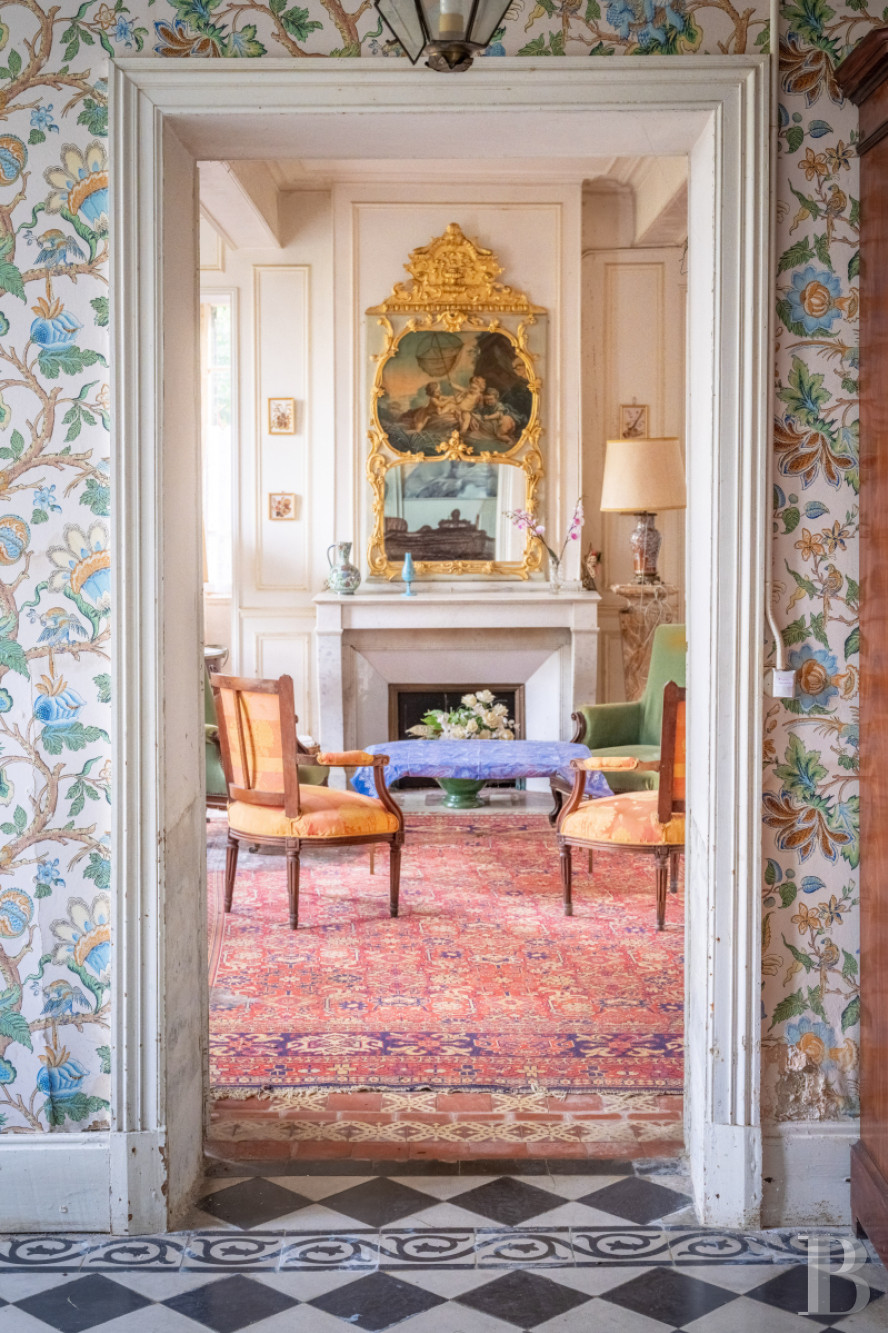
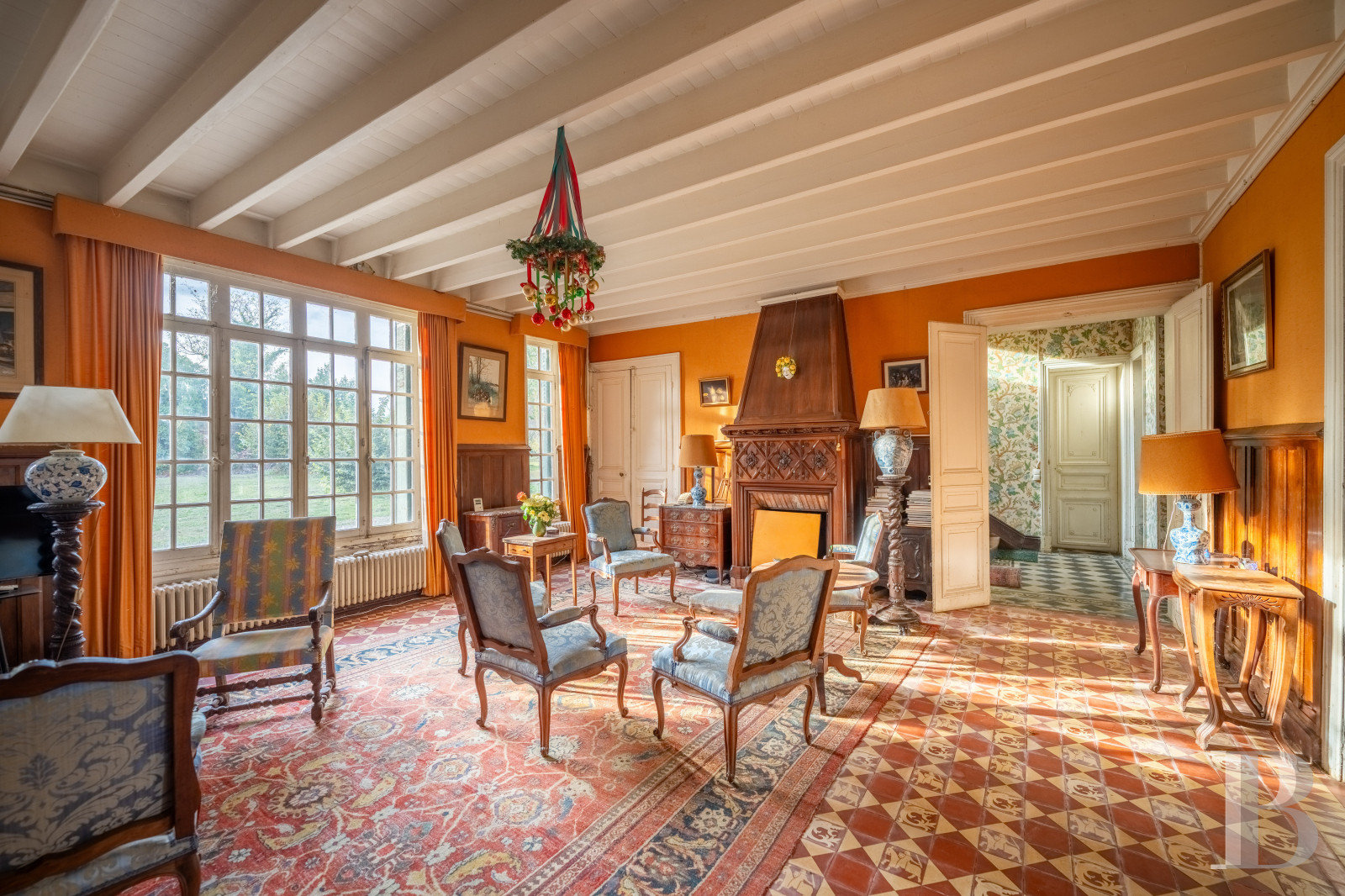
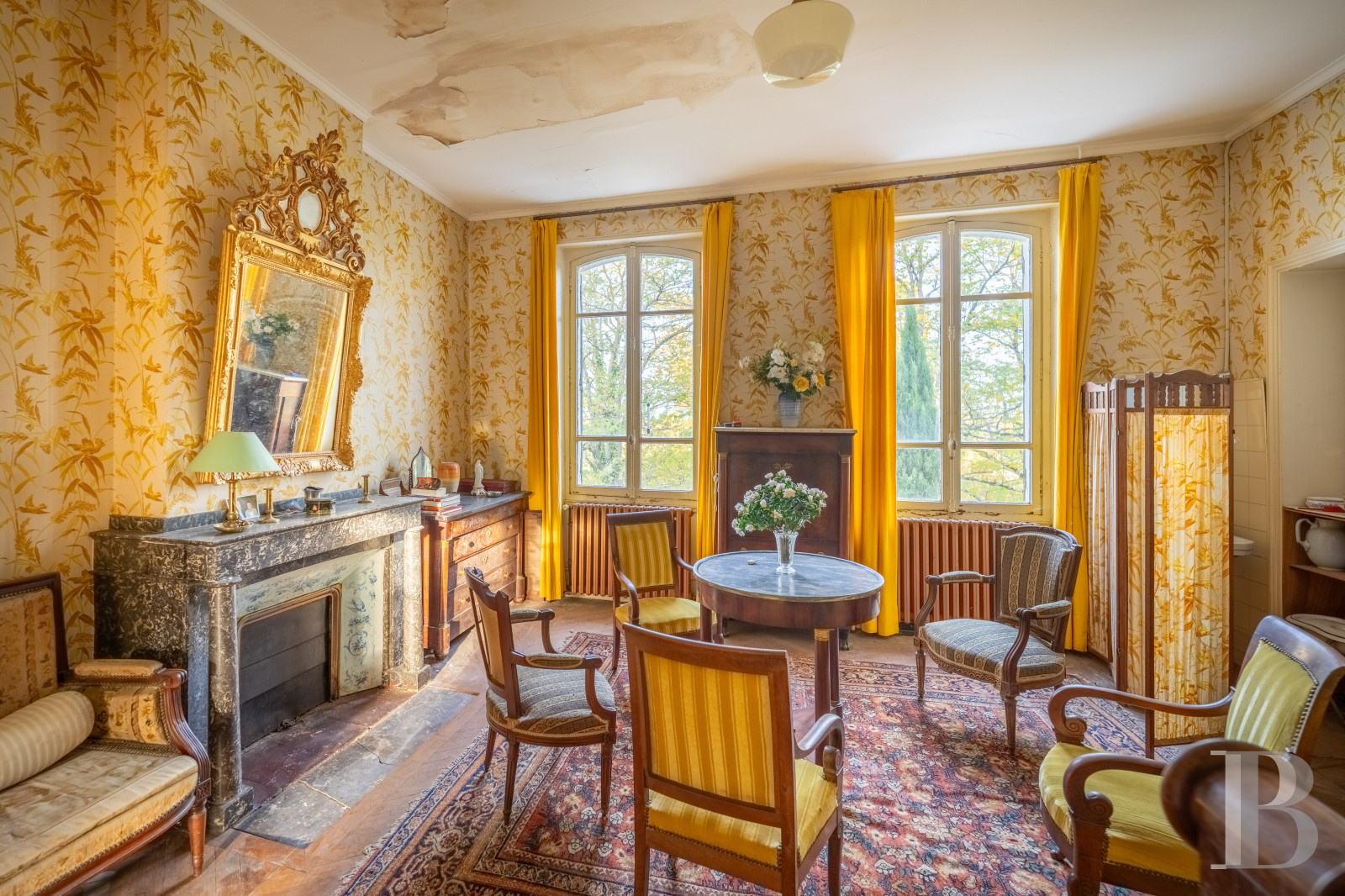
The study leads to a secondary entrance, which houses the main staircase. To the east, a large opening leads to a first lounge and then a second. Their adjoining wall, framed by two passages, is occupied on both sides by a white marble fireplace with light grey veining. These lounges, with coffered ceilings, are bathed in light thanks to five windows. The three rooms cover a surface of more than 80 m².
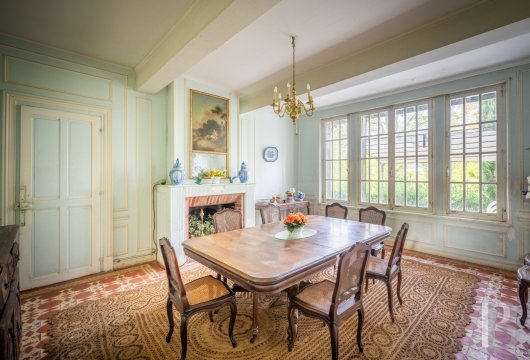
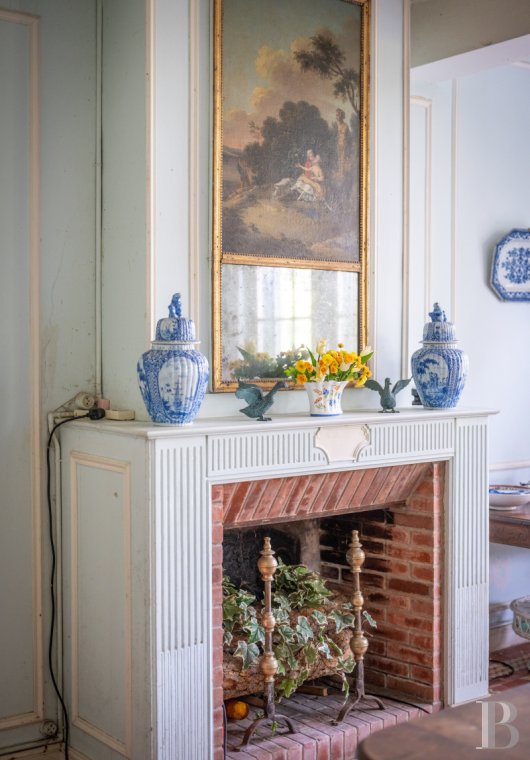
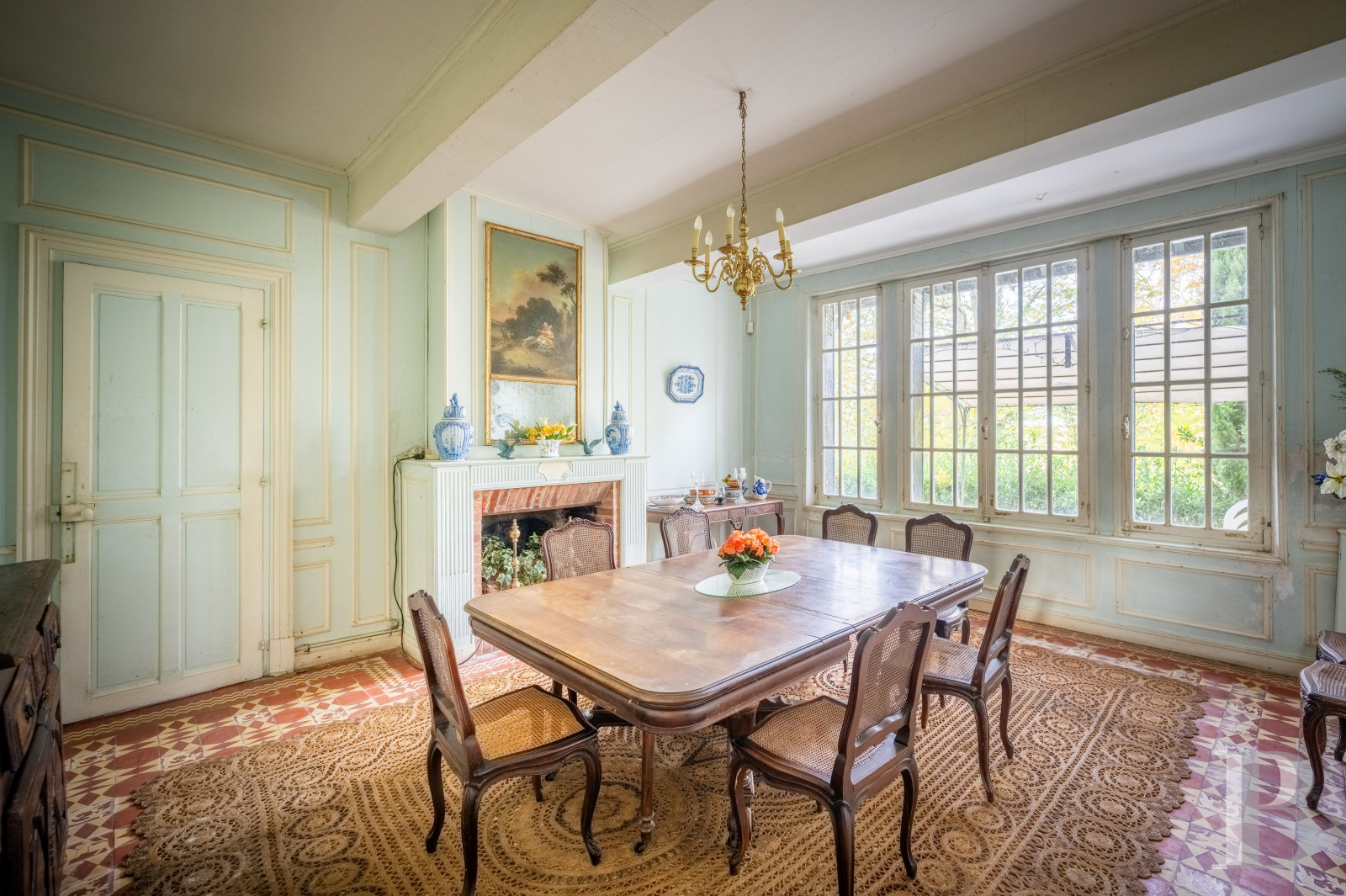
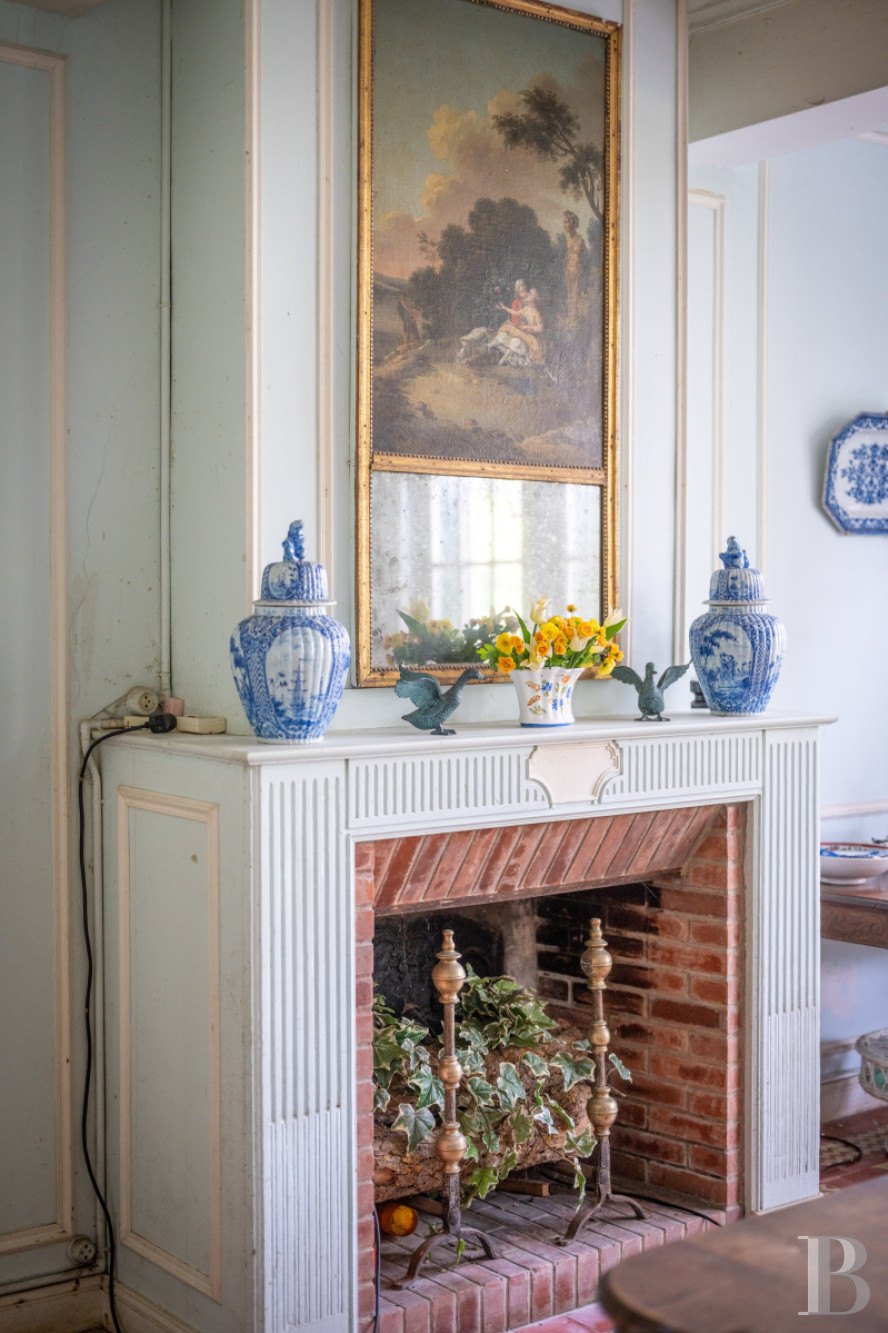
Just off the second lounge, there is a shower room, while opposite the first, on the other side of the secondary hall, there is a dining room, boasting views of the patio, with pastel green and yellow wall mouldings, a white-painted pink brick and wooden fireplace, the same floor tiles as in the lounges and a triple coffered ceiling.
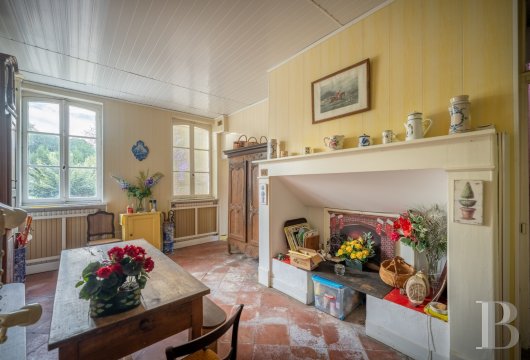
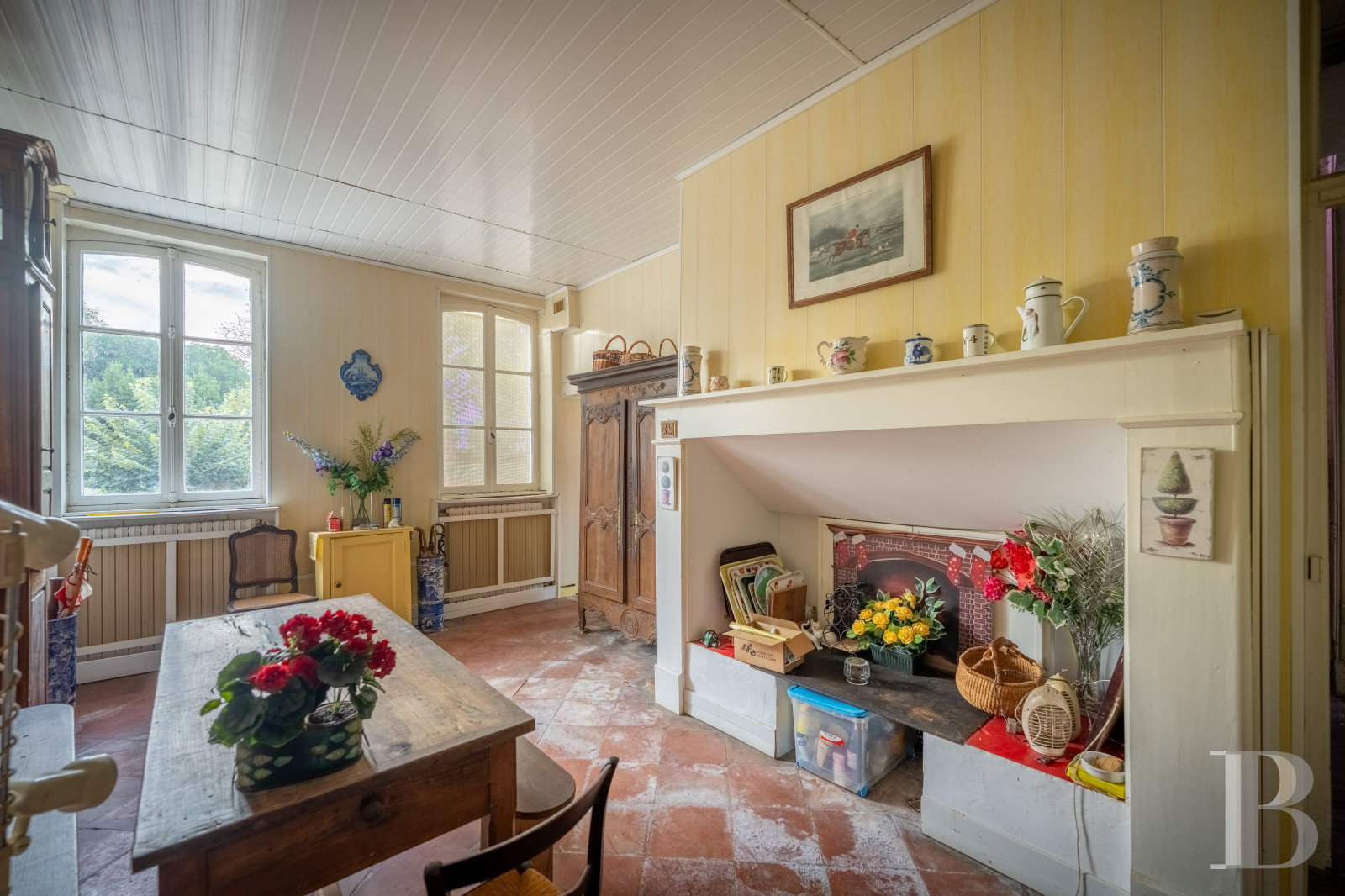
Lastly, the dining room opens onto a passage to the rear that leads to a former office boasting a black marble fireplace with grey veining and wood stripped flooring, a boiler room, a service staircase, a lavatory, plus a kitchen with an adjoining pantry, both with terracotta floor tiles, and a wooden fireplace occupying an entire wall.
The upstairs
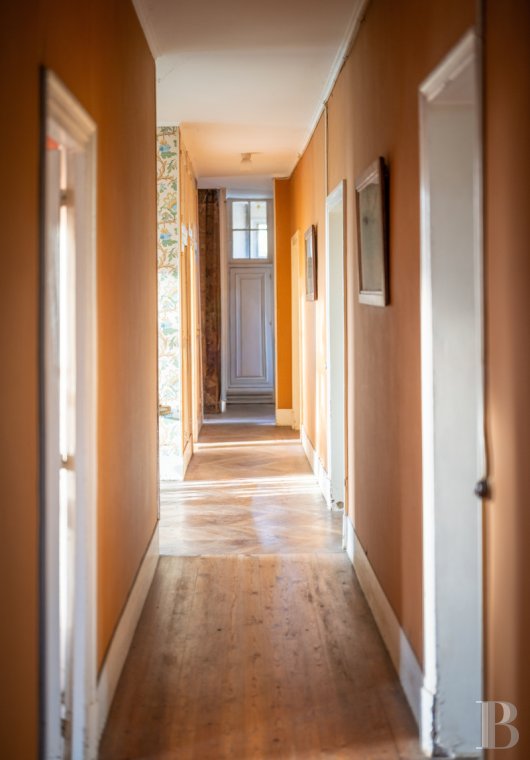
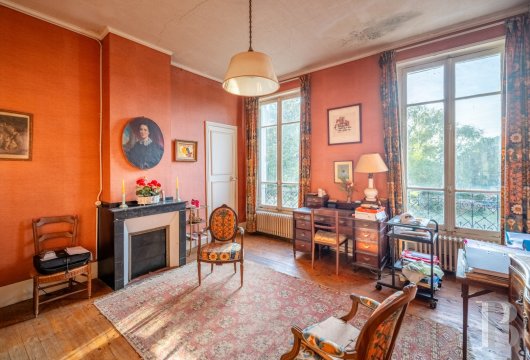
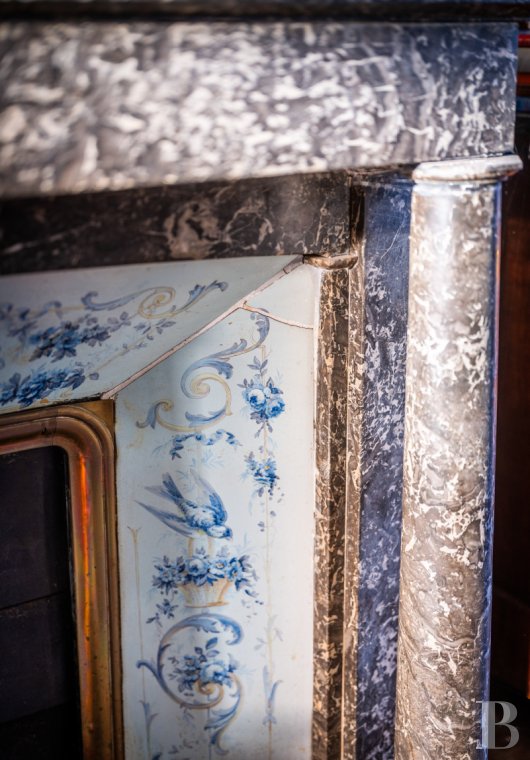
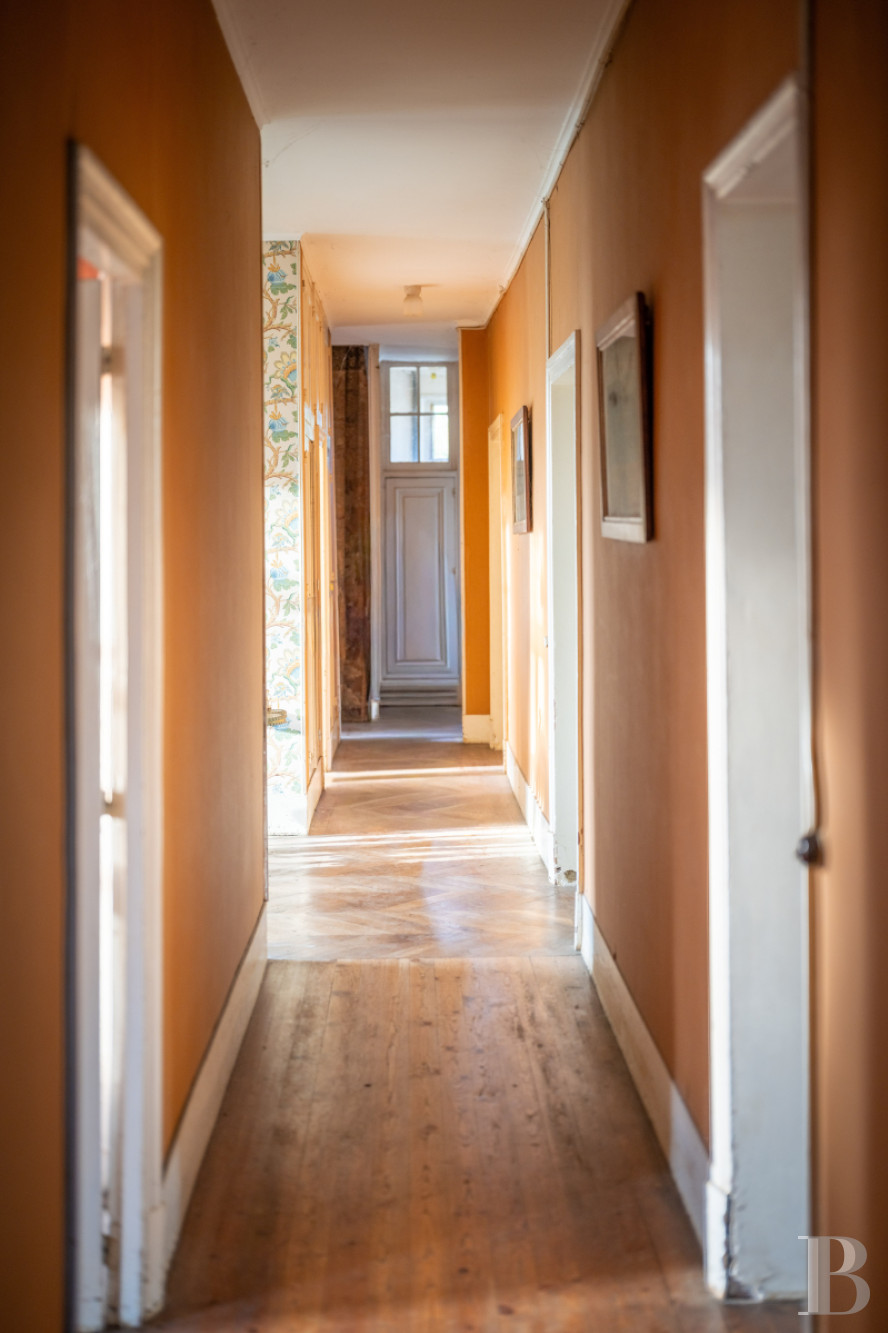
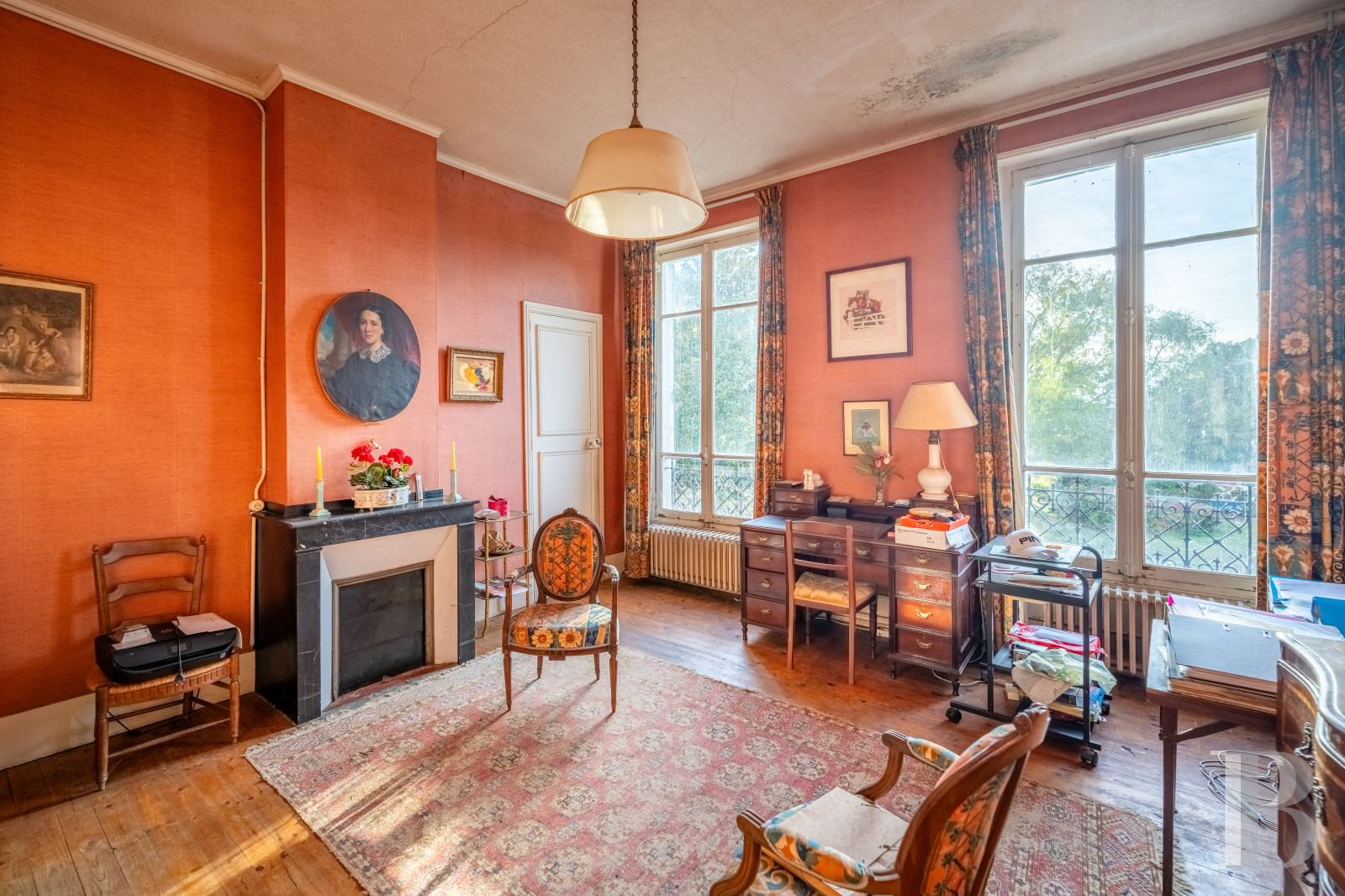
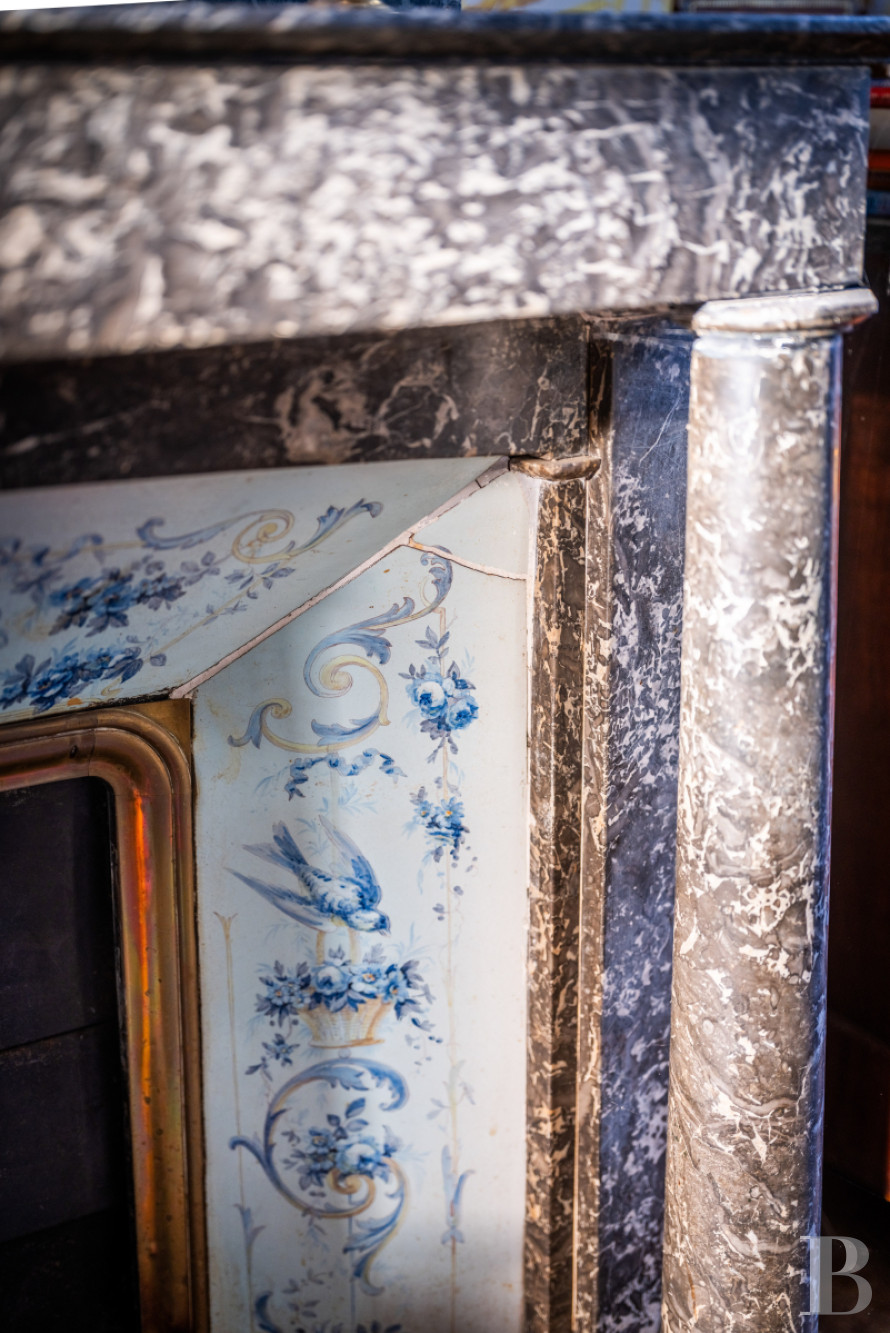
The light-coloured, wooden, main staircase with balustrades climbs to a landing that forms a T-shape with a wide corridor. To the left, the corridor leads to four bedrooms, a lavatory, a bathroom and a shower room, before reaching the service staircase. To the right, it also leads to four bedrooms as well as a lounge, through which there is a shower room and a bathroom. The bedrooms are all bathed in light and most of them possess a separate lavatory and a wooden or marble fireplace. One of them stands out thanks to its eclectic Napoleon III style, boasting a black marble mantelpiece with white veining, Doric columns framing the hearth and a fireback made of blue Delft or Rouen style tiles, depicting bouquets of roses, foliage and birds in shades of blue and yellow.
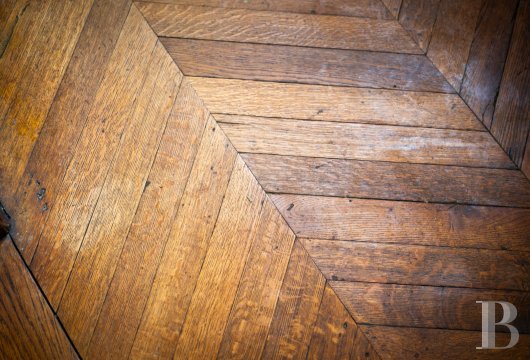
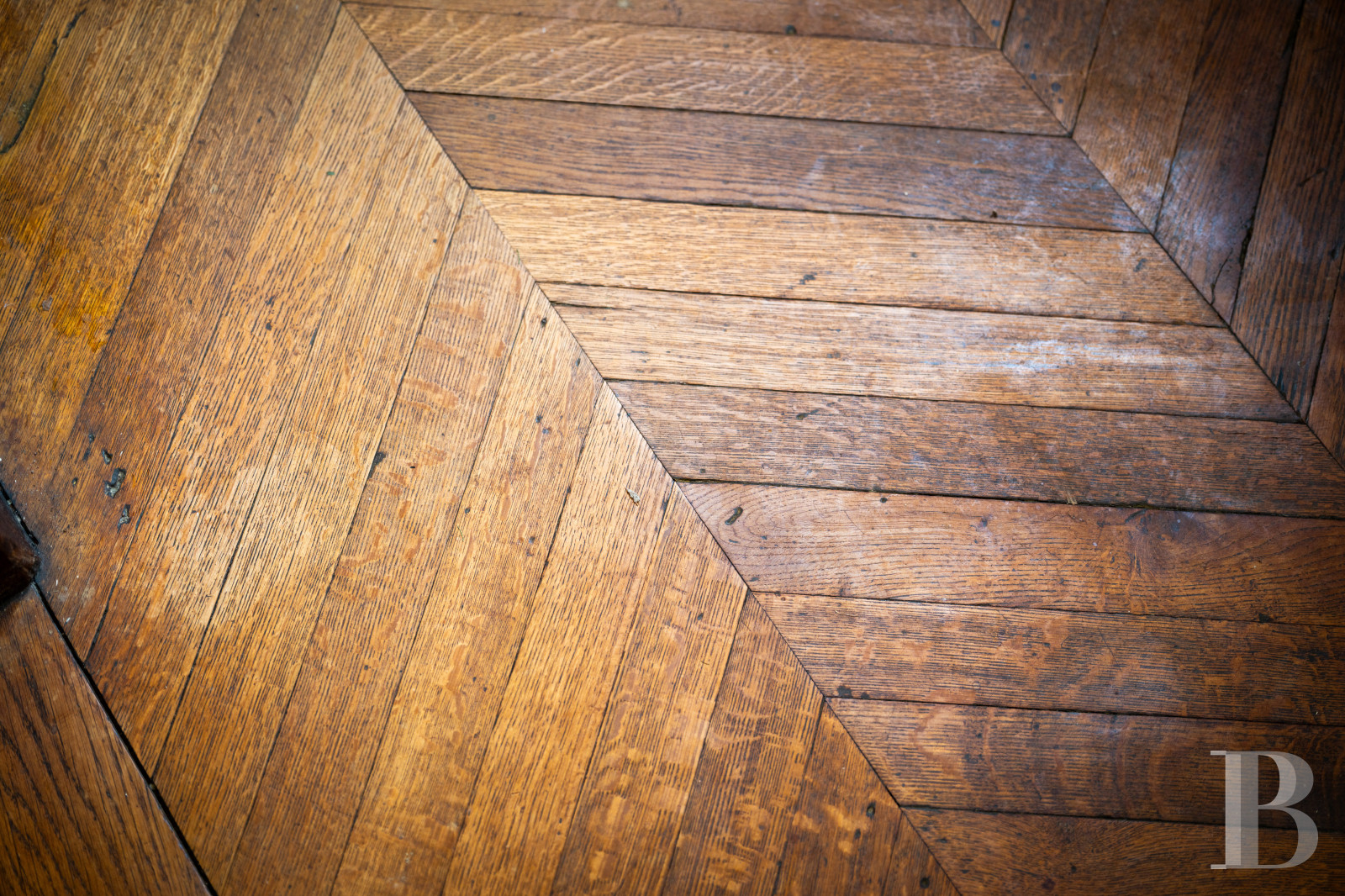
The flooring is made up of an alternation of English bond and chevron parquet. The ceilings are surrounded by sober mouldings.
The attic
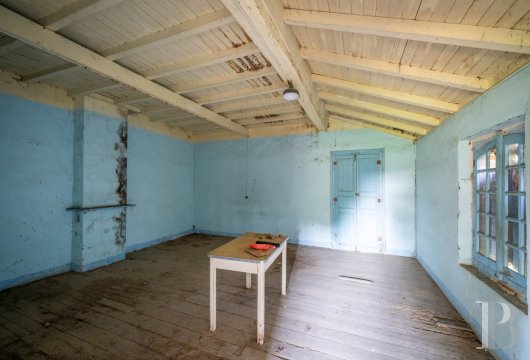
The service staircase climbs to a landing that leads to an approximately 245-m² level that is partially habitable and includes three rooms at each end of the building. The centre is occupied by a non-converted open-plan area with exposed floorboards and roof frame.
The estate keeper’s and its outbuildings
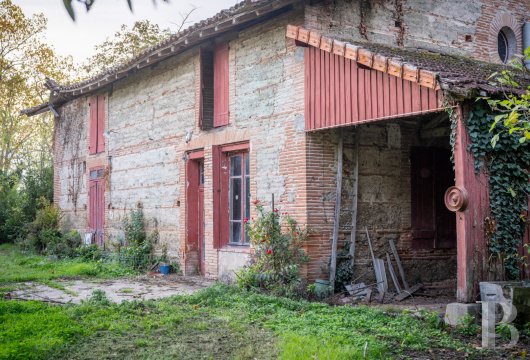
From the gravelled drive, a flight of stone steps climbs up to the estate keeper’s house. This two-storey, around 180-m² building with a cellar is made of terracotta bricks and pebbles from the River Garonne. The gabled roof made of barrel tiles has partially collapsed.
The ground floor is divided into three living rooms as well as a former stables and the ceiling heights exceed 3.2 metres. A staircase climbs up to the first floor which is divided into four currently inaccessible rooms. To the north, a lean-to has been added to the building. The house possesses two storerooms, the second of which is made up of huts in which the victims of the flooding in the Moissac area in 1930 were sheltered.
The agricultural storage building with adjoining house and outbuilding
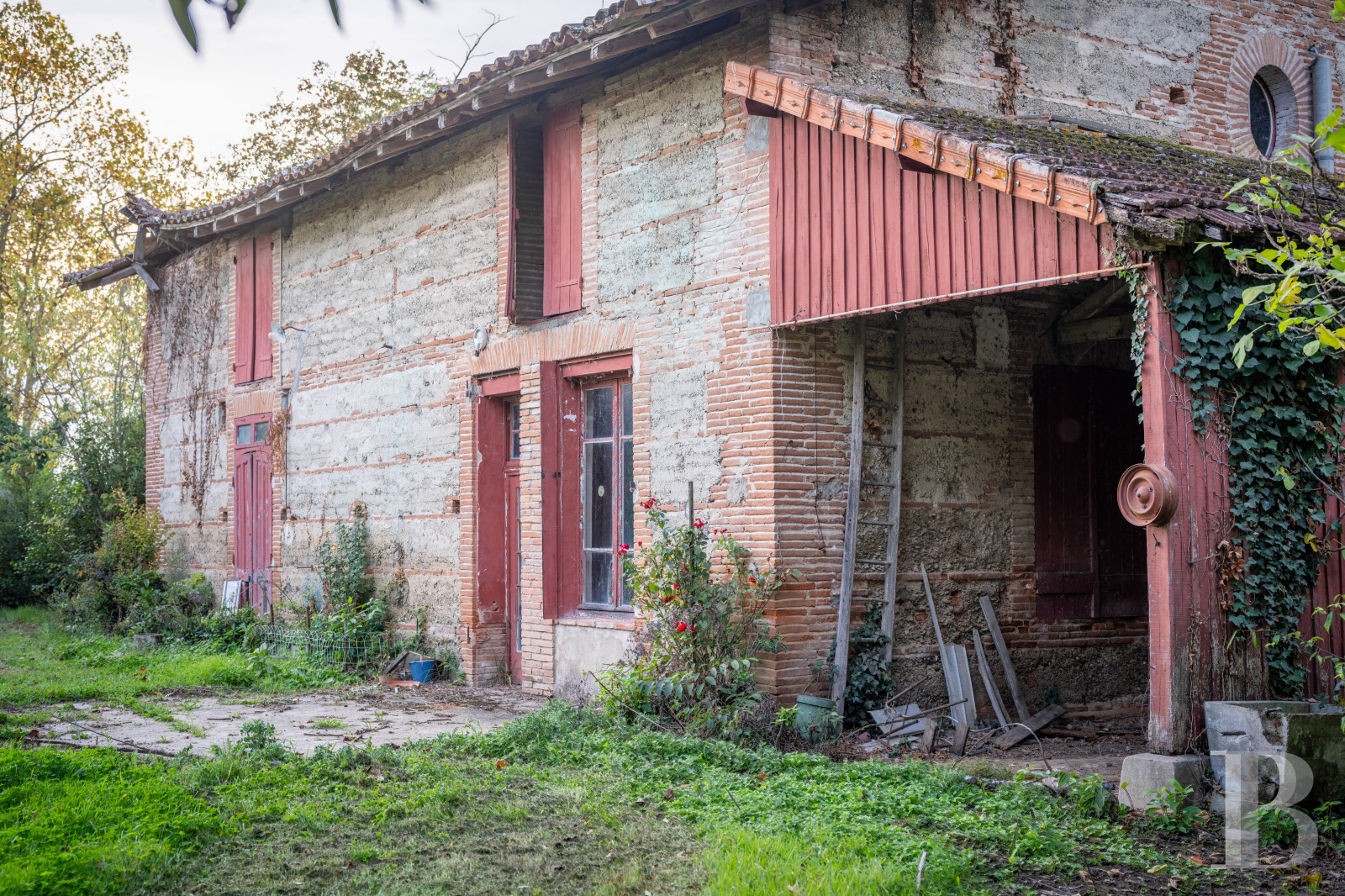
At the edge of the property, there is a building topped by a hipped roof made of barrel tiles. This approximately 640-m² edifice has two-storeys over two thirds of its surface and boasts a traditional architecture of terracotta and mud bricks, pebbles from the River Garonne and wooden slats. To the south, six 1-metre-thick square pillars support the exposed wooden roof frame.
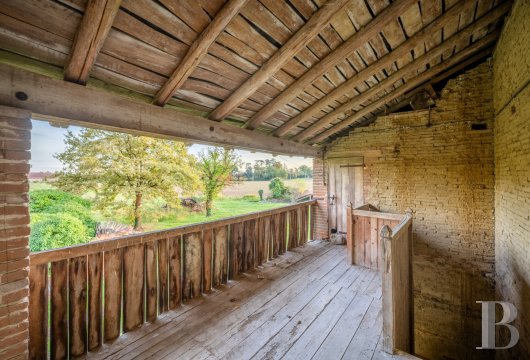
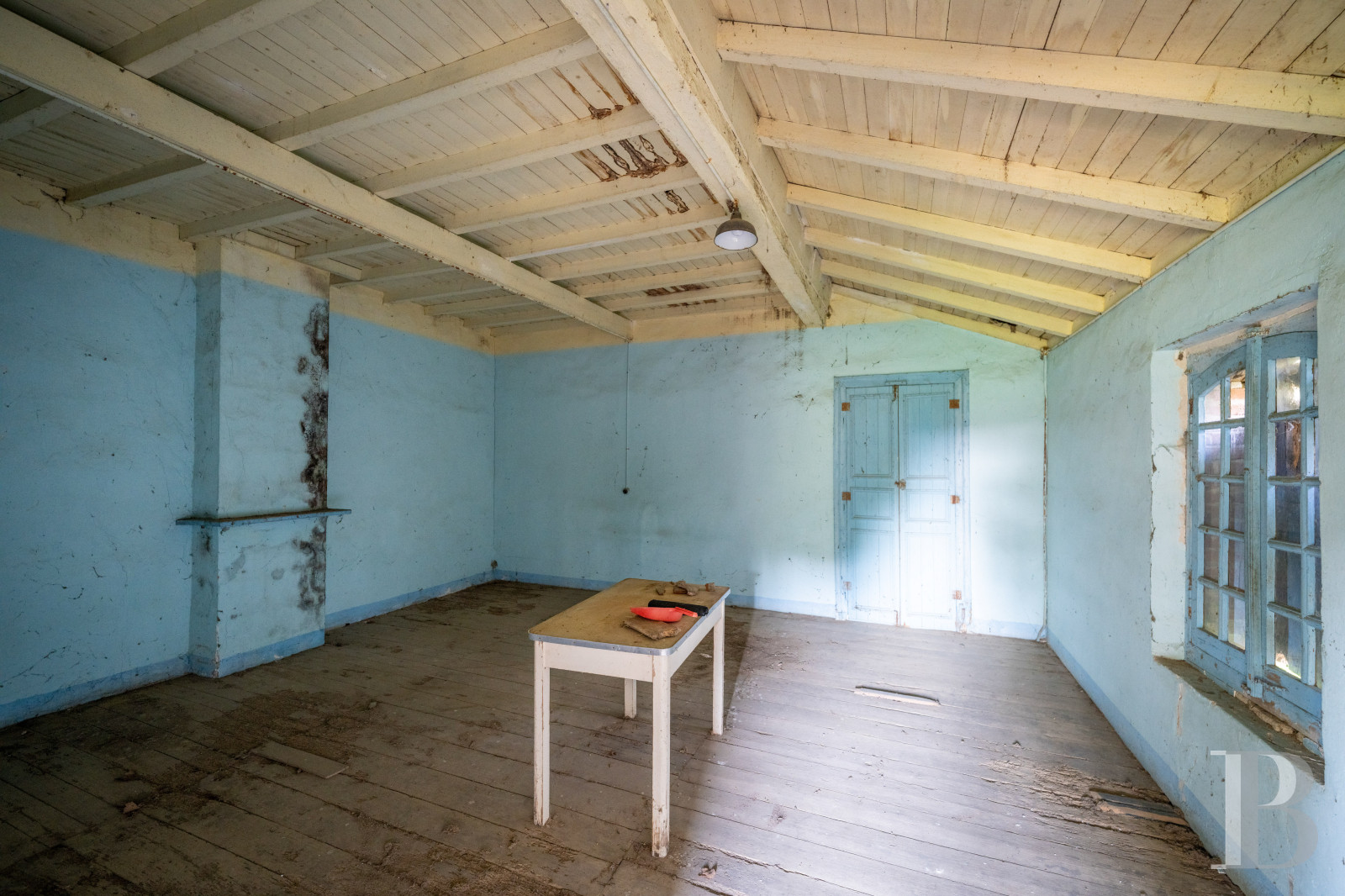
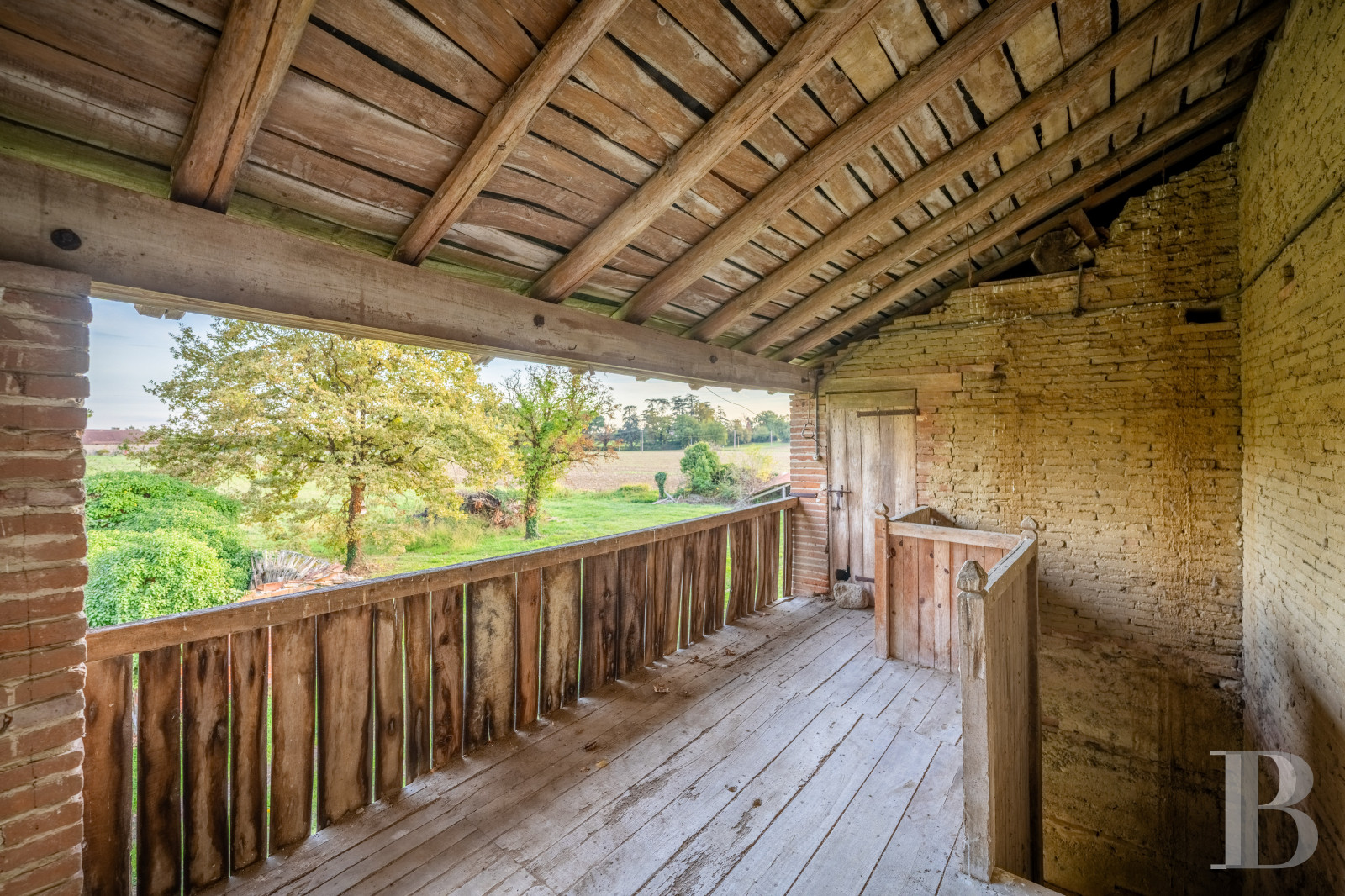
The first third of the building is used as an agricultural storage building with a roof frame height of between 5.5 metres and 8.6 metres. In the centre, on the ground floor, there are the cowsheds, a workshop and living spaces for the tenant farmers, with ceiling heights of approximately 3 metres. On the upper floor, a gallery leads to the other rooms in the tenant farmers’ lodgings and a vast space (most likely the former hay loft with a large mezzanine overlooking the cowsheds.
Lastly, a little further away, a long, dilapidated, around 100-m² outhouse completes this part of the property.
The grounds, swimming pool and tennis court
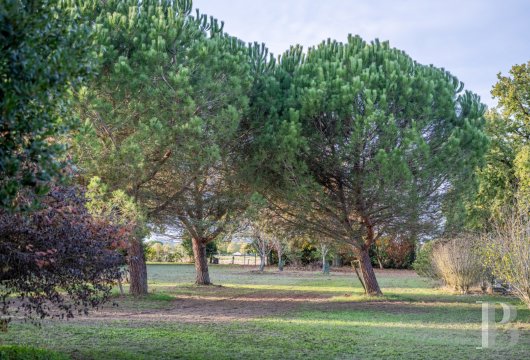
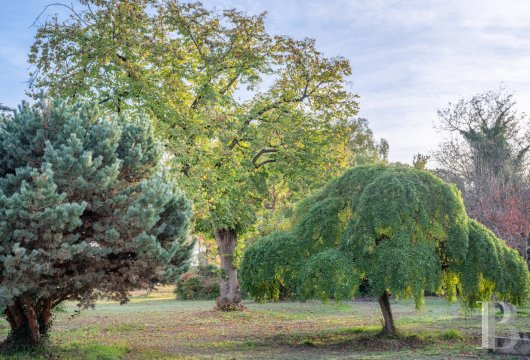
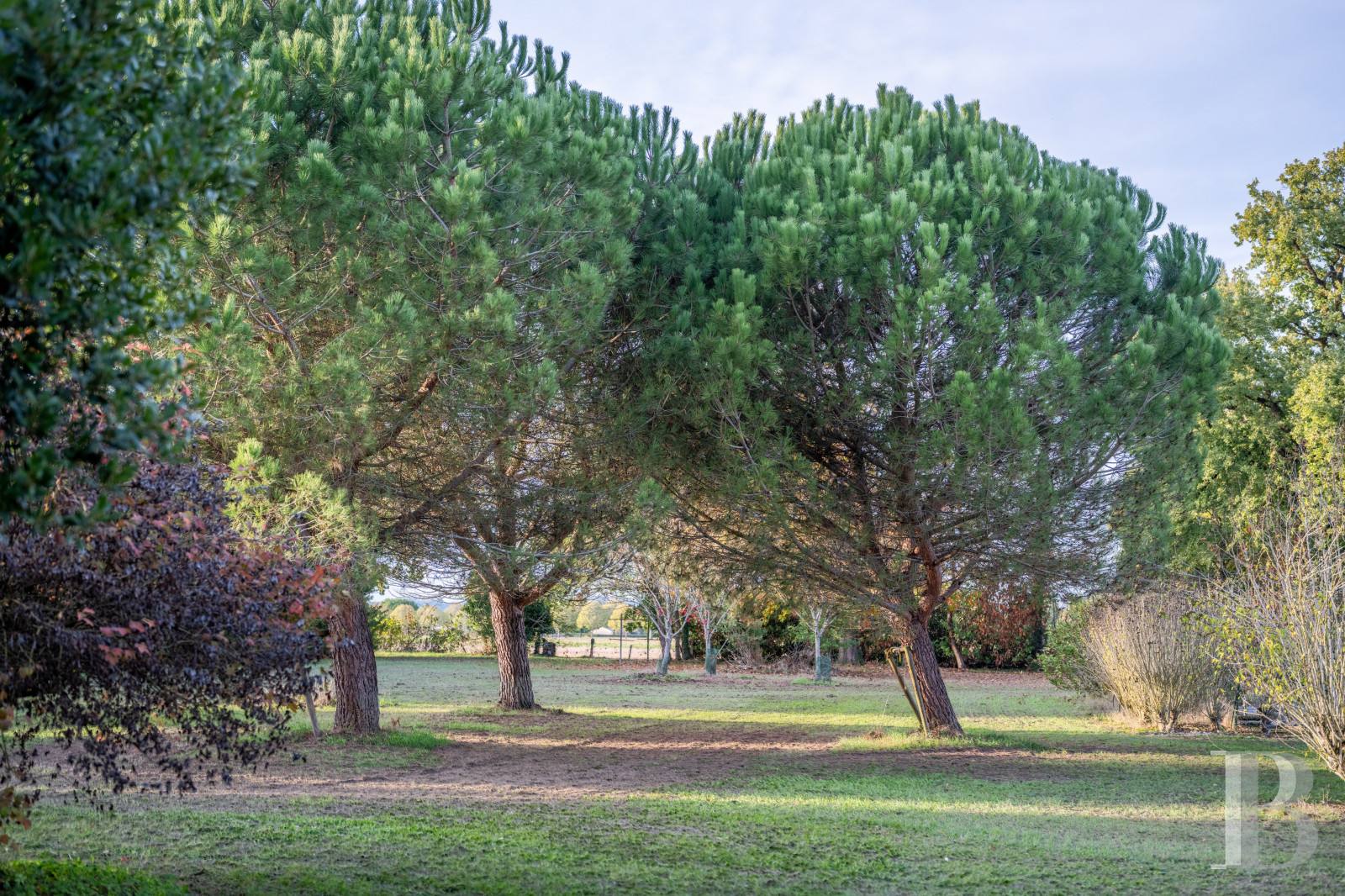
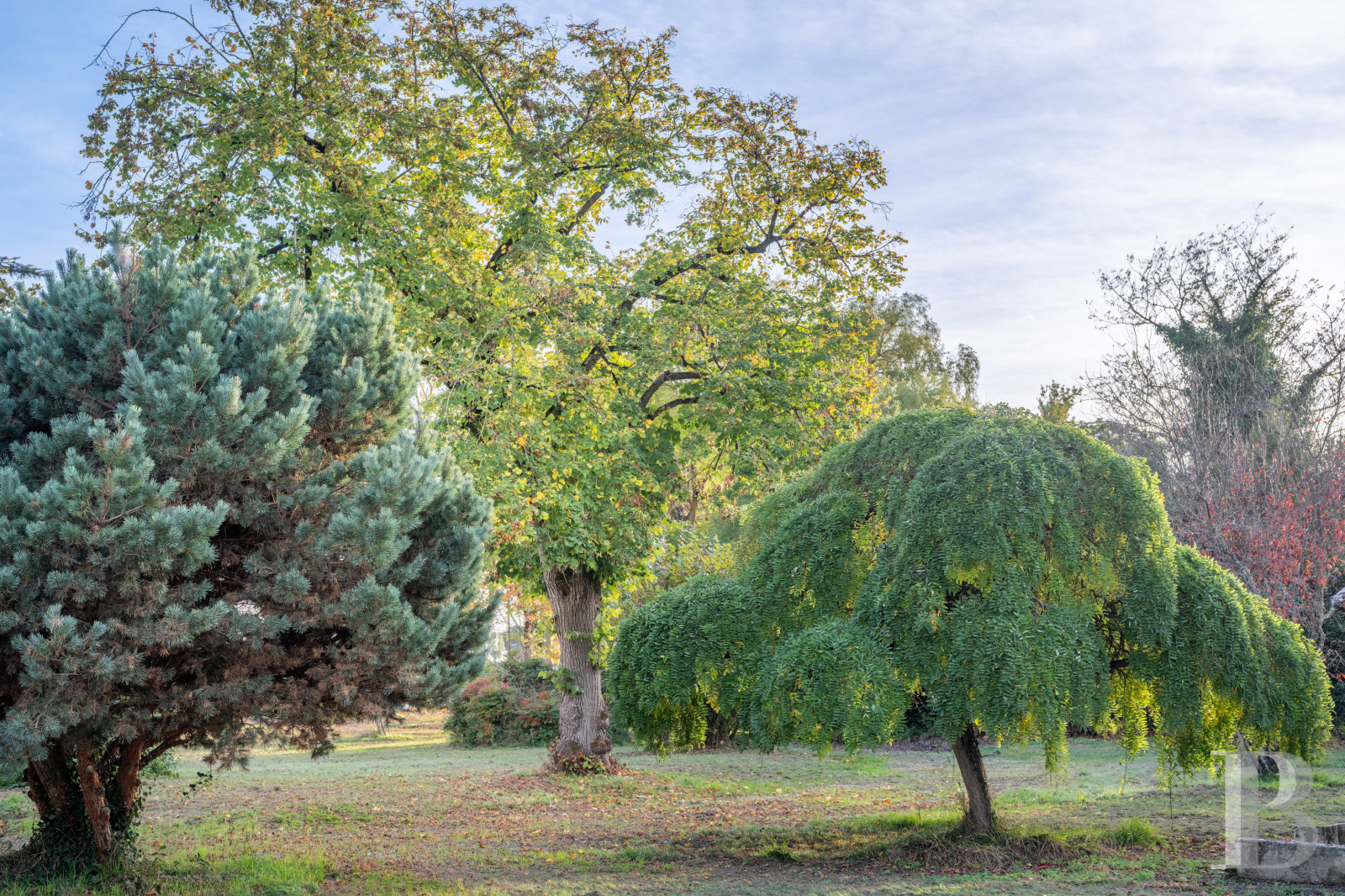
The grounds cover approximately 3 hectares and are partially enclosed by trees, coppices and wooden fencing. Oak, pine and cypress trees mainly make up the woodland. In front of the manor house, vehicles can manoeuvre comfortably thanks to a large lawned area.
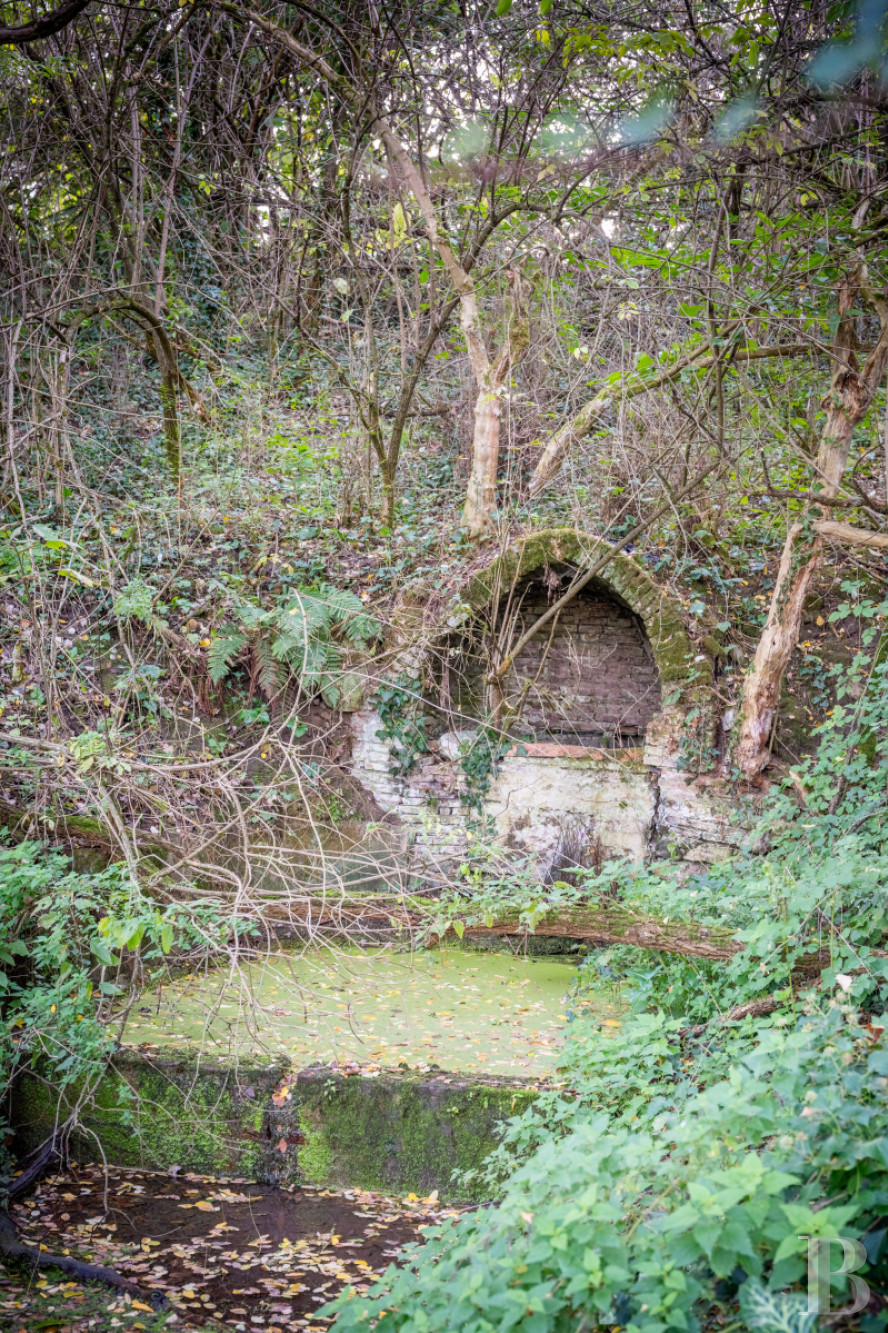
Below the estate keeper’s house, protected by a terracotta brick construction, a spring babbles and runs into a pond located in the meadow.
Finally, to the northwest of the residence, the property boasts a 5-metre by 10-metre swimming pool and, further away, a tennis court surrounded by tall wire fencing.
The agricultural land
One of them houses the agricultural storage building and its outbuilding. Below, on the other side of the communal lane, a second, approximately 11-hectare plot free of a farming lease could be withdrawn from the sale if necessary.
Our opinion
This is a characterful and several hundred years old estate, transformed yesteryear by a comprehensive and careful restoration, boasting authenticity and opportunities. It is vast and colourful, with many different features to be highlighted. Its special location, between the calm of the countryside and village life, its easy access and its deep roots in an area where heritage and the local way of life are important, make it a place conducive to the most ambitious plans. This estate offers those who are able to grasp its potential an ideal setting for bringing even the most unique projects to life, whether spending happy days here, creating a holiday home for family or friends, a farm run according to sustainable practices, an equestrian centre or characterful bed and breakfast accommodation.
Reference 325169
| Main building floor area | 720 m² |
| Outbuildings floor area | 990 m² |
| Land registry surface area | 15 ha |
| Including parkland | 40000 m² |
| Total floor area | 700 m² |
French Energy Performance Diagnosis
Information on the risks to which this property is exposed is available on the website: www.georisques.gouv.fr
Share


NB: The above information is not only the result of our visit to the property; it is also based on information provided by the current owner. It is by no means comprehensive or strictly accurate especially where surface areas and construction dates are concerned. We cannot, therefore, be held liable for any misrepresentation.