



A 17th-century chateau, outbuildings and chapel,
on 1.8-hectare grounds, in the Beaujolais hills
on 1.8-hectare grounds, in the Beaujolais hills
Amplepuis,
RHONE
rhones-alps
69550
FR

Location
Not far from one of the least populated rural villages in the region, one that is very much committed to protecting its heritage as well as managing environmental issues in an agricultural setting, the chateau is set back from the hamlet and overlooks a landscape with rolling hills, meadows and pastureland, recalling more the Monts du Lyonnais than the Beaujolais vineyards. In addition, Roanne, with its TER train station and amenities, is 27 kilometres away, while Villefranche-sur-Saône, Lyon and the Lyon-Saint-Exupéry international airport are 49, 70 and 94 kilometres away, respectively.
Description
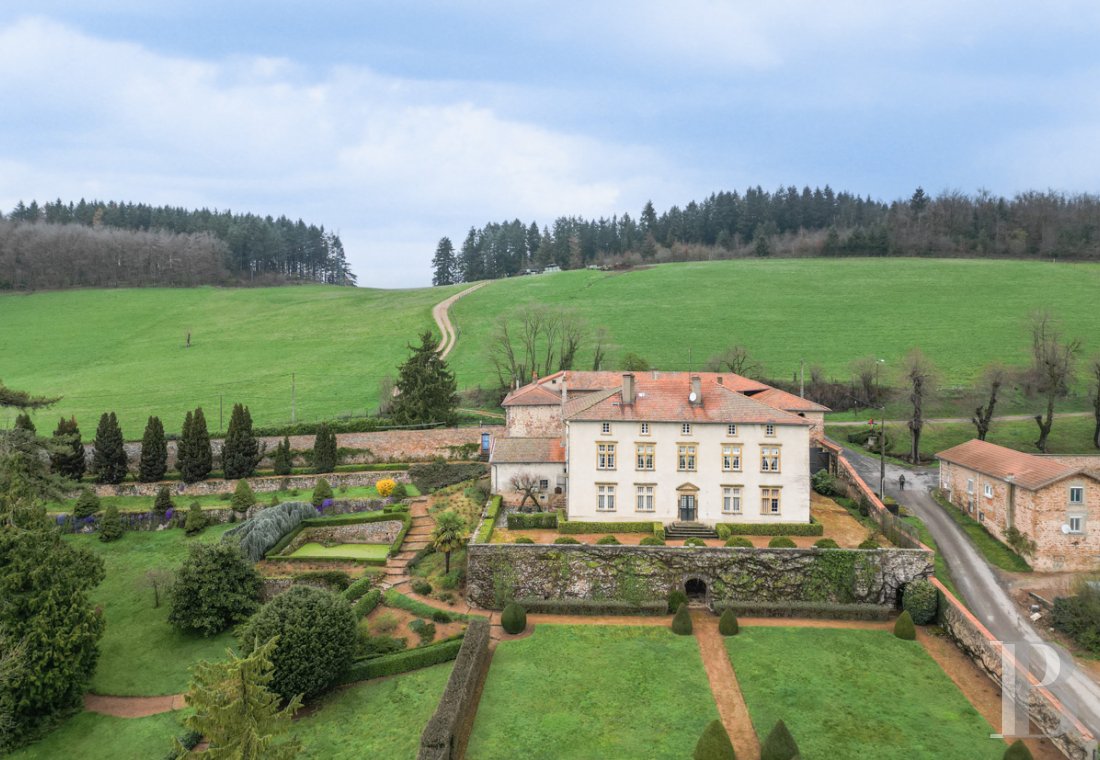
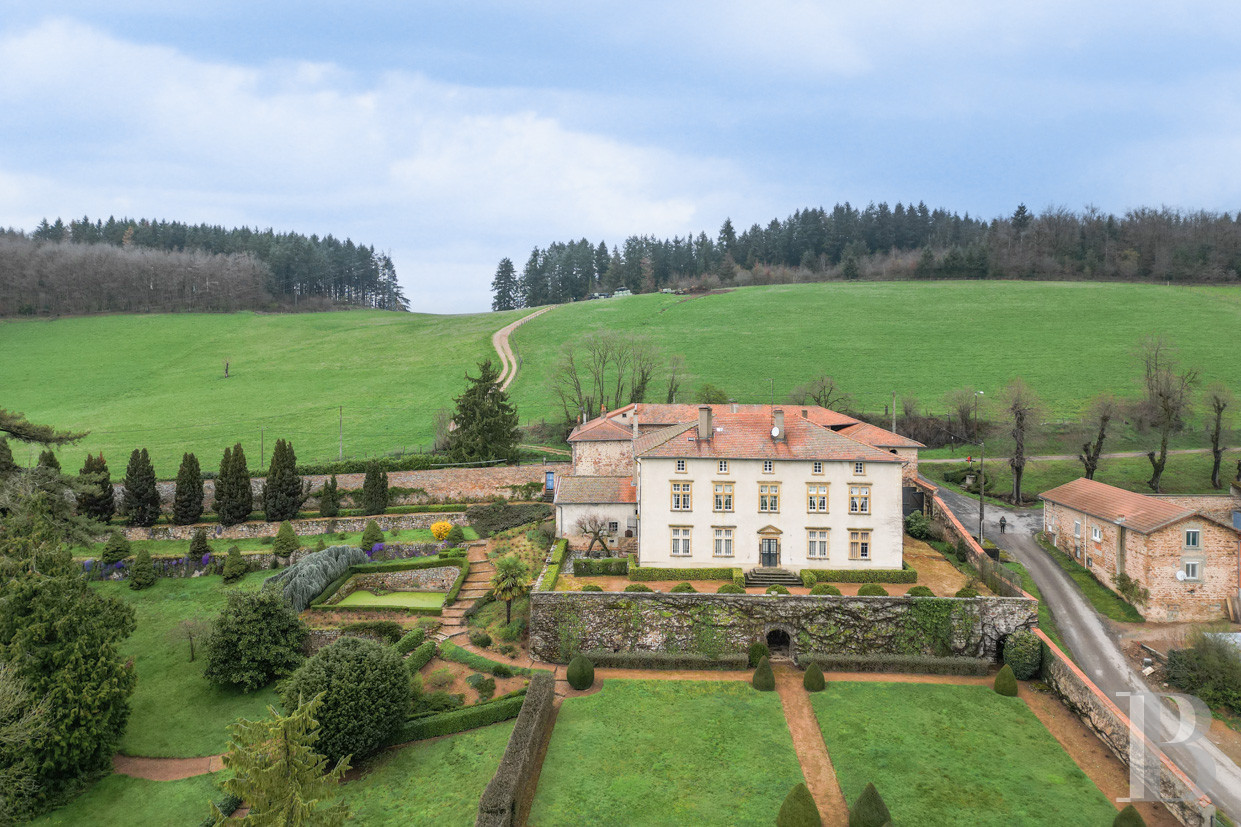
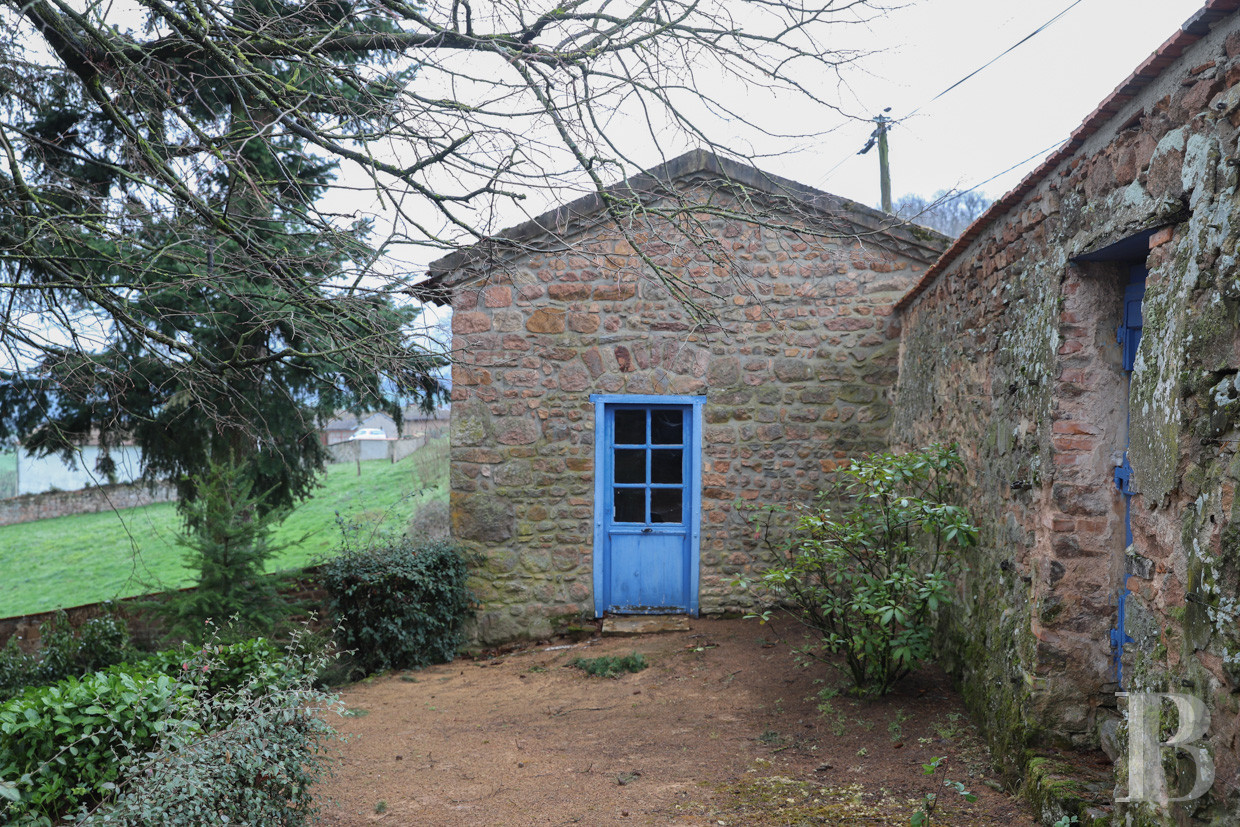
The property, entirely surrounded by tall blond stone walls, characteristic of the nearby Beaujolais region, is located at the end of a village road, halfway up a hill with woods along its ridgeline, while this immense rural estate features both a complex of agricultural buildings from the 19th century as well as greenhouses, once an integral part of the property.
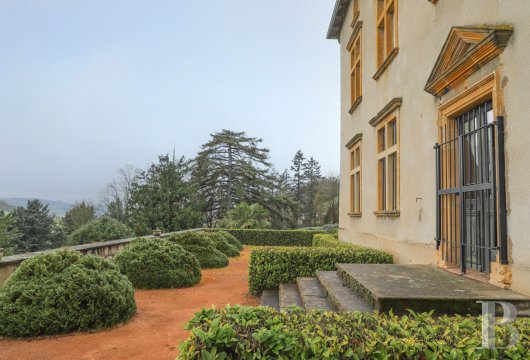
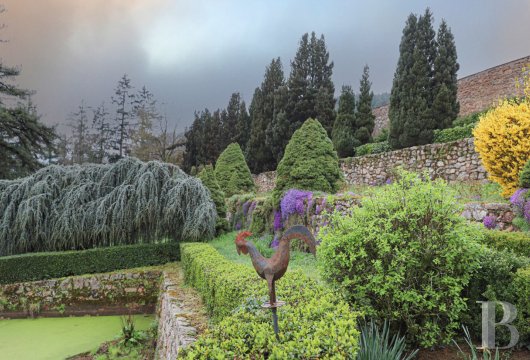
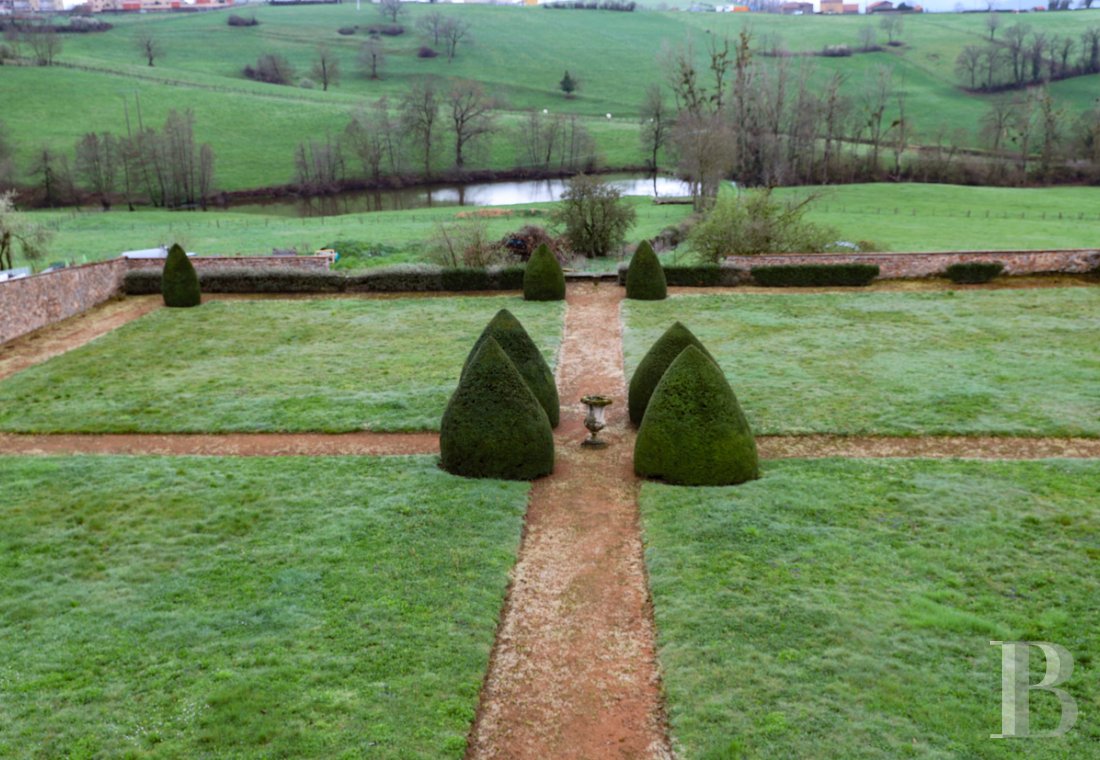
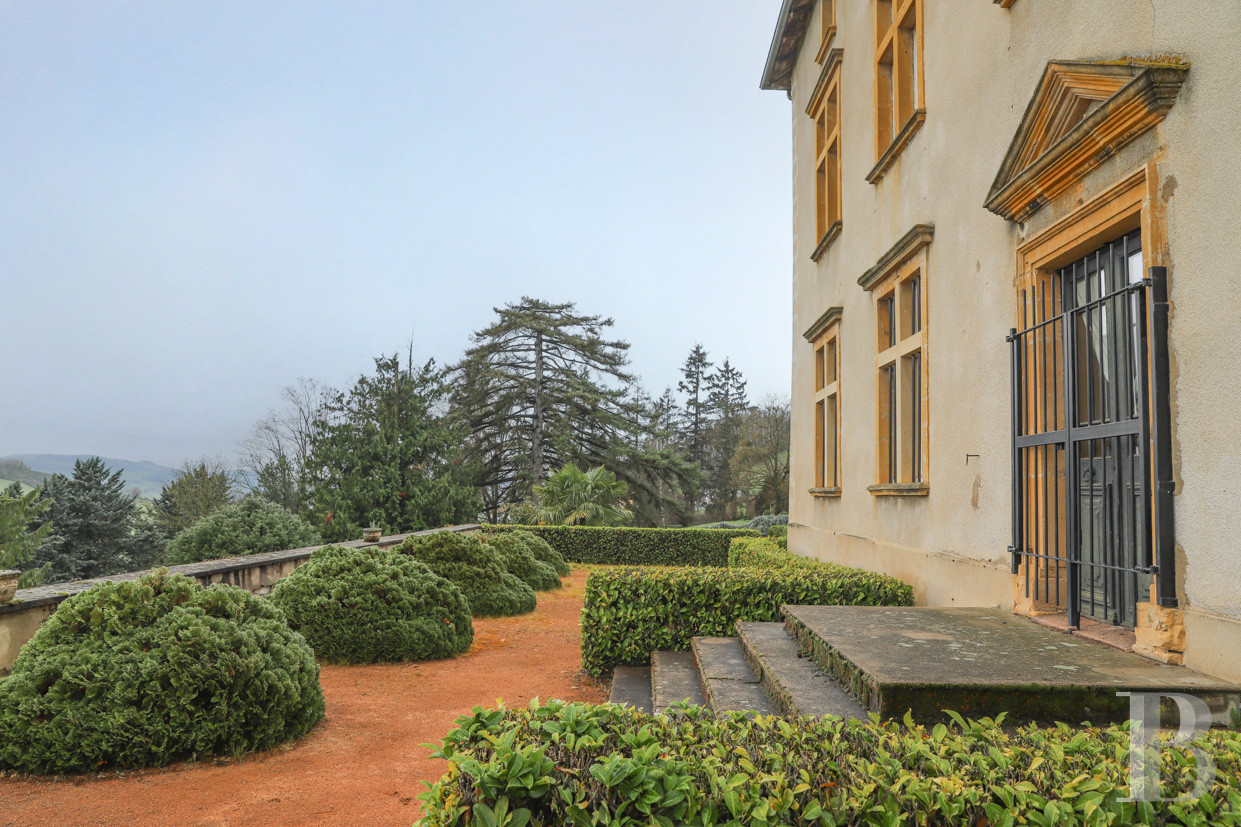
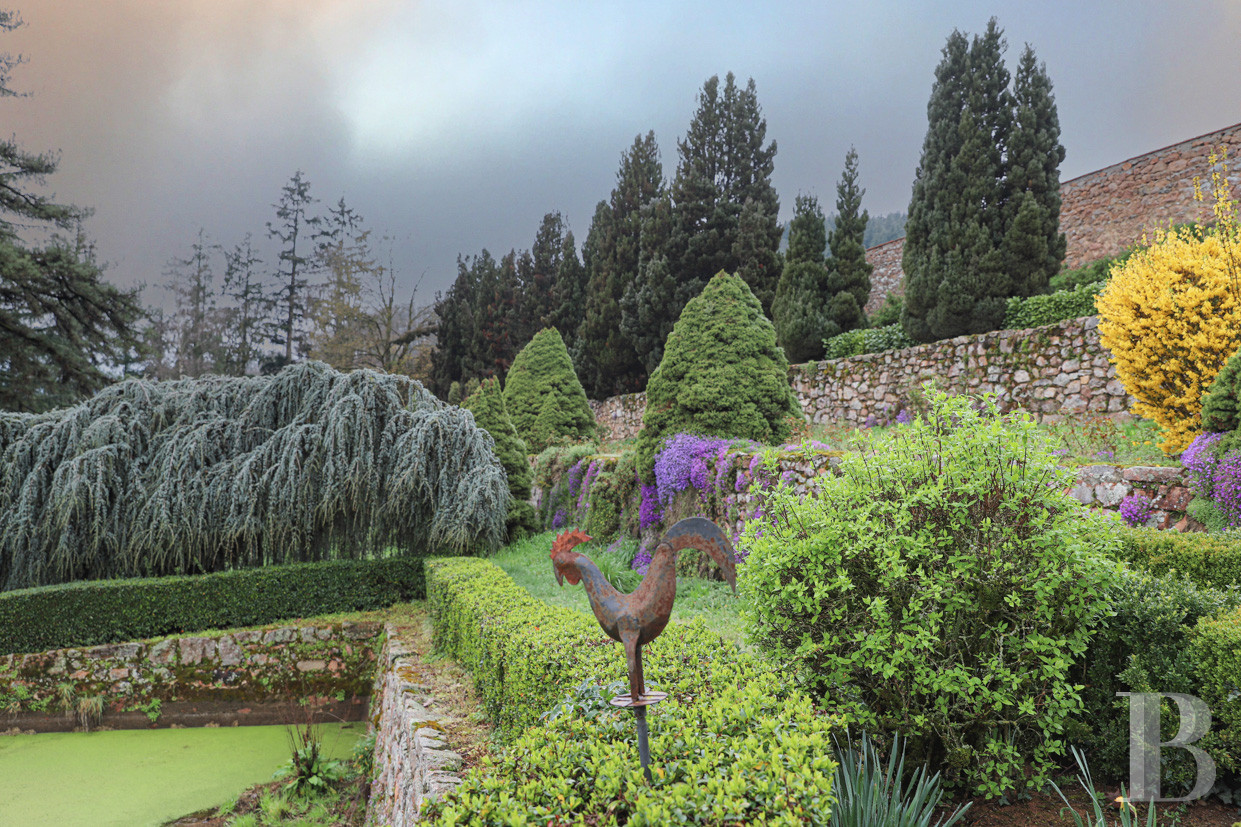
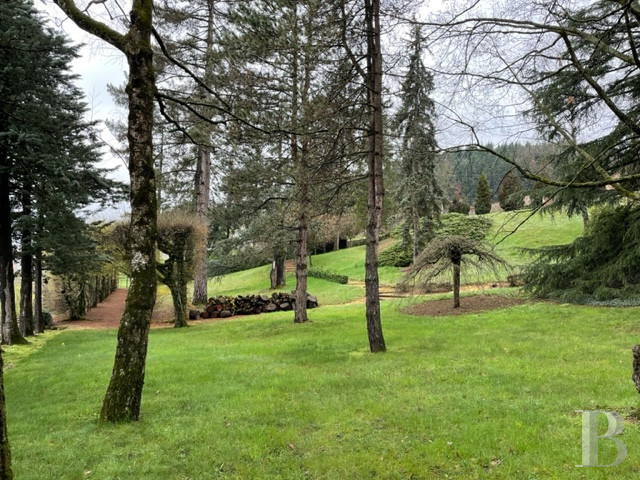
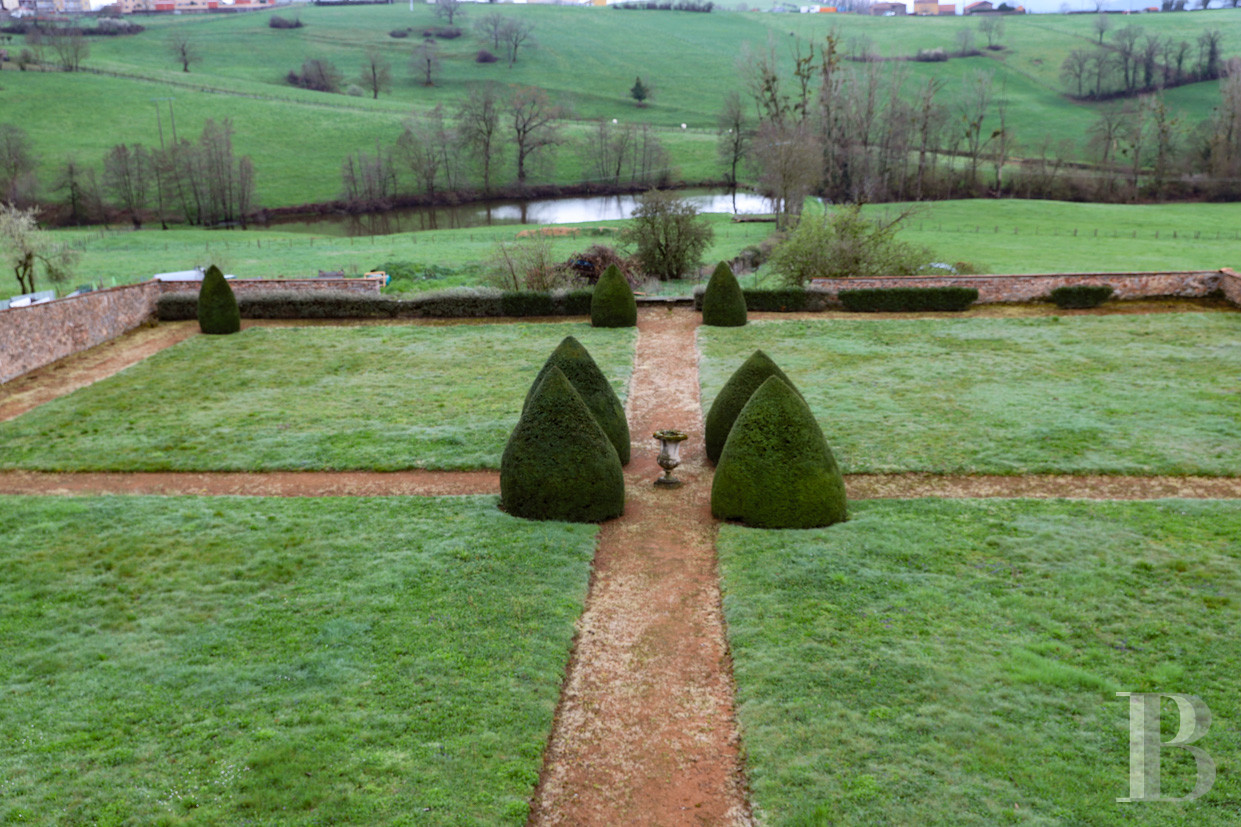
Sheltered from view thanks to its wall, the 1.8-hectare grounds are landscaped with two different ambiances, on one side, along the immediate outskirts of the dwelling, a parterre of lawn with a geometrical design resembling a Latin cross is highlighted with angular topiaries and leads to a side staircase towards the patio of the dwelling, known as “the chateau”. As for the other side, covering the rest of the grounds, it has been landscaped into an English-style garden, bordered on one side by a small canal and an uncultivated orchard below.
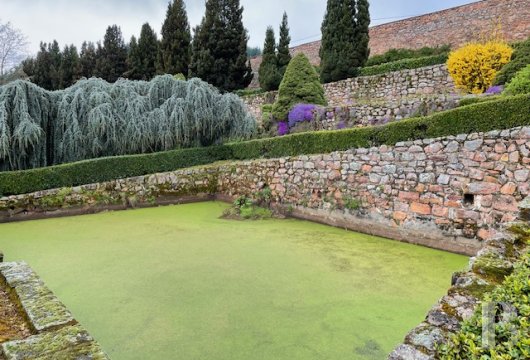
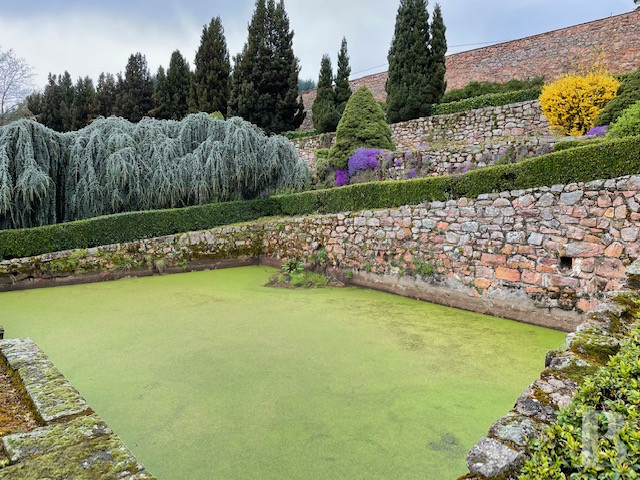
In addition, a remarkable, bicentenary Lebanese cedar towers above the English-style garden and stands out, thanks to its size, from the majority of the other resinous varietals and lime trees present on the property, whereas a wide basin, which could be turned into a swimming pool, comes into view around a bend in the side staircase, which not only leads to the chateau’s patio, but also abuts a dirt path that provides access to a votive church located towards the back of the grounds.
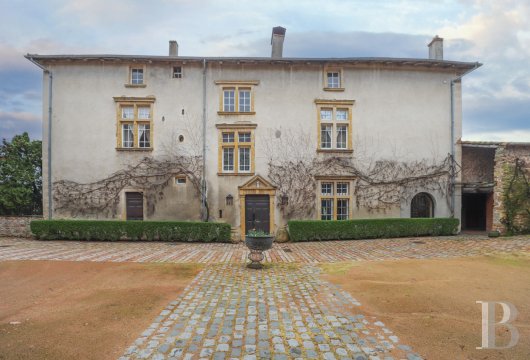
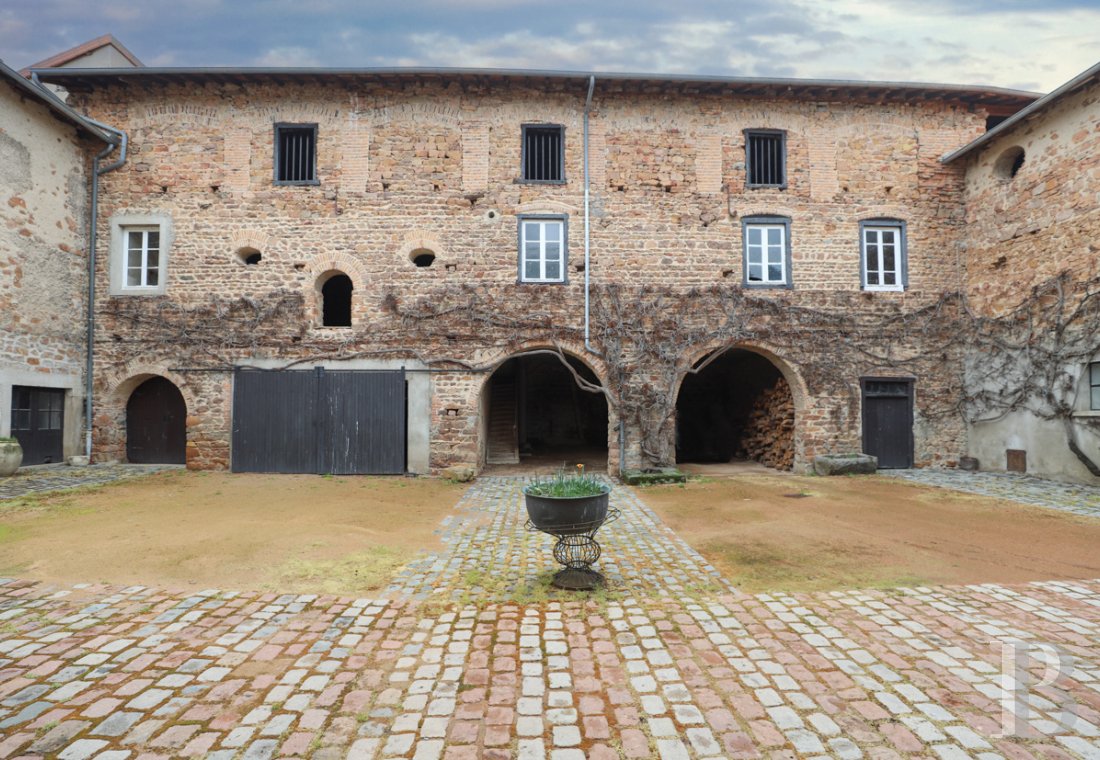
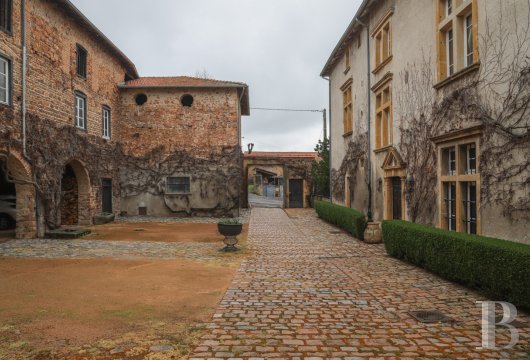
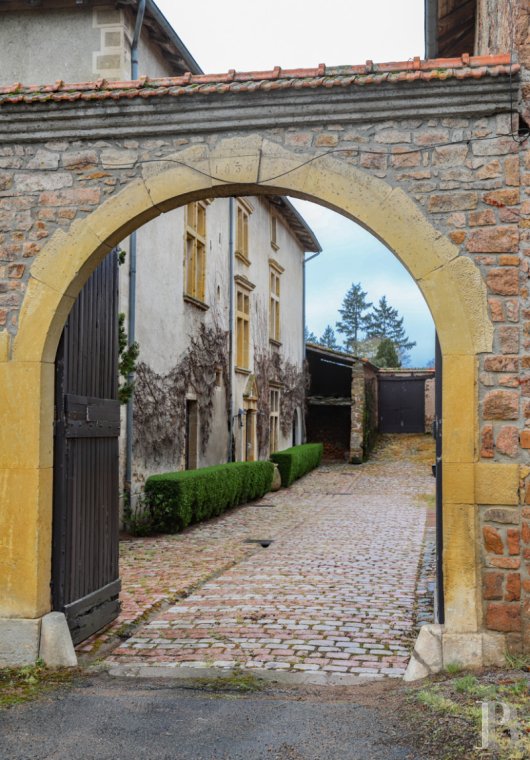
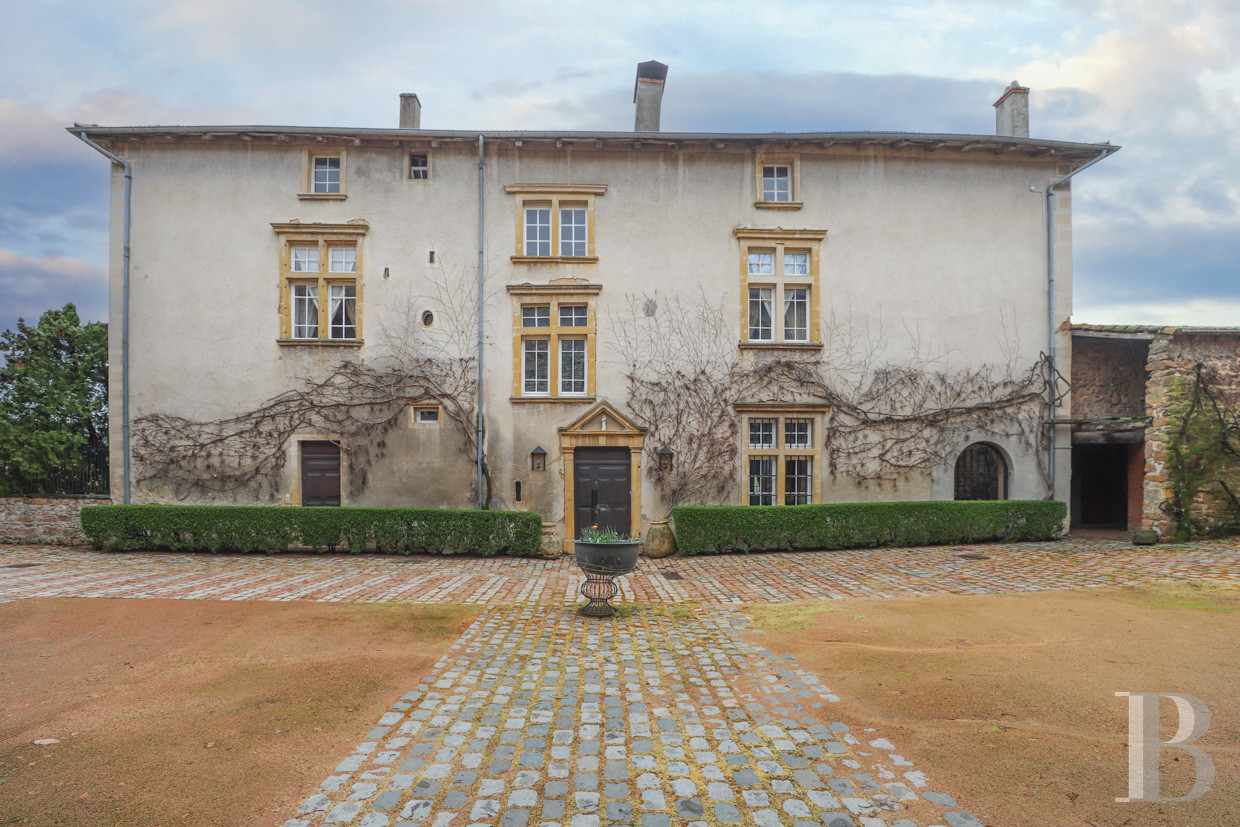
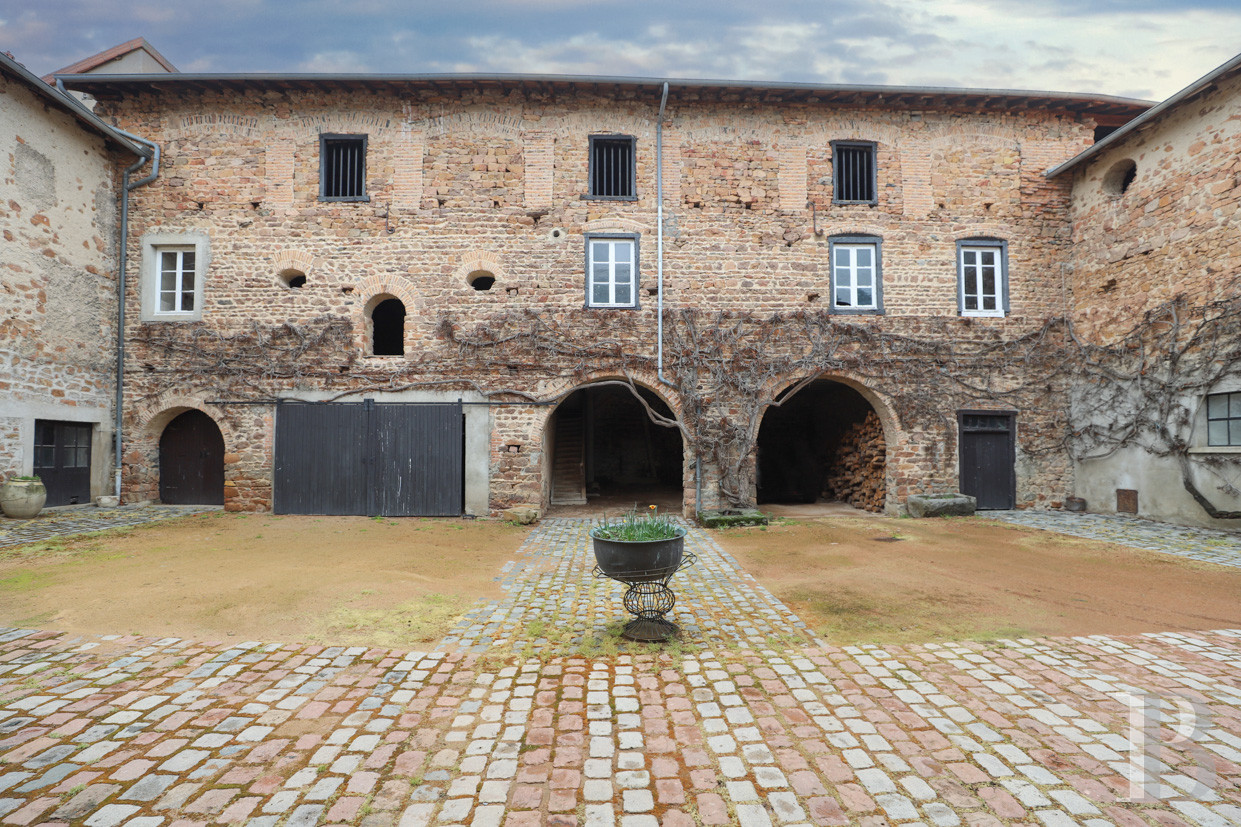
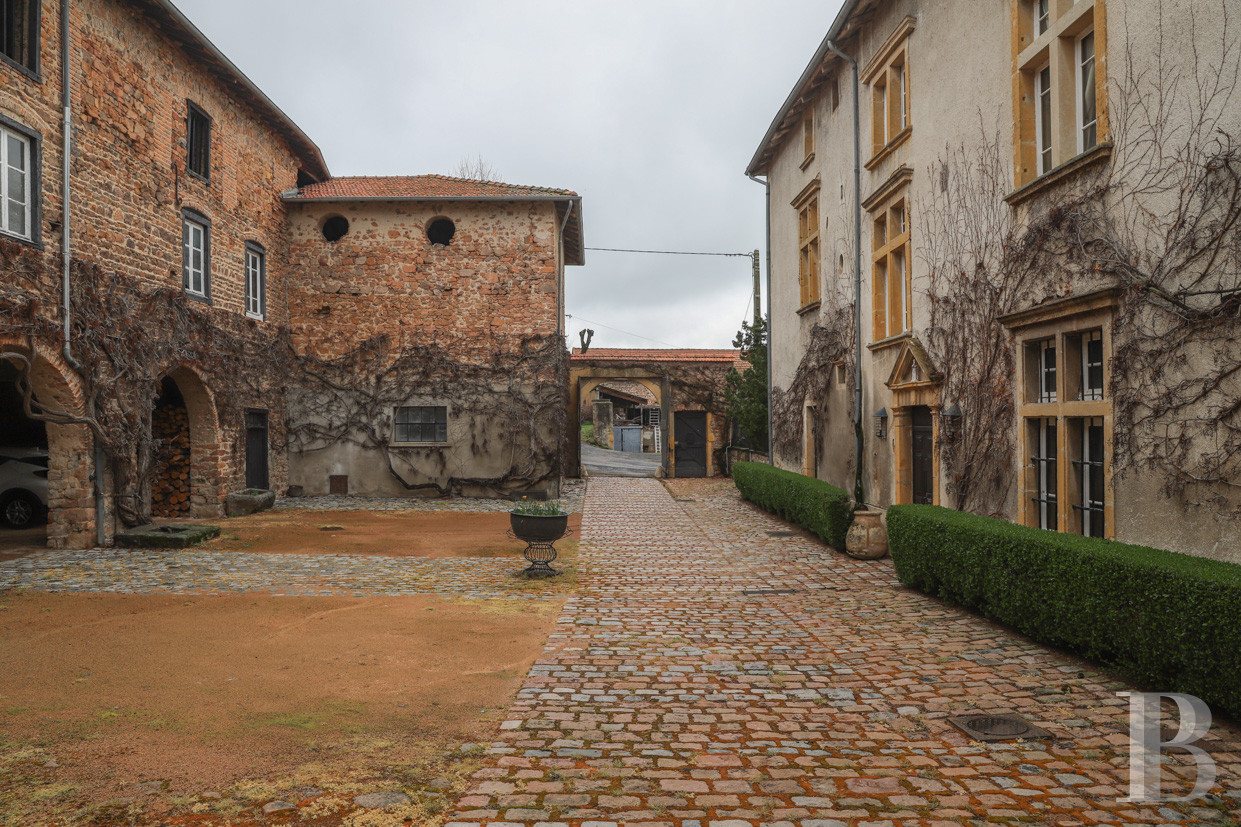
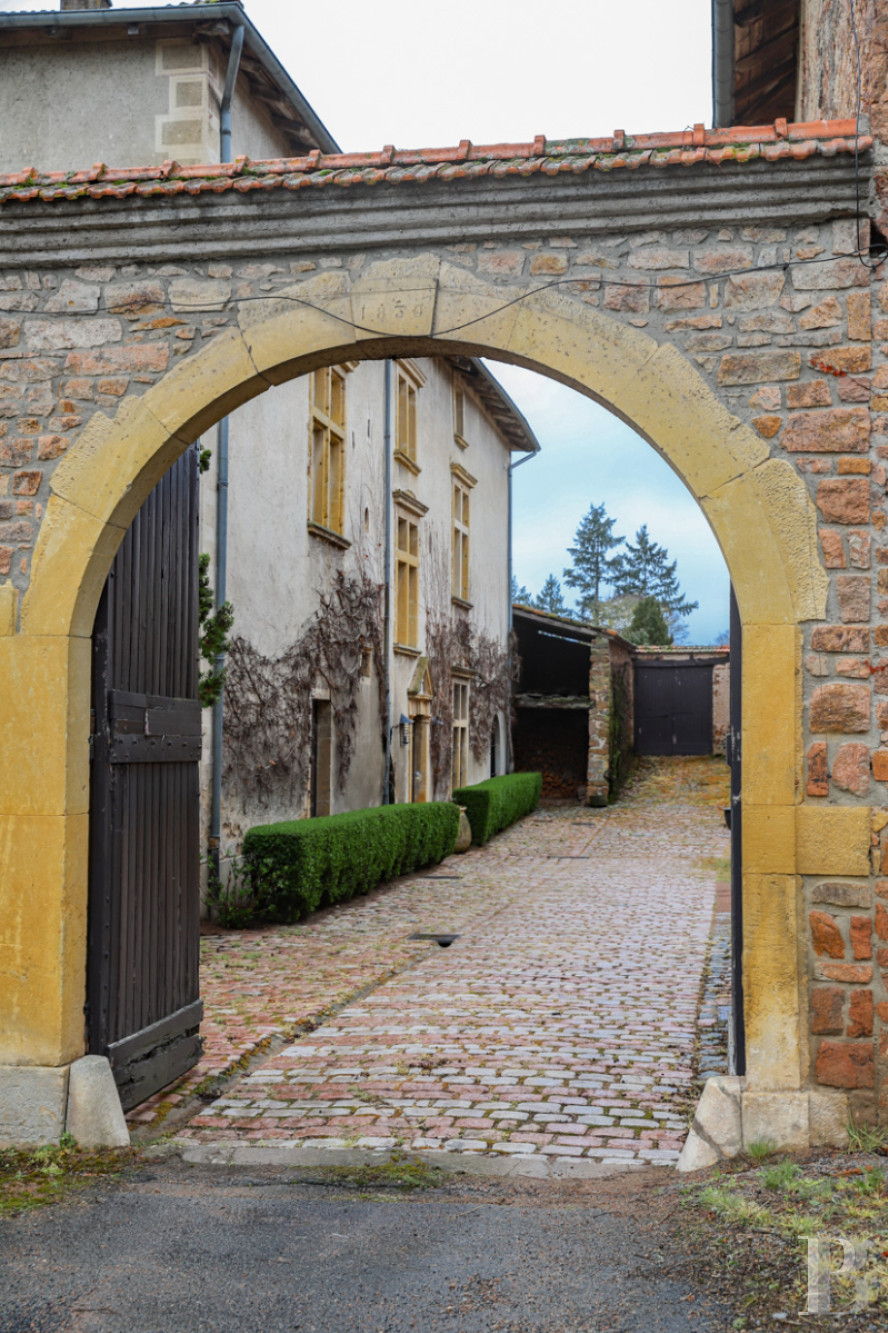
To the north, a large U-shaped outbuilding was constructed around the chateau and creates, along with the latter’s rear exterior, an enclosed carriage courtyard accessible via a service gate, while this immense outbuilding, which contains a caretaker’s cottage, a cowshed and barns, is in need of a complete renovation.
As for the family who lived on the premises from the early 18th century until 1943, interrupted by a tragic episode during the French Revolution, they have left behind many vestiges, testimonials and archives, whereas the property, having been used exclusively for agricultural purposes, has been able, over the centuries, to preserve the authenticity of its integral materials as well as the handiwork of several artisanal skills, some of which have completely disappeared today.
Sheltered from view thanks to its wall, the 1.8-hectare grounds are landscaped with two different ambiances, on one side, along the immediate outskirts of the dwelling, a parterre of lawn with a geometrical design resembling a Latin cross is highlighted with angular topiaries and leads to a side staircase towards the patio of the dwelling, known as “the chateau”. As for the other side, covering the rest of the grounds, it has been landscaped into an English-style garden, bordered on one side by a small canal and an uncultivated orchard below.
In addition, a remarkable, bicentenary Lebanese cedar towers above the English-style garden and stands out, thanks to its size, from the majority of the other resinous varietals and lime trees present on the property, whereas a wide basin, which could be turned into a swimming pool, comes into view around a bend in the side staircase, which not only leads to the chateau’s patio, but also abuts a dirt path that provides access to a votive church located towards the back of the grounds.
To the north, a large U-shaped outbuilding was constructed around the chateau and creates, along with the latter’s rear exterior, an enclosed carriage courtyard accessible via a service gate, while this immense outbuilding, which contains a caretaker’s cottage, a cowshed and barns, is in need of a complete renovation.
As for the family who lived on the premises from the early 18th century until 1943, interrupted by a tragic episode during the French Revolution, they have left behind many vestiges, testimonials and archives, whereas the property, having been used exclusively for agricultural purposes, has been able, over the centuries, to preserve the authenticity of its integral materials as well as the handiwork of several artisanal skills, some of which have completely disappeared today.
The Chateau
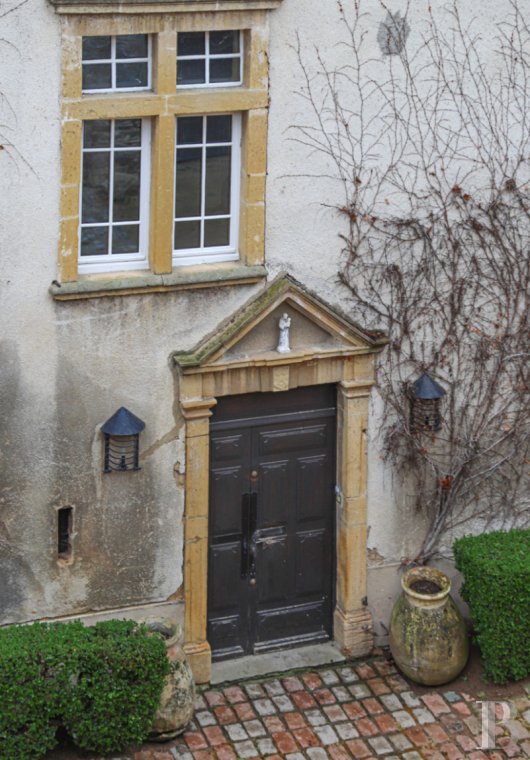
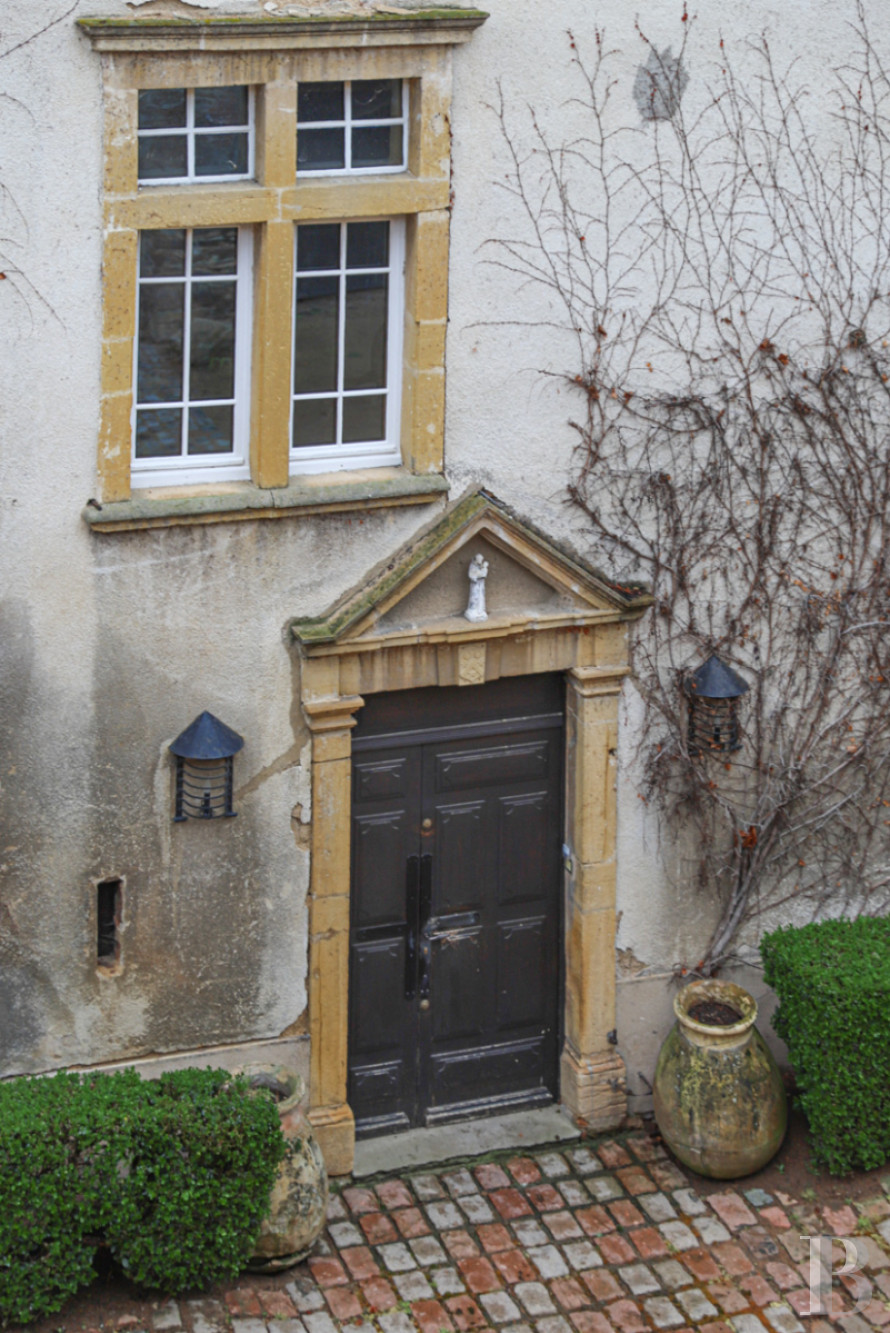
Built in 1621 with three storeys, including one under the eaves, the chateau’s main façade is cadenced by windows placed on either side of its main entrance. Having preserved the architectural characteristics of Renaissance-era edifices, including cross-windows and their decorative elements, its exteriors are covered in smooth plaster, an exterior indication of the rural dwelling’s splendour and thereby differentiating it from its outbuildings to the north.However, its smooth plaster does not conceal its polished ashlar Couzon stone window/door surrounds, the triangular Doric pediment over the main entrance nor any of its jambs or lintels, while its barrel tile roof features four unequal slopes held together by ridged joints.
The garden-level floor
The southern façade’s front door is accessible at the end of a brick drive, which terminates in front of the chateau’s patio, the latter of which overlooks its topiary garden.
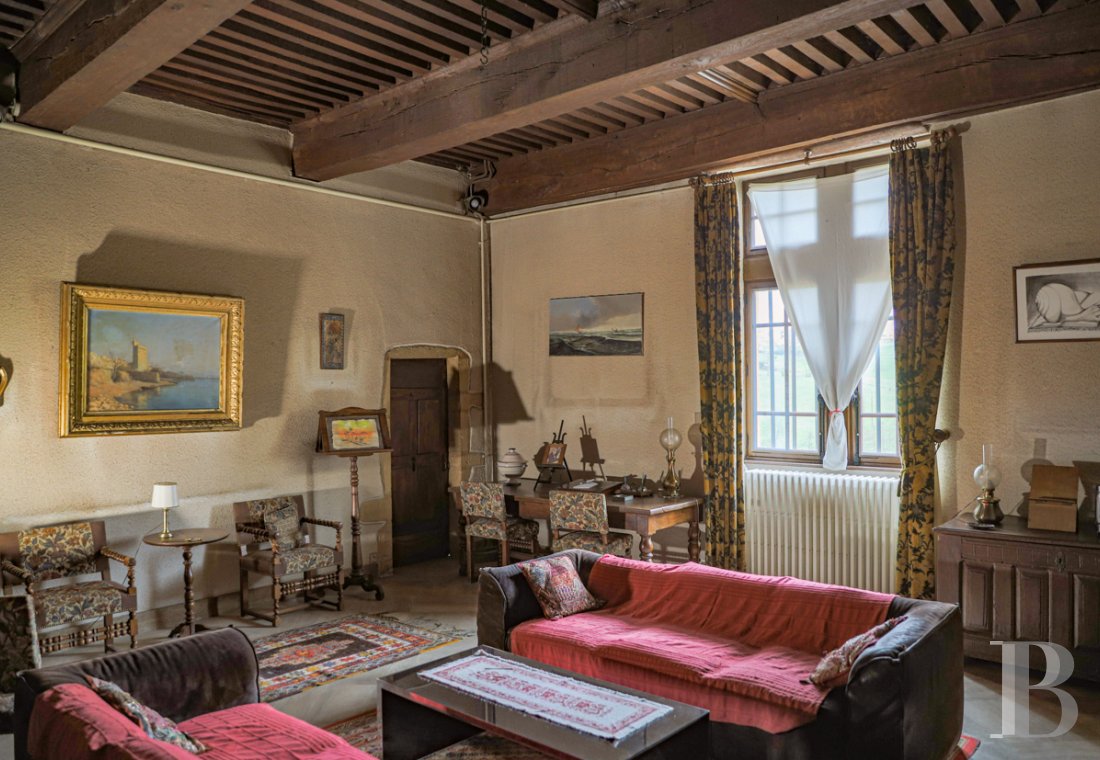
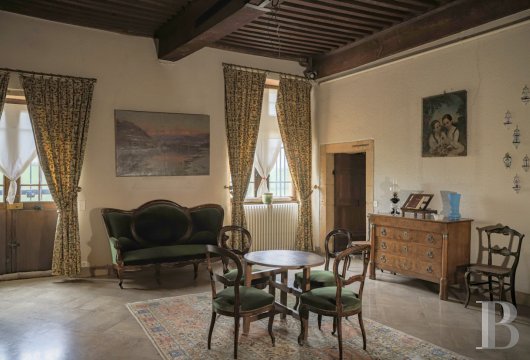
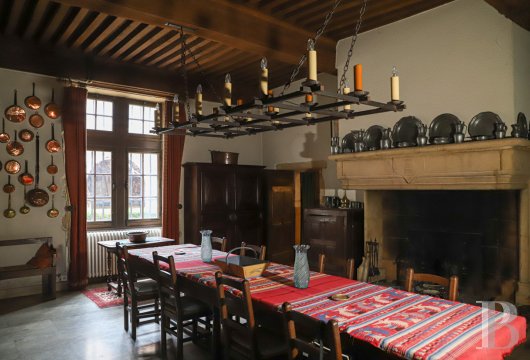
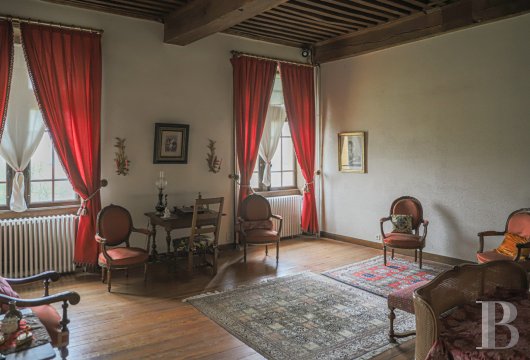
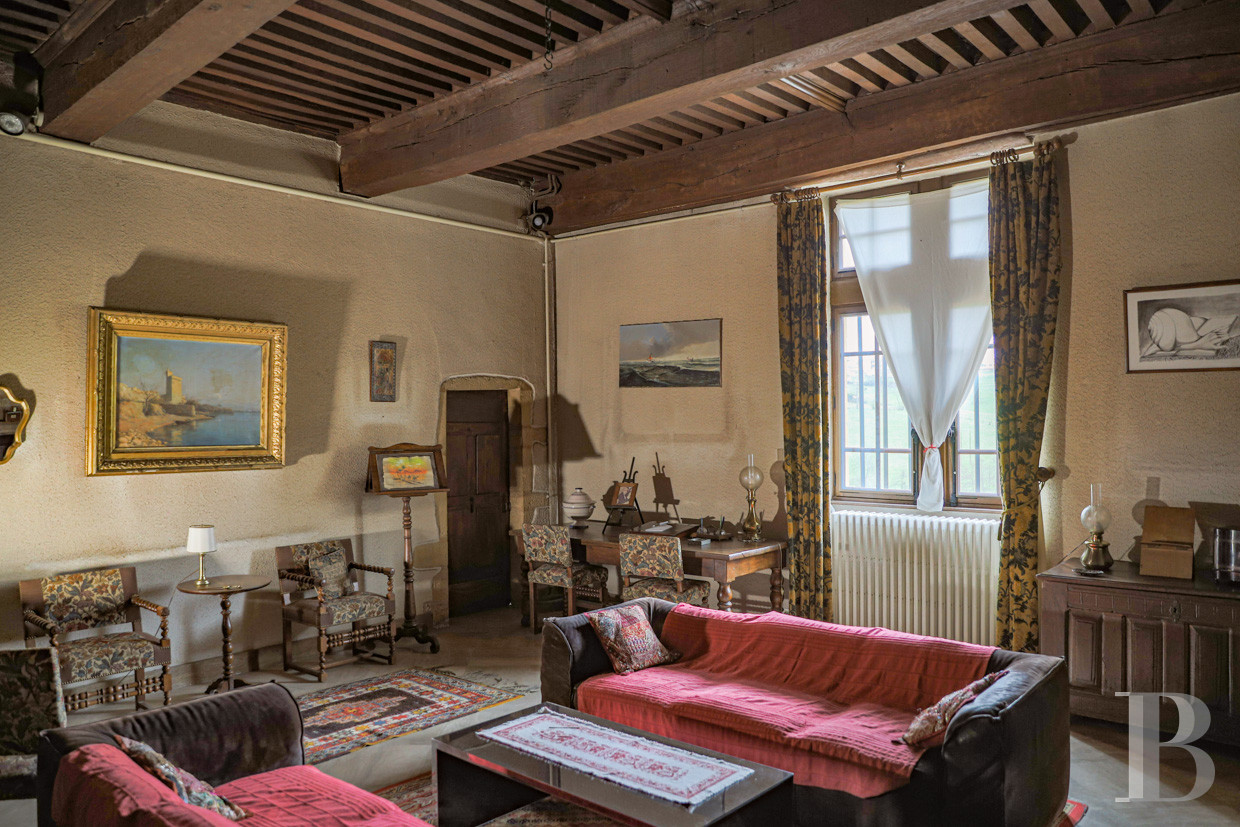
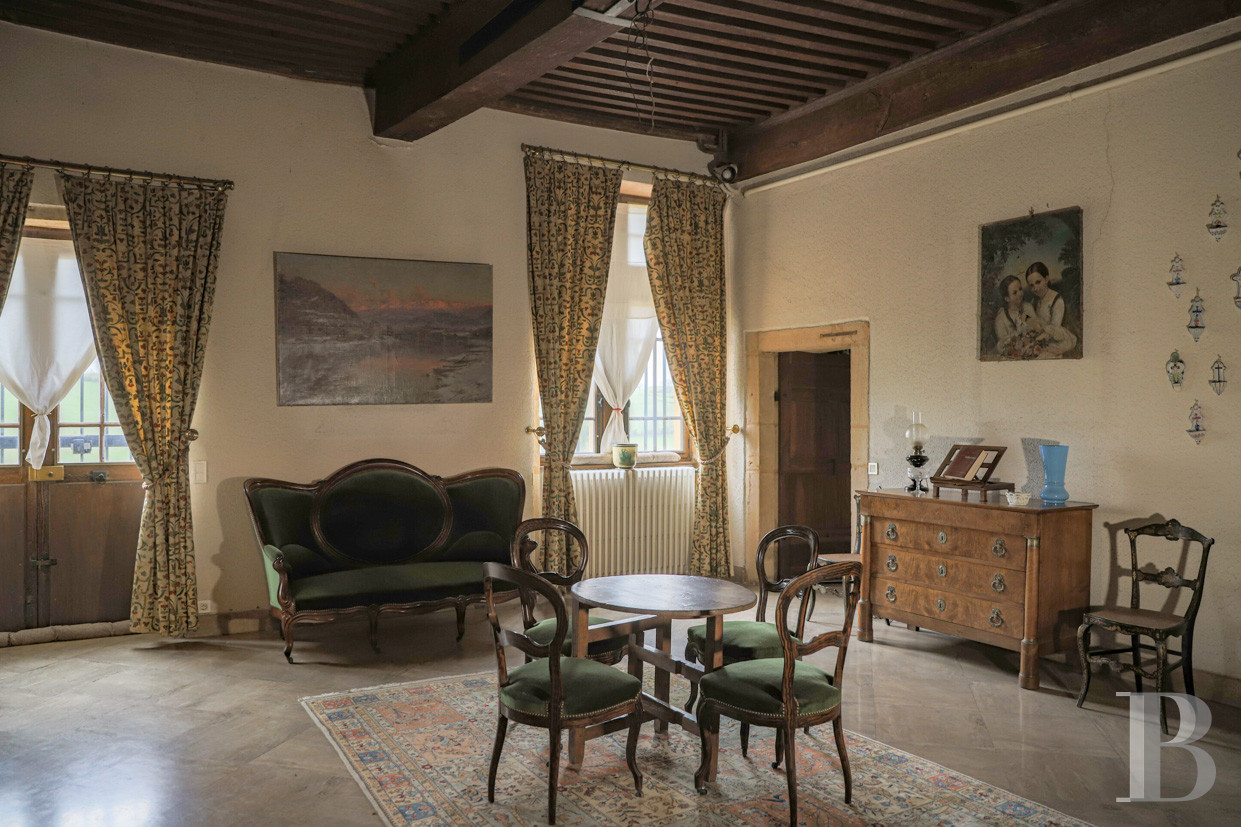
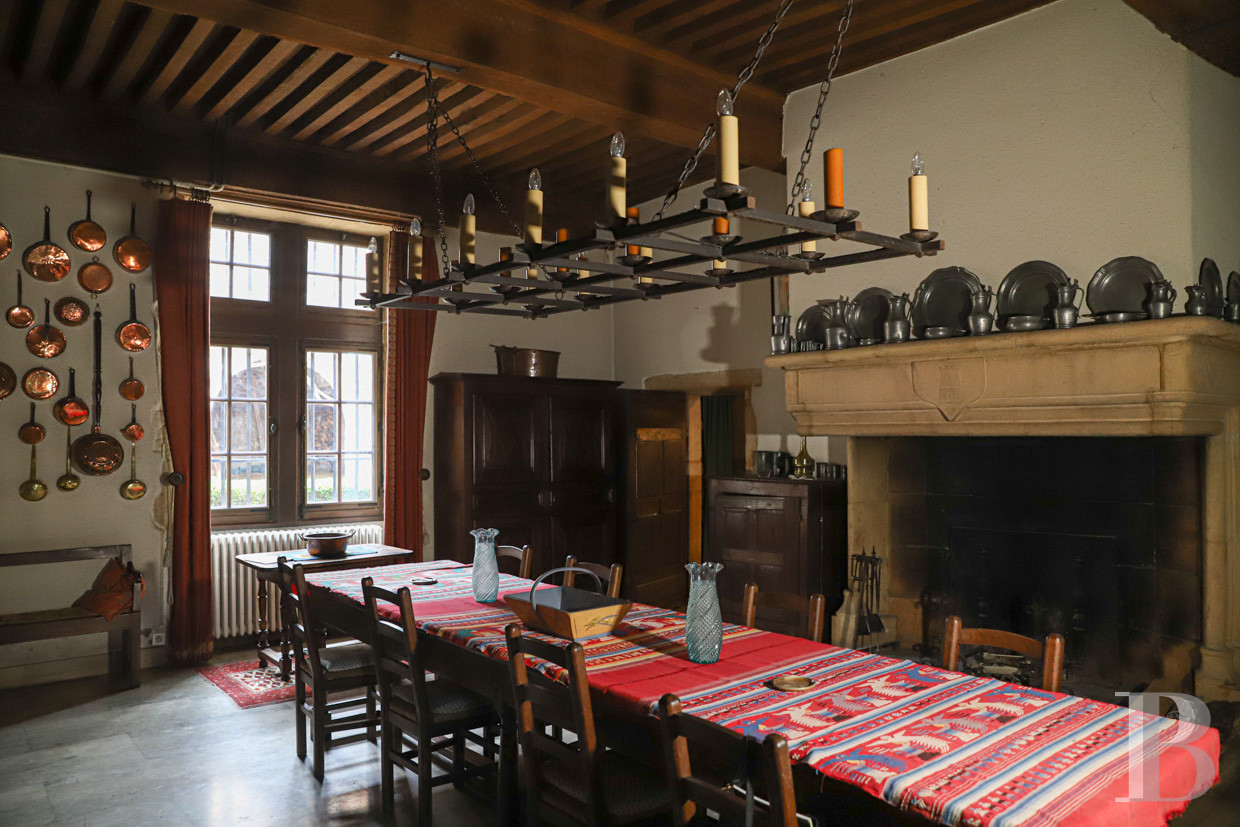
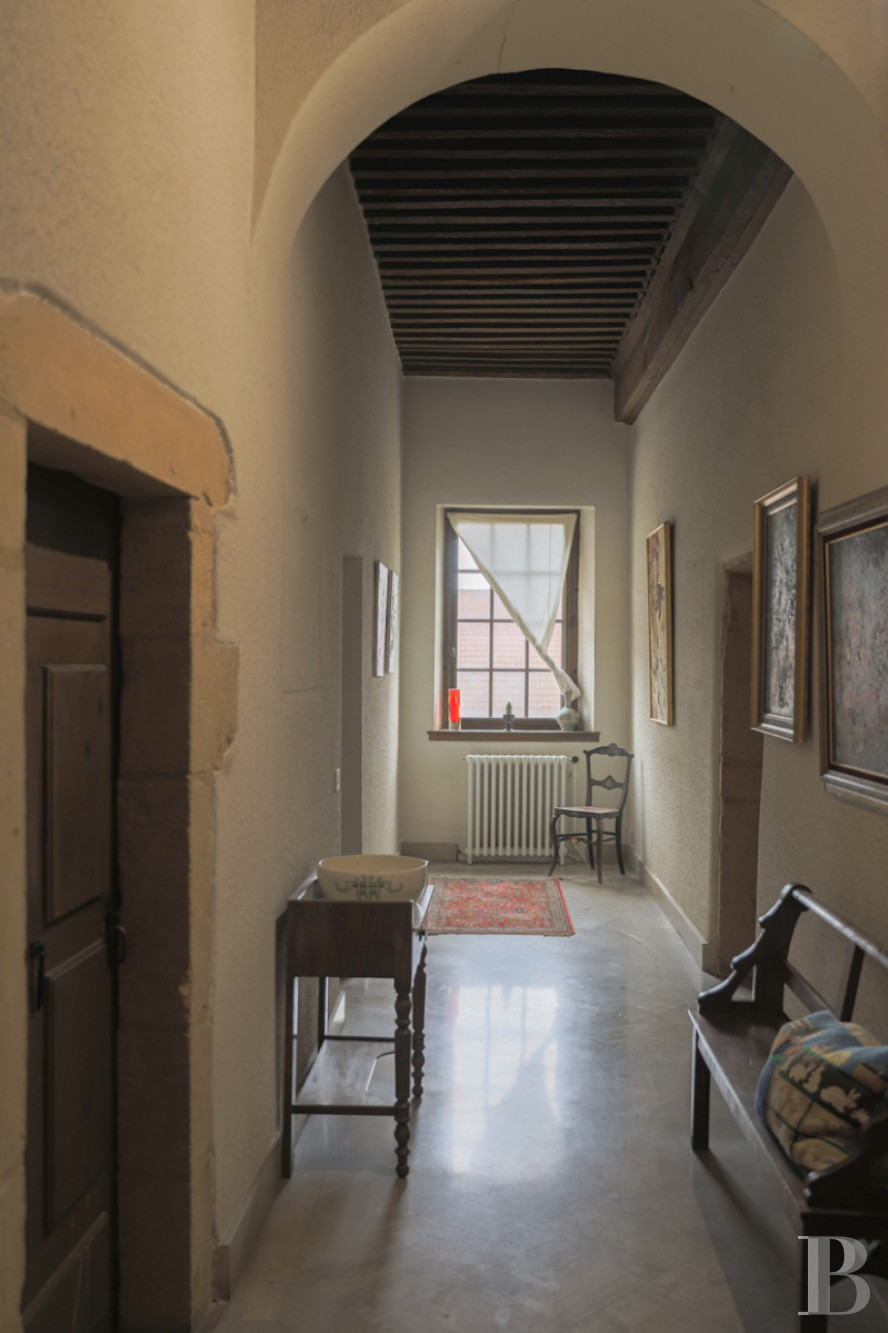
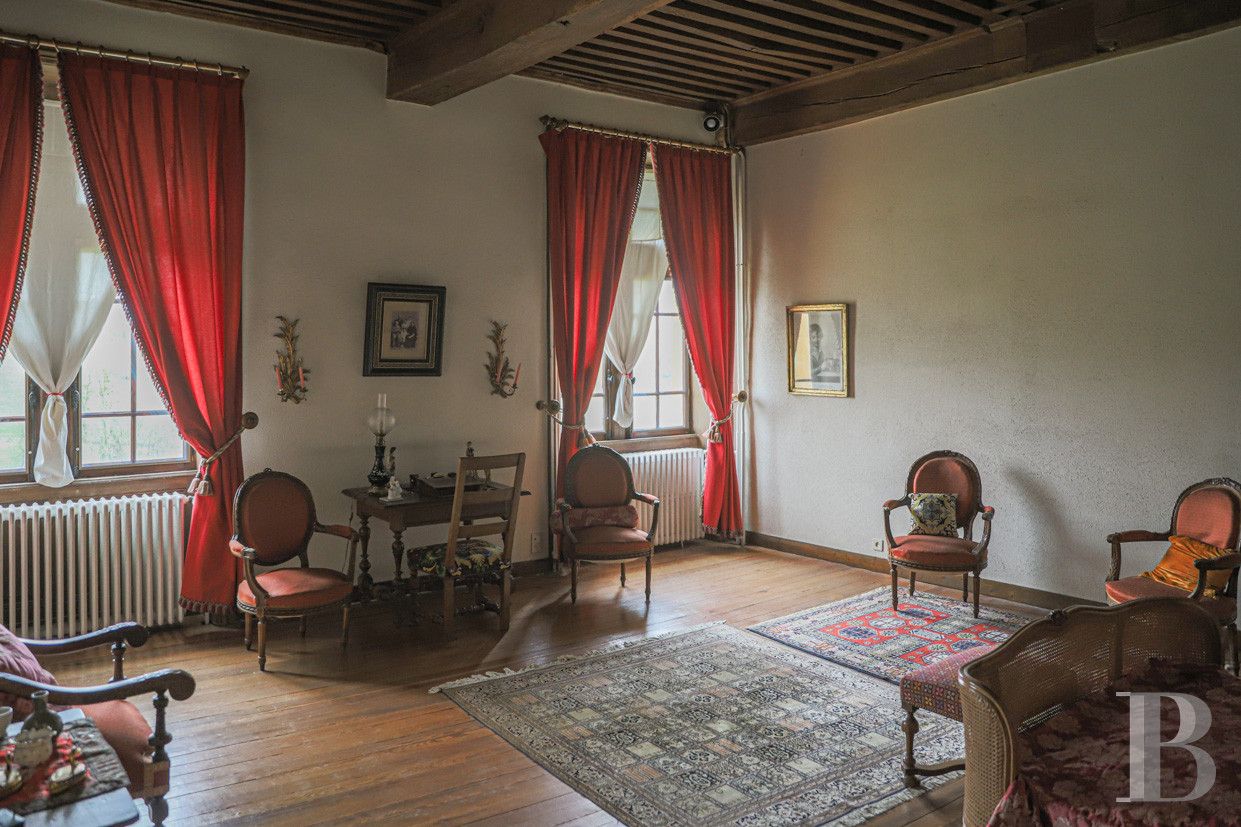
As for the foyer, it provides access to two impressive living areas with visible oak ceiling beams, several centuries old, as well as joists that have been whitewashed or sanded, while the same type of ceiling can be found in all of the main rooms, including the billiard and music room, as well as in two dining rooms, including one with a sculpted blond stone fireplace from the 18th century.
Heated with an oil-fired boiler from 1993 and featuring recently designed and installed polished travertine tile floors throughout this level, this floor also includes a linen room, lavatory and a fitted kitchen towards the rear of the dwelling.
The first floor
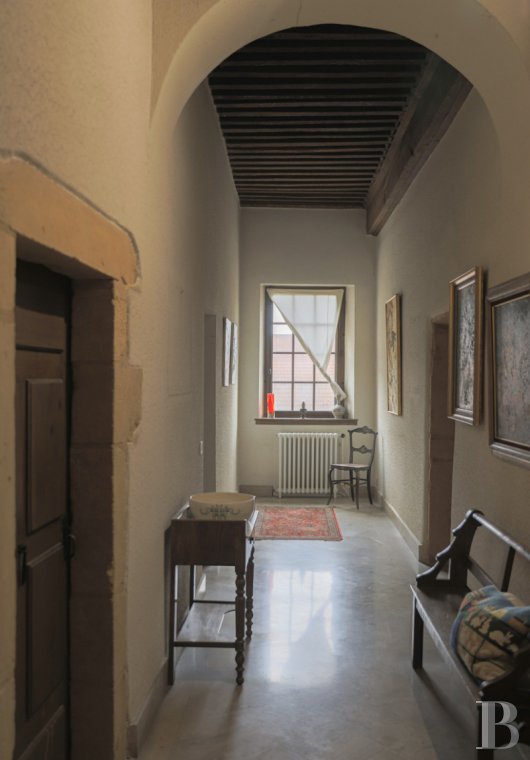
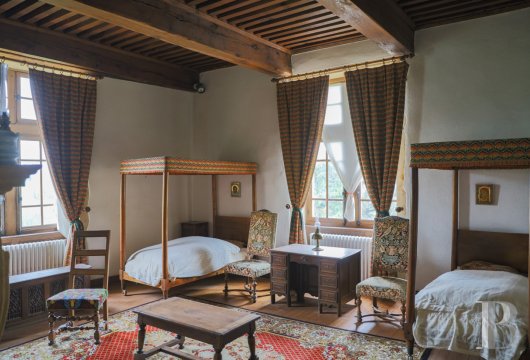
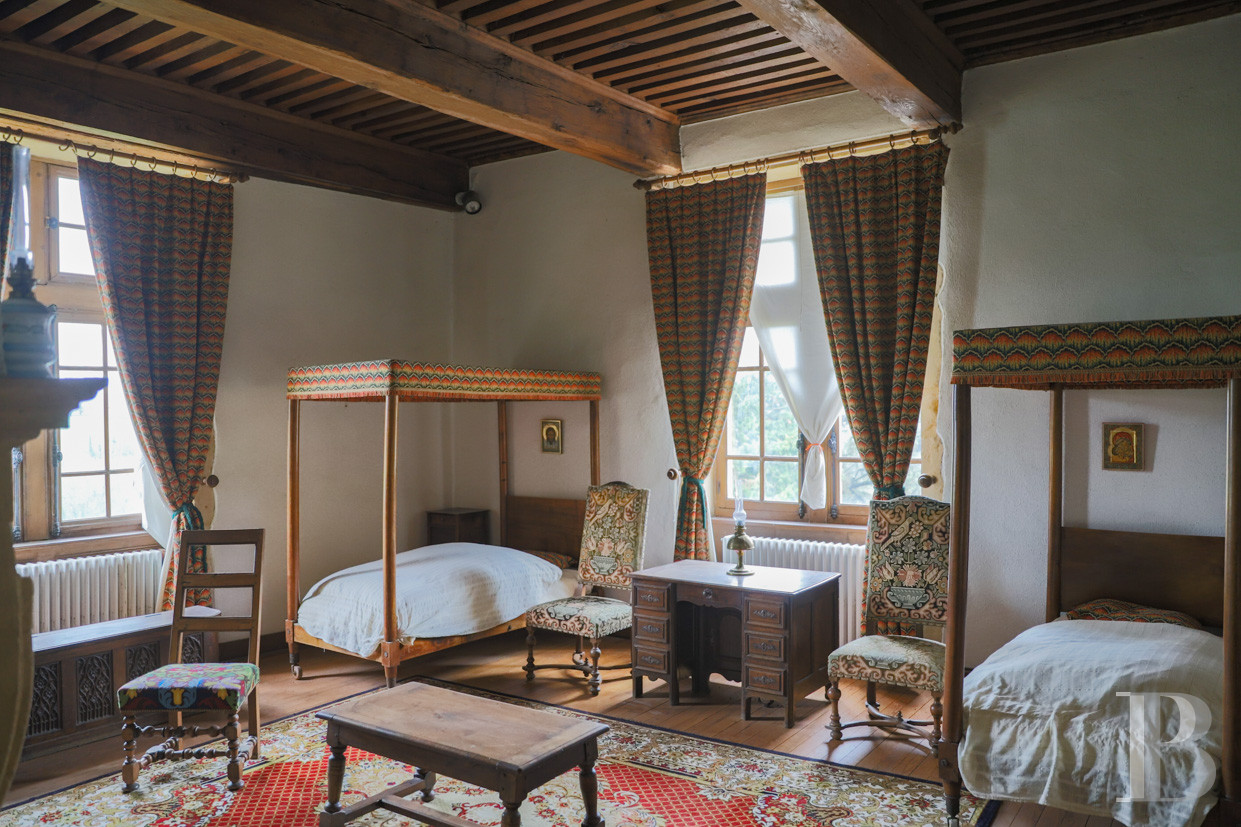
At the top of the stone staircase, bathed in abundant natural light thanks to a number of windows, the landing provides access to six bedrooms, including one with a fireplace topped with a Baroque-style trumeau panel, while the bedrooms all share a bathroom – featuring a bathtub, shower, lavatory, sauna and cloakroom – as well as a shower room with lavatory. With waxed blond solid oak parquet floors, all the rooms are topped with visible ceiling beams, whose joists are painted in a variety of colours to match the name of each bedroom, such as green, yellow and blue.
The attic
Accessible via a small wooden door, whose ironwork has been carefully conserved, this space boasts immense areas that are completely convertible and topped with wooden rafters, which exemplify, almost three centuries later, the skilful work of those who assembled them.
The Outbuildings
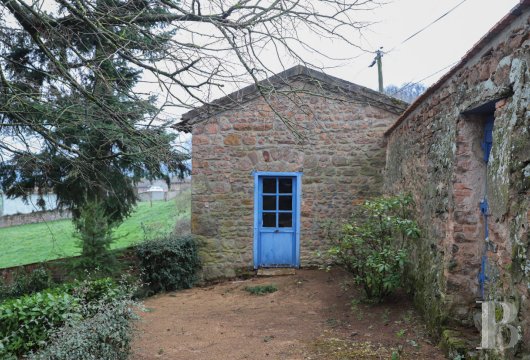
With two levels built over a barn with open arcades, and framed on either side by two small windowless wings, they include a cowshed, illuminated only with an oculus, and create, along with the chateau, an enclosed cobblestone courtyard to the north, while their interior volumes could be rehabilitated in a number of different ways in order to preserve their original features.As for their authentic materials, like 17th-century terracotta cobblestones or wooden rafter beams with their irregular hewed markings, a testimony to the skill of artisanal tile layers and carpenters of yesteryear, they should be conserved at all cost, whereas a basic caretaker’s cottage was created in one wing and a barn/cowshed, left in its original state, still features its ancient stabling equipment.
The Chapel
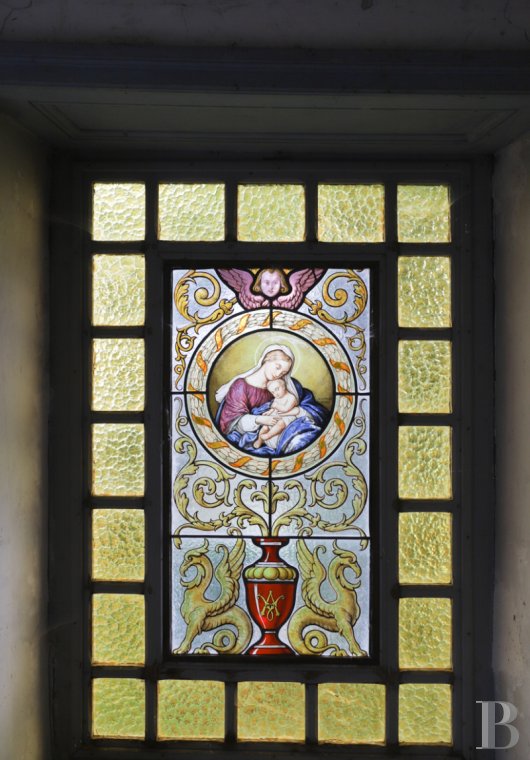
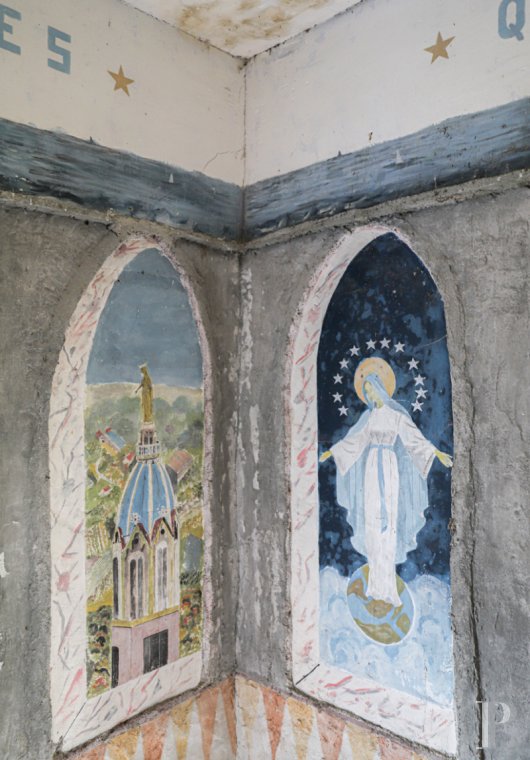
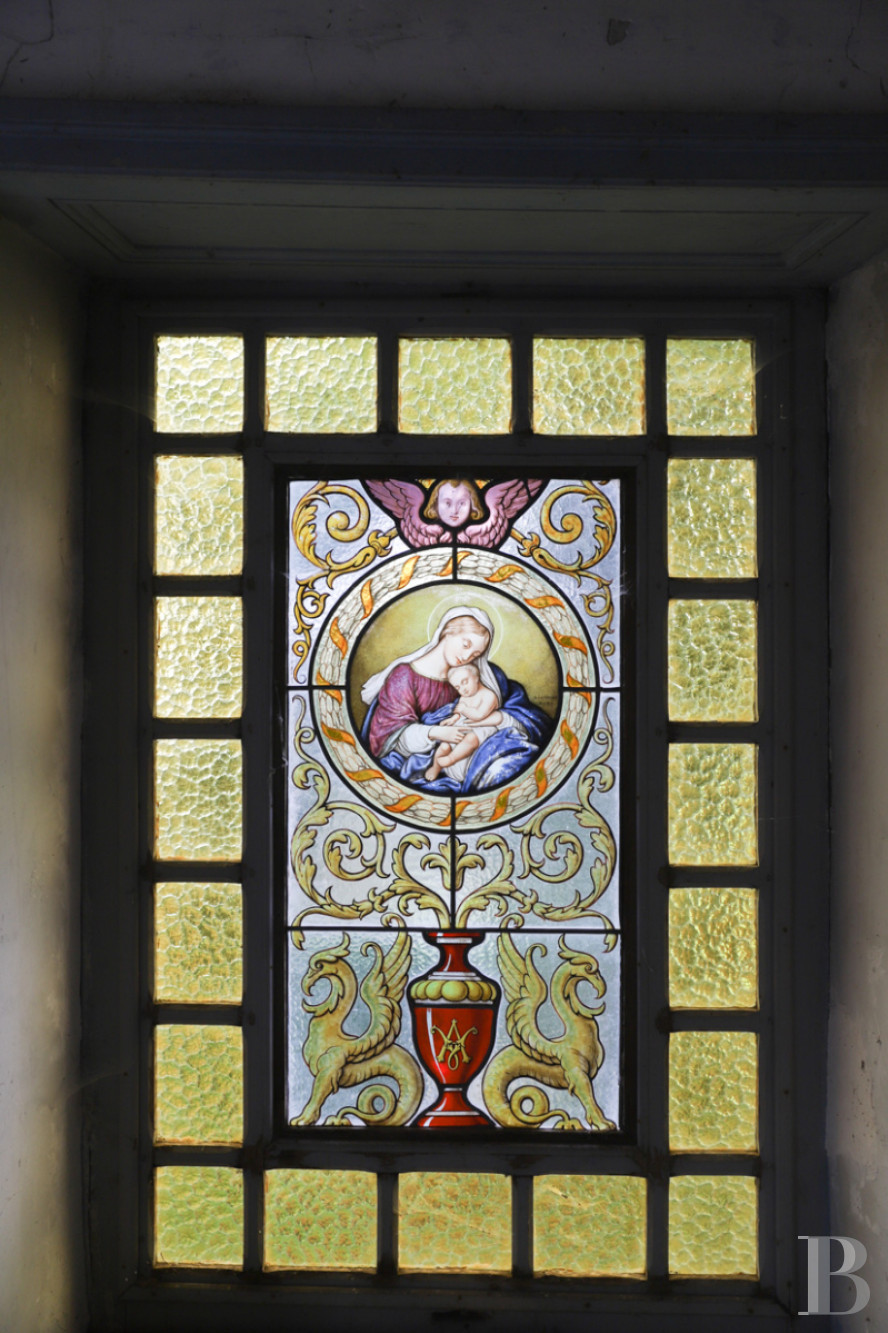
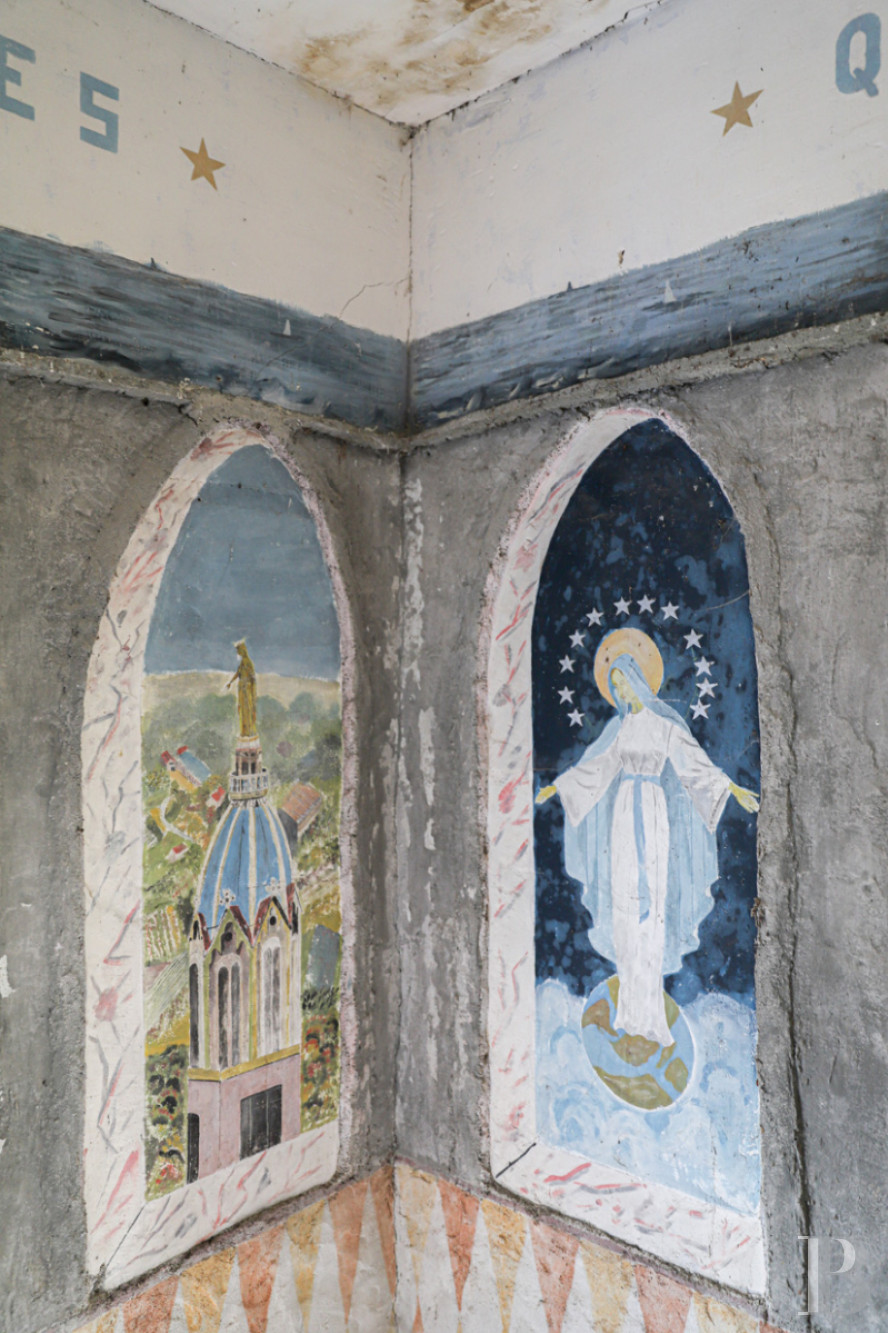
Located towards the back of the grounds and not far from the chateau, along a dirt path that runs parallel to a canal bordered by conifers, it was built in the 1940s by the Paris Foreign Missions Society (today known as the MEP), which was bequeathed the property at this time due to the lack of descendants of the last family member who was still living here.With its simple frescoes depicting several excerpts from the “Ave Maris Stella” hymn, whose verses are painted in four ornamental friezes, the theme of the Marian apparition has been selected as the chapel’s main focus of interest, with its repertory of a dozen miraculous Marian apparitions recognised by the Vatican.
Naturally included within this series is the one from Notre-Dame de Fourvière, which saved Lyon from the plague in 1643, as well as the ones that occurred in Lourdes, Guadalupe, Fatima and Bauraing.
The Grounds
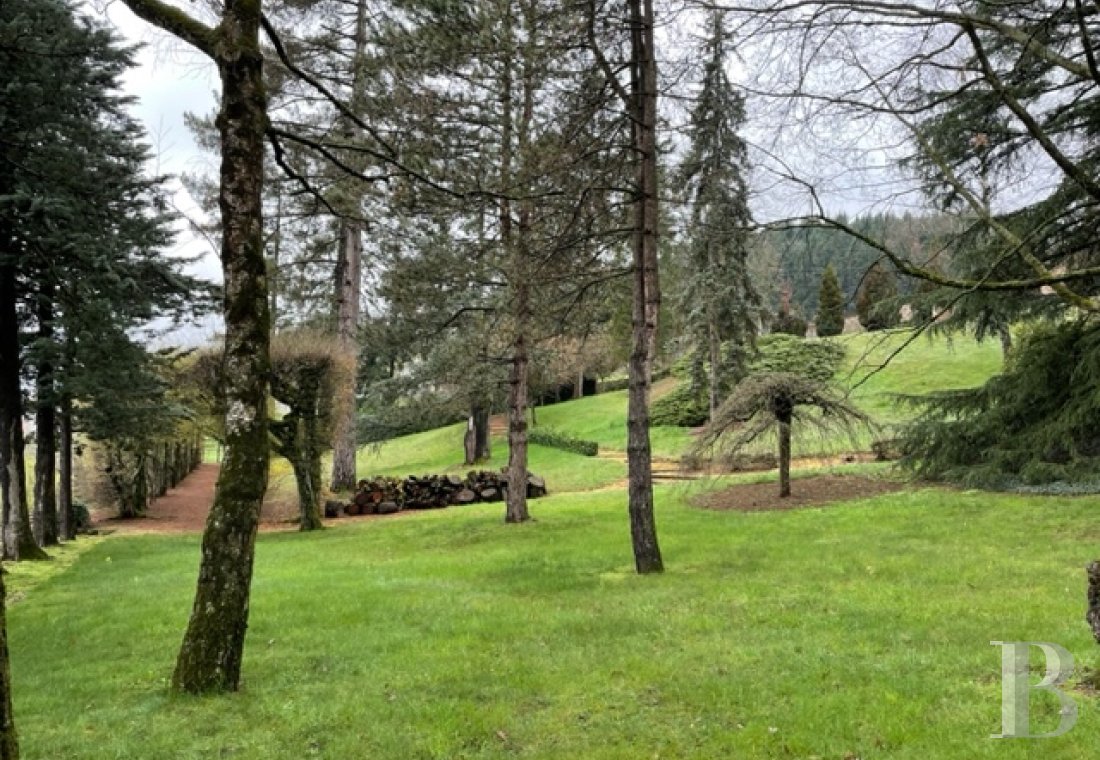
This property's peaceful garden features a lane bordered by more than 200 rosebushes, a variety of majestic trees scattered around its expansive lawns, which are slightly sloping in areas, as well as boxwoods and flowers, while, below, facing the roses, a gentle stream runs alongside one side of the property.Our opinion
More than a stately chateau, this charming family dwelling, both impressive and original, bucolic and sumptuous, is nestled within a peaceful and verdant setting, while, built with quality materials, which have been modernised with simple and meticulous renovations designed for everyday comfort, it exudes an overall feeling of serenity and sturdiness.
As for the garden, it creates a colourful and extensive tableau ideal for recharging one’s batteries, whereas the chateau’s prime address, less than thirty minutes from both Roanne and Villefranche-sur-Saône as well as one hour from Lyon, offers a number of interesting advantages and a variety of possibilities for further development.
750 000 €
Fees at the Vendor’s expense
Reference 833847
| Land registry surface area | 1 ha 80 a |
| Main building floor area | 490 m² |
| Number of bedrooms | 6 |
French Energy Performance Diagnosis
Information on the risks to which this property is exposed is available on the website: www.georisques.gouv.fr
Share


NB: The above information is not only the result of our visit to the property; it is also based on information provided by the current owner. It is by no means comprehensive or strictly accurate especially where surface areas and construction dates are concerned. We cannot, therefore, be held liable for any misrepresentation.