



17th-century former Baudet de Sade farmhouse with Italian-style parkland,
overlooking the Sorgues region and its illustrious isle in the Vaucluse
overlooking the Sorgues region and its illustrious isle in the Vaucluse
L'Isle-sur-la-Sorgue,
VAUCLUSE
provence-cote-dazur
84800
FR

Location
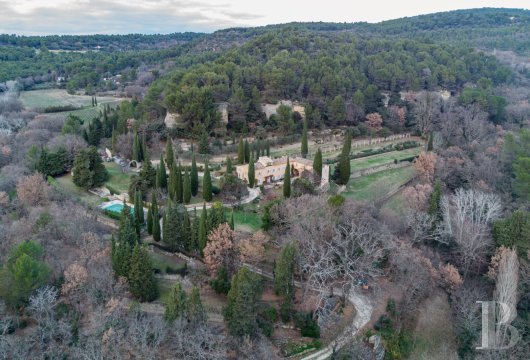
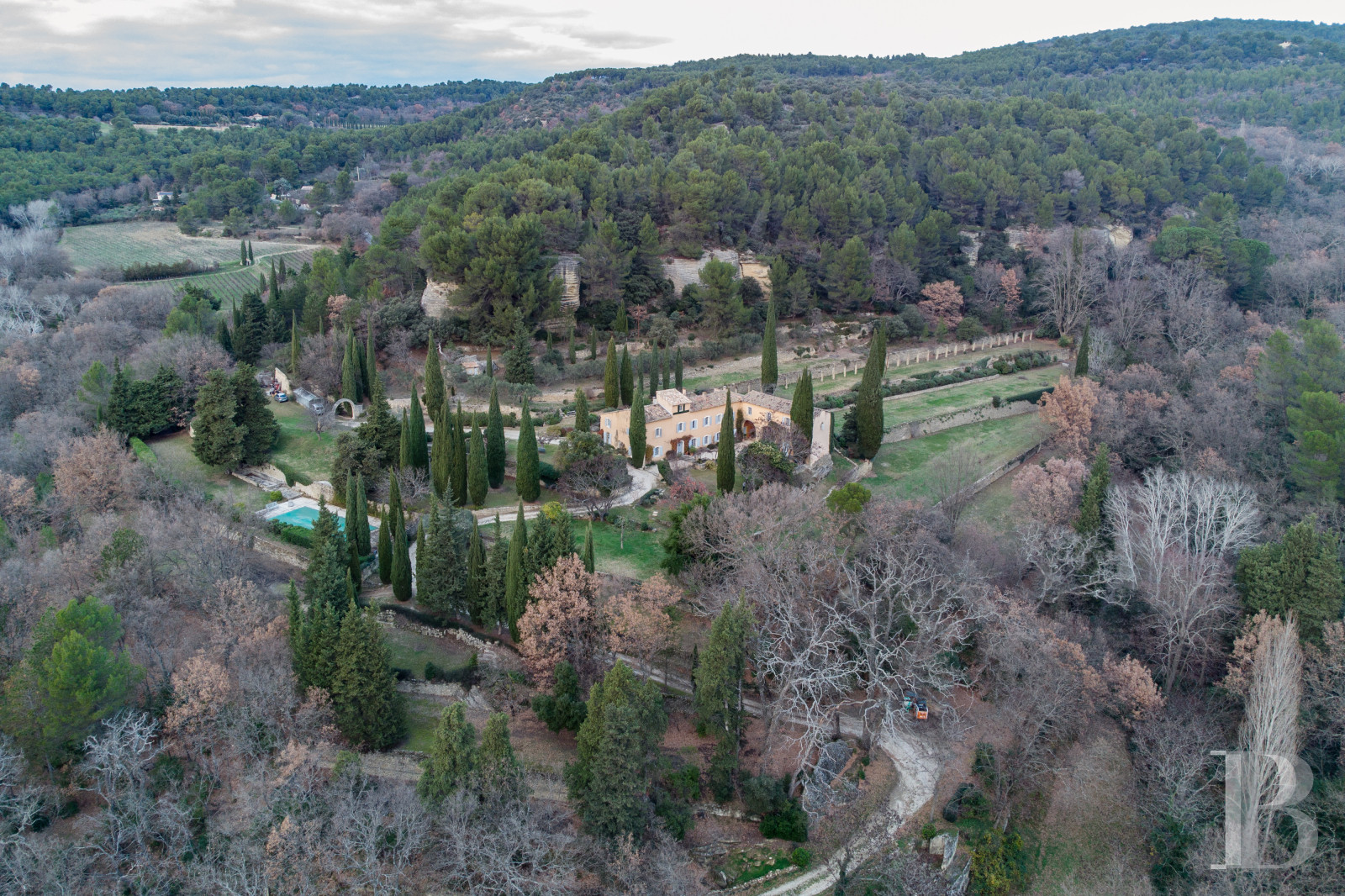
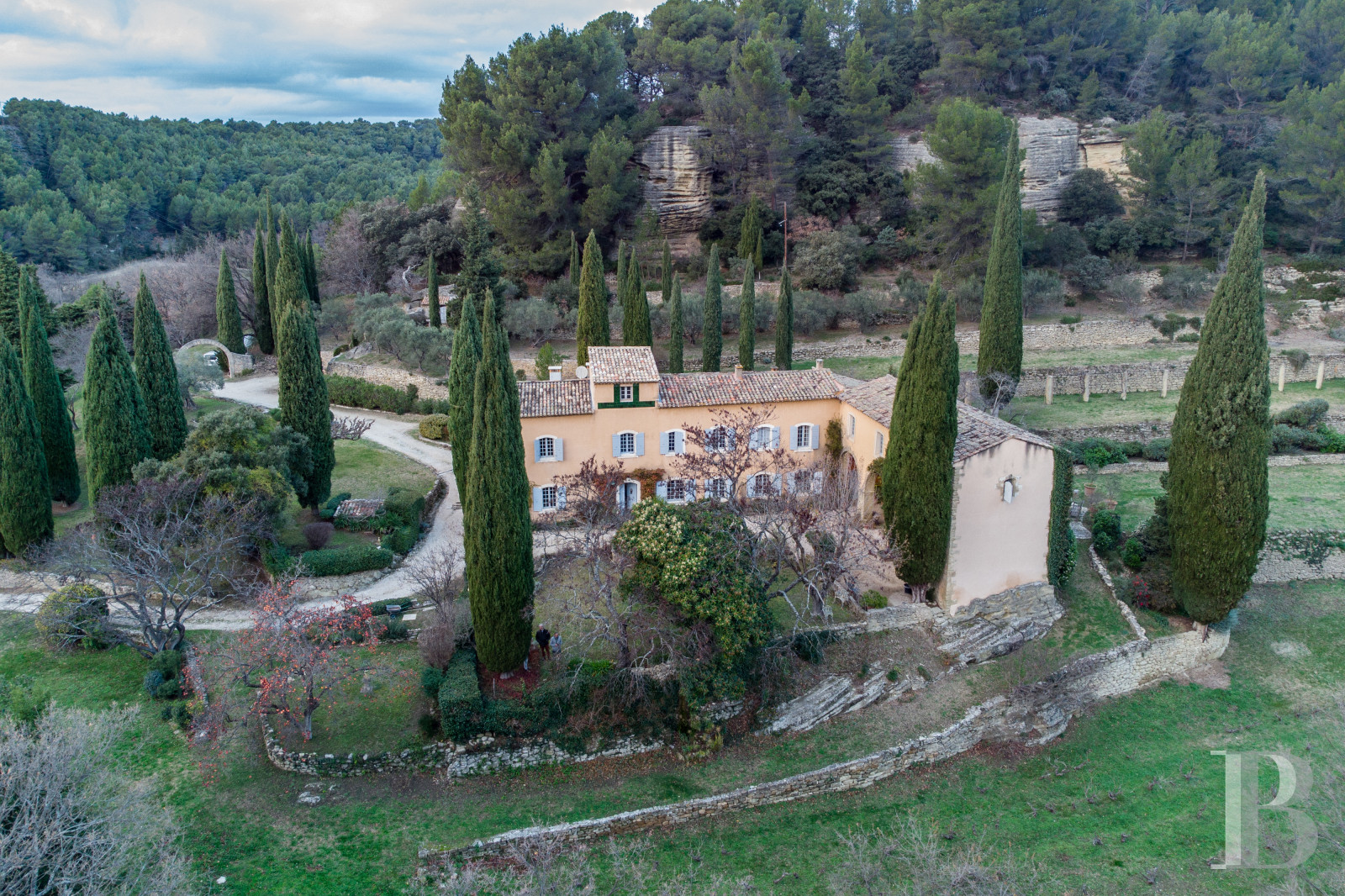
Just a stone's throw from the historic centre of Saumane-de-Vaucluse, the property sits on the south-facing slope of a valley overlooked by the rocky foothills of the Vaucluse mountains. It is part of a unique landscape that man has patiently shaped over the centuries by building terraces to cultivate the hillsides overlooking the food-producing plains of the Sorgues region. Access to the property is at the bottom of the estate from the road leading to La Roque-sur-Pernes via a path lined with low dry-stone walls and surrounded by oak trees, which leads to the single stretch of land planted with orchards, olive groves and landscaped terraces. Facing south-east, the plot enjoys continuous sunshine while being naturally protected from the Mistral wind by the protruding rocks that mark the northern boundary of the estate. L'Isle-sur-la-Sorgue, with its shops and numerous antique dealers, can be reached in less than 10 minutes, the A7 motorway in 20 minutes, whilst Avignon with its TGV train station can be reached in 45 minutes and Marseille with its international airport in 1 hour.
Description
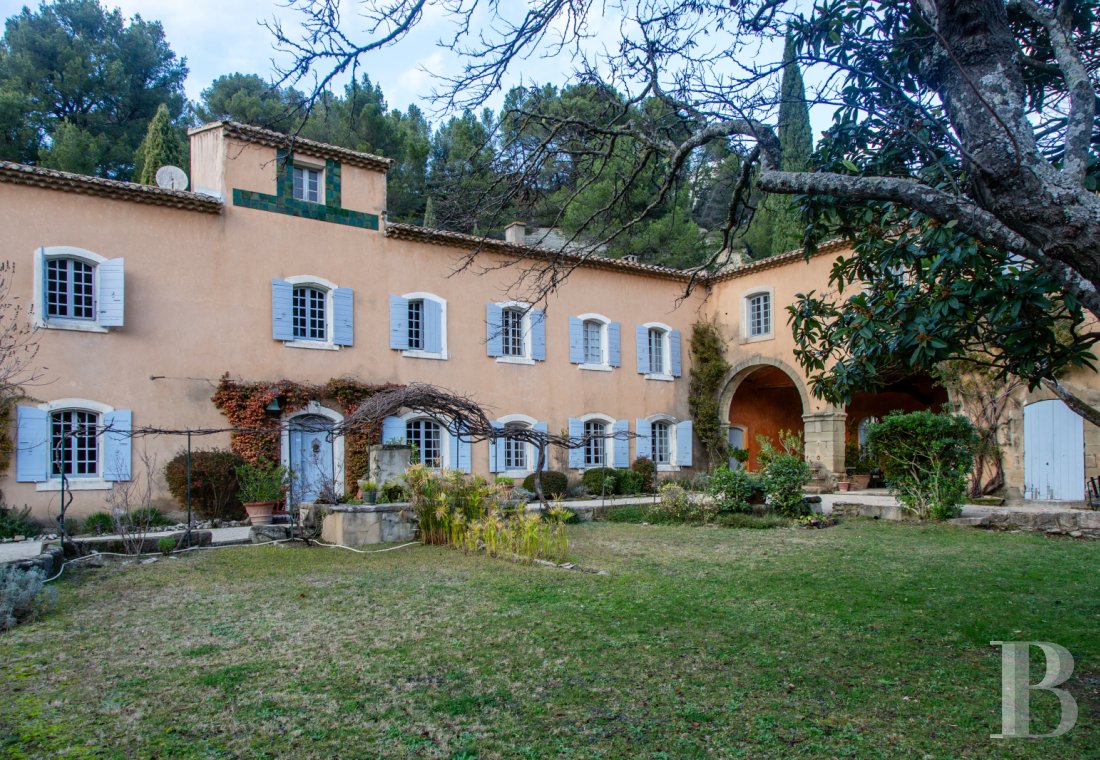
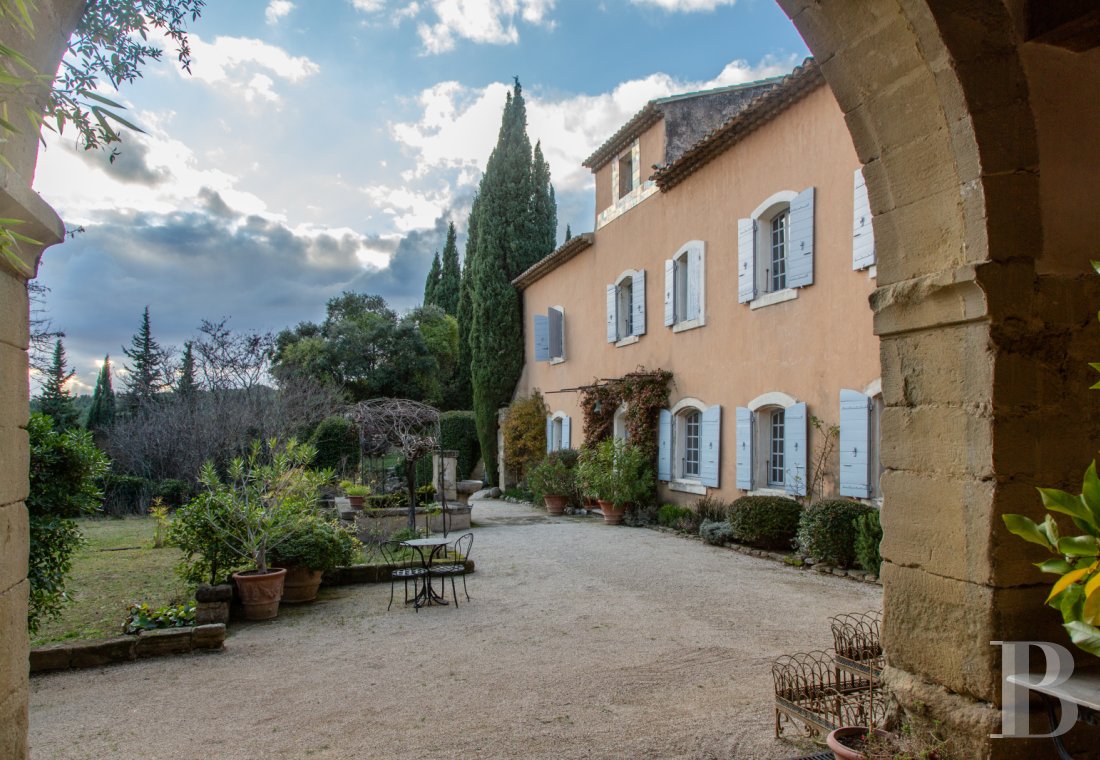
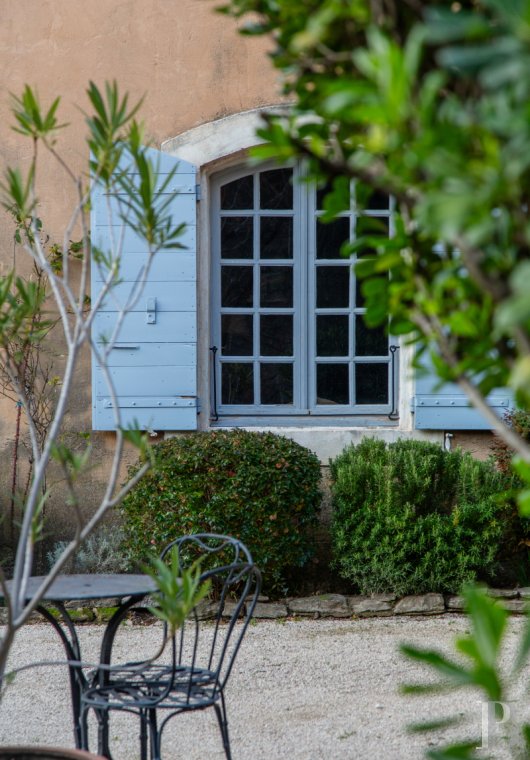
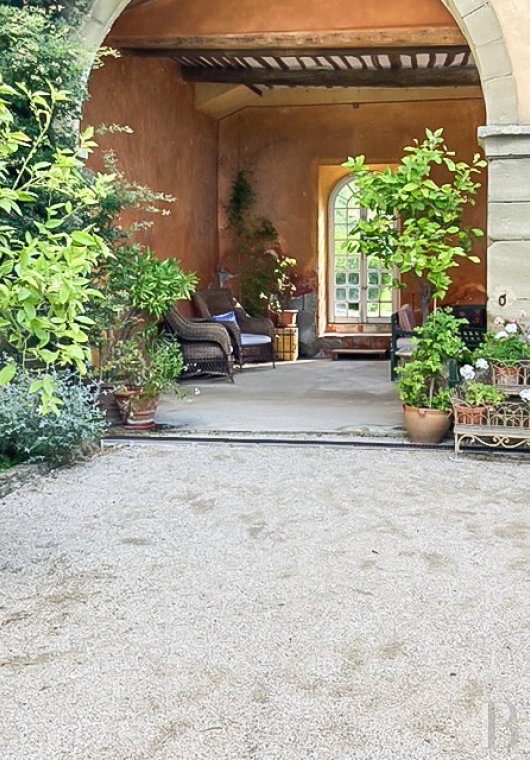
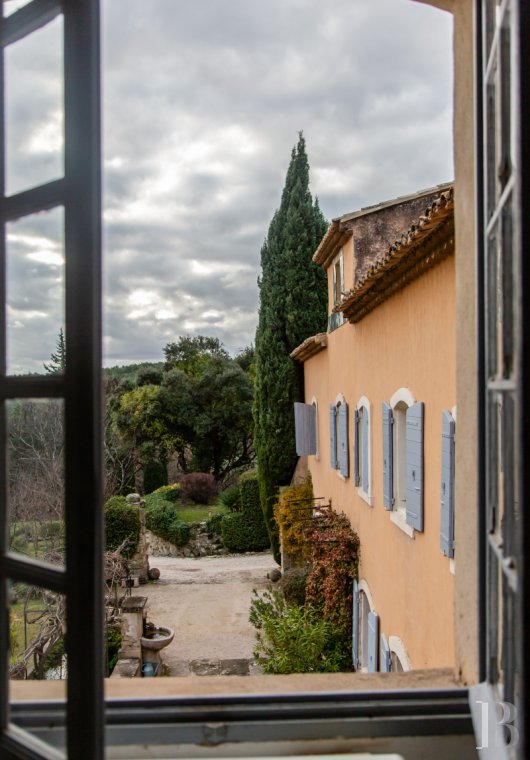
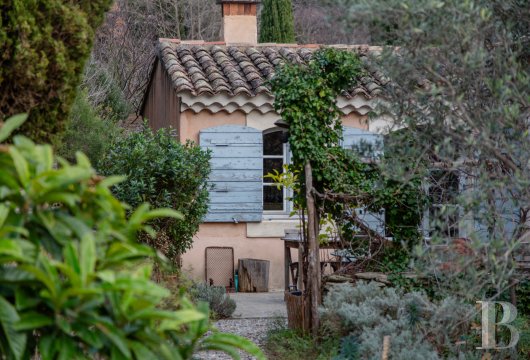
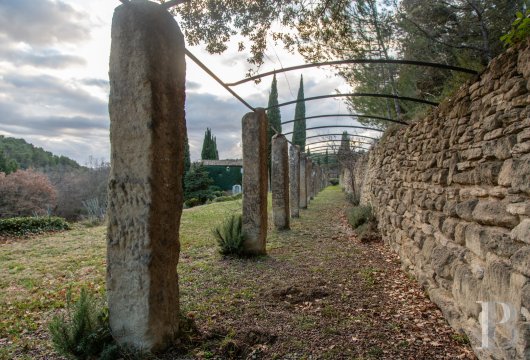
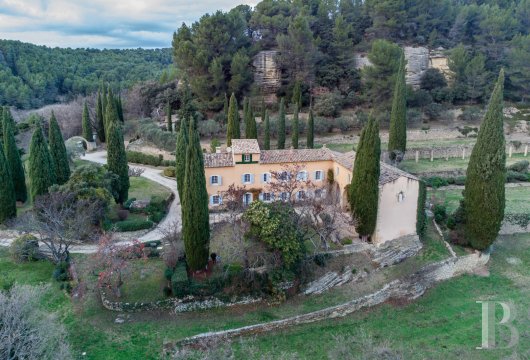
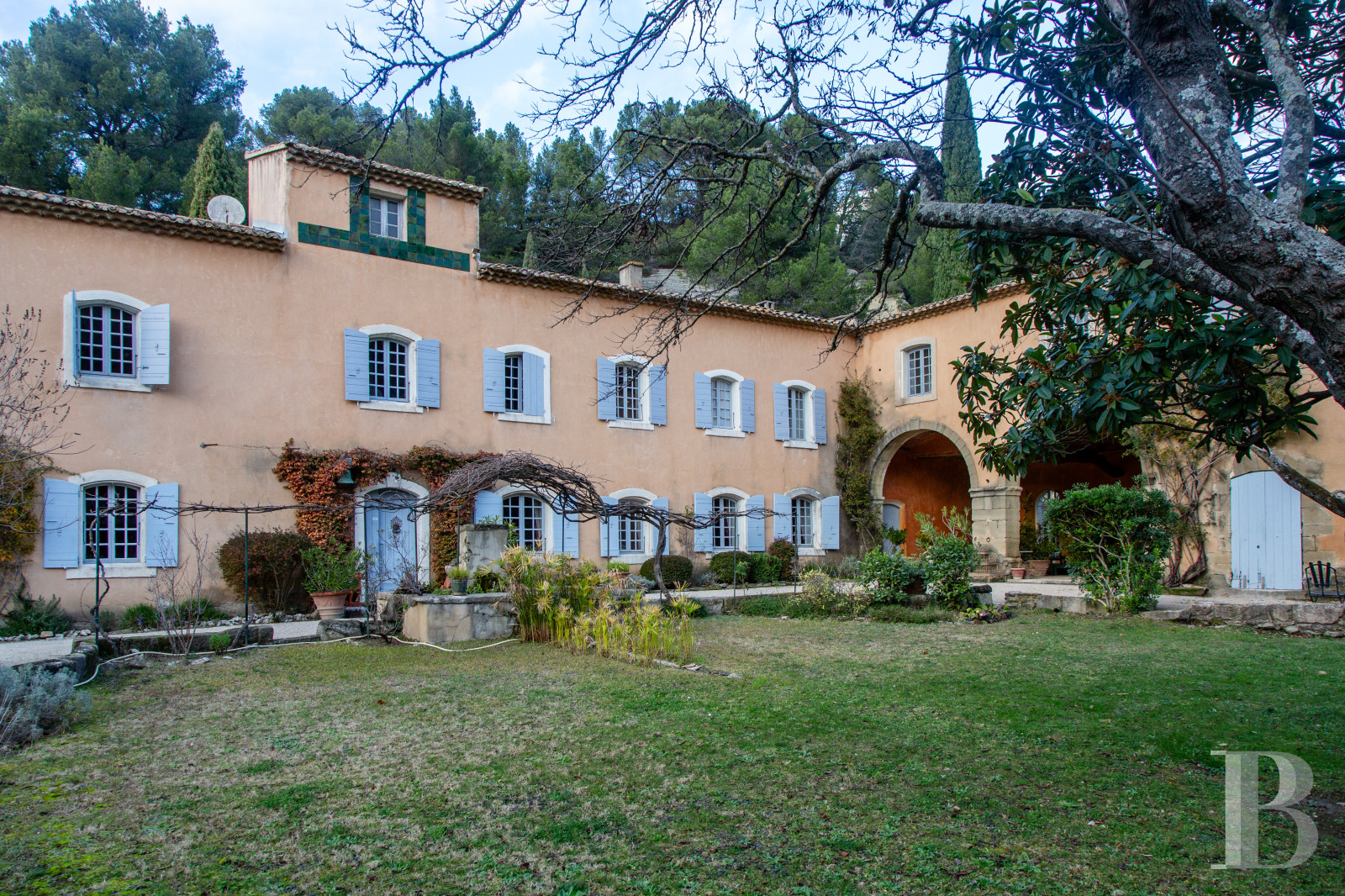
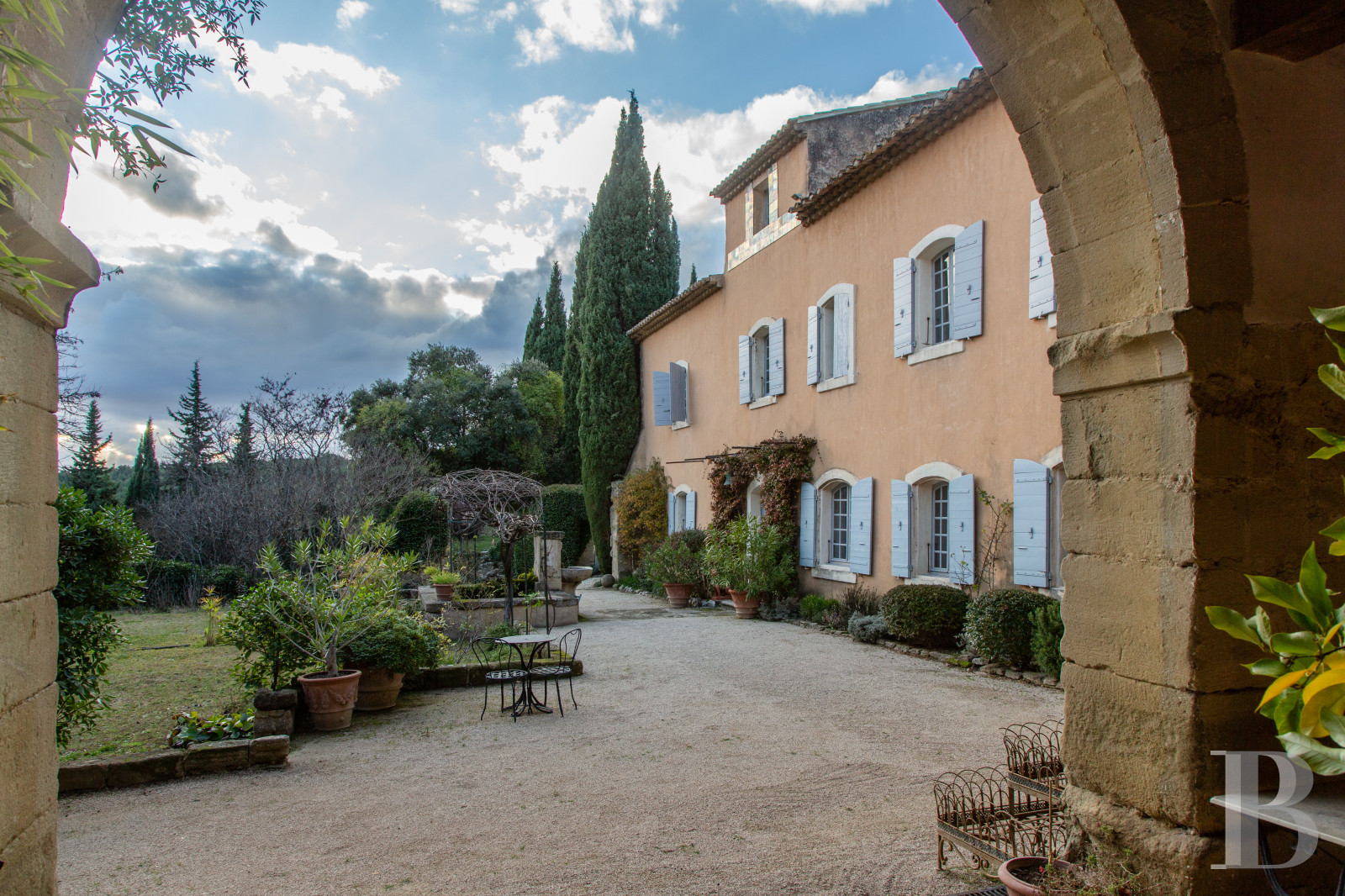
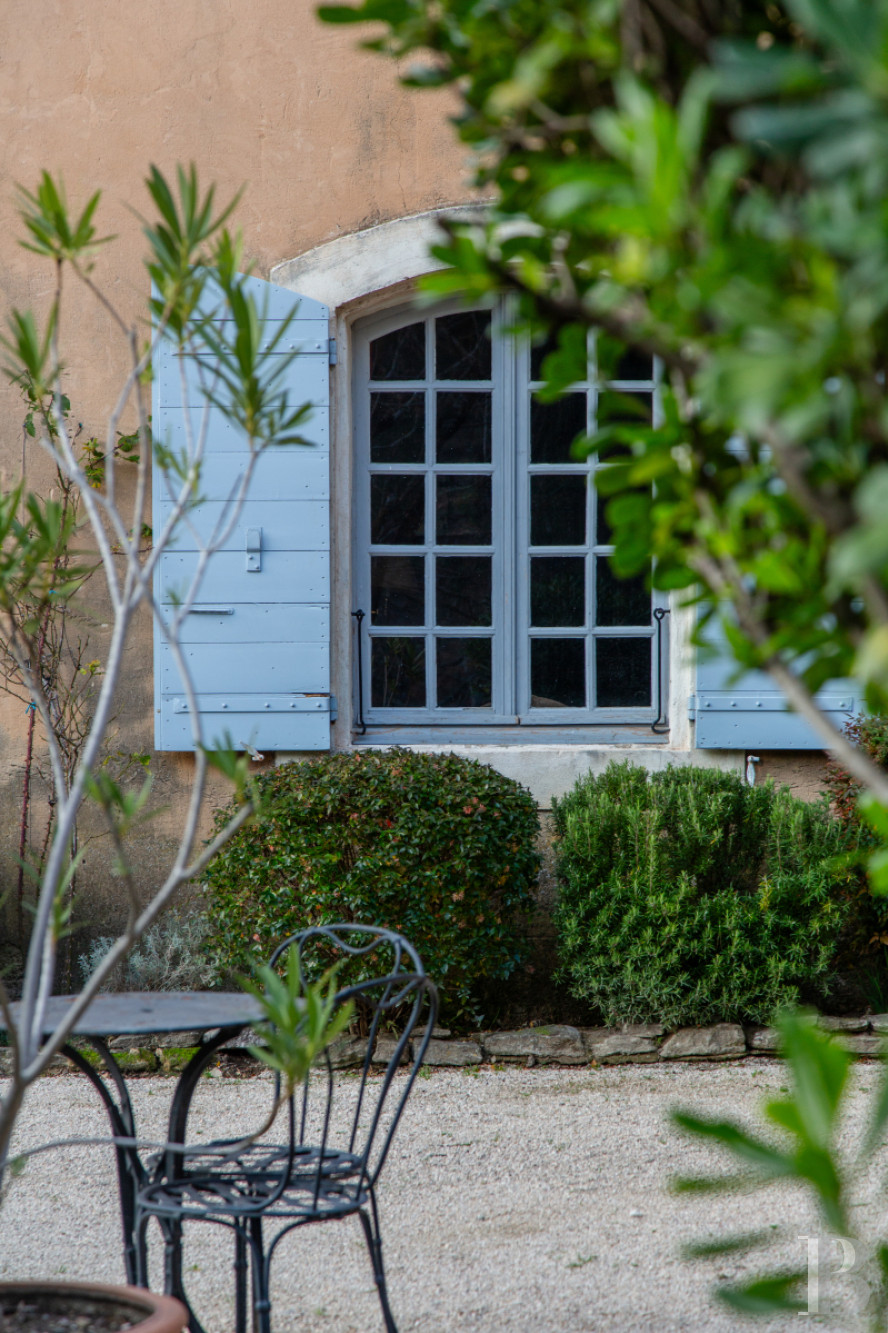
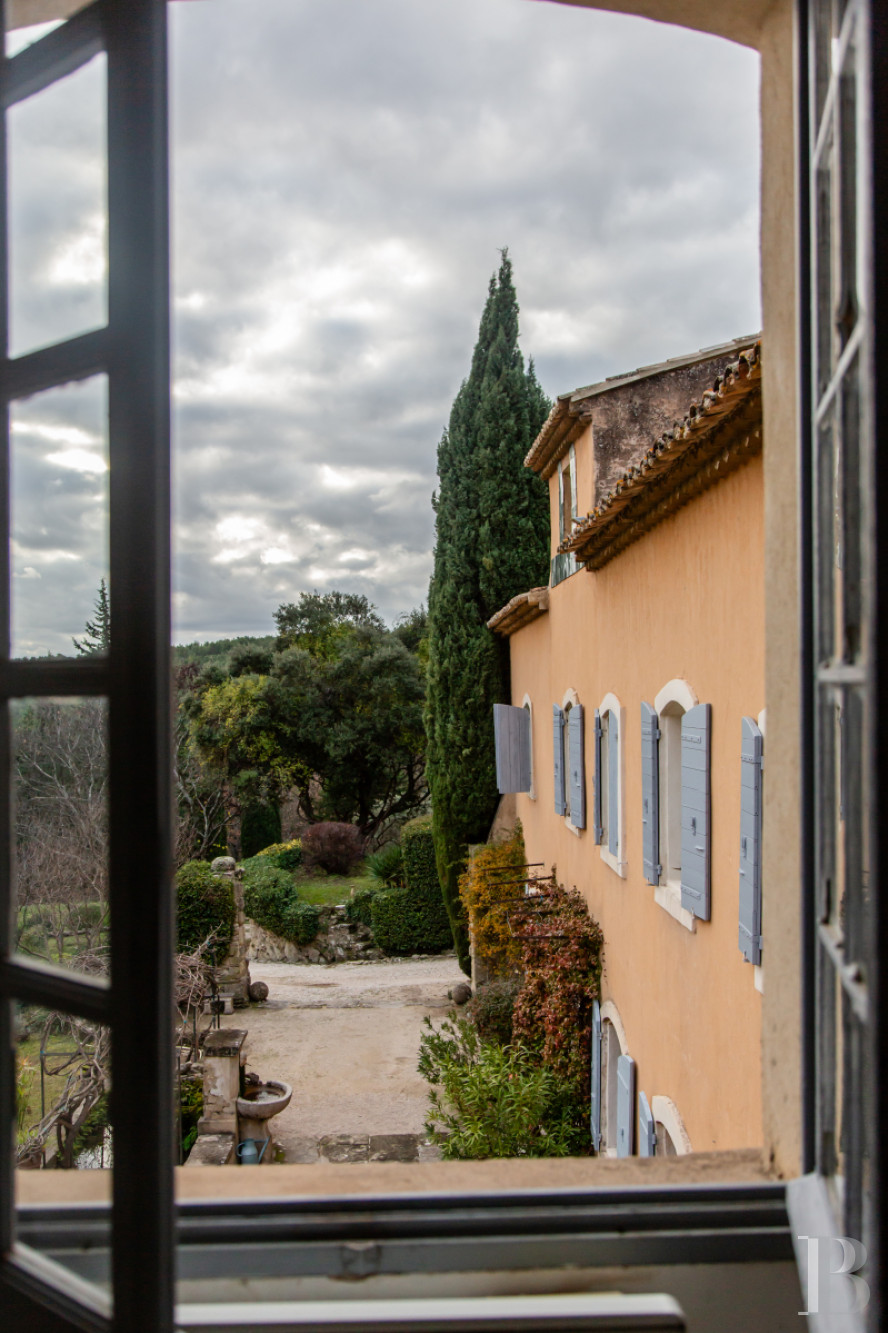
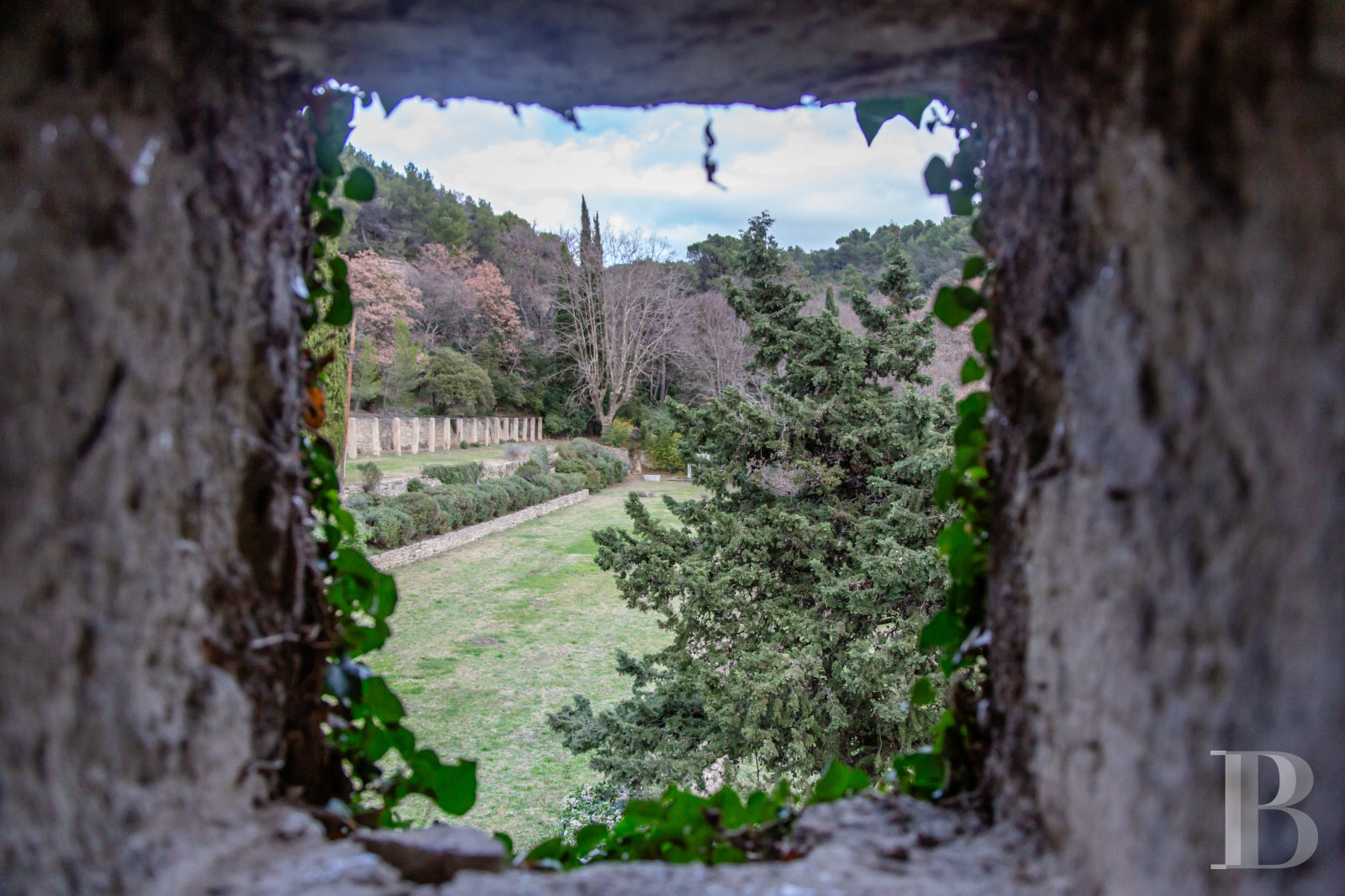
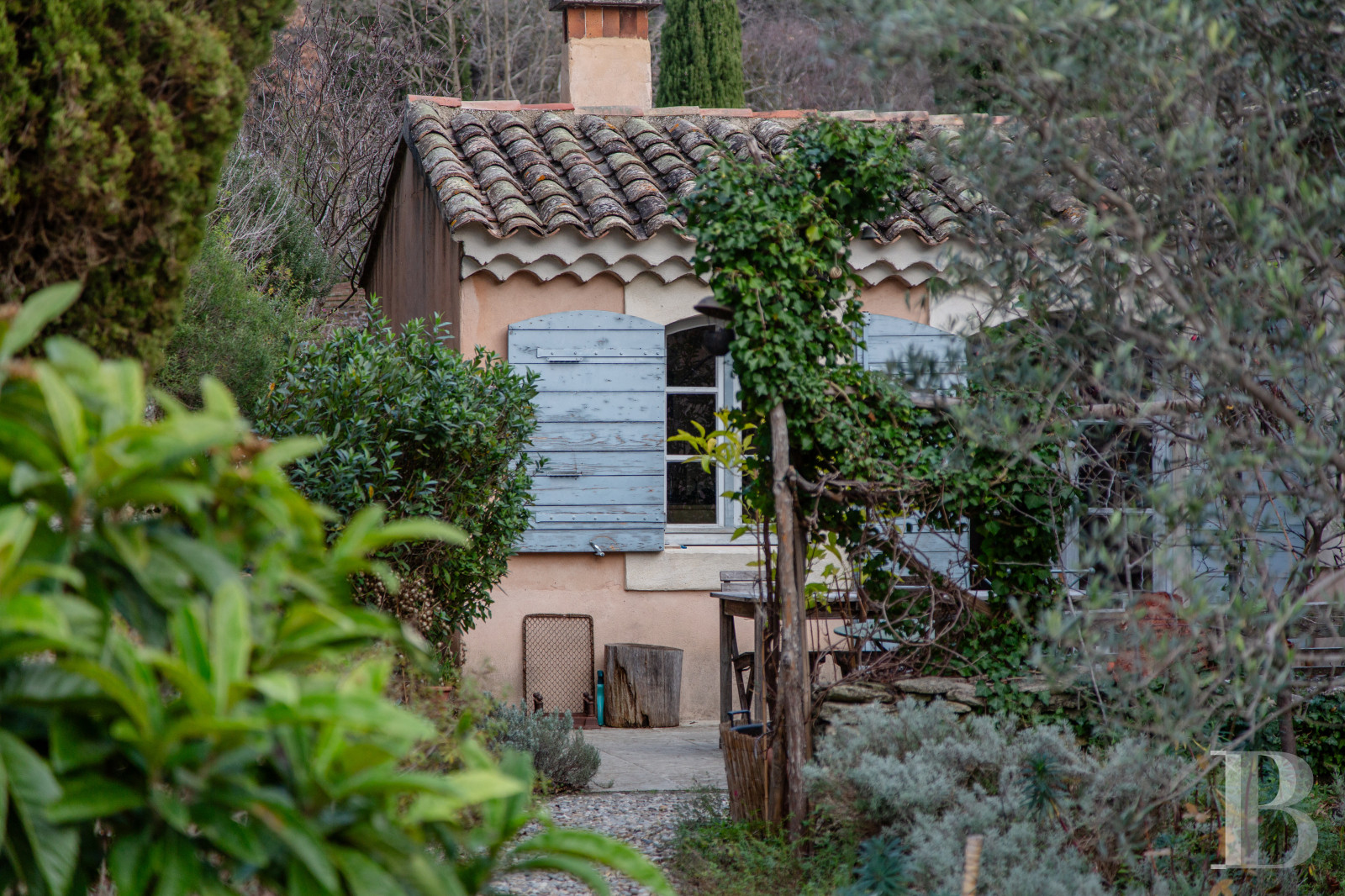
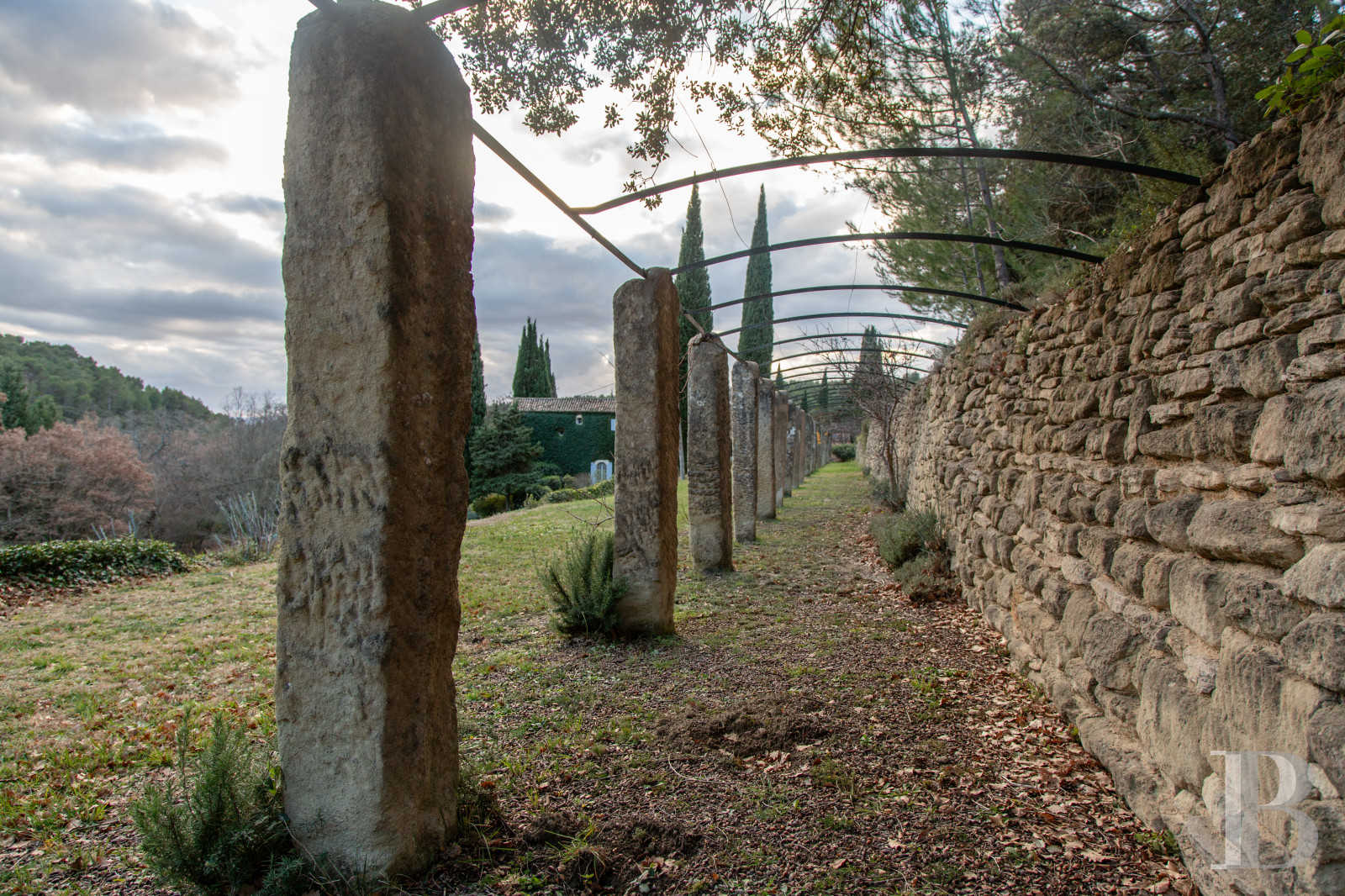
Formerly a smallholding attached to the Baudet de Sade estate, the property is said to have belonged to Abbé Jacques de Sade, uncle of the illustrious "divine marquis", who lived at Saumane castle, situated to the south beyond a fold in the Vaucluse mountains. A vast 17th and 18th century farm made up of terraces irrigated by springs, with a large farmhouse built against the rock to the north, overlooking the valley below. The building pays particular attention to detail on the courtyard elevations, particularly the main facade, which is rendered in ochre lime and features low-arched windows. The main entrance door is flush with the axis of an old dovecote that towers above the canal tile roofs. The secondary part of the building is no less elegant, with two wide, high, twin arches opening onto the courtyard, while the first floor features a contemporary embellishment of the former hayloft. The buildings are in perfect harmony with the terraced topography, consisting of large landscaped terraces to the south and west. To the east, a boulingrin (lawn bowling green) laid out on the largest median strip at the bottom of the valley offers a remarkable view, enhanced by the alignment of 27 monoliths supporting a trellis on the upper terrace. The buildings and particularly meticulous landscaping (including the ruins of an orangery) accentuate the theatricality of the site, set in a fold of the Vaucluse foothills and the wooded slopes of the valley, reminiscent of Petrarch's favourite refuge in the Vallis Clausa.
The farmhouse and its former hayloft
The building is built on a north-east/south-west axis and has an L-shaped floor plan, with the main building set against the rock, which forms the northern elevation on the ground floor. The north and south entrances are therefore located at two different heights. The secondary building at right angles rises from the corner, which is a separate volume with a single-pitched roof set back from the sections, probably built to provide a link between the two parts of the building. Against the rock, on the upper terraced wall, the plan shows a single-storey projection, corresponding to the caretaker's accommodation built in modern times. The roof of the main building, with its two asymmetrical slopes, is marked by a caesura along the length of the south-facing slope by the dovecote tower that crowns the former farm. Dovecote towers built into farmhouses in this way usually served two purposes: firstly, they housed a stairwell and secondly, they asserted their seigneurial character while making the most of the reserved (and highly lucrative) use of pigeon droppings, the most valuable fertiliser before their modern chemical variants. The slightly eccentric layout of the tower, combined with the general composition of the floor plan, reflects, as is often the case with this type of building, a multi-phase construction process that began at the end of the 17th century and a major restoration and restructuring campaign carried out at the end of the 20th century. The 18th century farmhouse probably consisted of two parts: the main part used as a dwelling and the secondary part strictly for farming, with a hayloft in the attic.
The central section
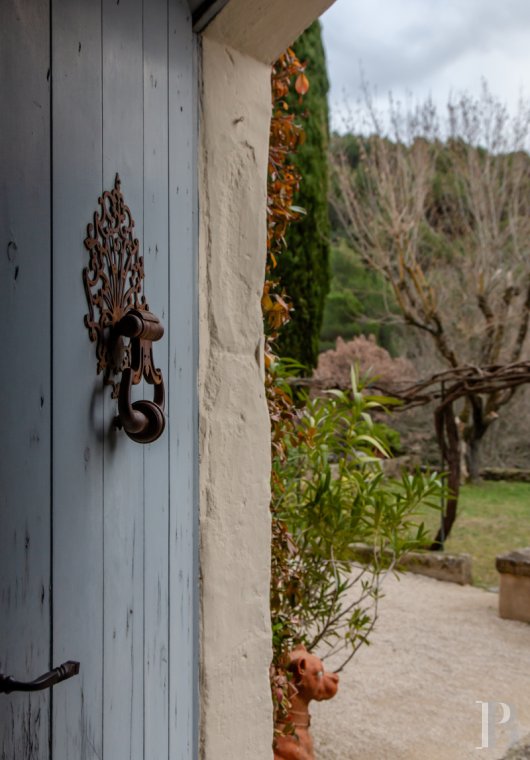
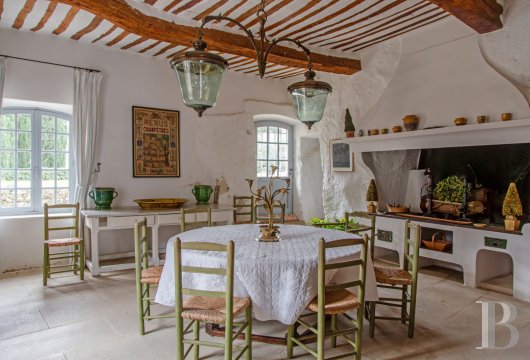
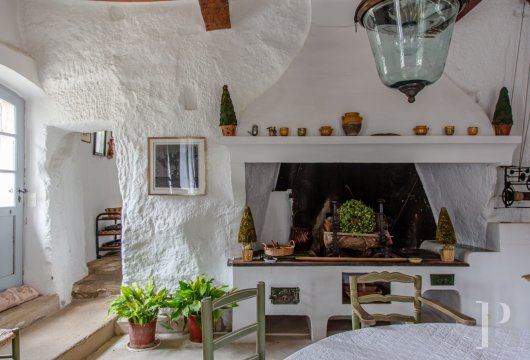
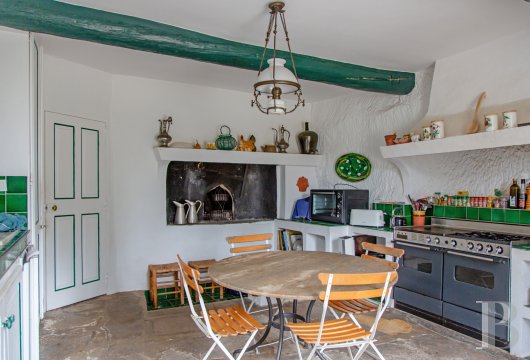
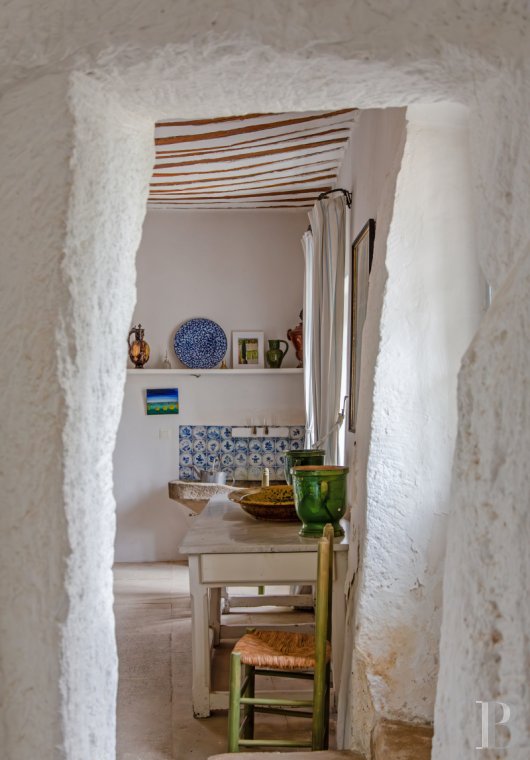
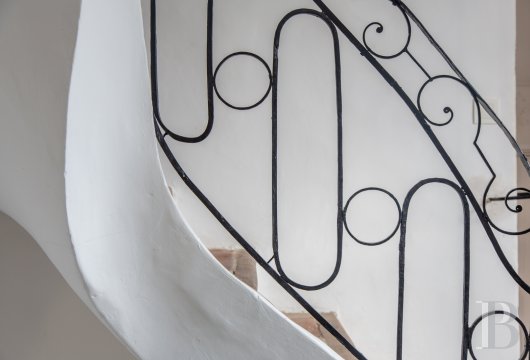
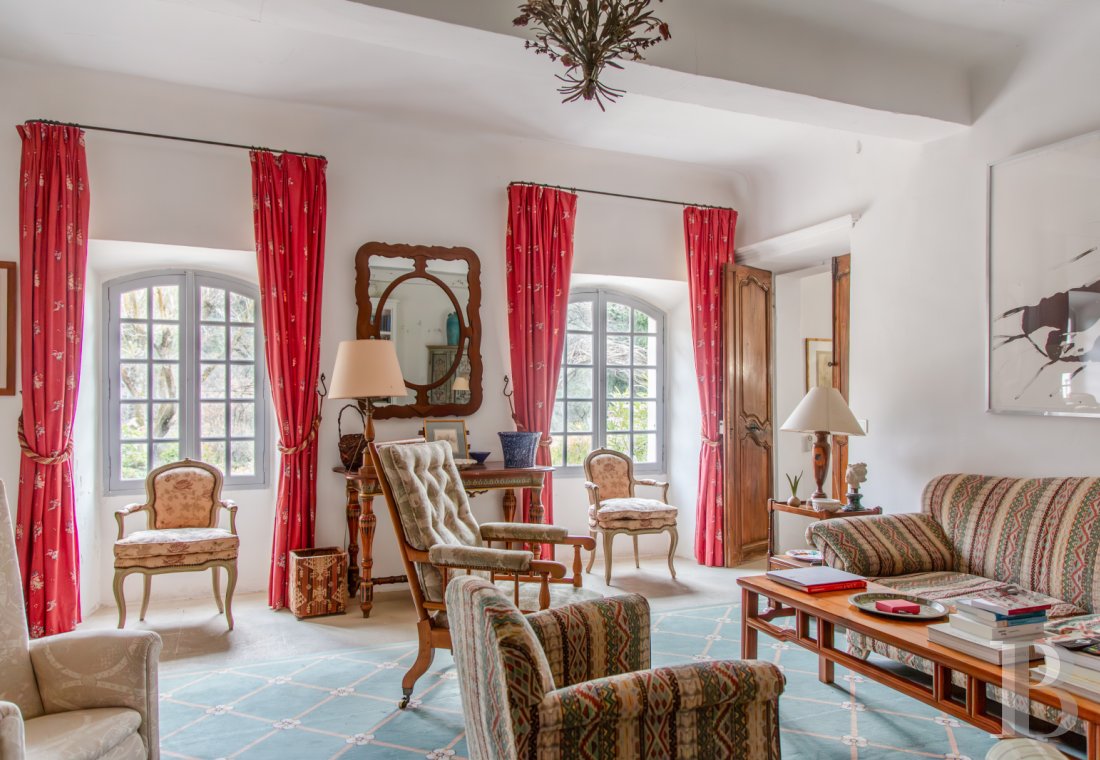
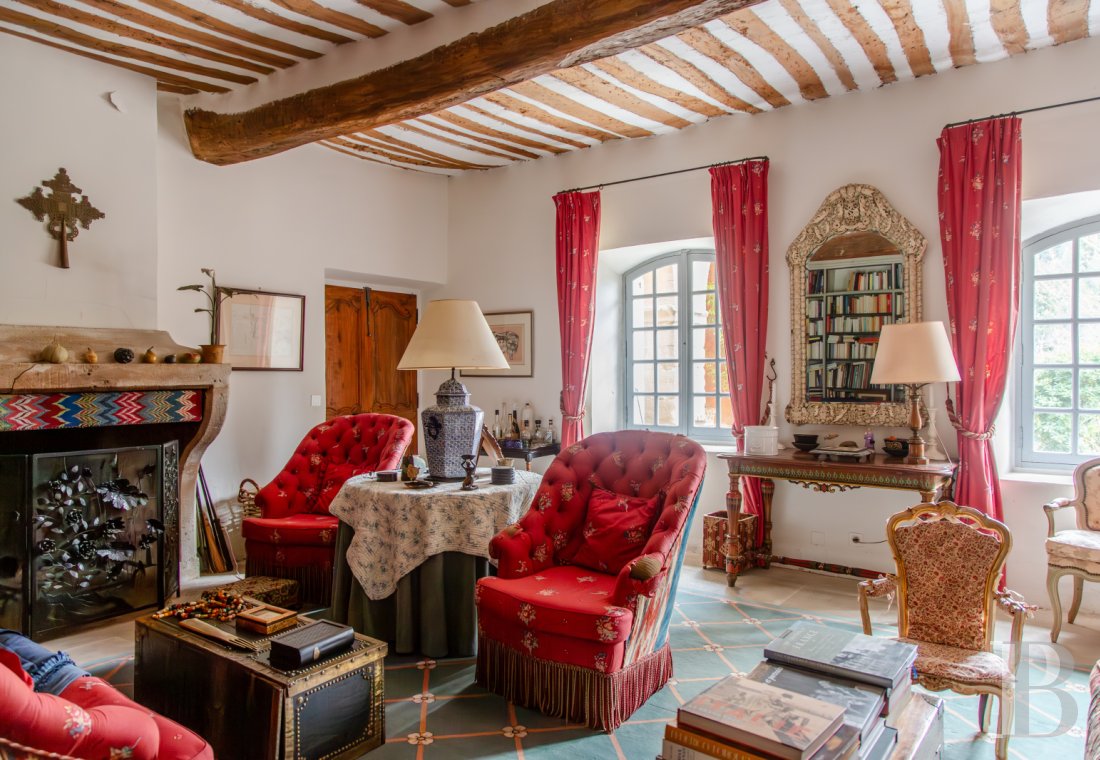
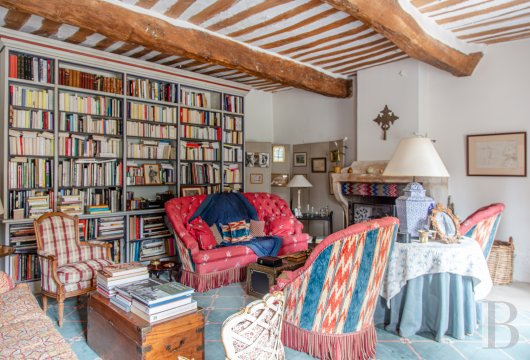
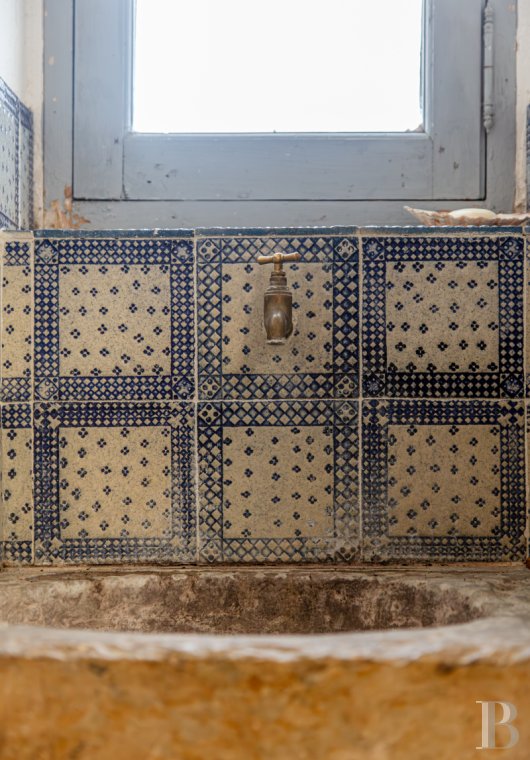
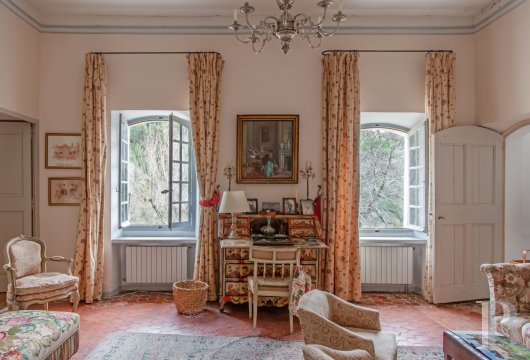
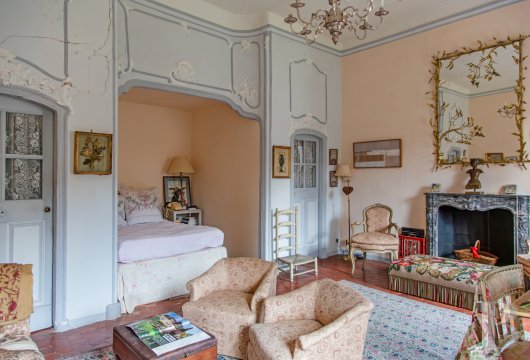
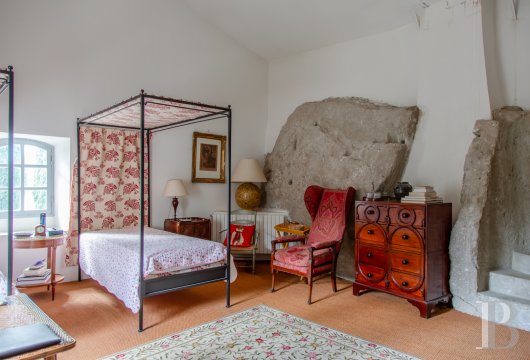
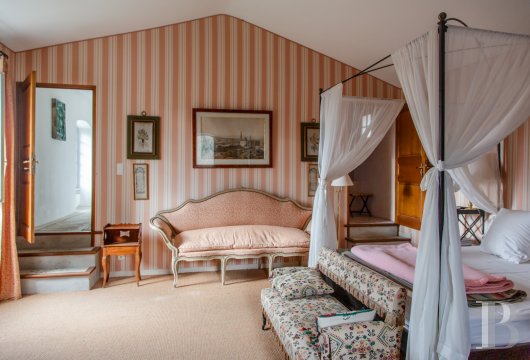
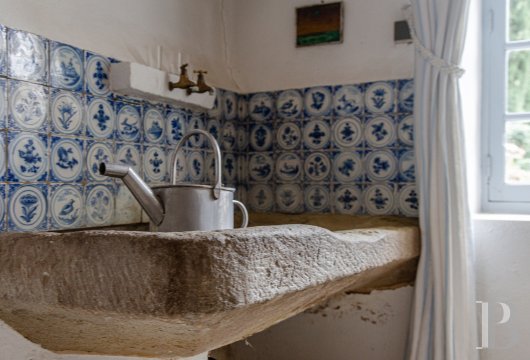
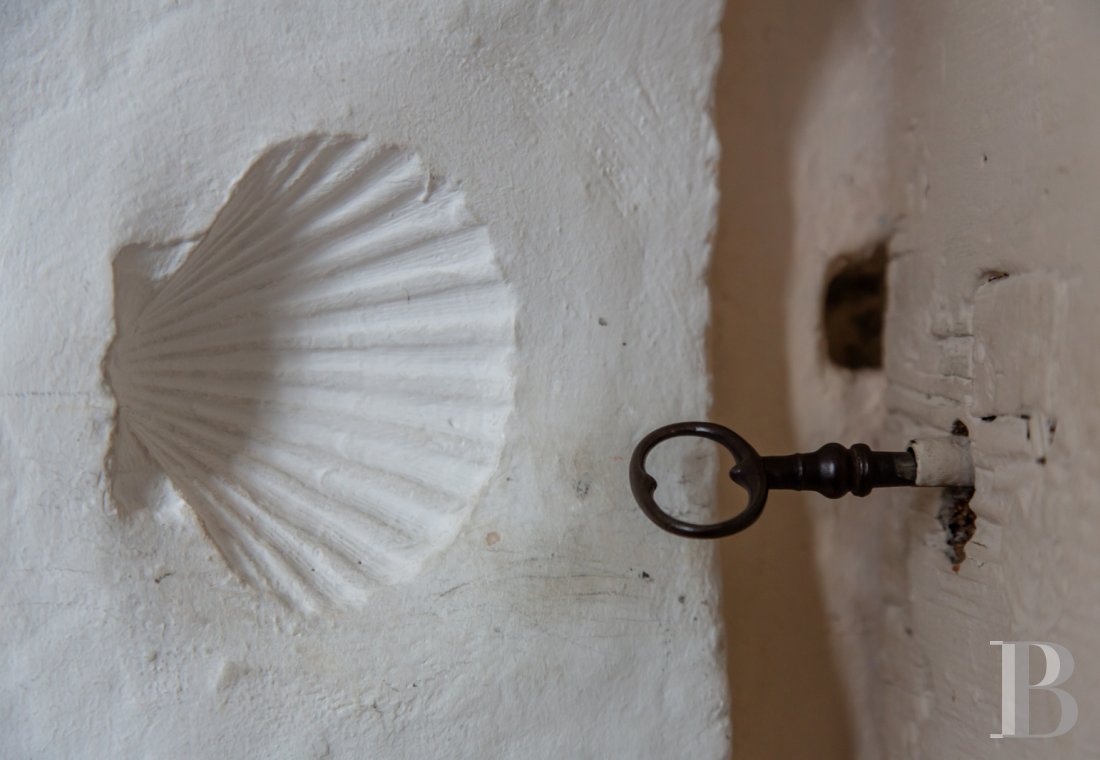
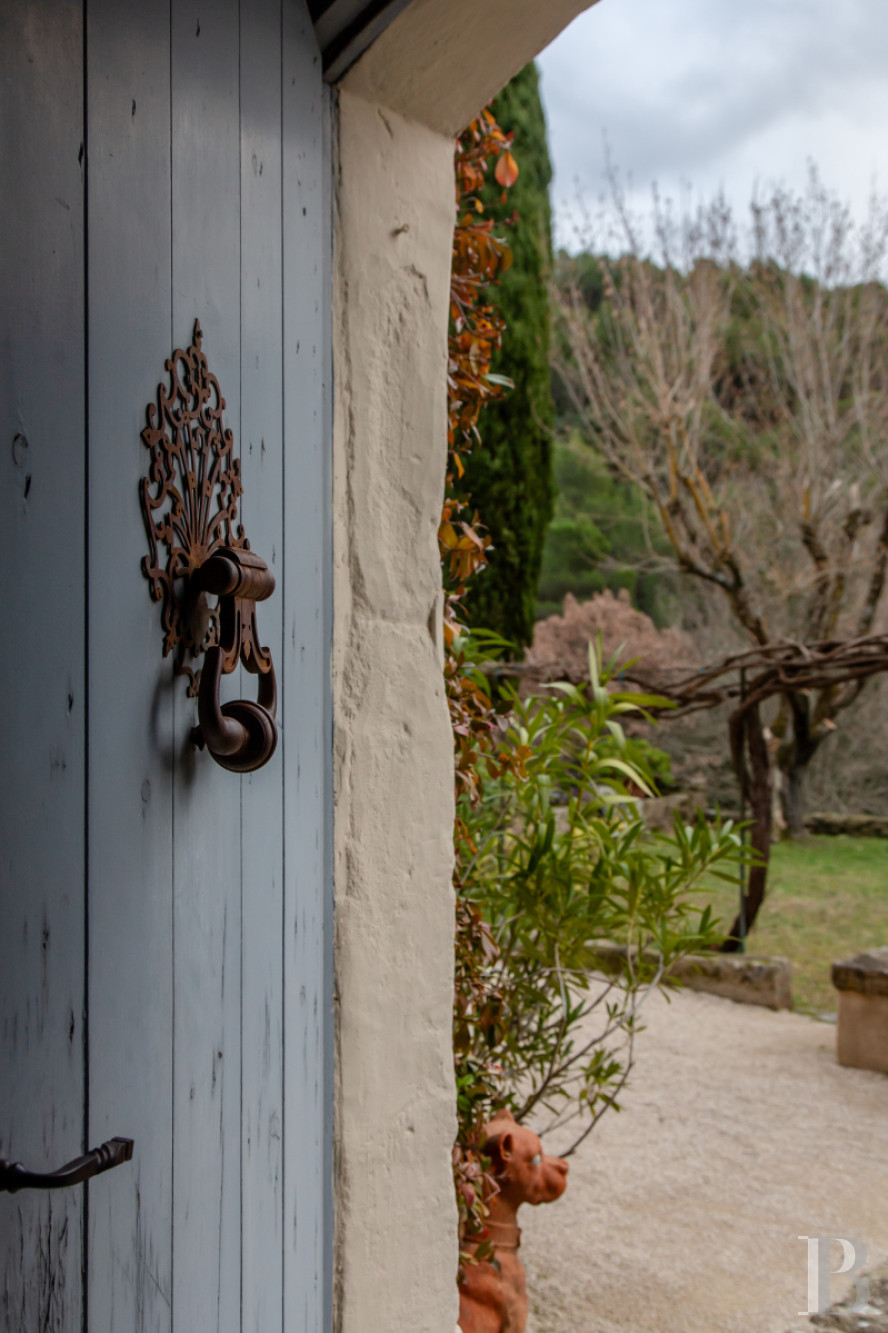
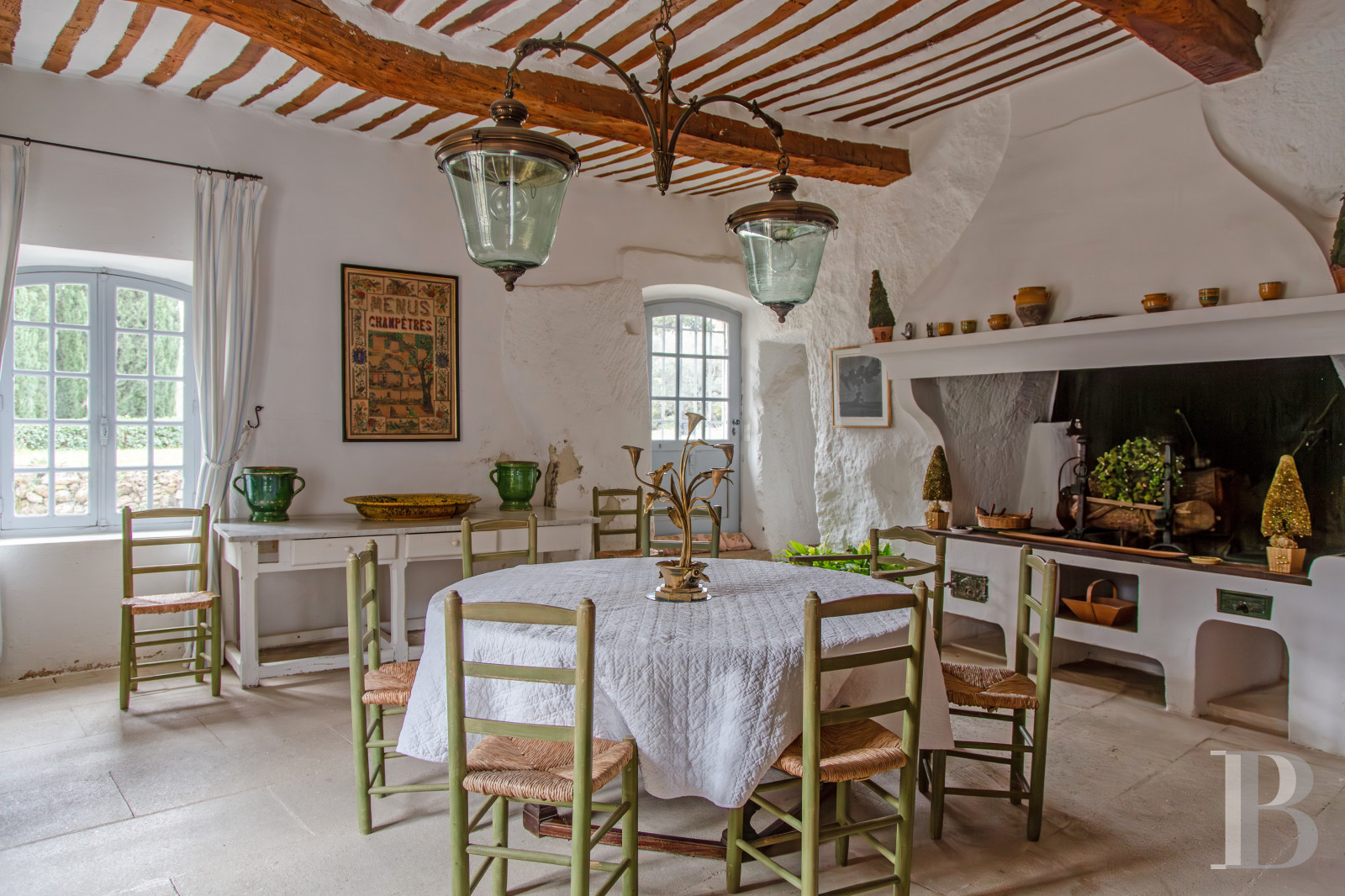
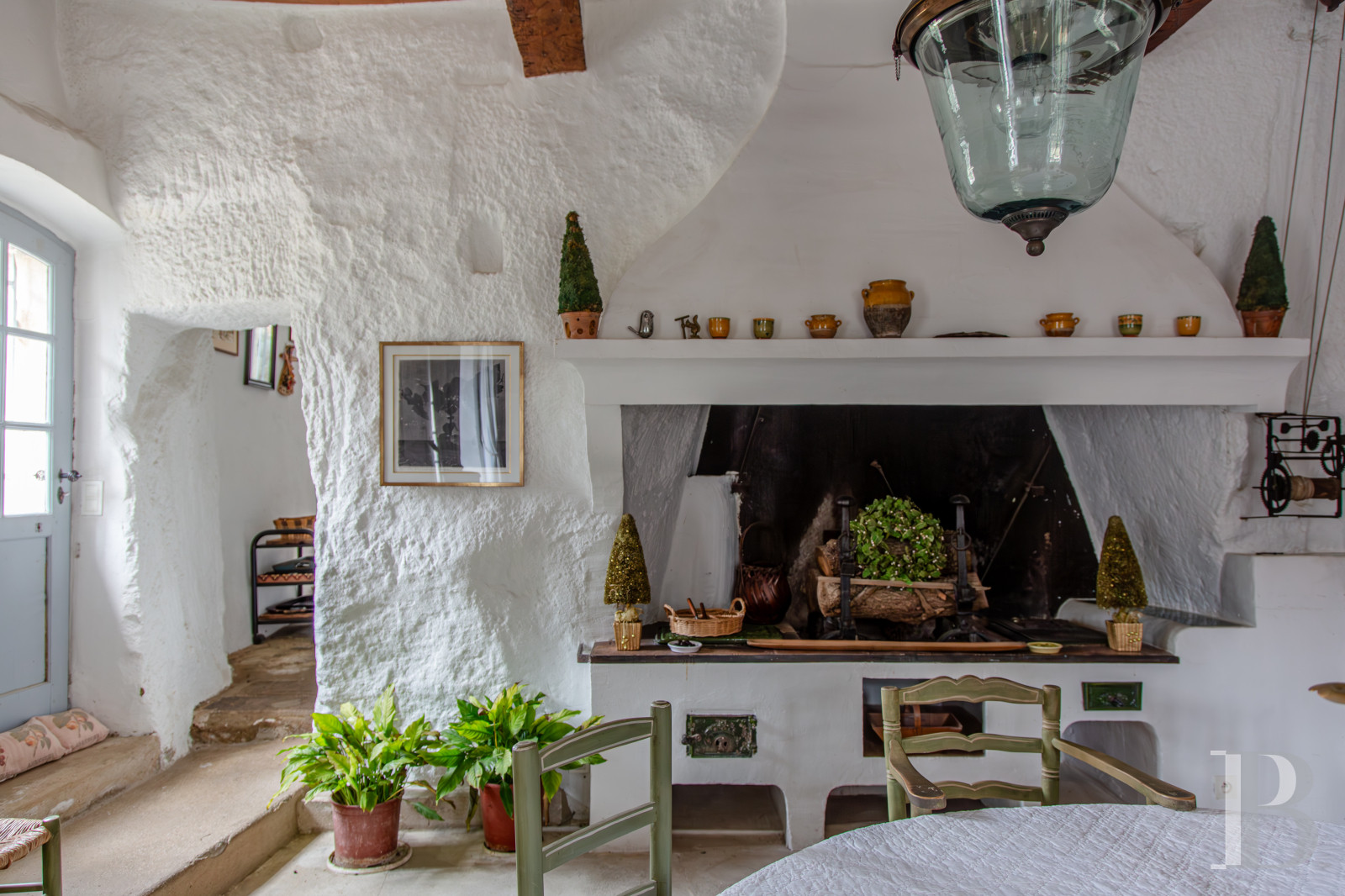
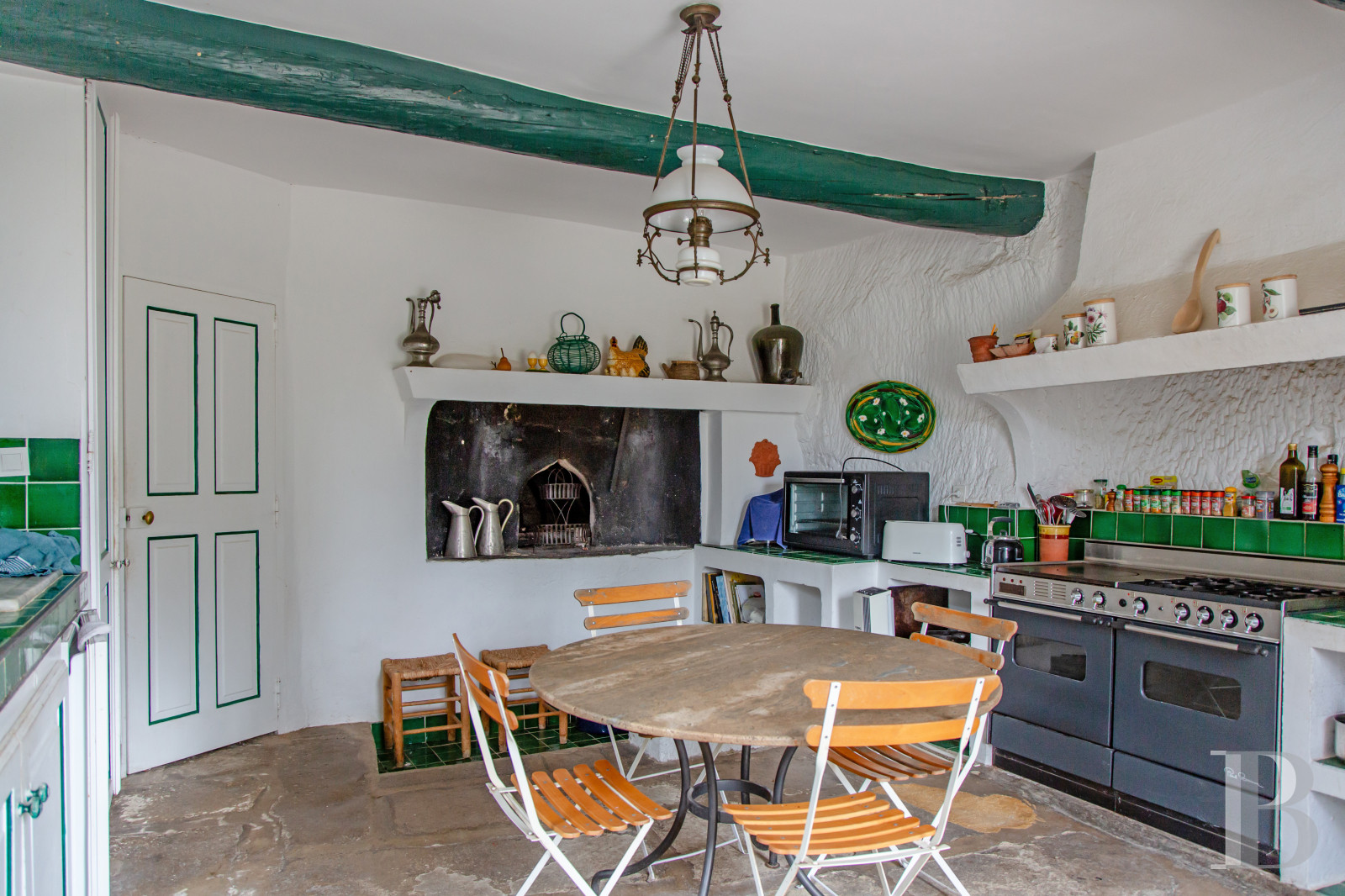
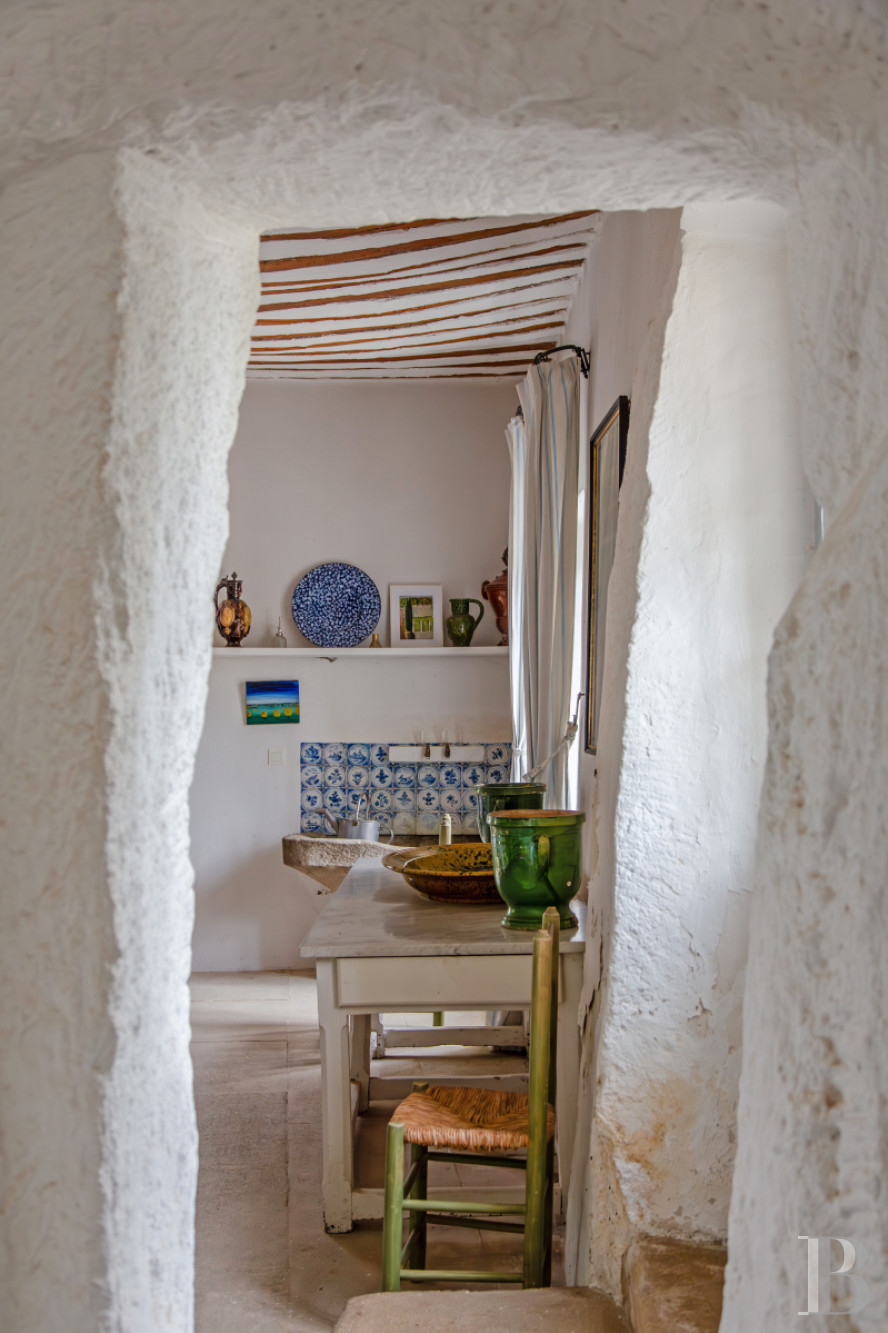
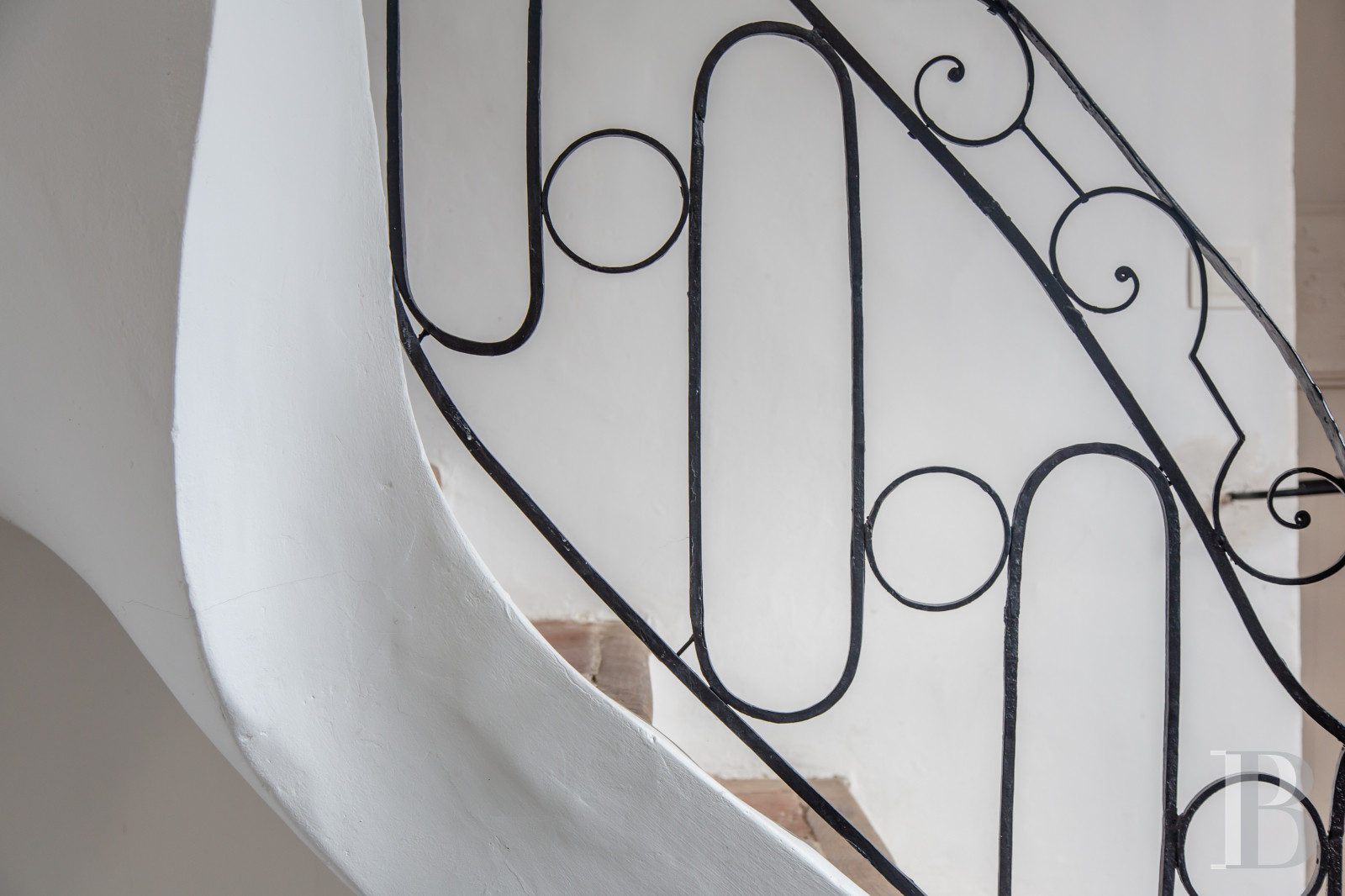
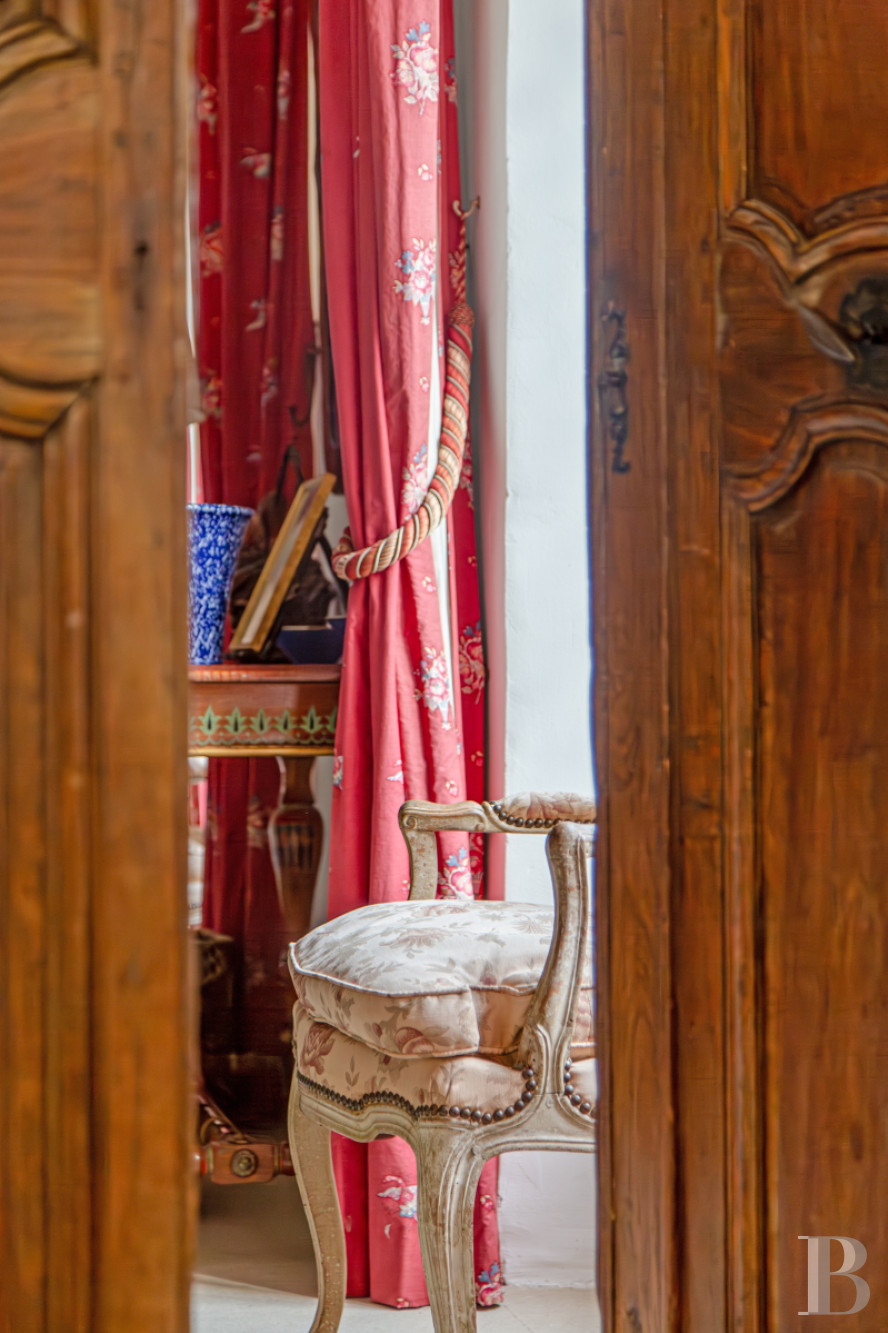
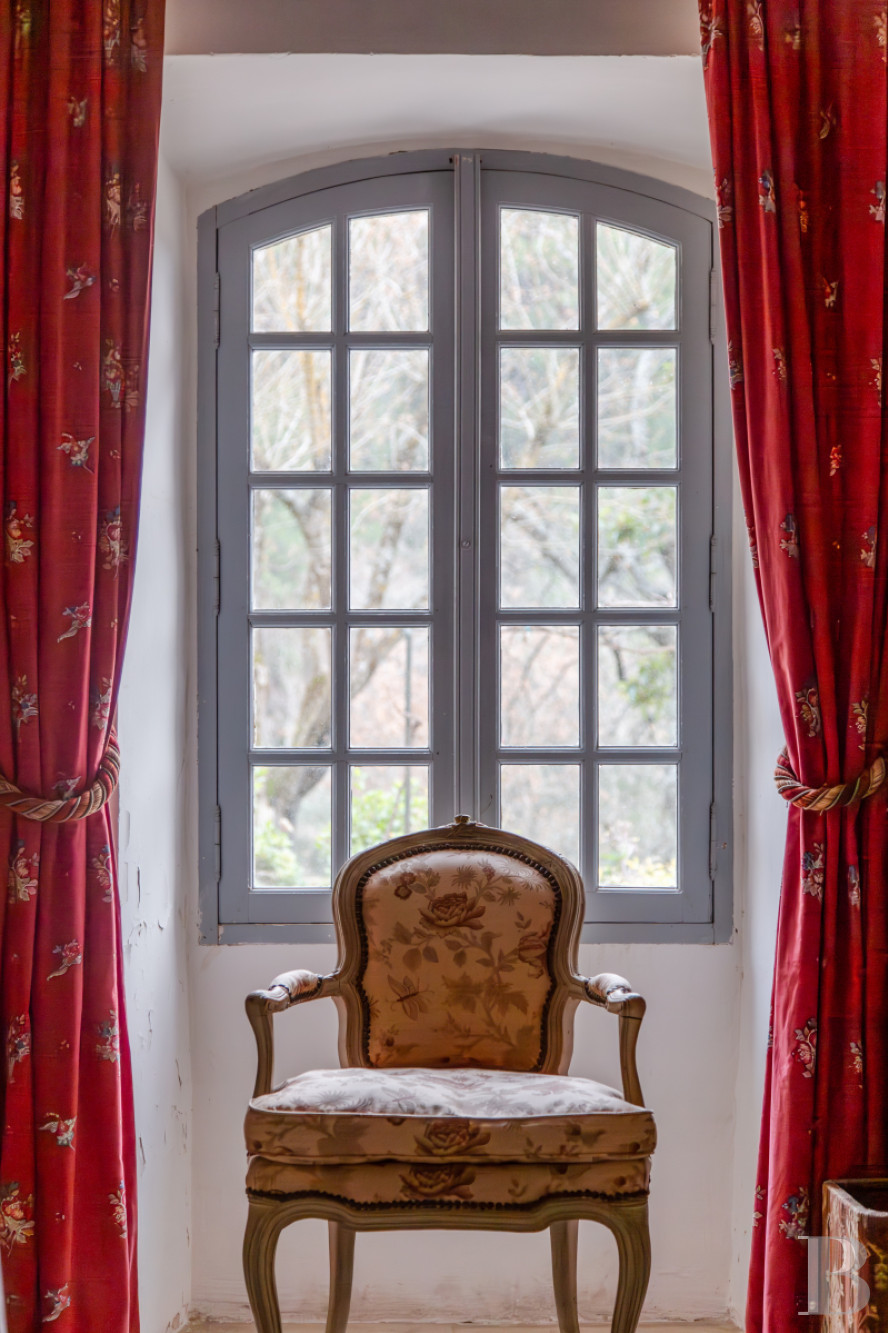
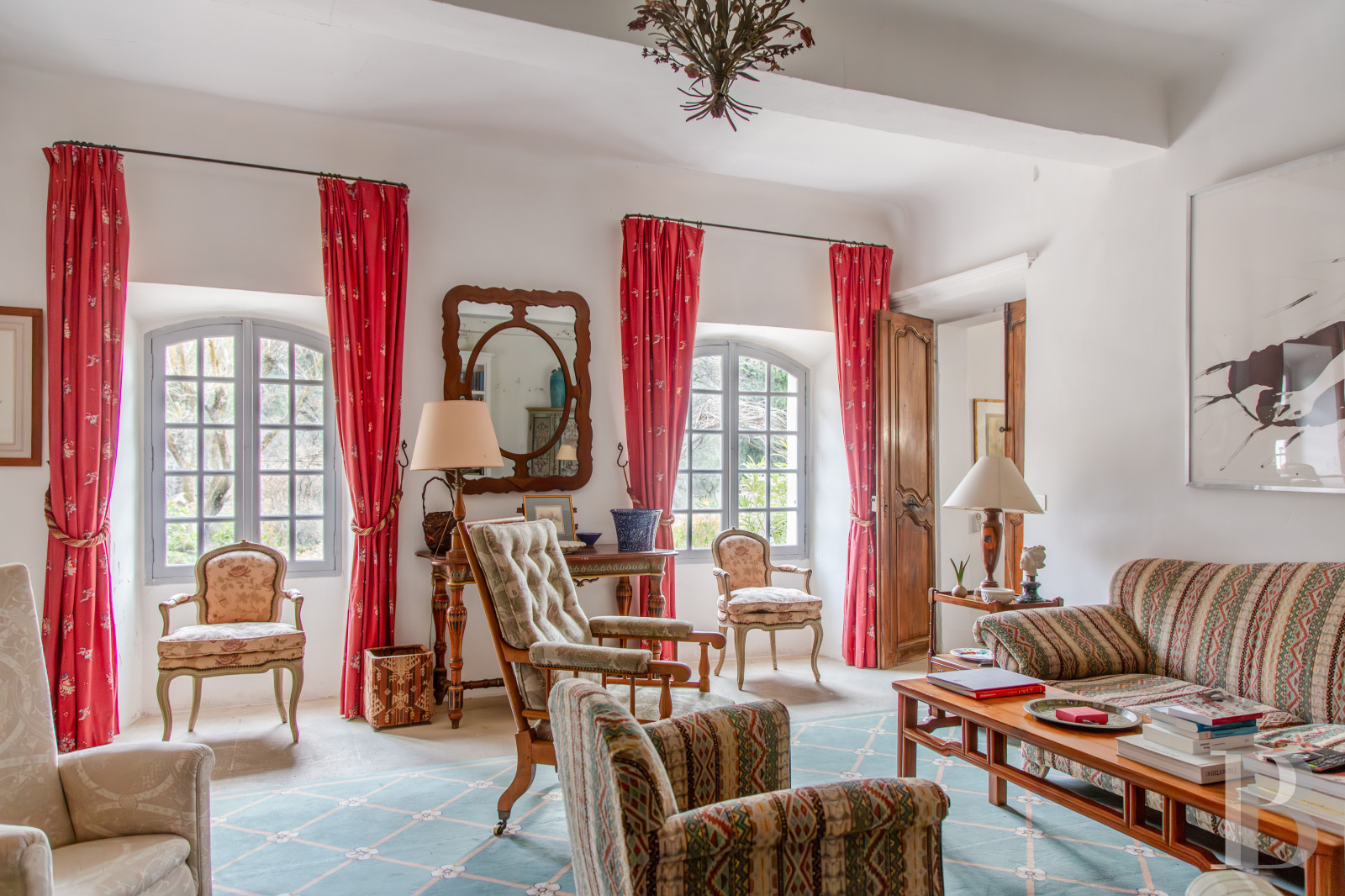
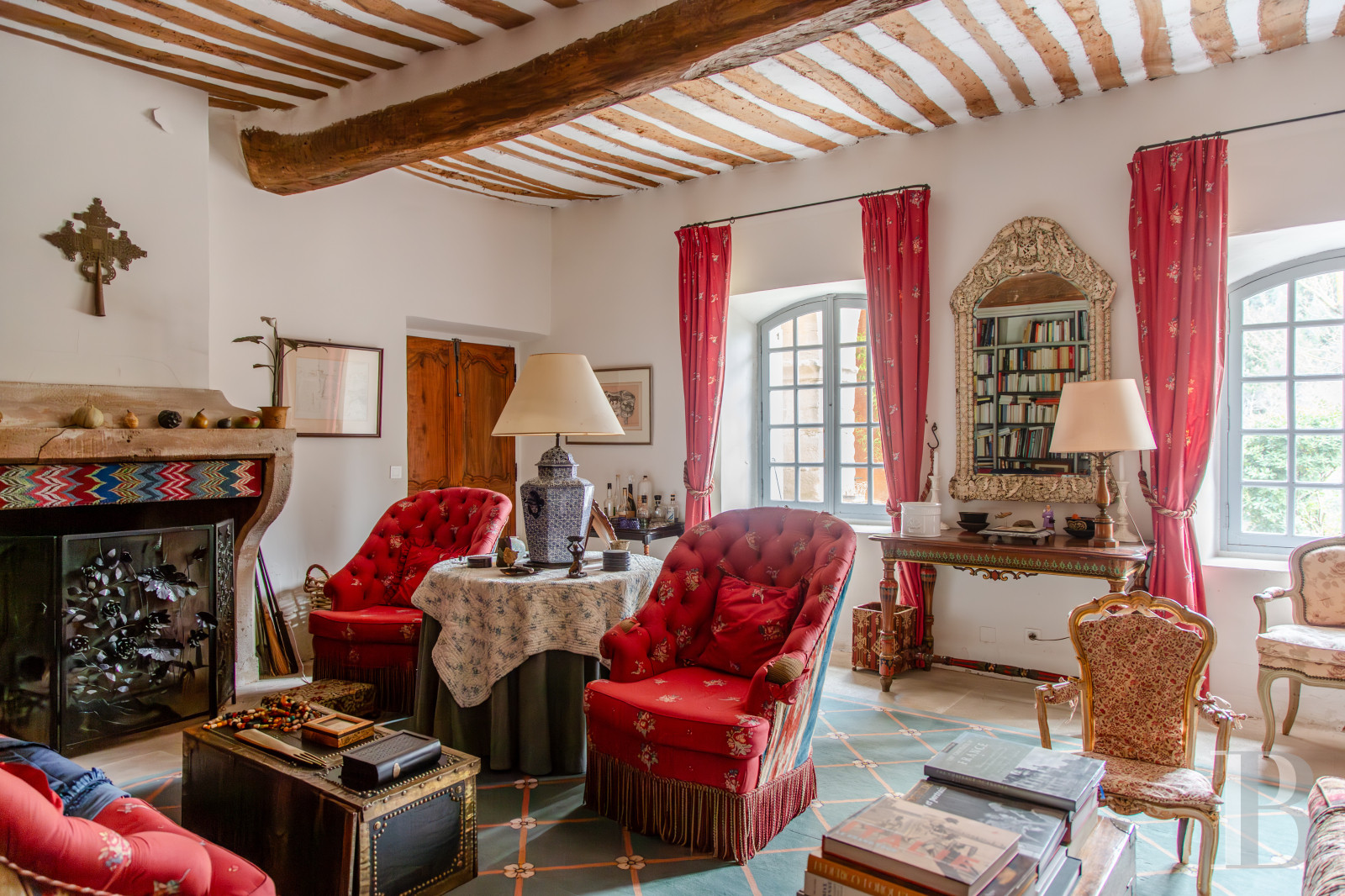
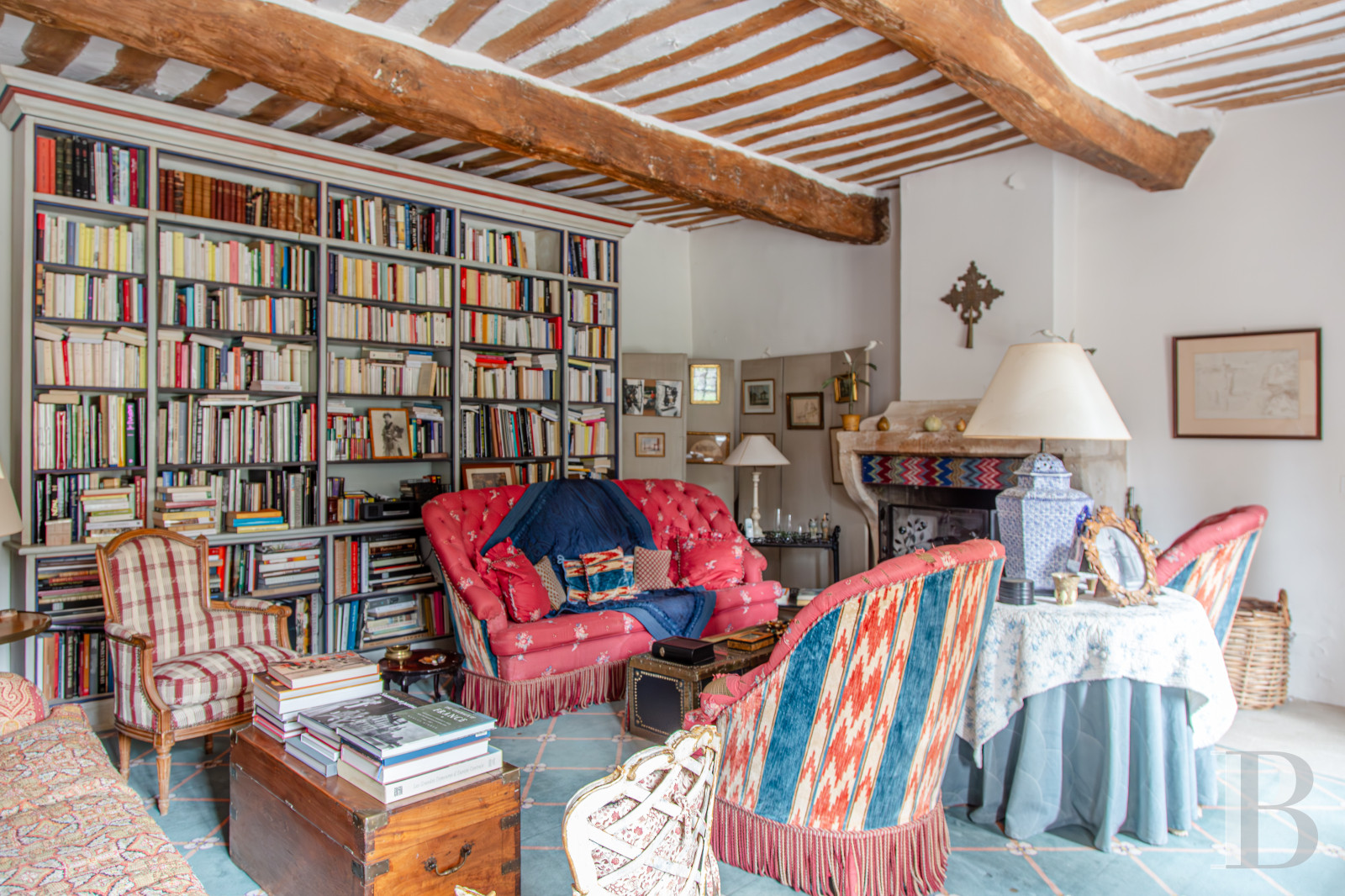
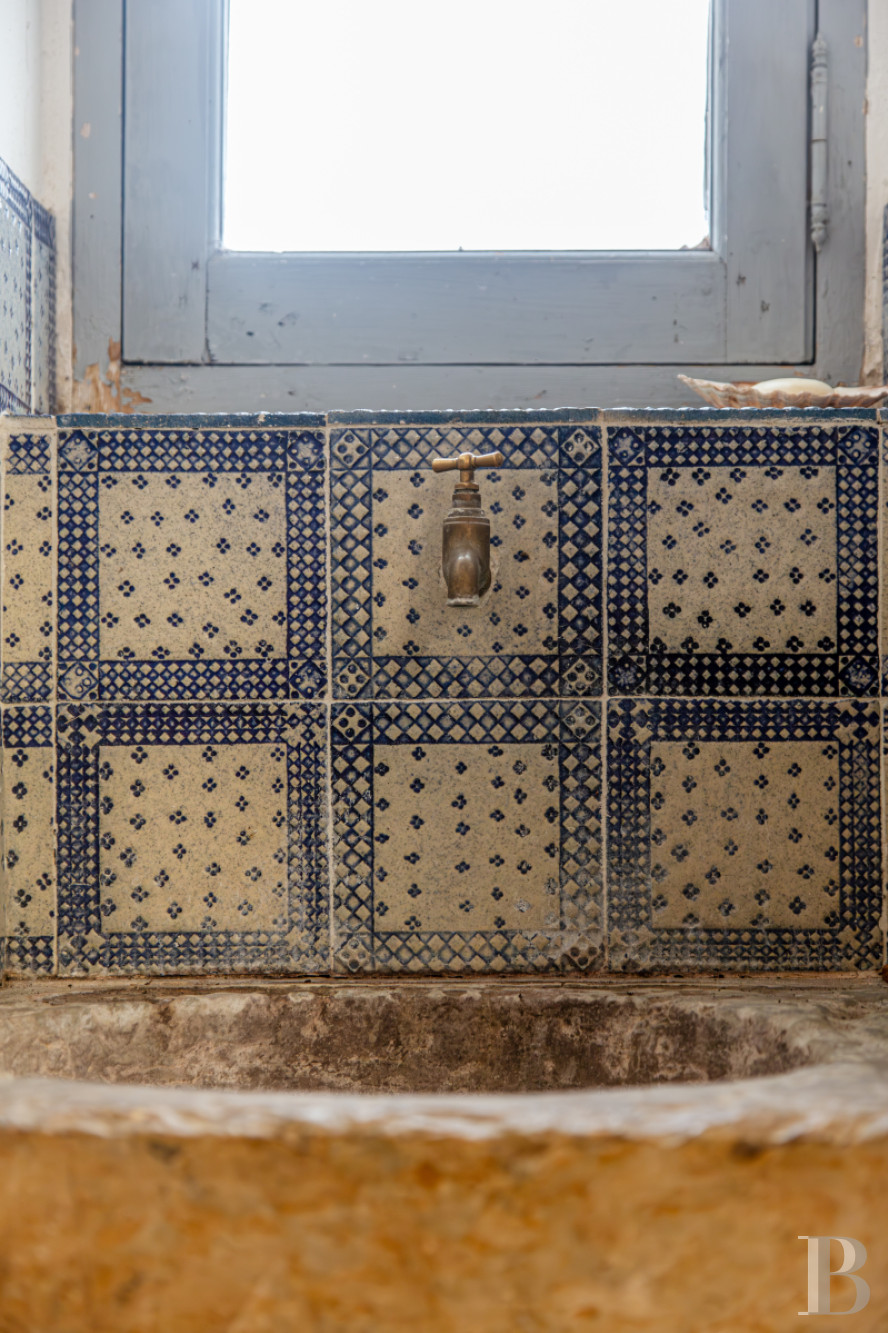
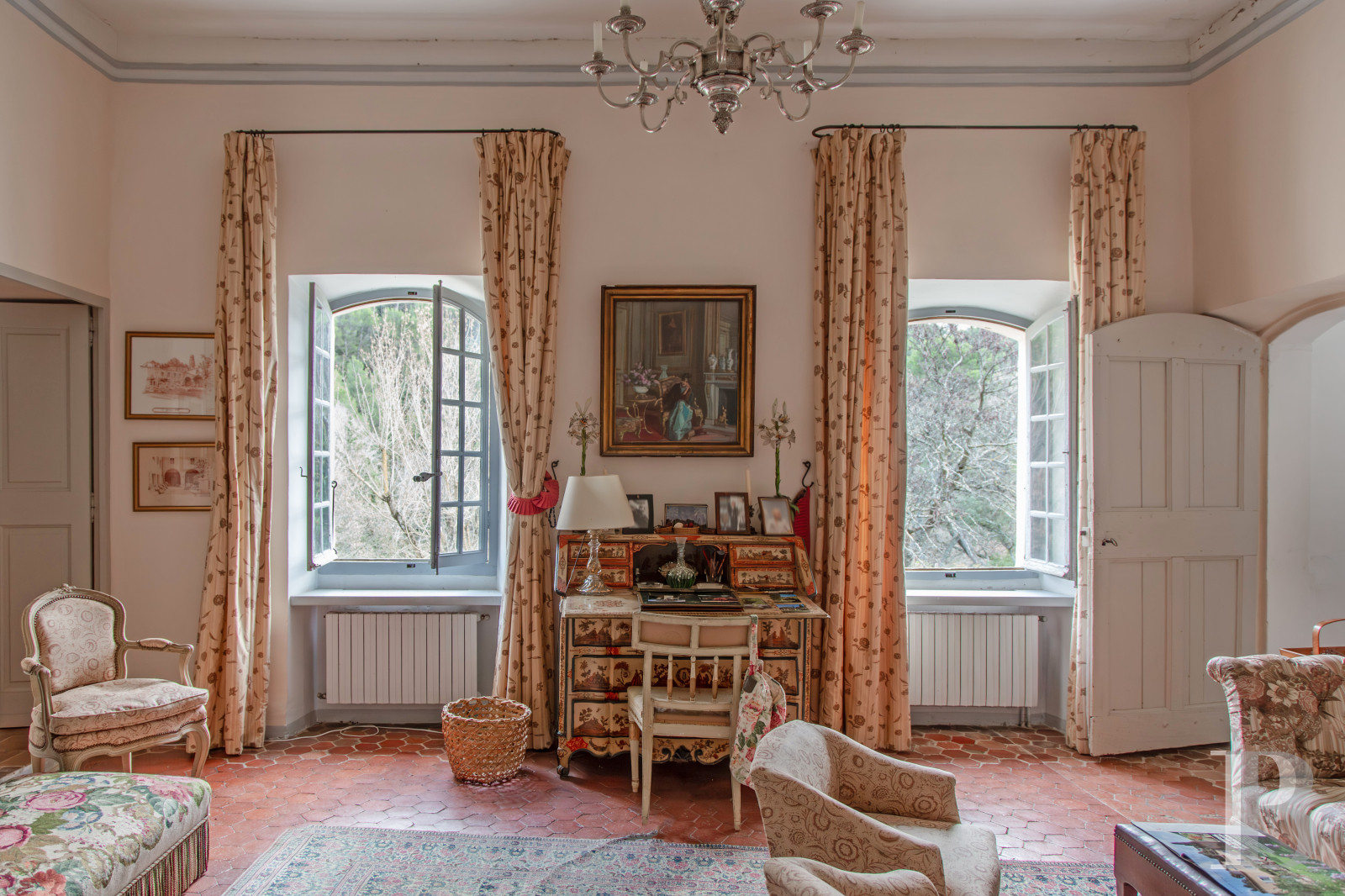
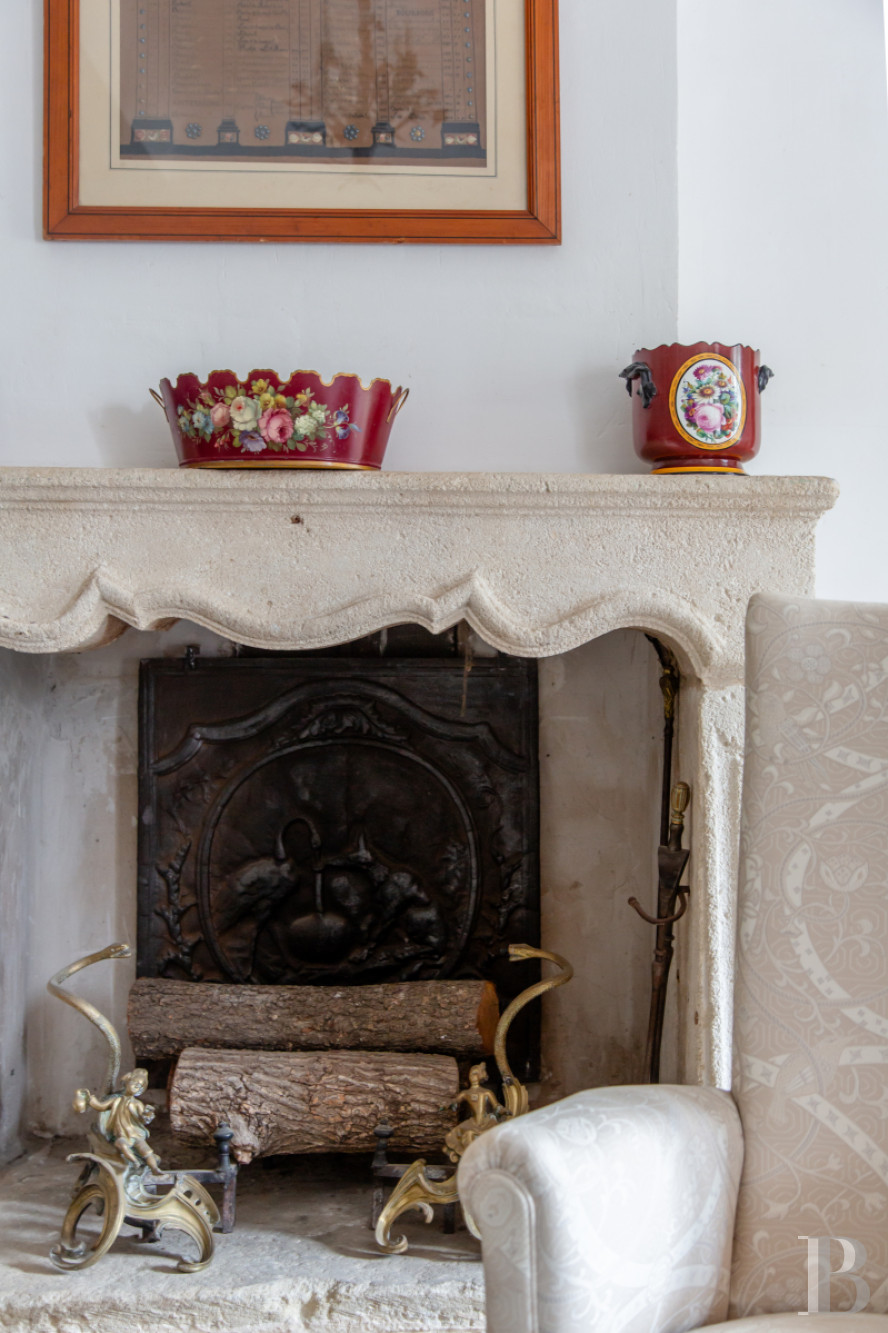
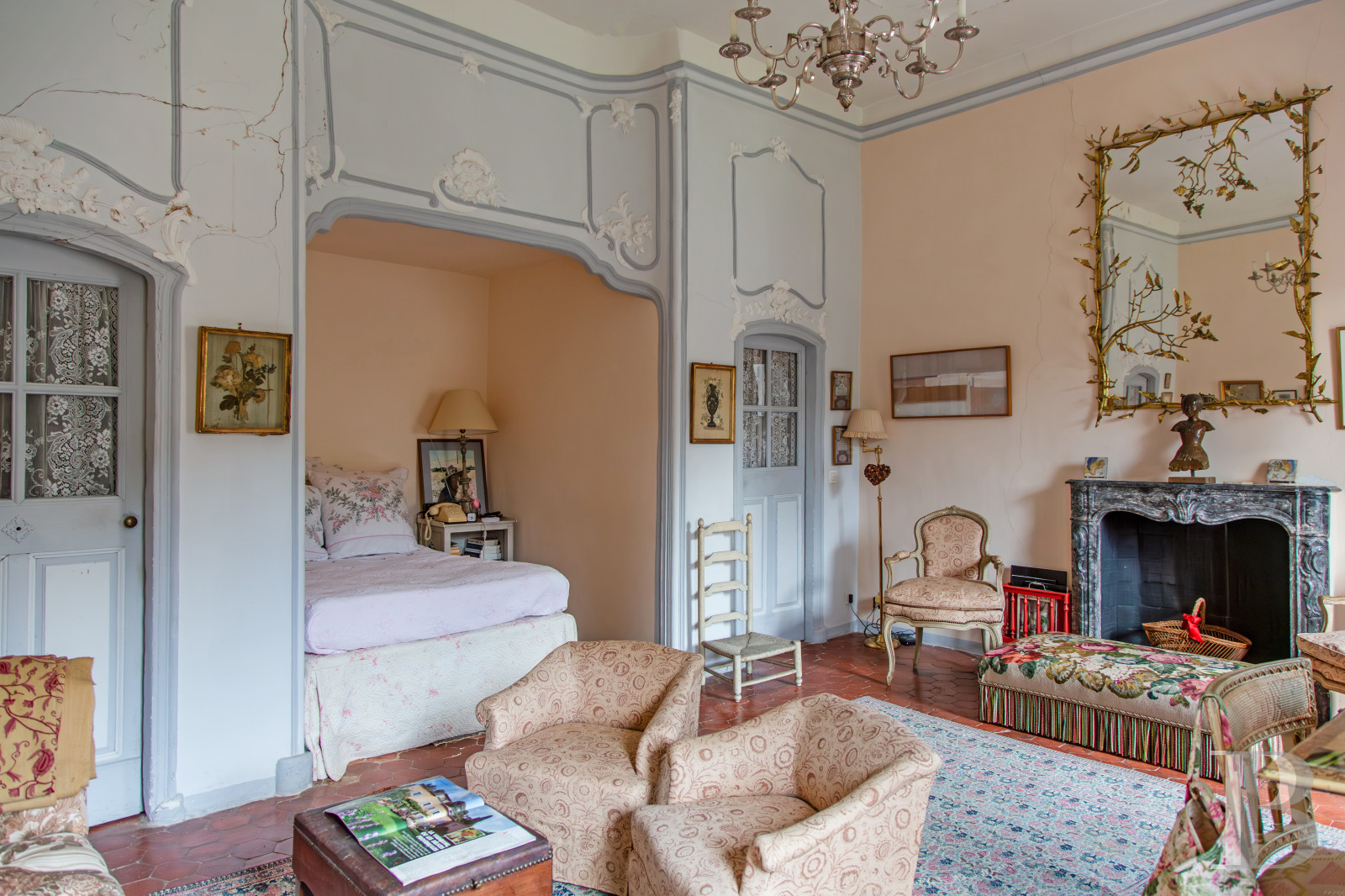
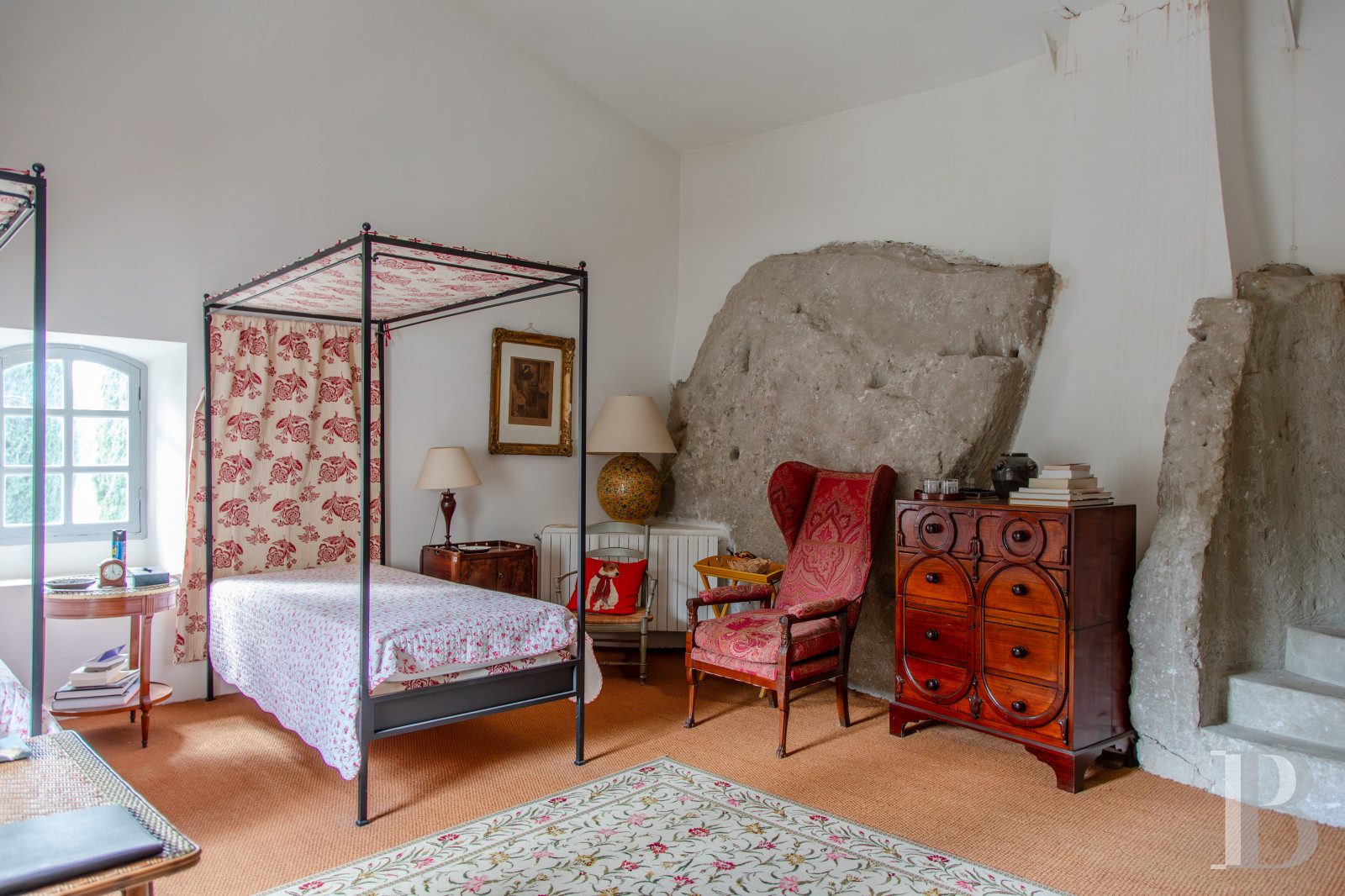
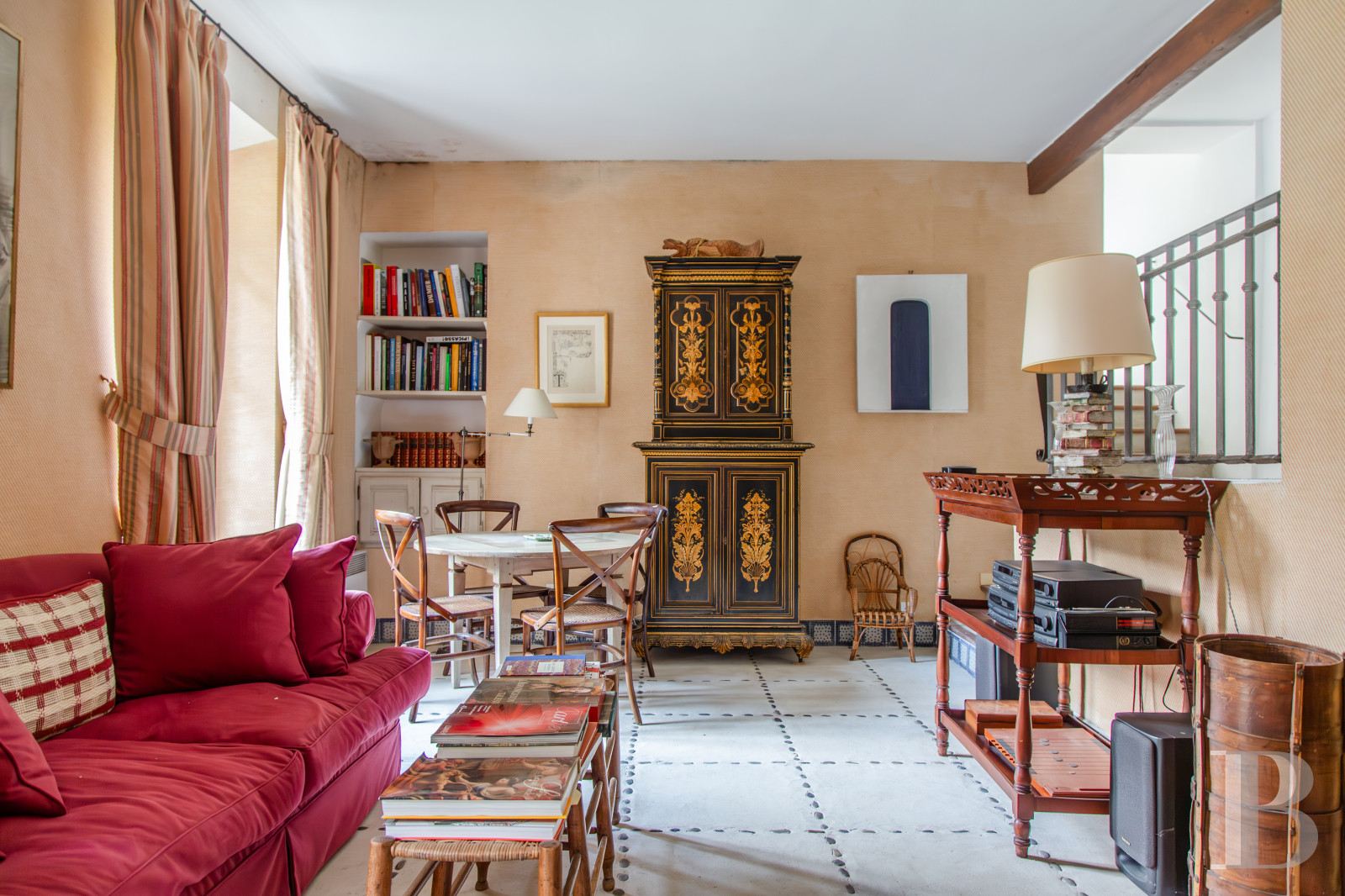
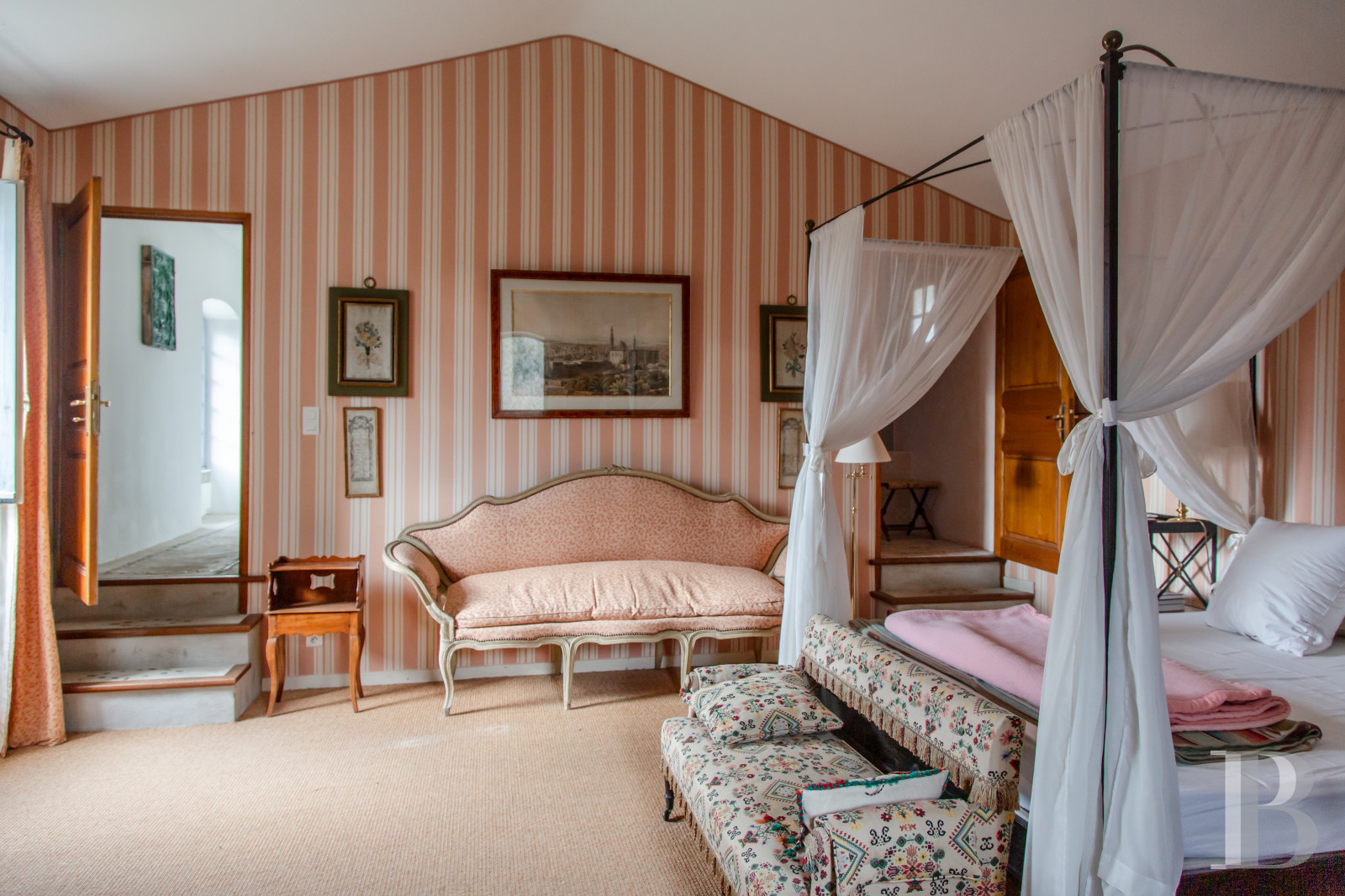
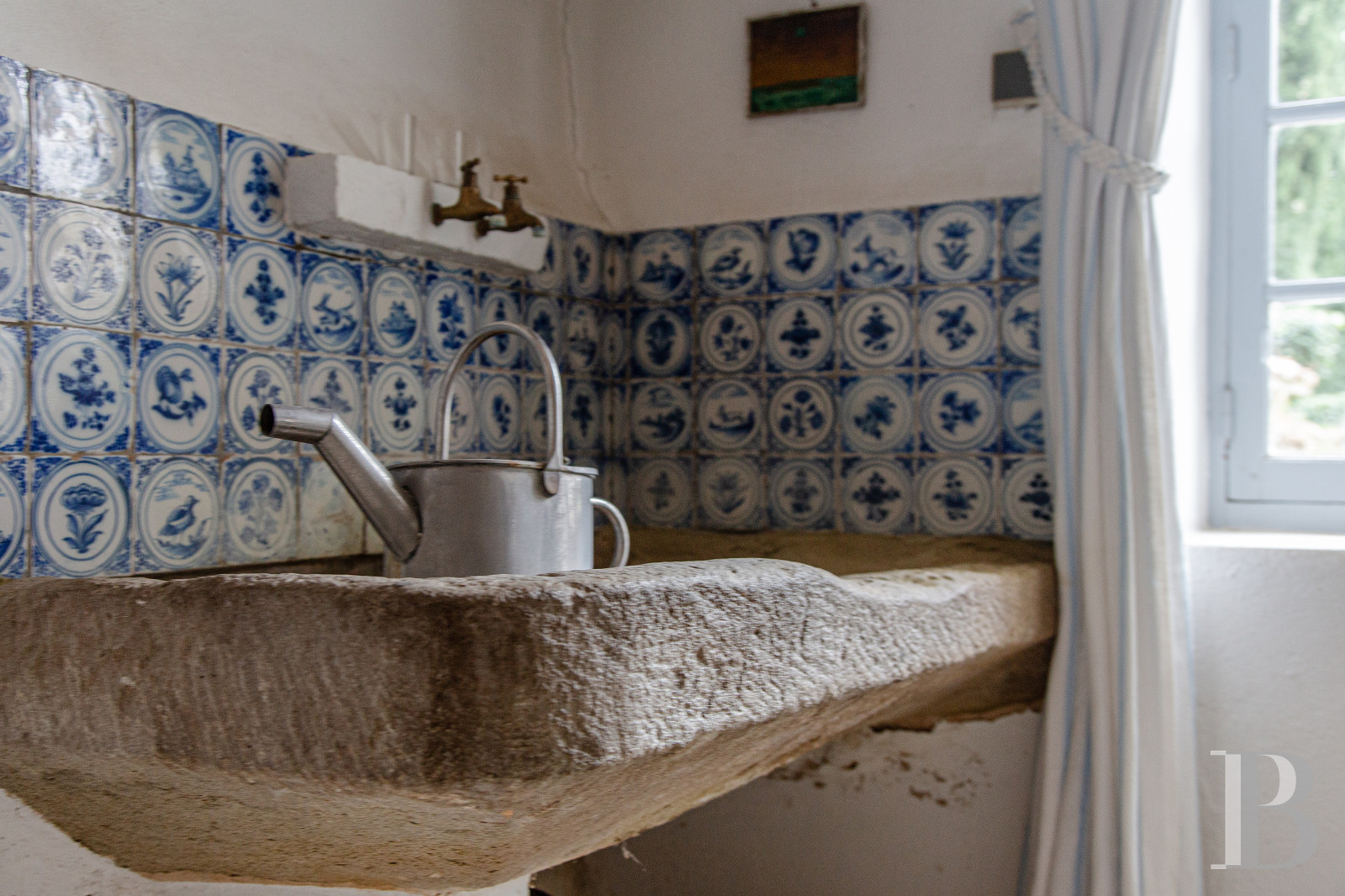
Access to the main dwelling is via a central door in the southern facade. Topped with a trellis, it opens onto the stairwell of the dovecote tower, which leads to the rooms on either side, on the east and west sides of the ground floor. The south-west gable contains the semi-troglodytic rooms, lit from the south and west, used as a dining room and kitchen with an adjoining scullery and storeroom. On the east side, the level has two vast reception rooms - a lounge and a library - which provide a link with the secondary building, accessed via a door opening onto a second stairwell. On the first floor, above the kitchen and dining room, there is a vast bedroom with a gabled ceiling at roof level. An interior staircase cut into the rock leads to a bathroom on a slightly higher level. This shower room can also be accessed from the main stairwell by taking a flight to the north, with a landing containing a toilet and leading to a secondary hallway against the north elevation, which once led to the rooms overlooking the courtyard. This level is completed to the east, above the reception rooms, by an elegant bedroom and its en suite bathroom, well lit by low-arched windows overlooking the courtyard garden and the landscape below. The bedroom boasts remarkable decorative features, including an alcove richly decorated with gypseries, a fireplace and a red tiled floor. The ensemble bears witness to a particular concern for comfort in the 18th century. The doors on either side of the alcove provide a link to the secondary hallway, which allowed the servants to access the bedrooms without using the main stairwell. Above this, a single room forms the second floor of the former dovecote. Illuminated by a window overlooking the courtyard, it has been converted into a bedroom.
The east wing
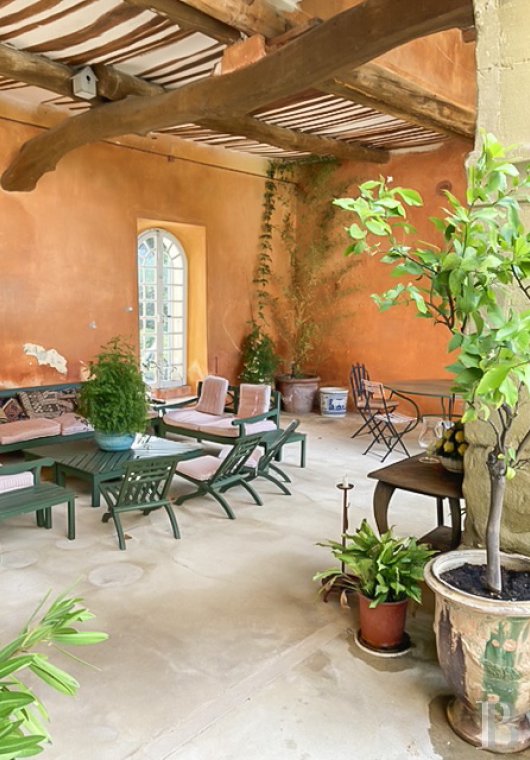
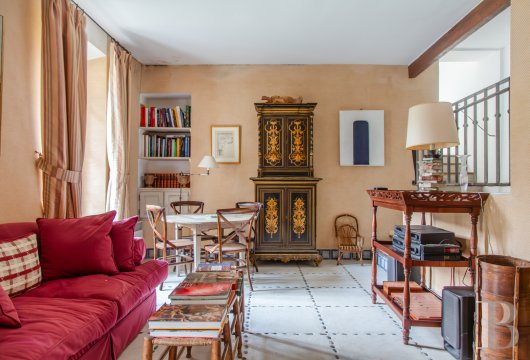
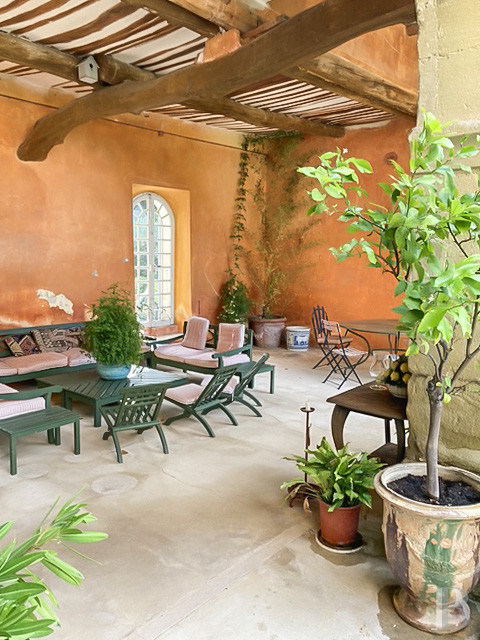
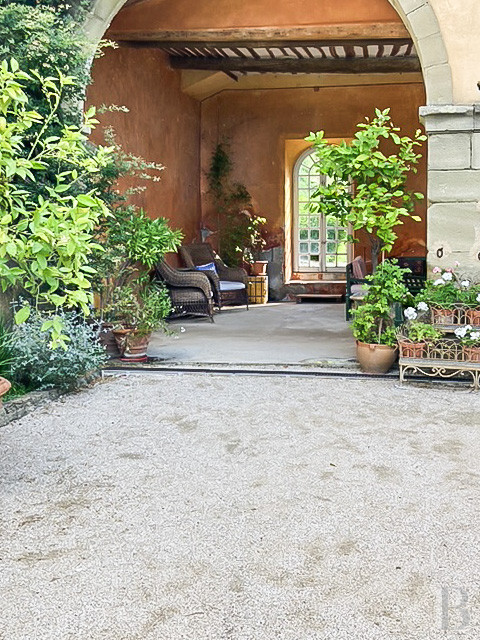
From the courtyard garden, the secondary building is built around a hall accessible from the porch, which has twin arches overlooking the courtyard. This second building is semi-open on the ground floor where, on either side of a vast covered area now used as a summer lounge and once a barn, there are the stairwell in the corner and a tool storage room at the southern end. The secondary hall contains not only a staircase to access the first floor, but also two corner rooms against the wall, housing a toilet and storage space, and access to a room used as a wine cellar and storage area. The first floor of the secondary building has two distinct elevations, the first a living room with a high, sloping ceiling above the hall, and the second what must have been the attic or hayloft of the tenant farm, above the porch and the coach house. Three bedrooms and two shower rooms with toilets have been cleverly arranged on this level. They are reached by a hallway against the courtyard elevation, which receive plenty of light.
The north wing
Separate from the main dwelling and now used as caretaker's accommodation, the contemporary northern extension to the farmhouse is accessed via the terrace that runs along the north side of the main building on the first floor. It comprises a living room opening onto a kitchen and contained in a new volume, and two bedrooms with shower rooms and toilets, formerly attached to the first floor of the main building. Access between the two dwellings remains, now concealed in a cupboard that joins the upper landing to the main stairwell.
The terraced parkland and woods
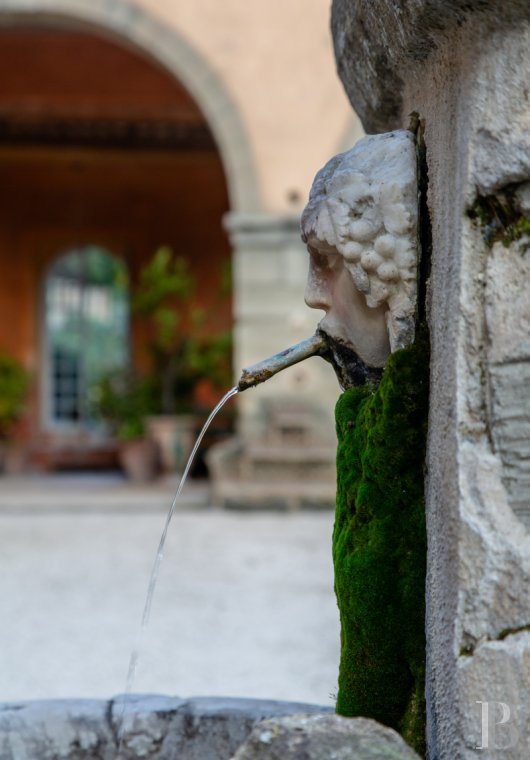
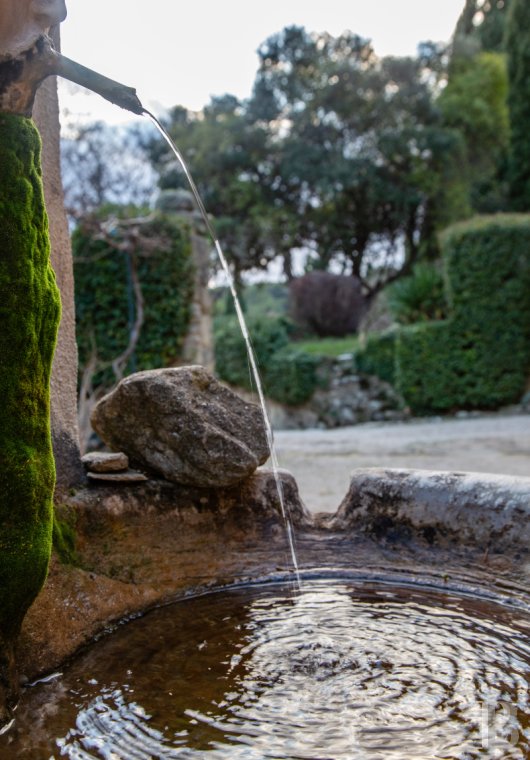
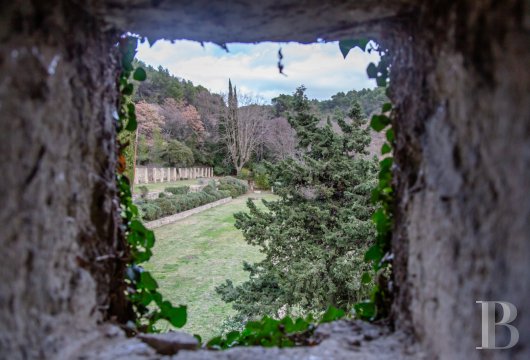
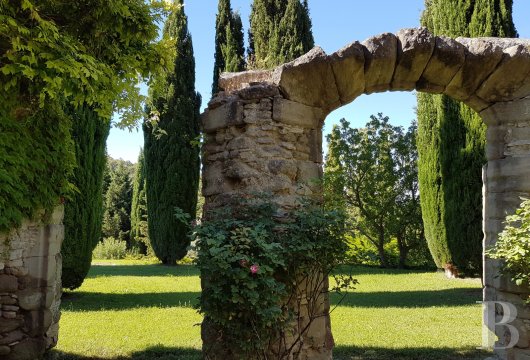
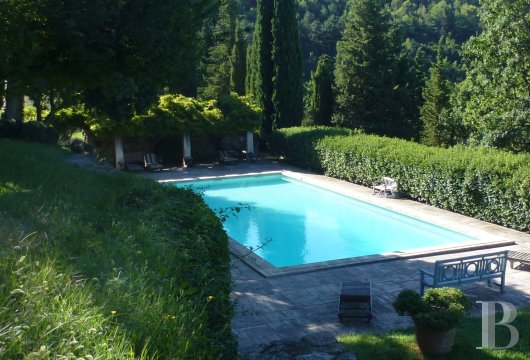
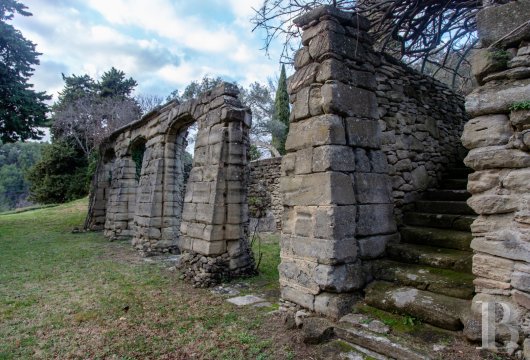
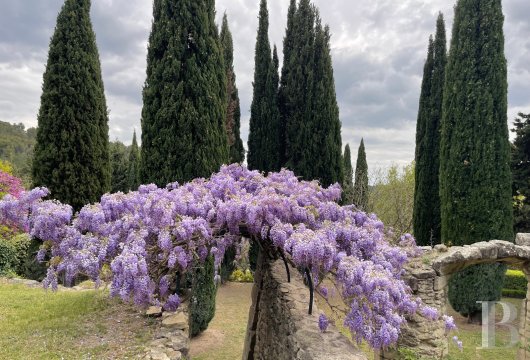
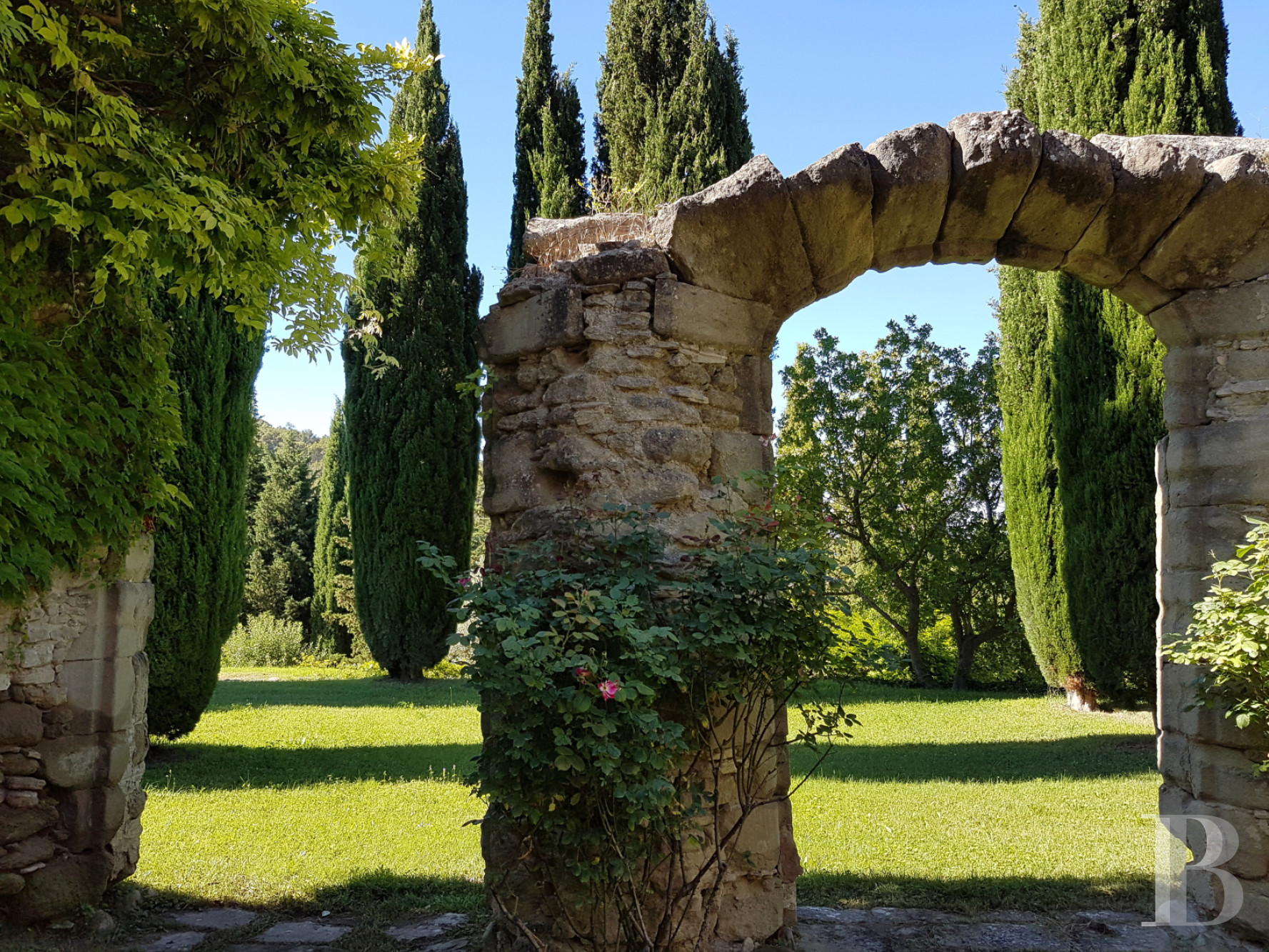
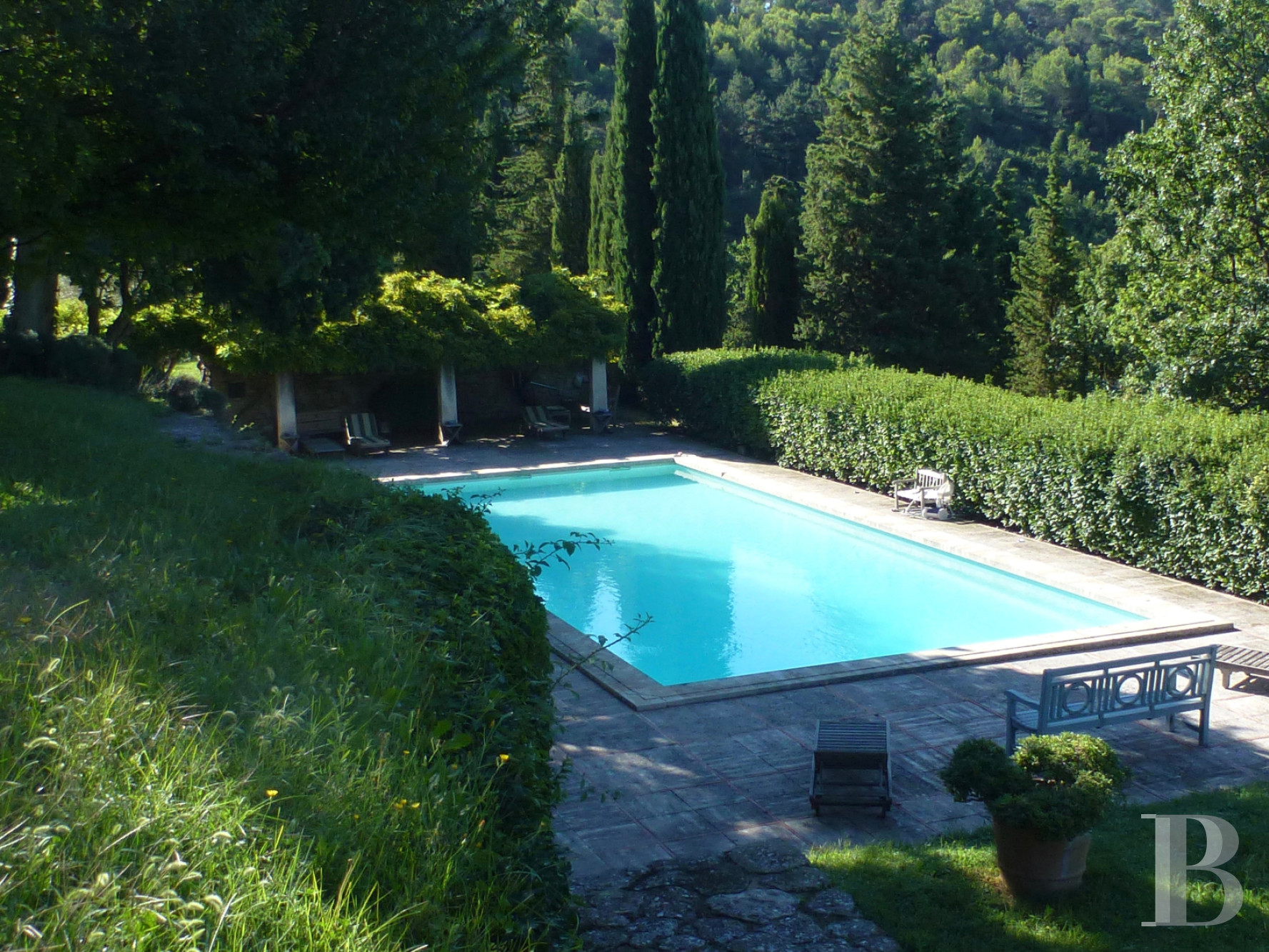
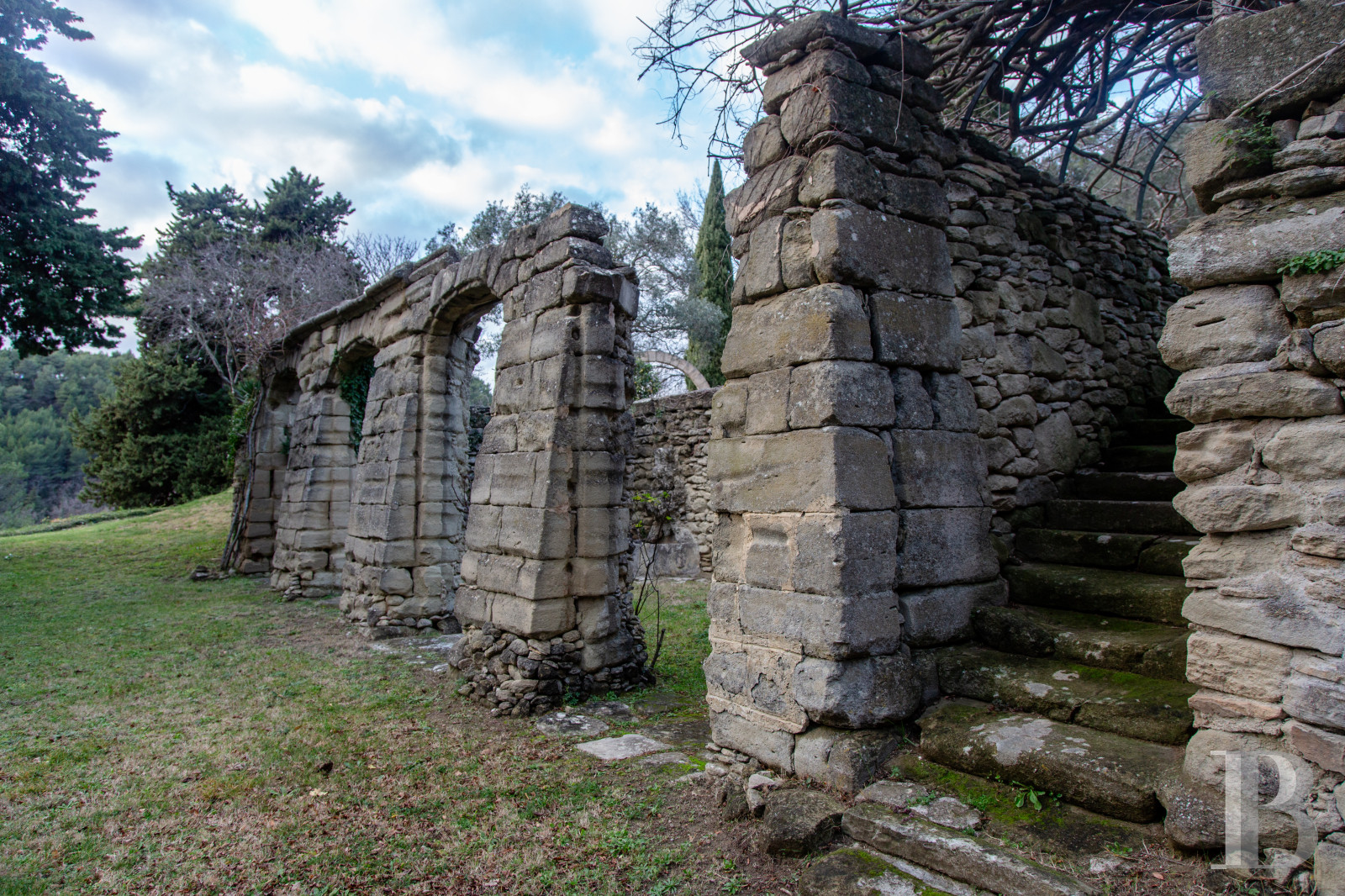
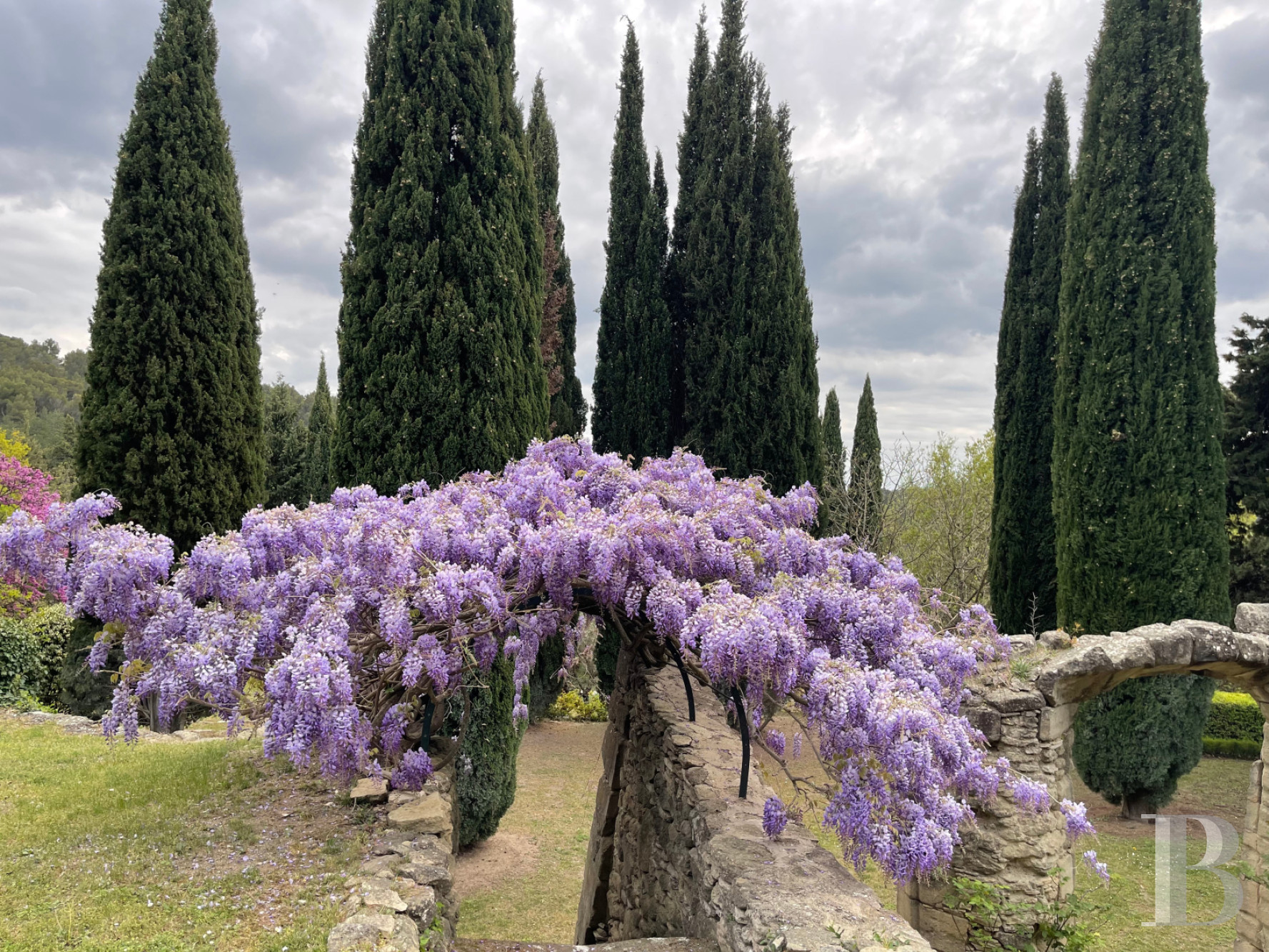
The property extends over approximately 8 hectares. It is made up of farmland that is now landscaped and surrounded by woods. A remarkable project to restore and rebuild the retaining walls was undertaken in parallel with the restoration of the buildings. Six levels of terraces follow the slope, encircling the rocky spur at the foot of which the estate overlooks the valley. In the eastern part, the terraces alternate between narrow strips planted with cypresses, oleanders, olive trees and a long trellis where the slope is steepest, and towards the south-east, vast open flowerbeds in the style of boulingrins. In the western part of the estate, which stretches west and south, the terraces are no longer straight but curved, following the contours of the land. At the top, they contain a small troglodytic structure, followed by a parking area that extends into a meadow. The latter contains a greenhouse, the entrance to which is marked by a recently built stone arch. Further to the south, the remains of an orangery can be seen on the first terrace, of which only the southern elevation remains, pierced by four basket-handle undercrofts, while in the background a possible stone archway access leads to the upper terrace. Further to the south, and still on open ground, a swimming pool (15 x 6 m) has been dug into the terraces, as well as a technical room, which is accessible from the lower terraced wall. Lastly, above the access road and partially covered by the woods, a vast reservoir of around 500 m², originally used for the gravity-fed irrigation of terraced crops, adjoins a simple stone building with a pitched roof to the east, now used as a technical room for drilling and irrigating the estate by automatic sprinklers. The course of the springs that were tapped is still visible, particularly a little to the east where there is an old watering hole or "gour" that has been converted into a pool at the foot of a large rock in the valley bed. The rock has not deterred some of the ancient oak trees from sinking their roots into the pool.
Our opinion
Although the water has been flowing here since the dawn of time, and patient work by man has made it possible to cultivate here on terraces since the 17th century, in the late 20th century, an aesthete in love with Petrarch, in the image of the Florentine poet's muse Laure de Sade, poured out his soul here, transforming the former Baudet de Sade farmhouse into a veritable piece of poetry. The impenetrable nature of humanity is reflected here in the striking contrast between the deep wooded valleys in the heart of the foothills of the Vaucluse mountains, and the cascade of Italianate terraces containing rich trellises, vast ponds and elegant classical flowerbeds. The rock pillars are the guardians, while life can flow here sheltered from the hustle and bustle of our time, bathed in a southern sun discreetly punctuated and tempered by cypresses and ancient oaks.
2 800 000 €
Including negotiation fees
2 666 667 € Excluding negotiation fees
5%
incl. VAT to be paid by the buyer
Reference 928931
| Main building floor area | 543 m² |
| Outbuildings floor area | 20 m² |
| Land registry surface area | 8 ha 42 a |
| Total floor area | 500 m² |
French Energy Performance Diagnosis
Information on the risks to which this property is exposed is available on the website: www.georisques.gouv.fr
Share


NB: The above information is not only the result of our visit to the property; it is also based on information provided by the current owner. It is by no means comprehensive or strictly accurate especially where surface areas and construction dates are concerned. We cannot, therefore, be held liable for any misrepresentation.