



A 16th-century inn with an olive grove and vineyard on five hectares of land,
nestled between the cities of Avignon, Uzès and Nîmes in southern France
nestled between the cities of Avignon, Uzès and Nîmes in southern France
Sernhac,
GARD
languedoc-roussillon
30210
FR

Location
To get past a rocky hill that stood on the path of the Roman aqueduct leading to the city of Nîmes, engineers of antiquity chiselled away at the rock with pickaxes. Later, in 1535, this inn, where you could enjoy a drink, was built. And in 1564, Catherine de' Medici and her children, accompanied with the seer Nostradamus, briefly stayed here. The edifice lies on the edge of the village of Sernhac. It was built upon the remains of the aqueduct that runs along the famous Roman bridge Pont du Gard. It is tucked away in the heart of Escaunes valley, a peaceful spot in the beautiful countryside of France’s Gard department. The building was restored in the late 20th century. It has kept its original authenticity. Avignon and Nîmes-Pont-du-Gard high-speed train stations are only 30 minutes away by car. You can get onto the A9 motorway in 15 minutes. Nîmes airport, which offers international flights, is 20 minutes away. And the delightful beaches and landscapes of the nearby Camargue area are just 30 minutes from the property.
Description
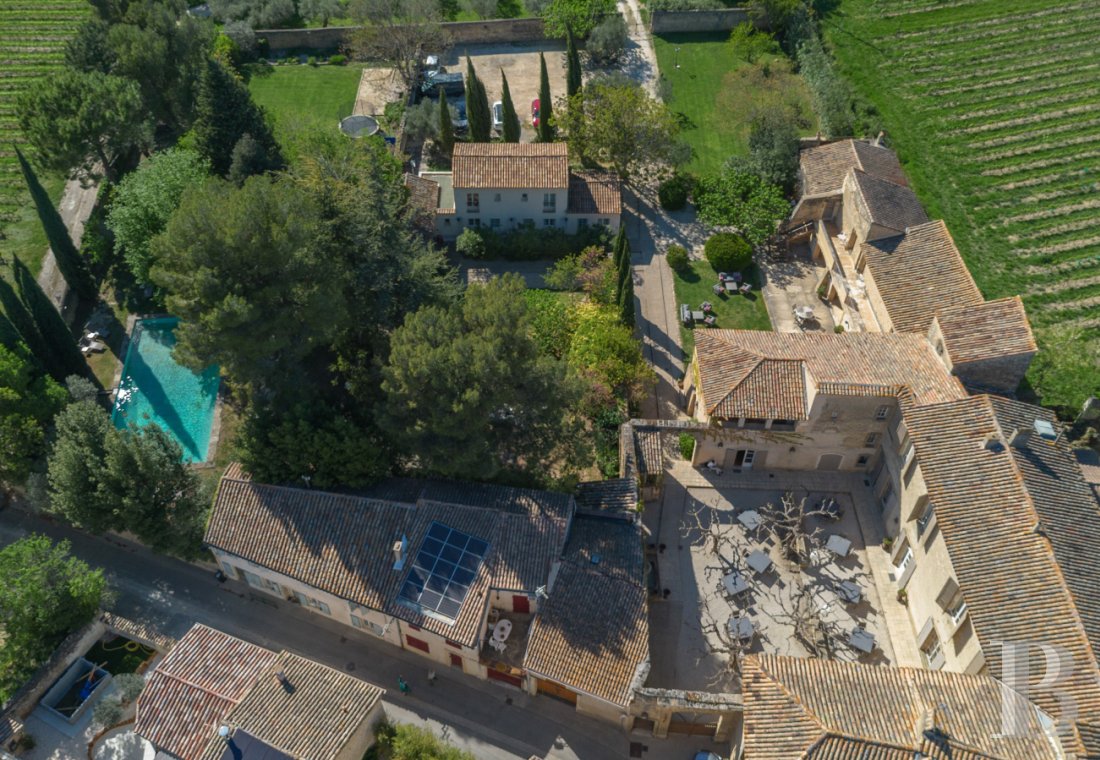
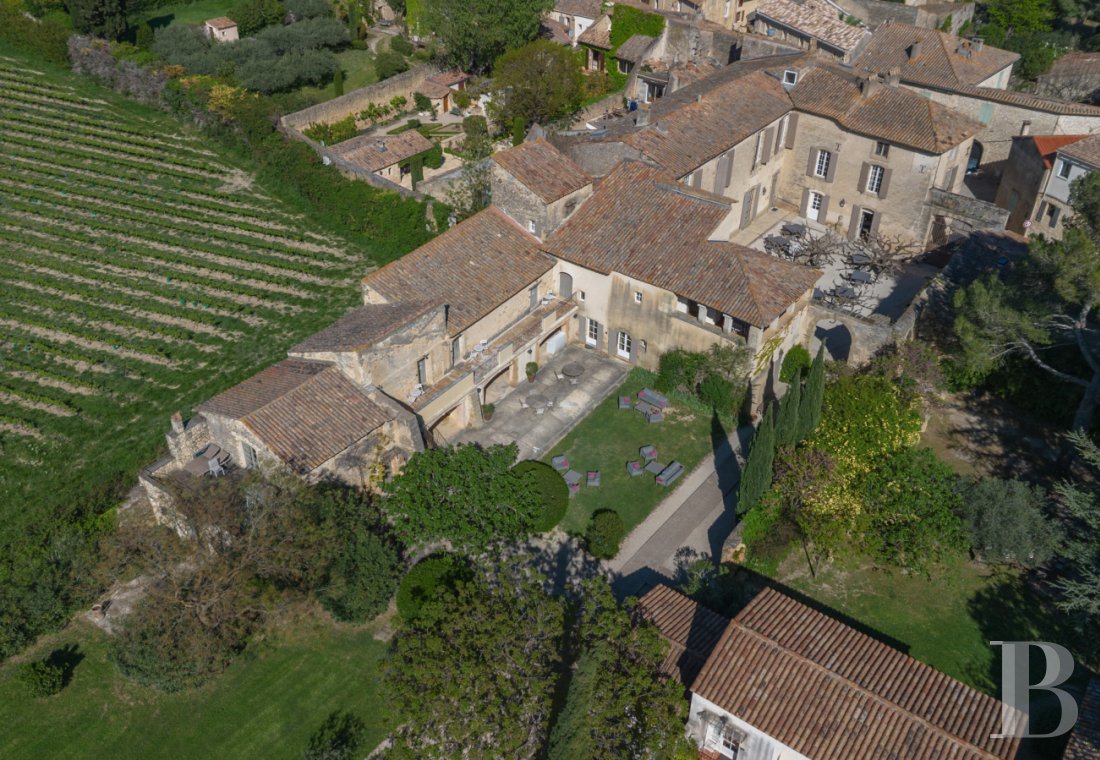
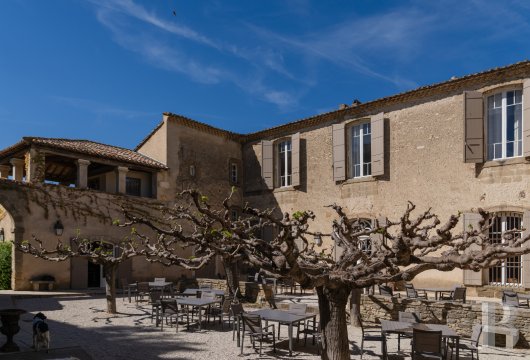
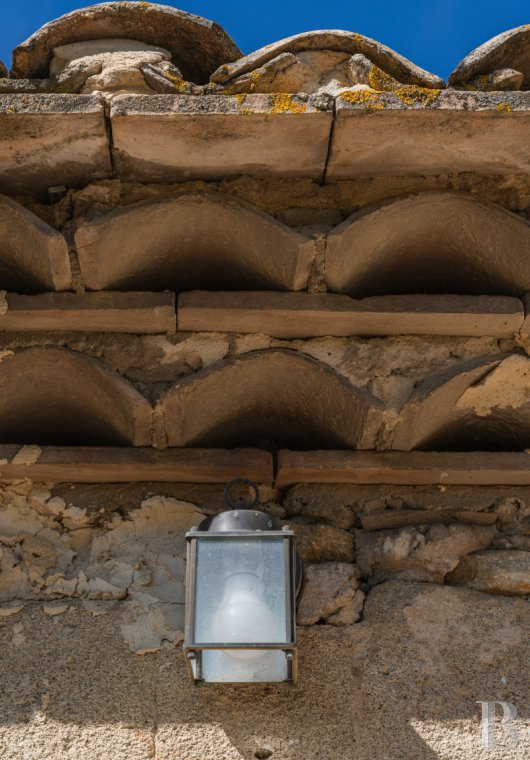
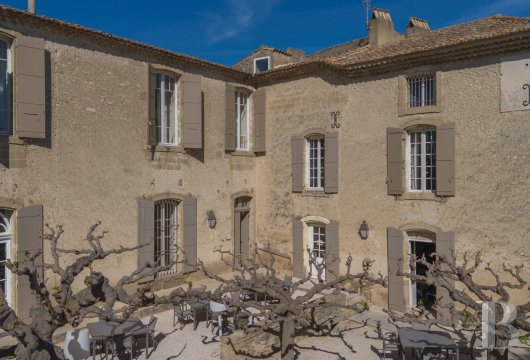
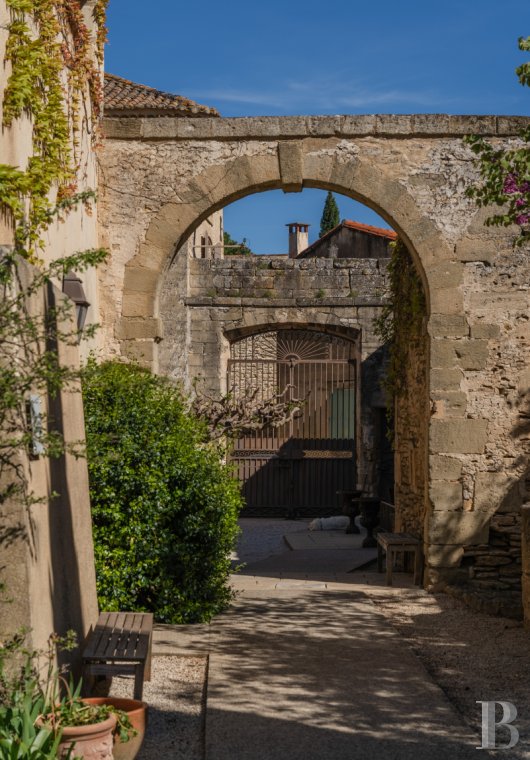
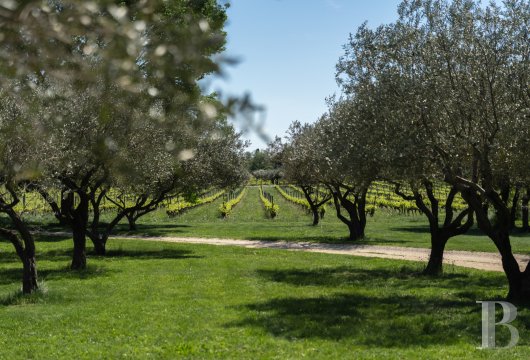
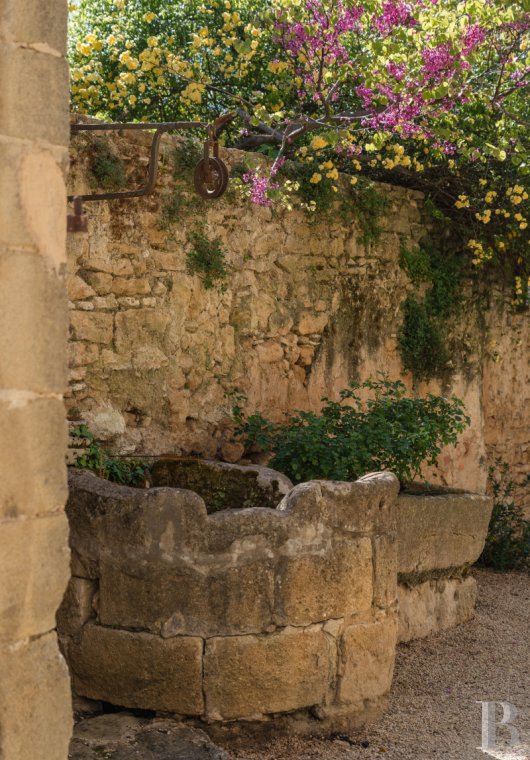
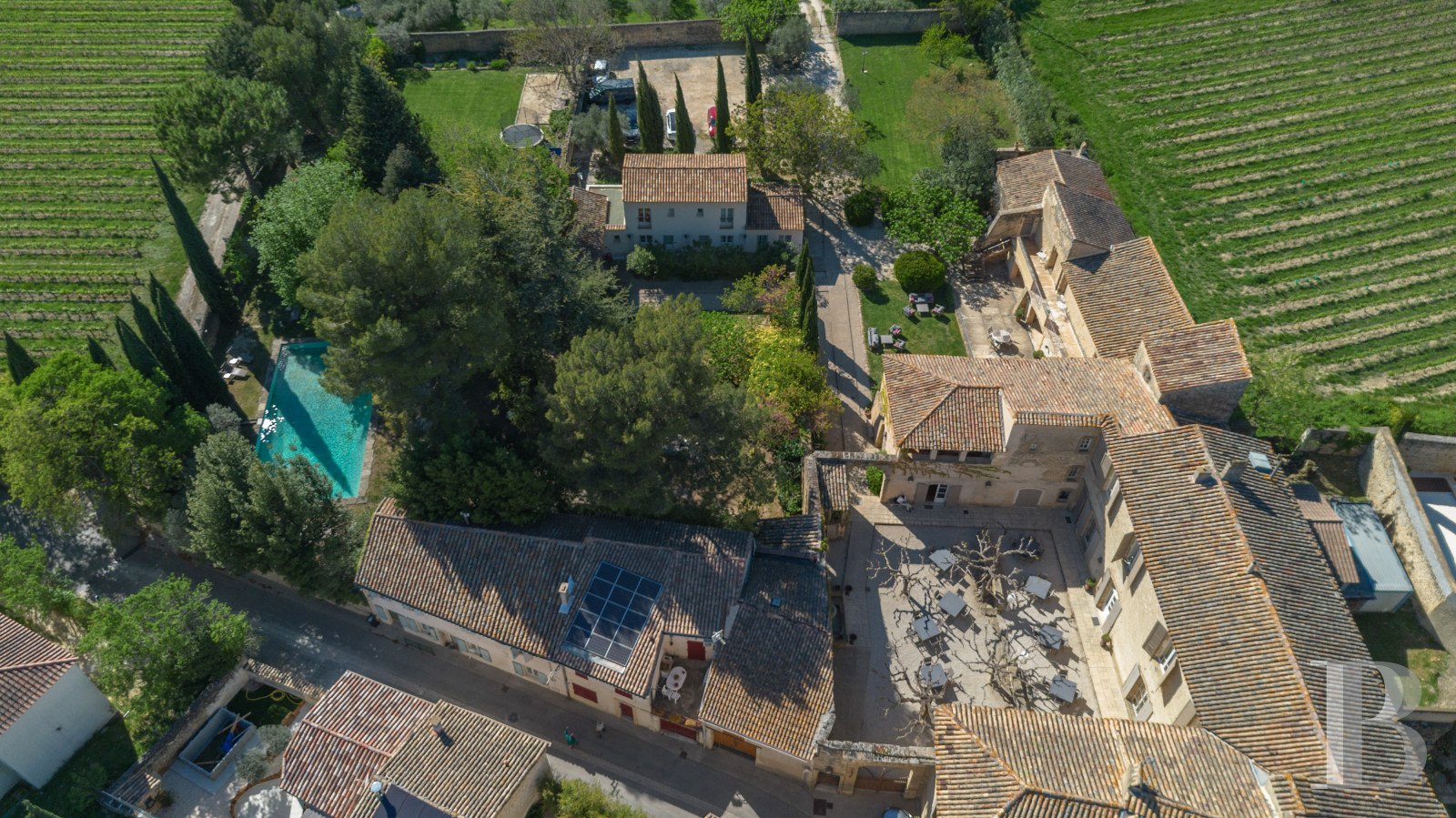
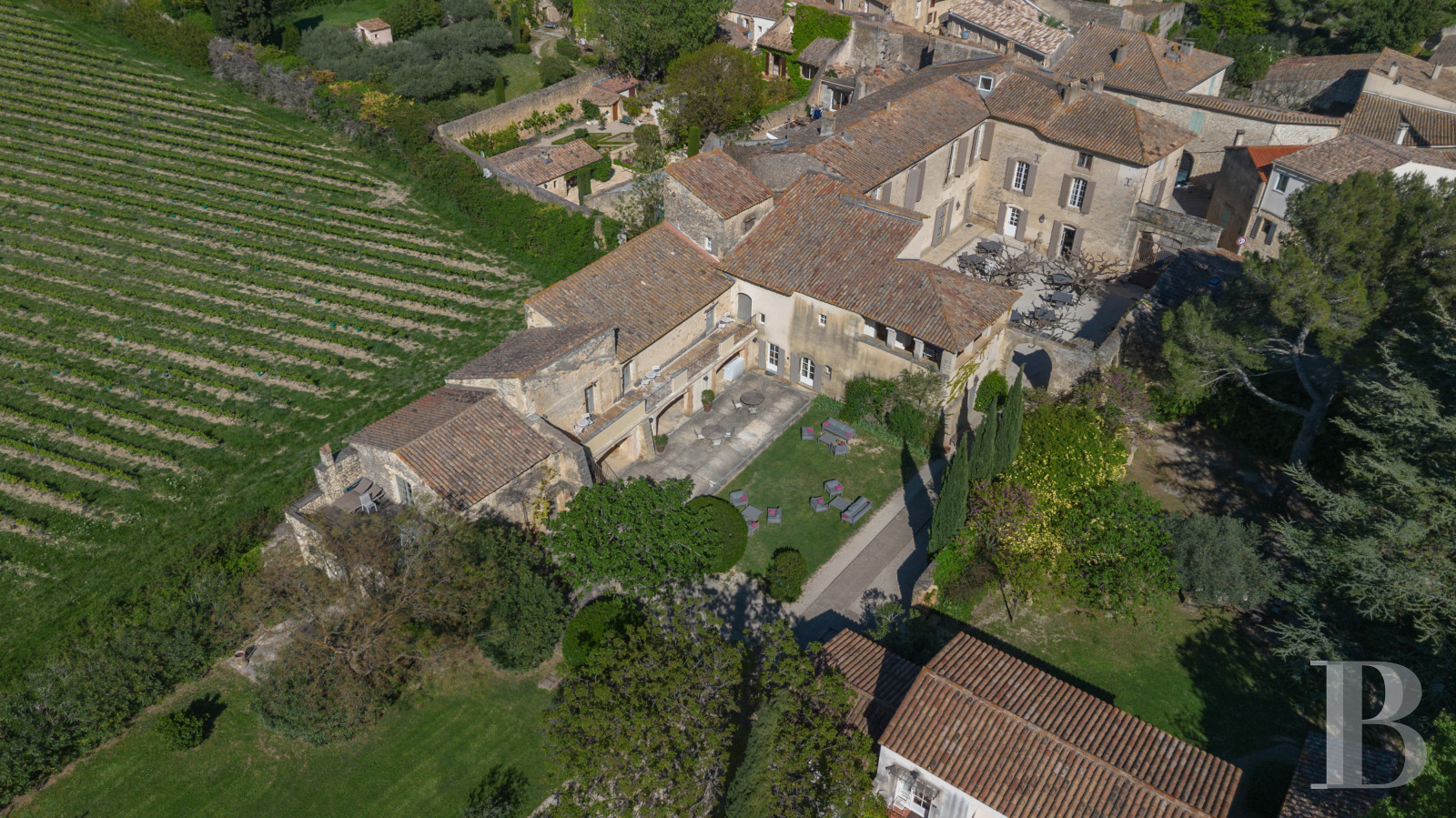
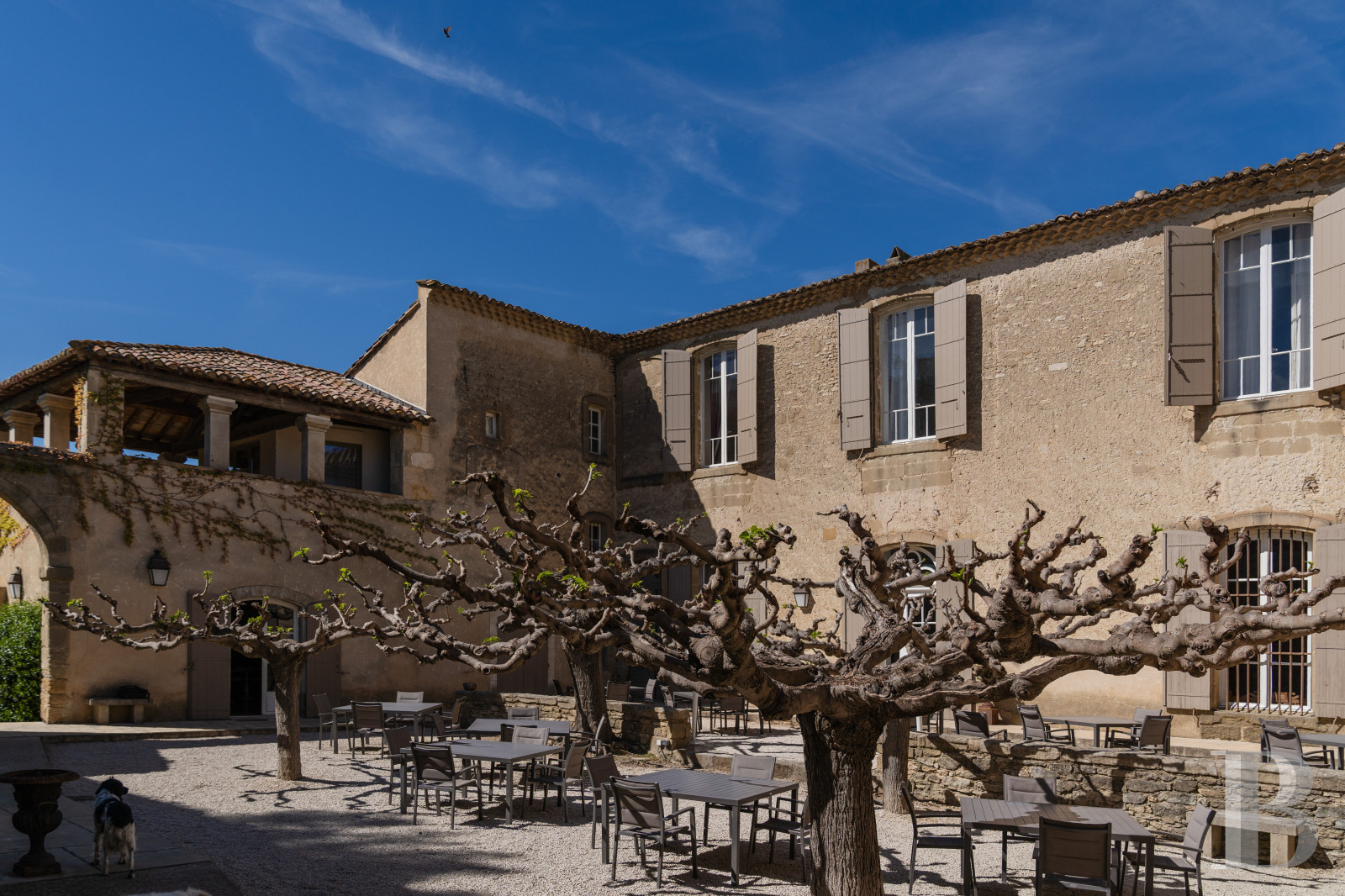
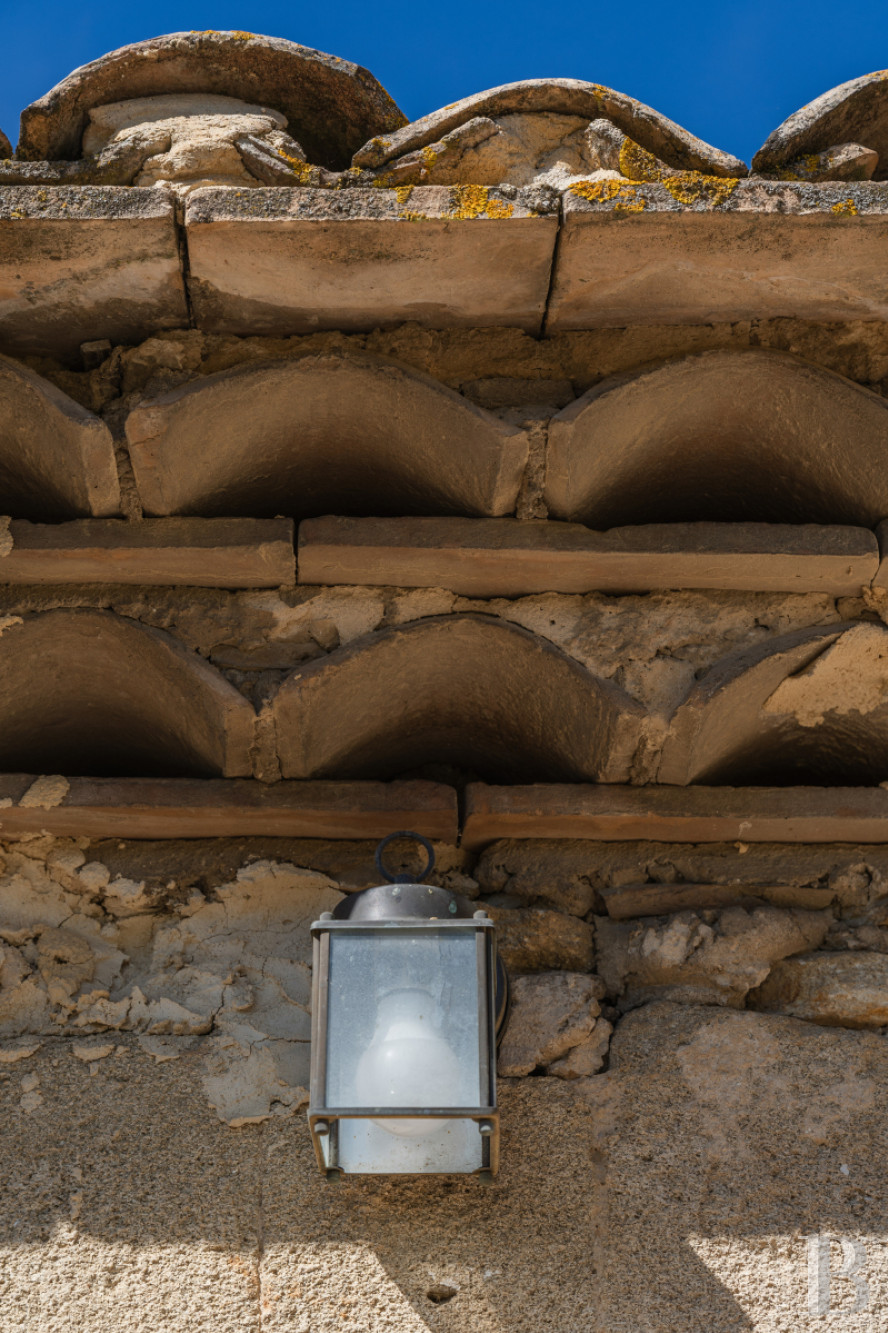
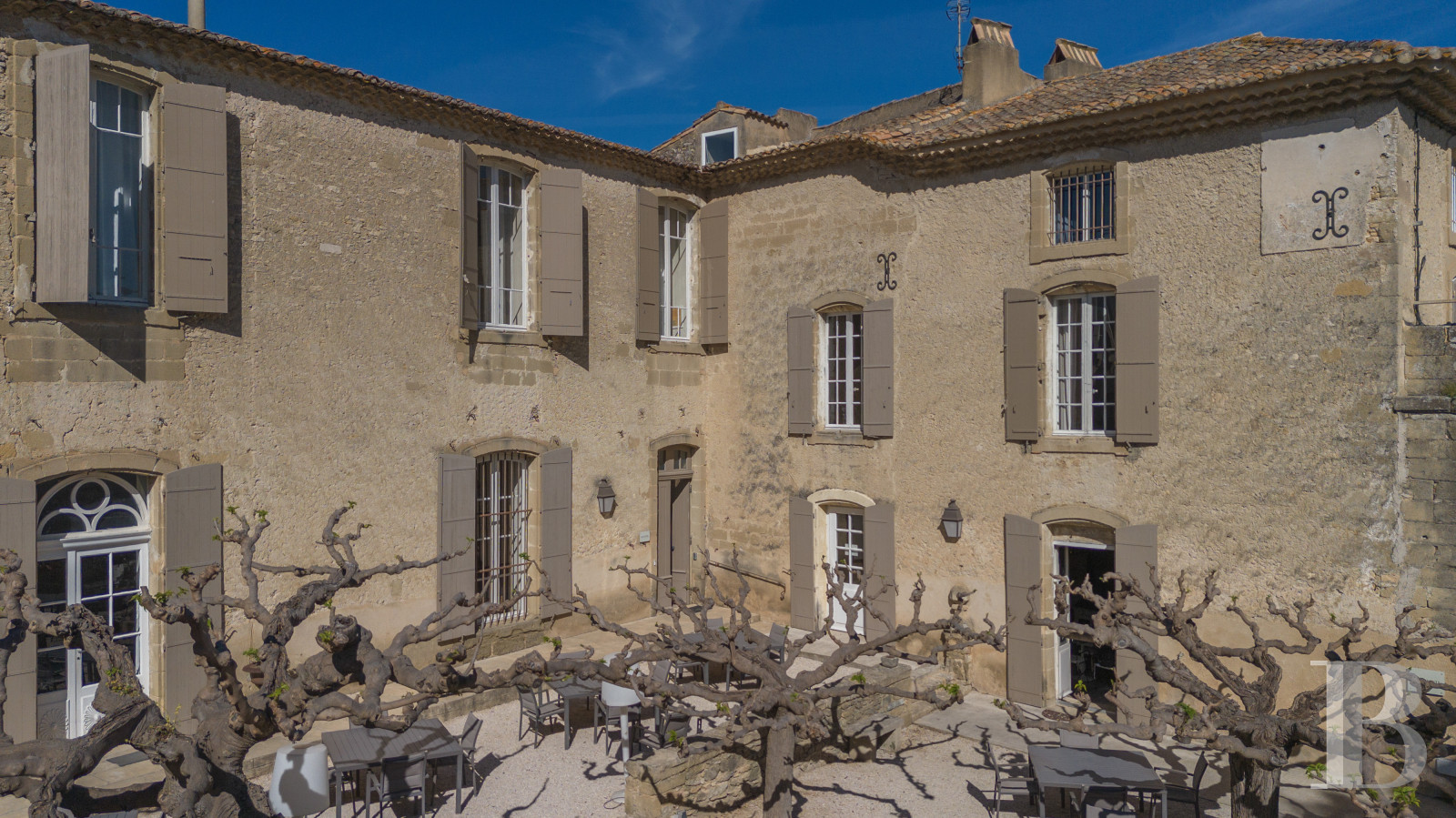
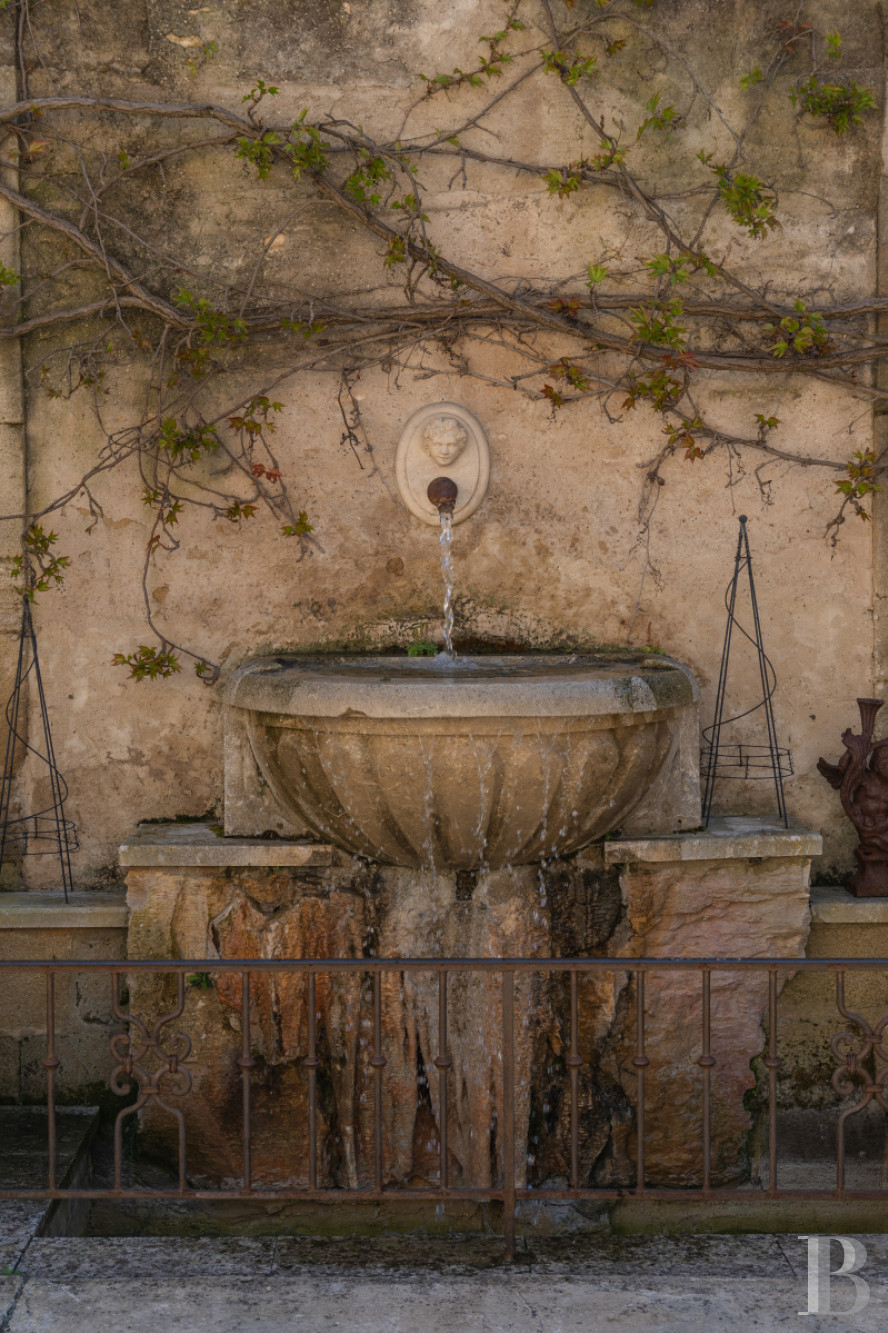
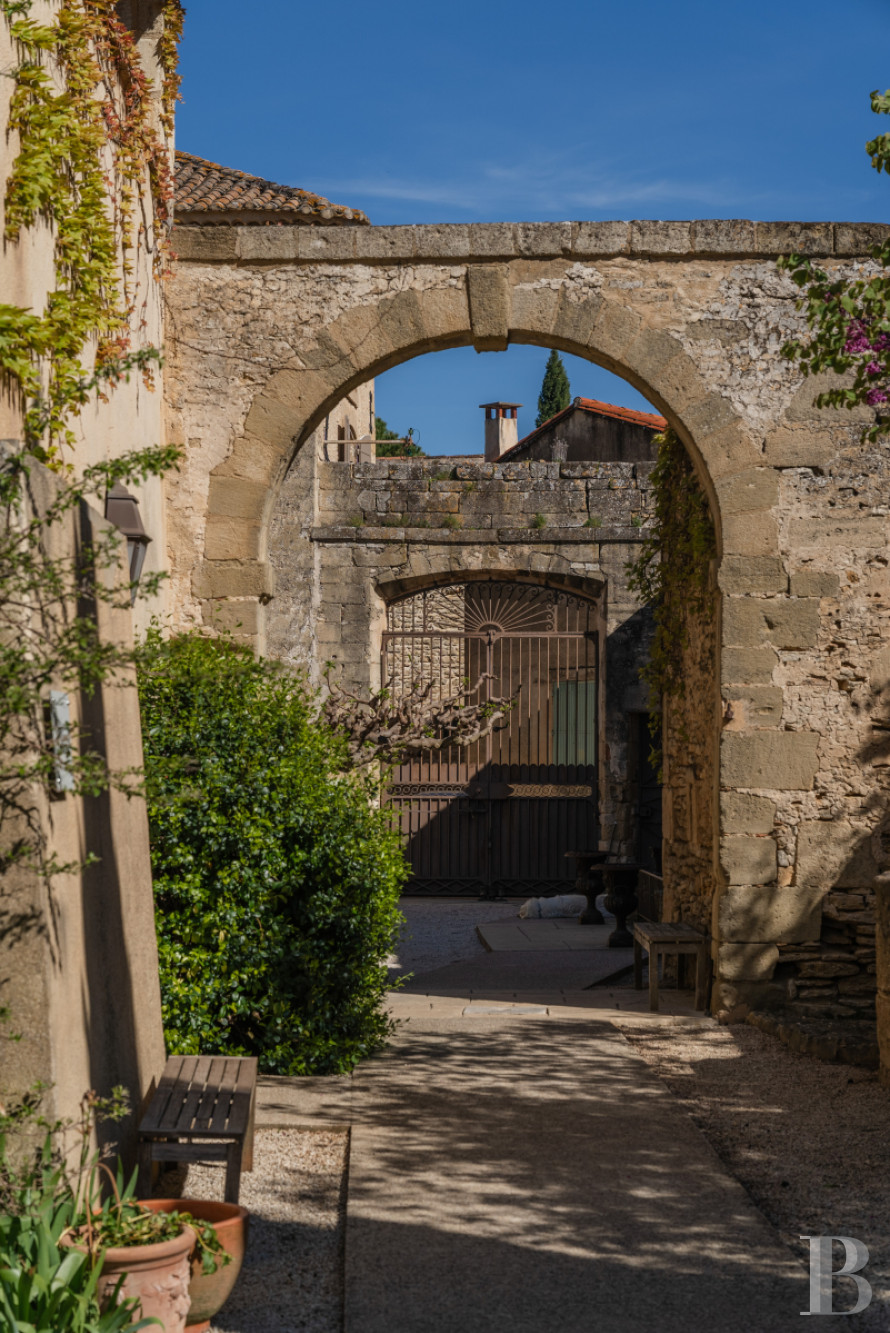
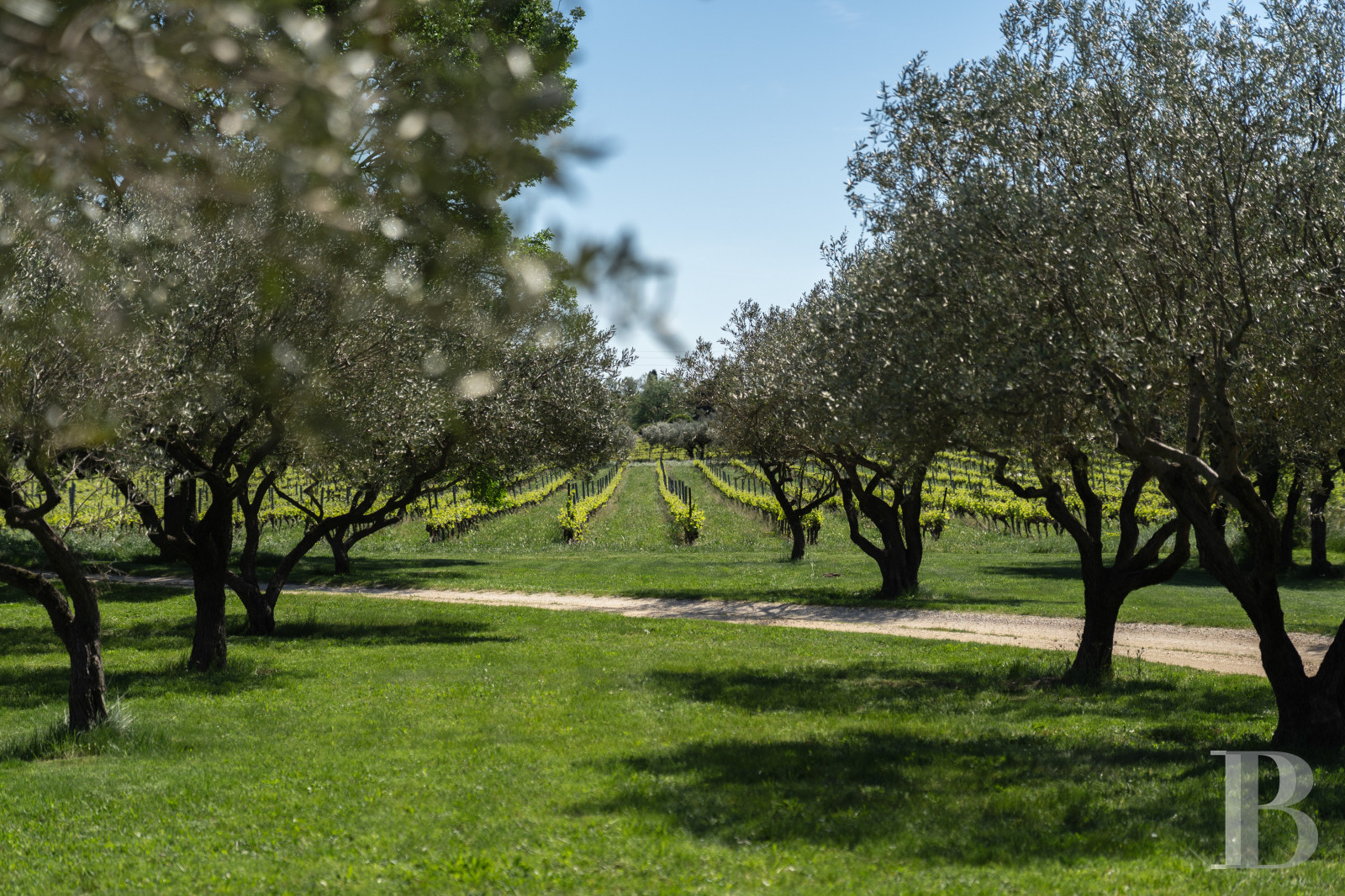
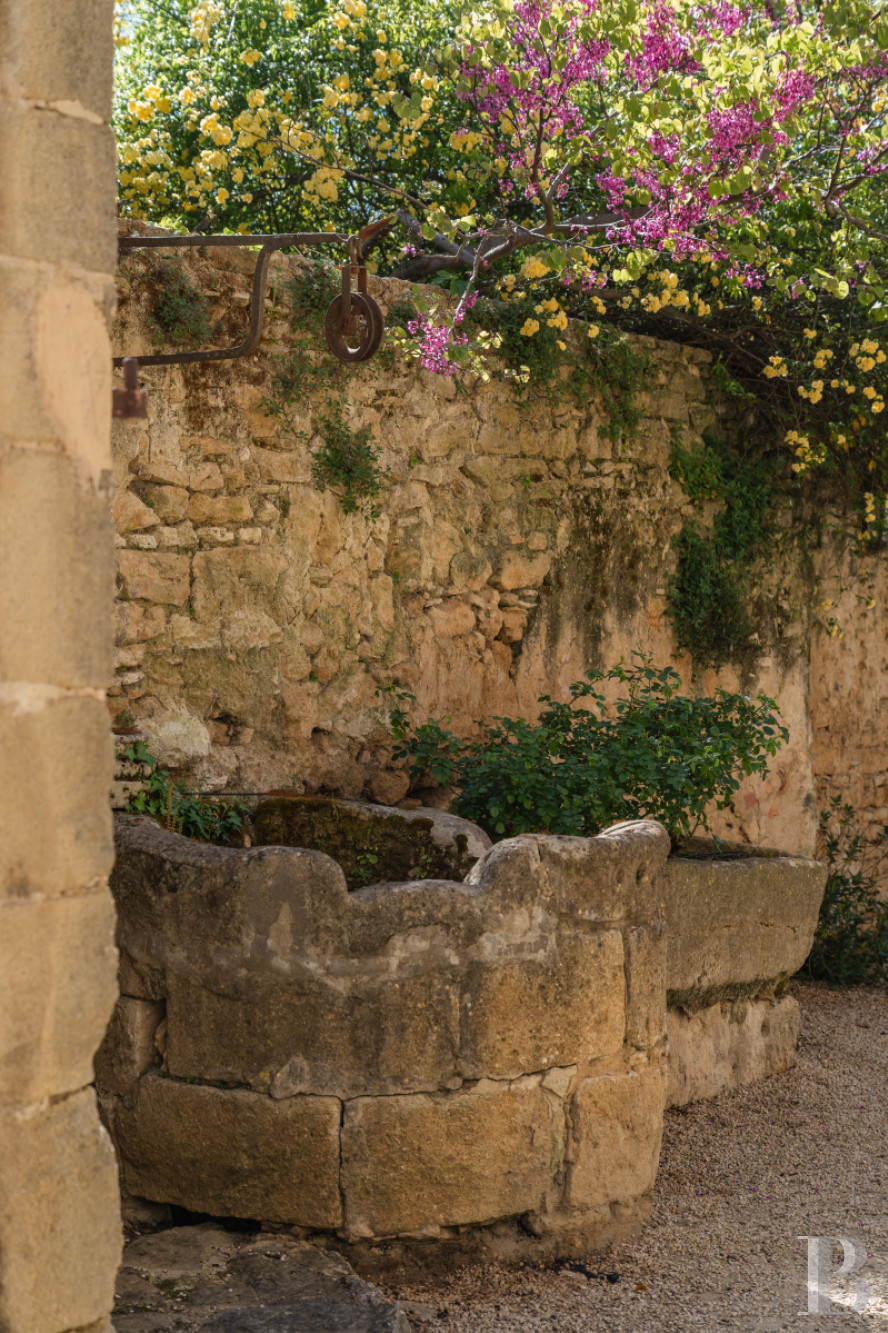
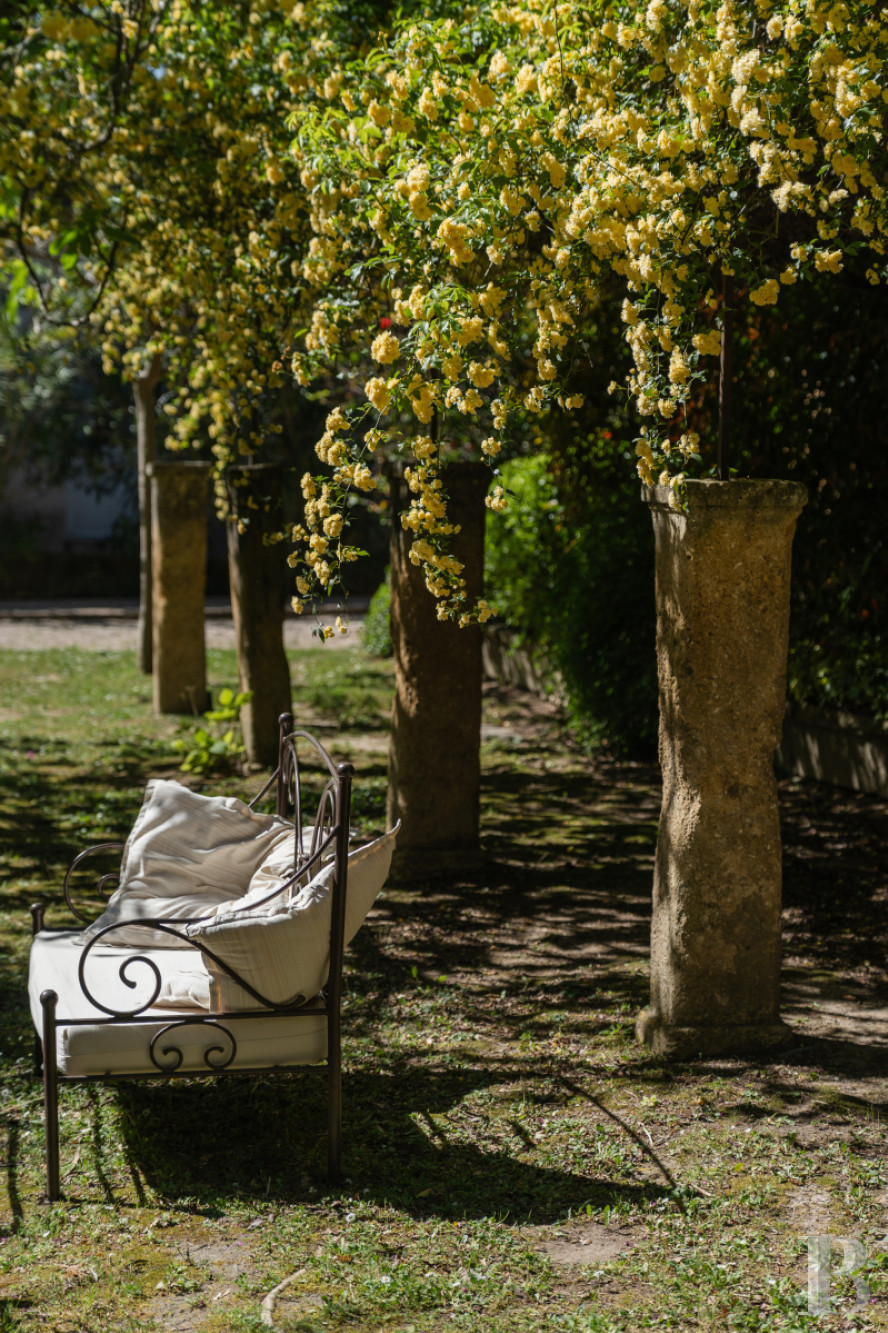
From an imposing wrought-iron gate, a driveway snakes through a small olive grove, leading up to a second gate, which takes you into the estate’s parkland. The edifice has a ground floor and a first floor. It is U-shaped. There is a main section, which faces south, and two wings, which protrude at a right angle, flanking the main courtyard in a layout that is typical of rural estates of southern France. The building bears witness to special attention paid to the court-facing elevations. The facade has a been lime-rendered in ochre tones. Bathed in natural light that brings out its hue, this facade is made of local Vers stone, which is found throughout the site, even in two Roman wells. The facade windows are arranged evenly with classical accuracy, though they are marked by successive redesigns that took place over time. Along the ground floor, French windows in arched doorways bring an abundance of natural light into the vaulted reception rooms. The bedrooms all lie up on the first floor, each with their own private bathroom or shower room. The windows are fitted with wooden shutters painted brownish grey. The roofs are either single-sloped, two-sloped or three-sloped, depending on the section, and are underlined with a triple-row génoise cornice, designed both to keep rainwater away from the facade and to display the owner’s social status. A painted sundial discreetly embellishes the top of the east wing’s facade, reminding us how travel time was measured long ago. The pale gravel of the main courtyard brings out the verticality of the elevations. Korean mulberry trees, pruned into flat-top parasols, offer welcome shade in the summer heat of France’s Gard department and give structure to the space, turning it into an open-air lounge. A wrought-iron gate closes the courtyard, marking a boundary between the bustle of the outside world and the soothing peacefulness of this calm estate.
The house
The ground floor
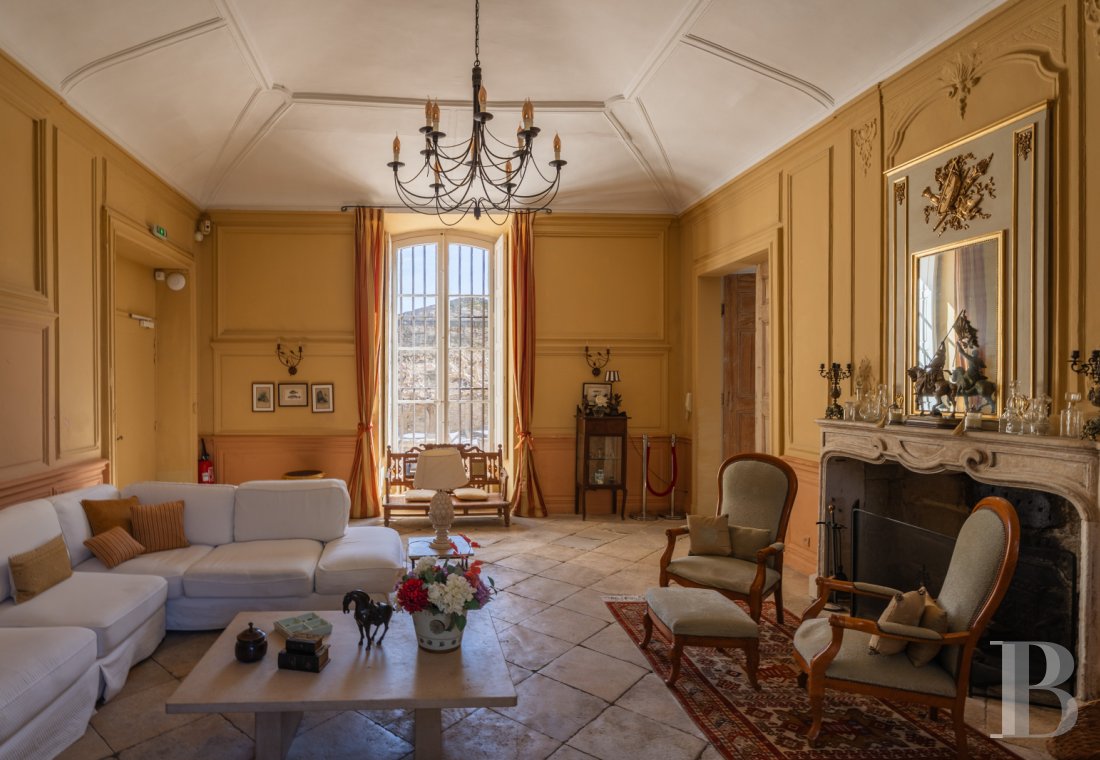
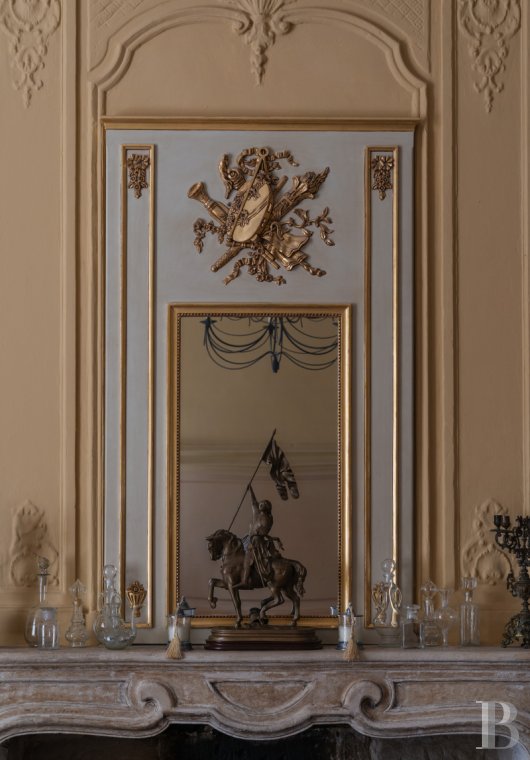
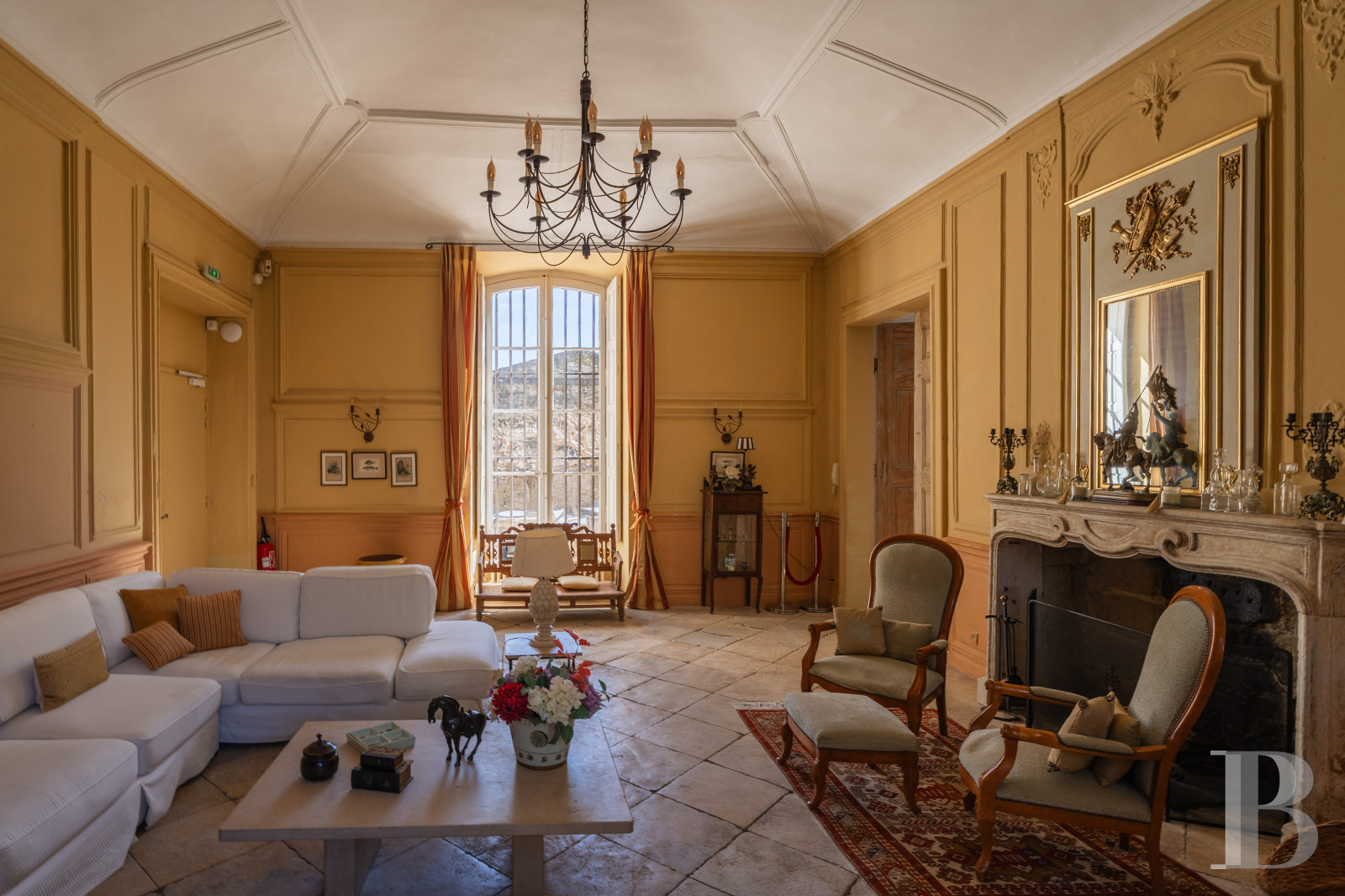
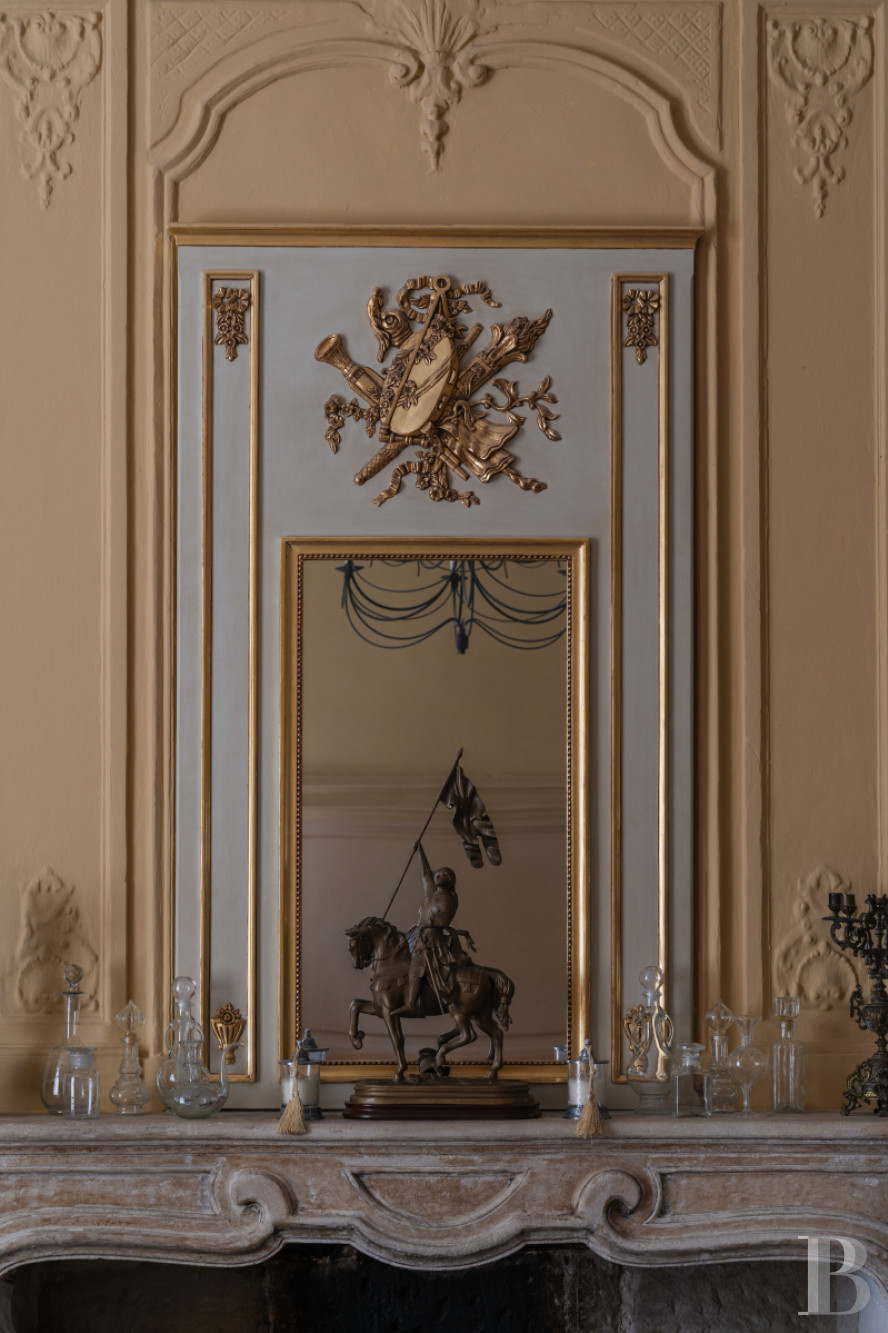
On the ground floor, there are two vast reception halls, respectively 95m² and 75m² in floor area. They have vaulted ceilings, supported by arches with large windows. The floors are paved with limestone slabs laid in diamond shapes. Stone fireplaces stand beneath elaborate trumeau panels, embellishing the rooms. One of the two reception halls leads out into the main courtyard. The two rooms bear witness to 18th-century attention to comfort. The ground floor also houses an extensive multipurpose hall, where receptions and seminars can take place, as well as an office and a vaulted room with a stone floor and fireplace – probably one of the edifice’s oldest rooms.
The upstairs
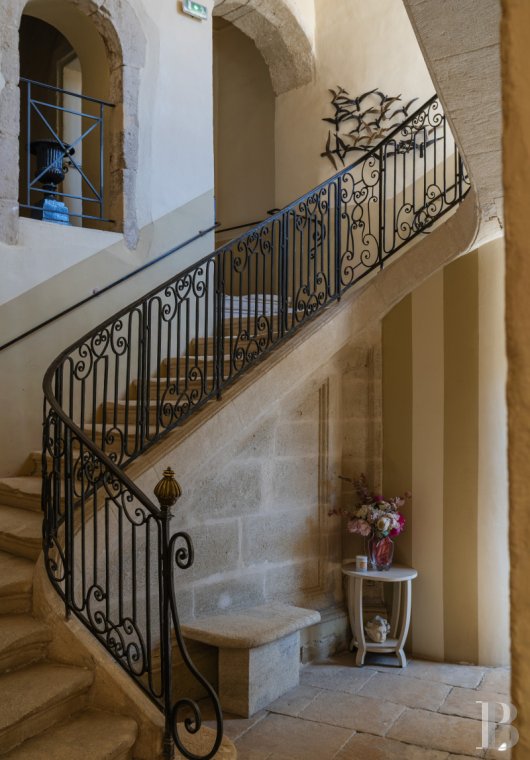
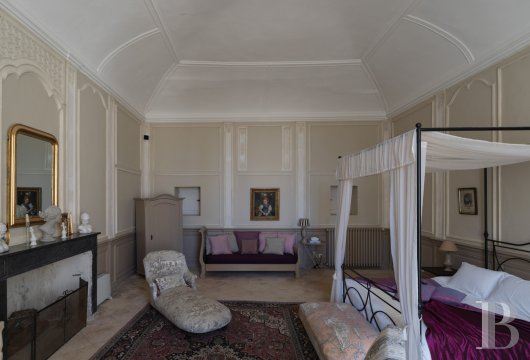
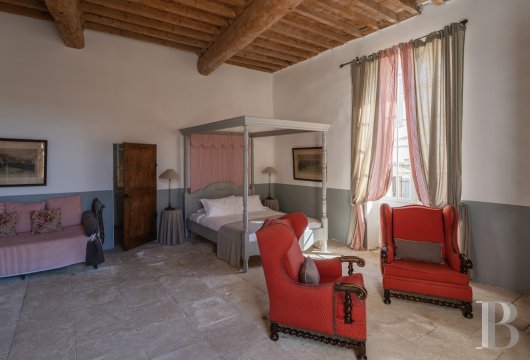
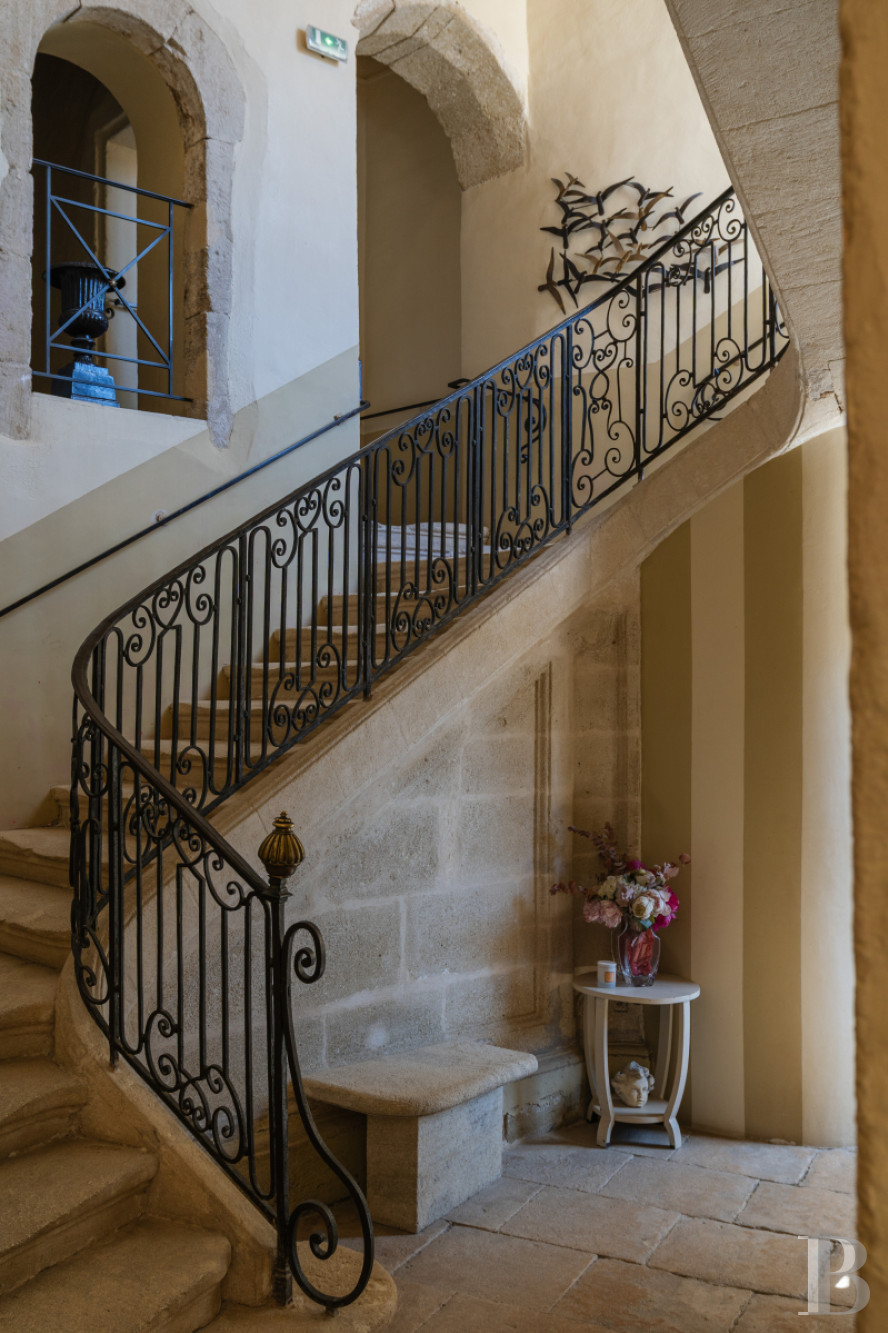
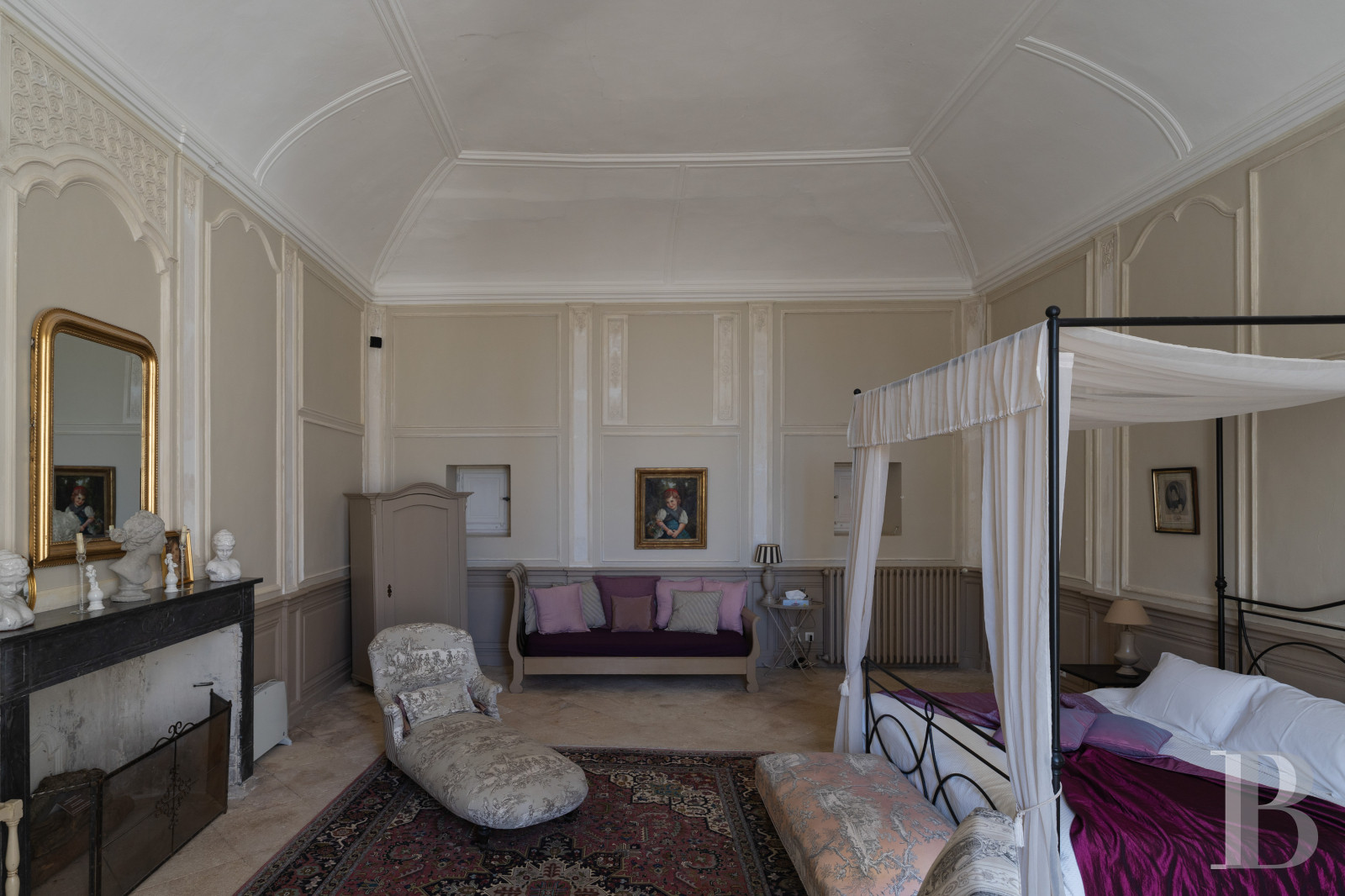
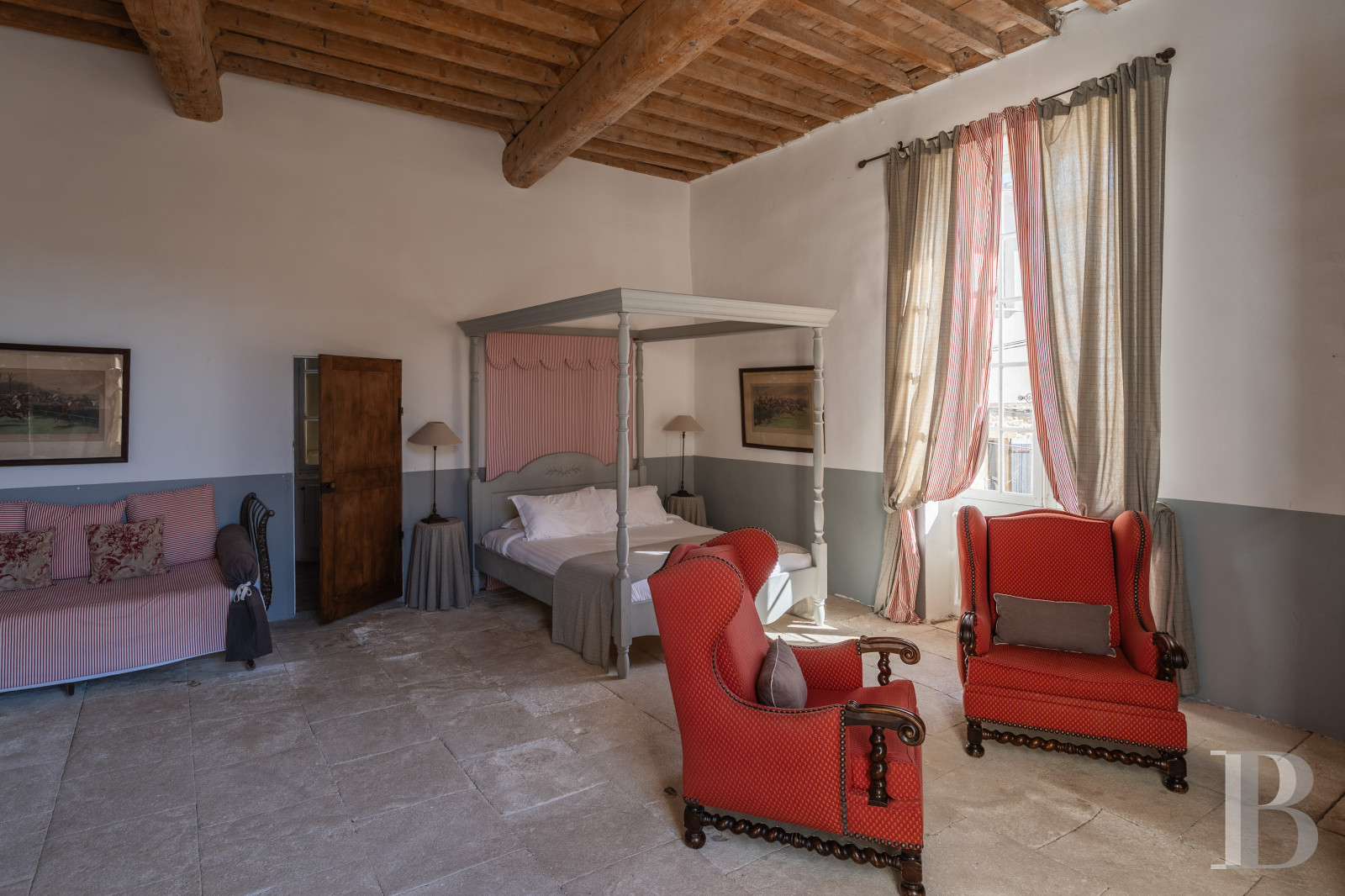
The main staircase leads up to a landing that connects to the owner’s apartment and two large bedrooms. One of the bedrooms has a vaulted ceiling, a marble fireplace and decorative plaster works. The other bedroom, which, like the first one, has its own bathroom, has a French-style beamed ceiling and a floor of Montpellier stone slabs. The 15 other bedrooms, which are mainly at the top of the building with exposed roof beams, lie in the west wing and in the secondary section. Each of these bedrooms has its own private bathroom or shower room. The largest bedrooms have their own balcony terrace or courtyard-facing loggia balcony. The hallways for getting around inside are simple and practical. They include an external walkway. They lead to the other bedrooms, where you can admire views of the spectacular natural surroundings of France’s Gard department. The bedroom walls are made of exposed stonework, making the place feel like a pleasant, homely dwelling that is easy to live inside, which, indeed, it is.
The outbuilding
The outbuilding is separate from the main house. It was built in 2008. It offers a 160m² floor area, houses five bedrooms and complies with norms for people with reduced mobility.
The grounds
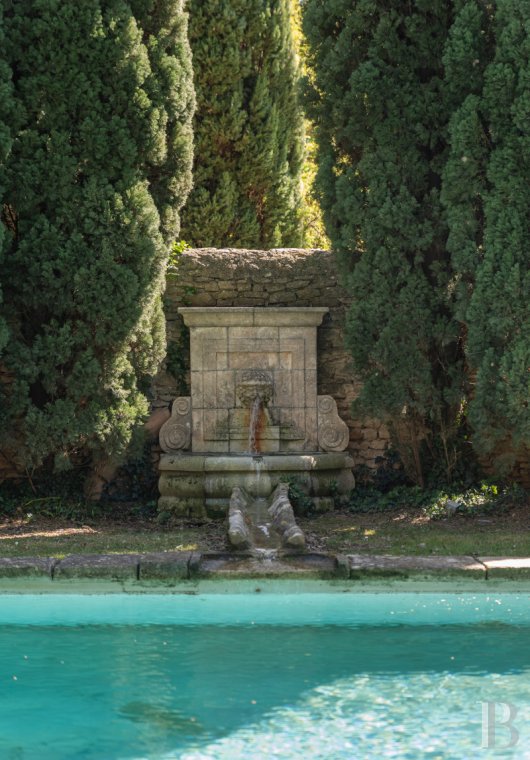
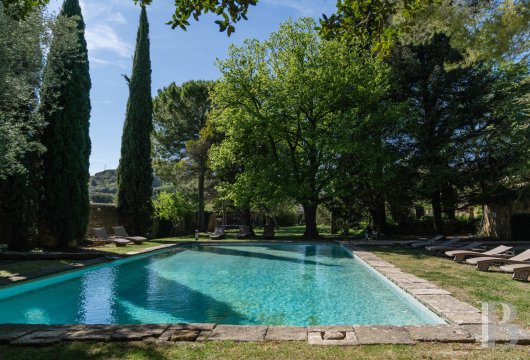
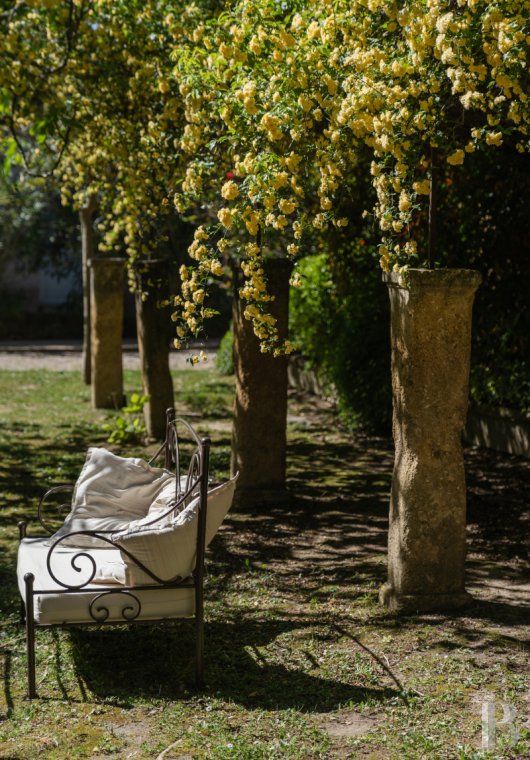
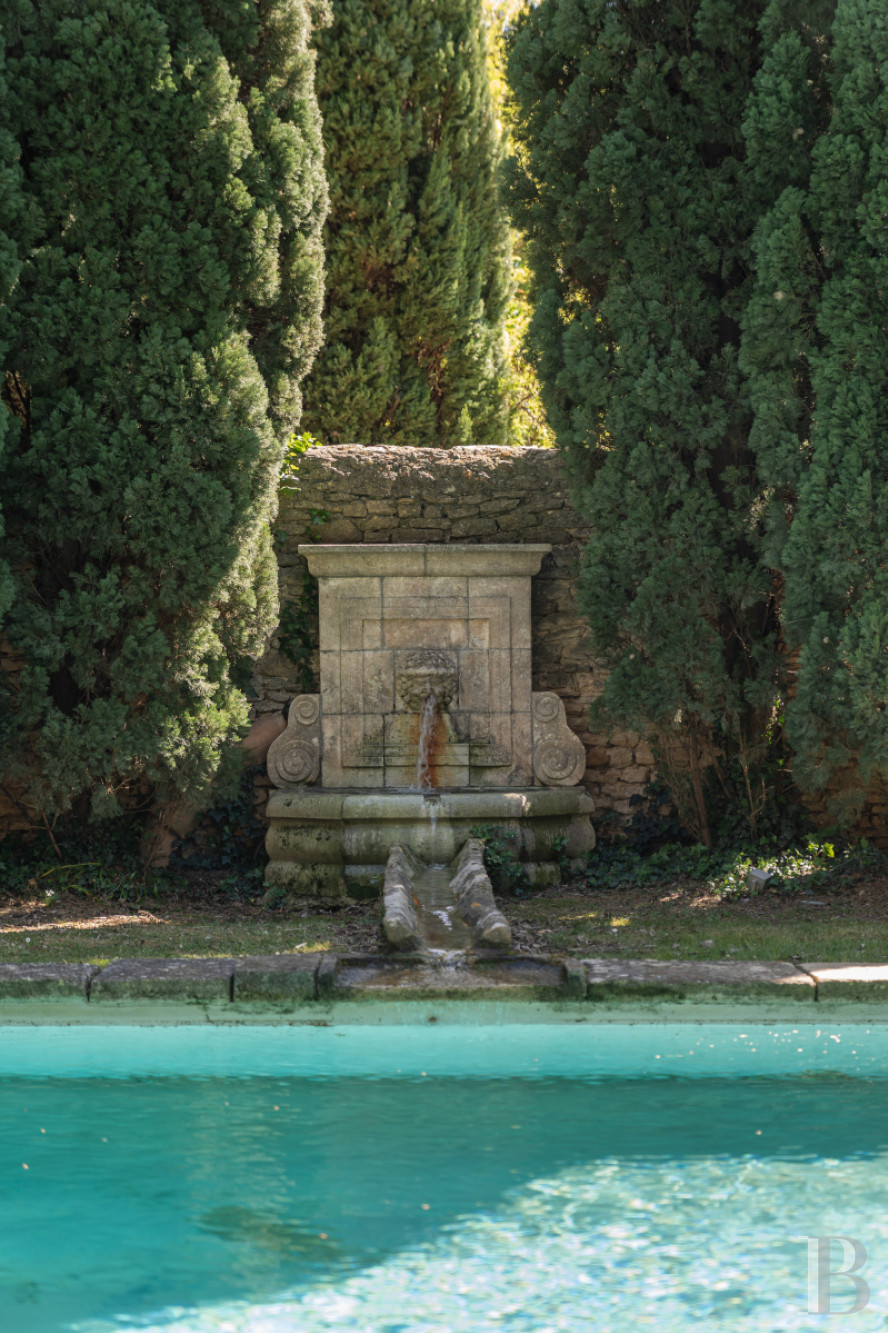
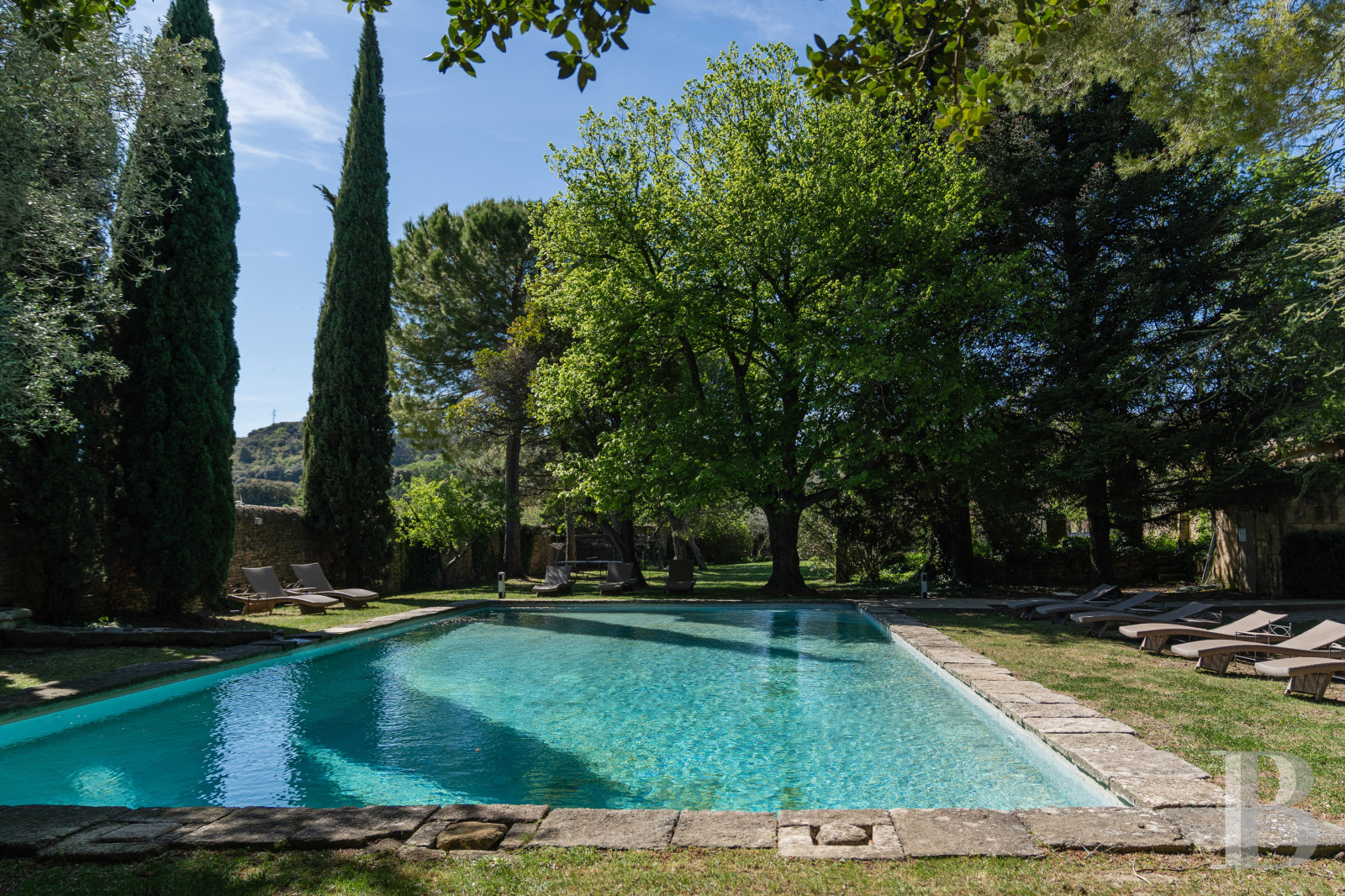
The estate covers a single five-hectare plot with grassy expanses dotted with trees, as well as a vineyard and olive trees. It faces south-east and west, benefiting from continuous sunshine while being naturally protected from the mistral wind. The parkland covers around 4,000m². It is dotted with local varieties of trees and shrubs and enclosed with stone walls. It includes a large rectangular swimming pool with stone edging, surrounded by deciduous trees and evergreens.
Our opinion
The unique layout of this inn suggests it was built over a series of several phases stretching back to the French Renaissance. Indeed, many edifices of this type were built in stages over time. The royal postal horses of yesteryear have now given way to a charming edifice and vast estate that covers more than five hectares, including an olive grove and vineyard. Yet the walls of the characterful building still bear the traces of the era when travellers would stop here to give their horses a rest. A large-scale renovation project that began in the early 2000s has made the place comfortable, with soft tones that respect the soul of this building where wood and stone still dominate, while meeting the demands of modern life. Whether you make this remarkable property your family home, a hotel or a cultural venue, it is waiting for you to write the next chapter in its long story.
Reference 496896
| Land registry surface area | 5 ha 99 a 96 ca |
| Main building floor area | 2700 m² |
| Number of bedrooms | 17 |
| Outbuildings floor area | 160 m² |
| Number of lots | 1 |
Information on the risks to which this property is exposed is available on the website: www.georisques.gouv.fr
Share


NB: The above information is not only the result of our visit to the property; it is also based on information provided by the current owner. It is by no means comprehensive or strictly accurate especially where surface areas and construction dates are concerned. We cannot, therefore, be held liable for any misrepresentation.