



In the pays de Serres, an 18th-century Louis XV hostelry on the Santiago de Compostela road,
with a 1 ha park and secondary garden
with a 1 ha park and secondary garden
Valence,
TARN-ET-GARONNE
midi-pyrenees
82400
FR

Location
Perched on a promontory above the meanders of the River Garonne, Auvillar displays its pale stone facades and Romanesque rooflines with rare architectural coherence. A historic stopping point on the pilgrimage road to Santiago de Compostela, the town retains the quiet distinction of a merchant settlement shaped over centuries: a unique circular market hall, narrow streets lined with old houses, gardens suspended above the river, and the calm of an unspoilt agricultural landscape. Everyday life here is sustained by craftspeople, markets and galleries alongside practical amenities — schools, health services, restaurants and wine merchants. Valence d'Agen is under 10 minutes away; Agen and its high-speed rail station, 35 minutes; Toulouse and its international airport, 1 hour.
Description
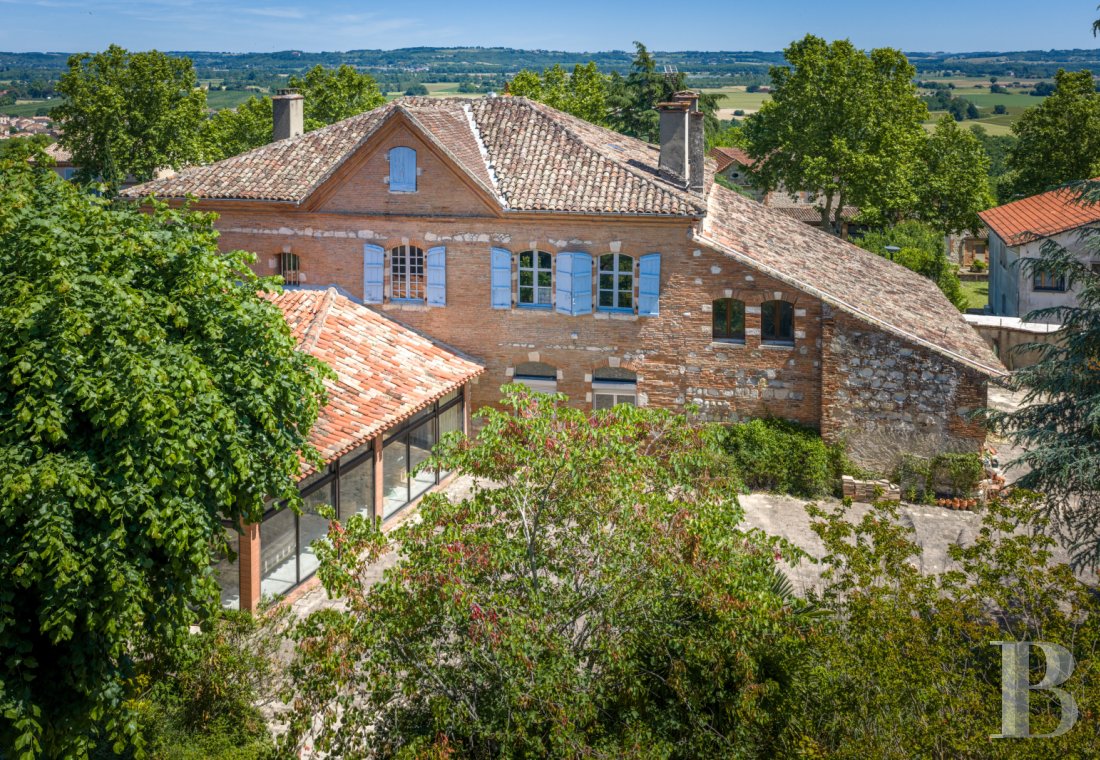
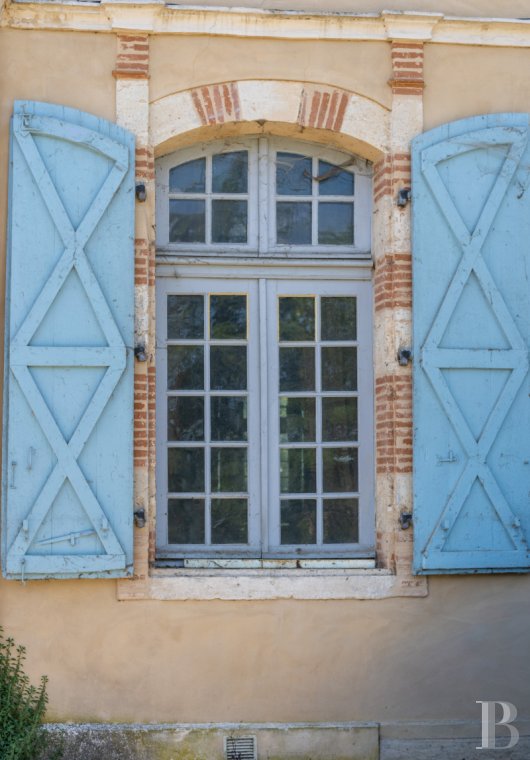
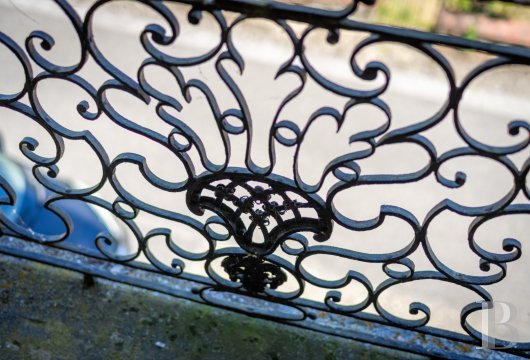
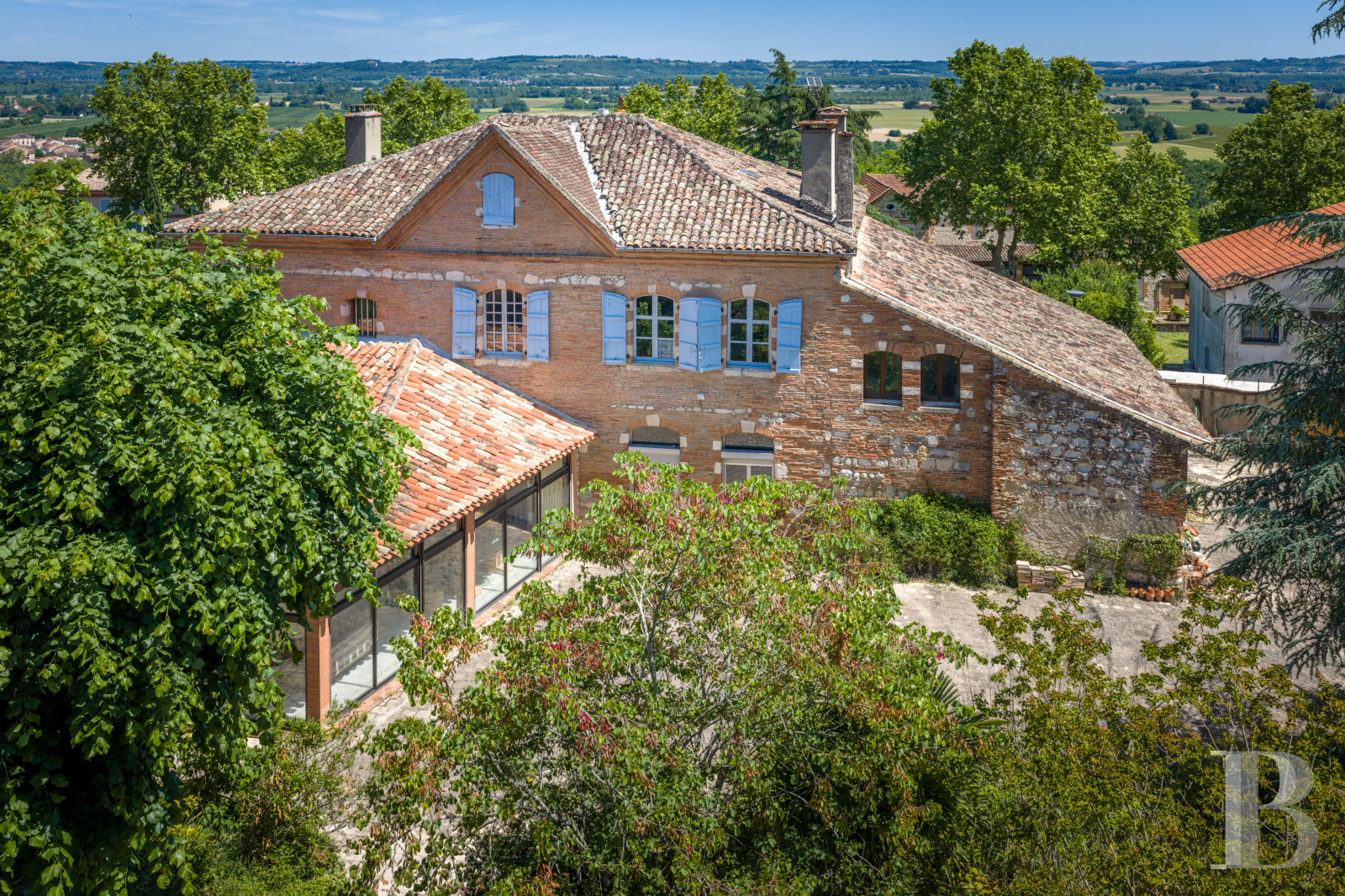
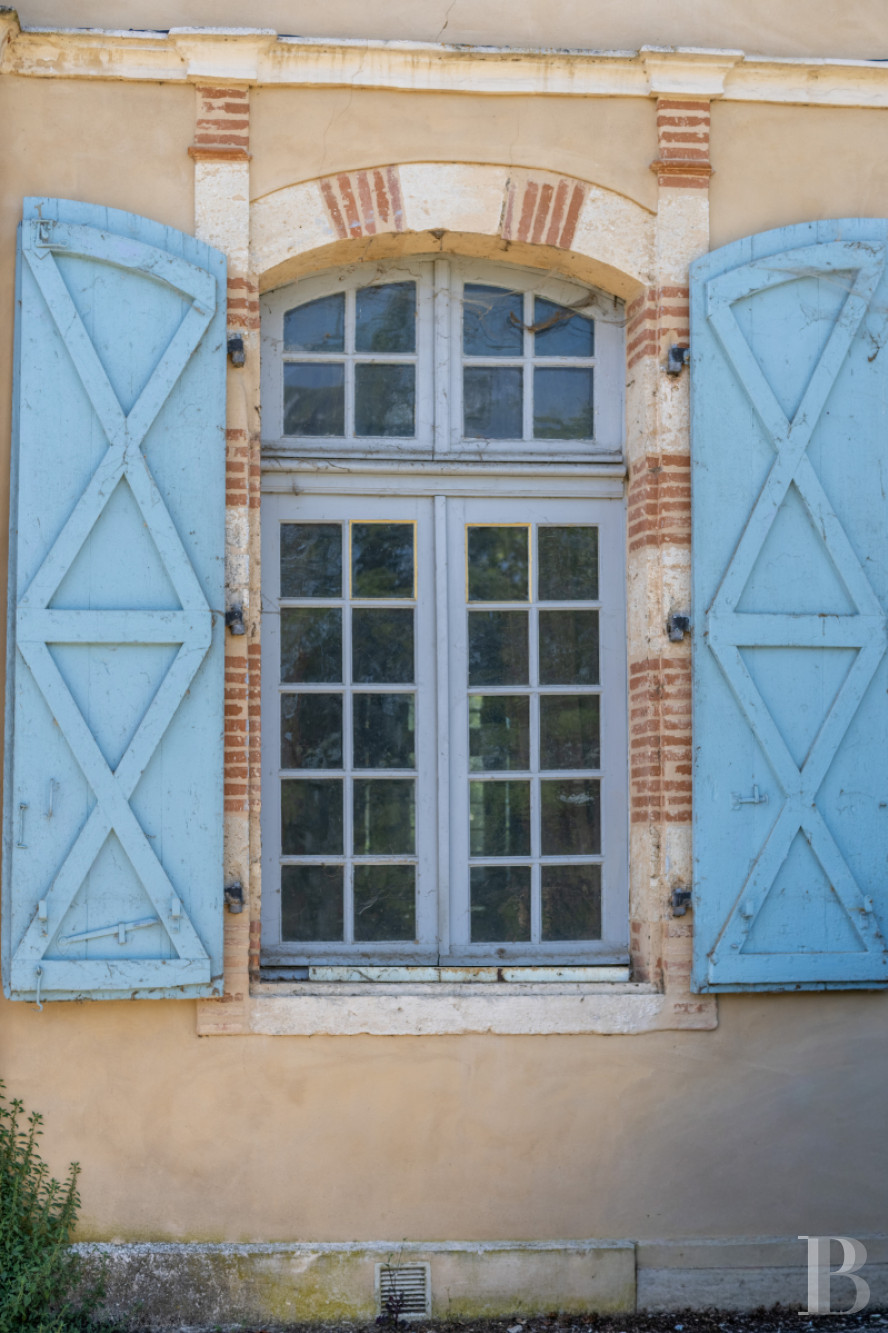
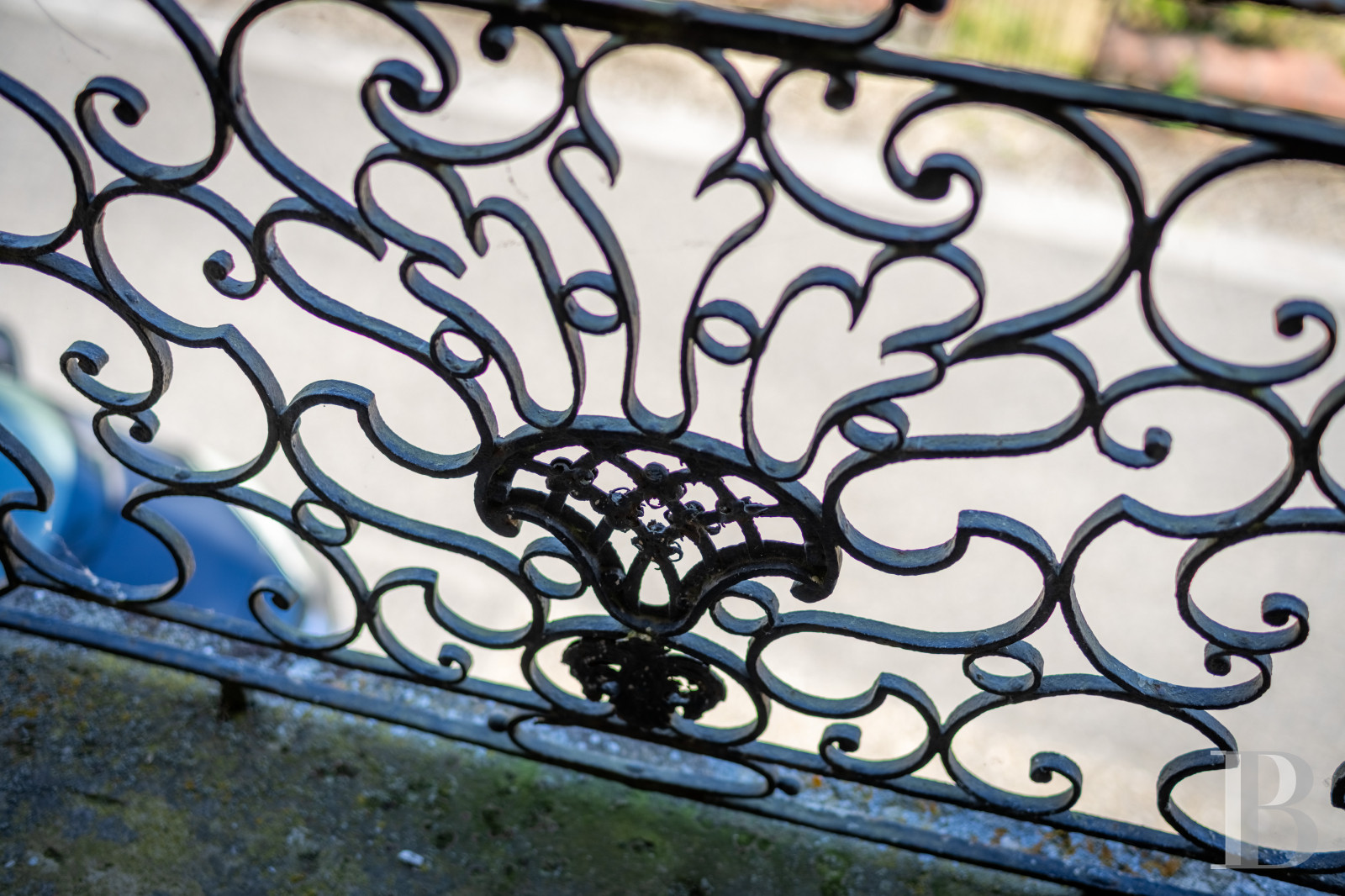
Running along the GR65, the historic Compostela road, the original building rises over two levels, its facades combining brick, Garonne river stones and partially rendered Quercy stone. Each level is defined by a moulded stringcourse and divided into three bays, forming a symmetrical composition of classical order. The roof is a remarkable ten-faceted hipped structure covered in barrel tiles. Nine segmental-arched openings punctuate the main facade, each arch composed of alternating dressed Quercy stone and pink brick. A scallop shell carved in Quercy stone marks the keystone above the entrance, itself surmounted by a wrought-iron balcony with symmetrical foliate scrolls and a central palmette. Above a triangular pediment with stringcourse and moulded cornice, a fleur de lys crowns the whole.
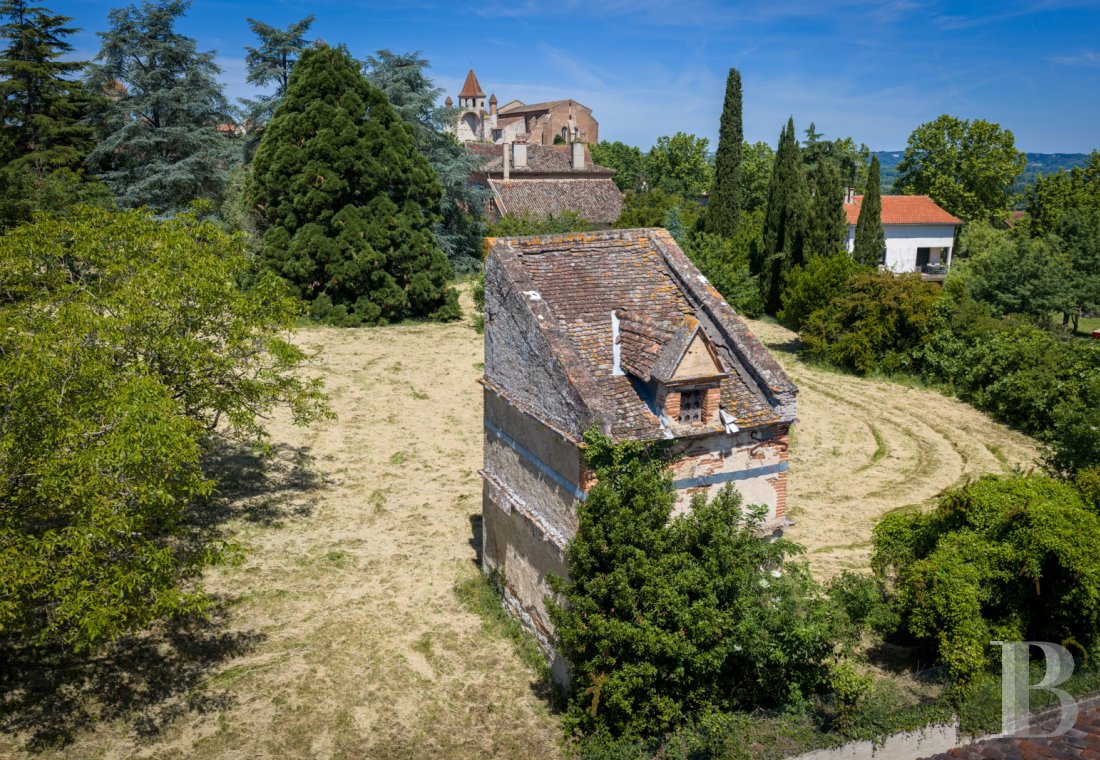
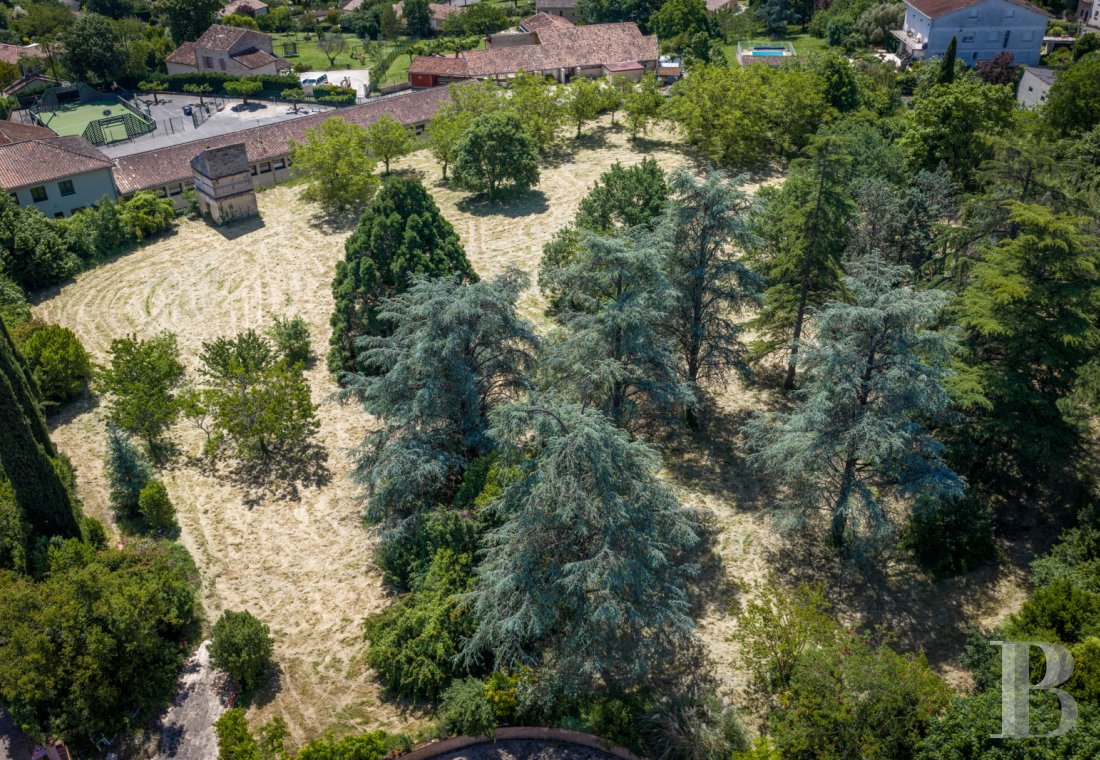
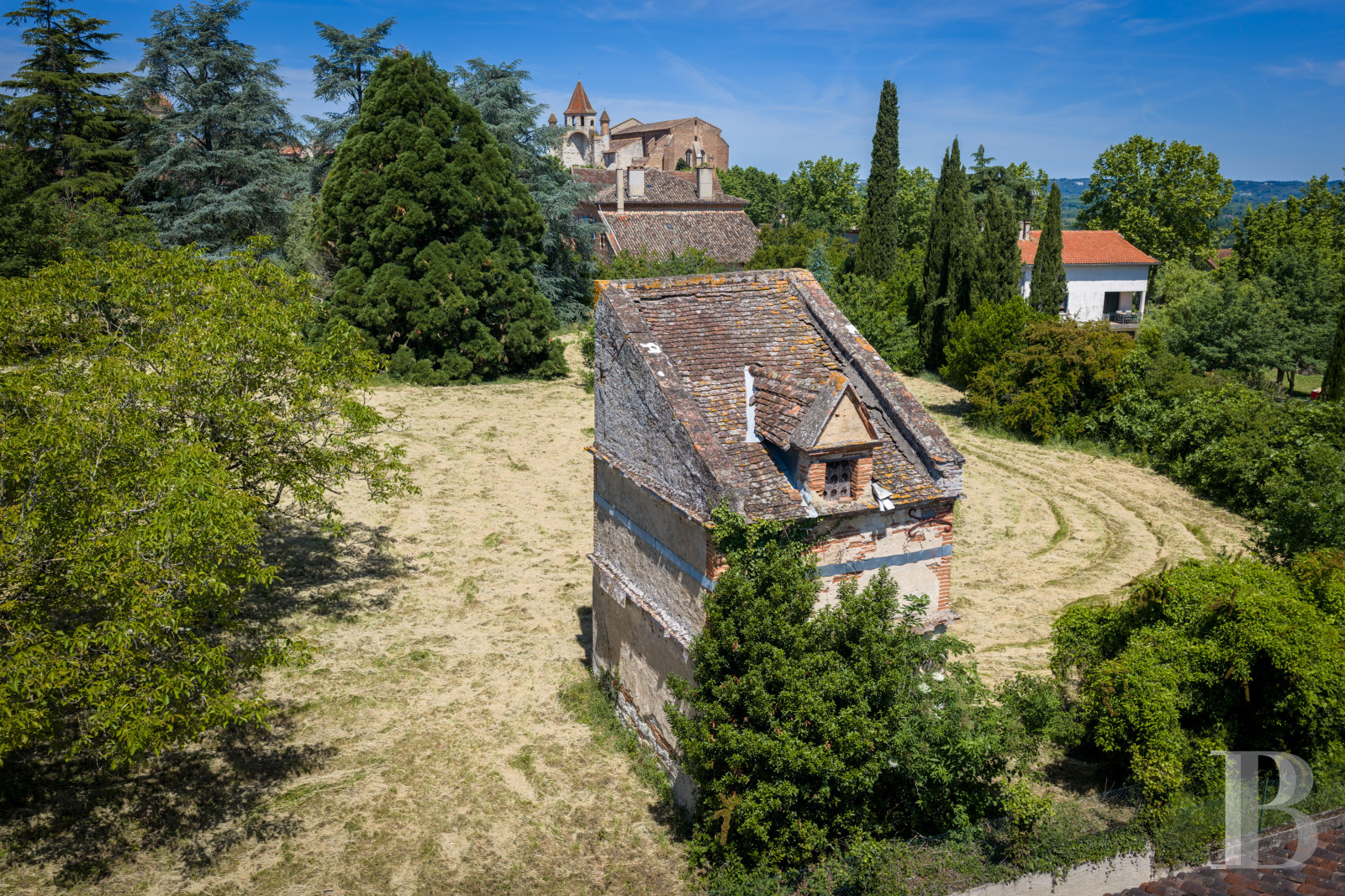
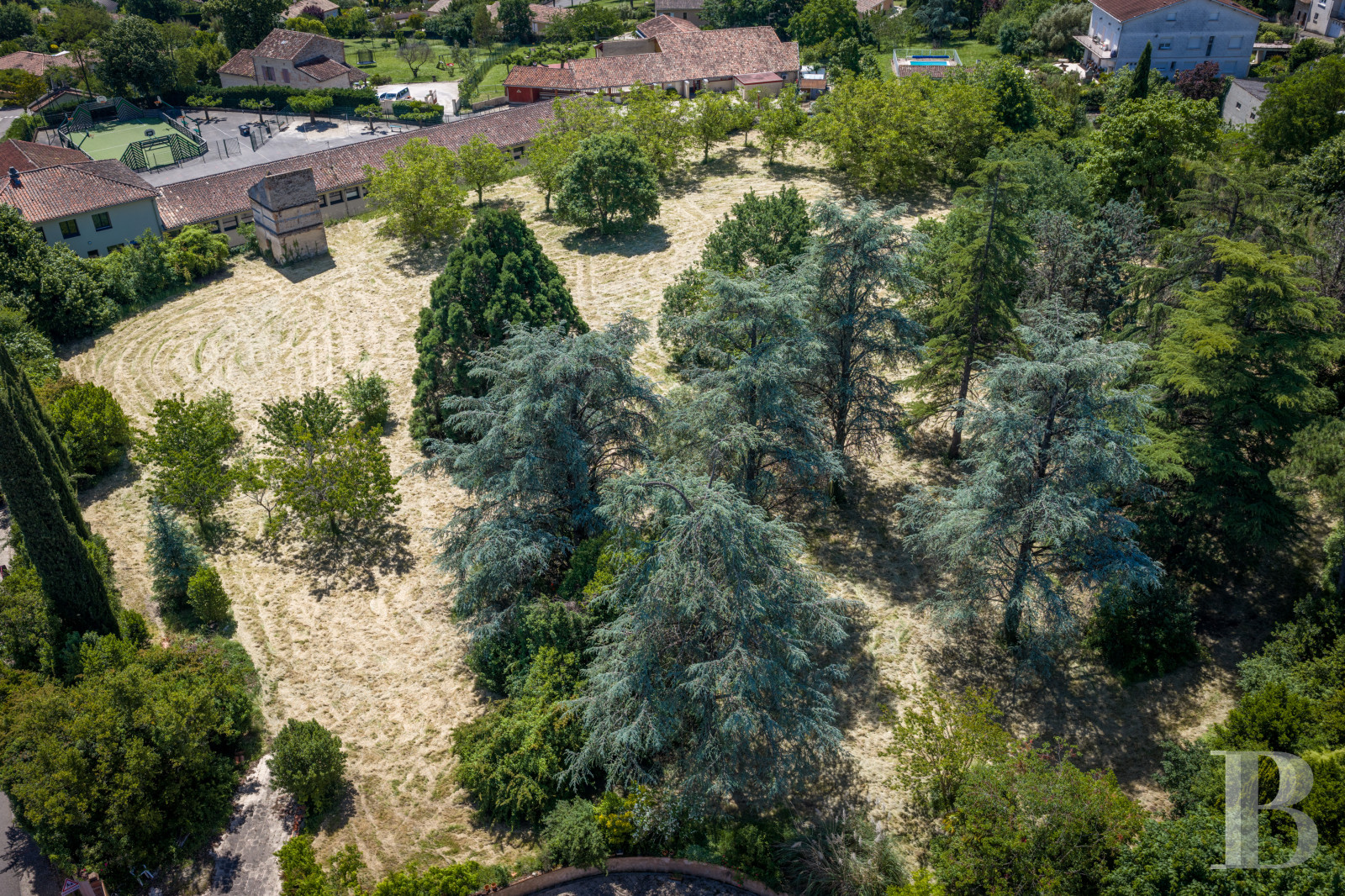
To either side, an agricultural storage building and a former winery complete the ensemble. At the rear, a contemporary extension has replaced an earlier one. Bounded by low masonry walls and the buildings themselves, a terrace of around 100 m² in grey paving leads to the park, entirely enclosed by wire fencing, shrubs and trees. To the south, a two-level dovecote stands at the park's far edge. Across the lane — still walked by pilgrims on the Compostela road — lies the secondary garden.
The property offers approximately 490 m² of living area, with a further 90 m² in the agricultural storage building and 80 m² in the winery. It comprises two reception rooms, a dining room, a kitchen, a bathroom and, on the upper level, two bedrooms with bathrooms and one with a shower room.
To either side, an agricultural storage building and a former winery complete the ensemble. At the rear, a contemporary extension has replaced an earlier one. Bounded by low masonry walls and the buildings themselves, a terrace of around 100 m² in grey paving leads to the park, entirely enclosed by wire fencing, shrubs and trees. To the south, a two-level dovecote stands at the park's far edge. Across the lane — still walked by pilgrims on the Compostela road — lies the secondary garden.
The property offers approximately 490 m² of living area, with a further 90 m² in the agricultural storage building and 80 m² in the winery. It comprises two reception rooms, a dining room, a kitchen, a bathroom and, on the upper level, two bedrooms with bathrooms and one with a shower room.
The house
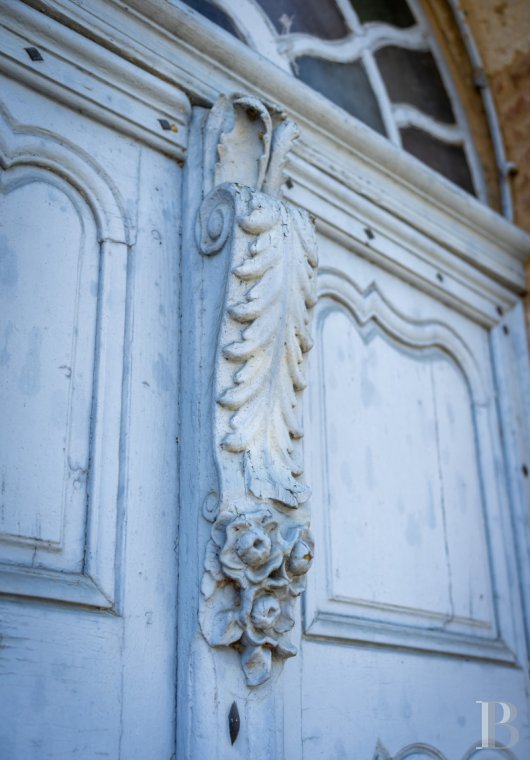
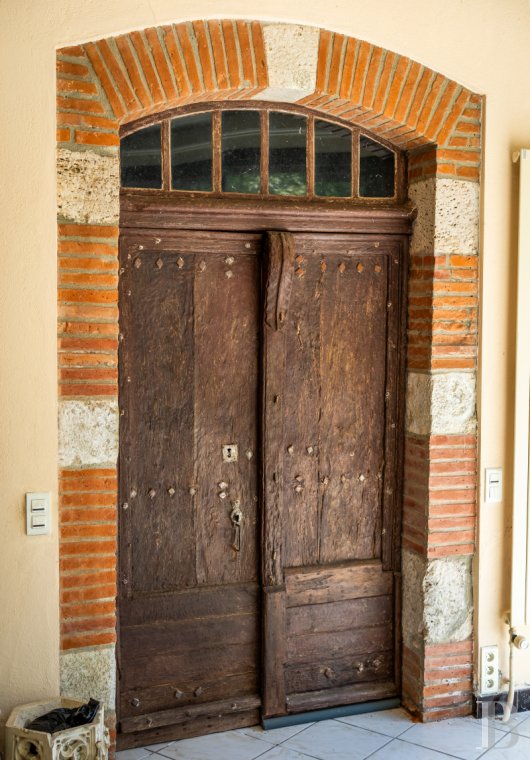
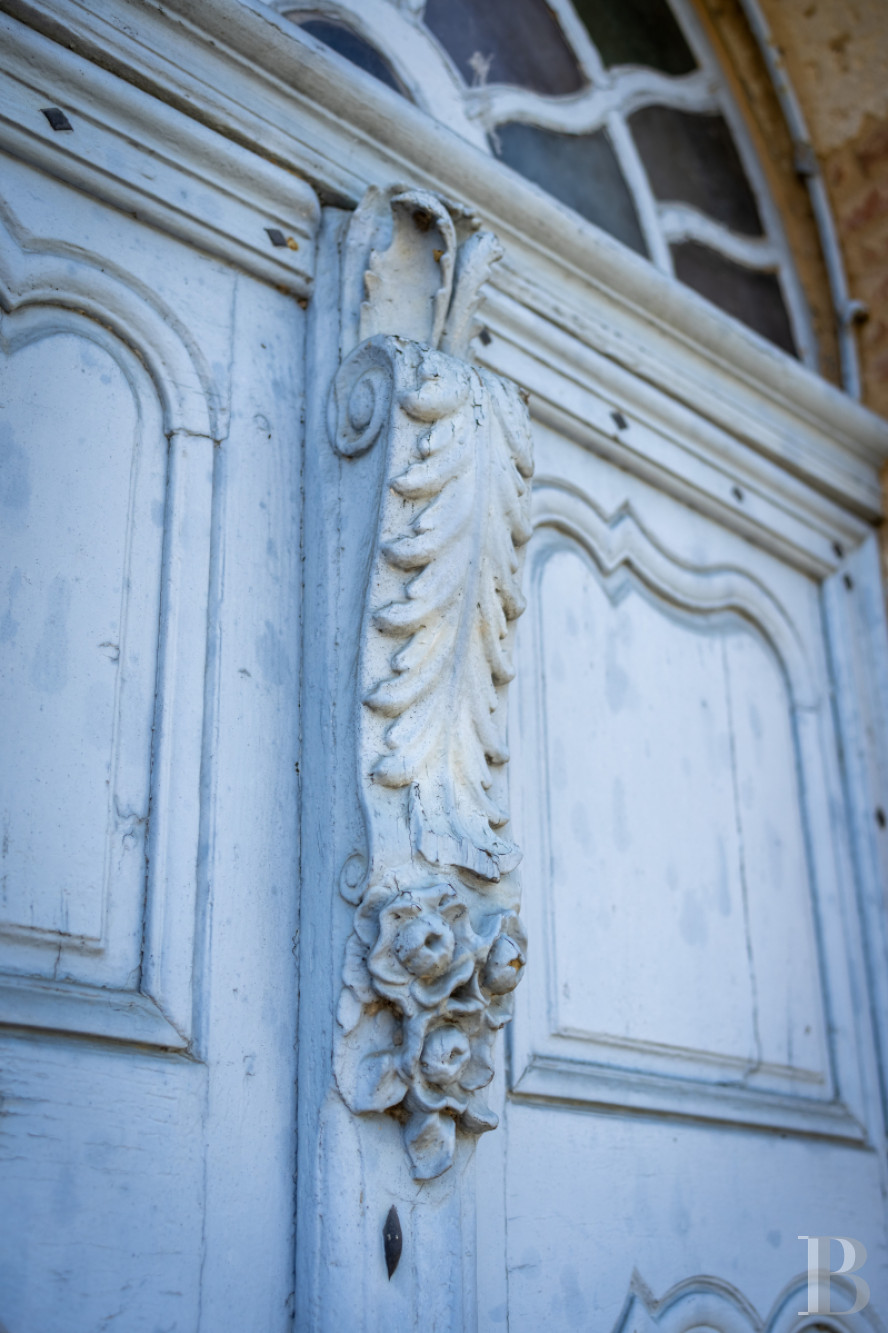
Beneath the carved scallop shell, a semicircular glazed fanlight with solar-motif ironwork surmounts a solid oak door painted blue. Its scrolled Louis XV mouldings establish the decorative register carried throughout the interior joinery. The upper door leaf bears a carved composition of acanthus leaves and three roses.
The ground floor
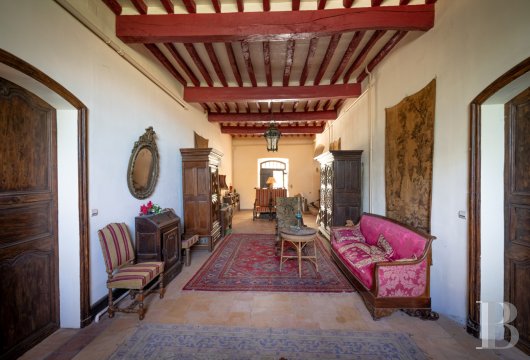
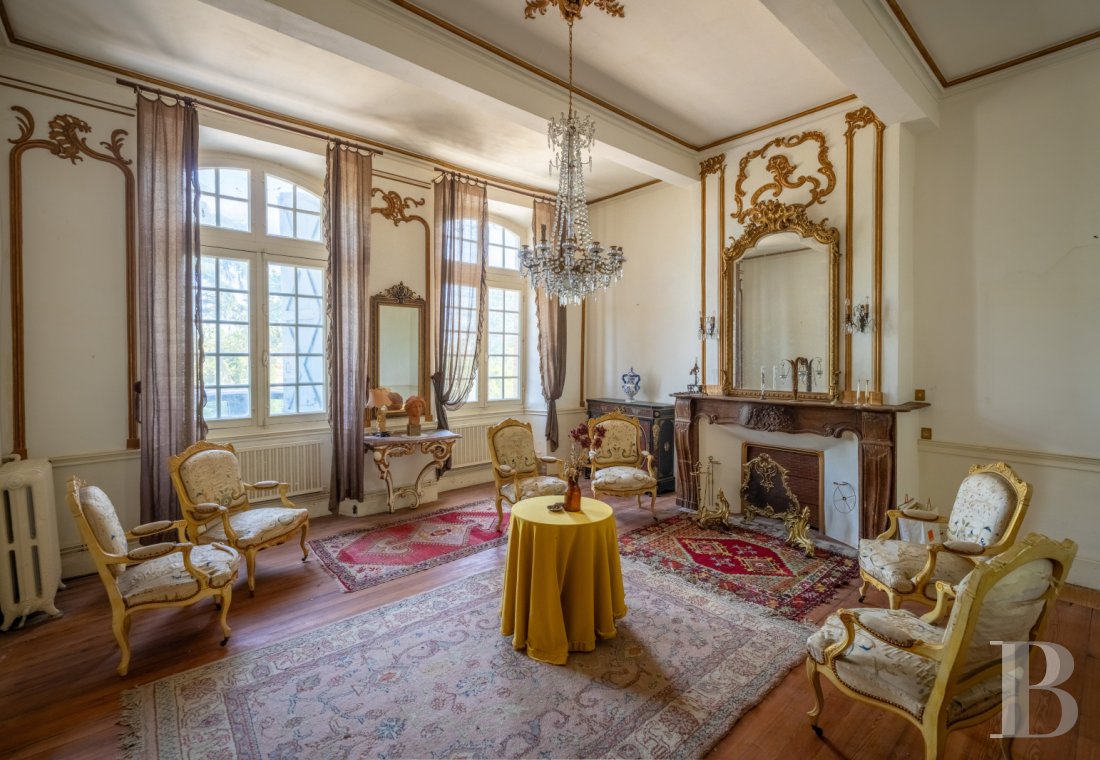
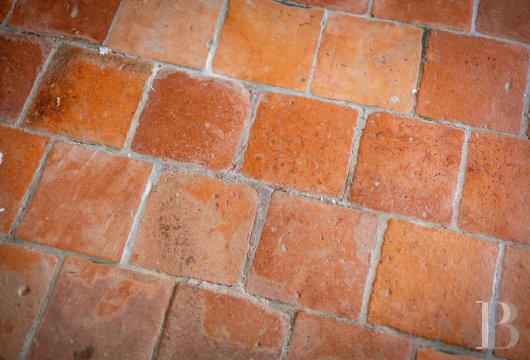
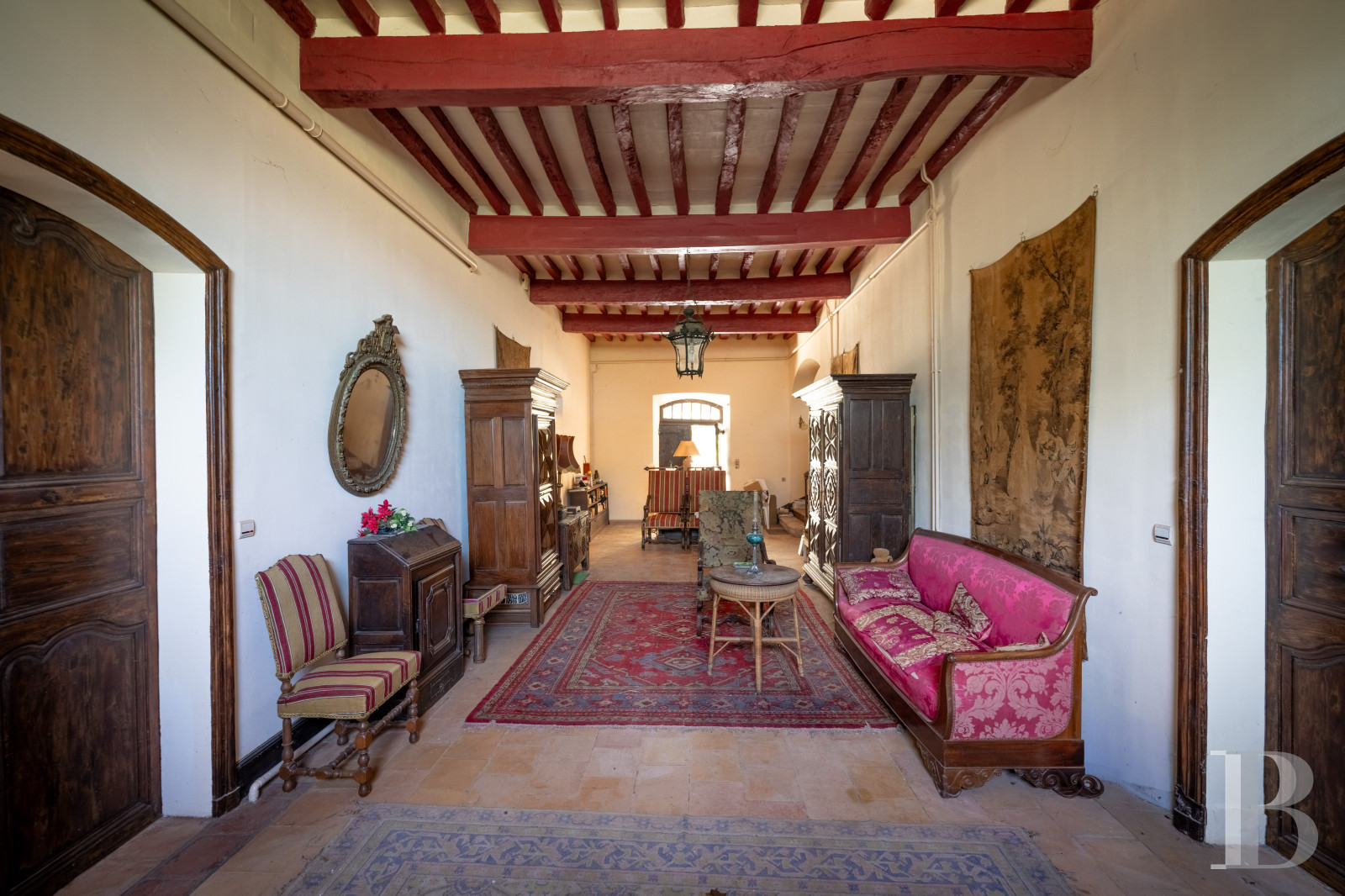
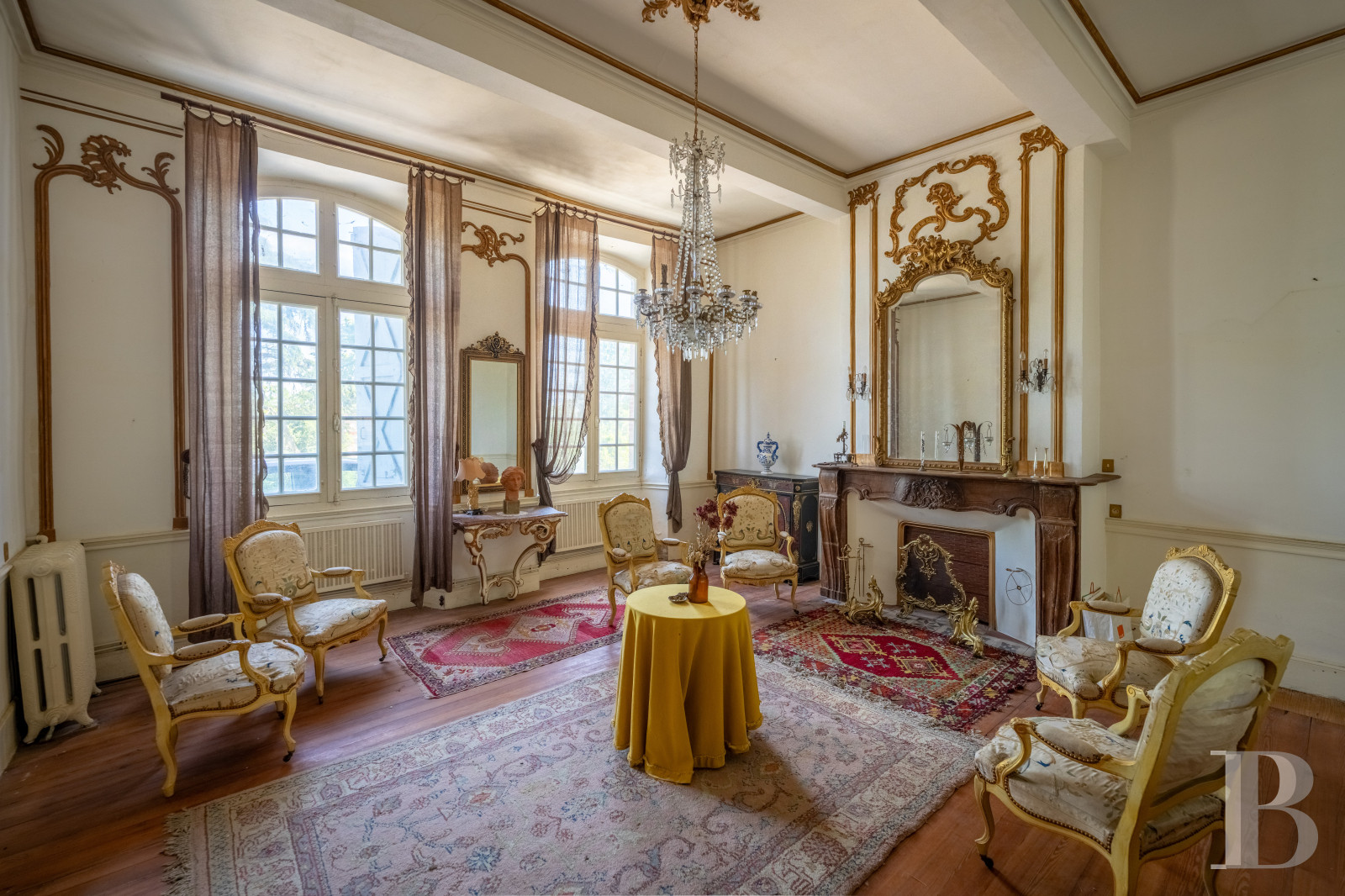
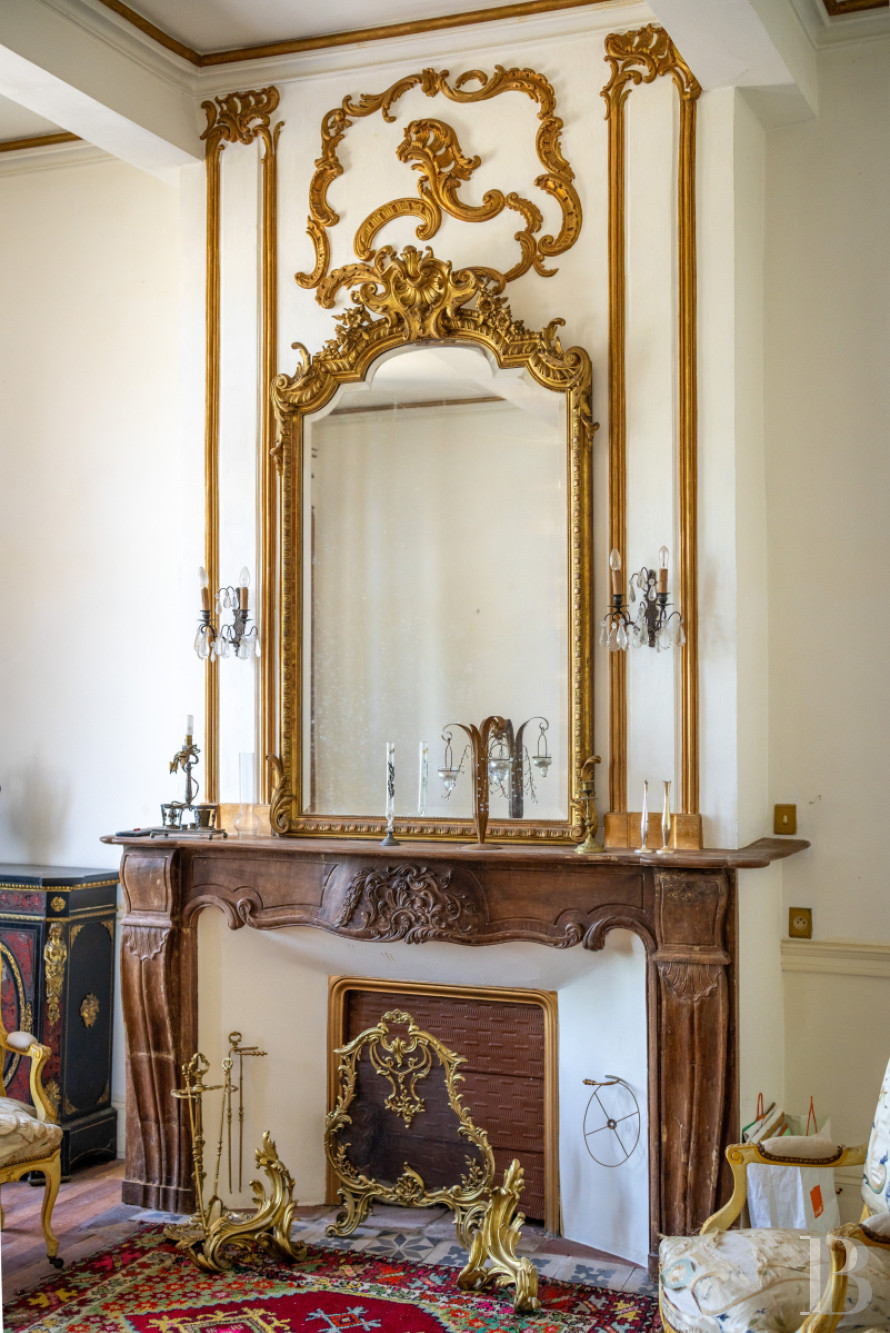
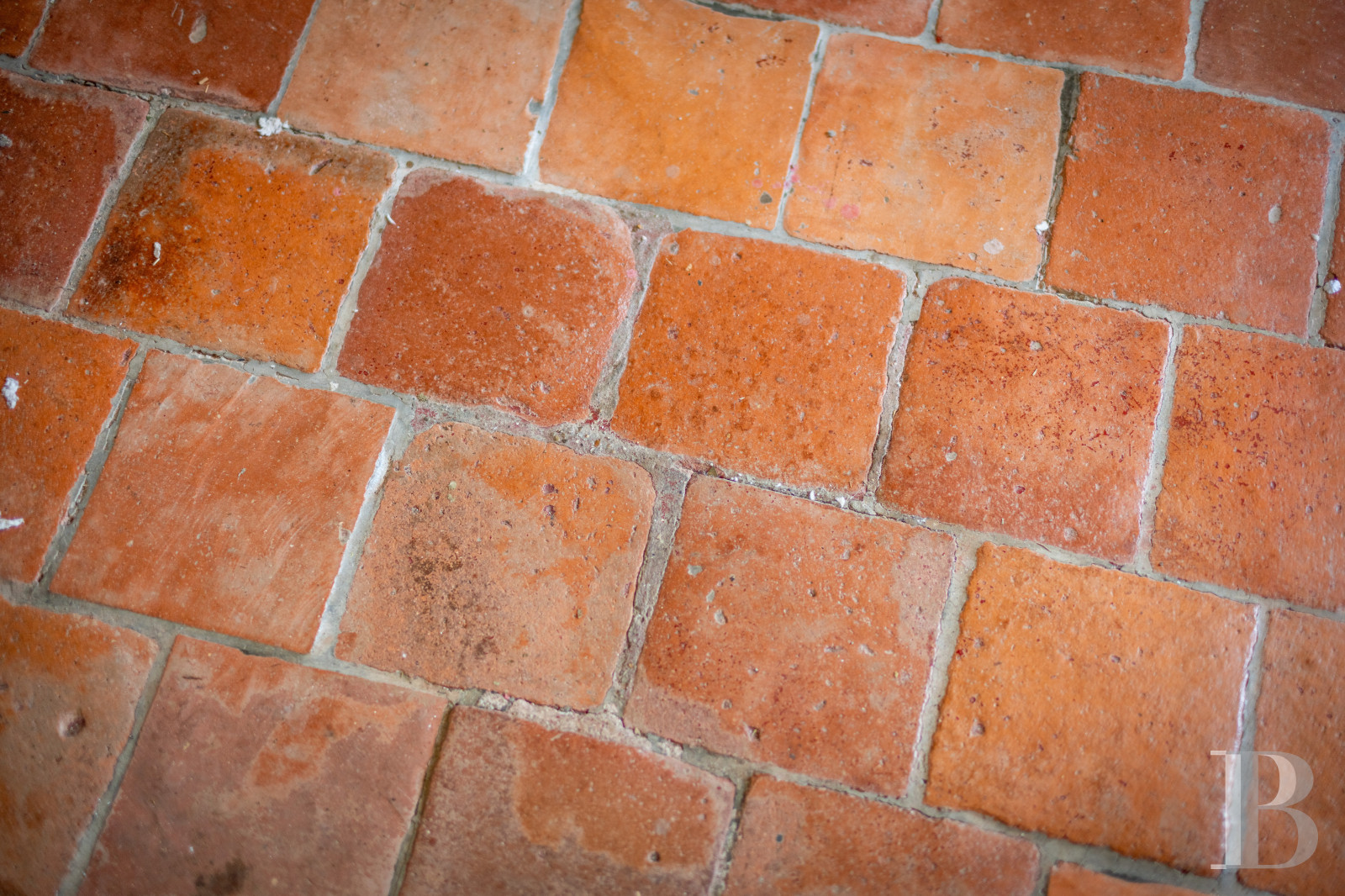
The entrance hall is a room in its own right: large terracotta tiles in toning shades underfoot, a ceiling of beams and joists painted terracotta red alternating with the white-painted underside of the floor above. To the left, a first reception room carries pale beige plaster walls highlighted with gilding, a dark oak fireplace carved with roses, garlands and foliate scrolls, a triple-coffered ceiling with gilt borders, and straight-laid pine parquet.
The kitchen beyond is floored in terracotta; its dark oak ceiling beams and the ghost of a fireplace that once filled an entire wall speak to the age of the house. Against one wall of the adjoining agricultural storage building, the traces of a former kiln survive — a remnant of the the faience workshops that were once the village's pride. Two pairs of windows with glazed fanlights give onto the terrace; the storage building itself opens onto the garden.
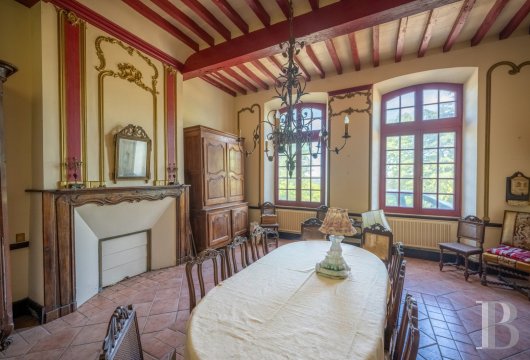
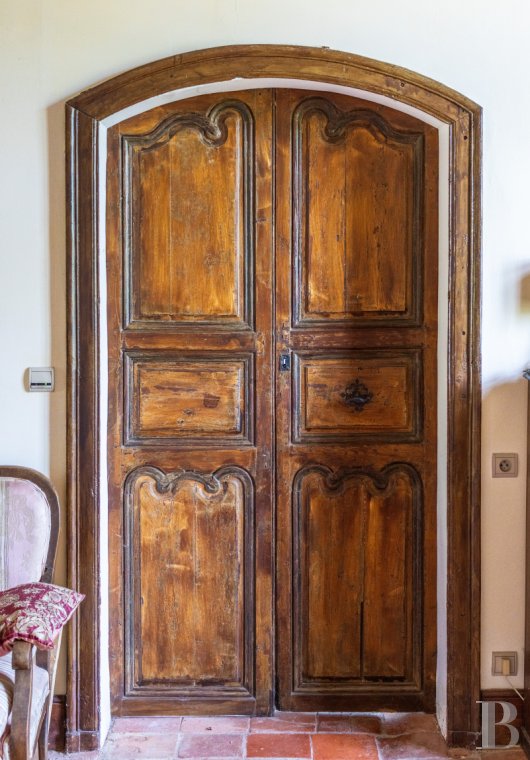
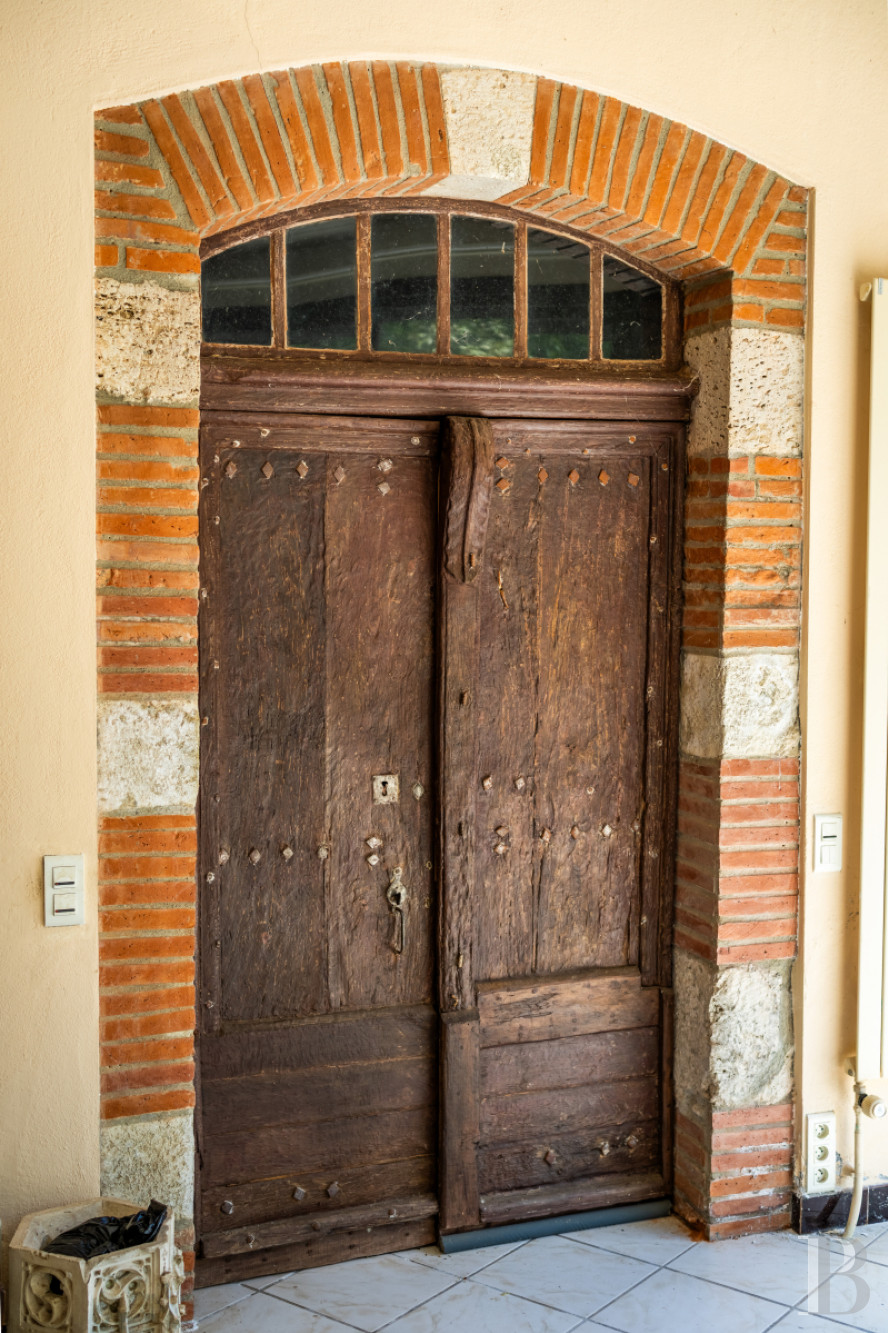
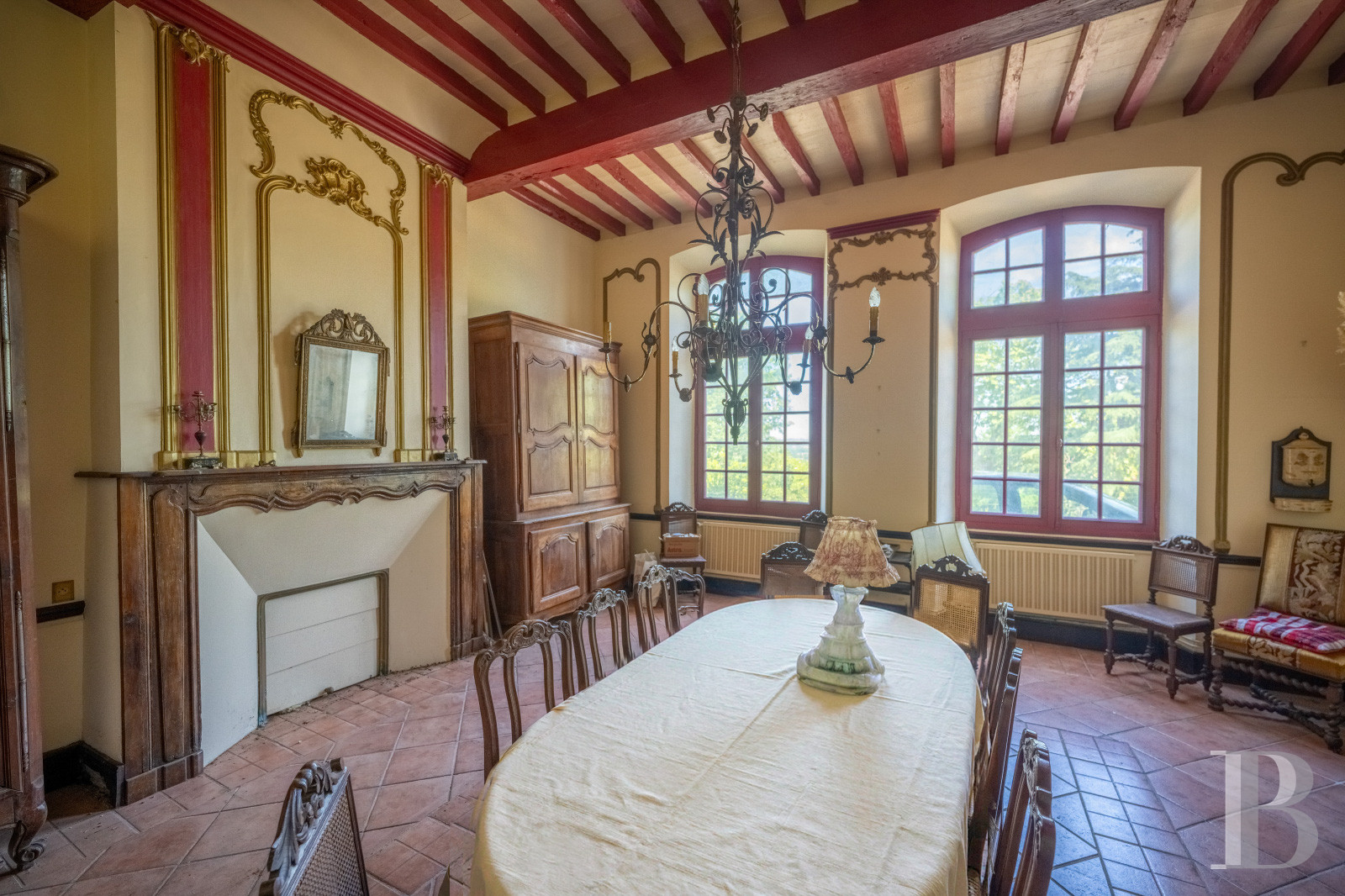
To the right of the hall, the dining room shares the same painted ceiling and terracotta floor as the entrance. Its dark oak fireplace, carved with ogee mouldings, is surmounted by an overmantel with terracotta and gilt pilasters; straight gilt mouldings on the beige plaster walls carry the decorative scheme through consistently. A two-leaved oak door with oval-headed forged nails and a glazed fanlight with narrow glazing bars opens into the extension: a large second reception room, an open bathroom and an independent lavatory. A storeroom off the dining room commands a cellar; a utility room with independent lavatory connects through to the winery.
The upstairs
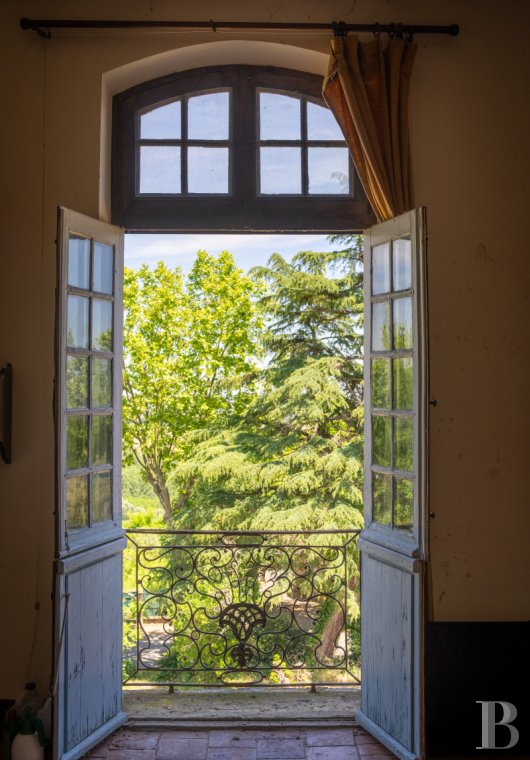
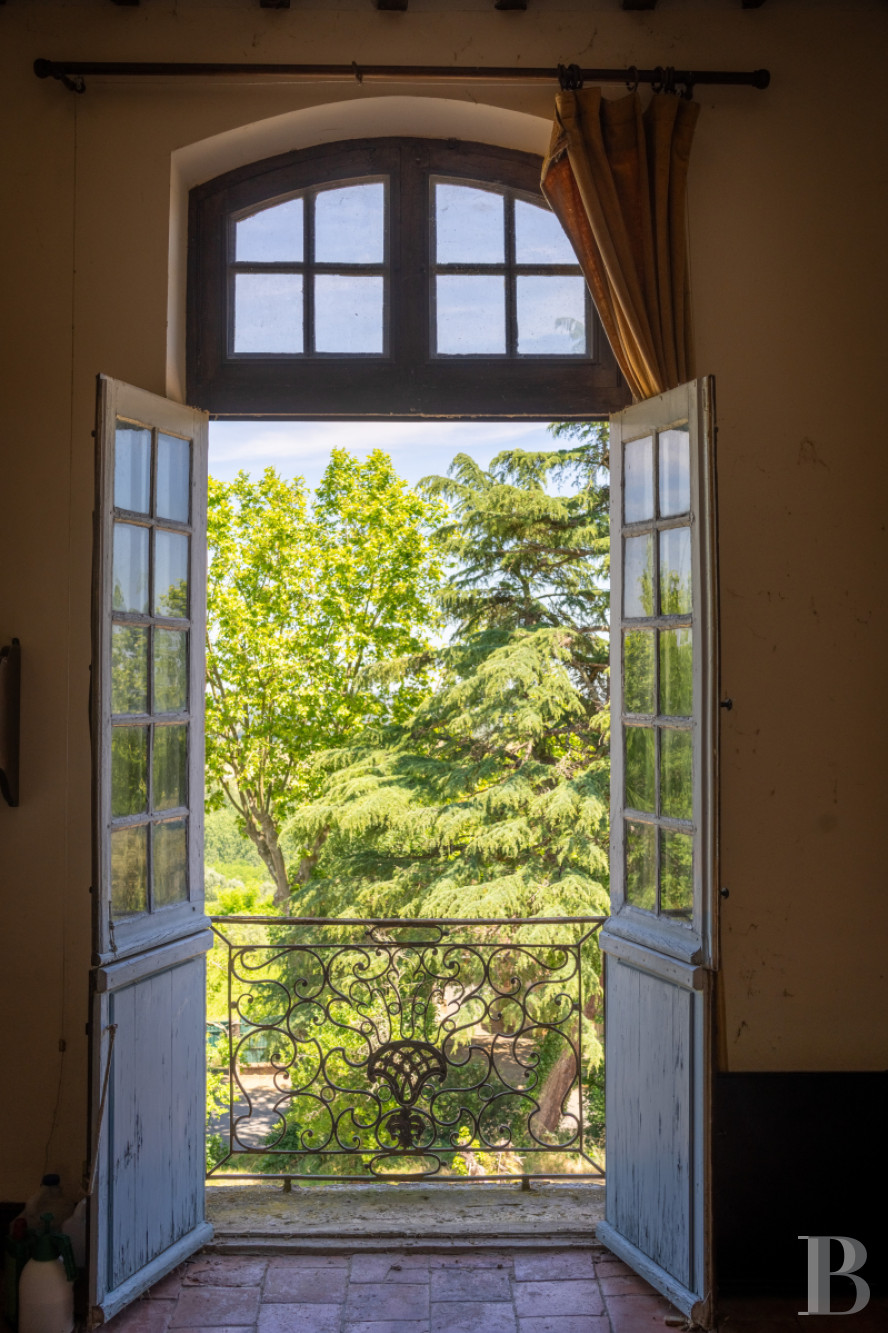
A dressed stone first step initiates a wide solid-timber staircase with an intermediate landing in terracotta tiles. At the top, a broad arch marks the threshold of a landing that echoes the entrance hall below: generous proportions, a terracotta tile floor, exposed dark oak ceiling beams, and two tall glazed openings.
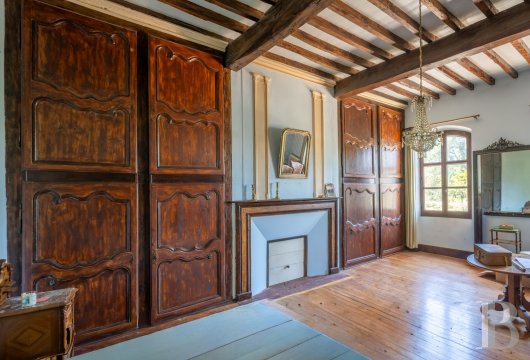
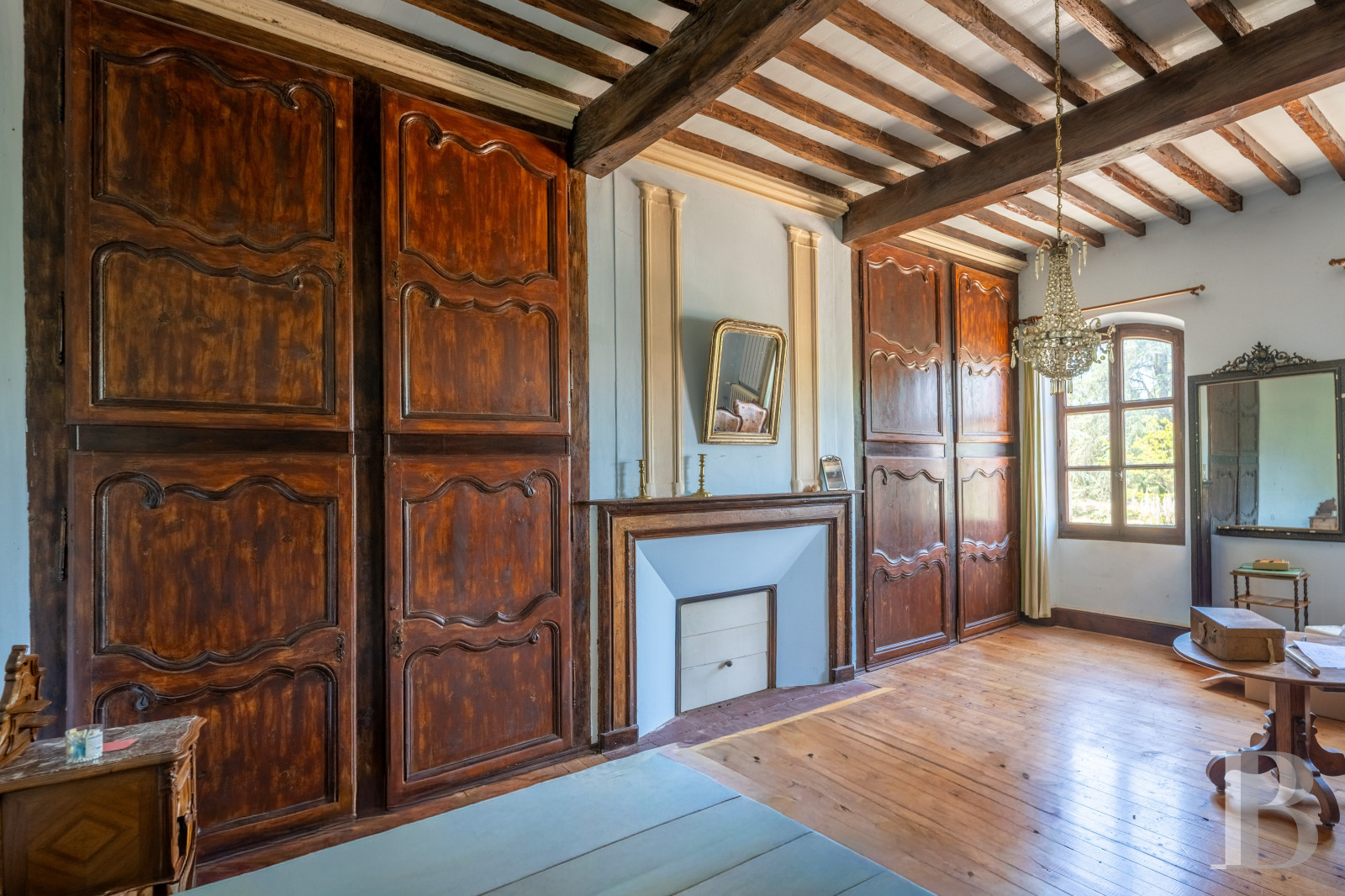
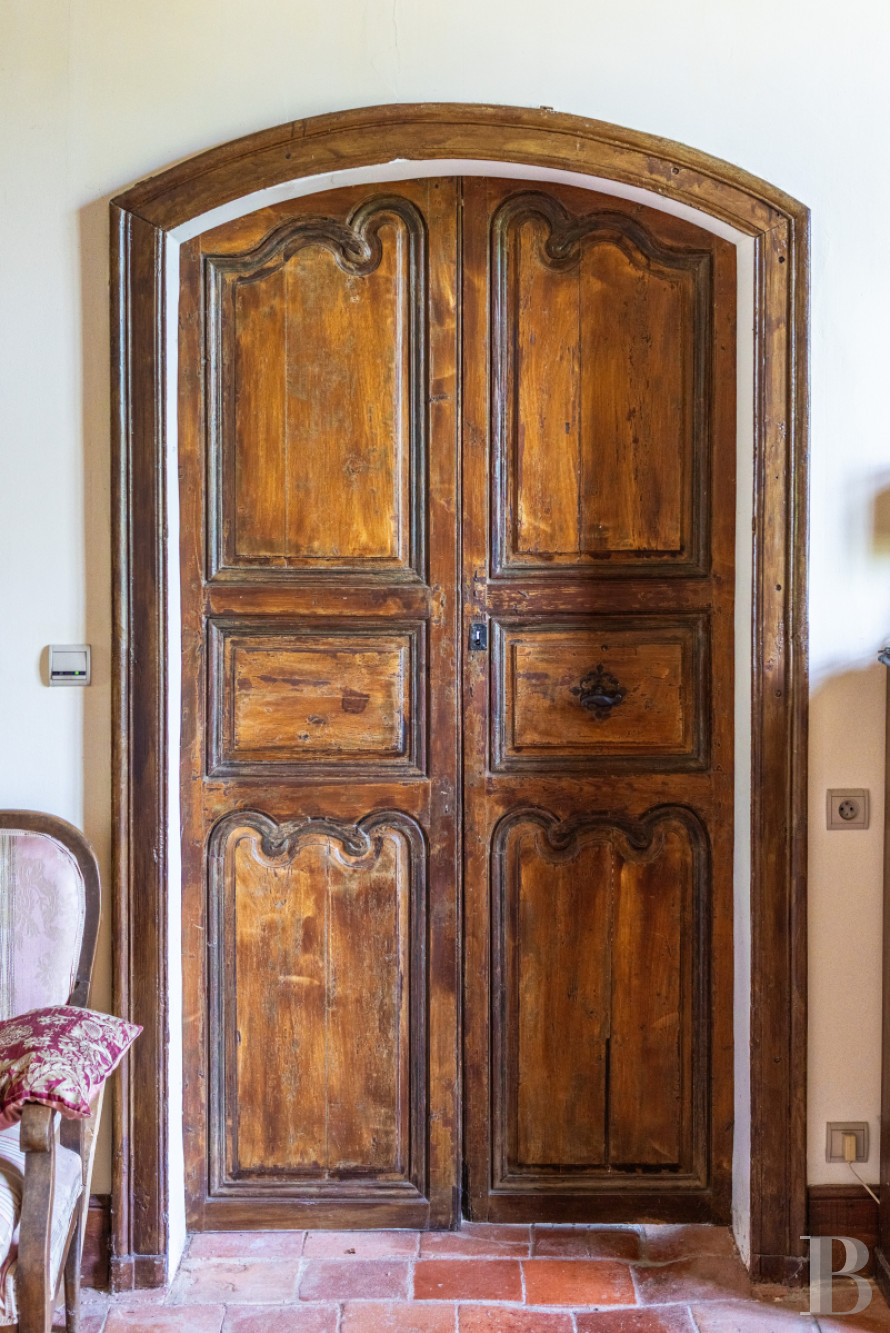
Three segmental-arched doorways with oak scrolled surrounds lead to the three bedrooms, each floored in straight-laid pine parquet. The first, facing the staircase, has a dark oak fireplace with straight mouldings; its overmantel carries pale yellow panels framed by double columns with plain capitals, the whole enclosed floor to ceiling by four scrolled moulded Louis XV panels — two of which conceal an independent lavatory. Three steps lead up to a white-tiled bathroom with a blue border.
The second bedroom mirrors the first in layout and has a fireplace whose overmantel bears lateral pilasters with stylised Ionic capitals supporting a central composition in which two figures flank a circular cartouche — Louis XVI in character. A shower room adjoins.
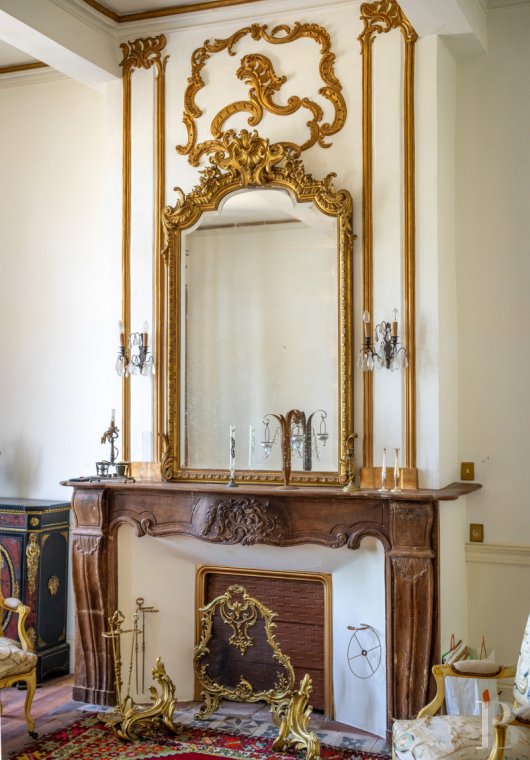
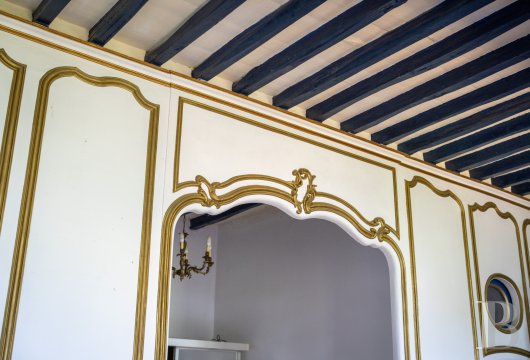
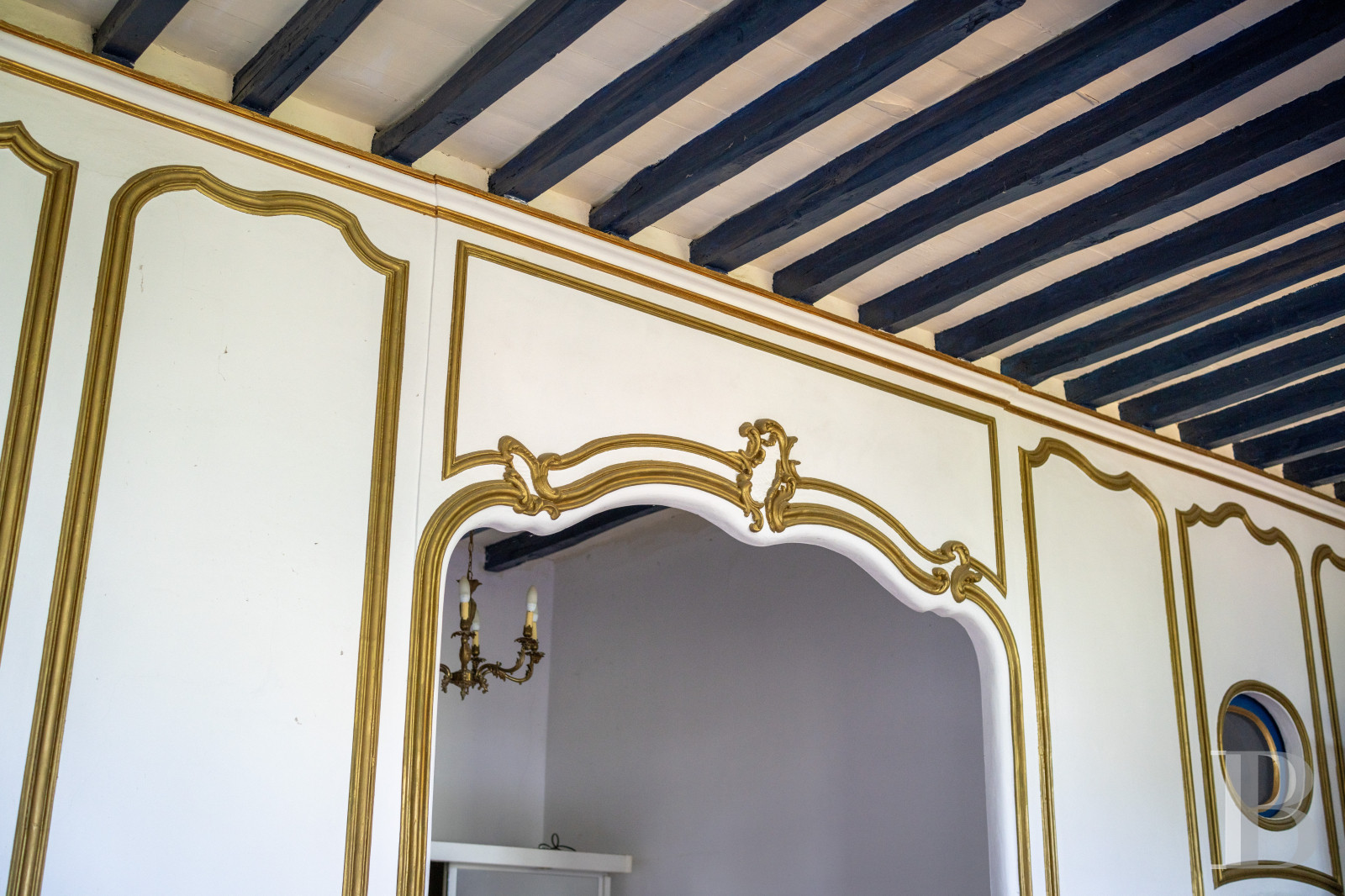
The third is the most elaborately decorated: white plaster picked out in gilding, ceiling beams painted deep blue. The fireplace surround is scrolled and ornamented with gilded floral motifs at the centre and on the pilasters; the whole is painted in white, blue and gold. Its overmantel, in full Louis XV rocaille, carries gilt pilasters framing the central panel and a crowning composition of gilt scrolls, shells and asymmetric foliage. To one side, a deep alcove is flanked by two doors — one to a dressing room, one to a bathroom with blue and white tiling.
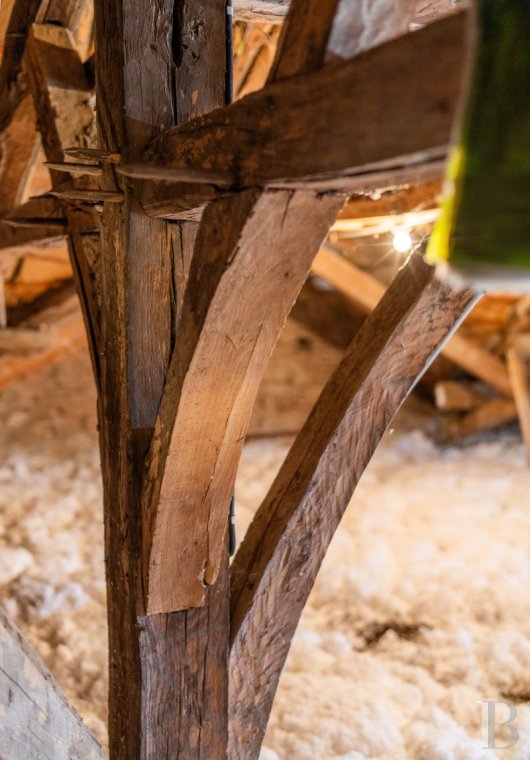
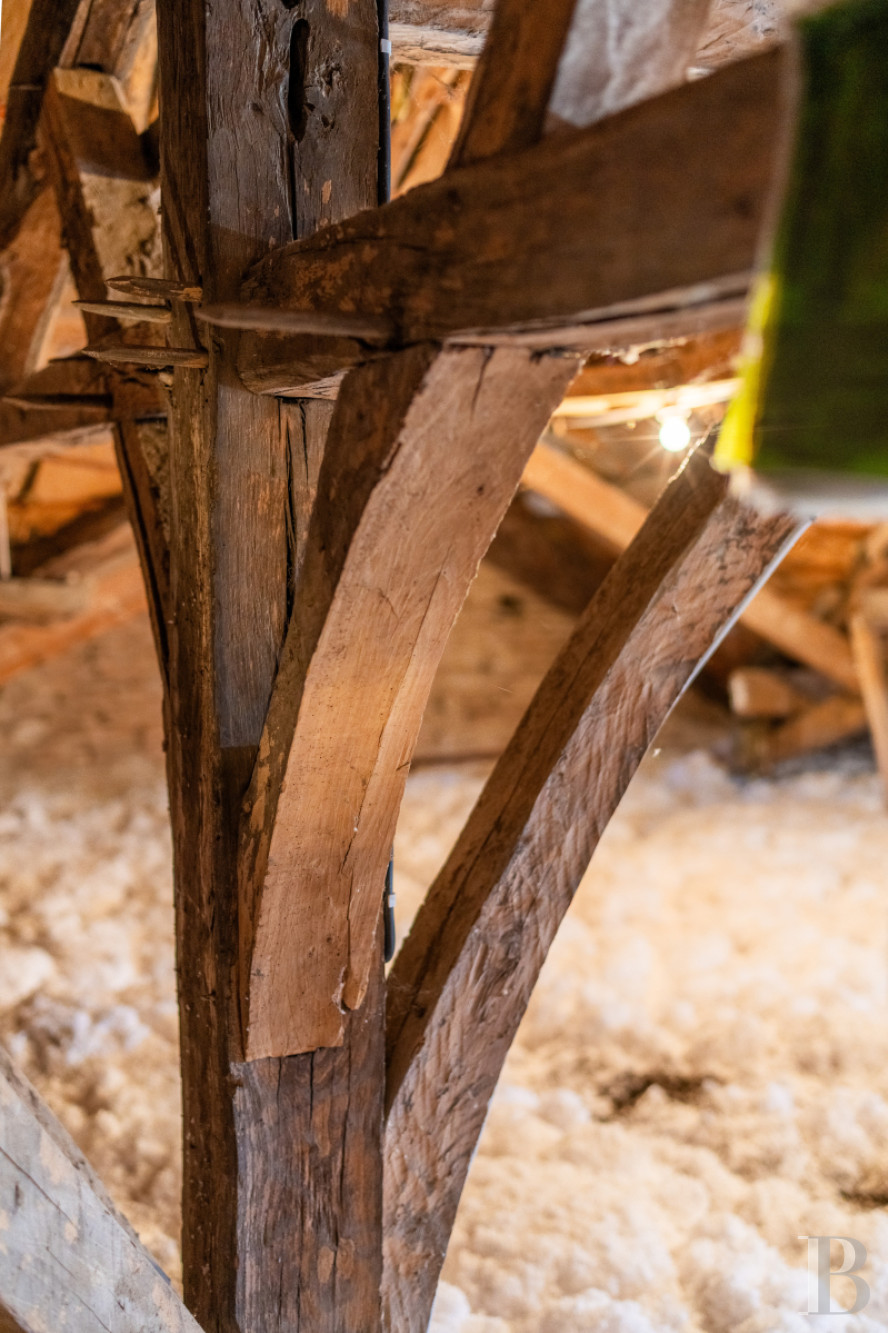
A final door on the landing gives onto an oak staircase leading to the converted upper level with exposed roof structure.
The park, dovecote and secondary garden
Enclosed by brick walls, shrubs and trees of varied species — cypress, privet, Atlas cedar, fir and laurel among them — the park extends over nearly 8,500 m², its generous sun exposure accounting for the scale of the mature specimens. At its far end, the two-level dovecote carries a distinctive dormer at its summit, framed by a triangular pediment and pink brick cornice. Some fifteen walnut trees grow in its vicinity.
Across the Compostela lane, enclosed by shrubs, a garden of just over 1,000 m² represents the last buildable plot in the village centre, a significant asset for the property.
Our opinion
There are houses where time seems to stop at the threshold. This is one: a centuries-old hostelry that speaks, with quiet dignity, to the weight of distinguished traditions — of architecture and faith, of building and pilgrimage. Its walls have sheltered a long history, and stand ready to shelter more.
Light fills the generous proportions and considered layout, creating a singular atmosphere. The grounds offer breathing space at the village's heart and open views across the Garonne valley. The property's coherence comes from its character: bourgeois and familial, yet open.
Once refreshed, it could serve equally as a permanent home or a hospitality venture — a happy return, in either case, to its original purpose, whether the guests are family, travellers or artists.
Reference 427970
| Land registry surface area | 9467 m² |
| Main building floor area | 488 m² |
| Number of bedrooms | 3 |
French Energy Performance Diagnosis
Information on the risks to which this property is exposed is available on the website: www.georisques.gouv.fr
Share


NB: The above information is not only the result of our visit to the property; it is also based on information provided by the current owner. It is by no means comprehensive or strictly accurate especially where surface areas and construction dates are concerned. We cannot, therefore, be held liable for any misrepresentation.